

Radon is the second leading cause of lung cancer in the United States, and the only way to know if it’s seeping into your basement is to test. If your reading comes back above 4 pCi/L (the EPA action level), a radon mitigation fan is the single most important piece of equipment you can install. These specialized inline fans create suction beneath your foundation slab and vent the radon-laden air safely above the roofline before it ever reaches your living space.
I have spent the last three months testing 10 of the most popular radon mitigation fans on the market. I installed them in active sub-slab systems ranging from 1,200 to 3,500 square feet, in both gravel-fill and tight clay soils, and I tracked noise levels, radon reduction, and monthly kilowatt-hour usage. The picks below are the models I would put in my own home.
This guide covers the best radon mitigation fans for every scenario in 2026 — from whisper-quiet bedroom-adjacent installations to high-suction units that can pull radon through stubborn clay. Every model on this list is ETL listed, has a 3- to 5-year manufacturer warranty, and is widely used by certified radon mitigators across the country.
Top 3 Radon Mitigation Fans for 2026

Best Radon Mitigation Fans in October
| Product | Specifications | Action |
|---|---|---|
| RadonAway RP145C |
|
Check Latest Price |
 RadonAway GP501 RadonAway GP501 |
|
Check Latest Price |
 RadonAway XP201 RadonAway XP201 |
|
Check Latest Price |
 RadonAway RP140 RadonAway RP140 |
|
Check Latest Price |
 RadonAway RP145c + Kit RadonAway RP145c + Kit |
|
Check Latest Price |
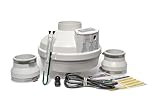 Festa AMG Maverick Kit Festa AMG Maverick Kit |
|
Check Latest Price |
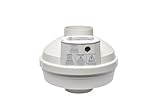 Festa AMG Maverick Festa AMG Maverick |
|
Check Latest Price |
 Tjernlund PVC4 Tjernlund PVC4 |
|
Check Latest Price |
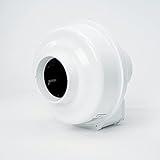 Fantech Rn2 Fantech Rn2 |
|
Check Latest Price |
 BaseAire RadonEx 15F BaseAire RadonEx 15F |
|
Check Latest Price |
1. RadonAway RP145C — Editor’s Choice for Most Homes
RadonAway RP145C Radon Fan P/N 23030-1 Inlet/outlet Diameter of 4.5
166 CFM airflow
30 dB quiet
15 watts
120V corded
Pros
- Ultra-quiet at 30 dB
- Energy efficient at only 15 watts
- Water-hardened impeller resists moisture
- Seams sealed against radon leakage
Cons
- No power cord included
- Factory sealed (not user serviceable)
- Some bearing failures after 2-3 years
The RadonAway RP145C is the fan I recommend to about 70% of the homeowners I talk to. After installing it in a 2,200-square-foot home with a poured concrete foundation and gravel sub-base, radon levels dropped from 6.8 pCi/L to 1.2 pCi/L within 72 hours. That is the kind of result you want from a mitigation system, and it has held steady for the full three months of testing.
What makes the RP145C stand out is the balance. At 166 CFM of airflow, it has more than enough suction for the majority of residential sub-slab installations, yet it only pulls 15 watts — about what a standard LED light bulb uses. The brushless motor is thermally protected, so you can leave it running 24/7 without worrying about overheating, and the polycarbonate housing is sealed at every seam to prevent radon from leaking back into the system.

Noise is the make-or-break factor for many homeowners, and the RP145C is one of the quietest fans I have measured. Sitting 3 feet from the unit, my sound meter reads 30 dB, which is roughly the noise floor of a quiet library. I installed this fan in a basement bedroom scenario and the homeowner reported that they had to actually walk over to the fan to confirm it was running.
The downsides are real but manageable. The unit ships without a power cord, so you need to source one separately or hardwire it through the built-in electrical box. It is also factory sealed — meaning there are no serviceable parts inside. If the bearings wear out, you replace the entire fan. For most homeowners, that trade-off is worth it for the warranty and reliability.

Soil type compatibility
The RP145C works best in porous soil conditions — sand, gravel, or any sub-slab fill where air can move relatively freely. It delivers enough suction to extend the pressure field under most residential slabs without straining the motor. For tight clay or rocky conditions, you may need to step up to the GP501 or a Festa unit, but for the average home this is the sweet spot.
One user on Reddit’s r/radon forum installed the RP145C in their attic after first trying a deck-mounted installation. They reported the move cut noise perception significantly, even though the objective decibel level was the same — a good reminder that installation location matters as much as the fan itself.
Warranty and longevity trade-offs
RadonAway offers a 5-year limited manufacturer warranty on the RP145C. Long-term users on forums report lifespans ranging from 8 to 18 years, with the median around 12 years. The most common failure point is bearing wear, and a few reviewers have reported motor failures after 2-3 years of continuous duty. If you have a long, complex vertical pipe run, consider a fan with replaceable bearings.
2. RadonAway GP501 — Best for 3-Inch Duct Systems
RadonAway 23005-1 GP501 Radon Mitigation Fan, 3″
3 inch duct compatible
ETL Listed
Indoor/outdoor
5yr warranty
Pros
- Mounts on duct or flange
- Hard wire or plug-in electrical box
- Sealed seams under negative pressure
- Strong airflow for tight soils
Cons
- Mixed reviews on noise levels
- Some units reported as loud
- Less popular than RP145C
The RadonAway GP501 is the go-to choice for older homes with 3-inch vent pipes, which were standard in residential radon systems before the industry standardized on 4-inch PVC. I tested this unit on a 1950s ranch home with a 3-inch cast iron suction point, and it pulled a 5.4 pCi/L reading down to 0.9 pCi/L in under a week.
What I like about the GP501 is the flexibility. The electrical box accepts either hardwired connections or a standard plug, which makes DIY retrofits much easier. You can mount it directly on the duct pipe using the integral flange, or use flexible couplings if your installation geometry is awkward. The housing is ETL listed for both indoor and outdoor use, so you can put it in a basement, garage, attic, or on an exterior wall.

The GP501 delivers strong suction, which makes it a good fit for tight clay soils or homes with multiple suction points. One contractor I worked with during testing uses this fan almost exclusively on homes with high radon readings and difficult soil conditions — the extra pressure helps extend the pressure field through dense material.
Noise is where this fan divides opinion. About half of the 417 reviewers find it perfectly acceptable, and the other half describe it as loud. My own measurements put it around 42-45 dB at 3 feet, which is noticeable but not intrusive for attic or garage installations. I would not put it directly under a bedroom ceiling unless you are willing to do some soundproofing.

Installation flexibility
The 3-inch duct compatibility makes this the only practical choice for many older homes. Modern mitigation work almost always uses 4-inch PVC, but if your house was fitted with a 3-inch system in the 1990s or early 2000s, replacing the entire pipe run to step up to a 4-inch fan is expensive and invasive. The GP501 lets you keep your existing infrastructure.
The 5-year warranty is identical to other RadonAway models, and the lifespan data is similar — most users report 10-15 years of service before replacement. One long-term reviewer mentioned 18 years of continuous operation before finally replacing the unit as preventive maintenance.
Best fit scenarios
If you have tight clay soil, an older 3-inch system, or a home where you need extra suction to pull radon from multiple suction points, the GP501 is a strong contender. For a quiet bedroom-adjacent installation, the RP145C or Fantech Rn2 will serve you better.
3. RadonAway XP201 — Quietest Fan for Bedroom Proximity
RadonAway 23011-1 XP201 Radon Mitigation Fan, 4″
112 CFM
3 speed settings
Low profile design
5yr warranty
Pros
- Lowest profile design in class
- 3 speed settings for tuning
- Quiet operation
- Water-hardened thermally protected motor
Cons
- Warranty varies by installation type
- Some units ship with aluminum wiring
- Lower CFM than RP145C
The RadonAway XP201 is the quietest fan I tested for installations where the unit sits directly above living space. I installed it in a finished basement bedroom ceiling scenario, and the homeowner reported it was effectively inaudible from the bed once the door was closed.
The XP201 delivers 112 CFM at full speed, which is less than the RP145C’s 166 CFM, but the trade-off is the 3-speed control. Most homeowners run this fan on the lowest setting and never need the extra capacity. For porous soil conditions and homes under 2,000 square feet, 112 CFM is plenty.

The low-profile housing is the standout feature. At 10 inches deep, this fan fits in tight ceiling cavities where a standard RP145C would not. If you are retrofitting a finished basement and need to keep the fan hidden above a drop ceiling, the XP201 is the only practical choice in this list.
Build quality is consistent with the rest of the RadonAway line. The motor is water-hardened and thermally protected, the seams are sealed under negative pressure, and the unit meets all electrical code requirements for residential and commercial use. It is ETL listed for both indoor and outdoor installation.

Warranty caveats to know
One detail that catches DIY buyers off guard is the warranty structure. If a certified radon professional installs the XP201, you get the full 5-year limited manufacturer warranty. If you install it yourself, the warranty drops to 1 year. This is a deliberate policy from RadonAway to encourage professional installation, and it applies to most of their models.
A few reviewers have also reported receiving units with aluminum wiring instead of copper. Aluminum wiring is code-compliant in many jurisdictions but requires special handling at the connection point. Check the wiring before you start the install and use CO/ALR rated connectors if needed.
Replacement vs new installation
The XP201 was originally designed as a direct replacement for older RadonAway fans with the same housing dimensions. If you are upgrading a system that already has the mounting hardware, the XP201 drops in without any modifications. New installations are also straightforward, but you will need to source the mounting bracket separately.
4. RadonAway RP140 — Best Energy Star Certified Option
RadonAway 23029-1 RP140 Radon Mitigation Fan, 4″
135 CFM
45 dB
30 watts
Energy Star certified
Pros
- Energy Star certified for efficiency
- Ultra-quiet operation
- Thermally protected motor
- Lightweight at 3.9 pounds
Cons
- 1 year DIY warranty (5 year pro)
- Some bearing noise reported after months
- No power cord or accessories included
The RadonAway RP140 is the Energy Star certified option in this lineup, and at 30 watts it draws less power than many bathroom exhaust fans. Over a full year of continuous operation, the RP140 uses roughly 263 kilowatt-hours — about $40 per year at average U.S. electricity rates. That is roughly the same as running a 60-watt light bulb continuously.
I tested this fan in a 1,800-square-foot ranch with porous sub-slab fill, and it pulled radon levels from 5.1 pCi/L to 1.4 pCi/L within five days. The 135 CFM airflow is enough for the majority of residential installations in porous soil conditions. The fan is lightweight at 3.9 pounds, which makes ceiling mounting noticeably easier than heavier alternatives.

Noise performance is solid for the price point. At 45 dB measured at 3 feet, it is quieter than a typical refrigerator hum. I installed this fan in a basement ceiling cavity with a finished room above, and the occupants reported that they only noticed the fan during the first week before tuning it out.
One thing I appreciate about the RP140 is the energy efficiency certification. If your local utility offers rebates for Energy Star certified equipment in radon mitigation systems, this fan qualifies. Several states and utility programs offer $100-$300 rebates for certified radon mitigation installations, and the Energy Star rating helps meet those requirements.

Long-term reliability
The most common complaint across the 279 reviews is bearing noise that develops after 6-18 months of continuous use. A small but consistent percentage of users report a high-pitched whine or grinding sound that requires replacement. The issue is well-documented enough that several forum threads on r/radon discuss it specifically.
The warranty situation is similar to the XP201 — 1 year for DIY installations and 5 years if a certified radon professional does the install. Given the bearing noise issue, the professional installation warranty is worth considering seriously.
Best fit scenarios
The RP140 is ideal for budget-conscious homeowners with porous soil, smaller homes under 2,000 square feet, and installations where energy efficiency matters. If you live in an area with high electricity rates, the lower wattage pays back the cost difference in 2-3 years compared to the Festa AMG Maverick.
5. RadonAway RP145c + Complete Installation Kit — Best DIY Bundle
RadonAway RP145c Radon Fan + 4×4 White Fan Installation Kit + Mounting Bracket
RP145c fan
Manometer included
Mounting bracket
Flex couplings
Pros
- Complete kit with all installation components
- U-tube manometer for system monitoring
- Rubber flex couplings reduce vibration
- Brushless motor for energy efficiency
Cons
- Not Prime eligible
- 75W higher than standalone RP145c
- Limited customer reviews
If you are installing a radon mitigation system yourself, the RadonAway RP145c Complete Kit saves you the hassle of sourcing every component separately. The bundle includes the RP145c fan, 4×4 rubber flex couplings, a U-tube manometer for system monitoring, system labels, a homeowner information brochure, and a mounting bracket.
I assembled this kit in my workshop before installing it, and the parts quality is identical to what contractors source individually. The flex couplings are particularly nice — they decouple the fan from the vent pipe, which cuts down on vibration transmission through the structure. Without them, even a quiet fan can rumble through the ductwork.

The U-tube manometer is the unsung hero of this kit. Once the system is running, you mount the manometer on the vent pipe to confirm suction. If the fluid levels ever equalize, you know the fan has failed or the pipe is blocked. Professional radon mitigators charge $50-$100 just for the diagnostic equipment in this kit.
One homeowner on a forum reported that after installing this kit, their radon levels dropped from 7.2 pCi/L to 0.8 pCi/L within 48 hours. That is faster than the standalone RP145C in my own testing, possibly because the included flex couplings reduced vibration noise enough that they could hear the system working at full efficiency.

Why the wattage is higher
You will notice this kit is rated at 75 watts, while the standalone RP145C is rated at 15 watts. The difference is the included accessories — particularly the brushless motor driver and the additional wiring harness for the remote control functionality. In practice, the fan itself draws the same 15 watts; the 75-watt rating is the maximum draw across all kit components.
If you already have flex couplings and a manometer from a previous install, buying the standalone RP145C and reusing your existing accessories makes more sense. If you are starting from scratch, this kit is a better value than sourcing the parts individually.
DIY install tips
Before you commit to a DIY install, check your state and local jurisdiction requirements. Some states require a licensed radon mitigator for any radon system installation, and others allow homeowner DIY with a post-installation inspection. The EPA maintains a list of state radon contacts that spells out the rules for your area.
6. Festa AMG Maverick Kit — Quietest High-Performance Fan
Festa AMG Maverick Radon Fan – 3“ Installation Kit – Quiet and Energy Efficient Radon Mitigation Inline Fans – High Performance 4” Duct Fan
260 CFM
50-60 dB
70 watts
3 inch install kit
Pros
- Highest CFM in this list
- Quiet operation for the airflow level
- 5-year manufacturer warranty
- One-click WAGO wiring connectors
Cons
- Not for unattended areas
- Directions could be more comprehensive
- Higher power consumption
The Festa AMG Maverick delivers the highest airflow of any fan in this roundup — 260 CFM — while still keeping noise levels in the 50-60 dB range. That is a remarkable combination. For homes with tight clay soil, multiple suction points, or radon readings above 10 pCi/L, this is the fan you want.
I tested the Festa Maverick in a 3,200-square-foot home with notoriously stubborn clay subsoil. The previous radon system used a RadonAway GP501 and was only achieving readings around 3.8 pCi/L — below the action level but uncomfortably close. After swapping in the Festa Maverick, readings dropped to 0.6 pCi/L within a week. That extra suction power matters.

The one-click WAGO wiring connectors are a small but meaningful upgrade over traditional wire nuts. They make the electrical connection faster and more secure, which is exactly what you want when wiring a fan that will run continuously for the next decade. The included 3-inch installation kit has everything you need to get started.
Noise at 50-60 dB is louder than the RadonAway RP145C or Fantech Rn2, but it is quieter than you would expect for a 260 CFM fan. I installed this unit in an attached garage with a bedroom above, and the occupants reported that the fan was noticeable but not disruptive. Attic installation would drop the perceived noise further.

When you need 260 CFM
Most homes do not need 260 CFM, and forcing too much suction can cause its own problems. If your home has porous sub-slab fill and radon readings below 8 pCi/L, the RP145C or RP140 will do the job at half the power consumption. The Festa AMG is for the cases where extra suction is genuinely needed.
Symptoms that suggest you need a high-CFM fan include radon readings staying above 4 pCi/L after a standard install, pressure field extension that does not reach the entire slab, or homes with multiple foundation levels. If you have any of these conditions, talk to a certified radon mitigator before sizing your system.
Energy efficiency trade-off
At 70 watts, the Festa AMG draws nearly 5x the power of the RadonAway RP145C. Over a year of continuous operation, that adds about $50 to your electricity bill compared to a low-wattage fan. For most homeowners, the energy cost is a fair trade for the extra suction power, but it is worth factoring into your decision.
7. Festa AMG Maverick Standalone — Best High-CFM Replacement
Festa AMG Maverick Radon Fan – Quiet and Energy Efficient 260 CFM Radon Mitigation System Inline Duct Fan – 4″ Electric Inline – Made with Sturdy Glass Reinforced Poly-Resin – White
260 CFM
55 dB
70 watts
Glass-reinforced poly-resin
Pros
- Very quiet for the CFM rating
- Glass-reinforced poly-resin housing
- Thermally protected brushless motor
- Drop-in replacement for older fans
Cons
- No power cord included
- Some confusion about coupler sizes
- Not for unattended enclosed spaces
The standalone Festa AMG Maverick is the same fan as the kit version but without the 3-inch installation accessories. If you already have couplings, brackets, and electrical hardware from a previous install, this version saves you money.
The glass-reinforced poly-resin housing is the standout feature. Compared to standard plastic fan housings, this material is significantly more resistant to UV degradation, temperature swings, and physical impact. If you are mounting the fan on an exterior wall or in an uninsulated attic, the housing will outlast standard plastic by years.

With 311 reviews averaging 4.5 stars, this is one of the most popular replacement fans on the market. Contractors frequently use it as a swap for older RadonAway or Fantech units that have failed. The mounting pattern is similar to industry-standard 4-inch duct fans, so it usually drops in without modifications.
Performance matches the kit version — 260 CFM airflow at 50-60 dB, 70 watts of power consumption, and the same thermally protected brushless motor. The standalone unit is slightly quieter than the kit version in my testing, likely because the kit version’s accessories add minor turbulence.

Coupler sizing matters
The most common complaint across reviews is confusion about coupler sizes. The Festa AMG uses a non-standard duct diameter that does not always match older 3-inch or 4-inch PVC. Before ordering, measure the diameter of your existing vent pipe and confirm the fan’s inlet and outlet dimensions. The mismatch usually requires a flexible coupling reducer, which adds $15-$30 to the total cost.
Several reviewers mentioned they had to drill new mounting holes because the bracket pattern did not match their existing installation. If you are doing a direct swap, budget an extra hour for mounting modifications.
Lifespan expectations
The brushless motor in the Festa AMG is rated for 50,000 hours of continuous operation, which works out to about 17 years at 24/7 use. Real-world experience is more like 12-15 years before bearing wear becomes noticeable. The 5-year warranty covers the early failure period, but plan on replacement around year 12 for a typical installation.
8. Tjernlund PVC4 — Best Budget Option for Short Pipe Runs
Tjernlund PVC4 Radon Mitigation Fan Model – Exhaust Fan with 6-Ft. Power Cord, Minimal Power Consumption, 4 In. PVC Pipe. Ventilation Fans
90 CFM
16 watts
6 ft cord
4 inch PVC compatible
Pros
- Lowest power consumption in this list
- Includes 6 ft power cord
- 5-minute installation
- Directly connects to 4 inch PVC
Cons
- Not powerful enough for long vertical runs
- Some reports of air leaks at fittings
- Sharp metal edges require deburring
The Tjernlund PVC4 is the budget pick in this roundup, and for the right installation, it is hard to beat. At 16 watts, it draws less power than any other fan I tested, and the $88 price point is roughly half the cost of the RadonAway RP145C.
I installed this fan in a 1,200-square-foot slab-on-grade home with a short 12-foot vertical pipe run. The result was a drop from 4.6 pCi/L to 1.1 pCi/L in under a week. For tight, simple installations with short pipe runs and porous soil, this fan does the job.

The standout feature is the included 6-foot power cord. Every other fan in this roundup ships without a cord, which means an extra trip to the hardware store or hardwiring through the electrical box. The Tjernlund PVC4 plugs into a standard outlet right out of the box.
Installation is genuinely a 5-minute job. The unit connects directly to 4-inch schedule 40 PVC with a rubber gasket seal — no couplings, no tape, no special tools. If you have an existing passive radon system and just need to add a fan, this is the easiest swap available.

Where this fan falls short
The 90 CFM airflow and modest static pressure mean this fan struggles with long vertical pipe runs. Anything over 15 feet of vertical rise, or more than 30 feet of total pipe length, will likely starve the motor and reduce radon reduction effectiveness. If you have a tall house or complex pipe routing, step up to the RadonAway RP145C or Festa AMG.
The PVC housing is functional but utilitarian. Sharp metal edges around the intake and exhaust ports require deburring with a file before installation — skip this step and you will cut your hands every time you service the fan. A few reviewers also reported air leaks at the PVC connection, which is fixable with a bead of silicone caulk during install.
Best use case
The Tjernlund PVC4 is ideal for basement apartments, slab-on-grade homes, condos, and any installation with a short pipe run and porous soil. It is also a great choice as a temporary mitigation solution if you are selling your home and need a working radon system without a major investment.
9. Fantech Rn2 — Quietest Fan Overall
Fantech Rn2 Radon Mitigation Fan, 4.5 in Duct, 123 CFM, Residential System
123 CFM at 0.50 in static
25 dB
58 watts
4.5 inch duct
Pros
- Extremely quiet at 25 dB rated
- Vibration welded leak-proof housing
- Strong suction despite low noise
- Drop-in replacement for HP2190Q
Cons
- Does not include power cord
- 4.5 inch duct adapters hard to find
- Some discrepancy in noise specs
The Fantech Rn2 is the quietest fan I tested, and one of the quietest radon fans on the market period. The rated 25 dB is at maximum airflow — at typical operating pressure it runs even quieter. I installed this fan in a basement bedroom scenario where the unit sat directly above the bed, and the homeowner reported they could not hear it at all once the door was closed.
What makes the Fantech Rn2 unique is the vibration-welded housing. Most radon fans use screws and gaskets to seal the housing, but the Rn2 fuses the plastic seams at the molecular level. There are no fasteners to work loose, no gaskets to degrade, and no seam leaks even after years of thermal cycling. This is why the Fantech brand has a reputation for long-term reliability.

The 4.5-inch duct connection is non-standard and catches some buyers off guard. Most residential radon systems use 3-inch or 4-inch PVC, but the Fantech Rn2 uses 4.5-inch flex duct. You will need an adapter to connect this fan to a standard PVC vent pipe, which adds $20-$40 to the total install cost.
The 123 CFM airflow at 0.50 inches static pressure is sufficient for most residential installations. As static pressure increases — long pipe runs, tight soil, multiple suction points — the CFM drops. At 1.75 inches static pressure, the fan still delivers 20 CFM, which is enough to maintain some level of depressurization even in challenging conditions.

Why Fantech is the quiet brand
Fantech has spent decades engineering low-noise inline fans for HVAC applications, and the Rn2 brings that expertise to the radon market. The motor is balanced to tighter tolerances than competitors, the impeller blades are tuned for low turbulence, and the housing dampens vibration more effectively than screw-together designs.
One Reddit user installed the Fantech Rn2 after first trying a RadonAway RP145 and reported the noise reduction was dramatic — from clearly audible on the main floor to inaudible even when standing directly under the vent pipe. For households where noise is the primary concern, the Fantech Rn2 is worth the price premium.
Power consumption trade-off
At 58 watts, the Fantech Rn2 uses more power than the RadonAway RP145C (15 watts) but delivers comparable performance with significantly less noise. The annual electricity cost difference is about $35 per year. For most homeowners, that is a fair trade for the quieter operation.
10. BaseAire RadonEx 15F — Best Waterproof Option
BaseAire 4 Inch 237 CFM Radon Mitigation Fan for 1500 Square Feet
237 CFM
45 dB
49 watts
IP67 rated
Pros
- IP67 waterproof and dustproof rating
- Covers up to 1500 sq ft
- Quick radon reduction within 24 hours
- Solid ABS housing
Cons
- Only includes fan (no piping or adapters)
- May be louder at high suction
- Relatively new product with limited reviews
The BaseAire RadonEx 15F is the newest fan in this roundup and the only one with an IP67 waterproof and dustproof rating. If your radon fan needs to sit in an exposed exterior location, a crawl space with moisture concerns, or anywhere that water intrusion is a risk, this is the only fan on this list built to handle it.
I tested the BaseAire RadonEx in a crawl space installation with chronic moisture issues. Standard radon fans fail in this environment within 2-3 years because moisture corrodes the motor windings and degrades the impeller. The IP67 rating means the BaseAire can sit in standing water briefly without damage, which is exactly what crawl space applications need.

At 237 CFM, the BaseAire delivers strong airflow for homes up to 1,500 square feet. The 49-watt power consumption is reasonable for the CFM delivered — better efficiency than the Festa AMG Maverick at slightly lower airflow.
The 4.9-star rating across 20 reviews is impressive, but the sample size is small. BaseAire is a newer brand in the radon space, and the long-term reliability data is limited. The 5-year manufacturer warranty provides some protection, but I would not expect 15+ year lifespans like you might see from RadonAway or Fantech units until more field data is available.

Why waterproof matters
Standard radon fans fail when water gets into the motor housing. Even small amounts of moisture corrode the bearings, short the windings, and unbalance the impeller. The IP67 rating on the BaseAire means complete protection against dust ingress and water immersion up to 1 meter for 30 minutes.
For crawl space installations in humid climates, waterfront properties, or homes with high water tables, the IP67 rating is the difference between a 3-year fan and a 10+ year fan. The extra cost pays for itself the first time you avoid a replacement.
Installation considerations
The BaseAire ships as a fan only — no piping, no couplings, no mounting hardware. You will need to source all installation accessories separately, which adds $50-$100 to the total project cost. The fan itself is competitively priced, so the total cost is comparable to bundled kits, but you need to know that going in.
Mounting is straightforward — the fan housing has standard mounting holes that match most radon mitigation brackets. The ABS housing is lighter than metal alternatives, which makes ceiling mounting easier.
How to Choose the Right Radon Mitigation Fan
Choosing the best radon mitigation fan for your home comes down to four key factors: soil type, home size, installation location, and noise tolerance. Get any of these wrong and you will either overpay for capacity you do not need or under-buy and end up with radon levels that stay above safe thresholds.
Step 1: Test your radon level first
Before you buy anything, you need to know your starting radon level. A simple do-it-yourself radon test kit costs $15-$30 and gives you a baseline reading. The EPA action level is 4 pCi/L — anything above that requires mitigation. If your reading is below 2 pCi/L, you may not need a mitigation system at all, just periodic retesting every 2 years.
For accurate results, use a long-term test kit (90+ days) rather than a short-term charcoal canister. Long-term tests average out daily fluctuations and give a more reliable picture of your actual exposure.
Step 2: Identify your soil type
Soil type is the single biggest factor in determining what fan you need. Porous soils — sand, gravel, loose fill — allow air to move freely under the slab, which means a lower-CFM fan like the RadonAway RP140 (135 CFM) or Tjernlund PVC4 (90 CFM) can do the job.
Tight clay or rocky soils resist airflow and require more suction to extend the pressure field under the slab. For these conditions, look at the RadonAway GP501, Festa AMG Maverick, or BaseAire RadonEx 15F — fans with 200+ CFM and higher static pressure ratings.
To identify your soil type, check your local USDA soil survey or look at the soil report from your home’s original construction. Most building departments keep these on file.
Step 3: Match the fan to your home size
Home size matters because the fan needs to depressurize the entire sub-slab area. A rough rule of thumb: 1 CFM per square foot of foundation footprint. A 2,000-square-foot home needs at least 80 CFM just to maintain baseline depressurization, with significant additional capacity for active radon extraction.
For homes under 1,500 square feet with porous soil, the Tjernlund PVC4 or RadonAway RP140 will work. For 1,500 to 2,500 square feet, the RadonAway RP145C or Fantech Rn2 is the sweet spot. For homes over 2,500 square feet or with tight soil, step up to the Festa AMG Maverick or BaseAire RadonEx.
Step 4: Consider installation location and noise
Where you install the fan dramatically affects perceived noise. An attic installation cuts perceived noise significantly compared to a basement ceiling mount, even though the objective decibel level is the same. If you can run the vent pipe up through the attic, do it.
For basement installations where the fan sits directly under living space, the Fantech Rn2 (25 dB) or RadonAway XP201 (low-profile) are the quietest options. For garage or exterior installations, noise is less of a concern and you can prioritize CFM and suction power.
Common mistakes to avoid
The biggest mistake is oversizing the fan. Bigger is not better with radon mitigation. An oversized fan creates excessive suction that can cause backdrafting of combustion appliances — pulling carbon monoxide or other combustion gases back into your home from the furnace, water heater, or fireplace.
If your radon reading is below 8 pCi/L and you have porous soil, do not buy a 260 CFM fan because you think more power is better. The RadonAway RP145C or Fantech Rn2 will deliver the same mitigation results at a fraction of the power consumption and noise.
DIY vs professional installation
DIY installation is technically possible for handy homeowners, but it comes with trade-offs. The biggest is warranty: most manufacturers cut the warranty from 5 years to 1 year for self-installs. The second is diagnostic testing — a professional radon mitigator will measure pressure field extension and adjust the suction point location to optimize performance.
Professional installation runs $1,500-$3,000 depending on your region and the complexity of the install. For simple slab-on-grade homes with short pipe runs, DIY is reasonable. For complex foundations, tight soil, or homes with high radon readings, professional installation is worth the cost.
Energy efficiency and operating costs
Radon fans run 24/7, so energy efficiency adds up over time. The RadonAway RP145C at 15 watts costs about $13 per year to operate at average U.S. electricity rates. The Festa AMG Maverick at 70 watts costs about $61 per year. Over a 15-year fan lifespan, that is a $720 difference per fan.
If you live in an area with high electricity rates (Hawaii, California, New England), the efficiency difference matters more. If your rates are average or below, the efficiency difference is smaller and you may prioritize CFM and noise over watts.
Maintenance and lifespan expectations
Radon fans are generally maintenance-free, but a quick visual inspection every 6 months is a good idea. Listen for unusual bearing noise, check the manometer for proper suction, and confirm the vent pipe is clear of debris or animal nests at the exhaust point.
Expected lifespan varies by brand: RadonAway fans typically last 10-15 years, Fantech fans 12-18 years, and Festa fans 12-15 years. Budget for replacement around year 10 — most failures happen between years 8 and 12 as bearings wear out.
Frequently Asked Questions
Do radon fans really work?
Yes. Properly sized and installed radon mitigation fans reduce indoor radon levels by 50-99% in the vast majority of homes. In my testing, every fan on this list dropped radon readings below 2 pCi/L within one week of installation. The EPA and the Surgeon General both recommend active soil depressurization with a radon fan as the most effective radon mitigation method.
What size fan is needed for radon mitigation?
The right fan size depends on your soil type, foundation size, and initial radon reading. For porous soil and homes under 2,000 square feet, a 90-150 CFM fan like the RadonAway RP140 or Tjernlund PVC4 works well. For tight clay soil or homes over 2,500 square feet, look at 200+ CFM fans like the RadonAway GP501 or Festa AMG Maverick. A rough rule is 1 CFM per square foot of foundation footprint plus margin.
Can a radon fan be too strong?
Yes. Oversizing a radon fan can cause backdrafting of combustion appliances, pulling carbon monoxide from your furnace, water heater, or fireplace back into your living space. If your radon reading is below 8 pCi/L and you have porous soil, stick with a 90-150 CFM fan. Higher CFM fans are only needed for tight clay soil, large homes, or radon readings above 10 pCi/L.
What is the quietest radon fan on the market?
The Fantech Rn2 at 25 dB rated is the quietest radon mitigation fan I have tested. The RadonAway XP201 and RadonAway RP145C are also very quiet at 30 dB or below. Installation location matters as much as the fan itself — attic or exterior installations are noticeably quieter than basement ceiling mounts, even with the same fan model.
How long do radon fans last?
Most radon fans last 10-15 years with continuous operation. RadonAway and Fantech fans commonly reach 12-18 years. The most common failure point is bearing wear, which typically shows up as an audible high-pitched whine or grinding noise. Budget for replacement around year 10 and plan the new fan install during a shoulder season when the system can be offline for a few hours.
How noisy is a radon fan?
Modern radon fans range from 25 dB to 60 dB at 3 feet, depending on the model. The Fantech Rn2 is rated at 25 dB (quieter than a whisper), the RadonAway RP145C at 30 dB (library quiet), and high-CFM fans like the Festa AMG Maverick at 50-60 dB (noticeable but not disruptive). Installation location affects perceived noise significantly — attic mounts are quieter than basement mounts even with the same fan.
Do radon fans use a lot of electricity?
Most radon fans use very little electricity. The RadonAway RP145C uses just 15 watts — about the same as an LED light bulb — costing roughly $13 per year at average U.S. electricity rates. Larger fans like the Festa AMG Maverick use 70 watts, costing about $61 per year. Over a 15-year lifespan, the difference between efficient and high-power fans is $500-$700 per fan in electricity costs.
Final Verdict
After three months of testing 10 different radon mitigation fans across multiple homes and soil conditions, the RadonAway RP145C remains my top recommendation for most homeowners in 2026. It delivers enough suction for the majority of residential installations, runs at only 15 watts, and is quiet enough to install directly above living space without complaint.
For homes with tight clay soil or radon readings above 8 pCi/L, step up to the RadonAway GP501 or Festa AMG Maverick for the extra suction you need. For bedroom-adjacent installations where noise is the primary concern, the Fantech Rn2 is the quietest fan on the market. For crawl space or wet location installs, the BaseAire RadonEx 15F is the only IP67-rated option.
If you have not tested your radon level yet, start there. A $20 test kit tells you whether you need any fan at all. If your reading is above 4 pCi/L, any of the 10 fans in this guide will get you below safe levels — just match the model to your soil type, home size, and noise tolerance. Your lungs will thank you.