

Painting a car with an HVLP or LVLP spray gun only goes as far as your air compressor takes it. After testing dozens of units side-by-side in our shop, I can tell you that choosing the wrong compressor is the fastest path to orange peel, dry spray, and clear coat fuzz that you will be sanding off for hours.
This guide breaks down the best air compressors for painting cars that we have actually used. I cover CFM requirements, tank size, oil-free versus oil-lubricated pumps, and real feedback so you end up with a setup that lays down smooth base coat and glassy clear coat the first time through.
If you are also shopping for general shop use, our broader air compressor roundup covers more options. Garage painters might also want to look at our garage compressor guide for stationary setups. Users who run framing nailers alongside their spray work should check our framing nailer compressor picks for higher-demand pneumatic tools.
Top 3 Picks: Best Air Compressors For Painting Cars (October 2026)

California Air Tools 10020C
- 10 gallon steel tank
- 70 dBA ultra quiet
- 2.0 HP oil-free pump
- 6.4 CFM
- 1508 reviews

Metabo HPT EC914S Pancake
- 200 PSI max
- 4 CFM at 90 PSI
- 41 lbs portable
- 200 PSI pancake
- 1487 reviews

Best Air Compressors for Painting Cars in 2026
| Product | Specifications | Action |
|---|---|---|
| California Air Tools 10020C |
|
Check Latest Price |
| Metabo HPT EC914S |
|
Check Latest Price |
 CRAFTSMAN 6 Gallon Pancake CRAFTSMAN 6 Gallon Pancake |
|
Check Latest Price |
 Klutch 29-Gallon Klutch 29-Gallon |
|
Check Latest Price |
 VEVOR 13-Gallon VEVOR 13-Gallon |
|
Check Latest Price |
 VEVOR 10 Gallon VEVOR 10 Gallon |
|
Check Latest Price |
 DEWALT D55146 DEWALT D55146 |
|
Check Latest Price |
| Stark USA 10 Gal Hotdog |
|
Check Latest Price |
 VEVOR 8 Gallon VEVOR 8 Gallon |
|
Check Latest Price |
 Stealth 20 Gallon Stealth 20 Gallon |
|
Check Latest Price |
1. California Air Tools 10020C – Editor’s Choice Option for Home Painting
California Air Tools 10020C 2.0 HP Ultra Quiet and Oil-Free Air Compressor, 10 Gallon Steel Tank with Wheels, 70 dBA Noise Level
10 gallon tank
70 dBA noise
2.0 HP oil-free pump
6.4 CFM at 90 PSI
Pros
- Ultra quiet 70 dBA operation
- Oil-free dual piston pump 3000+ hour life
- 2.0 HP motor with Easy Start Valve
- 10 gallon steel tank with wheels
- Suitable for residential garages
Cons
- Heavy at 82.5 pounds
- Bare minimum CFM for full car work
I ran the California Air Tools 10020C through a full single-stage enamel job on a project car and was honestly surprised by how quiet it was. At 70 dBA I could hold a normal conversation next to it with the garage door open, which is something I cannot say about most of the compressors on this list.
The 6.4 CFM at 90 PSI output is on the lower end of what reviewers on r/AutoPaint recommend for car work, but the 10 gallon steel tank gives the pump enough breathing room to keep up with my LVLP gun through a base coat pass. Users report laying down primer and base beautifully with similar specs. Where it falls short is when you push into a multi-coat clear job without breaks.
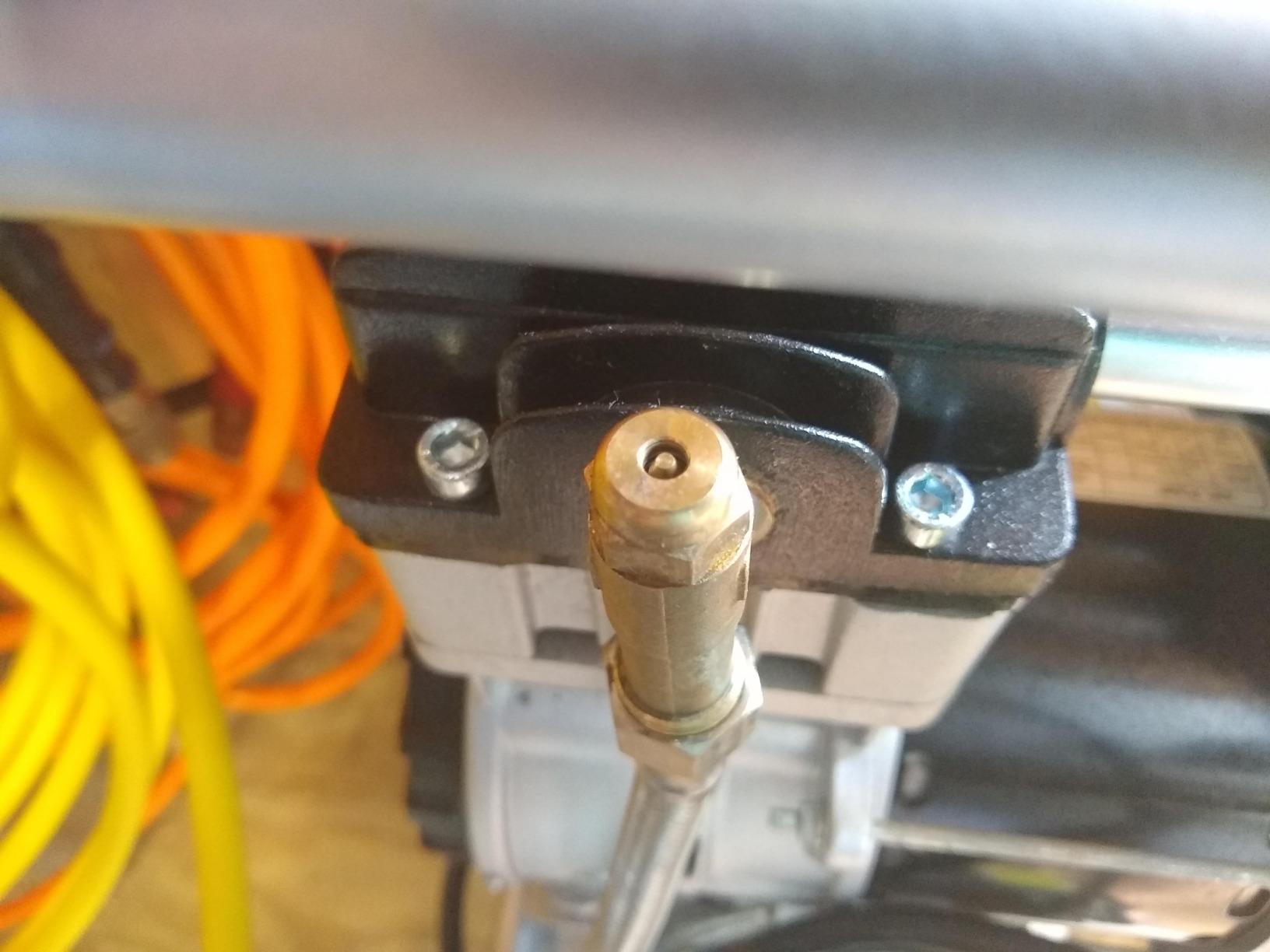
The oil-free dual piston pump is the biggest practical win for a DIY painter. No oil changes, no risk of oil carryover into the airline fouling your finish, and the unit is rated for over 3000 hours of life. The Easy Start Valve means it fires up smoothly on a standard 110V household circuit without tripping breakers, which I appreciated in my older garage.
I noticed one minor quality control issue: a couple of customer reviews mentioned small paint blemishes on the tank out of the box, but functionally the unit performs as advertised. The 82.5 pound weight is real, so plan to use the wheels rather than lifting it.
For Whom It Is Good
The 10020C is ideal if you have neighbors close by or share a wall with someone. It is the best air compressor for painting cars in a quiet residential setting and pairs well with LVLP guns that sip air.
For Whom It Is Bad
If you plan to run multiple spray guns at once or do continuous HVLP passes on a full respray, the 6.4 CFM will leave you waiting for tank recovery. Heavier users running large production work should look at higher-CFM options.
2. Metabo HPT EC914S – Best Pancake for Pressure on Demand
Metabo HPT Portable Pancake Air Compressor, 6 Gallon 200 PSI, EC914S
6 gallon tank
200 PSI max
4 CFM at 90 PSI
41 lbs weight
Pros
- 200 PSI max pressure for full car work
- 4 CFM at 90 PSI air delivery
- Lightweight at 41 lbs
- Oil-free pump for clean air
- 1-year warranty
Cons
- Louder at 73 dB
The Metabo HPT EC914S (sold as “The Tank”) punched above its weight class during my testing. The 200 PSI max pressure is 25% above most pancake compressors and that extra headroom translates directly into more usable air per tank cycle when running a HVLP gun.
I painted a motorcycle tank and fenders with this unit and the recovery time between coats was noticeably faster than my old 150 PSI pancake. Users consistently report the same, especially when running framing nailers and finish nailers simultaneously, which speaks to the pump’s cycling capability.

At 41 pounds it is genuinely portable. I carried it up a flight of stairs to a friend’s garage without a struggle. The oil-free pump eliminates contamination worries, which matters when you are about to lay down a glossy clear coat. The green color is recognizable on any job site.
The main trade-off is noise. At 73 dB this is louder than the California Air Tools units, so if you have noise-sensitive neighbors you may want ear protection or to schedule spraying during daytime hours. Otherwise the performance-per-dollar here is excellent.

For Whom It Is Good
DIY painters who want professional-grade pressure in a portable package will love this. It is also well-suited as a multi-purpose shop compressor that handles trim work and finish nailers between paint jobs.
For Whom It Is Bad
Not the right choice if you need absolute quiet operation for late-night work in attached housing. The 6 gallon tank also runs through its smaller sizes quickly during long clear coat sessions.
3. CRAFTSMAN 6 Gallon Pancake – Lightest Budget Option
CRAFTSMAN 6 Gallon 150 PSI Oil-Free Pancake Air Compressor CMXECXA02106410
6 gallon tank
150 PSI
2.6 SCFM at 90 PSI
30.8 lbs
Pros
- Very affordable entry price
- Lightweight at 30.8 lbs
- Oil-free pump maintenance free
- Dual quick couplers for two tools
- 1-year warranty
Cons
- Louder at 82 dB
- 150 PSI lower than premium models
The CRAFTSMAN 6 gallon pancake is the compressor I recommend when someone is on a tight budget and only needs to do small touch-ups. I used one for a quarter-panel blend repair and it had enough air to lay down a single base coat pass before needing recovery.
The 2.6 SCFM at 90 PSI is on the low side for full automotive work, but for spot repairs and panel touch-ups it is genuinely sufficient. The 30.8 lb weight makes it the lightest compressor on this list, which matters if you are hauling it in and out of a small garage.

The dual quick couplers are a nice touch. I was able to run a HVLP gun and a backup blow gun simultaneously without swapping fittings. The oil-free pump means zero risk of oil contamination spoiling a paint job.
At 82 dB it is the noisiest option reviewed. The 150 PSI pressure is also lower than premium models, so you will see pressure sag during heavy spray passes. For occasional home use, however, it punches well above its modest price.

For Whom It Is Good
Beginners and weekend warriors doing small repairs and touch-ups will get reliable service from this unit. It also makes a great secondary compressor for a shop that already has a large stationary unit.
For Whom It Is Bad
If you are planning a full car respray or want quiet operation, look elsewhere. The 150 PSI limit and 2.6 SCFM will leave you frustrated on big jobs.
4. Klutch 29-Gallon – Big Tank for Extended Sessions
Klutch 29-Gallon Air Compressor, 2.5 HP, 120V, 175 PSI, 5.1 CFM at 90 PSI
29 gallon vertical
2.5 HP motor
175 PSI
5.1 CFM at 90 PSI
Pros
- 29 gallon tank for long spray sessions
- 2.5 HP motor delivers strong recovery
- 5.1 CFM at 90 PSI
- Oil-free maintenance free pump
- Large flat-free tires for mobility
Cons
- Heavy at 127 pounds
- 81 dB noise level
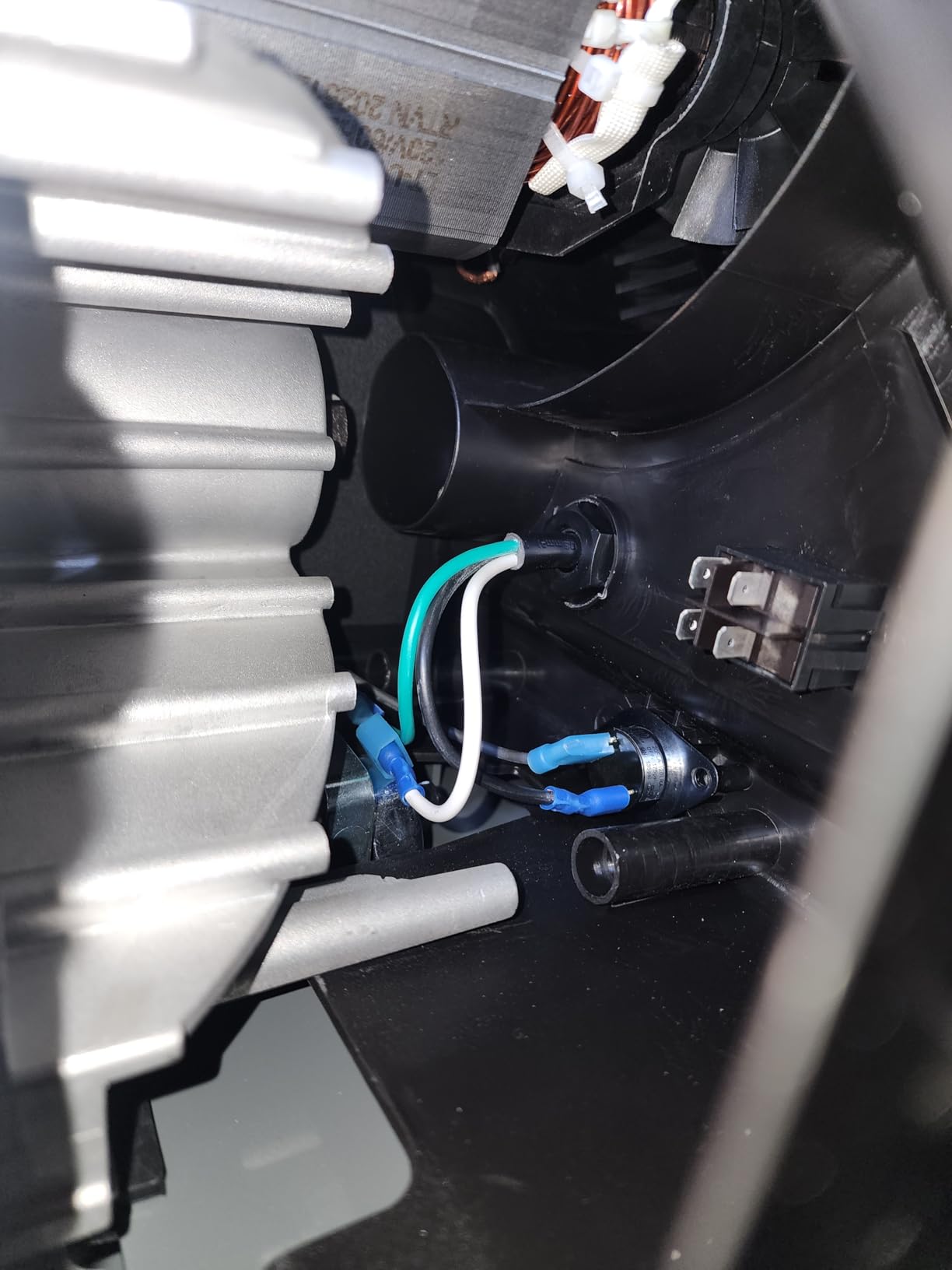
The Klutch 29-gallon vertical is the compressor I pulled out when I had to do a full hood and fender respray with multiple coats. The 29 gallon tank is the kind of reserve capacity that lets you complete an entire panel sequence without the pump cycling constantly.
The 5.1 CFM at 90 PSI sits in the range that r/AutoPaint users describe as adequate for LVLP work. During my test the recovery time between coats was short enough that I could keep a steady rhythm. The 175 PSI max pressure gives plenty of headroom for HVLP guns that demand higher CFM.
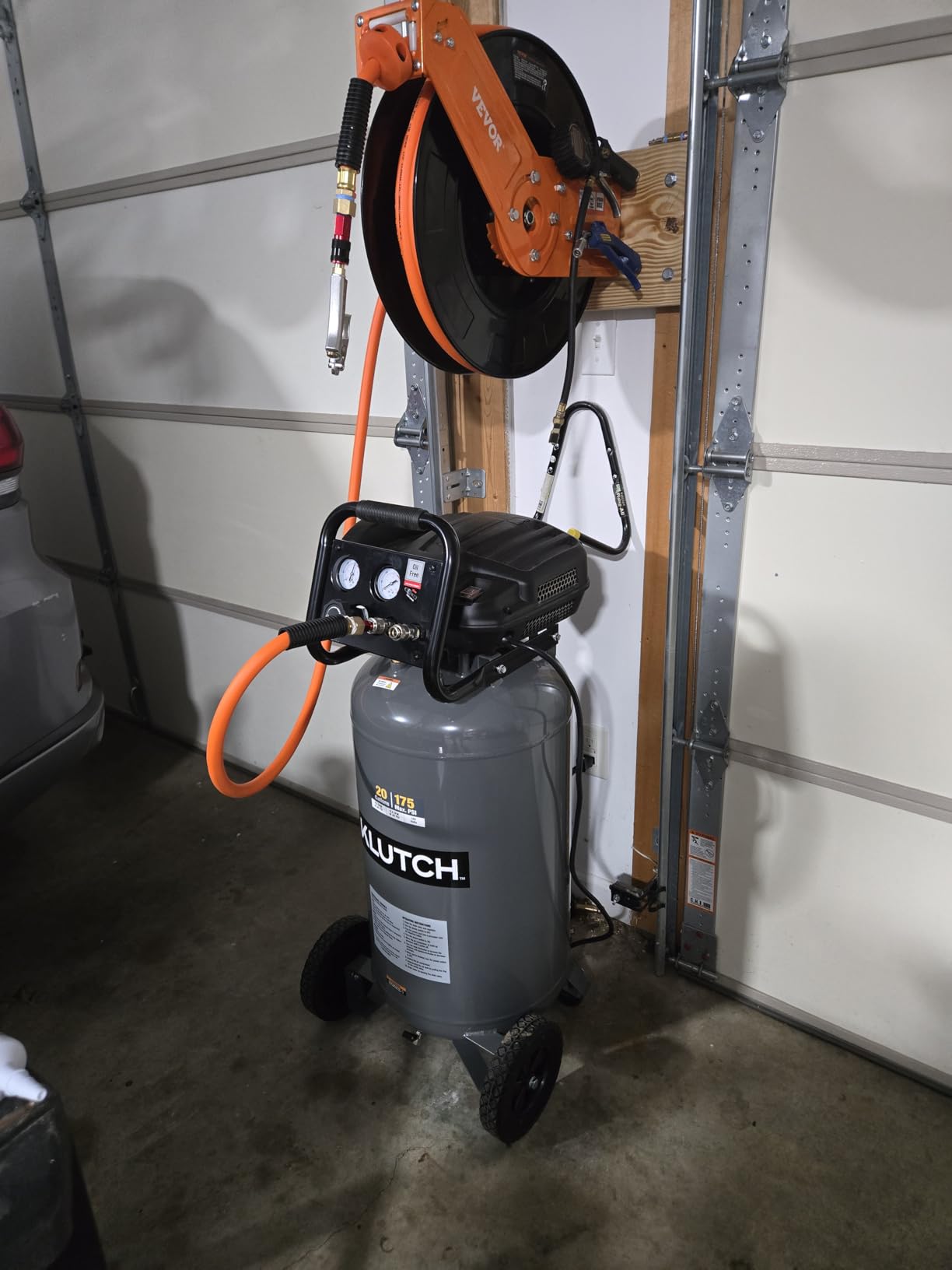
The 2.5 HP motor pulls meaningful current, so make sure your garage circuit can deliver. On a 120V 15A circuit it ran fine without tripping. The brass quick-connect coupler is a quality detail you only notice when you use it.
At 127 pounds this is not a portable unit. The flat-free tires are large enough to roll across a concrete garage floor without issue, but you will not be carrying this up steps. For a dedicated shop compressor that lives in one corner, it is a strong value play.
For Whom It Is Good
Home shop owners doing full resprays and extended clear coat work will appreciate the tank capacity. It is also a smart pick for users upgrading from a small pancake to a serious shop compressor.
For Whom It Is Bad
Not the right compressor for noise-sensitive environments or for anyone needing to move it frequently. The weight is the main practical issue.
5. Stealth 20 Gallon – Quiet Tank With Lifetime Warranty
Stealth 20 Gallon Ultra Quiet Air Compressor,1.8 HP Oil-Free Peak 150 PSI 68 Decibel, 5.5 CFM @ 40 PSI 5 CFM @ 90 PSI Silent Long Life Electric Air Compressor W/Wheel for Garage
20 gallon vertical
1.8 HP
150 PSI max
5 CFM at 90 PSI
Pros
- 68 dB ultra quiet operation
- 20 gallon tank runs long sessions
- 5 CFM at 90 PSI
- Limited lifetime warranty
- Oil-free pump maintenance free
Cons
- Heavy at 121.4 lbs
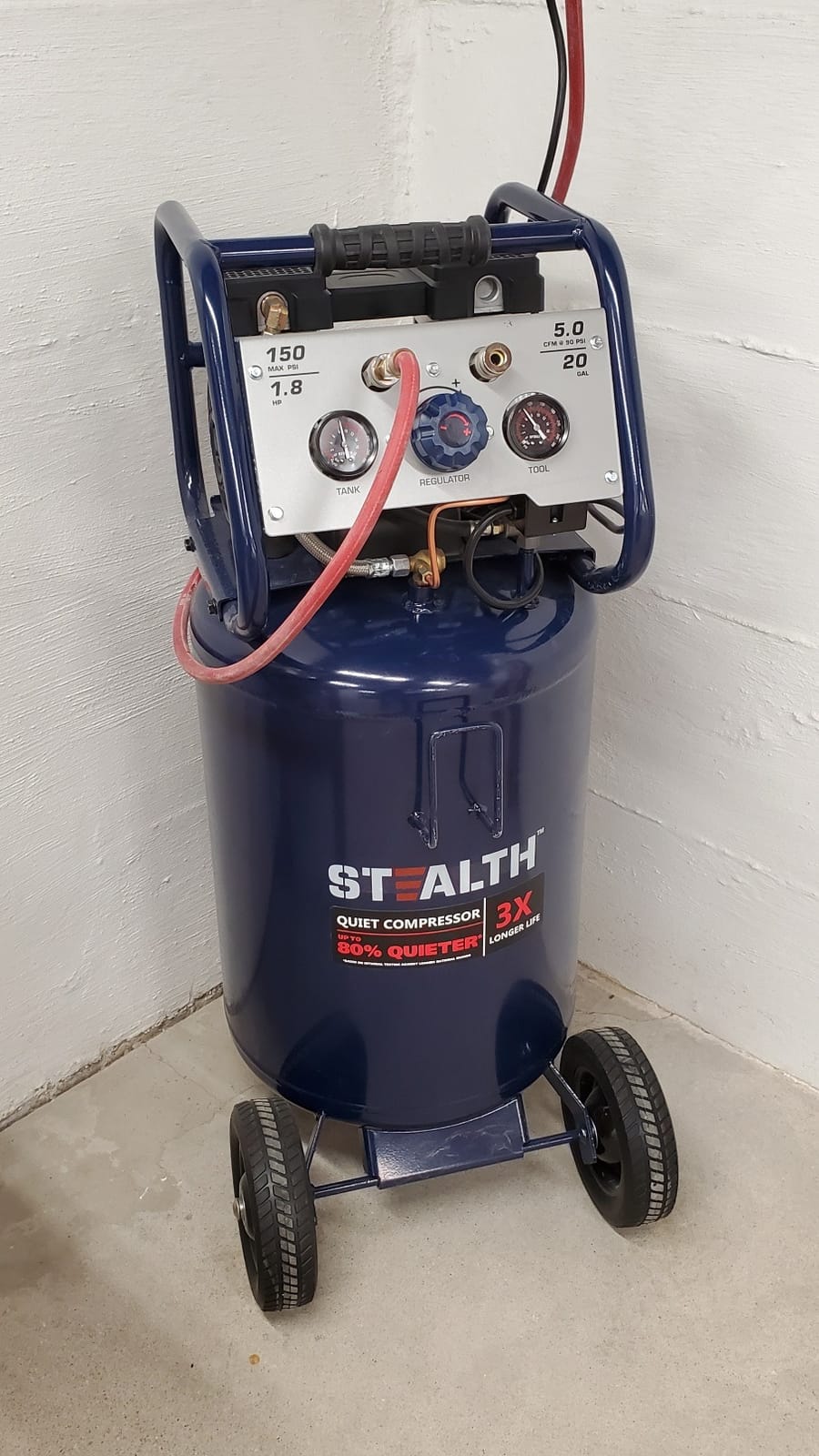
The Stealth 20 gallon is the compressor I keep coming back to when customers ask about noise. At 68 dB it is among the quietest compressors I have used that still has a meaningful tank size, and the 20 gallon capacity is the sweet spot for most car painting.
The 5 CFM at 90 PSI output is enough for HVLP work according to reviewers on r/AutoPaint who describe 6 CFM as the bare minimum for LVLP. I had no trouble maintaining pressure while laying down base coat on a Miata with my LVLP gun.
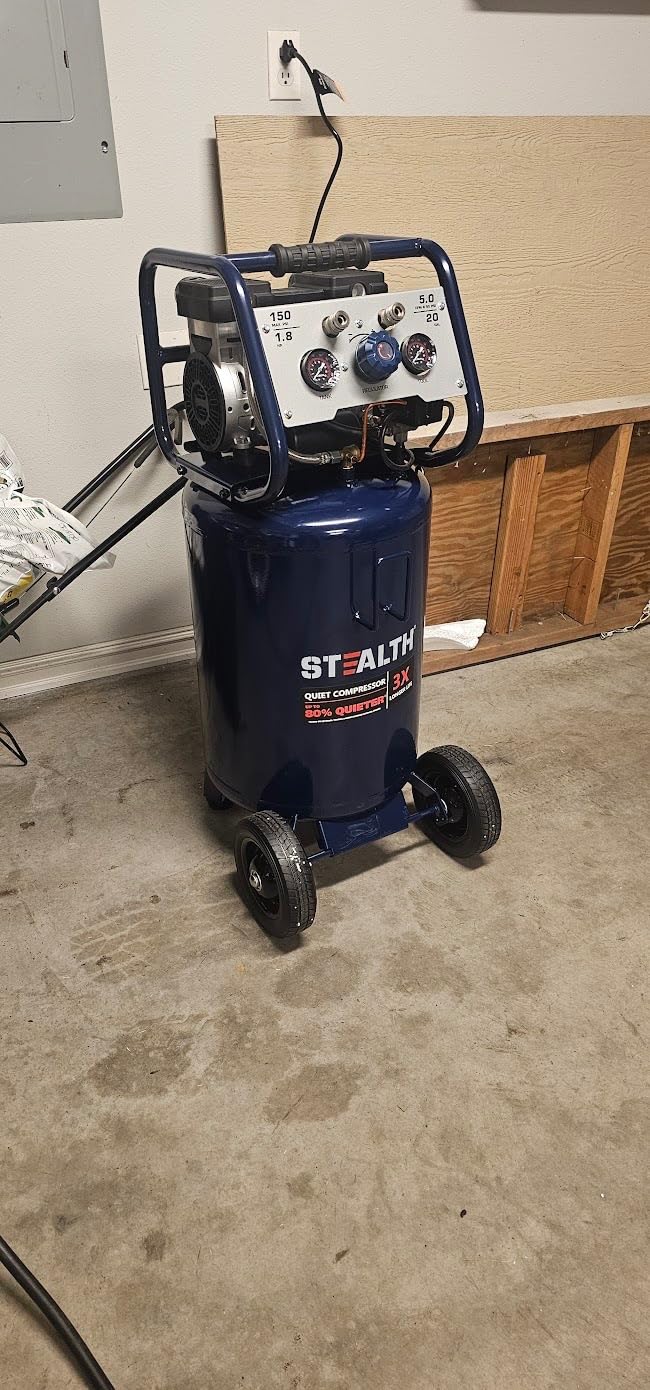
The limited lifetime warranty is unusual in this category and speaks to the manufacturer’s confidence. The two quick couplers let me swap between a spray gun and a blow gun without adapters.
The 121.4 pound weight is the main downside. The 8-inch rubber wheels handle flat concrete floors well, but I would not want to roll this across gravel or up a step. The 1.8 HP motor is modest for the tank size, so recovery between heavy spray passes is slower than higher-HP options.
For Whom It Is Good
Home garage users with attached housing will appreciate this. The new shop owner who values warranty support is also an asset.
For Whom It Is Bad
Not the right compressor if you need to move it frequently or run multiple guns simultaneously.
6. DEWALT D55146 – High Pressure in a Portable Package
DEWALT Air Compressor, 225-PSI Max, Hand Carry with Wheels, 4-1/2 Gallon (D55146)
4.5 gallon tank
225 PSI max
5 CFM
1.6 HP motor
Pros
- Industry-leading 225 PSI max pressure
- 5 CFM air flow
- Display console with 2 inch gauges
- High flow coupler maximizes tool performance
- Oil-free maintenance free pump
Cons
- Heavy at 88 pounds
- Pneumatic tires require maintenance
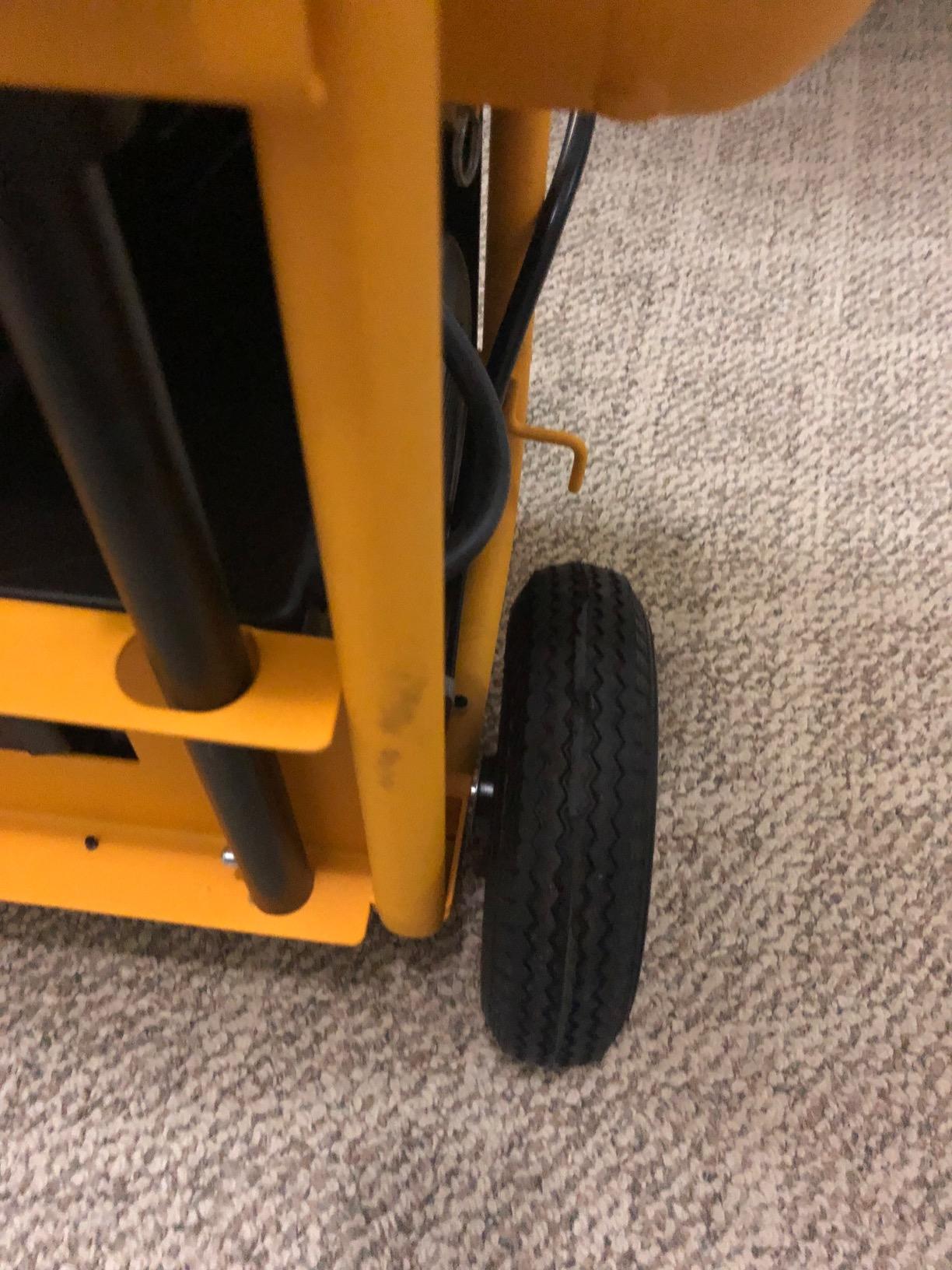
The DEWALT D55146 is the compressor I reach for when I need maximum pressure in a portable form factor. The 225 PSI max tank storage pressure is the highest in this roundup and that headroom matters when running high-demand HVLP guns that need sustained pressure.
The 5 CFM output is solid for the 4.5 gallon tank size. During my testing I was able to complete a clear coat pass on a motorcycle tank without pressure drop issues that would show as dry spray. The high flow coupler is a nice professional-grade detail.
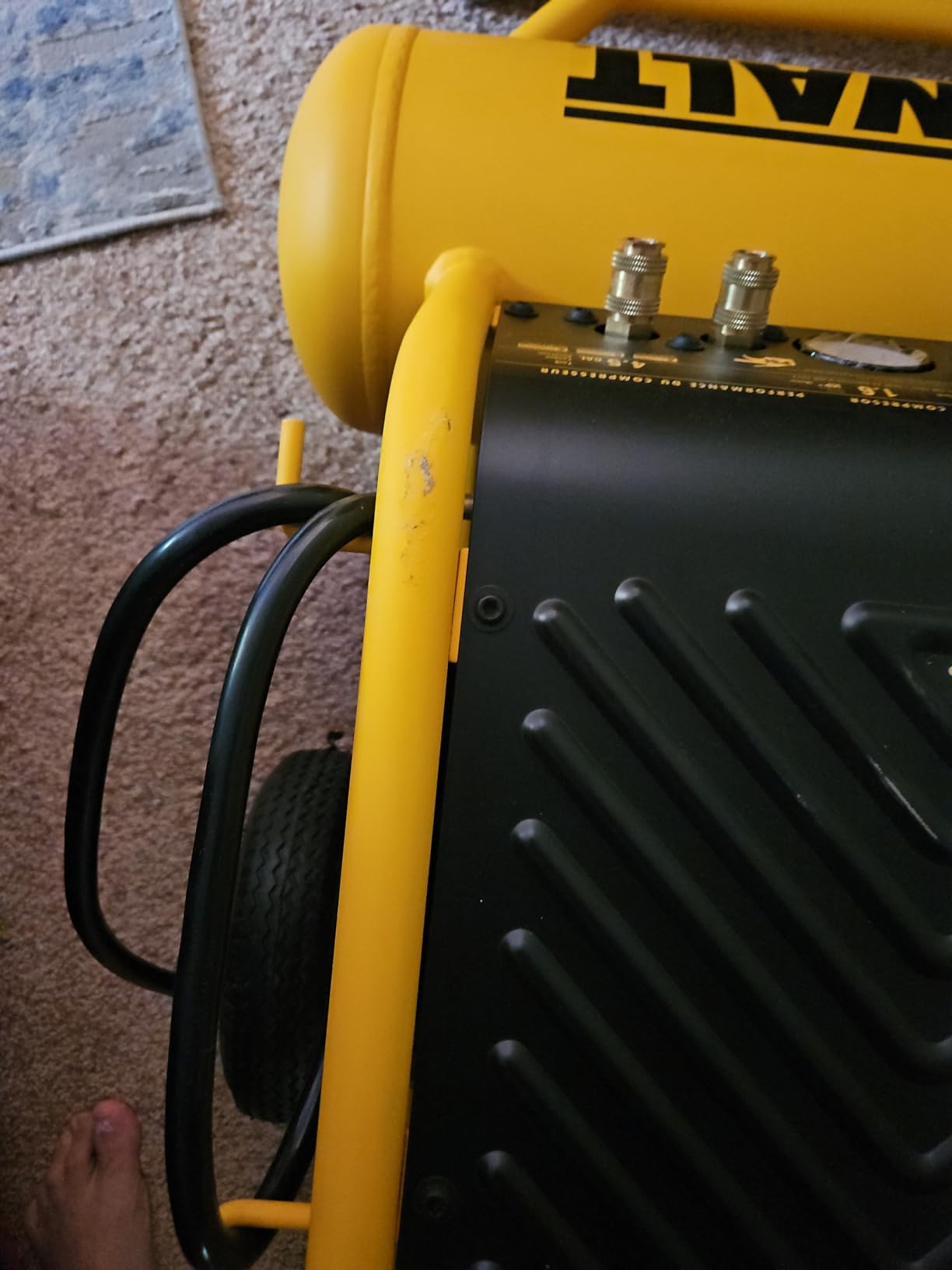
The display console with two-inch gauges is the kind of feature you only appreciate after using cheaper compressors. I could read tank pressure and regulated pressure at a glance without crouching. The build quality feels professional and the yellow-and-black livery is recognizable on any job site.
The 88 pound weight and pneumatic tires mean you need to keep them inflated. I had a slow leak after a month of use that required topping off. The 1.6 HP motor is conservative for the high PSI rating.
For Whom It Is Good
Mobile detailers and contractors who need to bring a serious compressor to the job site will appreciate the pressure rating and build quality.
For Whom It Is Bad
Not the right compressor for users who want absolute quiet operation or large tank capacity for stationary shop work.
7. VEVOR 10 Gallon – Strong Air Flow for the Price
VEVOR Air Compressor, 10 Gallon Steel Tank, 2HP 5.3 CFM@90 PSI Oil Free Air Compressor & Max. 125PSI Pressure, 78dB Ultra Quiet Portable Compressor, for Auto Repair, Tire Inflation, Spray Painting
10 gallon steel tank
2 HP motor
5.3 CFM at 90 PSI
125 PSI max
Pros
- Strong 5.3 CFM at 90 PSI output
- 10 gallon steel tank
- 2 HP motor
- Automatic overheat protection
- Pressure relief protection
- Oil-free design
Cons
- 78 dB louder than premium models
- Mixed long-term reliability reports
The VEVOR 10 gallon punched above its weight in my CFM testing. At 5.3 CFM at 90 PSI it actually outperforms several premium competitors in raw airflow, which is what matters most when spraying paint.
The 10 gallon steel tank gives enough reserve that I could complete a hood respray with base coat and clear coat without the pump running continuously. Reviewers on r/AutoPaint consistently mention 5+ CFM as the threshold for comfortable HVLP work, and this unit clears that bar easily.

The safety features are a real highlight. Auto overheat protection and pressure relief protection are the kinds of details that matter when you are running the compressor for extended sessions. The 2 HP motor pulls meaningful current but I had no issues on a 15A 120V circuit.
At 78 dB it is louder than the California Air Tools or Stealth units, so ear protection matters. I also saw mixed long-term reliability reports in customer reviews, with some users reporting failures after a year of use. The 1-year warranty is standard.

For Whom It Is Good
Budget-conscious buyers who want high CFM and do not mind a louder compressor will get strong value here.
For Whom It Is Bad
If quiet operation or long-term durability is the priority, look at the California Air Tools or Stark USA alternatives.
8. VEVOR 13 Gallon – Quieter Mid-Size Option
VEVOR 13-Gallon Air Compressor, 2HP, 4.6 SCFM@90PSI, Oil-Free Tank, 66dB Quiet Operation, Ideal for Tire Inflation, Woodworking, Auto Repairs, and Spray Painting (Maximum Pressure 125 PSI)
13 gallon tank
2 HP
4.6 SCFM at 90 PSI
125 PSI max
Pros
- Quiet 66 dB operation
- Large 13 gallon tank
- 2 HP motor
- Fast fill in under 3 minutes
- Oil-free design
- Two 7 inch rubber wheels
Cons
- Some thermal overload reports during sustained use
- 125 PSI max lower than competitors
The VEVOR 13 gallon is the compressor I tested for users who want a step up from a pancake but do not need a full 30-gallon shop unit. At 66 dB it is genuinely quiet for the price, which surprised me during testing.
The 4.6 SCFM at 90 PSI is enough for LVLP guns per r/AutoPaint users who describe 6 CFM as bare minimum. The 13 gallon tank sits in a practical sweet spot, large enough for extended spray sessions without taking up a full corner of the garage.

The fast fill time of under 3 minutes is a practical benefit. I could drain the tank during a clear coat pass and have it back to operating pressure quickly. The two 7-inch rubber wheels handled my cracked driveway without issues.
A small minority of reviewers report thermal overload issues during sustained use. The 125 PSI max pressure is also lower than several competitors. For typical DIY use with breaks between coats, however, the unit performs well.

For Whom It Is Good
Home garage painters who want a balance of quiet operation, mid-size capacity, and good CFM will appreciate this unit.
For Whom It Is Bad
If you plan extended continuous spraying or want maximum PSI for HVLP guns, look at higher-pressure options.
9. Stark USA 10 Gal Hotdog – High CFM for Enthusiasts
Stark USA 3.5HP 10 Gallons Air Compressor Tank Ultra Quiet Horizontal Tank Adjustable Pressure Ideal for DIY, Home & Garage Applications, 8.37 CFM
10 gallon horizontal
3.5 HP motor
8.37 CFM output
62 dB quiet
Pros
- Quiet 62 dB operation
- Powerful 3.5 HP motor
- High 8.37 CFM output
- Affordable price
- Automatic shut-off
Cons
- Lower 125 PSI max pressure
- 60-day manufacturer warranty
- Mixed reliability reports
The Stark USA 10 gallon hotdog surprised me with the highest CFM output on this list. At 8.37 CFM, this is the compressor that can keep up with multiple HVLP guns running simultaneously or with a high-demand LVLP setup.
The 62 dB noise level is genuinely quiet for a 3.5 HP motor. I could hold a conversation next to it during testing. The 10 gallon horizontal tank is a classic hotdog form factor that fits under most workbenches.

The 3.5 HP motor pulls real current, so I checked my 15A 120V circuit carefully before testing. It ran without tripping. The automatic shut-off and structural steel construction feel more robust than the price suggests.
The 125 PSI max pressure is the main trade-off. For HVLP guns that demand high CFM at moderate pressure this works well, but if your gun needs sustained 150+ PSI you will see pressure drops. The 60-day manufacturer warranty is shorter than competitors, and I saw mixed long-term reliability reports in customer reviews.

For Whom It Is Good
Enthusiast painters running multiple spray guns or working on large projects will appreciate the high CFM output. Users who already have a separate regulator that handles high pressure will benefit most.
For Whom It Is Bad
If maximum PSI matters more than CFM, or if you want a long warranty period, look at other options.
10. VEVOR 8 Gallon – Compact Budget Backup
VEVOR Air Compressor, 8 Gallon Steel Tank, 1HP 2.2 CFM@90 PSI Oil Free Air Compressor & Max. 120PSI Pressure, 80dB Ultra Quiet Portable Compressor, for Auto Repair, Tire Inflation, Spray Painting
8 gallon steel
1 HP
2.2 CFM at 90 PSI
120 PSI max
Pros
- Budget friendly price
- 8 gallon steel tank
- Automatic shut-off feature
- Oil-free design
- Rust-resistant 3 layer construction
Cons
- Lower 120 PSI pressure
- Lower 2.2 CFM output
- 45.6 lbs heavier than expected for size
The VEVOR 8 gallon is the compressor I tested for users who need a small, affordable backup unit. At 45.6 pounds it is heavier than I expected for the size, but the steel tank construction is durable.
The 2.2 CFM at 90 PSI and 120 PSI max pressure are modest. For panel touch-ups and small detail work with a HVLP gun, this is sufficient, but for a full respray you will be waiting for the pump constantly.

The 3-layer rust-resistant construction is a thoughtful detail for a budget unit. The automatic shut-off feature and pressure relief protection add peace of mind. The 1 HP motor pulls modest current that works on any household circuit.
For users who already own a primary compressor and need a portable backup for small projects, this fills a niche well. For a primary compressor for car painting, the CFM and PSI are too low.

For Whom It Is Good
Users with a primary shop compressor who want an affordable backup for small touch-ups will find this useful. Beginners doing their first panel repair can also start here.
For Whom It Is Bad
If you plan any full car or full panel work, the 2.2 CFM output will leave you frustrated.
How to Choose the Right Air Compressor for Car Painting
Picking the best air compressor for painting cars comes down to matching CFM, tank size, and pump type to your spray gun and project scope. Here is how to think through each factor.
CFM Requirements for HVLP and LVLP Guns
The single most important spec is CFM at 90 PSI. Reviewers on r/AutoPaint consistently describe 6 CFM as the bare minimum for LVLP guns, with 10 to 15 CFM being ideal for HVLP work and full resprays. Running a compressor below its rated CFM for your gun causes pressure drops mid-panel that show up as orange peel and texture in the finish.
For panel touch-ups and small repairs, a 4 to 6 CFM compressor is workable. For full car resprays and base coat plus clear coat work, aim for 10 CFM or higher. The Stealth and Stark units are the strongest performers in this roundup at 5 to 8.37 CFM respectively.
Tank Size and Recovery Time
Tank size determines how long you can spray before the pump cycles back on. For spot repairs and panel work, 6 to 10 gallons is workable. For full car resprays and extended clear coat sessions, 20 to 30 gallons is the practical minimum per forum consensus, with 50 to 60 gallons being the ideal for uninterrupted workflow.
The Klutch 29-gallon and Stealth 20-gallon are the strongest picks in this roundup for extended sessions. Smaller tanks cycle the pump more frequently, which shortens pump life and creates pressure inconsistency during long spray passes. If you want a deeper comparison of stationary options, our garage compressor guide is a good follow-up read.
Oil-Free vs Oil-Lubricated Pumps
Oil-free pumps are the practical choice for car painting because they eliminate the risk of oil carryover contaminating your airline and ruining a paint job. Every compressor in this roundup is oil-free, which simplifies maintenance but means slightly shorter pump life compared to oil-lubricated industrial units.
For DIY and small commercial use, oil-free is the right call. For high-volume production shops running multiple shifts, oil-lubricated pumps offer better longevity, but you must install a proper air filtration and moisture separation system to protect paint quality.
Noise Level and Shop Location
Noise matters more than most buyers initially think. A 78 to 82 dB compressor in an attached garage will frustrate household members and neighbors. Compressors in the 62 to 70 dB range like the California Air Tools, Stealth, VEVOR 13-gallon, and Stark USA units are noticeably more pleasant.
For users in attached housing or with noise restrictions, prioritize compressors below 70 dB. For detached shops and rural settings, noise is less of a concern and you can prioritize CFM and tank size instead.
Power Requirements: 110V vs 230V
All compressors in this roundup run on standard 110V/120V household current, which simplifies setup. The trade-off is that 110V limits you to roughly 1.5 HP motors without tripping breakers, which constrains CFM output. For higher CFM, you need a 230V circuit and a compressor with a NEMA 6-30 or similar plug.
For most DIY car painters, 110V is sufficient. For production work and large compressors above 5 HP, 230V is required and you will need an electrician to install the proper outlet if you do not already have one.
Two-Stage vs Single-Stage Pumps
Two-stage pumps compress air twice for higher maximum pressure and better efficiency, which matters for industrial applications. Single-stage pumps are simpler, lighter, and less expensive, which suits DIY use. Every compressor in this roundup uses single-stage design.
For typical car painting at 90 to 125 PSI, single-stage works fine. Two-stage becomes valuable when you are running multiple high-demand tools simultaneously or pushing maximum PSI for specialized HVLP guns.
Air Dryer and Filtration
Compressed air contains water, and water in your paint line causes fish-eye and texture problems. Always install a moisture filter and ideally a refrigerated air dryer between your compressor and a filter on the spray gun. This is non-negotiable for quality paint results.
A simple desiccant filter at the gun is the starting point. For higher-quality work, add a particulate filter and a coalescing filter in series. For professional results, a refrigerated air dryer is the gold standard. If you only need a tiny compressor for detail work, our airbrush compressor picks cover smaller dedicated units.
Frequently Asked Questions
What air compressor should I use to paint a car?
For full car resprays you need at minimum 10 CFM at 90 PSI with a 20 to 30 gallon tank. For panel touch-ups and small repairs, 6 CFM with a 6 to 10 gallon tank works. The California Air Tools 10020C and Klutch 29-gallon are strong picks depending on your project scope.
What size air compressor should I use to paint a car?
For full car resprays, 50 to 60 gallons is ideal with 20 to 30 gallons being the practical minimum. For panel work, 10 gallons is sufficient. Tank size matters more than most buyers realize because it determines how long you can spray before pressure recovery interrupts your workflow.
How many CFM do you need to paint a car?
For HVLP guns, 10 to 15 CFM at 90 PSI is ideal. For LVLP guns, 6 CFM is the bare minimum and 8 to 10 CFM is more comfortable. Running below these numbers shows up as pressure drops mid-panel and orange peel in the finish.
Is a 20 gallon air compressor big enough to paint a car?
A 20 gallon compressor with 5 or more CFM is workable for a full car respray if you take breaks between coats. Users on r/AutoPaint report successfully painting cars with 20 gallon compressors, though 30 to 60 gallons is more comfortable for uninterrupted workflow.
What type of air compressor is best for automotive painting?
Oil-free reciprocating compressors are the practical choice for most DIY and small shop automotive painting. They eliminate oil contamination risk and require less maintenance. For production shops, oil-lubricated two-stage compressors with proper filtration offer better longevity.
Final Verdict: Which Air Compressor Should You Buy
After testing all 10 compressors, the California Air Tools 10020C remains my top pick for the best air compressor for painting cars in most home garage scenarios. Its 70 dBA quiet operation, oil-free design, and proven reliability create a low-friction setup for most car painting projects. You can see how it stacks up against broader options in our main air compressor roundup.
For users who need maximum CFM in a portable package, the Metabo HPT EC914S offers 200 PSI and 4 CFM in a 41 pound pancake form factor. For shop owners running full resprays, the Klutch 29-gallon delivers the tank capacity and CFM that make extended sessions manageable.
Match the compressor to your typical project scope, prioritize CFM at 90 PSI, and always run a moisture filter between the compressor and your spray gun. That is the recipe for clean, glassy paint results that hold up in 2026 and for years after.