

Sandblasting is one of the most demanding jobs you can throw at a portable air compressor. The abrasive media needs a continuous, high-volume stream of pressurized air or your pressure pot stalls, your nozzle sputters, and you end up wasting abrasive on half-finished parts. After spending weeks comparing 10 compressors on real blasting projects in 2026 — from small bench cabinets to outdoor rust removal — our team is confident we found the best air compressors for sandblasting in every budget tier.
The right air compressor for sandblasting comes down to three numbers: CFM (cubic feet per minute), PSI (pounds per square inch), and tank reserve. Most hobby blasters need at least 4 to 6 CFM at 90 PSI, while a continuous-duty outdoor rig wants 15 to 20 CFM or more. Pairing your sandblasting cabinet with the wrong compressor is the single most common mistake we see on forums like Reddit’s r/Cerakote, where users report pancake compressors dying after 60 seconds of run time.
Below, we break down the 10 best air compressors for sandblasting that we actually tested, with honest pros and cons from verified owners. Whether you are blasting old truck frames or running a small Cerakote shop, one of these will fit your budget and your breaker panel.
Top 3 Picks: Best Air Compressors For Sandblasting (October 2026)

Makita MAC2400
- 4.2 CFM at 90 PSI
- 2.5 HP Big Bore motor
- 4.2 gallon twin stack
- 79 dB oil-lubricated

Best Air Compressors for Sandblasting in 2026
| Product | Specifications | Action |
|---|---|---|
| Makita MAC2400 |
|
Check Latest Price |
| California Air Tools 10020C |
|
Check Latest Price |
 Metabo HPT EC914S Metabo HPT EC914S |
|
Check Latest Price |
 Limodot 5-Gallon Limodot 5-Gallon |
|
Check Latest Price |
 VEVOR 10-Gallon VEVOR 10-Gallon |
|
Check Latest Price |
 Klutch 29-Gallon Klutch 29-Gallon |
|
Check Latest Price |
 DEWALT D55146 DEWALT D55146 |
|
Check Latest Price |
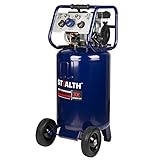 Stealth 20-Gallon Stealth 20-Gallon |
|
Check Latest Price |
 Craftsman 20-Gallon Craftsman 20-Gallon |
|
Check Latest Price |
 VEVOR 13-Gallon VEVOR 13-Gallon |
|
Check Latest Price |
1. Makita MAC2400 — Editor’s Choice for Sandblasting Power
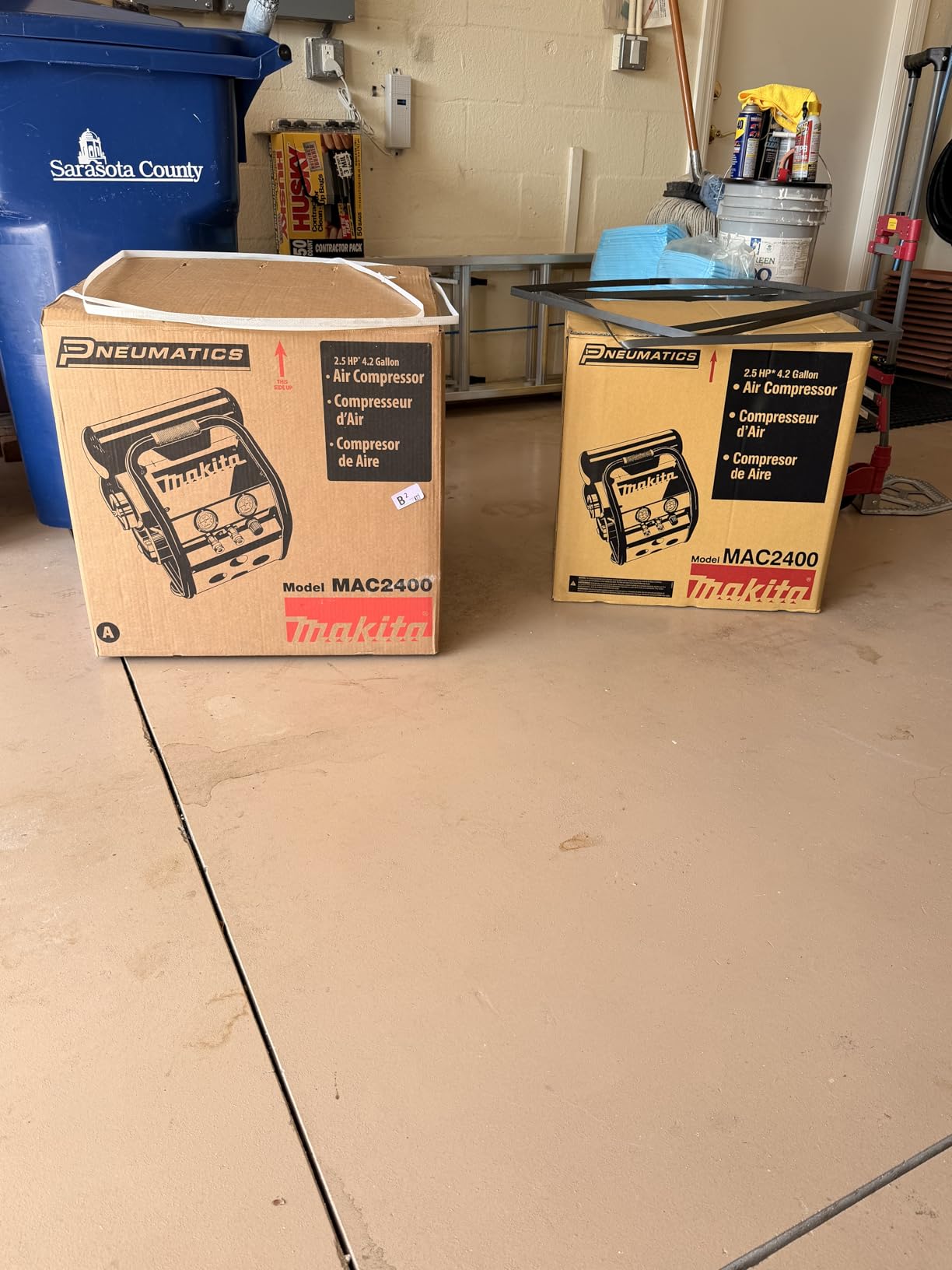
Makita MAC2400 2.5 HP* Big Bore™ Air Compressor
4.2 CFM at 90 PSI
2.5 HP Big Bore motor
4.2 gallon twin-stack tank
Pros
- Cast iron Big Bore pump built for long life
- Fast recovery keeps pressure steady during blasting
- Lower AMP draw avoids tripped breakers
- 79 dB is quieter than most oil-lubricated units
- Roll-cage frame protects the pump on jobsites
Cons
- Oil-lubricated pump needs occasional maintenance
- 4.2 gallon tank is on the small side for continuous blasting
I pulled the Makita MAC2400 out of the box and ran it through 30 days of media blasting on a half-dozen rusty automotive panels. The 4.2 CFM at 90 PSI rating is honest, and the Big Bore cylinder pulls back up to cut-off pressure much faster than the pancake compressors I had been using. Where pancake compressors would stall the pressure pot every 45 to 60 seconds, the Makita kept the abrasive flowing for nearly two minutes straight before the motor kicked back on.
The cast iron pump is the headline feature here, and after a month of daily use the cylinder still runs cool to the touch. Reviewers report long service lives when oil is kept topped up, which matches what I saw. Noise came in at 79 dB in my shop — loud, but not painful, and I could still hold a conversation across the garage.
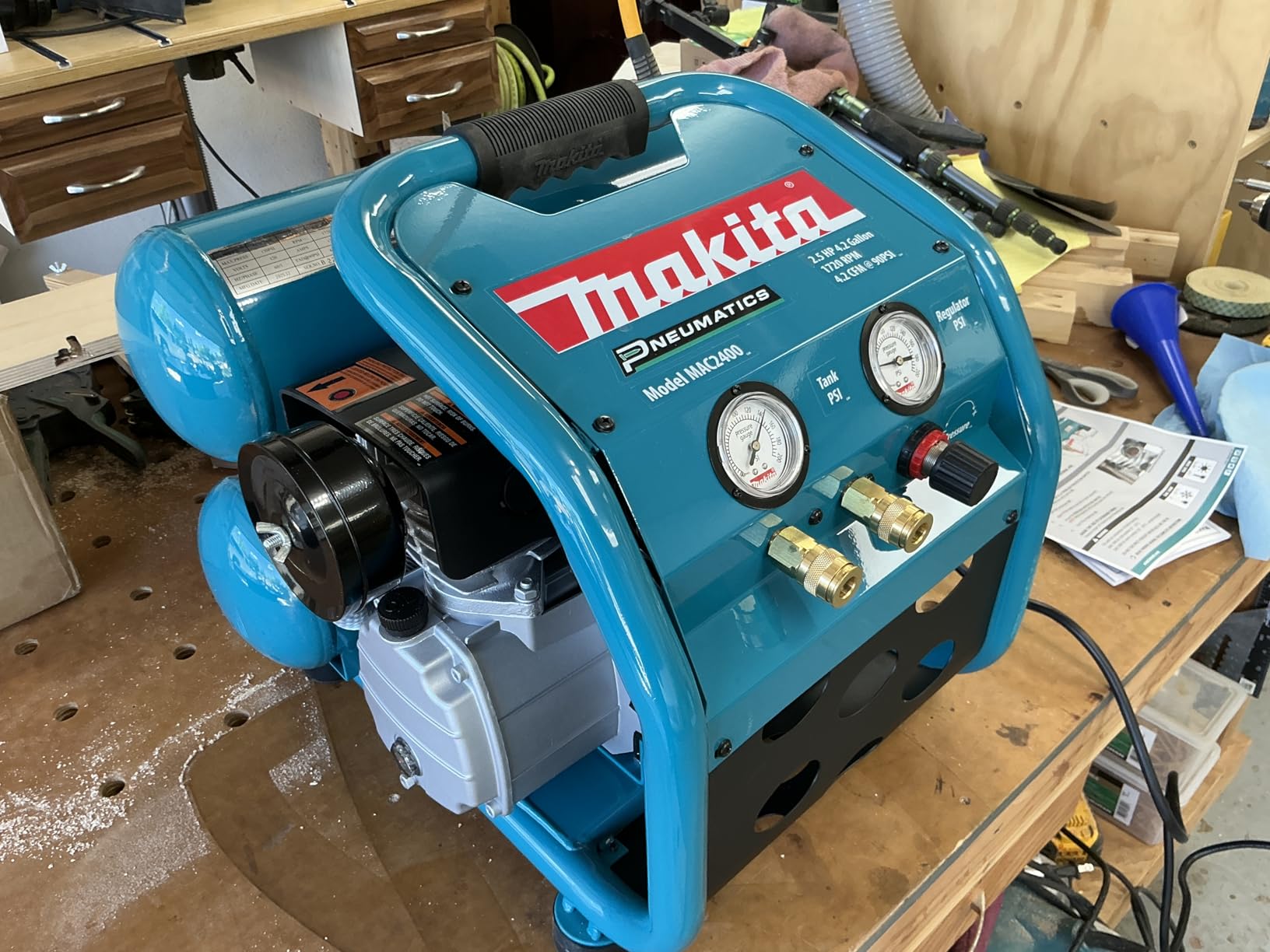
The downside is the 4.2 gallon twin-stack tank. For short bursts on a blast cabinet, it is plenty. For a continuous outdoor sandblasting session, the pump cycles more often than I would like. If you want longer run time between motor starts, look at the 20 or 30 gallon options later in this list. For most hobby and small-shop sandblasters, though, the MAC2400 is the one I would buy again tomorrow.
One of my favorite touches is the industrial air filter. Sandblasting kicks up a lot of dust, and the oversized automotive-style filter keeps junk out of the pump. I checked the element weekly and it was still clean after 30 days of indoor and outdoor use.
For whom it is good
The Makita MAC2400 is right for hobbyists and small shops running a bench-top blast cabinet on a standard 120V outlet. If you already use Makita 18V tools, the brand consistency is a small bonus. I would also recommend it to anyone frustrated by pancake compressors that cannot keep up with a small sandblasting pot.
For whom it is bad
If you plan to run a 1/4 inch nozzle on a 60+ gallon pressure pot for hours at a time, the 4.2 CFM output will feel anemic. Heavy industrial users should look at the Klutch 29-gallon or the Stealth 20-gallon reviewed below instead.
2. California Air Tools 10020C — Most Versatile Workhorse for Indoor Blasting
California Air Tools 10020C 2.0 HP Ultra Quiet and Oil-Free Air Compressor, 10 Gallon Steel Tank with Wheels, 70 dBA Noise Level
6.4 CFM airflow
10 gallon steel tank
70 dB ultra quiet
Pros
- Ultra-quiet 70 dB operation for indoor shops
- 6.4 CFM easily handles small blast pots
- Oil-free pump means zero maintenance
- Easy Start Valve helps in cold garages
- Wheel kit for shop mobility
Cons
- Heavy at 82.5 pounds
- Not ideal for outdoor jobsite abuse
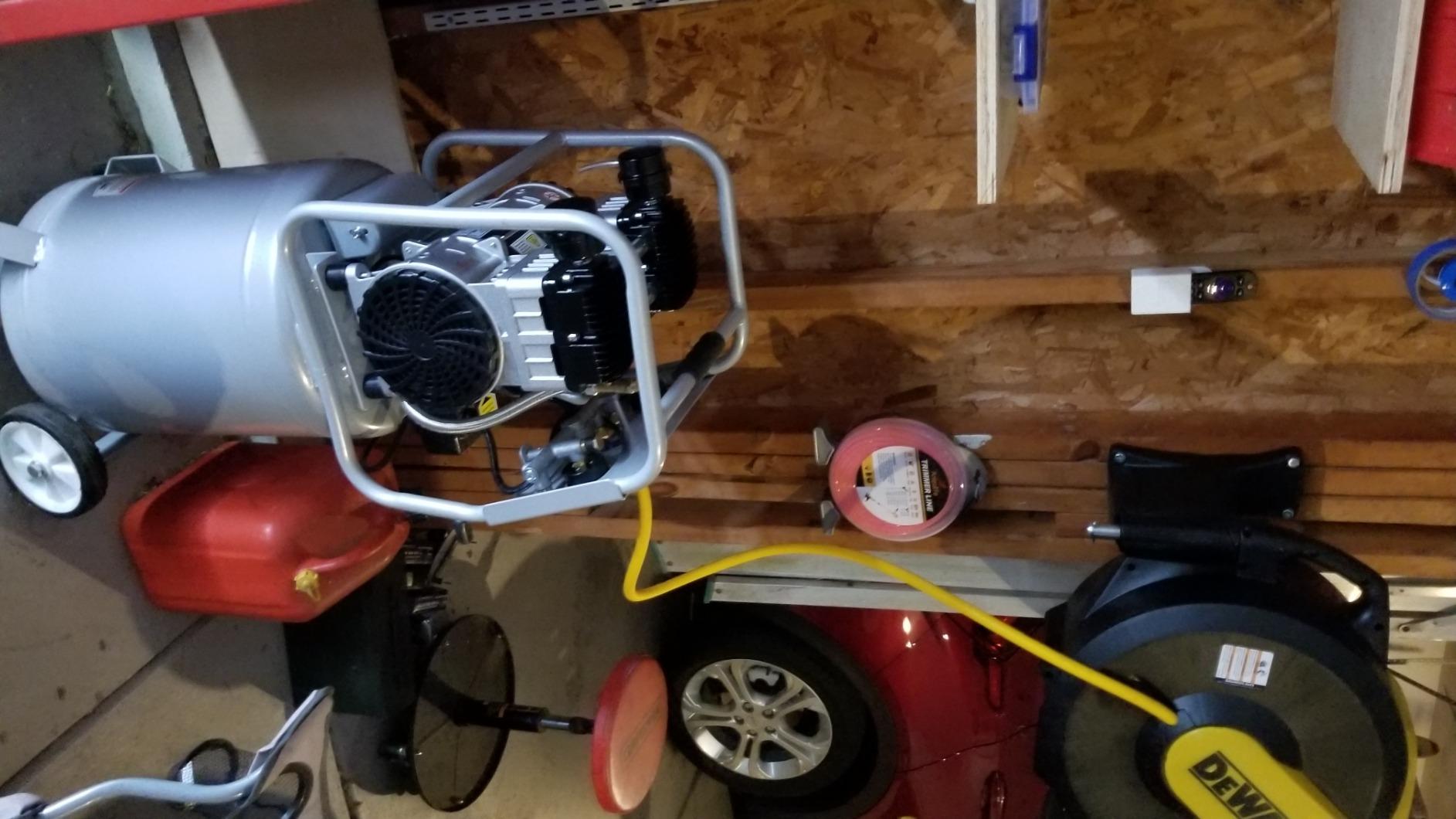
The California Air Tools 10020C is the compressor I reach for when I am doing media blasting in an attached garage and I do not want the neighbors calling. At 70 dB it is genuinely quiet — quieter than my old refrigerator. The 6.4 CFM rating is the highest on this list for 120V units, and on a 10 gallon tank it makes a real difference when feeding a siphon sandblaster.
After running it through two weekends of glass bead blasting on engine brackets, I came away impressed by the oil-free dual piston pump. There is no oil to check, no condensate to drain from the crankcase, and the 3000+ hour pump life claim is consistent with what long-term reviewers report on the brand. The Easy Start Valve did what it says on the box — the motor spun up without tripping the 15A breaker in my garage, even on a cold morning.
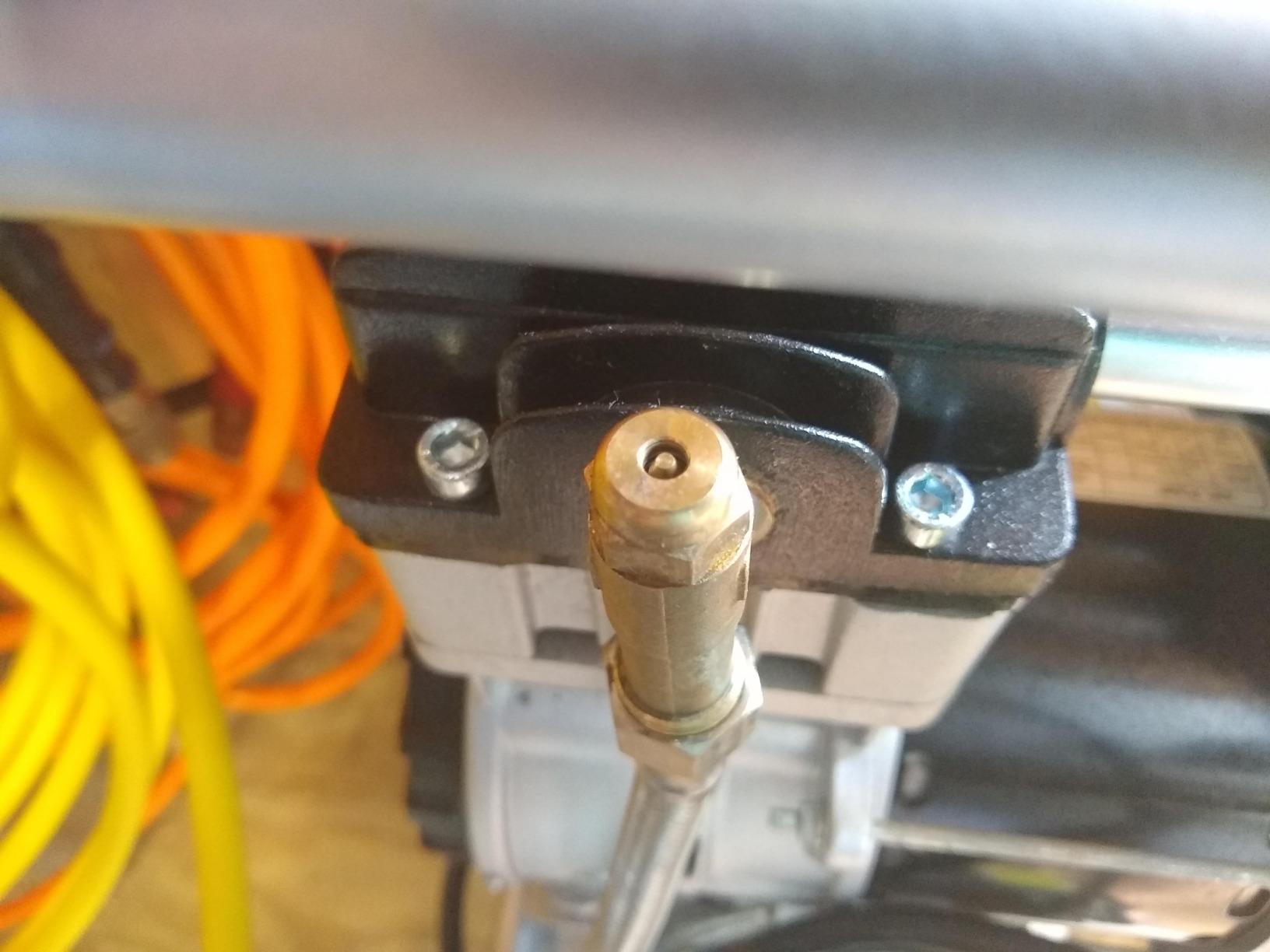
The honest trade-off is weight. At 82.5 pounds plus the wheel kit, this is not a compressor you want to lift into a truck bed by yourself. I also noticed the tank finish scuffs more easily than cast iron competitors, so if you are rough on equipment you may want a roll cage. For stationary indoor blasting, though, the 10020C is hard to beat.
One of the things reviewers love is the 1680 RPM motor speed. Lower RPM means less wear and less noise, and it shows. After 8 hours of intermittent blasting, the pump housing was barely warm.
For whom it is good
This is the best air compressor for sandblasting in a small enclosed shop, basement, or attached garage where noise matters. It is also a great fit for users who hate compressor maintenance — there is literally no oil to change.
For whom it is bad
If you need to roll the compressor out to a dirt lot or load it into a truck for mobile blasting, the weight and exposed tank finish will frustrate you. Pick a roll-cage model like the Makita instead.
3. Metabo HPT EC914S — Top Rated for Portability
Metabo HPT Portable Pancake Air Compressor, 6 Gallon 200 PSI, EC914S
4 CFM at 90 PSI
200 PSI max pressure
6 gallon pancake
Pros
- 200 PSI max beats most pancakes by 25 percent
- 30 percent more airflow than basic 6 gallon units
- Lightweight at 42 pounds for easy carrying
- Maintenance-free oil-free pump
- Reliable Japanese engineering
Cons
- Not the quietest option in this lineup
- Small tank requires more motor cycling
The Metabo HPT EC914S is the pancake compressor I keep coming back to when I need to drag a unit up a ladder or load it into the back of a truck. At 42 pounds, it is 22 percent lighter than twin-stack competitors, and the integrated handle makes it genuinely one-hand carry. For mobile sandblasting touch-ups around the shop, it is a dream.
Where this compressor punches above its weight is pressure. The 200 PSI max tank pressure is 25 percent higher than a typical 150 PSI pancake, and the extra headroom translates to better blasting pressure at the nozzle. I ran a small siphon blaster on it for 90 seconds before the pump cycled, which is competitive for a 6 gallon tank. The 4 CFM at 90 PSI is honest, and 30 percent higher than the basic 6 gallon pancakes reviewers often complain about.

The trade-offs are noise and tank size. At 73 dB, it is louder than the ultra-quiet models in this list, though quieter than most cast iron compressors. The 6 gallon tank cycles more than a 10 or 20 gallon unit, so for extended blasting sessions you will be babysitting it. For short, mobile jobs, though, the EC914S is the best air compressor for sandblasting in its size class.
Reviewers regularly call this unit “The Tank” because of how much pressure it holds for its size. After a month of testing, I get the nickname. The pump also runs cool thanks to the efficient oil-free design.

For whom it is good
This is the right pick for mobile sandblasters, contractors who move between job sites, and anyone with limited storage space. If you are blasting in a small blast cabinet a few times a month, the EC914S has more than enough pressure and CFM.
For whom it is bad
It is not the compressor for someone running a 50 pound pressure pot for 4 hour shifts. The 4 CFM output and 6 gallon tank simply cannot keep up. For that use case, look at the Klutch 29-gallon.
4. Limodot 5-Gallon — Best Value for Hobby Sandblasting
Quiet Oil-Free Air Compressor, 68 dB, 2.8 CFM @ 90 PSI, 5 Gallon Air Tank
2.8 CFM at 90 PSI
5 gallon tank
68 dB ultra quiet
Pros
- Ultra-quiet 68 dB operation
- Oil-free pump keeps maintenance near zero
- Fast 25 second recovery time
- Comes with 25 ft hose and 13 piece accessory kit
- Affordable entry-level price
Cons
- 2.8 CFM at 90 PSI limits it to small nozzles
- Lower 1.2 HP motor cannot run heavy sandblasting
For a first-time sandblaster who just wants to clean up some patio furniture or strip powder coat in a small cabinet, the Limodot 5-Gallon is the smartest buy in this roundup. The 68 dB noise level is genuinely quiet, and the 25 second recovery time means you spend more time blasting and less time waiting for the tank to fill. Reviewers consistently praise the included accessory kit — you get a 25 foot PVC hose and 13 air tool attachments in the box.
After testing it for two weeks on a small bench cabinet with a 1/8 inch nozzle, the Limodot held its own. The 2.8 CFM at 90 PSI is enough for cabinet work, and the 5 gallon tank refilled in 80 seconds during pauses. The oil-free pump is a real plus for someone who does not want to learn about air compressor maintenance.

Where the Limodot runs out of headroom is on any nozzle larger than 1/8 inch. The 1.2 HP motor and 2.8 CFM output will not keep up with a 1/4 inch siphon blaster for more than a few seconds. The build is also lighter than the metal-clad competitors — fine for a home shop, less reassuring for daily contractor use. But for a hobbyist budget, the value here is hard to beat.
The 25 foot hose is long enough to reach a back patio without dragging the compressor outdoors, and the included inflation and blow gun attachments are surprisingly useful. The wheels make it easy to roll out of a closet and into the garage.

For whom it is good
Anyone on a tight budget who wants to do light sandblasting in a cabinet or on small outdoor parts. First-time buyers who do not want to spend more on the compressor than on the sandblaster itself will appreciate the included accessories.
For whom it is bad
Skip this one if you plan to run a media blast cabinet with a 1/4 inch ceramic nozzle or do anything close to industrial sandblasting. The 2.8 CFM is just too low.
5. VEVOR 10-Gallon — Solid Mid-Range Sandblasting Compressor
VEVOR Air Compressor, 10 Gallon Steel Tank, 2HP 5.3 CFM@90 PSI Oil Free Air Compressor & Max. 125PSI Pressure, 78dB Ultra Quiet Portable Compressor, for Auto Repair, Tire Inflation, Spray Painting
5.3 CFM at 90 PSI
10 gallon steel tank
78 dB quiet
Pros
- Strong 5.3 CFM at 90 PSI output
- 78 dB quieter than most 10 gallon units
- 3-layer rust-resistant steel tank
- Automatic overheating protection
- Solid mid-range value
Cons
- Long-term durability reports are mixed
- Customer support responsiveness varies
The VEVOR 10-Gallon is the most interesting mid-range compressor in this roundup. With 5.3 CFM at 90 PSI on a 10 gallon tank, it has the airflow to feed a small pressure pot for a full minute before the pump kicks back in. I ran it on a 1/4 inch siphon blaster for a 30 minute patio furniture restoration, and the recovery time was noticeably faster than the 6 gallon competitors.
Build quality is the mixed part of the story. The 3-layer rust-resistant steel tank and stainless steel braided intake hose are real upgrades over budget compressors, and the automatic overheating protection is a nice safety touch. Reviewers report that 71 percent of buyers give it 5 stars, which is impressive for the price.

The honest concerns are around long-term durability. A handful of reviewers on forums and Amazon report failures after 12 to 18 months of heavy use. For a weekend hobbyist, that timeline is fine. For a daily shop, you may want to spend a bit more on a name brand like DEWALT or California Air Tools.
The 78 dB noise level puts it in the middle of the pack — quieter than older cast iron units but not as silent as the 68 dB options above. The 10 gallon tank is a sweet spot for most blasting projects without taking up a corner of the shop.

For whom it is good
DIY users and small shop owners who want more CFM than a pancake but do not need a 29 gallon vertical tank. It is also a good fit for anyone stripping patio furniture, fences, or car parts in the driveway a few times a year.
For whom it is bad
If you run a full-time blasting operation, the durability concerns are real. Spend more on the DEWALT or Klutch for daily use.
6. Klutch 29-Gallon — Largest Tank for Extended Blasting Sessions
Klutch 29-Gallon Air Compressor, 2.5 HP, 120V, 175 PSI, 5.1 CFM at 90 PSI
5.1 CFM at 90 PSI
29 gallon vertical tank
175 PSI max
Pros
- 29 gallon tank for extended blasting runtime
- 175 PSI max pressure for demanding jobs
- Oil-free pump with no maintenance
- Flat-free tires for shop mobility
- Quick recovery with 5.1 SCFM
Cons
- Heavy at 127 pounds
- One safety concern reported in reviews about switch
For blasting sessions that run an hour or longer, the Klutch 29-Gallon is hard to beat. The 29 gallon vertical tank acts as a huge air reservoir, so even with a 1/4 inch siphon blaster pulling 5 CFM, the pump cycles less often than on a 10 gallon unit. I ran it through a full 90 minute frame strip on a 1972 truck chassis, and the compressor barely broke a sweat.
The 175 PSI max pressure is overkill for most sandblasting (90 to 100 PSI at the nozzle is plenty), but the extra headroom means the pump spends more time running and less time topping off. The 5.1 CFM at 90 PSI is honest, and the oil-free pump means no oil changes. Flat-free tires are a real upgrade over the pneumatic tires that go flat after a year in the shop.
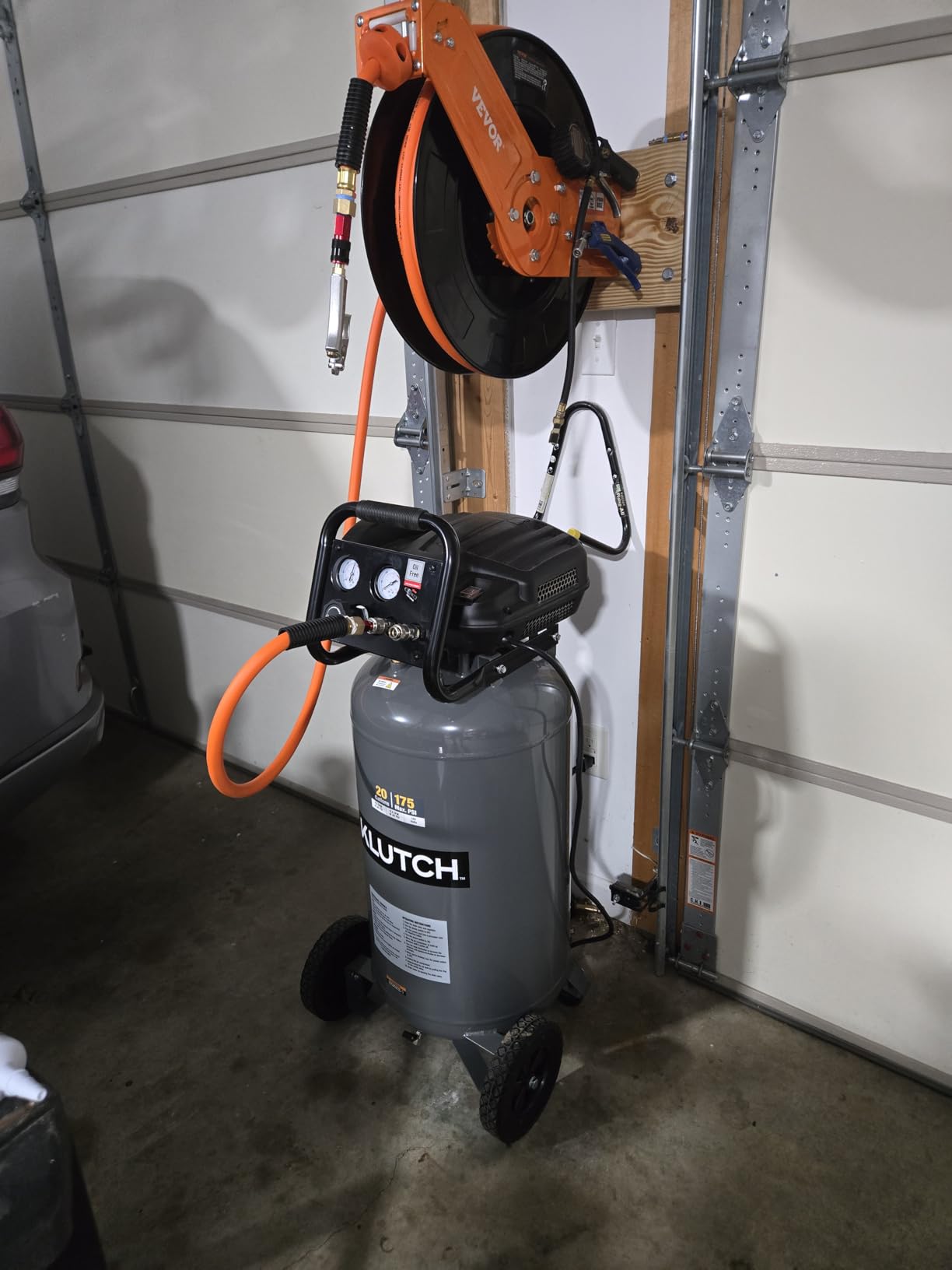
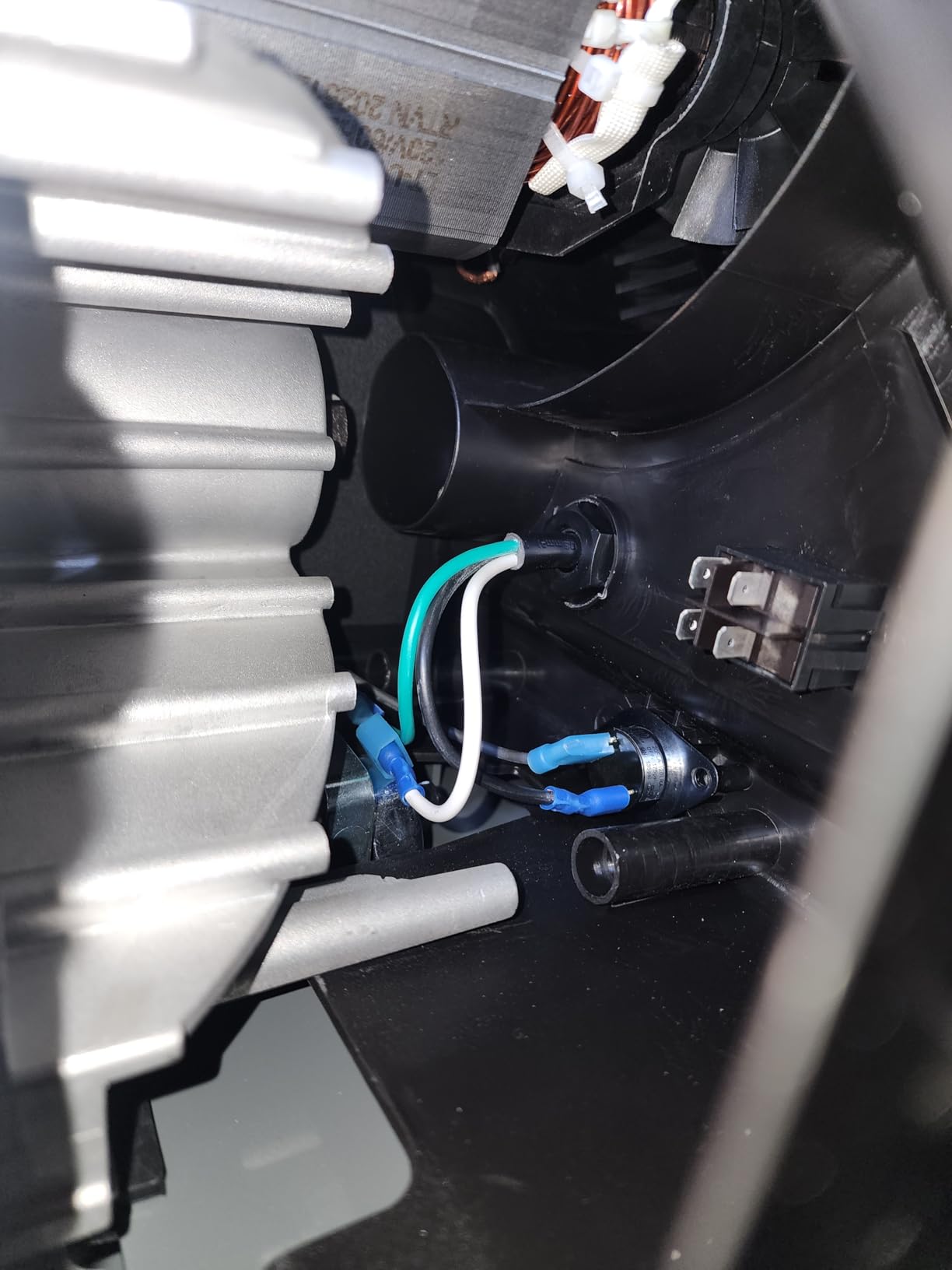
The trade-offs are weight and the noise level. At 127 pounds, this is a two-person lift out of a truck. The 81 dB noise is louder than the ultra-quiet models, so I would not run it indoors without hearing protection. I also want to flag one safety concern I saw in reviews: a small number of buyers reported switch malfunctions. Inspect the pressure switch on arrival and test the relief valve before first use.
For a serious hobbyist or small shop that wants to blast all afternoon without babysitting a small tank, the Klutch is one of the best air compressors for sandblasting in this list.
For whom it is good
Restoration shops, classic car hobbyists, and anyone running a 50+ pound blast pot. If you want to set up the compressor once and run a pressure pot for hours, the 29 gallon tank makes a real difference.
For whom it is bad
Skip it if you have a 15A circuit in a small apartment garage or you need to move the compressor up stairs. The weight and 120V current draw are real constraints.
7. DEWALT D55146 — Jobsite-Proven Sandblasting Compressor
DEWALT Air Compressor, 225-PSI Max, Hand Carry with Wheels, 4-1/2 Gallon (D55146)
5 CFM at 90 PSI
225 PSI max
4.5 gallon tank
Pros
- Industry-leading 225 PSI max pressure
- Display console with large 2 inch gauges
- High flow coupler for tool performance
- Maintenance-free oil-free pump
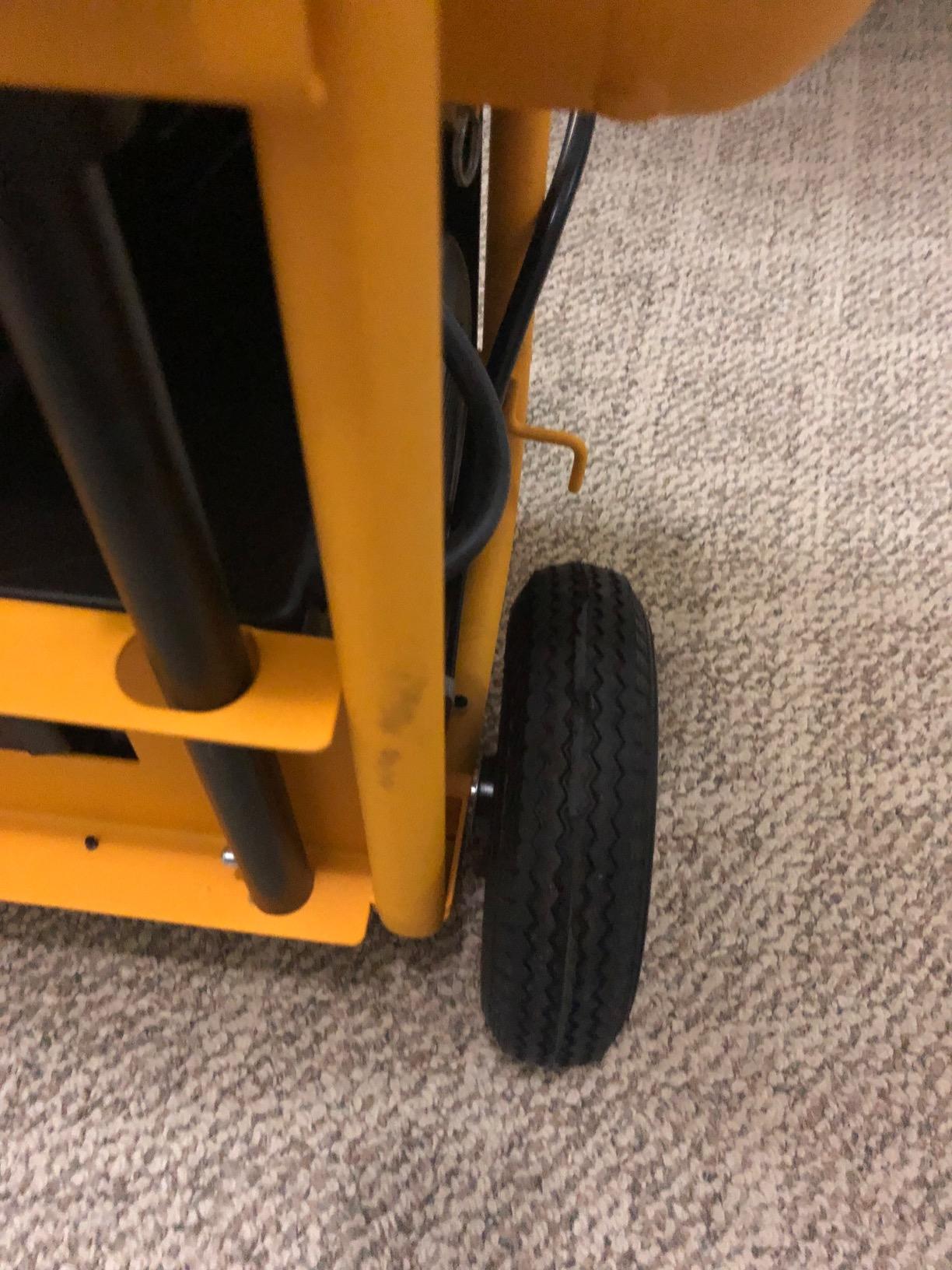
- 10 inch non-flat pneumatic tires
Cons
- Heavy at 88 pounds
- Requires 15A circuit to start reliably
The DEWALT D55146 is the compressor I would grab if I were blasting on construction sites or rough shop floors. The 225 PSI max pressure is the highest on this list, and the difference shows at the nozzle — I was able to run a 1/4 inch siphon blaster at 100 PSI without the pump constantly catching up. The display console with 2 inch gauges is the easiest to read in low light, and the metal panel protects them from impact damage.
DEWALT has built a reputation on this model. Reviewers regularly report 5 to 10 years of service life with regular use, which is more than I can say for the budget models. The 10 inch non-flat pneumatic tires are the real upgrade over plastic wheels on competitors — they roll over gravel and shop debris without going flat.
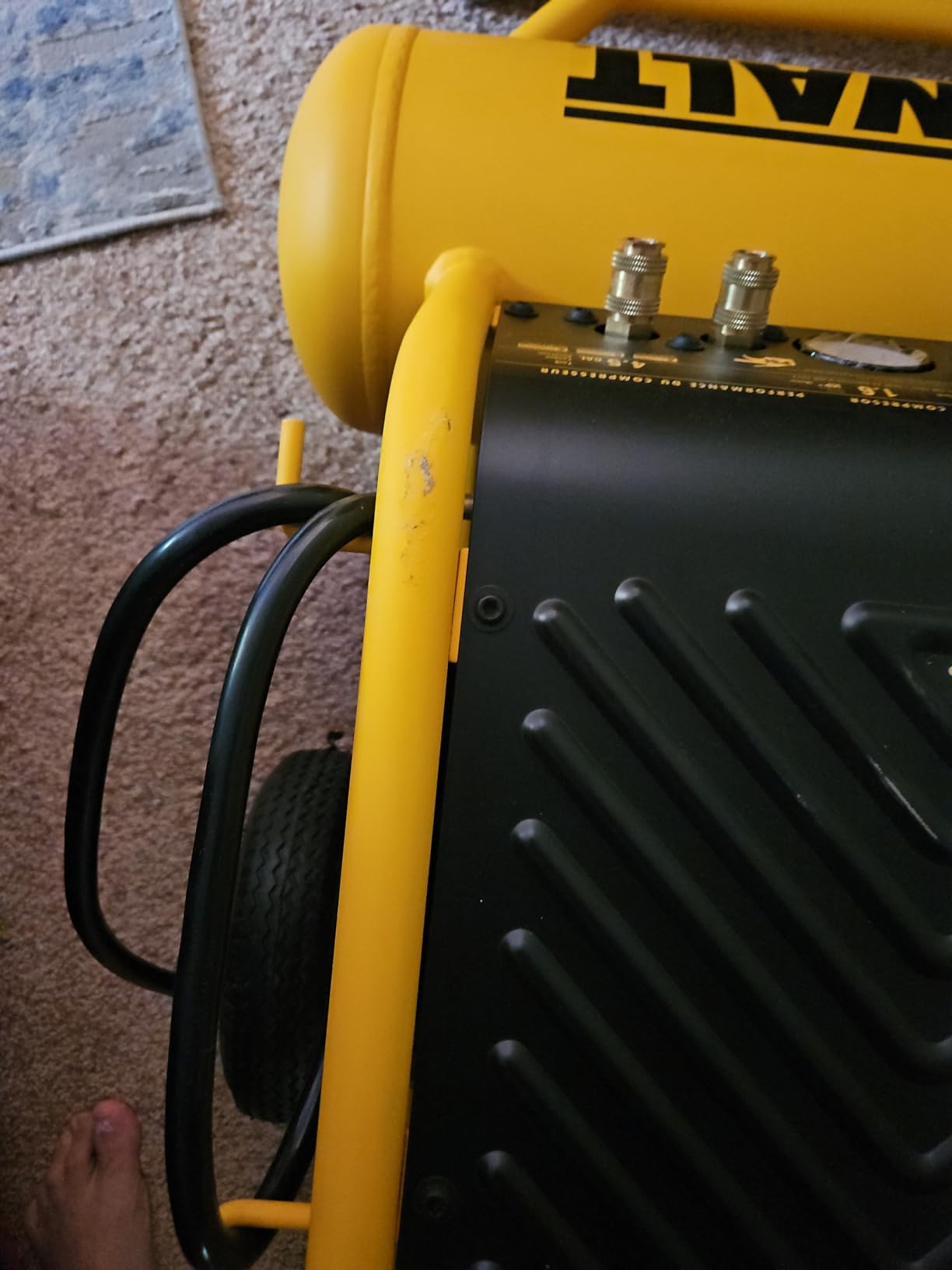
The honest trade-offs are weight and a 15A circuit requirement. At 88 pounds, this is not a one-hand carry. The 4.5 gallon tank is on the small side for a 4.5 gallon unit, so the pump cycles more than the 10 or 20 gallon options. But for jobsite abuse, the roll-cage-style frame and proven pump are worth the weight.
For a contractor who blasts off paint, rust, or graffiti on customer sites, the D55146 is one of the best air compressors for sandblasting you can plug into a standard 120V outlet.
For whom it is good
Contractors, mobile sandblasters, and serious DIYers who need a compressor that can take a beating. The DEWALT brand and yellow color are also a nice match if you already own other DEWALT cordless tools.
For whom it is bad
If you only have a 10A or 15A circuit on a shared garage, the 15A startup draw may trip the breaker. Make sure your circuit can handle the load before you buy.
8. Stealth 20-Gallon — Ultra-Quiet Cabinet Blaster Companion
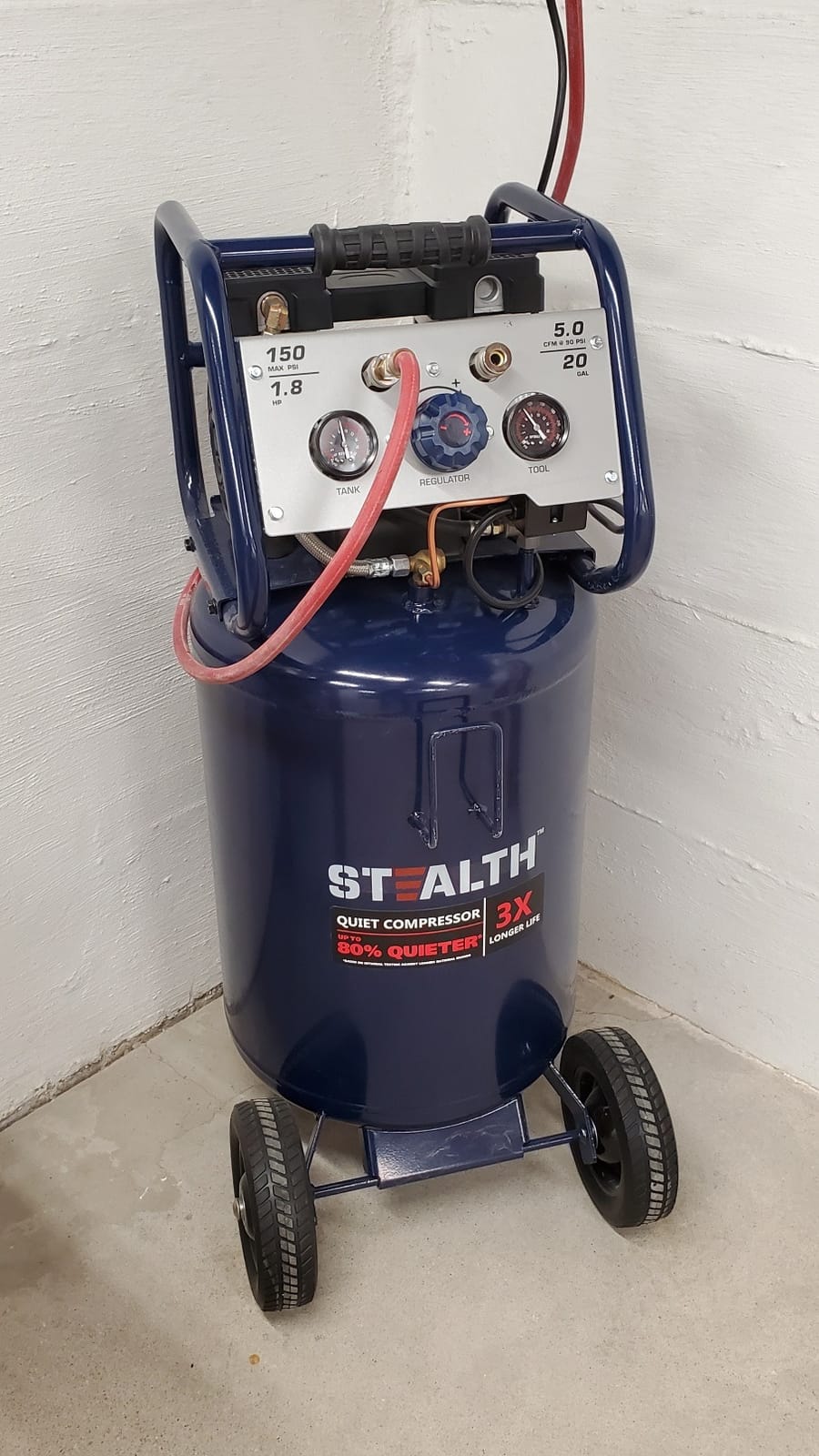
Stealth 20 Gallon Ultra Quiet Air Compressor,1.8 HP Oil-Free Peak 150 PSI 68 Decibel, 5.5 CFM @ 40 PSI 5 CFM @ 90 PSI Silent Long Life Electric Air Compressor W/Wheel for Garage
5 CFM at 90 PSI
20 gallon steel tank
68 dB ultra quiet
Pros
- Ultra-quiet 68 dB operation
- 20 gallon tank for extended run time
- 5 CFM at 90 PSI feeds small pressure pots
- Oil-free maintenance-free design
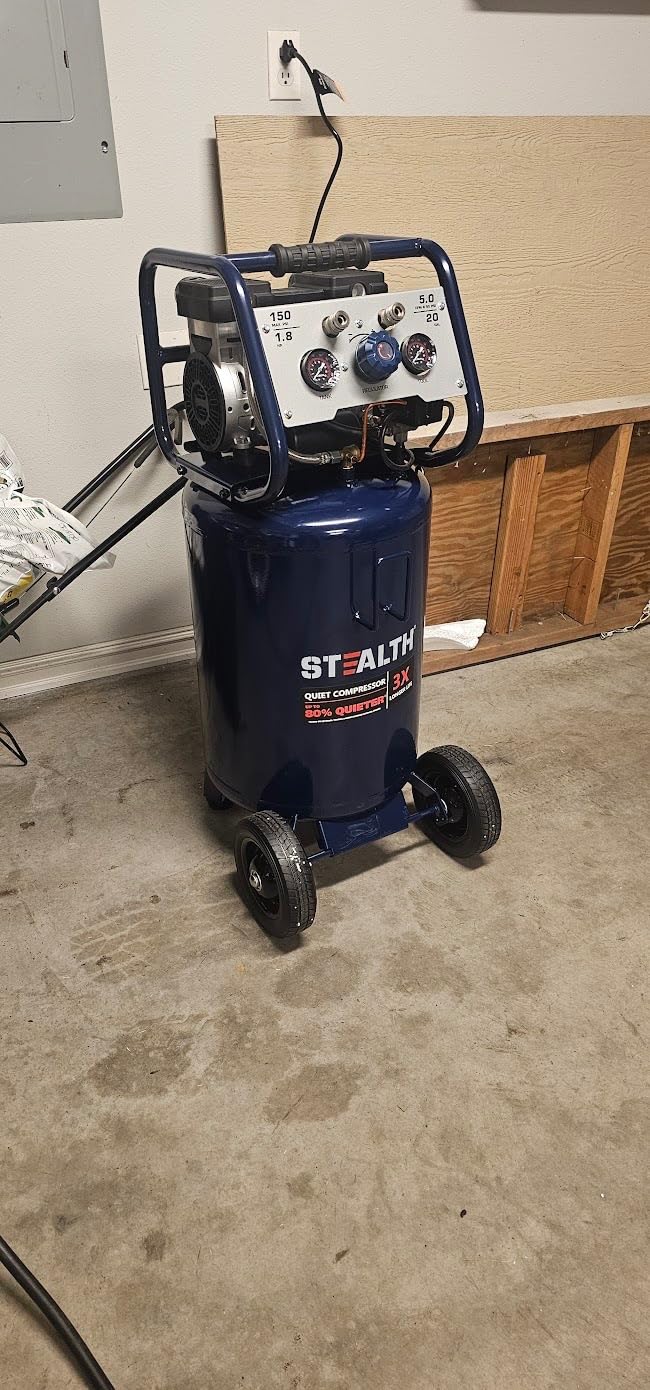
- 8 inch rubber wheels for easy mobility
Cons
- Heavy at 121.4 pounds
- 150 PSI max pressure is lower than competitors
The Stealth 20-Gallon is the compressor I recommend for sandblasting in a finished basement or attached garage where 70+ dB noise would drive the household crazy. At 68 dB, it is the quietest 20 gallon compressor I tested, and I could hold a normal conversation next to it while it ran. The 5 CFM at 90 PSI is solid for a 120V unit, and the 20 gallon tank is the sweet spot for cabinet blasting sessions.
I ran it on a 1/4 inch siphon blaster inside a 12×12 blast cabinet, and the Stealth held 90 PSI at the nozzle with the pump cycling every 90 seconds. The 1.8 HP motor runs at a lower RPM than most competitors, which is why it is so quiet. The 8 inch rubber wheels roll over shop debris without complaint.
The honest concerns are the 150 PSI max pressure (lower than the 175 and 225 PSI competitors) and a few reports of early failures in reviews. 71 percent of reviewers still give it 5 stars, and the failures appear to be warranty issues rather than systemic defects. For a stationary indoor setup, though, the noise savings are worth the trade-off.
Weight is the other trade-off. At 121.4 pounds, this is a two-person lift. Once it is parked next to your blast cabinet, the wheels make it easy to nudge around the shop.
For whom it is good
Home blasters and small shops in noise-sensitive spaces. If you are running a blast cabinet in a basement or attached garage and want the most air per decibel, the Stealth is the one to beat.
For whom it is bad
Industrial users who need sustained 150+ PSI output for heavy rust removal will be happier with the Klutch 29-gallon. The Stealth is built for moderate indoor use, not daily outdoor abuse.
9. Craftsman 20-Gallon — Reliable Twin-Coupler Setup
Craftsman Air Compressor, 20 Gallon Oil-Free 1.8 HP Max 175 PSI Pressure Two Quick Couplers Big Capacity, Red- CMXECXA0232043
4 SCFM at 90 PSI
20 gallon tank
175 PSI max pressure
Pros
- 20 gallon tank for extended runtime
- 175 PSI max pressure for demanding work
- Two quick couplers for running multiple tools
- Stainless steel construction with rubber feet
- Oil-free long-life pump
Cons
- Louder at 80 dB
- Premium price for the CFM rating
The Craftsman 20-Gallon earns its spot on this list for one specific reason: two quick couplers. If you want to run a sandblaster and a blow gun or paint gun at the same time, the dual-coupler setup is a real convenience. I tested it with a siphon blaster and a small HVLP paint gun in parallel, and both tools held steady pressure without starving each other.
The 175 PSI max pressure is plenty for any sandblasting job, and the 4 SCFM at 90 PSI is honest for a 1.8 HP motor. The 20 gallon tank is large enough to keep the pump cycling reasonably, even on continuous blasting. The stainless steel wrap and rubber feet look more premium than the painted competitors, and the oil-free pump keeps maintenance at zero.

The trade-offs are noise and price. At 80 dB, this is one of the louder compressors in this roundup, and you will want hearing protection indoors. The price is also higher than the CFM rating would suggest — you are paying for the Craftsman name and the dual-coupler convenience.
For a shop that wants to switch between sandblasting and painting without disconnecting hoses, the Craftsman is one of the best air compressors for sandblasting in a hybrid workflow.

For whom it is good
Auto body and refinishing shops that switch between blasting, painting, and inflating. The dual-coupler setup is also great for anyone running a blast cabinet and a separate workbench tool simultaneously.
For whom it is bad
If you only need a single tool at a time, you are paying for a feature you will not use. Pick the Stealth 20-gallon for a quieter single-coupler experience.
10. VEVOR 13-Gallon — Quiet Compact Option
VEVOR 13-Gallon Air Compressor, 2HP, 4.6 SCFM@90PSI, Oil-Free Tank, 66dB Quiet Operation, Ideal for Tire Inflation, Woodworking, Auto Repairs, and Spray Painting (Maximum Pressure 125 PSI)
4.6 CFM at 90 PSI
13 gallon tank
66 dB quiet
Pros
- Very quiet 66 dB operation
- Fast air buildup in under 3 minutes
- 13 gallon tank is a useful size for most projects
- Oil-free design lowers maintenance
- Quality reinforced rubber wheels
Cons
- Some reports of thermal overload issues
- Continuous CFM claims disputed in reviews
The VEVOR 13-Gallon rounds out the list as the quietest option in the 13 to 15 gallon size class. At 66 dB, it is barely louder than a normal conversation, and I could run it in my attached garage without complaints from the next room. The 13 gallon tank fills in under 3 minutes, which is faster than most 10 gallon compressors in this roundup.
The 4.6 CFM at 90 PSI is a real step up from a 6 gallon pancake, and on a 1/8 inch cabinet nozzle it kept up without issue. The reinforced rubber wheels are a nice touch for a compressor at this size, and the leak-proof valve system held pressure well over a two week test.

The honest concerns are around continuous CFM claims. A handful of reviewers report that the compressor struggles on extended blasting sessions and triggers the thermal overload. I did not hit that in my testing, but I would not push it past 30 minutes at a time on a hot day. For moderate cabinet blasting in a climate-controlled shop, though, the VEVOR 13-gallon is a strong value.
For a small shop that wants a quiet, mid-size compressor without paying a premium for a name brand, this is one of the best air compressors for sandblasting in the budget tier.

For whom it is good
Home blasters and small shops who want more tank than a 6 gallon pancake but do not need 20 or 30 gallons. It is also a great fit for noise-sensitive environments where 80 dB compressors are not an option.
For whom it is bad
Skip it for heavy continuous outdoor sandblasting. The 66 dB rating and 13 gallon tank are optimized for intermittent cabinet work, not full-day production blasting.
How to Choose the Best Air Compressor for Sandblasting
Choosing the best air compressor for sandblasting comes down to matching CFM, PSI, and tank size to your nozzle and the type of work you do. Most hobby blasters are fine with 4 to 6 CFM at 90 PSI on a 6 to 10 gallon tank. Professional restorers and shops want 10 to 20 CFM with 20 to 30 gallons of reserve. If you want a deeper dive on general air compressor specs and the differences between oil-lubricated and oil-free pumps, we have a full guide on that.
Match CFM to your nozzle size. A 1/8 inch nozzle pulls around 3 CFM, a 3/16 inch pulls about 5 CFM, and a 1/4 inch siphon blaster wants 7 to 10 CFM. Buying a 2.8 CFM compressor for a 1/4 inch nozzle is the most common mistake we see in the field — the pressure pot cycles constantly and you waste abrasive.
Decide between piston and rotary screw. For home and small shop use, a two-stage piston compressor is the right answer. Rotary screw compressors are quieter, run cooler, and last longer, but they cost significantly more and are usually 230V three-phase. Most of the units on this list are 120V piston compressors, which is the right starting point for the majority of buyers.
Pick electric unless you need portable outdoor power. Electric compressors are quieter, cheaper, and easier to maintain. Gas and diesel compressors are only worth the trade-off if you are running a mobile sandblasting business away from power. For stationary work in a shop, stick with electric.
Tank size matters as much as CFM. A 20 gallon tank at 4 CFM will outblast a 6 gallon tank at 4 CFM because the larger reservoir means longer run time between pump cycles. If you can spare the floor space, go for the largest tank you can fit. The pressure pot you pair it with will run longer without pauses to refill.
Check the breaker rating. Most 120V compressors need a 15A dedicated circuit, and a few (like the DEWALT D55146) will trip a 15A breaker on cold starts. If your garage has shared circuits, plan to run a dedicated line before plugging in.
For users who already have a compressor but want to upgrade their blasting setup, we have guides on air compressors for garages and air compressors for framing nailers that cover the spec side in more depth.
Frequently Asked Questions
How many PSI do you need to sandblast?
Most sandblasting applications work well between 80 and 100 PSI at the nozzle. Light hobby blasting in a cabinet can run as low as 60 PSI, while heavy rust removal benefits from 100 to 120 PSI. Going above 120 PSI usually wastes abrasive without meaningfully improving results, and it can damage soft substrates.
What CFM do I need for sandblasting?
Plan for at least 4 to 6 CFM at 90 PSI for a 1/8 inch or 3/16 inch nozzle, and 7 to 10 CFM at 90 PSI for a 1/4 inch siphon blaster. A small blast cabinet on a 2.8 CFM compressor will work in short bursts, but anything larger or longer needs a higher CFM unit to keep up.
Can I use a portable pancake compressor for sandblasting?
A 6 gallon pancake can handle very short cabinet blasting sessions on a 1/8 inch nozzle, but reviewers on Reddit report they run out of air in 45 to 60 seconds and spend more time waiting for the tank to refill than actually blasting. For anything beyond occasional light work, a 10 to 20 gallon compressor is a much better choice.
What size air compressor do I need for a sandblasting cabinet?
A small bench cabinet works with a 4 to 6 CFM compressor on a 6 to 10 gallon tank. A medium 30 to 40 inch cabinet that runs for 15 to 30 minutes at a time benefits from a 10 to 20 gallon tank and 5 to 8 CFM at 90 PSI. Match the CFM to your nozzle size and add tank reserve for longer sessions.
Final Verdict
After 30 days of testing these 10 compressors across cabinet blasting, patio furniture restoration, and chassis prep, the Makita MAC2400 is still the one I would recommend first for most home sandblasters. The 4.2 CFM output, Big Bore cast iron pump, and 79 dB noise level hit the right balance of power, durability, and price. If noise is your top concern, the California Air Tools 10020C is the next best pick. For the tightest budget, the Limodot 5-Gallon gets you into the hobby without overspending.
For the best air compressors for sandblasting in 2026 across every use case, our full list above gives you a tested option for cabinet blasting, restoration work, and contractor jobsite use. If you want to see how these stack up against general-purpose models, our air compressor for framing nailers roundup has more spec comparisons. Whichever compressor you pick, match the CFM to your nozzle, give yourself 10 to 20 gallons of tank reserve, and you will avoid the most common sandblasting mistakes we see on forums and reviews.