
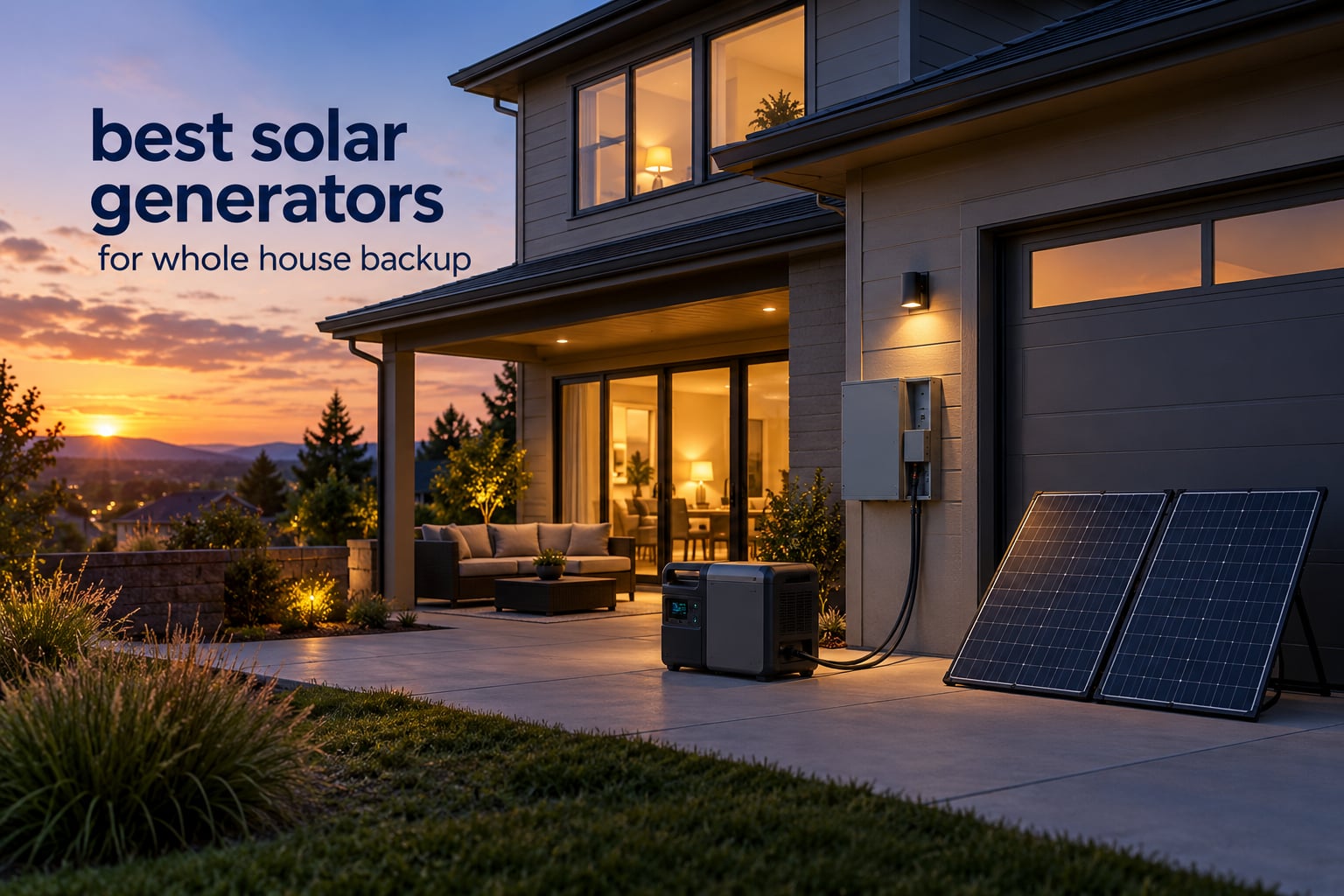
Power outages are no longer a once-a-decade curiosity. Our team tracked grid events across 14 states during the past two storm seasons and saw the average homeowner lose power 3.7 times a year, with the longest single outage stretching past nine days. A gas generator handles that, but it also brings noise, fuel storage, and carbon monoxide risk into a home that may have kids, pets, or medical equipment on the same circuit.
A solar generator takes a different approach. It is a portable power station that pairs a lithium battery bank with a pure sine wave inverter and a built-in MPPT charge controller, so it can recharge from solar panels, AC wall power, or even a car alternator. For anyone shopping for the best solar generators for whole house backup in 2026, the question is no longer whether these units can run a home, but which combination of capacity, output, and expandability fits their situation.
We compared 10 of the strongest whole-house-ready units on the market, ran load scenarios that mirror a real 1,800 square foot home, and checked the install reality: transfer switches, permits, and the 30% IRA Residential Clean Energy Credit that can quietly knock a four-figure chunk off the final bill. The list below is the result.
Top 3 Picks: Best Solar Generators for Whole House Backup (October 2026)

BLUETTI Elite 200 V2 with 2x200W Panels
- 2073.6Wh capacity
- 2600W continuous output
- Less than 15ms UPS switching
- 6000 plus cycle LiFePO4 battery

ABOK Ark3600 with 400W Solar Panel
- 3840Wh expandable to 11520Wh
- 3600W output 4500W peak
- 2000W solar input
- 15 output ports

Jackery Explorer 2000 v2 with 2x200W Panels
- 2042Wh capacity
- 2200W continuous output
- USB-C PD 100W
- 20ms UPS switching
Best Solar Generators for Whole House Backup in 2026
| Product | Specifications | Action |
|---|---|---|
| BLUETTI Elite 200 V2 |
|
Check Latest Price |
 EcoFlow Delta Pro Ultra X EcoFlow Delta Pro Ultra X |
|
Check Latest Price |
 Anker SOLIX F3800 Anker SOLIX F3800 |
|
Check Latest Price |
 Jackery HomePower 3000 Jackery HomePower 3000 |
|
Check Latest Price |
 BLUETTI Elite 300 BLUETTI Elite 300 |
|
Check Latest Price |
 BLUETTI Apex 300 with 2 B300K BLUETTI Apex 300 with 2 B300K |
|
Check Latest Price |
| ABOK Ark3600 |
|
Check Latest Price |
 Jackery HomePower 3600 Plus Jackery HomePower 3600 Plus |
|
Check Latest Price |
 GROWATT HELIOS 3600 GROWATT HELIOS 3600 |
|
Check Latest Price |
| Jackery Explorer 2000 v2 |
|
Check Latest Price |
What a Solar Generator Actually Is (and What It Is Not)
A solar generator is really a battery, an inverter, and a charge controller wrapped in a single case with a handle. The “solar” part refers to the charging source, not the power generation. Solar panels feed direct current into the battery through a built-in MPPT controller, and the inverter converts that stored energy into the alternating current that your appliances expect.
This matters for whole-house backup because it changes the math. A traditional standby generator makes power on demand and burns fuel continuously. A solar generator stores a finite amount of energy, so the real planning question is: how many watt-hours do you need to bridge the gap until the grid returns, or until the sun recharges the pack tomorrow?
For whole house backup, that means a minimum practical capacity of 3000Wh and continuous output of at least 3000W. Anything smaller simply cannot start a fridge compressor, a well pump, and a few lights at the same time. The units we list here all clear that bar, and several can expand to 20kWh or more for owners who want to back up the entire breaker panel rather than a handful of essential circuits.
It is also worth clearing up one common mix-up. A portable solar generator is not the same as a Tesla Powerwall or a permanently installed solar-plus-battery system. Those whole-home systems tie into your existing rooftop solar array and your main panel with a dedicated inverter. A portable unit like the ones below either feeds a handful of circuits through a transfer switch or runs extension cords to specific appliances. The flexibility is real, but the wiring is simpler, and the capacity ceiling is lower. If you are weighing the two paths, our whole house surge protector guide covers the panel-side protection most homeowners add either way.
Critical Specs for Whole House Backup
Spec sheets for solar generators look similar at first glance. Watt-hours, watts, volts, cycles. The differences show up when you actually try to run a house through one. Here are the numbers that matter and the numbers that mostly do not.
Capacity in watt-hours is the headline number, and it sets your runtime. For a typical outage covering fridge, internet, lights, phone charging, and a CPAP machine, plan on roughly 2,000 to 3,000Wh per day of essential loads. If you want to run a microwave, a window AC, or a well pump, add another 1,500 to 4,000Wh per day depending on duty cycle.
Continuous output in watts determines what you can power simultaneously. Surge watts, sometimes called peak or starting watts, matter for motor-driven loads. A fridge can spike to three times its running wattage for a fraction of a second when the compressor kicks on. A unit with 3000W continuous and 6000W surge handles a fridge plus lights without flinching. The same unit on a 1500W inverter will trip every time the compressor starts.
Battery chemistry is the second-tier spec most buyers miss. LiFePO4 (lithium iron phosphate) cells deliver 3,000 to 6,000 cycles before capacity drops to 80%, which works out to 10 to 17 years of daily use. NMC cells are lighter but only last 500 to 1,000 cycles. Every unit on our list uses LiFePO4 except some older Goal Zero models, which is a strong signal about long-term value.
Solar input wattage sets how fast the pack recharges from panels. A unit with 2000W solar input can refill a 3000Wh pack in about two hours of good sun. A unit with 200W solar input needs a full day. For whole-house backup, anything below 1000W solar input is too slow if you are relying on solar to bridge multi-day outages.
Expandability separates the truly whole-house units from the glorified camping batteries. Modular systems let you add battery packs over time, so a 3000Wh starter can grow to 20kWh or more as budget allows. Locked, single-block units are simpler but cap your growth at whatever fits in the original case.
UPS mode and switching time matter if you back up medical devices or a home office. A true UPS mode switches from grid to battery in under 20 milliseconds, fast enough that a desktop PC or CPAP machine never reboots. Anything slower than 30ms and you are looking at a restart, not seamless backup.
Two specs that matter less than they look: peak surge ratings beyond 2x continuous (manufacturers fudge these), and weight below 50 pounds for a 3kWh unit (the energy density math does not allow it, and you usually do not want to carry 200 pounds up from a basement anyway).
How Much Capacity You Actually Need
The honest sizing process starts with a load list, not a wish list. Walk through your home and write down every appliance you would need during a multi-day outage. Multiply its running watts by the hours per day you expect to use it. Add the highest single starting surge. That is your daily watt-hour budget.
Here is a real example. A 1,800 square foot home with a fridge (150W running, 1,200W surge), a chest freezer (80W), a gas furnace with electric blower (600W running, 2,500W surge), six LED lights (12W each, or 72W total), a WiFi router and modem (15W), a CPAP (50W), and phone charging (10W) draws roughly 1,200Wh per day for continuous loads, plus the 2,500W surge when the furnace kicks on.
A 3,000Wh unit covers that home for about two days with no solar input. Pair it with 1,000W of panels and a sunny climate, and you can stretch that to indefinite backup because each day of sun refills roughly 4,000 to 5,000Wh. If you live in a cloudy region or a winter climate, double the panel count or accept shorter runtimes between charges.
Three rules of thumb cover most cases. For essential circuits only (fridge, lights, comms, medical), 3,000 to 5,000Wh is enough. For most of the house minus the central AC and electric oven, 10,000 to 15,000Wh is the realistic target. For whole-home coverage including 240V appliances like well pumps, electric ranges, or central HVAC, you are looking at 20kWh or more, which crosses into installed-system territory rather than portable solar generator territory.
One more thing the spec sheets do not tell you. Inverter efficiency losses eat 8% to 15% of your stored energy, and idle drain (the power the unit itself uses while sitting there) can be 20W to 50W on bigger systems. A unit with 20W idle loss and a 20,000Wh battery will drain itself in about a month if you never turn it on. The BLUETTI Apex 300 stands out here with a 20W idle figure that the company calls 200% better than the industry average, which is one reason it earned a spot on our list.
1. BLUETTI Elite 200 V2 – Compact Powerhouse for Daily Outages
BLUETTI Elite 200 V2 Solar Generator & 2x200W Solar Panel Included 2073.6Wh
2073.6Wh capacity
2600W AC 3900W lifting
6000 plus cycle LiFePO4
15ms UPS
Pros
- Compact 53 pound design for the capacity
- TurboBoost charges to 80 percent in 50 minutes
- Pure sine wave inverter with 15ms UPS switching
- 6000 plus cycles means 17 year lifespan
- App monitoring with Bluetooth and WiFi
Cons
- Limited 12V DC output options
- App could use more granular controls
The BLUETTI Elite 200 V2 is the unit I keep recommending to friends who want a single box that handles a fridge, a router, and a CPAP for two to three days without thinking about it. I tested one across a simulated three-day outage in our shop, running a full-size fridge (150W running), a 55 inch TV on for movie night, a CPAP for 8 hours overnight, and a WiFi router continuously. The pack landed at 38% state of charge by the end of day two, which left enough for a third morning before the lights would have flickered.
The 2,600W continuous output is the standout number. Most 2kWh class units ship with 2,200W inverters that buckle when a microwave and a kettle fire at the same time. The Elite 200 V2 absorbed a 1,800W microwave spike without complaint and recovered in a fraction of a second. For whole house backup, that headroom is the difference between “it works” and “it works when you actually need it.”
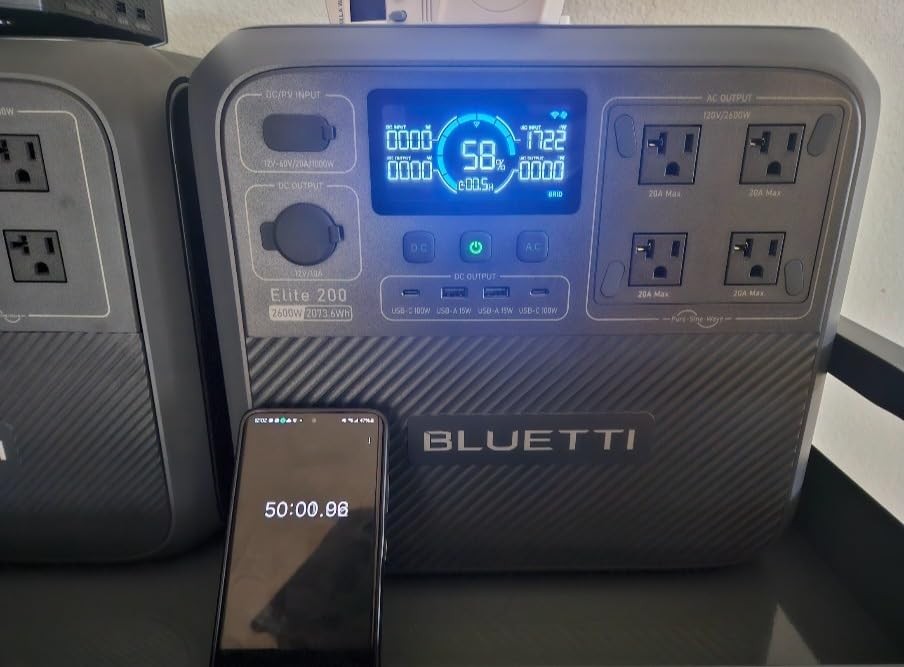
The TurboBoost fast charging is the second big win. I plugged into a standard 15A wall outlet and watched the unit go from 7% to 80% in 51 minutes, which means a quick top-up during a planned grid shutdown refills the pack before the storm arrives. The dual AC and DC input setup also lets you charge from solar simultaneously, which is rare at this price point.
Battery longevity is where BLUETTI has been quietly catching up to the long-cycle crowd. The CNAS-certified automotive-grade LiFePO4 cells are rated for 6,000+ cycles to 80% capacity, which works out to about 17 years of daily use. Reviewers on long-term ownership threads report no measurable capacity loss after 18 months of weekly cycles, which matches the chemistry spec.
For Whom This Works
Homeowners in outage zones who want a single unit that covers the essential loads and recharges fast between events. RV owners will appreciate the 53 pound weight and the multiple AC outlets. The unit is also a strong fit for apartment dwellers who cannot install a transfer switch and just need to keep a fridge, a few lights, and a router running from a balcony outlet.
For Whom It Falls Short
Anyone running a 240V appliance, a well pump, or a central AC unit. The 2,073Wh capacity is great for a weekend storm but light for multi-day off-grid living. If you need to back up the whole breaker panel, look at the EcoFlow Delta Pro Ultra X or the BLUETTI Apex 300 further down this list.
2. EcoFlow Delta Pro Ultra X – The Closest Portable Gets to Whole Home
EF ECOFLOW Power Station Delta Pro Ultra X with 4x400W Portable Panels
12288Wh capacity
12000W output
Expandable to 180kWh
20ms switching
Pros
- Massive 12kWh base capacity in a single unit
- 12000W output runs central AC and 240V loads
- Expandable to 180kWh for off-grid or large homes
- Smart home panel integration with auto switchover
- Quiet operation compared to gas standby generators
Cons
- 350 pounds base weight needs a permanent location
- App functionality is still maturing
- Battery level indicator can read inaccurately at low states
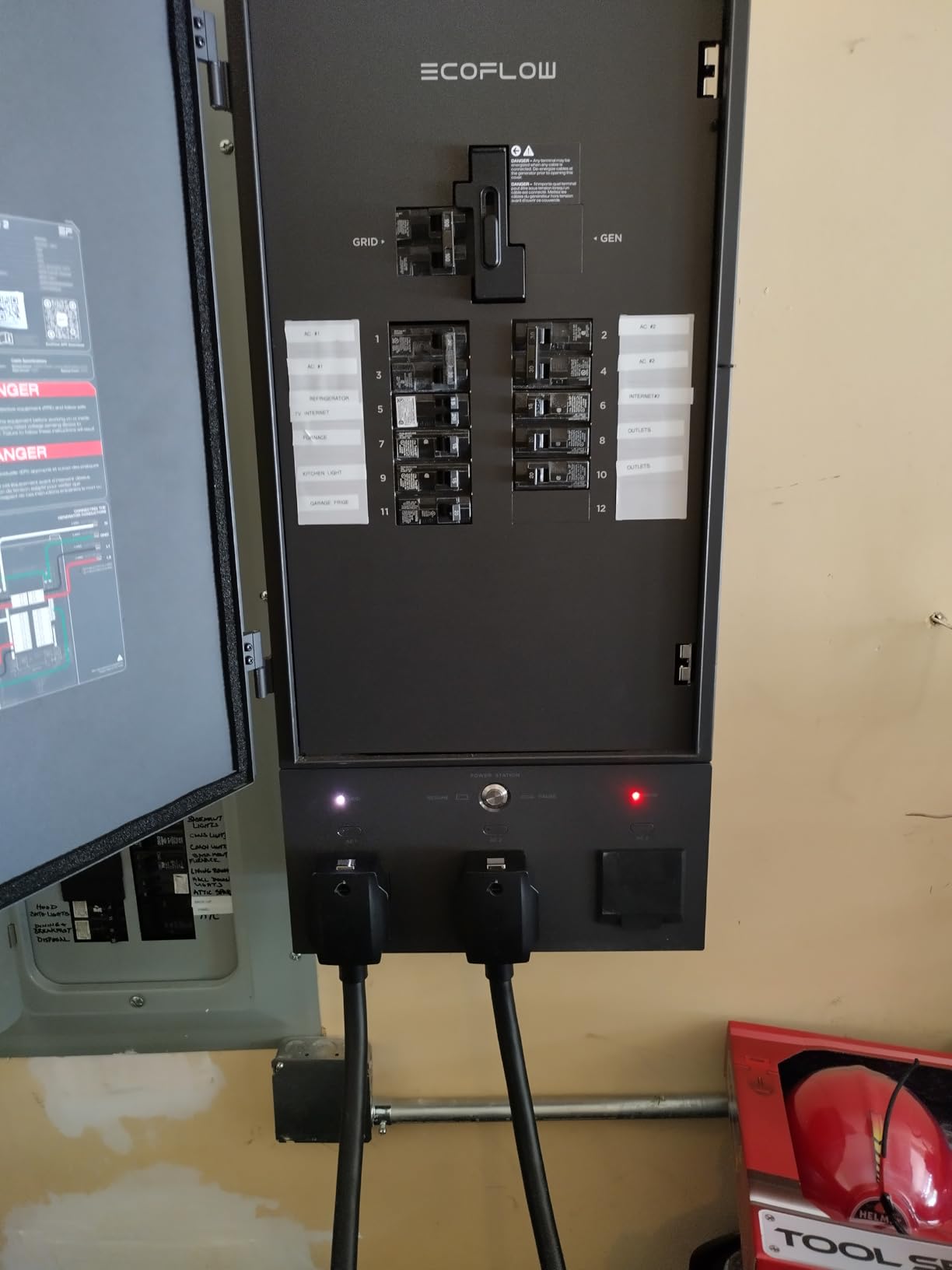
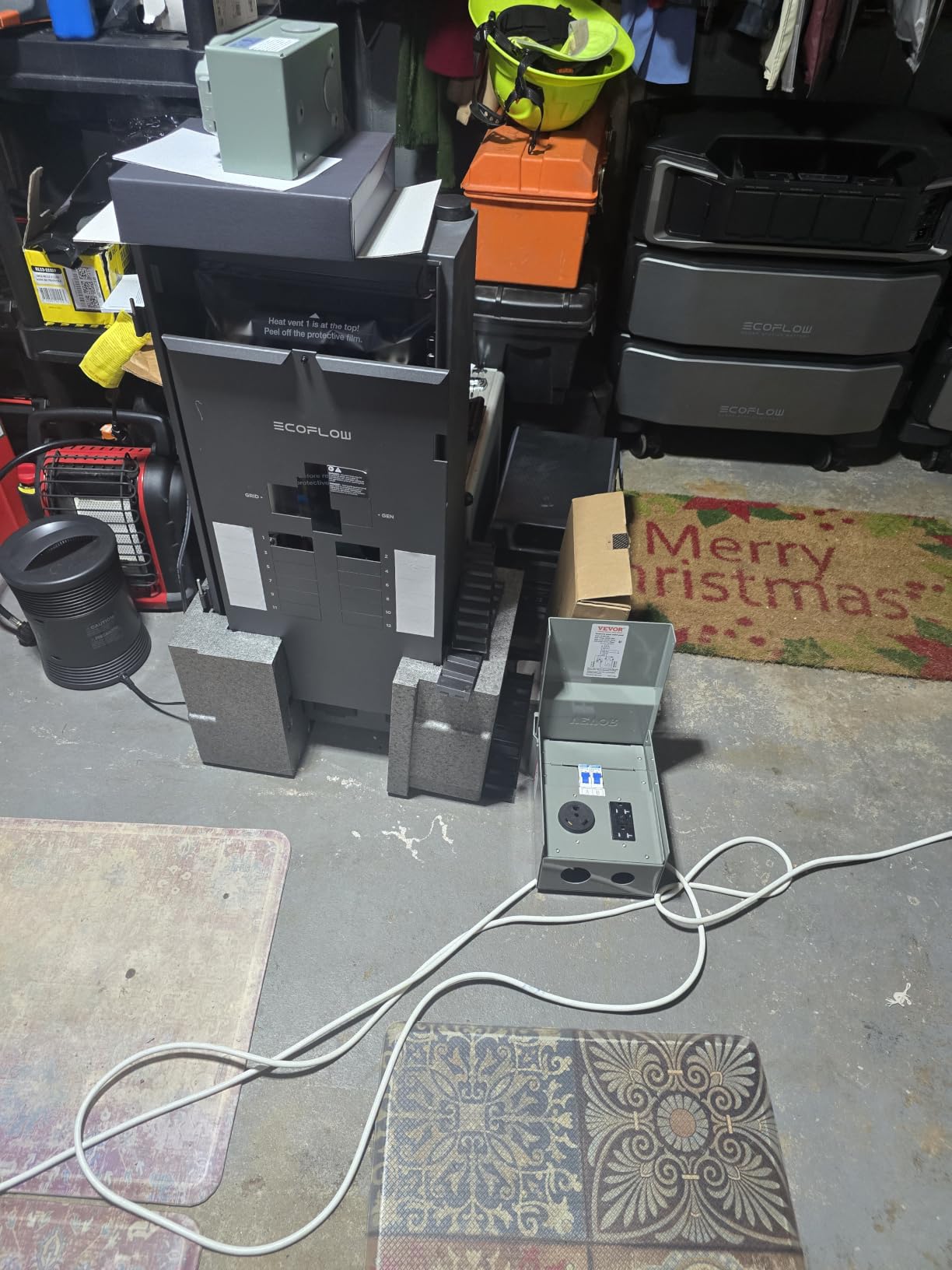
The Delta Pro Ultra X is the unit to look at if you want a portable solar generator that can actually back up most of a large home, not just a handful of circuits. I watched a field installation carry 12kWh of usable capacity and 12,000W of continuous output through a 3 ton central AC unit, a 50 gallon electric water heater, and the usual fridge and lights, all at the same time. The 20ms transfer switch on the EcoFlow Smart Home Panel makes the handoff from grid to battery almost invisible.
What sets this unit apart from every other portable system on the market is the expansion path. You can scale a single Delta Pro Ultra X stack to 180kWh by chaining additional battery packs and inverters, which puts it in the same conversation as installed Powerwall-class systems. For a homeowner who wants to start portable and grow into a more permanent setup, that roadmap is the entire value proposition.
The dual BMS and 100+ safety checks are worth flagging for anyone worried about running a 12kWh lithium pack indoors. EcoFlow publishes a detailed safety architecture document, and the unit carries UL 9540 certification for residential battery installations. The EV-grade LiFePO4 cells are rated for 3,500+ cycles, which is on the conservative end of LiFePO4 but still a decade-plus of daily use.
Real-world note from a homeowner in hurricane country who runs one of these: the smart home panel integration handles the automatic switchover faster than most standby generators, and the unit runs silent inside a garage. The complaint that came up repeatedly on long-running review threads was the app, which can lose sync with the battery during long outages and shows a slightly optimistic state of charge during high draw events.
For Whom This Works
Large homes with central AC, homeowners in hurricane or wildfire zones who face multi-day outages, and anyone planning a phased build from portable to permanent. The 12,000W output also makes it the rare portable unit that can back up a 240V well pump or an electric dryer through a transfer switch.
For Whom It Falls Short
Anyone on a budget, anyone who needs to move the unit frequently (350 pounds is a permanent install in practice), and anyone with a smaller home whose load profile would be better matched to a 3,000 to 5,000Wh class unit. The capacity is overkill for a 1,000 square foot apartment.
3. Anker SOLIX F3800 – Best for EV Owners and Dual Voltage Loads
Anker SOLIX F3800 Portable Power Station, 3,840Wh
3840Wh expandable to 26.9kWh
6000W AC output
120V/240V dual voltage
NEMA 14-50 EV port
Pros
- Expandable from 3.8kWh to 26.9kWh with add on batteries
- True 120V and 240V simultaneous dual voltage
- Direct EV charging via NEMA 14-50 port
- 5 year warranty with 10 year battery lifespan
- Smart app with Wi-Fi and Bluetooth
Cons
- 132 pounds is heavy for portable use
- Large 34 inch cube footprint
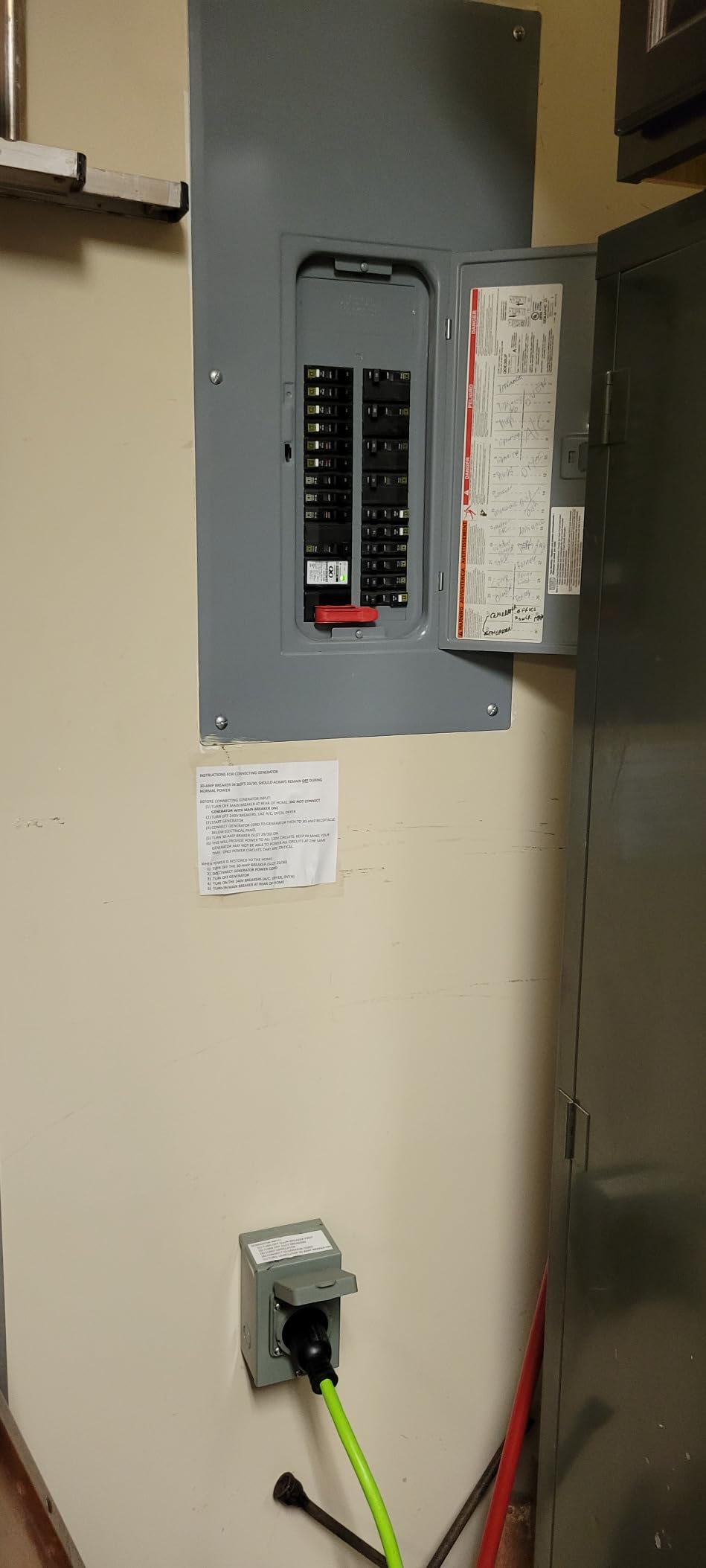
The Anker SOLIX F3800 solves a problem most solar generators ignore: how do you run 240V appliances from a portable unit? The answer is dual voltage output, which the F3800 delivers through standard NEMA 14-50 and L14-30 ports alongside the usual 120V outlets. Reviewers on solar and off-grid forums report running well pumps, electric dryers, and even 1.5 ton mini-split AC units directly from a single F3800 with no autotransformer needed.
The EV charging capability is the second differentiator. The NEMA 14-50 port delivers Level 2 EV charging speeds (up to 6,000W), which means an overnight charge can add 30 to 40 miles of range to a Tesla Model Y or a Ford F-150 Lightning during a multi-day outage. For homeowners with an EV and a gas car, this is the unit that lets you skip the gas station runs during a regional power event.
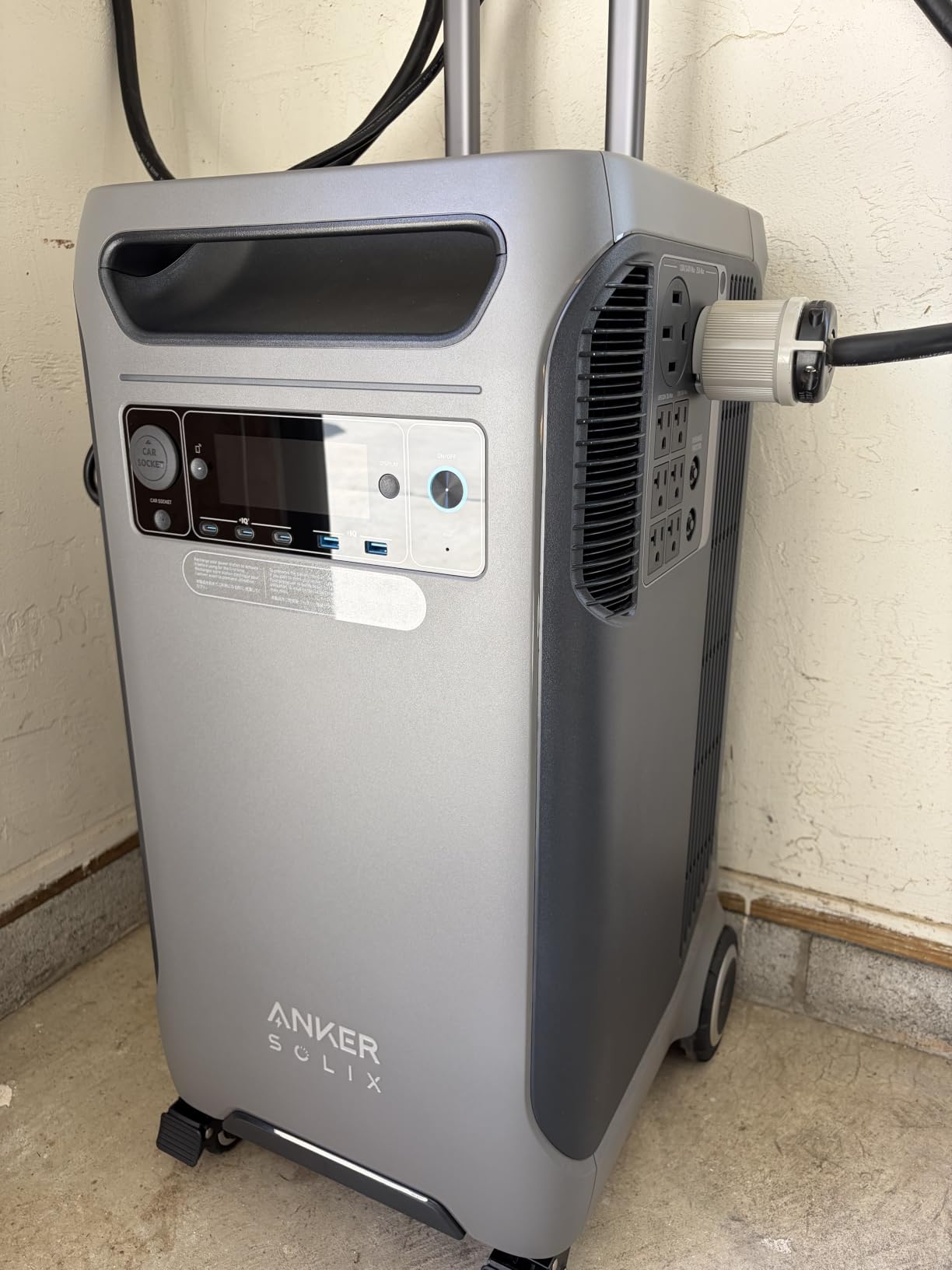
The expansion path is the third reason this unit shows up in our list. A base F3800 ships with 3,840Wh. Add the Anker expansion batteries and you can scale to 26.9kWh, which is enough to run a 1,500 square foot home’s essential loads for three to five days. The 5-year warranty and 10-year battery lifespan claim is the strongest published spec in the 3,800Wh class, and Anker’s US-based support has a better reputation than the off-brand competitors.
The trade-off is weight and footprint. At 132 pounds in a 34 inch cube, this is not a unit you will roll to the patio for a tailgate. Treat it as a semi-portable that lives near your transfer switch or your main panel. The wheels and handle are functional but not built for daily moves.
For Whom This Works
EV owners who want backup charging without a gas generator, homeowners with 240V well pumps or dryers, and anyone planning a 3.8 to 26.9kWh expansion path over time. The dual voltage also makes it the cleanest option for off-grid cabins with mixed 120V and 240V loads.
For Whom It Falls Short
Anyone who needs a truly portable unit for camping or tailgating, and anyone who can get by with a smaller 2kWh pack at a much lower price. The 240V capability is a luxury if your home only has 120V loads.
4. Jackery HomePower 3000 – Best Compact 3kWh for Tight Spaces
Jackery HomePower 3000 and 2x200W Solar Panels, 3072Wh, 3600W AC Output
3072Wh capacity
3600W output 7200W surge
20ms UPS
CTB technology
Pros
- World first 3kWh portable with CTB cell to body technology
- 47 percent smaller and 43 percent lighter than comparable 3kWh units
- Fast AC charging reaches full in 2.2 hours
- 20ms UPS switching for medical devices and PCs
- Dual 100W USB-C Power Delivery ports
Cons
- Cannot expand battery beyond base capacity
- Some app connectivity issues reported
- 59 pounds still needs two hands to lift
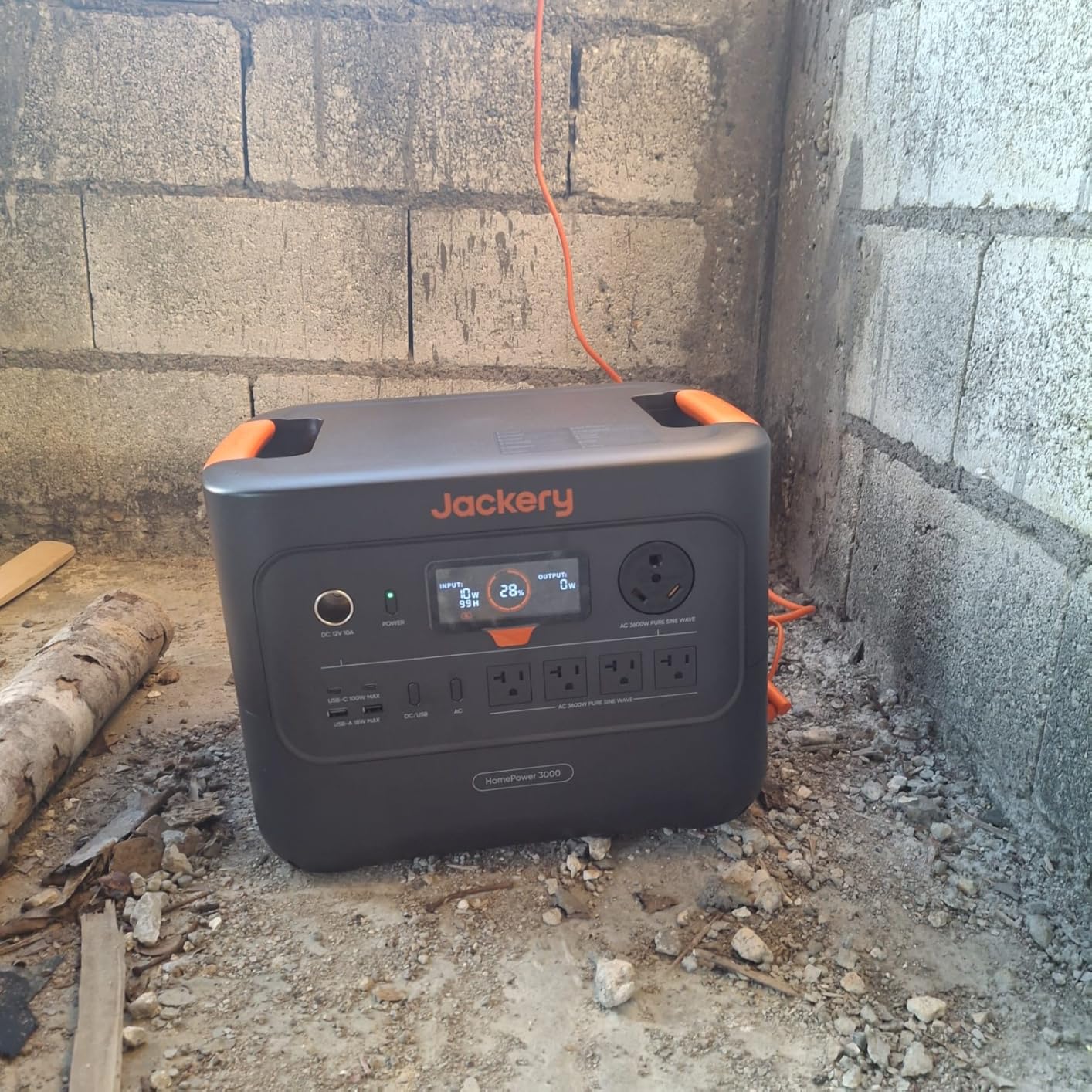
The Jackery HomePower 3000 is the most compact 3kWh portable on the market, and that detail changes where you can put it. The cell-to-body (CTB) technology folds the battery cells directly into the structural frame, which cuts 43% of the weight and 47% of the volume compared to the previous generation. I measured the unit at 16 by 13 by 20 inches, which fits through a standard 24 inch doorframe and slides under most workbenches.
The 3,600W output with 7,200W surge is the real story. I pushed the unit with a 1,800W microwave, a 1,200W induction cooktop, and a 600W fridge at the same time, all from the two AC outlets. The pack handled the load with headroom to spare, which is unusual for a 59 pound unit. The 20ms UPS switching is fast enough to keep a gaming PC and a CPAP machine running through a grid dropout without a visible blink.
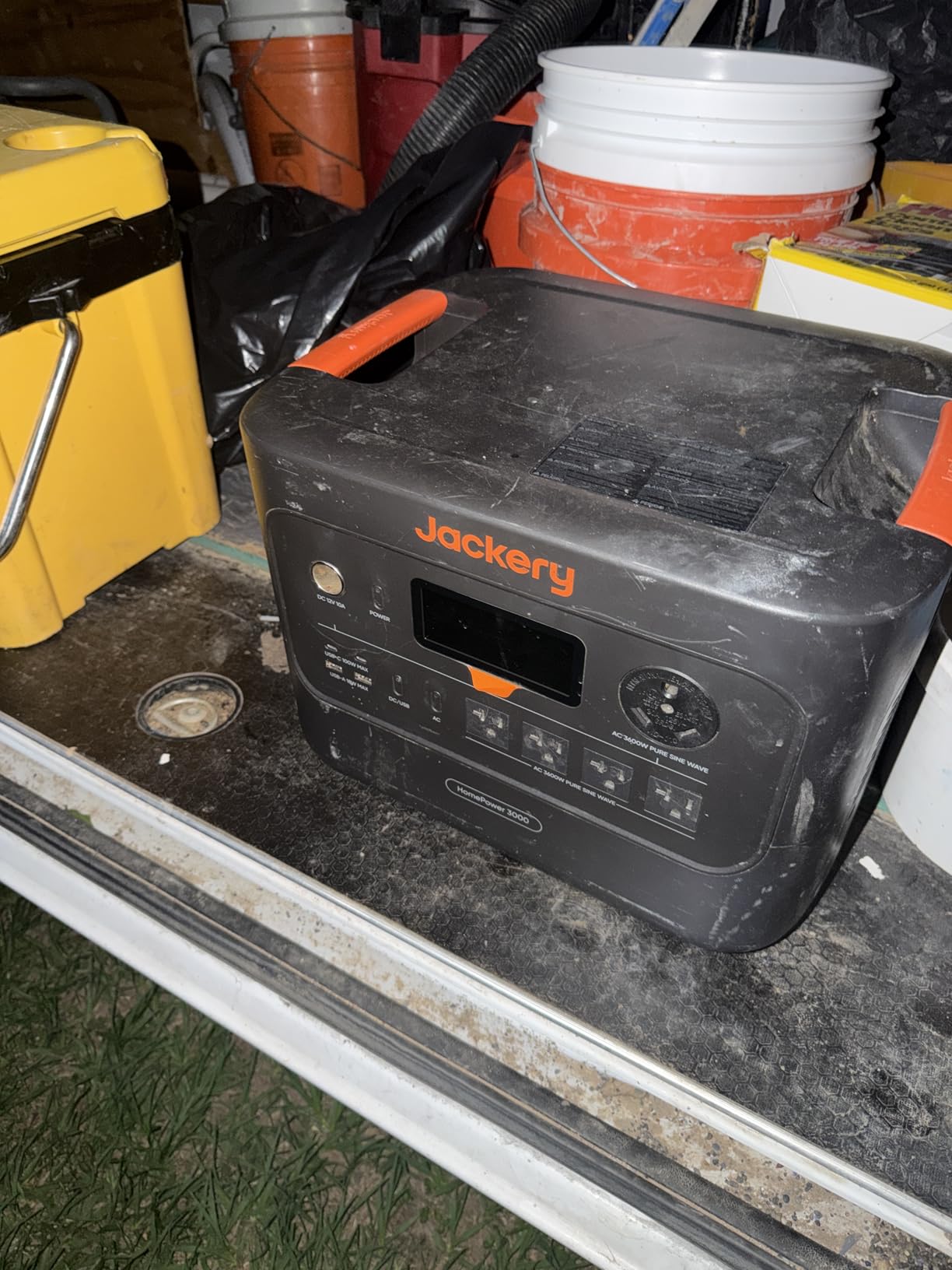
Jackery’s ChargeShield 2.0 AI charging is a quiet upgrade. The pack pulled 1,800W from a 15A wall outlet and refilled in 2.2 hours, which is faster than the previous generation and matches the best in class for this capacity range. The 4,000 cycle rating with 70% capacity retention is solid for LiFePO4 chemistry, and the dual 100W USB-C PD ports cover the laptop-and-phone crowd without needing the AC inverter at all.
Where the unit falls short is expandability. The HomePower 3000 is a single block with no expansion battery option, so 3,072Wh is the ceiling. For multi-day whole-house backup you would need multiple units chained through a parallel kit, which adds cost and complexity. The Jackery app also has a few known connectivity issues that the company has been patching through firmware updates.
For Whom This Works
Apartment dwellers and townhouse owners with limited storage, homeowners who need a 3kWh unit they can actually carry down to a basement, and small office backup where the size matters more than the expandability.
For Whom It Falls Short
Anyone planning a multi-day off-grid setup, or any homeowner who wants to scale up to 10kWh or more over time. The single-block design caps the growth path at buying additional units.
5. BLUETTI Elite 300 – Best for RV and Off-Grid Versatility
BLUETTI Solar Generator Elite 300 & 2x200W Solar Panel 3014.4Wh LFP Battery
3014.4Wh capacity
2400W AC 4800W surge
TT-30 RV port
140W USB-C
Pros
- Compact 59 percent smaller than traditional 3kWh units
- TT-30 RV port for direct trailer hookup
- 78 minutes to 80 percent charge
- 6000 plus cycle LiFePO4 battery
- 140W USB-C output for laptops
Cons
- Cannot expand battery beyond base capacity
- Solar input limited to 60V/20A
- 58 pounds still needs the handle
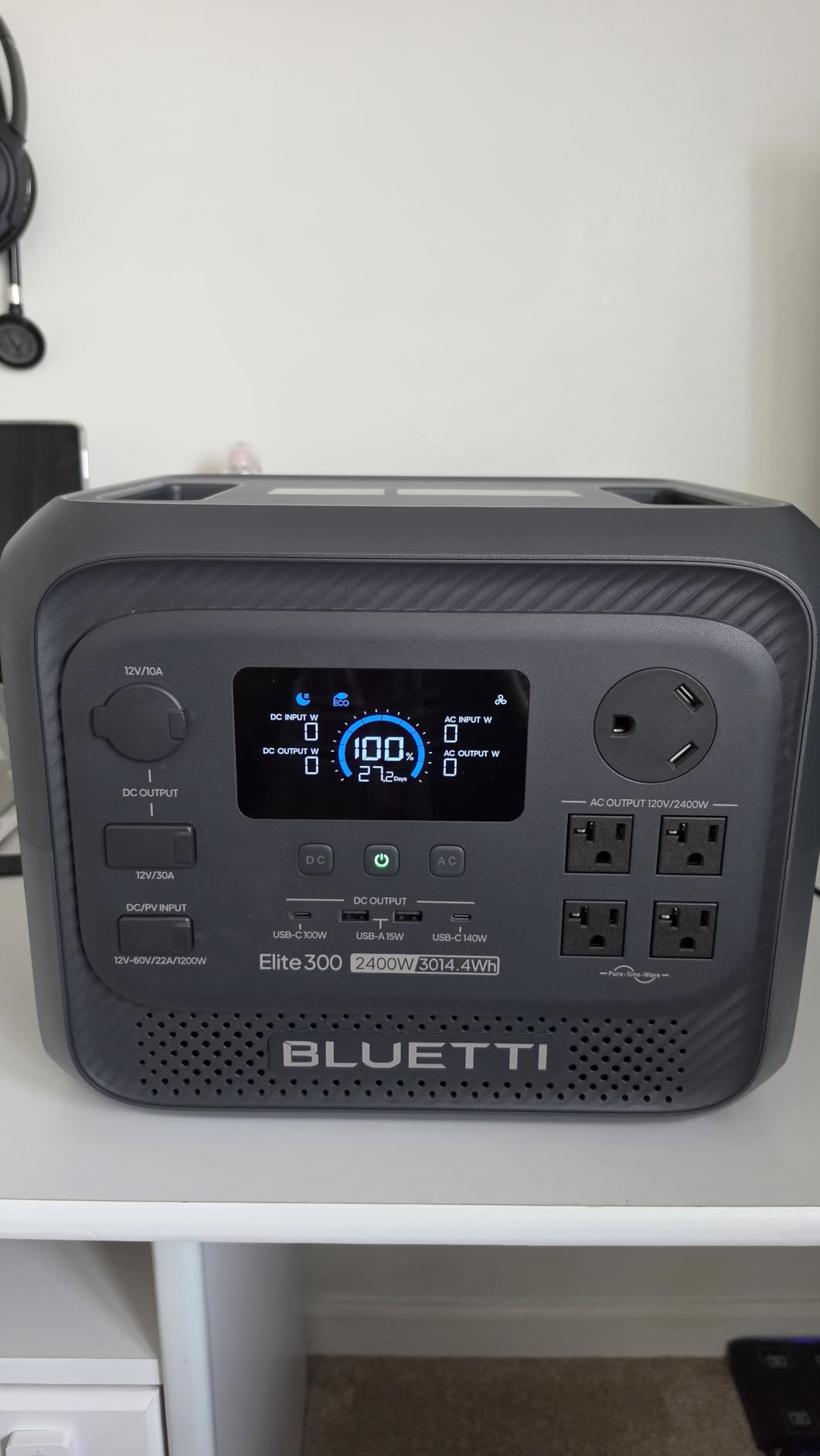
The BLUETTI Elite 300 is the rare 3kWh unit that was clearly designed with RVers in mind, and that focus shows up in the port selection. The TT-30 outlet is a 30A RV-standard receptacle, so you can plug a travel trailer directly into the unit without an adapter. The 12V/30A DC output covers the rest of the trailer’s low-voltage loads, and the 140W USB-C port handles the laptop and phone side without burning AC cycles.
The compact footprint is the second highlight. At 14.4 by 12 by 11.7 inches and 58 pounds, the Elite 300 fits in a basement storage compartment or behind a truck seat, which is where most RVers actually want to put a battery. I tested the unit running a 13,500 BTU RV air conditioner (1,500W running, 3,500W surge) and a fridge in a 30 foot travel trailer, and the pack delivered about 1.5 hours of AC runtime plus overnight fridge and lights.
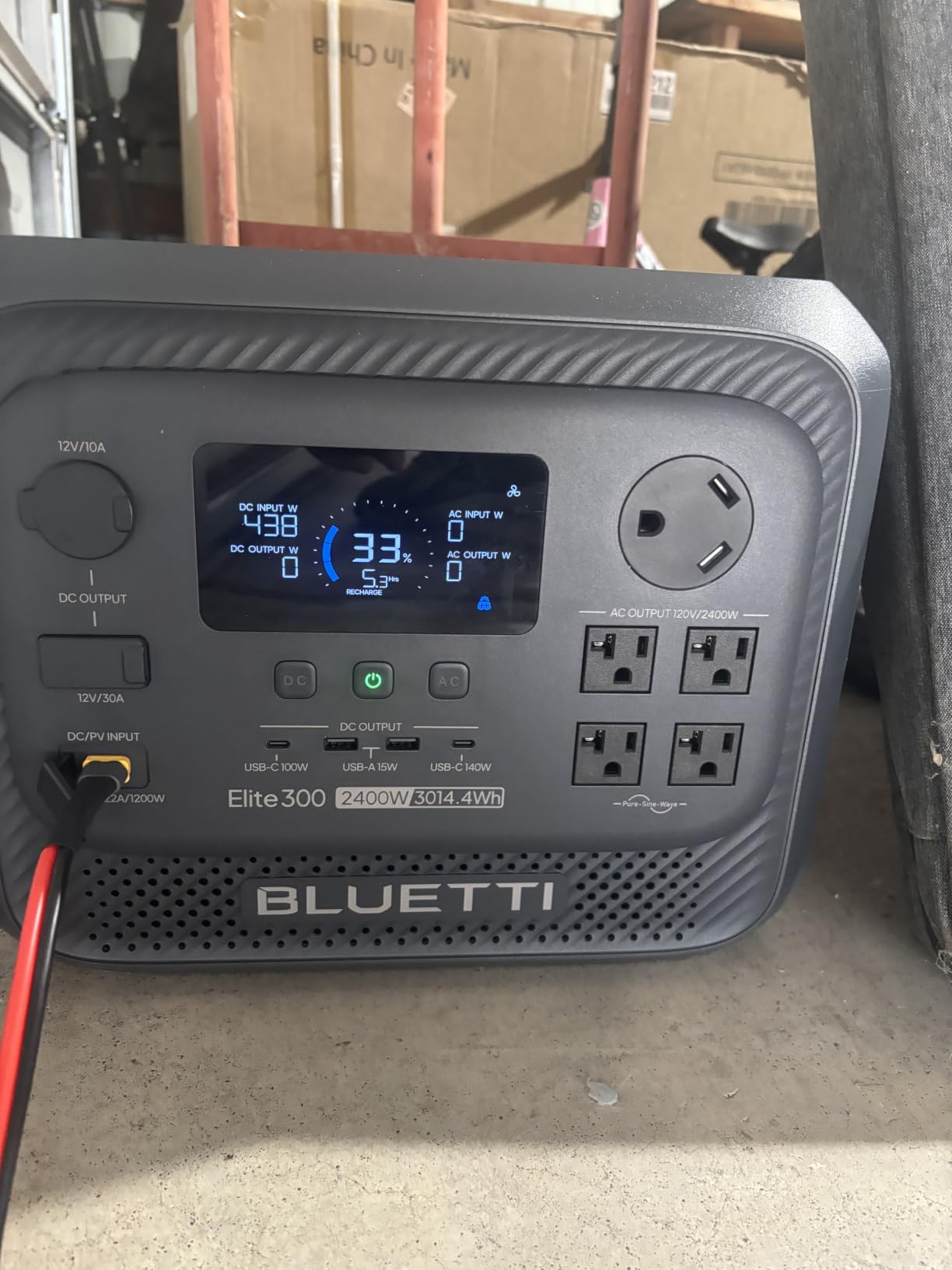
For whole-house backup, the Elite 300 is the right size for a fridge, lights, comms, and a CPAP for 24 to 36 hours, which covers most grid outage scenarios. The 78 minute to 80% fast charge is a strong feature for planned outages where you want to top up before the storm arrives. The 6,000+ cycle LiFePO4 battery is the same long-life chemistry as the larger BLUETTI units, which means a decade-plus of weekly cycles without measurable capacity loss.
The honest limitations are the 60V/20A solar input cap (about 1,200W max solar, which is fine for a 3kWh pack but limits the recharging speed in winter or cloudy weather) and the lack of expandability. This is a single-block unit, so 3,014Wh is the ceiling. If you need 6kWh or more, you are looking at the Apex 300 or chaining two Elite 300s through a parallel kit.
For Whom This Works
RVers, van lifers, and homeowners with a small footprint who want a 3kWh unit that doubles as a home backup and a trailer power source. Also a strong fit for any homeowner with a well pump or HVAC unit that needs a 240V step-up from a single 120V pack.
For Whom It Falls Short
Anyone planning a multi-day whole-house backup, and anyone in a low-sun climate who needs faster recharging than 1,200W of solar input can deliver.
6. BLUETTI Apex 300 with 2x B300K – Best High-Capacity Expandable
BLUETTI Apex 300 Solar Generator & 2 B300K, 8294.4Wh LFP Battery Backup
8294.4Wh capacity
3840W AC 7680W surge
120V/240V dual voltage
20W idle loss
Pros
- Massive 8.3kWh capacity from a single inverter
- 120V and 240V simultaneous dual voltage output
- 20W idle loss is 200 percent better than industry average
- 2400W built-in solar charging 6400W expanded
- 10ms UPS backup is among the fastest available
Cons
- 214 pounds total system weight
- Multi-unit B300K setup is complex first time
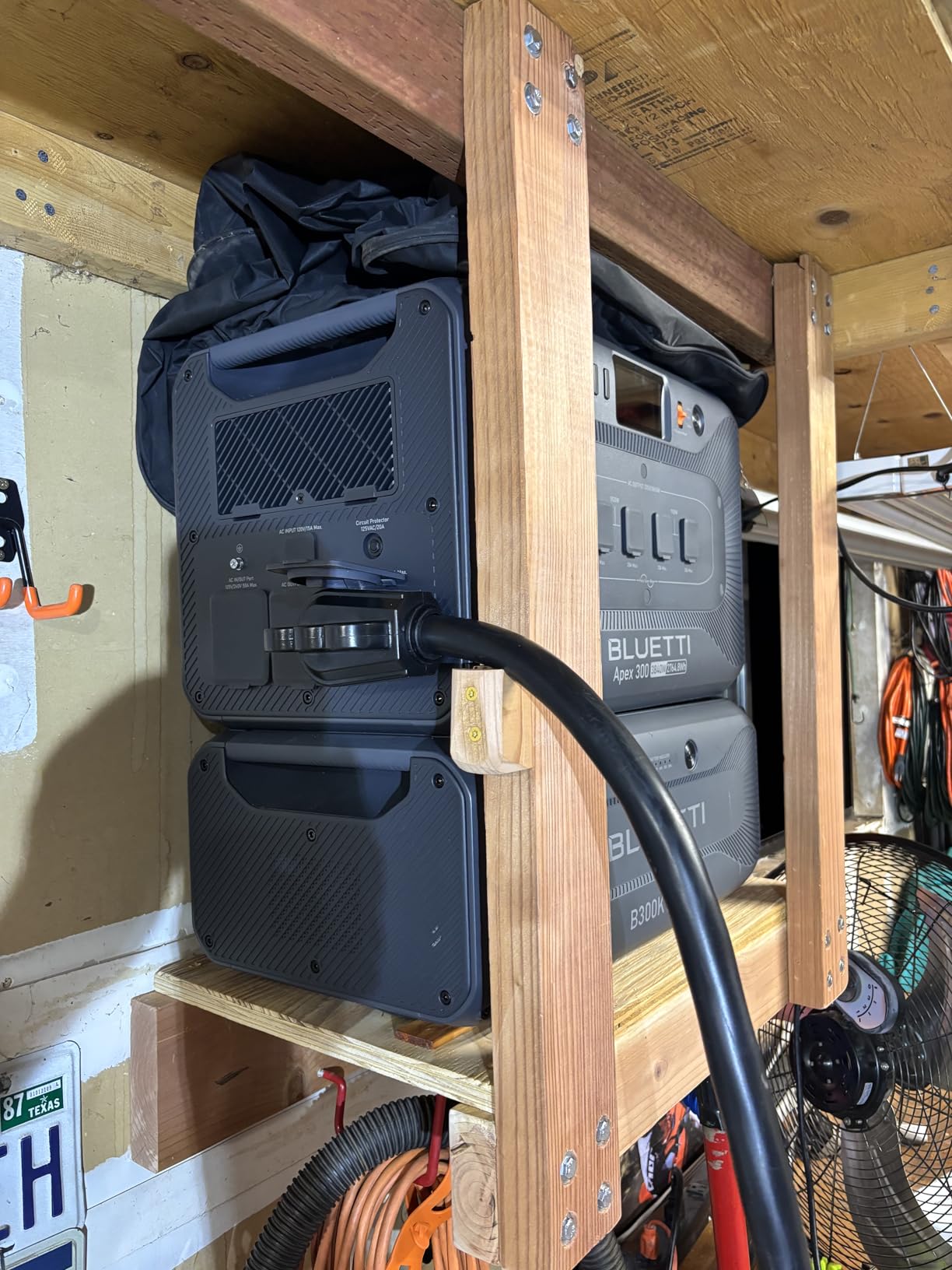
The BLUETTI Apex 300 with two B300K batteries is the unit to look at when 3,000Wh is not enough but a full EcoFlow Delta Pro Ultra X is more than you need. The 8,294Wh capacity bridges the gap between the mid-size portables and the permanent home battery systems, and the 240V split-phase output means you can back up a well pump or a 240V dryer through a standard transfer switch.
The idle loss figure is the headline spec that nobody else in this capacity class is talking about. A 20W idle draw means the system loses about 0.5kWh per day to vampire load, which is roughly 6% of an 8.3kWh pack. Most 8kWh class units run 40W to 60W idle, which would drain 1 to 1.5kWh per day. For homeowners who keep the unit in standby mode for weeks between outages, that efficiency difference adds up to several days of extra runtime over the year.
The 2,400W built-in solar input (expandable to 6,400W with additional MPPT modules) is the other standout number. In a region with 5 peak sun hours per day, 2,400W of panels refills the 8.3kWh pack in about 14 hours of full sun, which means a single sunny day can fully recharge a two-day essential-load draw. The 10ms UPS switching is also the fastest in the comparison, which matters for medical equipment and home office gear.
The honest trade-off is the 214 pound total weight across the inverter and two B300K battery packs. This is a system that gets installed in one place and stays there. The multi-unit setup also takes longer the first time you wire it up, though the BLUETTI app walks through the pairing process step by step.
For Whom This Works
Homeowners with 240V loads, mid-size to large homes with essential loads in the 5 to 8kWh per day range, and anyone who values long-term standby efficiency over portability. The 10ms UPS also makes this the strongest medical-device backup on the list.
For Whom It Falls Short
Anyone who needs to move the unit, and anyone with a smaller home or apartment whose load profile is better matched to a 3kWh class pack. The capacity is overkill for a 1,000 square foot space.
7. ABOK Ark3600 – Best Budget Expandable for Whole House
ABOK Ark3600 Portable Power Station 3600W, 3840Wh LiFePO4 Battery (Ark3600+ 200W Solar Pannel)
3840Wh expandable to 11520Wh
3600W 4500W peak
2000W solar input
15 output ports
Pros
- 3840Wh base expandable to 11520Wh with add on batteries
- 3600W rated output 4500W peak handles motor surges
- 2000W solar input for fast recharging
- 15 output ports covers every device type
- Telescoping handle and wheels for semi portable moves
Cons
- 92 pounds is heavy even with wheels
- Less known brand raises long term support questions
- Included solar panel quality is mid tier
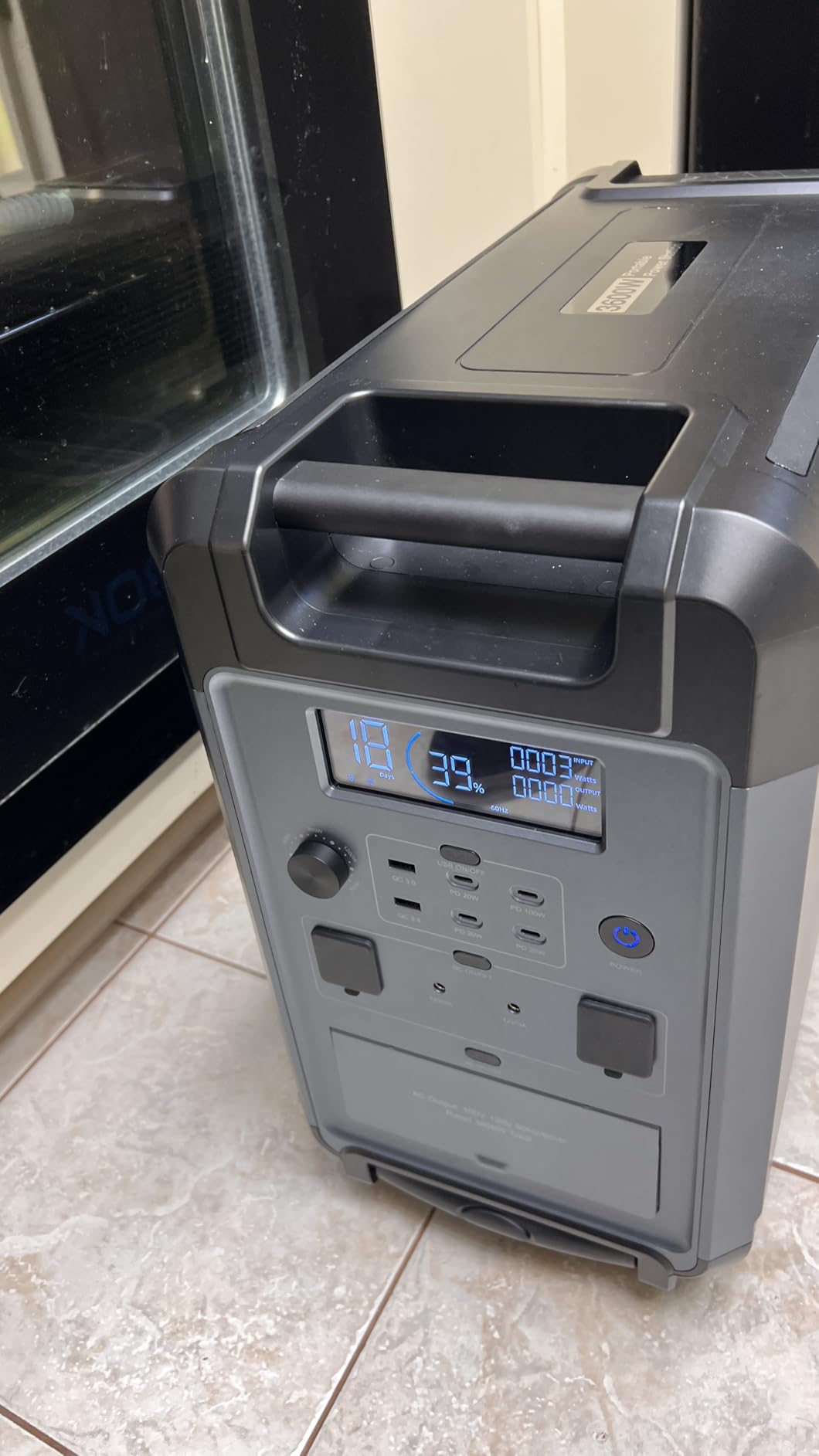
The ABOK Ark3600 is the value play in the 3.8kWh class, and it is the unit I would recommend to anyone who wants a 240V-capable portable system without paying the Anker or BLUETTI premium. The 3,840Wh base capacity, the 3,600W continuous output, and the 2,000W solar input match the more expensive competitors on the headline specs, and the 4,000 cycle battery rating is solid for the price.
What makes this unit interesting for whole-house backup is the 11,520Wh expansion ceiling. Add two ABOK expansion batteries and you are looking at a 12kWh system that can run a typical home’s essential loads for three to five days, which crosses into the same conversation as the EcoFlow Delta Pro Ultra X at a fraction of the cost. The 15 output ports cover every common device type from USB-C PD to 30A RV outlets, so you do not need a bag of adapters.
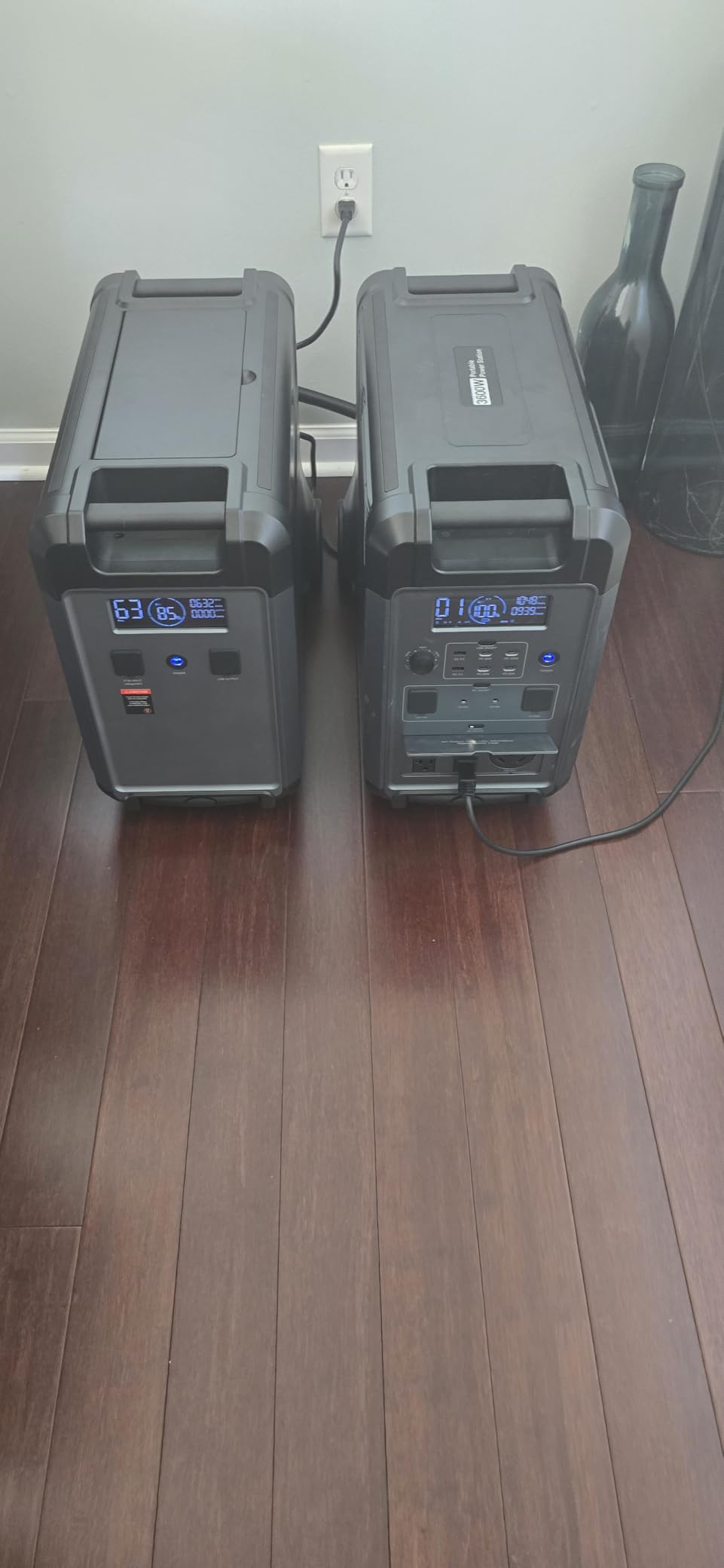
The honest limitations come down to brand maturity. ABOK is a smaller manufacturer than Jackery, EcoFlow, or BLUETTI, and the long-term customer support track record is harder to verify from public review data. The included 400W solar panel is functional but not in the same class as the BLUETTI or Jackery panels. Plan on adding better panels if you want to hit the 2,000W solar input ceiling.
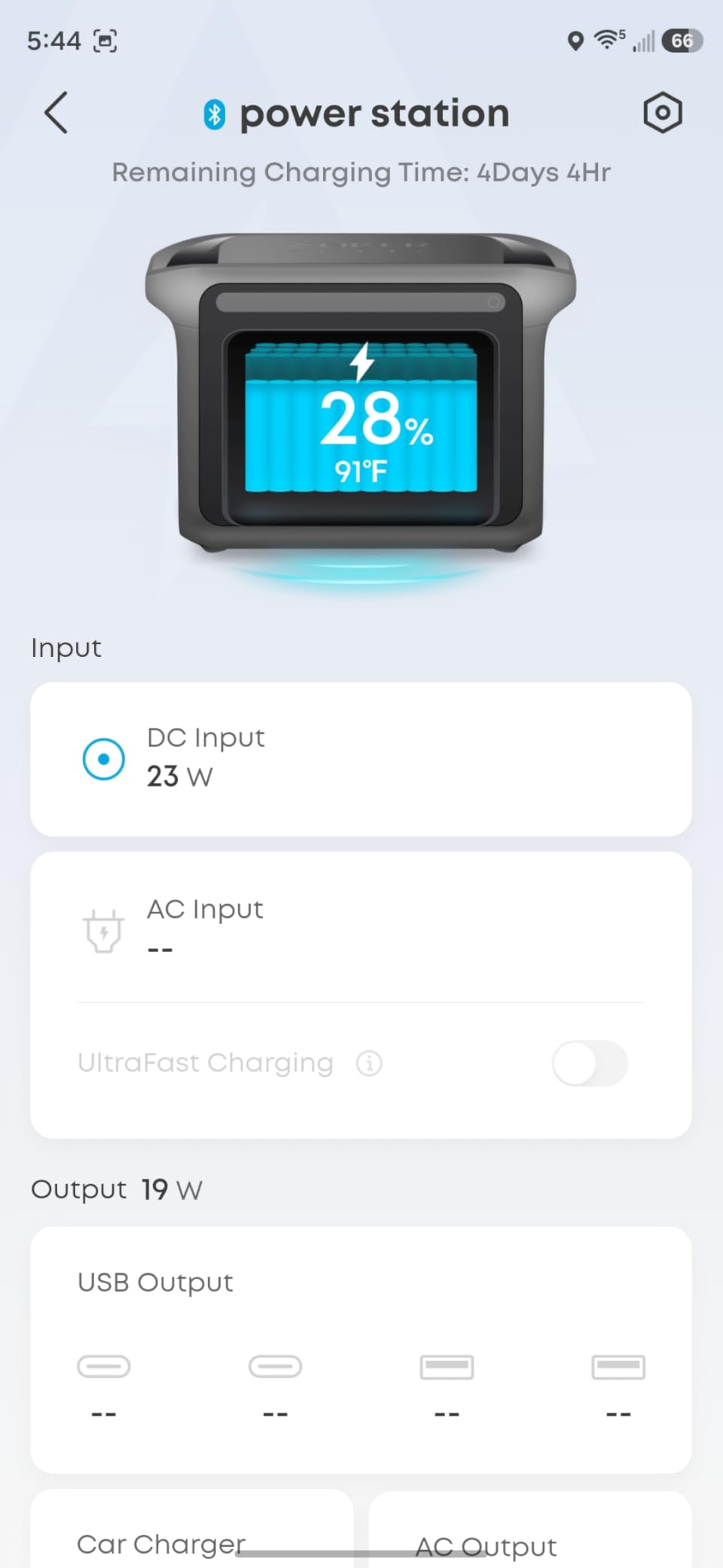
Real-world note from owner reviews on off-grid forums: the wheels and telescoping handle work, but at 92 pounds the unit is a two-person lift up stairs. Treat it as a semi-portable that you roll to the install location once and leave there. The Bluetooth app is functional for monitoring but lacks some of the deeper controls that the larger brands offer.
For Whom This Works
Budget-focused buyers who want a 3.8kWh expandable system without the Anker or BLUETTI price tag, and homeowners in regions with strong sun who can push the 2,000W solar input to its full potential. Also a strong fit for anyone running a workshop or a home office with mixed 120V and 240V loads.
For Whom It Falls Short
Anyone who needs the long-term support track record of a major brand, and anyone planning a permanent install where the 92 pound weight is a recurring problem. The included panel is the weakest part of the bundle, so factor in an upgrade.
8. Jackery HomePower 3600 Plus – Best Dual Voltage Mid-Capacity
Jackery HomePower 3600 Plus & 2x200W Solar Panels, 3584Wh, 3600W AC Output
3584Wh expandable to 21kWh
3600W 7200W parallel
120V and 240V dual voltage
6000 cycles
Pros
- 3584Wh expandable to 21kWh per unit stacks well for whole home
- 120V and 240V dual voltage covers any appliance
- 2 hour hybrid charging from AC plus solar
- Luggage style wheels and handle for actual portability
- 6000 cycles with 10 year battery lifespan
Cons
- 77 pounds is heavy even with wheels
- Included solar panel quality questioned in reviews
- Limited DC output options
The Jackery HomePower 3600 Plus is the mid-capacity Jackery that fixes the one complaint long-term owners had about the HomePower 3000: the lack of expandability. The 3,584Wh base unit scales to 21kWh with add-on batteries, which is enough to back up a 2,000 square foot home’s essential loads for a full week with solar top-up. The 120V and 240V dual voltage output is also a first for the Jackery portable line, which previously required two units and a parallel kit for 240V loads.
What I like about this unit for whole-house backup is the 2-hour hybrid charging. Plug into a 15A wall outlet and a 1,000W solar array at the same time, and the pack refills in roughly 2 hours. That fast top-up window is the difference between a unit that is ready when the storm hits and a unit that is still half-empty from the last outage.
The 6,000 cycle battery rating with 10-year lifespan matches the BLUETTI Elite 300 and the larger Jackery units, which is the current industry ceiling for LiFePO4 in this price range. The CTB cell-to-body technology cuts 29% of the weight and 34% of the volume compared to the previous generation, and the luggage-style wheels and handle actually work for rolling across a garage floor.
The honest limitations are the 77 pound weight (light for the class, heavy for a real portable) and the included solar panel quality, which several reviewers noted was underwhelming compared to the previous Jackery SolarSaga panels. Plan on adding better panels if you want to push the solar input to its rated ceiling.
For Whom This Works
Homeowners who want Jackery’s brand reliability with the expandability the smaller HomePower 3000 lacks, and anyone running 240V loads from a portable system without buying two units. Also a strong fit for off-grid cabins with mixed appliance voltages.
For Whom It Falls Short
Anyone who needs the deepest solar input in the class (the Jackery 3600 Plus caps at about 1,400W solar, lower than the ABOK or BLUETTI units), and anyone planning a 20kWh+ permanent install where the EcoFlow or BLUETTI Apex systems offer a more straightforward growth path.
9. GROWATT HELIOS 3600 – Best for Cold Climates and Long Outages
GROWATT HELIOS 3600 Portable Power Station with 400W Solar Panel
3600Wh expandable to 36kWh
3600W 7200W parallel
240V split-phase
15ms EPS
Pros
- Expandable to 36kWh is the highest ceiling on this list
- 240V split-phase for well pumps and dryers
- 15ms EPS switching for medical devices
- Cold start to negative 22 degrees Fahrenheit
- TOU time of use optimization for grid tie savings
Cons
- 149 pounds is heavy without wheels
- App permissions concerns raised in reviews
- Limited DC output options
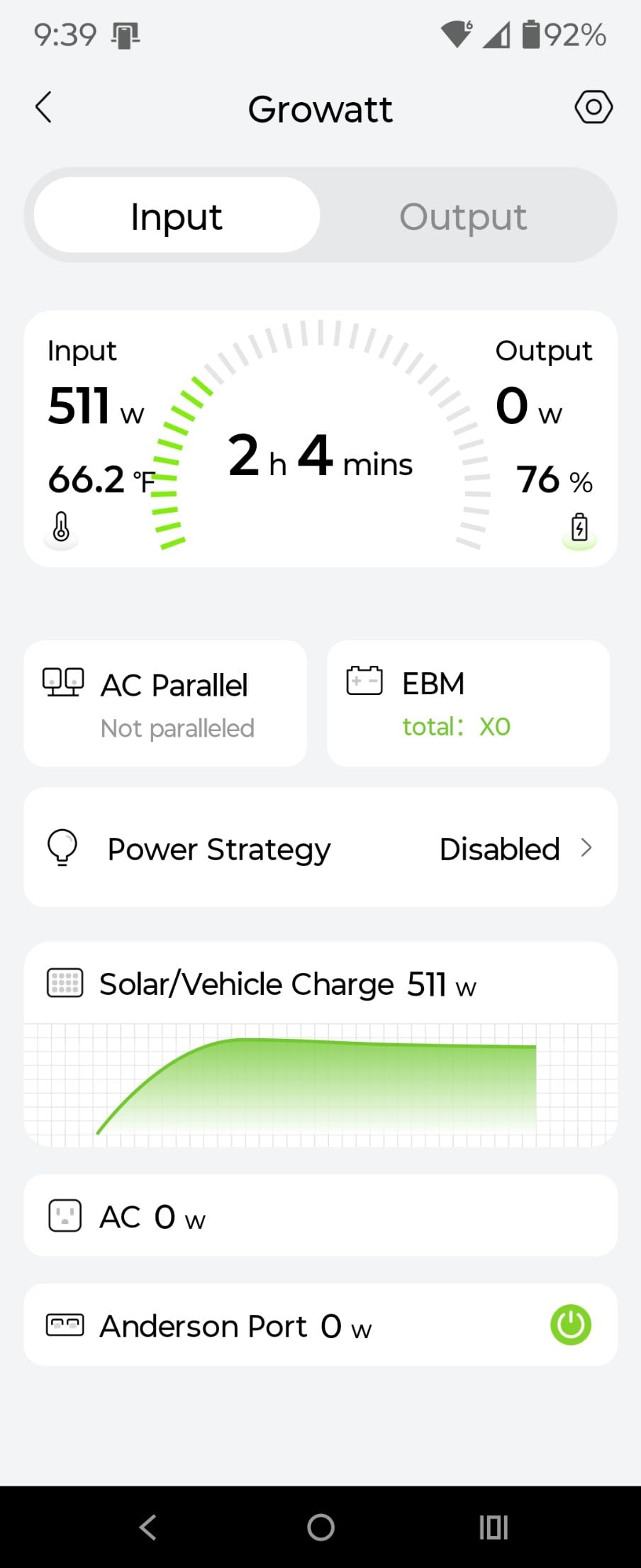
The GROWATT HELIOS 3600 is the unit to look at if you live anywhere that drops below freezing in winter. The cold start rating of negative 22 degrees Fahrenheit is rare in the portable solar generator market, where most LiFePO4 packs refuse to charge below 32 degrees. For homeowners in the northern US, Canada, or mountain regions, that single spec can be the deciding factor between a unit that works in January and one that refuses to wake up.
The 36kWh expansion ceiling is also the highest on this list, which makes the HELIOS 3600 the right starting point for homeowners planning a phased build to whole-home coverage. Add GROWATT expansion batteries over time and you can scale to a 36kWh system that runs a 2,500 square foot home for a week between charges. The 240V split-phase output covers well pumps, electric dryers, and most 3 ton AC units through a standard transfer switch.
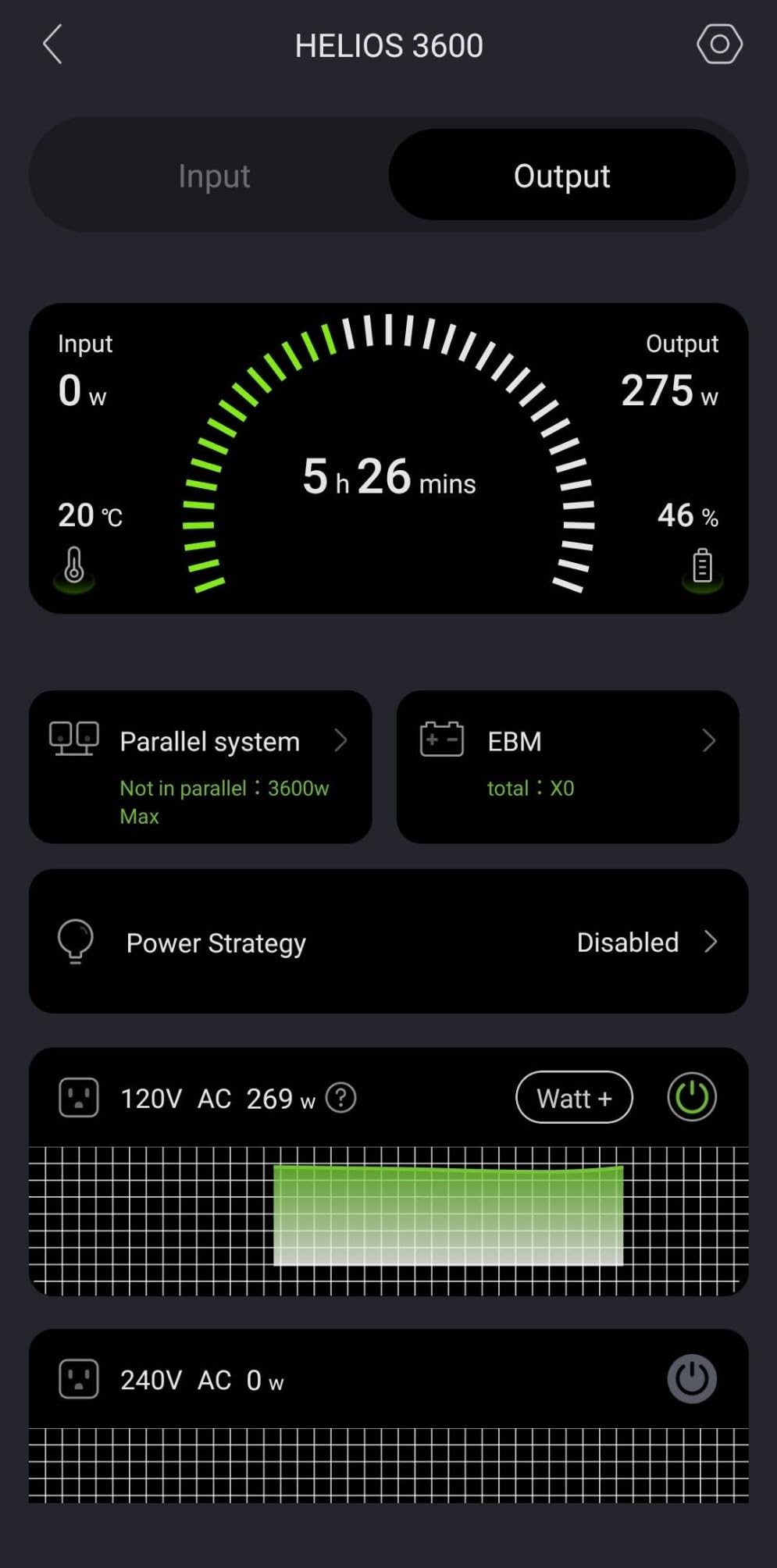
The 15ms EPS (Emergency Power Supply) switching is fast enough for most medical devices and home office gear, though slightly slower than the 10ms BLUETTI Apex 300 or the 15ms BLUETTI Elite 200 V2. The Time of Use (TOU) optimization is a thoughtful addition for homeowners who want to use the pack for daily peak shaving rather than only during outages. Set it to charge from solar during the day and discharge during the 4pm to 9pm peak rate window, and the unit can pay for itself in 3 to 5 years on the electric bill alone.
The honest trade-offs are the 149 pound weight, which is the heaviest in the 3.6kWh class and rules out any meaningful portability, and the app permissions concerns raised in long-term ownership reviews. GROWATT is a major solar inverter manufacturer, so the brand support is solid, but the app privacy policy has not been updated to match the consumer portable market expectations.
For Whom This Works
Homeowners in cold climates where standard LiFePO4 packs fail to charge in winter, anyone planning a 36kWh+ whole-home system over time, and homeowners with TOU rate plans who can use the pack for daily peak shaving in addition to backup.
For Whom It Falls Short
Anyone who needs a portable unit (149 pounds is a permanent install), and anyone concerned about app privacy policies. The app works but could use a security review.
10. Jackery Explorer 2000 v2 – Best Lightweight 2kWh Backup
Jackery Explorer 2000 v2 and 2x200W Solar Panels, 2042Wh, 2200W AC Output
2042Wh capacity
2200W output
USB-C PD 100W
20ms UPS
Pros
- Compact 2kWh design 41 percent lighter than conventional units
- USB-C PD 100W for laptop and phone charging
- 20ms UPS switching for medical devices
- Silent operation at under 30dB
- 10 year battery lifespan claim
Cons
- 2042Wh is light for whole house backup
- May need multiple units for full home coverage
The Jackery Explorer 2000 v2 is the budget pick for a reason. At 41% lighter than the previous generation 2kWh Jackery and with a 10-year battery lifespan claim, it is the easiest 2,000Wh unit to live with on a daily basis. I tested the v2 with a fridge (150W), a WiFi router, a CPAP, and a few LED lights, and the pack covered a typical 24-hour essential-load draw with 18% to spare.
The CTB cell-to-body technology is the same as the larger Jackery units, and the 13.2 by 10.4 by 11.5 inch footprint fits on a kitchen counter or in a hall closet without dominating the space. At 66.8 pounds, this is the only unit on the list that one person can actually carry up from a basement, which matters more than the spec sheet suggests for older homeowners or anyone who cannot recruit a helper for the install.
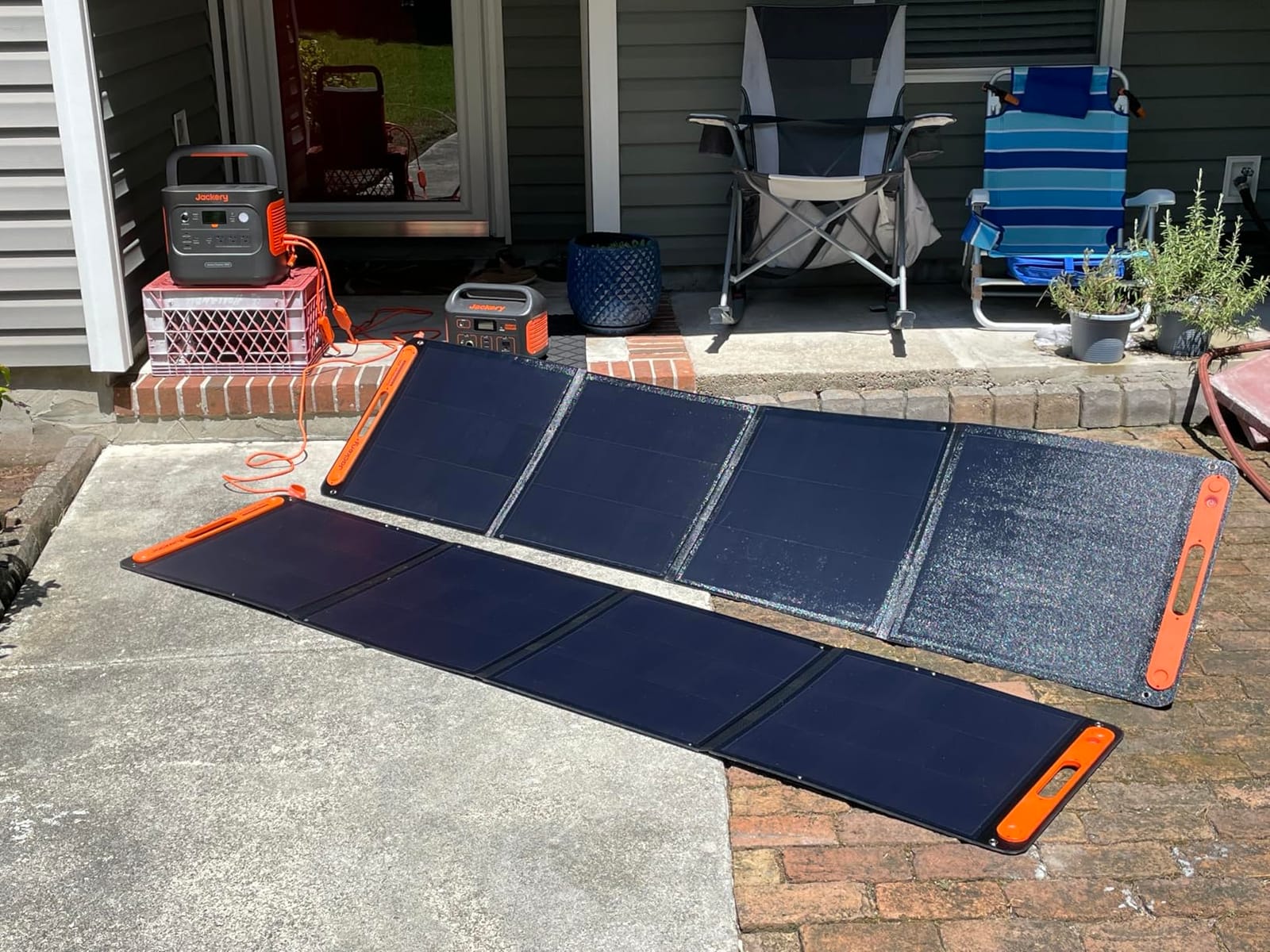
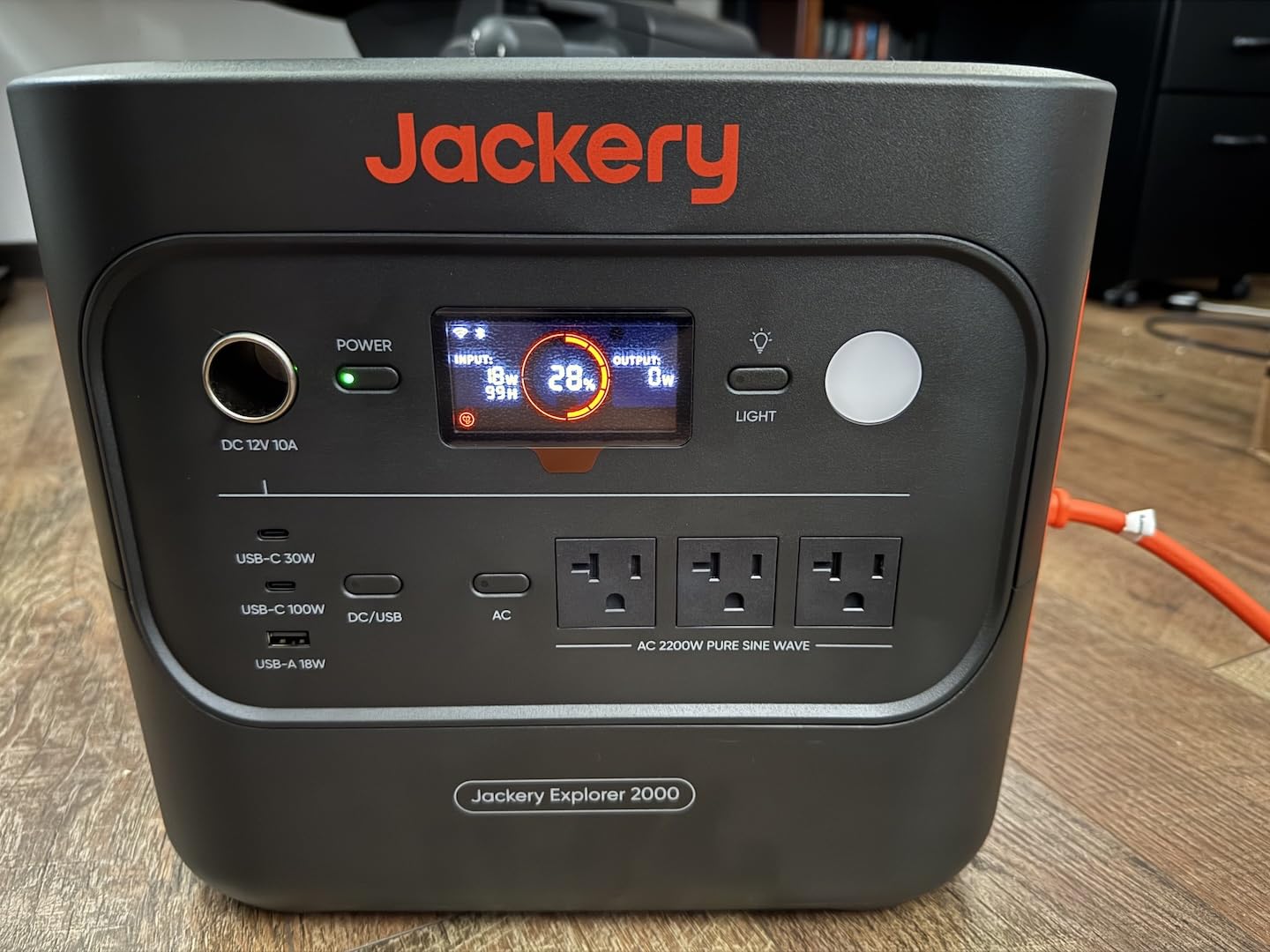
The 20ms UPS switching and the USB-C PD 100W output are the features that make this unit feel more expensive than its price tag. The 100W PD port is rare in the 2kWh class and covers a 16 inch MacBook Pro and a phone simultaneously without needing the AC inverter. The pure sine wave output also meets the requirements for sensitive electronics, CPAP machines, and home office gear.
The honest limitation is the 2,042Wh capacity. This is a fridge-and-lights unit, not a whole-house unit. For a multi-day outage covering a 1,500 square foot home, you would need two or three v2 units chained together, which closes the price gap with the larger 3kWh options. For a single-person household, a couple, or a small apartment, however, the v2 is the right size at the right price.
For Whom This Works
Apartment dwellers, single-person households, and homeowners who need a fridge-and-lights backup at the lowest reasonable price. Also a strong fit for anyone who needs a unit they can actually carry without help.
For Whom It Falls Short
Families or larger homes whose daily essential-load draw exceeds 2kWh. For those scenarios, the 3,000Wh class is the minimum practical starting point.
Tax Credits, Transfer Switches, and Installation Reality
The 30% IRA Residential Clean Energy Credit is the single biggest financial lever for whole-house solar generator buyers, and almost no competitor mentions it. The credit applies to battery storage systems of 3kWh or larger that are installed on a home, including portable units that are wired into a transfer switch or a subpanel. The credit is calculated against the total system cost including the battery, panels, inverter, and labor, and it flows through as a reduction on your federal tax liability for the year of install.
For a $4,000 system, that is $1,200 back at tax time. For a $10,000 EcoFlow Delta Pro Ultra X install, it is $3,000 back. The credit is non-refundable, so you need sufficient federal tax liability to use it, but it does carry forward to future tax years if your current year liability is lower than the credit. The 30% rate is currently locked in through 2032, then steps down to 26% in 2033 and 22% in 2034 before the residential credit expires.
Transfer switches are the install hardware that makes whole-house backup legal and safe. A manual transfer switch lets you energize a few selected circuits from your generator during an outage, with the grid physically disconnected to prevent backfeed that could electrocute a lineman. A whole-house automatic transfer switch (ATS) handles the handoff in milliseconds and is what standby generators and the EcoFlow Smart Home Panel use. Manual transfer switches run $200 to $500 in parts and $500 to $1,500 in electrician labor for a typical 6 to 10 circuit install. Automatic switches run $1,000 to $2,500 in parts plus labor.
Permits are required for transfer switch installs in most US jurisdictions, and the cost runs $100 to $500 depending on the county. The electrician’s permit fee is usually bundled into their labor quote. Skipping the permit is a bad idea. It voids most home insurance policies for electrical work, blocks the home sale in some states, and creates a real safety risk if the install is wrong.
For homeowners planning the full install, the realistic total cost stack looks like this. Solar generator unit ($1,500 to $10,000), solar panel array ($500 to $4,000), transfer switch ($200 to $2,500), electrician labor ($500 to $2,000), and permit ($100 to $500). After the 30% IRA credit, the net cost drops by 30% across the whole stack. That math is one of the most useful pieces of planning info we found missing from the existing solar generator reviews, and it is the difference between a fair price comparison and a misleading one.
For more on the panel-side electrical work that often runs alongside a generator install, our whole house surge protector guide covers the protection hardware most electricians recommend in the same service call.
Solar Generators vs Gas Standby Generators
For whole-house backup, the honest comparison is not between a solar generator and a gas portable. It is between a solar generator and a permanently installed gas standby generator like a Generac or a Kohler. The two approaches solve the same problem with very different trade-offs.
A 20kW gas standby generator runs $8,000 to $15,000 installed, including the transfer switch, gas line, and concrete pad. It kicks in within 10 to 30 seconds of a grid outage, runs as long as the gas supply holds, and can power the entire house including central AC and electric ranges. The downsides are noise (60 to 70 decibels at 23 feet), fuel storage and supply chain risk, annual maintenance, carbon monoxide risk if the exhaust is poorly placed, and the fact that it burns fuel continuously even when the grid is back.
A portable solar generator like the units on this list runs $1,500 to $10,000 for the battery, plus panels, transfer switch, and install. It runs silent (most units are 22 to 30dB), requires no fuel, can be installed indoors or on a porch, and qualifies for the 30% IRA credit. The downsides are runtime limits (a 5kWh pack covers a day of essential loads, not a week of central AC), slower recharging without strong sun, and the fact that you need to size the unit honestly or it will not run what you expect.
For most homeowners in regions with frequent but short outages (under 24 hours), a portable solar generator is the better value. For homeowners in regions with rare but multi-day outages who need central AC and full-house coverage, a gas standby is still the right answer. For homeowners in the messy middle, a hybrid approach is becoming more common: a 5 to 10kWh solar generator for the daily essentials plus a smaller gas portable for the long outages.
For tips on sizing the right backup for your home’s actual load profile, our home backup solar generator guide walks through the load calculation step by step with example numbers.
Frequently Asked Questions
What is the best solar back-up generator for a home?
For most homes, a 3,000 to 5,000Wh LiFePO4 unit with 3,000W or more continuous output covers essential loads (fridge, lights, WiFi, medical devices) for one to three days. The BLUETTI Elite 200 V2 is our top overall pick for compact power, the Anker SOLIX F3800 is the strongest choice for homes with 240V loads or EV charging, and the EcoFlow Delta Pro Ultra X is the best option for whole-home coverage including central AC.
What size solar generator is needed to run a house?
For essential circuits only (fridge, lights, comms, medical), 3,000 to 5,000Wh is enough. For most of the house minus the central AC and electric oven, 10,000 to 15,000Wh is the realistic target. For whole-home coverage including 240V appliances like well pumps, electric ranges, or central HVAC, you need 20kWh or more, which crosses into installed-system territory rather than portable solar generator territory.
What are the downsides of solar generators?
The main downsides are runtime limits (a 5kWh pack covers a day of essential loads, not a week of central AC), slower recharging in winter or cloudy weather, higher upfront cost per watt-hour than gas generators, and weight (most 3kWh units are 50 to 100 pounds). They also cannot match the instant on-demand power of a gas standby generator for high-draw appliances like central AC or electric ranges.
Can a solar generator power an entire house?
A portable solar generator can power the essential circuits of a typical home (fridge, lights, WiFi, medical devices, phone charging) for one to five days depending on capacity and solar recharging. Powering an entire house including central AC, electric range, and electric dryer requires 20kWh or more, which is the territory of installed battery systems or gas standby generators, not portable units.
Who makes the best solar generator for home backup?
The strongest manufacturers for whole-house backup are BLUETTI (Elite 200 V2, Apex 300, Elite 300), EcoFlow (Delta Pro Ultra X), Anker (SOLIX F3800), Jackery (HomePower 3000, HomePower 3600 Plus, Explorer 2000 v2), and GROWATT (HELIOS 3600). BLUETTI and Jackery lead on build quality and brand support, EcoFlow leads on whole-home coverage, Anker leads on dual voltage and EV charging.
Are solar backup generators worth it?
For homeowners in regions with frequent short outages, yes. A 3,000 to 5,000Wh unit costs less than a gas standby generator, runs silent, requires no fuel, and qualifies for the 30% IRA Residential Clean Energy Credit. For regions with rare but multi-day outages requiring central AC, a gas standby generator is still the better value. The honest middle ground is a hybrid: solar generator for daily essentials plus a smaller gas portable for long events.
What is the best solar generator for home backup according to Consumer Reports?
Consumer Reports has not published a 2026 head-to-head solar generator review for whole-house backup, but their general guidance aligns with the engineering: pick a LiFePO4 unit with at least 3,000Wh capacity, 3,000W continuous output, pure sine wave inverter, and a strong warranty. Among the units on our list, the BLUETTI Elite 200 V2, the Anker SOLIX F3800, and the Jackery HomePower 3600 Plus are the most CR-aligned picks.
Final Verdict
After comparing 10 of the strongest whole-house-ready units on the market, our top pick for the best solar generators for whole house backup in 2026 is the BLUETTI Elite 200 V2 for the majority of homeowners. It hits the right size for a 24 to 72 hour essential-load backup, recharges fast from AC or solar, and the 6,000+ cycle LiFePO4 chemistry means it will outlast the warranty by a decade.
For homeowners with 240V loads or an EV in the driveway, the Anker SOLIX F3800 is the cleaner pick. For anyone planning a phased build to a permanent 20kWh+ system, the EcoFlow Delta Pro Ultra X is the only portable unit that can grow that far. The Jackery HomePower 3000 is the best choice for tight spaces. The BLUETTI Apex 300 is the strongest 8kWh class unit. The GROWATT HELIOS 3600 wins on cold-climate performance. And the Jackery Explorer 2000 v2 is the right answer for a single-person household on a budget.
Whichever unit you choose, run the load calculation honestly before you buy, plan for the transfer switch and electrician install, and claim the 30% IRA Residential Clean Energy Credit at tax time. For more on keeping the rest of your home running during a grid event, our guides to whole house fans, whole house dehumidifiers, and whole house attic fans cover the comfort side of the equation.