
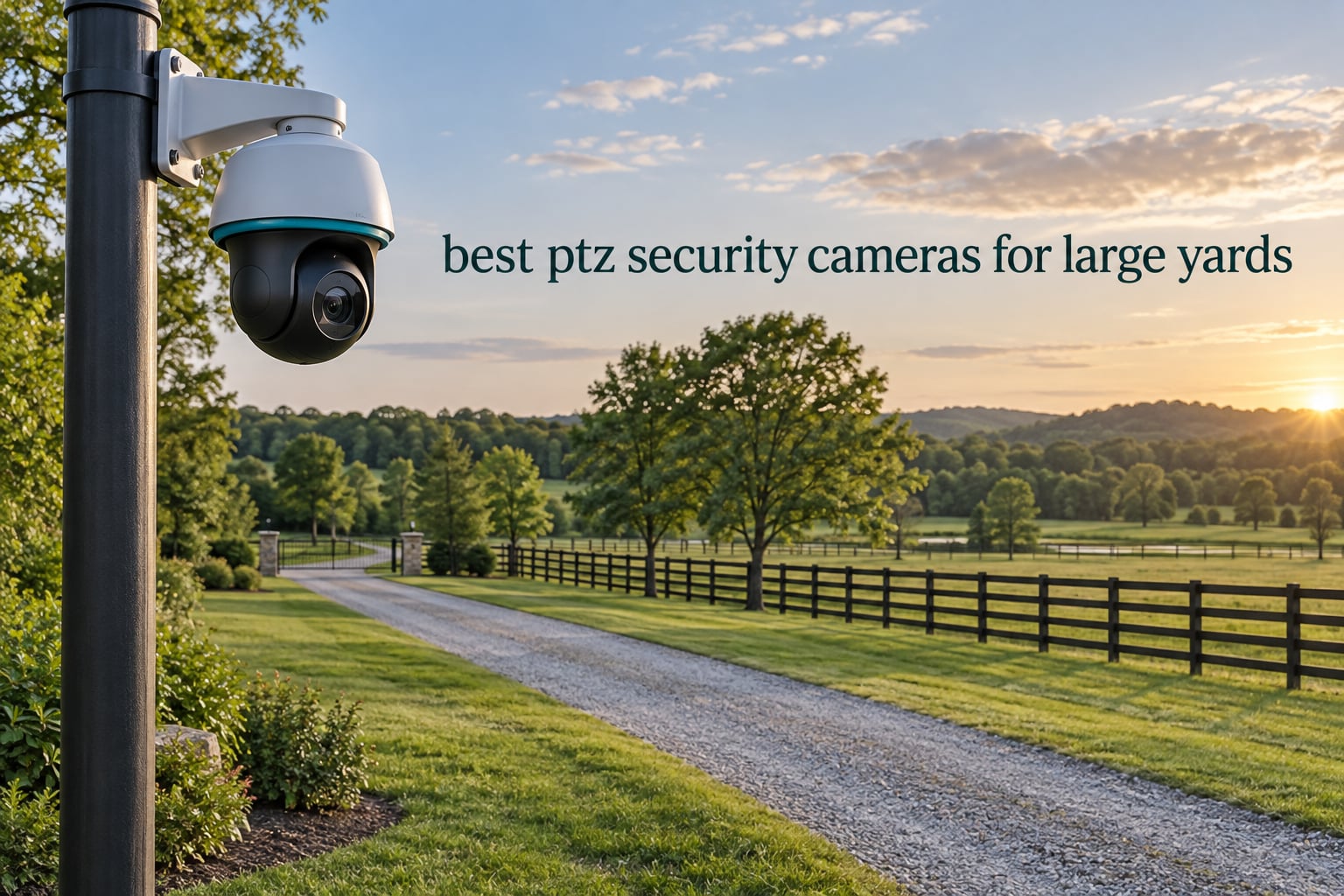
A PTZ security camera sits on a motorized base that rotates through 360 degrees horizontally, tilts up and down, and magnifies distant subjects with a real optical lens. That combination is why the best PTZ security cameras for large yards exist as a category at all: one mounted camera can sweep an entire property that would otherwise need four or more fixed lenses. A wide-angle fixed camera loses identifying detail fast once a subject passes roughly 100 feet, so covering an acre of open ground with fixed hardware means buying, powering, and mounting half a dozen boxes. A pan-tilt-zoom camera trades constant wide coverage for reach, and that trade is usually worth making on open land.
Our team spent the last several weeks working through ten of the most-watched PTZ security cameras designed for yards, driveways, gates, and open rural ground. We read every specification, cross-checked owner reviews, and sorted the list by what actually matters at distance: zoom capability, night vision range, how the camera is powered, whether it records locally without a monthly fee, and how it holds up outdoors. We did not run independent lab tests of our own, so treat the readings below as careful interpretation of published specs and owner reports rather than a controlled comparison.
What surfaced was a clear split. The cameras with genuine dual-lens glass, like the Reolink TrackMix models, deliver a wide overview and a telephoto close-up at the same time, which is the closest thing to a fixed-plus-PTZ rig you can buy in a single housing. The cheapest units lean on digital zoom, which crops and upscales existing pixels rather than moving glass, and the difference shows the moment you try to identify a face or plate at range. On the power side, solar cameras remove trenching entirely but carry a real winter risk that most marketing ignores.
If you are still narrowing the yard-work side of things, our guides to the best lawn mowers for large yards and robot lawn mowers for large yards cover the same acreage problem from a different angle. For indoor pan-tilt-zoom hardware, our 4K PTZ conference room camera picks are a useful comparison point for lens quality.
Top 3 Picks: Best PTZ Security Cameras for Large Yards in 2026
Three models stood out above the rest. The Tapo C500 wins on proven reliability and the deepest review history in the group, the Reolink TrackMix PoE delivers the strongest long-range wired picture, and the aosu 3K Solar PTZ is the practical answer when there is no power at the far corner of the property.

Tapo C500 360 Pan/Tilt
- 360 deg pan and 130 deg tilt
- 1080p
- 98 ft night vision
- IP65
- physical privacy mode

Best PTZ Security Cameras for Large Yards at a Glance in October
Every camera below, with the specs that decide whether it can hold a yard. Zoom figures marked hybrid or digital depend on cropping rather than on moving glass, so treat them as a lower bound.
| Product | Specifications | Action |
|---|---|---|
| Tapo C500 360 Pan/Tilt Camera |
|
Check Latest Price |
 aosu 3K 5MP Solar PTZ aosu 3K 5MP Solar PTZ |
|
Check Latest Price |
 Reolink Argus PT Ultra 4K Solar Reolink Argus PT Ultra 4K Solar |
|
Check Latest Price |
 Reolink TrackMix WiFi Dual-Lens PTZ Reolink TrackMix WiFi Dual-Lens PTZ |
|
Check Latest Price |
| Reolink TrackMix PoE Dual-Lens PTZ |
|
Check Latest Price |
 Gianteye 2K Solar Two-Pack Gianteye 2K Solar Two-Pack |
|
Check Latest Price |
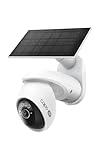 Tapo C660 4K Solar PTZ Tapo C660 4K Solar PTZ |
|
Check Latest Price |
 xmartO 10X Dual-Lens PTZ xmartO 10X Dual-Lens PTZ |
|
Check Latest Price |
 VSTARCAM 4-Lens Multi-View PTZ VSTARCAM 4-Lens Multi-View PTZ |
|
Check Latest Price |
 Hiseeu 4K PoE PTZ Hiseeu 4K PoE PTZ |
|
Check Latest Price |
1. Tapo C500 360 Pan/Tilt Camera – Best Overall for Near to Mid Yard Coverage
TP-Link Tapo 1080P Outdoor Wired Pan/Tilt Security Camera, C500
360 deg pan and 130 deg tilt
1080p
98 ft night vision
IP65
360 g
Pros
- 360 degree pan with 130 degree tilt covers a full yard from one mount
- Deepest review history in this group
- Local microSD up to 512GB plus optional cloud
- Physical privacy shutter blocks the lens physically
- Two-way audio with a custom sound alarm
Cons
- Night vision is monochrome with no color mode
- No real flood light only a blinking alarm strobe
- Power adapter cord must stay dry indoors
The Tapo C500 is the answer for most people reading this page, and the reason is not a headline spec. It is that this camera has been installed in more places, reviewed more times, and troubleshot more thoroughly than anything else on the list. Out of roughly seven thousand owner ratings, the recurring theme is that it works, it pans smoothly, and the app setup takes minutes rather than an evening. That reliability is worth more on a big property than an extra two megapixels.
Coverage is the reason to buy it. The head sweeps a full 360 degrees horizontally and tilts 130 degrees vertically, so a single mount at a corner post or under an eave sees the driveway, the side path, and the back fence line. At 360 grams and 4.88 by 4.84 by 3.54 inches, it is also small enough to mount high without looking like industrial equipment.
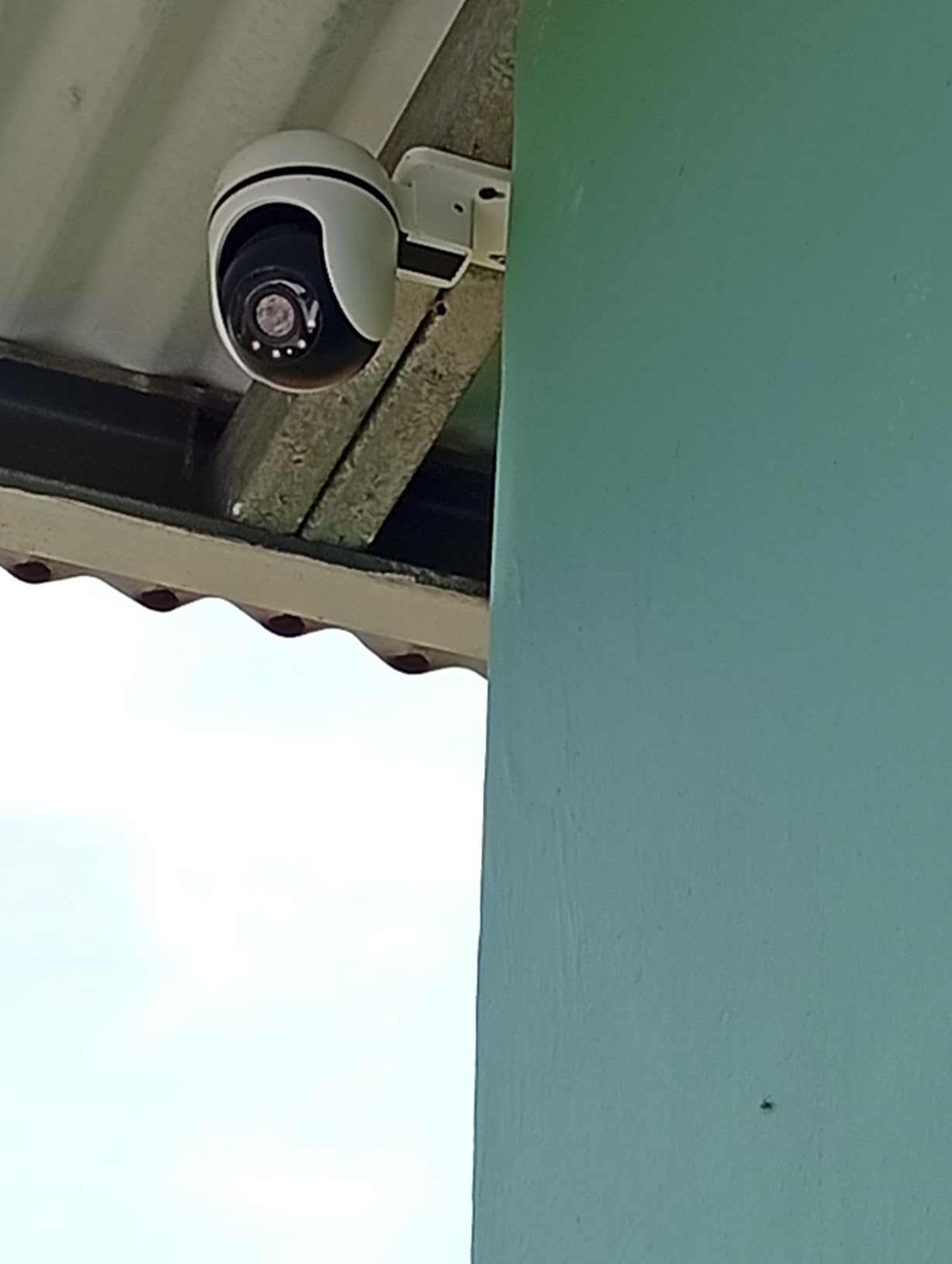
Storage is flexible in a way most budget cameras are not. Owners can use a microSD card up to 512GB for local recording, or Tapo Care cloud if they want off-site copies, and core features do not require a subscription. AI person detection with high-speed motion tracking runs on the device, which is why alerts are reasonably clean out of the box.
Night vision reaches a stated 98 feet, and that figure held up better than most manufacturer claims we checked for this roundup. It is infrared and therefore black and white. There is no color night mode on this model, and the only light source built in is a small blinking strobe tied to the sound alarm, so a genuinely dark corner stays dark.
The honest complaint list is short. Some owners report losing the Wi-Fi connection and needing frequent reboots, and detection zones can drift out of alignment after the camera has been panned manually many times. Neither is a dealbreaker, but both are real if you plan to lean on zone-based alerts rather than full-frame motion.
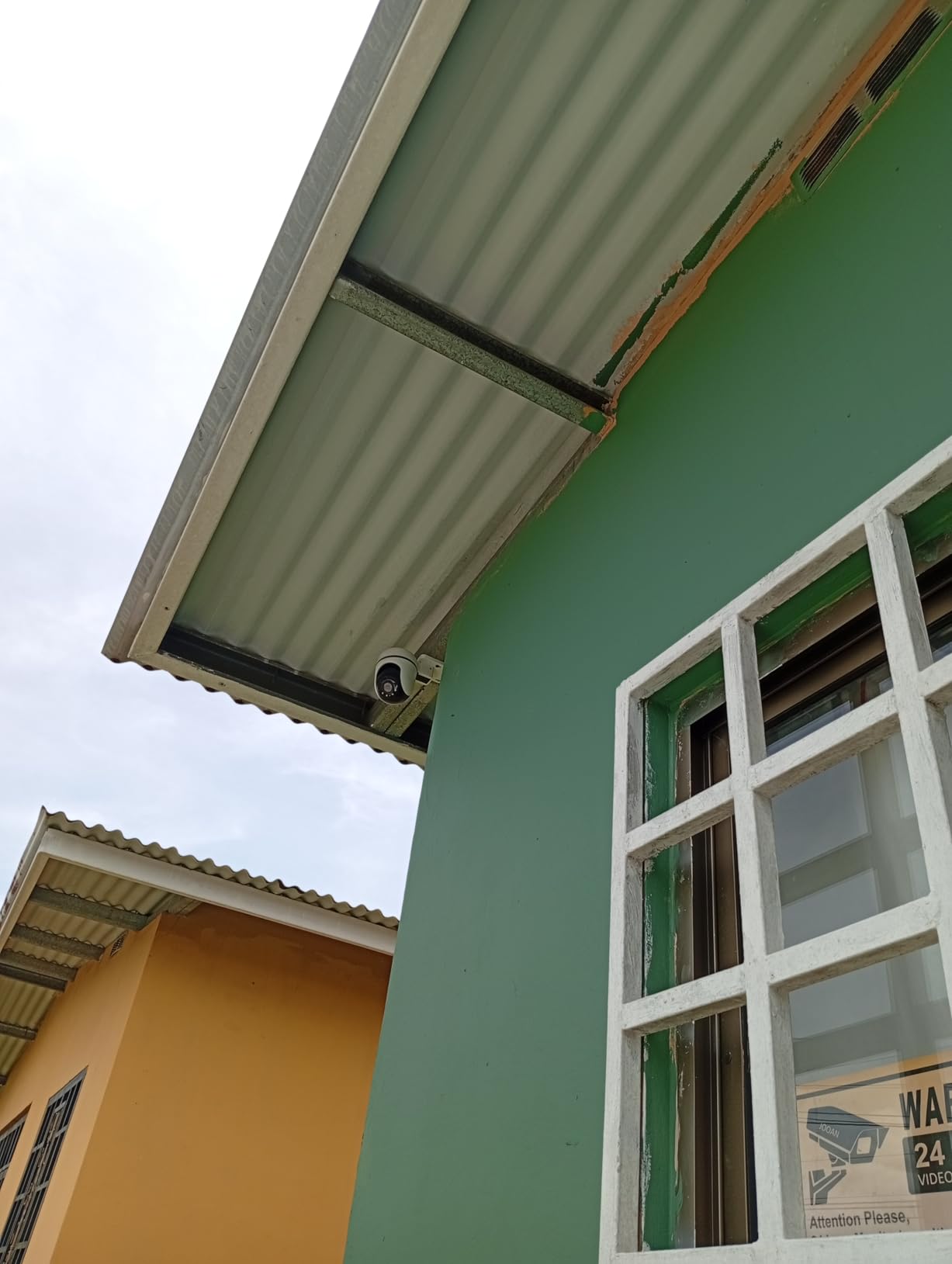
What Tapo C500 handles well on a large yard
It covers near and mid-range ground well, meaning anything within roughly the first hundred feet of the mount. For a suburban lot with a wide lawn, a front driveway, and a garden path, this single camera replaces three fixed units. The 360 degree pan means you are not limited to a corner sweep, and the 130 degree tilt is enough to watch a gate at ground level from a high mount.
Alexa and Google Assistant support means you can pull up the live feed on a smart display without touching your phone, and the physical privacy shutter is a genuine plus for a camera that sits near a street-facing window.
Where the Tapo C500 falls short
The zoom is digital, not optical, so if your far corner sits 250 feet away you will see a person but not read a plate or a face. If your property is acreage-scale or you need identification at a distant gate, this is not the camera, and one of the dual-lens models below fits that job.
The corded power supply also needs an indoor outlet within reach, since reviewers specifically note the adapter cord must be kept dry. That rules it out for a pole at the back of a five-acre lot.
2. aosu 3K Solar PTZ – Best Solar Pick for Off-Grid Yard Corners
aosu 3K 5MP Solar Security Camera Wireless Outdoor PTZ 360° Smart Tracking
3K 5MP sensor
8x zoom
solar with panel
color night vision
IP65
Pros
- Solar panel removes cabling at remote yard locations
- 3K 5MP resolution holds up better at distance than 1080p
- Color night vision plus a spotlight for dark areas
- Quick patrol scans the full 360 degrees
- Tracking follows moving subjects
Cons
- 2.4GHz only so it cannot join a 5GHz network
- Occasional connection drops at longer Wi-Fi distances
- Firmware experience depends on the aosu app
The aosu C9E2DA11 is the camera to consider when the spot you want to cover has no power and no realistic path to get it. A solar panel on the mount means no trenching across a lawn, no extension cord snaking along a fence, and no electrician. For a back corner, a detached garage, or a field gate, that practical win outweighs most spec-sheet differences.
Image quality is a step up from budget 1080p models. The 5MP sensor records at 3K, and owners consistently report that it holds more detail at distance, which matters when you are scanning open ground rather than a porch. Zoom is 8x digital, so it is still cropping rather than moving glass, but there is more pixel data to crop from.
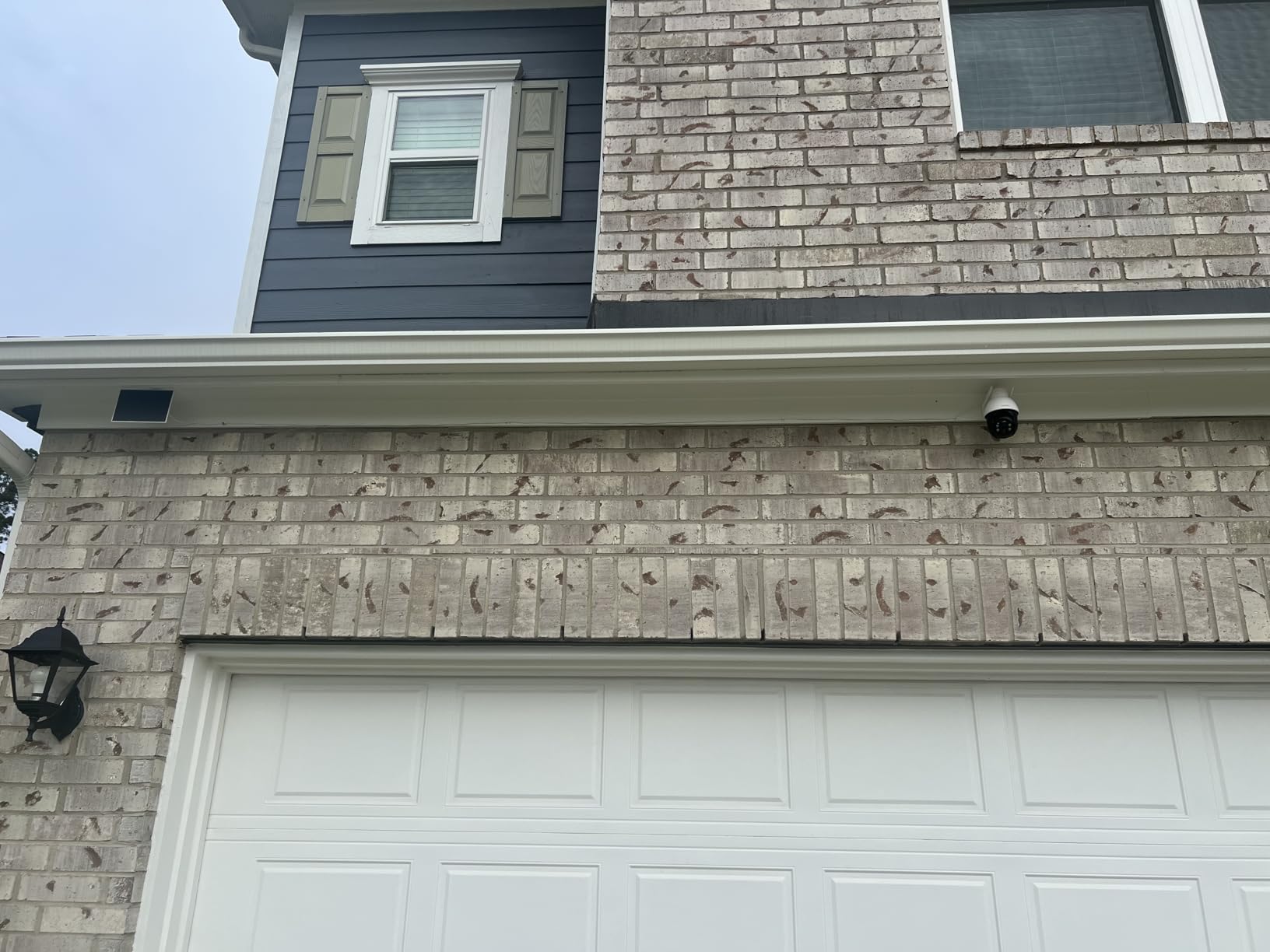
Night handling is a real strength here. Instead of plain infrared, this unit offers full-color night vision backed by an integrated spotlight and smart alarm, so a subject walking into the frame is visible in color rather than a white silhouette. Two-way talk runs through AI noise reduction, which helps on an open yard where wind is constant.
The tracking covers people, family members, and pets, and the one-tap quick patrol function sweeps the property without you touching the app. At 2.05 kilograms and 8.66 by 6.3 by 5.31 inches it is a substantial mount, so plan the bracket rather than assuming it will fit a light soffit.
The limitation owners mention most is the radio. It is 2.4GHz only, and over open ground with few walls to reflect signal, that is exactly where a 2.4GHz link is weakest. Several buyers report dropouts at the far end of their property, and it cannot be attached to a 5GHz network at all.
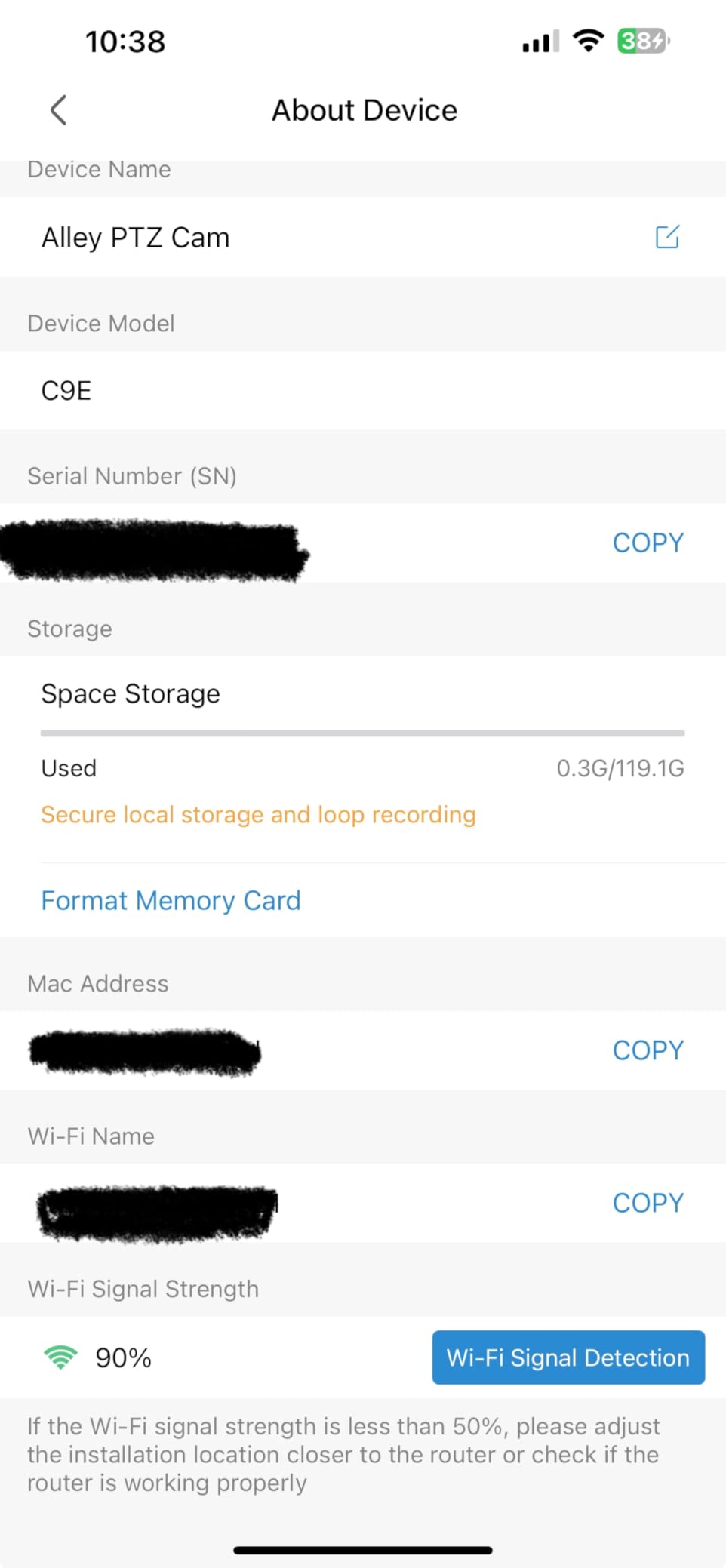
What the aosu 3K Solar PTZ does well
It solves the installation problem no other camera on this list solves. If your only realistic option is a fence post 200 feet from the nearest outlet, solar is not a convenience feature, it is the whole reason the camera gets installed at all. The 360 degree pan plus quick patrol means one panel and one mount can watch a full perimeter.
Color night vision with a spotlight also makes it more useful for deterrence than a pure infrared camera, since a visible human figure reads clearly at night.
Where the aosu falls short
The 2.4GHz-only radio is the dealbreaker for anyone with a crowded 2.4GHz band, a mesh network, or a yard large enough that signal has nothing to bounce off. If your property is a half acre or smaller and your router is near the camera, that is not a problem.
Setup quality depends on the aosu app experience, which owners describe as functional rather than polished, and some buyers report needing multiple attempts before the connection holds.
3. Reolink Argus PT Ultra 4K Solar – Best Wire-Free 4K Option
REOLINK Argus PT Ultra First 4K Solar Security Cameras Wireless Outdoor
4K 8MP sensor
3W detachable solar panel
355 deg pan and 140 deg tilt
IP64
Pros
- 4K 8MP detail for the far end of a property
- No wiring with a detachable solar panel
- Local microSD to 512GB plus FTP with no subscription
- Holds up in heavy rain and one owner reported working at -20C
- Dual-band Wi-Fi 6 support
Cons
- The small solar panel often cannot keep up with the power draw
- Some units stop holding a charge and need a USB recharge
- Quick start guide omits UID entry and reset pin details
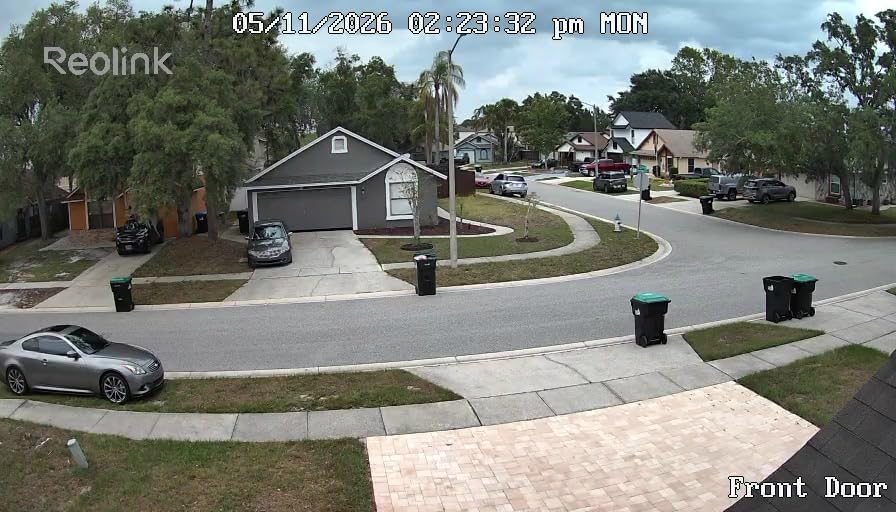
The Argus PT Ultra solves a specific problem well: high resolution without running a cable. An 8MP sensor feeding 4K output gives you far more usable detail at distance than the 1080p models lower on this list, and the 355 degree pan with 140 degree tilt covers more of the sky and ground than most competitors manage.
Detection is thorough for a consumer camera, covering people, vehicles, and animals with customizable zones. The built-in motion spotlight handles dark approaches, and owners praise the local storage options: microSD up to 512GB, a Reolink Home Hub, or FTP, all without a monthly fee.
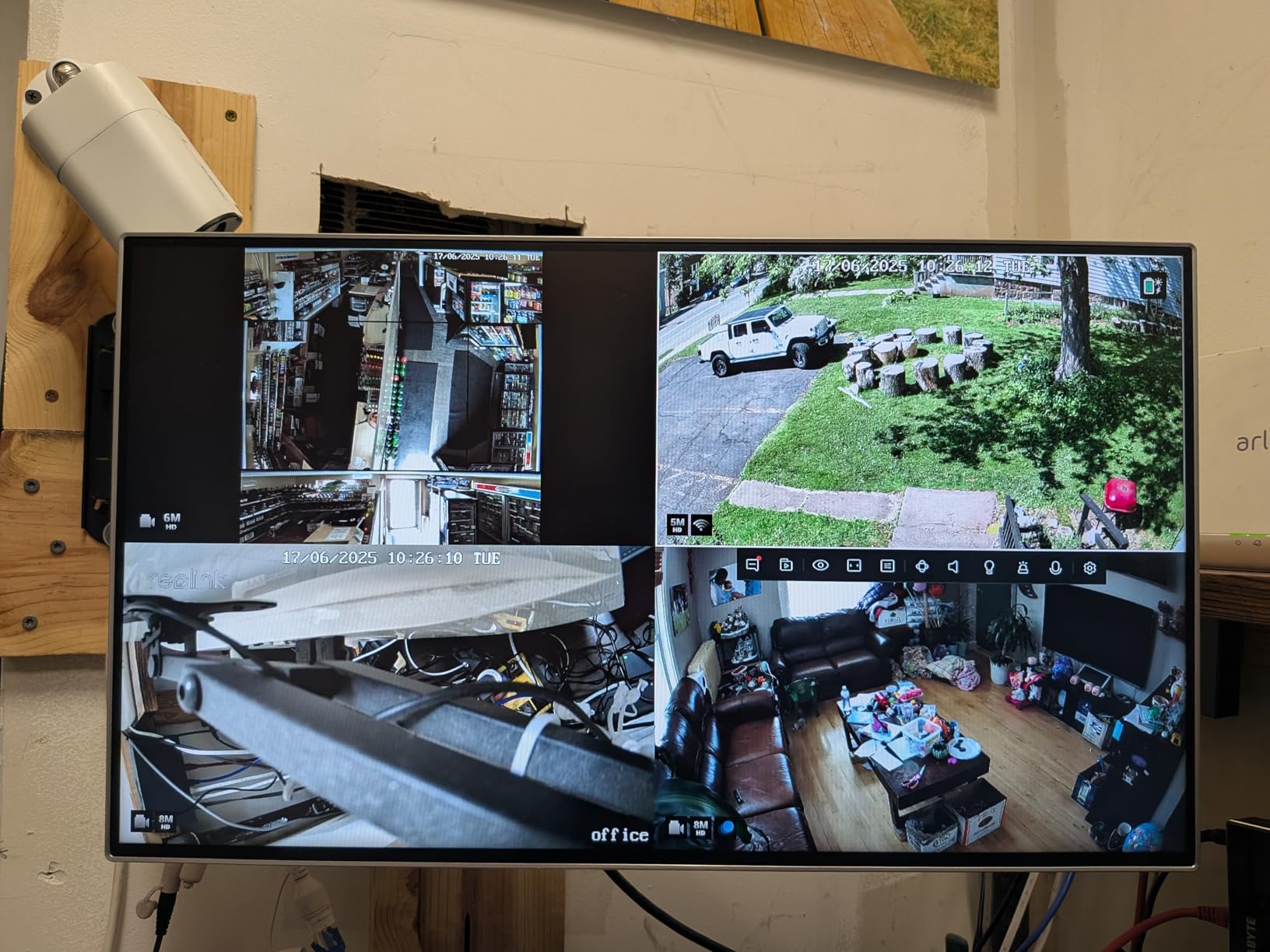
Reolink customer service comes up repeatedly as a genuine strength, and there is a long-term durability report from an owner running the camera through heavy rain and cold down to -20C. The unit also pairs with an existing Reolink NVR setup if you already run one, which matters for anyone consolidating a mixed property.
Now the part that decides a lot of purchases. The bundled panel is 3 watts, and a 4K sensor with color night vision and a spotlight draws more power than a small panel can sustainably generate. Multiple owners report gradual daily charge loss, and some units eventually stop holding charge at all and require a USB recharge.
That is not a defect so much as a sizing mismatch. It is also why Reolink sells larger panels separately. If you buy this camera, budget for a bigger panel or plan a periodic top-up in low-sun seasons, because the panel is described as detachable precisely so you can position it for better exposure.
What the Argus PT Ultra handles well
It is the best combination of wire-free installation and real image quality in this group. The 4K sensor gives you a chance of identifying detail at range where 1080p units simply give you a shape, and dual-band Wi-Fi 6 is a genuine advantage over the 2.4GHz-only solar cameras on this list.
No-subscription local recording matters over a long period. Owners running multiple units for a year report no reboots and no mechanical failures, and the H.265 encoding keeps storage demands manageable.
Where the Argus PT Ultra falls short
The power equation. A 3 watt panel against a 4K color sensor is a mismatch that shows up as shortened runtime and eventually dead batteries, and battery performance drops noticeably in low-sun seasons. If your corner gets shade for part of the day, size up the panel on day one.
The stated night vision range of 33 feet is also the shortest in this roundup, so this is a camera you will rely on for daylight identification and motion-triggered spotlight rather than long-range night detail.
4. Reolink TrackMix WiFi Dual-Lens PTZ – Best Dual-Band Wireless Coverage
REOLINK 4K 8MP Dual-Lens PTZ Wired WiFi Outdoor Security Camera, 2.4/5GHz
Dual lens 4K wide plus telephoto
6X hybrid zoom
100 ft night vision
1.4 kg
Pros
- Wide overview and telephoto close-up shown at the same time
- Tracking follows people and vehicles across the yard
- Dual-band Wi-Fi keeps the link stable over open ground
- Clear 4K day video and color night with spotlights
- Wired power means no battery maintenance
Cons
- Must be plugged into a power adapter for continuous running
- Telephoto close-up stream is only 2MP and can look soft
- Spotlights can trigger on insects or rain and sometimes miss a person
The TrackMix design is the closest single-camera answer to the fixed-plus-PTZ architecture that surveillance forums recommend. One 4K wide lens covers the whole property while a telephoto lens feeds a simultaneous close-up view, so you keep full situational awareness and still get a magnified picture without waiting for the camera to pan.
Field of view runs from 104 degrees down to 38 degrees horizontally and 60 degrees to 21 degrees vertically as you zoom, which is a meaningful sweep. The head pans 355 degrees and tilts 90 degrees, and tracking follows targets out to about 50 feet.
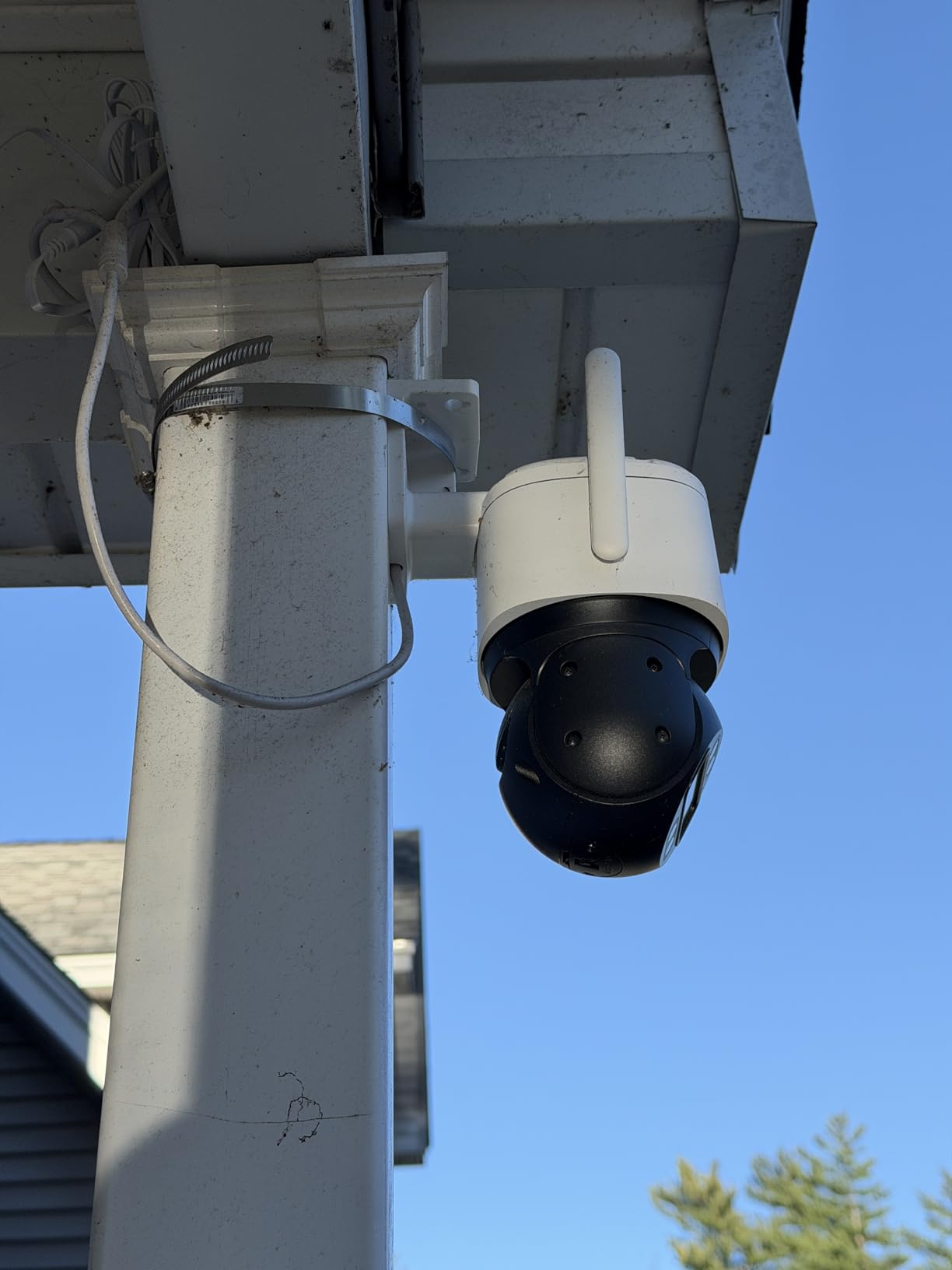
For a large yard, the dual-band radio is the detail that matters most. Running 2.4GHz and 5GHz together over open air is exactly the fix for the dropouts that plague 2.4GHz-only cameras at distance, and owners specifically call out link stability across a large property as a reason to pick this over the wireless alternatives.
Storage is flexible: microSD up to 256GB, FTP, or a Reolink NVR. The metal enclosure and IP65 rating handle an exposed pole or soffit, and since it runs on corded power there is no battery to degrade through a winter.
The trade-offs are honest ones. The close-up telephoto stream is 2MP even though the wide lens is 8MP at 4K UHD, so zoomed detail is softer than the headline resolution suggests. And the built-in white spotlights are unreliable in practice, with owners reporting they fire on insects and rain and sometimes fail to activate when a person is actually there.
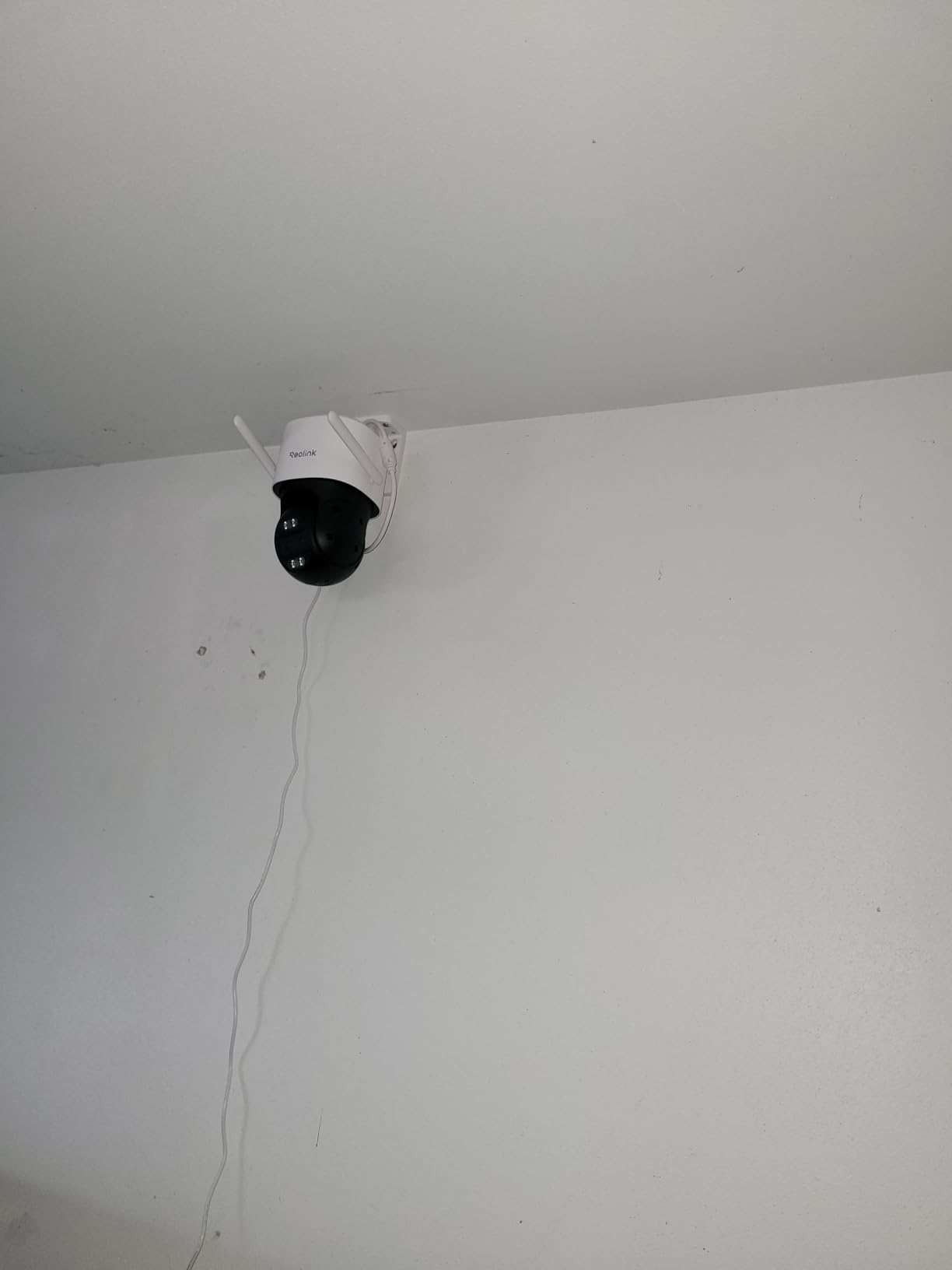
What the TrackMix WiFi does well for large yards
Dual-lens simultaneous view is the feature that changes daily use. You are not switching between views or waiting for a pan to complete, you simply have a wide scene and a zoomed scene on screen together, which cuts down the gap where an intruder could cross behind the motor.
It is the easiest camera here to install without touching an electrician, since a single power adapter and a dual-band router handle everything, and it plugs into standard Reolink storage options if you expand later.
Where the TrackMix WiFi falls short
The 2MP telephoto stream is the compromise that matters most. It is enough to tell you someone is there and roughly what they are wearing, but it will not support plate identification at long range the way the PoE sibling can.
Motion sensitivity needs careful tuning to balance false alerts against missed events, and the housing is not UV stabilized on some runs, so the case can yellow with prolonged sun exposure.
5. Reolink TrackMix PoE Dual-Lens PTZ – Best Long-Range Wired Pick
REOLINK TrackMix PoE Dual-Lens PTZ Security Camera 6X Hybrid Zoom Tracking
Dual lens 8mm and 2.8mm
6X hybrid zoom
PoE single cable
aluminum housing
Pros
- One Ethernet cable carries power and data for distant poles
- Tracking locks on reliably and returns to the home position
- License plates reported readable at about 125 ft
- Aluminum housing proven from -25C to +40C
- Integrates well with Home Assistant for PTZ control
Cons
- Needs a PoE switch or injector that is not included
- Physical pan motion briefly blurs the image before refocusing
- Detection masks do not rotate with the camera
This is the camera we would put on a pole at the far end of a driveway, and the reason is the single cable. Power and data travel together over one Ethernet run, so you can mount it on a pole, an outbuilding, or a gate structure without running a separate power circuit out to it.
The dual lens pairing here is an 8mm telephoto plus a 2.8mm wide-angle, with 6X hybrid zoom and three selectable tracking modes. The aluminum housing is rated for exposed outdoor mounting, and long-term owners with several installed report trouble-free operation through harsh sun and extreme cold down to -25C and up to +40C.
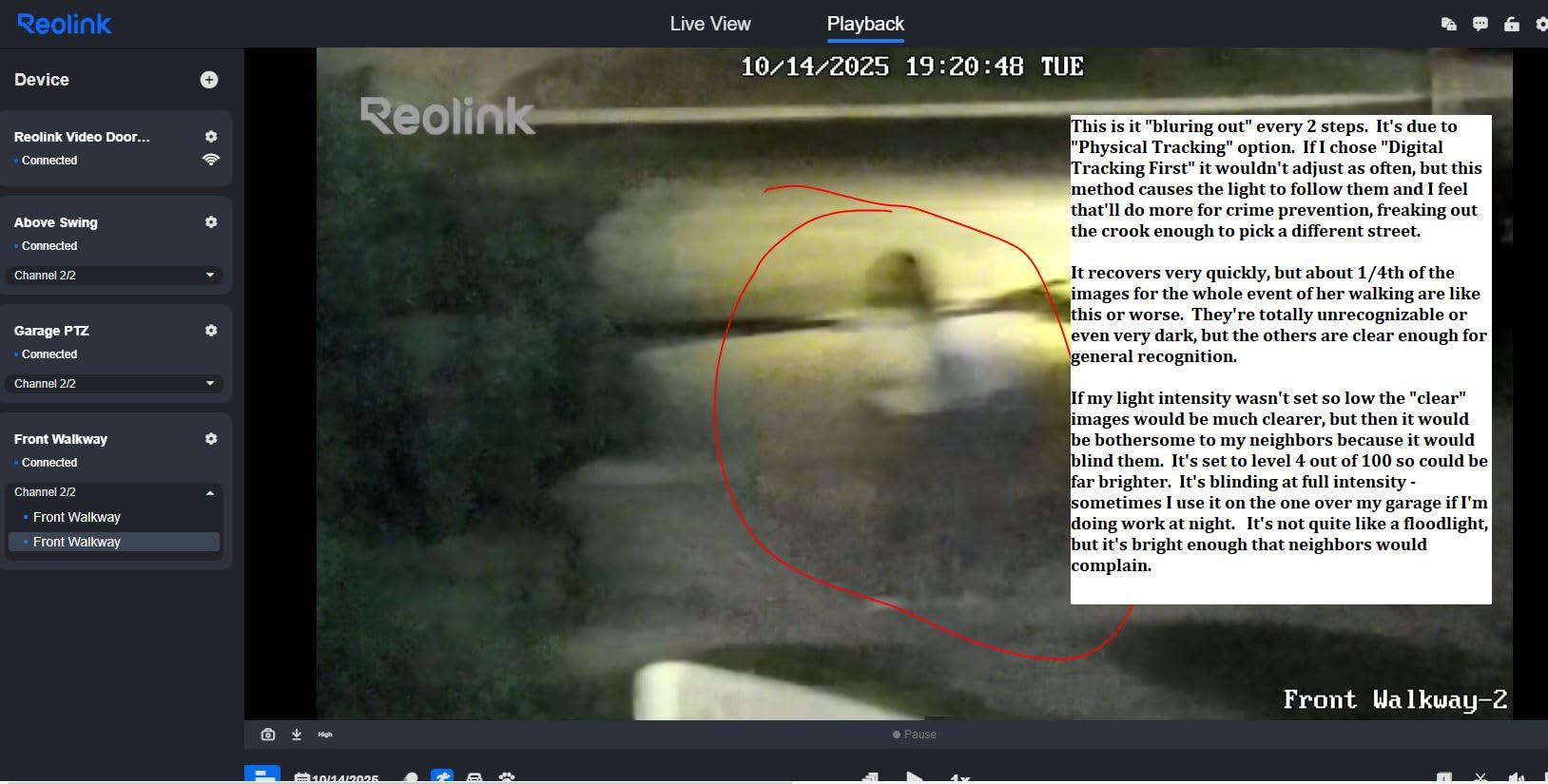
The most concrete performance claim we found in this category comes from owners of this model: license plates reported readable at about 125 feet. That is identification-grade detail from a single camera, which is exactly what a gated entrance needs. Night vision is stated at 30 meters with both color and IR modes, plus a spotlight and siren for deterrence.
Storage runs to microSD up to 512GB, FTP, or a Reolink NVR with no subscription required for remote access or AI features. Owners also report good Home Assistant integration, where the PTZ position can be driven by automations and detections from other cameras.
Be clear about what you still need to buy. An IEEE 802.3af PoE switch, injector, or PoE NVR is not included, and that hardware is part of the real cost of a wired PTZ deployment. There are also two motion artifacts worth knowing: the image briefly blurs while the pan motor physically moves, and the handoff from digital tracking to mechanical tracking can lose a subject for a moment.
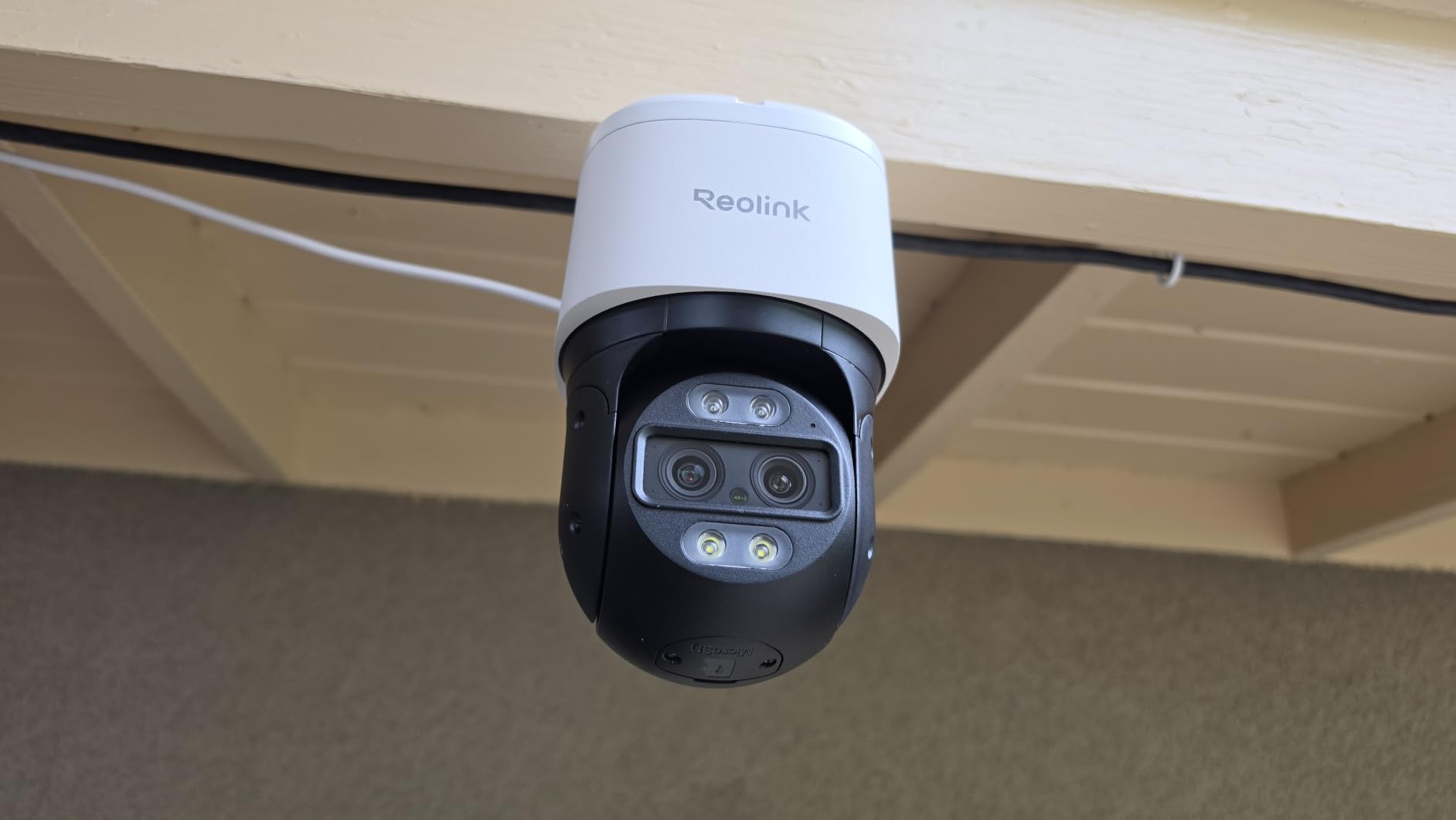
What the TrackMix PoE does well
Long-range identification is its reason to exist. The 8mm telephoto lens combined with 6X hybrid zoom is the configuration that turns a camera into evidence rather than a motion detector, and the reported 125-foot plate readability is well beyond anything the digital-zoom cameras on this list can manage.
Single-cable power also means you can add cameras incrementally to a yard as your property or storage needs grow, without touching electrical work at each mount.
Where the TrackMix PoE falls short
Extra hardware is mandatory, and buyers sometimes miss that. Budget for a PoE switch or injector, plus cable, plus storage, before ordering. If the closest network drop is more than a single Ethernet run away, that changes the economics quickly.
Detection masks do not rotate with the PTZ movement, so if you fine-tune a zone at one position and then pan or tilt the camera, that zone may no longer frame what you intended. The housing is also large and not discreet, which matters on a house where curb appeal is a consideration.
6. Gianteye 2K Solar Two-Pack – Best Value for Two Corners of a Yard
Gianteye 5G Solar Security Cameras Wireless Outdoor, 2K Cameras for Home Security Outdoor, Security Cameras Wireless Outdoor with Color Night Vision, 2-Way Talk, PTZ Human Detection, 2 Packs
Two 2K solar cameras
dual-band Wi-Fi
328 ft stated night range
IP65
Pros
- Two solar cameras cover opposite corners of a large yard
- Keeps running through power outages and severe weather
- Dual-band 2.4GHz and 5GHz avoids congested 2.4GHz airwaves
- Video quality described as outstanding day and night
- Spotlight color night vision and siren add deterrence
Cons
- The app is somewhat complicated to navigate at first
- No auto tracking beyond human detection despite PTZ control
- The long solar-to-camera cable needs bundling on tight installs
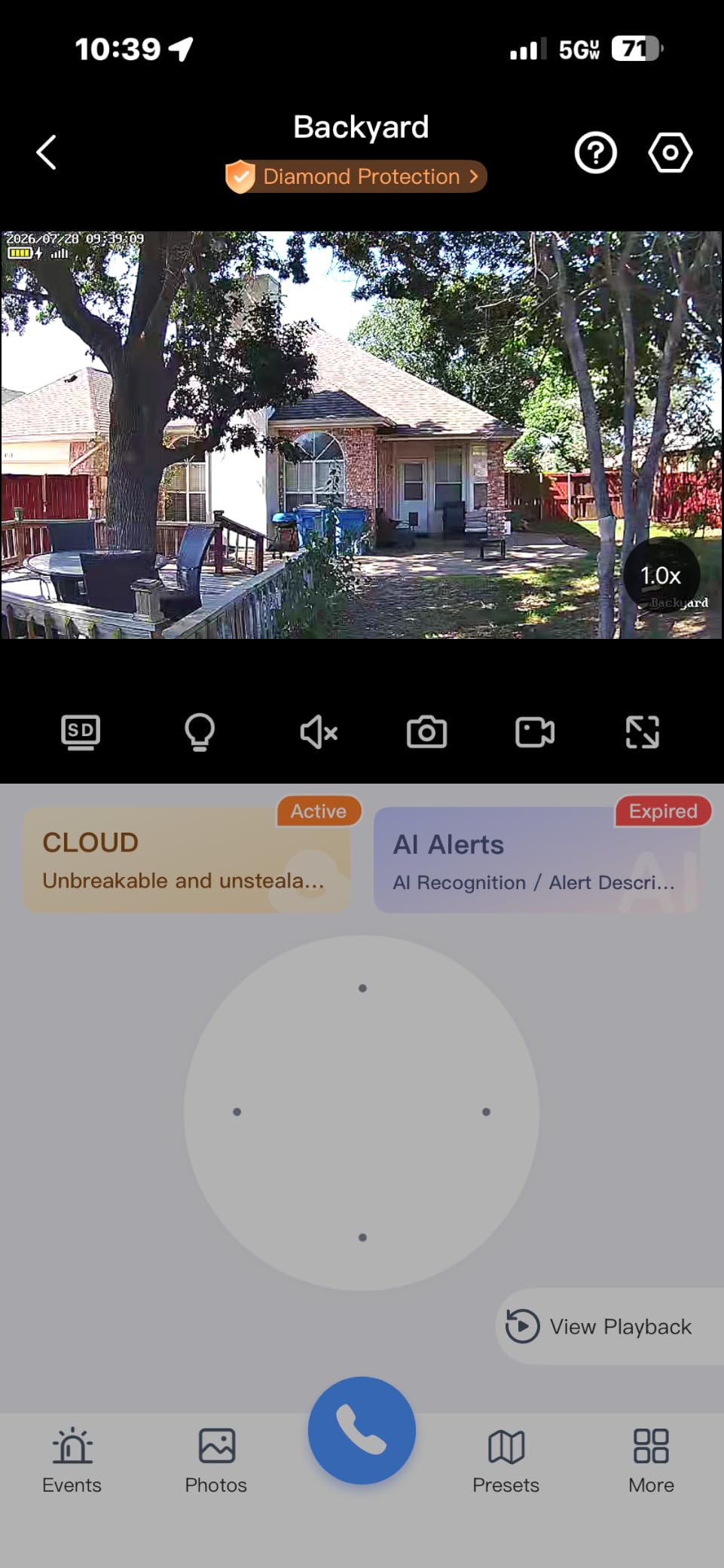
The Gianteye pack solves a geometry problem rather than a specification problem. Two fully solar cameras placed at opposite corners of a large yard give you two fixed vantage points, which is closer to the recommended mixed architecture of fixed cameras at choke points plus a PTZ for open ground than most single-camera options.
Resolution is 2K at 2304×1296, which sits in the middle of this roundup. It is a step above 1080p and a step below 4K, and for general yard awareness at moderate distances it is enough to pick out clothing and vehicle shapes.
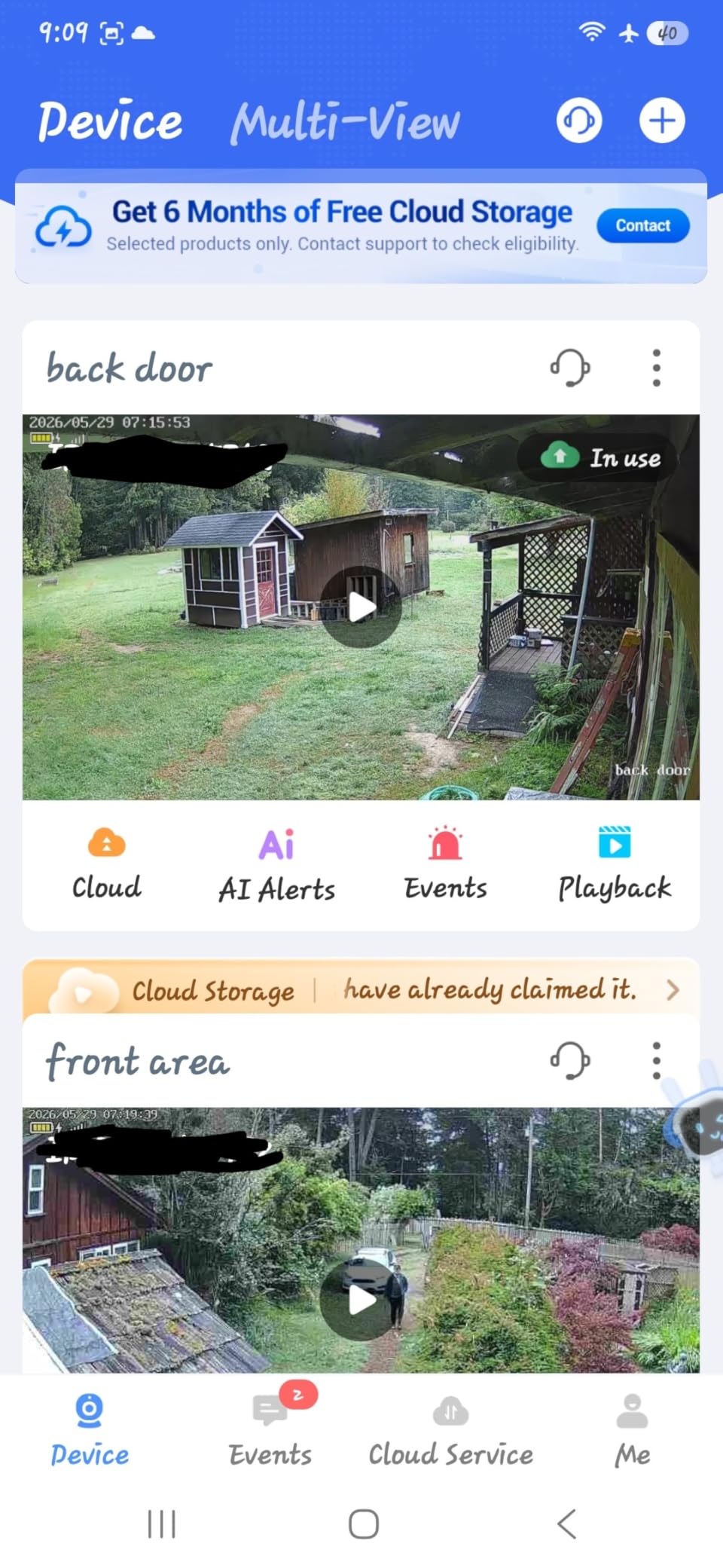
Two details make this camera unusual. First, it supports dual-band 2.4GHz and 5GHz simultaneously with automatic switching, which directly addresses the congested-airwaves problem that knocks out cheaper solar cameras over open ground. Second, the stated night vision range of 328 feet is by far the highest number in this group, backed by a human-triggered spotlight for color night vision.
Power comes from a solar panel plus a built-in backup battery, so it keeps running through an outage. One owner reports coverage through a tornado and a blackout, which is the kind of durability signal you cannot get from a spec sheet.
What it does not have is tracking. Despite full 360 degree pan, tilt, and digital zoom control, there is no auto tracking beyond human detection, so the camera will not follow a subject across the yard the way the Reolink and Tapo units do. PIR plus AI human detection runs with an adjustable sensitivity range of 16 to 29 feet, which keeps alerts manageable but also means far-away motion may not trigger.
What the Gianteye two-pack does well
Coverage per camera is the argument here. Placing two solar units at opposite corners of a property gives you redundant coverage that a single PTZ cannot provide, and it keeps working when mains power fails, which matters for a gate or a remote building.
Dual-band simultaneous support means these can live on a modern mesh network with 5GHz enabled, which several solar competitors cannot do. Local microSD up to 128GB or optional cloud storage works with no forced subscription.
Where the Gianteye pack falls short
No tracking is the biggest gap if you expect the camera to follow a person. You will be panning manually or relying on alerts. The 128GB card ceiling is also modest for a 2K camera on continuous recording across two units.
The app takes getting used to, the long solar-to-camera cable needs bundling in tight installs, and these will not pair with any base station or hub, so the cameras stand entirely alone.
7. Tapo C660 4K Solar PTZ – Best 4K Solar Patrol Camera
Tapo 4K Outdoor Pan/Tilt Wireless Security Camera, Solar Charging, C660 KIT
4K UHD 8MP
360 deg pan and 98 deg tilt
10000mAh battery
solar panel included
Pros
- Solar plus 10000mAh battery holds 95 to 100 percent for owners with good sun
- 4K detail sharp enough for faces and plates across a driveway
- People vehicle and pet detection with no monthly fee
- microSD local recording keeps working without internet
- Dual-band Wi-Fi for short-range speed and long-range reach
Cons
- The included solar panel charges slowly with one owner measuring 4 to 5 percent daily
- Mounting bracket clips feel cheap and work loose
- App playback of microSD footage can be choppy
The C660 KIT is the most complete single-camera answer here if you want 4K detail, solar power, and AI detection with no subscription. It pans 360 degrees and tilts 98 degrees, adds auto-patrol across that full range, and ships with a Tapo A201 solar panel on a 13 foot cable plus a 10000mAh battery backup.
Because of the large battery, several owners with good sun exposure report the unit holding between 95 and 100 percent indefinitely. That is a meaningful difference from the 3 watt panel situation on smaller solar cameras, where charge erodes daily.
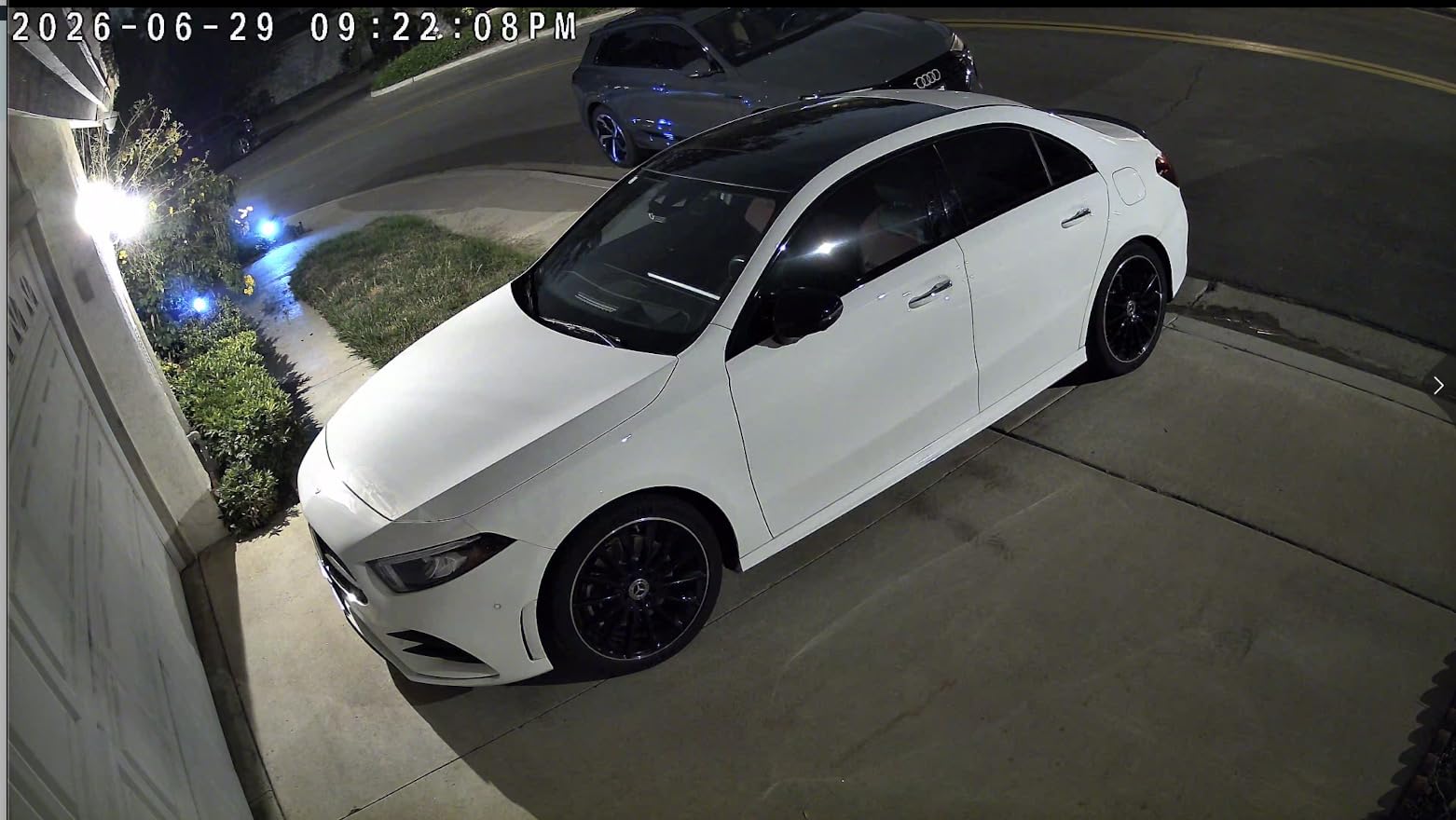
Image quality is the selling point. Owners report 4K detail sharp enough to pick out faces and license plates from across a driveway, which is a claim few wire-free PTZ cameras in this price bracket can support. AI detection covers people, vehicles, and pets with no monthly fee, and microSD up to 512GB keeps recording even if your internet drops.
Dual-band 5GHz and 2.4GHz support gives you both short-range speed and long-range reach, and the camera can extend to 24/7 continuous capture at intervals of your choosing, further extended with the H500 CentralHub if you want it.
The bundled panel is the weak point. One owner measured only 4 to 5 percent charge gain across several hours of full sun, and the 10000mAh battery is doing the heavy lifting rather than the panel. The mounting bracket clips are also widely criticized as cheap and prone to working loose, which matters on a permanently exposed mount.
What the Tapo C660 does well
It is the best 4K solar PTZ for a normal yard with reasonable sun exposure. The combination of 360 degree coverage, starlight night vision to 40 feet, and free AI detection covers the common cases: driveway, gate, back garden, and pool area.
Several owners deployed these cameras against real intruders and found the detail sufficient to support that, which is more than most budget cameras in this list can say. The starlight sensor also produces usable low-light color without relying on an aggressive spotlight.
Where the Tapo C660 falls short
Continuous capture is time-lapse, not smooth standard video. If you expect the look of normal continuous footage rather than sampled frames, that changes how you review events.
App playback of microSD recordings can be choppy even with name-brand cards, and 4K streaming occasionally strains available network bandwidth. The tilt range also stops slightly short of ideal for high mounting positions, and the tilt bracket needs checking after the first season.
8. xmartO 10X Dual-Lens PTZ – Best Budget Pick for Long Zoom
xmartO 10X Zoom Dual Lens PTZ Home Security Camera
Dual 2.8mm and 8mm lenses
10X hybrid zoom
6MP combined
360 deg pan
Pros
- Dual-lens 10X hybrid zoom reaches distant features at a budget level
- AI auto tracking of people animals and vehicles
- Panoramic cruise and preset patrol patterns automate coverage
- Switchable IR and color night vision with motion floodlight
- 256GB TF card or AWS cloud with no monthly fee
Cons
- Limited review volume means less long-term field data
- Requires a wired power connection
- Combined output resolution is a modest 6MP
The xmartO DY3034 is the one here where a dual-lens telephoto design lands at a genuinely budget level. It pairs a 2.8mm wide lens with an 8mm telephoto lens combining to a 6MP output, and the 10X hybrid zoom figure is backed by real glass rather than pure cropping.
Patrol automation is unusually good for the money. Panoramic cruise sweeps continuously while preset patrol patterns let you store positions and cycle through them, which is how you cover open ground without sitting in the app.
Night handling offers six combined IR and floodlight LEDs that switch between infrared and full-color night vision, with the floodlight activating on motion. Stated night vision range is 120 feet, and two-way audio runs through a high-gain microphone and speaker with a siren alert.
The rating is held back more by scale than by defects. With a few hundred reviews there is simply less long-term field data than the Tapo and Reolink models carry, and 6MP combined output is modest next to the 8MP sensors elsewhere on this list. Setup uses Bluetooth three-step pairing on the WallPixel app, and it can work standalone or alongside XMARTO NVR systems.
It is also corded, which rules it out for a pole with no outlet. Wi-Fi 6 dual-band support is a genuine plus over the 2.4GHz-only budget alternatives.
What the xmartO 10X does well
Zoom reach per dollar is the selling point. A real 8mm telephoto lens in a cheap housing means you can narrow in on a distant gate or driveway and still see usable detail, which most cameras at this level cannot offer.
Storage is free. A 256GB TF card or encrypted AWS cloud option runs with no monthly fee, and the automation features mean you can set coverage patterns once and leave them alone.
Where the xmartO 10X falls short
Long-term confidence is the real limitation. With fewer owner reports than the leading models here, you are buying into a smaller installed base, and consumer electronics from a smaller base are harder to get warranty help from.
The 6MP combined output is the other ceiling. Once you zoom in, there is simply less detail to work with than on a 4K dual-lens model, and the wired power requirement means it works best near an existing outlet.
9. VSTARCAM 4-Lens Multi-View PTZ – Best Budget Multi-Angle View
VSTARCAM 4-Lens Security Cameras Wireless Outdoor, 4-in-1 Multi-View 2K 360° PTZ Plug-in WiFi Camera, 10X Hybrid Zoom, AI Motion Tracking, IP66, Color Night Vision for Driveways & Front Doors
Four lenses in a 4-in-1 view
2K with 10X hybrid zoom
IP66
360 deg pan
Pros
- Four lenses give four angles at once and reduce blind spots
- 10X hybrid zoom helps identify people and packages at the gate
- Custom motion zones cut alerts from trees wind and shadows
- Plug-in power means no battery interruptions
- IP66 housing handles rain heat wind and snow
Cons
- 2.4GHz Wi-Fi only
- Plug-in unit needs a nearby outlet
- Lower 2K resolution than 4K alternatives in the same price bracket
The VSTARCAM CS621ZS takes a different approach to the blind spot problem. Rather than one wide lens and one telephoto lens, it combines four lenses into a 4-in-1 multi-view on a single app screen, so you get four simultaneous angles from one mount and one power connection.
For a driveway or front door setup, that means you can watch the street, the path, the gate, and the near yard at once without four separate cameras. Resolution is 2K with 10X hybrid zoom and color night vision, which is enough to identify a person and a package at a gate from a reasonable distance.
Two features make it more usable than the raw spec sheet implies. Custom motion zones let you mask trees, wind-blown branches, and shadows, which is where most of the false-alert frustration on this list originates. And a motion-activated spotlight plus siren gives you a deterrent option without a separate accessory.
The IP66 housing is a step up from the IP65 standard on most of this list, rated for rain, heat, wind, and snow across a full year. Continuous plug-in power means no battery degradation, and microSD up to 256GB works with no mandatory monthly fee.
The compromise is the radio. It is 2.4GHz only, which over the open air of a large yard with nothing to reflect signal is exactly the wrong choice, and the plug-in unit needs a nearby outlet. With a couple hundred ratings, there is also a shorter review history than the leaders here.
What the VSTARCAM 4-lens does well
Simultaneous multi-angle viewing is genuinely useful in a blind spot problem. Instead of one camera that looks one direction at a time, you get four views at once, which is the closest budget approximation to comprehensive coverage.
Zoned motion detection and the IP66 rating make it a sensible pick for a gate or driveway where rain, wind, and vegetation are constant sources of false alerts.
Where the VSTARCAM falls short
2.4GHz-only Wi-Fi is the dealbreaker on open ground. If the camera sits 150 feet or more from the router with no walls in between, expect trouble, and this is one of the most common reasons budget wireless cameras fail on large properties.
2K resolution also puts it behind the 4K options for identification detail, and the plug-in requirement means the mount location is decided by where your outlet is.
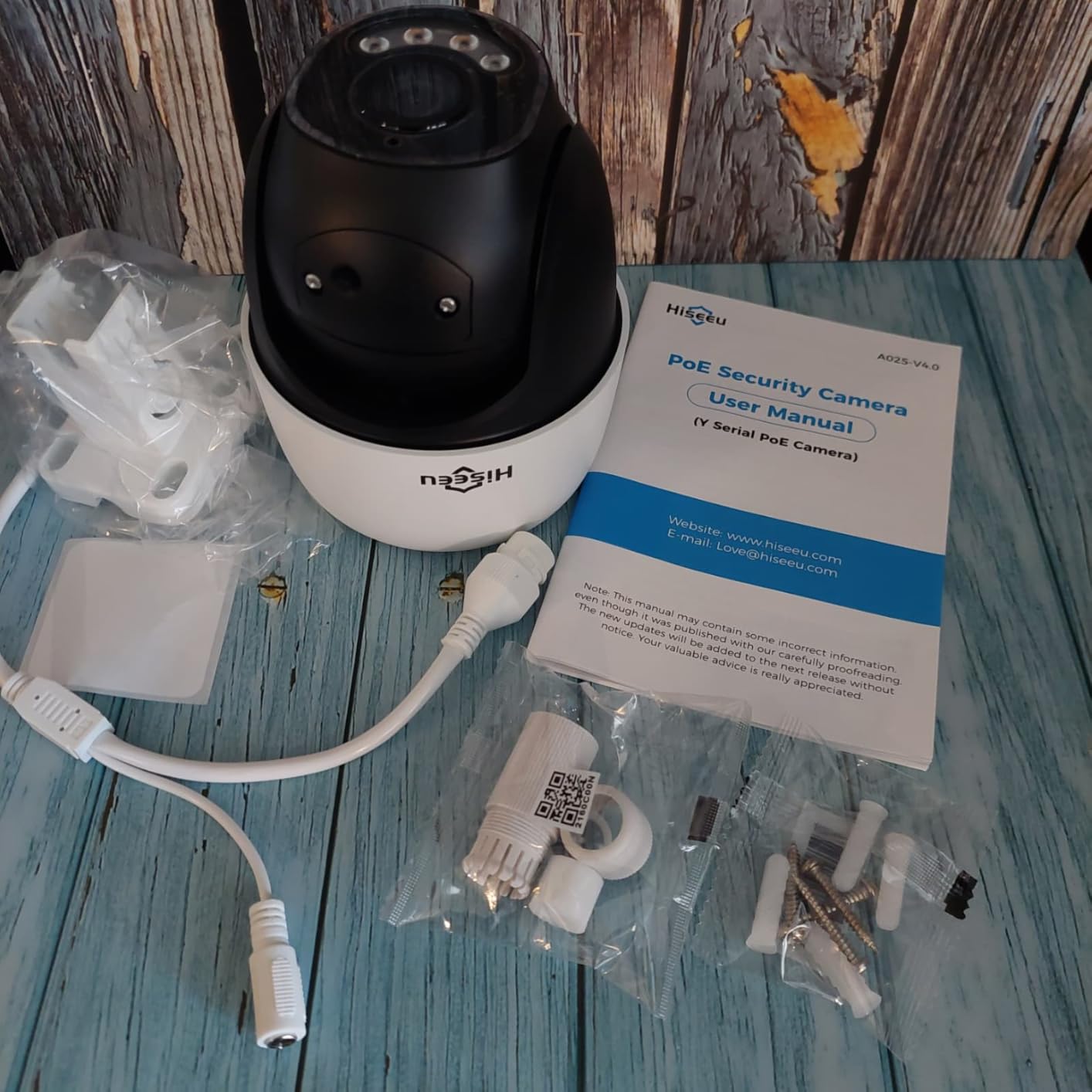
10. Hiseeu 4K PoE PTZ – Best Budget PoE with ONVIF Support
Hiseeu 4K PoE PTZ Security Camera Outdoor with 360° Panoramic
8MP 4K day and night
350 deg pan and 90 deg tilt
PoE no outlet needed
IP66
Pros
- PoE means no outlet at the camera location for far yard corners
- Human tracking follows people while ignoring background motion
- 4K night footage crisp enough for faces and license plates
- Fast live view with no noticeable lag
- ONVIF compatible with third-party and Hiseeu PoE NVRs
Cons
- Access and password setup is unreliable on some units
- Mobile apps may fail to read the QR code though the web interface works
- PoE switch or injector is not included
The Hiseeu YHD98-P is the cheapest way to get true PoE and ONVIF compatibility on this list, and ONVIF is the feature that matters if you are not building inside one vendor’s app. It will pair with third-party PoE NVRs, which means your storage options are not limited to the manufacturer’s ecosystem.
The sensor is 8MP with 4K day and night video and a built-in spotlight. The head pans 350 degrees and tilts 90 degrees, giving near-full panoramic coverage, and human auto tracking sends real-time alerts while the detection zones can be configured by human and vehicle.
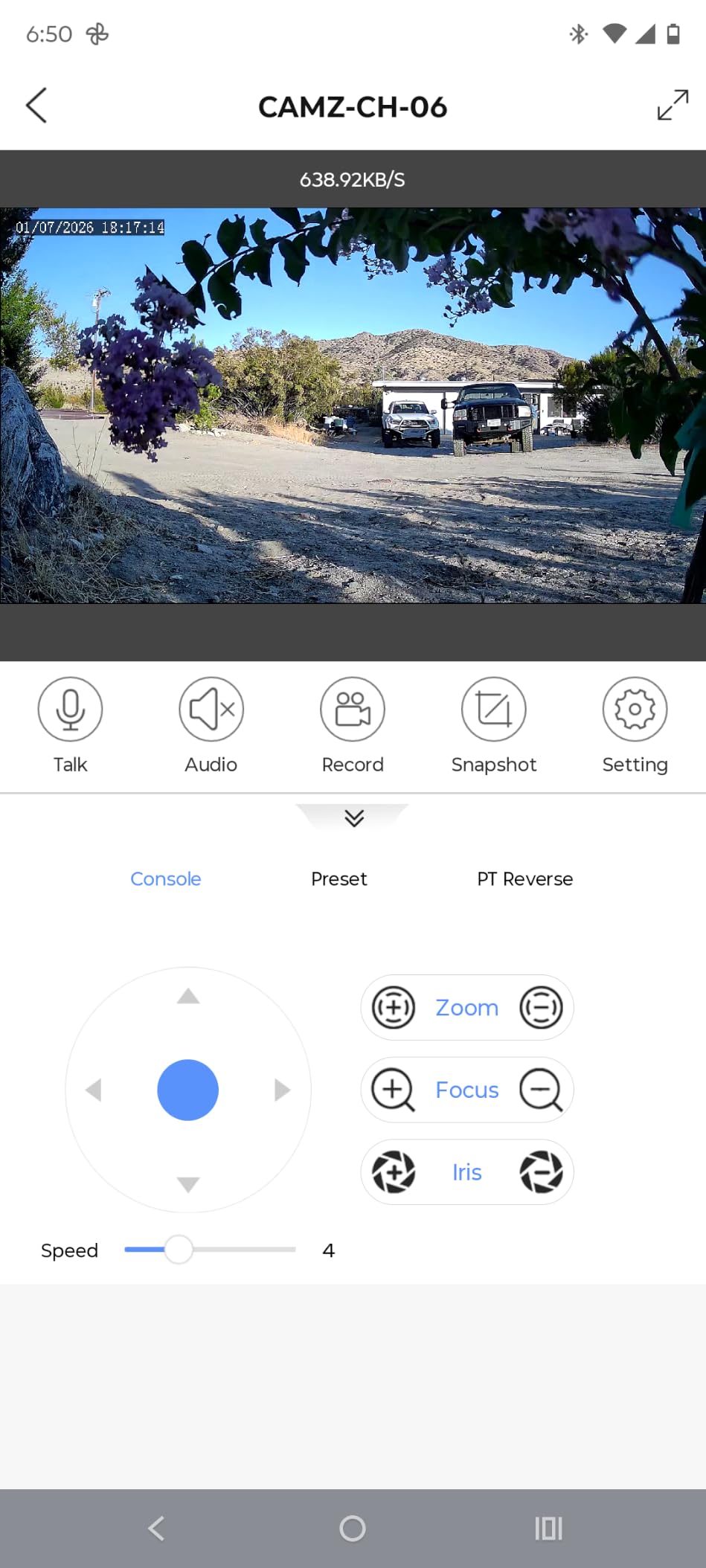
Owners running a Hiseeu NVR report clear 4K day and night video, precise human tracking that follows people while ignoring animals and background motion, and painless expansion. Live view is fast with no noticeable lag, and playback search by date or human-detection alert is quick.
The weakness is onboarding rather than image quality. Some users cannot get into the camera at all without a Hiseeu NVR present, and the mobile app may fail to scan the QR code on newer units even though the web interface works. Post-sale support has been unresponsive on some warranty claims.
Two more practical notes: the PoE switch or injector is not included, and the warranty is 12 months, the shortest on this list. For a device meant to live outdoors year round, warranty length is a reasonable proxy for how confident the manufacturer is about long-term duty.
What the Hiseeu 4K PoE does well
It is the cheapest path to running Ethernet to a distant corner of a yard. PoE carries power and data on the same cable, so no outlet is needed at the mount, and ONVIF keeps your NVR options open if you later move off the Hiseeu app.
For an existing Hiseeu NVR system, adding these is straightforward and inexpensive, and the 4K night footage is reported crisp enough for faces, clothing, and license plates at close-to-medium range.
Where the Hiseeu 4K PoE falls short
Setup reliability is the real problem. Password configuration that will not complete, and app QR codes that will not scan, are exactly the failures that happen on installation day and waste an evening. Check the web interface fallback before you commit.
The 12-month warranty and weaker support response are worth weighing against the premium models, since a permanently outdoor camera is a device you hope never to touch again after installation.
How Much Optical Zoom Does a Large Yard Actually Need?
Start by measuring the farthest point you care about and then deciding whether you need presence or identification at that distance. Presence means you want to know someone is there; identification means you want a face or a plate number. The zoom requirement changes completely between those two goals.
Optical versus digital is the distinction that matters. Optical zoom physically moves glass elements inside the lens, so the full sensor resolution is preserved at distance. Digital zoom crops the frame and upscales it, which produces a soft, blocky image where detail was never captured. For the closest-up view, everything is digital. That is why the hybrid zoom figures on this list are marketing labels for a pixel-crop process unless the camera has genuine glass.
Here is the practical sizing guide. Under about 100 feet from the mount, a 1080p camera with a wide lens detects presence reliably, which is where the Tapo C500 sits. Between 100 and 250 feet, you want at least a 4K sensor so cropping still leaves usable pixels, and a dual-lens design with a real telephoto lens becomes the sensible choice. Beyond 250 feet, you need genuine long glass, which pushes you toward professional speed dome hardware rather than anything consumer-priced on this list.
Read night vision range figures the same way you read zoom. Manufacturer numbers describe where the infrared illuminators still produce an image, not where the image is still identifiable. A 328 foot stated range tells you something is being detected out there, not that you can identify it. In practice, identification-grade night detail at these price levels is a fraction of the headline figure, so test in the conditions where you actually need it.
PoE vs WiFi vs Solar: Picking Power for Big Properties
Power choice is really a choice about where the mount can be. Run Ethernet to the spot and all three options open up. Do not run Ethernet and the decision narrows to Wi-Fi or solar, with Wi-Fi needing a signal path and solar needing sun.
PoE is the most reliable option and the best for anything that pans continuously, because a PTZ motor draws real current and a consistent supply prevents reboots and calibration drift. Remember that a single Ethernet run has a practical distance limit of about 300 feet, and beyond that you need an extender or a media converter rather than a longer cable.
Solar is the right answer when digging is not on the table. Two variables decide whether it works: panel size relative to sensor power draw, and how many hours of direct sun the mount gets. The Argus PT Ultra pairing a 4K color sensor with a 3 watt panel is the cautionary example, while the Tapo C660 pairs a 10000mAh battery with its panel and holds charge far better.
WiFi suits a mount near the house. Dual-band support, which the Reolink TrackMix WiFi, the Tapo C660, and the Gianteye pack all offer, is close to mandatory on open ground because 2.4GHz-only units drop out exactly where you need them most. If your property is a quarter acre or smaller and the router is in range, WiFi is entirely reasonable.
Night Vision, Weather Ratings, and Local Storage
Night performance comes in three flavors. Plain infrared gives a black and white image with the longest nominal range, starlight sensors produce low-light color without firing a bright light, and a spotlight approach gives full color at the cost of drawing attention to the camera. For deterrence, the spotlight wins; for covert monitoring, infrared wins.
Weather ratings follow a simple hierarchy. IP65 handles dust and water jets, which covers most climates. IP66 adds protection against powerful water jets and is the better pick for open yards with driveways and sprinklers. IP67 means temporary submersion, which matters less for a wall mount but matters for anything on a pole near a low spot.
Storage is where subscription fatigue starts. Every camera on this list supports microSD or TF card local recording as its baseline, and the majority add FTP or an NVR option. The key question is whether any core feature is locked behind a monthly fee. On all ten models here, core recording and remote viewing work without one, which is a meaningful change from where the category was a few years ago.
Self-hosted integration is worth checking before you buy. RTSP and ONVIF support determine whether you can point the camera at Frigate, Home Assistant, Blue Iris, or Synology Surveillance Station. The Reolink models integrate well with Home Assistant for PTZ control, and the Hiseeu publishes ONVIF compatibility explicitly. Brands with fragmented firmware and separate apps per model are the ones where this gets frustrating later.
PTZ Blind Spots and Why Large Yards Still Need Fixed Cameras
The main disadvantage of a PTZ camera is structural: it can only look one direction at a time. While the motor pans, anything behind or beside the camera body goes unrecorded, and someone crossing that space may never appear in footage at all. This is the single most cited complaint about PTZ deployments on security forums.
There is a related timing problem. The mechanical pan itself takes time, and the lens does not catch up to the motor instantly, so a fast-moving subject can cross the frame during the gap. Auto tracking also has limits, with owners reporting tracking that overshoots or loses fast-moving vehicles, and confusion when pets run through frame.
The architecture that experienced owners on r/videosurveillance recommend is a fixed spotter camera plus a PTZ. The fixed camera watches the whole scene continuously and triggers the PTZ to zoom in on the zone where motion occurred, so nothing is lost while the zoomed camera is pointed elsewhere. One user with a slanted hillside yard 350 feet from the road described exactly this arrangement, with the spotter relaying zone trigger information to the PTZ.
Our practical take: use a PTZ for open ground where no single fixed angle works, and add fixed cameras at choke points like gates, doors, and paths where you cannot afford to miss anything. The dual-lens models on this list, particularly the Reolink TrackMix pair, are a useful middle ground because the wide lens effectively acts as that built-in spotter.
Frequently Asked Questions
What is the maximum range of a PTZ camera?
A PTZ camera’s usable range depends on optical zoom and sensor resolution rather than a single number. Consumer PTZ cameras on this list reach reliable presence detection at 250 to 300 feet and identification-grade detail closer to 100 to 125 feet, with the Reolink TrackMix PoE reported to read license plates at about 125 feet.
What is the best security camera for a large property?
The Tapo C500 is the best general choice for near and mid-range coverage on a large yard, with the deepest review history and dependable pan performance. For long-range identification on acreage, the Reolink TrackMix PoE is the stronger option because its dual-lens design pairs a wide view with real telephoto glass.
What is the highest quality PTZ camera?
Among these ten, the Reolink TrackMix models sit at the top on image quality. The PoE version pairs an 8mm telephoto lens with a 2.8mm wide-angle lens for simultaneous close-up and overview, and owners report license plates readable at roughly 125 feet. The Argus PT Ultra matches it for resolution at 8MP but relies on a smaller sensor and digital zoom for close-ups.
What is the disadvantage of a PTZ camera?
A PTZ camera can only look one direction at a time, so activity behind or beside the camera body goes unrecorded while it pans. The mechanical movement also takes time, which means a fast-moving subject can cross the frame during the gap. Adding a fixed spotter camera at gates and paths is the usual fix.
Which PTZ camera is best for outdoor use?
For full-time exposed mounting, the Reolink TrackMix PoE is the strongest outdoor performer here, with an aluminum housing reported reliable from -25C to +40C. For wireless yards with no power available, the Tapo C660 4K Solar and the aosu 3K Solar PTZ both handle weather well, with IP65 ratings on both.
How much optical zoom do I need for a large yard?
Under 100 feet from the mount, a 1080p wide-angle camera detects presence well. Between 100 and 250 feet, you want a 4K sensor so digital cropping still leaves usable pixels, and a dual-lens camera with a real telephoto lens is the sensible choice. Beyond 250 feet, identification-grade detail requires professional long-zoom speed dome hardware rather than consumer PTZ cameras.
Can PTZ cameras see license plates?
Only with genuine optical magnification at sufficient distance. Owners of the Reolink TrackMix PoE report license plates readable at about 125 feet, and the Tapo C660 is reported sharp enough for plates across a driveway. Digital zoom on lower-zoom cameras produces a soft image where plate characters are not recoverable, regardless of claimed zoom multiples.
Is it illegal for my neighbor to have a camera pointed at my house?
In most places, recording from your own property is legal even if it captures a neighbor’s yard, since the expectation of privacy in public view is limited. What is restricted in many jurisdictions is recording inside a private space such as a home interior or a back yard with a reasonable expectation of privacy. Local rules vary, so check your state or country before raising it.
Final Verdict: Which PTZ Camera Fits Your Yard in 2026
The Tapo C500 is the best PTZ security camera for large yards in 2026 for most people, because seven thousand ratings of steady performance beat a better spec sheet on paper. If your property runs past 150 feet and you need to identify faces or plates, move up to the Reolink TrackMix PoE and budget for the PoE hardware. If there is no power at the mount, take the aosu 3K Solar PTZ or the Tapo C660, and size the panel for the sensor. Whatever you pick, pair it with at least one fixed camera at the gate or door, and accept that PTZ blind spots are a design fact rather than a defect.