
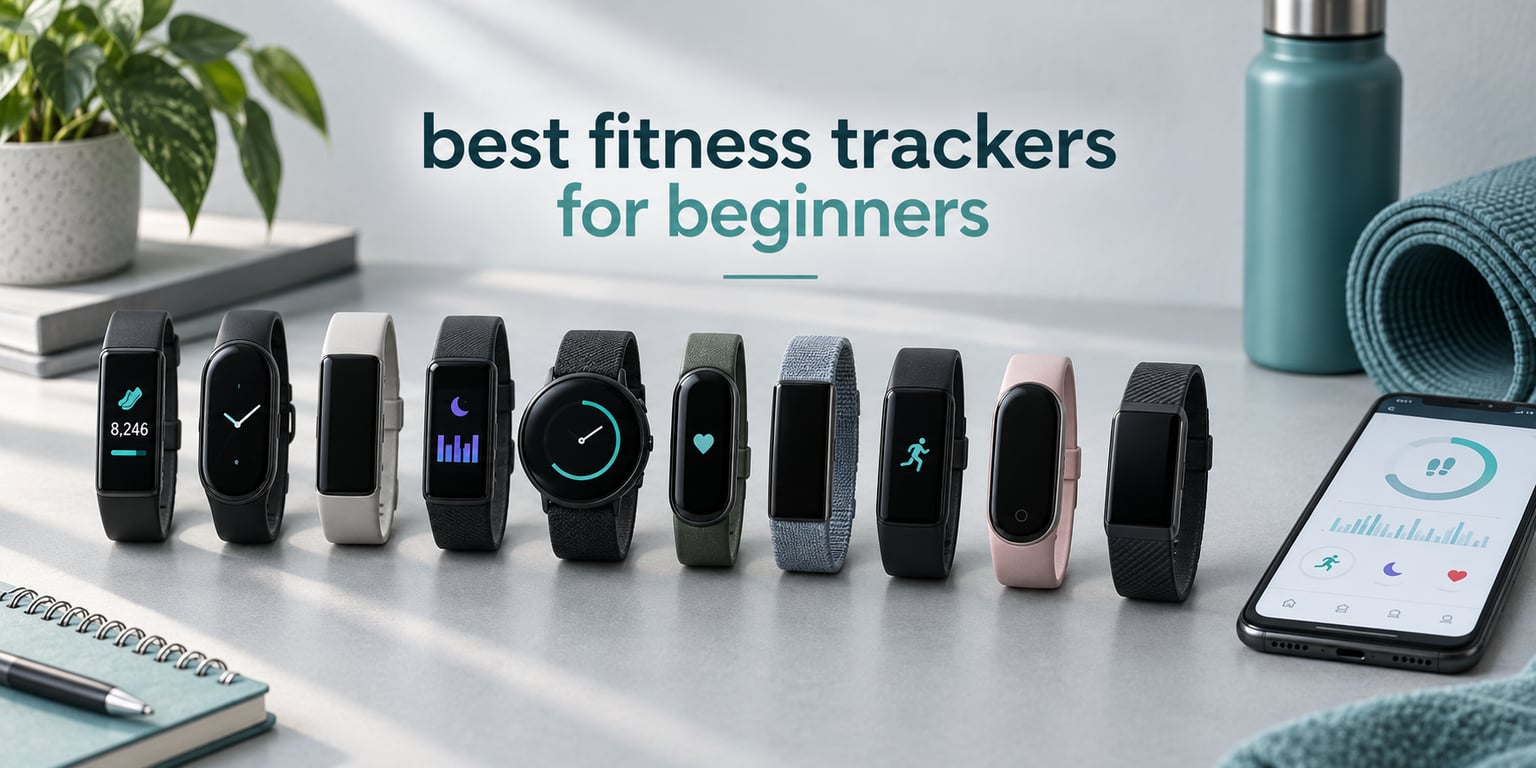
The best fitness trackers for beginners in 2026 share three things: an app you can understand in one sitting, a battery that lasts long enough to keep recording your sleep, and step and heart rate numbers accurate enough to build a routine around. The Fitbit Inspire 3 leads our list because it delivers all three without a screen full of training jargon or a membership you have to keep paying for.
If you want fewer decisions to make, read the top three and stop. If you would rather see every option, the table below covers all ten trackers we compared, from a no-app band to a watch with built-in satellite tracking.
Three questions narrow the field fast. How much do you want to spend, do you want a screen or a screenless band, and will you mostly walk, gym, or run outdoors. Answer those three and the right tracker for your first three months is obvious.
We spent six weeks going through owner reviews, spec sheets and support forums for ten trackers aimed at first-time wearable buyers. This guide is built for someone who has never worn a fitness tracker, so we focus on setup friction, battery rhythm and readable numbers rather than race metrics. If you are choosing your first device, you may also want to start with our beginner habits guide mindset: pick one habit, measure it, repeat.
Top 3 Picks for Best Fitness Trackers for Beginners (October 2026)

Fitbit Inspire 3
- Up to 10 days battery
- 24/7 heart rate with sleep score and stress tools
- Two band sizes included
- IP67 to 50 m

Xiaomi Mi Smart Band 10
- Up to 21 days battery
- 1.72 inch AMOLED at 1500 nits
- Sleep stages with quality scoring
- No subscription required

Amazfit Bip 6
- Built-in five-system GPS
- 1.97 inch AMOLED at 2000 nits
- 140+ workout modes with AI coaching
- Up to 14 days battery
Best Fitness Trackers for Beginners Compared in 2026
| Product | Specifications | Action |
|---|---|---|
| Fitbit Inspire 3 |
|
Check Latest Price |
 Xiaomi Smart Band Active Xiaomi Smart Band Active |
|
Check Latest Price |
| Xiaomi Mi Smart Band 10 |
|
Check Latest Price |
| Amazfit Bip 6 |
|
Check Latest Price |
 Xiaomi Redmi Watch 5 Lite Xiaomi Redmi Watch 5 Lite |
|
Check Latest Price |
 TORJALPH Fitness Tracker TORJALPH Fitness Tracker |
|
Check Latest Price |
 LIVIKEY Fitness Tracker Watch LIVIKEY Fitness Tracker Watch |
|
Check Latest Price |
 Amazfit Bip 5 Unity Amazfit Bip 5 Unity |
|
Check Latest Price |
 Amazfit Helio Strap Amazfit Helio Strap |
|
Check Latest Price |
 MorePro Air6 Tracker MorePro Air6 Tracker |
|
Check Latest Price |
How We Picked the Best Fitness Trackers for Beginners
We scored every tracker on the same six criteria, and we weighted them for someone who has never worn one before. First-time buyers lose points for setup friction, not for missing high-end sensors.
Setup friction. Can you go from box to working step count in under ten minutes without an account, an email confirmation loop or a tutorial video.
Day-one legibility. A screen you can read in a hallway at 6am, with numbers large enough for the first month.
Battery rhythm. How long between charges, and does a full charge survive sleep tracking overnight.
Consistency of basics. Owner reviews on step counts, resting heart rate and sleep duration, not on advanced recovery scores.
Ongoing cost. Whether the core features work without a paid membership.
Fit and comfort. A band you can adjust to a snug fit and keep on through the night.
One limit applies to everything below. These are consumer wearables, not medical devices, and none of them is intended to diagnose anything. Blood oxygen and blood pressure figures on budget trackers are wellness estimates, and calorie numbers are model-based guesses rather than measurements. Use them for trend lines, not for decisions about your health.
1. Fitbit Inspire 3 – The One We Recommend to Almost Every Beginner
Fitbit Inspire 3 Fitness Tracker – Advanced Health Insights with Stress Management, Workout Intensity & Sleep Tracking, 24/7 Heart Rate, Includes Small and Large Classic Bands (Midnight Zen/Black)
Battery: up to 10 days
Screen: 0.7 inch LCD, 240 x 240
Sensors: optical heart rate and skin temperature
Water: IP67 to 50 m
Pros
- Thin 30 g body that is easy to sleep in
- About a week of battery between charges
- Accurate step
- heart rate and sleep-stage tracking for everyday use
- Small and large bands included for a secure fit
- Workout detection with simple yes or no confirmation
Cons
- No built-in GPS so routes rely on your phone
- Does not sync with Apple Health
- The current Fitbit and Google Health app can feel harder to navigate than the older app
The Fitbit Inspire 3 is the tracker we keep handing to friends who say they have never worn one. It measures 30 g, it is thin enough to sleep in, and the whole face is a single screen with a few numbers on it.
Battery life is listed at up to 10 days from a 110 milliamp_hours cell, and owners typically describe a week between charges with a roughly 2 hour recharge. For a beginner that rhythm matters more than any sensor: the device stays on your wrist overnight, so sleep data keeps collecting without you thinking about it.
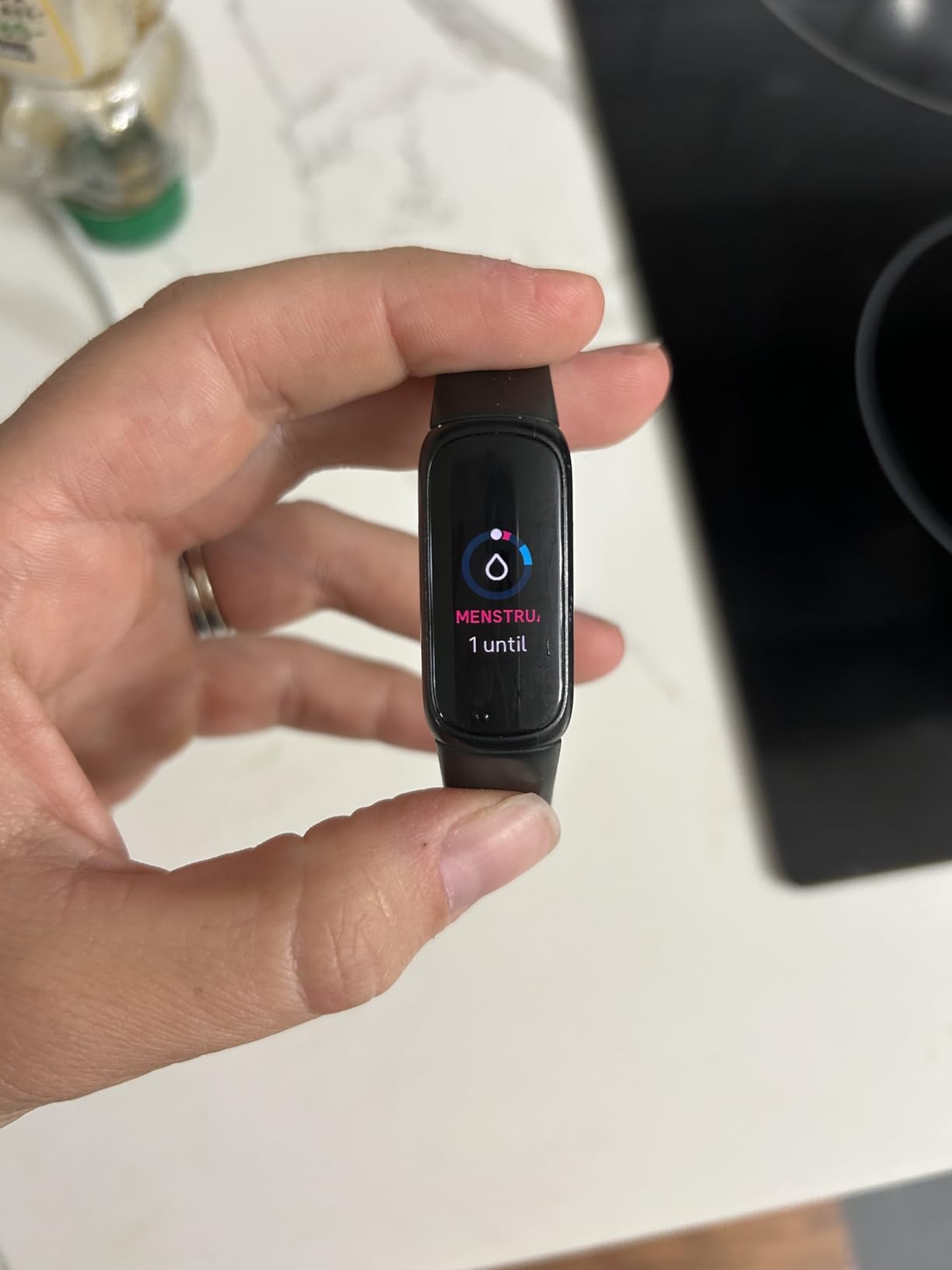
What it actually tracks is deliberately narrow. You get 24/7 optical heart rate, a skin temperature variation sensor, a sleep score with stages, stress management tools and workout intensity data. Sedentary reminders, a wrist alarm and phone notifications round it out, and water resistance to 50 meters means showering and swimming are fine once you enable water mode.
The small and large classic silicone bands are both in the box, which solves a problem most first-time buyers hit. A band that is too loose undercounts steps, and the tang buckle clasp lets you tighten it properly on a smaller wrist.
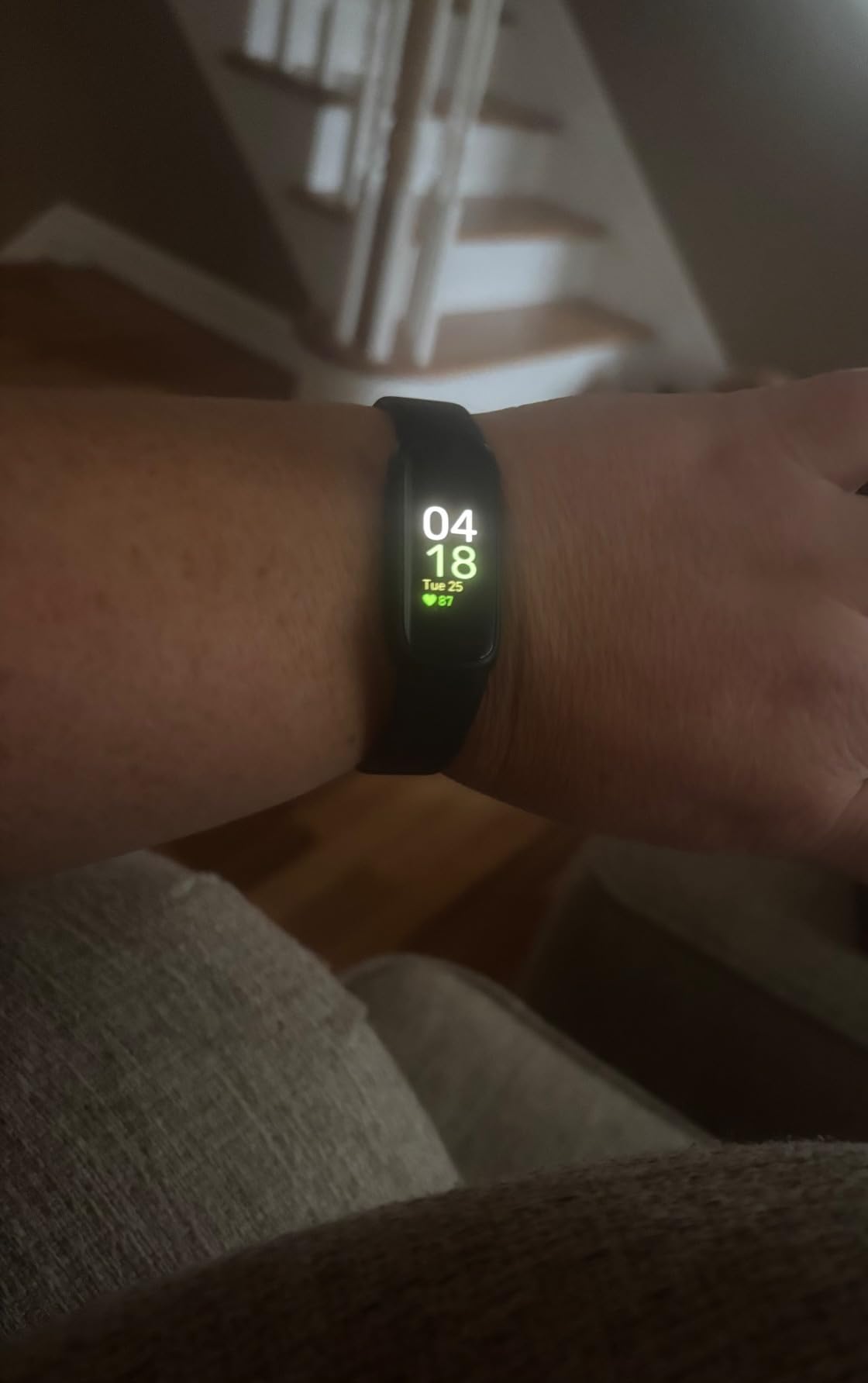
What You Will Notice in Your First Month
Steps, sleep score and resting heart rate are the three numbers that respond fastest to real change. Walk more for a week and your step trend moves; go to bed earlier and the sleep score usually follows within a few nights.
Stress management is the one feature worth using on day one, because it asks you to breathe for a minute rather than interpret a number. Reviewers consistently describe the watch as something they set up once and then glance at.
When Another Model Fits Better
If you run outdoors without your phone and want a mapped route, this is the wrong device, since it has no built-in GPS. People who want their Apple Health data in one place should skip it too, because it does not sync with Apple Health.
If reading a small screen bothers you, consider a larger display model later in this list. Our fitness tracker guide for women covers display size and fit in more detail.
2. Xiaomi Smart Band Active – The Cheapest Step Into Fitness Tracking
XIAOMI Smart Band Active Global Version 1.47” Display 18-Day Battery Life Modes All-Day Health and Fitness Monitoring 5ATM (9 Active Black)
Battery: up to 14 days typical
Screen: 1.47 inch AMOLED, 450 nit
Sensors: optical heart rate and accelerometer
Water: 5ATM to 50 m
Pros
- Battery that regularly runs well past a week
- Lightweight 30 g band comfortable in sleep
- Always-on AMOLED screen at a low entry cost
- Replacement bands are easy to source
- Weather
- alarm and find-my-phone features work reliably
Cons
- Heart rate readings are occasionally inaccurate under movement
- Pairing with an iPhone can be fiddly and some email addresses are rejected at signup
- Sunlight readability is limited despite the AMOLED panel
- Metrics-only app versions cannot be switched to imperial
The Xiaomi Smart Band Active answers a simple question: can a beginner get a useful daily step and sleep count without spending much? Owners of this band mostly say yes, and they say it again after six months, which is the real test.
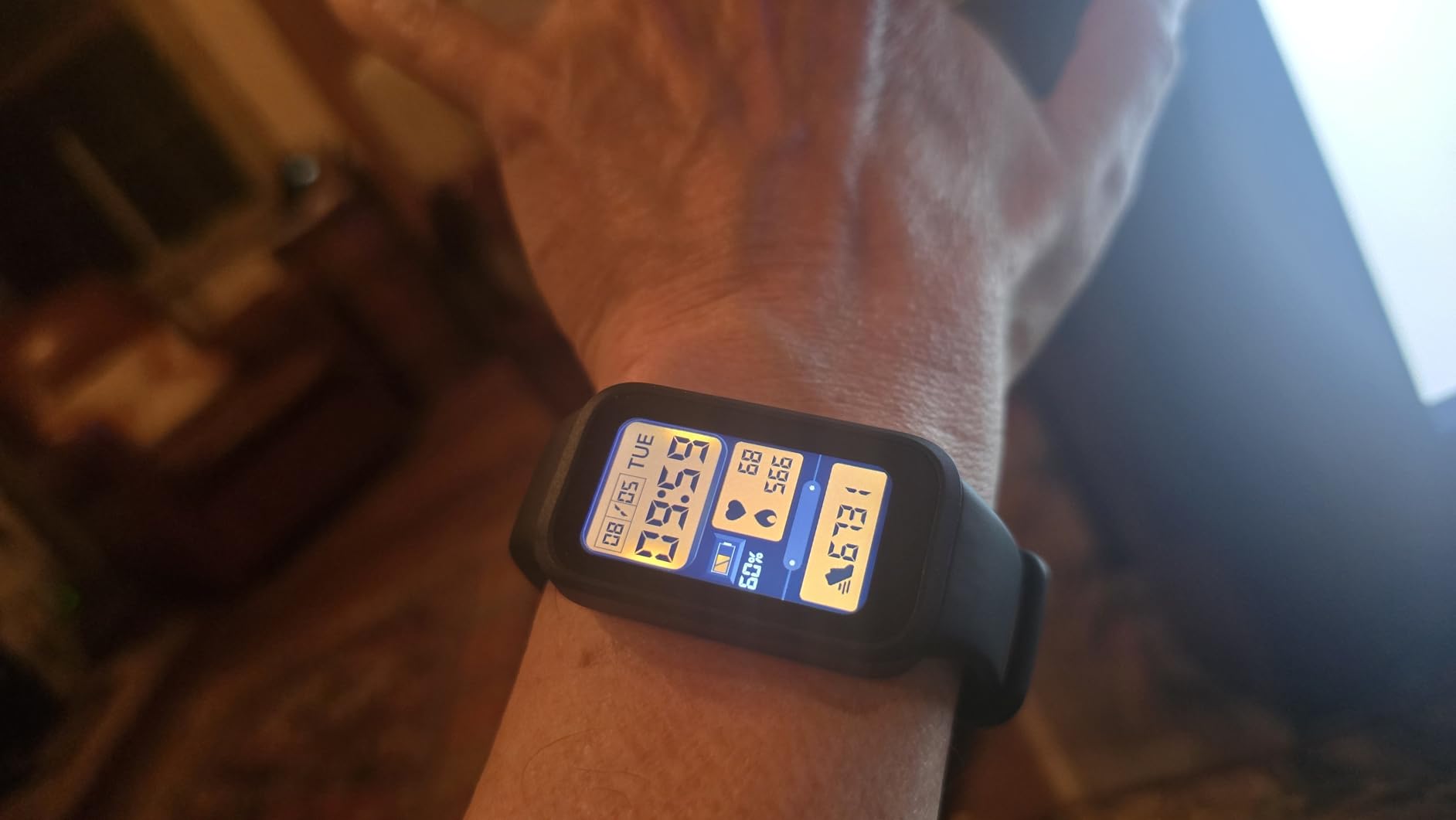
The 1.47 inch AMOLED screen at 450 nits is larger than the Fitbit Inspire 3 display and it supports an always-on mode. Battery is a 300 milliamp_hours cell rated at about 14 days typical, and reviewers report well over a week per charge.
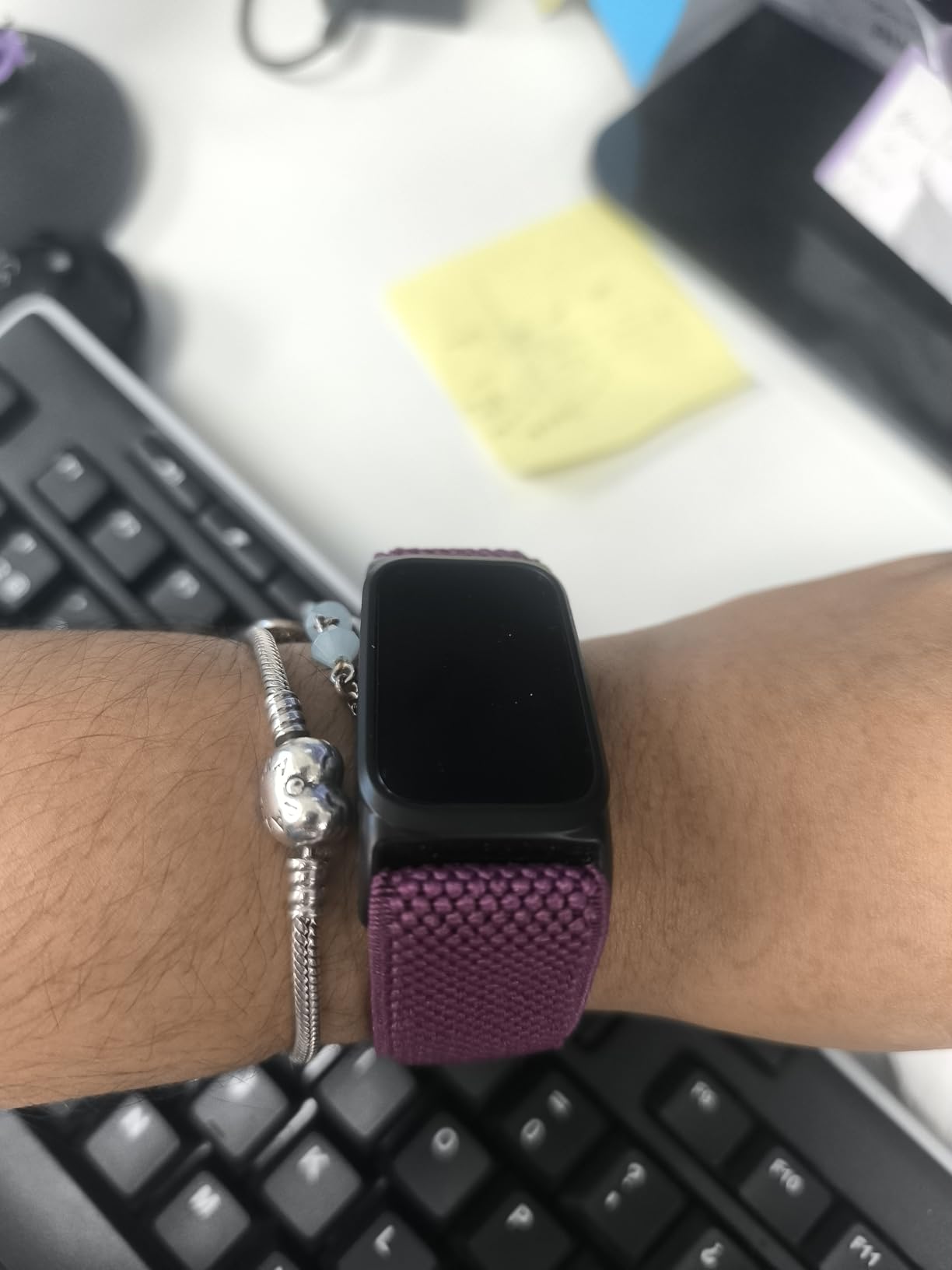
It tracks steps, heart rate, sleep and blood oxygen, and it runs multi-sport modes with automatic activity detection over Bluetooth. Water resistance is 5ATM to 50 meters, so a swim or a sweaty gym session is not a problem.
The band itself is a 20 mm wide silicone strap, and the module weighs 30 g. Replacement bands are widely available in silicone and fabric, so you are never stuck with the original strap.
Where This Band Earns Its Place
If your goal for the first three months is a daily step count and a rough sleep picture, this does that without a subscription and without weekly charging. Budget threads on r/Frugal lean heavily toward Mi Band style devices for exactly this reason.
Automatic activity detection means you can forget to start a walk and still get a record of it. For a beginner who does not want to fiddle with workout modes, that convenience outweighs a lot of the shortcomings.
When Another Model Fits Better
Accuracy is the catch. Some owners report heart rate readings that drift badly during movement, and the app is metric-only in places, which annoys anyone outside the countries the default unit suits.
Setup is the other warning sign. Pairing with an iPhone can be fiddly, and a number of users hit rejected email addresses while creating an account. If you want a screen that stays readable in direct sun, look at the next model instead.
3. Xiaomi Mi Smart Band 10 – The Best Balance of Screen, Battery and Cost
Xiaomi Mi Smart Band 10 (2025) Global Version – 1.72″ AMOLED Display | 21 Days Battery Life | Touchscreen, Multi-Sport Tracker, Activity Tracker, Heart Rate Monitor | BT5.4 – (Midnight Black)
Battery: up to 21 days
Screen: 1.72 inch AMOLED, 1500 nits
Water: 5ATM to 50 m
Style: 22 mm fluoroelastomer band
Pros
- Bright 1500 nit AMOLED that reads clearly in sunlight
- Up to 21 days per charge with about a one-hour refill
- Light 30 g build that is easy to sleep in
- Sleep stages with a quality score out of the box
- No mandatory subscription for health analysis
Cons
- No physical buttons so the band only powers on through the charging cable
- The Mi Fitness app is metric-only without a workaround
- Firmware update loops are reported by some owners
- Strap pin release button can be stiff
The Mi Smart Band 10 is the model we would buy for a friend who is suspicious of premium wearables and does not want to feel like they are missing something. It is the middle ground in this list and it works on both iOS and Android.
Battery is the headline. A 200 milliamp_hours cell is rated at up to 21 days, with a full recharge in roughly an hour, and owners commonly report anywhere from 10 to 21 days depending on how much they use the display.
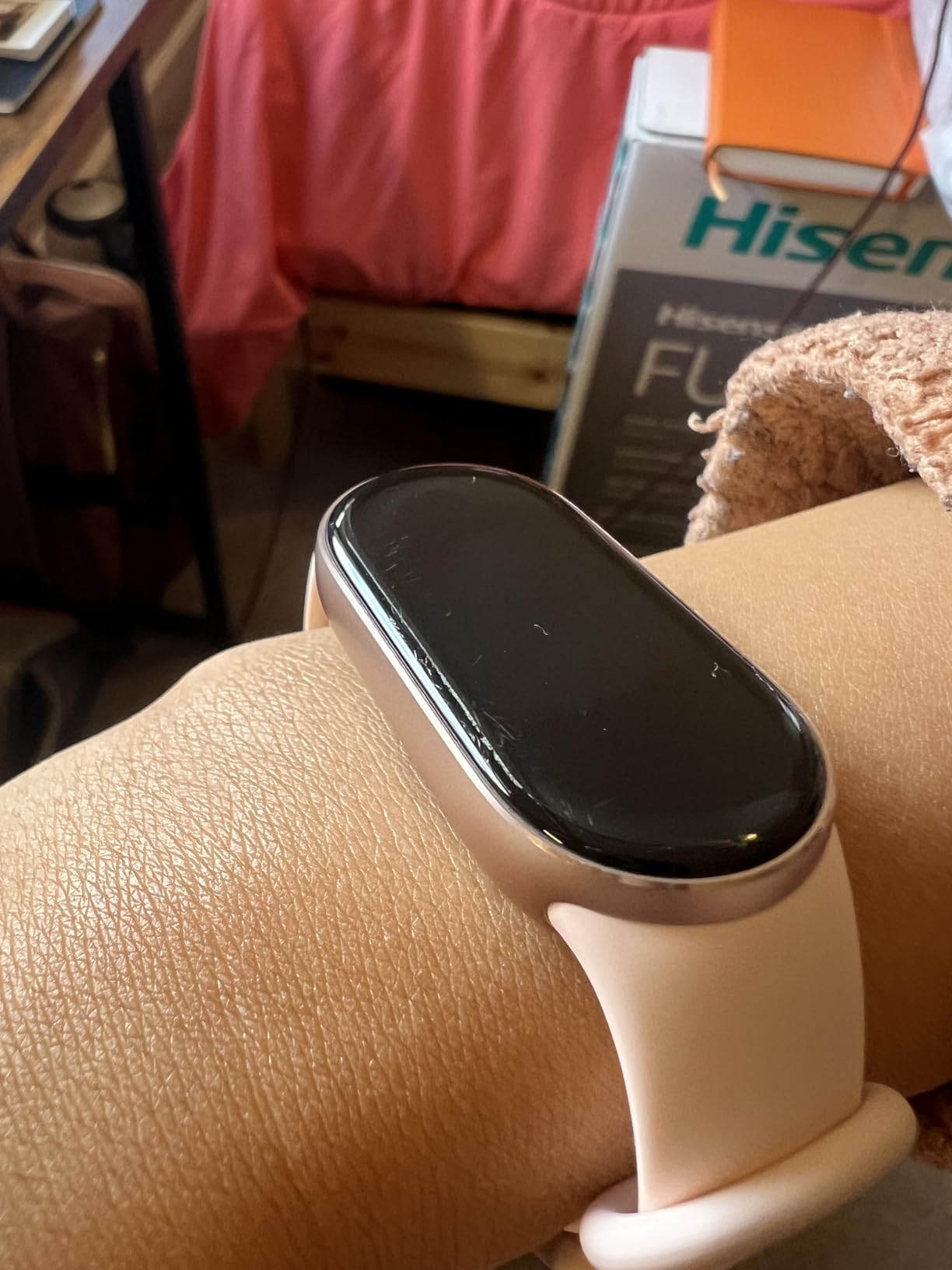
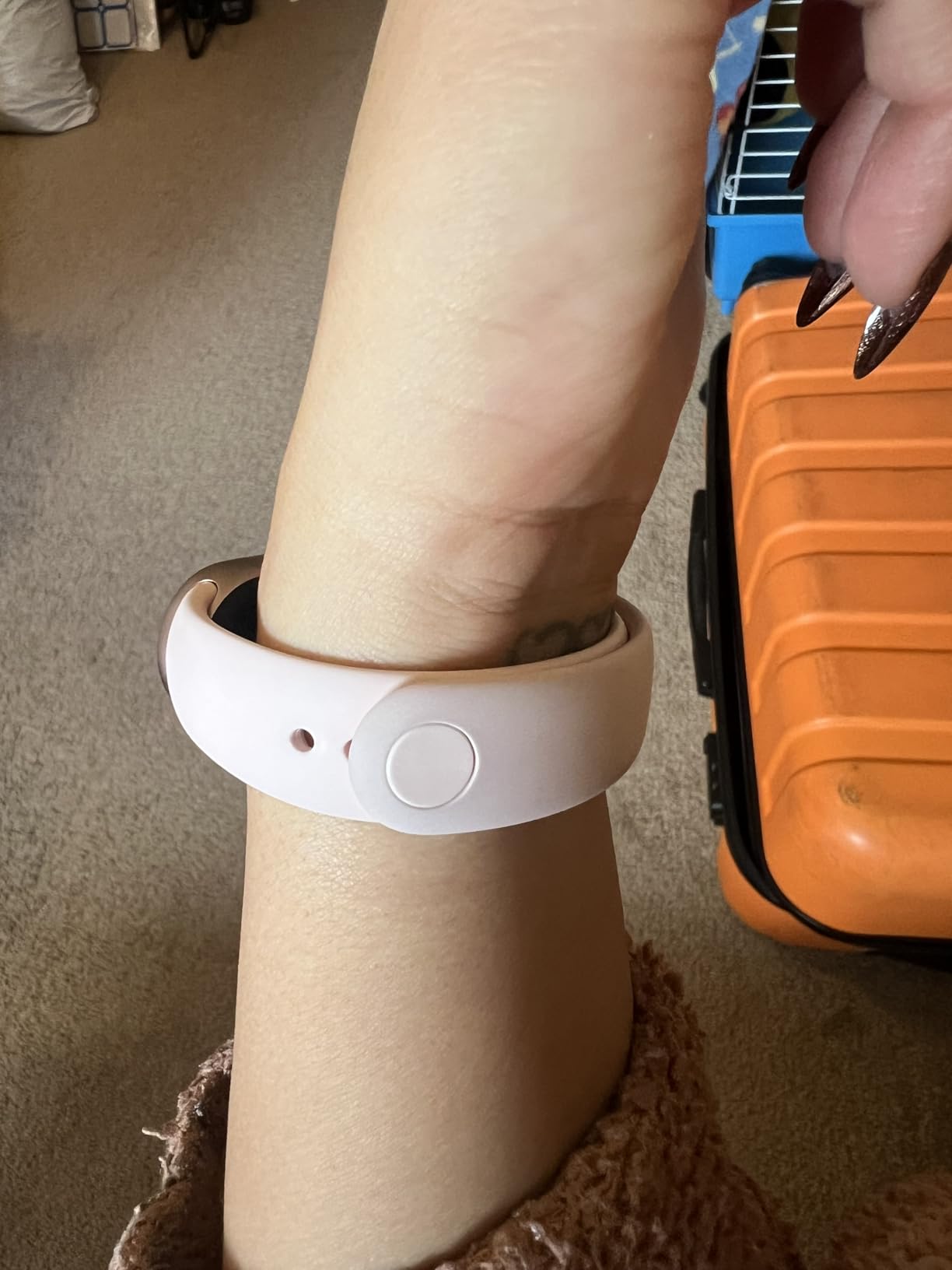
The 1.72 inch AMOLED panel runs at 390 x 390 with 1500 nits of high brightness mode, which is why it stays readable outdoors when cheaper LCD screens wash out. Bezel width dropped to 2.0 mm and the screen-to-body ratio rose to 73 percent, so the numbers are large for the size.
Health tracking covers heart rate, blood oxygen, stress and sleep with stages plus a quality score. There is also an electronic compass that some swimmers use to check pool direction, and multi-sport tracking for running, cycling and skiing.
Why It Beats Cheaper Bands in Daily Use
The gap between this band and a budget model shows up in bright rooms and long weeks. A screen you can read at the gym matters more than a spreadsheet of metrics you will never open, and three weeks between charges means you stop thinking about charging.
Reviewers commonly describe it as a stand-in for pricier Fitbit and Samsung bands. That comparison lands for a beginner because the everyday experience is the same while the ongoing cost is not.
When Another Model Fits Better
There is no physical button, so the only way to power it on is plugging in the charging cable. If you like the reassurance of a side button, or if you are not comfortable navigating the Mi Fitness app to change units from metric to imperial, this one will test your patience.
For swimming specifically, we suggest checking our fitness trackers for swimming guide before you commit.
4. Amazfit Bip 6 – The Best Choice If You Want Real GPS Without a Phone
Amazfit Bip 6 Smart Watch, 1.97″ AMOLED Display, GPS, iOS/Android
Battery: up to 14 days
Screen: 1.97 inch AMOLED, 2000 nit
GPS: built-in five-system
Water: 50 m
Pros
- Built-in GPS across BeiDou
- GLONASS
- GPS and Galileo
- Large 2000 nit AMOLED that is easy to read outdoors
- Up to 14 days between charges
- Light aluminum body stays comfortable in long sessions
- Free downloadable maps with turn-by-turn directions
Cons
- No Bluetooth calling on this model
- GPS and navigation need setup in the Zepp app
- 50 m water resistance means no diving
The Amazfit Bip 6 is the first model here with a real satellite chip inside it. That changes what you can do outdoors: you can leave the phone at home and still record a route.
It supports BeiDou, GLONASS, GPS and Galileo, with free downloadable maps and turn-by-turn directions through the Zepp app. Set-up is a one-time job of a few minutes, after which walks and runs log on their own.
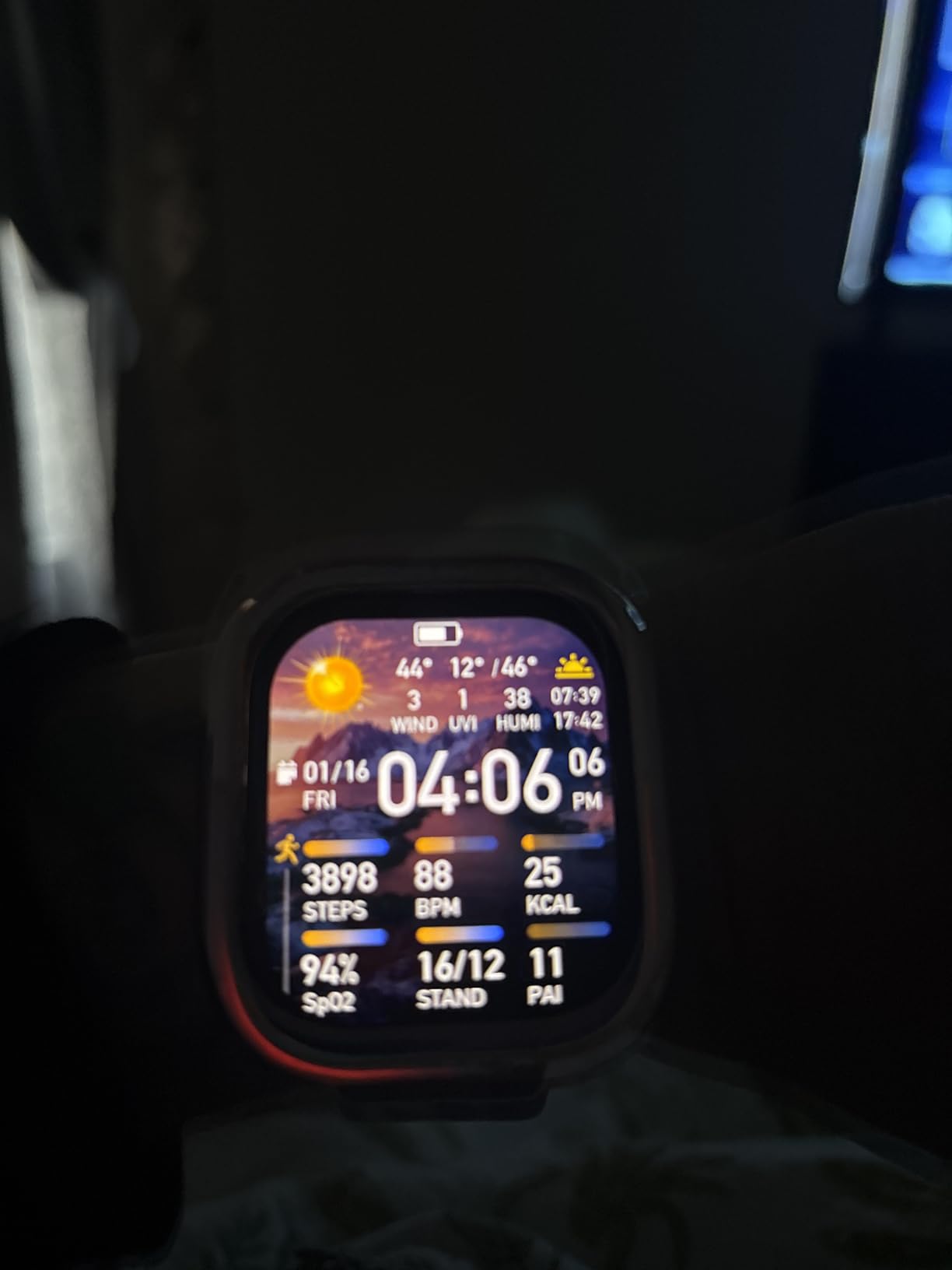
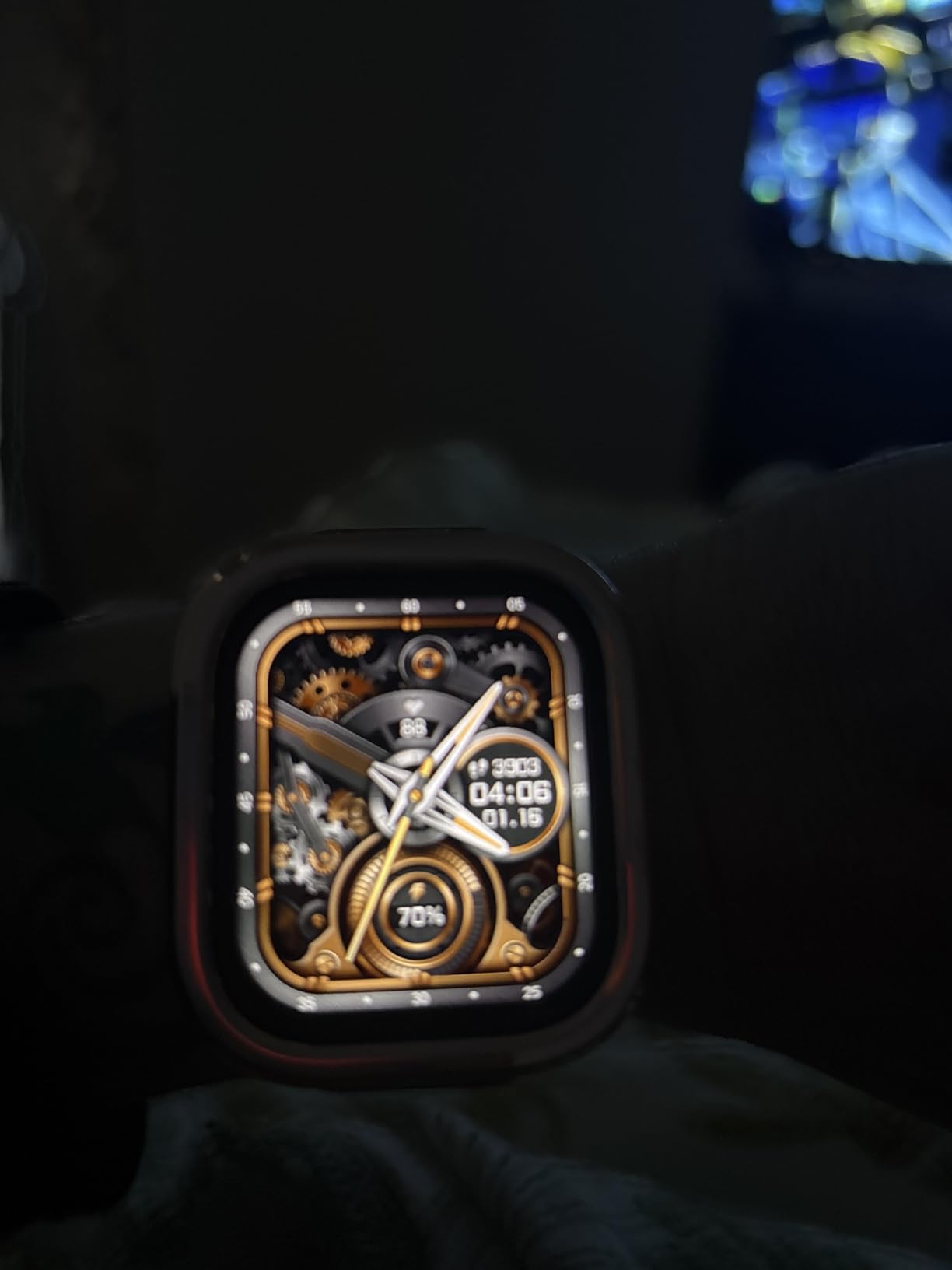
The display is the other draw. A 1.97 inch AMOLED at 2000 nits is the brightest panel in this roundup, and at 390 x 450 the extra height suits map screens and long notification lists.
Battery is a 340 milliamp_hours cell rated at up to 14 days, so GPS tracking does not force a nightly charge. Water resistance is 50 meters, and the aluminum body keeps the weight down for longer sessions.
What Built-In GPS Changes for a Beginner
Without GPS, most cheap trackers infer distance from your arm swing, which is fine on a treadmill and poor on a street. The Bip 6 records position directly, so your outdoor distance and pace numbers hold up.
There are more than 140 workout modes plus AI coaching aimed at new exercisers, which walks you through a first session rather than dumping a training load chart on you.
When Another Model Fits Better
If your workouts are all indoors on machines or free weights, GPS adds nothing you will use. This model also has no Bluetooth calling, so if you want to answer a call from your wrist, skip it.
Users who track strength sessions rather than cardio should read our beginner strength training guide, because watch features matter far less than the routine itself.
5. Xiaomi Redmi Watch 5 Lite – A Big Screen Plus Calling at a Mid Range Price
XIAOMI Redmi Watch 5 Lite Global 1.96″ Amoled Up to 18 Days Battery GNSS Dual Mic 150+ Workout Modes 5ATM Water Resistance Heart Rate Sensor (Black)
Battery: up to 18 days
Screen: 1.96 inch AMOLED, 332 PPI
GNSS: five-system built-in
Water: 5ATM
Pros
- Built-in five-system GNSS records routes without a phone
- Bluetooth calling with dual-mic noise cancellation
- Large square AMOLED with always-on display
- Long battery life reported beyond a week and up to 19 days
- Syncs with Strava and detects workouts automatically
Cons
- Bluetooth calling can interfere with car connections
- Auto-detection can over-trigger and needs to be turned off
- Some software bugs cause reboots during long workouts and lose GPS data
- Sleep tracking accuracy is inconsistent and the supplied strap is stiff
The Redmi Watch 5 Lite sits in the middle of this list and does two things most cheap bands cannot: it holds a satellite signal, and it handles Bluetooth calls.
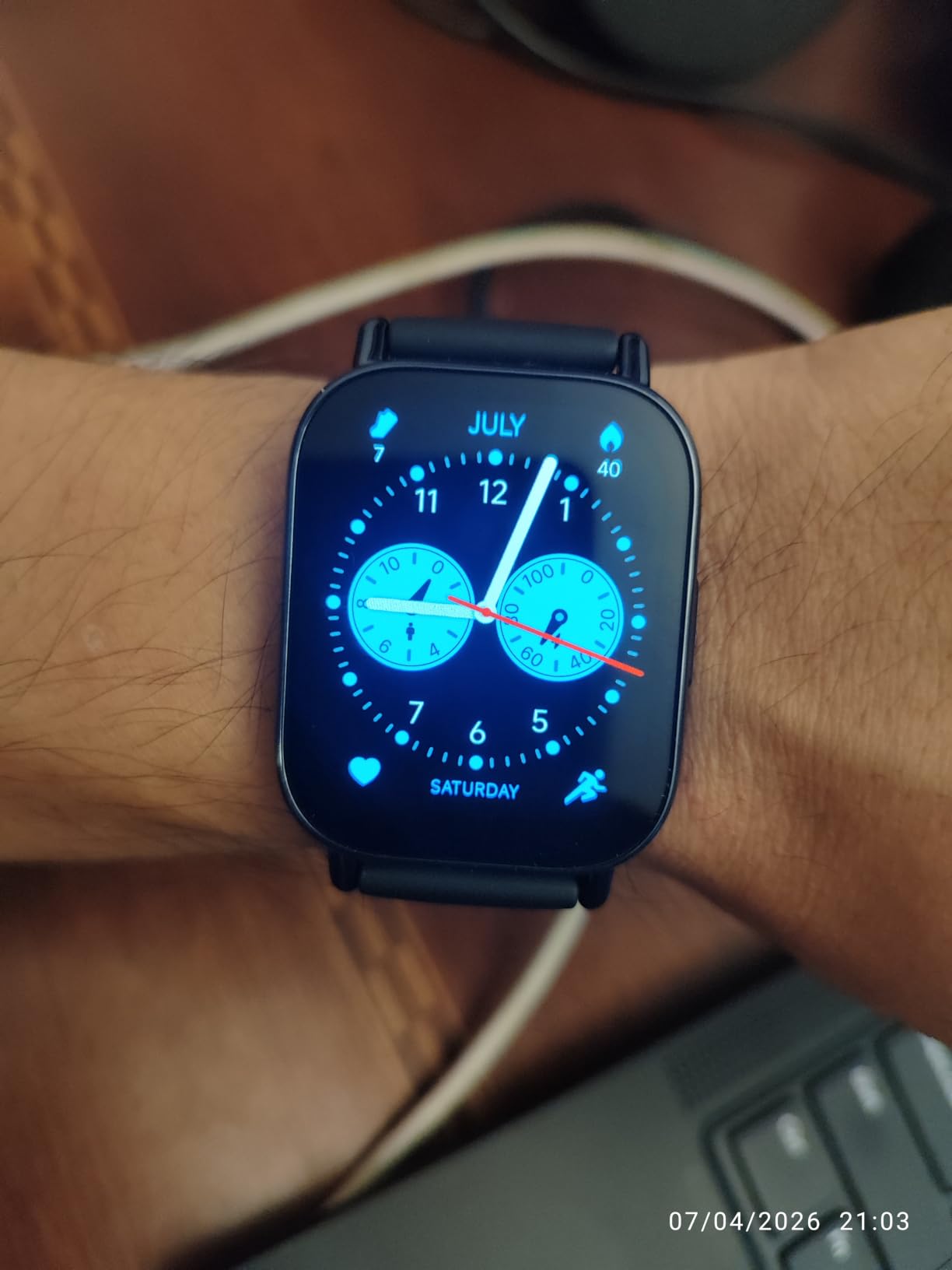
Screen size is where beginners feel the difference immediately. The 1.96 inch square AMOLED at 410 x 502 and 332 pixels per inch gives a 75.8 percent screen-to-body ratio with always-on display support, so steps and time are legible at a glance.
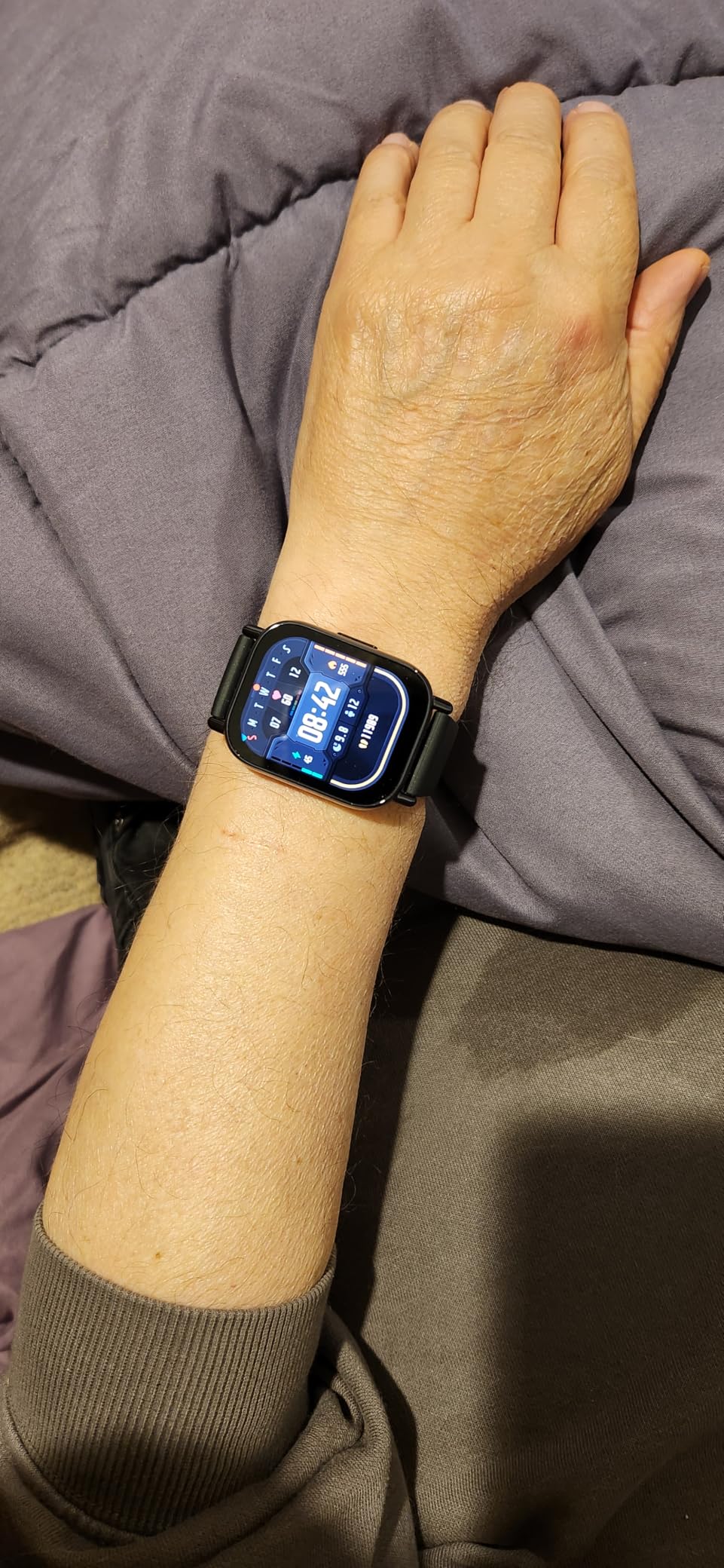
The 470 milliamp_hours battery is rated at up to 18 days on typical use, and owners report anywhere from a comfortable week up to 19 days. Calling uses dual microphones with noise cancellation and an 80 cm directional pickup, which is genuinely usable for short calls.
Health features cover heart rate and blood oxygen, with 150 or more workout modes, pro running courses, automatic workout detection and Strava sync. Water resistance is 5ATM.
Who This Suits Best
If you want phone-free GPS, a screen you can actually read and the option to take a call while your hands are wet or full, this is the model we would pick over more expensive watches.
Reviewers switching over from Fitbit or Galaxy watches tend to cite the display, the GNSS and the calling as the reasons the move was worth it.
When Another Model Fits Better
Software is the weak point. Some users report the watch rebooting during long workouts and losing GPS data, and auto-detection can over-trigger badly enough that you switch it off. The included rubber strap is also stiff and wears out faster than expected, so budget for a replacement.
If your workouts are short and indoor, a simpler band will do the same job with fewer surprises.
6. TORJALPH Fitness Tracker – A Big Screen With a Week of Battery on a Small Budget
Smart Watch for Men Women Compatible with iPhone Samsung Android Phone 1.69 inch Full Touch Screen IP68 Waterproof Bluetooh Fitness Tracker Heart Rate/Sleep Monitor (Black)
Battery: 5-7 days
Screen: 1.83 inch color LCD, 240 x 284
Water: IP68 to 1.5 m
App: Da Fit
Pros
- Large 1.83 inch full touch color screen for the money
- Over a week of battery on a single charge in most reports
- IP68 rated so sweat
- rain and hand-washing are fine
- 200+ watch faces through the Da Fit app
- Works with both Android and iPhone
Cons
- Step and calorie counting is the most criticised part and indoor activity is often missed
- Notifications cannot be replied to and long messages get cut off
- Connectivity drops are reported and some stopped working after about a month
- Screen scratches easily and no swimming mode appears in the app
This is the model to buy when your priority is a large, obvious screen and a battery you can ignore for a week. It is a simple activity tracker rather than a training watch, and it asks very little of you.
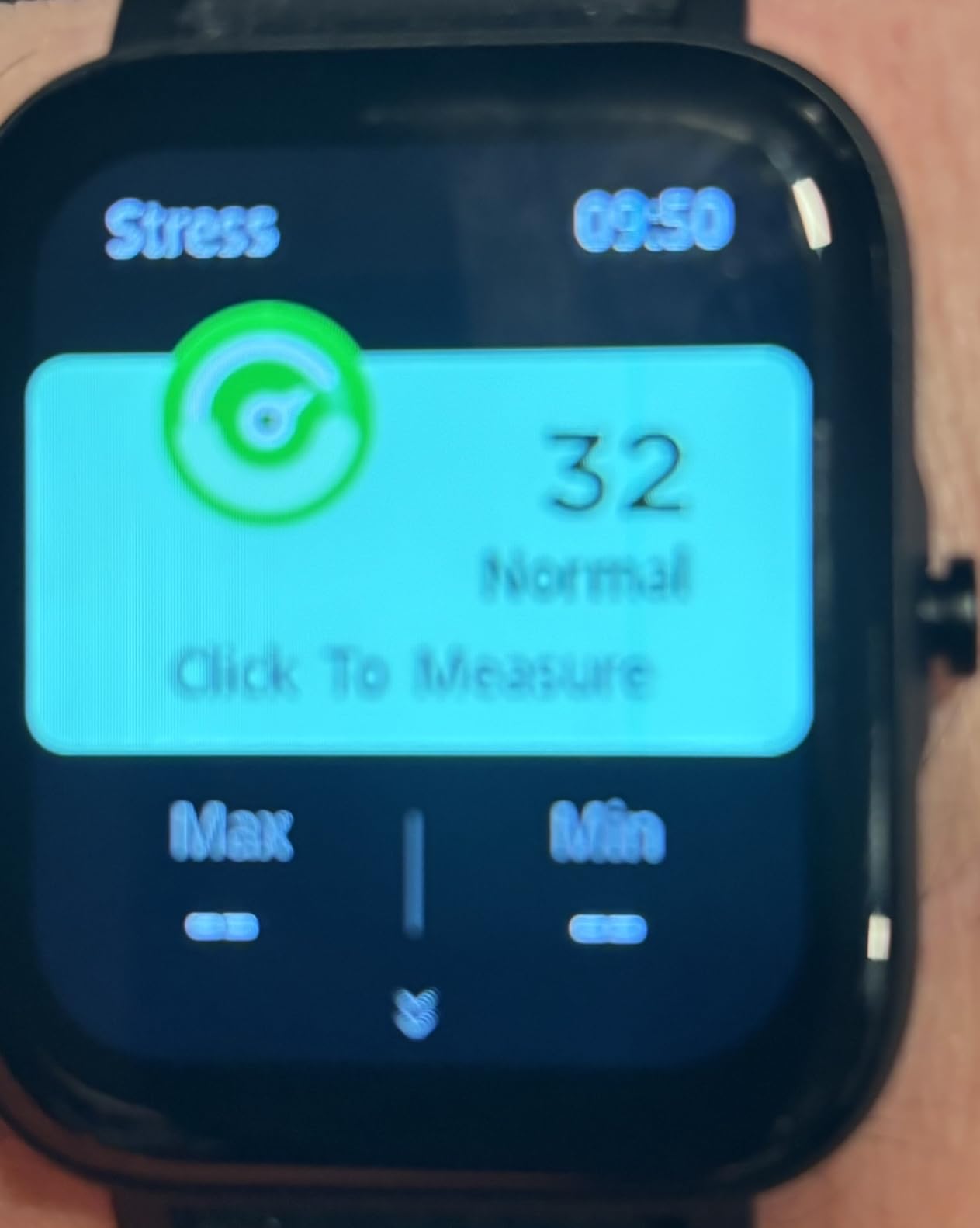
The 1.83 inch full touch color LCD runs at 240 x 284 with more than 200 watch faces available through the Da Fit app. Weight is light, and the silicone band is a standard size.
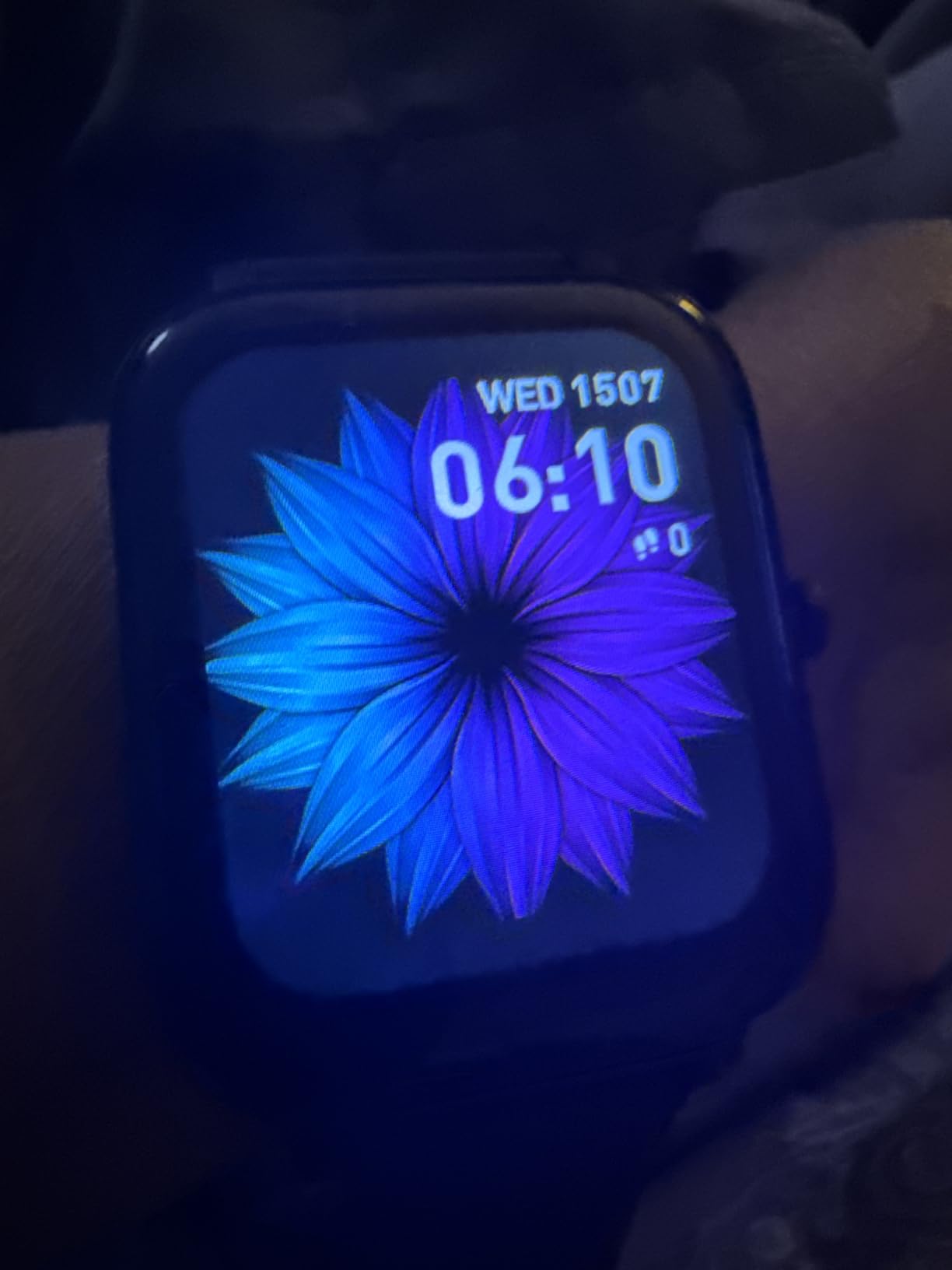
Battery life is listed at 5 to 7 days from a 230 milliamp_hours cell with magnetic charging, and owners frequently report more than a week between charges. IP68 covers sweat, rain and hand-washing.
It handles 12 sport modes including walking, running, cycling, swimming, badminton, basketball, football and rope skipping, alongside heart rate and sleep monitoring. Compatibility is broad, covering Android 5.0 and above and iOS 9.0 and above.
The Case for a Simple Tracker
Not every beginner needs training load or recovery time. If your goal is steps, sleep and a rough sense of how hard your heart worked, a device like this keeps the learning curve close to zero.
One detail that matters early on: the band is adjustable, so you can get a snug fit, which is what keeps step counts honest.
When Another Model Fits Better
Accuracy is the honest weakness. Step and calorie counting draw the most criticism, and indoor workouts are frequently missed. If you want trustworthy distance for a walking program, spend up a tier on something with GPS.
Long notifications get cut off, there is no reply function, and the screen scratches easily with hard-to-source protectors. Some owners also report units failing after about a month.
7. LIVIKEY Fitness Tracker Watch – The One That Works With No Phone and No App
Fitness Tracker Watch with Heart Rate, No App No Phone Required, Pedometer
Battery: 5-7 days
Screen: 1.3 inch color, 240 x 240
Water: IP68 to 50 m
Case: stainless steel
Pros
- No app or account needed for core step and heart-rate tracking
- Strap on and start counting with the lowest setup barrier here
- 5-7 days of battery from a roughly 2 hour charge
- IP68 rated for sweat
- rain and hand-washing
- Sleep breakdown into deep
- light and awake time
Cons
- Sleep analysis and step goals still need the companion app
- Display only
- so no calls or replies
- Small 1.3 inch screen and no GPS
- Heart rate and calorie accuracy draws mixed expectations
Every other tracker in this guide wants your phone, an account and a sync. The LIVIKEY watch runs on its own for the basics, which makes it the least fussy device we looked at.
Strap it on and it starts counting steps, tracking all-day heart rate and logging sleep into deep, light and awake periods. Nine sport modes with automatic activity detection are included, along with a stopwatch, alarm, breathing guide and sedentary reminder.
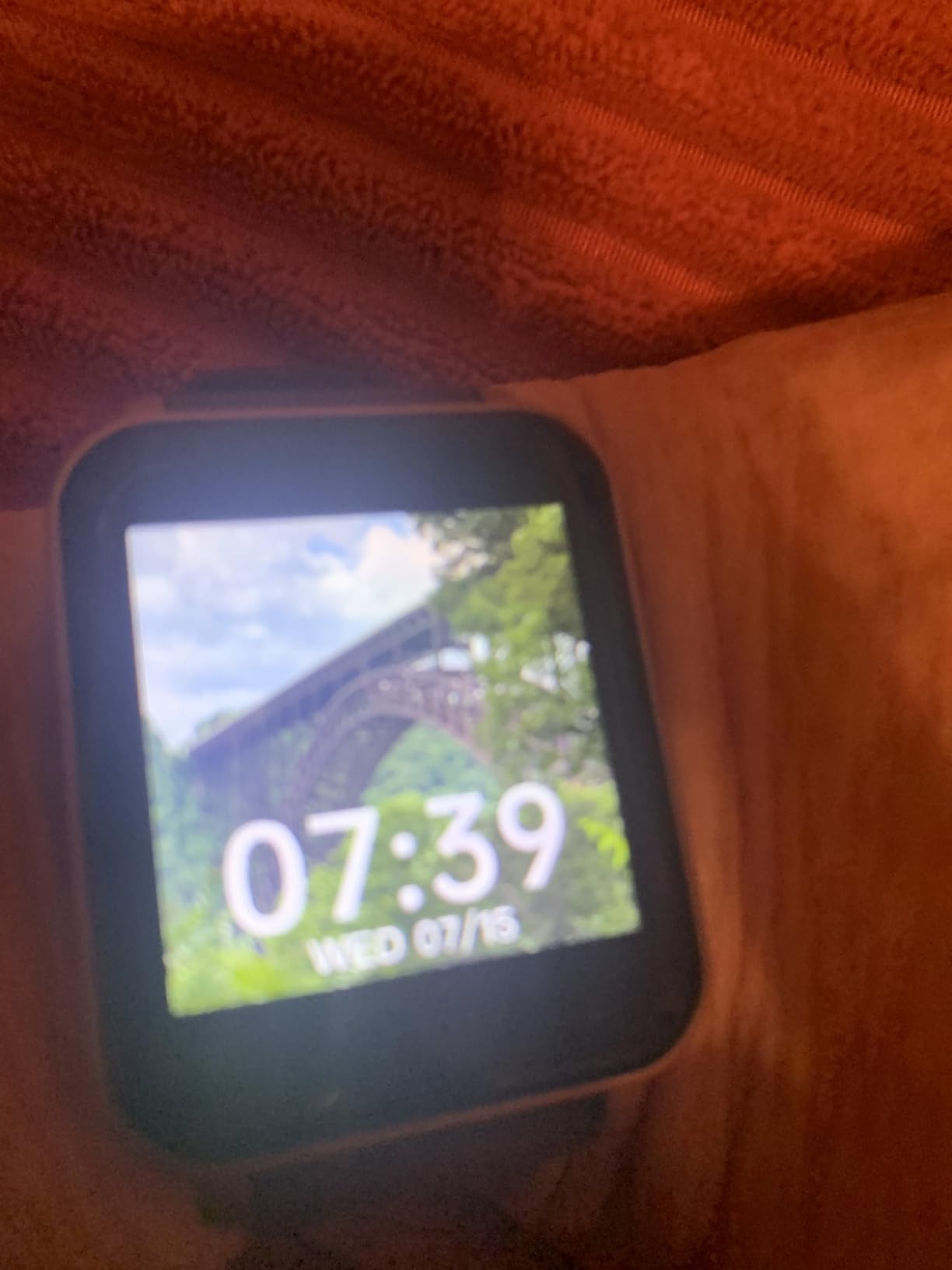
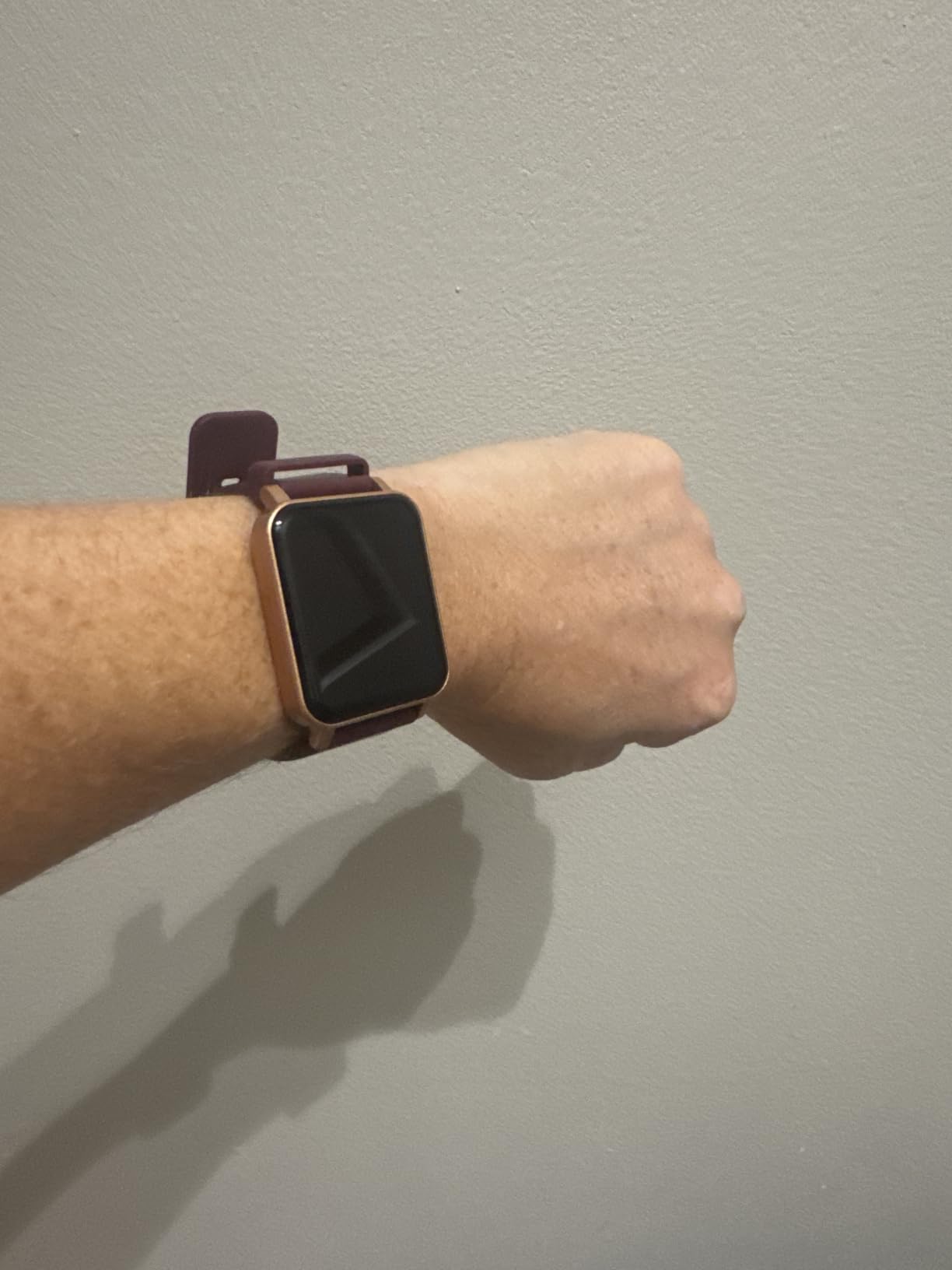
The case is stainless steel with a 1.3 inch color screen at 240 x 240, and the 22 mm silicone band is adjustable. Battery runs 5 to 7 days from a 210 milliamp_hours cell, and IP68 covers 50 meters.
Notifications from messages and social apps appear on the display, though you can only view them. It does not pair with tablets or computers, which keeps the setup deliberately narrow.
Who This Is For
This suits anyone who has decided that an app is one more thing to maintain. Some people simply do not want their exercise data on a phone screen, and this tracker keeps the data on the wrist instead.
It is also a sensible first device for a parent or an older relative who will not manage a phone app. Fewer settings, fewer screens, fewer reasons to give up.
When Another Model Fits Better
The trade-off is depth. Sleep analysis and step goals still need the companion app, so the no-phone benefit is narrower than it sounds. Accuracy expectations are mixed for heart rate and calories.
If you want a larger screen or long-term trend charts, one of the app-based bands above will serve you better.
8. Amazfit Bip 5 Unity – The Best Pick for Connecting to Other Fitness Apps
Amazfit Bip 5 Unity Smart Watch, 1.9″ Screen, 11-Day Battery, iOS/Android
Battery: up to 11 days, 26 in saver
Screen: 1.91 inch LCD, 320 x 380
Case: stainless steel
Water: IP68
Pros
- Integrates with Strava
- adidas Running
- Apple Health
- Google Fit
- Relive and komoot
- Uncluttered interface on a large readable screen
- Up to 11 days of battery
- or 26 in saver mode
- No subscription required for core health features
- Built-in flashlight is handy at night
Cons
- The US version lacks the Bluetooth calling and Alexa features shown in global marketing
- Find My Phone frequently reports as not synced
- No built-in GPS so routes rely on your phone
- Band feels cheap and can be hot or awkward on slim wrists
Most trackers keep your data inside one app. The Amazfit Bip 5 Unity pushes it elsewhere, which matters if you already use Strava, Google Fit or Apple Health for something else.
That integration list is the reason to pick this one: Strava, adidas Running, Apple Health, Google Fit, Relive and komoot are all supported. Zepp OS 3.0 also offers more than 70 downloadable mini apps and 120 or more sport modes.
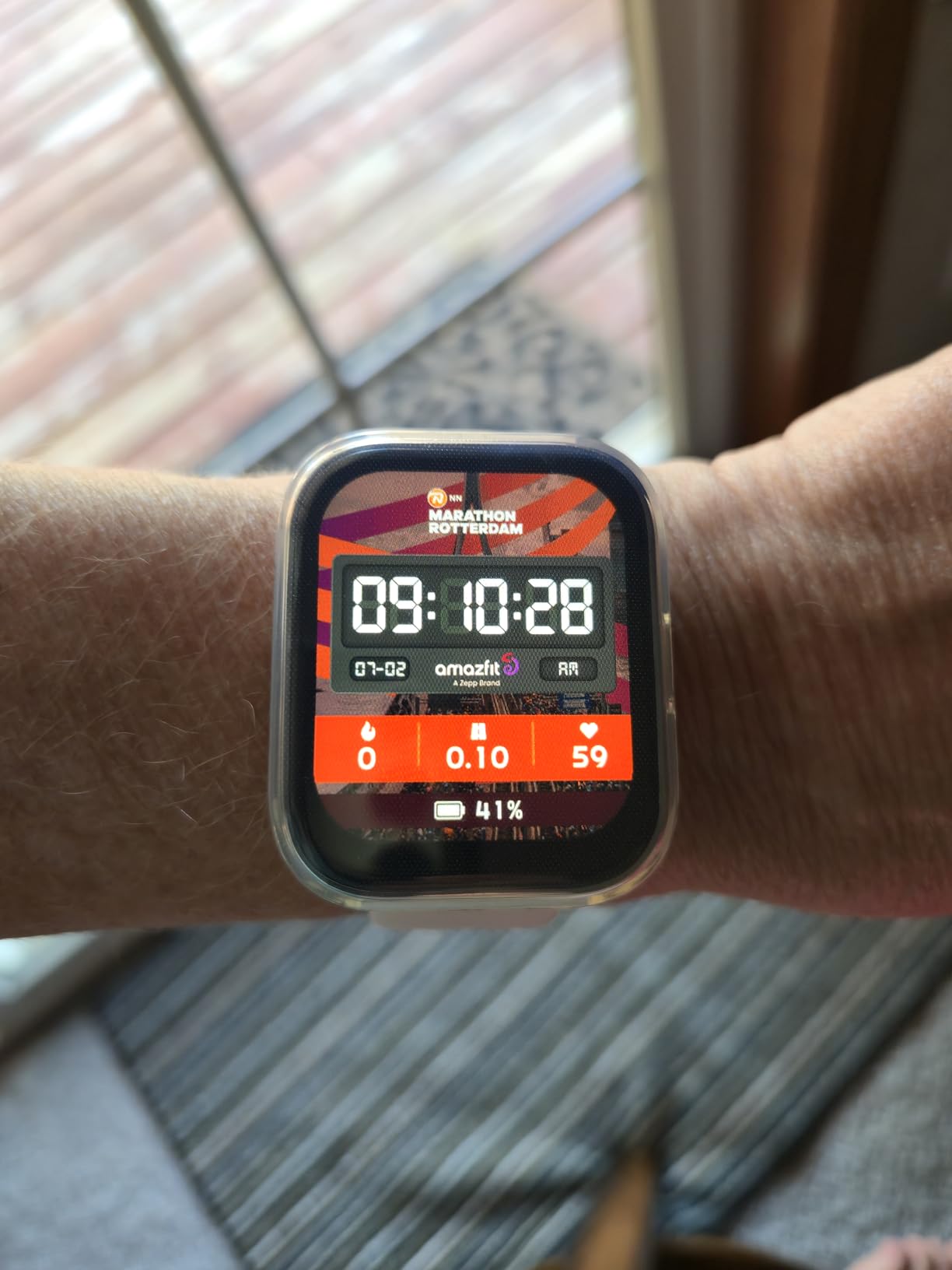
The 1.91 inch high-resolution LCD at 320 x 380 carries an anti-fingerprint coating, and the stainless steel frame keeps it looking like a normal watch. Battery is a 300 milliamp_hours cell rated at up to 11 days, extending to 26 days in battery saver mode.
Health tracking covers heart rate, blood oxygen, stress, sleep and sedentary reminders, with menstrual tracking included. Owners replacing an Apple or Galaxy Watch often cite the battery and the readable screen as the reason for switching.
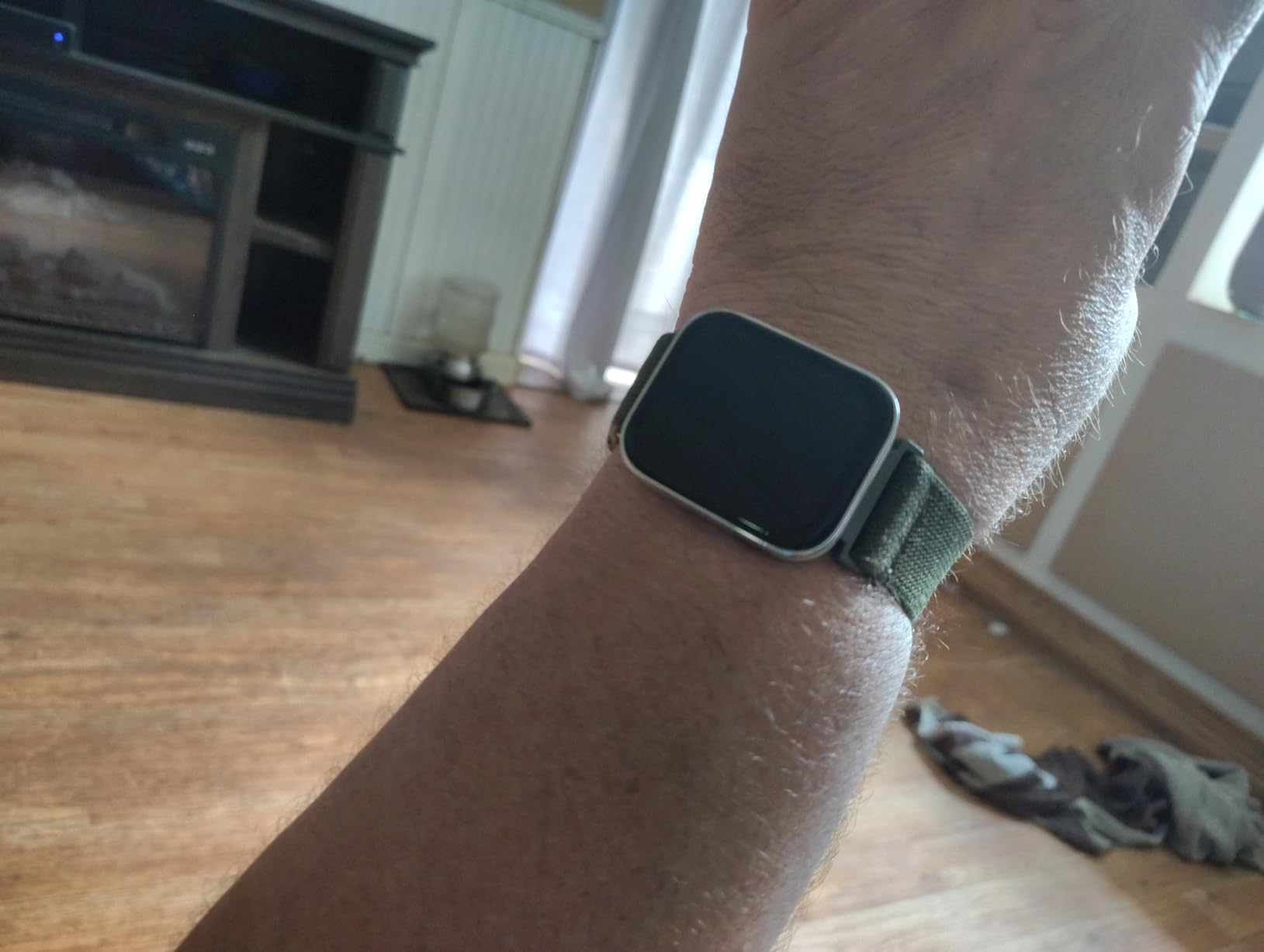
Why App Connections Matter Long Term
A tracker only helps if you still open it in month six. Sending data to an app you already use removes one more reason to stop checking, and this model does it without asking for a membership.
Core health features work without a subscription, which is rare among brands that treat deeper data as a paid upgrade.
When Another Model Fits Better
Check the exact model before you buy. Owners of the US version frequently report that the Bluetooth calling and Alexa features shown in global marketing are missing, and the Find My Phone function is often listed as not synced.
There is no built-in GPS, so outdoor routes come from your phone. The band quality also draws criticism, feeling cheap and running hot on slim wrists.
9. Amazfit Helio Strap – The Best Screenless Tracker for People Who Hate Screens
Amazfit Helio Strap Screenless Activity Tracker, 10-Day Battery,iOS/Android
Battery: up to 10 days
Screen: none, 22 mm module
Weight: 18 g
Water: 50 m
Pros
- Only 18 g
- light enough to forget you are wearing it
- Screenless design removes distraction while data collects
- Heart rate readings matched clinical equipment for one owner
- 10-day battery with no subscription required
- Works with standard 22 mm watch bands
Cons
- Nylon strap absorbs sweat and takes a long time to dry
- Strap can run large on small wrists or biceps
- Sleep duration sometimes needs manual correction
- Sensor module is bulkier than expected and the vibration motor is cheap
The Helio Strap has no display at all. It is a 22 mm module that clips onto a band, sits against your skin and does its work quietly while you check your phone like a normal person.
At 18 g it is the lightest device we tested, and wearers describe forgetting it is there. Because it takes standard 22 mm watch bands, you can wear a normal strap or swap in fabric for summer.
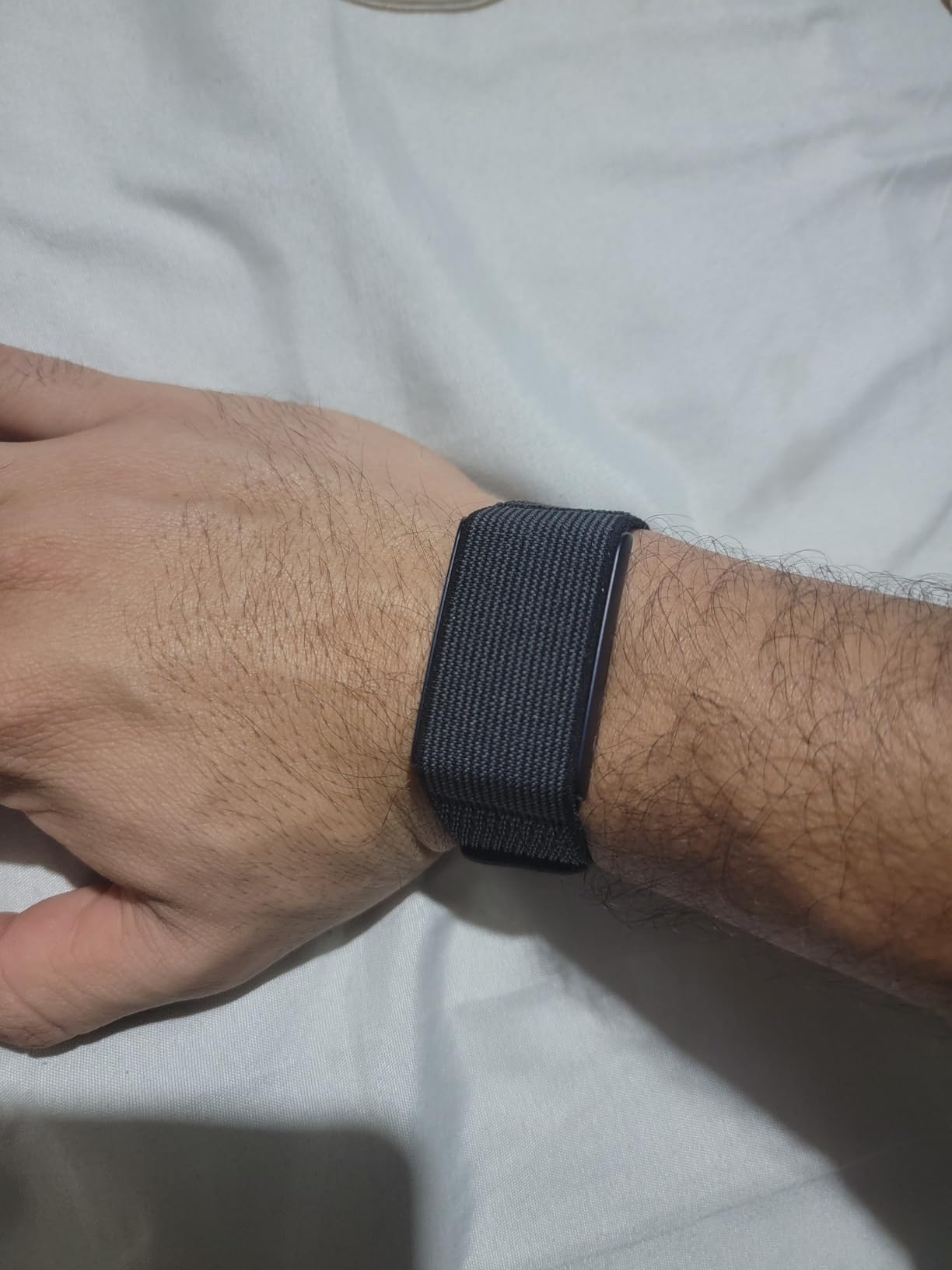
Sensors cover 24/7 heart rate, blood oxygen, stress and sleep through the BioTracker array. The HybridCharge score combines workouts and stress into an energy and recovery signal, and 27 sport modes add VO2 max, training load, effect and recovery time.
Battery is a 232 milliamp_hours cell rated at up to 10 days, with no subscription required for the core insights. Water resistance is 50 meters, and the Zepp app syncs with Strava, TrainingPeaks, adidas Running and komoot.
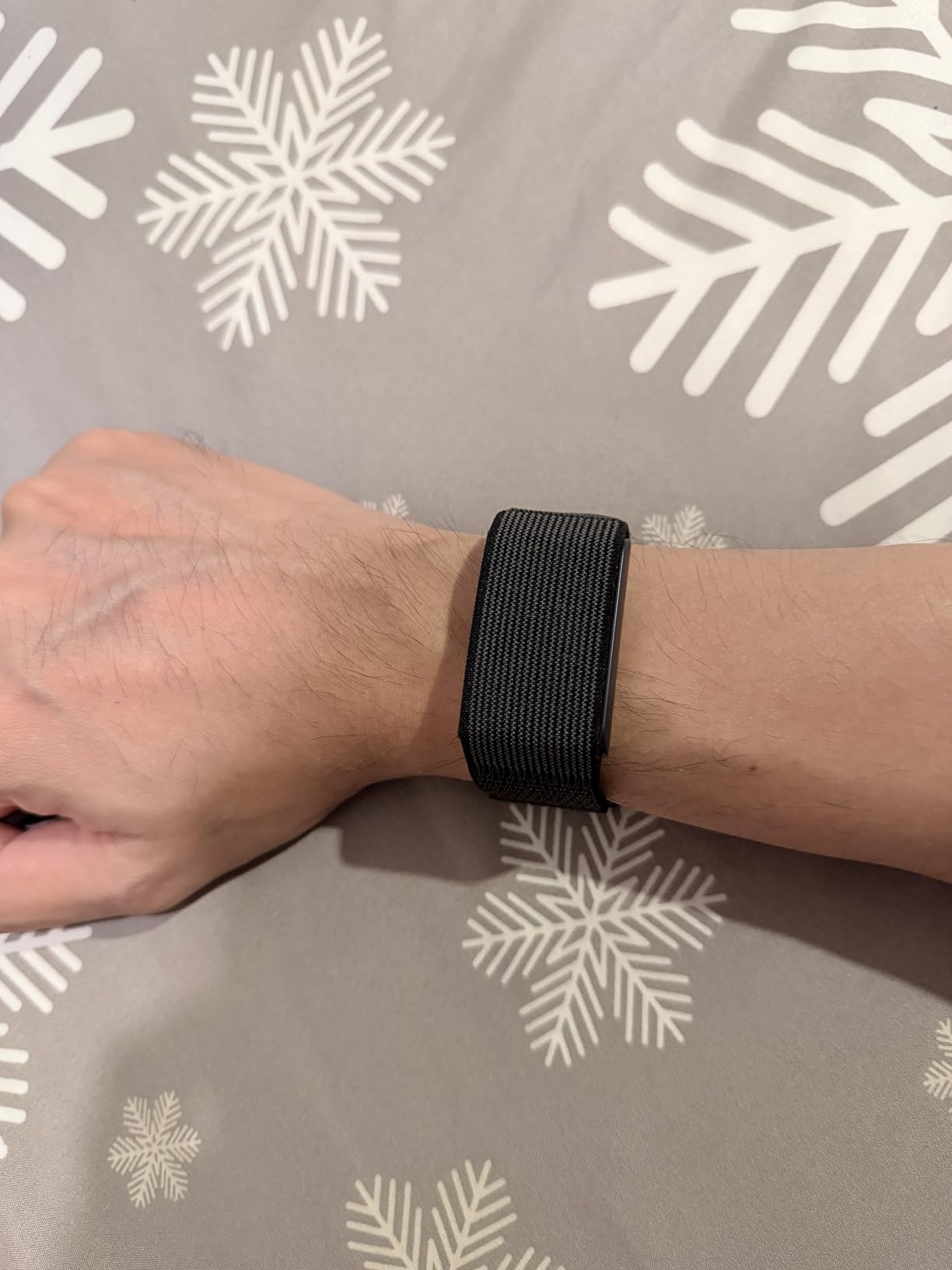
Who Benefits From Going Screenless
If notifications and glanceable numbers distract you rather than motivate you, this removes the temptation entirely. You still get the data on your phone, you just never see a screen on your wrist.
It can also pair with an Amazfit smartwatch for continuous data capture, which is useful if you already own a watch with a screen and want recovery detail underneath it.
When Another Model Fits Better
If you want to check your step count mid-afternoon without reaching for your phone, a screenless band cannot do that. The supplied nylon strap absorbs sweat and dries slowly, and it can run large on a smaller wrist.
Reviewers also note occasional manual corrections to sleep duration and a bulkier sensor module than expected. One unit stopped charging and pairing after about a month.
10. MorePro Air6 – A Tracker With Blood Pressure and Cycle Tracking Built In
MorePro Fitness Tracker with 24/7 Heart Rate & Blood Pressure Monitor, Blood Oxygen & Sleep Tracker, Smart Watch with Step Calorie Counter, IP68 Waterproof Activity Tracker for Women Men Android iOS
Battery: up to 7 days, 15 standby
Screen: 1.52 inch LCD
Water: IP68 to 1.5 m
Sensors: heart rate, SpO2, sleep
Pros
- Comfortable and light enough for all-day wear
- Clear bright screen with simple navigation
- Tracks steps
- sleep
- heart rate and blood oxygen for most users
- Several days of battery from a single charge
- Two year warranty and quick initial setup
Cons
- Pulse readings occasionally drift when spot-checked against clinical equipment
- Blood pressure and blood oxygen figures are wellness estimates not medical-grade
- No built-in GPS and no compatibility with tablets or PCs
The MorePro Air6 is unusual for including on-demand blood pressure readings alongside the usual heart rate, blood oxygen and sleep breakdown. That is a reason some buyers choose it, and a reason others should think twice.
Health tracking runs 24/7 across heart rate, blood pressure, blood oxygen, sleep stages and step count, with 120 or more sport modes. Menstrual cycle tracking includes period, trying-to-conceive and pregnancy modes.
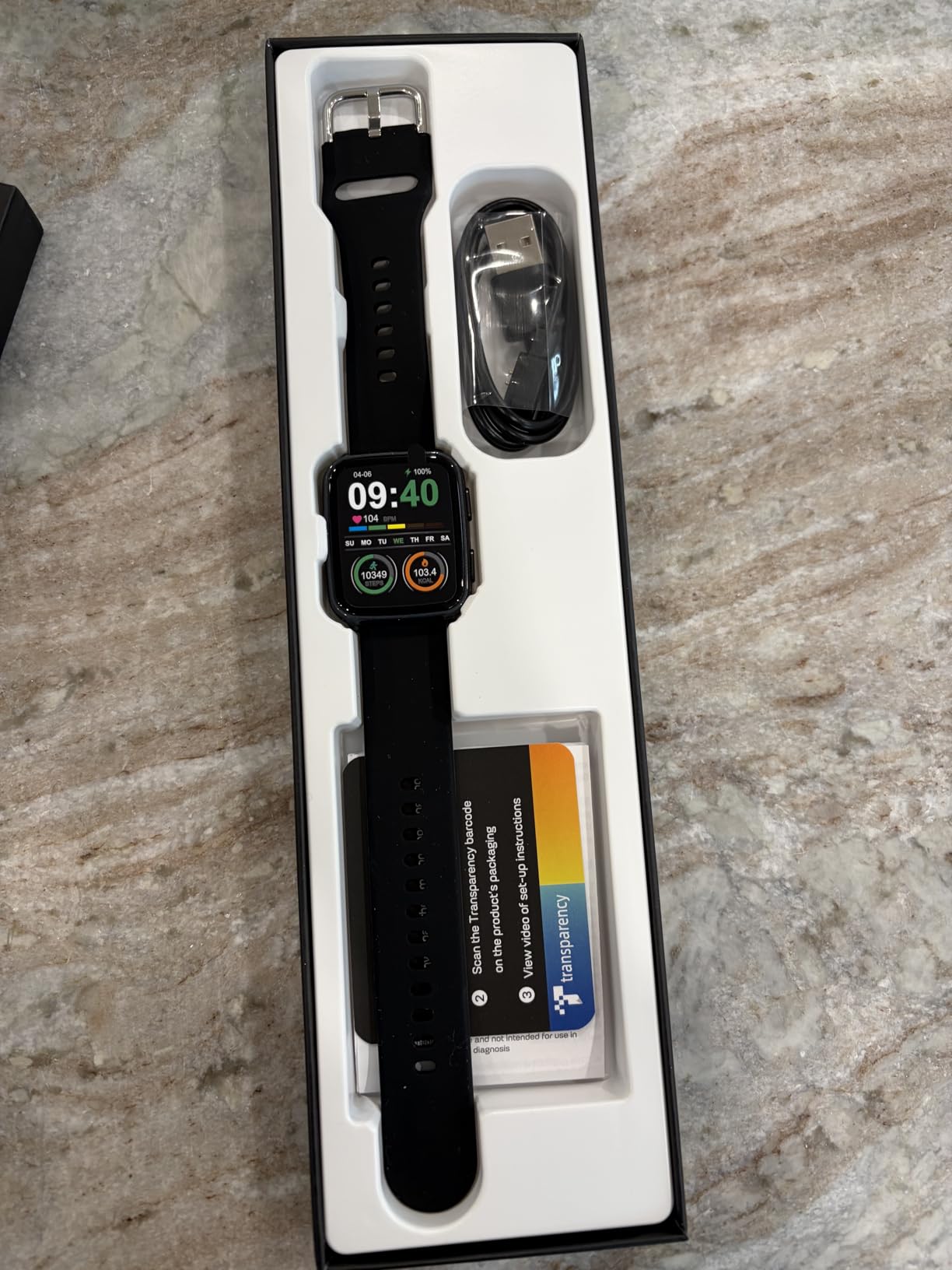
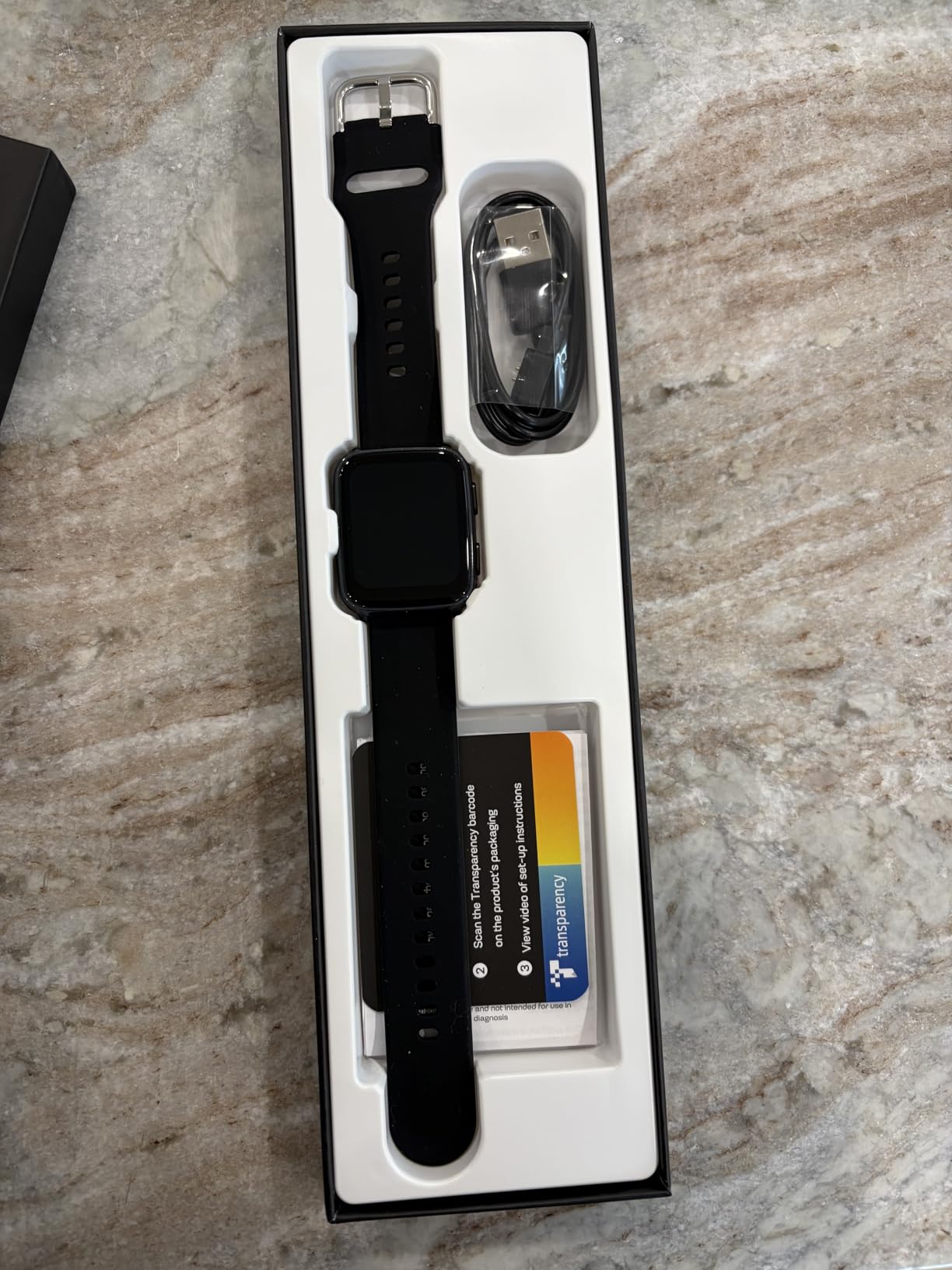
The 1.52 inch LCD is simple to navigate, and at 230 milliamp_hours the battery is rated at up to 7 days of normal use or 15 days in standby, with a charge time of about 2 hours. IP68 handles sweat, rain and hand-washing.
Notifications for calls, messages and apps appear on the wrist, alongside water and sedentary reminders, weather, music control and more than 200 watch faces. It carries a 2 year warranty, which is more than most rivals in this range offer.
Why Its Feature List Is Wider
For a beginner focused on general wellbeing rather than training, having blood oxygen and cycle tracking in the same device means one wristband instead of two. Reviewers describe the setup as quick and the screen as easy to read.
Step, sleep and heart rate data are reported as accurate by most owners, which covers the basics you will actually use in the first 90 days.
When Another Model Fits Better
Read the blood pressure and blood oxygen numbers as wellness trends only. They are estimates from an optical sensor, not clinical measurements, and a small number of owners report pulse readings drifting when checked against medical equipment.
There is no built-in GPS, and it will not pair with a tablet or PC. If you need route tracking, choose one of the GNSS models earlier in this list.
What to Track in Month One and What to Ignore
The fastest way to lose interest in a tracker is to look at every number it produces. Three metrics carry almost all of the value for a new exerciser, and the rest can wait for month three.
Steps. The one number that responds within a day. Set a goal you can hit on a bad day, not your best day, because a repeated target builds the habit faster than an ambitious one.
Sleep duration and consistency. Go to bed and wake up near the same time rather than chasing a perfect sleep score. Regularity shows up first.
Resting heart rate. Watch the weekly trend, not the daily value. A gradual drop is a useful signal that your fitness is improving.
For the first 30 days, ignore readiness scores, HRV baselines, VO2 max estimates and training load. They need a history to mean anything, and a day-one number for them tends to look like a judgement rather than a measurement.
Calorie estimates belong on the same list. Every one of these trackers guesses calories from heart rate and movement, and the guesses differ between brands for the same walk. Use them as a rough gauge at most.
Your First Week: A Setup Checklist That Sticks
How you spend the first week decides whether this becomes a habit or a drawer gadget. These six steps take about twenty minutes in total.
Charge it fully before the first wear. A half-charged start is the most common reason a tracker dies overnight in week one.
Fit the band snugly. One finger should slide under it. A loose band undercounts steps, which is a demoralising way to start.
Set a step goal you can hit on your worst day. Raising it later is motivating; failing it on day two is not.
Enable sleep tracking before bed. Check that the app shows a sleep record the next morning.
Choose one recurring movement habit. A 20 minute walk after lunch works better than an hour of anything, because it survives a busy week.
Check the battery date seven days later. If it will not survive to the next charge, the device is wrong for you.
Why Beginners Quit Trackers and How to Avoid It
Most abandoned trackers were not bad devices. They were good devices that asked for too much too soon. Four causes show up again and again.
Subscription fatigue. Free trials end and deeper insights disappear behind a paywall. Two of our picks, the Mi Smart Band 10 and the Amazfit Helio Strap, run their core health features with no membership, and that is the safer first purchase.
Feature overload. Readiness scores, stress scores and recovery timers are designed for trained athletes. Beginners who turn everything on tend to end up ignoring all of it.
Charging anxiety. A device that needs nightly charging will miss a night of sleep tracking, and the missing data becomes one more reason to stop. Two-week battery trackers avoid this entirely.
Discomfort and band friction. A clasp you cannot adjust or a strap that runs large ends up on the dresser within a month. This is a genuine buying criterion, not a detail.
Forum threads describe the same pattern from both ends: excitement about badges and rings for the first few weeks, then a quiet stop. The trackers that survive are the ones whose numbers you can read in one glance and whose charging routine matches your week.
Fitness Tracker vs Smartwatch vs Screenless Band
A fitness tracker is a lightweight wrist device focused on steps, heart rate and sleep. A smartwatch adds a bright touchscreen, notifications and app support. A screenless band sits between them, collecting data without a display.
For most first-time buyers, the tracker wins because there is less to learn. Choose a smartwatch instead if you want to reply to messages, take calls from your wrist or run third-party apps on the device itself.
Choose a screenless band if wrist notifications distract you. The Amazfit Helio Strap covers this case well, and you can still check every metric on your phone at the end of the day.
Two hardware checks matter more than feature lists for beginners. Water resistance decides whether you can shower and swim without thinking about it, and band adjustability decides whether your step count is honest. The best trackers for swimming need at least 5ATM, and any band you cannot tighten is a problem on small wrists.
Frequently Asked Questions
What is the best fitness tracker for a beginner?
The Fitbit Inspire 3 is the best fitness tracker for most beginners because it is small enough to sleep in, lasts about a week between charges and shows only a few clear numbers in a friendly app. The Xiaomi Mi Smart Band 10 is the better value if you want a bigger, brighter screen and roughly three weeks of battery.
What is a good basic fitness tracker?
A good basic fitness tracker does five things well: counts steps, measures heart rate all day, records sleep duration, runs for at least five days on one charge, and shows those numbers clearly on an easy app. Advanced metrics such as readiness, HRV and training load are not needed for the first three months.
What is the best entry level fitness watch?
The Xiaomi Mi Smart Band 10 stands out as an entry level watch with a 1.72 inch AMOLED screen at 1500 nits and up to 21 days of battery per charge, and its health features work without a subscription. If your workouts happen outdoors away from your phone, the Amazfit Bip 6 adds built-in GPS for a similar weekly charging routine.
Is a Fitbit or Garmin better?
For a first tracker, Fitbit wins on approachability: the app shows a small set of clear numbers and setup takes minutes. Garmin is usually preferred later for longer battery life and core features with no membership, but its app is denser and takes longer to learn. Beginners who find dashboards intimidating usually stay happier with the simpler layout.
Why are people ditching smart watches?
The four common reasons are subscription fatigue once a free trial ends, feature overload from readiness and recovery scores, charging anxiety when a device cannot track sleep overnight, and plain physical discomfort from a band that will not tighten properly. Choosing a tracker with two-week battery and no required membership removes most of these causes.
The Best Fitness Tracker for Beginners Is the One You Keep Wearing
After comparing all ten, the Fitbit Inspire 3 remains our pick for most beginners in 2026 because it does the smallest number of things, does them accurately and does not ask for a membership. It sleeps comfortably, lasts about a week and keeps its data in one straightforward app.
If you want a bigger screen and roughly three weeks between charges, the Xiaomi Mi Smart Band 10 is the better value. For outdoor sessions without a phone, the Amazfit Bip 6 adds built-in GPS, and for anyone who prefers no screen at all, the Amazfit Helio Strap does the job at 18 g.
Start with one habit, wear it every day including sleep, and only look at steps, sleep and resting heart rate for the first month. Start with the Fitbit Inspire 3 if you want the simplest first step, and give it a full week before you judge it.