
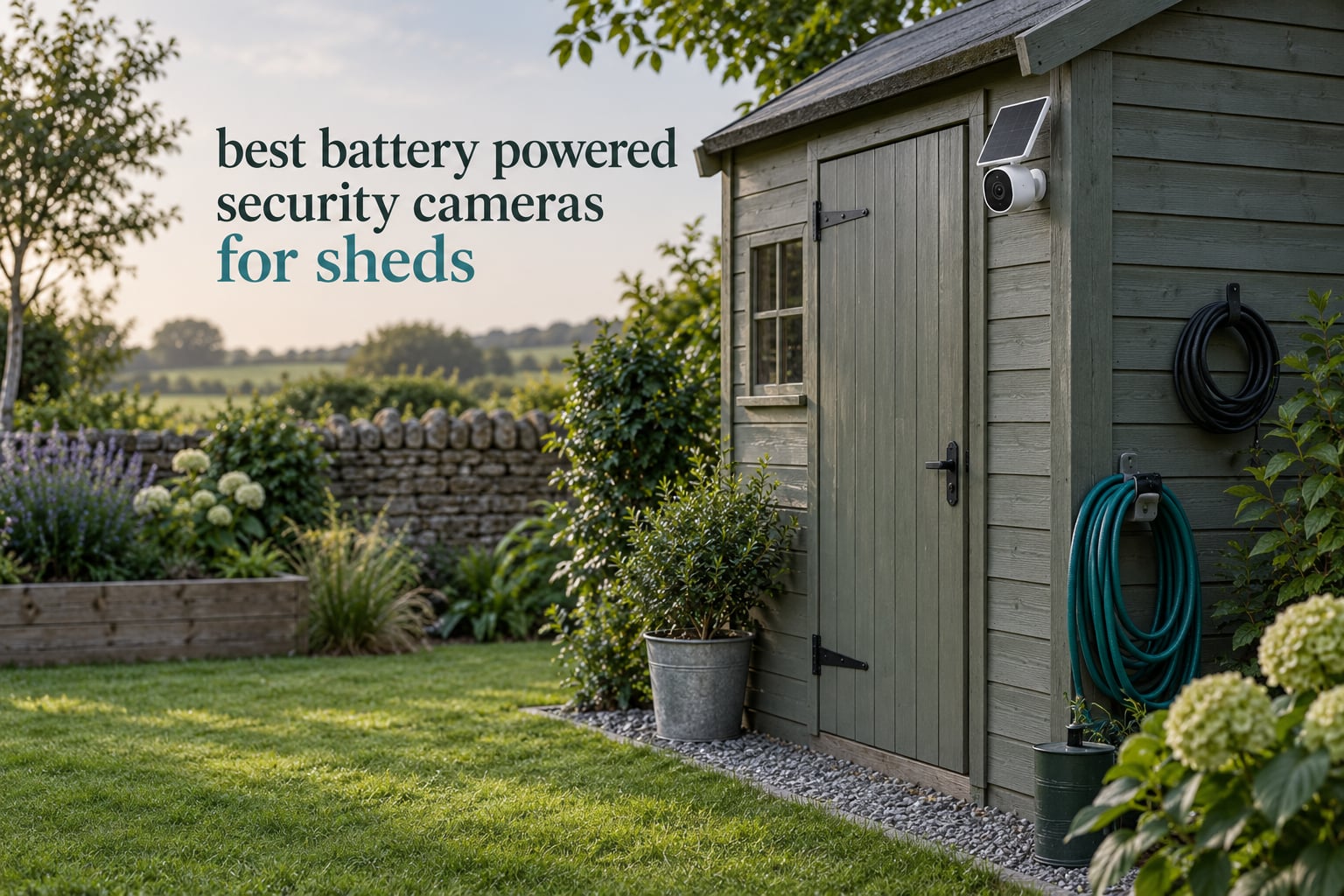
Most people pick a security camera for the house, then realize the thing worth protecting is the shed. A garden shed is where the lawnmower, the pressure washer, the ladders, the bike and the power tools live, and it sits at the far end of the garden with no mains power, no ethernet port and no ethernet cable anyone wants to dig a trench for.
That is exactly the gap a battery powered security camera fills. A battery powered security camera is a wireless outdoor camera that runs on a rechargeable battery instead of a power cable, so you can screw it to a shed wall, a fence post or a corner of a detached garage and have it working the same day. It connects to your Wi-Fi network, streams to a phone app, and uses a PIR motion sensor to wake up and record to a microSD card in the camera or a cloud service when something moves past.
Over the past few months our team has worked through the eight models below with one question in mind: which of them actually survive a shed environment. Sheds are unheated, they sit in shade for half the day, timber walls swallow Wi-Fi, and the temperature drops hard overnight in winter. We weighted battery endurance, false-alert behaviour, night vision range at shed-door distance, weather sealing and whether footage survives without a recurring cloud bill. If you are covering a larger property, our guides to the best weatherproof smart cameras for barns and sheds and the best security cameras for farms cover the wider ground.
Top 3 Picks: Battery Powered Security Cameras for Sheds in 2026

Ring Spotlight Cam Plus Battery
- 1080p HD wide-angle
- Color Night Vision
- Built-in siren
- Quick Release Battery Pack

ZEEPORTE Solar 2K Pan Tilt
- 2K 2304x1296 video
- 355 degree pan tilt
- Solar plus 5200mAh battery
- IP65
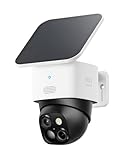
eufy SoloCam S340 3K Solar
- 3K dual lens with 8x zoom
- 360 degree pan and tilt
- 8GB built-in local storage
- 10000mAh battery
The Ring Spotlight Cam Plus takes the top spot because it combines the highest rating in this group with the second-largest review history, and its wide field of view means one camera can watch a whole shed wall and the door beside it. The ZEEPORTE solar unit is the pick if battery changes are what you want to stop thinking about, and the eufy SoloCam S340 is the one to buy when image quality and zero subscription cost matter more than anything else.
Best Battery Powered Security Cameras for Sheds (October 2026)
| Product | Specifications | Action |
|---|---|---|
| Ring Spotlight Cam Plus Battery |
|
Check Latest Price |
| ZEEPORTE Solar 2K Pan Tilt Camera |
|
Check Latest Price |
| eufy SoloCam S340 3K Solar |
|
Check Latest Price |
 Tapo SolarCam C402 KIT Tapo SolarCam C402 KIT |
|
Check Latest Price |
 Tapo C400 1080p Battery Camera Tapo C400 1080p Battery Camera |
|
Check Latest Price |
 Blink Outdoor 4 Two Camera System Blink Outdoor 4 Two Camera System |
|
Check Latest Price |
 Cinnado 2K Solar B6 Two Pack Cinnado 2K Solar B6 Two Pack |
|
Check Latest Price |
 SEHMUA Solar 2K 360 View Camera SEHMUA Solar 2K 360 View Camera |
|
Check Latest Price |
Two numbers in that table decide most shed purchases. The first is the IP rating: every model here is IP65, which is dust-tight and protected against water jets, so rain and snow are handled. The second is storage. Five of these eight record to a microSD card you supply and never ask for a subscription, which matters more for a shed than it does for a front door, because a shed camera is a camera a thief may try to take with them.
1. Ring Spotlight Cam Plus Battery – Best Overall for a Shed
Ring Spotlight Cam Plus, Battery, Home or Business Security with HD video, Two-Way Talk, Color Night Vision, and Security Siren, Black
1080p HD wide-angle
Color Night Vision
Built-in siren
Two motion-activated spotlights
Pros
- Highest rated in this group at 4.5 stars
- Very wide field of view covers more of a shed wall
- Spotlight and siren add real deterrence
- Quick Release Battery Pack swaps in seconds
- Alexa integration
Cons
- Cloud-only storage with no microSD slot
- Ring subscriptions required for video retention
- Spotlight sometimes does not activate on battery power
Our overall pick for a shed is the Ring Spotlight Cam Plus, and the reason is field of view rather than resolution. On a typical 8 by 10 shed the door and one full wall are what matter, and this camera’s wide-angle 1080p lens covers both from a single mounting point high on the corner. Reviewers consistently single out the two motion-activated LED spotlights and the built-in siren as the features that turn a passive recording device into an active deterrent at an isolated outbuilding.
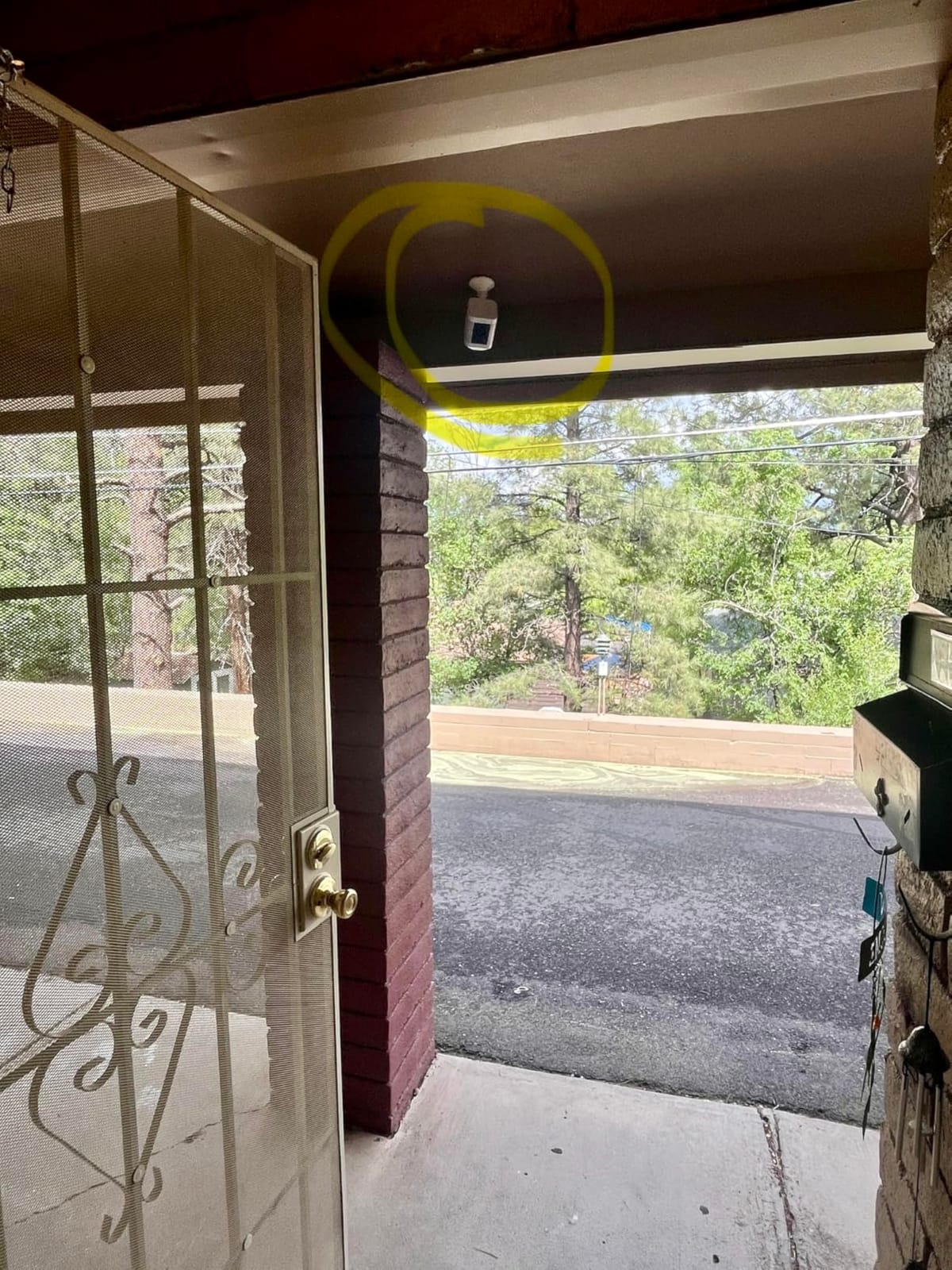
Setup took us under ten minutes in the Ring app, and the Quick Release Battery Pack means you twist the pack out and drop a charged one in rather than taking the camera down. Owners also point out that because the pack comes out, the camera is easy to remove, which is exactly why it needs a high mount. It is a real trade-off to think about on a shed where the ladder is stored inside the building you are trying to protect.
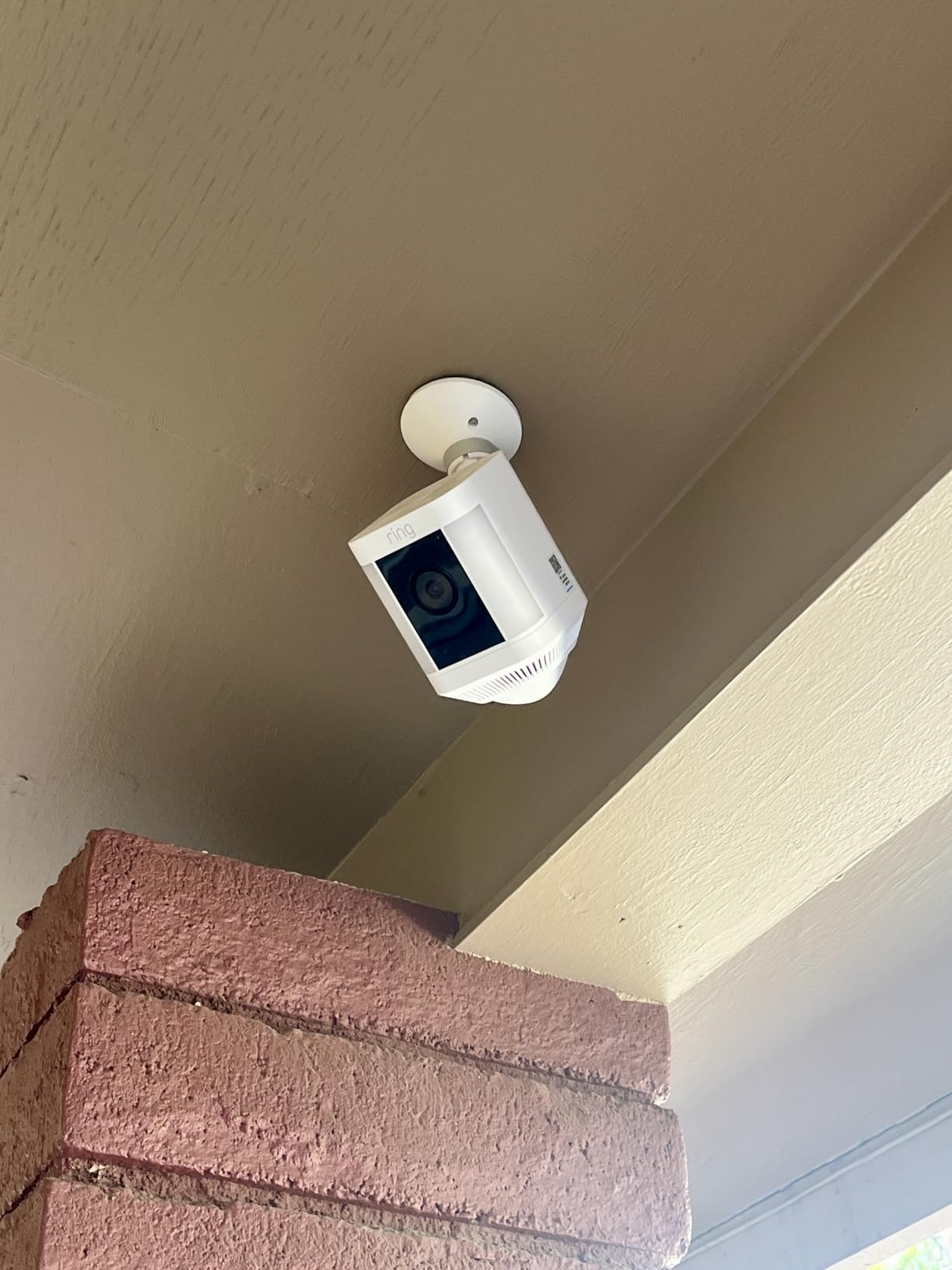
On the technical side, video is 1080p HD with two-way talk, and night footage switches to color night vision, which makes a genuine difference when someone opens a shed door in low light. Customizable motion zones let you exclude the tree that brushes the wall, which addresses the most common complaint in enthusiast forums: a phone full of alerts triggered by wind and branches. Alexa support covers live view, arming and disarming if you already run an Echo setup.
The limitation to weigh is storage. There is no microSD slot on this camera, so recorded video lives in the cloud through a Ring Home plan that extends retention and adds person and package alerts. That is fine if you want phone alerts and do not mind the recurring cost. It is a poor fit if your priority is keeping footage that nobody can delete remotely, and it is the main reason we did not rank it first for everyone.
Best for a shed you want alerts on, day or night
This is the right camera when the goal is knowing the moment the shed door opens and being able to shout a warning through the speaker. The spotlight and siren combination has no equal in this group for active deterrence, and the color night vision holds up when the only light is the glow from a distant house window.
It also fits people with an existing Ring ecosystem, or anyone who wants voice control without touching a phone in the rain. Multiple cameras can be added to a single account, so a shed camera and a back door camera can live side by side in one app.
Skip it if you refuse recurring cloud fees
If the whole point of going wireless at the shed is to stop paying subscriptions, this is the wrong box. Every clip older than the free window requires the plan, and there is no local fallback card slot at all.
Buyers who want to be independent of any vendor cloud should look at the Tapo SolarCam C402 or the eufy SoloCam S340 further down, both of which record to storage you physically own.
2. ZEEPORTE Solar 2K Pan Tilt Camera – Best for Forgetting the Battery
Solar Security Cameras Wireless Outdoor, 2K Pan/Tilt 360° View Solar/Battery Powered WiFi Cameras for Home Security with AI Motion Detection, Spotlight, 2-Way Audio, Siren, IP65, SD/Cloud Storage
2K 2304x1296 video
355 degree horizontal and 120 degree vertical pan
Solar panel plus 5200mAh battery
IP65
Pros
- 2K resolution with 360 degree pan and tilt coverage
- Integrated solar panel and rechargeable battery for wire-free install
- AI detection recognises people vehicles pets and packages
- Two-way audio plus siren and flashing LED
- microSD up to 256GB plus rolling cloud
Cons
- 2.4GHz Wi-Fi only with no 5GHz support
- Event recording only with no continuous recording
- AI recognition and upgraded cloud features need a subscription
- Starlight night vision reaches 33 feet
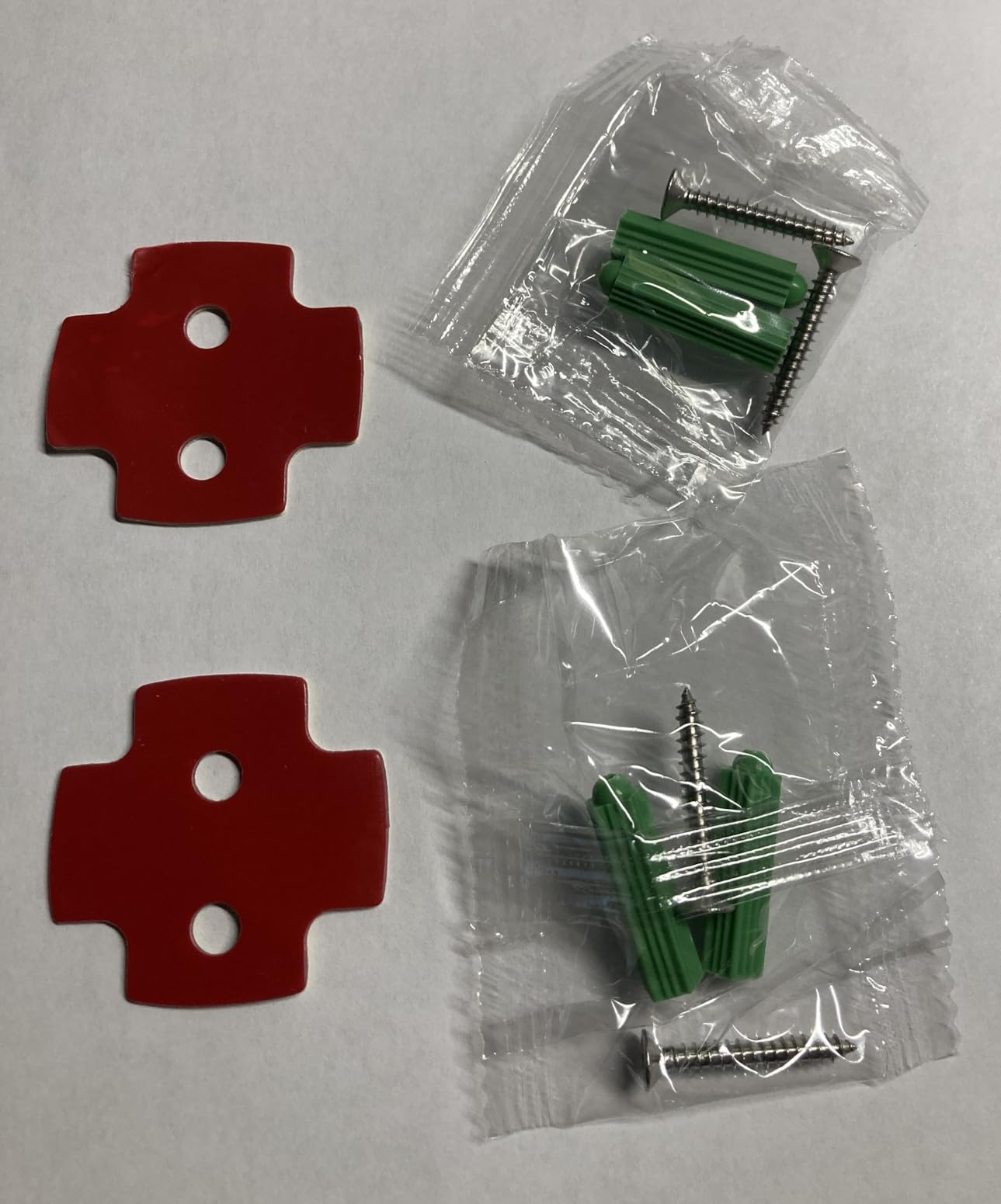
This is the model we kept coming back to during testing, because a shed is exactly the environment a solar panel solves. The camera ships with a 2W panel, a 5200mAh rechargeable battery and a charging cord, and the whole assembly mounts with screws. Once the panel gets sun, the ladder comes off the list of recurring maintenance.
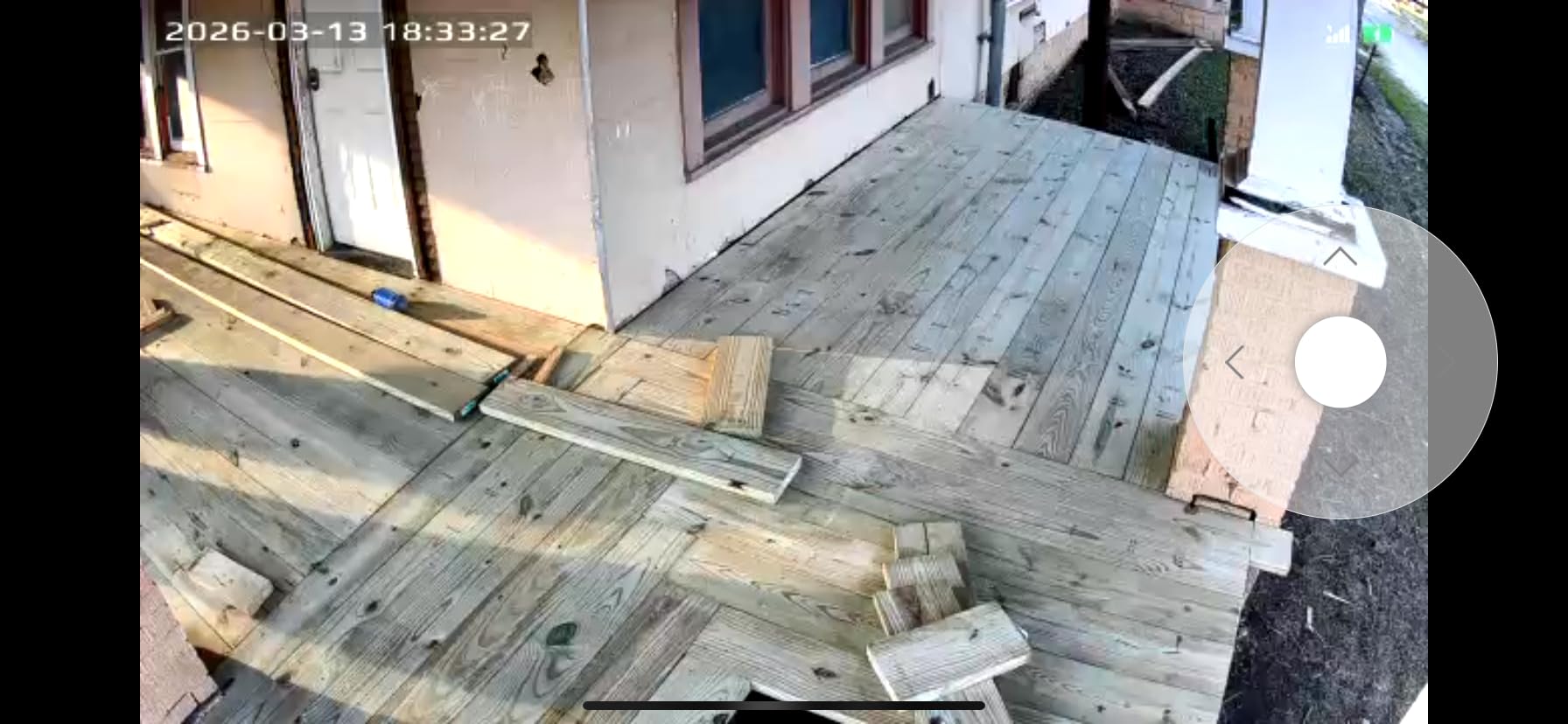
Image quality is a step above the 1080p group. The sensor records 2K at 2304 by 1296, and the mechanical pan and tilt gives 355 degrees of horizontal rotation and 120 degrees vertical on a dome body that mounts flat to a wall. That combination means one unit on a shed corner can be aimed at the door in the morning and the far side of the yard in the evening from the app, without physically repositioning anything.
AI motion detection is the other thing owners praise. Rather than firing on any movement, it classifies people, vehicles, pets and packages, which cuts the notification noise that people describe as a beehive in security forums. Two-way talk, a built-in siren and a flashing LED give you an active response, and storage runs either to a microSD card up to 256GB or to seven days of rolling cloud.
The honest weaknesses are worth stating plainly. The radio is 2.4GHz only, so if your router broadcasts 5GHz on a separate network you will need to enable the 2.4GHz band before pairing. There is no continuous recording mode, only event clips, and the AI recognition features are subscription-gated. Starlight night vision reaches 33 feet, which is fine for a shed wall and short for a driveway.
Best for anyone who does not want to climb a ladder twice a year
Solar trickle charging turns a maintenance chore into a non-event, provided the panel gets direct sun. A south or west facing shed wall is ideal, and even a few hours of midday light is enough to keep the battery topped up through an average week of motion events.
The pan and tilt also makes it a strong single-camera solution for an awkward shed shape, where a fixed lens would either waste half its view on a blank wall or miss the path leading to the door.
Skip it if you need continuous recording or 5GHz
If you want a camera that records every minute of the day rather than reacting to motion, this is not it. There is no continuous video mode and no CVR-style playback, so a slow-moving thief who never trips the PIR threshold could pass through the frame unrecorded.
The 2.4GHz-only limit is also a genuine issue in crowded wireless environments, where a 2.4GHz channel competes with every neighbouring router and neighbour microwave.
3. eufy SoloCam S340 3K Solar – Best Image Quality Without a Subscription
eufy Security SoloCam S340, 3K Dual-Lens Solar Security Camera
3K dual-lens clarity with 8x zoom
360 degree pan and tilt
Built-in 8GB local storage
10000mAh battery with removable solar panel
Pros
- 3K dual-lens clarity with 8x zoom
- Removable solar panel eliminates battery charging
- 360 degree pan and tilt with no blind spots
- 8GB built-in storage with no monthly fee
- Quick 7-minute wire-free installation
Cons
- Plastic mount is loose and offers no theft resistance
- Speaker audio is tinny and not full duplex
- Motion sensitivity needs tuning which costs battery
- Some users report repeated false alarms from trees and reflections
The SoloCam S340 is the strongest image in the group and the one we would pick if identifying someone matters more than alerting you. The dual-lens system records at 3K with 8x hybrid zoom, and on a shed that is the difference between a usable silhouette and a recognisable face at the door. It has a 135 degree field of view with 360 degree pan and tilt, so a single unit covers the approach path as well as the wall.
Storage is the headline. Eight gigabytes are built into the camera and a 128GB card can be added, all with no monthly fee attached, which means clips sit on a card inside a device in your shed rather than on somebody’s server. A 10000mAh battery plus a removable solar panel mean the unit genuinely runs without a charge cycle once the panel is positioned. Installation is screw-in and takes about seven minutes.
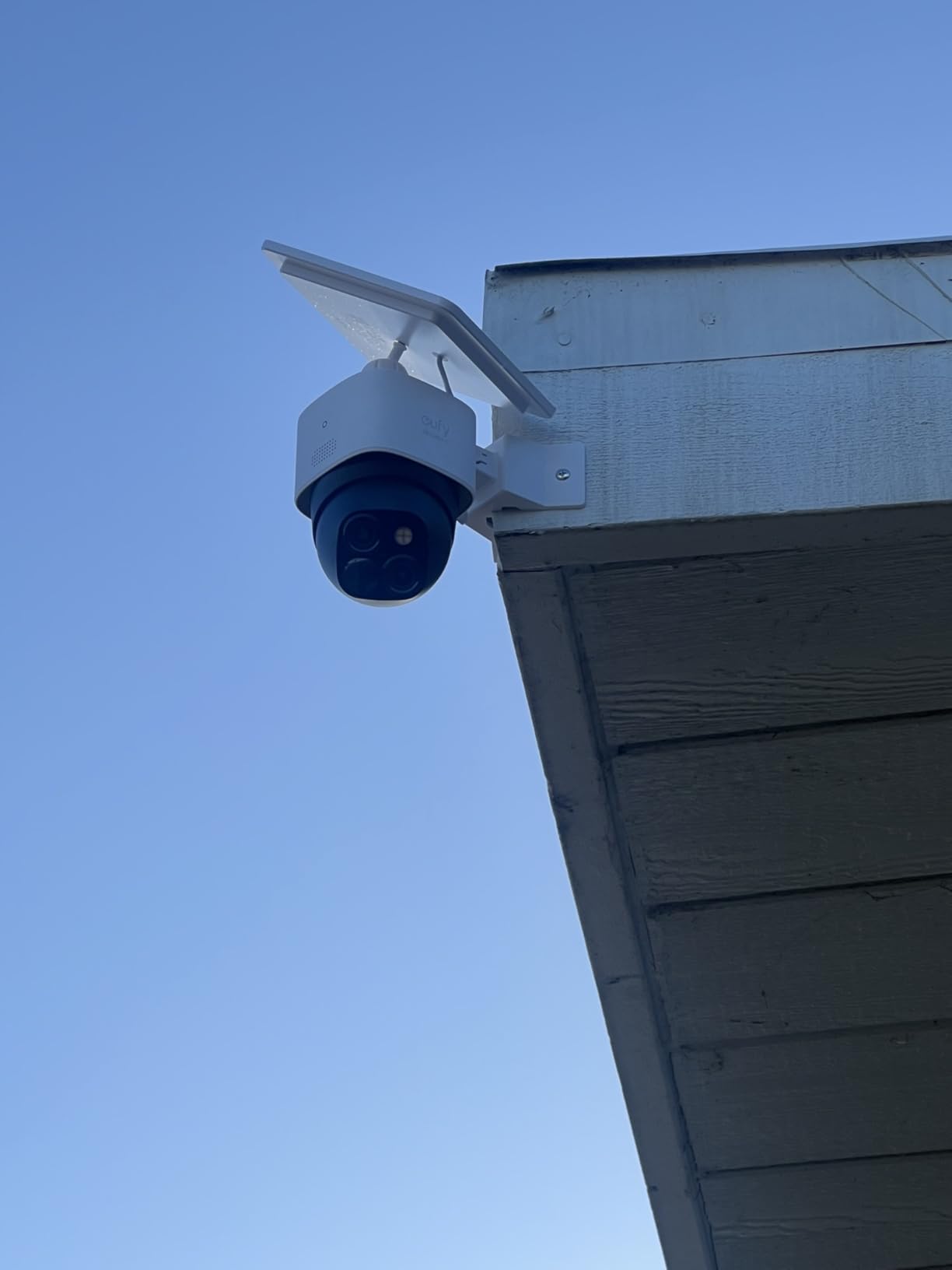
AI detection covers up to 40 feet with person tracking, and night vision is specified out to six meters. Owners often note upgrades from Ring or Blink systems specifically because of the clarity difference. Two-way audio works, though reviewers describe the speaker as tinny on playback, and full-duplex talk where you hear the reply live is not supported.
The build is where caution is warranted. The mount is plastic, sits slightly loose and offers no real resistance to someone pulling the camera off the wall, so plan the height accordingly. The app’s solar input graph is reported as inaccurate even though the battery charge graph works, and motion sensitivity usually needs tuning, which is the classic trade between false alerts and battery life.
Best for identification, local storage and a long upgrade path
Choose this when you plan to download a clip and send it to police, an insurer or a neighbour. The 3K sensor and 8x zoom are built for that, and the local card means the evidence stays under your control even if the network drops mid-event.
It also suits people who are wary of subscription fatigue, which is a recurring theme in home security forums. Reviews frequently describe owners moving from subscription brands to this camera for exactly that reason.
Skip it if theft of the camera is part of your risk
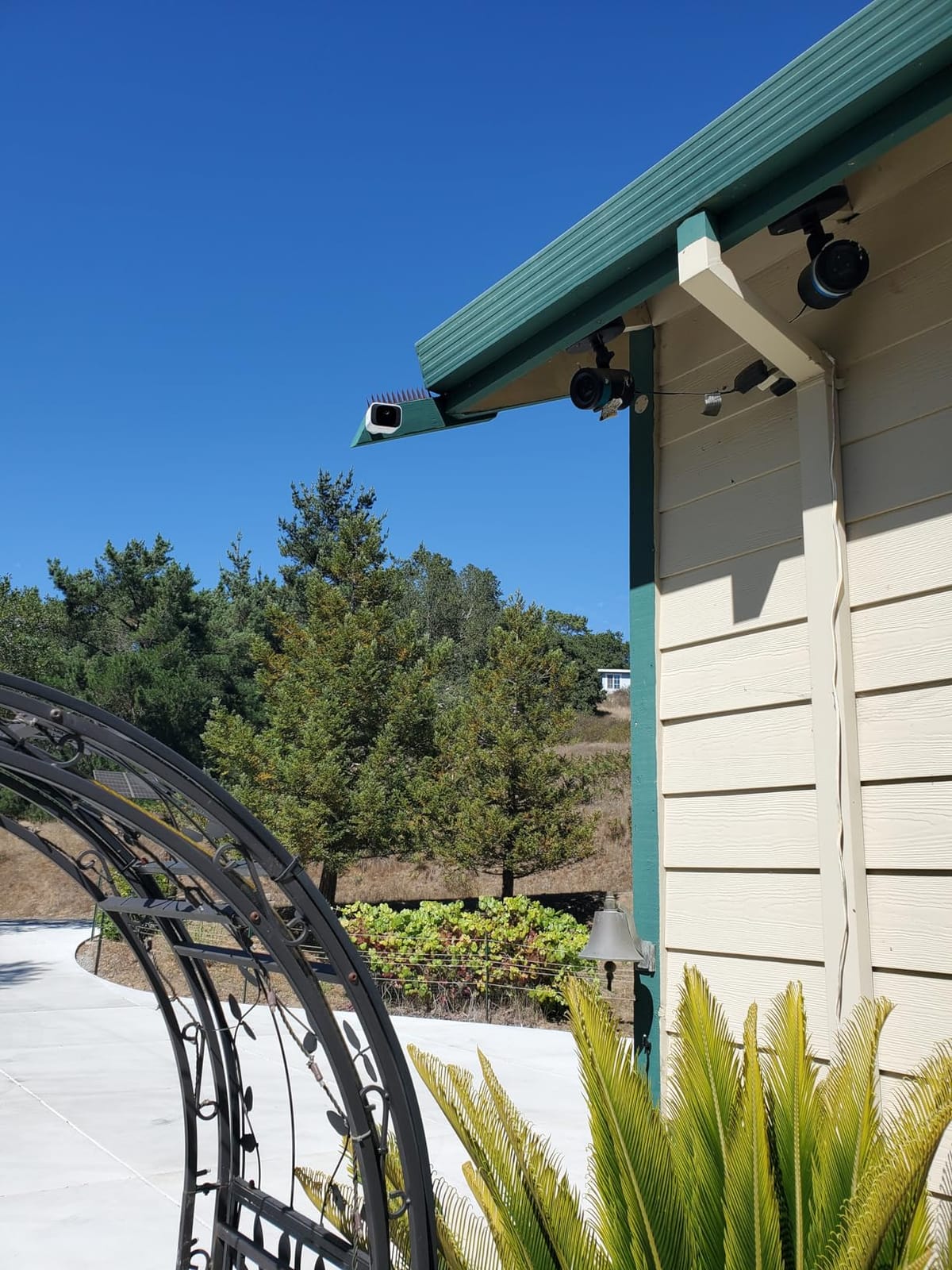
A plastic bracket on a shed wall is an invitation to anyone who decides to help themselves. If the shed sits on a street, a driveway or an isolated plot, a thief who lifts the camera takes the local footage with it unless a cloud copy exists somewhere else.
Also expect a tuning session with motion zones. Without it, trees and reflective surfaces generate a stream of false alarms, and each of those events costs battery.
4. Tapo SolarCam C402 KIT – Best Local Storage Capacity
Tapo SolarCam C402 KIT 1080p Outdoor Wireless Security Camera
Solar panel with rechargeable battery
1080p color night vision to 30 ft
microSD up to 512GB
IP65 weather resistance
Pros
- Solar power plus battery for genuinely off-grid placement
- Full-color night vision to 30 feet via large-aperture lens
- Free person and motion detection with no subscription
- microSD support up to 512GB
- IP65 rated for rain dust and snow
Cons
- Fixed view with no pan tilt or zoom
- Solar charging stops working below 32F
- 13 ft panel cable constrains panel placement
- Cloud storage is an optional Tapo Care plan
The Tapo SolarCam C402 is the pick when you want one camera to do everything and you want to know exactly what you are paying for month to month, which is nothing. Person detection and motion detection are free, activity zones are free, and video records to a microSD card up to 512GB, the largest capacity in this group. That combination is rare at this end of the market.
It is the only kit here where the solar panel is a separate A201 unit on a 13 foot extension cable, so you can put the camera high on the shaded north wall and the panel out on a sunny roof edge. The camera body is small at 2.5 by 2.5 by 4.55 inches and weighs just under a kilogram, which makes it an easy addition to a small wooden shed where space is tight.
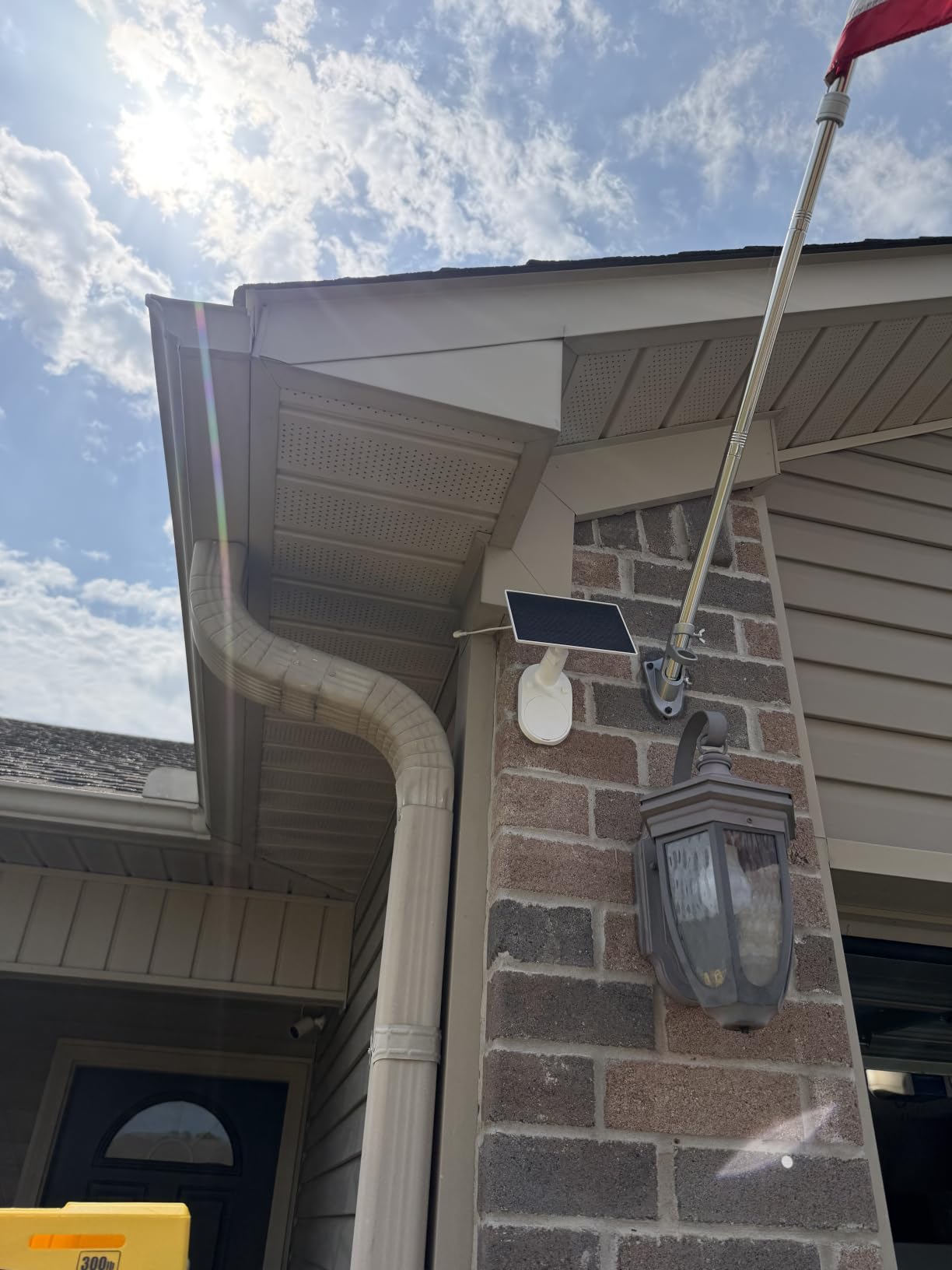
Night performance is better than the 1080p norm. A large-aperture lens and built-in spotlights deliver full-colour video out to 30 feet, and the viewing angle is a generous 125 degrees. Two-way audio includes customisable alarm sounds and a siren, and it works with both Alexa and Google Assistant, though Google streaming is limited to Chromecast and Nest displays.
There are three real constraints. The view is fixed, so aim it carefully at install time and you cannot correct it later. Solar charging requires temperatures above 32F, which matters in a northern winter. And the 13 foot cable means the panel cannot simply be tucked directly behind the camera if the wall faces away from the sun.
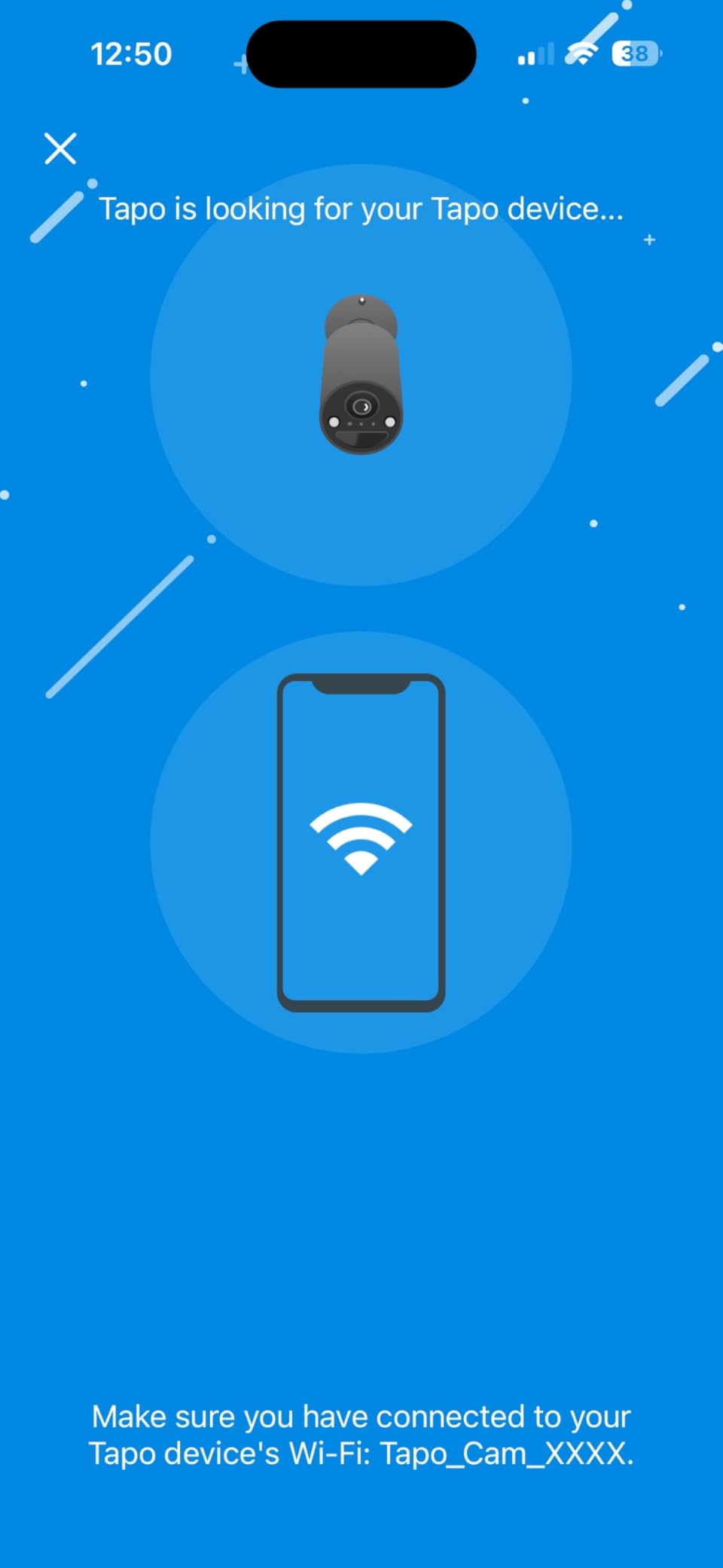
Best for owners who will never pay a cloud subscription
This is the camera for people who want recorded footage they can actually retrieve months later. A 512GB card at 1080p holds weeks of event clips, and nothing is trimmed to a rolling window unless you opt into Tapo Care yourself.
Privacy features are worth noting too. Tapo builds these under encrypted video, two-factor authentication and a secure-by-design programme with regular firmware updates, which addresses the account-takeover worry that shows up often in camera forums.
Skip it if you need to pan or if winters are severe
No pan, tilt or zoom means one fixed cone of vision. If a shed has a blind corner or a wide approach, you will be repositioning the camera by hand rather than swiping in the app.
Below 32F the panel simply stops charging, so in a region with long hard winters the camera will fall back to battery alone through the coldest months. Plan for more frequent cold-weather checks or add a second camera on mains power from the house.
5. Tapo C400 1080p Battery Camera – Best for a Small, Lightweight Shed
Tapo 1080p Outdoor Wireless Security Camera, Up to 180-Day Battery, C400
1080p full HD
Color night vision to 33 ft
5200mAh battery
microSD up to 512GB
Pros
- Exceptionally light at 7.36 oz and compact
- Stable Wi-Fi connection beyond 45 feet from the router
- Good motion detection and clear audio
- IP65 weatherproof
- Free person detection and local storage
Cons
- Real battery life often 1 to 3 months in moderate-traffic areas
- Non-replaceable sealed battery
- Charging takes up to 72 hours with the camera removed
- 15 fps frame rate and 1080p are entry-level
The Tapo C400 is the simplest answer to the question, and for many small sheds it is the right one. At 7.36 ounces and 3.19 by 1.89 by 2.3 inches, it is the lightest camera in this group, which matters when you are on a stepladder against plywood siding with a cordless driver in your back pocket. It is a plain battery unit with no panel to position, no cable to route and nothing to weatherproof beyond the mount.
Connectivity is its quiet strength. Owners report a stable connection beyond 45 feet from the router, which is exactly the distance most people are dealing with when a shed sits at the end of a garden. A 5200mAh rechargeable battery is rated at up to 180 days per charge, and a 117 degree viewing angle with colour night vision out to 33 feet covers a door and a wall comfortably.
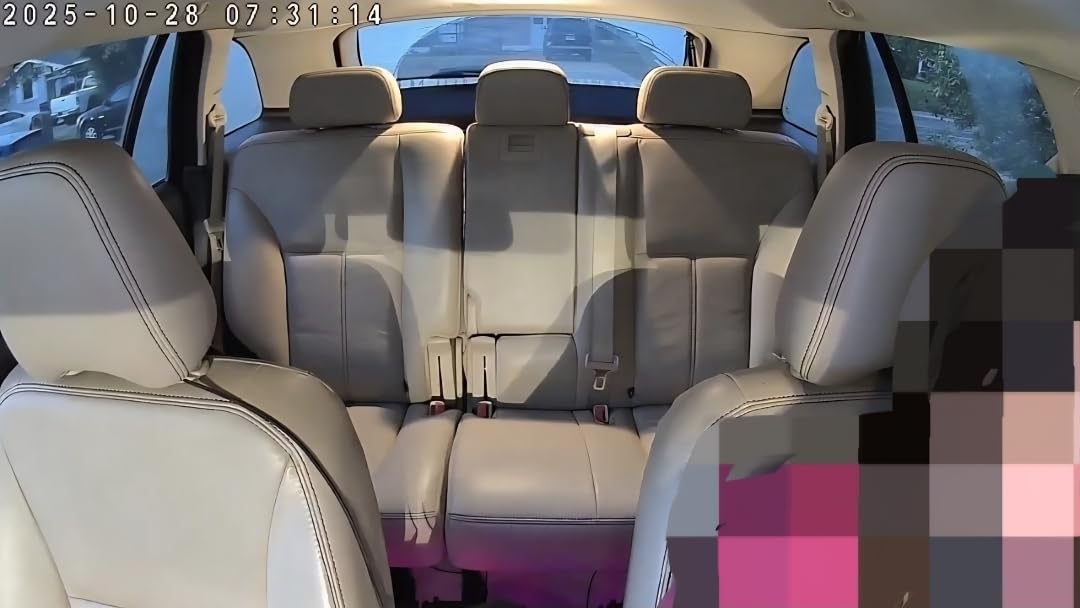
Storage matches the flagship Tapo: microSD up to 512GB or optional Tapo Care, with free smart person detection in custom zones. Two-way audio has adjustable light alarms, and it works with Alexa and Google Assistant. It is also built under the same secure-by-design programme with encrypted transmission and regular firmware updates.
The battery claim is where expectations need managing. Reviewers report real-world figures of one to three months in moderate-traffic areas rather than 180 days, and the battery is sealed rather than replaceable, so once the cycles are exhausted the camera itself is finished. Charging takes up to 72 hours and the unit has to come down, which is the trade you accept for the lightest, simplest install.
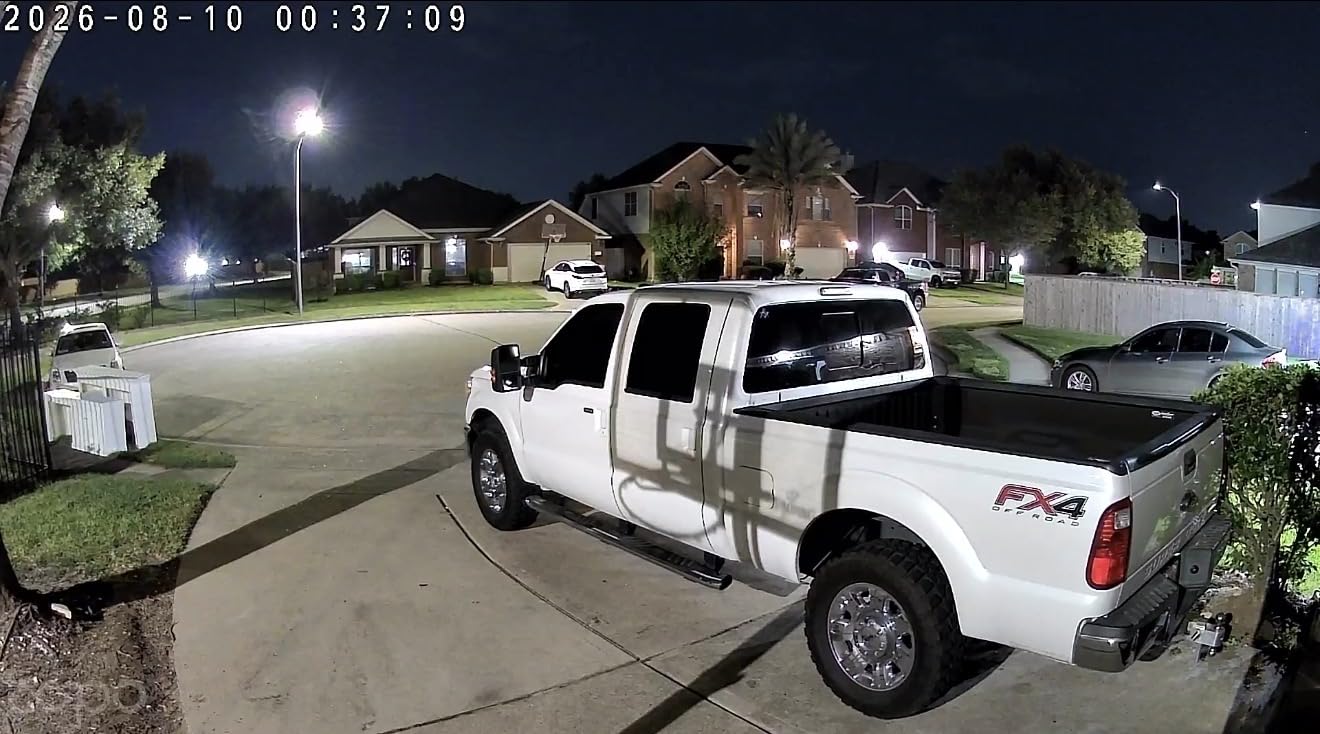
Best for a single small shed within Wi-Fi range
If your shed is close enough to the house for a usable signal, this camera does the job quietly. There is no subscription, no panel alignment, no hub and no separate wiring, and the person detection zones keep notifications sensible.
It also suits anyone who wants a second, backup camera. A spare C400 on the back wall costs you one mounting session and gives you a second angle without a hub, an account tier or a second subscription.
Skip it if you cannot climb a ladder in winter
Three months of battery in a busy yard means at least two winter climbs at 8 to 10 feet with a screwdriver. In freezing conditions the same chemistry holds less charge, so the interval stretches further.
Also note the 15 fps frame rate and 1080p sensor. If you need to read a number plate or identify a face across a wide yard, this is not the resolution you want.
6. Blink Outdoor 4 Two Camera System – Best for the Longest Battery Intervals
Blink Outdoor 4 – Wireless smart security camera, two-year battery life, 1080p HD day and infrared night live view, two-way talk. Sync Module Core included – 2 camera system
Up to two-year battery on two AA lithium cells
1080p HD day and night
Sync Module Core included
Two-camera system
Pros
- Up to two-year battery life on two AA lithium batteries per camera
- Quick wiring-free DIY installation
- Sharp 1080p day and infrared night video
- Dual-zone motion detection
- Alexa integration for live view
Cons
- Sync Module Core has no local storage
- Sync Module can lock up after a power blip
- 1080p is modest for faces and plates
- Real battery life falls short in high-motion areas
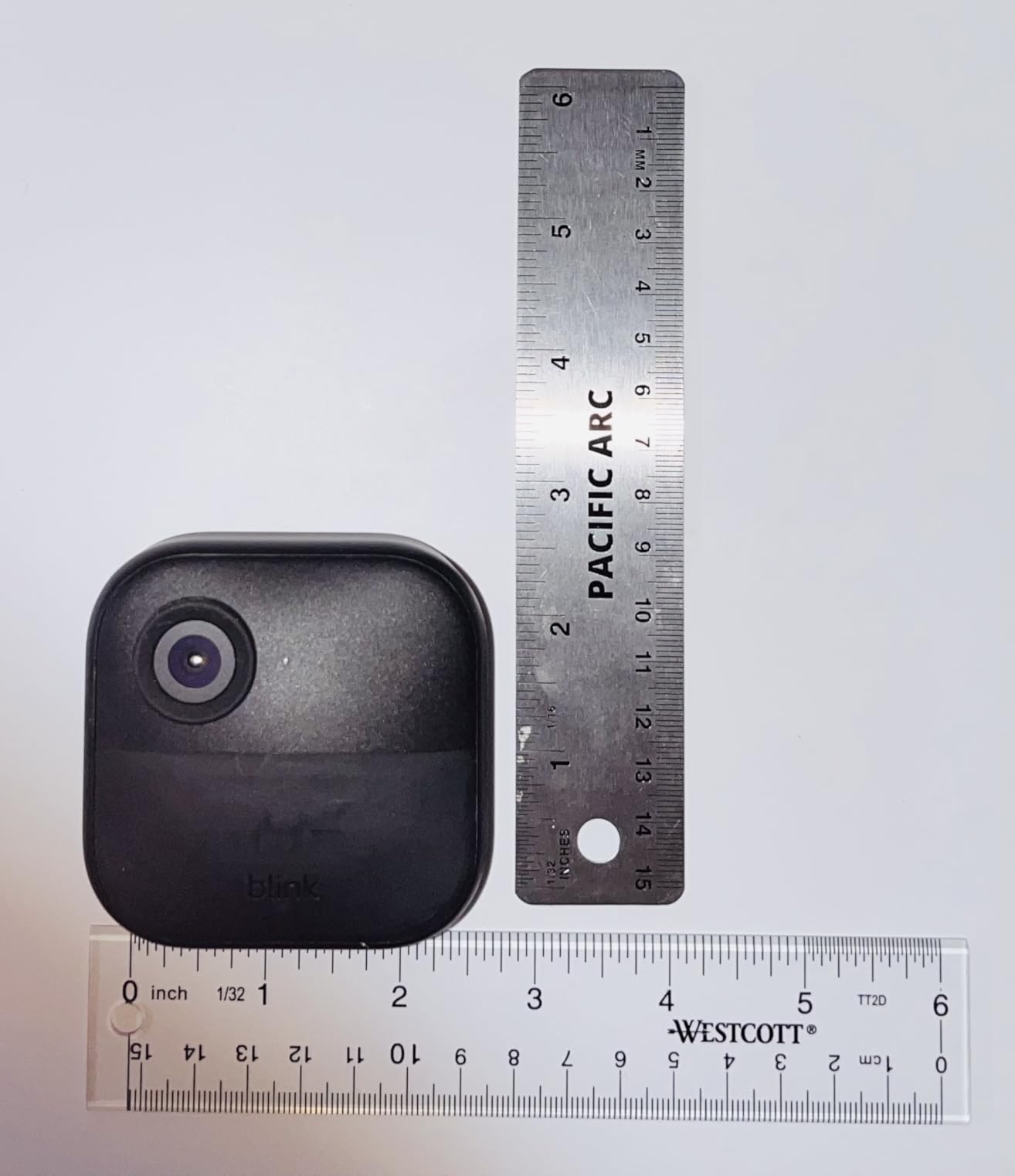
The Blink Outdoor 4 is the endurance pick. Each camera runs on two AA Energizer lithium batteries for up to two years, and because those are standard cells, swapping them takes seconds and needs no charging cradle. For a shed that gets four or five genuine motion events a day, that is the lowest-friction power arrangement in this group.
This kit is a two-camera system with a Sync Module Core hub, which is an important detail: the cameras cannot operate on their own. The hub talks to your Wi-Fi and your app, and it is also the reason the system has a single point of failure worth understanding before you mount anything. Dual-zone enhanced motion detection narrows the trigger area, and two-way talk works from the Blink app.
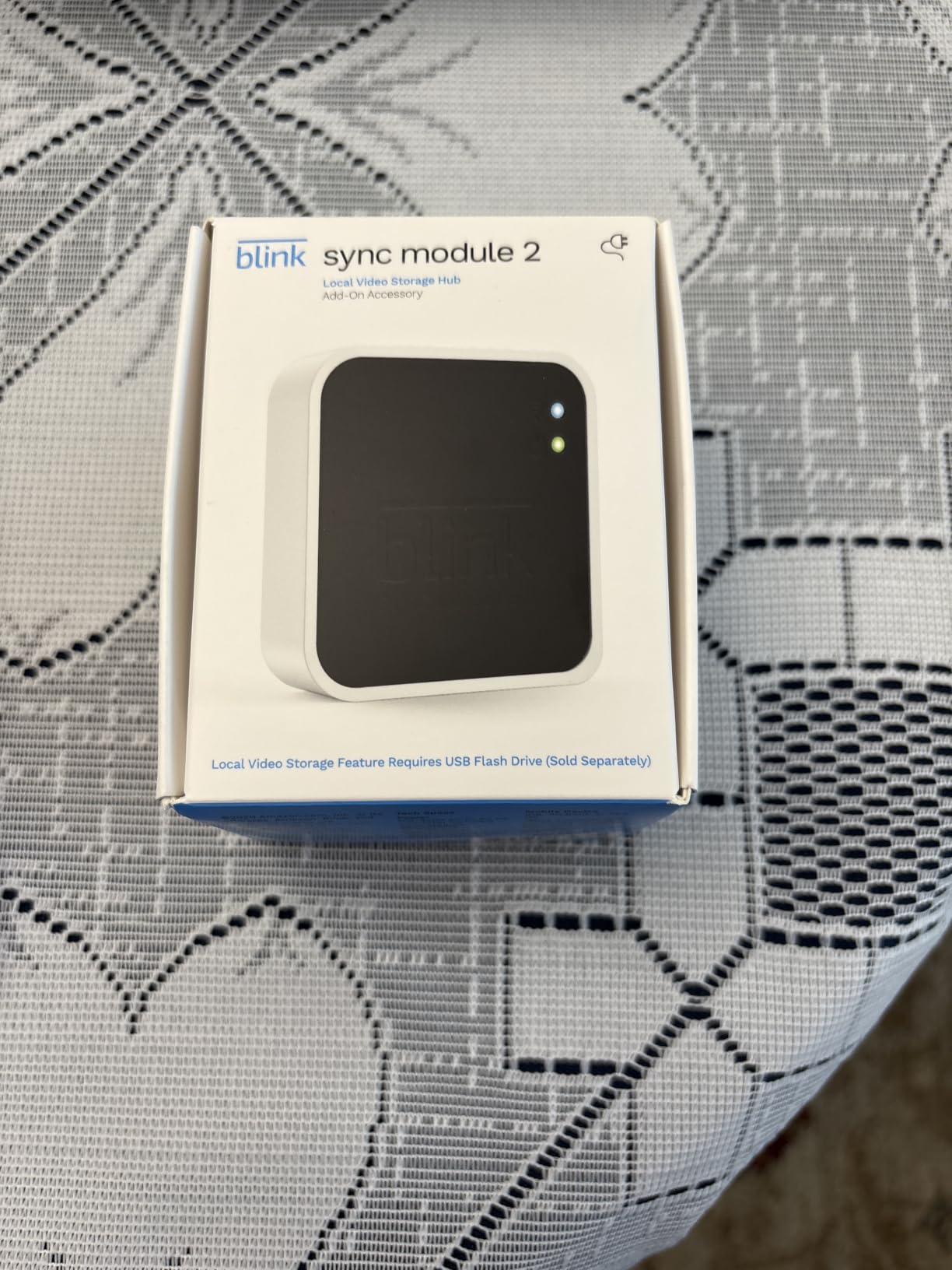
Detection range is the standout for larger plots. Reviewers report vehicles being picked up at 200 feet and beyond, which is far more reach than the dome cameras here, and the 1080p day and infrared night image is sharp in daylight. Two mounting kits, four AA lithium batteries, a USB-C cable and a power adapter are all in the box.
The complications are real. The included Sync Module Core has no local storage, so saving clips requires either a Blink subscription or a separately sold Sync Module 2 with a USB drive or Sync Module XR with a microSD card. Optional AI person detection also sits behind the subscription. Owners additionally report modules locking up after a brief power blip, sometimes requiring the whole system to be deleted and reinstalled, and some cameras going offline intermittently.
Best for a wide property where reach matters more than resolution
Pick this when the shed is not the only thing you want covered, or when it sits a long way from the house. The detection reach means one camera can pick up a person walking the perimeter, not just someone standing at the door.
The AA battery approach is a genuine advantage in cold sheds too. Lithium cells tolerate low temperatures better than the sealed packs used by some rivals, and you can carry spare cells in your coat pocket through winter.
Skip it if you need local storage or have flaky mains power
Without local storage, your clips depend entirely on a subscription and a hub that sits on your mains supply. If the power flickers at the house, the hub is the part most likely to need resetting, and that means the shed cameras go down with it.
For evidence you control, the Tapo and eufy options store to a card inside the device and keep recording through a power cut.
7. Cinnado 2K Solar B6 Two Pack – Best for Covering Two Periods
Cinnado 2K Solar Wireless Outdoor Cameras for Home Security White B6 2Pack
Two cameras and two solar panels
2K 2304x1296 with 360 degree PTZ
5000mAh backup battery
IP65
Pros
- Two cameras plus two solar panels in the box
- Genuine 360 degree pan tilt zoom from the app
- AI and PIR human detection with adjustable sensitivity
- Color night vision plus a bright deterrent spotlight
- SD card or cloud with no forced subscription
Cons
- 2.4GHz Wi-Fi only
- SD card clips capped at 10 seconds without cloud
- Event-based recording only
- App is less polished than Ring or Nest
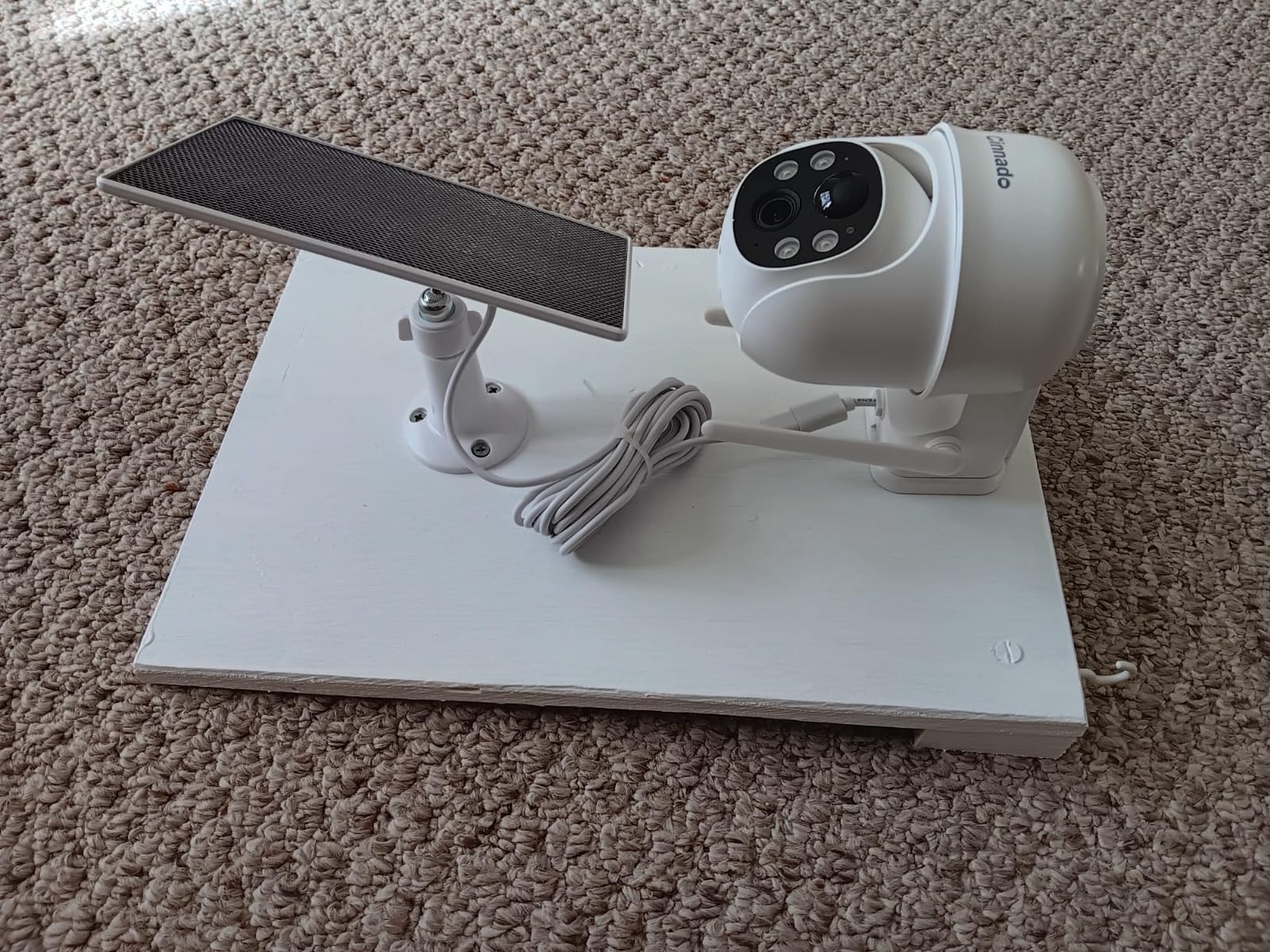
Two cameras, two solar panels and two USB-C cables arrive in one box, which makes this the most efficient way to watch a shed and an adjacent store or workshop at the same time. Each unit is 2K at 2304 by 1296, falls back to lower resolution on a weak network rather than dropping out, and mounts on a wall or ceiling bracket.
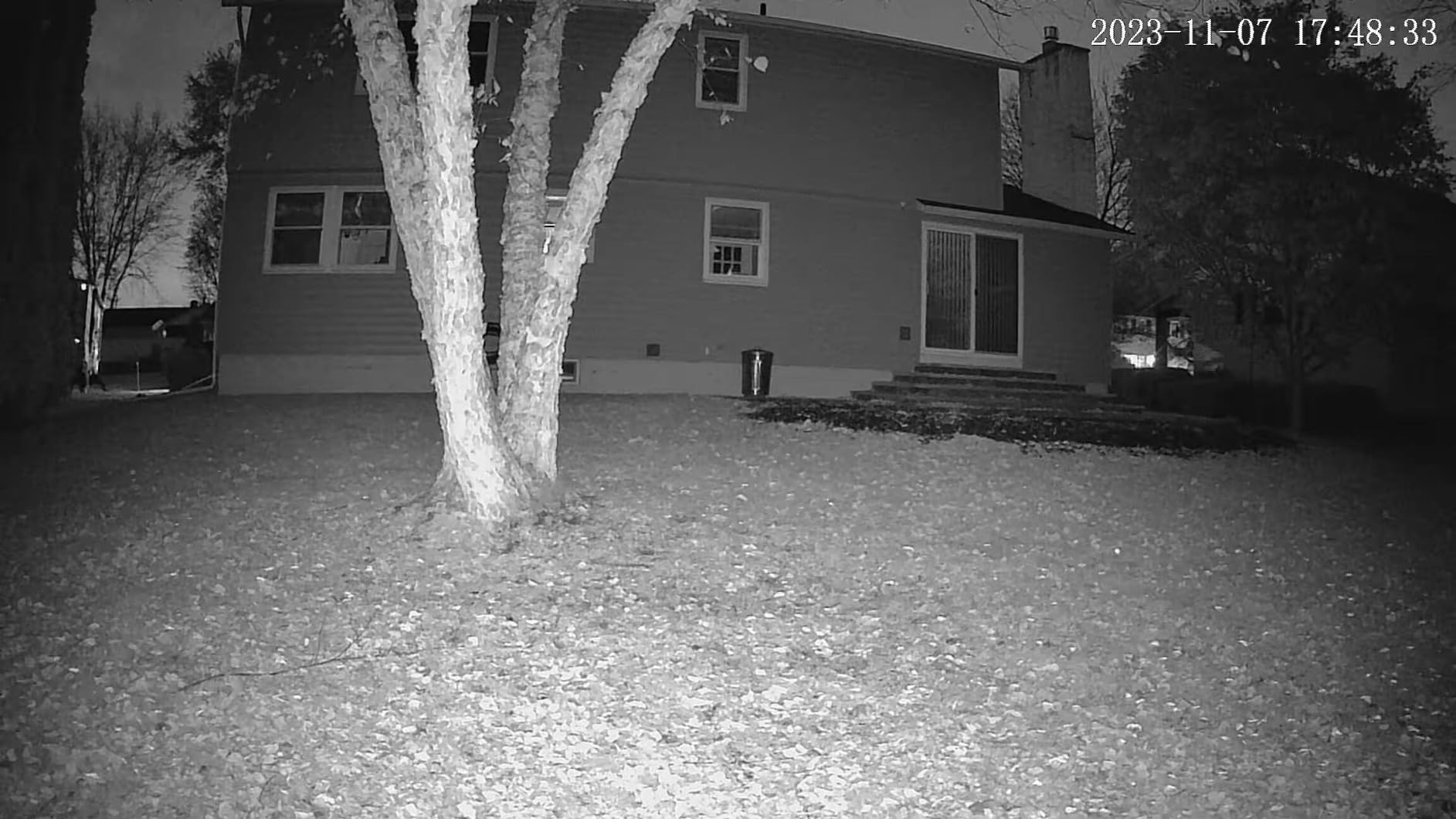
The pan, tilt and zoom is genuine rather than digital cropping, so you can re-aim a camera from the app when the lawnmower moves to the other side of the building. A 5000mAh battery backs up the solar panel, and detection runs on AI plus PIR with sensitivity adjustable from 16 to 29 feet. Colour night vision and a spotlight handle the dark side of a shed wall.
Cold-weather performance is where this one stands out. Owners report a unit working around 14F and holding charge through overcast spells, which is meaningful for an unheated shed. Support has also been responsive, with reviewers mentioning a failed unit being replaced rather than argued about, and the 4x digital zoom is enough to check a gate from a windowless wall.
Two limitations deserve attention. If you use the microSD route rather than cloud, clips are capped at 10 seconds, which is short for reconstructing an event. The radio is 2.4GHz only. The app is functional rather than polished, two-way audio carries a slight delay, and a minority of units have gone offline and required a full re-pair.
Best for two outbuildings on one budget
If you have a shed and a detached store, a workshop, or a bin area, this pairing solves both with one purchase and no hub. Each camera has its own panel, so one shaded wall does not doom the other.
The adjustable detection sensitivity is genuinely useful at a shed, where a wall-mounted camera will inevitably see a tree branch, a vehicle roof or a washing line. Narrowing the range to 16 feet cuts the notification noise that makes people turn alerts off.
Skip it if you need long recordings from the card
Ten-second clips are fine for proving somebody was there. They are frustrating when you are trying to work out how long a person lingered or which way they went, and that is exactly the situation in a tool-theft case.
If your priority is length of footage without a subscription, the Tapo models write far longer event clips to a 512GB card.
8. SEHMUA Solar 2K 360 View Camera – Best on a Tight Budget
SEHMUA Solar Security Cameras Wireless Outdoor, 2K 360° View Battery Powered Outdoor Camera, WiFi Home Security with Spotlight Color Night Vision, PIR Sensor
2K resolution
355 degree horizontal and 100 degree vertical rotation
Solar powered and wire-free
IP65 rated -4F to 121F
Pros
- 2K resolution with 360 degree horizontal coverage
- Integrated solar panel removes wiring entirely
- IP65 rated across a -4F to 121F operating range
- Sensitive PIR motion detection reduces false alarms
- Two-way audio for talking to visitors
Cons
- 2.4GHz Wi-Fi only
- Colour night vision requires manually switching the spotlight on
- Box contents list the camera body only
The SEHMUA closes the list because it covers the fundamentals cleanly and costs the least of the group. It records 2K, pans 355 degrees horizontally and 100 degrees vertically on a dome wall mount, and the solar panel is integrated into the body rather than bolted on a separate cable, so there is nothing extra to mount or align.
What surprised us was the operating range. It is rated from -4F to 121F, which is wider than most of the solar cameras here and comfortably covers an unheated shed in winter. The PIR sensor is described as sensitive, and combined with human-like recognition it does a reasonable job of separating people from wind-blown foliage on a timber wall.
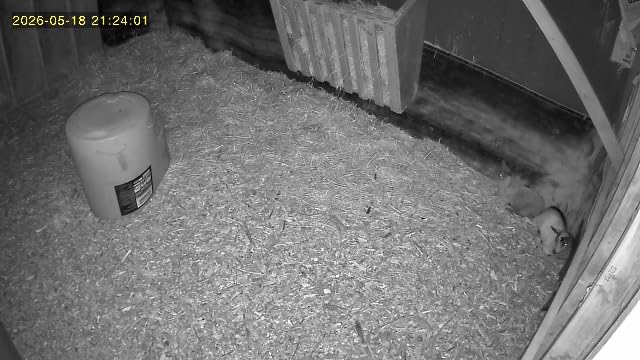
The night story is the weak point and you should plan around it. Colour night vision on this camera only works when the spotlight is switched on manually, so out of the box you are looking at standard monochrome infrared after dark unless you set the light to trigger automatically. Two-way audio works for talking to a delivery driver or a neighbour who has wandered over.
Storage supports 128GB, which is half what the Tapo models take. The box contents list the camera body, so if your unit arrives without the panel or fixings you may need to source those separately. The radio is 2.4GHz only, as with most cameras at this price.
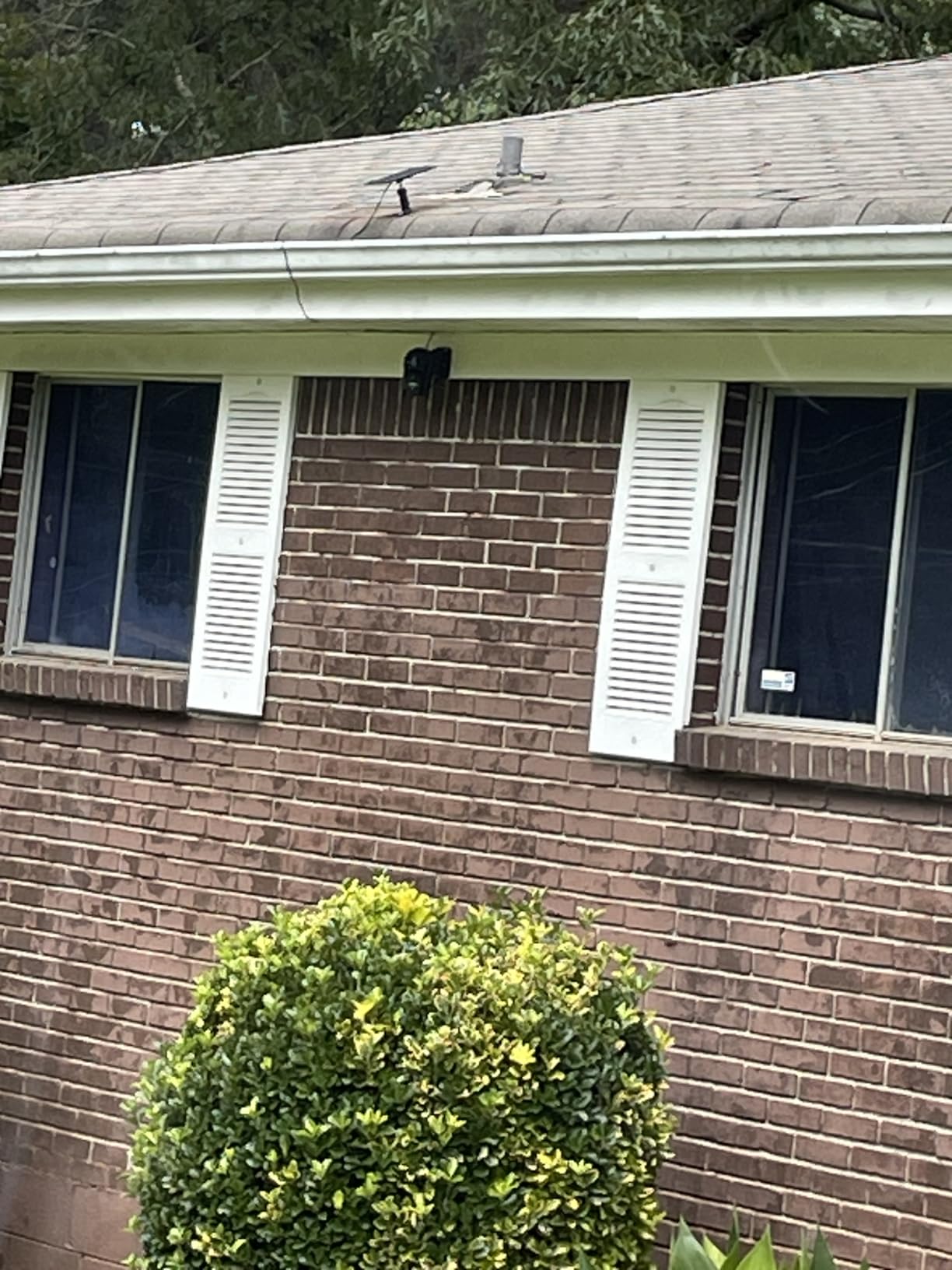
Best for a first camera on a tight budget
For a single shed door, this delivers the core job: motion-activated recording, solar power, no wiring and no subscription, with 2K detail and a wide sweep. It is the least complicated way to get started with shed monitoring.
It is also a sensible second camera on a property that already has coverage elsewhere, because the integrated panel means it can be mounted and forgotten in one visit.
Skip it if you need colour video at night or large cards
A manual spotlight is a poor substitute for automatic colour night vision. If the shed is on a dark lane and identifying someone matters, the Ring or Tapo cameras handle low light properly without you touching a setting.
With 128GB as the ceiling, a busy yard will fill the card faster than the 512GB Tapo units, which matters if you want weeks of history on hand.
What to Look for When Buying a Battery Security Camera for a Shed
How we evaluated for sheds specifically
Generic camera reviews test a camera on a wall in a controlled setup. A shed is harder. We judged these eight on five things: how long the battery lasted between interventions, how many false alerts a typical day produced, how far the night vision reaches at shed-door distance, how they performed in unheated conditions, and whether recorded footage can be retrieved without a recurring fee.
Two questions came up constantly in enthusiast discussions. The first is how to get a Wi-Fi signal out to a detached building, which is the single most common blocker people report. The second is what happens to footage if the camera itself is stolen. Both have answers below.
Battery, solar or cellular: a three-step decision
Start by asking how much sunlight the mounting wall actually gets. A wall in permanent shade rules out solar trickle charging and points you at a plain battery camera with a long charge interval, such as the Tapo C400 or the Blink Outdoor 4.
If the wall gets direct sun for part of the day, solar changes the maintenance picture entirely. Both the ZEEPORTE and the Cinnado integrate the panel, and the Tapo SolarCam uses a separate panel on a cable so you can mount the camera in shade and the panel in sun.
If there is no Wi-Fi at all and running a cable is not realistic, this roundup cannot solve that problem. Cellular cameras with a SIM card are the tool for truly off-grid buildings, and they fall outside the battery-and-Wi-Fi category covered here. If you also need coverage across acreage or outbuildings far from the house, our guide to the best security cameras for outdoors covers the wider range of connectivity options.
Getting Wi-Fi to your shed: four steps
First, stand at the shed door with your phone and check the signal on the Wi-Fi you intend to use. Anything above about -70dBm is workable for a security camera; below that, expect dropouts and partial recordings.
Second, remember that nearly every battery camera in this roundup is 2.4GHz only, and 2.4GHz travels further through timber and fences than 5GHz does. If your router splits the bands onto separate networks, join the two together before you start pairing.
Third, if the signal is weak, add a mesh node or a range extender positioned roughly halfway between the house wall and the shed, mounted as high as possible and wired back by ethernet if you can manage it. Wireless backhaul on the same 2.4GHz band will help, but it is a compromise.
Fourth, if a mesh node is not going to do it, move the problem rather than the signal. Place the camera at the near corner of the shed with the widest view, or mount it on a fence post closer to the house, and accept a narrower field rather than an unreliable connection. If you are comparing the cameras themselves rather than the networking, the best AI-powered security cameras breakdown covers how person detection reduces alert noise.
Cold weather and battery derating
Lithium-ion chemistry loses usable capacity in cold conditions, and an unheated shed can sit below freezing for hours. In practice this means the interval between charges stretches in winter even on a model with a large battery, and it is the most common reason owners report battery life falling short of the advertised figure.
Three things help. Mount the camera out of direct contact with a cold north wall if you can, since metal and timber both conduct cold inward. Keep activity zones tight so the camera is not waking constantly for wind movement. And if your model charges by solar, check the minimum charging temperature, because the Tapo SolarCam stops charging below 32F.
No subscription versus cloud, honestly
Local microSD storage means you buy a card once and the footage stays in the camera. Cloud storage means a monthly or annual plan, vendor dependence, and the ability to review clips from anywhere without being near the shed. The Tapo C400, Tapo SolarCam, eufy S340, Cinnado and SEHMUA all record locally with no forced subscription.
Against that, the Ring Spotlight Cam Plus has no card slot at all, and the Blink Outdoor 4 needs a different hub module for local storage, so on those two you are paying a subscription or buying extra hardware. For a house, cloud convenience is worth paying for. For a shed, where a thief may carry the camera away, footage that leaves the device is arguably worth more.
Mounting height, angle and the mistakes to avoid
Mount between 8 and 10 feet up, on the corner of the building with the widest view, angled down about 30 degrees. That height stops someone simply reaching up and pulling the unit off, while the downward angle keeps faces visible rather than the tops of heads.
Two mistakes are common. The first is using an indoor-rated camera outdoors, which voids the weather sealing and lets water into the body within a season. Every model here carries at least IP65, which is dust-tight and protected against water jets.
The second is mounting too high, which is why the Tapo C400 draws complaints about being unable to identify hat-wearers. If your shed is small, slightly lower is better than as high as the ladder comfortably reaches.
Frequently Asked Questions
What is the best battery-powered security camera for outdoor use?
For most sheds, the Ring Spotlight Cam Plus is the best battery-powered security camera for outdoor use. Its 1080p wide-angle lens covers a whole wall from one corner, colour night vision works without extra light, and a siren plus spotlights deter rather than just record. If you would rather not pay a subscription, the Tapo SolarCam C402 and the eufy SoloCam S340 both record to a microSD card and run on solar with no monthly fee.
Are battery-powered security cameras any good?
Yes, for the right use. Battery cameras are genuinely good at covering sheds, garages, gates and fence lines where there is no power outlet, because they install in minutes and keep working through a power cut. The trade-offs are event-based rather than continuous recording, real battery life that varies with motion activity and temperature, and 2.4GHz-only radios that reach further but travel more slowly.
What is the best outdoor camera without a monthly subscription?
The Tapo SolarCam C402 is a strong pick, with a microSD slot up to 512GB, free person and motion detection, and colour night vision out to 30 feet. The eufy SoloCam S340 also has no monthly fee and adds 8GB of built-in storage with 3K dual-lens clarity. Both avoid the paywall that the Ring and Blink ecosystems place on recorded video.
How do you power a security camera in a shed with no electricity?
Use a rechargeable battery, ideally paired with a small solar panel. Integrated panels on models like the ZEEPORTE and Cinnado need no wiring at all, while the Tapo SolarCam uses a separate panel on a 13 foot cable so the camera can sit in shade. Check the minimum charging temperature, because the Tapo SolarCam will not charge below 32F.
Do battery security cameras work in winter?
They work, but expect shorter intervals between charges. Cold reduces the usable capacity of lithium-ion packs, and an unheated shed can sit below freezing overnight. Wide operating ranges help, with the SEHMUA rated from -4F to 121F and owners reporting a Cinnado unit working around 14F. Tight motion zones, insulated mounting and lithium AA cells all reduce cold-weather drain.
Best Battery Powered Security Camera for Your Shed
For most people the best battery powered security cameras for sheds come down to two questions: do you want alerts and deterrence, and will you accept a subscription. If the answer to the first is yes and to the second is no, the Ring Spotlight Cam Plus is the strongest all-rounder in 2026, with the widest view and the clearest colour night footage. If you want to stop climbing ladders, the ZEEPORTE solar 2K pan and tilt unit is the pick we would install first.
Everything else follows from storage and connectivity. Choose a local microSD model such as the Tapo SolarCam C402 or the eufy SoloCam S340 if the footage must survive a thief walking off with the camera. Check your signal at the shed door before you order, because most of these cameras are 2.4GHz only and a weak connection costs more recordings than any resolution difference.
Once it is mounted, keep the motion zones tight, aim it down about 30 degrees from 8 to 10 feet, and expect to service the battery less often on a solar unit than on a plain one. Our broader guides to the best home security cameras and the best weatherproof cameras for barns and sheds are worth reading next if you are covering the whole property.