
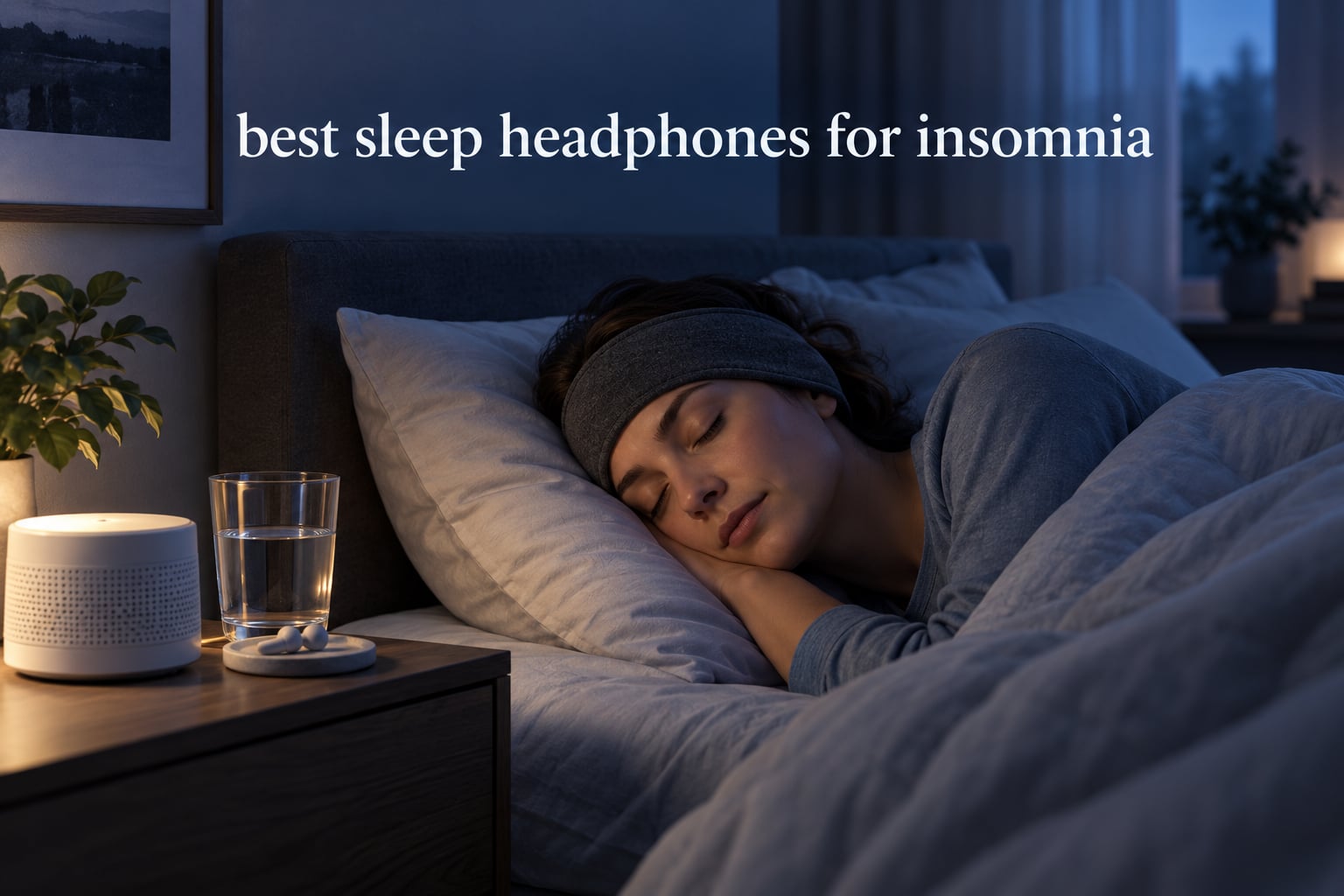
It is 3:14 in the morning and your partner is breathing like a wood chipper. You have checked the time eleven times, the ceiling fan is already on high, and nothing has worked. If that scene feels familiar, the search for the best sleep headphones for insomnia is not a lifestyle purchase — it is a sleep intervention, and the right one depends on whether your problem is falling asleep or staying asleep.
That distinction matters more than any spec sheet. Sleep-onset insomnia is the inability to drop off: your mind is running, your room is quiet, and the issue is something to occupy the space between waking and sleeping. Sleep-maintenance insomnia is different — you fall asleep fine, then a noise at 2am puts you straight back up. One of these responds well to a steady masking layer. The other needs physical noise isolation, and no amount of pink noise will fix a snoring partner at 70 decibels.
We spent weeks working through every product in this category, from wired silicone sleep earphones to Bluetooth headbands with blackout masks, and we read what insomnia communities actually complain about at night. What follows covers ten picks, the sleep-position matching most roundups skip, ear-safety guidance, and an honest list of what these devices cannot fix. Updated for 2026, and if you prefer a non-electronic starting point, our guide to the best white noise machines for sleep is worth reading first.
Top 3 Picks: Best Sleep Headphones for Insomnia (October 2026)
If you read nothing else, start with these three. The Perytong headband is the most-proven all-nighter in the set, the MUSICOZY headband is the same idea with a longer battery and bigger drivers, and the DAGKHE earbuds are the only option here with a genuine low profile for side sleepers.

Perytong Sleep Headband
- Flat no-ear-pressure speakers
- 10-hour battery
- Machine washable
- Bluetooth 5.4


DAGKHE Sleep Earbuds
- Low-profile in-ear fit
- Sleep mode locks out touches
- IPX6 waterproof
- 8-hour battery
Best Sleep Headphones Side by Side in 2026
Every product below is a sleep-first design rather than a general earphone with a sleep timer bolted on. The columns that matter most for insomnia are the ones nobody measures: physical profile height, whether the device blocks noise when the audio is off, and whether the battery outlasts a full night plus the hour of wakeful staring at the ceiling.
| Product | Specifications | Action |
|---|---|---|
| Perytong Sleep Headband |
|
Check Latest Price |
| MUSICOZY Sleep Headband |
|
Check Latest Price |
 LC-dolida 3D Sleep Mask LC-dolida 3D Sleep Mask |
|
Check Latest Price |
 TOPOINT Cotton Sleep Mask TOPOINT Cotton Sleep Mask |
|
Check Latest Price |
 Perytong Charging Headband Perytong Charging Headband |
|
Check Latest Price |
| DAGKHE Invisible Sleep Earbuds |
|
Check Latest Price |
 Hearprotek Wired Sleep Earbuds Hearprotek Wired Sleep Earbuds |
|
Check Latest Price |
 Veeniitosr 20H Sleep Mask Veeniitosr 20H Sleep Mask |
|
Check Latest Price |
 Enjoying ANC Sleep Headband Enjoying ANC Sleep Headband |
|
Check Latest Price |
 HAMRTEK Blackout Sleep Mask HAMRTEK Blackout Sleep Mask |
|
Check Latest Price |
Do Sleep Headphones Actually Work for Insomnia?
Yes, but only for a specific kind of insomnia, and the mechanism is masking rather than silencing. Sleep headphones do not block sound the way good earplugs do; they cover it. A steady layer of pink or brown noise plus a passive seal softens the irregular, attention-grabbing sounds — a car door, a cough, a partner shifting — that are what actually wake a light sleeper. Your brain stops auditing every noise, and the 3am wake-up trigger disappears. For racing thoughts rather than noise, audio helps some people settle and simply becomes background noise for others, and that is a trial you run over several nights, not one.
Here is the blunt version: these devices treat noise-triggered insomnia, not chronic insomnia. If you cannot sleep in a silent room on a quiet night, the problem is not your noise environment.
How We Picked: Comfort, Battery, Masking and Stability
Every product in this roundup was assessed on four things, weighted the way insomnia sleepers actually complain. Comfort came first at roughly 40 percent of the score, because a device you notice pressing into your ear at 4am is worse than no device at all. Noise control accounted for about 25 percent, battery for 20 percent, and stability under tossing and turning for the remaining 15 percent.
Comfort came down to one measurement that most spec pages omit: profile height. If a speaker or stem sits proud of the ear canal, a pillow will find it. That single fact predicts most side-sleeper complaints in the forums, where users describe stems digging into ear cartilage and buds falling out mid-roll. The headband designs here avoid the problem entirely by putting audio on the surface of the head rather than in or on the ear.
Battery math matters more than the number on the box. A typical night is seven to nine hours of actual wear, and anyone fighting a snoring partner may want ten. We treated a headline figure as credible only if it cleared that bar with a usable sound level, and we flagged every product whose runtime falls short. The gap between a 10-hour and a 20-hour claim is the difference between charging the device every morning and forgetting about it for a week.
We also cross-checked every pick against what insomnia communities report in practice: touch controls that pause playback at 3am, headbands that slide off the back of the head, cable snags, and speakers that drift away from the ear canal. Realistic numbers beat spec-sheet marketing, and where a manufacturer claim such as active noise cancelling has no measured performance behind it, we said so rather than repeating it.
1. Perytong Sleep Headphones Wireless Headband — The Most Proven All-Nighter
Perytong Sleep Headphones Wireless, Bluetooth Sports Headband Headphones with Ultra-Thin HD Stereo Speakers Perfect for Sleeping,Workout,Jogging,Yoga,Insomnia, Air Travel, Meditation (Grey)
10-hour battery
Bluetooth 5.4
80 g
Machine washable
Flat on-head speakers
Pros
- Flat speakers never press into the ear
- Most reviews in the category at over 51000
- 10-hour battery clears a typical night
- Machine washable once the control pod is removed
- Bluetooth 5.4 with 45-foot range
Cons
- No noise control so room noise returns when audio stops
- Volume steps are coarse and it can reset loud
- Band loses shape and slides back over time
The first thing I checked on this one was whether anything actually sits on the ear. Nothing does. Both speakers are flat pads pressed against the side of the head, and the control module sits in the middle of the band, so rolling onto your side puts your pillow on a stretchy spandex sleeve rather than on hardware. That single design decision is why this has accumulated more reviews than anything else we looked at.
For insomnia specifically, it works as a dependable masking layer. Run a fan loop or a rain sound at low volume and the constant texture gives your brain something monotonous to hold. The 10-hour average battery life covers a normal night, and the 2.5-hour charge is easy to run while you are at the office in the evening.
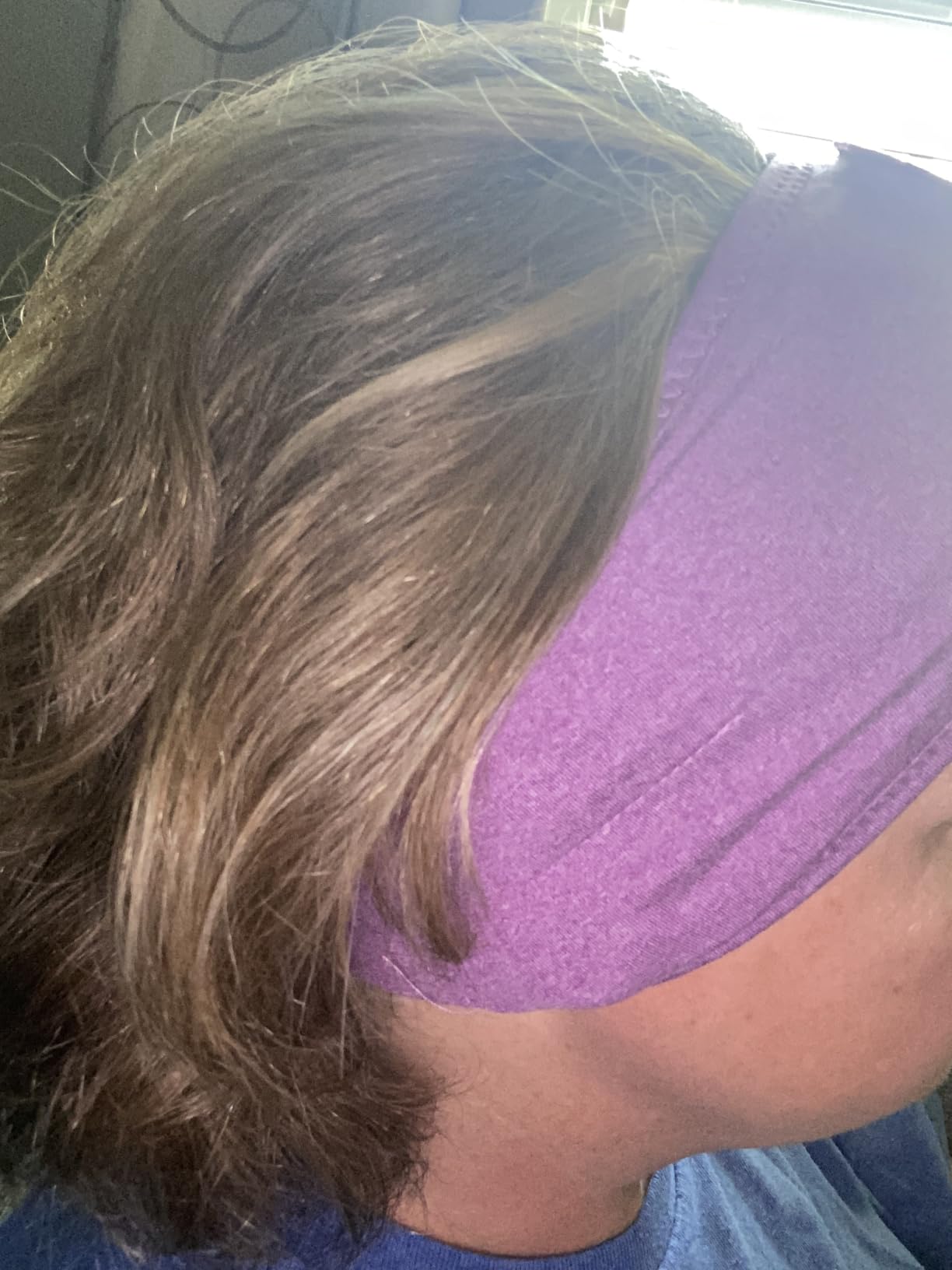
The compromises are real and they are consistent across thousands of reviews. There is no noise control at all, so the second the audio pauses or the battery dies at 3am, every sound in the room returns at once. The volume steps are coarse, which matters more than it sounds, because finding a level low enough to sleep through but audible enough to mask is the entire game. Reviewers also report that the device can reset to maximum volume when it reconnects, which is a genuinely bad surprise at bedtime.
Long-term durability is the other weak spot. Buyers report the band losing its elasticity and creeping toward the back of the head over months of nightly wear, and some describe battery capacity declining noticeably within about a year. Neither failure is dramatic, but both are the kind of slow decay that matters when you plan to wear something every night for years.
Who this suits best
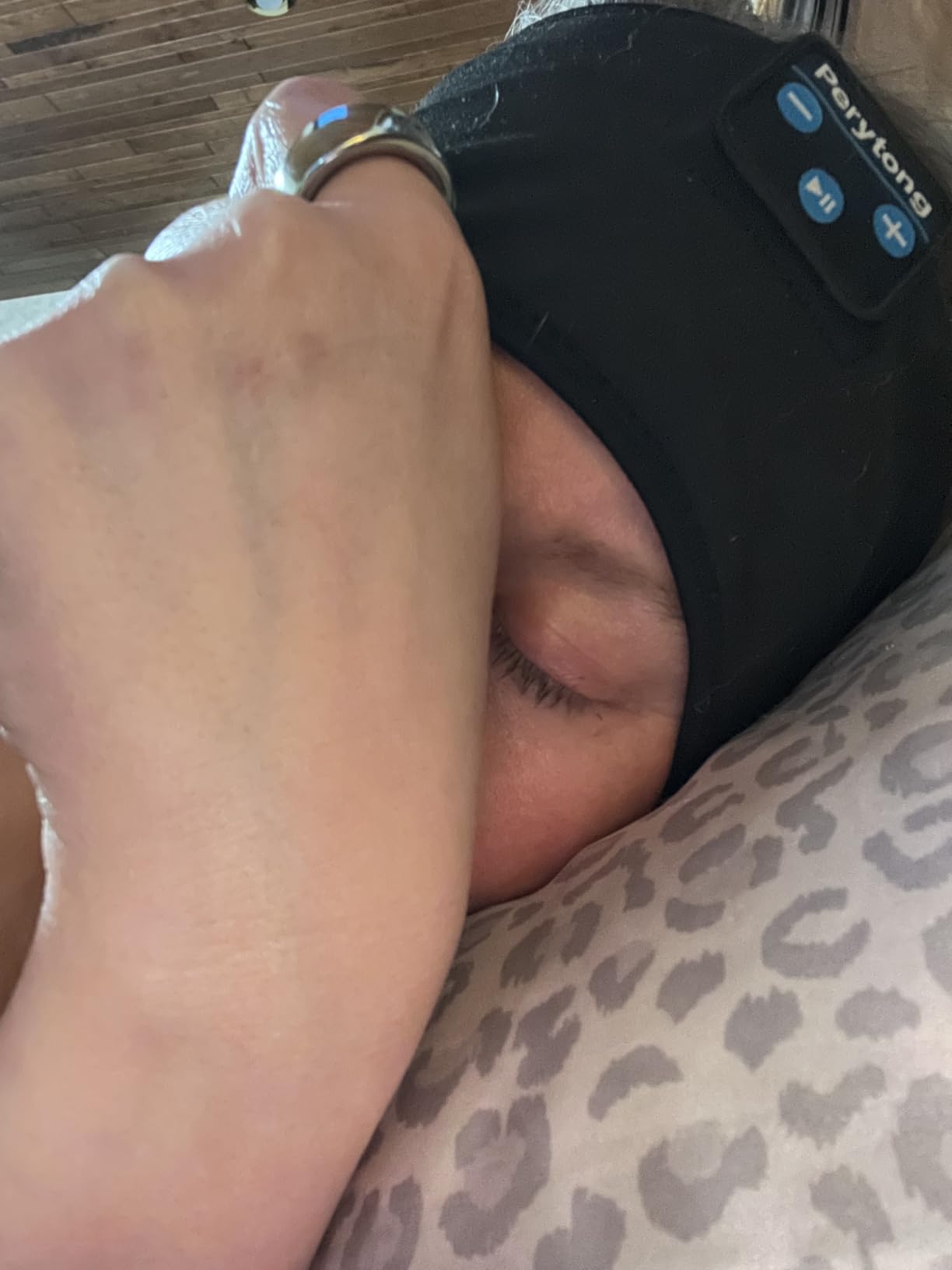
This is the pick for someone whose insomnia is quiet-room insomnia, where a racing mind is the problem and audio is a way to occupy it. It is also the safest first purchase in the whole category because the form factor cannot cause pressure pain, whatever your sleeping position. If you share a bed, the flat on-head design means nothing digs into you when you turn toward your partner, and there is no in-ear tip to irritate a canal overnight.
Where it falls short
It will not do anything about a snoring partner, because it does not block sound when the music is off. A person trying to mask steady low-frequency snoring at 60 to 70 decibels needs physical isolation, not a speaker pressed to the temple. It is also a poor choice if you are a side sleeper who wants true silence, because there is no passive seal at all here. And if you are the kind of person who rolls constantly, the drifting band is a real annoyance by month three.
2. MUSICOZY Bluetooth 5.4 Sleep Headband — Best Value in the Main Field
MUSICOZY Bluetooth 5.4 Sleep Headphones Headband Sports Wireless Audio
14-hour battery
40mm drivers
90 g
Spandex-nylon
10m Bluetooth range
Pros
- 14-hour playback beats most rivals at this tier
- 40mm composite drivers sound fuller than cheap headbands
- Soft breathable spandex-nylon fabric
- Doubles as a sports headband
Cons
- No noise control whatsoever
- Speakers drift off the ear during sleep
- Not water resistant
- No case or battery indicator
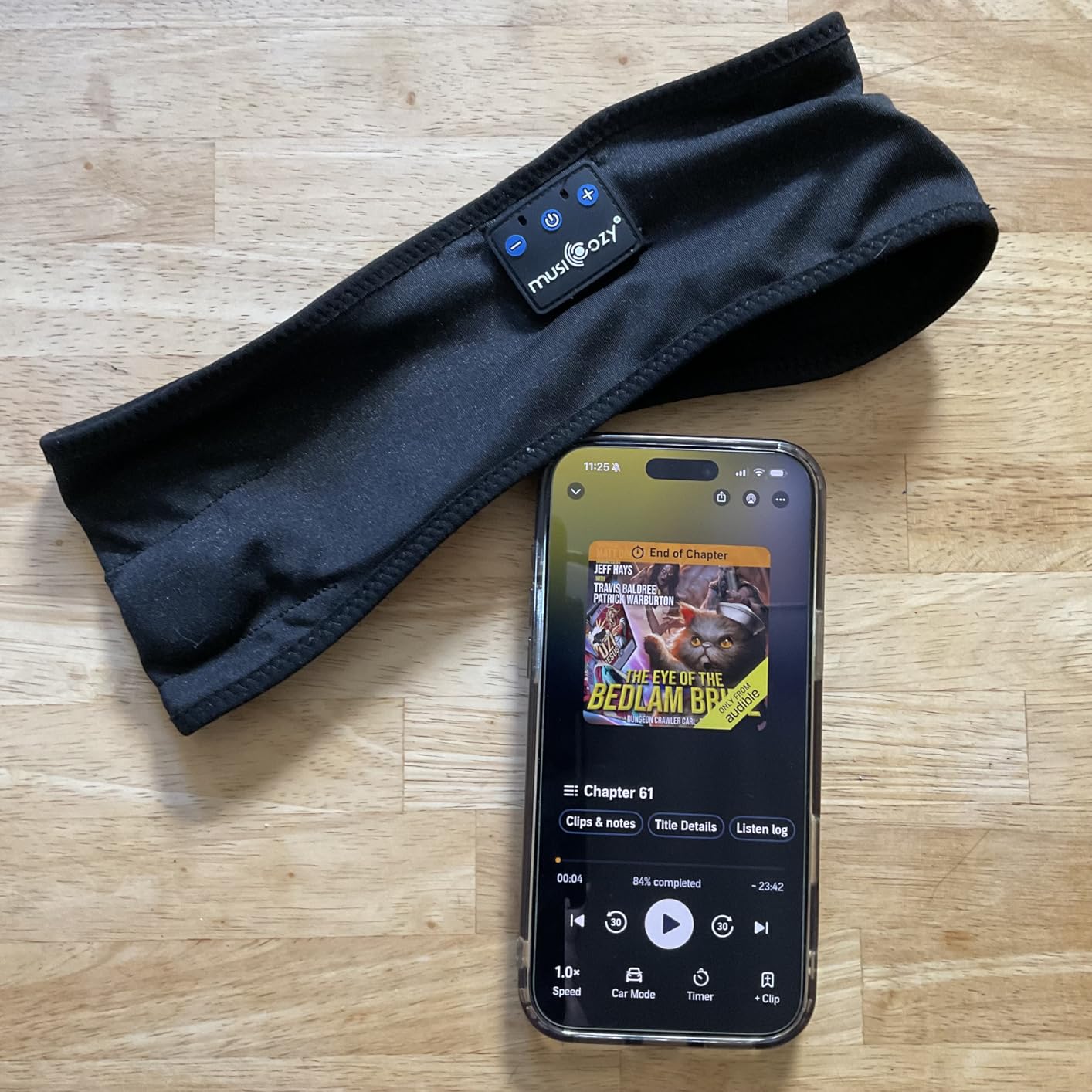
The MUSICOZY headband solves the problem that bothered us most about the previous pick: battery anxiety. A 14-hour average life means most people can charge it twice a week instead of every night, and that removes the mental loop of wondering whether you remembered to plug it in. The 40mm composite drivers are also a step up from the tiny pads typical of budget headbands, which makes it more usable if you want music rather than pure masking.
Comfort is on par with the Perytong band. The spandex-nylon fabric stretches across head sizes, sits flat against the ear without pressure, and stays cool enough for long sessions. At 90 g it is light enough that you stop noticing it, which is exactly the goal for someone whose problem is that they keep noticing their headphones.
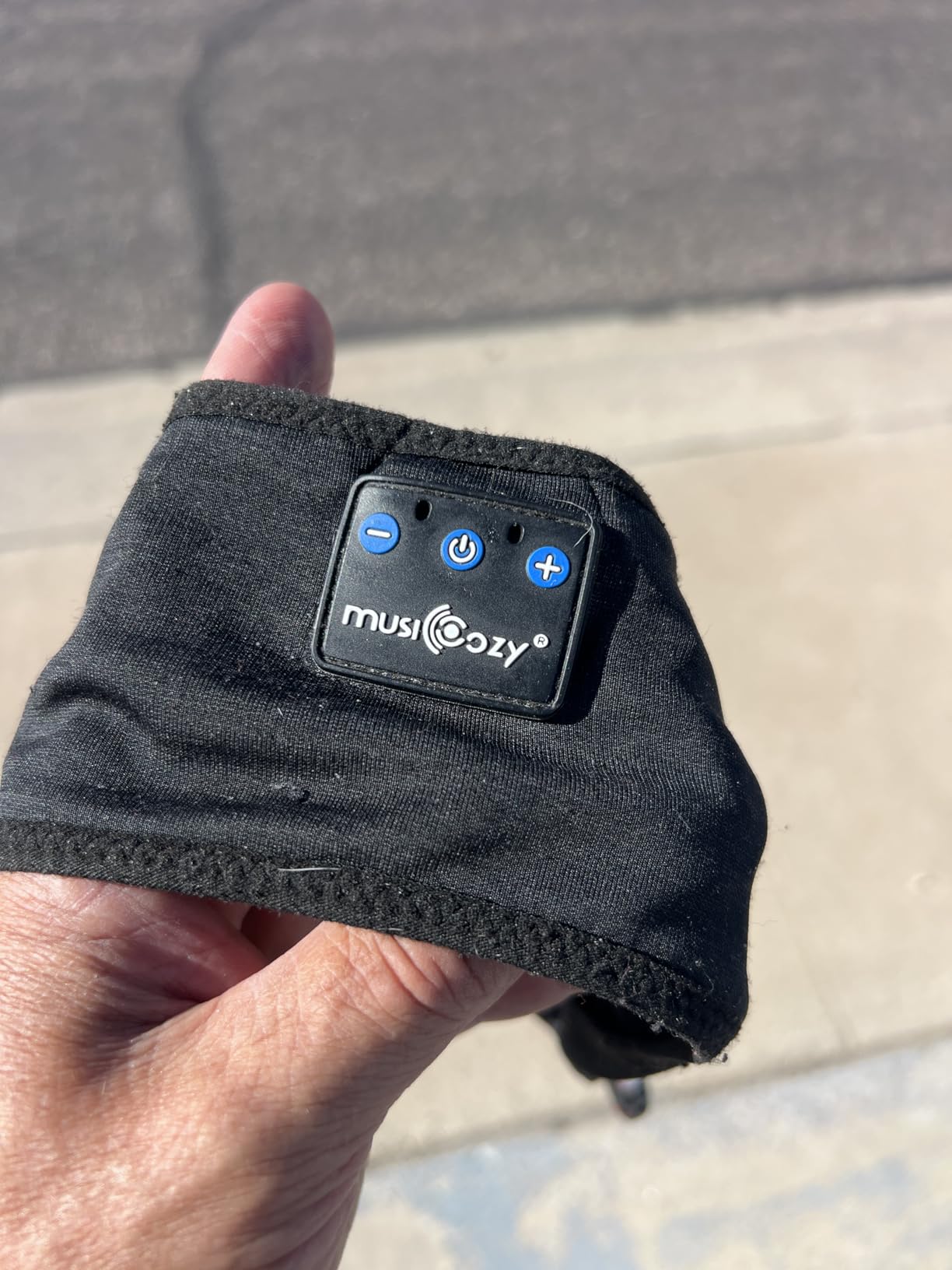
What you give up is any form of noise reduction. The specification lists noise control as none, so this is a playback device and nothing more. The most common complaint in reviews is speaker drift: if you roll onto your side in the night, the drivers can slide far enough that you are listening through fabric instead of to your ear, and you either wake to reposition them or accept a muffled night. The 10-meter Bluetooth range is also shorter than some rivals, though that rarely matters inside a bedroom.
Two smaller things are worth knowing. It is not water resistant, so a sweaty workout can shorten its life, and there is no battery indicator, which means you find out your charge level by getting silence when you expected sound. Neither is a dealbreaker for bedtime use. Our read is that this is the strongest value pick of the set for sleep-onset insomnia, where you need sound to fill a quiet room rather than sound to defeat a loud one.
Who this suits best
It suits people who want to test whether audio helps their insomnia before committing to anything expensive, and people who fall asleep to podcasts, guided meditations or audiobook chapters rather than to a noise loop. The 14-hour runtime makes it a natural fit for shift workers and daytime nappers too, since one charge covers several short sleeps as well as a full night. It is also a sensible gym-to-bedroom two-for-one.
Where it falls short
It is the wrong tool for noise-triggered insomnia, full stop. Without any isolation, a partner who snores or a street outside a thin wall will defeat it entirely, because the audio adds to the noise instead of covering it. Reviewers with small ear-adjacent sensitivity can also find the band tight after hours of wear, and anyone who cannot sleep with something touching their head will not enjoy it. Treat it as a sound player, not a sound blocker.
3. LC-dolida 3D Sleep Mask with Bluetooth — Two Problems Solved at Once
LC-dolida Sleep Headphones, 3D Sleep Mask Bluetooth Wireless Music Eye Mask, Sleeping Headphones for Side Sleepers Sleep Mask with Bluetooth Headphones Ultra-Thin Stereo Speakers Perfect for Sleeping
8-10 hour battery
3D eye contour
5.64 oz
Bluetooth 5.4
45-foot range
Pros
- Blackout eye mask and sleep audio in one device
- 3D contoured eye area removes pressure on the eyelids
- Adjustable strap does not snag hair
- Popular with migraine and dry-eye sleepers
Cons
- 8-10 hour battery is short of a long night
- Speakers need manual realignment to the ears
- Bulkier and warmer than slim headbands
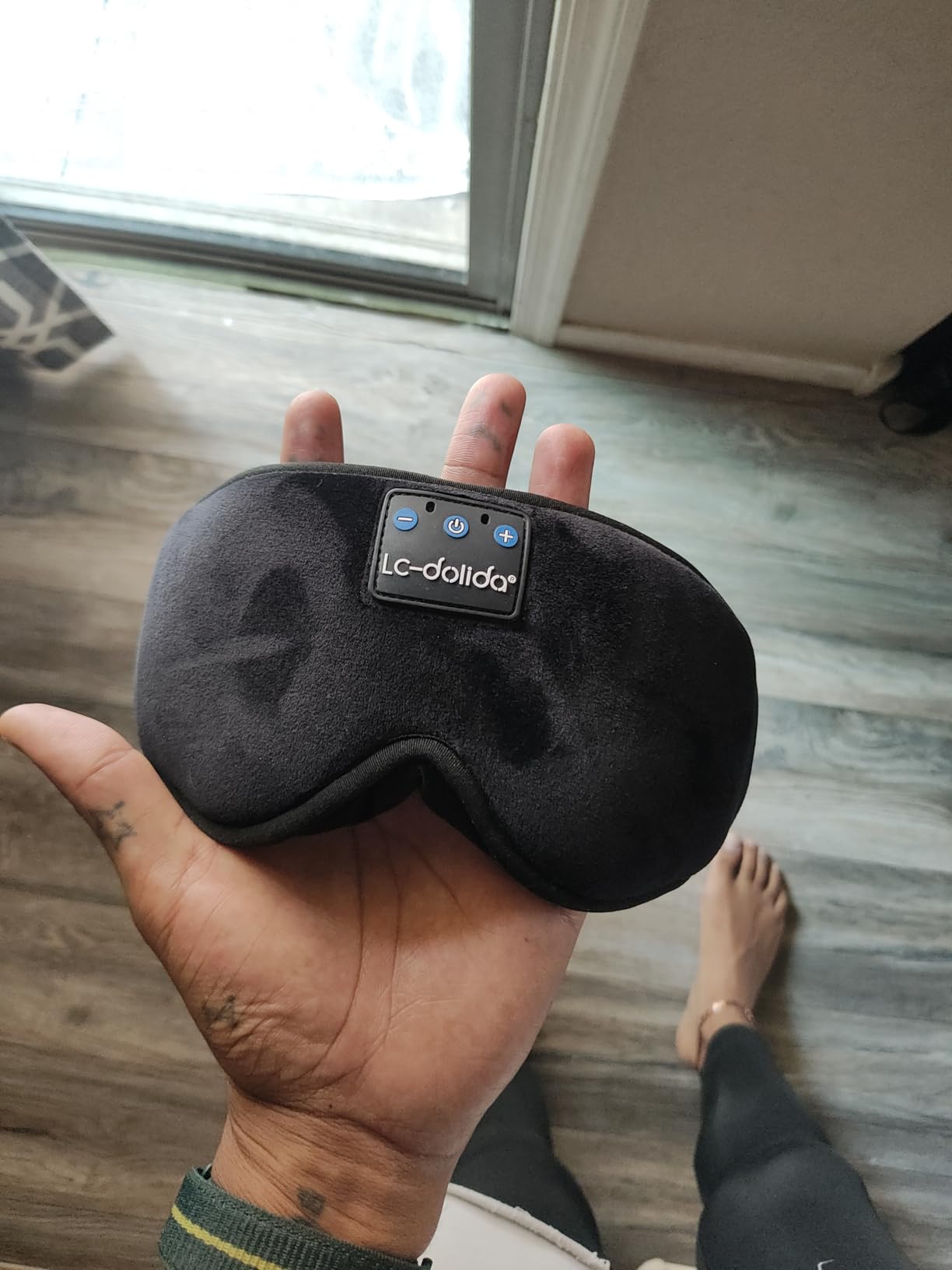
If your insomnia has a light component — a streetlamp, a monitor standby light, an early sunrise in summer — this mask handles the darkness and the audio in one move, and the 3D contoured eye area is the real story. Unlike flat masks that press directly on the eyelids through the night, the contoured pocket gives your eyes room to move, which is why migraine and dry-eye sleepers rate it highly. The adjustable strap is wide and flat, so it does not catch your hair the way a narrow elastic band does.
Speakers sit near the ears inside the band and produce a soft, close sound field that is genuinely good for a rain loop or a low audiobook. Bluetooth 5.4 with a 45-foot range and fast pairing means you can start playback before you get into bed and not think about it again.
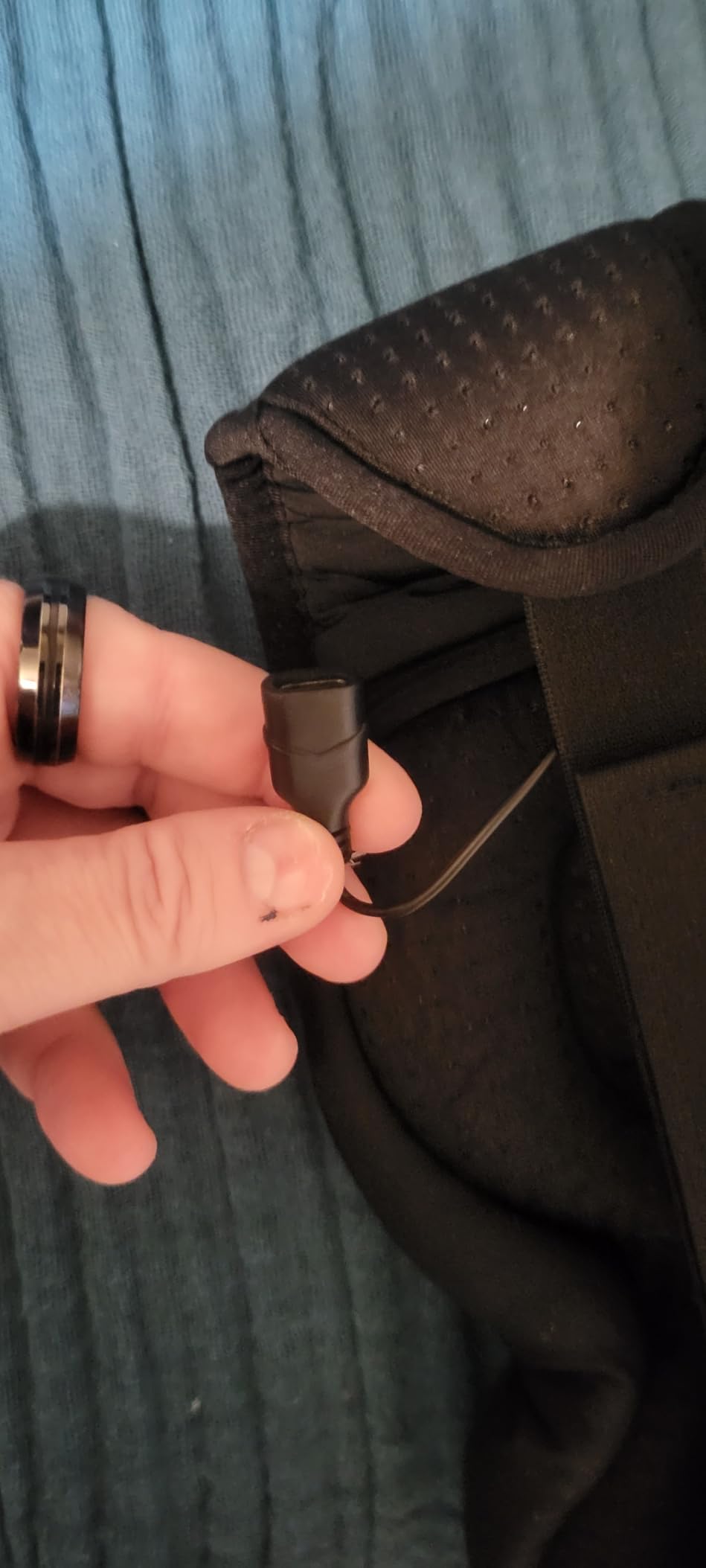
The runtime is where this falls behind the headbands. At 8 to 10 hours of playback it can run out partway through a long night, and buyers consistently flag it as the main limitation, especially for anyone who wakes occasionally. The speakers also need manual alignment with the ear canals, and because the mask is a fixed shape, that alignment drifts as you move. It is bulkier and warmer than a slim headband-only design, so people who run hot sometimes find the fabric retains heat by the small hours.
It is also worth being clear about what this is not. There is no noise reduction of any kind, and the mask sits on the surface of the head rather than sealing the canal, so it cannot help with a snoring partner. Treat it as a light-blocker that plays sound, which is a genuinely useful combination for a lot of insomnia cases and no use at all for a loud-bedroom case.
Who this suits best
This is the pick for light-sensitive sleepers and shift workers sleeping during daylight. It is also a strong choice for anyone whose insomnia is anxiety-driven rather than noise-driven, because the combination of total darkness and a steady sound layer mimics the conditions most people need to wind down. Migraine sufferers and anyone who has given up on flat eye masks tend to be very happy with the 3D contour.
Where it falls short
It will not survive a night of interrupted sleep without a recharge, which is a real problem for sleep-maintenance insomnia where you want audio available the moment you wake at 4am. People who sleep hot will find it warmer than a headband. And if you share a bed with someone who shifts a lot, the fixed mask shape means the speakers may end up facing the wrong way by midnight with no way to correct them without waking up.
4. TOPOINT Cotton Sleep Mask Headphones — Warmth and Long Battery in One
TOPOINT Sleep Mask with Headphones Bluetooth 5.4 Wireless, Sleep Headphones Earphones Earbuds with Microphone HD Speakers Music, Blackout Eye Mask for Sleeping Travel Meditation Men Women Cool Gadgets
15-hour battery
95% cotton fabric
Removable Bluetooth module
Blackout nose piece
Pros
- 15-hour battery covers a night with margin to spare
- 95% cotton feels warm and soft against the skin
- Nose cartilage piece blocks light from a common leak point
- Bluetooth module removes so the mask machine washes
Cons
- Battery arrives only partially charged so first night needs a full cycle
- Long-press pairing to device V03 is fiddly
- Fabric liner seam looks like a defect to some buyers
The material is the argument here. Most sleep masks in this category use polyester or memory foam, which some sleepers find clammy after four hours. This one is 95% cotton with a separate fabric liner, and reviewers consistently single out how warm and soft it feels. For an older sleeper or anyone with sensitive skin, that comfort difference is worth more than any feature on the spec list.
The light blocking is thorough, particularly at the nose. A bending cartilage piece sits along the bridge and closes the gap that defeats most masks, which is where a lot of early-morning light actually gets in. The 15-hour battery is the second headline, giving you real margin over a long night rather than scraping by, and the speakers can be repositioned to match your ears.
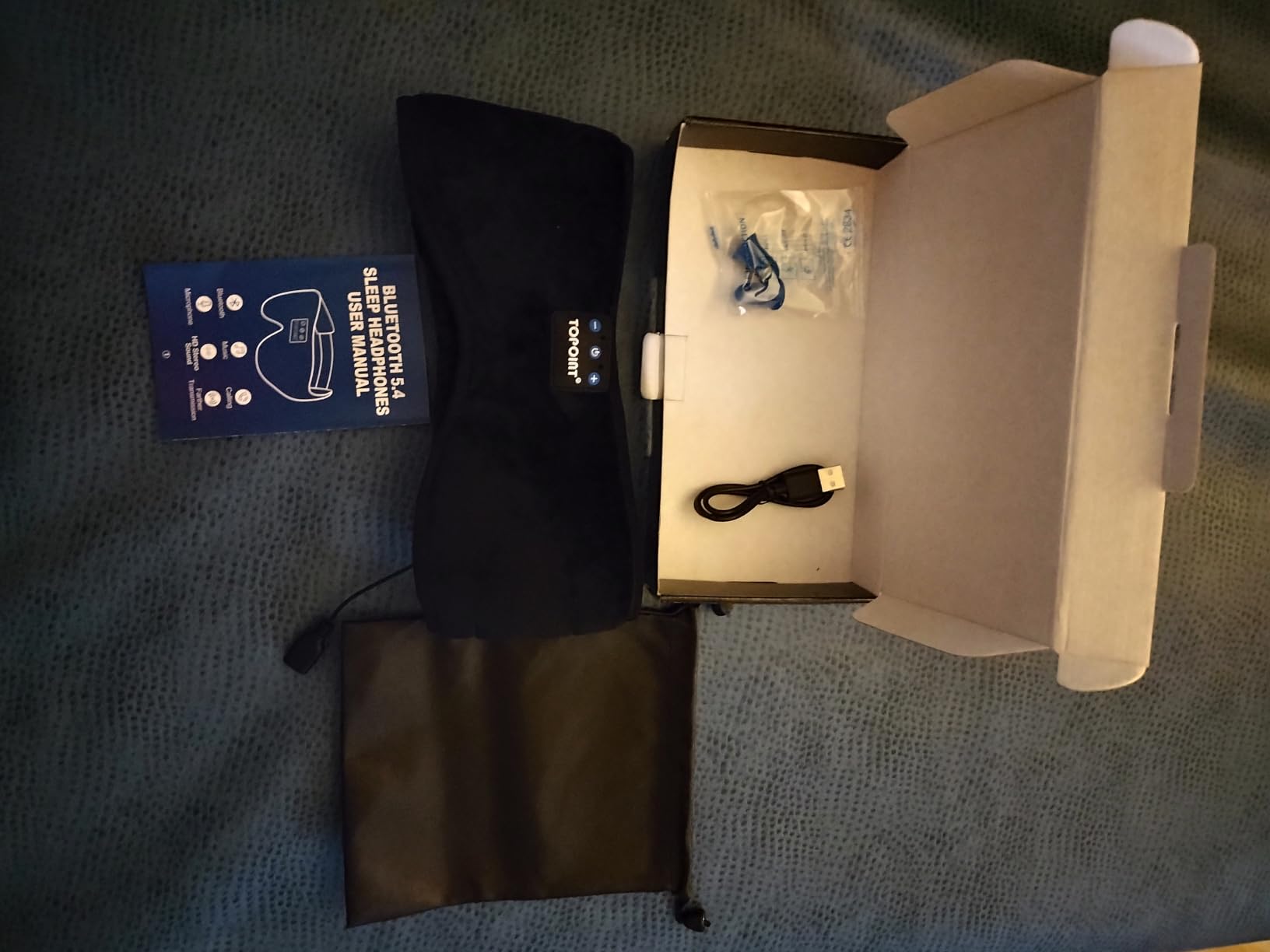
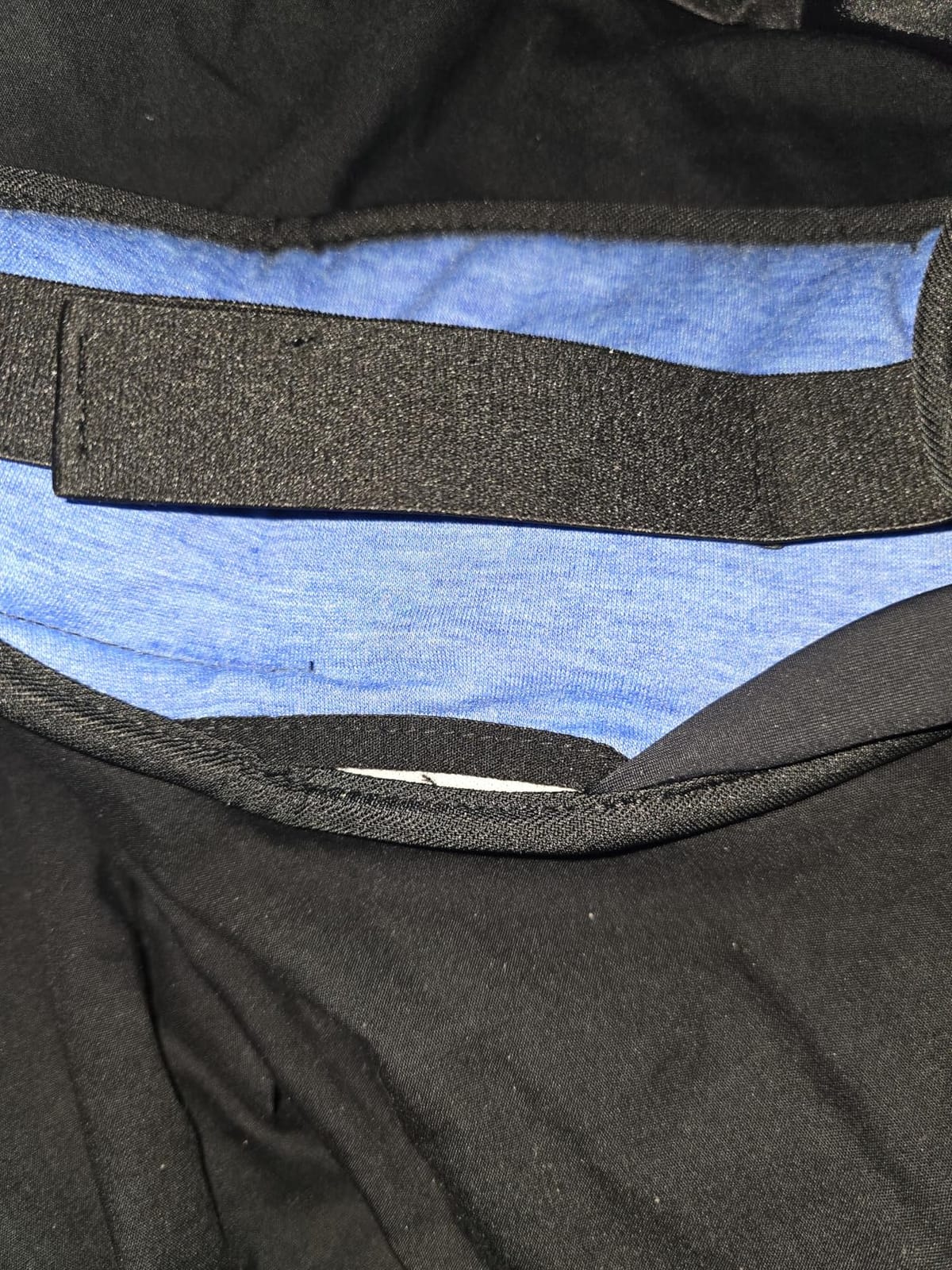
Two annoyances are worth planning for. The battery arrives only partially charged, so if you put it on that first night expecting sound and get silence, that is the reason rather than a fault. Setup also involves a long-press on the power button and manually selecting a device labelled V03 in your Bluetooth menu, which is the kind of friction that gets a new device abandoned on the bedside table.
A cosmetic issue that some buyers read as a defect: the seam on the fabric liner can look irregular. It does not affect function, but if you are someone who returns things on appearance, look at close-up photos first. As with the other masks here, there is no noise isolation, so this solves darkness and adds sound rather than blocking a noisy room.
Who this suits best
This suits people who dislike synthetic fabrics against the face, sleep in a room with any ambient light, and want a battery that comfortably outlasts the night. The removable Bluetooth module is the detail that wins over months rather than nights, because you can wash the whole mask regularly instead of swabbing electronics. It is a sensible choice for insomnia accompanied by a mind that will not switch off in a dark, quiet room.
Where it falls short
It will not help with a snoring partner or outside noise at all, since it has no passive seal and no active cancellation. The pairing process is genuinely fiddly compared with modern devices that just connect. And the hand-in-cord management is worse than a headband, because the module sits in the middle of the mask and the strap can twist during sleep, moving the speakers off target.
5. Perytong Charging Headband — The One With an Actual Warranty
Bluetooth Headband Earphones with Charging, Ultra-Soft Headband for Sleeping, Side Sleepers, Insomnia, Workout, Jogging, Yoga, Air Travel & Meditation – The Gift for Men & Women Who Want Music
Up to 14-hour battery
40mm drivers
Spandex band
2-year warranty
Pros
- Two-year warranty and 365-day satisfaction window
- 14-hour playback covers a full night
- Sweat-wicking breathable spandex suits sensitive skin
- Works as a gym headband and a sleep headphone
Cons
- Not a sleep mask so it blocks no light
- No sleep mode so button presses interrupt playback
- Sound leaks more than in-ear designs at low volume
The differentiator here is not a spec, it is the warranty. A two-year manufacturer warranty and a 365-day satisfaction return window is unusual at this tier, and it is the reason we would trust this pick for nightly long-term use over slightly cheaper alternatives with no support commitment. When a product becomes a sleep habit rather than a gadget, that kind of backing changes the calculation.
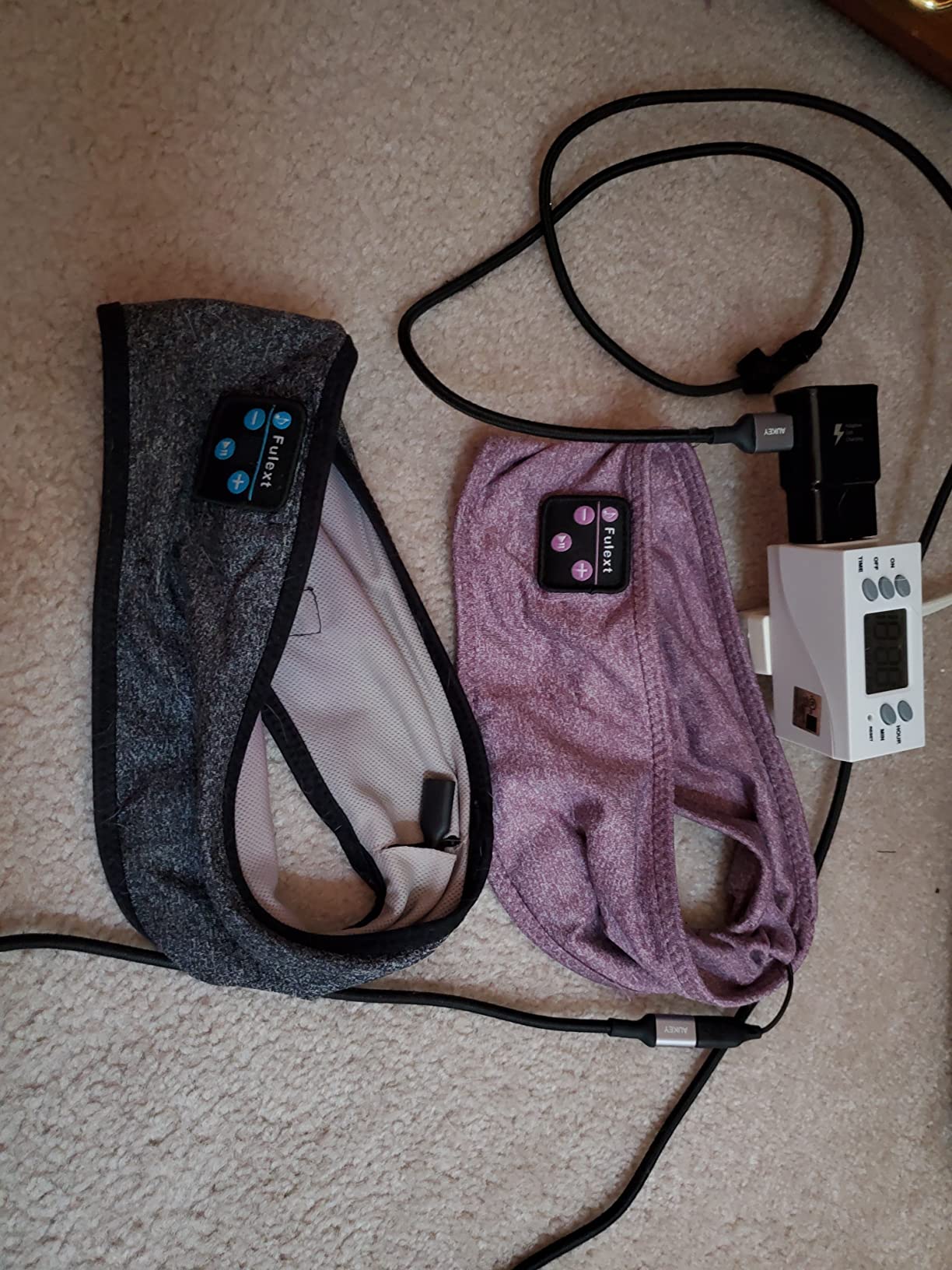
Performance-wise it sits in the same comfortable place as the other Perytong band, with soft elastic sweat-wicking spandex that does not irritate and speakers that rest on the head instead of in the ear. Bluetooth 5.4 and 40mm composite drivers give it a fuller sound than most flat-pad headbands, and the 14-hour runtime means a night of playback with room to spare.
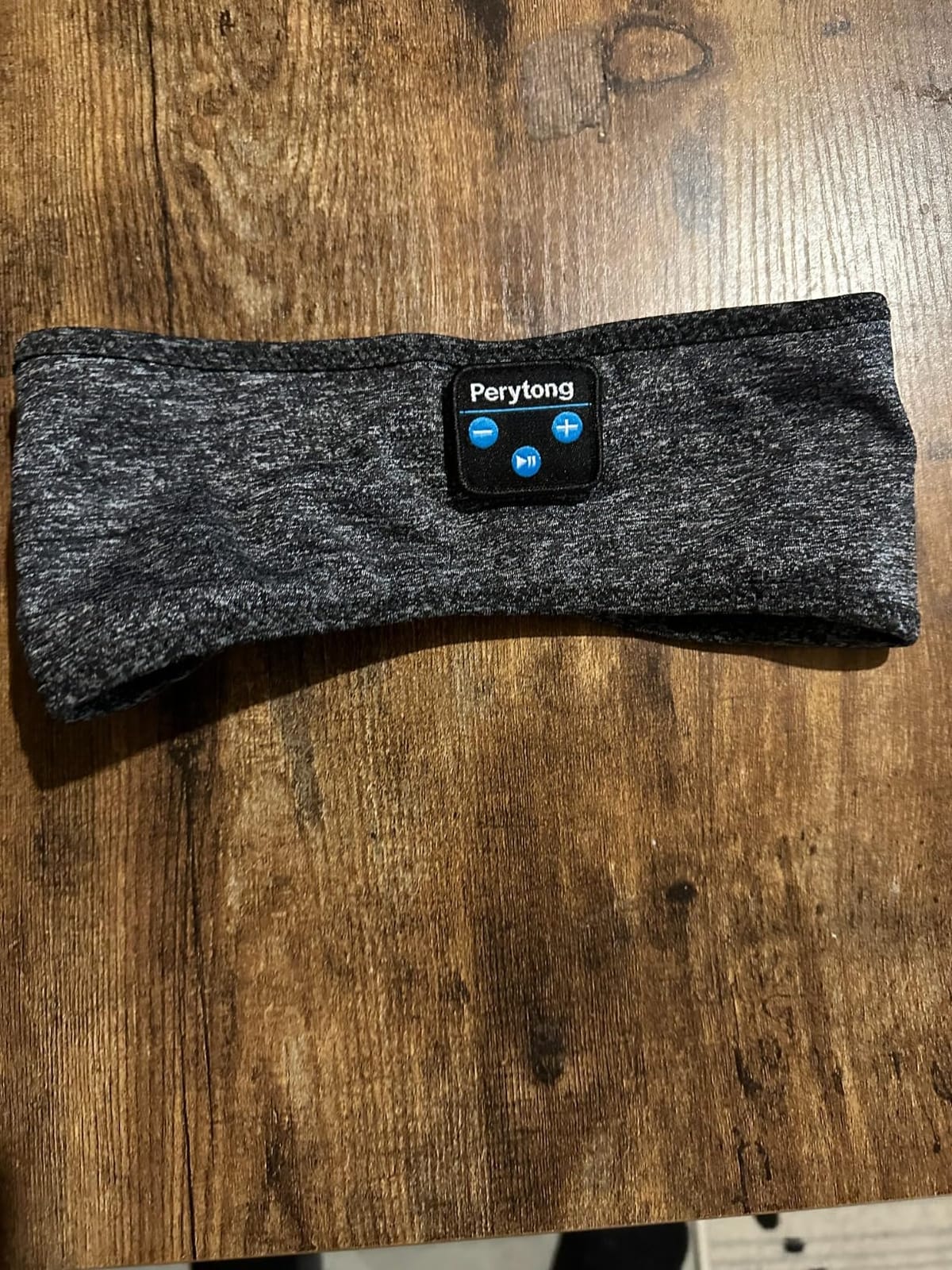
It is a newer listing with a smaller body of reviews than the established headband competitors, so the long-term record is thinner. There is no dedicated sleep mode, which means a stray button press during a restless night can interrupt playback, and the reviewers who raise that are describing a real annoyance rather than a hypothetical one. At low volumes it also leaks more sound than in-ear sleep earbuds, which undercuts its use as a masking layer.
One scope note: it is not a sleep mask, so if light is part of your problem, this does nothing about it. Use it with blackout blinds or an eye mask alongside. Otherwise, the combination of warranty, runtime and a genuinely soft band makes it the pick for someone who travels often, works out in the morning, and wants one device to cover both.
Who this suits best
It suits anyone who plans to wear this every night for years and wants a fallback if it fails, which is a much stronger position than gambling on a bargain listing. Frequent travelers benefit from a single device that also works as a workout headband, since packing light matters when you are chasing a sleep routine across time zones. People with sensitive skin will find the sweat-wicking lining more comfortable than plastic or foam.
Where it falls short
Without a sleep mode, accidental touches can pause playback mid-night, and with a restless partner or a lot of tossing, that happens more often than you would like. It blocks no light and reduces no noise, so it is purely additive sound. And if your insomnia is triggered by a snoring partner, the sound leakage at low volume makes it a poor masking tool — you need isolation for that.
6. DAGKHE Invisible Sleep Earbuds — The Real Answer for Side Sleepers
DAGKHE Sleep Headphones, Invisible Sleep Earbuds for Side Sleepers
8-hour battery
Bluetooth 5.3
16 ohm
Sleep mode
IPX6 waterproof
Pros
- Lowest in-ear profile in the set and genuinely pillow-friendly
- Sleep mode disables every button so nothing pauses mid-night
- IPX6 waterproofing is rare at this level
- Skin-soft silicone tips with protective caps
Cons
- Roughly 8-hour battery is short of a long night
- In-ear design is wrong for people who dislike earbuds
- Sound isolation is passive only
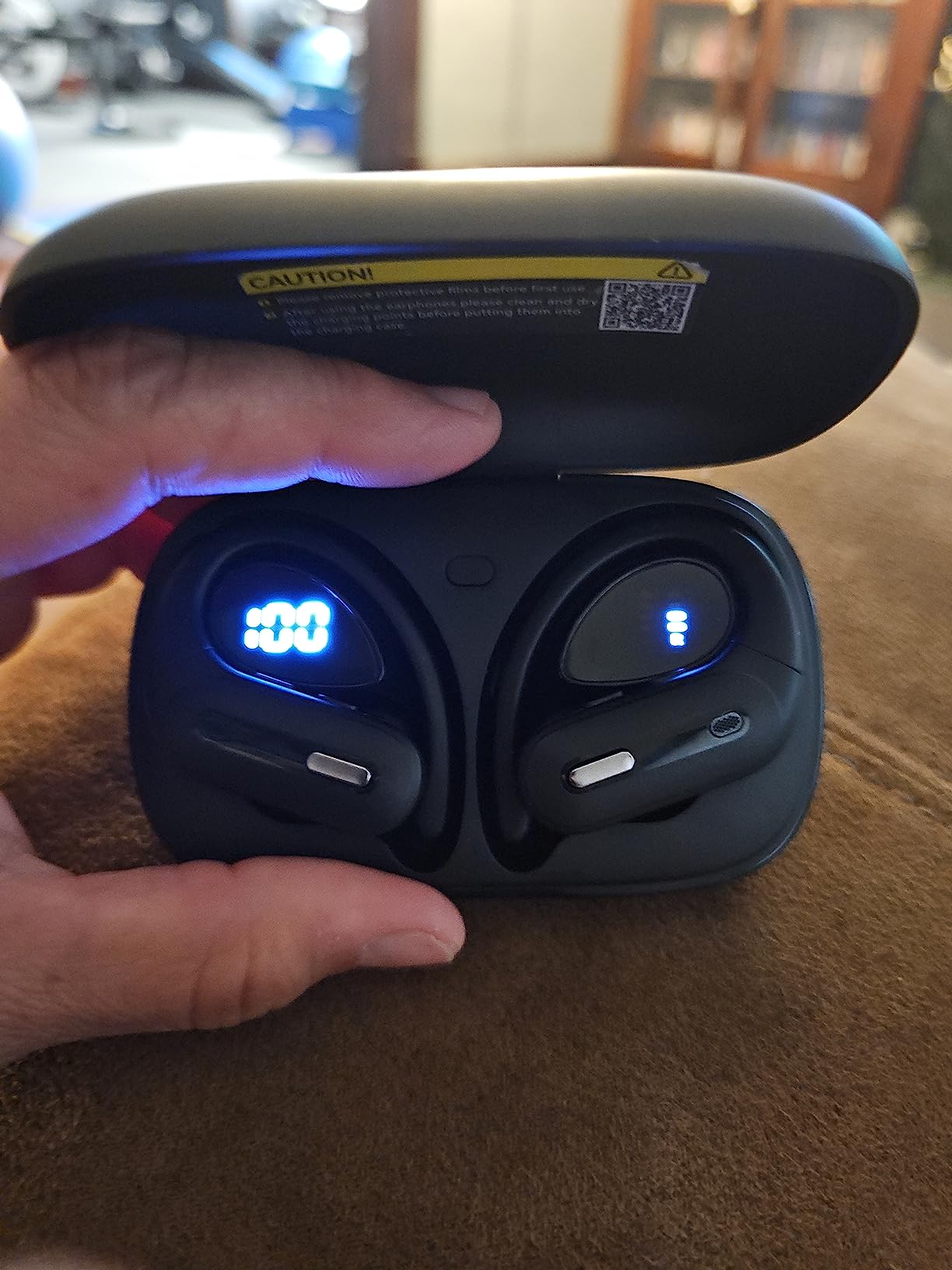
Everything else in this roundup sits on the surface of the head. This one goes in your ear, which is the whole argument for it and also its main limitation. The profile is very small with no protruding stem at all, and that is precisely the design decision insomnia forums keep asking mainstream earbuds for. Roll onto your side and your pillow meets a small silicone nub instead of a plastic stalk digging into the cartilage of your ear.
The sleep mode is the feature we did not expect to value this much. It disables all the buttons, which eliminates the single most common mid-night failure in this category: a pillow or a shifting arm hitting a touch control and pausing playback at 3am. If you have ever woken to silence and wondered whether the battery died, this solves that. The silicone tips are skin-soft and come with caps, and the isolation is passive rather than active, which is still meaningful for steady room tone.
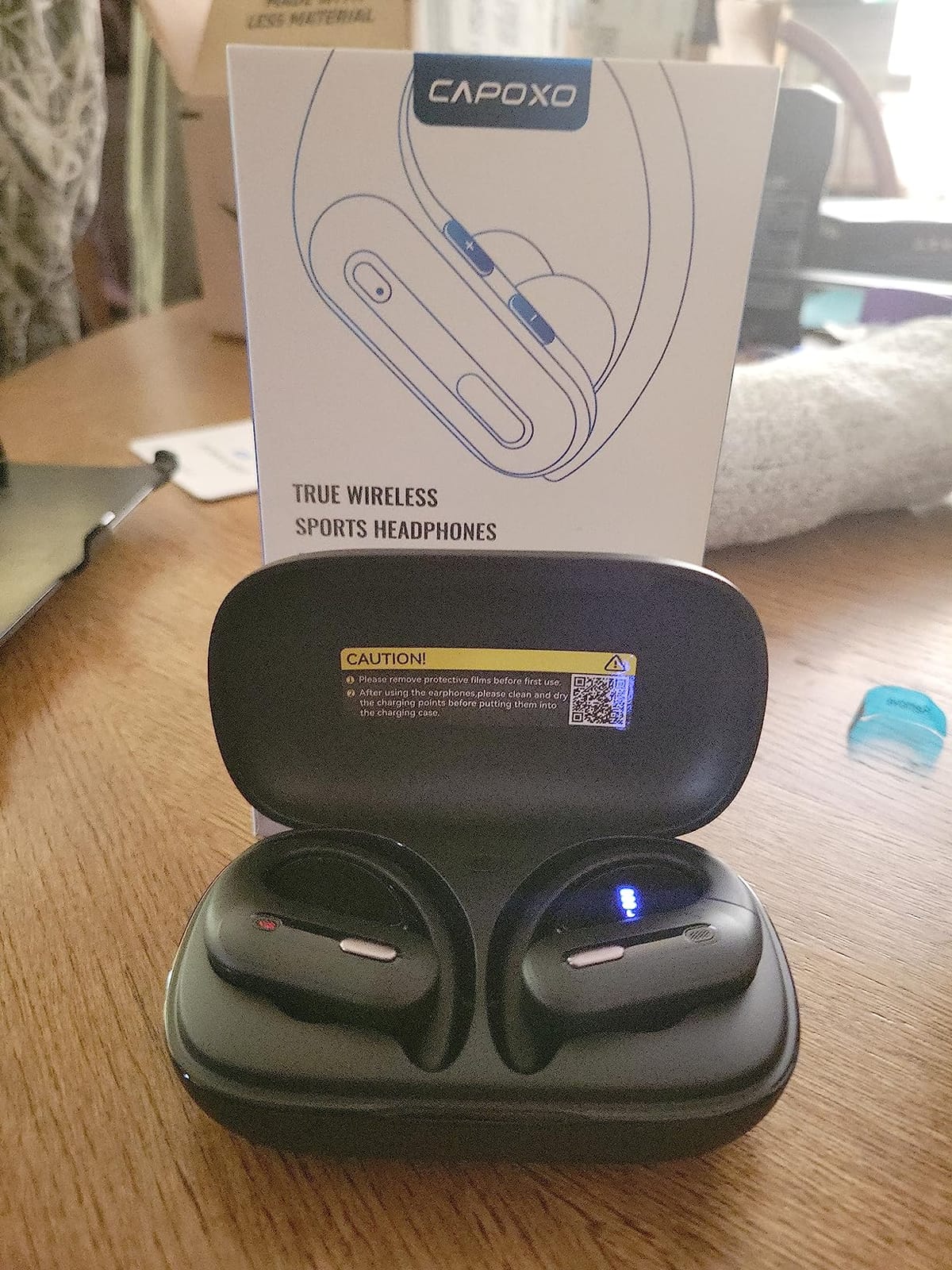
The battery is the compromise, at roughly eight hours depending on volume. That clears a normal night but not a long one, and it is exactly at the threshold where a low setting on a noise loop will get you there while anything louder will not. The second limitation is simply that in-ear is not for everyone, and people with small ear canals can find even low-profile tips uncomfortable over a full night, which is a recurring theme in insomnia communities.
Bluetooth 5.3 with a binaural chip handles spatial audio well for podcasts, and the IPX6 rating means sweat and rain are not a concern. But there is no active noise cancellation here and no white noise generator, so you are streaming whatever you want from a phone, which means an extra device on the nightstand and a charging routine.
Who this suits best
This is the side sleeper pick. If your insomnia involves a partner, a thin pillow, or a habit of rolling onto one ear, a low in-ear profile is the difference between a device you keep and one you return. It also suits anyone who wants a private in-ear alarm or an audiobook without a speaker broadcasting into the room, and the IPX6 rating makes it fine for travellers and swimmers.
Where it falls short
Eight hours of battery means a charge most days, and the last hour of a night is exactly when you do not want silence. It is also the wrong choice if you dislike earbuds in bed, have very small or sensitive canals, or share a bed with someone who moves a lot and would roll onto the earbud. And because isolation is passive with no built-in noise library, it will not handle a loud snoring partner on its own.
7. Hearprotek Wired Sleep Earbuds — Zero Charging, Zero Pairing
Sleep Earbuds, Hearprotek 2 Pairs Ultra Soft Lightweight Silicone Sleeping Earphone Headphones with Volume Control and mic for Side Sleeper, Snoring, Air Travel, Relaxation (Black)
Wired 3.5 mm
10.5 g per pair
Passive isolation
Two pairs included
Pros
- Nothing to charge or pair so it works at 3am every night
- 10.5 g per pair is effectively weightless
- Passive isolation genuinely muffles snoring and room tone
- Two pairs plus a zip case and carabiner in the box
Cons
- Cable can snag while sleeping
- Only one of the two pairs may have a working remote
- Fabric tips cannot be swapped for a different fit
This is the odd one out in the category and the reason we included it. It is wired, and for insomnia that is a feature rather than a compromise. There is no battery to fail at 3am, no pairing to lose, no firmware update to reset your settings, and no latency when you plug it in. For a device you depend on every single night, that reliability is worth more than any wireless convenience.
At 10.5 g per pair you will not feel it in your ear, and the double-layer silicone tips mould to the canal rather than pressing against it. The passive isolation is the strongest argument for a snoring partner: an in-ear seal physically attenuates low-frequency sound in a way no surface speaker can, and reviewers specifically mention snoring as the case where these earn their place. The in-line remote gives you volume and a microphone without needing to reach a phone.
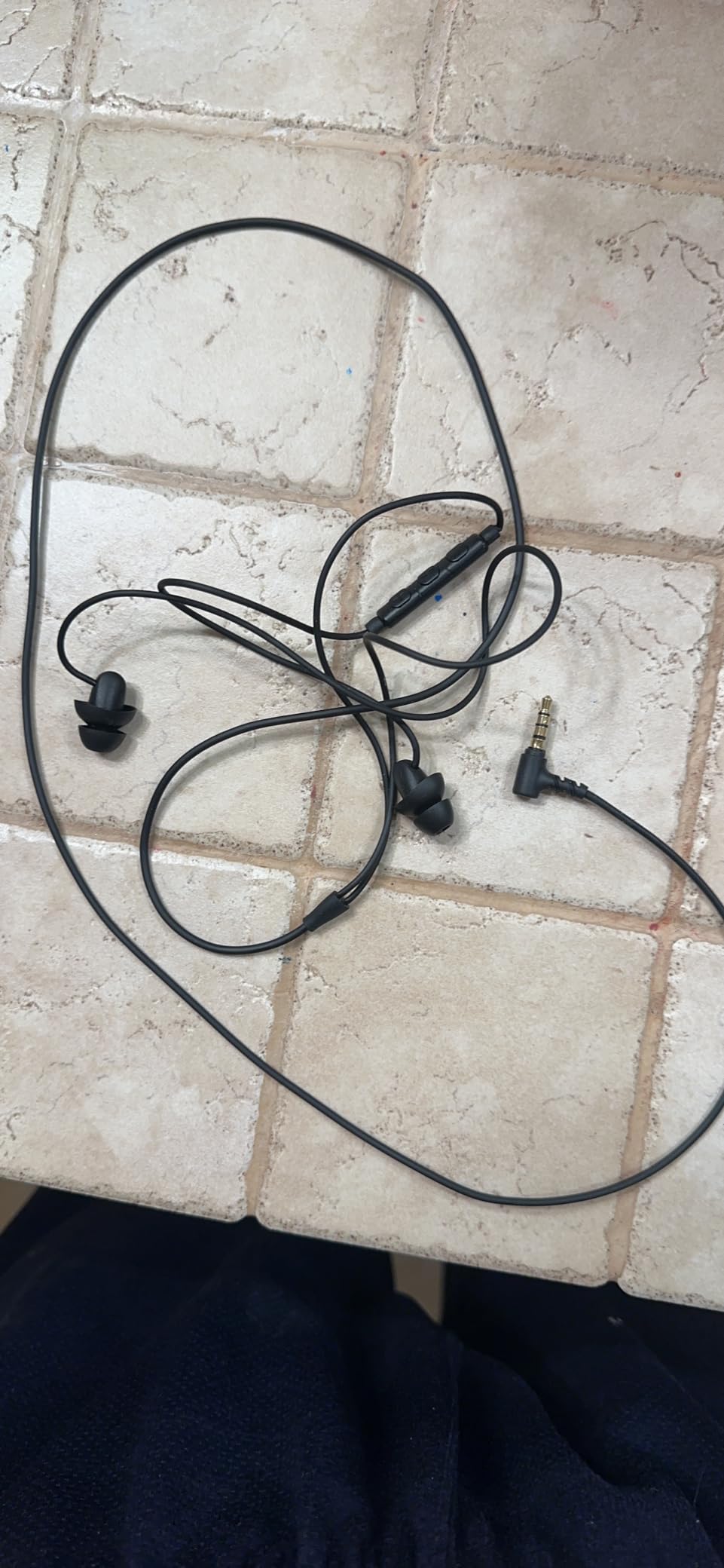
The cable is the obvious catch. Sleeping in a wired set means a cord across your pillow and chest, which some people find more disruptive than the noise they are trying to block, and it can snag when you roll. Quality control is uneven too, with buyers reporting that only one of the two included pairs has a fully working remote, and some units having in-line controllers that start misbehaving after several months.
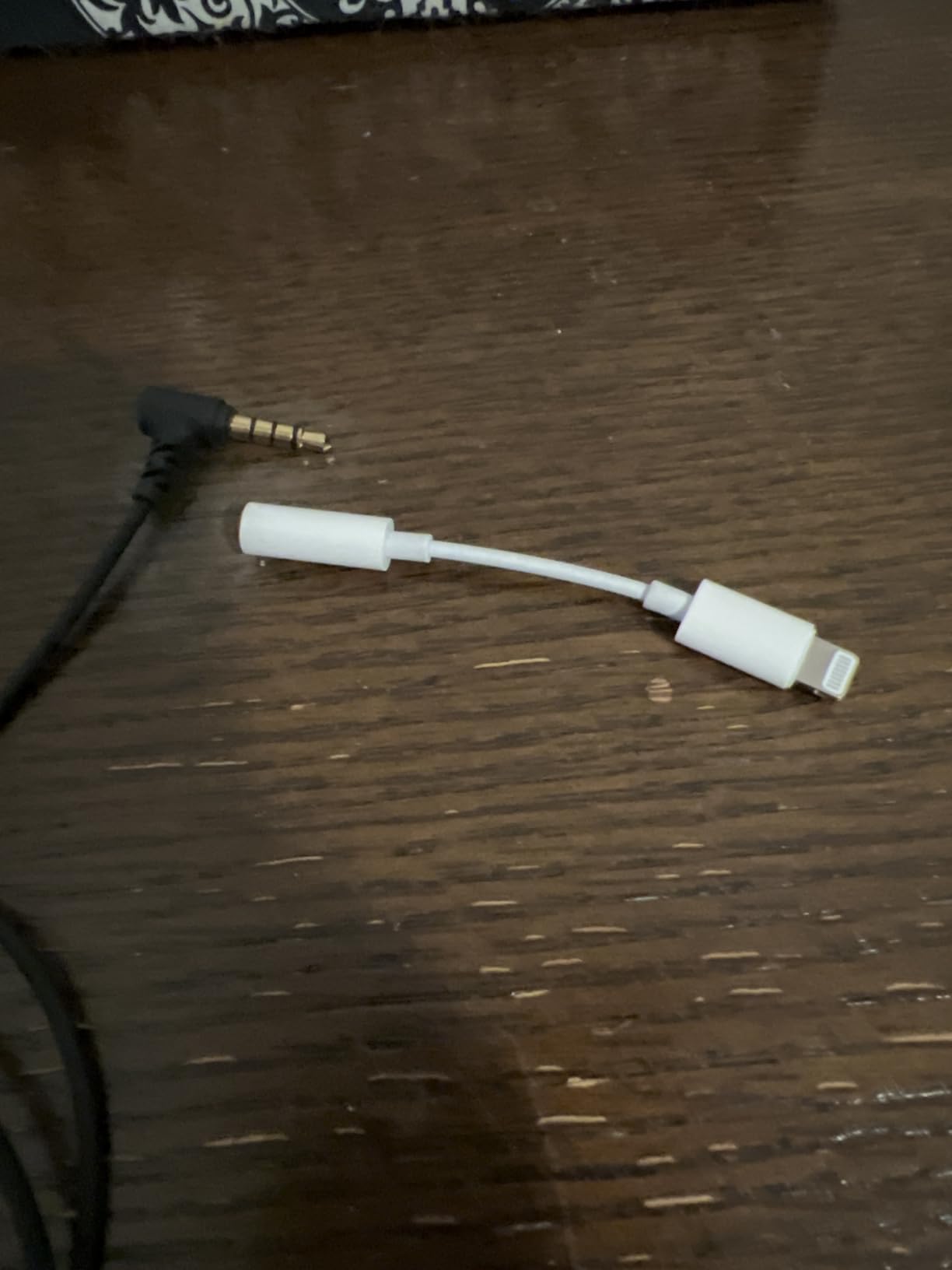
There is no way to adjust the fit. The silicone tips are moulded and not user-replaceable, so if your ear canals are small the fit is what it is. And a 3.5 mm jack is increasingly awkward on modern phones, so you may need an adapter, which some newer phones do not support at all without one.
Who this suits best
It suits people whose insomnia is sleep-maintenance insomnia caused by a partner rather than by their own thoughts. Steady snoring is a low-frequency problem, and an in-ear passive seal is the cheapest effective answer short of earplugs. It is also ideal for a hotel or a flight, because there is nothing to charge and nothing to lose, and for anyone whose local electrics situation makes overnight charging awkward.
Where it falls short
If you are a restless sleeper who moves across the bed, the cable will find a way to become a problem. People with small or sensitive canals may find the fixed tips painful over a full night, and anyone who refuses to sleep with a cord will not get past that. The included two pairs also have a quality inconsistency worth checking on arrival.
8. Veeniitosr 20-Hour Sleep Mask — Built for Long Sleeps and Naps
Sleep Headphones Bluetooth 6.0 Sleep Mask for Side Sleepers, 20H Playtime
20+ hour playback
Bluetooth 6.0
33-foot range
Velcro strap
Pros
- 20+ hours of playback is the longest runtime in this set
- Bluetooth 6.0 holds a stable 33-foot connection
- Velcro strap holds position for side
- back and stomach sleepers
- Machine-washable ice silk lining stays cool
Cons
- Smallest review base of the well-known picks
- Speakers need manual repositioning
- Dry clean only
- Needs a 5V/1A charger for the battery to last
Runtime is the entire pitch, and it is a real one. More than 20 hours of playback on a charge means you can go a week of nights, or several daytime naps, without thinking about a charger. For shift workers on rotating schedules, or anyone whose insomnia produces irregular sleep windows, that kind of forgetting is worth a lot more than marginally better sound.
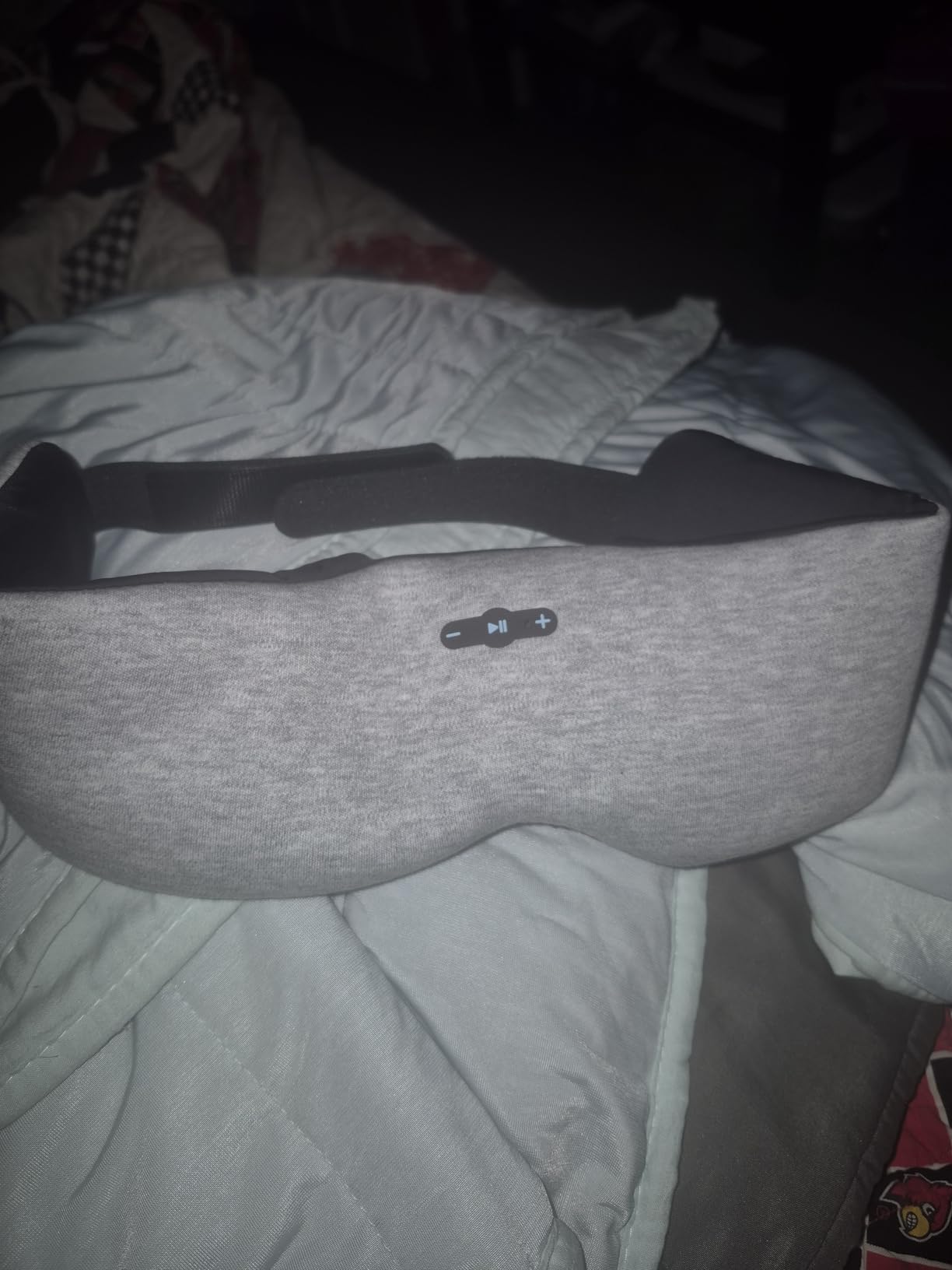
The adjustable Velcro strap is the other smart choice here. Because it tightens to your head rather than relying on elastic tension, it stays put across side, back and stomach sleeping, and you can adjust it once rather than fighting a band that has crept backward. The deep V-shaped nose bridge is designed to seal the light leak at the nose while staying off the eyes, and the ice-silk lining stays cooler than memory foam through a long session.
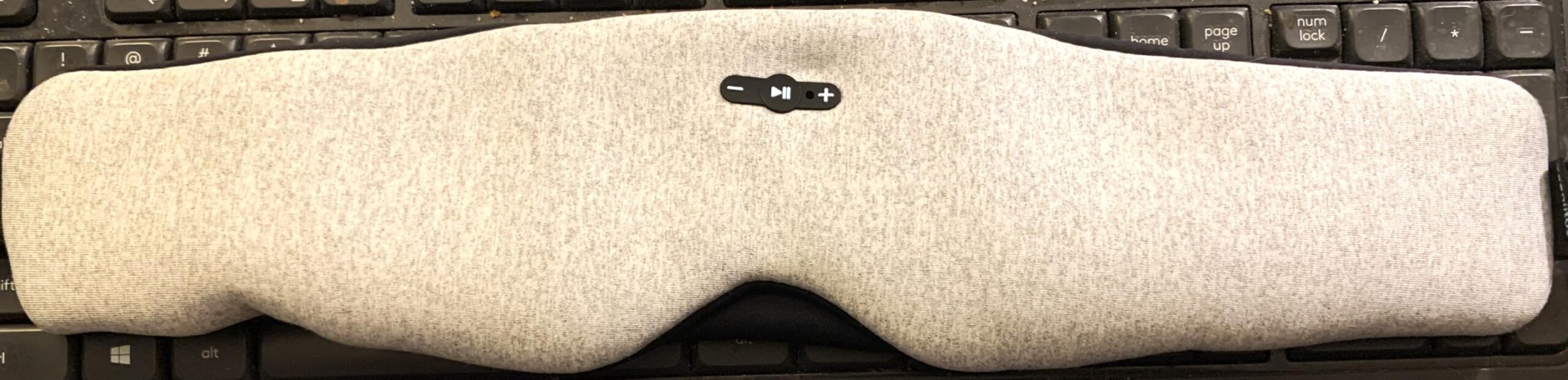
The honest caveat is the review base. With a few hundred ratings rather than tens of thousands, there is not yet a long enough track record to know how the battery, the fabric and the electronics hold up over a year of nightly use, and the 4.0 average reflects that thin evidence. Speakers also need manual alignment to the ears, which is the recurring weakness of every mask in this roundup.
Two smaller annoyances: care instructions are dry clean only rather than machine washable, and the battery is designed around a 5V/1A charger, so using a high-voltage fast charger can degrade it over time. If you charge overnight with a modern multi-port brick, use a low-output port. Bluetooth 6.0 and the 33-foot range are otherwise the most current specifications in the group.
Who this suits best
It suits night-shift workers, long-haul travellers, and anyone with an irregular sleep pattern who would rather not build a nightly charging habit around a sleep device. The Velcro strap also makes it the best mask here for someone who has struggled with headbands slipping, since you set the tension once. Cool-touch lining is a genuine bonus in a warm room.
Where it falls short
With so few reviews, you are taking a bet on long-term durability that the established picks do not ask you to take. It is dry clean only, which is a nuisance when the whole point is nightly use. And like the other masks, it adds sound without reducing it, so it does nothing for a loud partner or a noisy street.
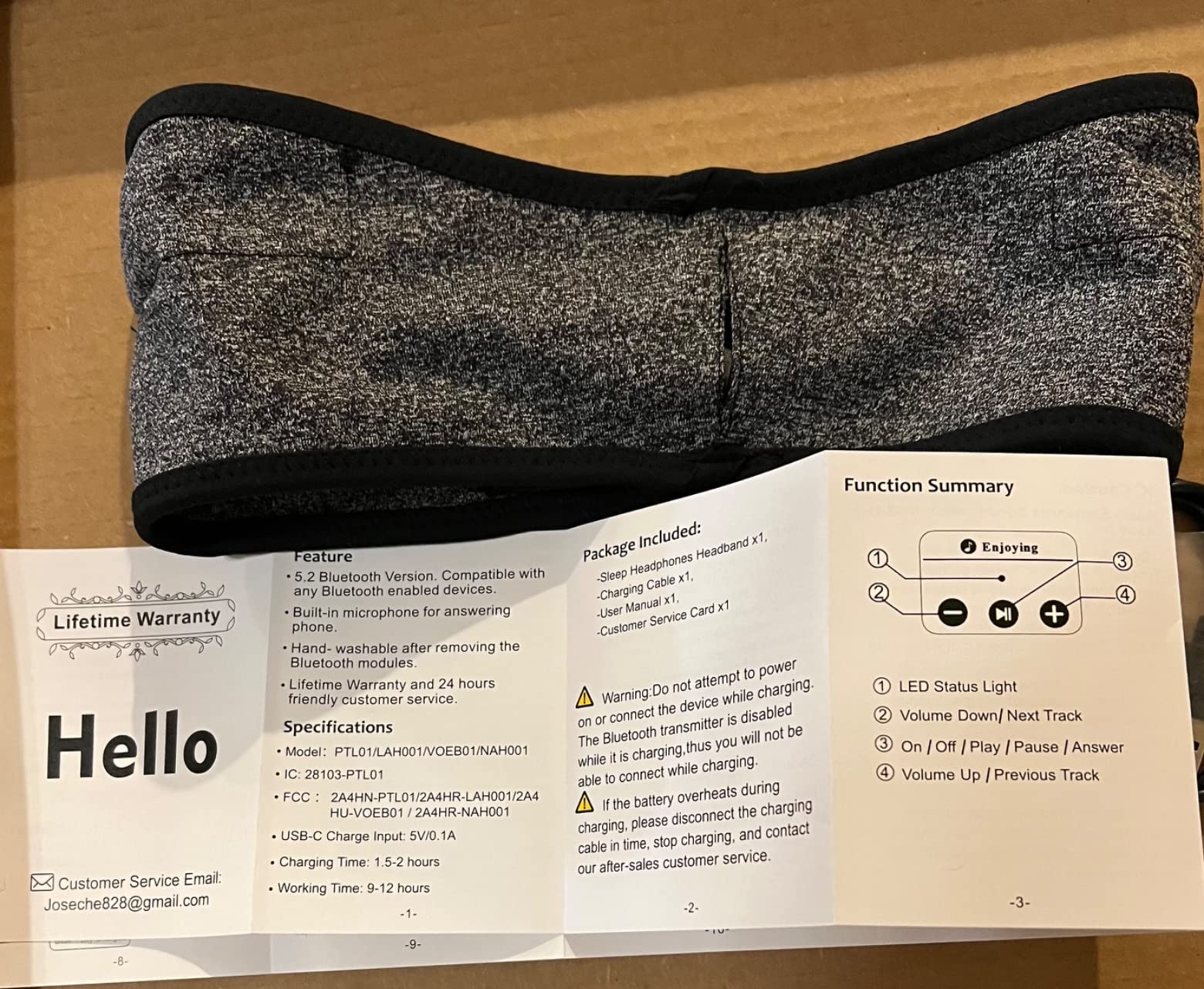
9. Enjoying ANC Sleep Headband — The Only Active Noise Cancellation Claim Here
Enjoying Sleep Headband, Bluetooth Headphones for Sleeping with Noise Cancelling, Thin Speakers, 1 Count, Black&Grey, Hairband, Unisex, for Sleep, Workout, Yoga, Travel, Insomnia, Leisure
10-hour battery
Bluetooth 5.2
90 g
Thin on-ear speakers
Pros
- Only headband in the set claiming active noise cancellation
- Thin speakers avoid pressing on the ear when side sleeping
- Breathable washable mesh lining stretches to fit
- 10-hour battery on a 2-hour charge
Cons
- Active noise cancelling claim has no measured data behind it
- Bluetooth 5.2 is two generations behind rivals
- Not an eye mask so light blocking is minimal
Every other pick in this roundup relies on either a passive seal or surface playback. This one lists active noise cancellation, which on paper sounds like the answer for a snoring partner. We would treat that label carefully. There is no published measurement for it, and the drivers are small flat pads on a stretchy band, which is not the hardware configuration where cancellation does meaningful work. Expect a modest reduction in low hum, not a solution to snoring at conversational volume.
Used as what it genuinely is, it works well. The thin speakers avoid pressing on the ear when you roll onto your side, the mesh lining is breathable and washable, and the stretch fits a range of head sizes. Over 10 hours of playback from a 2-hour charge covers a typical night, and the built-in microphone with volume and track controls is more than the other budget bands offer.

Its specifications are also the oldest here. Bluetooth 5.2 is two generations behind the 5.4 and 6.0 devices in this group, which matters slightly for connection stability and power use. The review count is on the low side at under 1,200 ratings, so the long-term picture is not well established, and there is no real light blocking since it is not an eye mask.
We would rather tell you the ANC claim is unverified than repeat it as a benefit. If you want a budget device that adds a masking layer at bedtime, this does it. If you are buying specifically to defeat a snoring partner, spend your attention on an in-ear pick with genuine passive isolation instead.
Who this suits best
It suits someone who wants the option of a noise-reduction layer without moving to an in-ear device they find uncomfortable. Side sleepers who dislike earbuds entirely tend to do well with this form factor, and the washable mesh means it survives regular use better than fabrics that trap moisture. The 10-hour runtime is fine for a standard night.
Where it falls short
The headline feature is the one we cannot verify, and buying on that basis is a risk. Older Bluetooth means marginally less stable pairing over a long night, and with no eye mask you get minimal light blocking. If your insomnia is noise-driven, this ranks below an in-ear pick with genuine passive isolation.
10. HAMRTEK Blackout Sleep Mask — The Highest Rated, Least Proven
Sleep Headphones Bluetooth 5.4 Sleep Eye Mask for Side Sleeper
99.9% light blocking
TF card playback
10+ hours
Dual-sided fabric
Pros
- 99.9% light blocking rated in the multi-layer composite fabric
- TF card playback works with no phone in the room
- Reversible silky and cotton sides for the seasons
- 10+ hours of playback on 1-2 hour Type-C charging
Cons
- Smallest review base in the set at 177 ratings
- Hand wash only
- Magnetic closure may not hold through vigorous movement
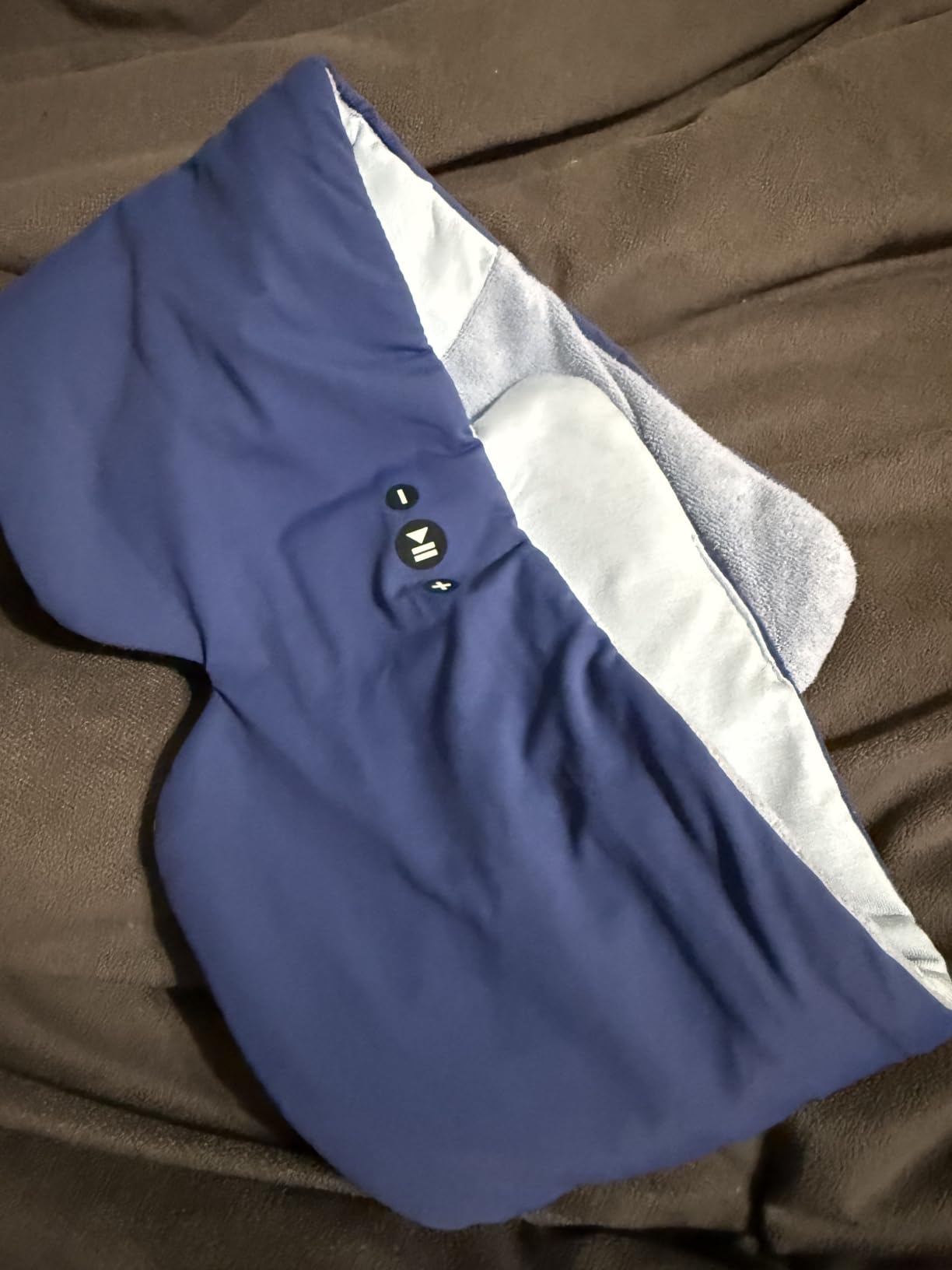
Two things set this apart. The first is light blocking, rated at 99.9 percent for the multi-layer composite fabric, with a U-shaped profile that follows the nose bridge without pressing on the eyes. For a back sleeper in a room with any daylight, that is a meaningful upgrade over a fabric headband that blocks nothing.
The second is TF card playback, which lets the mask play audio straight from a memory card with no phone in the room. That solves two problems at once for insomnia: no glowing screen on the nightstand, and no incoming call or notification waking you at 3am. The dual-sided fabric is also sensible, with a silky side for summer and a breathable cotton side for winter, and the 10-plus hour runtime covers a full night on a 1 to 2 hour Type-C charge.
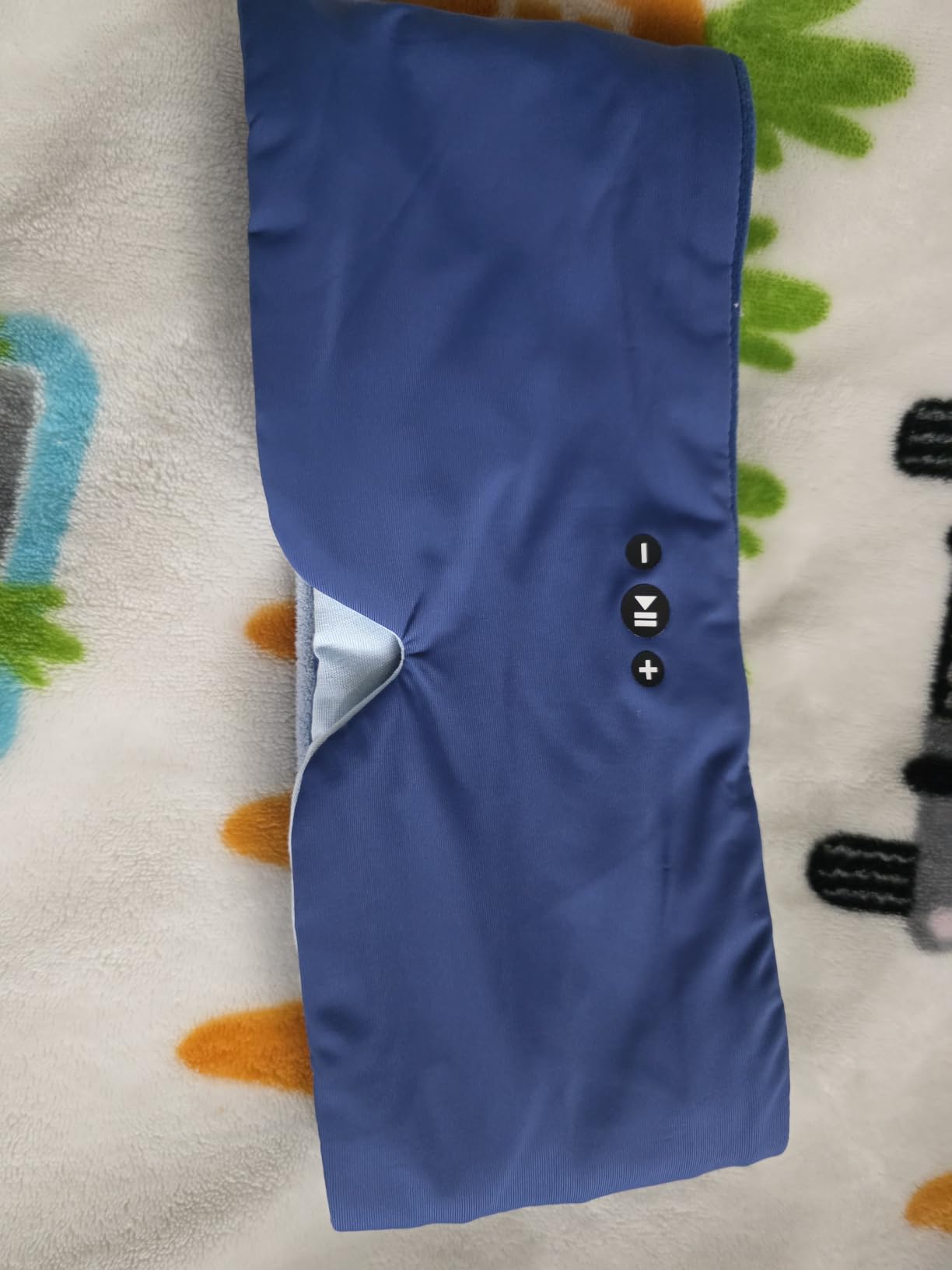
That 4.9-star average comes from 177 ratings, with roughly nine in ten at the maximum. It is the highest rating in the set and the thinnest evidence base at the same time, which is a combination worth holding carefully. The sales rank is also very low, so this is not a widely proven product. Hand wash only is a real limitation for something you wear every night, and the magnetic closure may not hold firmly through vigorous movement.
Blue is the only colourway, which matters more than it should if you are sensitive to fabric feel. As with the rest of the masks here, there is no noise reduction — it plays sound and blocks light, which is a real benefit for the right sleeper and irrelevant for a loud bedroom.
Who this suits best
It suits back sleepers and light sleepers in bright rooms, and anyone whose phone currently wakes them with a notification at an unhelpful hour. Playing from a card removes the phone from the equation entirely, which is a small design decision with a large effect on sleep continuity. The reversible fabric also makes it a season-spanning choice for people who sleep warm in summer.
Where it falls short
The sample size is genuinely small, so long-term reliability is unproven and you may struggle to find replacements or support if it fails. Hand washing a nightly device is a chore, and a single colourway limits you if the fabric does not agree with your skin. It also does nothing about noise, so a snoring partner remains unsolved.
The Sleep-Position Matrix: Side, Back and Stomach Sleepers Matched to Form Factor
Sleep position is the variable nobody asks about before buying, and it is the one that decides whether you keep a device past the first month. The rule is simple: anything that protrudes into the space between your ear and the pillow will cause pain eventually, and anything that seals your ear canal tolerates pressure far better than anything resting on the outer ear.
Side sleepers need the lowest possible profile. That makes low-profile in-ear sleep earbuds and flat on-head headbands the two viable options; anything with a stem, a large control pod, or a padded on-ear cup will eventually dig in. This is the strictest category, and it is why the headbands and the invisible earbuds dominate this list.
Back sleepers are the least constrained. Almost anything works, which makes them the easiest to satisfy, and it is where sleep masks with full light blocking earn their place since there is no pressure problem to solve. Stomach sleepers sit in between, but with a twist: they need the device anchored, so a stretchy band that holds its position beats a loose mask with adjustable straps.
The practical decision rule we would give a friend: if you sleep on your side, buy the lowest-profile thing that will meet your noise need. If you sleep on your back or your stomach, prioritise light blocking and battery over profile, because you will not be pressing anything into your ear. Our deeper piece on why some people cannot sleep without a fan is a useful companion read, because the masking problem is often simpler than it looks.
How to Choose Sleep Headphones Without Waking Your Partner at 3am
Start with your insomnia type, not the spec sheet. If you lie awake in a quiet room with a busy mind, you need sound that occupies attention — a masking layer or low audio is enough, and any headband on this list will do. If you fall asleep easily and then get woken by noise, you need physical isolation, which means an in-ear device with a passive seal or proper earplugs. Buying a noise-cancelling gadget for a racing mind is solving the wrong problem.
Do the cheap test first. Before committing to any of these, spend a fortnight with a low-cost wired or budget headband. Sleep-onset insomnia tells you within three nights whether audio helps at all, and if it does not, no amount of spending will change that. Several insomnia communities report the same pattern: people returning four or more sleep earbuds in a year because they bought the expensive one first and never established whether audio helped them.
Do the battery math. Figure out your actual hours of wear, not your hours in bed. Seven to nine hours is typical, and heavy snorers or restless sleepers can need ten. Anything under eight hours means a daily charging habit, and anything with a sleep mode that locks out touch controls is worth more than an extra two hours, because a mid-night pause is the failure you will actually notice. If you are still deciding between two picks and one has sleep mode, that is the tiebreaker.
For a snoring partner, use a seal. Snoring is low-frequency sound, and low-frequency sound is exactly what surface speakers and unverified active cancellation handle worst. An in-ear passive seal attenuates it far more effectively than a masking layer, and if the snoring is loud enough to be structural, earplugs may be the honest answer. Our read on the best white noise machines for sleep is worth a look as a complementary layer rather than a replacement.
If you have small ear canals, buy the surface design. In-ear is not universally better. Small or sensitive canals are a recurring source of real pain in this category, and the people who suffer most are often the ones who assumed in-ear was the safest route. If you have had trouble with earbuds or even looped earplugs before, go straight to a headband and skip the in-ear options entirely.
Protect the quiet hours. Whatever you choose, look for a device that does not need your phone within arm’s reach. A TF card player, a wired connection, or a sleep mode that disables buttons all keep an external interruption from ending the night. And if you are testing how your partner reacts to a new device, start it on a weekend so a bad first impression does not become a permanent veto.
Ear Safety, the 60-60 Rule and Nightly Hygiene
Sleep earbuds are not dangerous in the way people fear, but they do create conditions that invite problems if you ignore them. Eight hours of warm, damp, unventilated in-ear tips sitting against the canal wall is exactly the environment associated with irritation and outer ear infections. The canal is skin, not a cavity designed to stay wet all night, and the fix is mostly behavioural rather than medical.
On the 60-60 rule: the widely cited guidance is to keep listening volume at or below 60 percent of your device maximum, for no more than 60 minutes at a stretch. Sleep use is a partial exception, because the sound level required for masking is low — often quieter than daytime listening, not louder — and because the risk profile is duration rather than volume. Practically, it means choosing the lowest level that still does the masking job, which for most people is well below half volume.
Take a night off each week. This is the single most useful habit and it costs nothing. An ear that has had a full week of overnight wear will feel noticeably different after a night without a device, and that difference is your own early warning system for irritation. If you are not willing to give it up, at least give the canal one dry night a week.
Clean on a schedule, not on a feeling. Wipe the tips and the body of a device weekly, remove silicone tips and wash them separately, and let everything dry completely before reassembly. Surface-only headbands are far easier: the removable Bluetooth modules on several picks here let the whole fabric band go in a washing machine, which removes the main reason people avoid cleaning. Never charge a device that is not fully dry.
Know when to stop and when to seek help. Persistent pain, discharge, or a feeling of blockage that lasts more than a day or two is not a fit problem to solve with a smaller tip. Inability to fall asleep in a genuinely quiet room is likewise not a noise problem. For chronic insomnia — difficulty sleeping three or more nights a week for three months — the first-line treatment is cognitive behavioural therapy for insomnia, which has stronger evidence behind it than any device, and a clinician referral is more useful to you than another gadget. Many people use audio as a bridge to better sleep hygiene rather than as a permanent solution, which is a healthier way to use any of these picks.
Frequently Asked Questions
Do sleep headphones really work?
Yes, for noise-triggered insomnia specifically. Sleep headphones work by masking rather than silencing: a steady layer of white, pink or brown noise plus a passive ear seal covers the irregular sounds that wake a light sleeper, so your brain stops tracking them. They help far less with a racing mind than with a noisy room, and they do not treat chronic insomnia.
Is it good to sleep with headphones every night?
For most healthy adults, wearing sleep headphones overnight is reasonable at a low volume, because masking sounds are usually quieter than daytime listening rather than louder. The main risks are ear-canal irritation and moisture from eight hours of sealed silicone tips, plus device failure at 3am. Keep the volume low, clean the tips weekly, and take one dry night off each week to reduce both.
What is the 60-60 rule for headphones?
The 60-60 rule suggests listening at no more than 60 percent of your device maximum volume for no more than 60 minutes at a time. Sleep use is a partial exception because the volume required for noise masking is low, but the duration risk still applies. Choose the quietest level that still masks the room, and avoid sleeping at high volume, which is the one habit worth breaking completely.
What are the best headphones to wear while sleeping?
The best sleep headphones depend on your position and your noise problem. Side sleepers want the lowest possible profile, so flat on-head headbands or low-profile in-ear sleep earbuds. Back and stomach sleepers can prioritise light blocking and battery instead. People with a snoring partner need an in-ear passive seal or earplugs, since surface speakers cannot attenuate low-frequency snoring. No single device wins every case.
What is the best device to block out noise while sleeping?
An in-ear device with a good passive seal, or earplugs, beats every surface-wearing option for blocking noise, because low-frequency sound such as snoring is attenuated physically rather than covered with audio. If you want sound and isolation together, combine earplugs or sealed in-ear buds with a white noise machine in the room. Headbands add a masking layer but block very little on their own.
Can sleep earbuds cause ear infections?
They can contribute to irritation and outer ear infections when silicone tips stay warm and damp in the canal for eight hours a night without cleaning. The risk comes from conditions rather than from the device itself. Wash tips weekly, keep the devices dry before charging, take a night off each week, and stop using them if you develop persistent pain or discharge, which needs clinical attention rather than a fit change.
The Bottom Line: Who Should Buy Which Sleep Headphones
If you want one recommendation from the best sleep headphones for insomnia roundup, take the Perytong headband. It has the deepest review base in the category, a form factor that cannot cause pressure pain, and a battery that clears a normal night. If your room is loud rather than your mind, go in-ear with the DAGKHE buds or the Hearprotek wired pair, because a physical seal is the only thing that defeats snoring. If your problem is light as much as sound, the blackout masks win, and for irregular schedules the Veeniitosr model has the runtime to match.
Start cheap, test for a fortnight, and only then decide whether audio belongs in your bedtime routine. If you sleep on your side, keep the profile low; if you share a bed, keep the volume low and the buttons locked. And if none of it touches the problem, that is useful information — it points toward sleep hygiene or CBT-I rather than another device, which is worth saying plainly because a gadget is a much more comfortable answer to give.
We write about the psychology of relationships and sleep at Geek Fill, where the subject is usually more complicated than a spec sheet.