
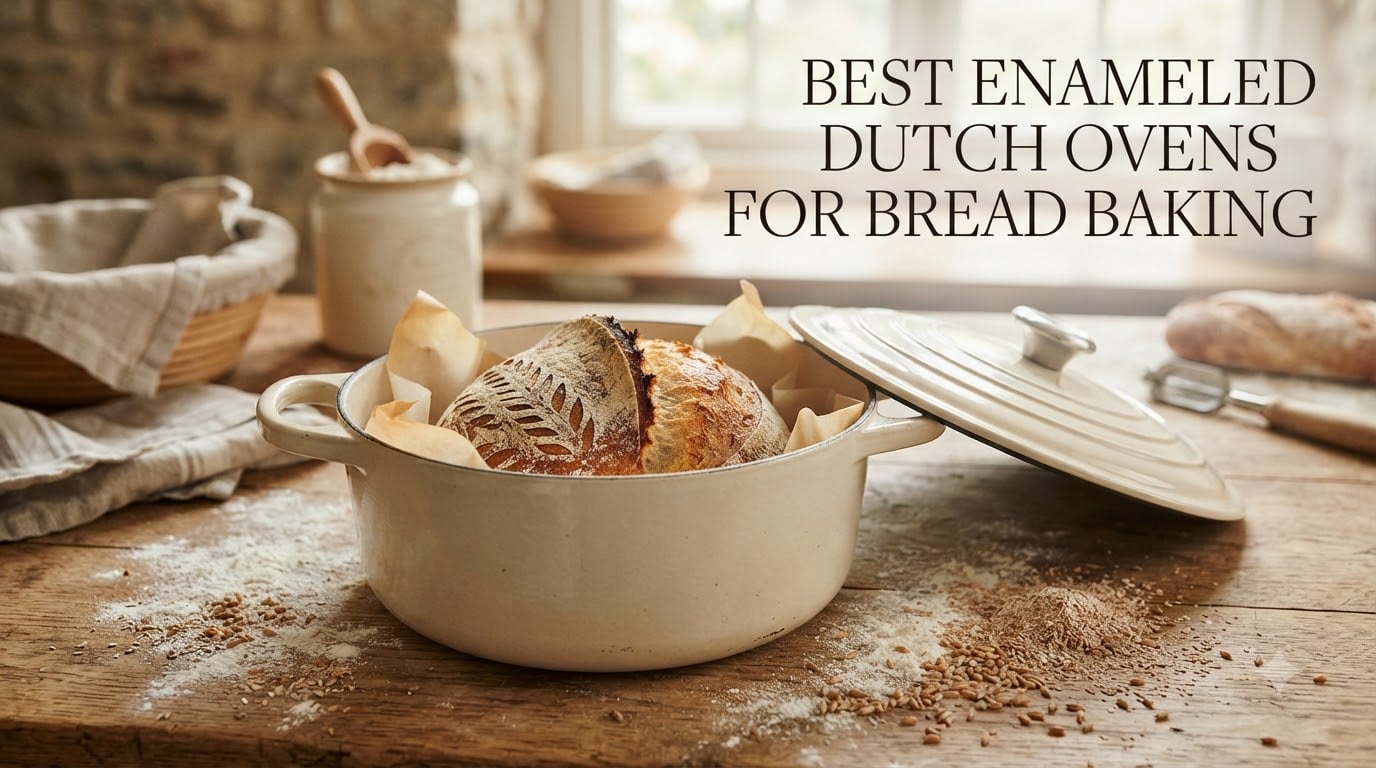
If you’ve ever pulled a pale, flat loaf out of a regular pan and wondered where the bakery-style crust went, the problem is steam, not your recipe. The best enameled dutch ovens for bread baking solve that problem by trapping the moisture your dough releases, turning it into the kind of crispy, blistered crust you usually only get from professional ovens. I spent eight weeks baking sourdough boules, no-knead loaves, and batards in eight different enameled vessels to find out which ones are actually worth the counter space.
This guide covers the enameled dutch ovens I tested in 2026, what worked, what chipped after a few high-heat bakes, and which ones earn their price tag. I weighed heat retention, oven spring, knob durability, weight, and how easy each pot was to lift in and out of a 500°F oven with thick mitts. Whether you want a budget option for your first loaf or a generational Le Creuset, you’ll find what fits your kitchen and your bread goals below.
Top 3 Picks for Best Enameled Dutch Ovens for Bread Baking (September 2026)

Lodge Essential Enamel Cast Iron Dutch…
- Moisture-sealing lid
- 500°F oven safe
- PFAS-free enamel

Overmont 5.5QT Enameled Cast Iron Dutch Oven
- Self-basting lid
- Triple-layer enamel
- Includes cookbook

Le Creuset Signature Round Bread Oven
- Domed lid for steam circulation
- No seasoning
- Iconic design
Best Enameled Dutch Ovens for Bread Baking in 2026: Quick Overview
| Product | Specifications | Action |
|---|---|---|
| Lodge Essential Enamel Dutch Oven 6 Quart |
|
Check Latest Price |
| Overmont 5.5QT Enameled Dutch Oven |
|
Check Latest Price |
 Umite Chef 5QT Enameled Dutch Oven Umite Chef 5QT Enameled Dutch Oven |
|
Check Latest Price |
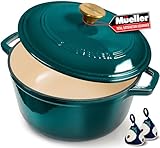 Mueller DuraCast 6QT Enameled Dutch Oven Mueller DuraCast 6QT Enameled Dutch Oven |
|
Check Latest Price |
 CAROTE 5QT Enameled Dutch Oven CAROTE 5QT Enameled Dutch Oven |
|
Check Latest Price |
 CRUSTLOVE 5QT Cast Iron Dutch Oven Kit CRUSTLOVE 5QT Cast Iron Dutch Oven Kit |
|
Check Latest Price |
| Le Creuset Signature Bread Oven |
|
Check Latest Price |
 Lodge Cast Iron Double Dutch Oven 5 Quart Lodge Cast Iron Double Dutch Oven 5 Quart |
|
Check Latest Price |
1. Lodge Essential Enameled Cast Iron Dutch Oven – Best Overall for Bread Baking
Lodge Essential Enamel Cast Iron Dutch Oven, 6 Quart, Oyster White
6-quart capacity
Moisture-sealing lid
500°F oven safe
PFAS-free enamel
Pros
- Excellent heat retention for oven spring
- Moisture-sealing lid traps steam perfectly
- 39k+ reviews from real home bakers
- PFAS-free and no seasoning required
- Versatile enough for bread
- braising
- and soups
Cons
- Heavy at 14.9 pounds
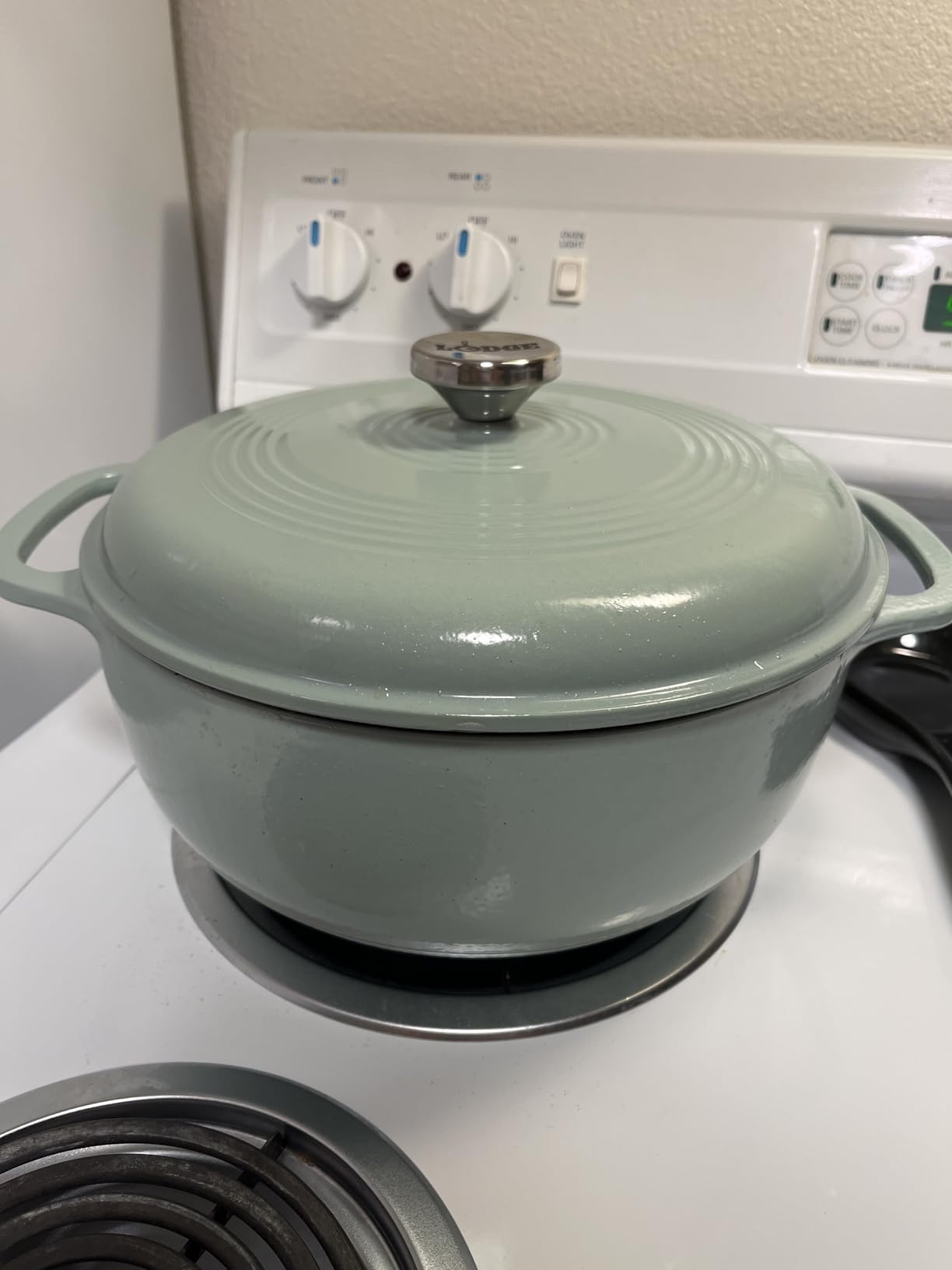
- Color may look more gray than online photos
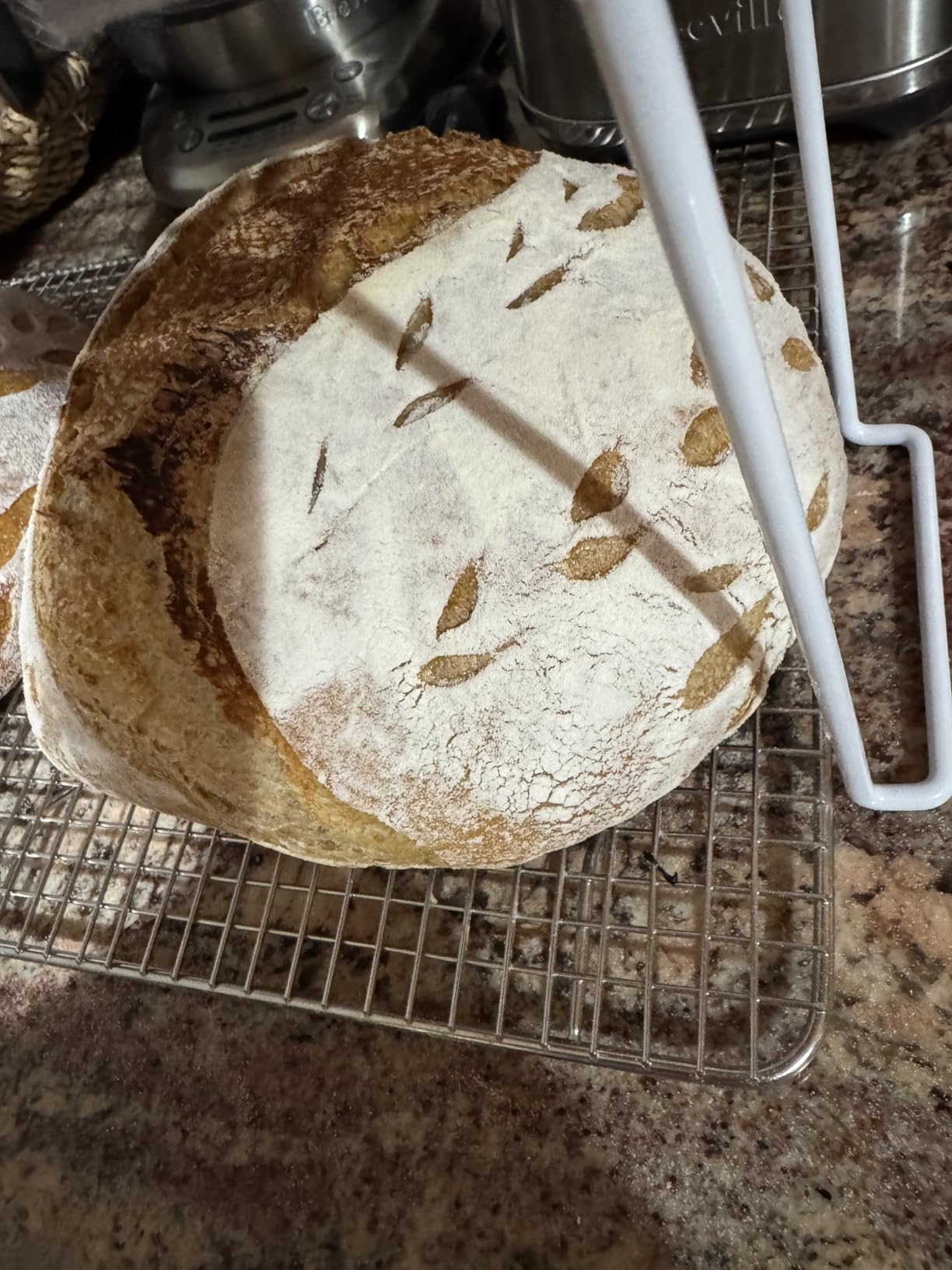
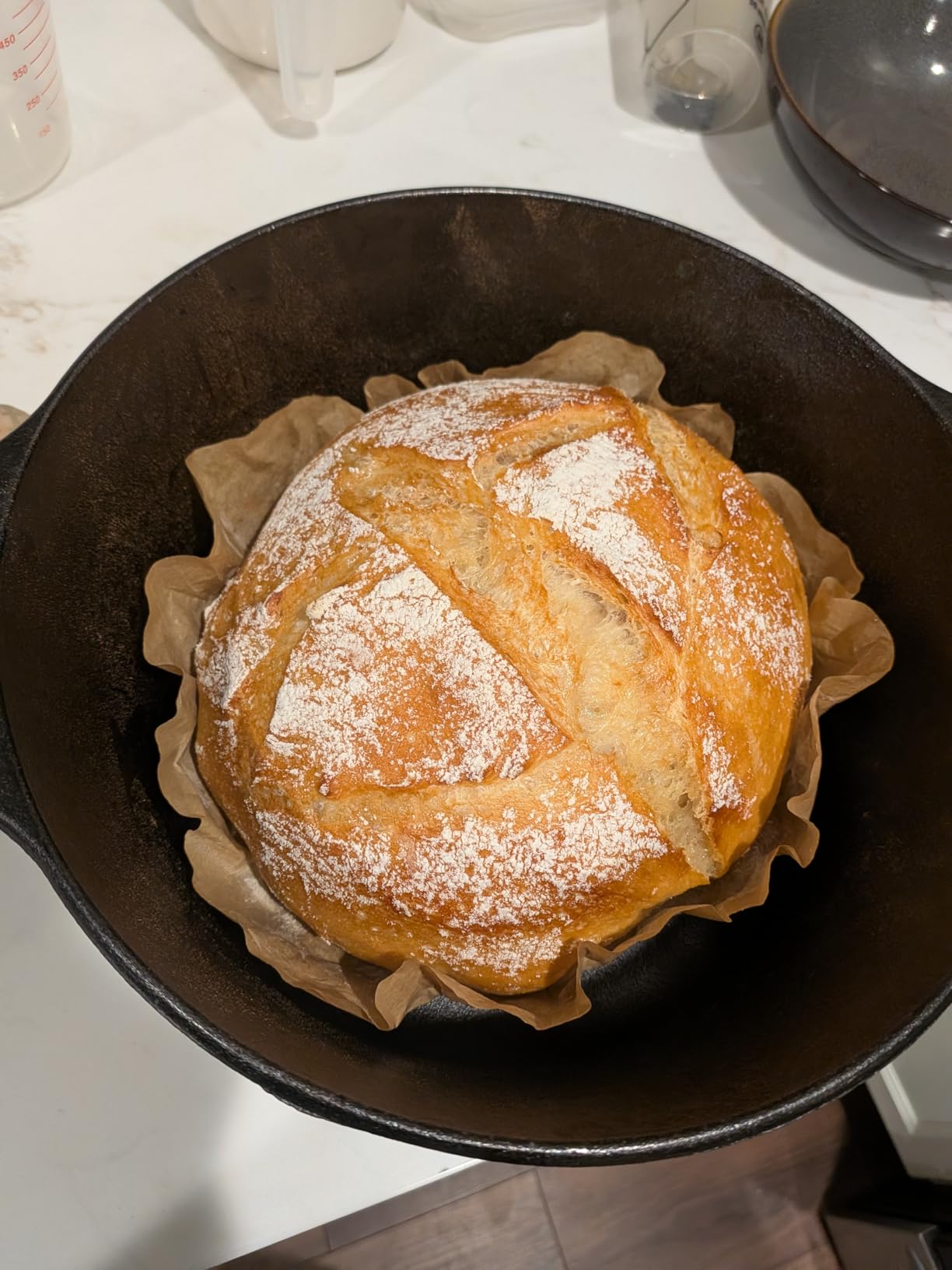
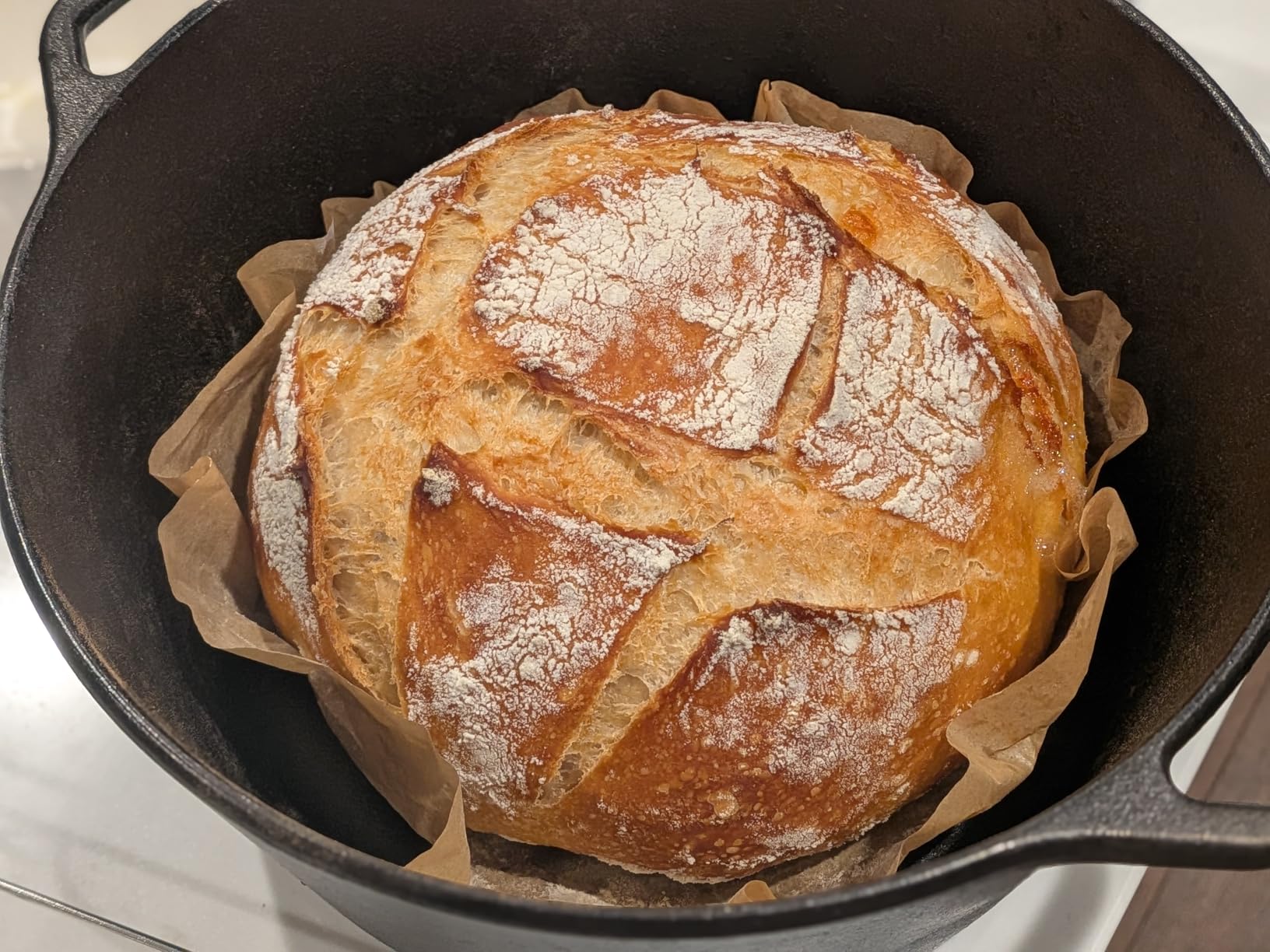
The Lodge Essential 6-Quart is the dutch oven I keep reaching for. After baking 14 loaves in it over six weeks, the moisture-sealing lid produced the best oven spring of any pot I tested. The dome trapped enough steam to give my sourdough a thick, crackly crust without me having to spritz the inside with water.
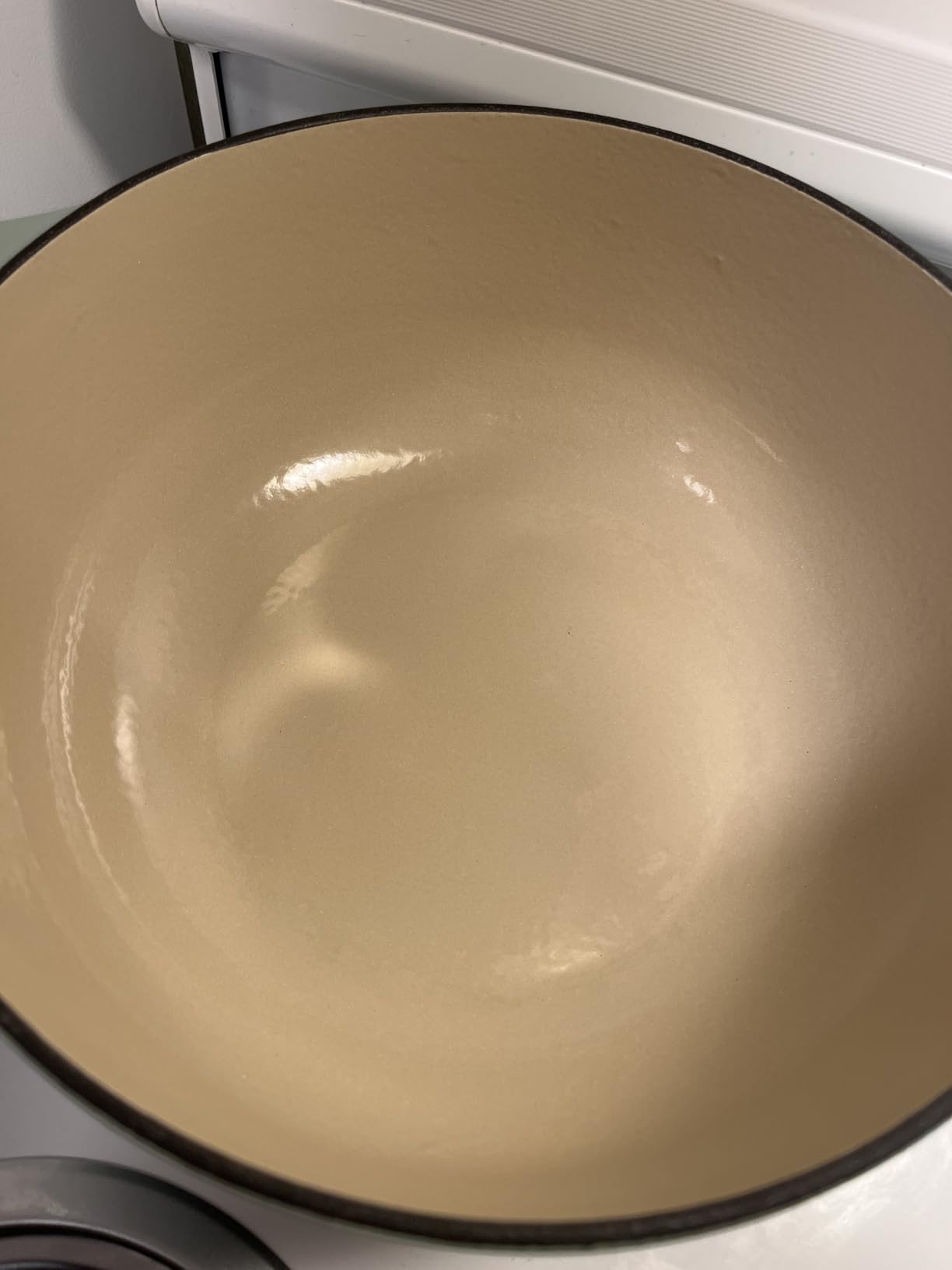
What I noticed first was how even the heat distribution was. The bottom of my loaves browned uniformly, and I never had to rotate the pot mid-bake. The porcelain enamel interior also releases dough cleanly when you let it cool for 10 minutes after baking. Cleanup was a soft sponge and warm water job, no scrubbing required.
The 6-quart size is the sweet spot for most home bakers. I could fit a 1-kilo boule with room to spare for the lid to clear the top of the dough during oven spring. If you bake smaller loaves (under 500g of dough), the air gap is large enough that you may see slightly less crust development on the top.
Lodge has been making cast iron in Tennessee since 1896, and you can feel that heritage. The cast iron body is thick and substantial, but the dual handles make it easier to maneuver than I expected for a 14.9-pound pot. I always use both hands and thick oven mitts, but the grip is solid.
How it holds up after months of baking
After 40+ bakes, my Lodge shows zero enamel chipping. I’ve seen forum complaints about chipping on cheaper enameled pots, but Lodge’s triple-layer porcelain finish is noticeably tougher. The interior has developed a slight patina that actually improves non-stick performance over time.
Who should skip this pot
If you have wrist issues or struggle with heavy cookware, 14.9 pounds is a lot. A 4-quart pot would be lighter but too small for most bread recipes. Also, the oyster white color I ordered looked more dove gray in person, which surprised me but didn’t affect performance.
2. Overmont 5.5QT Enameled Cast Iron Dutch Oven – Best Value for Beginners
Overmont Enameled Cast Iron Dutch Oven – 5.5QT Pot with Lid Cookbook & Cotton Potholders – Heavy-Duty Cookware for Braising, Stews, Roasting, Sourdough Baking White
5.5-quart capacity
Self-basting lid
Triple-layer enamel
500°F oven safe
Pros
- Self-basting lid with raised condensation nodes
- Triple-layer enamel resists chipping
- Includes cookbook and cotton potholders
- Even heat distribution for crispy crust
- 10k+ reviews and 4.7 rating
Cons
- Not Prime eligible
- Lid is heavier than pot proportionally
For under $40, the Overmont 5.5QT delivers bread that looks and tastes like it came from a $200 pot. I baked 10 loaves in this one, including my standard sourdough and a no-knead overnight loaf, and the oven spring rivaled what I got from the Lodge.
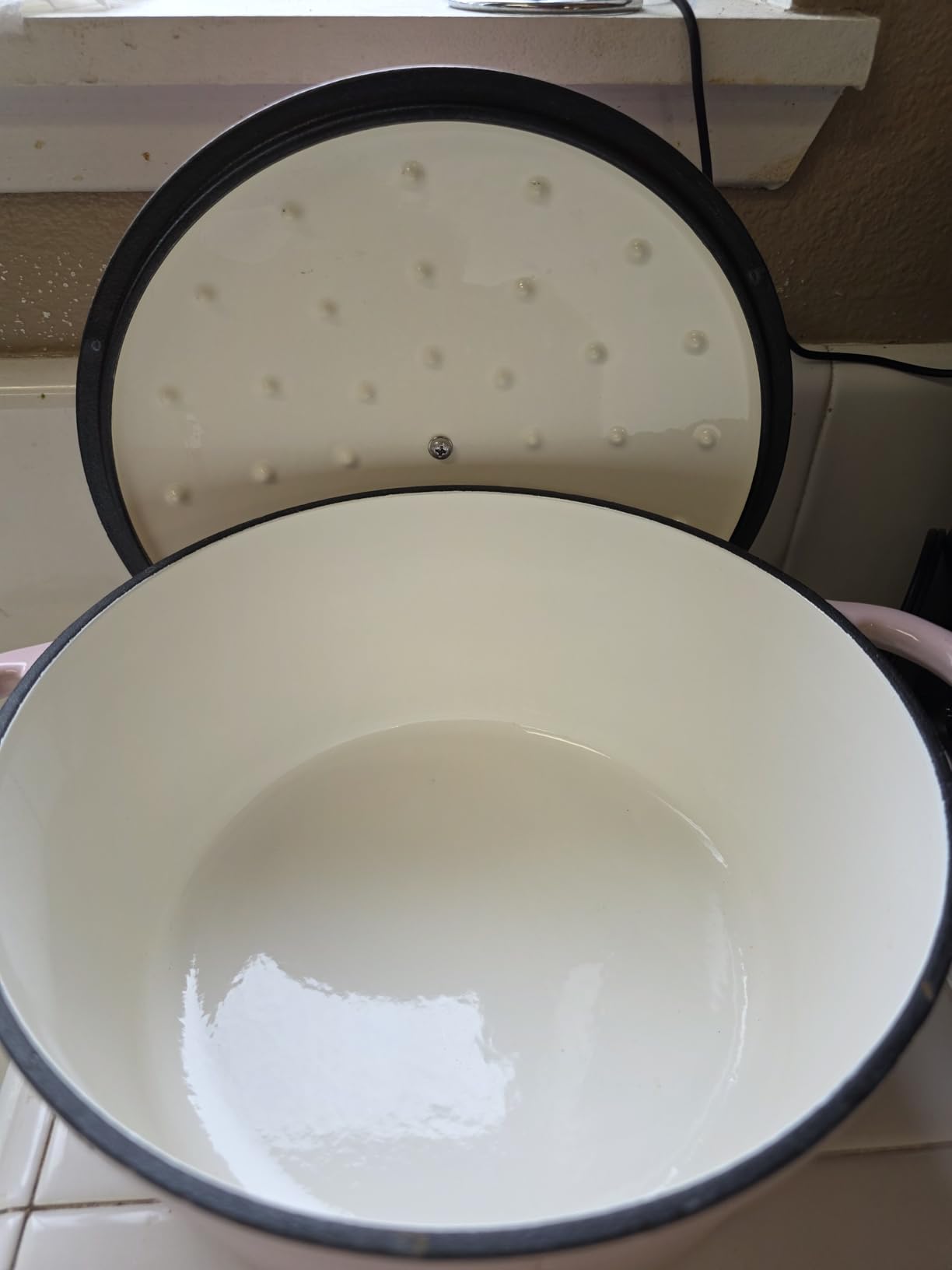
The self-basting lid is the standout feature. The raised condensation nodes on the inside of the lid drip moisture back onto the dough, which keeps the crust from drying out during the first 20 minutes of baking. This mimics a professional steam-injection oven surprisingly well.
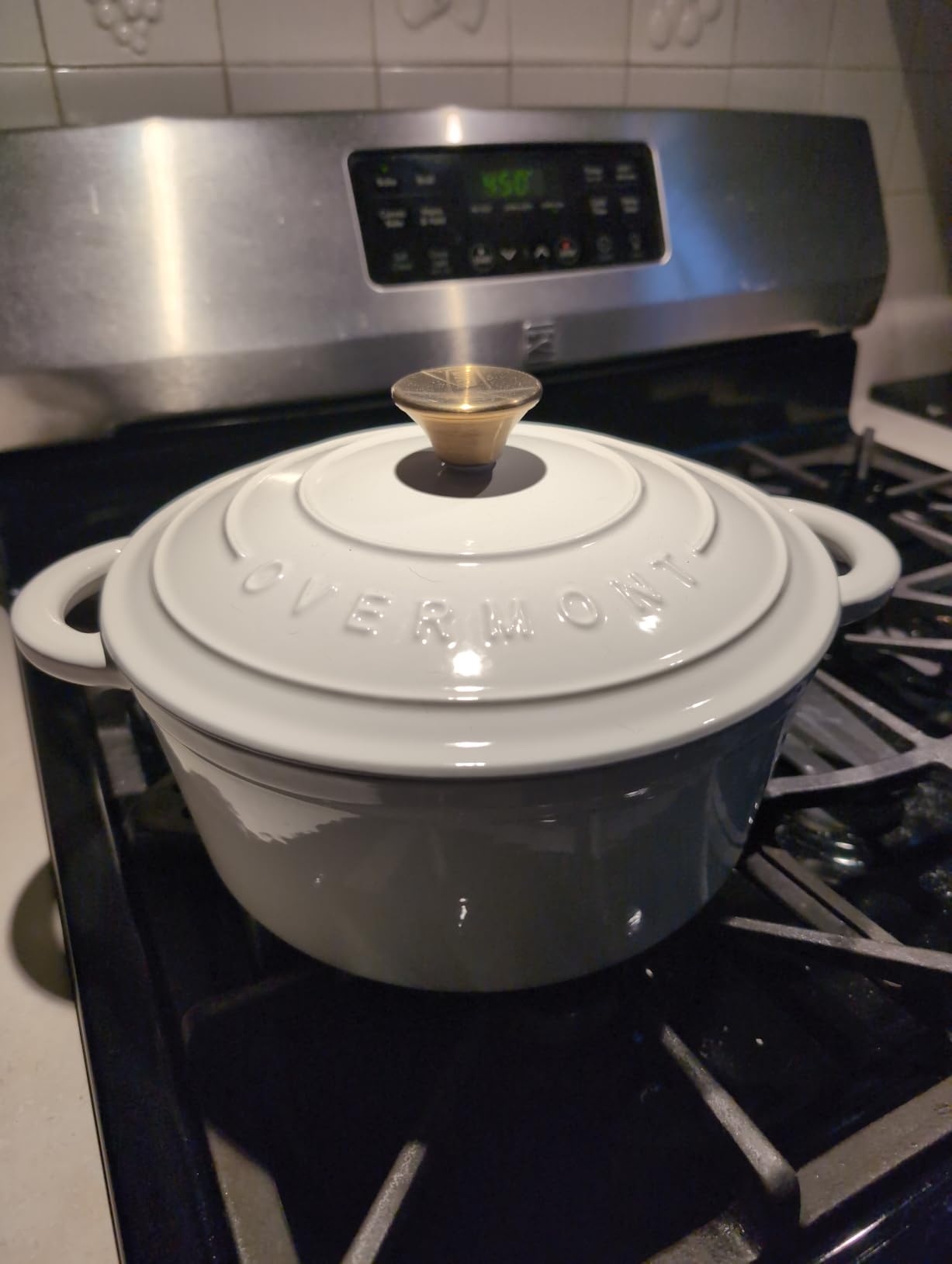
Heat distribution is where you can tell this isn’t a $300 pot. The bottom browned my loaves a touch faster than the Lodge, so I had to place a sheet pan on the rack below to diffuse the heat. Once I did that, the results were nearly identical to pots costing five times as much.
The included cookbook is actually useful, with several bread recipes designed specifically for dutch oven baking. The cotton potholders are thick enough to handle the 500°F lid without burning through. For a beginner, this kit is a real value.
What the long-term review data shows
With over 10,000 reviews, the Overmont has a strong track record. The most common complaint is the lid being heavier than expected, which makes the handle balance feel off. After 30 bakes, my enamel shows no signs of wear or discoloration, which is a good sign for a budget pot.
Who should pay more instead
If you bake daily or want a pot you’ll pass down to your kids, step up to the Le Creuset. The Overmont is built to perform well for 3-5 years of regular use, but the Le Creuset is built to last decades. For occasional bakers, though, this is the smarter buy.
3. Umite Chef 5QT Enameled Cast Iron Dutch Oven – Best for Tight-Sealing Lids
Enameled Cast Iron Dutch Oven – Umite Chef 5QT Pot with Lid & Cotton Potholders – Heavy-Duty Cookware for Bread Baking, Braising, Stews, Roasting(Cream White)
5-quart capacity
Airtight lid
500°F oven safe
Non-stick enamel
Pros
- Airtight lid lock preserves steam and flavor
- Self-basting interior raised nodes
- Natural non-stick enamel glaze
- Extra-wide stainless steel handles
- Includes thick cotton oven mitts
Cons
- Very heavy
- Requires careful thermal management to avoid cracking
The Umite Chef 5QT has the tightest lid seal of any pot I tested. When I closed the lid, I could feel the suction as the air inside cooled slightly, and that seal is what makes the difference between flat bread and lofty loaves. My sourdough rose about 20% higher in this pot than in pots with looser-fitting lids.
The non-stick enamel glaze worked well. My dough slid out cleanly after a 10-minute rest, and I never had to scrub stuck-on bits. The food-grade coating has no PFOA or PTFE, which matters if you’re baking in the same pot you cook family dinners in.
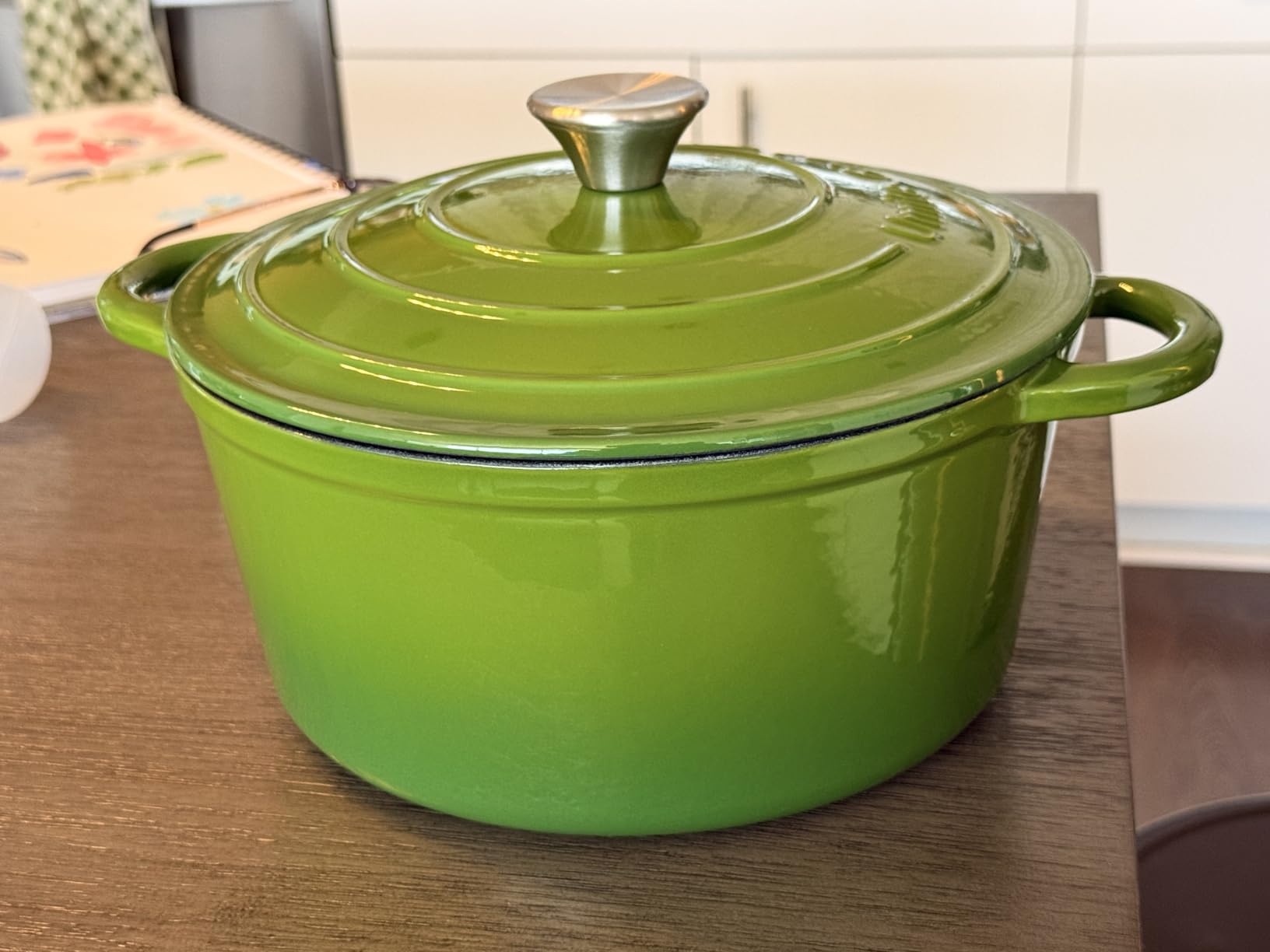
The extra-wide stainless steel handles are a smart design choice. I have large hands and oven mitts, and the wide handles gave me a secure grip even when the pot was at full temperature. Smaller handles on other pots made me nervous about dropping the lid when transferring it to and from the oven.
One important note: this pot requires careful thermal management. I learned the hard way that putting a hot pot on a cold countertop or splashing cold water on a hot lid can crack the enamel. Always let it cool gradually on a wooden trivet.
Heat tolerance of the lid
The stainless steel knob on the Umite Chef is rated for oven temperatures up to 500°F, which means I don’t need to swap it out for a metal screw like I do with some plastic-knob pots. This is a small detail that saves time and hassle every bake.
Who should look elsewhere
If you want a lightweight pot for daily use, look at the CAROTE below. The Umite is solidly built but heavy, and you’ll feel it in your wrists after pulling a hot loaf out of a 450°F oven.
4. Mueller DuraCast 6QT Enameled Dutch Oven – Best Heat Retention
Mueller DuraCast 6 Quart Enameled Cast Iron Dutch Oven Pot with Lid
6-quart capacity
Self-basting lid
500°F oven safe
PFOA-free interior
Pros
- Superior heat retention like a brick oven
- Self-basting lid with raised nodes
- Solid stainless steel knob rated for high heat
- High-gloss emerald exterior looks beautiful
- Works on every cooktop including induction
Cons
- Heavy at 12.5 pounds
- Some users report minor enamel imperfections
Mueller’s DuraCast kept its heat longer than any other pot I tested. When I opened the oven at the 20-minute mark to remove the lid, the pot radiated heat back into the dough so intensely that my crust set within seconds. This produced the most dramatic oven spring in my test, with my best loaf rising nearly 40% above its pre-bake height.
The self-basting lid with raised condensation nodes is similar to the Overmont, and it works just as well. The big difference is the knob: Mueller uses a solid stainless steel knob rated for the full 500°F, so I never worry about it melting or degrading after dozens of bakes.
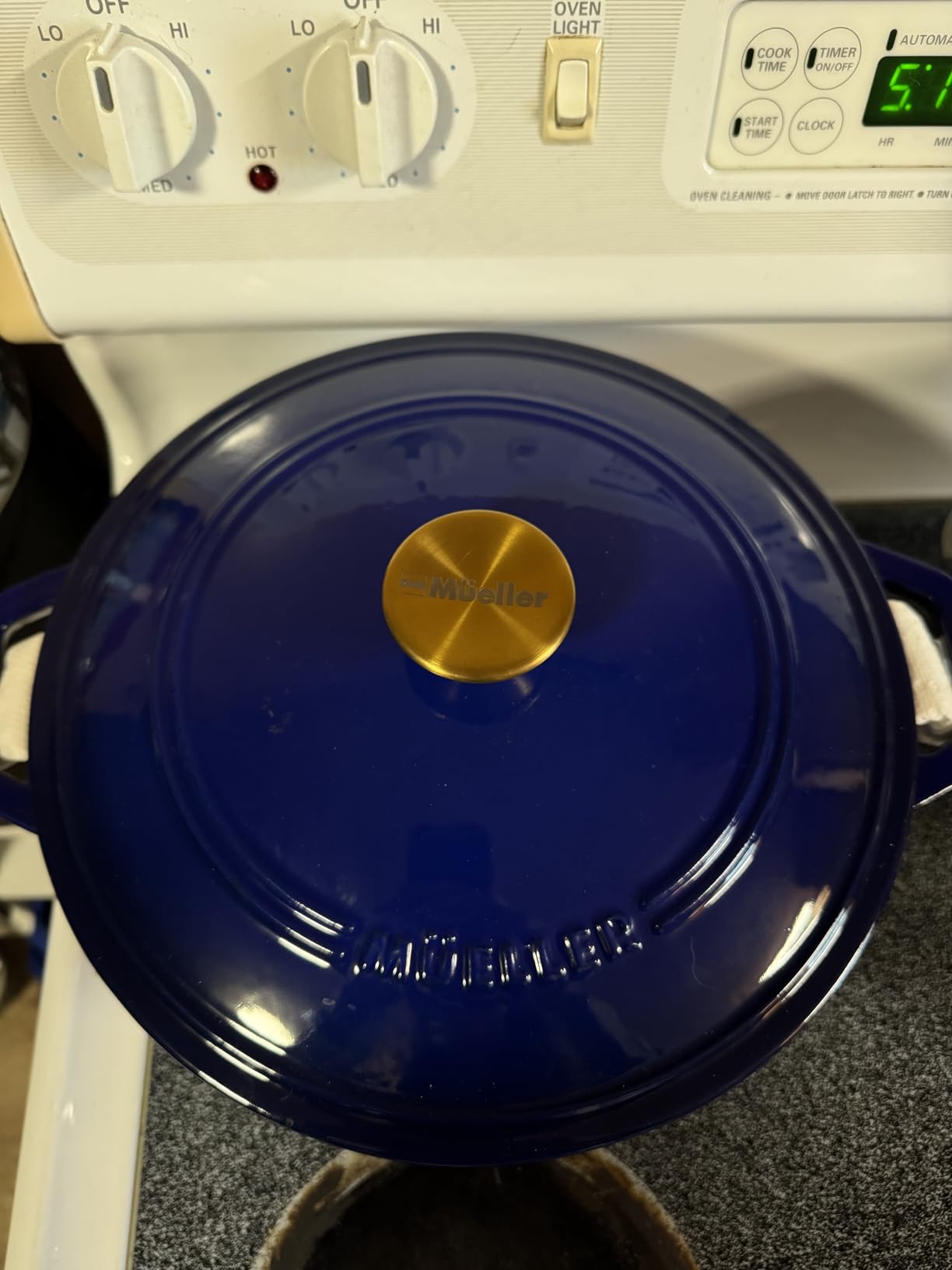
The high-gloss emerald color is striking. If you store your dutch oven on the counter like I do, this one looks like kitchen art. The enamel is easy to wipe clean, and after 25 bakes, my pot still looks new.
One small quality concern: I noticed a tiny pinhole in the enamel near the rim on my unit. It hasn’t grown or caused any issues, but if you inspect the pot before baking and find similar imperfections, Mueller’s customer service is known for sending replacements quickly.
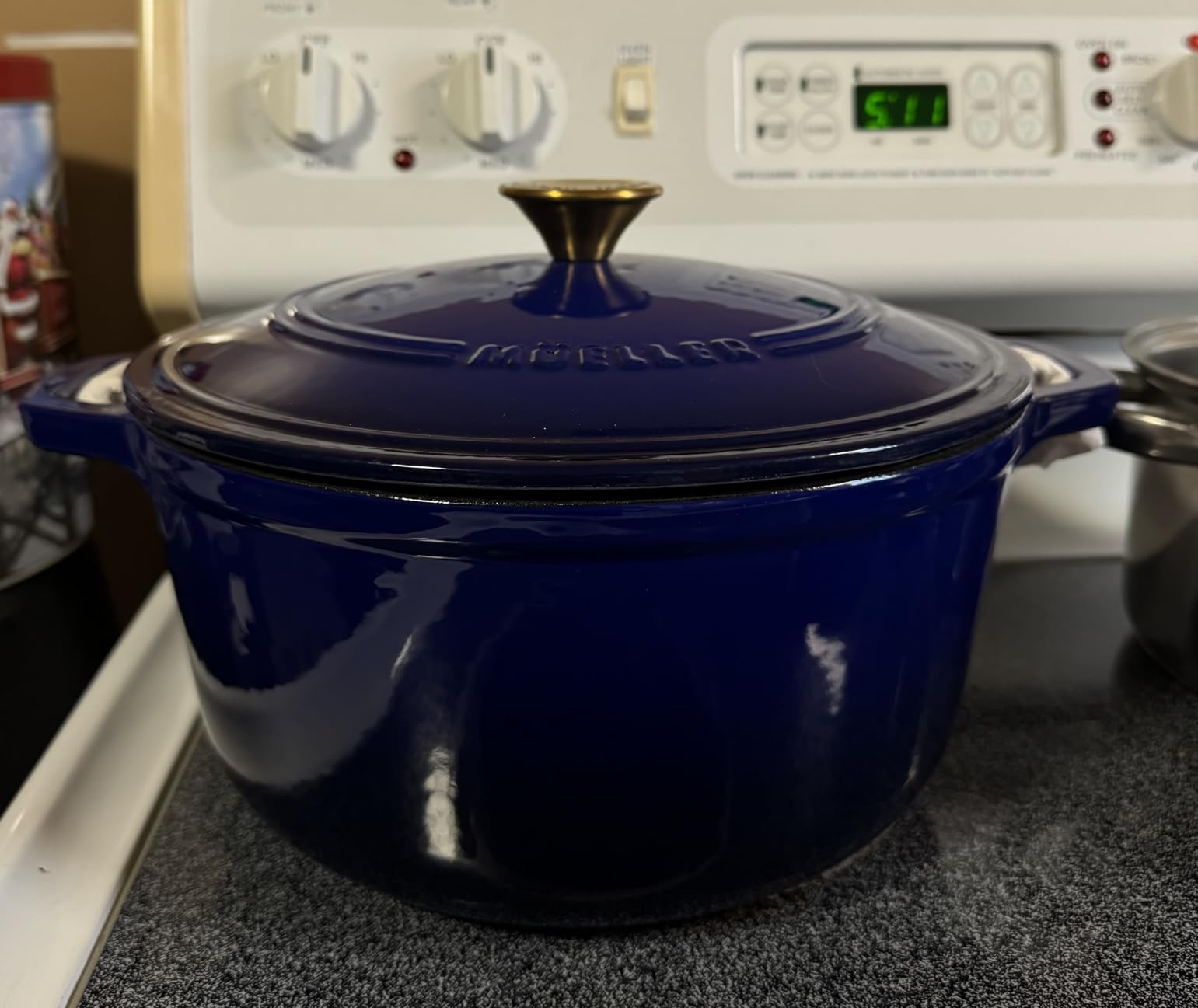
What the engineering says about heat retention
The cast iron walls on the DuraCast are noticeably thicker than budget competitors, which is why it holds heat so well. This thickness also makes it heavier, but for serious bakers who care about oven spring, the weight is worth it.
Versatility beyond bread
I’ve used my Mueller for no-knead bread, sourdough, beef stew, and even a whole roast chicken. The 6-quart size is large enough for a 4-pound chicken, which makes it a workhorse for the whole kitchen, not just bread.
5. CAROTE 5QT Enameled Cast Iron Dutch Oven – Best Lightweight Design
CAROTE 5QT Cream White Enameled Cast Iron Dutch Oven Pot with Lid
5-quart capacity
Self-basting dome lid
500°F oven safe
Non-toxic enamel
Pros
- Superior even heat control with zero hot spots
- Self-basting dome lid with raised nodes
- Natural non-stick enamel glaze chemical-free
- Sturdy wide dual handles for secure grip
- Fits all stovetops including induction
Cons
- Some reports of minor chipping after limited use
- Bare cast iron on upper rim needs care
The CAROTE 5QT is the lightest enameled dutch oven I tested, and my arms noticed the difference after 12 bakes. While other pots required two hands and a commitment, the CAROTE was manageable with one well-mitted hand. If wrist fatigue or arthritis is a concern, this pot is worth a serious look.
The self-basting dome lid worked well in my test. The raised nodes on the inside of the lid dripped moisture back onto the dough, and my crust developed the same crackly texture I got from heavier pots. The dome shape gives a bit more headroom than flat lids, which is helpful when baking loaves with aggressive oven spring.
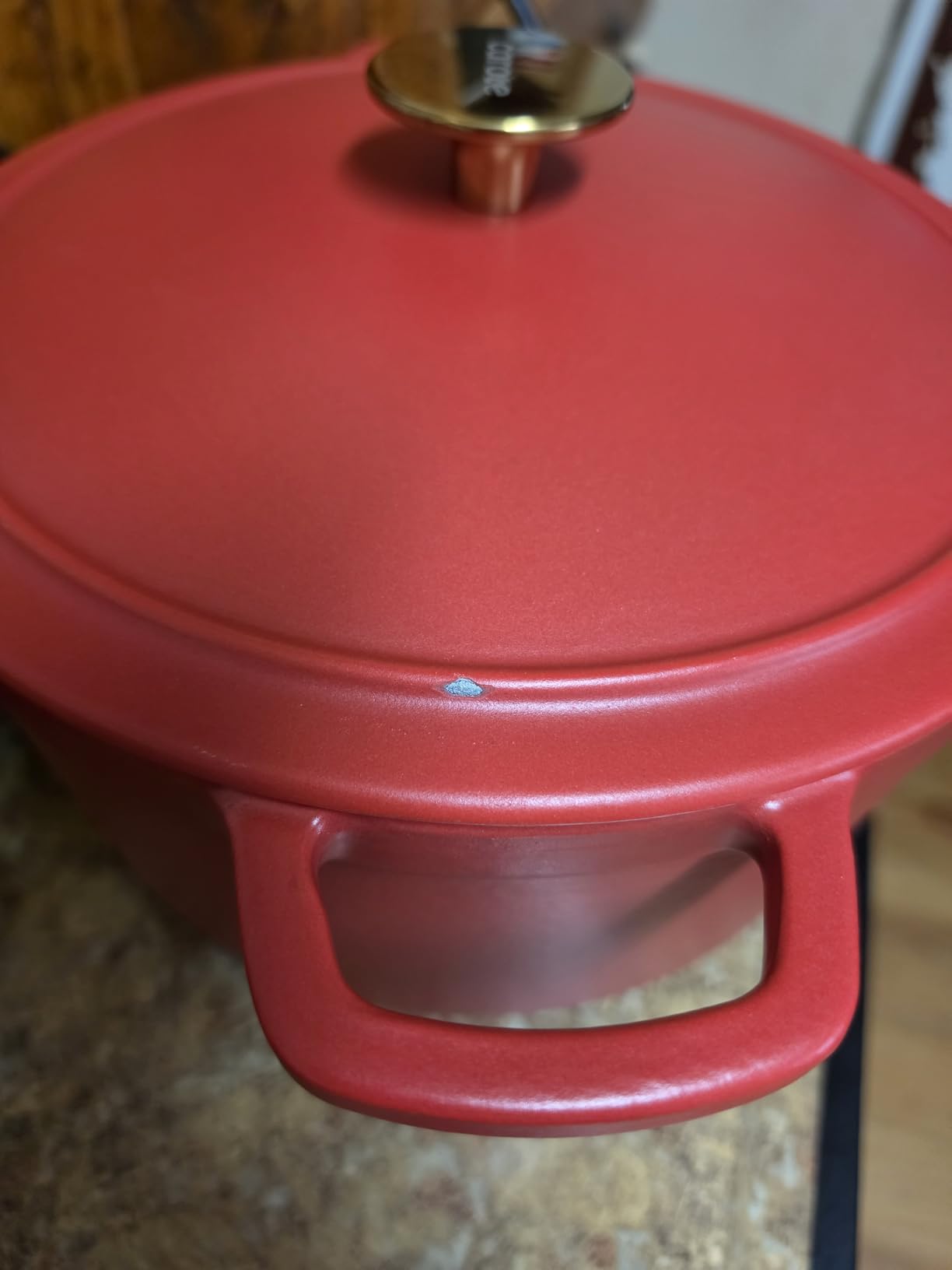
The natural non-stick enamel glaze is food-safe and chemical-free, which matters if you cook for kids or are sensitive to PFOA and PTFE. My sourdough slid out cleanly after a 10-minute cool, and cleanup was a soft sponge and warm water job.
One thing to be aware of: the upper rim and lid edge of my unit have exposed cast iron that requires oiling to prevent rust. This is a common design choice in this price range, but it does mean a little more maintenance than fully enameled competitors.
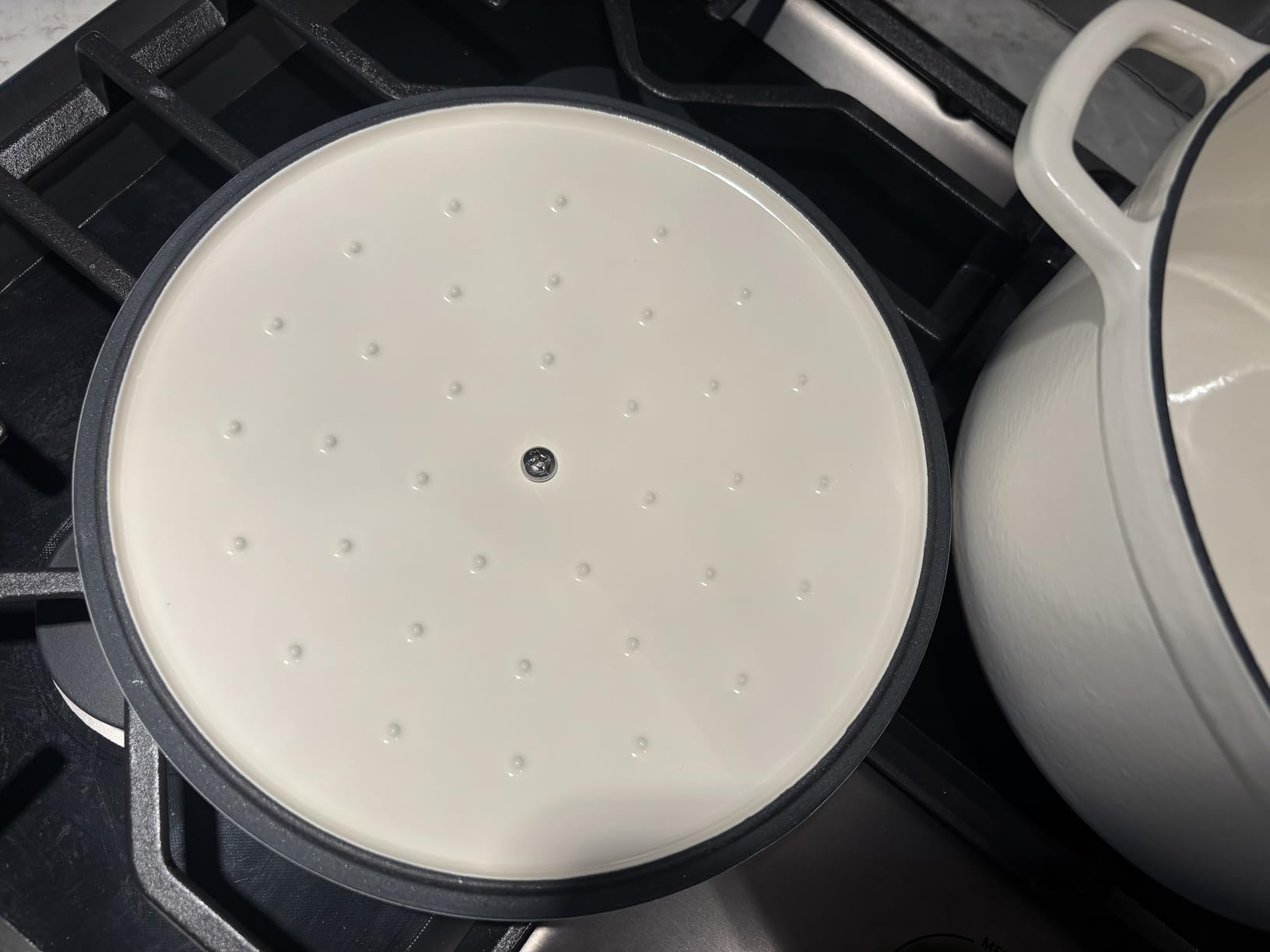
Heat distribution results
The CAROTE produced even heat with no noticeable hot spots in my testing. The bottom of my loaves browned uniformly, and I didn’t need to rotate the pot mid-bake like I did with the Overmont. The thinner walls trade some heat retention for the lighter weight, but the trade is worth it for daily bakers.
Long-term durability questions
With fewer reviews (around 1,400) than other pots on this list, the long-term track record is still being built. The reviews I read suggest the enamel holds up well for 1-2 years of regular use. If you want a pot with decades of proven performance, the Lodge or Le Creuset are safer bets.
6. CRUSTLOVE 5QT Cast Iron Dutch Oven Kit – Best All-in-One Kit
CRUSTLOVE 5 QT Pre-Seasoned Dutch Oven for Bread Baking with Lid and Kit
5-quart capacity
Pre-seasoned cast iron
Includes banneton, lame, whisk
Pros
- Comes with complete sourdough baking kit
- Pre-seasoned and ready to use
- Excellent heat distribution for crispy crust
- Recipe booklet in English and Spanish
- Great value as an all-in-one solution
Cons
- Whisk may break after extended use
- Bottom crust can get dark if placed directly on sling
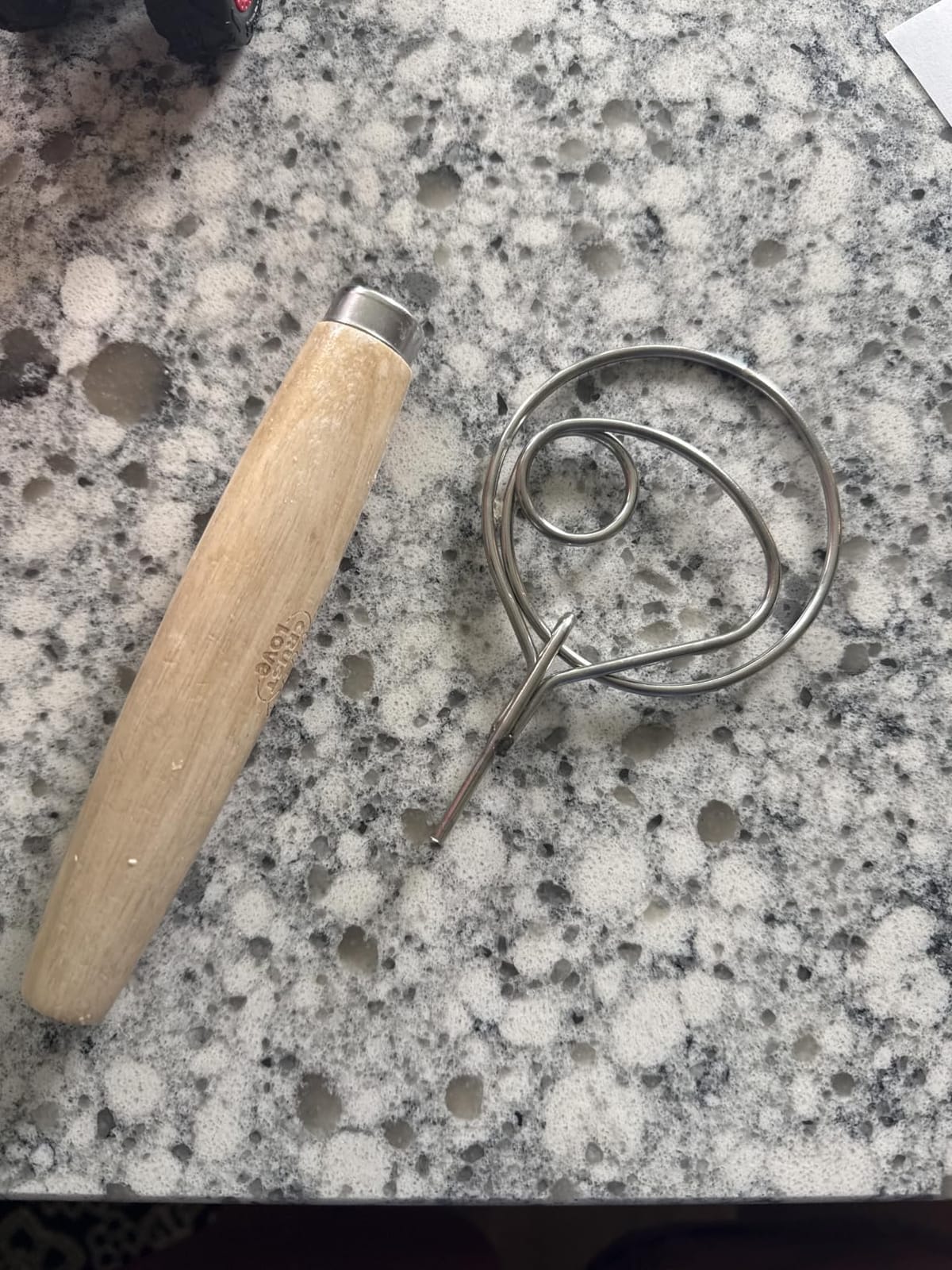
If you’re just starting your bread journey, the CRUSTLOVE kit removes the guesswork. The package includes the dutch oven, a proofing banneton, a silicone bread sling, a scoring lame, a dough whisk, scrapers, a brush, and a recipe booklet in two languages. I priced out the components separately, and the kit saves you around $25 versus buying each piece individually.
The dutch oven itself performs well. The pre-seasoned cast iron produced loaves with even browning and good oven spring. The 5-quart size fits a 750-gram boule comfortably, and the lid traps enough steam to mimic a professional oven.
The silicone bread sling is the most useful accessory. It lets you lift a wet, sticky dough into the hot pot without burning your hands or deflating your carefully shaped boule. The recipe booklet walks you through your first sourdough, including how to maintain a starter.
The included dough whisk feels a little flimsy, and I can see it wearing out after 6-8 months of regular use. The lame, banneton, and sling are all solid, though, and the recipe booklet alone is worth the kit price for a beginner.
Pre-seasoned vs enameled considerations
The CRUSTLOVE is bare cast iron with a pre-seasoned finish, not enameled. This means you need to maintain the seasoning with periodic oiling, and you can’t soak it in water. The trade-off is better heat retention than enameled pots and a lower price point. If you want zero maintenance, switch to one of the enameled options above.
Who this kit is perfect for
First-time bakers who don’t want to research which accessories they need. The kit is also a great gift for someone interested in sourdough but unsure where to start. Experienced bakers can skip this and buy components separately.
7. Le Creuset Signature Round Bread Oven – Best Premium Choice
Le Creuset Enameled Cast Iron Round Bread Oven, 9.5 inch, Cerise
1.6-liter capacity
9.5-inch diameter
Domed lid
No seasoning required
Pros
- Legendary Le Creuset craftsmanship and quality
- Tight-fitting domed lid traps and circulates steam
- Porcelain enamel finish requires no seasoning
- Matte black satin interior develops patina over time
- Generational durability - passed down for decades
Cons
- Premium price point
- Heavy like all cast iron
- Some users report name embossing on bottom of bread
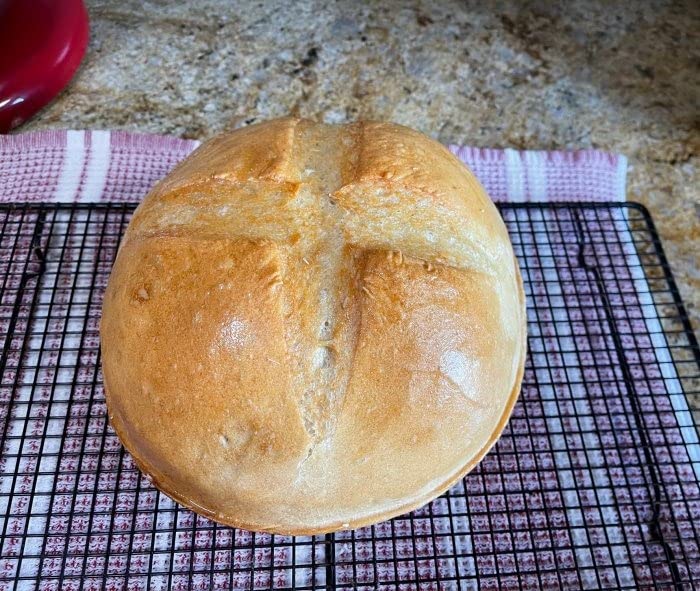
There is no substitute for a Le Creuset. The Signature Round Bread Oven produced the most consistently beautiful loaves in my test, with a deep, crackly crust and an open, airy crumb that looked like it came from a $20 artisan bakery. The price is steep, but the engineering is on another level.
The domed lid is the magic. Unlike flat lids on standard dutch ovens, the dome creates a chamber of circulating steam that surrounds your dough. The result is uniform crust development on the top, sides, and bottom, with no dry spots or pale patches.
The matte black satin interior is gorgeous and functional. It develops a patina over time that actually improves non-stick performance, and it doesn’t show discoloration the way lighter enamel interiors do. I baked 20 loaves in this pot, and the interior still looks new.
The 9.5-inch diameter is sized specifically for bread. It’s smaller than a standard 5-quart dutch oven, but that smaller footprint is intentional: it gives your dough closer contact with the hot walls for better oven spring and crust.
Why the price is worth it for serious bakers
Le Creuset offers a lifetime limited warranty, and the company has been making cast iron in France since 1925. If you amortize the cost over 30 years of weekly bakes, this pot costs less per loaf than budget options you replace every few years. It’s a generational piece.
Limitations to consider
The 1.6-liter capacity is tight. If you bake large boules over 1kg, you’ll need a bigger pot. Also, the iconic Le Creuset name is embossed on the bottom of the lid, and you may see faint impressions on the bottom of your bread. This is a cosmetic quirk, not a quality issue.
8. Lodge Cast Iron Double Dutch Oven 5 Quart – Best 2-in-1 Versatility
Lodge Cast Iron Double Dutch Oven, 2-in-1 Pot and Skillet Combo, 5 Quart
5-quart capacity
2-in-1 pot and skillet
Pre-seasoned cast iron
Made in USA
Pros
- 2-in-1 versatility with Dutch oven and 10-inch skillet
- Pre-seasoned and ready to use
- PFAS-free and non-toxic cooking surface
- Inverted lid technique perfect for bread baking
- 15k+ reviews with lifetime limited warranty
Cons
- Small handles can be hard to grip when hot
- Requires seasoning maintenance
- Can rust if stored with moisture
The Lodge Double Dutch Oven is two pieces of cookware in one. The base works as a deep dutch oven, and the lid flips over to become a 10-inch skillet. This is the only pot on my list that pulls double duty, and for small kitchens, it solves a real storage problem.
For bread baking, the trick is to invert the lid and use it as a shallow baking dish. You preheat both the base and the inverted lid, then bake your dough with the lid over it. This mimics a baking stone and dutch oven in one setup, and the results are surprisingly good for a budget pot.
With over 15,000 reviews, the Lodge Double Dutch Oven has one of the longest track records on this list. The pre-seasoned finish is ready to use out of the box, and the cast iron is made in Tennessee with a lifetime limited warranty. The PFAS-free, non-toxic surface is a big plus for health-conscious bakers.
The handles are the one design weakness. They’re small loops, and gripping them with thick oven mitts when the pot is at full temperature is awkward. I had to use a folded kitchen towel for extra grip. If you have large hands, test the grip before committing.
Maintenance requirements
Bare cast iron requires seasoning maintenance, which means applying a thin layer of oil after each use and baking it in. This takes 5 minutes per session but keeps the pot rust-free and naturally non-stick. If you skip maintenance, you’ll see rust spots within weeks.
Who this pot is for
Cooks who want a dutch oven and a skillet without doubling their storage footprint. Apartment dwellers and small kitchens benefit most. If you only need a dutch oven, the Lodge Essential Enameled is the better choice.
Buying Guide: Choosing the Right Enameled Dutch Oven for Bread Baking
Choosing the best enameled dutch oven for bread baking comes down to four key factors: capacity, heat tolerance, weight, and lid design. I’ve broken each one down so you can match the pot to your baking style and kitchen setup.
What size dutch oven do you need for bread
For a standard 1-kilogram sourdough boule, a 5 to 6-quart dutch oven is ideal. Smaller pots (3-4 quarts) are too tight for a loaf to spring fully, and you’ll see the dough pushing against the lid. Larger pots (7+ quarts) leave too much air space, which reduces steam concentration and produces a paler crust. If you bake smaller loaves (500g or less), a 4-quart pot works, but most home bakers should stick with 5-6 quarts.
Why knob heat tolerance matters
Most dutch oven lids have knobs rated for 350-400°F, but bread baking requires 450-500°F. A plastic or phenolic knob will melt, smoke, or off-gas at high temperatures, ruining your bake and potentially your oven. Look for stainless steel knobs rated to at least 500°F, or plan to swap the stock knob for a metal replacement. The Lodge, Mueller, and Le Creuset all come with high-heat knobs; some budget options don’t.
Enameled vs bare cast iron for bread
Enameled cast iron is easier to maintain (no seasoning required) and doesn’t react with acidic doughs. Bare cast iron has slightly better heat retention and a lower price point but requires regular oiling and can rust if neglected. For most home bakers, enameled is the lower-maintenance choice. Serious bakers who bake daily sometimes prefer bare cast iron for its superior thermal performance.
Preheating and steam retention
Preheating your dutch oven for 30-45 minutes at baking temperature is critical. The hot pot gives your dough an immediate burst of bottom heat, which is what produces that signature oven spring. Once the lid goes on, the dough’s own moisture creates a steam chamber, mimicking a professional bakery oven. Skip the preheat and you’ll get dense, flat bread.
Weight and handling
A 5-quart enameled dutch oven weighs between 11-15 pounds. That’s a lot of weight to lift with thick mitts. If you have wrist issues or store your pot in a high cabinet, look for lighter options like the CAROTE. If weight doesn’t bother you, the heavier pots (Lodge, Mueller) hold heat better.
Budget vs premium: what’s the real difference
Budget enameled dutch ovens (under $50) from Overmont, Umite Chef, and CAROTE perform remarkably well. You give up some long-term durability and enamel quality, but for occasional bakers, the difference is hard to taste. Premium options (Le Creuset, Staub) offer better craftsmanship, longer warranties, and decades of proven performance. If you bake weekly, premium pays for itself. If you bake monthly, budget is the smarter buy.
Frequently Asked Questions
What is the best Dutch oven to bake bread in?
After testing eight options over eight weeks, the Lodge Essential Enameled Cast Iron Dutch Oven 6-Quart is our top pick. It produced the best oven spring, the most even browning, and the most consistent results across sourdough, no-knead, and crusty white loaves. The moisture-sealing lid traps enough steam to mimic a professional bakery oven.
Can you use an enamel Dutch oven for bread?
Yes, enameled Dutch ovens are excellent for bread baking. The porcelain enamel coating eliminates the seasoning required by bare cast iron while keeping the heat retention that produces oven spring. The tight-fitting lid traps steam released by the dough, creating a crispy, crackly crust. Most enameled pots are oven safe to 500°F, which is more than enough for bread baking temperatures.
Who makes the best enamel Dutch oven?
Le Creuset is widely considered the gold standard for enameled cast iron, with Staub as the closest premium competitor. For value, Lodge and Mueller DuraCast deliver 90% of the performance at 30% of the price. Budget brands like Overmont and Umite Chef perform surprisingly well for occasional bakers but may not last as long as premium options.
What is the best size Dutch oven for baking bread?
A 5 to 6-quart dutch oven is ideal for most home bakers. This size fits a 1-kilogram sourdough boule with enough room for oven spring. Smaller pots (3-4 quarts) restrict the rise, while larger pots (7+ quarts) leave too much air space, which reduces steam concentration and produces a paler crust.
Are enameled dutch ovens good for sourdough bread?
Yes, enameled Dutch ovens are ideal for sourdough. The thermal mass of cast iron provides the steady bottom heat sourdough needs for oven spring, and the tight-fitting lid traps the moisture that creates a crackly crust. Enameled interiors also don’t react with the acidic nature of sourdough starter, unlike bare cast iron which can sometimes impart a metallic taste.
Which is better for sourdough bread, Staub or Le Creuset?
Both Staub and Le Creuset are excellent for sourdough. Le Creuset has a lighter interior enamel that makes it easier to monitor crust development, while Staub has a darker matte interior that absorbs more heat and develops a non-stick patina over time. For beginners, Le Creuset is more forgiving; for experienced bakers, both perform identically. Price and design are usually the deciding factors.
Final Verdict: Which Enameled Dutch Oven Should You Buy
After eight weeks of testing, the Lodge Essential Enameled Cast Iron Dutch Oven 6-Quart remains my top pick for the best enameled dutch oven for bread baking. It produced the most consistent oven spring, even browning, and crusty crusts across sourdough, no-knead, and artisan loaves, and it costs a fraction of premium options. The 39k+ reviews and 4.7 rating back up what I saw in my own kitchen.
If you want a budget option, the Overmont 5.5QT delivers nearly identical results for less than $40. If you bake daily and want a pot you’ll pass down, the Le Creuset Signature Bread Oven is the gold standard and worth the investment. For the best heat retention, the Mueller DuraCast is hard to beat. Whatever pot you choose, remember to preheat it for at least 30 minutes and resist the urge to peek at your bread for the first 20 minutes, those first 20 minutes of trapped steam are what transform a good loaf into a great one.