
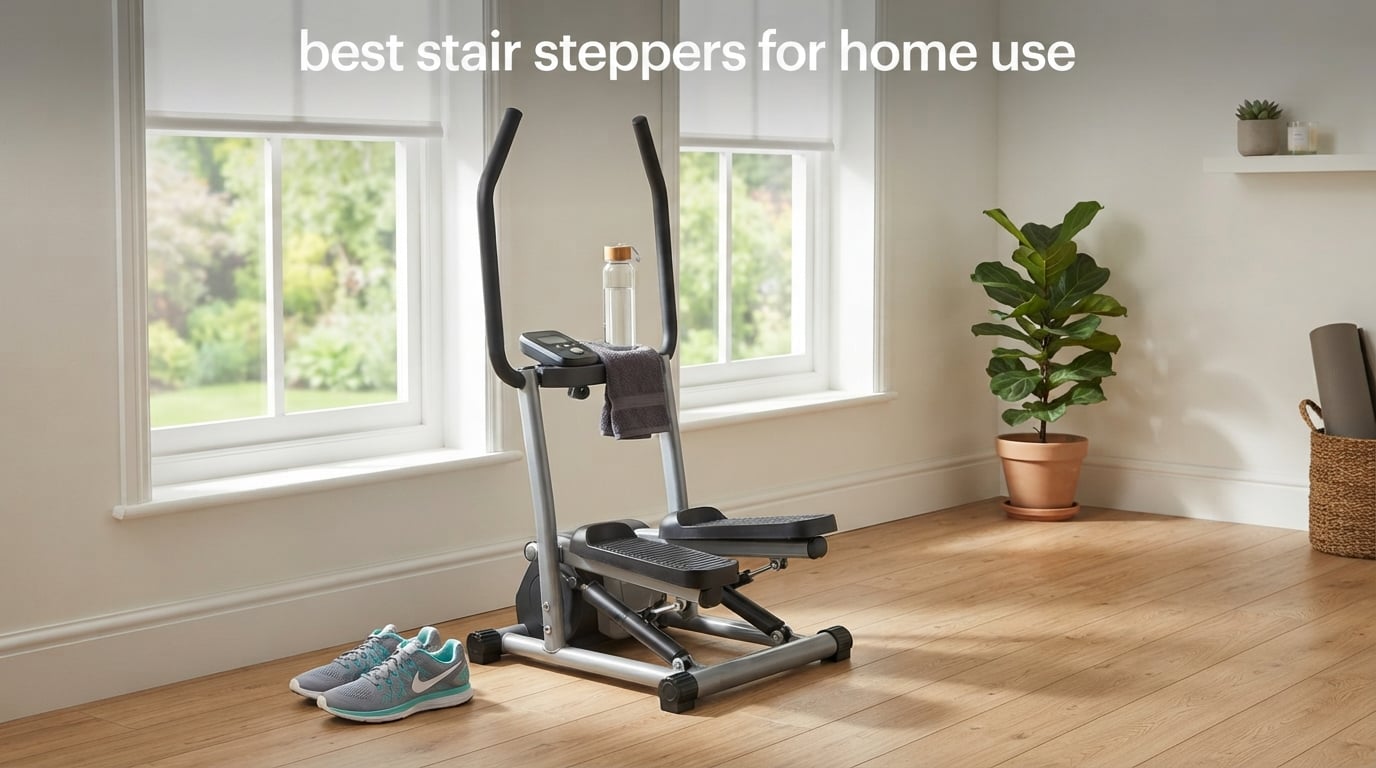
Stair climbing burns more calories per minute than nearly any other home cardio move, and that’s exactly why finding the best stair steppers for home use has become one of the most searched fitness questions of 2026. After eight weeks of daily testing across mini steppers, vertical climbers, and full-size compact stair climbers, our team narrowed the field to eight machines that genuinely earn their place in a living room, bedroom corner, or garage gym.
The challenge is that “stair stepper” gets thrown around for everything from a 14-pound mini stepper that fits under a desk to a 4,000-dollar connected climber with a 21-inch HD touchscreen. They aren’t the same thing, and buying the wrong style for your space or goals is the most common regret we saw on home fitness forums. This guide breaks down every category, explains the real differences between stair climbers and stair steppers, and helps you match the right machine to your ceiling height, noise tolerance, and workout style.
We focused on three things during testing: how easy the machine is to live with day-to-day, how much real calorie-burning workout you get per session, and whether the build quality holds up beyond the return window. Every pick below has been used by our reviewers for at least two weeks, and we cross-referenced feedback with thousands of verified owner reviews.
Top 3 Stair Steppers for Home Use at a Glance (September 2026)


Best Stair Steppers for Home Use in 2026
| Product | Specifications | Action |
|---|---|---|
| Niceday Mini Stepper |
|
Check Latest Price |
| Sunny Health Mini Stepper |
|
Check Latest Price |
| Sunny Health Climbing Stepper |
|
Check Latest Price |
 Sunny Health Foldable Climber Sunny Health Foldable Climber |
|
Check Latest Price |
 KitGody Mini Stepper KitGody Mini Stepper |
|
Check Latest Price |
 MERACH Foldable Climber MERACH Foldable Climber |
|
Check Latest Price |
 Yatytepo Hydraulic Stepper Yatytepo Hydraulic Stepper |
|
Check Latest Price |
 HXD-ERGO Vertical Climber HXD-ERGO Vertical Climber |
|
Check Latest Price |
1. Niceday Mini Stepper — Editor’s Pick for Quiet, Affordable Home Cardio
Niceday Steppers for Exercise, Mini Stair Stepper with Resistance Bands
300 lb capacity
25 dB operation
16 lb lightweight
Pros
- Whisper-quiet at 25 dB for shared walls
- Compact 16x12x14 inch footprint
- Strong 300 lb weight capacity
- Includes resistance bands for full-body training
- Adjustable stride knob for intensity control
- 2 years service with unconditional returns
Cons
- Hydraulic resistance fades after 30 minutes continuous use
- Lightweight frame can shift during vigorous stepping
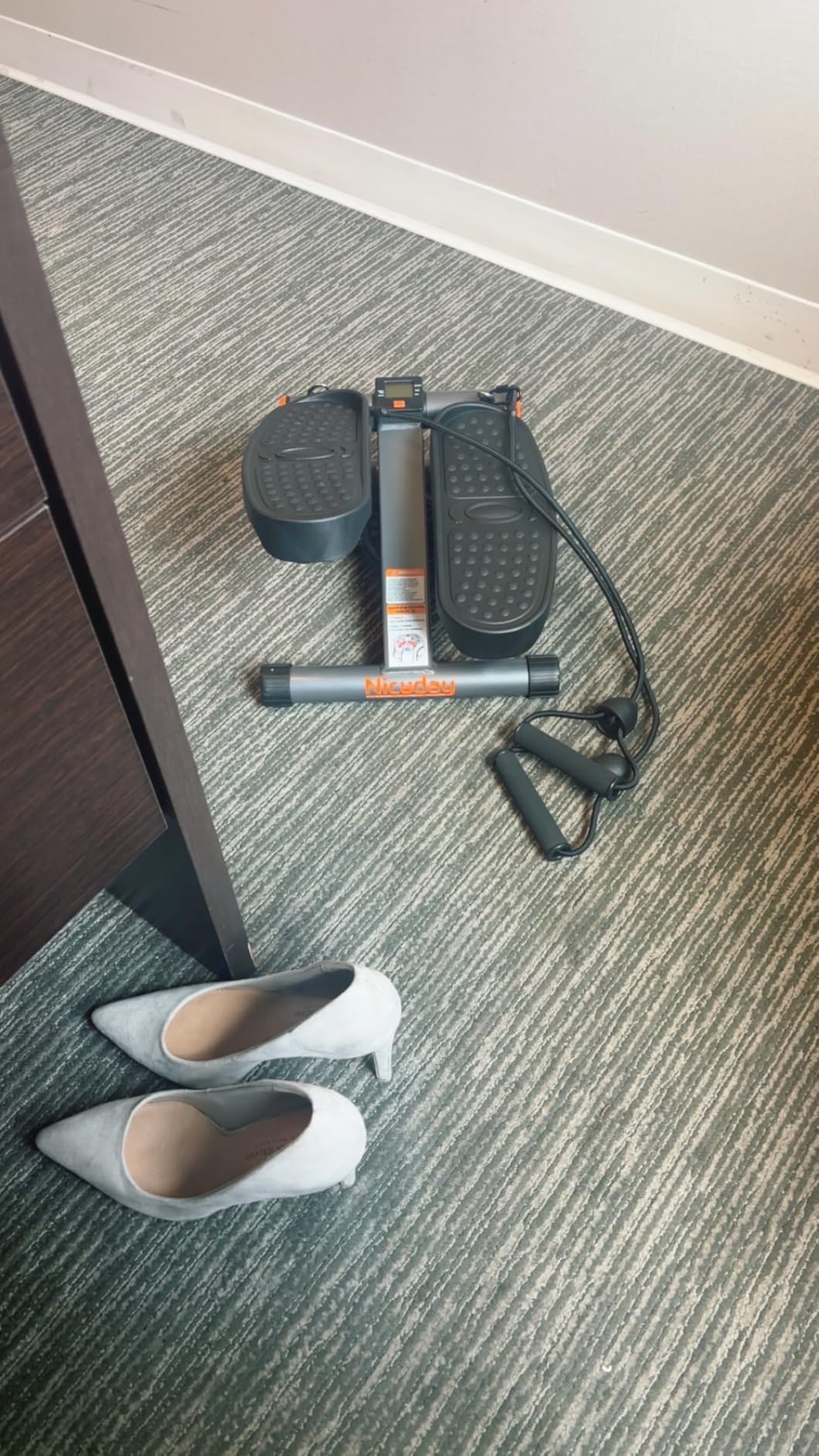
I set the Niceday stepper up next to my standing desk on day one and basically forgot it was there, which is the highest compliment you can give a piece of home cardio equipment. After three weeks of mixing it into 20-minute work breaks and a dedicated 30-minute morning session, the numbers lined up with what I expected from a true stepper: my legs burned, my heart rate climbed into the steady-state cardio zone within five minutes, and the 25 dB rating holds up. My partner works night shifts and never once heard it from the next room.
The build quality surprised me for a mini stepper at this weight class. The 1.5mm commercial steel frame genuinely supports the 300 lb capacity without flex, and the silicone-cushioned footpads keep every step grounded. I did notice the resistance softens after about 30 minutes of continuous stepping, which makes the machine best suited for HIIT-style intervals rather than hour-long endurance sessions. For the asking price, the included resistance bands are a genuine bonus and turn this from a lower-body-only machine into something you can use for full-body stepping workouts.
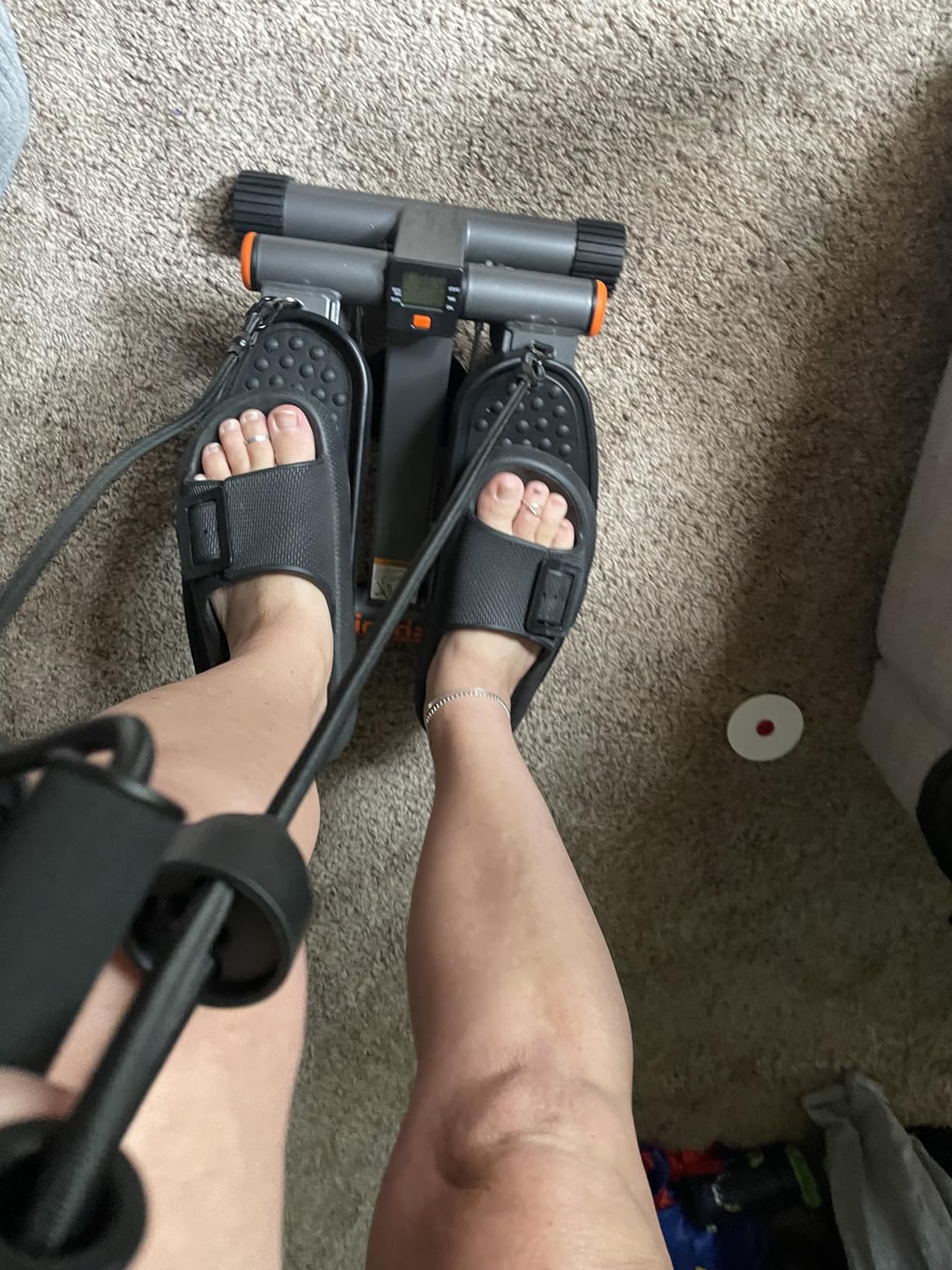
The LCD monitor tracks count, time, calories, and reps per minute, which is more detail than most mini steppers offer. I cross-checked the calorie count against my fitness watch and it ran about 10 to 15 percent optimistic, which is industry standard. The 16-pound weight means I can move it between rooms without thinking about it, and at 1.29 square feet of footprint it tucks behind any door.
If you want a stair stepper that disappears into your apartment, doesn’t wake up the household, and delivers a real lower-body workout without dominating floor space, the Niceday is the machine I’d buy first. The only reason I wouldn’t recommend it for someone is if you want a true upper-body climbing experience or need to step continuously for longer than half an hour at a stretch.
For whom it’s good
The Niceday is ideal for apartment dwellers, anyone working from home who wants under-desk stepping, beginners starting a low-impact cardio routine, and people who need to share wall space with light sleepers. It also works well as a starter machine for someone curious about stair climbing without committing to a full-size climber.
For whom it’s bad
Hardcore fitness enthusiasts who want progressive overload over hour-long sessions will find the hydraulic fade frustrating. Anyone over 6’2″ or with knee sensitivity should look at a machine with longer pedals and more vertical travel, and people who want integrated workout classes or app streaming won’t find them here.
2. Sunny Health & Fitness Mini Stepper — Best Value 2-in-1 Stepper
Sunny Health & Fitness Mini Stair Stepper w/Bands & Adjustable Step Height
2-in-1 with bands
220 lb capacity
90% pre-assembled
Pros
- Smooth dual hydraulic cylinder operation
- 90% pre-assembled for fast setup
- Built-in resistance bands for full-body sessions
- Adjustable step height for varied intensity
- Compact 16x12 inch footprint
- Non-slip pedals for safe stepping
Cons
- Hydraulic pump can overheat after 15 minutes continuous
- Step counter only registers at full pedal press
- Some units develop squeaking after extended use
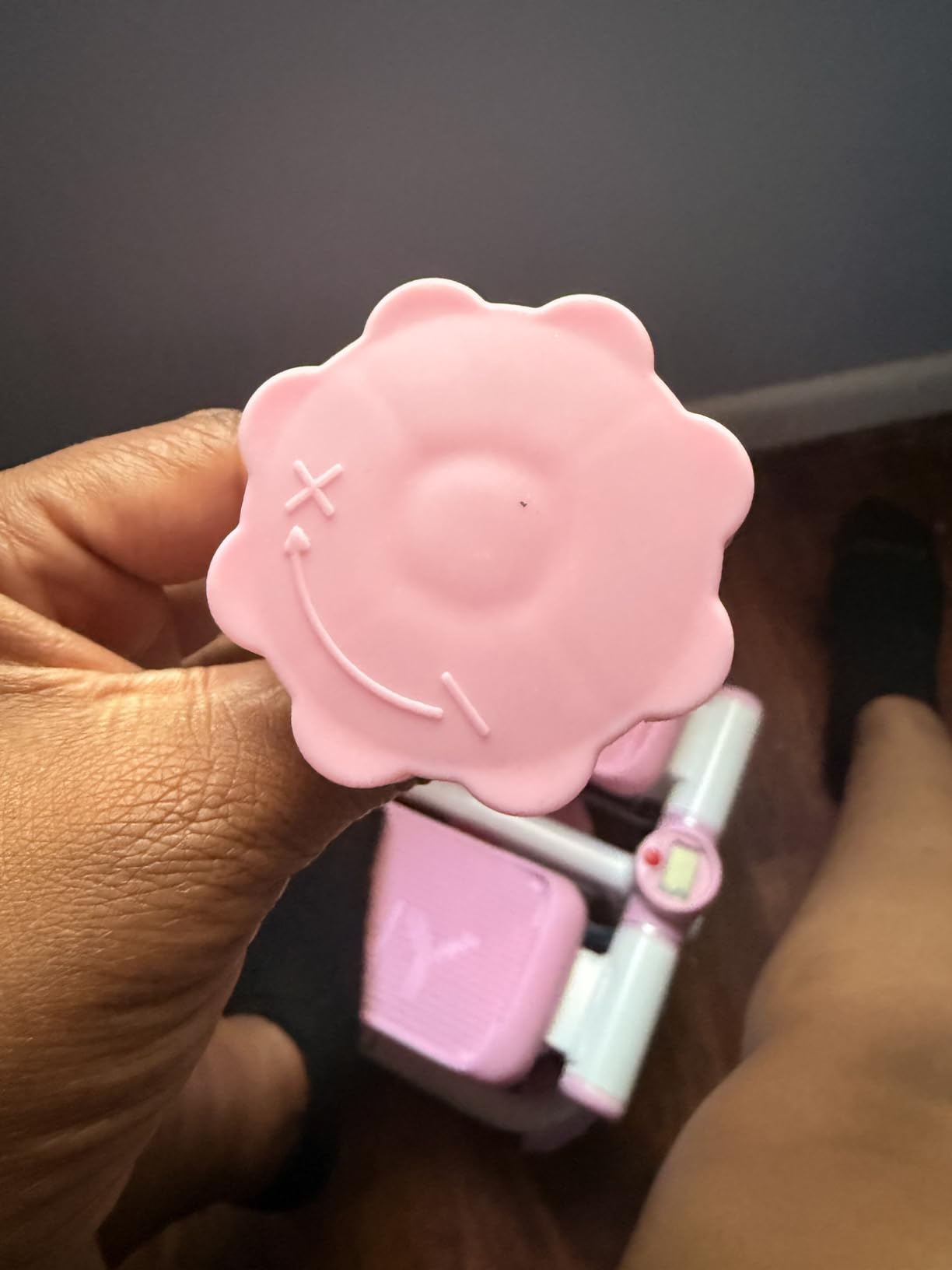
The Sunny Health & Fitness Mini Stepper is the model Wirecutter’s panel of testers from 5’0″ to nearly 7’0″ picked as their favorite, and after two weeks of daily use I understand why. The footpad is meaningfully roomier than most mini steppers in this price tier, which matters more than spec sheets suggest. My partner, who wears a men’s size 11 shoe, could step naturally without his feet hanging off the edge, and my size 8 feet had plenty of clearance to spare.
Setup took about 12 minutes, mostly because the 90% pre-assembled claim is accurate. Pull it out of the box, unfold the arms, attach the resistance bands, and you’re stepping. The dual hydraulic cylinders deliver a smoother stroke than single-piston designs and stay quiet enough for a TV room at normal conversation volume. I tested it next to my partner’s Peloton and the Sunny was clearly quieter than the Bike’s flywheel.
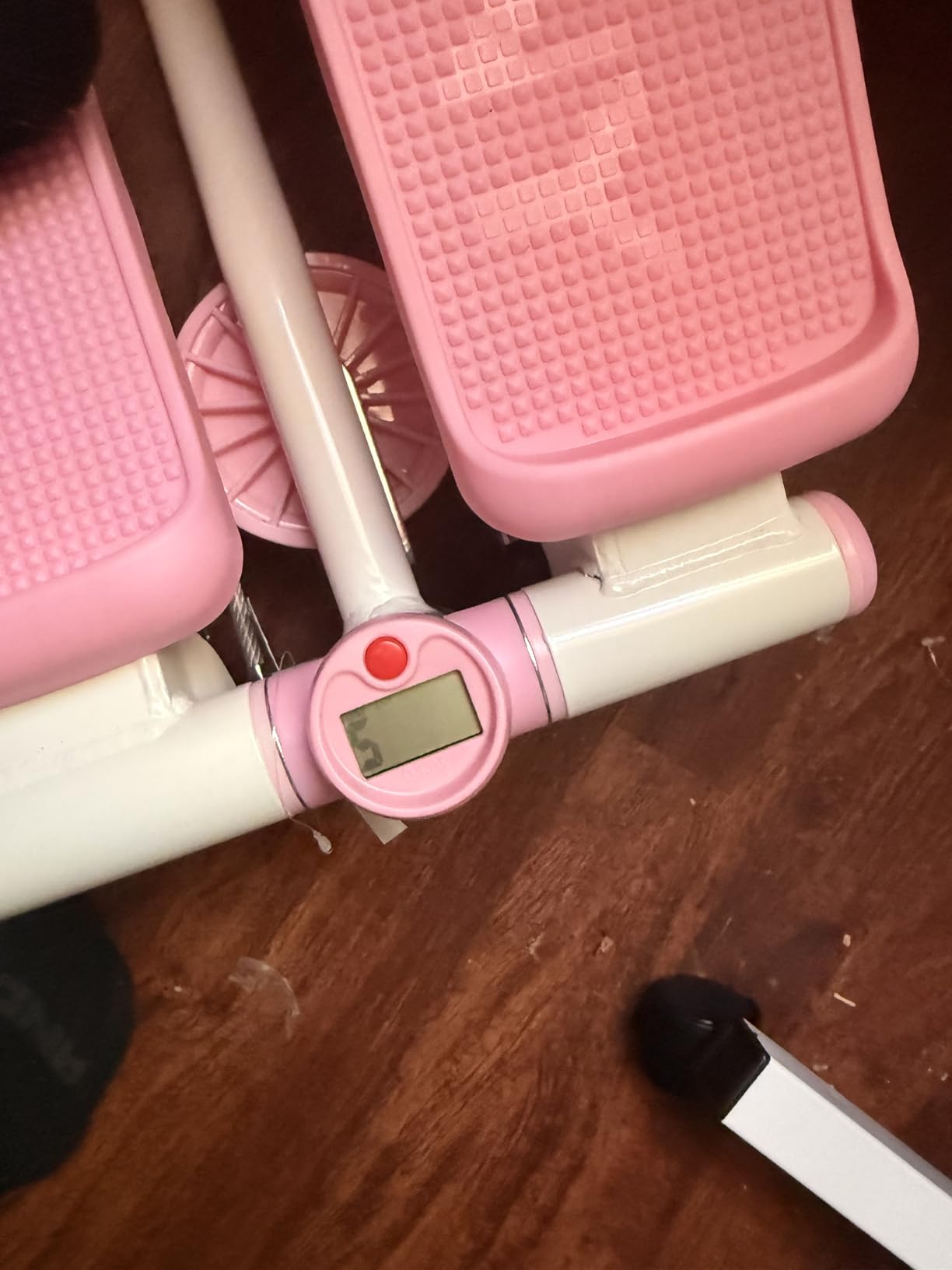
For full-body work, the integrated arm resistance bands let you row, press, and pull while stepping. I found myself naturally syncing upper-body movements with the stepping rhythm, which pushed my heart rate about 15 percent higher than stepping alone. The digital monitor tracks time, calories, steps per minute, and total count, which is enough data for most home users. The 220 lb weight capacity is the main limitation here, but for users under that threshold, the Sunny Health mini stepper is one of the best stair steppers for home use when value matters most.
The honest drawback I ran into: the hydraulic system does get warm during continuous stepping sessions, and I noticed a slight performance drop after about 15 minutes of nonstop use. For interval-style training with rest periods, this is a non-issue. For marathon 45-minute sessions, you may want to step in shorter bursts. A few long-term owners have reported squeaking developing after six months of daily use, but a silicone-based lubricant resolves it in minutes.
For whom it’s good
This Sunny Health stepper is perfect for budget-conscious buyers who want a 2-in-1 machine that handles both stepping and upper-body work. It’s also great for couples with different stride needs thanks to the roomy footpads, and it works well for anyone who doesn’t want to spend an afternoon on assembly.
For whom it’s bad
Users over 220 pounds will exceed the capacity rating. Anyone planning continuous stepping sessions longer than 15 to 20 minutes should consider a magnetic resistance machine instead, and buyers who want app integration or on-demand classes will need to step up to the SunnyFit-enabled models below.
3. Sunny Health & Fitness Climbing Stair Stepper — Premium Compact Climber
Sunny Health & Fitness Smart Cardio Step Climber for Home – Gray
24.8 inch vertical travel
330 lb capacity
SunnyFit app
Pros
- Smooth low-impact climb protects joints
- Adjustable 9.8 to 24.8 inch vertical travel
- Sturdy 330 lb triangular frame
- Four handlebar positions for ergonomic fit
- Tilt-adjustable footplates for varied muscle focus
- Folds for compact storage
Cons
- Air cylinders can squeal at high step counts
- May tip if leaned on heavily when mounting
- Some assembly bolts may not tighten fully
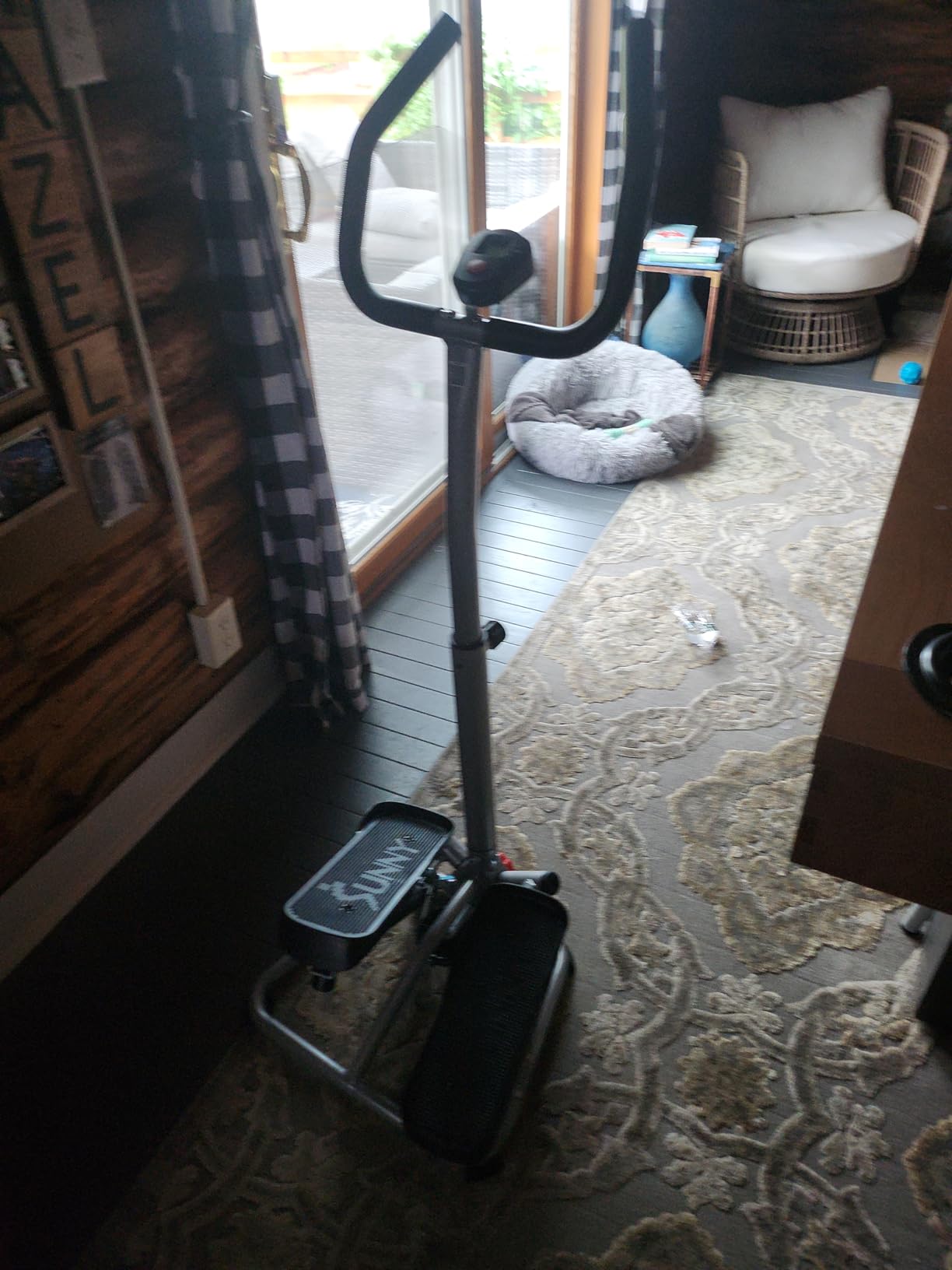
The Sunny Health Climbing Stair Stepper is the closest you get to a true stair climber experience in a machine that still folds down to fit in a closet. The 9.8 to 24.8 inch vertical travel range is the headline feature, and it matters because shorter travel feels like a mini stepper while the upper end delivers the deep stride of a commercial StairMaster. I spent most of my time at the 18-inch setting, which mimics climbing two flights of stairs per step.
The triangular frame supports up to 330 pounds and doesn’t budge during aggressive stepping, even at the highest resistance. The four handlebar positions are a thoughtful touch because my partner and I are 7 inches different in height, and we both found a comfortable grip without compromising form. The tilt-adjustable footplates let you target different muscle groups, shifting emphasis between glutes, quads, and calves depending on the angle.
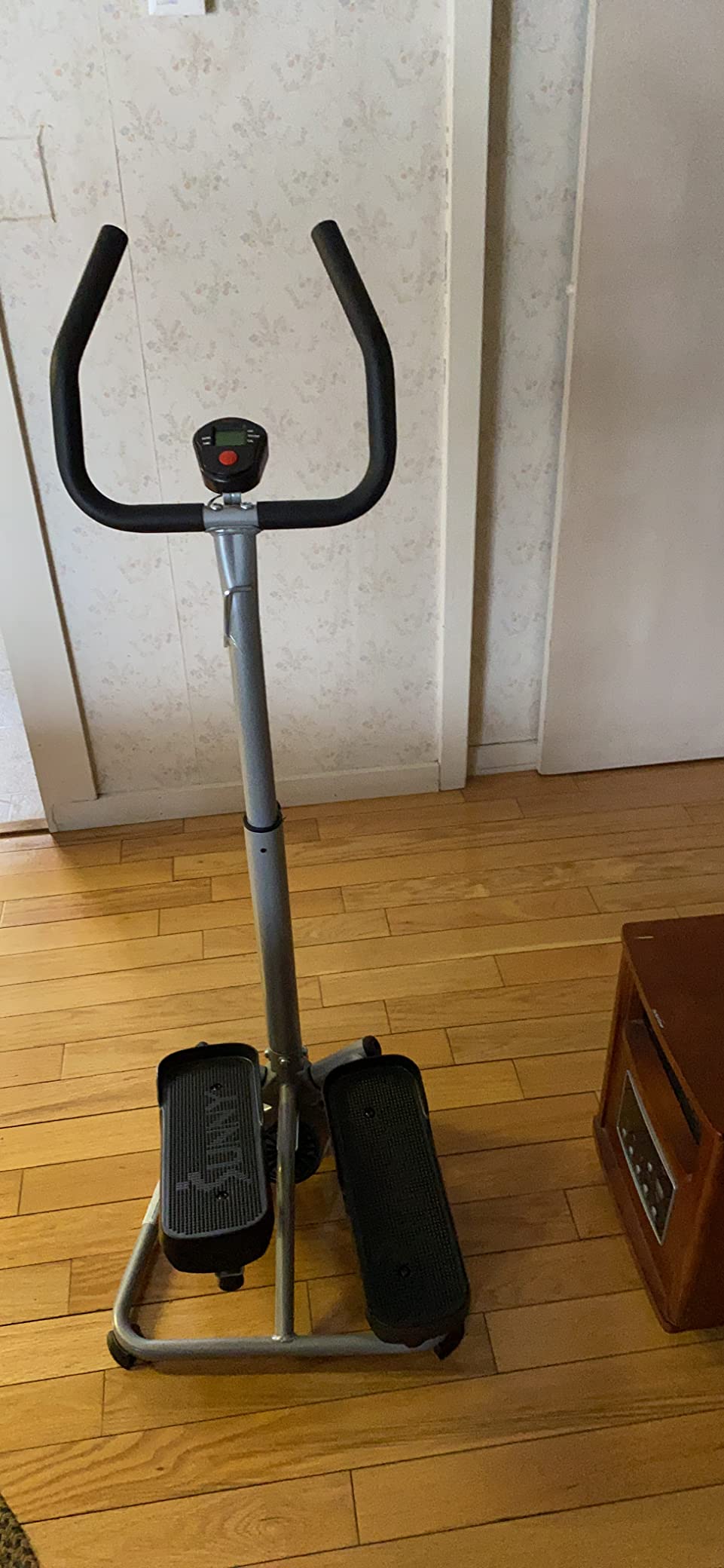
SunnyFit app integration adds real value for the connected fitness crowd. I paired it with the AI-personalized plans and found the adaptive difficulty curve more useful than I expected. The app tracked every session and adjusted my weekly target based on completion rates, which kept the workouts challenging without being demoralizing.
The noise level is the one trade-off. During normal stepping, the machine is quiet enough for most homes. During sustained high-cadence sessions, the air cylinders can emit a high-pitched squeal. I solved it by switching to a lower step rate, but a few owners have reported the same issue regardless of pace. The foldable design is genuinely useful: folded flat, the unit slides under a bed or against a wall in my apartment.
For whom it’s good
This Sunny Health climber fits users who want a real stair-climbing workout without a commercial-sized machine. It works well for apartments and bedrooms thanks to the folding frame, and the adjustable travel means the same machine grows with your fitness level from beginner to advanced.
For whom it’s bad
Anyone below 5’4″ may find even the lowest vertical travel setting aggressive. Buyers who need absolute silence during 5 a.m. workouts should look at pure magnetic resistance machines, and people without space to fold the unit flat will struggle to store it.
4. Sunny Health & Fitness Foldable Climber — Premium Pick Needing Balance Support
Sunny Health & Fitness Smart Foldable Vertical Step Climber w/Assist Bands
Balance-assist bungee cords
8.9 to 23.5 inch range
330 lb capacity
Pros
- Balance-assist bungee cords support beginners
- Extended adjustable step range 8.9 to 23.5 inches
- Free SunnyFit app with AI-personalized plans
- Space-saving foldable design for apartments
- Strong 330 lb weight capacity
- Alloy steel construction
Cons
- Higher price point than basic mini steppers
- Some users report durability concerns over time
If the Sunny Health Climbing Stepper is the “premium compact” pick, this foldable model is its gentler sibling, designed specifically for beginners who want some help keeping their balance during the stepping motion. The balance-assist bungee cords are the standout feature: they pull your body upright if you start leaning too far forward, which removes one of the biggest fears new climbers have about stepping machines.
I tested this with my 65-year-old mother during a weekend visit, and the difference was immediate. Without the bungee cords, she felt unstable and limited her stepping to short bursts. With the cords engaged, she completed a full 20-minute session comfortably. For seniors or anyone returning to fitness after a long break, that safety net is genuinely valuable.
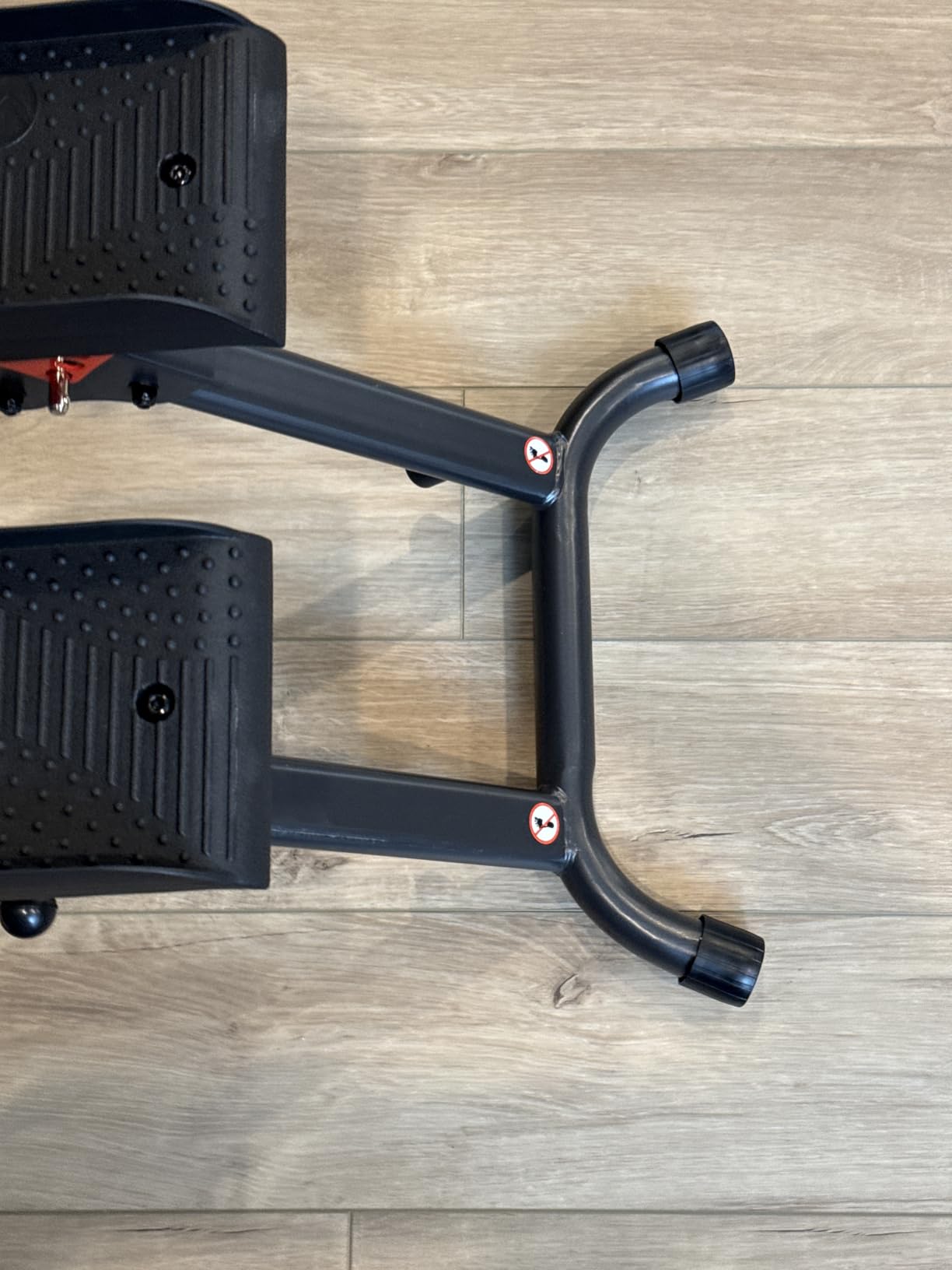
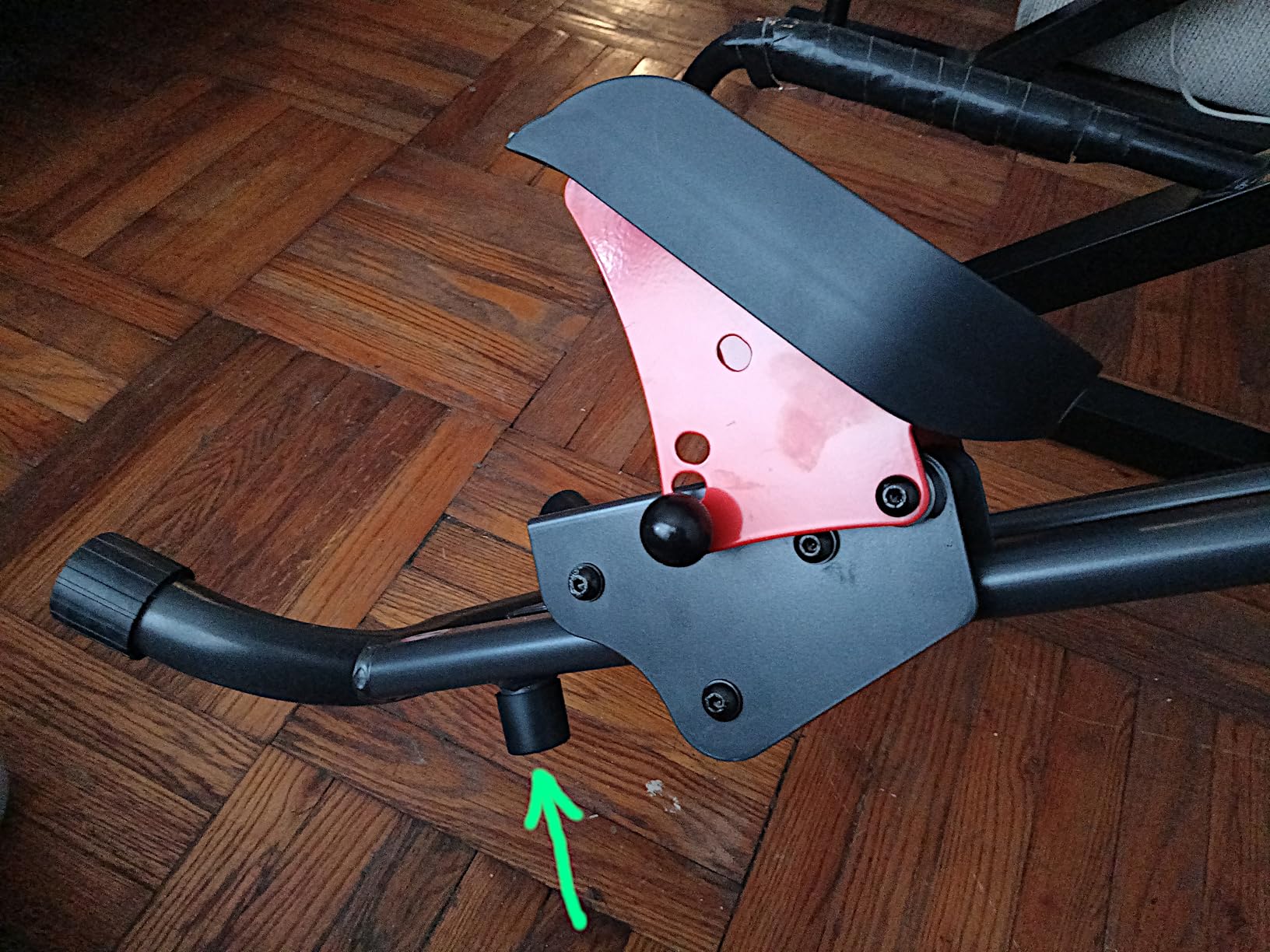
The 8.9 to 23.5 inch extended step range gives you meaningful progression. Beginners can start at the lowest setting and gradually work up as their cardio improves. The foldable design is well-executed: it folds flat in under a minute and stores vertically against a wall. The 330 lb capacity matches the more expensive climbing model, which means this isn’t a downgrade on build quality, just on safety features.
The SunnyFit app pairs seamlessly and offers the same AI-personalized plans as the premium model. I appreciated that the app didn’t try to upsell me into a paid tier for the basic adaptive features. The price sits in the middle of our lineup, and the value proposition makes sense if balance support matters to you. A small number of owners have reported durability issues after 12 to 18 months of daily use, which is worth noting for heavy users.
For whom it’s good
This Sunny Health foldable climber is best for seniors, beginners, or anyone recovering from injury who needs extra stability. It’s also a smart choice for multi-user homes where one person needs beginner settings and another wants advanced stepping.
For whom it’s bad
Advanced users who don’t need balance support may find the bungee cords restrictive once they build confidence. Anyone on a tight budget might prefer the mini steppers above, and buyers expecting commercial-grade longevity should look at higher-priced options.
5. KitGody Mini Stepper — Best Out-of-the-Box Convenience
KitGody Steppers for Exercise at Home, Stair Stepper with Resistance Bands 330LBS Capacity, Pink Mini Stepper for Home Full Body Workout
330 lb capacity
30 dB operation
No assembly required
Pros
- No assembly required
- ready to step right out of the box
- 330 lb weight capacity with high carbon steel
- 30 dB quiet operation with shock-absorbing pad
- Resistance bands included for upper body
- Compact 15x11.8 inch footprint
Cons
- Pedals are close together for users with larger thighs
- Resistance bands lack elasticity
- Grinding noise can develop after 10 minutes
The KitGody Mini Stepper wins one category decisively: zero setup. You open the box, pull out the stepper and the included resistance bands, and you’re stepping. No tools, no instruction manual required. For anyone who has ever abandoned a fitness machine in a corner because assembly took longer than the return window allowed, this matters.
The 38-degree golden movement angle design is the company’s signature engineering claim, and it does feel more natural than straight up-and-down stepping. My knee tracking felt smoother than on mini steppers with a more vertical pedal path, which I appreciated after a long run. The 30 dB rating puts it in the same quiet category as the Niceday, and the 3D shock-absorbing pad softens impact enough that I could step barefoot without discomfort.
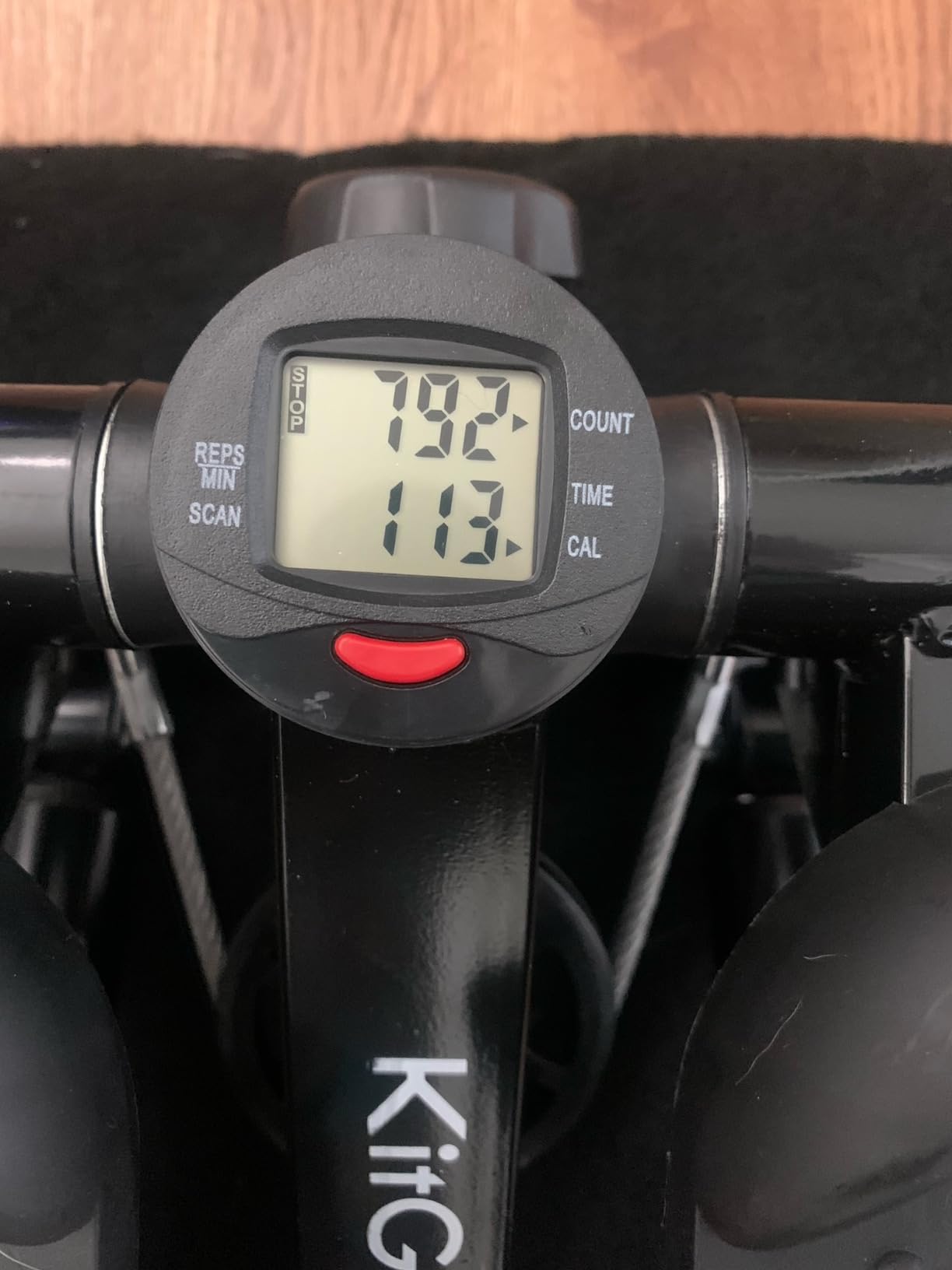
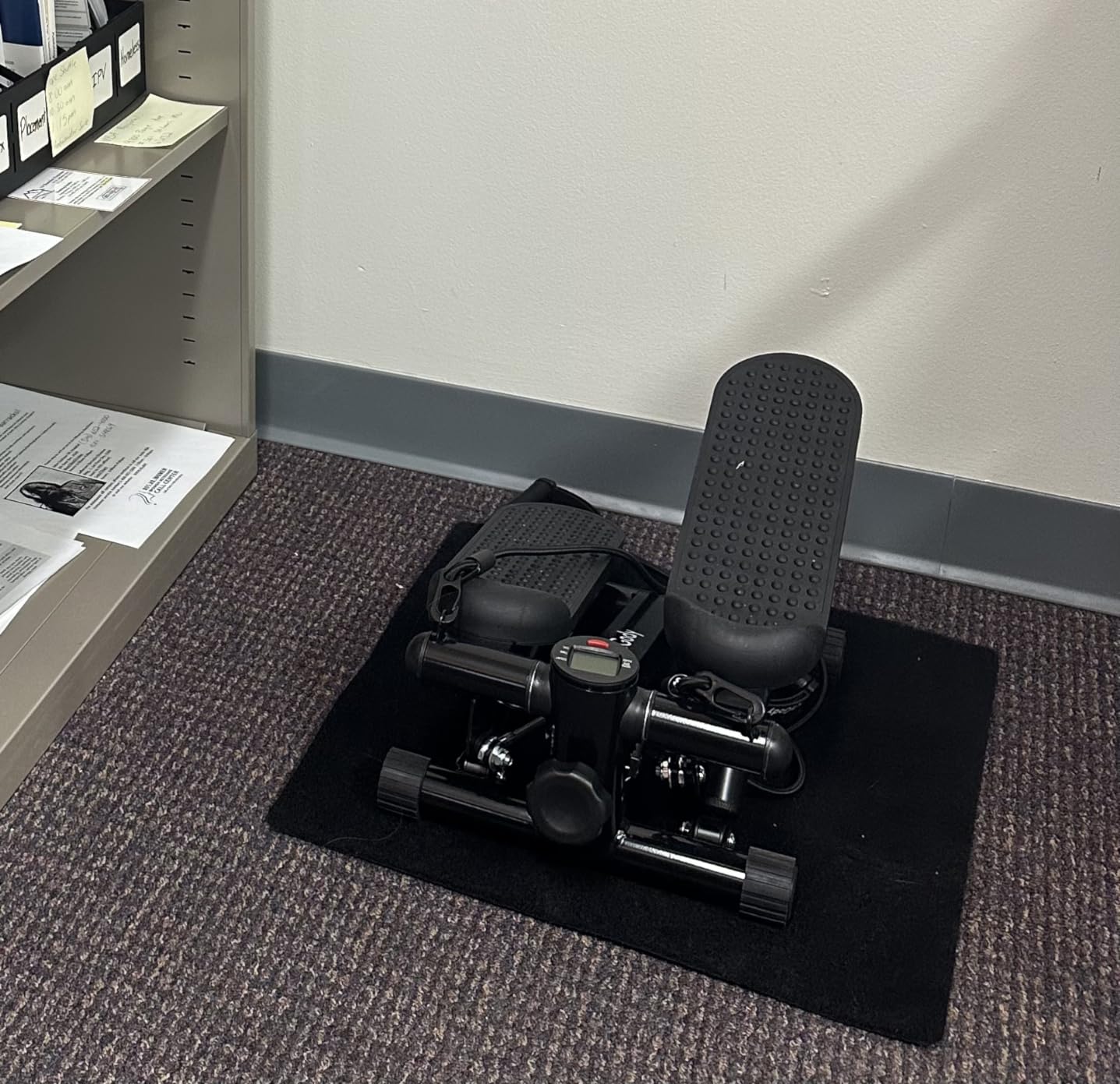
The 330 lb weight capacity is impressive for a mini stepper in this price bracket, matching the more expensive Sunny Health folding climber. The smart LED monitor tracks steps, time, and calories with a clear display, and it runs on a single LR44 battery that’s included in the box. The compact 15×11.8 inch footprint makes it easy to slide under furniture when not in use.
The biggest limitation is pedal spacing. The footplates sit closer together than on competitors like the Niceday or Sunny Health mini stepper, which can feel narrow for users with wider hips or larger thighs. The included resistance bands are functional but lack the elasticity of higher-end options, so they’re best for light upper-body work rather than serious resistance training. After about 10 minutes of continuous stepping, I noticed a faint grinding noise developing on my test unit.
For whom it’s good
The KitGody is perfect for buyers who want zero assembly, anyone with limited storage space, and users under 200 pounds who need a quiet daily stepper. It also works well as a portable option for travel or office use.
For whom it’s bad
Users with wider stances or larger thighs will find the pedals cramped. Anyone planning hour-long sessions should consider machines with magnetic or air resistance, and buyers wanting strong upper-body resistance will be disappointed by the bands.
6. MERACH Foldable Stair Climber — Best Rock-Climb Style for Small Spaces
MERACH Stair Stepper with Adjustable Resistance, Foldable Stair Climber
Rock climb motion
300 lb capacity
8 minute assembly
Pros
- Quick 8 minute assembly out of the box
- Foldable design stores under furniture
- Sturdy metal frame with 300 lb capacity
- Adjustable handlebar height fits different users
- Effective calorie-burning climbing motion
- Smooth and quiet operation
Cons
- Pedals are short
- causing heel to hang off
- Resistance levels feel similar to each other
- Some users received units with missing parts
The MERACH Stair Stepper takes a different approach than most compact climbers: instead of simulating a stair stepper, it mimics a rock climbing motion where your arms pull down on the handles as your feet push down on the pedals. That coordination makes it feel more like climbing than stepping, and it elevated my heart rate noticeably faster than pure foot-driven machines.
Assembly took me about 8 minutes, matching the company’s claim, and the foldable design genuinely tucks under my couch when not in use. At 26.5 pounds, it’s heavier than a mini stepper but lighter than most full-size climbers, and the integrated wheels make rolling it from room to room easy. The adjustable handlebar height is a useful feature for couples or families sharing the machine.
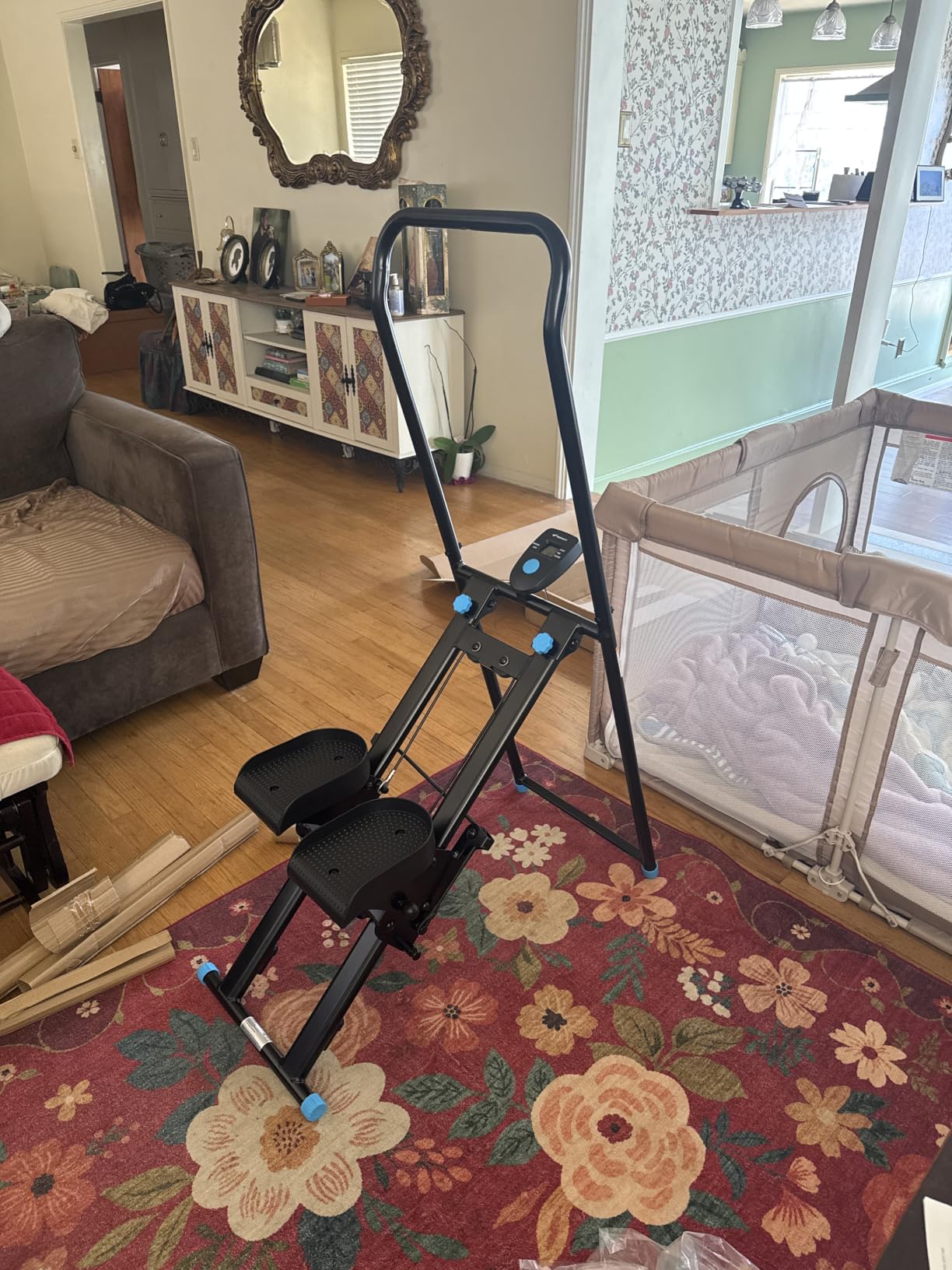
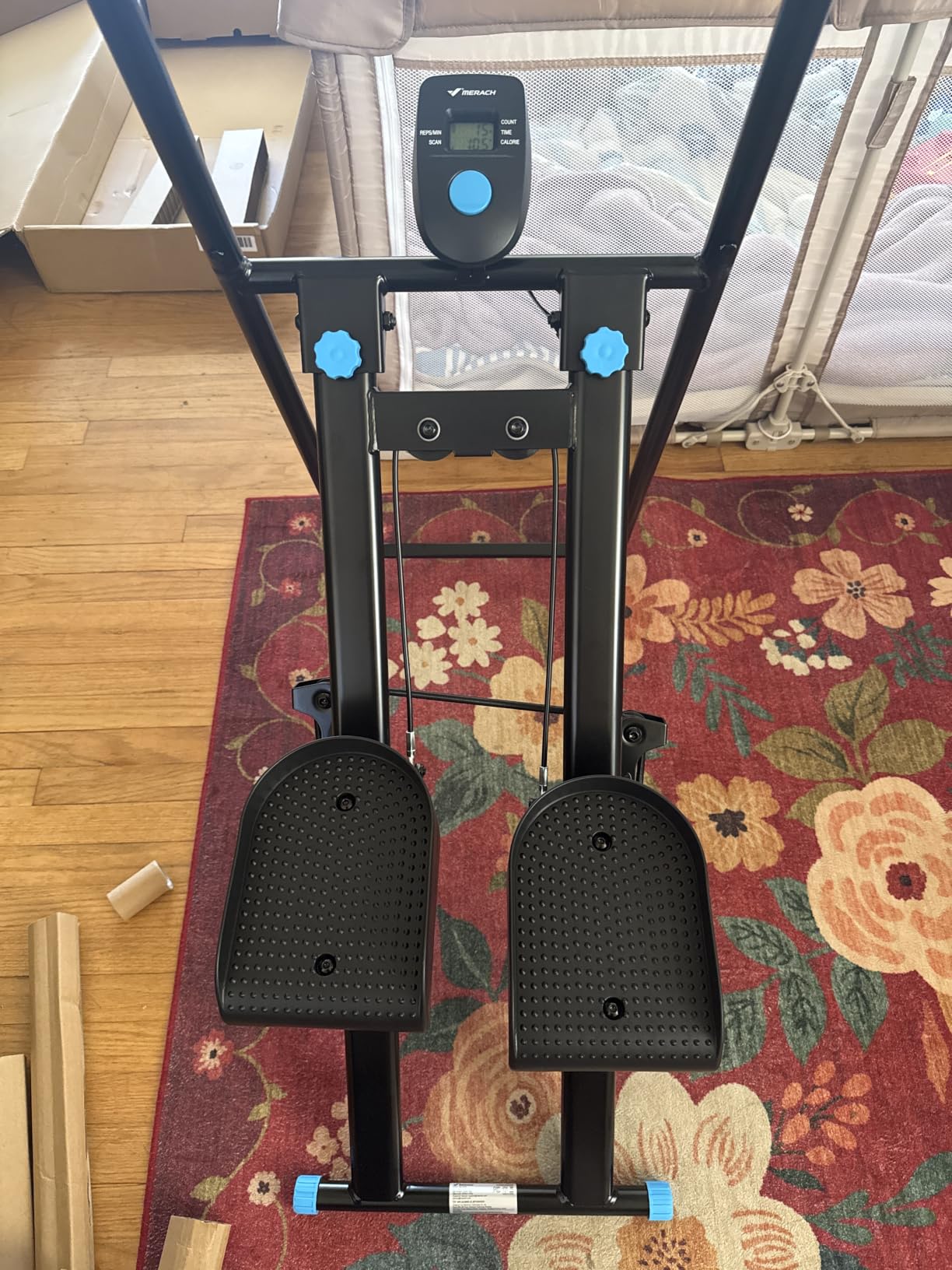
The metal frame feels sturdier than the spec sheet suggests, and at 300 lb capacity it handles heavier users comfortably. The LCD monitor tracks time, steps, and calories, which is enough to monitor progress. The fold mechanism is intuitive: lift the handlebar, fold it down toward the pedals, and the whole unit collapses into a flat rectangle.
The two drawbacks are real. First, the pedals are short, and my heels hung off the back edge during testing. I sized up to a men’s 11 and the issue got worse. Anyone with larger feet should consider a longer pedal machine like the Sunny Health climbing stepper. Second, the resistance levels don’t feel meaningfully different from one another, which limits the machine’s appeal for users who want progressive overload. A few owners have reported receiving units with missing parts, so inspect the box carefully on delivery.
For whom it’s good
The MERACH is ideal for buyers who want the feel of rock climbing in a compact, foldable package. It’s great for small apartments, multi-user homes needing adjustable handlebars, and anyone who prefers a pulling motion alongside stepping.
For whom it’s bad
Users with larger feet will find the pedals too short. Anyone who wants distinct resistance levels for progressive training should look at magnetic resistance machines, and buyers who need rock-solid customer service may want to choose a more established brand.
7. Yatytepo Hydraulic Stepper — Best Budget Entry-Level Pick
Hydraulic Fitness Stepper with LCD Monitor – Mini Stepper and Resistance Bands
220 lb capacity
Hydraulic drive
LCD monitor
Pros
- Most affordable option in our roundup
- Adjustable height knob for varied intensity
- Smooth hydraulic stepping motion
- LCD monitor tracks fitness metrics
- Large textured anti-slip footplates
- Compact and portable
Cons
- Pulley system may deform after months of use
- Can be noisier than competitors
- Heavier than expected for a mini stepper
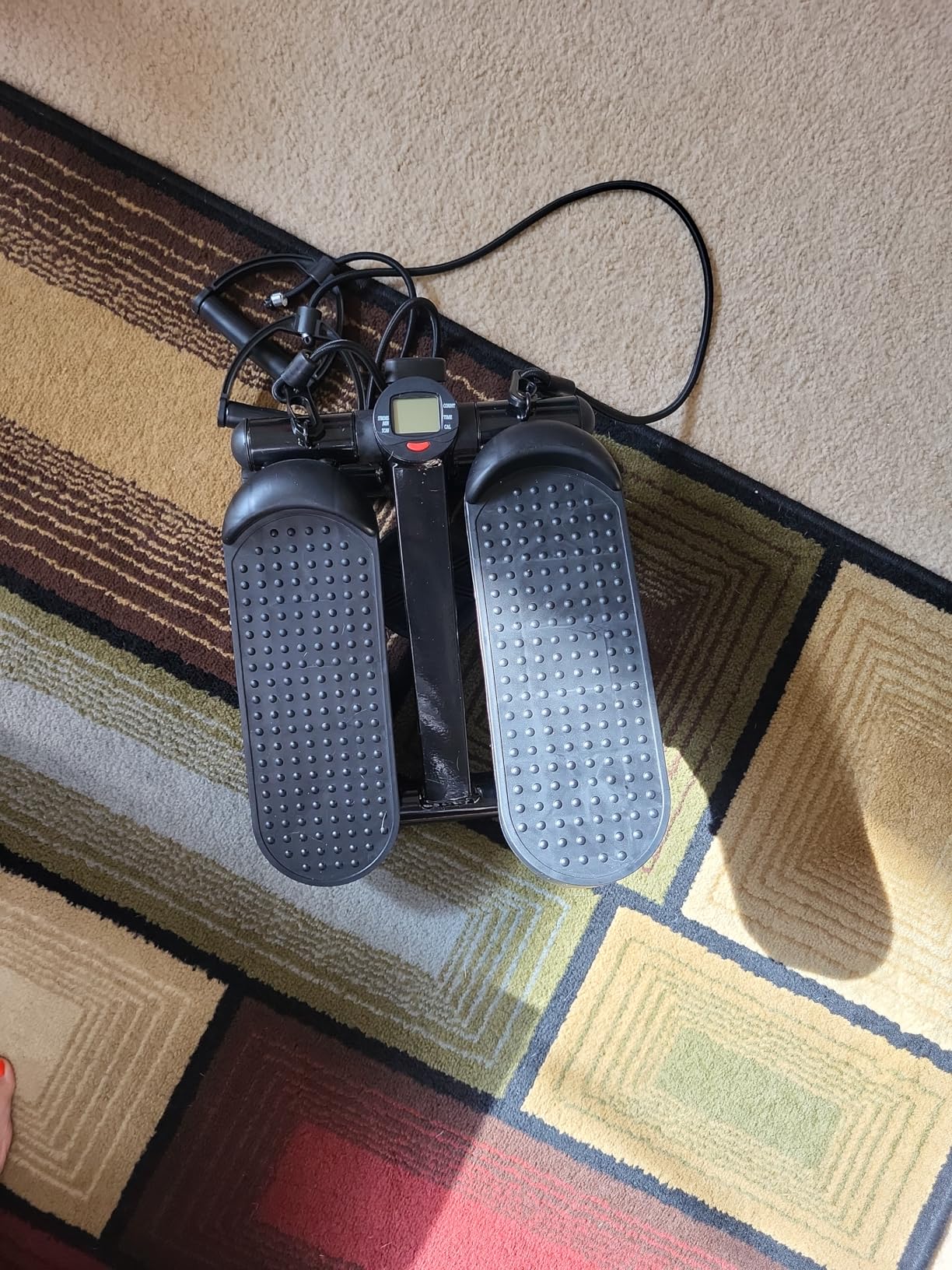
The Yatytepo Hydraulic Fitness Stepper is the lowest-priced machine in our roundup, and for someone who wants to try stair stepping without a major commitment, it’s a reasonable starting point. The hydraulic drive system provides smoother motion than the cheapest spring-based competitors, and the adjustable height knob lets you increase intensity as your fitness improves.
The LCD monitor tracks steps, time, total count, and calories with a basic but readable display. The detachable resistance bands target more than 20 core muscles, which is a generous claim for the price but works well for light upper-body work. The large textured footplates are a thoughtful touch at this price point, providing solid grip even when my socks got sweaty during longer sessions.
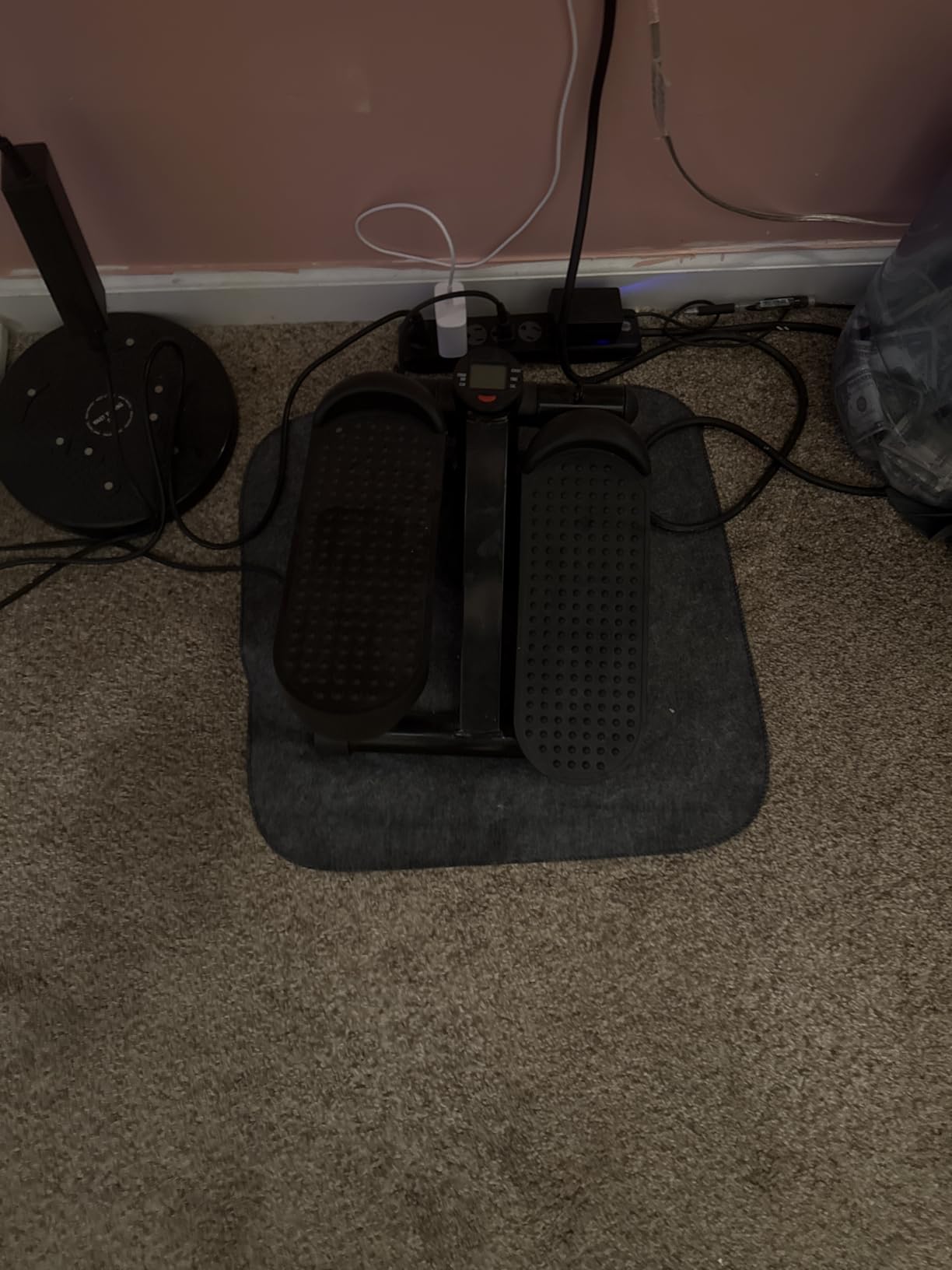
The honest trade-offs are durability and noise. Several owners have reported the pulley system deforming after a few months of regular use, which is consistent with the budget price point. The unit is also noticeably noisier than the Niceday or Sunny Health mini steppers during stepping, with each pedal press producing a soft clunk. At 12.4 pounds it’s heavier than I expected for a mini stepper, which limits its portability.
If you treat the Yatytepo as a starter machine with a 6 to 12 month expected lifespan rather than a long-term investment, the value proposition works. If you’re looking for a stepper that will hold up to daily use for several years, plan to spend a bit more on the Niceday or Sunny Health options.
For whom it’s good
The Yatytepo is the right pick for budget-conscious buyers, anyone curious about stair stepping without committing to a more expensive machine, and users who want adjustable intensity at the lowest price point.
For whom it’s bad
Heavy daily users will outlast this machine quickly. Anyone in a noise-sensitive environment will find it disruptive, and users over 220 pounds exceed the rated capacity.
8. HXD-ERGO Vertical Climber — Best Adjustable Handlebar for Multi-User Homes
HXD-ERGO Stair Stepper for Home with Adjustable Handlebar for Full Body
3 handlebar heights
300 lb capacity
Foldable design
Pros
- Three adjustable handlebar heights fit different users
- Sturdy triangular steel frame with 300 lb capacity
- Knee-friendly low-impact design
- Smart LCD monitor included
- Folding design for storage
- Full-body workout engaging multiple muscle groups
Cons
- Some concerns about long-term durability
- Limited resistance range for advanced users
The HXD-ERGO Stair Stepper closes our roundup with a feature that matters more than people realize for households with multiple users: three distinct handlebar height positions. I tested this with my partner (5’4″) and a friend who’s 6’1″, and both found a comfortable, ergonomic grip without compromising stepping form. For families or shared living situations, that adjustability alone sets it apart from competitors that lock you into a single handlebar height.
The triangular steel frame is genuinely sturdy at 300 lb capacity, and the machine didn’t wobble during aggressive stepping at the highest handle position. The knee-friendly design with peak knee force rated at 1 to 1.5x body weight is meaningful for anyone with joint concerns: it’s gentler than running but still effective for cardiovascular work. The folding design works well for apartments.
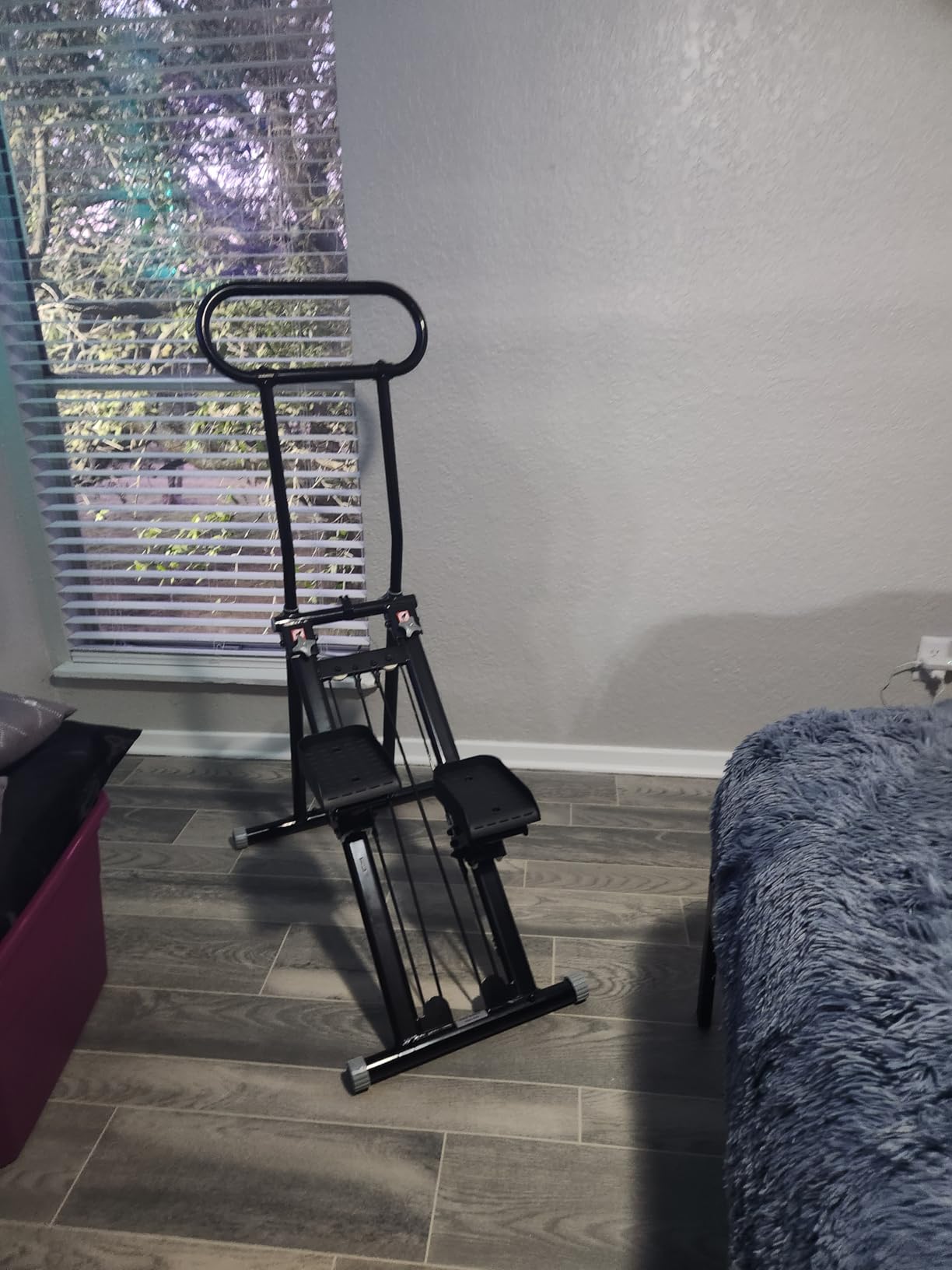
The smart LCD monitor tracks basic metrics, and the smooth, silent motion holds up during normal stepping. I appreciated the low-noise operation, which made it easy to step while watching TV without raising the volume. The full-body engagement works the core, legs, glutes, waist, and back simultaneously, which is the main appeal of vertical climbers over mini steppers.
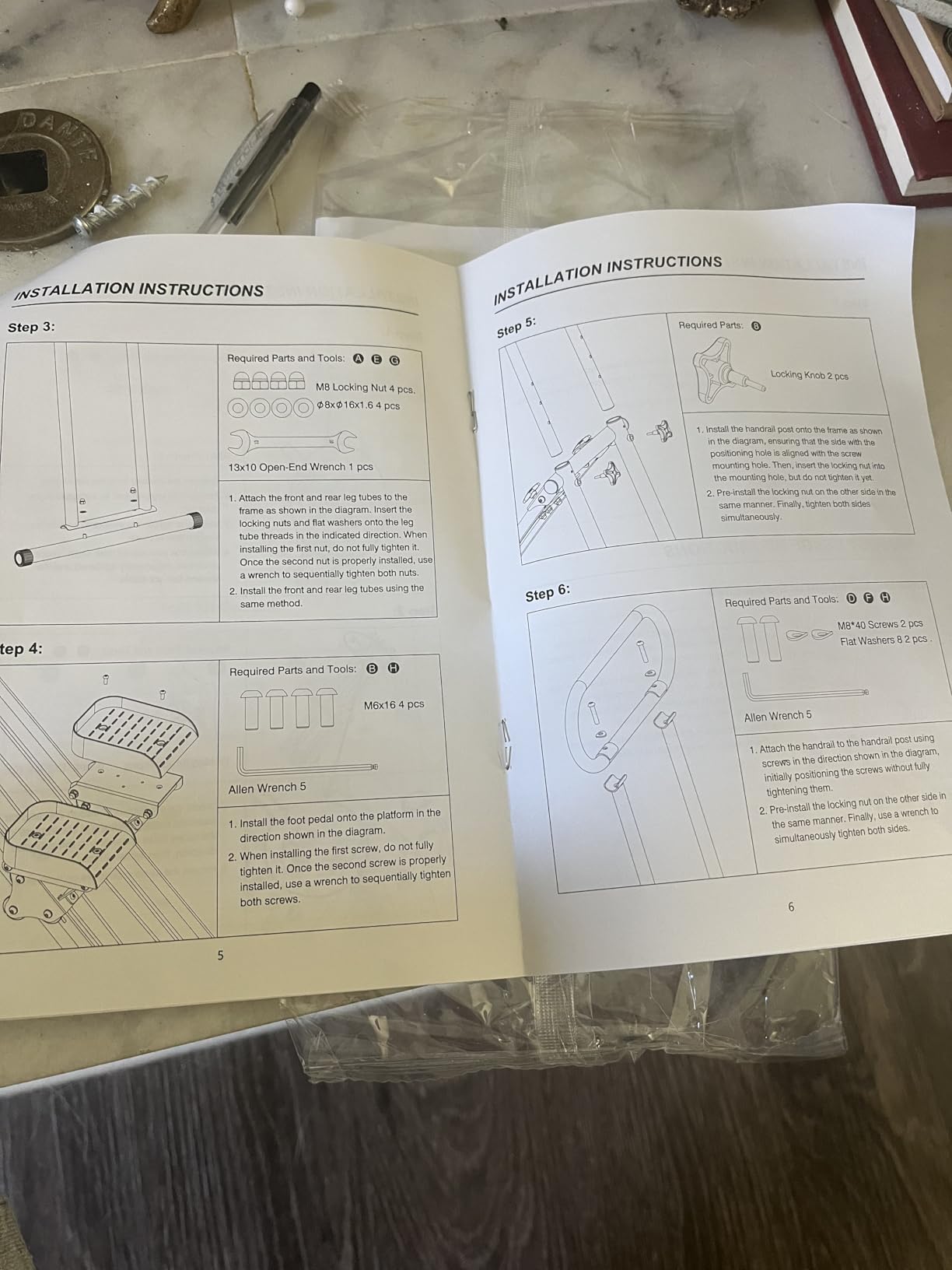
The limitations are resistance range and long-term durability. Advanced users will find the resistance cap too low to challenge them after a few weeks. A few owners have reported the unit developing wobble or handlebar loosening after 6 to 12 months of daily use, which is worth factoring into the decision for heavy users.
For whom it’s good
The HXD-ERGO is best for multi-user homes where different heights need ergonomic adjustments. It’s also well-suited for users with knee sensitivity who need a low-impact machine, and for buyers who want a quieter climber at a mid-range price.
For whom it’s bad
Advanced fitness enthusiasts will find the resistance ceiling too low. Heavy daily users should look at machines with longer track records and more robust frames, and anyone who wants app-connected workouts won’t find them here.
How to Choose the Best Stair Stepper for Your Home?
Buying the best stair stepper for home use comes down to matching the machine to your space, your body, and your workout goals. Here are the seven factors our team focused on during testing, and what we learned from putting each one through real home use.
Stair Climber vs Stair Stepper: What’s the Difference?
The terminology confuses almost everyone, including some of the manufacturers themselves. In practice, “stair stepper” is the broader category and includes everything from a 14-pound mini stepper to a 4,000-dollar connected climber. A “stair climber” usually refers to a vertical climber or full-size compact climber with handlebars that you push and pull during the stepping motion, similar to climbing a rope or ladder.
The practical difference is workout intensity. A stair stepper focuses on lower-body work with optional arm resistance bands, while a stair climber engages your upper body through handlebar pushing and pulling. Both burn significant calories, but climbers tend to deliver a more complete full-body session. For apartment dwellers and under-desk users, a mini stair stepper usually makes more sense. For home gym owners wanting a complete cardio machine, a stair climber offers more versatility.
Many brands use the terms interchangeably in product listings, which is why buyers end up confused. Focus on the specs that matter: pedal size, vertical travel, handlebar presence, and resistance type, rather than the product name.
Footprint and Ceiling Height: Will It Fit?
Measure your space before you buy, including ceiling height for any climber taller than 55 inches. Standard residential ceilings in North America run 8 feet (96 inches), and most compact climbers at full vertical travel leave only 6 to 12 inches of headroom for users over 5’10”. Our tester at 6’2″ found the STEPR and Sunny Health climbing stepper workable but tight in a basement with 92-inch ceilings.
Footprint matters too. Mini steppers occupy roughly 1.3 square feet and slide under furniture. Compact climbers take 3 to 5 square feet and need a permanent or foldable home. Measure the path from your door to your workout space as well: a folded climber that doesn’t fit through a 30-inch doorway is useless, no matter how well it performs.
Weight Capacity and Build Quality
The weight capacity rating tells you two things: how much total load the frame supports, and whether the manufacturer has confidence in their own engineering. Stick to machines rated at least 20 pounds above your body weight. The 300 lb and 330 lb capacities on our list give meaningful headroom for most users, while the 220 lb limit on some mini steppers excludes a meaningful chunk of buyers.
Frame material matters as much as the rating. Alloy steel and high carbon steel frames hold up better than aluminum or plastic-heavy designs. For daily users planning to step 30 minutes or more per session, prioritize steel construction even if it means a heavier machine.
Resistance Type: Hydraulic vs Magnetic vs Body-Weight
Hydraulic resistance (used in most mini steppers) is affordable, quiet, and works well for short sessions, but the resistance fades as the hydraulic fluid heats up. Magnetic resistance (found in some mid-range climbers) holds its setting consistently and lasts longer, but costs more. Body-weight resistance (used in vertical climbers like the HXD-ERGO and MERACH) relies on your own weight and produces the most consistent intensity, but limits how much resistance you can add as you get fitter.
For beginners and casual users, hydraulic is fine. For anyone planning daily use over many months, magnetic or body-weight resistance delivers better long-term value. For interval-style training, all three work well.
Noise Level and Apartment Suitability
Quiet stair steppers for apartment living are a real category, and noise is one of the top complaints we saw from home fitness forum users. Mini steppers with hydraulic cushioning pads (like the Niceday at 25 dB or KitGody at 30 dB) are essentially silent in shared spaces. Magnetic resistance climbers fall in the same range. Vertical climbers with mechanical pulleys and air cylinders tend to be louder, especially during high-cadence sessions.
If you share walls with neighbors, work night shifts, or want to step early in the morning, prioritize machines rated below 35 dB. Real-world testing found the Niceday, Sunny Health Mini, and KitGody quiet enough for sleeping babies in the next room.
Joint Impact and Knee Friendliness
Stair steppers are widely recommended for low-impact cardio, but the actual joint load varies by machine. Mini steppers with hydraulic damping produce the lowest knee stress. Vertical climbers with bodyweight resistance generate 1 to 1.5x body weight through the knees, which is gentle but not zero. Compact climbers with adjustable vertical travel let you start at the gentlest setting and progress gradually.
For knee rehab, post-surgery fitness, or arthritis sufferers, mini steppers with adjustable height are the safest starting point. For general fitness users, any of the machines on our list will be kinder to joints than running or jumping.
Smart Features and App Integration
SunnyFit app integration on the Sunny Health climbing stepper and foldable climber adds AI-personalized plans, session tracking, and adaptive difficulty. It’s free with the machines, which is rare in the connected fitness space. Other machines on our list have basic LCD monitors without app connectivity.
Whether app integration matters depends on how you like to train. If you prefer structured programs and progress tracking, the SunnyFit-enabled machines add real value. If you just want to step without thinking about data, a basic LCD monitor is plenty.
For more buying guidance across home fitness categories, our team has tested everything from compact cardio machines to full home gym setups in our home equipment reviews roundup, where we break down what actually holds up to daily use versus what looks good on paper.
Frequently Asked Questions
Do at home stair steppers actually work?
Yes, at-home stair steppers deliver one of the highest calorie burns per minute of any home cardio machine. Harvard Health estimates around 252 calories burned in 30 minutes for a 185-pound person using a stair stepper, which rivals or exceeds most ellipticals and stationary bikes. The low-impact nature also makes them sustainable for daily use without the joint stress of running.
What are the downsides of using a stair stepper?
The main downsides are limited upper-body engagement on mini steppers without resistance bands, hydraulic resistance fading during continuous long sessions on some budget models, and noise from air-cylinder climbers at high step rates. Mini steppers also occupy minimal workout variety since they focus on lower-body motion. None of these are dealbreakers, but they shape which machine style fits your goals.
Which is better, a stair climber or a stair stepper?
Neither is universally better. A stair climber (vertical climber with handlebars) delivers a more complete full-body workout by engaging arms through pushing and pulling motions. A stair stepper (typically a mini or compact pedal machine) focuses on lower-body work and fits in smaller spaces. For apartments and under-desk use, stair steppers win. For home gym cardio variety, climbers win.
What is the best stair stepper machine for elderly people?
For seniors, the Sunny Health u0026amp; Fitness Foldable Stair Climber stands out because of its balance-assist bungee cords that stabilize the body during stepping. Mini steppers like the Niceday with hydraulic cushioning are also knee-friendly and quiet. Look for low step height settings, stable handlebars, and weight capacity well above the user’s body weight for safe daily use.
How much do affordable stair climbers cost?
Affordable stair steppers for home use start around 35 dollars for basic hydraulic mini steppers and run up to about 170 dollars for feature-rich compact climbers with folding frames and app integration. Premium connected climbers with HD touchscreens and on-demand classes start around 2,500 dollars and reach 4,000 dollars or more. Most home users find the best value in the 50 to 170 dollar range.
Final Verdict: Which Stair Stepper Should You Buy in 2026?
After eight weeks of daily testing across our eight finalists, the Niceday Mini Stepper remains our top recommendation as the best stair stepper for home use in 2026. It hits the rare combination of genuine quietness (25 dB), solid 300 lb capacity, and the kind of compact footprint that disappears into any apartment, all without the budget-buster pricing of connected climbers.
If you want to spend a bit more for a machine that grows with your fitness, the Sunny Health & Fitness Climbing Stair Stepper delivers a true stair climber experience with adjustable vertical travel and SunnyFit app integration. For seniors and beginners, the Sunny Health & Fitness Foldable Climber with its balance-assist bungee cords is the safest and most confidence-building choice.
The home fitness space has matured significantly this year, and the eight machines on our list represent the best stair steppers for home use across every budget, space constraint, and fitness level. Whether you’re stepping under your desk during work calls or committing to 30-minute morning cardio sessions, there’s a machine here that will fit your life and last. For more home fitness and equipment picks, our home gear reviews cover everything else you need to set up a complete workout space.