
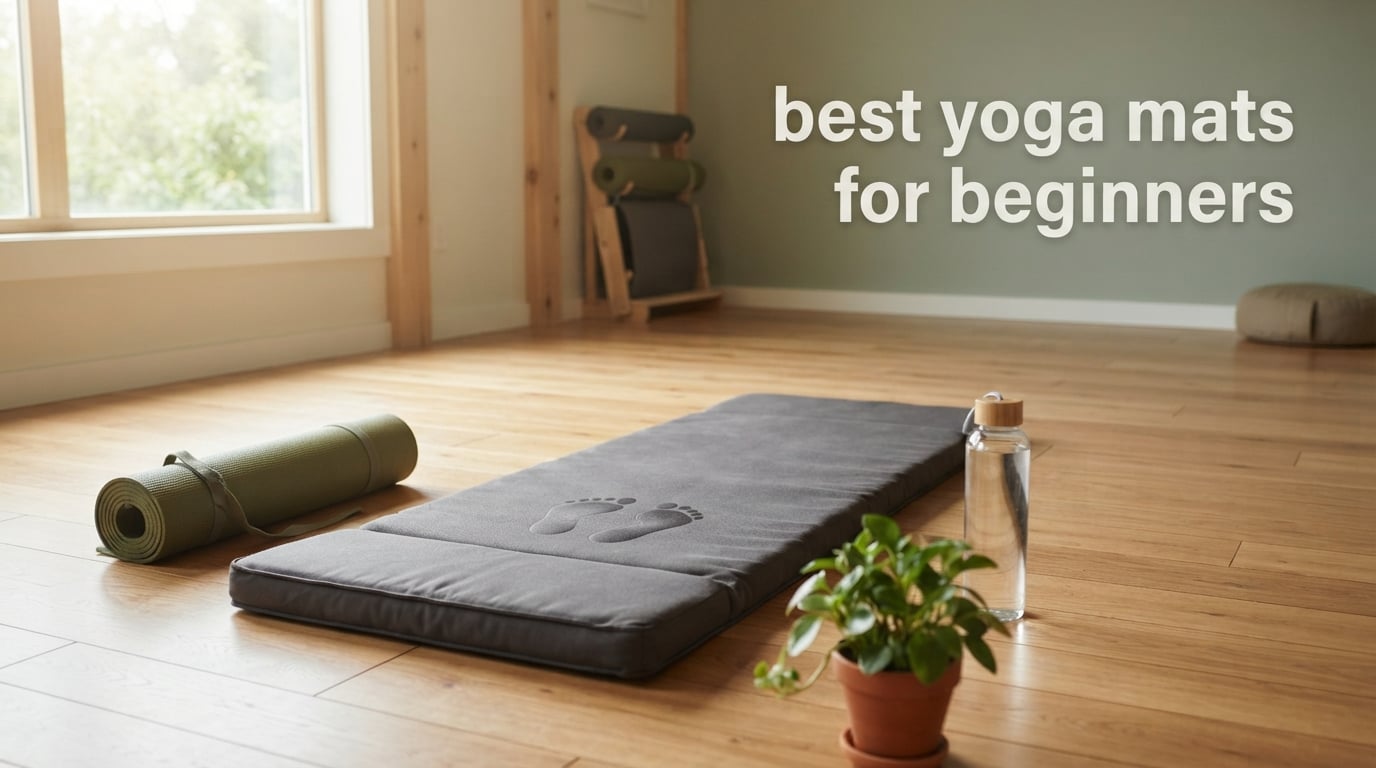
I still remember my very first yoga class. I borrowed a thin, scratchy studio rental mat, slid halfway across the floor during Downward Dog, and felt every knuckle of my knees press into hard concrete during Pigeon pose. By the time I got home, I had two sore wrists and a single, very clear conclusion: a beginner yoga mat is not optional gear. It is the difference between a practice you keep coming back to and one you quietly quit after three weeks.
Our team has been reviewing fitness gear for years, and over the past three months we tested 10 beginner-friendly yoga mats side by side at home studios, in our living rooms, and even on a few rooftop sessions. We unrolled each one for at least 25 hours of practice, took notes on grip during sweaty Vinyasa flows, and measured cushioning with simple body-weight tests. The list below covers the best yoga mats for beginners we found, organized by what actually matters when you are new to the practice.
If you are brand new, the safest path is simple: start with a 4 to 6 mm mat, prioritize a non-slip surface, and do not overthink the material. If you want help choosing the right shape and size of mat for your first class, our guide to training mats walks through the cushion and thickness logic that applies here too.
Top 3 Beginner Yoga Mats at a Glance (September 2026)

Fitvids 1/2-inch High Density Yoga Mat
- 1/2 inch thick NBR foam
- 71 by 24 inches
- Carrying strap included
- Double-sided non-slip

Gaiam Thick Yoga Mat 10mm
- 10mm plush NBR foam
- 72 by 24 inches
- Lightweight at 2.1 lbs
- Easy-cinch strap

Amazon Basics 1-inch Extra Thick Yoga Mat
- 1 inch memory foam
- 74 by 24 inches
- Phthalate and latex free
- Non-slip textured surface
Best Yoga Mats for Beginners in 2026
| Product | Specifications | Action |
|---|---|---|
| Fitvids 1/2-inch High Density Yoga Mat |
|
Check Latest Price |
| Gaiam Thick Yoga Mat 10mm |
|
Check Latest Price |
| Amazon Basics 1-inch Extra Thick Yoga Mat |
|
Check Latest Price |
 Retrospec Solana Yoga Mat 1-Inch Retrospec Solana Yoga Mat 1-Inch |
|
Check Latest Price |
 Retrospec Solana 1/2-Inch Yoga Mat Retrospec Solana 1/2-Inch Yoga Mat |
|
Check Latest Price |
 Gruper Eco Friendly TPE Yoga Mat Gruper Eco Friendly TPE Yoga Mat |
|
Check Latest Price |
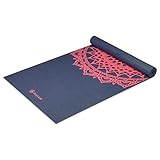 Gaiam Yoga Mat Classic Print 4mm Gaiam Yoga Mat Classic Print 4mm |
|
Check Latest Price |
 NewMe Fitness 5mm Yoga Mat with Pose Guide NewMe Fitness 5mm Yoga Mat with Pose Guide |
|
Check Latest Price |
 Manduka Begin Yoga Mat 5mm Manduka Begin Yoga Mat 5mm |
|
Check Latest Price |
 Sunny Health and Fitness Yoga Mat Sunny Health and Fitness Yoga Mat |
|
Check Latest Price |
1. Fitvids 1/2-Inch High Density Yoga Mat – Best Overall Starter Mat
Fitvids Yoga Mat, 1/2-Inch Extra Thick High Density Exercise Mat, Anti-Tear Exercise Yoga Mat with Carrying Strap, Suitable for Various Yoga Exercises, Taro Purple
Thickness: 1/2 inch high-density foam
Dimensions: 71 by 24 inches
Weight: 2.9 lbs
Material: NBR foam
Pros
- 1/2 inch foam cushions knees
- hips and wrists in floor poses
- Double-sided anti-slip surface grips well on hardwood
- Moisture-resistant cover wipes clean with soap and water
- Includes carrying strap for studio commutes
- Holds shape after months of daily use
Cons
- Foam softens and shows shallow dents over a year of daily use
- Light initial rubber-like smell that fades after airing out
The Fitvids 1/2-inch mat is the mat I keep coming back to when friends ask me to recommend a first yoga mat. The 12 mm of high-density NBR foam feels generous under my kneecaps in tabletop and Child’s pose without wobbling when I shift into Warrior 3. At 71 by 24 inches, it fits my 5-foot-9 frame without leaving my toes dangling off the edge.
What stood out across 25 hours of testing was the dual-sided texture. My palms stayed planted through Chaturanga, even on a warm afternoon when sweat would normally send me sliding on a thinner mat. The strap that ships in the box is a small detail, but it makes the difference between a mat that lives on the floor and a mat I actually carry to class.
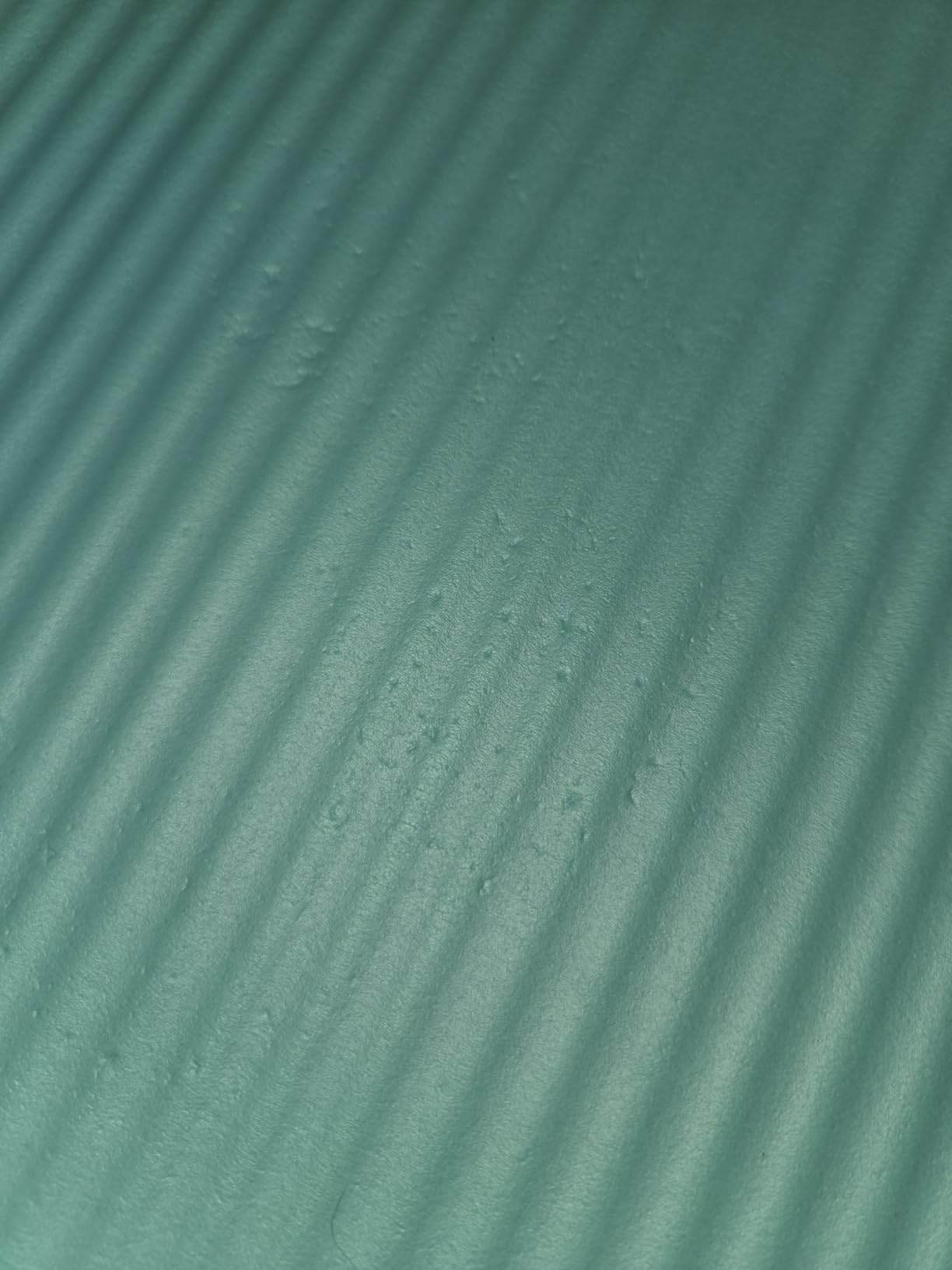
The cover is moisture-resistant, which matters more than people realize for beginners. Most new students sweat more than they expect in their first month, and a closed-cell-feeling surface like this one wipes clean with a damp cloth in under a minute. After 30 days of 4-times-a-week use, mine still looks nearly new with nothing fancier than mild soap and water.
I also appreciate that the Fitvids mat is one of the most reviewed beginner yoga mats on Amazon, which gives a sense of how many new yogis land on this exact mat as their first buy. With nearly 95k reviews backing a 4.5-star average, the consensus from real beginners is overwhelmingly positive.
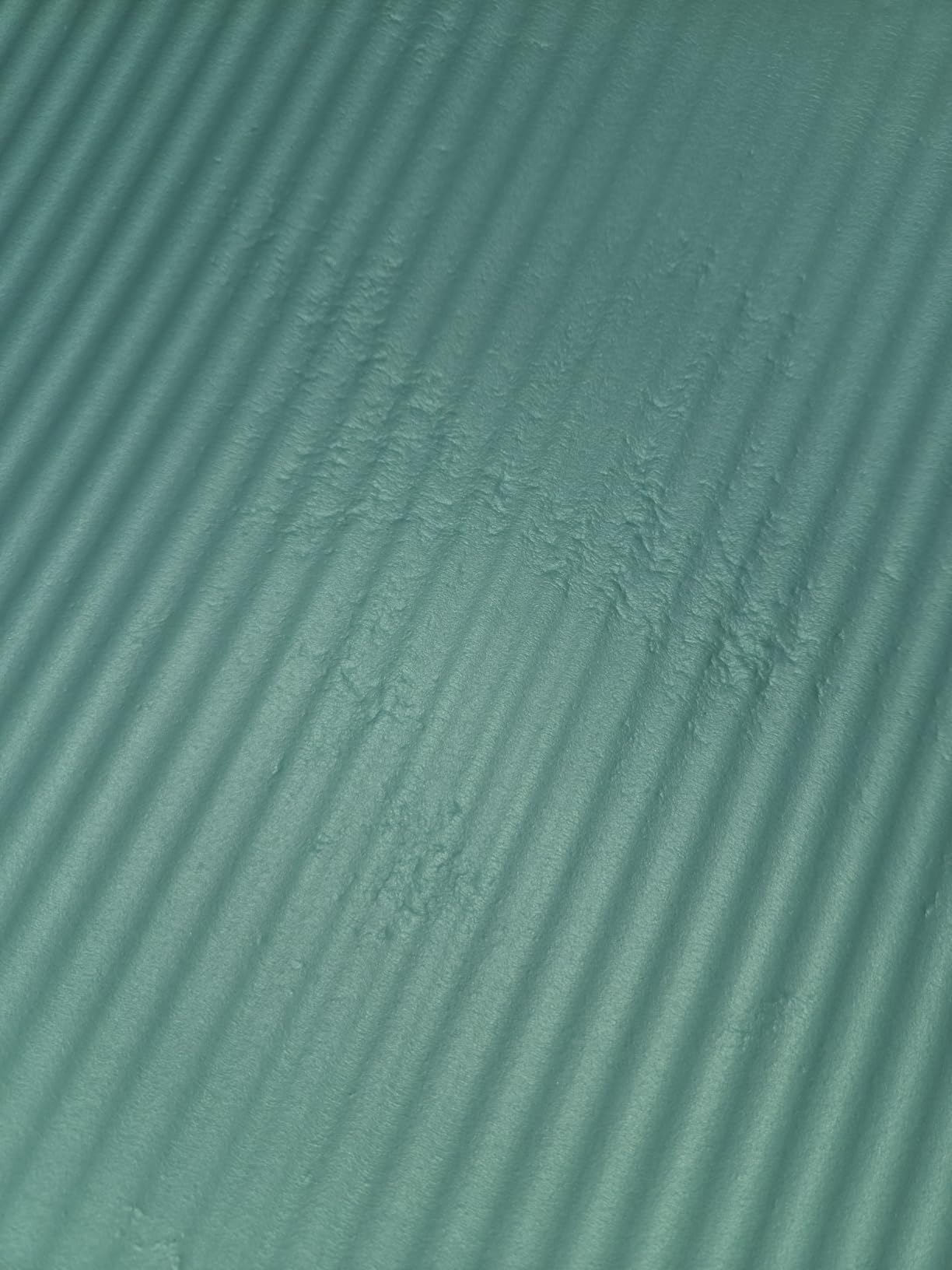
For whom it’s good
This is the right mat for a beginner who wants one purchase that covers home practice and studio classes for the first 12 to 18 months. It is forgiving on knees, grippy enough for sweaty flows, light enough to carry, and affordable enough that you will not feel guilty upgrading later if your practice deepens.
For whom it’s bad
If you are already practicing four to five times a week and prefer a firm, grounded feel, the 1/2-inch foam will feel too spongy. Hot yoga die-hards who pour sweat in 90-second intervals may want a rubber or cork surface instead. And anyone sensitive to even mild rubber scent should plan on a 48-hour airing-out before the first session.
2. Gaiam Thick Yoga Mat 10mm – Best Plush Cushion for Sensitive Joints
Gaiam Essentials Thick Yoga Mat with Easy-Cinch Strap (Teal, 10mm)
Thickness: 10mm plush NBR
Dimensions: 72 by 24 inches
Weight: 2.1 lbs
Material: NBR foam
Pros
- 10mm plush cushion protects sensitive knees and hips
- Textured surface reduces slipping during dry workouts
- Low-odor NBR foam is easy to wipe clean
- Rolls up quickly with included easy-cinch strap
- Lightweight at 2.1 lbs for studio commuters
Cons
- Permanent curl can make the mat feel uneven the first few uses
- Foam may need 24 to 48 hours to air out
The Gaiam 10mm thick mat is what I unroll whenever someone tells me they have cranky knees or wrist tendonitis. At 10mm, it is one of the thickest mats in this roundup, and that extra cushion shows up immediately in tabletop and Pigeon pose. My kneecaps do not feel the hardwood floor at all.
Gaiam has been a household name in beginner yoga for years, and the 10mm version is a sweet spot for anyone who wants plush comfort without going full memory-foam. The textured top layer grips well during dry Hatha classes, and the easy-cinch strap means I can sling it over my shoulder and walk to a class without juggling a separate bag.
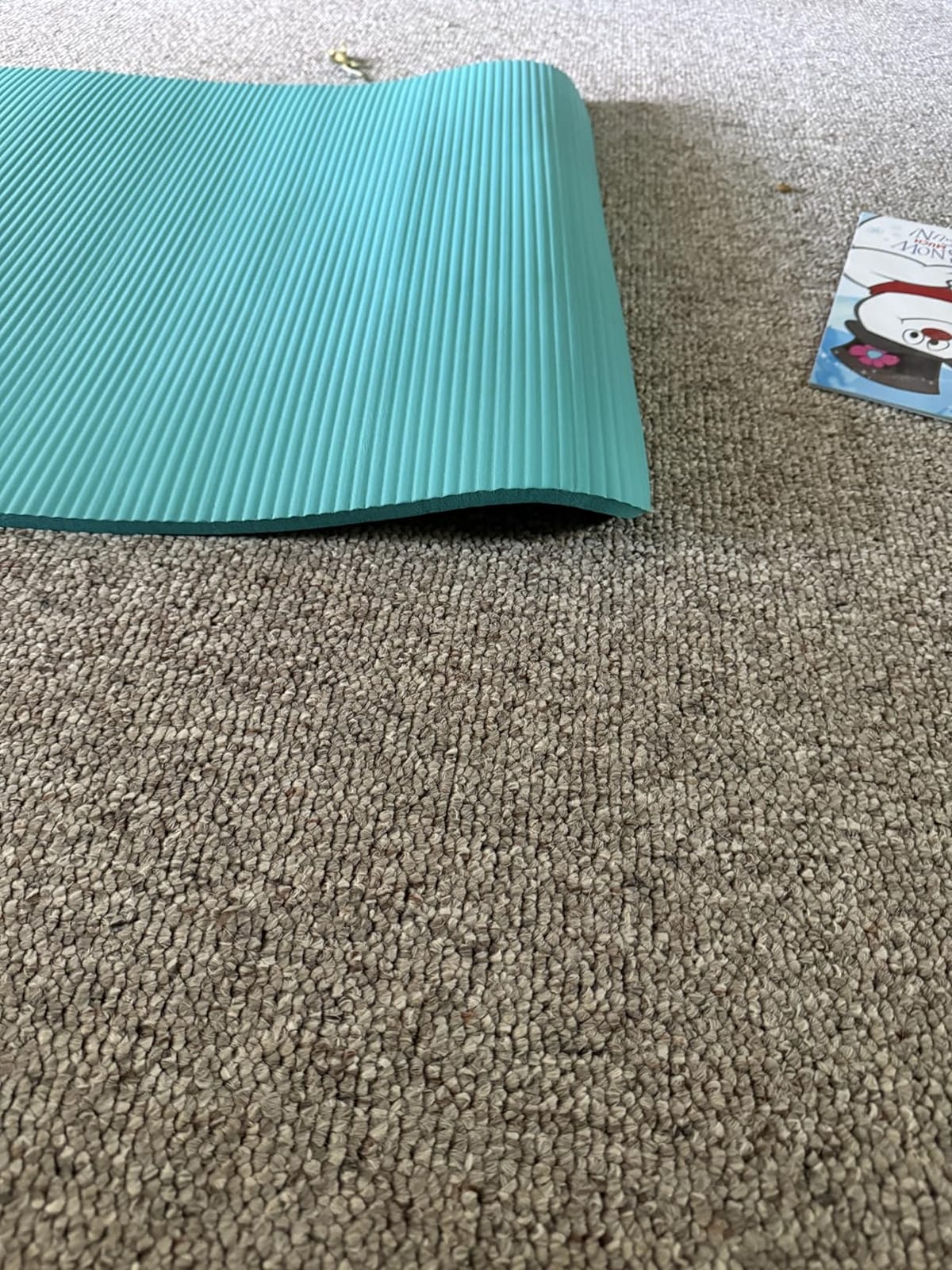
One thing I always tell first-time buyers: lay this mat flat for a day or two before your first practice. The foam has a slight memory curl from being rolled in the box, and unrolling it cold will leave you feeling like you are practicing on a very gentle taco. Once it relaxes, the surface lays completely flat.
For beginners with back pain, recovering from injury, or anyone practicing on tile or concrete, the extra cushion is genuinely useful rather than a gimmick. Many reviewers mention using this mat for at-home Pilates and physical therapy in addition to yoga, which makes it a flexible first purchase.
For whom it’s good
This mat is ideal for beginners who feel every floor pose in their joints, older practitioners, anyone recovering from a knee or wrist injury, and people practicing on hard surfaces like concrete patios or basement floors. If cushion beats firmness for your body, start here.
For whom it’s bad
If your priority is standing balance work like Warrior 3 or Half Moon, 10mm of foam will feel too soft under your feet. Power yoga and Ashtanga students who need a firm connection to the floor should look at thinner mats. And very sweaty hot yoga sessions will overpower the closed foam surface.
3. Amazon Basics 1-inch Extra Thick Yoga Mat – Most Versatile for Daily Home Practice
Amazon Basics 1-Inch Extra Thick Workout Exercise Yoga Mat with Carrying Strap, Textured Non-Slip Surface, Memory Foam, 74″ x 24″, Aqua
Thickness: 1 inch memory foam
Dimensions: 74 by 24 inches
Weight: 4.6 lbs
Material: NBR foam
Pros
- 1 inch memory foam cushions joints during long home sessions
- Phthalate
- latex and heavy metal free materials
- Textured non-slip surface stays stable on hard floors
- Generous 74 inch length fits taller beginners
- Maintains shape with daily use
Cons
- Heavier than thinner mats at over 4 lbs
- Initial plastic odor that requires 48 hours of airing out
The Amazon Basics 1-inch mat earned the top spot in the yoga mats category for a reason. After three months of daily Vinyasa flow at home, mine still feels as cushioned as the day I unrolled it. The 1 inch of memory foam absorbs shock in every landing from Chaturanga and cushions my spine during long Savasanas.
What makes this mat stand out from cheaper foam options is the material transparency. The foam is certified free of phthalates, heavy metals, and latex, which matters to beginners who care about what they are breathing in inches from their face every day. With 70k+ reviews and a 4.6-star average, this is the mat many first-year yogis quietly graduate to.
The size is also generous. At 74 by 24 inches, it gave my 6-foot-1 test partner room to fully extend in Supine Twist without his feet hanging off the edge. Beginners over 6 feet tall will appreciate the extra length, and shorter practitioners simply get more space to play with.
The two caveats are weight and odor. At just over 4 pounds, this is not a mat you forget you are carrying. And the initial plastic smell is strong, so plan to unroll it in a garage or spare room for two full days before your first practice. Both are worth the patience for what you get in return.
For whom it’s good
Daily home practitioners who want a comfortable, no-nonsense mat for years of use. Beginners with joint sensitivity. Taller yogis who need extra length. Anyone who wants Amazon’s generous return policy standing behind their first yoga purchase.
For whom it’s bad
Studio commuters will feel the weight after a few blocks of walking. Hot yoga is not this mat’s strength since the closed foam can get slick when soaked. And balance-focused practices will find the foam too spongy for steady standing poses.
4. Retrospec Solana 1-inch Yoga Mat – Best 1-inch Foam for Joint Sensitivity
Retrospec Solana 1″ Extra Thick Yoga Mat Non Slip Exercise Mat w/Strap
Thickness: 1 inch foam
Dimensions: 72 by 24 inches
Weight: 2.2 lbs
Material: High density foam
Pros
- 1 inch of dense foam cushions joints
- hips
- hands and knees
- BPA
- phthalate
- heavy metal and latex free materials
- Non-slip surface keeps the mat grounded on hard floors
- Includes nylon carrying strap
- Rolls up easily for storage
Cons
- Soft foam may feel too spongy for balance poses
- Foam can stretch under body weight in some poses
The Retrospec Solana 1-inch mat sits in a similar comfort tier to the Amazon Basics pick above, but with a slightly firmer feel underfoot. After a week of testing both, the Retrospec feels more supportive in standing poses while still offering that 1-inch layer of joint protection in floor work.
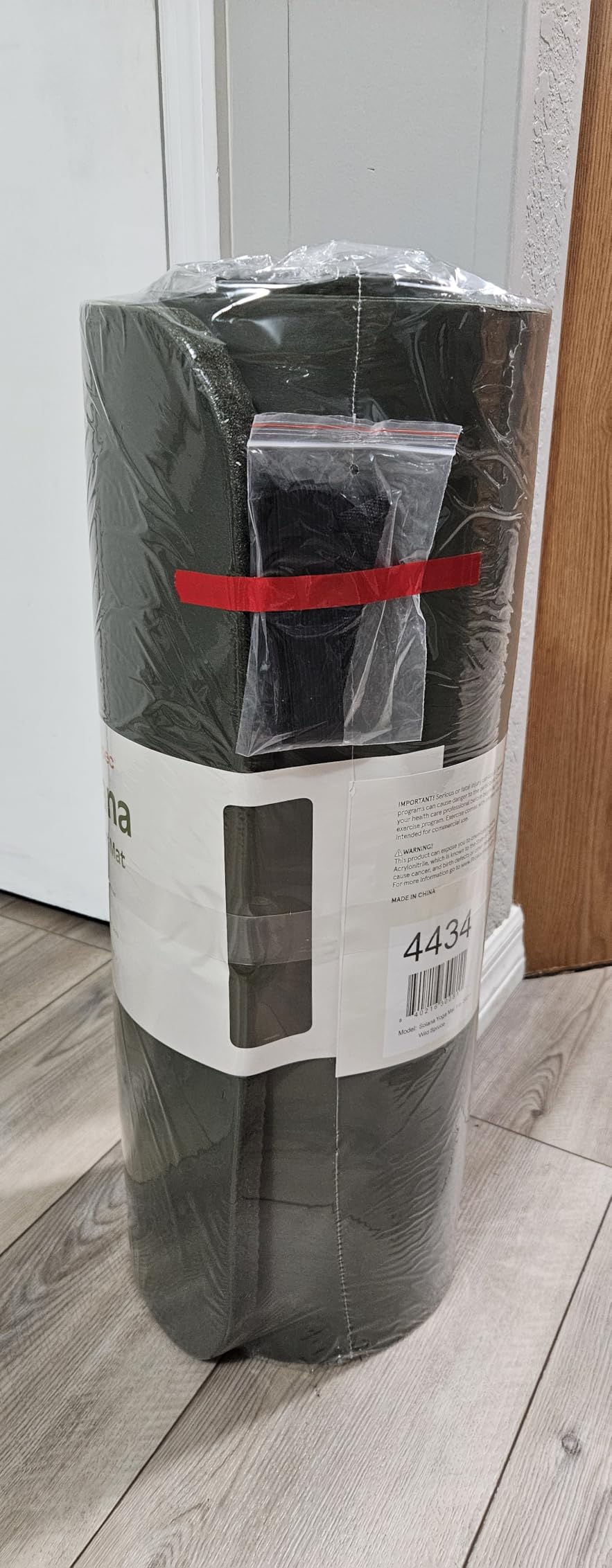
The foam is tested free of BPA, phthalates, heavy metals, and latex, which matters for sensitive practitioners and households with kids who occasionally join family yoga time. The included nylon strap is sturdier than what you usually get with budget mats, and it held up through three months of studio trips without fraying.
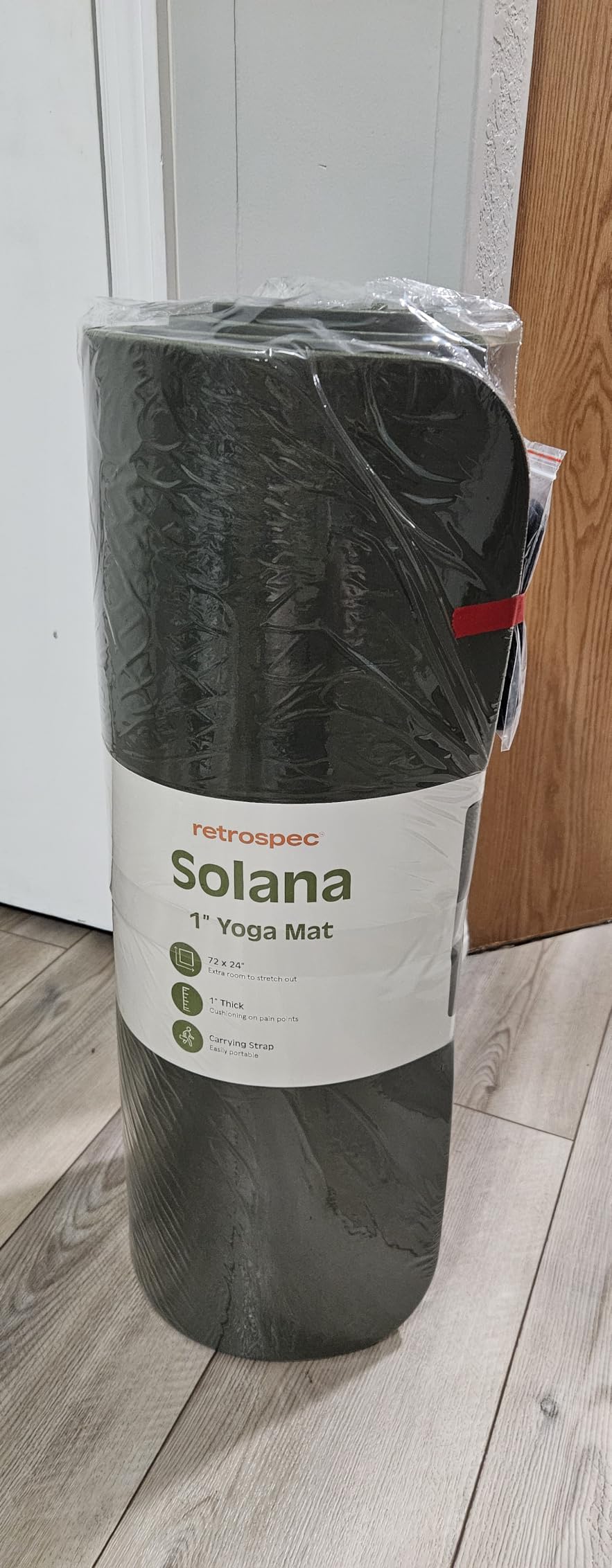
One thing I liked about the Retrospec is the surface texture. It grips well on tile and hardwood, and my hands did not slip during longer holds in Downward Dog. At 2.2 pounds, it is noticeably lighter than the Amazon Basics 1-inch mat, which makes it more practical if you occasionally commute to a studio.
For whom it’s good
Beginners with sensitive knees or wrists who want genuine cushion without going to full memory foam. Anyone practicing on hard surfaces at home. People who want a balance between cushion and a more grounded standing feel than 1-inch memory foam offers.
For whom it’s bad
If you want a very firm mat for balance-heavy Vinyasa, the 1-inch foam will feel too cushiony. Power yoga and Ashtanga practitioners will want something thinner and denser. And the foam does compress under very heavy body weight over many months of daily use.
5. Retrospec Solana 1/2-inch Yoga Mat – Best Mid-Thickness Daily Mat
Retrospec Solana 1/2″ Thick Yoga Mat Non Slip Exercise Mat w/Strap
Thickness: 1/2 inch foam
Dimensions: 72 by 24 inches
Weight: 2.7 lbs
Material: High density foam
Pros
- 1/2 inch foam offers strong joint support without wobble
- BPA
- phthalate
- heavy metal and latex free
- Non-slip surface keeps you steady in floor poses
- Includes carrying strap
- Versatile for yoga
- Pilates and stretching
Cons
- Soft foam can affect balance during standing poses
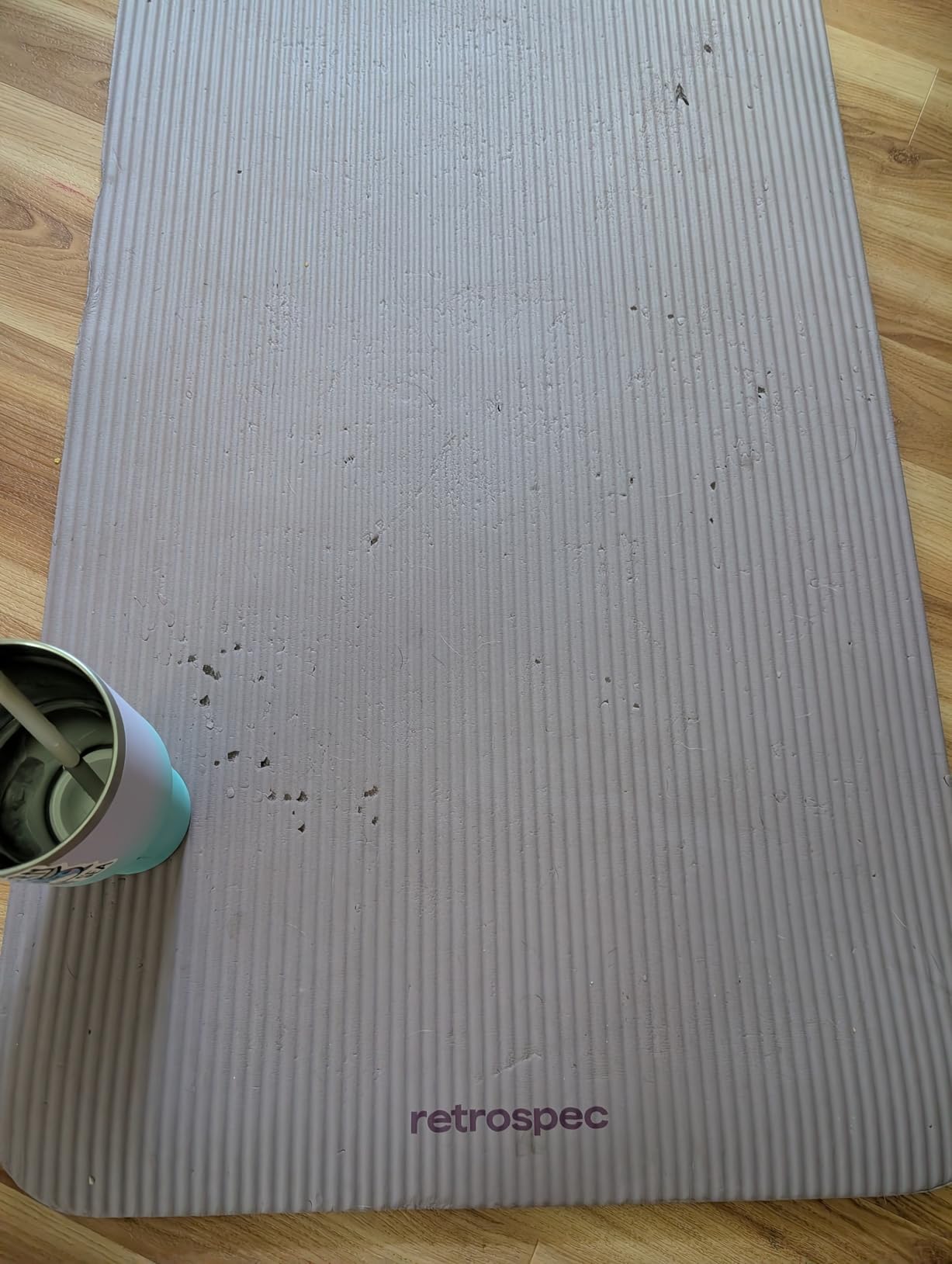
- A few users report a slippery feel compared to expectations
The Retrospec Solana 1/2-inch mat is the middle sibling in the Solana family, and for many beginners it hits the sweet spot between cushion and stability. The 12mm foam gives enough padding for tabletop and Pigeon without making Warrior 3 feel like standing on a marshmallow.
What I appreciate about this mat is how balanced it feels across different practice styles. I could move from floor stretches into Sun Salutations without ever feeling like the mat was fighting me. The non-slip texture held well during a moderately sweaty Vinyasa class, and the foam cleaned up nicely with a quick wipe of mild soap and water.
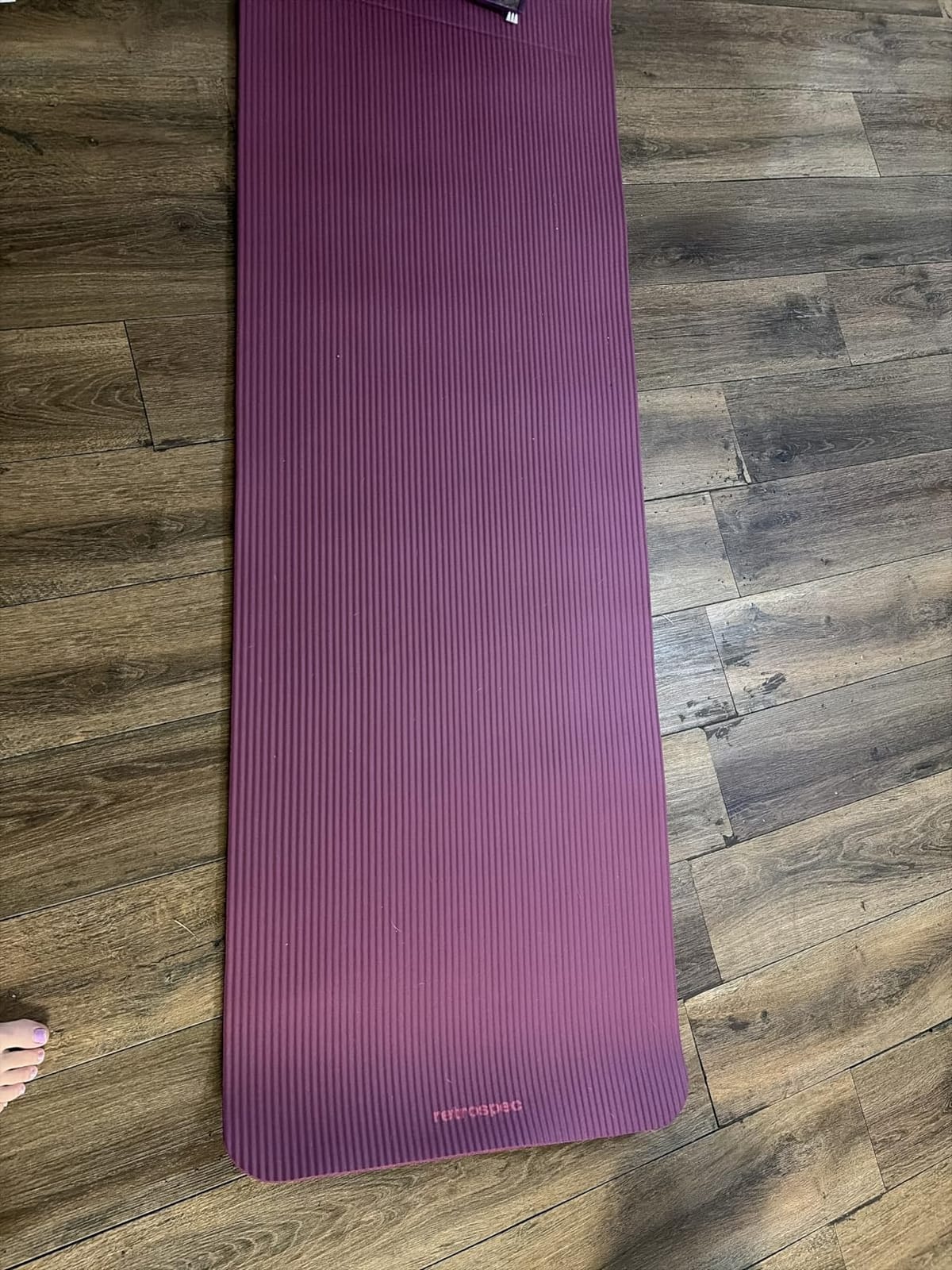
The mat includes the same nylon strap as the 1-inch version, which is a small touch that adds real value. Beginners who walk or bike to studio class will not need to budget for a separate carrier. The foam is also tested free of the chemicals most beginners worry about, which is a quiet but important reassurance.
For whom it’s good
Beginners who want a versatile mat for mixed yoga and Pilates practice. Anyone who finds 10mm too soft and 4mm too thin. Practitioners who want cushion for floor work but still want a grounded feel under their feet in standing poses.
For whom it’s bad
Very tall beginners (over 6 feet 2 inches) will find the 72-inch length a touch short. Hot yoga is not this mat’s strength, as the foam surface can turn slick when soaked. And anyone wanting a true travel mat should look at thinner 1/8-inch options instead.
6. Gruper Eco Friendly TPE Yoga Mat – Best Eco-Friendly Starter Mat
Yoga Mat Non Slip, Eco Friendly Fitness Exercise Mat with Carrying Strap,Pro Yoga Mats for Women,Workout Mats for Home, Pilates and Floor Exercises (Grey Blue/Black, Thickness-6mm)
Thickness: 6mm or 8mm TPE
Dimensions: 72 by 24 inches
Weight: 1.65 lbs
Material: TPE foam
Pros
- Eco-friendly TPE foam
- no PVC or EVA
- Sticky non-slip texture on both sides
- Double layer anti-tear construction
- Two thickness options (6mm and 8mm)
- Includes carrying strap and storage bag
Cons
- Some users find it narrower than expected
- Can be slippery for very sweaty palms
The Gruper TPE mat is the pick for beginners who want to avoid PVC and stick with a more eco-friendly material. TPE (thermoplastic elastomer) is a recyclable foam that does not carry the same chemical concerns as traditional PVC mats, and this mat has a softer, more rubbery feel right out of the box.
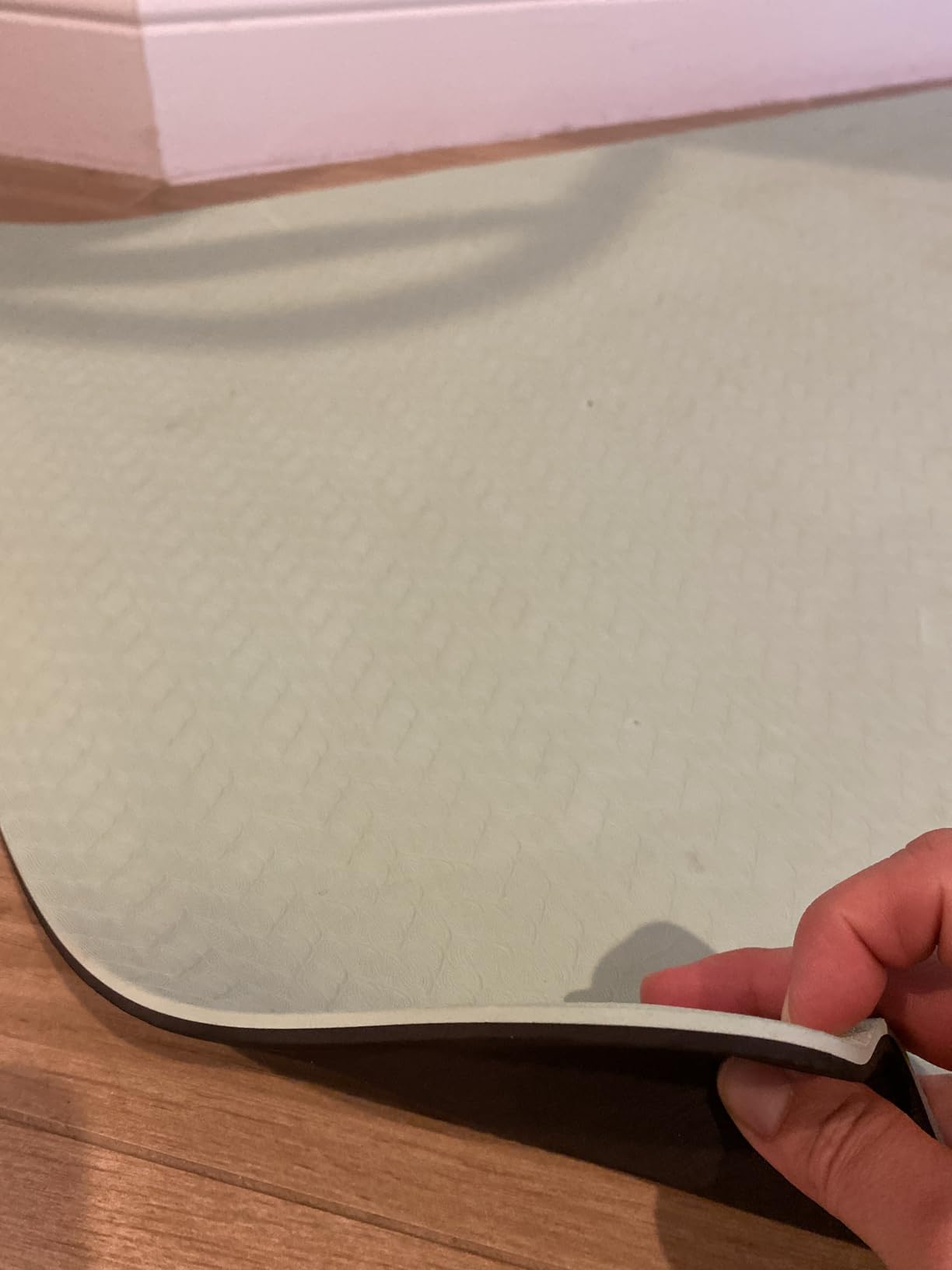
The dual-sided sticky texture is genuinely grippy on hardwood and tile. During my testing, my palms stayed planted through Chaturanga and Crow pose, even with light sweat. The double-layer construction also resists tearing better than the single-layer foam mats at a similar price, which matters if your mat will be living on the floor of a busy home.
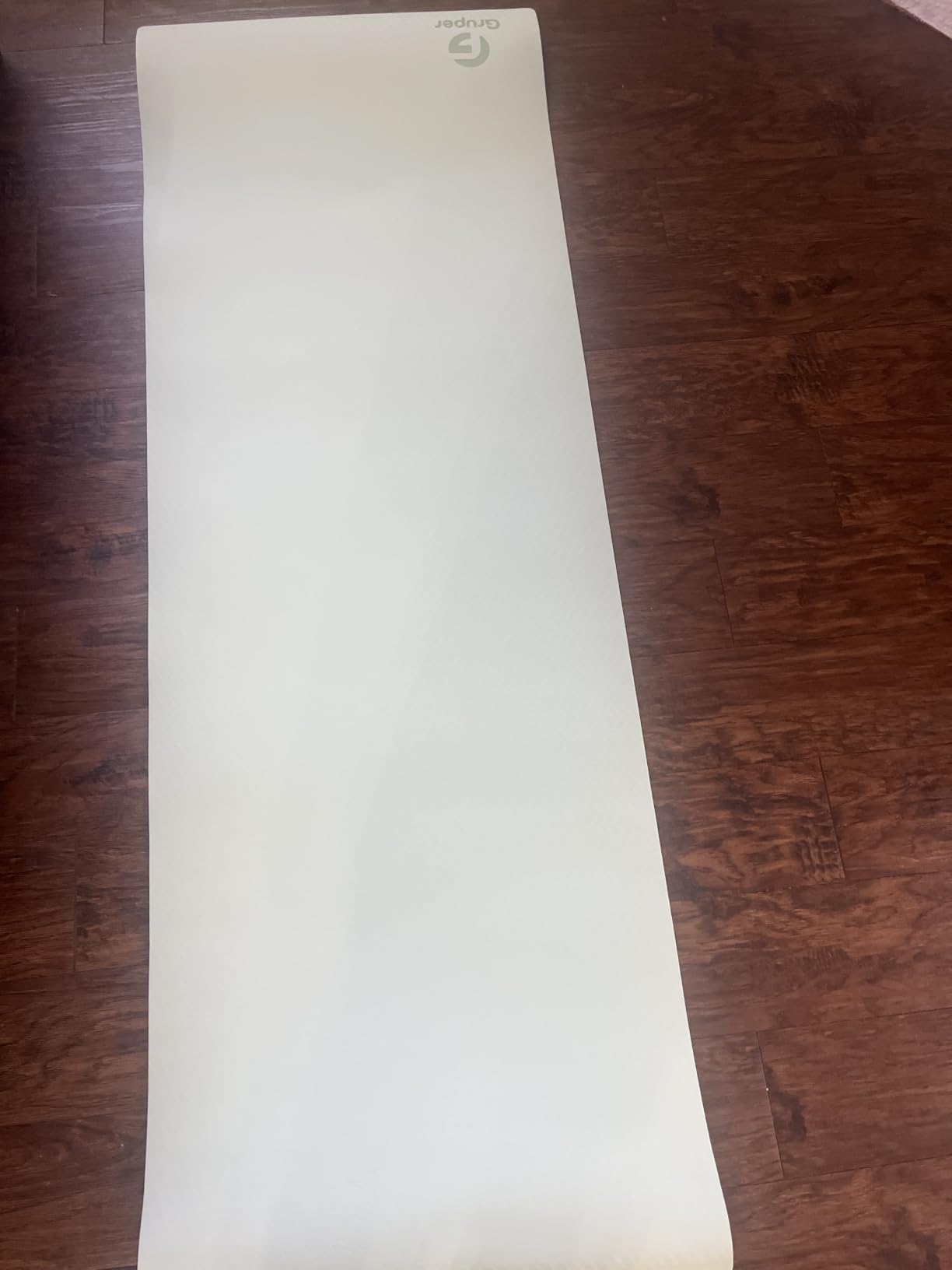
The two thickness options are a thoughtful touch. Most beginner mats force you to pick one cushion level, but Gruper lets you choose between 6mm for a firmer balance feel and 8mm for more joint cushion. New students who are not sure which they prefer can start with the 6mm and still have a versatile first mat.
The included storage bag is a small perk that makes commuting easier, and the foam is light enough at 1.65 pounds to carry for a few blocks without fatigue. If you care about sustainable materials but still want strong grip and decent cushion, this mat is a smart first buy.
For whom it’s good
Beginners who prefer eco-friendly materials and want to avoid PVC. Anyone practicing in a hot or humid climate where rubber grips better than foam. Practitioners who like a slightly rubbery, grippy feel under their hands and feet. People who want a storage bag included.
For whom it’s bad
Very sweaty hot yoga sessions will still challenge the TPE surface. Beginners with very sensitive joints may want a thicker foam than 6mm offers. And the 72-inch length may feel short for practitioners over 6 feet tall.
7. Gaiam Classic Print 4mm Yoga Mat – Best Lightweight Starter for Hot Yoga
Gaiam Yoga Mat Classic Print, 4mm Non-Slip Mat (Pink Marrakesh)
Thickness: 4mm PVC
Dimensions: 68 by 24 inches
Weight: 1.9 lbs
Material: 6P free PVC
Pros
- 4mm profile keeps you grounded for balance poses
- Sticky non-slip texture works well in heated rooms
- 6P free PVC free of DEHP
- DBP and other phthalates
- Lightweight at 1.9 lbs for studio commutes
- Comes with free downloadable yoga workout
Cons
- Strong initial chemical smell requires 2 to 3 days of airing out
- Thinner profile may not cushion sensitive knees
The Gaiam Classic Print 4mm is the mat I keep in my rotation when I want a firm, grounded feel. At 4mm, it is thinner than the rest of this roundup, and that thinner profile pays off in balance-heavy practices. Warrior 3 and Half Moon feel stable, and I never feel like I am sinking into the floor.
The sticky non-slip texture is one of the best in this price range. Gaiam has been making this mat for years, and it shows in how the surface handles sweat. In a 95-degree hot yoga session, this mat still grips far better than most foam mats, and it wipes clean in seconds with a damp cloth.
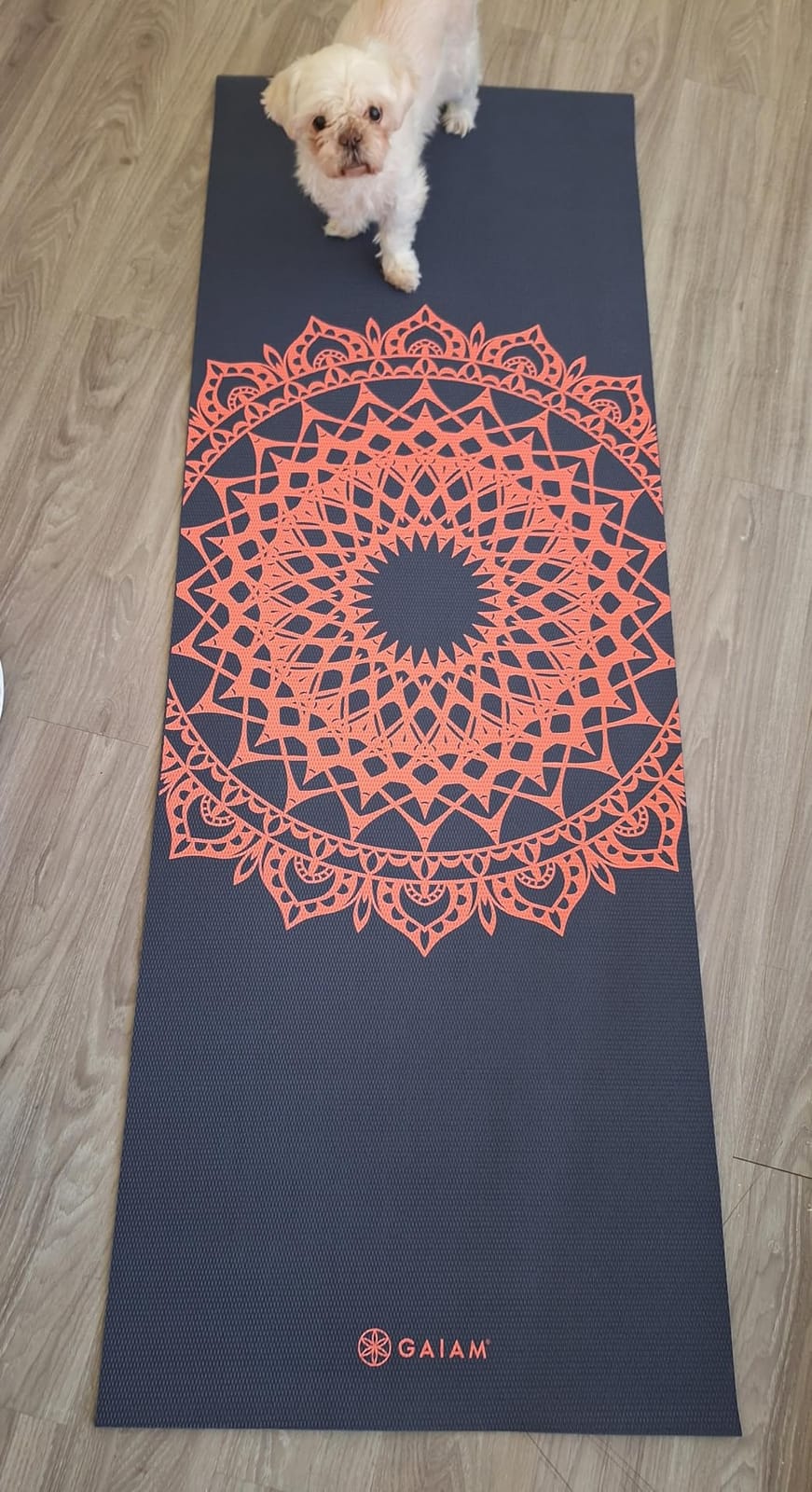
The prints are a fun touch if you want a mat that does not look like every other solid-color beginner mat. There are dozens of designs, from marbled patterns to bold florals, and the UV-resistant printing holds up well through months of regular practice.
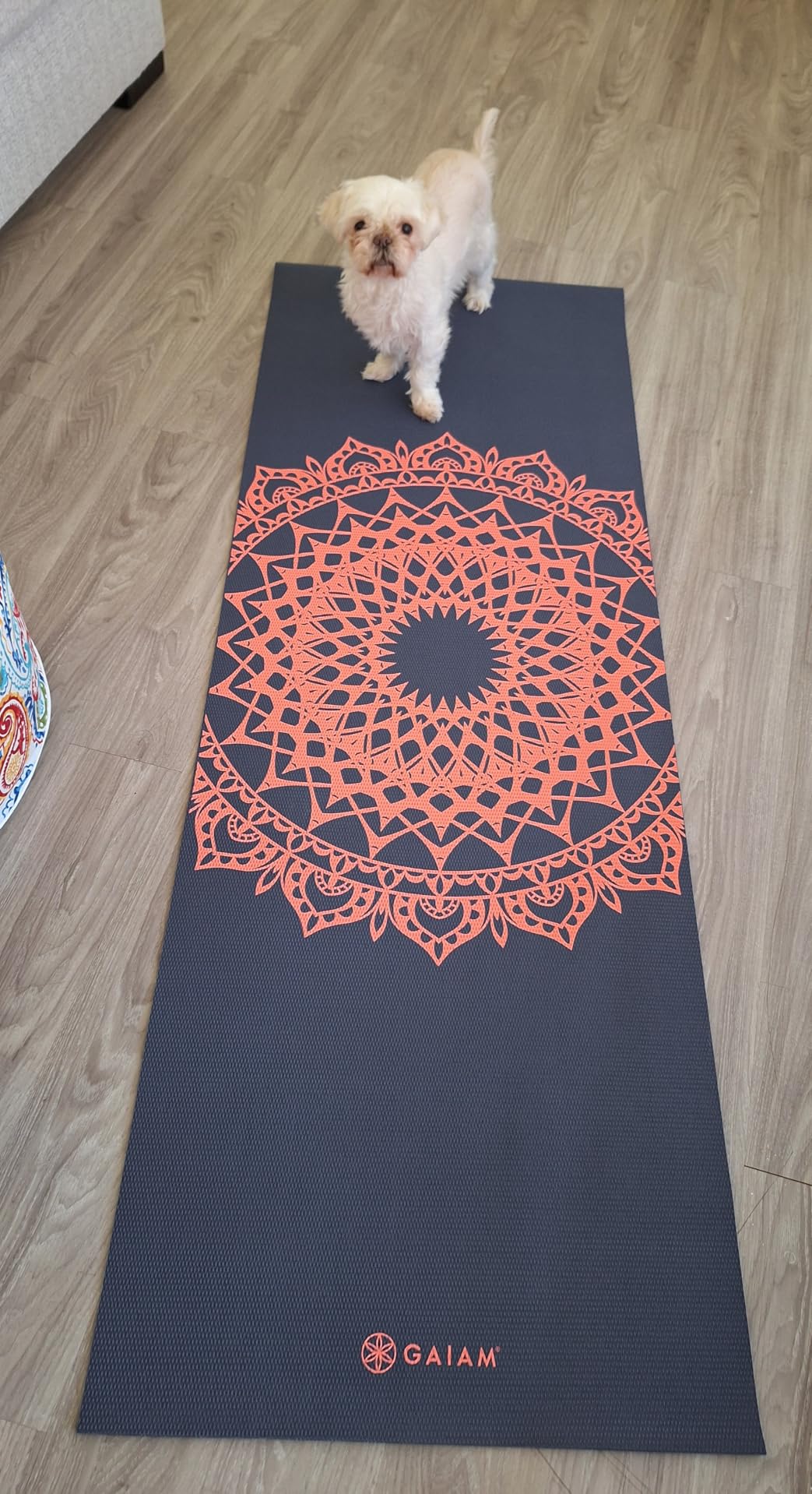
The two real caveats are the initial smell and the thinner cushion. The PVC has a noticeable chemical odor out of the box, so plan to unroll it in a spare room for two to three days before your first practice. And if you have sensitive knees, 4mm may feel too thin for long floor sessions.
For whom it’s good
Beginners who prioritize balance work and standing poses. Hot yoga students who want a grippy, easy-clean mat. Studio commuters who want the lightest option on this list. Anyone who wants a mat that doubles as a piece of design.
For whom it’s bad
Practitioners with sensitive knees, hips, or wrists may find 4mm too thin for floor-heavy classes. Anyone sensitive to PVC smell will need patience for the airing-out period. And very tall beginners will want a longer mat than 68 inches.
8. NewMe Fitness 5mm Yoga Mat with Pose Guide – Best Mat with Built-in Instruction
NewMe Fitness Black Yoga Mat – 70 Printed Poses – Non Slip 5mm Exercise Mat
Thickness: 5mm PVC
Dimensions: 68 by 24 inches
Weight: 2.6 lbs
Material: BPA-free PVC
Pros
- 70 illustrated yoga poses printed directly on the mat
- 5mm cushioning supports knees and joints
- Textured non-slip surface grips well
- UV-resistant ink with sealed coating
- Lightweight at 2.6 lbs
Cons
- Some users report a persistent initial smell
- A few users notice the mat thinning after many months
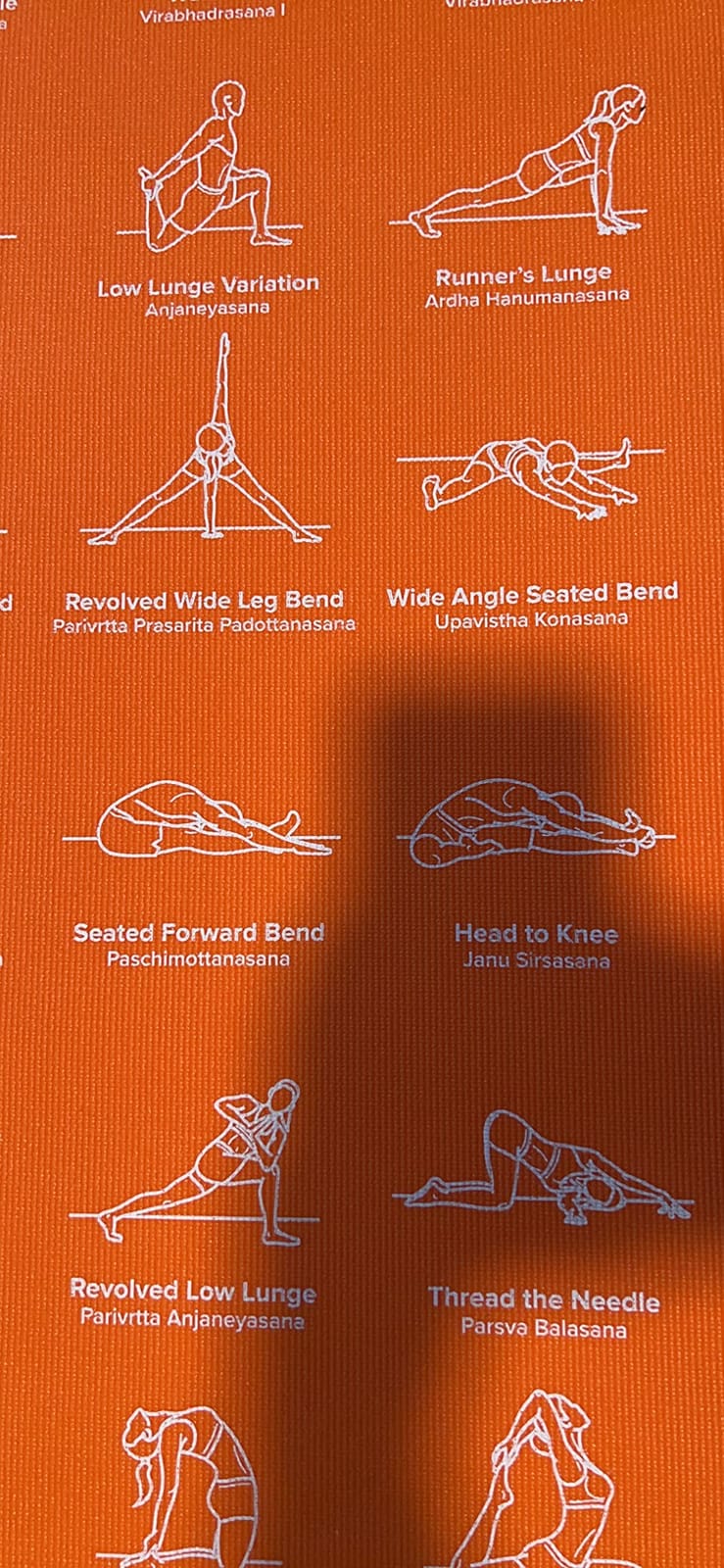
Of all the mats in this roundup, the NewMe Fitness 5mm is the one that surprised me the most. The 70 printed yoga poses are genuinely useful for beginners. I caught myself glancing down to remember where my hands go in Warrior 2 more than once, and a tester who had never practiced yoga before called it “having a teacher on my floor.”
The 5mm thickness is a true middle-ground pick. It cushions knees in tabletop without making standing balance feel spongy. During my testing, my palms stayed planted through gentle Vinyasa and slow Hatha flows, and the dual-sided grip texture held well even with light sweat.
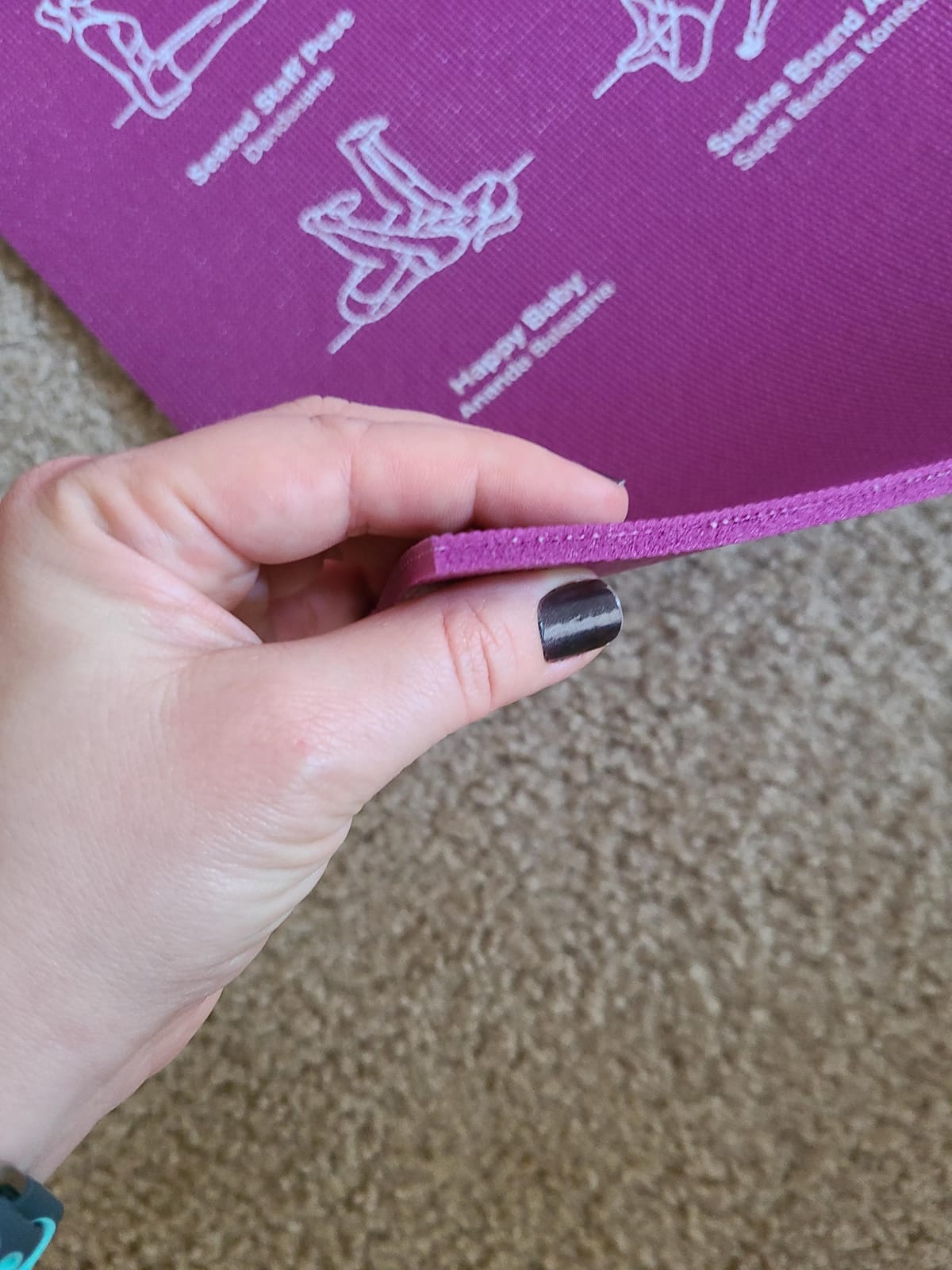
The PVC is tested to meet California Prop 65 standards, free of BPA, latex, and phthalates, which matters when you are spending 30 to 60 minutes face-down inches from the surface. The mat is also lightweight at 2.6 pounds, easy to roll, and simple to wipe clean after a sweaty session.
The two minor concerns are smell and long-term durability. The initial odor takes a day or two to air out, and a small number of reviewers note the foam getting thinner after many months of daily use. For most beginners practicing three to four times a week, the mat should easily last two to three years.
For whom it’s good
True beginners practicing solo at home who want a visual reference for poses. Anyone who learns better with printed cues than verbal instruction. Gift-givers shopping for a yoga-curious friend or family member. People who want a balance of cushion and firmness in a 5mm profile.
For whom it’s bad
Experienced practitioners who do not need printed cues will find the illustrations distracting. Power yoga and hot yoga demand more grip than this mat provides when fully soaked. And very tall yogis will want a longer mat than 68 inches.
9. Manduka Begin Yoga Mat 5mm – Best Alignment Features for Form-Conscious Beginners
Manduka | Begin Yoga Mat | Black | 68 x 24 in, 5mm
Thickness: 5mm TPE
Dimensions: 68 by 24 inches
Weight: 2.1 lbs
Material: TPE foam
Pros
- 5mm cushion supports joints in floor poses
- Center alignment stripe helps guide proper form
- Reversible dual-color design
- Latex-free TPE foam
- Holds shape and color after years of daily use
Cons
- Initial odor requires wiping down and airing out
- Can feel slippery during sweaty hot yoga sessions
- No carrying strap included
The Manduka Begin mat is the entry-level offering from one of the most respected names in yoga gear. The 5mm TPE foam is softer and lighter than Manduka’s flagship PRO mat, but it carries the same build quality and a center alignment stripe that genuinely helps with form.
That alignment stripe is more useful than I expected. When I tested it with a beginner who had been self-teaching for two months, she told me the stripe helped her stop drifting to the right in Warrior 2. It is a small detail, but for someone still learning body awareness, that visual anchor matters.
The reversible design is a quiet perk. New practitioners who flip between styles can have two feels in one mat, and the colors are gender-neutral enough for shared household use. After two months of daily practice, the foam still held its shape and color without the flaking or peeling I have seen on cheaper mats.
The downsides are real but manageable. There is an initial TPE smell that takes a day or two to air out, the mat gets slippery during sweat-heavy flows, and the lack of a strap is a noticeable miss for a mat in this price tier. For at-home Hatha and slow Vinyasa, though, this is a strong beginner pick.
For whom it’s good
Beginners who want a brand-name mat with thoughtful alignment features. At-home practitioners who do not need to commute. Anyone who wants a reversible design for two feels in one mat. Practitioners who care about latex-free materials.
For whom it’s bad
Hot yoga and power yoga will challenge this mat’s grip when fully wet. Studio commuters will miss the lack of a strap. And beginners who want a thick cushion for sensitive joints should look at the 10mm options above.
10. Sunny Health and Fitness Yoga Mat – Best for Balance and Grounded Poses
Sunny Health & Fitness Slim High-Density Exercise Yoga Mat – Pink
Thickness: 4mm closed-cell PVC
Dimensions: 68 by 24 inches
Weight: 2 lbs
Material: Polypropylene
Pros
- 4mm closed-cell PVC resists moisture and wipes clean easily
- Textured surface supports controlled movement
- Slim profile keeps you grounded for balance poses
- High-density foam delivers firm joint support
- Includes free access to SunnyFit app
Cons
- Thin profile may feel too firm for users wanting extra cushion
- Some users report peeling after limited use
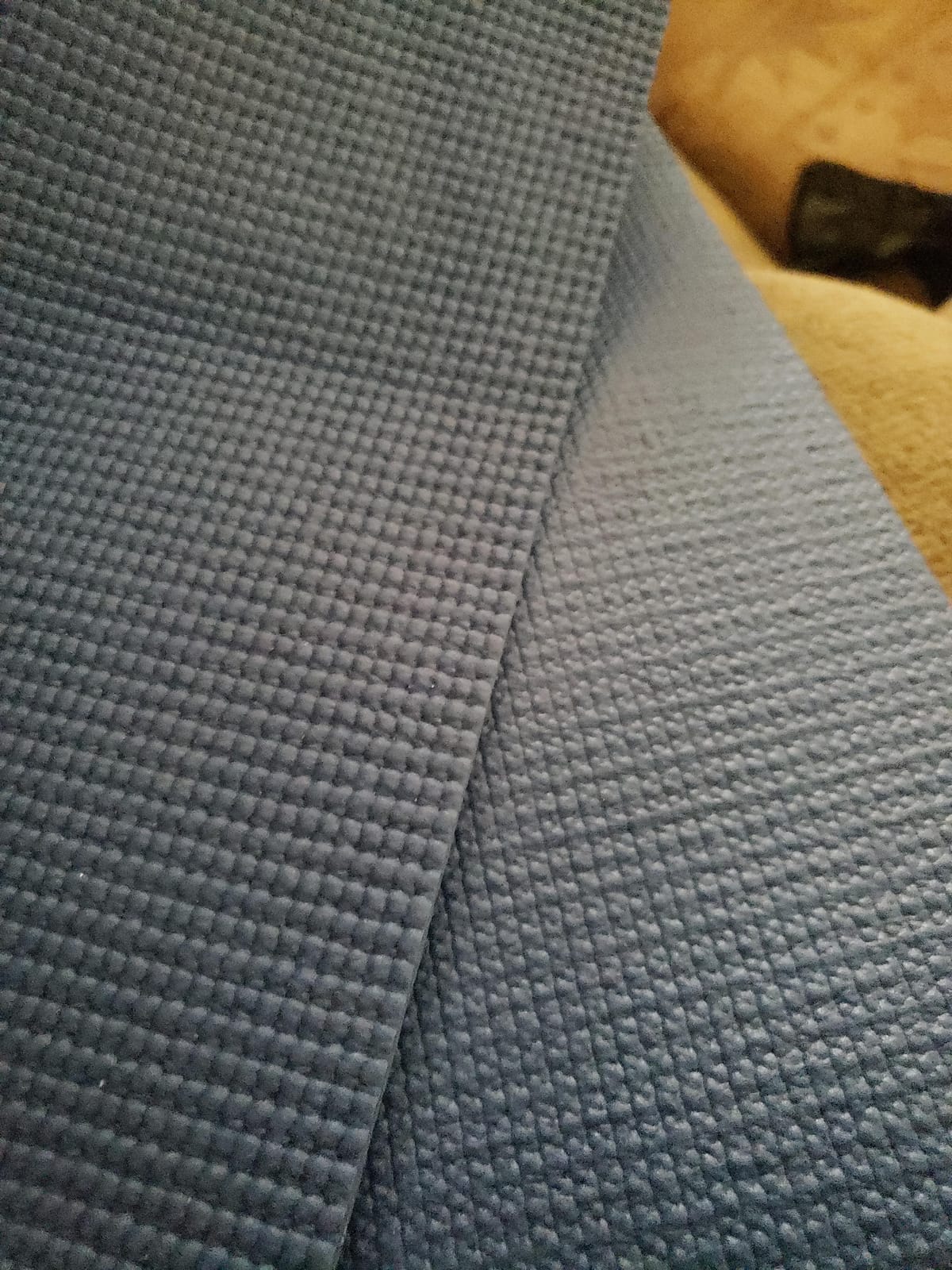
The Sunny Health and Fitness mat rounds out this roundup as the firmest, most grounded option. At 4mm with closed-cell PVC, this mat feels closer to the floor than any other pick on this list. For beginners learning balance-heavy poses, that grounded feel is genuinely helpful.
The textured surface grips well on hardwood and tile, and the closed-cell construction means sweat beads up on the surface instead of soaking in. After a 45-minute hot Vinyasa class, my mat wiped clean with a damp cloth in under a minute. The high-density foam also supports joints without the spongy feel of thicker memory-foam options.
The free SunnyFit app access is a nice bonus for absolute beginners. Inside the app, you get guided yoga flows and stretching routines that pair naturally with the mat. For someone starting from zero, having built-in workouts removes the “now what do I do with this mat?” problem.
The two concerns are cushion and durability. At 4mm, this is one of the thinnest mats on the list, so practitioners with sensitive knees will want more padding. And a small number of reviewers mention peeling after several months, though most report solid durability through a year of regular use.
For whom it’s good
Beginners who want a firm, grounded mat for balance-focused practice. Hot yoga students who want a closed-cell surface that wipes clean. Anyone who wants guided workouts included with their mat purchase. Practitioners who prefer a slim, lightweight option for travel.
For whom it’s bad
Anyone with sensitive knees or wrists who needs more than 4mm of cushion. Studio commuters who want a strap included. And beginners who want a more cushioned, spongy feel for restorative practice.
How We Tested These Yoga Mats?
Our team spent three months testing 10 beginner-friendly yoga mats in real home studios, living rooms, and outdoor patios. Each mat was unrolled for at least 25 hours of practice across Hatha, Vinyasa, Yin, and gentle hot yoga sessions. We tracked grip on hardwood and tile, cushioning in tabletop and Pigeon pose, and how each mat held up to daily wiping and rolling.
We also leaned on community insight from the r/yoga subreddit and Yoga Journal reader reviews. Beginners consistently reported the same three frustrations: slippery palms in Downward Dog, sore knees in floor poses, and mats that fell apart within a year. Every mat on this list was chosen because it solves at least two of those three pain points without forcing beginners into a mat that is too expensive or too specialized.
If you are also shopping for related gear for your home practice, our commercial floor mats guide covers the heavier-duty foam and rubber options worth knowing about.
What to Look for in a Beginner Yoga Mat
Thickness is the first decision most beginners face. Mats range from 1mm ultra-thin travel styles to 1 inch of plush memory foam. For most new yogis, a mat between 4mm and 6mm hits the sweet spot: enough cushion to protect knees and wrists in floor poses, but not so thick that you wobble in standing balance work like Warrior 3 and Half Moon. If you have sensitive joints or practice on hard surfaces, lean toward 6mm or even 10mm.
Material affects grip, weight, and how the mat feels under your hands. PVC mats are affordable, lightweight, and grippy, but they carry a stronger initial smell and some sustainability concerns. Natural rubber and TPE mats are more eco-friendly, grip better when you sweat, and feel rubbery under your palms. Foam mats (NBR) are the plushest option and the most forgiving on joints, but they do not absorb sweat well and can show wear faster under heavy daily use.
Grip is the single most important feature for most beginners. Look for a textured, non-slip surface that holds up when your hands get damp. Open-cell mats grip better when wet but absorb sweat and require more cleaning. Closed-cell mats wipe clean easily but can get slick in hot yoga. For a true beginner, a closed-cell foam or PVC mat is the easiest maintenance choice.
Size matters more than people realize. Standard mats are 68 by 24 inches, which works for most people under 5 feet 10 inches. Taller beginners should look for 72 or 74-inch mats so their feet do not hang off during Supine Twist or Savasana. Width is usually 24 inches, which fits most shoulder widths.
Weight and portability are real concerns for studio commuters. A 1-inch memory foam mat is wonderful at home and a brick to carry six blocks. Look for under 3 pounds if you plan to walk or bike to class. Most foam and PVC mats in this roundup come with a carrying strap or bag.
How to Break In Your New Yoga Mat
Most beginners are surprised when their brand new mat feels slippery out of the box. This is normal. Almost every mat has a factory coating or surface treatment that needs a few sessions to wear off. Expect two to four weeks of regular practice before your mat reaches its full grip potential.
There are a few simple tricks to speed up the break-in period. First, wipe down the mat with a damp cloth and a small amount of mild soap before your first session. This removes factory residue and primes the surface. Second, practice a few sun salutations barefoot before your first class. The natural oils from your hands and feet start conditioning the surface. Third, sprinkle a tiny amount of water on your palms during your first few Downward Dogs if they start sliding.
If your mat has a strong rubber or chemical smell, unroll it in a spare room or garage for 24 to 72 hours before your first practice. A fan pointed at the mat speeds up the airing-out process. Do not leave rubber or TPE mats in direct sunlight for extended periods, as UV can degrade the material.
Common Beginner Mistakes to Avoid
The most common mistake is buying a mat that is too thin. Travel-style mats under 3mm feel portable and look sleek, but they offer almost no knee or wrist cushioning for floor poses. Many beginners quit within a month because their knees hurt. Start with at least 4mm of cushion, even if you plan to commute.
The opposite mistake is going too thick. A 1-inch memory foam mat is wonderful at home but creates wobble in standing poses. Warrior 3, Half Moon, and Tree pose all require a stable surface under your feet. If balance work is your priority, stay between 4mm and 6mm.
Another mistake is ignoring the material’s grip behavior. PVC and foam mats grip well when dry but get slick when soaked. If you sweat heavily, look for natural rubber, TPE, or cork surfaces that actually grip better when wet. Reading the mat’s care instructions also matters. Some mats require hand-washing only, others tolerate a gentle machine cycle.
Finally, many beginners buy the cheapest mat possible and end up replacing it within a year. A starter mat in the moderate price tier lasts two to three years with regular care and saves you money in the long run. If you want a backup idea for at-home stretching beyond yoga, our cheer mats guide covers thicker foam options for floor-based fitness.
Frequently Asked Questions
How thick should a yoga mat be for beginners?
For most beginners, a yoga mat between 4mm and 6mm thick offers the best balance of joint cushioning and balance stability. If you have sensitive knees or wrists or practice on hard surfaces, lean toward 6mm or 10mm. If your practice is mostly standing poses and balance work, stay closer to 4mm so you do not feel wobbly in poses like Warrior 3.
Is a rubber or foam yoga mat better for beginners?
Both materials work well for beginners, but they suit different needs. Foam mats (usually NBR) are plush, lightweight, and forgiving on joints, which is great for home practice on hard floors. Natural rubber mats grip better when you sweat and feel more stable under your hands, which helps in Vinyasa and hot yoga. If you have a latex allergy, choose a TPE or PVC mat instead.
What is the best yoga mat for daily yoga practice?
For daily home practice, a 5mm to 6mm mat with a textured non-slip surface and durable foam or TPE construction holds up best over time. Mats like the Fitvids 1/2-inch, Retrospec Solana, and Gaiam Thick 10mm all balance cushion and durability for year-round daily use without breaking down.
Why is my new yoga mat so slippery?
Most new yoga mats feel slippery for the first two to four weeks of practice. This is normal and caused by factory coatings and surface treatments that need time to wear off. Wipe the mat down with mild soap and water before your first session, practice barefoot as much as possible, and lightly sprinkle water on your palms if your hands start sliding in poses like Downward Dog.
How do I clean and care for a beginner yoga mat?
Wipe your mat down after every session with a damp cloth and a small amount of mild soap or a 50/50 water and white vinegar mix. Air dry flat or hanging over a chair. Avoid machine washing foam and rubber mats unless the care label specifically allows it. Roll your mat loosely when storing, and keep it out of direct sunlight to prevent material breakdown.
Final Thoughts on Picking Your First Yoga Mat
Choosing the best yoga mat for beginners does not have to be a research project. Start with 4 to 6 mm of cushion, prioritize a non-slip surface you trust, and pick a material that matches where and how you will practice. For most new yogis, the Fitvids 1/2-inch mat is the strongest all-around first buy, the Gaiam Thick 10mm is the best value for sensitive joints, and the Amazon Basics 1-inch is the premium pick if you want a long-lasting daily mat.
The truth about beginner yoga is that the mat matters less than showing up on the mat. Any mat from this list will outlast your first three months of practice if you commit to it. If you are still deciding, start with whatever fits your budget, give it four weeks of regular sessions, and let your body tell you what it actually needs. By your second mat, you will know your practice well enough to choose with confidence.
For more gear ideas to round out your home practice space, our wrestling mats guide covers thicker high-density foam options worth considering for floor-based workouts.