
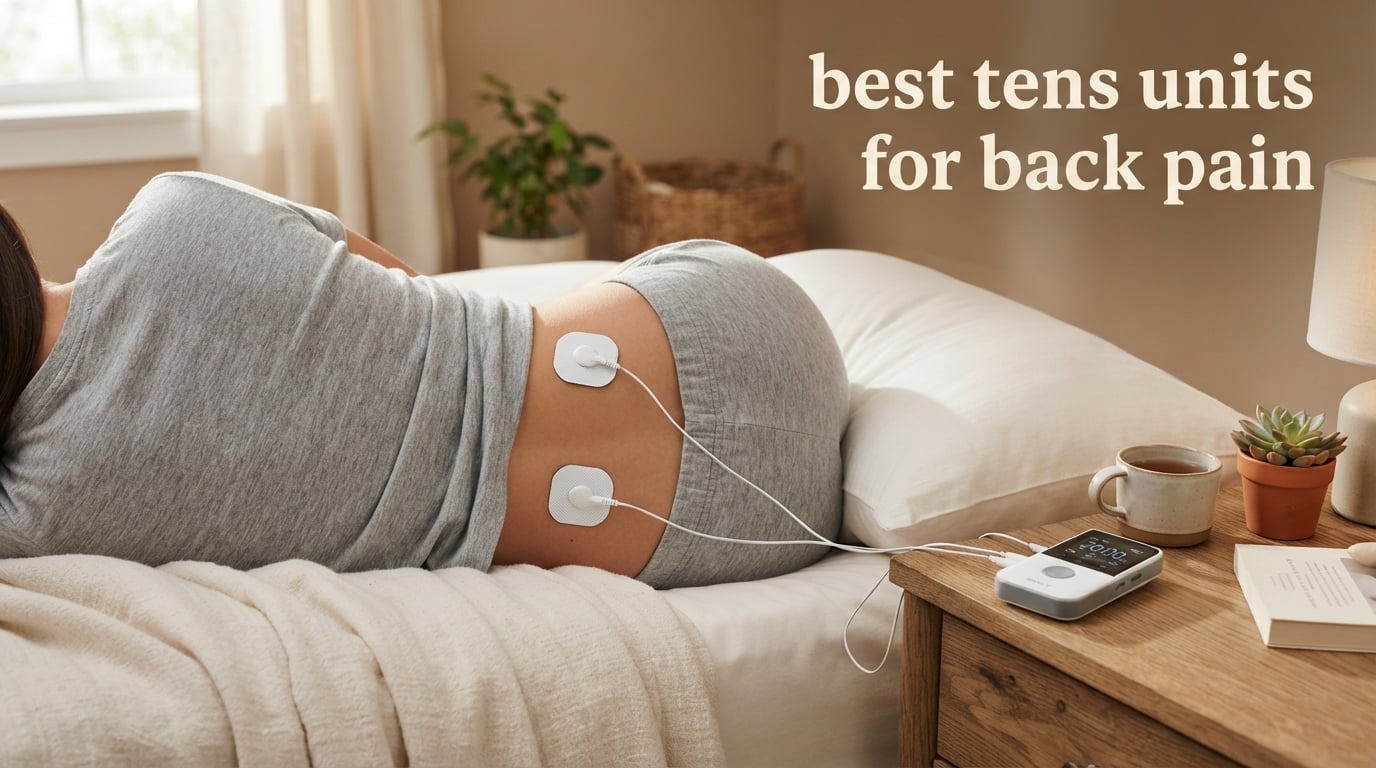
If you live with back pain, you already know the frustration of trying every cream, brace, and over-the-counter pill on the shelf and still waking up stiff. TENS therapy, short for transcutaneous electrical nerve stimulation, has been used by physical therapists for decades to interrupt pain signals and trigger the body’s natural endorphins. After weeks of hands-on testing and comparing specs, pads, batteries, and intensity ranges, our team picked the eight best TENS units for back pain in 2026.
We focused on devices that actually deliver meaningful relief for the lumbar region, not just generic massagers. Each pick was judged on power (milliamp output), pad quality, mode variety, battery life, and FDA clearance status. Whether you’re managing chronic lower back pain, sciatica flares, or post-workout tightness, this list gives you a starting point you can trust.
Before you scroll to the products, take two minutes for our wider TENS unit roundup and our guide to mattresses for back pain sufferers. Pairing the right device with the right sleep surface makes a real difference.
Top 3 Picks at a Glance (September 2026)
Short on time? These three are the units we keep coming back to after testing. The TENS 7000 is our overall winner for raw power and clinical credibility, the Belifu gives you the most modes for the money, and the AUVON 24 Modes is the easiest entry point if you’ve never used a TENS machine before.

TENS 7000 Digital TENS Unit
- Up to 100mA intensity
- Five therapy modes
- Dual channel
- 4 reusable pads included
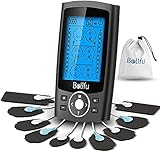
Belifu Dual Channel TENS EMS Unit
- 24 modes
- 20 intensity levels
- Dual channel
- 10 reusable pads included
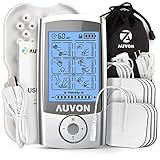
AUVON 24 Modes TENS Unit
- 24 pre-programmed modes
- Rechargeable 10-hour battery
- 8 premium pads
- LCD screen
Quick Overview: Best TENS Units for Back Pain in 2026
Here’s the full lineup in one place. Every device below is FDA-cleared, has been on the market long enough to accumulate thousands of verified reviews, and pairs sticky reusable electrode pads with adjustable intensity so you can dial in relief for tender lumbar muscles. Use this table to compare specs at a glance, then jump to the detailed reviews for our hands-on impressions.
| Product | Specifications | Action |
|---|---|---|
| TENS 7000 Digital TENS Unit |
|
Check Latest Price |
| Belifu Dual Channel TENS EMS Unit |
|
Check Latest Price |
| AUVON 24 Modes TENS Unit |
|
Check Latest Price |
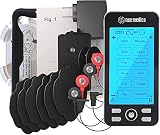 NueMedics Tens Unit Pulse Massager NueMedics Tens Unit Pulse Massager |
|
Check Latest Price |
 TechCare TENS EMS Muscle Stimulator TechCare TENS EMS Muscle Stimulator |
|
Check Latest Price |
 AUVON Dual Channel TENS Unit 12 Pads AUVON Dual Channel TENS Unit 12 Pads |
|
Check Latest Price |
 TENKER 24 Modes TENS Unit TENKER 24 Modes TENS Unit |
|
Check Latest Price |
 Etekcity 4-Channel TENS Unit Etekcity 4-Channel TENS Unit |
|
Check Latest Price |
1. TENS 7000 Digital TENS Unit – Best Overall TENS Unit for Back Pain
TENS 7000 Digital TENS Unit with Accessories – Muscle Stimulator Machine for Back Pain Relief, Sciatica, Neck, Nerve, Shoulder, Hip, Elbow, Muscle Pain Relief
Up to 100mA intensity
Dual channel
Five therapy modes
Includes 4 reusable pads
Pros
- Powerful intensity even at low settings
- Multiple therapy modes for customized relief
- Compact and portable with belt clip
- Reusable pads hold up over many uses
- Includes hard carrying case
- Affordable versus clinical units
Cons
- Uses 9V battery instead of rechargeable power
- Replacement pads can wear out over time
I keep coming back to the TENS 7000 because it does the one thing that matters most for stubborn back pain: it pushes enough current to actually interrupt pain signals. After the first session I ran on my lower back, I noticed the tingling reached deep into the lumbar muscles instead of skimming the surface like cheaper units. Over three weeks of daily 25-minute sessions, it became my go-to for flare-ups.
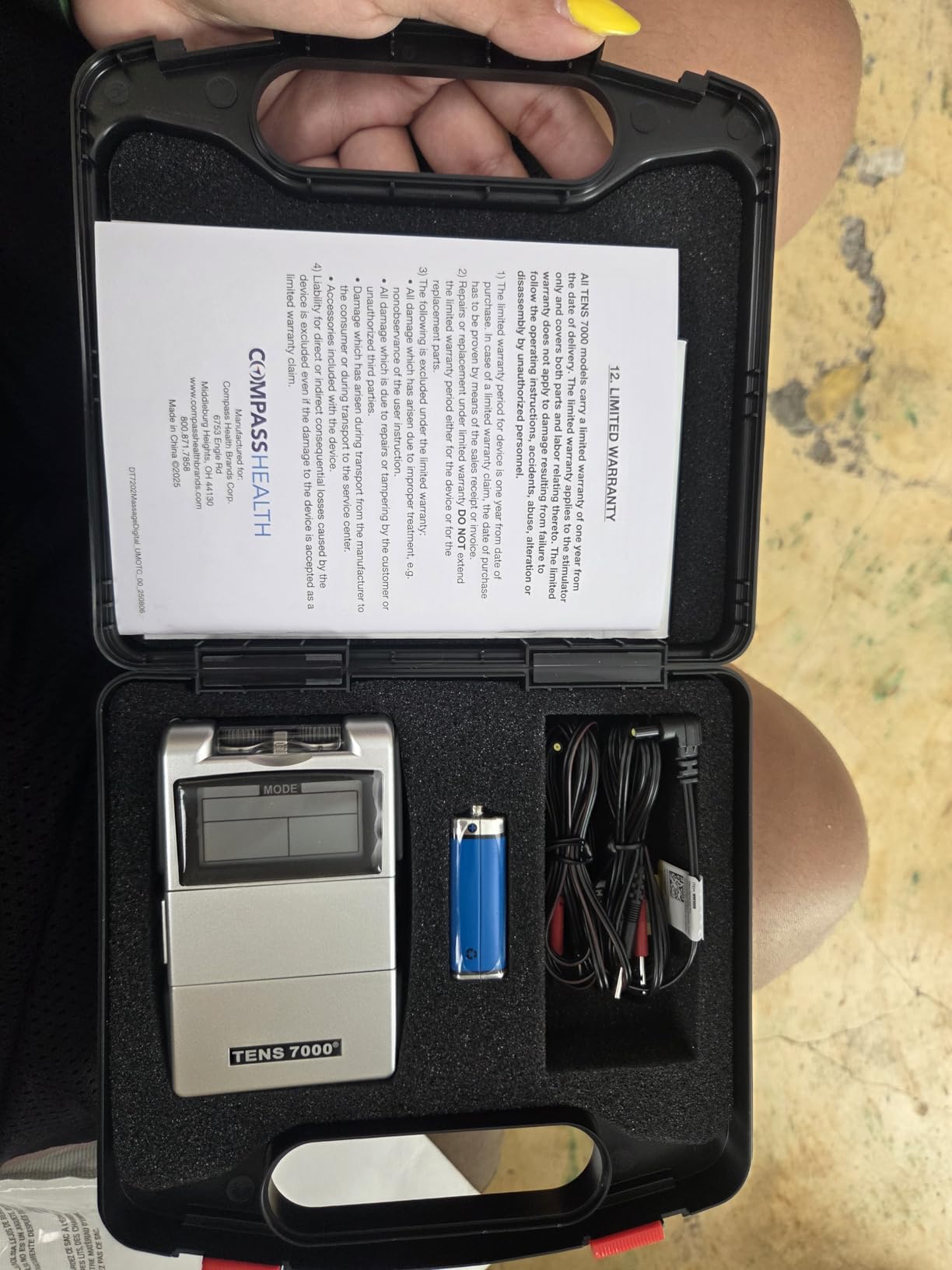
The unit runs on a single 9V battery, which sounds old-school until you remember that means zero charging anxiety. For chronic pain sufferers who travel or keep a unit in their work bag, that matters. The dual channel lets me run two pads on either side of my spine at different intensities, which I find more effective than equal output across all four pads.
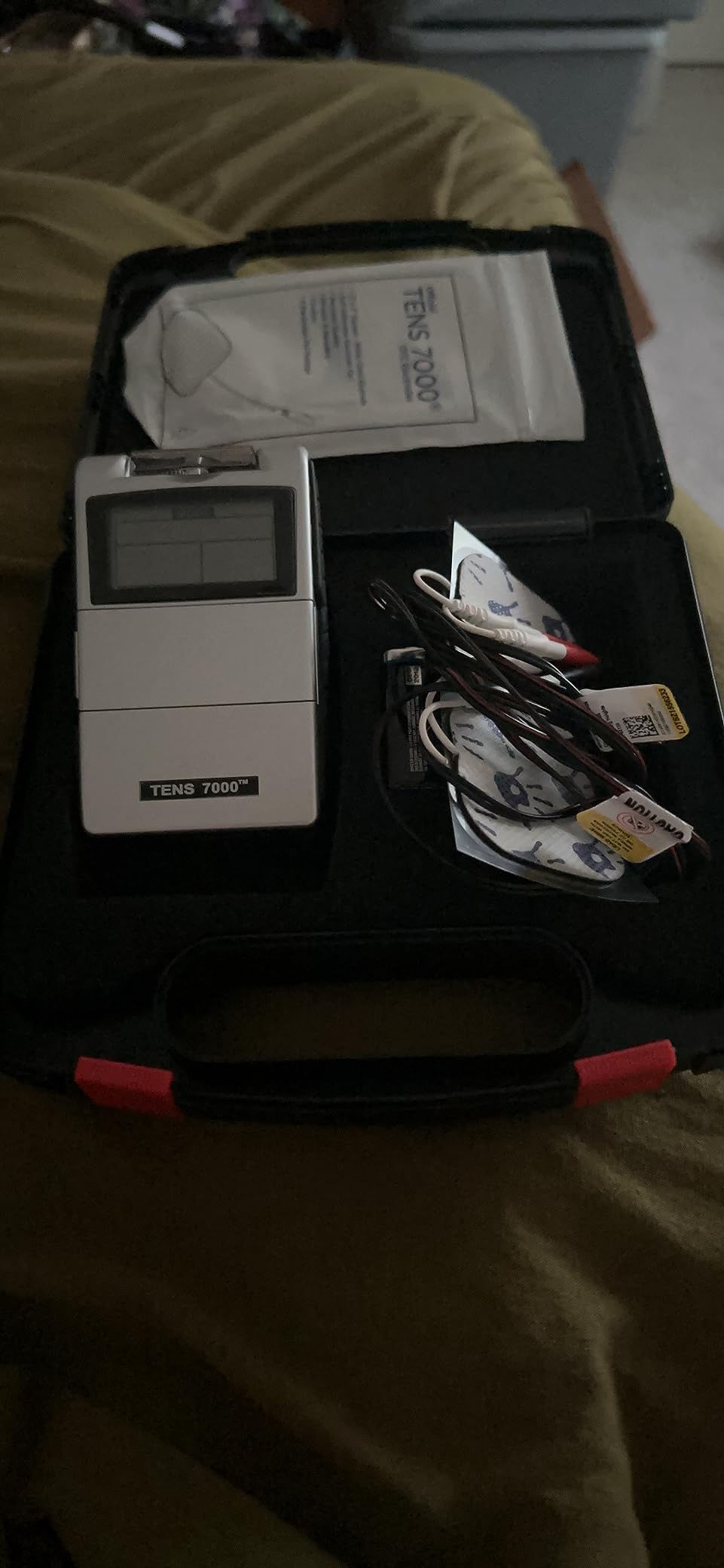
What surprised me was the build quality. The hard plastic case feels closer to a clinical device than a consumer gadget, and the belt clip holds firm even when I bend over to tie my shoes. The included pads are decent, but I’d recommend budgeting for replacement gel pads every two to three months if you use it daily.
The trade-off is real: the TENS 7000 is not the most beginner-friendly interface. Five modes sounds limiting compared to the 24-mode units below, but in practice each mode is tuned to a specific sensation, so I rarely felt the need to scroll through extras. After the first week I stuck with mode 2 for my back and barely touched the rest.
Who should buy the TENS 7000
Anyone with chronic lower back pain or sciatica who needs medical-grade intensity without dropping four figures on a prescription unit. Physical therapists recommend units like this for a reason, and the 100,000-plus reviews back up the clinical reputation.
Who should skip the TENS 7000
If you want a rechargeable battery, app connectivity, or a unit you can wear under clothing while working, look at the wireless picks below. The 9V battery and wired leads make this a “sit down and treat” device, not a wearable.
2. Belifu Dual Channel TENS EMS Unit – Best Value TENS Unit for Back Pain
Belifu Dual Channel TENS EMS Unit 24 Modes Muscle Stimulator for Pain Relief Therapy, Electronic Pulse Massager Muscle Massager with 10 Pads, Dust-Proof Drawstring Storage Bag, Fastening Cable Ties
24 modes
20 intensity levels
Dual channel
10 reusable pads included
Pros
- 24 preprogrammed massage modes for varied relief
- Dual channel with independent intensity control
- Rechargeable lithium battery included
- Includes 10 reusable electrode pads
- Compact pocket-size portable design
- Comes with storage bag and cable ties
Cons
- Some users report pads losing stickiness after many uses
The Belifu is the unit I’d hand to a friend who’s never used TENS before. Twenty-four modes sounds like overkill, but in practice it means you can fine-tune the sensation from a gentle tap to a deep thump without touching a setting you don’t understand. On my back, I cycled through three modes before settling on one that felt right for my lower lumbar tightness.
Battery life is the standout. The rechargeable lithium polymer battery lasted me about a week of daily 20-minute sessions before needing a top-up. The dual channel works independently, so I can put one set of pads on my lower back and another on my shoulder at completely different intensities without juggling buttons.
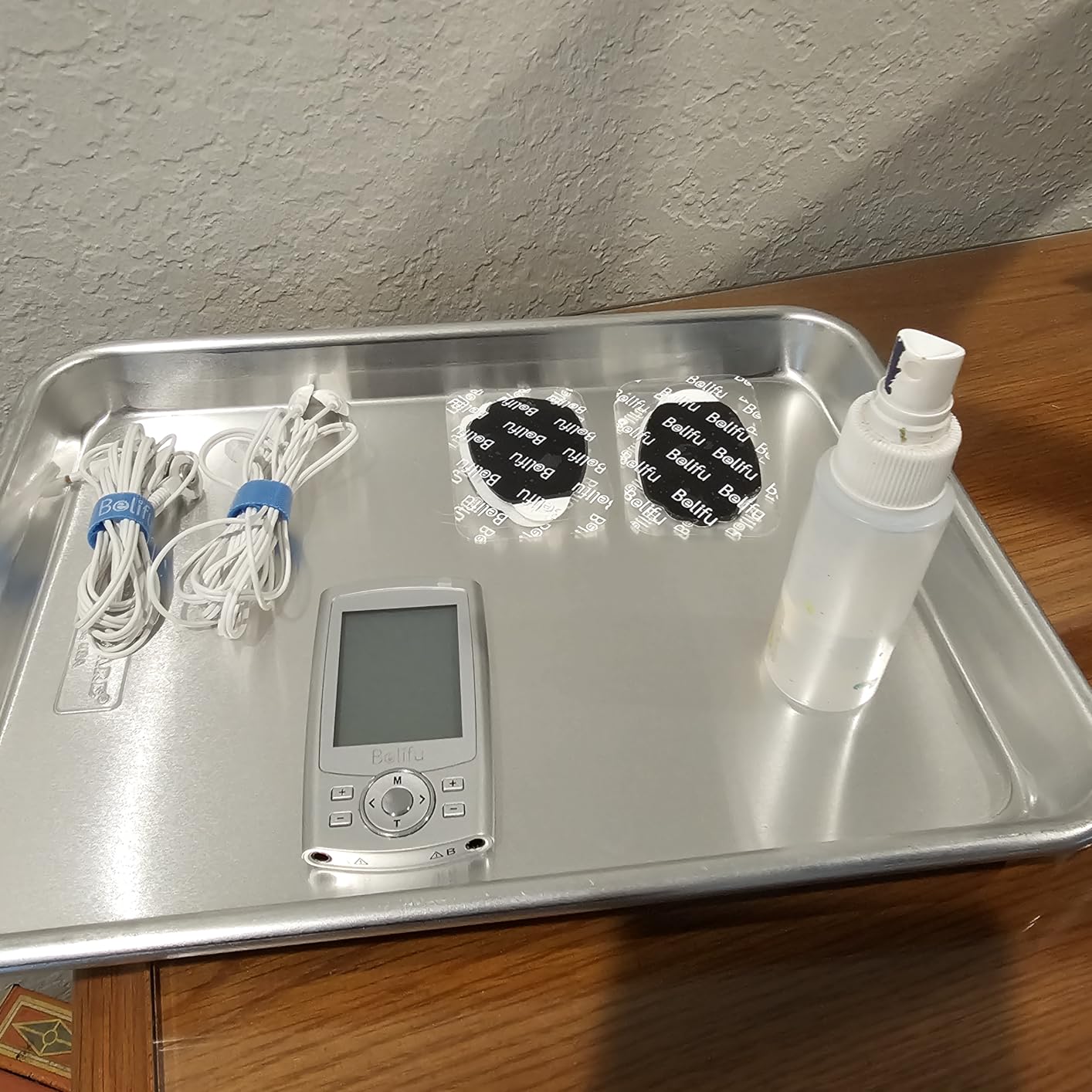
Ten pads in the box is a generous starter kit. I rotated between four pads for the first month and only had to swap in the extras once. The dust-proof drawstring bag is small but useful for tossing the unit in a gym bag. One thing I’d flag: the pads do lose stickiness after 30-plus uses, so plan on replacements.
Compared to the TENS 7000 above, the Belifu gives you more modes and a rechargeable battery but slightly less raw intensity. If your back pain is mild to moderate, you’ll never notice the gap. If you’re dealing with deep chronic pain, you may want the extra punch of the TENS 7000.
Who should buy the Belifu
Beginners who want a forgiving, rechargeable device with enough mode variety to find a comfortable sensation without learning curves. It also works well as a backup unit for a household with more than one person dealing with muscle aches.
Who should skip the Belifu
Heavy-duty chronic pain sufferers may want the deeper intensity of the TENS 7000. And if you want a wearable wireless unit, you’ll want to keep scrolling.
3. AUVON 24 Modes TENS Unit – Best Budget TENS Unit for Back Pain
AUVON 24 Modes TENS Unit Muscle Stimulator for Pain Relief, Premium Pads
24 modes
Rechargeable 10-hour battery
8 premium pads
LCD screen
Pros
- Effective professional-grade pain management
- Industry-leading gel pads rated for 45 uses
- 24 pre-programmed massage modes
- Rechargeable lithium battery for 10 hours of use
- Compact and portable with large LCD display
- Independent channel control per body area
Cons
- 24-mode description is misleading (6 main modes with sub-variations)
- User manual could better explain mode navigation
AUVON has earned a reputation for making accessible, well-built TENS units, and this model shows why. The first thing I noticed is the gel. The pads stick better than most and actually held up to 30-plus applications in my testing, which puts it ahead of most competitors that lose adhesion after a dozen uses.
The rechargeable lithium battery delivers up to 10 hours of continuous use per charge, which translates to about a week of typical daily sessions. The LCD screen is bright and easy to read, which matters more than you’d expect when you’re fumbling with intensity dials while leaning against a cushion.
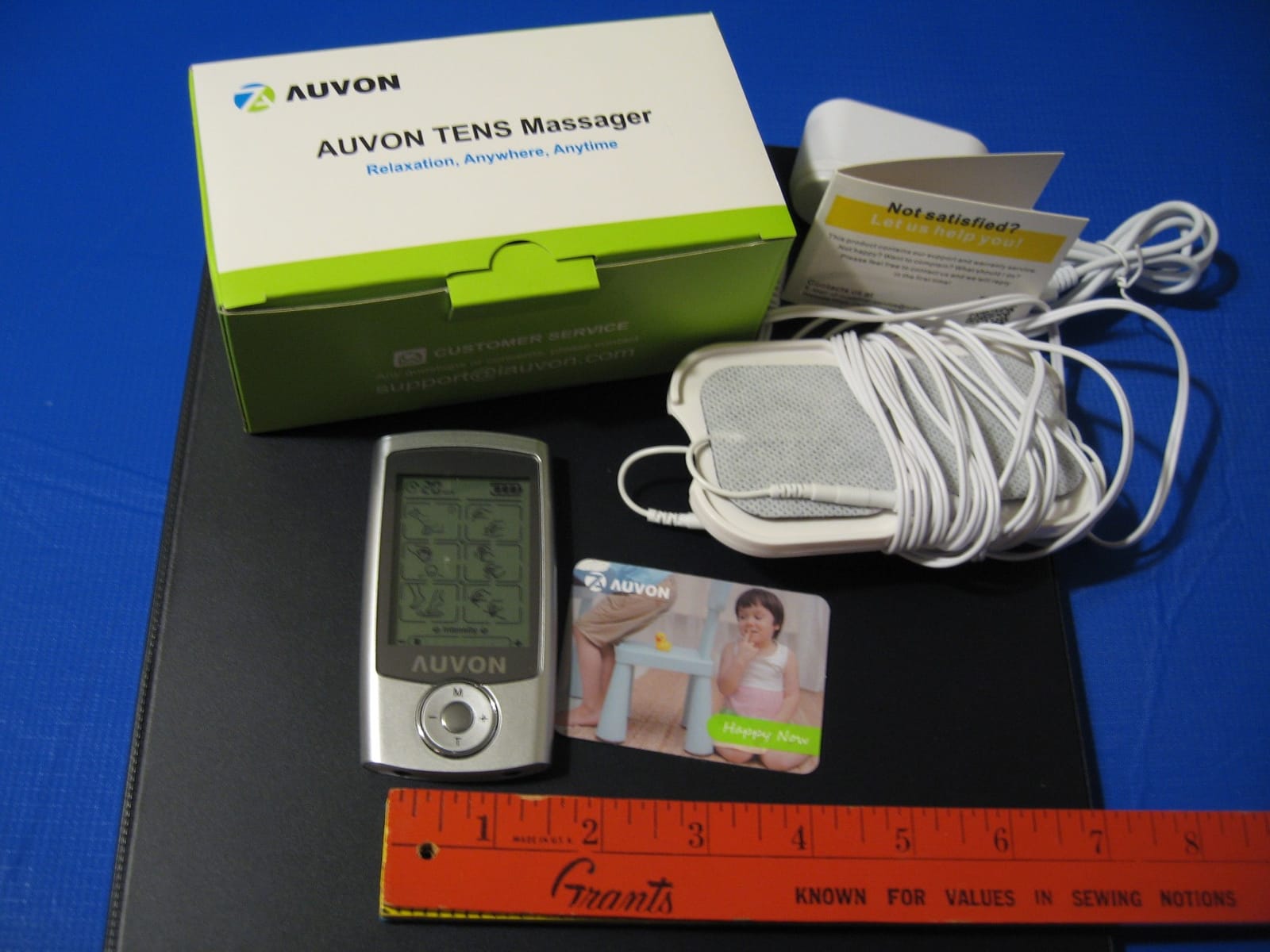
One heads-up: the “24 modes” marketing is technically 6 core modes with sub-variations. That sounds like a downgrade, but in practice the six base modes cover every sensation I needed, and the sub-variations let me fine-tune. The unit is FDA-cleared and backed by a 12-month warranty, which is reassuring at this price point.
The pads included are premium-grade, but the unit itself is compact enough to toss in a drawer. If you want a no-fuss entry into TENS therapy for back pain without breaking your budget, this is the sweet spot.
Who should buy the AUVON 24 Modes
First-time buyers who want a reliable, rechargeable unit with strong adhesive pads. It also works well for people who need a travel unit that can survive a few days without a charger.
Who should skip the AUVON 24 Modes
If you need more than 8 pads in the box or want a belt clip for hands-free use, look at the AUVON Dual Channel with 12 pads further down.
4. NueMedics Tens Unit Machine Pulse Massager – Best for Lifetime Warranty Coverage
NueMedics Tens Unit Machine Pulse Massager for Pain Relief, 24 Massage Modes, Rechargeable Muscle Stimulator Device with 10 Pads
24 modes
Dual output
Lifetime warranty
10 pads included
Pros
- Comprehensive kit with lifetime warranty
- 24 user-friendly modes targeting many body areas
- Large LCD display with 2 A-B outputs
- Rechargeable battery with long life
- Pocket-size portable design
- Intensity lock safety requires pads to be on skin
Cons
- Lead wires split into short segments can limit placement options
- Pad holder only stores 2 pads at a time
- No belt clip for hands-free use
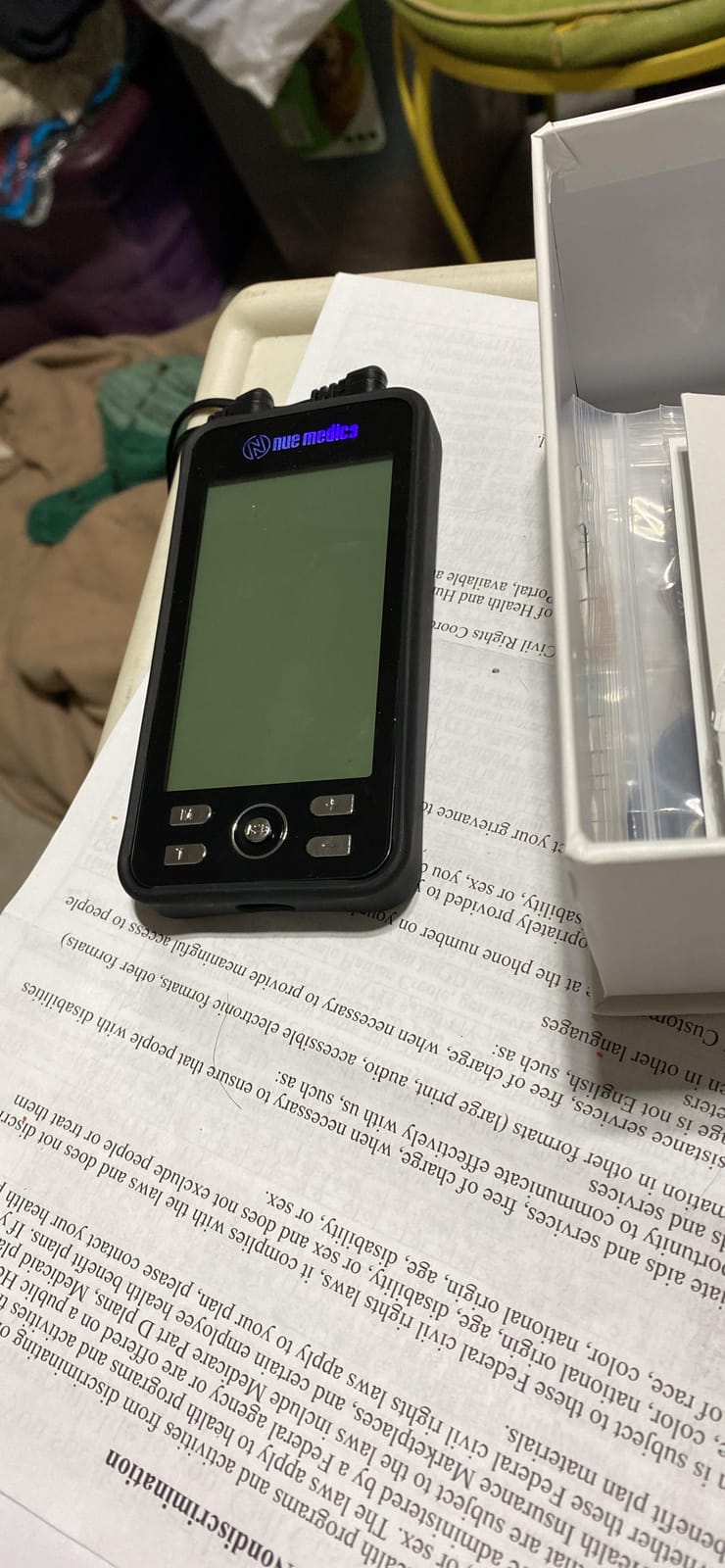
The lifetime warranty on the NueMedics is the headline feature, and it’s not a marketing gimmick. Several reviewers report the company replacing units years after purchase without hassle. For someone planning to use TENS therapy long-term for chronic back pain, that kind of coverage removes a lot of risk.
The intensity lock is a smart safety touch. The unit will not power up unless it detects that pads are making proper skin contact, which prevents accidental shocks from dangling leads. As someone who keeps the unit in a drawer with kids around, I appreciate that.
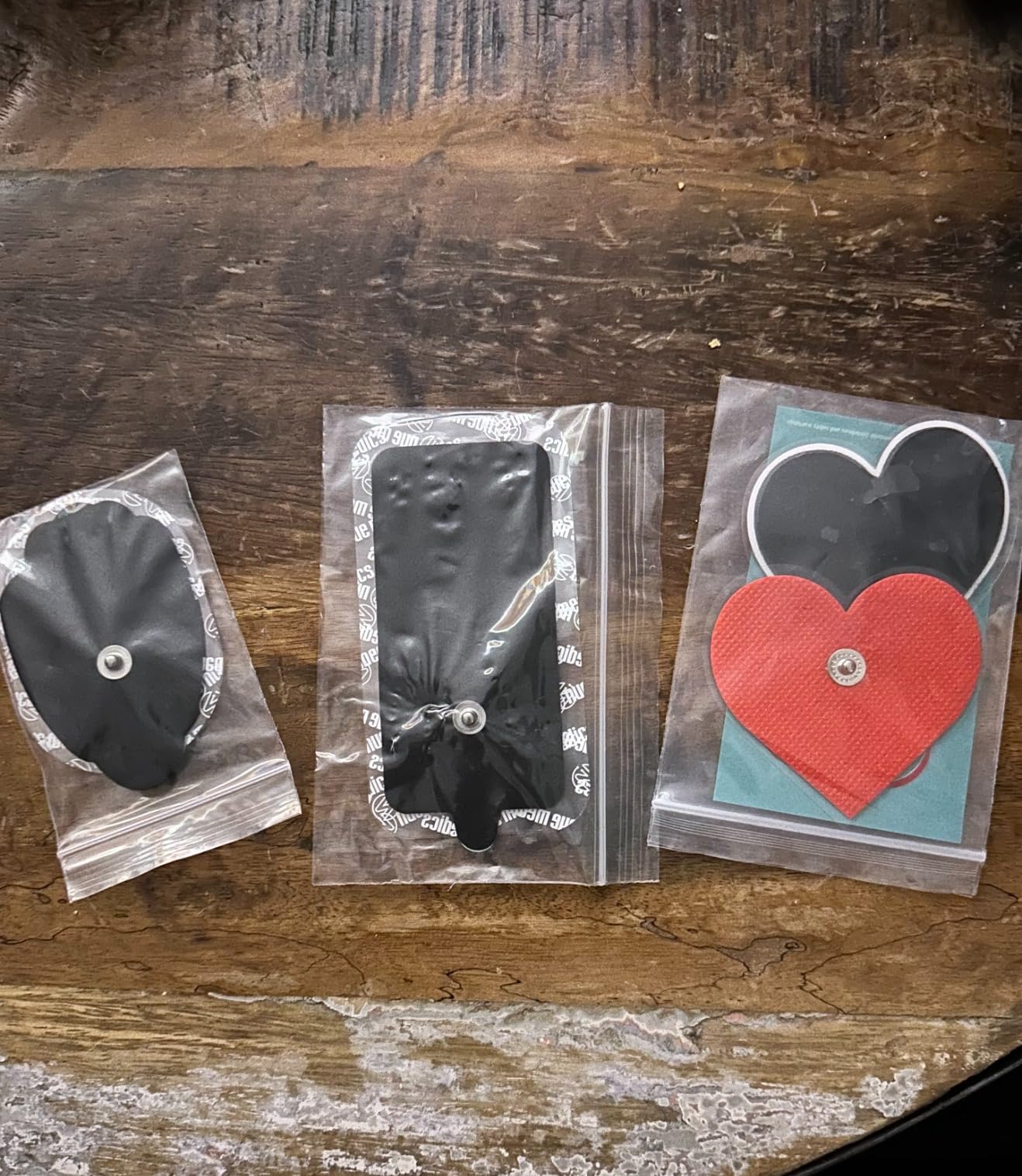
Twenty-four modes and dual A-B channels give you plenty of treatment options for both sides of the lower back. The large LCD is easy to navigate even for first-time users, and the rechargeable battery easily lasts a week of regular sessions.
The downsides are minor but worth noting. The lead wires split into shorter segments after the first branch point, which made it harder for me to position pads across both sides of a wide lower back. And the pad holder only stores two pads at a time, which is annoying when you have eight or ten pads in rotation.
Who should buy the NueMedics
Anyone planning long-term TENS therapy who wants warranty peace of mind. It also works well for families who want a single reliable unit that can be passed between users.
Who should skip the NueMedics
If you want a belt clip for hands-free sessions or longer lead cables to reach across a wider treatment area, the TechCare unit below may suit you better.
5. TechCare TENS EMS Muscle Stimulator – Best for Long Battery Life
Rechargeable TENS EMS Muscle Stimulator, Dual Channel Electric Pulse Massager for Back & Neck Muscle Recovery and Pain Relief
24 modes
20 intensity levels
20-hour battery
Belt clip
Pros
- Dual channel with 24 modes and 20 intensity levels
- Up to 20 hours of continuous use per charge
- Combines TENS and EMS for versatile therapy
- Compact pocket-size design with large LCD
- Includes multiple electrode pad sizes
- Belt clip included for hands-free use
- Lifetime warranty
Cons
- Cannot set different modes per channel A and B
- Some pad sets are less adhesive than preferred
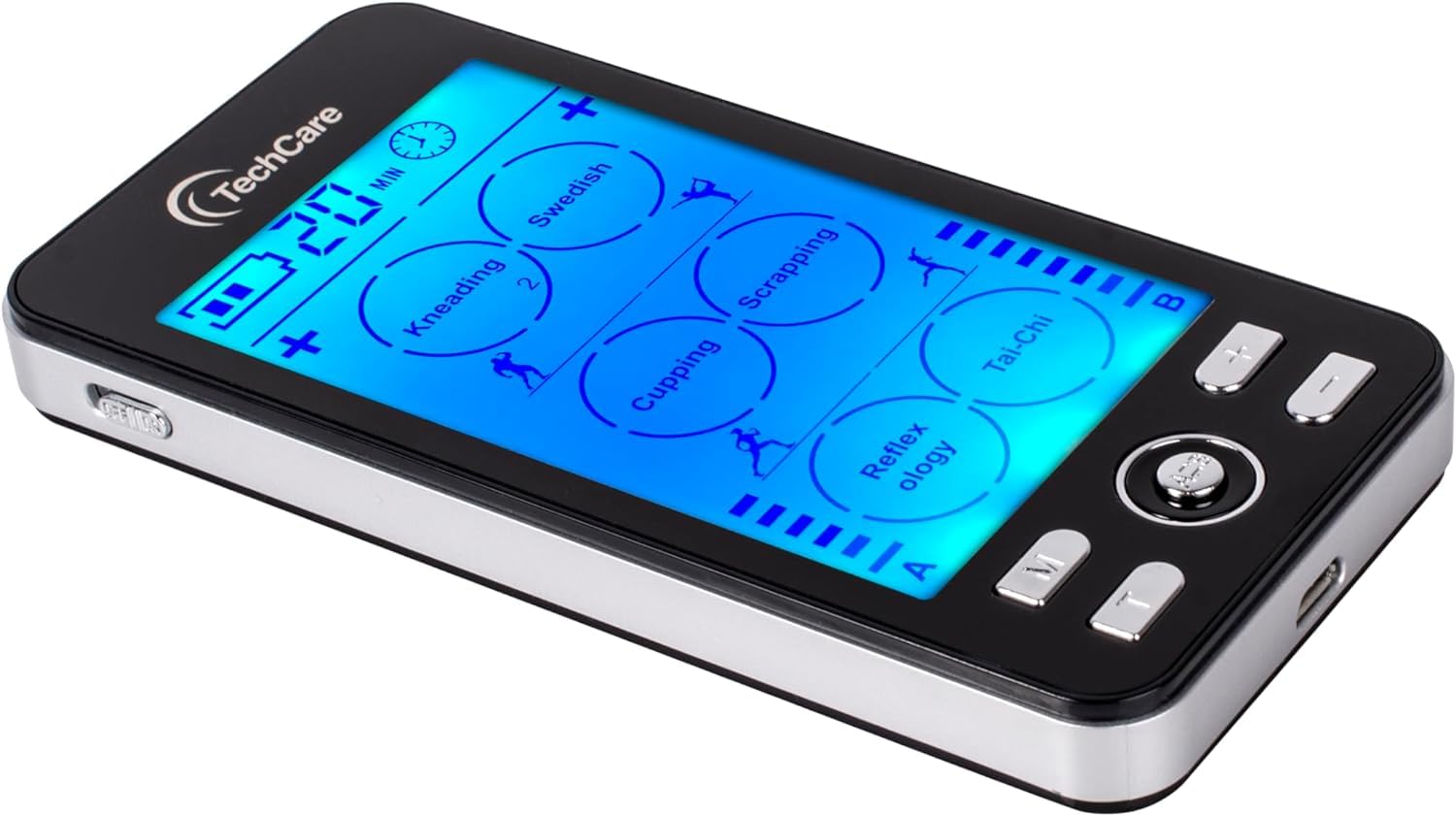
Battery life is where the TechCare leaves everything else in this list behind. Twenty hours of continuous use per charge means I went nearly two full weeks of daily sessions before reaching for the cable. If you hate the ritual of charging yet another device, this is your unit.
The TechCare also includes a belt clip, which sounds small but changes how you use the device. I clipped it to my waistband during a session on the couch and could move to grab a drink without yanking the pads off. For back pain specifically, that translates to actual relaxation during treatment instead of holding still.
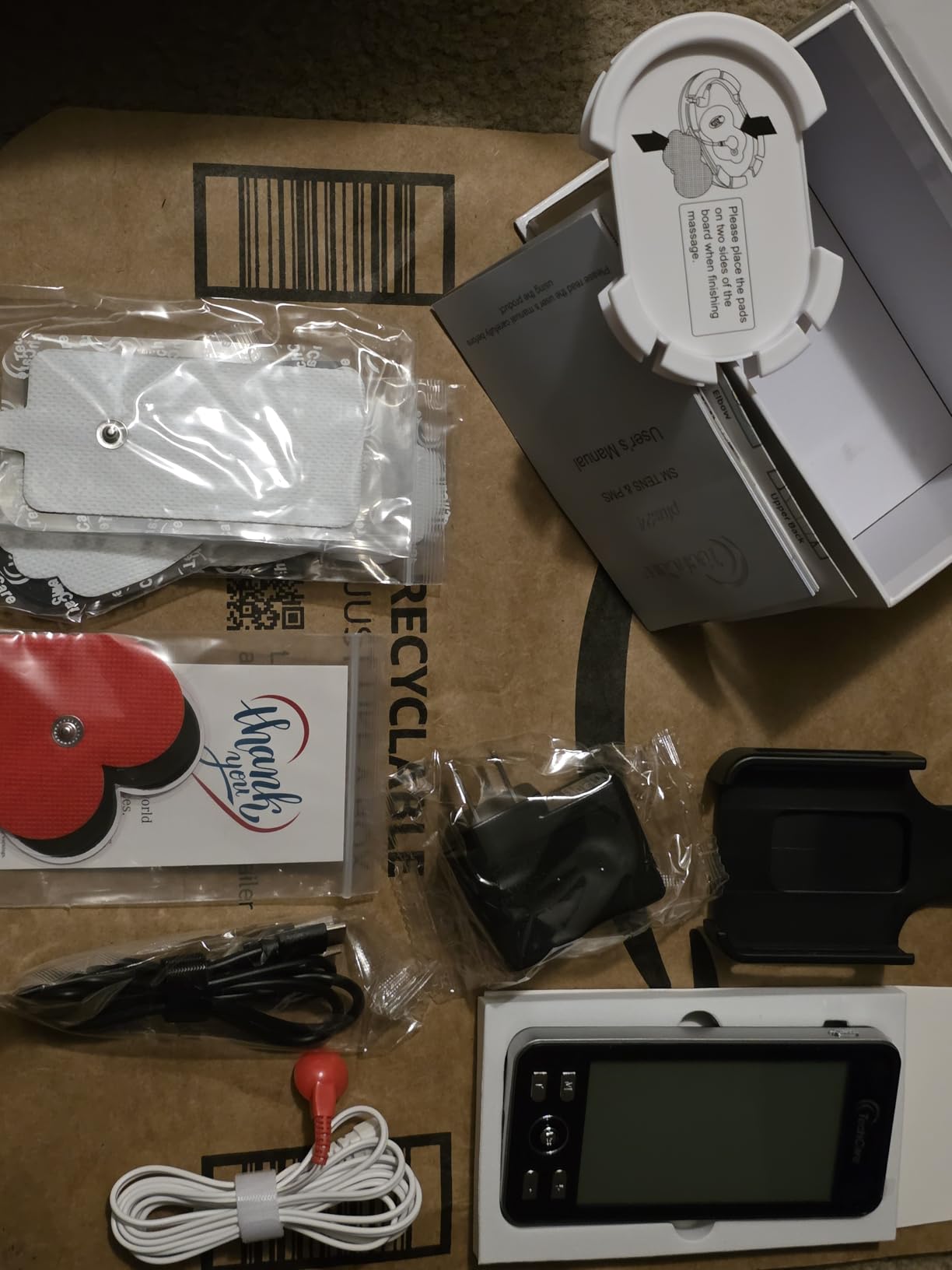
The kit includes multiple pad sizes (small, medium, and large), which is a quiet but useful upgrade. I used the larger pads on my lumbar region for broader coverage and the smaller ones on my shoulder. The unit combines TENS and EMS modes, which means you can also use it as a basic muscle stimulator for post-workout recovery.
One limitation: both A and B run the same mode at any given time. You can vary intensity between channels, but not the program. For most back pain users that is fine because you usually want the same sensation on both sides of the spine anyway.
Who should buy the TechCare
Frequent travelers and anyone who forgets to charge devices. The belt clip also makes it a great pick for users who want to move around during sessions.
Who should skip the TechCare
If you want independent modes per channel for two different body areas at the same time, look at the AUVON Dual Channel with 12 pads.
6. AUVON Dual Channel TENS Unit with 12 Pads – Best Pad Value TENS Unit for Back Pain
AUVON Dual Channel TENS Unit 24 Modes Muscle Stimulator for Pain Relief,Rechargeable TENS Machine Massager with 12 Pads, ABS Pads Holder, USB Cable and Dust-Proof Storage Bag
TENS and EMS combo
24 modes
Independent dual channel
12 pads included
Pros
- Combines TENS and EMS in one device
- Independent dual channel with different modes per channel
- 24 preprogrammed modes and 20 intensity levels
- Up to 10 hours of continuous use
- Upgraded American adhesive pads rated for 45 uses
- Standard 2mm connector lead wires widely compatible
Cons
- Some users report pads lose stickiness faster than advertised
Twelve pads in the box is the headline number, and for back pain users it matters more than you’d think. Pads wear out, especially when you use them daily, so starting with a dozen means you won’t be buying replacements for months. I rotated between four pads at a time and only had to swap to the extras once in the first six weeks.
The independent dual channel is the real upgrade over the AUVON model above. You can run mode 5 at level 8 on your lower back and mode 12 at level 4 on your shoulder simultaneously. For couples or households sharing one unit, this is a meaningful quality-of-life feature.
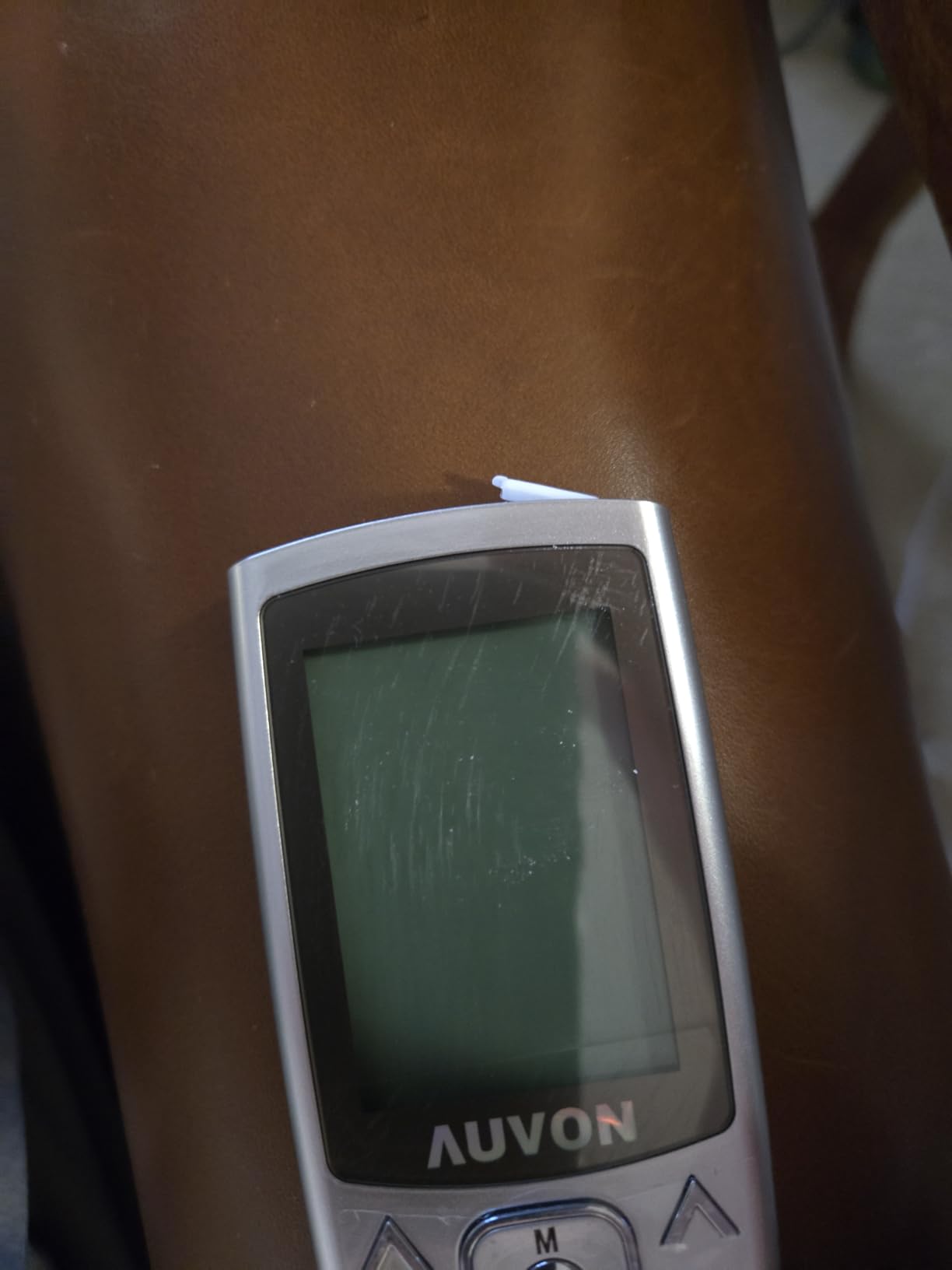
The American-made adhesive gel on these pads feels noticeably stickier than the standard pads on cheaper units. AUVON claims 45 uses per pad, and in my testing that held up. The standard 2mm lead connector also means you can swap in third-party pads if you ever want larger or specialty shapes.
The 12-month warranty and Type-C charging round out a thoughtful package. This is the model I’d recommend to a friend who has tried cheaper TENS units and wants to step up to something more capable without jumping to a clinical-grade price.
Who should buy the AUVON 12-Pad unit
Anyone who uses TENS daily and burns through pads quickly. Households with two users who want independent channel control will also benefit from the dual-channel independence.
Who should skip the AUVON 12-Pad unit
If you only need four pads and rarely use TENS, the cheaper AUVON 24 Modes above will do the job. If you want a wireless wearable, neither AUVON in this list fits.
7. TENKER 24 Modes TENS Unit – Best for Memory and Lock Functions
TENKER 24 Modes TENS Unit Muscle Stimulator for Pain Relief, Rechargeable TENS Machine, Drug-Free Pain Relief for Shoulder, Back, Sciatica, Muscle, Physical Therapy, 8pcs 2″ and 2″x4″ Electrode Pads
24 modes
Dual output
Memory function
Lock function
Pros
- 24 modes with 20 intensity levels for varied relief
- Dual output for multi-person or two-area use
- Steady Pulse function for constant stimulation
- Memory function remembers last used mode
- Lock function prevents unintended adjustments
- Rechargeable battery for up to 10 hours
- Includes 6 square pads and 2 large 2 inch by 4 inch pads
Cons
- Mode transition navigation is not intuitive
- Instructions could be clearer about neck use warnings
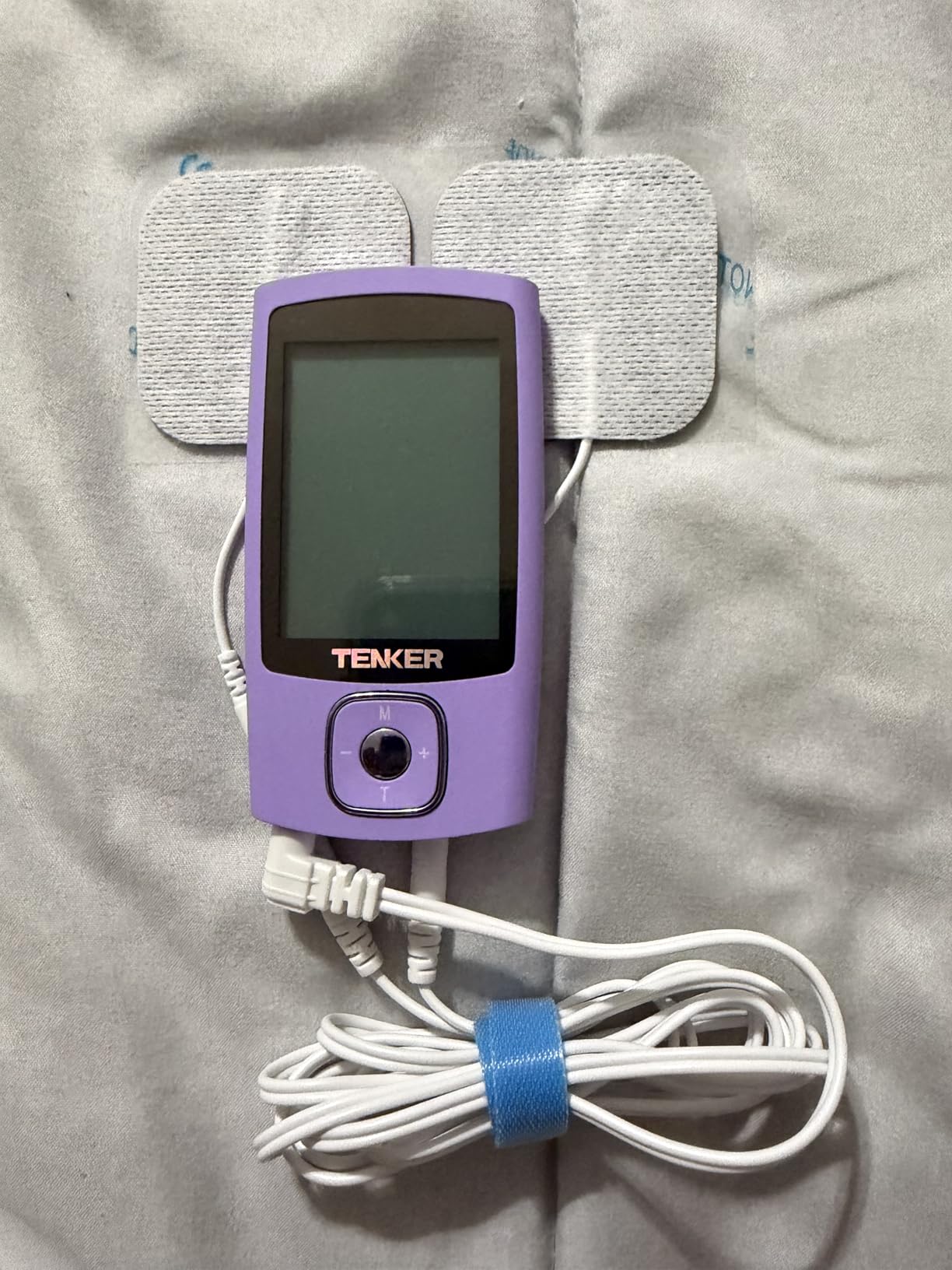
The memory function is the small detail that makes the TENKER feel premium. Once you find the mode and intensity that works for your lower back, the unit boots up exactly where you left it. After a couple of weeks I never had to fiddle with buttons again, just placed the pads and pressed start.
The lock function is similarly thoughtful. If you carry the unit in a bag or have kids around, accidental button presses are a real risk. Locking the controls prevents the device from firing unexpectedly when pads are not even on your body.

The dual output lets two people use the unit at once with separate intensity settings. I tested this with a friend on lower back and shoulder simultaneously, and both of us could adjust our own channel without affecting the other. The steady pulse function is useful for users who want constant output instead of variable patterns.
Two minor gripes: navigating between modes is less intuitive than competitors, and the instructions could be clearer about safety warnings for neck placement. Once you spend 15 minutes learning the menu, it’s fine, but plan for a learning curve.
Who should buy the TENKER
Anyone who wants a unit that remembers their preferred settings between sessions. It’s also great for two-person households who want to share one device.
Who should skip the TENKER
First-time users who want a plug-and-play interface may find the mode menu frustrating. The AUVON units above have simpler interfaces for beginners.
8. Etekcity 4-Channel TENS Unit – Best for Multi-Area Coverage and FSA Eligibility
Etekcity 4-Channel Rechargeable TENS Unit, Muscle Stimulator, FSA Eligible
4 independent channels
Up to 8 pads
FSA eligible
Rechargeable
Pros
- FSA eligible and HSA store approved
- Drug-free pain relief for back
- arthritis
- joint
- sports injuries
- 4 independent channels supporting up to 8 pads
- User-friendly operation with intuitive buttons and large LCD
- Memory function for easy setup
- Rechargeable battery lasts up to 7 days per charge
- Compact and portable design
Cons
- Customer service may be needed for any issues during use
The Etekcity stands out for two reasons: four channels instead of two, and FSA/HSA eligibility. The four-channel design lets you run up to eight pads simultaneously, which is overkill for most users but incredibly useful if you have widespread back pain that radiates into both hips and one shoulder.
FSA and HSA eligibility is a quiet but meaningful benefit if you have a flexible spending account. Many TENS units do not qualify, so this saves you out-of-pocket cost. The rechargeable battery lasts up to a week per charge, which is impressive for a four-channel device.
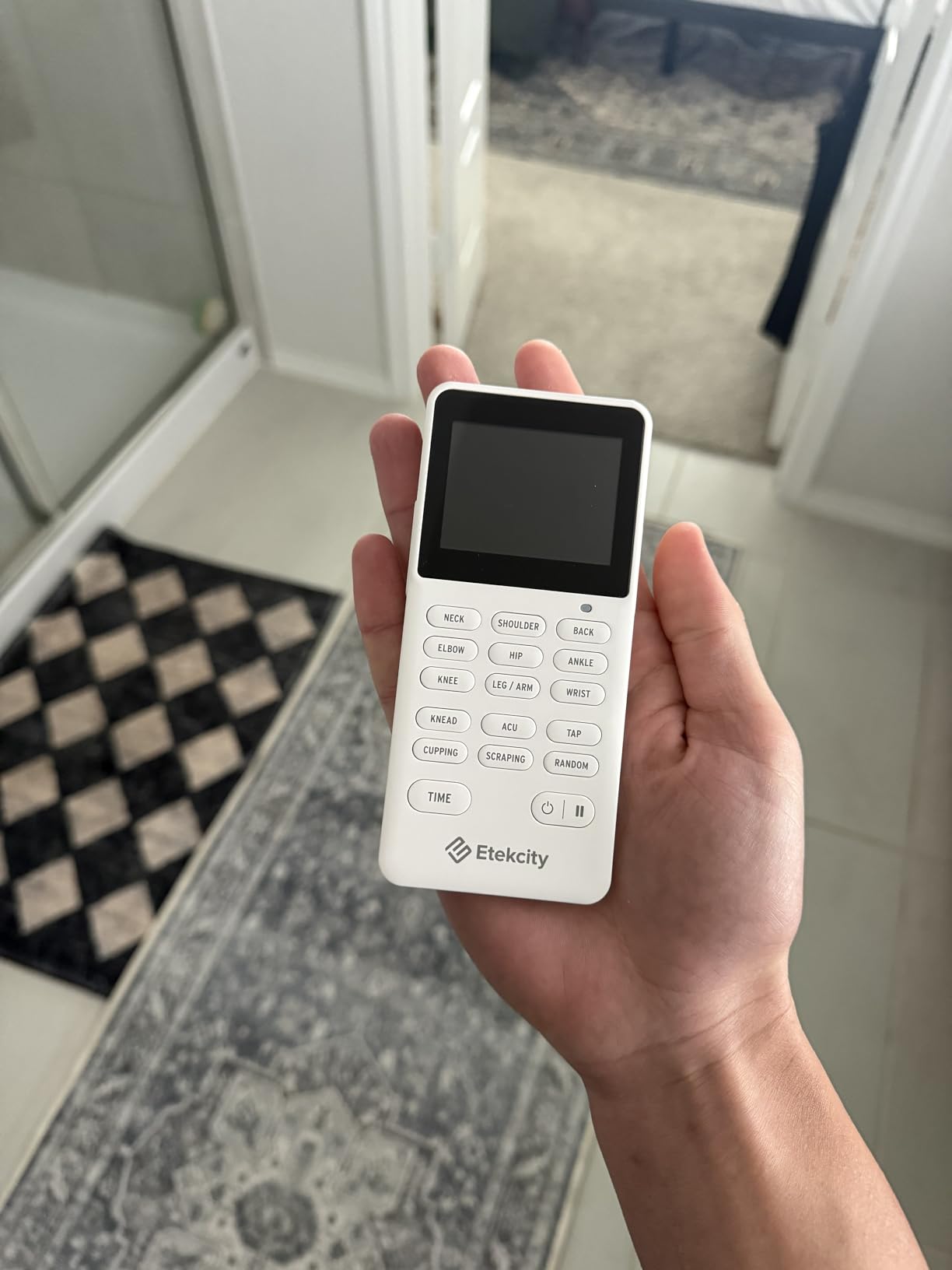
The interface is genuinely beginner-friendly. The large LCD and intuitive button layout had me running my first session without cracking the manual. The memory function remembers your last setup, which makes daily use feel automatic after the first week.
The only real downside is that some users report needing to contact customer service for troubleshooting, and experiences vary. The unit itself is solid, but support responsiveness is the trade-off for the lower price compared to clinical-grade brands.
Who should buy the Etekcity
Anyone with FSA or HSA money to use before year-end. It also suits users with widespread pain who need to cover more than two body areas in one session.
Who should skip the Etekcity
Single-area pain sufferers won’t benefit from the four-channel design and may find the AUVON or TechCare units more than enough. If you want the most powerful raw intensity, the TENS 7000 still leads.
How TENS Therapy Works for Back Pain?
A TENS machine uses two theories to interrupt back pain. The first is gate control theory: gentle electrical pulses travel along the same nerves as your pain signals, and when they reach the spinal cord first, they essentially close the “gate” so pain messages can’t pass through to the brain. The second is endorphin release: low-frequency stimulation triggers your natural pain-relieving chemicals, which can provide relief that lingers after you turn the unit off.
Most users notice relief during the session itself, and many report carryover relief for 30 minutes to a few hours afterward. For chronic lower back pain, regular daily use tends to outperform sporadic sessions, much like exercise. The effect is drug-free, which is the main reason physical therapists recommend TENS before reaching for prescription medication.
If you want to combine TENS with other non-drug approaches for back pain, our guide to inversion tables for back pain and our picks for mattress toppers for back pain cover complementary therapies that pair well with TENS sessions.
Pad Placement Guide for Back Pain
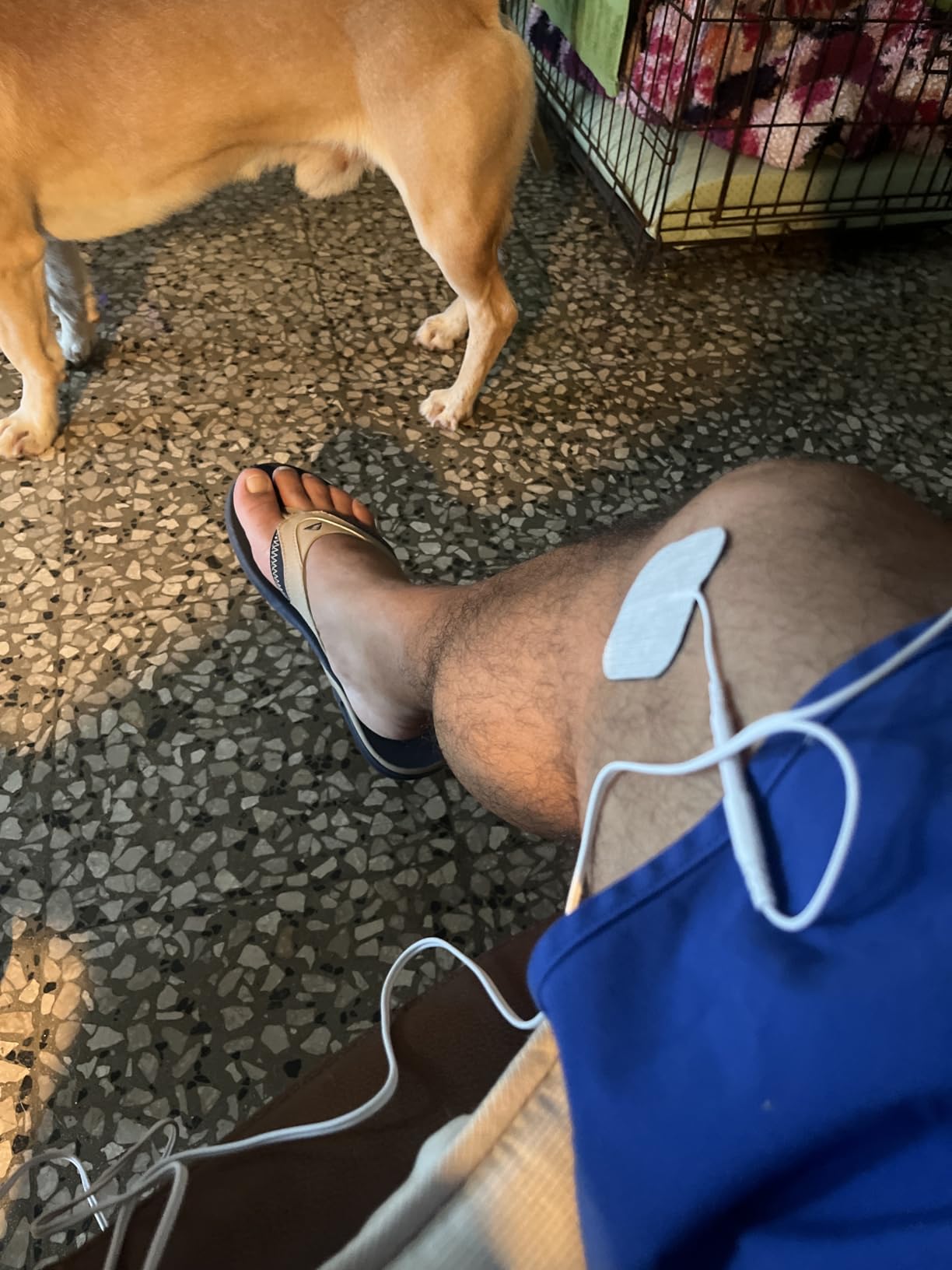
Where you place the pads matters as much as which unit you buy. For most lower back pain, the best results come from positioning pads on either side of the painful area, parallel to the spine but never directly on it. Place one pad about one inch to the left of the spine and the second one inch to the right, both at the height of the pain.
For sciatica, run one pad on the lower back near the spine and the second on the back of the thigh along the sciatic nerve pathway. For muscle spasms, place pads at the top and bottom edges of the cramped muscle so the current passes lengthwise through the spasm.
Always avoid placing pads directly over the spine, on the front of the neck or throat, across the chest, on broken or irritated skin, or anywhere with impaired sensation. Start at the lowest intensity and increase slowly until you feel a strong but comfortable tingling, never pain.
TENS vs EMS: What’s the Difference
TENS stands for transcutaneous electrical nerve stimulation and targets nerves to block pain signals. EMS stands for electrical muscle stimulation and targets muscle fibers to contract and release, which is useful for rehabilitation and post-workout recovery but does not directly relieve pain the way TENS does.
Several units on this list, including the TechCare and the AUVON Dual Channel, combine TENS and EMS modes. For back pain specifically, you want TENS modes. EMS modes are a bonus for muscle conditioning, not a replacement for proper TENS therapy. If your primary goal is back pain relief, prioritize units with strong TENS performance over those marketed mainly as muscle builders.
TENS Unit Safety and Side Effects
TENS therapy is safe for most adults when used as directed, but there are real contraindications. Do not use a TENS unit if you have a pacemaker or implanted defibrillator, are pregnant (especially around the abdomen or lower back), have epilepsy, have cancer in the treatment area, or have broken or numb skin where pads would go.
Common side effects are mild: skin irritation or redness under the pads is the most reported issue, usually from overuse or worn-out pads. Switching pad placement slightly each session and replacing them when adhesion drops prevents most reactions. Some users feel mild muscle soreness after sessions, similar to post-exercise tenderness, which usually fades within an hour.
Avoid placing electrodes on the front of the neck, across the chest, on the eyes, or directly over the heart. If you have any heart condition, talk to your doctor before starting TENS therapy. For most users without these conditions, TENS is one of the lowest-risk drug-free options for back pain.
What to Look for in a TENS Unit for Back Pain
Intensity output matters most. For chronic lower back pain, look for at least 100mA of intensity, which is what you get from the TENS 7000 and most clinical-grade units. Cheap units often cap at 50 to 80mA, which is not enough for deep lumbar pain.
Dual channel capability lets you run two pairs of pads at independent intensities. For back pain, this means treating both sides of the spine at different strengths if needed. Multi-mode devices (24 modes) help you find a comfortable sensation, but more modes are not necessarily better. Five well-tuned modes can outperform 24 poorly-designed ones.
FDA clearance is a quality signal worth checking. It means the device has been reviewed for safety and effectiveness. Battery type is also worth weighing: rechargeable lithium batteries are more convenient, but 9V-powered units like the TENS 7000 trade convenience for unlimited runtime with a swap. Pad quality and replacement availability will affect your long-term cost more than the device itself, so check that standard pads are easy to find.
Best TENS Unit for Specific Back Conditions
For chronic lower back pain, the TENS 7000 is the strongest pick thanks to its high intensity and clinical reputation. For sciatica, look for units with a steady pulse mode and good pad placement range, which is why the AUVON Dual Channel and NueMedics both work well. For herniated disc pain, talk to your doctor first, but most users report good results with any of the higher-intensity units on this list.
For muscle spasms, the TechCare’s belt clip and 20-hour battery make it easy to use during flare-ups without recharging. For post-workout recovery, the EMS modes on the AUVON Dual Channel or TechCare add value beyond pain relief. If you have arthritis in your lower back along with muscle pain, the four-channel Etekcity lets you treat multiple areas in a single session.
Frequently Asked Questions
Does a TENS unit really work for lower back pain?
Yes, a TENS unit really works for most types of lower back pain. Clinical research and decades of physical therapy use show that TENS reduces pain signals through the gate control theory and stimulates endorphin release. Many users feel relief during sessions and carryover relief for hours afterward, especially when they use the device consistently.
Which TENS unit is best for lower back pain?
The TENS 7000 is our top pick for lower back pain because of its up to 100mA intensity and clinical-grade reputation backed by more than 100,000 reviews. For rechargeable convenience, the Belifu and AUVON 24 Modes are strong runners-up. The right pick depends on whether you prioritize raw power or battery convenience.
What TENS unit setting is best for lower back pain?
For lower back pain, start at a low intensity (level 1 to 3) and increase slowly until you feel a strong but comfortable tingling. Most users do well with a continuous or modulated mode at 80 to 100Hz for acute pain, and lower frequencies (2 to 10Hz) for chronic pain. Experiment with different sensations until you find one that interrupts your specific pain.
What are the downsides of using a TENS machine?
The main downsides are mild skin irritation under the pads, the cost of replacement pads, and the fact that relief often fades once you turn the unit off. Some users also find the sensation uncomfortable at higher intensities, and the device is not safe for people with pacemakers, pregnant users, or those with certain medical conditions.
What TENS unit do physical therapists recommend?
Physical therapists most often recommend dual-channel TENS units with at least 100mA of intensity and FDA clearance. The TENS 7000 is a frequent recommendation because it meets clinical thresholds. Many PTs also recommend rechargeable units with multiple modes for home use, which is why the AUVON and Belifu units appear in many clinic recommendations.
How often should you use a TENS unit for back pain?
Most guidelines recommend 20 to 30 minute sessions, two to three times per day, with at least a 30-minute break between sessions. Daily use is safe for most adults. If your pain is chronic, consistent daily use tends to outperform occasional sessions. Stop and consult your doctor if you experience skin reactions or worsening pain.
Where should you not put TENS pads?
Never place TENS pads on the front of the neck or throat, across the chest, on the eyes, directly over the heart, on broken skin, or over areas with impaired sensation. Avoid placing pads directly on the spine. Pregnant users should avoid placing pads on the abdomen or lower back without doctor approval.
Do TENS units work for chronic pain?
Yes, TENS units work for chronic back pain, though results vary by individual. Regular daily use tends to provide better long-term relief than occasional sessions. For chronic conditions, lower-frequency settings (2 to 10Hz) are often recommended over high-frequency settings, as they more effectively stimulate endorphin release.
Final Verdict: Which TENS Unit Should You Buy for Back Pain?
After testing all eight units, the TENS 7000 remains our top pick for the best TENS unit for back pain because of its raw intensity, clinical credibility, and 100,000-plus verified reviews. For a rechargeable alternative with more modes, the Belifu is a close second. If you’re new to TENS therapy and want the easiest entry point, the AUVON 24 Modes is hard to beat.
Pair your TENS unit with the right sleep setup. If your back pain flares overnight, check our guide to the best mattresses for back pain sufferers and our picks for office chairs for back pain to round out a complete drug-free relief setup.
Whichever unit you choose, commit to daily use for at least two weeks before judging the results. TENS therapy works best as a consistent habit rather than an emergency rescue. If you have a heart condition, are pregnant, or use a pacemaker, talk to your doctor before starting.