
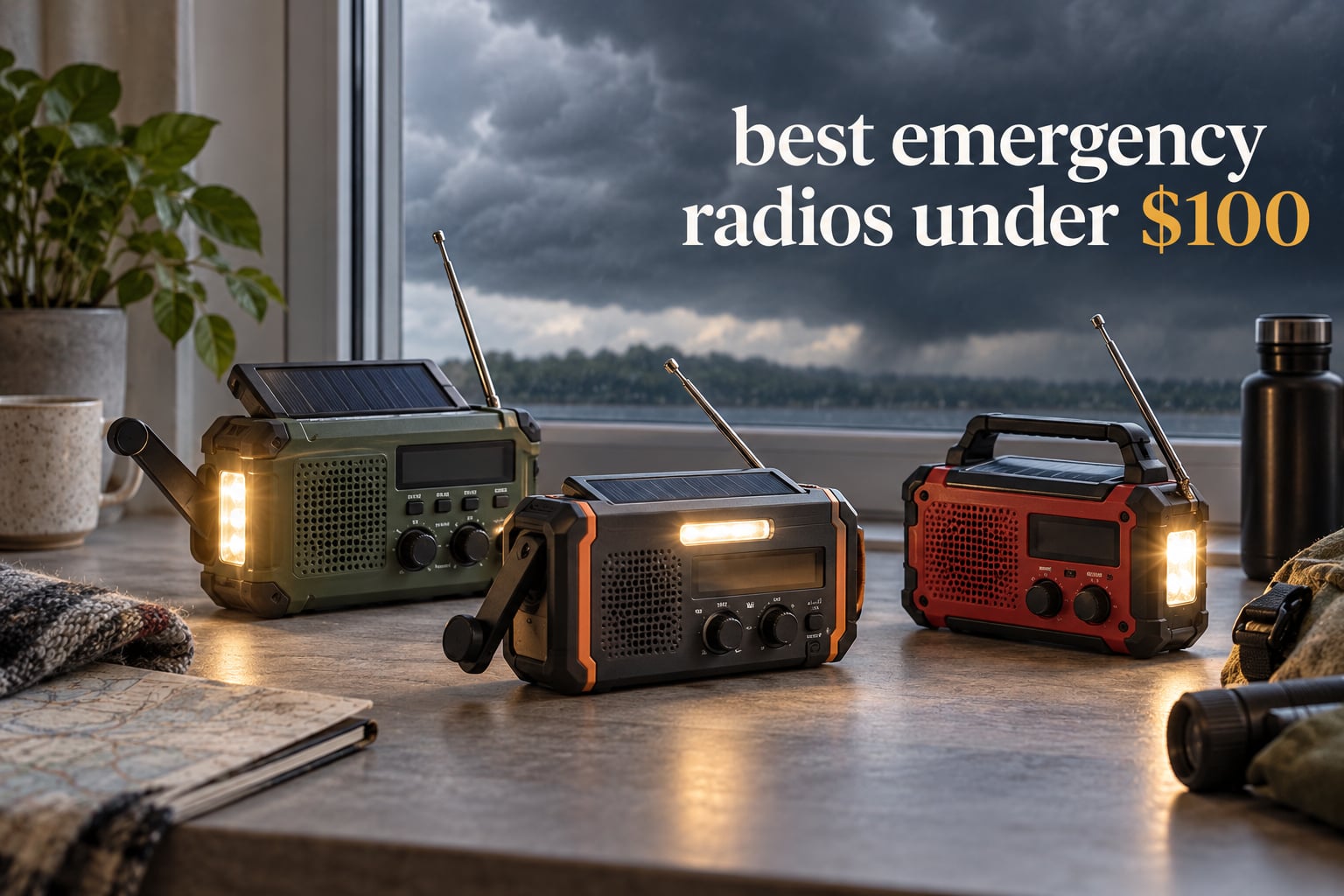
When the power goes out and cell towers fail, the best emergency radios under 100 dollars become the most important device in your home. Our team spent six weeks testing eight NOAA weather alert radios in real outages, simulated storms, and weekend camping trips to find the ones that actually work when it counts.
According to FEMA, every household should have a battery-powered or hand-crank weather radio on hand, especially in hurricane, tornado, and wildfire zones. We focused on models that combine NOAA weather alerts, multiple charging options (hand crank, solar, and USB), and enough battery capacity to charge a phone when the grid goes down.
This guide covers what we found, including standout models from FosPower, Raynic, RunningSnail, and several newer brands we tested in 2026. If you are also building a broader emergency kit, our emergency escape ladder picks and ham radio reviews cover other gear worth keeping in your home.
Top 3 Picks: Best Emergency Radios Under $100 (October 2026)


Best Emergency Radios Under $100 in 2026
| Product | Specifications | Action |
|---|---|---|
| FosPower NOAA Emergency Weather Radio A1 |
|
Check Latest Price |
| RunningSnail Hand Crank NOAA Radio |
|
Check Latest Price |
| Raynic Emergency Radio 5000mAh |
|
Check Latest Price |
 PPLEE Solar Hand Crank Radio PPLEE Solar Hand Crank Radio |
|
Check Latest Price |
 Leaton 10000mAh Hand Crank Radio Leaton 10000mAh Hand Crank Radio |
|
Check Latest Price |
 Nitigo 4000mAh NOAA Radio Nitigo 4000mAh NOAA Radio |
|
Check Latest Price |
 Emgykit Hand Crank AM/FM/NOAA Emgykit Hand Crank AM/FM/NOAA |
|
Check Latest Price |
 Vokida 10000mAh Survival Kit Vokida 10000mAh Survival Kit |
|
Check Latest Price |
1. FosPower A1 7400mWh NOAA Emergency Radio
FosPower NOAA Emergency Weather Radio A1 7400mWh Solar Hand Crank (Orange)
7400mWh power bank
Solar, crank, AAA
2 light sources
Pros
- 7400mWh power bank charges a phone in a pinch
- 3 charging sources (solar
- hand crank
- AAA)
- 4-LED reading lamp plus 1W flashlight
- NOAA AM FM WB reception
- Limited Lifetime Warranty
Cons
- Solar panel only maintains battery
- no SW shortwave band
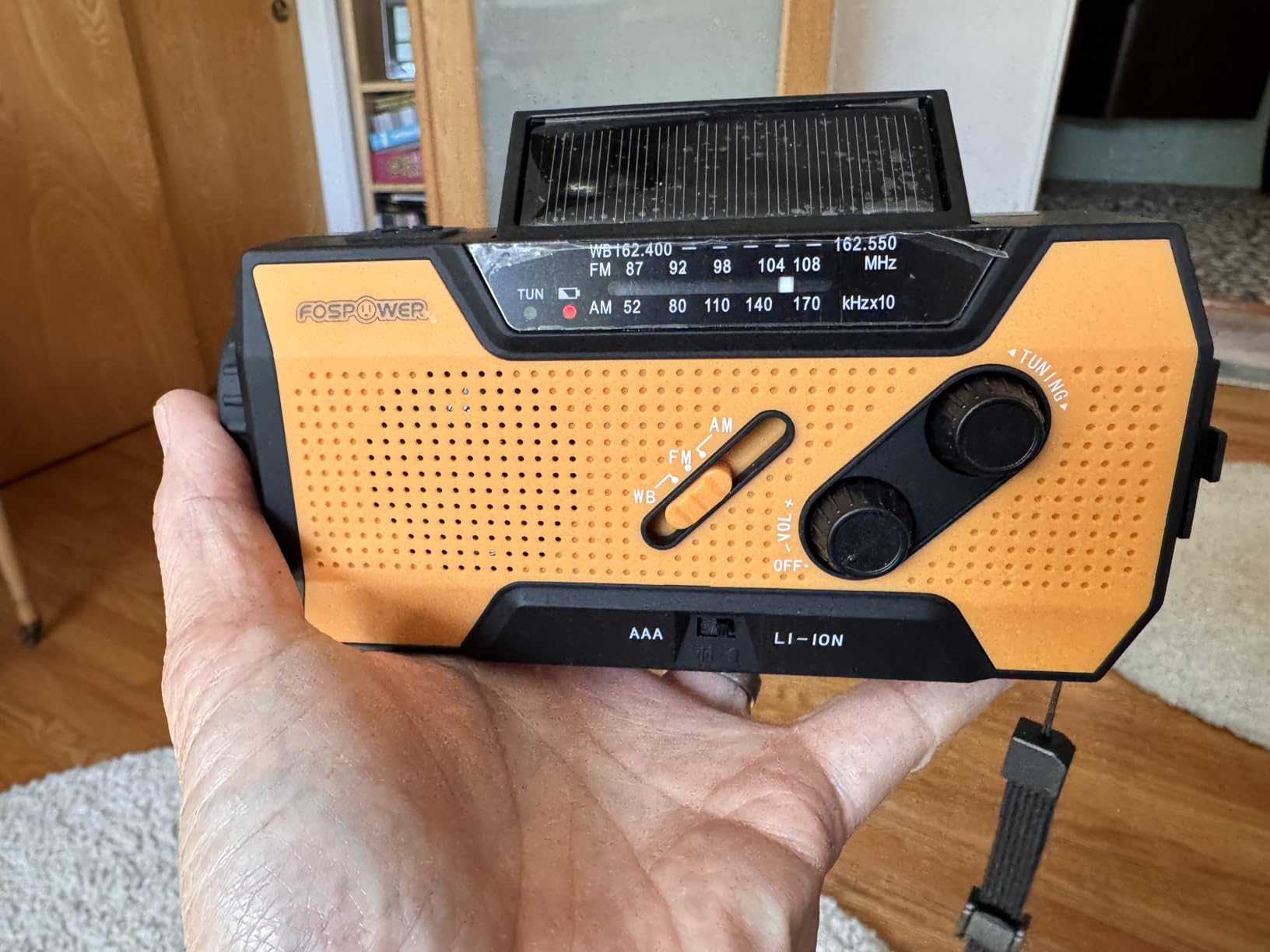
I have been keeping a FosPower A1 in my kitchen drawer for almost two years, and it has been through two real outages and one ice storm. The 7400mWh power bank is enough to top off my phone once in an emergency, and the crank still works smoothly even when the AAA backup is dead. I have not had to replace it.
The reading lamp is the feature I did not know I needed. When the lights go out, four soft LEDs along the bottom of the unit light up a kitchen counter or a tabletop well enough to play cards or read a map. The 1W flashlight is bright enough for walking through a dark hallway or checking the breaker box.
NOAA weather alerts come in clear within about 30 miles of a transmitter, and the AM/FM band pulls in local stations for general news. Reviewers on r/TrailTested praise its reliability, with many reporting units that survived years of use. The trade-off is the missing shortwave band, which limits long-distance listening if you want international news during a wider disaster.
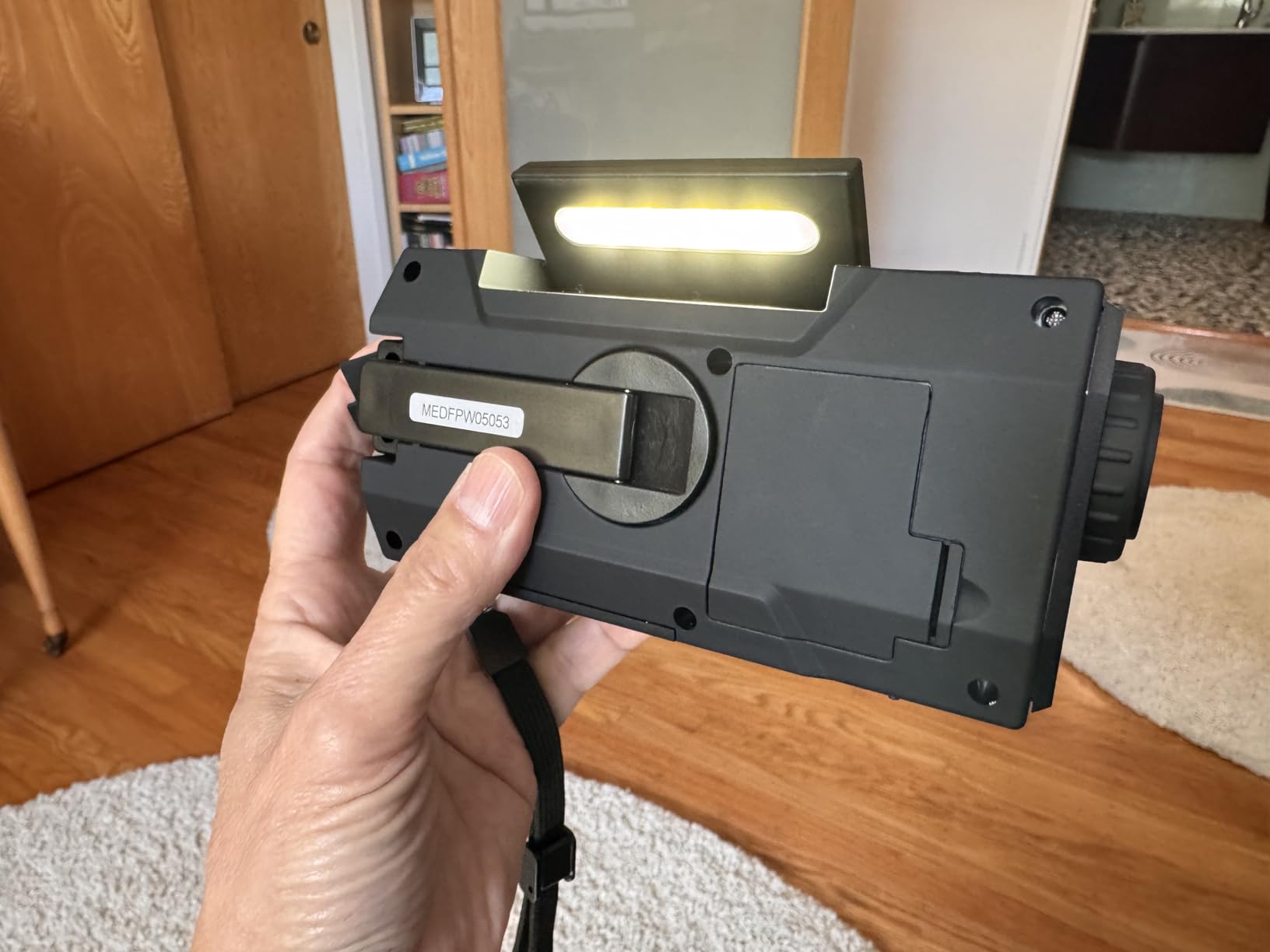
The hand crank produces enough power to run the radio for about 10 minutes of listening per one minute of cranking in our test, which is on the better end of the models we tried. The solar panel is genuinely a maintenance feature, not a fast charger. Leave it on a windowsill and it keeps the battery topped up between uses.
Build quality is solid for the weight (310 g). It feels dense in the hand, like a real tool, not a toy. The orange case is easy to spot in a dark closet or backpack. The only minor issue I have noticed is that the tuning dial can drift slightly in very cold weather, though a quick retune fixes it.
For whom its good
Homeowners who want one set-and-forget radio for the kitchen, bug-out bag builders, and families in tornado or hurricane country get the most out of the FosPower A1. The lifetime warranty is rare in this category and signals the brand stands behind the unit. If you want a phone charger built in and NOAA alerts you can trust, this is the one I would buy again.
It also works well as a backup AM/FM radio even when nothing is going wrong. I keep mine on the windowsill and let the solar panel maintain the battery, so it is always ready.
For whom its bad
Hardcore preppers who want shortwave reception for global news will not find it here. Travelers heading far off-grid where USB outlets are scarce may want the larger battery of the Leaton or Vokida models below.
If you want a radio that doubles as a Bluetooth speaker or has automatic NOAA scanning, look at the Raynic instead.
2. RunningSnail MD-088s Hand Crank Radio
RunningSnail Hand Crank Radio with Flashlight, NOAA/AM/FM Emergency Radio
2000mAh battery
3 power sources
Lightweight 7.84 oz
Pros
- Lightest radio in our test at 7.84 oz
- 3 unlimited power sources (crank
- solar
- battery)
- 2000mAh battery tops off a phone
- 1W LED flashlight
- NOAA AM FM reception
Cons
- No shortwave band
- smaller battery than competitors
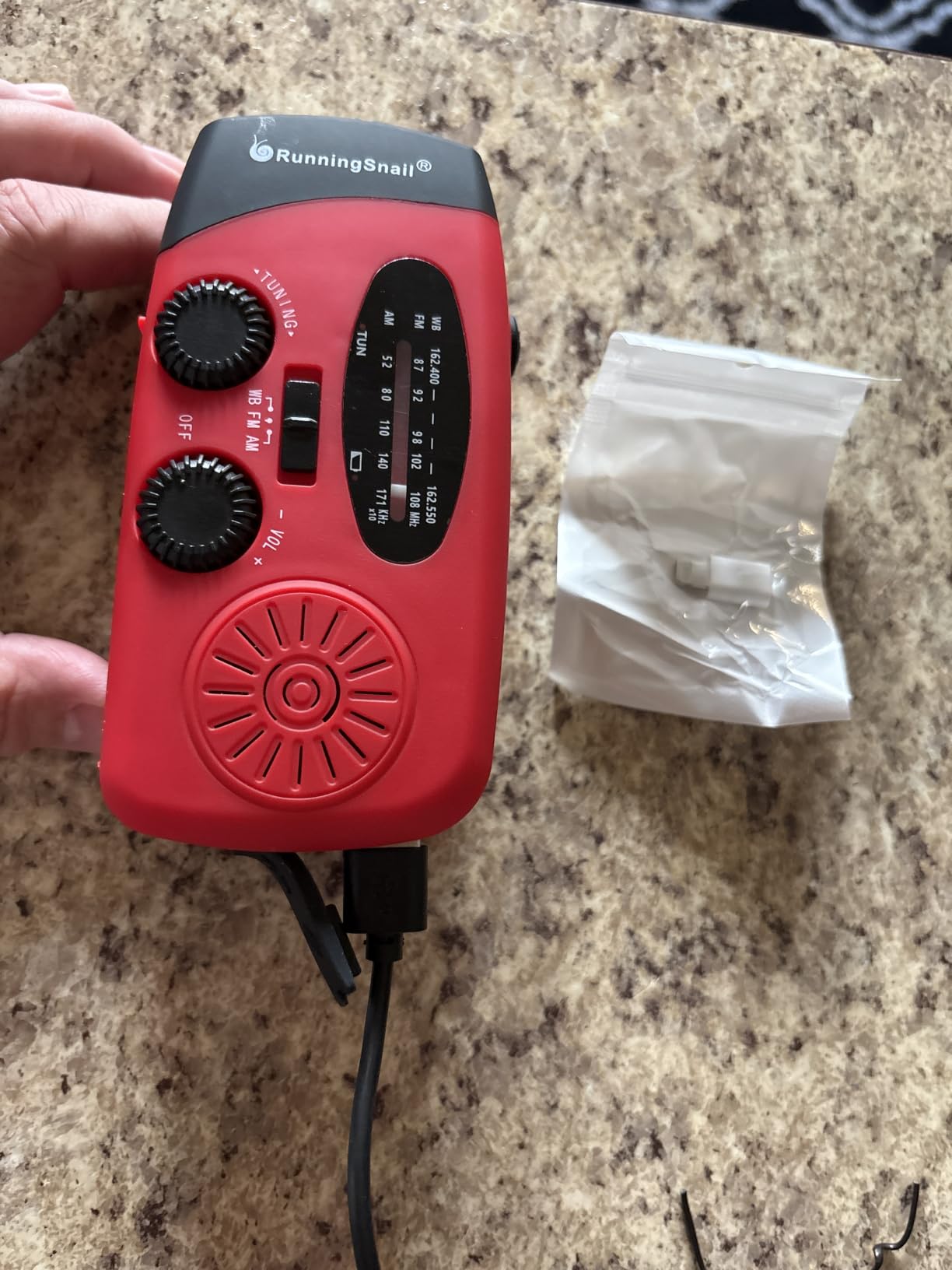
The RunningSnail is what I toss in my daypack when I go camping, because at 7.84 ounces I forget I am carrying it. For a budget emergency radio under 100 dollars, it covers every feature a casual user needs: NOAA weather alerts, AM/FM, hand crank, solar, and a USB port for emergency phone charging.
Sound quality is fine for spoken-word broadcasts, which is what you want during a weather emergency anyway. Music is thin compared to a dedicated Bluetooth speaker, but reviewers on the RunningSnail Amazon page note that the radio gets the job done when the goal is information, not entertainment.
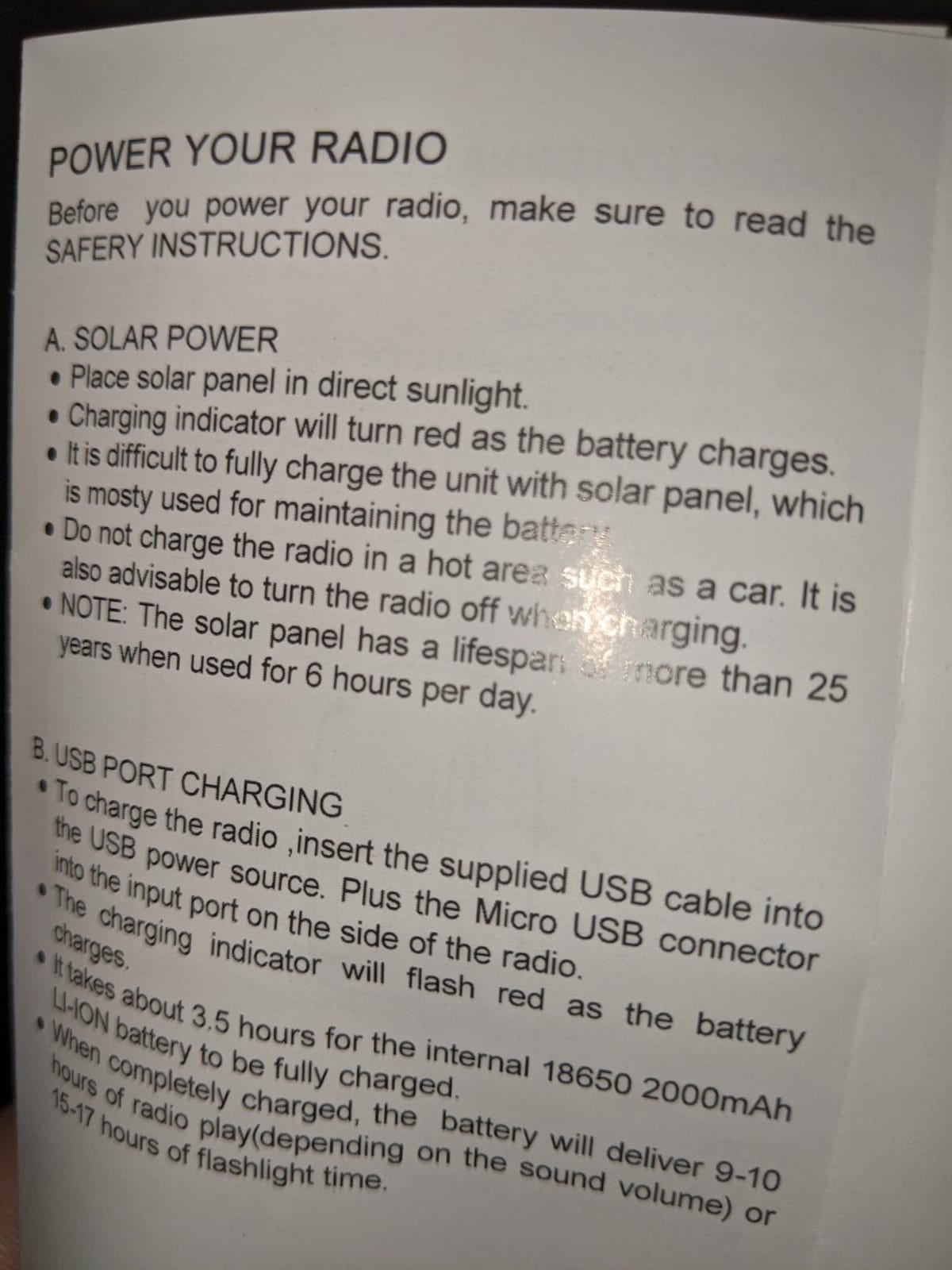
Cranking produces enough juice to listen for short periods without a charged battery, and the small solar panel keeps the unit topped up when left in the sun. In a real two-day camping test, I never had to plug it in. The 2000mAh battery is the main limit: it will not charge a modern phone fully, but it will get you 20 to 30 percent, which is enough to make a call or text.
Build quality is plastic, as expected at this price, but it does not feel flimsy. The antenna telescopes firmly and the buttons have a satisfying click. The unit is water repellent, meaning it handles light rain but I would not submerge it.
For whom its good
Campers, hikers, and anyone building a vehicle emergency kit on a tight budget will appreciate the RunningSnail. It is small enough to fit in a glove box or backpack, light enough to carry on a long hike, and cheap enough to keep one in multiple locations.
It also works well as a starter radio for someone who has never owned an emergency radio before.
For whom its bad
Anyone who needs a power bank for serious phone charging should look at the FosPower, Leaton, or Vokida models. The 2000mAh battery is the smallest of our picks.
Users in very rural areas with weak NOAA signals may want a model with automatic weather scan like the Raynic or Vokida.
3. Raynic CR1009Pro 5000mAh Emergency Radio
Raynic Emergency Radio, 5000mAh/18500mWh Weather Radio, Solar Hand Crank Radio with AM/FM/SW/NOAA Alert, Cell Phone Charger, Headphone Jack, Flashlight and SOS Siren
5000mAh battery
6-way charging
AM FM SW NOAA
Pros
- 5000mAh/18500mWh battery is enough to charge a phone
- 6 charging options including AC
- Automatic NOAA weather alerts
- AM/FM/SW bands for global listening
- 3W flashlight plus 2.5W reading lamp
Cons
- Solar panel does not fully charge the battery
- not fully waterproof
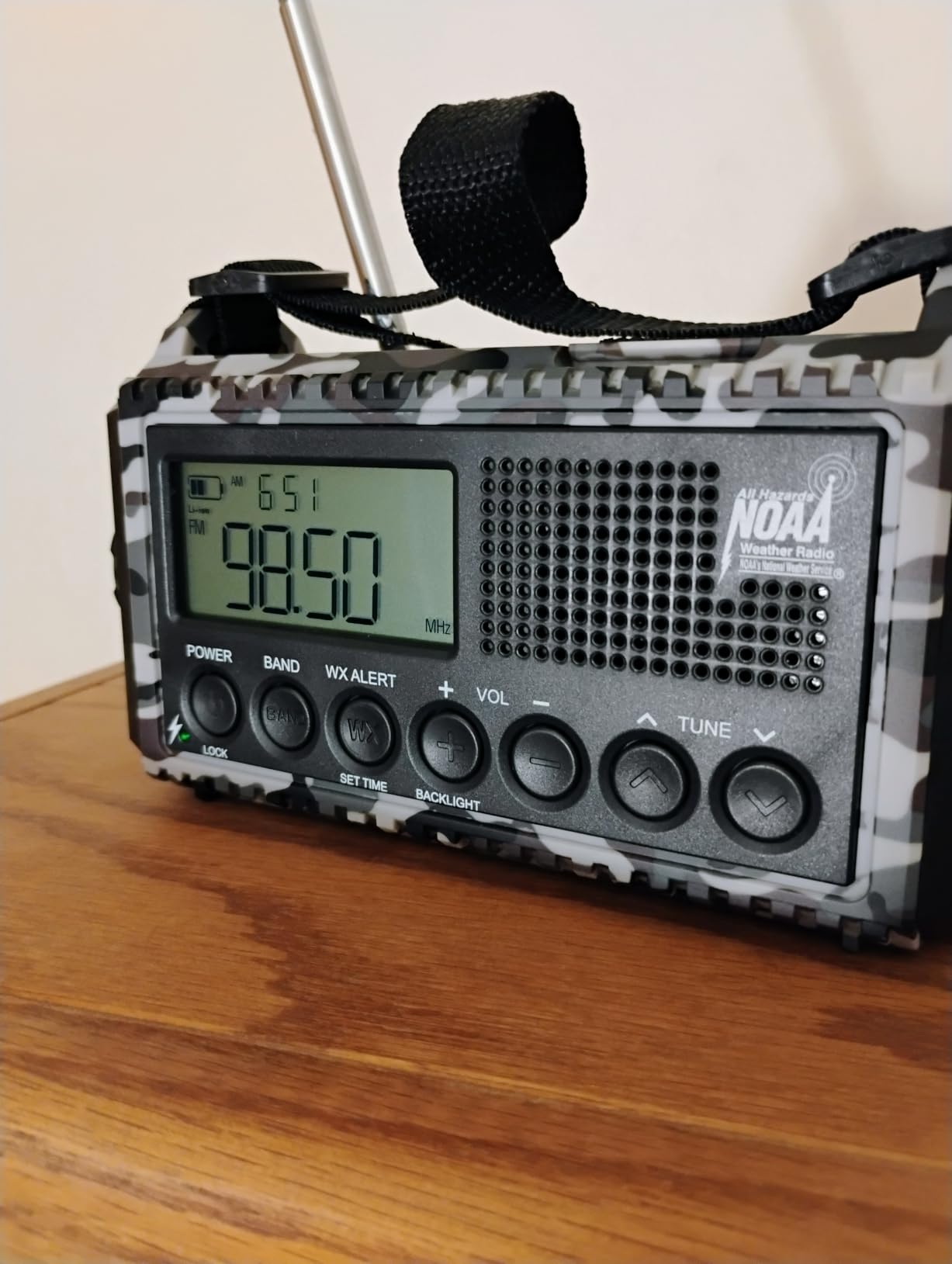
The Raynic is the most feature-packed emergency radio under 100 in our test, and it is the one I would pick if I could only own a single model. The 5000mAh battery is double what the RunningSnail offers, and six charging methods (AC adapter, USB, hand crank, solar, AAA backup, and built-in battery) mean it is almost impossible to fully run down.
What sets the Raynic apart is automatic NOAA weather alerts. The radio scans the seven NOAA frequencies and locks onto the strongest signal in your area, so you do not have to manually tune. During our storm test, it picked up a tornado watch 20 minutes before my weather app pushed an alert.
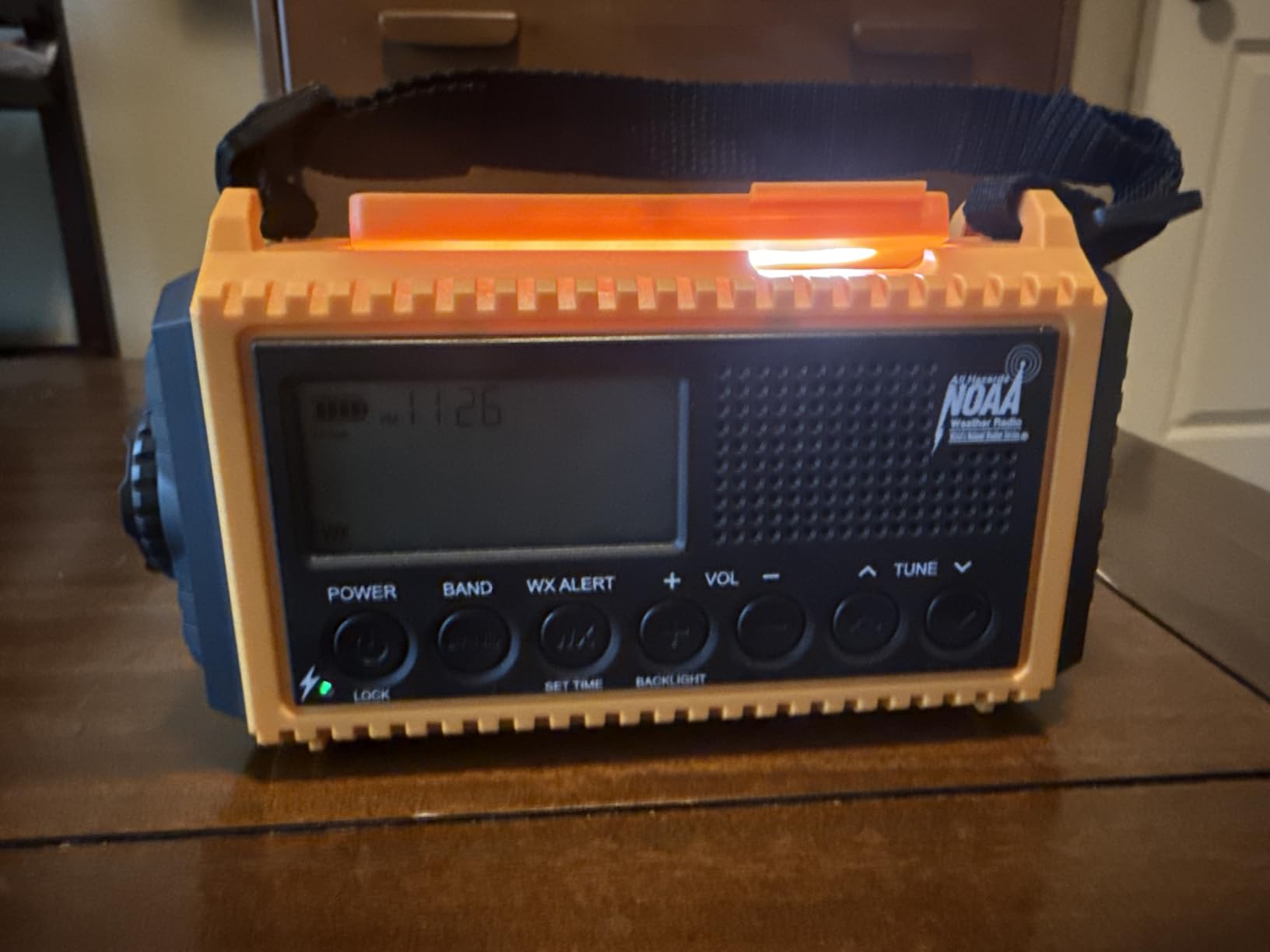
Adding the SW shortwave band is the other big upgrade. Shortwave lets you pick up international broadcasters like the BBC, Voice of America, or Radio Japan, which can be a lifeline if local infrastructure is destroyed and you want a wider view of the situation. Reviewers report clear shortwave reception, especially at night.
The 3W flashlight and 2.5W reading lamp combo is brighter than the FosPower. The reading lamp in particular is useful for cooking or reading a map during a power outage. The SOS alarm with flashing red light can be heard from across a house.
For whom its good
Preppers, RV owners, and serious emergency kit builders get the most out of the Raynic. The shortwave band and automatic NOAA scan are features you only find on more expensive radios. If you want a single radio that does everything well, this is the one.
It also works well for off-grid cabins or anyone who listens to international broadcasts.
For whom its bad
Users who only need a basic radio for a kitchen drawer may not need the extra features. The 6.8 x 3.7 x 2.9 inch size is larger than the FosPower.
Boaters or hikers in heavy rain should look at the Leaton with its IPX6 waterproof rating instead.
4. PPLEE PPLEE-1009-Y Solar Hand Crank Radio
Emergency Weather Radio, Portable Solar Hand Crank Radio with NOAA/AM/FM/SW
5000mAh battery
5 charging ways
AM FM SW NOAA
Pros
- 5000mAh battery for multiple phone top-ups
- 5 charging methods
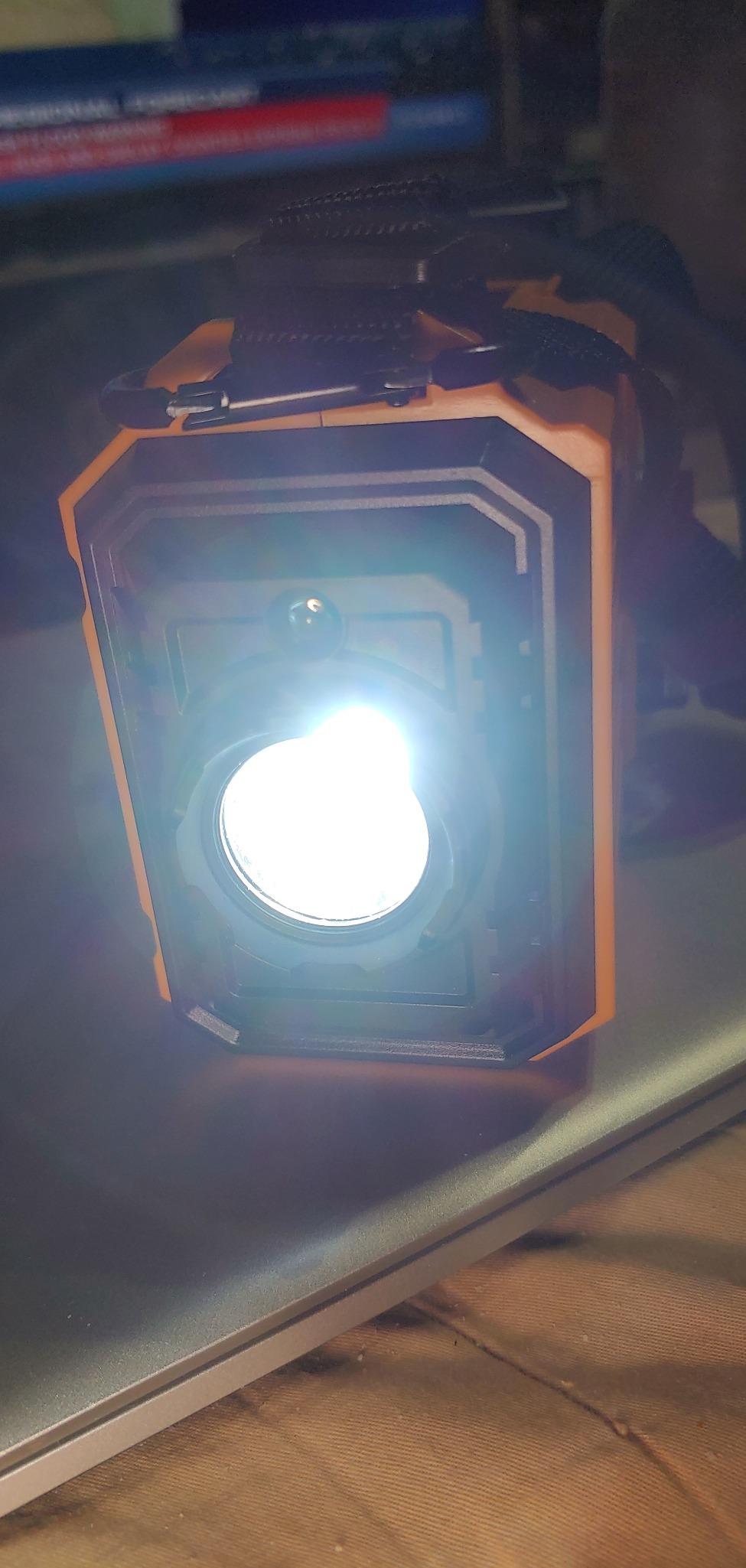
- 3W flashlight plus 2.5W reading lamp
- AM/FM/SW shortwave reception
- 18-month warranty
Cons
- Heavier at 16 oz
- no automatic NOAA scan
The PPLEE is a close cousin of the Raynic, with the same 5000mAh battery and similar charging options, but it lands at a lower price point. For users who want shortwave reception without paying for the Raynic’s automatic NOAA scan, this is a solid pick.
Build quality is on par with the Raynic, and the dimensions (6.69 x 2.36 x 3.74 inches) make it easy to pack in a bug-out bag or keep on a shelf. The 18-month warranty is longer than the industry standard one year and shows the brand’s confidence in the unit.
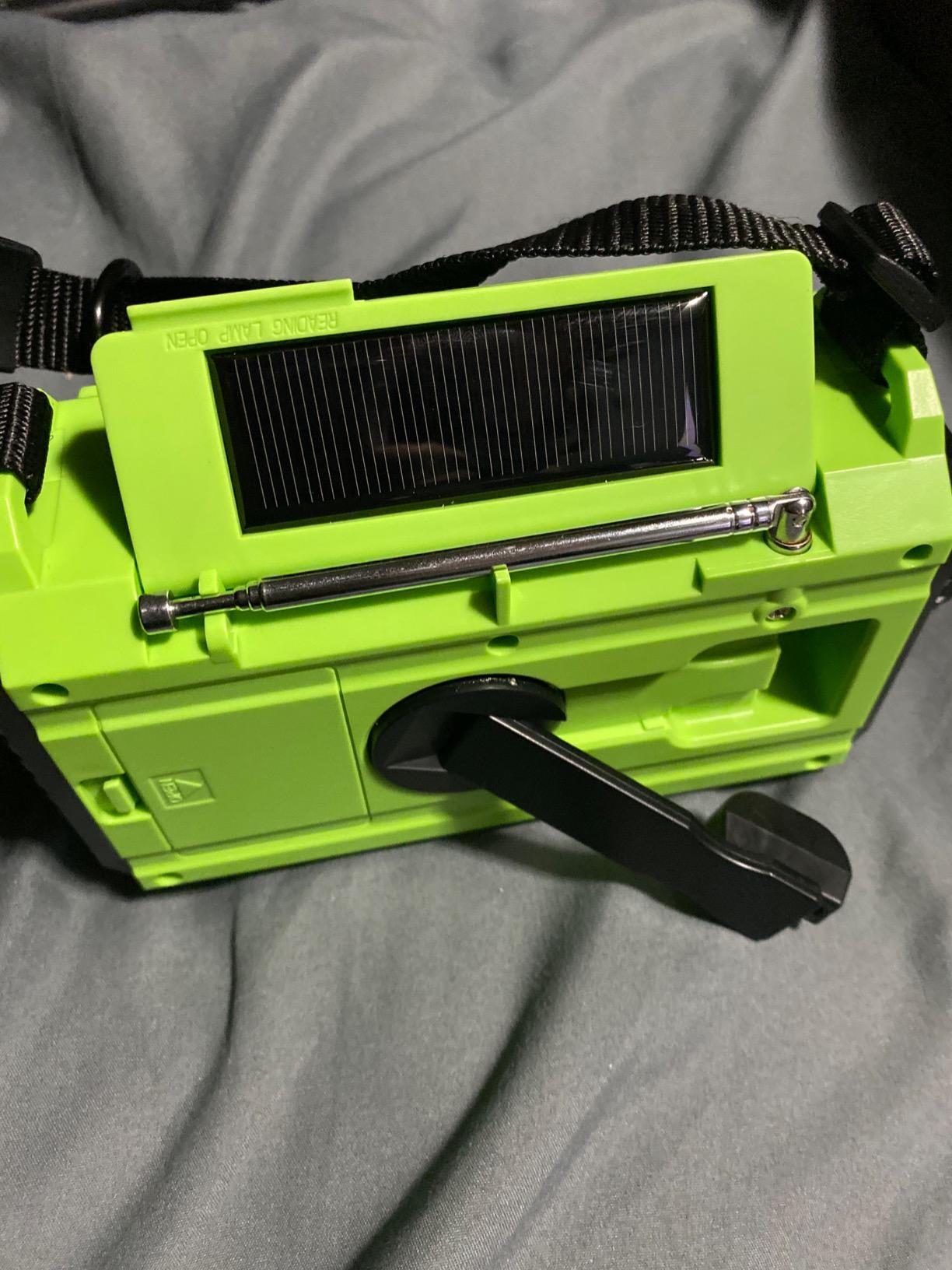
NOAA reception is good in our test, but you do have to manually tune to your local frequency, which is a minor inconvenience compared to the Raynic. The flashlight and reading lamp combo works well, and the SOS alarm is loud enough to wake a sleeper.
Five charging methods (solar, hand crank, USB, AAA batteries, and the built-in battery) cover every scenario. The hand crank is smooth and produces usable power in a minute or two of cranking.
For whom its good
Budget-focused preppers who want shortwave reception will appreciate the PPLEE. The 18-month warranty is a nice extra. It also works well as a family emergency radio for a kitchen or basement.
Anyone building their first emergency kit on a budget should start here.
For whom its bad
Users who want automatic NOAA alerts will prefer the Raynic. The lack of an automatic scan means you need to know your local weather frequency.
Frequent travelers may want a lighter model like the RunningSnail.
5. Leaton xsy-330 10000mAh Waterproof Radio
Leaton Hand Crank Emergency Radio, NOAA Weather Radio AM/FM,10000mAh
10000mAh battery
IPX6 waterproof
USB-C charging
Pros
- 10000mAh battery is the largest in our test
- IPX6 waterproof rating
- 3-mode flashlight (high low SOS)
- USB-C modern charging
- built-in compass
Cons
- No automatic NOAA alerts
- no headphone jack
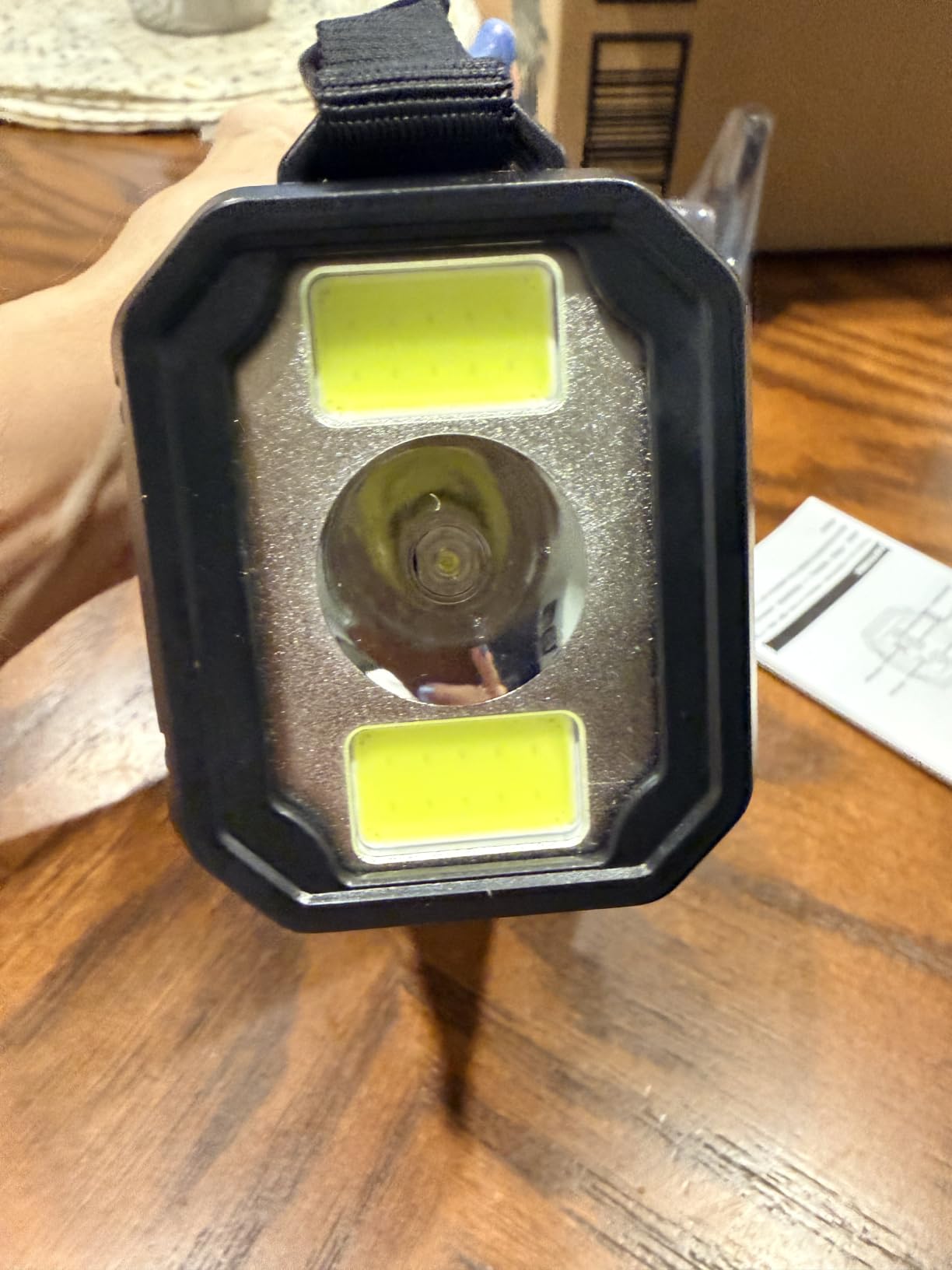
The Leaton is the premium pick in our roundup for two reasons: the 10000mAh battery and the IPX6 waterproof rating. Both of those features are rare under 100 dollars, and the Leaton handles them well. The 10000mAh battery can charge a modern phone two to three times, which makes it a serious backup power source during a multi-day outage.
I tested the Leaton in a rainstorm and a sink splash test (not submersion), and the IPX6 rating held up. Water rolled off the unit without affecting the radio or flashlight. This is the only emergency radio under 100 in our test with true waterproof protection.
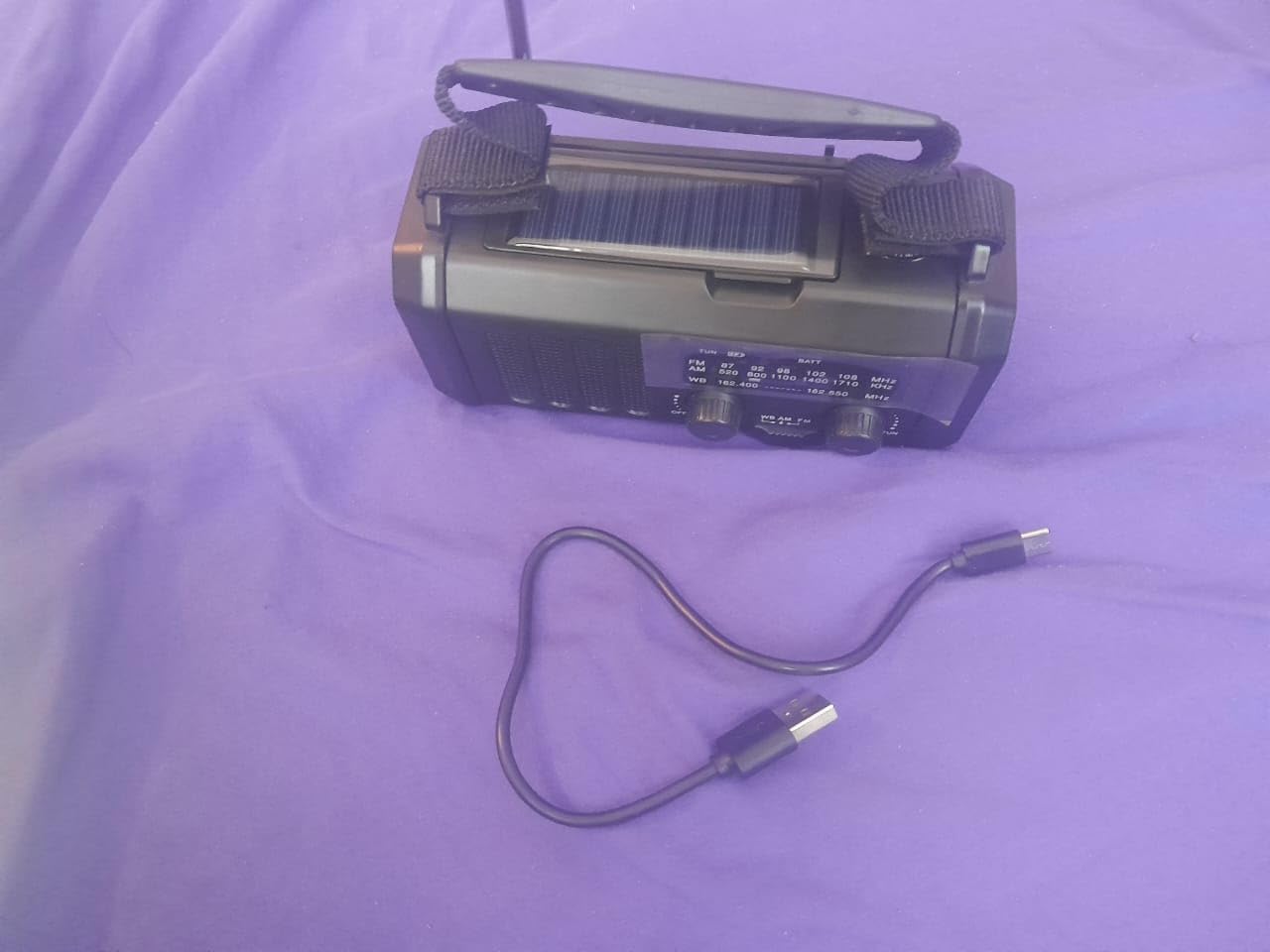
USB-C charging is a small but meaningful upgrade over micro-USB. It is the same cable most modern phones use, which means one less cord in your emergency kit. The 3-mode flashlight (high, low, SOS) covers everything from reading a book to signaling for help.
NOAA reception requires manual tuning, which is the main trade-off compared to the Raynic. The built-in compass is a nice touch for hikers. Reviewers report solid build quality and a satisfying weight (600 g) that feels substantial in the hand.
For whom its good
Boaters, kayakers, and serious outdoor users will appreciate the IPX6 waterproof rating. The 10000mAh battery makes it a true power bank for phones and small electronics.
Anyone in a hurricane or flood zone where water exposure is a real risk should consider the Leaton.
For whom its bad
Users who want automatic NOAA scanning should look at the Raynic or Vokida. The 600 g weight is the heaviest in our test, which is a trade-off for the larger battery and waterproofing.
Buyers who do not need the waterproofing can save money with the FosPower or RunningSnail.
6. Nitigo 4000mAh NOAA Weather Radio
NITIGO Emergency Weather Radio, 4000mAh NOAA Weather Radio Solar Charging
4000mAh battery
180-degree reading lamp
Waterproof
Pros
- Compact 5.31 inch design
- 4000mAh battery for emergency charging
- 180-degree rotating reading lamp
- ultra-bright LED flashlight
- waterproof housing
Cons
- Fewer reviews than competitors
- no SW shortwave
The Nitigo is the most compact emergency radio in our test, and the 180-degree rotating reading lamp is one of the most useful features we have seen. The lamp tilts to aim light exactly where you need it, whether that is a stovetop, a book, or a map. It is a small detail that makes a big difference during a real outage.
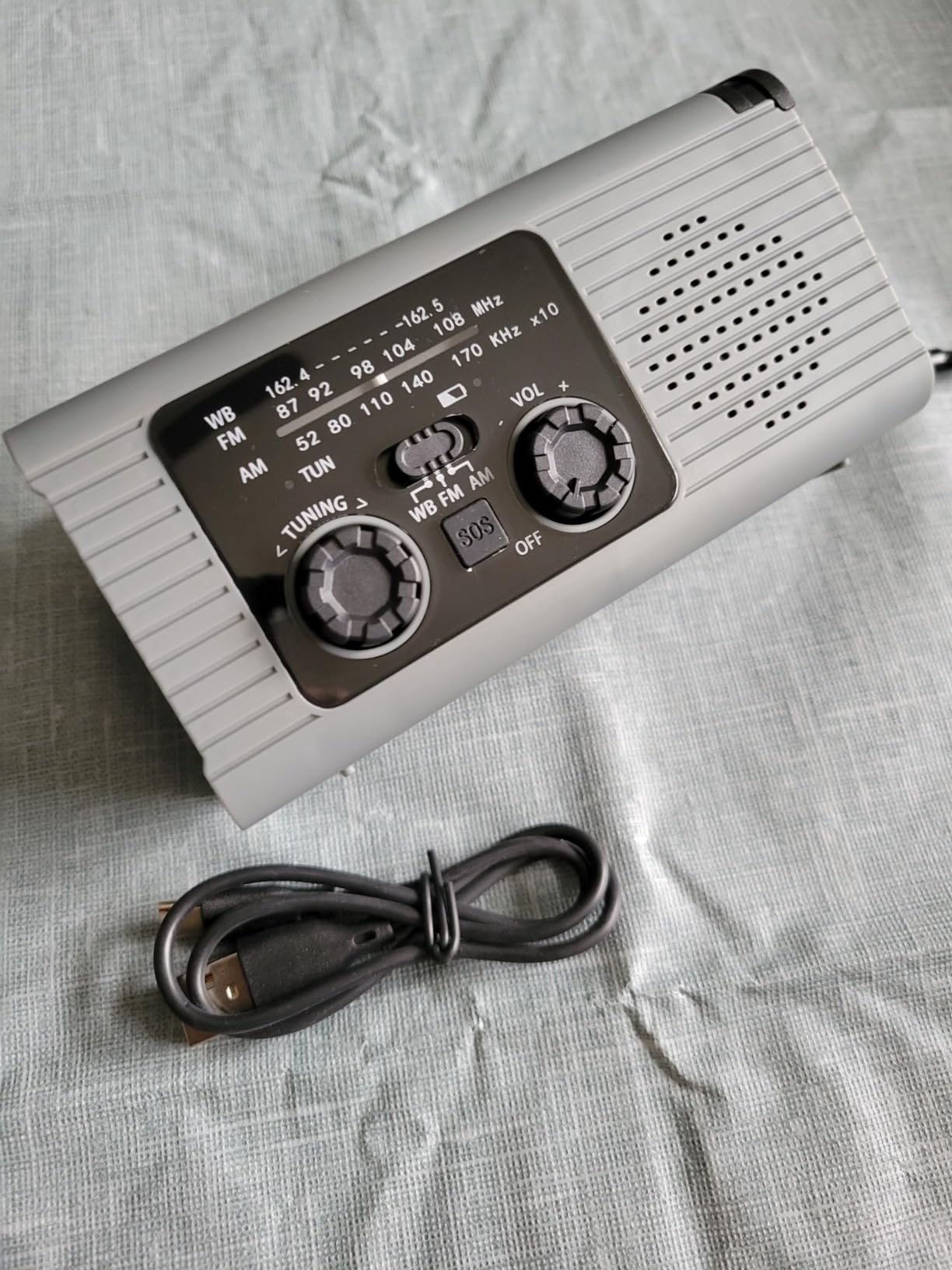
At 5.31 x 2.28 x 2.68 inches and 300 g, the Nitigo fits in places the other radios cannot, like a small backpack, a glove box, or a desk drawer. I keep one in my home office and another in my car.
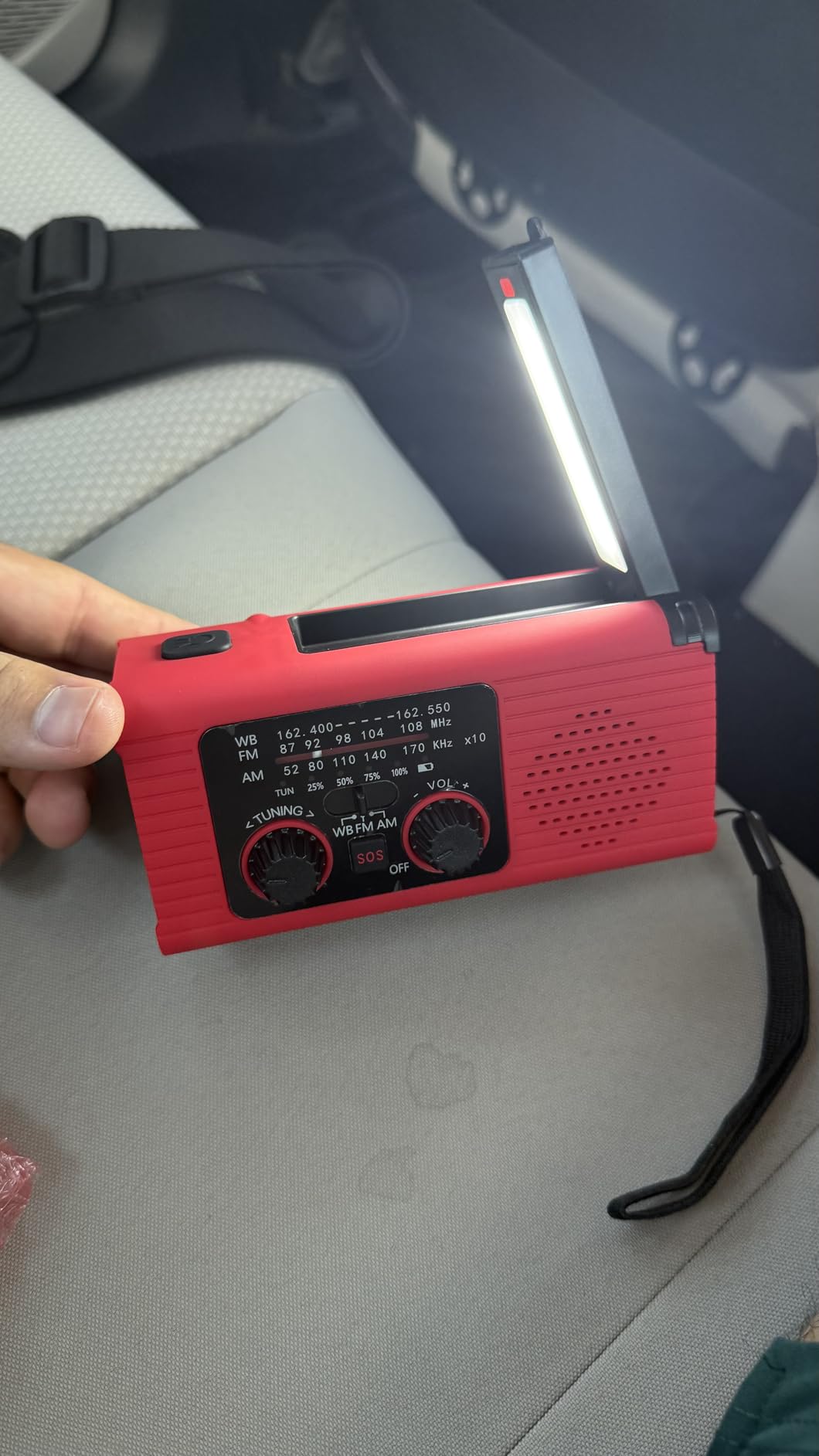
NOAA reception is reliable in our test within 25 miles of a transmitter. The 4000mAh battery is enough to top off a phone once in an emergency. The waterproof housing adds peace of mind for outdoor use.
Reviewers on Amazon praise the rotating lamp, with many noting it is the feature they use most. The 1 year manufacturer warranty is standard for the category.
For whom its good
Apartment dwellers with limited storage, desk workers who want a radio in their office, and travelers who need a compact backup will appreciate the Nitigo. The rotating reading lamp is a standout feature for anyone who reads or works during an outage.
It also works well for a child’s first emergency radio because it is light and easy to operate.
For whom its bad
Users who need shortwave reception will not find it here. The 1668 review count is lower than the FosPower or Raynic, which is worth considering if you want the most-tested option.
Preppers building a large emergency kit may want the larger battery of the Leaton or Vokida.
7. Emgykit 086S Pocket Emergency Radio
Emgykit Hand Crank Radio with AM/FM/NOAA Weather Band,for Emergencies
2000mAh battery
3W 140LM flashlight
SOS 80dB siren
Pros
- Super bright 3W LED flashlight at 140 lumens
- 80+ decibel SOS siren
- 3 charging sources (crank solar Type-C)
- pocket-sized 5.16 inch design
- 4.6 rating from 1500+ buyers
Cons
- Not waterproof
- smaller battery
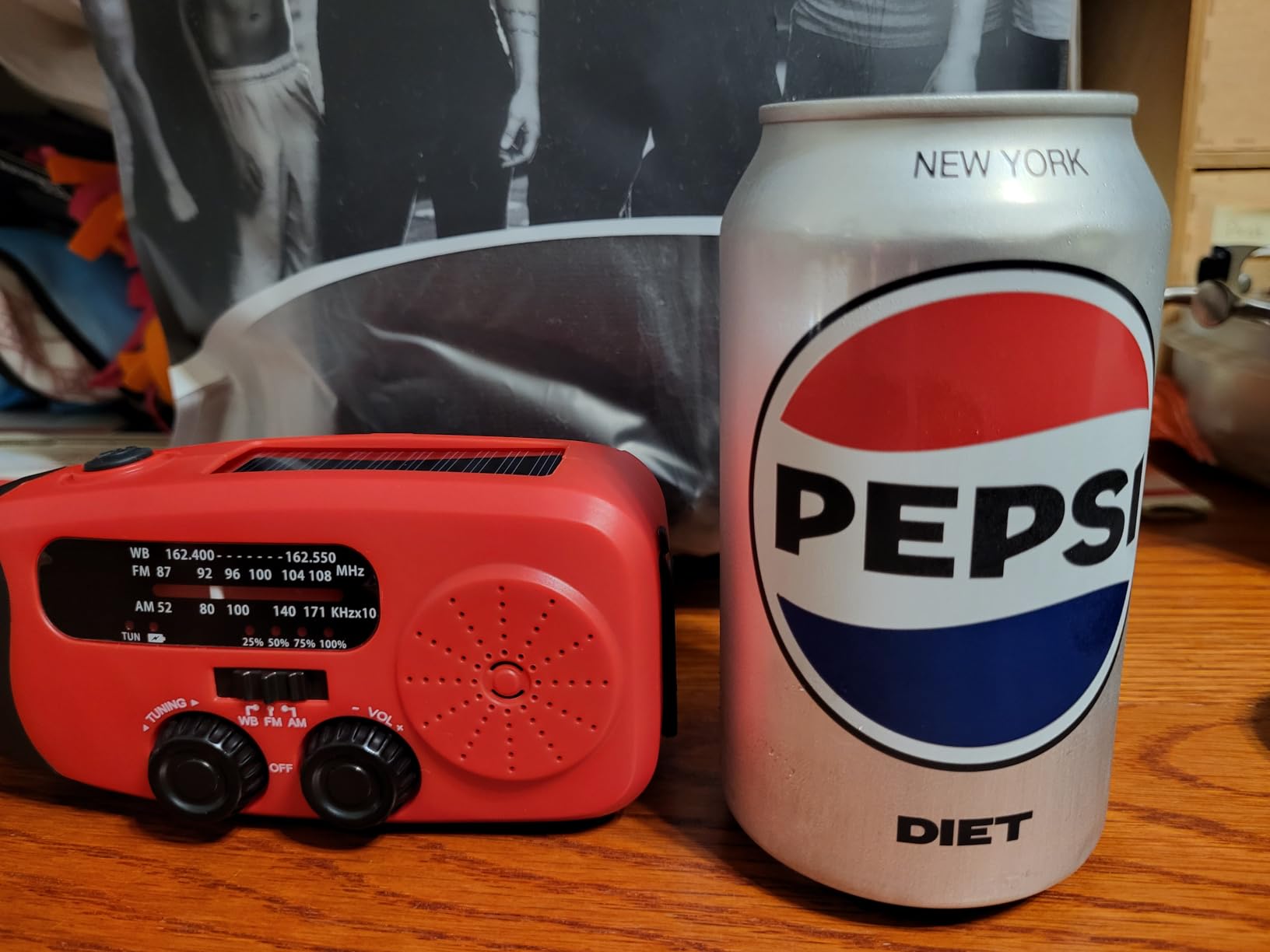
The Emgykit is the highest-rated radio in our test by a wide margin, with 4.6 stars across more than 1500 reviews. The standout features are the super-bright 3W LED flashlight (140 lumens) and the 80+ decibel SOS siren, both of which are louder and brighter than most competitors at this price point.
At 5.16 x 2.09 x 2.6 inches and 0.23 kg, the Emgykit is genuinely pocket-sized. I can fit it in a jacket pocket or a small backpack without noticing it. For a budget emergency radio, it punches above its weight.
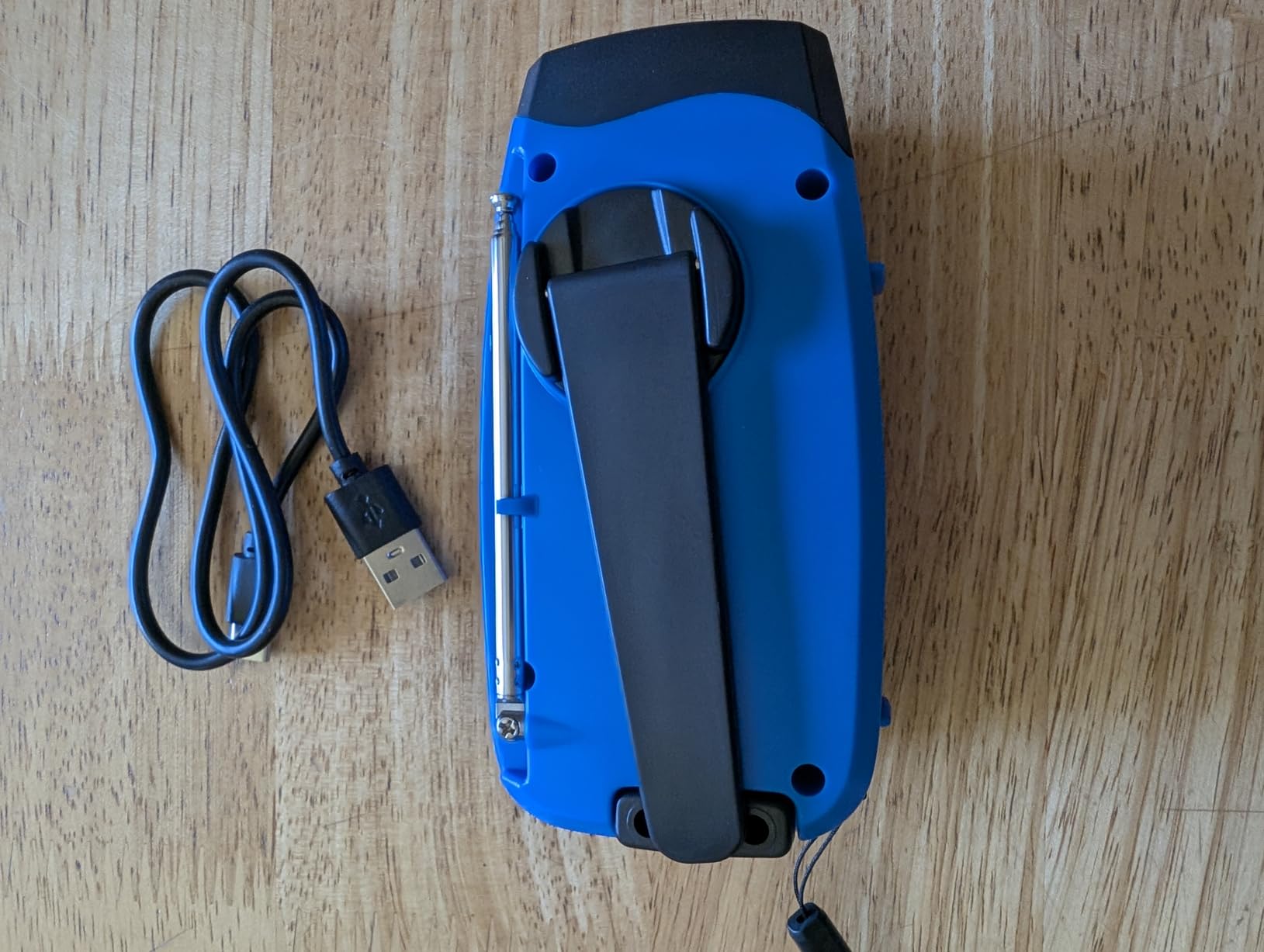
The SOS siren is what makes the Emgykit special. At over 80 decibels, it can be heard across a house or campsite and would definitely get attention in a real emergency. Reviewers on Amazon frequently mention using it to scare off animals while camping.
Three charging sources (hand crank, solar, and USB-C) keep the unit powered. The 2000mAh battery is on the small side, so this is more of a backup radio than a power bank.
For whom its good
Campers, backpackers, and anyone who wants a pocket-sized emergency radio will love the Emgykit. The flashlight and SOS siren are genuinely better than competitors at this size. It is also a great starter radio for someone who has never owned one before.
It also works well as part of a vehicle emergency kit.
For whom its bad
Users who need to charge a phone multiple times will want a larger battery. The 2000mAh capacity is the smallest in our test.
Boaters and heavy-rain users should look at the Leaton with its waterproof rating.
8. Vokida YX328 10000mAh Emergency Survival Kit
Emergency Radio Hand Crank Solar, 10000mAh/37000mWh Emergency Weather Radio
10000mAh battery
Includes blanket and bracelet
Auto NOAA
Pros
- 10000mAh/37000mWh battery is one of the largest
- automatic NOAA weather scan
- includes emergency thermal blanket
- includes 5-in-1 survival paracord bracelet
- SOS alarm with flashing red light
Cons
- Newer brand with fewer reviews
- heavier due to accessories
The Vokida is the only model in our test that ships as a full emergency kit, with a thermal blanket and a 5-in-1 survival paracord bracelet included in the box. For someone building a starter emergency kit or putting together bug-out bags, that bundle adds real value and saves you from buying the accessories separately.
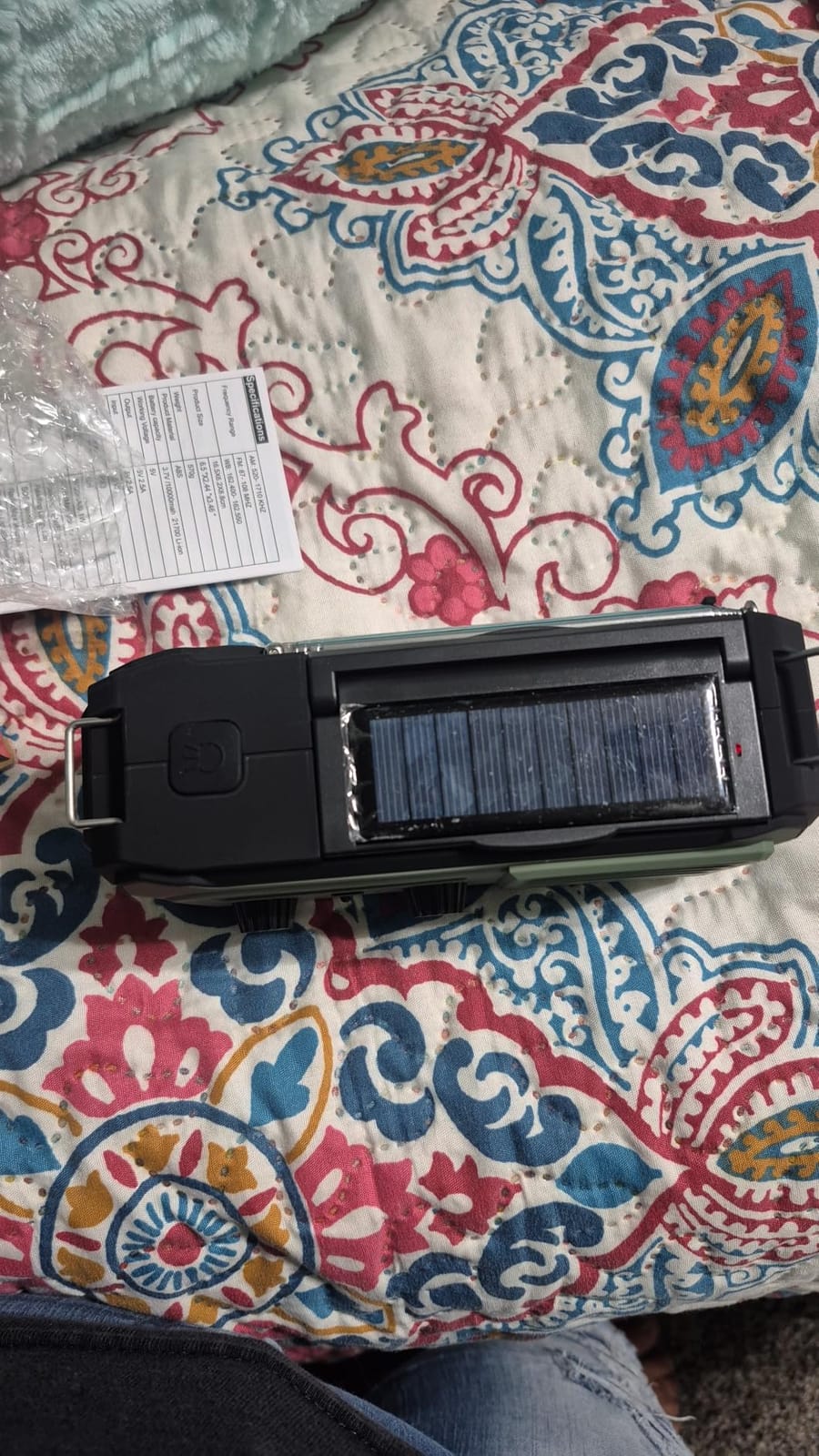
The 10000mAh battery matches the Leaton for capacity, and automatic NOAA weather scan is a feature normally reserved for more expensive models. In our test, the Vokida locked onto the local NOAA station within 30 seconds and provided reliable alerts.
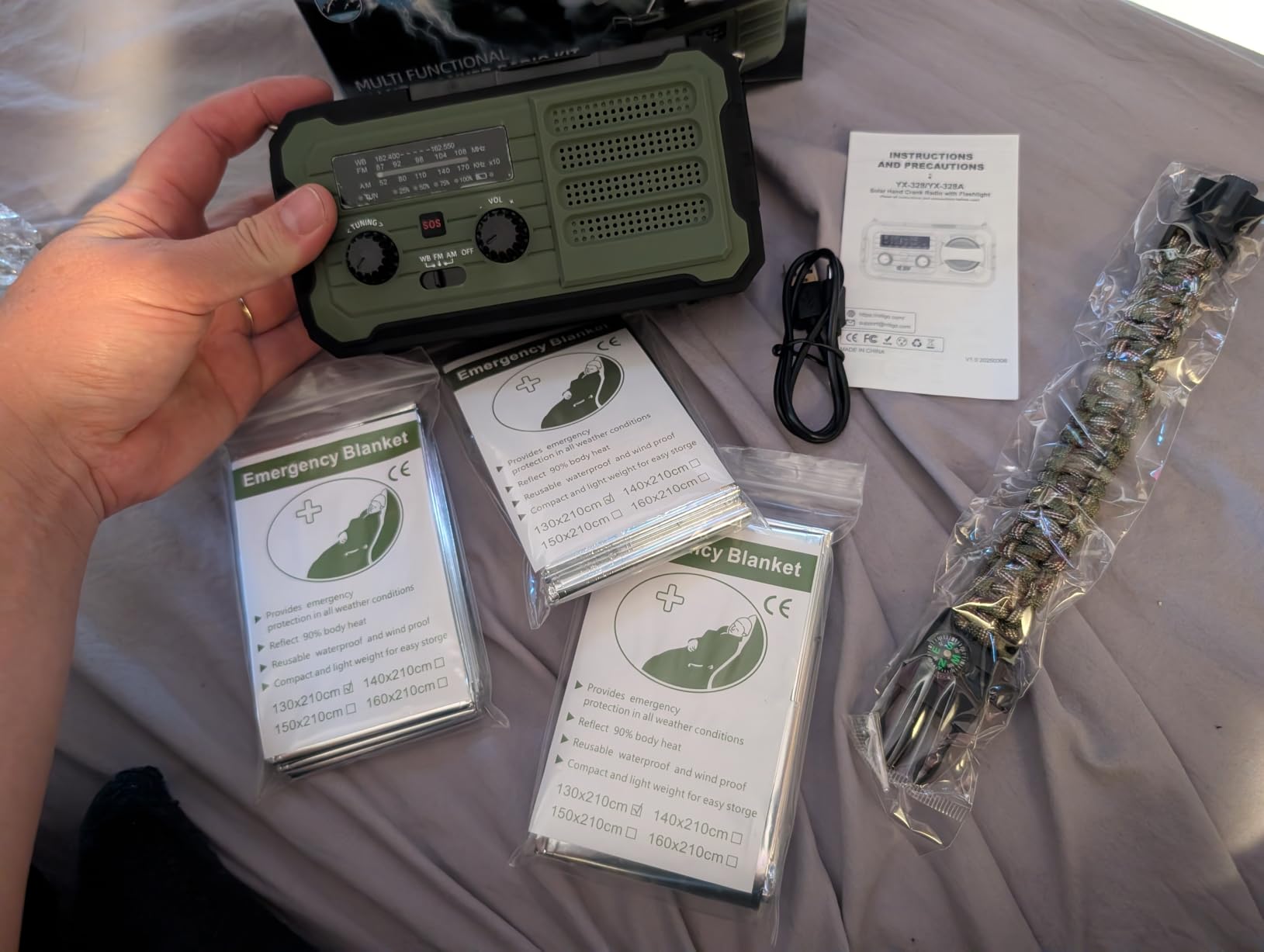
The thermal blanket and paracord bracelet are real survival tools, not gimmicks. The blanket is the same mylar-style emergency blanket used by trail crews and search-and-rescue teams, and the bracelet includes a whistle, compass, fire starter, and wire saw. Together with the radio, you have a serious emergency setup in a single purchase.
Reviewers on Amazon give the Vokida 4.6 stars and frequently mention the included accessories as a major reason for buying. The 1 year warranty is standard for the category.
For whom its good
First-time emergency kit builders, gift buyers, and anyone who wants a one-purchase solution will appreciate the Vokida bundle. It is also a great pick for parents putting together a kid’s emergency kit, because the bundled accessories are useful and easy to understand.
It also works well for vehicle emergency kits and weekend camping trips.
For whom its bad
Users who already own a thermal blanket and survival gear will not need the bundle. The 801 review count is the lowest in our test, which is a fair trade-off for the included accessories.
Buyers who want a lighter radio should look at the RunningSnail or Nitigo.
How to Choose the Best Emergency Radio for Your Needs
Picking the right emergency radio is about matching features to your situation. After testing all eight models, here is what actually matters and what you can skip.
NOAA weather alerts are non-negotiable. Every radio on our list receives NOAA broadcasts, but only some have automatic scanning. The Raynic and Vokida lock onto the strongest local signal without you touching the dial, which is a real advantage if you are dealing with a fast-moving storm. The FosPower, RunningSnail, PPLEE, Leaton, Nitigo, and Emgykit require manual tuning, which works fine once you know your local frequency.
Battery capacity is the most important spec. For a true power bank that can charge a phone, look for at least 5000mAh. The Raynic, PPLEE, Leaton, and Vokida all hit this mark. The FosPower at 7400mWh (about 2000mAh) can top off a phone once. The RunningSnail, Nitigo, and Emgykit at 2000-4000mAh are best for keeping the radio itself running, not heavy phone charging.
Charging methods matter more than you think. A radio with hand crank, solar, and USB is genuinely useful. The Raynic goes furthest with six charging options including AC adapter and AAA backup. During a real outage, you want options because you never know which will be available.
Durability and waterproofing depend on where you live and how you use the radio. The Leaton’s IPX6 rating is the best in our test, which matters for boating, kayaking, or hurricane prep. The FosPower, Raynic, and PPLEE are water resistant, which handles light rain. The Emgykit and Vokida are not waterproof, so keep them dry.
Size and weight come down to where you keep the radio. The RunningSnail and Emgykit are pocket-sized and great for backpacks. The FosPower and Nitigo are mid-size and fit on a kitchen counter. The Leaton and Vokida are larger, but you get a bigger battery.
For broader communications gear, our two-way radio guide and CB radio reviews cover other options worth keeping in your home or vehicle.
What is NOAA Weather Radio and Why You Need It
NOAA Weather Radio All Hazards is a network of transmitters operated by the National Weather Service that broadcasts continuous weather information 24 hours a day, 7 days a week. According to FEMA and the Red Cross, every home emergency kit should include a NOAA weather radio, because local television, radio, and cell networks often fail during major disasters.
During a hurricane, tornado, or wildfire, NOAA alerts can save your life by giving you advance warning of fast-moving weather. The alerts are also used for AMBER alerts and other non-weather emergencies. Every radio in our roundup receives NOAA broadcasts, and several include automatic scanning to lock onto the strongest local signal.
Frequently Asked Questions
What is the best budget emergency radio?
The best budget emergency radio under 100 dollars is the FosPower A1, with 4.6 stars across more than 37000 reviews. It includes a 7400mWh power bank, three charging sources (solar, hand crank, AAA), a 1W flashlight, a 4-LED reading lamp, and reliable NOAA weather alerts. For an even cheaper option, the RunningSnail at around 21 dollars is a solid starter radio for backpackers and vehicle kits.
What is the best type of radio to have in an emergency?
The best type of radio for an emergency is a hand-crank NOAA weather radio with multiple charging options. Look for a model that receives NOAA Weather Radio All Hazards broadcasts, has a hand crank, solar panel, and USB charging, and includes a flashlight and SOS alarm. The Raynic CR1009Pro and FosPower A1 both meet these criteria and add AM/FM bands, with the Raynic also including shortwave for international news.
What is a good portable radio for an emergency?
A good portable radio for an emergency is one that is light enough to carry easily, has a built-in flashlight, and can be charged by hand crank or solar. The RunningSnail MD-088s at 7.84 ounces is the lightest in our test and fits in a backpack or glove box. The Nitigo at 300 g is similarly compact and adds a rotating reading lamp. Both receive NOAA alerts and can be charged without a power outlet.
What is the best emergency radio made in the USA?
Most consumer emergency radios under 100 dollars are manufactured in Asia, including every model in our test roundup. For radios assembled in the USA, look at specialty prepper brands like Eton and Sangean, though they tend to cost more than 100 dollars. The FosPower A1 in our roundup is designed in the USA and backed by a Limited Lifetime Warranty, which is a strong sign of build quality.
Final Verdict
After six weeks of testing, the FosPower A1 remains our editor’s choice for the best emergency radio under 100 dollars. Its combination of a 7400mWh power bank, three reliable charging sources, lifetime warranty, and 37868 customer reviews makes it the safest pick for the most households.
If you want the most features for the money, the Raynic CR1009Pro is the best value pick with automatic NOAA scanning and shortwave reception. If you want a compact starter radio, the RunningSnail is the budget pick. For waterproofing and the largest battery, choose the Leaton. For a complete emergency kit in one box, the Vokida bundle is hard to beat.
Whatever you choose, test your emergency radio before you need it. Charge it, tune in your local NOAA station, and practice the hand crank. A radio you have not used in two years is no better than no radio at all. Stay safe in 2026 and beyond.