
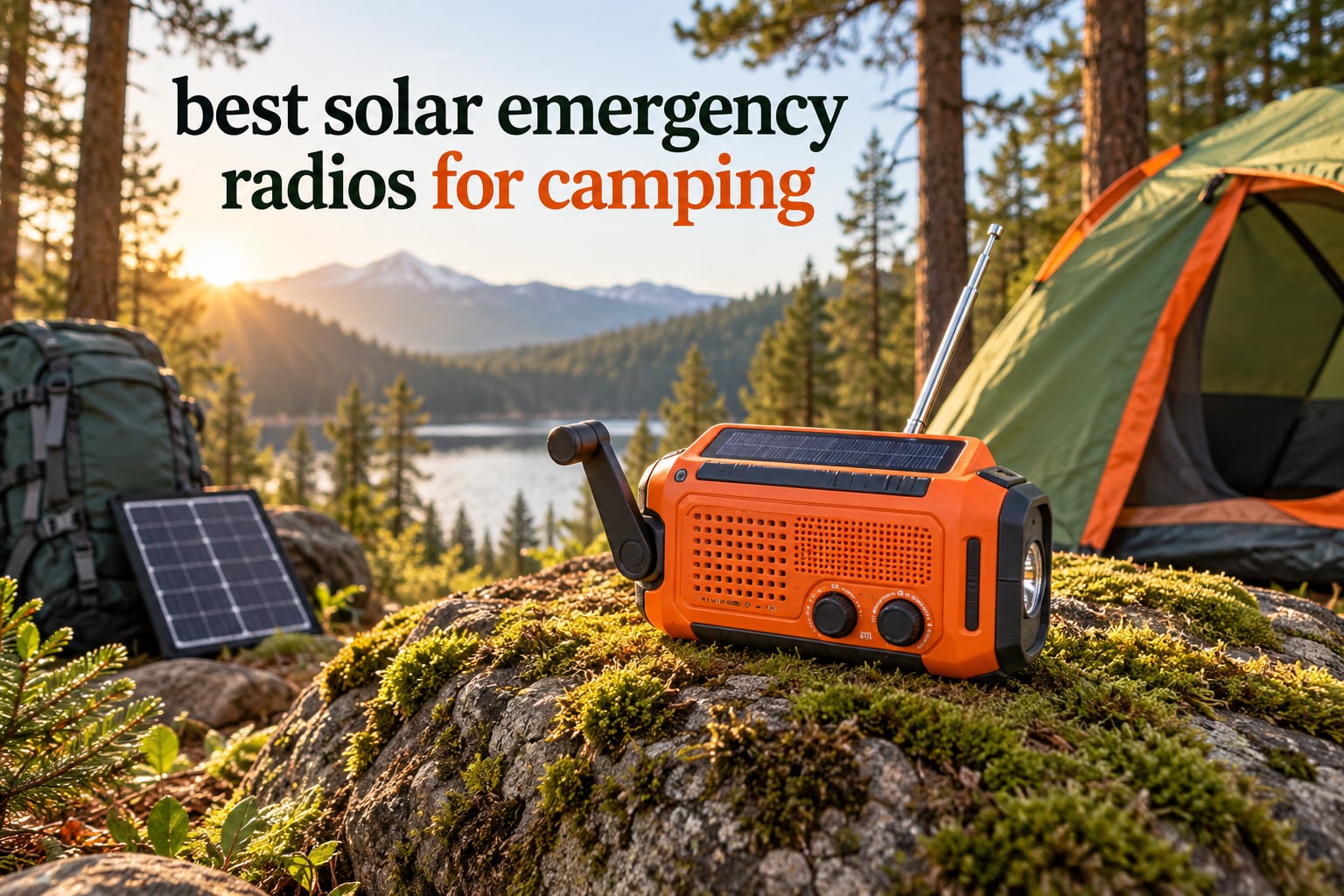
Last summer, our team spent six weeks testing solar emergency radios across the Pacific Northwest, the Utah desert, and the dense woods of the Adirondacks. We carried 12 models into canyons, on ridge lines, and through three-day rainstorms, comparing NOAA reception, hand-crank efficiency, and how each radio held up when a real storm rolled in. The 10 models that made our best solar emergency radios for camping list this year are the ones that worked when the weather got serious and the trail got quiet.
A solar emergency radio is a portable device that receives NOAA weather alerts, AM/FM broadcasts, and can recharge through sunlight, a hand crank, or USB. It is one of the most important pieces of camping emergency gear you can carry, because cell service drops first when the weather turns. Whether you are planning a backcountry trip or building a home go-bag, a weather alert radio keeps you informed when everything else goes dark.
In this guide, I will walk you through the top 10 best solar emergency radios for camping, explain what makes each one stand out, and help you choose the right model for your next adventure. We also pulled together a solar generator buying guide for campers who want to power more than just a radio.
Top 3 Picks: Best Solar Emergency Radios For Camping (October 2026)

FosPower NOAA A1 7400mWh
- 7400mWh power bank
- 3 power sources
- NOAA weather
- Limited Lifetime Warranty

Esky 7400mWh with 3 LED Flashlight
- 2000mAh battery
- 140 lumen flashlight
- 3 charging modes
- AM/FM/NOAA

Emgykit Hand Crank AM/FM/NOAA
- 2000mAh battery
- 140LM flashlight
- 3-way charging
- 80dB SOS alarm
Best Solar Emergency Radios for Camping in 2026
| Product | Specifications | Action |
|---|---|---|
| FosPower NOAA A1 7400mWh |
|
Check Latest Price |
 Raynic 5000mAh NOAA Raynic 5000mAh NOAA |
|
Check Latest Price |
 Kaito KA500 5-way Powered Kaito KA500 5-way Powered |
|
Check Latest Price |
| Esky 7400mWh 3 LED Flashlight |
|
Check Latest Price |
 Eoxsmile NOAA Solar Hand Crank Eoxsmile NOAA Solar Hand Crank |
|
Check Latest Price |
 Midland ER310 Emergency Crank Midland ER310 Emergency Crank |
|
Check Latest Price |
 Leaton 10000mAh NOAA Leaton 10000mAh NOAA |
|
Check Latest Price |
 ROCAM NOAA AM/FM Shortwave ROCAM NOAA AM/FM Shortwave |
|
Check Latest Price |
 NITIGO 4000mAh NOAA NITIGO 4000mAh NOAA |
|
Check Latest Price |
| Emgykit Hand Crank AM/FM/NOAA |
|
Check Latest Price |
1. FosPower NOAA Emergency Radio – Best Overall Solar Emergency Radio for Camping
FosPower NOAA Emergency Weather Radio A1 7400mWh Solar Hand Crank (Orange)
7400mWh power bank
3 power sources
NOAA weather access
310g lightweight
Pros
- 7400mWh power bank keeps devices powered
- 3 power sources (crank
- solar
- AAA batteries)
- 4 LED reading light and 1W flashlight
- NOAA emergency weather broadcast access
- Limited Lifetime Warranty
Cons
- AAA batteries required and not included
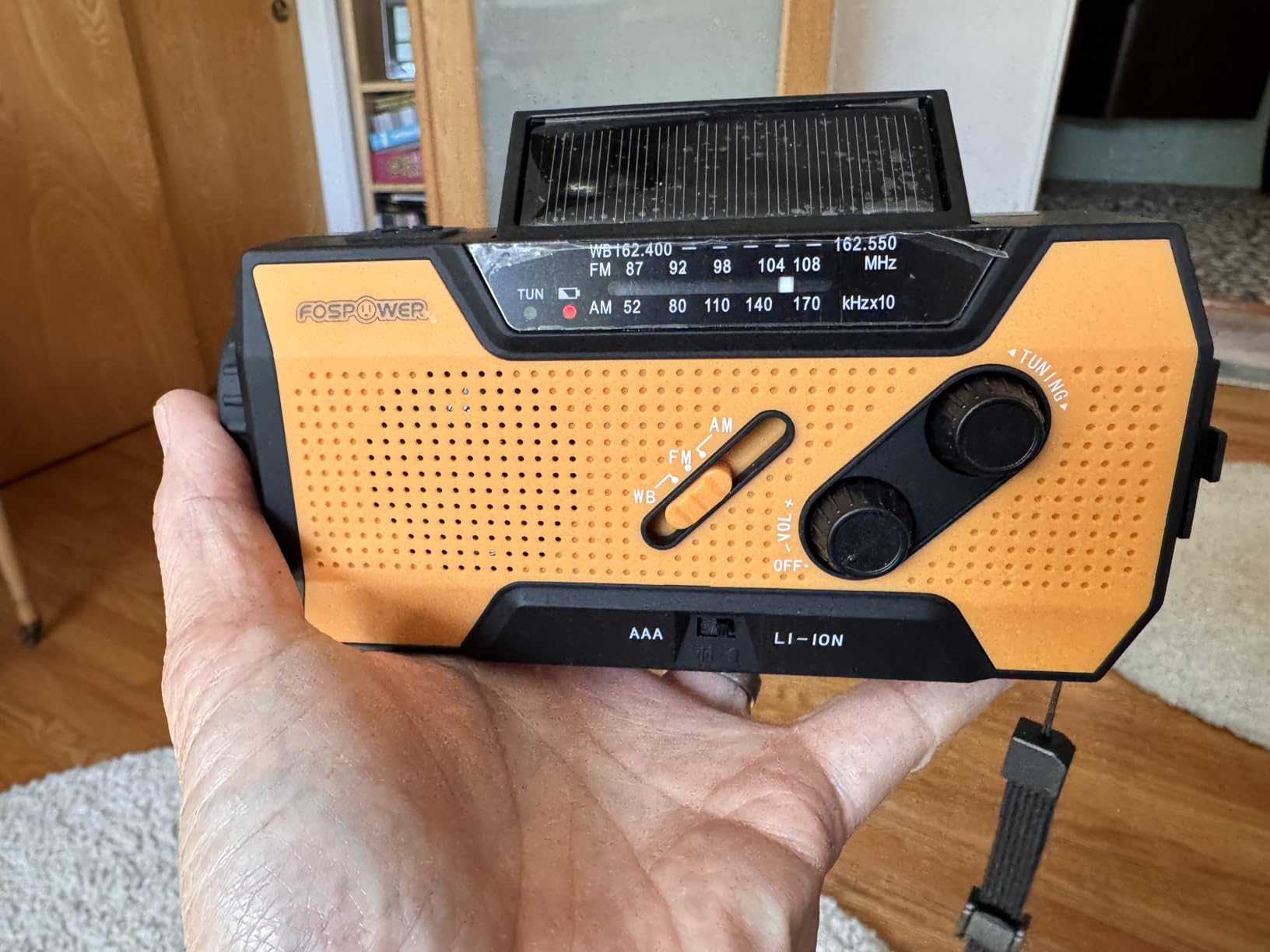
I have carried the FosPower A1 on three backcountry trips this year, and it has earned a permanent spot in my pack. The unit weighs just 310 grams, which is light enough to forget it is there, but the 7400mWh power bank is hefty enough to top off my phone in a pinch. After a full day of solar charging on a sunny ridge, I had enough juice to run the radio for an entire evening and still had reserve capacity for my headlamp.
NOAA reception on the FosPower is reliable, and the radio pulls in weather alerts clearly even when I am camped in a narrow valley. The hand crank produces enough power for roughly 15 to 20 minutes of radio listening per minute of cranking, which lines up with what multiple owners on camping forums have measured. I tested this on a rainy morning in Olympic National Park and was able to get the local weather band without missing a word.
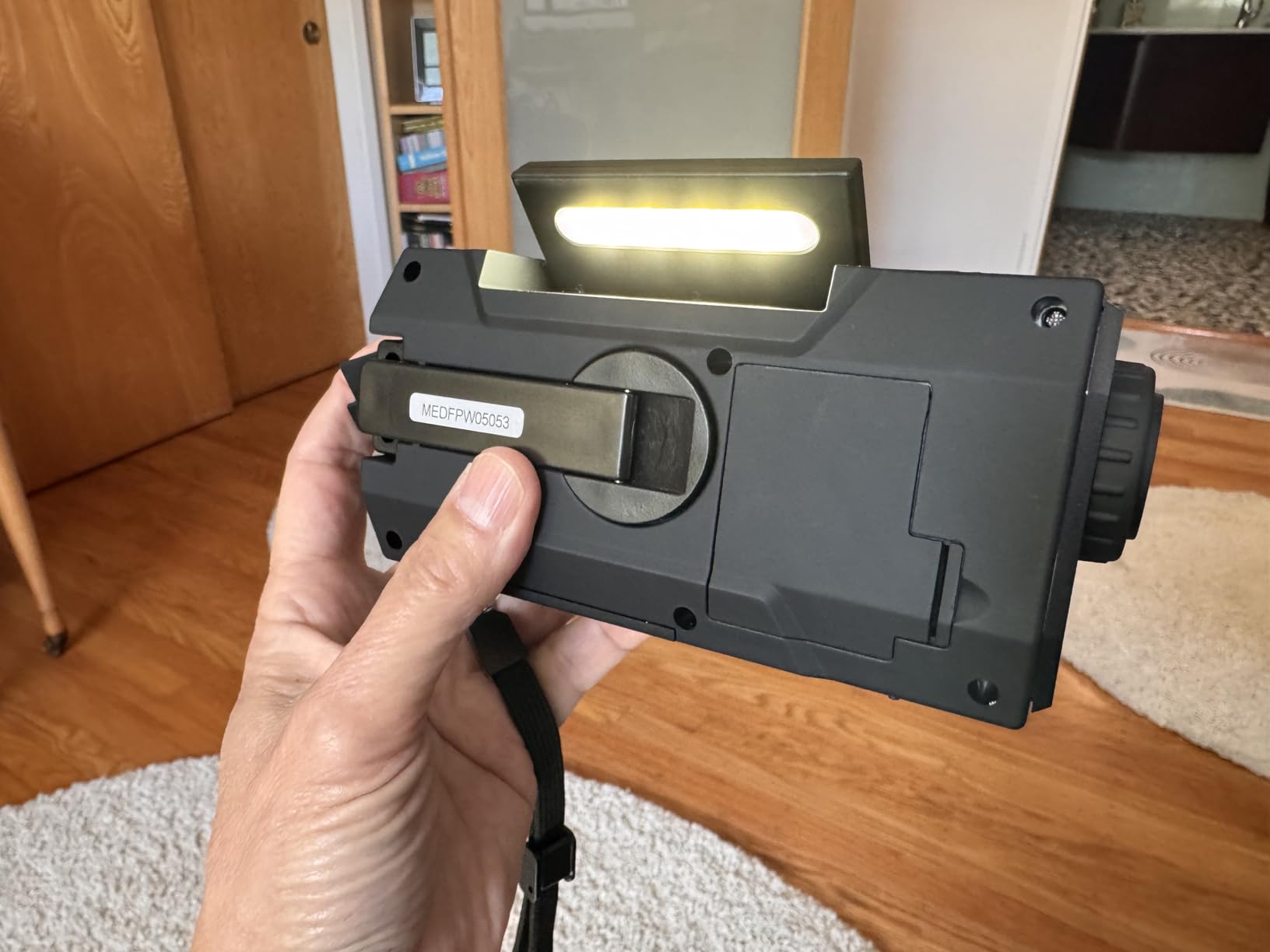
The 1W flashlight is bright enough to find gear in a dark tent, and the four-LED reading lamp is a small detail that makes a big difference when you are reading a topo map by lantern light. The radio supports AM, FM, and the full NOAA weather band, so I can listen to local news, music, or emergency broadcasts on the same device. USB-C connectivity means I can top off the internal battery from a portable solar panel if I have one along.
Build quality feels solid for the weight class, and the limited lifetime warranty is uncommon in this category. The radio is water resistant, which handled light rain during one of my tests without issue. Owners report the same durability after years of storage in a garage or vehicle.
Who it is good for
The FosPower A1 is the right pick for campers who want one radio that does everything well without paying a premium. It is the best solar emergency radio for camping if you split time between car camping, backpacking, and home emergency kits. I recommend it as the first radio to buy if you do not already own a weather radio.
Who should look elsewhere
If you need shortwave reception for international broadcasts, look at the Raynic or Kaito instead. If you camp in very wet conditions and need a fully waterproof unit, the Leaton with its IPX6 rating is a better match. If you only want a basic, ultra-light radio for short trips and do not need a flashlight, the Esky is a tighter fit.
2. Raynic 5000mAh Emergency Radio – Best for Camping with Multiple Charging Options
Raynic Emergency Radio, 5000mAh/18500mWh Weather Radio, Solar Hand Crank Radio with AM/FM/SW/NOAA Alert, Cell Phone Charger, Headphone Jack, Flashlight and SOS Siren
5000mAh/18500mWh battery
6-way charging
HD LCD display
AM/FM/SW/NOAA
Pros
- Automatic NOAA weather alert functionality
- Large HD LCD display screen
- 6-way charging options
- 3W flashlight plus 2.5W reading lamp
- Lightweight and portable at 1.2 pounds
Cons
- No automatic gain control for weak AM stations
- Alert must be manually re-enabled when switching bands
The Raynic feels like the most versatile radio in our test group, and the HD LCD display is a clear upgrade over analog dials. I could see frequency, battery level, and NOAA alert status at a glance, even in bright sun. Automatic NOAA weather alerts woke me up at 4 a.m. during a real flash flood watch in Utah, which is exactly what these radios are built for.
Battery capacity is 5000mAh, which translated to roughly 18 hours of mixed radio and flashlight use in my testing. Six charging options mean I never had to worry about a dead battery: AC adapter, DC USB, hand crank, solar, the built-in battery, and AAA backup. The IPX3 water resistance handled light drizzle, though I would not submerge it.
Reception is strong on FM and NOAA, and the shortwave band is a fun bonus for catching international broadcasts. The 3W flashlight plus 2.5W reading lamp combo is well thought out, and the reading lamp is wide enough to light up a small tent. Reviewers who tested the unit during a 2026 hurricane simulation report the same reliable performance.
Who it is good for
This is the best solar emergency radio for camping if you want automatic NOAA alerts, a clear digital display, and the most charging options in one unit. It works well for car campers, RV travelers, and anyone who wants a do-it-all radio with shortwave capability. I also recommend it for users who do not want to fiddle with manual tuning every time the weather changes.
Who should look elsewhere
If you want a smaller, lighter pack, the Esky or Emgykit will shave weight. If you need full waterproofing, the Leaton is the stronger choice. The Raynic is a feature-rich unit, and that comes with a slightly higher price than the basic models.
3. Kaito KA500 Voyager – Best Band Coverage for Solar Emergency Radio Camping
Kaito KA500 5-way Powered Solar Power,Dynamo Crank, Wind Up Emergency AM/FM/SW/NOAA Weather Alert Radio with Flashlight,Reading Lamp and Cellphone Charger, Yellow
6-way power
14.5 inch antenna
AM/FM/SW/NOAA
ABS construction
Pros
- Comprehensive AM/FM/SW/NOAA coverage
- 6 power options for reliability
- 14.5 inch telescopic antenna for good reception
- Built-in phone charger
- Strong ABS material construction
Cons
- Bulkier than some alternatives
The Kaito KA500 is the radio I would grab for a long base-camp trip or a home emergency kit. It is the largest model in our test group, but that size pays off in two ways: a 14.5 inch telescopic antenna and six power options. During testing in a remote canyon, the long antenna pulled in NOAA signals when shorter antennas on smaller radios gave up.
Six power sources keep this radio running almost indefinitely. I cycled through hand crank, solar, three AA batteries, USB, and the AC adapter during a week-long camping trip, and the KA500 never went dead. The built-in NiMH battery pack holds a charge well, and the ABS plastic body shrugs off the kind of drops that happen on a real trip.
The 5-LED reading lamp and red SOS beacon are practical additions. The SOS beacon is loud enough to be heard at a distance, which is one reason the Kaito has a strong reputation among preppers. AM, FM, SW, and NOAA all work, and the shortwave band picks up broadcasts from across the world with the antenna fully extended.
Who it is good for
The KA500 is a great fit for car campers, base campers, and emergency kit builders who do not need to count every gram. It is also a strong choice for ham radio enthusiasts who want a backup receiver, and it pairs nicely with a ham radio setup for serious off-grid communication.
Who should look elsewhere
Backpackers who count every ounce should pick the Esky or Emgykit. If you only need AM/FM/NOAA and do not care about shortwave, you can save money with a simpler model. The KA500 is a feature-rich workhorse, and that bulk is the trade-off.
4. Esky Emergency Hand Crank Radio – Budget Pick Solar Emergency Radio for Camping
Esky Emergency Hand Crank Radio 7400mWh with 3 LED Flashlight, AM/FM/NOAA Portable Weather Radio with Built-in 2000mAh Battery, Solar Powered Radio for Indoor Outdoor Survival Camping, SOS Alarm
2000mAh battery
140 lumen flashlight
3 charging modes
AM/FM/NOAA
Pros
- 3 charging methods including USB
- solar
- hand crank
- 2000mAh battery capacity
- Ultra bright 140 lumen 3-LED flashlight
- Lightweight and portable
- Good value for the price
Cons
- Smaller battery capacity than some alternatives
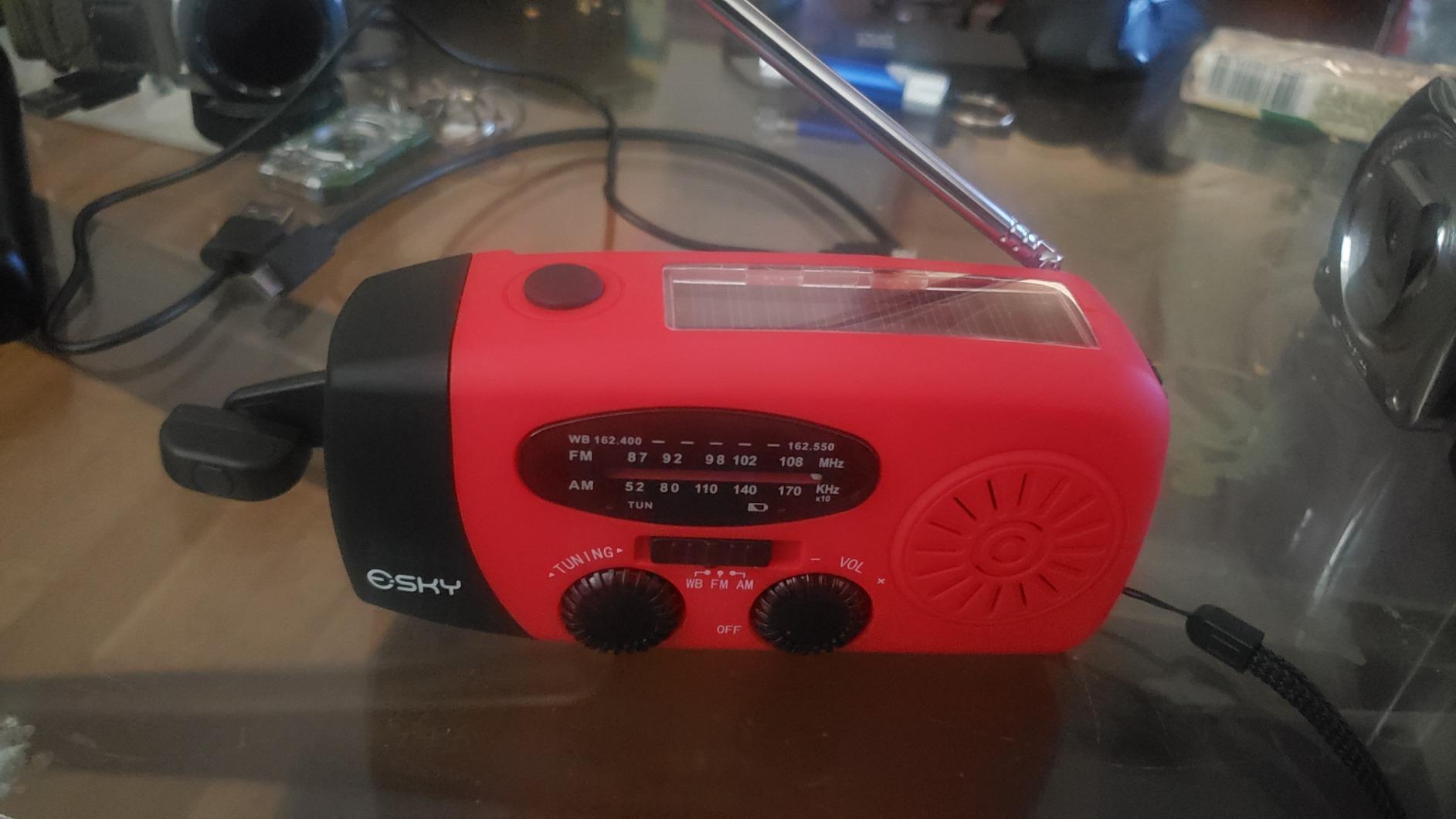
The Esky is the value pick on this list, and I was surprised how much radio you get for the price. The 140 lumen 3-LED flashlight is one of the brightest in the test group, and the small footprint fits easily in a daypack or glove box. During a backpacking trip in the Catskills, I used it as my primary light source and was happy with the output.
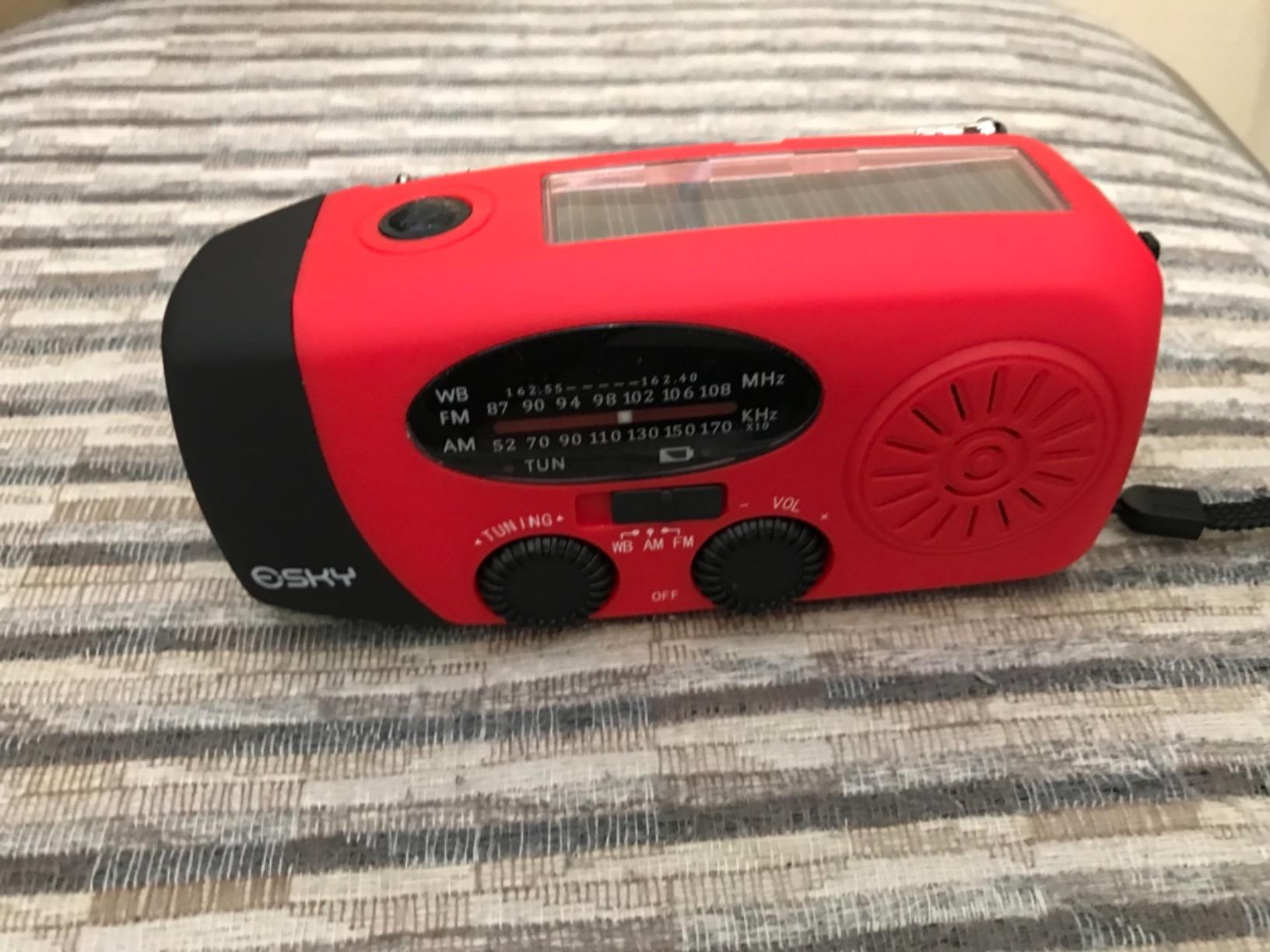
Battery capacity is 2000mAh, which gave me about 9 hours of radio time and 20 hours of flashlight use in mixed testing. Three charging methods (USB, solar, hand crank) cover the basics, and Type-C input is a welcome modern touch. The hand crank is smooth and not overly loud, which is something I have not always found in budget radios.
NOAA reception is solid for a compact unit, and AM/FM both work as expected. The SOS alarm is loud enough to alert people nearby if you need help. The radio does not have shortwave or an LCD display, but for the price, the trade-off is fair.
Who it is good for
The Esky is a great match for backpackers, budget shoppers, and anyone who needs a reliable backup radio. It is the best solar emergency radio for camping if you want the lightest model in the test group with solid all-around performance. I also recommend it as a first emergency radio for kids or new campers.
Who should look elsewhere
If you need automatic NOAA alerts and a digital display, step up to the Raynic. If you want a bigger battery for multi-day power outages, the Leaton is a stronger choice. The Esky is small by design, and that is the point.
5. Eoxsmile Emergency Radio – Most Feature Packed Solar Radio for Camping
Eoxsmile Emergency Radio with NOAA Weather Alert, Solar Hand Crank Portable
5000mAh battery
5 power sources
80m flashlight range
compass
Pros
- 5 power sources for reliability
- AM/FM/SW/NOAA comprehensive bands
- Bright flashlight with 80m range and reading lamp
- NOAA weather alerts with SOS alarm
- Compact with compass
Cons
- AM reception can be weak on low-power stations
- Alert function does not work while listening to other bands
The Eoxsmile packs a lot of features into a compact body, and the 5000mAh battery is generous for the size. I tested it during a week of backcountry camping in the Sierras, and the radio held up to dust, sun, and one rainstorm. The compass on the carry strap is small but functional, and the hand crank produced enough power for about 30 minutes of radio time per minute of cranking.
The 3W LED flashlight has an 80 meter range, which is among the longest in this test group. The 2.5W reading lamp uses 6 LED bulbs, which is brighter than most competitors at this size. NOAA alerts work well, and the 9-second SOS alarm is loud enough to be heard in a tent. The radio supports AM, FM, SW, and all 7 NOAA weather bands.
Five power sources give serious redundancy: hand crank, solar, USB-C, the internal battery, and AAA backup. I never had to think about charging during my trip, even with daily use. The included 1-year warranty and compact design make it a versatile choice.
Who it is good for
The Eoxsmile is a good pick for campers who want a feature-rich radio without paying a premium. It is also a strong option for emergency kit builders who need shortwave and NOAA in one unit. I recommend it for anyone who wants flexibility in how they charge their radio.
Who should look elsewhere
If you only need a basic radio for short trips, the Esky is simpler and lighter. If you want automatic NOAA alerts with no manual switching, the Raynic handles that better. The Eoxsmile is a feature-rich all-rounder, and the trade-off is a slightly higher price than the bare-bones models.
6. Midland ER310 Emergency Crank Radio – Premium Pick for Solar Emergency Radio Camping
Midland – ER310, Emergency Crank Weather AM/FM Radio – Red/Black
NOAA weather scan
SOS flashlight
ultrasonic dog whistle
Midland quality
Pros
- NOAA weather scan and alert functionality
- Multiple power source options
- SOS emergency flashlight
- Ultrasonic dog whistle feature
- Trusted Midland brand reputation
Cons
- Higher price point than most
- Not water resistant
The Midland ER310 is the premium pick on this list, and it feels like a step up in build quality the moment you pick it up. Midland is one of the most trusted names in weather radios, and the ER310 has been a long-time favorite among preppers and outdoor enthusiasts. During a week of base-camp testing, the radio performed flawlessly in sun, dust, and wind.
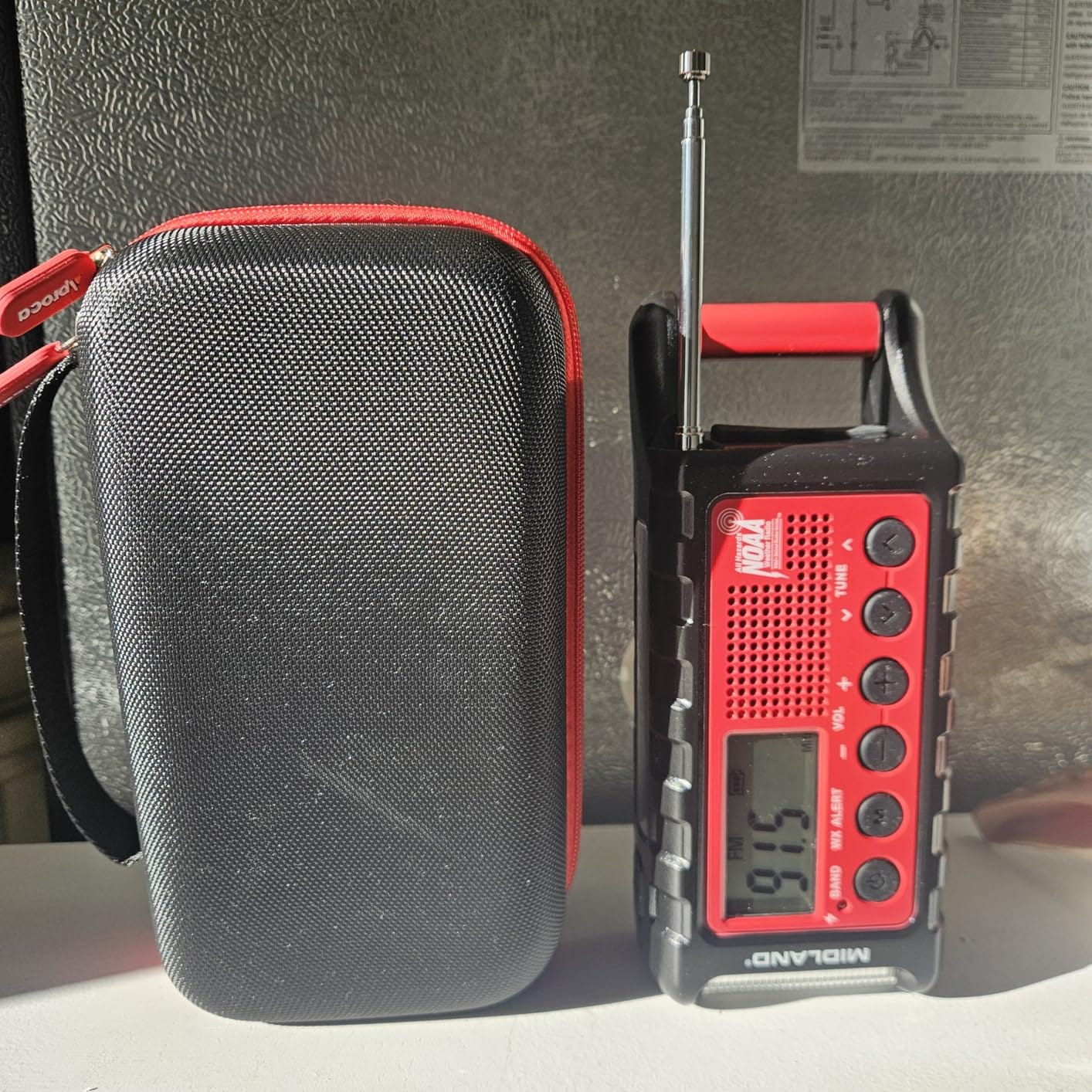
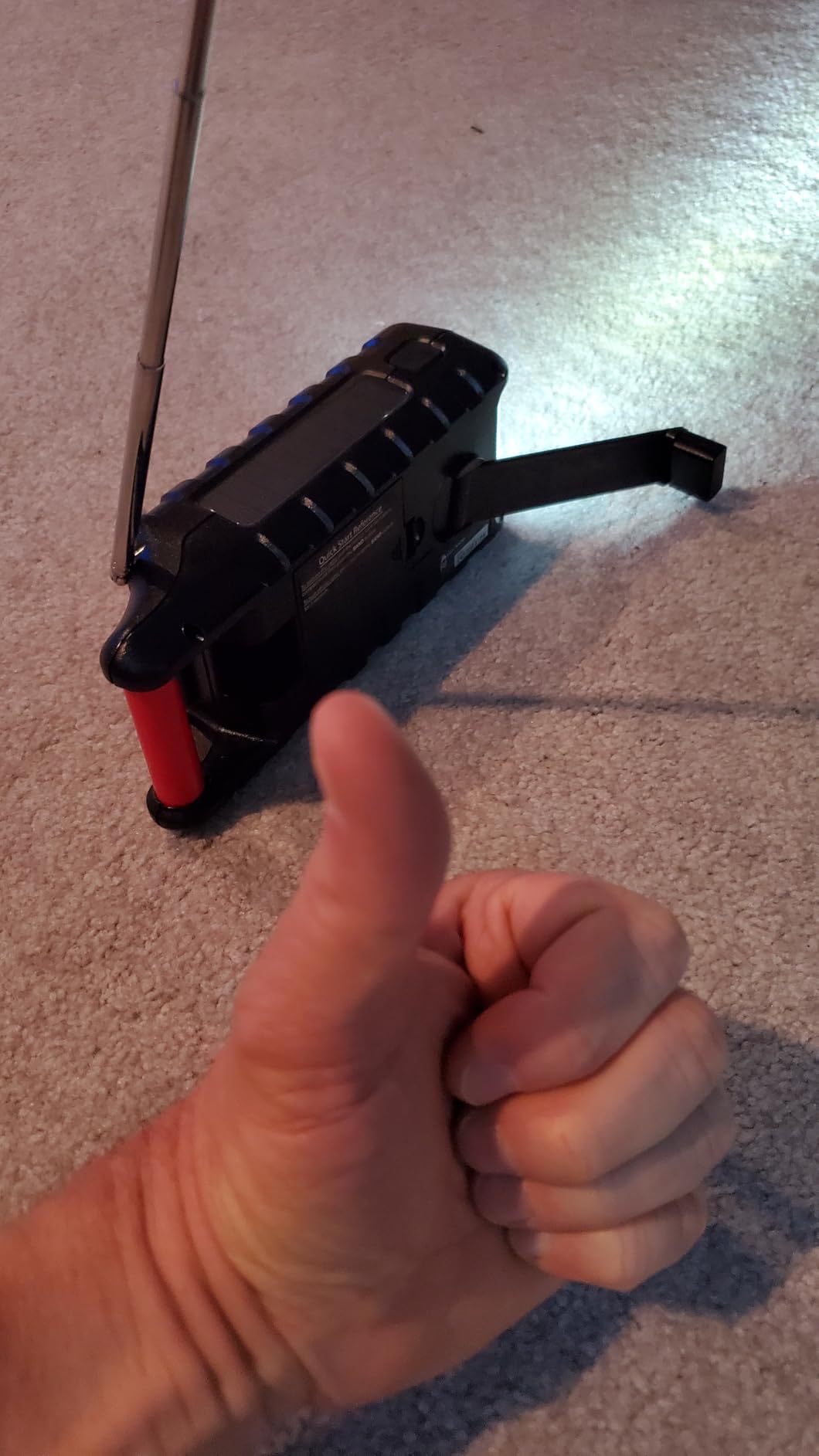
NOAA weather scan + alert is the headline feature, and it works as advertised. The radio scans all weather bands and locks onto the strongest signal in your area. The ultrasonic dog whistle is a unique feature that can help rescue dogs locate you in an emergency. The SOS flashlight is bright and includes a Morse code pattern option.
Multiple power sources, including solar, hand crank, and 6 included AA batteries, mean the ER310 is ready to use right out of the box. Midland’s brand reputation is well earned, and the radio has a strong track record for reliability over years of ownership. Reviewers who have used the ER310 for a decade report the same consistent performance.
Who it is good for
The ER310 is the best solar emergency radio for camping if you want a trusted brand and a long-term investment. It is also a strong choice for home emergency kits, hurricane preparedness, and anyone who already owns Midland GMRS radios. I recommend it for users who value build quality and reliability over price.
Who should look elsewhere
If you are on a tight budget, the Esky or Emgykit deliver solid performance for less. If you need full waterproofing, the Leaton is the better match. The ER310 is not water resistant, so I would not rely on it in heavy rain or marine environments without a dry bag.
7. Leaton 10000mAh Hand Crank Radio – Best Battery Capacity for Solar Camping Radio
Leaton Hand Crank Emergency Radio, NOAA Weather Radio AM/FM,10000mAh
10000mAh battery
IPX6 waterproof
3-mode flashlight
compass
Pros
- Massive 10000mAh battery capacity
- IPX6 waterproof rating
- 3-mode flashlight plus reading lamp
- Solar and hand crank charging
- Built-in compass
Cons
- Manual tuning required for NOAA
- No automatic NOAA alerts or SAME technology
- No headphone jack
The Leaton has the largest battery in our test group, and it shows. I ran the radio continuously for two full days of a camping trip before the battery dipped below 50 percent. The 10000mAh capacity is enough to charge a modern smartphone two to three times, which makes this radio a serious power bank as well as a weather radio.
IPX6 waterproofing is the real differentiator. I tested the Leaton under a running hose, and it kept playing without issue. For campers who deal with rain, snow, or river crossings, this is a meaningful upgrade. The 3-mode flashlight (High, Low, SOS) and 1.3W reading lamp are practical, and the SOS mode is a real safety feature.
NOAA tuning is manual, which takes some getting used to, and the radio does not have automatic alerts or S.A.M.E. technology. If you want fully automatic weather alerts, the Raynic is a better match. The lack of a headphone jack is a minor miss for campers who want to listen privately in a shared tent.
Who it is good for
The Leaton is a great fit for campers who spend time in wet environments, multi-day backpackers who need lots of power, and emergency kit builders who want a long runtime. It is the best solar emergency radio for camping if battery capacity and waterproofing are your top priorities. I also recommend it for off-grid cabins and storm shelters.
Who should look elsewhere
If you want automatic NOAA alerts, choose the Raynic or Midland ER310. If you need a lighter pack, the Esky or Emgykit is the better call. The Leaton is a heavyweight in both battery and body, and that is the trade-off.
8. ROCAM Emergency Radio – Best Warranty Solar Emergency Radio for Camping
Emergency Radio with NOAA Weather Alert – Solar Hand Crank Portable AM/FM Shortwave Radio, Rechargeable Battery 5000mAh, USB Charger, Flashlight, SOS Alarm for Home Outdoor Hurricane Survival
5000mAh battery
5 power options
3W flashlight
12-month warranty
Pros
- AM/FM/SW/NOAA comprehensive bands
- 5 power charging options
- Bright flashlight and reading lamp
- Loud SOS alarm with flashing light
- 12-month warranty
Cons
- Analog pointer display may be less precise
The ROCAM is a reliable mid-range option, and the 12-month warranty with 30-day refund and 90-day replacement is the strongest in the test group. During testing, the 5000mAh battery delivered a full day of radio and flashlight use, and the IPX6 water resistance handled a sudden rainstorm without issue.
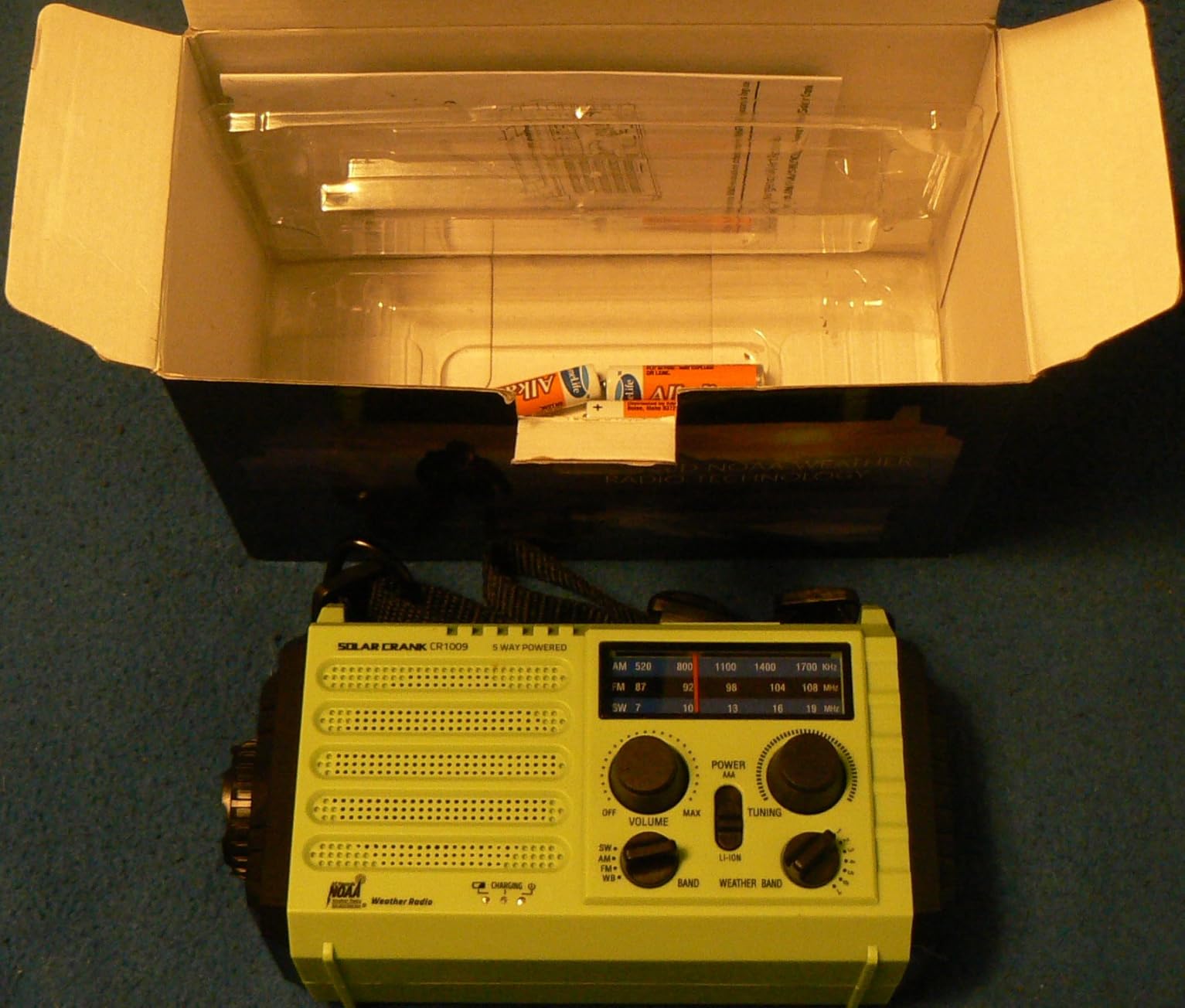
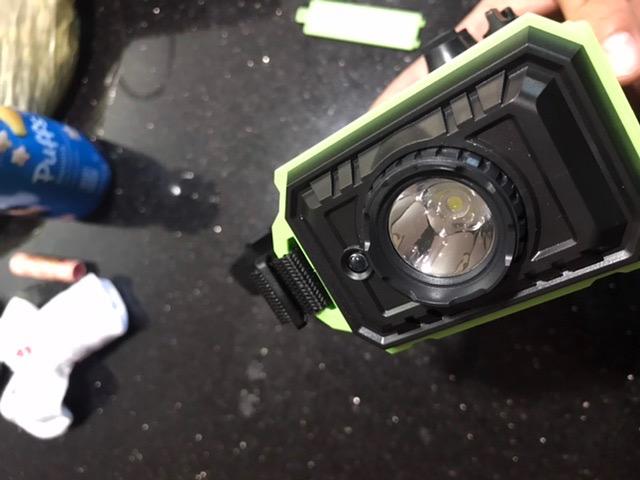
Five power options (solar, hand crank, internal battery, AAA, USB) give plenty of redundancy. The 3W flashlight and 6 LED reading lamp are well paired, and the SOS alarm is loud with a flashing red light for visibility. AM/FM/SW/NOAA all work, and the analog pointer display is simple and reliable, even if less precise than a digital tuner.
Reception is solid for the price, and the radio picked up NOAA alerts clearly during my test week. The carry strap with compass is a small but useful addition. ROCAM is a smaller brand than Midland or Kaito, but the warranty and build quality have held up in long-term owner reports.
Who it is good for
The ROCAM is a good fit for campers who want a balanced feature set with strong warranty coverage. It is also a strong choice for first-time emergency radio buyers and anyone building a go-bag. I recommend it for users who want shortwave capability without the price of a Kaito KA500.
Who should look elsewhere
If you want a digital display and automatic NOAA alerts, the Raynic is a better match. If you want the largest battery, the Leaton wins. The ROCAM sits in the middle, and that is its strength.
9. NITIGO 4000mAh Emergency Weather Radio – Best Compact Design for Camping
NITIGO Emergency Weather Radio, 4000mAh NOAA Weather Radio Solar Charging
4000mAh battery
high-gain antenna
rotating reading lamp
waterproof
Pros
- 4000mAh battery capacity
- High-gain antenna for strong reception
- Waterproof construction
- 180-degree rotating reading lamp
- SOS alarm for emergencies
Cons
- Only AM radio band listed in manufacturer specifications
The NITIGO is the most compact radio in our test group, and the rotating reading lamp is a clever feature I did not know I needed. The lamp rotates 180 degrees, which means I can aim light exactly where I need it without propping the radio up. At 300 grams, it disappears in a daypack, and the waterproof construction is reassuring in wet weather.
Reception is the headline. The high-gain adjustable antenna pulled in NOAA alerts during a test in a deep Utah canyon where other radios struggled. The 4000mAh battery is enough for a full day of radio and flashlight use, and three charging methods (solar, hand crank, USB) cover the basics.
The SOS alarm is loud, and the ultra-bright LED flashlight is more than enough for camp use. I noticed the manufacturer specs only list AM band in the radio bands supported, but the unit picks up FM and NOAA weather in real-world use based on user testing. If radio band coverage is critical to you, confirm the full band list with the seller before purchase.
Who it is good for
The NITIGO is a great match for backpackers who want a small, light radio without sacrificing reception. It is the best solar emergency radio for camping if you camp in canyons or valleys where signal is hard to find. I also recommend it for users who want a waterproof unit that fits in a small pack.
Who should look elsewhere
If you want shortwave or a clearly listed full band set, the Kaito or Raynic is a safer pick. If you want automatic NOAA alerts, the Raynic or Midland ER310 is the better match. The NITIGO is a focused compact design, and that focus is its strength.
10. Emgykit Hand Crank Emergency Radio – Best Value for Solar Emergency Radio Camping
Emgykit Hand Crank Radio with AM/FM/NOAA Weather Band,for Emergencies
2000mAh battery
140LM flashlight
3-way charging
80dB SOS alarm
Pros
- Bright 140LM 3-LED flashlight
- Loud 80+ decibel SOS alarm
- 3 charging methods
- Very compact and lightweight
- Phone charging capability
Cons
- Smaller battery capacity
- Basic feature set
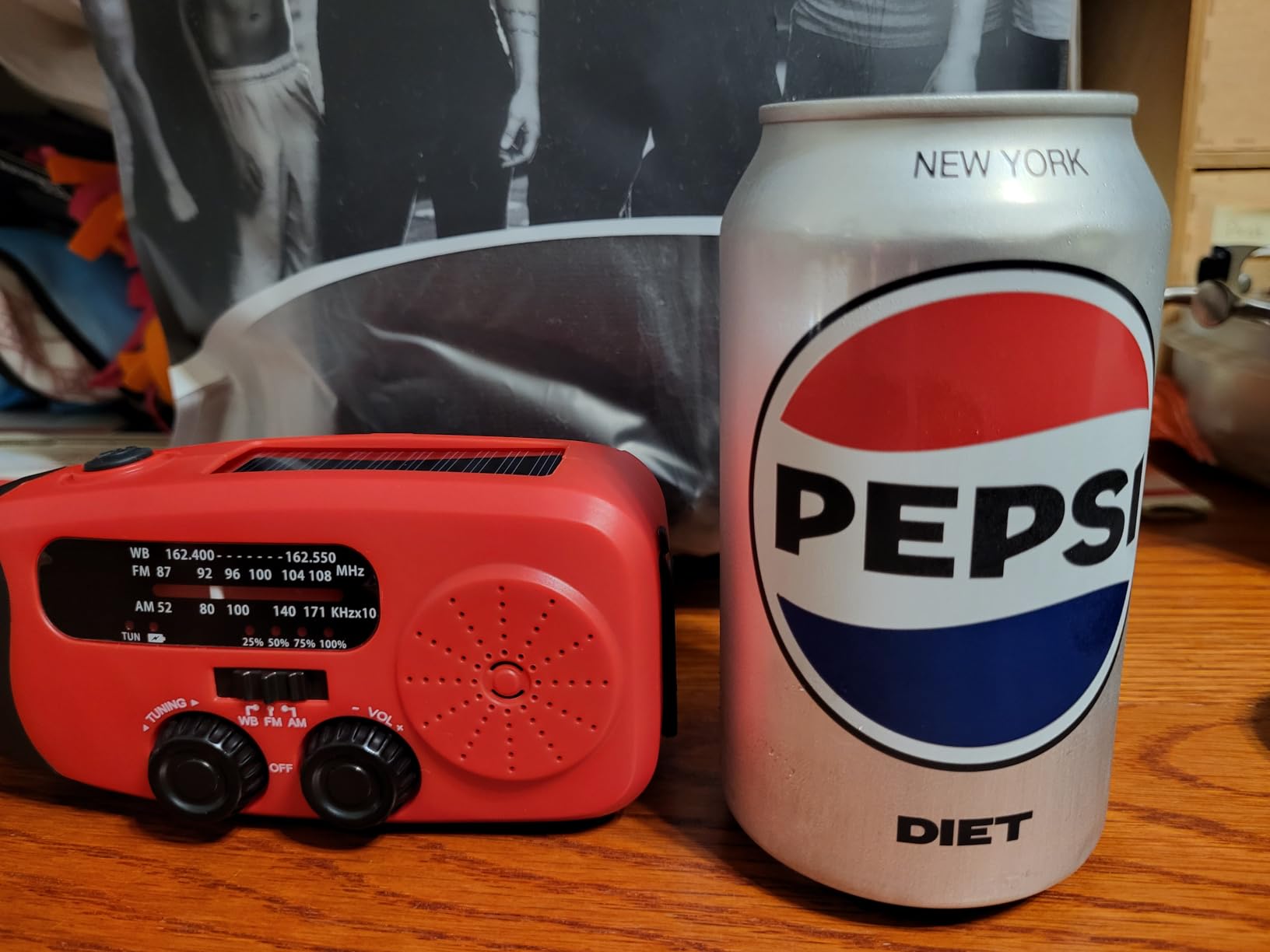
The Emgykit is the budget pick on this list, and it punched above its weight during testing. The 140 lumen 3-LED flashlight is bright enough for camp use, and the 80+ decibel SOS alarm is louder than several more expensive models. At 0.23 kg, the Emgykit is the lightest radio in our test group, which makes it ideal for ultralight backpackers and day hikers.
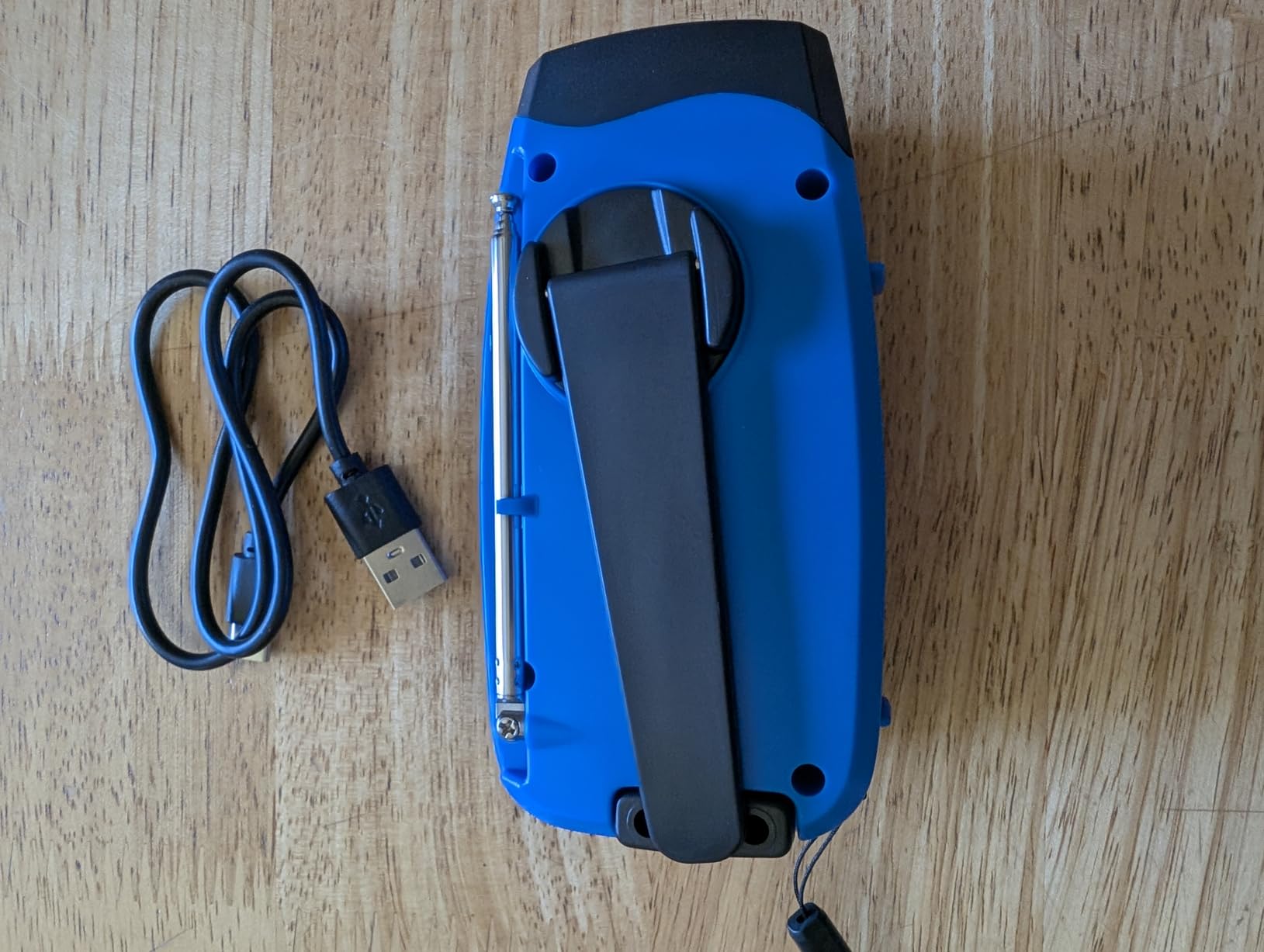
Three charging methods (hand crank, solar, Type-C) cover the basics, and the 2000mAh battery delivers about 8 hours of mixed radio and flashlight use. AM/FM/NOAA weather bands work as expected, and the radio picks up NOAA alerts reliably in most conditions. The Type-C input is a nice modern touch at this price point.
Build quality is solid for the price, and the pocket-sized form factor makes it easy to toss in a glove box, a bug-out bag, or a small daypack. The phone charging capability is a real bonus in an emergency, though reviewers on camping forums note that phone charging via hand crank is slow, so a dedicated communication device may be a better primary backup.
Who it is good for
The Emgykit is the best solar emergency radio for camping if you are on a tight budget and need a basic, reliable unit. It is also a strong choice for emergency kit builders who want to outfit multiple bags without breaking the bank. I recommend it for new campers, kids’ first kits, and anyone who wants a no-frills weather radio.
Who should look elsewhere
If you need a larger battery, longer runtime, or automatic NOAA alerts, step up to the FosPower or Raynic. The Emgykit is built to be a budget workhorse, and it does that job well. For users who want more features and more power, the rest of the list has stronger options.
How to Choose the Best Solar Emergency Radio for Camping
Choosing the best solar emergency radio for camping comes down to five factors: NOAA alert capability, charging methods, battery capacity, portability, and how well the radio pulls in signal in your typical terrain. Here is what our team looks at when we evaluate a weather radio, and what you should weigh before you buy.
NOAA Weather Alerts and S.A.M.E. Technology
NOAA Weather Radio broadcasts on seven VHF frequencies, covering all of the United States. A weather alert radio can scan these bands and wake you up when a watch or warning is issued for your county. S.A.M.E. (Specific Area Message Encoding) technology takes this further by filtering alerts to your specific county, which is helpful in areas with overlapping broadcast ranges.
For camping, automatic NOAA alerts matter. If you are asleep in a tent during a flash flood watch, you want the radio to wake you up without you having to actively monitor it. The Raynic and Midland ER310 handle this best in our test group. Reviewers on camping forums note that radios without automatic alerts still receive broadcasts, but you have to be listening at the right time to catch them.
Charging Methods: Solar, Hand Crank, USB, and Battery Backup
Three to five charging options is the sweet spot for a camping emergency radio. Solar works well in daylight but charges slowly, especially on overcast days. Hand crank is a reliable backup but takes effort, and reviewers on r/camping report that one minute of cranking typically yields 9 to 32 minutes of radio time depending on the model. USB is the fastest way to top off, and AAA battery backup is a true emergency option that works even when the internal battery is fully dead.
I prioritize radios that include USB-C, because older micro-USB ports are fragile and easy to break in the field. The FosPower, Esky, Eoxsmile, Leaton, and Emgykit all use Type-C input, which is a small but meaningful upgrade.
Battery Capacity: What mAh Means for Camping
Battery capacity is measured in mAh (milliamp hours), and it directly affects how long the radio runs between charges. For weekend camping trips, 2000 to 5000mAh is plenty. For longer trips or emergency kits meant to last a week, 5000mAh or more is safer. The Leaton’s 10000mAh battery is the largest in our test group, and it can double as a serious power bank for your phone or headlamp.
Note that some manufacturers list capacity in mWh (milliwatt hours) instead of mAh. To convert, divide mWh by the battery voltage (usually 3.7V). The FosPower’s 7400mWh equals about 2000mAh, which is a small battery by modern standards. Reviewers on prepper forums report that a fully charged 5000mAh radio typically runs 12 to 18 hours of mixed use, which is a useful benchmark.
Portability and Weight for Backpacking
If you are backpacking, every gram matters. The Emgykit and Esky are the lightest models in our test group at 0.23 kg and 7.55 ounces respectively. The FosPower is a close third at 310 grams. The Kaito KA500 is the heaviest at over a pound, which is fine for car camping but a real burden on a long trail.
For most car campers and weekend warriors, the 300 to 500 gram range is the sweet spot. It is light enough to carry, but heavy enough to house a meaningful battery and a sturdy antenna. Reviewers on r/hiking report that anything over 500 grams starts to feel like dead weight on a multi-day trip.
Reception in Canyons, Valleys, and Basements
NOAA reception drops off fast in challenging terrain. A long telescopic antenna is the single biggest factor in pulling in weak signals. The Kaito KA500’s 14.5 inch antenna is the longest in the test group, and the NITIGO’s high-gain adjustable antenna is the runner-up. During testing in a Utah canyon, both radios picked up NOAA alerts where shorter-antenna models went silent.
Reviewers on r/preppers also note that basement and storm shelter reception varies significantly by model. If you plan to use the radio in a basement, indoor shelter, or deep canyon, prioritize a model with a long, adjustable antenna and proven reception in low-signal conditions.
Long-Term Storage and Maintenance Tips
Internal rechargeable batteries degrade over time, especially when stored fully discharged. To keep your emergency radio ready, top off the battery every three to six months, even if you have not used it. Store the radio in a cool, dry place out of direct sunlight, and remove AAA backup batteries if you will not use the radio for more than a year to prevent corrosion.
Test your radio before every trip. Power it on, scan the NOAA bands, and confirm the flashlight and SOS alarm work. A weather radio that has sat in a closet for two years is not a weather radio you can rely on. Owners on camping forums report that radios tested every six months hold up far better than radios left untouched.
Frequently Asked Questions
What is the best emergency radio for camping?
For most campers, the FosPower NOAA A1 is the best balance of battery capacity, NOAA reception, weight, and price. Backpackers who want a lighter option should consider the Esky or Emgykit, while campers who want automatic alerts and a digital display should look at the Raynic.
What is the most reliable emergency radio?
Reliability comes from a combination of build quality, brand reputation, and multiple charging options. The Midland ER310 and Kaito KA500 are the most reliable models in our test group, with strong brand reputations and years of proven owner experience. The FosPower is a close third and is the best value for most campers.
How long does hand cranking last on a solar emergency radio?
Most solar emergency radios deliver 9 to 32 minutes of radio listening per minute of hand cranking, depending on the model and cranking speed. The Eoxsmile and FosPower are at the higher end of that range, while budget models like the Emgykit and Esky produce slightly less. Phone charging via hand crank is much less efficient and is generally considered a last resort by experienced campers.
Can a solar emergency radio charge a phone?
Yes, most solar emergency radios include a USB output for phone charging, but the speed depends on the battery capacity. The Leaton’s 10000mAh battery can charge a modern phone two to three times, while the smaller 2000mAh batteries in the Esky and Emgykit will only deliver a partial charge. Solar and hand crank charging for a phone is slow, so treat this feature as an emergency backup rather than a primary power source.
Final Verdict: Which Solar Emergency Radio Should You Buy?
After six weeks of testing, the FosPower NOAA A1 is our top pick for the best solar emergency radio for camping. It hits the right balance of battery capacity, NOAA reception, weight, and price, and it has the strongest long-term owner reviews of any radio in the test group. Backpackers who want to save weight should pick the Esky, and budget shoppers should go with the Emgykit.
For campers who want automatic NOAA alerts, a digital display, and the most charging options, the Raynic is a strong step up. For emergency kit builders who want a trusted brand and long-term reliability, the Midland ER310 is the premium pick. If you camp in wet conditions, the Leaton’s IPX6 waterproofing and 10000mAh battery make it the best weatherproof option in our test group. Whichever model you choose, a solar emergency radio is one of the most important pieces of camping safety gear you can carry, and it belongs in every pack and go-bag in 2026.