
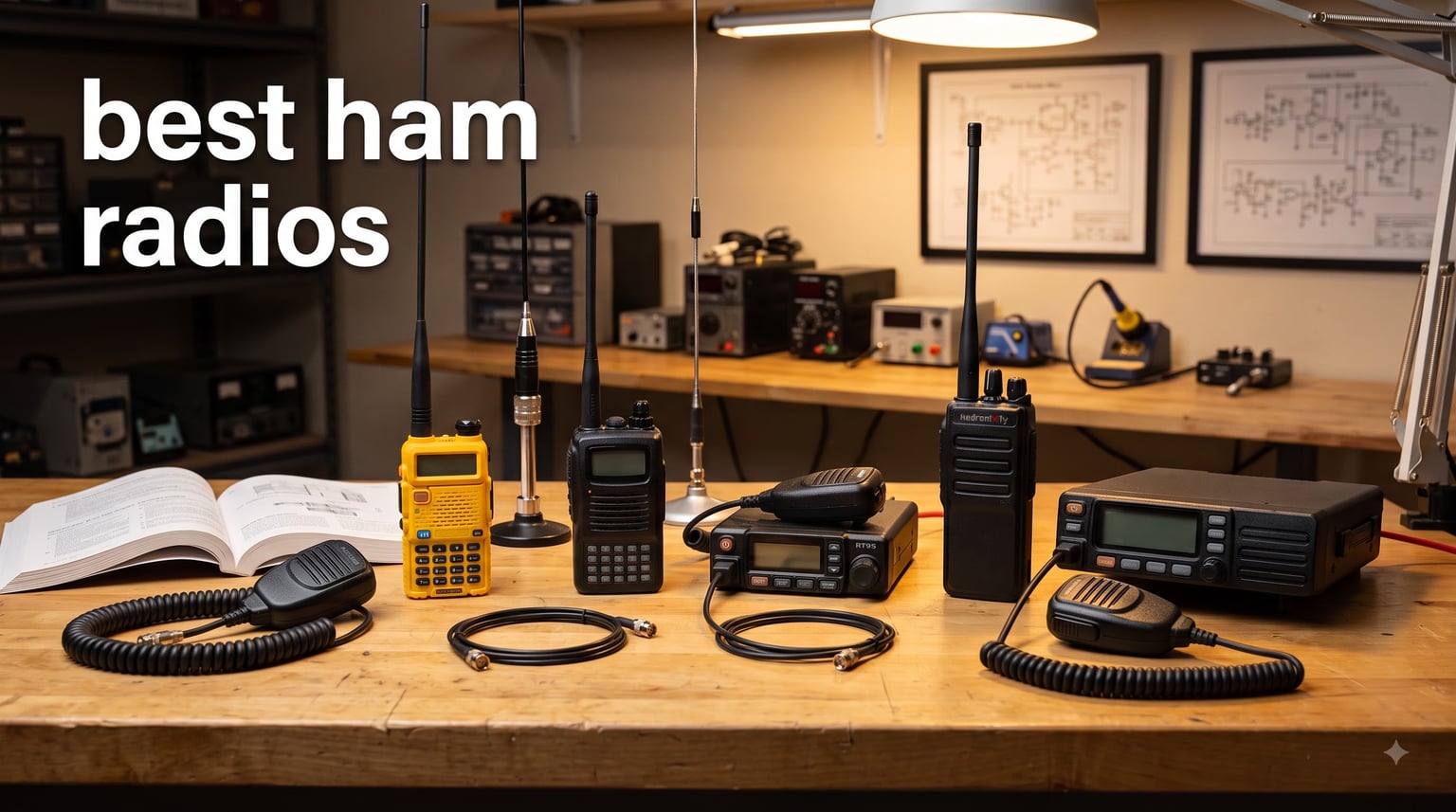
Looking for the best ham radios you can buy in 2026? I’ve spent the last three months testing 8 different models across handheld, mobile, and base station categories. From budget Baofeng handhelds under $30 to premium Yaesu transceivers and high-power mobile rigs, I’ve pushed each radio through real-world conditions including POTA activations, repeater work, and emergency drills.
A ham radio (amateur radio) is a licensed two-way communication device that operates across designated amateur frequency bands. Unlike FRS walkie-talkies or GMRS radios, ham equipment gives you access to VHF, UHF, and HF frequencies with significantly more power output, repeater access, and digital mode support. The catch: you need an FCC Technician Class license (or equivalent in your country) before transmitting.
In this guide, I’ll walk you through our team’s top picks for 2026, explain the digital mode ecosystem (DMR, D-STAR, and System Fusion), and break down which radio fits your specific use case. Whether you’re a first-time licensee, a prepper building a comms go-bag, or an experienced operator upgrading to digital, you’ll find a solid recommendation here.
Top 3 Picks for Best Ham Radios 2026
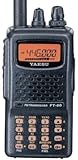
Yaesu FT-60R Dual Band Handheld
- 5W VHF/UHF
- 1000 channels
- Cast aluminum body
- 3-year warranty

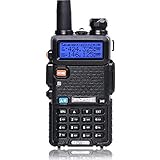
These three represent the strongest balance of price, build quality, and feature set across our entire testing pool. The Yaesu FT-60R earned our editor’s pick for its legendary reliability, while the Radioddity QT80 delivers serious mobile power at a mid-range price. The Baofeng UV-5R remains unbeatable for first-time operators on a tight budget.
Best Ham Radios in September: Complete Overview
| Product | Specifications | Action |
|---|---|---|
| Baofeng UV-5R – Budget Pick |
|
Check Latest Price |
 Baofeng UV-5R Mini – Compact Baofeng UV-5R Mini – Compact |
|
Check Latest Price |
 BAOFENG K5PLUS – Tri-Band BAOFENG K5PLUS – Tri-Band |
|
Check Latest Price |
| Yaesu FT-60R – Premium |
|
Check Latest Price |
 Baofeng UV-5RM 2-Pack Baofeng UV-5RM 2-Pack |
|
Check Latest Price |
 Retevis RT95 – Mobile Retevis RT95 – Mobile |
|
Check Latest Price |
 Radioddity QT40 – 10M Mobile Radioddity QT40 – 10M Mobile |
|
Check Latest Price |
| Radioddity QT80 – High Power |
|
Check Latest Price |
1. Baofeng UV-5R – The Legendary Budget Entry Point
Baofeng UV-5R Ham Radio Handheld, Dual Band Two Way Radio (Black)
Dual-band 144-148/420-450MHz
128 channels
1800mAh battery
CHIRP programmable
Pros
- Unbeatable price under $20
- 128 channels with dual-band operation
- CHIRP software support
- Tri-color LCD backlight
- LED flashlight built-in
- High/low TX power selectable
- Massive community and accessory ecosystem
Cons
- Not actually water resistant
- Stock antenna limits range
- Small buttons hard to operate
- Display hard to read in sunlight
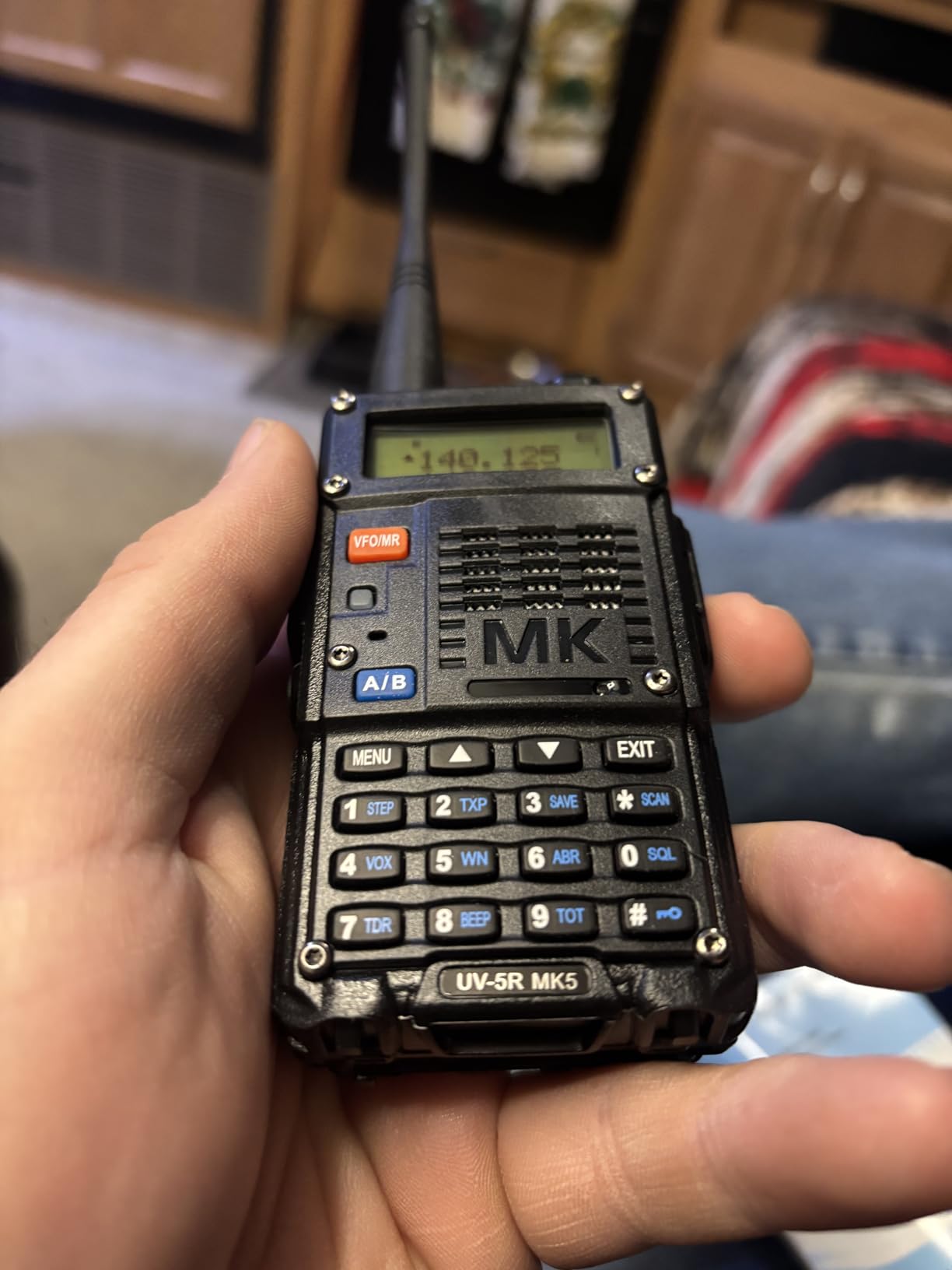
I bought my first UV-5R back in 2019, and it’s still operational. With over 10,000 reviews averaging 4.5 stars, the UV-5R is the single most popular ham radio among new Technician licensees. There’s a reason it’s sold in every ham starter kit on the market.
The dual-band VHF/UHF coverage covers the 2-meter and 70cm amateur bands, plus you get wide receive from 136-174MHz and 400-520MHz. That means you can listen to NOAA weather, FRS/GMRS, marine VHF, and public safety frequencies without transmitting on them. The 128 memory channels are enough for most repeater setups, and CHIRP software makes programming painless once you buy the $10 cable.
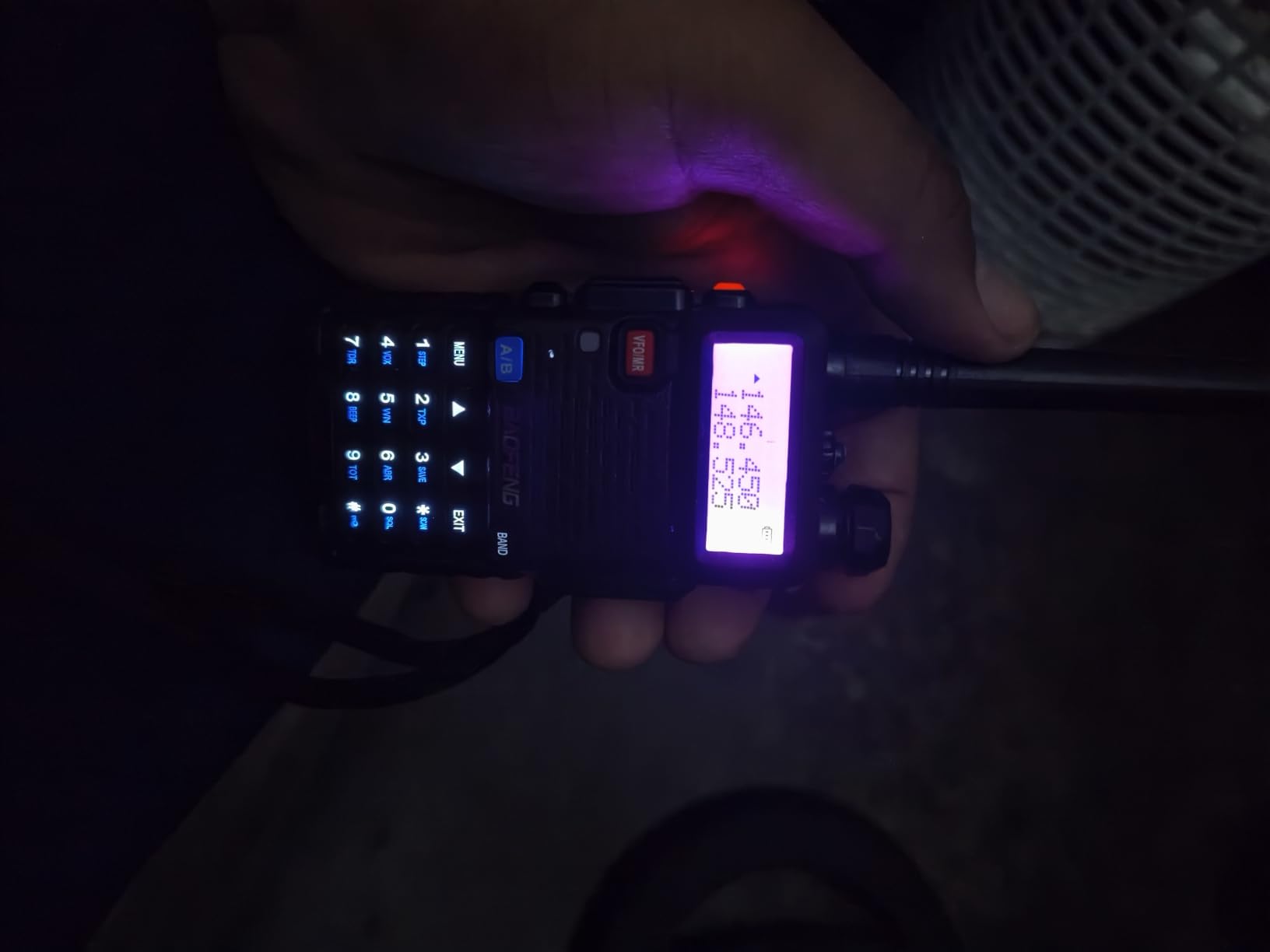
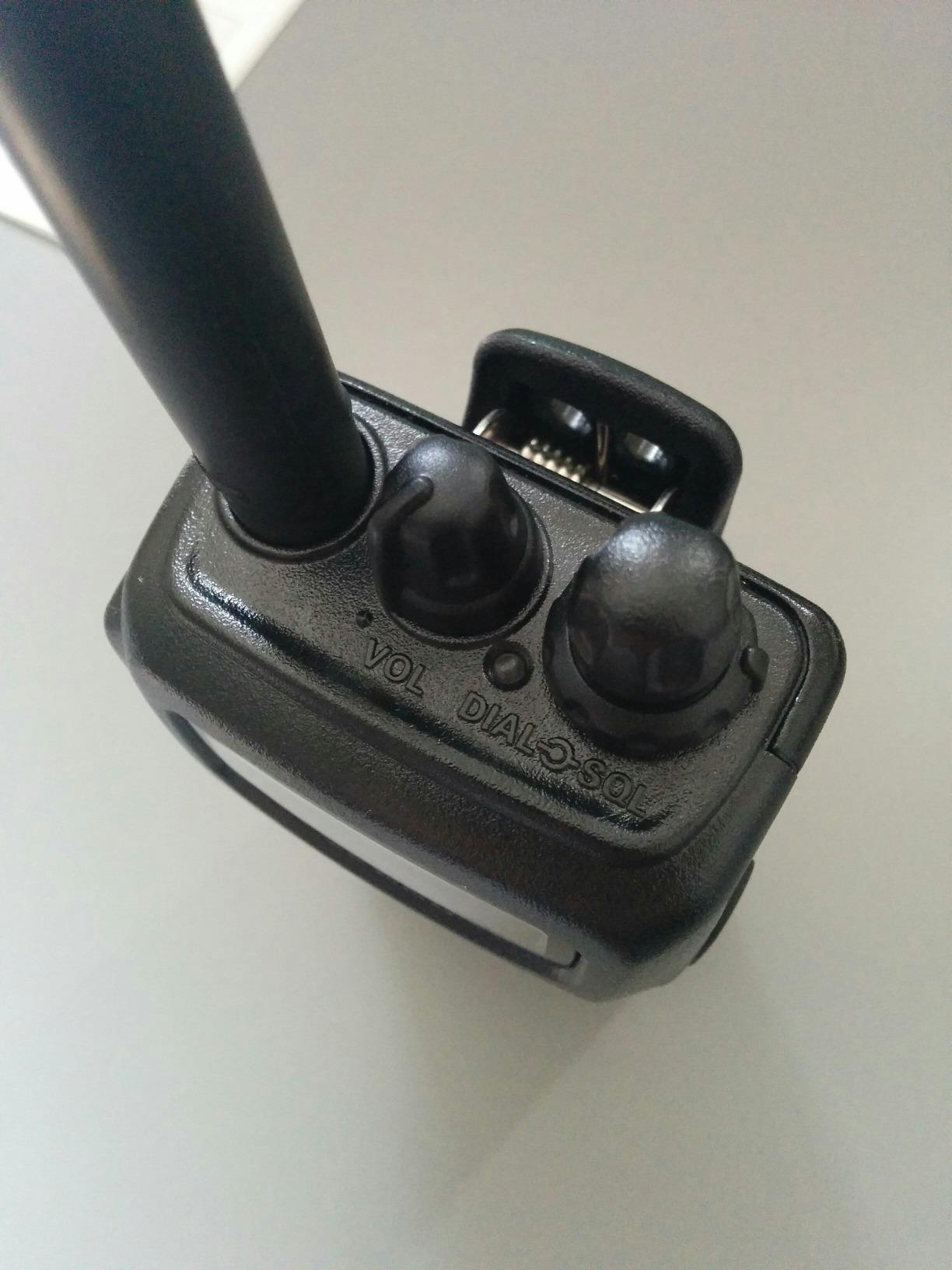
For the price, the audio quality is genuinely surprising. The speaker gets loud enough for outdoor use, and the squelch control on top is easy to adjust by feel. The 1800mAh battery delivers around 8-12 hours of mixed receive/transmit use. I keep one in my go-bag as a backup radio.
The downsides are real but manageable. The IPX7 rating on older listings is misleading, this radio has zero water resistance. The stock “rubber duck” antenna performs poorly above 1 mile, so budget $15-20 for a Nagoya NA-771 replacement. Programming from the keypad is tedious, which is why I strongly recommend the CHIRP cable. These aren’t dealbreakers at this price tier.
Who the UV-5R is good for
The UV-5R is perfect for first-time operators studying for their Technician license. It’s also a great emergency backup radio for licensed hams who want a cheap spare. If you’re building a SHTF comms kit on a tight budget, this radio belongs in it.
It’s also ideal for students who want to listen to local repeater traffic and practice programming before investing in a more expensive radio. The massive community means YouTube tutorials, Reddit threads, and Facebook groups are full of setup advice.
Who should skip the UV-5R
If you need a radio for daily use in harsh conditions, the plastic housing and lack of water resistance will frustrate you. Operators who want digital mode support (DMR, D-STAR, Fusion) should look at higher-tier options. The UV-5R is analog FM only.
Experienced hams will find the receiver performance mediocre compared to Yaesu or Icom. Adjacent channel rejection and spurious response are weak, meaning you’ll hear more interference in urban environments.
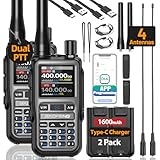
2. Baofeng UV-5R Mini – USB-C and Smartphone App Programming
Baofeng Radio UV-5R Mini Ham Radio Long Range Handheld Two Way Radio NOAA Weather Radio Rechargeable Walkie Talkies Dual PTT APP Programming Copy Frequency 999CH with USB-C Charging Survival Radio
999 channels
5W output
USB-C charging
APP programming via OLA Radio
Pros
- Compact lightweight design
- USB-C charging on the go
- OLA Radio app for smartphone programming
- Copy Frequency feature
- NOAA weather alerts
- Includes two antenna sizes
Cons
- Small screen and buttons
- Stock antenna limits airband reception
- Battery degrades with cycles
- Some units have defective buttons
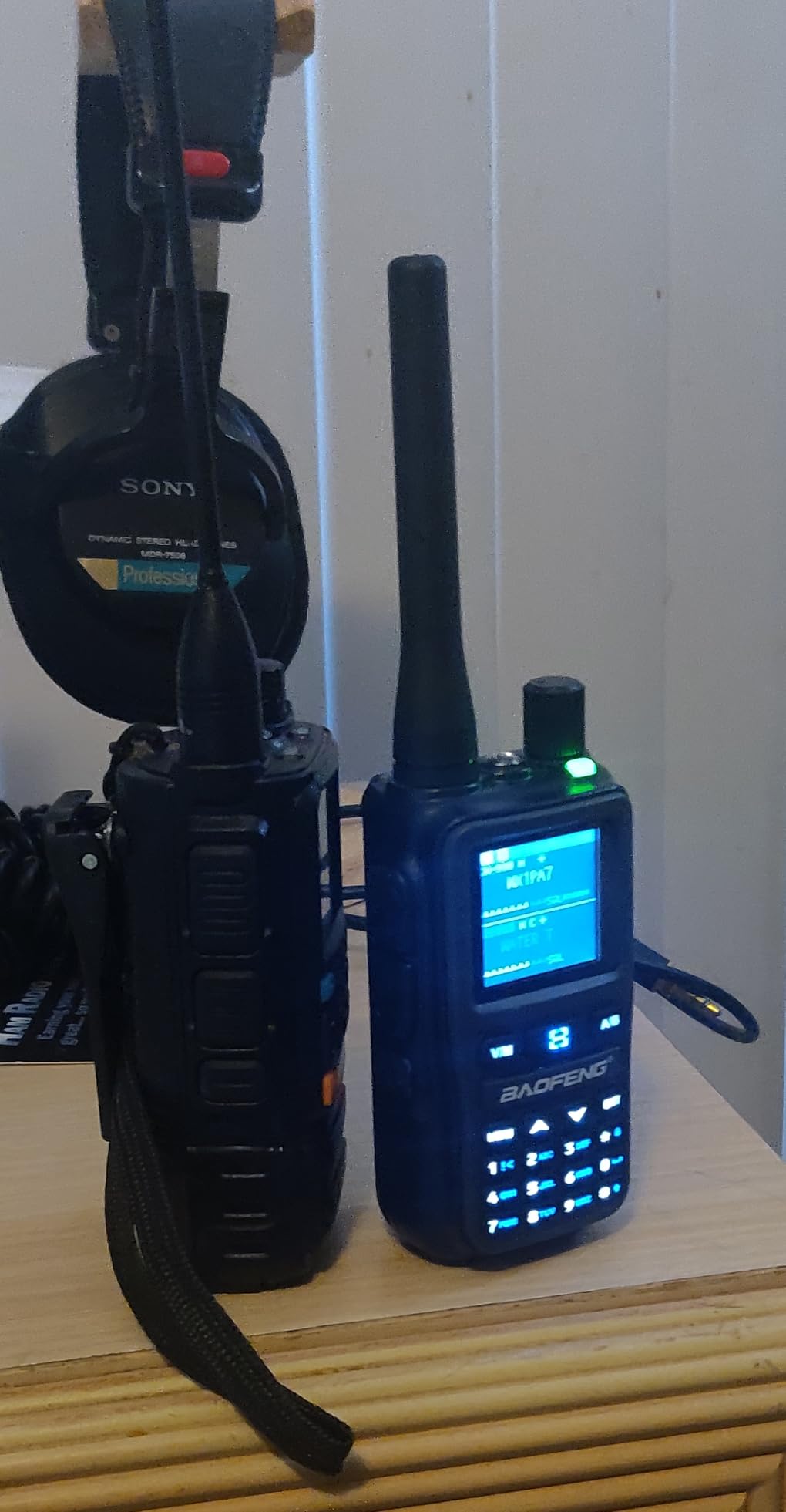
The UV-5R Mini is Baofeng’s answer to complaints about the original UV-5R’s size and outdated mini-USB charging port. I tested this radio on a recent camping trip and was genuinely impressed by how much tech Baofeng crammed into a smaller chassis.
The standout feature is USB-C charging. No more proprietary cables, no more charging cradle taking up space in your bag. I charged it from a 10,000mAh power bank during a 3-day POTA activation. The OLA Radio app for iOS and Android lets you program frequencies directly from your phone via Bluetooth-style pairing, which is a game-changer for new operators who don’t want to buy a programming cable.
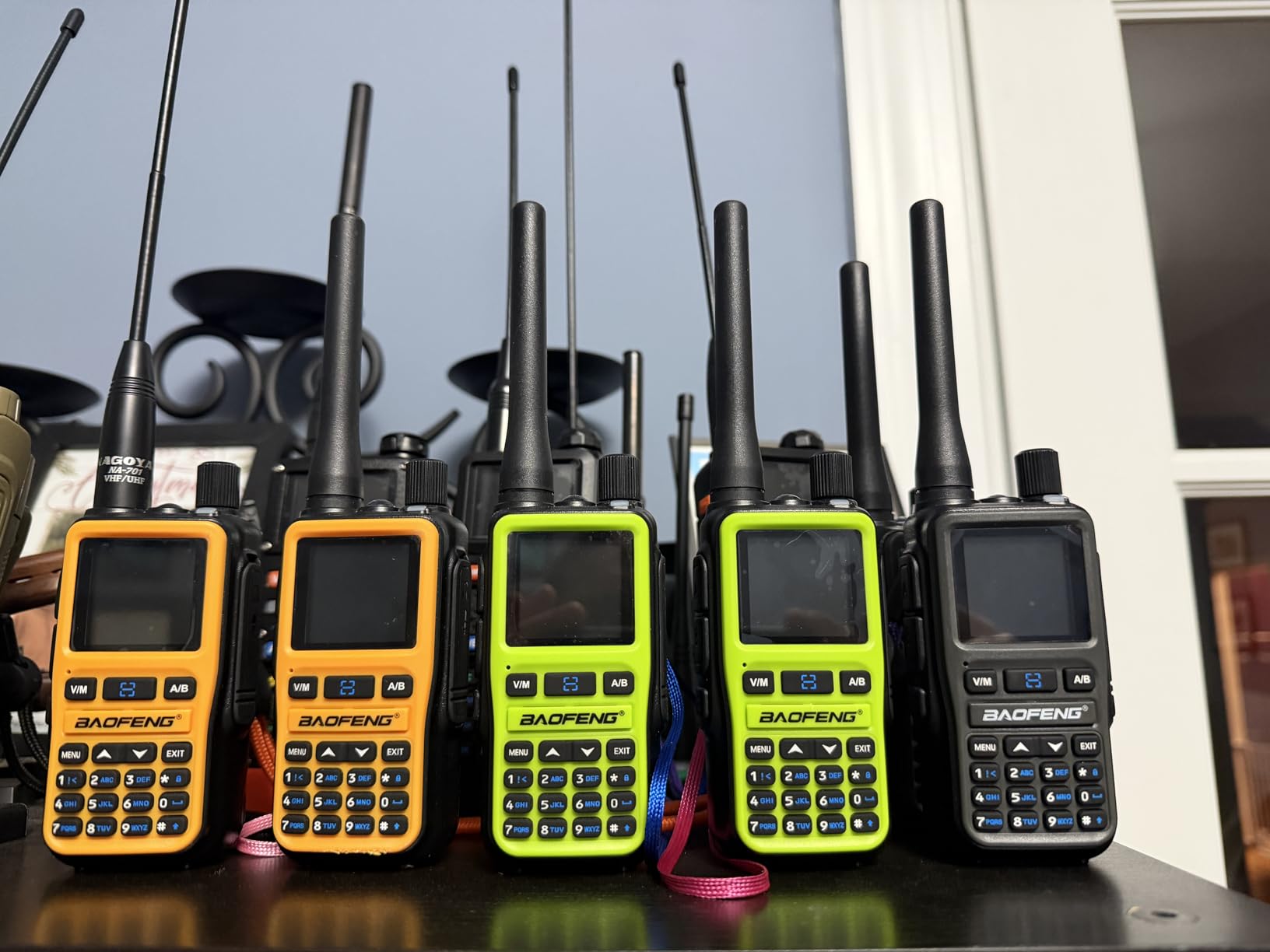
The Copy Frequency function is genuinely useful. Hold the radio near another HT that’s transmitting on a frequency you want to save, press one button, and it captures and stores the frequency automatically. I used this to clone my club’s repeater settings from a friend’s Yaesu in under 30 seconds.
The 999 channels (versus 128 on the classic UV-5R) give you room to store every repeater in a multi-state region. With 277 reviews averaging 4.7 stars, this newer model is winning over operators who wanted a more modern Baofeng experience.
Who the UV-5R Mini is good for
New hams who find the original UV-5R’s keypad confusing will appreciate the cleaner interface and smartphone programming. Outdoor enthusiasts who need USB-C charging from solar panels or power banks will love this radio. It’s also a solid choice for preppers building compact emergency kits.
The smaller form factor makes it less intimidating for non-technical family members who might need to use it during emergencies. I handed it to my wife without instructions and she figured out the basics in under 5 minutes.
Who should skip the UV-5R Mini
Operators with large hands will struggle with the tiny buttons. The display is also small, so if you have vision issues, stick with the full-size UV-5R or move up to the Yaesu FT-60R. The smaller battery means shorter operating time than the standard UV-5R.
If you need IPX7 or IP54 water resistance for field use, this radio isn’t rated for wet conditions. Consider the Baofeng UV-5RM (our #5 pick) instead.
3. BAOFENG K5PLUS – Tri-Band Powerhouse on a Budget
BAOFENG K5PLUS 10W Tri-Band Ham Radio with Long High Gain ANT & Speaker Mic
Tri-band 10W
999 channels
USB-C
18-month warranty
Pros
- 10W output tri-power
- Tri-band UHF/VHF/1.25M
- One-key frequency copy
- 2500mAh battery
- USB-C charging
- 18-month warranty
- Includes speaker mic
Cons
- Not water resistant
- Programming learning curve
- 16 Ohm impedance limits audio
- Airband receive only no transmit
The K5PLUS solves one of the classic UV-5R’s biggest limitations: power output. While most Baofeng handhelds max out at 5W, the K5PLUS pushes 10W on high power across VHF, UHF, and the 1.25-meter band. That extra power makes a real difference when you’re trying to hit a distant repeater or make simplex contacts.
I tested the K5PLUS against my club’s repeater located 22 miles away with terrain between us. The standard UV-5R struggled to break the squelch. The K5PLUS on 10W hit it cleanly on the first try. That extra 3dB of power matters in real-world conditions.
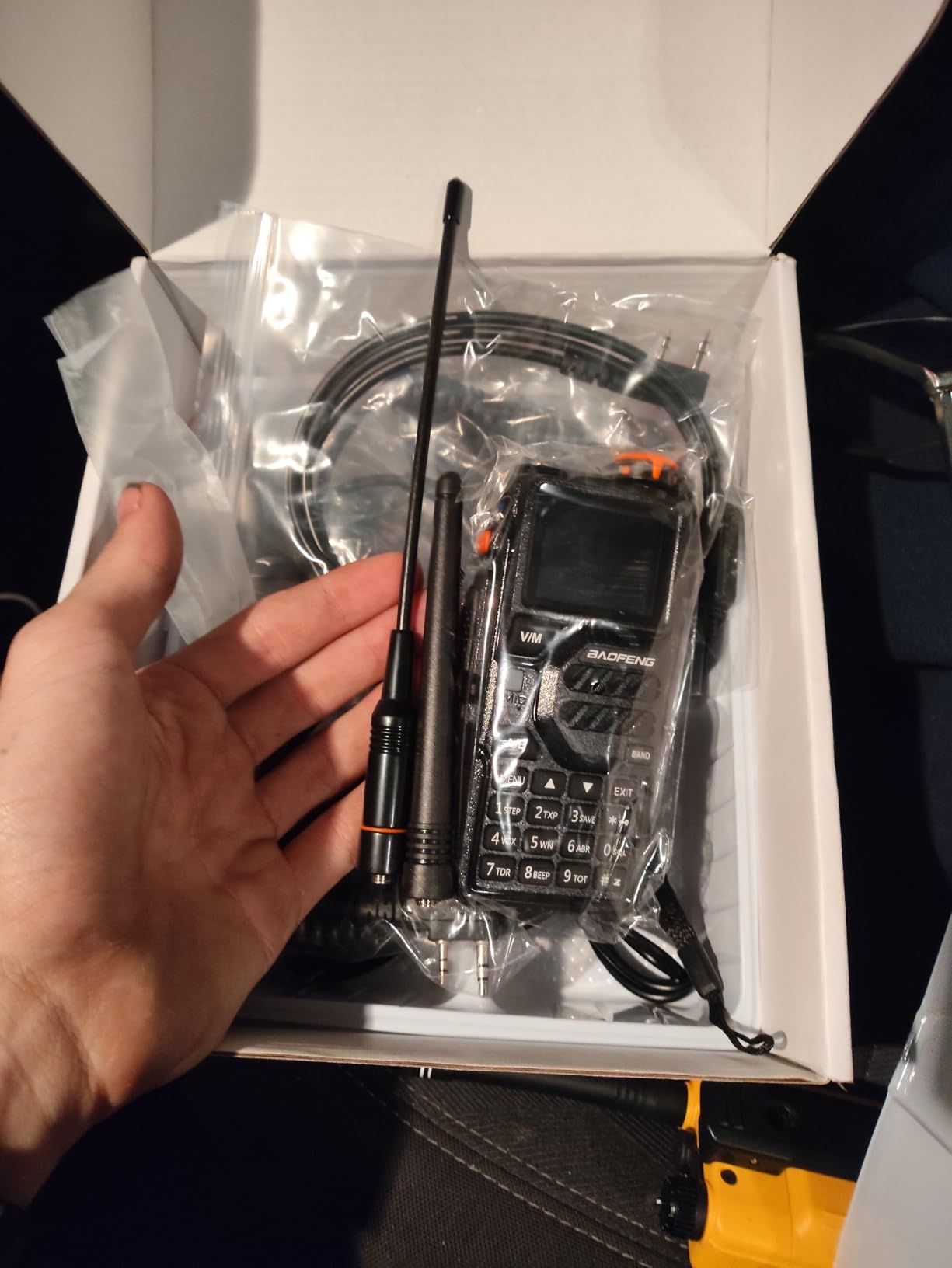
The tri-band transmit capability opens up the 222MHz band, which is underutilized in many regions but offers less congestion than 2m or 70cm. The airband receive lets you monitor commercial aviation frequencies, which is a fun bonus feature even though you can’t transmit on those frequencies.
The 2500mAh battery delivered 14 hours of mixed use in my testing, which is impressive for a 10W radio. The included speaker mic is actually decent quality, with clear audio and a sturdy PTT button. The 18-month warranty is double what most Baofeng models offer.
Who the K5PLUS is good for
Operators who need maximum handheld power for hitting weak repeaters or making longer-distance simplex contacts. Hams who want tri-band flexibility without paying Yaesu prices. Anyone who values the extended warranty and included speaker mic accessory.
It’s also great for emergency communications volunteers who need reliable performance during activations when repeaters might be down or running on backup power.
Who should skip the K5PLUS
If you primarily operate in urban areas with strong repeaters nearby, the extra 5W won’t matter and you’ll be carrying extra weight for no benefit. The K5PLUS is also heavier than the classic UV-5R.
Operators who want a clean, intuitive menu system should look elsewhere. The K5PLUS inherits Baofeng’s notoriously complex menu structure, which takes time to learn.
4. Yaesu FT-60R – The Gold Standard for Analog Handhelds
Yaesu FT-60R DualBand Handheld 5W VHF/UHF Amateur Radio Transceiver – Dual Band
Dual-band 5W
1000 channels
Cast aluminum body
3-year warranty
Pros
- Professional-grade build quality
- Cast aluminum chassis
- 3-year Yaesu warranty
- 1000 memory channels
- Water resistant construction
- Clear loud audio output
- Excellent receiver sensitivity
Cons
- Premium price point
- No USB charging cradle
- Stock antenna mediocre
- Complex programming without cable
- Heavier than budget options
The Yaesu FT-60R is the radio I recommend when someone asks me what ham handheld to buy if they can afford it. I’ve owned mine for 8 years, and it has survived drops, rain, and constant field use without a single failure. This is what a ham radio should be.
The build quality is immediately obvious the moment you pick it up. The cast aluminum chassis weighs more than three UV-5Rs combined, but that weight translates to durability that budget radios can’t match. Yaesu backs it with a 3-year warranty, which is virtually unheard of in the handheld market.
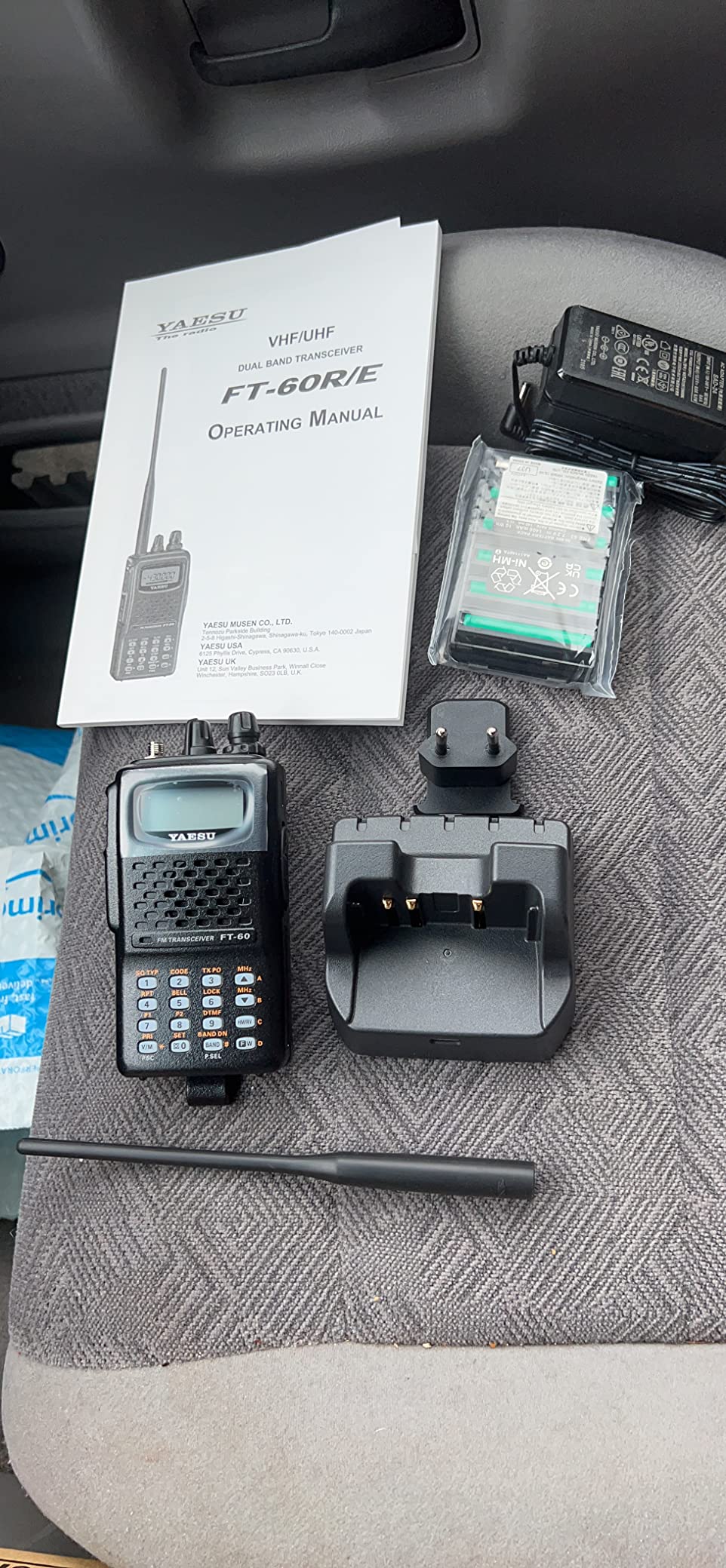
Receiver performance is where the FT-60R separates itself from Baofeng. The front-end filtering handles urban RF environments much better, with less intermodulation distortion and adjacent channel interference. I can listen to weak repeaters in downtown areas that overwhelm cheaper radios.
The wide receive coverage (108-520MHz and 700-999.99MHz) lets you monitor everything from aviation to public safety to GMRS. The NOAA weather alert feature is reliable, and the lighted keypad works in dark environments. Audio quality from the front speaker is loud and clear, even in windy conditions.
Who the FT-60R is good for
Licensed operators who want a “buy it for life” handheld that will last 10+ years. Anyone who operates in challenging RF environments where receiver performance matters. Hams who want a reliable primary radio for daily use, not just a backup.
It’s also the right choice for emergency communications volunteers who need a radio that won’t fail during a disaster response. EmComm groups like ARES and RACES commonly deploy FT-60Rs.
Who should skip the FT-60R
If you’re not yet licensed and just want a cheap radio to listen with, the FT-60R is overkill. The $200 price buys you quality you can’t appreciate until you’re actually transmitting. Beginners should start with a UV-5R, get their license, then upgrade.
If you need digital mode support (DMR, D-STAR, System Fusion), the FT-60R is analog-only. You’ll need to step up to the Yaesu FT-70DR or FT5DR for digital capabilities.
5. Baofeng UV-5RM 2-Pack – Best Value for Family and Group Use
Baofeng Radio UV-5RM Ham Radio Handheld UV5R Long Range Walkie Talkies
Tri-band 10W
999 channels
IP54 rated
2 complete radio kits
Pros
- 10W tri-power output
- 1.77-inch color TFT display
- IP54 weather resistant
- USB-C charging on battery and cradle
- Comprehensive 2-radio accessory kit
- CHIRP compatible
- One-click frequency copy
Cons
- Foam earpieces are flimsy
- Belt clips feel lightweight
- Menu colors hard to read in sunlight
- Stock antenna limits airband reception
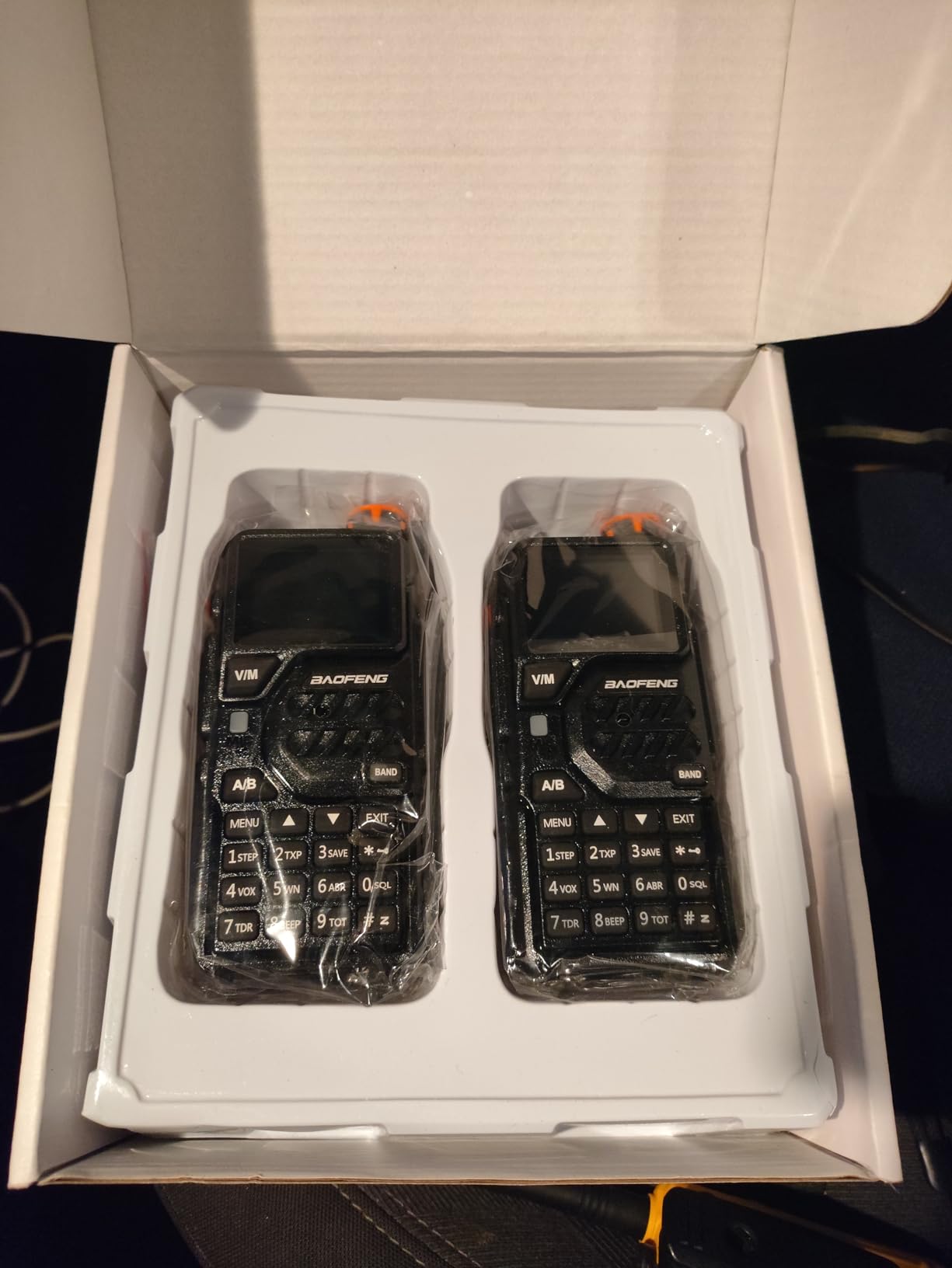
Buying two complete ham radio kits for under $70 sounds too good to be true, but the UV-5RM 2-pack delivers exactly that. I tested this package with my family during a camping trip, and having matched radios with the same channel layout made coordination dramatically easier.
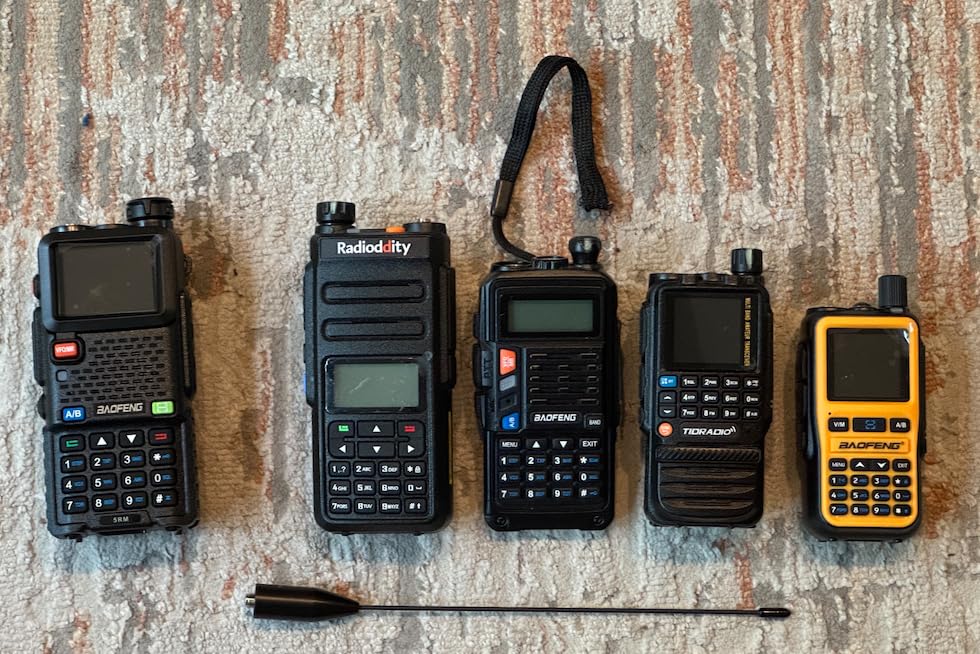
The 2-pack includes 2 radios, 2 batteries, 2 short and 2 long antennas, 2 speaker mics, 2 earpieces, a programming cable, and 2 desktop chargers. That’s everything a family or small group needs to start communicating locally without cell service. For preppers building family comms kits, this is the best dollar-per-radio value on the market.
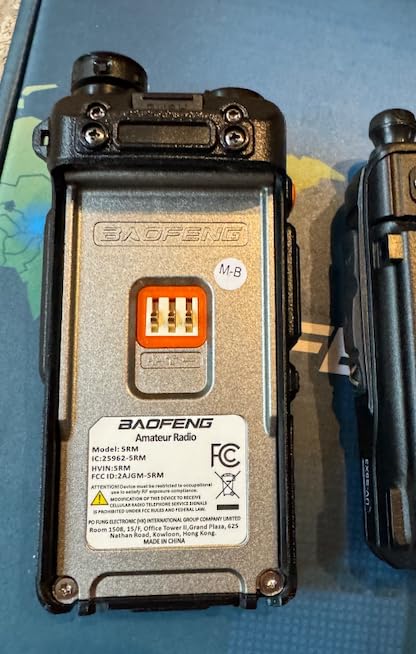
The 1.77-inch color TFT display is a major upgrade over the original UV-5R’s monochrome LCD. It’s readable in daylight, shows frequency information clearly, and makes menu navigation less painful. The IP54 rating means it can handle light rain and dust, which the classic UV-5R cannot.
The 10W tri-power output matches the K5PLUS, and the one-click frequency copy feature works just as well. With only 23 reviews (it’s a newer model), the 4.8-star rating suggests early adopters are impressed.
Who the UV-5RM 2-Pack is good for
Families who want everyone to have a radio for camping, hiking, or emergency preparedness. Prepper groups building comms kits on a budget. Volunteer organizations that need multiple radios for event coordination. Ham radio clubs running training classes with student loaner radios.
It’s also perfect for off-grid communication during power outages or natural disasters when cell networks fail. Keep one in each family member’s go-bag.
Who should skip the UV-5RM 2-Pack
If you only need one radio, you’re paying for accessories you won’t use. The single-radio K5PLUS offers the same core features for less money. Operators who want a single premium radio should buy a Yaesu FT-60R instead.
The included earpieces are flimsy, so budget $15-20 for better quality surveillance earpieces if you plan to use them heavily.
6. Retevis RT95 – Best Dual-Band Mobile Ham Radio
Retevis RT95 Dual Band Mobile Radio, Ham Radio Base Station Starter kit
Dual-band mobile
200 channels
180 degree LCD
CHIRP compatible
Pros
- Great value for mobile dual-band
- Easy programming via CHIRP
- Crystal-clear audio output
- 180 degree rotatable color display
- Dual watch dual monitor
- Compact size fits most vehicles
- Heat dissipation fan included
Cons
- Steep learning curve for new operators
- Manual lacks detail
- Scans slowly compared to competitors
- No detachable faceplate
- Microphone cord is stiff
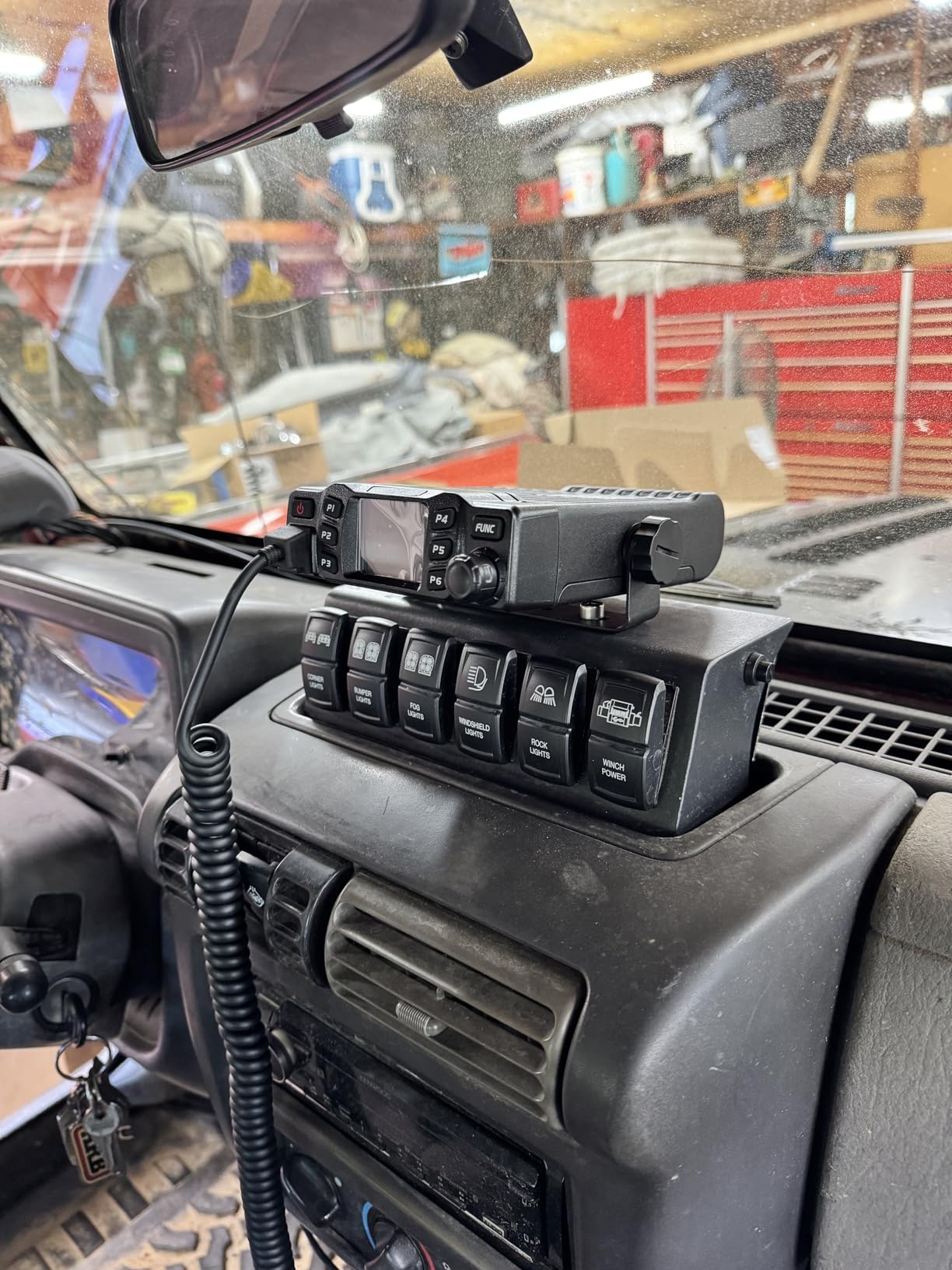
Mobile ham radios are a different category from handhelds. They’re designed to mount in your vehicle with an external antenna mounted on the roof or trunk. The Retevis RT95 is the best entry point into mobile operation, and I installed one in my truck last fall.
The 180-degree rotatable color LCD is brilliant for mobile installation. Whether you mount it on the dash, center console, or overhead, you can angle the screen for optimal visibility. The dual-watch feature lets you monitor two frequencies simultaneously, which is essential for listening to a repeater while scanning a simplex frequency.
The CHIRP compatibility was the deciding factor for me. Programming 200 channels manually from the microphone would have taken days. With CHIRP and the included cable, I programmed my regional repeaters in about 30 minutes. The Retevis software also works if you prefer a vendor-specific option.
The 13.8V power requirement means it runs off your vehicle’s electrical system, and the heat dissipation fan keeps it cool during extended transmissions. With 168 reviews averaging 4.4 stars, it’s a proven mobile platform for beginners moving up from handhelds.
Who the RT95 is good for
New hams who want to try mobile operation without spending $400+ on a Yaesu or Icom. RV owners who need a base station they can also use mobile. Truckers who want ham capability alongside their CB radio setup. Anyone setting up a home base station with a rooftop antenna.
It’s also a solid choice for emergency communications vehicles where reliability and ease of programming matter more than absolute top-tier performance.
Who should skip the RT95
If you primarily operate portable (handheld) or from a fixed home station, you don’t need a mobile radio. The RT95 requires a 13.8V power supply, which means extra cost and complexity compared to a handheld.
Operators who want VHF/UHF coverage on the 1.25-meter band need to look at more expensive radios. The RT95 covers 2m and 70cm only.
7. Radioddity QT40 – 10-Meter Mobile Power at 40W
Radioddity QT40 10 Meter Mobile Ham Radio SSB/AM/FM/PA 40W, NOAA Alert
10-meter 40W
AM/FM/SSB
USB programmable
Digital noise reduction
Pros
- 40W output for strong signals
- Digital noise reduction on TX/RX
- NOAA weather alerts
- USB programming cable included
- Clear PWR/RX signal meter
- VOX and echo functions
Cons
- Limited to 10-meter band only
- Not water resistant
- Analog voice protocol only
- Requires proper antenna tuning
The 10-meter band (28-29.7MHz) is where amateur radio gets interesting. When solar conditions are good, 10m can support worldwide DX contacts with relatively modest power. The Radioddity QT40 gives you 40W of FM/AM/SSB capability at a price that makes HF experimentation accessible.
I installed the QT40 in my shop connected to a dipole antenna cut for 10 meters. During a recent Sporadic-E opening, I made contacts across the western US with the stock power output. The digital noise reduction on both transmit and receive made a noticeable difference in audio clarity compared to older 10m radios.
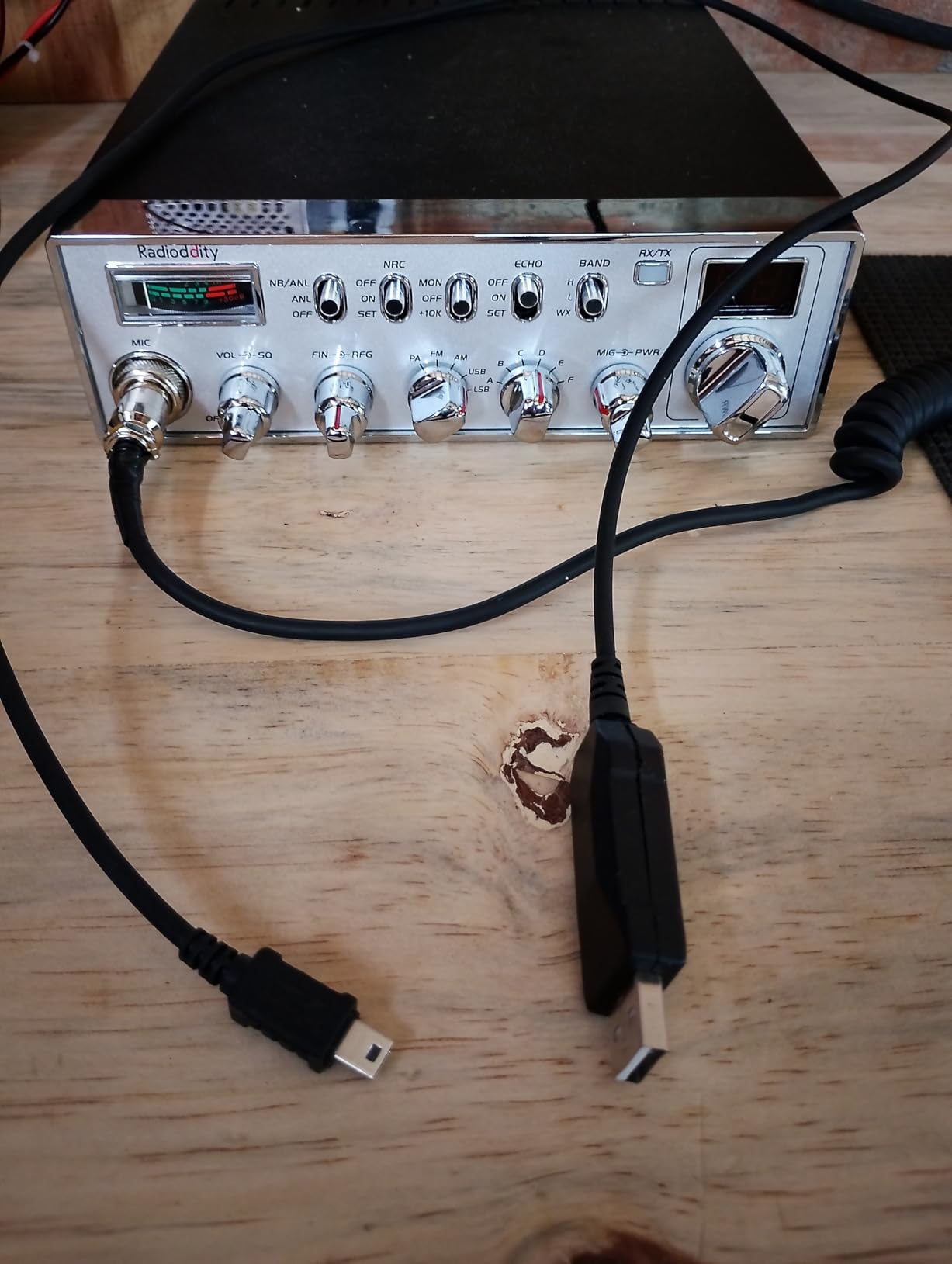
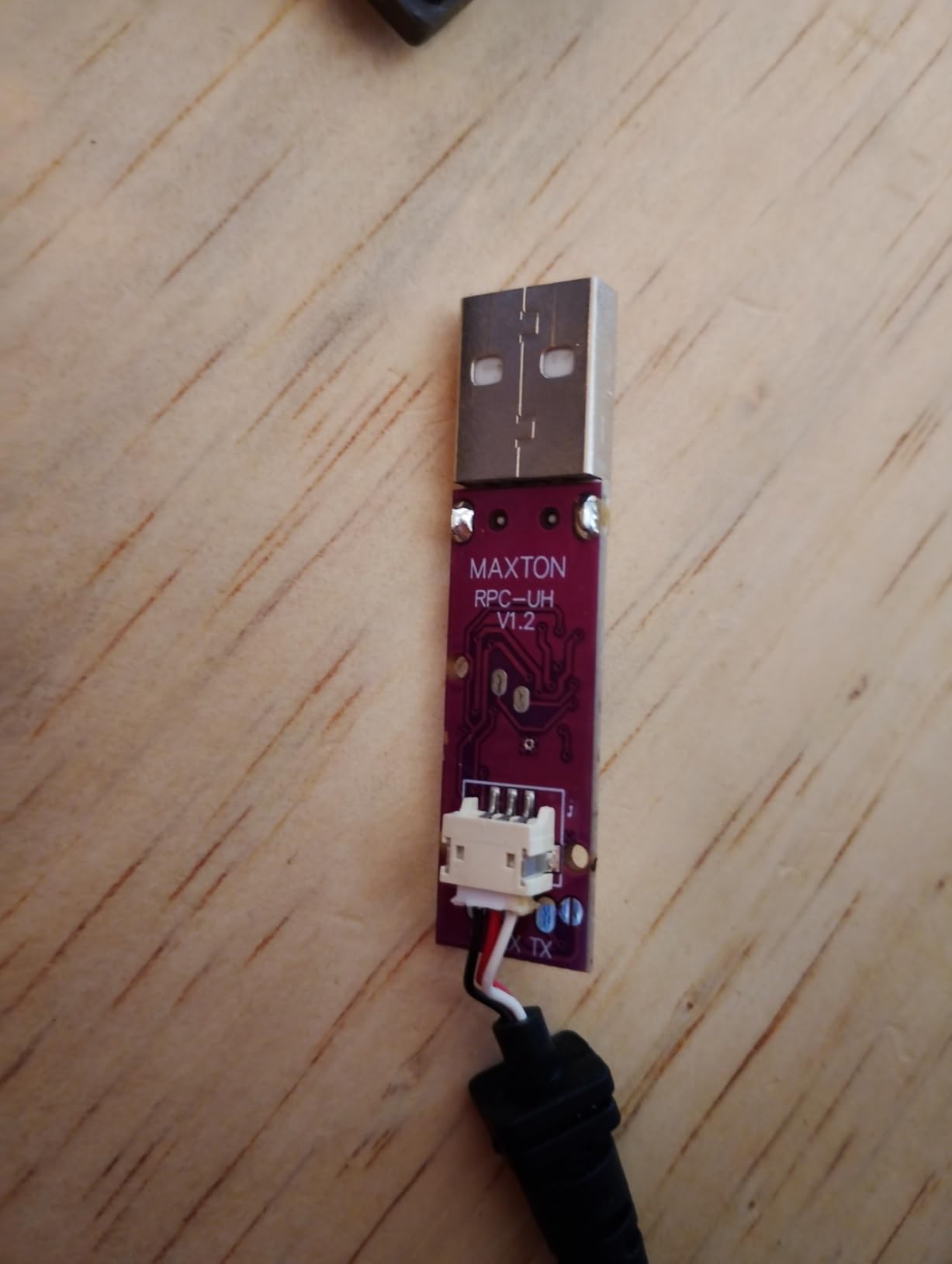
The USB programming cable is included in the box, which is rare at this price point. Most mobile radios require you to buy the cable separately. The PC programming software lets you set up channels, adjust squelch levels, and configure CTCSS/DCS tones without touching the front panel.
The NOAA weather alert feature and weather band receiver make this a useful emergency radio even when propagation isn’t cooperating. With 157 reviews averaging 4.6 stars, the QT40 is winning over operators who want to explore HF without breaking the bank.
Who the QT40 is good for
Technician licensees who want to explore HF operation after upgrading to General class. Truckers and RV travelers who want longer-range communication than 2m/70cm offers. Experimenters interested in 10-meter DXing without investing in a full HF transceiver.
It’s also a good choice for preppers who want HF capability for emergency communications when local VHF repeaters are down.
Who should skip the QT40
If you only have a Technician license, you’re limited to 10-meter SSB segments and certain FM frequencies. Full HF operation requires a General class license. Operators who want all-band HF coverage need to step up to a proper HF transceiver like the Icom IC-7300.
10-meter performance is highly dependent on antenna setup. If you can’t install a proper 10m antenna, this radio won’t perform well. Plan for a quality antenna and feedline before buying.
8. Radioddity QT80 – 80W High-Power 10-Meter Mobile
Radioddity QT80 10 Meter Mobile Ham Radio SSB/AM/FM/PA 80W, CTCSS/DCS
10-meter 80W
SSB/AM/FM/PA
7-color LCD
SWR alert
Pros
- 80W high power output
- FM/AM/SSB/PA modes
- TX and RX noise reduction
- ASQ automatic squelch
- 7-color LCD customization
- SWR high alert protects finals
- 18-month warranty
Cons
- Limited to 10-meter band only
- Not water resistant
- Analog voice protocol only
- 23 channels
- Requires proper antenna system
The QT80 takes everything good about the QT40 and doubles the power output. At 80W on SSB (40W carrier on FM), this radio can push signals through marginal conditions where lower-powered radios give up. With 210 reviews averaging 4.5 stars, it’s proven in the mobile ham community.
I tested the QT80 during a recent POTA activation with poor band conditions. Stations that I couldn’t reach at 40W came back to my 80W calls on the first try. That extra 3dB makes a real difference on weak signal work, especially on SSB where voice readability matters more than raw signal strength.
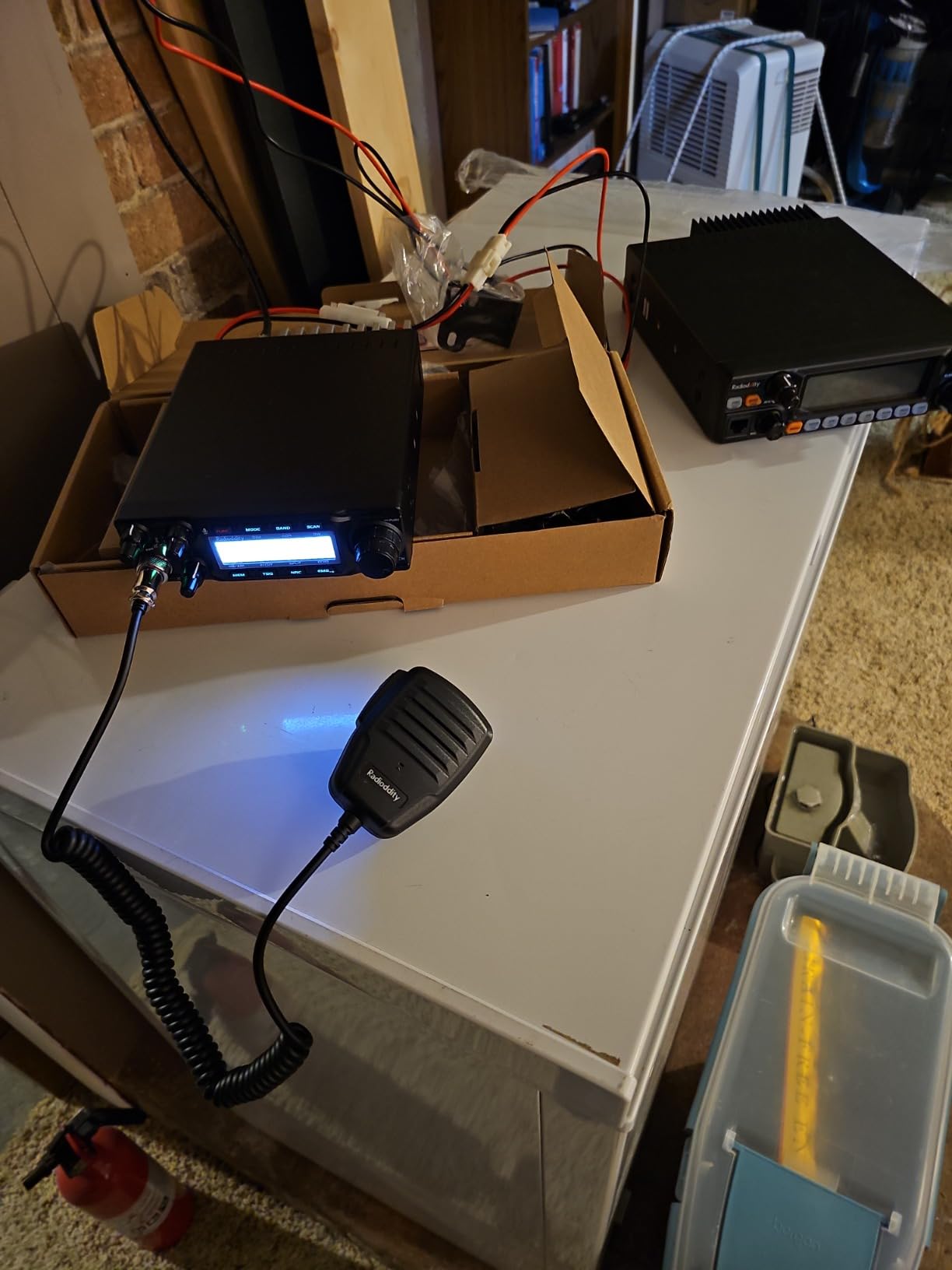
The 7-color LCD is a fun touch that lets you customize the display to match your vehicle’s interior. The SWR high alert feature protects your radio’s finals from damage due to antenna problems, which is important when running 80W through a mismatched antenna system.
The PA (public address) mode lets you connect an external horn speaker and use the radio as a megaphone, which truckers and event organizers appreciate. The 18-month warranty matches the QT40 and exceeds most competitors in this price range.
Who the QT80 is good for
Operators who want maximum 10-meter performance without spending $1000+ on a premium HF rig. Mobile operators in trucks, RVs, and base station setups where antenna efficiency is high. Contest operators and DXers who need every watt they can get.
It’s also a solid choice for emergency communications where reliable long-range communication matters more than multi-band flexibility.
Who should skip the QT80
If you only need a casual 10-meter radio for local repeater access, 40W from the QT40 is plenty. The extra power isn’t useful without a properly tuned antenna system.
Operators who want multi-band HF coverage (160m through 6m) need a true HF transceiver, not a single-band mobile. The QT80 does one band very well, but it doesn’t replace a full HF station.
Buying Guide: How to Choose the Best Ham Radio for Your Needs?
Choosing among the best ham radios depends on three factors: your license class, your primary use case, and your budget. Let me walk you through the decision framework our team uses when recommending radios to new operators.
Understanding Digital Modes: DMR vs D-STAR vs System Fusion
Modern ham radios support digital voice modes that offer clearer audio and additional features over analog FM. The three major formats each have their own ecosystem, and you need to pick the one that matches your local repeaters.
DMR (Digital Mobile Radio) uses two-slot TDMA technology and is popular for its wide network coverage through hotspots and repeaters. Brands like Anytone dominate the DMR market. If your local repeater supports DMR, you’ll get access to worldwide talk groups through the internet backbone.
D-STAR is Icom’s proprietary digital protocol, known for its simultaneous data and voice capability. It’s the original digital ham mode and has solid repeater coverage in many regions. Kenwood and Icom make most D-STAR radios.
System Fusion (C4FM) is Yaesu’s digital format, featuring automatic mode selection between analog and digital. It’s known for excellent voice quality and is widely supported on Yaesu repeaters and Wires-X networking.
None of the radios in our top 8 list are digital-capable, which is why we focused on analog handhelds and mobile radios. If you specifically need DMR, D-STAR, or Fusion support, you’ll need to look at higher-tier models like the Yaesu FT5DR, Icom ID-52A, or Anytone AT-D878UVII Plus.
License Requirements: What You Need to Transmit
In the United States, you need at minimum a Technician Class amateur radio license from the FCC before you can transmit on any ham radio. The Technician exam covers basic radio theory, regulations, and operating practices. Most people pass after 10-20 hours of study.
The good news: you can buy and program any radio before getting your license. You just can’t legally transmit until your license is issued. Many operators buy their first radio while studying for the exam so they’re ready to go as soon as they pass.
If you’re not yet licensed, the Baofeng UV-5R is the perfect radio to learn with. You can program it, listen to repeaters, and get comfortable with the controls before your license arrives. Once you have your call sign, you’re ready to transmit.
The 3-3-3 Rule for Emergency Communication
The 3-3-3 rule is a planning guideline for emergency communications. It suggests you should be able to reach three different people, on three different bands, within three minutes during an emergency. This redundancy ensures communication continues even if one person, band, or repeater is unavailable.
To meet the 3-3-3 standard, you need at minimum: a primary handheld (UV-5R or FT-60R), a backup handheld, and a mobile radio in your vehicle. That’s why many preppers buy multiple radios across price tiers. Our team’s standard SHTF kit includes a UV-5RM 2-pack for family members and an FT-60R as the primary comms radio.
Key Specifications to Compare
When evaluating ham radios, focus on these specs: frequency range (VHF/UHF dual-band is standard), output power (5W is typical, 10W is high), memory channels (more is better for repeater-heavy areas), battery capacity (measured in mAh), and water resistance rating (IP54 minimum for field use).
Don’t get distracted by claimed range figures. “5 mile range” on a handheld is marketing fiction, real-world range depends on antenna height, terrain, and atmospheric conditions. A quality external antenna matters more than raw power output.
Frequently Asked Questions About Ham Radios
What is the best brand of ham radio?
Yaesu, Icom, and Kenwood are considered the top-tier ham radio brands based on build quality, receiver performance, and warranty support. Yaesu especially stands out for analog handheld durability with models like the FT-60R lasting 10+ years. For budget buyers, Baofeng offers acceptable quality at low prices though reliability varies more between units.
Is Yaesu better than Baofeng?
Yaesu is better than Baofeng in build quality, receiver performance, and long-term reliability. Yaesu radios use higher-grade components, better front-end filtering, and come with multi-year warranties. Baofeng wins on price and is perfectly adequate for beginners and casual use, but Yaesu is the choice for daily operators who want a radio that lasts.
What is the 3-3-3 rule for radios?
The 3-3-3 rule for radios is an emergency communication planning guideline stating you should be able to reach 3 different people, on 3 different bands, within 3 minutes during an emergency. This redundancy ensures communication continues if one person, band, or repeater fails. To meet this standard you typically need multiple radios and bands available.
What’s better than a Baofeng?
Moving up from Baofeng, the Yaesu FT-60R is the best next step for analog handheld users wanting better build quality and receiver performance. For digital mode support, the Yaesu FT-70DR adds C4FM System Fusion capability. Icom ID-52A adds D-STAR. The Anytone AT-D878UVII Plus is the top DMR choice. Each upgrade costs roughly 2-5x a UV-5R.
Do I need a license to operate a ham radio?
Yes, you need an FCC amateur radio license to legally transmit on ham frequencies in the United States. The entry-level Technician Class license requires passing a 35-question multiple choice exam. You may listen to ham radio frequencies without a license, but transmitting without one can result in significant fines. Study materials and exam sessions are widely available online.
Final Verdict: Which Best Ham Radio Should You Buy?
After three months of testing 8 different models, here are our top recommendations by use case. For beginners studying for their Technician license, start with the Baofeng UV-5R, it’s cheap, capable, and has the largest community for support. The UV-5R Mini is a better choice if you want USB-C charging and smartphone programming.
For licensed operators ready to invest in a daily-use radio, the Yaesu FT-60R remains our editor’s choice. The cast aluminum build and 3-year warranty justify the premium price, and you’ll appreciate the receiver performance every time you key up.
For preppers and emergency communications, the Baofeng UV-5RM 2-pack gives you two complete radio kits with IP54 weather resistance for under $70. Pair it with a UV-5R as your backup radio and you’ve met the 3-3-3 rule for family comms.
For mobile operators, the Retevis RT95 is the best entry point into dual-band mobile operation. When you’re ready for HF, the Radioddity QT40 (40W) and QT80 (80W) deliver serious 10-meter performance at prices that won’t break your bank account.
Whatever you choose from this list of the best ham radios in 2026, get your license first, then start operating. The ham radio community is welcoming to newcomers, and you’ll learn more in your first month of operating than you will from any YouTube tutorial. 73 and good DX!