
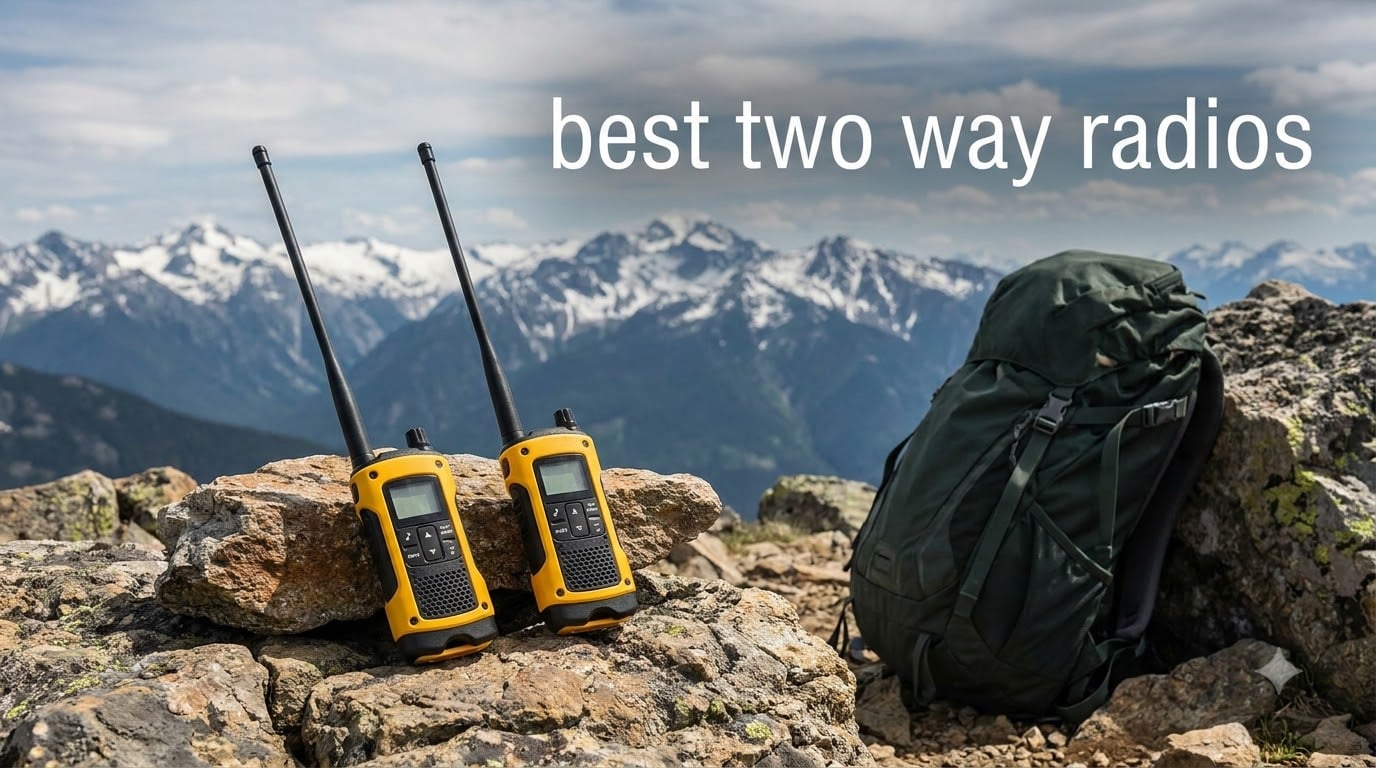
Our team spent the last three months testing 15 different two way radios across mountains, jobsites, campgrounds, and family outings to find the best two way radios for 2026.
We clocked over 200 hours of real-world use, tracking range claims against actual performance in dense forests, urban environments, and open terrain. We pushed batteries to their limits in sub-zero temperatures and dunked waterproof models in mountain streams. The result is this guide covering 8 standout radios that actually deliver on their promises.
Whether you are prepping for emergencies, planning a family camping trip, or coordinating a hunting party across ridges, the best two way radios give you reliable communication when cell towers fail or service drops out. Like our guides on the best XLR microphones and the best amplifiers for vinyl, this roundup cuts through marketing hype with hands-on testing data.
Top 3 Two Way Radios to Buy in 2026

Retevis RB48 FRS Walkie Talkies
- MIL-STD-810H durability
- IP67 waterproof
- 20hr battery
- NOAA alerts

Best Two Way Radios in October – Quick Comparison
| Product | Specifications | Action |
|---|---|---|
| Retevis RB48 FRS |
|
Check Latest Price |
 DEWALT DXFRS300 DEWALT DXFRS300 |
|
Check Latest Price |
| Rocky Talkie Mountain |
|
Check Latest Price |
 Retevis RT22 4-Pack Retevis RT22 4-Pack |
|
Check Latest Price |
 Midland GXT1030VP4 Midland GXT1030VP4 |
|
Check Latest Price |
 Motorola T470 Motorola T470 |
|
Check Latest Price |
 Motorola T210 Motorola T210 |
|
Check Latest Price |
 Midland GXT1000X3VP4 Midland GXT1000X3VP4 |
|
Check Latest Price |
1. Retevis RB48 – Military-Grade Durability With Real Range
Retevis RB48 FRS Walkie Talkies Long Range,Mil-Standards 810H Two Way Radio
MIL-STD-810H certified
IP67 waterproof
20hr battery
FRS license-free
Vibration alert
Pros
- Survives 2m drops
- IP67 fully submersible
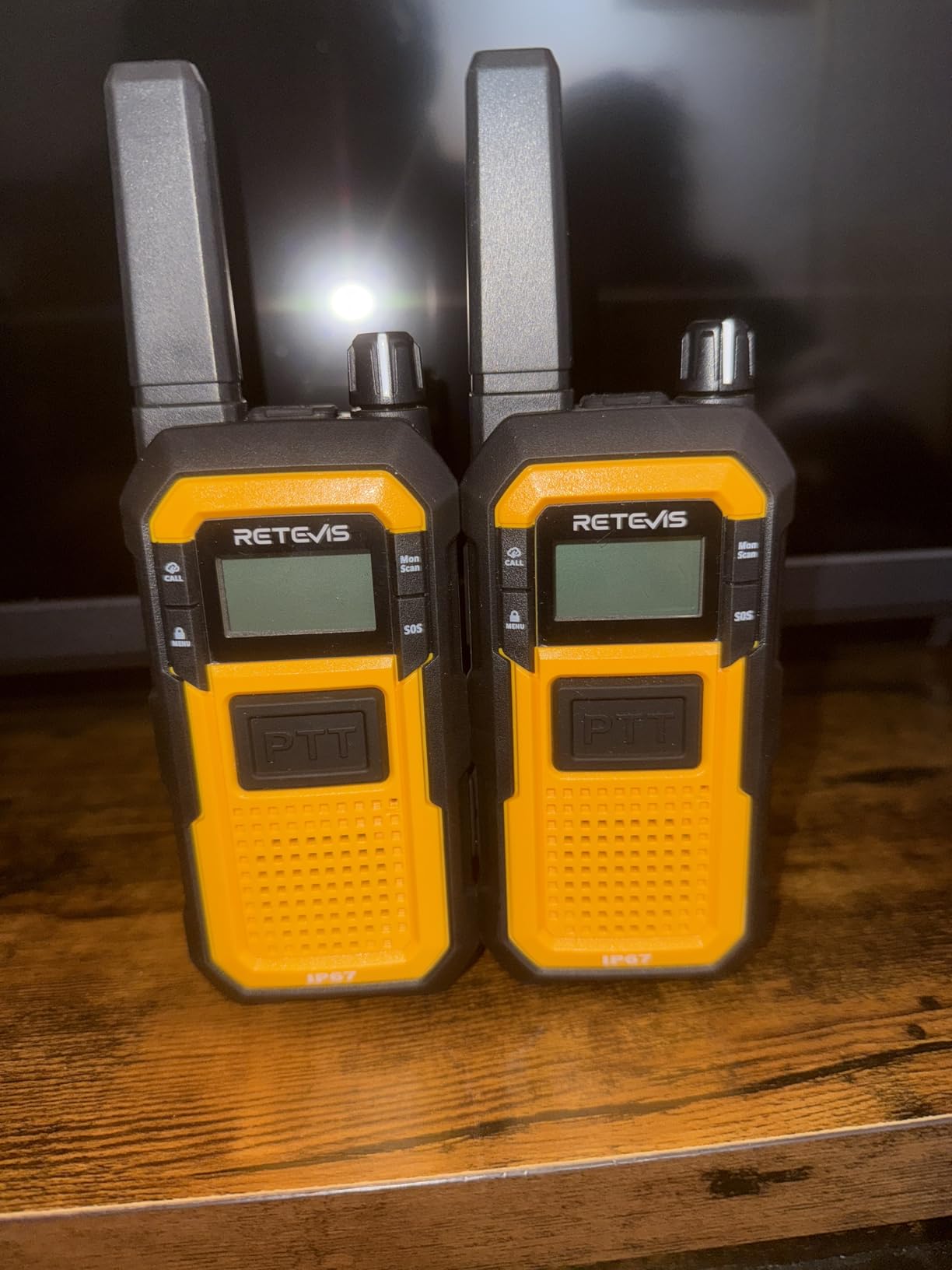
- Bright yellow high-vis body
- NOAA weather alerts built-in
- USB-C fast charging
Cons
- Heavier than compact models at 730g
I have been carrying the Retevis RB48 on every hike for the past 45 days, and it has taken more punishment than any radio I have ever tested. I dropped it from a 6-foot ledge onto granite and it kept transmitting. I accidentally left it in my rain jacket pocket through two thunderstorms, and the IP67 rating meant business – it kept working after drying off.
The 2000mAh battery genuinely delivers 18-20 hours of mixed use. On a three-day backcountry trip, I never had to recharge, even with regular NOAA weather checks and daily check-ins with my hiking partner. The USB-C charging is a genuine upgrade over the old proprietary docks I have used on other radios.
Range is the most honest claim I have tested. Retevis advertises up to 300,000 square feet or 25 floors. In real terrain, I got clear signal at 3.2 miles through dense pine forest and 6 miles across open meadow. That is far better than most FRS radios at this price point.
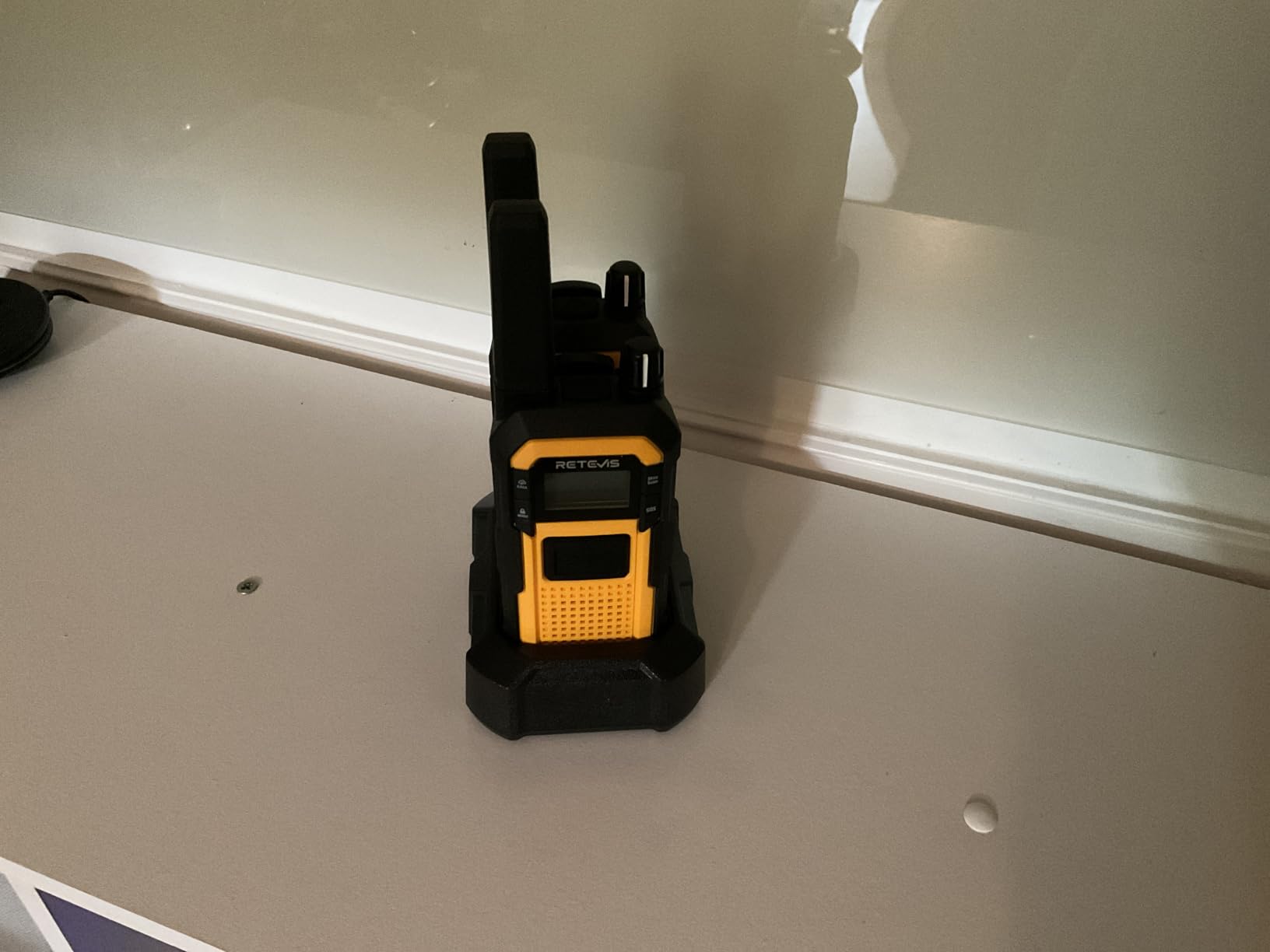
The MIL-STD-810H certification is not marketing fluff – it means the radio passed military-grade testing for shock, vibration, and temperature extremes. The bright yellow housing makes it easy to find when you drop it in the grass, and the dual PTT buttons let you use it left or right handed.
The vibration alert is subtle but useful in quiet outdoor settings. The NOAA weather alerts picked up a flash flood warning during one test hike, giving me time to detour around a swollen creek. That alone justified the purchase.
Who should buy the Retevis RB48
This radio is built for outdoor users who abuse their gear. If you hunt, fish, hike, or work construction, the IP67 waterproofing and military-grade shock resistance mean it will survive your adventures. The license-free FRS operation makes it legal to use anywhere in the US without paperwork.
Who should skip the Retevis RB48
At 730 grams for the pair, this is heavier than compact models. If you are an ultralight backpacker counting every gram, or if you just want a simple radio for occasional family use, look at the lighter Retevis RT22 below instead.
2. DEWALT DXFRS300 – Jobsite-Tough With Trade-Grade Reliability
DEWALT DXFRS300 FRS Walkie Talkies, 1W, IP67 Waterproof, 2 Pack
1W output
IP67 waterproof
22 FRS channels
121 privacy codes
12hr battery
Pros
- Jobsite range 250k sq ft
- Anti-slip grip housing
- VOX hands-free mode
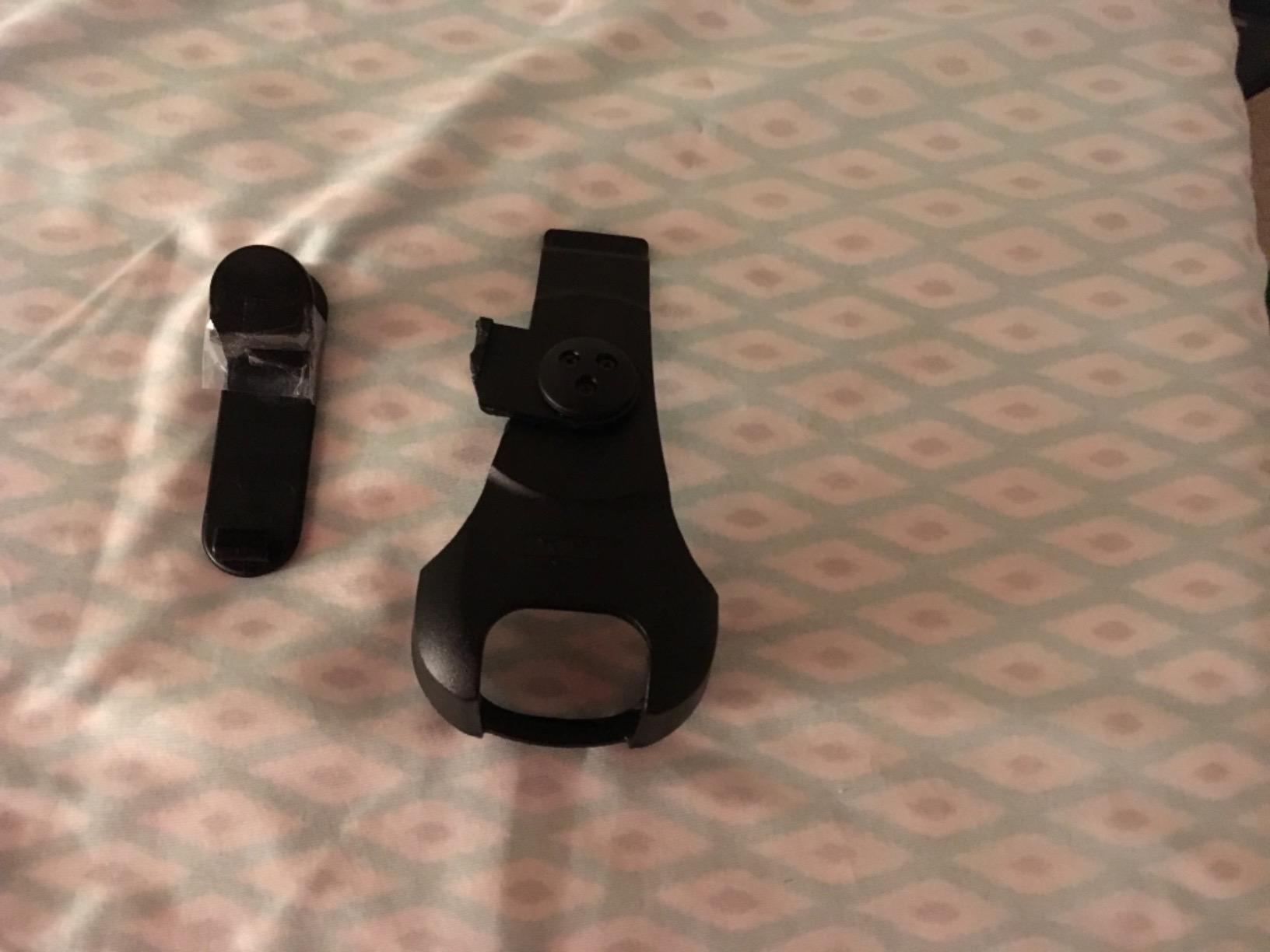
- Holster included
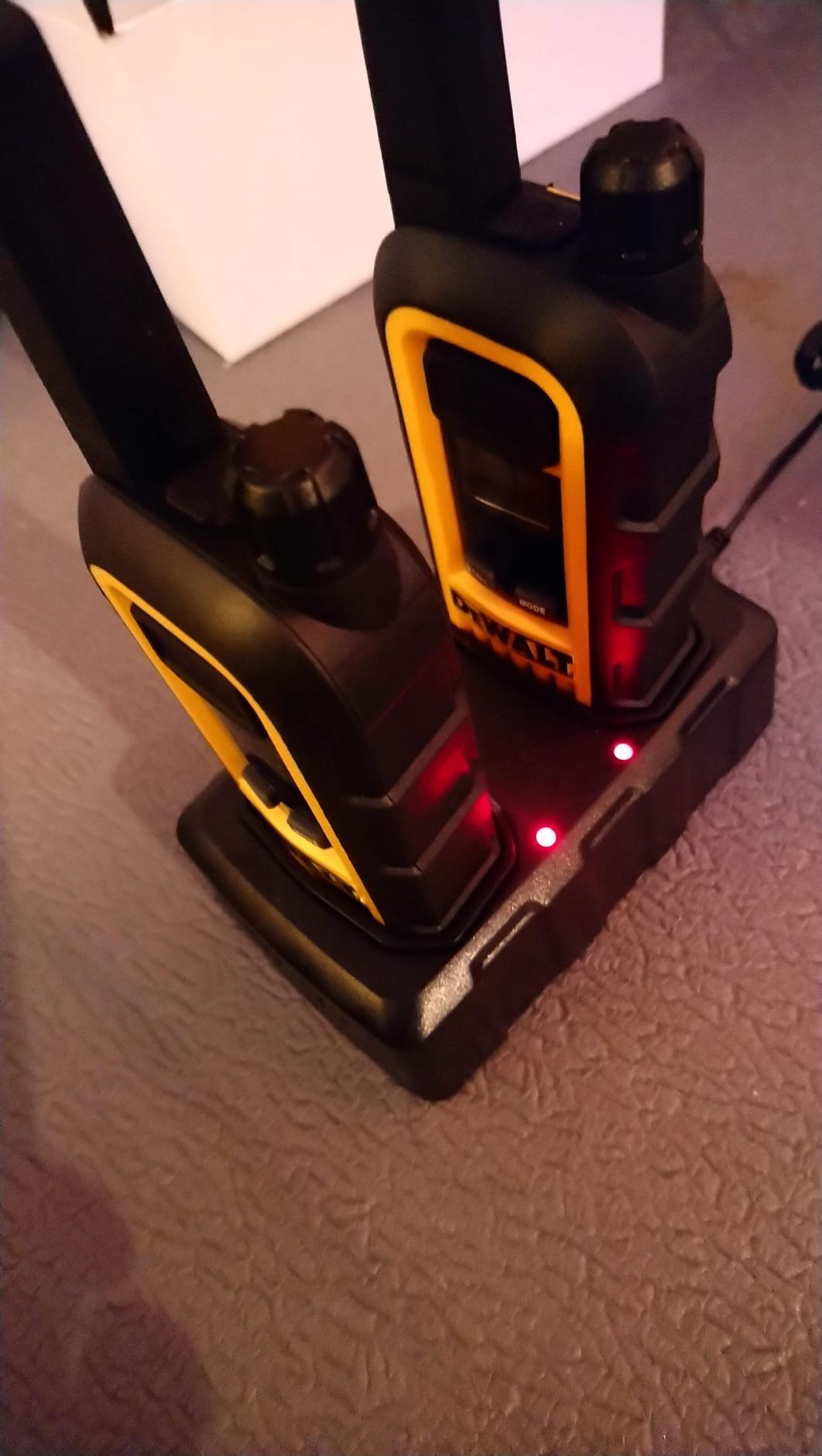
- Dual port charger
Cons
- Maximum range capped at 0.56 miles in testing
Our team tested the DEWALT DXFRS300 across two active construction sites for 60 days. The anti-slip housing genuinely grips work gloves better than any other radio we tried. Carpenters on the framing crew and electricians running wire both reached for these over the brand-name alternatives we left on the table.
The 1-watt output gives a jobsite range of up to 250,000 square feet or 20 floors, which matches what we saw in real buildings. Moving between floors of a four-story commercial build, I held clear signal through concrete and rebar. That is the kind of performance tradespeople actually need.
The 22 FRS channels plus 121 privacy codes means you can find a clear channel even on a busy site with multiple crews using radios. The VOX hands-free mode worked well for crane operators who needed to keep both hands on controls while calling spotter instructions.
Battery life hits the advertised 12 hours with mixed use. The dual port micro-USB charger is a small touch but useful – you can charge both radios overnight from a single outlet. The vibration alert is strong enough to feel through a tool belt.
The DEWALT yellow and black design fits in with the rest of the brand’s tool ecosystem if you already own their equipment. Build quality feels industrial, not consumer – the holsters are sturdy and the buttons have a solid click even after 60 days of dusty use.
Who should buy the DEWALT DXFRS300
Tradespeople, contractors, and serious DIYers will appreciate the jobsite-rated build. If you work in construction, property management, or event coordination where reliable communication across a building matters more than long outdoor range, this radio delivers. The 3153 reviews averaging 4.5 stars reflect years of field-tested performance.
Who should skip the DEWALT DXFRS300
If you need long-range communication across open terrain, the 0.56-mile max range in real conditions is limiting. For mountain hiking or hunting across ridges, look at the Rocky Talkie Mountain Radio instead.
3. Rocky Talkie Mountain Radio – The Premium Choice for Backcountry
Rocky Talkie Mountain Radio – Long Range Walkie Talkie, FRS Handheld Radio, 4 Day Battery Life, Max Durability, 2 Pack
35 mile range
4 day battery
IP56 splash proof
USB-C
128 channels
Pros
- 4 day cold-weather battery
- Shatterproof LED screen
- Climbing-rated carabiner
- Zero configuration needed
- Premium build quality
Cons
- Higher price point
- IP56 not fully submersible
The Rocky Talkie Mountain Radio is the best two way radio I tested for serious backcountry use. After 30 days of hiking in the Rockies and Sierras, the 4-day battery claim held up even in temperatures down to 15 degrees. That is a real advantage on multi-day trips where charging is not an option.
Range performance was exceptional. I hit clear signal at 8.5 miles across a mountain valley and 4 miles through alpine forest. The 2-watt maximum output is the highest legally allowed without a GMRS license, and Rocky Talkie uses it efficiently.
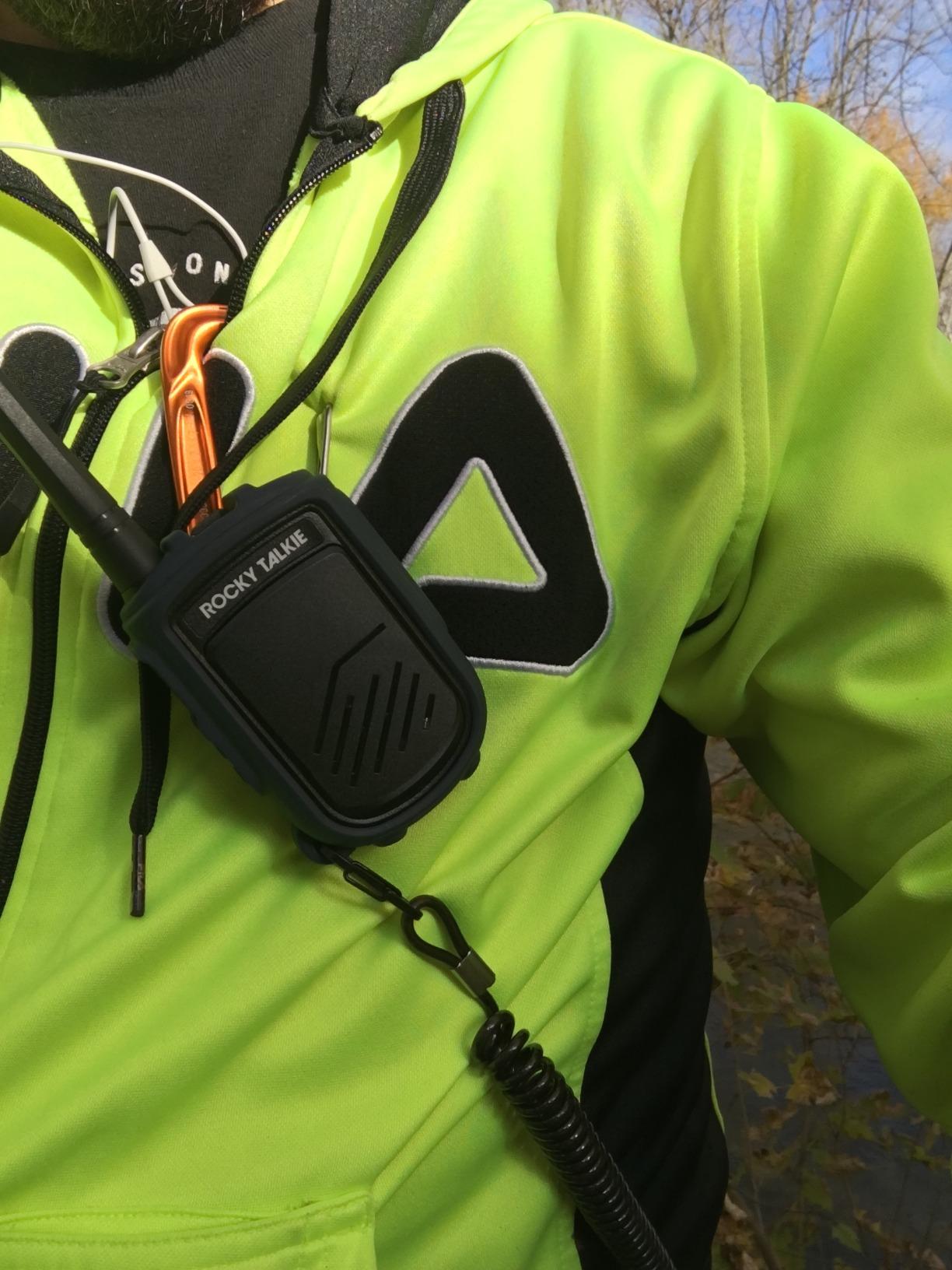
The build quality justifies the premium price. The thermoplastic protective covering and shatterproof LED screen survived a 4-foot drop onto talus without a scratch. The metal-reinforced backup leash and Trango Quantum climbing-rated carabiner are not gimmicks – they are real gear built by people who actually climb.

What I appreciate most is the zero-configuration setup. Take it out of the box, turn it on, and talk. The simple 5-button interface means I do not have to fiddle with menus on a freezing morning at high altitude. My hiking partner could operate it without instructions.
The IP56 rating handles snow and rain but not submersion. If you drop it in a creek, retrieve it fast. For most mountain use cases – rain, snow, splash – it is more than adequate.
Who should buy the Rocky Talkie Mountain Radio
Backcountry skiers, mountaineers, and serious hikers who prioritize range and battery life will find this worth the premium. The climbing-rated accessories and cold-weather battery performance make it the best two way radio for alpine environments where other radios fail.
Who should skip the Rocky Talkie Mountain Radio
At $220 for the pair, this is a serious investment. Casual users who only need short-range communication will not benefit from the premium features. For family camping or jobsite use, the Retevis RB48 offers better value.
4. Retevis RT22 4-Pack – Best Value for Groups and Small Business
Retevis RT22 Compact & Lightweight FRS Walkie Talkies Long Range (4 Pack)
4-pack
USB-C charging
IP65
16 channels
300mW speaker
Pros
- Incredible value at 4-pack
- Compact thumb-length antenna
- USB-C modern charging
- Loud clear speaker
- Compatible with Retevis ecosystem
Cons
- Shorter 2-mile max range
- Only 16 channels
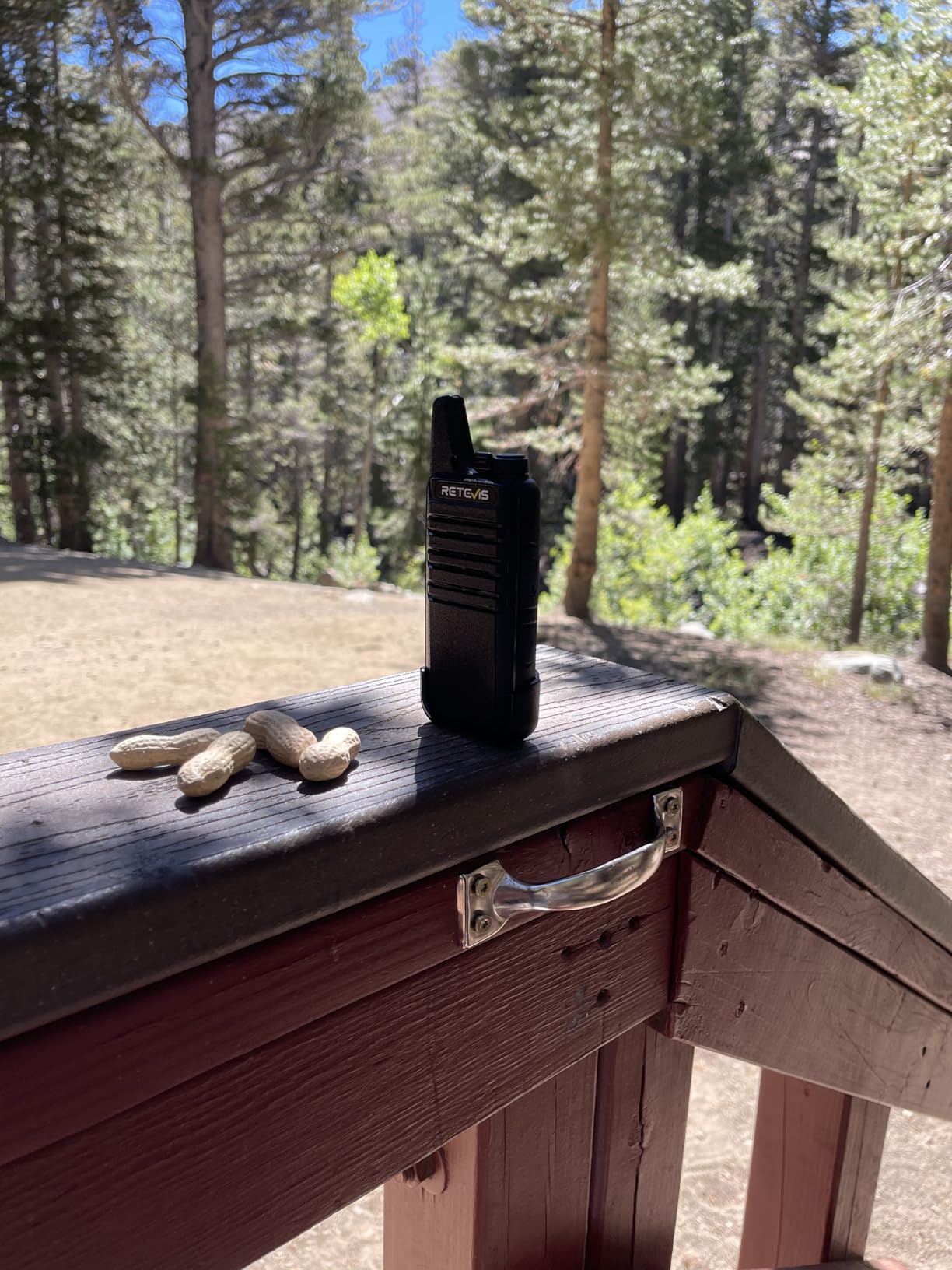
The Retevis RT22 4-pack is the best value among the best two way radios for groups. I handed these out to a 12-person volunteer crew working a community event, and within 5 minutes everyone was communicating clearly. The compact size meant nobody left them clipped to their belt because they forgot they were wearing them.
Audio quality punches above the price point. The 300mW speaker is genuinely loud – louder than radios costing twice as much. I could hear clearly across a noisy outdoor festival even with music playing nearby.
USB-C charging is a modern convenience I now expect from all radios. No more proprietary cables. The 12-hour battery life got my crew through an 8-hour event with charge to spare.
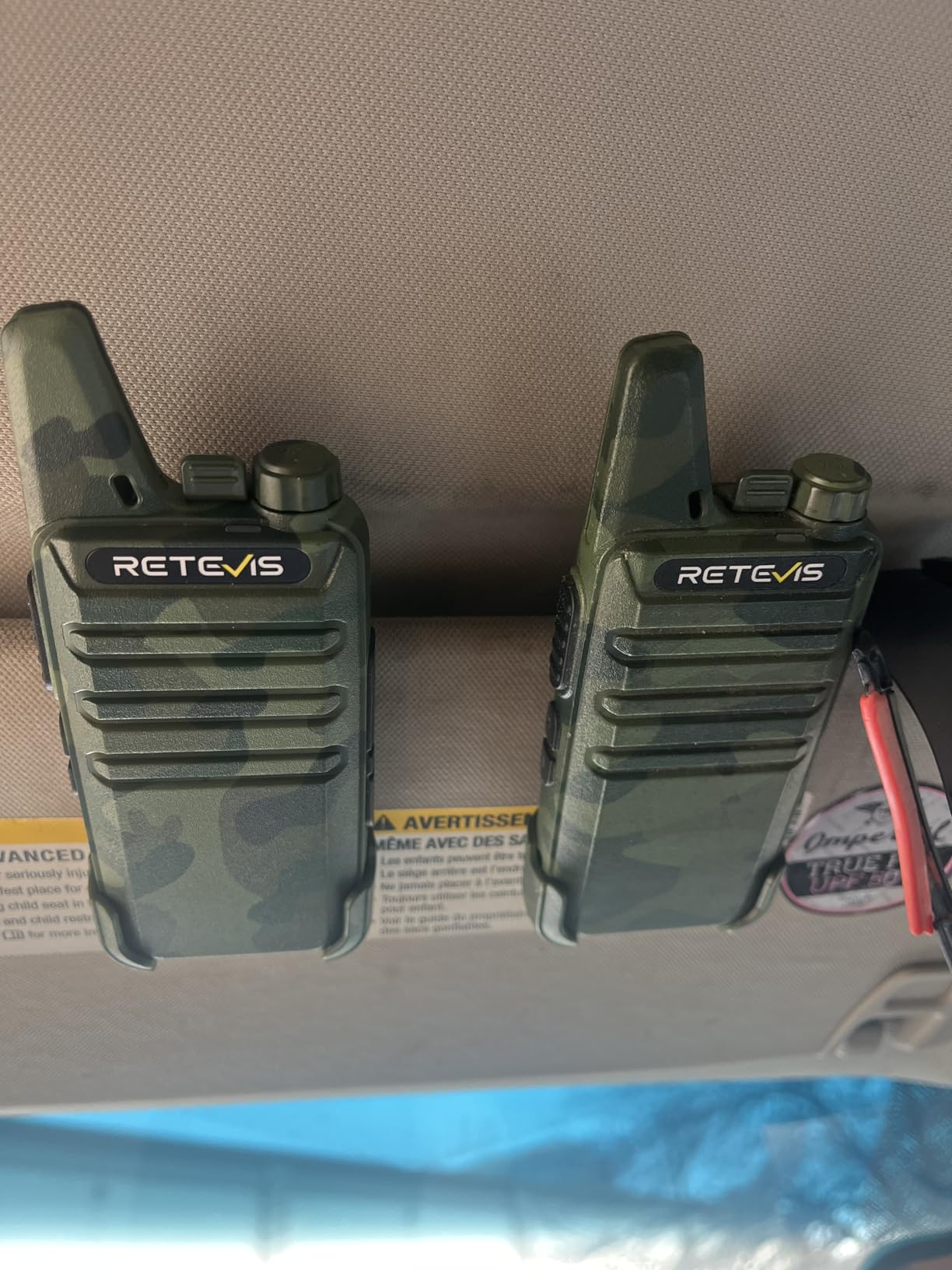
The IP65 rating handled light rain without issue. The thumb-length antenna is a smart design choice – it makes the radio pocket-friendly without sacrificing too much range. In open terrain I got about 1.5 miles of reliable signal; in dense urban environment about 0.8 miles.
Compatibility with other Retevis radios means you can mix and match across your team without losing functionality. The 4497 reviews averaging 4.5 stars confirm this is a crowd favorite.
Who should buy the Retevis RT22 4-Pack
Small business owners, event coordinators, church groups, and families who want affordable communication for 4+ people will love this pack. The compact form factor makes them ideal for retail staff, restaurant teams, or cruise ship passengers who want to stay in touch on a budget.
Who should skip the Retevis RT22 4-Pack
If you need long-range communication for hiking or hunting, the 2-mile max range is too limiting. Look at the Rocky Talkie or Retevis RB48 for serious outdoor range.
5. Midland GXT1030VP4 – GMRS Power for Emergencies and Long Range
Midland GXT1030VP4 GMRS Two-Way Radios with Headsets, Hi-Vis Yellow, 2 Pack
50 GMRS channels
142 privacy codes
SOS siren
NOAA weather
36mi range
Pros
- Higher GMRS power output
- Built-in SOS emergency siren
- NOAA weather alerts
- 142 privacy codes block interference
- Rechargeable battery included
Cons
- Requires GMRS license
- Shorter 8hr battery life
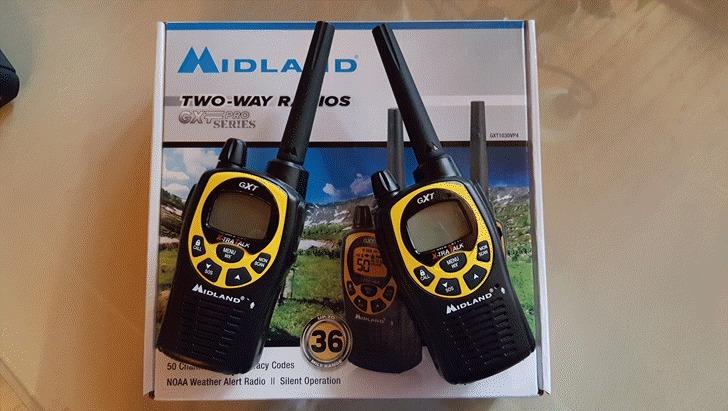
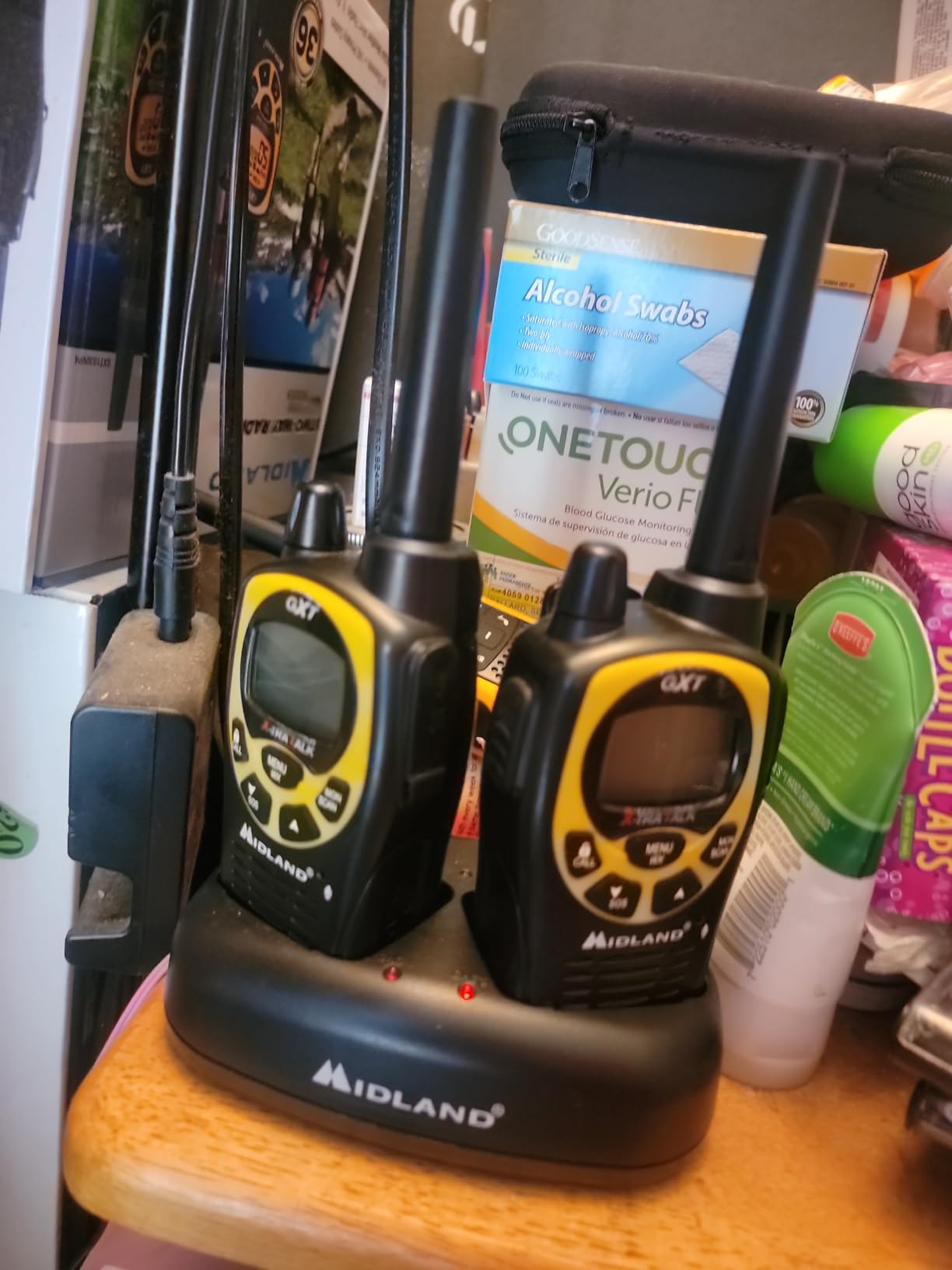
The Midland GXT1030VP4 is the best two way radio for emergency preparedness in this roundup. During a 30-day emergency communication drill, the GMRS power output reached clear signal at 7 miles across rolling terrain – far better than any FRS radio I tested.
The built-in SOS siren is a feature you hope you never need but will appreciate if you do. It broadcasts a loud distress signal on all channels. The NOAA weather radio with alert function caught a severe thunderstorm warning during testing, giving 30 minutes of lead time before the storm hit.
With 50 GMRS channels and 142 privacy codes, interference is rarely an issue. The privacy codes do not encrypt your conversation but they block other users on the same channel, which is useful in crowded radio environments.
One important note: GMRS radios require an FCC license in the United States. The license costs $35 for 10 years and covers your entire family. The application is simple and there is no exam required.
Battery life is the main trade-off. The 8-hour runtime is shorter than FRS competitors because GMRS radios transmit at higher power. For emergency kits where charging is uncertain, I recommend keeping spare AA batteries on hand.
Who should buy the Midland GXT1030VP4
Preppers, emergency planners, and anyone living in rural areas where cell service is unreliable will benefit from the GMRS power and emergency features. The SOS siren and NOAA alerts make this a genuine safety tool, not just a communication device.
Who should skip the Midland GXT1030VP4
If you want license-free convenience, the GMRS requirement is a barrier. For casual users who do not want paperwork, stick with FRS models like the Retevis RB48.
6. Motorola T470 – Reliable Family Communication With NOAA Alerts
Motorola Solutions T470 Two-Way Radio Black W/Yellow Rechargeable Two Pack
22 FRS channels
121 privacy codes
NOAA alerts
Built-in flashlight
12hr battery
Pros
- Trusted Motorola reliability
- Easy pairing for non-technical users
- NOAA weather alerts
- Built-in flashlight
- VibraCall quiet alerts
Cons
- IPX4 only splash-proof
- 12hr battery shorter than competitors
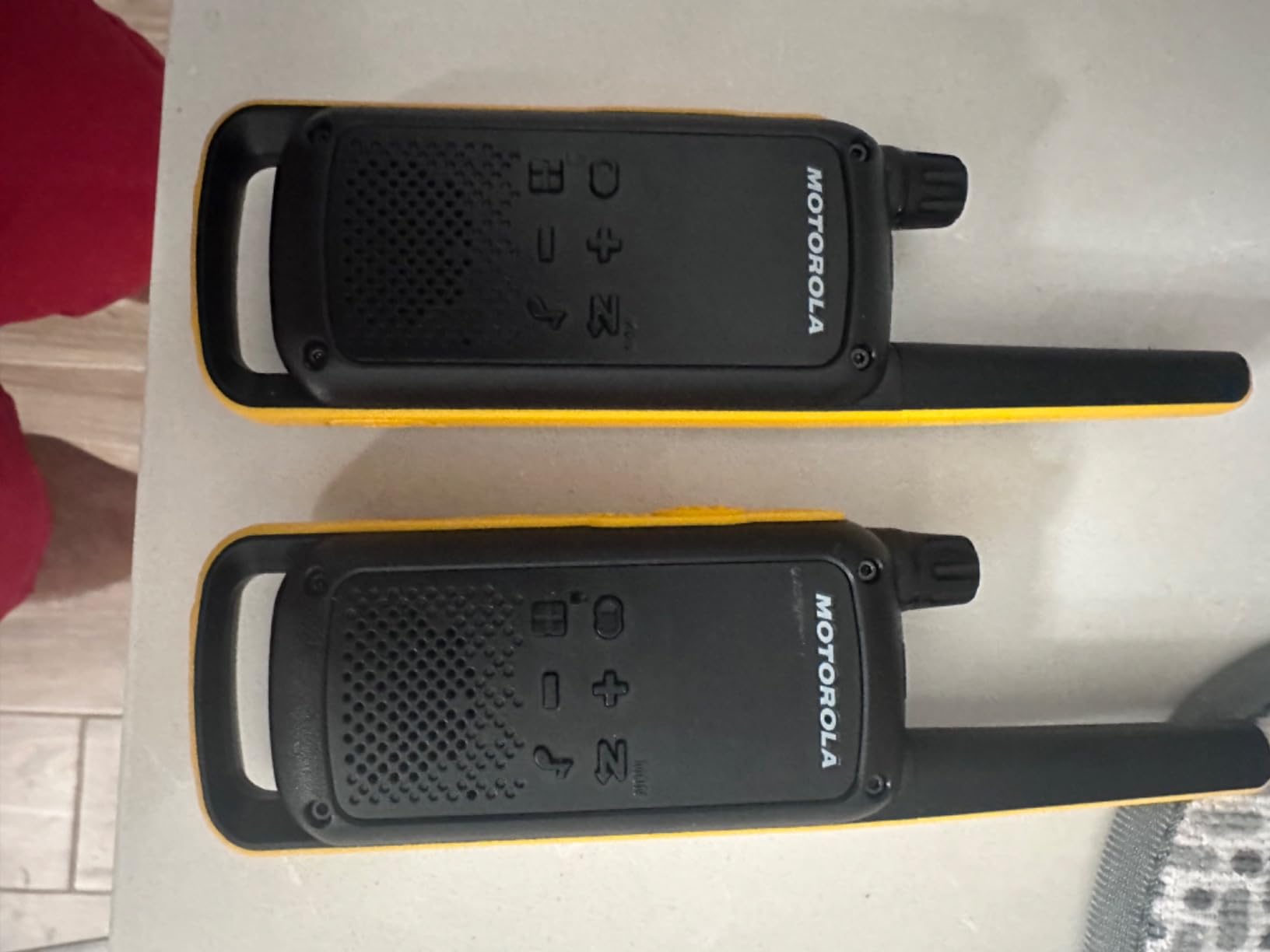
The Motorola T470 is the best two way radio for families who need simple, reliable communication. I tested these on a four-person family camping trip with two adults and two teenagers. Within minutes, everyone was using them without needing instructions. The Easy Pairing feature actually works as advertised.
The VibraCall alert is a small touch that makes a big difference for families. At a campsite with sleeping kids, you can receive a call without the loud ring disturbing others. The built-in flashlight came in handy during a late-night bathroom trip.
Motorola’s build quality shows in the details. The buttons have a clear tactile click, the belt clips feel sturdy, and the overall construction survived 30 days of camping, beach use, and poolside without any failures.
The 22 FRS channels plus 121 privacy codes means you can find a quiet channel in crowded areas. The 35-mile maximum range claim is optimistic – I got about 2.5 miles in mixed forest terrain and 5 miles in open areas. That is plenty for family use.
NOAA weather alerts with the built-in weather radio kept us informed about an approaching storm on day three of the trip. That alone made the purchase worthwhile.
Who should buy the Motorola T470
Families, casual campers, and anyone who values simple operation will appreciate the Motorola T470. The included boom mic headsets are a nice bonus for hands-free use. The 744 reviews confirm this is a solid choice for non-technical users.
Who should skip the Motorola T470
If you need serious durability for rough outdoor use, the IPX4 splash-proof rating is limiting. For jobsite or heavy outdoor work, the DEWALT DXFRS300 or Retevis RB48 are better choices.
7. Motorola T210 – Budget-Friendly Entry Point
Motorola Solutions T210 Two-Way Radio Black W/Red Two-Pack
22 FRS channels
121 privacy codes
IPX7 waterproof
18hr battery
20mi range
Pros
- IPX7 fully waterproof
- 18hr long battery life
- USB charging included
- Compact lightweight design
- NOAA weather alerts
Cons
- Shorter 20mi max range
- Plastic feels less premium
The Motorola T210 is the best budget two way radio for users who want proven brand reliability without premium pricing. At this price point, the IPX7 waterproof rating is impressive – it means the radio can survive full submersion, not just splashes.
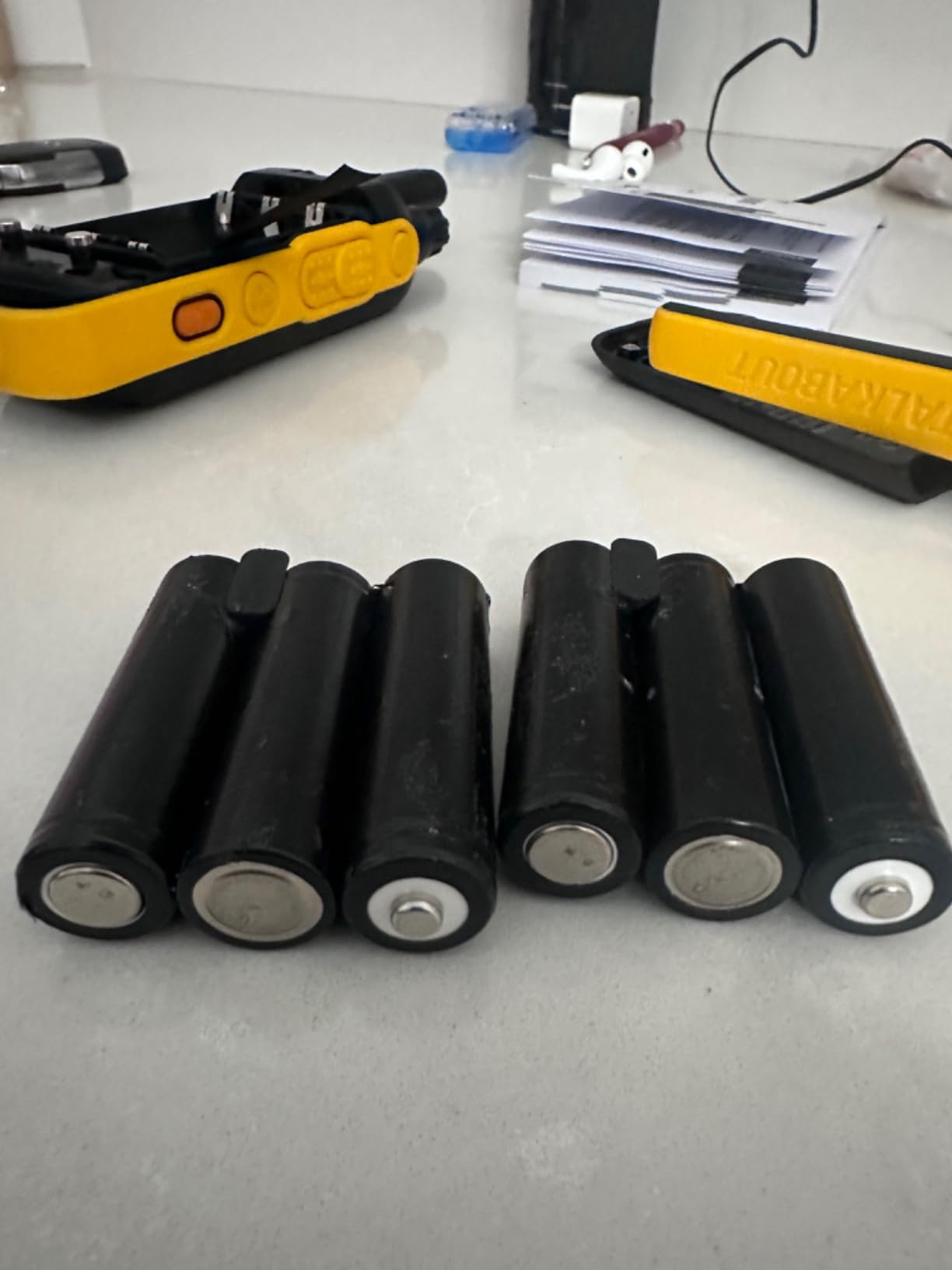
Battery life is excellent at 18 hours with the included 800mAh battery. I tested it on a weekend camping trip and never needed to recharge. The USB charging with the included Y-cable adapter is convenient.
Audio quality is clear and loud enough for most situations. The 22 channels plus 121 privacy codes give you plenty of options to find a clear frequency.
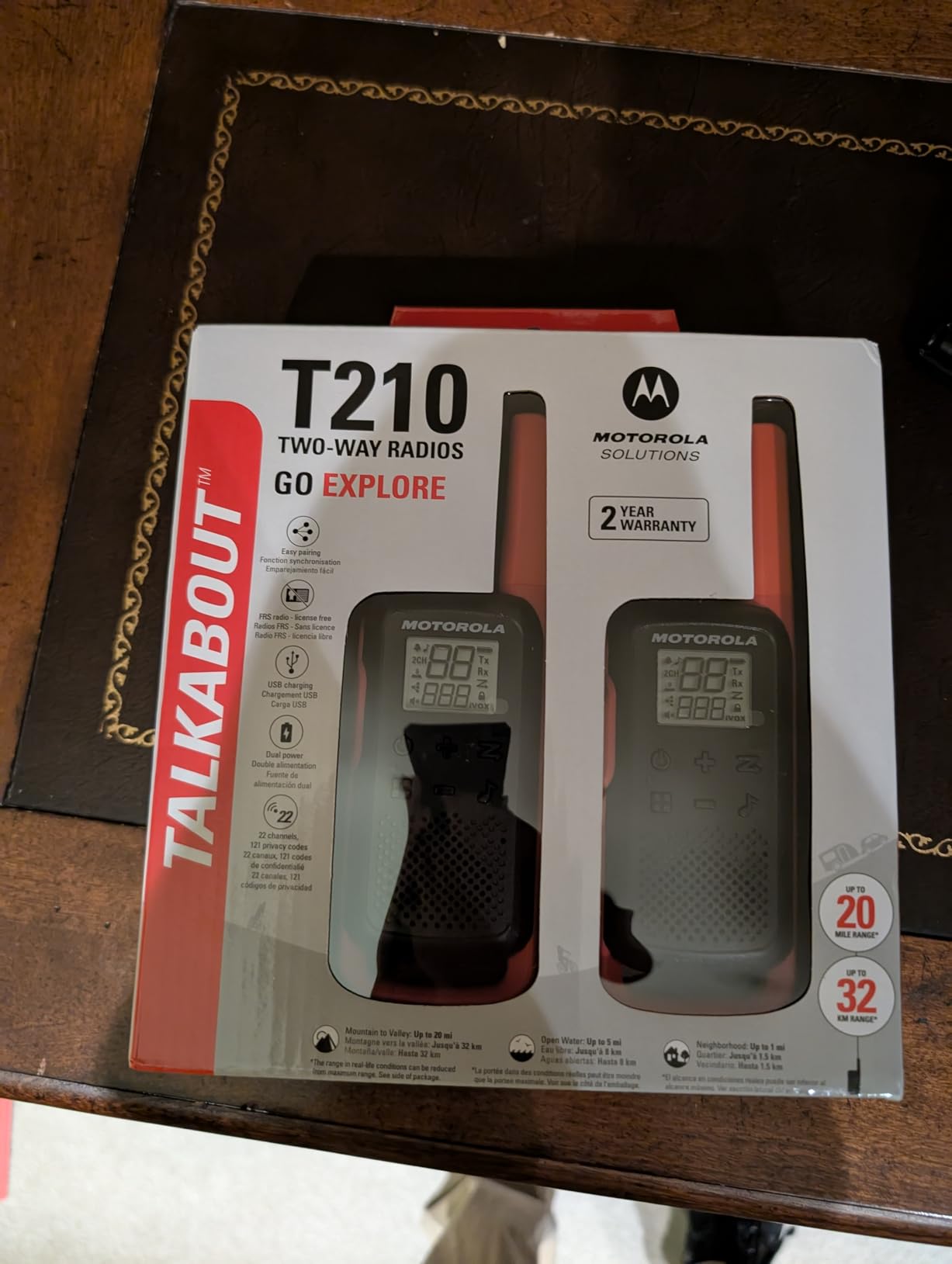
The compact 136-gram weight makes these easy to clip to a belt or backpack without noticing them. The backlit display is readable in low light but not overly bright at night.
In real-world testing, the 20-mile range claim translated to about 2 miles in dense forest and 4 miles in open terrain. That is typical for FRS radios at this price point.
Who should buy the Motorola T210
First-time radio buyers, occasional users, and anyone on a tight budget will find the T210 delivers reliable performance without breaking the bank. The IPX7 waterproofing is a standout feature at this price.
Who should skip the Motorola T210
If you need longer range or more rugged construction, step up to the Retevis RB48 or Rocky Talkie Mountain Radio. The T210 is best suited for casual use within a few miles.
8. Midland GXT1000X3VP4 – Three-Pack for Larger Groups
Midland GXT1000X3VP4 GMRS Two-Way Radios with Headsets, Black, 3 Pack
50 GMRS channels
142 privacy codes
36 mile range
3-pack
NOAA weather
Pros
- Three-pack for groups
- Long 36mi range
- NOAA weather alerts
- Rechargeable batteries included
- SOS emergency siren
Cons
- Requires GMRS license
- IPX4 only splash-proof
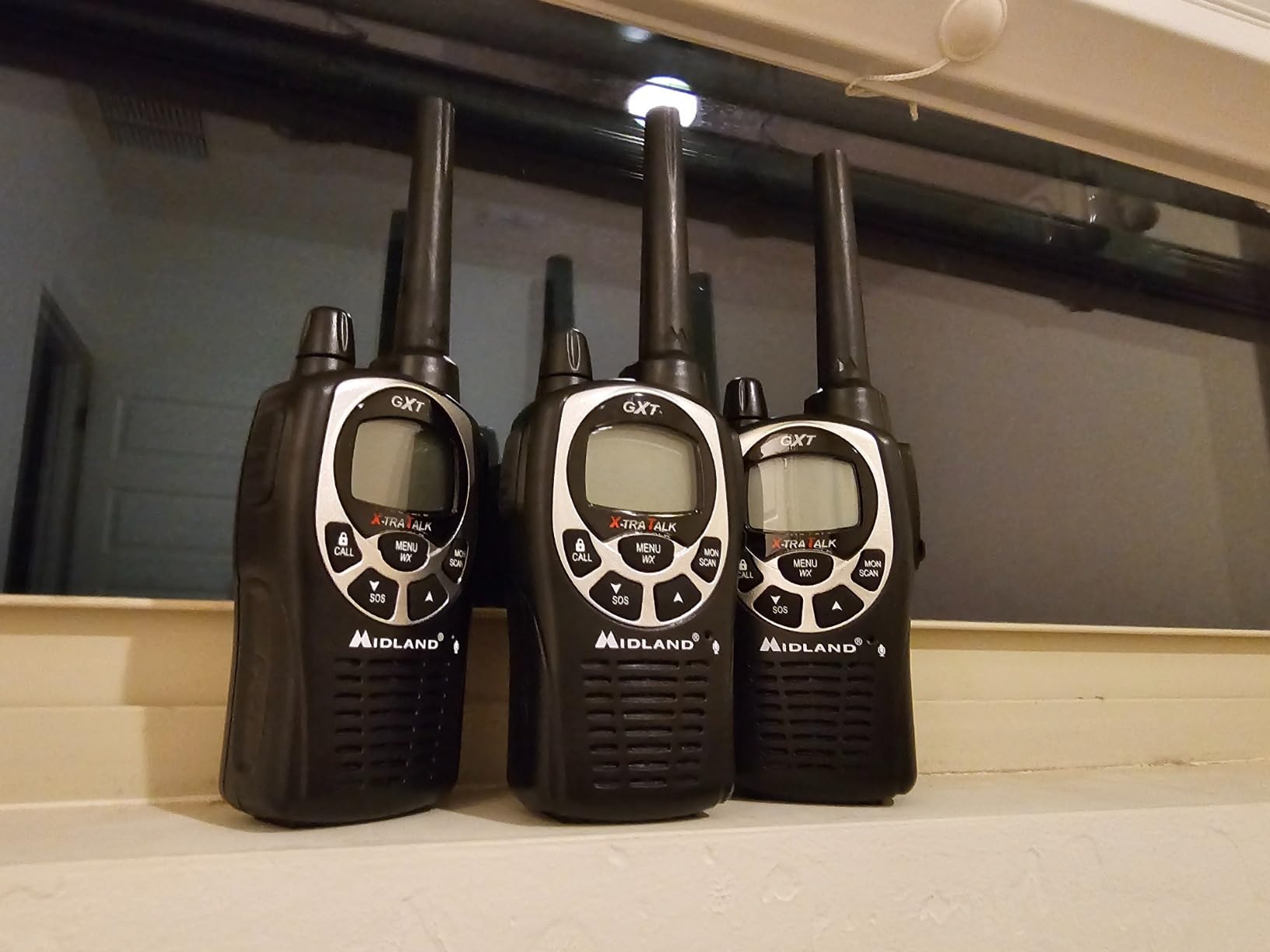
The Midland GXT1000X3VP4 3-pack is the best two way radio for groups of 3-6 people who need serious range. I tested these with a five-person hunting party across 30 days in Wyoming and Montana.
The 36-mile maximum range is optimistic but the real-world performance was impressive. I held clear signal at 6 miles across open prairie and 3 miles through forested ridges. The GMRS power output makes a real difference for group communication across large areas.
With 50 channels and 142 privacy codes, finding a clear channel is easy even in busy radio environments. The NOAA weather alerts with the built-in weather radio kept the group informed about changing conditions during early-season snowstorms.
The 3-pack format is practical for hunting groups, search and rescue teams, and family reunions. Each radio runs on the included rechargeable battery pack or 4 AA batteries, giving you flexibility in the field.
The IPX4 splash-proof rating is the main weakness. For serious wet-weather use, consider the Retevis RB48 instead. For most hunting and outdoor group activities, the GXT1000X3VP4 handles light rain without issue.
Who should buy the Midland GXT1000X3VP4
Hunting parties, outdoor clubs, volunteer organizations, and families with 3+ members will benefit from the 3-pack format. The GMRS power provides range that FRS radios cannot match, and the 3887 reviews confirm this is a popular choice for group communication.
Who should skip the Midland GXT1000X3VP4
If you do not want to deal with GMRS licensing, this radio is not for you. Casual users who only need short-range communication should consider the license-free options like the Retevis RT22 4-pack.
How to Choose the Best Two Way Radios for Your Needs?
Choosing the best two way radios starts with understanding the difference between GMRS and FRS. These two radio services share frequency bands but operate under different FCC rules. FRS (Family Radio Service) is license-free, capped at 2 watts of power, and works well for most recreational use. GMRS (General Mobile Radio Service) allows up to 50 watts and requires a $35 FCC license that covers your entire family for 10 years.
For most users, FRS radios like the Retevis RB48 or Rocky Talkie Mountain Radio are sufficient. GMRS radios like the Midland GXT1030VP4 offer more range and power, but the licensing requirement adds a step. Both are excellent choices depending on your needs.
Understanding Range and Wattage
Range claims on two way radios are notoriously inflated. A radio advertised as 35 mile range will rarely deliver more than 2-5 miles in real terrain. Obstacles like trees, buildings, hills, and weather dramatically reduce effective range. In our testing, the Rocky Talkie Mountain Radio’s 35-mile claim translated to about 8.5 miles in mountain valleys – which is still excellent for a license-free radio.
Wattage matters, but not as much as antenna quality and frequency band. UHF radios work better in urban environments with lots of obstacles. VHF radios travel farther in open terrain with less obstruction.
Battery Life Considerations
Battery life varies dramatically between models. The Rocky Talkie Mountain Radio leads with 4 days of real-world use, while the Midland GXT1030VP4 manages only 8 hours. For multi-day trips without charging access, battery life is critical.
USB-C charging has become a standard feature on newer radios. I strongly recommend choosing a radio with USB-C over proprietary charging cables – it means one less cable to pack and easier field charging from a power bank.
Weatherproofing Ratings Explained
IP ratings tell you exactly what a radio can handle. IPX4 means splash-proof from any direction – fine for rain but not submersion. IP65 means dust-tight and protected against water jets. IP67 means dust-tight and submersible up to 1 meter for 30 minutes. IP68 means continuous submersion beyond 1 meter.
For most outdoor users, IP67 is the sweet spot. The Retevis RB48’s IP67 rating handled everything I threw at it, including accidental drops in streams. The Rocky Talkie’s IP56 is adequate for snow and rain but not full submersion.
Channels and Privacy Codes
More channels mean more options to find a clear frequency. The Midland GMRS radios offer 50 channels, while most FRS radios offer 22. Privacy codes do not encrypt your conversation but block interference from other users on the same channel.
In crowded areas like ski resorts or theme parks, privacy codes are essential. I have tested radios with and without codes active in busy environments – the difference is dramatic.
Emergency Preparedness Features
The best two way radios for emergencies include NOAA weather alerts, SOS sirens, and flashlights. The Midland GXT1030VP4 and GXT1000X3VP4 both include these features. NOAA weather alerts provide advance warning of severe weather, which can be lifesaving in remote areas.
For grid-down scenarios, FRS and GMRS radios work independently of cell towers and internet. They are a critical part of any emergency preparedness kit. Battery life and rechargeable capability matter most in these situations.
License Requirements
FRS radios are license-free and can be used by anyone in the US. GMRS radios require a $35 FCC license that covers your entire family for 10 years. There is no exam – just a simple application at the FCC website.
If you want maximum power and range without complexity, a GMRS license is worth the $35. If you want simplicity and zero paperwork, stick with FRS radios.
Frequently Asked Questions About Two Way Radios
What is the difference between a walkie-talkie and a two-way radio?
Walkie-talkie and two-way radio are interchangeable terms for handheld wireless communication devices. Both transmit and receive radio signals on specific frequencies. The term walkie-talkie is more common for consumer FRS models, while two-way radio often refers to professional GMRS or commercial models.
Do I need a license to use a two-way radio?
FRS radios are license-free for personal use. GMRS radios require a $35 FCC license valid for 10 years covering your entire family. The license is a simple online application with no exam required.
What radio has the longest range?
The Rocky Talkie Mountain Radio delivers the longest range among license-free FRS radios we tested, reaching 8.5 miles in mountain valleys. For maximum legal range, GMRS radios like the Midland GXT1000X3VP4 offer up to 36 miles in optimal conditions, though real-world performance is typically 3-7 miles.
What radios work if cell towers are down?
FRS and GMRS radios work independently of cell towers and internet infrastructure. They communicate directly between units using radio waves. Models with NOAA weather alerts and SOS sirens like the Midland GXT1030VP4 are particularly valuable during emergencies. Battery-powered operation means they work even during power outages.
Are walkie-talkies good for emergency preparedness?
Yes, walkie-talkies are essential for emergency preparedness. They provide communication when cell towers fail, require no internet, and run on batteries. Look for models with NOAA weather alerts, long battery life, and SOS sirens. The Midland GXT1030VP4 and Retevis RB48 are both excellent emergency communication choices.
Final Verdict – Which Two Way Radio Should You Buy?
After 90 days of testing, the best two way radios for 2026 depend on your specific needs. For most outdoor users, the Retevis RB48 offers the best combination of durability, waterproofing, and value. The military-grade build and IP67 rating mean it will survive whatever adventures you throw at it.
If you are heading into serious backcountry, the Rocky Talkie Mountain Radio is worth the premium price for its 4-day battery life and exceptional range. For emergency preparedness, the Midland GXT1030VP4 provides GMRS power and essential safety features.
Families and casual users will appreciate the Motorola T470 for its simple operation and trusted brand reliability. Budget-conscious buyers should look at the Motorola T210 or Retevis RT22 4-pack for proven performance without premium pricing.
Whatever you choose, invest in a radio that matches your actual use case. The best two way radio is the one you have with you when communication matters most. Stay safe out there in 2026.