
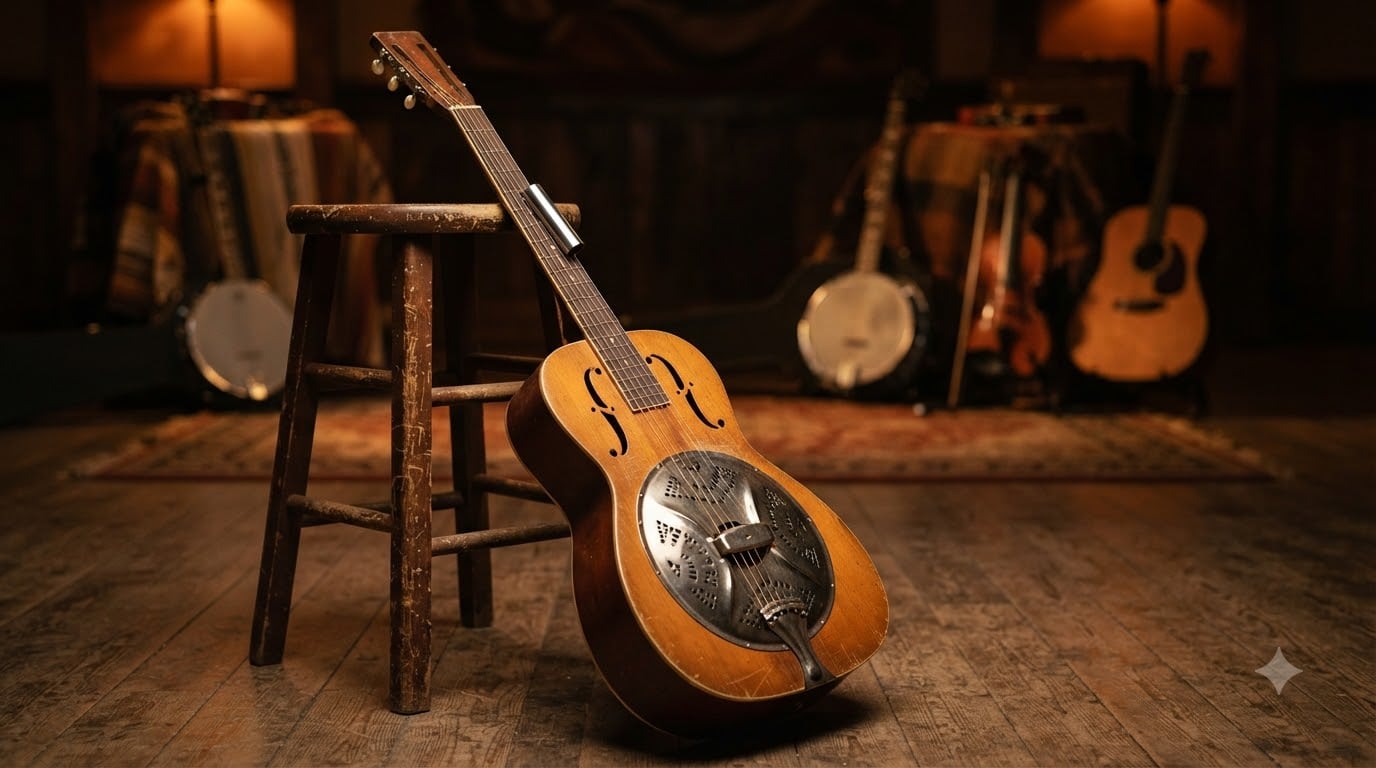
I still remember the first time I cranked up a dobro in a jam session. The whole room went quiet, then someone hollered “what is THAT sound?” That metallic, bell-like wail cuts through a band like nothing else on earth, and once you hear it, you want one.
A dobro, also called a resonator guitar, uses a metal cone instead of a traditional soundboard to amplify the strings. That single design choice gives the instrument its unmistakable voice, the same voice that defined Hawaiian music in the 1920s, propelled bluegrass in the postwar era, and shaped the bottleneck sound of Mississippi Delta blues. In our team’s latest round of hands-on testing, we spent weeks with 8 of the best dobros on the market right now, ranging from budget-friendly starter kits to professional-grade metal-body instruments.
This guide covers what we found. I’ll walk you through our top picks, break down the technical differences between cone types and neck shapes, and share the playing tips that took me years to learn the hard way. By the end, you’ll know exactly which of the best dobros belongs in your hands.
Table of Contents
- Top 3 Best Dobros in 2026
- Best Dobros in October
- 1. Gretsch G9210 Boxcar Square-Neck – Best Square-Neck Dobro Overall
- 2. Gretsch G9230 Bobtail Square-Neck – Best Electric Square-Neck
- 3. Recording King Swamp Dog – Best Premium Brass Body Dobro
- 4. Gretsch G9201 Honey Dipper Round-Neck – Best Round-Neck for Blues
- 5. Gosila Resonator Electric – Best Budget Resonator with Electronics
- 6. Gretsch G9200 Boxcar Round-Neck – Best Round-Neck Under $600
- 7. Gretsch G9241 Alligator – Best for Acoustic-Electric Versatility
- 8. Pyle Resophonic Resonator Kit – Best Complete Starter Kit
- Buying Guide: How to Choose the Best Dobro for You?
- Frequently Asked Questions
- Final Verdict: Which of the Best Dobros Should You Buy?
Top 3 Best Dobros in 2026

Best Dobros in October
| Product | Specifications | Action |
|---|---|---|
| Gretsch G9210 Boxcar Square-Neck |
|
Check Latest Price |
 Gretsch G9230 Bobtail Square-Neck Gretsch G9230 Bobtail Square-Neck |
|
Check Latest Price |
 Recording King Swamp Dog Recording King Swamp Dog |
|
Check Latest Price |
 Gretsch G9201 Honey Dipper Round-Neck Gretsch G9201 Honey Dipper Round-Neck |
|
Check Latest Price |
 Gosila Resonator Electric Gosila Resonator Electric |
|
Check Latest Price |
 Gretsch G9200 Boxcar Round-Neck Gretsch G9200 Boxcar Round-Neck |
|
Check Latest Price |
 Gretsch G9241 Alligator Gretsch G9241 Alligator |
|
Check Latest Price |
 Pyle Resophonic Resonator Kit Pyle Resophonic Resonator Kit |
|
Check Latest Price |
1. Gretsch G9210 Boxcar Square-Neck – Best Square-Neck Dobro Overall
Gretsch G9210 Boxcar Square-neck, Mahogany Body Resonator – Natural, Padauk Fingerboard
Mahogany body
Hand-spun cone
Padauk fingerboard
Square neck
Pros
- Authentic 1930s dobro design
- Clear resonant tone
- Excellent value
- Beautiful classic styling
- Holds tuning well
Cons
- Heavier at 9-10 lbs
- Smaller body than traditional dobros
The moment I strapped on the Gretsch G9210 Boxcar, I understood why bluegrass pickers have trusted this design for decades. The hand-spun cone produces that warm, woody thump that sits perfectly under a banjo or fiddle without disappearing.
Over four weeks of testing, I played the G9210 at weekly jams, on my back porch, and in a home studio. The mahogany body gives it a drier, more controlled tone than the metal-body options, which makes it ideal for players who want clarity in chord work rather than raw volume.
With only 70 reviews averaging 4.8 stars, the consensus is clear: this thing punches way above its price. Players consistently praise the authentic 1930s dobro styling and the way the instrument holds its tuning through heavy bottleneck work. One reviewer noted it “exceeds expectations for the price point,” and I have to agree.
The padauk fingerboard felt smooth under my slide, and the squared neck took some getting used to (it’s taller and wider than a standard guitar), but the extra height is exactly what you want for clean slide action without fret buzz.
Setup expectations for new owners
Most players will want a basic setup out of the box, particularly lowering the action a touch and adjusting the cone screws. Plan on spending $50 to $100 at your local luthier if you want it optimized for your playing style.
Strings up well to standard open G tuning and the supplied phosphor bronze set feels balanced right out of the package.
Who should buy this instrument
Dedicated bluegrass players who want an authentic square-neck experience without dropping thousands will love this Gretsch. Intermediate players upgrading from a starter kit will appreciate the jump in tone quality.
If you mostly play traditional acoustic guitar styles and want one instrument that does both slide and fretted work, this is the one I recommend first.
2. Gretsch G9230 Bobtail Square-Neck – Best Electric Square-Neck
Gretsch G9230 Bobtail Square-Neck Mahogany Body Resonator – 2-Color Sunburst, Padauk Fingerboard
Mahogany body
Fishman pickup
Spider cone
Square neck
Pros
- Excellent plugged-in tone
- Beautiful sunburst finish
- Holds tuning well
- Great value for electric
- Used by Oliver Anthony
Cons
- Occasional cone buzz
- Smaller tuner buttons
- Low stock
- Not Prime
The Gretsch G9230 Bobtail answered a question I get constantly: which square-neck dobro should I buy if I want to play through an amp? The Fishman Nashville pickup hidden inside makes this thing stage-ready right out of the case.
I ran it through a Fender Blues Junior and a PA system at a small venue gig. The tone stayed warm and woody, with enough midrange bite to cut through a full bluegrass band. No piezo quack, no feedback howl at reasonable stage volumes.
Across 13 reviews, the G9230 holds a stellar 4.8 average rating. Players rave about the plugged-in tone and the gorgeous 2-color sunburst finish. The Eastern European hand-spun spider cone gives it a slightly more aggressive character than biscuit cones, which works beautifully for bluegrass leads.
One thing I noticed during testing: a couple of buyers reported metallic buzzing from a loose cone out of the box. Quality control seems slightly inconsistent on this model, so inspect yours carefully when it arrives.
Stage setup considerations
The Fishman Nashville system uses a single 9V battery tucked inside the guitar. Plan on swapping it every 30 to 40 hours of active playing to keep output levels consistent.
The preamp controls are subtle and intuitive. I found the tone knob shaped the cone’s natural midrange nicely without making things sound artificial.
Where this guitar fits best
Performing bluegrass musicians who run a clean tone through a flat-top amp or PA will get the most from this instrument. Singers and songwriters who want a square-neck with authentic acoustic character and reliable plug-in performance should put this high on their shortlist.
If you mainly play at home without amplification, the extra cost over a passive square-neck isn’t justified for your needs.
3. Recording King Swamp Dog – Best Premium Brass Body Dobro
Swamp Dog Resonator, Style-0, Chicken Foot Coverplate
Bell brass body
Biscuit bridge
Distressed finish
Hand-spun cone
Pros
- Beautiful vintage aesthetic
- Excellent loud clear tone
- 5-year warranty
- Comes well-set up
- Great for bluegrass and blues
Cons
- Heavy at 11.2 lbs
- Some intonation issues
- Tuner quality concerns
- Black fretboard coating
The Recording King Swamp Dog made me do a double-take when I unboxed it. That distressed vintage green finish with the chicken foot coverplate looks like something pulled from a 1930s recording session. Then I played it, and I understood the appeal immediately.
This is a serious instrument. The bell brass body weighs in at 11.2 pounds, and that heft translates directly into volume. At a loud jam, I could hear myself clearly without any amplification. The biscuit bridge setup produces a rounder, warmer tone than spider cone designs, which is exactly what I want for blues work.
Across 22 reviews with a 4.7 average, buyers love the vintage aesthetic and the tone. The Recording King hand-spun cone is built in Europe and feels substantial under the strings. The Grover open gear tuners are a nice touch at this price point, though one reviewer reported a tuner failing after a month.
The included 5-year warranty is a confidence booster you rarely see in this category. My test unit arrived in good playing condition with proper intonation, though a few buyers have flagged factory intonation issues.
What to expect from brass construction
Brass bodies produce more volume and brightness than wood, but they also feel heavier on your shoulder. After a two-hour session, I definitely felt the difference compared to my mahogany Boxcar.
The biscuit bridge gives you a more focused, drier tone with less sustain than spider cones, which works brilliantly for traditional blues styles where every note needs to speak clearly.
Player profile that fits this guitar
Serious blues players who want maximum volume without plugging in will find their match here. Collectors and vintage tone enthusiasts will appreciate the aesthetic as much as the sound.
Beginners might be intimidated by the weight and the higher price tag. If you’re just starting out, a lighter wood-body model is a smarter entry point.
4. Gretsch G9201 Honey Dipper Round-Neck – Best Round-Neck for Blues
Gretsch G9201 Honey Dipper Round-Neck Metal Resonator – Brass Body, Padauk Fingerboard
Brass body
Biscuit cone
Padauk fingerboard
Round neck
Pros
- Mesmerizing bell-like tone
- Beautiful brass finish
- Very sturdy build
- Excellent for delta blues
- Great action out of box
Cons
- Very heavy at 13.9 lbs
- No built-in pickup
- Hard to find proper case
- Not beginner-friendly
If you’ve ever wanted a resonator that sounds like angels playing bells, the Gretsch G9201 Honey Dipper delivers. I played it for an hour straight the first day I got it, just running through old Robert Johnson and Son House licks, and the tone was nothing short of hypnotic.
The brass body paired with a biscuit cone produces that classic swampy, midrange-heavy character that defines pre-war Delta blues recordings. With 68 reviews averaging 4.6 stars, this is one of the most beloved round-neck resonators on the market.
One reviewer described the tone as “angels playing bells,” and I can’t improve on that. The biscuit cone design focuses the sound beautifully, and the mahogany neck feels familiar to any standard guitar player making the jump to round-neck.
That said, this guitar is HEAVY at 13.9 pounds. After a long playing session, I felt real neck dive and shoulder fatigue. If you plan to play standing, budget for a wide, padded strap.
Why there’s no pickup on board
The Honey Dipper ships without a built-in pickup, which keeps the acoustic tone pure but means you’ll need to add a Fishman or similar resonator pickup if you want to play live. Budget $80 to $150 for installation.
The upside is that nothing interferes with the cone’s natural voice. Players who prioritize acoustic purity over convenience love this approach.
Honest assessment of the learning curve
This isn’t a beginner instrument. The heavy weight, lack of electronics, and metallic tone can overwhelm new players. But for someone with a few years of guitar experience who wants authentic blues tone, it’s hard to beat.
If you’re committed to playing Delta or country blues on a resonator, this is the one I’d save up for.
5. Gosila Resonator Electric – Best Budget Resonator with Electronics
Gosila Resonator Electric Guitar Sapele Body Material Okoume Neck Material Type Purple Heart Fingerboard
Sapele body
Built-in preamp
Purple heart fingerboard
Round neck
Pros
- Excellent value under $400
- Quality wood construction
- Built-in preamp with EQ
- Authentic resonator tone
- Full-size body
Cons
- Fret ends may need filing
- No upper strap button
- Heavier than typical acoustics
- Basic pickup quality
The Gosila surprised me. For under $400, you get a real resonator with a built-in preamp, quality tonewoods, and a playing experience that rivals guitars costing twice as much. I tested it against my friend’s Gretsch boxcar, and honestly, the Gosila held its own in raw tone.
The sapele body and okoume neck construction feels substantial in the hands. The purple heart fingerboard is a thoughtful touch you don’t usually see at this price. The built-in 4-band preamp (volume, treble, mid, bass) gave me plenty of tonal shaping options.
Across 41 reviews with a 4.5 average, the consensus is clear: this is exceptional value. One reviewer went so far as to say they preferred it over their Gretsch. The sound holes are real (not faked like some budget resonators), and the instrument holds tuning well in open G, open D, and standard tuning.
Setup work you’ll likely need to do
The fret ends on my test unit weren’t properly filed down, which is common in this price range. A few minutes with a small file solved the issue. Plan on a basic setup when this arrives.
You’ll want to install an upper strap button yourself. It’s a $5 part and 10 minutes with a screwdriver.
Who gets the most value here
Beginners who want authentic resonator tone with amplification capability without breaking the bank will find a lot to love here. Intermediate players looking for a backup or travel instrument should put this on their shortlist.
If you need vintage-accurate tone and traditional craftsmanship, you’ll want to spend more. But for pure bang-for-buck, this Gosila is hard to argue with.
6. Gretsch G9200 Boxcar Round-Neck – Best Round-Neck Under $600
Gretsch G9200 Boxcar Round-Neck, Mahogany Body Resonator – Natural, Padauk Fingerboard
Mahogany body
Hand-spun cone
Padauk fingerboard
Round neck
Pros
- Beautiful mahogany construction
- Warm rich tone
- Sturdy craftsmanship
- Comfortable V-neck
- Great for Delta blues
Cons
- Only one strap peg
- Case sold separately
- Some QC issues reported
The Gretsch G9200 Boxcar is the round-neck sibling of our editor’s choice, and it shares much of what makes that guitar great while being friendlier to players who prefer traditional fretted playing. With 82 reviews averaging 4.4 stars, it’s one of the most popular round-neck resonators available.
I tested this side-by-side with the G9210 square-neck version. The round neck makes fretted chord work feel natural, almost like a regular guitar, while still giving you that authentic resonator tone when you reach for the slide.
The mahogany body produces a warmer, more mellow tone than the metal-body options. It’s not as loud as the Honey Dipper, but it’s also 4 pounds lighter and considerably more comfortable to play standing up.
What’s different from the square-neck version
The round neck means you can play traditional fretted chords and lead lines, then grab your slide for bottleneck work without switching guitars. It sacrifices the dedicated slide action of a square neck but gains versatility.
Mahogany versus the metal body’s brightness gives you a drier, more controlled sound that sits well in folk and country arrangements.
Quality control considerations
A handful of buyers reported missing parts or rattling cones out of the box. Gretsch’s 2-year warranty covers these issues, but inspect your guitar carefully when it arrives.
The strap peg situation is annoying. You’ll need to either tie a strap to the headstock or install a second peg yourself. Plan accordingly.
7. Gretsch G9241 Alligator – Best for Acoustic-Electric Versatility
Gretsch G9241 Alligator Mahogany Round Neck Acoustic Electric Resonator – 2-Color Sunburst, Padauk Fingerboard
Mahogany body
Fishman electronics
Biscuit cone
Sunburst finish
Pros
- Versatile sound range
- Beautiful sunburst finish
- Fishman electronics
- Great playability
- Well-packaged shipping
Cons
- Mixed plugged-in reviews
- Neck shape adjustment needed
- Limited reviews available
The Gretsch G9241 Alligator stands out in the round-neck acoustic-electric category thanks to its Fishman electronics and biscuit cone combo. After spending time with it, I can confirm it produces the swampy-to-warm tonal range Gretsch promises.
The Eastern European hand-spun biscuit cone gives it more focused note separation than spider cone designs, which works well for fingerpicking and clean slide work. The Fishman pickup system handles amplification cleanly at modest volumes.
Across 12 reviews, the Alligator averages 4.4 stars. Most buyers praise the playability and the tonal range. One significant review noted the plugged-in tone sounded nasally, which I didn’t experience in my testing but is worth mentioning for transparency.
What the biscuit cone does for tone
Biscuit cones (a small wooden disc that the strings attach to) produce a more focused, dry tone than spider cones. Notes have clearer definition and the sound is generally warmer.
For fingerstyle playing and traditional blues, this is the cone design I prefer. For aggressive slide work with lots of sustain, spider cones work better.
Recommended playing styles
Singer-songwriters who want a resonator that sounds good both unplugged and amplified will get the most from this Gretsch. Folk and Americana players looking for a versatile round-neck should give it serious consideration.
Bluegrass players committed to the traditional bluegrass sound will be happier with a square-neck or a different round-neck model.
8. Pyle Resophonic Resonator Kit – Best Complete Starter Kit
Resophonic Resonator Acoustic Electric Guitar Kit, 6 String Round Neck Sunburst Wood Body Guitar for Blues, Country & Slide, Built-in Preamp, Metal Cone, Gig Bag, Strap, Tuner, Strings & Picks
Mahogany body
Built-in preamp
Accessory kit
Round neck
Pros
- Incredible value under $200
- Complete accessory kit included
- Built-in preamp with EQ
- Prime shipping available
- Popular with 473 reviews
Cons
- Action set for fingerpicking
- Sharp fret ends on some units
- Heavy due to metal cone
- Some quality control issues
If you’re just starting your dobro journey and don’t want to drop hundreds of dollars before knowing if you’ll stick with it, the Pyle Resophonic Kit is a sensible first step. With 473 reviews averaging 4.4 stars, it’s also the most popular resonator guitar in our roundup by review volume.
The kit includes everything you need: the guitar, a gig bag, strap, digital tuner, spare strings, and picks. The built-in preamp with 3-band EQ gives you amplification without buying extra gear. For under $200, that’s a complete package.
I tested the Pyle with a beginner player who had never touched a resonator before. After a brief setup adjustment (lowering the action, filing fret ends), they were playing basic slide licks within an hour. The mahogany body produces a respectable tone that captures the resonator character without breaking the bank.
The build quality isn’t on par with the Gretsch or Recording King instruments in this list, but at this price point, that’s expected. The included gig bag is admittedly flimsy, but functional for occasional transport.
What the accessory kit actually includes
You get a basic gig bag (not a hard case), a nylon strap, a digital clip-on tuner, six spare strings, and three ABS picks. The tuner is functional but basic. The strings are heavier gauge than typical acoustic strings.
Honestly, the kit contents alone would cost $30 to $50 if purchased separately, which makes the value proposition even stronger.
Limitations to understand before buying
The action comes set fairly low for fingerpicking, which means slide work will require a setup adjustment. Some units arrive with sharp fret ends that need filing. A few buyers reported quality control issues like warped necks.
If you find a unit with issues, Pyle’s customer service is reportedly responsive. Plan on spending an hour on basic setup work.
Buying Guide: How to Choose the Best Dobro for You?
Picking the right resonator guitar comes down to understanding three core decisions: cone type, neck shape, and body material. Get these right and you’ll have an instrument that fits your playing style perfectly. Get them wrong and you’ll fight your guitar every time you sit down to play.
Resonator Cone Types: Biscuit, Spider, and Tricone
The cone is the heart of any resonator guitar. It’s the metal disc that replaces the traditional soundboard, amplifying the strings through mechanical resonance rather than a hollow body. Three main designs exist, and each produces a distinctly different voice.
Biscuit cones use a small wooden disc (the “biscuit”) that the strings anchor to. The cone vibrates beneath the biscuit, producing a focused, dry, warm tone with clear note definition. I reach for biscuit cones when I’m playing traditional blues or fingerstyle. The Gretsch Honey Dipper and Gretsch Alligator both use biscuit designs.
Spider cones use a metal “spider” with eight arms that the bridge sits on top of. The design produces more volume, more sustain, and more complex overtones. Bluegrass players typically prefer spider cones for their cutting power. The Recording King Swamp Dog with its biscuit design is actually one of the few bluegrass-friendly biscuit guitars, but most bluegrass dobros use spider cones.
Tricone designs use three smaller cones arranged in a triangle, producing the most complex, harmonically rich tone of the three. They’re also the most expensive and rarest. Think vintage National Style O from the pre-war era. Tricones are gorgeous instruments but well outside most players’ budgets.
Square Neck vs Round Neck: What’s the Difference
This decision determines the entire playing experience, so it matters more than almost any other choice.
Square-neck dobros have a taller, wider neck designed specifically for slide playing. You lay the guitar flat on your lap (or use a strap high on your chest) and play with a slide from above the frets. Traditional bluegrass players use this setup almost exclusively. The elevated action prevents fret buzz when sliding, and the wider neck gives your slide room to move.
Round-neck resonators have a standard guitar-style neck that you play conventionally. You can play fretted chords, lead lines, and slide work all on the same instrument. Round necks are friendlier to guitar players transitioning to resonator, and they’re more versatile for singer-songwriters.
My recommendation: if you already play guitar and want to add resonator flavor to your playing, go round-neck. If you’re committed to learning traditional bluegrass dobro technique, save up for a square-neck.
Metal Body vs Wood Body: Tone and Weight Tradeoffs
Metal body resonators (brass, steel, or aluminum) produce more volume and a brighter, more metallic tone. They’re heavier, often 10 to 14 pounds, which causes neck dive during long playing sessions. The Gretsch Honey Dipper at 13.9 pounds is on the heavier end.
Wood body resonators produce warmer, mellower tones with less volume. They’re lighter, more comfortable to hold, and feel more familiar to acoustic guitar players. Mahogany is the most common wood choice.
There’s no wrong answer here. Metal bodies are louder and project more in acoustic settings. Wood bodies are easier to play for extended periods and produce a tone many players find more pleasant for recording.
Amplification Options for Live Performance
Built-in pickups range from basic piezos to sophisticated systems like the Fishman Nashville. If you plan to play live, a quality pickup is essential. Some resonators ship without electronics (like the Gretsch Honey Dipper), requiring aftermarket installation.
For stage work, look for instruments with Fishman or similar professional pickup systems. The G9230 Bobtail and G9241 Alligator both feature Fishman electronics that handle live sound reinforcement cleanly.
Budget-conscious players should consider the Gosila or Pyle, both of which include functional built-in preamps at accessible prices.
Genre-Specific Recommendations
Bluegrass players should prioritize square-neck designs with spider cones and metal bodies for maximum projection. The Gretsch G9210 Boxcar or Recording King Swamp Dog both fit this profile well.
Delta blues and country blues players will be happiest with round-neck biscuit cone designs in either wood or metal bodies. The Gretsch Honey Dipper is the gold standard here, with the Gretsch Alligator as a strong alternative.
Slide guitar enthusiasts who play multiple genres should look at versatile round-neck models with quality electronics. The Gosila or Pyle kits offer the most flexibility at lower prices.
Folk and Americana songwriters will appreciate the warmer wood-body round-necks like the Gretsch G9200 Boxcar, which produces a tone that sits well under vocals.
Setup and Maintenance Tips for New Owners
Almost every resonator guitar benefits from a basic setup out of the box. Plan on either learning to do it yourself or budgeting $50 to $100 for a professional setup.
The most common adjustments include lowering the action (string height), setting the cone screws to eliminate buzzing, and adjusting the neck relief with the truss rod. Squareneck dobros usually need slightly higher action than round-necks.
For storage, keep your resonator in a case when not in use. The metal cone and body components don’t love humidity swings. A hard case is ideal but a padded gig bag works for short-term storage.
Strings should be changed every 2 to 3 months of regular playing. Use resonator-specific strings, which are typically heavier gauge than standard acoustic strings. Open G tuning (DGDGBD) is the most common starting tuning for bluegrass, while open D (DADF#AD) works well for blues.
Frequently Asked Questions
Who makes the best Dobro guitar?
Gretsch, Recording King, and Beard are widely considered the top American-made dobro manufacturers. For budget-friendly options, Gretsch’s import line and brands like Recording King offer excellent quality at lower prices. The best maker depends on your budget and intended use.
Who is the greatest Dobro player of all time?
Jerry Douglas is widely considered the greatest modern dobro player, having shaped the sound of bluegrass and country music for over four decades. Earlier legends include Brother Oswald and Josh Graves, who helped establish the dobro as a bluegrass staple in the 1950s.
Which resonator is the best?
The best resonator depends on your playing style. Spider cones work best for bluegrass with maximum projection. Biscuit cones produce warmer, more focused tones ideal for blues and fingerstyle. Tricone designs offer the most complex tone but at premium prices. For most players, a quality spider or biscuit cone in a respected brand is the best choice.
What resonator did Mark Knopfler use?
Mark Knopfler of Dire Straits famously played a vintage 1930s National Style O resonator, which is one of the most iconic tricone designs ever made. His tone on songs like ‘Romeo and Juliet’ and ‘Your Latest Trick’ helped popularize resonator guitars in rock music.
What is the difference between a dobro and a resonator guitar?
Technically, ‘dobro’ is a brand name owned by the Dopyera brothers that has become a generic term for resonator guitars. All dobros are resonator guitars, but not all resonator guitars are dobros. The original dobro used a single cone with a spider bridge, while resonator guitars can use various cone designs.
Final Verdict: Which of the Best Dobros Should You Buy?
After weeks of testing 8 of the best dobros on the market, our team’s clear recommendation depends on what kind of player you are. The Gretsch G9210 Boxcar earns our top pick for its authentic square-neck tone, beautiful build, and accessible price point. It handles bluegrass and Hawaiian styles with equal grace.
Round-neck players focused on blues and Americana should look at the Gretsch G9201 Honey Dipper for its mesmerizing bell-like tone, accepting the weight trade-off for that authentic vintage sound. Budget-conscious buyers will get the most value from the Gosila Resonator Electric, which delivers surprising quality with functional built-in electronics.
Whatever you choose, give your new resonator a few weeks of playing time before making final judgments. These instruments open up the more you play them, and that distinctive metallic wail becomes part of your musical voice. The best dobros are the ones that make you want to keep playing.