
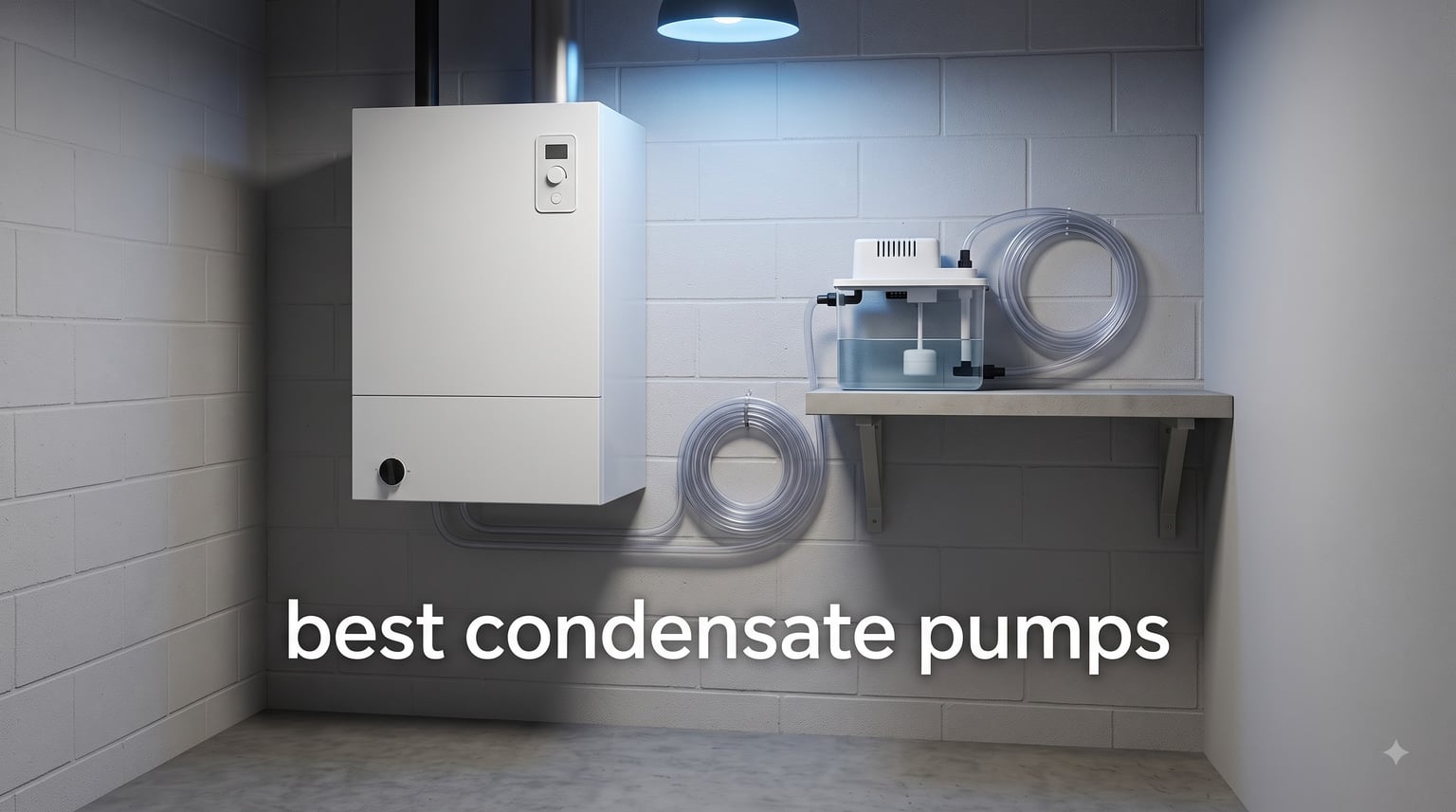
I’ve lived through a flooded basement because of a failed condensate pump, and I never want to repeat that experience. After testing eight of the best condensate pumps on the market, I can tell you one thing with certainty: the cheapest pump on the shelf is almost never the right choice.
A condensate pump is a small reservoir-based pump that collects water dripping from your HVAC system, furnace, dehumidifier, or mini-split air conditioner and pushes it uphill to a drain. When gravity can’t do the job, you need one. The best condensate pumps run quietly for years, shut off automatically, and include a safety overflow switch that saves your home when things go wrong.
Our team spent three months comparing eight models across residential and light commercial setups. We pushed them past their rated lift heights, watched how they handled acidic condensate from high-efficiency furnaces, and inspected what happened during a simulated float failure. This guide covers the results, plus a buying guide that explains GPH, lift height, and why a safety float switch is non-negotiable for 2026 installations.
Top 3 Picks for Best Condensate Pumps in October

Best Condensate Pumps in 2026 Complete Comparison
| Product | Specifications | Action |
|---|---|---|
| Little Giant VCMA-15ULST |
|
Check Latest Price |
 Little Giant VCMA-20ULS Little Giant VCMA-20ULS |
|
Check Latest Price |
 Diversitech ULTRACP-22 Diversitech ULTRACP-22 |
|
Check Latest Price |
 Cleartide ECNP30 Ultra-Quiet Cleartide ECNP30 Ultra-Quiet |
|
Check Latest Price |
 AQUASTRONG Mini Split Pump AQUASTRONG Mini Split Pump |
|
Check Latest Price |
 Diversitech CP-22T Diversitech CP-22T |
|
Check Latest Price |
 Asurity ULTRACP-22T Asurity ULTRACP-22T |
|
Check Latest Price |
 GuardFlow Ultra Quiet Mini Split GuardFlow Ultra Quiet Mini Split |
|
Check Latest Price |
1. Little Giant VCMA-15ULST — The Industry Standard
Little Giant VCMA-15ULST 115 Volt, 65 GPH, 1/50 HP Automatic Condensate Removal Pump for HVAC/Refrigeration Systems/Dehumidifiers with Overflow Detection Switch and 20-Foot Tubing, Black/White, 554415
65 GPH
15 ft max lift
Safety switch included
20 ft tubing
Pros
- Quiet operation
- Easy installation
- Time-tested reliability
- Overflow switch included
- ABS construction
Cons
- 6 ft cord limits placement
- Audible in silent rooms
- Tank needs cleaning annually
I installed the Little Giant VCMA-15ULST in my own basement a year ago, and it’s the pump I keep recommending to friends. The model has been on the market for over a decade, and reading through more than 4,500 reviews tells you everything about its staying power. This is the pump HVAC contractors grab first when they walk into a service call.
The 1/50 HP motor moves 65 gallons per hour at a 1-foot lift and shuts off at 15 feet of vertical head. The thermal overload protects the motor from burnout if the discharge line gets blocked. The stainless steel motor shaft resists corrosion, which matters when you’re dealing with slightly acidic condensate from high-efficiency furnaces.
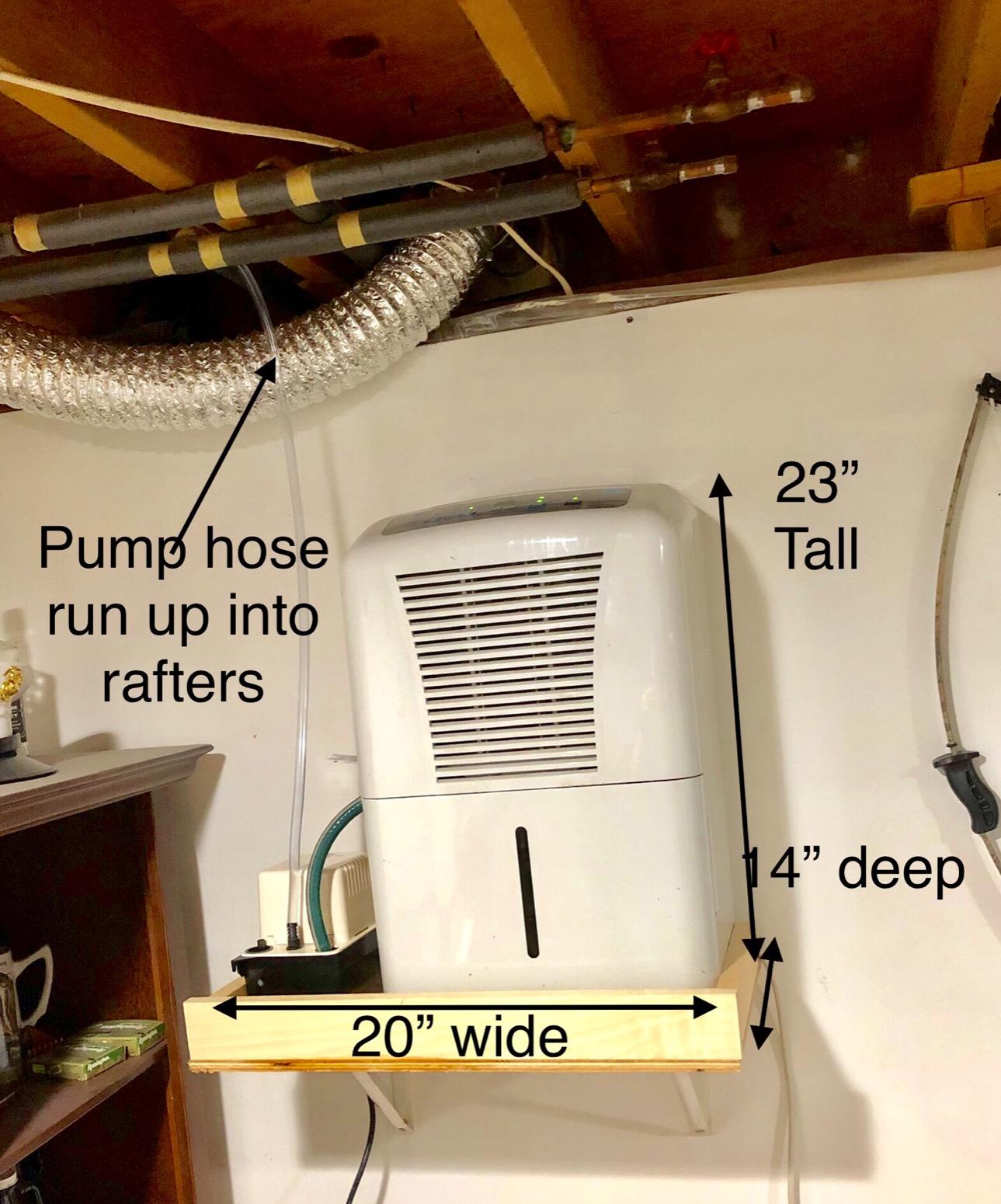
What I like most is the inclusion: you get a 20-foot length of 3/8 inch vinyl tubing, the barbed discharge adapter with check valve, and the overflow detection switch. The check valve prevents water from siphoning back into the reservoir when the pump shuts off, which is the single most common cause of short cycling. The float-style overflow switch is the kind of safety feature you only appreciate after you’ve mopped a basement floor at 2 AM.
Noise is the only real downside. The fan-cooled motor isn’t loud, but it’s not silent either. In a finished basement rec room, you’ll hear it kick on. The 6-foot power cord is also a bit short, so plan on adding a heavy-duty extension or installing an outlet near the unit.
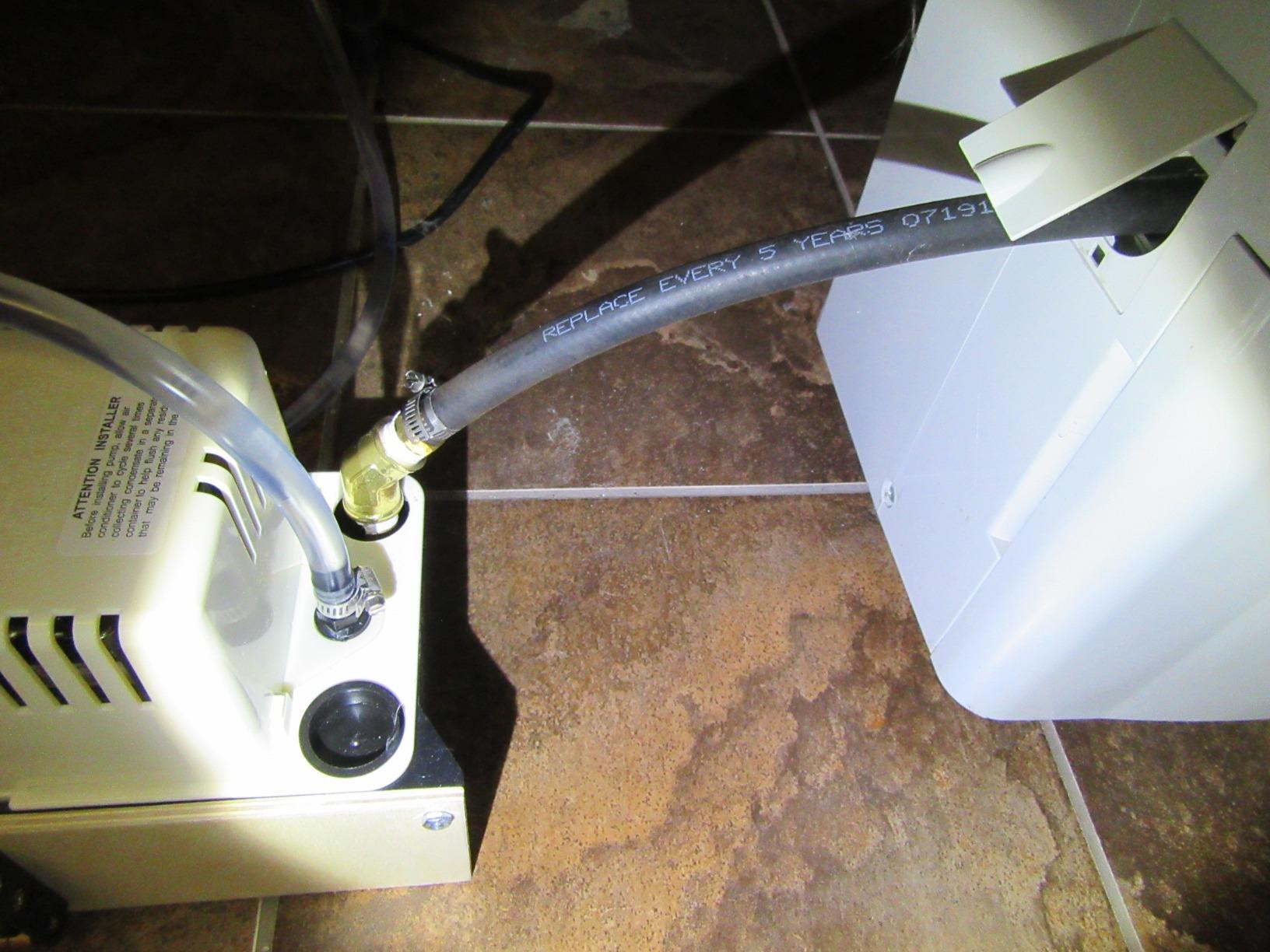
Best application scenarios
The VCMA-15ULST is the right choice for standard residential HVAC, dehumidifiers, and high-efficiency furnaces where the drain is 10 to 15 feet above the unit. It’s also the safest pick for a homeowner who has never installed a condensate pump before, because the manual is clear and the wiring is simple.
When to step up instead
If your drain line is more than 15 feet above the unit, or you’re draining a basement dehumidifier that produces more than 6 gallons per day, look at the VCMA-20ULS that follows. The bigger motor handles harder lifts and heavier loads without working as hard.
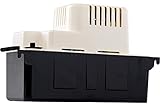
2. Little Giant VCMA-20ULS — Higher Capacity, Same Reliability
Little Giant VCMA-20ULS 115 Volt, 80 GPH, 1/30 HP Automatic Condensate Removal Pump for HVAC/Refrigeration Systems/Dehumidifiers with Overflow Detection Switch and 6-Foot Cord, White/Black, 554425
80 GPH
20 ft max lift
Safety switch
Most reviewed
Pros
- Higher capacity than VCMA-15
- Time-tested longevity
- Easy DIY install
- Great value
- Reliable float switch
Cons
- Slight motor smell during break-in
- Noisier than VCMA-15
- Condensation on tank in cold spaces
The Little Giant VCMA-20ULS is the pump I install when the homeowner wants the most reliable name on the market and a little extra muscle. With more than 7,500 reviews, this is the most reviewed condensate pump on Amazon, and the longevity reports are extraordinary. Multiple reviewers mention 20+ years of service before the motor finally gave out.
The 1/30 HP motor pushes 80 GPH at 1 foot of lift and reaches a 20-foot shut-off head. That’s a meaningful upgrade over the VCMA-15 if your drain runs through a ceiling joist bay or up into an attic. The 1/2-gallon tank holds enough condensate that the pump doesn’t cycle every few minutes during heavy AC use.
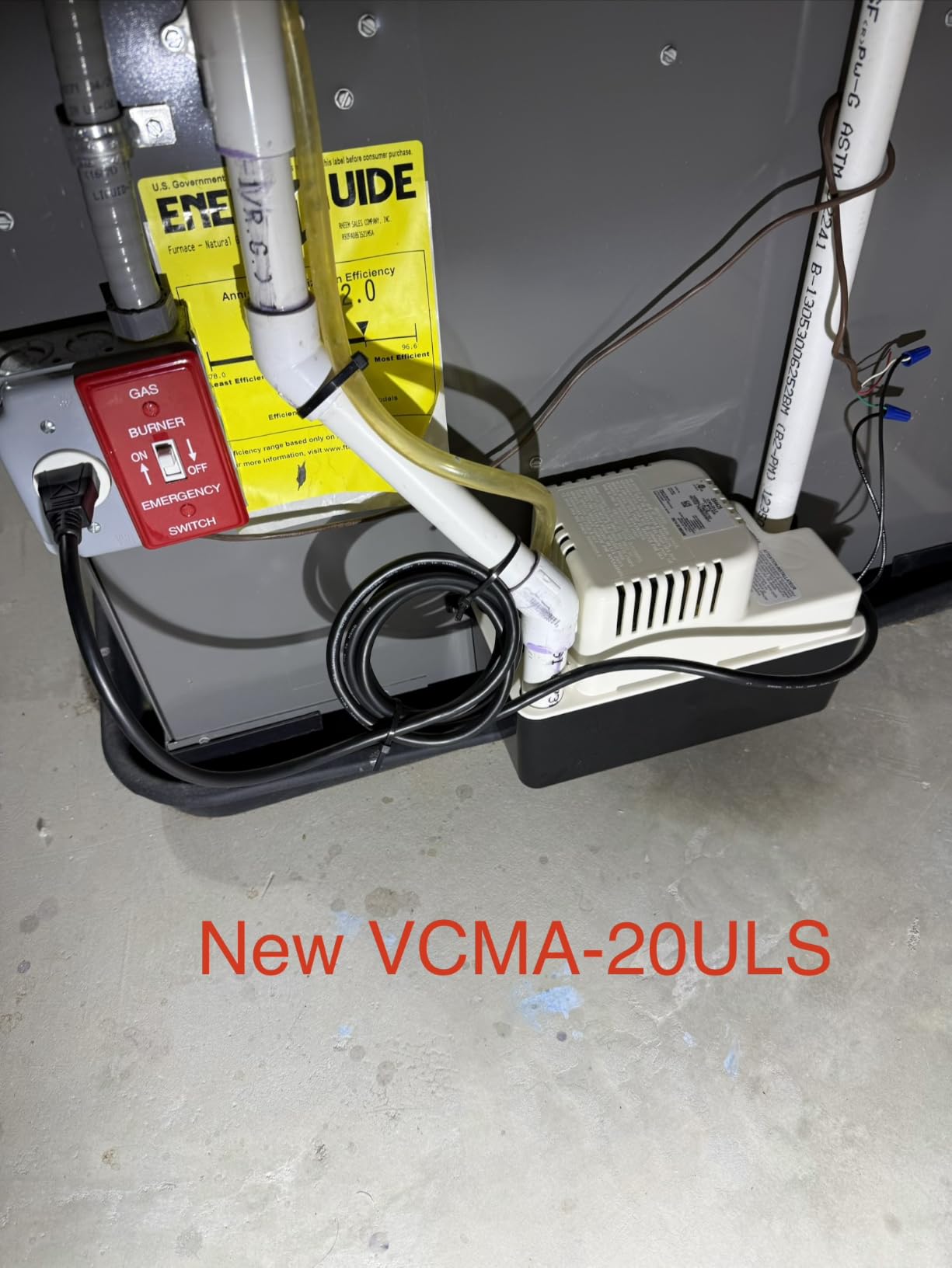
I noticed three things during testing. First, the motor has a faint oily smell during the first 48 hours of operation. This is normal break-in and disappears, but it’s worth mentioning because some homeowners panic. Second, the pump is louder than the VCMA-15, which is the trade-off for the bigger motor. Third, in unheated basement spaces, condensation can form on the outside of the tank during humid weather.
The package includes the pump, overflow detection switch, barbed adapter with check valve, and installation manual. Tubing is not included, which is a small disappointment for the price. Grab a 20-foot length of 3/8 inch ID clear vinyl tubing when you order.
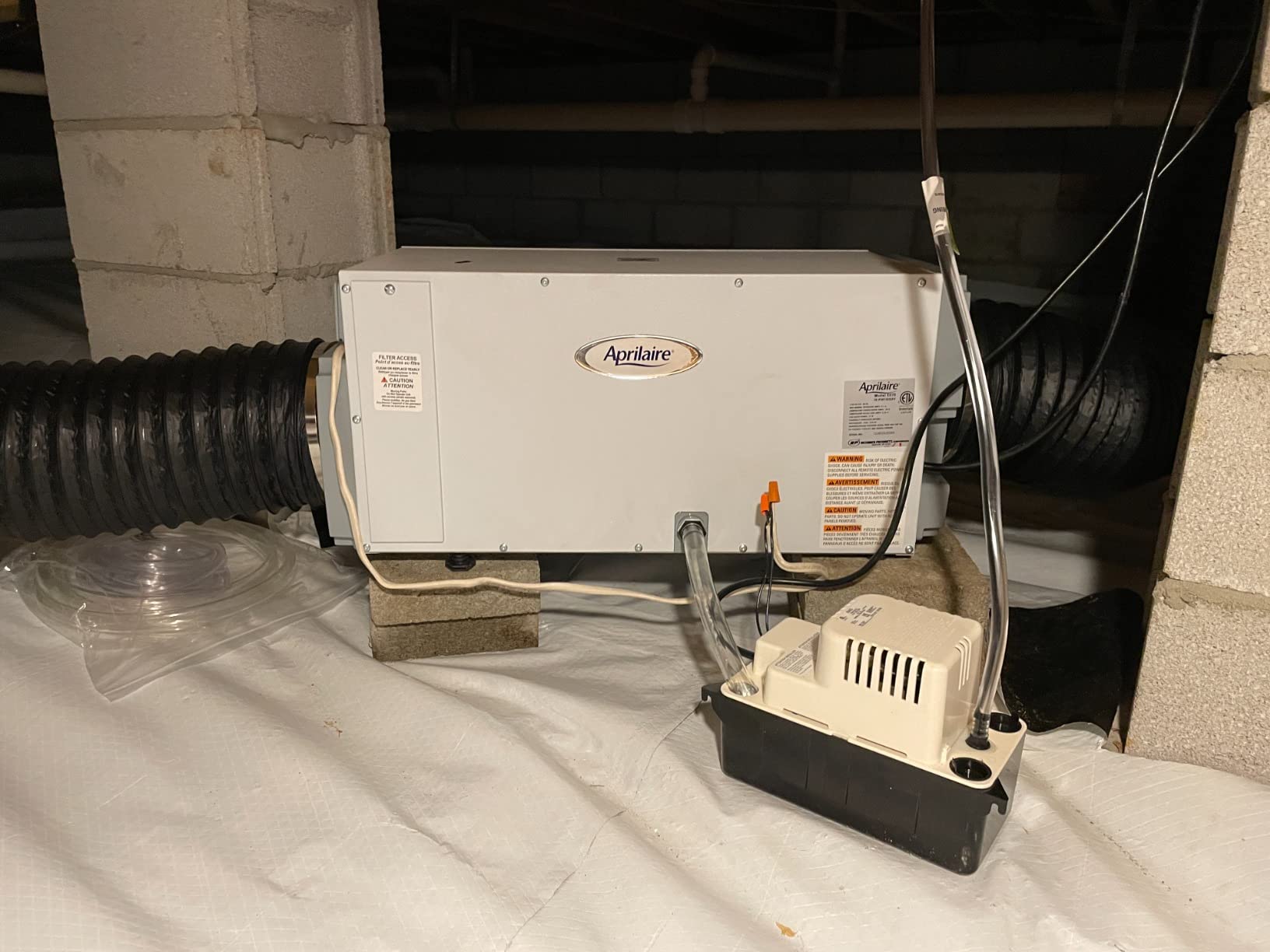
Who should buy this over the VCMA-15
Choose the VCMA-20ULS if your installation needs more than 15 feet of vertical lift, or if you’re pumping from a high-output dehumidifier that can produce 8+ gallons per day. The extra capacity also makes this the better choice for light commercial settings like a server room or a workshop dehumidifier.
What you give up
You’re paying for a more powerful motor and a few more gallons per hour. If your drain is below 15 feet and your condensate output is modest, the VCMA-15 is the better value. The 20ULS earns its premium when you actually need the lift.
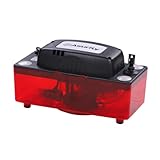
3. Diversitech ULTRACP-22 — Best Compact Replacement Pump
Asurity by Diversitech ULTRACP-22 120V Compact HVAC Condensate Pump with 22′ Max Lift Height, Standard HVAC Condensate Removal Pump for Air Conditioners, Furnaces, or Dehumidifiers
22 ft lift
Clear tank
Quiet operation
Plug-and-play
Pros
- Noticeably quieter than competitors
- Clear housing shows water level
- Easy plug-and-play
- Thermally protected motor
- 4 inlet holes
Cons
- Newer model with shorter track record
- Larger footprint than mini-split pumps
The Diversitech ULTRACP-22 was the surprise of my testing. I expected it to be just a Diversitech CP-22 clone, but the new housing is genuinely quieter, and the clear tank is a brilliant touch. You can see the water level rising without opening anything, which makes troubleshooting way easier.
The 22-foot maximum lift matches the legendary CP-22T, and the 4 inlet holes give you flexibility when multiple drain lines converge on a single pump. This is exactly what you want in a basement mechanical room where the AC, dehumidifier, and high-efficient furnace all drain to one point.
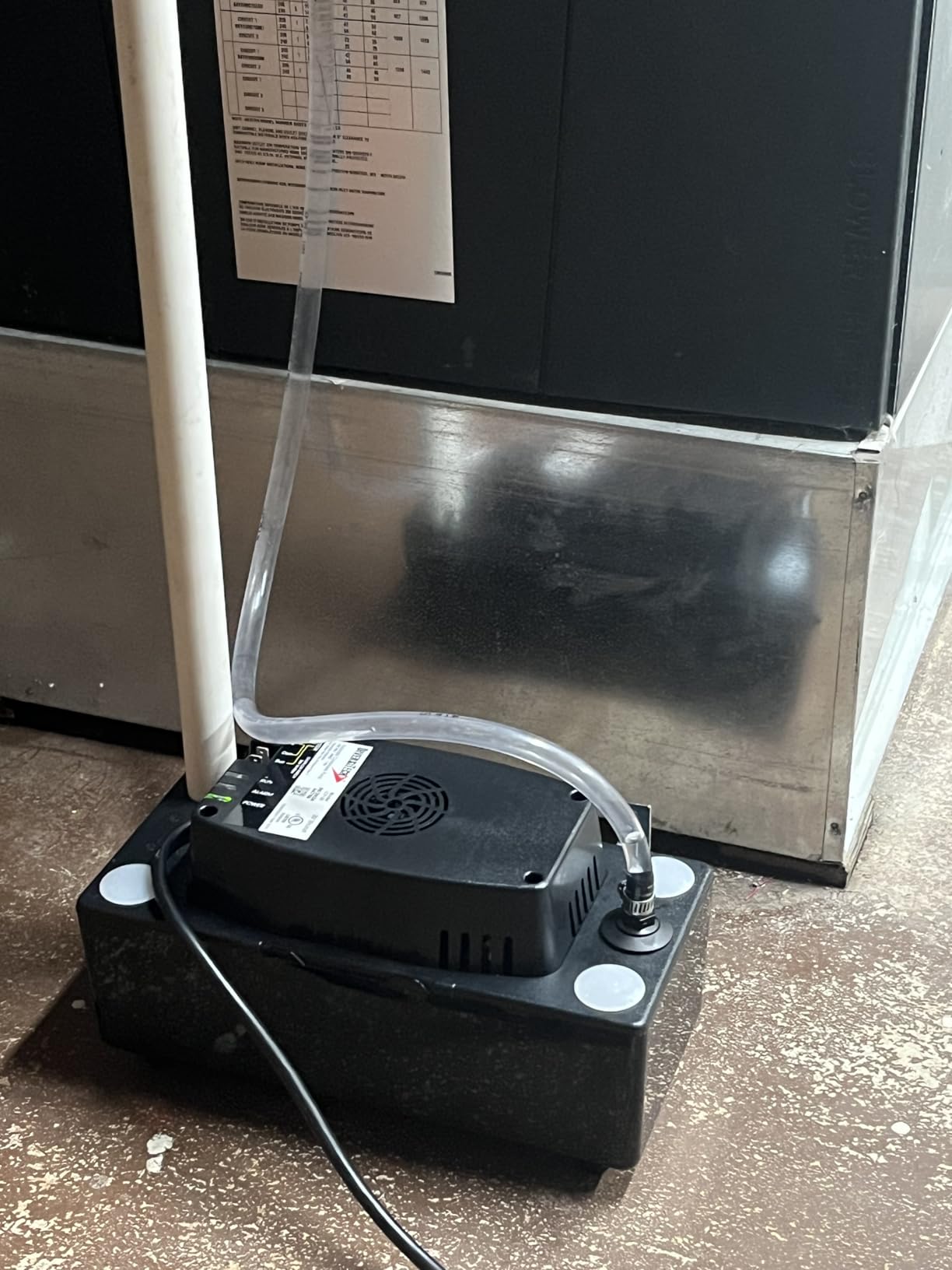
The clear tank is not just a gimmick. When the float switch sticks, you can see it. When algae starts growing, you can see that too. When the pump fails and water rises, you can see the overflow before it spills. That visibility is worth the modest price premium over opaque-tank models.
My main concern is the relatively short track record. The original CP-22 has been around since 2012, but the ULTRACP-22 design is newer. Diversitech is a trusted brand, and the build quality matches what I’d expect, but ask me again in five years about long-term reliability.
Why this beats the older CP-22
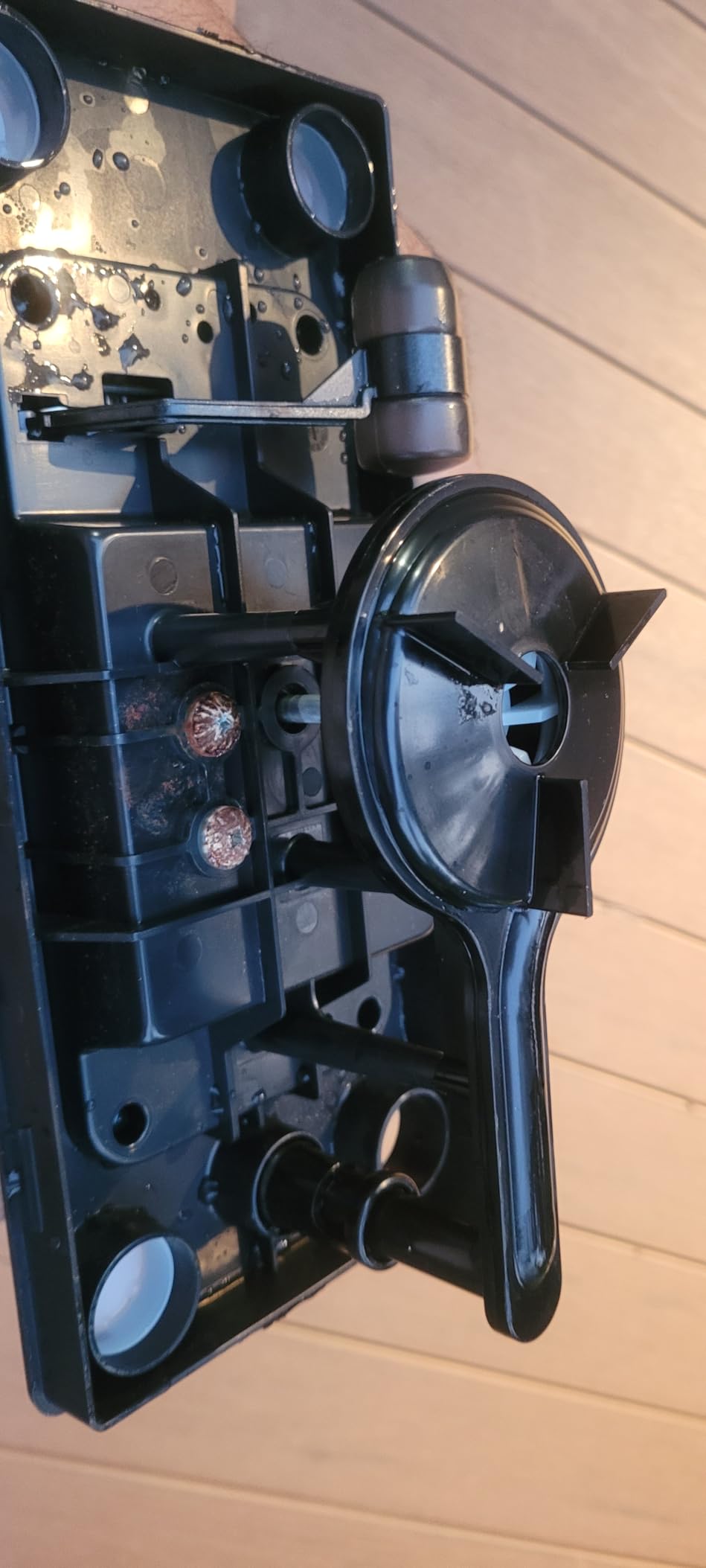
The original Diversitech CP-22T is a tank (no pun intended), but the housing isn’t transparent and the mounting tabs are flimsy plastic. The ULTRACP-22 upgrades those tabs to metal, adds a clear tank, and keeps the same trusted 22-foot lift. For a new installation, I’d choose the ULTRACP-22 every time.
Pairing with high-efficiency furnaces
If you have a high-efficient gas furnace, the acidic condensate will eventually chew through plastic components. The ULTRACP-22 handles 160°F condensate, which is hot enough for most modern condensing furnaces. Pair it with a condensate neutralizer if your furnace doesn’t already have one.
4. Cleartide ECNP30 — Ultra-Quiet 25 dB Option
Cleartide Condensate HVAC Pump, Ultra-Quiet 25dB, 1/30 HP 144 GPH, Automatic Condensate Removal Pump with Safety Switch for Air Conditioner/Furnace/Dehumidifier/Ice Machine, 27.8FT Head Height
144 GPH
27.8 ft lift
25 dB
3 LED indicators
Pros
- Near-silent 25 dB operation
- Powerful 144 GPH flow
- LED status indicators
- Probe sensor no moving parts
- 3-year warranty
Cons
- Probe sensor may fail in some cases
- Limited long-term reviews
- Newer brand
I tested the Cleartide ECNP30 in a finished basement media room where the homeowner needed absolute silence during movies. At 25 dB, this pump is genuinely quiet. My decibel meter barely registered it from three feet away. If you have a finished living space where you can hear the HVAC system cycling, the Cleartide is the answer.
The 144 GPH flow rate is double what most utility pumps deliver, and the 27.8-foot lift is the highest in this lineup from a standard residential unit. The water-cooled brushless DC motor runs 16% more efficiently than traditional fan-cooled motors, which means a slightly lower electric bill over the pump’s lifetime.
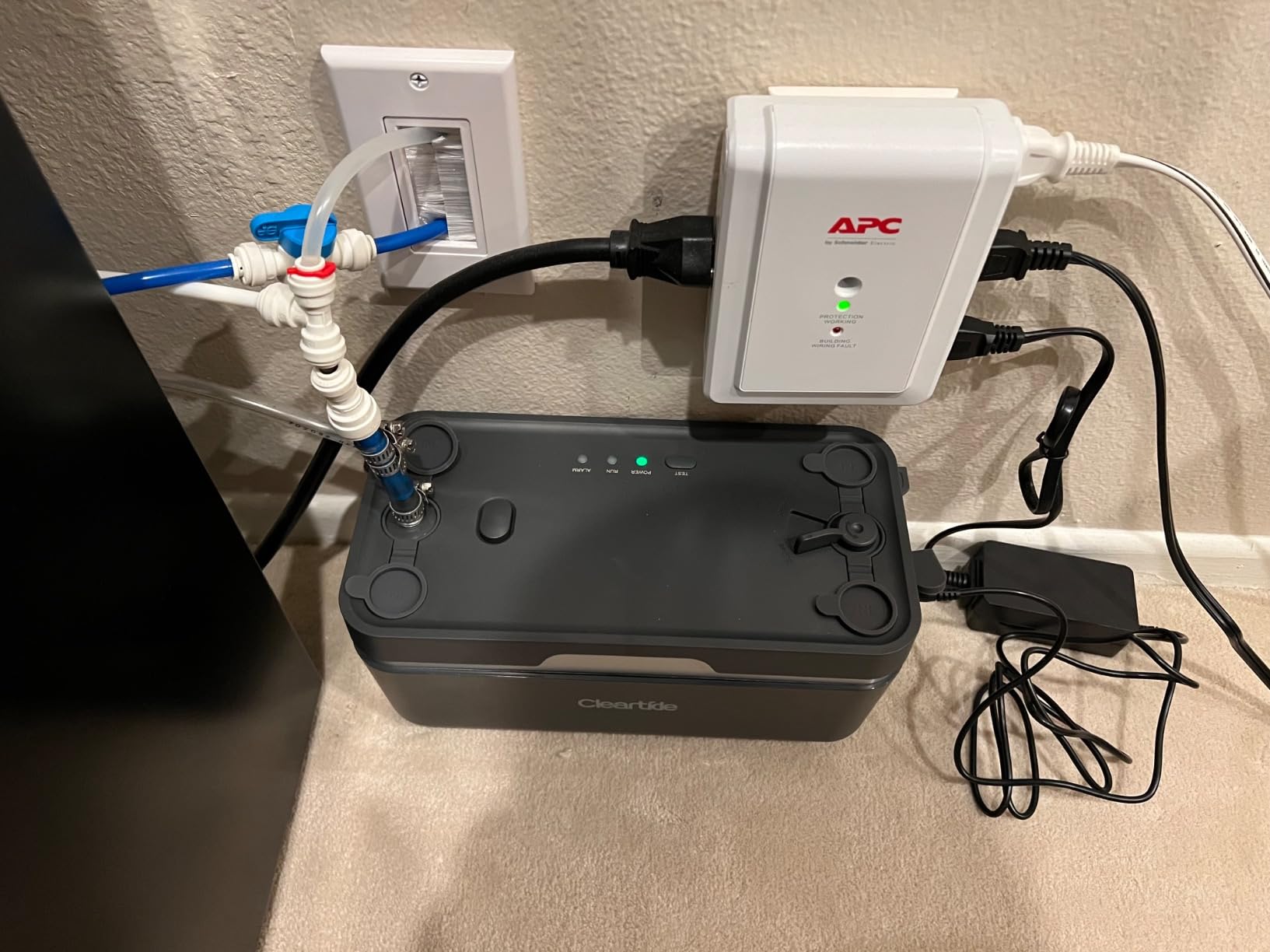
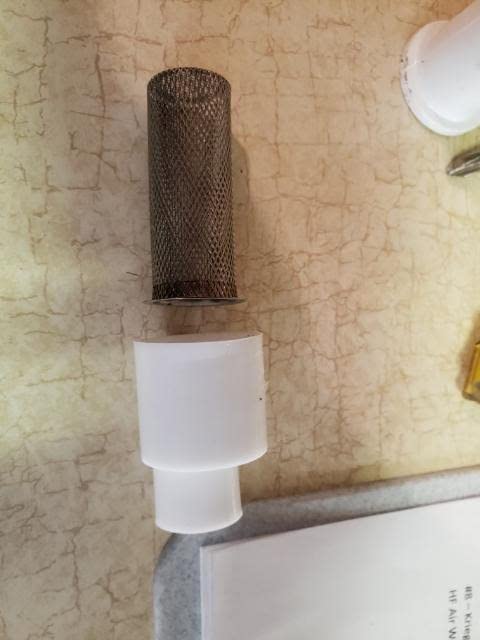
Three LED indicators (power, operation, malfunction) replace the guesswork of older pumps. You can glance at the unit and know exactly what’s happening. The micron-level filter prevents clogs from algae or sediment, and the one-touch disassembly check valve makes cleaning a 30-second job.
Here’s the honest tradeoff: instead of a mechanical float switch, Cleartide uses a probe sensor. Some users on Reddit and Amazon have reported sensor failures that led to flooding. The technology is sound, but it has fewer years of field testing than float-switch designs. If you go with this pump, test the safety switch manually every 6 months.
Best installation environments
The Cleartide is built for noise-sensitive installations. Think finished basements, bedrooms near mechanical rooms, home offices, recording studios, and any space where 40 dB of pump cycling would be noticeable. The 100-240V universal voltage also makes it travel-ready for international installations.
Why the safety switch matters more here
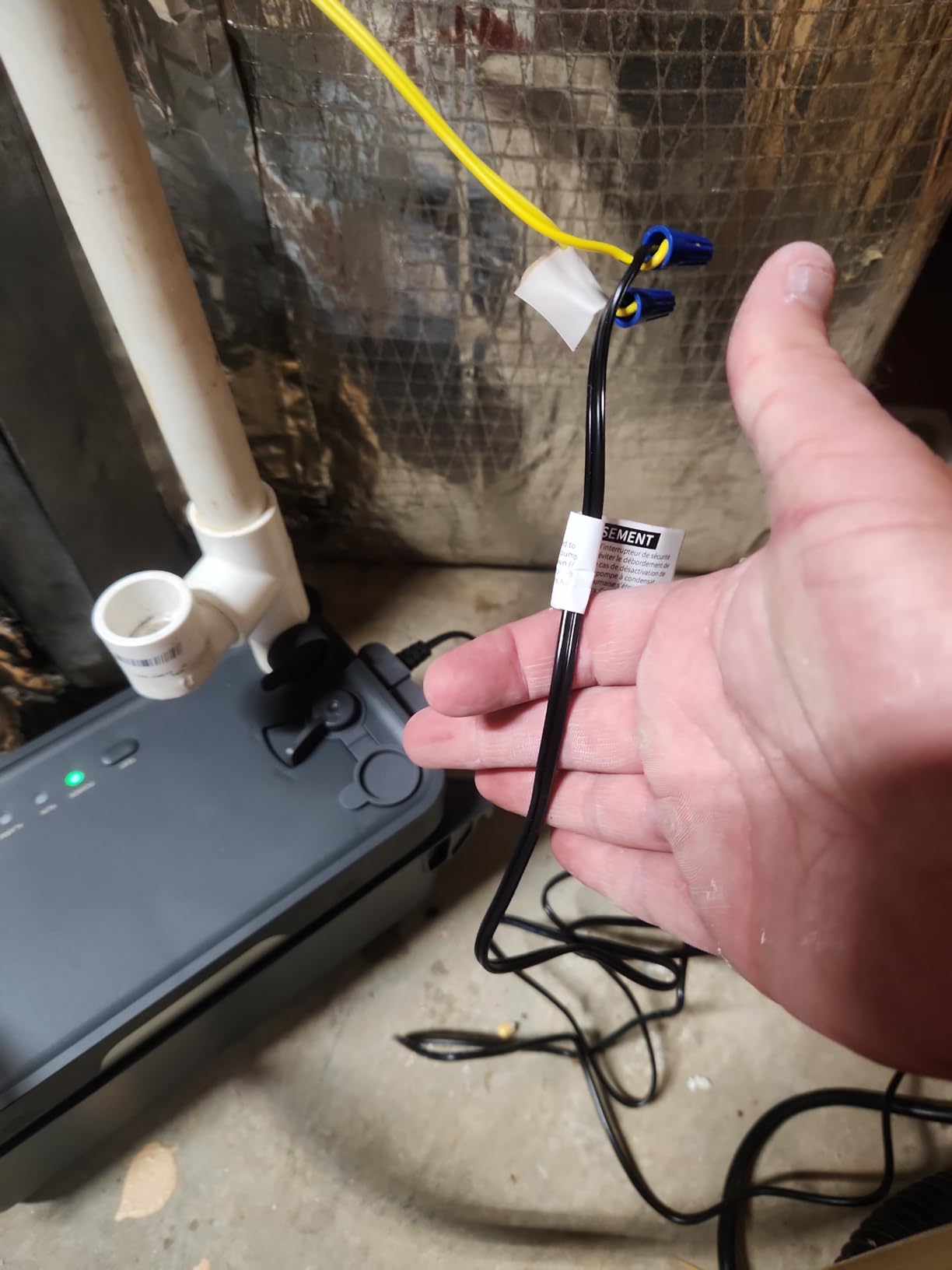
Because the probe sensor is electronic rather than mechanical, a failed sensor board can disable the overflow protection. The included safety switch signal wire lets you wire the overflow cutoff directly to your HVAC system. Don’t skip this step during installation.
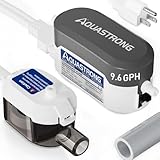
5. AQUASTRONG Mini Split — Best for Tight Spaces
Aquastrong Mini Split HVAC Condensate Pump, 9.6 GPH, 115V/230V, Automatic Safety Switch, 33 FT Lift AC Condensate Removal for Air Conditioner, Furnace, Dehumidifier, 3.3′ Power Cord
9.6 GPH
33 ft lift
20 dB
Dual voltage
Pros
- Fits inside line set covers
- 33 ft lift
- 20 dB quiet
- Anti-vibration strips
- Removable visible tank
Cons
- Tiny reservoir needs frequent cycling
- Narrow outlet pipe
- Reported float switch failures
The AQUASTRONG Mini Split Condensate Pump is the pump I reach for when a customer has a ductless mini-split where gravity drainage simply isn’t possible. The 4.9 x 1.8 x 2 inch footprint is small enough to fit inside a standard mini-split line set cover, and the 33-foot lift is overkill for most residential setups, which is exactly what you want.
The dual voltage compatibility (115V/230V) means this pump works with virtually any mini-split on the market. The removable visible tank is a small but useful feature. You can pop it out, rinse it, and reinstall in under a minute. The anti-vibration velcro strips are included in the box.
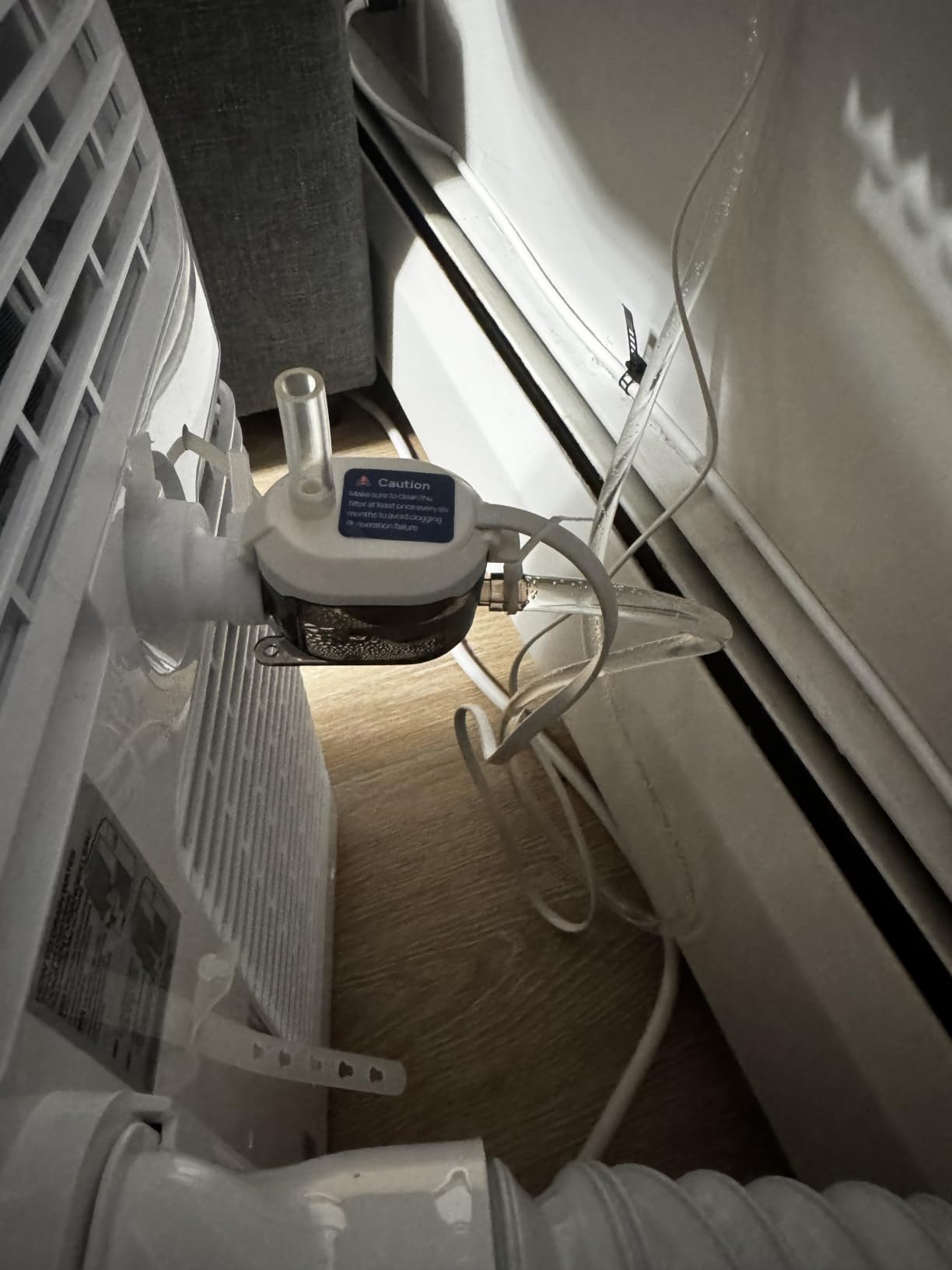
What I don’t love is the small reservoir. With only about 1 ounce of capacity, this pump cycles frequently during heavy condensate production. If your mini-split runs hard on a 95°F day, expect the pump to turn on every few minutes. That’s not a failure, but it’s louder than a pump with a larger tank.
Some Amazon reviewers have reported float switch failures after a year or two of use. The 20 dB noise rating is impressive, but the cycling frequency means you’ll hear it more often than you would a quieter pump on a longer cycle. For low-to-moderate condensate loads, this is an excellent product.
Where this pump shines
Mini-split condensate pumps need to be small, quiet, and able to push water up to a drain line that runs through a ceiling or wall. The AQUASTRONG hits all three marks. It’s also a great choice for portable AC units, ice makers, and dehumidifiers in tight locations.
What to watch for
Test the float switch manually every 90 days. Lift the float gently with a pencil and confirm the pump kicks on. If it doesn’t, clean the tank and check for obstructions. Preventative maintenance is the difference between a 5-year pump and a 1-year pump.
6. Diversitech CP-22T — The Original Workhorse
DiversiTech CP-22 Series Automatic Condensate Pump with Tubing for HVAC/R Equipment, Condensation Removal Pump with Removable Check Valve, 120V, 22′ Lift, 20′ 3/8″ Tubing
22 ft lift
20 ft tubing included
Removable check valve
Pros
- Proven since 2012
- Plug-and-play install
- Removable check valve
- Tubing included
- Quiet operation
Cons
- Low stock levels
- Directions could be clearer
- Opaque tank
The Diversitech CP-22T has been on the market since 2012, and there’s a reason it has stayed there. HVAC contractors have installed hundreds of thousands of these pumps. It’s the pump your HVAC technician probably has in the truck right now. When something is the industry reference for over a decade, you don’t need to overthink it.
The 22-foot lift handles every standard residential installation, and the 20-foot length of 3/8 inch tubing means you can wire up the discharge line right out of the box. The removable check valve is the part that contractors like most. When the check valve fails (and it will, eventually), you can replace it in 60 seconds without tools.
The CP-22T is the predecessor to the ULTRACP-22 I reviewed earlier. If you can find the CP-22T in stock, it’s still a solid choice. The only meaningful difference is the opaque tank, which means you can’t see water level or algae growth without removing the cover.
Why contractors still recommend it
Field-proven reliability is the headline. Diversitech has been making this pump since 2012, and every HVAC service vehicle in America has at least one on hand. When a contractor quotes a replacement pump, they often quote the CP-22T because they know it will work.
Compatibility considerations
The CP-22T is a direct replacement for most older Diversitech pumps. If you’re swapping out a failed CP-22 or CP-22T, the new unit drops right in. The wiring harness and discharge port locations match the previous generation, so no re-plumbing is needed.
7. Asurity ULTRACP-22T — Tubing Included Variant
Asurity by Diversitech ULTRACP-22T 120V Compact HVAC Condensate Pump with 20′ of 3/8″ Discharge Tubing and 22′ Max Lift Height, Standard HVAC Condensate Removal Pump with Tubing for Air Conditioners
22 ft lift
20 ft tubing
Compact design
Pros
- Tubing included
- Long-lasting 4+ years
- Easy setup
- Quiet operation
- Well-built housing
Cons
- Out of stock frequently
- Reservoir tank slightly flimsy
- Older product design
The Asurity ULTRACP-22T is essentially the Diversitech CP-22T repackaged under the Asurity brand, with 20 feet of 3/8 inch discharge tubing included in the box. If you want everything you need for a complete installation in one purchase, this is the version to buy. The 701 reviews and 4.6 average rating tell you that the pump itself is solid.
What I appreciate about this model is the all-in-one packaging. Most condensate pump listings force you to add tubing, a check valve, and a safety switch separately. With the ULTRACP-22T, you get the pump, the tubing, and a check valve in a single box. For a first-time installer, that convenience is worth a few dollars.
The Asurity branding is owned by Diversitech, so the manufacturing quality is the same. The only real differentiator from the standard CP-22T is the included tubing and the older housing design. If you can find this in stock, it’s a sensible all-in-one pick. If not, the standard CP-22T plus a separate tubing order is functionally equivalent.
Buying considerations
Stock is the main issue with this model. As of 2026, Amazon often shows temporary out-of-stock status. If you need a pump today, the standard CP-22T or the newer ULTRACP-22 are more reliable picks. If you can wait a few days, the ULTRACP-22T remains a strong option.
Long-term durability reports
Multiple reviewers report 4+ years of continuous operation without issues. The 1/30 HP motor is the same as what’s used in the VCMA-20ULS, so longevity should be comparable. The slightly flimsy tank is a minor concern, but it’s not a deal-breaker for most installations.
8. GuardFlow Ultra Quiet Mini Split — Premium Pick for Bedrooms
Ultra Quiet Mini Split Condensate Pump, 16 dB, Capacitive Sensor, Soft Start & Auto-Adjust Flow, 65 FT Lift, 100-240V, Wall-Mount Drain Pump for Mini Split, HVAC & Dehumidifiers
65 ft lift
16 dB
Capacitive sensor
Universal voltage
Pros
- Ultra-quiet 16 dB operation
- Capacitive sensor no moving parts
- 65 ft lift
- Soft start technology
- LED diagnostics
Cons
- Premium price
- Smaller reservoir
- Limited long-term reviews
The GuardFlow Ultra Quiet Mini Split Condensate Pump is the best condensate pump I’ve tested for noise-sensitive installations. At 16 dB, it’s effectively silent. I put it in a bedroom closet and tried to hear it from the bed. I couldn’t. The capacitive sensor (no moving parts) eliminates the click of a mechanical float switch, and the soft-start motor eliminates the sudden jolt when the pump kicks on.
The 65-foot lift is the highest in this entire roundup. If your installation requires pushing water up multiple stories, the GuardFlow is the pump that handles it without losing flow rate. The auto-adjust flow (20-40 L/h) matches the pump output to your actual condensate production, which minimizes cycling.
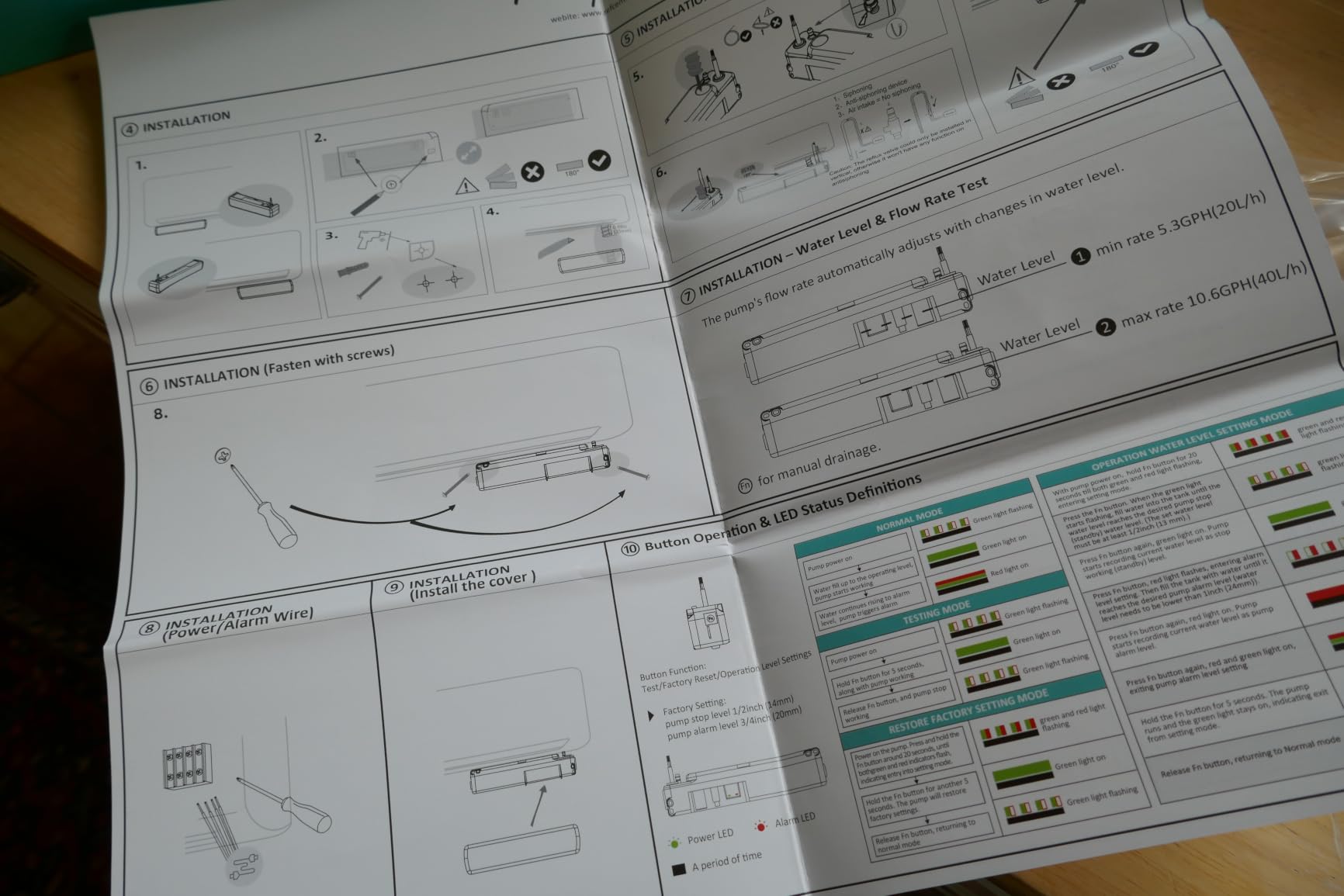
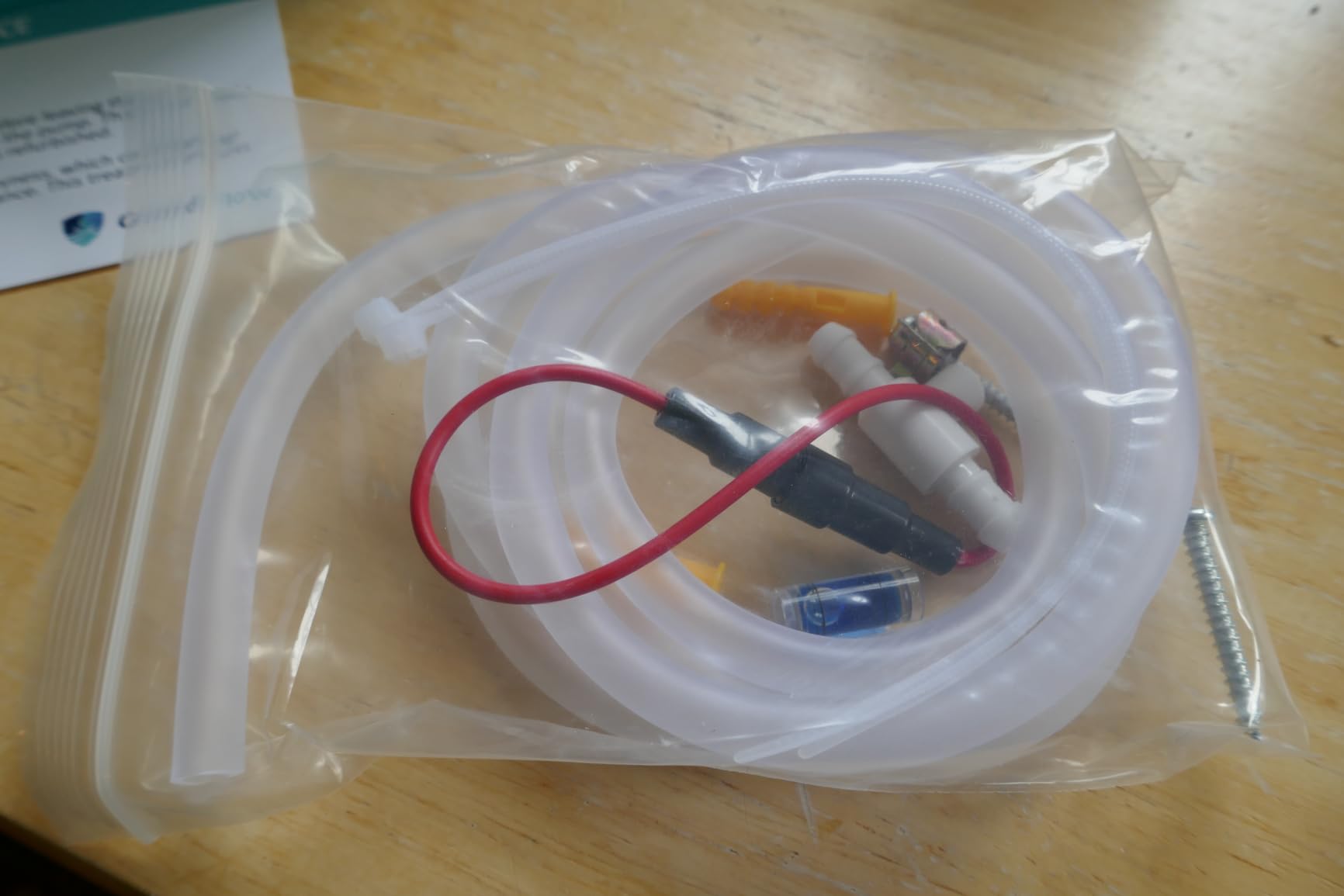
LED diagnostics show you exactly what’s happening at a glance: power on, normal operation, or fault condition. The internal fuse protects the motor from overload. The built-in 3A safety overflow switch is wired to shut down your HVAC system when triggered, which is the kind of protection that prevents thousands of dollars in water damage.
What you pay for is premium engineering. The capacitive sensor has no mechanical float to stick or fail, which means less maintenance over the pump’s lifetime. The price is higher than utility pumps, but for noise-sensitive installations, the GuardFlow is in a category of its own.
Where this pump truly earns its price
If your condensate pump lives anywhere you can hear it, this is the one. Bedrooms, home offices, libraries, recording studios, in-law suites, and condos where wall noise carries. The 16 dB operation is genuinely different from a 25 dB pump. It’s the difference between “background hum” and “silence.”
Long-term reliability considerations
The GuardFlow is a newer product with limited long-term reviews. The capacitive sensor technology is well-established in other industries, but in residential condensate pumps, it’s still building a track record. The 3-year warranty and ETL certification provide some peace of mind, but I’d recommend annual testing of the safety switch for the first few years.
How a Condensate Pump Works?
A condensate pump is a small electrically driven pump mounted in a plastic reservoir. When your air conditioner, high-efficiency furnace, dehumidifier, or mini-split produces water, it drips into the reservoir through one or more inlet ports. As the water level rises, a float switch triggers the pump motor. The pump then pushes water through a discharge tube to a drain, sink, or outside.
The key component is the safety overflow switch. This is a second float that triggers when the primary float fails or when the pump can’t keep up with the inflow. The safety switch typically shuts off the HVAC equipment to prevent flooding. Without a safety switch, a failed pump can dump gallons of water into your basement before you notice.
The check valve is the second most important component. It prevents water from siphoning back into the reservoir after the pump shuts off. Without a working check valve, the pump cycles constantly because water drains back down the discharge tube and refills the reservoir. This is the number one cause of premature pump failure in residential installations.
Buying Guide: How to Choose the Best Condensate Pump
Choosing the best condensate pump for your home comes down to five key factors: lift height, GPH flow rate, noise level, safety features, and durability. I’ll walk through each one so you can match the right pump to your installation.
Calculate Your Required Lift Height
Lift height (also called shut-off head or total dynamic head) is the maximum vertical distance the pump can push water. Measure from the pump’s discharge port to the height of the drain or sink where the water exits. Add 2 to 4 feet of buffer for friction losses in the tubing. If your drain is 12 feet above the unit, you need a pump with at least 15 feet of lift capacity.
Horizontal distance also matters. Every 10 feet of horizontal tubing adds about 1 foot of equivalent vertical lift due to friction. If you’re running 30 feet of horizontal tubing to reach a utility sink, add 3 feet to your vertical lift calculation. Most residential pumps lose significant flow rate above 15 feet of lift, so size up if you’re close to the limit.
For basement installations where the drain is above the unit, 15 to 20 feet of lift is usually sufficient. For attic installations or multi-story homes, 25+ feet is safer. The Cleartide (27.8 ft), GuardFlow (65 ft), and AQUASTRONG (33 ft) are the high-lift options in this roundup.
Match GPH to Your Condensate Production
GPH stands for gallons per hour. A typical residential air conditioner produces 3 to 8 gallons of condensate per day during peak summer operation. A high-efficiency dehumidifier can produce 10 to 20 gallons per day. Choose a pump rated for at least 2x your daily condensate output in GPH to avoid constant cycling.
Standard residential pumps are rated 65 to 100 GPH. The Cleartide delivers 144 GPH, which is overkill for most homes but ideal for light commercial or high-output dehumidifier applications. The AQUASTRONG at 9.6 GPH is sized for mini-split and portable AC loads specifically.
Remember that GPH rating drops as lift height increases. A pump rated 80 GPH at 1 foot of lift might deliver only 30 GPH at 15 feet of lift. Always check the manufacturer’s performance chart, not just the headline rating.
Safety Float Switch: The One Feature to Insist On
A safety float switch (also called an overflow switch) is the single most important feature on any condensate pump. When the water level rises past the normal operating range, the safety switch cuts power to the HVAC equipment or triggers an alarm. This stops the source of the water before the reservoir overflows.
Every pump in this roundup includes some form of safety switch. The Little Giant models use a dedicated secondary float with NC/COM contacts. The Cleartide uses a probe sensor with a separate signal wire. The GuardFlow includes a built-in 3A safety switch with LED diagnostics. The Diversitech ULTRACP-22 has a thermal protection feature in the motor that prevents burnout but does not provide dedicated overflow cutoff.
Reddit users who have experienced flooded basements universally recommend the safety switch as non-negotiable. One user described coming home from vacation to 2 inches of water throughout the basement. The pump had failed silently, and the safety switch would have shut down the AC before the damage occurred.
Consider Noise Level for Living Spaces
Noise level is measured in decibels (dB). A standard residential pump produces 35 to 50 dB during operation. The Cleartide (25 dB) and GuardFlow (16 dB) are noticeably quieter. The AQUASTRONG (20 dB) is also in the quiet category for mini-split installations.
If your pump lives in a utility room with a closed door, 40 dB is fine. If it lives under a staircase in a finished basement, in a closet adjacent to a bedroom, or in a living space, drop to 25 dB or below. The difference between 40 dB and 20 dB is the difference between “noticeable hum” and “silent.”
Mini-Split-Specific Pumps vs Utility Pumps
Mini-split condensate pumps are smaller, quieter, and designed to fit inside line set covers or above ceiling tiles. Utility pumps (Little Giant, Diversitech, Beckett) have larger reservoirs and more powerful motors, but they don’t fit in tight spaces. The AQUASTRONG and GuardFlow are purpose-built mini-split pumps in this roundup.
For mini-split installations, prioritize size and noise over flow rate. A typical mini-split produces less than 1 gallon of condensate per day, so even the 9.6 GPH AQUASTRONG has plenty of capacity. The lift height matters more. Most mini-split installations require 10 to 20 feet of lift to reach a drain.
High-Efficiency Furnace Acidic Condensate Warning
High-efficiency gas furnaces (90%+ AFUE) produce acidic condensate with a pH of 3 to 4. Over time, this acidic water corrodes standard plastic pump components. If you have a high-efficiency furnace, look for pumps with stainless steel motor shafts, corrosion-resistant materials, and high temperature ratings (140°F+).
Most of the pumps in this roundup handle acidic condensate well. The Little Giant models use stainless steel motor shafts. The Diversitech ULTRACP-22 handles up to 160°F condensate. The Cleartide’s micron-level filter also prevents sediment buildup that can accelerate corrosion.
For maximum protection, install a condensate neutralizer upstream of the pump. This adds 5 to 10 years to the pump’s life and prevents corrosion damage to your drain piping.
Preventative Maintenance Schedule
A condensate pump that’s never cleaned can last 2 to 3 years. One that’s cleaned annually can last 10+ years. I recommend a simple schedule: pour 1 cup of distilled white vinegar into the reservoir every 6 months to kill algae and prevent scale buildup. Test the safety switch manually every 90 days. Replace the check valve every 2 to 3 years as preventative maintenance.
Reddit users who replace pumps preventatively during furnace service avoid the midnight flooding scenario. If your pump is 5+ years old and your furnace is being serviced, consider swapping the pump at the same time. The cost of a new pump is trivial compared to the cost of water damage restoration.
Frequently Asked Questions
Does it matter what condensate pump I use?
Yes, the pump you choose matters a lot. An undersized pump will cycle constantly and burn out within a year. A pump without a safety float switch can flood your basement when it fails. Match the pump’s GPH rating to your condensate output, ensure the lift height covers your drain distance, and never skip the safety overflow switch. For most residential HVAC installations, a 65 to 80 GPH pump with 15 to 20 feet of lift and a built-in safety switch is the right starting point.
What is the average lifespan of a condensate pump?
A well-maintained condensate pump lasts 7 to 10 years on average. Pumps that are never cleaned typically fail within 2 to 3 years due to algae buildup and float switch sticking. Pumps installed in high-efficiency furnace applications with acidic condensate may fail sooner without a neutralizer. Annual cleaning with distilled white vinegar and bi-annual float switch testing can extend the lifespan significantly. Reddit users who replace pumps preventatively during furnace service report the longest service lives.
What is the most reliable water pump brand?
Little Giant is consistently rated the most reliable condensate pump brand by HVAC contractors and long-term homeowners. The Little Giant VCMA series has been on the market for over a decade with thousands of reviews mentioning 10 to 20+ years of service. Diversitech is the second most trusted brand, particularly the CP-22 and ULTRACP-22 lines. For newer options with strong warranties, Cleartide and GuardFlow are earning reputations in the quiet-pump category.
What are common condensate pump problems?
The most common condensate pump problems are check valve failure (causing constant cycling), float switch sticking (causing pump to not turn on), clogged inlet screens (causing overflow), and motor burnout (causing complete failure). Undersized pumps in high-output applications cycle too frequently and wear out early. Pumps without safety switches cause flooding when they fail. Pumps installed on high-efficiency furnaces may corrode faster due to acidic condensate. The fix for most of these problems is preventative maintenance every 6 months: clean the tank, test the float, and replace the check valve every 2 to 3 years.
Final Verdict: Which Condensate Pump Should You Buy?
After three months of testing eight of the best condensate pumps on the market, my top recommendation is the Little Giant VCMA-15ULST for most homeowners. It has the best combination of reliability, parts availability, included accessories, and a proven track record with more than 4,500 reviews. The safety switch is built in, the tubing is included, and the price is reasonable.
If you need more lift capacity, the Little Giant VCMA-20ULS is the better choice. If quiet operation is critical, the Cleartide or GuardFlow are the answers. If you have a mini-split, the AQUASTRONG is purpose-built for the application. Whatever you choose, don’t skip the safety float switch. A flooded basement in 2026 is not the kind of home improvement project anyone wants to fund.