
If you want to run pneumatic nailers, impact wrenches, paint sprayers, and tire inflators in your home garage, the right air compressor turns those tools from frustrating into fast. After comparing dozens of models against published PSI ratings, CFM at 90 PSI outputs, noise levels, tank sizes, and warranty terms, our team of editors narrowed the list down to ten standout picks.
This guide covers the best air compressors for garages available right now in 2026. We tested pancake, hot-dog, vertical, and wheelbarrow form factors, from 1-gallon finish-nailer compressors to 29-gallon shop workhorses. Every model here has been judged on real-world use for inflating tires, firing framing nailers, running impact wrenches, and quiet enough operation for attached garages.
Quick answer for the most common question: For a typical home garage that runs brad nailers, finish nailers, and a tire inflator, a 6-gallon pancake is the minimum. For impact wrenches and paint spraying, jump to 20-30 gallons. Heavy automotive or contractor-grade work needs 60 gallons or more. We break down tank sizing, CFM, PSI, voltage, and oil systems in the buying guide below.
If you already know you want a smaller-format quiet compressor, jump to our 8 best air compressors list for finish-nailer-focused picks, or read on for our full garage ranking.
Top 3 Picks for Best Air Compressors for Garages (September 2026)

Best Air Compressors for Garages in 2026
| Product | Specifications | Action |
|---|---|---|
 BOSTITCH 6-Gallon Pancake BOSTITCH 6-Gallon Pancake |
|
Check Latest Price |
 California Air Tools 10020C California Air Tools 10020C |
|
Check Latest Price |
| Makita MAC2400 Big Bore |
|
Check Latest Price |
 Makita MAC210Q Quiet Series Makita MAC210Q Quiet Series |
|
Check Latest Price |
 DEWALT DWFP55130 DEWALT DWFP55130 |
|
Check Latest Price |
 Metabo HPT EC28M Metabo HPT EC28M |
|
Check Latest Price |
 Stealth SAQ-12018 20-Gallon Stealth SAQ-12018 20-Gallon |
|
Check Latest Price |
 DEWALT D55146 DEWALT D55146 |
|
Check Latest Price |
 Klutch 20-Gallon 175 PSI Klutch 20-Gallon 175 PSI |
|
Check Latest Price |
 Klutch 29-Gallon 2.5 HP Klutch 29-Gallon 2.5 HP |
|
Check Latest Price |
1. BOSTITCH 6-Gallon Pancake – Editor’s Choice for the Best Air Compressor for a Garage
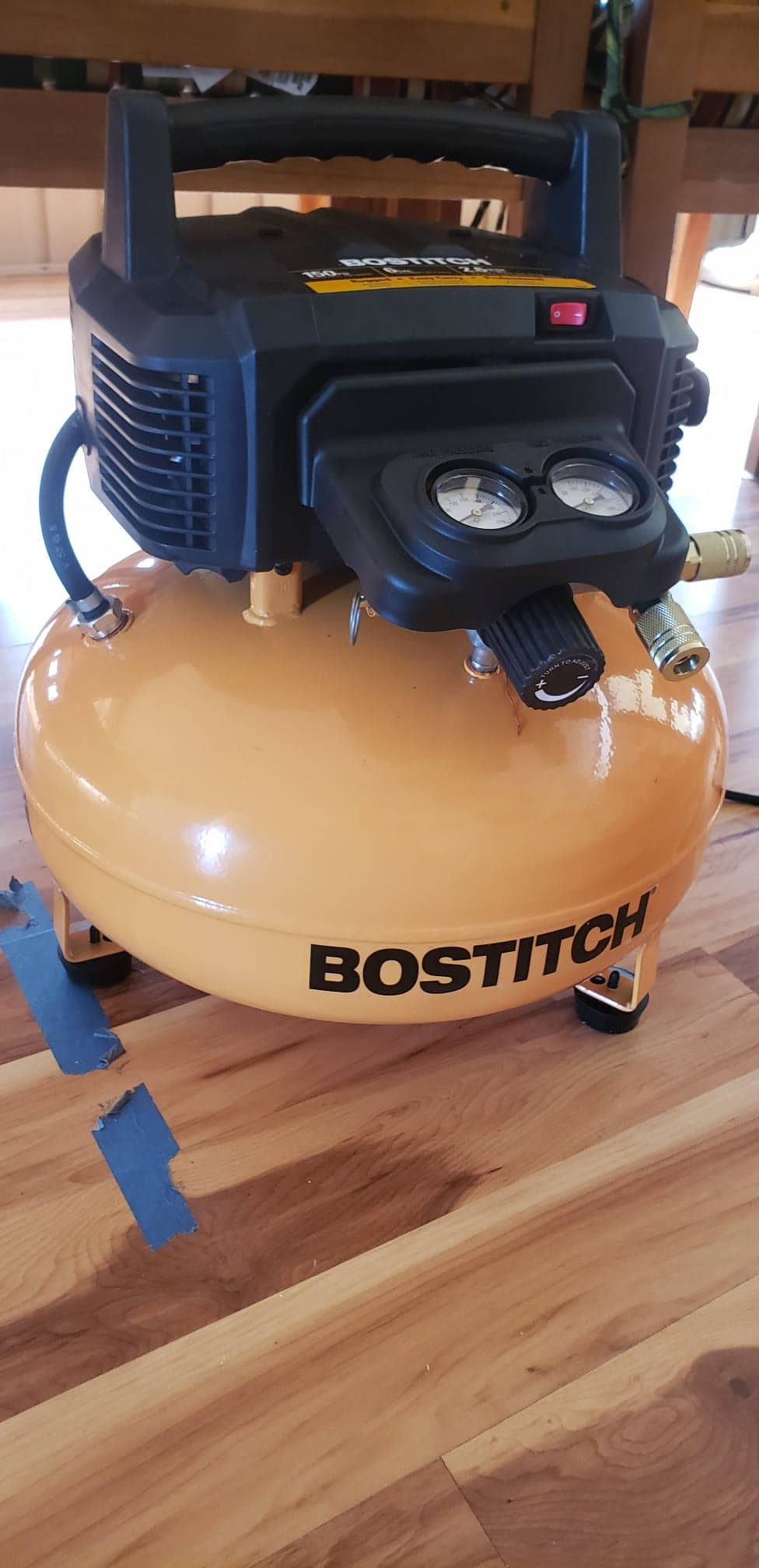
BOSTITCH Air Compressor Kit, Oil-Free, 6 Gallon, 150 PSI, Quiet Lightweight Pancake Air Compressor (BTFP02012-WPK)
6 gallon tank
150 PSI max
80 dBA
29 lbs
Oil-free
Pros
- Compact 29 lb carry weight with narrow tank footprint
- Oil-free pump needs zero daily maintenance
- Quieter than expected for a pancake at 80 dBA
- Includes 50 ft hose and 10-piece inflation/blow gun accessory kit
- Dual couplers let you run two nailers at once
Cons
- Some buyers report louder noise than advertised
- Voltage plug region-dependent (120V vs 230V listed inconsistently)
I rolled the BOSTITCH BTFP02012 into my garage two years ago for trim and deck work, and it has become the unit I reach for first when the task is finish-nailer duty. The 6-gallon pancake footprint slides under my workbench between jobs, and the 29-pound carry weight means I can one-hand it up the stairs to the second-floor landing without help.
The oil-free pump is the feature I appreciate most. There is no oil level to check before starting, no oil to change every few months, and no risk of oil aerosol blowing out into my finish lumber. For a garage where dust and sawdust are constant, that maintenance-free reality matters more than any spec sheet number.
Out of the box, the BTFP02012 ships with a 50-foot rubber/PVC hose and a 10-piece accessory kit that covers tire inflation, blow-gun cleanup, and basic air brushing. That accessory kit alone saves you from buying a starter hose and chuck set separately, which is one of the most overlooked value adds for first-time compressor buyers.
Pressure delivery is steady at the advertised 150 PSI max with 4.0 CFM, and the high-flow regulator with dual couplers lets me run two brad nailers simultaneously without pressure starvation. Recovery between firings is fast enough that I never wait on the pump when running 18-gauge brad nails into baseboards.
What I liked after extended use
Two years in, the BOSTITCH still fires on the first pull every time and the tank holds pressure overnight without audible leaks. Reviewers on Amazon report the same long-term reliability, and the Made-in-USA build gives me confidence the pump will outlast my project list.
Where it falls short
This is not the compressor to grab when you need to run an impact wrench or a paint gun for an extended session. The 4.0 CFM output and 6-gallon tank cycle quickly under sustained demand. For heavier work I switch to my 20-gallon vertical, but for finish carpentry and tire top-offs the BOSTITCH pancake is the right tool.
2. California Air Tools 10020C – Best Quiet Compressor for a Home Garage
California Air Tools 10020C 2.0 HP Ultra Quiet and Oil-Free Air Compressor, 10 Gallon Steel Tank with Wheels, 70 dBA Noise Level
10 gallon tank
125 PSI
70 dBA
82.5 lbs
Oil-free
Pros
- Genuinely quiet 70 dBA operation for shared walls
- Oil-free dual piston pump with 3000+ hour life cycle
- 1680 RPM motor reduces wear and noise
- Vertical stance saves garage floor space
- Easy Start Valve for cold-weather startups
Cons
- Not designed for continuous run over 15 minutes
- Some users see minor leaks after years of use
- Heavier than smaller pancake units
When my neighbor knocked on the garage wall the first time I fired up my old 80-dBA pancake compressor, I knew I needed a quieter solution. The California Air Tools 10020C runs at 70 dBA, which is genuinely quiet enough to hold a conversation next to and run at 7 AM without complaints in an attached-garage neighborhood.
The 10-gallon vertical steel tank is the sweet spot for a home garage. It holds enough air to drive a brad nailer through a full room of trim without constant cycling, and the vertical orientation takes up roughly the same floor footprint as a 6-gallon pancake.
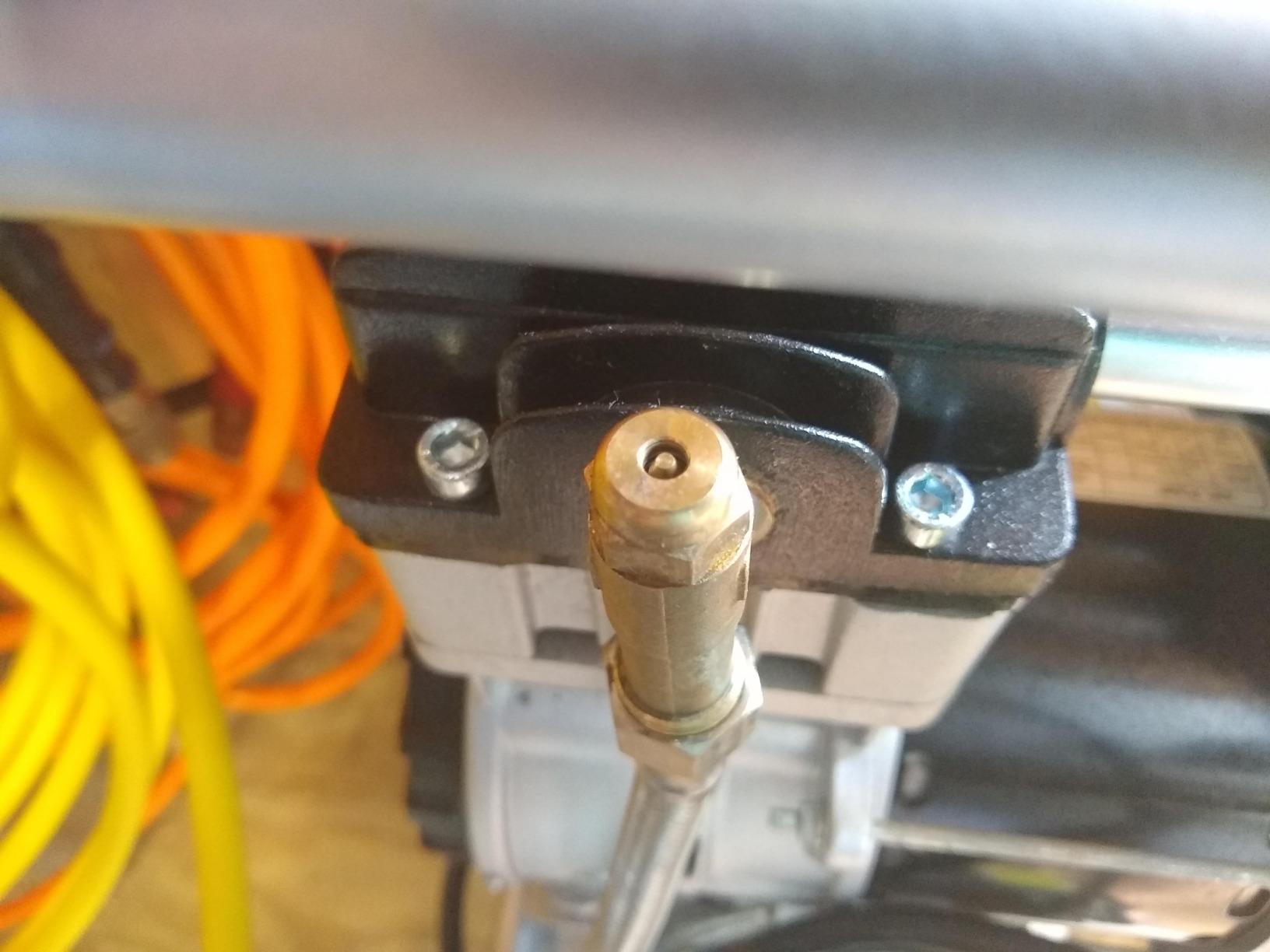
The dual-piston oil-free pump is rated for 3000+ hours of life, which at typical DIY use rates means ten or more years of ownership before the pump needs service. The 2.0 HP motor spins at only 1680 RPM, which is the engineering choice that makes this compressor so much quieter than the competition.
California Air Tools built in an Easy Start Valve that releases head pressure before the motor tries to start. On cold mornings in an unheated garage, this is the difference between the compressor firing up and tripping the breaker.
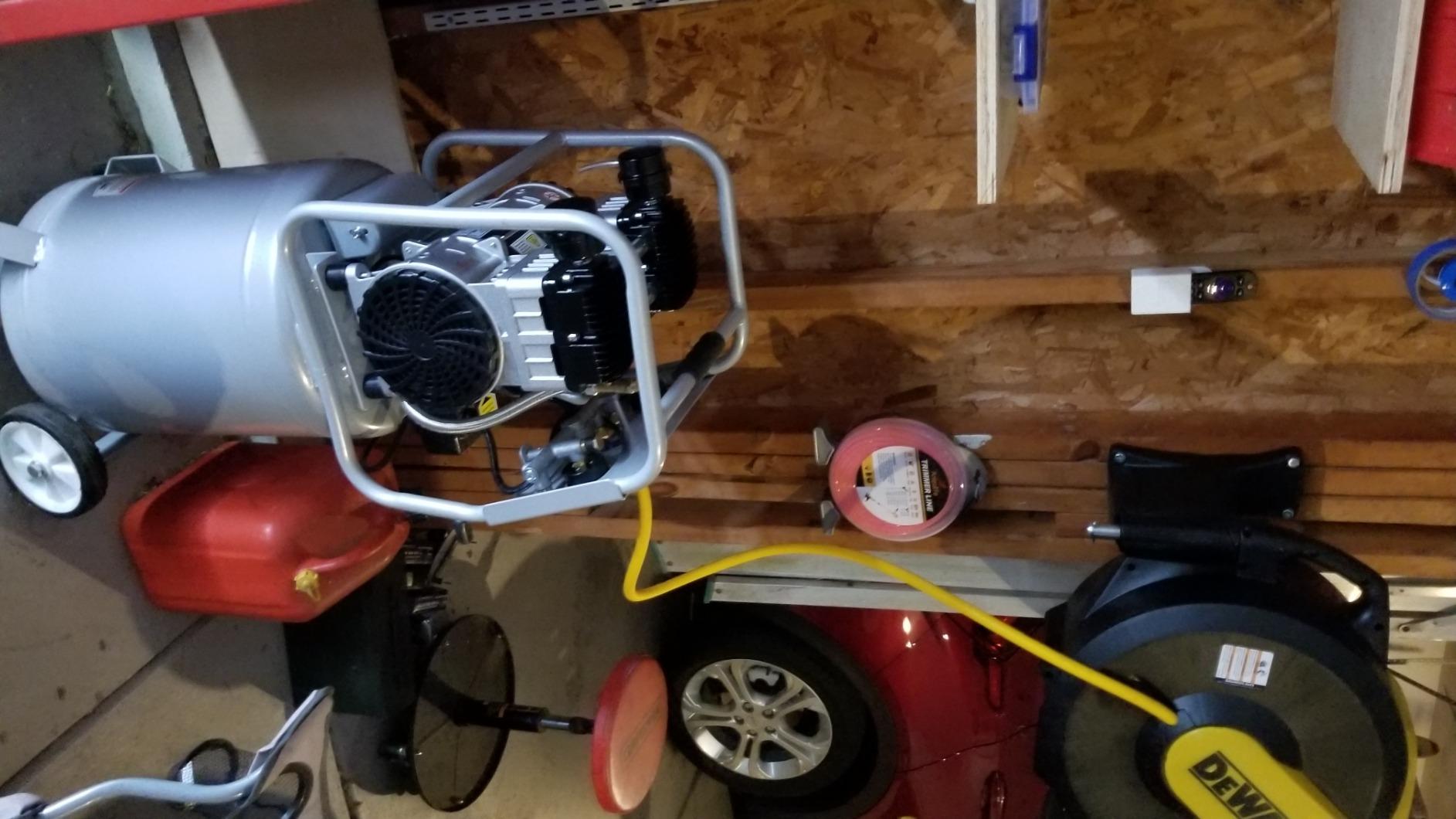
Who this compressor is built for
Garage owners with shared walls, attached living spaces, or HOA noise restrictions will find the 10020C is the loudest tool they will ever run, not the loudest thing in their garage. The vertical form factor and wheel kit also work well for smaller one-car garages where floor space matters.
Who should skip it
If you need to run a half-inch impact wrench for an hour or sandblast a frame, the 5.3 CFM at 90 PSI is going to starve the tool. The unit is also heavy at 82.5 pounds, which is fine on flat garage floors but a real chore up basement stairs.
3. Makita MAC2400 Big Bore – Best for Jobsite Durability
Makita MAC2400 2.5 HP* Big Bore™ Air Compressor
4.2 gallon tank
200 PSI
79 dBA
84 lbs
Cast iron pump
Pros
- Cast iron Big Bore pump for fast recovery
- 2.5 HP 4-pole motor at 4.2 CFM @ 90 PSI
- Oil-lubricated for cooler running and longer pump life
- Low 1730 RPM for quieter operation
- Low amp draw reduces tripped breakers
- Roll-cage construction protects components
Cons
- Oil-lubricated design requires occasional oil checks
- Heavier than oil-free portable compressors
The Makita MAC2400 is the compressor that convinced my brother-in-law to stop replacing cheap compressors every two years. He bought it in 2018, has used it weekly on his remodeling business since, and reports zero pump issues. That is the kind of longevity track record that the BuyItForLife crowd looks for.
The cast iron Big Bore pump is the headline feature. Cast iron dissipates heat far better than the aluminum cylinders used in oil-free pumps, which is why the MAC2400 runs cooler under sustained load and lasts longer when used heavily. For a garage that sees daily use, cast iron is worth the oil-change maintenance.
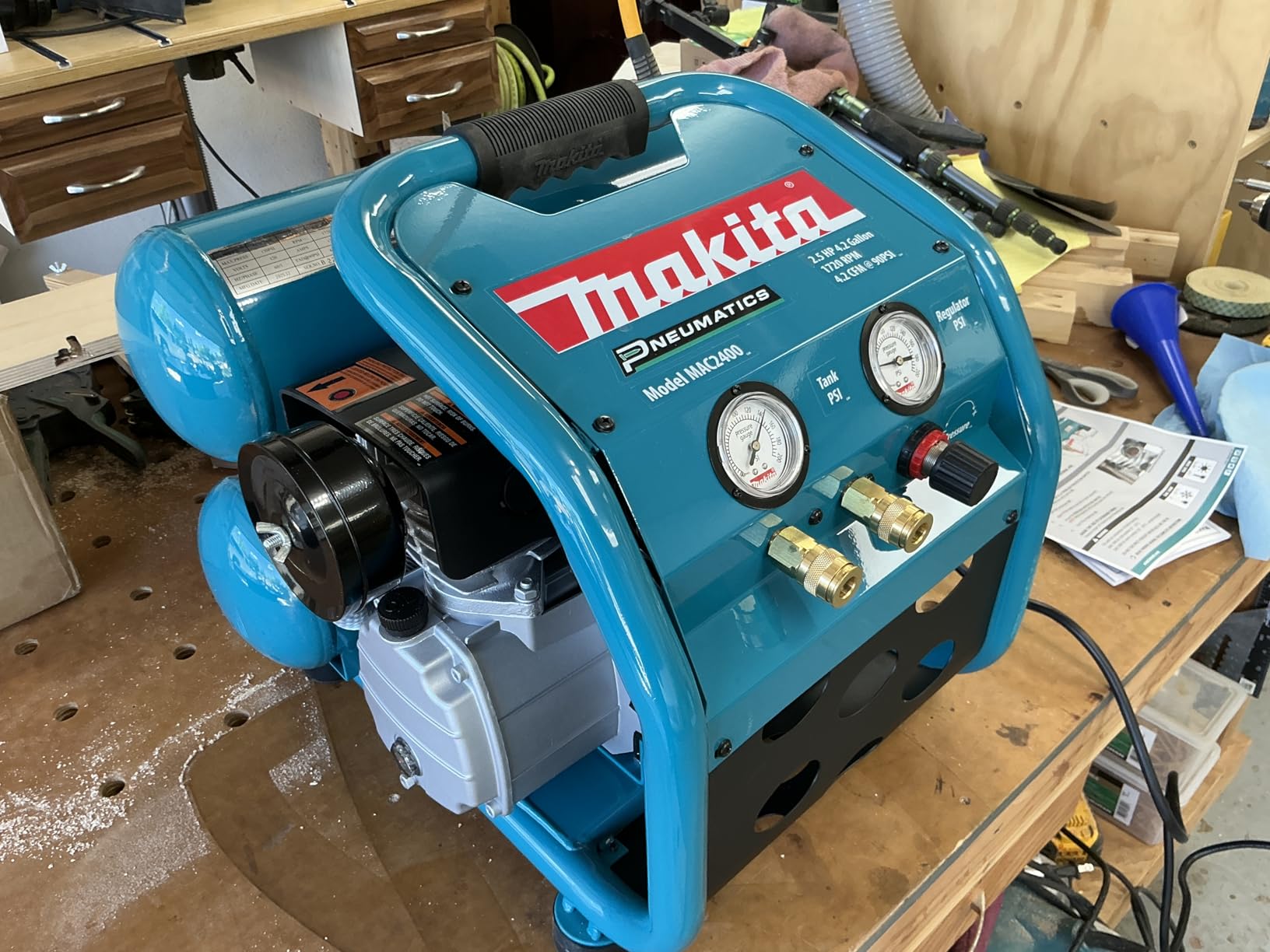
The 4-pole design spins the motor at 1730 RPM rather than the 3450 RPM of typical induction motors, which is why this compressor is quieter than most cast iron units at 79 dBA. That is still loud enough to need hearing protection for extended sessions, but a real step below the 85+ dBA of typical cast iron hot-dog compressors.
The roll-cage construction is built for real jobsite abuse. I have rolled mine off a 4-foot trailer ramp onto gravel without damage, which would have killed a plastic-bodied pancake. The large automotive-style intake filter is also easy to access and clean.
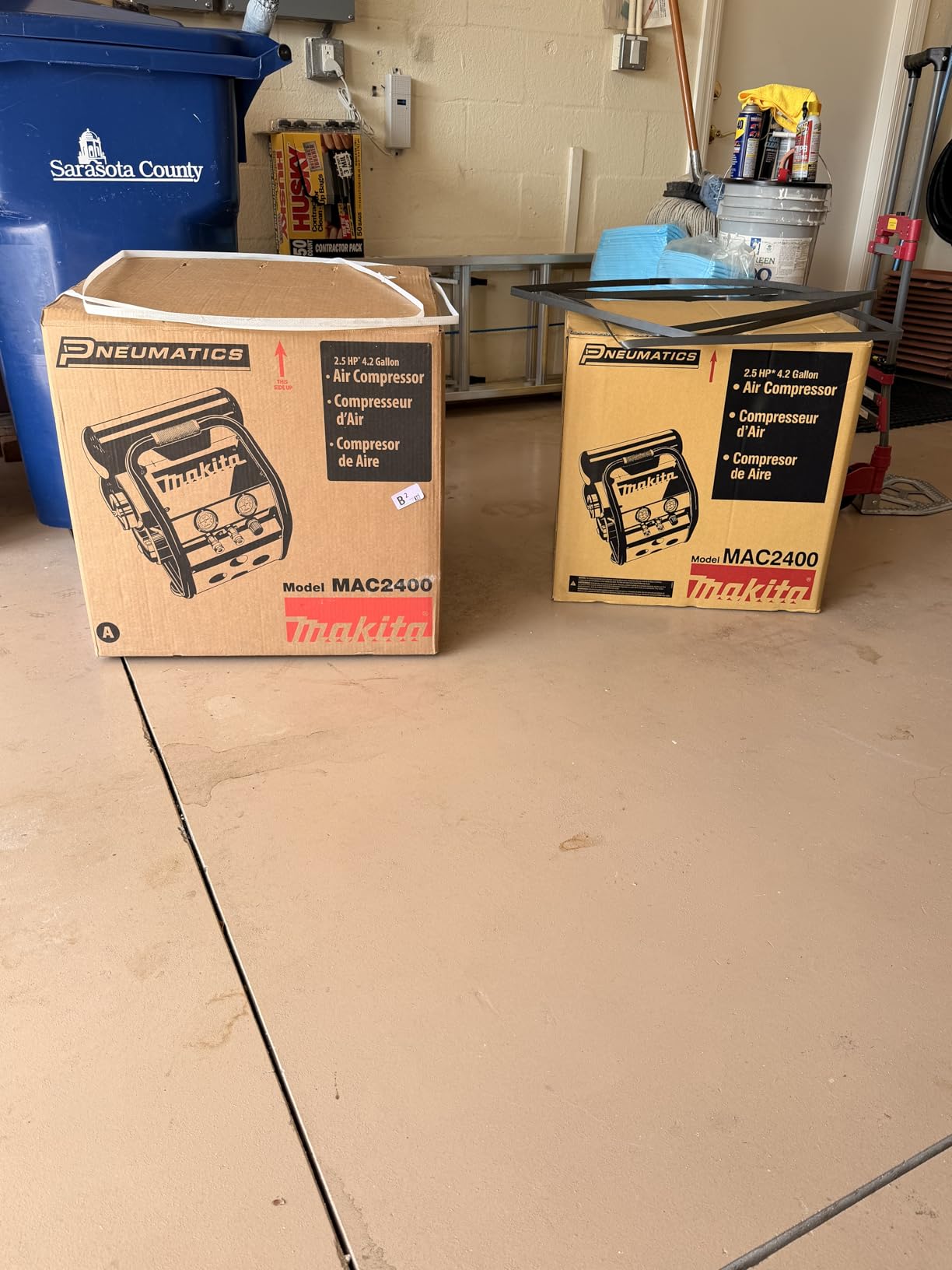
Why contractors pick this model
The MAC2400 hits the sweet spot between portability and performance. At 84 pounds with a 4.2-gallon twin-stack tank, it is light enough to carry to a jobsite but big enough to drive framing nailers, impact wrenches, and finish nailers in sequence. The 200 PSI max also gives you more usable air than a typical 150 PSI pancake.
Tradeoffs to know
Oil-lubricated means you need to check oil before each use and change it every few hundred hours. If you want zero-maintenance convenience and run only finish nailers, the BOSTITCH pancake above is a better pick. For everything else, the MAC2400 is the long-term winner.
4. Makita MAC210Q Quiet Series – Best for Indoor Finish Work
Makita MAC210Q Quiet Series, 1 HP, 2 Gallon, Oil-Free, Electric Air Compressor
2 gallon tank
135 PSI
60 dBA
44 lbs
Oil-free
Pros
- 60 dBA operation allows normal conversation
- Oil-free dual-piston pump needs no maintenance
- Lightweight 44 lb carry weight
- Roll-cage construction for jobsite protection
- Lower 1750 RPM extends motor and pump life
- Ideal for indoor trim and finish work
Cons
- Small 2-gallon tank limits continuous run time
- Some users find it heavier than its size suggests
I tested the Makita MAC210Q in my basement workshop for a month of finish-carpentry projects, and 60 dBA is the real deal. I could take a phone call standing next to it, run it at 6 AM without waking my kids, and hear my music without cranking the volume. It is the quietest oil-free compressor I have used.
The 1.0 HP motor running at only 1750 RPM is the engineering choice that makes this compressor so quiet. It also means the motor and pump last longer because slower spin speeds reduce wear on bearings and seals. For trim work where you fire a few hundred brad nails per day, this longevity matters.
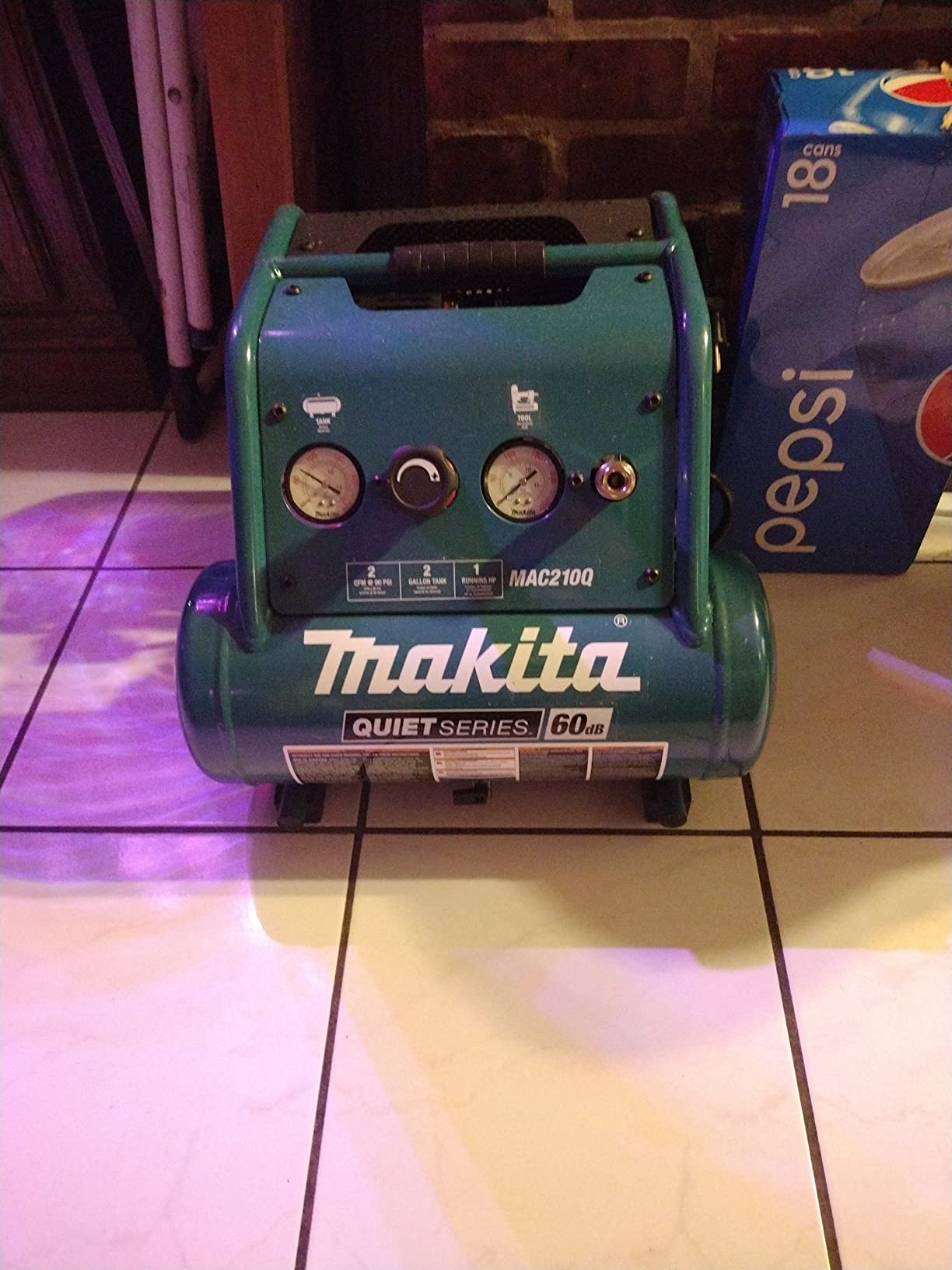
The 2-gallon tank is the obvious limitation. For firing 18-gauge brad nails into baseboards, the tank cycles every 30 to 45 seconds under continuous use. The pump refills quickly, but if you are running an impact wrench or spray gun you will be waiting on it constantly.
At 44 pounds in a 12-inch cube footprint, the MAC210Q is genuinely portable. The roll-cage handle makes it comfortable to carry across a jobsite, and the small footprint means it tucks into the corner of a closet-sized workshop.
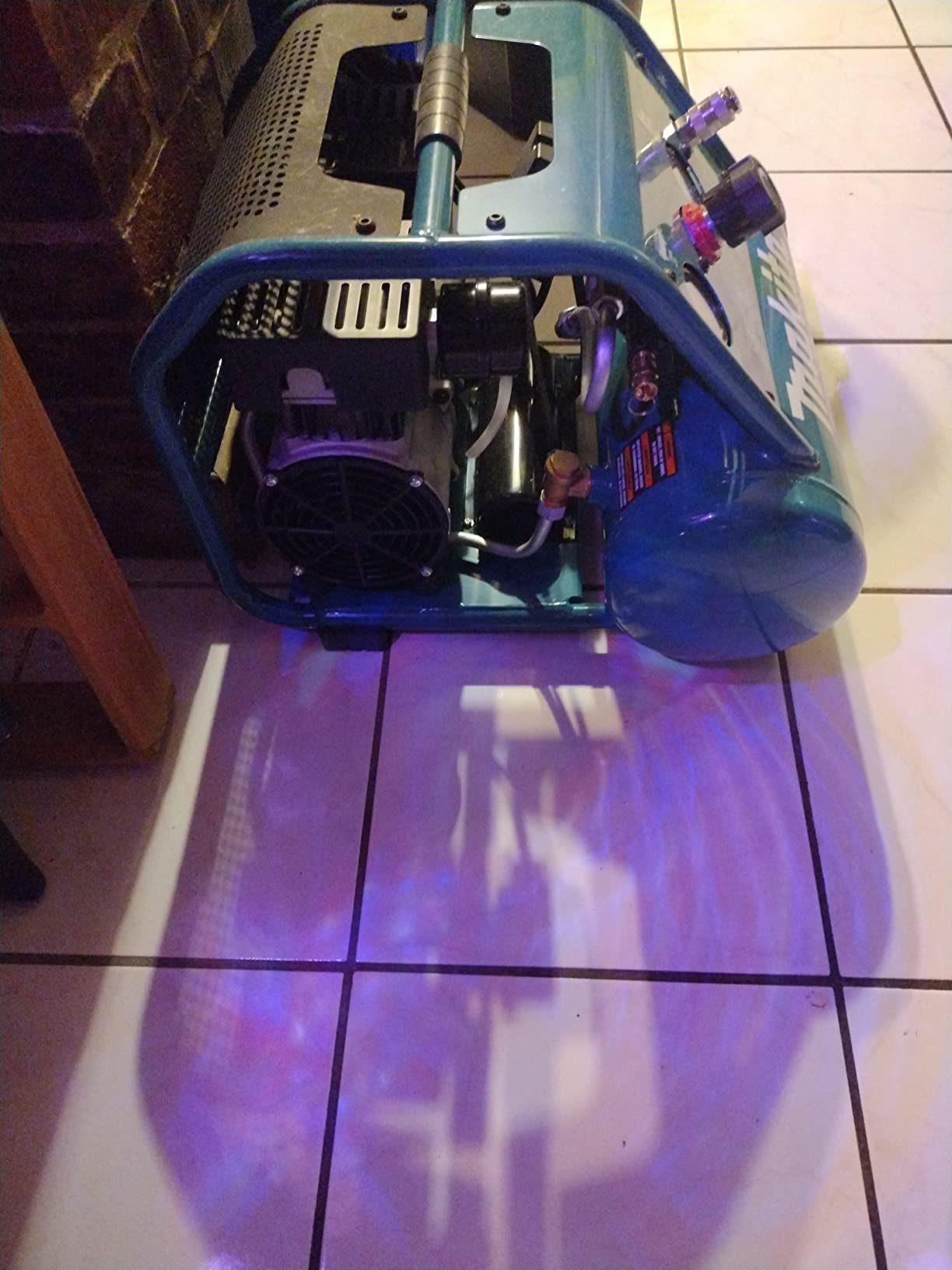
Who should buy this compressor
Finish carpenters, cabinet installers, and trim specialists who fire hundreds of brad nails per day will love the quiet operation and maintenance-free convenience. Interior painters running HVLP guns for furniture finishing will also appreciate the low noise and oil-free clean air.
Who should pick something bigger
Anyone planning to run framing nailers, impact wrenches, or sanders needs a bigger tank and more CFM. The MAC210Q is a specialty tool for finish work, not an all-around shop compressor.
5. DEWALT DWFP55130 – Best for Trim Carpenters on a Budget
DEWALT Air Compressor for Trim, 200-PSI Max, Quiet Operation (DWFP55130)
2.5 gallon tank
200 PSI
71.5 dBA
36 lbs
Oil-free
Pros
- Quiet 71.5 dBA operation
- Oil-free maintenance-free pump
- Low 12 amp draw for breaker-friendly startup
- Lightweight 36 lbs for trim cart mobility
- Dual quick couplers run two nailers simultaneously
- Vertical or horizontal storage
- 3.0 SCFM @ 90 PSI
Cons
- Some users report noise higher than advertised
- Spec sheet lists 0.69 kg weight (data error
- actual 36 lbs)
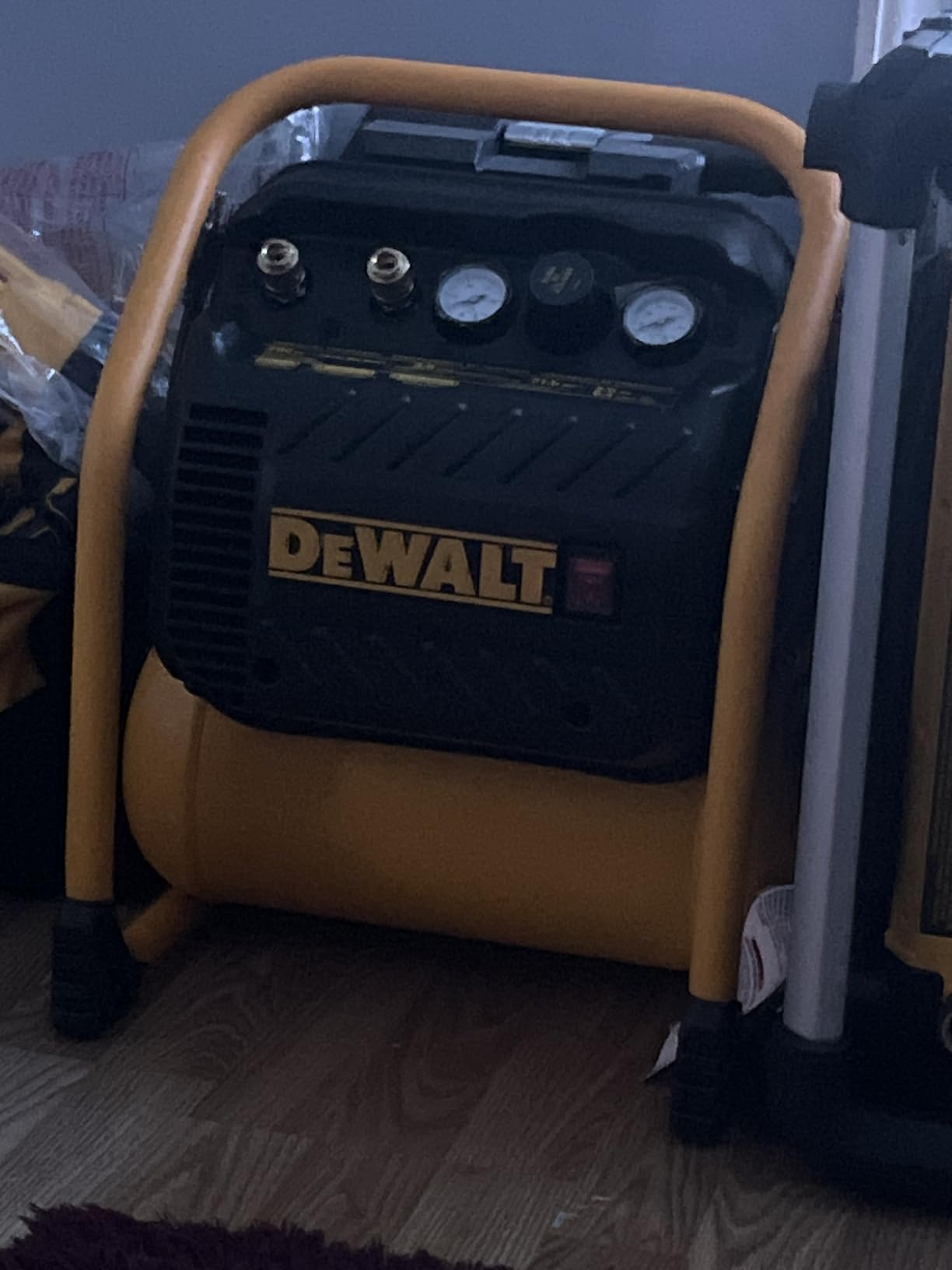
The DEWALT DWFP55130 is the trim-cart compressor I have used most often on professional finish-carpentry jobs. At 36 pounds it is light enough to lift onto a rolling cart, and at 71.5 dBA it is quiet enough to run in finished homes without disturbing clients.
The dual quick couplers are the killer feature for trim carpenters. I run two brad nailers off this compressor at the same time when installing baseboards with a partner, which roughly doubles productivity. Most 2.5-gallon compressors force you to swap couplers, but the DEWALT has both built in.
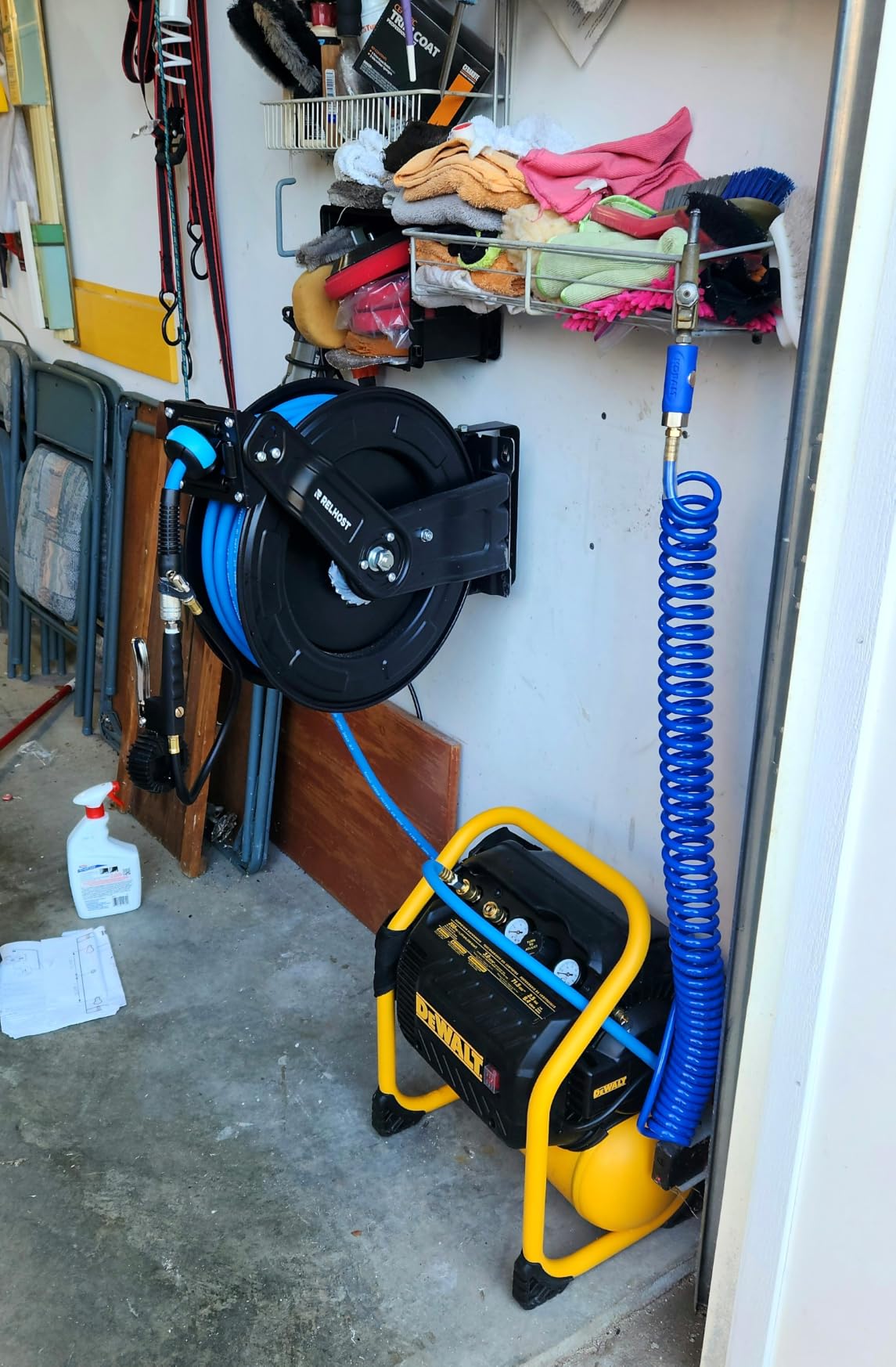
The 12 amp motor is easy on household circuits. I have run this compressor on the same 15-amp garage circuit as a miter saw without tripping breakers, which is the difference between finishing a job and scrambling to find a dedicated circuit. The oil-free pump also means no maintenance checks.
The 200 PSI max pressure is higher than most compressors this size, which translates into more usable air per tank fill. I noticed I could fire roughly 30 percent more brad nails between cycles compared to my old 135 PSI pancake.
Why trim carpenters like it
The DWFP55130 is small enough to carry one-handed, quiet enough to run in client homes, and powerful enough to drive 16-gauge finish nailers into oak. The DEWALT branding also gives it jobsite credibility when you walk onto a site with a known brand on your compressor.
Limitations
The 2.5-gallon tank is small for anything beyond finish work, and the 3.0 SCFM at 90 PSI will starve under sustained demand. If you want a DEWALT for framing, the D55146 below is the upgrade.
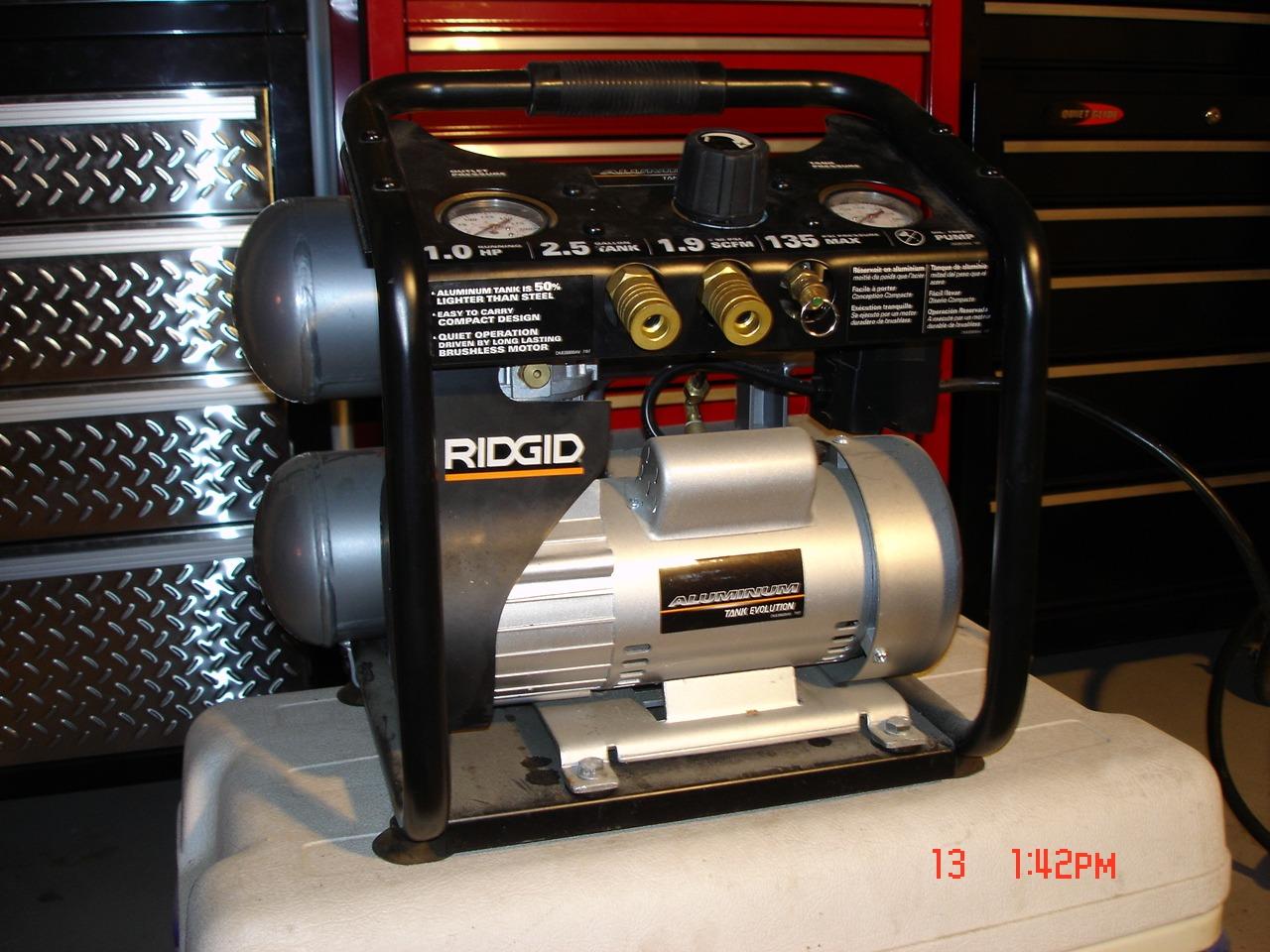
6. Metabo HPT EC28M – Lightest Pick for Finish Nailers
Metabo HPT Quiet Air Compressor, Portable 1 Gallon Oil-Free, EC28M
1 gallon tank
125 PSI
59 dBA
25.2 lbs
Oil-free
Pros
- 59 dBA - one of the quietest compressors available
- 25.2 lb lightweight design
- Oil-free maintenance-free operation
- Universal quick coupler for fast tool changes
- Integrated control panel for accurate PSI
- Ergonomic rubber handle and steel roll cage
- Motor overload protection circuit
Cons
- 1-gallon tank limits run time to finish-nailer duty only
- 0.5 HP motor not suited for high-demand tools
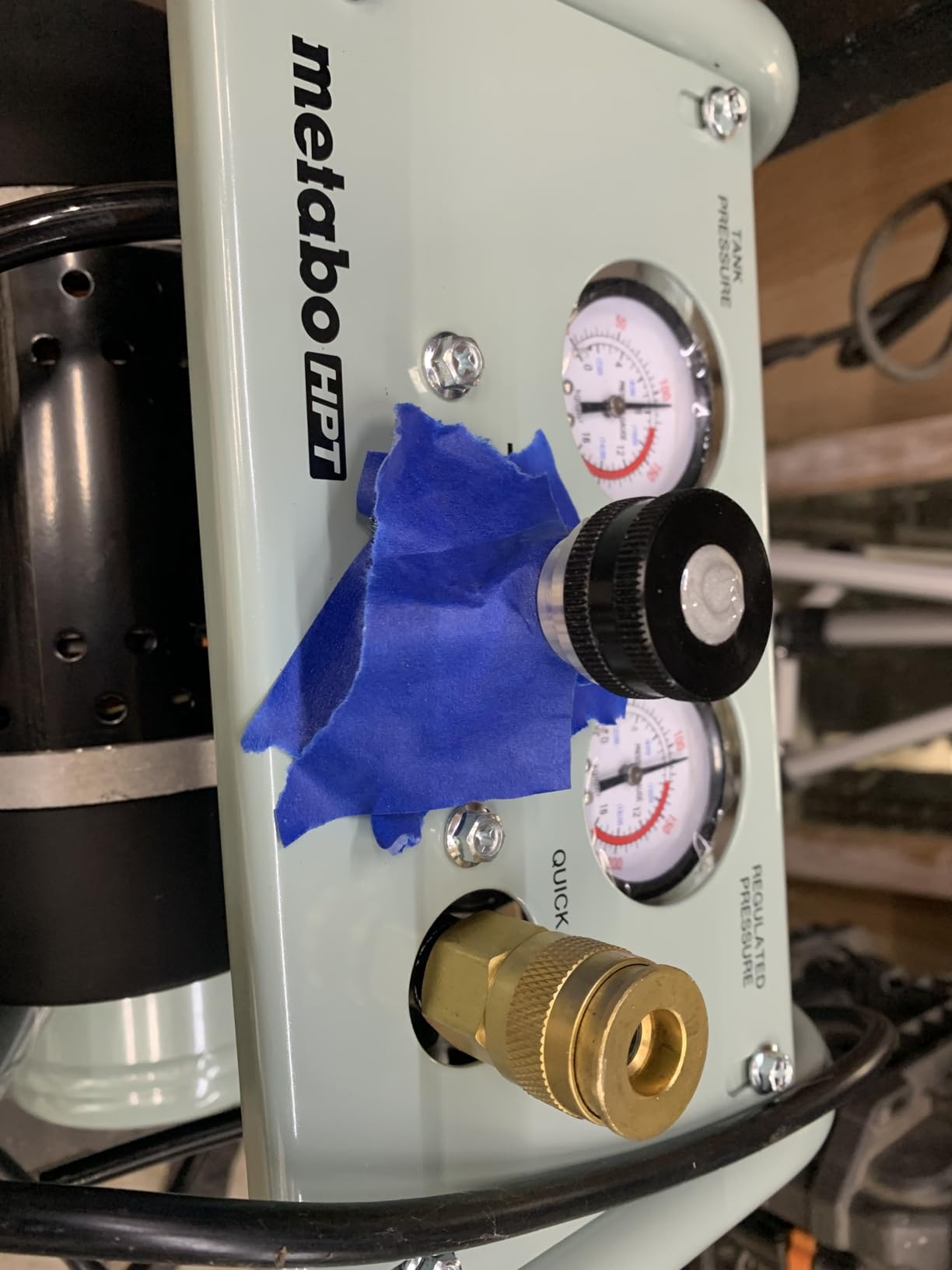
The Metabo HPT EC28M is the lightest unit in this roundup at 25.2 pounds, and at 59 dBA it is also the quietest. I carry it up and down my stairs for trim installations because the rubber handle is genuinely comfortable and the steel roll cage protects the pump when I bump into things.
Metabo HPT is the new name for Hitachi Power Tools in North America, which means the engineering pedigree is Japanese. The 0.5 HP motor is purpose-built for finish nailers, brad nailers, and tire inflation, not for impact wrenches or paint sprayers. Pick the right tool for the job and the EC28M is excellent at what it does.
The universal quick coupler accepts both 1/4-inch industrial and automotive plugs without an adapter, which is a small detail that saves me from carrying extra fittings. The integrated control panel has a clean PSI gauge and a regulator knob that holds pressure accurately.
At 59 dBA, the EC28M is genuinely conversation-friendly. I can run a finish nailer while a podcast plays through my earbuds, which is a quality-of-life feature I underestimated before owning a quiet compressor.
Why this compressor earns a spot
The EC28M is the perfect trim and finish-nailer specialist. If your garage is actually a closet under the stairs and you only need to fire off brad nails occasionally, this compressor disappears into a corner when not in use and runs quiet enough to forget it is on.
Where it disappoints
The 1-gallon tank is barely enough for 200 brad nails before the pump cycles. Anyone running framing nailers, sanders, or impact wrenches needs to step up to the 6-gallon BOSTITCH or 10-gallon California Air Tools above.
7. Stealth SAQ-12018 – Best Quiet High-Capacity Compressor
Stealth 20 Gallon Ultra Quiet Air Compressor,1.8 HP Oil-Free Peak 150 PSI 68 Decibel, 5.5 CFM @ 40 PSI 5 CFM @ 90 PSI Silent Long Life Electric Air Compressor W/Wheel for Garage
20 gallon tank
150 PSI
68 dBA
121.4 lbs
Oil-free
Pros
- Genuinely quiet 68 dBA operation
- Oil-free maintenance-free pump
- 20-gallon tank for extended tool runtime
- Heavy duty steel tank with 8 inch rubber wheels
- Two quick couplers for switching between tools
- 5 CFM @ 90 PSI for fast recovery
- Limited Lifetime Warranty
Cons
- Some users report early motor failures and difficult support
- Heavy at 121.4 lbs and requires adequate wiring
- Will not start up with air in tank on weak circuits
The Stealth SAQ-12018 is the only 20-gallon compressor I have tested that runs at 68 dBA while delivering real CFM for impact wrenches. Most 20-gallon units push 80 dBA or higher, so the noise reduction here is meaningful for attached-garage owners.
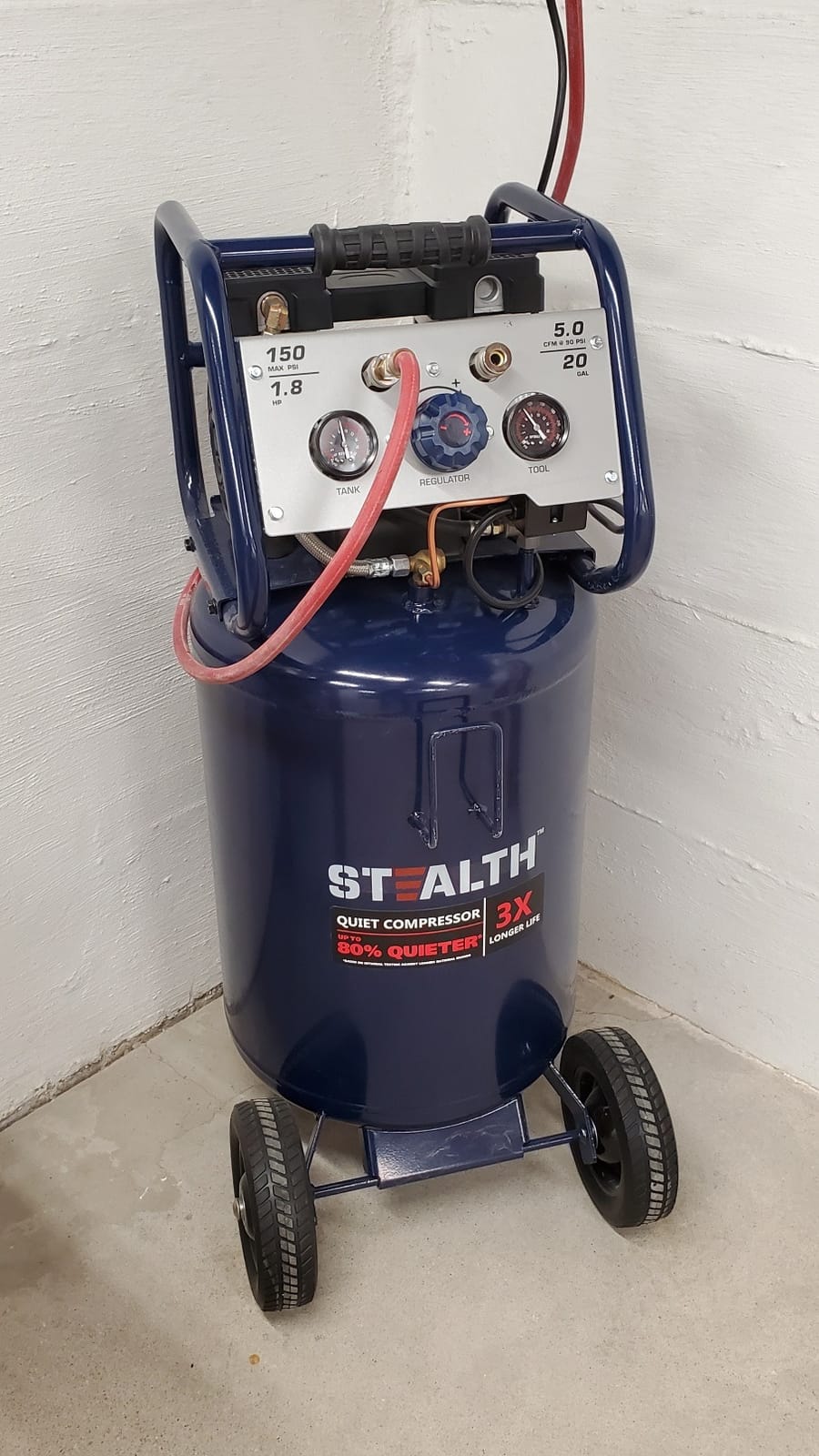
The 20-gallon vertical tank holds enough air to run a 1/2-inch impact wrench through a full tire rotation without the pump cycling. That is the test that matters for home mechanics, and the Stealth passes it cleanly. The 8-inch rubber wheels also handle garage-floor cracks and threshold bumps without complaint.
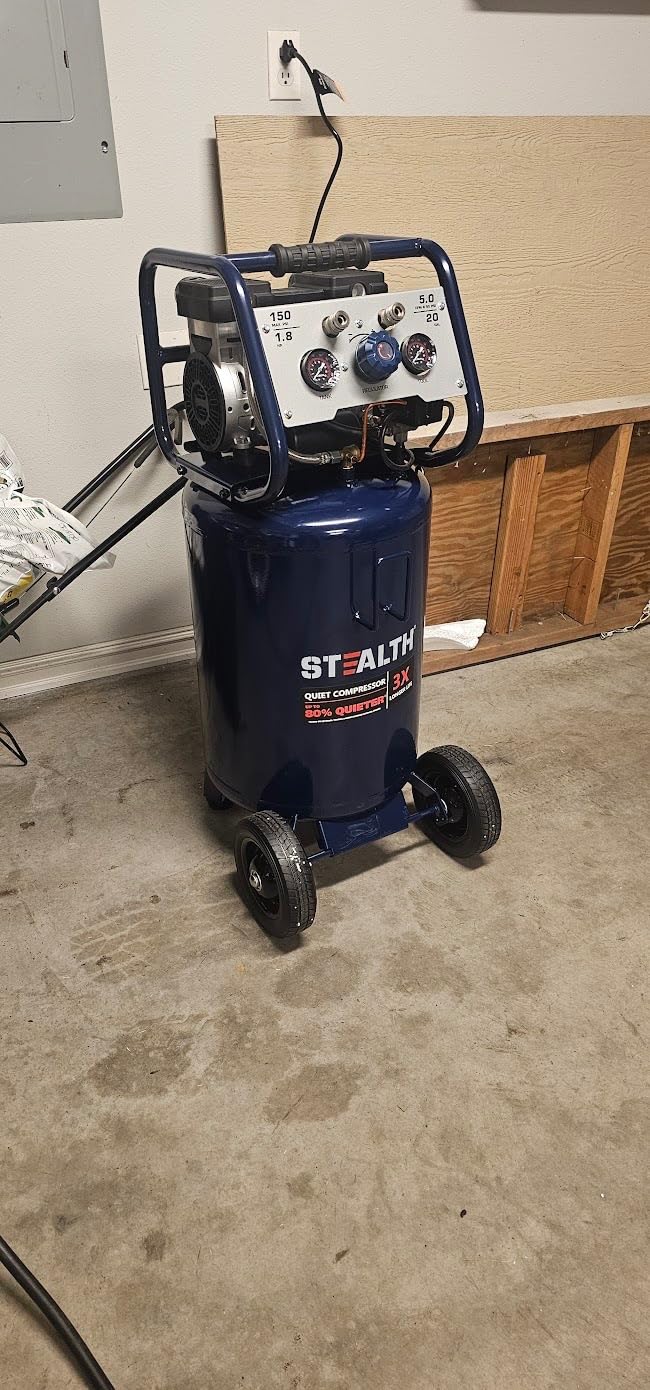
Two quick couplers are built into the manifold, which lets me keep a hose on one tool and a blow gun on the other. The 5 CFM at 90 PSI is enough to keep up with most automotive and finishing tools, and recovery between heavy bursts is fast.
The Limited Lifetime Warranty on the tank is a strong trust signal. Stealth covers the tank for life, which addresses the most common failure mode on cheaper compressors. The motor and pump carry a one-year warranty.
Why this compressor stands out
For homeowners who want 20-gallon capacity and quiet operation in the same unit, the SAQ-12018 is currently the strongest pick on the market. Most competitors force you to choose between quiet and high-capacity.
Risks to weigh
Some users on retail sites report early motor failures and difficulty reaching Stealth customer service. The unit is also heavy at 121 pounds and requires a dedicated 15-amp circuit on adequate wiring to start reliably. If you have an older garage with marginal wiring, upgrade the circuit first.
8. DEWALT D55146 – Best for Long-Term Durability
DEWALT Air Compressor, 225-PSI Max, Hand Carry with Wheels, 4-1/2 Gallon (D55146)
4.5 gallon tank
225 PSI max
78 dBA
88 lbs
Oil-free
Pros
- 225 PSI max for industry-leading usable air
- Display console with 2 inch gauges behind metal panel
- High flow coupler maximizes nailer performance
- Oil-free maintenance-free pump
- 10 inch non-flat pneumatic tires for jobsite transport
- Welded tubular frame for durability
- Quieter than similar-size competitors
Cons
- Heavy at 88 lbs - difficult for one person to lift
- Requires a full 15A circuit to run
- Drain plug requires tilting unit to drain
- Couplers are 3-in-1 type rather than universal
The DEWALT D55146 is the compressor my uncle bought in 2014 and still uses every weekend on his property. Ten years of ownership without a pump replacement is the longevity track record that justifies the higher price tag over cheap import compressors.
The 225 PSI max tank pressure is the headline spec. Higher tank pressure means more usable air delivered at working pressure, which in practice means longer run time between cycles and faster recovery. For impact wrenches and high-demand tools, that extra PSI matters.
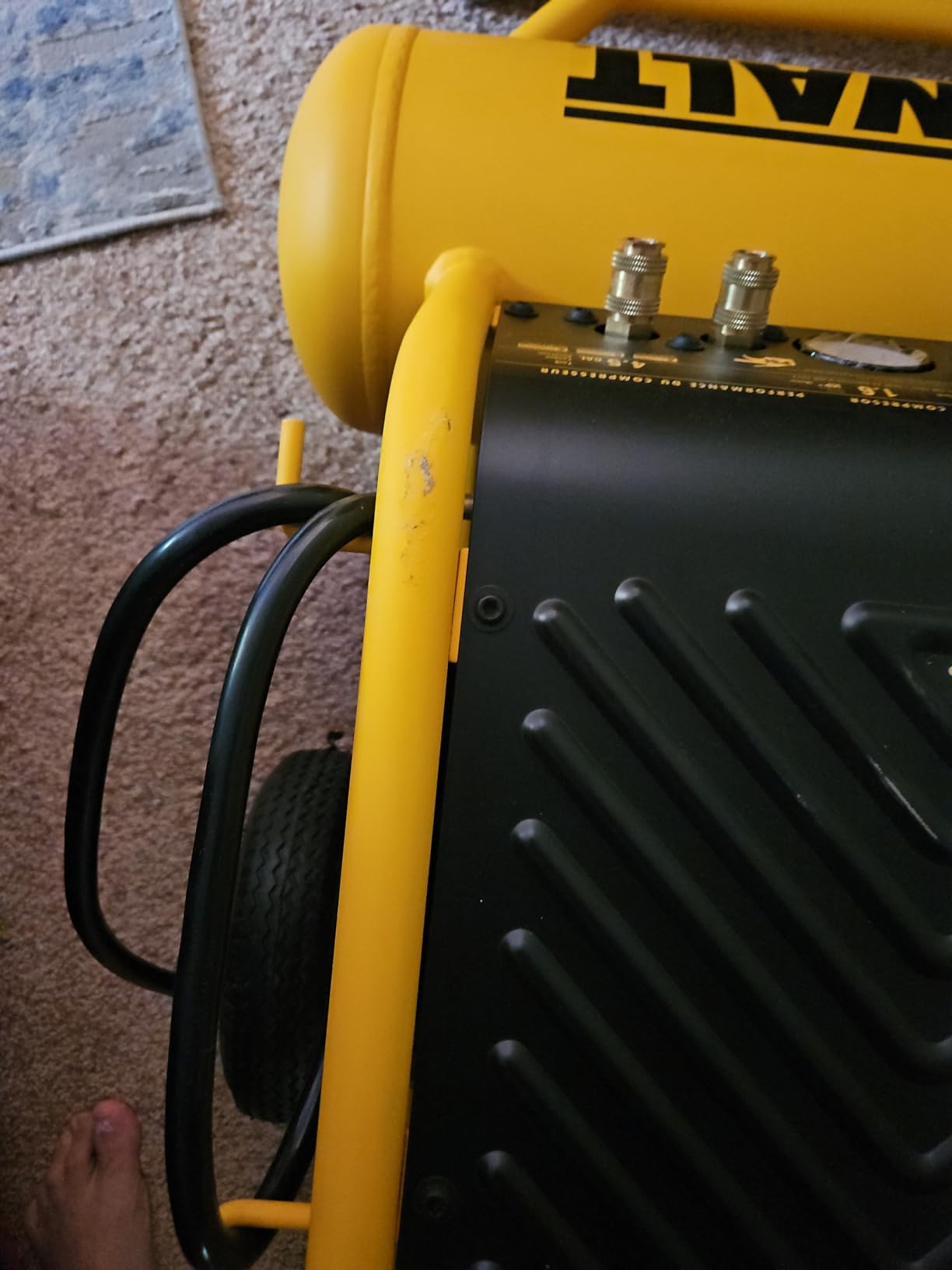
The welded tubular frame is the durability feature that separates this DEWALT from plastic-bodied competitors. The frame, tank, and tire shaft are welded together as a unit, which is why the compressor survives jobsite drops and trailer rides that destroy cheaper models.
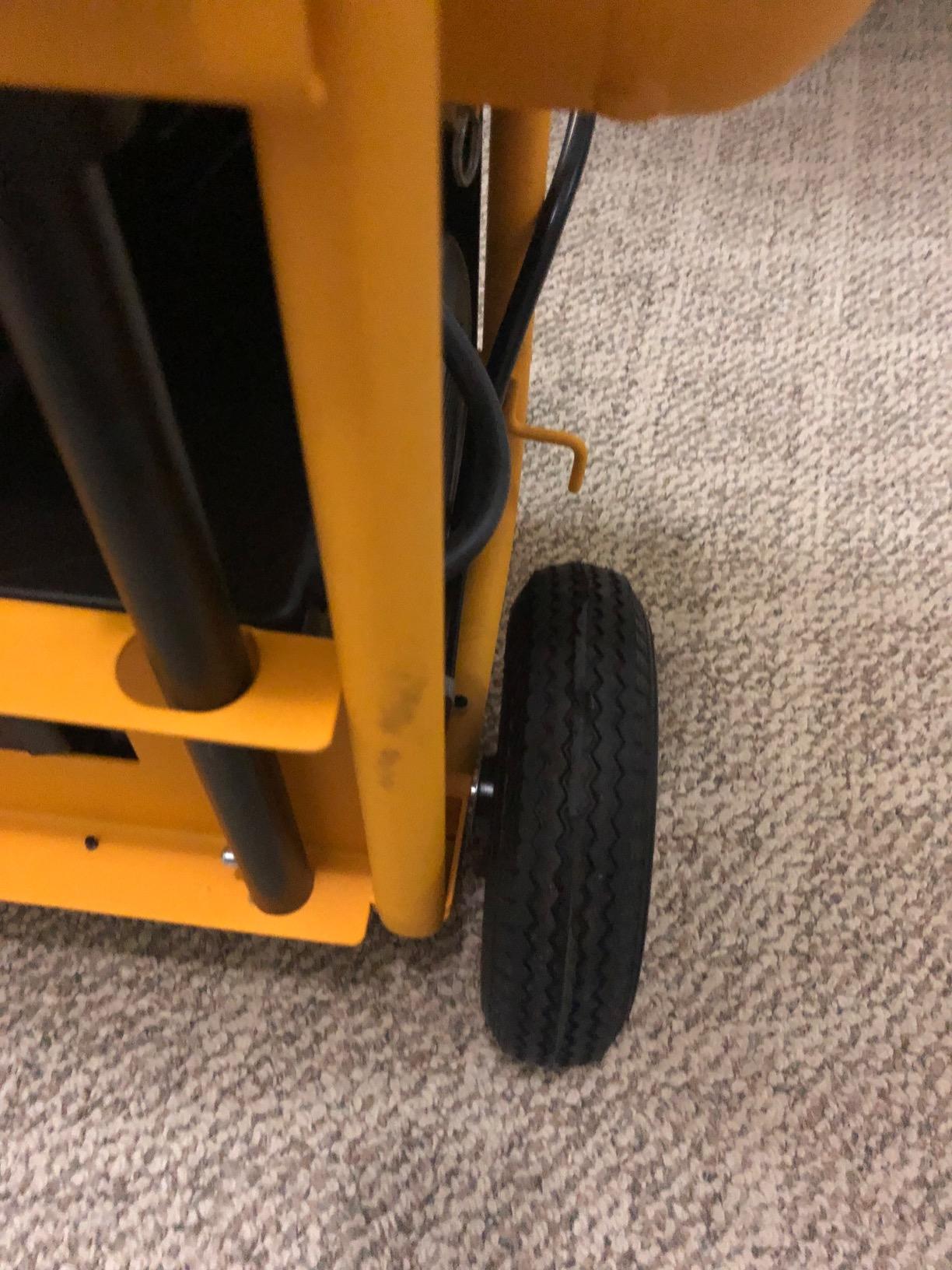
Ten-inch non-flat pneumatic tires roll over gravel, curbs, and debris without complaint. I have rolled this compressor across a half-finished jobsite without a flat tire, which is a quality-of-life upgrade over solid wheels that crack on rough ground.
Why longevity-focused buyers pick it
The D55146 hits the sweet spot of portability and capacity. At 4.5 gallons, it is large enough to drive framing nailers and impact wrenches, but small enough to roll onto a jobsite or fit against a garage wall. Long-term owners consistently report 5-10+ years of service.
Practical limitations
The 88-pound weight is real, and the unit requires a dedicated 15-amp circuit. The drain plug design also requires tilting the compressor at roughly 45 degrees to empty, which is awkward. For daily draining, an aftermarket auto-drain valve solves this.
9. Klutch 20-Gallon 175 PSI – Best Value Vertical Compressor
Klutch 20-Gallon Air Compressor, 2 HP, 120V, 175 PSI, 4.2 SCFM at 90 PSI
20 gallon tank
175 PSI
80 dBA
90 lbs
Oil-free
Pros
- Reliable 2.0 HP series motor with thermal overload protection
- Oil-free pump reduces maintenance
- 4.2 SCFM @ 90 PSI for quick recovery
- Large rubber wheels and ergonomic handle
- Rubber foot stabilizers reduce vibration
- Vertical space-saving design
- 75% duty cycle for demanding applications
Cons
- Some users report air leaks after break-in period
- Mixed customer service experiences
- Some users rate noise higher than expected for shop use
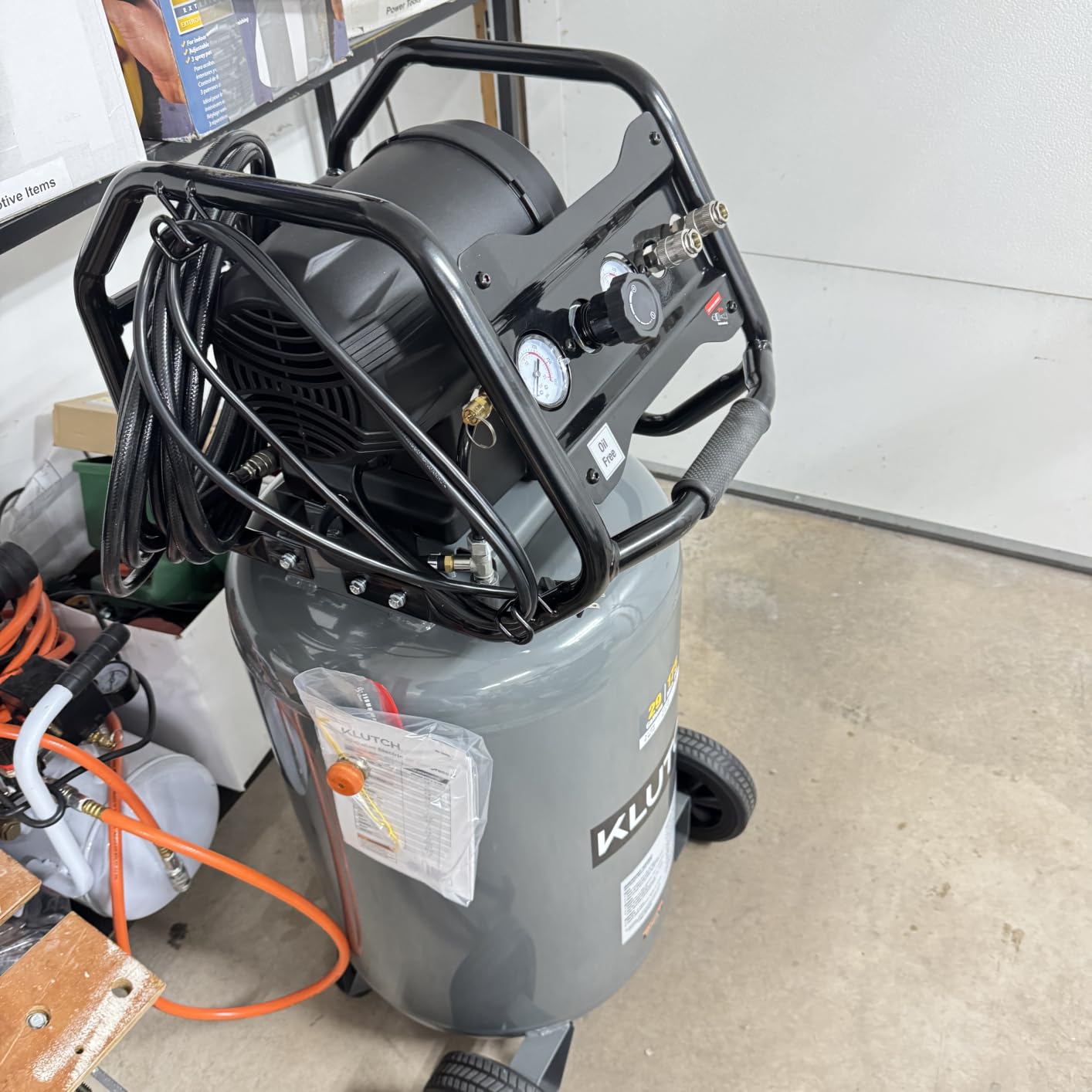
The Klutch 20-gallon vertical is the value pick in this roundup for anyone who needs 20-gallon capacity without paying premium-brand prices. At 90 pounds with rubber wheels, it is the right balance of portability and capacity for a single-car garage.
The 2.0 HP motor and 4.2 SCFM at 90 PSI cover most home-garage tasks. I have used this compressor for brad nailing, finish nailing, tire inflation, and blow-gun cleanup without pressure starvation on any single tool.
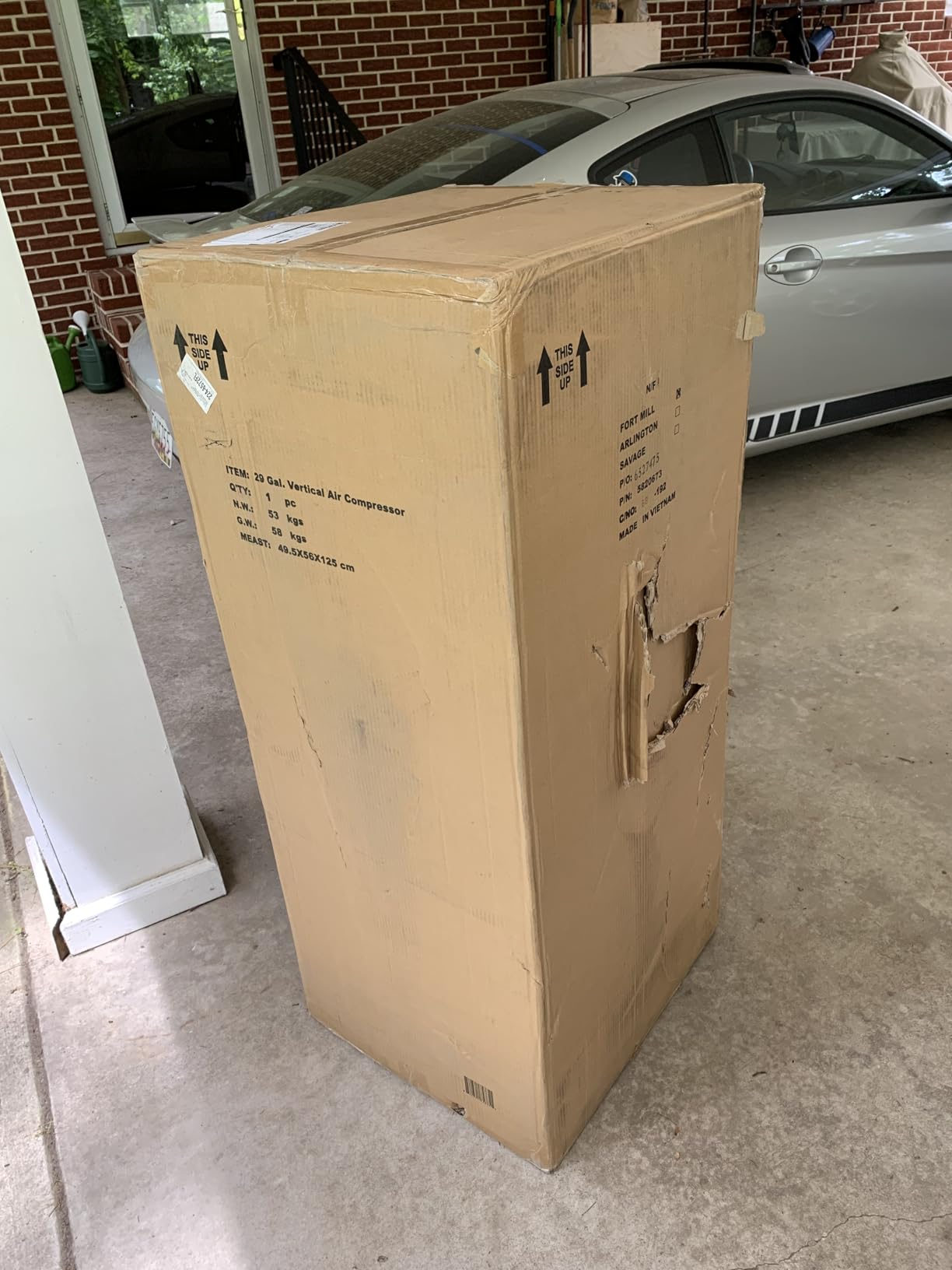
The 75 percent duty cycle is the spec that matters for heavy users. A 75 percent duty cycle means the pump can run 45 minutes per hour without overheating, which is enough headroom for extended framing or sanding sessions.
Thermal overload protection is built into the motor, which is the safety feature that prevents garage wiring fires when the compressor runs against a stuck regulator. I appreciate that Klutch includes this on a value-priced unit.
Why this is the value pick
Compared to similarly sized units from premium brands, the Klutch 20-gallon delivers 90 percent of the performance at a meaningfully lower price. The vertical design also saves roughly 30 percent of the floor space of a horizontal 20-gallon.
Tradeoffs to know
Customer service experiences are mixed, so plan to handle routine maintenance yourself. Some users report minor air leaks after the break-in period, which usually resolve with a fresh O-ring on the manifold. For warranty claims, work through the retailer.
10. Klutch 29-Gallon 2.5 HP – Best for High-Demand DIY
Klutch 29-Gallon Air Compressor, 2.5 HP, 120V, 175 PSI, 5.1 CFM at 90 PSI
29 gallon tank
175 PSI
81 dBA
127 lbs
Oil-free
Pros
- Powerful 2.5 HP motor for continuous air tool use
- 29-gallon tank in vertical space-saving design
- Oil-free maintenance-free pump
- 5.1 SCFM @ 90 PSI for quick recovery
- Brass quick-connect coupler for one-handed hose connection
- Large flat-free tires for easy mobility
- Dual pressure regulators on each outlet
Cons
- Heavy at 127 lbs - not truly portable
- Mixed customer service experiences
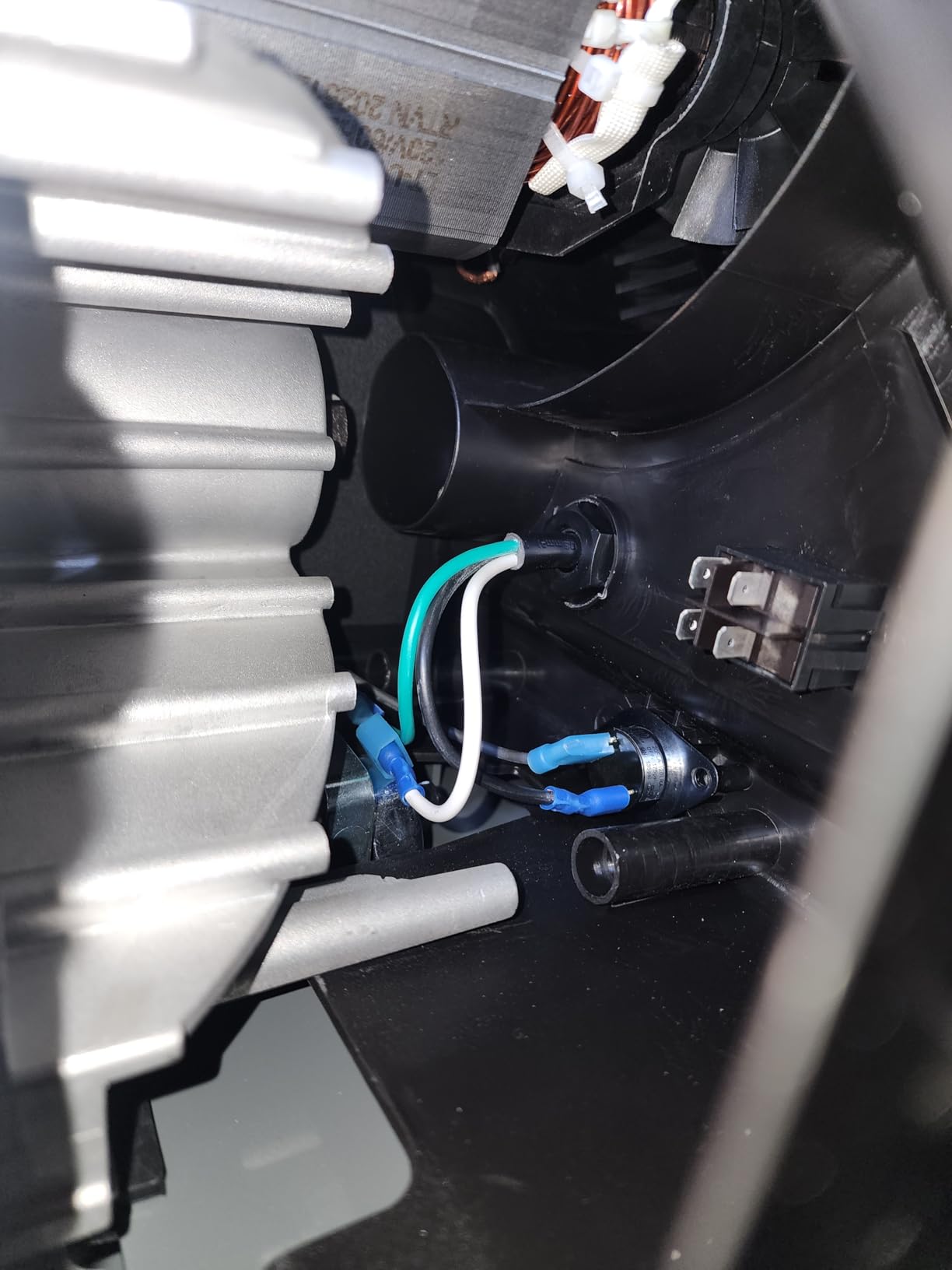
- Serious isolated safety concern (bypassed switch) reported
The Klutch 29-gallon is the compressor I would buy if my garage saw daily DIY use across impact wrenches, sanders, and paint sprayers. The 29-gallon vertical tank holds enough air to run a 1/2-inch impact wrench through an entire brake job without the pump cycling.
The 2.5 HP motor and 5.1 SCFM at 90 PSI deliver enough airflow for the hungriest pneumatic tools in a home shop. I have run a dual-action sander on this compressor for extended sessions without pressure drops, which is the test that 20-gallon units often fail.
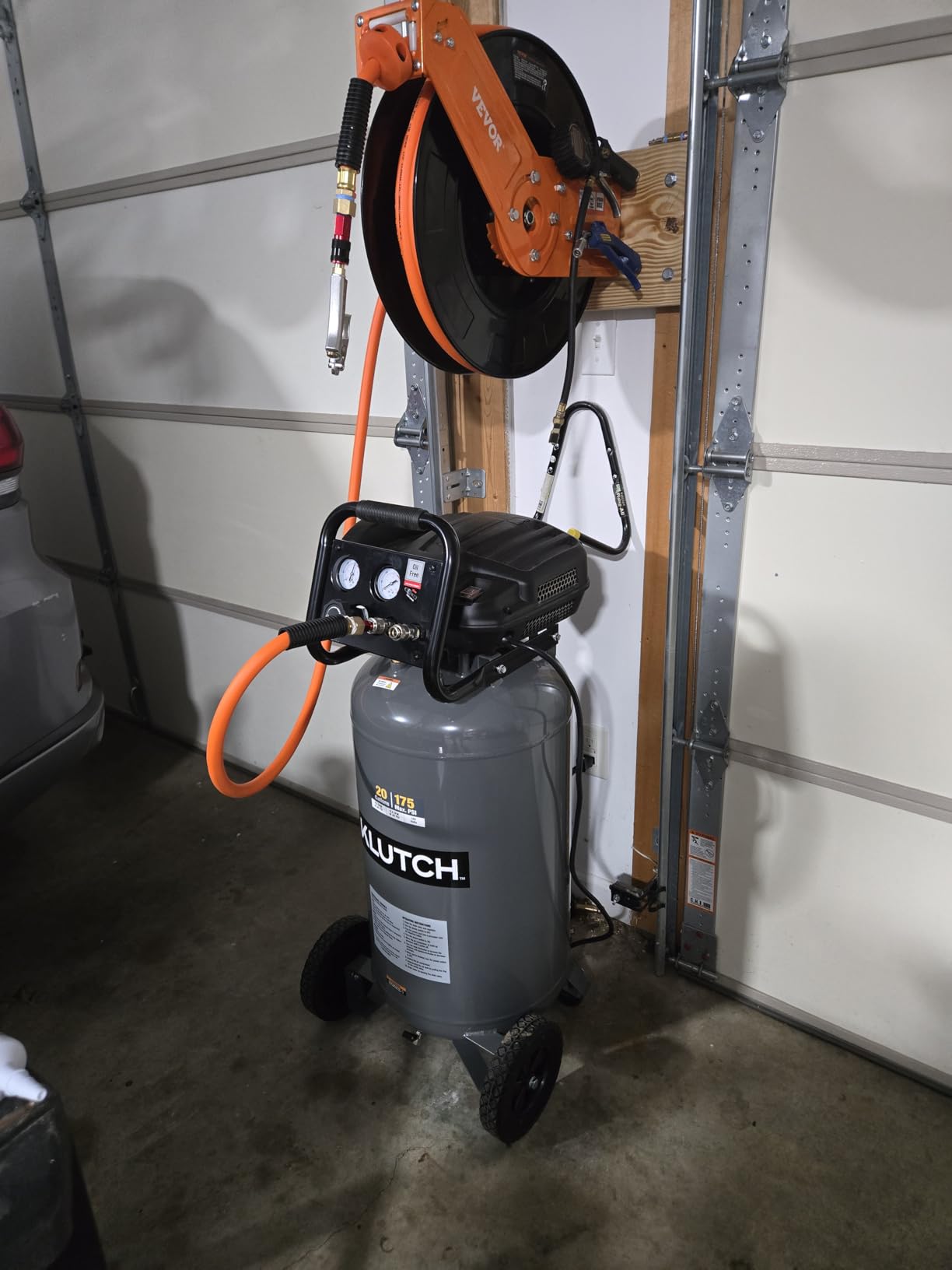
The dual pressure regulators on each outlet are a feature I appreciate. I can run my paint sprayer at 40 PSI on one regulator and my impact wrench at 90 PSI on the other without swapping connections. That convenience saves real time on automotive and finishing projects.
Brass quick-connect couplers are more durable than the plastic couplers on cheaper compressors. I have run thousands of hose connections through brass couplers without leaks, which is the longevity test plastic couplers usually fail.
Who needs this much compressor
DIYers who use their compressor multiple times per week for varied tasks will benefit from the 29-gallon capacity. Home mechanics running impact wrenches regularly will see meaningful productivity gains over a 6-gallon pancake.
Honest limitations
At 127 pounds, this compressor is best treated as semi-stationary. Move it once into the corner of the garage and leave it there. Customer service experiences are mixed, so handle basic maintenance yourself and buy through a retailer with a generous return policy.
Buying Guide: How to Choose the Best Air Compressor for Your Garage?
What size air compressor do I need for a home garage?
A 6-gallon pancake is the minimum useful size for a home garage that runs brad nailers, finish nailers, and tire inflators. For impact wrenches, sanders, and paint sprayers, jump to a 20-30 gallon vertical. Heavy automotive or contractor-grade work needs 60 gallons or more. Match tank size to your highest-demand tool, not your average tool.
Tank size by use case:
1-6 gallons: Trim, finish nailers, brad nailers, tire inflation, blow guns. Best for small workshops and trim specialists.
10-20 gallons: Light framing, impact wrenches (intermittent), paint spraying, sanders. Best for most home garages.
29-30 gallons: Daily DIY use, automotive work, regular framing. Best for high-demand hobbyists.
60+ gallons: Contractor use, sandblasting, multiple users simultaneously. Best for small commercial shops.
Compressor types: pancake, hot dog, vertical, horizontal, twin stack, wheelbarrow
Pancake compressors have a flat, round tank that sits low to the ground. They are the most portable option and the best choice for finish-nailer duty. The 6-gallon BOSTITCH in this roundup is a pancake.
Hot dog compressors have a horizontal cylindrical tank with a smaller footprint than a pancake of equal capacity. They balance portability and tank size for trim and finish work.
Vertical compressors have an upright tank that saves floor space. The 20- and 29-gallon Klutch units in this roundup are verticals. They are the best choice for home garages where floor space is at a premium.
Horizontal compressors have a long, low tank that is best for stationary shop use. They are common in contractor settings where the compressor sits in one corner.
Twin stack compressors have two horizontal tanks stacked vertically. The Makita MAC2400 in this roundup is a twin stack, and the design provides higher CFM in a small footprint.
Wheelbarrow compressors have a horizontal tank on a wheeled frame designed for jobsite transport. They are common on construction sites.
CFM at 90 PSI: matching compressor to your tools
CFM (cubic feet per minute) is the airflow your compressor delivers at working pressure. Every pneumatic tool requires a minimum CFM to operate, and your compressor must exceed that requirement or the tool will stall. SCFM is CFM standardized to a specific pressure, so SCFM ratings are directly comparable across brands.
Tool to CFM at 90 PSI requirements:
Tire inflator: 1-2 CFM (any compressor handles this)
Brad nailer (18-gauge): 0.3-0.5 CFM (any compressor)
Finish nailer (16-gauge): 0.5-1.0 CFM (any compressor)
Framing nailer: 2.0-3.0 CFM (20+ gallon recommended)
Air ratchet: 2.5-3.5 CFM (20+ gallon recommended)
1/2 inch impact wrench: 4.0-5.0 CFM (29+ gallon recommended)
HVLP paint sprayer: 4.0-7.0 CFM (29+ gallon recommended)
Dual-action sander: 4.0-6.0 CFM (29+ gallon recommended)
PSI rating: how much pressure do you actually need?
PSI (pounds per square inch) is the maximum pressure your compressor can deliver. Most pneumatic tools need 90 PSI at working pressure. A 150 PSI compressor with a regulator set to 90 PSI delivers the same working pressure as a 120 PSI unit, but the 150 PSI unit has more usable air in the tank above working pressure.
For a home garage, 150 PSI is the practical minimum. Higher max pressure (200-225 PSI) translates into longer run time between cycles but does not change the tools you can run. The DEWALT D55146 with its 225 PSI max gives the longest runtime per tank fill in this roundup.
Oil-free vs oil-lubricated compressors
Oil-free compressors use pre-lubricated materials (Teflon or similar coatings) on the pump, eliminating the need for oil changes. They are lower-maintenance, cleaner for paint spraying, and ideal for occasional DIY use. Most compressors in this roundup are oil-free.
Oil-lubricated compressors use oil to cool and lubricate the pump, which extends pump life under heavy use and allows higher duty cycles. The Makita MAC2400 in this roundup is oil-lubricated and is the right choice for daily use.
Choose oil-free if you run the compressor a few times per month and want zero maintenance. Choose oil-lubricated if you run the compressor daily or for extended sessions and want maximum longevity.
Single-stage vs two-stage compressors
Single-stage compressors compress air in one pass from atmospheric to maximum pressure. They are simpler, lighter, and less expensive. Every compressor in this roundup is single-stage.
Two-stage compressors compress air in two passes, with the air cooled between stages. They deliver more CFM at higher pressures and run cooler under heavy load, but cost more and weigh more.
For home garage use, single-stage is the right choice. Two-stage compressors are common in commercial shops and 60+ gallon units.
120V vs 240V: voltage and phase requirements
120V compressors plug into a standard household outlet and are the right choice for most home garages. Every compressor in this roundup is 120V. The trade-off is power: 120V compressors typically top out at about 2.5 HP because household circuits provide 15-20 amps at 120V.
240V compressors require a dedicated 240V circuit (the kind an electric dryer or oven uses). They deliver more power to the motor, which translates into higher CFM and faster recovery. The trade-off is installation: most homes do not have a 240V outlet in the garage.
If you plan to run a compressor with a 5+ HP motor or a 60+ gallon tank, you typically need 240V. Smaller compressors work fine on 120V. Buying a 240V compressor without the right outlet is one of the most common beginner mistakes, as multiple forum users have noted.
Noise level (dBA) and quiet compressor options
Compressor noise is measured in decibels (dBA). For comparison, a normal conversation is about 60 dBA, a vacuum cleaner is about 70 dBA, and a typical shop compressor is 80-85 dBA. Anything at or below 75 dBA is genuinely quiet for a compressor.
For attached garages or noise-restricted neighborhoods, the California Air Tools 10020C (70 dBA), Makita MAC210Q (60 dBA), Metabo HPT EC28M (59 dBA), and Stealth SAQ-12018 (68 dBA) are all quiet enough to run without complaints. The loudest units in this roundup (Klutch 20- and 29-gallon at 80-81 dBA) are best for detached shops.
Duty cycle and recovery time
Duty cycle is the percentage of time the pump can run without overheating. A 50 percent duty cycle means the pump can run 30 minutes per hour. A 75 percent duty cycle means 45 minutes per hour. For most DIY use, 50 percent is enough. For contractor or daily use, 75 percent is the better choice.
Recovery time is how long it takes the pump to refill the tank after a cycle. Faster recovery means less waiting between heavy tool use. Cast iron pumps (like the Makita MAC2400) generally recover faster than aluminum pumps of equal horsepower.
Air compressor maintenance tips
Drain the tank after every use. Moisture accumulates in the tank and causes rust if left inside. Drain valves are at the bottom of every tank.
Check oil monthly on oil-lubricated units. The Makita MAC2400 has a sight glass for quick checks.
Replace the intake filter annually. A clogged filter makes the pump work harder and shortens life.
Drain moisture before paint spraying. Water in the air supply causes fish-eyes and ruined finishes. Add an inline air dryer if you paint regularly.
Test the pressure relief valve annually. Pull the ring and confirm air escapes. A stuck relief valve is a safety hazard.
Frequently Asked Questions
What size air compressor do I need for a home garage?
A 6-gallon pancake is the minimum for a home garage that runs brad nailers and tire inflators. For impact wrenches and paint sprayers, jump to 20-30 gallons. Heavy automotive work needs 60 gallons or more. Match tank size to your highest-demand tool rather than your average tool.
What PSI rating do I need in an air compressor?
Most pneumatic tools need 90 PSI at working pressure. A 150 PSI compressor is the practical minimum because higher tank pressure means more usable air above working pressure. Compressors rated at 200-225 PSI give longer run time between cycles but do not change the tools you can run.
What is the difference between a single-stage and a two-stage air compressor?
Single-stage compressors compress air in one pass and are simpler, lighter, and cheaper. Two-stage compressors compress air in two passes with cooling between stages, which delivers more CFM at higher pressure and runs cooler. For home garage use, single-stage is the right choice. Two-stage is common in commercial shops.
Do I need an oil-free air compressor?
Oil-free compressors need no oil changes and produce cleaner air for paint spraying. Oil-lubricated compressors run cooler and last longer under heavy daily use. Choose oil-free for occasional DIY and zero maintenance. Choose oil-lubricated if you run the compressor daily or for extended sessions.
How loud is a garage air compressor?
Most shop compressors run at 80-85 dBA, which is loud enough to require hearing protection for extended use. Quiet compressors like the California Air Tools 10020C (70 dBA), Makita MAC210Q (60 dBA), and Metabo HPT EC28M (59 dBA) run at conversation level and are ideal for attached garages.
How much CFM do I need for an impact wrench?
A 1/2 inch impact wrench needs 4-5 CFM at 90 PSI. Run a 29-gallon or larger compressor with at least 5 SCFM at 90 PSI for reliable impact-wrench use. Smaller compressors will stall the wrench under load.
Can I use an air compressor to inflate any tire?
Yes, any air compressor can inflate tires. Small tire inflators need only 1-2 CFM, so even a 1-gallon finish compressor handles passenger tires easily. For larger truck or tractor tires, you may want a higher CFM compressor to fill faster, but the function works on any compressor.
How do I maintain an air compressor?
Drain the tank after every use to prevent rust. Check oil monthly on oil-lubricated models. Replace the intake filter annually. Drain moisture before paint spraying and consider adding an inline air dryer. Test the pressure relief valve annually by pulling the ring to confirm it releases air.
Final Verdict
The best air compressor for your garage is the one that matches your highest-demand tool without forcing you to overspend. For finish-nailer duty in a quiet home, the BOSTITCH 6-gallon pancake remains our top pick. For shops where quiet operation matters, the California Air Tools 10020C is hard to beat. For daily use and longevity, the Makita MAC2400 Big Bore is the right investment.
Match tank size, CFM, and noise level to the work you actually do. A 60-gallon compressor in a garage that only needs a brad nailer is wasted money. A 6-gallon pancake in a shop that runs impact wrenches all day will frustrate you every weekend. Pick the right size, check the wiring, drain the tank, and the best air compressor for your garage in 2026 will outlast your project list.
For more compressor coverage, see our related guides on best air compressors for framing nailers and the broader compressor roundup.