
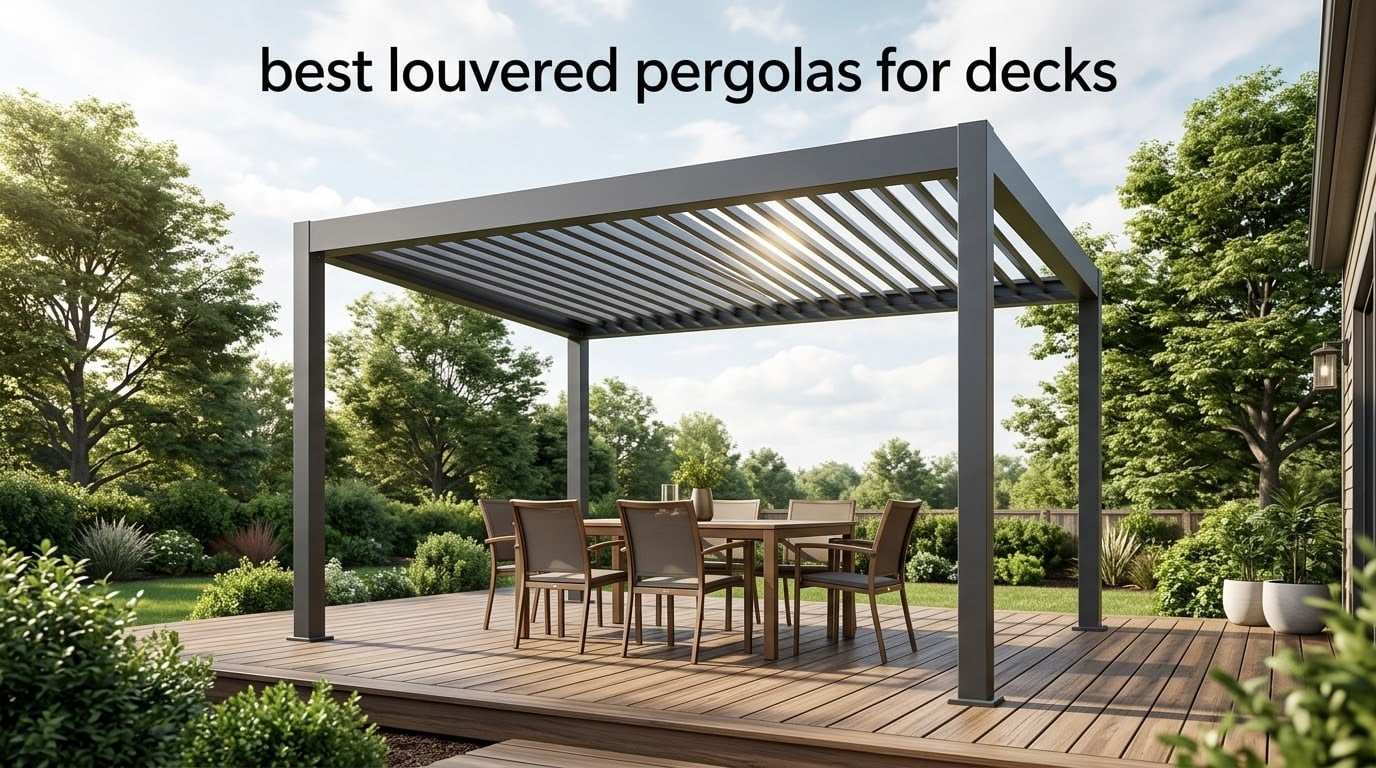
A traditional open-rafter pergola gives you shade in name only. The gaps between the beams let sun through at noon and rain straight onto your table at 8pm, so the deck you paid to build sits empty for most of the year. A louvered pergola fixes that with a roof made of slats that rotate from fully open to fully closed, and a gutter system built into the beams that carries rain down through the posts. When the roof closes it behaves like a hard canopy, and when it opens you get airflow and sky.
That is the whole argument, and it is why these structures show up on more deck plans every season. The catch is that a louvered pergola is a serious piece of hardware. The structures in this roundup weigh between roughly 235 and 711 pounds, most arrive in multiple boxes, and nearly all of them include footings and anchors that assume a concrete pour. Picking the wrong one means a structure that sits on your deck boards rather than on your footings.
We compared twelve louvered pergolas for decks, reading the specification sheets side by side the way buyers on r/HomeXpert keep trying to do by hand. The things we checked first were the ones nobody publishes: how the water actually leaves the roof, how wide the columns are, what the wind and snow numbers really say, and what the owners who already installed them complain about at month six. Every product below has at least two independently written owner reviews, and we pulled the recurring complaint from each rather than the single worst one.
If your deck is still bare and you are choosing a structure more broadly, start with our patio pergola comparison first, then come back. If you already know you want louvers, keep reading.
Top 3 Picks: Louvered Pergolas for Decks in 2026

PURPLE LEAF 10×12 Bronze
- 0-85 degree louvers
- Solar LED lighting
- Hidden drainage
- 4.53 inch columns

PURPLE LEAF 12×14 Gray
- Two independent roof sections
- Drains through four columns
- 72 mph wind rating

MIRADOR 80S 10×10 Charcoal
- Crank louvers with removable lever
- Built-in gutter drainage
- Steel and aluminum frame
Best Louvered Pergolas for Decks in October
The table below is the one piece of this guide worth screenshotting. Every row is a real specification from the manufacturer’s listing, not a paraphrase.
| Product | Specifications | Action |
|---|---|---|
| PURPLE LEAF 10×12 Bronze Louvered Pergola |
|
Check Latest Price |
| PURPLE LEAF 12×14 All-Aluminum Gray |
|
Check Latest Price |
 PURPLE LEAF 10×14 Snow-Ready Pergola PURPLE LEAF 10×14 Snow-Ready Pergola |
|
Check Latest Price |
| MIRADOR 80S 10×10 Charcoal Louvered Pergola |
|
Check Latest Price |
 AirWire 12×20 Gray Aluminum Louvered Pergola AirWire 12×20 Gray Aluminum Louvered Pergola |
|
Check Latest Price |
 EROMMY 12×20 Black-Gray Louvered Pergola EROMMY 12×20 Black-Gray Louvered Pergola |
|
Check Latest Price |
 Aoxun 10×12 All-Aluminum Gray Pergola Aoxun 10×12 All-Aluminum Gray Pergola |
|
Check Latest Price |
 Domi 10×10 Gray Aluminum Louvered Pergola Domi 10×10 Gray Aluminum Louvered Pergola |
|
Check Latest Price |
 GarveeLife 10×10 Wood Grain Louvered Pergola GarveeLife 10×10 Wood Grain Louvered Pergola |
|
Check Latest Price |
 BPS 13×10 Wall Mounted Dark Gray Pergola BPS 13×10 Wall Mounted Dark Gray Pergola |
|
Check Latest Price |
 Goldshire 10×20 Black Hardtop Louvered Pergola Goldshire 10×20 Black Hardtop Louvered Pergola |
|
Check Latest Price |
 MIRADOR 111S Takasho 10×13 Wood Grain MIRADOR 111S Takasho 10×13 Wood Grain |
|
Check Latest Price |
Can You Put a Louvered Pergola on a Deck? Load, Footings, and Clearance
Yes, but only with a plan. A louvered pergola can go over a deck if you either ground-mount it on its own concrete footings beside the deck, or confirm your deck’s live load rating and your pergola’s rated snow and wind load before you bolt anything to the framing. Most residential decks are built for 40 to 60 pounds per square foot of live load, and these structures weigh 235 pounds or more before you add a second person standing on the roof beams to tighten a bolt.
The mistake we see most often is bolting the base plates to the deck boards. The boards and the surface band joist carry a fraction of what a concrete pier does, and the load concentrates at four points. The safer path is a pair of poured footings at each post location, set below the frost line, with the post anchored to the footing rather than to the deck.
Here is the sequence we would hand a contractor, in order:
1. Check the deck structure. If your deck is more than about five years old, find the original plans or have a carpenter confirm the joist spacing and the footing locations underneath. You are looking for posts that land near a joist, never mid-span between two.
2. Decide ground-mount versus deck-mount. Ground-mounting beside the deck with footings in the yard is the strongest option and often the cheapest once you count labor. Deck-mounting keeps the footprint tight but transfers the full weight into the framing.
3. Pour the footings. Typical residential pergola footings run 18 to 24 inches wide and go 30 to 42 inches deep depending on your frost line and local code. In snow states the depth is set by the code, not by the manufacturer’s instructions.
4. Set posts to the joist grid. Measure the deck joist centers and shift the pergola so each post lands on or beside a joist rather than halfway between two. This is the step that decides whether the structure is safe, and it is the step homeowners skip.
5. Level and anchor. Shims and a laser level, then the manufacturer’s specified anchors. Note that several of the anchors included in the boxes in this roundup are undersized for concrete, and you will likely need to buy your own. Base plate bolt failure was the one structural complaint that showed up more than once across owner reviews in this roundup.
6. Route the drainage. The integrated gutters drain through the columns to ground level. Decide before assembly where that water lands. A column at the edge of a deck will dump runoff onto the boards and into the frame below, which is exactly how deck rot starts.
7. Fit the louvers and test. Open them fully, then close them fully, then stand under the center seam and pour water along it. That seam is where nearly all the leak complaints in this category come from.
8. Check headroom and permits. Keep 7 feet of clear height at the walking path and account for the height of the deck above grade, because these structures are often listed at 88 to 98 inches of structure height. In most jurisdictions a pergola above 120 square feet triggers a permit, and HOAs frequently have their own rules about visible structures over a deck.
1. PURPLE LEAF 10×12 Bronze Louvered Pergola
PURPLE LEAF Outdoor Louvered Pergola 10′ x 12′ Aluminum with LED Bronze
Aluminum frame
144 by 120 by 90.6 inch
324 pounds
0-85 degree louvers
Solar LED
Pros
- Louvers seal out rain when closed
- 0-85 degree shade control
- Hidden drainage with no pooling
- Solar LED with three modes and three color temperatures
- All parts arrive complete
Cons
- Included Allen wrenches wear out fast
- Occasional misdrilled holes need careful alignment
- Some pieces arrive dented
This is the structure we keep coming back to, and the reason is boring in the best way. It is the widest-reviewed product in the group at 162 owner reviews, and the rating has held at 4.6 across that sample. Owners describe rain sealing, drainage and smooth louver travel as the three things that consistently work.
The integrated lighting is the detail that changes how people use it. The column control board carries solar-powered LEDs with three brightness levels and three color temperatures, plus a USB output, so there is no wiring to run from the house. For a deck that is far from an outlet, that removes the single most annoying install step.
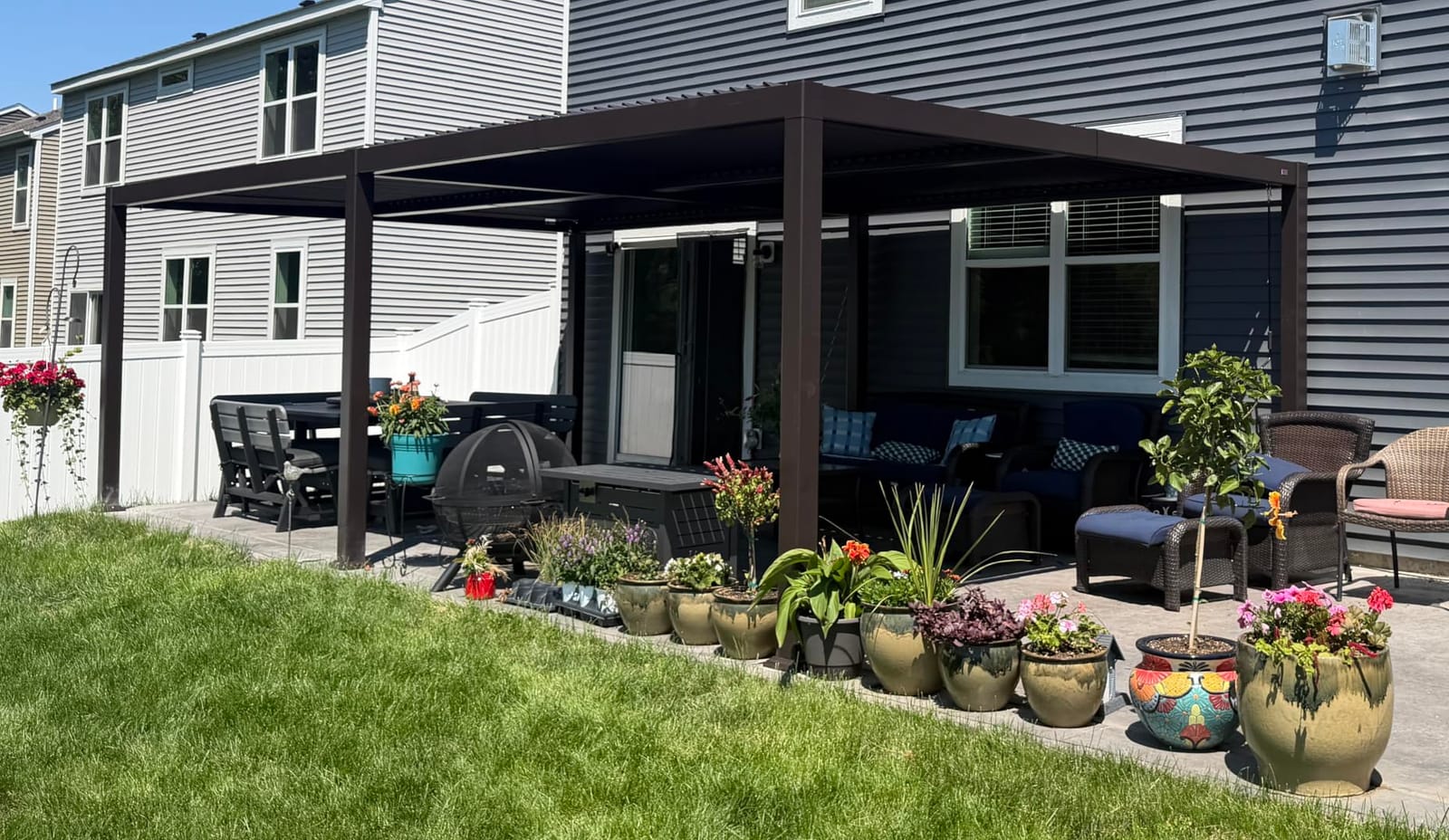
The columns are 4.53 inches wide, which are 4.53 inches wide compared with the 3.1 inch standard on most of the kits here. Wide columns matter more than buyers expect because the wind rating of a pergola is a function of how much you have to twist the frame.
At 324 pounds it is heavy but manageable with two people, and the drainage runs through hidden channels into the columns rather than dripping off the beam edge. What the owners consistently complain about is not the structure but the toolbox: the included Allen wrenches are described as low quality, and several people finished the job with their own tools instead.
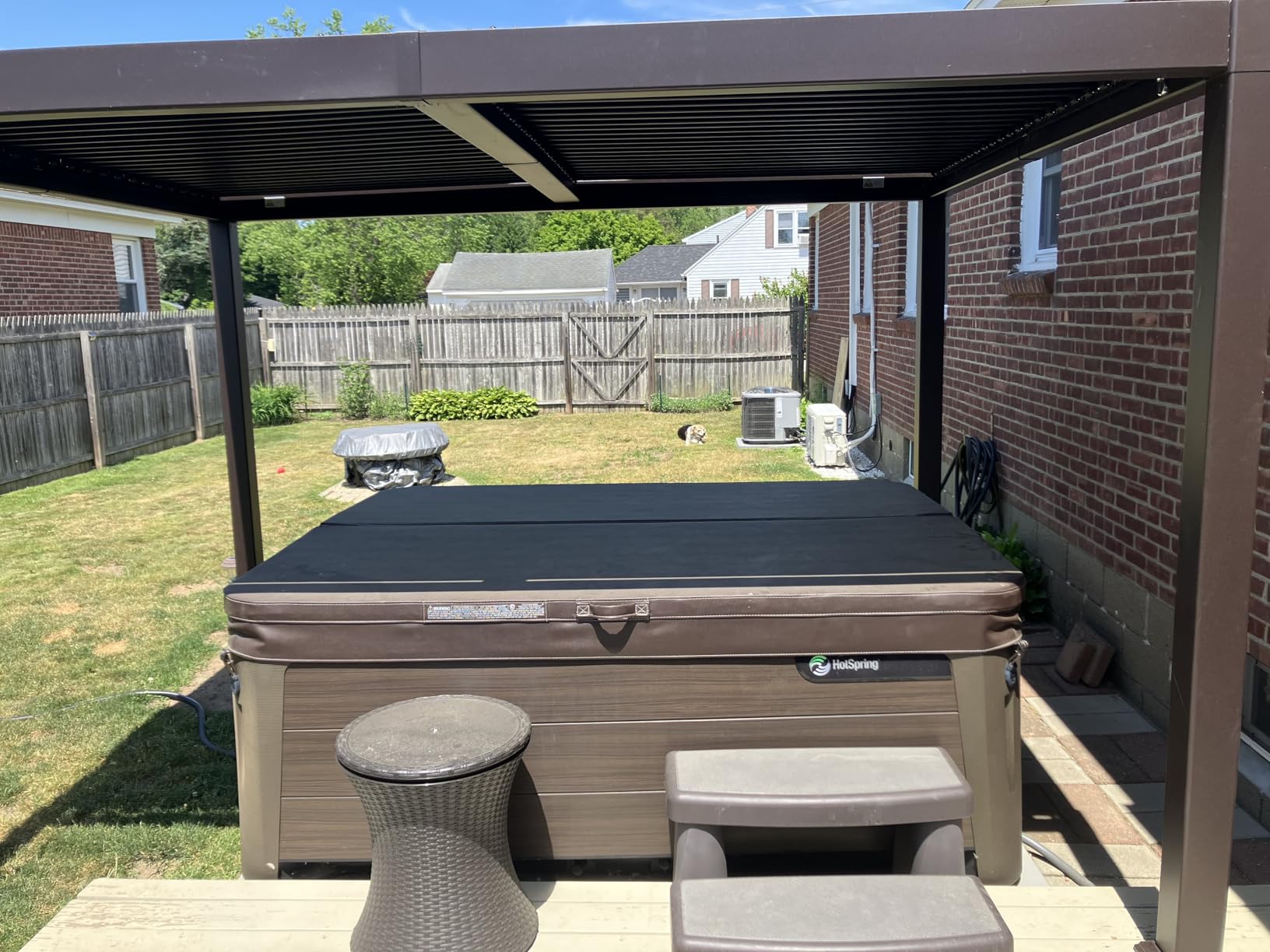
Is this the right size for your deck?
At 144 by 120 inches it covers 120 square feet, which is a six-seat dining set or a small sectional with room to walk around it. It is a genuine small-to-mid deck cover, not a full-width structure, and owners describe sizing it to a six-seat dining set or a sectional sofa as the natural fit.
If your deck is 18 by 14, you will want the 12×14 in this roundup or a 12×20. Trying to stretch this footprint usually means butting the structure against a post and losing your walkway clearance.
What to verify before ordering
Ask for touch-up paint. Dents and scratches on arrival show up in owner reviews, and a powder-coated bronze frame marks visibly. The frame carries a one-year construction protection plan, so photograph every panel the day it arrives.
Budget a full weekend and a second pair of hands. This is a two-person job, and the reviews that complain about fit usually describe alignment rather than missing parts. Customer support responds quickly when hardware is genuinely absent.
2. PURPLE LEAF 12×14 All-Aluminum Gray Pergola
PURPLE LEAF Louvered Pergola 12′ x 14′ 94AS All-Aluminum Rustproof Gray
Aluminum frame
166.6 by 144.6 by 94.3 inch
516 pounds
Two 0-90 degree sections
Pros
- Two independently adjustable roof sections
- Water drains through all four columns
- 72 mph wind rating when anchored
- Proactive customer support
- Arrives in heavy protective packaging
Cons
- Center beam seam can drip in heavy rain
- Included screwdrivers break after one use
- Very heavy multi-box delivery
This is the one to buy if your deck is around 18 by 14, which happens to be the exact size that shows up over and over in the deck forums. It covers 168 square feet, enough to hold a dining set and a seating area with clearance around them.
Two independently controlled roof sections is the feature that sets it apart from single-plane kits. You can open the half over the table and keep the half over the grill closed, which owners describe as the point of having a louvered roof at all. Both sections run 0 to 90 degrees on adjustable poles.
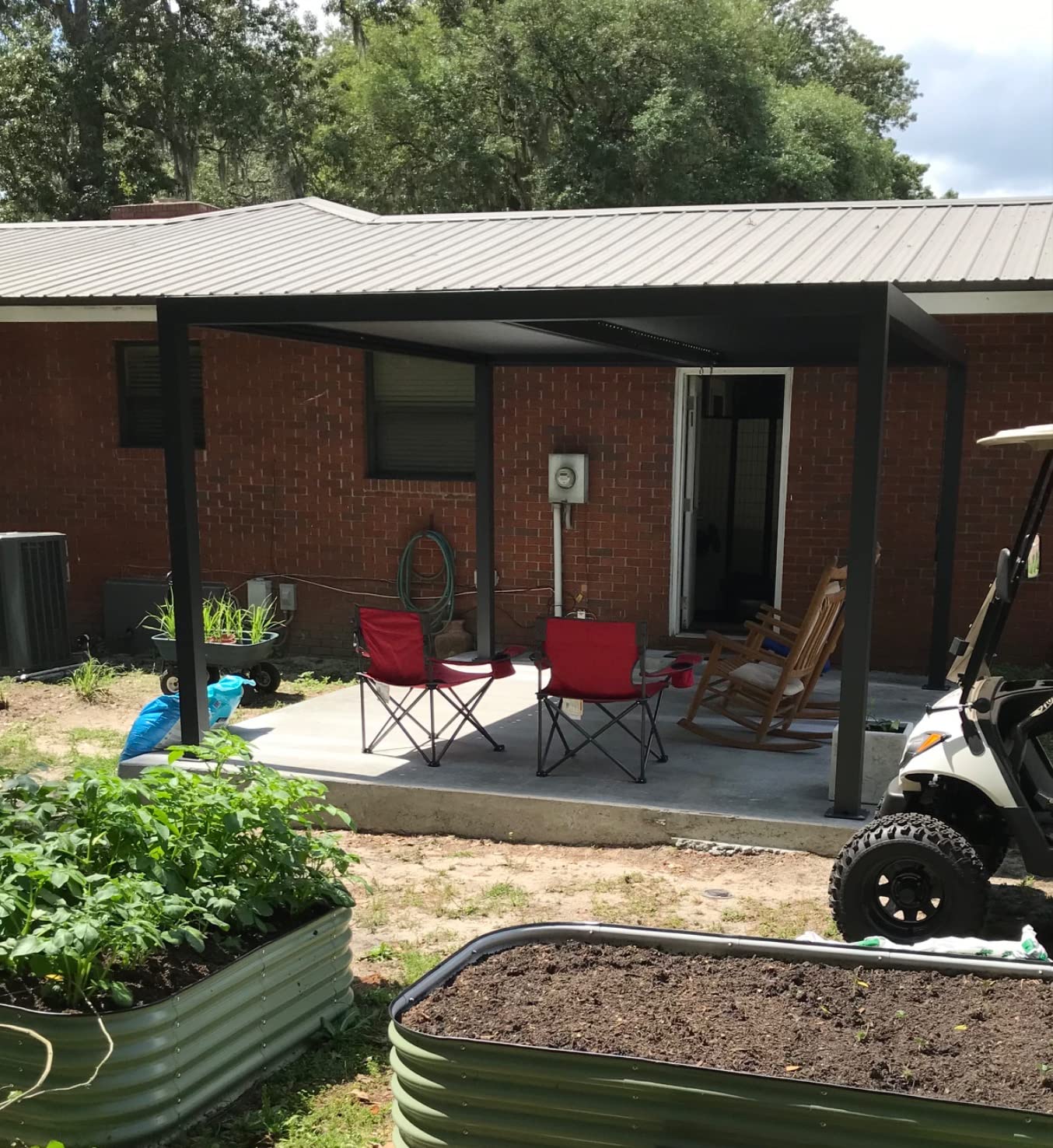
The 72 mph wind rating is conditional, and the condition matters. It applies when the structure is anchored with expansion screws on a hardened floor, which means concrete. On a wood deck surface the number does not apply and you need a different anchoring strategy.
At 516 pounds this is a genuinely heavy structure and buyers consistently say the delivery arrives in multiple boxes that most people cannot move alone. Plan a second adult and a dolly before the first box is opened.
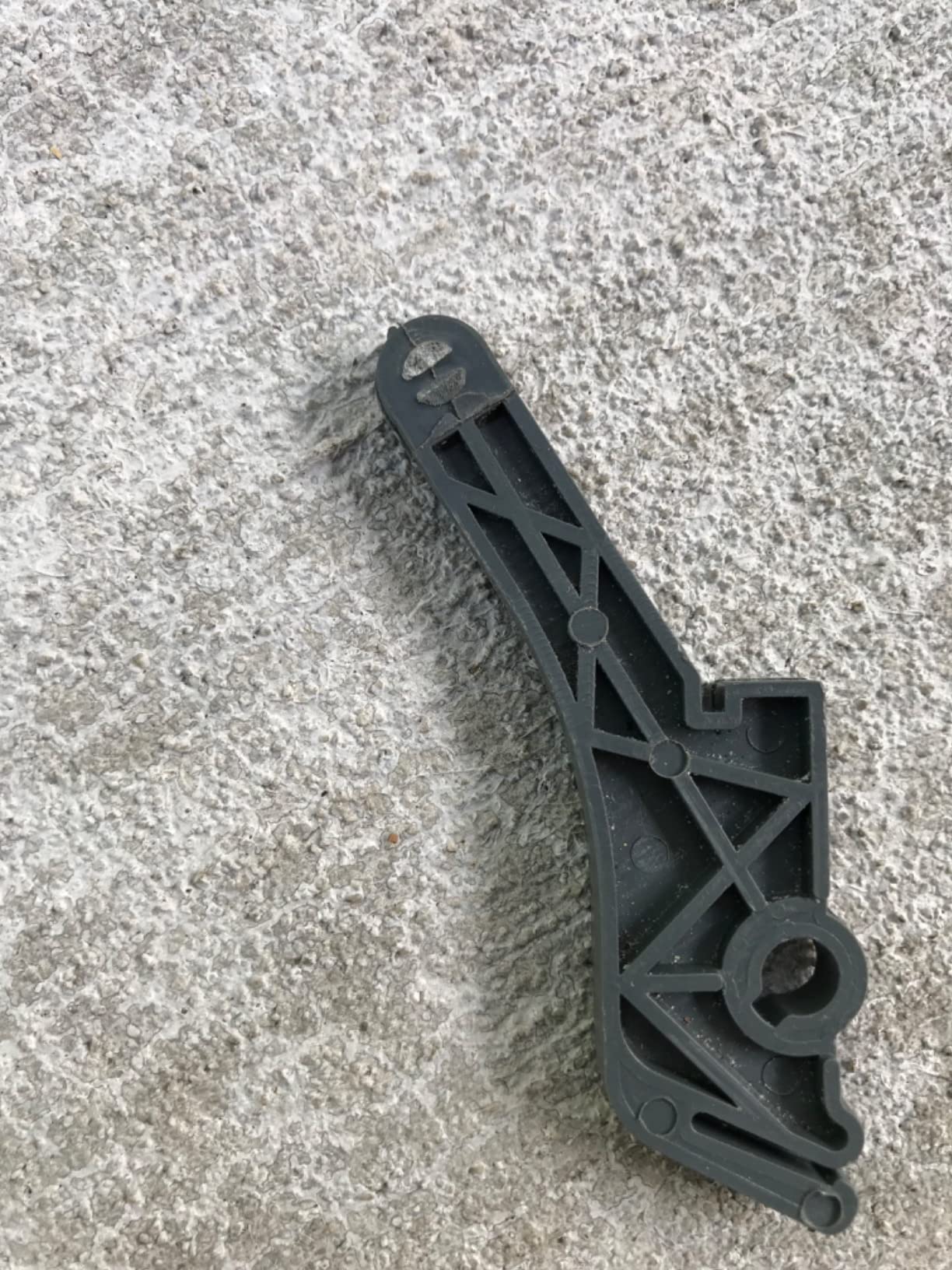
How does it handle heavy rain?
Well everywhere except one place. Owners report that the center beam seam can drip in heavy rain unless you run mastic tape or silicone along it after assembly. This is a five-minute fix that several people did themselves and then stopped mentioning it.
The perimeter drainage routes water down through all four columns to ground level, which is the right architecture. Just make sure each column base lands on paving or a splash block rather than over your deck joists.
What to check before you build
Skip the included screwdrivers. They are described as breaking after a single use, and a stripped screw head halfway through a roof panel is a bad afternoon. Bring your own metric set.
Protective plastic film is tedious to pull off and can leave sticky residue in heat. Set aside an afternoon for it, and do it before you install the louvers so you are not working around film. Instructions are described as adequate rather than good, so watch the printed diagrams twice.
3. PURPLE LEAF 10×14 Snow-Ready Louvered Pergola
PURPLE LEAF Louvered Pergola 10′ x 14′ Aluminum Pergola w/Independent Roof
Aluminum frame
164.4 by 111.3 by 92.6 inch
265.7 pounds
Snow load to 8.2 psf
Pros
- Snow load support up to 8.2 psf
- Handles real snow and wind without sagging
- Hidden gutters keep the patio dry
- Reinforced 4.53 inch support poles
- Roof panels install quickly
Cons
- Steel connectors inside beams can rust in coastal air
- Screws are not stainless steel
- Small center beam gap splashes in downpours
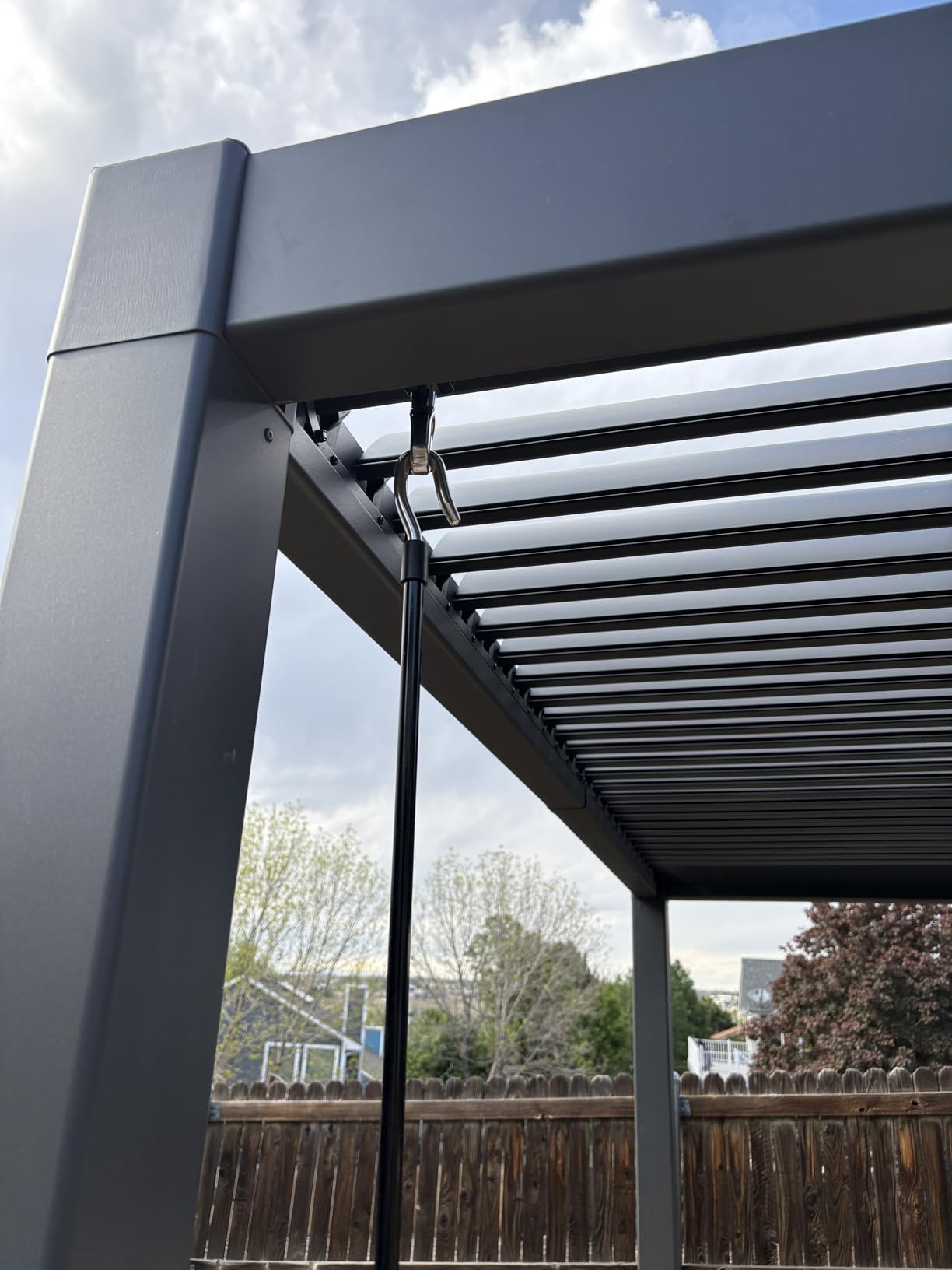
If you are in a snow state, this is the only unit in the roundup with a published psf figure. Snow load support up to 8.2 psf is a real number you can hand to an engineer or a building department, and almost nothing else in this category publishes one.
Owners in the Upper Midwest describe it handling snow and wind without sagging, which is the test that matters. The reinforced beams and 4.53 inch poles are what make that possible, and the 70 mph wind rating is stated as a frame specification rather than a footnote.
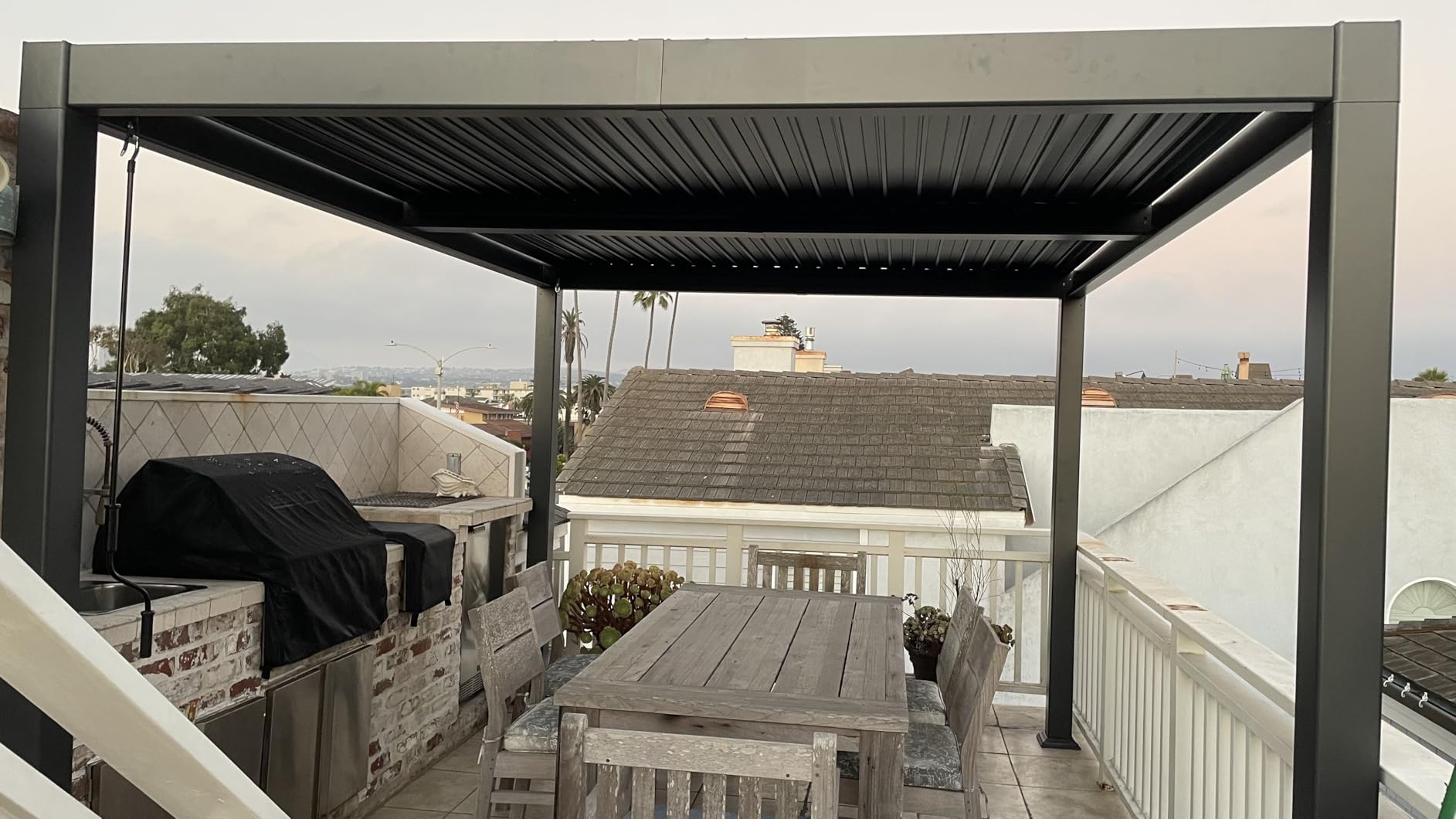
At 265.7 pounds it is one of the lighter frames here despite the larger footprint, which makes the two-person install realistic. The roof panels snap into the tracks rather than being fastened one bracket at a time, and owners report that step is quick once the frame is up.
The independent louvers are described as snapping in easily and rotating smoothly, with rain shedding that reviewers call flawless in normal conditions. The drainage runs through hidden gutters and the four posts, so the deck surface stays dry rather than getting a fine mist from dripping edges.
Does the snow rating cover your climate?
Check your local design snow load against the 8.2 psf figure and note that the psf is about what the roof holds, not what your local code requires. Northern states often specify higher design loads than 8.2 psf, in which case you want a heavier structure or a permanent open position in winter.
The manual guidance in this category generally says to open the louvers in heavy snow so weight does not accumulate on the closed seam. That advice is worth following even on a unit with a published rating.
Where this one gets exposed
The internal beam connectors are steel even though the frame is aluminum, and the screws are not stainless. In a coastal or high-humidity location that is the thing to plan around: rinse the structure with fresh water twice a year and check the connectors for surface corrosion.
Owners also report a small center beam gap that lets large drops splash into the gutter during downpours unless you add weatherstripping. Add it in the first month. The instructions are described as vague and use decimal inches rather than fractions, so measure twice on anything involving a beam.
4. MIRADOR 80S 10×10 Charcoal Louvered Pergola
MIRADOR 80S 10’x10′ Metal Louvered Pergola with 10FT Shade Screen for Outdoor,Deck,Lawn,Garden,Backyard and Patio,Charcoal
Steel and aluminum
100 square feet
Waterproof
Charcoal finish
Crank drive
Pros
- Removable crank handle for child safety
- Built-in gutter handles heavy rain and wind
- Thoughtful packaging with almost no damage
- Comprehensive hardware kit included
- Printed instructions with QR install video
Cons
- Frame flexes until footings are poured and anchored
- Louver clamps are plastic rather than metal
- Included 8mm anchor bolts are undersized
The 80S is a 10 by 10 square footprint at 100 square feet, and it is the pick for a small urban deck, a courtyard, or a hot tub corner where 12 by 20 would be wasted. Owners call it well made, good looking and good value in the same sentence more often than any other unit here.
The crank drive uses a removable lever, which is a nicer safety story than a fixed handle in a house with kids. Turn the handle to whatever angle you want, pull it out, and the roof stays put. Built-in gutters carried heavy Texas rain and wind in owner reports without leaking.
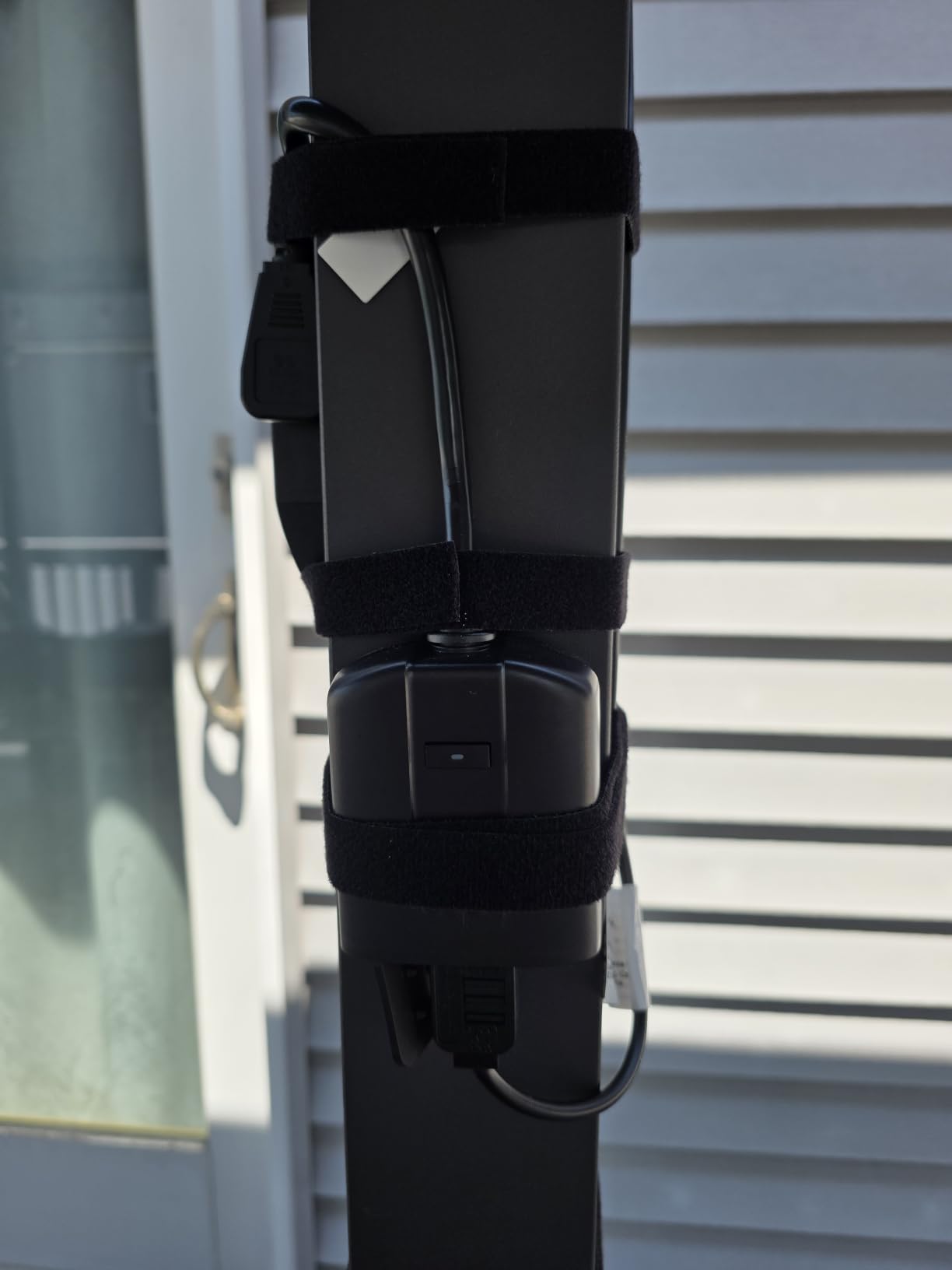
Charcoal is a smart finish for a deck because it disappears against dark-stained boards and reads as a modern line rather than a structure. The steel and aluminum components are powder-coated, and the hardware kit includes screws for all applications, Allen wrenches, anchor bolts, hinges and braces.
Packaging is genuinely good here. Owners describe banded, thoughtfully engineered packaging with virtually no shipping damage, and the slats are protected in a way most competitors do not manage. That matters more than it sounds, because owners of other structures in this roundup report louver slats arriving fragile and cracked.
Why does the frame wobble after assembly?
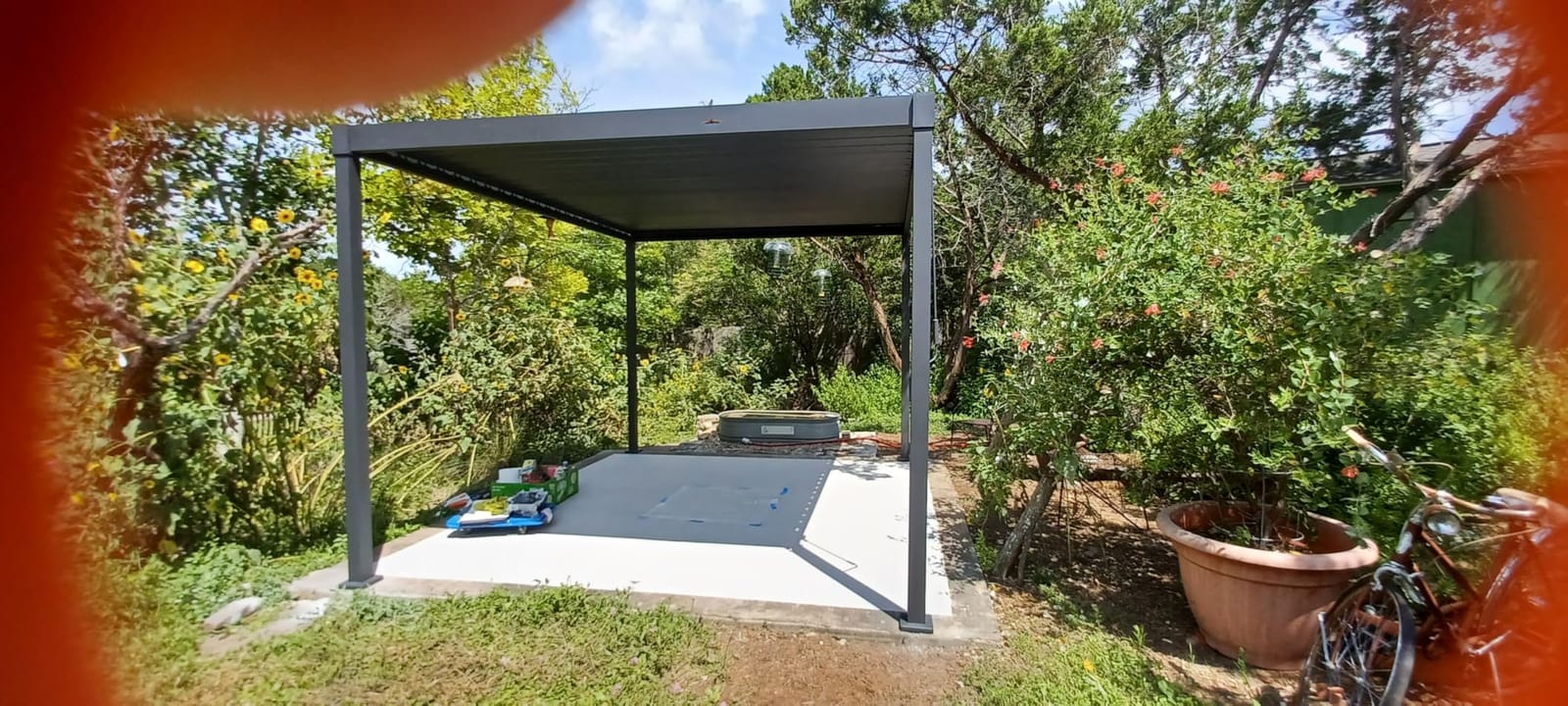
Because the upright-to-horizontal connections use bolts in shear, so the frame flexes until the footings are poured and the posts are anchored. Once it is on concrete and torqued, owners say it is solid. If you leave it unanchored, it will feel loose and you will assume you did something wrong.
That means the base plates and footings are part of this structure, not an accessory. Budget for the pour. The included 8mm anchor bolts are reported as undersized for concrete, so buy the anchors the footing spec calls for rather than trusting the box.
What to look at once it is up
The louver attachment clamps are plastic rather than metal in a frame that is otherwise non-rust. In intense sun and heat that is the component to inspect each season, because UV and thermal cycling work plastic clamps harder than they work steel ones.
The louver instructions are described as unclear even though the rest of the manual is well printed with a QR code install video. Read the roof section twice before you start. Optional 10 or 12 foot shade screen variants are available if you want insect relief as well as shade.
5. AirWire 12×20 Gray Aluminum Louvered Pergola
Airwire 12’x20′ Louvered Pergola Aluminum Frame Gray
Aluminum frame
232 by 141.1 by 86.8 inch
586 pounds
Crank drive
240 square feet
Pros
- Crank drive tested past 100000 rotations
- Two independent 0-90 degree roof sections
- Sloped roof drains through the columns
- Curtains and mesh screens included
- Clearly labeled parts with manual and video
Cons
- Fabric screens are water resistant rather than waterproof
- Roof rated water resistant not waterproof
At 240 square feet this is the largest footprint in the roundup, and it is the answer for a deep deck that has a dining end and a lounge end. Two independently adjustable roof sections cover 12 feet of length each, so you can shade one end and open the other.
The crank handle and winding device are rated for more than 100k rotations, which is the kind of specification you rarely see. Owners report smooth operation over that range, and it is a manual system with no actuator to fail, no controller to weather, and nothing to service.
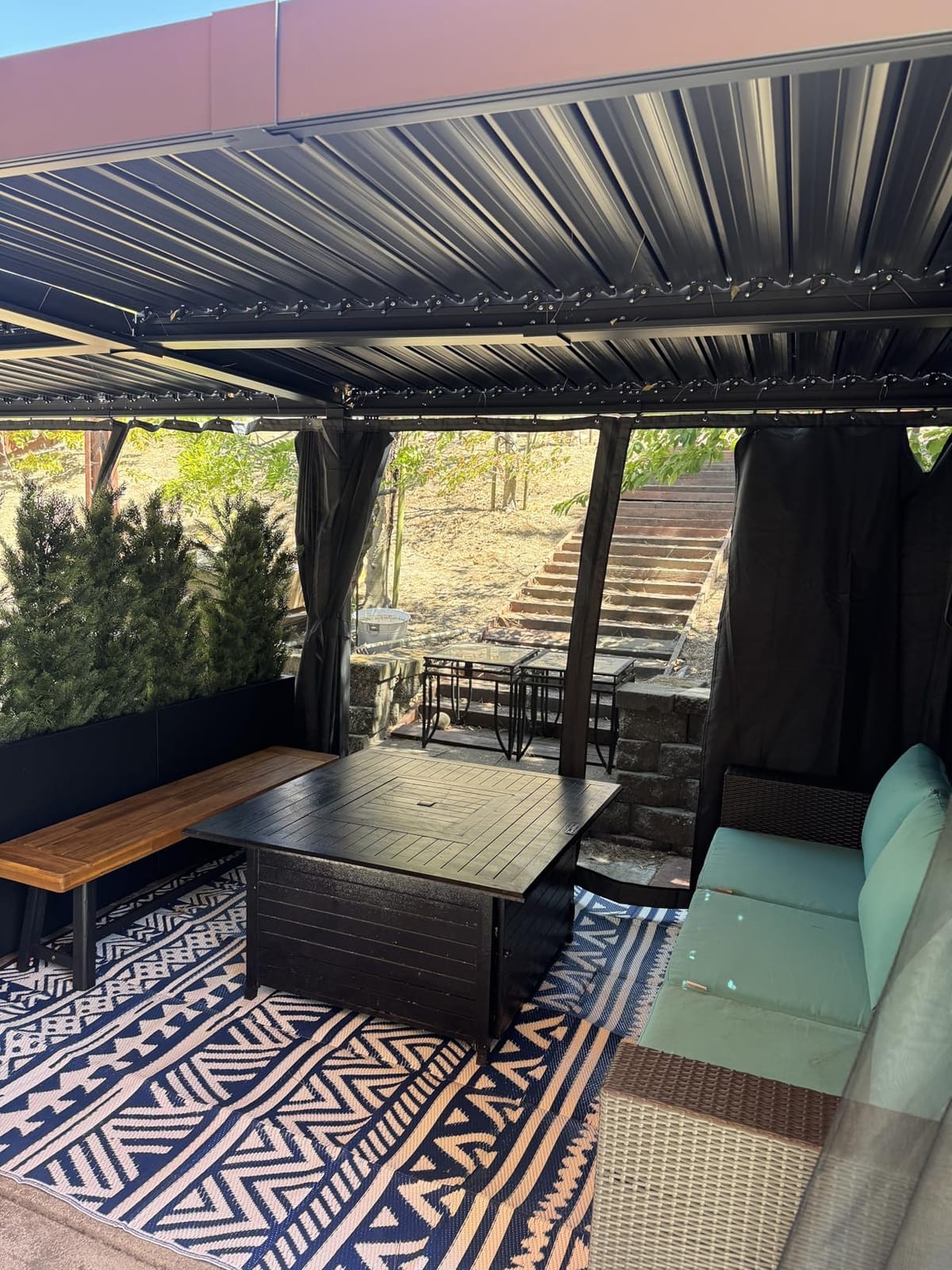
The sloped louver roof is the drainage story. Water is directed into integrated channels in the beams and then down through the columns, which is the geometry you want over a deck because it keeps runoff off the seating area entirely. The pre-drilled holes and corrosion-resistant hardware save real time on assembly.
At 586 pounds this is a two-person-plus job on a good day. Parts are clearly labeled with a printed manual and an install video, and owner reports mention the label quality specifically, which tells you the packaging design is deliberate.
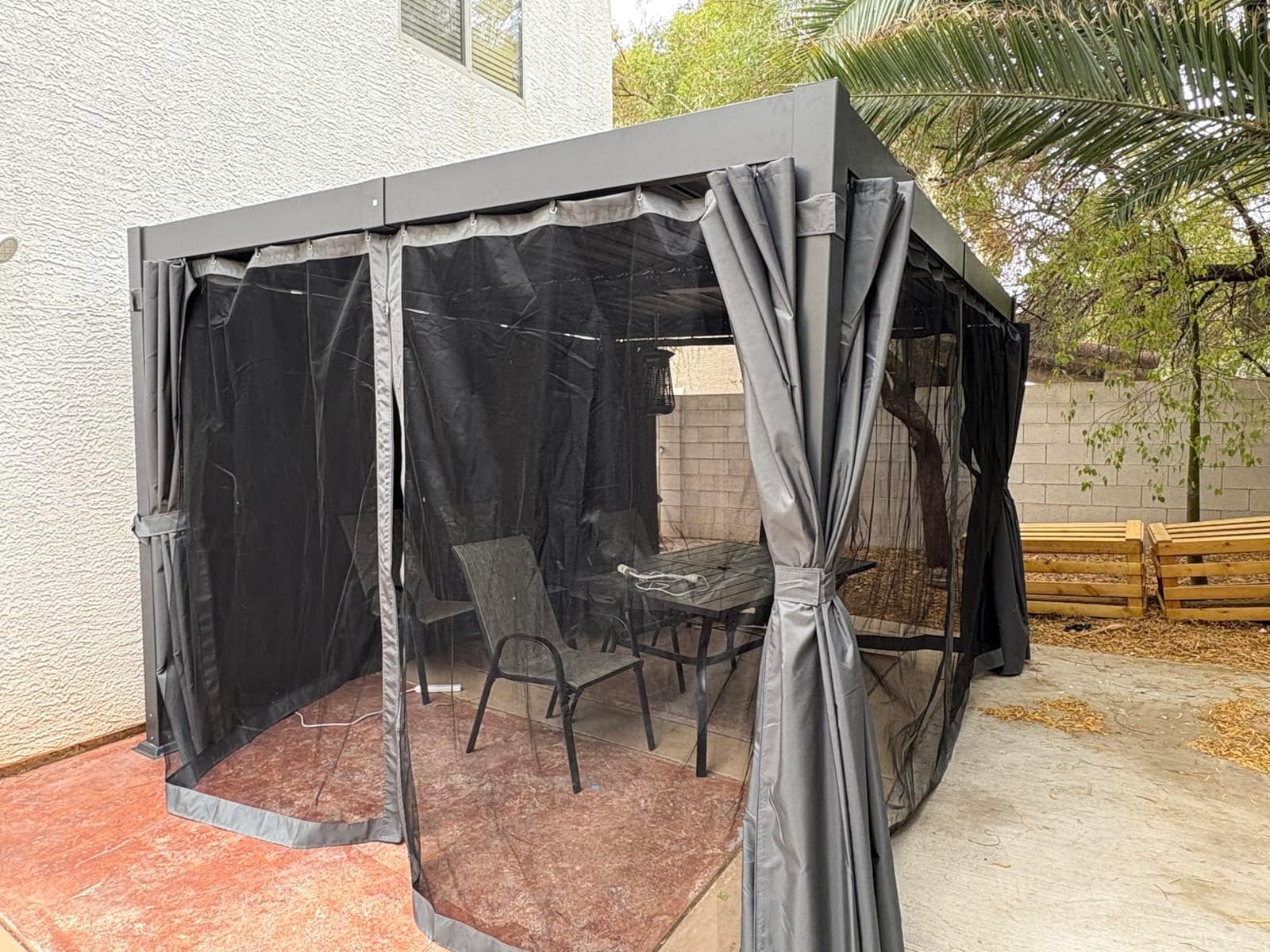
Is the 12×20 realistic on a residential deck?
Only if the framing underneath can take it. 240 square feet of structure weighing 586 pounds means roughly 2.4 pounds per square foot of dead load spread over four post points, before anyone walks on it. Ground-mounting on footings is the sensible default at this size, and it also keeps the deck free for other uses.
If your deck is elevated and you want the pergola to sit on it, this is the size at which you should involve a structural contractor rather than a weekend. Get the beam span reviewed before the footings go in.
What the water resistance rating really means
Be clear about this one. The roof and the included fabric are rated water resistant, not waterproof, which means the drainage is designed for moderate rain. The zippered curtains and mesh screens are for privacy and insects, and owners say they offer only light rain protection.
If you want a genuinely rainproof ceiling, treat the closed louvers as rain management rather than rain exclusion, and expect a little mist at the seams in a hard downpour. For a sun and shade structure on a large deck, that trade is usually worth making.
6. EROMMY 12×20 Black-Gray Louvered Pergola
EROMMY 12×20 Louvered Pergola with Side Pull-Down Screen, Outdoor Aluminum Pergola with Thickened Frame and Adjustable Metal Rainproof Roof for Deck Patio Garden Yard, Black-Gray
Aluminum frame
232.1 by 140.8 by 97.1 inch
711 pounds
Crank drive
99 percent UV
Pros
- Six pull-down side screens for full privacy
- Integrated eaves gutter and column drainage
- Stainless fittings with matte powder coat
- Many buyers finished in a single day
- Responsive seller support
Cons
- One report of stripped base plate bolts in eight months
- Replacement screens are not sold separately
- Netting can billow in the wind
This has the fullest screening package in the roundup. Six pull-down side screens give you the closest thing to an enclosed room, with the roof louvers on a crank above them. For a deck that borders a neighbor’s line or a busy street, that solves a problem nothing else here does.
At 711 pounds it is the heaviest unit in the group, and the listed recommendation is four to six people. Owners report completing it in a single day anyway, which suggests the labeling is conservative, but do not plan to do it with two.
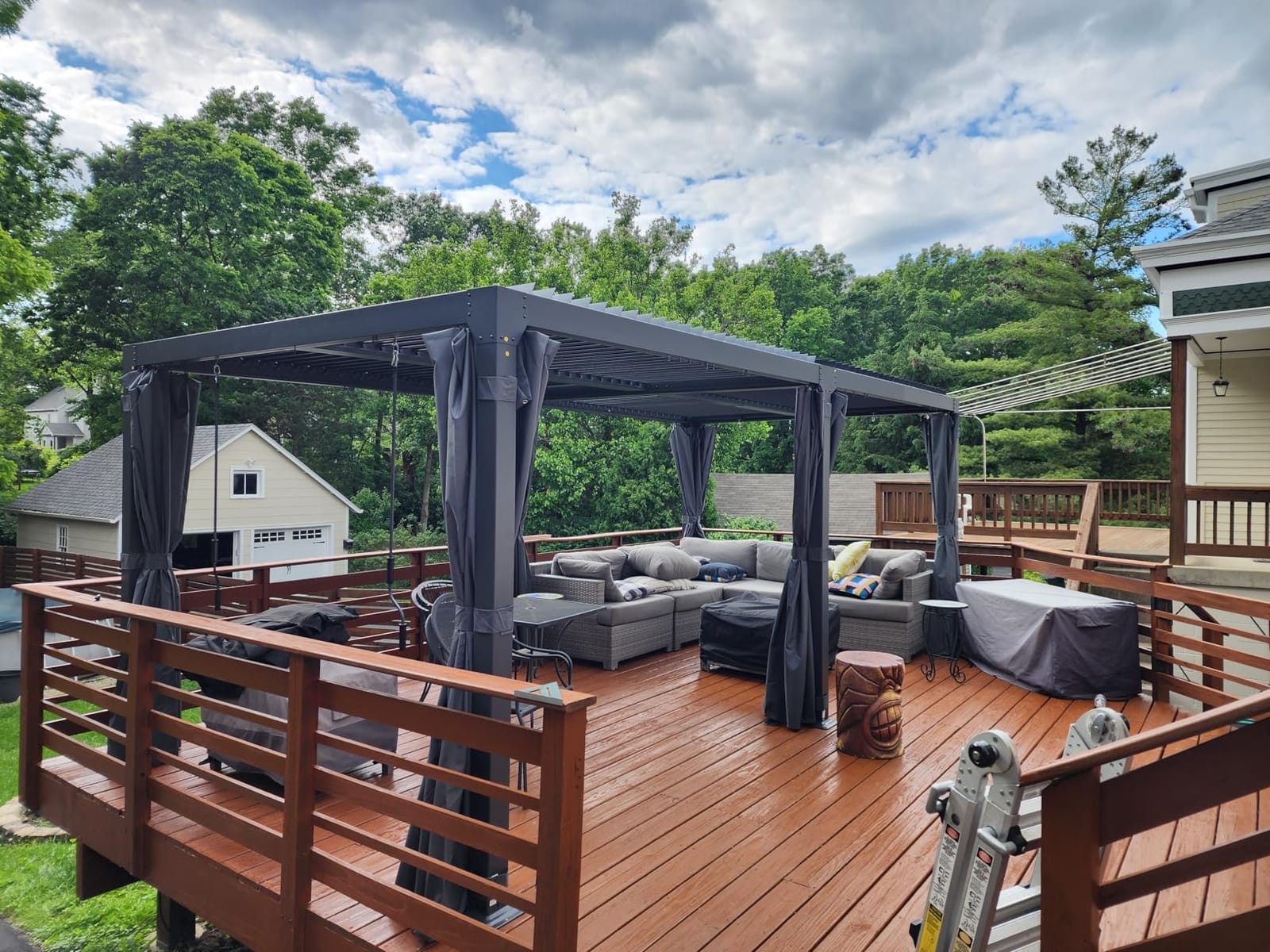
UV protection is listed at 99 percent and occupancy at four to six people. The frame is thickened aluminum with stainless steel fittings and a matte powder coat, and the base plates are pre-drilled with expansion anchor bolts included, which saves a step compared with structures that arrive un-drilled.
One practical detail worth knowing before you buy: the roof control position depends on which face the drilled holes land on. Check the drill pattern against your deck layout before you anchor anything, because reaching the crank from the wrong side of a 20 foot structure is an unpleasant walk.
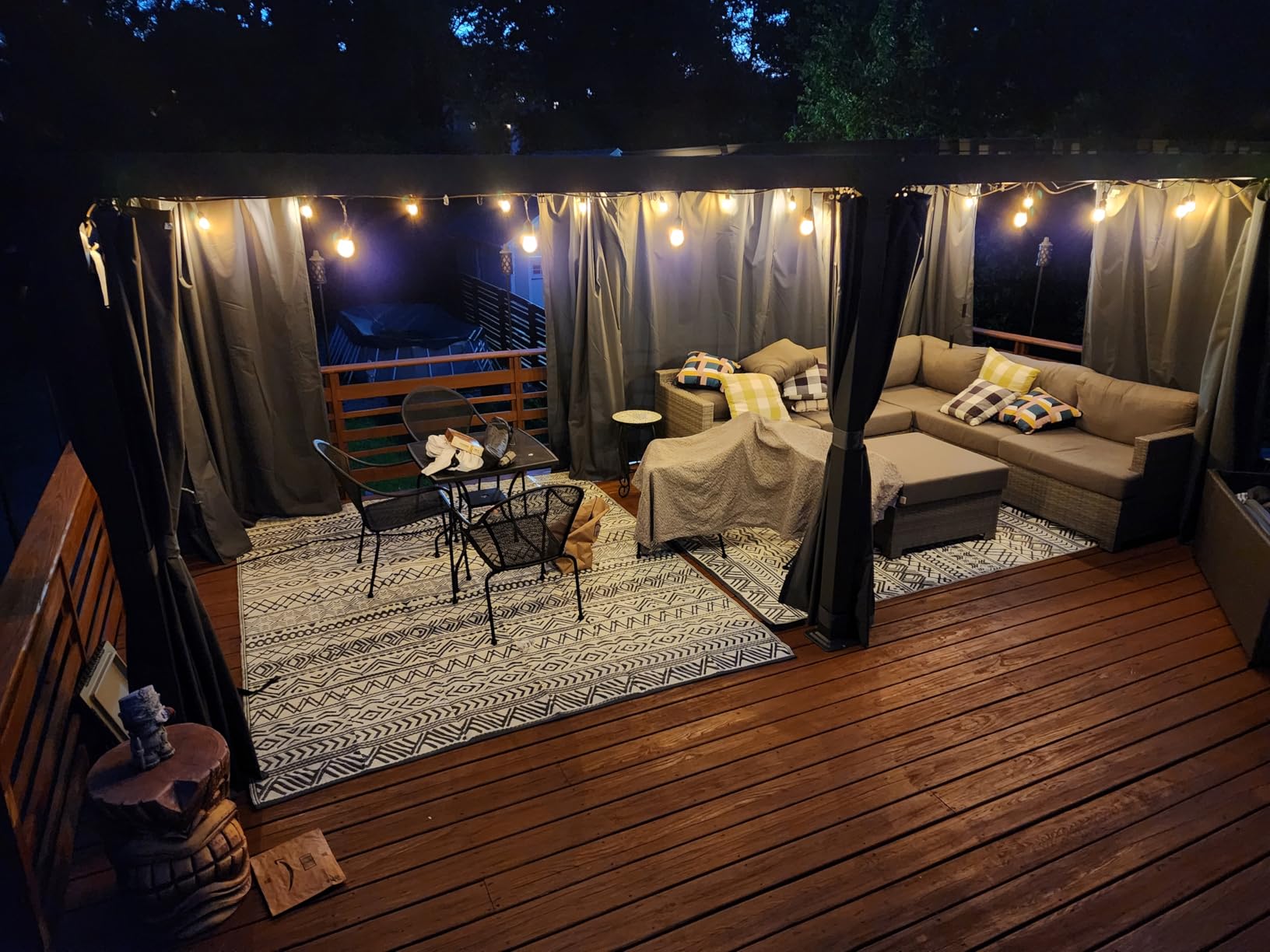
How much privacy do you actually get?
With all six screens down, this reads as a room with a roof. Owners describe the screens as giving complete privacy and shade control, and the combination works particularly well for a deck next to a pool or a neighbor’s patio. The screens are rated 99 percent UV, which makes the enclosed version usable in the hottest part of the day.
For insect relief, pair the screens with the approach in our outdoor curtains guide, since screen fabric and curtain fabric solve overlapping but different problems.
What to inspect in the first month
There is one detailed report of base plate bolts stripping and a leg connection snapping within eight months, with the frame described as top-heavy. One report is not a pattern, but at 711 pounds over a large deck, the base plates are the highest-stress component in the whole roundup and worth checking after the first wind event.
Screen and curtain replacement parts are not sold separately, so treat the screens as a consumable you will eventually replace and price that in. Netting can billow in the wind if it is not drawn taut.
7. Aoxun 10×12 All-Aluminum Pergola
Aoxun Louvered Pergola 10×12 All-Aluminum, Waterproof Curtains and Netting
All aluminum
140.6 by 117.7 by 89 inch
323 pounds
Waterproof
82.5 mph
Pros
- All aluminum roof frame and posts
- Thickened 3.8 inch posts for stability
- Weld-free premium appearance
- Curtains and mesh netting included
- Gutters drain through the aluminum posts
Cons
- Instructions are mostly pictures
- Soft Allen head screws strip easily
- Drill bit size listed incorrectly
The Aoxun has the highest published wind figure in the roundup at 82.5 mph when properly anchored, and the reason is material purity. Roof, frame and posts are all aluminum, which means there is no steel connector anywhere in the load path to corrode.
Posts are 3.8 by 3.8 inches against the 3.1 inch standard used on most kits here. That extra 0.7 inch of section is the difference between a structure that feels solid in wind and one that does not, and owners mention the post thickness as a reason they are happy with the build.
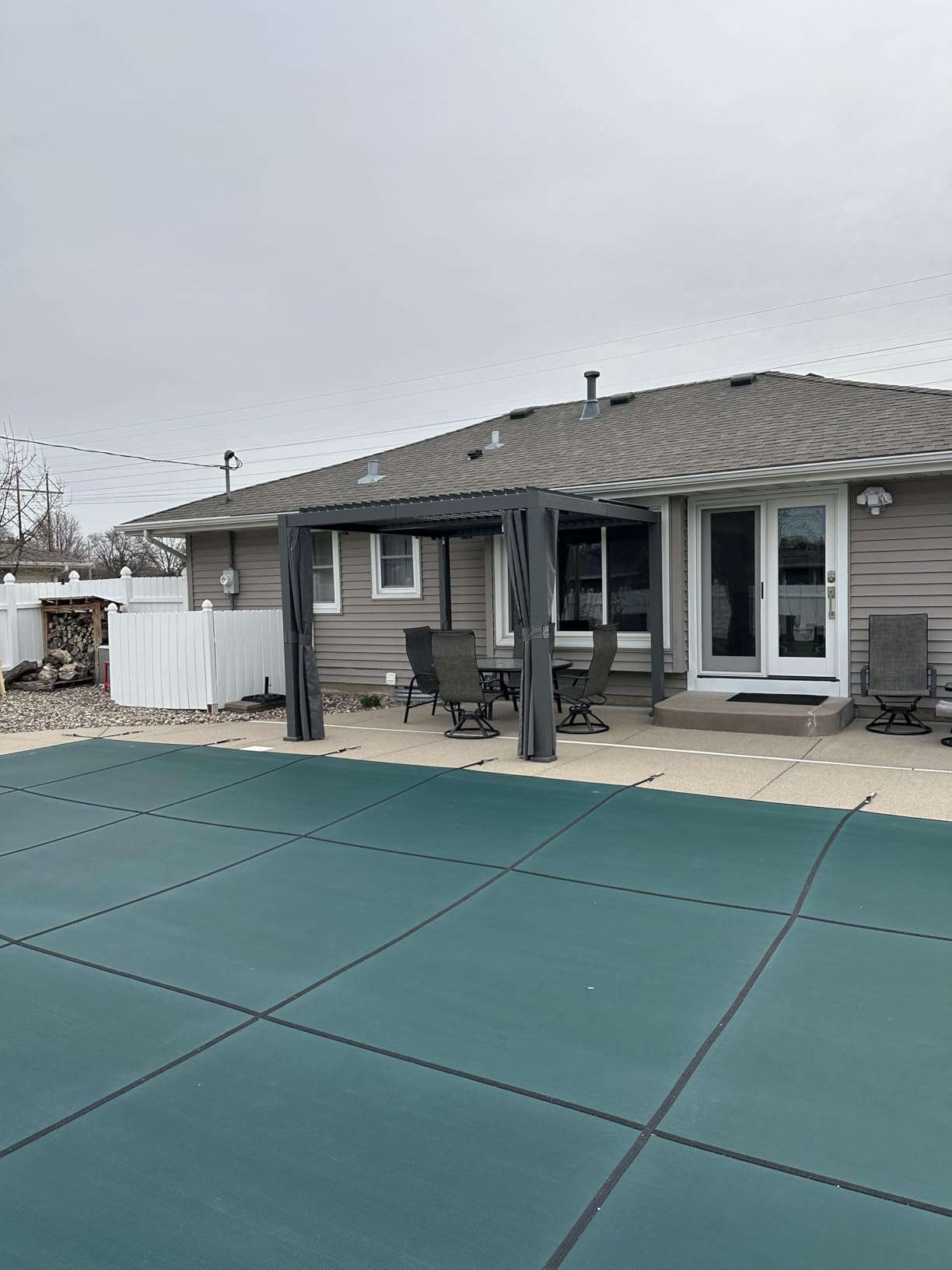
The weld-free appearance is a genuine design feature rather than marketing. There are no visible weld marks, and combined with the thicker posts it gives the structure a more premium look than the steel competitors at the same footprint. The Takasho-style wood grain finishes elsewhere in this roundup chase the same effect, but this one gets there with real extrusion.
Waterproof curtains and breathable mesh netting are included, along with two independently controlled louver sections. Built-in gutters drain through the aluminum posts, and the whole roof is rated waterproof rather than water resistant.
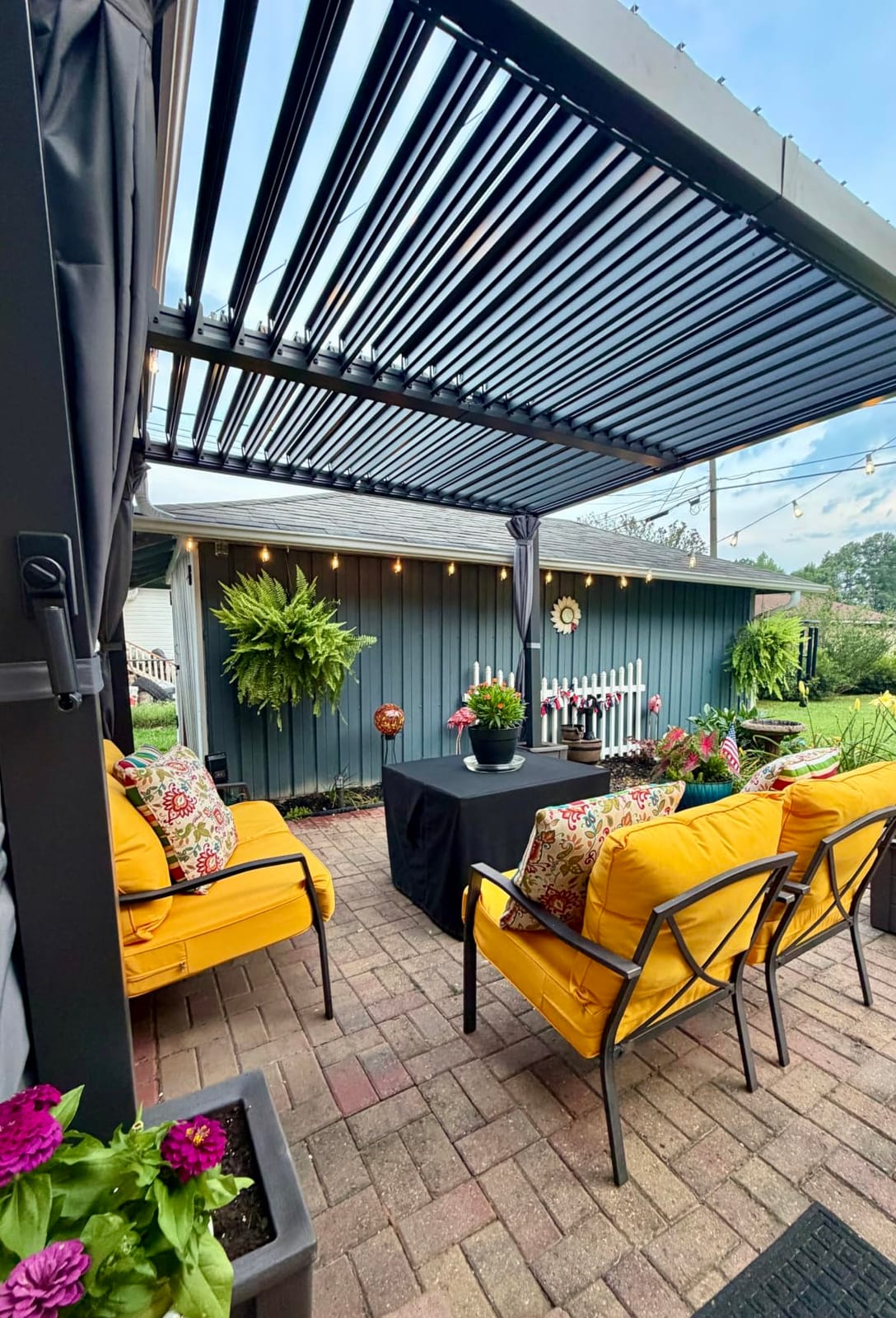
Is it worth paying more for full aluminum?
If you are within a few miles of salt water, in a high-humidity region, or planning to keep this structure for fifteen years, yes. Aluminum does not rust, does not need sealing, and does not need staining. The galvanized steel beams used in the cheaper structures in this roundup depend entirely on their coating for long-term protection.
If you are inland with dry air and a ten-year horizon, the difference is smaller. Then compare it on post thickness and instruction quality, which is where this unit has a real weakness.
What to fix before you start
Get the latest manual before you begin. Owners report that the printed instructions are mostly pictures and confusing enough that people re-did the roof slats. The manufacturer publishes a downloadable manual that is more current.
Two specific corrections: the Allen head screws are soft and strip if tightened hard, and the drill bit size in the instructions is wrong, requiring a 3/8 inch bit for the anchors. Also note a discrepancy worth confirming with support, since the manual states no more than 2 inches of snow load while the listing claims 10 inches. Customer service was slow to respond but did send warranty replacement parts quickly when needed.
8. Domi 10×10 Gray Aluminum Louvered Pergola
Domi Aluminum Louvered Pergola 10×10, Outdoor Metal Pergola, Grey
Aluminum and steel
118.5 by 118.1 by 93.8 inch
236.9 pounds
Lever drive
Waterproof
Pros
- Lighter build makes the install manageable
- Lever-operated louvers are simple and direct
- Advanced drainage through all four pillars
- Detailed instructions with video
- UV protection rated UPF 50+
Cons
- Galvanized steel beams are not fully rust proof
- Open the louvers in heavy snow
At 236.9 pounds this is the lightest structure in the group, and that is not a small thing when you are assembling on a deck reached by a staircase instead of a driveway. It is the most achievable first louvered pergola for a homeowner doing the work themselves.
The drive is a lever rather than a crank, which is the simplest mechanism in the group. No winding device to maintain, no rotation count to worry about, and you can stop the roof at any angle by hand. Owners describe the control as easy and direct.
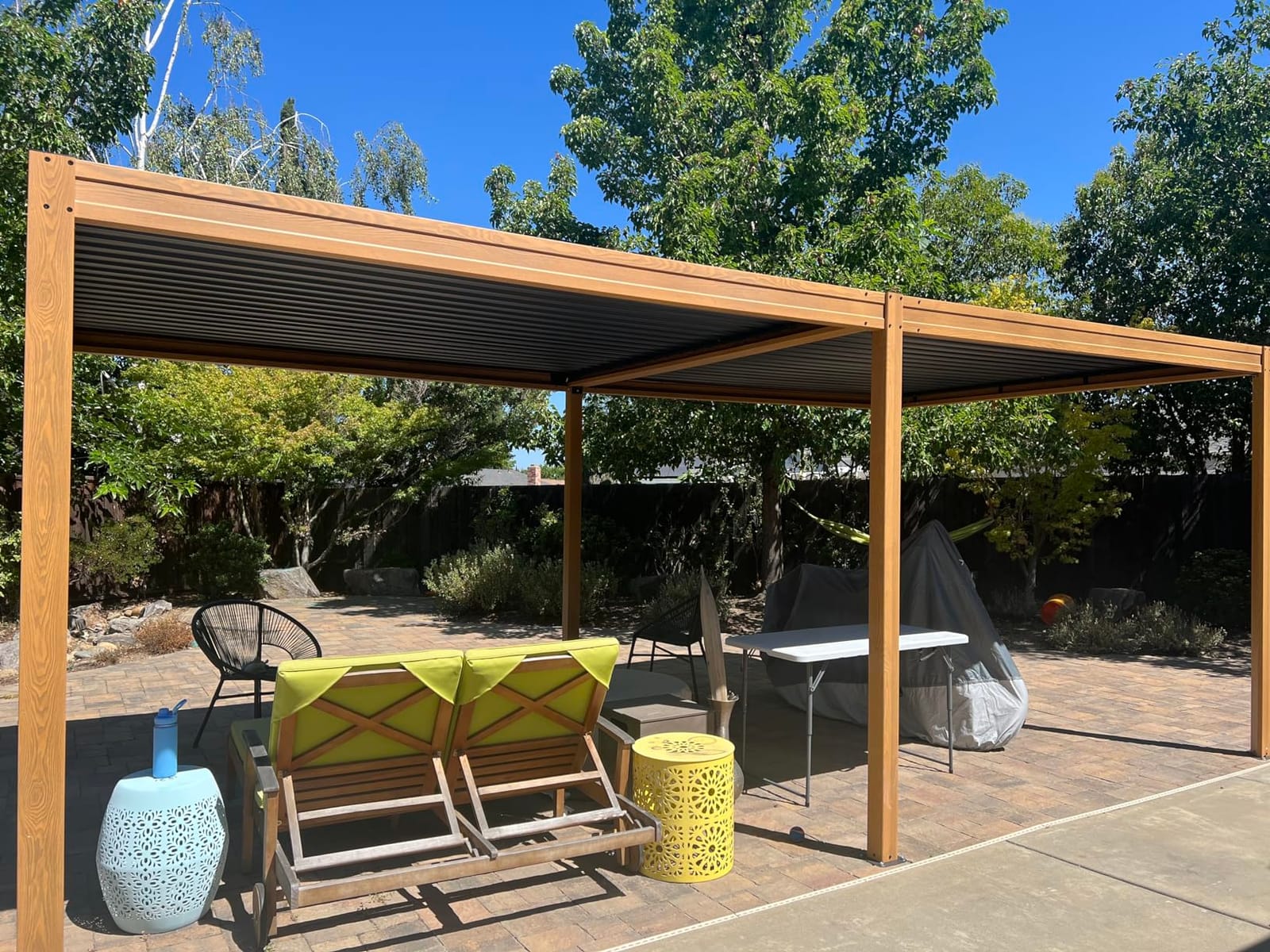
Water is collected and channeled down through all four pillars, and the roof is rated waterproof with 99 percent UV protection and a UPF 50+ rating. That UV number is one of the higher figures listed here and matters in Arizona, Texas and Florida.
Assembly is listed at two to five people over roughly four to eight hours, and the package includes pre-drilled expansion screws, tools and an installation video. Instructions are described as detailed, which puts this ahead of several higher-rated structures in the same roundup.
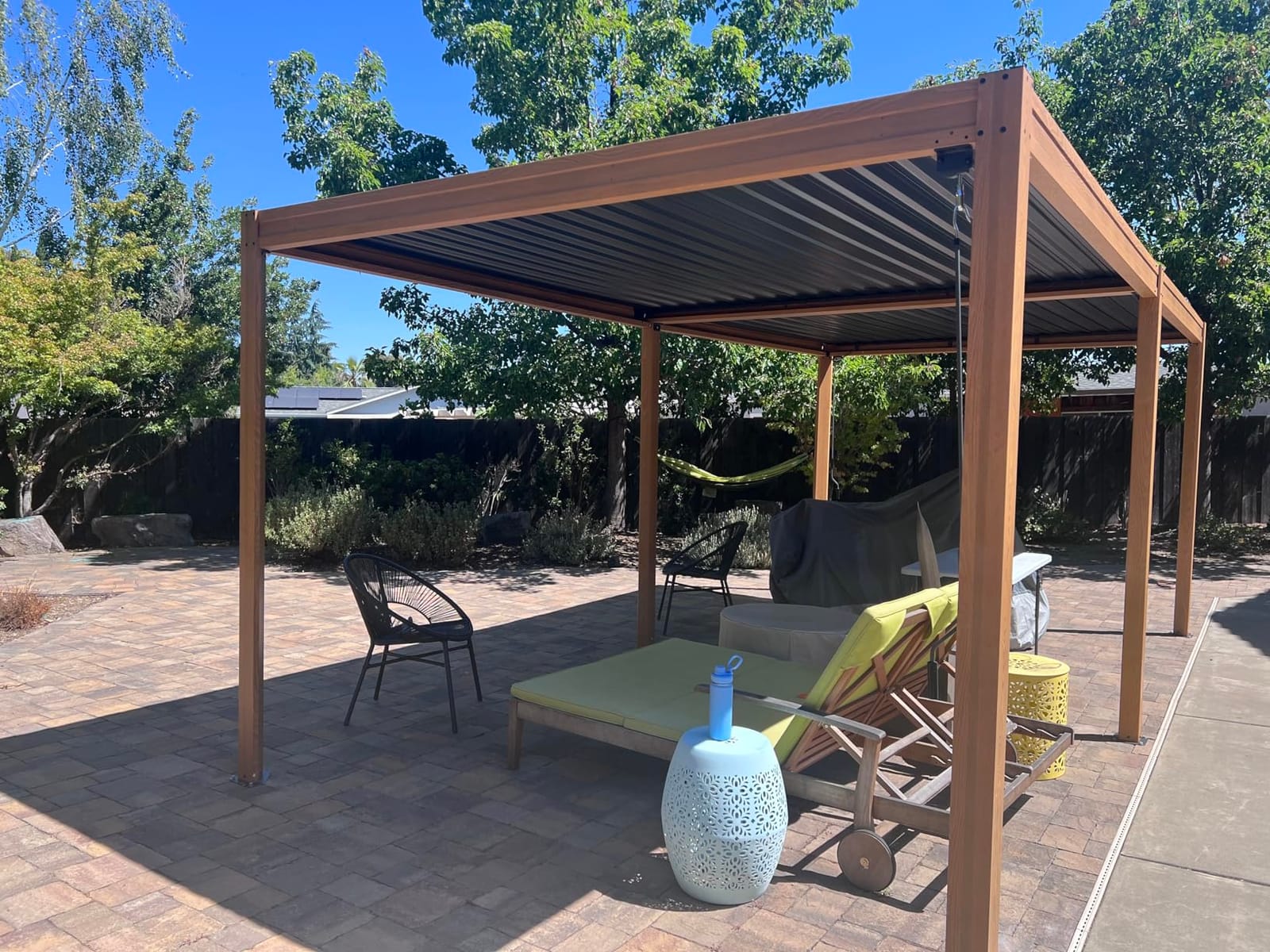
Where does the steel live in this frame?
Columns are aluminum, but the beams and louvers are galvanized steel under a durable powder finish. That is the trade that makes it light and affordable, and it is the one thing to understand before you buy. The rust-resistant coating and 60 mph wind capability are both real, but long-term protection depends on that coating staying intact.
Rinse it with fresh water annually if you live near the coast, and inspect the beam surfaces for chips every couple of seasons. A chip is a five-minute touch-up if you catch it early.
Is the 10×10 footprint enough?
At 100 square feet it covers a dining table for six with a little room around it, or a hot tub area. If your deck is deep and narrow, a rectangular 10×14 will serve you better for the same money class, because a square footprint wastes the length of your deck.
In heavy snow, open the louvers. Owners of this and other louvered designs note that closed louvers accumulate snow weight on the seam and the panels, and the open position sheds it straight off. The wind rating is 60 mph, which is fine for most inland sites but worth checking against your local exposure.
9. GarveeLife 10×10 Wood Grain Louvered Pergola
GarveeLife Louvered Pergola 10 ft x10′, Outdoor Pergola with Adjustable Louvered Roof, Reinforced Aluminum Frame, Integrated Drainage System, Hardtop Gazebo for Patio, Deck, Wood Grain
Alloy steel frame
119 by 119 by 88 inch
269.9 pounds
Crank drive
Wood grain
Pros
- Two people finished in about four hours
- Louvers crank smoothly from 0 to 90 degrees
- Hidden gutters drain to ground level
- Wood grain finish suits a backyard design
Cons
- Beam seams leak during rain
- Instructions are sparse and the video is thin
- Reports of wrong parts and sizing discrepancies
This is the wood grain option at the entry level, and it exists because a lot of people want the look of cedar without the sealing schedule. The frame resists rust, UV damage and corrosion, and the finish reads convincingly as timber from a seating distance.
Owners report two people completing the install in about four hours, which makes it the fastest assembly in the roundup. Louvers crank smoothly across 0 to 90 degrees, and hidden gutters move rainwater through the reinforced columns to ground level. Several buyers also note it can be raised to match patio height.
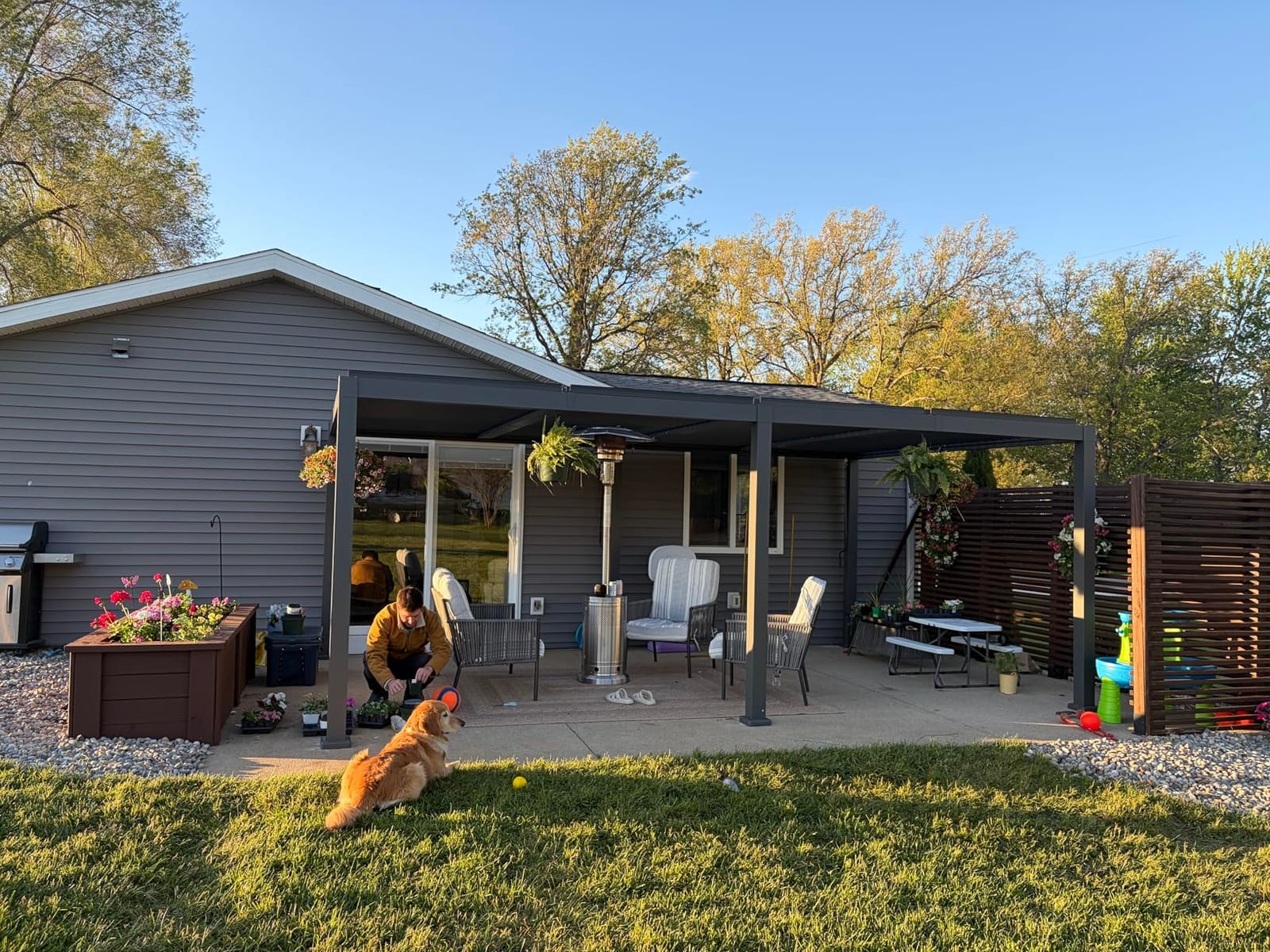
The frame is rated for 72 mph plus with pre-drilled bases and corrosion-proof hardware, and the whole thing arrives in four boxes with labeled parts and step-by-step video guides. A 269.9 pound weight with a 10 foot square footprint puts it in the middle of the pack for heft.
At 4.1 across 27 reviews it carries the lowest average rating of the group, and the reason is consistent across the negative reviews rather than scattered. It is not the structure that disappoints, it is the packaging and the paperwork around it.
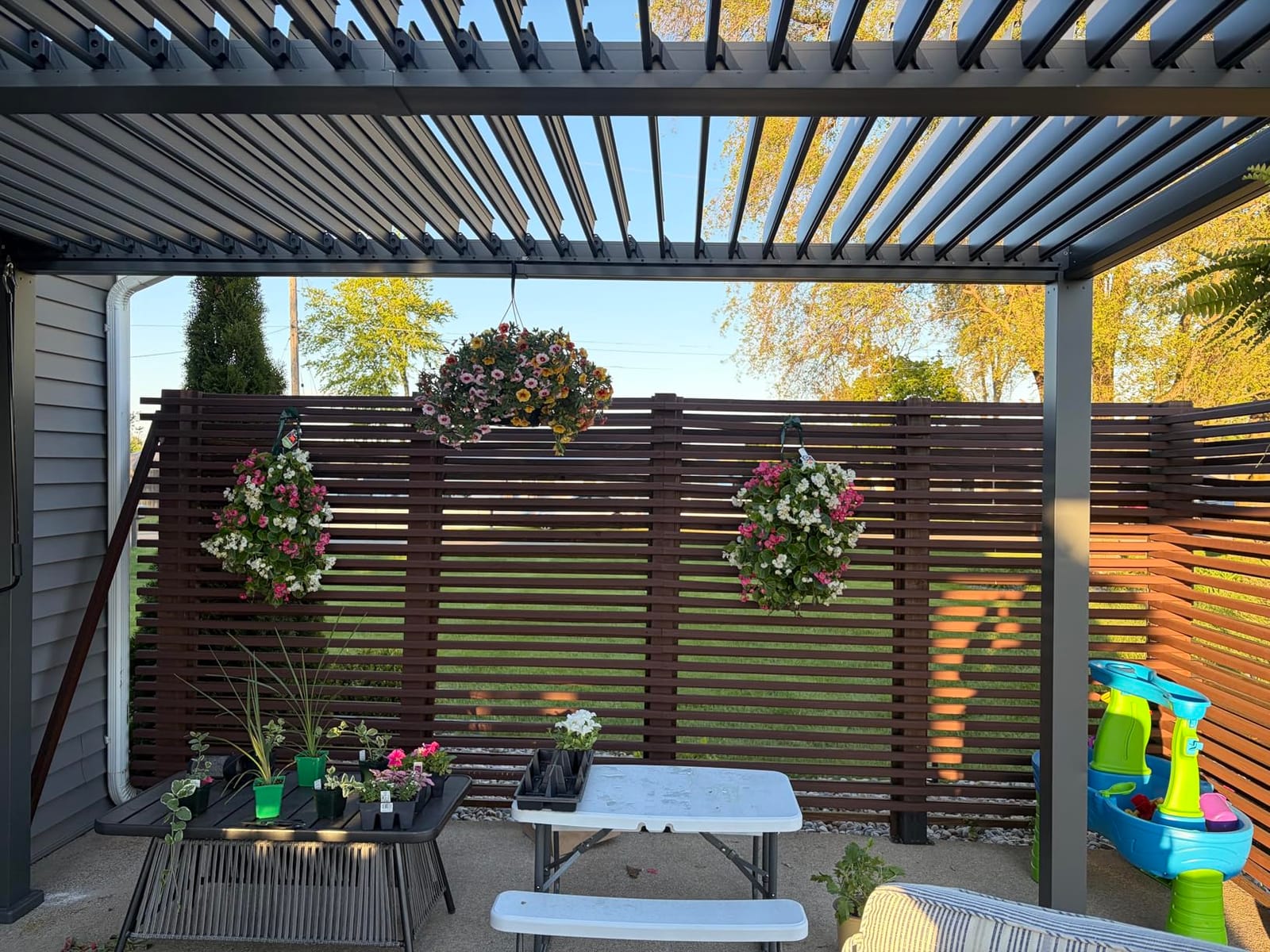
Is the wood grain finish worth it?
For a backyard with a natural palette and a deck that is not visually modern, yes. The finish ties the structure into a garden design better than charcoal or white powder coat does. For a contemporary deck, a solid neutral reads cleaner and does not date.
Understand what it is: a printed or transferred grain pattern on metal, not real timber. It will not silver and check like cedar, which is the point, but it also will not develop the character that makes real wood look better with age.
What to check the moment the boxes open
Count and match every part against the label list before you build. Reports in this listing include multiple wrong parts arriving in the box, pre-drilled holes in the wrong positions, and one unit where the advertised width did not match the actual width. Those are all caught in ten minutes and unfixable later.
Two things to plan around. Beam seams leak during rain on the two-part beam versions, so run sealant along the seam. And support reportedly became unresponsive once the return window had passed, which means the post-purchase relationship is thinner here than with the larger brands in this roundup.
10. BPS 13×10 Wall Mounted Louvered Pergola
BPS 13 x 10 ft. Outdoor Aluminum Wall Mounted Louvered Pergola, Dark Gray
Aluminum
153.9 by 114.5 by 92.5 inch
294.8 pounds
Wall mounted
Wand drive
Pros
- Wall mounting frees up deck floor space
- Roof adjusts through a wide 0 to 130 degree range
- Center tubes divide the roof into four zones
- Rain runs down the columns to the ground
Cons
- Needs a suitable load bearing wall
- Only one size and color variant is offered
A wall-mounted pergola changes the arithmetic on a small deck. The structure attaches to the house rather than standing on four legs, which means the floor underneath stays clear, and you gain usable deck area that a freestanding unit would have occupied. At 130 square feet and 294.8 pounds, it is a serious attachment for a serious wall.
The roof adjusts from 0 to 130 degrees using the included wand, which is the widest travel in this roundup. Past 90 degrees the slats tip past vertical, letting low sun in during winter while still throwing shade overhead in summer. Owners like the look of the open-roof state as much as the closed one.
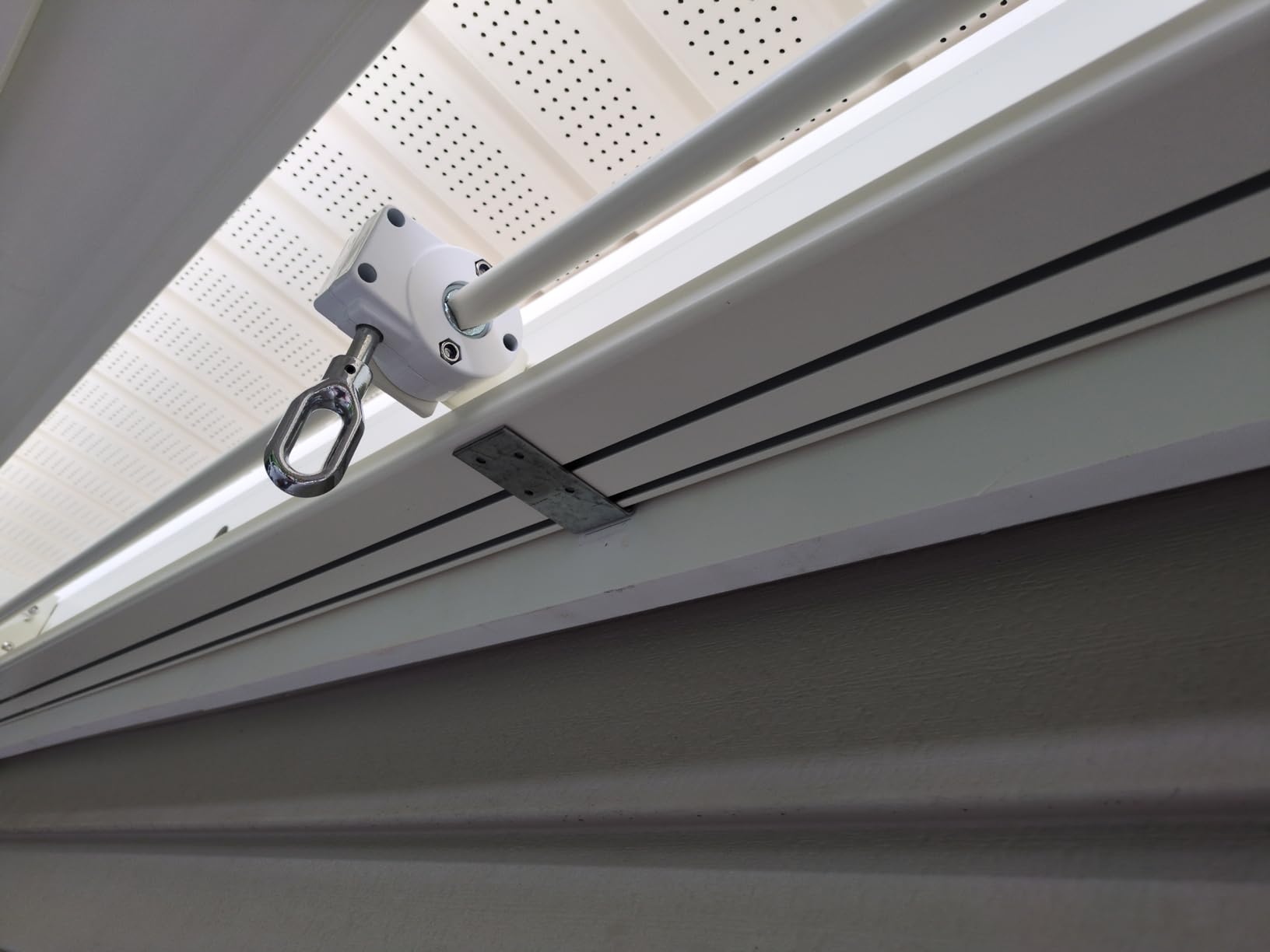
Top center connecting tubes divide the structure into four zones, which is a real structural stabilizer on a 13 foot span. The treated aluminum resists rust, and the waterproof top routes rain through the side rails and down the columns to the ground.
The real question for this one is your wall. A wall-mounted structure pushes wind and dead load into the side of your house, and it needs a load-bearing surface to work. Decks attached to a two-story rear elevation with a rim board and adequate sheathing are typical, but a masonry wall, a sunroom wall, or a wall with large glazing changes the answer.
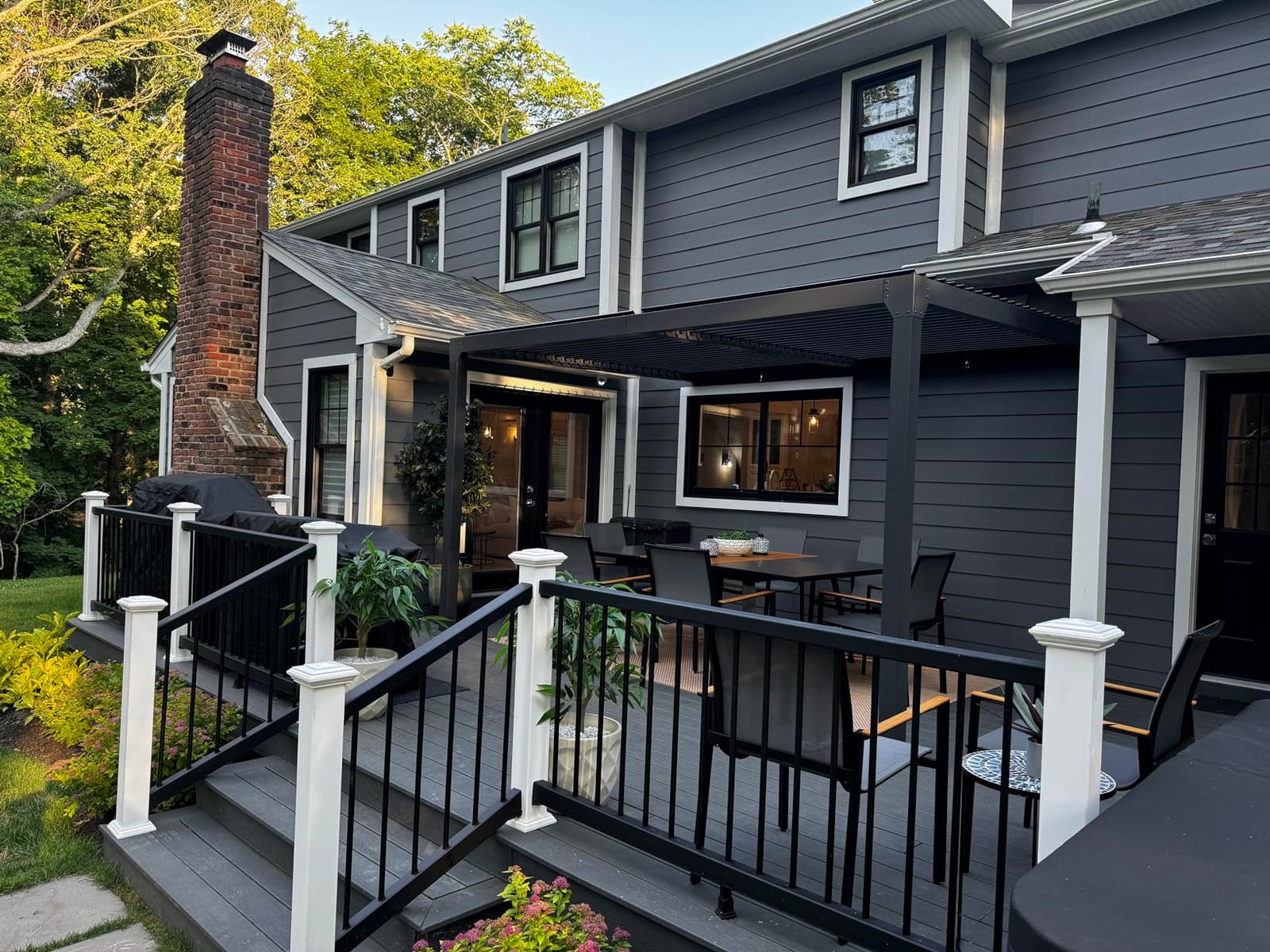
When does wall-mounted beat freestanding?
When deck floor area is the constraint. If your deck is 13 by 10 and every square foot matters, a wall-mounted unit leaves the entire footprint usable. It also removes two posts from your load calculations, which helps on a deck that was built tight.
Wall mounting loses when you want shade over a freestanding deck away from the house, when your wall is not structural, or when you plan to move the structure later. Freestanding is portable in a way an attached structure never is.
What to confirm before ordering
Confirm the wall. A qualified contractor should verify the wall can take the load and tell you what flashing and fastener schedule are required. Deck screws into a rim board are not automatically adequate, and this is the one product in the roundup where getting it wrong damages your house rather than the pergola.
Also confirm the size. There is only one size and one color variant offered, so there is no second option if the 13 by 10 footprint does not match your wall opening. Measure the wall, the headroom, and the deck below before you order.
11. Goldshire 10×20 Black Hardtop Louvered Pergola
Goldshire 10’x 20′ Patio Louvered Pergola Aluminum Black Hardtop Gazebo
Aluminum
236 by 118 by 88.5 inch
200 square feet
Pole drive
Water resistant
Pros
- 200 square feet over a spa or lounge
- Two independent 0-90 degree roof sections
- Powder-coated aluminum resists rust
- Low maintenance integrated drainage
Cons
- Shade panels are sold separately
- Louver panels should be raised when not in use
- No UV protection is listed
The Goldshire sits at a 4.9 average, tied for the highest rating in the group, though across 20 reviews that sample is small enough to treat as encouraging rather than conclusive. Owners are enthusiastic about the aluminum build, the drain-free upkeep and the amount of ground it covers.
At 200 square feet over a 10 by 20 footprint, this is the poolside and spa unit. A hot tub with a lounge area and circulation space around it fits inside 200 square feet, and the listing specifically names spa surroundings, terraces and pool areas as intended uses.
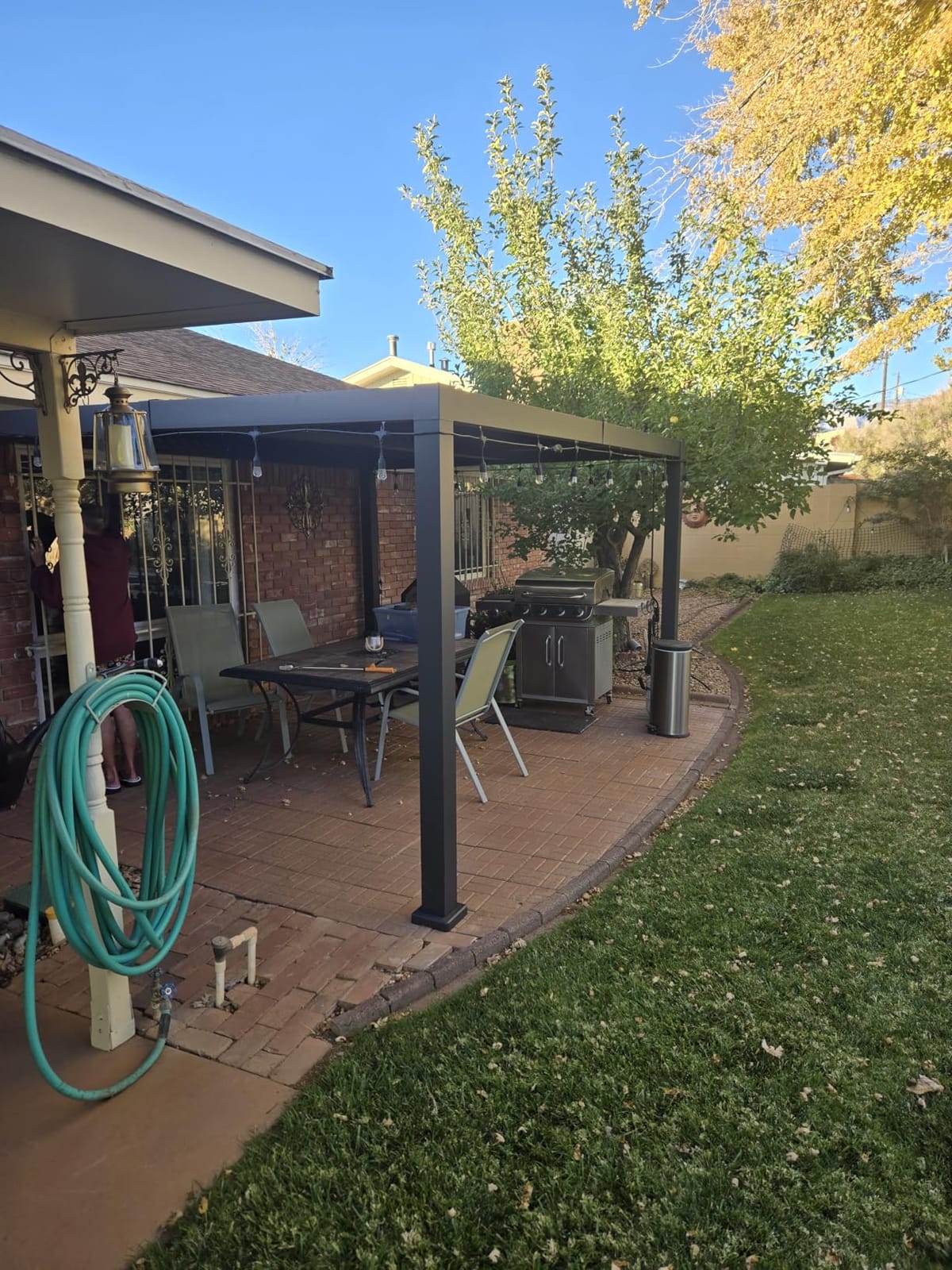
Both roof sections drive off a hand pole from 0 to 90 degrees, so there is no motor, no actuator and no electronics anywhere near water. For a poolside install that is a meaningful advantage over a motorized system with a control board mounted on a post.
Reinforced columns are built to industry wind resistance standards, and the integrated drainage channels cut excess water away with very little maintenance. The powder-coated aluminum frame and louvered roof are specified to resist rust, which is the right call in a constantly wet zone.
Is a black finish right for a pool deck?
Black powder coat absorbs heat, and a black roof over a spa in July is noticeably hotter under the closed position than a light or reflective finish. If the structure will spend its summers closed over a spa, keep the louvers cracked or open most of the day and close them for rain.
For visual reasons, black is the most forgiving neutral. It disappears against dark coping and stained concrete, and it does not show water staining the way white and oyster finishes do.
What the specs leave out
No UV protection figure is listed, and that is a gap you should note in a sun-heavy state. Ask the manufacturer what the coating is rated for rather than assuming it matches the UPF 50+ claims elsewhere in this roundup.
Two practical notes. The louver shutter panels should be positioned vertically and raised when not in use to avoid damage, which is a habit you will need to build. And the shade panels are sold separately, so treat the 200 square feet as roof coverage and add fabric cost to your plan if you want screening.
12. MIRADOR 111S Takasho 10×13 Wood Grain Pergola
MIRADOR 111S Takasho Louvered Pergola 10×13 Wood Grain Outdoor Aluminum Pergola with Adjustable Rainproof Roof Full Aluminum Frame Ideal for Outdoor Deck Garden Patio Durable, Cherry Oak
Aluminum and steel
120 by 120 by 98.4 inch
462 pounds
Crank drive
Water resistant
Pros
- Reddot award-winning design with hidden fixings
- Convincing wood grain aluminum finish
- Crank travel from 0 to 93 degrees
- Clear manual and install video
- Professional installation partner available
Cons
- Light downpour can produce seam runoff
- 462 pounds needs a multi person lift
The 111S Takasho also sits at a 4.9, and it is the one to look at if the structure will be the most visible object on your deck. It took a Reddot design award, and the hidden fixings are the reason: there is no visible fastener where the louvers meet the beams.
The Takasho finish reproduces natural wood grain in aluminum that will not rot or discolor, which means you get the look of a cedar pergola with none of the sealing schedule. Owners describe the finish as convincing enough that the material is not obvious from a few feet away.
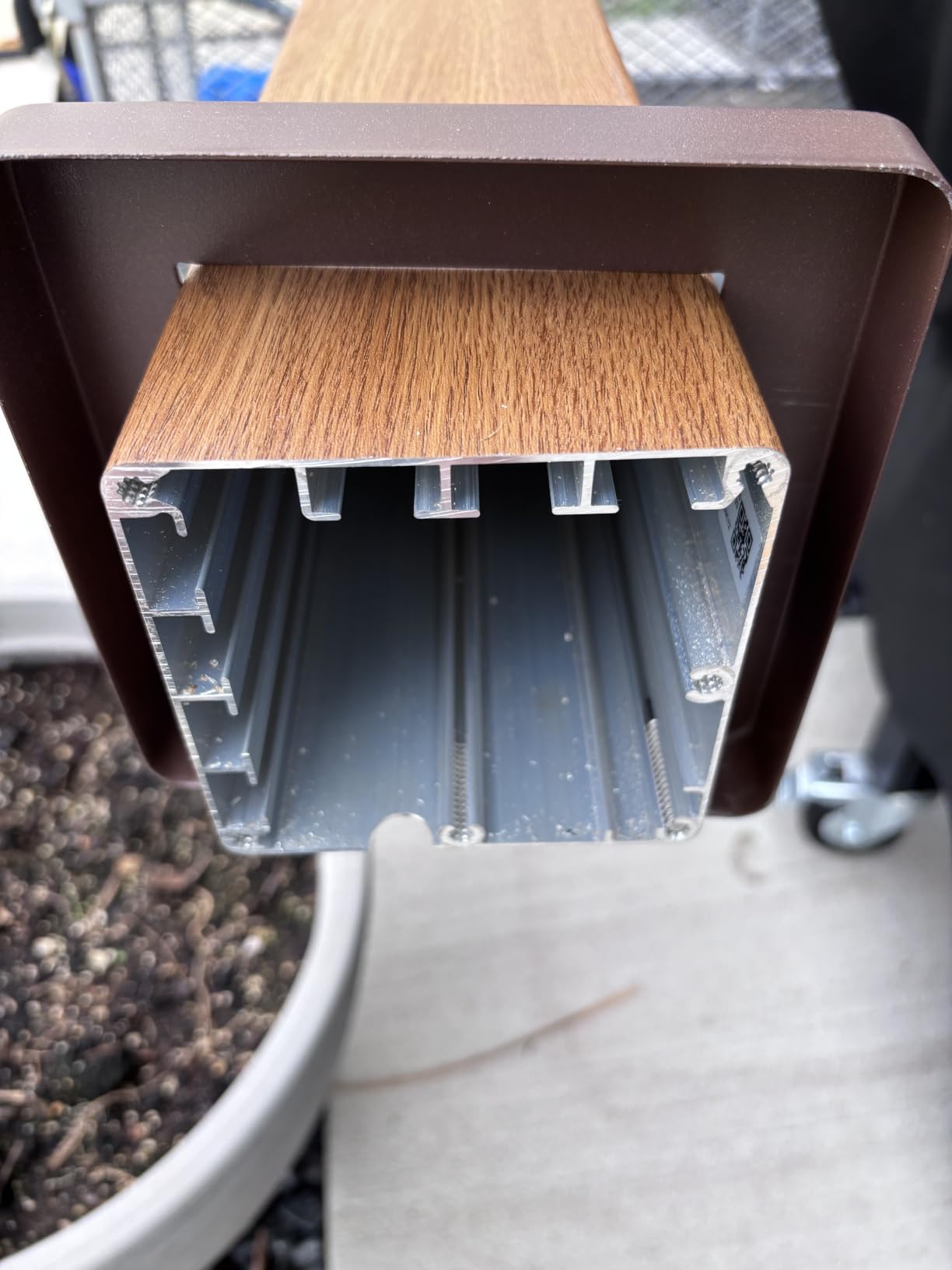
The crank system adjusts the bioclimatic louvers from 0 to 93 degrees, and owners report smooth operation across that range. The manual, instructional video and well-organized component box are described as clear, which matters more than usual here because at 462 pounds you will be referring to the diagrams repeatedly.
There is also a professional installation partner available if you would rather not do the lift yourself. On the heaviest structures in this roundup that option is worth pricing, because a 462 pound structure going up on a deck is a two-to-four person operation with real fall risk.
How tall is it, and does that matter?
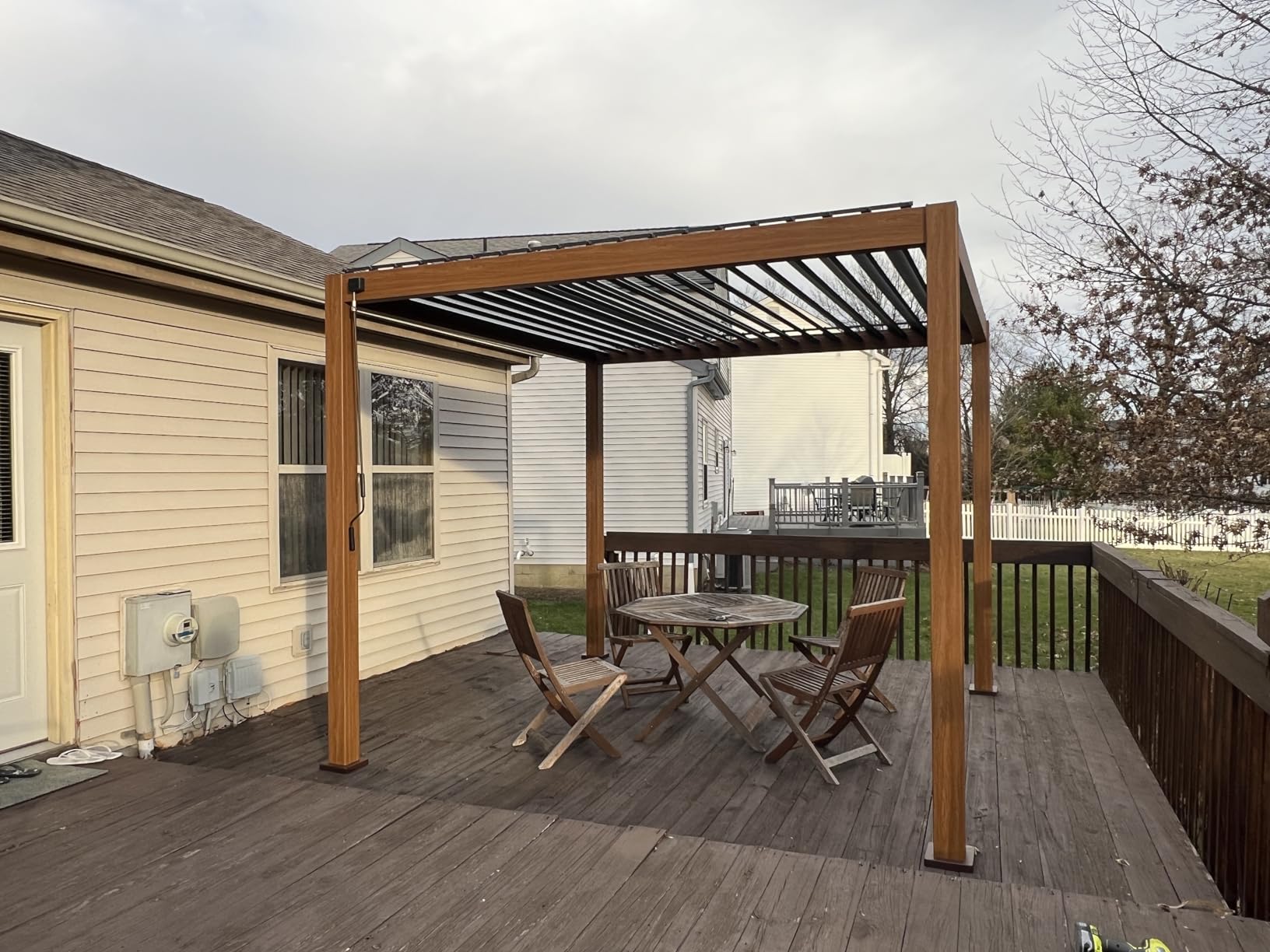
At 98.4 inches of structure height this is one of the taller structures in the roundup, and the 10 by 10 listed dimensions are the widest point. On an elevated deck, the effective headroom is the listed height minus your deck height above grade, so a 98 inch structure on a 3 foot deck gives you about 6.7 feet at the beam. That is tight for a walkway.
Check your headroom math before ordering, and if the structure sits over a walking path rather than a table, plan to keep the perimeter beams above head height. Owners consistently describe the height as giving good open-air feel and generous shade coverage.
Where the water resistance limit shows
This is rated water resistant, and owners note that a light downpour can still produce some runoff at the seams. If full rain exclusion is your priority, this is the wrong unit for you and the waterproof-rated models in this roundup fit that need better.
The material is aluminum and steel, so check the steel components in coastal air the same way you would on any hybrid frame. And factor the weight into your install plan properly, because the most common complaint in owner reviews for this unit is simply that it is heavy and needs multiple people to raise.
Motorized vs Manual Louvers: Which One Should You Buy?
Not one of the twelve structures in this roundup is motorized. Every one is driven by a crank, lever, wand or hand pole, and that is a deliberate feature of this price and weight class not a compromise, and it is also the single most common point of confusion for buyers coming from manufacturer websites.
Manual systems have three concrete advantages. There is no actuator to fail, no controller to weather and nothing to service in year five. There is no motor to wire, which matters enormously over a deck that is not near an outlet. And there is no way for the roof to move on its own in a storm or in a house with kids.
The argument for motorized is convenience at the top end. A premium custom system with a remote or app, integrated lighting, infrared heaters and automated screens is worth it if you use the structure daily and the height makes reaching the wand awkward. Ask specifically about the actuator warranty length, whether the warranty is on parts or on the whole system, and who services it locally. If the structure will be used into the shoulder seasons, our electric patio heater guide covers what actually holds heat on an open deck.
Our read for deck installations: manual on anything up to 12 by 20, motorized only if you are going beyond that footprint, or if you are already committed to a full add-on package with lighting and fans. If you do go motorized, we would run the low-voltage lighting wiring while you are under the structure rather than paying a second time later.
Louvered Pergola vs Retractable Awning vs Retractable Roof
This is the debate that dominates the deck forums, usually from someone with an 18 by 14 deck trying to decide between three very different products. The honest answer is that they solve different problems, and the louvered pergola wins on control rather than on price.
Retractable awning. A fabric roller on a wall or a frame. Fast to install, low cost, good shade in summer. It retracts into a cassette for wind, which means you lose it exactly when the weather turns, and fabric fades and tears. It is the right answer for a covered patio on a budget and the wrong answer for a deck you want in October.
Retractable canvas or fabric roof. A membrane that extends over a pergola frame. Better wind rating than a bare awning and no rust, but fabric needs re-tensioning and eventually needs replacing, and you cannot adjust the angle to filter light.
Louvered pergola. Metal slats on a fixed frame. It closes into a hard roof against rain, opens for full shade, and takes a position in between for filtered light and airflow. It is the only one of the three that gives you both a real ceiling and permanent structure, and it is the only one that can be enclosed later with screens and curtains.
The cost difference is the part people underestimate. A louvered pergola is a structure with footings and engineering, not a shade device. It lasts longer, it can carry lighting, fans and heaters, and it does not have a fabric replacement cycle. For a deck, we pick the louvered pergola unless the budget is genuinely tight and the deck already has a roof over it.
How to Choose the Right Size and Material for Your Deck
Measure for the furniture, not the structure. A 100 square foot cover holds a six-seat table with clearance. A 130 square foot cover holds that plus a lounge chair. A 200 square foot cover holds a table, a sectional and circulation space. Bigger is not better if you are shading a corner, and most decks feel better with a pergola that leaves the edges open.
Watch headroom. Keep at least 7 feet of clear height along any walking path. The structures here run 88 to 98.4 inches, so on an elevated deck add your deck height to the beam clearance and check it. Do not put a walking route under a beam that is below 7 feet at the post line.
Post spacing follows the joists. Standard deck joists sit 16 inches on center. Set your posts to land on or beside a joist, and if the pergola dimensions do not line up with your joist grid, shift the structure rather than the footings. This is the step that keeps a deck-mounted installation from twisting over a few years.
Leave a walkway. Decks fail circulation more often than they fail structurally. A pergola that covers everything leaves no dry path to the back door. A 13 by 10 over part of a larger deck usually beats a full-coverage unit of the same total area.
Powder-coated aluminum over steel. Every structure in this roundup except the wood grain hybrid is aluminum or aluminum-dominant, and that is not a coincidence. Aluminum needs no sealing, no staining and no rust repair. The galvanized steel beams and louvers in the Domi and the steel connectors inside the PURPLE LEAF beams are cheaper and lighter, and their long-term protection depends entirely on a coating staying intact.
Hardware matters near salt. Stainless fittings, as on the EROMMY, are worth a premium within a few miles of the ocean. The non-stainless screws reported in owner reviews on one of the snow-rated models are the specific thing to watch in coastal installs.
Finish is a design decision. Charcoal and dark gray disappear against stained decks. White and oyster white brighten a north-facing yard and show water spotting. The wood grain and Cherry Oak finishes cover the middle ground and match garden palettes without a sealing schedule.
What to Ask Before You Buy: Snow Load, Drainage, and Permits
Before you order anything, get answers to seven questions. This is the checklist that separates a structure you will enjoy for fifteen years from one you will be troubleshooting in three.
1. What is the published snow load in psf? Only one structure in this roundup publishes a psf figure, at 8.2 psf. If you are in a snow state and the seller cannot give you a number, treat that as a signal.
2. What is the wind rating, and what is the condition attached to it? The highest figure here is 82.5 mph, but it applies when properly anchored. Ask what anchoring means in their terms and whether that is concrete.
3. Where does the water actually go? Integrated gutters that drain through the columns are the right design. Ask where each column base discharges and make sure it is not over your deck framing.
4. How is the center beam seam treated? Leak reports in this category cluster at the seam where two roof sections meet. Ask whether weatherstripping is included, and if not, buy it and install it in month one.
5. What is the actuator or drive warranty, and what does it exclude? For manual drives, ask what the warranty covers on the crank mechanism and the louver track specifically, not just the frame. One-year frame coverage is common.
6. Do I need a permit, and will you help? Structures above 120 square feet commonly require one. Larger ones may need a wind and snow load calculation. Ask whether the manufacturer supplies stamped drawings, because your building department will ask.
7. Are the included anchors adequate for concrete? At least one unit in this roundup includes 8mm anchor bolts that owners report failing in concrete. Assume you are buying your own anchors and plan for it.
Two last items. Check your HOA before you order, because screen height, color and railing-mounted structures are commonly restricted. And confirm the footprint against your delivery path, because these structures arrive in multiple boxes and the heaviest one here is 711 pounds.
Frequently Asked Questions
Can I put a louvered pergola on a deck?
Yes, but either ground-mount it on its own concrete footings beside the deck, or verify your deck live load rating and the pergola snow and wind rating before mounting. Most residential decks carry 40 to 60 pounds per square foot, and these structures weigh 235 pounds or more. Set posts on or beside deck joists, never mid-span, and confirm the column drainage discharges away from your framing.
What type of pergola is best for a deck?
A louvered pergola is best for a deck if you want control in every season, because it closes into a rainproof roof and opens for airflow. A retractable awning is cheaper and easier to install but retracts in wind. A retractable fabric roof handles wind better but needs re-tensioning and eventual replacement. A traditional open-rafter pergola is the cheapest option and gives partial shade only.
What are the best louvered pergola brands?
Among the twelve structures compared here, PURPLE LEAF leads on owner review volume and consistently published specifications across three models. MIRADOR covers the widest range of footprints and finishes, including an award-winning wood grain model, while BPS covers the wall-mounted option. Aoxun builds the only fully aluminum frame with the highest published wind rating. Domi and GarveeLife cover the entry price tier.
Are louvered pergolas worth it?
For a deck you actually use, yes. A louvered pergola extends the usable season by months compared with an open-rafter structure and needs no sealing or staining, unlike cedar. The trade is weight, footing work and a multi-person assembly, plus a higher purchase figure than a fabric awning. It is worth it if your deck is your main outdoor room.
Do louvered pergolas leak in the rain?
Most do not leak through the roof panels, but several models in this roundup have reported runoff at the center beam seam where two roof sections meet, especially in hard downpours. Models rated waterproof rather than water resistant handle heavy rain better. Add silicone or weatherstripping along the center seam in the first month and keep the integrated gutters clear.
The Verdict: Which Louvered Pergola Fits Your Deck
For most decks, the PURPLE LEAF 10×12 in bronze is the one to beat. It has the deepest owner review sample in the group, a drainage path that works, columns wide enough to resist twisting, and integrated solar lighting that removes the wiring problem entirely. If your deck is around 18 by 14, step up to the 12×14 all-aluminum gray model, which adds a second independently controlled roof section and a 72 mph wind rating.
In a snow state, look at the 10×14 with the 8.2 psf rating and open the louvers in heavy accumulation. Near salt water, the all-aluminum Aoxun at 82.5 mph is the right call, because there is no steel connector in the load path to corrode. On a large deck, the AirWire 12×20 covers the most ground, and the EROMMY 12×20 is the pick if you want screening on all six sides.
On a small deck where floor area is the constraint, the wall-mounted BPS frees the space underneath. If the build is mostly about how it looks, the Takasho wood grain finish hides every fastener. And if you want the lowest-cost way into a louvered roof, the Domi 10×10 at 236.9 pounds is the one most likely to get finished by a homeowner in a weekend.
Whichever one you choose, pour the footings, check the drainage discharge points, and add sealant to the center beam seam in the first month. Those three steps prevent almost every complaint in the owner reviews we read. Updated for 2026, and we will keep revising as owner feedback builds on the newer models.