
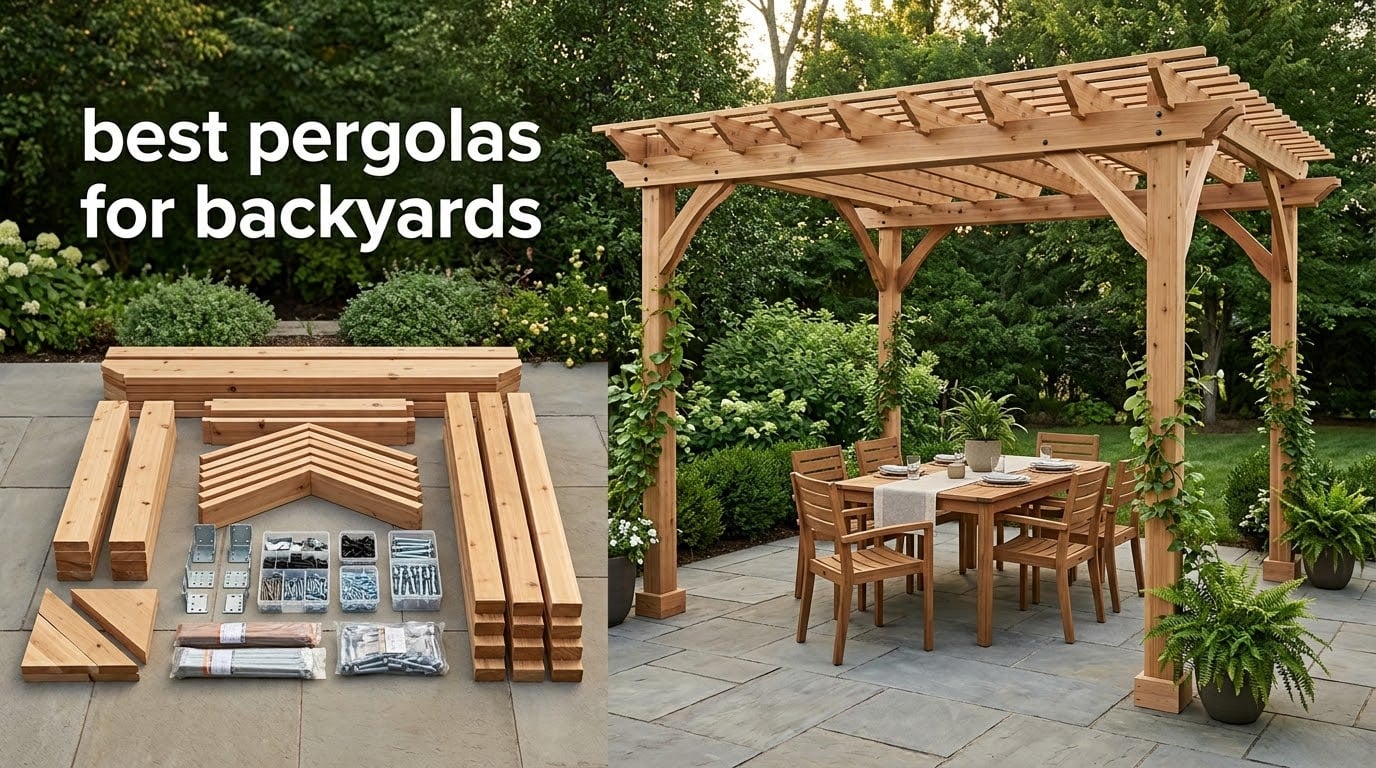
A pergola is the single largest structure most homeowners ever add to a yard, and the gap between a good one and a disappointing one is usually decided before the box arrives. The best pergolas for backyards are not the biggest or the most expensive on the market. They are the ones whose roof style matches how you actually use the space, whose post footprint lands on a surface you can anchor into, and whose published wind rating was tested under conditions you can reproduce in your own yard.
I spent the last two months working through ten of the highest-rated pergola kits on the market, comparing specifications, reading the long-form owner reviews, and cross-checking assembly guidance against what people report on r/DIY, r/HomeImprovement and lumberjocks.com. Ten kits, four materials, three roof styles. What I could not do is physically build all ten in my own backyard, so every number below comes from published specifications or owner reports, and I tell you which is which.
One expectation setting before we start, because it causes more disappointment than any other issue. An open-beam cedar pergola filters light. It breaks direct sun into moving patterns and takes a meaningful bite out of UV, but it does not create a shaded room. A louvered aluminum pergola with the slats closed blocks close to all of it. If you want a room, buy a louvered roof. If you want dappled light over a dining table and somewhere to hang vines, an open trellis is the better buy and costs far less.
We also spend real time on anchoring, because a pergola wind rating is a statement about the structure, not about your patio. The same kit rated for 100 mph sitting on unanchored pavers or crushed stone is a different structure entirely. If you take one thing from this roundup, take the list of things to confirm about your ground before you click buy.
Top 3 Picks: Pergolas for Backyards in 2026
These are the three that earned the top spots after weighing rating, review volume, wind performance data and how honest the assembly documentation is. The first is the strongest all-round buy, the second is the best adjustable-roof option, and the third gives you real solid cedar without the premium-tier spend.

Backyard Discovery Beaumont 16×12 Cedar
- 100 mph Pro-Tect wind rating
- Patented PowerPort with 3 outlets and 3 USB ports
- 192 sq ft of coverage
- 5-year warranty

PURPLE LEAF Louvered Pergola 12×14
- Two independent 0-90 degree louver sections
- 72 mph rating when anchored
- Integrated drainage through the posts
- Powder-coated aluminum frame

BlueWish 10×12 Cedar Pergola
- Solid cedar frame
- 80 mph rated slatted trellis roof
- 5.5 in posts with pre-drilled holes
- Stakes included
Best Pergolas for Backyards (October 2026)
This table is the fast version. Every pergola below appears in full further down, with the details that do not fit in a table cell. Use it to narrow to two or three, then read those sections in full before you commit.
| Product | Specifications | Action |
|---|---|---|
| Backyard Discovery Beaumont 16×12 Cedar |
|
Check Latest Price |
| PURPLE LEAF Louvered Pergola 12×14 |
|
Check Latest Price |
 MIRADOR 80S 10×12 Louvered MIRADOR 80S 10×12 Louvered |
|
Check Latest Price |
 Yardenaler 12×16 Cedar Pergola Yardenaler 12×16 Cedar Pergola |
|
Check Latest Price |
 AirWire 10×12 Louvered with Curtains AirWire 10×12 Louvered with Curtains |
|
Check Latest Price |
 Backyard Discovery Sarasota 14×10 Steel Backyard Discovery Sarasota 14×10 Steel |
|
Check Latest Price |
 Aoxun 10×12 All-Aluminum Louvered Aoxun 10×12 All-Aluminum Louvered |
|
Check Latest Price |
| BlueWish 10×12 Cedar Pergola |
|
Check Latest Price |
 Yardistry 10×14 Madison Cedar Yardistry 10×14 Madison Cedar |
|
Check Latest Price |
 VEIKOU 12×16 Cedar Pergola VEIKOU 12×16 Cedar Pergola |
|
Check Latest Price |
1. Backyard Discovery Beaumont 16×12 Cedar – Our Overall Pick
Backyard Discovery Beaumont 16′ x 12′ Traditional Cedar Wood Pergola Kit with Trellis Roof, All-Season Durability, High-Wind Rating, PowerPort, Shade for Outdoor Patio, Deck, Garden, and Entertaining
192 sq ft coverage
192 x 144 x 95 in assembled
546.8 lb
100 mph when anchored
5-year warranty
Pros
- Real cedar with a pre-applied light brown stain
- Pro-Tect tested to 100 mph when anchored per the manual
- Patented PowerPort post with 3 outlets and 3 USB ports
- Pre-cut pre-drilled and pre-stained parts with app instructions
- Owners report it holding position through severe wind
Cons
- Lumber needs sealing before assembly
- Top roof slats have no guides or pilot holes
- Two very heavy boxes need several people to move
With 1090 reviews and a 4.5 average, the Beaumont has the deepest owner history of anything in this roundup, and that history is unusually consistent. Owners describe it as sturdy, good looking and a fraction of what a custom cedar quote came back at. The cedar arrives with a pre-applied stain and a genuine smell to it, which is the detail that separates it from kits wrapped in plastic.
What makes it the top pick is the published test data combined with the PowerPort. The Pro-Tect system claims 100 mph wind resistance when anchored according to the manual, which is the highest figure any kit here publishes. The PowerPort post carries three electrical outlets and three USB ports, so string lights, a fan and a speaker have somewhere to plug in without running extension cords across the deck. A power source is not included, so plan for that.
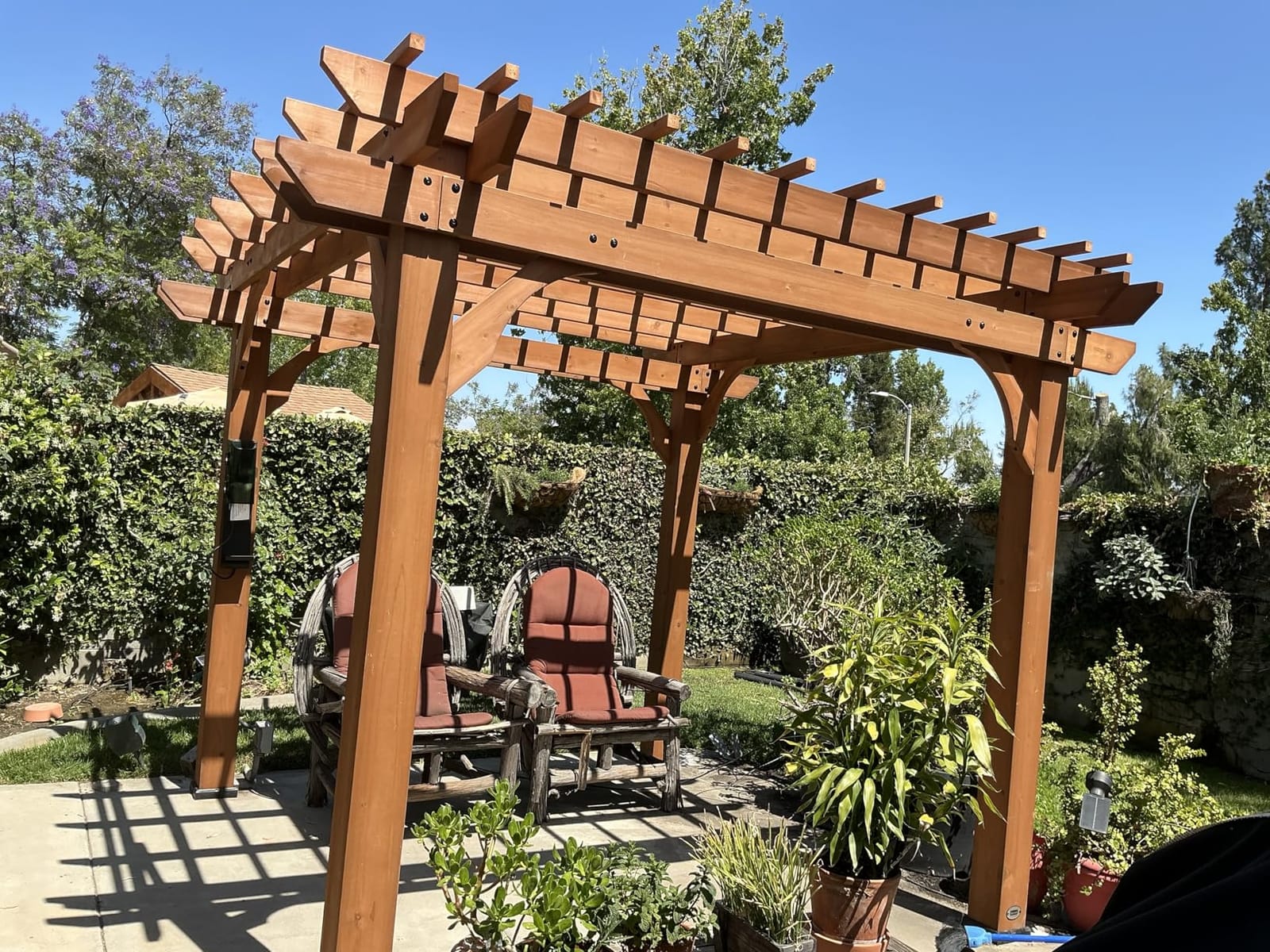
The honest negatives are all about the build rather than the product. Lumber arrives untreated on some units and needs sealing before it goes together, and the top roof slats have no pilot holes, so that part of the job is alignment by eye. Owners also report the purlin holes are not always lined up with the frames beneath them. None of these are defects. They are the tax you pay for a 546.8 pound cedar structure delivered to your driveway.
Crew size is the planning number most sellers skip. At nearly 550 pounds across two long boxes, treat this as a three to four person job spread over a weekend rather than a Sunday afternoon. If you are quoting professional assembly, this is the kit where it is most worth getting a number, because the total weight makes it the most awkward to move into place.
How the 16×12 Footprint Handles Real Furniture
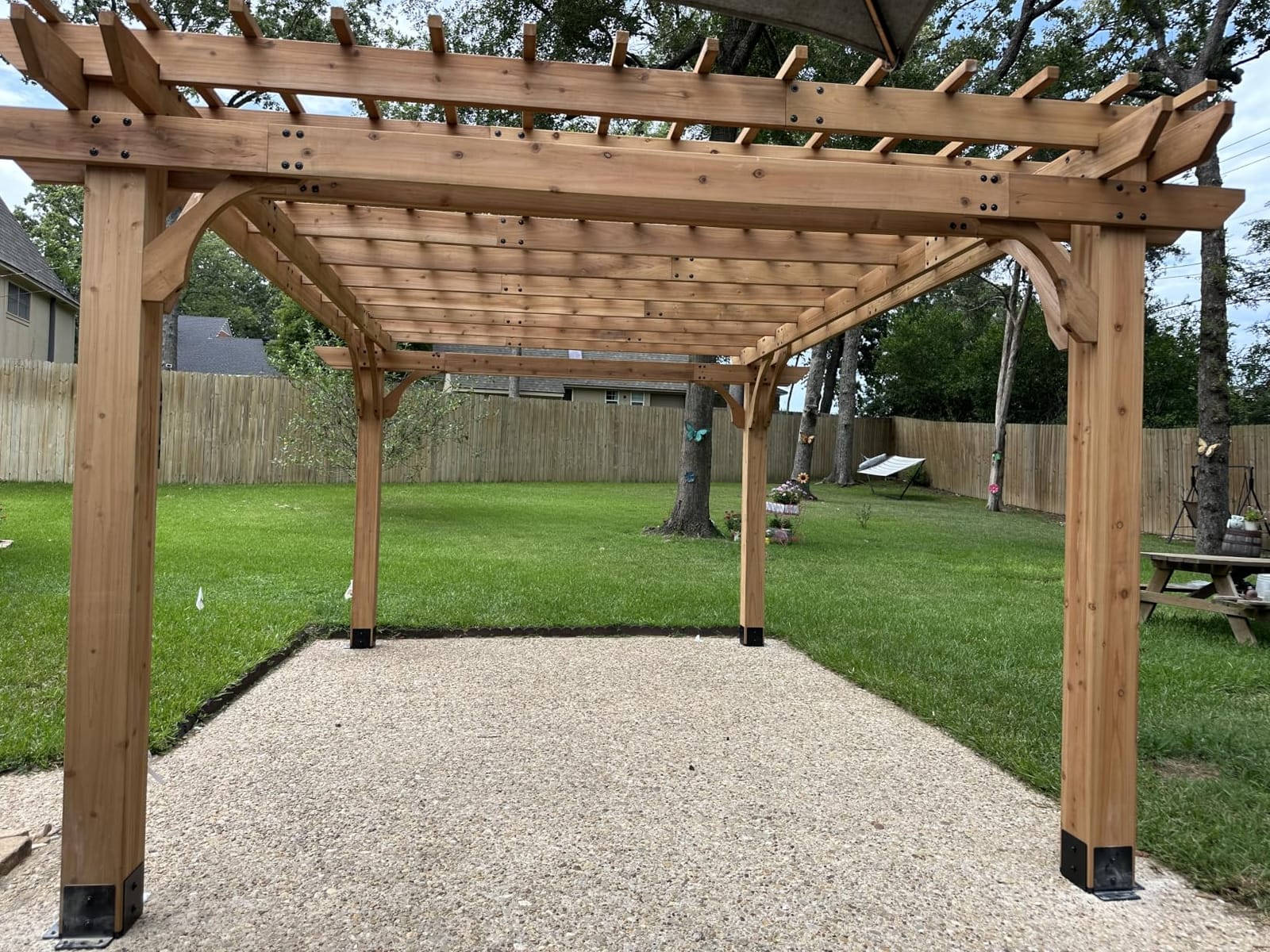
At 192 square feet of stated coverage, this is a genuine dining structure rather than a shade accent. It clears a rectangular table with chairs on all four sides with room to walk behind them, which is the test that matters when you are carrying a plate out to the table. The interior height works for standing adults without feeling cramped.
The width is also the reason it holds up in wind. A longer beam span develops a larger sail area, and the dual structural cross beams with 6×6 posts are what let the manufacturer stand behind the 100 mph figure. If you go narrower, that margin shrinks.
What Has to Be True Before You Order It
You need a plan for concrete. The included powder-coated galvanized steel anchor plates and resin feet assume a real footing. If your posts will land on pavers, read the anchoring section below before you buy anything.
You also need to seal the wood. Owners who skipped this are the ones who later reported greying and checking. And if you are in a region with real hurricane exposure, verify your own local rules, because a 100 mph rating on paper does not override an evacuation order.
2. PURPLE LEAF Louvered Pergola 12×14 – Best Adjustable Roof
PURPLE LEAF Louvered Pergola 12′ x 14′ 94AS All-Aluminum Rustproof Gray
166.63 x 144.62 x 94.32 in
516 lb
Two louver sections 0-90 degrees
72 mph when anchored
Pros
- Powder-coated aluminum resists scratching rusting and corrosion
- Two independently adjustable louvered roof sections
- 72 mph rating when secured with expansion screws
- Integrated drainage routes rain through the four posts
- Arrives in heavy-duty packaging without dents
Cons
- Two-piece center beam can drip along the seam
- Illustrated-only instructions need common sense
- Included screwdrivers are light duty
This is the closest thing to a real outdoor room that you can still see the sky through. Two independently operated louvered sections let you open one half for sun and close the other for shade, which is genuinely useful on a west-facing patio where the light moves across the day. Owners put the install at about six hours for two people, which puts it in the same weight class as the cedar kits but without the lifting risk of solid timber.
The 4.6 average comes with a caveat worth understanding. There are 134 reviews behind it, which is a healthy but not deep history, and the rating reflects a product that is very well executed in the frame and finish. The powder coating is the part people praise most, along with how the pieces arrived, packaged well enough that owners report no scratches or dents.
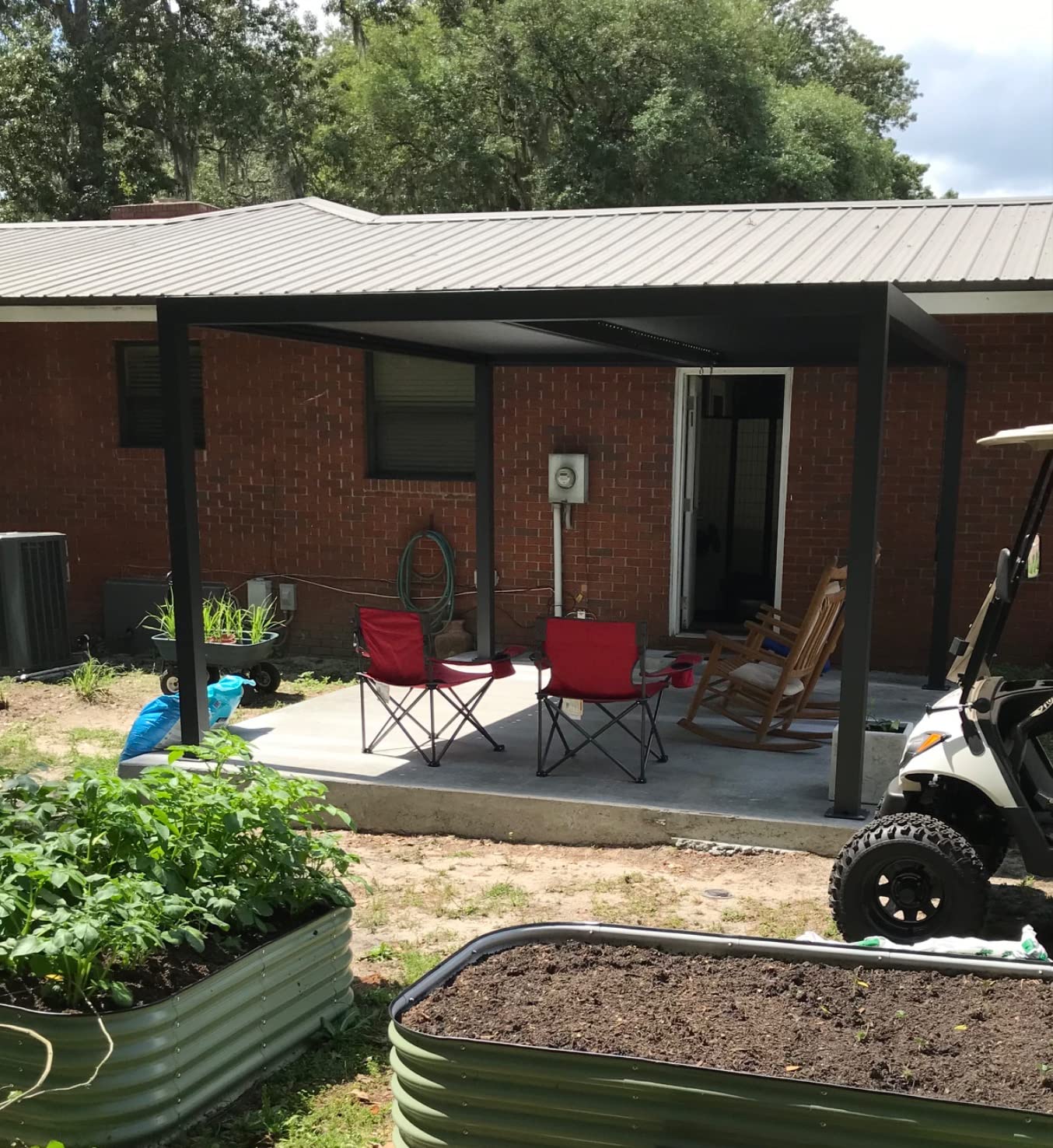
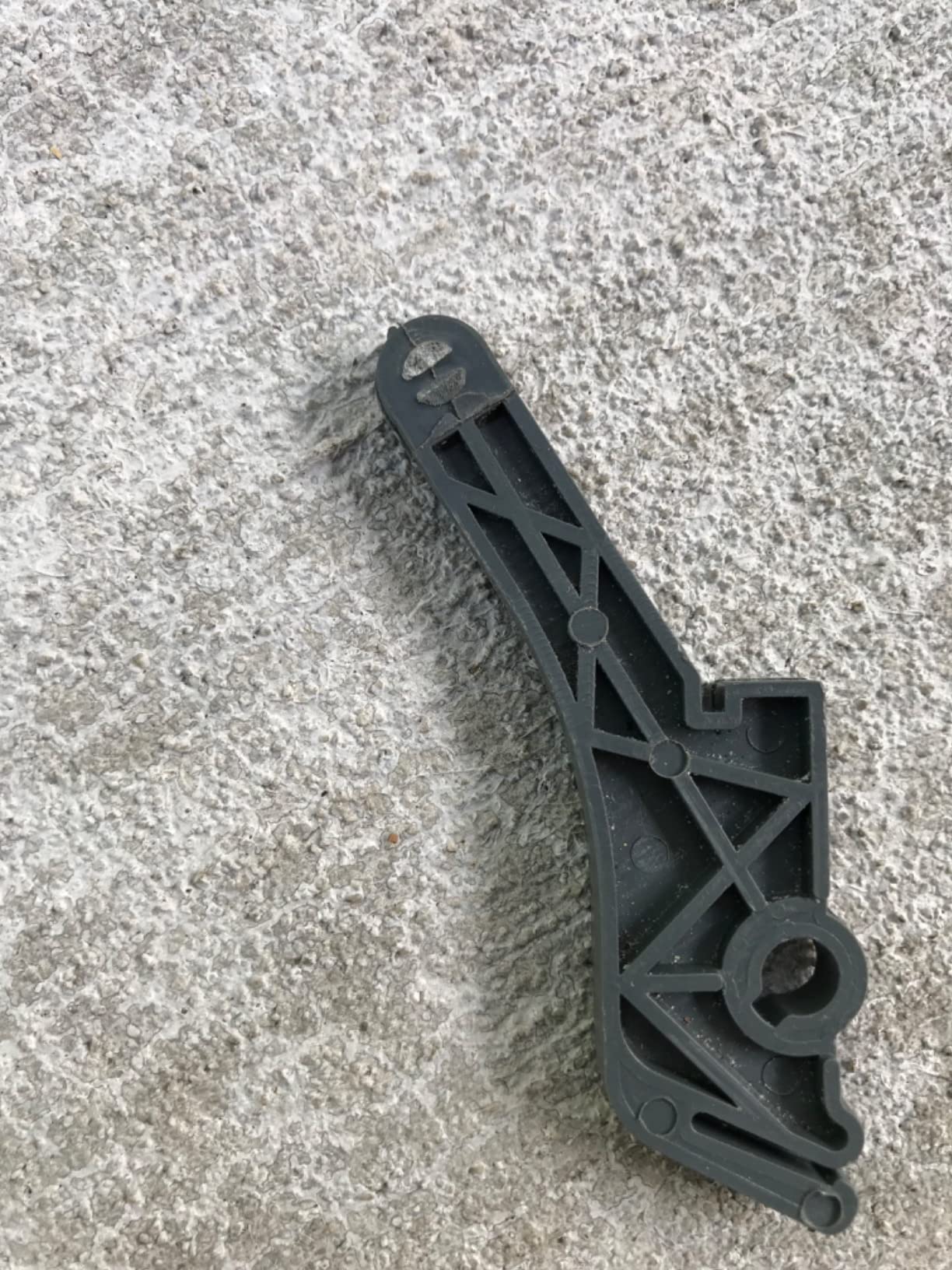
The most common technical complaint is specific and fixable. The two-piece center beam can track water along the seam in heavy rain unless it is caulked. Several owners resolved it with silicone and a slight brick-raised slope on the beam, which tells you exactly where the manufacturer left a gap. The second recurring friction point is the protective plastic film on the louvers, which is hard to peel and can leave sticky residue in direct sun. Peel it before assembly, not after.
Also note there is no factory attachment point for lights or a fan. Owners have drilled into the frame or run zip ties, and the curtain and rail accessories are not offered after the initial order, so if side screens matter to you, decide that now. Our outdoor curtains guide covers what to look for if you are adding fabric later.
When the Louver Mechanism Is Worth the Extra Complexity
If you want to change the shade through the day, this roof earns its keep. Closed slats block close to all direct light, which makes the space usable at a July evening cookout and usable again on a bright September afternoon. Open slats let heat out, which matters more than most buyers expect in a hot climate.
The wind behaviour is where the operating position matters. A closed louver roof presents a broad surface to moving air, while open slats let the wind pass through. Owners who have tested both report checking your manufacturer’s guidance before a storm, and adding corner bracing either way.
The Costs That Show Up After Assembly
The instruction booklet is weakly illustrated, so budget time for working out the sequence yourself rather than following a step-by-step diagram. The included screwdrivers are light duty and owners report breaking them, so bring your own.
Integrated drainage is a real feature but it routes water down through the posts and out at ground level, which means plan where that water lands relative to your pavers and your foundation. Sealing the center beam seam is the single highest-value hour you can spend on this kit.
3. MIRADOR 80S 10×12 Louvered – Best for Patio Decks
MIRADOR 80S 10’x12′ Louvered Pergola with 10FT Shade Screen for Outdoor Deck Lawn Garden Backyard Patio Porch,Charcoal
120 sq ft coverage
10x12 ft footprint
Alloy steel and aluminum
Waterproof rating
10 ft shade screen included
Pros
- Louvered roof plus a 10 ft shade screen in the box
- Waterproof-rated alloy steel and aluminum construction
- Top-5 ranking in the Amazon pergolas category
- Charcoal finish suits modern patios and gardens
Cons
- Louvers have less pitch adjustment than crank-operated models
- Larger sizes in this line run well past the 10x12
The MIRADOR stands out for including a 10 foot shade screen in the package. Most competitors sell fabric separately, and if you have ever tried to retrofit a screen to a louvered frame you know how fiddly that is. Having it in the box means the roof and the fabric layer work together from day one, and owners specifically call out the all-day shade that combination produces.
At 120 square feet, this is a compact structure and that is a feature on a real patio. A 4.6 average across 121 reviews with roughly 80 percent five-star ratings is a strong signal for a product at this level, and it holds a top-5 position in the Amazon pergolas category, which usually reflects steady rather than spiking demand.
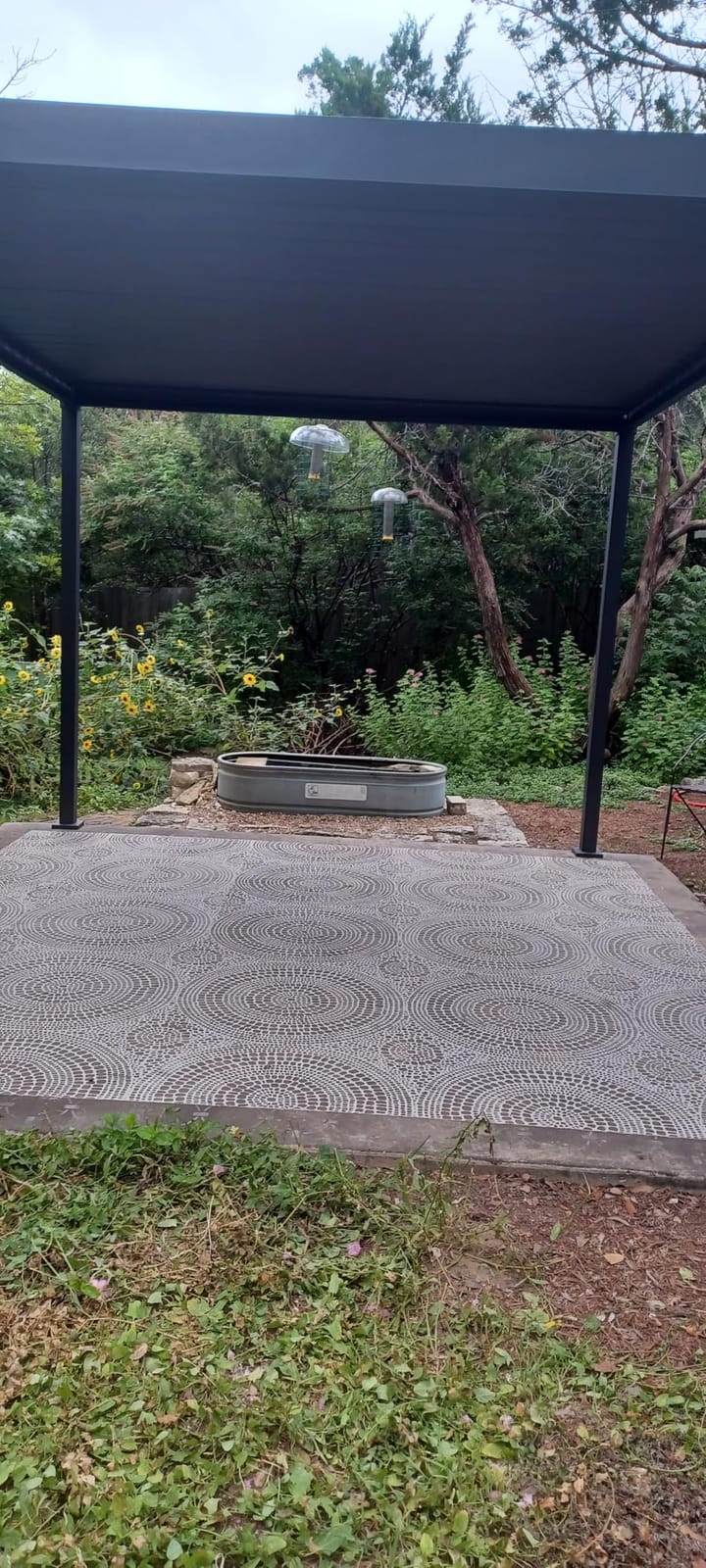
Be clear-eyed about the trade-off. The louvers are fixed in pitch rather than crank-operated, so you get open or closed but not the fine adjustment a crank handle gives you. Owners who came from a crank system describe this as the main thing they notice. For most patios, that difference matters less than it sounds, because the practical positions are open for sun and closed for shade.
The other constraint is size range. The 10×12 is the sweet spot here, and owners report that the larger versions in the same line climb well past two thousand dollars, which moves it out of reach of anyone shopping this category on a moderate spend. If your patio is bigger than 12 feet in either direction, look at the 14×10 steel option further down or one of the larger cedar kits.
Whether the Included Shade Screen Solves Your Problem
The screen matters most in the late afternoon and for anyone sensitive to glare off water or glass. Owners with a poolside or west-facing placement describe the combination as the difference between sitting outside comfortably and moving inside. If your sun problem is heat, the louvers alone will handle it; if it is glare, the screen is what you are paying for.
Check your headroom and sightlines. A 10×12 footprint on a compact patio can feel generous with a screen and tight without one, and mounting it over an existing seating arrangement rather than an empty slab is the smarter move.
What to Confirm Before Assembly Day
This listing does not publish a package weight, which makes crew planning harder than it should be. Budget for at least three adults on a steel and aluminum louvered frame of this size, and get a quote for professional assembly if you have not built one before.
Because the material is listed as waterproof-rated rather than open to air, the shade you get is closer to a hardtop than a trellis. If you want dappled light and climbing plants, this is the wrong roof style and our trellis picks serve that better.
4. Yardenaler 12×16 Cedar – Best for Large Yards
Yardenaler 12 x16 FT Wooden Pergola, Cedar Wood Gazebo with Flat Roof, Outdoor Garden Shelter with Stakes Included, Patio, Deck, Backyard, Lawn
192 sq ft coverage
192.1 x 137.8 x 93 in
310 lb
86.6 in entrance height
Stakes included
Pros
- Solid cedar with a rot-resistant weather stain
- Large 192 sq ft footprint
- Heavy enough to stay put once assembled
- Flat open slatted roof takes added shade covers
- Stakes included for grass deck or concrete
Cons
- Rafters arrive without pre-drilled holes
- Footing layout drawing is imprecise
- Some kits arrive with missing bolts
At 192 square feet this is one of the larger footprints in the roundup, and at 310 pounds it is also one of the lighter ones. That combination is unusual and it is the reason this kit works for people who want a big structure without a four-person lifting problem. Owners describe it as genuinely sturdy once assembled and heavy enough that it does not shift.
The 4.1 average is the lowest of the ten, and reading the reviews explains exactly where it comes from. It is not a design complaint. Nearly every issue is preparation: rafters with no pilot holes, a layout drawing that does not match reality, hardware that occasionally arrives short. Owners who pre-drilled their own holes and had a bolt kit on hand rate their build far higher than the average suggests.
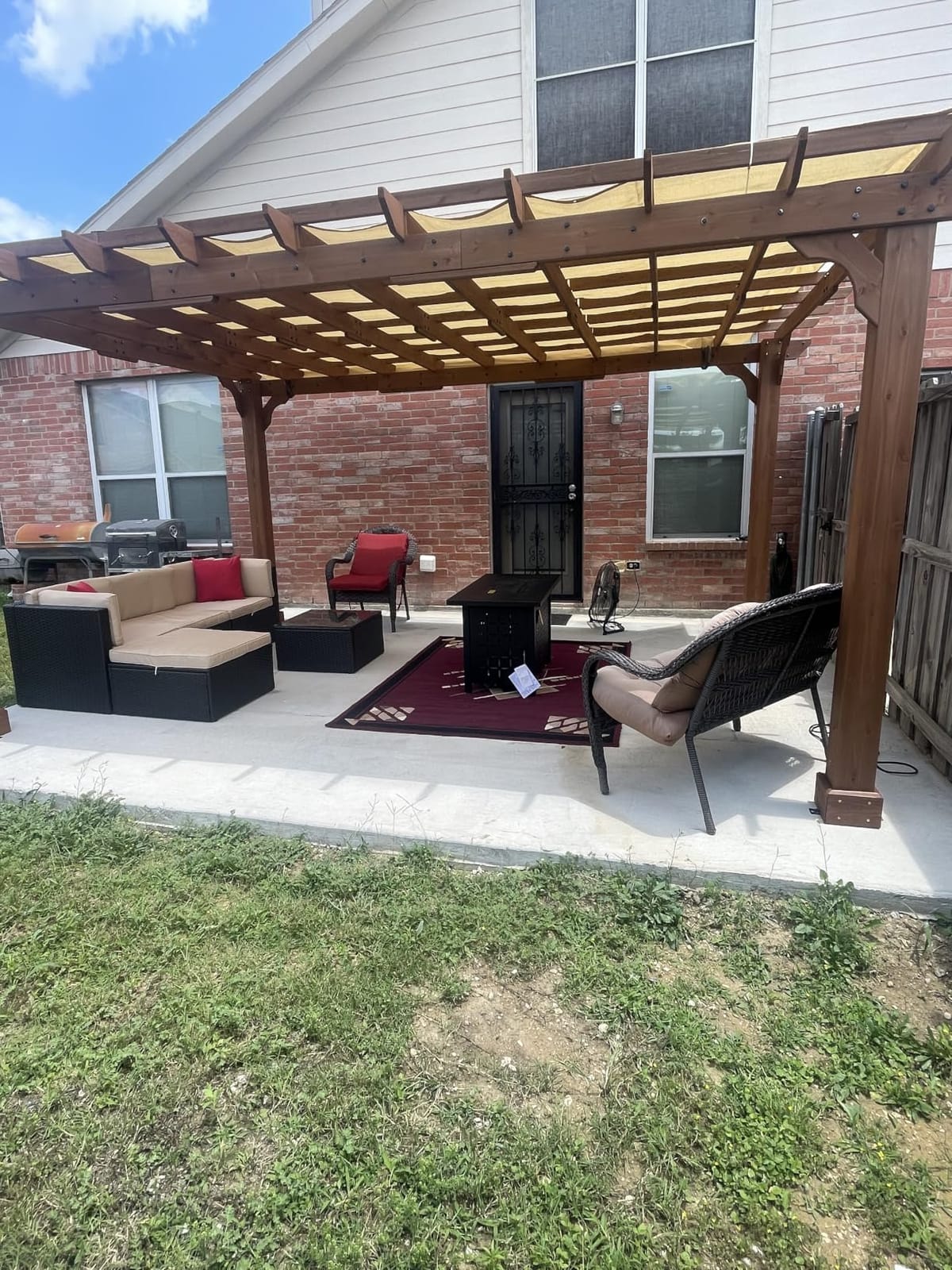
That is worth dwelling on, because it changes how you should approach this purchase. This is a kit that rewards preparation. Lay out every part, inventory the hardware, and drill your own pilot holes before you start rather than discovering the problem halfway up a ladder. One owner reported progressive bowing of the middle connection pieces after a few months, which points at alignment during assembly rather than a bad part.
The flat slatted roof is genuinely open, which is the point. It gives you a place to hang lights, decorations and climbing plants, and the design takes an added shade cover if you want more coverage later. The maximum entrance height of 86.6 inches is worth noting if you have tall guests or plan a ceiling fan.
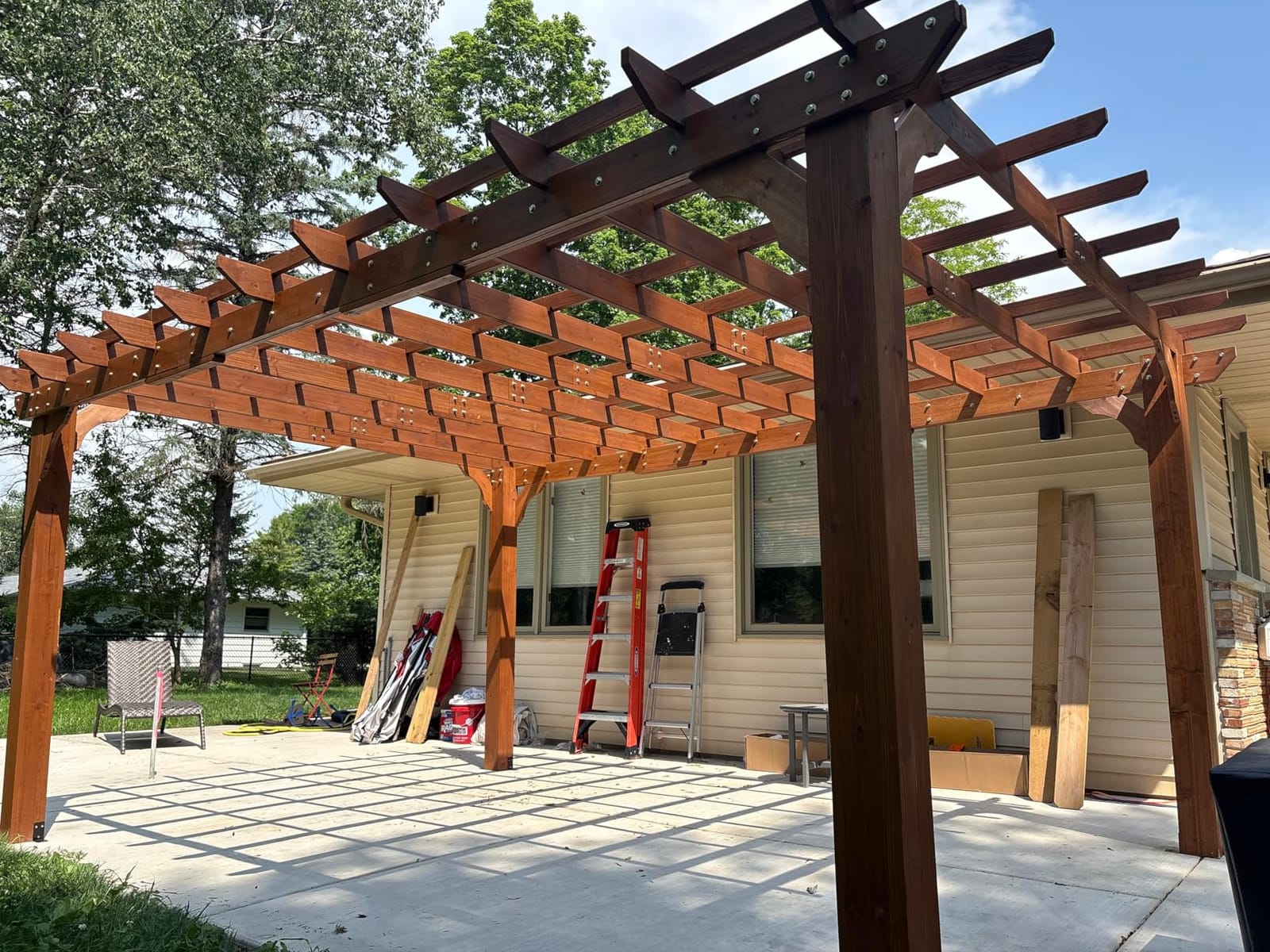
Matching a 12×16 Footprint to Your Yard
This size wants a yard that can hold it without feeling like it is taking over. Twelve by sixteen works over a dining table with a clear walkway on all sides, or over a lounge area with an outdoor kitchen or grill station alongside. It is the smallest footprint here that comfortably holds an outdoor kitchen setup.
At 12 feet in one direction, verify your clearances before ordering. Overhang and post thickness eat into usable space faster than most people expect, and the post size of roughly 5.5 inches means you are losing about a foot of interior width per side relative to the nominal number.
How to Avoid This Kit’s Known Friction
Give yourself an extra half day and pre-drill. The missing pilot holes on the rafters are the single most reported complaint, and the fix is an afternoon with a drill and a bit of patience before you ever start on the frame.
Confirm your bolt count on day one, because sourcing hardware locally mid-build turns a weekend into a week. And the layout drawing is imprecise, so stake out your footings with actual clearance rather than following the printed plan to the letter.
5. AirWire 10×12 Louvered with Curtains – Best for Privacy and Mosquitoes
Airwire 10×12 FT Louvered Pergola with Curtains & Netting Gray
120 sq ft coverage
141.9 x 117.3 x 86.6 in
369.5 lb
Crank louvers
Curtains and netting included
Pros
- Crank louvers rated for 100000+ rotations
- Concealed gutter drains water through the pillars
- Powder-coated steel louvered roof on a heavy-duty frame
- Waterproof privacy curtains and mosquito nets included
- All hardware instructions and an install video in the box
Cons
- Curtain and netting fabric is lighter than the frame
- UV protection is only UPF 15
- Needs 3-4 people and about 2-3 hours
This is the kit to buy if mosquitoes are the reason you are looking at a pergola in the first place. The waterproof privacy curtains and breathable mesh netting are in the box, which means the enclosure question is answered on day one instead of next spring. At 120 square feet with an occupancy figure of 8, it is sized for a proper seating group rather than a couple’s bistro.
The crank mechanism is the detail owners rate most. A winding device rated for more than 100,000 rotations is a meaningful claim, because the first thing that fails on a cheaper louvered pergola is the crank or the gear behind it. The concealed gutter is the second, draining water into the pillars so it does not pool on top of the frame and add weight where you do not want it.
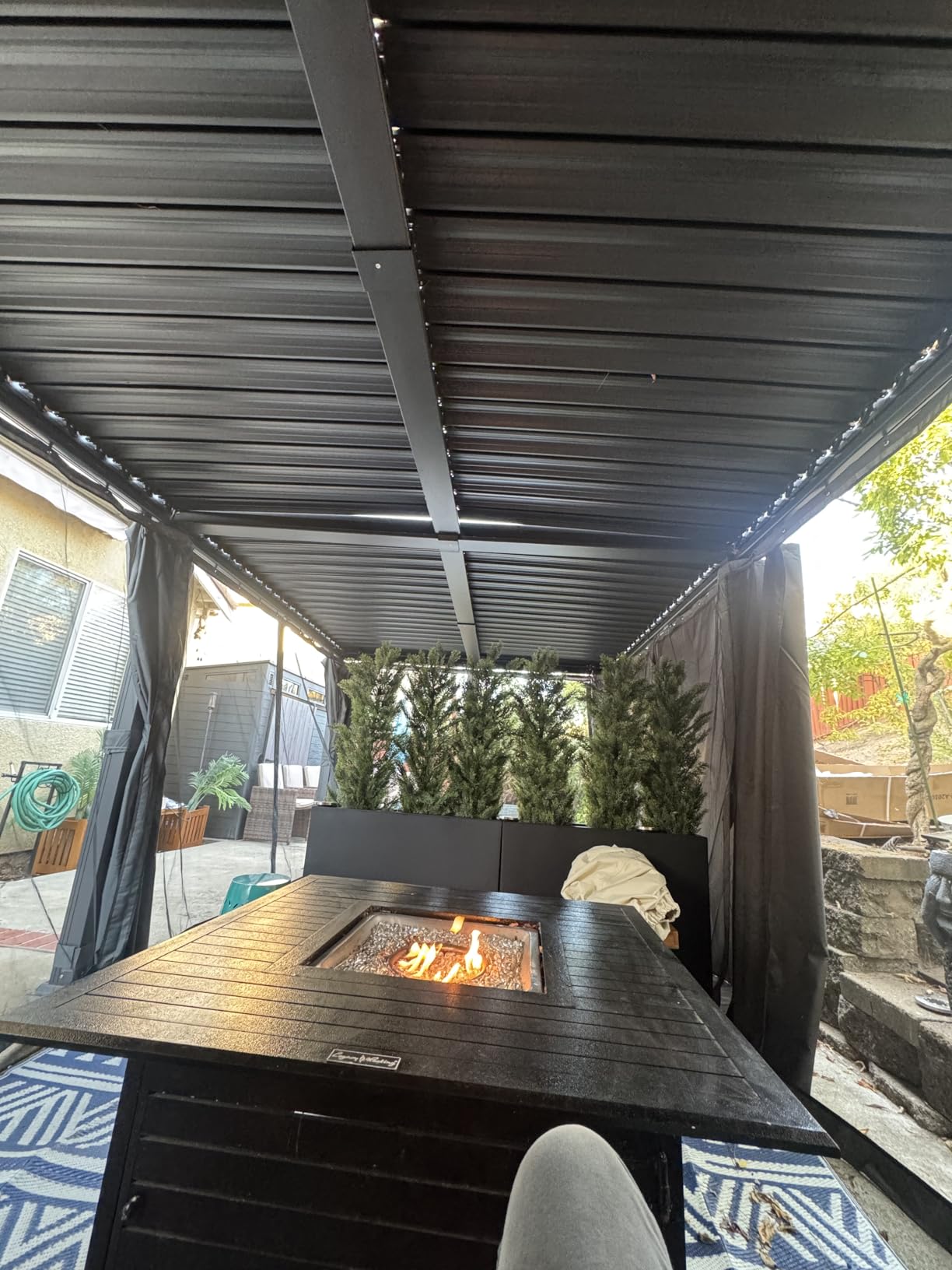
The UPF 15 rating is the honest limitation and it is worth sitting with. That is real sun protection but it is not shade fabric performance, and buyers who expected a UPF 50-plus canopy report being underwhelmed. If your priority is blocking UV on a south-facing slab in a hot climate, the roof louvers do the heavy lifting and the curtain is a comfort feature rather than a sun shield.
Assembly runs about two to three hours for three to four people, and owners are consistent about that figure, which makes it one of the more honest time estimates in the category. At 369.5 pounds you will want a second pair of hands for the posts. If you already have an idea of how you want the space dressed, our curtain and netting guide is worth a look before the boxes arrive.
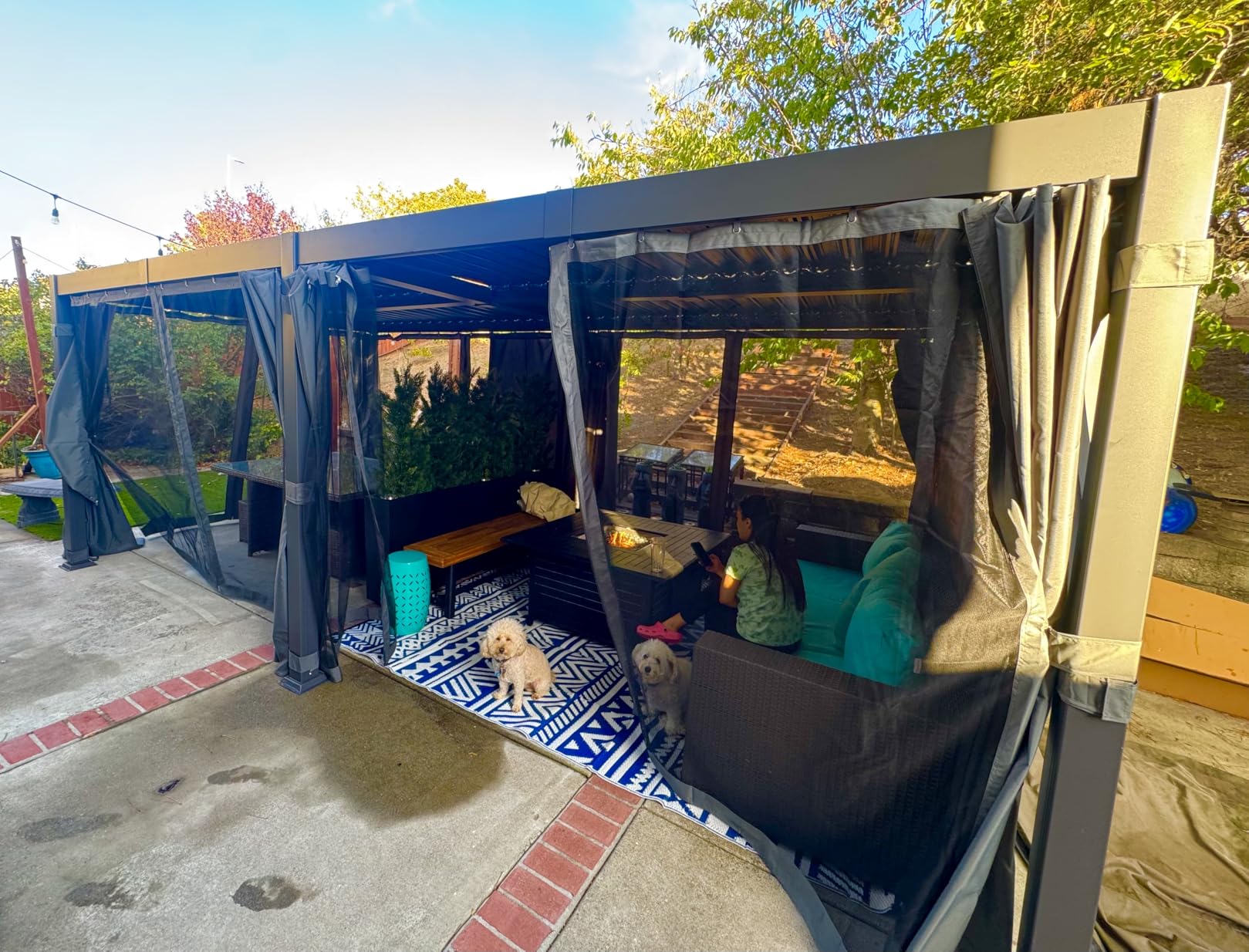
Deciding Whether Side Enclosure Changes the Project
Adding curtains and netting turns an open structure into something closer to a screened room, and that changes the anchoring question because fabric panels catch wind that would otherwise pass through an open frame. Owners in breezy locations report the netting needs re-tensioning after a few weeks, so think about a tie-down point on the frame before you hang anything.
It also changes the furniture math. Four curtain drops consume a chunk of perimeter, so on a 10×12 the practical seating footprint shrinks. Measure the interior width, not the nominal one, before you commit to a sectional.
What the Rating Does and Does Not Tell You
A 4.4 average across 92 reviews with heavy praise for the louvers, drainage and included fabric puts this near the top of the metal louvered field. The reservations are about the fabric and the crew, not the frame.
Check your local rules if you plan to screen the sides year-round. A structure with partial enclosure is treated differently from a fully open one by some jurisdictions, and it is the kind of detail that is much easier to confirm before you build than after.
6. Backyard Discovery Sarasota 14×10 Steel – Best Documented Wind and Snow Testing
Backyard Discovery Sarasota 14′ x 10′ Galvanized Steel Louvered Pergola Kit with Adjustable Roof, Shade, Rain Protection, High-Wind Rating, Gutter System for Outdoor Patio, Garden, Deck, Entertaining
14x10 ft footprint
Powder-coated galvanized steel
2700 lb and 12 in snow load
100 mph wind
5-year warranty
Pros
- Pro-Tect tested for 2700 lb and 12 inches of snow
- 100 mph wind rating when anchored
- Wand-operated louvers open fully or close fully
- Built-in gutters with guards and downspouts in the posts
- PowerPort with 3 outlets and 3 USB ports
Cons
- One owner reported a wind failure after a few months
- Part letters printed on sleeves are easy to miss
- Louvers can arrive dented from transport
If your priority is a documented performance number rather than a good-looking structure, this is the kit. The Pro-Tect system publishes both figures together: up to 100 mph winds and a snow load of 2700 pounds or 12 inches, both conditional on anchoring per the manual. No other kit on this list publishes a snow figure that specific, and snow load is the one people in cold climates actually need to check.
Galvanized steel with a powder coating means no sealing, no staining and no rot. The gutters and gutter guards move rainwater through downspouts housed inside the posts, which is a genuinely well thought out drainage path because the water ends up at the four post bases rather than dripping along the beam line.
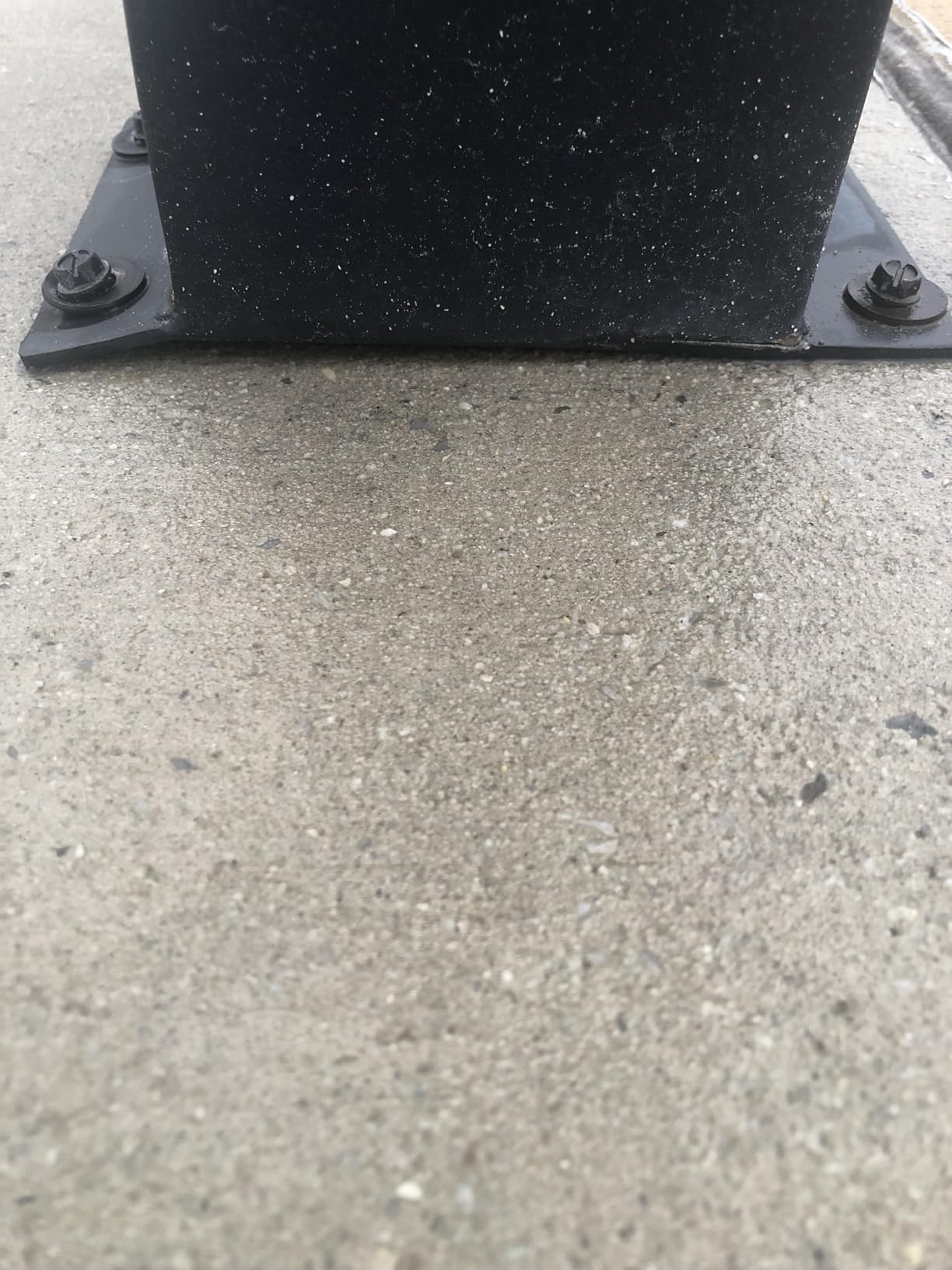
Now the honest part, because a 4.3 average across 59 reviews is not a stellar score and you should know why. One owner reports the structure failed in a wind storm after a few months despite anchoring it properly, and says a promised rebuild reimbursement was not honoured. That is a single report, and single reports should not carry a roundup on their own, but it sits directly against a 100 mph claim and it belongs in front of you.
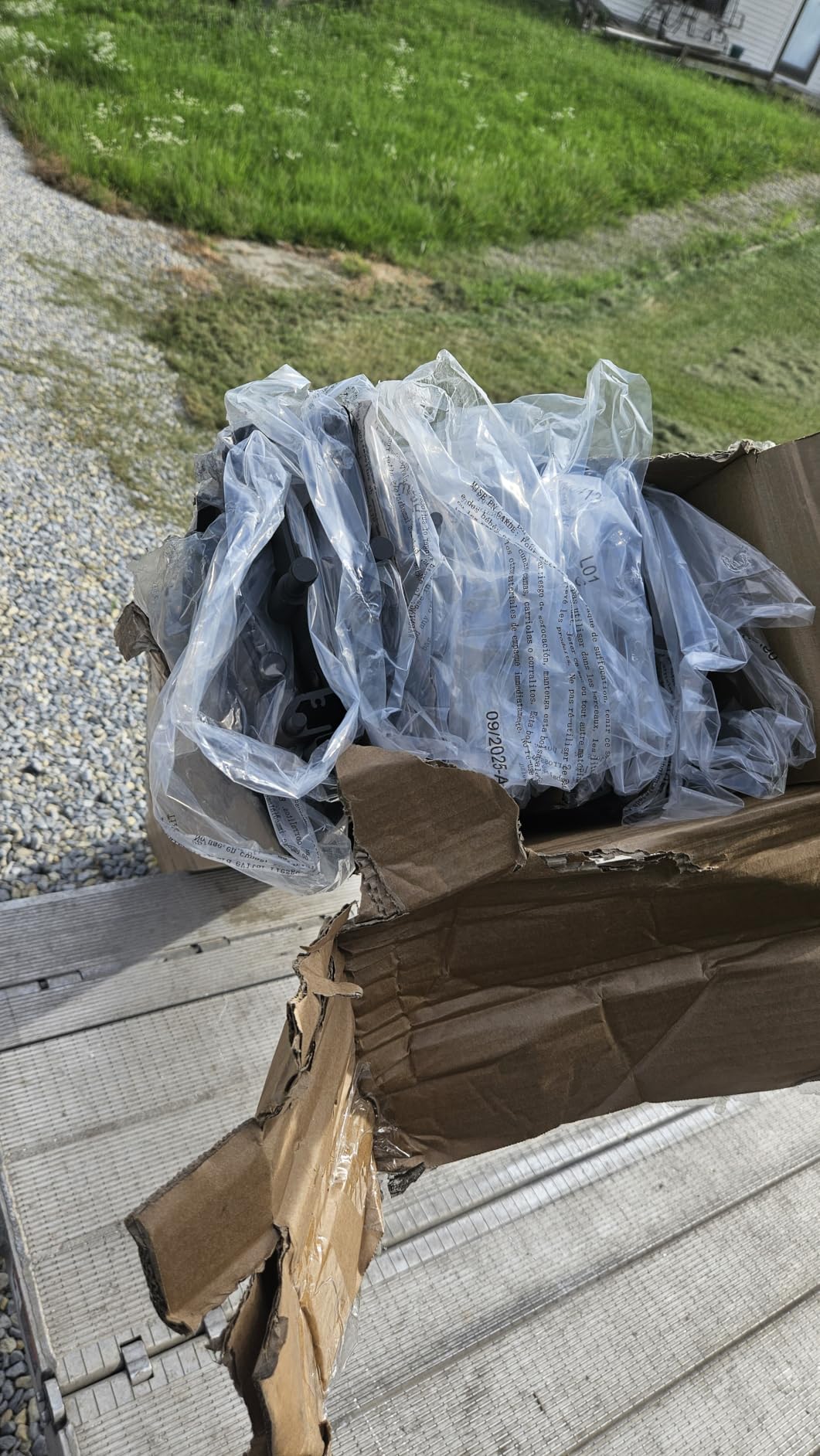
The other complaints are ordinary shipping issues. Part letters are stamped on the sleeves rather than the pieces, so owners advise leaving the sleeves on until install so you can identify everything. Small rubber slat bumpers fall out during unboxing and are easy to lose, so count them before you start.
Reading a Wind Rating Before You Rely On It
A published rating describes the tested assembly, not yours. The conditions almost always include anchoring to concrete with the specified hardware, and often include corner bracing. If your posts land on a paver patio over crushed stone, the number is not describing your structure, whatever the box says.
Ask yourself the louver question for a storm. Closed louvers give a broad surface to moving air and owners of louvered kits are split on whether that helps or hurts. The safe assumption is to follow the manufacturer’s wind guidance and add bracing, rather than relying on louver position as your only protection.
Where This Kit Earns Its Place
Cold and windy regions. If you get real snow, a published pound figure is worth more than any cedar kit’s aesthetic appeal, and galvanized steel with no annual sealing will still be standing when untreated timber has started to check.
It is also the pick if you are pairing a pergola with an outdoor kitchen, since the 14×10 footprint gives you grill clearance and counter space under cover. Our griddle buying guide covers the clearance questions that come up with that setup.
7. Aoxun 10×12 All-Aluminum Louvered – Best for Coastal and Rust-Prone Climates
Aoxun Louvered Pergola 10×12 All-Aluminum, Waterproof Curtains and Netting
120 sq ft coverage
140.55 x 117.72 x 88.98 in
323 lb
82.5 mph rated
3.8 in posts
Pros
- All-aluminum roof frame and posts with no rust risk
- 3.8 in thickened posts rated to 82.5 mph
- Two independently controlled louvered roof sections
- Waterproof curtains and mesh netting included
- Built-in gutter through the posts
Cons
- Picture-only instructions send slats the wrong way
- Soft Allen screws strip if overtightened
- Manual and listing disagree on snow capacity
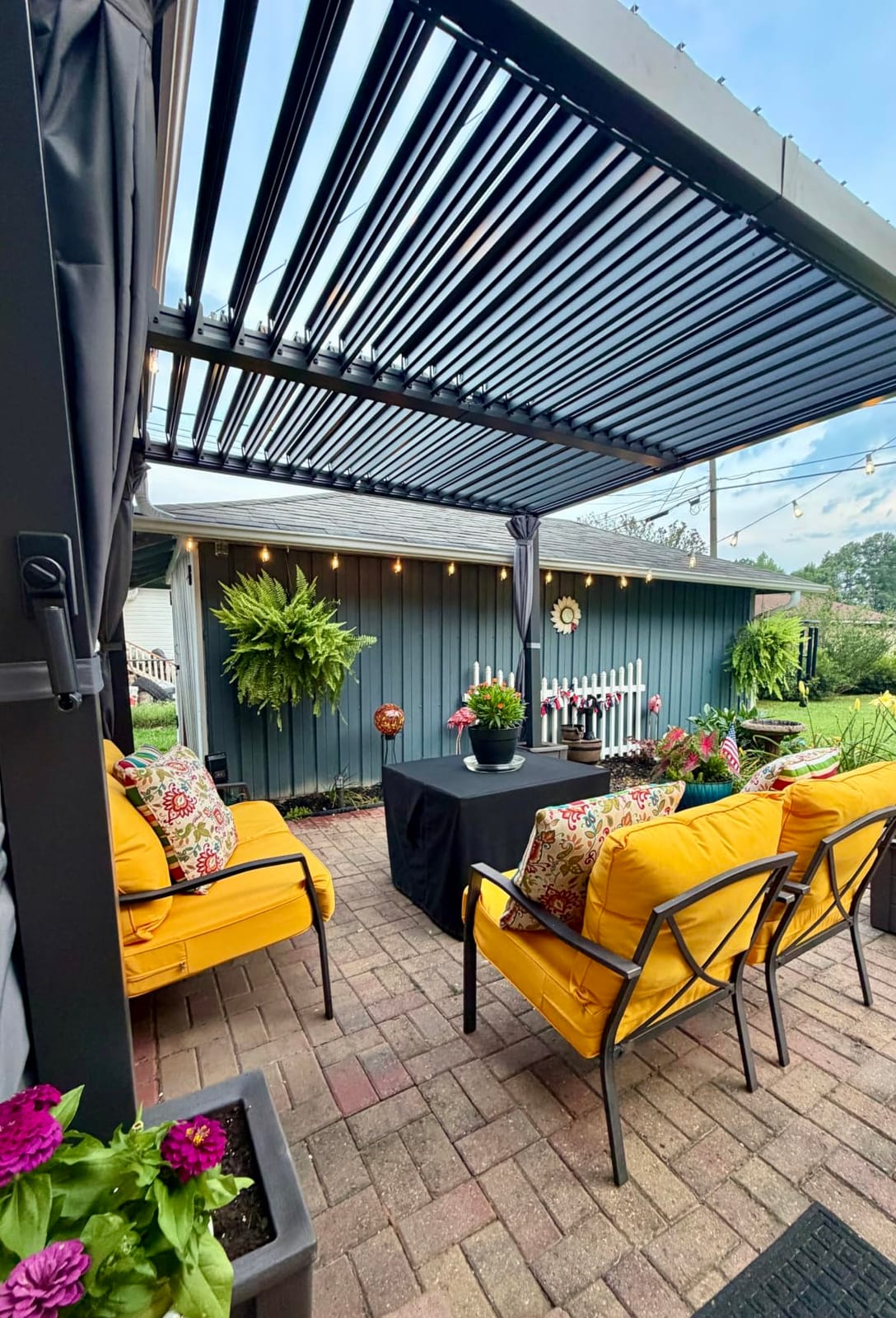
Aluminum instead of steel is the entire point of this one, and in a coastal yard, a yard with an irrigation system that mistes, or anywhere salt sits on hardware, that difference is not a detail. The manufacturer claims a three-year lifespan edge over steel for exactly this reason. Everything structural here is aluminum, roof, frame and posts.
The post dimension is the number to notice. These are 3.8 inch square against a common 3.1 inch standard, and owners consistently report that the thicker posts feel noticeably more rigid, particularly with the louvers closed and taking wind load. The published wind resistance is 82.5 mph when anchored, which sits between the mid-range louvered kits and the Pro-Tect tested models.
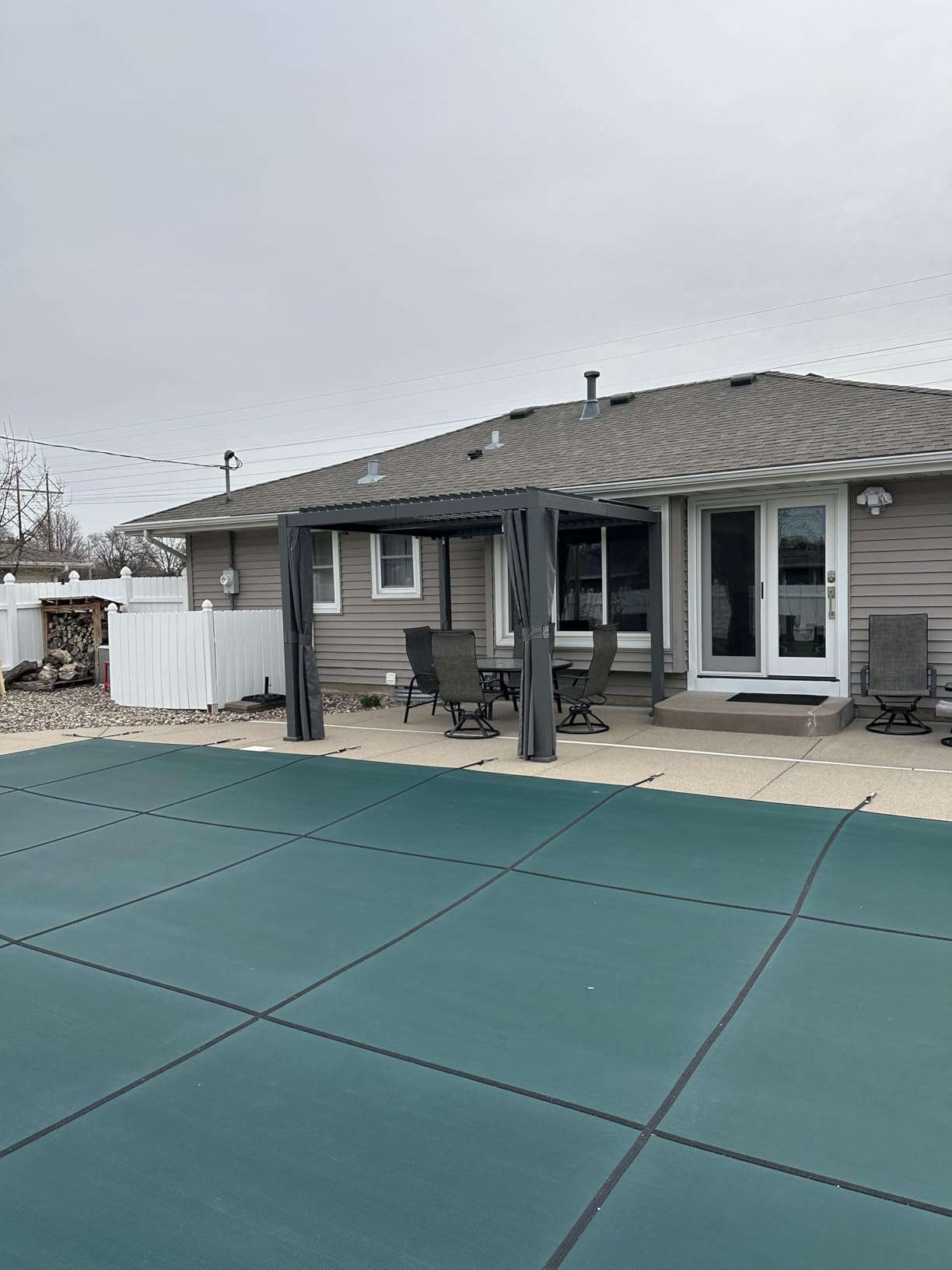
Two independent louver sections plus curtains and mesh netting in the box makes this functionally similar to the AirWire without the steel frame underneath. Two independently controlled sections mean you can leave the windward half closed and open the leeward half, which is the practical way to use a louvered roof in a gusty location.
The build documentation is where this kit loses ground, and it is worth knowing before you commit. Instructions are picture-only and owners report slats going in the wrong direction at certain steps. The Allen head screws are soft and strip if you overtighten, and there is a genuine conflict between the listing and the manual on snow capacity, with the listing claiming ten inches and the manual saying two. Treat the manual figure as the real one and size accordingly.
Whether All-Aluminum Is the Right Material Call
Choose aluminum when corrosion is your dominant risk. Coastal properties, areas with salted pool water nearby, and any yard where a steel frame will sit in a wet spray zone all favour it. You also lose nothing in weight, at 323 pounds it is one of the more manageable kits here.
The trade-off owners mention is that aluminum is a soft metal and dents in transit more readily than steel or cedar. Most reports are cosmetic, but if a structure near you has been hit by hail or you are shipping to a rough route, inspect the louvers on arrival.
What to Do About the Documentation Gaps
Request the manual before you order and read the anchor section specifically. The listed drill bit size for anchoring is also reported as wrong, with a 3/8 inch bit needed rather than the 5/16 inch listed, so confirm your bit before you reach for the drill.
Customer service is rated highly once it engages, including a broken support post replaced under warranty within days, though some buyers report slow first responses. If your project has a deadline, raise any hardware questions early rather than on assembly weekend.
8. BlueWish 10×12 Cedar – Budget Pick Solid Cedar
BlueWish 10′ x 12′ Patio Pergola, Cedar Wood Pergolas with Solid Structure, Pergola Kits, Outdoor Pergolas and Gazebos with Slatted Trellis Roof for Deck Backyard Grill Party Garden
144.1 x 120.1 x 92.15 in
5.5 in posts
80 mph rated roof
Pre-drilled posts
Stakes included
Pros
- Solid cedar frame at the lowest cost in this group
- Double beam slatted trellis roof rated to 80 mph
- 5.5 in posts with pre-drilled holes
- Open slats suit climbing plants and vines
- Included stakes for cement concrete or wood deck
Cons
- Not recommended on stone or paver surfaces
- Extra water-based staining is strongly recommended
- Confirm local rules allow the installation
Few things in this category surprise as much as finding solid cedar at this point in the list. The 4.6 average across 51 reviews is tied for the second highest here, and owners attribute it to genuine cedar, 5.5 inch posts and a roof rated to 80 mph. For most buyers comparing material, the gap between this kit and the premium cedar options is not close.
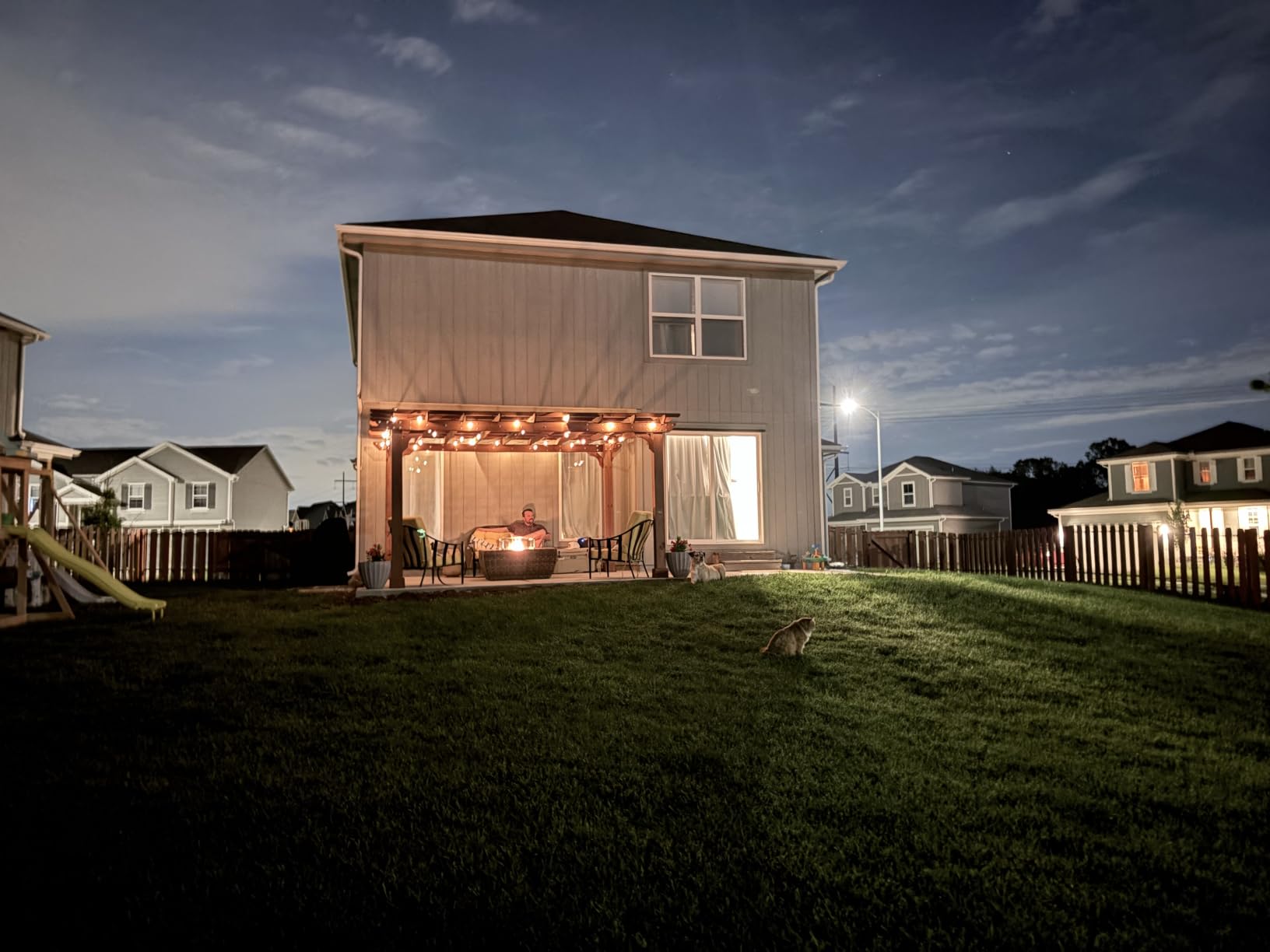
The trellis roof is what makes it a long-term asset. Open slats are an invitation to climbing plants, and owners specifically mention ivy and morning glories. In three summers a properly trained vine will add more effective shade than the structure itself, and it costs you a bag of seeds and a weekend.
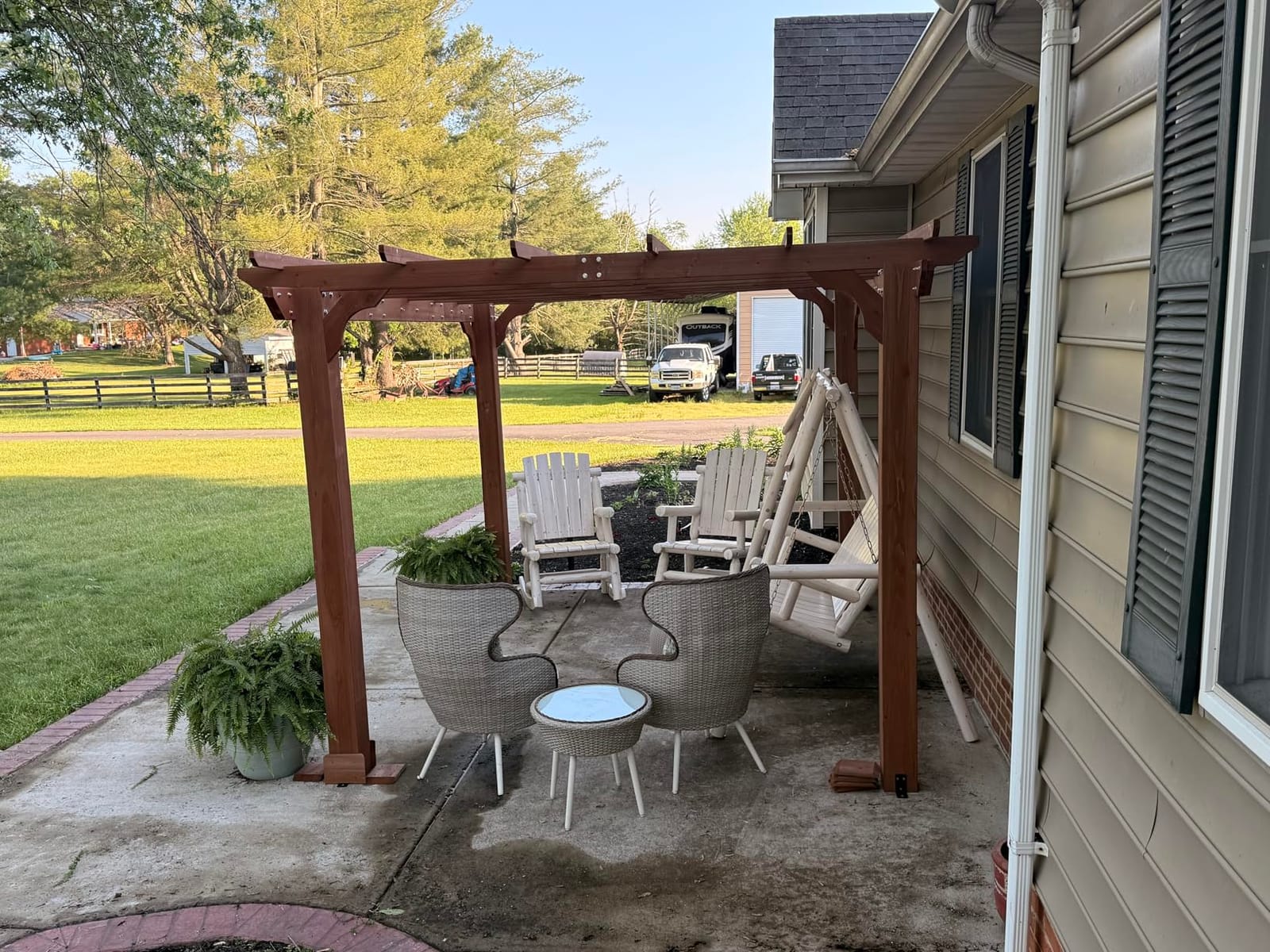
Pre-drilled posts are a small thing that saves real time, and combined with the included stakes it means you are not hunting for hardware on day one. The manufacturer also states the roof works on cement, concrete or wood deck surfaces, which is more honest than most cedar listings.
Now the part to take seriously, because it appears in the reviews and the manufacturer flags it: this kit is not recommended for stone or paver surfaces, which can lift. That is not a quality judgement about the wood, it is about what happens when a post foot moves. If your patio is paver, choose a metal louvered kit instead or plan for a proper sub-footer before laying pavers.
What You Give Up Compared With the Premium Cedar Kits
The interior is 109.9 inches wide by 89.8 deep with an interior height of 85.83 inches, which is tighter than the Beaumont or the Yardenaler. It comfortably holds a bistro set or a small four-seat table. It is not a sectional sofa footprint, and the head height is the lowest of the cedar kits here.
There is no pre-applied stain of the kind the premium kits ship with, and owners are consistent that an extra water-based stain is needed for the wood to last. Budget for that as part of the project, not as an afterthought.
Why This Is the One to Buy on a Moderate Budget
Because the compromises are cosmetic and procedural rather than structural. You get real cedar, real 5.5 inch posts and an 80 mph roof rating, which is the same rating the more expensive cedar kits publish. The pre-drilled posts are a genuine convenience the budget tier rarely offers.
With 51 reviews there is less long-term history than the leaders, so if you want decades of owner data, the Beaumont is the safer evidence base. If you want the material and the look, this is the smarter spend. Our patio pergola guide has more on matching footprint to patio dimensions.
9. Yardistry 10×14 Madison Cedar – Best All-Round Cedar with a Sunshade
Yardistry 10×14 Madison Cedar Pergola with Removable Snap-on Sunshade, Timber Gray Wood Stain
168 x 120 x 90 in
547 lb
100 percent cedar
Timber gray stain
Removable snap-on sunshade
Pros
- Premium cedar that arrives pre-cut pre-drilled and pre-stained
- Removable snap-on sunshade in PVC-coated wicking fabric
- Complete kit with all wood hardware and metal parts
- Timber gray stain suits most patios
- 5-year limited warranty
Cons
- Water repellent rather than fully waterproof
- Sunshade can loosen or tear in high wind
- 547 lb package makes it a real multi-person job
The Madison occupies an interesting middle ground. It is a full solid cedar structure at 10×14, from a long-established brand with a 5-year limited warranty, and it is the only kit here that includes a removable fabric sunshade as standard. The fabric is a PVC-coated breathable wicking material that snaps on and off, so you can add shade in the summer and take it down when the structure is serving as a trellis.
Owners rate the pre-finished cedar highly, and that preparation is where this kit genuinely differentiates. Pre-cut, pre-drilled and pre-stained lumber is the single biggest time saver in a cedar build, and the hardware kit arrives complete, which addresses the missing-bolt problem that hounds the cheaper cedar kits.
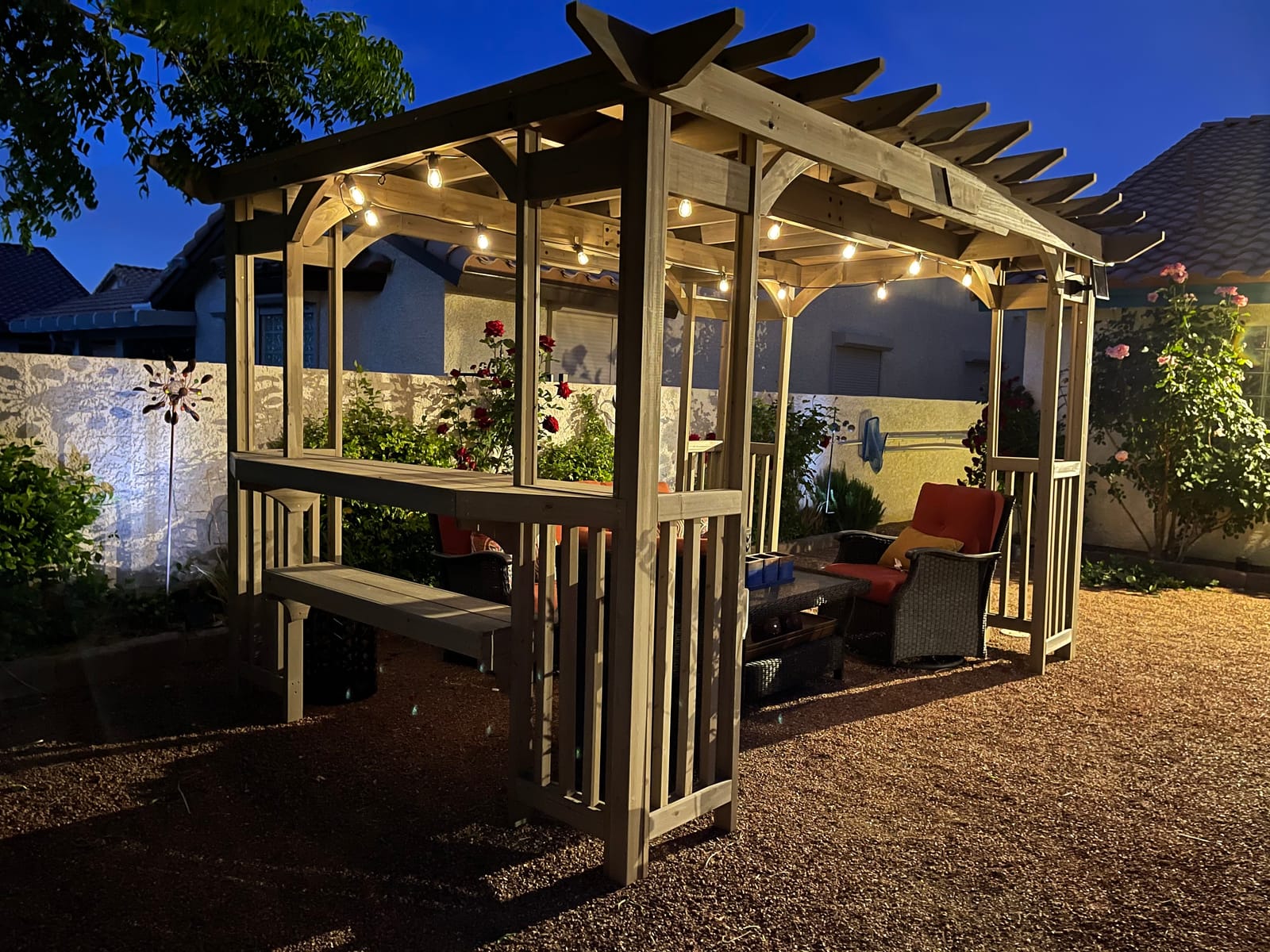
The fabric sunshade is a double-edged feature and owners say both things about it. It adds real shade value on a hot afternoon, and it is vulnerable in wind, where users report it loosening or tearing. If you live somewhere genuinely gusty, treat the sunshade as a seasonal accessory rather than a year-round fixture, and take it down before a forecast blows through.
At 547 pounds this is the second-heaviest package in the roundup, and owners describe it as a real two-person-plus job. The listed occupancy figure of 13 is a useful planning number for a structure of this weight, but package weight says nothing about whether you have the people to move it. If you do not, get an assembly quote before you order.
Choosing Between This and the Other Cedar Kits
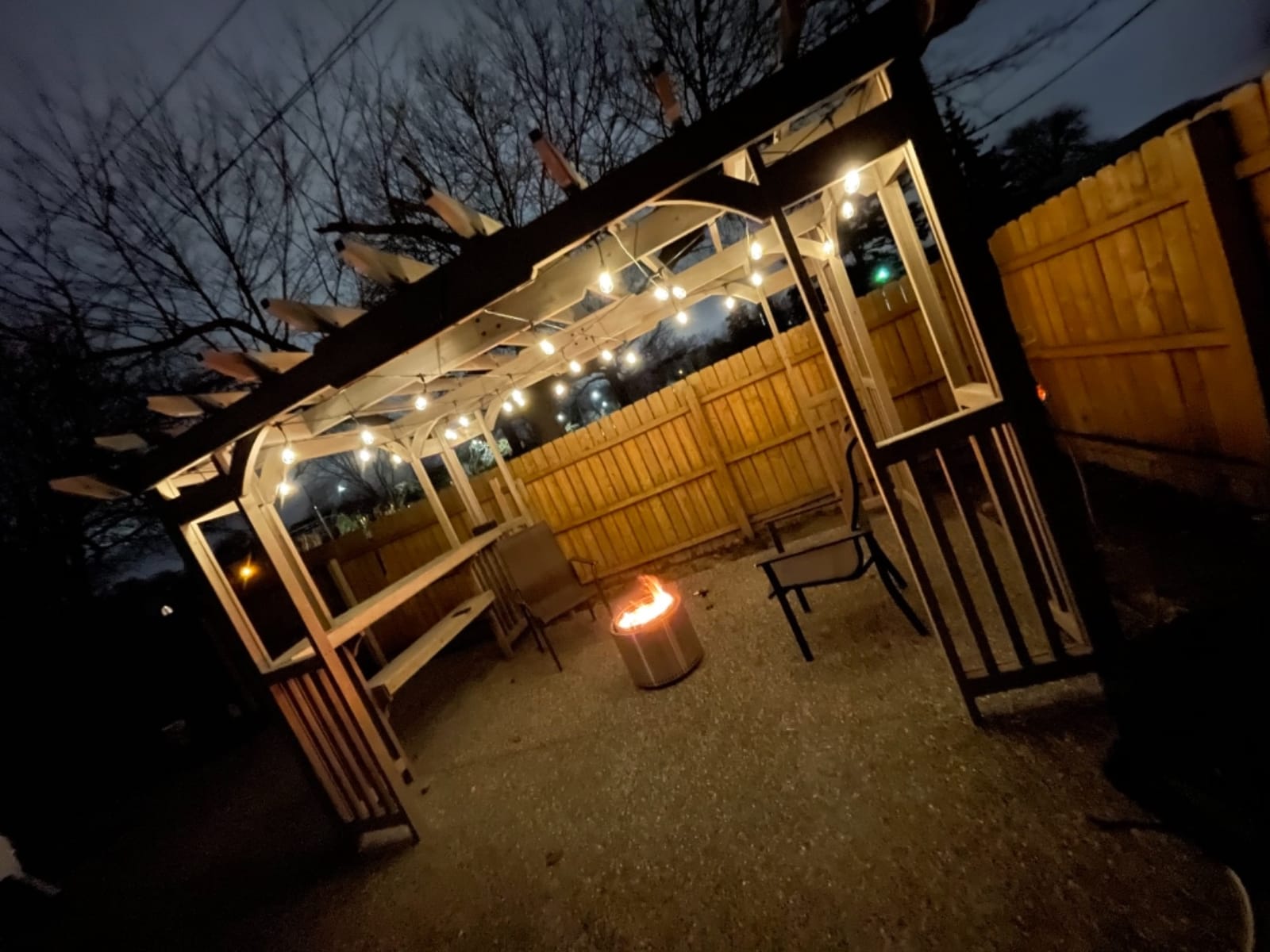
Pick the Madison if you want cedar plus a removable shade layer and value a complete hardware package. Pick the Beaumont if you want the electrical outlets built into a post and a much deeper review history. Pick the BlueWish if you want the lowest spend and do not mind sealing and staining the wood yourself.
The timber gray stain is worth a mention because it reads more modern than the traditional brown used on most cedar kits, and it hides dirt and weathering better than a natural finish. If you are matching an existing fence or deck stain, buy a sample of the bare cedar first.
What Water Repellent Means for Your Maintenance Plan
The manufacturer rates the finish as water repellent rather than fully waterproof, which is the honest description of any cedar structure. Practically, that means an annual check for surface moisture retention and a reseal or restain on the schedule the finish calls for.
Owners are practical about this. Cedar outdoors will grey and check eventually no matter which brand you buy, and the difference between a structure that looks good at year five and one that looks weathered is entirely about the first two years of maintenance discipline.
10. VEIKOU 12×16 Cedar – Best for Vine Coverage
VEIKOU 12x16FT Wood Pergola, Patio Pergola with Solid Cedar Structure, Outdoor Backyard Gazebo with Unparalleled Flat Slatted Roof Trellis for Deck Grill Party Garden
192.1 x 137.8 x 88.2 in
321.9 lb
5.5 in posts
80 mph rated
Flat slatted trellis roof
Pros
- Solid cedar with a weather-resistant stain rated to 80 mph
- Large 12x16 footprint for a full seating group
- 5.5 in posts with pre-drilled holes and a clear manual
- Flat slatted roof trellis built for climbing plants
- Good value in the large cedar category
Cons
- Arrives in four boxes that can come on different days
- Not recommended on stone or paver surfaces
- Cedar still needs an added water-based stain
This is the one to buy with a planting plan. The flat slatted roof trellis is a purpose-built climbing surface rather than an open beam frame, and the 12×16 footprint gives the vines room to spread into a canopy that will shade the space more effectively than any of the open-beam kits here within two or three growing seasons. Owners consistently describe the roof as the reason they chose it.
At 192.1 by 137.8 inches overall with a 5.5 inch post, it holds a full dining group and a walkway around it. The 80 mph rating matches the better cedar kits, and the pre-drilled posts plus a clear manual make this a more approachable build than the entry-level cedar options.
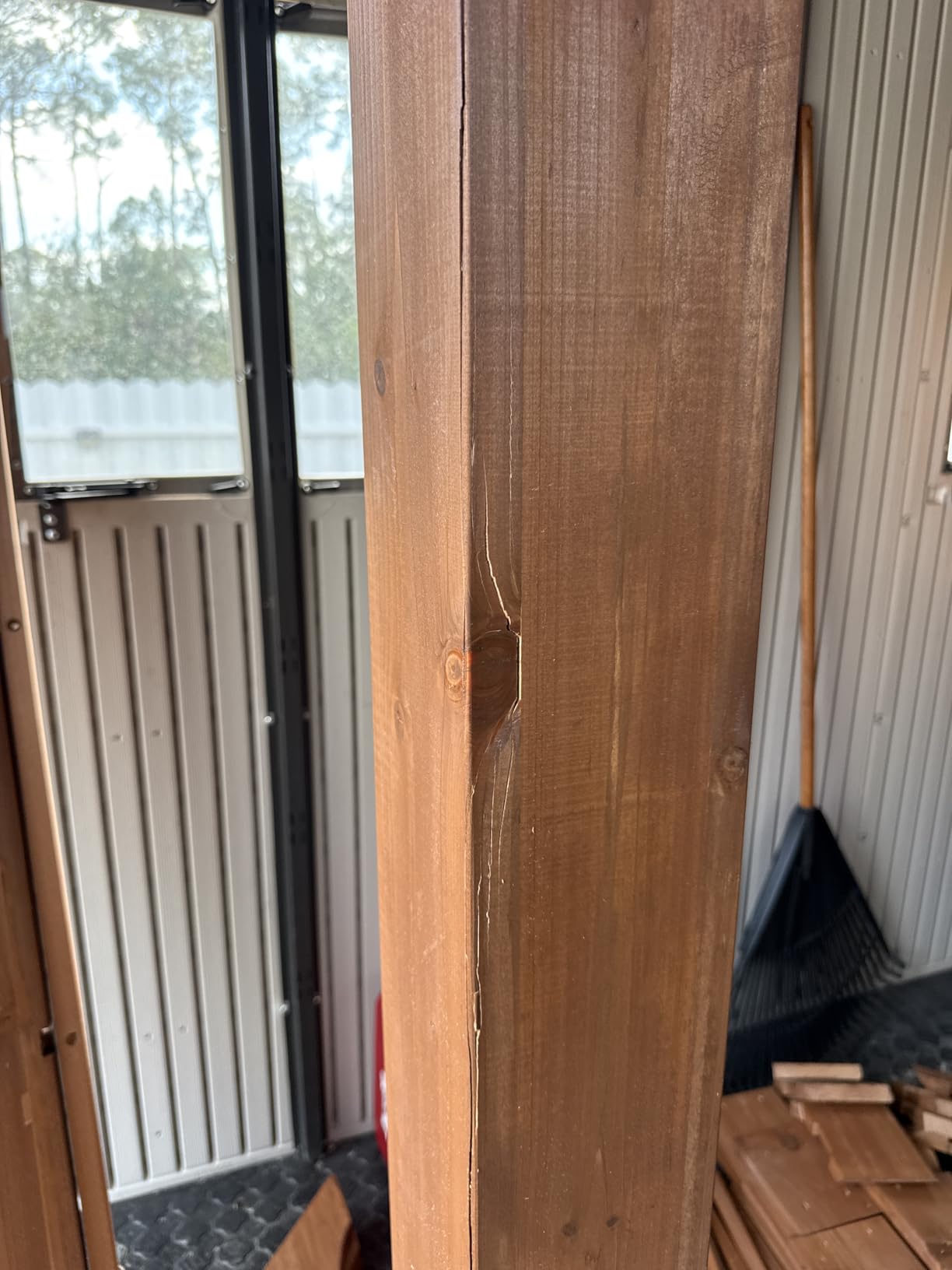
The 4.2 average across 41 reviews reflects a smaller and more mixed base, which is worth stating plainly. There is simply less long-term feedback on this kit than on the leader, and if you are nervous about durability the honest answer is that the material and the post size are right, but the evidence is thinner.
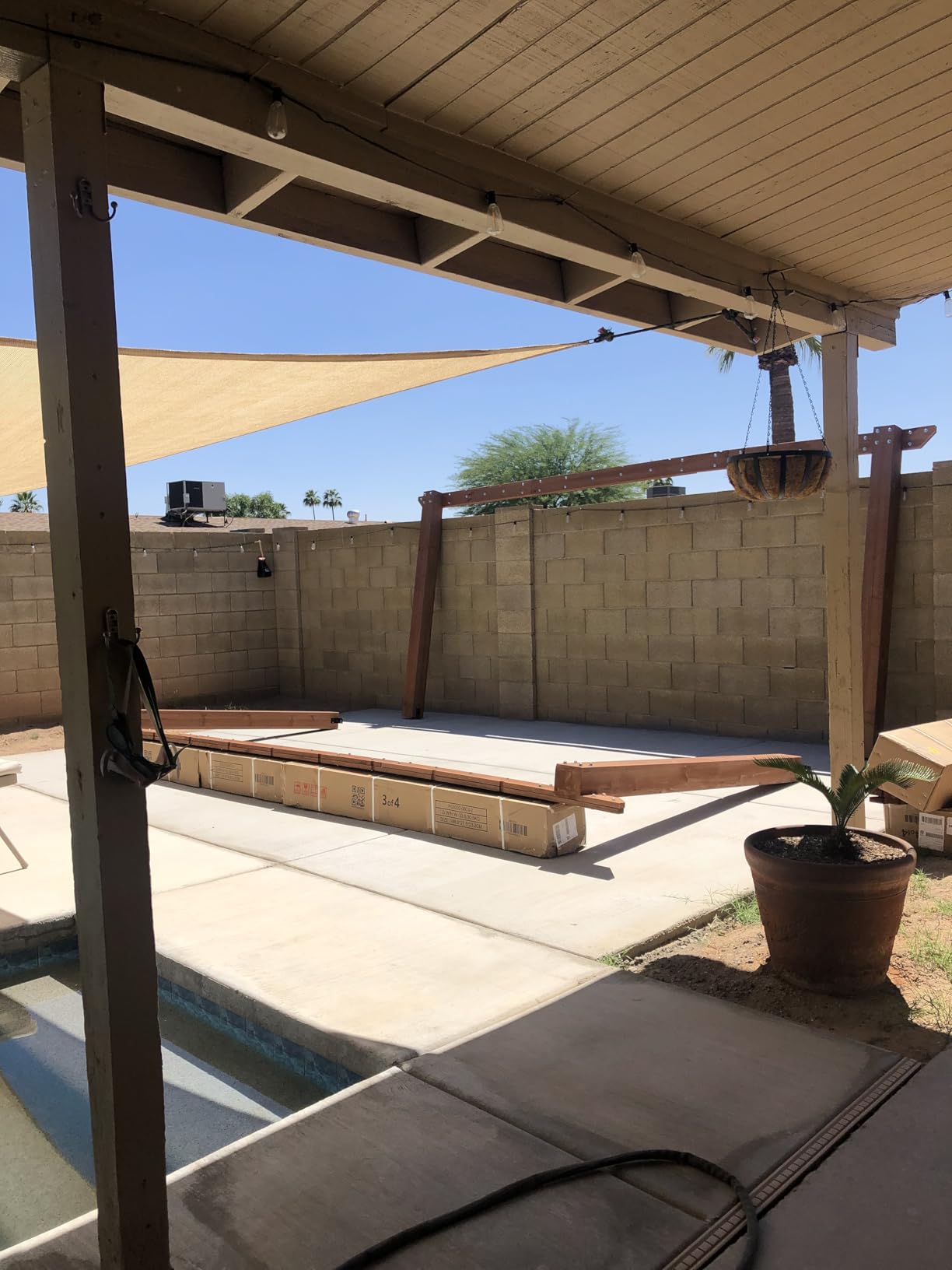
Delivery logistics are the most reported annoyance. The structure arrives in four boxes and those boxes can come on different days, which means you may be assembling over a longer period than planned. Plan storage for the parts somewhere dry and out of the weather, and check your coverage for the full order before you start.
Planning for Vines Before the Structure Goes Up
Decide your climbers in advance, because different plants behave very differently on a trellis. Vigorous climbers will overwhelm a flat slat roof in a few seasons and need annual pruning, while slower woody vines give you a more controlled canopy. Whatever you choose, start them the same season you finish the build so they establish alongside it.
Vines add weight and wind load as they mature, which is a genuine consideration for anchoring. A bare structure in year one and a fully leafed canopy in year five are two different structures in a storm, and that is an argument for the bracing and footing work in the next section rather than against planting.
Where This Kit Falls Short
Same restriction as the other value cedar kits: not recommended on stone or paver surfaces that can lift. The cedar still needs an added water-based stain for long-term protection, and there is no factory sunshade like the Yardistry carries.
If you want the same footprint with more owner history behind it, the Yardenaler at 12×16 is the closer comparison, though it carries a lower rating on the strength of its own build consistency. Either way, this is a large, heavy structure and it deserves a concrete plan before delivery day.
How We Picked These 10
We ranked the ten pergolas above using six criteria, in this order. First, published wind and snow ratings, weighted heavily because they are the only numbers a buyer cannot generate at home. Second, package weight, because it is the most useful planning figure any seller publishes and the one most often omitted. Third, the completeness and honesty of assembly documentation, including whether pre-drilled holes and full hardware kits are included. Fourth, warranty length and the availability of replacement parts. Fifth, owner review volume, weighted so a 1000-review kit outranks a 40-review kit with the same rating. Sixth, the shade-to-footprint ratio, meaning how much usable covered area you get per unit of yard space.
What we did not test is equally important. We did not physically assemble any of these kits, so every assembly time and crew estimate comes from owner reports rather than our own stopwatch. We did not run load testing, so wind and snow figures are manufacturer claims that we report without independent verification. We did not test anchoring on any surface type, which is exactly why the next sections lean on documented owner experience rather than our own claims.
Choosing the Right Size for Your Backyard
For a small backyard, an 8×8 or 10×10 pergola with a simple roof works best, because it covers a bistro set or a two-person lounge without overwhelming the space. On a small patio, a wall-attached or corner configuration is more efficient than freestanding, because it uses an existing wall or property corner instead of putting four posts in ground you have already paved. Measure your patio before measuring your yard, since the patio is where the structure actually has to sit.
The sizing trap is that nominal size is not usable size. Post thickness, beam depth and overhang eat into every dimension, and a nominal 10×12 kit can have an interior footprint close to 9×10. A practical guide: 8×8 fits a bistro set. 10×10 fits two loungers. 10×12 fits a four-person dining table with clearance to walk behind it. 12×12 holds a sectional comfortably. 12×16 is where an outdoor kitchen and grill station start to fit under cover.
On height, a 10×10 structure is fine at around 8 feet. Anything 12×12 or larger wants a minimum of 10 feet, and the interior head heights published on several kits here run under 86 inches, which is lower than you might picture and worth checking against your own doorway and furniture clearances.
For genuinely tight yards, a corner configuration is the option most buyers never consider. By placing the structure against two existing boundaries, you reduce the number of posts from four to two, which means fewer footings, less hardware, less assembly time and less to anchor. A wall-mounted structure goes further and uses one wall, but it is treated as an alteration to the house by many jurisdictions rather than an accessory structure, which changes the permit picture. If you are still working out whether you need approval at all, our shed and outdoor structure guide covers the common accessory-structure thresholds.
Wood vs Aluminum vs Steel
Aluminum and steel beat wood on strength, longevity and maintenance, and wood beats them on warmth, price and repairability. In almost every measurable performance category, metal wins: higher wind and snow ratings, lighter weight for installation, no staining or rot repair, and roof mechanisms such as motorized louvers and integrated gutters that a timber frame cannot host. Wood wins on the look, on cost at the entry level, and on the fact that a damaged cedar board is a fifteen-minute fix with a saw.
The counterpoints to metal deserve saying. Owners report that aluminum pergolas creak in wind and make considerable noise when rain hits them, and that they can flex at the top even when bolted into concrete. Aluminum is also a soft metal that dents in transit and is hard to repair once it does, and it heats up in direct sun in a way wood does not. Steel is tougher and louder, and powder coating on a coastal property eventually gives way at the joints.
On lifespan, treat cedar and redwood as the longest-lived option if you seal them, and pressure-treated pine as the shortest. A well-built and maintained structure of any of these materials runs into decades, but an unsealed cedar kit in a wet climate will show checking within two seasons. The honest summary is that wood costs you an afternoon of maintenance every couple of years and metal costs you nothing but some noise.
Roof Style: Open Beams, Retractable Canopy or Adjustable Louvers
Pick an open beam or trellis roof if you want dappled light and somewhere to grow climbing plants, a retractable canopy if you want shade on demand and value flexibility, and adjustable louvers if you want the closest thing to a real outdoor room. Louvers give you the most control, canopy gives you the least structure, and open beams are the only option that supports vines properly.
Shade coverage is the honest differentiator. An open-beam cedar pergola filters light, blocking a meaningful share of UV while letting the rest through in moving patterns. A louvered pergola closed to zero degrees blocks close to all direct light. That is the difference between a pleasant table and a genuinely shaded room, and it is why people who expect the second from a trellis design end up disappointed.
Rain behaviour follows the same logic. An open beam does nothing for rain, which is fine if your climate is dry or your use is evening dining. A louvered roof with a sealed surface and integrated gutters handles a shower, and owners of the kits with post-routed drainage report the water ending up neatly at the four post bases. A canopy handles light rain and fails in wind, which is the standard tradeoff for retractable fabric.
For wind, the operating position matters and the honest answer is that you should not rely on it. A closed louver roof presents a broad surface to moving air; open slats let wind pass through. Manufacturers disagree about which is safer, and owners argue about it too. Treat louver position as a comfort setting, not a storm strategy, and anchor the structure properly instead.
Anchoring and Wind Survival
A pergola wind rating is a statement about a tested assembly, not about your patio. The single most important pre-purchase question is what your posts will land on, because that determines the anchor length you need and whether the hardware in the box is sufficient. This is the question forum owners ask most often and the one almost every roundup skips.
Start with surface type. Concrete footers poured before the structure goes up are the strongest option by a wide margin. A drilled and anchored slab is the second. Pavers with a concrete sub-footer beneath them, drilled through both, is a workable third. Ground stakes driven into soil are the weakest and only appropriate in low-risk conditions. Anchoring to pavers sitting on crushed stone with nothing underneath is not anchoring at all.
Owners report kit-supplied anchors of around 1.96 inches, which will not pass through 2 inch pavers, let alone reach anything solid. The common fix discussed on r/DIY and lumberjocks.com is to install concrete posts first, then lay the pavers over them and drill through. The alternative most experienced builders recommend is simple: do not build anything heavy on a surface that cannot take an anchor, and accept a different location instead.
Racking is the most common post-install structural complaint and it is a design problem, not a hardware problem. A wobbling pergola is a rectangle folding into a parallelogram, and the fix is triangles. Knee bracing at the top corners or a ledger board attached to the house converts the frame from a rectangle to a braced structure, and it is the single highest-value addition you can make. A builder working the numbers for a 68 mph gust on a 24 foot wide roof with a 2 foot rise found that the overturning moment was the real threat rather than anchor pull-out, which is why bracing matters more than bigger bolts.
Real storm reports set the scale. One owner lost two 10×20 freestanding pergolas that went roughly 50 feet in a California spring windstorm on a crushed-stone patio with no solid base. Another in a hurricane-exposed region reports an unanchored pergola that survived only because the house, carport and porch formed a shield around it. Those are the two failure stories worth holding in mind before you decide a flat paved area is good enough.
If you are genuinely in a storm-prone region, the honest options are to anchor to concrete with bracing, to choose a structure you can take down and store for the season, or to skip the pergola. Nobody should be building a permanent open structure where evacuation orders are routine without checking their local requirements first. Where you want one anyway, a documented tested-to rating on the paperwork is the number to look for, and owners consistently recommend corner bracing between posts and beams on top of that.
Permits, HOA Rules and Placement
Permit requirements vary more than any other rule in this category, so check your building department before you order rather than after. Some cities require a permit for a freestanding pergola above 200 square feet. Northern California commonly exempts structures under 120 square feet. Those two numbers are where the thresholds most often sit, and they are the first thing to look up in your jurisdiction.
Attached and freestanding structures are usually treated differently. A pergola fixed to the house is often classified as an alteration to the dwelling, which pulls in a different set of requirements than an accessory structure. HOA rules can be stricter than code in either direction, commonly covering color, height, setback from the property line and roof pitch. Setbacks typically run 5 to 10 feet, though local zoning varies and some associations require more.
Placement is also where the small-yard problem gets solved. Keep a clear walking route between the structure and the house, avoid blocking a drainage path, and check where the integrated gutters on a louvered kit will discharge. If you are adding one to a yard that also needs storage, our backyard shed guide covers the layout math for fitting both in without crowding the patio.
Frequently Asked Questions
Are aluminum pergolas better than wood?
In most measurable categories, yes. Aluminum and steel pergolas carry higher wind and snow ratings, weigh less to install, need no staining or rot repair, and can host features wood cannot, such as adjustable louvers and integrated gutters. The honest counterpoints are noise in wind and rain, heat gain in direct sun, and difficulty repairing dents. Wood wins on warmth, entry-level cost and easy repairability.
What is the best pergola for a small backyard?
An 8×8 or 10×10 pergola with a simple roof works best in a small backyard, because it covers a bistro set or a two-person lounge without overwhelming the space. If your patio is already paved, choose a wall-attached or corner configuration so you use an existing wall or property corner instead of placing four posts in ground you have already covered.
What size pergola do I need?
Match the footprint to the furniture, not to the yard. An 8×8 fits a bistro set, 10×10 fits two loungers, 10×12 fits a four-person dining table with room to walk behind it, 12×12 holds a sectional, and 12×16 is where an outdoor kitchen and grill station fit under cover. Allow roughly 8 feet of height for 10×10 and a minimum of 10 feet for 12×12 and larger.
Will a pergola blow away in high winds?
A properly anchored and braced pergola can survive serious wind. An unanchored one can and does overturn, and one owner reported losing two 10×20 structures that went about 50 feet in a spring storm on a crushed-stone patio with no solid base. Concrete footers, anchors sized for your surface and knee bracing at the top corners are what turn a wind rating into a real structure.
Can I assemble a pergola kit myself?
Yes, but plan for more help and more time than sellers suggest. Package weights across this roundup run from 310 to 547 pounds, and owner reports consistently describe three to four adults working over several hours or across a weekend. Sellers claiming one or two hours are describing the post assembly, not the full build. On the heavier cedar kits, get a professional assembly quote before you order.
Do I need a building permit for a pergola?
It depends entirely on your jurisdiction. Some cities require a permit for a freestanding pergola above 200 square feet, and Northern California commonly exempts structures under 120 square feet. Pergolas attached to the house are often treated as alterations to the dwelling and follow a different, stricter path. HOA rules may exceed local code, so check both before ordering.
The Bottom Line
If you want one answer for most homeowners in 2026, it is the Backyard Discovery Beaumont. It has the deepest owner history in the category, the only PowerPort with outlets and USB built into a post, the highest published wind rating here at 100 mph when anchored, and a 192 square foot footprint that works for a real dining table. Buy it if you can anchor it to concrete and you are prepared for a weekend with three or four adults.
Buyers who want a genuine outdoor room rather than dappled shade should start with the PURPLE LEAF 12×14 louvered model. Buyers who want a wall of mosquitoes gone should start with the AirWire 10×12, since the curtains and netting arrive in the box. Cold and windy regions should look at the Backyard Discovery Sarasota for its published 100 mph and 2700 pound snow figures. Coastal yards should look at the Aoxun all-aluminum for corrosion resistance. And buyers on a moderate budget get the most out of the BlueWish 10×12, which gives up interior headroom and a factory stain but very little else.
Now the part most roundups skip. If you are on a hurricane coast and cannot anchor to concrete, if you need the space to be genuinely waterproof, or if you are pairing a pergola with a grill and outdoor kitchen where fire clearance matters more than shade, skip the pergola entirely. A hardtop gazebo or a properly permitted patio cover serves those needs better, and buying a pergola for them is how people end up with an expensive disappointment.
Whatever you choose, decide what your posts will land on before you order. That single question determines more about how your pergola performs over twenty years than the roof style, the brand or the badge on the box.