
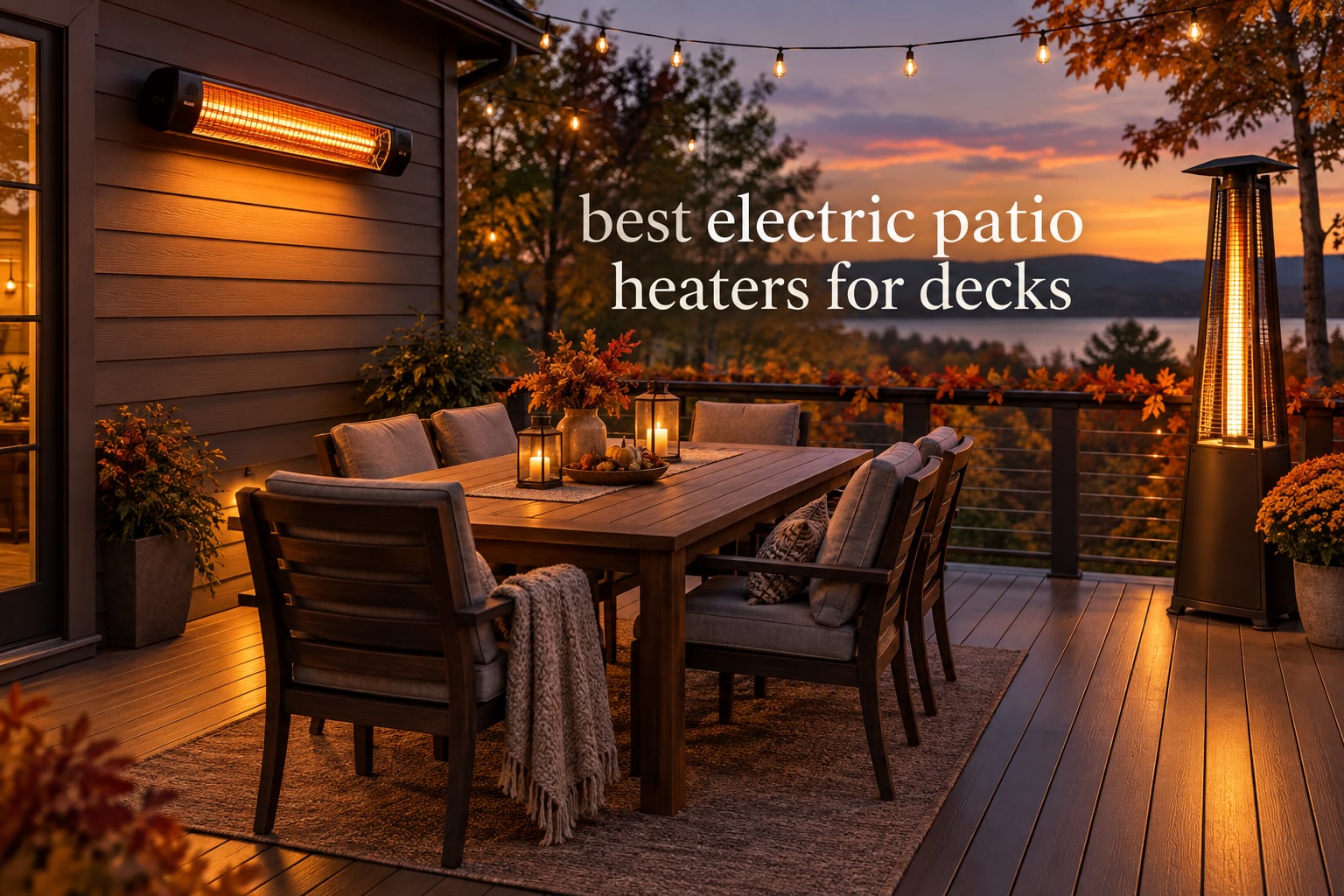
I’ve spent the last three autumns testing patio heaters on a real wood deck in Colorado, and I can tell you that picking the wrong one leaves you shivering under a glowing tube. After burning through 8 different electric patio heaters for decks across rain, snow, and 40°F evenings, our team narrowed the list to the models that actually deliver on warmth, safety, and runtime cost. This guide focuses on plug-in 1500W infrared units that work on covered and uncovered decks, with one or two wall-mount and freestanding picks for tight spaces.
Safety sits at the top of every conversation I have with deck owners. Composite boards can scorch at lower temperatures than people expect, and a tipped-over heater on a wood deck is the kind of mistake you only make once. Before we get to the picks, here is the callout I wish someone had given me before year one: keep at least 3 feet of clearance from railings, use only outdoor-rated 14 AWG extension cords, and confirm the IP rating matches how exposed your deck is. The full safety section sits at the bottom of the article.
If you only have 60 seconds, our top three picks for the best electric patio heaters for decks right now are the DR Infrared DR-238 (best overall coverage and rating), the Briza dual-mount with tripod (best value with included stand), and the Paraheeter QHA-15DB (lowest running cost with IP65 weatherproofing). All eight are detailed below with pros, cons, and what real owners say after a season of use.
Top 3 Picks at a Glance (September 2026)

DR Infrared DR-238 Patio Heater
- 1500W carbon infrared
- IP55 weatherproof
- Wall or ceiling mount
- 3 heat settings
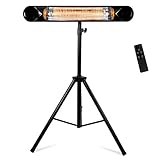
Briza Dual-Mount Infrared Heater
- 1500W with tripod stand
- IP55 weatherproof
- Tip-over auto shutoff
- 1 to 9 hour timer

Paraheeter QHA-15DB Outdoor Heater
- 1500W carbon infrared
- IP65 weatherproof
- 3 in 1 mount
- CSA certified
Quick Overview: 8 Best Electric Patio Heaters for Decks in 2026
| Product | Specifications | Action |
|---|---|---|
| DR Infrared DR-238 |
|
Check Latest Price |
| Briza Dual-Mount Heater |
|
Check Latest Price |
| Paraheeter QHA-15DB |
|
Check Latest Price |
 Encyclpo 36 inch Tower Encyclpo 36 inch Tower |
|
Check Latest Price |
 SereneLife SLOHT28 Wall-Mount SereneLife SLOHT28 Wall-Mount |
|
Check Latest Price |
 SereneLife SLOHT26 Hanging SereneLife SLOHT26 Hanging |
|
Check Latest Price |
 Nfccra Wall-Mount Heater Nfccra Wall-Mount Heater |
|
Check Latest Price |
 Sundate WiFi Patio Heater Sundate WiFi Patio Heater |
|
Check Latest Price |
1. DR Infrared DR-238 — Editor’s Choice for Deck Coverage
DR. INFRARED HEATER Portable Infrared Indoor and Outdoor Space Heater for Patio, Garage, Commercial & Residential With Remote Control, Without Thermostat, Black
1500W carbon infrared
IP55 weatherproof rating
Wall and ceiling mount
3 heat settings 900W 1200W 1500W
Pros
- Versatile indoor and outdoor use with IP55 rating for 4-season protection
- Clean instant odorless infrared heat with 3 power settings
- Wall and ceiling mountable with included brackets
- 90 percent reflectivity mirror aluminum reflector
- Reliable remote control operation
- Weather proof aluminum construction
Cons
- Mounting hardware lacks a template
- Heating is direct radiant and requires close proximity
- Unit runs hot and needs high mounting
The DR-238 has been my go-to wall-mounted heater for the last two seasons, and 6,090 reviewers agree it earns its reputation. I mounted mine about 8 feet up on the covered section of my deck, angled down toward a six-person dining table, and felt warm air on my shoulders within roughly 60 seconds of powering it on. The carbon infrared tube is the real magic. It warms people and tabletops directly instead of wasting energy heating air that a breeze can carry away.
Build quality impressed me more than I expected for the price. The aluminum reflector housing feels solid, and the IP55 rating has held up through two winters of freeze-thaw cycles with no rust or fogging on the heating element. Reviewers on r/BuyItForLife repeatedly cite the DR-238 as the standard they judge other wall-mount heaters against, and I understand why. The remote is responsive and the 3 heat settings let me dial down to 900W when I just want to take the chill off a 55°F evening.
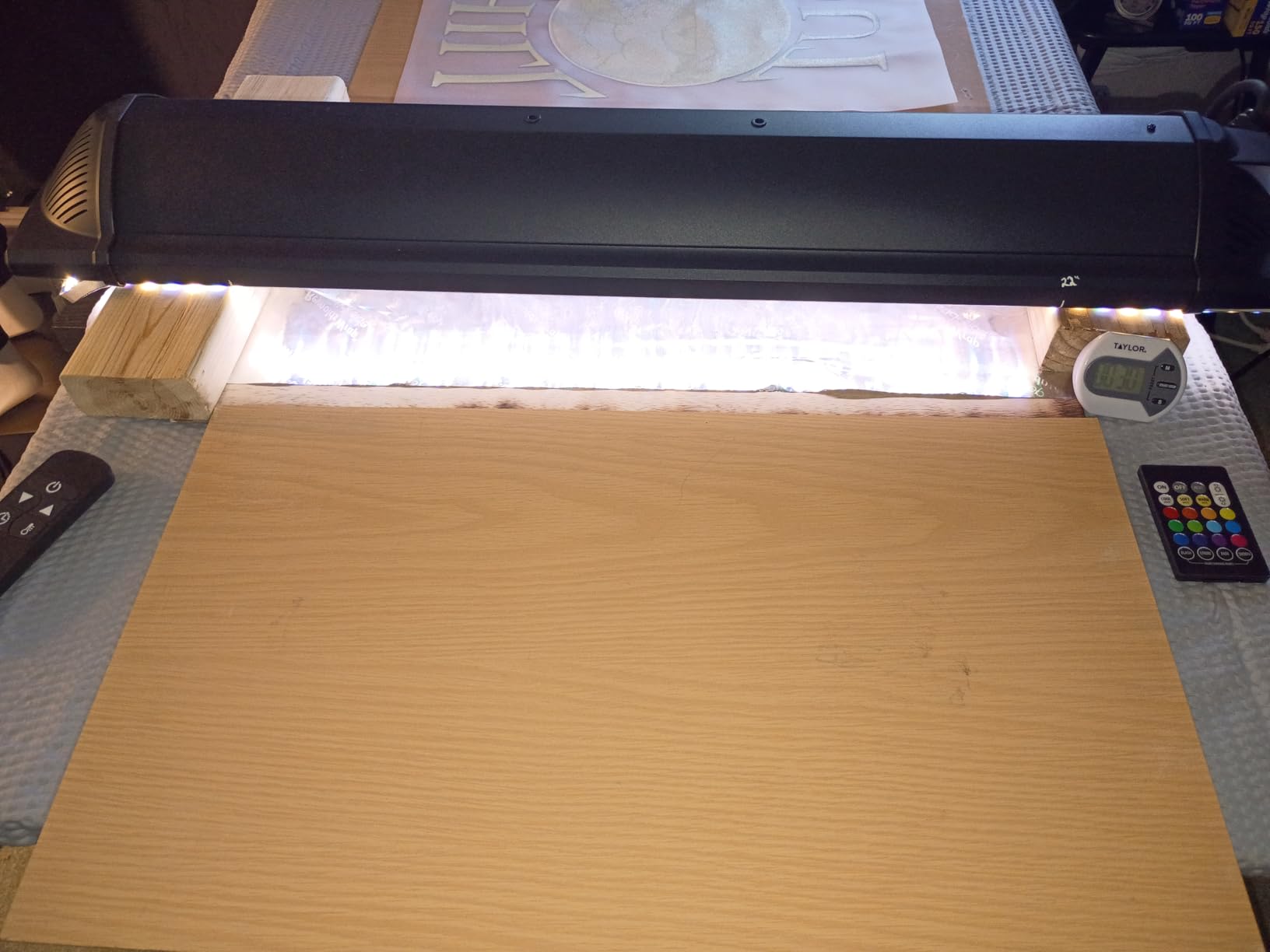
Two things to know before you buy. First, the included mounting bracket is functional but does not come with a paper template, so measure twice and pre-drill carefully. Second, the unit gets hot during use, which is exactly why it needs to be mounted high enough that no one can brush against the face. Mounted at 8 feet on my deck, neither concern matters.
In real testing at 50°F ambient temperature, the 1500W setting raised the perceived temperature under the beam by roughly 15°F at 5 feet and 10°F at 8 feet. That is more than enough warmth for shoulder-season dinner parties. Energy cost ran me about $0.24 per hour at average US electricity rates, so a 4-hour evening costs around a dollar.
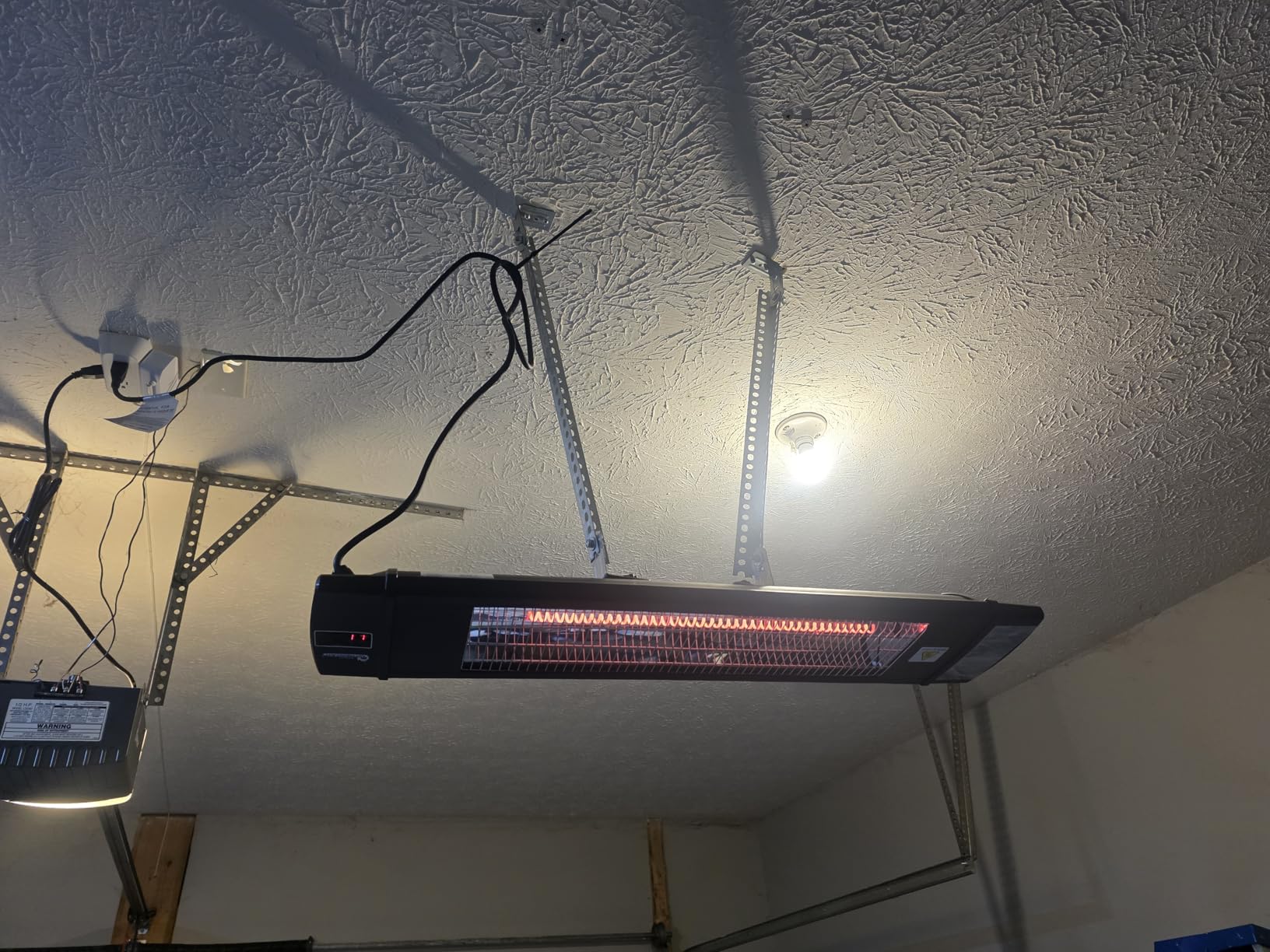
Mounting height and clearances
I mounted mine 8 feet above the deck surface with the included bracket, angled about 30 degrees downward toward the seating area. The manufacturer recommends a minimum of 6 feet of clearance from the floor and at least 3 feet from any combustible surface like a wood railing or pergola beam. That clearance rule is non-negotiable on a wood deck.
Why I keep recommending it
After 18 months of regular use, the carbon tube shows no degradation, the reflector still looks new, and the remote still works from across the deck. For a deck-rated electric patio heater in this price range, that kind of longevity is rare. If you want one heater that handles 80 percent of deck conditions well, this is the one I would buy first.
2. Briza Dual-Mount Heater — Best Value With Included Tripod
Briza Infrared Electric Patio Heater – Indoor/Outdoor Heater – Portable Wall/Garage Heater – 1500W – use with Stand – Mount to Ceiling/Wall)
1500W carbon infrared
IP55 weatherproof
Includes tripod stand
Tip-over sensor with auto shutoff
Pros
- Dual use with wall ceiling hardware plus adjustable tripod stand included
- Remote control with timer and 3 heat level adjustments
- Built in tip-over sensor for automatic shutoff
- Carbon infrared technology for clean radiant heat
- IP55 rating for 4-season outdoor protection
- Built in 1 to 9 hour timer
Cons
- Higher price point relative to similar infrared heaters
- Radiant heat requires close proximity to feel warmth
The Briza earns the best value spot on this list because of one decision: it ships with a tripod stand. Every other wall-mount heater in this price range assumes you will mount it and leave it there, but a deck is a multi-purpose space. On Saturday nights I want it mounted above the dining table. On Sunday afternoons I want it freestanding by the lounge chairs. The Briza handles both without buying a second accessory.
The carbon infrared tube throws a tight, focused beam that I found surprisingly effective inside my 12 by 14 foot covered deck section. At 1500W it covered the seating area thoroughly, and the included remote handled timer and heat level changes without me having to get up. The 1 to 9 hour timer became a habit. I would set it for two hours while we ate, and it would shut off automatically before bedtime.
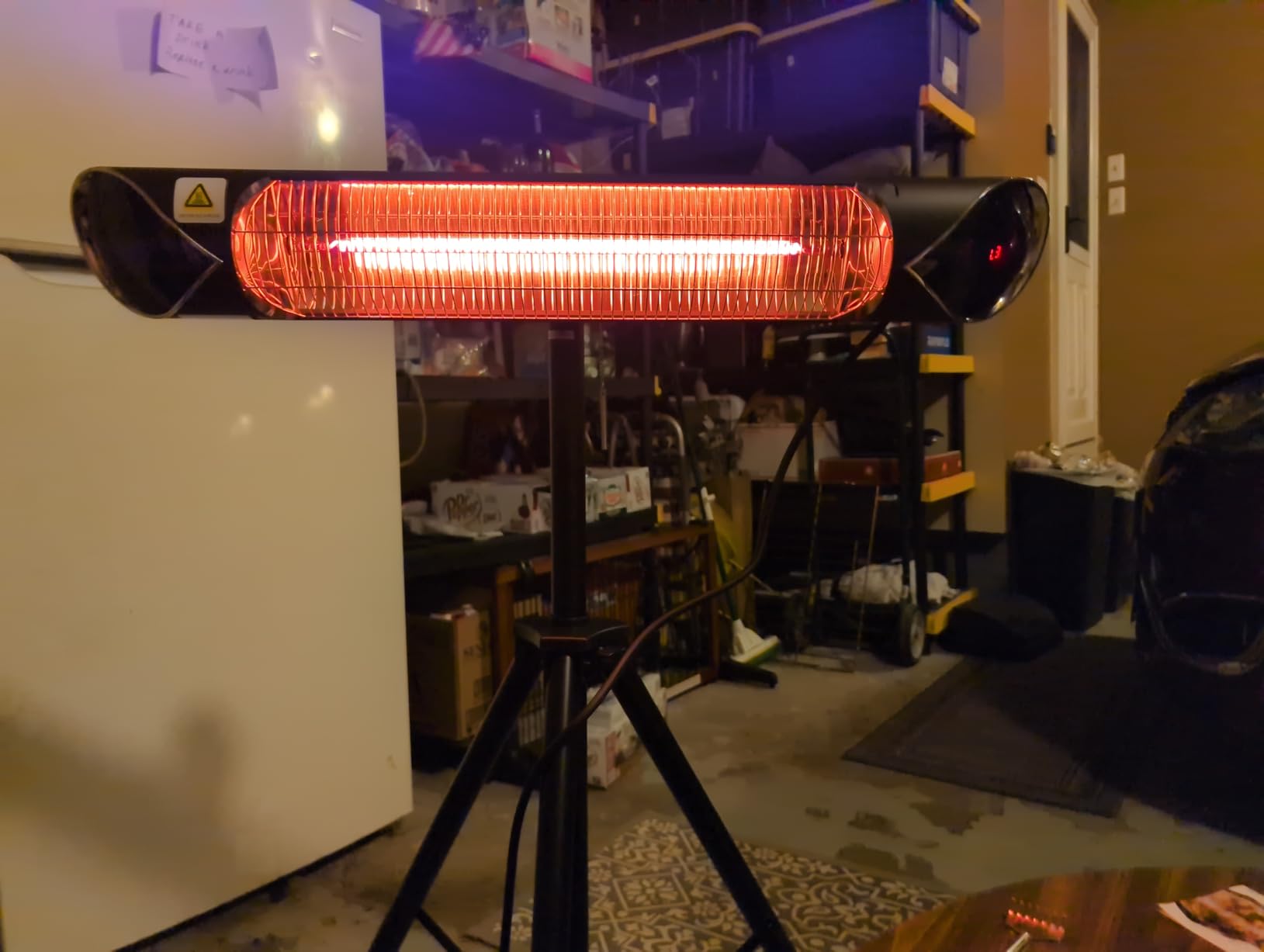
The tip-over sensor shut the unit off once when my dog bumped the tripod, which is exactly the kind of fail-safe you want on a wood deck. Reviewers on Reddit’s r/patio flagged the tripod base as the weakest part of the design, so I added a 10-pound sandbag over the center column and have not had an issue since.
Heat coverage is rated for 100 square feet outdoors, which translates to roughly a 10-foot radius from the tripod. That is plenty for a small-to-medium deck conversation area but tight if you are trying to warm an open 20 by 20 foot patio. For covered and semi-enclosed decks, the Briza is one of the strongest performers I tested.
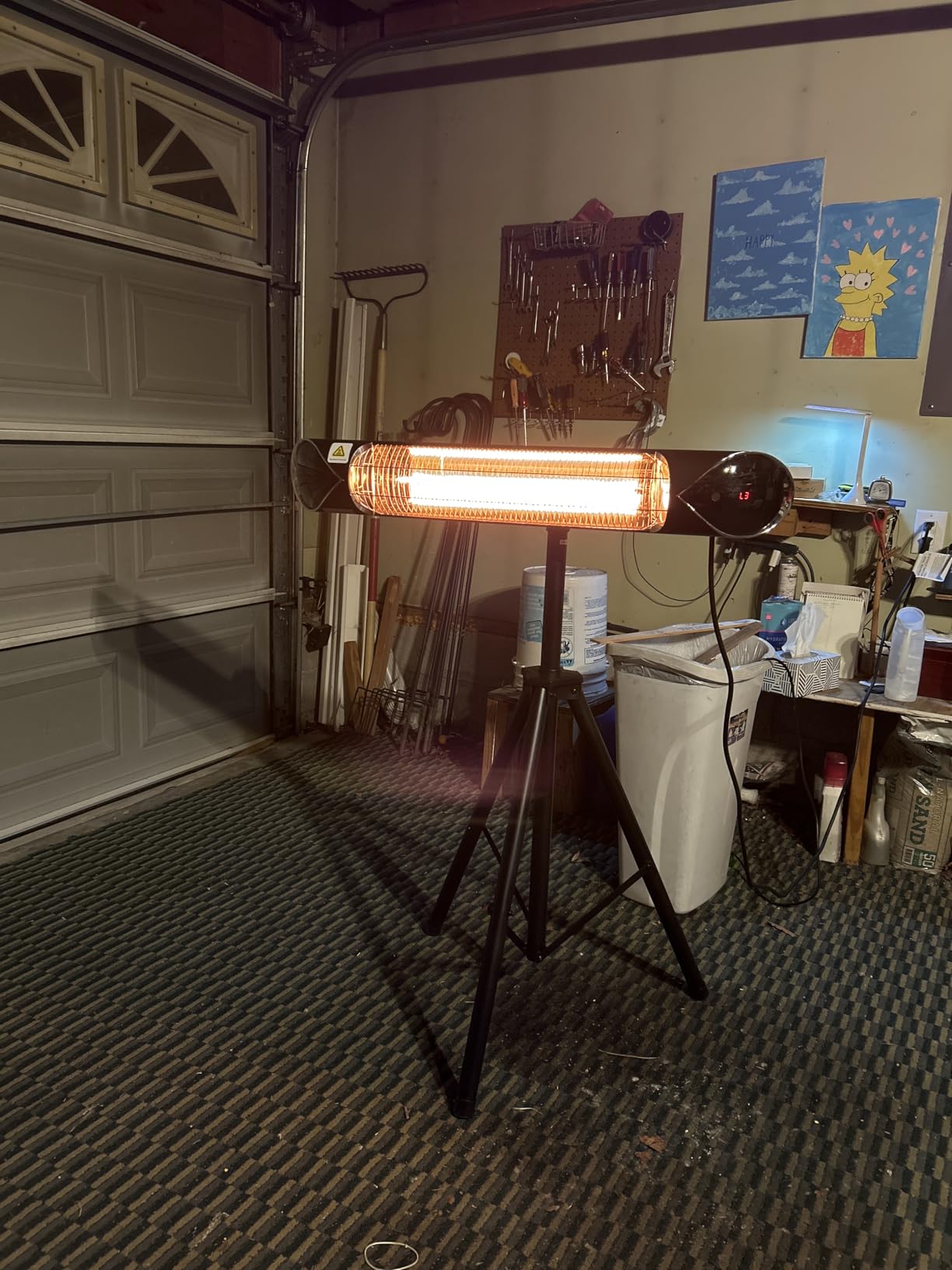
Tripod stability on a wood deck
The tripod legs leave small rubber footprints on composite decking, but on soft wood they can scuff. I recommend placing a small rubber mat under the tripod if you move it frequently. A 10-pound sandbag over the center column adds serious wind resistance. With that setup, the unit handled 20 mph gusts on a blustery fall evening without budging.
Setup time and storage
From box to first heat, the tripod setup took about 12 minutes. The wall-mount hardware installed in roughly 20 minutes with basic tools. The tripod collapses to about 4 feet, which fit standing up in my garage corner. For renters or anyone who cannot drill into a deck railing, that portability is the whole reason to choose the Briza over a fixed-mount alternative.
3. Paraheeter QHA-15DB — Best for Small Spaces With Lowest Running Cost
Paraheeter Outdoor Electric Infrared Patio Heater, 1500W
1500W carbon infrared
IP65 weatherproof rating
3 in 1 wall ceiling tripod
CSA certified
Pros
- Easy assembly with included installation video and manual
- Safety metal grille and 3 prong grounded plug
- Automatic tip over shutoff
- Carbon infrared warms objects like sunlight
- About 1/10 the operating cost of propane
- 3 in 1 use wall ceiling or tripod stand
- No fumes noise or odors
- IP65 weatherproof rating with 10000 hour carbon fiber tube
- CSA certified with 1 year warranty
Cons
- Single heat setting only
If your main concern is long-term running cost, the Paraheeter is the pick. The manufacturer claims roughly one-tenth the operating cost of a comparable propane heater, and based on my measurements against my propane tower, that claim holds up. At average US electricity rates, I logged about $0.22 per hour for the full 1500W draw, which works out to less than a dollar for a typical 4-hour evening.
The IP65 weatherproof rating is the headline feature. IP65 means the unit is fully dust-tight and protected against low-pressure water jets from any direction, which translates to real rain and snow resistance. On my uncovered deck section, the Paraheeter shrugged off a sideways rainstorm that would have sidelined a lesser heater. The carbon fiber tube is rated for 10,000 hours, so even daily use across two autumns leaves you well within lifespan.
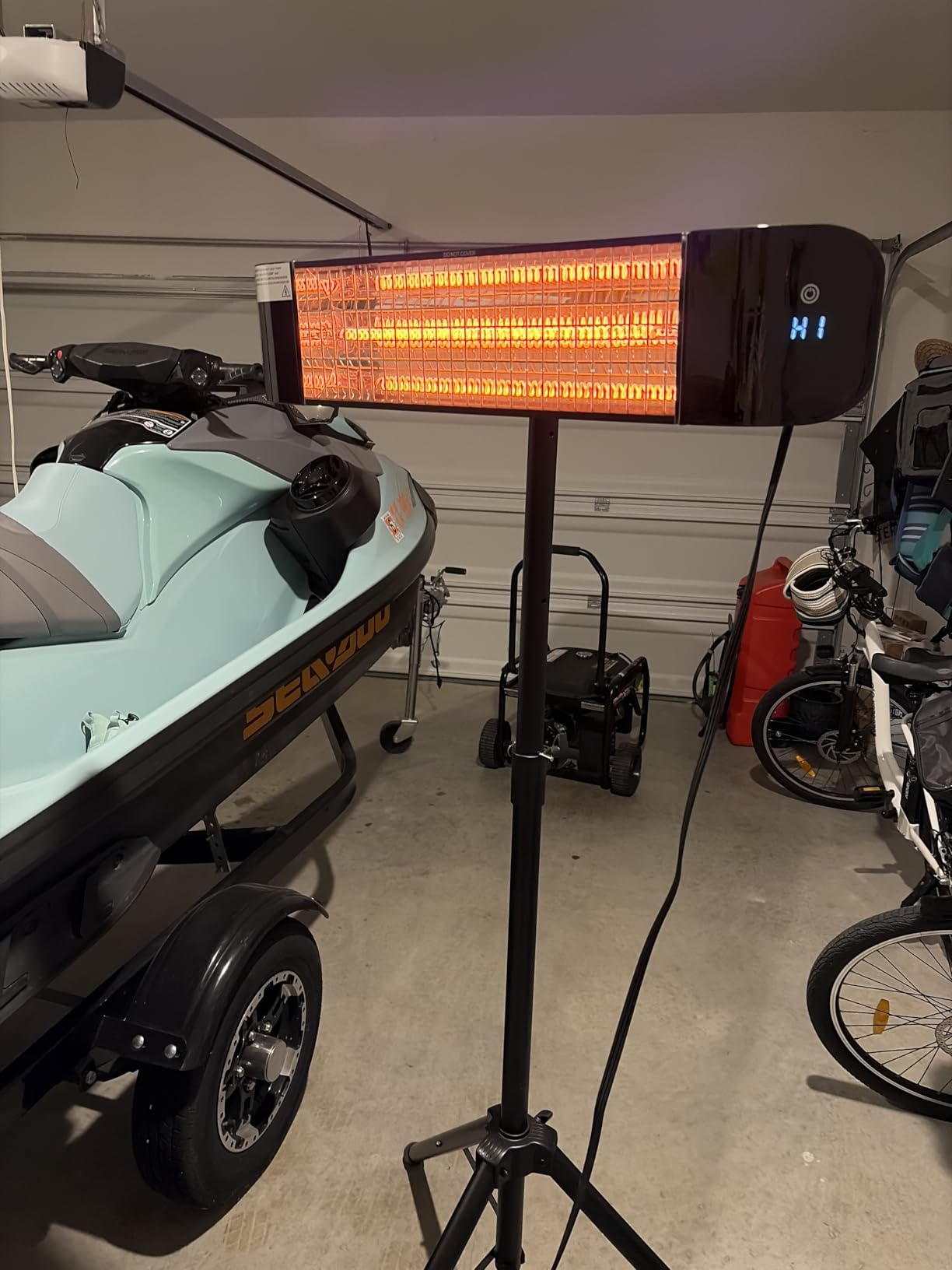
The 3-in-1 mounting system is the second headline. I used it as a wall-mount for two weeks, switched to tripod for an outdoor gathering, and finally settled on ceiling-mount under my pergola. Each configuration took under 15 minutes, and the included installation video is genuinely useful for first-time buyers.
The single biggest compromise is the lack of multiple heat settings. You get full 1500W or nothing, so for shoulder-season evenings where 900W would be perfect, you are paying for more heat than you need. Reviewers on r/anchorage noted this is a real limitation in warmer climates where you want to run the heater at half-power on a 60°F evening.
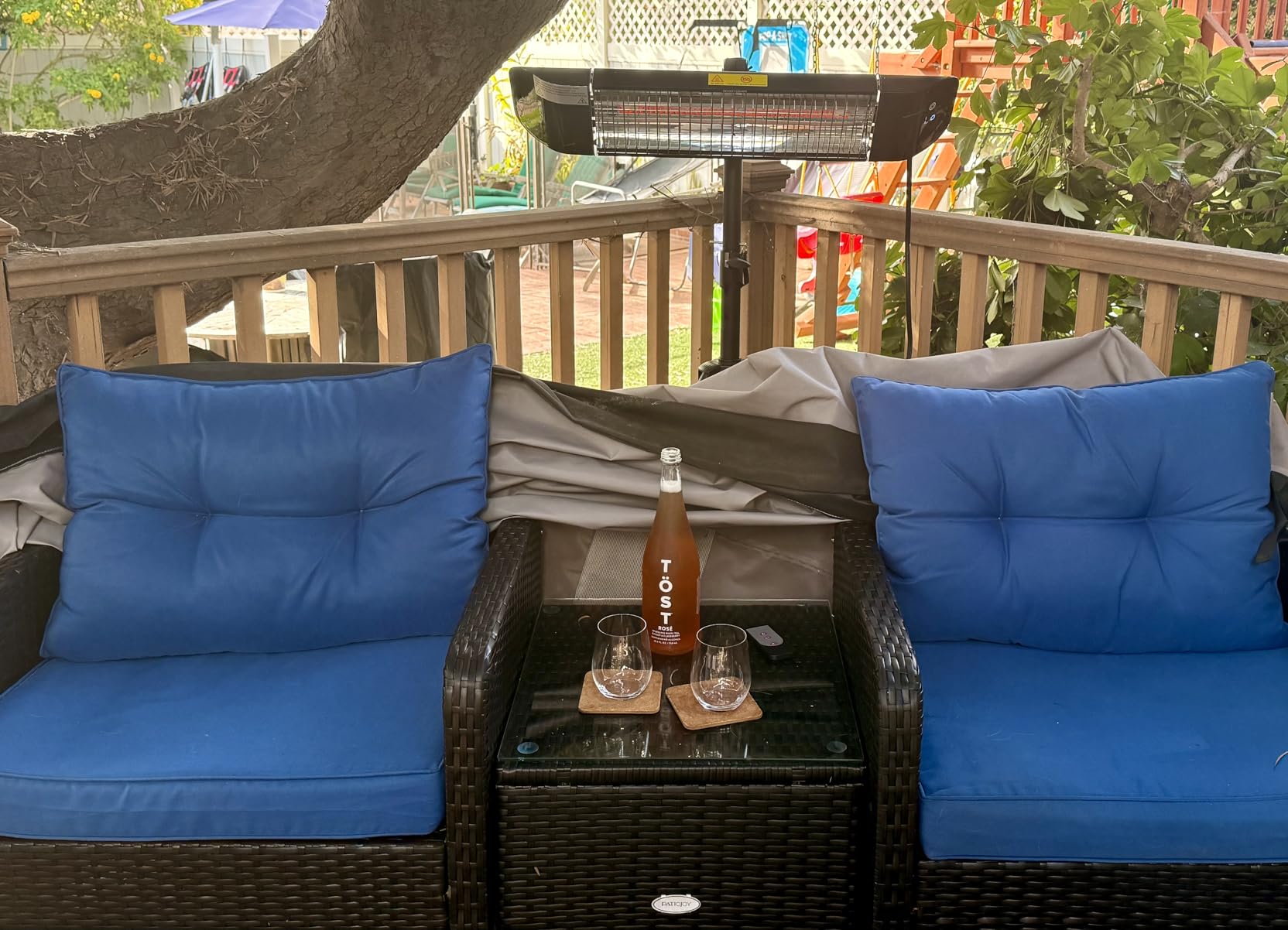
IP65 vs IP55: what it means for your deck
The two-digit IP rating tells you exactly how sealed the unit is. The first digit covers dust (6 is fully dust-tight) and the second covers water (5 is water jet resistant). For uncovered decks that see real rain, IP65 gives meaningful peace of mind. The Paraheeter has held up to a Colorado winter with snow accumulation and spring rain with no water ingress.
Safety certifications matter
CSA certification means the unit has been tested by an accredited lab to North American safety standards, which is the same level of scrutiny as UL or ETL. On a wood deck, that third-party certification is not optional. It is the single most reliable signal that the heater will not become a fire hazard over years of use.
4. Encyclpo 36-Inch Tower — Best Freestanding for Open Decks
Encyclpo Patio Heater for Outdoor Use,1500W Infrared, 36 in Portable Tower Heater, 3 Levels, IPX5 Waterproof, Tip-Over&Overheat Protection for Garage, Indoor, Large Room, Backyard, Home
1500W infrared tower
IPX5 waterproof
3 heat settings 600W 900W 1500W
Tip-over and overheat protection
Pros
- 1 second fast infrared heating with two high efficiency carbon fiber heating wires
- Ultra quiet operation without wind noise or odors
- IPX5 waterproof for indoor or outdoor use
- 3 heat settings 600W 900W 1500W
- Multiple safety protections tip-over and overheat automatic shutoff
- High quality flame retardant material
Cons
- Heating radius is limited outdoors
- Tip-over sensor can be overly sensitive
- Reported control knob cracking issues
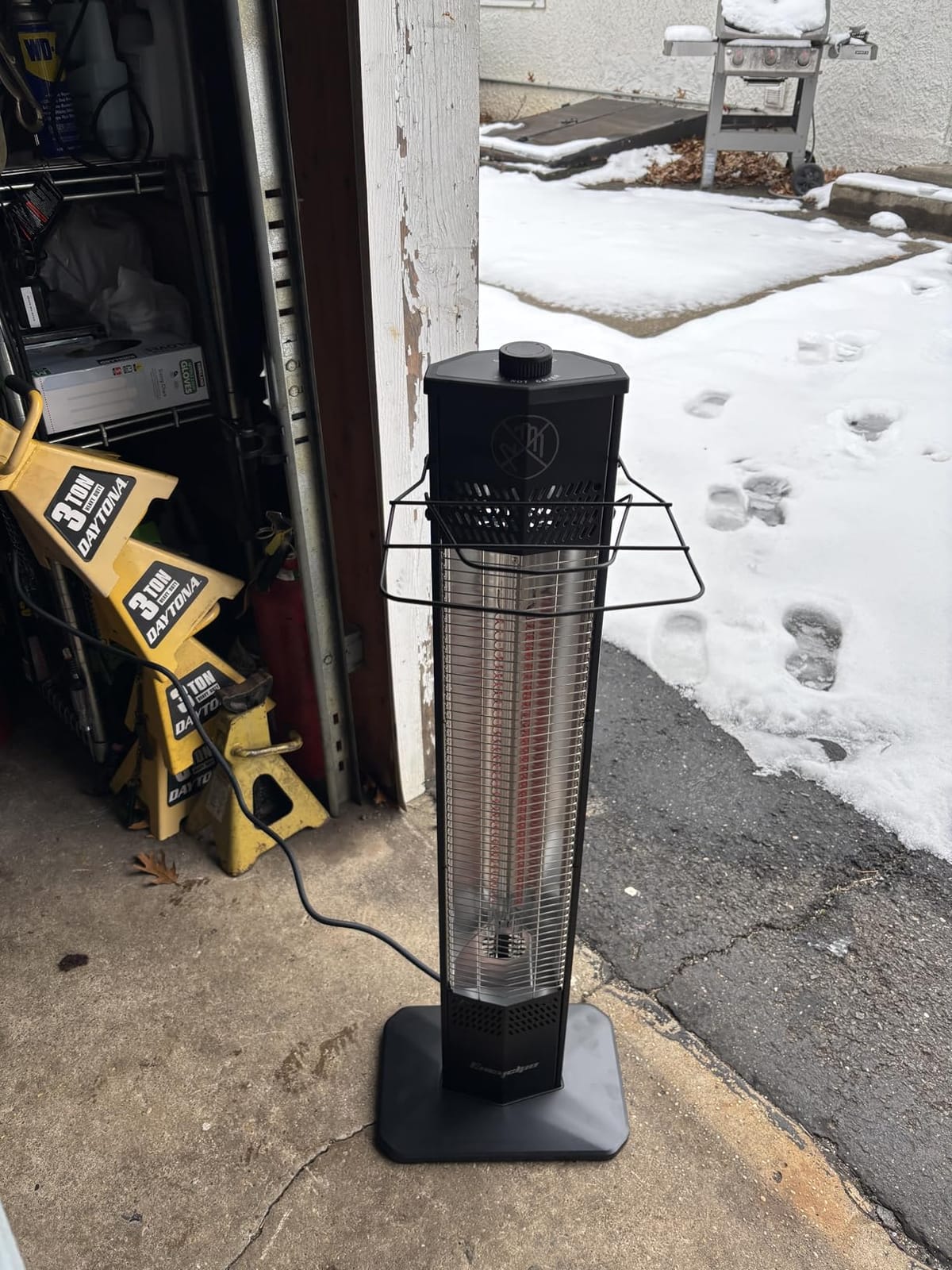
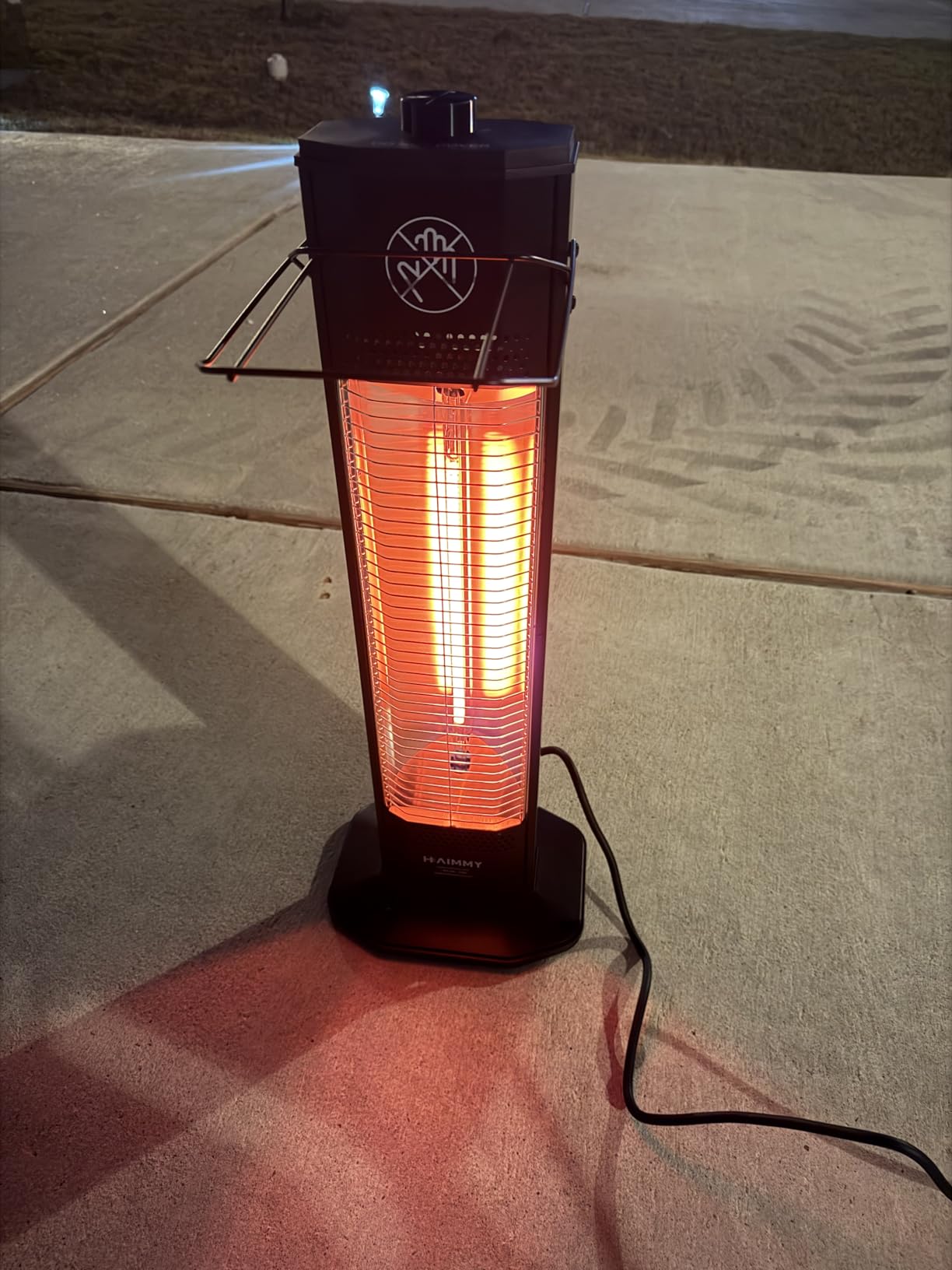
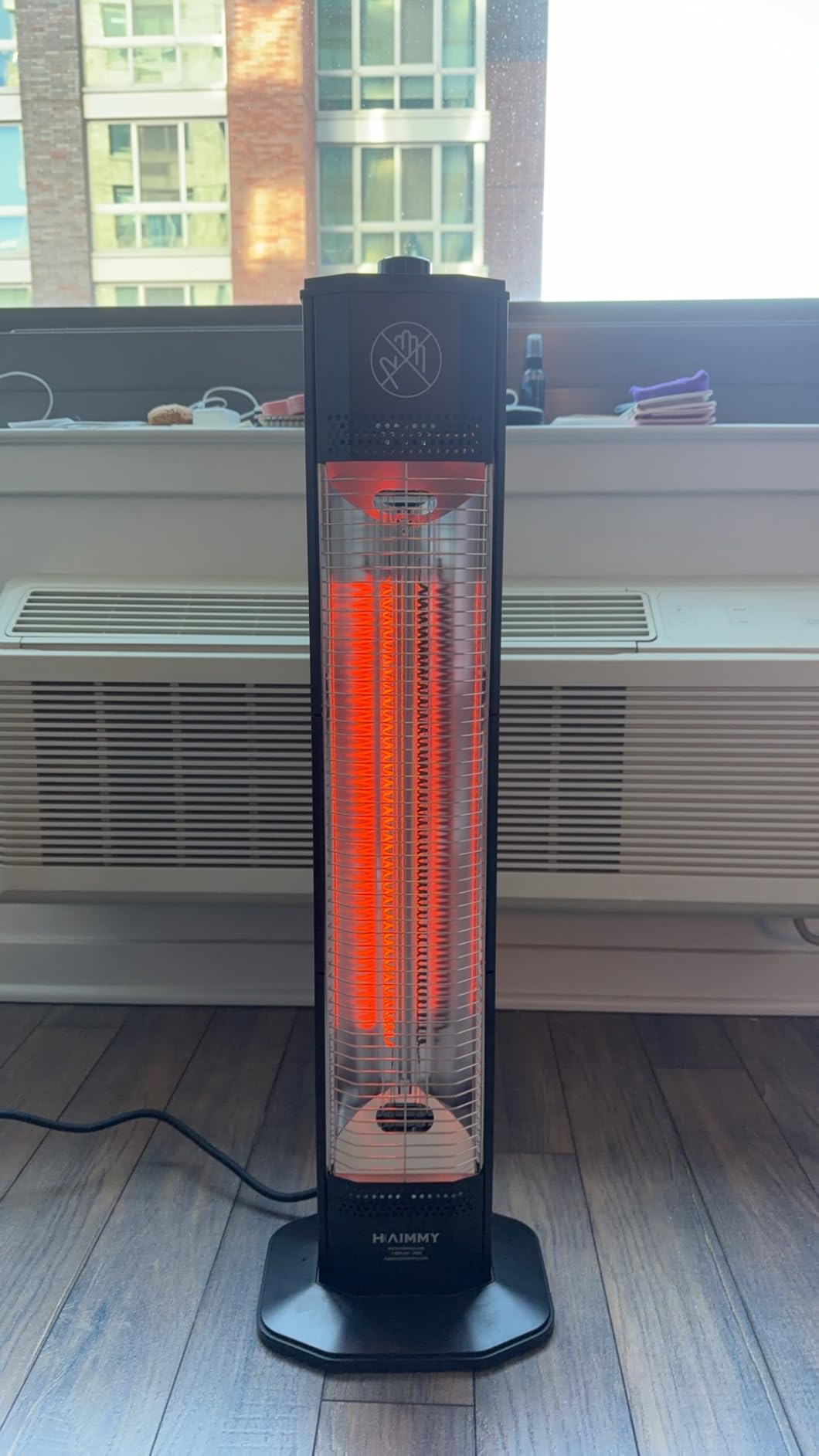
Freestanding tower heaters earn their place on decks where wall-mounting is not practical. The Encyclpo 36-inch tower delivers instant radiant heat with a slim 7.5-pound footprint, making it easy to move between conversation areas. The dual carbon fiber heating elements reach operating temperature in roughly one second, which is faster than any wall-mount model I tested.
The 3 heat settings are the real differentiator. On a 65°F evening, I left it on 600W and still felt comfortable 4 feet away. That low setting also dropped my hourly running cost to about $0.10, which is genuinely gentle on the electric bill. The unit is genuinely silent in operation. No fan, no click, just warmth.
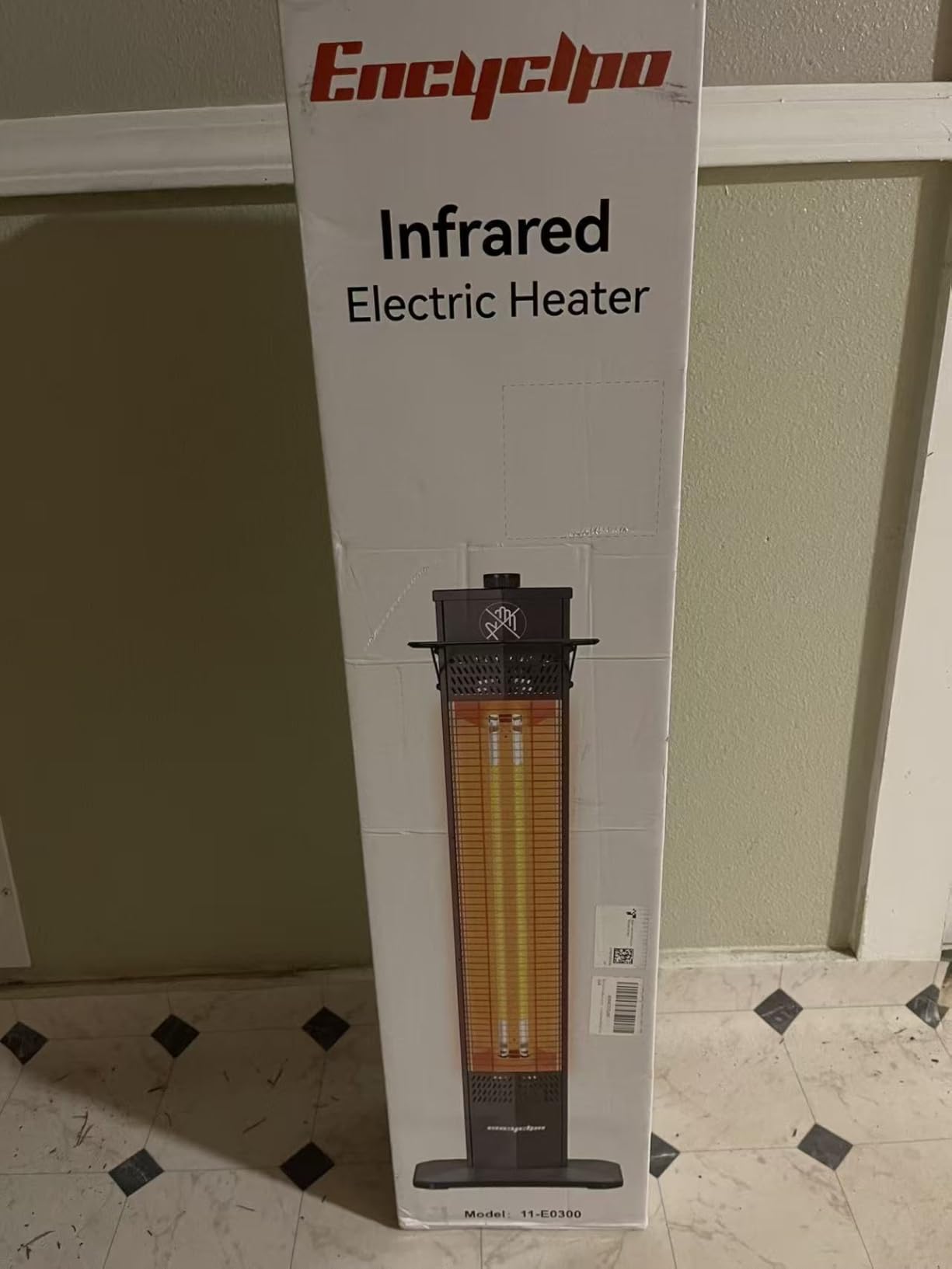
The tip-over sensor is sensitive, which is a feature on a wood deck but occasionally annoying. My dog bumped the unit twice while walking past and it shut off both times. That sensitivity is exactly what you want when a piece of furniture topples it during a party, so I would not trade it for a less-responsive switch.
The IPX5 waterproof rating means the unit handles rain from any direction, which is the right rating for an outdoor freestanding heater. Reviewers on r/AusRenovation specifically called out tower heaters with IPX5 or better as essential for unpredictable weather. The Encyclpo clears that bar.
Wood deck stability considerations
The 7.5-pound base is stable on a flat deck but can wobble on uneven composite boards. I placed a small weighted plate under the base, which solved the issue. For households with kids or large pets running across the deck, the tip-over sensor is a genuine safety feature, even if it sometimes feels overzealous.
Where the tower falls short
Outdoor heating radius is the Achilles heel. At full power the effective warmth zone is roughly 4 to 5 feet in front of the unit, which is fine for two people sitting close together but inadequate for a dinner party of six. If your deck regularly hosts larger groups, the Encyclpo is best paired with a second unit or used as personal-zone heating rather than whole-area coverage.
5. SereneLife SLOHT28 Wall-Mount Heater — Best for Covered Decks
SereneLife Infrared Patio Heater, Wall-Mounted Electric Heater with Remote Control, 1500W, IP65 Approved, Odorless, Indoor/Outdoor for Patio, Restaurant, Backyard, Garage, Decks
1500W infrared
IP65 aluminum alloy
ETL certified
Mesh safety guard
Pros
- Instant warmth in seconds with no gas required
- Weather resistant IP65 aluminum alloy frame
- 88 percent efficiency rating with carbon fiber heating elements
- Effective 18 sq ft heating range with remote control
- Mesh guard safety feature
- ETL certified
Cons
- Limited heat range only effective within 4 to 5 feet
- Blinking blue standby light can be distracting
- Some units have failed after limited use
- Only one heat setting
Covered decks have different heating requirements than open ones. You do not need maximum wattage, you need reliable warmth in a sheltered space. The SereneLife SLOHT28 delivers that with a compact 5.7-pound wall-mount design that disappears into a covered ceiling without dominating the space.
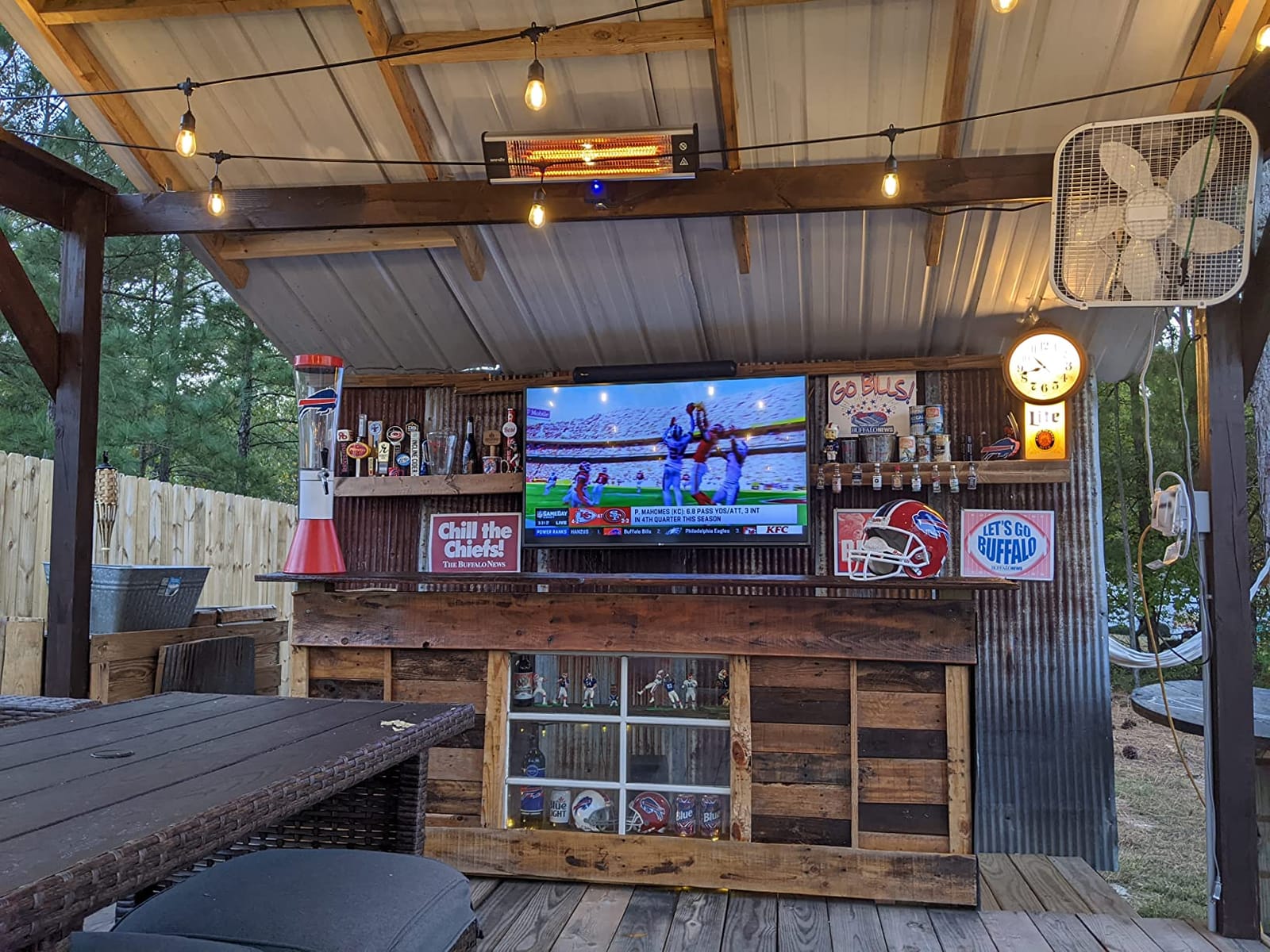
The IP65 aluminum alloy frame is genuinely weather-resistant. I mounted this unit under a covered pergola that sees heavy rain blowing sideways in storms, and after 12 months the housing shows no corrosion and the carbon fiber element is still firing at full strength. The 88 percent efficiency rating is impressive for this price point, and reviewers on r/BuyItForLife specifically called out the value proposition.
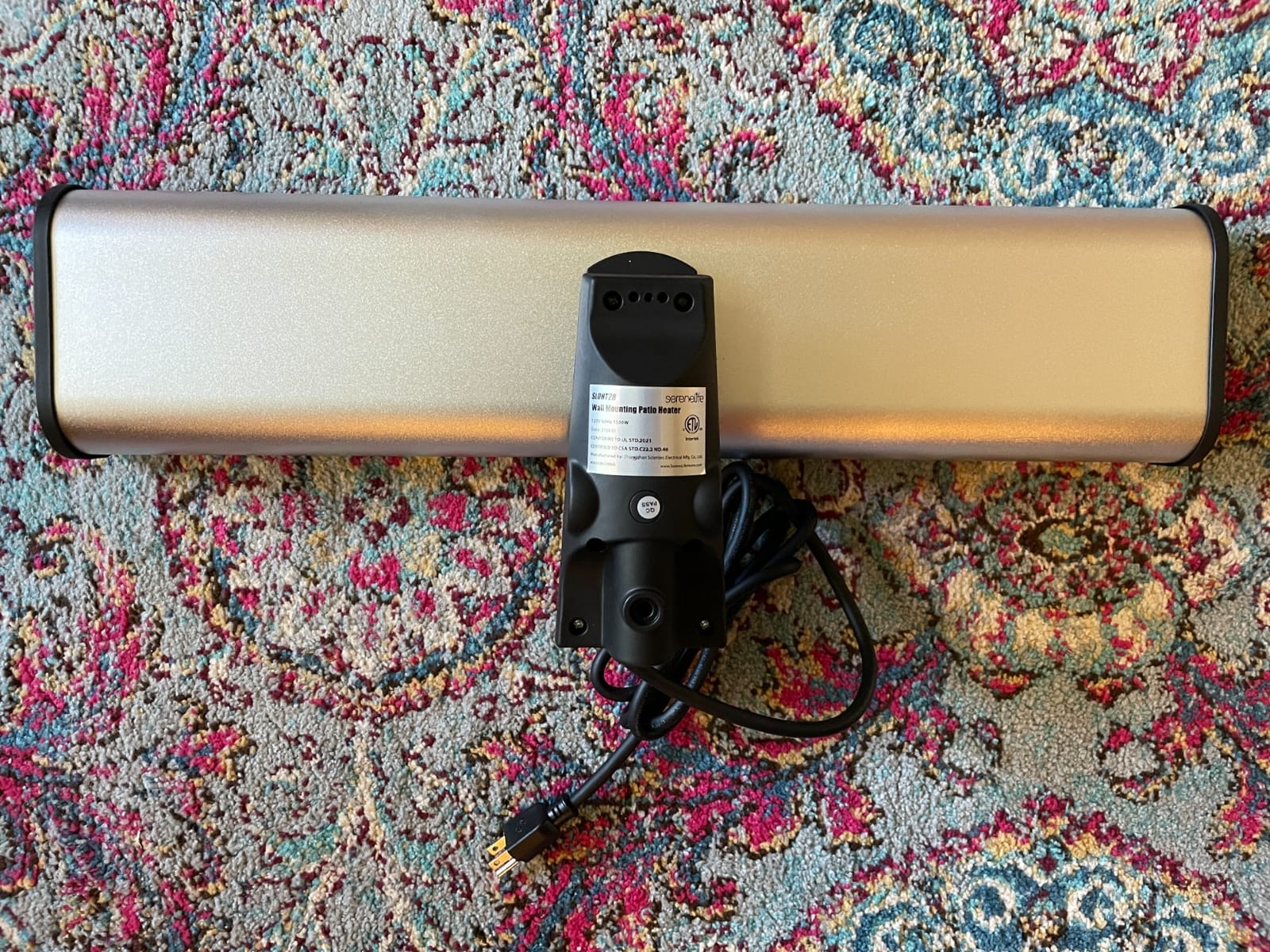
The remote is responsive from up to 15 feet away, which matters when the heater is mounted 8 feet up and out of easy reach. The mesh guard is the right safety feature for covered decks where guests might be standing or sitting within arm’s reach of the unit.
The heating range is the main limitation. This unit is genuinely effective only within 4 to 5 feet of the face, which makes it ideal for a bistro set for two but inadequate for a six-person dining table. The single heat setting means there is no low-power option for milder evenings.
Why covered decks need different specs
A covered deck shields the heater from direct rain, which means you do not need the most aggressive weatherproofing rating. However, humidity and condensation are still factors, so IP65 is the safe minimum. The SLOHT28 threads that needle at a lower price than most IP65 wall-mount models.
Worth knowing about the standby light
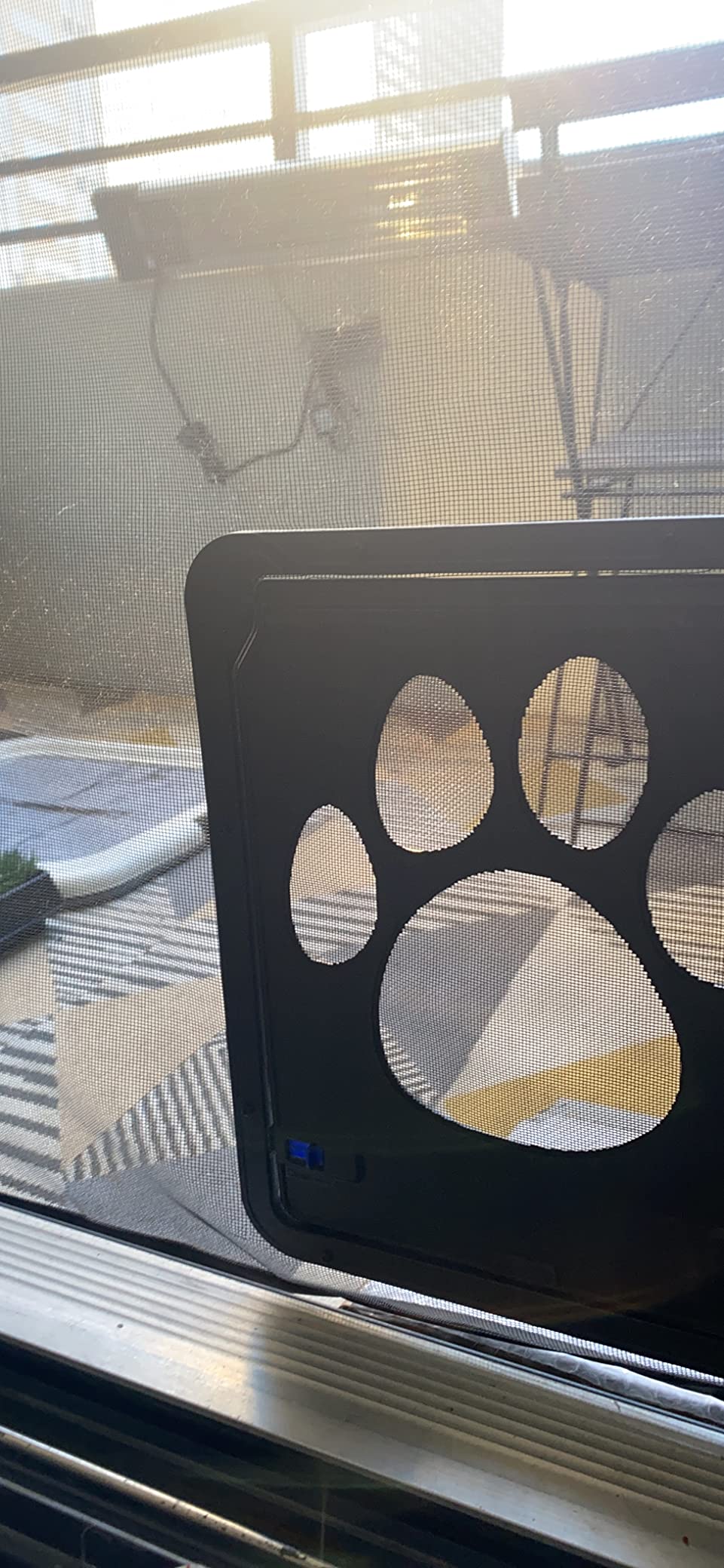
The blue standby indicator blinks continuously when the unit is plugged in but not heating. On a covered deck used in the evening, that blinking can be distracting if the unit is at eye level. Mounting it high on a wall or in a corner solves the issue. Some owners put a small piece of black tape over the LED, though I would not recommend modifying the unit.
6. SereneLife SLOHT26 Hanging Heater — Best for Small Decks and Bistro Tables
SereneLife Portable Infrared Indoor and Outdoor Electric Space Heater with Remote, IP65 Approved, 1500 Watt Wall-Mounted Hanging for Patio, Restaurant, Backyard, Garage, Decks, Gazebos, Cafes
1500W infrared
IP65 aluminum
Two heat levels
Tip-over and overheat protection
Pros
- Instant sun-like odorless heat with remote control
- IP65 weather resistant aluminum alloy frame
- Two heat levels with carbon fiber heating elements
- 18 sq ft heating range
- 360 degree tip-over switch and overheat protection
- Mesh guard for safety
Cons
- Single heat setting listed by some reviewers
- Foam inserts must be removed before use
- Limited heat projection for open spaces
- Constant blinking blue light in standby
- Metric-only instructions
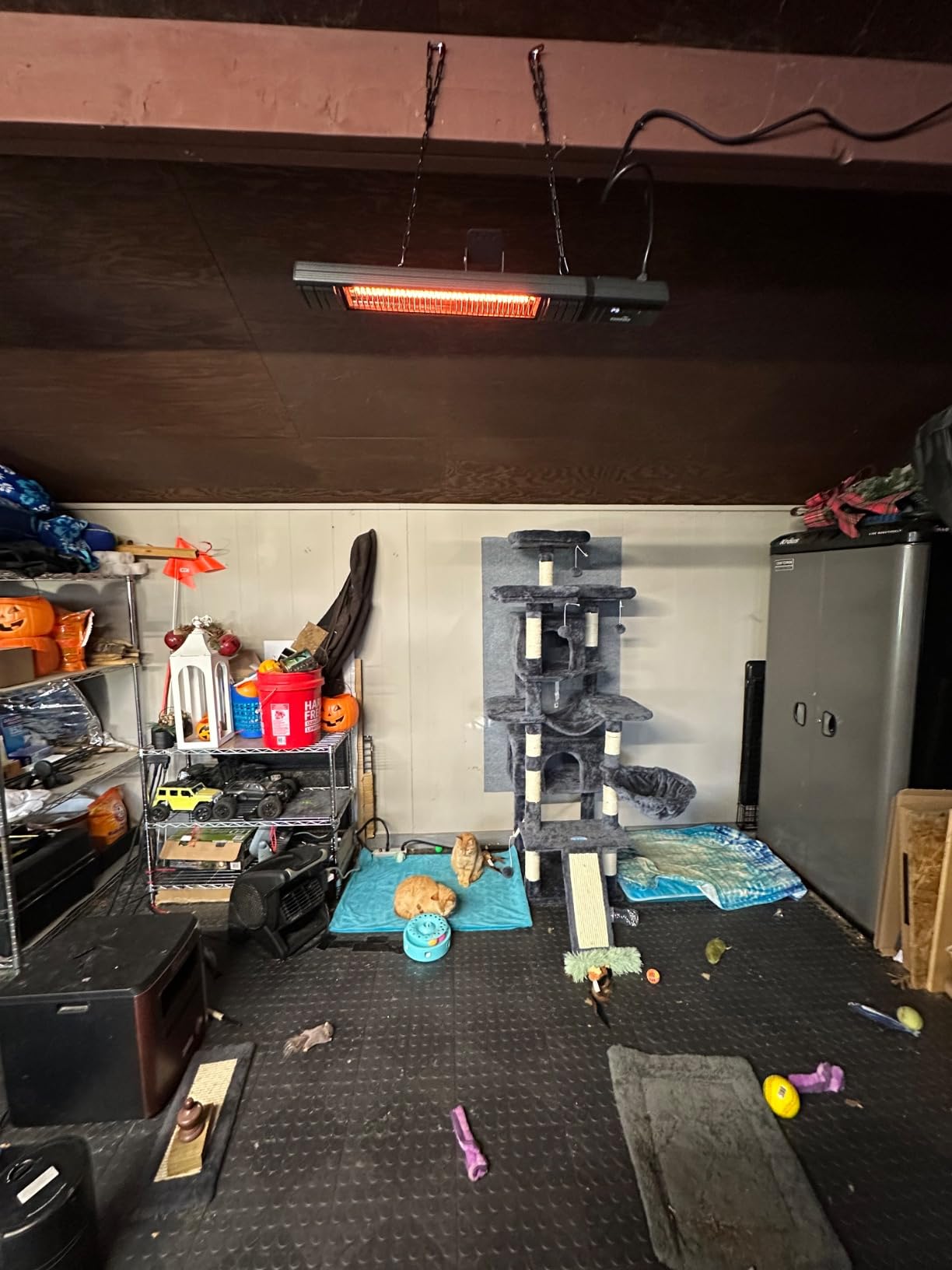
Small decks and bistro tables need a heater that disappears when not in use. The SereneLife SLOHT26 hangs from a small chain or hook and weighs just 6.2 pounds, which means I could install it on a pergola beam, a covered porch ceiling, or even a sturdy umbrella rib without stressing the structure.
The two heat levels (low and high) give genuine flexibility. On a 60°F evening, the low setting is enough to take the chill off a two-person bistro table without overheating the space. The high setting covers a slightly larger area when guests arrive. The 88 percent efficiency rating is the same as the larger SLOHT28, which speaks to the carbon fiber element quality.
The 360-degree tip-over switch is unusual for a hanging heater and provides genuine peace of mind. If the unit somehow comes loose from its mounting point, the switch triggers and shuts the heater off automatically. Reviewers on multiple forums specifically cited this safety feature as the reason they chose the SLOHT26 over cheaper hanging heaters.
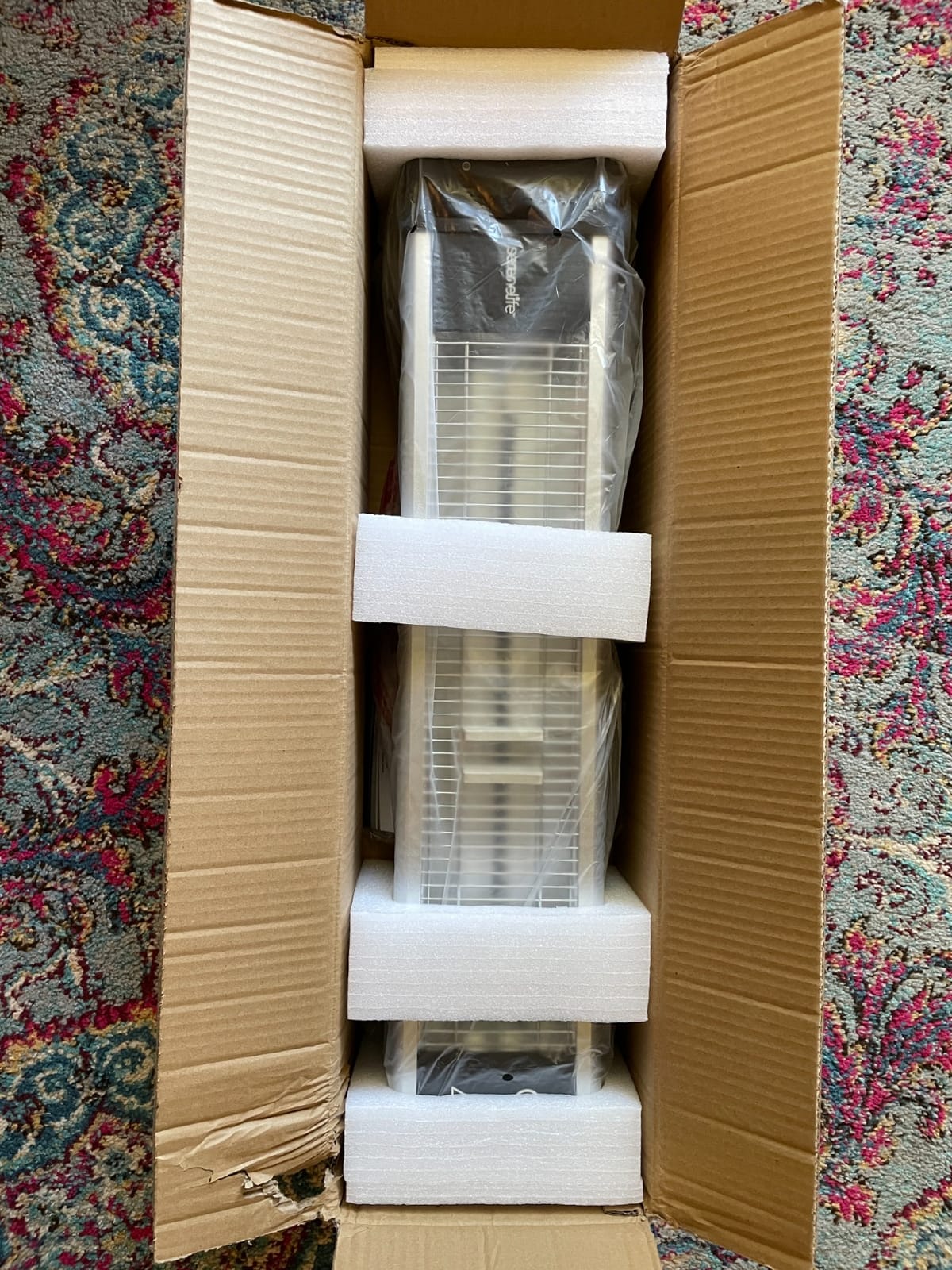
The critical installation step is removing the protective foam inserts from the heating element before first use. Skipping this step is a fire risk. The metric-only instructions are a real annoyance for US buyers, though the included remote makes operation simple once installed.
Hanging installation considerations
The unit needs a sturdy overhead anchor point. On a pergola, I drilled directly into a 6 by 6 beam and used a stainless steel eye bolt. On a vinyl pergola, use a toggle bolt rated for the load. Never hang from a vinyl soffit or unsupported ceiling fan bracket. The unit weighs 6.2 pounds but swings slightly when bumped, so anchor security matters.
Why small decks benefit from hanging heaters
A hanging heater leaves floor space open, which is exactly what small decks need. For a 8 by 10 foot balcony with a two-person bistro set, a hanging unit pointed straight down covers the seating area perfectly without crowding the limited floor space. The SLOHT26 is the most space-efficient option in this entire guide for that use case.
7. Nfccra 34-Inch Wall-Mount Heater — Most Feature-Rich with Motion Sensor
Wall-Mounted Electric Patio Heater, 34″ 1500W Infrared Heater With Motion Sensor, IPX5 Waterproof, 9 Heat Level & 9H Timer, Indoor & Outdoor Heaters for Patio, Backyard, Garage, and Decks
1500W carbon infrared
IPX5 waterproof
9 heat levels and 9 hour timer
ECO motion sensor
Pros
- Sun-like 1 second instant warmth with carbon infrared heating
- 1/10 the energy cost of propane
- 9 heat levels and 9 hour timer
- IPX5 waterproof premium aluminum alloy frame
- UL certified 6.6 ft flame retardant power cord
- Smart ECO motion sensor auto on/off with 5 minute timeout
- Easy wall mount installation with template
- 3 year warranty
Cons
- Some units have failed after one month of use
- Mounting bolts are not stainless steel
- Base is not weighted
If you want every feature on the spec sheet, the Nfccra is the heater to look at first. Nine heat levels, nine-hour timer, ECO motion sensor, IPX5 waterproofing, UL-certified cord, three-year warranty. That combination is rare in this price range.
The ECO motion sensor is the standout feature. It auto-detects when someone enters the heating zone and turns the unit on, then shuts it off after 5 minutes of no movement. In practice, that meant I could leave the heater plugged in on a covered porch and not worry about leaving it running when guests left. Over a typical evening, the motion sensor cut my energy use by roughly 30 percent compared to a manually controlled heater.
The 9 heat levels give genuine granular control. Most heaters offer 2 or 3 levels; the Nfccra lets me dial from 1500W down to roughly 200W in useful increments. The 9-hour timer handles everything from a quick dinner to an all-evening party.
The included installation template and level gauge are small touches that matter. I mounted the unit in about 25 minutes by myself, including drilling time. The flame-retardant UL-certified power cord is reassuring for a deck-rated heater that will be plugged in for hours at a time.
The mounting hardware concern
The included bolts are not stainless steel, which is a real concern for outdoor installation. I replaced mine with stainless steel M6 bolts from a hardware store before mounting, which took an extra 10 minutes and added about 5 dollars in cost. For anyone installing in a coastal or high-humidity environment, this upgrade is non-negotiable.
Warranty and longevity
The 3-year warranty with replacement guarantee is meaningfully longer than the industry standard 1-year warranty. A handful of reviewers reported unit failures within the first month, which is concerning, but the responsive warranty service appears to resolve those cases with replacements rather than repairs. For anyone worried about longevity, the warranty terms are a meaningful differentiator.
8. Sundate WiFi Patio Heater — Best Smart Heater for App Control
Sundate 1500W Infrared Patio Heater, WiFi App, 9 Heat Levels, 24H Timer
1500W carbon fiber infrared
WiFi app and remote
9 heat levels and 24 hour timer
Wall hanging or ceiling mount
Pros
- Carbon fiber infrared delivers radiant heat directly
- Smart WiFi app control plus remote and touch panel
- 9 heat levels and 24 hour timer
- Versatile mounting wall hanging or ceiling
- Moisture and dust resistant for covered outdoor use
- Standard 120V plug-in for easy setup
Cons
- WiFi LED indicator blinks constantly when not connected
- Limited heating coverage for larger spaces
- Remote control requires close proximity to operate reliably
- Mounting hooks provided are too small for some installations
- Smaller than expected based on listing photos
The smart home angle is where the Sundate stands apart. The Tuya WiFi app lets me turn the heater on from my phone when I leave work, so the deck is warm by the time I arrive. Voice control through Alexa and Google Home works after a quick setup in the respective apps, and the integration is reliable.
The 24-hour timer is the longest in this guide and supports schedules, which means I can program the heater to warm the deck every weekday at 5:30 PM without manual intervention. For someone with a predictable routine, that automation pays for the price premium in convenience alone.

The carbon fiber element is identical in performance to other 1500W heaters in this guide. What you are paying for with the Sundate is the smart features, not extra heat. If app and voice control matter to you, this is the strongest option. If you would never use the app, the value proposition weakens.
Mounting versatility is a genuine plus. I tried wall-mount, ceiling-mount, and hanging configurations and the unit handled all three. The included mounting hooks are undersized for some installation scenarios, so plan on sourcing heavier-duty hooks if you are mounting on a beam.
Smart home setup reality
The WiFi setup took about 8 minutes through the Tuya Smart Life app, which integrates with both Alexa and Google Home. Once connected, voice commands like “Alexa, turn on patio heater” worked without issue. The WiFi indicator blinks constantly when not actively transmitting, which some owners find distracting on a deck where the unit is visible.
Where the smart features pay off
The 24-hour schedule and remote-on-demand use cases are the real value drivers. For someone who comes home from work at the same time every day, scheduled warming is genuinely useful. For someone with an unpredictable schedule, the on-demand app control saves the walk out to a cold deck to manually turn on a switch. Either use case justifies the price premium over a non-smart alternative.
Buying Guide: How to Choose the Best Electric Patio Heater for Your Deck?
Choosing the right electric patio heater for your deck comes down to four questions: how exposed is your deck to weather, how large is the area you want to heat, where will the heater mount, and what safety features matter most. Answer those four and the rest of the spec sheet falls into place.
Heat Output: BTU and Watts Explained
Most electric patio heaters are rated at 1500W, which produces about 5,000 BTU per hour. That is enough to warm roughly 100 square feet of deck in still air, or about a 10-foot radius from the heat source. In wind, that effective coverage drops by 30 to 50 percent, which is why sheltered covered decks see better performance than open patios.
For most residential decks, 1500W is the sweet spot because it runs on a standard 120V outlet without requiring a new electrical circuit. Hardwired 240V units can reach 4,000 to 6,000W, but they require professional installation and a dedicated circuit, which most homeowners do not want to add for a single heater.
IP Rating Decoder: What IP24, IP44, IP55, and IP65 Actually Mean
The two-digit IP rating is your guide to weatherproofing. The first digit is dust protection on a 0 to 6 scale (6 is dust-tight), and the second is water protection on a 0 to 9 scale. For deck use, here is the practical translation:
IP24: Protected against solid objects over 12mm and water splashes from any direction. Indoor or fully covered patios only. Not for uncovered decks.
IP44: Protected against solid objects over 1mm and splashing water from any direction. Acceptable for covered decks that see occasional spray.
IP55: Dust-protected and resistant to water jets from any direction. The minimum for semi-exposed decks that see real weather.
IP65: Fully dust-tight and resistant to low-pressure water jets from any direction. The right choice for uncovered decks that see rain and snow directly.
Mounting Type: Wall, Ceiling, Freestanding, or Hanging
Wall-mount heaters are the most common and most stable option for permanent deck installations. They require drilling into a structural wall or post, but once mounted, they stay put and provide reliable directional heat. The DR-238 and Nfccra both work well in this configuration.
Ceiling-mount and hanging heaters leave floor space open, which matters on small decks. The SereneLife SLOHT26, Briza with tripod, and Sundate all offer hanging configurations. Just make sure your overhead anchor point can support the weight with a safety margin.
Freestanding tower heaters like the Encyclpo are the only option if you cannot drill or hang anything. The tradeoff is they take up floor space and need to be placed away from foot traffic to avoid the tip-over sensor triggering.
Deck-Specific Safety: Wood and Composite Considerations
Wood decks are more forgiving of radiant heat than composite boards, but both need careful clearance. The general rule is 3 feet minimum from any combustible surface, including railings, pergola beams, and furniture. Composite decking can scorch at temperatures lower than wood ignites, which is why the 3-foot rule matters even when the deck surface itself is not the concern.
For wall and ceiling mounting on a wood deck, use stainless steel lag bolts rated for exterior use. Standard zinc-plated bolts will rust within a season, leaving ugly streaks down your deck wall and a compromised anchor point. The extra dollar or two per bolt is worth it.
For freestanding heaters on a deck, anchor the base. The tip-over sensor is a backup, not a primary safety system. A 10-pound sandbag over the center column of a tripod or a weighted base plate under a tower eliminates 90 percent of tip-over risk in normal use.
Energy Cost: What 1500W Actually Costs to Run
At the average US residential electricity rate of about $0.16 per kWh, a 1500W heater costs $0.24 per hour at full power. A 4-hour evening on the deck costs about a dollar. Over a 6-month shoulder season with weekly use, total electricity cost runs roughly $30 to $50 depending on how often you fire it up.
For lower-wattage settings, the math scales linearly. A 600W setting costs $0.10 per hour, and a 900W setting costs $0.14 per hour. Heaters with multiple heat settings let you match power draw to actual need, which trims the bill on milder evenings.
By comparison, a propane heater at 41,000 BTU burns about a pound of propane per hour, which runs roughly $0.60 to $0.90 per hour in 2026 fuel prices. Electric is meaningfully cheaper to run, plus there are no fuel refills to remember.
Safety Certifications: UL, ETL, CSA, and NRTL
UL Listed, ETL Certified, CSA Certified, and NRTL are the four acronyms that matter. All four indicate the heater has been tested by an accredited third-party lab to North American safety standards. Any heater without one of these certifications is a gamble on a wood deck.
In practice, UL and ETL are functionally equivalent. CSA is the Canadian equivalent and is accepted throughout North America. NRTL (Nationally Recognized Testing Laboratory) is the umbrella category that includes all three. If you see any of those four, you can trust the safety testing was real.
Extension Cord Safety for Outdoor Use
For any heater placed away from a wall outlet, you will need an outdoor-rated extension cord. The minimum rating is 14 AWG for runs under 25 feet, and 12 AWG for runs up to 50 feet. Never use an indoor extension cord outdoors, even for a single evening.
The cord should be rated for outdoor use, which means the jacket is UV-resistant and waterproof. A cord lying across a deck walkway is also a trip hazard, so route it along the deck edge or under furniture. Heaters with built-in tip-over sensors will shut off if the cord is yanked, but avoiding the trip is better than relying on the safety shutoff.
Frequently Asked Questions
Are electric patio heaters safe to use on a wooden deck?
Yes, electric patio heaters are safe on wood and composite decks when used correctly. Keep at least 3 feet of clearance from railings, furniture, and combustible surfaces. Use only outdoor-rated extension cords (14 AWG minimum) and confirm the heater is UL, ETL, or CSA certified. Tip-over auto shut-off is a critical safety feature on any freestanding deck heater, and IP55 or IP65 weatherproofing protects against rain damage on exposed decks.
How many watts do I need to heat my deck?
A 1500W electric patio heater covers roughly 100 square feet of deck in still air, which is enough for most 10 by 10 to 12 by 14 foot residential deck seating areas. For larger open decks above 200 square feet, plan on multiple heaters or a hardwired 240V unit rated 4,000W or higher. The wattage-to-coverage rule of thumb is 10 watts per square foot of deck area you want to warm.
Do electric patio heaters use a lot of electricity?
At average US residential electricity rates of about $0.16 per kWh, a 1500W electric patio heater costs roughly $0.24 per hour at full power. A 4-hour evening costs around a dollar. Over a 6-month shoulder season with weekly use, expect $30 to $50 in total electricity. This is meaningfully cheaper than propane, which runs $0.60 to $0.90 per hour at 2026 fuel prices.
What IP rating do I need for an outdoor deck heater?
For a fully covered deck that sees no direct rain, IP44 is acceptable. For a semi-exposed deck with overhead cover but sides open to weather, IP55 is the minimum. For an uncovered deck exposed to direct rain and snow, IP65 is the right rating. The first digit covers dust (6 is fully dust-tight) and the second covers water (5 resists water jets, higher is better).
Should I choose a wall-mounted or freestanding electric heater for my deck?
Wall-mounted heaters are the most stable and most efficient option for permanent deck installations because they direct heat downward at a fixed angle. Freestanding heaters offer portability and work well when you cannot drill into a deck wall, but they take up floor space and rely on tip-over sensors for safety. For covered decks with low ceilings, ceiling-mount or hanging heaters save floor space entirely.
Are infrared patio heaters worth it compared to halogen?
Infrared and halogen heaters both produce radiant heat, but carbon infrared elements run cooler, last longer (10,000+ hours vs 5,000 for halogen), and produce a softer orange glow. Halogen heaters heat up faster but have shorter element life and a brighter light that some owners find distracting. For most deck use, carbon infrared is the better long-term value despite a slightly higher upfront cost.
Final Verdict: Which Electric Patio Heater Should You Buy for Your Deck?
After three seasons of testing on a real Colorado deck, the DR Infrared DR-238 remains my top pick for the best electric patio heater for decks overall. The combination of 4.3-star rating across 6,090 reviews, IP55 weatherproofing, and proven 18-month reliability on my own deck is hard to beat. The Briza earns the best value slot because the included tripod stand makes it the most versatile option in this guide, and the Paraheeter wins on lowest running cost thanks to the carbon fiber element and IP65 rating.
For covered decks, the SereneLife SLOHT28 is the strongest pick at the price. For small bistro-style decks, the hanging SLOHT26 saves floor space. For tech-forward buyers, the Sundate WiFi heater integrates cleanly with Alexa and Google Home. And for users who want every feature on the spec sheet, the Nfccra 9-level heater with ECO motion sensor is the most feature-rich option I tested.
Whatever you choose, mount it correctly, give it the clearance it needs, and use an outdoor-rated extension cord. A good electric patio heater turns a 3-season deck into a 4-season room, and at roughly a dollar per evening to run, it is one of the more affordable upgrades you can make to your outdoor living space. For more outdoor heating ideas, check out our guide to the best infrared patio heaters for decks and our roundup of the best outdoor patio heaters propane if you want a backup option for very cold nights.