
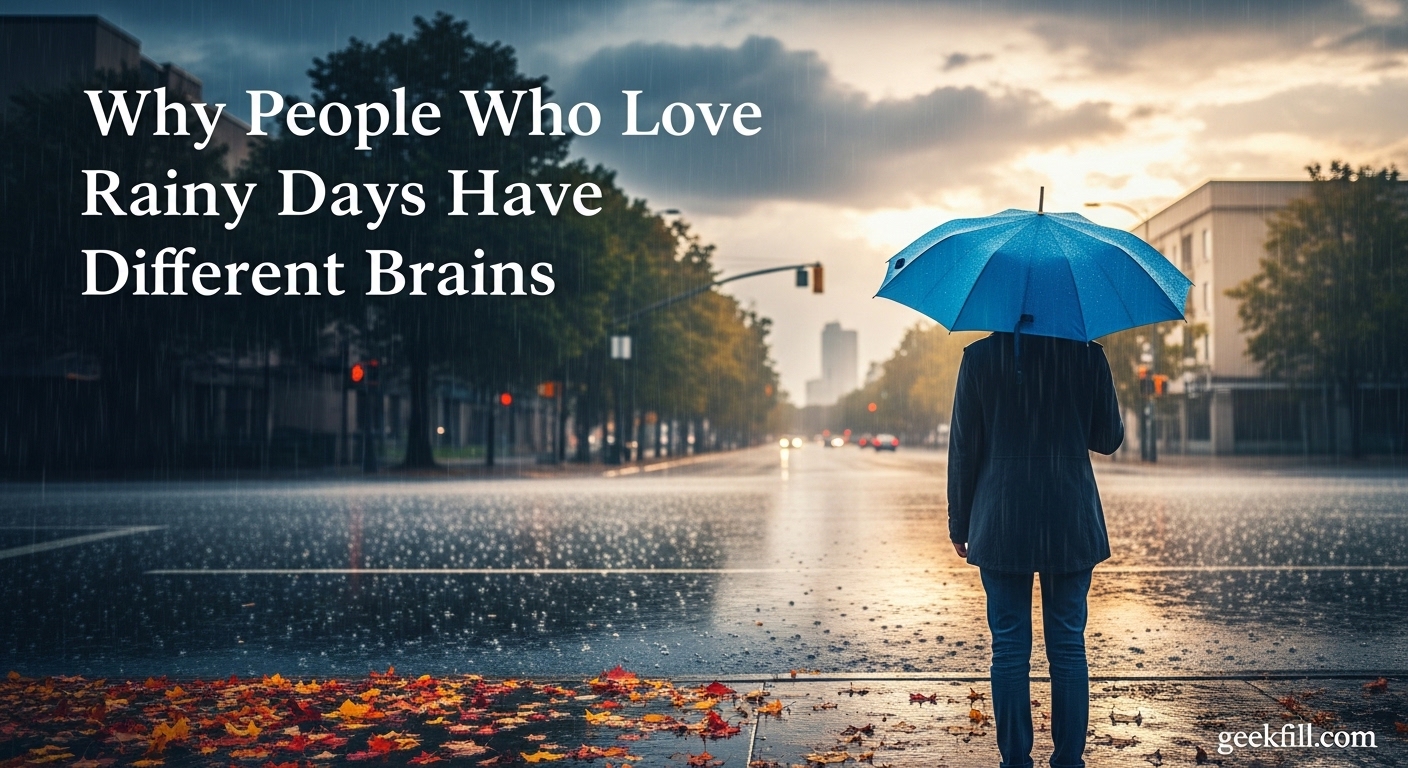
I’ve always felt like something was wrong with me. While everyone around me complained about gray skies and cancelled plans, I felt an almost biological sense of relief when the clouds rolled in. The sound of rain hitting my window didn’t just soothe me, it energized me in a way that sunny days never could.
If you’ve ever wondered why some people have this reaction to rainy weather while others feel depressed, the answer lies in your brain chemistry. People who love rainy days have different brains, and the science behind this preference is fascinating.
Psychology research shows that individuals who genuinely enjoy rainy days possess unique neurological wiring that processes sensory input differently. The reduced light, the rhythmic sounds, and the atmospheric pressure changes all trigger specific responses in their brains that create feelings of peace and contentment.
Table of Contents
What Is a Pluviophile?
A pluviophile is someone who finds joy, peace, and mental clarity during rainy days. The term comes from the Latin word “pluvia” meaning rain, combined with the Greek suffix “-phile” meaning lover of.
Pluviophiles don’t just tolerate rain, they actively seek it out. They experience a sense of calm when they hear raindrops, feel energized by overcast skies, and find the scent of petrichor (the smell of rain on dry earth) intoxicating. For them, rainy weather isn’t an inconvenience, it’s a source of genuine happiness.
What sets pluviophiles apart isn’t just a preference for wet weather. Research suggests their brains process the sensory elements of rain in fundamentally different ways than those who dislike it. Where one person hears noise and sees gloom, a pluviophile experiences soothing rhythms and calming aesthetics.
The Neurological Differences in Rain Lovers’ Brains
The reason people who love rainy days have different brains comes down to how their neurochemistry responds to environmental changes. When it rains, several things happen in your brain simultaneously, and pluviophiles process these changes as pleasurable rather than distressing.
Serotonin and Melatonin: The Light Connection
Rain reduces the amount of natural light reaching your eyes, which directly affects two crucial brain chemicals: serotonin and melatonin. Reduced light exposure causes serotonin levels to drop and melatonin to rise.
For most people, this combination triggers fatigue and low mood. But pluviophiles seem to have a different threshold for these neurochemical shifts. Their brains interpret the resulting calm state as peaceful rather than depressing.
Some researchers believe this relates to sensory processing sensitivity. People with high sensory processing sensitivity have more active nervous systems and are easily overwhelmed by bright light and busy environments. The muted light of rainy days actually reduces sensory overload for these individuals, creating a sense of relief.
Pink Noise and Brain Waves
The sound of rain produces something called pink noise, a specific acoustic frequency that has been shown to promote alpha brain wave activity. Alpha waves are associated with relaxed alertness, the state you’re in when you’re calm but focused.
Studies on pink noise have demonstrated that it can improve sleep quality, enhance memory, and reduce anxiety. For pluviophiles, this effect seems particularly pronounced. Their brains may be more responsive to pink noise, making the sound of rain naturally therapeutic.
This explains why many rain lovers report feeling more creative and focused during storms. The alpha wave state induced by rain sounds creates optimal conditions for introspection and creative thinking.
Cortisol and the Stress Response
Interestingly, rain may also affect the stress hormone cortisol differently in pluviophiles. For someone who finds rain stressful perhaps because of commute difficulties or outdoor plans being ruined cortisol levels spike. But for those who love rain, the same weather conditions trigger a decrease in cortisol.
This suggests that the neurological difference isn’t just about sensory processing, it’s also about learned emotional associations. Pluviophiles have developed a positive feedback loop where rain triggers relaxation rather than stress.
Why Introverts Love Rain: The Psychology Explained
There’s a strong correlation between introversion and rain preference. While not all introverts love rain, and not all rain lovers are introverts, the overlap is significant enough that psychologists have studied the connection extensively.
Rain Provides Psychological Permission to Rest
Modern society expects constant productivity and social engagement. Sunny days come with implicit pressure to be outside, be active, and be social. Rain removes that pressure entirely.
For introverts, who recharge through solitude and quiet activities, rainy weather provides a socially acceptable excuse to stay inside. It’s not that they can’t go out in the rain, it’s that they don’t have to explain why they want to stay in.
This “psychological permission” is incredibly valuable for introverts who often feel guilty about their need for alone time. When it’s raining, choosing to curl up with a book or watch movies feels like the obviously correct choice rather than a personal failing.
The Introspection Connection
Introverts are naturally introspective, and rain creates the perfect environment for inward reflection. The reduced sensory stimulation of rainy days allows introverts to focus their attention internally without the FOMO (fear of missing out) that sunny days can trigger.
Rainy weather slows everything down. Traffic moves slower, people walk slower, and the world feels quieter. This slower pace matches the introvert’s natural rhythm and creates space for the deep thinking they crave.
Research on personality types suggests that intuitive introverts (IN types in the Myers-Briggs system) are particularly drawn to rain. These individuals process information through patterns and abstract concepts rather than concrete details, making the atmospheric and emotional quality of rain especially appealing.
The Sound Science: How Pink Noise Affects Your Brain
The sound of rain isn’t just pleasant background noise, it’s a specific type of acoustic energy that has measurable effects on brain function. Understanding pink noise helps explain why pluviophiles experience such strong reactions to rainy weather.
What Is Pink Noise?
Pink noise is sound that contains all frequencies that humans can hear, but with the power per octave decreasing as frequency increases. This creates a deeper, more balanced sound than white noise, which has equal power across all frequencies.
Rain, rustling leaves, and steady ocean waves all produce pink noise. It’s the sound of nature at rest, and humans have evolved to find it soothing because it signals a safe, stable environment.
Alpha Waves and Creativity
When you listen to pink noise, your brain produces more alpha waves. These waves appear when you’re awake but relaxed, in a state of quiet alertness. Alpha waves are associated with:
- Enhanced creativity and problem-solving
- Reduced anxiety and stress
- Improved focus and concentration
- Better memory consolidation
For pluviophiles, the rain-induced alpha state feels good. Their brains are essentially getting a mini-meditation session just by listening to the weather. This explains why many report their best thinking happens during storms.
Interestingly, studies have shown that pink noise can also improve sleep quality by helping the brain enter deeper sleep stages more quickly. Pluviophiles who enjoy sleeping to the sound of rain are literally getting better rest.
Pluviophiles vs. Seasonal Affective Disorder: What’s the Difference?
One of the most common misconceptions about rain lovers is that they must be experiencing some form of depression or seasonal affective disorder (SAD). This couldn’t be further from the truth, and understanding the distinction is crucial.
Seasonal Affective Disorder is a type of depression that’s related to changes in seasons, typically starting in fall and continuing through winter. People with SAD experience sadness, fatigue, and loss of interest in activities they normally enjoy. They don’t love winter or rain, they suffer through it.
Pluviophiles, by contrast, experience genuine positive emotions during rainy weather. They feel energized, creative, and peaceful. Their mood improves when it rains, rather than deteriorating.
The key difference lies in the direction of mood change. SAD sufferers feel worse in low-light conditions. Pluviophiles feel better. One is a clinical condition requiring treatment, the other is a benign personality preference that may actually confer psychological benefits.
Some researchers speculate that pluviophiles might even be protected against SAD because their brains process reduced light exposure positively rather than negatively. While this hasn’t been proven conclusively, it would explain why some people thrive in winter while others merely survive it.
The Psychology of Rain: 7 Traits That Set Pluviophiles Apart
Based on psychological research and personality studies, people who love rainy days tend to share several distinct traits. These characteristics help explain not just why they prefer rain, but how this preference shapes their broader approach to life.
1. Effortless Creativity
Rain lovers often display high levels of creative thinking. The introspective atmosphere of rainy days seems to unlock creative potential, and pluviophiles have learned to use this to their advantage. Many report that their best ideas come during storms.
2. Emotional Stability
Paradoxically, people who love rain often have above-average emotional stability. While others react to weather changes with mood swings, pluviophiles maintain consistent emotional states regardless of conditions. Their happiness during rain isn’t compensatory, it’s genuine.
3. Appreciation for Introspection
Pluviophiles value looking inward. They’re comfortable with their own thoughts and don’t require constant external stimulation to feel content. Rainy days provide the perfect backdrop for the self-reflection they naturally gravitate toward.
4. Healthy Nostalgia
Rain often triggers nostalgic memories, and pluviophiles tend to experience this nostalgia positively rather than bittersweetly. They can appreciate the past without getting stuck in it, using rainy day memories as a source of comfort rather than longing.
5. Sensory Sensitivity
Many rain lovers have heightened sensory awareness. They notice the smell of petrichor, the sound of individual raindrops, and the quality of light through clouds. This sensitivity extends to other areas of life, making them observant and detail-oriented.
6. Comfort with Solitude
Pluviophiles are typically comfortable being alone. They don’t need constant social interaction to feel fulfilled, and they often prefer their own company or small groups to large gatherings. Rainy days validate this preference.
7. Depth Over Breadth
People who love rain tend to value depth in relationships and experiences over breadth. They’d rather have a few meaningful connections than many shallow ones, and they prefer to fully experience fewer things than superficially sample many.
Cultural Perspectives on Rain Appreciation
The love of rain isn’t just a personal quirk, it’s a recognized aesthetic in several cultures around the world. Understanding these cultural contexts helps validate rain appreciation as a legitimate way of experiencing the world.
Hygge and Danish Comfort
In Denmark, the concept of hygge describes a mood of coziness, comfort, and contentment. Rainy days are considered perfect hygge weather because they provide an excuse to light candles, wrap in blankets, and enjoy simple pleasures indoors.
Danish culture doesn’t treat rain as an inconvenience to be endured but as an opportunity for comfort to be embraced. This cultural reframing allows people to experience rain positively regardless of their natural brain chemistry.
Mono No Aware in Japanese Aesthetics
Japanese culture has mono no aware, a concept that translates roughly to “the pathos of things.” It refers to the bittersweet awareness of impermanence and the beauty of fleeting moments.
Rain exemplifies mono no aware perfectly. It’s temporary, beautiful, and slightly melancholic. Appreciating rain through this lens transforms it from a nuisance into a meditation on the nature of existence itself.
German Gemütlichkeit
Similar to hygge, German culture values gemütlichkeit, a state of warmth, friendliness, and good cheer. Rainy days are ideal for creating gemütlichkeit through indoor gatherings, warm drinks, and unhurried conversation.
These cultural frameworks show that loving rain isn’t weird, it’s a recognized and valued way of experiencing the world. Your brain’s preference for rainy days connects you to centuries of aesthetic tradition.
What does psychology say about people who love rain?
Psychology research indicates that people who love rain often possess traits like high creativity, emotional stability, comfort with solitude, and sensory sensitivity. Their brains process the reduced light, pink noise, and atmospheric changes of rainy weather as pleasurable rather than distressing, creating a positive feedback loop that reinforces their preference.
What is a person who loves rainy days called?
A person who loves rainy days is called a pluviophile. The term comes from the Latin word pluvia meaning rain and the Greek suffix -phile meaning lover of. Pluviophiles experience genuine joy, peace of mind, and mental clarity during rainy weather rather than simply tolerating it.
Why do introverts love rain?
Introverts often love rain because it provides psychological permission to rest and recharge without social pressure. Rainy weather slows the pace of life, reduces sensory stimulation, and creates an environment conducive to introspection. The reduced light and rhythmic sounds help introverts focus internally and engage in the deep thinking they naturally prefer.
Why do I feel happier on rainy days?
You may feel happier on rainy days because your brain chemistry responds differently to the environmental changes rain brings. Reduced light increases melatonin and decreases serotonin, which your brain interprets as calm rather than depression. The pink noise of rain promotes alpha brain waves associated with relaxation and creativity. Additionally, rain may lower your cortisol levels if you have positive associations with it.
Why People Who Love Rainy Days Have Different Brains: The Takeaway
If you’ve always felt different because you love rainy days while others complain about them, understand this: you literally have different brain wiring. Your neurochemistry processes the sensory experience of rain in ways that create genuine pleasure and peace.
The combination of reduced light affecting your serotonin and melatonin, pink noise inducing alpha brain waves, and lowered sensory stimulation all work together to create the contentment you feel. This isn’t imagination or affectation, it’s biology.
Embrace your pluviophile nature. The traits that come with loving rain, creativity, introspection, emotional stability, and sensory appreciation, are valuable qualities. Your preference for rainy days connects you to both scientific reality and centuries of cultural tradition that recognizes the beauty in stillness.
Next time it rains and you feel that familiar sense of calm wash over you, know that your brain is doing exactly what it was wired to do. You’re not odd for loving rain. You’re just tuned to a different frequency, one that finds beauty in the quiet moments others rush to escape.
1 thought on “Why People Who Love Rainy Days Have Different Brains (October 2026)”