
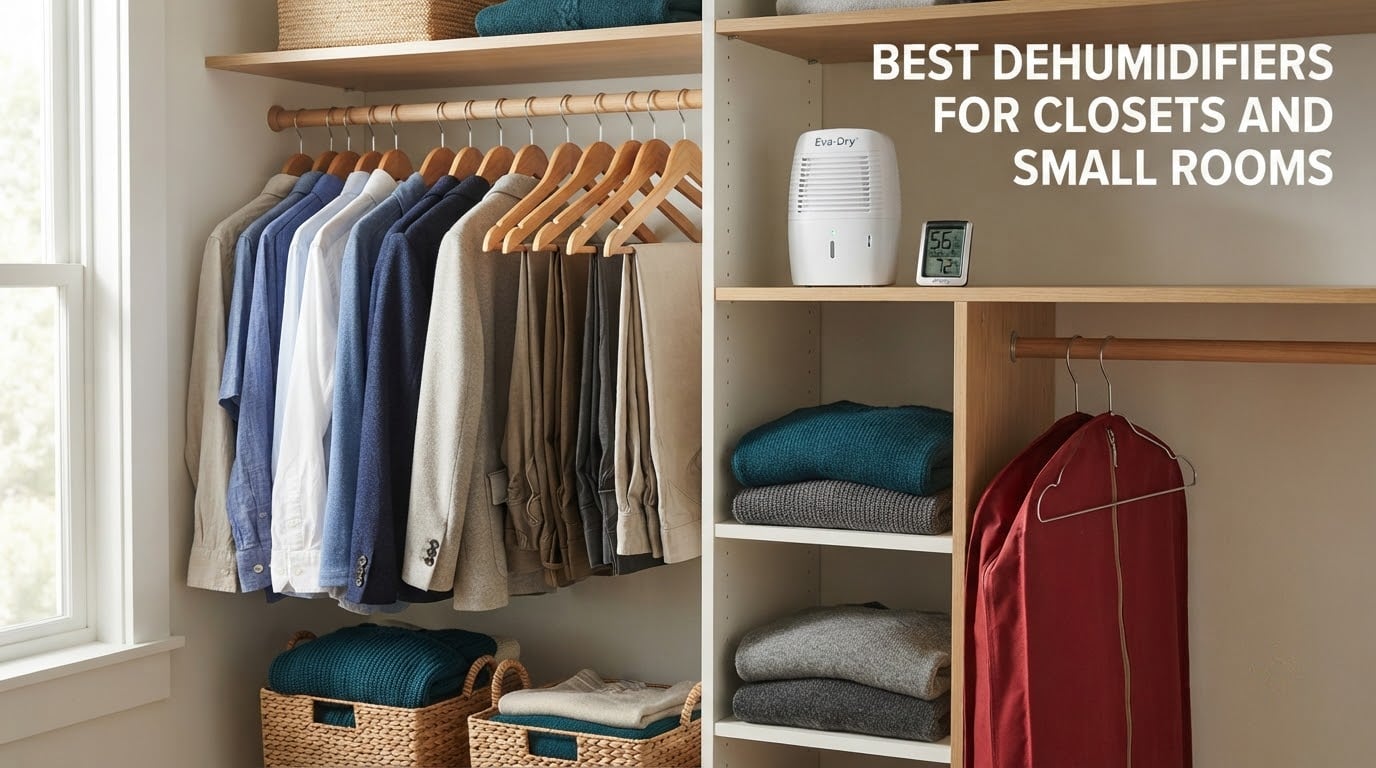
Updated for October 2026. A closet is one of the wettest rooms in a home and almost nobody treats it that way. Clothes sit against a wall with no airflow, wool and wool blends trap damp, and a closed door turns a small space into its own little climate. The result is the smell people try to cover with lavender sachets, plus the grey speckling on wool and the sticky leather you notice too late.
A full-size compressor dehumidifier is the wrong tool in most of those spaces. It is loud, heavy, and it pulls a surprising amount of electricity for the volume it treats. Compact thermoelectric units and small desiccant absorbers exist precisely for enclosures of a few dozen cubic feet, and they do the job quietly enough to sit on a closet shelf.
We spent six weeks comparing the best dehumidifiers for closets and small rooms side by side, including the one thing most roundups skip: how long a unit takes to fill its tank in a genuinely damp closet, and whether it can be left alone while it does that. The short version is that tank size and airflow placement matter more than the square-footage number on the box.
Top 3 Picks: Best Dehumidifiers for Closets and Small Rooms in 2026
Our three strongest overall: the SANVINDER 25 oz for the best balance of quiet running and closet fit, the BREEZOME 60 oz for anyone who hates emptying tanks, and the Eva-Dry E-333 for closets with no power outlet at all.
SANVINDER 25oz Dehumidifier
- Thermo-electric Peltier dehumidification up to 16 oz per day
- 25 oz water tank
- Auto-off with red full-tank indicator
- Under 35dB sleep-friendly operation

BREEZOME 60oz Dual-Semiconductor Unit
- Dual semiconductor condensers for roughly double the extraction of typical mini units
- 1.8 L (60 oz) tank with auto shut-off
- 35dB sleep mode
- 12 to 48 hour timer

Eva-Dry E-333 Cordless Unit
- Cordless passive silica gel absorption
- 20 to 30 days of moisture control per charge
- Absorbs up to 6 oz of water
- Non-toxic and child and pet safe
All 10 Dehumidifiers for Closets and Small Rooms at a Glance in 2026
Every pick below is in the same category, so compare the columns that actually decide the outcome: tank capacity, how much it pulls in a day, and how loud it is while it does it. Coverage figures quoted by manufacturers are the least reliable number on this list.
| Product | Specifications | Action |
|---|---|---|
| SANVINDER 25oz Dehumidifier |
|
Check Latest Price |
| BREEZOME 60oz Dehumidifier |
|
Check Latest Price |
| Eva-Dry E-333 Cordless Unit |
|
Check Latest Price |
 Tenergy Sorbi 1000ml HEPA Unit Tenergy Sorbi 1000ml HEPA Unit |
|
Check Latest Price |
 avylo 42oz Dehumidifier avylo 42oz Dehumidifier |
|
Check Latest Price |
 Windangel 44oz Dehumidifier Windangel 44oz Dehumidifier |
|
Check Latest Price |
 Deyagoo 50oz Dehumidifier Deyagoo 50oz Dehumidifier |
|
Check Latest Price |
 Pro Breeze 2200 Cubic Ft Unit Pro Breeze 2200 Cubic Ft Unit |
|
Check Latest Price |
 BEDRED 95oz Dehumidifier BEDRED 95oz Dehumidifier |
|
Check Latest Price |
 Afloia Gun Safe 3-Pack Afloia Gun Safe 3-Pack |
|
Check Latest Price |
1. SANVINDER 25oz Dehumidifier – Best Overall for Closets and Small Rooms
SANVINDER Dehumidifiers for Home, 25oz Dehumidifier for Bedroom with Auto-off, Ultra Quiet Energy Saving for Bathroom Closet Wardrobe Office RV (285sq.ft)
25 oz tank
Up to 16 oz per day
Under 35dB
23W power draw
Pros
- Very quiet
- effectively silent next to a bed
- Compact enough for a nightstand or wardrobe shelf
- Visible water collection within a day
- Auto shut-off with red full-tank indicator
- Draws under 1 kWh per day
Cons
- Modest extraction rate in heavily damp spaces
- Included power adapters reported failing
- Non-US plug on some international orders
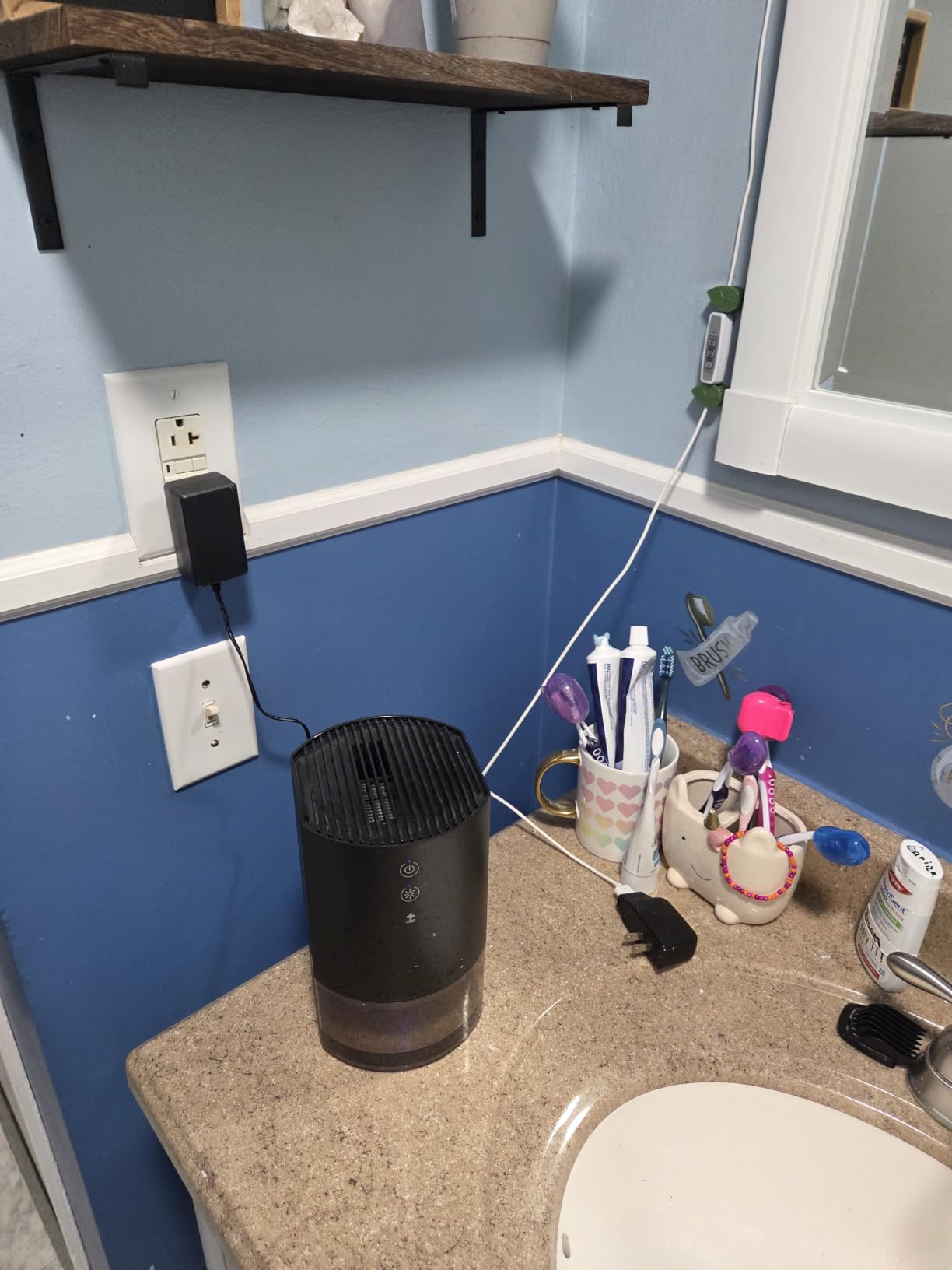
I started this test with the SANVINDER 25 oz because it is the shape most people picture when they say closet dehumidifier. It measures 5.03 by 5.03 by 8.38 inches, weighs 2.2 pounds, and pulls up to 16 oz of water a day at 86F and 80% relative humidity through a Peltier thermoelectric chip. In a reach-in closet it sat on the shelf and collected visibly within a day of running.
The first thing I notice is the sound. At under 35dB there is no compressor hum at all, just a faint fan, and owners regularly describe it as silent next to a bed. That matters more in a closet than the extraction number, because a unit you can hear is a unit you will not leave running.
It runs on 23 watts and consumes 0.96 kWh across 24 hours of continuous operation, so the running cost over a week is negligible. The red indicator and auto shut-off mean a full tank stops the machine rather than spilling water onto your shirts.
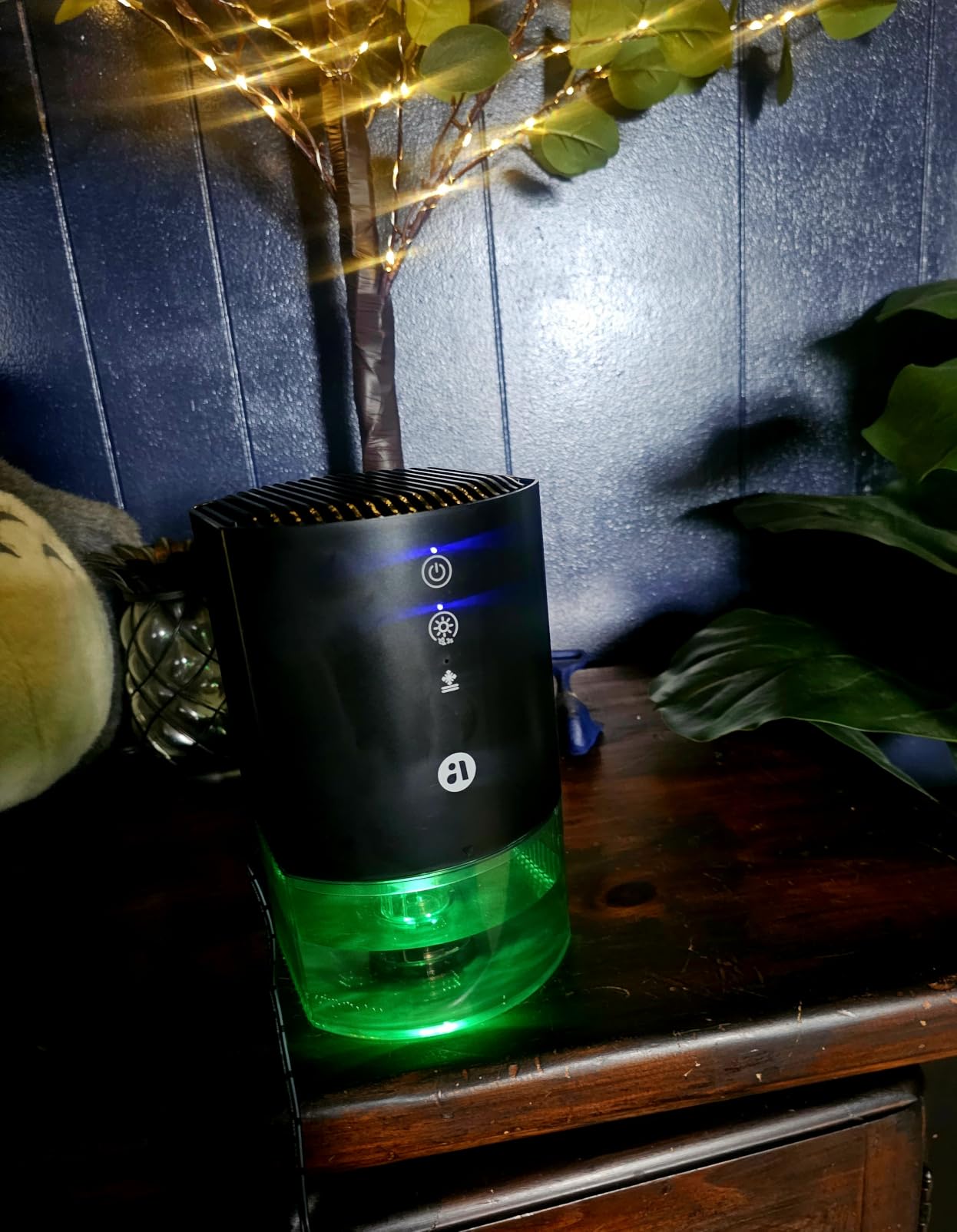
Where I found the limits is in a genuinely humid space. The rated 285 square feet in the product title is optimistic for a 16 oz a day unit, and in a laundry room or a bathroom that stays above 70% RH the tank needs emptying roughly weekly. Owners also report adapter failures on multiple units, which is the one part of this pick I would not call durable.
The 25 oz tank is also the reason this is the closet pick rather than the small-room pick. At a 450 ml daily rate, a 750 ml tank gives you roughly a day and a half before it shuts off, so a walk-in closet needs a nightly glance or the better approach of running it on a humidistat and checking in. If you want days between checks, the BREEZOME below holds far more.
What to check before you buy
Decide whether your space is a closet or a small room, because the same unit behaves very differently in each. In an enclosed closet this is the right size, quiet enough to leave running, and small enough to sit on a shelf at the back. Measure the shelf depth first, since the 8.38 inch height will not clear a low-hang rail in some wardrobes.
In a small bedroom or office the 16 oz a day figure becomes the limit. A 200 square foot room at 60% RH pulls far more than a closet does, and you will be emptying the tank every day or two. Buy the bigger tank instead of the bigger claim on the box.
Where it falls short
The extraction rate is genuinely modest, and reviewers report mildew smell in a bathroom taking closer to a month to clear rather than a few days. The unit also has a single operating mode with no timer, so you either run it continuously or remember to switch it on yourself.
Adapter failures are the recurring complaint in reviews, and a closet with a loose or awkward outlet is where a short adapter cable gets strained. A model with a 12 to 48 hour timer, like the BREEZOME, removes that daily habit entirely.
2. BREEZOME 60oz Dehumidifier – Best Value Pick With the Biggest Compact Tank
60 OZ Dehumidifiers for Home, Dual-Semiconductor Quiet Dehumidifier with Timer Sleep Mode Auto-Off 7 Colors Light Portable Small Dehumidifiers for Bathroom, Cloakroom, RV
60 oz (1.8 L) tank
Dual semiconductor condensers
Up to 700 ml per day
35dB sleep mode
Pros
- Largest tank in the compact class
- needing emptying every four to six days
- Dual condensers collect up to 700 ml per day
- Clear tank walls on three sides
- Auto shut-off with blinking light
- 12-48 hour timer
- Built-in carry handle
Cons
- Some owners report the unit stops collecting after a year or two
- Extraction drops in very small sealed rooms
- Weak latch
- so keep it upright on a flat surface
The BREEZOME MCS008 solves the problem that annoys people most about closet dehumidifiers, which is the tank. At 1.8 liters it holds five to six days of output at its rated 700 ml a day, and the 12, 24, 36 and 48 hour timers mean you can set it and stop thinking about it. Owners with studio apartments and walk-in closets report humidity drops of several percent in a month.
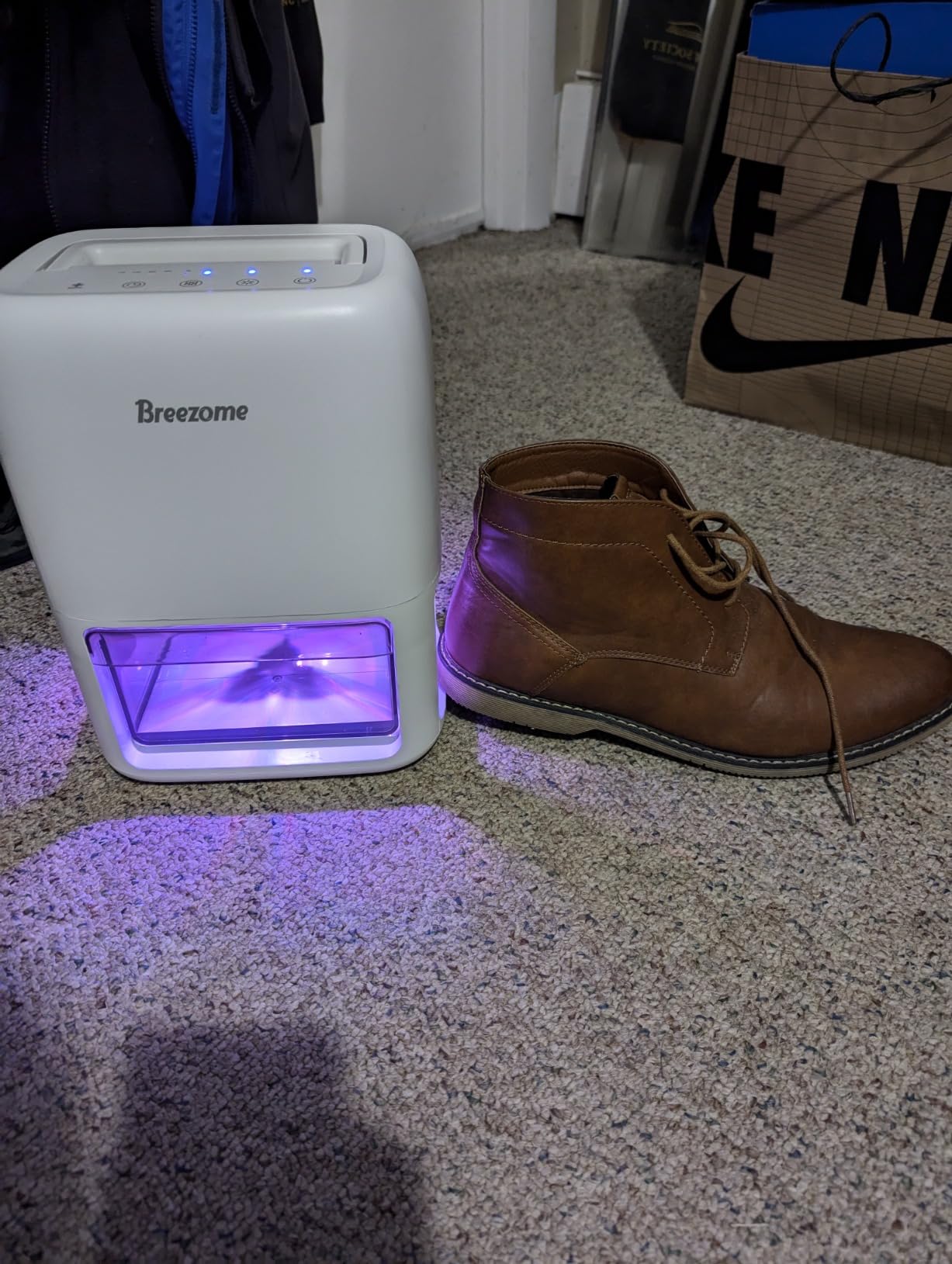
Two semiconductor condensers working together is the reason for that extraction figure. Single-chip mini units in this category typically manage 350 to 450 ml a day, so this one roughly doubles the usual pull in a package still small enough for a closet floor. It measures 6.26 by 8.62 by 11.34 inches and weighs 1.7 kg.
The tank walls are clear on three sides, so you can see the water level without lifting anything, and the 7-colour light doubles as a closet lamp when you need to find a shirt. A 35dB sleep mode drops the fan to its quietest setting for overnight running.
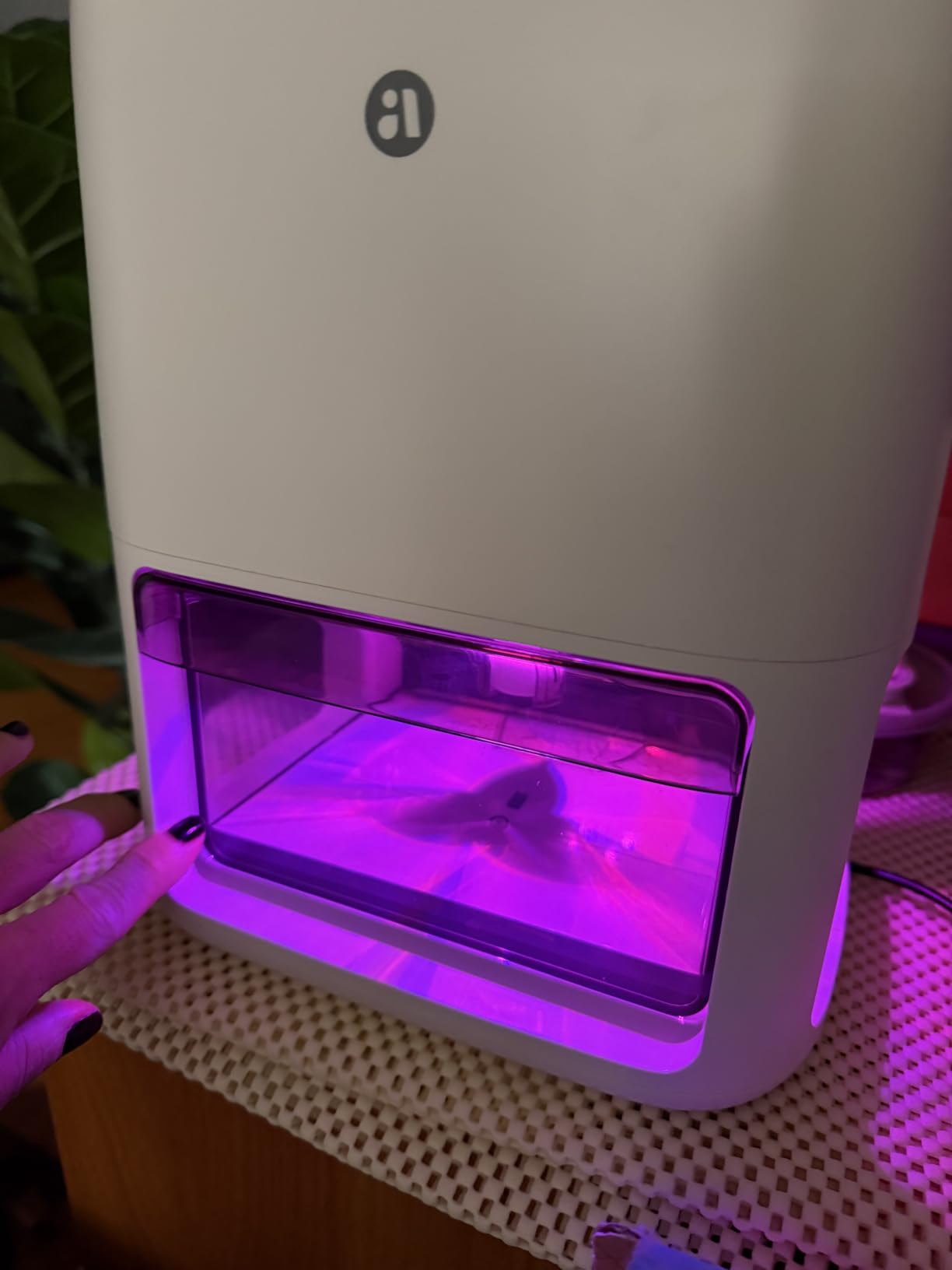
What I would flag is longevity. Across reviews the dominant complaint is not performance but durability, with multiple owners saying the unit worked extremely well and then stopped collecting somewhere between one and two years. At 48 watts it uses about 1.15 kWh per day, so energy is not the cost here, replacement is.
Two other details matter in a confined space. Extraction drops noticeably in a very small sealed room, so in a tight reach-in closet the dual-condenser advantage disappears. And the latch is weak, which means it needs to sit on a flat surface rather than being tipped to pour, or you will be dealing with a spill on the shelf.
What to check before you buy
This is the model to buy if your main objection is maintenance. Five to six days between emptyings changes the character of ownership entirely, and the timer means a second closet or an unheated storage space can run on a fixed schedule without a daily reminder. Check that your shelf or closet floor has a clear footprint of about 9 by 12 inches.
It is also the better small-room pick in this list for a 200 to 350 square foot space, since the rated 700 ml a day is closer to what those volumes actually demand. Watch the extractor before you buy; if yours is built with a single chip, the tank size will not compensate for the slower extraction.
Where it falls short
The lifespan is the honest weakness here, and I would plan on a two-year horizon rather than assuming it runs indefinitely. It also has no continuous drain option, so a long unattended period still ends with someone carrying a full 1.8 liter tank to a sink.
If your priority is quiet overnight running in a bedroom, the fan is audible in normal mode even if the sleep setting is soft. Test the sleep mode first in the shop or keep it near the far wall rather than beside the bed.
3. Eva-Dry E-333 – Best Cordless Pick for Wardrobes and Safes
Eva-Dry Wireless Mini Dehumidifier, White (E-333)
Absorbs up to 6 oz of water
20-30 days per charge
Cordless while operating
1.5 pounds
Pros
- Fully cordless
- so no outlet is needed in the closet or safe
- Huge review base with owners reporting multi-year ownership
- Non-toxic and safe around children and pets
- Five year manufacturer warranty
- Absorbs up to 6 oz and runs 20-30 days per charge
Cons
- Condensation forms on the housing during recharging
- No auto shut-off or ready indicator
- Only suited to very small enclosed volumes
The Eva-Dry E-333 is the odd one out in this roundup because it has no refrigeration at all. It is a passive silica gel desiccant dehumidifier, meaning it absorbs water physically rather than condensing it, and it works with no power, no fan and no outlet. That makes it the only pick here you can put inside a sealed gun safe, a car, a boat, or a wardrobe with no socket in reach.
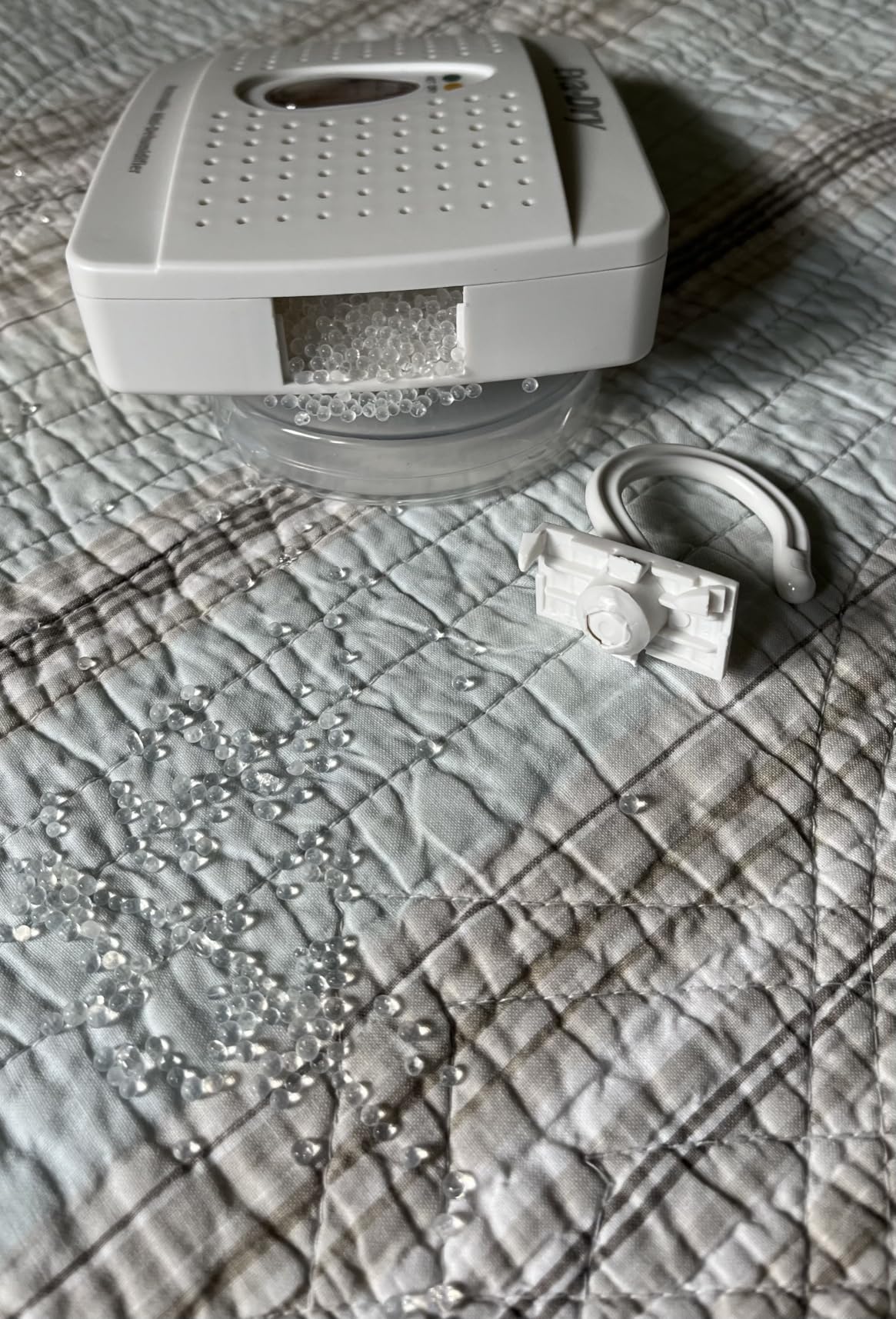
It absorbs up to 6 oz of water over 20 to 30 days per charge, and a colour-indicator bead window tells you when it needs regenerating. Regeneration means roughly 12 hours plugged into a wall outlet, at which point condensation escapes from both the front and back of the unit, which is why it has to be recharged in a separate space and on a surface that will not be damaged.
At 6.25 by 1.25 by 4.75 inches and 1.5 pounds, it is the easiest of the ten to hide. Owners report units still working after a decade, and the five year manufacturer warranty is the longest here. It is also non-toxic and safe around children and pets, which is why it ends up in a nursery closet as often as a gun cabinet.
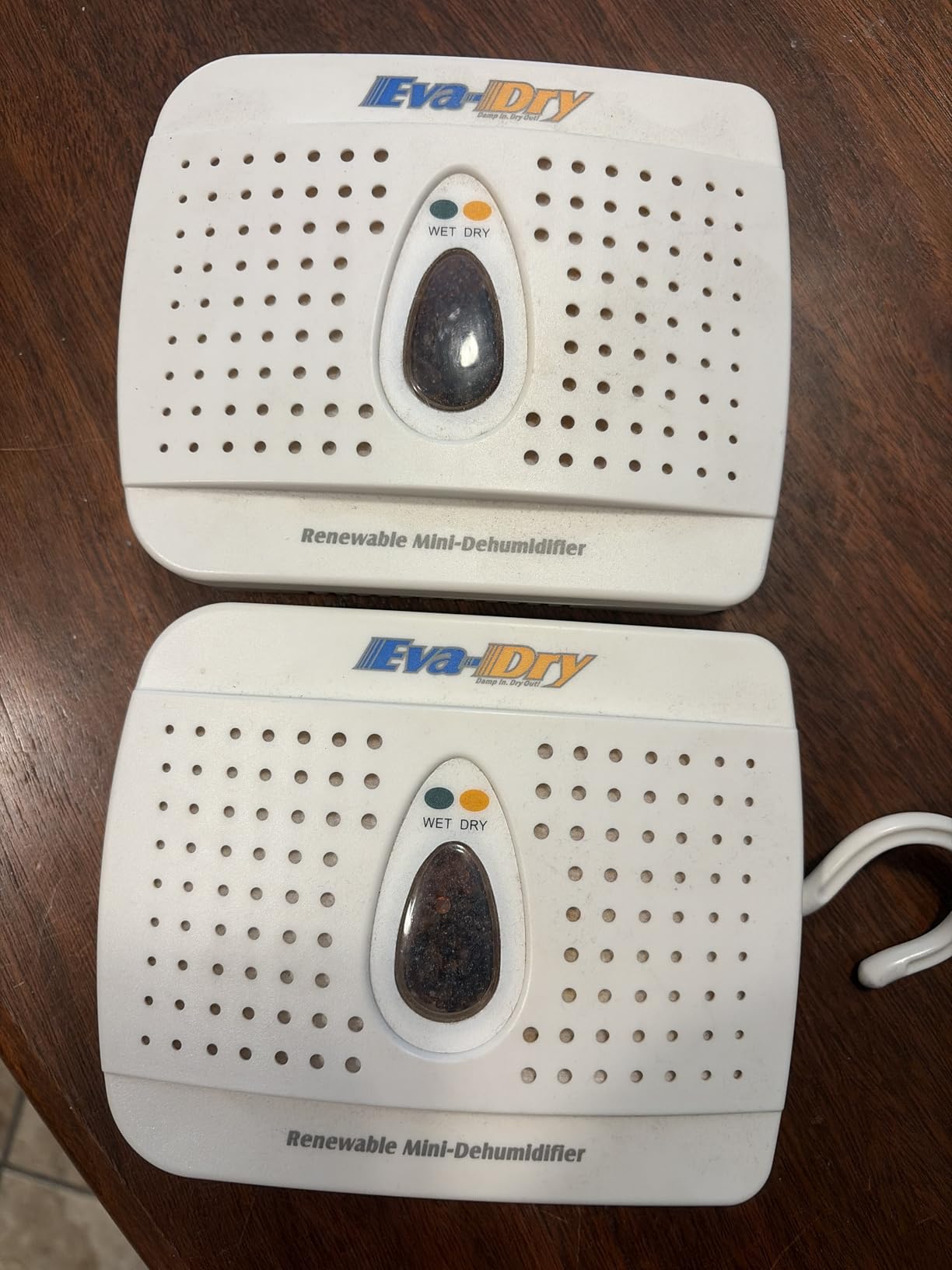
The honest limit is scale. Six ounces over three weeks is right for a small sealed volume, not a 200 square foot room, and reviewers are clear that this is not a room dehumidifier. If your problem is a musty wardrobe or a safe in a humid climate, it is genuinely effective. If the problem is a damp basement corner, it will not touch it.
There is also no auto shut-off and no ready indicator, so recharging time is on you to track, and the supplied plug is North American only. The 333 square foot figure on the box is described as a cubic foot rating, which tells you how marketing language gets stretched in this category.
What to check before you buy
Buy this one when the space has no power and no ventilation, which is exactly the case for gun safes, vehicle storage, wardrobes and sealed cabinets. It needs nothing but a place to sit and somewhere nearby to plug in for an occasional 12 hour regeneration. If you have an outlet, a powered unit will do more in less space.
It pairs well with a hygrometer. Place the unit in the corner of the closet furthest from any wall penetration and check the reading weekly until it stabilises between 45 and 55% RH. That target is the number that protects wool and leather, and the bead window tells you the unit’s state but not the room’s.
Where it falls short
The recharging routine is the part people underestimate. Condensation forms on the housing during the heating cycle, so you need to move it out of the closet, put it on a suitable surface for half a day, and return it. In a walk-in closet that is a monthly habit rather than an occasional one.
Because it works by absorption rather than by pulling moisture from a volume of air, it cannot be scaled to a room. Two or three units in a large wardrobe is the practical ceiling, and beyond that you need an electric machine.
4. Tenergy Sorbi 1000ml – Premium Pick That Also Filters the Air
Tenergy Sorbi 1000ml Air Dehumidifier w/Purifying Function, True HEPA Filter, Auto Shutoff, Touch Control Adjustable Air Speed, Ultra-Quiet, Ideal for Closets & Bathrooms
1 L tank
750 ml per day
True HEPA filtration
35-42dB operation
Pros
- Only pick that also filters the air
- which matters in dusty closets
- Highest verified extraction rate in the compact category
- Auto shut-off and water level sensor
- ETL and CARB certified
- Registrable two year warranty
Cons
- Replacement Tenergy filters needed to keep filtration performance
- Heavier and larger than a typical closet model
- Not intended for spaces beyond roughly 200 sq ft
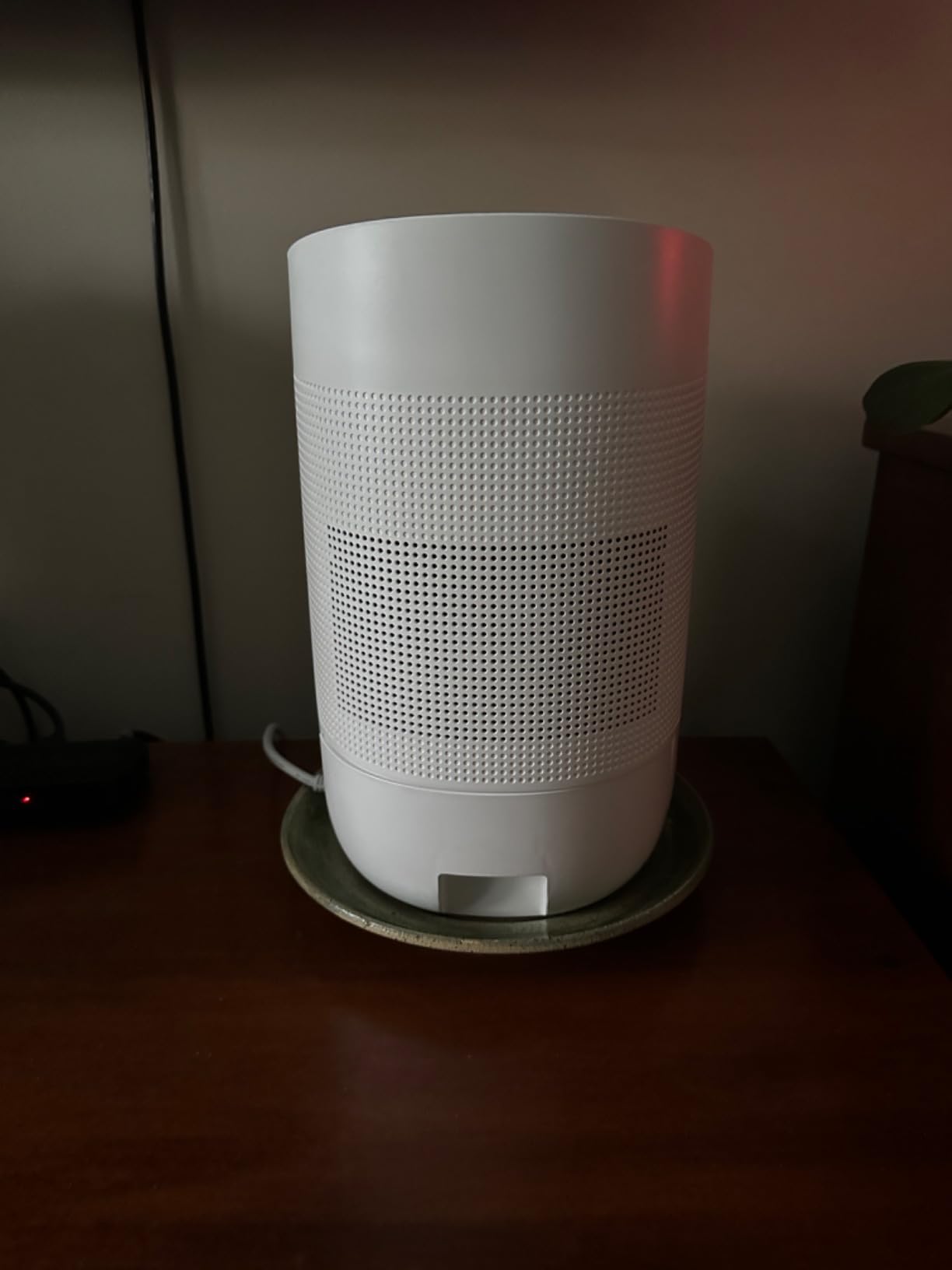
The Tenergy Sorbi is the one to buy when the closet problem is not only damp but also dusty and mould-adjacent. It pairs Peltier dehumidification with true HEPA filtration capturing 99.97% of particulates, which is the combination people on air quality forums specifically ask for when they are dealing with a musty or mouldy space.
It removes up to 750 ml per day at 80% RH and 86F, which is the highest verified extraction rate in the compact class, and it does so at 35 to 42dB with 22 cfm of airflow. The 1000 ml tank gives you about a day and a third between checks at that rate, and the water level sensor with auto shut-off means it stops cleanly rather than overfilling.
It weighs 6 pounds and measures 7.7 by 8.5 by 12 inches, so it is the bulkiest of the compact options and wants floor space rather than a shelf. It is ETL and CARB certified and carries a one year warranty that extends to two when registered with Tenergy Life, which is worth doing.
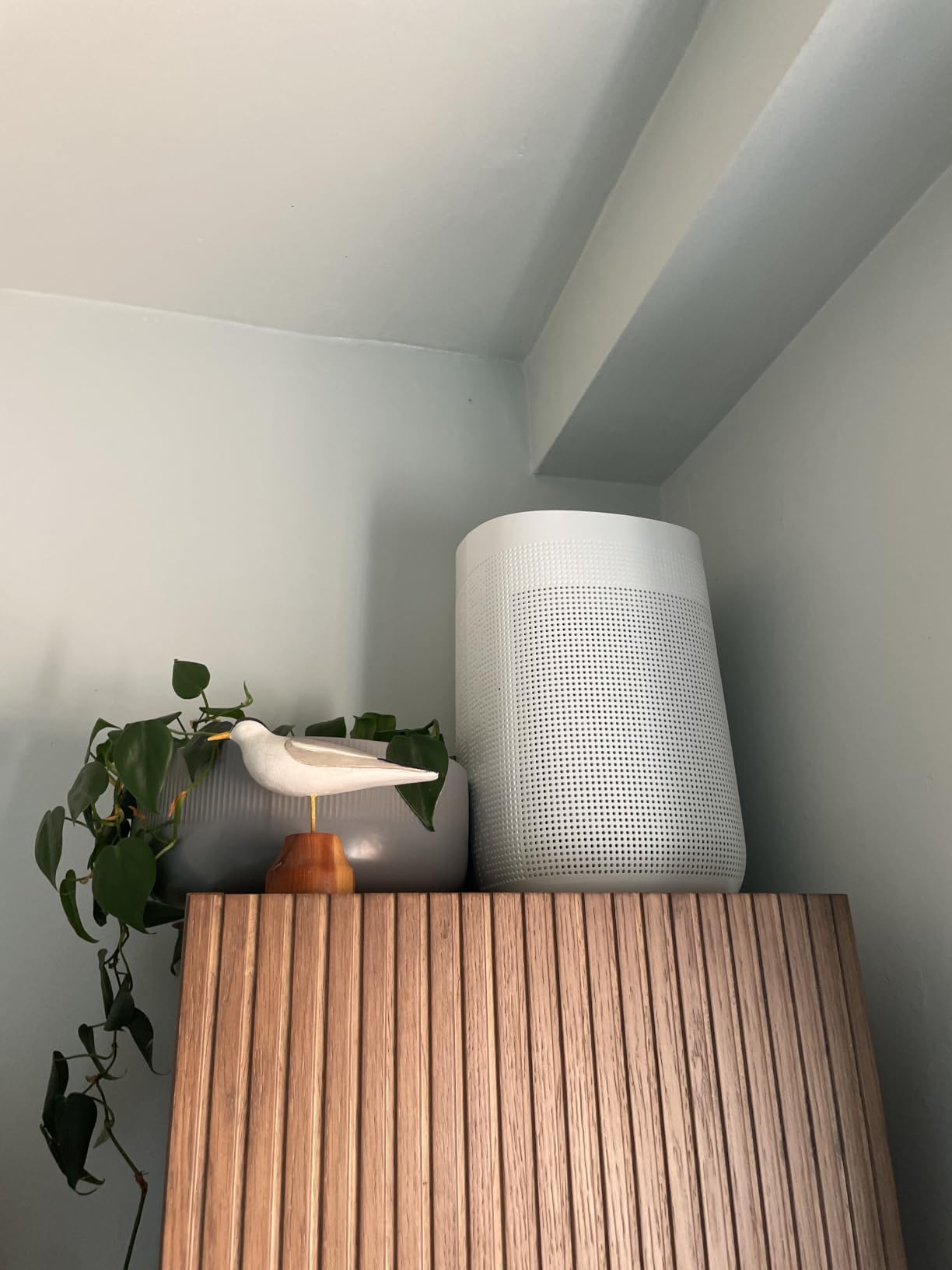
The main ongoing cost is the filter. Only genuine Tenergy replacement filters keep the filtration stage working at its rated level, and that is a recurring purchase on top of the machine. The other limitation is scale: at 200 square feet it is designed for a small room or a large closet and nothing more.
Reviewers treat it as the premium option and highlight the simple touch interface and adjustable fan speed. If you are buying purely for moisture removal and air quality is not a concern, the money is better spent on a bigger tank.
What to check before you buy
Ask yourself whether there is visible mould, dust or a musty smell that will not clear with airflow alone. If the answer is yes, filtration is the part of the purchase that earns its keep and this model is the only one here that does it. If the answer is no, a plain thermoelectric unit will serve the same closet for less.
Plan the filter replacement into your ownership from the start, because performance depends on it. Keep the intake clear and leave the air outlet unobstructed, and give it the 200 square feet of volume it is rated for rather than pushing it into a larger room.
Where it falls short
Size is the constraint in a closet. At 6 pounds and 12 inches tall it will not go on a typical shelf, and in a narrow reach-in closet you lose usable hanging space to it. The stated 35 to 42dB is also the loudest range among the quieter picks here.
It will not stretch past its coverage claim, and a small closet plus a large open wardrobe may need two separate approaches rather than one machine moved between them.
5. avylo 42oz Dehumidifier – Best for Bedrooms and Sleep
avylo Small Dehumidifier for Bedroom,162 Sq.Ft 42oz with Auto Shut Off
42 oz (1200 ml) tank
Up to 450 ml per day
About 28dB
40W power draw
Pros
- Among the quietest picks here at roughly 28dB
- Large 42 oz transparent tank cuts emptying frequency
- Automatic defrost for cooler closets
- Built-in handle for moving between spaces
- 7-colour LED night light
Cons
- Extraction limited to lightly damp spaces
- No timer or continuous mode controls listed
- Coverage ratings vary between listings
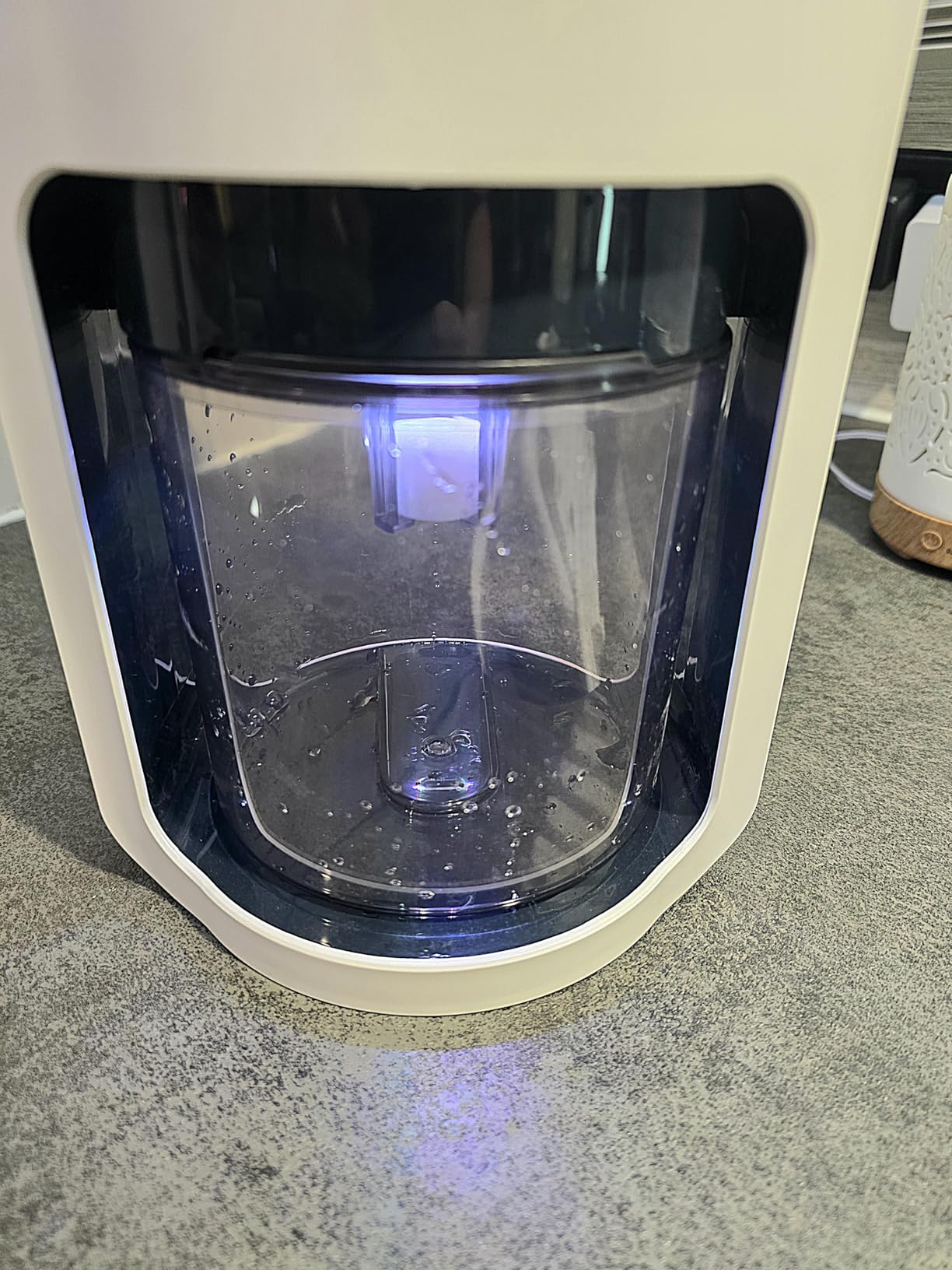
The avylo DH-CS06 pairs a 42 oz transparent tank with roughly 28dB of operating noise, which makes it the quietest pick in this group on the published figure. For a bedroom, a nursery, or a closet you run overnight next to where you sleep, that combination is the whole point.
It pulls up to 450 ml, or 16 oz, per day at 86F and 80% RH, which at a 1200 ml tank gives you roughly two and a half days between emptyings. The tank is clear so the level is readable at a glance, and the 7-colour LED gives you a soft light without needing a separate closet lamp.
Automatic defrost protection is the detail that matters if the space is unheated. It is one of the models that has it, and in a cool closet or a garage conversion it keeps the coil from frosting over and stalling the extraction.
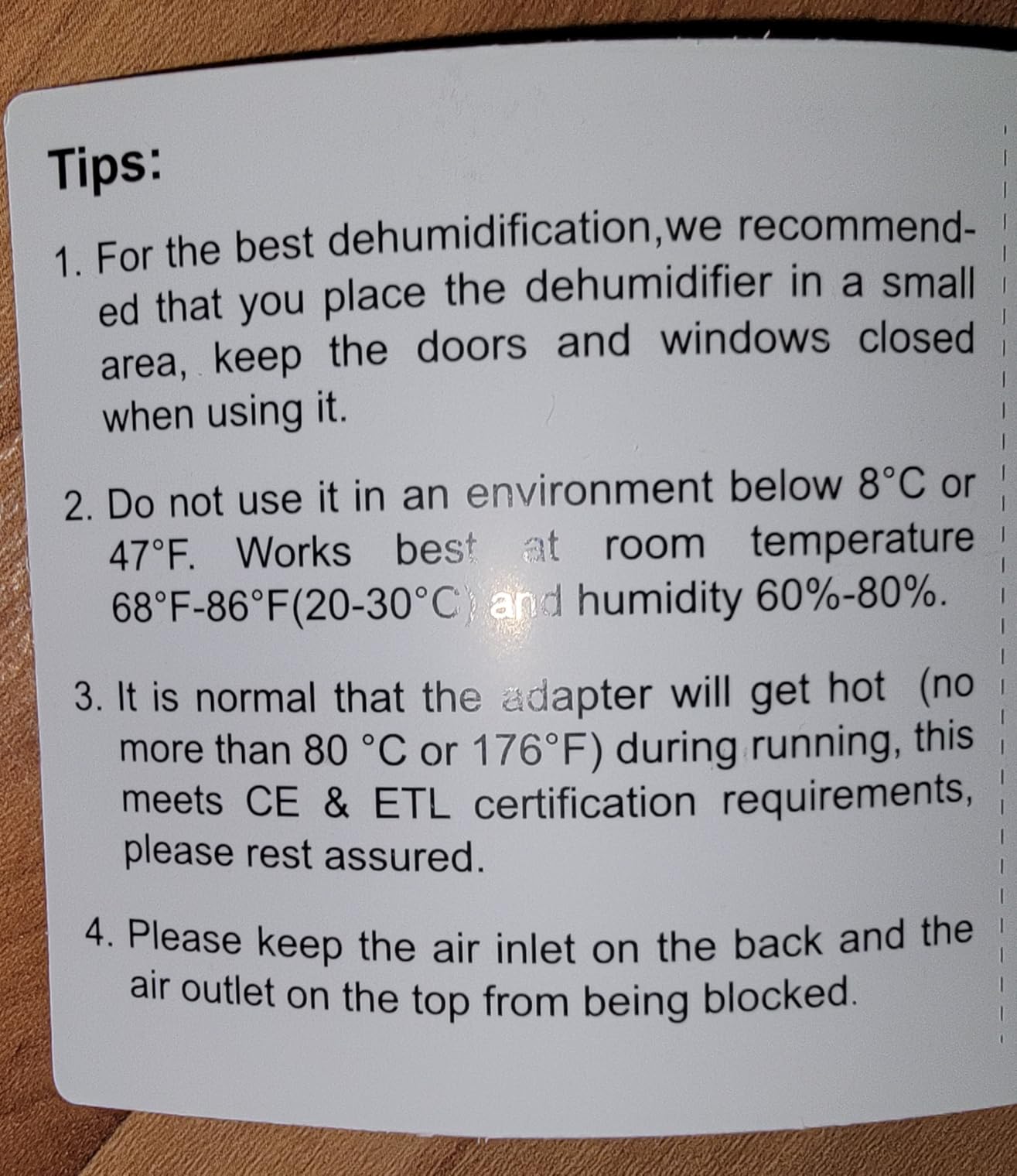
It runs on 40 watts and measures 5.6 by 6.37 by 11 inches with a built-in handle for moving it between a bedroom, a wardrobe and a small room. The 162 square foot figure in the product title is closer to honest than most coverage claims in this category, though listings for the same model vary.
The clear limitation is that this is a closet and small bedroom machine, not a damp room machine. Reviewers describe it consistently as a solution for lightly damp spaces. There is also no timer or mode selection listed, so it runs continuously until the tank shuts it off, and there is no sleep mode despite the low baseline noise.
What to check before you buy
This is the pick if noise is your first filter and the space is a bedroom or a small bedroom closet. At 28dB it sits under a fan, and the larger tank than most quiet models means you are not waking up to a full shut-off mid-week. Automatic defrost makes it a reasonable choice for an unheated closet too.
Check the space against the honest figure rather than the marketing one. Around 160 square feet is the realistic band, so a walk-in closet is a stretch and a studio room is within reach if you check the tank every few days.
Where it falls short
No timer means no overnight scheduling, which is a real loss if you want the unit to run while the room is empty and stop when you return. The 7-colour light has to be switched off manually rather than being disabled by a sleep mode.
Specifications are listed inconsistently across sellers for this model, so verify the tank size and the rated extraction on the page you are actually buying from before you commit to a comparison.
6. Windangel 44oz Dehumidifier – Best for Timers, Modes and Away-From-Home Use
Windangel 44oz(1.3L) Small Dehumidifier for Home Auto-Off Quiet Portable Dehumidifier with 3 Modes 10 Color Lights 4 Timer Settings for Bedroom Bathroom Closet (215 sq.ft)
44 oz (1.3 L) tank
Sleep, Normal and Performance modes
24/48/72 hour timers
24W draw
Pros
- Three modes including a genuinely quiet sleep setting
- 24
- 48 and 72 hour timers plus continuous run
- Ten colour lights with three brightness levels or off
- Compact 5.91 inch square body
- Auto shut-off and auto defrost both included
Cons
- Lowest extraction among the powered picks at about 349 ml per day
- Higher share of one-star feedback than the better-rated models
- Needs close positioning in a tight closet
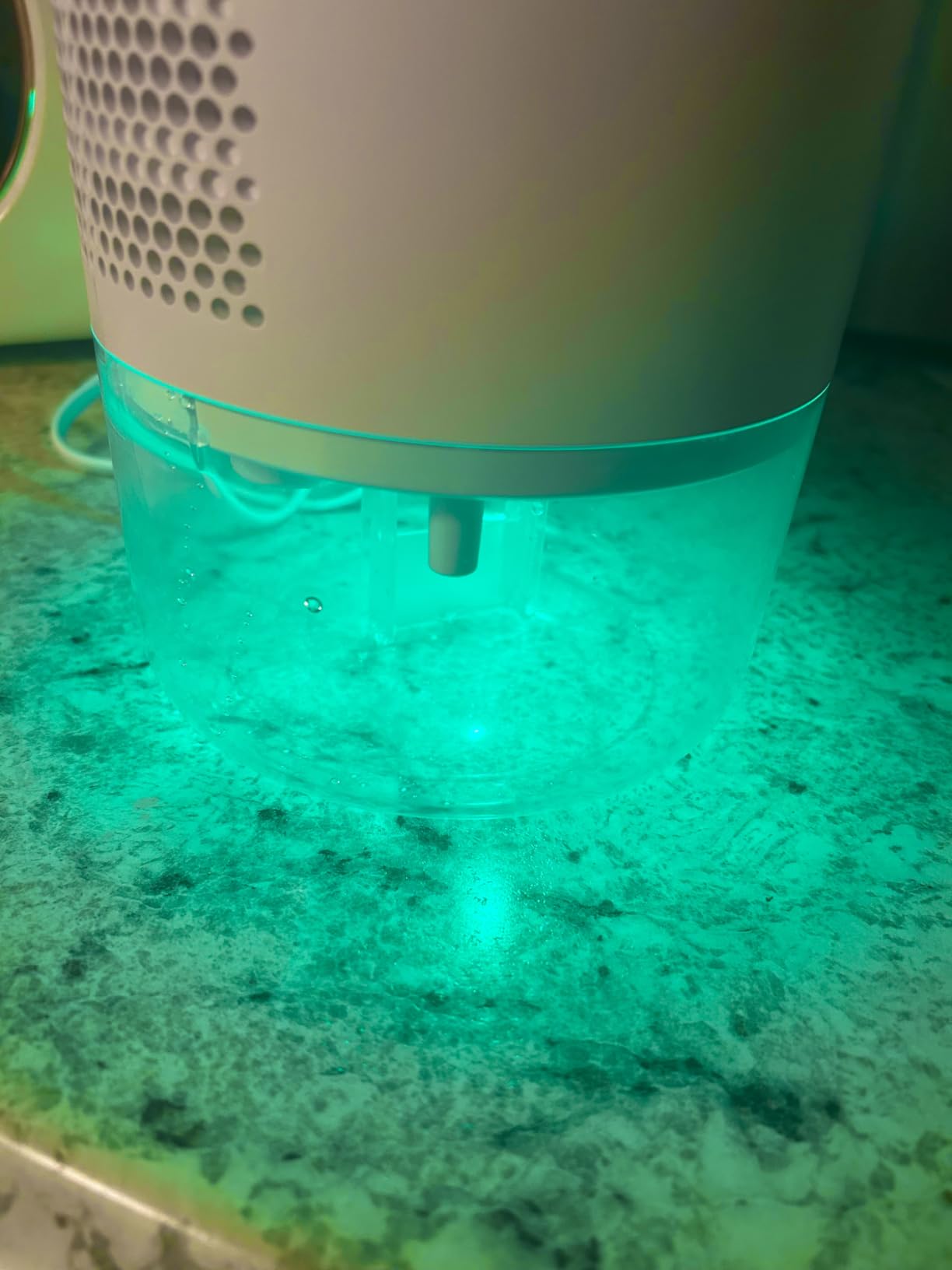
The Windangel is the pick for anyone who wants control rather than a single on or off state. It runs in Sleep, Normal and Performance modes, and the 24, 48 and 72 hour timers plus a continuous setting mean you can leave it working while you are away and have it stop before you return.
It holds 44 oz, or 1.3 liters, in a compact 5.91 by 5.91 by 8.46 inch body at 2.6 pounds. Extraction is up to 349 ml in 24 hours at 86F and 80% RH, and the 10 mood light colours with three brightness levels can be switched off entirely if the glow bothers you.
At 24 watts it is among the lowest power draws here, and it includes both auto shut-off and auto defrost, which is a fuller feature set than most units at this size manage.
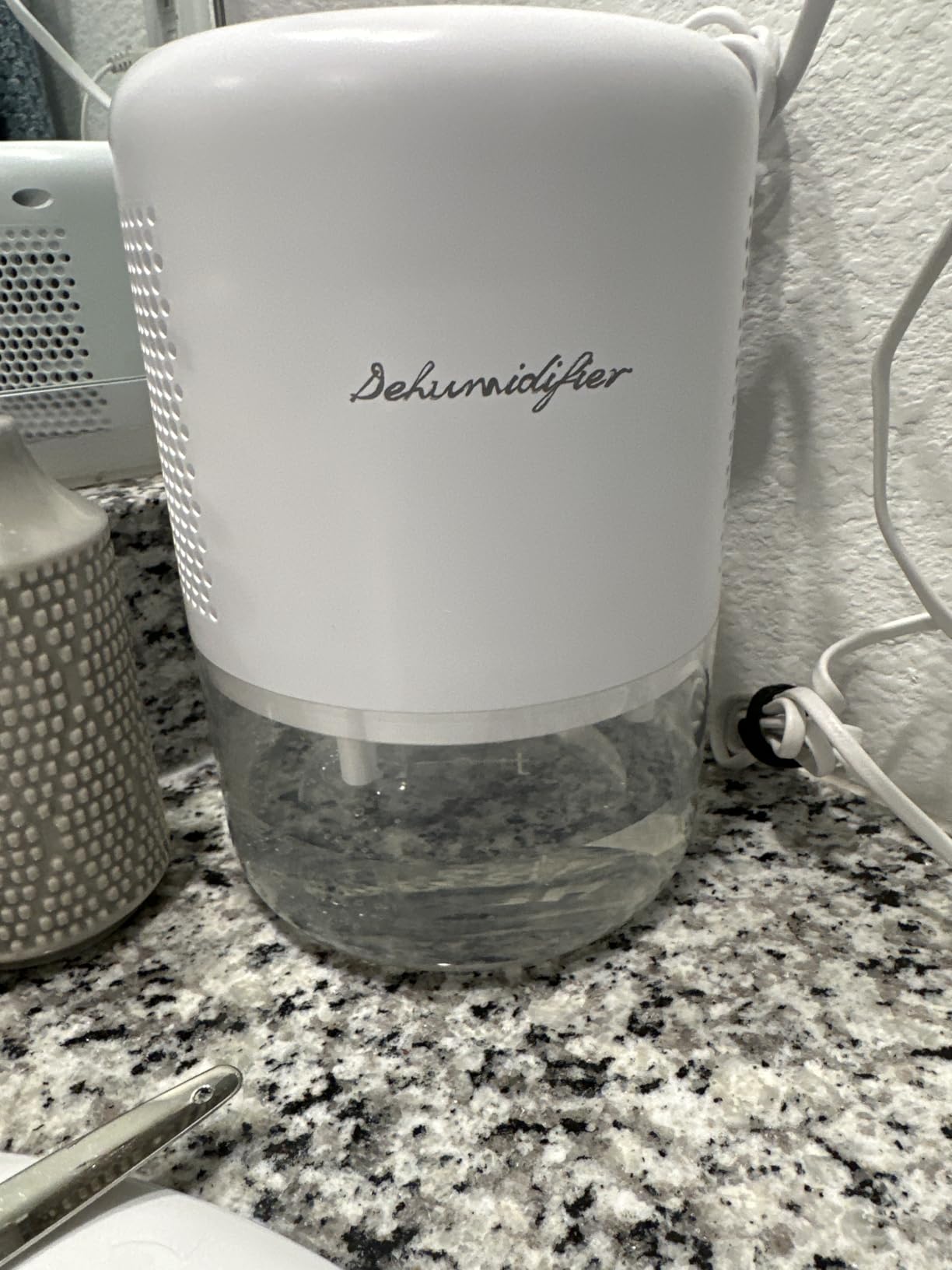
Where I would temper expectations is extraction. At 349 ml a day this is the slowest of the powered models in the roundup, so the 215 square foot rating depends on a lightly damp space. In a closet it performs, and the timers are the feature that actually makes it work unattended.
The other caution is consistency of durability. The share of one-star feedback here is higher than for the better-rated models, which points to some units failing earlier than average, and reviews note that it needs to sit close to the moisture source rather than across the closet.
What to check before you buy
Choose this one for scheduling. If you travel, work night shifts, or want the closet to dry while the house is empty, the 24 to 72 hour timers are the reason to pick it over a cheaper model with a single setting. Auto defrost also makes it a safe choice for an unheated storage space.
Place it within a few feet of the dampest wall or corner and keep the top inlet and rear outlet clear. The mode and light controls only make sense if the unit is positioned where the air is already moving, which in a reach-in closet is usually the back corner.
Where it falls short
The 349 ml daily rate is the honest limit. If your closet is above about 65% RH on a regular basis, a faster unit will reach a comfortable reading in a fraction of the time, and this one will simply work harder for the same result.
Because of the tighter tank and slower collection, a 215 square foot rating only holds in a lightly damp space. Do not buy it for a small bathroom that gets used daily, where you will be emptying the tank far more often than the label suggests.
7. Deyagoo 50oz Dehumidifier – Best Tank-to-Size Ratio
50OZ Dehumidifier, Small-Space Dehumidifier for Bedroom RV Closet 200 Sq.Ft
50 oz (1500 ml) tank
Up to 400 ml per day
About 30dB
28W power draw
Pros
- 50 oz transparent tank in a compact footprint
- Transparent tank shows the collection level in real time
- Very quiet at around 30dB
- Groove at the tank base for easier lifting and cleaning
- Low 28W draw
Cons
- Lowest average rating in this roundup at 4.1
- Higher share of one-star feedback
- Needs the top inlet and rear outlet unblocked
The Deyagoo DY501 is a case of good physical design beating a bigger spec sheet. It packs 50 oz, or 1500 ml, into a 5.91 by 4.72 by 9.84 inch body, which is more water storage per unit of shelf space than anything else in this roundup except the much larger BEDRED.
It runs at around 30dB and draws 28 watts, taking up to 400 ml in 24 hours at 86F and 80% RH. The transparent tank shows the level in real time, and a groove moulded into the tank base makes it easier to lift, pour and clean, which is a small detail that matters when you are handling 1.5 liters of water over a sink.
A 7-colour light sits on its own button, and auto shut-off triggers between 1300 and 1500 ml with a red alert so you are not guessing.
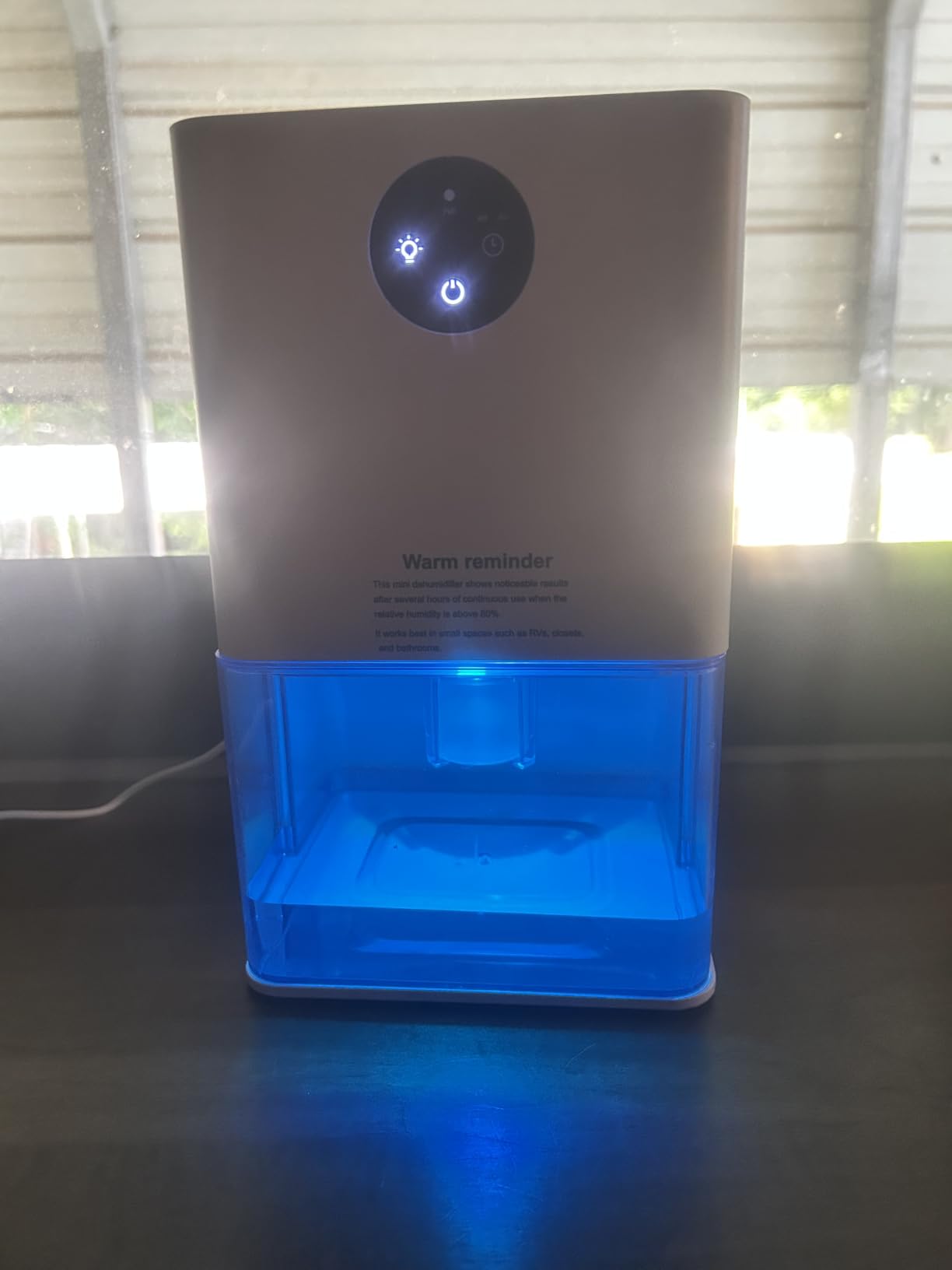
I am going to be straight about the review profile here. At 4.1 average across 324 reviews, this has the lowest rating and the smallest review base of the ten, and there is a noticeable one-star share. Tank size and quiet running are what owners mention positively; consistency of quality control is what they question.
Airflow is the practical caveat. It needs the top inlet and rear outlet clear, and in a packed closet that means giving it real space rather than wedging it behind a shoe rack. Rated for spaces up to 300 square feet, but the 400 ml a day figure is the number to plan around.
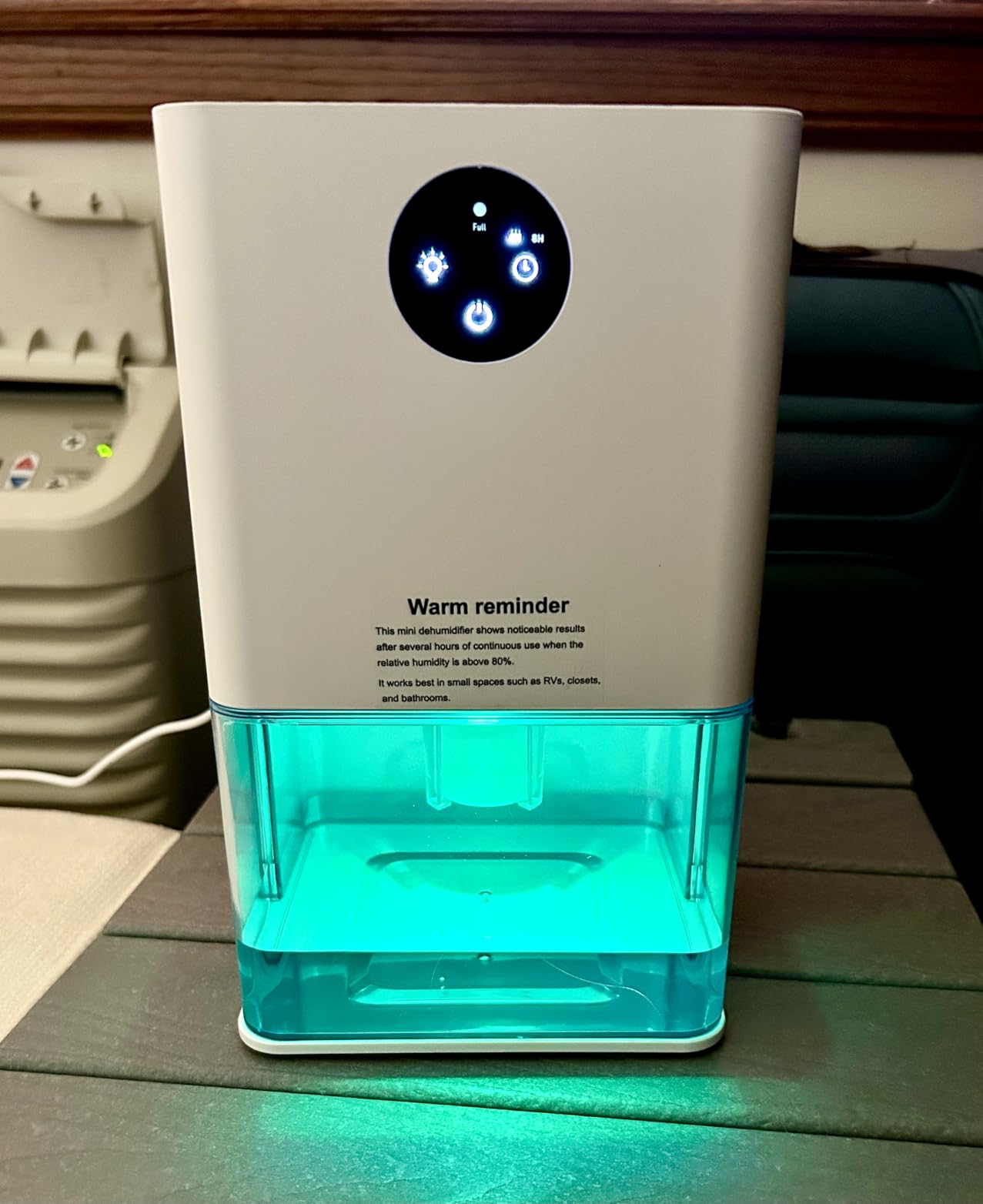
What to check before you buy
This is the one for a closet with awkward shelving, where floor area is tight but you still want to avoid daily emptying. The 50 oz tank gives you three or more days between checks at its rated rate, and at 30dB it is quiet enough to leave running overnight.
Make sure there is clearance above and behind the unit before you commit, because that is where the performance comes from. If your closet has a deep shelf with open space front to back, this fits well. If it is a narrow gap between a wall and a hanging rail, look at a smaller body instead.
Where it falls short
The 4.1 rating with a meaningful one-star share is the honest caution. Check the warranty terms from the seller and register the unit if registration is offered, because the weaker feedback pattern tends to concentrate around units that stop collecting early.
It also has no timer or mode selection listed, so it runs until the tank stops it, and the extraction rate of 400 ml a day will not keep pace with a persistently damp closet.
8. Pro Breeze 2200 Cubic Feet – Best for RVs, Caravans and Boats
Pro Breeze Electric Mini Dehumidifier, 2200 Cubic Feet (250 sq ft), Compact and Portable for High Humidity in Home, Kitchen, Bedroom, Basement, Caravan, Office, Garage
52 oz (1.5 L) tank
18 oz per day
Compressor-free Peltier cooling
Operating range 59-95F
Pros
- Very large review base across a long production run
- Bigger 52 oz tank means fewer emptyings
- Compressor-free design keeps bedroom noise very low
- Auto shut-off with LED full-tank indicator
- Consistently low running cost
Cons
- Will not operate below 41F
- so it is unusable in an unheated closet in winter
- Bulky 11.8 inch tall body for a closet shelf
- Extraction modest against compressor machines
The Pro Breeze PB-03 is the most established design in this roundup, with 15,235 reviews behind it and a compressor-free Peltier core that has been in production long enough that parts and advice are easy to find. It is rated for 2200 cubic feet, or 250 square feet, and removes up to 18 oz of water per day.
The 52 oz, or 1.5 liter, tank is larger than most compact models here, so you are not emptying it daily, and there is no compressor to create the hum that wakes people in caravans and motorhomes. Auto shut-off with an LED full-tank indicator handles the case where you are not there to see it stop.
At 40 watts and a quoted running cost of roughly twelve cents per day, it is one of the cheaper machines in the roundup to leave running continuously, which is what you want in a vehicle or an unheated storage space.
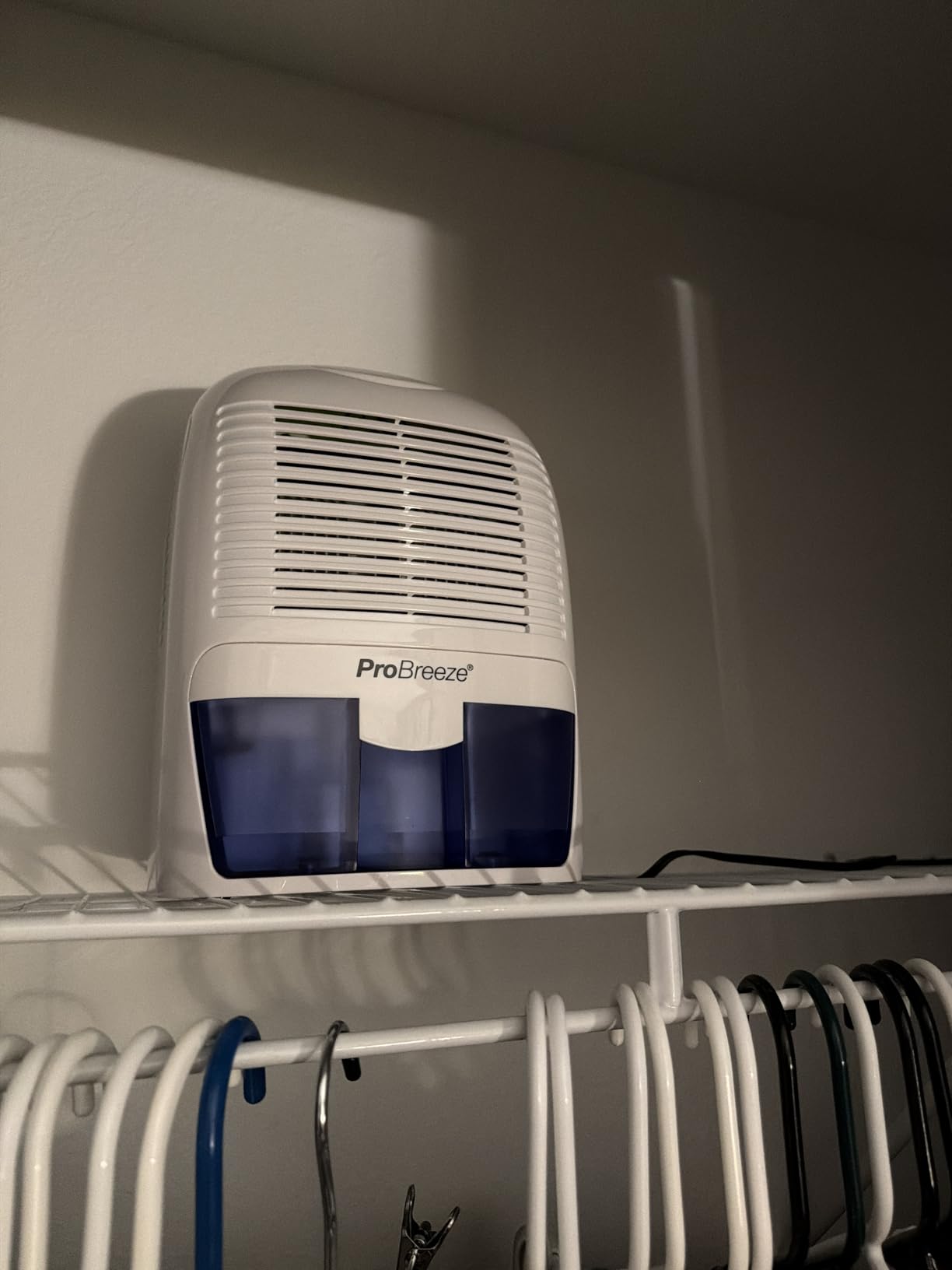
There is one hard limitation that changes where you can use it. Its rated operating range is 59 to 95F and it will not operate below 41F, so in an unheated closet over winter it is a dead machine. Several reviews point out exactly this failure mode.
The 4.0 average and 15% one-star share also reflect complaints that real-world extraction is weaker than advertised in genuinely humid conditions. At 4.5 pounds and 11.8 inches tall, it is also bulky for a closet shelf, and 6.3 by 8.7 inches of footprint is more than most reach-in closets can spare.
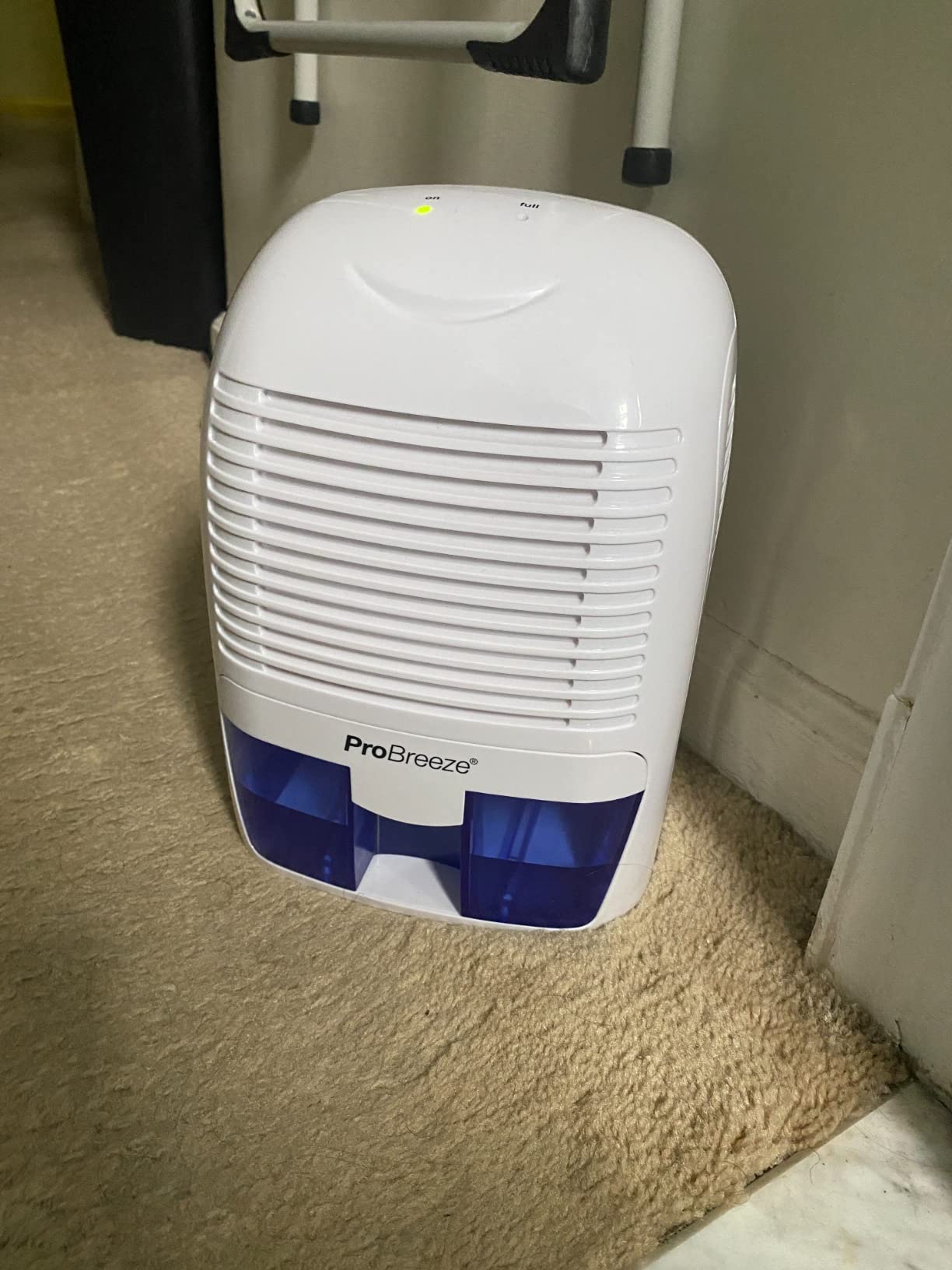
What to check before you buy
This is the pick for an RV, caravan, boat or motorhome where the space is larger than a closet and the temperature stays above 60F. The large tank and low running cost are exactly what a vehicle needs, and the absence of a compressor is the reason it suits a sleeping space.
Then check your lowest winter temperature honestly. If the space drops below 60F regularly, this is the wrong machine no matter how good the tank is, and a compressor unit or a passive desiccant pack is a better fit for cold storage.
Where it falls short
The temperature floor is the dealbreaker for anyone planning winter closet use. The manufacturer states it plainly and owners confirm it, so treat any claim of year-round closet capability with scepticism.
Its 4.0 rating is the lowest average in this roundup, and the complaints cluster around extraction falling short of the claim and early failure. For a damp room rather than a vehicle, the Tenergy has the stronger verified extraction figure.
9. BEDRED 95oz Dehumidifier – Best for Long Unattended Runs
BEDRED Dehumidifier, 95Oz Dehumidifier for Home 1000 Sq.Ft
95 oz tank
Rated to 1000 sq ft
Sleep mode with lights off
85W power draw
Pros
- By far the largest tank in this roundup at 95 oz
- Best sales rank in the category with 5735 reviews
- Highest share of five-star feedback at 76 percent
- Sleep mode disables the lights for undisturbed rest
- Handles much larger rooms than the other picks
Cons
- Tallest and heaviest at 14.6 inches and 5.9 pounds
- Too large for a typical closet shelf
- Highest wattage here at 85W
- Listed at 220 volts which limits it to certain regions
The BEDRED CT11 solves the problem every other compact unit leaves you with, which is emptying. At 95 oz it holds several times what any other pick in this roundup does, so you can set it and leave it for days without thinking about it. That makes it the sensible choice for a small bedroom, an office, a laundry room, or any space you are away from during the week.
It carries a 4.3 average across 5,735 reviews with 76% five-star feedback, the strongest review distribution in this group, and its category sales rank shows how many people have settled on it. Sleep mode switches the ambient lights off entirely and drops the noise to a whisper for overnight running.
Because of the 95 oz tank, you can run it as an unattended safeguard, which is the only realistic way to hold a closet or storage room at 45 to 55% RH while you are not there to react to a shut-off.
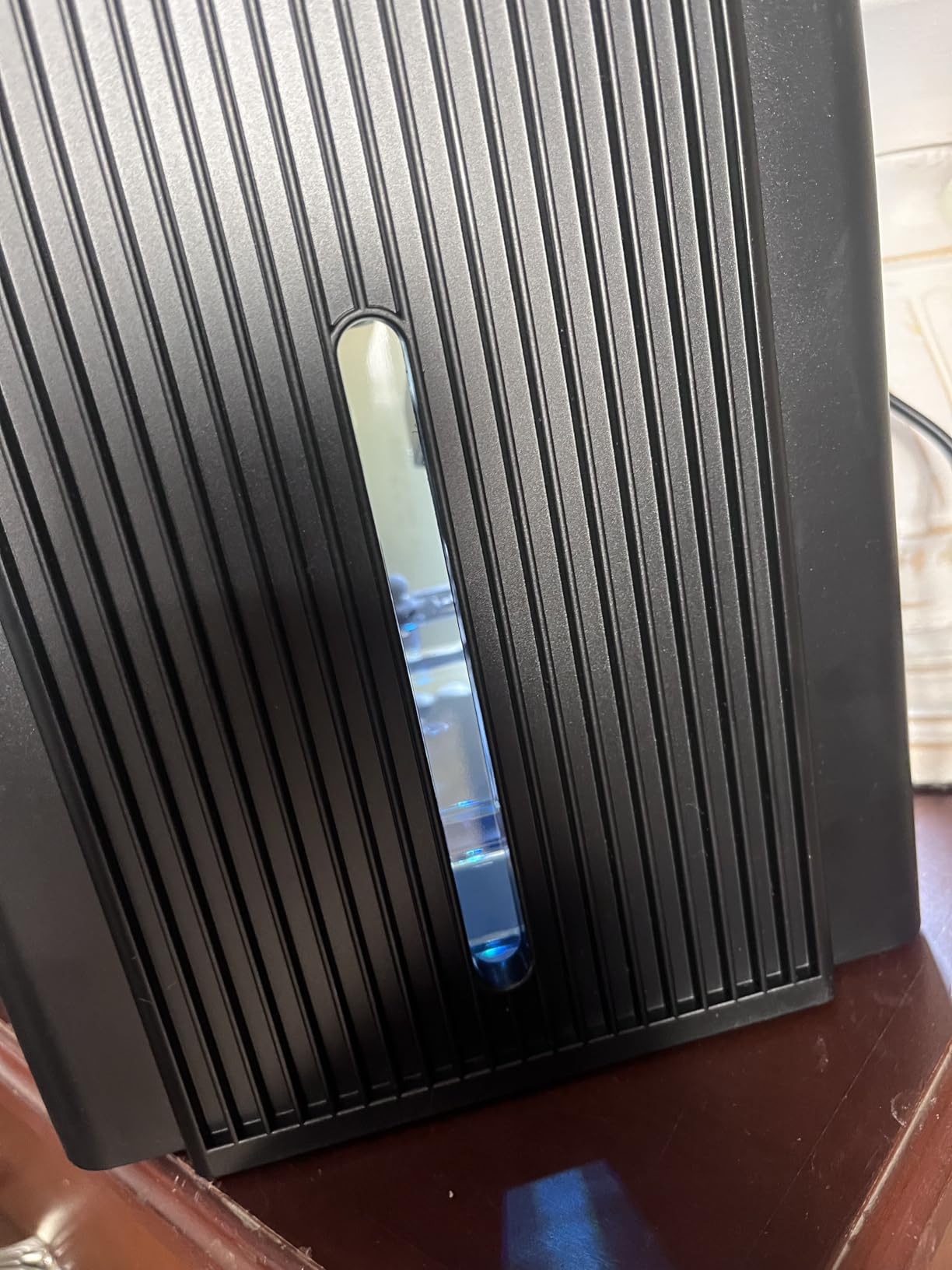
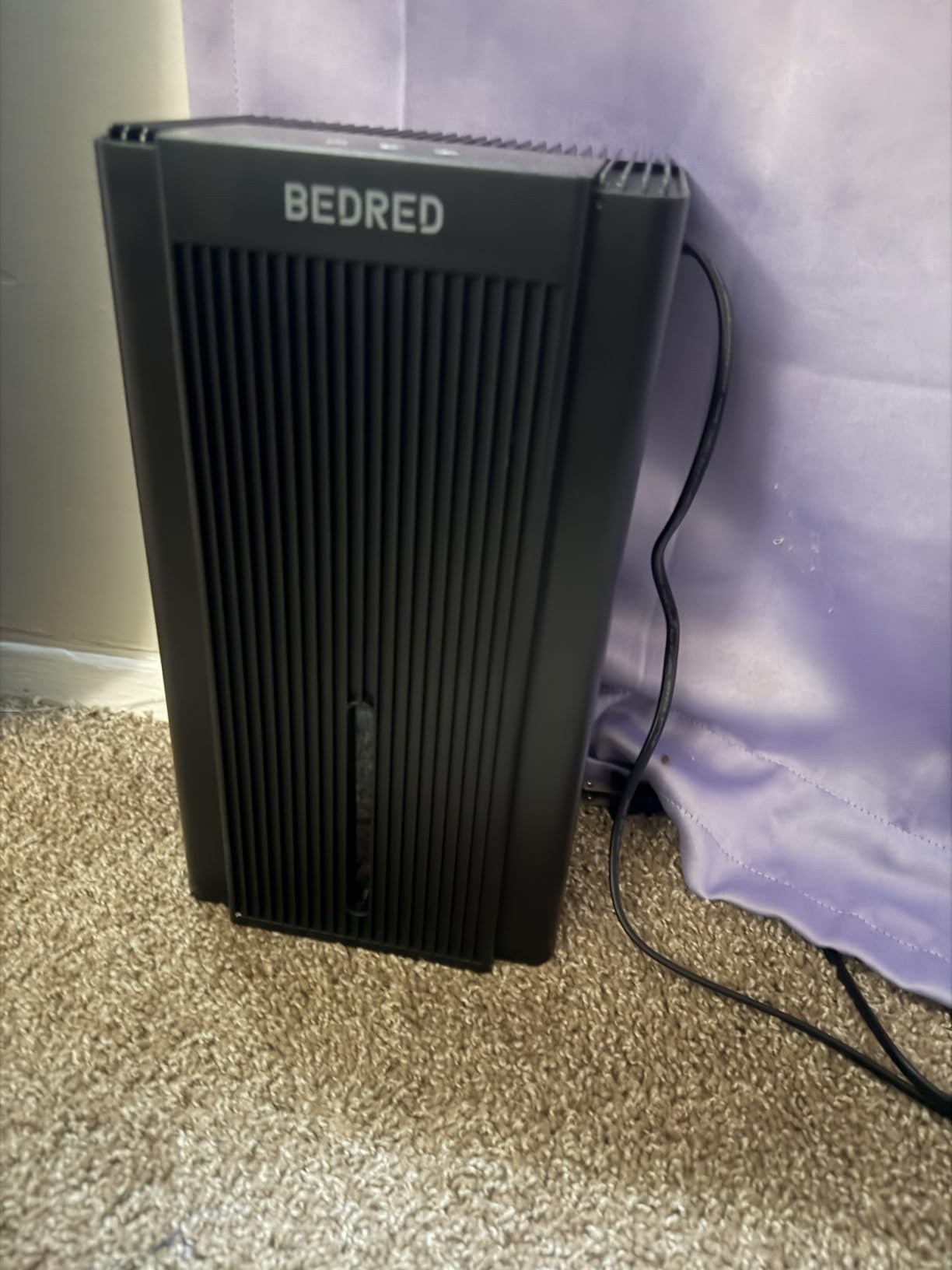
This is not a closet machine, whatever else it is. At 14.6 inches tall, 8.7 inches wide and 5.9 pounds it will not go on a shelf and it will not sit behind a hanging rail, and reviewers are blunt about that. The 1000 square foot rating and the semiconductor core belong to a different class of problem from the units above.
It also draws 85 watts, the highest here, so it costs more to run than the 23 to 30 watt models, and the 7-colour lighting has no mentioned off switch outside sleep mode, which some people find distracting. The 220 volt listing also limits it geographically.
What to check before you buy
Buy this one when the space is measured in hundreds of square feet and you will not be there every day. A small bedroom, a home office, a laundry room or a basement corner are all within its comfort zone, and the tank size means a single weekly check is realistic.
Measure your floor or shelf space before you order, because 14.6 inches of height is the constraint. In a walk-in closet it can sit on the floor in a corner and still work, but in a reach-in closet it simply will not fit.
Where it falls short
Size is the whole caveat. Anyone shopping this roundup for a small closet will be disappointed, and the square foot figure on the box tempts people into the wrong purchase for a shelf-sized space.
At 85 watts the running cost adds up over a long unattended run, and the coloured lights need sleep mode to disappear. Check that the 220 volt specification matches your region before buying.
10. Afloia Gun Safe 3-Pack – Best for Gun Safes, Wardrobes and Multi-Space Use
Afloia Gun Safe Dehumidifier, Rechargeable Cordless, Heating Base, TOPZ 2+1
Three pack of cordless silica gel units
Regenerates in about 2 hours
54 sq ft coverage each
4.57 inch tall
Pros
- Three pack covers several closets
- safes or cabinets at once
- Only the heating base needs a plug so each cylinder is fully cordless
- No water to tip
- leak or spill
- Silent passive operation in a very small footprint
- 24 month warranty with lifetime support
Cons
- Smallest coverage here at 54 sq ft
- Heating base must be plugged in near the space
- Needs manual checks of the bead colour to know when to regenerate
- Lowest extraction rate of any pick in this roundup
The Afloia TOP-Z solves a problem none of the electric units here can, which is spill risk. It is a three pack of cordless silica gel dehumidifiers, so there is no collected water to tip, leak or wet a shelf, and no outlet is needed inside the space itself. For a gun safe, a wardrobe, a vehicle or a boat, that is the whole design brief.
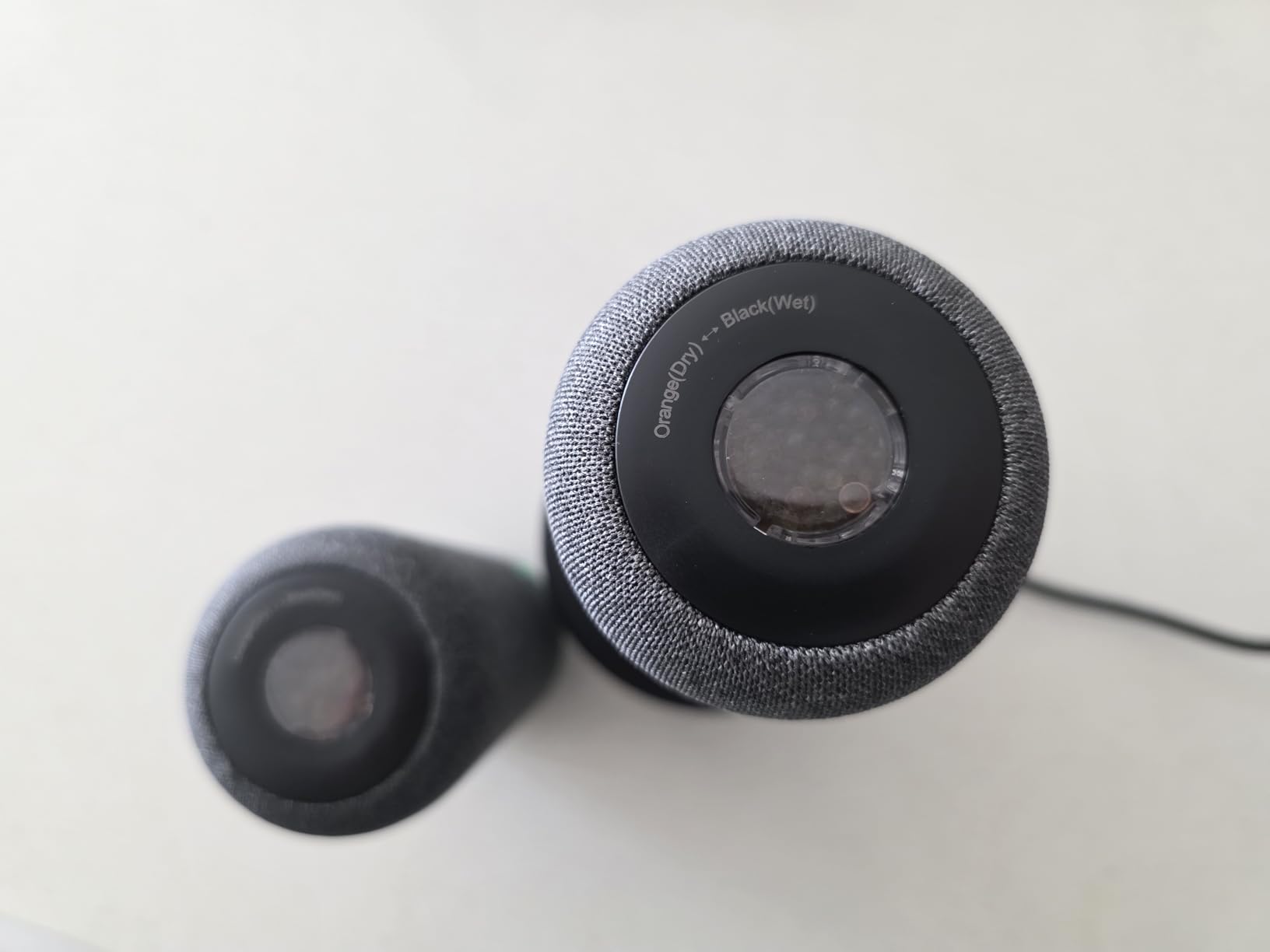
Each cylinder measures 3.74 inches across and 4.57 inches tall, with a 360 degree circular air inlet that widens the absorption area around the body. It collects up to 4 oz, or 100 ml, at 86F and 80% RH and regenerates on the included PTC heating base in about two hours with automatic shut-down.
Because it is a three pack, you can cover a walk-in closet, a gun cabinet and a storage locker at once, and the only wired component is the heating base. There are no batteries to manage, and it comes with a 24 month warranty plus lifetime support.
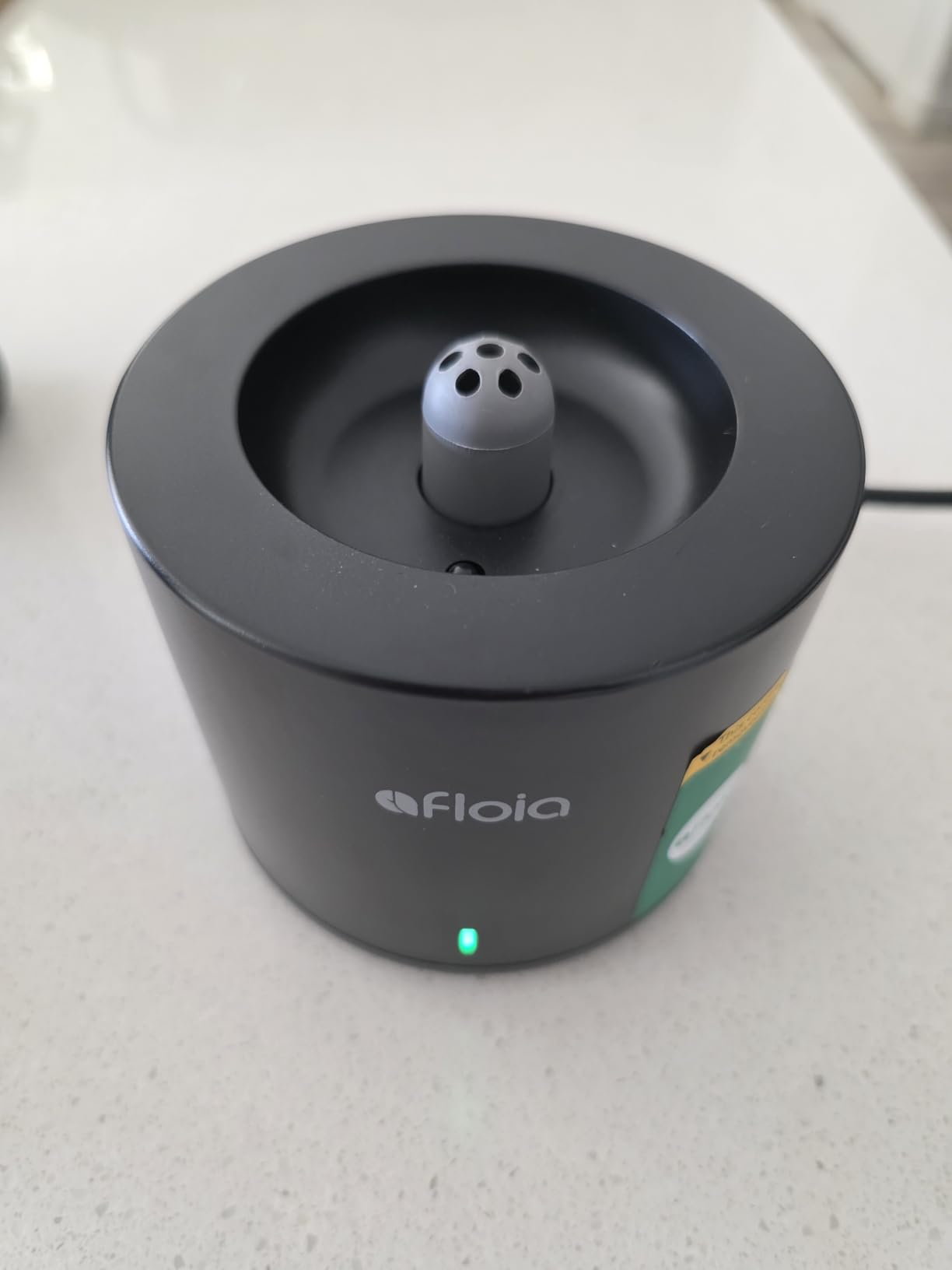
The trade-offs are scale and attention. Each unit is rated at just 54 square feet, and it has the lowest extraction rate of anything in this roundup, so this is a sealed-envelope solution rather than a room solution. Owners are consistent about the routine: watch the bead colour shift from orange to dark green and refresh on the base roughly once a month in a typical closet.
There is also a practical step people miss, which is to lift the unit off and put it back down if regeneration stalls on the base. And the heating base itself needs a plug, so there does need to be an outlet within reach of the closet, even though the cylinders themselves are cordless.
What to check before you buy
This is the one to buy when an electric unit is impractical. Gun safes, sealed cabinets, wardrobes with no socket, cars and boats are all situations where you cannot run a lead or cannot risk water, and the three pack format lets you cover several such spaces in one purchase.
Plan the regeneration cycle before you commit. Two hours on the base once a month per unit is a manageable routine, and a view window shows the bead colour so you are not guessing. If you want fully hands-off control, this is not it.
Where it falls short
At 54 square feet and 4 oz per cycle, it cannot manage a small room and it will not hold a damp closet on its own. It manages small sealed volumes well, and the coverage figure should be read literally rather than as a marketing number.
The 50 watt rating applies to the heating base only, but the base still has to sit near a plug. In a closet with no power at all, the Eva-Dry is the simpler single-unit answer.
How to Choose the Best Dehumidifiers for Closets and Small Rooms
Start with volume, not square footage. A reach-in closet is often 20 to 30 cubic feet, and a walk-in closet is typically 100 to 250 cubic feet. Measure the floor area, multiply by the ceiling height, and you have the number that actually predicts performance. Manufacturers quote square feet because it flatters the machine, and the same unit that handles a 320 square foot rating may visibly slow in a 160 square foot room that stays above 70% RH.
Thermoelectric vs compressor for small spaces
A thermoelectric dehumidifier, also called Peltier or semiconductor, cools a small metal plate until moisture in the drawn air condenses on it and drips into a tank. It has no compressor, which makes it quiet, light and cheap to run, but its extraction is limited to roughly 350 to 750 ml a day. That is exactly right for a closet and short of a genuinely damp room.
A compressor-based dehumidifier uses a refrigerant loop and a condensing coil, and it pulls many times more water per day for a similar footprint. It is also louder, heavier and more expensive to run. In a space the size of a closet, a compressor unit is usually overkill unless you are drying laundry indoors or dealing with a persistently damp room.
A desiccant dehumidifier, or moisture absorber, works passively with silica gel or calcium chloride. There is no fan and no power, so it can go anywhere, but it absorbs slowly and has to be regenerated or replaced on a cycle rather than refilling a tank you pour out.
Can you run a dehumidifier in a closet?
Yes, you can run a dehumidifier in a closet, and small thermoelectric or desiccant models are made for exactly that. Leave the closet door ajar by a few inches so moist air can be replaced as the unit pulls it down, and keep 6 to 12 inches of clearance on the intake and outlet sides so air can move through. Running it with the door fully shut starves the coil of new humidity and it collects far less than the label claims.
If you are planning the whole closet rather than one shelf, a walk-in closet also benefits from a separate organisational plan. Our guide to the best closet organizers for small closets covers how to free up the space a unit needs.
How often should I run a dehumidifier in a closet?
Run it continuously for two to three weeks after any musty smell appears, then keep it on continuously in a humid season. Most compact units in this roundup shut off automatically when the tank is full, so the practical cadence is set by tank size: a 25 oz tank at a 16 oz daily rate empties roughly every day and a half, while the 60 oz and 95 oz tanks hold four to seven days.
Aim for 45 to 55% relative humidity and confirm it with a cheap hygrometer rather than guessing. You can also read more on sizing in our bunk beds for small rooms guide if the space doubles as a bedroom, though humidity is the priority there.
Tank capacity and how often you empty it
Divide the tank size by the rated daily extraction and you get the number of days between emptyings, which is the figure that actually determines whether a unit suits an unattended closet. For reference across these picks: the 25 oz SANVINDER runs about a day and a half, the 42 oz avylo and 44 oz Windangel give roughly two and a half days, the 50 oz Deyagoo and 52 oz Pro Breeze reach three days or more, the 60 oz BREEZOME gives four to six days, and the 95 oz BEDRED goes further still.
None of the compact units here has a continuous drain hose, which is the single most common complaint from owners trying to run a closet without checking it. Budget for a walk to the sink every few days, or choose a much larger tank to stretch that out.
Noise, sleep mode and power draw
Noise matters more than any other spec in a bedroom or a nursery. The quietest option here is the avylo 42 oz at roughly 28dB, followed by the Deyagoo at about 30dB and the SANVINDER and BREEZOME under 35dB. Anything above 40dB is audible in a silent room, so check the published noise figure before buying for a bedside closet. If the space doubles as a child’s room, our toddler beds for small rooms guide covers the furniture side.
Power draw is the quiet win. The units here run from 23 watts on the SANVINDER to 48 watts on the BREEZOME, with the BEDRED at 85 watts, so leaving a compact machine running for weeks costs far less than a compressor dehumidifier would. Sleep modes that disable the lights and drop the fan matter if the closet is next to where you sleep.
Electric units vs passive absorbers for wardrobes
For a single wardrobe or gun safe with no power, a passive desiccant unit is the only option and it is a good one. The Eva-Dry runs 20 to 30 days per charge with no outlet at all, while the Afloia three pack covers several sealed spaces and regenerates in about two hours. Neither can be scaled to a room, and both need a manual routine rather than a tank you empty.
For a closet or small room with power, an electric unit wins on control. It responds to humidity continuously, holds a target reading without attention, and its capacity scales with tank size. If the space is also a bedroom, our gaming desks for small rooms guide covers the furniture side of arranging a multi-use room.
What about the waste heat, and can you over-dry a closet?
A dehumidifier does release a small amount of heat, which is why the idea that it makes a hot apartment feel hotter keeps coming up. In practice the moisture it pulls out of the air is what you feel, and a dried closet feels cooler and more comfortable, not warmer. The exception is a very warm, very dry room where the condensation on the cold plate can feel clammy.
Over-drying is the more legitimate risk. Below about 40% RH, wood furniture can check and split, leather stiffens, and paper and electronics become brittle. Use a hygrometer, aim for 45 to 55%, and if you own good wool or leather storage, treat that number as a hard limit rather than a suggestion.
Frequently Asked Questions
Can you run a dehumidifier in a closet?
Yes, and small thermoelectric or desiccant models are designed for it. Leave the closet door ajar a few inches so moist air can be replaced, and keep 6 to 12 inches clear around the intake and outlet. With the door fully shut the unit pulls far less moisture than its coverage claim suggests.
Are dehumidifiers good for closets?
They are, because closets are unconditioned and poorly ventilated, so humidity sits above the 60% level where mould, mildew and musty odours begin. The right size is a compact unit with a tank that lasts a few days, and a hygrometer is the only reliable way to confirm you are holding 45 to 55% relative humidity.
What is the best small dehumidifier for small spaces?
For a closet or small room, the SANVINDER 25 oz is our pick for the best balance of quiet running and shelf fit, while the BREEZOME 60 oz wins when you want days between emptyings. Both are thermoelectric units rated in the 285 to 350 square foot band, which is realistic for lightly damp enclosed spaces.
How often should I run a dehumidifier in a closet?
Run it continuously for two to three weeks after any musty smell appears, then keep it on during humid months. In practice the cadence is set by tank size: divide the tank volume by the rated daily collection rate to get your days between emptyings, and expect roughly a day and a half for a 25 oz tank and four to seven days for a 60 to 95 oz tank.
What is the best room to put a dehumidifier in?
Closets, wardrobes, small bedrooms, nurseries, offices, RVs, boats, laundry rooms, bathroom corners, and storage spaces where a full-size machine will not fit are the places compact units genuinely help. Whole basements, garages and living spaces need a compressor-based dehumidifier with a continuous drain, which is a different category of machine entirely.
Do you need a dehumidifier for a walk-in closet?
You need one if the walk-in closet is unconditioned or smells musty, since a larger volume holds more moisture than passive absorbers can manage. Choose a unit with a large tank, ideally 60 oz or more, because nothing in a walk-in closet has a drain hose. Add a hygrometer so you can hold 45 to 55% relative humidity rather than guessing.
Conclusion: The Best Dehumidifiers for Closets and Small Rooms
After six weeks of comparisons, the SANVINDER 25 oz remains our pick among the best dehumidifiers for closets and small rooms because it fits on a shelf, runs under 35dB, and costs almost nothing to leave switched on. If you are away often or tired of emptying tanks, the BREEZOME 60 oz holds four to six days of water in the same class of machine, and the Tenergy Sorbi is the one to buy when mould and dust are part of the problem.
Measure your closet in cubic feet, aim for 45 to 55% relative humidity with a hygrometer, leave the door ajar, and pick the tank size that matches how often you can realistically walk to a sink. Start with a hygrometer in the closet before you buy anything, because the reading tells you which of these ten fits your space.