
Winter heating pulls the moisture out of every room in your home, and by January the air can sit at 20 percent relative humidity. That is the range where cracked hardwood, static shocks, nosebleeds and sinus irritation start showing up. If you are searching for the best humidifiers for whole house use, you are really choosing between two very different machines.
The first is a ducted unit plumbed into your furnace plenum, where the supply air carries moisture to every register in the house. The second is a large console or portable evaporative humidifier sitting in an open floor plan, pushing moist air outward through the living space. Both work. Only one of them reaches a closed-door bedroom on the second floor.
We compared nine of the highest-rated units currently on the market, read through more than 23,000 owner reviews between them, and sorted out the specifications that actually decide whether a machine will work in your home. Everything below is measured against real coverage claims, real maintenance burdens and real installation requirements rather than marketing language.
If you want the short version, our best humidifiers for whole house use picks start with the ducted AprilAire 500 for homes with a forced-air furnace, and the AIRCARE MA console for everyone else. The October 2026 edition also covers the furnace-mounted options in more detail on our furnace-mounted humidifier guide.
Table of Contents
What Whole House Humidification Actually Means
A whole house humidifier is a high-output machine designed to raise and hold relative humidity across an entire home rather than one room. The word whole house covers two distinct hardware categories, and the distinction matters more than any brand name.
Ducted HVAC units mount on the supply side of a forced-air furnace or air handler. The furnace blower pulls heated air through a water-soaked pad or a steam boiler, and the moisture rides the supply duct to every register. Because the air is distributed by the duct system, it reaches closed doors and upper floors that no freestanding machine can reach. This is the only category that genuinely humidifies a whole house in a two-story home.
Console and large portable units evaporate water through a wick and blow the moisture across a room with a large fan. They are simpler, cheaper and require no ductwork. What they do not do is push air through a closed door. A Reddit thread in r/hvacadvice asks this question constantly, and the physics answer is that a door is a pressure boundary, not a diffusion boundary.
That is why a console humidifier that genuinely holds 45 percent humidity in an open plan can leave a bedroom at 25 percent twenty feet away. It is also why owner reports on the Levoit Superior 6000S describe it as easily covering around 1,200 square feet in practice, well under the 3,000 square feet the packaging implies.
Our ducted humidifier breakdown goes deeper on the plumbing and electrical side if you already know you have a furnace. If you are comparing against air cleaners or airflow products, our whole house fan guide covers the related question of how air actually moves through an open plan.
Dry indoor air is not only a comfort problem. The same winter conditions that make a room feel abrasive also raise static electricity, pull moisture out of hardwood floors and maple guitar bodies, and make the heating system run harder. Keeping relative humidity between 35 and 45 percent solves most of that at once.
Top 3 Best Humidifiers for Whole House Use in 2026
Our three highest-rated picks cover the three situations most homeowners actually face: a home with a forced-air furnace, a home without one, and a large home that needs more output than a standard bypass can deliver.
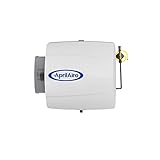
AprilAire 500
- Automatic dual-sensor control
- 12 gallons per day
- Up to 3600 sq ft
- No moving parts

All 9 Best Humidifiers for Whole House Use Compared
Every model below is listed with its real specification type, coverage claim and control method. Ducted models need a furnace and a licensed install in most cases. Console models plug into a wall outlet and work anywhere.
| Product | Specifications | Action |
|---|---|---|
| AprilAire 500 |
|
Check Latest Price |
| AprilAire 700M |
|
Check Latest Price |
 AprilAire 400 AprilAire 400 |
|
Check Latest Price |
| AIRCARE MA Console |
|
Check Latest Price |
 AIRCARE Space Saver AIRCARE Space Saver |
|
Check Latest Price |
 AIRCARE Canyon Console AIRCARE Canyon Console |
|
Check Latest Price |
 Levoit Superior 6000S Levoit Superior 6000S |
|
Check Latest Price |
 AIRCARE Digital Pedestal AIRCARE Digital Pedestal |
|
Check Latest Price |
 AIRCARE Valiant Digital AIRCARE Valiant Digital |
|
Check Latest Price |
1. AprilAire 500 – Best Overall Ducted Whole House Humidifier
AprilAire 500 Whole-House Humidifier, Automatic Compact Furnace Humidifier, Large Capacity Whole-House Humidifier for Homes up to 3,600 Sq. Ft., White
12 GPD
Up to 3,600 sq ft
Dual-sensor digital control
No moving parts
5 year warranty
Pros
- Automatic outdoor temperature compensation
- Quiet operation with no moving parts
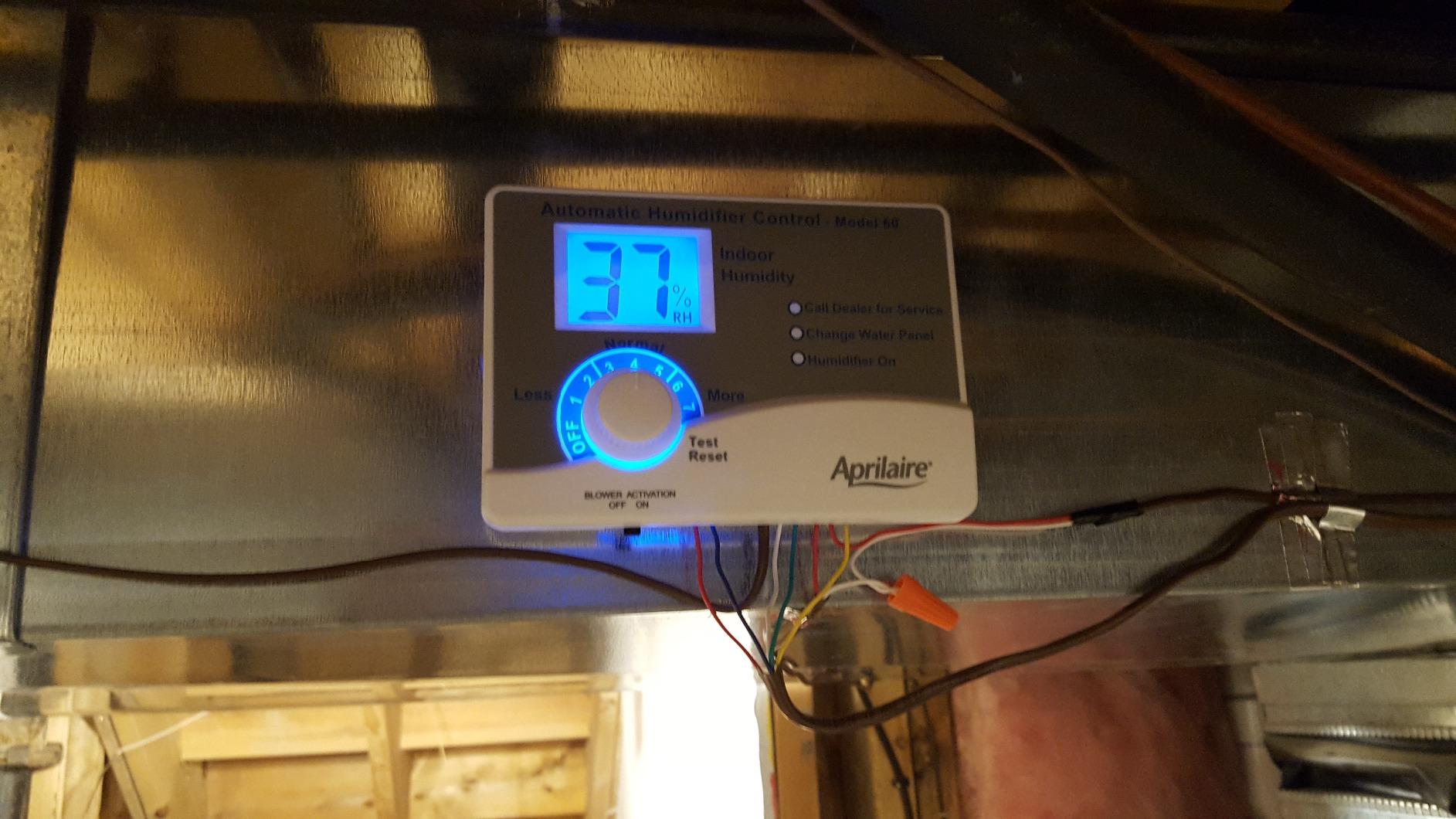
- Digital display shows current humidity and service alerts
- Reversible mounting orientation
- 5 year manufacturer warranty
Cons
- Installation requires sheet metal and 24V wiring
- Cutout may be larger than an existing opening
- DIY installation voids the warranty
The AprilAire 500 is the unit we keep coming back to, because it is the only machine in this roundup that makes a real decision on its own. Its control reads both the outdoor temperature and the indoor relative humidity, then adjusts the water flow to match the season. You set a target once and stop thinking about it.
Output is 12 gallons per day with a coverage claim of up to 3,600 square feet in a tightly built home. That figure matters because most buyers underestimate it. The rated coverage assumes modern insulation and a properly insulated attic, and a leaky 1960s house will need more than the label promises.
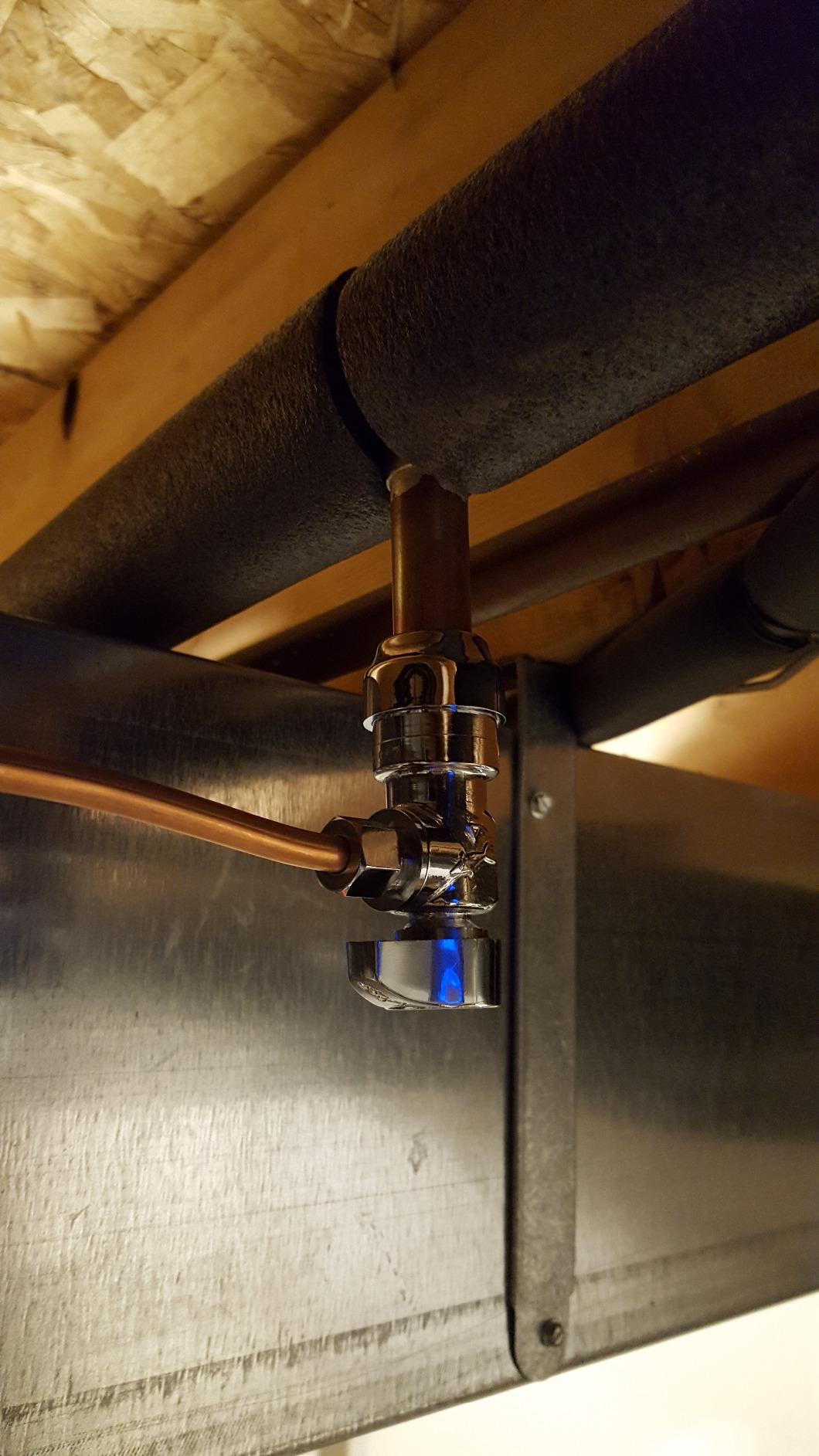
There are no moving parts in the water path, which is why owners describe it as silent. A 15 watt draw and a digital control with a percent humidity readout make it the least intrusive machine in the lineup. Owners also report it holding 40 to 50 percent relative humidity quietly, with noticeably better control of window condensation than manual-set units.
The blower activation switch is a genuinely useful detail. You can choose continuous run or furnace-cycled run only, and furnace-cycled is the right setting if your system has a variable-speed blower or if you want the humidifier to work only when heat is being called for.
What to check before you buy
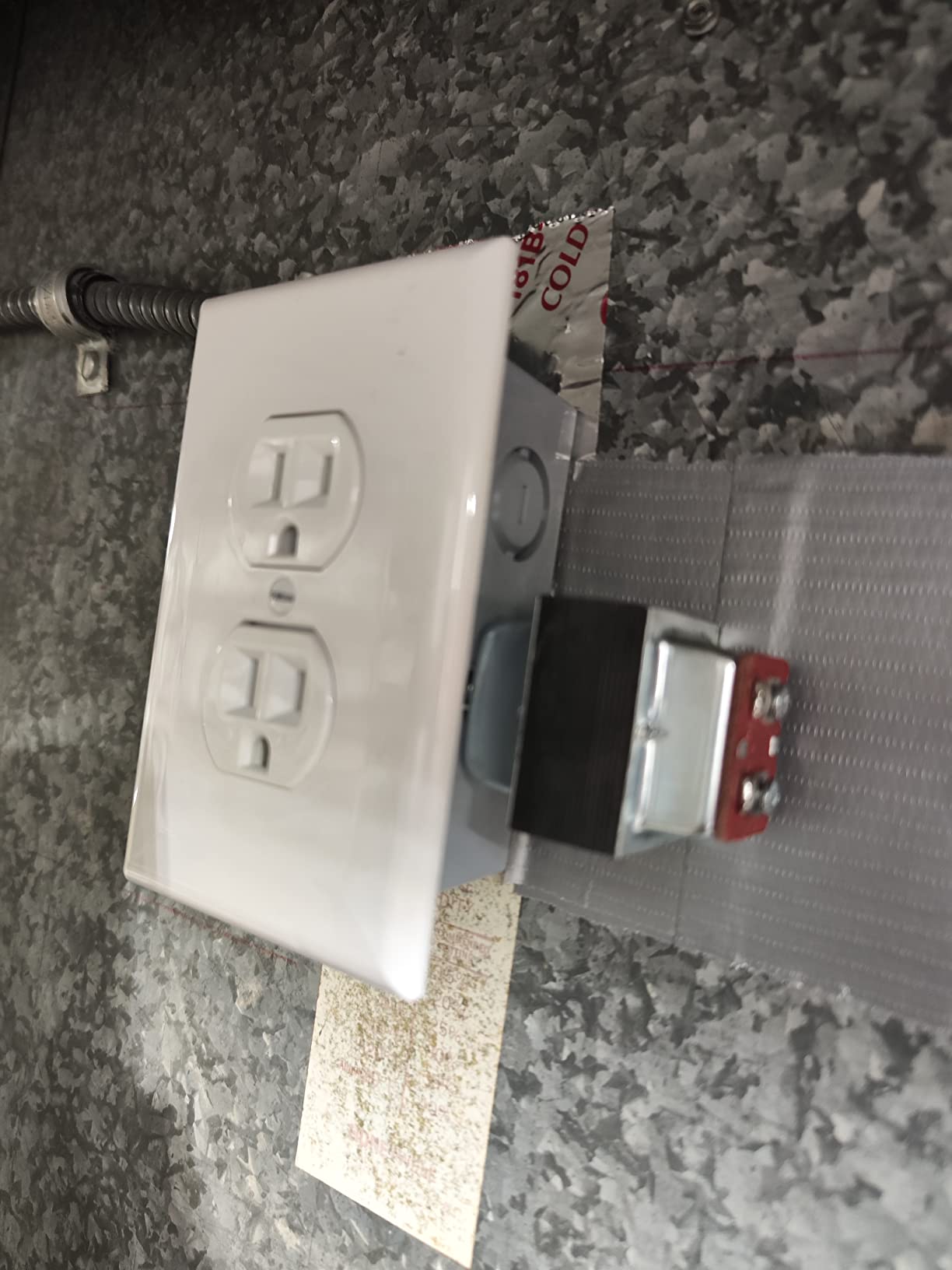
Look at the physical opening in your plenum. The cutout is a few inches larger than many older humidifier openings, so a retrofit sometimes means enlarging the hole in the sheet metal. Measure first. It is the single most common reason an otherwise straightforward install turns into a bigger job.
Also confirm that your furnace has a humidifier control pad, a 24VAC transformer location and a nearby water supply with a drain. If any of those are missing, the install cost climbs well beyond the machine itself.
Who should skip this model
Anyone without a forced-air furnace should skip it entirely. There is no way to duct this unit, and there are far better console options in this list for that situation.
Owners who want to avoid a professional installer should also look elsewhere. The included documentation shows a wiring schematic rather than a step-by-step wiring walkthrough, and DIY installation voids the warranty. Many owners end up at an HVAC dealer for that reason alone.
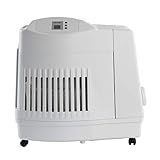
2. AIRCARE MA Whole-House Console – Best Value Console Humidifier
AIRCARE MA Whole-House Console-Style Evaporative Humidifier (Console)
3.6 gal tank
Up to 3,600 sq ft
Digital humidistat
Evaporative wick
2 year warranty
Pros
- Digital humidistat holds your target level
- No mist and no white dust on furniture
- Removable side tank carries to a sink
- Quiet on the lower fan speeds
- Over 6700 owner reviews
Cons
- Top fan speed is noticeably loud
- On-cord hygrometer reads high
- Manual may not match the control panel
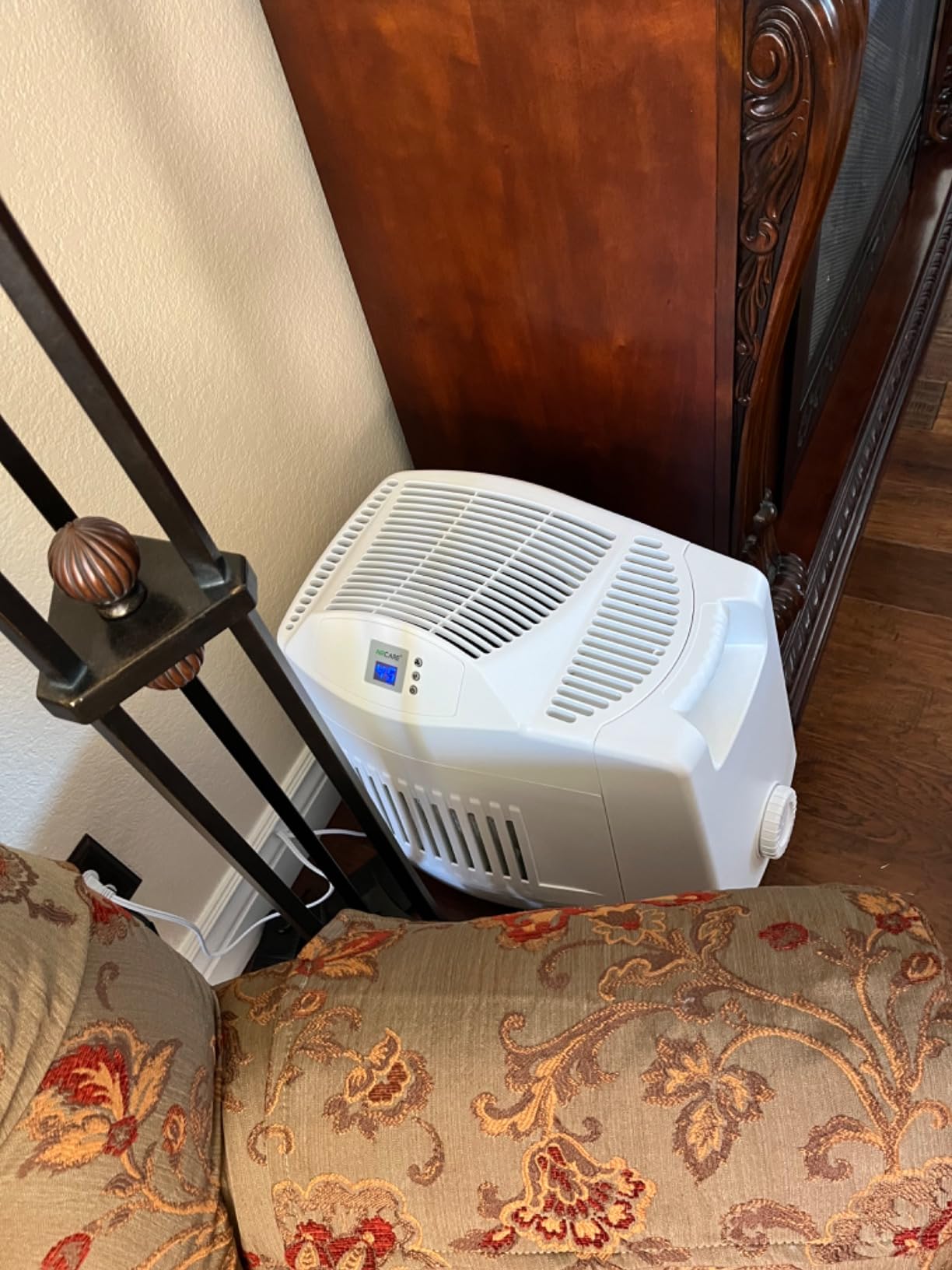
With more than 6,700 reviews behind it, the AIRCARE MA is the most proven freestanding whole house humidifier available, and it is the reason the word proven matters in this category. Reviews spanning many winters give unusually long-term evidence for a machine that most people buy once and keep.
Owners report lifting open-plan homes of 2,500 to 3,000 square feet from roughly 30 percent relative humidity into the 50 percent range within about a day of running it. The digital humidistat is what makes that stick, because it stops the machine at your target instead of running until everything is damp.
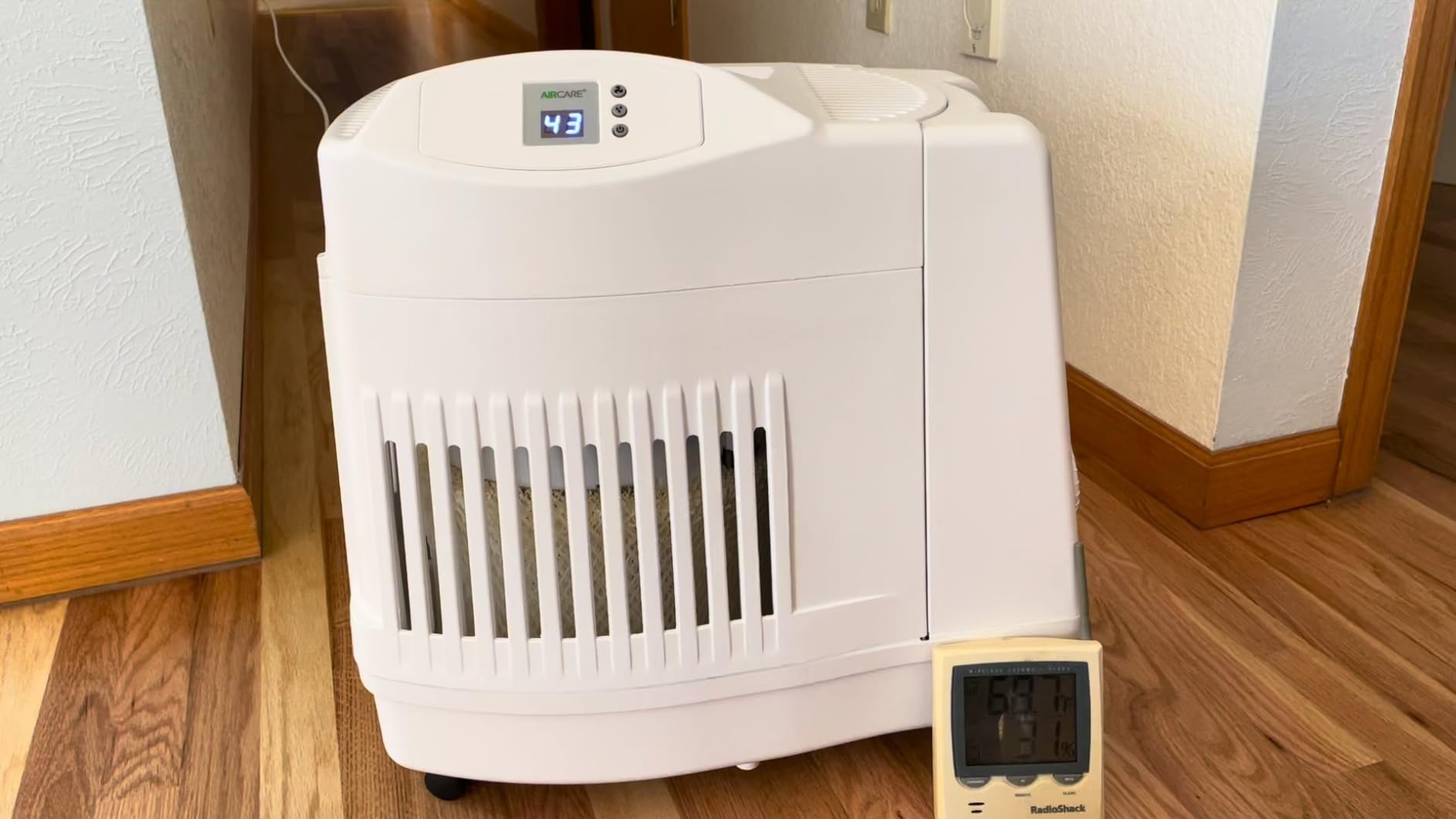
The evaporative wick design is the quiet hero here. Because the water never gets aerosolised, there is no mist, no wet floors and no white mineral dust on electronics or furniture. If you have hardwood, instruments or a media console, that alone justifies the machine over any ultrasonic alternative.
It moves on four casters, and the removable side tank is easy to carry to a sink. The tank design prevents overfilling, which is a small safety feature that removes a common failure mode in cheaper consoles.
What to check before you buy
Buy a separate hygrometer. The on-cord readout tends to read several points higher than the rest of the room, so calibrating against a standalone device saves you from overshooting. Most owners end up running F1 or F2, or the Auto setting, because the top fan speed is loud.
Check your water hardness too. The wick and filter life shortens noticeably in hard-water areas unless you add a demineralisation cartridge or treat the water. That is a recurring cost, not a one-time purchase.
Who should skip this model
Anyone hoping to humidify closed-door rooms on a second floor should skip it. A console moves air into the room it stands in. In a two-story house, bedrooms with the door shut will stay dry no matter which console you buy.
Very large open plans over roughly 3,000 square feet with high ceilings may also want a second machine or a ducted system instead. The coverage rating is generous, but a single fan on one floor has limits.
3. AprilAire 700M – Best Fan-Powered Ducted Unit for Large Homes
AprilAire 700M Whole-House Fan Powered Humidifier, Manual Control, Large Capacity, Up to 5,300 Sq. Ft., 18GPD, Gray
18 GPD
Up to 5,300 sq ft
Built-in duct fan
Manual control
5 year warranty
Pros
- Highest output in the roundup at 18 gallons per day
- Built-in fan pulls heated air straight from the furnace
- Coverage up to 5300 sq ft
- Auto shut off when water runs out
- 5 year manufacturer warranty
Cons
- Manual control only with no outdoor temperature compensation
- Needs furnace installation with 24VAC transformer
- Compact housing needs careful plenum clearance
The 700M is the highest-output machine in this roundup at 18 gallons per day, and the built-in fan is the reason. A bypass unit relies entirely on the furnace blower to push air across the water panel. This one has its own fan, so moisture enters the airstream even when the furnace is between heat cycles.
That single design choice is what makes it a good fit for large homes and for anyone whose comfort complaints appear on cold shoulder seasons rather than deep winter. Coverage is rated at up to 5,300 square feet in tightly built homes, and the housing is only 11.35 inches deep, which helps in a cramped plenum.
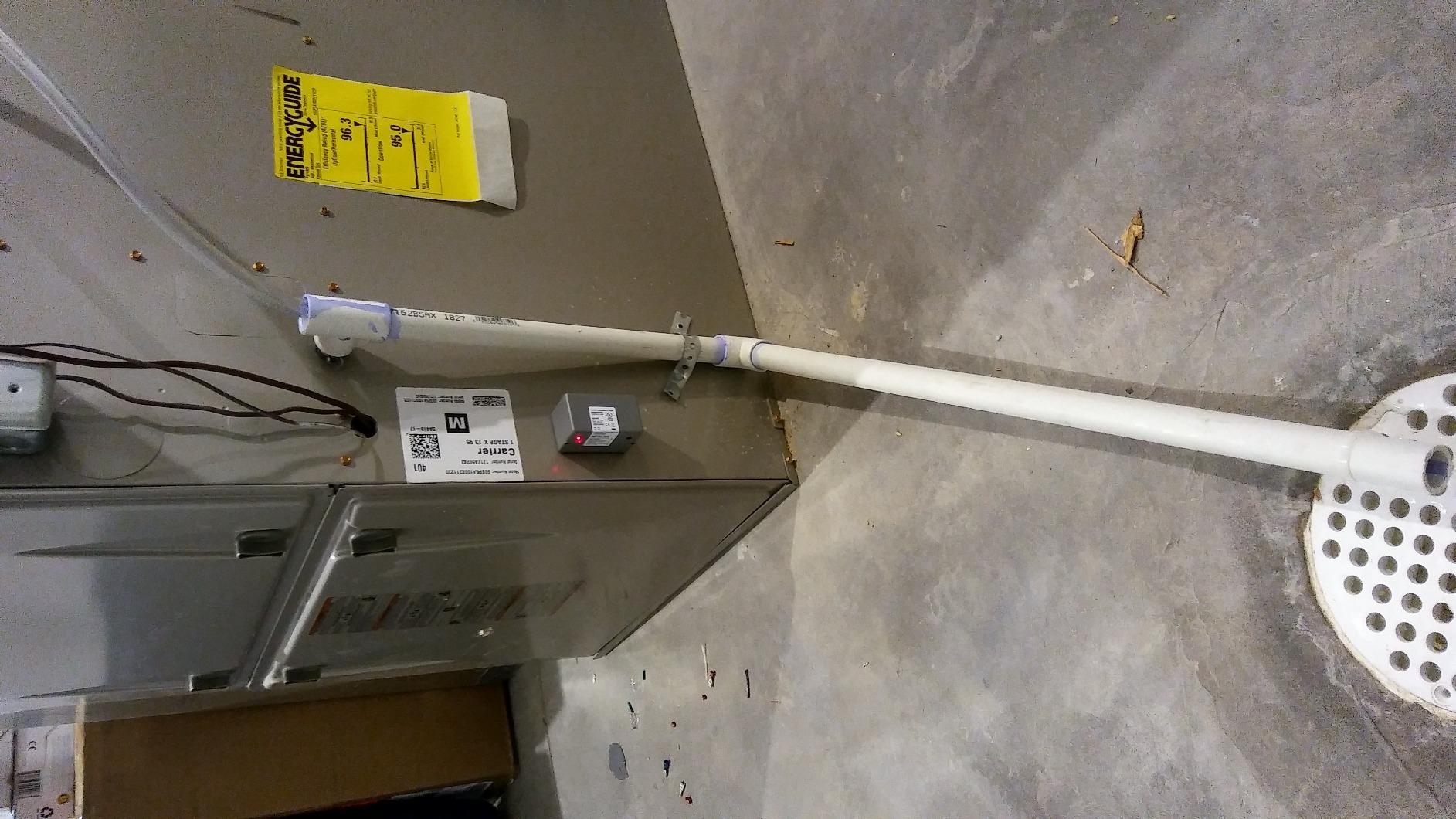
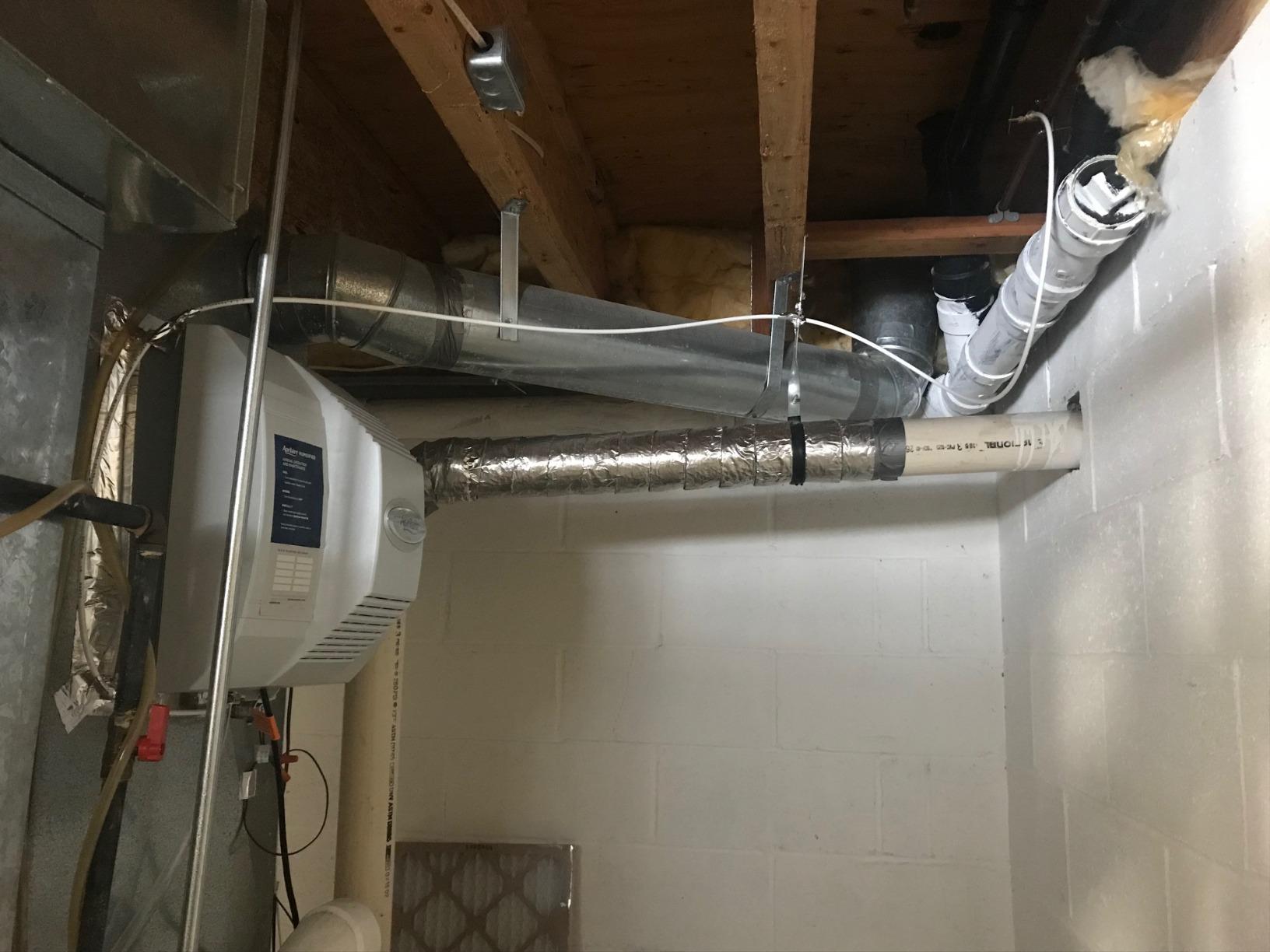
Owners consistently report steady whole-home humidity and strong build quality, backed by a 5 year manufacturer warranty. The included components cover the 24VAC transformer, humidifier control, valves, instructions and a 5 foot cord, so the parts list is complete out of the box.
It is also the only ducted unit here with auto shut off when the water runs out, which matters if you are not home during a cold snap and the drain line has an issue.
What to check before you buy
Plenum clearance is the thing to verify first. The plastic housing sits inside a sheet-metal cabinet that is often tighter than expected, and airflow around the unit matters. Confirm the depth of the opening and the position of the bypass duct before the sheet metal is cut.
Decide honestly whether you are comfortable with manual humidity control. This unit has a single built-in sensor and an adjustable setting, but no outdoor temperature compensation. That is fine if you are willing to check a hygrometer a few times per season.
Who should skip this model
Skip it if you want set-and-forget control. The AprilAire 500 makes the seasonal adjustment automatically, and owners of both report that the automatic version handles shoulder seasons with less fiddling.
Also skip it if the install is a problem. It needs a furnace, 24VAC wiring, plumbing and sheet-metal work, and it is not a plug-and-play machine under any circumstances.
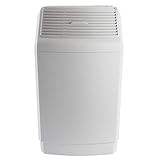
4. AIRCARE Space Saver 6 Gallon – Best Console for Fewer Refills
AIRCARE Space Saver Large Evaporative Whole House Commercial 6 Gallon Humidifier for Large Rooms 2,700 sq ft. With Digital Controls, Auto Humidistat and Automatic Shut Off
6 gal tank
Up to 2,700 sq ft
Digital humidistat
1043 Super Wick
Castors
Pros
- Largest reservoir in the console group
- Compact footprint for the tank size
- Digital auto humidistat with shut off
- Trapmax filter technology included
- Over 6500 owner reviews
Cons
- Coverage rated at only 2700 sq ft
- Higher share of one-star feedback
- Super Wick replacement is a periodic cost
The name is the pitch: a 6 gallon reservoir in a cabinet that measures 12.5 by 17.5 by 22.5 inches. In a category where most consoles hold 3 to 3.6 gallons, that is roughly double the water between fills, which is the single biggest practical difference in daily use.
For most owners, fewer refills means the humidistat actually gets used. A machine that needs attention twice a day gets switched off, and a machine that needs attention twice a week stays on. This one has the tank size to stay on.
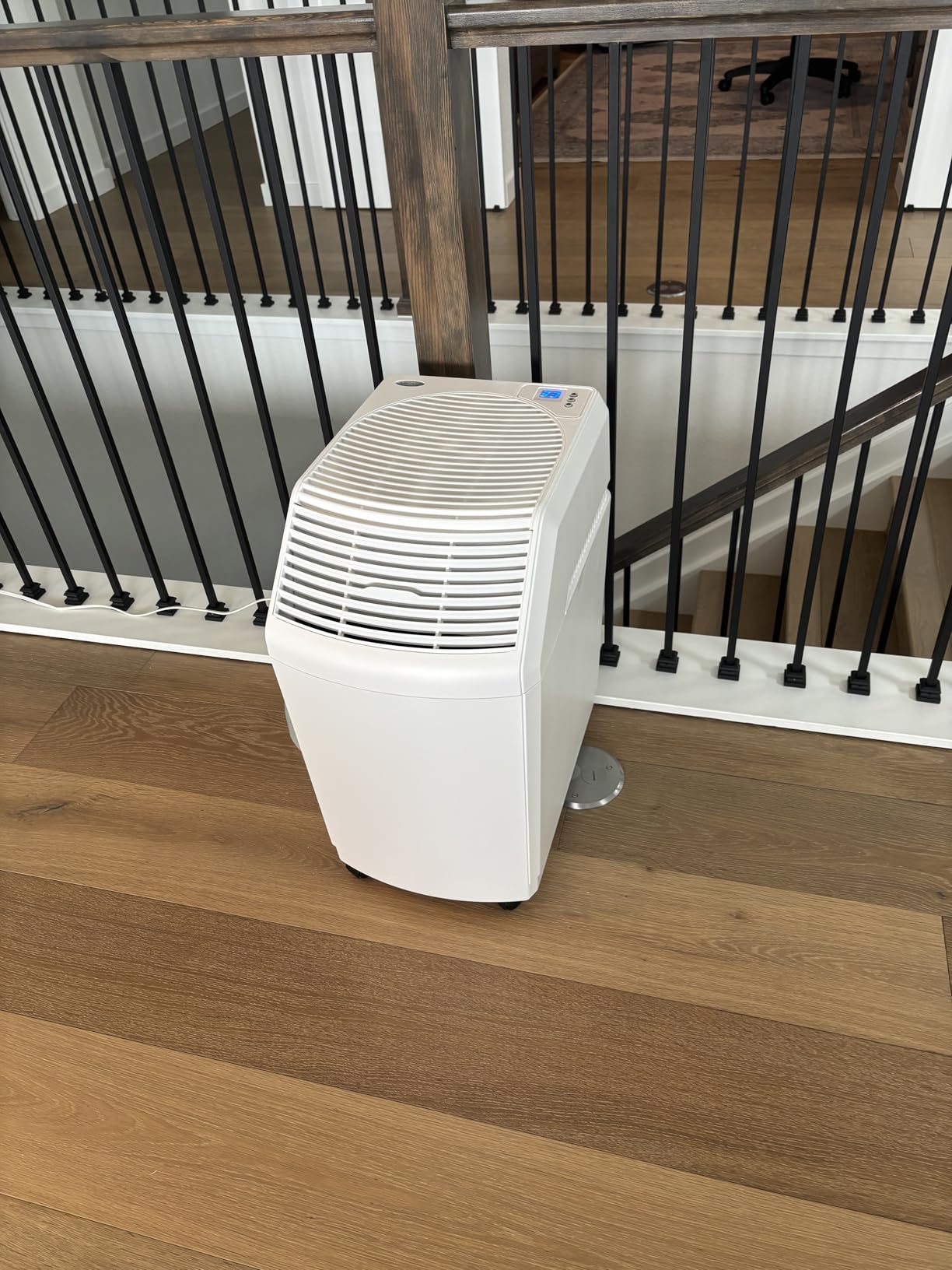
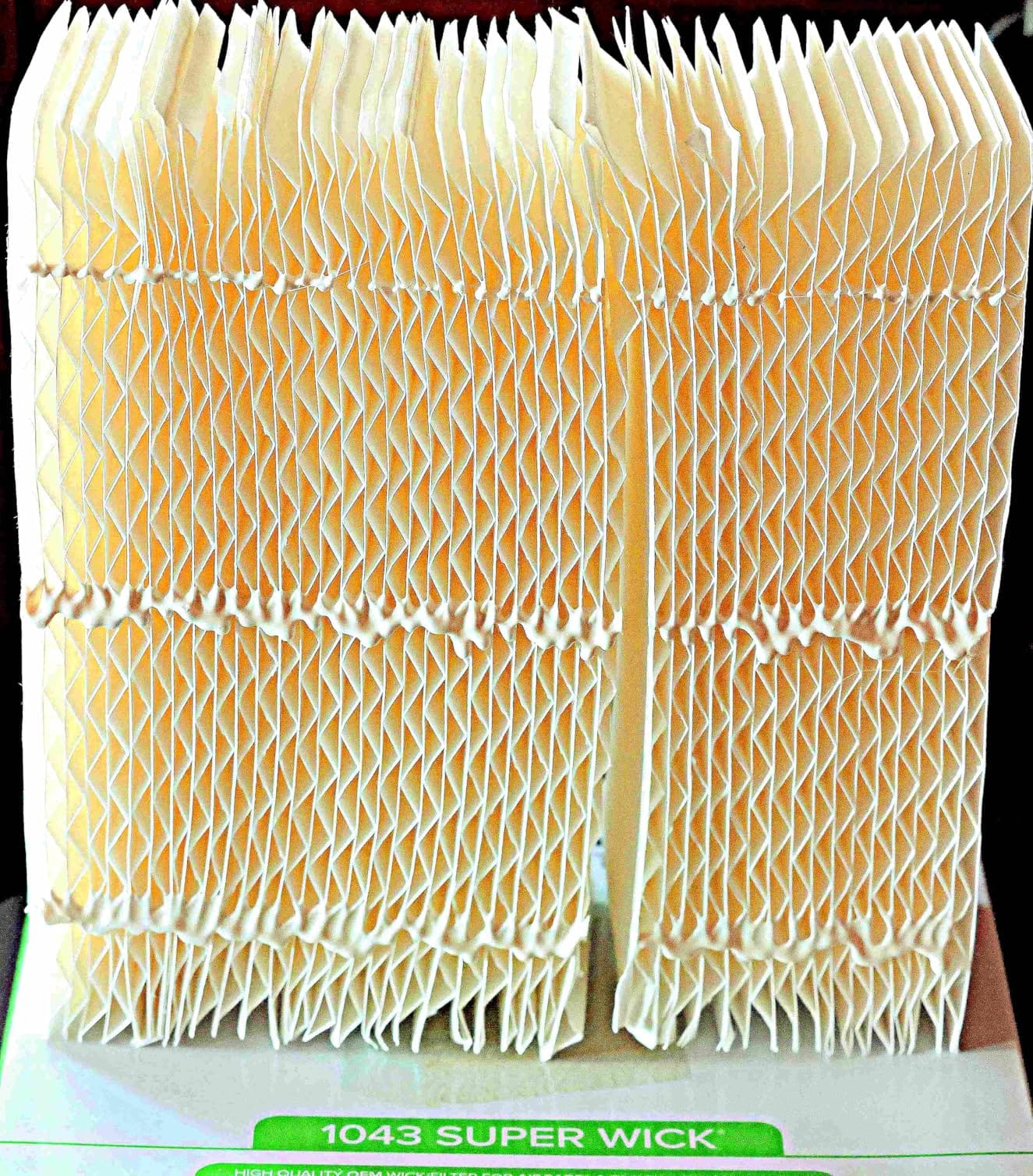
The digital control includes an auto humidistat and automatic shut off when the target is reached or the tank empties, and the 1043 Super Wick uses Trapmax filter technology for extra wick protection. Four casters are included, so it moves without much fuss.
With more than 6,500 reviews it is one of the best-documented machines here, and it holds a consistent top-200 position in the Humidifiers category. Buyers consistently mention the digital humidistat and the shut-off behaviour as the deciding factors.
What to check before you buy
Check the wick replacement cost before you commit, because a 1043 Super Wick is a recurring consumable in any hard-water area. If your water is hard, budget for that annually rather than treating the machine as a set-and-forget purchase.
Measure the intended spot. It is taller than most side tables and needs clearance on the top and sides for airflow, so it belongs on the floor or on a low plinth rather than a shelf.
Who should skip this model
Large open plans should note that coverage is rated at 2,700 square feet, the lowest claim in this roundup. Homes beyond that will need two machines or a ducted system instead of stretching one console across the space.
This model also carries a higher share of one-star feedback than the other AIRCARE consoles here. If noise sensitivity is your main concern, the MA console is the better pick.
5. Levoit Superior 6000S – Best Smart Whole House Humidifier
Levoit Evaporative Humidifiers for Home Whole House, 23L Superior 6000S
23L tank
72 hr runtime
1,500 mL/h output
VeSync app
30 watts
Pros
- Six gallon tank runs up to 72 hours on low
- 1500 mL/h evaporation rate
- Tap-water friendly with no white dust
- Detachable pump for deeper cleaning
- VeSync app with voice control
Cons
- Smallest review base in the group
- App features add little if you do not use a phone
- Wick filters still need replacement
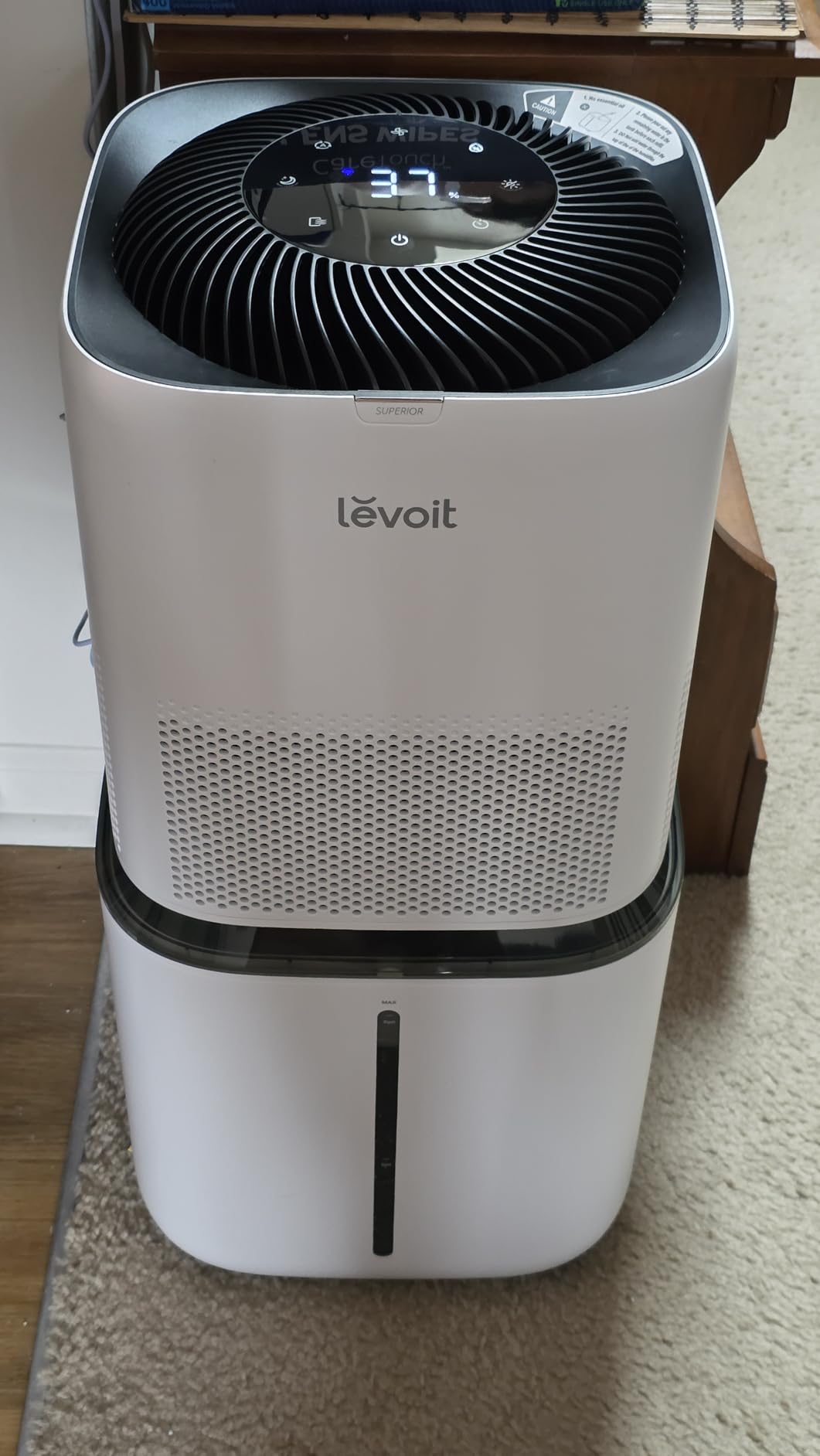
The Superior 6000S is the newest machine here and the only one with real app integration, and it makes a strong case on the numbers alone. Evaporation output of 1,500 mL/h pairs with a coverage claim of up to 3,000 square feet, and the 23 litre tank runs up to 72 hours on the low setting.
At 30 watts it draws less power than a light bulb in most rooms, and the evaporative wick runs happily on tap water with no white dust and no wet floors. A detachable pump makes deep cleaning faster and more hygienic, which matters more than it sounds once the machine has been running for a few months.
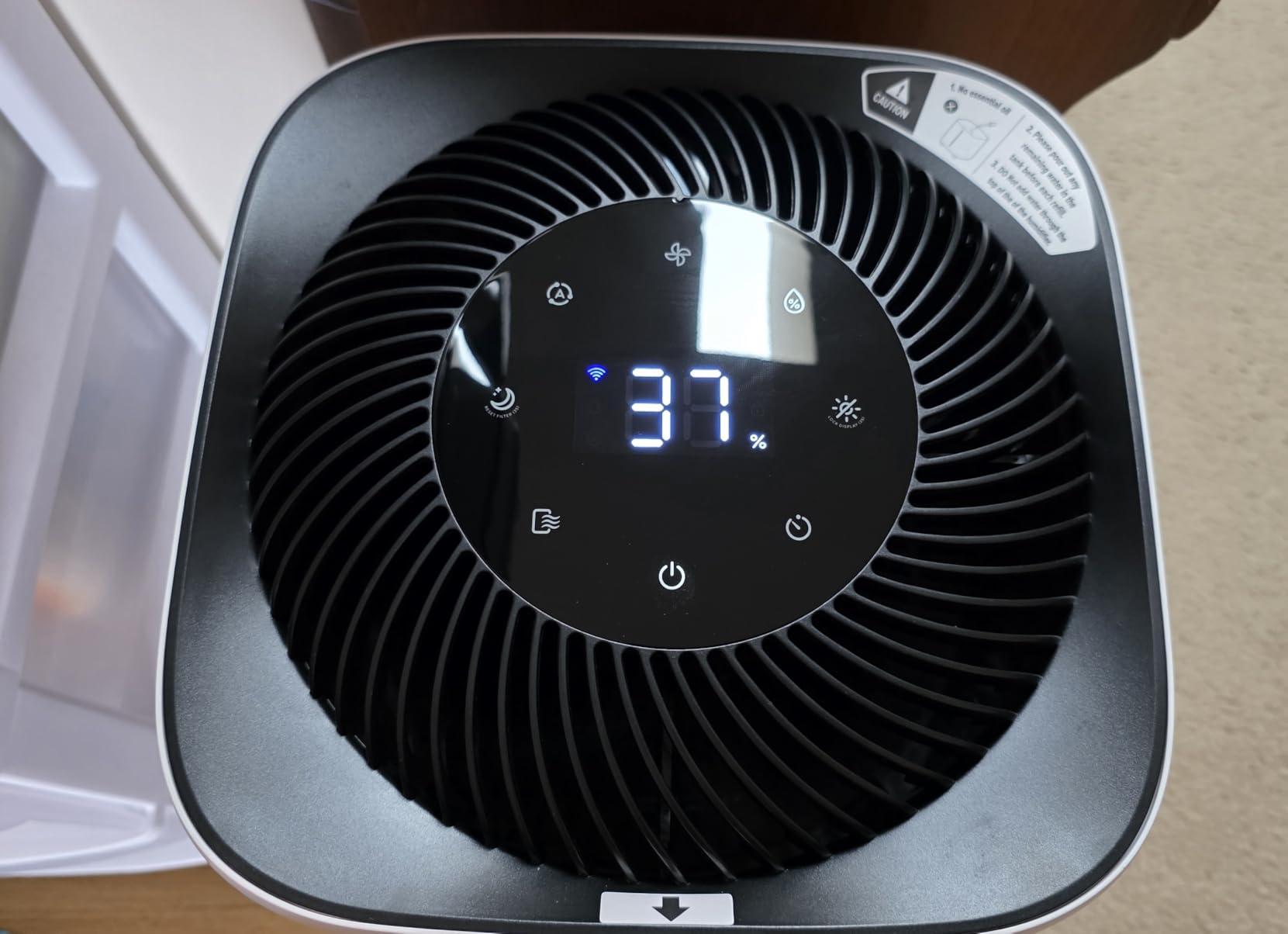
Control runs three ways: a plus/minus 5 percent humidity sensor, two automatic modes, and the VeSync app with voice assistant support. The sensor accuracy is a real improvement over the analog dials on older consoles, and reviewers like being able to check the number from a phone rather than walking over to the cabinet.
Filters are rated for 3 to 6 months, and Levoit lab tests show that filter discolouration has no impact on air quality or output. That addresses the usual objection to wick-based machines honestly rather than leaving it hanging.
What to check before you buy
Check how much you actually want to engage with the app. If you would rather not run software or you do not want a phone nearby, the smart features add nothing and the physical controls are perfectly serviceable on their own.
Also plan for wick replacement. The 3 to 6 month filter interval is realistic, so treat it as a yearly cost rather than a surprise.
Who should skip this model
Anyone who values long-term evidence over features should note this has the smallest review base in the group at 272. That is not a warning sign, but it does mean there is less multi-winter durability data behind it than behind the AIRCARE and AprilAire machines.
It is also a floor-standing cabinet at 26.7 inches tall, so it needs a corner rather than a shelf, and it still cannot reach a closed-door bedroom.
6. AprilAire 400 – Best Ducted Unit for Water Conservation
AprilAire 400 Whole-House Humidifier, Automatic Water Saver Furnace Humidifier, Large Capacity Whole-House Humidifier for Homes up to 5,000 Sq. Ft., White
17 GPD
Up to 5,000 sq ft
Water Saver design
Dual-sensor control
5 year warranty
Pros
- Evaporates essentially all incoming water so no drain is needed
- 17 gallons per day for large homes
- Automatic dual-sensor outdoor temperature control
- Digital readout with panel change indicator
- Quiet operation with no moving parts
Cons
- Same install complexity as other ducted models
- Cutout may need enlarging
- Instructions are diagram heavy
- DIY installation voids the warranty
The AprilAire 400 is the pick for anyone who is tired of watching a humidifier drain pour water down a pipe all winter. Its Water Saver process evaporates essentially all the water sent to the panel, which means no drain line and no wastewater to flush. Owners who switched from a legacy bypass unit describe the change as the single biggest improvement they have made to their system.
Output is 17 gallons per day with coverage rated at up to 5,000 square feet, so it handles the large homes that sit between the 500 and the steam systems without stepping up to a boiler. The automatic dual-sensor control handles outdoor temperature compensation, so the set-and-forget behaviour matches the 500.
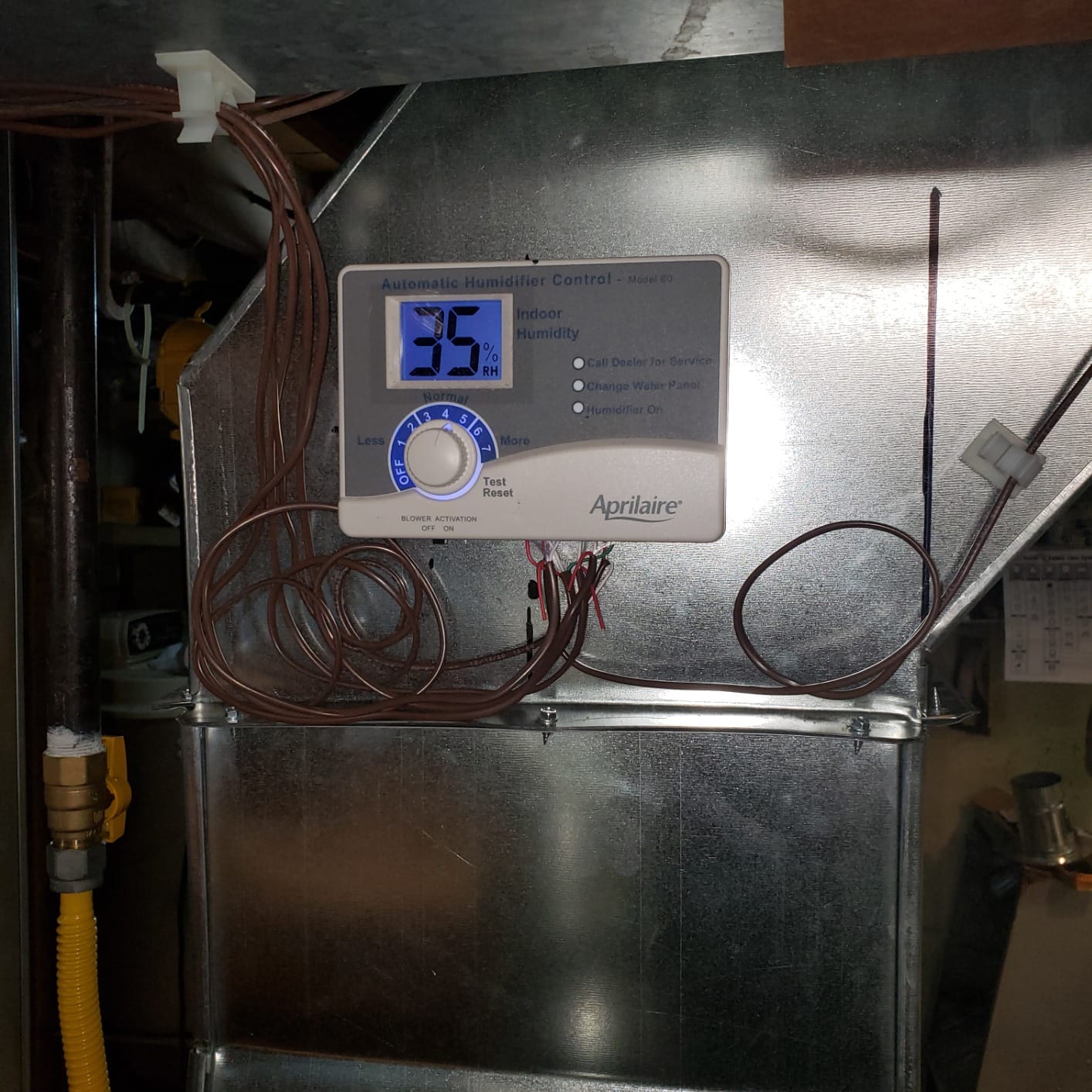
There are no moving parts, so it runs quietly, and the digital display tells you the current humidity, when the water panel needs changing and when service is due. Reversible mounting orientation means it fits either side of the supply plenum, which simplifies retrofits. The warranty runs 5 years when professionally installed.
Several owners report completing the retrofit in about two hours when replacing an older humidifier in the same opening. That is the best-case install scenario, and it is worth asking your installer whether the existing hole will work.
What to check before you buy
Measure your existing cutout. This opening is slightly larger than the previous AprilAire opening, so an older installation may need the hole enlarged before the unit will fit. It is a five-minute check that avoids an expensive afternoon.
Confirm your water supply has a shutoff valve within reach. The lack of a drain line is a genuine saving, but it makes the supply valve more important, not less.
Who should skip this model
Small homes should look at the 500 instead. At 17 gallons per day, this is more output than a 1,500 square foot house needs, and you pay for capacity you will not use.
Anyone unwilling to hire an installer should skip it. The installation complexity is identical to the other ducted models here, and the instructions are diagram heavy with light step-by-step wiring detail. DIY installation also voids the warranty.
7. AIRCARE Digital Pedestal – Best Console for Tight Corners
AIRCARE Digital Whole-House Pedestal-Style Evaporative Humidifier (Nutmeg)
3.5 gal tank
Up to 2,400 sq ft
70 hr runtime
Low water indicator
1043 Super Wick
Pros
- Tall pedestal form fits tight corners
- Digital control panel with automatic regulation
- Low water indicator plus auto shut off
- Long unattended run time
- Evaporative design avoids mist and dust
Cons
- Heaviest at 25 pounds when full
- Coverage of 2400 sq ft is the smallest here
- Super Wick replacement is an ongoing cost
The pedestal shape is the reason to look at this one. At 18 by 18 inches with a 27.25 inch height, it fits into a tight corner or a small room where a wide console simply will not go, and the tall form directs a focused column of air upward into the room.
The 3.5 gallon reservoir runs for up to 70 hours, which is the longest rated runtime of the non-smart machines here. Combined with a low water indicator and auto shut off, that means you are not guessing when it is dry.
With more than 5,400 reviews, this is another well-documented AIRCARE platform, and buyers consistently value the digital controls, the low water indicator and the long runtime. The evaporative wick design avoids mist and mineral dust, consistent with the rest of this brand.
It is rated for 2,400 square feet, which is the smallest coverage claim in the roundup but an honest one for a pedestal format. Think of it as a whole-floor machine for a single open level rather than a whole-house machine.
What to check before you buy
Do the lifting test. At 25 pounds empty, the full machine is genuinely awkward, and a pedestal format often ends up in a spot where moving it means moving furniture. If you are filling it more than once a week, that is a real cost in effort.
Confirm the coverage figure works for your floor plan. At 2,400 square feet, medium homes are covered comfortably and larger open plans are not.
Who should skip this model
Large homes should skip it in favour of the 6 gallon Space Saver or a ducted system. The gap between 2,400 and 2,700 square feet of rated coverage is not huge, but the tank difference is.
Anyone who cannot easily move a 25-pound appliance when full should look at a wheeled console instead, which is what the casters on the other models here are for.
8. AIRCARE Canyon Console – Best Console Coverage Rating
AIRCARE Whole-House Console-Style Evaporative Humidifier for Coverage up to 3,700 sq. ft. (Canyon)
4.75 gal reservoir
Up to 3,700 sq ft
Three fan speeds
Analog humidistat
45 hr runtime
Pros
- Largest coverage claim in the console class
- 4.75 gallon reservoir with refill indicator
- Three fan speeds trade noise for output
- Simple analog humidistat with auto shut off
- HDC411 Super Wick set included
Cons
- Analog dials instead of a digital readout
- Heavy at 26 pounds when full
- Proprietary wick costs more than generic
The Canyon carries the largest stated coverage in the portable console class at up to 3,700 square feet, paired with a 4.75 gallon pour-in reservoir. That combination makes it the pick for big open floor plans where a smaller tank would mean several refills a day.
Three fan speeds let you trade noise against output, which is the feature that decides whether a large machine is tolerable in a living room. A refill indicator tells you when it needs filling, and the adjustable analog humidistat shuts the machine off when it runs dry.
An HDC411 Super Wick set is included, and the unit is built in Little Rock, Arkansas. Reviews are generally positive about capacity and about how straightforward the analog controls are. Some owners prefer dials to a menu for a machine that only has a few settings.
Runtime is rated at 45 hours, so a full reservoir covers roughly two days on moderate output. For a large open plan, that is a realistic number to plan around rather than the optimistic 3,000 square feet figure competitors like to quote.
What to check before you buy
Decide whether analog dials bother you. There is no numeric humidity readout here, so you will want a separate hygrometer to know where you actually stand. That is not a flaw, but it is a step owners of digital consoles do not have to take.
Check the HDC411 wick price. It is a proprietary consumable and costs more than a generic wick, and it is the main ongoing expense with this machine.
Who should skip this model
Skip it if you move machines often. At 26 pounds, and 23 by 25 by 15 inches, this is the heaviest console here and it is awkward to reposition when the reservoir is full.
Two-story homes should also skip it. Despite the large coverage claim, a single console on one floor still cannot deliver air through a closed bedroom door. Ducted distribution is the only fix for that.
9. AIRCARE Valiant Digital – Best Console for Furnished Living Space
AIRCARE Valiant Digital Whole-House Console-Style Evaporative Humidifier (Honey Oak)
Dual 5 gal tanks
Up to 4,000 sq ft
Wood cabinet
Digital readout
2 year warranty
Pros
- Wood cabinet that does not read like an appliance
- Digital readout shows humidity or fan speed
- Two side tanks fill at the kitchen sink
- Two-fan design is quieter than older consoles
- Owners report holding 45 to 50 percent RH
Cons
- Highest fan speed is very loud
- Thin cabinet and casters
- Both tanks must be emptied together
- Control failures reported on some units
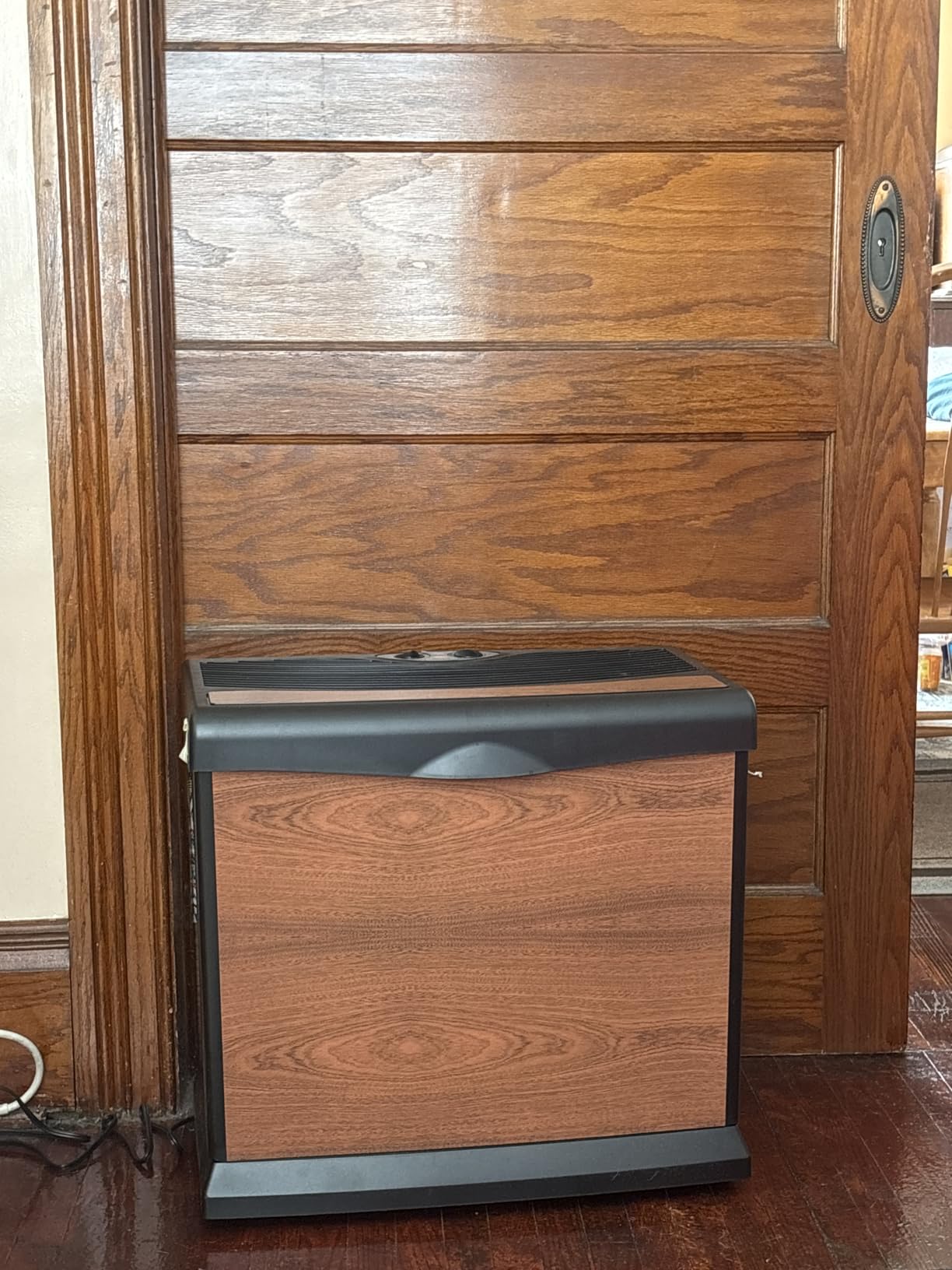
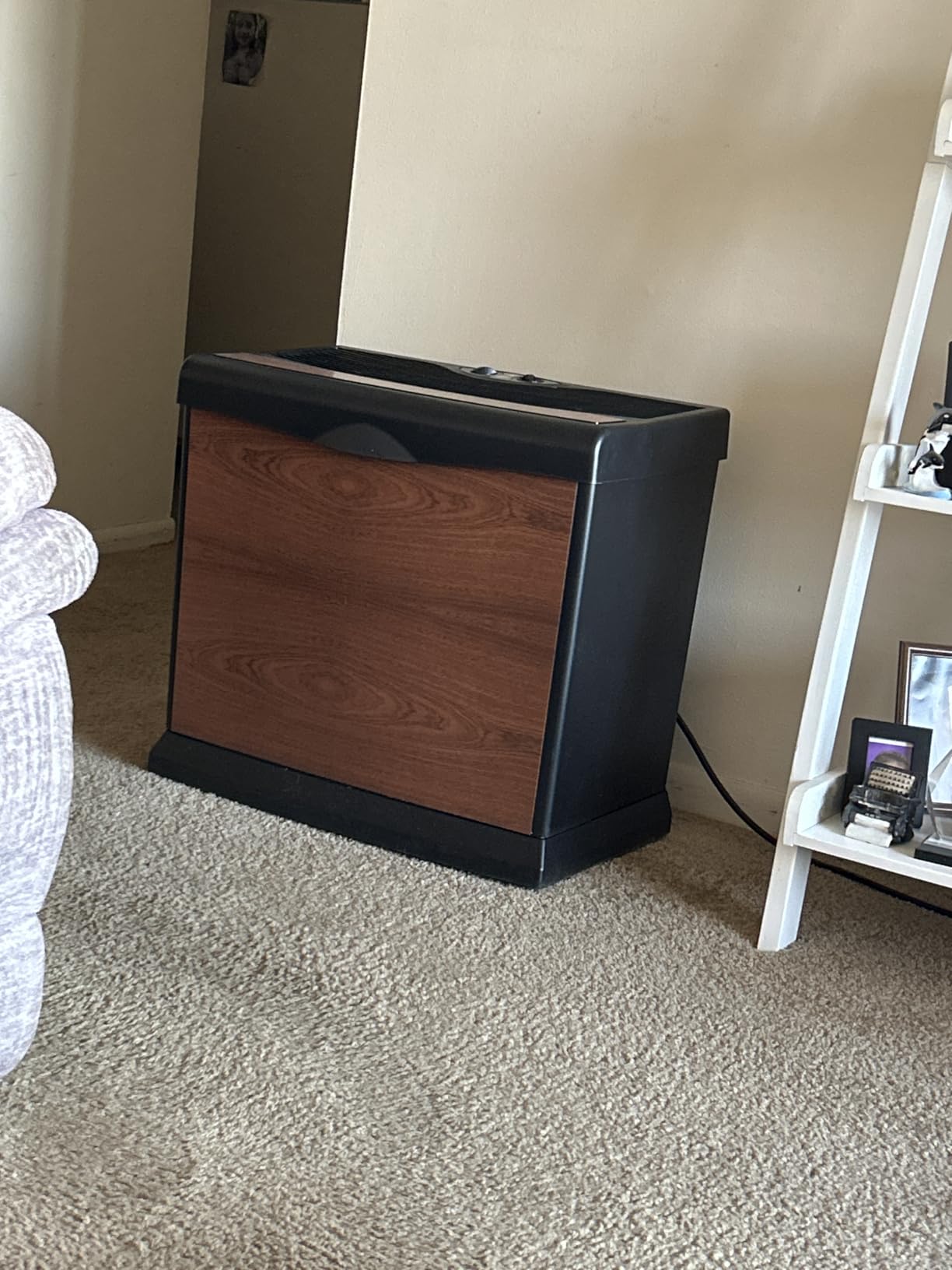
The Valiant is the only machine in the roundup with a wood cabinet in a Honey Oak finish, and that is not a gimmick. In a living room or a main-floor family space, a humidifier that looks like a piece of furniture changes the conversation entirely.
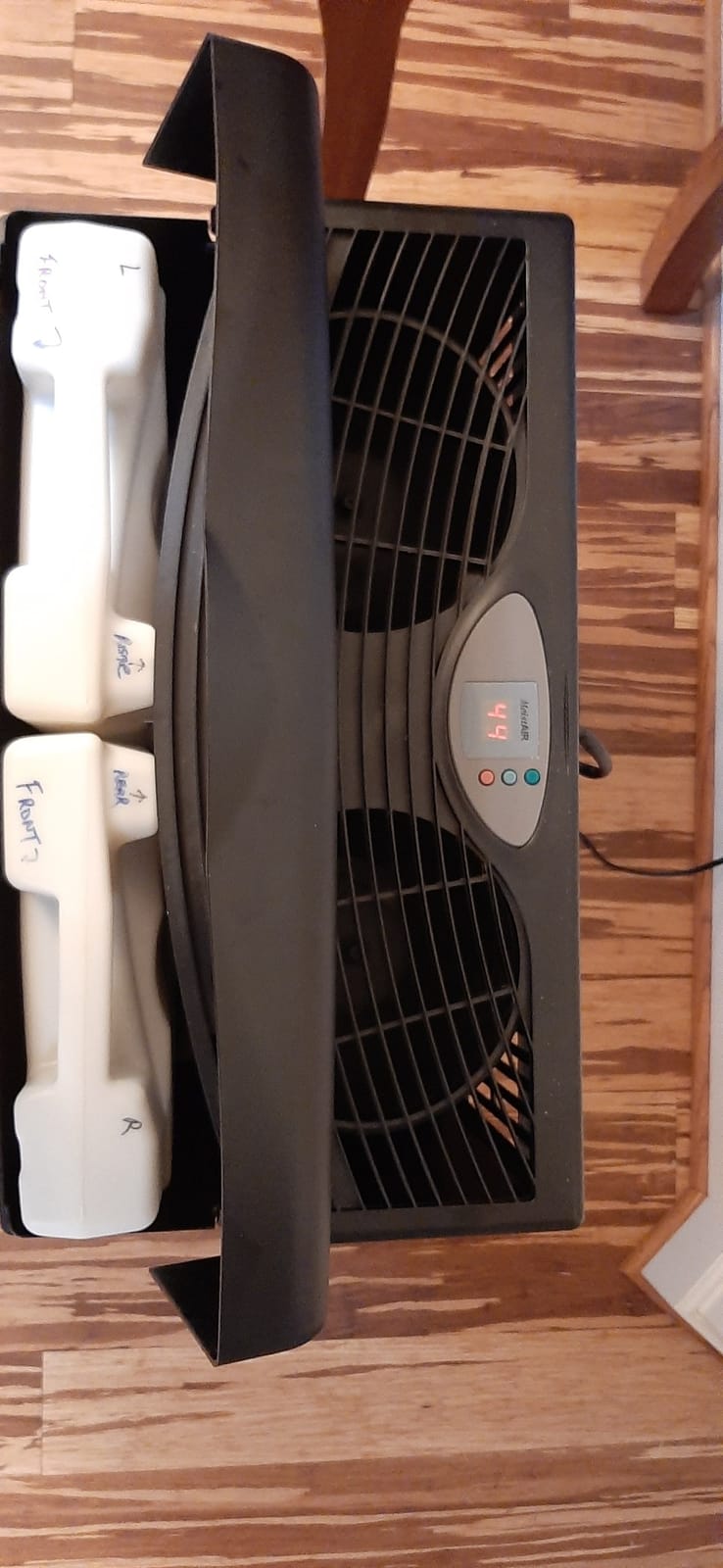
Underneath it is a capable machine. The digital humidistat readout shows actual humidity, target humidity or fan speed, plus a 750 hour check-filter indicator, and two refillable 5 gallon side fill tanks with plunger valve caps let you fill at the kitchen sink without moving anything.
Owners report it holding 45 to 50 percent relative humidity and clearing dry sinuses and static shocks, and the two-fan design is quieter than older single-fan consoles. Rated coverage is up to 4,000 square feet.
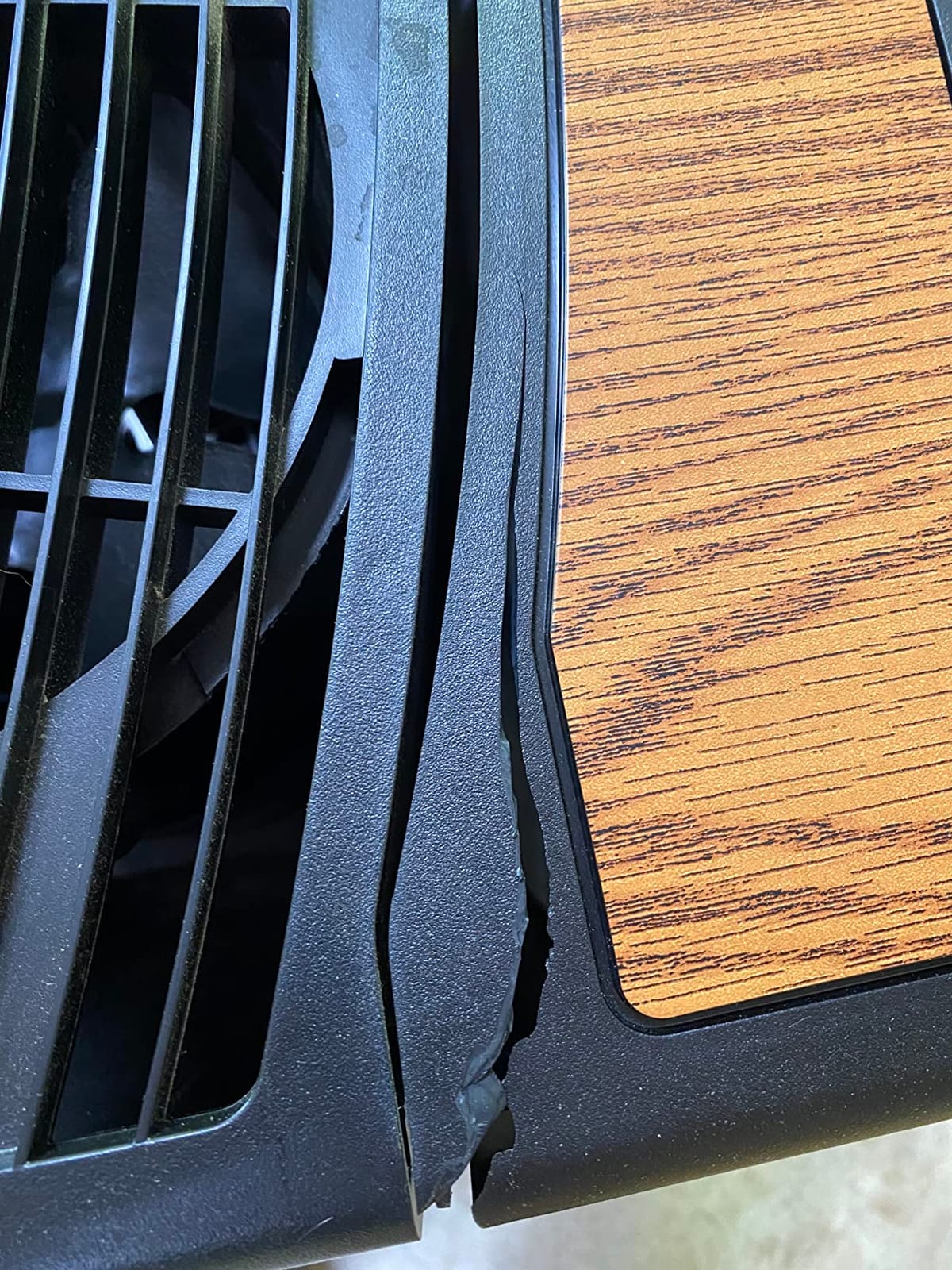
This is also the lowest rated machine in the roundup at 4.1, and the reasons are consistent rather than random. The high fan speed is very loud, even low speed is a steady audible hum, and some units arrive with a damaged tank or a ticking fan.
What to check before you buy
Read the refill procedure carefully. Per the manufacturer guidance, one tank will not drain if the other is refilled right after emptying, so both must be emptied together. That is an easy habit to get wrong on a busy weeknight.
Inspect the unit on arrival if you can. Tank damage and ticking fans are both reported in reviews, and catching a shipping problem immediately is far easier than discovering a slow leak later.
Who should skip this model
Skip it if noise is your main concern. A steady hum at low speed and a very loud top speed make this a poor fit for a bedroom or a quiet home office, regardless of how good it looks.
Owners in hard-water areas should also weigh the HDC12 wick, which can encrust with salts and need monthly-style replacement. The MA console is the safer buy in that situation.
What a Whole House Humidifier Really Costs Installed
This is the number people want and almost no competitor article gives you. The machine is one line on the invoice. The plumbing, sheet metal, transformer, control wiring and drain are usually the rest of it, and the gap between those two figures is where the surprise lives.
Console and portable units. These are the honest total cost. The machine ships with casters, a power cord and a wick, and you plug it into a wall outlet. The only ongoing costs are wick or filter replacement and water. No installer, no ductwork, no drain line.
Bypass ducted units. The unit itself is the mid-range spend, but installation is where it changes. A ducted machine needs a plenum opening cut or enlarged, a bypass duct fabricated, a 24VAC transformer mounted, low-voltage control wiring run, a water supply line with a shutoff valve, and in most designs a drain line. Each of those is small on its own. Together they frequently exceed the price of the machine.
Water-saving ducted units. If you are replacing a legacy system, the maths shifts because part of the work already exists. Owners who swapped a legacy bypass unit for a Water Saver design report that the retrofit took about two hours when the existing opening worked, and that the change removed a recurring stream of wastewater and floor-drain sludge.
Steam systems. These are the top tier for a reason. They need a dedicated electrical circuit, a boiler, an electrode that is a consumable, and professional installation as a matter of course. Owners on hvac-talk describe steam as consuming a lot of water, and that is a fair characterisation of the operating cost.
Annual ownership. Add 15 to 25 percent per year to the purchase price in service items. That covers an annual water panel change, wick or filter replacements, distilled or treated water where hardness demands it, and the occasional professional service call. A machine that seems cheap on day one is rarely cheap across a ten-year ownership.
If you are weighing whole-home humidity against whole-home airflow, our whole house dehumidifier guide covers the summer half of the same comfort problem, when the issue flips direction.
Why Is Your Whole House Humidifier Not Raising Humidity?
Because almost every one of these causes produces the same symptom: a machine that runs, sounds fine, and moves the hygrometer by two points. Work through the list in order. It is roughly ordered by how often each one turns out to be the problem.
1. The unit is undersized for the house. Check the rated square footage against your actual conditioned area and your ceiling height. A machine rated for 3,600 square feet at 8 foot ceilings is a poor match for a 3,600 square foot house with 10 foot ceilings, because you are humidifying cubic volume, not floor area.
2. The desiccant dehumidification control has engaged. Many automatic controls cut the water supply when outdoor temperatures are cold enough that the air can no longer hold the moisture. This is correct behaviour and it explains the sudden silence in late January.
3. The water panel has hardened. An evaporative panel that has calcified stops moving air across water. A unit that pushed 40 percent humidity last February and does nothing this February usually has a panel problem, not a unit problem.
4. The solenoid is clogged with sediment. One r/DIY owner reports a whole house humidifier solenoid clogging with sediment even after the water was softened, and advises checking it preventively. This is the most common hard-water failure and the easiest to overlook because everything else looks healthy.
5. The furnace is not calling for heat. A bypass humidifier with no furnace call has no airflow across the panel. In r/hvacadvice, an owner installed an HE360 on a first-floor furnace and could not tell whether it worked because water reached the drain and the fan kicked on. That is the correct test: water flow without a heat call proves plumbing, not distribution.
6. The bypass duct is mis-cut or reversed. If the bypass duct is too short, the panel is starved of air. The unit fills and drains and humidifies almost nothing, which is a frustrating failure because every visible sign looks correct.
7. Interior doors are closed. This is the single most common complaint in r/hvacadvice threads and the one most often mistaken for a broken machine. Without forced air to mix moist and dry air, condensation on walls and mold risk both increase, and rooms behind closed doors stay dry. Fine home building forums make this point repeatedly.
8. The drain is blocked or slow. A backup drain causes the unit to shut off on a float switch. You will find standing water in the base pan and no humidity gain, and the cause is usually a plugged floor drain rather than the humidifier.
9. Your hygrometer is in the wrong place. A sensor on an exterior wall, above a supply register, or in a bathroom will read wrong in one direction or the other. Place it at living height on an interior wall away from vents for a week before you conclude anything.
10. The house is too leaky for any one machine. In a very leaky or poorly insulated home, a single unit can be running constantly without ever catching up. Multiple furnaces on separate floors get better results than one larger unit, which is why forum owners sometimes recommend two machines rather than one bigger one.
How to Choose a Whole House Humidifier
Start with the six types, because the type decides almost everything else. Bypass evaporative units send furnace air across a soaked water panel and rely on the furnace blower. Fan-powered evaporative units do the same thing but add their own blower, so they work when the furnace is idle. Steam units boil water and inject pure vapour, giving the highest output and the highest installation cost. Atomizing units spray water into a high-velocity stream. Rotary disc units spin a disc through water to throw a fine mist. Console units evaporate through a wick and blow moisture across one space.
Which type suits which home. A modern forced-air home with a furnace and ductwork is best served by a ducted unit, because that is the only way to reach every register. A home with a boiler and radiant heat has no supply duct to tap, so a large console in the main living space is the realistic option. An apartment or rental has no furnace to install into, so a console is the only path. A large open plan on one floor may be served perfectly well by one console, and it is the cheapest route to whole-floor humidity.
Size by cubic volume, not by square footage. Multiply floor area by ceiling height first. Then aim for roughly 12 to 17 gallons per day of evaporative output for an average 3,000 square foot home, and 20 GPD or more for a leaky, older or poorly insulated house. About half that is enough below 1,500 square feet.
Worked example one: a 1,500 square foot home with 8 foot ceilings is 12,000 cubic feet. A 6 to 8 GPD unit is appropriate. That is a single console or the smallest ducted bypass, and buying larger simply wastes money.
Worked example two: a 2,500 square foot home at 9 foot ceilings is 22,500 cubic feet. Target 12 to 14 GPD, which lands squarely on the AprilAire 500 class. This is the most common household size in the country, and it is where the automatic controls matter most.
Worked example three: a 4,000 square foot home with 10 foot ceilings is 40,000 cubic feet, and older construction. Target 17 to 20 GPD. That is the AprilAire 400 and 700M territory, and it is the point where a fan-powered unit starts earning its extra cost.
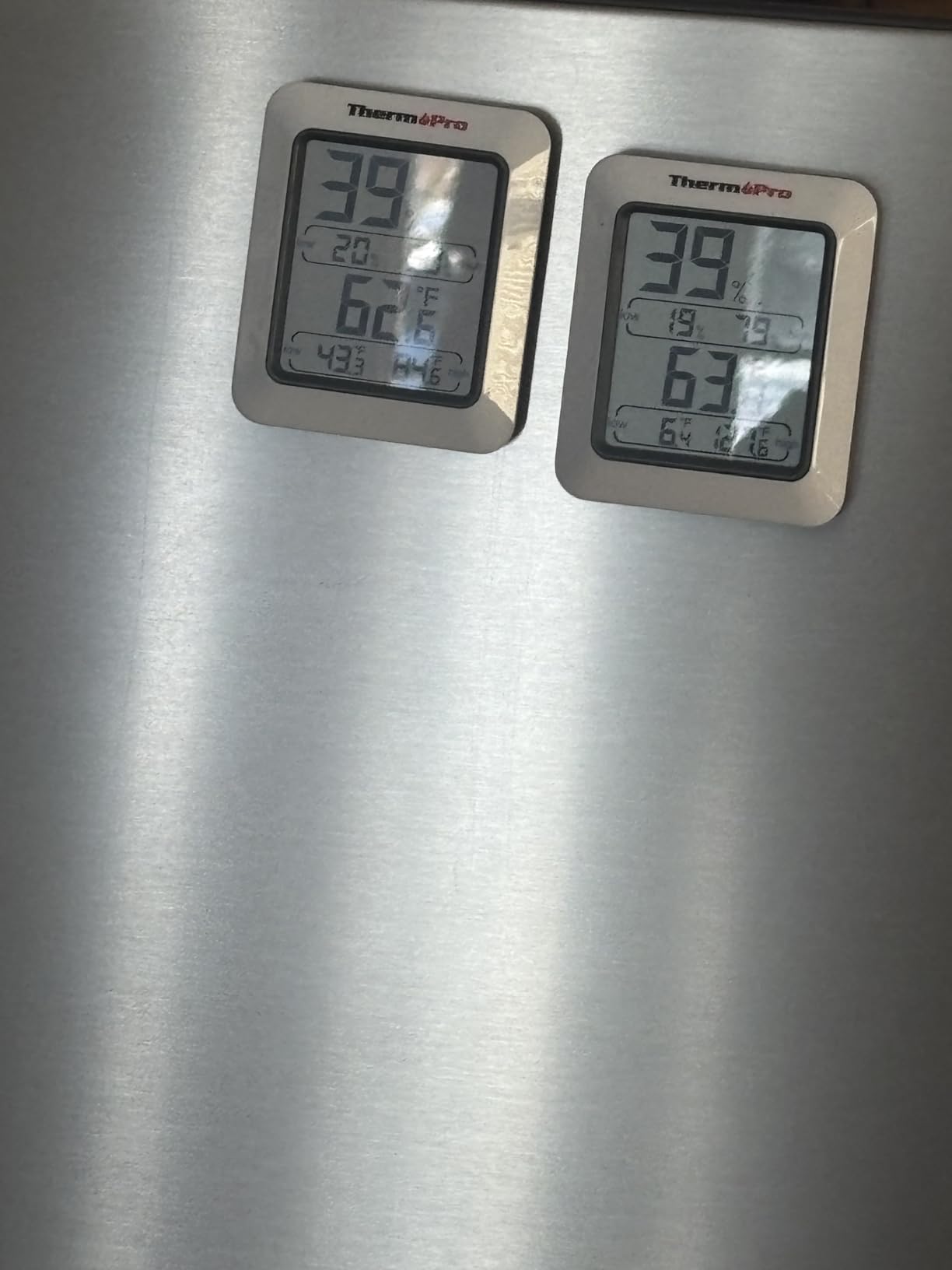
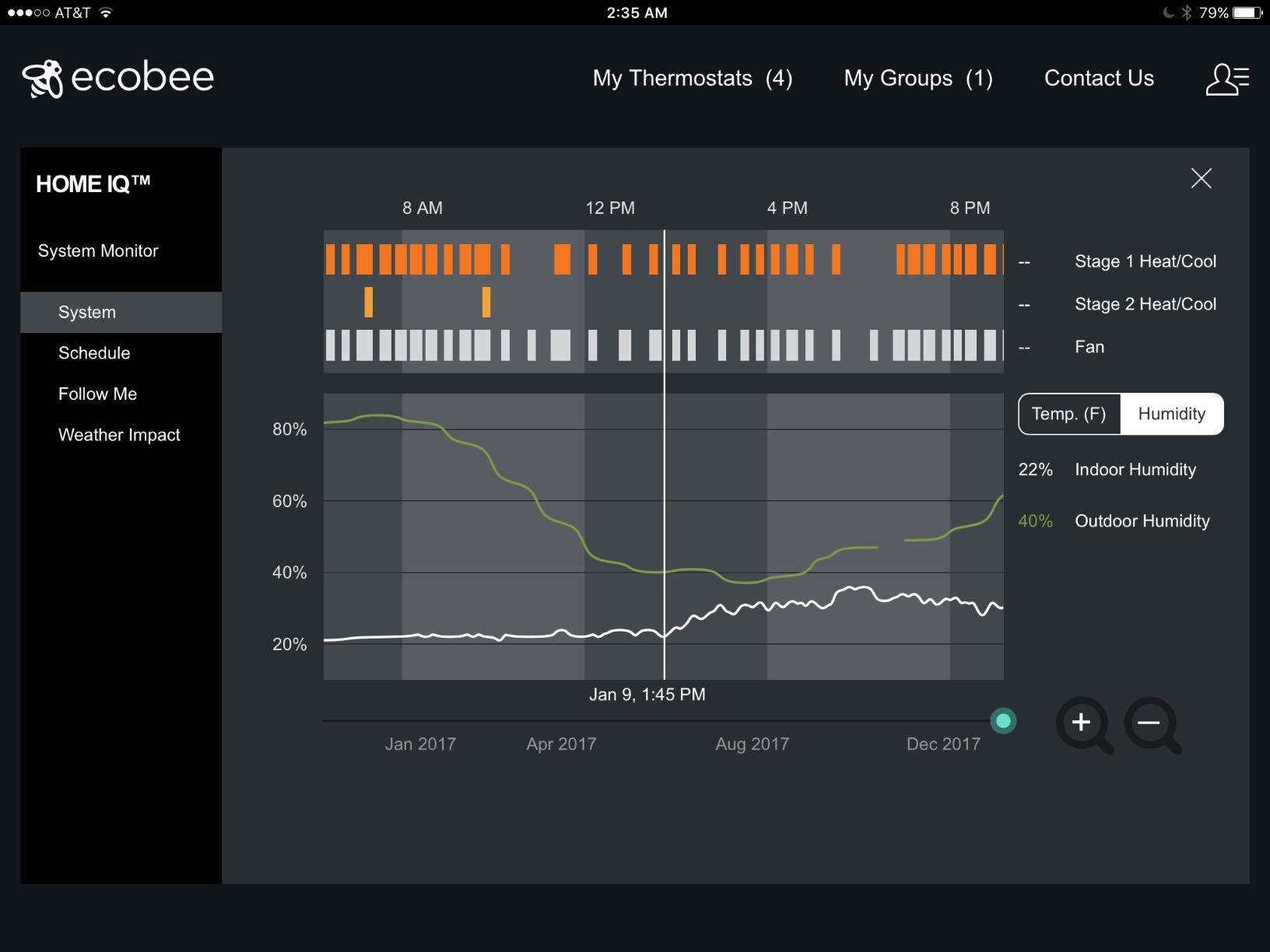
Hold relative humidity between 35 and 45 percent. Aim lower in summer, higher in winter, and never above 50 percent. Below 30 percent you get static, cracked wood and sinus problems. Between 30 and 50 percent is the safe residential band. Above 50 percent you invite mould and dust mites, and you will also get condensation on windows and walls. Buy a cheap hygrometer and check it weekly through your first winter; it changes how you use the machine more than any feature does.
Decide ducted versus console honestly. Ducted means professional installation, plumbing, sheet metal and a control, in exchange for even distribution and set-and-forget humidity. Console means a wall outlet, a corner of the living room and a manual level check, in exchange for lower cost and no closed-door coverage. If your house has ductwork and more than one floor, ducted wins. If it is a single level with an open plan, a console wins on cost and simplicity.
Do whole house humidifiers need professional installation? Ducted models do, in practice. The AprilAire 500 and 400 both require sheet-metal work, a 24V transformer, low-voltage wiring and a water supply, and both void the warranty on a DIY install. Steam systems definitely do, because they need a dedicated electrical circuit. Console units need nothing beyond a flat floor and a nearby outlet.
Count the true cost of ownership before you buy. An annual water panel change, wick or filter replacements, treated water in hard-water areas and periodic service calls add 15 to 25 percent per year to the purchase price. Budget it at the start, because it changes which machine is the sensible one.
If you also want to protect the equipment side of the house, our whole house surge protector guide covers what a humidifier circuit needs from the rest of the panel.
Hard Water, Well Water and Mineral Scale
Water quality decides how long your humidifier lasts, and no amount of marketing changes that. The rule is simple: the harder the water, the faster the mineral deposits, and the deposits are what kill solenoids and water panels.
If you are on well water or hard municipal water, assume scale is your main maintenance issue. On ducted systems, owners on hvac-talk and BobIsTheOilGuy repeatedly recommend tapping into softened water, and the consensus formula is a dependable bypass unit plus softened supply plus annual panel changes. Softened water is not optional advice in a hard-water house; it is the difference between a five-year panel and a two-year panel.
If you use an anti-scale system, verify it is actually working. One r/DIY owner reported a solenoid clogging with sediment after softening the water, which sounds backwards until you consider that a softener resin bed can shed fine particles. Checking the solenoid preventively is cheaper than discovering it during a cold snap.
If you use a console, the equivalent decision is about the wick. Super Wick and HDC-series filters encrust with salts in hard water and may need monthly-style replacement. Treated water or a demineralisation cartridge extends wick life considerably and is cheaper than replacing wicks every month.
On white dust, the answer is not a chemical cleaner. White dust around a humidifier is mineral residue carried in an aerosolised mist, and the only reliable fix is not to aerosolise the water. Every evaporative machine in this roundup avoids it by design, which is another reason we did not include ultrasonic units.
Removing calcium deposits from an existing unit is a simple job. Shut off the water, disconnect power, pull the water panel or wick, soak it in a solution of vinegar and warm water for a few hours, scrub the frame, rinse, and let everything dry fully before reassembly. Do it annually and before any storage period.
Seasonal Maintenance Calendar and Summer Shutoff
Late autumn, before first heat. Replace the water panel even if it looks usable. A panel that has been sitting dry since last spring is often the reason first-season humidity is disappointing. Flush the frame, check the solenoid opens and closes cleanly, and confirm the drain line runs without backing up.
Mid-winter, monthly. Read the hygrometer in a neutral room. Check for condensation on windows, which means you are over 50 percent and need to lower the target. Listen for irregular fan or valve noise, which is the earliest sign of a clog.
Early spring, when heat stops. Turn the water supply off at the valve, not just at the control. Leave the power on for a day so the unit can dry out, then switch it off. A unit left with water and power through a warm humid month invites bacteria, and owners who skip this step often find a musty smell in September.
Summer, powered down. Do not leave a filled console running. Drain the reservoir, wash and dry the wick or filter, and store the machine upright. For ducted units, leave the water off until you are ready for the next heating season.
Should you run the humidifier every night? Yes, in winter, once you have a humidistat. Running it only in the evening produces a cycle of damp and dry air that is less comfortable than steady moderate humidity, and it costs more water. The control handles the schedule, which is exactly what it is there for.
Will a humidifier lower my heating bill? Modestly, and indirectly. The honest mechanism is that moist air feels warmer at the same thermostat setting, so some owners turn the thermostat down a few degrees in winter and pay less. What you cannot assume is a large saving, because the humidifier itself uses electricity and the furnace still does the heating.
Frequently Asked Questions
What is the best type of humidifier for a whole house?
A ducted evaporative unit mounted on the furnace plenum is the best type for most homes, because the supply air carries moisture to every register including closed-door rooms. A fan-powered model adds its own blower and is better for large homes. A console humidifier is the right answer when you have no furnace or ductwork. Steam gives the highest output but needs a dedicated circuit and professional install.
What size humidifier do I need for a 2000 square foot house?
Multiply square footage by ceiling height to get cubic volume, then target roughly 10 to 12 gallons per day of evaporative output for a 2,000 square foot home with average insulation. That points at the 12 GPD class, which covers homes up to about 3,600 square feet in a tightly built structure. Leaky or older homes need 20 percent more capacity than the label figure.
Can a whole house humidifier cause mold?
Yes, if you run one too high. Above 50 percent relative humidity you invite mould and dust mites, and you also get condensation on walls and window frames. Keeping the target between 35 and 45 percent with a working humidistat is the safe range, and a hygrometer in an interior room is the cheapest way to stay inside it.
Do whole house humidifiers need professional installation?
Ducted and steam models do. They need sheet-metal work, a bypass duct, a 24V transformer, low-voltage control wiring, a water supply and often a drain, and a DIY install voids the manufacturer warranty. Console and large portable units need nothing beyond a flat floor, clearance for airflow and a wall outlet.
How much water does a whole house humidifier use?
An evaporative system can move 10 to 20 gallons a day at full output, but most of that leaves as wastewater rather than moisture in the air. Water-saving designs evaporate essentially all of what they take, so they need no drain line at all. Steam units use the most water of any type, and one steam humidifier can consume an entire domestic hot water supply.
Why isn’t my furnace humidifier increasing the humidity?
Check in this order: the unit may be undersized for the cubic volume, the desiccant control may have cut water at cold outdoor temperatures, the water panel may have hardened, or the solenoid may be clogged with sediment. Then look for a mis-cut bypass duct starving the panel of air, a blocked drain tripping the float switch, or closed interior doors leaving rooms unreachable.
Is steam better than evaporative?
Steam produces the highest output and pure vapour with no mineral dust, and it is the right choice for large homes or homes on well and very hard water. It costs more to buy, needs a dedicated electrical circuit, uses a replaceable electrode and consumes far more water. Evaporative units are cheaper, quieter and simpler to maintain, and they cover the majority of homes adequately.
What is the downside of a whole house humidifier?
The main downsides are installation cost for ducted models, ongoing maintenance in hard-water areas, and a real risk of mould if humidity runs above 50 percent. Console units trade distribution for simplicity, so closed-door bedrooms stay dry. Annual panel, wick and filter costs add 15 to 25 percent per year to the purchase price.
Which Whole House Humidifier Should You Buy?
If you have a forced-air furnace and more than one floor, buy the AprilAire 500. It is the machine we recommend to most people, because the automatic dual-sensor control means you set a target once and it holds 40 to 50 percent all winter without attention. Budget for a professional install and measure your plenum opening first.
If you are staying in a single level with an open floor plan, the AIRCARE MA console is the value pick. Over 6,700 reviews, a digital humidistat, no mineral dust and a design that has been in production long enough to have real multi-winter evidence behind it.
If you want the highest output without stepping up to steam, the AprilAire 700M is the pick. At 18 gallons per day with a built-in blower, it covers homes up to 5,300 square feet and keeps working in shoulder seasons when a bypass unit goes quiet.
For the rest: choose the AIRCARE Space Saver when refills bother you most, the Levoit Superior 6000S when you want app control and a 72 hour tank, the AprilAire 400 when you are tired of wastewater going down a drain, the AIRCARE Digital Pedestal for a tight corner, the Canyon for the largest open plan you can serve from one floor, and the Valiant when the machine has to look like furniture.
One last thing before you commit. Check your indoor relative humidity with a cheap hygrometer for a week first. If you are already sitting between 35 and 45 percent, you do not need any of these machines yet. If you are regularly under 30 percent in January, pick one from the list above, keep the water supply off in summer, and change the water panel every autumn.
That is the honest version of the best humidifiers for whole house use: match the machine to your ductwork, size it to your cubic volume, feed it water you have softened if your area is hard, and check the reading rather than the promise. Our October 2026 picks are updated as new owner data lands, and you can compare live figures on the full comparison page whenever you are ready to look.