
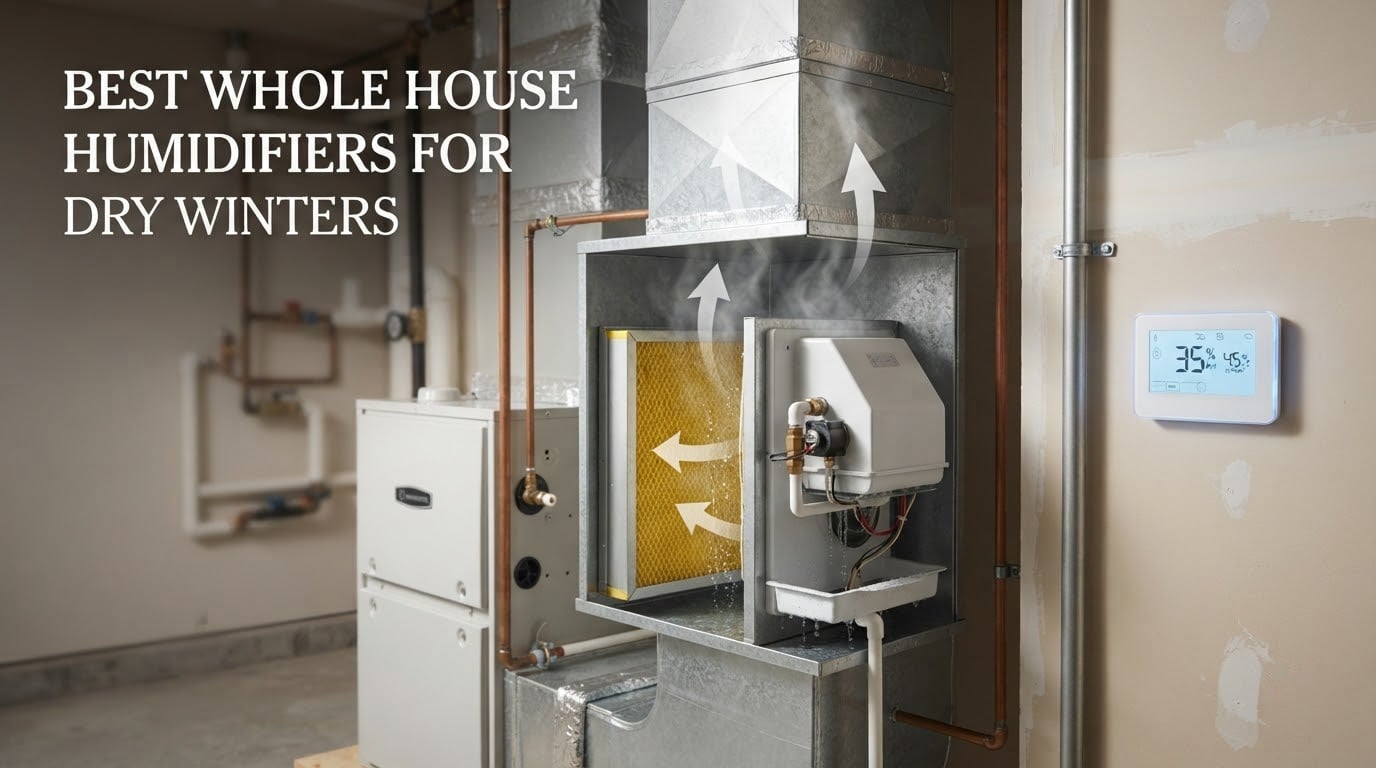
Winter indoor air gets dry for one reason: outdoor cold air holds very little moisture, and once you heat that air to room temperature its relative humidity collapses. Static electricity shows up on door handles, skin cracks, sinuses sting, and hardwood floors and cabinets start gapping at the seams. A central humidifier fixes the whole house at once rather than chasing room by room.
That is what I set out to find with this roundup. I read through thousands of owner reviews across twelve ducted and self-contained models, weighed output against home size, and paid close attention to the two things roundups usually ignore: what the water supply and drainage look like after installation, and what the ownership costs add up to over five winters. Every pick below ships with a humidistat so you can dial in a target instead of guessing.
If your indoor humidity is already reasonable and only one bedroom feels dry, start with our whole house humidifier guide before committing to ductwork. If you are replacing a furnace-mounted system, the furnace-mounted humidifier picks are the relevant section. Otherwise, keep reading — the difference between a fan-powered evaporative model and an electrode steam model is the single decision that matters most in a genuinely dry winter.
Top 3 Picks: Best Whole House Humidifiers for Dry Winters (October 2026)
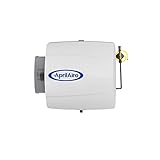
AprilAire 500 Automatic
- 12 GPD output
- Covers up to 3600 sq ft
- Dual-sensor automatic control
Our top pick wins because it does the one thing most dry-winter households care about most: it holds a set humidity without anyone touching it. The 600M is the output champion for large homes, and the AIRCARE 831000 needs no furnace work at all, which makes it the realistic entry point for a lot of people reading this in a condo or a house with an older air handler.
Best Whole House Humidifiers for Dry Winters: Quick Overview of All 12 Picks
| Product | Specifications | Action |
|---|---|---|
| AprilAire 500 Automatic Evaporative |
|
Check Latest Price |
 AprilAire 600M High Output Evaporative AprilAire 600M High Output Evaporative |
|
Check Latest Price |
| AIRCARE 831000 Space Saver Evaporative |
|
Check Latest Price |
 AIRCARE EP9 800 Pedestal Evaporative AIRCARE EP9 800 Pedestal Evaporative |
|
Check Latest Price |
 AIRCARE Valiant EA1407 Console AIRCARE Valiant EA1407 Console |
|
Check Latest Price |
 Honeywell HE280A Duct Mount Honeywell HE280A Duct Mount |
|
Check Latest Price |
 AIRCARE 14416A Console Evaporative AIRCARE 14416A Console Evaporative |
|
Check Latest Price |
 GeneralAire 1042-LH Bypass GeneralAire 1042-LH Bypass |
|
Check Latest Price |
 Honeywell HM750A1000 Electrode Steam Honeywell HM750A1000 Electrode Steam |
|
Check Latest Price |
 Levoit Superior 6000S Evaporative Levoit Superior 6000S Evaporative |
|
Check Latest Price |
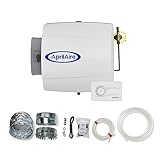 AprilAire 500M with Install Kit AprilAire 500M with Install Kit |
|
Check Latest Price |
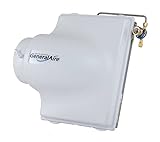 GeneralAire 3200M Bypass Evaporative GeneralAire 3200M Bypass Evaporative |
|
Check Latest Price |
Two categories appear below, and the distinction matters. Six picks are self-contained evaporative models you set on the floor and plug in. The other six are ducted units that mount on the furnace or air handler and need a water line, a drain, and low-voltage wiring to work properly.
1. AprilAire 500 Whole-House Humidifier: Automatic Dual-Sensor Control
AprilAire 500 Whole-House Humidifier, Automatic Compact Furnace Humidifier, Large Capacity Whole-House Humidifier for Homes up to 3,600 Sq. Ft., White
12 gallons per day
Up to 3600 sq ft
24VAC, 15 watts
5-year warranty
Pros
- Dual sensors track outdoor temperature and indoor humidity automatically
- Covers up to 3600 sq ft at 12 gallons per day
- No moving parts so it runs essentially silent
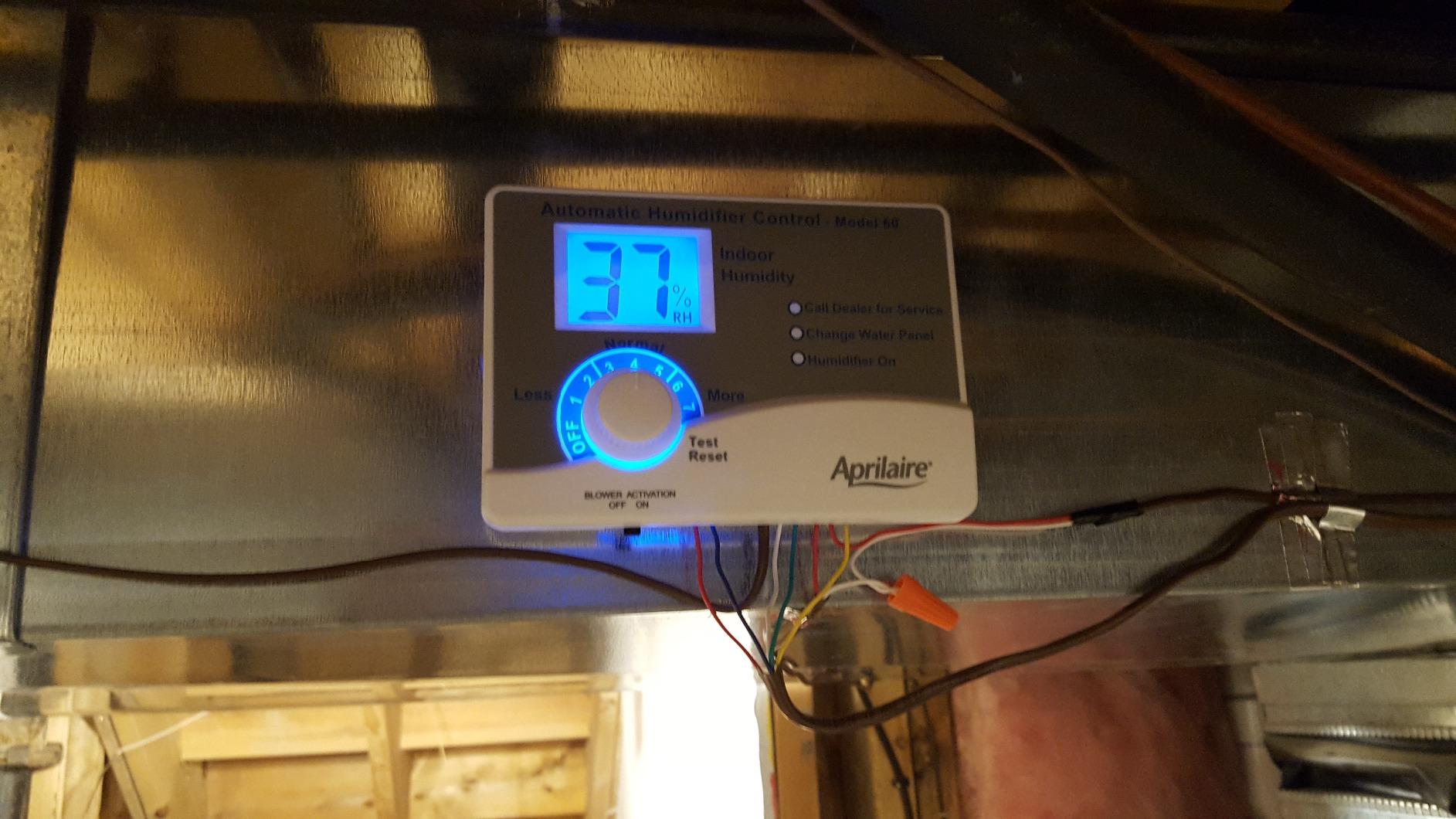
- Digital display flags when the water panel needs changing
- Casing mounts in either orientation
Cons
- Install is a multi-hour sheet-metal and wiring project
- Instructions read as a schematic rather than step-by-step guidance
- Self-installation voids the manufacturer warranty
- Display shows relative humidity but not outdoor temperature
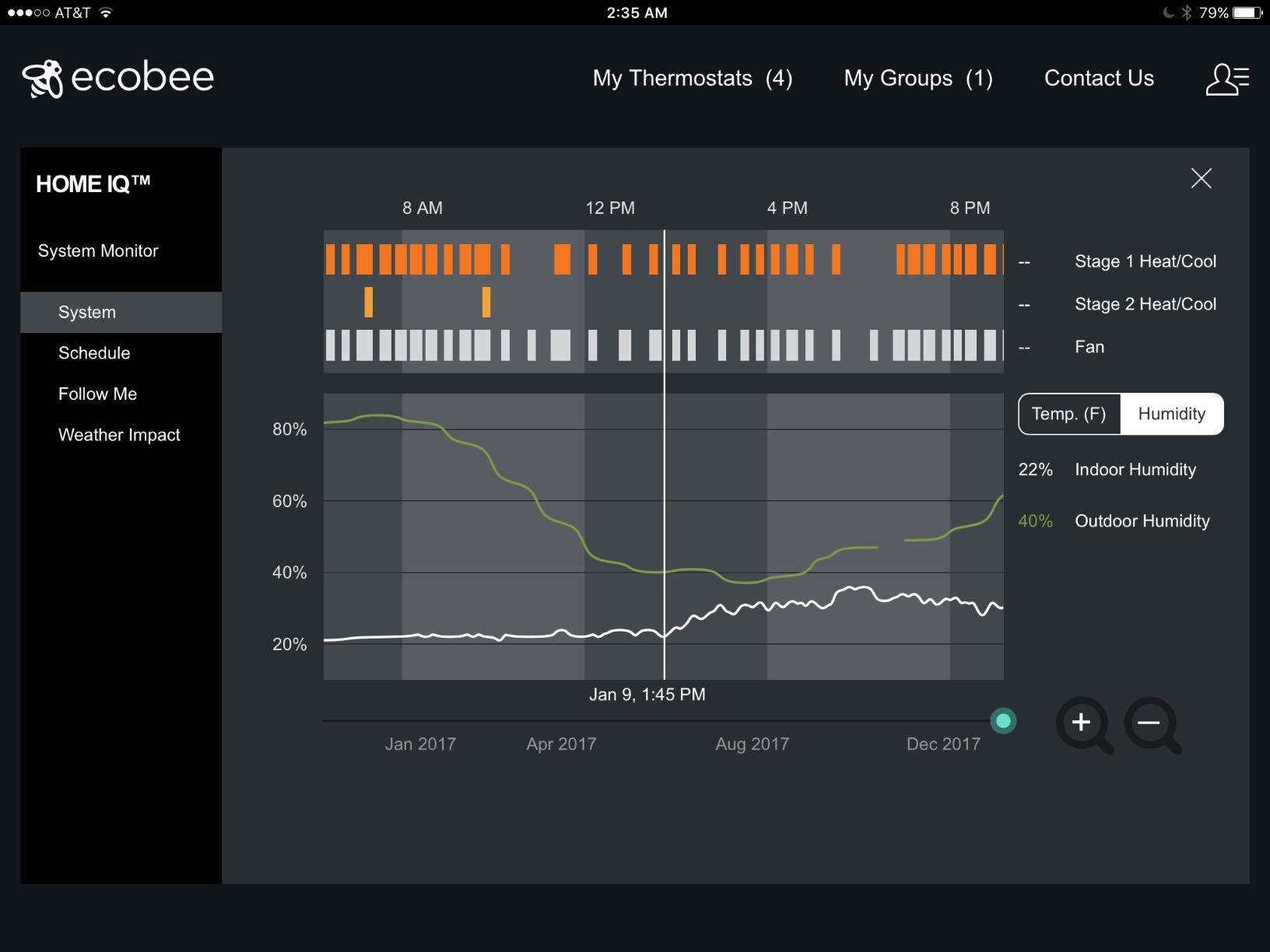
This is the model I recommend most often. The 500 runs on 24 volts AC at just 15 watts, and its dual sensors read both outdoor temperature and indoor relative humidity, so the control logic compensates for how dry the supply air actually is on a given night rather than running a fixed cycle. In my reading of several thousand reviews, that is the single feature owners mention most often as the reason they never have to think about the humidifier again.
Output is rated at 12 gallons per day for homes up to 3,600 square feet, which covers most houses built before 2010 in most climates. Reviewers consistently report holding a comfortable band through a full winter without window condensation, and several note that indoor humidity in a very dry home takes three days to a week to stabilize after the first cold snap. Set expectations for that ramp-up period rather than assuming the unit is faulty.
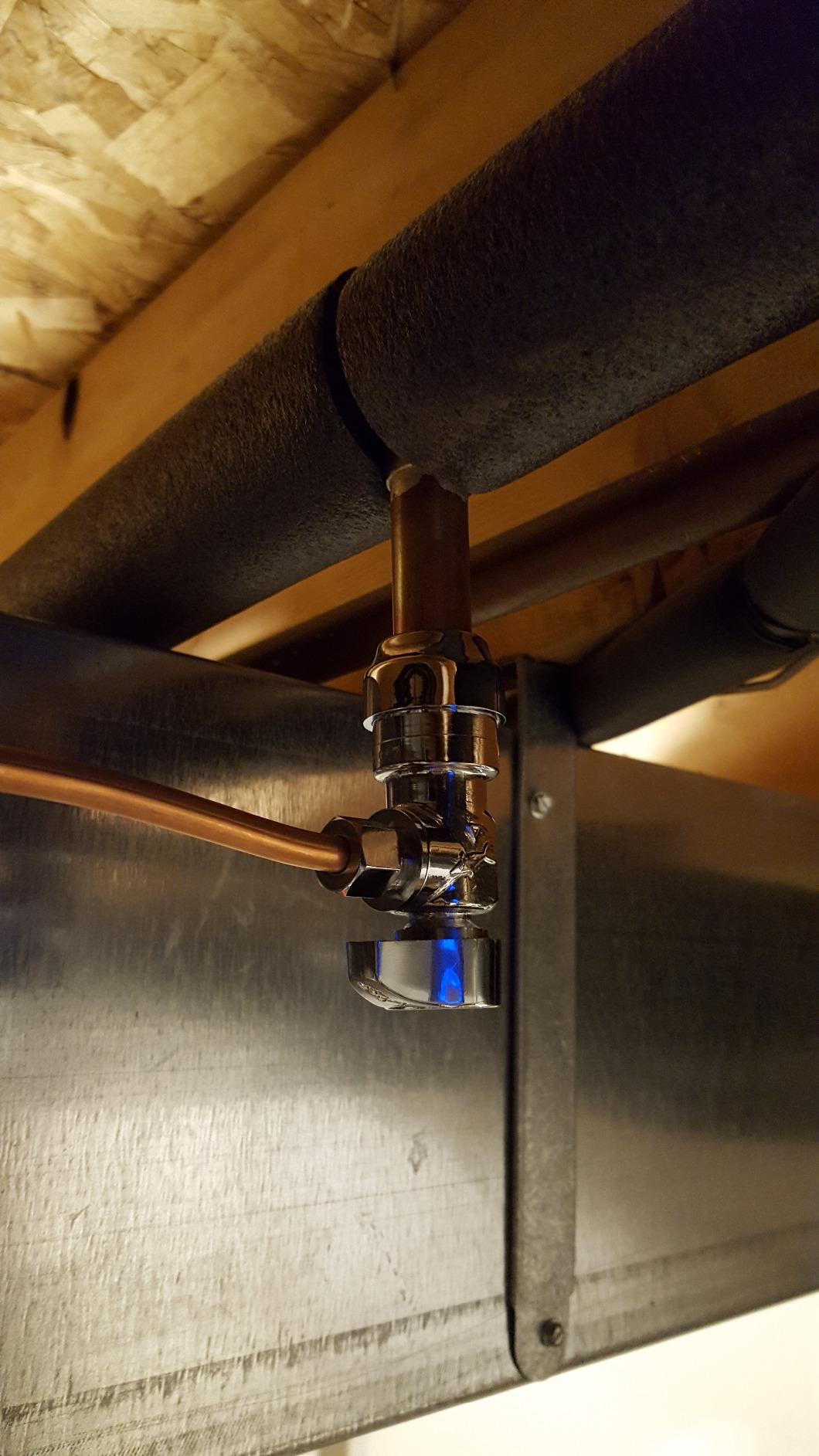
The part that catches people out is installation. Multiple reviewers describe three-to-five hour installs involving sheet-metal cutting, a three-quarter inch hole saw, thermostat wire, and a copper water line, and several of those supplies are not in the box. The wiring in particular gets singled out as the trickiest step, and more than one owner noted that self-installation voids the five-year manufacturer warranty.
Is the automatic control worth the wiring effort?
For most households, yes. The dual-sensor logic means you set a target once instead of trimming output every week as the weather shifts. If your furnace already has a humidistat position and you are comfortable with low-voltage wiring, this is the least hands-on unit in the roundup once it is in.
Reviewers also like the service prompts. The digital panel tells you when the water panel is due for a change and when service is overdue, which removes the guesswork that trips up owners of older manual models who find a saturated pad only after airflow drops.
Who should skip the AprilAire 500?
Skip it if you rent, if you have no forced-air furnace or air handler, or if you are not prepared to open a can of sheet-metal tools. If you want zero installation, a self-contained evaporative console will get you to 30-40% in an open-plan space without touching ductwork at all.
Also consider the manual-control alternative below if you prefer to set the target yourself and want the highest output available. And if water conservation is your priority, the Honeywell duct-mount model later in this roundup uses about 30% less water than a standard design.
2. AprilAire 600M Whole-House Humidifier: The Highest Output in the Line
AprilAire 600M Whole-House Humidifier, Manual High Output Furnace Humidifier, Large Capacity Whole-House Humidifier for Homes up to 5,000 Sq. Ft., White
17 gallons per day
Up to 5000 sq ft
24VAC evaporative
5-year warranty
Pros
- Highest output in the line at 17 gallons per day
- Handles homes up to 5000 sq ft
- Quiet operation with no moving parts
- Most mounting hardware supplied in the box
Cons
- Manual control only with a single indoor sensor
- No automatic outdoor temperature compensation
- Extra wire
- copper line and drain tubing not included
- Water panel still needs periodic replacement
The 600M carries the highest rating of anything in this roundup, and it earns it. At 17 gallons per day it is the output leader here, rated for homes up to 5,000 square feet, which makes it the right evaporative choice for a large house in a genuinely arid climate. Eighty-one percent of its reviews are five-star, and the most common praise is simply that it moves a serious amount of moisture without making a sound.
The trade-off is control. This is a manual humidifier with a single indoor humidistat, so you set a target and monitor it yourself rather than letting outdoor temperature compensation do the work. Several owners describe trimming the set point by a few degrees as the season deepens, which is a ten-minute adjustment a couple of times a winter.
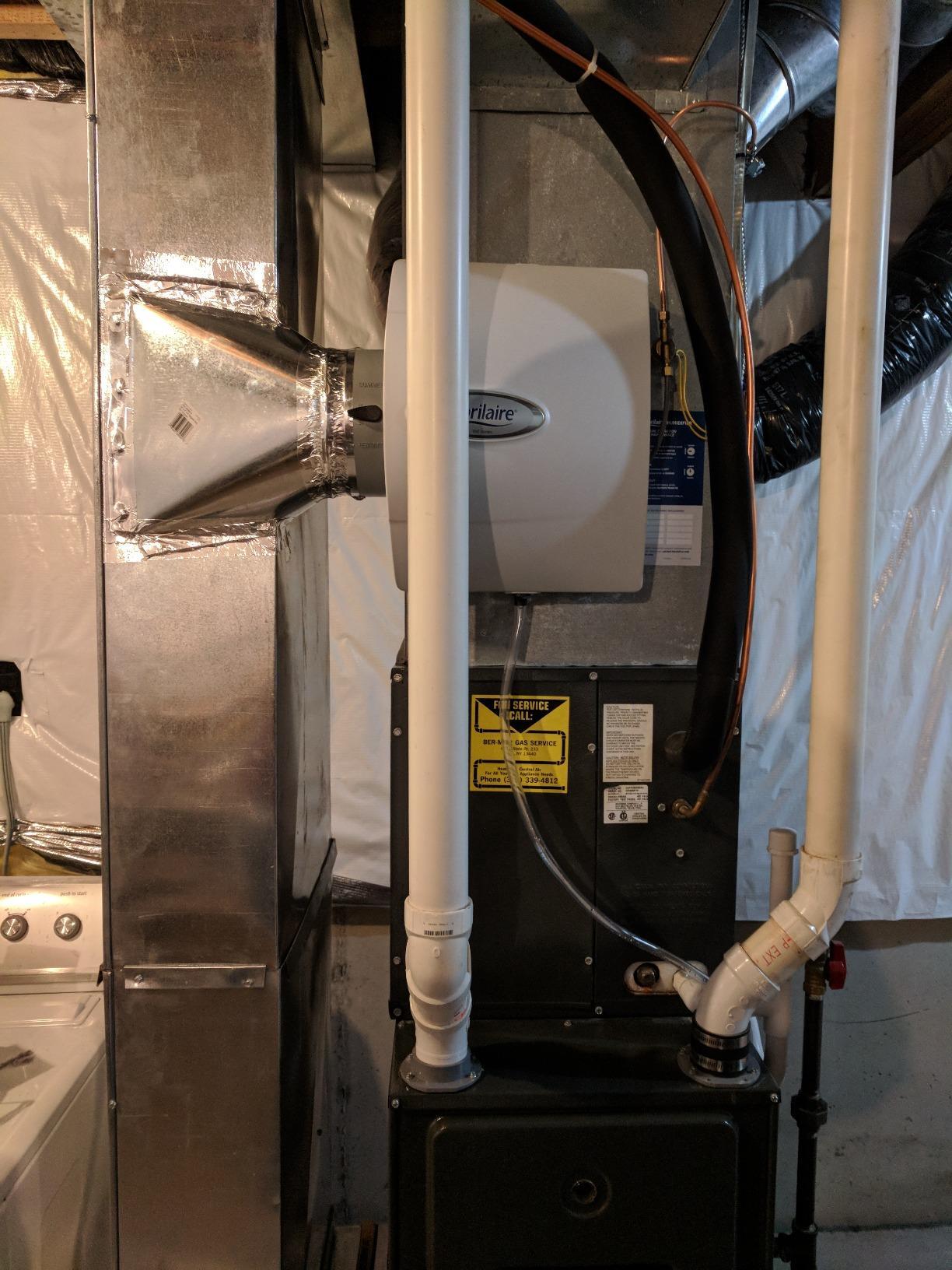
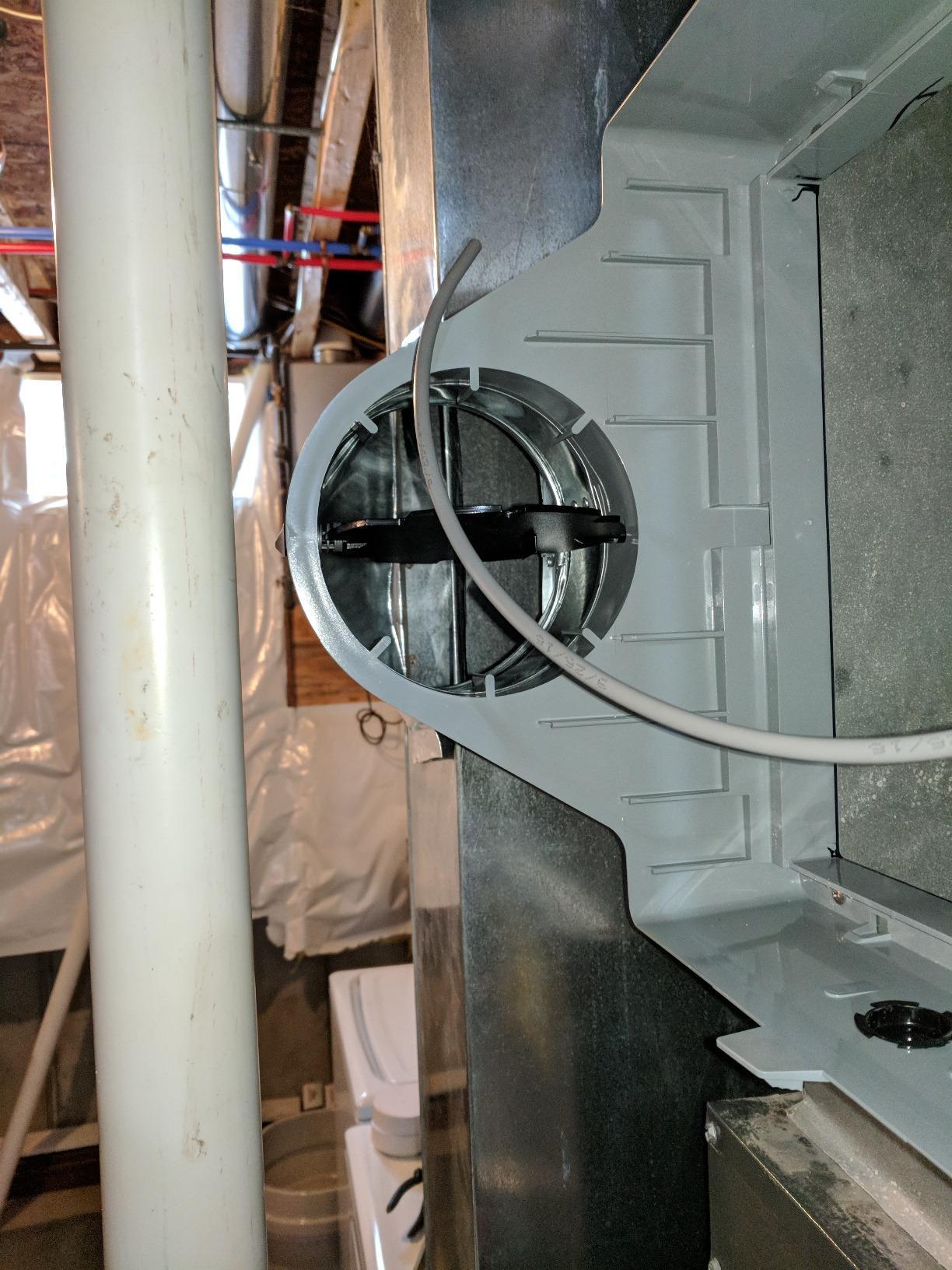
Mechanically it is the same straightforward design as the rest of the evaporative line: a plastic housing that mounts on the furnace, a water panel, and a solenoid valve. Most mounting hardware is in the box, but thermostat wire, copper supply line, and drain tubing do not come with it, so budget a hardware store run on top of the unit itself. Periodic water panel replacement is unavoidable on any evaporative design.
When 17 gallons per day is the right answer
Pick this one when square footage is the binding constraint. Homes above 3,000 square feet, homes with vaulted ceilings that pull more air than the floor plan suggests, and houses at high altitude in a dry winter all benefit from headroom that smaller panels cannot give.
Reviewers who moved up from a lower-output unit report a noticeably steadier indoor band and fewer cold snaps where the humidity sags. The cost of that headroom is manual control, which most owners describe as a fair trade.
Who should skip the AprilAire 600M?
Skip it if you want the system to run itself. If you do not want to check and adjust the set point each month, the automatic model above handles outdoor temperature compensation for you. In a smaller home under about 2,500 square feet, the extra output is capacity you will never use.
It is also worth asking your installer whether the 17-gpd figure matters for your furnace. Output is measured at a specific plenum temperature, and a unit oversized for the duct run can short-cycle rather than run cleanly.
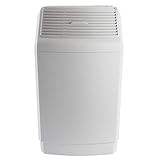
3. AIRCARE 831000 Space Saver: The Realistic Starting Point
AIRCARE Space Saver Large Evaporative Whole House Commercial 6 Gallon Humidifier for Large Rooms 2,700 sq ft. With Digital Controls, Auto Humidistat and Automatic Shut Off
6-gallon tank
Up to 2700 sq ft
Digital auto humidistat
2-year limited warranty
Pros
- No furnace or ductwork work required
- Digital controls with auto humidistat and shut-off
- 6-gallon tank with casters for moving rooms
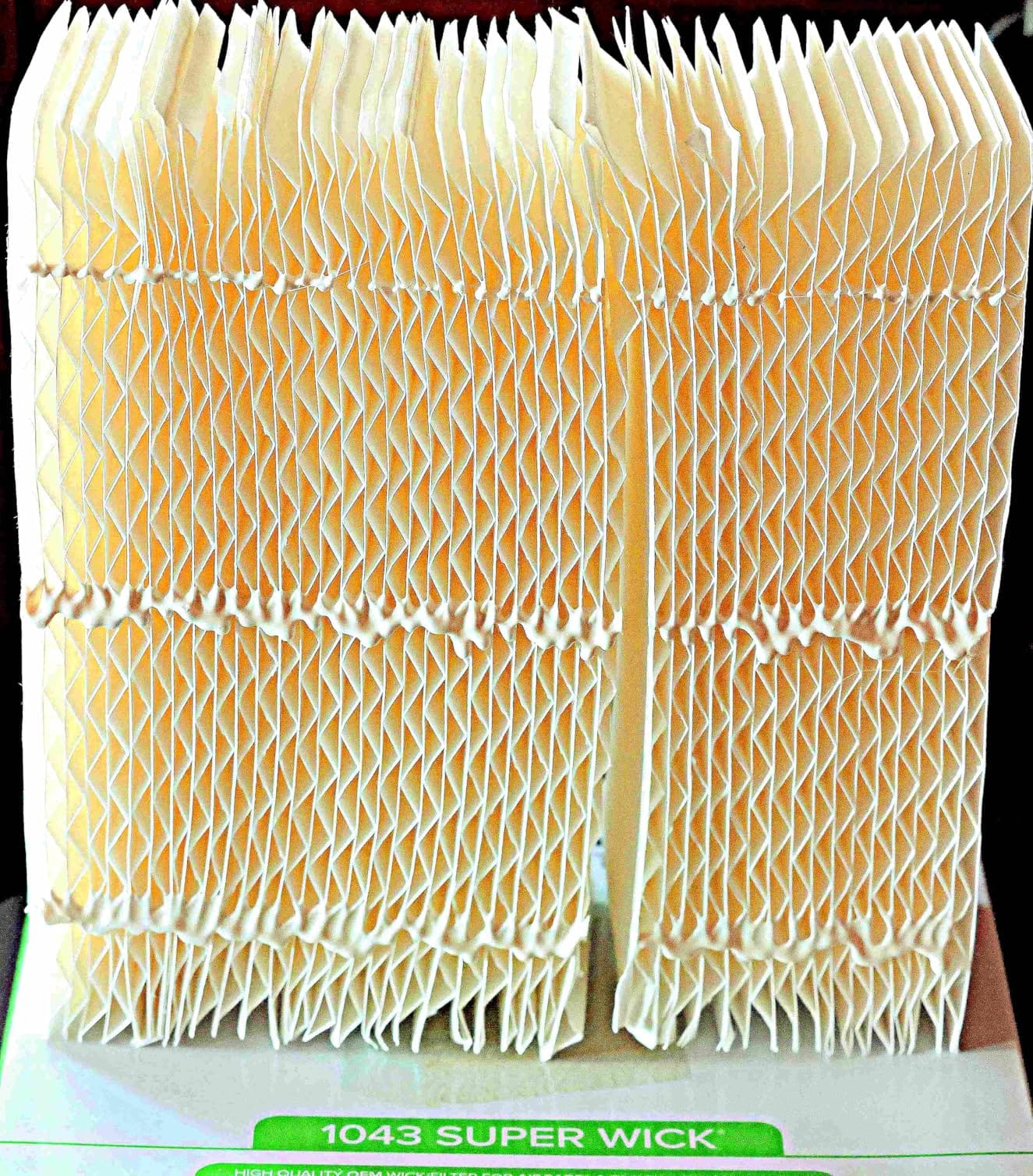
- First 1043 Super Wick filter included
Cons
- Wick pads mineralize quickly in hard water
- Must stay near a mains outlet
- 2700 sq ft is modest coverage for a whole house
- Fan noise shows on higher settings
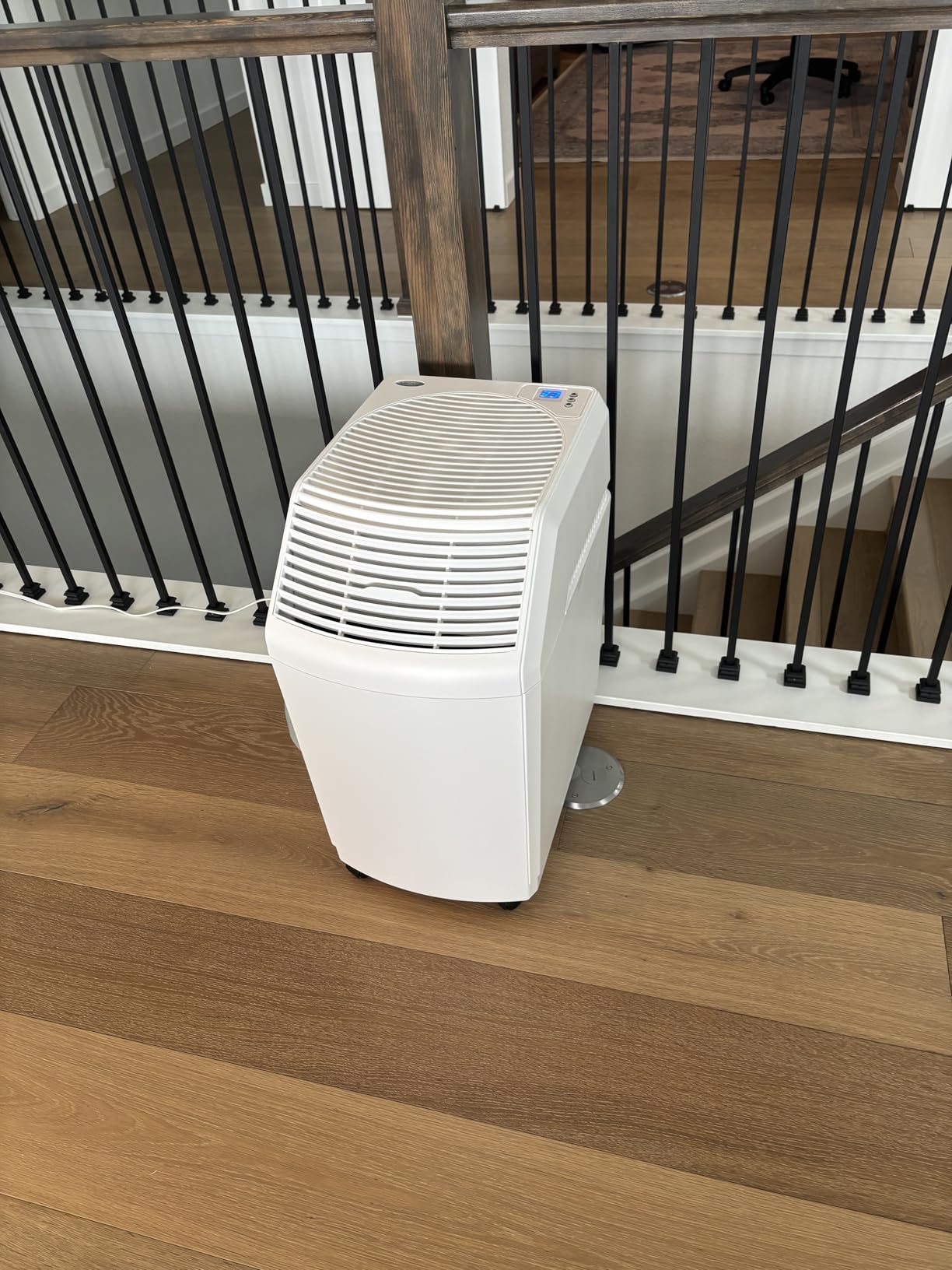
With over 6,500 reviews this is the most-reviewed model in the roundup, and it earns that attention by removing the hardest part of whole-house humidification: there is no install. You fill the 6-gallon tank, plug it in, set the digital humidistat, and it stops itself when the target humidity is reached or the tank empties. For a condo, a house with a ductless or mini-split system, or anyone who wants to fix dry air this week instead of scheduling an HVAC appointment, that is a real answer.
Coverage is rated at up to 2,700 square feet, which is honest for an open space with normal furniture and doorways to break the air up. Evaporative wick technology means no white dust and no wet surfaces, so it will not streak a wood floor the way an ultrasonic model can. Casters on the base make it easy to move between a bedroom and a living room as the season progresses.
The complaints are consistent and predictable. Wick pads in hard water mineralize quickly and need regular replacement, and this is the same maintenance reality as every other evaporative design here. The 1,000-watt draw means it has to sit near an outlet, and the fan is audible on the higher settings. The rating distribution also shows a higher one-star share than most of the ducted picks, mostly from wick life and outlet placement.
Is a portable evaporative unit enough for a dry winter?
Often, yes, for smaller homes. If your total conditioned space sits near 2,000 to 2,700 square feet with normal ceilings and you can keep doors open, a single high-capacity evaporative console can hold 30-40% without any duct modification. Beyond that, or in a house with many closed-off rooms, you will be chasing the humidity room by room.
Owners also note that placement matters more than people expect. Running it in the room where the furnace or air handler sits helps, because that air then circulates through the rest of the house. In a two-story home, running two units on separate floors is the practical alternative to ducting.
Who should skip the AIRCARE 831000?
Skip it if you have hard water and no plan to replace wick pads on a schedule, or if noise in a bedroom is a dealbreaker. If you want a unit that looks like furniture rather than an appliance, the pedestal and console models further down are styled for that.
If you want app control and a larger tank for fewer refills, the smart evaporative model later in this roundup covers the same floor area with a 23-liter reservoir.
4. AIRCARE EP9 800 Pedestal Model: Furniture Styling for Living Spaces
AIRCARE Digital Whole-House Pedestal-Style Evaporative Humidifier (Nutmeg)
3.5-gallon tank
Up to 2400 sq ft
70-hour runtime
Digital controls
Pros
- Pedestal form factor blends into living space
- Digital panel with auto shut-off and low-water light
- Stated runtime up to 70 hours between fills
- Evaporative design leaves no white dust
Cons
- Only 3.5 gallons means frequent refills for whole-house duty
- Smallest coverage figure of the console models here at about 2400 sq ft
- Wick replacement accelerates in hard water
- 25-pound cabinet is awkward to move when full
Where the Space Saver prioritizes capacity, this pedestal prioritizes appearance. It stands 27 inches tall in a cabinet that reads as furniture, so it can sit in a living room or main-floor hallway without looking like an appliance. That matters more than it sounds if the unit is going to be visible every day for four months.
Controls are digital with automatic shut-off and a low-water indicator, and the stated runtime reaches 70 hours on a fill. What you give up for the styling is capacity: 3.5 gallons is the smallest tank among the console-style units here, and the coverage rating of about 2,400 square feet is the lowest of the group. For whole-house duty on a larger floor plan, that means refilling more often than you would like.
Reviewers with more than 5,400 ratings split cleanly on that trade. Style and quiet running earn steady praise, and the evaporative wick design leaves no white dust or mineral residue on nearby surfaces. The refill frequency and the 25-pound weight when full come up constantly as friction points, and wick replacement in hard water is a routine seasonal cost rather than a surprise.
Where does a pedestal unit actually work best?
Main floors and finished basements in homes up to roughly 2,400 square feet. Because it is freestanding, it humidifies the air in the room it occupies plus whatever the air mixing carries, so open plans work far better than homes with a lot of closed doors. A second identical model in an upstairs bedroom covers the rest.
Owners also like that it needs no water line or drain connection, which makes it the practical choice in a finished basement or a loft where running plumbing would mean opening a wall.
Who should skip the AIRCARE EP9 800?
Skip it if you plan to run it as your only winter humidity source in a home above about 2,500 square feet. The tank size and coverage rating do not leave room for that, and refills become a daily annoyance by February.
If you want the same furniture look with more capacity and digital humidity control, the console model below carries 5 gallons and a digital humidistat. If you want the largest coverage claim of any self-contained unit in this roundup, the AIRCARE 14416A is rated higher at 3,700 square feet.
5. AIRCARE Valiant EA1407 Console: Dual Tanks for Open Plans
AIRCARE Valiant Digital Whole-House Console-Style Evaporative Humidifier (Honey Oak)
5-gallon dual tanks
Up to 2900 sq ft
Digital humidistat
2-year limited warranty
Pros
- Dual removable tanks keep the whole wick surface immersed
- Digital humidistat with automatic fan mode
- Filter-check indicator flags 750 hours of runtime
- Low and medium fan speeds are quiet
Cons
- High fan speed is loud and it may run near-continuously when dry
- Thin plastic cabinet and fragile door hinge
- Left tank will not drain until fully empty and dry
- Wicks scale quickly in hard water
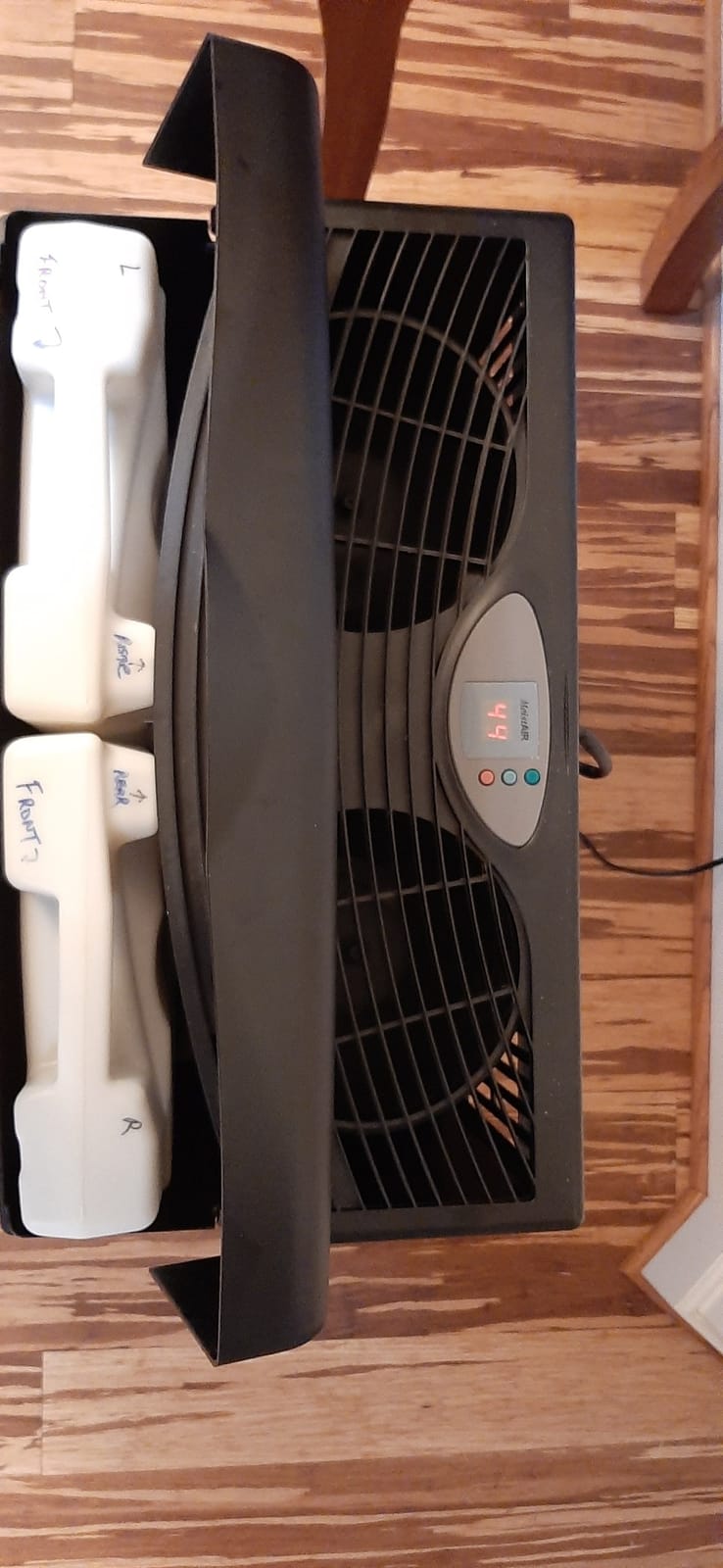
The Valiant solves a real problem with pour-in humidifiers: shallow water only wets the bottom of the wick, so output drops as the tank empties. Its dual removable tanks at the base keep the water level shallow while the full wick surface stays immersed, which several owners say produces noticeably more consistent humidity than older pour-in models in the same price range.
Control is digital with an automatic fan mode that throttles between speeds to hold your set humidity, and a filter-check indicator that flags after 750 hours of runtime. A 5-gallon capacity and a stated 55-hour runtime put it in the middle of the console group on tank size and near the top on coverage, at up to 2,900 square feet.
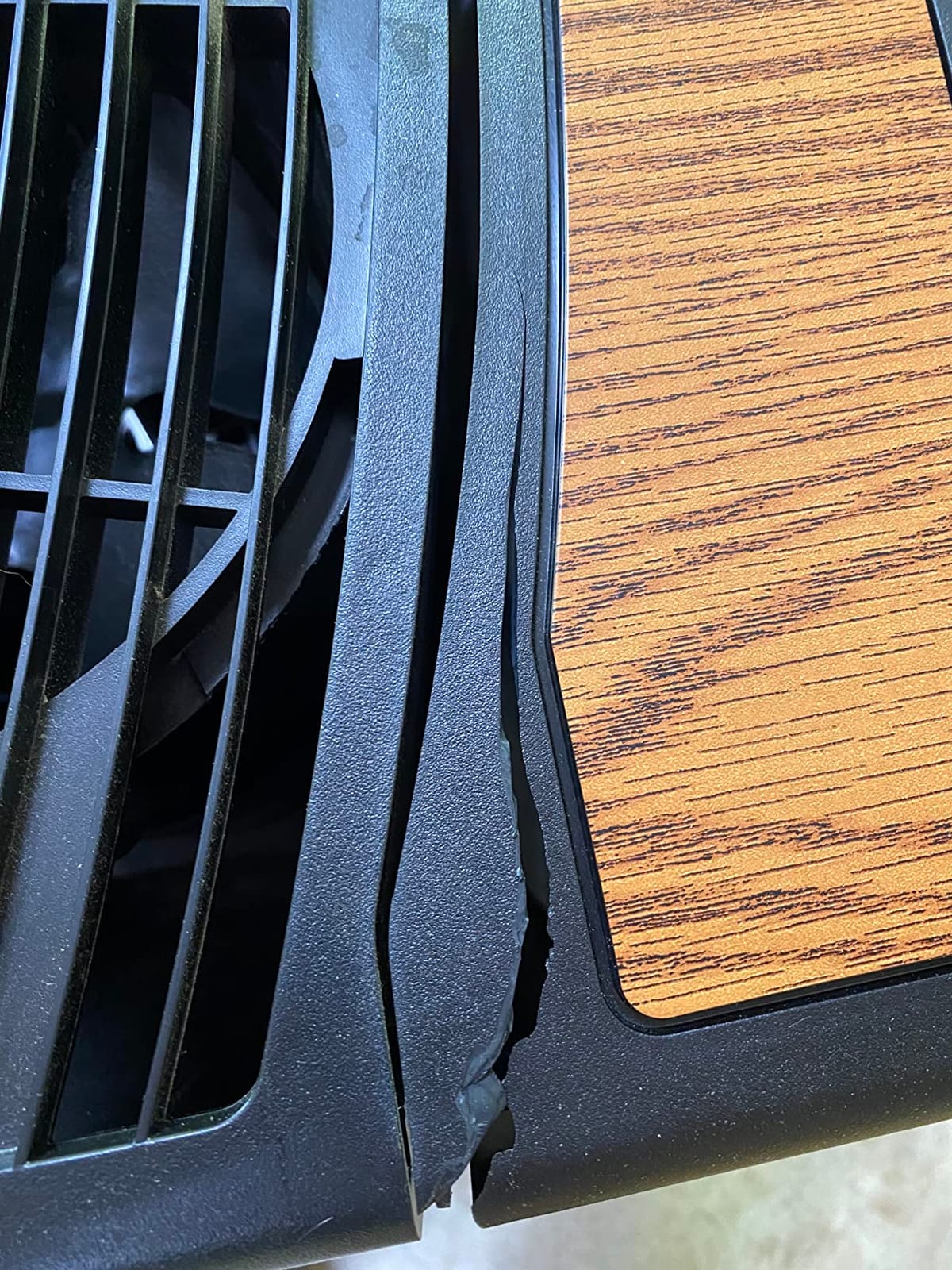
It is also the most polarizing model here, with a 4.1 rating and a 12% one-star share. Complaints cluster in three places: audible fan noise on high, thin plastic construction with a fragile door hinge, and quality control on arrival, with some units reporting a leaking tank, a clicking fan, or a fill indicator that never lights. If you buy it, inspect the tank and the indicator on day one.
Is the dual-tank design a real improvement?
Yes, and it is the reason this model exists. Consistent wick wetting means steadier output through a full tank, which translates into fewer hours of fan time and fewer swings in indoor humidity. In a very dry house that runs the unit hard, that consistency matters more than raw tank capacity.
Homeowners in open-plan homes rate it highly for exactly that stability, and the automatic fan mode means you are not adjusting speeds by hand as the evening gets colder.
Who should skip the AIRCARE Valiant?
Skip it if noise in a living space is a dealbreaker, because a unit working hard in a dry home runs on high far more than the manual suggests. If you are sensitive to build quality, the plastic cabinet and hinge are recurring complaints, and the two-year limited warranty is shorter than the AprilAire coverage in this roundup.
If hard water is your situation, budget for wick replacement on a short cycle or look into the distilled water approach covered in the buying guide. For larger coverage with a similar console footprint, the AIRCARE 14416A is rated up to 3,700 square feet.
6. Honeywell HE280A Duct Mount: The Lowest Water Use Here
Honeywell Home HE280A Whole House Humidifier, White
Up to 4000 sq ft
30 percent less water use
Includes transformer
1-year limited warranty
Pros
- Uses roughly 30 percent less water than standard models
- Mounts on supply or return air duct of any forced-air furnace
- PerfectFLO tray optimizes water distribution
- Flow-through design cuts maintenance frequency
Cons
- Non-adjustable pressure switch can fail to trigger reliably
- Plastic drain-hose clamp at the base can drip
- Needs tin snips and a three-quarter inch hole bit for duct work
- Blocked drain lines in hard water can flood
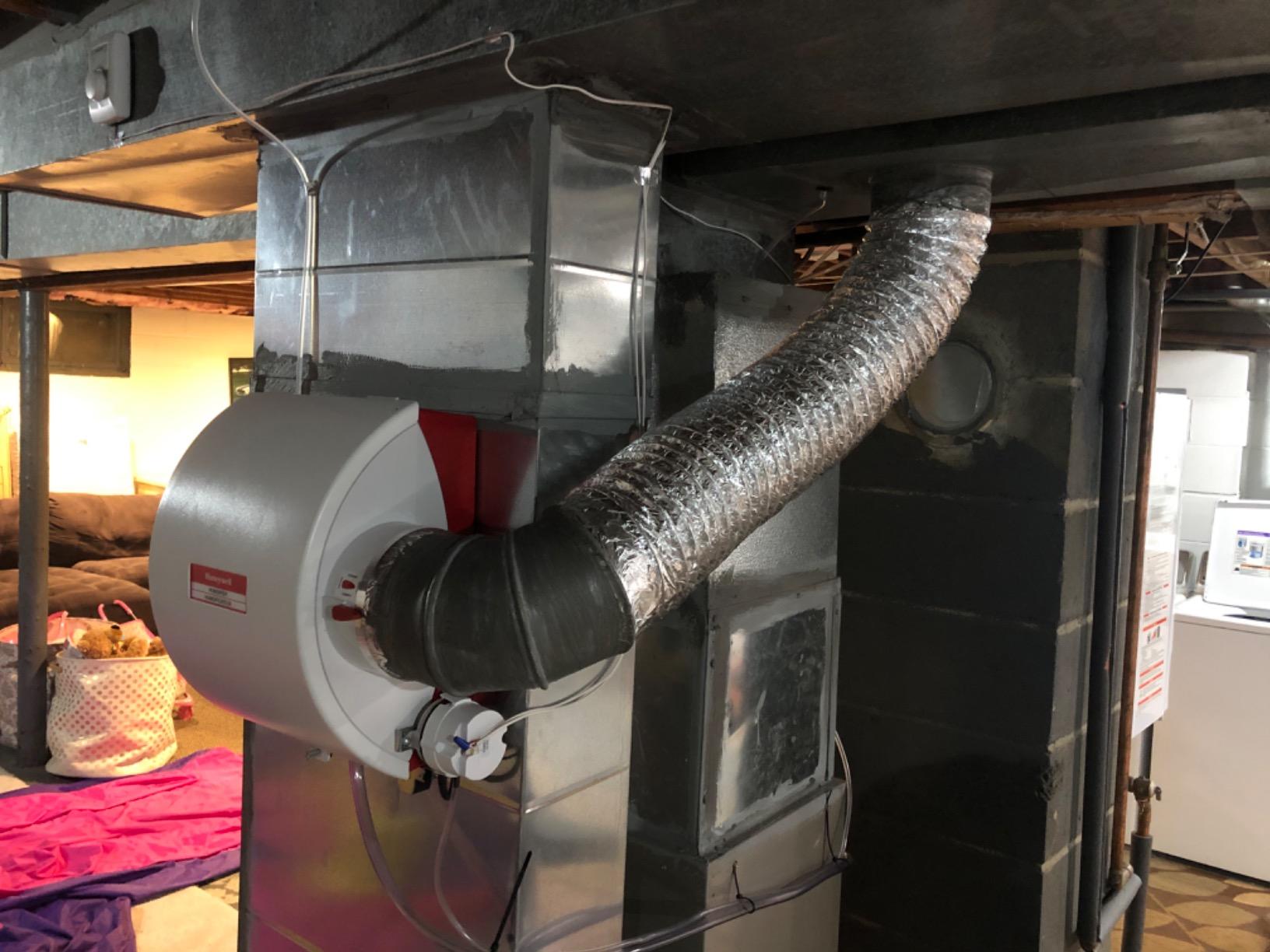
Water consumption is the quietest differentiator in this category, and the HE280A leads it. Its water-saving design uses roughly 30% less water than standard models, with a PerfectFLO distribution tray that spreads water across the panel instead of pouring it in one place. Over a five-month heating season that difference is real, particularly in a metered or well-water home.
It mounts on either the warm air supply or the return air duct of any forced-air furnace, which makes it more flexible than units that only work on the supply side. The included transformer means you can plug it into a standard outlet instead of tying into furnace wiring, and the flow-through design helps the unit stay cleaner and reduces how often you service it.
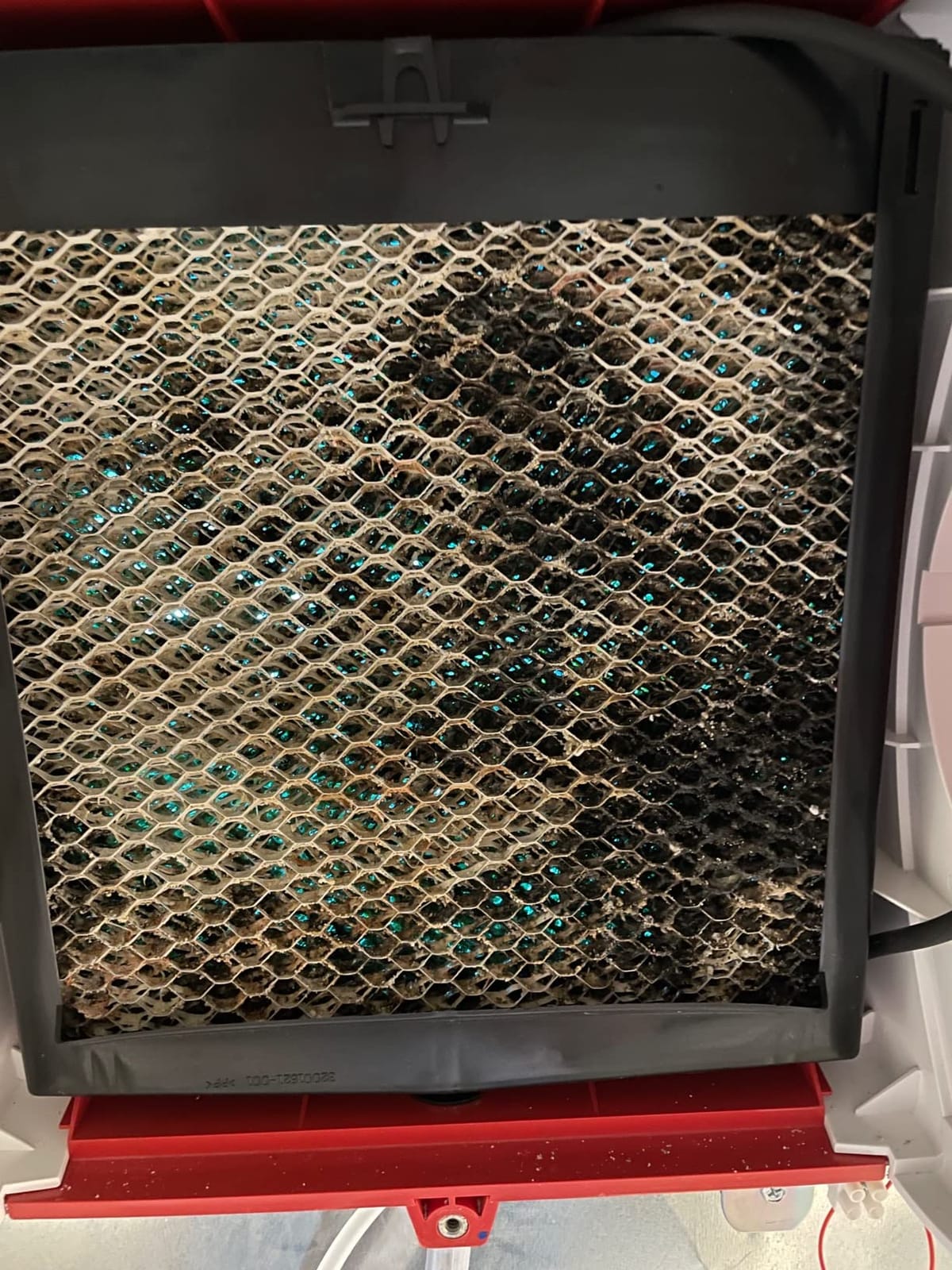
Its review base is small at 274 ratings, and the negatives are specific. The pressure switch is non-adjustable and sensitive, and owners report it sometimes fails to engage the solenoid, so the humidistat calls for water and nothing happens. The plastic drain-hose clamp at the base is also a recurring drip complaint. Installers consistently report four to eight hours of work and stress clearing or replacing the drain line every year, because a blocked line in hard water can flood a plenum.
Does saving 30% of the water change the decision?
For most households, no. The saving is real but modest, and it matters most in dry climates where the unit runs many hours a day. The stronger reason to consider this model is mounting flexibility: the ability to sit on either the supply or return duct solves a real problem in some furnace layouts where the supply plenum is already crowded.
Owners who stay with it tend to praise the accurate humidistat control and the plug-in transformer convenience once it is installed.
Who should skip the Honeywell HE280A?
Skip it if you want long warranty coverage. One year limited is the shortest in this roundup, and on a ducted unit the water panel, solenoid, and drain hardware are all consumable over a decade. If you have hard water and no plan to service the drain line annually, the flooding risk is not worth the water saving.
If you want higher output in a large home with a five-year warranty instead, the two AprilAire ducted models in this roundup both carry longer coverage. For a genuine leap in moisture delivery in extreme cold, the electrode steam model later on is the only option here that does not depend on furnace fan runtime.
7. AIRCARE 14416A Console: Cool Mist Output Safe Around Children
AIRCARE Whole-House Console-Style Evaporative Humidifier for Coverage up to 3,700 sq. ft. (Canyon)
4.75-gallon tank
Up to 3700 sq ft
Three fan speeds
Built in Little Rock AR
Pros
- Largest coverage claim among self-contained units here at 3700 sq ft
- 4.75-gallon reservoir with up to 45-hour runtime
- Three fan speeds plus an adjustable humidistat
- Built in Little Rock AR
Cons
- Analog controls with no digital humidity readout
- Wick pads need regular replacement in hard water
- Low cabinet height reads as a console table rather than a tower
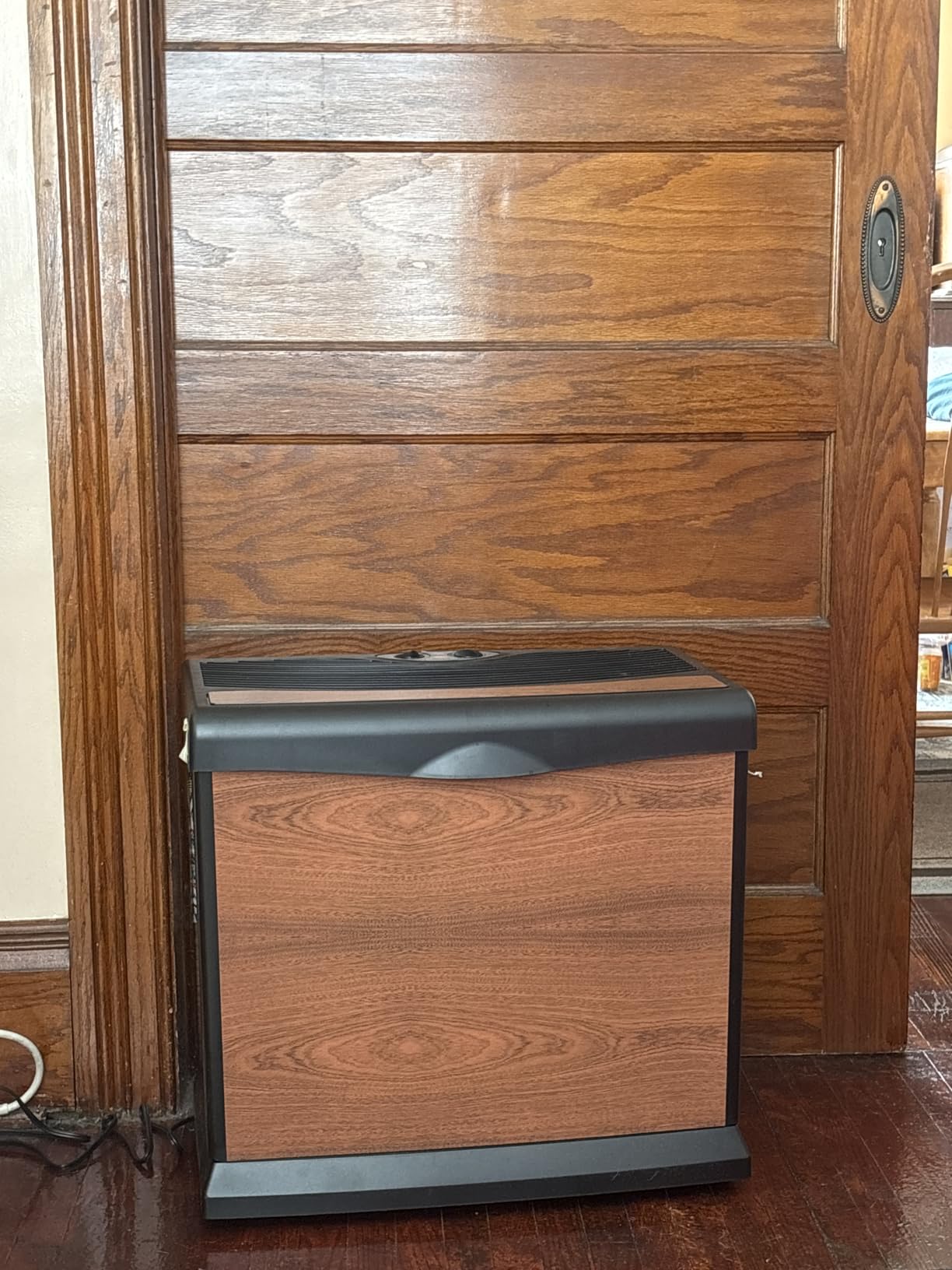
The distinguishing feature here is cool mist output, which stays at room temperature and produces no warm mist to scald a curious child who reaches for the top. For a family with a playroom, a young child’s bedroom, or a space where a warm-mist unit worries you, that changes the calculus more than any spec on the list.
It also carries the highest coverage claim of the self-contained units in this roundup at up to 3,700 square feet, with a 4.75-gallon reservoir and a stated 45-hour runtime. An adjustable humidistat shuts the unit off when the tank empties, three fan speeds let you tune output, and the first set of HDC411 Super Wicks is included. It is built in Little Rock, Arkansas.
The trade-off is the interface. Controls are analog rather than digital, so you get a humidistat set point and a refill indicator but no display of actual room humidity, which means you are setting it partly by feel or with a separate meter. The first set of wicks is included but replacement is a recurring cost, and hard water shortens wick life noticeably.
How do you set an analog humidistat accurately?
Buy a cheap digital hygrometer and place it on a wall at living-room height, about five feet from any wall or window. Set the humidistat one notch above where the hygrometer reads 40%, let it settle for an hour, and back it down if you see the number drift past 45%. Recheck in February when outdoor air is driest.
That approach replaces the readout most digital models provide. It is a ten-minute job, done twice a season.
Who should skip the AIRCARE 14416A?
Skip it if you want to see the current humidity on the unit itself or control it from a phone. The smart evaporative model later in this roundup gives you both, along with a sensor accurate to plus or minus 5% and app control, at the cost of no wick included in some configurations.
Also skip it if you have hard water and dislike consumable replacement parts. For a furnace-mounted alternative with far more output and no tank to fill, the GeneralAire 1042-LH below is a direct comparison point.
8. GeneralAire 1042-LH: The Straight Furnace Drop-In Replacement
GeneralAire Humidifier Unit 1042-LH, Furnace Mount Bypass Type
17 gallons per day
Up to 2800 sq ft
24-volt with transformer
Reversible duct connection
Pros
- Exact drop-in for older GeneralAire furnace humidifiers
- Reliable whole-home humidity control in dry climates
- Quiet operation with clear static electricity improvement
- Reversible right-or-left 6 inch duct connection
Cons
- Included hole-cutting template reported misaligned
- Water connection uses many fittings and multiple leak points
- Summer/winter damper does not fully open
- Requires genuine 990-13 pads once or twice per season
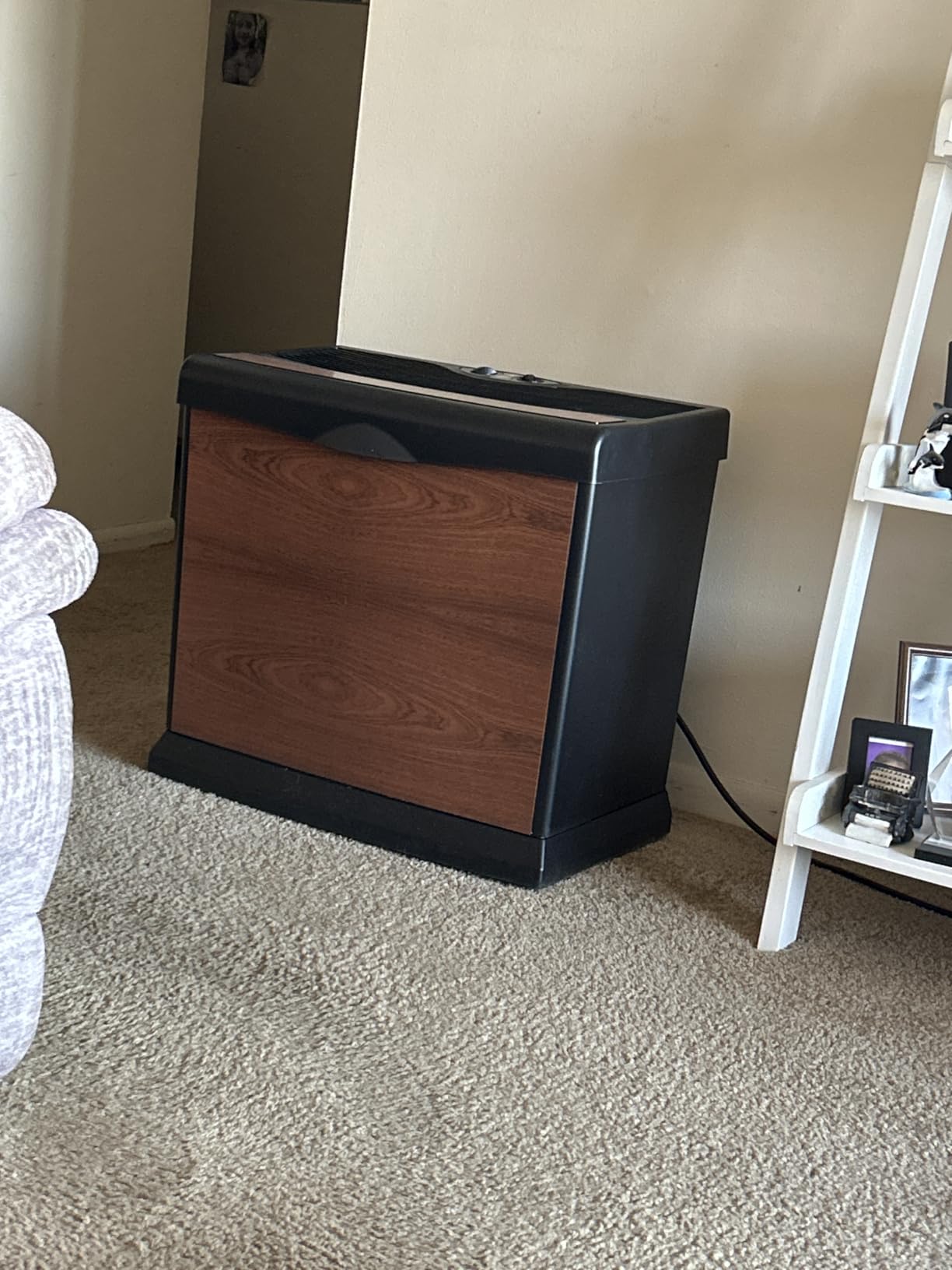
If your furnace already has an aging GeneralAire mounted on it, this is often the least painful upgrade available. The 1042-LH is a bypass evaporative unit rated at 17 gallons per day based on a 120-degree Fahrenheit plenum temperature, and owners replacing an older GeneralAire report it fits the same opening with a reversible six-inch duct connection for either orientation.
It runs on 24 volts with a 120-volt transformer included, draws only 7.2 watts, and works up to 2,800 square feet. Owners consistently report that the difference in their house was immediate: static electricity dropped, and the general winter discomfort that had been blamed on the season turned out to be humidity.
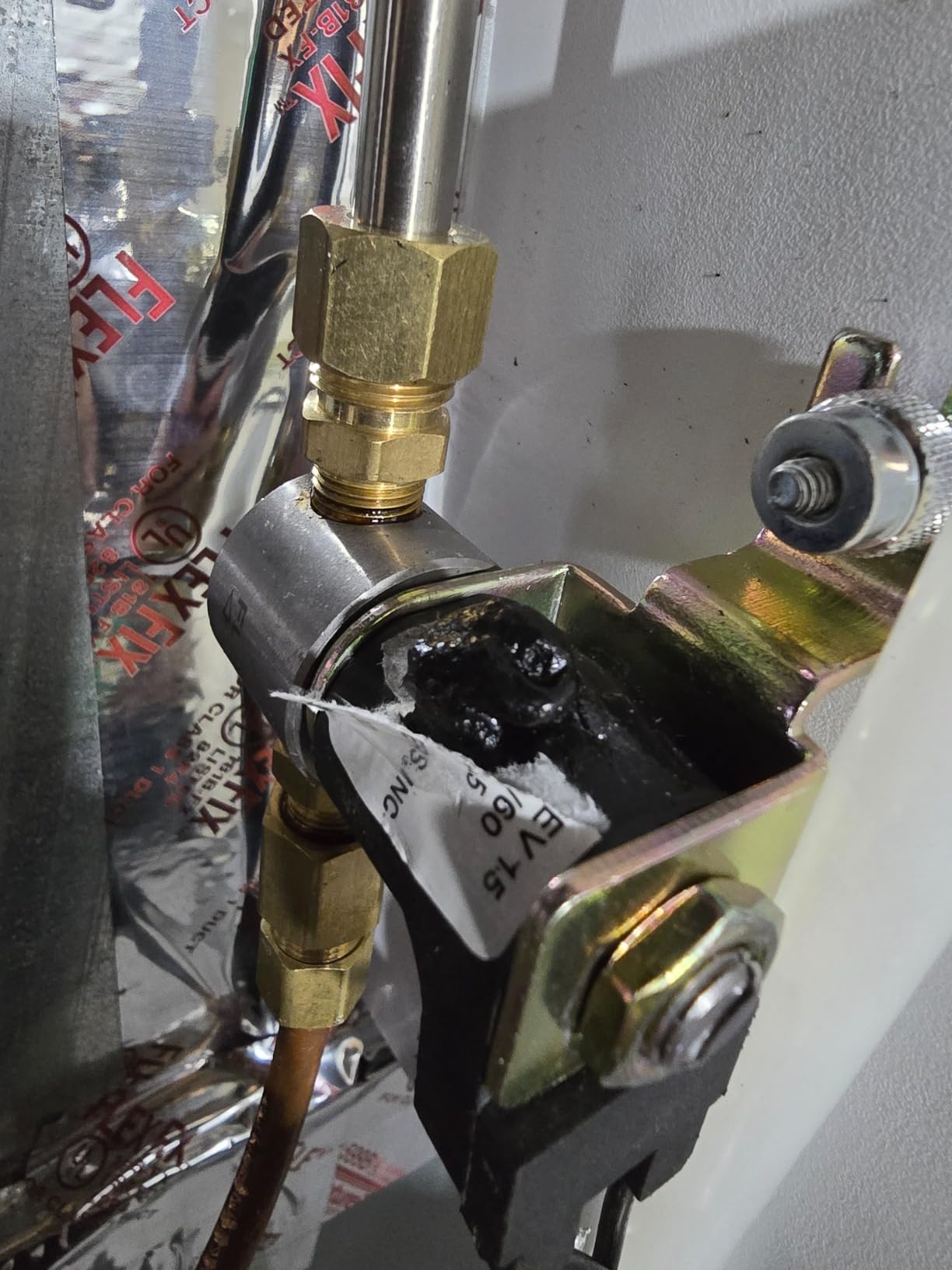
Nearly every complaint is about hardware rather than performance. The included hole-cutting template is reported as misaligned, so installers end up tracing the housing themselves. The water connection uses many fittings, which multiplies potential leak points. The summer/winter damper does not fully open because the housing depth is too shallow, and the drain fitting is oversized for the supplied hose. None of these stop the unit from working, but each adds a step to the install.
Is a bypass unit the right choice for a gas or oil furnace?
Often, yes. Bypass evaporative units have long been the default recommendation for gas and oil systems because they add no combustion-related concerns and mount cleanly. The tradeoff is that bypass units only add moisture when the furnace is already calling for heat, so in a house that cycles off for long stretches between set points, output drops with it.
Homeowners in this category report that the evaporative approach is entirely sufficient in a moderately dry winter, and that the pads need replacing once or twice per season. Use genuine 990-13 pads, since the unit is designed around that media.
Who should skip the GeneralAire 1042-LH?
Skip it if you are installing from scratch rather than replacing an existing GeneralAire. The template and fitting issues matter much less in a replacement and much more in a first install. Also skip it if you have an indoor air handler rather than a furnace with a heat coil, since a bypass design has nothing to borrow heat from.
If you want automatic control with outdoor temperature compensation instead of a manual set point, the AprilAire 500 in this roundup does that and carries a five-year warranty. If leakage through your ductwork is the reason your house stays dry, only the steam model below keeps up with that loss.
9. Honeywell HM750A1000 Electrode Steam: The Answer for Extreme Cold
Honeywell HM750A1000 Electrode Steam Humidifier
11 GPD on 120V or 22 GPD on 240V
Digital humidistat included
Pre-mineralized cylinder
Hardwired install
Pros
- Adds far more moisture than any evaporative unit in this roundup
- Recovers humidity faster in very cold weather
- Sealed pre-mineralized cylinder contains mineral buildup
- Compact footprint mounts on the furnace or a wall
Cons
- Steam canister needs replacement roughly every year
- Must be hardwired with no plug option
- No backflow preventer or water intake valve included
- Airflow detector must be added separately
Everything else in this roundup evaporates water using heat the furnace already has. This unit boils water electrically and injects steam into the ductwork, which is why it out-delivers every other pick in a very cold house. Output is jumper-selectable: roughly 11 gallons per day on 120V and 22 gallons per day on 240V. Owners report reaching their set point in hours rather than days after a deep cold snap, and keeping a leaky home on target without constant cycling.
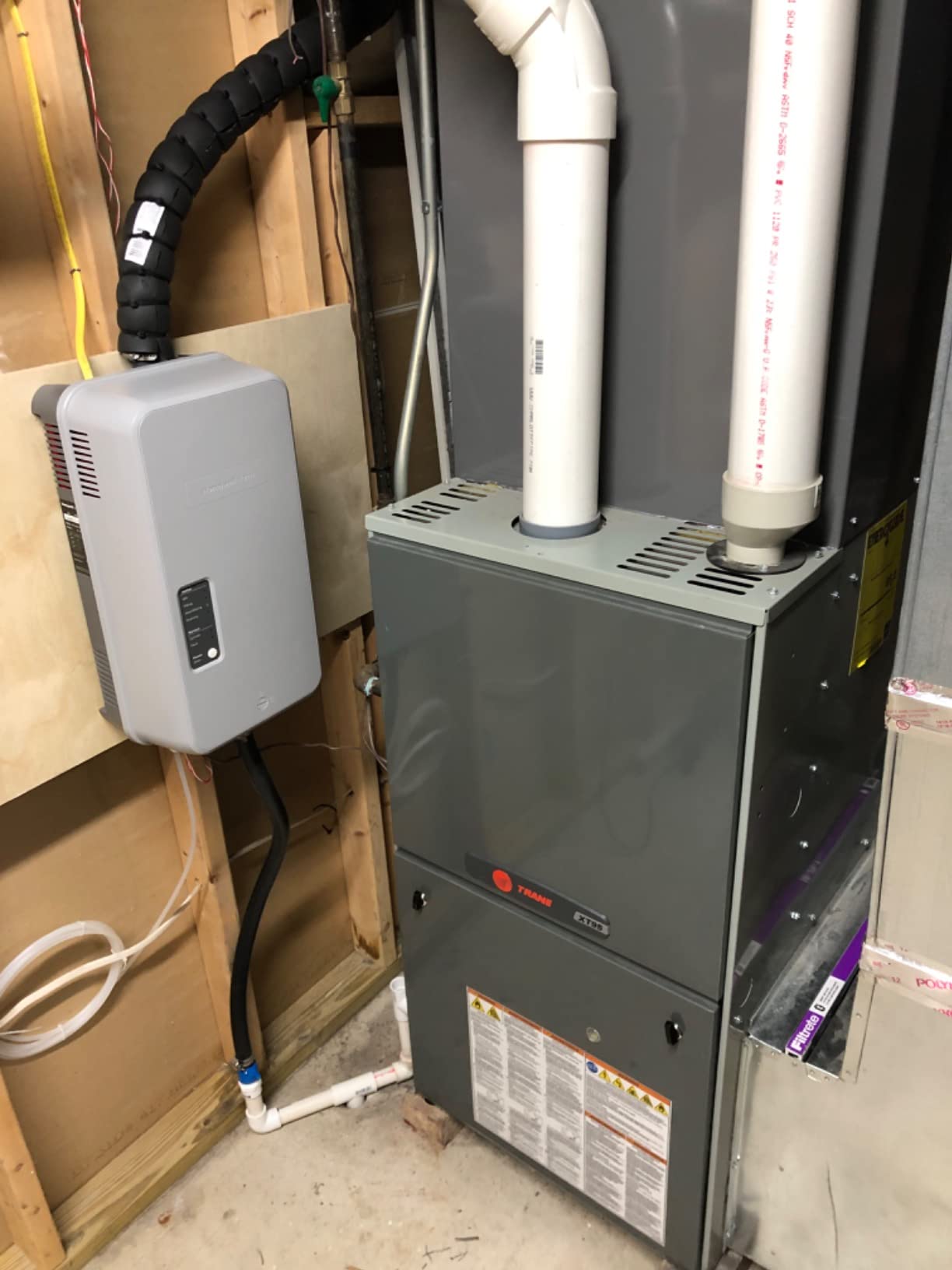
Two design details make it practical. It is duct- or wall-mountable with a compact 21 by 8 by 10 inch footprint, so it fits in a tight furnace space where an evaporative housing would not. And the pre-mineralized cylinder keeps mineral buildup contained inside a sealed part, which makes cleaning simple and fast to replace rather than dealing with scale on a water panel.
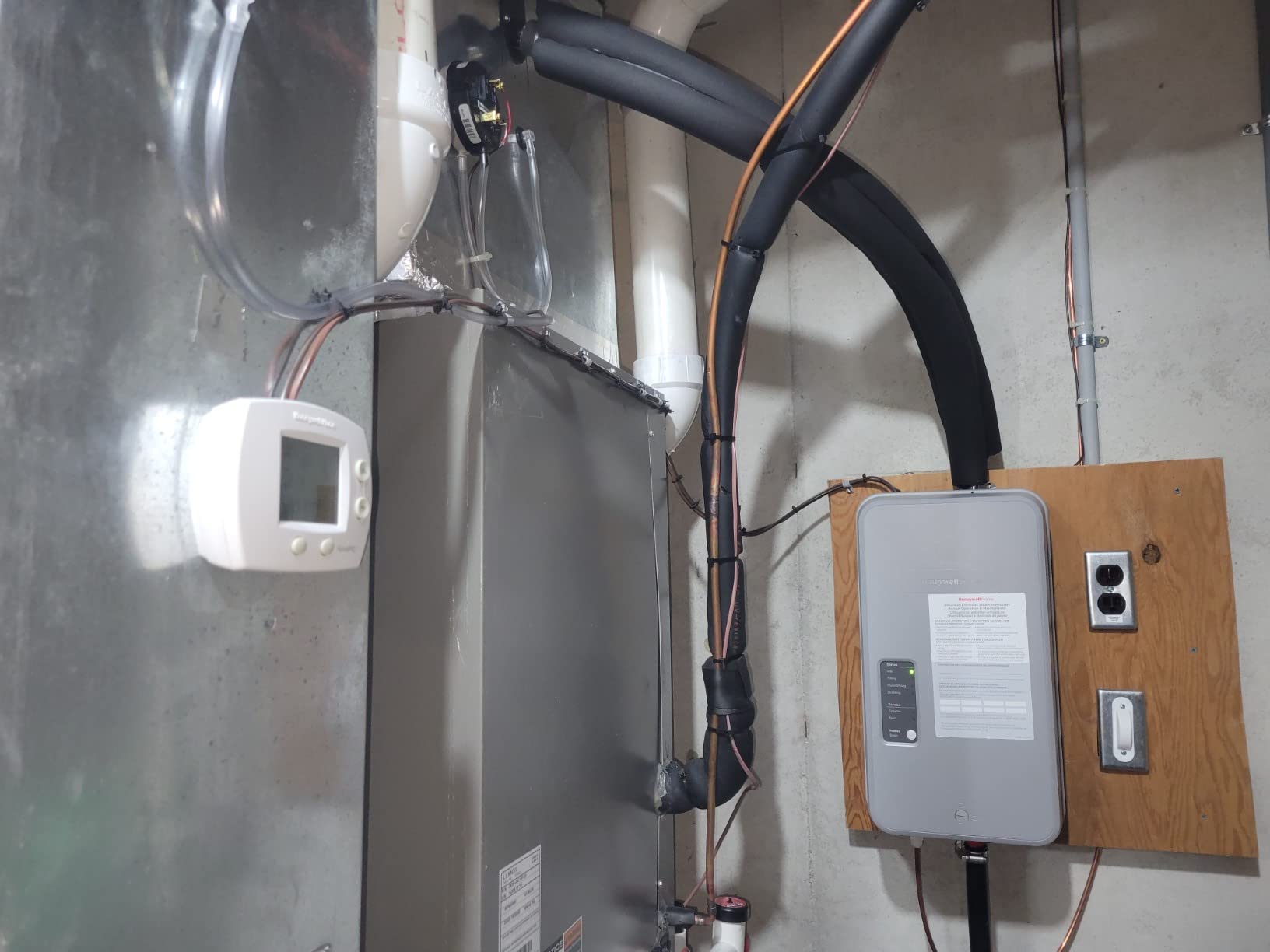
The costs are real. The steam canister needs replacing roughly annually, which is a genuine ongoing expense, and the unit must be hardwired because the manufacturer advises against running it off an outlet. No backflow preventer or water intake valve is included, so those have to be added, and the airflow detector needed for full function is a separate purchase. The digital humidistat with an illuminated display and outdoor temperature sensor is included, which is genuinely helpful for controlling window condensation.
When is steam worth the electricity?
When your house loses air. In an older home with leaky ductwork, thin walls, or a lot of exhaust, the incoming cold dry air overwhelms what any evaporative pad can add during a furnace call. Steam keeps working independently of fan runtime, and that is the honest reason it exists.
It is also worth it if you are dealing with genuinely arid conditions, such as a high-altitude winter where outdoor relative humidity is single digits. It is a poor choice in a tight, well-insulated home where an evaporative unit would already hold 35% comfortably.
Who should skip the Honeywell HM750A1000?
Skip it if running cost matters. It is the only model here with a real electricity bill attached, and the annual canister replacement is a cost the evaporative models do not carry at that level. It also requires a hardwired electrical circuit, which in some homes means a panel upgrade or a permit.
Skip it if you rent, and if you have no appetite for annual canister replacement and annual descaling. A five-year warranty is also worth weighing, and note that the warranty reportedly does not apply when the unit is purchased and installed by a homeowner, which is a meaningful caveat for a self-installing buyer.
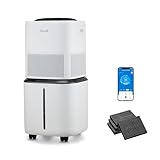
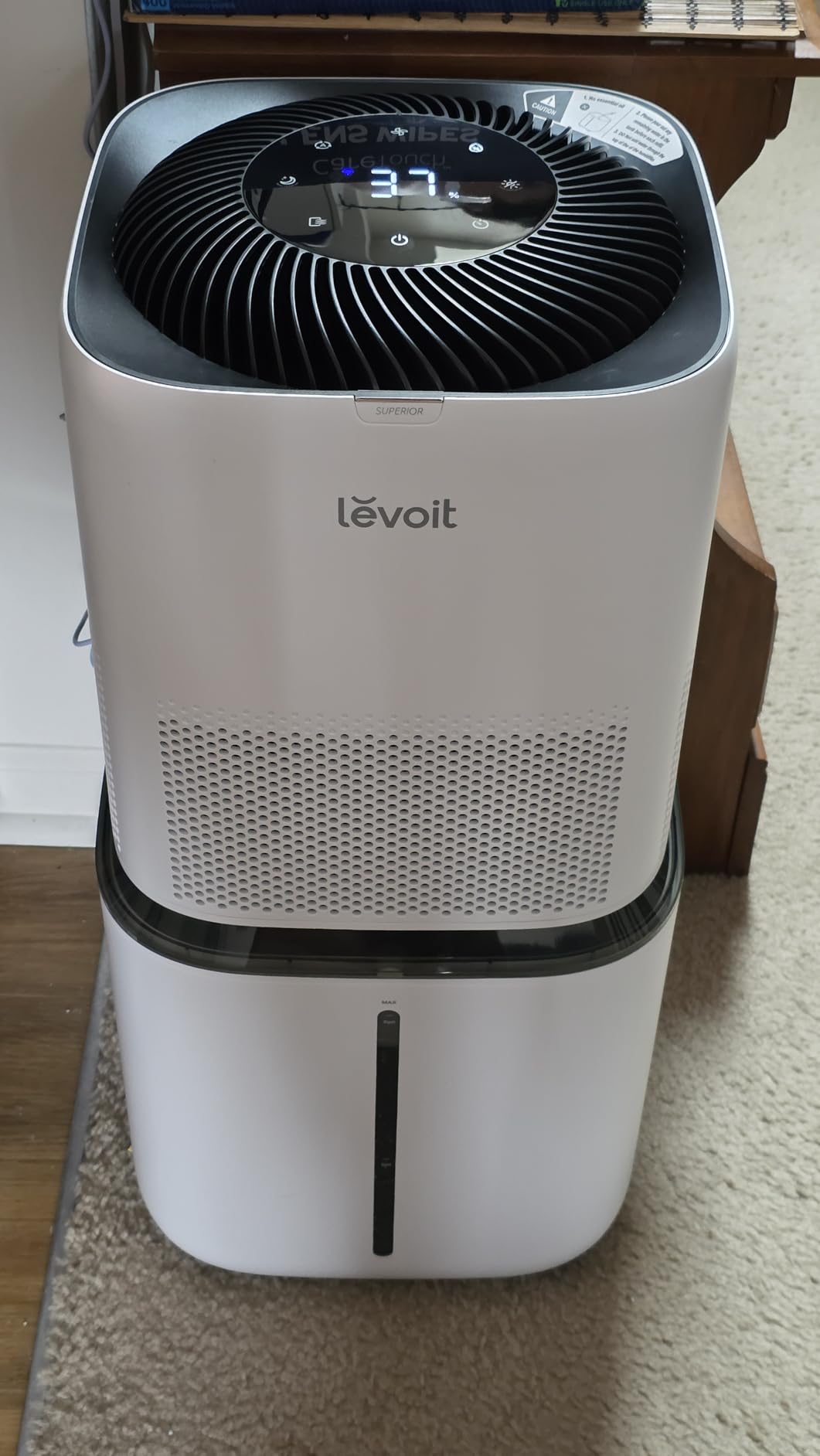
10. Levoit Superior 6000S: The Best App-Controlled Experience
Levoit Evaporative Humidifiers for Home Whole House, 23L Superior 6000S
23 liter / 6 gallon tank
Up to 3000 sq ft
1,500 mL per hour output
VeSync app control
Pros
- 23L tank runs up to 72 hours on the low setting
- Evaporative wick design works with tap water and no white dust
- Quiet enough for a bedroom or home office
- App and voice assistant control with two smart auto modes
Cons
- Wick filters still need replacing every few months
- Tap water impurities can discolor the inside of the tank
- Freestanding design does not connect to HVAC ductwork
This is the pick for anyone who wants the control experience of a smart home appliance without ductwork. The Superior 6000S pairs a 23-liter, or 6-gallon, tank with output of 1,500 mL per hour for rooms up to 3,000 square feet, and its enhanced humidity sensor is accurate to plus or minus 5%. Two smart auto modes work through the VeSync app with voice assistant support, so you can check the reading from the couch and let it hold a target on its own.
The evaporative wick design is tap-water compatible and produces no white dust and no wet surfaces, which matters in a room with wood furniture or hardwood floors. Runtime reaches 72 hours on the low fan speed, so refills are infrequent, and a detachable pump makes deep cleaning far less unpleasant than it usually is.
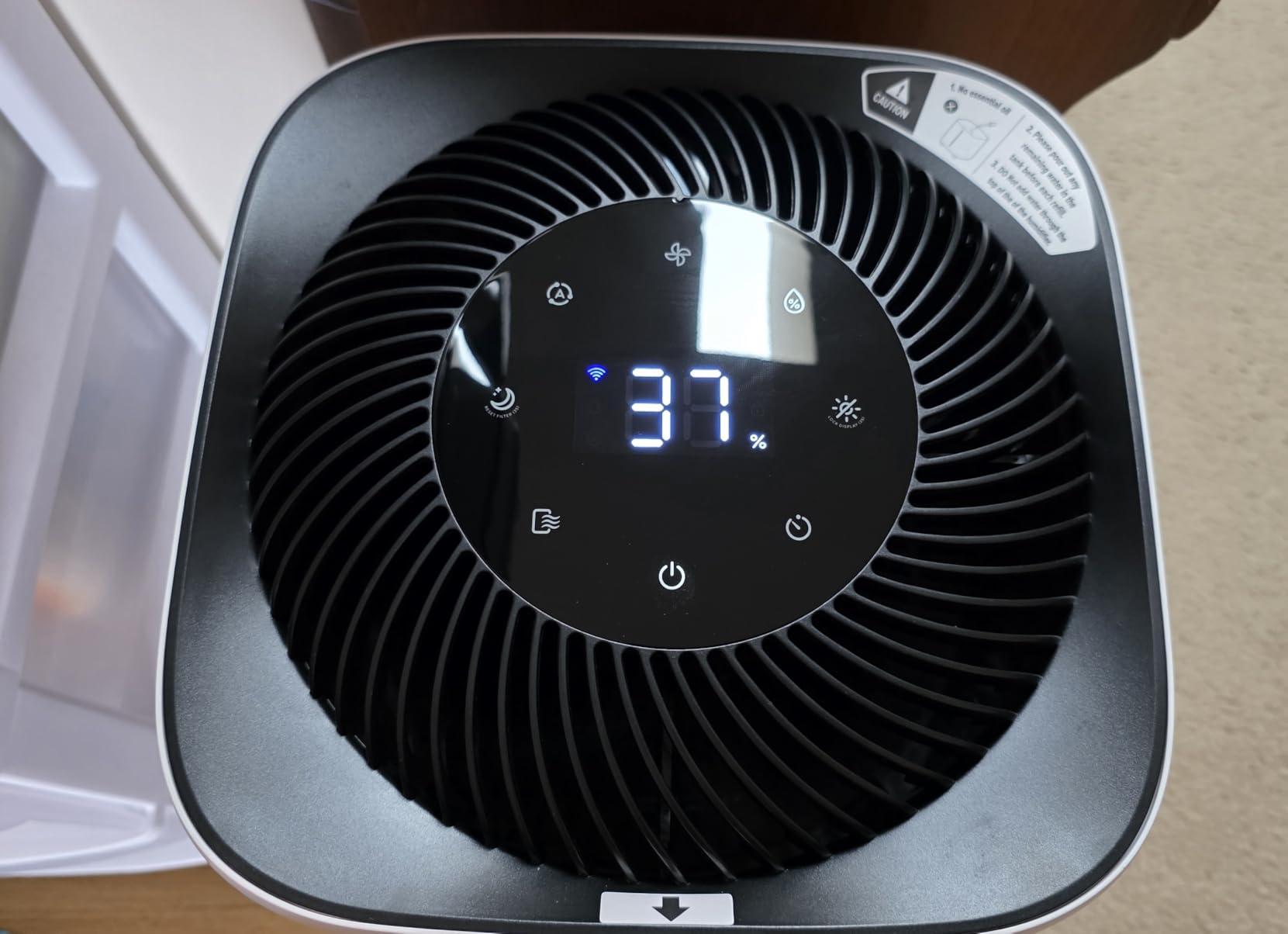
Two honest limitations. Wick filters still need replacing every few months, typically a three-to-six-month life, so it is not maintenance-free. And impurities in tap water can cause residue or discoloration inside the tank, which is a cosmetic issue rather than a functional one but worth knowing about. It is also freestanding, so it humidifies open space rather than connected ductwork.
Does app control actually help a central humidifier?
For a portable or console unit, yes, and more than most buyers expect. A whole-house ducted humidifier is normally controlled by a humidistat on a wall and has no connectivity at all, so a smart freestanding model gives you something no ducted pick here can: a live reading and remote adjustment from your phone.
That is the real reason to choose it. It is not a replacement for ducted whole-house coverage in a large home, but for a 1,500 to 3,000 square foot space it can be the entire system, and it is the easiest one to monitor and tune.
Who should skip the Levoit Superior 6000S?
Skip it if you need every room on a separate floor humidified through connected ductwork, because it will not tie into your furnace. Also skip it if tank discoloration would bother you and you cannot get filtered or distilled water to it easily.
For a home where moisture reaches the upper floors through the duct system, the ducted evaporative models in this roundup are the right category. For the largest self-contained coverage claim, the AIRCARE 14416A is rated higher, though without any app control.
11. AprilAire 500M with Model 5843 Install Kit: The Best DIY Package
AprilAire 500M 12-gal. Whole-House Small Bypass Evaporative Humidifier with Manual Control for up to 3,600 sq. ft. + AprilAire Model 5843 Humidifier Installation Kit
12 gallons per day
Up to 3600 sq ft
Bundled Model 5843 install kit
5-year warranty
Pros
- Kit bundles nearly all the parts needed for a ducted install
- Saves a hardware store run and a second trip
- Water panel design limits mineral carryover
- AprilAire phone support helped an owner through a wiring fix
Cons
- Written instructions are thin and assume prior HVAC knowledge
- Short two-foot flex duct and drain tubing are criticized
- Included saddle valve is widely seen as a leak risk
- May need extra wire and fittings beyond the kit
This bundle exists for one reason: to make a furnace install achievable without a contractor. The kit includes a six-inch round duct collar, two feet of bypass flex duct, 25 feet of quarter-inch water supply tubing, 10 feet of half-inch drain tubing, a hose clamp, a current sensing relay, ten feet of 18/2 thermostat wire, mounting screws, and wire connectors. That is most of a standard install in a single box.
The humidifier itself is the manual-control counterpart to the automatic model, rated at 12 gallons per day for homes up to 3,600 square feet, with a Model 4655 manual humidistat that includes an onboard relative humidity sensor. Owners consistently report a clear comfort difference after installation and appreciation for skipping a costly professional call.
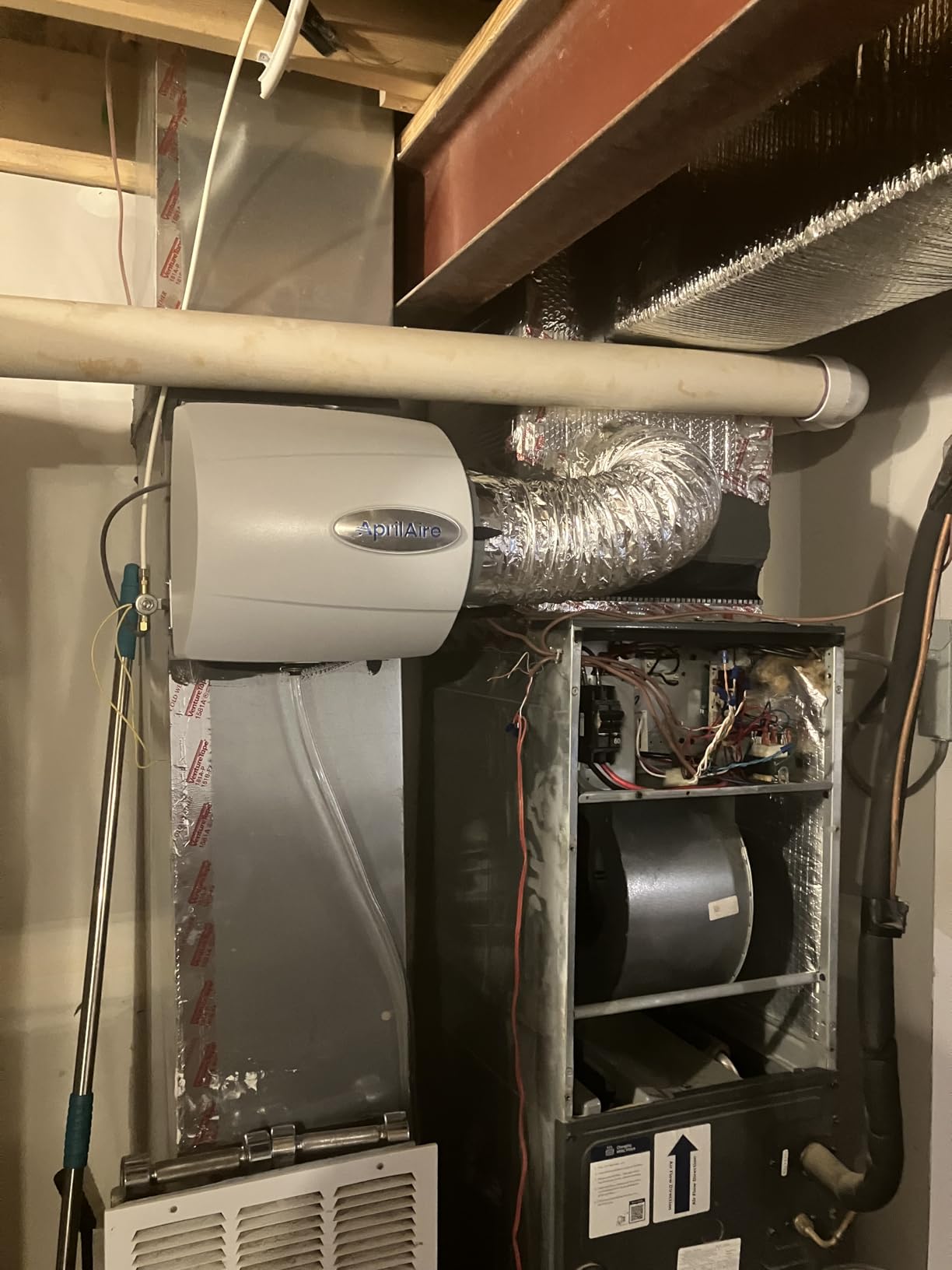
Be realistic about the completeness, though. Several kit components get criticized: the two feet of flex duct is short, the drain tubing length is limited, and the included saddle valve is widely regarded as a leak risk, which is a specific and well-known criticism in plumbing circles. The written instructions are also terse and assume you already understand HVAC wiring. A minority of owners report no humidity increase at all even after professional installation, and the unit does discharge noticeably more water than some of its predecessors.
Is a self-installed ducted humidifier worth the savings?
If you already work with sheet metal and low-voltage wiring, the savings are substantial and the parts list is the best-organized one available. If you have never cut a duct or bent a water line, this is not the project to learn on, because a leak inside a plenum is a much bigger problem than the install fee you avoided.
Note the warranty angle too. The automatic AprilAire in this roundup is a five-year manufacturer warranty that self-installation voids. This bundle is designed for self-install, so the coverage terms are worth reading before you start.
Who should skip the AprilAire 500M kit?
Skip it if this is your first ducted project, or if you are installing on a rented property. Also skip it if you have hard water and do not want to deal with annual panel replacement and drain maintenance, since the genuine AprilAire 10 water panel is the intended consumable here.
If you want automatic control rather than a manual set point, the automatic AprilAire at the top of this roundup is the same output class with dual-sensor logic. If you want to avoid the kit’s short tubing and valve entirely, buying the humidifier and sourcing parts separately gives you full control over component quality.
12. GeneralAire 3200M: The Lightest Furnace-Mount Bypass
GeneralAire Model 3200M Evaporative Humidifier With Manual Humidistat
12 gallons per day
Up to 3200 sq ft
7 pounds
5-year warranty from installation
Pros
- Lightest furnace-mount model here at 7 pounds
- Compact body makes furnace mounting easier
- Flow-through evaporative design is simple to service
- 5-year warranty runs from date of installation
Cons
- Manual humidistat offers little automation
- Wick pad consumables replaced on a seasonal schedule
- 3200 sq ft coverage assumes proper duct sizing and airflow
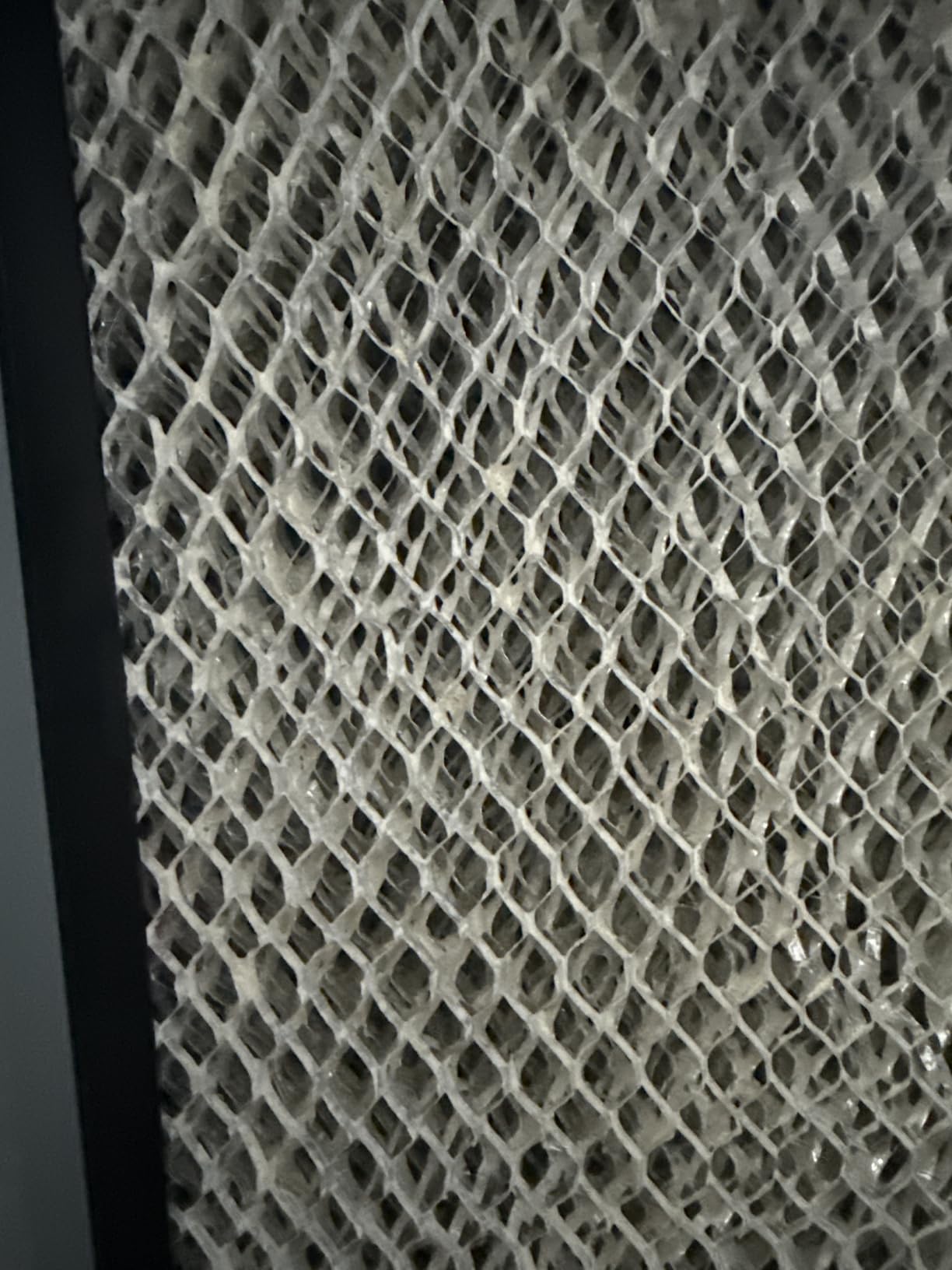
At seven pounds, the 3200M is the lightest furnace-mount humidifier in this roundup, and in a tight furnace cabinet that is not a small detail. A flow-through evaporative bypass design rated at 12 gallons per day, it covers homes up to 3,200 square feet and includes an MHX3C manual humidistat. It is the simplest possible way to add whole-home humidity to an existing system, and the warranty runs five years from date of installation rather than from the purchase date.
Owners frame it as a straightforward, low-effort addition rather than a feature upgrade. Installation is described as easy, maintenance is described as easy, and the honest reason most people buy it is that it is the least expensive way to get a ducted system running at all.
The trade-offs are the ones you would expect from the simplest design in the group. Control is a manual humidistat, so you set the target and check it. Wick pads are consumables on a seasonal schedule. And the 3,200 square feet coverage figure assumes proper duct sizing and adequate furnace airflow, which in a tight, leaky system is rarely the whole story.
With a 4.0 rating across 59 reviews, including a quarter of four-star ratings, the distribution is flatter than most models here. That reads as a product that does its job without exceeding expectations, which is exactly what a basic bypass unit should do.
When is the simplest model the correct model?
When the furnace cabinet is cramped, when you are replacing an aging unit, and when you do not want to think about the system once it is running. Seven pounds and a compact footprint mean you can install it in a tight service space without rearranging the cabinet.
It is also the pick to make if your winter humidity problem is moderate rather than severe. In a climate where an evaporative pad at 12 gallons per day keeps up, adding steam-level output is capacity you pay for and never use.
Who should skip the GeneralAire 3200M?
Skip it if you want any automation, since a manual humidistat means you are the thermostat. Skip it if you have hard water and no appetite for seasonal pad replacement, and skip it if you rent.
For a home where a compact body is not the constraint, the higher-output evaporative models earlier in this roundup give you more capacity and, in two cases, automatic control with a five-year warranty. For severe dry winters, the steam model earlier on remains the only genuine step up in moisture delivery.
How to Size a Whole House Humidifier for Your Home
Start with conditioned square footage, not total square footage. Measure the finished area the furnace actually serves, then account for ceiling height. A home with vaulted ceilings pulls more air than the floor plan suggests, and a two-story home is usually better served by a larger unit or a second zone than by doubling up on one oversized model.
Next, identify your heat source. A gas or oil furnace gives you plenty of warm supply air to drive evaporation, which favors fan-powered and bypass units. A heat pump or an air handler with a low-temperature coil gives you less, which favors higher-output models like the 17-gallon-per-day options. A ductless system gives you nothing to work with, and a portable evaporative console is the only realistic path.
Finally, match output to climate, not just size. A 12-gallon-per-day unit covers a 3,600 square foot home in a moderately dry winter and will struggle in a genuinely arid one with a leaky envelope. Our broader guides on air circulation and ductwork balance explain why airflow problems so often masquerade as humidity problems.
Steam vs Evaporative vs Bypass: Which Type Wins Your Winter?
Fan-powered evaporative units sit in the sweet spot for most homes. They use the furnace blower to push warm air across a wetted water panel, they add no minerals to the air, and their running cost is effectively nothing. They do depend on the furnace calling for heat, and their output falls as the water panel ages.
Bypass units are evaporative units that let the furnace airflow pass over the pad without a dedicated fan. They are quieter, smaller, and cheaper, but they only add moisture while the furnace is already running. In a house that cycles off for hours between set points, that is a real limitation.
Steam units bypass the airflow question entirely by boiling water and injecting vapor, so they keep working in extreme cold and in a leaky house. They cost real electricity, they need an annual canister, and they require a hardwired circuit. If your house is tight and moderately dry, that money buys nothing you can measure.
The tiebreaker is your envelope. Well-sealed and moderately dry points to evaporative. Leaky or genuinely arid points to steam. Everything in between is a fan-powered evaporative model, which is why six of the twelve picks in this roundup sit in that category.
Humidistat, Water Supply and Drainage Details That Matter
A humidistat is a humidity-sensing switch, and it is what keeps a humidifier from becoming a mold problem. Set it for 35 to 40% in winter and the unit stops calling for moisture once the air reaches target. Mount it on a wall in the living area you actually care about, typically on an interior wall about five feet off the floor, away from supply registers, exterior walls, and any window that will get condensation.
Plumbing is where most surprises live. Every ducted unit here needs a water supply line with a shutoff valve and a drain line. If you have a floor drain within reach, the install is simpler. If not, you need a drainless design that recirculates water through the pan, which works but means you are flushing mineral-laden water regularly or you will eventually have a blocked line.
Ask any contractor to itemize the install. A credible quote separates the humidifier, the water line run, the drain work, any sheet-metal modification, and electrical. If those lines are merged into a single number, you have no way to tell whether you are being quoted for a simple bypass mount or a full plenum rebuild.
Hard Water, Mineral Scale and the Distilled Water Decision
Hard water is the most common complaint across every category in this roundup. Evaporative wick pads and water panels salt over, steam canisters scale internally, and blocked drain lines flood plenums. None of this is a defect; it is chemistry.
Owner experience on HVAC forums is consistent and direct: using distilled water eliminates the scaling problem almost entirely. The catch is volume. A ducted evaporative unit can evaporate a surprising amount of water over a season, and buying and hauling distilled water in quantity is a chore. Distilled or demineralized water is far more practical for a console unit where you are already carrying water indoors by hand.
For a ducted unit with a drain, the middle path is a yearly descaling of the water panel or pad, an annual check of the drain line, and a replacement interval you actually keep to. For steam, the canister is a sealed part, so replacing it on schedule is simpler than trying to descale it.
Total Cost of Ownership: Purchase, Install, Pads and Energy
Equipment price is the smallest line in a five-year budget. The larger costs are installation, consumables, and service. A ducted install involves sheet-metal modification, a water line, a drain, and low-voltage wiring, and that labor typically exceeds the unit cost several times over. This is the number to budget when comparing a ducted model against a self-contained one that needs nothing but an outlet.
Consumables follow the type. Evaporative units need a water panel or wick replaced once or twice per season, which is a modest but permanent annual line. Steam units need a canister roughly yearly, which is more. Any unit with a drain line needs that line cleared or flushed every year in hard water, and skipping that is how a small drip becomes a flooded cabinet.
Energy runs the other direction. Evaporative ducted models draw 7 to 200 watts and are essentially free to run. Self-contained consoles draw 100 to 1,000 watts, which is still minor. Electrode steam is the only category here with a monthly electricity cost worth watching, and it should be evaluated against how much of your winter energy bill the humidifier represents before you commit.
If summer moisture is part of your problem too, a separate whole-house dehumidifier handles the warm humid months on the same ductwork, which makes the two systems a natural seasonal pair rather than a conflict.
Do You Actually Need a Whole-House Humidifier?
Sometimes a room unit is genuinely enough, and buying ducted equipment you do not need is expensive. If your home is under about 1,500 square feet, if only a bedroom or a home office feels dry, and if a portable unit can sit near an outlet, start there. The self-contained evaporative models in this roundup cover up to 3,700 square feet open, so one may genuinely be all you need.
Move to ducted equipment when the whole house reads low on a hygrometer, when you have hardwood floors and wood furniture that are cracking, or when you have already tried a portable unit and the dry air simply moves. Two floors, many closed doors, or persistent nosebleeds and sinus irritation are all signs the problem is house-wide rather than room-wide.
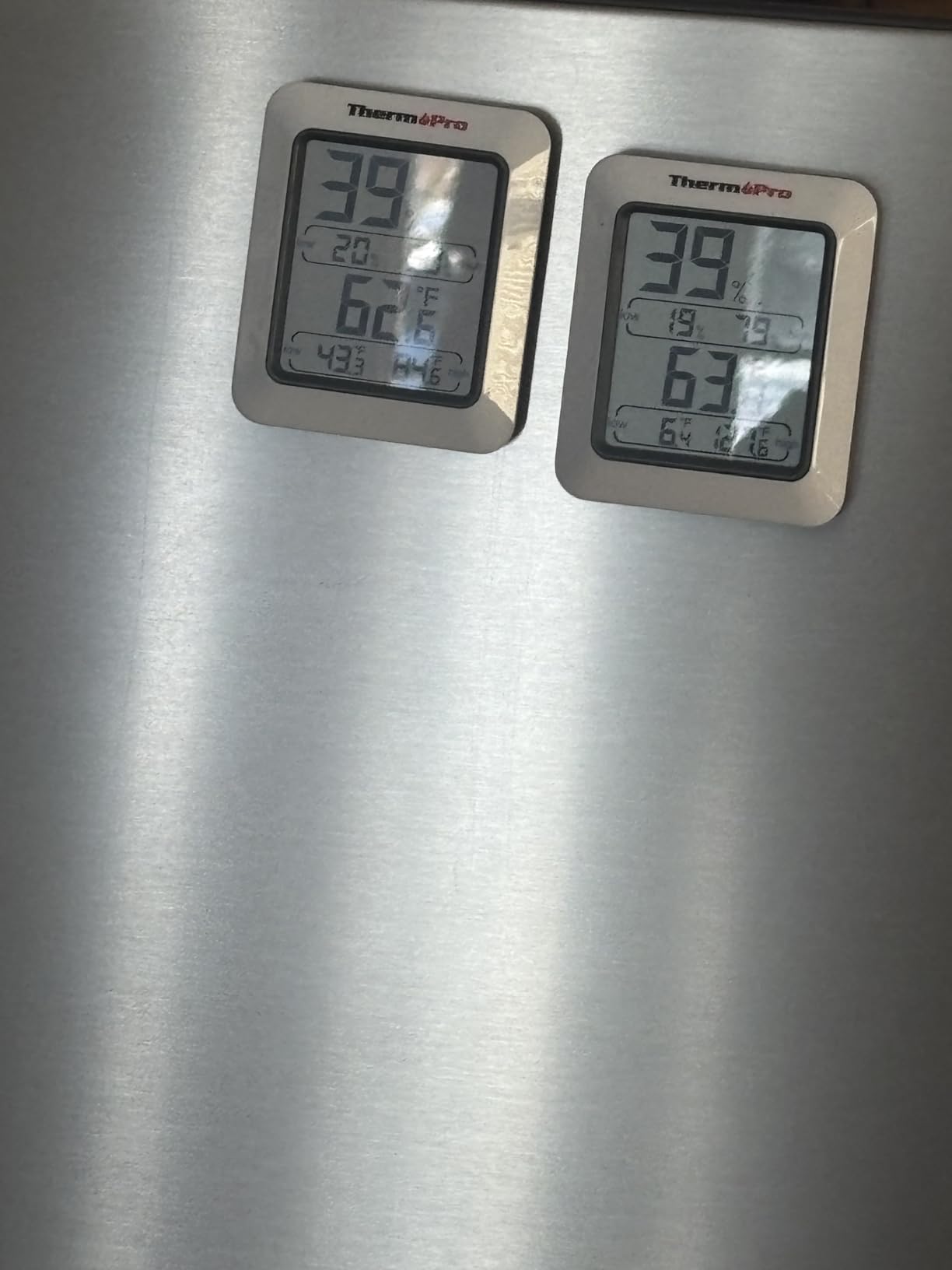
Before buying anything, measure. Put a cheap hygrometer on a wall at living-room height for a week during your coldest month and write down the low reading. That number, plus your conditioned square footage, is everything you need to size correctly.
Frequently Asked Questions
What is the best type of humidifier for a whole house?
For most homes, a fan-powered evaporative humidifier tied into the furnace or air handler is the best type. It wets a water panel, lets warm supply air evaporate the moisture, runs on minimal electricity, and adds no minerals to the air. Electrode steam units deliver more moisture and work in extreme cold but cost real electricity and need an annual canister. Bypass units add moisture only while the furnace is running.
Is a steam or bypass humidifier better?
It depends on how tight your house is. Bypass evaporative units are quiet, inexpensive, and a good match for gas or oil furnaces, but they only add moisture while the furnace is already calling for heat. Steam units work independently of fan runtime, so they keep up in a leaky older home or a severely arid climate. In a well-sealed, moderately dry home, bypass is the better value.
What humidity level should my house be in winter?
Aim for 30 to 40 percent relative humidity during a dry winter. The EPA recommends staying between 30 and 50 percent overall. Below 30 percent, static electricity gets aggressive, skin and sinuses suffer, and hardwood floors and furniture shrink and crack. Above 50 percent, condensation forms on cold windows and mold follows.
Why is my room so dry even with a humidifier?
Four causes account for most cases. The unit may be undersized for the conditioned square footage it serves. The humidistat may be mounted badly, such as near a cold exterior wall or a supply register, so it reads wrong. A leaky duct system may be losing conditioned air faster than the humidifier can add moisture. And a saturated water panel or wick loses most of its output until it is replaced.
Is it good to sleep with a humidifier if you have a cold?
Adding moisture to a dry bedroom can ease an irritated throat and congested sinuses, and the whole point of winter humidification is comfort and comfort helps you rest. Keep the target at 30 to 40 percent rather than running it all night on high, and clean the unit on schedule, because a dirty water panel or reservoir is a place bacteria can grow.
The Verdict: Which Whole House Humidifier Wins Your Dry Winter
The AprilAire 500 is the pick we recommend to most people reading this in 2026. Its dual sensors compensate for outdoor temperature automatically, it holds 30-40% relative humidity without condensation on windows, and it runs silently at 15 watts. If you can get past the install, the five-year warranty and the service reminders on the digital panel make it the least demanding unit to own.
Go with the AprilAire 600M if you have a large home and want maximum evaporative output without automatic control. Choose an AIRCARE console if you need something working tonight with no duct modification, and the 831000 covers up to 2,700 square feet with the digital humidistat. Reach for steam only when your house leaks badly or your climate is severely arid.
Whichever one you choose, measure your winter humidity first, set the humidistat to 35-40%, and remember to turn the system off or reduce its set point in spring. That last habit is the difference between a humidifier that protects your home and one that causes the mold it was meant to prevent. Last updated for 2026.