
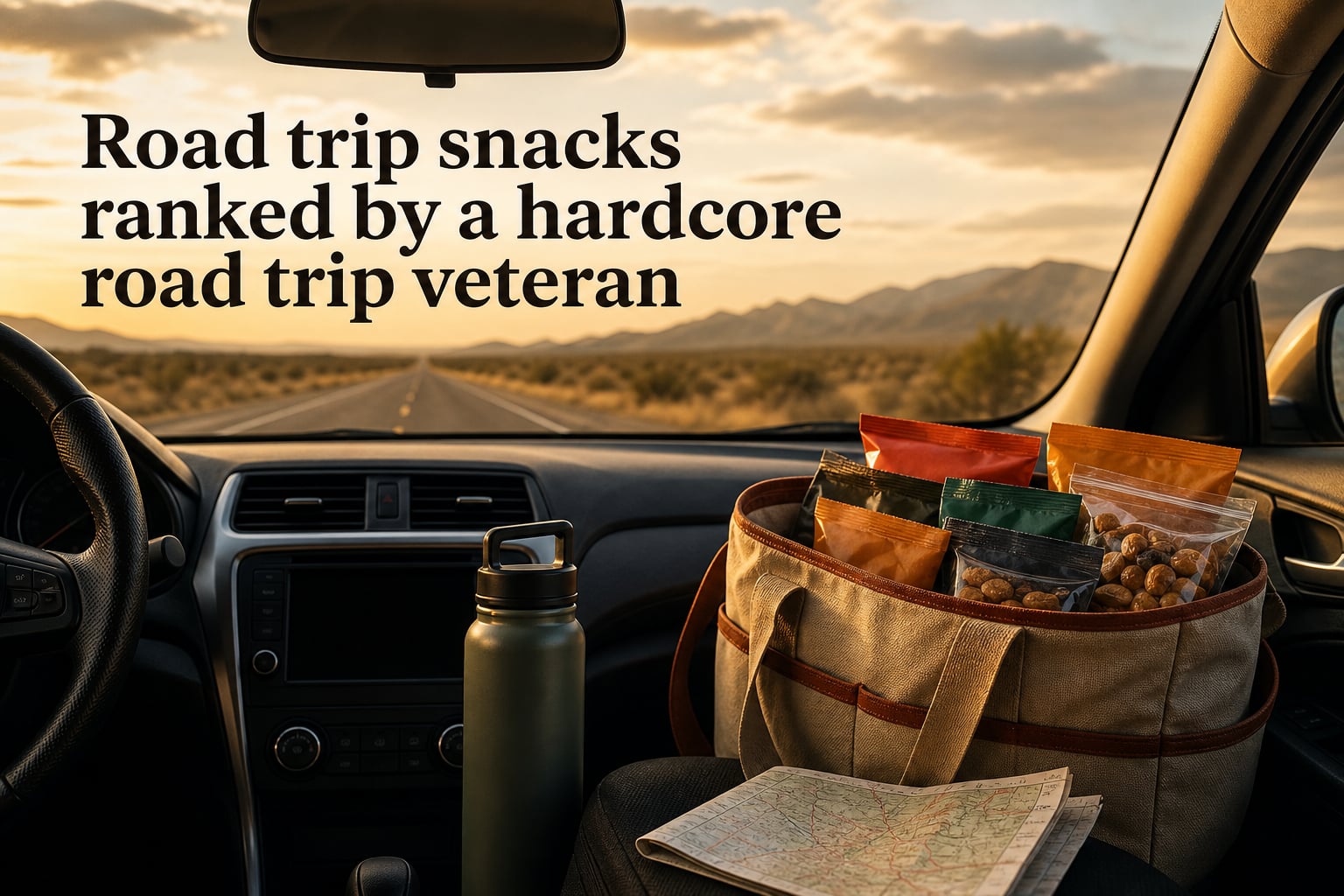
Road trip snacks are not just food you happen to eat in a car. The good ones stay edible in a warm cabin, fit in reach without taking over the passenger seat, and do not leave the driver wearing the evidence.
This ranking treats a snack like road equipment. I score road trip food on four things: how filling it is, how little mess it makes, whether it survives without refrigeration, and whether you can handle it without taking attention from the road.
That last point matters most. A snack can taste great at home and still be a poor travel snack if it melts, crumbles, has a strong smell, or needs two hands and a napkin rescue.
The veteran rule: Pack food that you would still want after six hours in the car, not just food that looks good on the kitchen counter. Bring a mix of protein, something crunchy, a treat, and a backup that can live in the glove box.
Table of Contents
The number one road trip snack is a protein-and-nut trail mix.
A protein-and-nut trail mix is my number-one pick because it is shelf-stable, filling, portionable, and easy to eat in small handfuls at a stop. The best version has nuts, seeds, a little dried fruit, and only a modest amount of chocolate if the car will be hot.
It is not glamorous, but it prevents the familiar long-drive problem: buying a huge sweet snack when you are tired, then feeling hungry again before the next exit. Make a mix that fits your diet, or buy single portions so the whole bag does not become the serving size.
The S tier is for snacks that earn permanent space in the car.
- Protein-and-nut trail mix: Best all-around balance of staying power, portability, and shelf life.
- Beef or turkey jerky: Protein-packed and durable for long drives; choose a resealable bag and check sodium content if that is a concern.
- Peanut butter cracker sandwiches: Compact, familiar, and much more satisfying than plain crackers.
These three answer most road-trip emergencies. Road warriors in forum discussions repeatedly mention jerky, nuts, and peanut butter crackers because they can sit in a bag for hours and still feel like actual food.
Road trip snacks rank best when they pass four real-car tests.
The ranking below is not a nutrition contest and not a list of fancy travel snacks. It is a practical order for a solo road trip, family road trips, and long highway stretches where the next decent stop may be farther away than expected.
1. Protein-and-nut trail mix belongs in S tier because it covers the basics.
Trail mix wins because it is flexible. Almonds, peanuts, cashews, pumpkin seeds, dried fruit, and a few pretzels give you fat, protein, crunch, and a sweet note without relying on a cooler.
Keep it in a sturdy container or pre-portioned bags rather than a loose family-size pouch. If you add chocolate, use it first or keep it in the cooler; melted chocolate turns a smart car snack into a sticky cleanup job.
2. Jerky belongs in S tier because it handles the longest drives.
Jerky is one of the best snacks for road trips when a meal is still a long way off. It travels well, takes no preparation, and gives a tired driver something savory instead of another sugar hit.
The tradeoff is salt and scent. Open the bag at a stop if anyone in the car dislikes the smell, bring water alongside it, and do not make jerky your only food for the day.
3. Peanut butter crackers belong in S tier because they are simple and satisfying.
Peanut butter cracker sandwiches have the kind of reliable, low-drama appeal that earns a high rank. They are easy road trip snacks for adults and kids who want something more substantial than candy.
They can shed a few crumbs, so they are better for a parked break than for the driver in traffic. A small container under the serving hand catches more than you would think.
4. Roasted chickpeas and broad beans belong in A tier because they bring crunch with protein.
For people tired of nuts or avoiding them, roasted chickpeas or broad beans are a strong substitute. They are shelf-stable, crunchy, and often sold in individual packs that make portion control easy.
They do create dry little pieces, so avoid pouring a full bag into your palm while steering. Put a serving in a cup at the rest stop, close the bag, and keep the rest for later.
5. Whole fruit belongs in A tier when you choose sturdy fruit.
Apples, oranges, and firm pears travel better than delicate berries or ripe bananas. They bring freshness to a car full of salty highway snacks and do not need refrigeration for a normal day of travel.
Bananas are the exception worth thinking about. Forums often flag them as a hot-car disappointment: they bruise, ripen fast, and can become an unwelcome smell if forgotten.
6. Cheese crackers and pretzels belong in A tier because they are dependable, not perfect.
Pretzels, cheese crackers, and similar baked snacks are easy to find at nearly any gas station or truck stop. They are cupholder-friendly, dry, and useful when passengers want something familiar.
They rank below protein options because they rarely keep hunger away for long. Pair them with jerky, nuts, or a shelf-stable milk box for a more complete stop.
7. Non-chocolate candy belongs in B tier because it is a morale snack.
Twizzlers, Skittles, Hot Tamales, fruit snacks, and similar non-chocolate candy can survive warmer conditions better than a chocolate bar. A small sweet treat also breaks up a monotonous stretch of road.
Call this a road trip treat, not fuel. Candy is best after you have eaten something with protein or fiber, especially when you are driving late and want to avoid a sharp rise-and-drop in energy.
8. Popcorn belongs in B tier because it is light but crumb-prone.
Popcorn offers a lot of volume and a satisfying salty crunch. It is a fine passenger snack, and a sealed bag is easy to store in the door pocket.
It is not a top pick for the driver. Kernels and fragments spread fast, and a single dropped piece can become a distracting search at the worst time.
9. Regional chips belong in B tier because local food is part of the trip.
Regional chips can be one of the pleasures of a road trip. Road-trip regulars specifically value finding local varieties such as Utz, Herr’s, Wise, Snyder’s, Martin’s, or Middleswarth when passing through a new area.
Buy the smaller bag, share it at a scenic stop, and enjoy the detour from your usual aisle. Chips are not filling enough to carry a long drive by themselves, and the crumbs keep them out of A tier.
10. Frozen bars and soft, melty foods belong in C tier unless you have a cooler.
A frozen candy bar can be fun right after a stop, and some travelers prefer a frozen Snickers-style bar to an ice cream version. But it has a short window before it becomes sticky, so it is a treat for passengers or a parked car, not a driving staple.
Soft pastries, frosted snacks, dips, and open containers get the same C-tier treatment. They may taste good, but their cleanup cost is too high when the road is the setting.
Mess-free rule: If a snack needs a spoon, a wet wipe, or both hands to eat, save it for a planned stop. No snack is worth diverting focus from driving.
Healthy road trip snacks without refrigeration are the easiest choices to pack.
Healthy road trip snacks do not need to be bland, refrigerated, or expensive to be useful. Build around nuts or seeds, jerky, roasted chickpeas, whole fruit, whole-grain crackers, and lower-sugar dried fruit.
For an easy no-cooler kit, pack one protein item, one fruit item, one crunchy item, and one small treat per person. That mix gives you choices without filling the car with food that all tastes the same.
Road trip snacks that are not messy are dry, resealable, and bite-sized.
The cleanest options are jerky strips, single-serve nut packs, peanut butter crackers, fruit leather, stringable candy without chocolate, roasted chickpeas, and peeled oranges eaten at a stop. Apples also work well if you bring a small bag for the core.
Skip powdered chips, crumbly cookies, drippy sandwiches, greasy fried foods, and anything that melts onto upholstery. A snack can be delicious and still belong on a picnic table rather than in a moving vehicle.
Road trip food stays useful when you pack it like a small system.
Put the next few hours of snacks in one reachable tote, not scattered across every seat and door. Keep the backup food farther back so you do not accidentally eat the whole trip’s supply before lunch.
Step 1: Portion snacks before you leave.
Pre-portioning keeps a hungry passenger from passing around an open bag and gives everyone a clear share. It also makes it easier to see when the food supply is actually running low.
Step 2: Separate dry food from cooler food.
A small cooler is great for cheese, chilled fruit, yogurt, and drinks, but do not make the whole snack plan depend on it. Pack plenty of shelf-stable food in case ice melts, the cooler is buried, or you take a longer route than planned.
Step 3: Put a trash bag within reach.
Use a small lined container or resealable bag for wrappers, peels, and napkins. Empty it at every fuel or rest stop instead of letting rubbish drift into the footwells.
Step 4: Use gas station snacks as a refill, not the whole plan.
Gas station snacks and truck stop snacks are useful for topping up water, fruit, jerky, nuts, crackers, or a regional chip you cannot get at home. They are much less useful when you arrive starving with no plan and choose only whatever is closest to the register.
Step 5: Stop before eating anything that takes attention.
One-handed snacks are convenient, but convenience is not permission to eat while driving if the food needs opening, peeling, or cleanup. Let the passenger handle it, or pull over for a short break.
These road trip snack questions have simple practical answers.
What is the number one road trip snack?
Protein-and-nut trail mix is the number one road trip snack because it is shelf-stable, filling, easy to portion, and less messy than many alternatives. Choose a mix with nuts, seeds, dried fruit, and little or no chocolate for hot-car travel.
What is the best food to eat on a road trip?
The best road trip food pairs protein with a simple carbohydrate or fruit. Jerky with crackers, nuts with dried fruit, peanut butter crackers, and roasted chickpeas are practical choices that travel well and help hunger stay manageable.
What road trip snacks will not make a mess?
Jerky, individual nut packs, peanut butter crackers, fruit leather, non-chocolate candy, and roasted chickpeas are among the least messy options. Keep a small trash bag nearby and choose resealable packages to reduce loose wrappers and crumbs.
How should I pack snacks for a road trip?
Pack small servings for the next few hours in a reachable tote, store backup food separately, and keep cooler items apart from shelf-stable snacks. Bring water, napkins, and a dedicated trash bag, then restock at planned stops.
The best road trip snacks are the ones you will still want near the final exit.
For 2026, start with trail mix, jerky, and peanut butter crackers, then add fruit, a crunchy favorite, and one road trip treat. That gives you fuel, variety, and enough shelf-stable backup to make the next stop a choice rather than a rescue mission.
The ranking is deliberately practical: S-tier snacks fill you up and stay contained, while lower-tier snacks are better shared during breaks. Pack with that difference in mind, keep water and trash close, and let your road trip snacks make the miles easier rather than messier.