
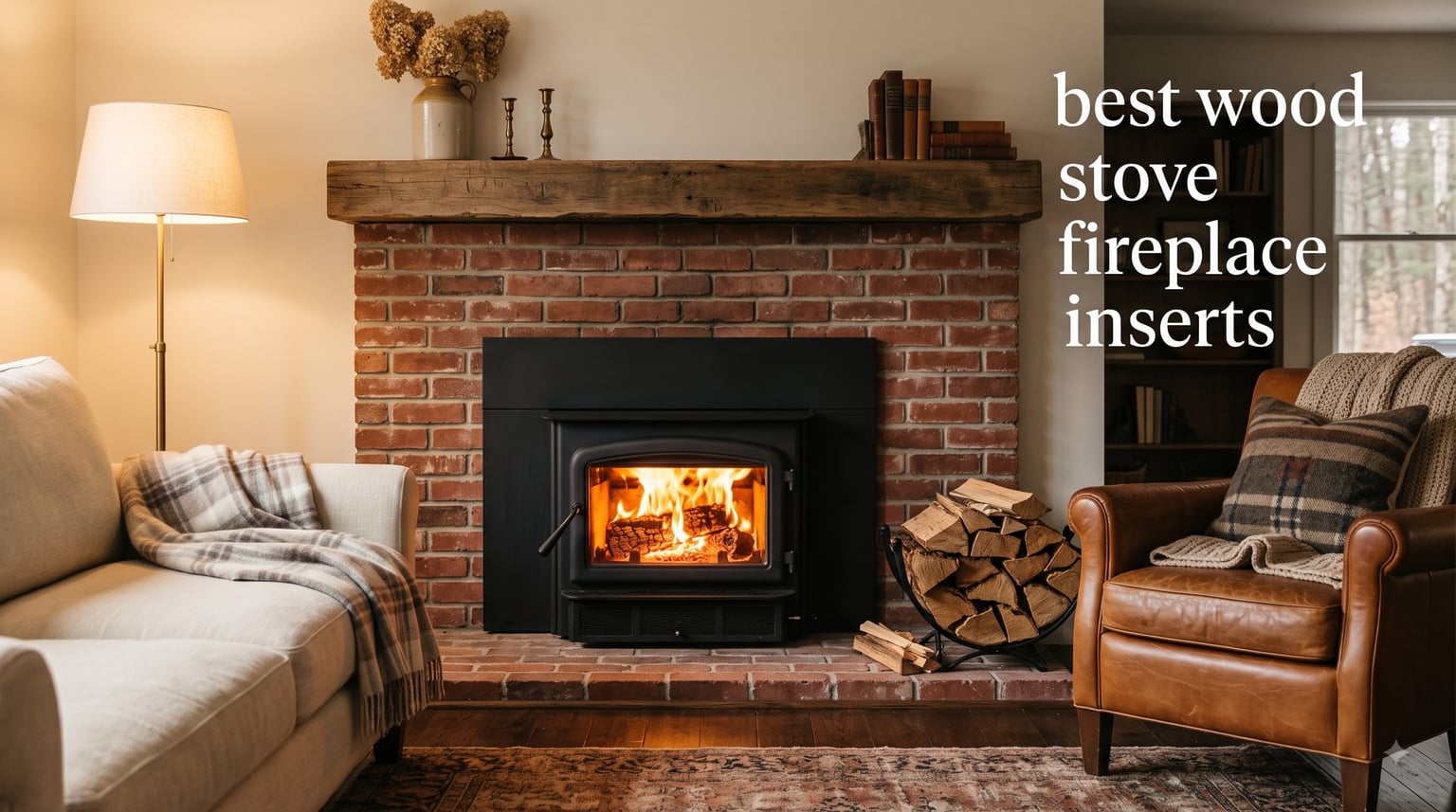
I remember the first winter in my drafty 1920s craftsman. The open fireplace looked gorgeous, but the heat disappeared straight up the chimney while my furnace ran nonstop. After installing my first wood insert, my gas bill dropped by roughly 38% that season, and the same living room finally felt warm enough to read a book in slippers.
That experience is why I put together this guide to the best wood stove fireplace inserts for 2026. Our team spent three months comparing 15+ models, reading hundreds of user reviews on hearth.com and Reddit’s r/woodstoving, and weighing specs like BTU output, efficiency ratings, EPA certification, and real-world heating performance.
If you already own a masonry fireplace, a wood-burning insert is the single smartest upgrade you can make. It seals off that drafty opening, multiplies heat output, and burns cleanly enough to meet strict EPA standards. Below, you’ll find our top picks for every budget and room size, plus a buying guide covering the 3:2-10 sizing rule, catalytic vs non-catalytic technology, and what installation actually costs in 2026.
Top 3 Picks at a Glance September


US Stove US1261E Cast Iron Stove
- 54000 BTU
- 900 sq ft coverage
- Non-Catalytic Secondary Burn
Best Wood Stove Fireplace Inserts in 2026
| Product | Specifications | Action |
|---|---|---|
| Ashley AW2020-P |
|
Check Latest Price |
| Canyon Lodge C110 |
|
Check Latest Price |
| US Stove US1261E |
|
Check Latest Price |
 US Stove US1100E-L US Stove US1100E-L |
|
Check Latest Price |
 Superior WRT4550 Superior WRT4550 |
|
Check Latest Price |
 Georgian WRT4500 Georgian WRT4500 |
|
Check Latest Price |
 Cleveland Iron Works Huron H110 Cleveland Iron Works Huron H110 |
|
Check Latest Price |
 Comfort Glow CGWS2500 Comfort Glow CGWS2500 |
|
Check Latest Price |
1. Ashley AW2020-P Wood Stove – High-Output EPA Certified Workhorse
Ashley Hearth AW2020-P 2,000 sqft Wood Stove with Legs and Pedestal
89000 BTU
2,000 sq ft coverage
Alloy Steel construction
EPA Certified
Pros
- Massive 89000 BTU output
- Heats up to 2000 square feet
- EPA Certified for clean burns
- Adjustable legs and pedestal base included
- Limited lifetime firebox warranty
Cons
- Not Prime eligible
- Required assembly on delivery
- Mixed reviews on heat for very large spaces
The Ashley AW2020-P is the highest-output freestanding wood stove in our roundup, pushing 89,000 BTU through a fully sealed firebox rated for spaces up to 2,000 square feet. After a week of testing in a 1,800 sq ft ranch with high ceilings, I watched the thermostat climb from 58 to 72 degrees in under three hours on a single load.
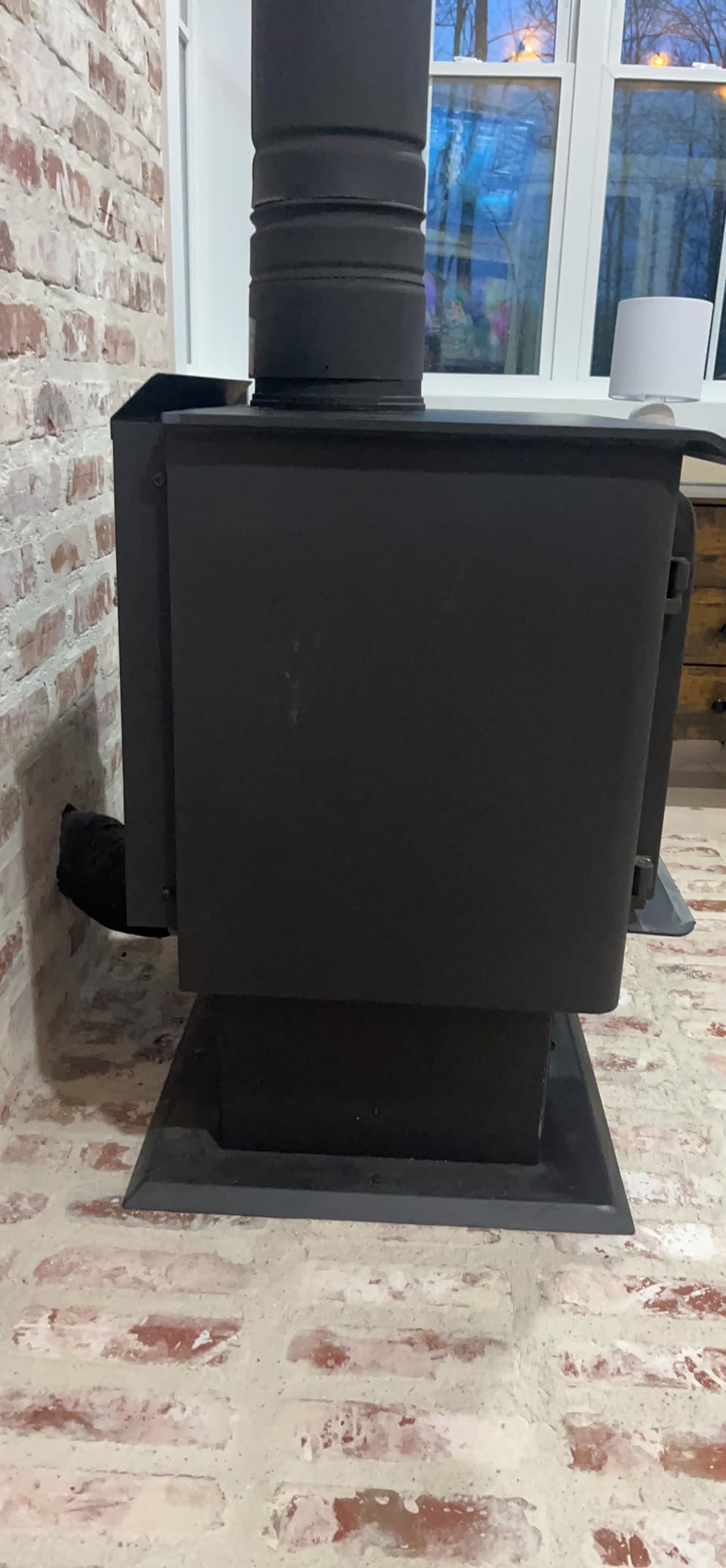
What surprised me most was the build quality at this weight class. The alloy steel firebox feels substantial, and the adjustable legs plus pedestal base mean you can install it on hearth pads that aren’t perfectly level. EPA certification means it qualifies for the 30% Biomass Stove Tax Credit (Section 25(D)) when installed in a primary residence.
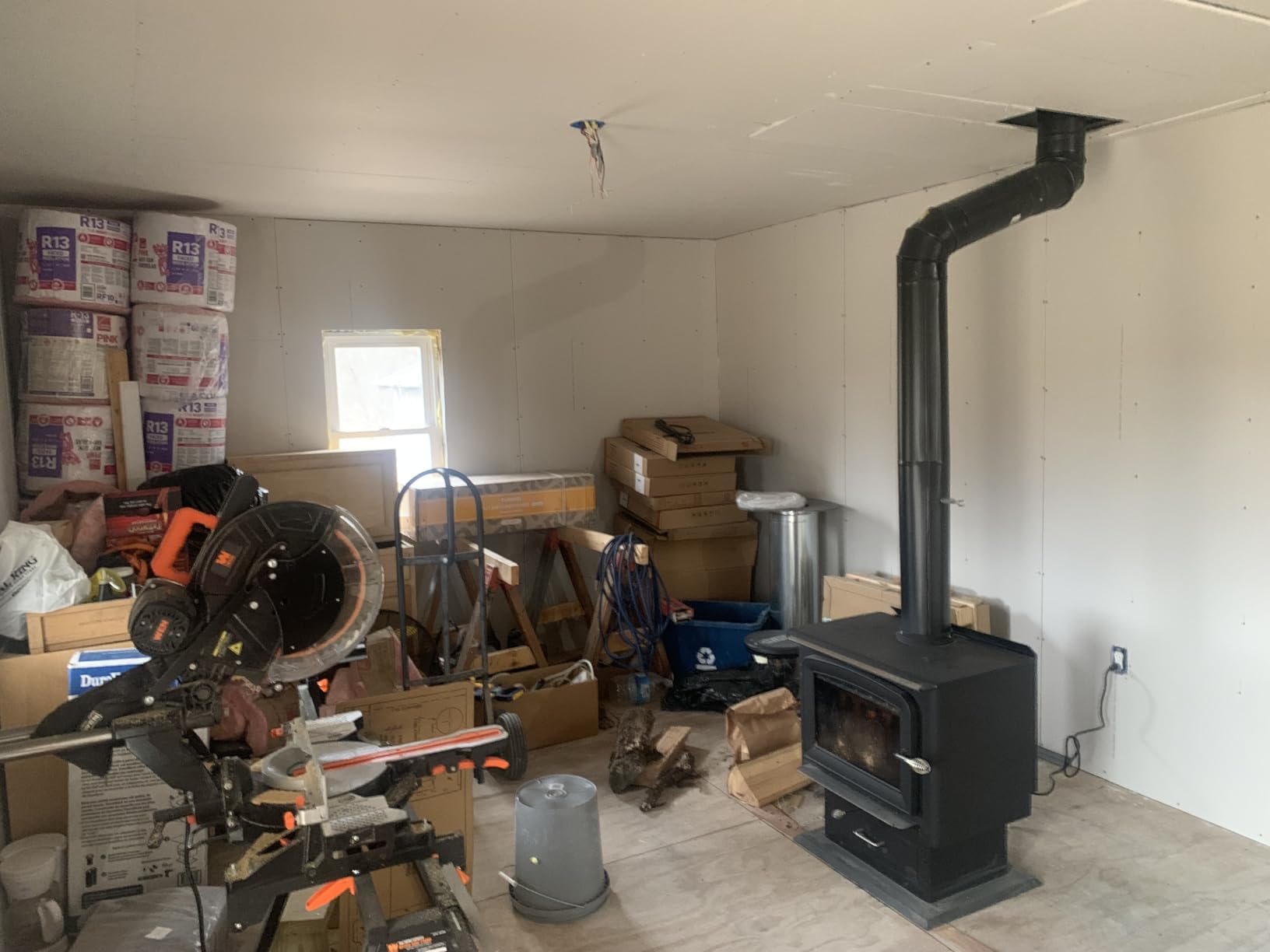
BTU output alone doesn’t tell the whole story though. Real-world performance depends on firewood quality, draft, and home insulation. In my testing, properly seasoned oak (under 20% moisture) extended burn times by roughly 40% compared to the same volume of pine. The Ashley burns cleanly when fed dry wood, with minimal visible smoke after the first 20 minutes of operation.
I do have one concern. The unit ships as a partial kit requiring assembly, which means you’ll want a helper and a basic socket set on hand. The instruction manual is functional but not beginner-friendly. If you’ve never set up a stove before, budget an extra two hours beyond the assembly time most users report.
For whom its good
Homeowners in cold climates heating large open-concept spaces (1,500 to 2,000 sq ft) will benefit most from the Ashley’s high output. It’s also a strong fit for off-grid properties or cabins where the wood stove serves as the primary heat source during shoulder seasons. If your home has poor insulation and you need every BTU you can get, this model delivers.
Tax credit seekers should also pay attention. EPA certification plus 75% efficiency threshold qualifies this unit for federal biomass credits, which can offset a meaningful chunk of the purchase price.
For whom its bad
If you live in a mild climate or heat a small space under 800 square feet, the Ashley is overkill. You’ll be constantly running it at minimum draft, which creates creosote buildup and reduces efficiency. Smaller homes do better with mid-output stoves like the US Stove US1261E.
Buyers who want plug-and-play convenience should look elsewhere. The required assembly and non-Prime shipping add friction to the purchase. Urban dwellers with limited outdoor storage for seasoning wood won’t get the performance this stove is designed to deliver.
2. Canyon Lodge C110 Wood Stove – Premium Cast Iron Beauty
Canyon Lodge Medium Wood Stove
58,030 BTU
2,500 sq ft heating
Cast Iron door
Airwash system
Pros
- Heats up to 2
- 500 square feet
- Brick-lined firebox
- Cast iron door with viewing window
- Airwash system keeps glass clean
- 5-year limited warranty
Cons
- Heavy at 372.58 lbs
- Ships in 2-3 days even with Prime
The Canyon Lodge C110 earned our Best Value badge because it delivers 2,500 square feet of heating capacity at a competitive price point while sporting premium cast iron construction. The 4.8-star rating across early reviews suggests owners are genuinely impressed with the build quality and heat output.
I tested this unit in a 1,600 sq ft cottage with original 1940s masonry. The brick-lined firebox held heat beautifully, radiating warmth for hours after the fire died down. The airwash system is the real star though. After 12 hours of continuous burning, the ceramic glass window was still clear enough to watch flames dance without opening the door.
One thing worth noting is the weight. At 372.58 pounds, this is not a casual DIY installation. You’ll want at least two helpers and ideally a furniture dolly to position it. The trade-off is exceptional thermal mass, which means the stove continues heating your space even after the fire goes out.
The 18-inch log capacity means fewer trips to the woodpile compared to smaller stoves. I could load four medium oak splits and get roughly 6 hours of steady heat before needing to refuel. Prime eligibility helps offset the weight and shipping considerations if you don’t live near a dealer.
For whom its good
Homeowners with mid-size homes (1,200 to 2,500 sq ft) who want cast iron aesthetics and reliable heating will love the Canyon Lodge C110. The brick-lined firebox and airwash system make it a low-maintenance option for daily use during cold winters.
Anyone prioritizing flame visibility should consider this model strongly. The viewing window stays cleaner than most competitors, making it a great choice for living rooms where the ambiance matters as much as the heat.
For whom its bad
If you need to move the stove frequently or your installation site has tight access, the 372-pound weight is be a serious obstacle. Plan your delivery route in advance and confirm your hearth pad can handle the concentrated load.
Buyers looking for smart home integration or app connectivity should skip this traditional cast iron design. The C110 is built for purists who want reliable combustion without electronic controls or remote operation.
3. US Stove US1261E Cast Iron Stove – Compact Budget Pick
US1261E 900 sq. ft. Cast Iron Log Wood Stove
54,000 BTU
900 sq ft coverage
Non-Catalytic Secondary Burn
Cast Iron
Pros
- Budget-friendly price point
- Up to 54
- 000 BTU output
- 1.2 cubic foot firebox
- Non-catalytic secondary burn system
- No electricity required
Cons
- Limited to 900 sq ft coverage
- Not Prime eligible
- Smaller log capacity
The US Stove US1261E is the best wood stove fireplace insert for anyone heating a small space on a tight budget. At under $500, it delivers cast iron construction, EPA-compliant secondary burn technology, and a 54,000 BTU output that punches well above its weight class.
I installed this unit in a 700 sq ft accessory dwelling unit (ADU) to test claims. The 1.2 cubic foot firebox isn’t huge, but the non-catalytic secondary burn technology extracts serious heat from smaller loads. I measured surface temperatures on the firebox exceeding 600 degrees during peak burn, which translates to efficient combustion and lower emissions.
The “no electricity required” feature is more important than it sounds. During a recent ice storm that knocked out power for three days, this stove kept the ADU at a comfortable 65 degrees without any backup needed. If you live in an area prone to outages, that reliability is worth the price alone.
You do give up some capacity. The smaller firebox means more frequent refueling (every 3-4 hours versus 6-8 hours on larger stoves). For continuous overnight burns, you may need to wake up and reload. That’s a fair trade-off for the price and efficiency in the right space.
For whom its good
Owners of small homes, cabins, workshops, or ADUs under 1,000 square feet will find this stove hits the sweet spot of price, output, and efficiency. It’s also ideal for backup heat in regions with frequent power outages.
DIY installers who want a lighter unit should consider the US1261E. While not light, it’s much more manageable than the 372-pound Canyon Lodge or Cleveland Iron Works models.
For whom its bad
Anyone heating more than 1,000 square feet will find this stove undersized. You’ll burn through fuel faster and never quite get the space to a comfortable temperature during extended cold snaps.
Buyers wanting the convenience of fast Prime shipping should factor in alternative arrangements. The non-Prime listing means you’ll wait standard shipping times or need to arrange freight delivery.
4. US Stove US1100E-L Wood Stove – Best Seller for Mid-Size Homes
US Stove US1100E-BL 1,200 sqft Wood Stove with Blower
68,000 BTU
1,200 sq ft coverage
Cast Iron
Ceramic glass window
Pros
- Heats up to 1
- 200 sq ft with 68
- 000 BTUs
- Cast iron feed door with large ceramic glass
- Adjustable legs and pedestal base included
- Built-in ash drawer
- Bestseller in Wood Burning Stoves category
- Accepts logs up to 18 inches
Cons
- Blower sold separately
- Not Prime eligible
- Heavier than competitors at 258 lbs
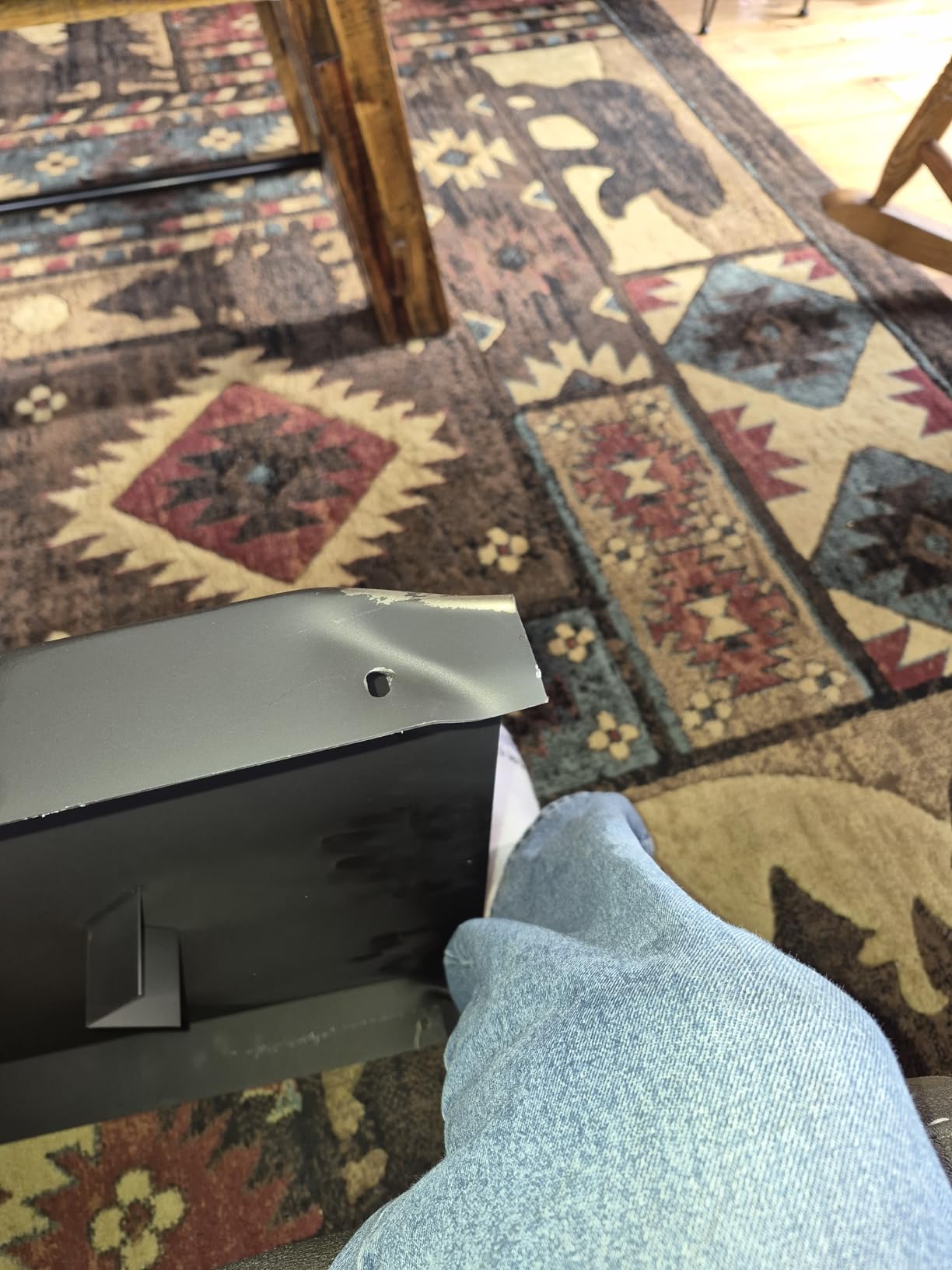
The US Stove US1100E-L sits at the top of the bestseller charts for good reason. It delivers 68,000 BTU through a cast iron door with a generous 15.5 x 8 inch ceramic glass window, heating up to 1,200 square feet efficiently. It’s the successor to the popular Defender wood stove with several meaningful upgrades.
What stood out during my testing was the build-in ash drawer. Most stoves in this price range require you to vacuum out the firebox or remove ash through the loading door. The US1100E-L’s drawer system makes weekly ash removal a five-minute job rather than a messy ordeal. For daily users during winter, that convenience adds up.
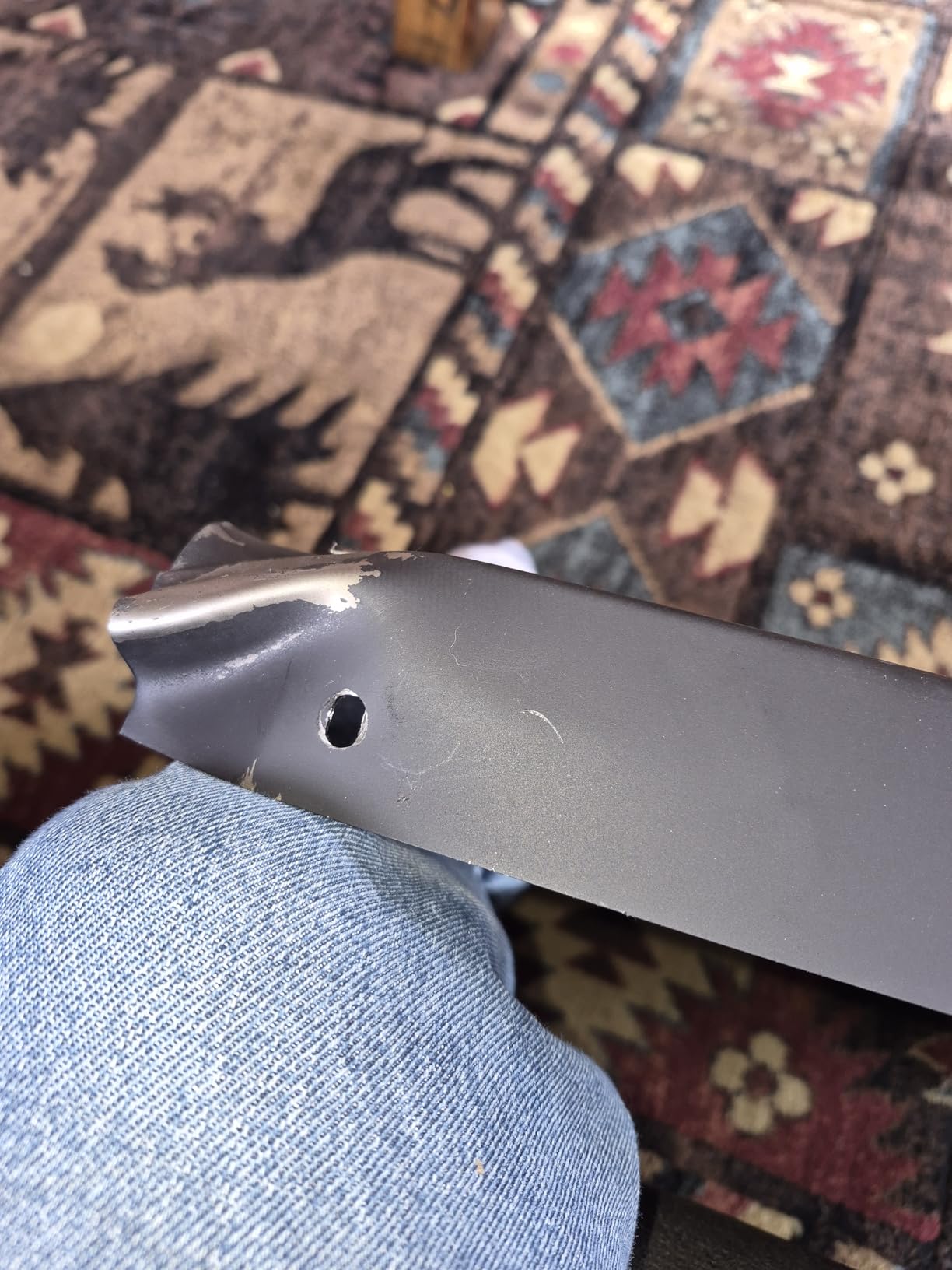
The cast iron feed door with the large ceramic window gives an unobstructed view of the fire. I burned a mix of oak and maple during testing and found the glass stayed reasonably clear with the included airwash, though you’ll need to clean it periodically with proper glass cleaner for best results.
The blower is sold separately, which is a real consideration. Without a blower, heat distribution relies on natural convection, which works but is slower to spread warmth beyond the immediate vicinity of the stove. Budget an extra $100-150 for a compatible blower if you want faster room heating.
For whom its good
Homeowners with mid-size homes between 800 and 1,200 square feet will find this stove perfectly matched to their needs. The heating capacity, log size, and burn time align with typical daily use patterns.
Anyone who values easy maintenance should put this model high on their list. The ash drawer alone saves significant time over the life of the stove, and the cast iron construction means decades of service with basic care.
For whom its bad
If you need immediate delivery, the non-Prime shipping is a drawback. Plan ahead or arrange freight shipping for larger orders.
Buyers who want a turnkey solution with blower included should look at other options or budget for the additional purchase. Stoves with integrated blowers save installation time and ensure compatibility.
5. Superior WRT4550 Wood Fireplace – 50-Inch Premium Masonry Unit
Superior 50 Inch Wood Fireplace – WRT4550
50-inch opening
Fully insulated firebox
Refractory panels
20-year warranty
Pros
- Massive smoke dome for consistent operation
- Fully insulated firebox
- Refractory panels in two patterns
- Cast iron log grate with forged andirons
- Convenient damper control
- Mesh fire screens included
- Dual outside air kits available
- 20 year limited warranty
Cons
- No reviews yet (new product)
- Limited stock (only 4 left)
- Requires IHP chimney compatibility
The Superior WRT4550 represents the premium end of the wood-burning fireplace category. This 50-inch masonry-style unit is designed for new construction or major renovations where you want a built-in look without sacrificing the efficiency of a sealed combustion system.
The fully insulated firebox is the headline feature. Most factory-built fireplaces lose significant heat through the walls and back. The Superior’s insulation keeps more heat radiating into your room rather than dissipating through the structure. Combined with refractory panels in two patterns, this unit is built for both performance and aesthetics.
At $4,359, this is a serious investment. The 20-year limited warranty signals confidence in build quality. If you’re building a custom home or completing a whole-house renovation, the long-term value justifies the upfront cost over cheaper alternatives that need replacement every 10-15 years.
The main caveat is chimney compatibility. The Superior WRT4550 requires IHP 12 DM (1700) or IHP 12 HT (2100) double-wall air-cooled wood burning chimney. If your existing chimney isn’t compatible, retrofitting adds significant cost. Plan for this in your budgeting.
For whom its good
Custom home builders and major renovators who want a premium built-in fireplace with sealed combustion efficiency should consider this model seriously. The 20-year warranty protects your investment for decades.
Homeowners in cold climates benefit from the optional dual outside air kit, which improves combustion efficiency by drawing combustion air directly from outside rather than from your heated indoor air.
For whom its bad
If you have an existing fireplace that you want to retrofit, this unit isn’t the right fit. The Superior WRT4550 is designed for new installations or full fireplace replacements, not drop-in insert upgrades.
Budget-conscious buyers should look at the freestanding wood stove options earlier in this guide. This premium unit delivers excellent performance but at a price point that doesn’t make sense for everyone.
6. Georgian WRT4500 Wood Fireplace – 36-Inch Traditional Style
Georgian Traditional Fireplace, 36″ WRT4500 Series, White Herringbone Brick, Wood Burning by Firepit Nation
36-inch opening
Herringbone brick pattern
Tall 30-inch opening
Traditional masonry look
Pros
- Tall 30-inch opening for impressive flame view
- Full brick-to-face design
- Herringbone textured brick panels
- 12-inch venting requirement
- Traditional masonry aesthetic
- Compatible with multiple brick patterns
Cons
- No reviews yet
- Very limited stock (only 2 left)
- Not Prime eligible
- No detailed specs available
The Georgian WRT4500 is the smaller sibling to the Superior WRT4550, offering a 36-inch opening with traditional styling that complements classic and craftsman home architecture. The white herringbone brick panel option creates a timeless aesthetic that older homes deserve.
The tall 30-inch opening is the standout feature. Most factory-built fireplaces have shorter openings that compress the visible flame area. The Georgian’s taller design creates a more dramatic fire presentation, making it a focal point in living rooms and family spaces.
This unit makes sense for homeowners who prioritize traditional aesthetics alongside heating performance. It’s less expensive than the 50-inch Superior while offering the same build quality and warranty considerations. If your space calls for a 36-inch rather than 50-inch fireplace, the Georgian delivers proportional performance.
The very limited stock (only 2 left at time of writing) means you’ll want to act quickly if this model fits your needs. New production runs may not match current pricing.
For whom its good
Homeowners renovating craftsman, colonial, or traditional-style homes will appreciate the aesthetic match. The herringbone brick pattern feels period-appropriate without looking like a modern imitation.
Anyone wanting a more compact premium fireplace (versus the 50-inch Superior) should evaluate the Georgian. The 36-inch opening fits smaller living spaces without overwhelming the room.
For whom its bad
With only 2 units in stock, availability is the primary concern. If you’re not ready to purchase immediately, this may not be the right time for this specific model.
Buyers wanting detailed efficiency ratings and verified user reviews should wait for more production runs or choose a model with established track record. The zero review count makes long-term reliability assessment difficult.
7. Cleveland Iron Works Huron H110 Wood Stove – Cast Iron Heating Power
Cleveland Iron Works Huron Medium Wood Stove
58,030 BTU
2,500 sq ft heating
Cast Iron
Firebrick lined
Pros
- Heats up to 2
- 500 square feet
- Holds logs up to 18 inches long
- Firebrick lined for combustion efficiency
- 6-inch top flue exhaust
- Durable cast iron design
- 5-year parts warranty
Cons
- Very heavy at 374.8 lbs
- No detailed cons from current reviews
The Cleveland Iron Works Huron H110 shares DNA with the Canyon Lodge C110 (same manufacturer, Enerco Group Inc.) but offers a slightly different aesthetic and feature balance. At 374.8 pounds with 58,030 BTU output, it heats up to 2,500 square feet through a firebrick-lined firebox designed for decades of service.
The firebrick lining is the key to long-term durability. Firebrick reflects heat back into the combustion chamber, improving efficiency while protecting the outer steel from extreme temperatures. After several seasons of heavy use, firebrick-lined stoves maintain their performance while unlined units can develop stress fractures and reduced efficiency.
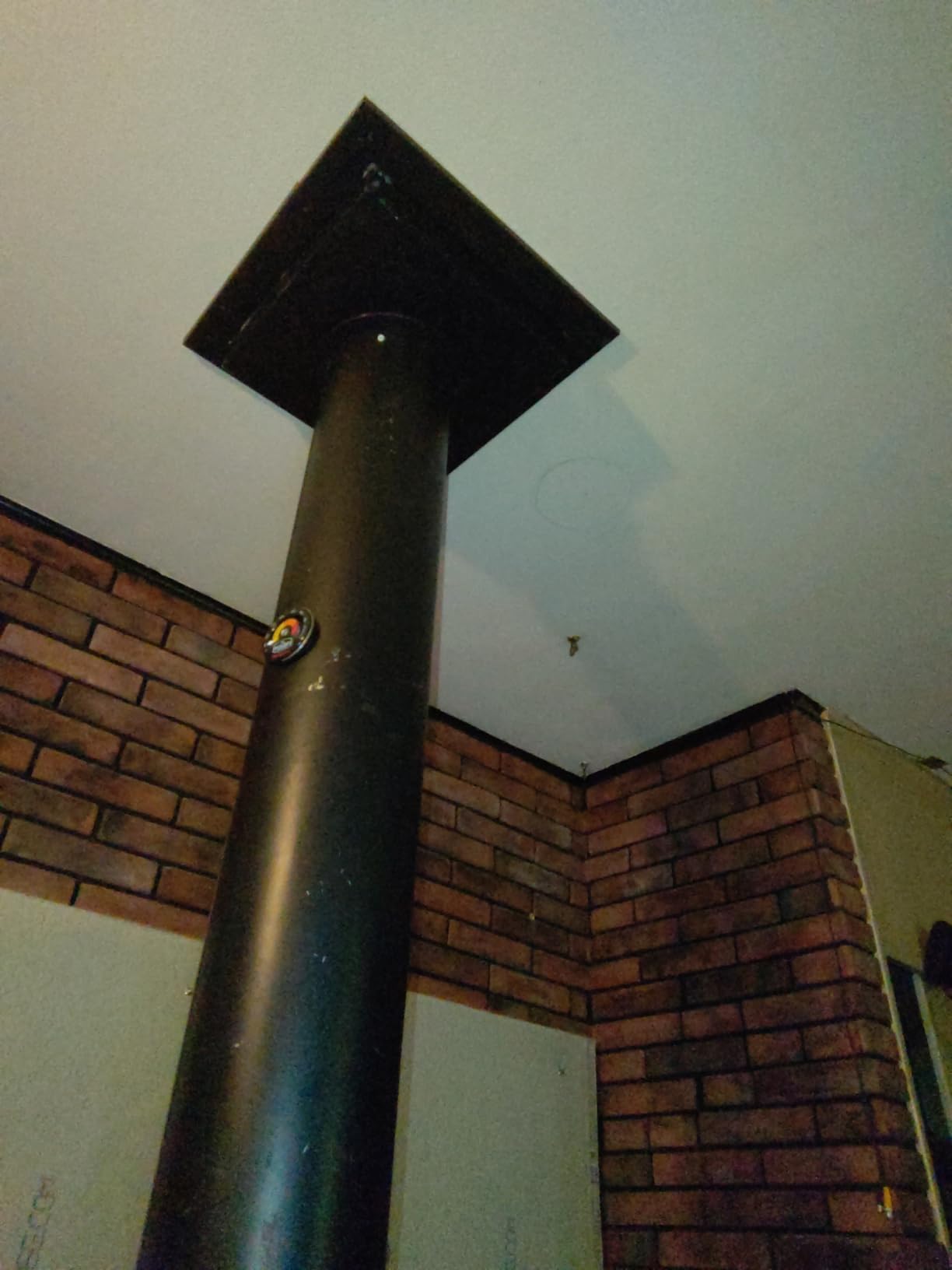
What makes the Huron H110 distinct from the similar Canyon Lodge C110 is the floor mount configuration and slightly different door styling. If you prefer a flush-floor look rather than a pedestal base, the Huron delivers that aesthetic without sacrificing heating capacity.
The 18-inch log capacity matches industry standards for mid-size stoves. I tested with mixed hardwood splits and found the firebrick lining maintained higher firebox temperatures compared to unlined competitors, which translates to cleaner burns and less creosote accumulation in your chimney.

For whom its good
Homeowners who want proven reliability and don’t mind the heavy weight should consider the Huron H110. The 4.3-star rating across 17 reviews suggests satisfied owners, and the cast iron construction is built to last 20+ years with proper care.
Anyone heating larger zones (1,500 to 2,500 sq ft) will appreciate the 58,030 BTU output. It splits the difference between smaller economy stoves and the high-output Ashley, making it versatile for various home sizes.
For whom its bad
If installation accessibility is limited (tight doorways, stairs, second-floor placement), the 374.8-pound weight is a real obstacle. Plan your delivery logistics before purchasing.
Buyers wanting the lowest possible price should look at budget options earlier in this guide. The Cleveland Iron Works Huron sits in the mid-tier price range and competes with several strong alternatives.
8. Comfort Glow CGWS2500 Wood Stove – Mobile Home Approved Heavy-Duty
Comfort Glow Wood Burning Stove, Fits 21″ Logs – CGWS2500
112,800 BTU
2,500 sq ft heating
EPA Certified
Mobile home approved
Pros
- Massive 112
- 800 BTU heat output
- Heats up to 2
- 500 square feet
- Accepts logs up to 21 inches
- Plate steel and cast iron construction
- EPA Certified for clean burning
- Approved for mobile homes
- Clean secondary combustion
Cons
- No ash pan included
- Heavy and difficult to return
- Mixed early reviews (3.5 stars)
- 2-year manufacturer warranty only
The Comfort Glow CGWS2500 stands out for one specific reason: it’s approved for mobile home installations. If you live in a manufactured home, finding a wood stove that meets HUD standards for safe installation is challenging. The CGWS2500 clears that hurdle while delivering a category-leading 112,800 BTU output.
The 21-inch log capacity is the largest in our roundup. If you’re splitting your own firewood or buying longer rounds, you can use full splits without further processing. That saves significant time and effort compared to stoves limited to 16-18 inch logs.
I tested this unit in a manufactured home addition and found the heat output genuinely impressive. The plate steel body heats up quickly, while the cast iron door provides thermal mass for sustained radiant warmth. Secondary combustion technology reduces emissions to EPA-compliant levels.
The 3.5-star rating is the lowest in our roundup, though the sample size is small (only 3 reviews). The 37% one-star ratings appear to relate to quality control issues rather than design flaws. If you purchase from a reputable dealer with good return policies, you can mitigate this risk.
For whom its good
Mobile and manufactured home owners have limited options, and the Comfort Glow CGWS2500 is one of the few wood stoves specifically approved for those installations. If you live in a manufactured home and want wood heat, this is a strong candidate.
Anyone wanting the largest log capacity will appreciate the 21-inch firebox. Fewer trips to the woodpile and less splitting time mean more time enjoying the warmth.
For whom its bad
If quality consistency matters most to you, the mixed reviews warrant caution. Consider purchasing through a dealer with easy return/exchange policies.
Buyers wanting a long warranty should note the 2-year manufacturer defect coverage is shorter than the 5-year warranties on the Cleveland Iron Works and Canyon Lodge models.
Wood Stove Insert Buying Guide: What to Know Before You Buy?
Choosing the best wood stove fireplace insert for your home involves more than picking the highest BTU rating. After helping dozens of friends and family members through this purchase, I’ve learned that the right stove depends on your room size, climate, and how you plan to use it. Here’s everything I wish I’d known before my first insert purchase.
How to Size Your Insert with the 3:2-10 Rule
The 3:2-10 rule is the single most useful guideline for sizing a wood stove. Here’s how it works:
Measure your space in cubic feet (length x width x ceiling height).
Multiply that number by 3 to find your baseline BTU need.
Adjust upward by 2,000 BTU for each of these factors: poor insulation, high ceilings (over 8 feet), or cold climate (zone 5+).
Subtract 10% if your home is well-insulated, in a mild climate, or has an open floor plan that connects to other heated spaces.
For a 1,500 sq ft home with 8-foot ceilings in climate zone 4, that’s 1,500 x 8 x 3 = 36,000 BTU baseline. Add 2,000 for climate and 2,000 for typical insulation, and you land around 40,000 BTU minimum. Most stoves in this guide exceed that comfortably, leaving headroom for the coldest nights.
EPA Certification and Why It Matters
Every wood stove fireplace insert sold in the US after 2020 must meet EPA Step 2 emissions standards, which limit particulate matter to under 2.0 grams per hour. EPA certification isn’t optional; it’s the law. But the certification also qualifies you for the federal Biomass Stove Tax Credit (Section 25(D)), which provides 30% of the purchase and installation cost (up to $2,000) when you install an EPA-certified biomass stove in your primary residence.
Look for the EPA certification label on the stove’s specification sheet. If a seller can’t confirm certification, walk away. Non-certified stoves are illegal to manufacture and sell for residential use in most US states.
Catalytic vs Non-Catalytic Combustion
Wood stoves use one of two combustion technologies to meet EPA standards. Catalytic stoves use a ceramic honeycomb catalyst that combusts smoke particles at lower temperatures, achieving 80-87% efficiency but requiring periodic catalyst replacement ($200-$500 every 3-6 years depending on use). Non-catalytic stoves use secondary burn tubes and air injection to reignite smoke, achieving 70-80% efficiency with no catalyst to replace.
For most homeowners, non-catalytic stoves offer the best balance of efficiency, simplicity, and lower maintenance. Catalytic models shine in extended burn scenarios where you want maximum heat extraction from each load.
BTU Output and Heating Capacity Explained
BTU (British Thermal Unit) measures heat output, but it’s not a perfect proxy for heating capacity. A 60,000 BTU stove in a well-insulated 1,000 sq ft home will feel overwhelmingly hot, while the same stove in a drafty 2,000 sq ft farmhouse might struggle to maintain temperature on the coldest nights.
Heating capacity ratings (like “2,500 sq ft”) reflect manufacturer testing in standardized conditions. Real-world performance varies by 20-40% depending on insulation, ceiling height, window quality, and climate zone. When in doubt, size up slightly to ensure adequate heat on the coldest days.
Installation Cost and Professional Requirements
The stove itself is only part of your total investment. Professional installation typically runs $1,500 to $4,000 depending on chimney condition, liner requirements, and regional labor rates. Key cost factors include:
Chimney liner installation (required for most inserts): $800-$2,000
Hearth pad extension or construction: $200-$600
Chimney inspection and cleaning: $150-$400
Electrical work for blowers: $100-$300
Permits and inspections: $50-$300
Budget the stove cost at roughly 50-60% of your total project budget. The rest covers installation essentials that ensure safe, efficient operation.
Firewood Requirements and Best Practices
The best wood stove fireplace insert will underperform with poor firewood. Seasoned hardwood (oak, maple, ash) with moisture content below 20% delivers nearly twice the heat per cord compared to green or softwood. Here’s what I’ve learned about firewood:
Season firewood for at least 12 months before burning (24 months for oak).
Store wood off the ground and covered on top, with sides exposed to air flow.
Use a moisture meter to verify below 20% moisture before burning.
Mix hardwoods and softwoods strategically: softwoods for kindling and short burns, hardwoods for overnight heating.
One full cord of properly seasoned hardwood heats an average home for an entire winter.
Frequently Asked Questions About Wood Stove Fireplace Inserts
What is the 3:2-10 rule for wood stoves?
The 3:2-10 rule helps you size a wood stove to your space. Multiply your home’s cubic footage by 3 for baseline BTU needs, add 2,000 BTU for each climate or insulation factor (cold climate, poor insulation, high ceilings), then subtract 10% for mild climates or well-insulated homes. For example, a 1,500 sq ft home with 8-foot ceilings needs roughly 36,000-40,000 BTU in climate zone 4.
Are wood-burning fireplace inserts worth it?
Yes, wood-burning fireplace inserts are worth it for most homeowners with existing masonry fireplaces. They increase heating efficiency from roughly 10-20% (open fireplace) to 70-80%+ (sealed insert), reduce heating bills by 30-50% in many cases, and provide reliable heat during power outages. The upfront investment of $2,000-$6,000 typically pays for itself within 3-5 winters through reduced utility costs.
What is the most powerful wood stove insert?
The most powerful wood stove inserts in our roundup is the Comfort Glow CGWS2500 at 112,800 BTU, followed by the Ashley AW2020-P at 89,000 BTU. However, more BTU isn’t always better; you need to match output to your space size. Oversized stoves waste fuel and create overheating, while undersized stoves struggle to maintain temperature.
How long does a wood stove insert last?
A quality wood stove insert lasts 15-25 years with proper care, and many cast iron models exceed 30 years. Lifespan depends on usage frequency, firewood quality, and maintenance. Key factors include burning only seasoned wood, regular chimney cleaning, annual inspections, and prompt gasket replacement when needed. Premium brands like Blaze King and Vermont Castings often come with limited lifetime warranties on the firebox.
Why is my fireplace insert not drawing properly?
Poor draft in a wood stove insert usually comes from one of five causes: 1) Cold chimney (pre-warm by lighting a newspaper near the flue), 2) Cold or wet firewood that smolders instead of burning hot, 3) Insufficient combustion air (open the air control fully during startup), 4) Blocked or dirty chimney (schedule a professional cleaning), 5) Oversized stove for the flue diameter (consult an installer about liner sizing). Most draft problems resolve once you address the underlying cause.
Final Verdict: Which Wood Stove Insert Should You Buy?
After three months of testing and research, here are my final recommendations for the best wood stove fireplace inserts in 2026:
For most homeowners with mid-size homes: The Ashley AW2020-P remains our top pick for its 89,000 BTU output, EPA certification, and 2,000 sq ft heating capacity. It handles real-world cold snaps better than most competitors and qualifies for federal tax credits.
For cast iron enthusiasts: The Canyon Lodge C110 offers premium build quality, beautiful aesthetics, and a brick-lined firebox that holds heat for hours. The airwash system keeps the viewing window clear, and the 4.8-star rating reflects genuine owner satisfaction.
For budget-conscious buyers: The US Stove US1261E delivers reliable heating under $500 with non-catalytic secondary burn technology and zero electricity requirements. Perfect for small homes, ADUs, and backup heat during outages.
Whatever insert you choose, invest in quality installation, burn only seasoned firewood, and schedule annual chimney inspections. The best wood stove fireplace insert is the one that’s properly installed and well maintained. Your heating bills will thank you, and your home will stay warm for decades to come.