
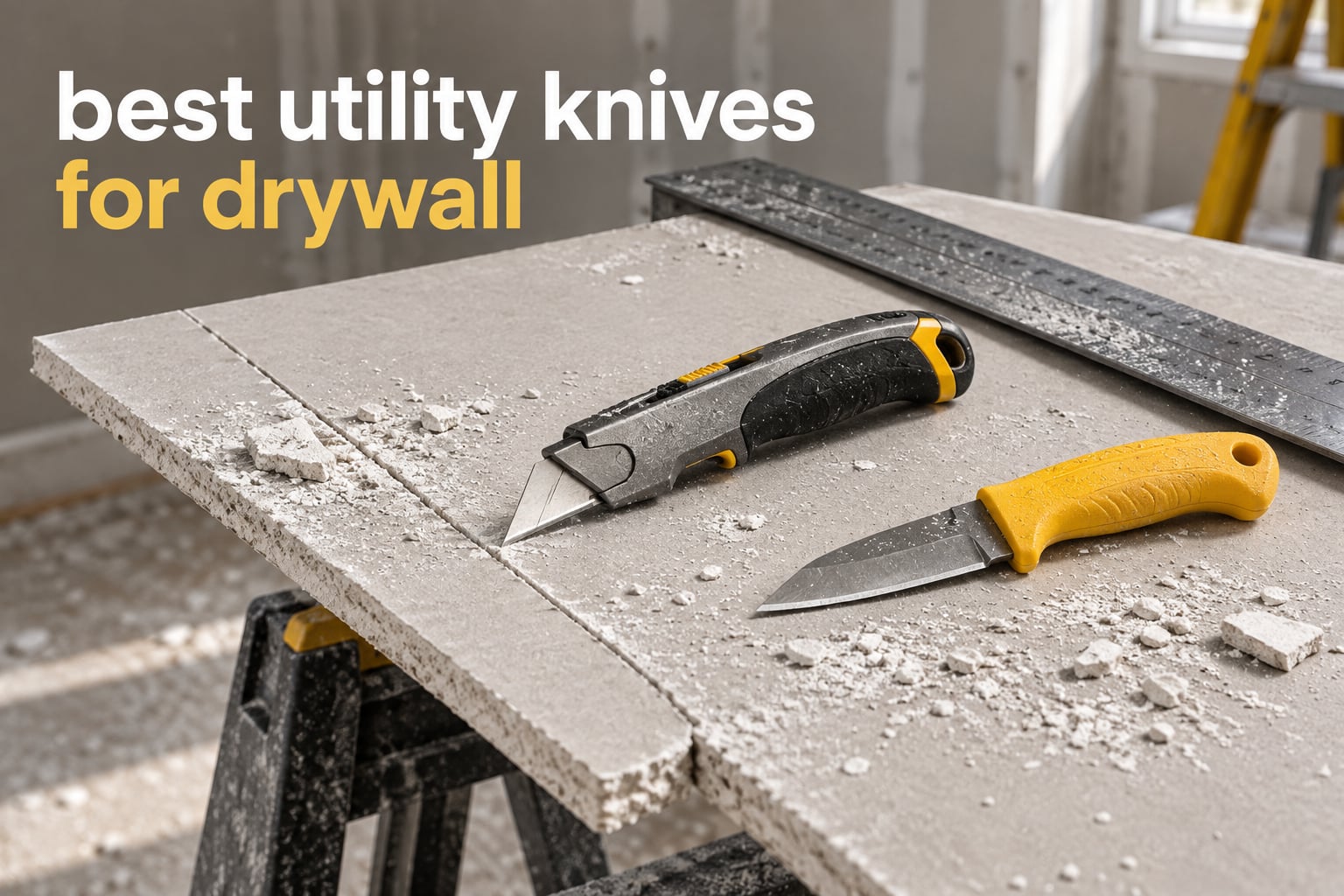
The best utility knives for drywall are the ones that hold a rigid blade under pressure. Yes, you can cut drywall with a utility knife. The scoring cut is just a shallow line through the paper face, and the gypsum core underneath snaps along it cleanly. What ruins the job is a blade that flexes or creeps back into the handle halfway down a 4-foot run, because that is what tears the paper and eats a whole sheet.
We spent weeks putting nine knives through drywall work to find out which ones hold that line. Our default pick is the WORKPRO Premium Utility Knife, a retractable with a die-cast aluminum frame and SK5 blades, and it carries the largest review base of any knife we tested. For anyone who wants a blade that physically cannot retract, the XW Fixed-Blade Drywall Utility Knife is the purpose-built answer, and the OLFA 18mm L-1 earns its spot on snap-off segments and a ratchet lock that fixes your cutting depth. Below, every pick gets a full write-up, plus the scoring technique that decides whether the cut is clean.
We earn a commission if you buy through our links, at no extra cost to you. Product details change over time, so use the buttons below rather than any specification you remember.
Top 3 picks Best Utility Knives for Drywall (October 2026)

WORKPRO Premium Utility Knife
- Die-cast aluminum body
- SK5 blades at 64 HRC
- 10 spare blades included
- Quick-release blade change
XW Fixed-Blade Drywall Knife
- Non-retractable rigid blade
- Hinged tool-less blade change
- 2-pack with 10 blades
Spec Ops Tools Utility Knife
- Quick-release storage for 5 blades
- Push-button blade swap
- Four blade positions
Best drywall utility knives compared in 2026
| Product | Specifications | Action |
|---|---|---|
| WORKPRO Premium Utility Knife |
|
Check Latest Price |
| XW Fixed-Blade Drywall Knife |
|
Check Latest Price |
| Spec Ops Tools Utility Knife |
|
Check Latest Price |
 OLFA 18mm L-1 OLFA 18mm L-1 |
|
Check Latest Price |
 Stanley Classic 199 Stanley Classic 199 |
|
Check Latest Price |
 Fiskars Pro Folding Utility Knife Fiskars Pro Folding Utility Knife |
|
Check Latest Price |
 Klein Tools FLICKBLADE 44306 Klein Tools FLICKBLADE 44306 |
|
Check Latest Price |
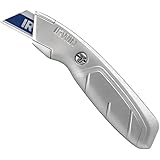 IRWIN 2081101 Fixed Blade IRWIN 2081101 Fixed Blade |
|
Check Latest Price |
 Slice Auto-Retractable Cutter Slice Auto-Retractable Cutter |
|
Check Latest Price |
1. WORKPRO Premium Utility Knife: the all-metal all-rounder
WORKPRO Premium Utility Knife, Retractable All Metal Heavy Duty Box Cutter, Quick Change Blade Razor Knife, with 10 Extra Blades
Die-cast aluminum body
SK5 blades at 64 HRC
3 blade positions
10 spare blades
Pros
- Die-cast aluminum frame feels sturdy at only 3.2 oz
- SK5 blades hold an edge through repeated scoring
- Three adjustable blade positions for controlled depth
- Quick-release button for fast blade swaps
- Ten spare double-use blades included
Cons
- Better suited to general and medium duty cutting than very heavy sheet work
- Blade must be retracted by hand rather than spring-returning
This is the knife we ended up reaching for most, and the numbers behind it are unusual. Nearly eleven thousand reviews averaging 4.8 out of 5 is a much bigger sample than anything else in this roundup, and the feedback keeps circling the same three things: the metal frame, the sharpness of the supplied SK5 blades, and the smoothness of the three-position slide.
On drywall it behaves well because of that aluminum frame. The blade sits in a rigid channel, so when you push the knife along a straightedge with real pressure, the edge tracks instead of fluttering. We scored full 4×8 sheets against a T-square with a fresh blade and got a straight line without leaning on it. The 64 HRC heat treatment means the edge survived roughly a full room’s worth of scoring before we snapped a new one in.
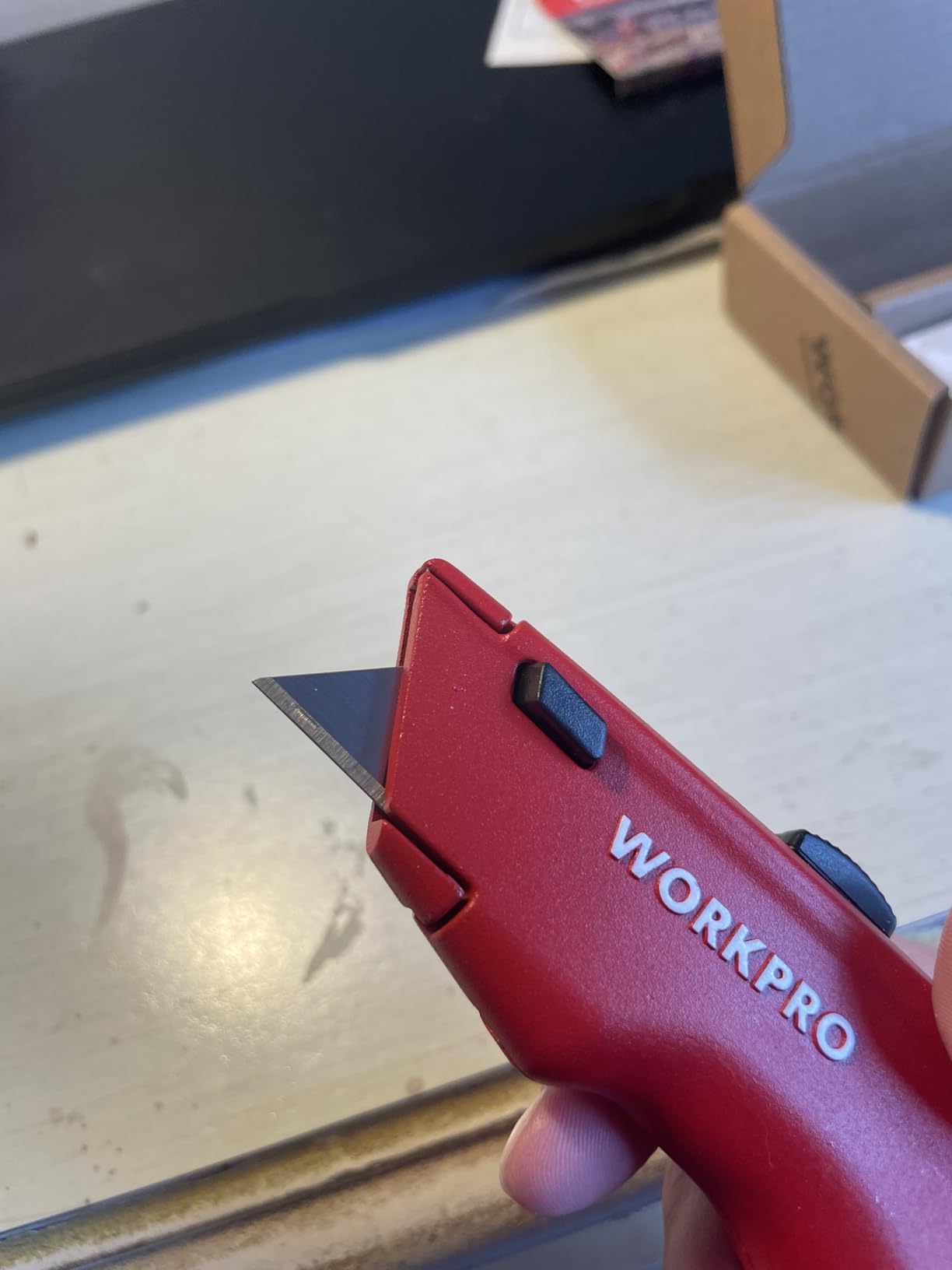
Three things stand out in daily use. The quick-release button puts a new blade in without picking apart the frame. The powder-coated finish keeps the grip from going slick when your hands are dusty, which matters more than it sounds. And the whole thing weighs 3.2 ounces, so it does not drag on a full belt at the end of a long day.
The catch is honest and worth stating: this is a general and medium duty knife that also happens to cut drywall well, not a drywall specialist. It will not replace a fixed blade for a pro hanging full ceilings every day, and the blade does not snap back on its own, so you have to retract it when you are done with a cut.
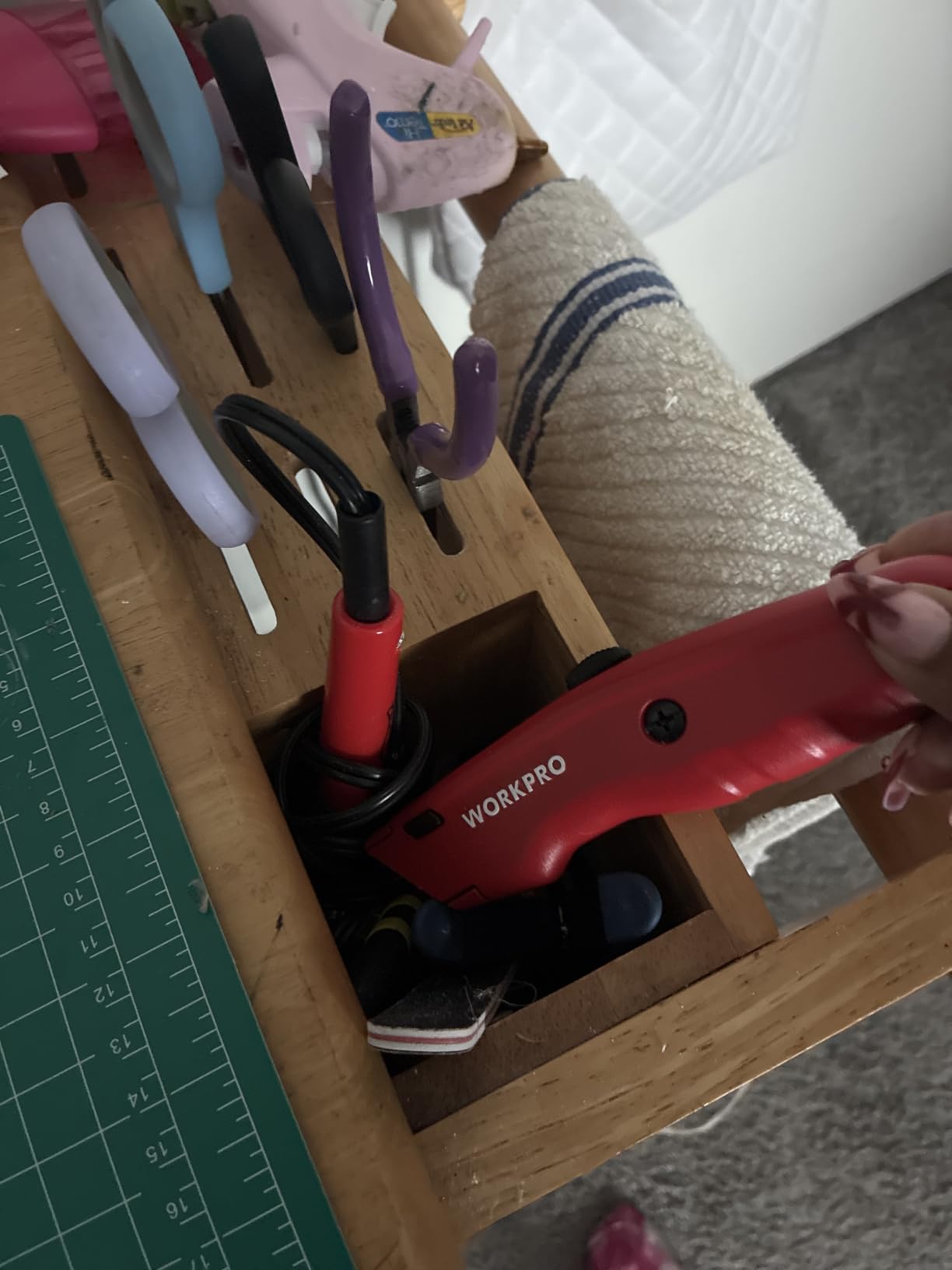
When the WORKPRO earns its place
Choose it if you are a homeowner doing patch repairs, trimming carpet, opening boxes, and scoring a few sheets a year. One knife covers all of it. It is also the pick for anyone who wants an all-metal body that will not crack if it lands on a concrete floor, which is a regular event on renovation sites.
It is the one we would hand to a friend who asked for one knife. With 10 spare blades in the box, the running cost after purchase is a stack of standard blades you can buy anywhere.
Where it falls short
If you hang sheets professionally and want a blade that physically cannot retract while your hand is on it, this is the wrong tool. Your other option is the fixed-blade route covered in picks two and five.
It is also a touch heavier and wider than a slim folder, so it is less pleasant in a pants pocket than the Fiskars. That is a fair trade for a full metal frame, but it is a trade.
2. XW Fixed-Blade Drywall Utility Knife: the sheet-shaving specialist
XW Fixed-Blade Utility Knife, Non-Retractable Heavy Duty Drywall Cutter, Extra 10 Blades Included,2-Pack
Non-retractable fixed blade
2.4 inch SK2 high carbon blade
Hinged tool-less change
2-pack plus 10 blades
Pros
- Fixed-blade design gives a very stable cut line
- Zinc-alloy body with anti-slip TPR grip
- Hinged handle swivels open for tool-less blade changes
- Captive thumb dial screw never gets lost
- Two knives plus a pouch of 10 replacement blades
Cons
- Blade does not retract so you are the only safety mechanism
- Slightly longer than the classic Stanley 199 it is often compared to
- Not glow-in-the-dark for dark crawlspaces
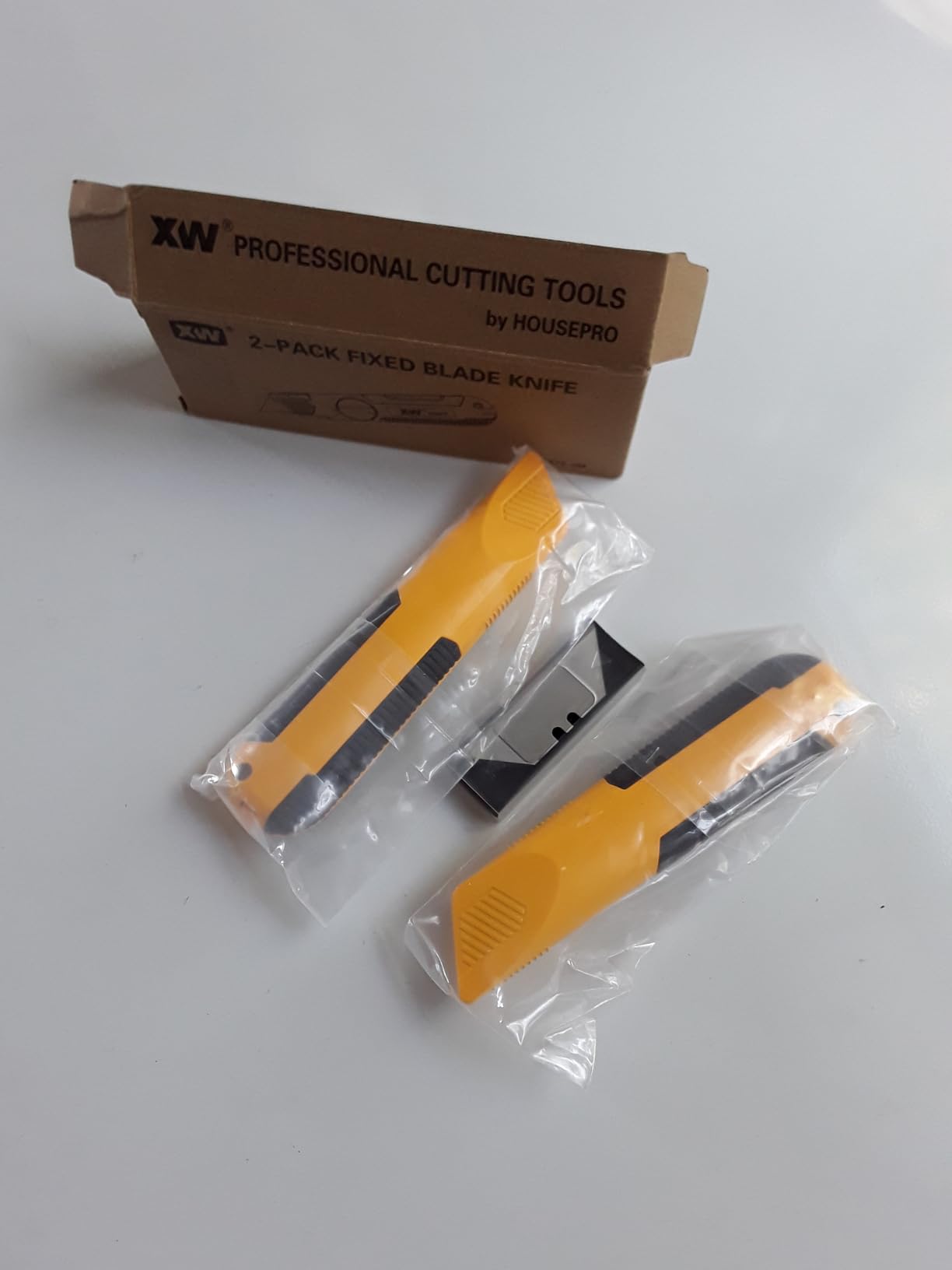
This is the only knife in the roundup built by people who clearly only cut drywall, and the design follows from that single purpose. Nothing retracts. Nothing flexes. The blade sits in a fixed channel and stays exactly where you put it, which is the entire reason pro hangers have preferred fixed blades for decades.
We found that difference most obvious on the second and third sheet, when the arm gets tired and you start leaning harder into the score. With a retractable, leaning harder means pushing the blade deeper, which is where creeping retraction shows up. With this knife, extra pressure just means a deeper cut, and the 2.4 inch high carbon blade cuts through in a single confident pass.
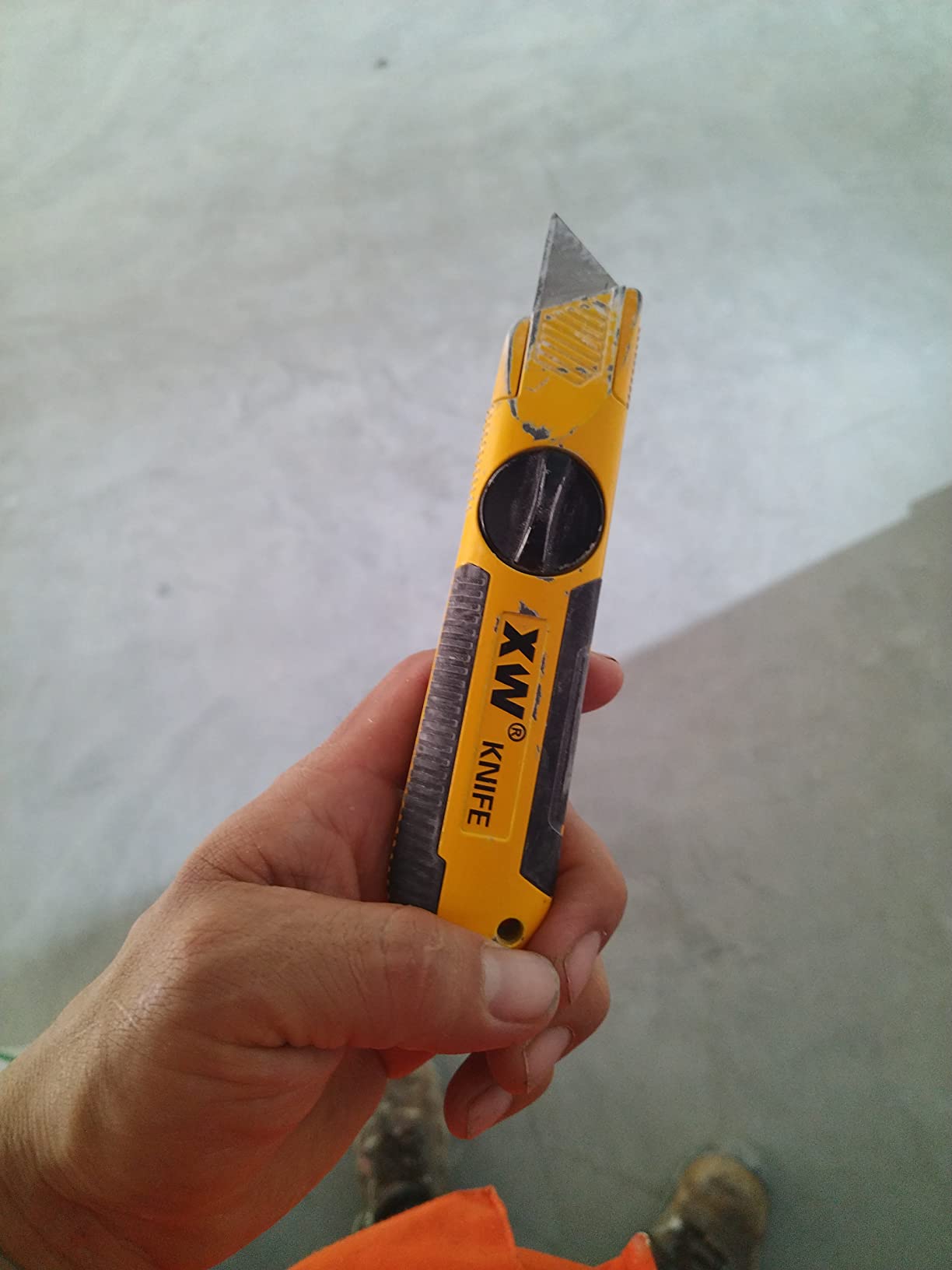
The blade change system is unusually thoughtful. The handle swivels open on a hinge so you can swap the blade without a screwdriver, and the thumb dial screw that clamps it is captive, meaning it cannot end up in the drywall dust. Several reviewers who moved over from the Stanley 199 describe the workflow as near identical with better visibility, which is largely down to the high-visibility yellow body.
You get two knives in the pack and a pouch of ten replacement blades, so for a single drywall job you are not making a hardware store run halfway through. The magnetic blade holder and the notch that lets the blade sit further out also help when you need to score right up to an edge.
When the XW makes sense
Pick this if drywall is the main thing you are cutting. If you need a knife that can never retract while your hand is on it, this is the safest version of that idea that still ships with spare blades in the box.
It suits full-sheet trimming and repair work equally well. The TPR grip over the zinc-alloy body stays controllable when everything is coated in gypsum powder.
Who should skip it
If you carry tools on a belt and work in tight spaces, an exposed fixed blade is a genuine hazard. There is no safety mechanism beyond your own attention, and that is the trade every fixed blade on this list asks you to make.
It is also 8 inches overall, a little longer than the classic Stanley 199, which some people prefer in confined corners.
3. Spec Ops Tools Utility Knife: blades in the handle
Spec Ops Tools Utility Knife for Cutting Drywall, Roofing & Jobsite Materials, Includes 5 Blades in Handle Storage, Retractable Blade
Armor-grade aluminum body
Quick-release storage for 5 blades
Push-button blade swap
6.08 oz
Pros
- Vented pistol grip stays comfortable on long scoring runs
- Push-button blade swap and one-button access to stored spares
- Four adjustable blade stages for controlled depth
- Aluminum body rated through a 100-foot drop test
- Uses standard utility blades that are easy to source
Cons
- Not self-retracting so the blade must be retracted manually
- Heavier than comparable plastic-bodied knives
- Built-in strap slot does not cut many common job-site straps
The Spec Ops sells itself on one feature above all others, and it is the one drywall crews ask for most: five spare blades in the handle, released with a single button. On a job where you cannot walk back to the truck, that removes the most common interruption in a scoring run, which is running out of edge mid-cut.
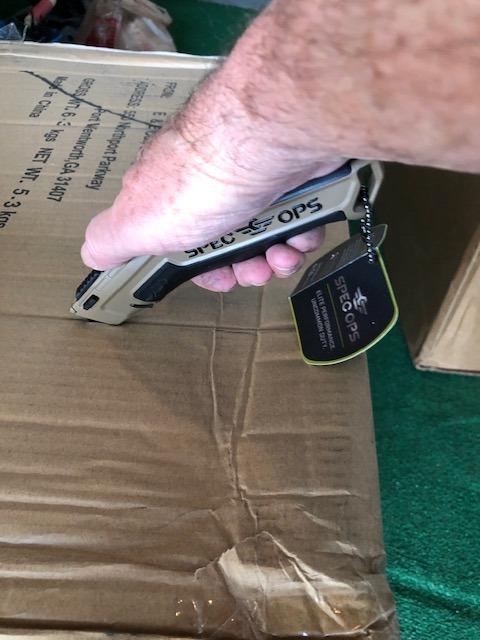
The handle is a vented pistol grip with a thumb press, and it makes a real difference on drywall. Our scoring runs are long, straight, and repetitive, and the shape kept our wrist from complaining in a way the straighter barrels on picks four and five did. At 6.08 ounces it is not featherweight, but the balance sits in the hand rather than in the fingertips.
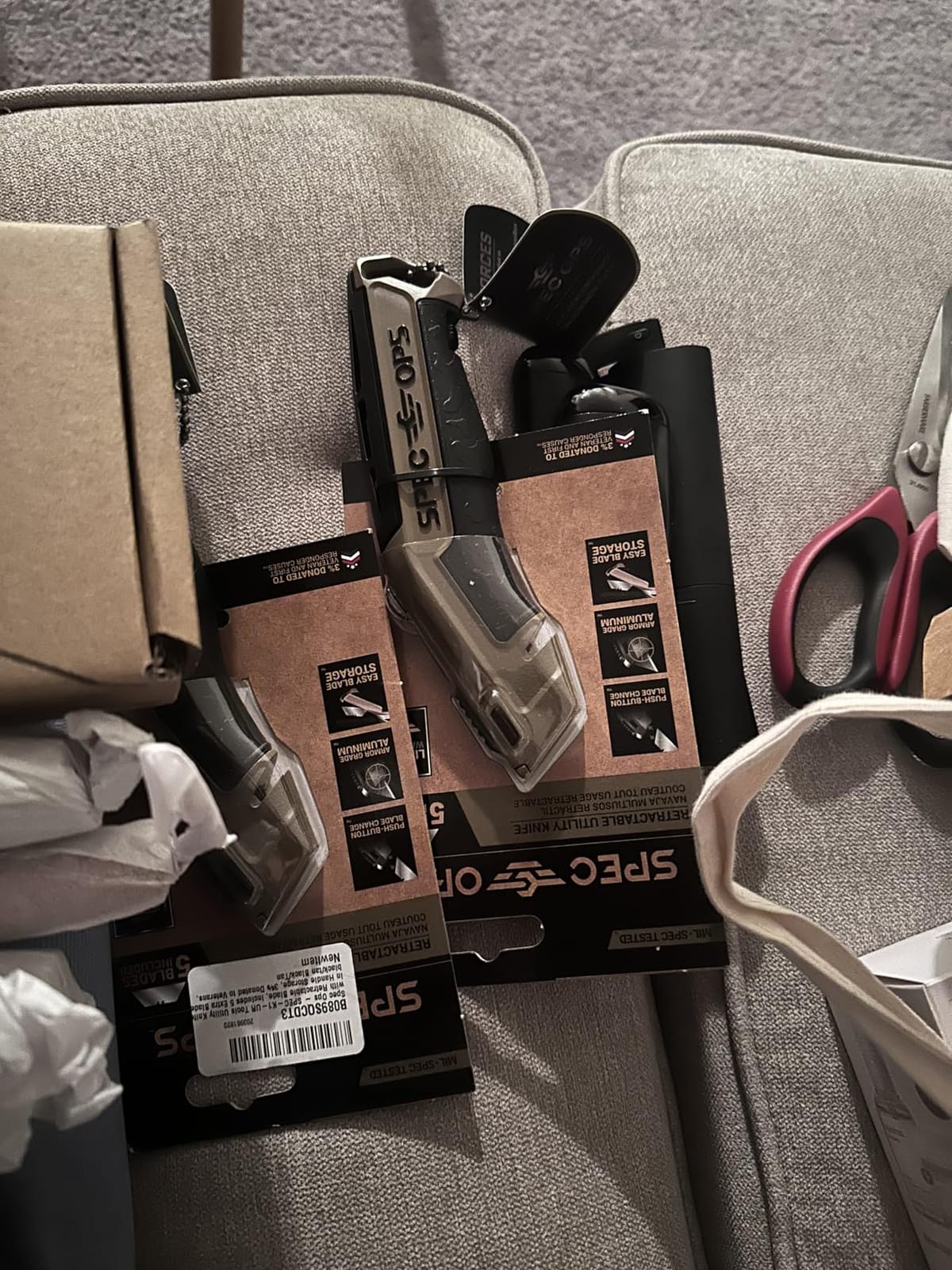
Four adjustable blade stages give you control over depth, which matters when you are scoring a finished wall face and do not want to cut through the paper. Push the button, the blade swaps, no disassembly. That is the fastest mid-task change of any retractable we tested.
The body is aluminum rated through a 100-foot drop test, and it uses standard utility blades, which is worth more than it sounds. Brands that lock you into proprietary refills add friction on a site where the truck is fifty feet away. Mechanical engineers and contractors both name this model in reviews, which tells you the grip holds up beyond drywall work.
When the Spec Ops fits
This is the pick for someone who works away from a vehicle, does trim-out, or cuts a lot of carpet and vinyl alongside drywall. The storage and the one-button change handle the two most common complaints about other retractables.
It is also a good fit if you have larger hands. The vented grip is noticeably roomier than the slimmer barrels here.
Where it disappoints
It does not self-retract. Buyers expecting spring-loaded return sometimes report that as a defect, so set expectations before you buy. The included strap and string slot also does not handle many real job-site straps, so do not buy it for that.
Because it is a retractable, it shares the dust vulnerability described later in this guide. Wipe the track out at the end of a dusty day.
4. OLFA 18mm Heavy-Duty L-1: the snap-off segment workhorse
OLFA 18mm Heavy-Duty Utility Knife (L-1) – Ratchet Lock, Snap-Off Blade
18mm snap-off blade with 8 segments
Ratchet wheel lock
ABS handle with steel channel
2.5 oz
Pros
- Exceptionally sharp Japanese tool-steel blade with strong edge retention
- Eight snap-off segments give you a fresh edge instantly
- Ratchet wheel lock holds blade depth steady through a cut
- Lightweight ABS body with a rigid steel blade channel
- Backed by a guaranteed-forever warranty
Cons
- Not spring-loaded so opening and closing takes deliberate effort
- Does not auto-retract so the lock wheel must be turned each time
- Plastic body offers less protection in a drop than a metal frame
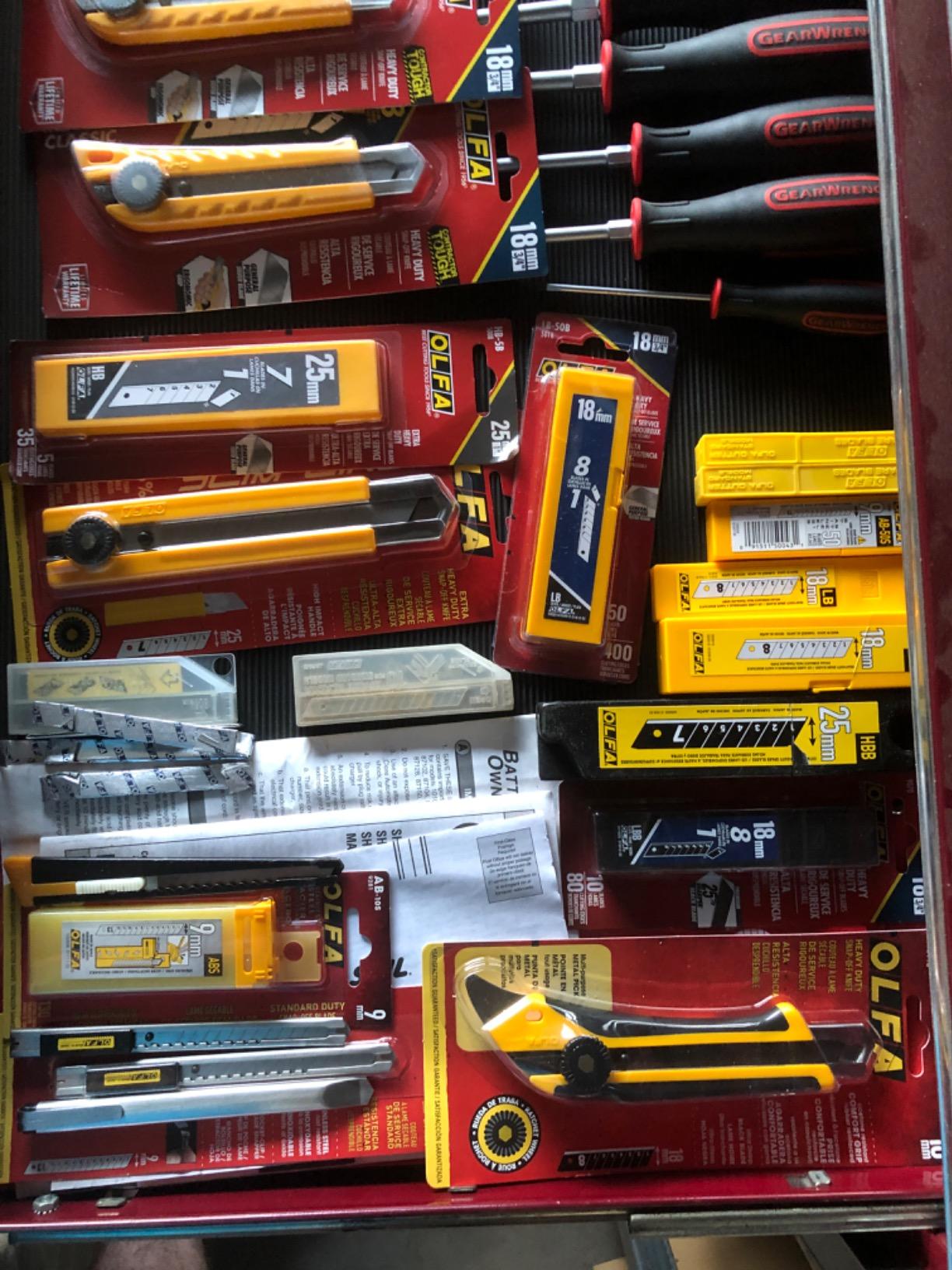
The OLFA L-1 has been the default utility knife in a huge number of tool bags for a reason that has nothing to do with drywall: eight snap-off segments per blade. When the tip goes dull after scoring a few sheets, you break off one segment and get a fresh razor edge without touching a spare blade or a screwdriver. That is the single most useful thing a knife can do on a drywall job.
The 18mm width is wider than the slim trapezoid blades used on picks one and two, and that width is why this knife feels solid on sheet goods. More blade means more steel behind the edge to resist flex. It cut through the gypsum core cleanly on our trim passes in a way the narrower blades needed two passes for.
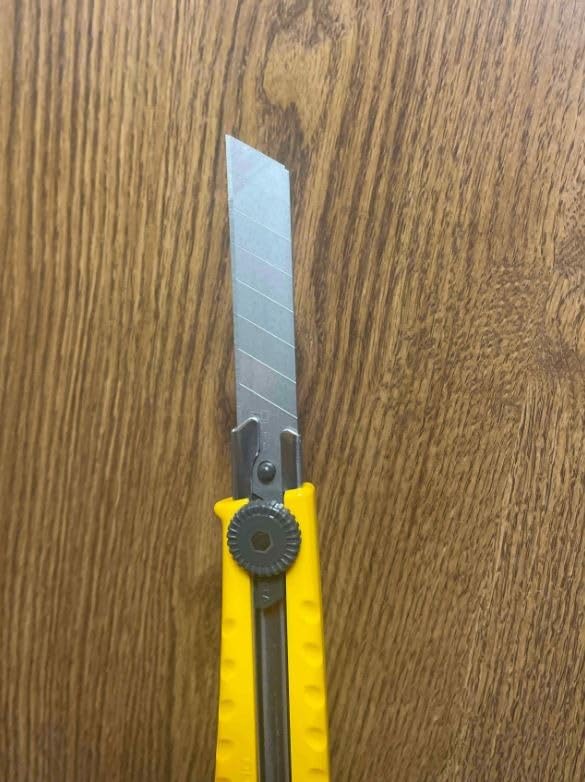
The ratchet lock is the part people underestimate. Instead of a slider with three detents, a wheel lets you set any depth between closed and full extension, and it stays where you put it for the whole cut. Owners with decades of use describe buying it again after losing one, which is about as strong an endorsement as a tool gets.
It weighs 2.5 ounces and folds nothing, so it lives in a pocket or hangs from the lanyard hole without ceremony. There is a stainless steel channel inside the ABS handle, which is what keeps the blade from twisting when you push hard.
When the OLFA is right
It is the value pick in this roundup for anyone who cuts a mix of material: drywall, roofing felt, insulation batts, carpet, and flooring. The snap-off segments mean you basically never run out of edge mid-project.
It is also the safest-looking option to carry around, because the blade retracts fully into the body and only the ratchet wheel controls how much shows.
Where it frustrates people
It is not spring-loaded. Opening, setting depth, and closing takes more deliberate action than a slider, and users who prefer a fast auto-return design rate it down for that. If you are doing thousands of cuts a day and value speed over depth control, the Spec Ops or WORKPRO slide faster.
The guaranteed-forever warranty covers the tool, not the snap-off blades, so the segments are a consumable you replace like any other blade.
5. Stanley Classic 199: the fixed blade that outlasts trends
STANLEY CLASSIC 199 5-3/8 in. Fixed Blade Utility Knife (10-209)
Fixed carbon steel blade
Aluminum handle with finger guard
5-3/8 inch overall
4.32 oz
Pros
- Time-tested fixed design that drywall pros prefer for hours of cutting
- Cast metal handle sits comfortably in the hand during long sessions
- Front finger guard keeps your hand back from the edge
- Fits most standard STANLEY replacement blades
Cons
- No blade protection so it requires careful handling
- Current version is no longer stamped Made in USA and uses a slotted screw
- Heavier and larger than some compact fixed knives
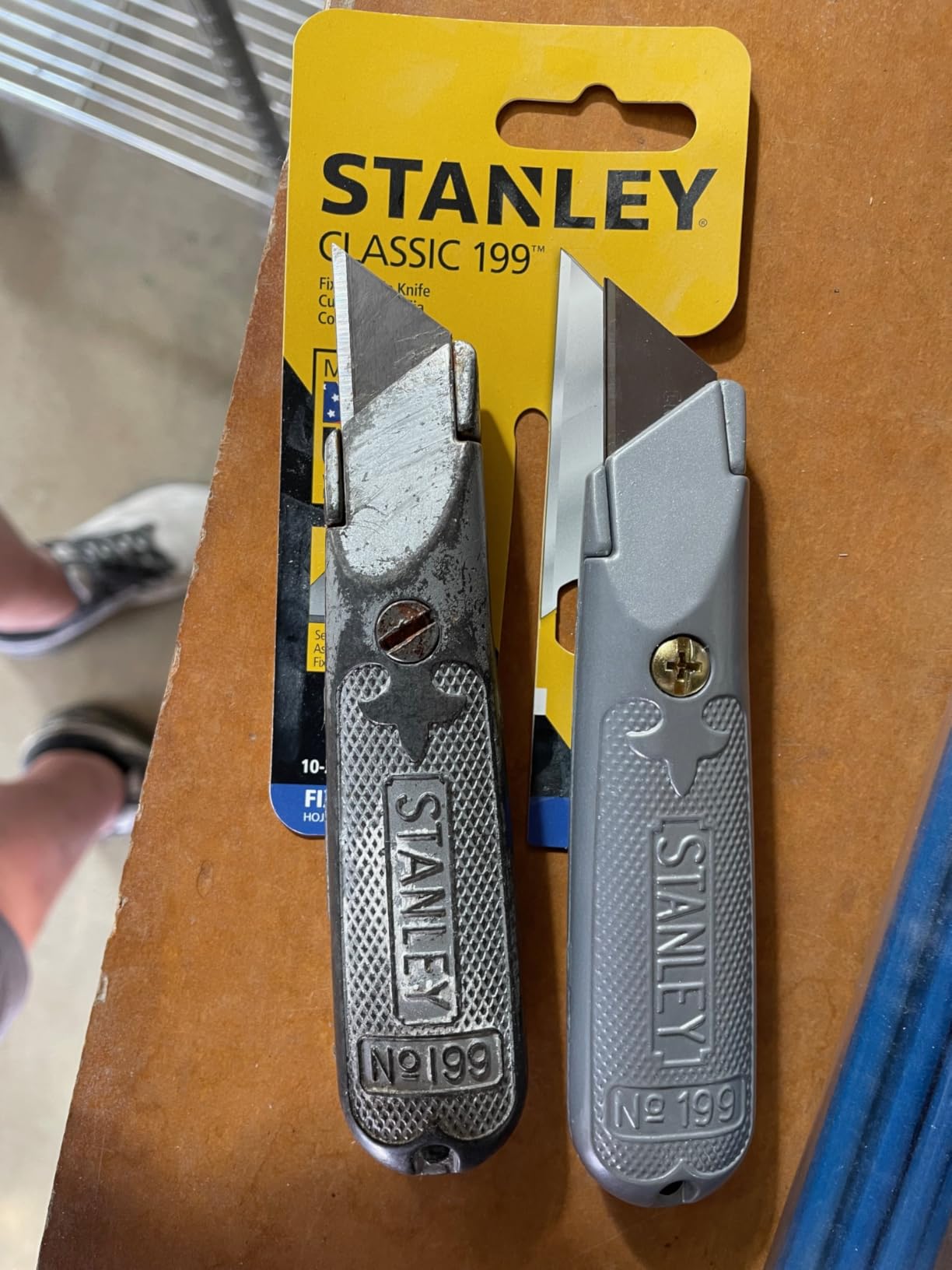
Ask a drywall installer which fixed knife they trust and the Classic 199 comes up. Reviewers describe people who grew up with one and are now buying it again as a replacement, and professional finishers specifically call it preferable to retractable knives for hours of serious cutting. That is the clearest endorsement this category produces.
The reason is the same reason the XW exists: nothing moves. The blade is clamped in a fixed aluminum body, so pressing harder on the cut produces a deeper score instead of a creeping retraction. We found the difference obvious on long runs with a T-square, where a blade that drifts by even a few degrees over four feet ends up as a crooked edge on the ceiling.
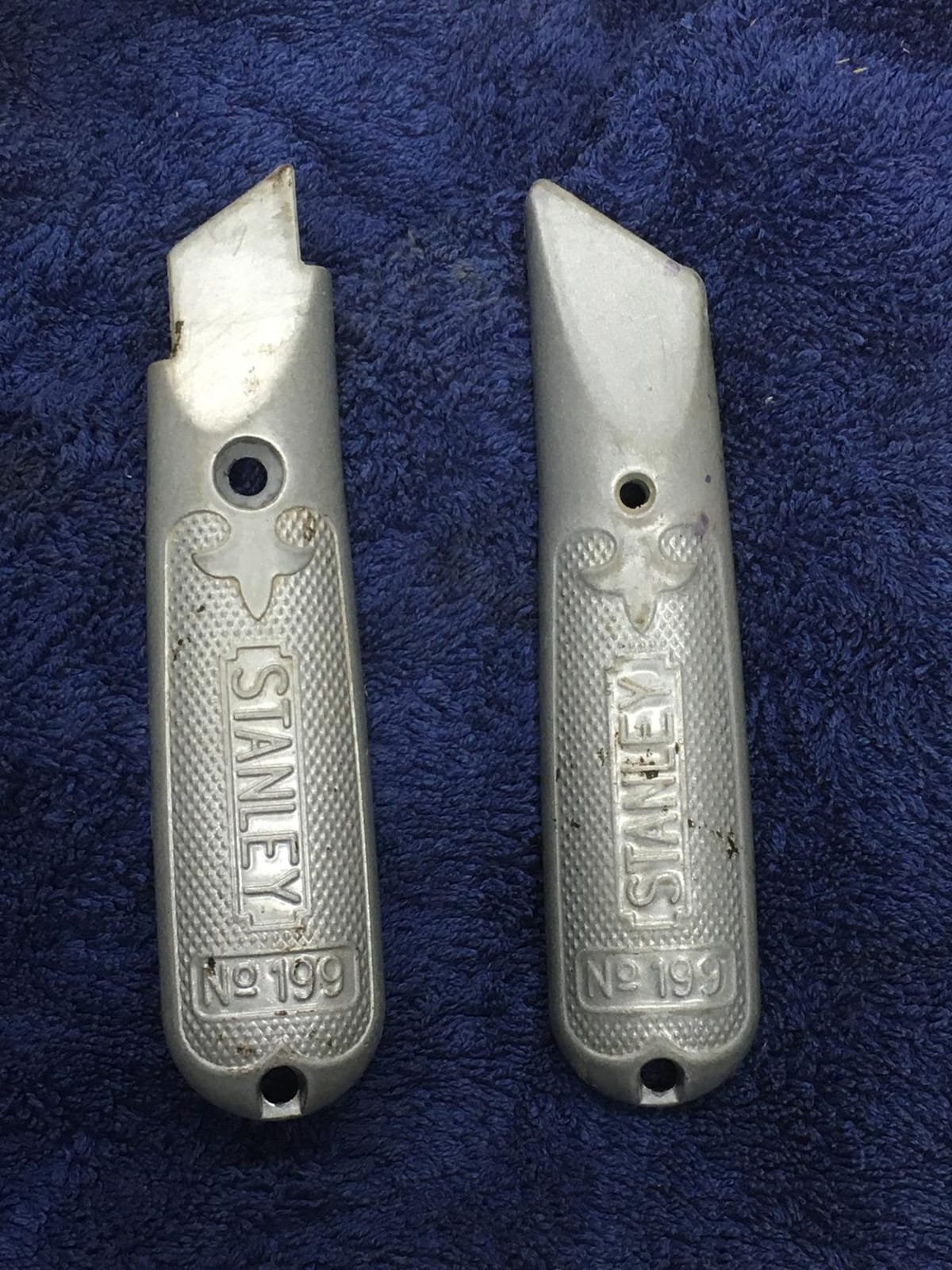
The front finger guard is the detail that makes it feel professional rather than dangerous. Your index finger sits behind a raised lip, which keeps your hand out of the travel path of the edge on a forward cut. The cast handle is heavier than you expect at 4.32 ounces, but that weight is what stops it from twisting when you break the score line.
It ships with three blades and fits most standard STANLEY replacement utility blades, so consumables are never a problem.
When the Classic 199 makes sense
This is the fixed-blade choice for someone who already knows they prefer the Stanley pattern, or who wants a knife that will simply still work in fifteen years. It suits steady renovation work and repair, and it pairs naturally with the same T-square you already own.
It is also the one to buy if the exposed blade does not bother you. Some tradespeople have simply made peace with that after years of use.
Where it falls behind
Blade changes take a screwdriver, and the current slotted screw is the part people complain about most. The IRWIN in pick eight does the same job with a captured screw, so it is worth comparing the two if you change blades often.
Also worth knowing: the modern build is no longer stamped Made in USA, and it is a bit larger and heavier than more compact fixed knives.
6. Fiskars Pro Folding Utility Knife: the best grip for a full day
Fiskars Pro Folding Utility Knife, Dual-Lock, 4.5″ Folded Size
Folding metal body
Dual-lock safety system
CarbonMax razor blade
6.25 inch extended
Pros
- Full-metal construction survives repeated drops from height
- Dual-locking system prevents accidental blade release
- One-handed flip-open with a positive snap into place
- Tool-less compound press-and-slide blade change
- CarbonMax blade holds an edge far longer than standard blades
Cons
- No onboard blade storage and only one blade included
- Belt clip is stiff and can arrive slightly rusted
- Opening and closing does not work well with gloves on
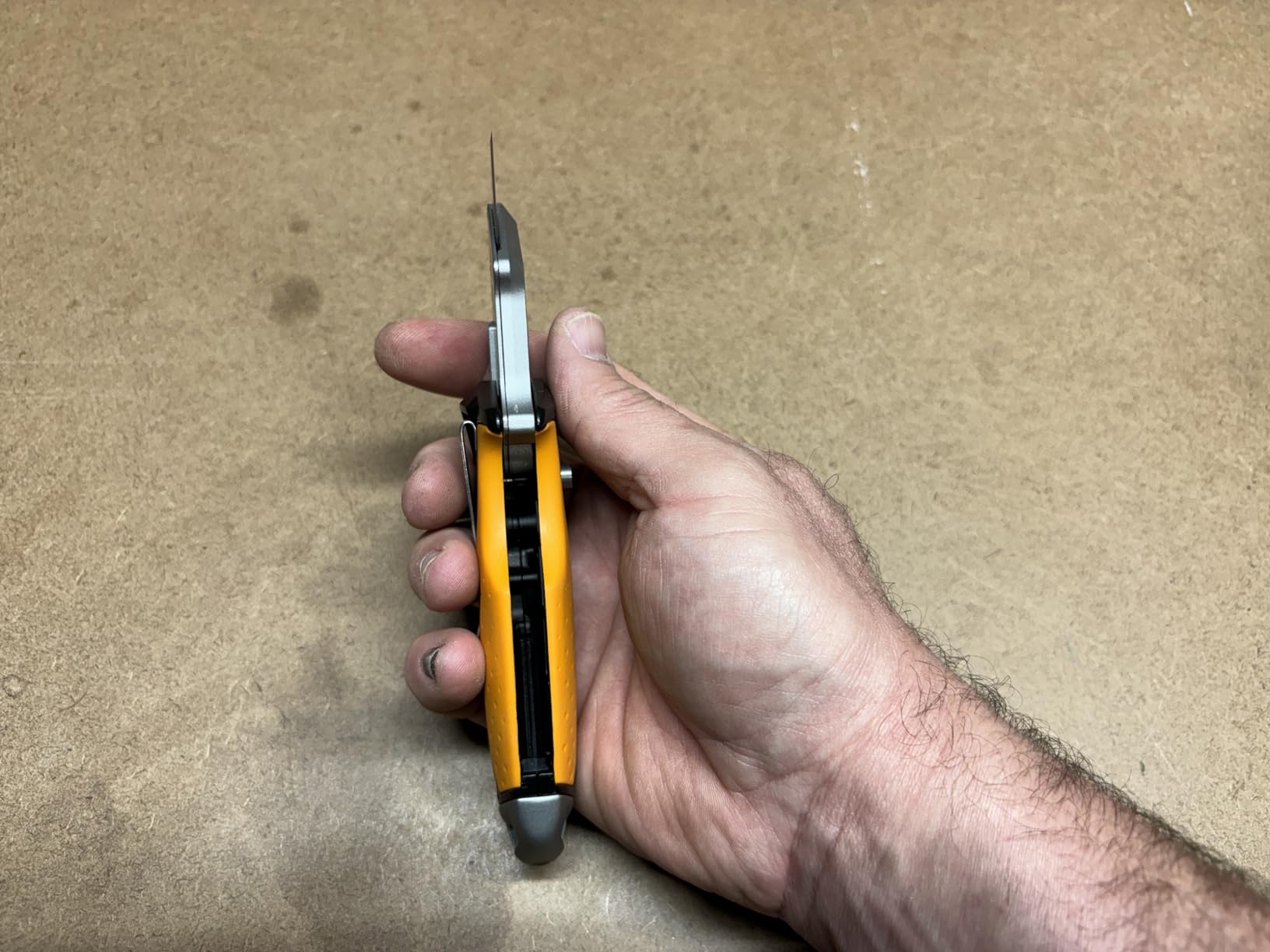
Two thousand reviews and a 4.7 rating, and the praise clusters on grip and construction. This is the most comfortable handle of the nine we put through drywall work, which is a subjective claim worth making because comfort over a full scoring shift is not subjective at all. It is the difference between finishing a room and putting the knife down at the third sheet.
Because it folds to 4.5 inches and carries a dual-locking system, it is also the one to leave in a bag or on a belt between jobs without thinking about it. Full-body metal takes drops that would crack a plastic barrel, and reviewers single that out when comparing it to lighter folders.
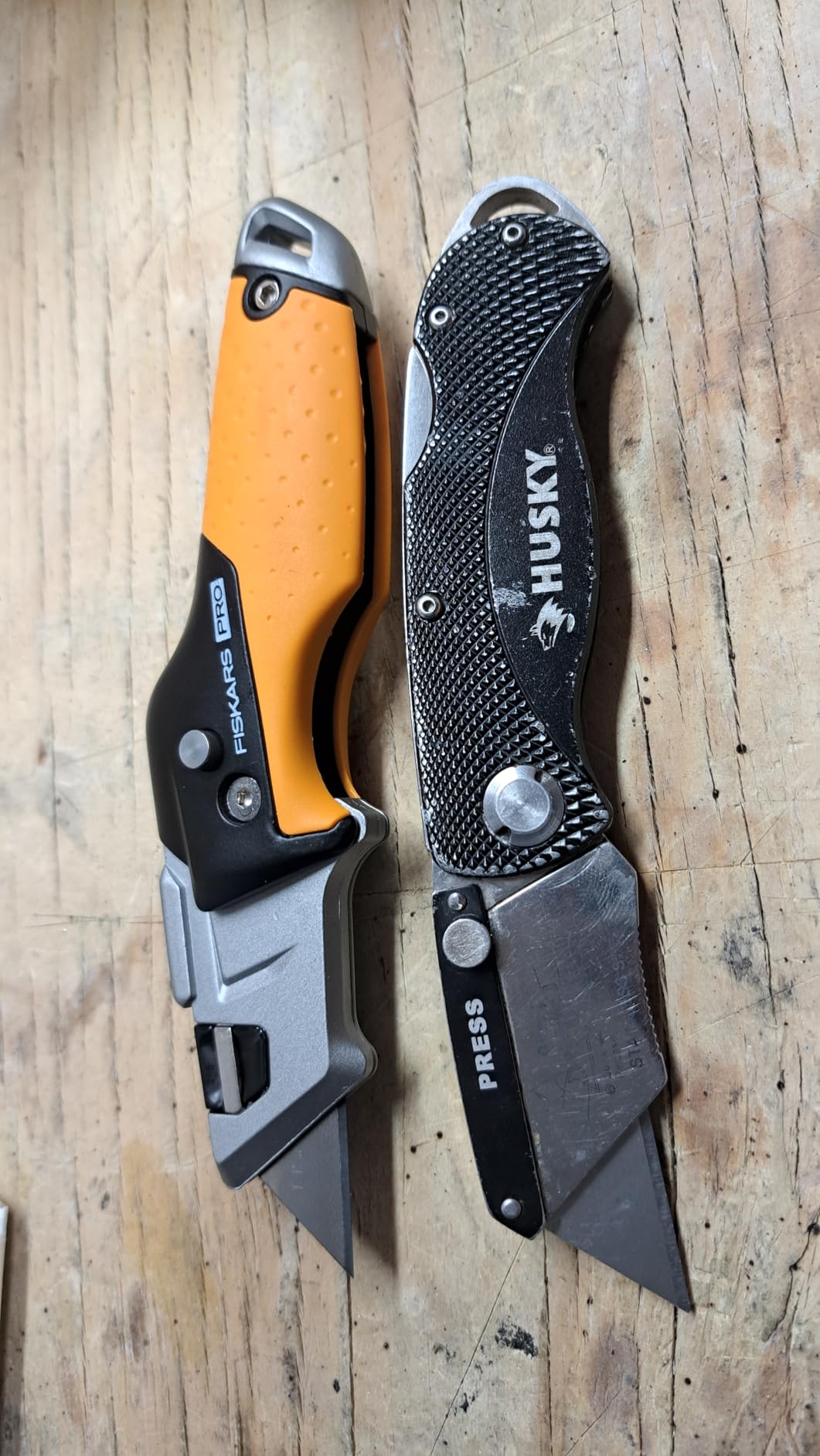
The CarbonMax razor blade is the quiet advantage here. It holds its edge for weeks rather than one afternoon, so during a long project you are not snapping a fresh blade every few sheets the way you would with a standard trapezoid. The tool-less compound press-and-slide change is quick once you know the motion.
The dual lock is worth understanding before you rely on it. One control secures the folded body, the other secures the blade at extension. Owners who carry this daily report no accidental closures, which is the failure that usually ends a folder’s life.
When the Fiskars earns its place
Pick it if you cut a lot of drywall and your hands are the limiting factor. It also handles rope, cardboard, and vinyl, so it doubles as a general carry knife, and the safety profile suits anyone who does not want an exposed edge hanging off a tool belt.
For a trade doing finish work and repair where cuts are short, this is a strong everyday choice.
Where it falls short
The lack of onboard blade storage is the biggest gap. It arrives with a single blade, so on drywall you are carrying no spares unless you add a separate carrier. That is a real drawback for anyone working away from a vehicle.
At 6.3 ounces it is the heaviest knife here, and one-handed opening with gloves on is awkward, which is exactly when you most need it. The belt clip is also stiff and has reportedly arrived slightly rusted.
7. Klein Tools FLICKBLADE 44306: a knife that doubles as a scraper
Klein Tools 44306 FLICKBLADE 2-in-1 Folding Utility Knife and Scraper with Built-In Blade Storage, Dual Locking Positions, Includes 3 Triple-Ground Carbon Steel Blades
2-in-1 knife and scraper
Built-in blade storage
Dual locking positions
7.53 inch aluminum body
Pros
- Switches between utility knife and scraper without tool changes
- Dual locking positions including an angled setting for precision
- Built-in storage keeps spare blades close
- Aluminum body feels stable and grips well with gloves
- Uses standard universal utility blades
Cons
- Bulkier than a single-purpose knife on a slim belt
- One reviewer reported a belt clip screw loosening with heavy daily use
- Blades are extremely sharp and need careful handling
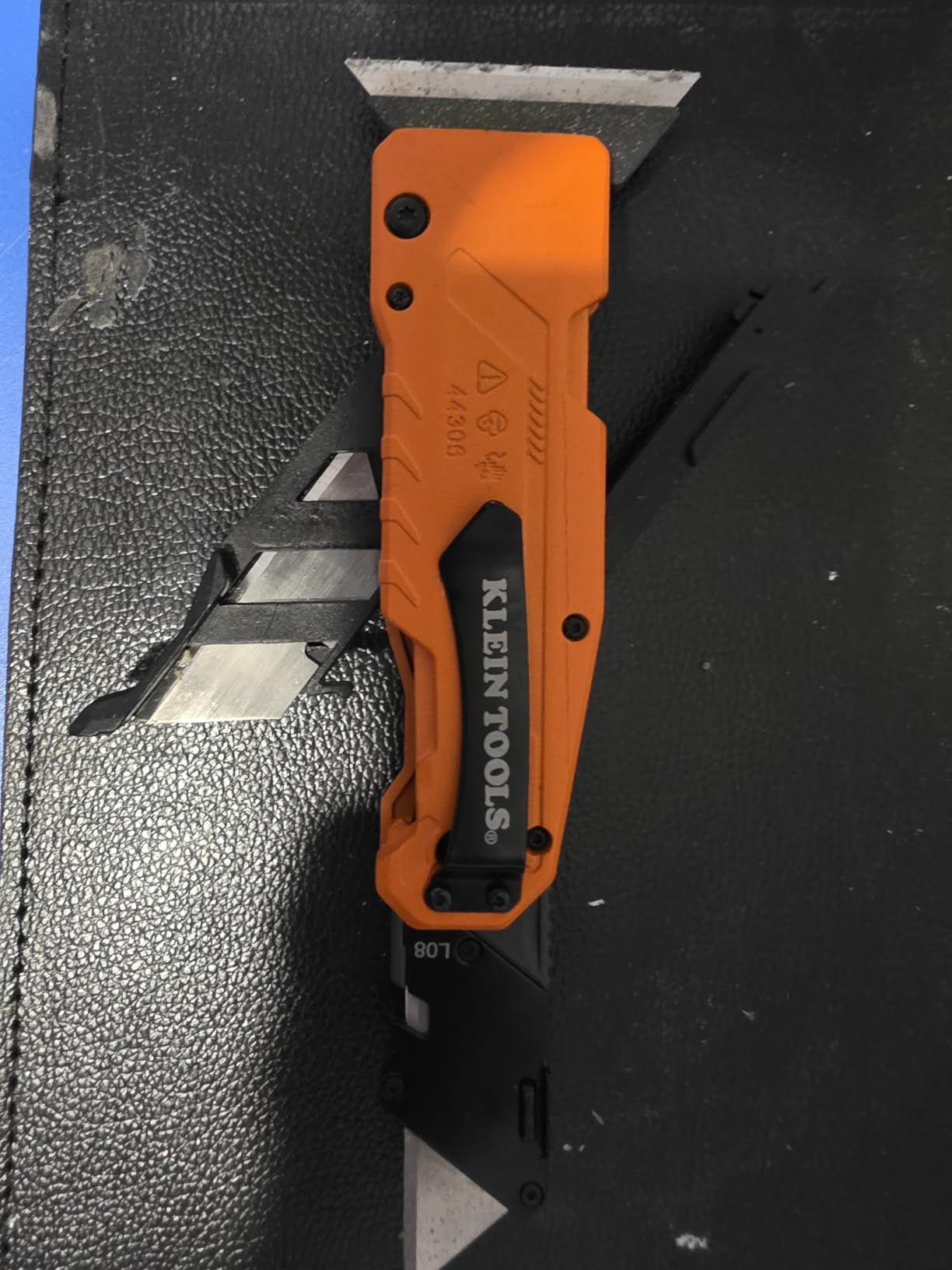
The FLICKBLADE is the odd one out here because it is two tools in one body. The back edge works as a scraper, which on drywall means lifting old tape, adhesive, and paint daubs before you score anything. Several reviewers describe it as the last utility knife they expect to buy, and that sentiment tracks with the 4.7 rating across more than 700 reviews.
The dual locking positions are the part that matters for cutting. Set to standard and it behaves like a normal folder for general cuts. Set to the angled position and the blade sits at a different attitude for precision work and cutouts, which is where drywall jobs tend to need a light touch.
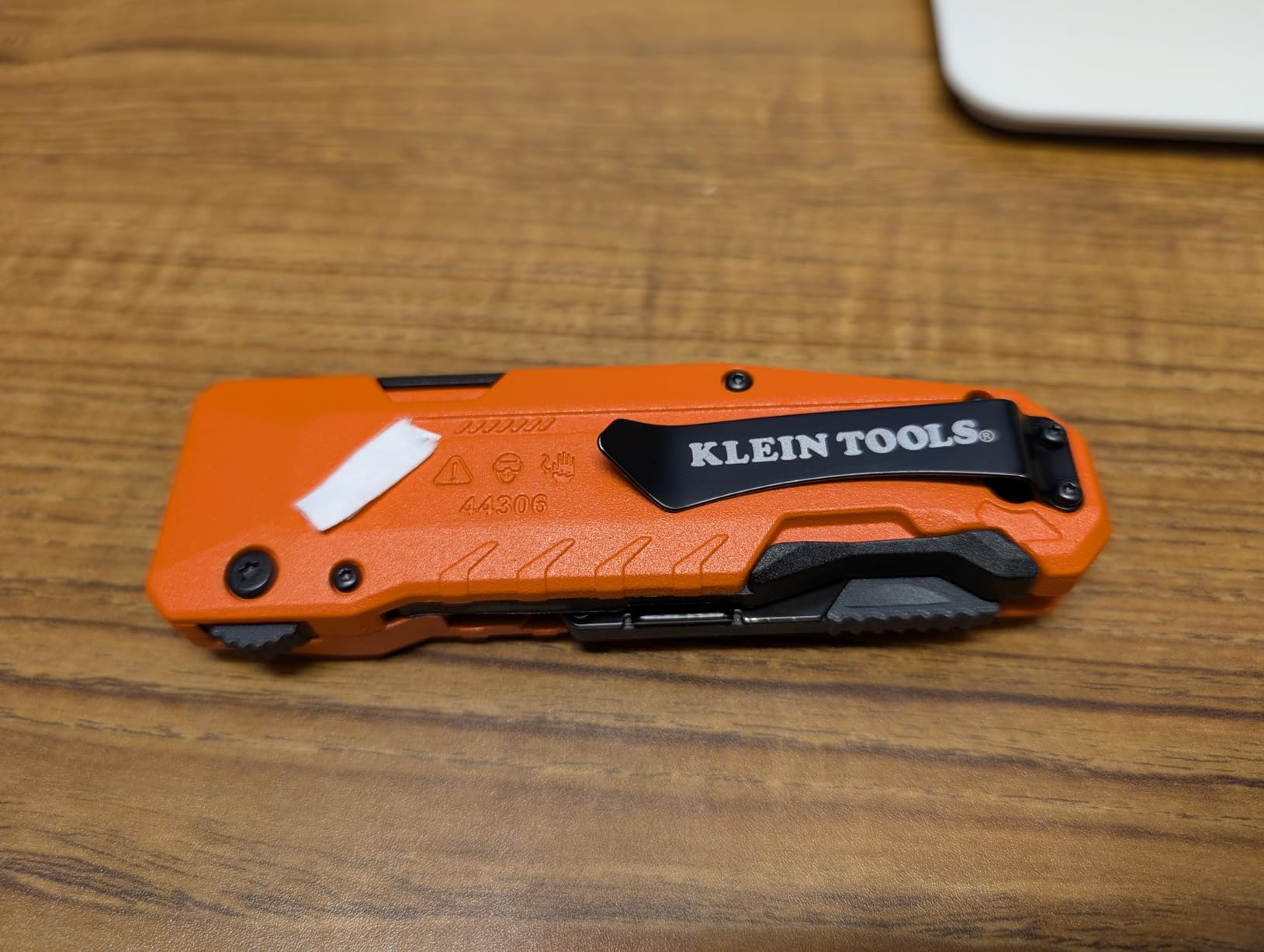
It holds a spare blade in the body, one of the few here that does alongside the Spec Ops and the IRWIN. It accepts standard universal utility blades rather than proprietary ones, so consumables are never a sourcing problem. Three triple-ground carbon steel blades ship in the box.
The aluminum body weighs 5.92 ounces and, more importantly, stays steady. On our scoring runs the frame did not twist, and the grip texture held up with dusty hands and with gloves on, which is more than we can say for every knife in this list.
When the FLICKBLADE is the right tool
It suits repair and remodel work where removing old material and cutting new material happen in the same session. Scraper plus cutter covers more of a patch job than a plain knife.
It is also a good pick for anyone who wants blade storage and folding safety without giving up a metal body.
Where it gets in the way
It is bulkier than a single-purpose knife, and on a crowded tool belt that matters. One reviewer also reported a belt clip screw loosening after heavy daily use, so check it occasionally if it goes on your belt daily.
The angled lock position is a genuine benefit but takes practice. On your first drywall cut with it, check the blade angle before you commit to a score line.
8. IRWIN 2081101 Fixed Blade Utility Knife: the budget fixed-blade buy
IRWIN Utility Knife, Fixed Blade (2081101), gray
Fixed non-retractable blade
Optimized cutting angle
Captured screw
Internal storage for 5 blades
Pros
- Fixed blade holds extremely firmly with no wobble
- Optimized cutting angle reduces hand fatigue on long sessions
- Lightweight and comfortable for tracking cuts with a tape measure
- Captured screw means no lost hardware during blade changes
- Includes a shatter-proof bi-metal 4-point snap blade
Cons
- Blade is always exposed with no safety mechanism
- Blade change requires a screwdriver
- Internal storage clip does not hold spare blades very effectively
More than a thousand reviews averaging 4.6, and the feedback from people who work drywall by hand is unusually consistent: firm blade hold with no wobble, comfortable angled cutting position, and a captured screw that never goes missing. That is exactly the profile you want for scoring, and it is why this is the budget fixed-blade pick.
The optimized cutting angle is doing real work. Cutting drywall is a repetitive push along a straight edge, and the geometry here is designed to reduce hand fatigue over long sessions. It is a small detail that shows up as less soreness at the end of a room.
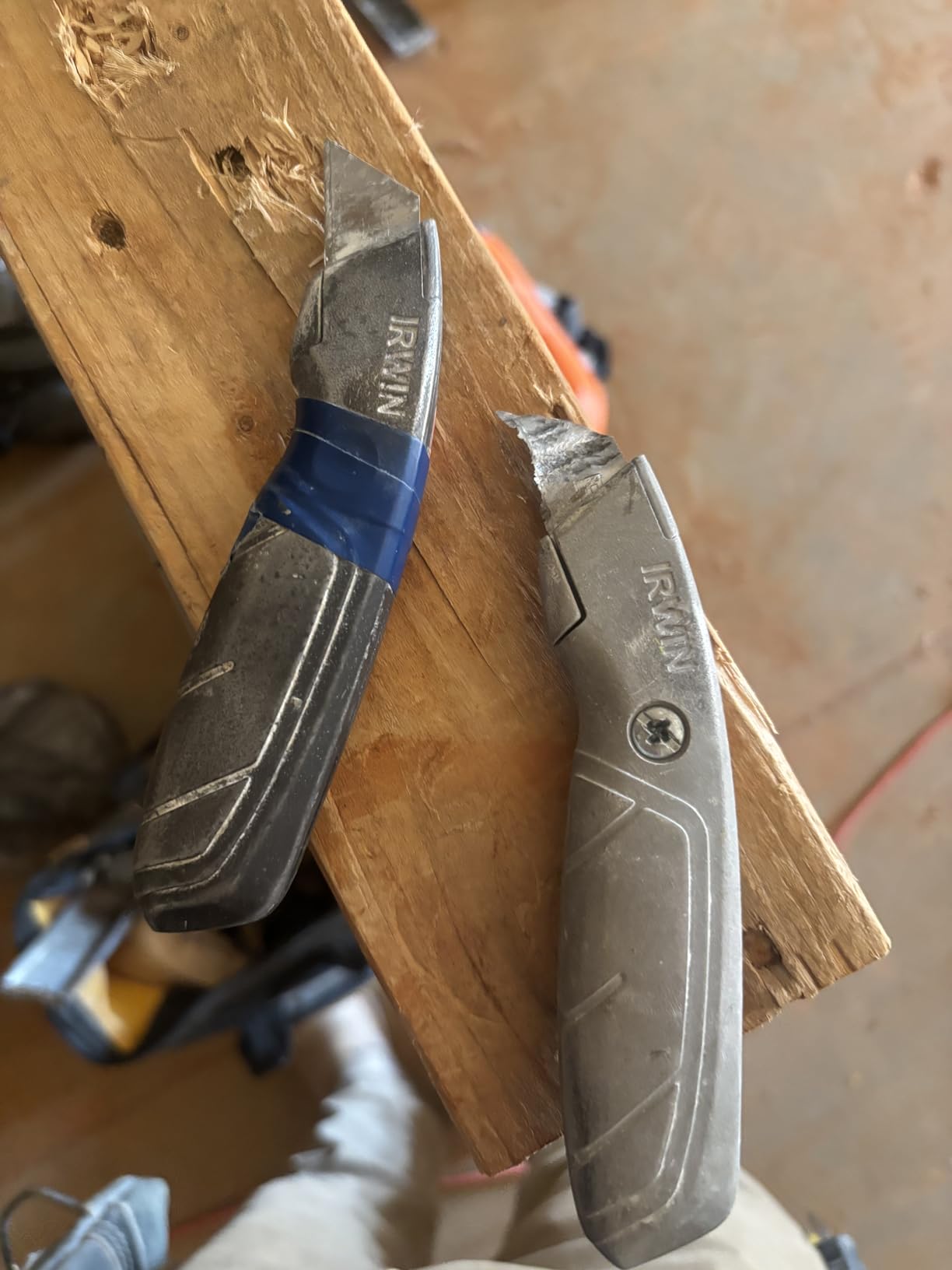
The included blade is worth noting. IRWIN’s 4-point blue blade is shatter-proof bi-metal construction with four usable edges, so it survives drops from a ladder in a way a standard carbon steel snap blade does not. The magnetic nose and captured screw make blade swaps straightforward.
Internally, the handle has room for up to five utility blades. In practice reviewers find the retaining clip is not especially effective, so treat the storage as a loose pocket for blades rather than a secure carrier.
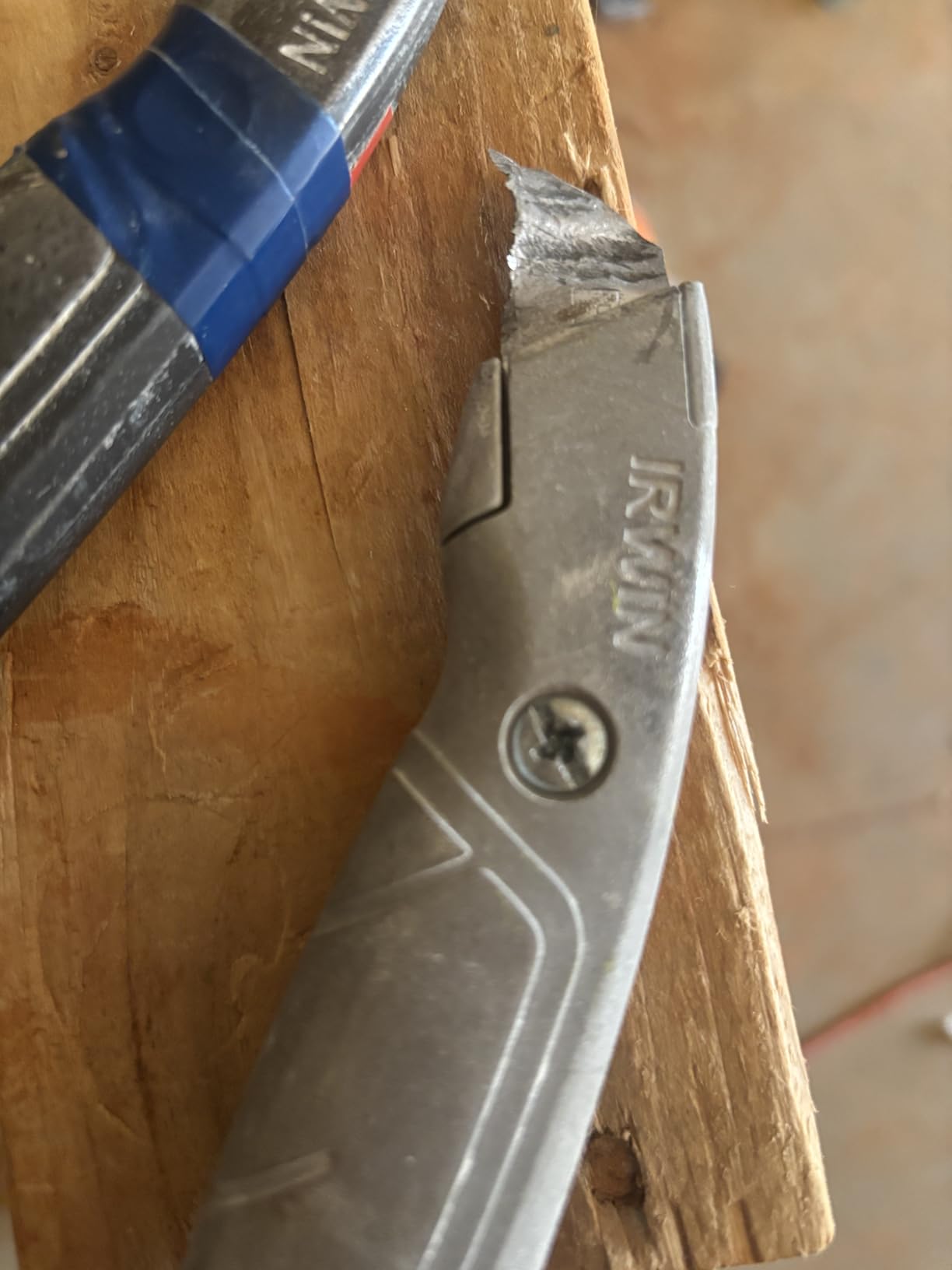
When the IRWIN makes sense
This is the one to buy if you want a fixed blade without spending much and you mostly cut drywall, insulation, and carpet. Reviewers who do hand drywall work call it the best cheap fixed-blade knife they have used, which is a strong statement in this category.
It is also useful for tracking cuts against a tape measure, since it is light and easy to control at slow speeds.
Where it falls short
The blade is always exposed. Multiple reviews stress this plainly, and you need to treat it accordingly, especially on ladders and ladders are exactly where drywall work happens.
Blade changes need a screwdriver, and the body can feel small for larger hands. If you want tool-less changes, the XW in pick two is the fixed-blade alternative.
9. Slice Auto-Retractable Box Cutter: safest, but not for sheet goods
Slice Auto-Retractable Box Cutter, Heavy Duty Utility Knife, Safe Ceramic Blade Lasting 11x Longer than Metal, 1 Pack
Auto-retracting blade
Zirconium oxide ceramic edge
33.3 mm blade
Curved ergonomic handle
Pros
- Auto-retracts after each cut so exposed blade time is minimal
- Ceramic blade resists rust and stays sharp far longer than metal
- Finger-friendly zirconium oxide edge is safer than a standard steel edge
- Curved handle suits both left-handed and right-handed users
Cons
- Ceramic edge is built for packaging material rather than hard sheet goods
- Only one blade included and ceramic replacements cost more than standard blades
- Shorter cutting length than a full-size drywall utility knife
We included this one deliberately, because ceramic blades come up constantly when people ask about drywall knives and the answer is not what they expect. The Slice is an excellent box cutter. It is not a drywall knife, and understanding why is more useful than skipping it.
The safety case is genuinely strong. The blade auto-retracts when you release the slider, and the zirconium oxide edge is finger-friendly rather than aggressive. With over two thousand reviews, owners consistently frame it as something you can leave in a drawer or pocket without thinking about it. If you cut a lot of packaging in a home or office, this is a very good tool for that.
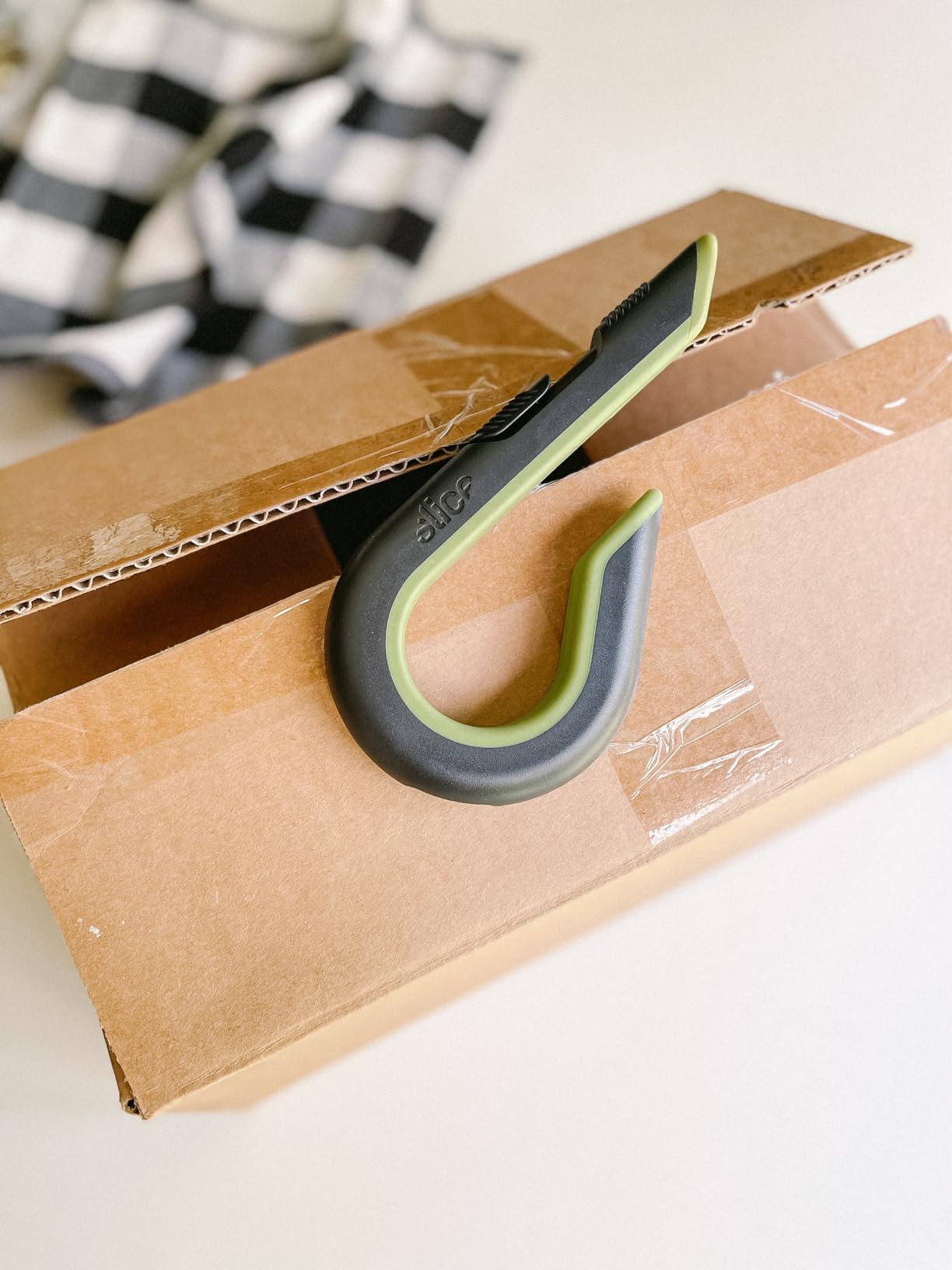
Ceramic itself has real merits: it never rusts, and the edge lasts considerably longer than metal, which the maker rates at 11 times. It is also more brittle, which is the problem on hard sheet goods. A snapped ceramic segment is a serious hazard in a way a snapping steel segment is not.
The blade is also narrower than the 18mm style used by the OLFA, so you would be making more passes on a full sheet to get through the gypsum core.
When the Slice is the right choice
Use it for cardboard, tape, cardstock, vinyl, plastic film, and clamshell packaging, and for trimming anything thin. It is a strong choice for anyone who wants the shortest possible exposed-blade time.
It also works for the light final trim passes on a drywall patch once the score is already broken.
Where it should stay out of the way
Do not use it to score or cut full sheets. The edge is not built for gypsum board, the blade length is short for the job, and ceramic fragments are more dangerous than steel ones when a segment breaks.
Only one blade is included, and replacements cost more than standard blades. For drywall, choose one of the picks above instead.
How to score drywall without tearing the paper face
Almost every bad drywall cut we have seen comes from one of three mistakes: pressing too hard, cutting instead of scoring, or following a line that is not straight. Five steps fix all three.
Measure twice, mark lightly. Mark the score line with a pencil, not a heavy marker. You want to see the line through the dust, not fight it later.
Use a straightedge you trust. A drywall T-square or a stiff straightedge is what keeps the score from wandering over four feet. A freehand cut drifts by degrees, and degrees add up to a crooked edge.
Set the blade depth shallow. You want to cut the paper face and barely open a groove in the gypsum. Most retractables have a first or second position for exactly this.
Score in one steady pass. Do not saw back and forth. That is what shreds the paper. Use steady forward pressure along the straightedge and let the knife do the work.
Snap the score, then trim. Bend the board along the line until it breaks cleanly, then use the same knife to shave the gypsum core flush. A fresh edge matters more here than at any other step.
If the paper tears, the blade was dull or the pressure was too high. Both are fixable, and neither requires a different knife, which is why we test edge sharpness as closely as we test rigidity.
Fixed vs retractable vs folding for drywall
Choose a fixed blade if you score more than a handful of sheets a year or work at height. The blade cannot move, so it cannot retract mid-score. Choose a retractable if you need one tool for cardboard, carpet, rope, and vinyl as well as drywall, and you value fast blade changes and storage. Choose a folding knife if you carry tools between jobs and want the edge to disappear into a 4.5 inch body when you are done.
The decision rule is short. If the cut is long, straight, and you will lean on the knife, go fixed. If the cuts are short and varied, go retractable with onboard blade storage. If carrying safety matters most, go folding.
One honest warning from the forums: retractable blades retracting under scoring pressure is the single most repeated complaint about this tool. It is why our top pick uses a rigid aluminum frame, and why the two fixed blades in this roundup exist.
Blade width and segment count for drywall
Wider blades flex less, so 18mm style knives hold a straight line better on sheet goods. Slim trapezoid blades, commonly 9mm to 13mm, are better for trim and detail work where you want control. Snap-off segment counts matter less than people think, because gypsum dust wears the extreme tip long before the whole segment is spent.
The practical point: a blade is a consumable, and all of picks one through four and nine except the ceramic take standard blades you can buy in any hardware store. Brands with proprietary blades create real friction on a job site, which is why the Klein in pick seven and the Spec Ops in pick three score well for using standard blades.
Why drywall dust jams retractable knives, and how to clean them
Gypsum dust is fine, abrasive, and gets into everything. It works its way into the channel where a retractable blade slides, mixes with any oil on the track, and forms a paste that stops the slider moving smoothly. The symptom is usually a blade that retracts slowly, or sticks at a setting that used to click cleanly.
The routine is short. At the end of each dusty day, retract the blade fully and blow the channel out with a few short bursts of compressed air. Wipe the track with a dry cloth, then a barely damp one, and let it dry before you close it. Keep spare blades in a sealed container rather than loose in a dusty pocket. If you store it long-term, add a drop of light oil to the track.
Fixed blades skip all of this, which is another quiet argument for them on drywall work. If you want a proper place to keep blades and blades you have already used, our utility storage cabinet roundup covers the shortlist.
When a drywall saw or T-square beats a knife
A utility knife scores the sheet and makes straight cuts. A drywall saw, with its coarse teeth and pointed tip, is better for plunge cuts, cutting out around outlet boxes, and following a curved line where a straightedge would force you off the mark. The common pro sequence is to score the paint with a knife first, then follow the line with a saw.
The T-square is not a cutting tool, but it is what makes the knife accurate. Holding the straight edge and the cutting tool in one hand on a ladder is how people get hurt, so use a T-square on anything longer than about two feet.
Do not try to cut OSB, cement board, or tile backer with any knife here. Those are cement-based or resin-coated boards, and they need a different tool entirely. Knives on this list are for gypsum board, cardboard, carpet, insulation, and similar materials.
Safety habits that come with a drywall knife
Drywall work puts a sharp edge at head height and a ladder under your feet, so the safety rules are short and worth stating plainly. First, a fixed blade is always out. That is the price of pick two, pick five, and pick eight, and it means you put the knife down with the edge turned away from you rather than in your back pocket.
Second, snap-off segments go somewhere. Breaking a used segment should happen over a waste bin, not in your hand or over your boot. Snap it in the notch where the maker designed the break, push it away from the body, and pick the piece up rather than letting it fall into sawdust where nobody will find it.
Third, gloves change what a one-handed blade change looks like. Several knives here are advertised as one-handed operation and mean it with bare hands. If you wear gloves while cutting, test the change before you need it at height.
Fourth, do not score drywall while standing on the top two rungs of a ladder with one hand on the square. This is the single most common way people get hurt doing this work, and a T-square costs far less than a trip to urgent care.
Which knife fits your job scale
Match the tool to the volume of work. Here is how the picks map to real jobs.
Patch repair. You are cutting a small piece to fit a hole, trimming carpet, and removing old tape. The Stanley Classic 199 or the IRWIN fixed blade both handle it, and a retractable like the WORKPRO is fine if you also have other jobs to cut.
One sheet, occasional remodel. Add a T-square and a straightedge. The OLFA L-1 is a strong pick here because snap-off segments mean a fresh edge is always one break away.
Full hang, one person. Volume matters. The XW fixed-blade cutter or the Stanley 199 give you a score that does not drift, and both ship with spare blades or take standard ones. The Spec Ops covers you if the truck is far away.
Professional crew. Carry two knives. A fixed blade for scoring, since that is where retraction causes damage, and a retractable with storage for everything else. Contractors on forums describe exactly this arrangement, and the Spec Ops or WORKPRO covers the second role.
Our drywall sander roundup covers the next step once the sheets are up and the joints need finishing.
Frequently Asked Questions
Can I cut drywall with a utility knife?
Yes. A utility knife scores the paper face, you snap the board along the line, then trim the gypsum core with the same knife. The scoring cut should be shallow and steady, made with a straightedge, rather than a deep freehand cut.
What type of knife do I need for drywall?
For regular drywall work, a fixed-blade utility knife gives the most consistent score because the blade cannot retract mid-cut. A retractable is more flexible if you also cut carpet, cardboard, and vinyl. A folding knife is best if safe carry matters most.
What blade is best for cutting drywall?
A standard trapezoid or snap-off blade with a fresh edge. Wider 18mm style blades flex less and hold a straight line on full sheets, while narrower blades suit trim and detail work. Change the blade as soon as it stops cutting cleanly, because a dull edge tears the paper face.
Should a drywall cutting knife be fixed or retractable?
Fixed if you score long straight lines or work at height, because the blade cannot move under pressure. Retractable if you need one tool for many materials and value onboard blade storage. Whichever you choose, confirm the lock holds before you start a cut.
How do I stop my utility blade retracting when scoring?
Use the deepest lock position available, keep some blade exposed rather than all of it, and use steady even pressure rather than leaning on the knife. A fixed-blade design removes the problem entirely. Keep the channel clean of gypsum dust, which can make the lock slip.
Do I need a drywall saw or a utility knife?
You need both for most jobs. The knife scores straight lines and makes the initial cut, and the saw handles plunge cuts, outlet cutouts, and curved lines. Many pros score the paint with a knife first, then follow the line with a saw.
Is a ceramic blade better for drywall?
No. Ceramic stays sharp longer and never rusts, but it is brittle and made for packaging materials rather than hard sheet goods. Standard steel trapezoid blades are cheaper to replace, safer when a segment breaks, and better suited to gypsum board.
The best utility knives for drywall, final word
For most people, the WORKPRO Premium Utility Knife is the best utility knife for drywall because it pairs a rigid die-cast aluminum frame with the largest review base in the category, and it doubles as a general-purpose knife for everything else on a job. If your work is drywall first and everything else second, the XW fixed-blade cutter removes the retraction risk entirely. If you work away from a truck, the Spec Ops with five blades in the handle removes the most common interruption.
Whichever you pick, keep a straightedge against the sheet, score shallow and steady, and change the blade the moment it stops cutting cleanly. Those three habits matter more than any model number. Use the buttons below to check current details, and we will keep this roundup updated through 2026.