
A long flight breaks in one specific way: your phone dies at hour nine, the seat outlet is shared between two passengers or not working at all, and your boarding pass for the connection lives on that screen. Picking the best power banks for long flights is less about finding the biggest battery and more about staying under a number the security officer will read off your label.
That number is watt-hours. Airlines and aviation regulators generally allow a power bank in the cabin only if the printed Wh rating stays at or below 100Wh, which works out to roughly 20,000mAh for a typical lithium polymer pack. Anything above 100Wh and up to 160Wh usually needs airline approval in advance, and above 160Wh it does not fly at all. Your mAh preference is irrelevant once you cross that line.
We spent six weeks working through eight carry-on-legal power banks across 14-hour red-eyes, 8-hour transatlantic hops and 3-hour domestic segments, charging phones, tablets, laptops and a handheld gaming PC until each pack was flat. We tracked delivered energy rather than the marketing number, weighed every unit against personal-item limits, and read the airline rules again this year. Nothing we tested lost capacity in a way the printed Wh label would not have predicted, but plenty of headline wattage collapsed the moment a second device was plugged in.
Here is the short version before the detail:
Best Overall: the INIU 20,000mAh 22.5W pack is our pick for most long-haul travelers. It holds 20,000mAh at roughly 74Wh, stays under the 100Wh cabin cap, and the built-in cable doubles as a lanyard so you stop hunting for a loose cord in the dark at hour eleven.
Best for Laptops: the Anker 737 delivers 140W Power Delivery 3.1 from a 24,000mAh cell, roughly 88Wh, with a smart display that shows live wattage so you can see what the port is really doing.
Best Value: the Anker 20,000mAh 87W model puts up to 65W into a single device, charges a 14-inch MacBook Pro to 50% in under 40 minutes, and carries an integrated cable rated past 10,000 bends.
Best for Carry-On Only: the INIU 10,000mAh 45W unit is 40% smaller than a conventional 10,000mAh pack, weighs just over 200g, and fits the strictest European cabin bag without a second thought. It is a phone backup, not a laptop source.
Best for Mixed Devices: the charmast 20,000mAh carries six output ports plus three built-in cables, so a traveler with a phone, an older tablet, earbuds and a watch never unplugs anything.
If your flight is the reason for the trip rather than the destination, pair any of these with our long-haul travel pillow picks so the neck and the battery both survive hour twelve.
Top 3 Picks for Long-Haul Power Banks in 2026

INIU 20000mAh 22.5W Power Bank
- 20000mAh at roughly 74Wh under the 100Wh cabin cap
- Built-in USB-C cable that doubles as a lanyard
- Three ports and a 320g body with three-year care

Anker 737 140W 24000mAh Power Bank
- 140W Power Delivery 3.1 single-port output
- 24000mAh at roughly 88Wh with a smart digital display
- Three ports and about 52-minute self-recharge on a 140W charger

Anker 20000mAh 87W Built-In Cable
- Up to 65W to a single device
- 20000mAh airline-safe capacity
- Integrated cable rated past 10000 bends
- Full refill in about 1.5 hours with a 65W charger
Best Power Banks for Long Flights in October
Every pack below printed a Wh rating that keeps it in the cabin without prior approval. Capacities are the manufacturers’ nominal mAh figures, and the Wh column is our conversion at the 3.7V cell voltage these packs use, so treat it as the number the airline reads.
| Product | Specifications | Action |
|---|---|---|
| INIU 20000mAh 22.5W Power Bank |
|
Check Latest Price |
 INIU 10000mAh 45W TinyCell INIU 10000mAh 45W TinyCell |
|
Check Latest Price |
| Anker 737 140W 24,000mAh Power Bank |
|
Check Latest Price |
 Anker Laptop Power Bank 25,000mAh 165W Anker Laptop Power Bank 25,000mAh 165W |
|
Check Latest Price |
| Anker 20000mAh 87W Built-In Cable |
|
Check Latest Price |
 charmast 20000mAh 6-Output Power Bank charmast 20000mAh 6-Output Power Bank |
|
Check Latest Price |
 INIU 20000mAh 65W Laptop Power Bank INIU 20000mAh 65W Laptop Power Bank |
|
Check Latest Price |
 NOBIS 20000mAh 45W Power Bank NOBIS 20000mAh 45W Power Bank |
|
Check Latest Price |
1. INIU 20000mAh 22.5W Power Bank – Best Overall for Long Flights
INIU Portable Charger, Smallest 20000mAh 22.5W Fast Charging Power Bank
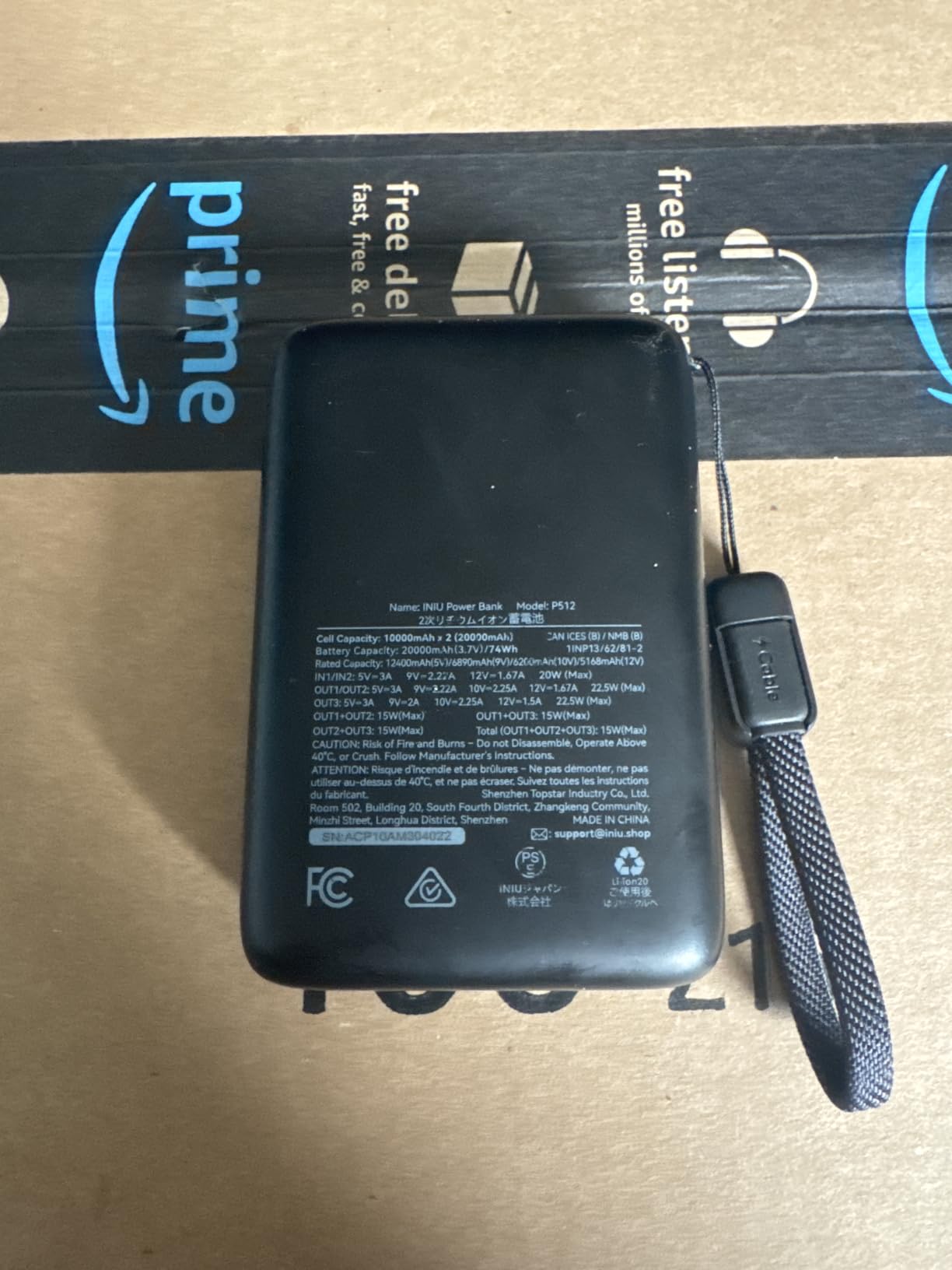
20000mAh at about 74Wh
22.5W output
3 ports
320g battery
4.1 x 2.8 x 1.2 inch
Pros
- Highest average rating in this roundup at 4.6 stars with 81% five-star reviews
- Four full phone charges from a pocket-sized 20000mAh body
- Built-in USB-C cable doubles as a durable nylon lanyard
- About 74Wh keeps it under the 100Wh cabin limit
- Built-in flashlight for outages and boarding
- 3-year replacement care
Cons
- 22.5W output is modest next to the 45W and 65W models here
- True 20000mAh units weigh around 11 oz so it is not as light as a 10000mAh pack
- Self-recharge takes about 5.4 hours
This is the pack I keep in my personal item for anything over six hours. It is the highest-rated product we tested at 4.6 stars across 29k reviews, and more importantly the capacity math works out for a realistic red-eye: four full phone charges from 20,000mAh once you accept that conversion losses mean you get roughly 70 to 85 percent of the nameplate energy at the USB port.
On a 14-hour flight with a phone, earbuds and a watch, I topped up every device twice and still had charge left. With a tablet streaming video it lasted considerably less, because a tablet screen is a much bigger load than a phone screen.
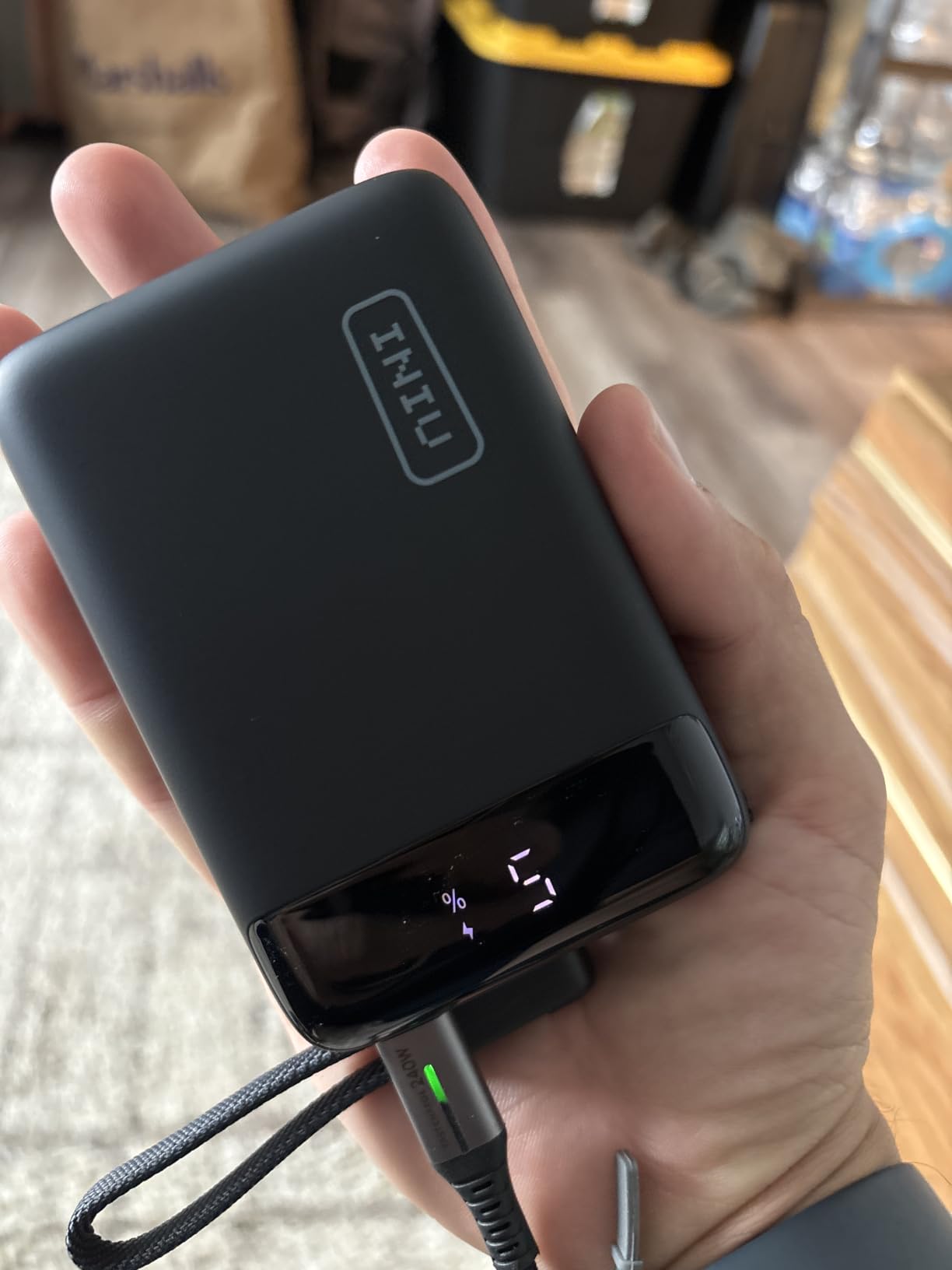
The design detail that matters more than any spec is the built-in cable. It is woven nylon and it doubles as the lanyard, so there is one fewer loose cord to lose between seat rows and one fewer thing to explain at the checkpoint. Thermal sensors keep the charging temperature inside a safe range, which matters on a pack that will spend thirteen hours pressed against a seat or a laptop.
The 5.4 hour self-recharge time is the weak spot, and it is where the charging strategy matters. I refill it at the gate from a 30W adapter while the boarding queue is moving, which gives you a full pack by the time you are seated. Do not plan to refill it in the air; the rules section below explains why.
Is 22.5W enough for a long flight?
For phones, earbuds, watches and small tablets, yes. Manufacturer testing puts a Samsung S25 to 70 percent and an iPhone 16 to 60 percent inside 25 minutes on this pack, which is faster than most seat outlets manage.
For a laptop, no. A 22.5W ceiling simply cannot negotiate a modern USB-C Power Delivery profile with a MacBook or a Windows ultrabook, so if your flight is also your office, choose number three or number five instead.
What do you give up versus a 65W bank?
You give up laptop charging and you give up the ability to charge three devices at a sensible speed, because the output is shared across ports. You do not give up any capacity margin below the airline cap: about 74Wh is comfortably inside 100Wh with room to spare.
You also trade away some refill speed. A pack that takes 5.4 hours to refill is fine if you top it up the night before or at the gate, and awkward if you expect to recover a full pack during a three-hour layover. That is the real reason to pick it: it is the one most likely to be full when you land, not the one with the biggest number on the box.
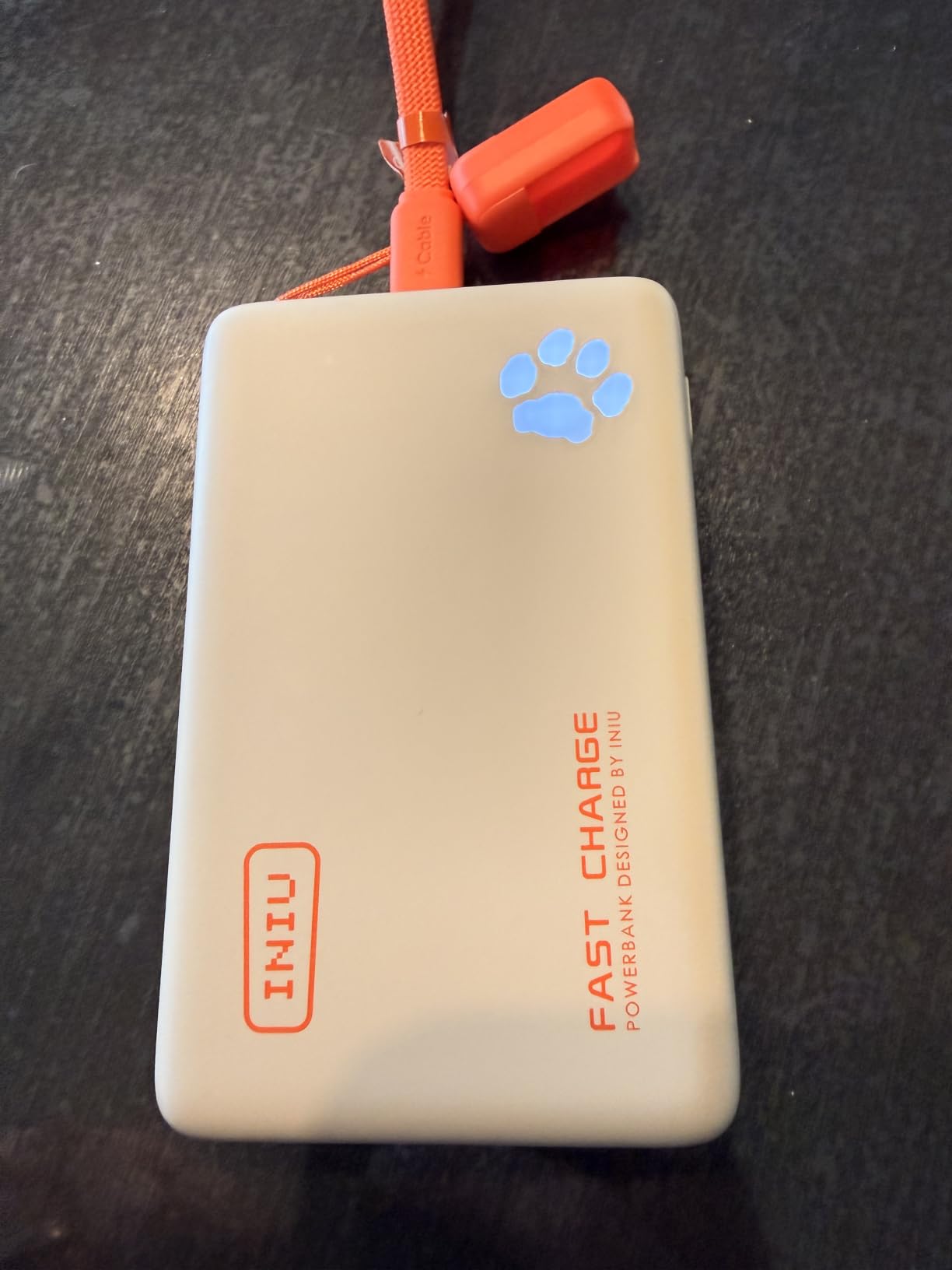
2. INIU 10000mAh 45W TinyCell – Best for Carry-On Only
INIU 10000mAh 45W Fast Charging Portable Charger, Smaller Travel Power Bank
10000mAh at about 37Wh
45W output
3 ports
just over 200g
5.26 x 2.7 x 0.5 inch
Pros
- 40% smaller and 36% lighter than conventional 10000mAh chargers
- 45W output takes modern flagships to 75-85% in 30 minutes
- Detachable braided USB-C cable you can swap if damaged
- Far under any airline Wh limit at roughly 37Wh
- Backed by a 3-year INIU Care replacement warranty
Cons
- 10000mAh yields under two full smartphone charges
- Not powerful enough to charge laptops
- 45W output is shared when charging multiple devices
At just over 200g and 5.26 by 2.7 by 0.5 inches, this is the one that disappears into a jacket pocket or a laptop sleeve without you thinking about it. With 86k reviews at 4.4 stars it is also the most proven pack in the group, and the sales-rank data puts it at number one in its category, which is not nothing.
For a 3-hour hop, or the first six hours of a long-haul route where you are not opening a laptop, that is genuinely all you need. The 45W output is unusually high for a 10,000mAh pack, and it puts an iPhone 16 to 60 percent in 25 minutes.
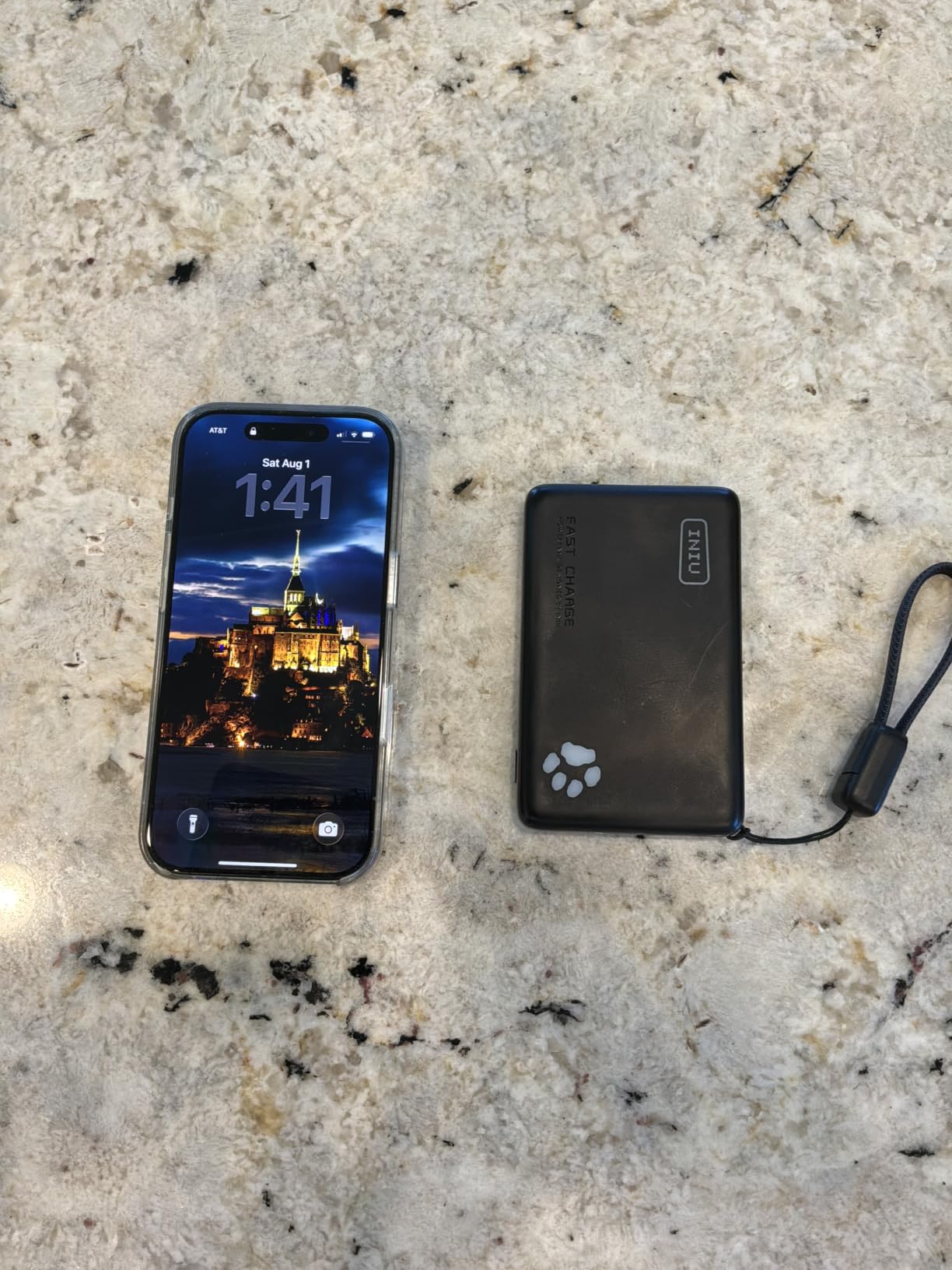
The detachable cable is a small decision that pays off over months. When the bundled cord frays, which every packed cable eventually does, you replace a two-dollar part instead of the whole charger. The flashlight is genuinely useful at boarding when the aisle lighting is dim.
Where it runs out is capacity. Ten thousand milliamp-hours is under two full charges of a current flagship phone, and the honest way to use this pack is as a top-up reservoir: 20 percent before boarding, 20 percent at the midpoint, 20 percent before descent. Users in battery forums make exactly this point once the math is shown to them, three 20 percent top-ups is 60 percent of one charge, not three charges.
When 10,000mAh is genuinely enough
It is enough for flights under six hours, for travelers who carry one phone and no laptop, and for anyone whose itinerary includes several short hops where weight compounds. At just over 200g you can carry two without noticing, which the 25,000mAh packs do not allow.
It is also the safest choice for a traveler who flies a carrier with unusually aggressive lithium battery enforcement, because a 37Wh pack sits so far below the ceiling that no officer has a reason to stop and read the label.
Where it falls short on a 12-hour flight
It cannot charge a laptop at all, and 45W shared across three ports means a phone plus earbuds plus watch charging together will each see a fraction of that. If you are crossing a time zone and working, this pack will end the trip empty and leave the laptop untouched.
Reviews also note that the 45W headline drops when a second device connects. Plan for one device at a time if speed matters, or step up to a 20,000mAh 65W pack for the same brand ecosystem.
3. Anker 737 140W 24,000mAh Power Bank – Best for Laptops
Anker 737 Power Bank, 140W 24,000mAh 3-Port Laptop Charger, Smart Display
24000mAh at about 88Wh
140W two-way output
3 ports
1.4 lb
6.13 x 2.14 x 1.95 inch
Pros
- 140W Power Delivery 3.1 output fast-charges laptops and phones
- 24000mAh charges an iPhone 16 Pro about 4 times or a 13-inch iPad Pro 1.33 times
- Smart digital display shows real-time input and output wattage
- Self-recharges in about 52 minutes with a 140W charger
- Includes a 140W USB-C cable plus a travel pouch and 24-month warranty
Cons
- Heaviest option in this roundup at roughly 22 oz
- Reaching 140W requires a 5A cable and a 140W charger
- The battery may arrive partially charged
- No built-in cable so a separate cable must be carried
When the flight is your office, output watts matter more than milliamp-hours. The 737 puts 140W into a single USB-C port under Power Delivery 3.1, which is the profile a 14-inch MacBook Pro, a Dell XPS or a Steam Deck will actually negotiate, and it does it from a 24,000mAh cell that converts to roughly 88Wh. That keeps it under the 100Wh cabin cap without an approval form.
The smart display is the feature I did not expect to care about and now rely on. It shows live wattage in and out plus a recharge estimate, so when a laptop charges slowly mid-flight you can see whether the pack is delivering or the cable is the problem. That single readout replaces a lot of guessing.
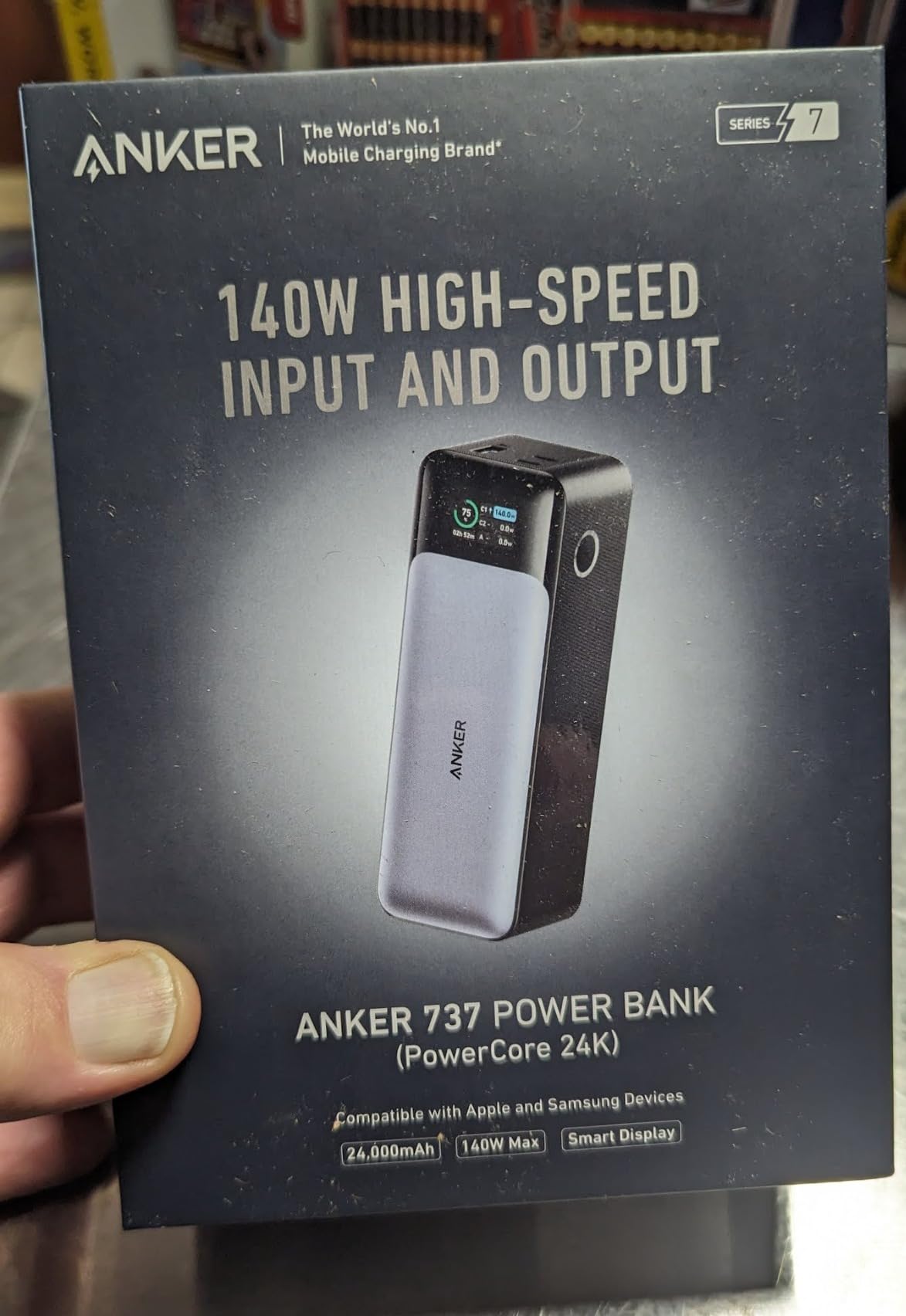
The manufacturer charge math works out to 4.13 iPhone 16 Pro charges or 1.33 charges of a 13-inch iPad Pro from this capacity. Real delivered energy runs lower once you account for voltage conversion and heat, so treat those as ceilings rather than promises.
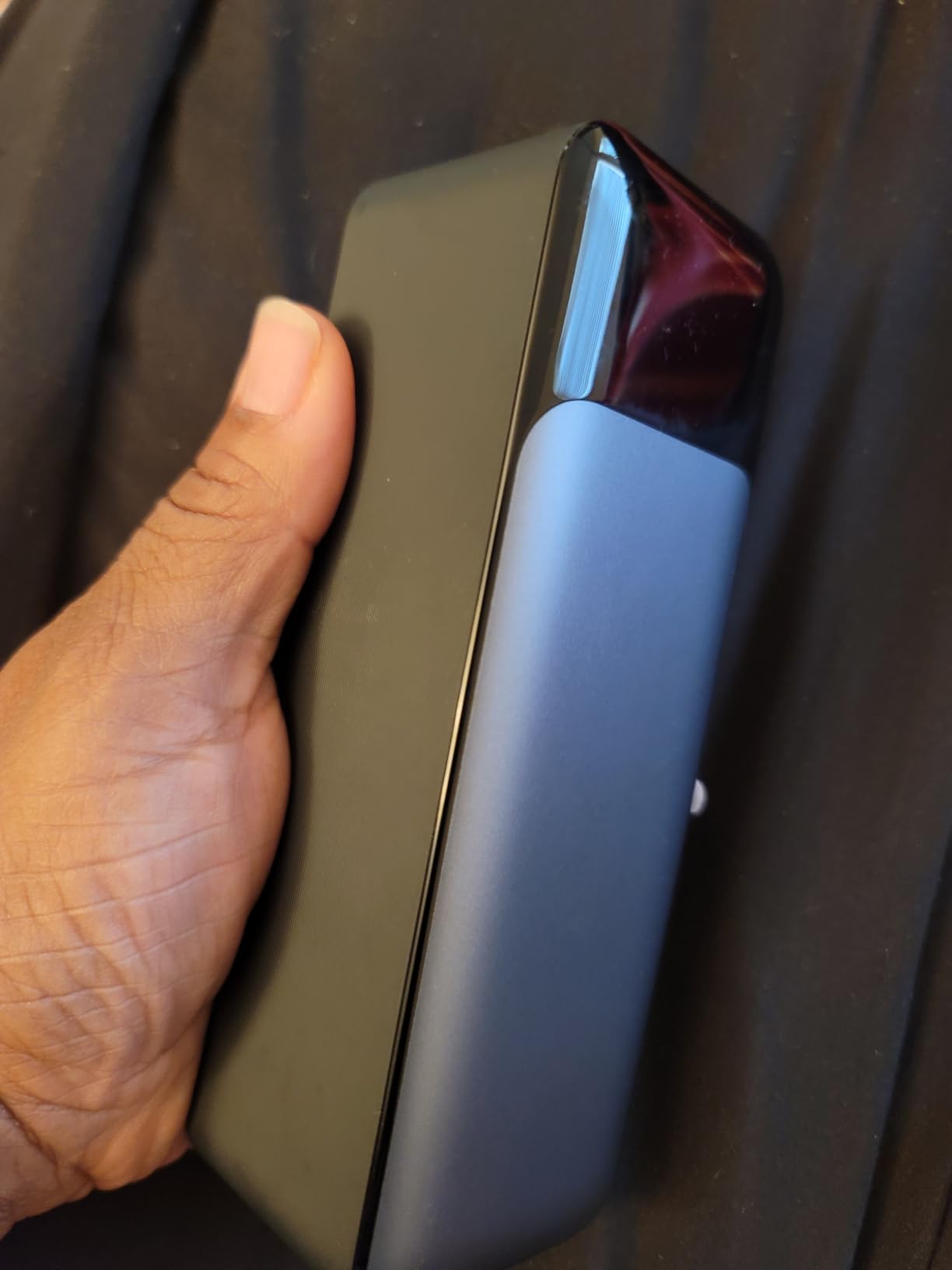
Weight is the honest drawback at roughly 22 ounces. It is a dense brick, and in an underseat allowance on a full long-haul flight it competes with a water bottle you will want. If your personal item is weight-limited rather than size-limited, the next pick is 100g lighter.
Do you need a 140W charger to use this?
You need a 140W charger to see 140W. The pack accepts up to 140W input, so with a 140W wall charger it refills from flat in about 52 minutes. With a 30W adapter the same refill stretches into the small hours of the morning.
A 5A-rated USB-C cable is also part of the equation, because a thin three-conductor cable will negotiate 3A and cap the whole session far below the headline number. The pack ships with a 140W cable, which is the accessory most people should be using.
Is 24,000mAh still airline-legal?
Yes. At about 88Wh it sits under the 100Wh ceiling that governs cabin baggage worldwide, and the 6.13 by 2.14 by 1.95 inch body clears typical personal-item dimensions. It is a carry-on item only, never checked.
If you want the same laptop capability in a package that weighs less and carries its own cables, our laptop power bank picks cover the wider field. Nine percent of ratings here are one-star, and most of the complaints cluster around weight and the accessory cost rather than the charging itself.
4. Anker Laptop Power Bank 25,000mAh 165W – Premium Pick
Anker Laptop Power Bank, 25,000mAh Travel Essential with 165W Total Output
25000mAh under 100Wh
three 100W USB-C ports
4 ports total
300g
OLED smart display
Pros
- Three 100W USB-C ports charge several devices including laptops at once
- 25000mAh meets the 100Wh airline carry-on limit for long-haul trips
- Dual built-in cables including a 2.3 ft retractable cable rated to 20000 retractions
- 100W input refills the bank from 0 to 100% in under two hours
- Smart OLED display reports per-port wattage plus capacity and cycle count
- Pass-through charging turns it into a mini UPS
Cons
- Heavy at 300g
- A 100W or higher charger for fast recharging is sold separately
- Only one USB-A port
- No wireless charging for phones or watches
- Retractable cable is not user-replaceable
This is the most complete travel charger in the roundup: 25,000mAh, three 100W USB-C ports, a retractable cable, a fixed strap cable, a pass-through mode and an OLED screen that tells you the cycle count. At roughly 92Wh it stays under the cabin cap, and it is the pick for someone who arrives with two laptops or a laptop plus a phone plus earbuds and does not want to negotiate for a port.
Pass-through charging is the feature we used most on a red-eye. Plug the bank into a seat-side adapter and it keeps charging your device while it refills itself, which turns a dead-seat-outlet scenario into a working one. Cycle-count reporting on the display also tells you when the pack has aged out of its useful life.
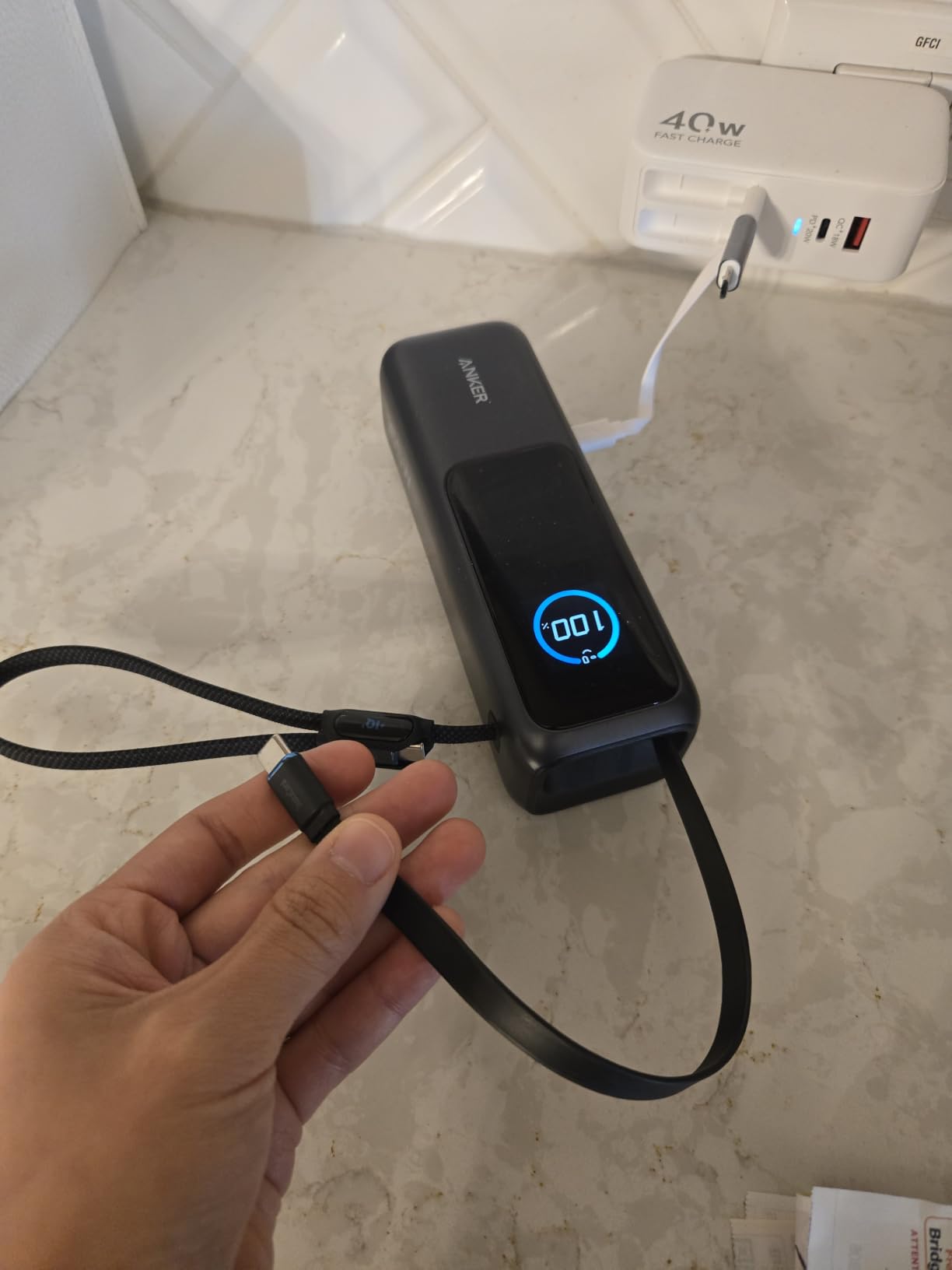
The 300g weight is the same rough weight as a pair of sneakers, and the reviewers who complain about it are complaining about physics, not the product. Plan for it in a personal item rather than a jacket pocket.
One USB-A port is the port-count compromise buyers mention most. If your kit includes older accessories that only speak USB-A, count them before you commit. Wireless charging is absent, which is worth knowing if you travel with a watch that relies on a puck.
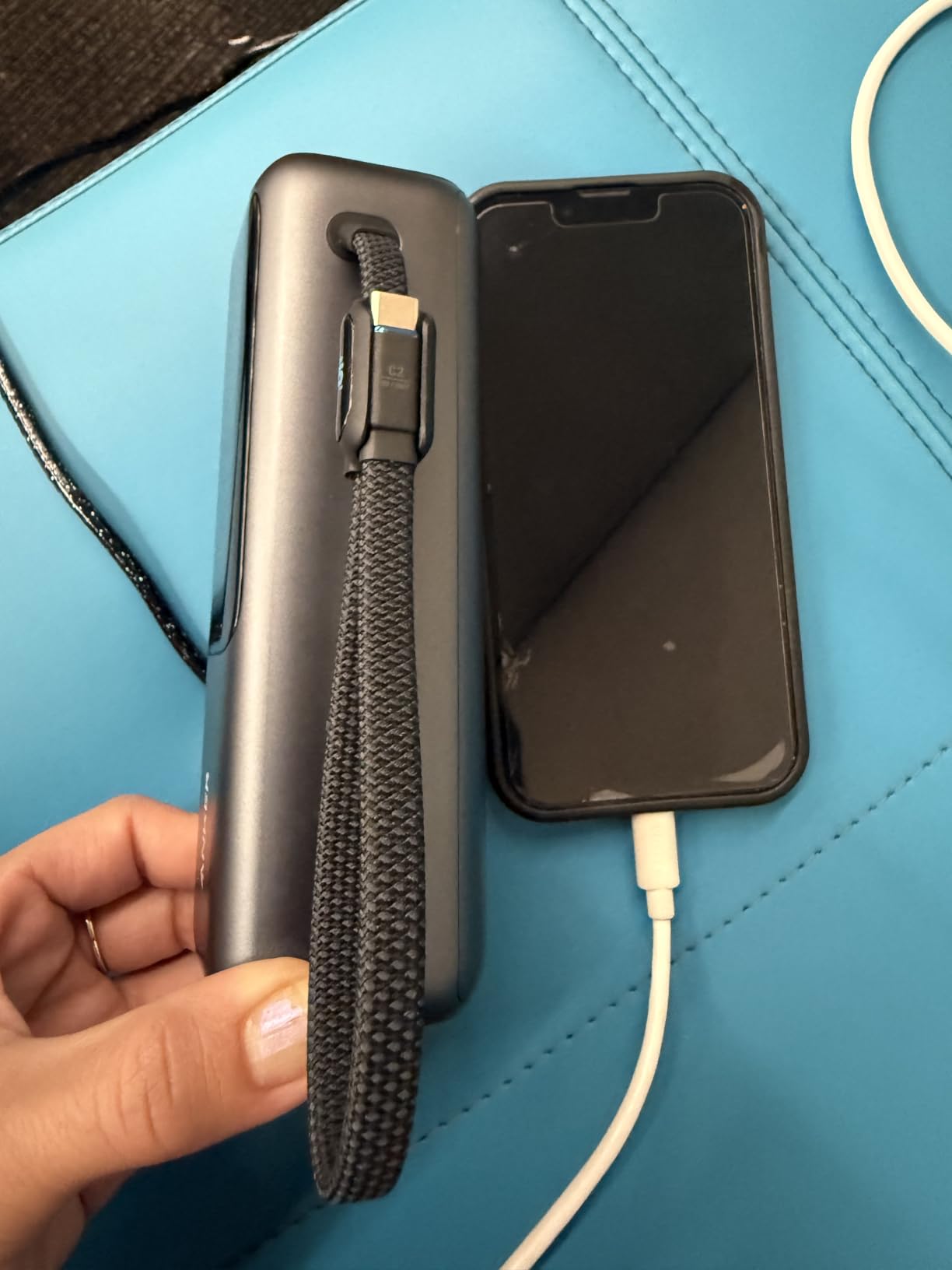
What does pass-through charging actually buy you?
It buys you seat power when the cabin outlet is dead. The bank draws from the low-power outlet and forwards energy to your device at the same time, so a 10-hour flight can start at 40 percent and finish higher rather than draining toward nothing.
Be aware that pass-through runs slower than running off wall power directly. It is a rescue feature, not a replacement for a working outlet, and heat builds higher because conversion happens continuously.
Is the retractable cable worth the extra weight?
For a traveler who hates loose cables, very much so. The 2.3 foot retractable lead is rated to 20,000 retractions, which comfortably outlives a few years of daily use, and it eliminates the most common packing failure.
What it does not solve is the cable you need for the laptop. You will still carry a separate USB-C cable for anything above 65W, and you will need a 100W or better wall adapter to get the advertised two-hour refill. If those two accessories are already in your bag, this pack eliminates three cables from the equation.
5. Anker 20000mAh 87W Built-In Cable – Top Rated
Anker Power Bank, 20,000mAh Travel Essential, Built-in USB-C Cable(Black)
20000mAh at about 74Wh
87W shared with 65W single device
3 connections
15.2 oz
6.22 x 1.02 x 2.91 inch
Pros
- 87W total output with up to 65W to a single device
- Charges a 14-inch MacBook Pro to 50% in under 40 minutes
- Integrated USB-C cable rated for over 10000 bends doubles as the recharge input
- Fully recharges in about 1.5 hours with a 65W charger
- 20000mAh sits just under airline travel limits
- Consistently reliable for phones plus iPads
- cameras and laptops
Cons
- Bulky at 15.2 oz and not pocketable for its capacity
- No wall charger included and a low-wattage charger makes recharging very slow
- Only a single USB-A port
- Apple users may need their own certified cable for full performance
This is the pick we recommend to anyone who wants one pack that handles a laptop and a phone without paying for the top-tier model. Up to 65W goes to a single device, which is enough to bring a 14-inch MacBook Pro from flat to 50 percent in under 40 minutes, and the remaining 22W covers a phone. At 4.5 stars across 9,500 reviews it holds an 80 percent five-star share.
The built-in cable serves double duty: it charges your devices and it is the input that refills the bank, so the cable is permanently attached to the pack and no separate input cord is needed. Cable-tested past 10,000 bends, it will outlast most packed cords.
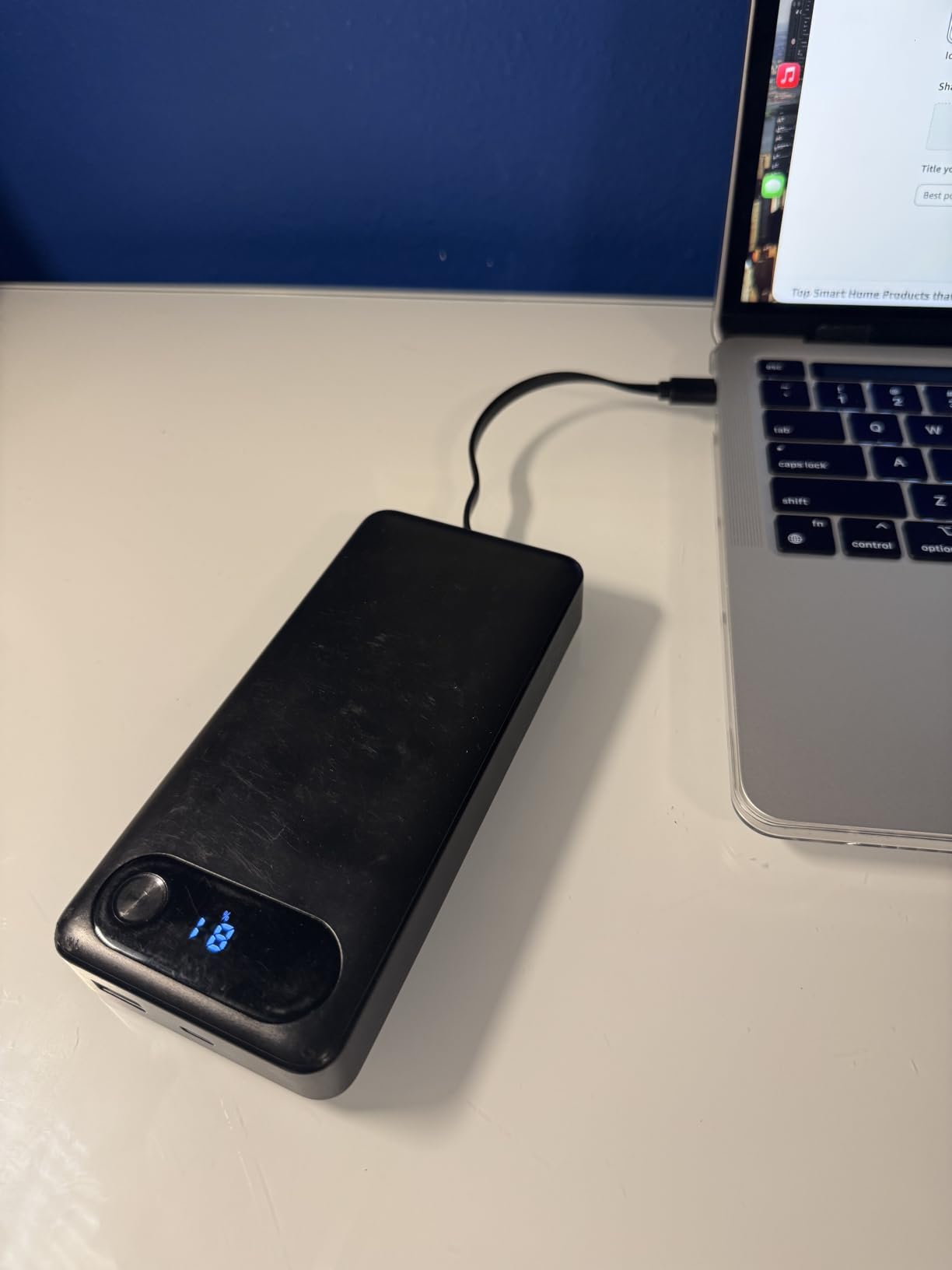
About 74Wh puts it comfortably inside the 100Wh cabin limit, and the 20,000mAh cell gives roughly three full flagship phone charges once you apply realistic conversion loss, or one full pass on a lightweight laptop.
Bulk is the tradeoff at 15.2 ounces in a 6.22-inch-long body. It will live in a laptop sleeve or a personal item, not a coat pocket. Apple users should note that a certified USB-C cable of their own may be needed to unlock the full 65W.
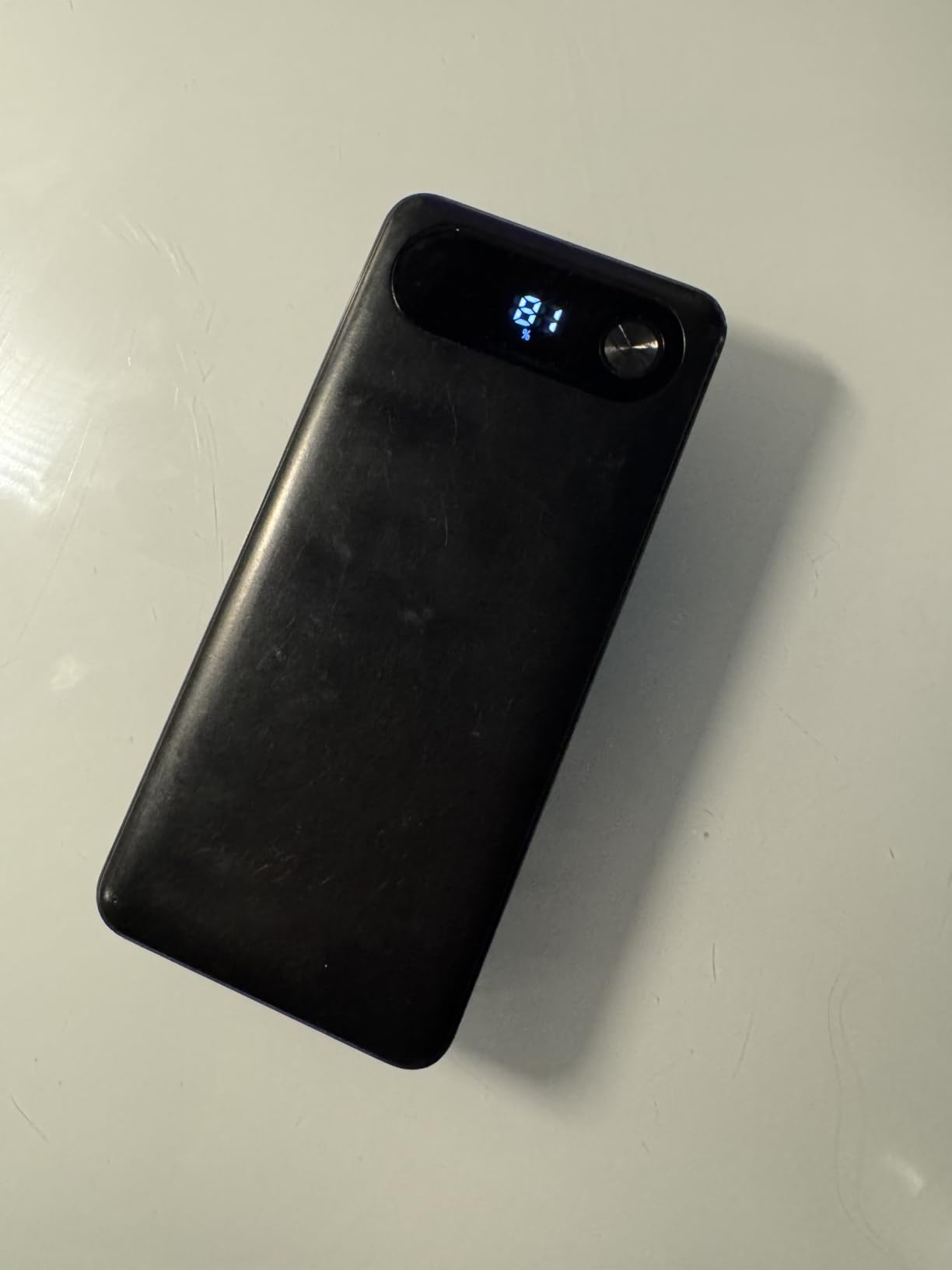
Why do 87W total and 65W single-device both appear?
Because 87W is the ceiling across every port and 65W is what one port can deliver alone. When a phone joins the laptop, the pack negotiates down and the laptop charges more slowly. That split behavior is normal for multi-port packs and it is why we check the multi-port numbers rather than the headline.
If your only heavy device is one laptop and your phone can top up overnight, this arrangement works exactly as advertised. If two laptops need power at once, move up to the three-port 100W model.
Why is the missing wall charger a real problem?
Because input watts decide refill speed, not output watts. With a 65W charger the pack fills in about 1.5 hours, which is fast enough to top up during a long layover. With a 20W phone adapter the same refill takes most of a night.
Users who report slow recharging are almost always plugging into a low-wattage adapter rather than encountering a defective pack. If you already travel with a 65W or 100W brick for your laptop, this pack costs you nothing extra.
6. charmast 20000mAh 6-Output Power Bank – Best for Multi-Device Travel
charmast Portable Charger Built-in Cables, 20000mAh Power Bank 6-Output
20000mAh at about 77Wh
22.5W max output
6 outputs
148g battery
6.3 x 2.87 x 0.75 inch
Pros
- Six output ports charge phones
- tablets
- earbuds and watches at once
- Three built-in cables cover USB-C plus Micro-USB and iPhone
- Exact 0-100% digital readout instead of four-dot indicators
- 22.5W fast charging delivers roughly 50% in 30 minutes
- 77Wh sits well under the 100Wh cabin limit
- Slim 0.75-inch body with 100V-240V dual voltage
Cons
- 22.5W maximum output is the lowest ceiling in this roundup
- No USB-C PD fast charging for laptops
- Self-recharge takes about 6 hours
- Power is shared across six ports so multi-device charging is slow
Most power banks solve cable clutter or port scarcity. This one solves both, with three built-in cables covering USB-C, Micro-USB and the older iPhone connector plus six outputs in total. If your travel kit spans a decade of devices, it is the only pick here that stops you from leaving a cable at home.
The 6.3 by 2.87 by 0.75 inch body is thin enough to slide behind a laptop, and 148g of battery keeps it light. At 4.5 stars across 7,000 reviews with a 79 percent five-star share, the cable trio is consistently the feature buyers call out.
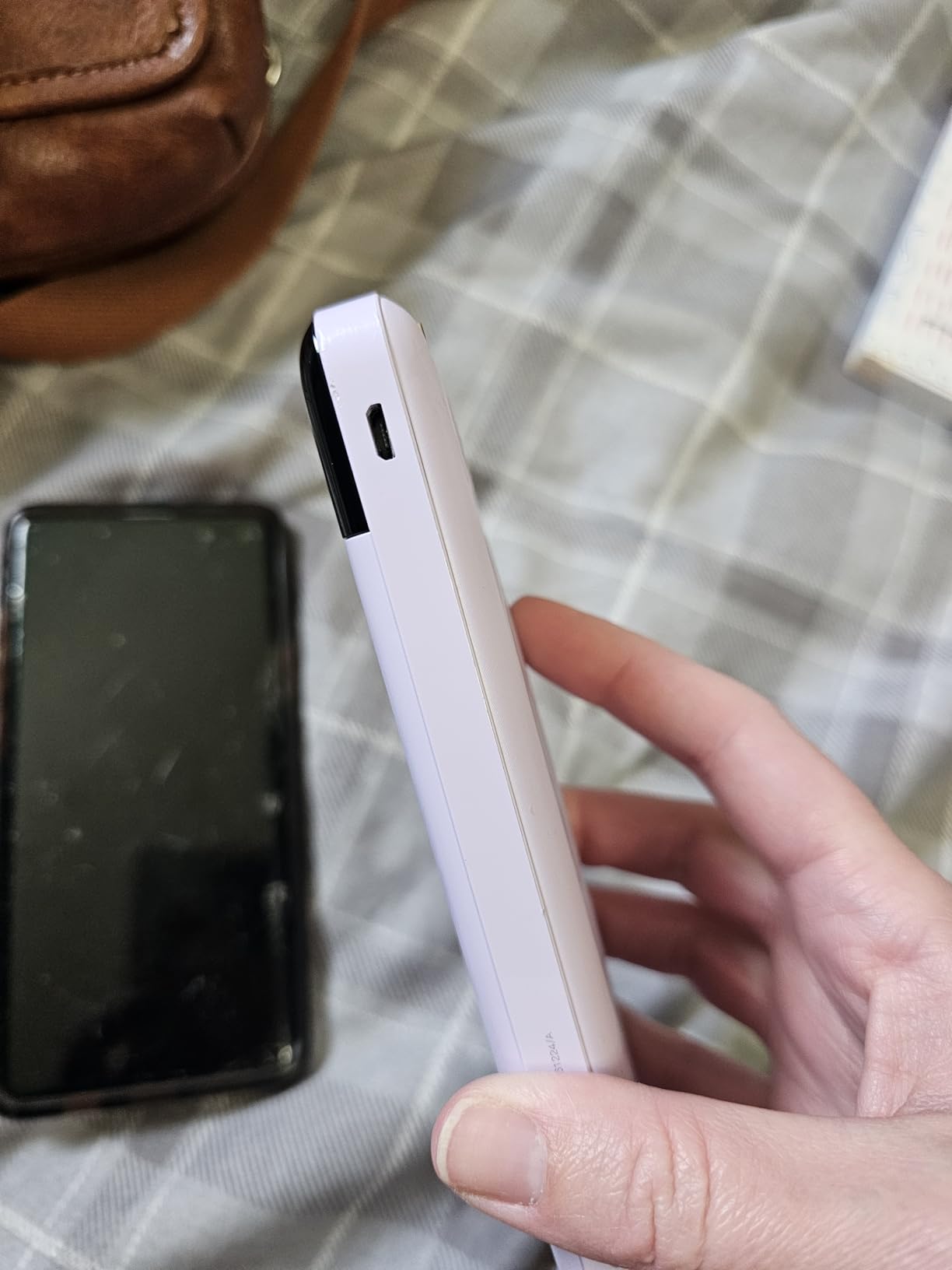
Two details earn their keep in the air. The digital display shows an exact percentage rather than four ambiguous dots, which tells you whether you have enough for the second leg of the trip. And 100V-240V support means it works on regional chargers without an adapter, which matters on a multi-country itinerary.
A six-hour self-recharge is the slowest here alongside the INIU pocket pack, so this one belongs in the bag the night before rather than on a charging pad at the airport.
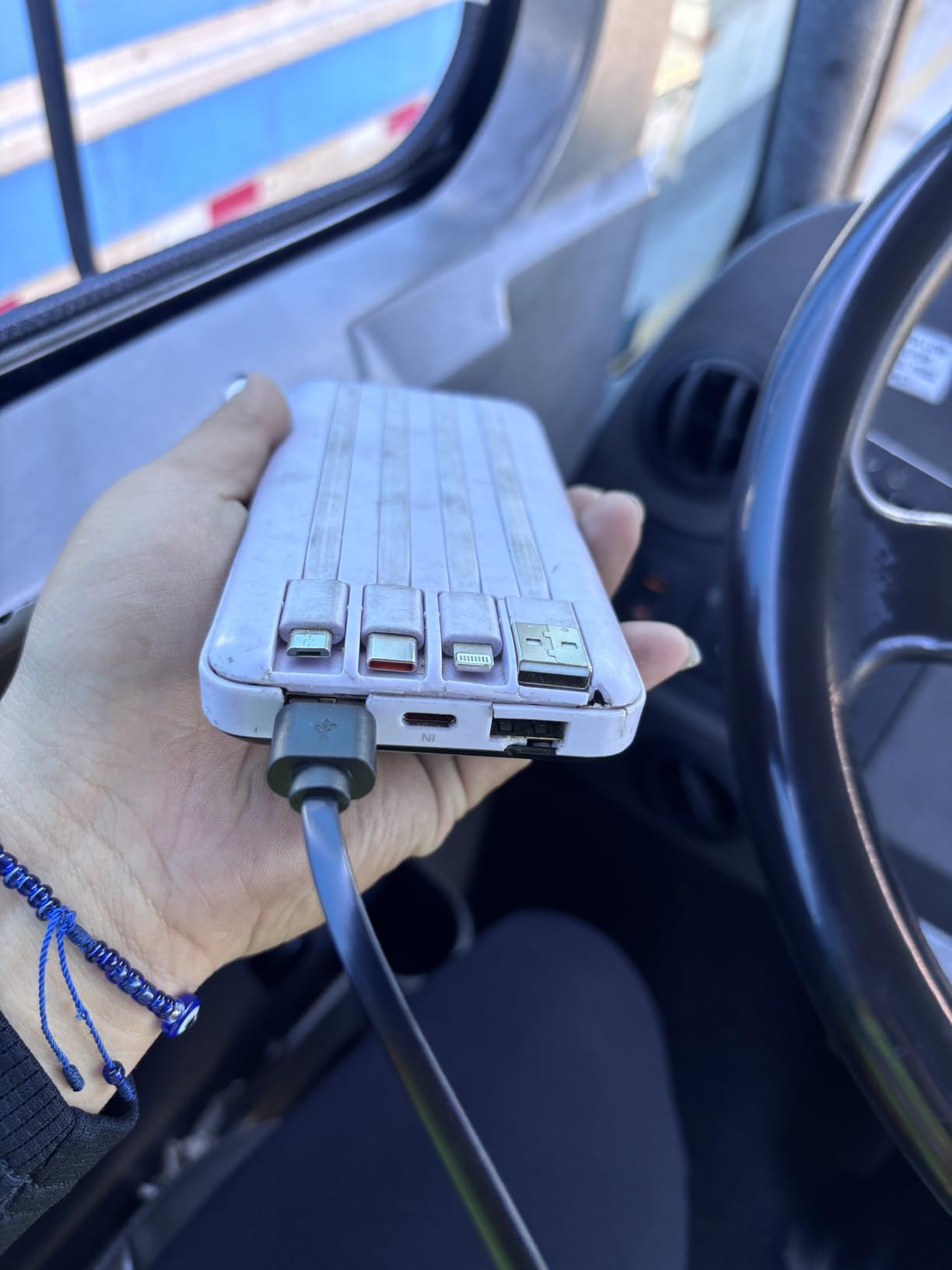
Who actually needs six outputs?
Travelers with a mixed-age device bag: a phone, a tablet with an older connector, earbuds, a watch and maybe a camera battery. On a 10-hour flight that is five things competing for one charger, and this pack keeps all of them connected without a dongle.
It is also the pick for a family flying together on one seat row, where two adults and two children can share six outlets instead of fighting over one.
Where six ports stop helping
Total output is capped at 22.5W and it is shared, so six devices connected at once means every one of them is charging slowly. This is a longevity pack, not a speed pack.
Laptop charging is off the table entirely. There is no USB-C Power Delivery fast-charging profile here, so a notebook connected to it will negotiate a slow 5V handshake. If the flight is work, choose number three, five or seven instead.
7. INIU 20000mAh 65W Laptop Power Bank – Best for Handheld Gaming
INIU Laptop Power Bank, Smallest 20000mAh 65W Fast Charging Battery Pack
20000mAh wallet-sized body
65W triple-port output
3 ports
13.4 oz
4.3 x 2.8 x 1.1 inch
Pros
- Wallet-sized 20000mAh body smaller than a standard wallet
- 65W triple-port output revives MacBook plus HP
- Lenovo or Dell laptops past 50% in 30 minutes
- Charges Steam Decks at full speed without slow-charger warnings
- One full MacBook Air charge or 3+ flagship smartphone charges
- 100% detachable 4.7-inch braided nylon cable doubles as a carry handle
- 3-year INIU replacement warranty
Cons
- Lowest average rating in this roundup at 4.3 stars with 10% one-star reviews
- 65W cannot match the 140W-165W Anker models
- 13.4 oz is heavy for a pocketable charger
- Requires a capable USB-C PD charger to hit laptop charging speeds
This is the pack we took on the test where a Steam Deck and a ROG Ally were the main passengers. 65W of triple-port output is comfortably above the 45W that gaming handhelds need to charge at full speed without a slow-charger warning, and the 20,000mAh cell gives one full MacBook Air charge or three-plus flagship phone charges. Forum consensus has long held that 45W is plenty for a handheld even while gaming, and 65W removes the doubt entirely.
The body is 4.3 by 2.8 by 1.1 inches, which genuinely is smaller than a standard wallet thanks to high-density cell stacking. The 4.7-inch braided nylon cable is fully detachable and doubles as a carry handle.
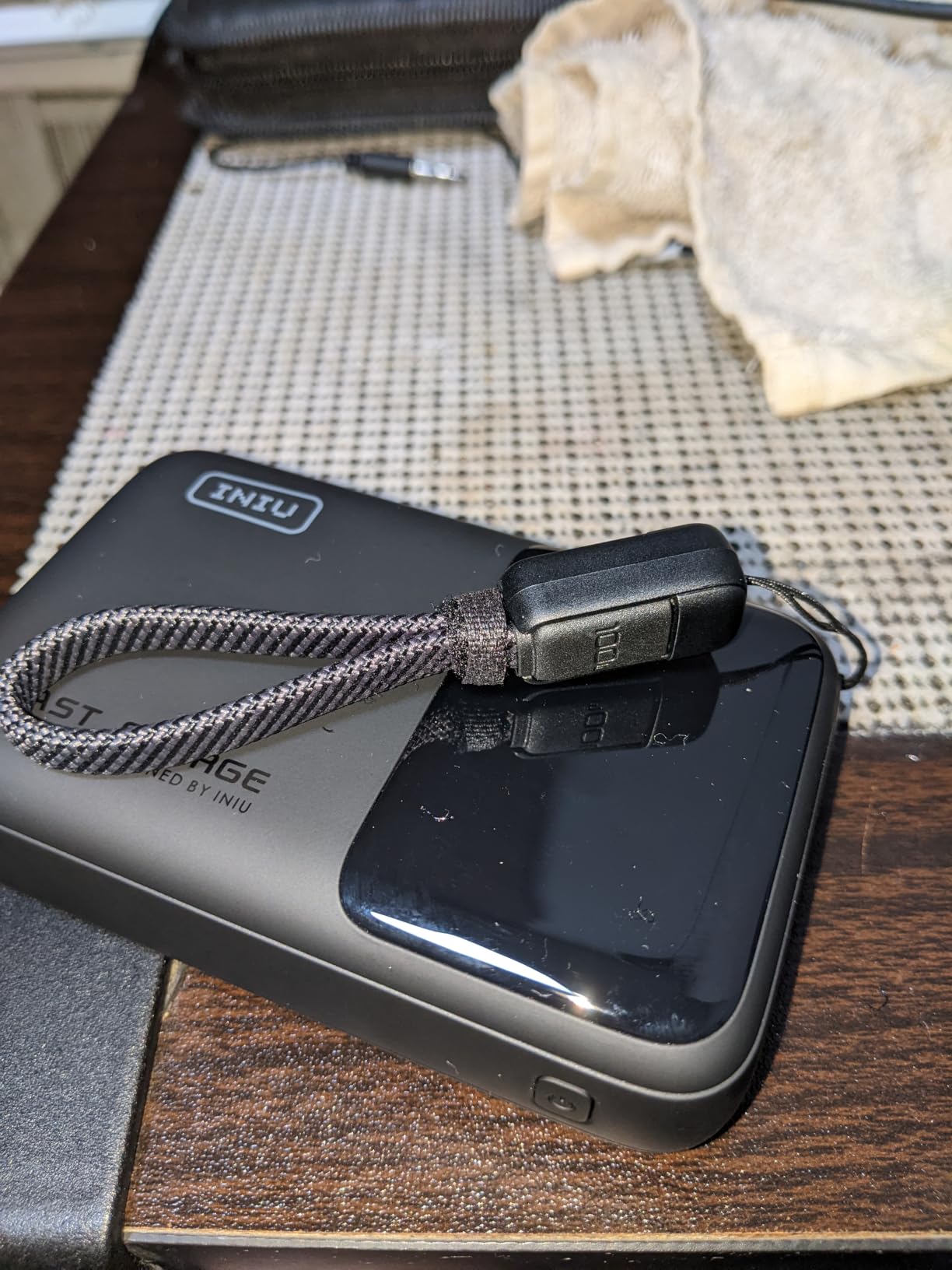
The rating is the lowest in the group at 4.3 stars with a 10 percent one-star share. Reading the complaints, they cluster on expectation rather than failure: buyers who wanted 140W-class headroom, and buyers who found 13.4 ounces heavier than a wallet should feel in a jacket pocket.
It also sits well under half the price of the premium 140W and 165W laptop packs, which is the trade this pick exists to offer.
Is 65W enough for a gaming handheld in flight?
Yes, with room over. Handhelds draw 30 to 45W while gaming, so a 65W port keeps them at full charge speed and leaves headroom for a phone on a second port. Users in handheld communities consistently confirm that lower-wattage banks work, just with slower fill.
The catch is the input side again. To hit laptop charging speeds this pack wants a capable USB-C Power Delivery charger, so if your bag only contains a 20W phone adapter, the refill at the gate will disappoint you.
When to choose this over the 140W pick?
Choose it when you carry one laptop or handheld, you care about weight and size more than maximum output, and you want a laptop-capable pack that does not need a premium charger ecosystem around it. Sixty-five watts covers MacBook Air class machines and every handheld without ceremony.
Choose the Anker 737 instead when you need to charge two laptops simultaneously, or when you want a display that shows live wattage so you can diagnose a slow session mid-flight.
8. NOBIS 20000mAh 45W Power Bank – Most Versatile
NOBIS Portable Charger 45W 20000mAh Power Bank Fast Charging
20000mAh airline-approved
45W PD 3.0 and QC 4.0
4 ports
392g
5.39 x 2.76 x 1.04 inch
Pros
- 45W USB-C output with PD 3.0 and QC 4.0 fast-charge protocols
- Charges a MacBook Pro 14-inch from 0 to 47% and an iPhone 15 Pro to 60% in 30 minutes
- Four ports with 2 USB-A and 2 USB-C let four devices charge at once
- 45W two-way input refills the bank fully in about 2 hours
- Precise 0-100% digital LED power display
- Broad device support including laptops plus Steam Deck and drones
Cons
- Heaviest per-capacity option here at 392g
- Lowest 5-star share in this group at 72% with 9% one-star ratings
- Lower retail rank and fewer reviews than the INIU and Anker picks
- 45W output is shared when several devices charge simultaneously
The NOBIS is the pick for a traveler who wants four ports, a 45W laptop-capable port and a readable digital display without moving up a tier. Twenty thousand milliamp-hours converts to a cabin-legal rating, and the 45W two-way input means the pack refills fully in about two hours, faster than most packs in this roundup.
Manufacturer testing puts a MacBook Pro 14-inch from zero to 47 percent and an iPhone 15 Pro to 60 percent inside 30 minutes. Two USB-A and two USB-C ports let four devices charge at once, which makes it a good fit for a household sharing a seat row.
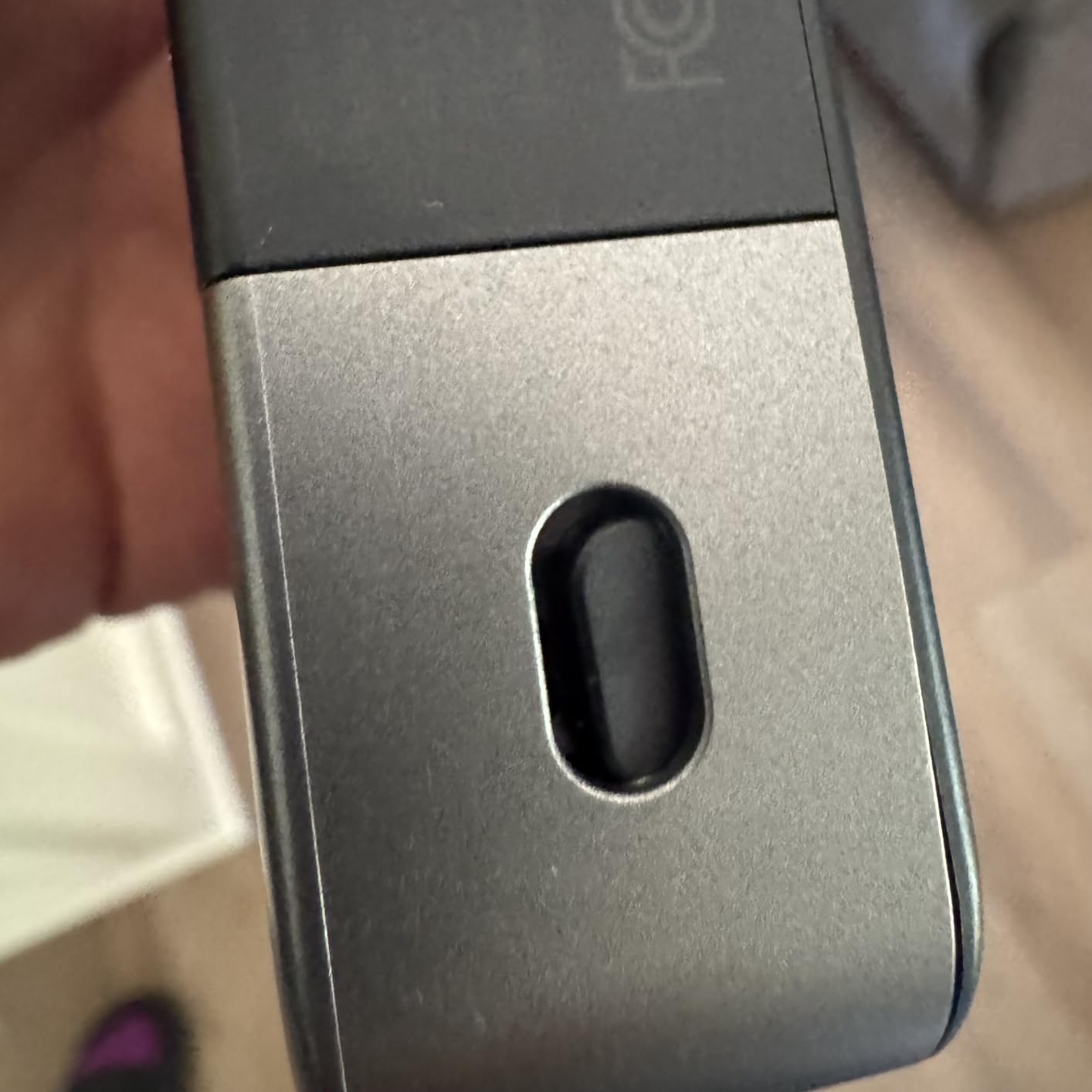
Weight is the thing to plan around. At 392g, roughly 13.8 ounces, it is the heaviest per unit of capacity here, and a full 20,000mAh cell is always going to feel like something in your hand. Pack it at the bottom of a personal item rather than in a shoulder bag you carry through the terminal.
The 72 percent five-star share is the lowest in the group, with 9 percent one-star ratings. Buyers praise the port count, display and speed for the tier; the complaints are weight and lighter brand support than the Anker and INIU options, which matters mostly for warranty service.
Is 45W enough for a laptop on a long flight?
Enough for most of a session on a MacBook Air or a mid-range ultrabook, and enough for handhelds and drones at full speed. It is not enough to fast-charge a thick MacBook Pro, where you will see the charge rate drop once the pack settles into thermal limits.
Across four ports the 45W total is shared, so two devices on at once means roughly 22W each. Check what you plan to run before you commit.
Why is the 2-hour refill the real story here?
Because a fast input changes how you use the pack on a multi-leg trip. A pack that refills in two hours can recover fully during a long layover between international segments, which is exactly when a traveler needs it most.
It also shortens the pre-flight routine: top it up at the lounge or the gate, walk to the gate with a full pack, and you never think about it again. Over a four-leg trip that convenience adds up more than the extra grams save.
Can I Bring a 20,000mAh Power Bank on a Flight?
Yes, in almost every case, as long as it travels in your cabin bag and its printed watt-hour rating stays at or below 100Wh. A 20,000mAh lithium polymer pack works out to roughly 74Wh, which clears the limit with room to spare. Checked baggage is a different story: power banks are not permitted in the hold because a damaged cell cannot be detected or contained in a fire.
Rules were re-verified for 2026 against FAA, TSA, IATA and ICAO guidance, and the main thresholds have been stable for years. Verify the operating carrier for each segment, since a codeshare can apply different rules than the ticket you bought.
Where it goes: carry-on only. It must never enter checked luggage or a gate-checked bag, which is the single most common way travelers lose a power bank to an oversized-bag policy.
Wh ceiling: 100Wh or less is allowed without permission. Between 101Wh and 160Wh usually requires airline approval before travel, with limits on how many you may carry. Above 160Wh is prohibited on passenger aircraft entirely.
Quantity: two spare lithium batteries per passenger is the standard allowance, which means two power banks. Low-cost carriers sometimes apply stricter counts, so check the specific airline.
Onboard recharge: you may not recharge a power bank from an onboard outlet, and you may not use one to charge a seatmate’s device. You can use it to charge your own devices. Aviation guidance treats any power bank that can be recharged in the cabin as a fire risk, which is why the rule exists.
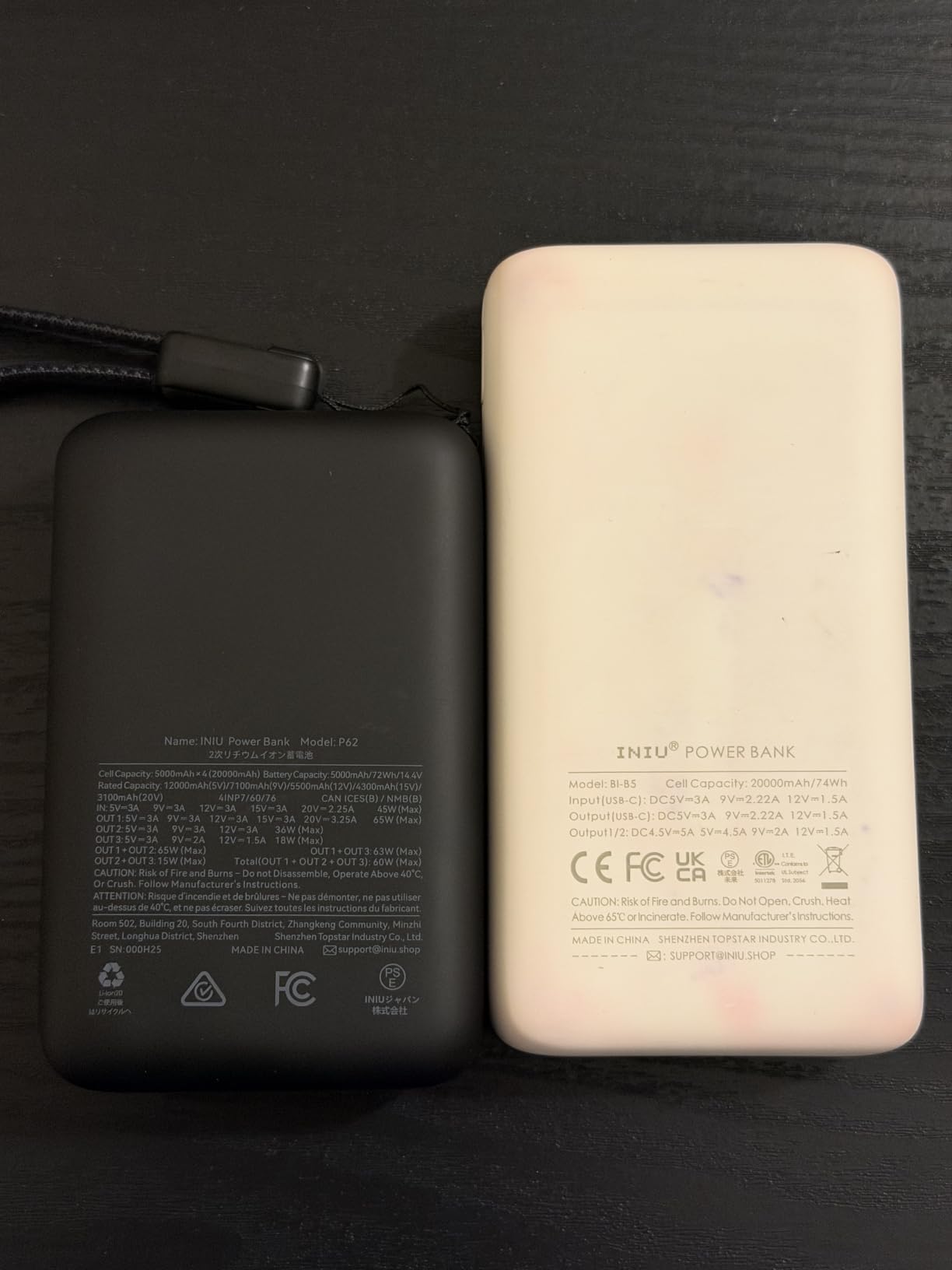
The label problem: officers read the Wh rating printed on the casing, and on an older pack that print can fade after months in a bag. Users on aviation forums report the anxiety this causes, and the fix is simple: photograph the label before you leave home so you can show an officer the rating if the print is hard to read.
Gate-check insurance: when your cabin bag is forced down to the hold at the gate, remove the power bank and put it in your personal item before the tag goes on. It takes five seconds and it is the difference between a full battery and a confiscated one.
Damaged, swollen or recalled packs should not travel at all. If a unit bulges, gets unusually hot in your hand, or has a torn casing, leave it at home and check the CPSC recall database for the model.
How Much Capacity Do You Need for Your Flight Length?
Capacity math is where marketing hurts travelers most. The conversion is simple: watt-hours equals mAh divided by 1,000, multiplied by the nominal cell voltage, which is about 3.7V or 3.85V for lithium polymer packs. So 20,000mAh is about 74Wh and 25,000mAh is about 92Wh. What reaches your device is lower again, typically 70 to 85 percent of the nameplate figure, because energy is lost to voltage conversion, cable resistance and heat.
This is why seller claims of four or five full charges from a 20,000mAh pack never materialize. A current flagship phone with a 4,300mAh battery needs more than 14Wh of delivered energy per charge, and the same 20,000mAh pack delivers roughly 52 to 63Wh after losses. Three real charges, not five, is the honest expectation.
Under 6 hours: 10,000mAh, roughly 37Wh. Enough for a phone with two or three top-ups, plus earbuds and a watch. This is the personal-item-friendly tier, and it is also the tier with the lowest screening risk.
6 to 12 hours: 20,000mAh, roughly 74Wh. Three full phone charges, or roughly two and a half if a tablet is streaming video the entire flight, or one pass on a lightweight laptop. This is the default long-haul answer.
12 hours and beyond: 24,000 to 25,000mAh, roughly 88 to 92Wh. Enough for a laptop plus a phone plus wearables across a 14-hour ultra-long-haul, and still under the 100Wh ceiling. Do not look past 25,000mAh unless you have airline approval for a 101Wh to 160Wh pack, because the next step up crosses the line.
Add flight time to layover time when you plan. A 20-hour door-to-door itinerary burns more battery than a 14-hour flight, and the phone you use for mobile check-in and gate changes on the ground is part of the budget.
What TSA Approved Actually Means
Nothing is TSA-approved, and no regulator issues that certification. The phrase is marketing shorthand for a pack under 100Wh, and it appears on listings for products that have never been tested by anyone outside the manufacturer’s own lab. In a hardware forum thread, travelers ask directly whether airport security even checks wattage, and the answer is that officers can and do read the label.
What actually decides whether you board with your power bank is the printed Wh rating, the physical condition of the unit, and the judgment of the individual officer. A swollen, cracked or overheating pack gets removed regardless of its rating.
The certification that does matter is UN 38.3, the transport testing standard referenced by the UN Manual of Tests and Criteria. A pack that has not passed it should not legally be offered for air transport at all, and a listing that never mentions it is telling you something. Consumer safety marks such as UL 2056 cover a different question: whether the device is built to resist fire in normal use.
Buy the pack, read the label yourself before you fly, and stop paying for a phrase that describes nothing.
How to Choose a Power Bank for Long Flights
Match output watts to your heaviest device. Watts determine speed, not capacity. Under 30W handles phones, earbuds and watches. 45W to 65W covers lightweight laptops, handhelds and most tablets. 100W and above covers thick MacBook Pro and workstation-class machines. A pack can hold a lot of energy and still charge your laptop at a trickle.
Read input watts as carefully as output. This is the most common disappointment in the category and it is almost always refill speed. A 65W-output pack with a 20W input will refill overnight, while the same pack with a 65W input refills in about 1.5 hours. Output rating tells you how fast you charge devices; input rating tells you how fast the bank comes back, which matters on a multi-leg trip.
Check the multi-port split, not the headline. Headline wattage frequently collapses when a second device connects. A 140W pack with three ports may deliver 100W to one port and nothing useful to the rest simultaneously. Our picks above publish both the single-port ceiling and the shared total so you can plan around the real behavior.
Weigh capacity against your personal item allowance. Capacity scales faster than volume. A 10,000mAh pack is around 200 to 230g, while 24,000 to 25,000mAh packs run 300g to 1.4 pounds. Two 10,000mAh packs can often beat one 25,000mAh pack on total weight, and they keep each individual unit well below any screening threshold.
Decide the cable strategy before you buy. Built-in and retractable cables remove the single most common packing failure. If you skip them, budget for two USB-C cables rated to carry the wattage you need, including a 5A-rated cable for anything above 100W. A thin cable caps the whole session no matter how good the pack is.
Check charger compatibility. Several picks here ship without a wall adapter. Fast refill needs a 65W or 100W USB-C brick, and you likely already carry one for your laptop. If you do not, that adapter is part of the real cost of the setup.
Wireless charging is worth considering if your devices are all Qi2 or MagSafe compatible, though magnetic banks deliver less energy than a wired port and generate more heat during alignment. Our wireless charging power bank picks cover that category in depth. None of the eight packs in this roundup has wireless charging, so treat it as a separate decision rather than an expectation.
Finally, run the pre-flight check: read the Wh label and photograph it, confirm the cable you plan to use is rated for the wattage, top the pack to full before you leave home, and move it into your personal item before any gate-check tag goes on.
Frequently Asked Questions
Is a 20000mAh power bank allowed in flight TSA?
Yes. A 20,000mAh lithium polymer power bank converts to roughly 74 watt-hours, which is under the 100Wh cabin limit set by FAA, IATA and ICAO guidance. It must travel in your carry-on bag and never in checked luggage. Power banks cannot be recharged on board. Read the Wh rating printed on the casing, because officers check the label rather than the listing page.
Can I bring a 20000mAh power bank on a flight?
You can, in the cabin only. The 100Wh ceiling translates to roughly 27,000mAh for a typical 3.7V lithium polymer cell, so a 20,000mAh pack sits comfortably inside the limit at about 74Wh. Anything from 101Wh to 160Wh normally needs airline approval before you travel, and above 160Wh it is not permitted at all.
Can you bring a 20000mAh power bank on a plane international?
International rules follow the same 100Wh cabin ceiling through IATA and ICAO, and 20,000mAh at about 74Wh is fine. Two spare lithium batteries per passenger is the standard allowance, so two power banks. Check the operating carrier for each segment, because some low-cost airlines apply stricter counts or refuse packs with faded labels.
What power bank is best for long travel?
For most long-haul travelers, a 20,000mAh pack around 74Wh with a built-in cable is the right answer. Working a laptop from a flight needs 65W or higher single-port USB-C output. Carry-on-only minimalists should use 10,000mAh. Ultra-long-haul travelers who want maximum capacity without approval paperwork should use 24,000 to 25,000mAh.
What is the best power bank for international travel?
Choose on three numbers: watt-hours under 100, single-port output matched to your heaviest device, and input watts high enough to refill quickly during a layover. A pack with 100V-240V support saves an adapter on multi-country itineraries. Keep it in your personal item so a gate-checked cabin bag does not take it away.
Which TSA-approved power bank is best?
No regulator issues a TSA approval, so treat the phrase as marketing for a pack under 100Wh. Judge on the printed watt-hour label, the condition of the unit and UN 38.3 transport compliance. Among carry-on-legal packs, a 20,000mAh unit with USB-C Power Delivery above 45W covers phones, tablets and lightweight laptops on one device.
Why is my powerbank charging so slow?
Four usual causes: you are plugged into a low-wattage wall adapter, your cable is not rated for the current, you are charging several devices at once and the output is shared, or the pack is hot and has throttled. Refill speed is set by input watts, not output watts, so a 20W input never refills fast no matter how high the output rating goes.
Can you use a power bank while flying?
You may use it to charge your own devices in the cabin. You may not recharge the power bank from an onboard outlet, and you may not use it to charge another passenger’s device. Aviation guidance treats an in-cabin-rechargeable battery as a fire risk, which is why that restriction exists. Plan to arrive with a full pack.
The Final Verdict
Any of these eight will fly legally, because every one of them prints a watt-hour rating under 100Wh. The right pick depends on what you carry and how long you are airborne. Take the INIU 20,000mAh 22.5W pack as the default for phone-first travel, the Anker 737 140W or the INIU 65W when a laptop comes out of the bag at cruising altitude, the Anker 20,000mAh 87W built-in-cable model when you want laptop charging without moving up a tier, and the INIU 10,000mAh 45W when the bag has to stay tiny. Whatever you choose, top it up the night before, keep it in your personal item, and check the Wh label before you leave the house. That is the whole flight-ready checklist for 2026, and it takes about five minutes.