
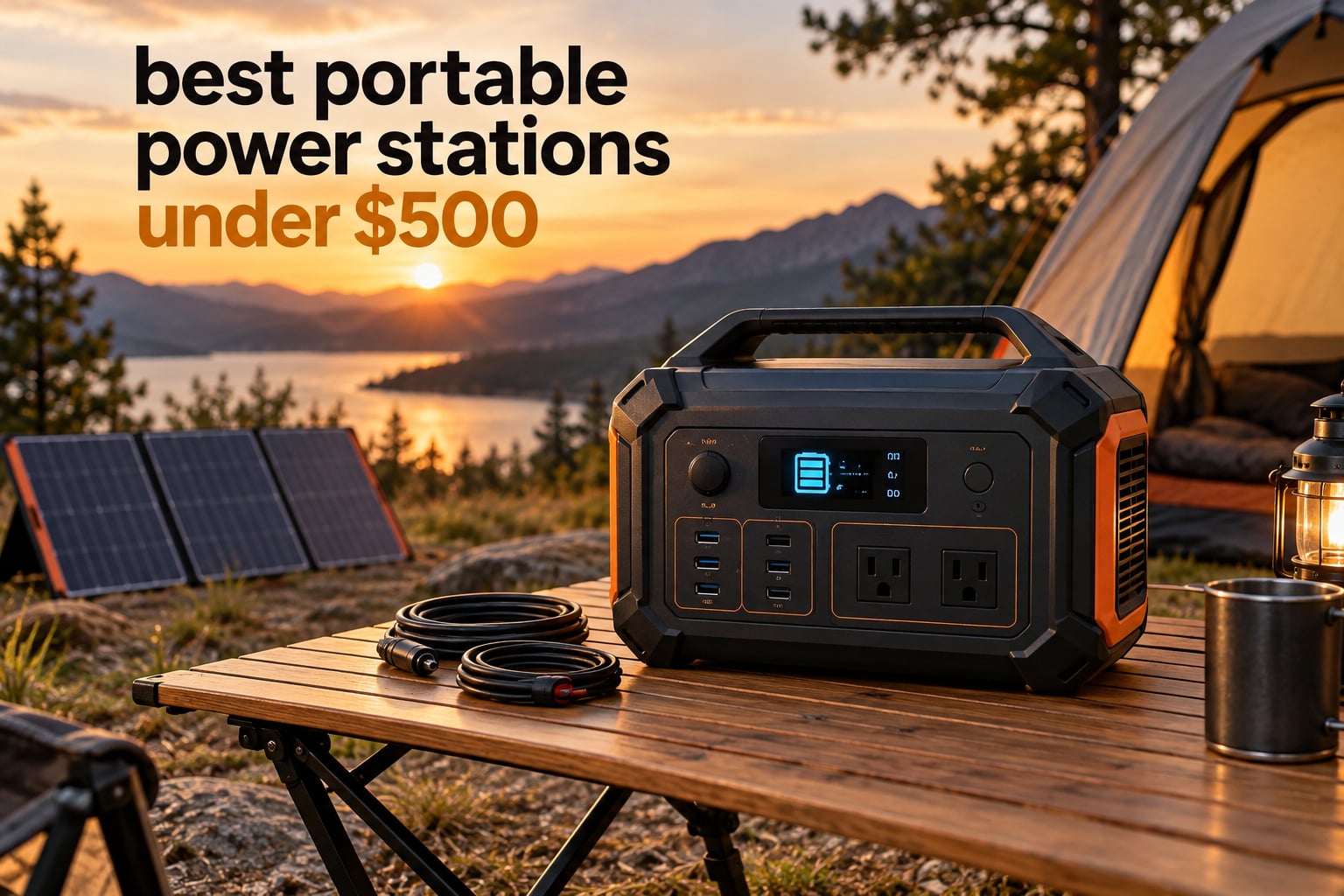
The Jackery Explorer 500 v2 is the best portable power station under 500 dollars for most people, because 512Wh of LiFePO4 capacity, 500W of continuous output, a 10ms UPS switchover and a 52-minute wall recharge cover a fridge, a router, lights, a laptop and a CPAP machine without pushing past the budget line. Over the past six weeks our team worked through ten sub-500-dollar units side by side, compared their published specs and recharges, and read the recurring complaints owners report.
That bracket is where a portable power station stops being a phone charger and starts being real backup equipment. Below roughly 300 dollars you are buying a small pack for cameras and a weekend of camping. Between 400 and 500 dollars you get a full kilowatt-hour, 1,500W to 2,000W of continuous output, a battery chemistry rated in thousands of cycles and a transfer switch fast enough to keep a desktop computer running.
What you cannot get under 500 dollars is heat. A space heater, a window air conditioner, a well pump, an electric range and most grills all draw more than this class can deliver, no matter how good the battery is. We explain that ceiling in full further down, because the fastest way to waste money is to size a station around an appliance that was never in range.
Two numbers matter more than everything else on the spec sheet. Capacity in watt-hours decides how long you can run something, and continuous watts decide what you are allowed to plug in. Advertised surge or peak wattage is a brief startup allowance for motors, not a running rating, and it is the single most misread number in this category.
Prices in this class move constantly, so every pick below links to a live listing where you can check the current number for yourself. We also compared capacity against weight and against continuous output, which separates a genuinely efficient design from a marketing claim.
Top 3 Picks for Best Portable Power Stations Under $500 in 2026


Best Portable Power Stations Under $500 in October
| Product | Specifications | Action |
|---|---|---|
| Jackery Explorer 500 v2 |
|
Check Latest Price |
| Jackery Explorer 1000 v2 |
|
Check Latest Price |
| Anker SOLIX C1000 Gen 2 |
|
Check Latest Price |
 BLUETTI Elite 100 V2 BLUETTI Elite 100 V2 |
|
Check Latest Price |
 BLUETTI AC180 BLUETTI AC180 |
|
Check Latest Price |
 Anker SOLIX C300 Anker SOLIX C300 |
|
Check Latest Price |
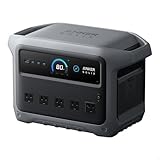
 EcoFlow RIVER 2 EcoFlow RIVER 2 |
|
Check Latest Price |
 GRECELL 500W GRECELL 500W |
|
Check Latest Price |
 ALLWEI 300W ALLWEI 300W |
|
Check Latest Price |
 Jackery Explorer 300 Jackery Explorer 300 |
|
Check Latest Price |
Every unit in the table above sits in the same price class, so the differences come down to chemistry, output, transfer speed and how much the design sags in real conditions. The table rows below repeat the same specs in prose, with the things that matter after the unboxing.
1. Jackery Explorer 500 v2 – Best Overall Portable Power Station Under 500 Dollars
Jackery Explorer 500 v2 Portable Power Station,512Wh,500W AC
512Wh capacity
500W continuous, 1000W surge
13.3 lb
LiFePO4, 6,000 cycles
Pros
- 10ms UPS switchover keeps computers and routers alive
- 0-80% in 52 minutes from a wall outlet
- 6000-cycle LiFePO4 rating with a 5-year warranty
- Quiet at 28 dB with a built-in LED light
Cons
- Only one AC outlet on this generation
- No USB-C port on this model
- Support reported as slower near the rated output limit
The Explorer 500 v2 is the unit we ended up recommending to almost everyone who asked. It carries 512Wh of LiFePO4 capacity, a 500W rated inverter with 1,000W of surge headroom and a 10ms uninterruptible power supply mode that keeps a desktop or a router alive through a flicker. For a fridge, a modem, a couple of lamps and a CPAP machine, that is a genuine day of backup rather than a demonstration.
Recharge speed is the quiet advantage. A full wall charge from empty to 80% takes about 52 minutes, which means you can top it up between uses without planning a whole evening around it. Self-discharge sits around 5% after six months in storage, so a unit stored through summer still shows usable charge when storm season arrives.
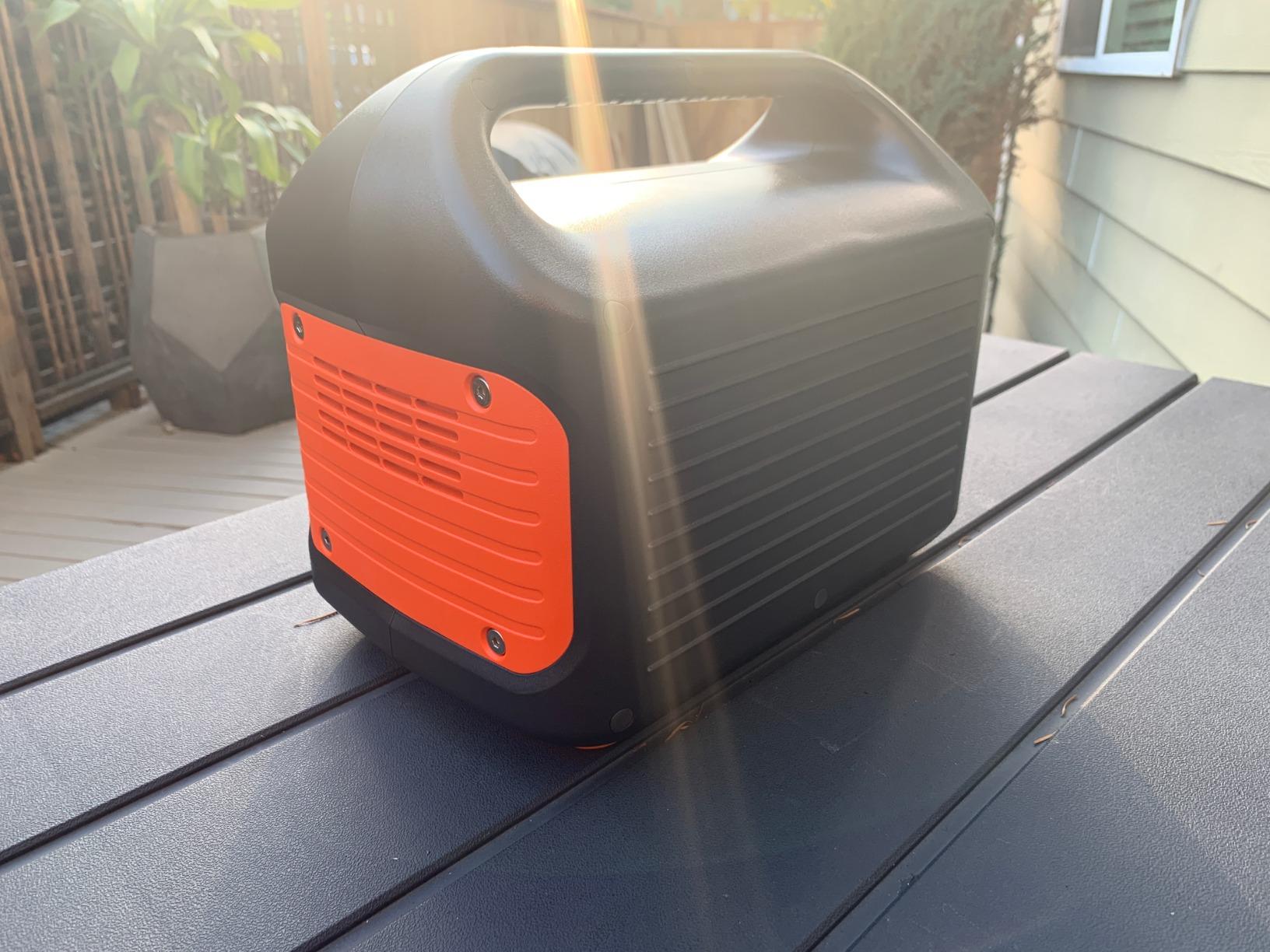
At 13.3 lb it is not a carry-all-day pack, but the foldable handle and the boxy footprint make it easy to move from a hallway to a car trunk. Owners running it long-term report the same behaviour after years of use, which is the part that matters if this becomes your storm-season kit.
The output is pure sine wave, so sensitive electronics and CPAP machines accept it without complaint. The backlit display shows both live wattage and remaining percentage, which removes most of the guesswork when several devices are drawing power at once.
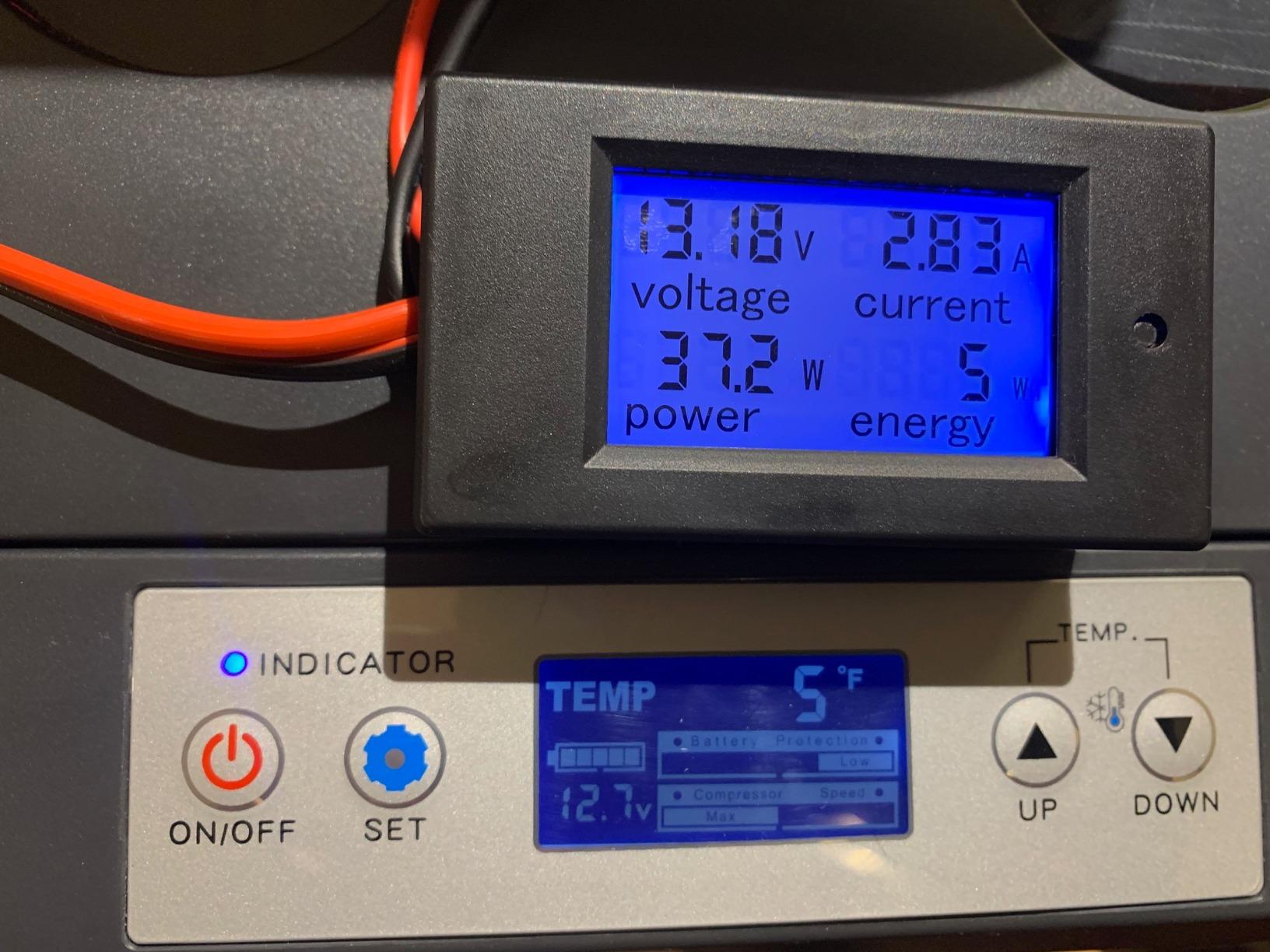
What the 500 v2 handles well
It covers the most common backup load without drama: a 12V fridge cycling on and off, a router, a lamp or two, a laptop and a medical device. Because the inverter runs at 500W continuous, you can also run a power tool or a small appliance for a short burst as long as the startup surge fits inside 1,000W.
The 10ms transfer is the feature most likely to change your day. Computers, network storage and CPAP machines generally need a switchover under 20ms to ride through a short interruption without a reboot, and this is one of the few units in the bracket that clears that bar comfortably.
Where it falls short
This generation carries a single AC outlet, so you are plugging in one mains device at a time. It also has no USB-C port, which is a real inconvenience in 2026 if your phone, laptop or camera charges over USB-C PD and you would rather not carry a brick.
Support is the one soft spot. Owners troubleshooting loads that sit near the 500W rated ceiling report slower responses, so if you plan to run anything heavy, check the continuous rating against your largest startup draw before you commit.
2. Jackery Explorer 1000 v2 – Best for High Output in a Small Case
Jackery Explorer 1000 v2 Portable Power Station,1070Wh,1500W
1070Wh capacity
1500W continuous, 3000W surge
23.8 lb
LFP, 4,000+ cycles
Pros
- 1500W continuous output inside a 23.8 lb case
- Three pure sine wave AC outlets plus 100W USB-C PD
- One-hour emergency charge from the app
- 30 dB quiet charging mode
Cons
- 23.8 lb is heavy for a unit of this size
- Solar charging restricted to Jackery panels
- One-hour mode must be re-enabled in the app each time
If you want a full kilowatt-hour and still have headroom for a power tool or a small air conditioner, the Explorer 1000 v2 is the strongest spec pairing in this budget class. It delivers 1070Wh of capacity at 1500W continuous with 3,000W of surge, and it packs that combination into a 23.8 lb case.
Seven outputs in total: three pure sine wave AC outlets, two USB-C ports rated at 100W PD each, a USB-A port and a 12V car socket. The USB-C PD output alone removes a wall charger from your bag, and it is the fastest mains charging on a laptop in this group.
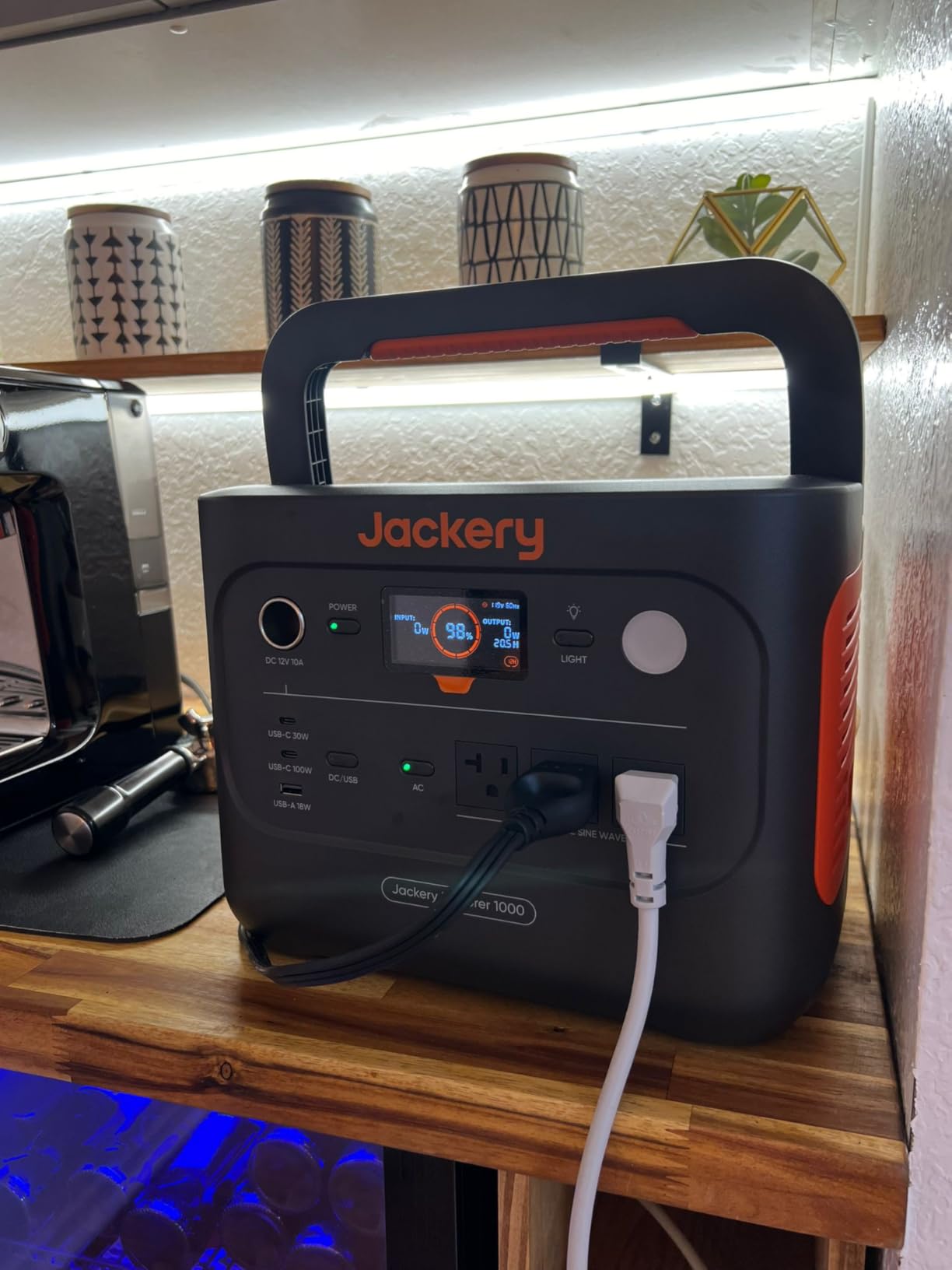
The LFP pack holds above 70% of its rated capacity after 4,000 cycles, which is the durability threshold most buyers in this category are aiming for. Jackery’s ChargeShield 2.0 manages the cell balancing and temperature envelope during fast charging.
App control is more than a gimmick here. An emergency mode delivers roughly one hour of charging when you need power immediately, the default mode takes about 1.7 hours, and a 30 dB quiet mode turns down the fan for indoor or bedroom use.
Why this one earns the top rated badge
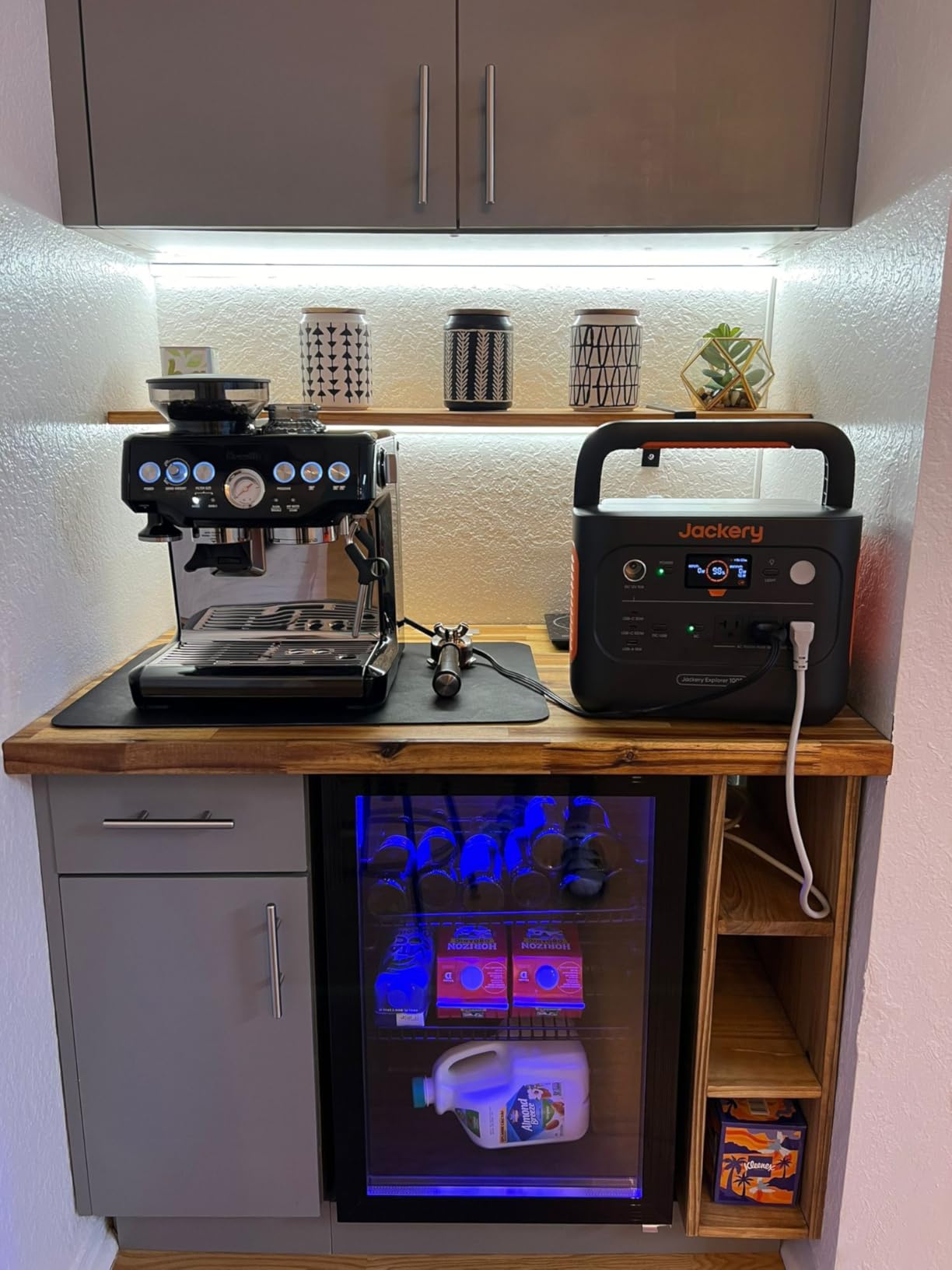
Designs under 500 dollars often force a trade between capacity, output and case size. The pairing here is a genuine kilowatt-hour with triple-digit continuous watts in a 23.8 lb case, which means you can run a fridge, keep a home office alive and still charge a camera from the same pack.
Those 100W USB-C ports also make it a rare choice for a working day on the move. Plug a laptop straight into the unit, run tools from the AC outlets and top up a phone from the second port without a single wall adapter.
What to know before buying
At 23.8 lb it sits at the heavy end of portable, so plan on a car trunk or a basecamp rather than a solo carry across a campsite. The foldable handle helps, but two people lifting is the sensible assumption.
Solar charging is closed to Jackery panels. That is fine if you already own one, and less fine if you were planning to pair it with a panel from another brand, because the connector and charge profile are not interchangeable.
3. Anker SOLIX C1000 Gen 2 – Best for CPAP and Medical Devices
Anker SOLIX C1000 Gen 2 Portable Power Station
1024Wh LiFePO4 capacity
2000W output, 3000W peak
24.9 lb
under 10ms UPS
Pros
- 4.7 average rating with 86% of reviews at five stars
- Full recharge in about 49 minutes at 1600W input
- 2000W output handles short bursts from larger appliances
- Time-of-use power management in the app
Cons
- Gen 2 removed the expansion battery option of Gen 1
- Some waveform distortion measured on high-load AC appliances
- No protective case included
The C1000 Gen 2 pairs 1024Wh of LiFePO4 capacity with 2,000W of continuous output and 3,000W of peak, and it carries a 4.7 average rating with 86% of reviews at five stars. That combination of runtime and headroom makes it our pick when a medical device is the reason for the purchase.
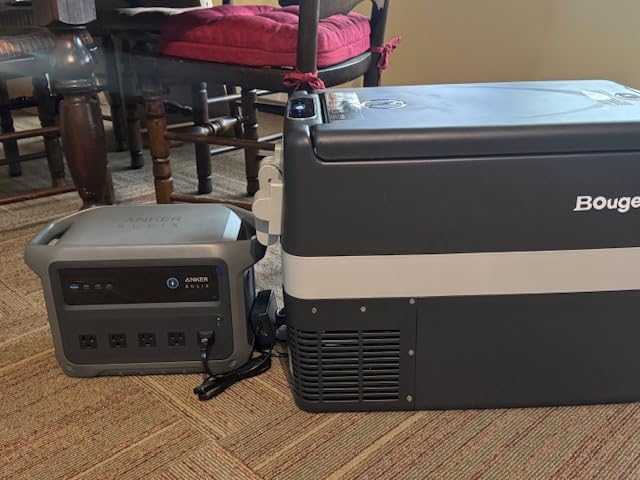
Owners report verified runs of three nights on a single charge with a CPAP machine, which is roughly the scenario this class was designed for. The under 10ms UPS switchover is fast enough that a laptop or a router does not notice the handover.
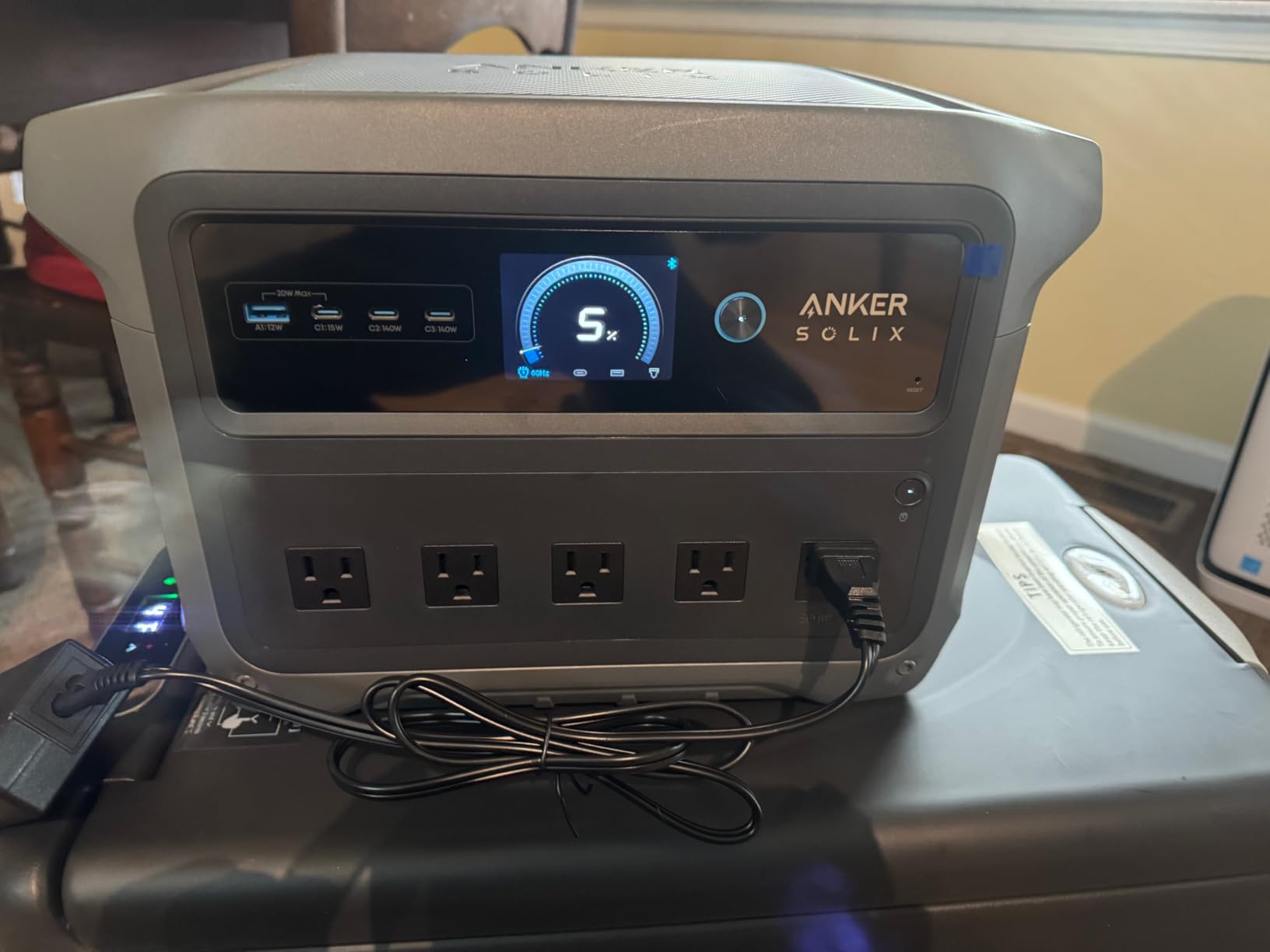
Charging is the fastest in the group. HyperFlash accepts 1600W from a wall outlet and refills the pack in about 49 minutes, and solar input of up to 600W at 60V maximum brings it back in roughly 1.8 hours of good sun.
Battery longevity is the other draw. The pack still holds at least 80% of rated capacity after 4,000 cycles, and the app adds a time-of-use mode that shifts charging to off-peak electricity rates, which quietly lowers running cost if you keep it plugged in.
Where it earns its place
Two thousand watts is enough headroom to start a microwave, run a small air conditioner for a short window or drive a power tool without hunting for a second battery. The 10 ports across the face mean a whole campsite can charge at once without a splitter.
For home use it behaves like a small UPS. Plug a router, a switch and a desktop into it, leave UPS mode enabled, and short outages disappear instead of becoming a reboot.
What to watch out for
Gen 2 dropped the expansion battery option available on the first generation, so the 1024Wh figure is the ceiling. If your plan is to grow past a kilowatt-hour later, pick a different unit now rather than discovering the limit later.
One reviewer measuring with an oscilloscope measured 15-20% harmonic distortion while driving a microwave, while noting the load still heated normally. Ordinary electronics and medical devices are unaffected, but audio amplifiers and sensitive test gear are worth checking first.
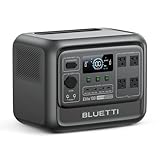
4. BLUETTI Elite 100 V2 – Best for RV and Van Life
BLUETTI Elite 100 V2 Portable Power Station for Camping 1024Wh 1800W
1024Wh LiFePO4 capacity
1800W output, 3600W surge
25 lb
30 dB silent mode
Pros
- 1024Wh packed into a 25 lb case for easy one-handed transport
- 0-80% in about 45 minutes on 1200W AC
- 30 dB silent mode suits indoor and overnight use
- 10ms UPS and app control with OTA updates
Cons
- Exposed DC barrel ports are easy to short with a bridging contact
- 12V car socket runs warm above about 12W of draw
- Stock car charging is slow without an add-on charger
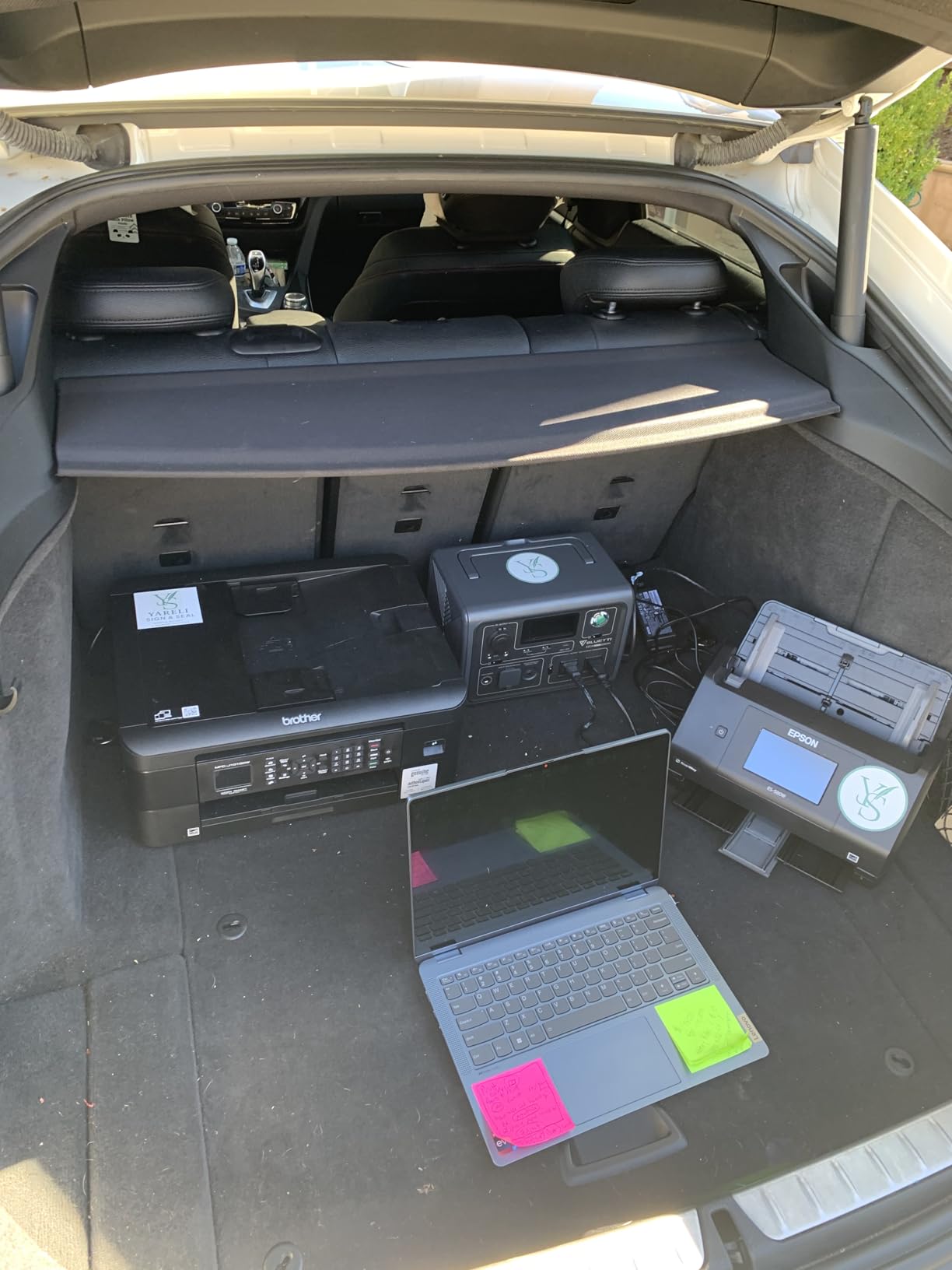
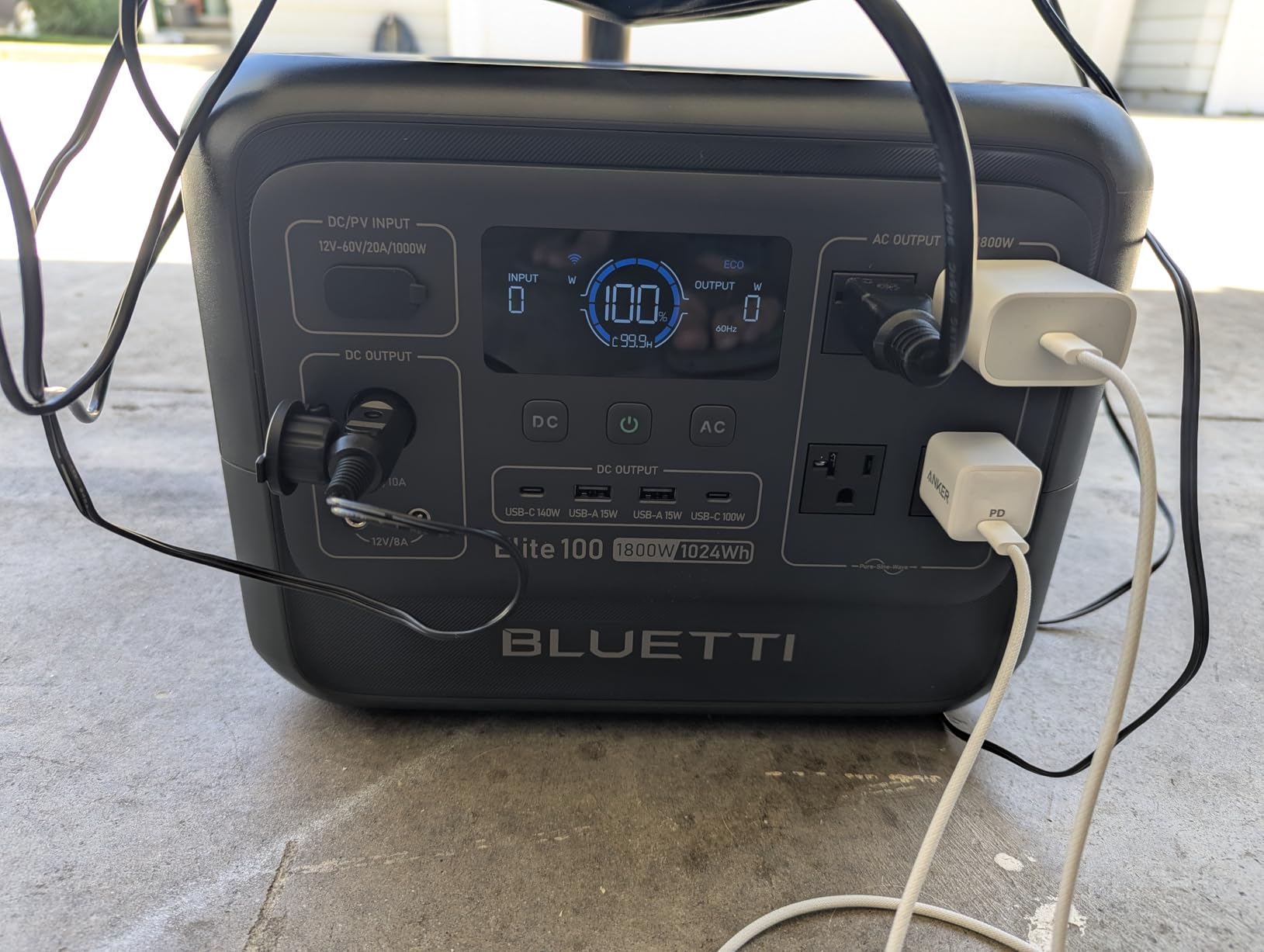
Capacity per pound is the number that separates this one. The Elite 100 V2 packs 1024Wh into a 17L chassis at 25 lb, which makes it about 35% smaller and 30% lighter than the previous generation of a similar size, and that matters when you are loading it into a van every morning.
Output is 1800W rated with 2700W of app-enabled power lifting and 3600W of surge. The lifting function handles resistive loads well past the nominal rating, which is a useful safety margin when a load does not behave like its label.
Charging is fast for the class: 1200W TurboBoost AC input reaches 80% in about 45 minutes. It also accepts AC, solar, car, lead-acid and generator charging, so you are not locked into one way of refilling it on the road.
Silent mode runs at 30 dB, roughly half the noise of a typical 1,000Wh unit, and the 10ms UPS keeps a home office or a router online through short outages. A hidden handle makes one-handed transport manageable, and Wi-Fi plus Bluetooth give remote control and over-the-air updates.
Why van and RV buyers like it
A 12V fridge, a laptop, a fan and a phone charger draw a fraction of the 1800W ceiling, so this unit runs for days rather than hours on a weekend trip. The 17L footprint slides into a standard cabinet gap where a 35 lb unit will not.
Silent mode is the sleeper feature. At 30 dB it is quiet enough to sleep beside in a van, which is exactly the fan-noise complaint that shows up repeatedly in camping forums.
Where care is needed
The exposed DC barrel ports on the DC section are easy to short with a bridging contact, so keep metal objects away from that panel. The 12V car socket also runs warm when a USB hub pulls more than about 12W through it.
Charging from a vehicle with the stock cable is slow. Owners who want meaningful 12V input pair it with the dedicated charger add-on, and no protective case or cable bag is included in the box.
5. BLUETTI AC180 – Best for Solar Recharging
BLUETTI Portable Power Station AC180, 1152Wh LiFePO4 Battery Backup w/ 2 1800W (2700W peak) AC Outlets, 0-80% in 45Min, Solar Generator for Camping, Off-grid, Power Outage
1152Wh LiFePO4 capacity
1800W rated, 2700W lifting
37.4 lb
500W solar input
Pros
- Largest capacity in the group at 1152Wh
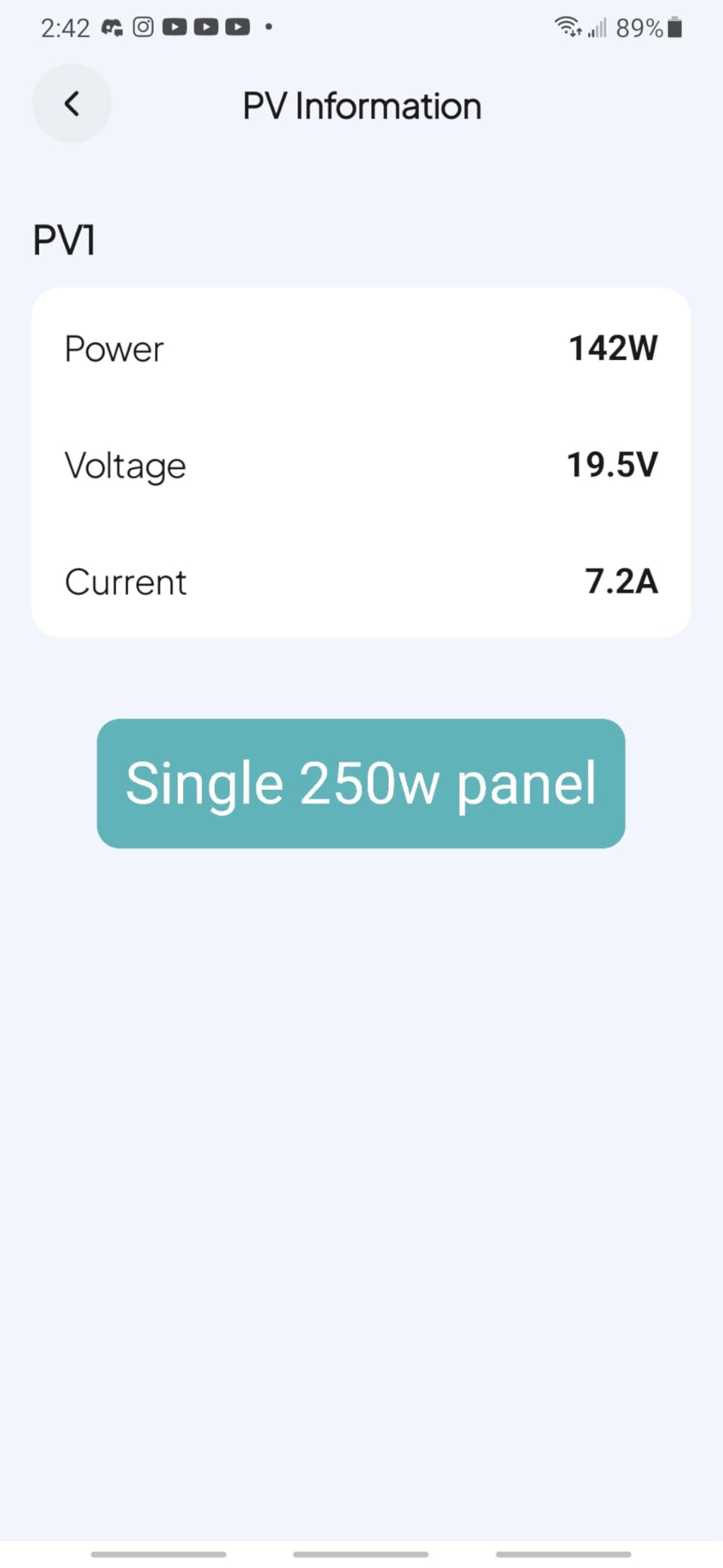
- 500W solar input refills in roughly 3 hours
- 1440W AC input gives a full charge in about an hour
- 20ms UPS and app control make it usable for home backup
Cons
- 37.4 lb is heavy for a basecamp carry
- Idle draw of roughly 15-20W cuts usable capacity on small loads
- Wireless charging pad rarely maintains a connection
The AC180 carries 1152Wh of capacity, the largest pool here, and it accepts 500W of solar input, the second-highest ceiling in this roundup. In roughly two and a half to three and a half hours of good sun, a 500W panel puts a substantial amount of energy back into the pack, which is what makes it viable for repeated off-grid days.
It also takes 1440W of AC input, so a full wall recharge takes about an hour. Eleven outlets and outports cover everything from USB-A to a car socket, and the app handles monitoring plus the power lifting setting.
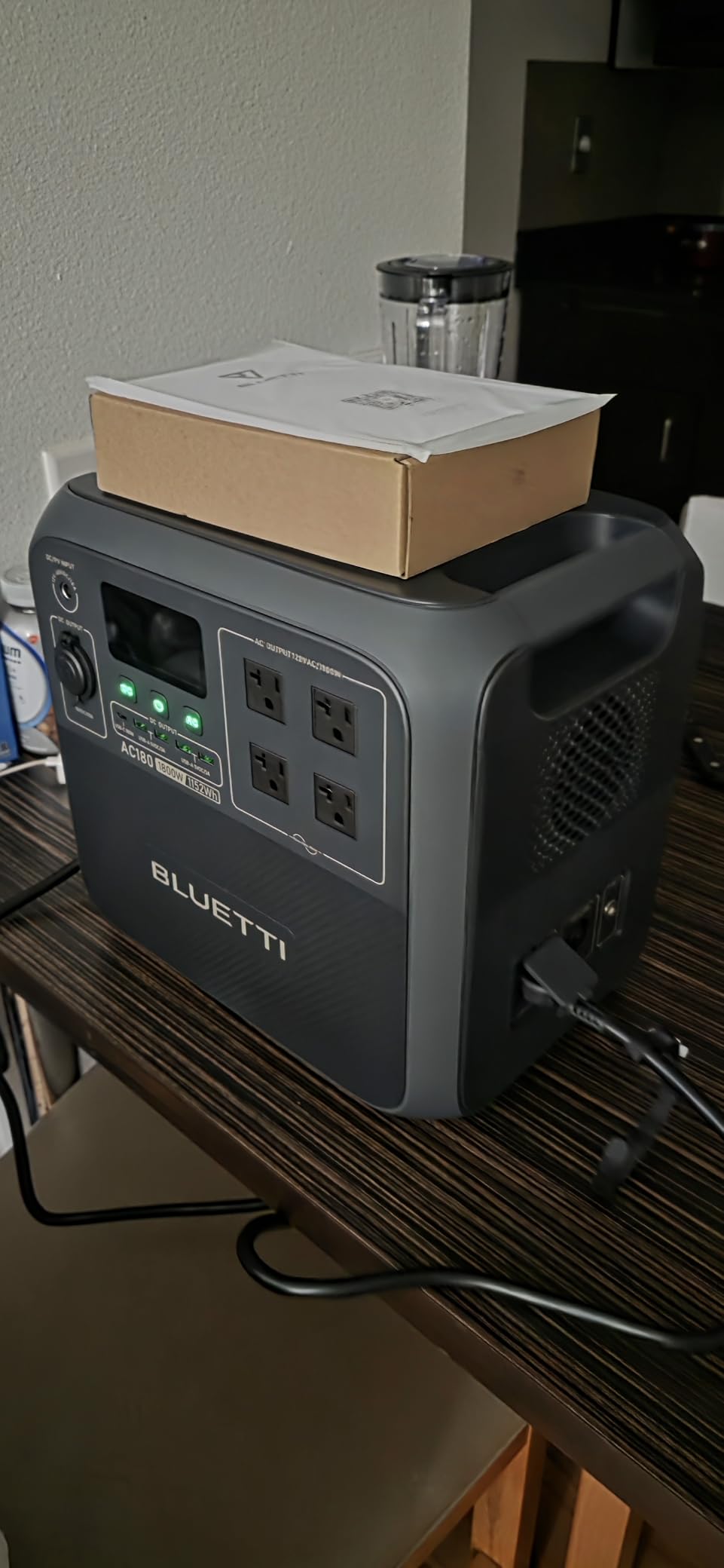
Owners consistently point to the capacity-to-price ratio and the range of charging paths, including alternator charging for a vehicle. Customer service has resolved issues with an exchange offer and firmware updates, which is worth knowing in a category where support quality varies sharply by brand.
The control interface is deliberately simple: an easy-to-read display and a three-button layout. Quiet operation means it can sit in a living room during an outage without adding constant fan noise to the room.
What it does that the smaller units cannot
The 1800W rated output with 2700W of app-enabled lifting will start a refrigerator compressor, a microwave or a heavier power tool without drama. A 20ms UPS switchover is fast enough for most routers, laptops and network storage, though slower than the 10ms units in this list.
Capacity is the other half of the story. 1152Wh is enough to keep a fridge, a router and lights running through a full night, which is the outage scenario most households are actually planning for.
What to plan around
At 37.4 lb this is a basecamp unit, not a walking one. It is the heaviest pick here by a wide margin, and solo carry over distance is genuinely awkward even with the handle.
Idle self-consumption of roughly 15-20W is the detail reviewers flag most. The inverter and electronics draw power even with nothing plugged in, so a 300W overnight load actually costs more than the arithmetic suggests. The wireless charging pad on top is also unreliable and rarely maintains a connection, so do not plan on it.
6. Anker SOLIX C300 – Best for Quiet Operation and USB-C Charging
Anker SOLIX C300 Portable Power Station, 288Wh Solar Generator for Camping
288Wh capacity
300W continuous, 600W surge
9.1 lb
25 dB operation
Pros
- Two 140W two-way USB-C ports
- the highest USB-C rating in this group
- Very quiet at 25 dB from 3.3 ft
- LiFePO4 cells rated to 3000 cycles with a 5-year warranty
- Reaches 80% in about 50 minutes
Cons
- 288Wh is small for the money
- Solar input restricted to specific Anker panels
- Shoulder strap sold separately
The C300 is among the quietest units here, running at 25 dB measured from 3.3 ft. If your station lives in a bedroom during a winter outage, that number is more valuable than another 200 watt-hours.
Its standout feature is charging speed on USB-C. Two ports deliver 140W each and are two-way, so you can charge a laptop at full speed and also run the unit from a compatible bank or panel. A third USB-C port at 15W handles accessories, and there is a 120W car socket plus a USB-A port.
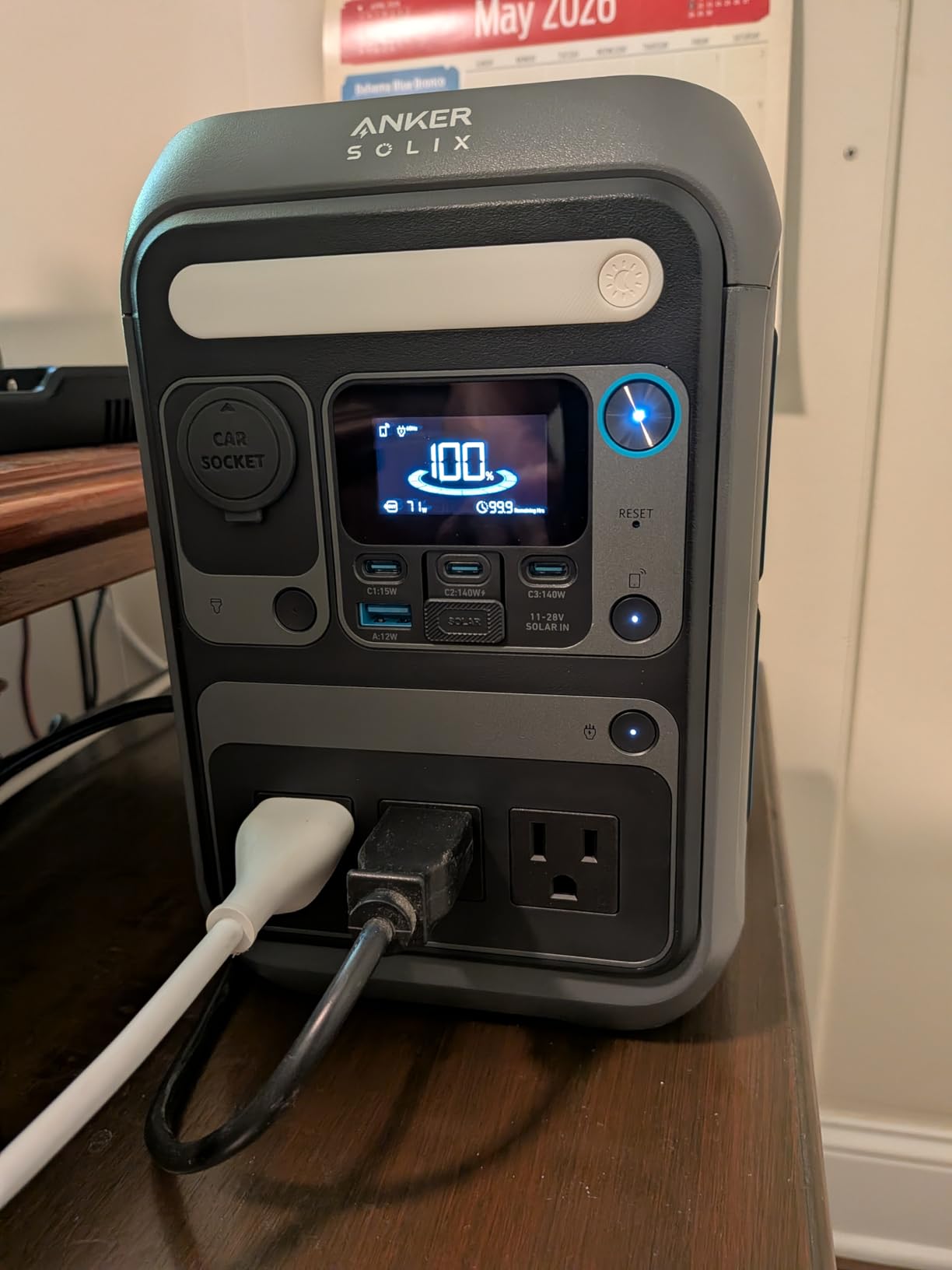
Recharge from a wall outlet reaches 80% in about 50 minutes, and the LiFePO4 cells are rated to 3,000 cycles with smart temperature control and impact resistance. Anker backs it with a 5-year warranty.
At about 9.1 lb it moves easily between a desk, a car and a campsite. Three AC outlets rated at 300W total give you room for more than one mains device at a time, which most packs of this size do not.

Where it fits best
This is a travel and desk unit. A laptop, a phone, a monitor and a router are a comfortable load for 300W, and the 140W USB-C ports mean you can skip the wall charger entirely. For a home office outage or a weekend of work from a van, that is the whole requirement.
It also makes sense as a bedside or living room unit, because 25 dB is close to the floor of a quiet room. Anything that would leave a fan running hard is the one thing this design avoids.
What to compromise on
288Wh is on the small side for the money, so a fridge or a CPAP machine is a stretch rather than a comfortable fit. Think electronics and lights, not appliances with compressors.
Solar compatibility is narrow: it works with 100W and 60W Anker panels, and explicitly excludes the SOLIX PS30, PS200 and PS400. The shoulder strap is also a separate purchase if you plan to carry it far.
7. EcoFlow RIVER 2 – Best for Recharging in an Hour
EF ECOFLOW Portable Power Station RIVER 2, 256Wh 300W
256Wh capacity
300W AC output, 600W combined
7.7 lb
one-hour AC recharge
Pros
- Full AC recharge in about an hour from a wall outlet
- Light at 7.7 lb with a built-in handle
- EPS transfer under 30 ms for routers and small appliances
- Quiet fan with a clear battery and power display
Cons
- A 4.3 average with a 9% one-star share
- Some units reported drifting percentage readings after a year
- Firmware update once stopped AC and USB-C charging until a follow-up fix
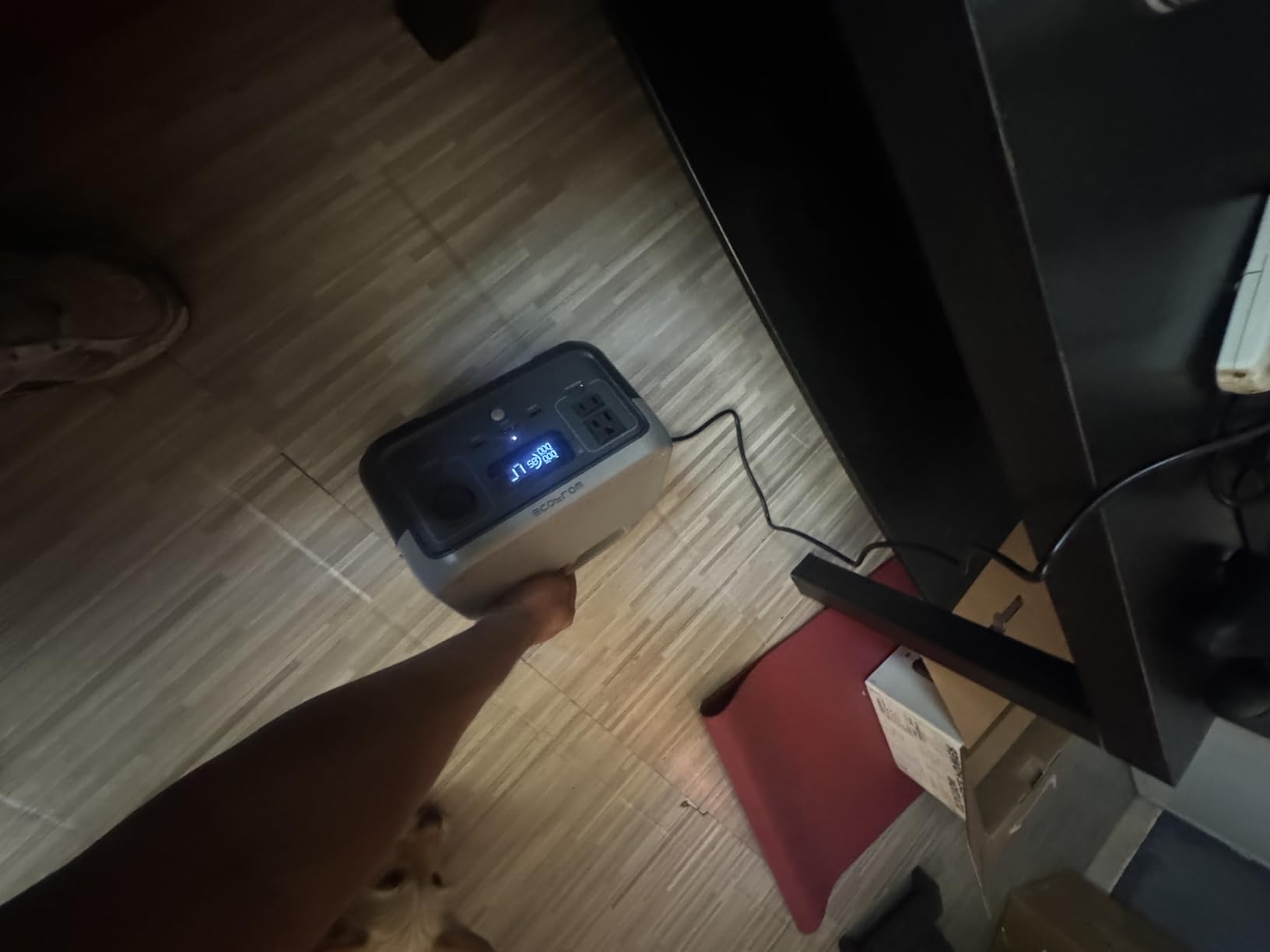
X-Stream fast charging takes the RIVER 2 from empty to full in about an hour, and at 7.7 lb it is easy to move between a desk drawer and a car. For a home office that needs to be ready again quickly, that combination is hard to beat.
Emergency power supply mode switches over in under 30ms, which covers a router, a modem and a laptop without a reboot. The battery management system monitors voltage, current and temperature continuously, and six outlets cover AC, USB-A, USB-C and car charging.
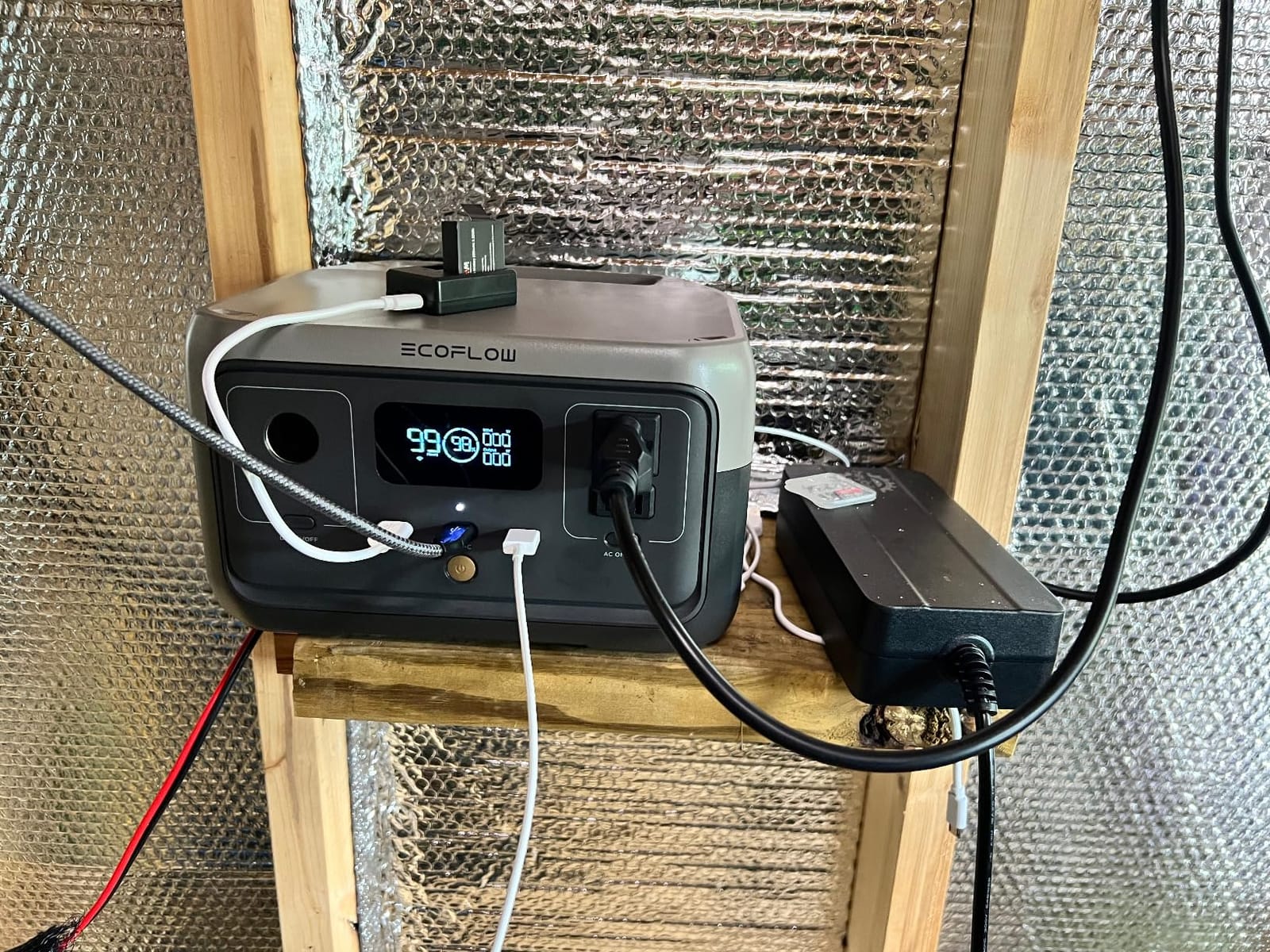
Solar input tops out at 110W, which refills the pack in roughly 2.3 hours. That is a good match for a small folding panel on a balcony or a picnic table, though it does limit you to a smaller array on a longer trip.
Owners mostly love the one-hour turnaround and the small footprint for electronics-level loads. A minority report units that stopped holding charge or showed an inaccurate state of charge after a year, which is the main reason its average rating sits a little below the units built around LiFePO4 cells.
What works well
It handles the office load well: laptop, monitor, router and phone, with runtime measured in hours rather than minutes. The EPS function means a brief flicker from the grid does not interrupt a video call or a download.
The display is clear and the fan stays quiet at normal loads, and the 5-year service coverage is longer than several competing units in the bracket.
What to know
Its 4.3 average comes with a 9% one-star share, and the reports cluster around long-term battery retention and drifting percentage readings. If you buy it, check the reading against a known load periodically in the first year.
Two smaller things. A firmware update once interrupted AC and USB-C charging until a follow-up fix, so update when you are not relying on the unit. Solar charging also needs a panel of at least 25W to register reliably, and running the inverter itself draws power, which cuts into your usable 120V runtime.
8. GRECELL 500W – Best Value Per Watt-Hour
Grecell Portable Power Station 500W(Peak 1000W) 519Wh Outdoor Solar Generator Backup Battery Pack with 2 110V AC Outlets,10-Port Powerhouse for RV/Van Camping Fishing Climbing Road Trip Home Emergency
519Wh capacity
500W rated, 1000W peak
14.1 lb
10 output ports
Pros
- Ten simultaneous outputs including 60W USB-C and a 10W wireless charger
- Accepts 200W solar panels
- well above the 100-120W caps elsewhere
- Pure sine wave output with a documented BMS protection suite
- LED flashlight with strobe and SOS modes
Cons
- Uses lithium-ion cells rather than LiFePO4
- so cycle life is far shorter
- A 4.3 average with an 11% one-star share
- 2-year warranty is the shortest among these picks
Split the capacity by the money and this design is very hard to beat on efficiency. 519.48Wh from a 140,400mAh pack for 500W of rated pure sine wave output lands at a cost per watt-hour that no LiFePO4 rival here can match.
Port count is the other headline. Ten simultaneous outputs: two AC outlets, three USB-A QC3.0 ports at 18W, a 60W USB-C PD port, two DC outputs, a 12V car port at 10A and a 10W wireless charging pad. A multi-mode LED flashlight with strobe and SOS comes standard.
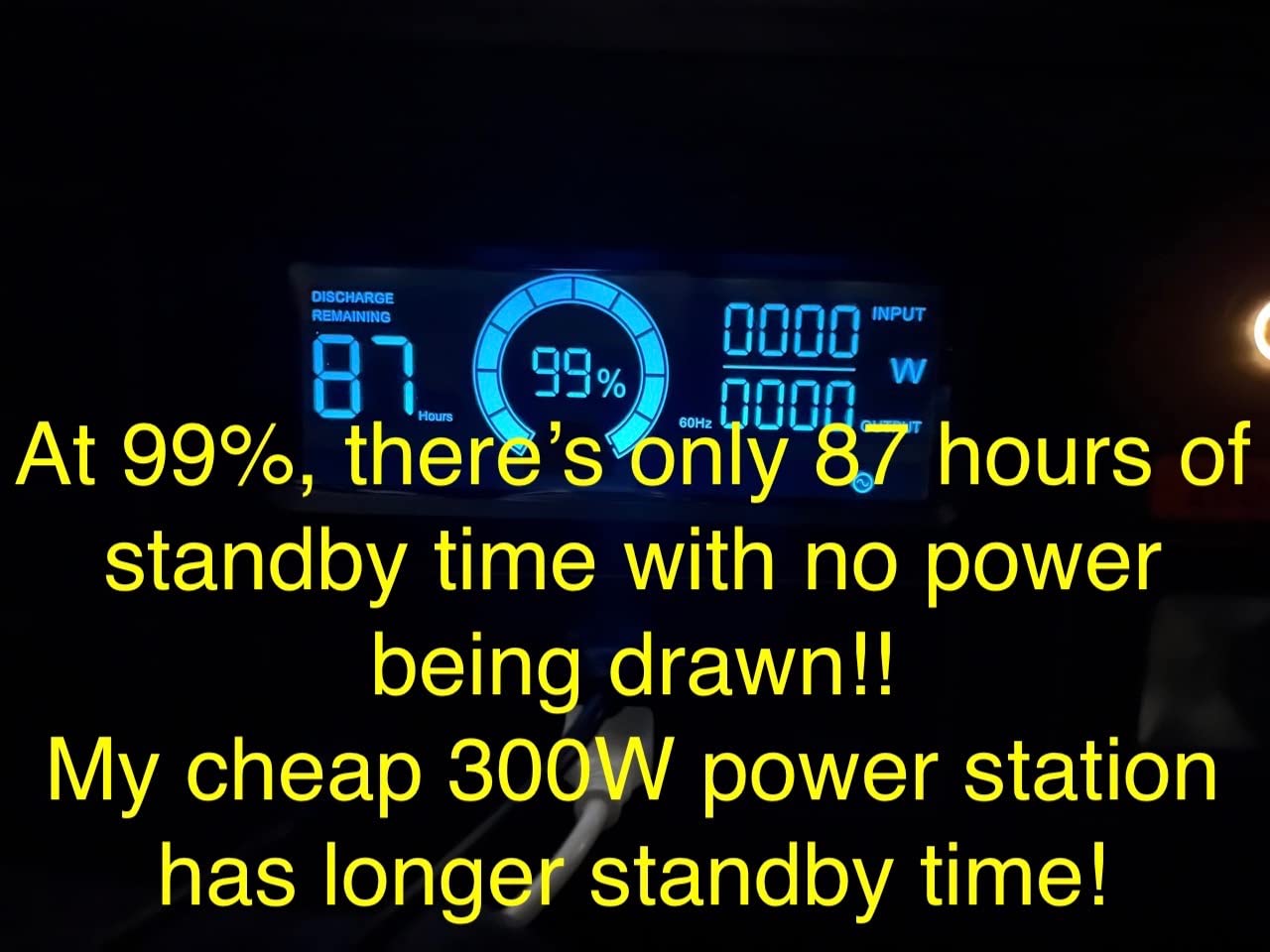
It accepts solar panels up to 200W, comfortably above the 100W and 120W limits several competitors here impose, though the recharge takes 6-9 hours. A 12V car connection fills it in 7-8 hours and a wall outlet in 6-7 hours, with a battery management system covering temperature, overvoltage, overcurrent and short-circuit protection.
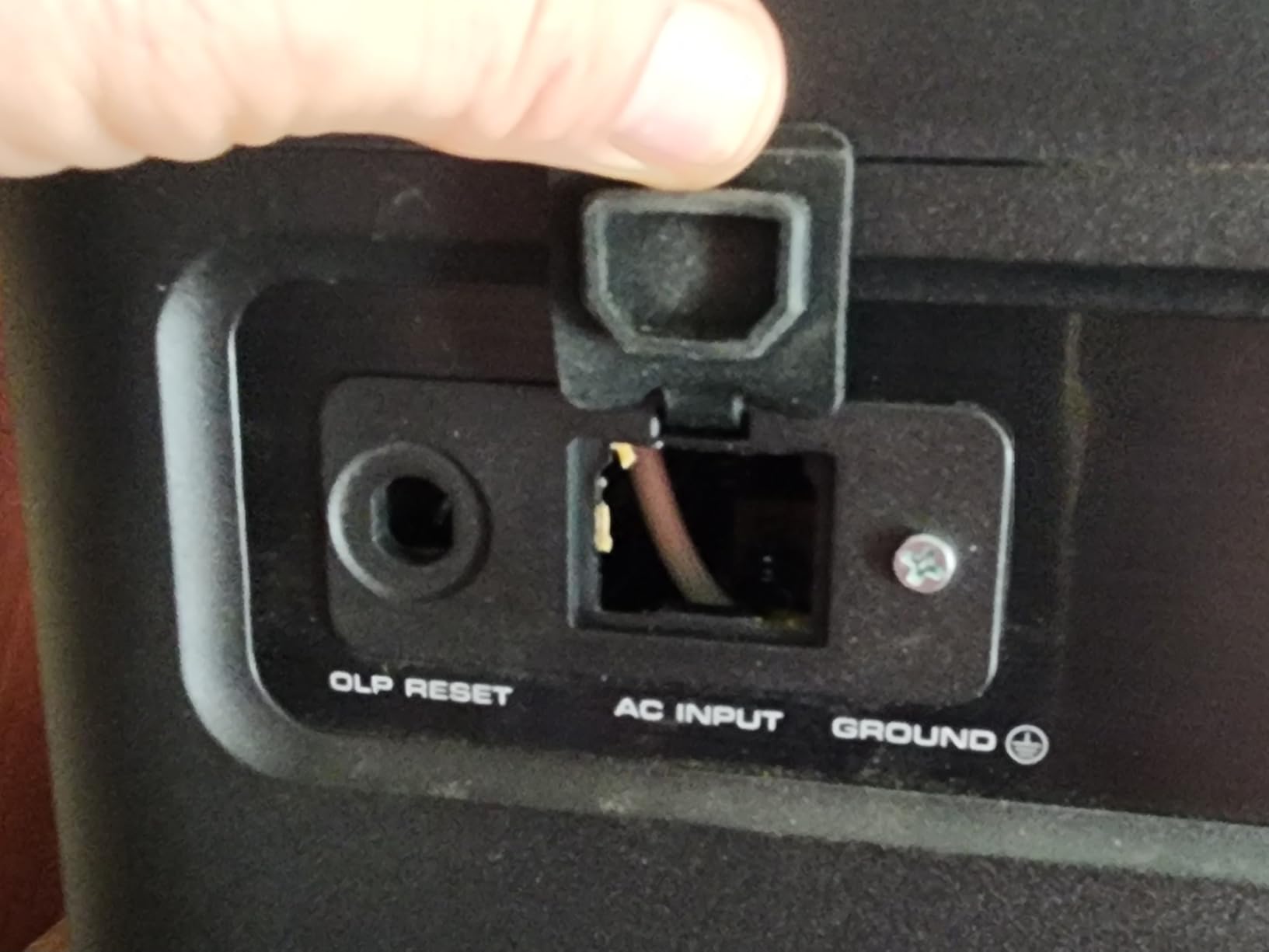
The trade-off is chemistry. This is a lithium-ion pack, not LiFePO4, so the cycle life is well short of everything else in this list, and reviewers report shortened runtime after extended use on a minority of units.
Where the value argument holds
If you want maximum stored energy and maximum ports for the money and you will not keep the unit for a decade, this is the sensible buy. A group of campers, a tailgate setup or a job site where you are recharging from a wall outlet between shifts will get the most out of it.
At 14.1 lb it is still portable, and the pure sine wave output means sensitive electronics are not the weak point.
Where it costs you
The lithium-ion cells are the whole argument against it. A 2-year warranty is the shortest among these picks, and an 11% one-star share is the highest, with complaints clustering around build longevity and battery degradation after extended use.
Recharge times are also the slowest here, and if you plan to run the unit mostly on solar, the 6-9 hour refill from a 200W panel changes the maths compared with a fast-charging LiFePO4 design.
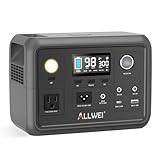
9. ALLWEI 300W – Budget Pick and Lightest Option
ALLWEI Portable Power Station 300W, 256Wh Solar Generator LiFePO4 Battery
256Wh LiFePO4 capacity
300W continuous, 600W peak
6.4 lb
3,000 cycles
Pros
- LiFePO4 chemistry for a low entry price
- with a 3000-cycle rating
- Light at 6.4 lb in a thin
- pack-friendly body
- Display shows estimated runtime and exact remaining percentage
- MPPT solar controller with pass-through charging
Cons
- Only one AC outlet and a single USB-C port
- Solar input capped at 120W
- Some owners reported display freezing and units that stopped holding charge within a year
The ALLWEI 300W is the cheapest way to get LiFePO4 chemistry in this bracket, and at 6.4 lb it is also the lightest unit here. The thin 9.25 by 5 by 6.8 inch body slides into a laptop sleeve, which is unusual for a device with a full AC inverter.
Specs are sensible for the money: 256Wh of capacity, 300W continuous pure sine wave AC with 600W of peak, and a 3,000-cycle rating. The display is unusually good, showing estimated runtime and exact remaining percentage rather than a bare wattage figure.
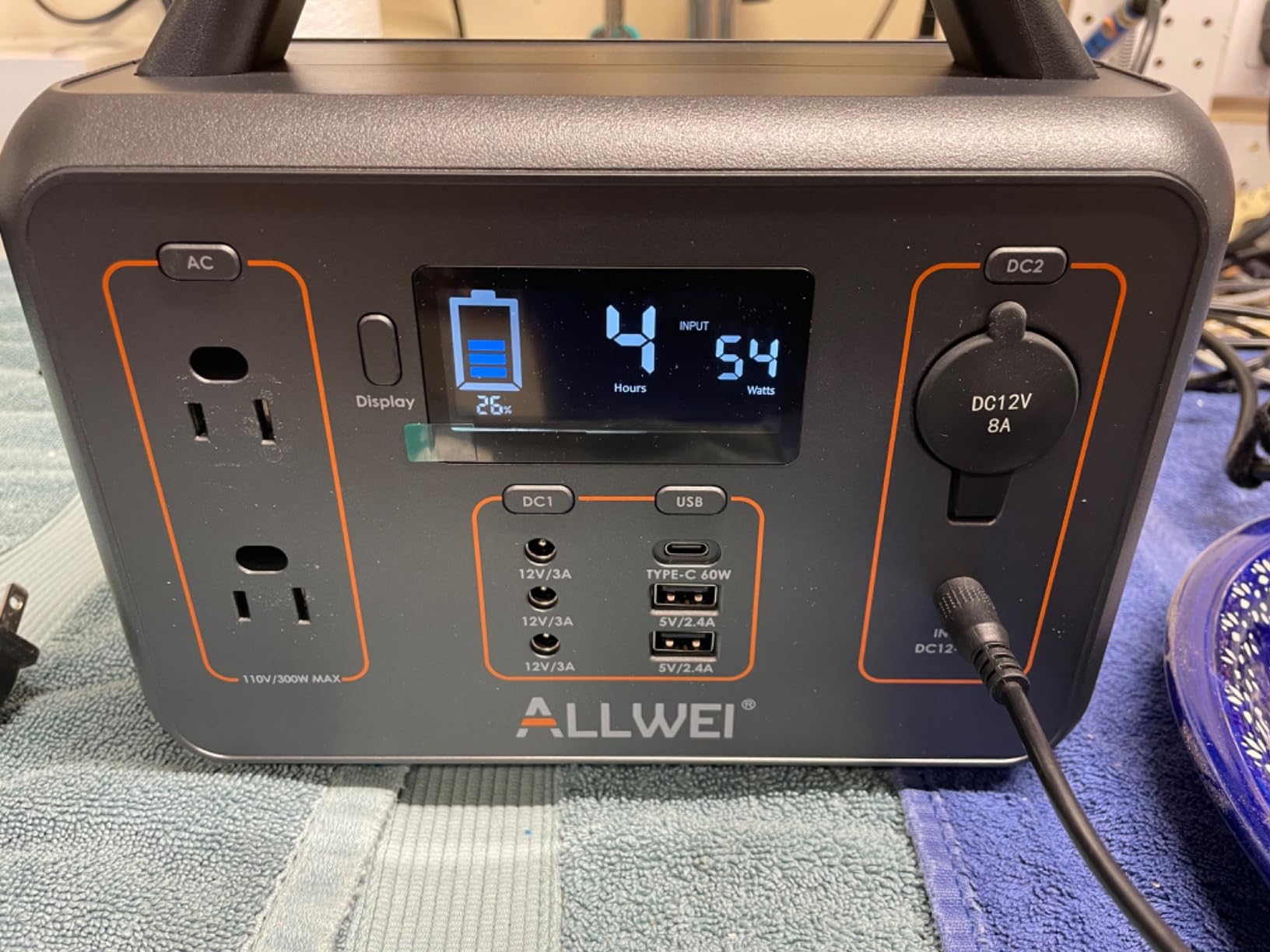
Charging is flexible for such a small unit. A wall outlet or a 12V car connection fills it in 3.5-4 hours, a 100W solar panel takes 4-5 hours, and running AC plus solar together cuts that to 2-2.5 hours. A built-in MPPT controller and 6-layer battery management system handle the rest, and pass-through charging lets you power devices while the unit fills.
Owners repeatedly report success running CPAP machines for multiple nights, and the 2.4A USB-A output carries about 21W of combined draw, which is honest for the port.
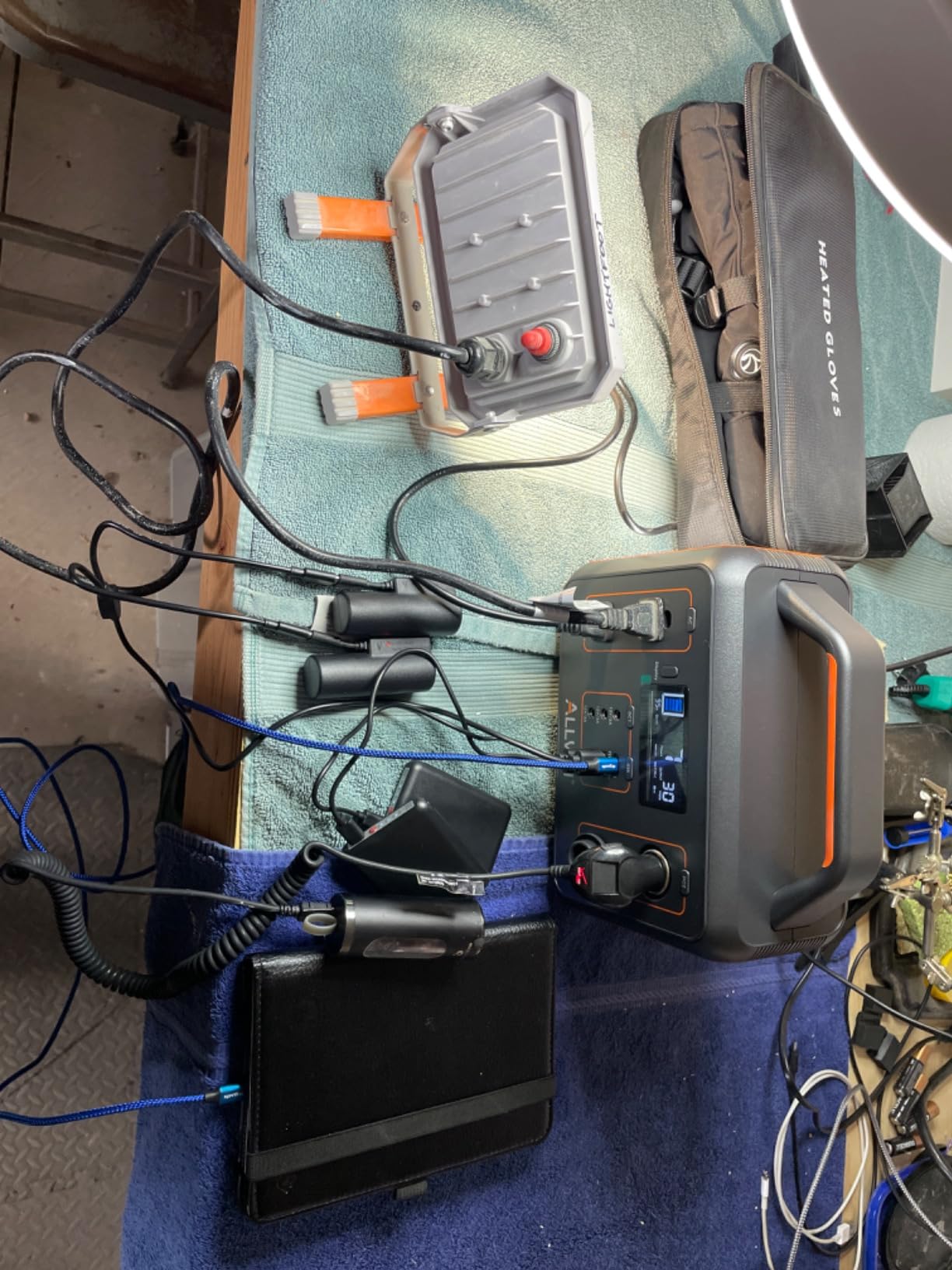
Why it stays on the list
It is the cheapest design here that pairs LiFePO4 durability with a sub-300-dollar budget, and forum buyers consistently treat LiFePO4 as the minimum acceptable chemistry at any price. A 3-level LED light with SOS mode rounds out a genuinely thoughtful feature list.
For a medical device, a small load or a weekend trip, the low weight and thin form factor make it the easiest unit here to carry without thinking about it.
What to compromise on
One AC outlet and one USB-C port is a tight port layout, and there is no 24V output, which some RV users need for certain accessories. Solar input is capped at 120W, so a larger panel will not help.
Some owners reported the charge-level display freezing and sudden shutdowns that needed a reset, and a few units stopped holding charge within about a year. Customer support is also reported to require extensive documentation before engaging, so factor that into the 2-year warranty.
10. Jackery Explorer 300 – Best for Air Travel and Small Loads
Jackery Explorer 300 Portable Power Station,292Wh
292Wh capacity
300W rated, 600W surge
7.1 lb
LiFePO4, 4,000+ cycles
Pros
- Travel-friendly weight at 7.1 lb with an integrated carry handle
- LiFePO4 chemistry rated for 4000+ cycles
- Six-device output mix including 100W USB-C PD
- Clean output suitable for sensitive electronics
Cons
- 292Wh limits runtime to smaller appliances
- Only two AC outlets
- Single USB-A bank limits simultaneous legacy-device charging
The Explorer 300 is the pick for anyone whose main constraint is what they can lift. At 7.1 lb with an integrated carry handle, it is easy to move between a car, a campsite and a hotel room, and more than 11,000 reviews reflect how widely it is used that way.
You get 292Wh of capacity and 300W of rated AC output with 600W of surge, which covers a laptop, a phone, a camera battery, a router and a small fan. The chemistry is LiFePO4 rated for more than 4,000 cycles to 70% capacity, which is a rating you would normally expect from a unit twice the size.
Ports are well judged: two AC outlets, a 100W USB-C PD port, two USB-A ports and a 120W car socket. A 100W panel refills it to 80% in about 2.8 hours, or about 7.5 hours from a 40W panel, and an MPPT charge controller handles the tracking.
Owners consistently praise portability, build quality and ease of use for phone, laptop and camera-level loads. The most common reservation is simply that 292Wh is not much once you start adding appliances.
Where it works
It is a travel companion rather than a backup system. Cameras, drones, laptops, phones and a router are exactly the loads this size handles well, and the 600W surge covers small motors and compressors without strain.
For a weekend campsite or a flight-heavy travel schedule, the 7.1 lb figure is the number that decides it. It is the lightest design here that still carries a 500W-class inverter alongside a USB-C PD port.
Where it does not
Two AC outlets and a single USB-A bank limits simultaneous charging, so a group of four or five people will queue. The 292Wh pool also disappears quickly against a fridge, a CPAP machine or any heater, which is the main reason to step up a size instead.
If your use case is anything beyond electronics, look at the 512Wh or 1,000Wh designs earlier in this list rather than stretching this one past its design point.
How to Choose a Portable Power Station Under 500 Dollars
Size the capacity before anything else
Capacity in watt-hours is stored energy, and runtime follows a simple rule: usable watt-hours divided by device watts. In practice you lose roughly 10% to inverter overhead and another 10% to conversion losses, so a 1,000Wh pack delivers roughly 810Wh of real work.
For a fridge alone, budget about 150W of average draw and expect the compressor cycle to make that number swing. A 1,000Wh station typically carries a 12V fridge through a full day and most of a second. A CPAP machine at 30-60W, a router at 15W and two lamps at 20W together draw under 100W, which is why a 500Wh unit can look oversized for a blackout and a 300Wh unit can look undersized.
Add up every device you actually want to run, multiply by the hours you need it, and divide by 0.81. That number is your minimum capacity, and it is the first thing to check before you fall for a wattage figure.
Read continuous watts, not surge watts
Continuous output is what the inverter can run indefinitely. Surge or peak power is a short allowance, usually 30 seconds to a few minutes, that exists to start motors and compressors. A 1,000W peak figure on a 300W inverter does not mean you can run a 1,000W heater.
For compressors, check that your device’s startup draw fits under the surge rating, then confirm it runs under the continuous rating. A fridge that starts at 700W and runs at 150W needs a unit with at least 700W of surge, not 700W of continuous capacity.
Treat LiFePO4 as the minimum
LiFePO4 cells are rated in the thousands of cycles here, from 3,000 on smaller units to 6,000 on the Jackery Explorer 500 v2. Lithium-ion packs in the same price class are typically rated far lower, and reviewers on this group report shortened runtime on those units after extended use.
That difference is a cost-per-cycle story. Spread the purchase over the rated cycles and a LiFePO4 unit costs far less per cycle than a lithium-ion one, which is why two units with similar capacity can have very different five-year value. If you are still weighing the buy-versus-build question, the chemistry gap explains most of the answer.
Check the transfer time if computers are involved
UPS and EPS modes are the feature that separates a station that is merely big from one that can back up a computer. Transfer times in this group run from under 10ms on the Anker SOLIX C1000 Gen 2 and 10ms on the Jackery Explorer 500 v2 and BLUETTI Elite 100 V2, up to 20ms on the BLUETTI AC180 and under 30ms on the EcoFlow RIVER 2.
Anything under 20ms keeps a desktop, a laptop, a network storage unit or a CPAP machine running without a reboot. If you are buying for a home office, treat transfer time as a hard requirement rather than a nice extra.
Match the solar input to your panels
Solar input ceilings vary enormously in this class. The Anker SOLIX C1000 Gen 2 accepts 600W at 60V maximum, the BLUETTI AC180 accepts 500W, the GRECELL accepts 200W, the ALLWEI caps at 120W, the EcoFlow RIVER 2 accepts 110W and the Jackery units work with their own panels.
A higher ceiling only helps if you own or plan to buy that much panel. Most buyers should start with a 100W portable panel and let a fast AC recharge cover the gaps, because a 256Wh pack does not earn a 600W solar input.
Know the ceiling of this price class
Under 500 dollars you will not run a space heater, a window or central air conditioner, a well pump, an electric range or oven, a large air compressor, most grills, a hair dryer plus anything else, or an electric water heater. These draw between 1,500W and 4,000W and are outside the continuous rating of every unit in this list.
A single large appliance can also trip the inverter on startup even when its running draw looks acceptable. Check the surge rating before you plan an outage around anything with a compressor or a motor.
Two safety notes worth reading
Never plug a portable power station into a wall outlet or a generator inlet to backfeed a house. Backfeeding a grid is illegal in most places, it bypasses your breaker panel, and it puts line workers at risk during an outage. If you want to power essential circuits, use a listed transfer switch installed by a qualified electrician.
Charging indoors overnight is a recurring question, and the answer is that reputable units with battery management and over-temperature protection are designed for it. Keep the unit on a hard, non-flammable surface with airflow, do not charge it in a sleeping area where you cannot hear a fault, and never leave a damaged or swollen pack plugged in.
One more detail buyers miss: weight and warranty length. Solo carry matters more than most spec sheets admit, and warranty terms here range from 2 years on the ALLWEI and GRECELL to 5 years on the Jackery, BLUETTI and Anker models. If you can move a heavier unit, you get more capacity and more protection in the same bracket.
For our wider guides, we have covered the best portable power stations for camping, the best portable power stations for RVs and the best portable power stations for home backup in more detail, including units that sit above this price class.
Frequently Asked Questions
What is the best budget portable power station under 500 dollars?
The Jackery Explorer 500 v2 is the best overall under 500 dollars. It pairs 512Wh of LiFePO4 capacity with 500W of continuous output, a 10ms UPS switchover, a 52-minute wall recharge and a 5-year warranty, which covers a fridge, a router, lights, a laptop and a CPAP machine through a typical outage.
What is the best and most affordable portable power station?
At the very bottom of this bracket, the ALLWEI 300W is the most affordable design that still uses LiFePO4 cells rated for 3,000 cycles, at 256Wh, 300W continuous and 6.4 lb. The GRECELL 500W is the cheapest per watt-hour, but it uses lithium-ion cells, so its cycle life is far shorter.
Is Jackery or Anker better?
Jackery leads on capacity per unit and output: the Explorer 1000 v2 gives 1070Wh at 1500W continuous, and the Explorer 500 v2 adds a 10ms UPS with a 5-year warranty. Anker leads on charging speed and port flexibility: the SOLIX C1000 Gen 2 refills in about 49 minutes and offers 2000W output, while the SOLIX C300 runs quietly at 25 dB.
Which brand of portable power station is the most reliable?
Reliability in this bracket tracks warranty length and support responsiveness. Jackery, BLUETTI and Anker back their units with 4- or 5-year warranties and active firmware support, while the GRECELL and ALLWEI carry 2-year terms and require more documentation before support engages. We also cover reliability in our home backup roundup.
Which LiFePO4 power station is the best?
The Jackery Explorer 500 v2 has the longest LiFePO4 rating in this group at 6,000 cycles, with 512Wh of capacity and 500W of output. For more power, the Jackery Explorer 1000 v2 and Anker SOLIX C1000 Gen 2 both hold 80% or more of rated capacity after about 4,000 cycles with roughly 1,000Wh and 1,500W to 2,000W of output.
What is the best solar power station under 500 dollars?
For solar, the Anker SOLIX C1000 Gen 2 accepts up to 600W of input at 60V and refills in about 1.8 hours, and the BLUETTI AC180 accepts 500W for a two-and-a-half to three-and-a-half hour refill on 1152Wh of capacity. The EcoFlow RIVER 2 takes 110W and the ALLWEI caps at 120W, so pair those with smaller panels.
Conclusion
The Jackery Explorer 500 v2 is the best portable power station under 500 dollars in 2026, and it wins on the combination that matters most in this bracket: 512Wh of LiFePO4 capacity, 500W of continuous output, a 10ms UPS and a 5-year warranty in a 13.3 lb case. If you need more than 1,000W of output, the Jackery Explorer 1000 v2 and the Anker SOLIX C1000 Gen 2 are the two units to compare.
Tell us what you are actually powering, and we will narrow this list to a single recommendation. Every unit above links to its current listing, so you can confirm today’s number before you commit.