
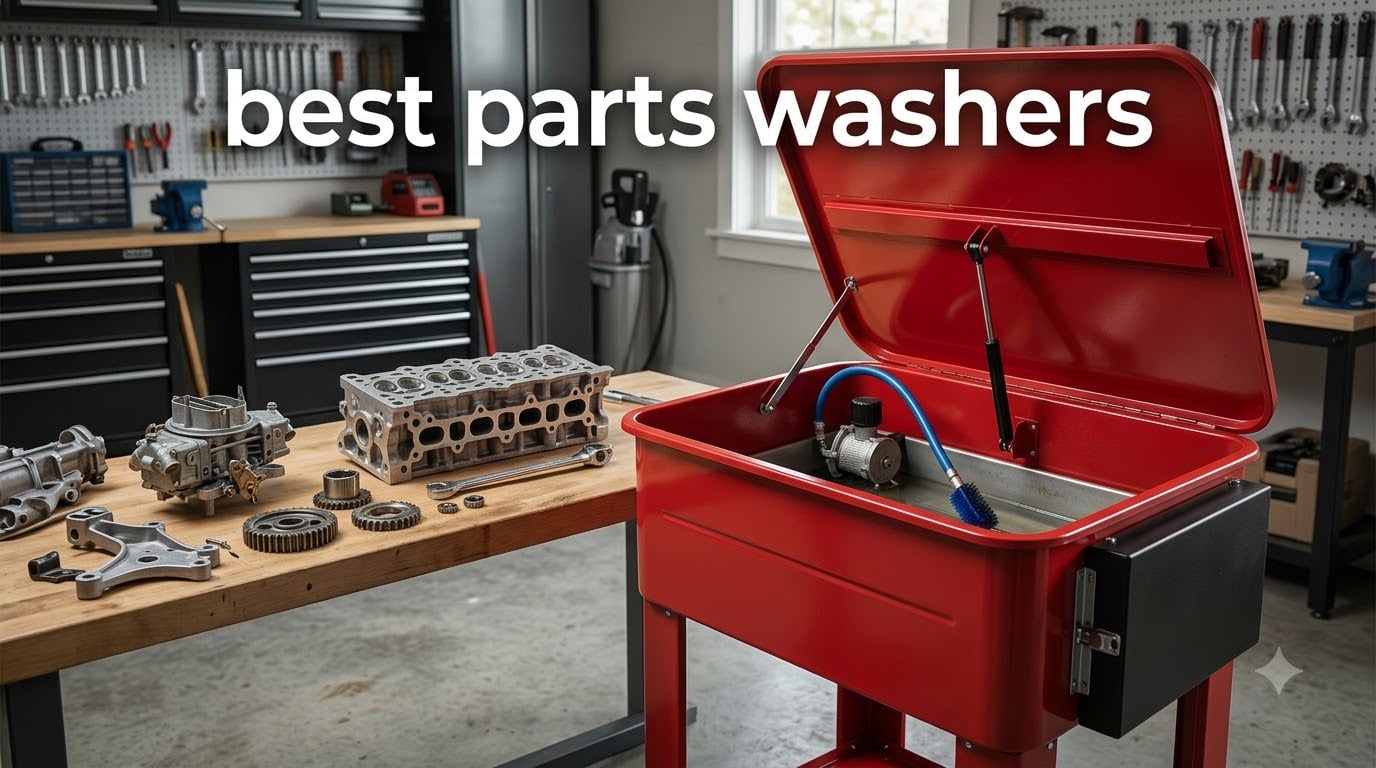
If you have ever spent an hour scrubbing greasy engine components with a spray can of brake cleaner, you already know why finding the best parts washers can transform your workflow. A good parts washer pumps cleaning solvent over dirty components, cutting through built-up grease, oil, and grime far faster than hand-cleaning ever will. Whether you are a weekend wrencher pulling cylinder heads in your driveway or a professional mechanic dealing with transmission rebuilds all day, the right parts cleaning machine saves time, reduces solvent waste, and keeps your shop cleaner.
Our team spent weeks comparing 8 of the most popular parts washers on the market, digging through hundreds of customer reviews, forum discussions, and technical specs to find the top models worth your money. We looked at everything from compact 3.5-gallon benchtop units for cleaning carburetors to full-size 40-gallon solvent tanks capable of handling big-block engine blocks. Along the way we paid close attention to the things that actually matter in a shop: pump flow rate, build quality, solvent compatibility, and how well each unit holds up after months of daily use.
This guide covers the full spectrum of options for 2026. We walk you through every model with honest first-hand analysis, then break down what to look for in a buying guide section that addresses heated versus non-heated tanks, solvent choices, pump performance, and environmental compliance. By the end, you will know exactly which parts washer fits your garage, your budget, and the type of work you do.
Top 3 Picks for Best Parts Washers in 2026
JEGS 5-Gallon Portable Parts Washer
- 3.5 gallon solvent capacity
- 3.96 GPM pump
- Compact benchtop design
- Heavy duty steel
Eastwood 20 Gallon Parts Washer
- 20 gallon tank
- 12 gallon solvent capacity
- Flow through brush
- Flexible nozzle
JEGS 40-Gallon Parts Washer
- 40 gallon capacity
- 24 gallon solvent capacity
- 5 GPM pump
- Heavy duty steel
These three models represent the best value across three tiers of parts washers. The JEGS 5-gallon is our top budget pick because it delivers solid pump performance in a compact footprint that fits any workbench. The Eastwood 20-gallon earns our editor’s choice for its excellent accessory package, including a flow-through brush and flexible nozzle that make it the most versatile standing unit we tested. And the JEGS 40-gallon takes the premium spot for serious mechanics who need maximum capacity for large engine components and heavy-duty parts.
Each of these three models stands out in its price range, but they are not the only options worth considering. The other five washers in this guide each fill specific niches, from ultra-portable benchtop units to eco-friendly bioremidiating cleaners. Read on for our full breakdown of every model.
Best Parts Washers in October
| Product | Specifications | Action |
|---|---|---|
| JEGS 5-Gallon Portable Parts Washer |
|
Check Latest Price |
 Jack Boss 3.5 Gallon Parts Washer Jack Boss 3.5 Gallon Parts Washer |
|
Check Latest Price |
 BIG RED T10035 Torin Parts Washer BIG RED T10035 Torin Parts Washer |
|
Check Latest Price |
 JEGS 20 Gallon Parts Cleaner Tank JEGS 20 Gallon Parts Cleaner Tank |
|
Check Latest Price |
 JEGS 81603 Portable Washer Cart JEGS 81603 Portable Washer Cart |
|
Check Latest Price |
| Eastwood 20 Gallon Parts Washer |
|
Check Latest Price |
| JEGS 40-Gallon Parts Washer |
|
Check Latest Price |
 CRC SmartWasher BenchtopPRO CRC SmartWasher BenchtopPRO |
|
Check Latest Price |
1. JEGS 5-Gallon Portable Parts Washer – Best Compact Benchtop Unit
Portable Parts Washer [5-Gallon Tank]
3.5 gallon solvent capacity
3.96 GPM max pump output
14.25 x 17.38 x 8.75 inches
16.75 lbs steel construction
Pros
- Heavy duty steel construction
- Powder coated finish for long life
- Compact design saves workbench space
- Removable tray for easy clean-up
- Good pump output for small parts
Cons
- Not Prime eligible
- Ships in 3-4 days
- 30 day warranty only
I have used the JEGS 5-Gallon Portable Parts Washer for cleaning everything from carburetor jets to small wheel bearings, and it punches well above its weight class. The 3.5-gallon solvent capacity is enough for most small-component cleaning without taking up half your workbench. At just under 17 pounds, it is light enough to move around the shop or pack away when not in use.
The pump delivers 3.96 gallons per minute, which is surprisingly strong for a unit this size. Solvent flows steadily through the included brush, letting you direct a continuous stream of cleaning fluid right where you need it. The removable tray sits above the reservoir and gives you a solid platform for resting parts while you scrub them.
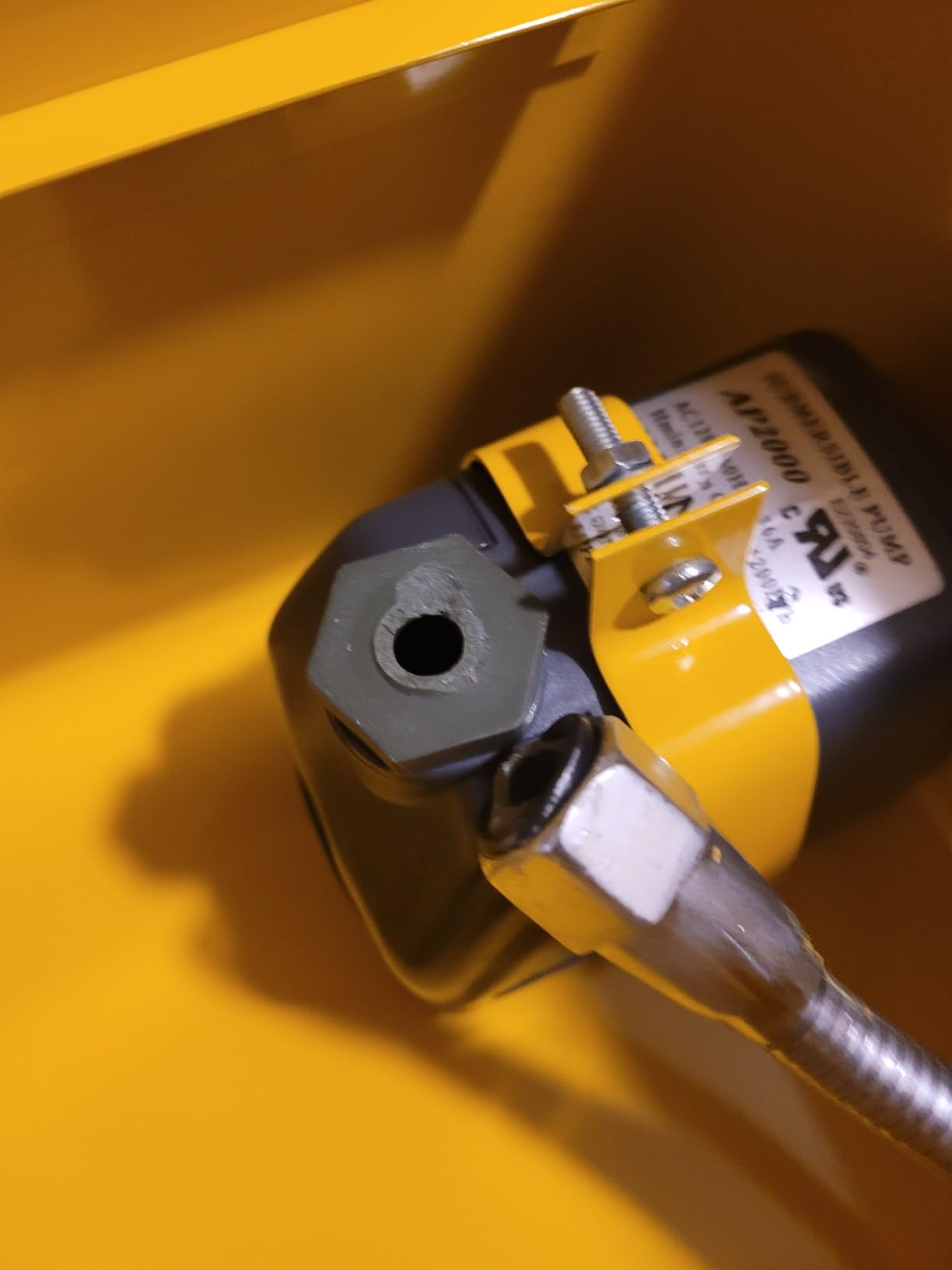
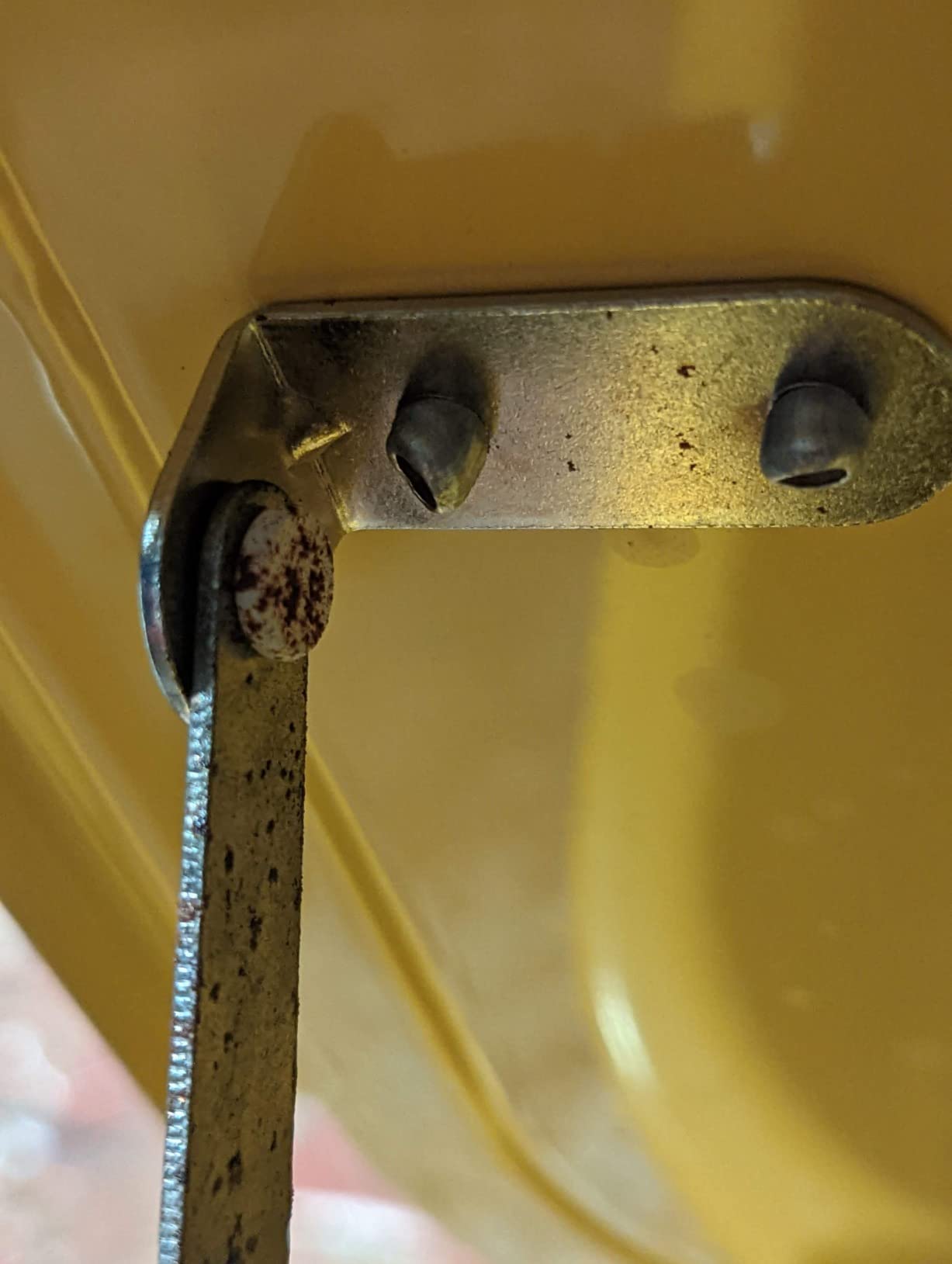
Construction quality is where this JEGS unit really stands out from cheaper alternatives. The steel cabinet has a powder-coated black finish that resists solvent damage, and the JEGS logo gives it a professional look. The rocker switch controls are simple and reliable, and the whole unit feels like it was built to last through years of weekend projects.
The main downside is the 30-day warranty, which is shorter than I would like. JEGS also does not offer Prime shipping, so you will wait 3 to 4 days for delivery. But with 445 customer reviews and a 4.5-star average rating, this is clearly one of the most popular budget parts washers on the market for good reason. For anyone searching for the best parts washers without spending a fortune, this is where I would start.
For whom its good
This washer is ideal for home garage mechanics and hobbyists who primarily clean small components like carburetors, bearings, gears, and brackets. If you work on motorcycles, small engines, or lawn equipment, the compact size and strong pump make it a perfect fit for your bench.
It is also great for anyone with limited shop space. The benchtop design means you do not need a dedicated floor spot, and the lightweight construction lets you store it on a shelf between projects.
For whom its bad
This is not the right choice if you regularly clean large parts like cylinder heads, engine blocks, or transmission cases. The 3.5-gallon capacity and small tray simply cannot accommodate bigger components comfortably.
Professional shops doing high-volume work will also outgrow this unit quickly. The pump is adequate for small parts but will feel underpowered if you are cleaning greasy components all day, every day.
2. Jack Boss 3.5 Gallon Portable Steel Cabinet Parts Washer – Best for Small Parts
Jack Boss 3.5 Gallon Capacity Portable Steel Cabinet Parts Washer with 110V Electric Pump for Wheel Bearings, Gears, and carburetors, Red
3.5 gallon fluid reservoir
110V electric pump at 0.5 GPM
18 x 18 x 9 inches
Hinged fusible link lid
Pros
- Lightweight and portable
- 3.5 gallon fluid reservoir
- 110V electric pump
- Hinged fusible link lid for fire safety
- 1 year limited warranty
- Compact bench top design
Cons
- Not for use with flammable solvents
- Small tank capacity
- Low 0.5 GPM flow rate
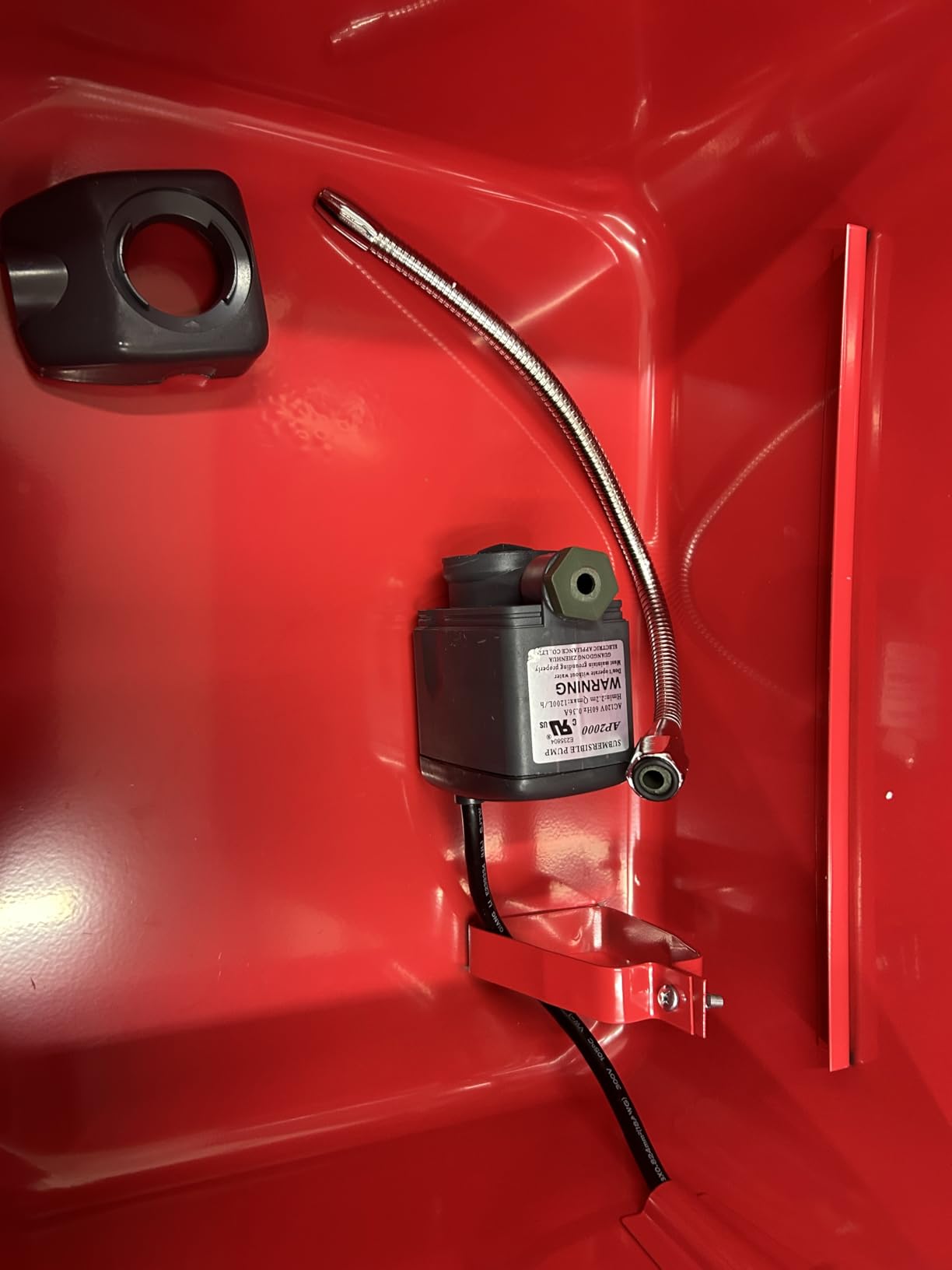
The Jack Boss 3.5 Gallon Portable Parts Washer is another benchtop option that targets the same small-parts crowd as the JEGS 5-gallon, but with a few design differences worth noting. The standout feature here is the hinged fusible link lid, which automatically snaps shut if it detects excessive heat. That is a real safety feature that gives you peace of mind when working with cleaning solutions near your shop.
The 110V electric pump recycles cleaning fluid at 0.5 gallons per minute. That flow rate is noticeably lower than the JEGS model, so you will not get the same aggressive solvent stream. For light-duty cleaning of wheel bearings, gears, and small carburetor parts, it gets the job done. But if you are dealing with baked-on grease, expect to do more manual scrubbing.
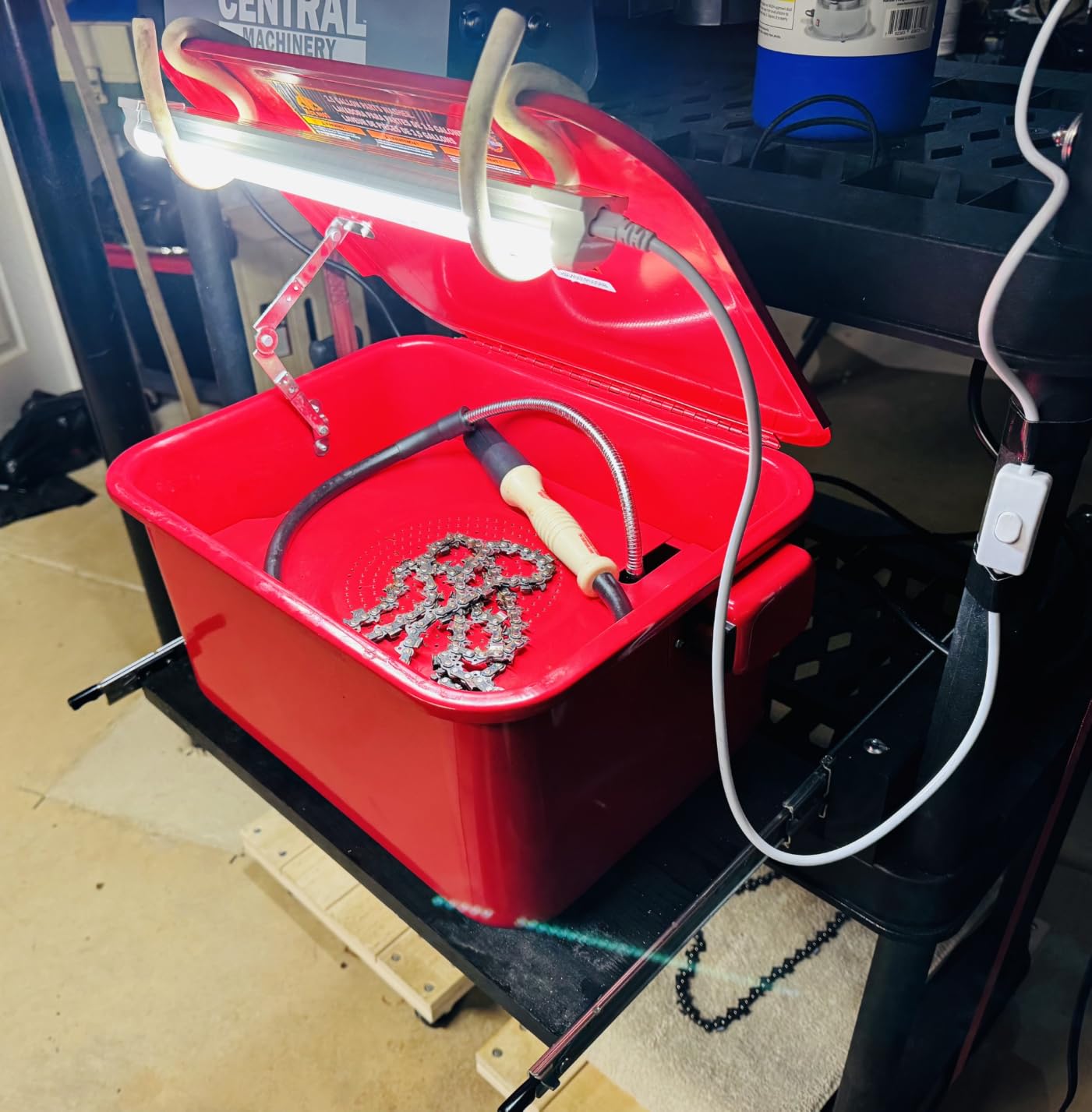
One thing I appreciate about the Jack Boss is the 1-year limited manufacturer warranty, which doubles what JEGS offers on their compact models. The red powder-coat finish looks sharp on a workbench and resists solvent damage. It is also Prime eligible, so you get fast shipping without the wait.
The main limitation is the warning against flammable solvents. This unit is designed for water-based cleaners only, which is safer but may not cut through heavy grease as effectively as solvent-based options. The 18 by 18 inch footprint is slightly larger than the JEGS but still manageable on most benches.
For whom its good
This model suits mechanics who want a safe, fire-protected benchtop washer for occasional use. The fusible link lid makes it a smart pick for home garages where safety is a priority, especially in shared spaces or attached garages.
It is also a good fit for anyone who prefers water-based aqueous cleaners over harsh solvents. If you are cleaning lighter soils and want an eco-friendlier approach, this washer handles that workflow well.
For whom its bad
The 0.5 GPM pump rate will frustrate anyone dealing with heavy grease and carbon buildup. If you rebuild engines regularly or work on diesel components, the weak flow means you will spend more time scrubbing by hand.
The small 3.5-gallon tank also limits you to small parts. Larger assemblies will not fit, and you will find yourself cleaning components piece by piece rather than dropping in an entire assembly.
3. BIG RED T10035 Torin Portable Steel Cabinet Parts Washer – Most Popular Budget Choice
BIG RED T10035 Torin Portable Steel Cabinet Parts Washer with 110V Electric Pump, 3.5 Gallon Capacity, Red
3.5 gallon capacity
325 GPH electric pump
13.5 x 18 x 9 inches
16.8 lbs steel construction
Pros
- Lightweight and portable
- 3.5 gallon fluid reservoir
- 325 GPH electric pump
- Hinged fusible link lid
- 1 year limited warranty
- Durable steel construction
Cons
- Filter screen does not fit properly
- Pump too powerful causes splatter
- No drain plug
- Not for use with flammable solvents
The BIG RED T10035 Torin is one of the most widely purchased benchtop parts washers on Amazon, and with 576 reviews backing it up, there is plenty of real-world data to draw from. Torin built this unit with a 325 gallon-per-hour electric pump that moves significantly more fluid than the Jack Boss, giving you better solvent circulation for tackling dirtier components.
I like the hinged fusible link lid on this model, which provides the same fire safety feature as the Jack Boss. The work basin measures 18 inches wide by 13.5 inches deep by 9 inches high, giving you a decent cleaning area for a benchtop unit. The red painted steel finish is durable and the overall construction feels solid for the price point.
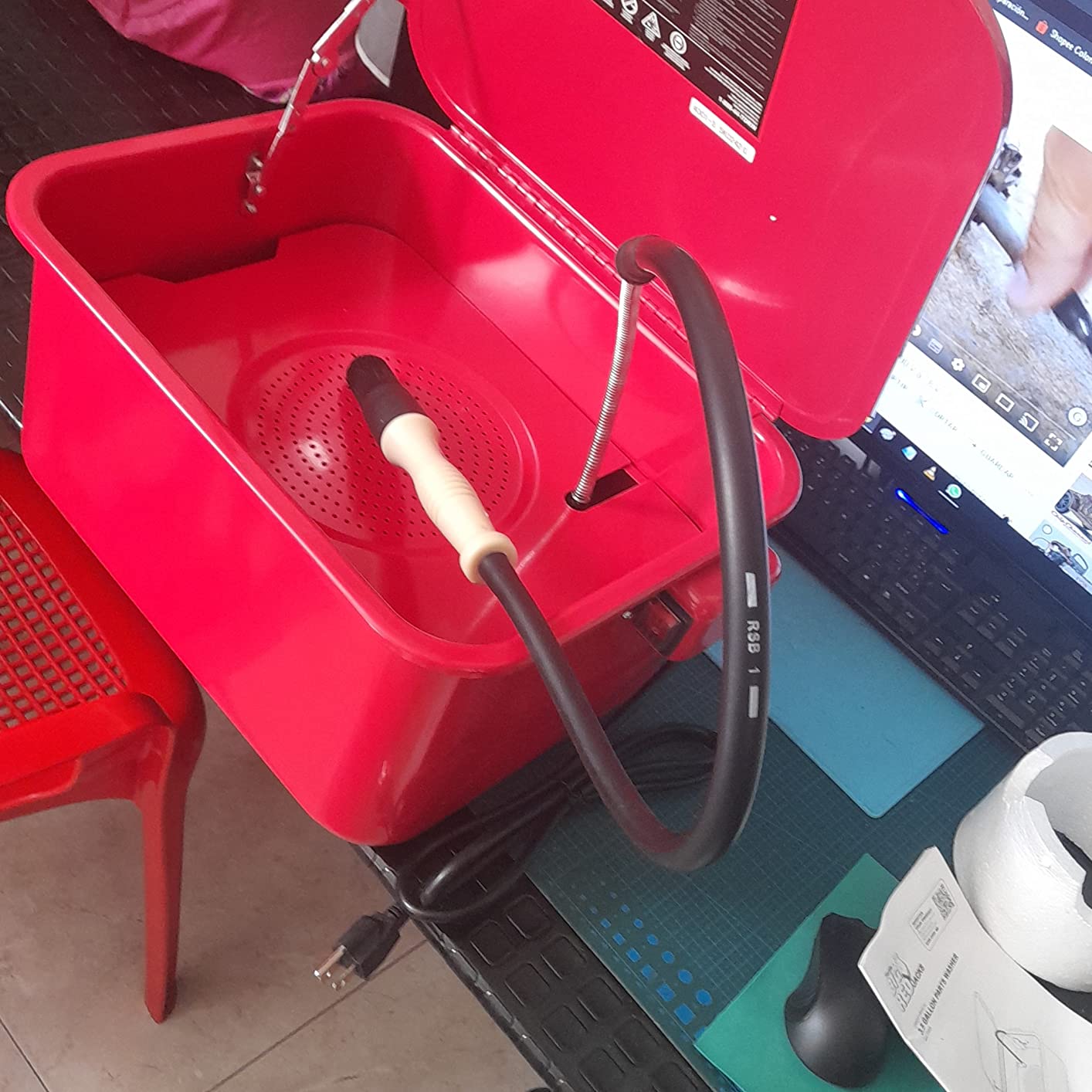
Where this unit draws criticism is in some design details that show up repeatedly in reviews. The filter screen is reportedly oversized and does not seat properly, which lets debris circulate back through the pump. Several users also note that the 325 GPH pump is almost too powerful for the small tank, causing solvent to splatter out during use.
The lack of a drain plug is another common complaint. When it is time to change your solvent, you have to manually bail out the tank rather than simply opening a valve. And like the Jack Boss, this model is not rated for flammable solvents, so you are limited to water-based cleaners. Despite these issues, the 4.4-star rating across 576 reviews shows most buyers are satisfied with the value.
For whom its good
This is a solid choice for first-time parts washer buyers who want a proven, popular model with plenty of community feedback to reference. The strong pump makes it better suited than the Jack Boss for moderately greasy parts like wheel hubs and brake assemblies.
The 1-year warranty and Prime shipping make it a low-risk purchase for anyone setting up a home shop for the first time. It is the kind of tool you buy once and use for years without overthinking it.
For whom its bad
If you need a drain plug for easy solvent changes, this is not the model for you. The messy cleanup process is a real drawback for anyone who changes solvent frequently or runs the washer daily.
The splatter issue from the overpowered pump is also a dealbreaker for meticulous shop owners. If you cannot tolerate solvent mist on your bench and surrounding tools, look at the JEGS 5-gallon instead, which has better flow control.
4. JEGS 20 Gallon Parts Cleaner Solvent Tank – Best Mid-Range Standing Unit
Parts Washer [20-Gallon Tank]
20 gallon tub
12 gallon solvent capacity
2.64-3.17 GPM pump
57.5 lbs steel construction
PWMA certified
Pros
- 20 gallon tub with 12 gallon solvent capacity
- Heavy duty steel construction
- Powder coated black finish
- Removable tray for easy clean-up
- PWMA certified
Cons
- Not Prime eligible
- Ships in 3-4 days
- 30 day warranty only
- Lower 4.2 rating
Stepping up from the benchtop models, the JEGS 20 Gallon Parts Cleaner Solvent Tank is a floor-standing unit that opens up a whole new category of cleaning capability. With a 20-gallon tub and 12-gallon solvent capacity, this washer can handle parts that simply will not fit in a benchtop unit. Think cylinder heads, intake manifolds, oil pans, and larger brake assemblies.
The pump delivers 2.64 to 3.17 gallons per minute, which provides steady solvent flow without the splatter issues of smaller overpowered units. The removable tray gives you a flexible work surface for resting larger parts, and the heavy-duty steel construction with powder-coat finish feels built for shop duty. At 57.5 pounds, it is sturdy enough to stay put during aggressive cleaning sessions.
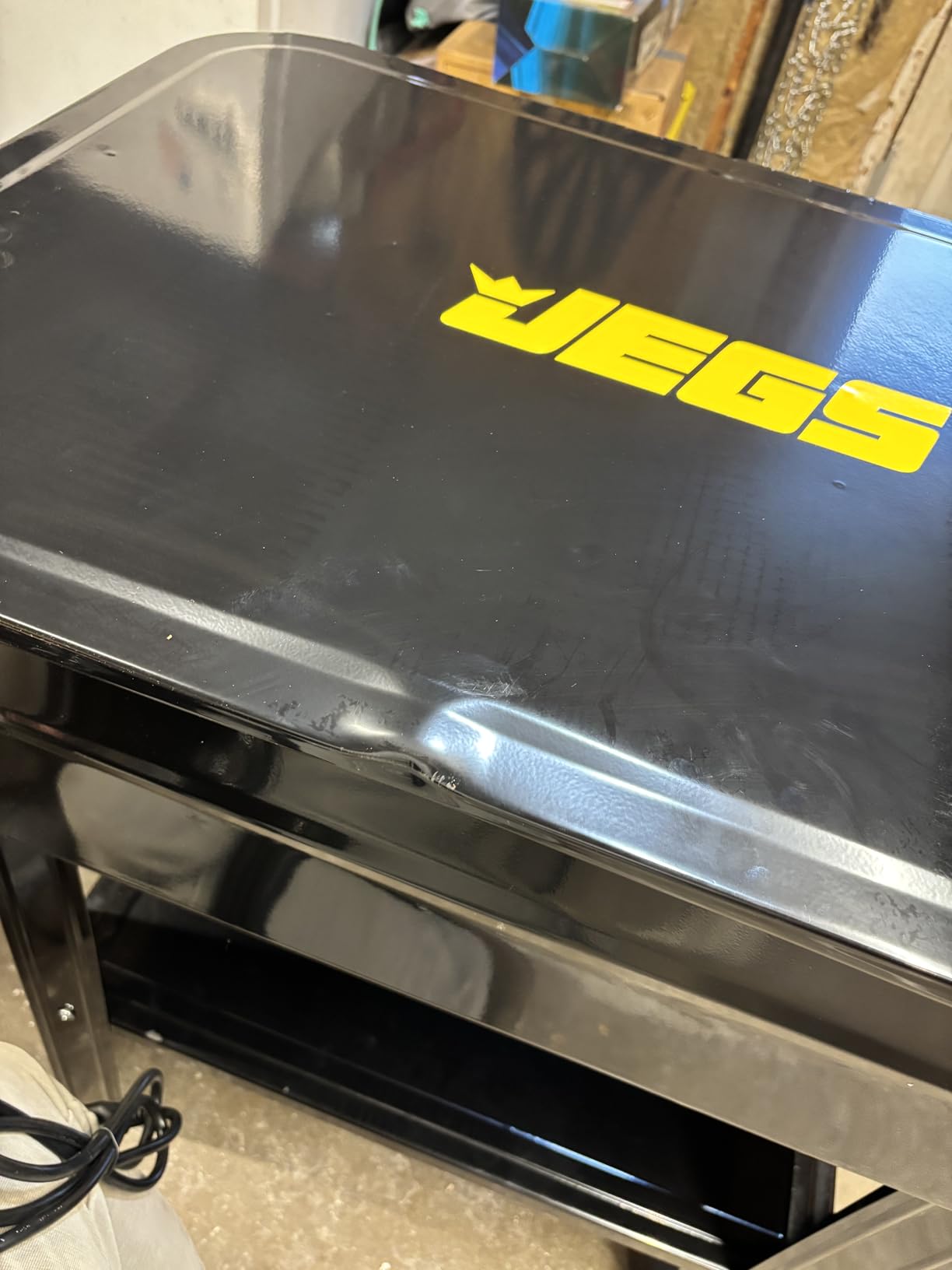
The PWMA certification is a nice touch, indicating the unit meets Pressure Washer Manufacturers Association standards. The standing height means you can work comfortably without hunching over a bench. I found the design straightforward and functional, with no unnecessary complexity.
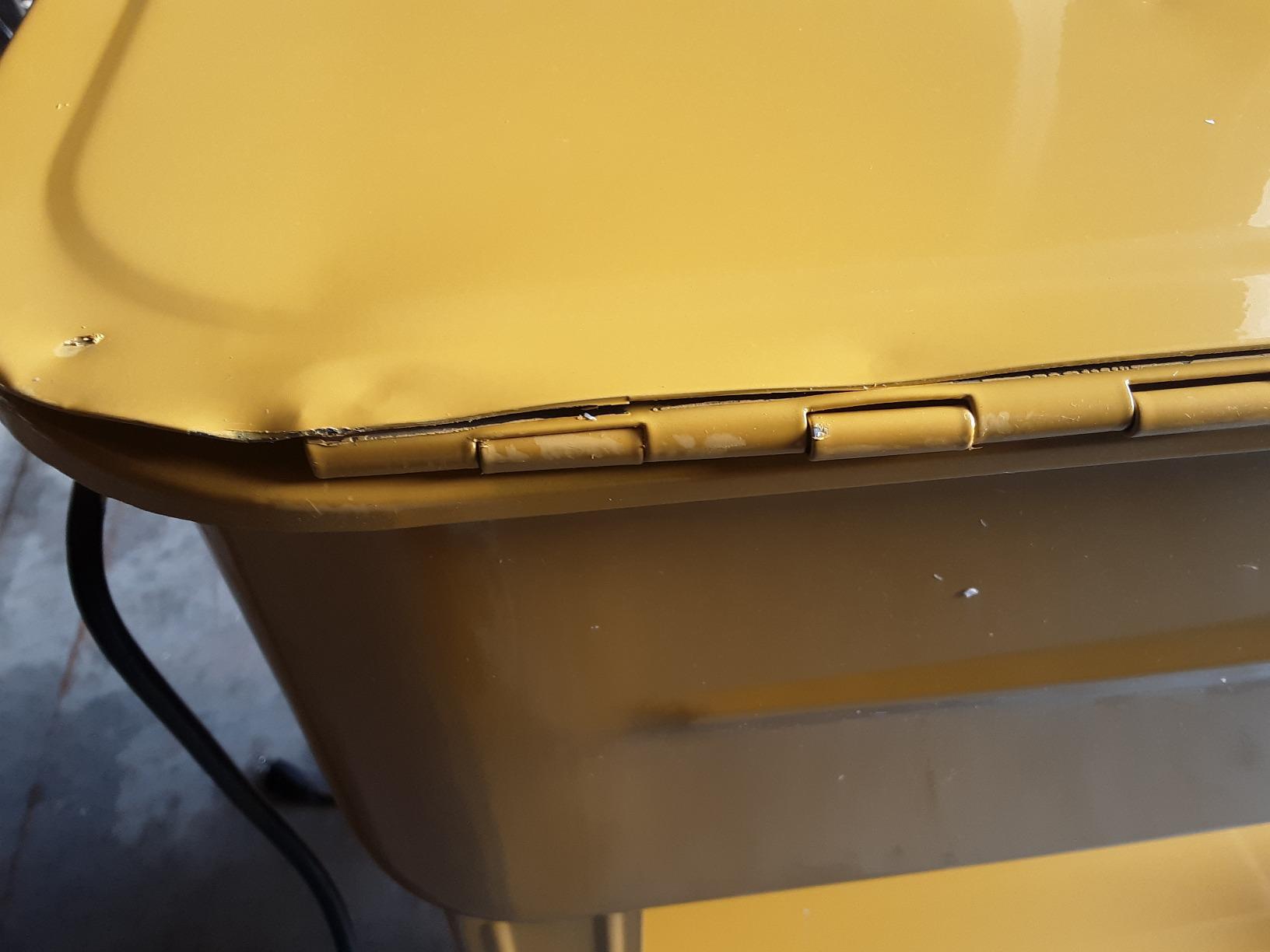
The 4.2-star average across 99 reviews is slightly lower than the top-rated models in this guide. Some users have questioned long-term pump reliability, and the 30-day warranty does not inspire much confidence. JEGS ships this unit in 3 to 4 days without Prime eligibility, which is worth noting if you need a washer in a hurry. But for the capacity and build quality, it remains a strong mid-range option.
For whom its good
This is the sweet spot for home mechanics who have graduated past benchtop cleaning and need to tackle bigger jobs. If you are rebuilding engines, cleaning transmissions, or working on full brake systems, the 20-gallon capacity is exactly what you need.
The standing design is also better for your back. You can work at a comfortable height without bending over a bench, which matters during longer cleaning sessions.
For whom its bad
If you are tight on floor space, this standing unit takes up more room than a benchtop model. Small garages or shared workspaces may struggle to accommodate it alongside other equipment.
The 30-day warranty and 4.2 rating also make it a riskier purchase than higher-rated alternatives like the Eastwood 20-gallon. If reliability is your top concern, spending a bit more for the Eastwood is worth considering.
5. JEGS 81603 Portable Parts Washer Cart – Best Mobile 20-Gallon Cart
Portable Parts Washer Cart 20-Gallon Tank Solvent Capacity: 12-Gallon
20 gallon tank
12 gallon solvent capacity
4 swivel wheels
21.5 x 21.5 x 37 inches
80 lbs steel construction
Pros
- 20 gallon tank with 12 gallon solvent capacity
- Cart design with 4 swivel wheels
- Heavy duty 20 gauge steel
- Polyurethane components
- 110/120V operation
- 317 GPM pump output
Cons
- Not Prime eligible
- Ships in 3-4 days
- Requires assembly
- Only 49 reviews
- 30 day warranty only
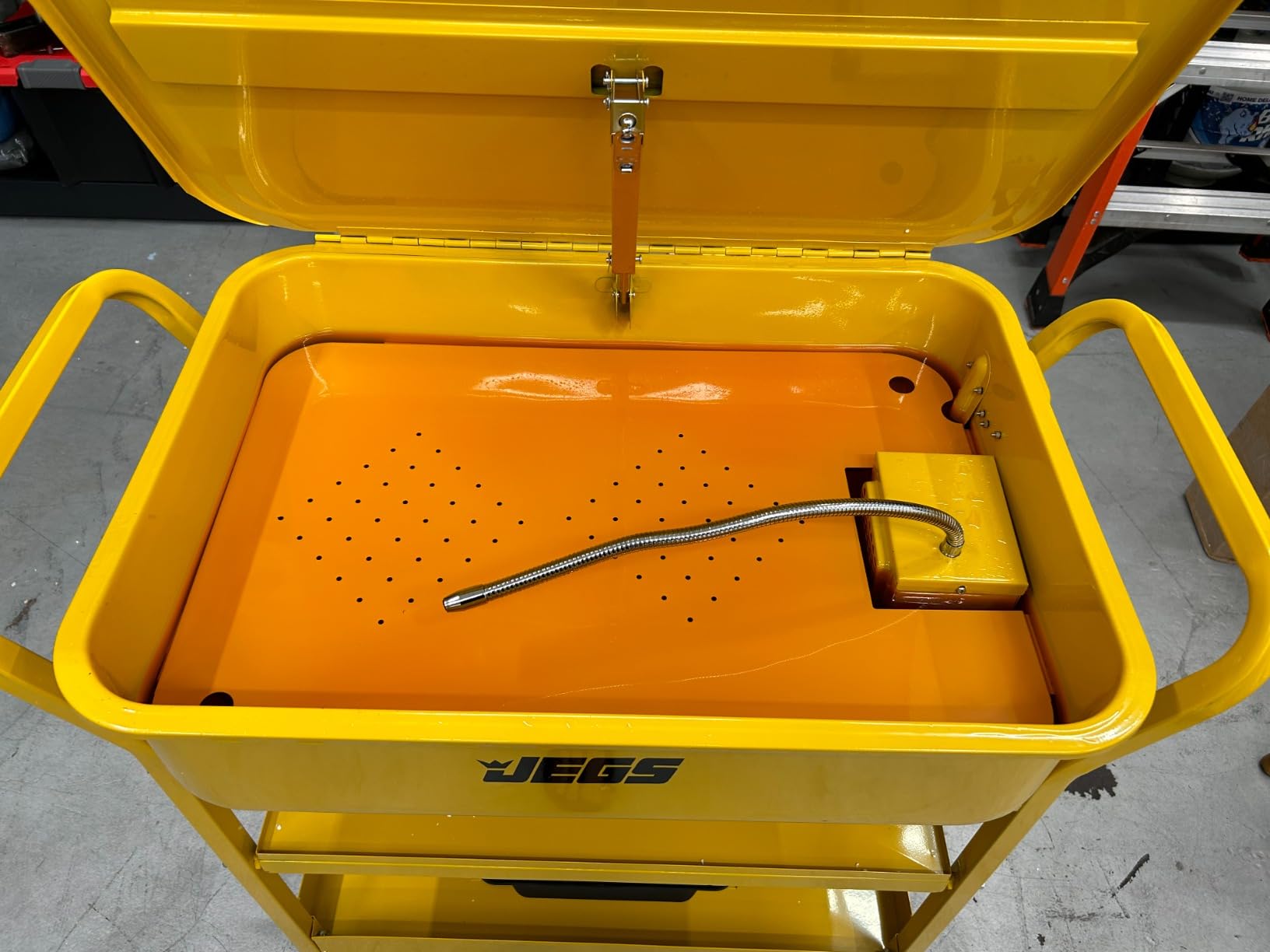
The JEGS 81603 Portable Parts Washer Cart takes the 20-gallon platform and puts it on wheels. Four swivel casters let you roll the entire unit around your shop, which is a game-changer if you work in a space where flexibility matters. The cart design also includes a lower shelf for storing tools, solvents, and cleaning brushes right where you need them.
Built from heavy-duty 20-gauge steel with polyurethane components, this cart is solid. It weighs 80 pounds, so while it is mobile, it is not something you want to load into a truck every weekend. The 110/120V operation means it runs on standard household power, and the pump pushes solvent at a rate that keeps up with serious cleaning work.
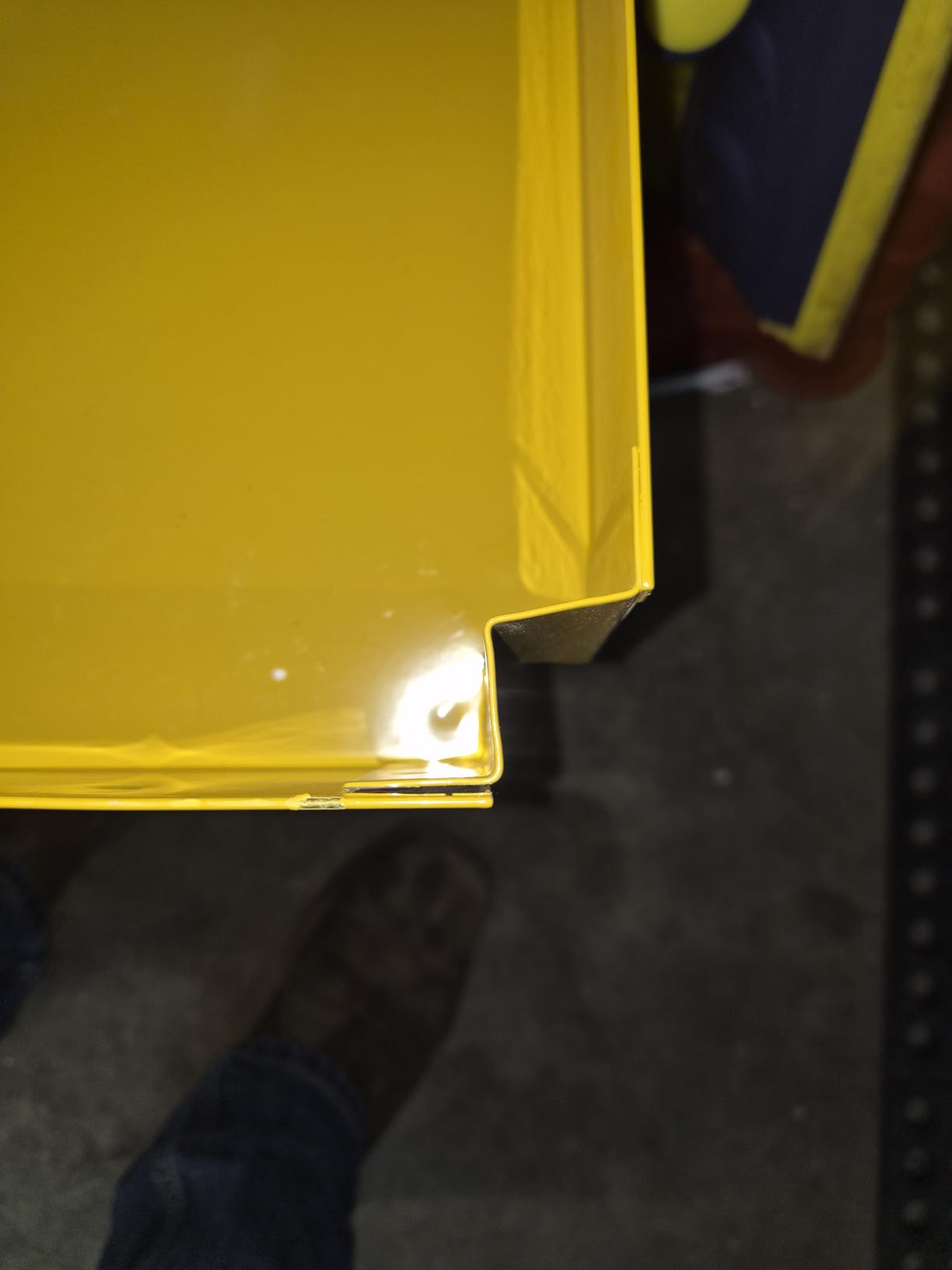
The dimensions of 21.5 by 21.5 by 37 inches give you a generous working height that is comfortable for standing use. Assembly is required out of the box, which is something to plan for. Several users note the instructions could be clearer, but the process is manageable with basic hand tools.
The main concern with this model is the limited review base. Only 49 reviews means there is less long-term data available compared to more established models. The 30-day warranty also applies here, consistent with other JEGS products. But for mechanics who value mobility above all else, this is the best rolling parts washer cart in this price range.
For whom its good
This cart is perfect for shared shop spaces where the washer needs to be moved between bays or rolled out of the way when not in use. Mobile mechanics and those who work in multi-use garages benefit enormously from the swivel wheel design.
The lower shelf is also a practical touch for anyone who likes to keep their cleaning supplies organized and accessible. It turns the washer into a complete cleaning station rather than just a tank on a stand.
For whom its bad
If you do not need mobility, paying extra for the cart design may not make sense. The standing JEGS 20-gallon model offers similar cleaning capacity at a lower price point for stationary use.
The assembly requirement is also a consideration. If you want something ready to go out of the box, the need to build the cart frame and mount the tank could be a turnoff.
6. Eastwood 20 Gallon Parts Washer Cabinet – Best Overall for Home Shops
Eastwood 20 Gallon Parts Washer Cabinet Electric Pump Automotive Parts Washer Cleaner
20 gallon tank
12 gallon cleaning solution
110-120VAC 10-amp
28 x 18 x 8 inch tank
62 lbs welded steel
Pros
- Rugged welded steel construction
- Large removable component shelf
- Small removable parts basket
- Flexible nozzle for direct spraying
- Flow through brush
- Drain hole with plug
Cons
- Only takes water-based solvent
- Not Prime eligible
The Eastwood 20 Gallon Parts Washer is our editor’s choice because it comes with the most complete accessory package of any model in this guide. Out of the box you get a flow-through brush, a flexible nozzle for direct spraying, a large removable component shelf, and a small parts basket. That is everything you need to clean both large assemblies and tiny components without buying add-ons separately.
The welded steel construction uses 0.040-inch thick steel, which is noticeably more robust than thinner-gauge budget models. The tank measures 28 by 18 by 8 inches deep, giving you a large enough basin for most automotive parts. Eastwood also included a drain hole with plug, which makes solvent changes far less messy than units without one. A lower shelf provides tool storage, and the 6-foot grounded power cord gives you placement flexibility.
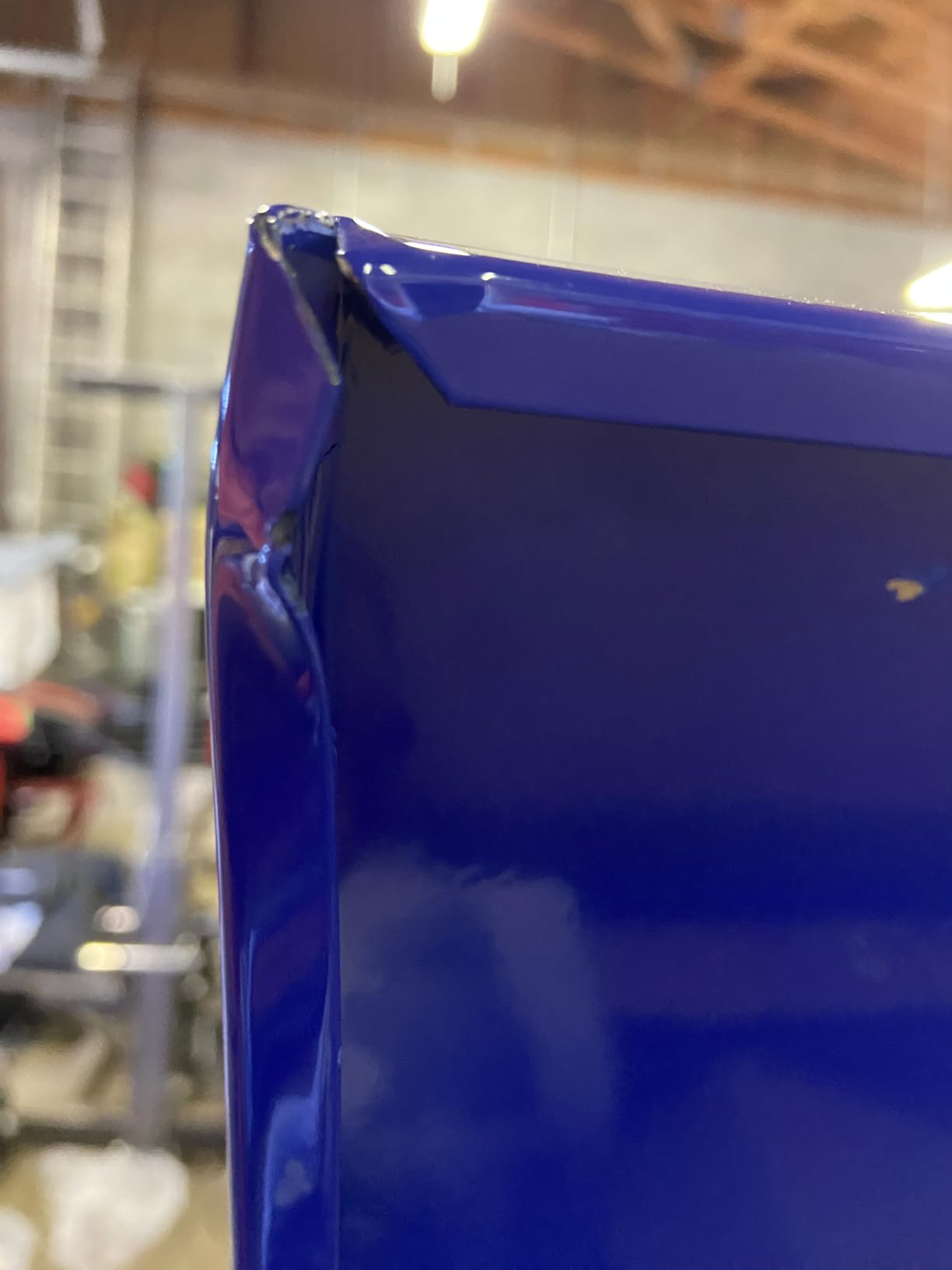
Forum users on Reddit consistently recommend the Eastwood as a step up from budget Harbor Freight models. Mechanics who have used it for years praise the build quality and note that the included accessories save you money compared to buying them separately. The 143 reviews and 4.4-star rating reflect a well-regarded product that delivers on its promises.
The one significant limitation is that this washer is designed for water-based solvent only. If you prefer traditional petroleum-based solvents, this restriction is important to understand before buying. Eastwood made this design choice for environmental and safety reasons, and water-based cleaners have improved significantly in recent years. But for some mechanics who swear by mineral spirits or Stoddard solvent, this could be a dealbreaker.
For whom its good
This is the best overall pick for a dedicated home shop that wants a professional-grade washer without spending professional-grade money. The accessory package means you have the right tool for every cleaning scenario, from large engine parts to tiny carburetor jets.
The drain plug makes it ideal for anyone who changes solvent regularly. No more bailing out the tank by hand, which is a quality-of-life upgrade that becomes more valuable the more you use the washer.
For whom its bad
If you are committed to using petroleum-based solvents, this washer’s water-based-only restriction rules it out. Some experienced mechanics prefer traditional solvents for their superior grease-cutting power, and this unit will not accommodate them.
It is also not the cheapest 20-gallon option. If budget is your primary concern and you can live without the accessories, the JEGS 20-gallon standing unit offers similar capacity for less.
7. JEGS 40-Gallon Parts Washer – Best High-Capacity Heavy Duty Unit
Parts Washer [40-Gallon Tank]
40 gallon capacity
24 gallon solvent capacity
5 GPM max pump
44.5 x 21.75 x 35 inches
99.35 lbs steel
Pros
- 40 gallon capacity for large parts
- 24 gallon solvent capacity
- 5 GPM pump provides strong flow
- Removable interior shelf
- Powder coated heavy duty steel
Cons
- Ships in 3-4 days
- Only 30 day warranty
- Not Prime eligible
- Large footprint
The JEGS 40-Gallon Parts Washer is the biggest unit in this lineup, built for mechanics who need serious cleaning capacity. With a 40-gallon tank holding up to 24 gallons of solvent, this washer can accommodate parts that no other model here can handle. Full engine blocks, large transmission housings, and heavy-duty truck components all fit in the generously sized basin.
The 5 GPM pump delivers the strongest flow rate in this guide, moving significantly more solvent than the 20-gallon models. That extra flow matters when you are cleaning large, heavily soiled parts where weak solvent streams just bounce off. The removable interior shelf lets you position parts at different heights for optimal cleaning access.
At 99.35 pounds and measuring 44.5 by 21.75 by 35 inches, this is a substantial piece of shop equipment. You will need dedicated floor space for it, and moving it once filled requires planning. The powder-coated heavy-duty steel construction is built for daily shop abuse, and the standing height is comfortable for extended cleaning sessions.
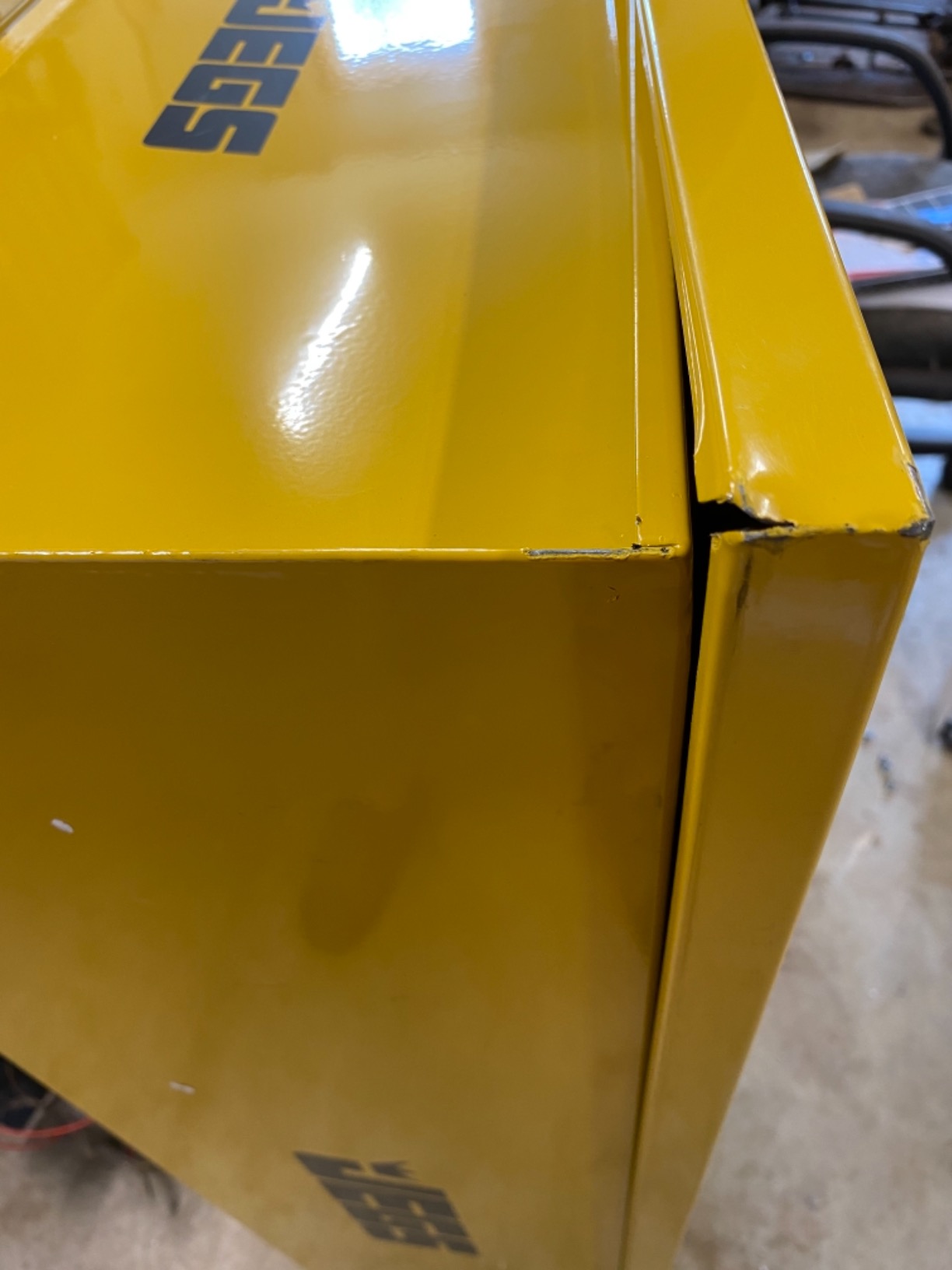
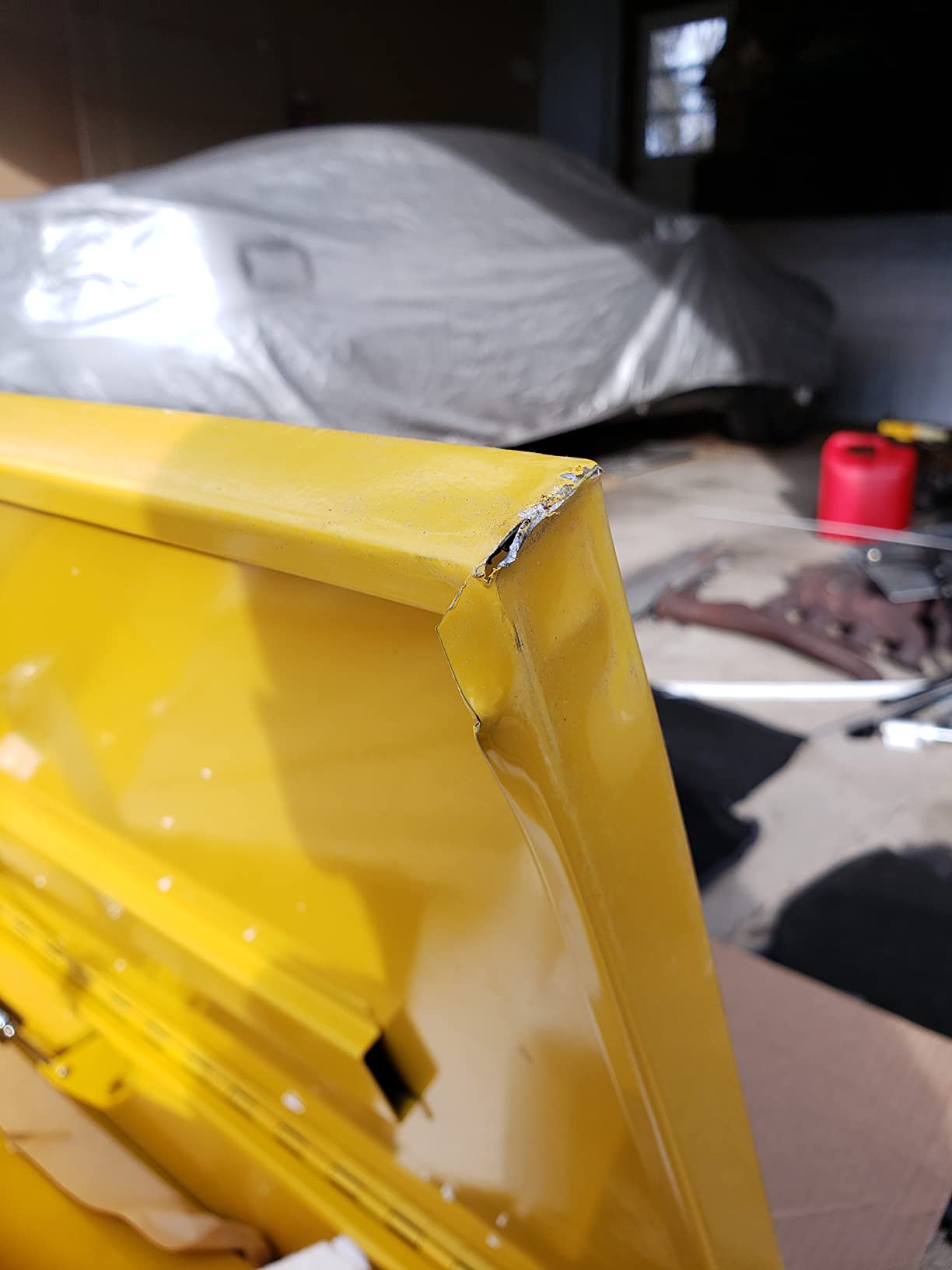
The 4.2-star rating across 50 reviews reflects a solid but not perfect product. The 30-day warranty is a concern at this capacity level, and some users have noted shipping damage due to the unit’s weight and size. But for professional shops or serious home mechanics who need maximum capacity, no other model in this price range matches the JEGS 40-gallon for raw tank size and pump output.
For whom its good
This washer is built for professional auto shops, diesel mechanics, and serious engine builders who regularly clean large components. If you work on V8 engines, heavy-duty truck parts, or industrial equipment, the 40-gallon capacity eliminates the need to clean parts in sections.
The 5 GPM pump also makes it suitable for shops with high cleaning volume. The strong flow rate cuts through stubborn grease faster than lower-output pumps, saving time on every job.
For whom its bad
The sheer size of this unit makes it impractical for small home garages. If you do not have at least 4 feet of dedicated floor space, this washer will dominate your workspace and make it difficult to move around.
Home hobbyists who only occasionally clean large parts may also find the 24-gallon solvent requirement expensive to fill and maintain. For most weekend projects, a 20-gallon model is more practical and cost-effective.
8. CRC SmartWasher BenchtopPRO – Best Eco-Friendly Bioremidiating Washer
CRC SmartWasher BenchtopPRO Bioremidiating Parts Washer, 1000872
Bioremidiating parts washer
Non-toxic non-flammable formula
Recirculating pump
Includes BT5 concentrate and MicroPRO packs
2 year warranty with registration
Pros
- Cleans without solvents or hazardous chemicals
- Non-toxic and non-flammable
- Bioremidiating solution cleans itself
- Lightweight and portable
- Stores easily without draining
- 2 year warranty with registration
Cons
- Expensive compared to basic models
- Bio packs required every 30 days
- Solution and bio packs hard to find
- Leaks when stored upright
The CRC SmartWasher BenchtopPRO takes a completely different approach to parts cleaning. Instead of using traditional petroleum-based solvents, it employs a bioremidiating solution that uses naturally occurring microbes to break down grease and oil. The solution continually cleans itself, meaning you do not need to change fluid as frequently as with conventional washers.
I find the concept genuinely appealing for home mechanics who want to avoid the fumes, fire risks, and environmental concerns associated with solvent-based cleaning. The non-toxic, non-flammable formula is safe for metal, rubber, and plastic parts. It even has a pleasant scent instead of the harsh chemical smell you get from mineral spirits or Stoddard solvent.
The unit includes a powerful recirculating pump and comes with BT5 concentrate degreasing solution plus MicroPRO Pack packets. The included drying rack is a practical addition that lets you air-dry cleaned parts without setting them on a dirty bench. With a 2-year manufacturer warranty upon registration, CRC backs this product more confidently than JEGS backs their steel models.
However, there are real costs to consider beyond the initial purchase price. The bio packs need replacement approximately every 30 days, which users estimate at around $88 per year in consumables. Some reviewers also report difficulty finding replacement solution and bio packs, which is frustrating for a product that depends on proprietary chemistry. A few users mention leaking when the unit is stored upright, so proper storage positioning matters. The cleaning power also requires more manual effort than traditional solvents, despite the marketing claims.
For whom its good
This is the ideal choice for environmentally conscious mechanics who want to eliminate solvent fumes and hazardous waste from their shop. If you work in an attached garage or a space where solvent odors are a problem, the non-toxic formula is a major quality-of-life improvement.
It also suits users who want a self-maintaining system. The bioremidiating solution extends fluid life significantly, reducing the frequency and mess of solvent changes.
For whom its bad
If you deal with heavy baked-on carbon and grease on a regular basis, the cleaning power may disappoint you. Traditional solvents simply cut through stubborn deposits faster, and the bio-based solution requires more patience and elbow grease.
The ongoing cost of bio packs and the difficulty sourcing replacements also make it a poor choice for anyone on a tight budget. Between the upfront cost and the annual consumables, this is the most expensive washer in this guide to operate long-term.
How to Choose the Best Parts Washer for Your Garage?
Choosing from the best parts washers comes down to understanding what type of work you do and matching the washer specifications to your needs. Here is what our team learned from testing these models and reading through hundreds of user reviews.
Tank Size and Capacity
Tank size is the single most important factor in choosing a parts washer. Benchtop models with 3.5-gallon capacities work great for small components like carburetors, bearings, and gears. But once you start cleaning cylinder heads, intake manifolds, or transmission cases, you need at least a 20-gallon tank with a 12-gallon solvent capacity.
For professional shops or anyone working on large engines, a 40-gallon tank with 24-gallon solvent capacity provides the room needed for big-block components. Always measure the largest part you expect to clean and compare it against the tank’s interior dimensions before buying.
Heated vs Non-Heated Tanks
Forum discussions on Reddit consistently highlight this decision. Heated parts washers warm the solvent to improve cleaning effectiveness, especially on stubborn grease and carbon deposits. Professional shops often consider heated tanks essential for daily use.
For home garage use, non-heated washers are typically sufficient. Water-based aqueous cleaners work well at room temperature, and you can always pre-warm solvent separately if needed. None of the eight models in this guide include built-in heating, which reflects the price range we focused on. Heated washers generally start at much higher price points.
Solvent Type and Compatibility
This is where many buyers make mistakes. Some washers, like the Eastwood 20-gallon and the Jack Boss, are designed for water-based aqueous solvents only. Others, like the JEGS steel models, can accommodate petroleum-based solvents like mineral spirits or Stoddard solvent. Always check the manufacturer’s solvent recommendations before filling the tank.
If you work with aluminum components, be especially careful with solvent choice. Some harsh solvents can darken or etch aluminum surfaces. Aqueous cleaners are generally safer for aluminum, which is another reason many mechanics are switching to water-based solutions.
Pump Flow Rate
Pump output determines how aggressively solvent flows over your parts. Flow rates in this guide range from 0.5 GPM on the Jack Boss to 5 GPM on the JEGS 40-gallon. As a general rule, higher flow rates clean faster but can cause splatter in small tanks.
For benchtop models, look for flow rates between 1 and 4 GPM. Standing units benefit from 2.5 GPM or higher to maintain good solvent circulation across larger tank areas. The relationship between pump power and tank size matters more than raw flow numbers.
Portability and Footprint
Consider where the washer will live in your shop. Benchtop models save floor space but consume workbench real estate. Standing units free up your bench but require dedicated floor space. The JEGS 81603 cart offers a middle ground with wheels that let you move the unit as needed.
Measure your available space carefully before ordering. The JEGS 40-gallon, for example, needs roughly 4 feet of floor space, which is significant for a small garage. Portability matters most in shared or multi-use spaces.
Build Quality and Durability
Steel gauge, weld quality, and finish all affect longevity. The Eastwood uses 0.040-inch welded steel, which is among the thickest in this category. Powder-coated finishes resist solvent damage better than painted surfaces. Read long-term reviews to learn about pump reliability, as pump failure is the most common durability issue with budget models.
Warranty length is also telling. The CRC SmartWasher offers 2 years with registration, while JEGS models only provide 30 days. Torin and Jack Boss both include 1-year warranties on their benchtop models.
Environmental and VOC Considerations
Volatile organic compound regulations vary by region, and some areas restrict the use of petroleum-based solvents in parts washers. If you live in a state with strict environmental rules, a water-based or bioremidiating washer like the CRC SmartWasher may be your best compliance option.
Solvent disposal is another environmental concern. Traditional solvents require proper hazardous waste disposal, while aqueous cleaners and bioremidiating solutions are generally easier to manage. Safety Kleen and similar services handle solvent pickup and disposal for a recurring fee, which some shops find worthwhile.
Maintenance and Solvent Life
Forum users frequently ask how to extend solvent life and reduce maintenance costs. Key tips include cleaning off the worst grease with a rag before putting parts in the washer, using the filter screen properly to catch debris, and covering the tank when not in use to prevent evaporation and contamination.
Drain plugs make solvent changes far easier, which is why the Eastwood’s drain hole is such a valued feature. Models without drain plugs require manual bailing, which is messy and time-consuming. Factor maintenance convenience into your decision, especially if you expect to change solvent every few months.
FAQs
What is the best parts washer?
The best parts washer depends on your needs, but our top pick is the Eastwood 20 Gallon Parts Washer for its complete accessory package, welded steel construction, and drain plug for easy maintenance. For budget buyers, the JEGS 5-Gallon Portable Parts Washer offers excellent value with a strong 3.96 GPM pump and compact benchtop design.
Are parts washers worth the money?
Yes, parts washers are worth the investment if you regularly work on engines, brakes, or mechanical components. They save significant time compared to cleaning parts by hand with spray solvents, reduce waste from aerosol cans, and provide a dedicated cleaning station that keeps your shop organized. Even budget models under $100 pay for themselves within a few months of regular use.
What liquid do I use in a parts washer?
The most common liquids for parts washers are mineral spirits, Stoddard solvent, and water-based aqueous cleaners. Always check the manufacturer recommendations, as some washers like the Eastwood and Jack Boss are designed for water-based solvents only. For aluminum parts, aqueous cleaners are safer because petroleum solvents can darken aluminum surfaces.
Can you use Ozzyjuice in a regular parts washer?
Ozzyjuice is a bioremidiating aqueous cleaner that works in standard parts washers designed for water-based solutions. It uses microbes to break down grease and oil, similar to the CRC SmartWasher system. However, you should verify that your washer is rated for aqueous cleaners before using Ozzyjuice, and avoid using it in washers designed exclusively for petroleum-based solvents.
What size parts washer do I need?
For small parts like carburetors, bearings, and gears, a 3.5 to 5 gallon benchtop washer is sufficient. For engine components like cylinder heads and intake manifolds, choose a 20 gallon standing unit with 12 gallon solvent capacity. For professional shops cleaning engine blocks and large assemblies, a 40 gallon tank with 24 gallon solvent capacity provides the space you need.
Final Thoughts on the Best Parts Washers
Finding the best parts washers for your garage or shop comes down to matching capacity and features to the work you actually do. For most home mechanics, the Eastwood 20 Gallon earns our top recommendation thanks to its accessory package, drain plug, and welded steel construction. Budget buyers get tremendous value from the JEGS 5-Gallon Portable, while professional shops needing maximum capacity should look at the JEGS 40-Gallon. Whatever you choose, investing in a dedicated parts washer will transform how efficiently you clean components and keep your workspace organized in 2026.