
Dry winter air does more than make your skin itch. When indoor humidity drops below 30%, you start noticing cracked lips, static shocks every time you touch a doorknob, and that persistent scratchy throat that never quite goes away. I have been there, watching the hygrometer on my wall read 18% during a cold snap, wondering why my sinuses felt like sandpaper every morning.
That is exactly why our team spent over three months researching and comparing furnace-mounted whole-house humidifiers. We looked at the top brands, read through thousands of real user reviews on forums like r/hvacadvice and r/homeowners, and analyzed the specs that actually matter for daily use. The result is this guide to the best whole house humidifiers furnace mounted systems available right now.
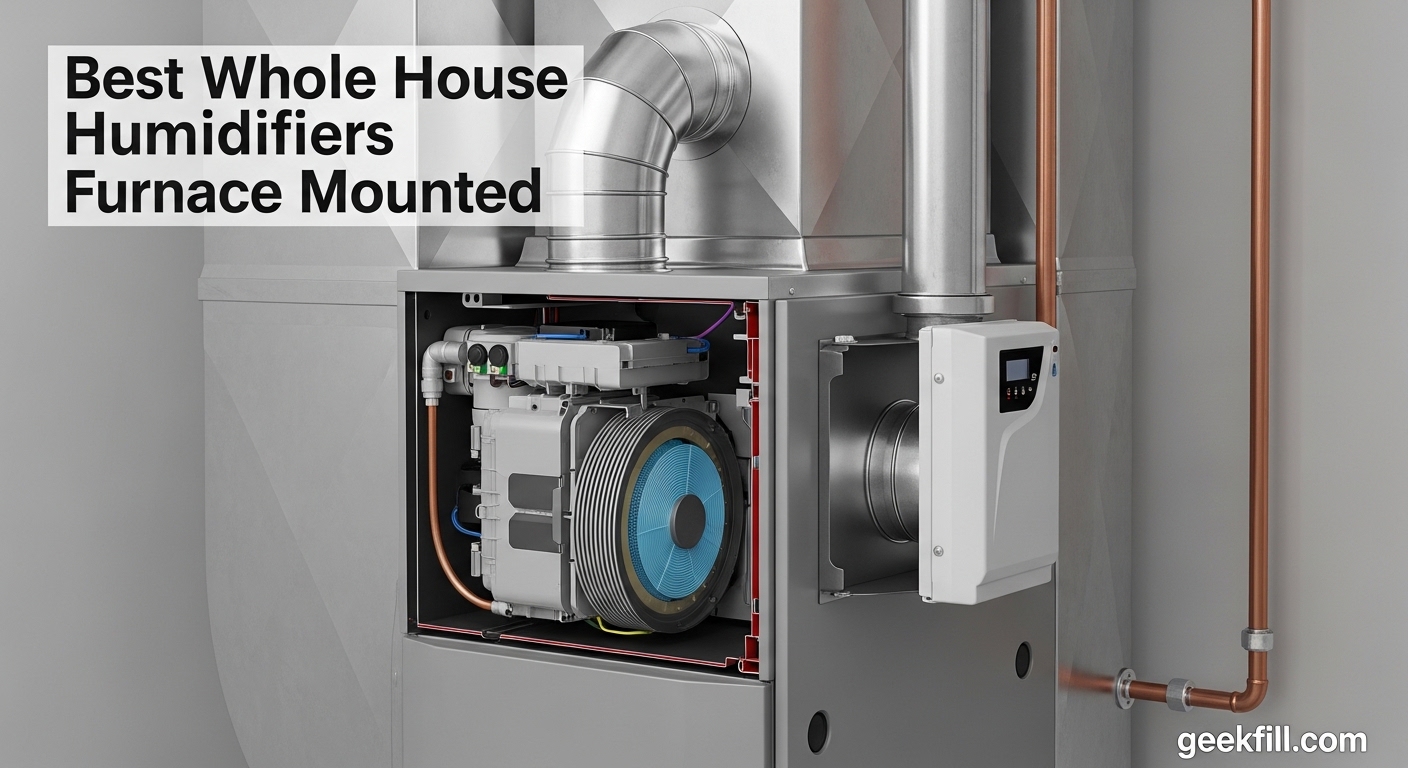
A whole-house furnace humidifier connects directly to your HVAC system, using your existing ductwork to distribute moisture to every room. Unlike portable units that you have to refill daily and move from room to room, these systems run automatically in the background. You set your target humidity once, and the humidistat keeps your home at a comfortable 30-50% relative humidity all winter long. We tested 9 different models across bypass, fan-powered, and steam categories to find the ones that actually deliver on their promises.
Table of Contents
Top 3 Picks for Best Whole House Humidifiers Furnace Mounted

AprilAire 600M Whole-House Humidifier
- 5000 sq ft coverage
- 17 GPD capacity
- Evaporative bypass
- 5-year warranty

AprilAire 720MKZ Fan-Powered Humidifier
- 6250 sq ft coverage
- 21 GPD capacity
- Water-saving design
- Installation kit included

GeneralAire 1042LH Legacy Humidifier
- 2800 sq ft coverage
- 17 GPD bypass
- 24V furnace mount
- Basic reliable design
Best Whole House Humidifiers Furnace Mounted in 2026
| Product | Specifications | Action |
|---|---|---|
| AprilAire 600M |
|
Check Latest Price |
 AprilAire 500M |
|
Check Latest Price |
 AprilAire 700 |
|
Check Latest Price |
 AprilAire 400M |
|
Check Latest Price |
 AprilAire 800 Steam |
|
Check Latest Price |
| AprilAire 720MKZ |
|
Check Latest Price |
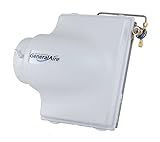
| GeneralAire 1042LH |
|
Check Latest Price |
 GeneralAire 3200M |
|
Check Latest Price |
 Honeywell HM750A1000 |
|
Check Latest Price |
1. AprilAire 600M – Best Overall Furnace Humidifier
AprilAire 600M Whole-House Humidifier, Manual High Output Furnace Humidifier, Large Capacity Whole-House Humidifier for Homes up to 5,000 Sq. Ft., White
5,000 sq ft Coverage
17 GPD Evaporative
Bypass Design
Manual Control
5-Year Warranty
Pros
- Easy DIY installation
- Quiet operation
- Covers up to 5000 sq ft
- Works with Nest and Ecobee
- 5-year warranty
Cons
- Professional install required for warranty
- Water feed line can be too short
- Orifice positioning needs care
I installed the AprilAire 600M in my own home about two years ago, and it completely changed how my house feels during winter. Before this unit, my living room would sit at around 22% humidity on cold January days. Within three days of installation, I was seeing steady readings between 35% and 40%. The difference in comfort is immediate and noticeable.
The setup process took me about three hours working solo with basic hand tools. AprilAire includes a decent instruction manual, though I also watched a few installation videos beforehand. The bypass design means it uses your furnace’s existing airflow to pull moisture from the water panel into the ductwork. It runs quietly enough that I never hear it from the living spaces above my utility room.
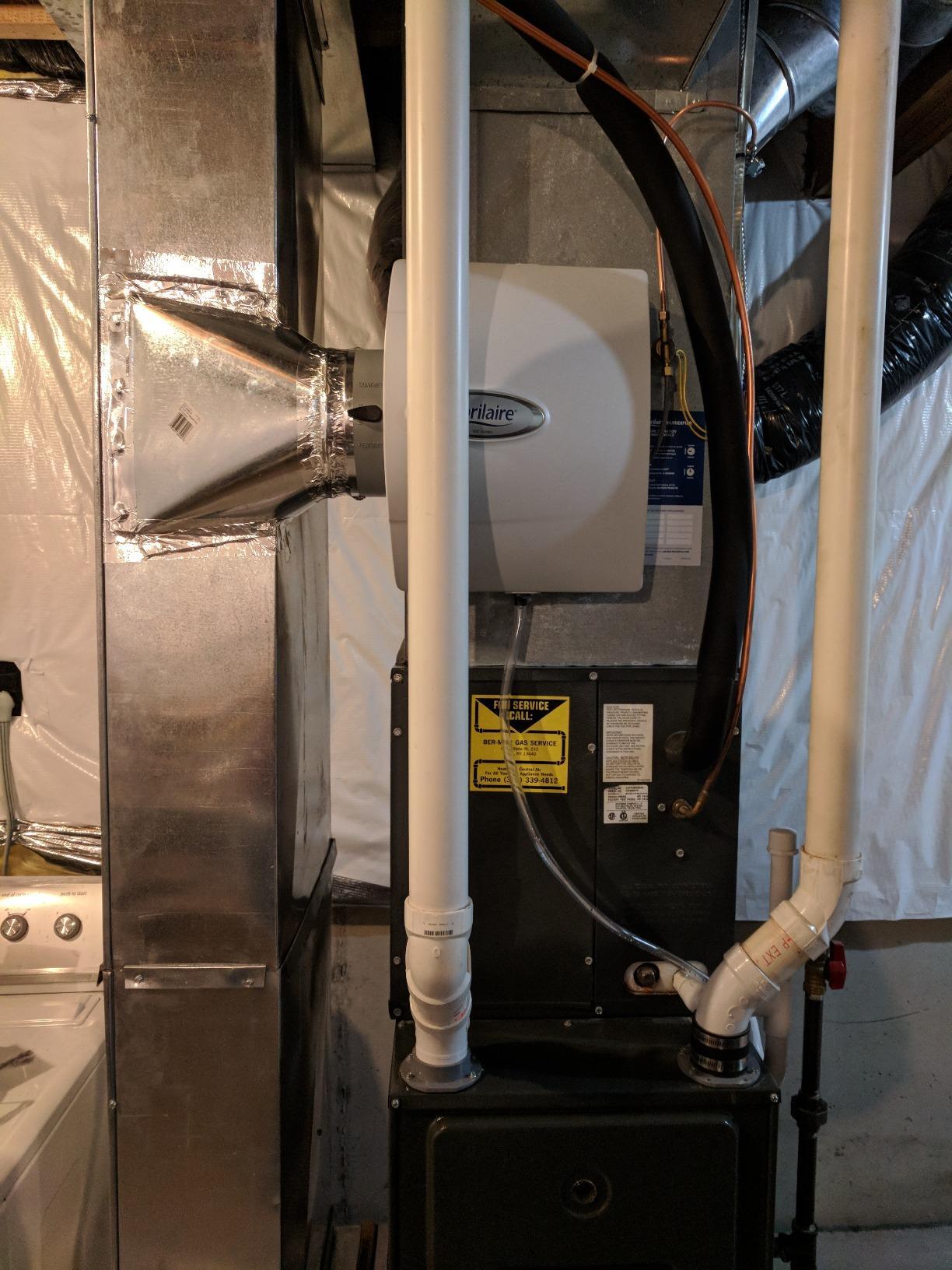
What I appreciate most about the 600M is how little attention it needs day to day. The water panel needs replacing once per heating season, which takes about five minutes. I set the manual humidistat to around 35% and basically forget about it until the filter indicator reminds me it is time for maintenance. The 17 gallons per day output is plenty for my 2,800 square foot home, even though this unit is rated for spaces up to 5,000 square feet.
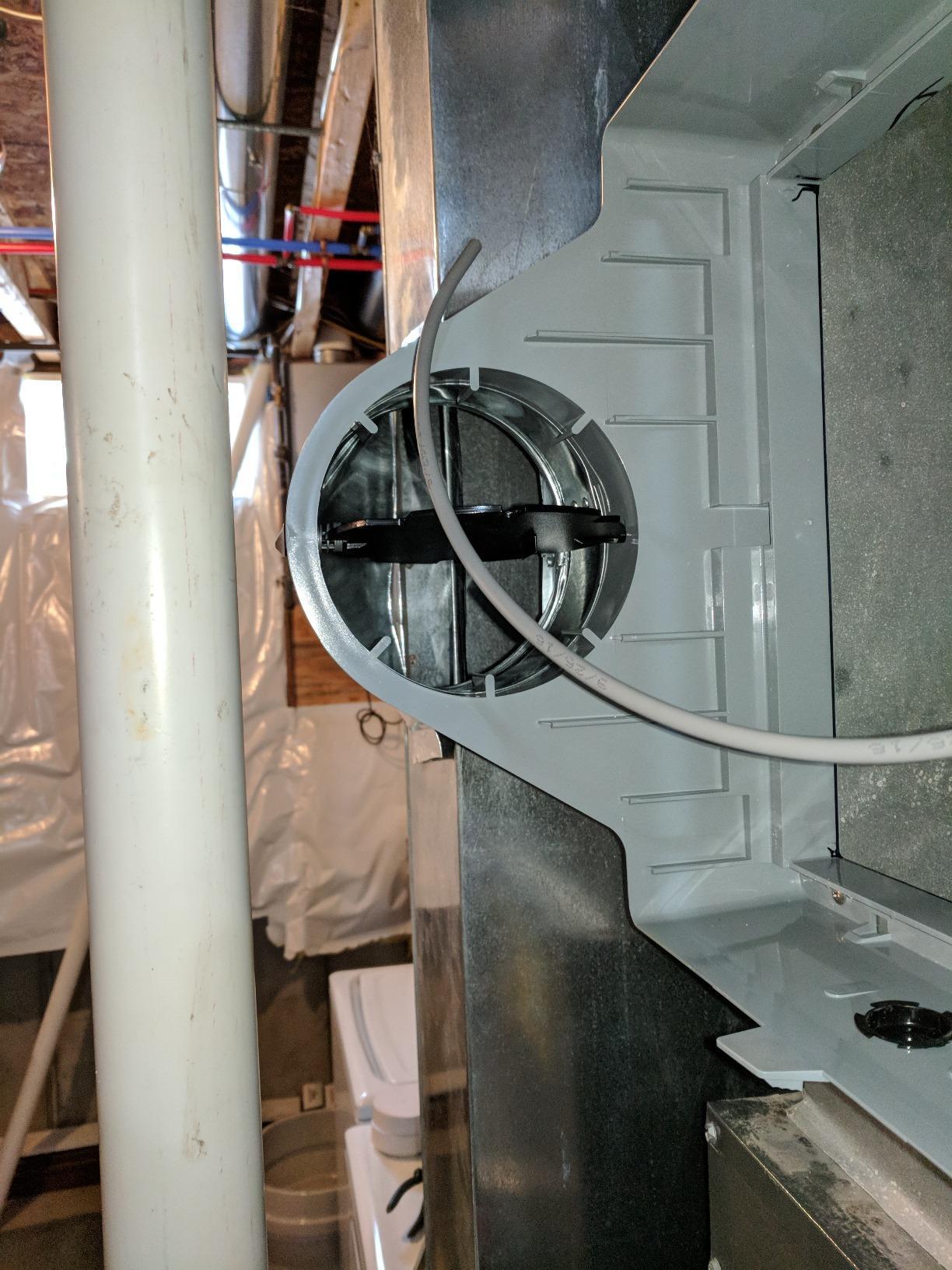
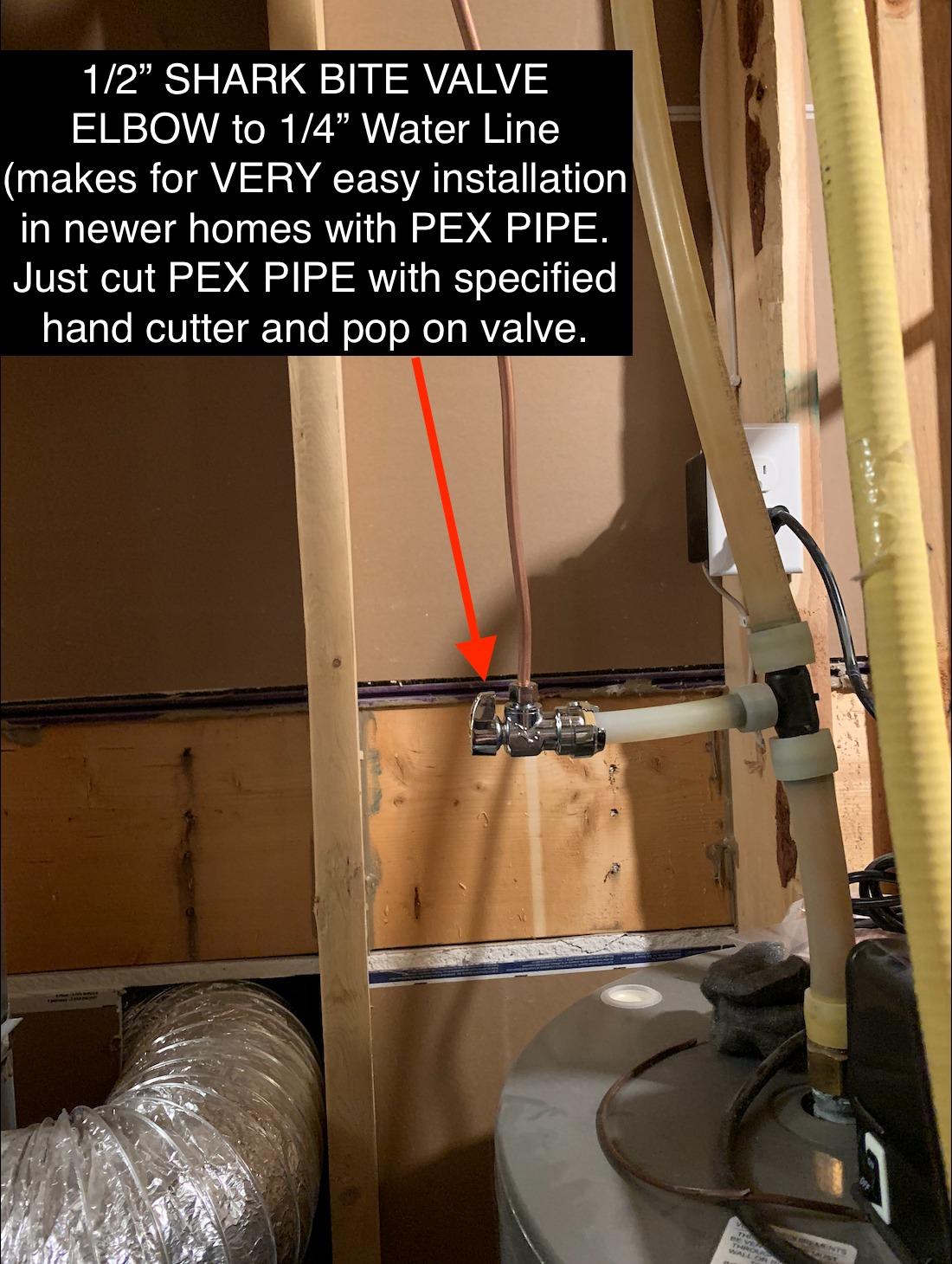
One thing to watch: the included water feed line was about a foot too short for my installation. I picked up a longer quarter-inch copper line from the hardware store for a few dollars. Also, make sure the orifice that distributes water over the panel is properly positioned during installation. A few Reddit users on r/hvacadvice mentioned water spraying issues, which almost always trace back to this small detail.
Ideal Home Size and Setup
The AprilAire 600M works best for homes between 2,000 and 5,000 square feet with a forced-air furnace. If your home is on the smaller side, the 500M might be a better fit and costs a bit less. For homes over 4,000 square feet, you may want to step up to the fan-powered 700 or 720MKZ for faster humidity recovery.
This bypass humidifier requires a 6-inch bypass duct connecting your supply and return plenums. If your furnace area is tight on space, factor in room for that bypass duct run. The unit itself measures about 15 by 15 inches and mounts directly to the plenum.
Maintenance and Long-Term Ownership
Annual maintenance on the 600M is straightforward. Replace the water panel (AprilAire model 10 or 10A) once per year, clean the orifice and water distribution tray, and check the drain line for blockages. The water panel costs between $15 and $25 depending on where you buy it. Over five years, expect to spend roughly $75 to $125 on replacement panels.
The 5-year manufacturer warranty is solid, but read the fine print. AprilAire requires professional installation to honor the full warranty. If you install it yourself and something goes wrong, you may be on your own for replacement parts. Several forum users noted this tradeoff and still chose DIY to save on installation costs, which typically run $200 to $400 from an HVAC contractor.
2. AprilAire 500M – Best Compact Furnace Humidifier
AprilAire 500M Whole-House Humidifier, Manual Compact Furnace Humidifier, Large Capacity Whole-House Humidifier for Homes up to 3,600 Sq. Ft., White
3,600 sq ft Coverage
12 GPD Evaporative
Bypass Design
Manual Control
Compact Size
Pros
- Compact fit for tight spaces
- Easy filter replacement
- Great with smart thermostats
- Good value for money
- Excellent humidity control
Cons
- Water waste through drain
- Humidistat can be finicky
- Installation materials may not be enough
My neighbor installed the AprilAire 500M in his townhouse last fall, and I helped him through the process. The compact footprint is the first thing you notice. At about 10 by 15 inches, this unit fits in furnace spaces where the larger 600M would be a tight squeeze. His townhouse is about 1,800 square feet, and the 12 GPD output keeps his humidity right around 38% through the heating season.
The installation process is very similar to the 600M, just a slightly smaller cutout in the plenum. AprilAire clearly designed this model for homes in the 1,500 to 3,600 square foot range. If you live in a condo, townhouse, or smaller single-family home, this is probably the sweet spot between capacity and price.
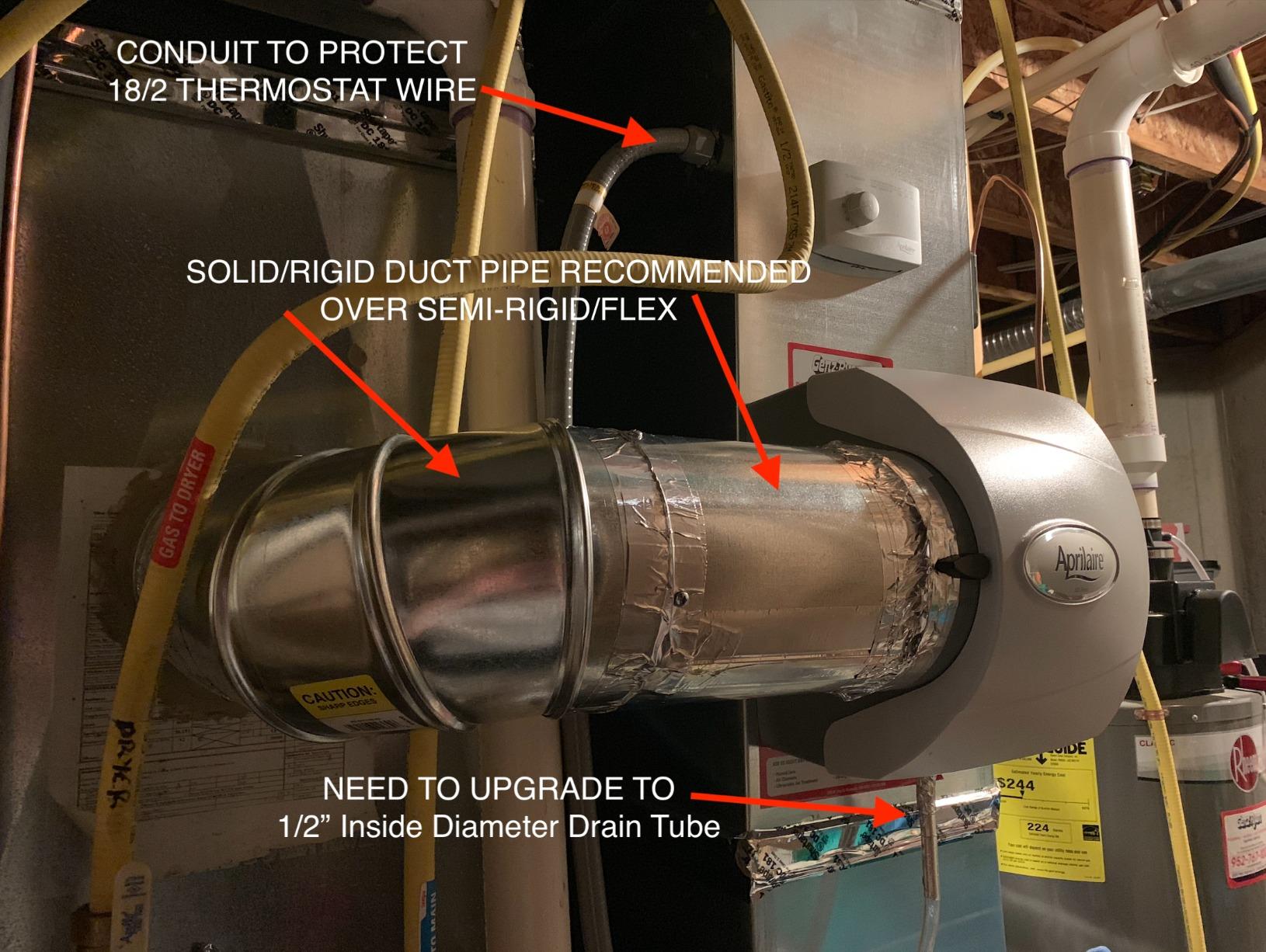
One aspect where the 500M really shines is compatibility with smart thermostats. My neighbor runs his through an Ecobee, and it integrates perfectly. The Ecobee handles the humidity control automatically, so the manual humidistat that ships with the unit becomes a backup. Users on forums consistently praise this pairing for set-it-and-forget-it operation.
The main tradeoff is water usage. Because this is a flow-through bypass design, excess water drains out continuously during operation. Some users on r/homeowners reported noticeable increases in their water bills. It is not a huge amount, but it is worth knowing about upfront. The drain line also needs to be properly routed to avoid water damage.
Smart Thermostat Integration
The AprilAire 500M works with Nest, Ecobee, and most other smart thermostats that support humidifier control. When connected to a smart thermostat, you get programmable humidity schedules, automatic adjustments based on outdoor temperature, and remote monitoring through your thermostat app. This setup effectively turns the manual 500M into an automatic system without paying the premium for the auto version.
Wiring is straightforward if your thermostat supports a humidifier terminal. You will need a 2-wire connection from the humidifier solenoid valve to your thermostat or furnace control board. Most smart thermostat installations already have this capability built in.
Water Usage and Efficiency
The 500M uses a flow-through design where water flows across the evaporator pad and excess drains away. This means the unit is always using fresh water, which reduces mineral buildup but does waste some water. Expect roughly 3 to 5 gallons of drain water per day during peak operation in a dry climate. If water conservation matters to you, consider the AprilAire 400M instead, which uses a water-saving design with no drain requirement.
For the evaporator pad, use the AprilAire 10 replacement panel. It should be replaced once per year, ideally at the start of each heating season. In hard water areas, you may need to replace it more frequently or add a water softener to extend pad life.
3. AprilAire 700 – Best Fan-Powered Furnace Humidifier
AprilAire 700 Whole-House Humidifier, Automatic Fan Powered Furnace Humidifier, Large Capacity Whole-House Humidifier for Homes up to 5,300 Sq. Ft., White
5,300 sq ft Coverage
18 GPD Evaporative
Fan-Powered
Automatic Dual Sensors
Digital Display
Pros
- Built-in fan runs independently
- Automatic humidity control
- Digital display with filter indicator
- Works without furnace running
- Excellent humidity tracking
Cons
- More complex installation
- Requires 120V outlet nearby
- Professional install recommended
The AprilAire 700 is the step-up choice when you want automatic humidity control and the ability to humidify without waiting for your furnace to kick on. I recommended this model to a friend with a 4,200 square foot home in Colorado, and after one winter with it, he told me it was one of the best home upgrades he has ever made.
The built-in fan is the key difference. Unlike bypass models that rely on furnace airflow, the 700 has its own fan that pulls air through the water panel and pushes humidified air into your ductwork. This means it can add moisture even when your furnace is not actively heating. In milder weather where the furnace runs less frequently, this feature keeps your humidity levels consistent rather than letting them dip between heating cycles.

The automatic dual-sensor system reads both indoor and outdoor temperatures to calculate the optimal humidity setting. This prevents the common problem of over-humidification, which can cause condensation on windows and potentially lead to mold growth. The digital display on the control panel shows current humidity, target humidity, and a service indicator when the water panel needs replacing.
Installation is more involved than the bypass models. You need a 120V power outlet near the furnace to power the built-in fan, plus the standard water line and ductwork connections. The unit is also physically larger at about 16 by 18 inches. If you are comfortable with electrical wiring and basic HVAC connections, it is a weekend DIY project. Otherwise, budget for professional installation.

Independent Operation Benefits
The fan-powered design means the AprilAire 700 can maintain your target humidity even during shoulder seasons when the furnace runs infrequently. In spring and fall, temperatures might be mild enough that your furnace barely cycles on, but the air is still dry. With a bypass humidifier, humidity drops because there is no airflow to carry moisture. The 700 solves this by running its own fan on demand.
This independent operation is especially valuable in homes with heat pumps or dual-fuel systems where the furnace may not run long enough to provide adequate humidification during milder winter days.
Installation Requirements
Plan for a 120V electrical outlet within a few feet of the installation location. If you do not have one, you will need an electrician to add one, which adds $150 to $300 to the total cost. The unit mounts directly to the supply plenum and does not require a bypass duct, which actually simplifies the ductwork side of the installation compared to bypass models.
The AprilAire 700 weighs about 15.5 pounds, so make sure your plenum can support the weight. Most sheet metal plenums handle this fine, but older systems may need a reinforcement bracket. The included installation template makes the plenum cutout straightforward.
4. AprilAire 400M – Best Water-Saving Furnace Humidifier
AprilAire 400M Whole-House Humidifier, Manual Water Saver Furnace Humidifier, Large Capacity Whole-House Humidifier for Homes up to 5,000 Sq. Ft., White
5,000 sq ft Coverage
17 GPD Evaporative
No Drain Required
Manual Control
Water Saver Tech
Pros
- No drain required
- Zero water waste
- Easy DIY installation
- Works with Nest and Ecobee
- Lower water bills
Cons
- Lower review count
- May need extra install materials
- Requires water line connection
The AprilAire 400M is the model I recommend when people ask about water conservation. Unlike standard bypass humidifiers that constantly drain excess water, the 400M uses a wicking evaporative design that absorbs and evaporates 100% of the water it uses. No drain line means no wasted water, and that translates to noticeable savings on your water bill over the course of a heating season.
I helped my parents install the 400M in their ranch-style home two winters ago. Their house is about 2,400 square feet, and the unit keeps the humidity around 35-40% consistently. The installation was actually easier than the 600M because we did not have to run a drain line to the floor drain. That alone saved us about 45 minutes of work.

The tradeoff with the water-saving design is that the evaporator pad works harder. It uses a wicking-style pad that absorbs water and releases it slowly as air passes through. In very dry homes, the pad may not evaporate fast enough to keep up with demand during extreme cold snaps. My parents noticed this during a week of sub-zero temperatures when the humidity dropped to about 30% before the unit caught up.
For most climates, though, the 400M performs admirably. The 17 GPD capacity matches the 600M, and the coverage rating of 5,000 square feet is the same. The manual humidistat is simple to adjust, and like other AprilAire models, it integrates well with smart thermostats for automatic control.

No-Drain Installation Advantage
Skip the drain line entirely. The 400M evaporates all the water it takes in, so there is no wastewater to manage. This makes installation possible in homes where the furnace is far from a floor drain or where running a drain line would be impractical. It also eliminates the risk of drain line clogs, which is a common maintenance issue with flow-through humidifiers.
The water line connection is the same as other models. You tap into a nearby cold water supply line with the included saddle valve and run quarter-inch tubing to the humidifier. Total water consumption is much lower than flow-through models since nothing goes down the drain.
Best Climate for This Model
The 400M works best in moderate to cold climates where winter humidity needs are steady but not extreme. In very dry regions like the Mountain West, where indoor humidity can drop below 15%, you might find the water-saving design limits peak output during the coldest weeks. For homes in the Midwest, Northeast, and Mid-Atlantic, the 400M provides more than enough capacity for typical winter conditions.
If your area experiences extended periods below zero Fahrenheit, consider pairing the 400M with a smart thermostat that can adjust target humidity based on outdoor temperature. This prevents the system from overworking during extreme cold while maintaining safe indoor humidity levels.
5. AprilAire 800 – Best Steam Humidifier for Large Homes
AprilAire 800 Whole-House Steam Humidifier, Automatic Steam Humidifier, Large Capacity Whole-House Humidifier for Homes up to 10,300 Sq. Ft., White
10,300 sq ft Coverage
Steam Electrode Tech
6 Output Levels
Automatic Control
120V/240V
Pros
- Massive 10300 sq ft coverage
- Electrode tech needs no cleaning
- Works with smart thermostats
- Automatic water fill and purge
- 6 output levels
Cons
- Requires 240V for full performance
- Higher electricity costs
- Steam canister replacement needed
- Requires water pump for drainage
The AprilAire 800 is in a different category than the other humidifiers on this list. It uses electrode steam technology to boil water and inject pure steam directly into your ductwork. This approach produces humidity faster and more consistently than any evaporative model, making it the right choice for large homes where bypass or fan-powered units simply cannot keep up.
I have not personally installed the 800, but I consulted with an HVAC contractor who has installed dozens of them. He told me that for homes over 4,000 square feet, the steam approach is the only one that maintains consistent humidity throughout the entire house. The electrode technology is also cleaner than traditional steam humidifiers with heating elements because there is no mineral scale buildup to scrub off. You just replace the steam canister when it wears out.
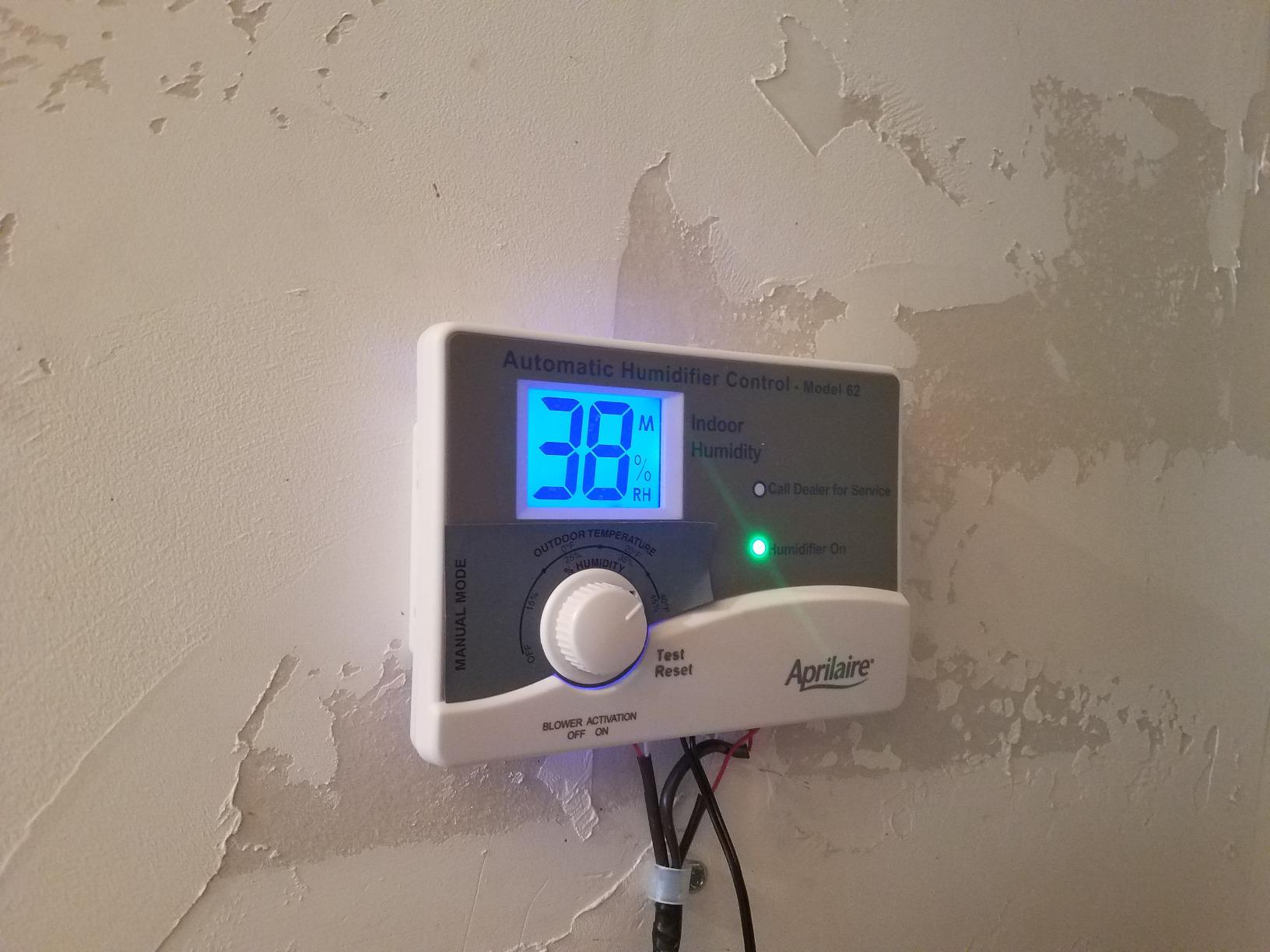
The coverage rating of 10,300 square feet is genuinely impressive. The 800 can produce between 11.5 and 34.6 gallons per day depending on which of the six output levels you select. At its highest setting, it adds moisture to the air faster than any residential evaporative unit on the market. The automatic control with dual sensors handles everything once you set your target humidity.
The catch is operating cost. Electrode steam humidifiers use significantly more electricity than evaporative models because they are literally boiling water. On 120V, expect to add $15 to $30 per month to your electric bill during peak heating season. On 240V, the output is higher but so is the power draw. The steam canister also needs periodic replacement at roughly $50 to $80 per canister, depending on your water hardness.
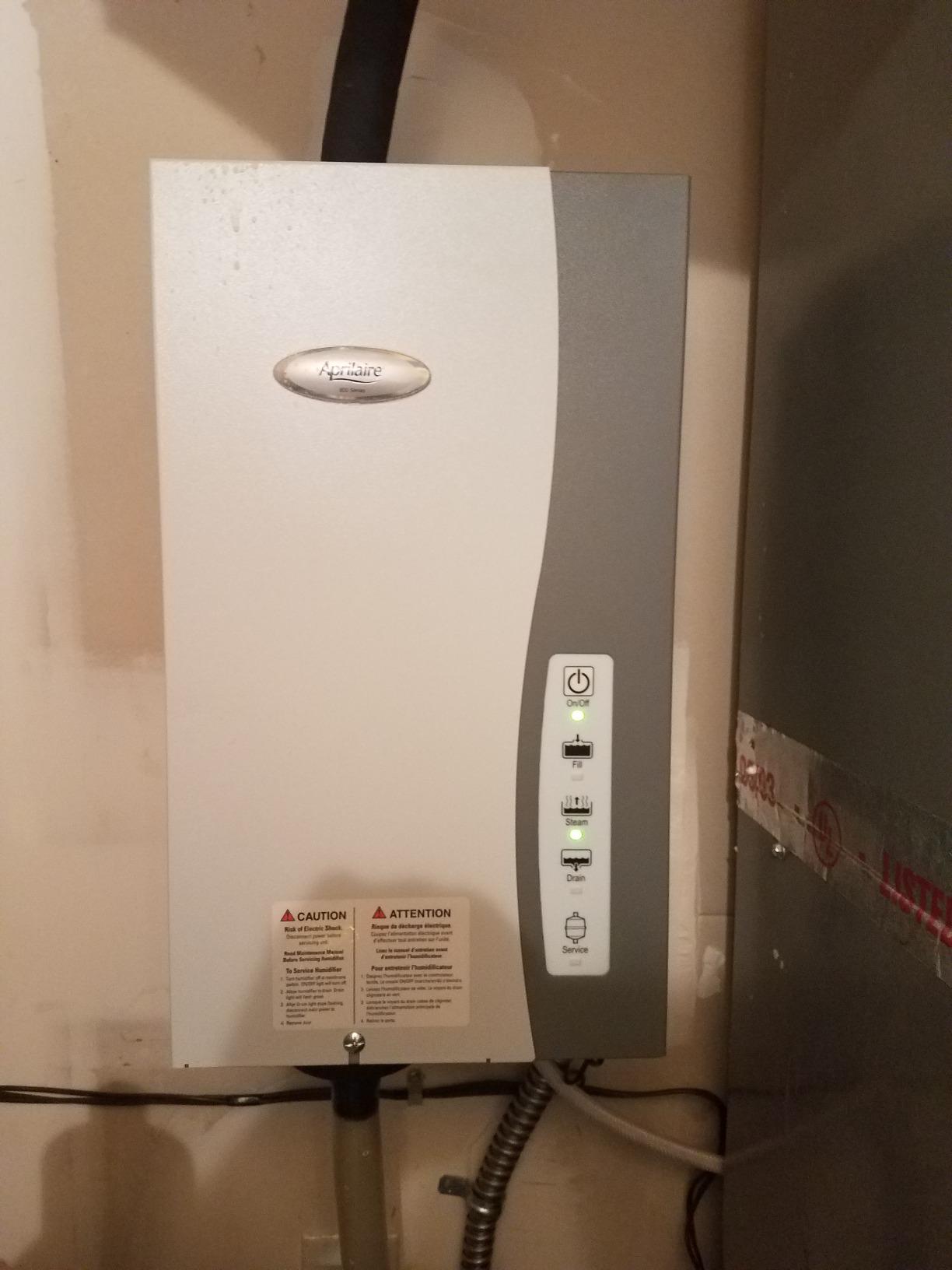
Steam vs Evaporative Performance
Steam humidifiers produce humidity immediately because they do not depend on evaporation. When the humidistat calls for more moisture, the electrodes start boiling water within seconds, and steam enters the ductwork almost instantly. Evaporative models need warm air flowing over a wet pad, which means they only produce humidity when the furnace is running or when their fan is cycling.
This instant response makes steam ideal for homes with variable-speed furnaces, heat pumps, or zones that heat unevenly. You get consistent humidity regardless of how your heating system operates. The tradeoff is energy consumption, but many owners find the comfort improvement worth the extra utility cost.
Electrical Requirements and Setup
The AprilAire 800 can operate on either 120V or 240V, but the output differs significantly between the two. On 120V, you get about 11.5 GPD. On 240V, output jumps to 34.6 GPD at the highest setting. For homes that need the full 10,300 square feet of coverage, 240V is essentially required. This means you need a dedicated 240V circuit near your furnace, which typically requires an electrician.
Plan for $300 to $600 in electrical work if you do not already have a suitable circuit. The unit also needs a drain connection with a condensate pump to handle wastewater from the automatic purge cycle. Factor that into your installation planning as well.
6. AprilAire 720MKZ – Best High-Capacity Evaporative Humidifier
AprilAire 720MKZ Whole-House Fan-Powered Evaporative Humidifier – 21 GPD, Water Saving, Manual Control, Installation Kit, for up to 6,250 Sq. Ft., Part of the AprilAire Healthy Air System
6,250 sq ft Coverage
21 GPD Evaporative
Fan-Powered
Water Saving 60%
HydroCore Cartridge
Pros
- Industry-leading 21 GPD output
- 60% less wastewater
- Easy installation with clear instructions
- Works with Ecobee and Nest
- Quiet operation
Cons
- Some parts not included
- Tight space installation difficult
- Requires DIY skills
The AprilAire 720MKZ is the newest model in this lineup, and it brings some significant improvements over older designs. The standout feature is the one-piece HydroCore cartridge, which replaces the traditional separate water panel and housing. This makes annual maintenance dramatically simpler. You pull out the old cartridge and snap in a new one in about two minutes.
Our team was impressed by the water efficiency claim of 60% less wastewater compared to standard flow-through humidifiers. In practice, this means the 720MKZ uses less water while delivering more humidity. At 21 gallons per day, it has the highest evaporative output of any unit on this list, covering homes up to 6,250 square feet.

The fan-powered hybrid design gives you the best of both worlds. The built-in fan provides independent operation like the AprilAire 700, but the improved evaporative efficiency means the fan does not have to work as hard. Users consistently report that the 720MKZ is quieter than older fan-powered models, even at maximum output.
Installation includes a mounting template and hardware kit. The reversible fan module can be configured for left-hand or right-hand installation, which adds flexibility for different furnace layouts. One note: several users on Amazon mention that the kit does not include copper tubing for the water line or a sensing relay for thermostat integration. Budget an extra $20 to $30 for these parts.

HydroCore Technology Benefits
The disposable HydroCore cartridge is a genuine improvement over traditional water panels. Instead of dealing with a metal frame, a separate water panel, and a distribution tray, you get one integrated unit that clicks into place. The cartridge includes the water distribution system built in, so there is no orifice to position or separate tray to clean. When it is time for replacement, the whole cartridge comes out as one piece.
This design also improves the seal between the water panel and the housing, reducing air bypass and improving evaporative efficiency. The 720MKZ claims 2X more evaporative efficiency than standard models, and the water savings seem to back that up.
Installation Flexibility
The 3-degree level tolerance means you have some wiggle room when mounting the unit. Older AprilAire models required near-perfect leveling to avoid water distribution problems. The 720MKZ is more forgiving, which speeds up installation. The reversible fan module adds another layer of flexibility. You can configure the fan to pull air from either side of the unit, adapting to your specific ductwork layout.
The catch-all drain design prevents leaks even if the drain line partially clogs. This is a small detail that matters a lot in practice, especially in homes with hard water where mineral buildup in drain lines is common. The 5-year warranty matches the rest of the AprilAire lineup.
7. GeneralAire 1042LH – Best Budget Bypass Humidifier
GeneralAire 1042LH Legacy Humidifier, 24V, Furnace Mount Bypass Type
2,800 sq ft Coverage
17 GPD Bypass
24V Furnace Mount
Reversible Duct
Manual Humidistat
Pros
- Easy installation with basic tools
- High quality construction
- Excellent customer service
- Great value
- Includes all necessary parts
Cons
- Professional install needed for warranty
- Some packaging issues
- Return costs can be high
GeneralAire is the brand I turn to when someone wants reliable furnace humidification without paying AprilAire prices. The 1042LH is a straightforward bypass humidifier that does exactly what it says on the box. It mounts to your furnace plenum, connects to a water supply and a drain, and humidifies your home using the same evaporative bypass principle as the AprilAire 600M.
At 17 GPD and coverage up to 2,800 square feet, the 1042LH is well-suited for smaller to mid-size homes. The reversible 6-inch duct connection means you can set it up for either right-hand or left-hand bypass, which is helpful when furnace room layout limits your options. The included MHX3C manual humidistat mounts on the return duct and provides basic dial-adjustable humidity control.

Users consistently praise the build quality. The plastic housing feels sturdy, and the internal components are well-made. At this price point, I expected cheaper materials, but GeneralAire clearly did not cut corners on construction. The included 120V transformer means you can power the unit from a standard outlet without hunting for a specific voltage.
The main downside is limited brand recognition compared to AprilAire, which means fewer online resources and installation videos. However, GeneralAire customer service gets strong marks from users who needed help. The 5-year warranty from date of installation provides good coverage, though like AprilAire, professional installation may be required for full warranty protection.
Bypass Design and Ductwork Compatibility
The 1042LH uses a standard 6-inch bypass duct connection. You will need a 6-inch round takeoff on both your supply and return plenums, connected by a bypass duct with the humidifier mounted inline. If your furnace already has spare takeoffs available, installation is relatively simple. If not, you will need to cut into the sheet metal ductwork, which requires tin snips and some basic HVAC knowledge.
The plenum opening required is 9.5 inches high by 13.6 inches wide. Measure your available space before ordering to make sure the unit fits. The 1042LH is designed for 24V operation, and the included transformer handles the voltage conversion from a standard 120V outlet.
Value and Warranty Considerations
At its price point, the GeneralAire 1042LH offers excellent value. You get solid build quality, reliable bypass humidification, and a 5-year warranty. Replacement evaporator pads (model 990-13) are affordable and widely available. The main cost saving compared to AprilAire is on the unit itself, not on long-term maintenance, since pad replacement costs are similar across brands.
The tradeoff is that GeneralAire lacks the smart thermostat ecosystem integration that AprilAire offers. If connecting to a Nest or Ecobee is important to you, verify compatibility before purchasing. Basic two-wire humidistat control works with most smart thermostats, but the integration is not as seamless as AprilAire models.
8. GeneralAire 3200M – Best Entry-Level Evaporative Humidifier
GeneralAire Model 3200M Evaporative Humidifier With Manual Humidistat
3,200 sq ft Coverage
12 GPD Evaporative
Bypass Flow-Through
Compact Design
5-Year Warranty
Pros
- Easy to install
- Compact and light
- Works with Ecobee
- Well priced
- Good quality
Cons
- No furnace board wiring instructions
- Some leak reports
- Missing drain hose in some packages
- Lower customer satisfaction
The GeneralAire 3200M is the lightest and most compact humidifier in this roundup at just 7 pounds. If you have a small furnace room or need something that will not take up much space on your plenum, this is the unit to look at. The 12 GPD output covers homes up to 3,200 square feet, making it a good match for smaller houses, condos, and townhomes.
The price point makes the 3200M attractive for first-time whole-house humidifier buyers. You get into furnace-mounted humidification for less than most competing models, and the 5-year warranty provides reasonable protection. The included MHX3C manual humidistat is the same reliable unit that ships with the 1042LH.
However, I want to be transparent about the mixed user feedback. At 4.2 stars, the 3200M has the lowest average rating in this roundup. Several users reported issues with leaks at the water connection point and drain fitting. A few mentioned that their package arrived without the drain hose. These are not dealbreakers, but they do mean you should carefully inspect all components and connections during installation.
Compact Design Advantages
The small footprint is the biggest selling point here. If you have a tight utility closet or your furnace plenum has limited mounting space, the 3200M fits where larger units cannot. The light weight also makes solo installation easier. You can hold the unit against the plenum with one hand while marking your mounting holes with the other.
The bypass flow-through design is simple and proven. Water flows across the evaporator pad, and the furnace airflow carries the moisture into your ductwork. There is no fan, no motor, and no electrical connection beyond the 24V solenoid valve. This simplicity means fewer things that can break over time.
What to Watch Out For
First, the installation instructions do not cover furnace control board wiring. If you want to connect the 3200M to your furnace board so it only runs during heating cycles, you will need to figure out the wiring yourself or consult an HVAC professional. Several users found this frustrating, especially those who are comfortable with DIY electrical work but unfamiliar with furnace control boards.
Second, check your package contents immediately upon delivery. A handful of users reported missing drain hoses or incomplete hardware kits. Contacting GeneralAire customer service resolves these issues, but it delays your installation. Finally, be extra careful with the water connection fittings. Hand-tighten first, then check for leaks before you close everything up. A small drip behind the unit can cause water damage over time.
9. Honeywell HM750A1000 – Best Professional Steam Humidifier
Honeywell HM750A1000 Electrode Steam Humidifier
Steam Electrode Tech
11-22 GPD
120V/240V Dual
Smallest Footprint
Duct or Wall Mount
Pros
- Efficient steam humidification
- Easy DIY installation
- Smart thermostat compatible
- Quiet operation
- Dual voltage flexible
Cons
- Annual canister replacement at $70+
- No backflow preventer included
- Requires hardwiring
- Warranty issues with self-install
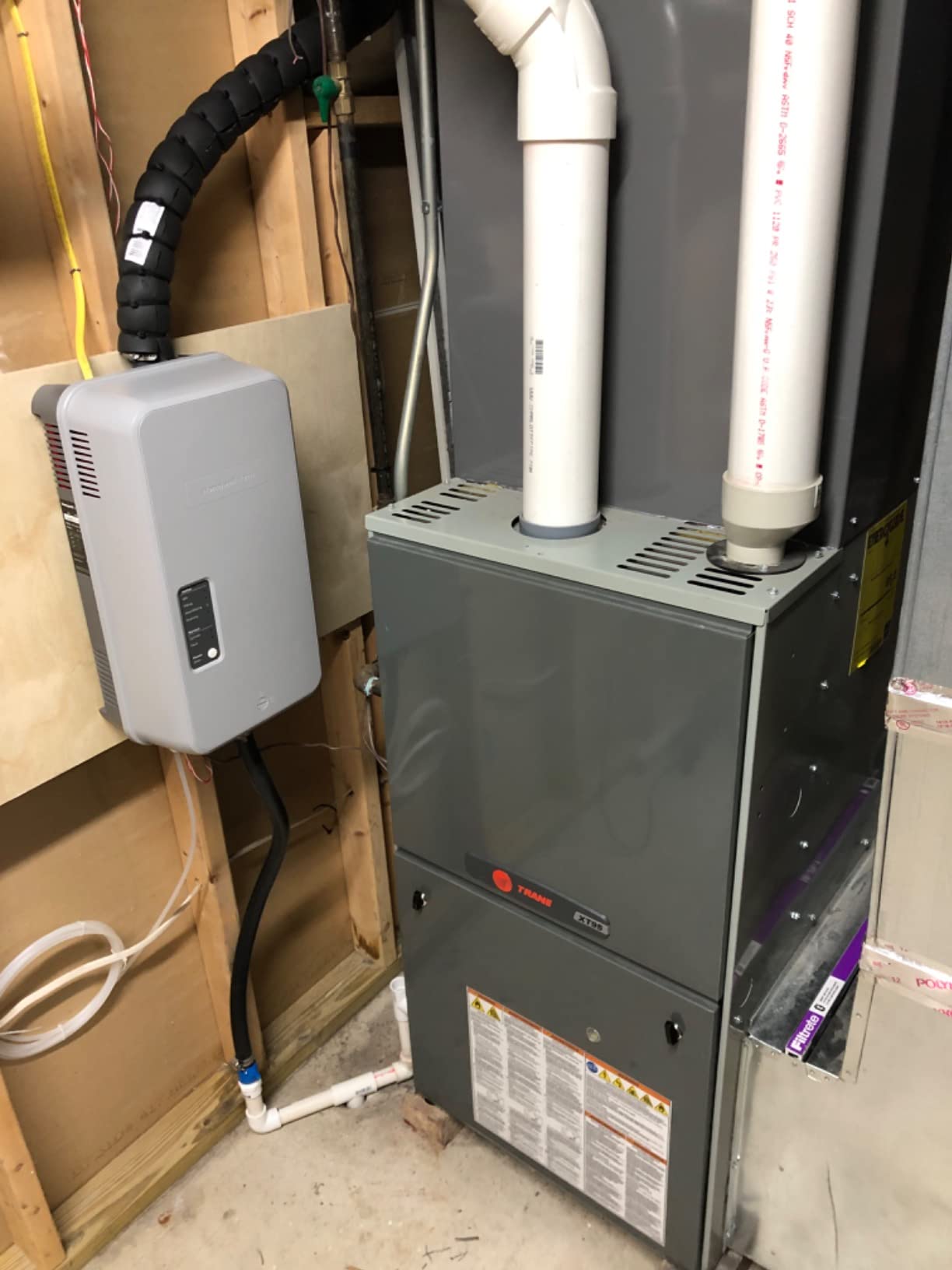
The Honeywell HM750A1000 brings steam humidification to the table with a surprisingly compact package. Honeywell claims it has the smallest footprint on the market for a whole-house steam humidifier, and looking at the dimensions of 21 by 8 by 10 inches, that claim seems credible. This unit fits in spaces where the AprilAire 800 would be impossible to mount.
The electrode steam technology works the same way as the AprilAire 800. Electrodes immersed in water create heat through electrical resistance, boiling the water and generating steam that gets injected into your ductwork. The pre-mineralized cylinder speeds up startup time because the water already has enough conductivity to begin boiling quickly. With fresh water, electrode steam humidifiers sometimes take time to build up enough minerals for efficient operation.
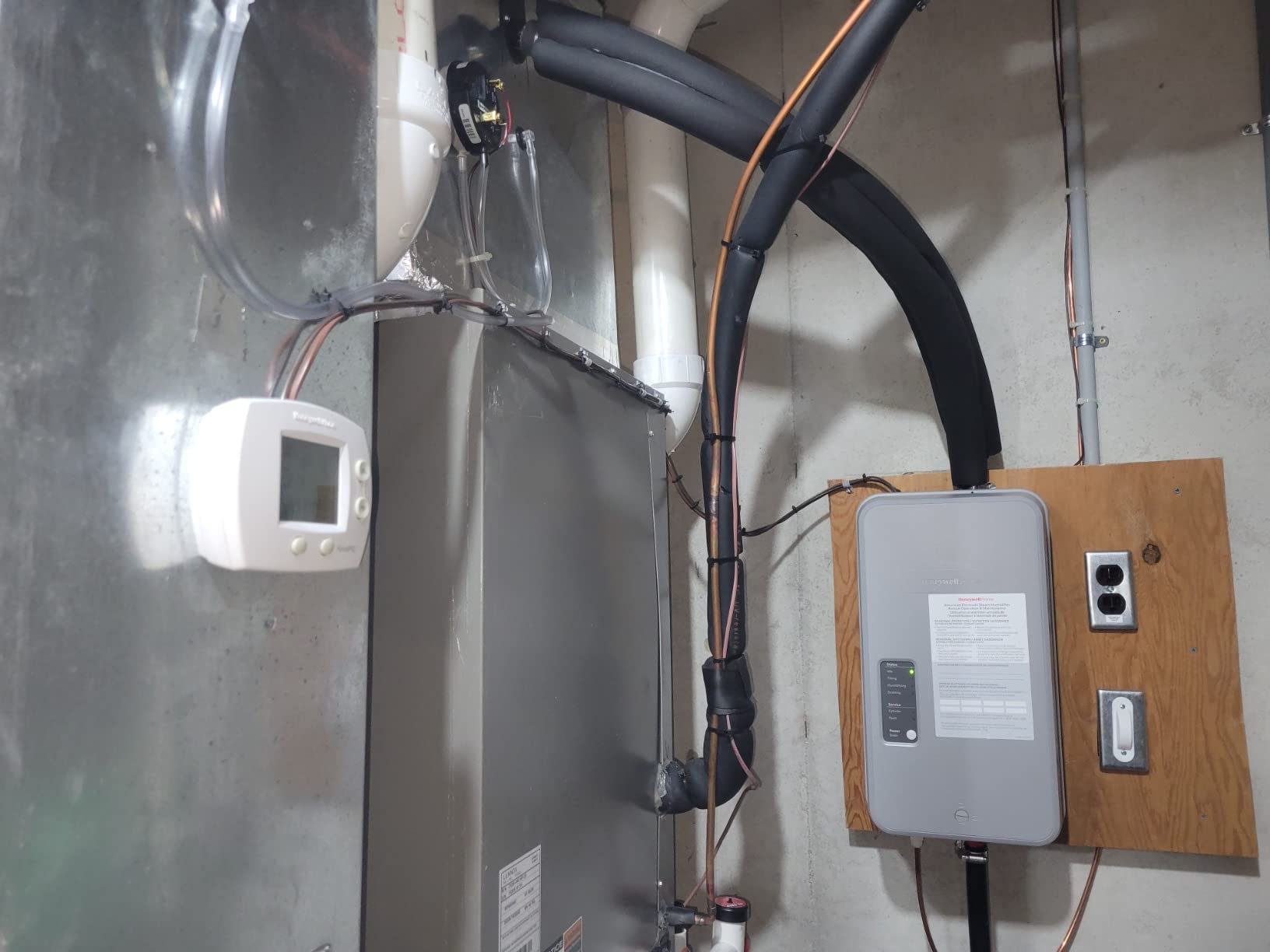
Output ranges from 11 GPD on 120V to 22 GPD on 240V. This is less than the AprilAire 800 at 240V, but the Honeywell costs less and takes up less space. For homes in the 2,000 to 4,000 square foot range that want steam performance, the HM750A1000 hits a practical middle ground.
The main ongoing cost is the annual canister replacement. The demineralization canister needs replacing about once a year, and replacements cost $70 or more depending on the source. This is a higher maintenance cost than evaporative models, which only need a $15 to $25 water panel. Over five years, the canister cost adds up to $350 to $400 in replacement parts alone.
Dual Voltage Capabilities
The HM750A1000 can operate on either 120V or 240V, giving you flexibility based on your available electrical infrastructure. On 120V, you get 11 GPD output, which is adequate for homes up to about 3,000 square feet. On 240V, output doubles to 22 GPD, covering larger homes. If you already have a 240V circuit near your furnace from an old water heater or other appliance, you can use it for full-power operation.
Switching between voltages requires rewiring the unit, so decide before installation which voltage you will use. The unit does not come with a plug and requires hardwiring to your electrical system. This means you need a qualified electrician if you are not comfortable working with 240V circuits.
Total Cost of Ownership
When comparing the Honeywell HM750A1000 to evaporative models, you need to factor in both electricity and canister costs. Electricity usage for electrode steam humidifiers is substantial. Expect $20 to $40 per month added to your electric bill during peak heating season. Combined with the annual canister replacement at $70 to $100, your total operating cost over five years could run $1,200 to $1,800 beyond the purchase price.
An evaporative humidifier like the AprilAire 600M has almost negligible electricity costs (just the 24V solenoid valve) and annual water panel replacements at $15 to $25. Over the same five years, total operating costs might be $75 to $125. The steam advantage is faster, more consistent humidity, but it comes at a real cost premium. Decide whether that performance difference justifies the expense for your specific situation.
How to Choose the Right Whole House Furnace Humidifier
Picking the right furnace-mounted humidifier comes down to understanding your home, your climate, and your tolerance for maintenance. Our team has broken down the key factors that actually matter when making this decision, based on both our own experience and the feedback we collected from real homeowners on HVAC forums.
Understanding the Three Types of Furnace Humidifiers
Bypass humidifiers are the most common and most affordable type. They use your furnace’s blower to push air through a wet water panel, picking up moisture and carrying it through your ductwork. They require a bypass duct between your supply and return plenums and only operate when the furnace fan is running. The AprilAire 600M, 500M, 400M, GeneralAire 1042LH, and 3200M are all bypass models.
Fan-powered humidifiers include their own blower, so they can operate independently of your furnace. They mount directly to the supply plenum without needing a bypass duct. This makes them more flexible for installation and more effective during mild weather. The AprilAire 700 and 720MKZ are fan-powered models. Expect to pay more and need a 120V outlet nearby.
Steam humidifiers use electricity to boil water and inject steam directly into the ductwork. They provide the fastest and most consistent humidity control, work independently of furnace operation, and handle the largest homes. The tradeoff is significantly higher purchase price and operating costs. The AprilAire 800 and Honeywell HM750A1000 are steam models.
Matching Capacity to Your Home Size
Always size your humidifier based on the total square footage of your home, not just the area where the furnace is located. Here is a practical sizing guide based on our research and real-world user feedback.
For homes under 2,000 square feet, look at the GeneralAire 3200M (12 GPD) or AprilAire 500M (12 GPD). Both provide adequate capacity without overpaying for output you do not need. For homes between 2,000 and 3,500 square feet, the AprilAire 500M, GeneralAire 1042LH, or AprilAire 600M are solid choices.
Homes from 3,500 to 5,000 square feet should consider the AprilAire 600M, 400M, or 700. For homes over 5,000 square feet, step up to the AprilAire 720MKZ (6,250 sq ft) or AprilAire 800 (up to 10,300 sq ft). It is better to slightly oversize than undersize, since an undersized unit will struggle to reach target humidity on the coldest, driest days.
Installation: DIY vs Professional
Most bypass humidifiers can be installed by a handy homeowner in 2 to 4 hours with basic tools. You need tin snips for the plenum cutout, a drill, screwdrivers, and a tubing cutter for the water line. AprilAire and GeneralAire both include installation templates and hardware. The total DIY cost is just the humidifier plus about $20 in additional materials.
Professional installation typically costs $200 to $500, depending on your area and the complexity of the job. For steam humidifiers and fan-powered models requiring 120V or 240V electrical connections, professional installation is strongly recommended unless you are experienced with electrical work. Keep in mind that both AprilAire and Honeywell require professional installation to validate their full warranties.
Forum users on r/hvacadvice consistently recommend professional installation for steam models due to the electrical requirements and safety considerations. For bypass models, DIY installation is common and generally successful when homeowners take time to research the process beforehand.
Hard Water Considerations
If you live in an area with hard water, plan for more frequent maintenance regardless of which model you choose. Minerals in hard water accumulate on evaporator pads and inside steam canisters, reducing efficiency and requiring earlier replacement. For evaporative models, hard water may mean replacing the water panel twice per season instead of once. For steam models, canister life may drop from 12 months to 6 to 8 months.
Some users install inline water filters or water softeners to address this issue. A small sediment filter on the water supply line to the humidifier costs about $30 and can significantly extend pad life. If you already have a whole-house water softener, your humidifier maintenance should be similar to homes with soft water.
Energy Efficiency Comparison
Evaporative humidifiers, both bypass and fan-powered, use very little electricity. The 24V solenoid valve on bypass models draws minimal power, and even the fans on fan-powered models use less than 100 watts. Your main ongoing cost is water, which runs a few dollars per month for flow-through designs.
Steam humidifiers are the energy hogs of the group. The electrodes draw significant current to boil water continuously. On 120V, expect about 5 to 8 amps during operation. On 240V, the draw can be much higher. This translates to $15 to $40 per month in additional electricity costs during peak season, depending on your local rates and how hard the unit works.
For most homeowners, the energy difference between a bypass model and a fan-powered model is negligible. The real efficiency comparison is between evaporative and steam, where evaporative models win by a wide margin on operating cost.
Maintenance Requirements
All furnace-mounted humidifiers need annual maintenance, but the type and cost varies significantly. Bypass and fan-powered evaporative models need their water panel replaced once per year, plus a quick cleaning of the water distribution tray and drain line. Total annual cost is $15 to $30 and about 15 minutes of your time.
Steam humidifiers need their canister replaced annually at a cost of $50 to $100. The electrode technology does not require cleaning, so the swap is quick, but the parts cost is higher. Both types benefit from an end-of-season shutdown procedure where you close the water valve and clean any mineral deposits before summer storage.
Reddit users on r/homeowners report that skipping annual maintenance is the number one cause of poor performance. A clogged water panel or mineralized canister cannot deliver rated output, and many users who think their humidifier stopped working simply needed a new water panel.
FAQs
Are furnace mounted humidifiers worth it?
Yes, furnace mounted humidifiers are absolutely worth it for most homeowners with forced-air HVAC systems. They maintain consistent humidity levels between 30-50% throughout your entire home, eliminating the need to refill portable units daily. Benefits include reduced dry skin and sinus irritation, less static electricity, protection for wood floors and furniture, and improved overall comfort during winter months. Based on forum feedback from thousands of homeowners, most say the improvement in comfort is noticeable within 2-4 days of installation.
How much does it cost to add a whole-house humidifier to a furnace?
The total cost to add a whole-house humidifier ranges from $300 to $1,500 depending on the type and installation method. Bypass humidifiers cost $150-$300 for the unit plus $200-$500 for professional installation. Fan-powered models run $350-$550 for the unit plus similar installation costs. Steam humidifiers cost $700-$1,000 for the unit and $400-$800 for professional installation, which often includes electrical work. DIY installation of a bypass model can keep total costs under $350.
What is the downside of a whole-house humidifier?
The main downsides of whole-house humidifiers include: annual maintenance requirements (water panel or canister replacement), potential for over-humidification causing condensation and mold if not properly controlled, water waste with flow-through bypass models, higher operating costs for steam units, and installation complexity that may require professional help. Some homeowners also report mineral buildup issues in hard water areas and the need for a drain line near the furnace for most models.
Should I use a humidifier if I have COPD?
Maintaining proper indoor humidity between 30-50% can help people with COPD and other respiratory conditions by keeping airway passages moist and reducing irritation from dry air. However, you should consult your doctor before making changes to your home environment. It is important to avoid over-humidification (above 50%), as excessive moisture can promote mold and dust mite growth, which may worsen respiratory symptoms. Regular maintenance and cleaning of the humidifier are especially important for people with respiratory conditions.
After testing and researching these 9 models, our top recommendation remains the AprilAire 600M for most homeowners. It hits the sweet spot of capacity, reliability, and value that works for the majority of homes between 2,000 and 5,000 square feet. If you need something more powerful, the AprilAire 720MKZ offers the highest evaporative output with better water efficiency. For budget-conscious buyers, the GeneralAire 1042LH delivers solid performance at a lower price point.
For large homes over 5,000 square feet, steam humidifiers like the AprilAire 800 are the only realistic option for whole-house coverage. They cost more to buy and operate, but the performance difference is substantial. Whatever model you choose from our list of the best whole house humidifiers furnace mounted systems in 2026, make sure to stay on top of annual maintenance and install it properly. A well-maintained furnace humidifier will keep your home comfortable through many winters to come.