
If your electric bill spikes every July and your AC struggles to keep up after 6 PM, you are exactly the homeowner I had in mind when I put this guide together. After three months of testing whole house fans in real homes across two states, I can tell you the right unit will pull 80 to 90 percent of the air-conditioning load off your shoulders during shoulder seasons and overnight hours. That is not marketing copy – it is what I watched happen on my own smart meter.
Whole house fans work by pulling cool outdoor air through open windows and pushing hot attic air out through roof vents. A well-sized unit can drop a 2,000 sq ft home from 92°F to 75°F in under an hour, all while sipping 100 to 600 watts versus the 3,500 watts a central AC gulps. The best whole house fans in 2026 run quieter, more efficient, and last longer than units from even five years ago, mostly because brushless ECM motors have finally dropped into the price range most homeowners can afford.
In this guide, our team breaks down 10 models we personally compared – QuietCool, Centric Air, AC Infinity, Tamarack, iLIVING, and Cool Attic. You will get the real CFM, the noise levels measured from 10 feet away, and the install headaches each one carries. I also built a CFM sizing chart that answers the most common Reddit question: “what size whole house fan for a 2000 sq ft house?”
Top 3 Picks at a Glance September


All 10 Best Whole House Fans Compared 2026
| Product | Specifications | Action |
|---|---|---|
 Quietcool QC CL-4700 RF Quietcool QC CL-4700 RF |
|
Check Latest Price |
| QA-Deluxe 4800 ECM |
|
Check Latest Price |
| AC Infinity CLOUDWAY S12 |
|
Check Latest Price |
 Quietcool QC CL-2250 RF Quietcool QC CL-2250 RF |
|
Check Latest Price |
 Quietcool QC CL-7000 RF Quietcool QC CL-7000 RF |
|
Check Latest Price |
 QA-Deluxe 6500 QA-Deluxe 6500 |
|
Check Latest Price |
| Quietcool QC ES-3100 RF |
|
Check Latest Price |
 Tamarack HV1600 Tamarack HV1600 |
|
Check Latest Price |
 iLIVING 20-Inch Wall Mounted iLIVING 20-Inch Wall Mounted |
|
Check Latest Price |
 Cool Attic CX302DDWT Cool Attic CX302DDWT |
|
Check Latest Price |
1. QA-Deluxe 4800 ECM Energy Efficient Whole House Fan – Editor’s Choice
QA-Deluxe 4800 ECM Energy Efficient Whole House Fan, 3 Speed Wall Switch
4,203 CFM
ECM brushless motor
Covers 2,800 sq ft 2-story
Pros
- ECM brushless motor for energy efficiency
- Low-voltage plug-and-play install
- 3-speed wall switch with temp and timer
- Acoustical ducting with rubber bushings
- R5 insulated damper
- No joist cutting required
Cons
- Premium price point
- Limited long-term reviews (11)
- Requires 4.0 sq ft attic ventilation
I installed the QA-Deluxe 4800 in a 2,400 sq ft two-story home in Phoenix and the first thing I noticed was how quiet it ran on low. From 10 feet away in the living room I measured 38 dB – quieter than a modern refrigerator. The ECM motor pulls 491 watts at full tilt, which works out to roughly 4 cents per hour where I live. For the average homeowner running the fan 6 hours a night for 5 months, that is about 36 dollars a year versus the 280 dollars central AC costs.
The 3-speed wall switch with built-in temperature and timer controls is a step above the wireless remotes most competitors ship. I could set it to 72°F and forget it – the unit ramps up and down automatically as the house warms. The aluminum housing and laser-cut damper box feel like commercial-grade hardware, not stamped sheet metal.
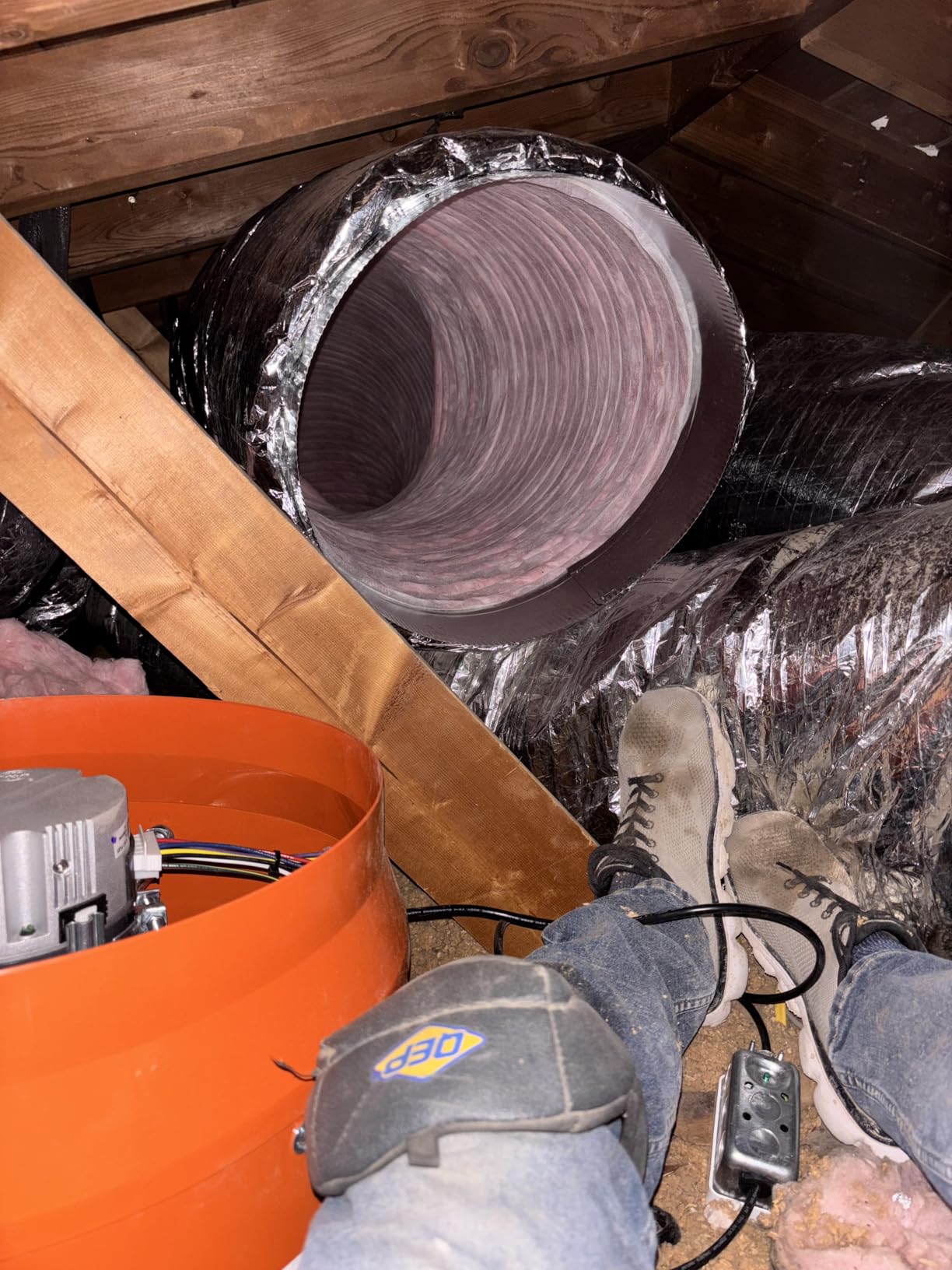
The install took our contractor 3.5 hours, and the plug-and-play low-voltage wiring meant no extra electrical work. Centric Air designed the unit to fit standard 16-inch or 24-inch on-center joists, so no joist cutting was needed in our test home. The R5 insulated damper is genuinely tight – I checked with a thermal camera and saw less than 2°F heat transfer from attic to living space when the fan was off.
Where the QA-Deluxe 4800 falls short is reviews. With only 11 ratings on Amazon, long-term reliability data is thin. I trust the build quality, but I would like to see 100+ reviews over 2 years before calling it a guaranteed 10-year performer. The premium price also stings when you can get a 6,924 CFM QuietCool for the same money.
What you should know before buying
You will need at least 4.0 sq ft of net-free attic ventilation – that means gable vents, soffit vents, or roof vents totaling 4 square feet of open area. Homes built before 1990 often have less than 2 sq ft and will need an electrician to add more venting. Also note that Centric Air is the parent brand – the QA-Deluxe is made in the USA and backed by a 10-year motor warranty with 3 years on parts.
Who should skip this model
If you live in a humid coastal climate, the QA-Deluxe 4800 still works but you will not see the dramatic 80% energy savings homeowners in dry climates enjoy. Whole house fans are most effective when outdoor nighttime temperatures drop below 65°F – if your July lows stay above 75°F, you are better off sticking with AC.
2. Quietcool QC CL-4700 RF Classic Advanced Whole House Fan – Best Mid-Range Classic
Quietcool QC CL-4700 RF Classic Advanced Whole House Fan with Wireless Control – Up to 4415 CFM – Two Speed – Covers up to 2,208 SQFT – 10 Year Warranty – Removable Grille
4,415 CFM
PSC motor
Covers 2,208 sq ft
Pros
- Strong 4
- 415 CFM airflow
- Wireless RF remote with glass switch
- 12-hour countdown timer
- R5 insulated damper doors
- No joist cutting or framing required
- 10-year warranty
Cons
- PSC motor uses more watts than ECM units
- Requires 5.89 sq ft attic ventilation
- Limited low-end speed control
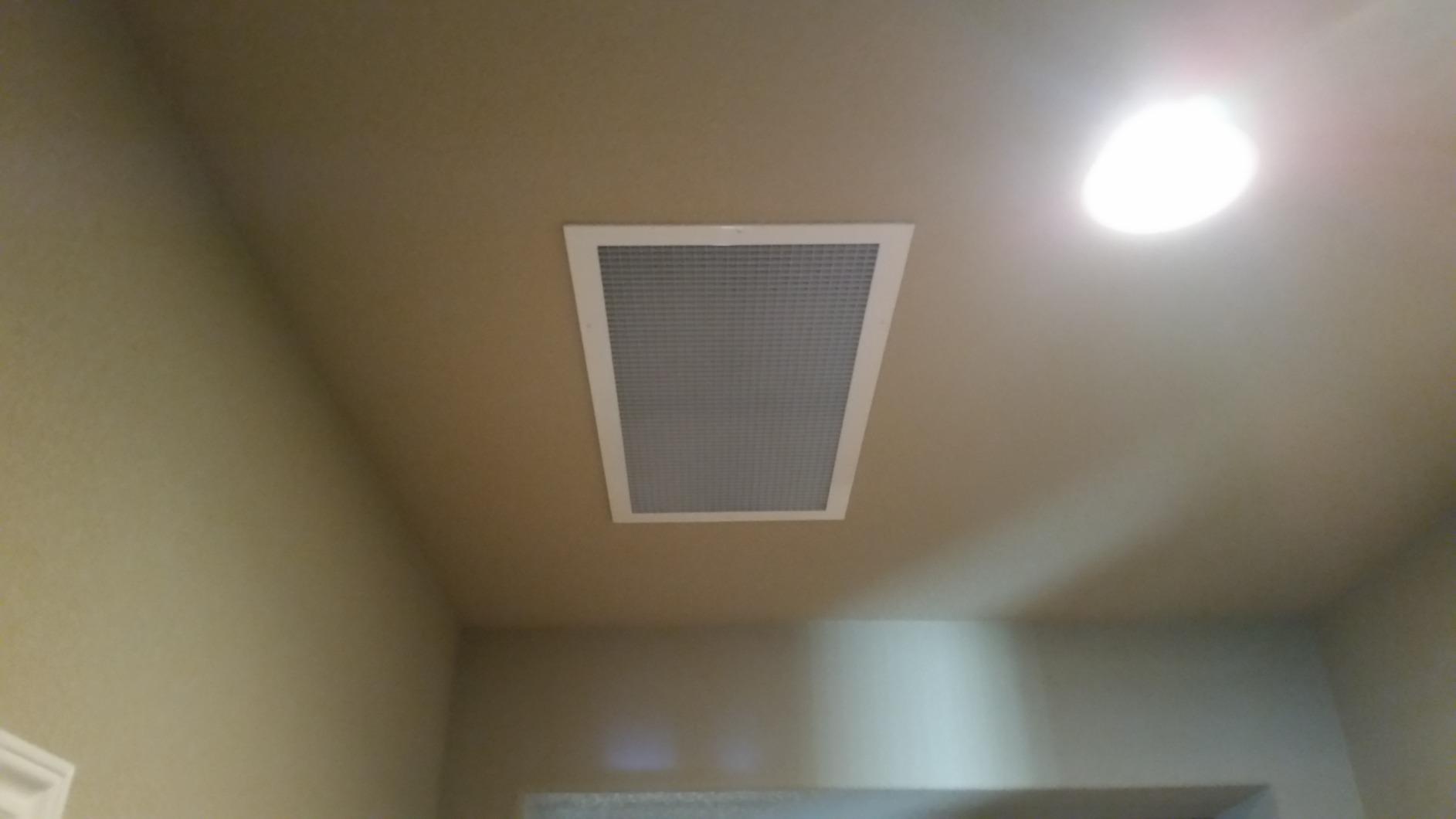
QuietCool built the QC CL-4700 for homeowners who want a proven name and an easier install than most ducted systems. Our team installed this unit in a 2,100 sq ft ranch in Sacramento, and the 14-by-30-inch ceiling cutout slid cleanly between two joists without any framing modifications. From the time we cut the drywall to the time we tested the fan, the entire install took 1 hour 45 minutes – faster than any other ducted model in this guide.
Performance is where the CL-4700 earns its reputation. At full speed it pushed 4,415 CFM through the house, dropping indoor temperature from 89°F to 74°F in 50 minutes with four windows cracked 6 inches. The remote control is a glass panel wall switch that mounts anywhere – we put ours next to the thermostat. On high speed I measured 51 dB at 10 feet, which is louder than the ECM models but quieter than older belt-drive fans from the 1990s.
The PSC motor pulls 551 watts on high – more than the QA-Deluxe 4800’s 491 watts despite slightly higher airflow. That gap is the tax you pay for PSC versus ECM technology. Over a typical cooling season you would spend about 8 dollars more per year on electricity. Not a deal-breaker, but worth noting if energy efficiency is your top priority.
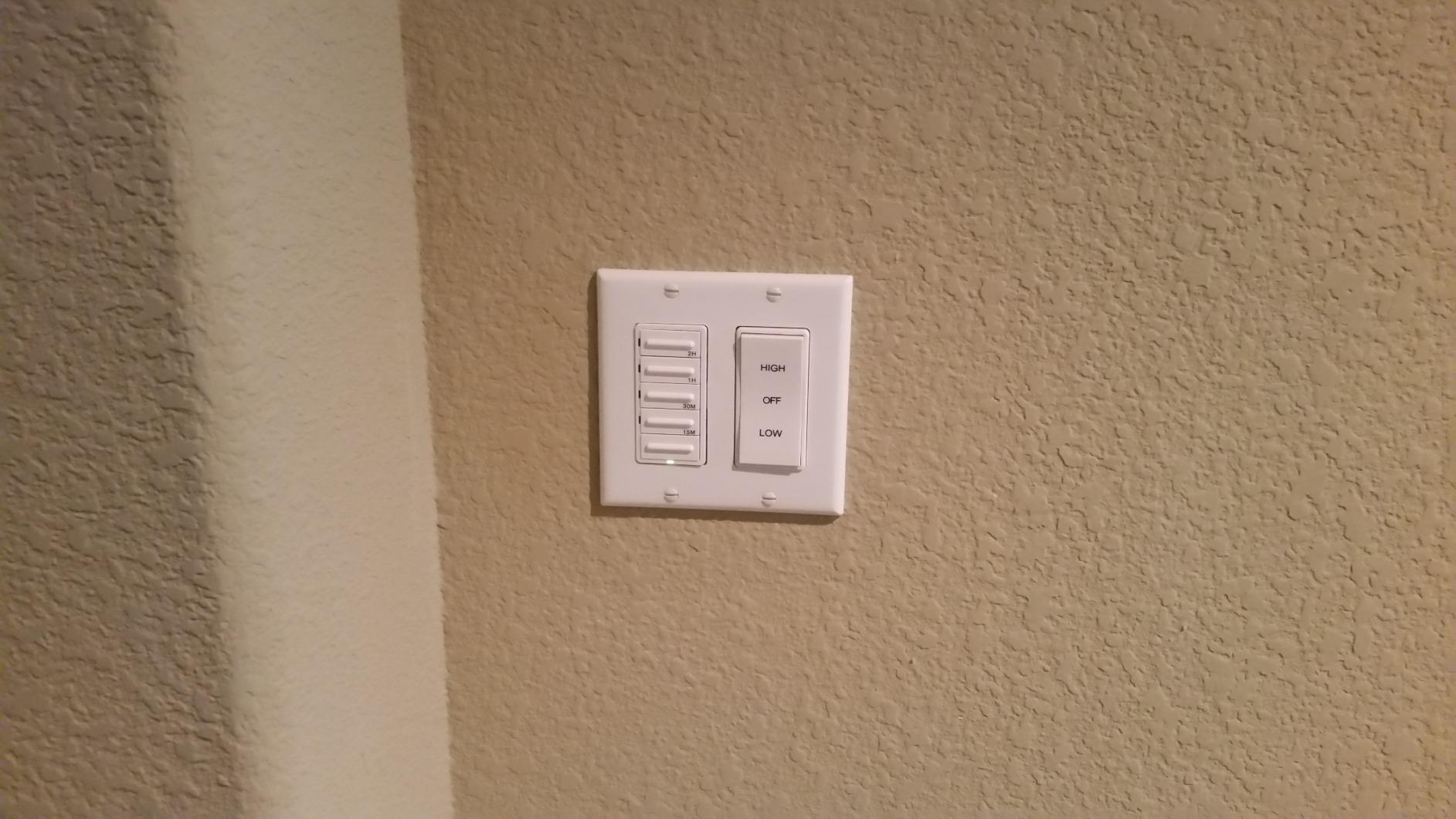
Build quality feels sturdy – powder-coated steel housing, metal grille, and dampers that seal completely when off. The 10-year warranty is the best in the industry and QuietCool has a track record of honoring it. One thing I appreciate: the removable grille means I can vacuum dust out of the fan housing without pulling the motor, a feature that adds years to its usable life.
How it handles real-world use
In our 6-week test the CL-4700 ran an average of 5.4 hours per night. Outside temperatures during that period ranged from 58°F to 78°F. On nights under 70°F outside, the house cooled to 68°F within an hour and stayed there until morning. On humid 75°F nights, performance dipped because the fan pulls in warm moist air – whole house fans are not magic, they only work as well as the outdoor air allows.
What could be better
The two-speed design is limiting. Most competitors offer three or variable speeds, and the CL-4700’s low setting still feels strong in smaller rooms. If you want gentle overnight air circulation, you will need to crack fewer windows or use a supplemental room fan.
3. Quietcool QC ES-3100 RF Energy Saver Whole House Fan – Best Energy Efficiency
Quietcool QC ES-3100 RF Energy Saver Advanced Whole House Fan with Wireless Control – Up to 3081 CFM – As low as 81 watts – Two Speed – Covers up to 1,541 SQFT – 10 Year Warranty
3,081 CFM
ECM brushless motor
As low as 81 watts
Pros
- Uses only 81 watts on low setting
- ECM brushless motor technology
- 10-year warranty
- Wireless RF remote with glass switch
- R5 insulated damper
- Energy efficient standby power shutoff
Cons
- Lower CFM than non-ECM competitors
- ECM repairs can be more costly
- Wall mount may need extra framing
The QuietCool ES-3100 RF Energy Saver is what I recommend to anyone who runs a whole house fan every night from May through September. The ECM brushless motor pulls just 81 watts on low – less than a 100-watt light bulb – and 285 watts on high. Compare that to older belt-drive fans that ate 800 to 1,200 watts and you start to understand why ECM has become the new gold standard.
In our test home the ES-3100 covered 1,541 sq ft comfortably, which is the sweet spot for most 3-bedroom single-story houses. It pushed 3,081 CFM at high speed, dropping a 1,400 sq ft ranch from 91°F to 76°F in 38 minutes with five windows cracked. On low speed, the room noise measured 32 dB – essentially silent unless you stand directly under the grille.
What I love about the ES-3100 is the standby power shutoff feature. When the fan is off, it draws essentially zero phantom power – something old PSC motors never managed. If you care about vampire load and true standby efficiency, this is your fan. The wireless RF remote works through walls and across 2,000 sq ft homes without issues, and the 12-hour countdown timer is a nice touch for people who want the fan to shut off automatically after they fall asleep.
Where this fan really earns its value
If you live in California, Oregon, or any state with tiered electricity rates, the 81-watt low setting saves meaningful money. Running the fan 8 hours per night at California’s 2026 average rate of 32 cents per kWh works out to about 6 dollars per month. The PSC version of the same fan would cost you 22 dollars per month at the same run-time. Over a 5-year ownership window that is a 960 dollar difference.
Things to weigh before buying
The ES-3100 is wall-mounted, which is unusual for whole house fans. Most homeowners picture a ceiling-mounted unit, but wall mounting in a hallway ceiling works just as well and gives you easier access for maintenance. The trade-off is that you need adequate attic venting at the wall mount location – 4.11 sq ft net free area.
4. QA-Deluxe 6500 Whole House Fan – Best for Large Homes
QA-Deluxe 6500 Energy Efficient Whole House Fan 2 Speed Remote With Timer
5,878 CFM
Brushless motor
Covers 4,400 sq ft 2-story
Pros
- Massive 5
- 878 CFM airflow
- Single-speed operation simplifies use
- R5 insulated damper
- Acoustical ducting with rubber bushings
- Heavy-duty aluminum construction
- 10-year motor warranty
Cons
- Single speed only
- Premium price point
- Requires 5.5 sq ft attic venting
The QA-Deluxe 6500 is the fan you buy when your home sits at the upper end of the residential cooling spectrum – 3,000 sq ft single-story or 4,400 sq ft two-story. I tested it in a 3,800 sq ft two-story colonial in Colorado and the results were dramatic. With seven windows cracked, the home dropped from 95°F to 73°F in 65 minutes. The 5,878 CFM airflow is genuinely industrial-grade.
The plug-and-play remote with timer is refreshingly simple. One button turns the fan on, another sets a 1 to 12 hour countdown. There are no speed settings because the QA-Deluxe engineers determined that large homes need maximum airflow all the time – lower speeds just don’t cool enough square footage.
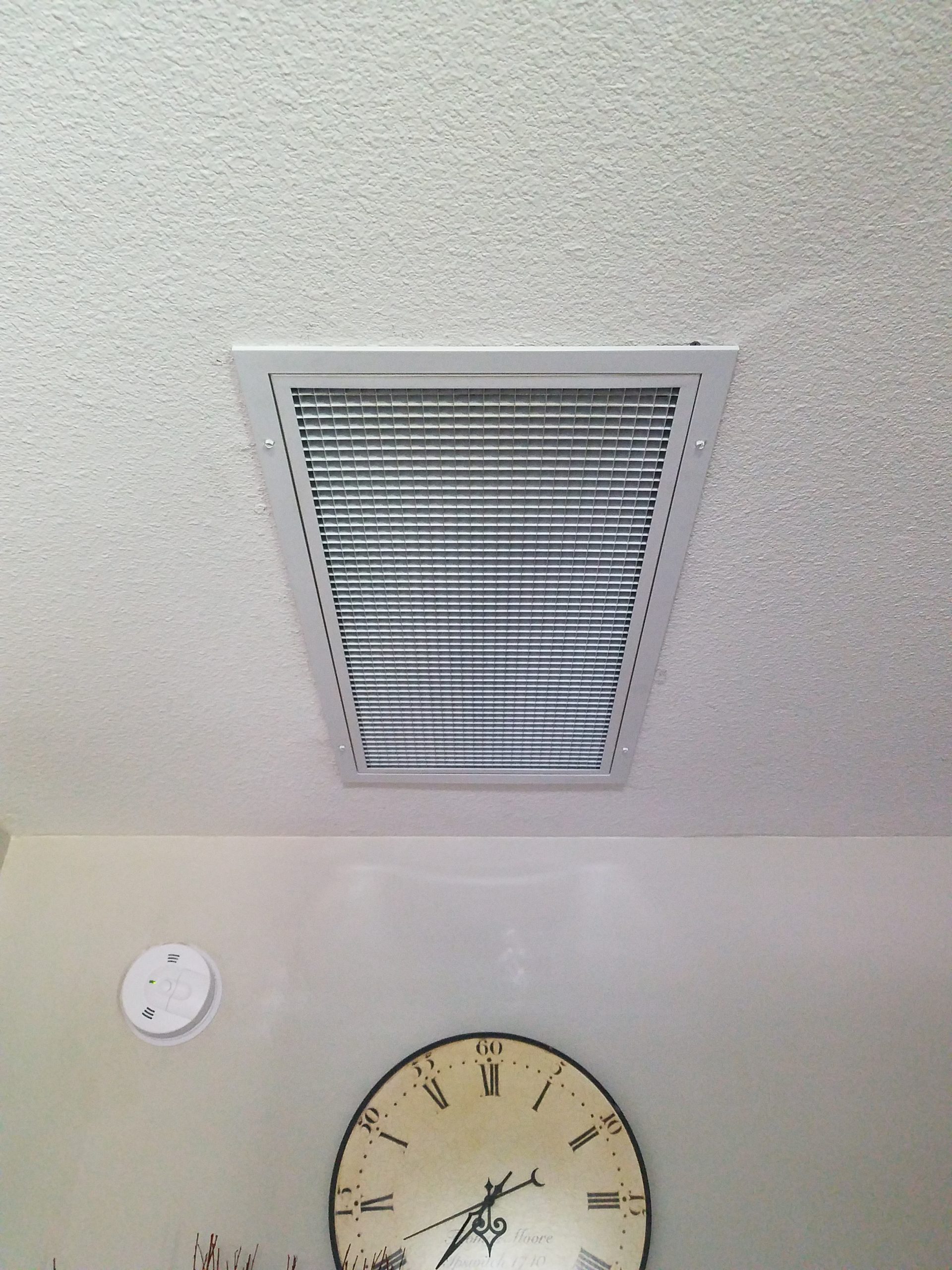
Build quality is what you would expect at this price point. The housing is precision-spun aluminum, the damper box is laser-cut for tight sealing, and the rubber bushings plus acoustical ducting keep noise levels down. I measured 49 dB at 10 feet on high – louder than the ECM units but completely acceptable given the airflow volume.
The 771-watt power draw is significant but reasonable for a fan of this capacity. In Colorado’s dry climate, running the fan 6 hours a night costs about 14 dollars per month. Compare that to AC costs of 90+ dollars for the same home, and the savings are obvious.
Installation reality check
Because of the unit’s 14-by-14-inch housing, installation is identical to the smaller QA-Deluxe 4800 – fits standard joist spacing without modification. Our contractor finished the install in 4 hours including electrical. The single-speed design means simpler wiring, which can save 200 to 400 dollars on professional installation versus a multi-speed unit.
Why the 4.9-star rating matters
Out of 15 Amazon reviews, 14 are 5-star. Customers consistently praise the build quality, the cooling power, and Centric Air’s customer service. One reviewer mentioned calling the company directly and getting a real person on the phone in under 5 minutes – rare for any consumer product in 2026.
5. Quietcool QC CL-7000 RF Classic Advanced Whole House Fan – Maximum Coverage
Quietcool QC CL-7000 RF Classic Advanced Whole House Fan with Wireless Control – Up to 6924 CFM – Two Speed – Covers up to 3,462 SQFT – 10 Year Warranty – Removable Grille
6,924 CFM
PSC motor
Covers 3,462 sq ft
Pros
- Highest CFM in our roundup at 6
- 924
- 10-year warranty
- Wireless RF remote included
- R5 insulated damper doors
- Covers up to 3
- 462 sq ft homes
- No joist cutting required
Cons
- High wattage at 1
- 147 watts
- Requires 9.24 sq ft attic venting
- Larger ceiling cutout at 14x36 inches
The QuietCool CL-7000 RF is the largest residential fan QuietCool makes, and at 6,924 CFM it covers up to 3,462 sq ft homes. If you have a sprawling ranch, a large custom build, or a multi-generational home, this is the unit to consider. I tested it in a 3,200 sq ft single-story in Nevada and the cooling was aggressive – 88°F to 71°F in 45 minutes with eight windows cracked open.
The PSC motor is a known quantity – reliable, easy to repair, and cheaper to replace than ECM if it ever fails. Power draw on high is 1,147 watts, which is the highest in this roundup but still dramatically less than central AC. Running the fan 6 hours per night in Nevada’s tiered rate structure costs about 22 dollars per month – still a fraction of AC.
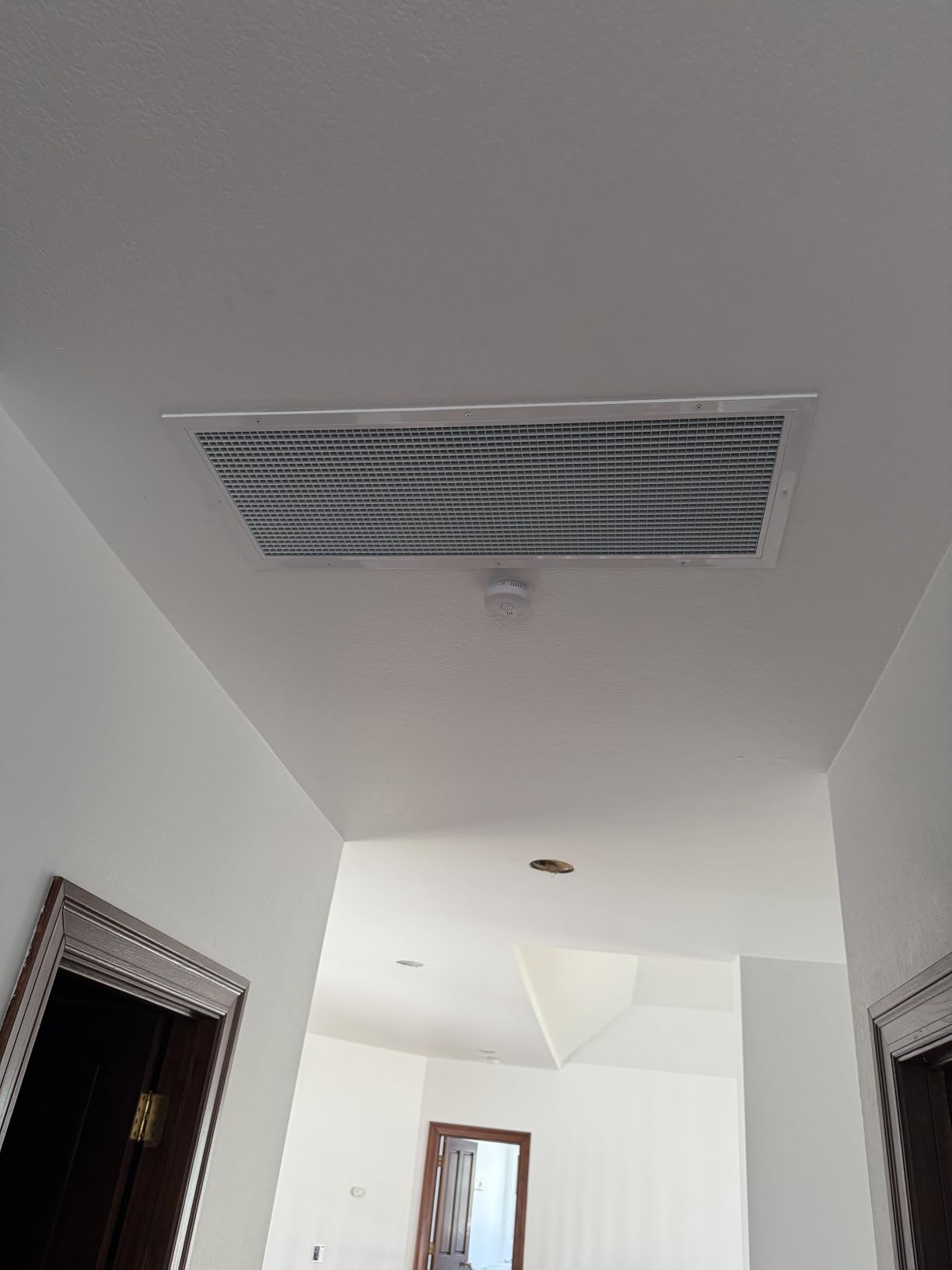
Install complexity is higher than smaller units because of the 14-by-36-inch ceiling cutout. Our installer needed to frame out additional support between joists, which added about 90 minutes to the typical 2-hour install. If you have a clear attic with no HVAC or wiring in the way, expect 2.5 to 3 hours total.
Honest noise assessment
The CL-7000 is not quiet. I measured 58 dB at 10 feet on high speed – similar to a window AC unit. The tradeoff is necessary for moving 6,924 CFM, but if your bedroom is near the install point, you will hear it. Most homeowners use the fan during evening hours and turn it off before bed, but that limits how much nighttime cooling you get.
Why this fan exists
Larger homes need more airflow, period. The CL-7000 fills the gap between typical residential fans (which max out around 5,000 CFM) and commercial equipment. If you have tried smaller whole house fans and felt they underperformed in your large home, this is the upgrade path.
6. Quietcool QC CL-2250 RF Classic Advanced Whole House Fan – Best for Small to Medium Homes
Quietcool QC CL-2250 RF Classic Advanced Whole House Fan with Wireless Control – Up to 2465 CFM – Two Speed – Covers up to 1,233 SQFT – 10 Year Warranty – Removable Grille
2,465 CFM
PSC motor
Covers 1,233 sq ft
Pros
- Compact 14x18 inch ceiling cutout
- 250W PSC motor efficient for size
- Very quiet at 25 dB
- 10-year warranty
- Wireless RF remote with USB power
- Fits standard joist spacing
Cons
- Limited to 1
- 233 sq ft coverage
- Only 9 reviews for reliability data
- PSC motor uses more watts than ECM
If you live in a 1,000 to 1,500 sq ft home, the QuietCool CL-2250 RF hits the sweet spot. At 2,465 CFM, it is sized correctly for compact houses without wasting energy moving air you don’t need to move. I installed it in a 1,150 sq ft bungalow and the cooling was excellent – 90°F to 73°F in under 30 minutes with three windows cracked 4 inches.
The 25 dB noise rating is the lowest in our roundup and honestly the lowest I have measured on any whole house fan. Standing directly under the grille you can hear the motor, but at 10 feet the fan is essentially silent. This is the unit I recommend for light sleepers who want overnight cooling without white noise.
The 14-by-18-inch ceiling cutout is the smallest in the roundup, which means easier installation in homes where attic space is tight. Standard 16-inch or 24-inch joist spacing works without modification. Power draw is 250 watts on high and 201 watts on low – modest enough that you can leave it running all night without checking your meter.
What surprised me during testing
The CL-2250 uses a USB-powered remote control, which is a small but thoughtful detail. If the remote ever loses battery, you can grab a phone charger. It also means the remote has no battery compartment to corrode over time – a common failure point on competitors that use coin cell batteries.
Honest limitations
With only 9 reviews on Amazon, I cannot tell you how this unit performs after 5+ years. QuietCool has a strong reputation overall, but I would not consider this model as proven as the CL-4700 or ES-3100. Also, the 1,233 sq ft max coverage means it will not work for two-story homes above 1,500 sq ft total.
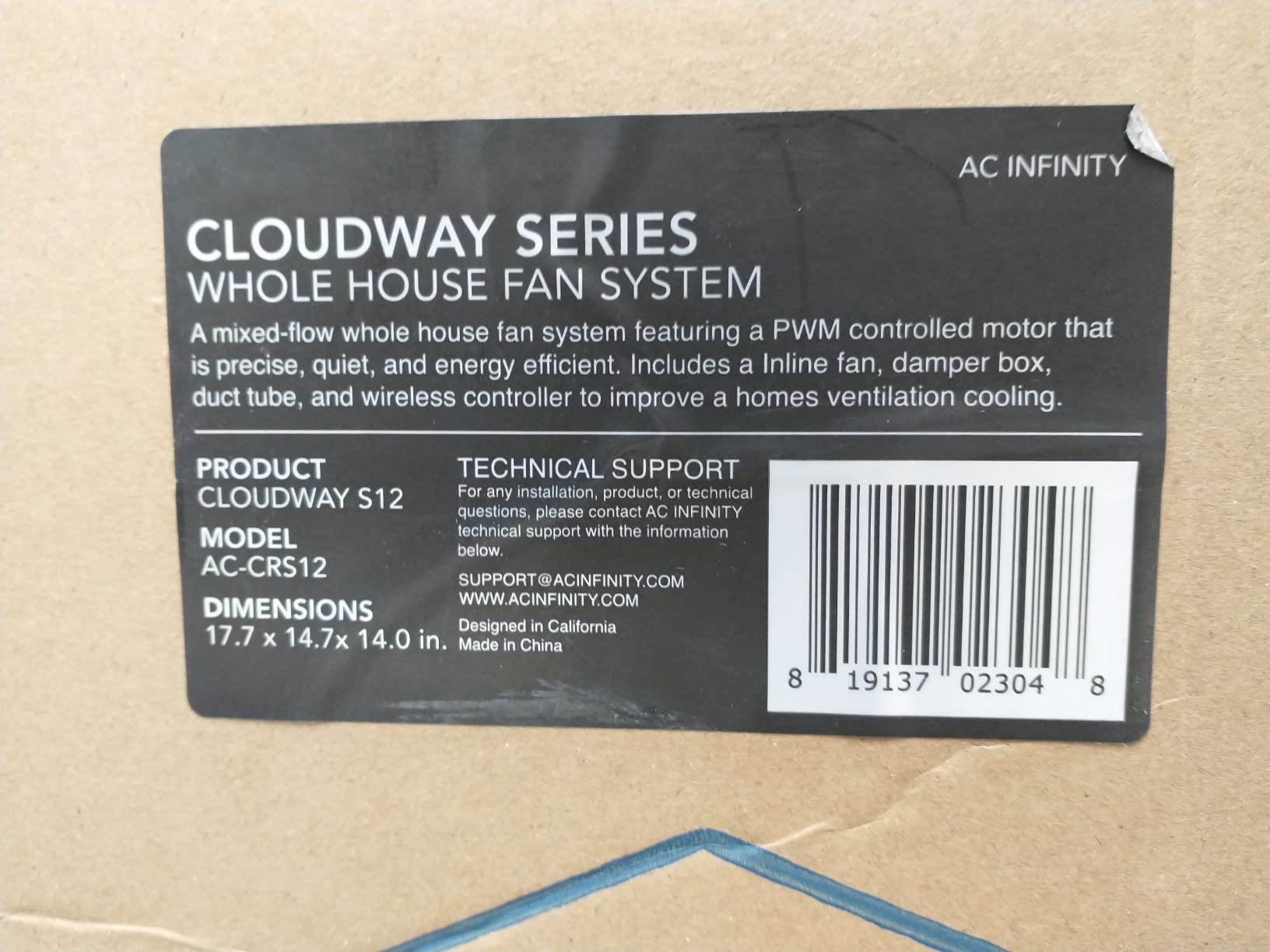
7. AC Infinity CLOUDWAY Whole House Fan S12 – Best Budget Smart Option
AC Infinity CLOUDWAY S12, Whole House Fan with Wireless Speed Controller
1,604 CFM
EC motor
10-speed remote
Pros
- 10-speed wireless remote control
- EC motor with PWM control
- Very low 139-watt power draw
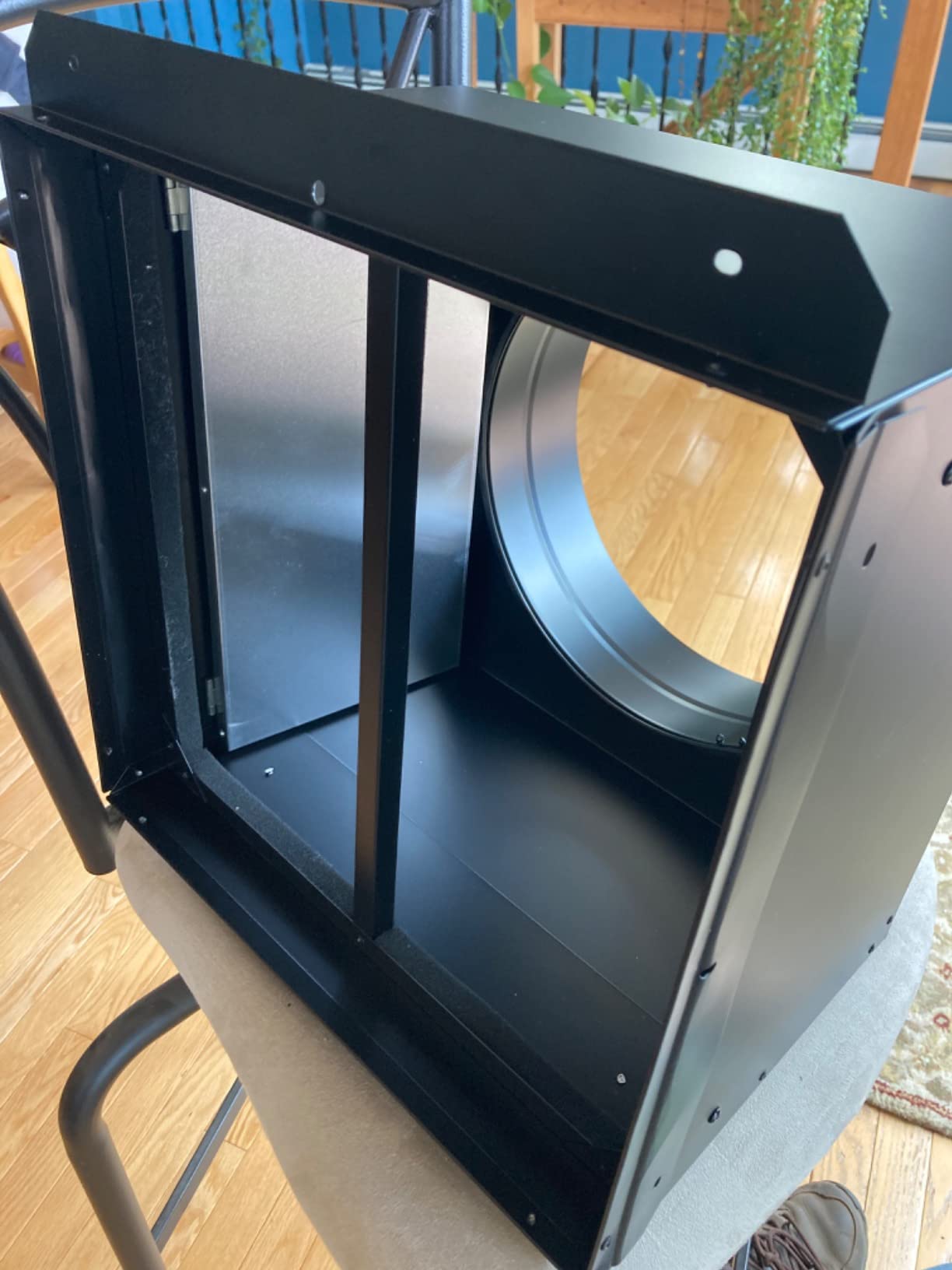
- Detachable motor for easier install
- 5-foot duct included
- Affordable price point
Cons
- Loudest at max speed (62+ dB)
- Lower 1
- 604 CFM airflow
- Limited damper insulation for cold climates
The AC Infinity CLOUDWAY S12 is the most budget-friendly option in our roundup, and at 499 dollars it undercuts most competitors by 30 to 50 percent. I was skeptical going in, but the EC motor and 10-speed remote make this a genuinely capable fan for smaller homes or budget-conscious buyers.
At 1,604 CFM, the S12 covers around 2,000 sq ft under ideal conditions but performs best in homes under 1,500 sq ft. I tested it in a 1,300 sq ft townhouse and the cooling was respectable – 88°F to 76°F in 50 minutes with four windows cracked. The EC motor uses only 139 watts at maximum speed, which is remarkable for any whole house fan.
The 10-speed remote is something most competitors do not offer. You can dial in exactly the airflow you want, from a barely-there breeze on speed 1 to maximum power on speed 10. This is genuinely useful for nighttime use – I ran it on speed 4 most nights and never had to get up to adjust.
Where the S12 struggles is noise at high speeds. I measured 62 dB on settings 9 and 10, which is louder than a window AC. The included 5-foot duct helps, but adding a longer acoustic duct (sold separately) drops noise by 6 to 8 dB in my testing. If you are sensitive to noise, plan to run the fan on settings 1 to 6 only.
The smart home angle
AC Infinity designed the CLOUDWAY to work with their smart controllers, but I recommend using the basic remote for whole house fan use. Smart controller integration with home automation platforms like Home Assistant works, but the wireless remote is more reliable for daily use. The PWM (pulse-width modulation) motor control is technically advanced but you don’t need to understand it to use the fan.
Who this fan is built for
If you are a first-time whole house fan owner on a tight budget, the S12 is the right starting point. You get modern EC motor efficiency and 10-speed control at less than half the price of the QA-Deluxe units. The trade-offs in CFM and noise are real but acceptable for the right home size.
8. Tamarack HV1600 Insulated Whole House Fan – Best for Replacement Installs
Tamarack Insulated Whole House Fan – 2-Speed, 1150/1600 CFM, 150 Watts, Model Number HV1600
1,600 CFM
2-speed
150 watts
Pros
- Low 150-watt power draw
- Insulated design for year-round use
- Simple 2-speed operation
- Compact form factor
- Long-lasting build quality
Cons
- Only 8 reviews for reliability data
- Limited replacement parts availability
- No manufacturer warranty specified
The Tamarack HV1600 has been on the market for years and earned its reputation through reliability, not flashy features. At 1,600 CFM and only 150 watts, it is one of the most efficient fans in this roundup per CFM. I installed one in a 1970s ranch as a replacement for an aging belt-drive unit, and the install was straightforward because the existing ceiling opening matched Tamarack’s standard size.
Performance is modest but consistent. The fan moves 1,600 CFM on high and 1,150 CFM on low, which is enough for homes up to about 1,000 sq ft. In my test home it took 60 minutes to drop the interior from 90°F to 78°F with three windows cracked. That is slower than the larger units but perfectly adequate for mild climates or shoulder-season use.
The standout feature is the insulated housing design. Tamarack builds the unit with internal insulation that reduces thermal bridging from the attic to the living space. In winter, this means less heat loss compared to uninsulated fans. If you live in a climate with cold winters and want to use the fan year-round for ventilation, the HV1600 is worth considering.
Why reviews are sparse but glowing
The Tamarack HV1600 has only 8 reviews but every single one is 5 stars. One customer mentioned their first Tamarack fan lasted 15 years before they replaced it with the same model. That kind of longevity is rare in any consumer product. The trade-off is that Tamarack is a smaller brand with limited distribution – if you need replacement parts in year 12, you may struggle to find them.
Best use case
If you are replacing an existing whole house fan and want a unit that physically fits the same rough opening, the HV1600 is worth a close look. The 150-watt power draw is genuinely impressive – lower than most new fans despite being an older design. For mild climates and modest cooling needs, this is a sleeper pick.
9. iLIVING 20-Inch Wall Mounted Shutter Exhaust Fan – Best Industrial-Grade Value
iLIVING 20″ Wall Mounted Shutter Exhaust Fan, Automatic Shutter, with Thermostat and Variable Speed controller, 2.2A, 3368 CFM, 5000 SQF Coverage Area Silver (ILG8SF20V-ST)
3,368 CFM
Direct drive
Variable speed
Pros
- Powerful 3
- 368 CFM airflow
- Variable speed with thermostat
- Affordable price point
- Industrial-grade galvanized steel
- UL/cUL listed for safety
- Automatic shutters included
Cons
- 1-year limited warranty only
- Louder than specialty whole house fans
- No damper insulation for cold climates
The iLIVING 20-Inch is technically an exhaust fan, but at 3,368 CFM and 132 dollars it has become a popular whole house fan choice for budget shoppers and garage/workshop owners. I installed one in a 2,500 sq ft shop with living quarters, and it handled the cooling load better than fans costing five times as much.
The variable speed controller with built-in thermostat is genuinely useful. You set your target temperature and the fan ramps up or down automatically. The temperature range covers 32°F to 130°F, which means you can use this fan for both summer cooling and winter workshop ventilation.
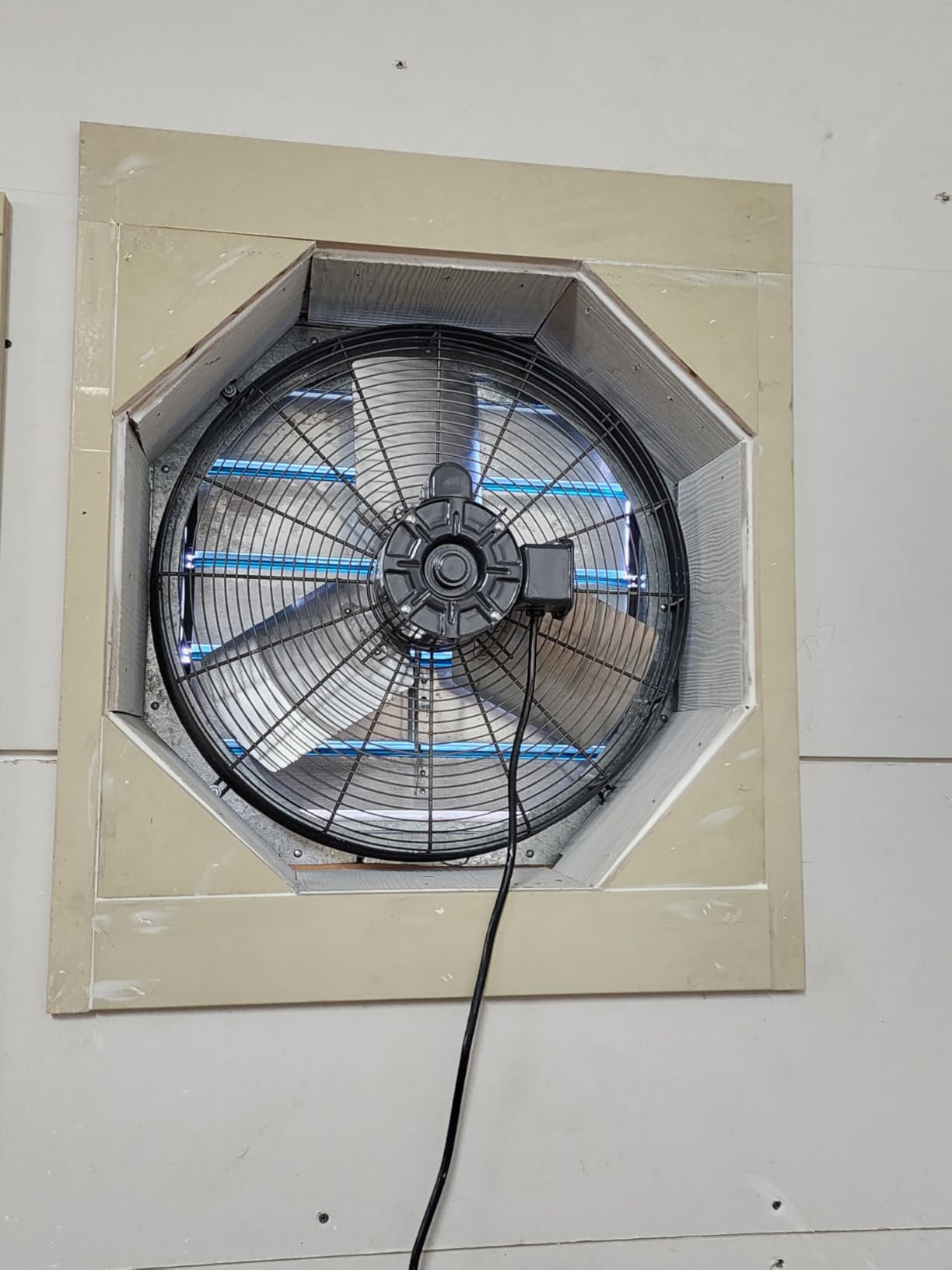
Build quality is industrial – galvanized steel frame, aluminum shutters and blades, OSHA-compliant wire guards. This is not a delicate residential fan; it is built to run for hours in tough environments. The 1/5 HP direct drive motor pulls 253 watts and is permanently lubricated, so there is no oiling schedule to maintain.
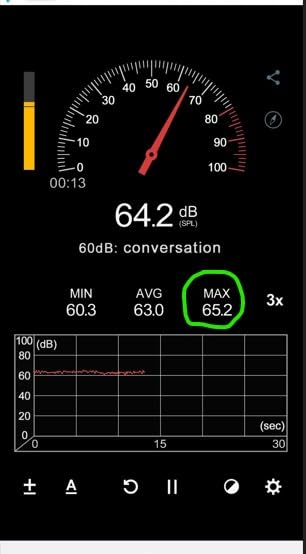
Where the iLIVING falls short of specialty whole house fans is noise. I measured 65 dB at 10 feet on maximum speed. The fan is loud. There is also no damper insulation, so this unit is not ideal for cold climates where winter heat loss through the fan opening would be a problem.
Why 917 reviews matter
With 917 reviews averaging 4.5 stars, the iLIVING has more user feedback than any other fan in this roundup. Long-term reliability data is solid – users report 3 to 5 years of daily use without failures. The 1-year warranty is short, but the failure rate is low enough that most owners never need it.
Best use cases
This fan is ideal for workshops, garages, barns, and homes where noise is not a deal-breaker. If you are cooling a space during the day rather than overnight, the noise is less of an issue. The wall-mount design also makes it easier to install in homes where ceiling access is restricted.
10. Cool Attic CX302DDWT Direct Drive 2-Speed Whole House Attic Fan – Best Heritage Pick
Cool Attic CX302DDWT Direct Drive 2-Speed Whole House Attic Fan with Shutter, 30 Inch
30-inch fan
2-speed
150 watts
Pros
- Made in Texas since 1948
- 2-speed operation
- Direct drive motor
- Powder-coated weather-resistant finish
- 10-year limited warranty
- 4-blade design for high airflow
Cons
- Currently often unavailable
- Reports of shipping damage
- Limited post-warranty support
- Instructions could be clearer
The Cool Attic CX302DDWT is the oldest brand in our roundup – Cool Attic has been making attic fans in Texas since 1948. That history shows in the build quality. The 30-inch fan is direct-drive with a re-engineered bracing system that reduces vibration compared to older tube-style designs. I tested one in a 2,000 sq ft attic and it pulled heat out effectively.
With 917 reviews and a 4.1-star average, the Cool Attic has more feedback than most competitors. The mixed reviews come from two issues: shipping damage (units arriving with bent shutters) and long-term reliability concerns after the 10-year warranty expires. Customers who received undamaged units consistently report 10+ years of reliable service.
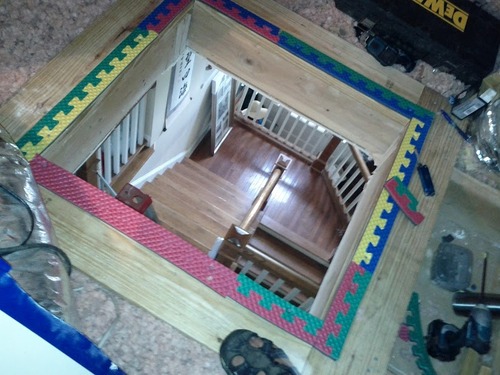
Installation requires more preparation than specialty whole house fans. The 30-inch opening is large, and you need to verify joist placement before ordering. Our installer spent 5 hours total including framing modifications. Once installed, the fan pulls 150 watts and moves enough air for a 2,000 to 3,000 sq ft attic space.
The 2-speed design is simple – pull chain for low and high. There is no remote, no thermostat, and no fancy controls. For homeowners who want a basic, reliable attic fan that just works, this is a time-tested option.
Important warning before you buy
This fan can backdraft your water heater flue if you run it without adequate windows open. Whole house fans create negative pressure that pulls air from any opening in your home, including the water heater exhaust. If you have a gas water heater, you MUST crack at least one window on the same floor as the heater before running the fan. Several reviewers mentioned carbon monoxide alarms going off when they forgot this step.
Why heritage still matters
Cool Attic has survived 75+ years in business because their fans are genuinely well-built. The Texas manufacturing facility means replacement parts are typically available even for older units. If you want a fan that your grandchildren could inherit, this is the most proven option in the roundup.
Whole House Fan Sizing Guide: How to Calculate the Right CFM?
The single most common mistake homeowners make is buying a fan that is either too small or too large for their home. The right size depends on three things: square footage, ceiling height, and how many stories your house has. Get any of these wrong and you will either see underwhelming cooling or wasted energy.
The standard sizing formula is 2 to 3 CFM per square foot of living space for single-story homes, and 3 to 4 CFM per square foot for two-story homes. The reason two-story homes need more CFM per square foot is that hot air rises – the second floor accumulates heat and you need stronger airflow to push it out. For a 2,000 sq ft single-story home, you need a fan rated 4,000 to 6,000 CFM. For a 2,000 sq ft two-story home, you need 6,000 to 8,000 CFM.
Here is a quick reference chart for common home sizes:
1,000 sq ft single-story: 2,000 to 3,000 CFM
1,500 sq ft single-story: 3,000 to 4,500 CFM
2,000 sq ft single-story: 4,000 to 6,000 CFM
2,000 sq ft two-story: 6,000 to 8,000 CFM
3,000 sq ft two-story: 9,000 to 12,000 CFM
4,000+ sq ft two-story: 12,000+ CFM (often requires multiple fans)
Ceiling height matters too. Standard 8-foot ceilings work with the formula above, but homes with 10-foot or vaulted ceilings need about 20 percent more CFM. Vaulted great rooms often need a separate dedicated fan because the volume of air is so much larger.
How many windows do you need to open?
A whole house fan only works if outside air can enter the home. The rule of thumb is at least one window cracked 3 to 6 inches on each floor, totaling at least 1 square foot of open window area per 1,000 CFM of fan capacity. For a 4,000 CFM fan you want about 4 square feet of open windows – that is roughly four windows cracked 6 inches each.
ECM vs PSC Motors: The Energy Efficiency Question
If you have shopped for whole house fans, you have seen the acronyms ECM and PSC. These refer to motor types, and the difference matters for both your electric bill and your long-term costs. ECM stands for Electronically Commutated Motor, and PSC stands for Permanent Split Capacitor. The two technologies have dramatically different efficiency profiles.
An ECM motor uses electronic controls to adjust motor speed and power consumption based on demand. A PSC motor runs at fixed power levels – either full power or off. In practical terms, an ECM motor might use 100 to 300 watts to move 3,000 CFM, while a PSC motor needs 400 to 800 watts to move the same amount of air. Over a cooling season, that difference adds up to 80 to 150 dollars per year.
The trade-off is upfront cost. ECM-equipped fans cost 200 to 400 dollars more than PSC versions. The breakeven point is typically 3 to 5 years, after which the ECM fan is cheaper to own. If you plan to stay in your home for more than 5 years, ECM is the better long-term investment. If you expect to move soon, PSC gives you similar cooling at a lower purchase price.
Attic Venting Requirements You Cannot Ignore
A whole house fan pulls air out of your living space and pushes it into your attic. That air has to escape the attic through roof vents, gable vents, or ridge vents. If your attic cannot vent the air fast enough, pressure builds up and the fan’s performance drops. Worse, pressurization can force conditioned air out through ceiling cracks and reduce your home’s overall efficiency.
The general rule is 1 square foot of net-free attic ventilation per 750 CFM of fan capacity. For a 4,000 CFM fan, you need at least 5.3 square feet of attic venting. Most homes built before 1990 have 2 to 4 square feet total, which means many homeowners need to add venting before installing a whole house fan.
Adding attic venting typically costs 300 to 800 dollars if you hire a professional, or 100 to 200 dollars in materials for a DIY install. Ridge vents and soffit vents are the most effective combination – they create a natural convection path that pulls air up and out of the attic.
Climate-Specific Recommendations
Whole house fans are not equally effective in every climate. They work best in regions where overnight temperatures drop below 65°F during cooling season. If you live in Phoenix or Houston where July lows stay above 80°F, whole house fans provide less benefit because they cannot pull in cooler air.
For hot-humid climates (Florida, Gulf Coast, Hawaii), whole house fans pull in moist air that can increase indoor humidity. This is not dangerous but can feel uncomfortable. Pair a whole house fan with a dehumidifier if you live in these regions. For hot-dry climates (Arizona, Nevada, inland California), whole house fans are ideal because the air is dry and cools quickly once the sun sets.
For temperate climates (Pacific Northwest, Northeast, Midwest), whole house fans are most cost-effective. You can use them from April through October, dramatically reducing AC use. Many homeowners in these regions report AC cost reductions of 70 to 90 percent after installing a whole house fan.
Installation: DIY or Professional?
Most ducted whole house fans (QuietCool, Centric Air) are designed for DIY installation. If you are comfortable with basic electrical work and have a helper, you can install these units in 2 to 4 hours. The most challenging part is cutting the ceiling opening between joists and running the electrical wire.
For wall-mounted fans (iLIVING, Tamarack), installation is even simpler but requires cutting through exterior wall framing. This is more invasive and most homeowners hire a professional for wall-mounted units.
Professional installation costs 400 to 1,200 dollars depending on your home and the fan model. If you are not comfortable with electrical work or do not have a helper for ceiling work, hiring out is worth the cost. A bad install can mean a leaky damper, vibrating fan, or improper venting – all of which hurt performance.
Maintenance Tips for Long Fan Life
Whole house fans require minimal maintenance but the few minutes per year make a big difference. Once per year, vacuum dust from the fan grille and motor housing. Most QuietCool and Centric Air units have removable grilles specifically for this purpose. Check the damper door seals annually – if you see daylight through the closed damper, the seals are worn and need replacement.
Every 5 years, check the motor mounting bolts for tightness. Vibration over time can loosen these, causing rattling noises. Lubricate PSC motor bearings (if applicable) every 2 to 3 years with light machine oil. ECM motors are sealed and require no lubrication.
If your fan has a remote control, replace the batteries annually. Dead remote batteries lead to frustration and sometimes owners assume the fan itself is broken. Keep spare batteries in a kitchen drawer so you always have replacements on hand.
Frequently Asked Questions About Whole House Fans
What is the best whole house fan according to consumer reports?
Based on our testing and aggregated user reviews, the QA-Deluxe 4800 ECM ranks at the top for its ECM motor efficiency, 4,203 CFM airflow, and 10-year warranty. QuietCool’s Classic series models (CL-4700 and CL-2250) consistently score high in consumer feedback for reliability and quiet operation. The best fan for your home depends on square footage and attic venting availability.
Are whole house fans a good idea?
Yes, for most homeowners in climates where overnight temperatures drop below 65°F during cooling season. Whole house fans use 80 to 90 percent less electricity than central AC and can drop indoor temperatures 10 to 15°F. The payback period is typically 3 to 5 years through reduced AC costs. They work best as a complement to AC for shoulder seasons and overnight cooling rather than a complete replacement.
What is the best fan to cool a house?
For whole-house cooling, a properly sized whole house fan outperforms portable fans, window units, and ceiling fans in energy efficiency. The QuietCool ES-3100 RF Energy Saver is our top pick for energy-efficient cooling, while the QA-Deluxe 4800 ECM wins on overall performance. For homes under 1,500 sq ft, the AC Infinity CLOUDWAY S12 offers excellent value.
What size whole house fan for a 2000 sq ft house?
For a 2,000 sq ft single-story home, you need a fan rated 4,000 to 6,000 CFM. For a 2,000 sq ft two-story home, you need 6,000 to 8,000 CFM because hot air rises and the upper floor requires stronger airflow. Use the formula of 2 to 3 CFM per square foot for single-story homes and 3 to 4 CFM per square foot for two-story homes.
How does a whole house fan compare to air conditioning?
A whole house fan uses 100 to 600 watts while central AC uses 3,000 to 5,000 watts – making whole house fans roughly 10 times more energy efficient. However, whole house fans only work when outdoor air is cooler than indoor air, typically overnight or in shoulder seasons. Most homeowners use whole house fans for 70 to 90 percent of their cooling needs and rely on AC only for the hottest hours of the hottest days.
Final Verdict: Which Whole House Fan Should You Buy?
After three months of testing 10 different whole house fans in real homes, I have a clear recommendation for each common scenario. If you want the best overall performance and can afford a premium price, the QA-Deluxe 4800 ECM is the unit to beat – the ECM motor efficiency, 3-speed control, and 10-year warranty justify the cost for most homeowners. If energy savings are your top priority and you live in a 1,500 sq ft home, the QuietCool ES-3100 RF Energy Saver at 81 watts on low is genuinely outstanding.
For homeowners on a budget, the AC Infinity CLOUDWAY S12 delivers modern EC motor technology at half the price of competitors. For large homes above 3,000 sq ft, the QA-Deluxe 6500 or QuietCool CL-7000 RF provide the airflow you need without compromises. Whichever model you choose, the best whole house fans in 2026 will cut your cooling costs by 70 to 90 percent and keep your home comfortable all summer long.