
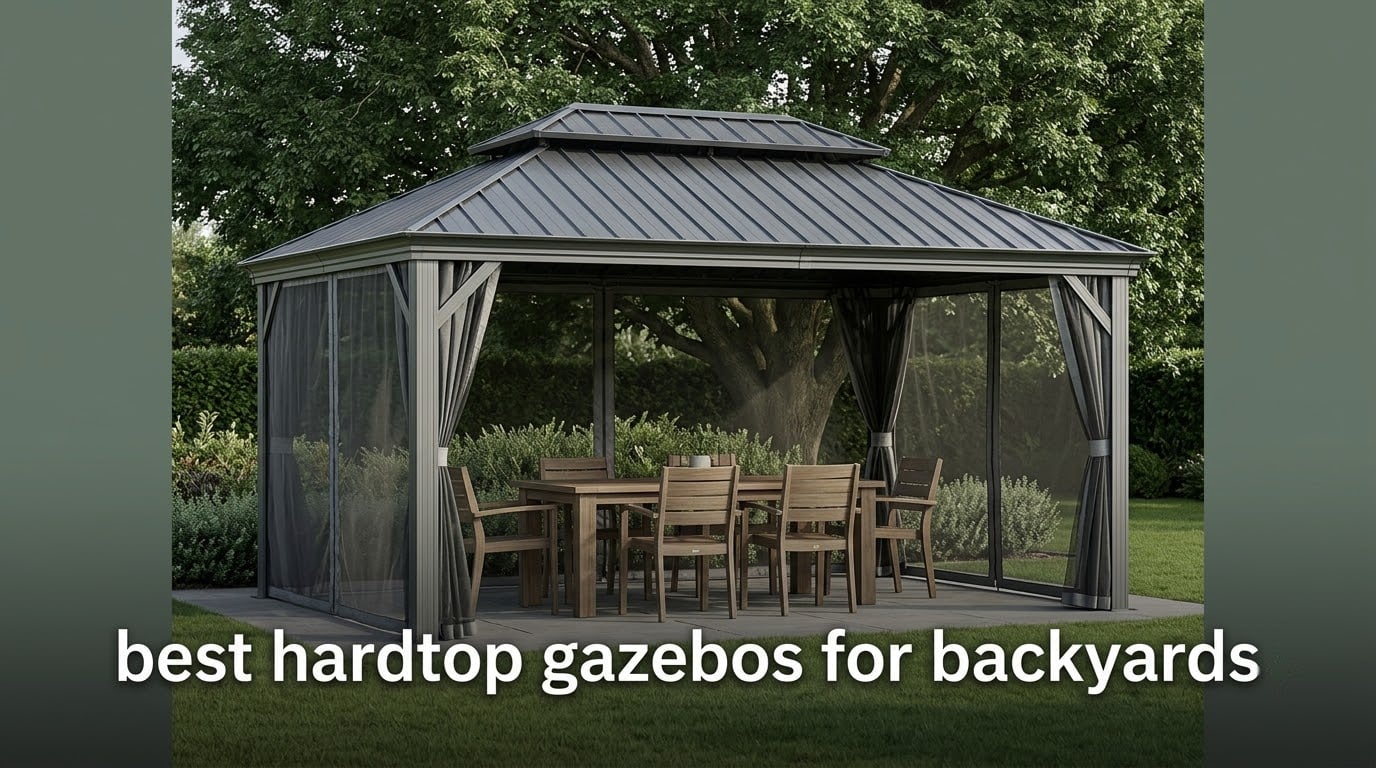
A hardtop gazebo is a permanent outdoor structure with a rigid metal or polycarbonate roof on an aluminum, galvanized steel, or wood frame. It gives a patio or backyard year-round shade, rain protection, and insect screening that a fabric canopy cannot, and it is built to be anchored down rather than taken down each winter.
We spent 2026 reading manufacturer specs and thousands of aggregated owner reviews across ten hardtop gazebos, and the ten below are the ones we would put on a real patio. If you are still narrowing the field, our broader backyard gazebo guide covers soft-tops and pop-ups too.
Two numbers decide most of these purchases before style ever enters the conversation. The first is wind rating in mph, because a 30 mph structure is fine in Kansas and a bad idea three states from the Gulf. The second is whether the included anchoring hardware suits your surface, because the included ground stakes are adequate for hard clay and inadequate for almost everything else. Owners on the r/HomeXpert thread we reviewed made the same point, matching each pick to climate and yard size rather than to a ranking.
One methodology note that we think matters. Every gazebo here carries a rating of 4.0 stars or higher and at least 100 owner ratings. We left out listings with no meaningful review history, unbranded generic models, and anything rated at zero, all of which show up in competing roundups and quietly cost readers money.
Top 3 Picks: Hardtop Gazebo Picks for Backyards in 2026

PURPLE LEAF 10×12 Aluminum Hardtop
- Aluminum frame with 4.7 inch posts
- Double vented galvanized steel roof
- Built-in gutter drainage
- 120 square feet

Kozyard Alexander 12×12 Hardtop
- 2500 lb snow load when anchored
- Up to 60 mph wind resistance
- 4.7 inch triangular aluminum posts
- 144 square feet
YITAHOME 12×14 Hardtop Gazebo
- Double galvanized steel roof
- Powder-coated aluminum frame
- Full curtains and mesh sidewalls
- 168 square feet
All 10 Best Hardtop Gazebos Compared Side by Side in 2026
| Product | Specifications | Action |
|---|---|---|
| PURPLE LEAF 10×12 Aluminum Hardtop Gazebo |
|
Check Latest Price |
| Kozyard Alexander 12×12 Hardtop Gazebo |
|
Check Latest Price |
 Domi 12×12 Hardtop Gazebo with Gutters Domi 12×12 Hardtop Gazebo with Gutters |
|
Check Latest Price |
 Modern Shade 10×12 Hardtop with 4 LED Lights Modern Shade 10×12 Hardtop with 4 LED Lights |
|
Check Latest Price |
 Domi 12×16 Aluminum Frame Hardtop Gazebo Domi 12×16 Aluminum Frame Hardtop Gazebo |
|
Check Latest Price |
 Jolydale 12×16 Polycarbonate Hardtop Gazebo Jolydale 12×16 Polycarbonate Hardtop Gazebo |
|
Check Latest Price |
 EROMMY 10×12 Aluminum and Steel Hardtop Gazebo EROMMY 10×12 Aluminum and Steel Hardtop Gazebo |
|
Check Latest Price |
 YOLENY 12×16 Hardtop Gazebo YOLENY 12×16 Hardtop Gazebo |
|
Check Latest Price |
| YITAHOME 12×14 Hardtop Gazebo |
|
Check Latest Price |
 Aoxun 12×10 Polycarbonate Hardtop Gazebo Aoxun 12×10 Polycarbonate Hardtop Gazebo |
|
Check Latest Price |
How We Picked These 10 Hardtop Gazebos
Every model here has a rating of 4.0 stars or better and at least 100 owner ratings behind it. That threshold alone removes several entries that appear in competing roundups, including an unbranded generic listing and a model shown with a zero rating.
From there we compared the specs that actually predict whether a gazebo survives a decade: frame material and post gauge, roof material, published wind and snow numbers, assembled weight, footprint, and warranty length. We weighted owner reports heavily, since specification sheets are written by the seller and long-term durability only shows up in reviews from people who have lived with the structure through several seasons.
1. PURPLE LEAF 10×12 Aluminum Hardtop Gazebo – Best Overall
PURPLE LEAF Permanent Hardtop Gazebo 10′ X 12′ Aluminum, Gray
120 sq ft
Aluminum frame with 4.7 inch posts
268 lb assembled
5-year top panel warranty
Pros
- Powder-coated aluminum frame with thick posts
- Double vented roof with built-in gutters
- Curtains and netting included
- Concrete anchoring hardware in the box
- Responsive support that supplies replacement parts
Cons
- Very long build often 14 to 20 hours
- Instructions are pictorial and easy to misread
- Interior gets hot on still days without a fan
The PURPLE LEAF 10×12 is the one we kept coming back to. It carries a 4.8 rating across more than 1,500 owner ratings, the strongest combination of score and review volume in the set, and the spec sheet backs up the reviews. The frame is powder-coated aluminum with 4.7 inch posts, the roof is a fade-resistant galvanized steel double top, and the whole thing weighs 268 pounds once assembled.
What separates it from the crowd is drainage. Water runs off the sloped roof into a gutter system and down through the frame poles rather than dripping off the eaves onto your patio table, which is the single most common complaint owners report about cheaper gazebos. The double vented roof also pushes hot air out of the peak, which is why most people add a fan anyway before summer.
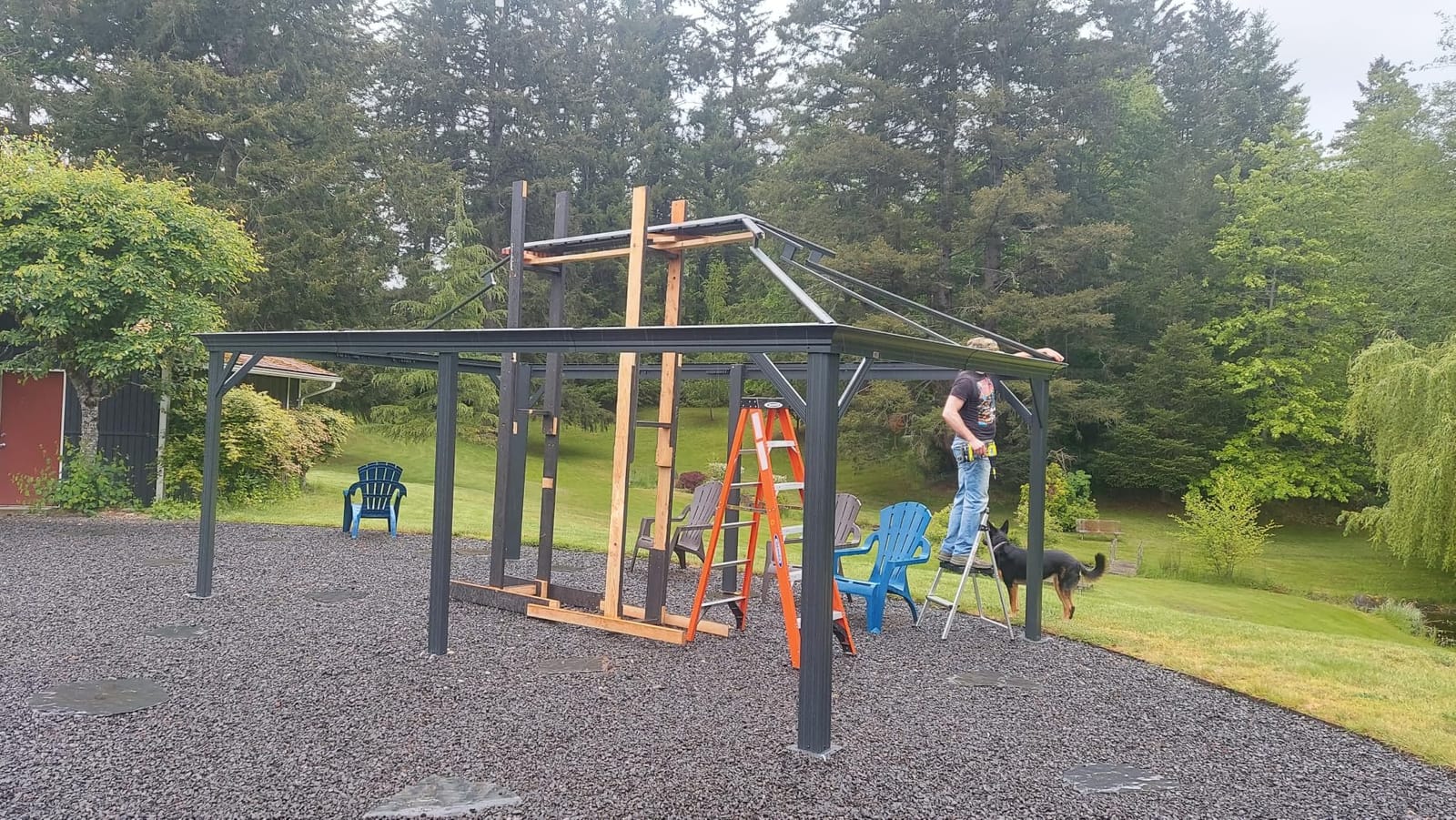
Owners consistently describe this as a sturdy, good-looking hardtop, with responsive support behind it. Several mention the same reality in the same breath: this is a long build. Reported times run 14 to 20 hours with two or three people, and a power driver rather than the supplied hex key makes a real difference. Leave every roof bolt loose until the frame is square, then tighten.
The warranty is layered rather than uniform, and it is worth reading before you buy. Coverage runs 5 years on the top panel and 1 year on the frame, with 2 years on the curtains and netting. That means the soft goods are the first thing to replace, which is normal, but the roof is genuinely covered for the part that costs the most to fix.
What you should check before ordering
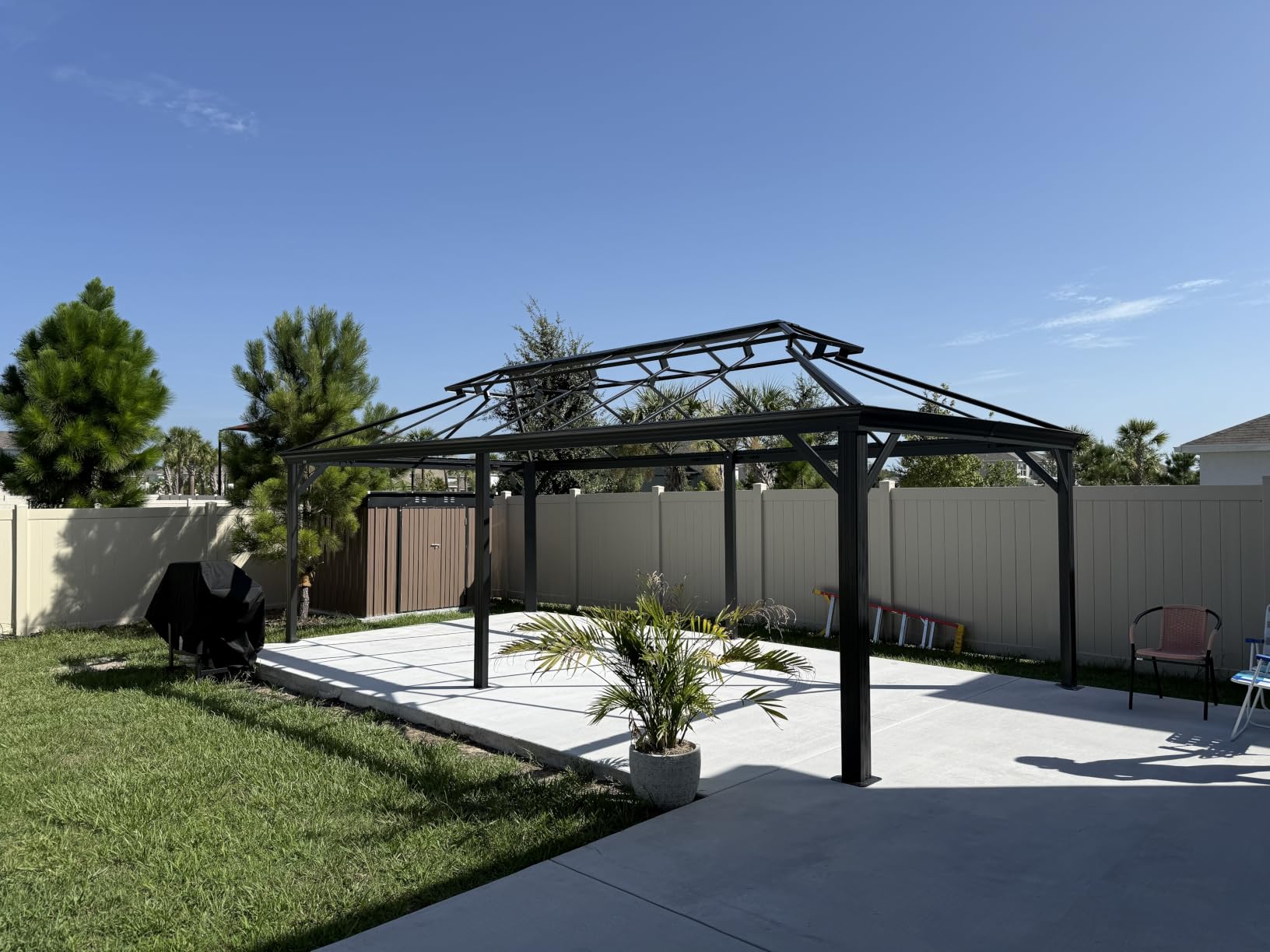
Measure your site with clearance in mind. At 143.7 by 118.1 inches assembled, you need roughly two feet of breathing room on every side to raise the frame and fit roof panels, and more if the ground slopes. Set it on a level slab or a set of concrete piers if you can, because the pre-drilled base feet are designed for a flat, prepared surface.
Read the drainage path on site. Water exits through the frame poles, so the base of each post needs to be clear of mulch and gravel. Owners who report pooling are usually talking about a post sitting in a garden bed that traps water, not a fault in the roof.
Who should skip it
Skip this model if you are only planning seasonal use and cannot commit to a permanent installation. A hardtop has to be anchored properly, so buyers who want something they can move twice a year should look at a soft-top instead.
Also reconsider if you are in a coastal zone with sustained high wind and cannot pour concrete or screw into a slab. The frame is strong, but a 268 pound structure on soft soil is exactly the combination owners regret after the first serious storm.
2. Kozyard Alexander 12×12 Hardtop Gazebo – Best for Snow and Wind
Kozyard Alexander 12′ x 12′ Hardtop Gazebo, Aluminum Frame
144 sq ft
4.7 inch triangular aluminum posts
2500 lb snow load anchored
Up to 60 mph wind resistance
Pros
- Heaviest build in the roundup at 397 lb
- 4.7 inch triangular posts and 5 inch beams
- 2500 lb snow load when properly anchored
- Integrated gutter system down the poles
- Dual-track curtains and netting included
Cons
- 397 lb needs a real crew and strong helpers
- Roof panel fitting needs two people on ladders
- Canvas instructions are confusing on bracket placement
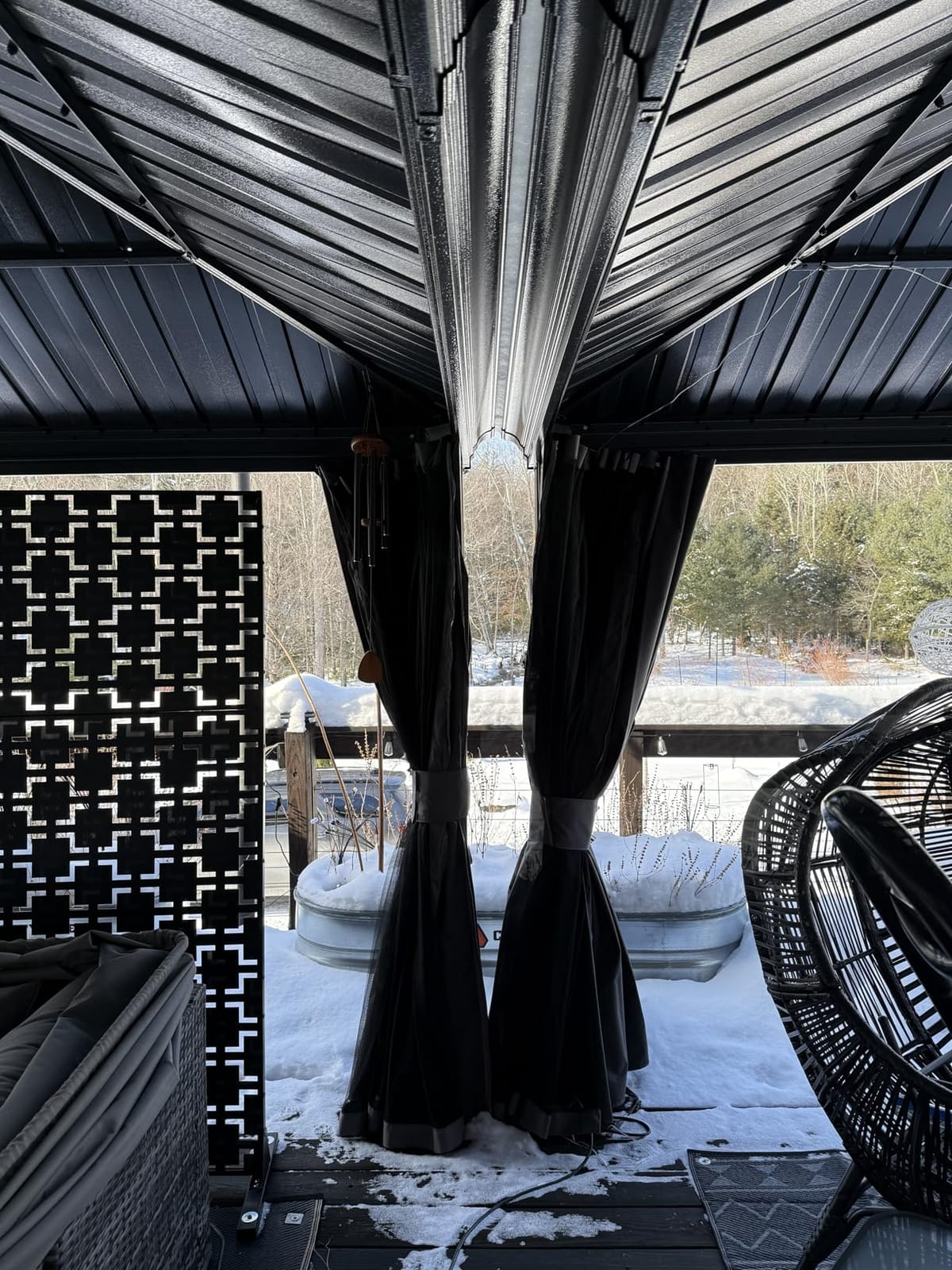
If you take snow seriously, this is the gazebo to look at first. The Kozyard Alexander is engineered around weather numbers rather than marketing language: a 2,500 lb snow load when properly anchored, wind resistance up to 60 mph, 4.7 by 4.7 inch triangular aluminum posts, and 5 by 4 inch reinforced beams. The roof is 29-gauge galvanized steel in a double configuration.
At 144 square feet it gives you a full dining footprint, and the listing notes it is rated for a 6-person occupancy, which lines up with a full dining set and chairs pulled out. Curtains and netting ride a dual-track system with fully enclosed double-sided zippers, so you can run screen without curtains, privacy without screens, or both.
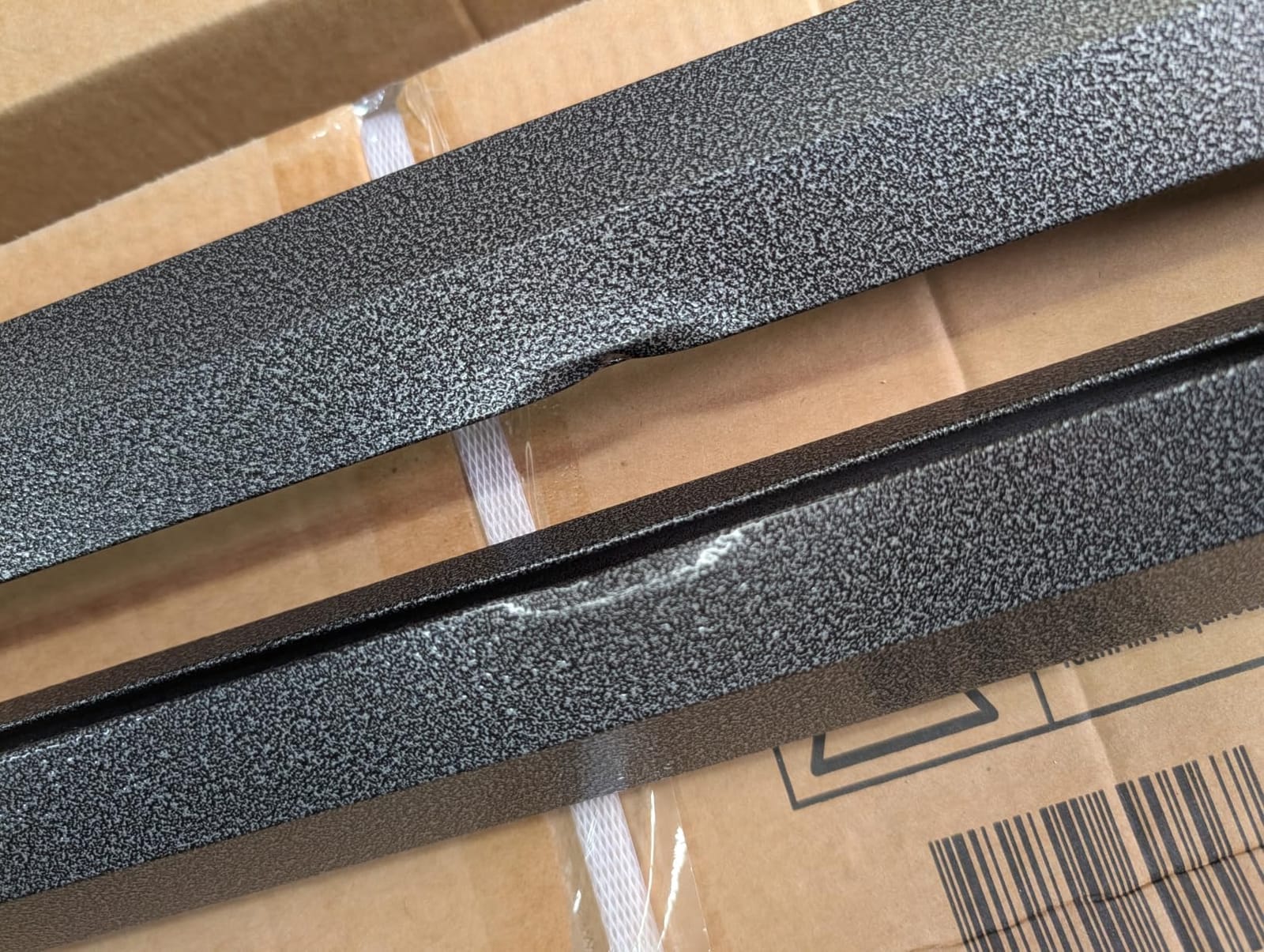
The honest drawback is weight. At 397 pounds this is the heaviest structure in the roundup, and owners consistently describe needing three people, two ladders, and a full day or more. Roof panel alignment is the most common snag, and the most repeated piece of advice is to leave the bolts loose until the frame is square and to use a power driver throughout.
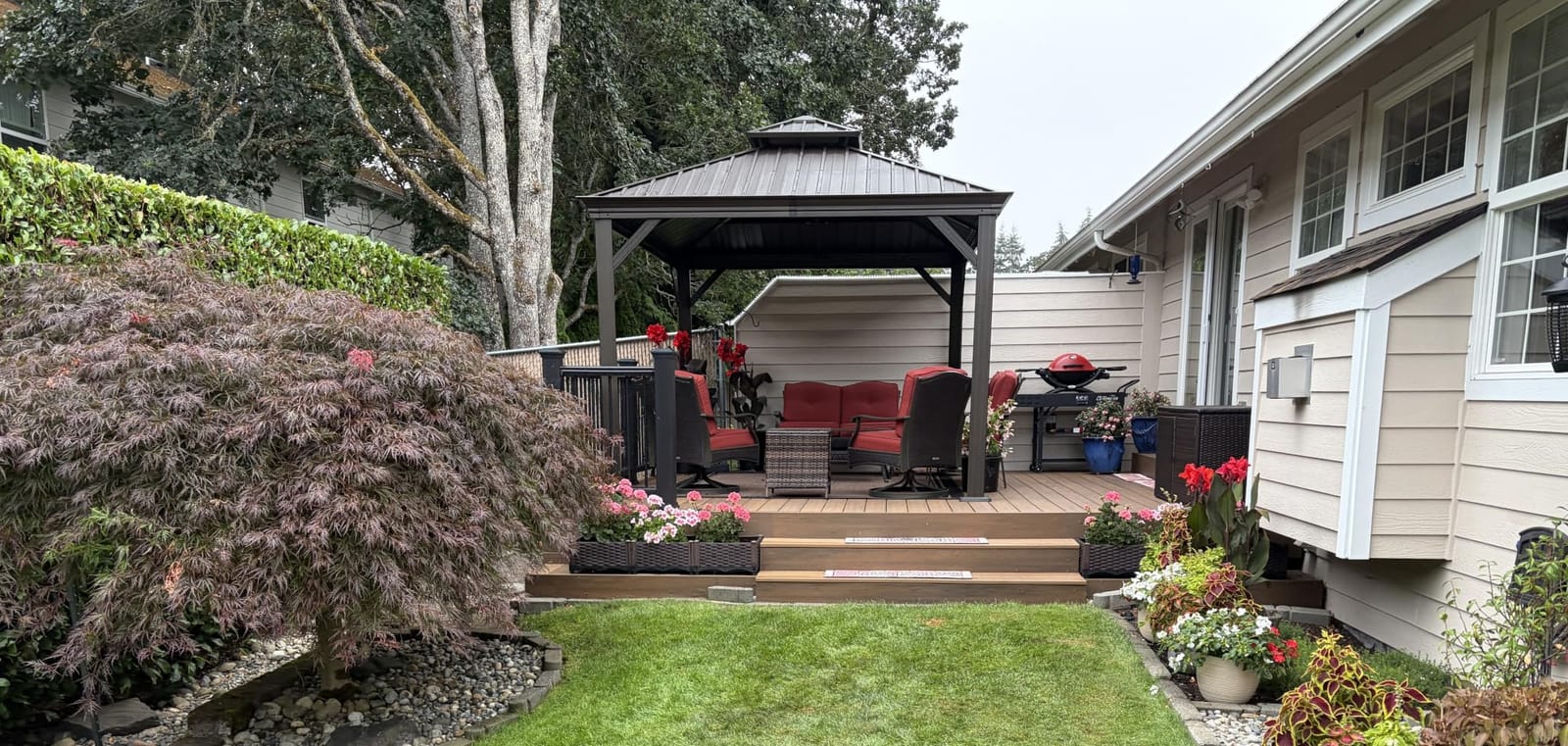
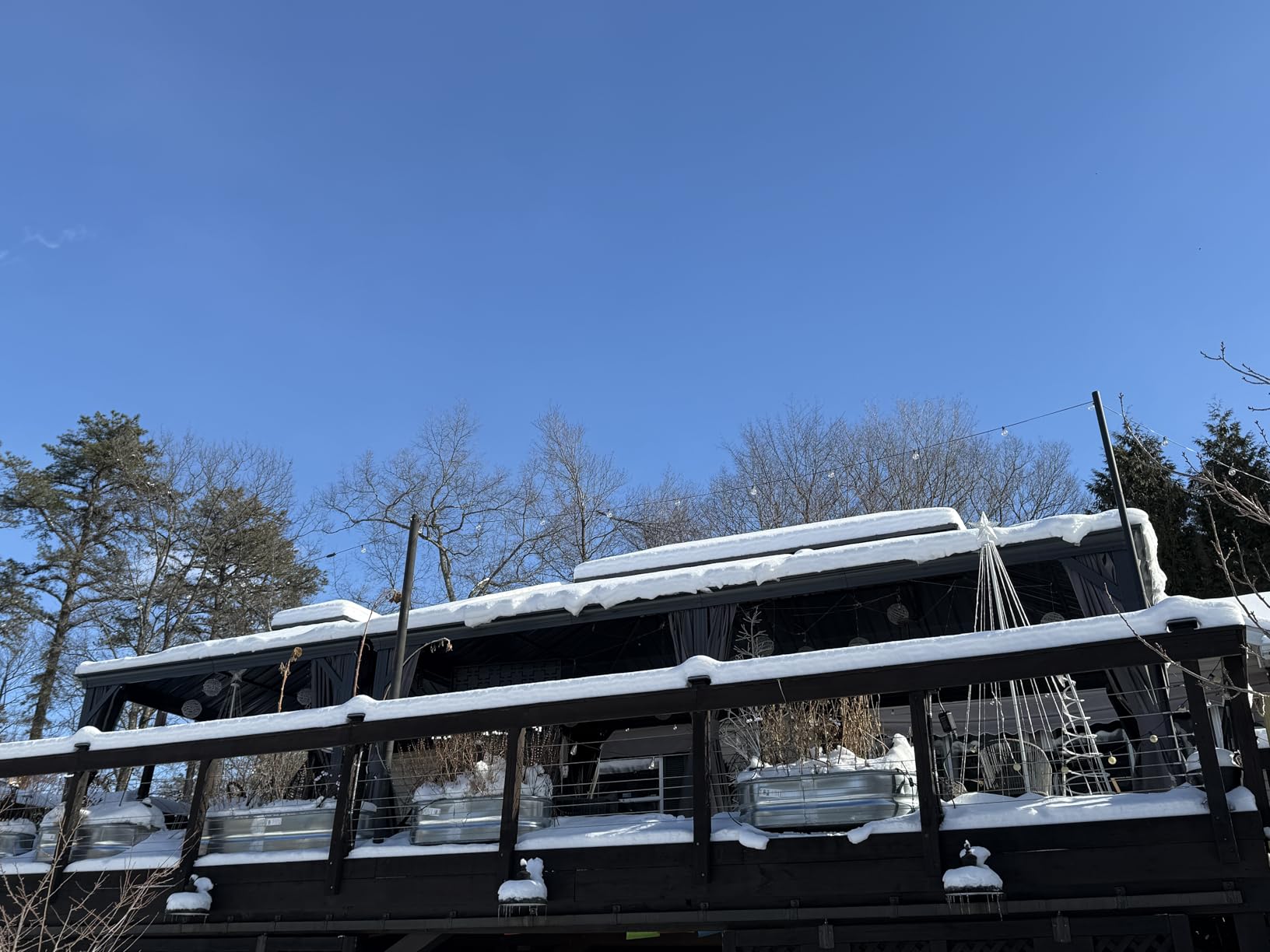
What you get for the effort is well-documented weather performance. Owners report steady performance through heavy snow and strong wind, and reviewers regularly describe the unit as feeling noticeably more substantial than anything else at this size. The integrated gutter moves water off the roof edges and down the poles, so eave dripping is not an ongoing problem.
What you should check before ordering
Can your site take the footprint and the labor? At 166.9 by 117.8 inches, this needs a genuinely level base and a crew that will not hurt itself. If you are building this solo, this is not the model, however good the numbers look on paper.
Confirm your snow load number. A published rating only holds when the structure is anchored as specified, and most of the wind and snow figures across this entire category assume proper anchoring. Ask yourself honestly whether you will bolt it to concrete, and if not, treat the rating as a ceiling rather than a promise.
Who should skip it
Skip it if your patio is small. 144 square feet is generous for dining and tight for a compact deck, and the frame footprint is larger than the listed floor area suggests once the posts are counted.
Skip it if assembly time is the deciding factor. Budget gazebos in this roundup can go together in an afternoon with two people. This one is a weekend project at minimum, and paying a crew to build it is often the smarter call once you count the ladders involved.
3. Domi 12×12 Hardtop Gazebo – Best UV Protection
Domi 12×12 Hardtop Gazebo for Patio, Metal Gazebo with Gutters, Brown
144 sq ft
99 percent UV protection UPF 50+
275 lb assembled
22 lb per sq ft snow load
Pros
- Thick 4 inch posts with a durable outdoor finish
- Built-in drainage keeps furniture dry in steady rain
- One-piece mesh between the double roofs
- Proactive service that replaced parts quickly
- Parts arrive bagged and labeled undamaged
Cons
- Assembly is still a long job with a small crew
- Screens anchor at the top so the lower half flaps
- Roof seam clips pop out during installation
The Domi 12×12 is the sun answer. Its listing claims 99 percent UV protection at UPF 50+, among the highest published figures in this roundup, and the vented double top lets heat escape rather than trapping it under the panels. If your patio gets brutal afternoon sun and you want to sit there at 3pm in July, that spec matters more than any styling detail.
It handles weather in a middle range: snow loads up to 22 pounds per square foot, and wind to 40 mph, rising above 60 mph when properly anchored. Rain is handled by a sloped roof and a built-in drainage system that channels water away from the seating area, which several multi-year owners confirm keeps furniture dry through steady rain with no interior leak.
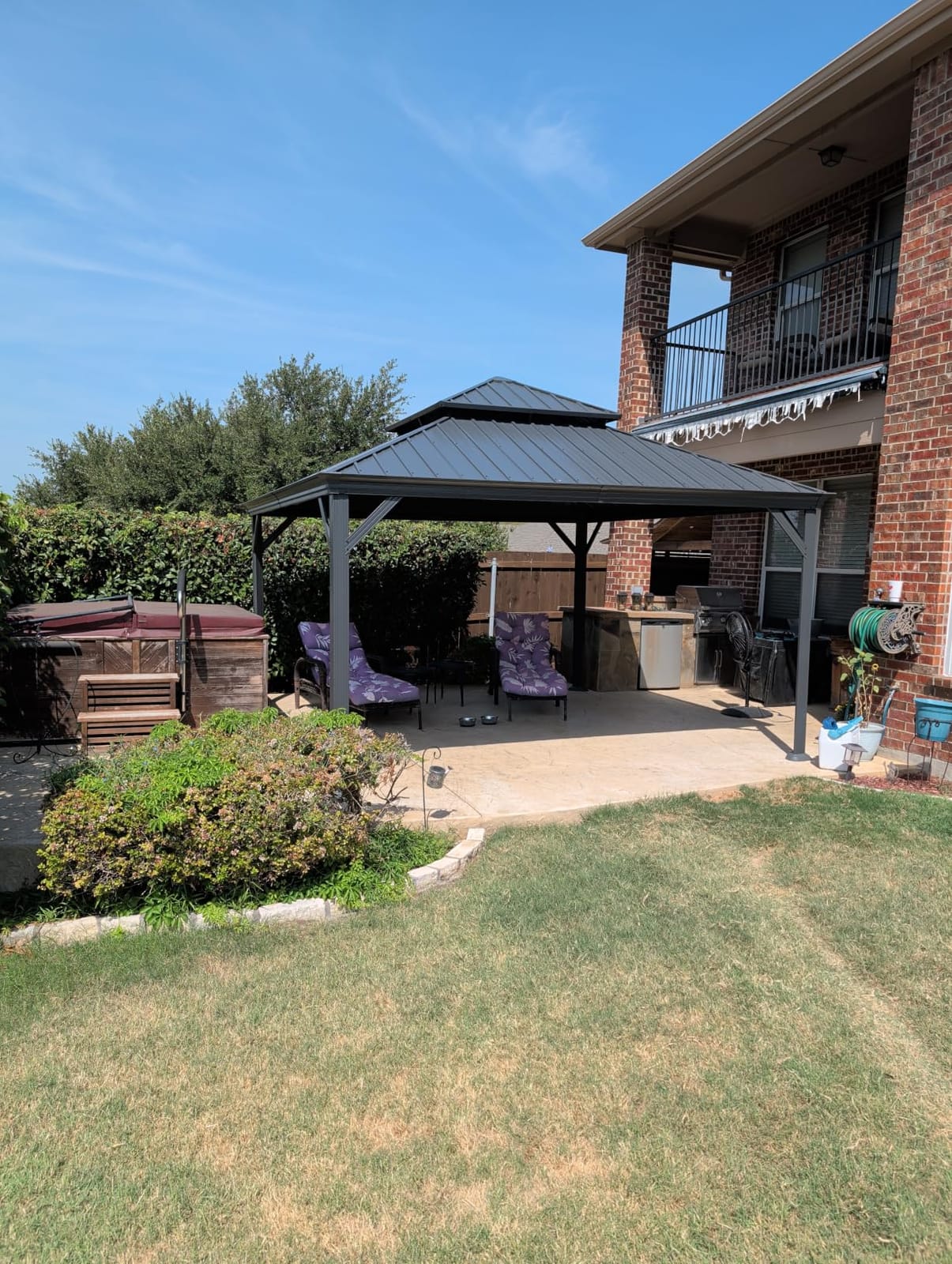
Two details separate Domi from the other budget-tier builds. Packaging is excellent, with parts individually bagged and labeled, so nothing gets lost in the box, and customer service is repeatedly described as proactive, shipping replacement corner covers and even touch-up paint. Owners with several seasons of ownership report no rust and good wind performance once anchored.
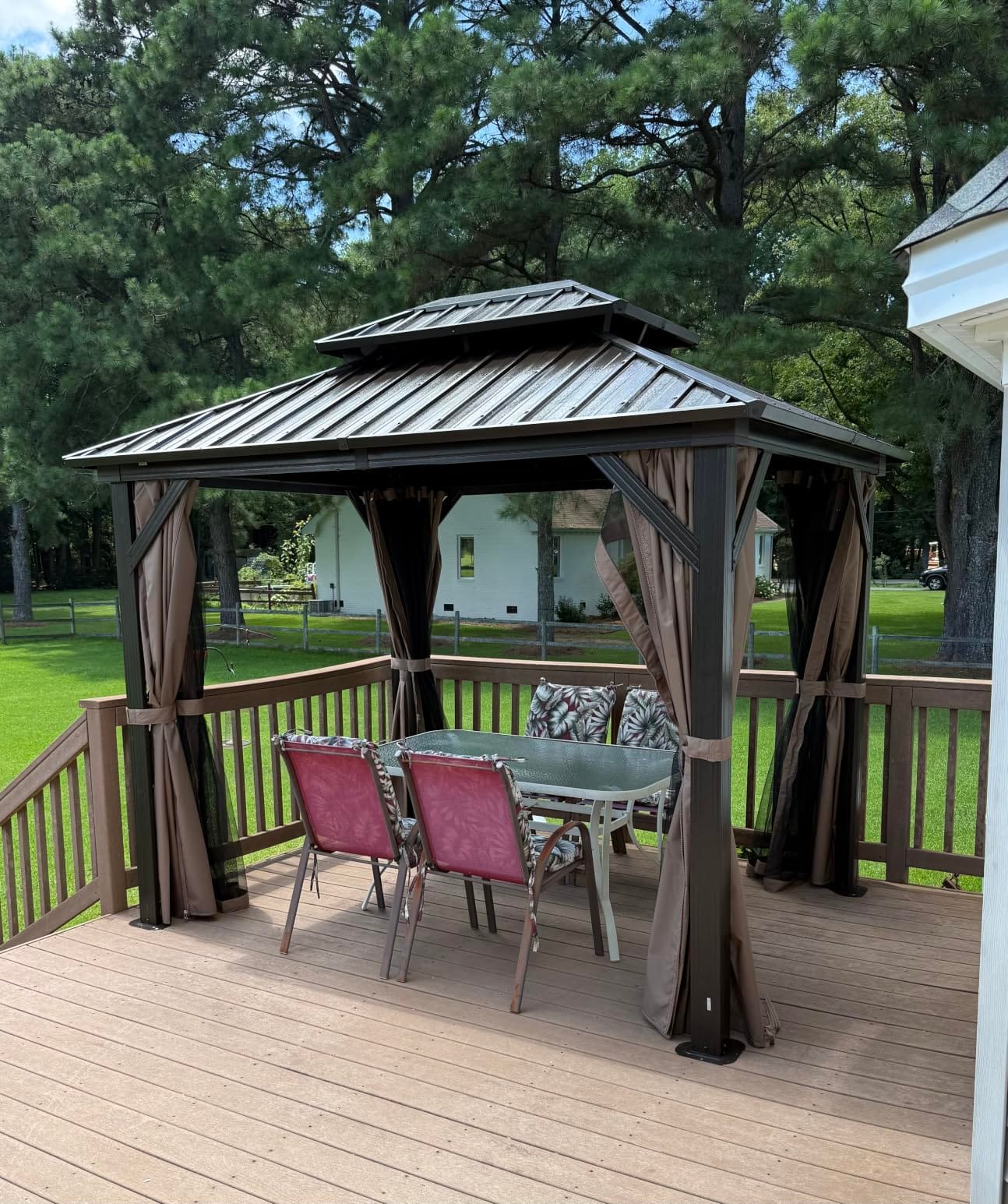
The recurring complaint is the screen system. Reviewers say the netting is only anchored at the top, so the lower half flaps and the structure does not work as a complete insect barrier without adding bottom straps. The other repeated theme is build effort: the listing calls assembly 3 to 6 hours with 2 to 3 people, and owners describe it running longer, plus plastic roof-seam clips that keep popping out during installation.
What you should check before ordering
Look closely at how you plan to use the screens. If mosquitoes are your reason for buying, budget an afternoon and some extra straps, because the top-anchored design is the one thing owners consistently identify as a functional shortfall rather than a cosmetic one.
Note what is not in the box. The anchoring base cover is included but concrete bolts are not, so add your own expansion hardware matched to your surface. On a 275 pound structure this is a small cost compared to the structure itself, and skipping it is the most common reason owners lose one in a storm.
Who should skip it
Skip it in heavy-snow country. Forty mph wind and 22 pounds per square foot of snow load is a mild-climate specification, and this is not the model for a roof that takes accumulation for weeks at a time.
Skip it if you want the cleanest insect protection with no modifications. The same screening that many owners like for airflow is the one they complain about at the bottom edge, so manage your expectations before the unit goes up.
4. Modern Shade 10×12 Hardtop Gazebo with Solar Lights – Best for Evening Use
Modern Shade Hardtop Gazebo 10×12 with 4 LED Lights for Backyard, Black
120 sq ft galvanized double roof
20 lb per sq ft snow
Up to 83 mph wind rating
4 solar LED lights included
Pros
- Frame feels rigid once assembled
- Double galvanized roof blocks sun and vents heat
- Four solar LED lights need no wiring
- Removable double-track netting and curtains
- Service replaced panels quickly and fairly
Cons
- Arrives in several very heavy cartons to collect first
- Unclear instructions around roof panel alignment
- Needs three people and two or three ladders
The distinguishing feature here is light. Four solar-powered LED lights come in the box, so there is no wiring to run from the house and no electrician. For a gazebo that will be used after sunset, that removes the most common reason people never light theirs up. U-hooks on the top roof also give you a place for a fan or a proper hanging fixture later.
The build is conventional and good: a galvanized steel double roof with a double layer that circulates air to keep the metal cool, corrosion-resistant frames with extra expansion screws at the base, and detachable netting on a dual-track system. Published figures are 20 pounds per square foot of snow capacity and a wind rating up to 83 mph when anchored into concrete or decking.
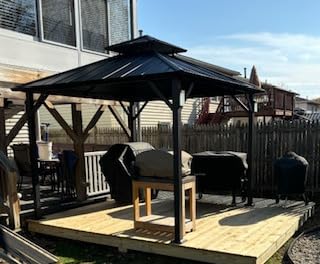
At 4.7 stars across 273 ratings, this sits among the highest-rated products here, and the review theme that stands out most is service. Multiple owners describe fast, courteous support that replaced panels or resolved a discrepancy without argument, which is unusual at this tier and worth as much as any spec line.
Assembly is the friction point. Owners advise three people, two or three ladders, and a sequencing trick that saves real time: keep the posts unanchored until the roof panels are fitted, or the panels and screw holes will never line up. Concrete screws for anchoring are included, which is more than several competitors manage.
What you should check before ordering
Plan for a multi-carton delivery that arrives in stages. This is the most common complaint in the reviews, and the cartons are heavy enough that you want to have help moving them off the truck before you start, not halfway through the build.
Confirm the solar lights get sun. They charge from the top roof, so a gazebo placed in partial shade will dim your evening lighting, and the panels need to be positioned where they are not shaded by a tree for most of the day.
Who should skip it
Skip it if the most important number to you is certified snow load. The stated capacity here is per square foot, which is a different measurement from the total pound ratings some manufacturers publish, and it is lower than what the Kozyard Alexander specifies.
Skip it if you dislike scaffolding work. Three people and multiple ladders is the honest requirement, and buyers who attempt it with two will find the roof stage frustrating rather than difficult.
5. Domi 12×16 Aluminum Frame Hardtop Gazebo – Best for Large Patios
Domi 12×16 Hardtop Gazebo Aluminum Frame, for Outdoor Patios, Wood Looking
192 sq ft
4.7 inch aluminum posts
390.9 lb assembled
5-year roof warranty
Pros
- Wood grain beams without any timber upkeep
- Very heavy and rigid once assembled
- Aluminum frame and steel roof stay leak free
- Vented double roof works in heat and cold
- Owners report buying more than one
Cons
- Assembly runs 20 hours or more with two tall ladders
- Aluminum parts can arrive bent in transit
- Post columns have no top caps so water collects
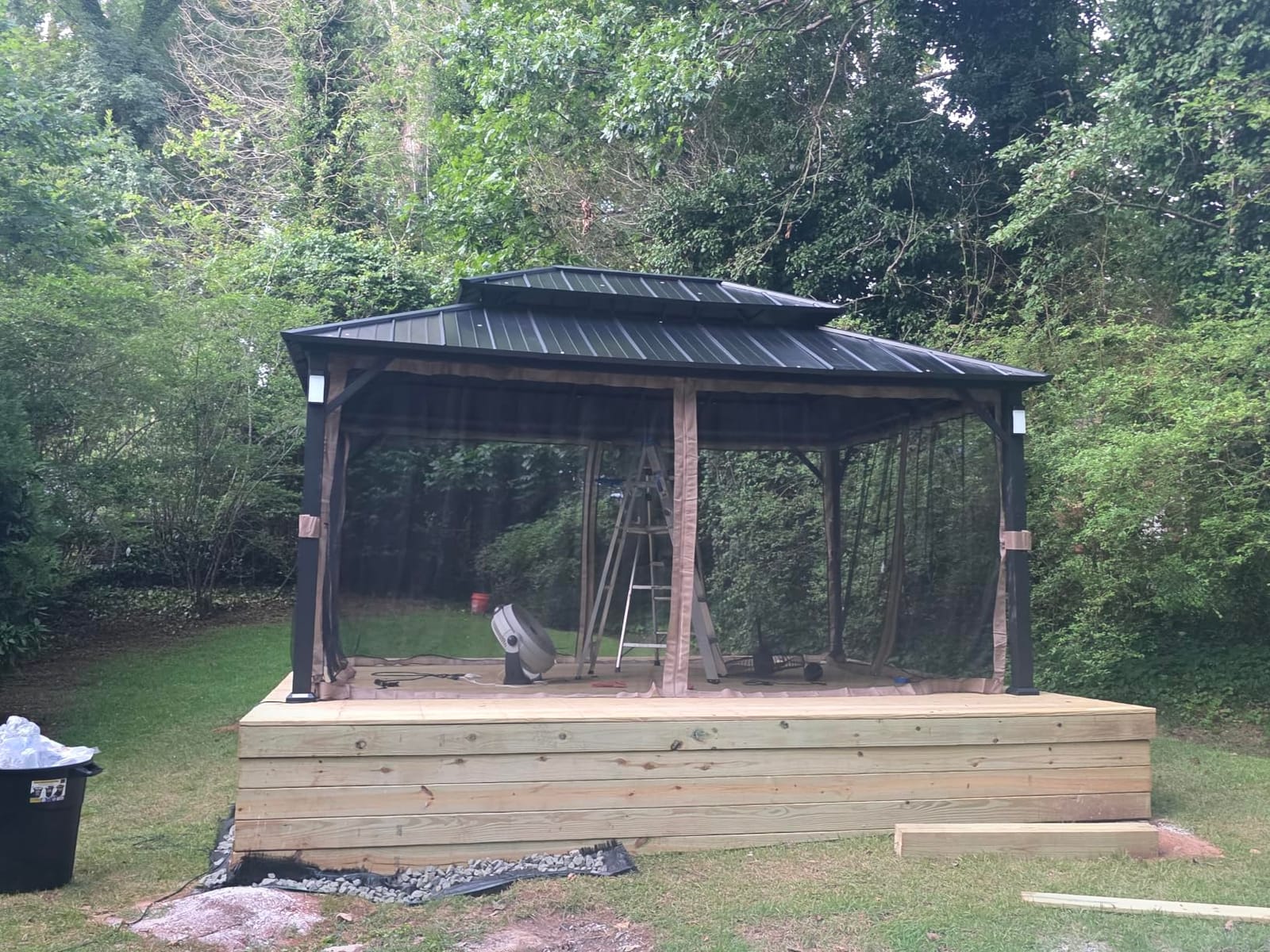
At 192 square feet this covers a large patio rather than a corner, listed for 10 to 15 people, and it is the model to look at if you are covering a full deck. The frame is aluminum with 4.7 inch posts, and the beams carry a wood grain finish that owners consistently describe as genuinely attractive without any of the sealing and staining a timber structure needs.
Warranty coverage is among the strongest here: 5 years on the hardtop roof, 1 year on the frame, curtains, and netting. Multi-year owners report no rust, no leaks, and steady performance in 50 mph wind, and several have bought three or more across sizes, which is about as strong a durability signal as consumer reviews get.
Be realistic about the work. Assembled weight is 390.9 pounds, assembly is commonly 20 hours or more, and two tall ladders are effectively mandatory for the roof. The consistent recommendation from owners is a power driver, laying out and organizing every part first, and leaving bolts loose until the frame is square.
Packaging is the weak point. Reviewers report bent or dented aluminum arriving in transit, a hardware bag that tears open in the box, screws that strip easily, and plastic Z-bar roof clips that repeatedly fall out during installation. None of that is structural, but it is the difference between a smooth build and a frustrating one, and the service side is the counterweight, with quick replacement part responses.
What you should check before ordering
Verify your site dimensions carefully. At 190.4 by 143.2 inches, this is a genuinely large structure, and the assembly needs room to lay out parts plus clearance to raise the frame. Measure the full path from where the cartons land to where the gazebo will stand, because of the weight.
Look at the post tops after assembly. Several owners note the columns have no caps, so water can collect inside the aluminum, which matters more in freezing climates where that water expands. Adding caps is a cheap afternoon task that protects the frame for a decade.
Who should skip it
Skip it if your surface is soft ground and you are not prepared to pour concrete piers. A 390 pound frame on unanchored soil is the single most common way owners lose a gazebo, and the insurance against that is a real foundation, not longer stakes.
Skip it if a 20-hour build is not on your calendar. This is a two-person weekend with ladders, and hiring the assembly is often the difference between a good experience and a ruined one.
6. Jolydale 12×16 Polycarbonate Hardtop Gazebo – Best for Diffused Light
Jolydale 12’x16′ Hardtop Gazebo, Outdoor Polycarbonate Double Roof Canopy,Metal Frame Permanent Pavilion with Curtains and Netting, Sunshade for Garden, Patio, Lawns
192 sq ft
Three layer polycarbonate roof
237 lb assembled
Assembly video via QR code
Pros
- Polycarbonate roof keeps the interior cool with soft light
- A skilled carpenter called the construction near perfect
- Curtains make it usable in winter
- Service replaced a damaged leg at no charge
- Most owners build it in a day alone
Cons
- Polycarbonate roof is not rated for heavy snow
- Screws strip once removed and act as single use
- One panel seam can leak and it sways in wind before anchoring
Polycarbonate is a different product from steel, and the Jolydale 12×16 shows both what that buys and what it costs. What you buy is light: at 237 pounds assembled, this is one of the easier structures here to move, raise, and fit together, and the roof uses three layers of heat insulating material that block harsh sun while letting in a diffuse glow rather than darkness.
Owners like the value and the build quality, and one reviewer reported a skilled carpenter examining the construction and calling it near-perfect. Most people get it together in a day on their own, and customer service again sends replacement parts free of charge, including a damaged leg.
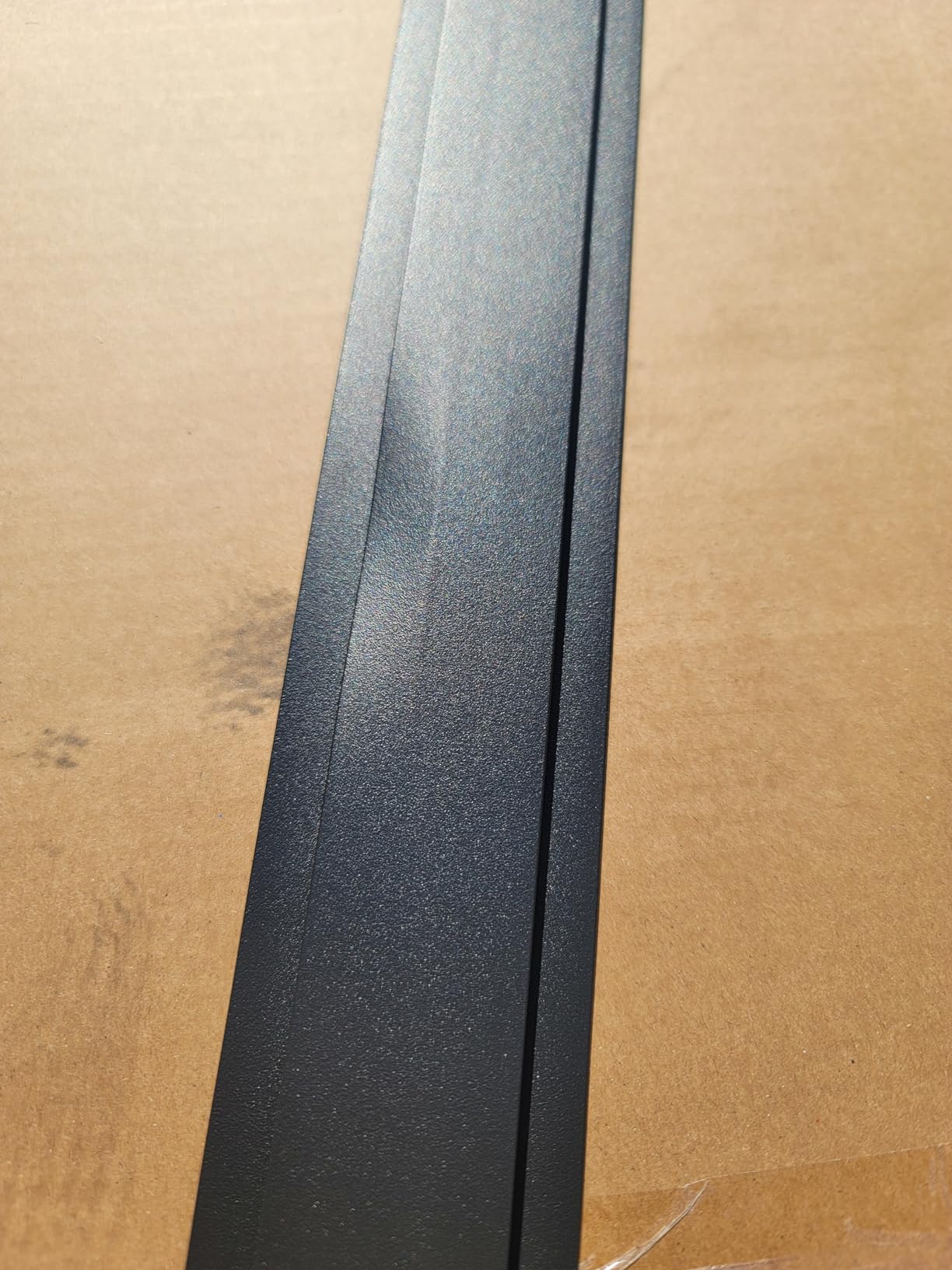
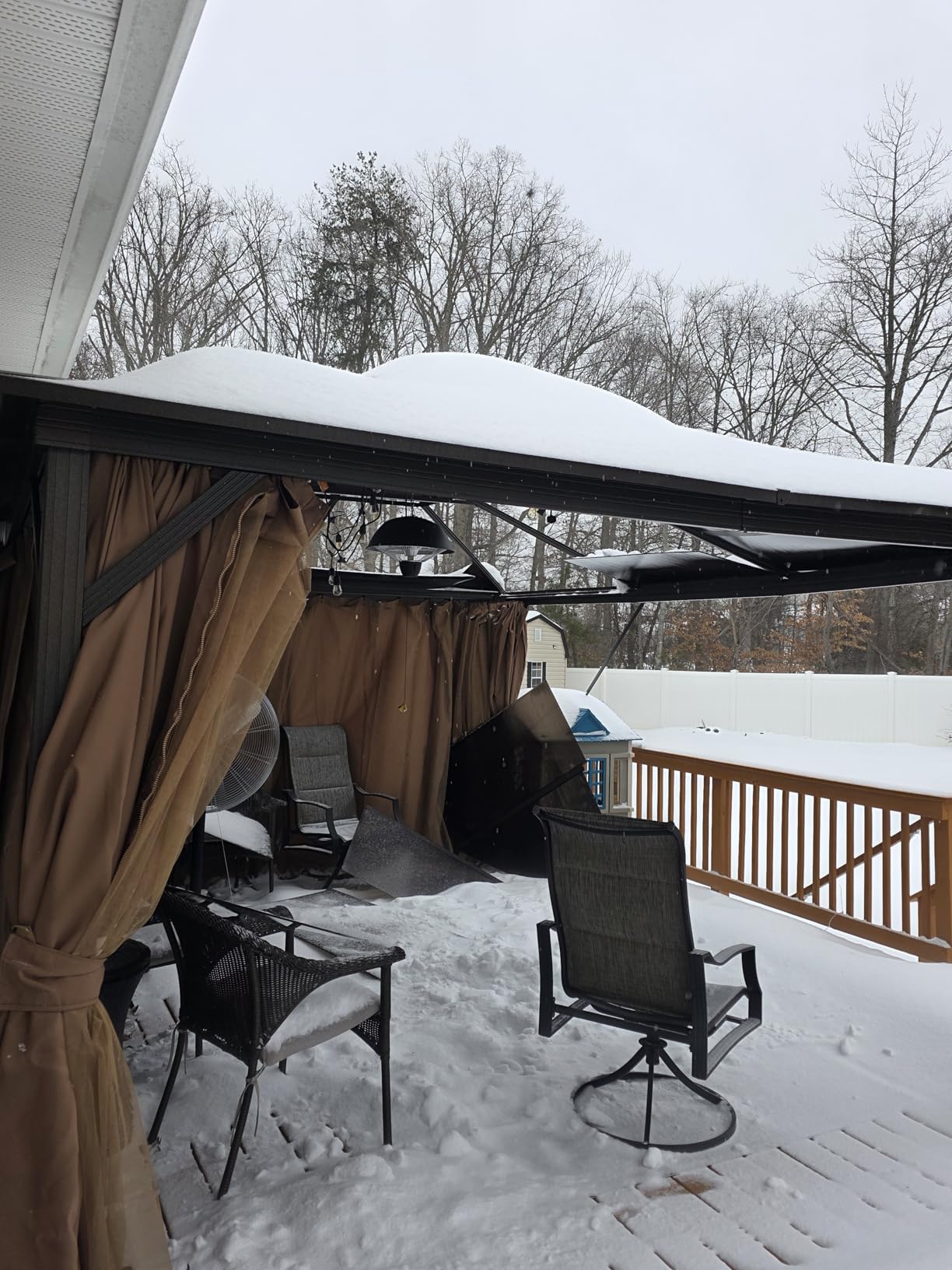
What you give up is winter performance, and this is the line in the sand. Polycarbonate is not a snow-rated hardtop. One owner reported the roof shattering within a few hours under roughly 12 inches of snowfall, which is exactly the failure mode a metal roof is designed to avoid. The listing itself warns that on grass the structure must be fixed with ground spikes and wind rope, and owners report noticeable sway in strong wind until it is anchored to a deck or slab.
Other quality notes: some panels and screens arrive torn or heat-damaged, one seam between roof panels can leak, and the UV protection figure of 25 is far below what the metal-roof models here claim. Instructions are illustrations with no written text, and some orders arrived without any manual at all, so check for the QR code assembly video before you begin.
What you should check before ordering
Decide honestly whether you get snow. If you do, this is the wrong roof, and no amount of anchoring changes the fact that a polycarbonate panel under load is a different engineering problem than a 29-gauge steel panel. If you are in a mild climate, it is a perfectly good year-round roof.
Buy your own screws. Reviewers report that the supplied screws strip once removed and behave as single-use fasteners, which is frustrating when a bracket has to come apart twice to get a panel aligned. A box of proper structural screws solves it in minutes.
Who should skip it
Skip it in northern climates, coastal zones, and anywhere a hail storm is a regular summer event. A lighter, less rigid roof is exactly the profile that suffers in those conditions, and the repair path is replacing panels rather than adjusting them.
Skip it if you want the darkest shade at midday. Polycarbonate deliberately passes light, so if your goal is maximum sun blocking on a hot patio, a galvanized steel roof is the better material and this is not.
7. EROMMY 10×12 Hardtop Gazebo – Best Stiff Frame for the Money
EROMMY 10′ x 12′ Hardtop Gazebo, Aluminum Frame Gazebos with Galvanized Steel Double Roof, Permanent Outdoor Metal Pavilion with Curtain and Netting for Patio, Lawn, Deck
120 sq ft
209 lb assembled
Powder-coated aluminum frame
Galvanized steel double roof
Pros
- Metal hard roof handles snow far better than soft tops
- Vented double top gives real airflow and UV blocking
- Powder-coated triangular aluminum frame resists rust
- Full double-track curtains and netting
- Roof hooks for lights and fans
Cons
- Included anchors need upgrading for storm conditions
- Illustration heavy listing gives little dimension detail
- Zipper pulls and curtain hardware detach within weeks
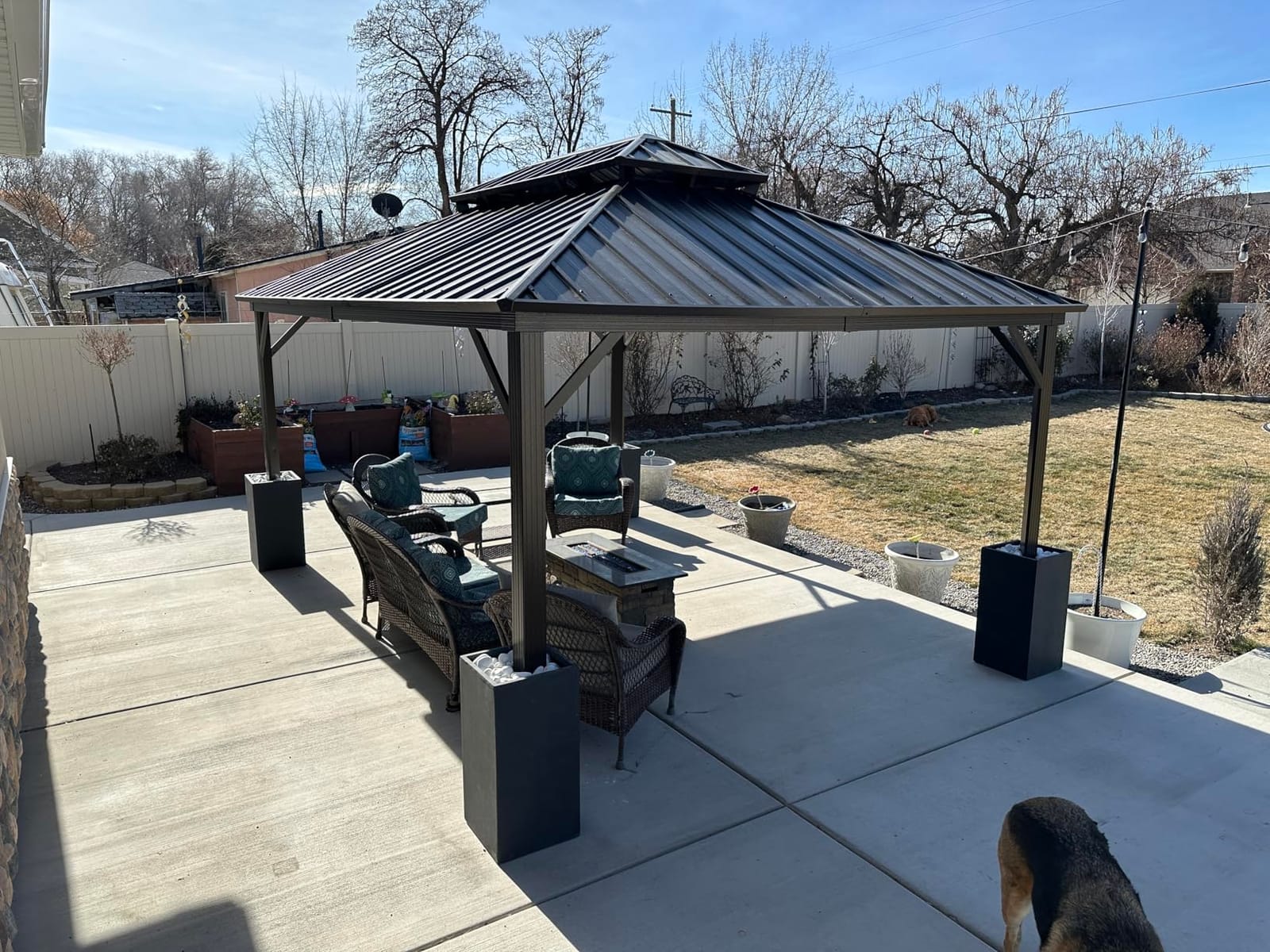
The EROMMY 10×12 answers the criticism that circulates in owner communities, namely that gazebo frames are thin metal that will not hold up to wind. This is a powder-coated triangular aluminum frame with pre-drilled base feet designed for uneven ground, and owners consistently find it solid once it is bolted down. At 209 pounds it is a light structure that is easy to raise into place.
The roof is where the real difference lies. It is a galvanized steel hard top rather than fabric or polycarbonate, and a ventilated double-top design blocks UV while letting wind pass through for a cooler interior. Curtains and netting ride a double-track system with fully zippered double-layer sidewalls on all four sides, and there are roof hooks for lights and fans.
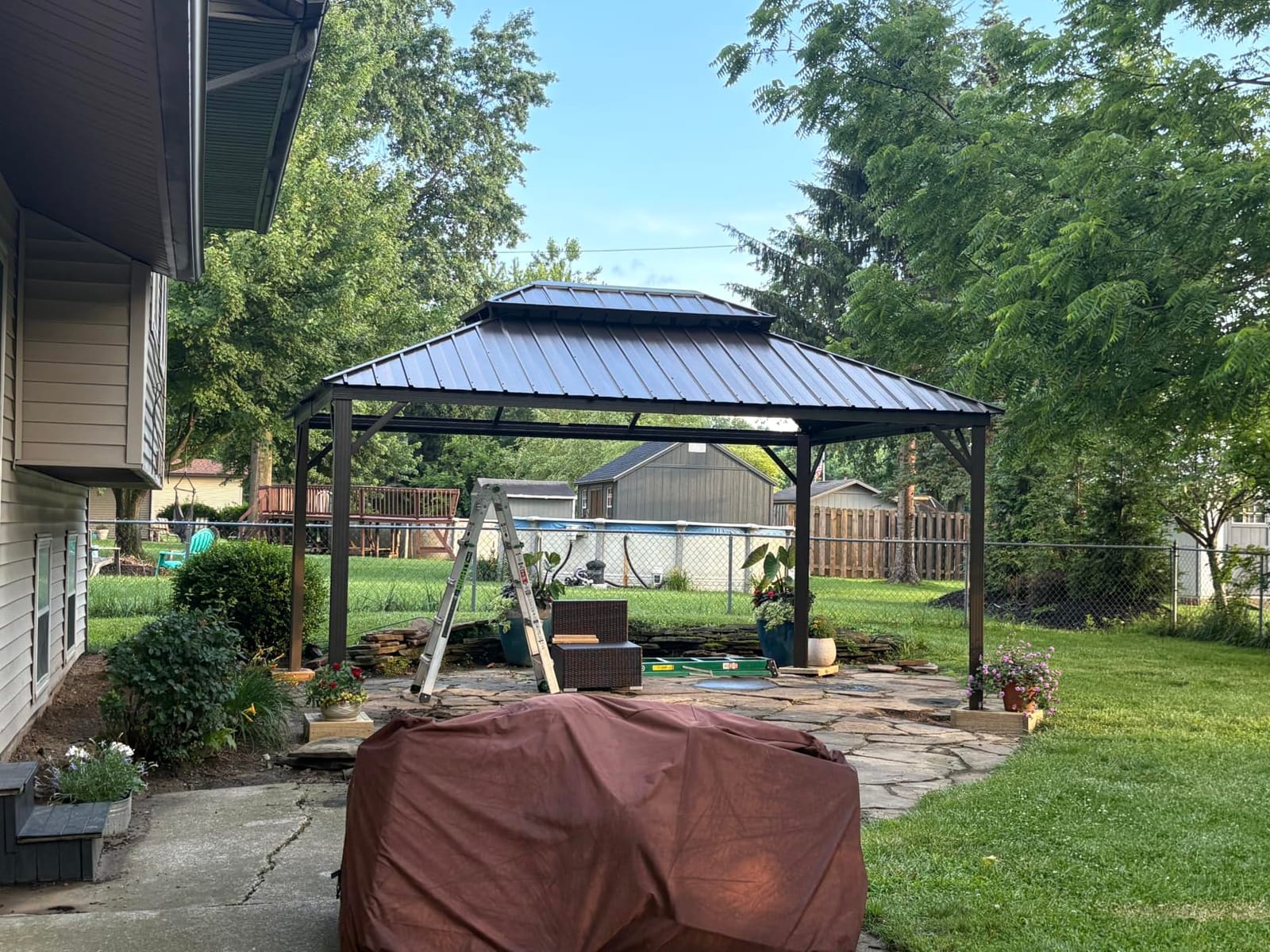
Owners single out the steel roof and rustproof frame as the reason this makes sense for the money, alongside a clean modern look. The complaints are about hardware rather than structure, and they are consistent: zipper pulls and curtain rings fall off within weeks, and the roof Z-clips will not stay put during assembly without a hand.
Two other notes. The listing is illustration-heavy and gives limited dimension detail before you buy, so measure carefully rather than assuming. And the included anchors are described as adequate rather than good, with several owners buying stronger hardware. On a metal-roof structure that people buy specifically for storm performance, upgrading the anchors is not optional.
What you should check before ordering
Measure the footprint yourself. The listing gives limited dimension detail, and the assembled proportions are not square, so measure length and width separately and plan the clearances around the raised frame rather than the floor area.
Plan to replace some soft goods early. Zipper pulls, curtain rings, and the Z-clips are the recurring failures, and they are cheap to replace. Treat them as consumables rather than defects and this gazebo keeps its value for years.
Who should skip it
Skip it if you need the biggest footprint. At 120 square feet, this fits a sofa set or a 7-piece dining set and nothing larger, and the people who outgrow this size end up replacing the whole structure rather than extending it.
Skip it if a soft roof is what you actually want. The strong frame and metal roof are the entire value proposition here, and they are also the reason this structure costs more than a fabric equivalent of a comparable size.
8. YOLENY 12×16 Hardtop Gazebo – Best Documented All-Weather Reports
YOLENY 12×16 Gazebo,Outdoor Hardtop Gazebo with Aluminum Frame
192 sq ft
4.7 inch triangular aluminum poles
324 lb assembled
99.99 percent UV blocking
Pros
- Owners report holding nearly a foot of snow
- Large triangular aluminum posts feel substantial
- No rust after a season of heavy rain
- Survived a day of 60 mph gusts while anchored
- Spare clips and spacers included in the box
Cons
- Instructions are wordless pictures with no support number
- Roof clips fall out during install and need tape
- Included concrete anchors are weak so buyers substitute screws
- Curtain zippers detach within weeks of install
The YOLENY 12×16 has the most striking owner weather reports in this roundup. Buyers describe handling nearly a foot of snow with no damage, no rust after a season of heavy rain, and a day of 60 mph gusts while anchored with nothing bending. The frame uses 4.7 by 4.7 inch triangular aluminum poles with a thick powder coating, and the roof is a galvanized steel double top.
At 192 square feet it covers a large patio, and the eaves drainage design routes rainwater from a leakage hole down to the ground, extending service life. UV blocking is listed at 99.99 percent, and the double-track system with fully zippered double-layer sidewalls gives you netting zippers on all four sides. A nice touch is that spare screws, spacers, and Z-clips come in the box.
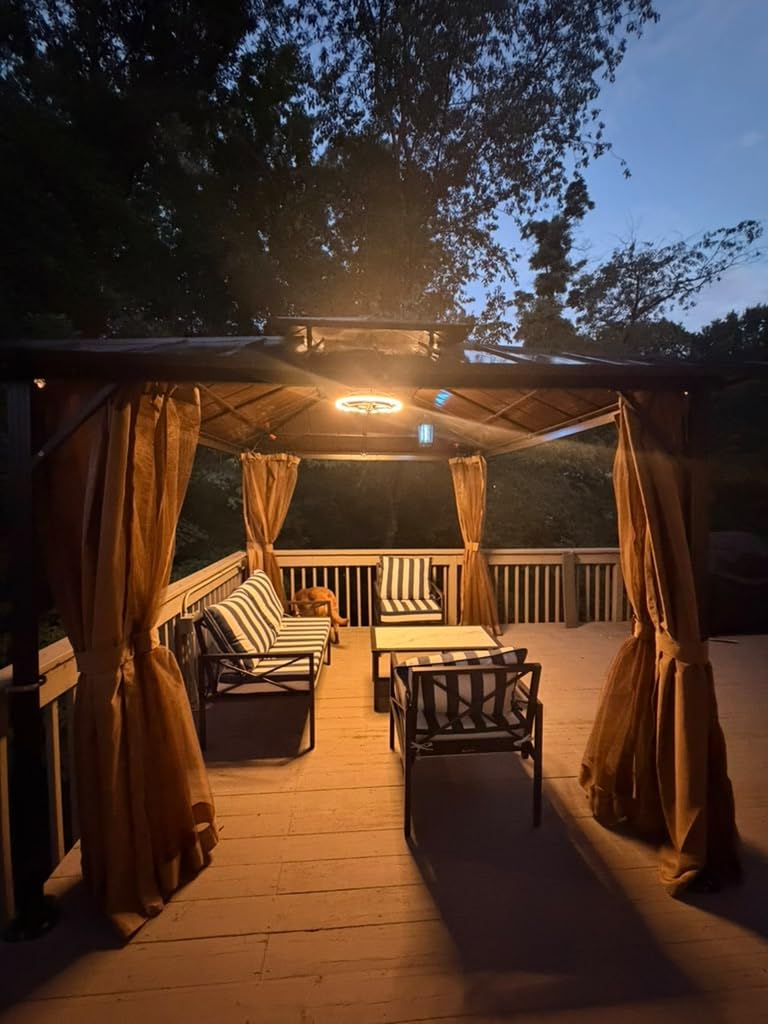
The rating sits at 4.1 because the soft goods and quality control are inconsistent. Curtain zippers and hooks detach within weeks of installation, and the 16-foot curtain panel on the long side does not fully meet, which is a recurring complaint. A few buyers also received boxes missing more than ten frame parts with slow resolution through the seller.
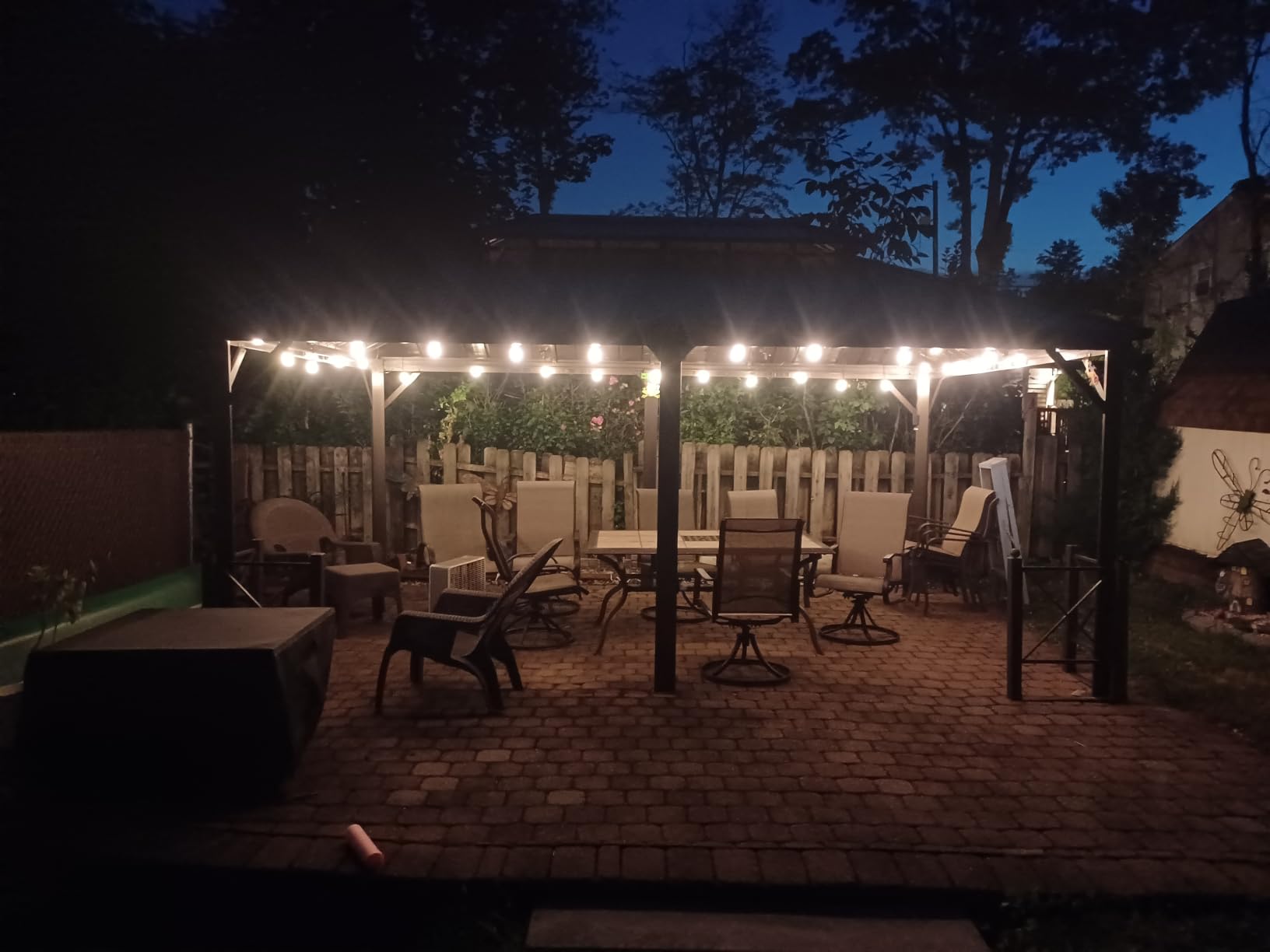
Assembly guidance is thinner than it should be. The instructions are wordless pictures with no written steps and no listed customer service contact, so owners end up improvising. Roof Z-clips keep falling out during installation and need tape or adhesive to hold, the lower roof drip edge is thinly supported and can flex under snow, and the included concrete anchors are weak enough that buyers substitute tapcon screws.
What you should check before ordering
Count the parts before you start. The reports of incomplete boxes are real, and discovering a missing beam at hour eight is far worse than spending an extra hour inventorying hardware on the lawn. Spare parts in the box help, but only if you know what the complete set should be.
Plan your own hardware. If you are anchoring to concrete, buy tapcon screws or proper expansion anchors rather than relying on what is in the kit, and check the drip edge support before the first heavy snow rather than after it.
Who should skip it
Skip it if you are not comfortable improvising. Wordless picture instructions with no support contact are a real problem the moment a bracket does not match, and a buyer who plans to build alone will hit that wall quickly.
Skip it if privacy and bug protection are the priority. The curtain zippers and the short panel on the long side are the most repeated complaints in the reviews, and those soft goods are the first thing you will want to replace.
9. YITAHOME 12×14 Hardtop Gazebo – Best Value
YITAHOME 12x14ft Hardtop Gazebo with Nettings and Curtains Heavy Duty
168 sq ft
Powder-coated aluminum frame
Double galvanized steel roof
2 roof hooks and full sidewalls
Pros
- Double galvanized roof resists fading
- Two roof hooks for lights and fans
- Fully zippered double-sided sidewalls included
- Powder-coated frame with reinforced corners
- Instructions and installation videos included
Cons
- Published 42.5 lb weight is not representative
- Included ground stakes are weak in soft or rocky soil
- Cartsons may arrive days apart so the build waits
For most backyards, the YITAHOME 12×14 is the pick. It gives you 168 square feet, a double galvanized iron top with vertical stripe roofing, and a black powder-coated aluminum frame with four reinforced corners, without moving into the heavy-hardware end of the list. The rating of 4.3 across more than 1,000 owner ratings gives that recommendation a wide base.
The soft goods are unusually complete for the money: fully enclosed double-sided zipper walls on a double-track system, with gray polyester cloth and black mesh that together handle ventilation, view, rain, UV, and privacy. There are two roof hooks for electric lights or fans, and the double top is vented for airflow in strong wind.
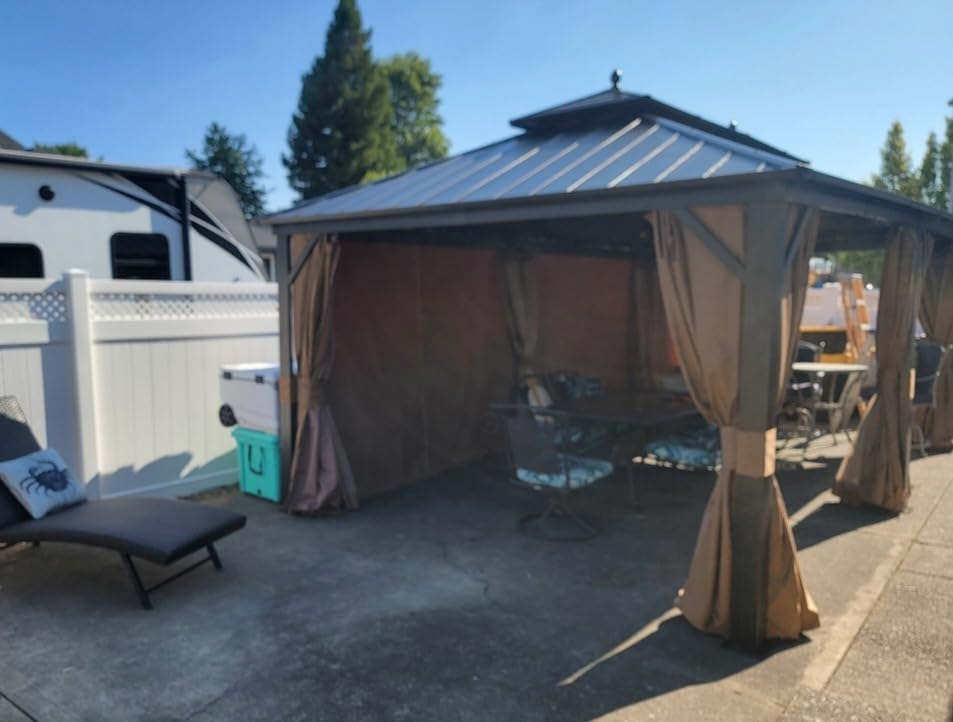
Buyers rate the roof, frame, and full sidewall package favorably, and the roof hooks come up well. The cautions are mostly logistical rather than structural. The kit arrives in several separate cartons that may reach you days apart, so the build cannot start until everything is on site, and the recommended crew is 2 to 5 people for roughly 4 to 6 hours, which most owners say stretches longer.
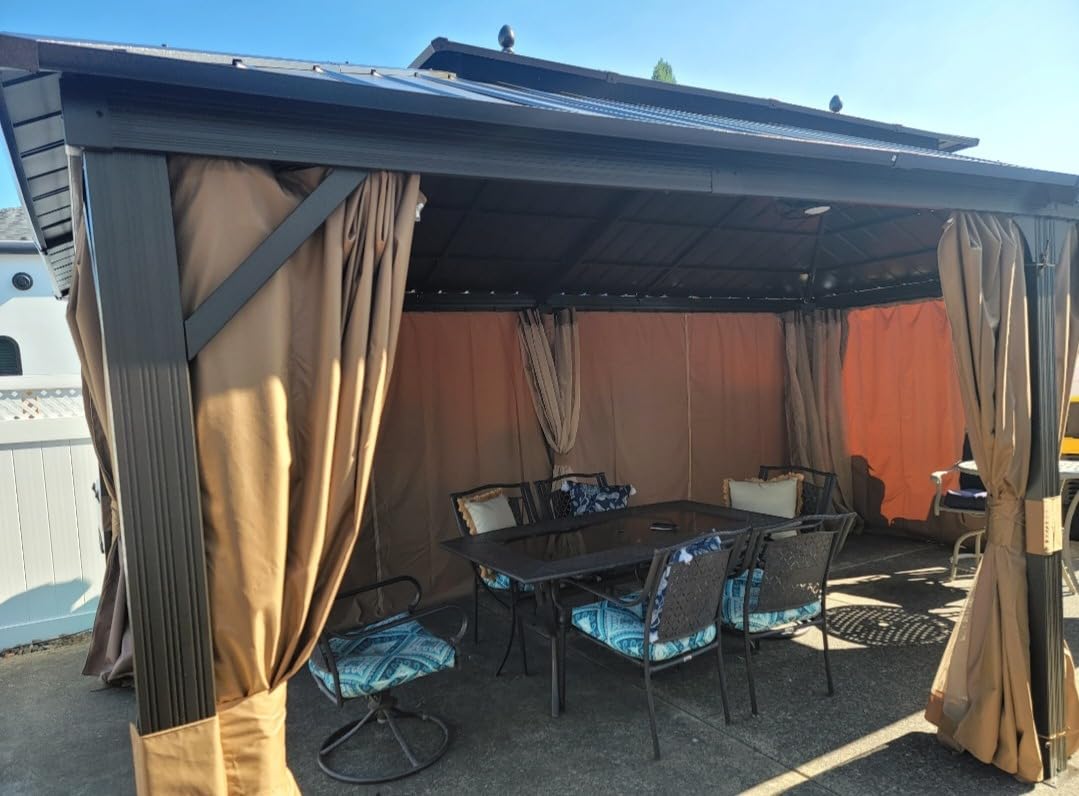
One thing to disregard entirely is the listed weight of 42.5 pounds. That figure is not representative of a 168 square foot hardtop and should not factor into your planning. Buyers also note that the included ground stakes and pre-drilled feet may not be enough in soft or rocky soil, so plan to add hardware matched to your surface.
What you should check before ordering
Plan the delivery. Separate cartons arriving on different days is the most common complaint here, and it can quietly add a week of dead time between ordering and starting. If your project has a date attached to it, that is the risk to account for.
Buy real anchors. The included stakes suit firm ground. In soft soil or over rocky conditions, spend the extra on longer stakes or expansion bolts, because this is a permanent structure and the anchoring is what decides whether it is still standing after a storm.
Who should skip it
Skip it if snow is a factor. No snow load figure is published for this model, and an unstated rating is not a rating. In a snowy climate, choose a gazebo that publishes a number you can check against your local conditions.
Skip it if a single crate on a hand truck is your assembly plan. Even at the easier end of this roundup, 2 to 5 people and half a day is the honest expectation.
10. Aoxun 12×10 Polycarbonate Hardtop Gazebo – Best Budget Pick
Aoxun 12’x10′ Hardtop Gazebo with Polycarbonate Double Roof, Brown
120 sq ft
197.3 lb assembled
Double layer polycarbonate roof
31-page illustrated manual
Pros
- Best value entry point with strong demand
- Polycarbonate panels give diffused light for cooking
- Thick powder-coated frame resists rust and scratches
- Curtains plus zippered inner netting
- Parts arrive complete for most owners
Cons
- Polycarbonate roof is not a winter rated hardtop
- Aluminum parts bend if handled roughly
- Included ground stakes suit only hard clay soil
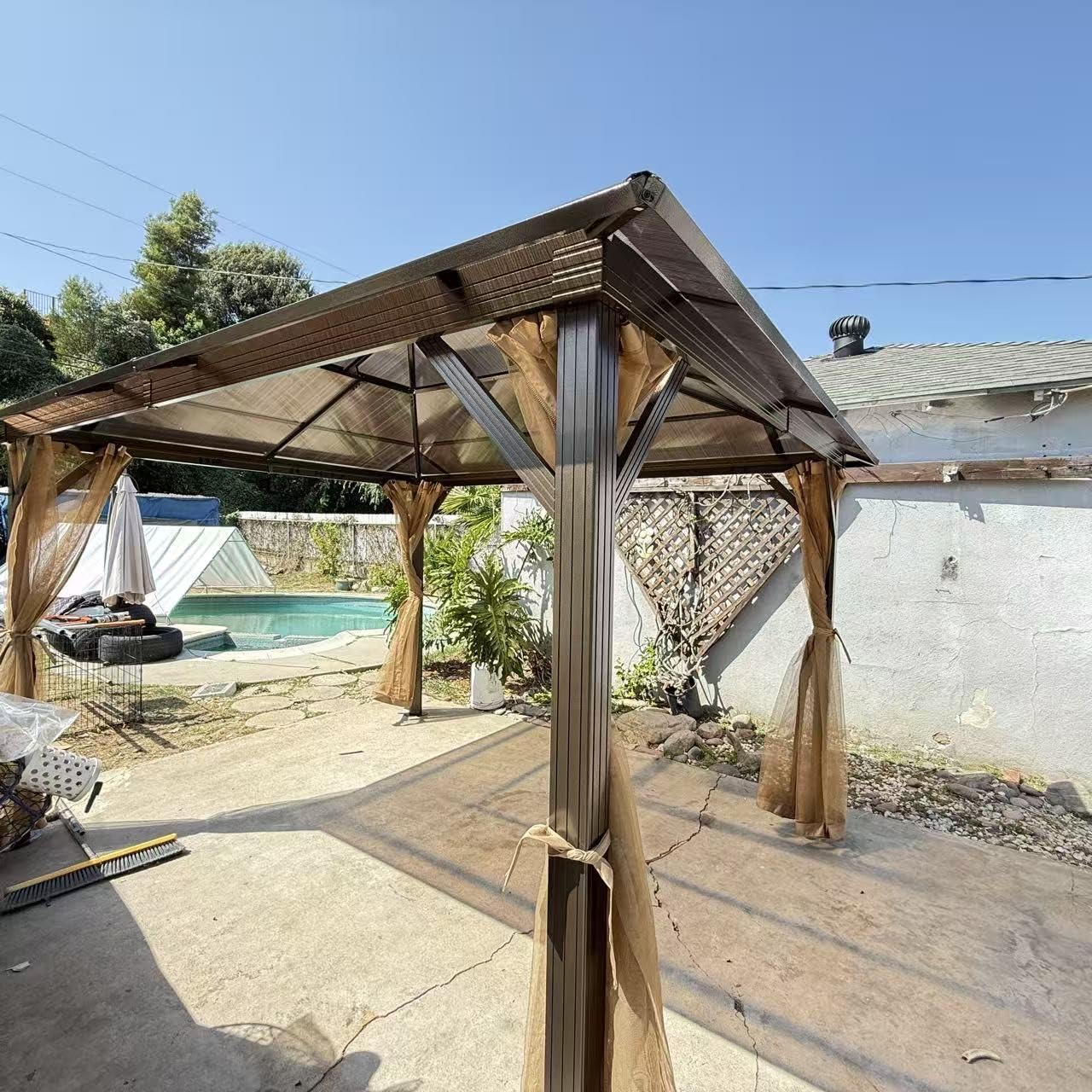
The Aoxun 12×10 is the entry point for this list and one of its strongest sellers. Owners consistently call the value excellent and are surprised by how sturdy and good looking the finished structure looks for the money. The frame is a thick powder-coated build that resists scratching, peeling, and rust, and it weighs 197.3 pounds assembled, which keeps the roof stage to a manageable lift.
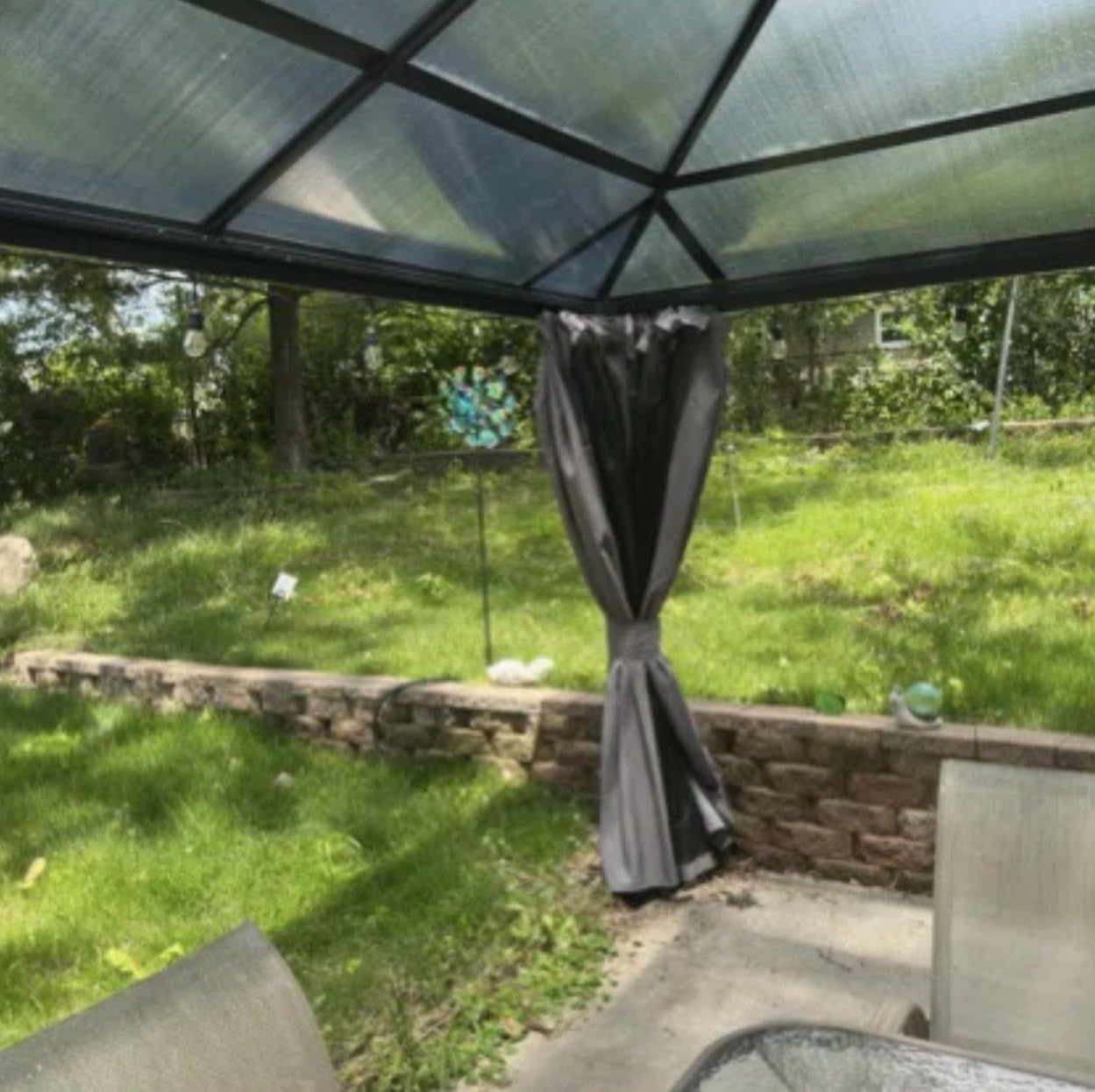
The roof is a double-layer polycarbonate top with hooks for fans, lights, and decorations. Blocks of light come through rather than darkness, which is genuinely useful over a grill, and removable polyester curtains plus inner zippered netting make it bug-free at dusk. The 31-page illustrated manual is among the best in this roundup, with parts clearly numbered for identification.
It is also the fastest build here, with 2 to 3 people finishing in 2 to 3 hours, and most owners report complete parts with aligned holes and no missing pieces. Customer service responds quickly. That is a real advantage when you are building on a weekend and something does not fit.
Two limitations define it. The polycarbonate roof is a seasonal shelter rather than a true winter-rated hardtop, with one owner reporting it tearing out in wind and others noting hail and ice damage risk. Quality control is inconsistent, since roof panels and support beams sometimes arrive dented or bent, and the instructions are visual only and vague on several steps including the ridge cap.
What you should check before ordering
Decide if three hours of assembly matters to you. If the build is the sticking point rather than the money, the longer builds here trade a weekend for a much shorter afternoon, and that difference is worth weighing carefully.
Plan your anchoring properly. The included ground stakes are too short for anything but hard clay soil, so on loam or sand you need to buy your own. This is also the structure most likely to be lost in a storm if it is only staked into soft ground.
Who should skip it
Skip it in any climate with snow, hail, or serious wind. The polycarbonate roof is the reason this model is positioned as a value pick, and it is also the component that fails first when weather turns, so the calculation only holds in mild conditions.
Skip it if you need maximum UV blocking for a west-facing patio. The polycarbonate roof passes light by design, and if your goal is a genuinely dark, cool space at 4pm, a galvanized steel roof is the specification you actually want.
Hardtop vs Soft-Top vs Pergola: Which One Do You Actually Need?
This is the most common undecided question in the category, so it is worth answering directly. A hardtop has a rigid roof that lasts 5 to 15 years and needs no seasonal replacement. A soft-top uses a fabric canopy that typically needs replacing every 1 to 3 years, and a pergola is partially roofed with slats or beams, which means partial shade by design.
Choose a soft-top if you plan to move it, you are in a mild climate, and you want the lowest cost. Choose a pergola if you want an open structure for vines and a defined outdoor room, and you accept that it will not keep rain off. Choose a hardtop if you want furniture, a grill, or a dining set to stay usable in rain, wind, and snow through all four seasons.
On the structural question that comes up in owner debates, a gazebo is engineered as a roofed structure with a full perimeter frame and a ridge, while a pergola is a lighter open-frame build. Community members often worry that gazebo frame metal is too thin for wind, and the fair answer is that it depends entirely on the post gauge and the anchoring, not on the shape. A 4.7 inch triangular aluminum post on concrete behaves very differently from a thin tube staked into lawn.
Which Is Better for a Gazebo, Galvanized Steel or Aluminum?
They solve different problems, and the right one depends on your climate. Galvanized steel carries higher snow and wind capacity and is heavier, which suits snowy and coastal regions. Aluminum never rusts, weighs far less, and takes roughly 75 percent less maintenance, which suits mild climates and owners who would rather not think about corrosion.
The trade-off runs through the whole list. A galvanized roof is the harder surface against snow, hail, and UV, and it blocks light more completely. A polycarbonate roof is the lightest and coolest-running, but it is the first thing to fail in a serious storm and it yellows with age. None of the aluminum frames here corrode, but steel still shows rust at joints where coatings wear through, and any frame can be defeated by anchoring in soft soil.
Our practical read from these ten: if you get real snow, buy steel and accept the weight. If you are in a mild climate and want the easiest build, aluminum is the correct answer. If you want light and cool and you accept seasonal limits, polycarbonate works, but treat it as a three-season shelter rather than a permanent hardtop.
Climate Zones: What Your Weather Actually Requires
Most gazebo failures are climate mismatches rather than defects. A structure rated for 30 mph wind is not faulty in Florida, it is simply the wrong purchase, and a roof that passes light is a poor choice in a state that gets a foot of snow in a single storm.
Hot and sunny backyards want the highest UV blocking figure you can find, a vented double roof to release heat, and a hook or two for a fan. The Domi 12×12 at 99 percent UV protection and UPF 50+ is the clearest match, with the Domi 12×16 at 99.99 percent and the PURPLE LEAF double vented roof close behind. If you sit outside at midday, add a ceiling fan, because owners report heat buildup on still days under any double roof in this roundup.
Rainy climates care about one thing above all: where the water goes. Look for a built-in gutter system that routes water off the roof and down through the frame poles rather than off the eaves. The PURPLE LEAF, Kozyard Alexander, and both Domi models all do this, and owners on each confirm furniture stays dry through steady rain.
Snowy and windy regions need published numbers, not adjectives. Target a stated snow load and a wind rating of 40 mph or higher, and be skeptical of any listing that omits them entirely. The Kozyard Alexander at a 2,500 lb anchored snow load and 60 mph is the strongest documented figure in this roundup, and the YOLENY has the most convincing owner reports of surviving both heavy snow and 60 mph gusts.
Coastal zones are the hardest case, because salt air punishes anything that stays wet. Aluminum frames handle it better than steel, but no frame substitutes for anchoring, and the honest answer is that a gazebo in a storm-prone coastal yard needs a real foundation. Polycarbonate roofs are the worst option there, since wind load is exactly what they cannot carry.
What Size Gazebo Do You Need?
Most sizing regret comes from measuring the gazebo instead of the furniture. A 10 by 12 footprint seats a 4-person table comfortably and a 6-person table tightly, once chairs are pulled out. A 12 by 12 fits a full 6-person dining set with real circulation room, and a 12 by 16 or 12 by 20 is the right answer for 8 to 10 people or for a hot tub.
Hot tubs change the math more than dining sets do. You need clearance on at least two sides for access, and you need the peak height to be tall enough to stand under, which rules out the lowest models in this roundup. A 12 by 16 is the practical starting point, and the taller Domi 12×16 at 120.9 inches is better suited than anything under 110.
Two feet of clearance on every side is a good working rule for assembly, not just comfort, because you need room to raise the frame and lift roof panels into place. If your available space does not allow that, a smaller gazebo that you can actually build will serve you better than a larger one you cannot finish. Once the structure is up, our outdoor storage guide covers getting the gear that does not fit inside it out of the way.
How to Anchor a Gazebo by Surface
Anchoring is where most gazebos are lost, and it is the step buyers skip because the kit includes stakes that feel sufficient. They are not, except in hard clay. Here is the correct hardware for each surface.
First, pick your surface. Soil and grass take ground stakes, but only long ones driven deep, and the wind rope matters more than owners expect. Concrete and a poured pad take expansion bolts or tapcon screws, and this is the strongest option by a wide margin. Pavers need anchors that bite into the joint or the slab beneath, since the paver itself cannot carry the load. A wood deck needs separately purchased deck hardware, and many kits include only concrete anchors.
Second, assemble the frame square before you anchor it. Bolting a crooked frame to the ground locks in the crookedness permanently, and this is the single most common assembly mistake owners report.
Third, anchor all four feet, not the two that are convenient. Wind loads on a canopy act on the roof surface, and three anchored corners with one loose is a failure waiting for the first gust. Check the feet again after the first serious weather.
Fourth, if you cannot get to concrete, use a set of pier blocks or a gravel pad, and drive stakes at least 12 inches. Several owners in the r/HomeXpert thread described anchoring with the included short stakes into soft soil and regretting it in the first storm, and the replacement cost of a whole gazebo makes extra hardware the cheapest decision in the entire process.
Do You Need a Permit for a Hardtop Gazebo?
Most permanent hardtops over roughly 120 square feet require a permit, and some jurisdictions require one for any permanent structure regardless of size. Rules are set locally, so the only reliable answer comes from your building department, but a hardtop gazebo is typically treated the same way as a small deck or a shed, and unpermitted structures can carry fines well above the cost of the gazebo itself.
Two related checks are worth doing before you order. HOA rules frequently cap structure height, footprint, or how close a build can sit to a property line, and a compliant-looking gazebo can still violate a covenant. And your utility easement map matters, because anchoring into an easement is a common discovery made after the concrete has been poured.
One product note rather than legal advice: the Domi 12×12 listing itself flags that some areas require a permit. If your gazebo is permanent, anchored, and close to that 120 square foot line, assume you need one and confirm it early. The paperwork is slow, the gazebo is not.
How Long Does Gazebo Assembly Take?
Realistically, 1 to 2 hours for a small budget model, 3 to 6 hours for a typical 10 by 12 or 12 by 16, and 12 to 20 hours with three people for the large premium structures. Owner reports across this roundup cluster around 12 to 20 hours for anything over 300 pounds, with the two largest models regularly called a full day or more with two tall ladders.
Crew size matters more than hours. Two people can manage a 10 by 12 in an afternoon with a power driver. Three people and multiple ladders are the honest requirement for the 397 pound and 390 pound models, and roof panel alignment is the stage where one person alone gets stuck. Some listings help, and the YITAHOME and Jolydale kits include installation videos, with the Jolydale manual carrying a QR code that links to an assembly walkthrough.
Add time for the delivery, because this is where schedules slip. Gazebos arrive in several cartons that may reach you days apart, and the build cannot start until every box is on site. The practical rule we would give a friend: if your honest DIY estimate exceeds 8 hours across two or more people, paying a crew to assemble it is usually worth it, because a misaligned roof panel or a squared-off frame goes wrong in ways that cost more than the labor saved.
Once the structure is up, a well-chosen grill turns the space into a cooking station rather than a sitting area, and our backyard griddle guide covers that side. If you are planning the rest of the yard around it, the greenhouse and compost bin guides cover the two projects that pair well with a new patio structure.
Frequently Asked Questions
What is the best brand of hardtop gazebo?
No single brand wins on every axis. PURPLE LEAF leads on the balance of rating and review volume, Kozyard publishes the strongest snow and wind figures, Domi builds the largest and the best UV-protected models, and EROMMY delivers a stiff aluminum frame with a steel roof at the lighter end. Match the brand to the climate and footprint you need rather than looking for a universal winner.
Are hard top gazebos worth it?
Yes, if you want usable outdoor space through all four seasons and you anchor it properly. A rigid roof keeps rain, sun, and insects off your furniture where a fabric canopy cannot, and the structure adds usable square footage you would otherwise lose to weather. They are not worth it if you need portability, a footprint under about 100 square feet, or a tight weekend build.
How long do hard top gazebos last?
Expect 5 to 15 years depending on frame material, anchoring, and whether the snow rating matches your climate. Aluminum frames with proper anchoring outlast budget steel units, and galvanized steel roofs outlast polycarbonate ones, which can yellow or fail under load within a few seasons. The variables that decide it are anchoring quality and whether the roof rating exceeds what your weather actually delivers.
Which is better for a gazebo, galvanized steel or aluminum?
Galvanized steel carries higher snow and wind capacity but is heavier and can show rust at worn joints. Aluminum never rusts, weighs far less, and needs much less maintenance, but offers a lower snow load. Snowy and coastal regions favor steel, mild climates favor aluminum, and polycarbonate sits between them as the lightest and coolest option with the least storm tolerance.
Can hardtop gazebos withstand snow?
Only if the model publishes a snow load that exceeds your conditions. The Kozyard Alexander in this roundup is rated for 2,500 lb when properly anchored, while others are rated by weight per square foot, and a couple of models publish no snow figure at all. Polycarbonate roofs are not winter-rated, and one owner reported shattering under 12 inches of snow. Clear accumulation regardless of rating.
Do I need a permit for a hardtop gazebo?
Most permanent hardtop gazebos over roughly 120 square feet require a permit, and some jurisdictions require one for any permanent structure regardless of size. Unpermitted structures can attract fines well above the cost of the gazebo. Check your local building department and your HOA rules on height, footprint, and setbacks before ordering, since permit turnaround is far slower than the build.
How do you anchor a gazebo to a wood deck?
Use deck-rated structural hardware or lag bolts screwed into the deck joists rather than the deck boards, and you will need to buy it separately because most kits include concrete anchors only. On a concrete slab or pad, expansion bolts or tapcon screws are the strongest option. Whatever the surface, anchor all four feet and square the frame before bolting anything down.
How long does gazebo assembly take?
Budget 1 to 2 hours for a small model, 3 to 6 hours for a typical 10 by 12 or 12 by 16, and 12 to 20 hours with three people for the large premium structures. Add time for delivery, since cartons often arrive days apart and the build cannot start until every box is on site. If your honest estimate exceeds 8 hours across two people, hiring the assembly is usually worth it.
Final Recommendations for 2026
The best hardtop gazebos for backyards come down to two questions: what does your weather do, and how much room do you have. Start with the PURPLE LEAF 10×12 if you want the safest overall choice, because it pairs the strongest rating and review base in this roundup with a 5-year roof warranty and drainage that actually keeps water off your patio.
Move up to the Kozyard Alexander 12×12 if snow and wind are the deciding factors, since its published 2,500 lb anchored snow load and 60 mph rating are the strongest numbers here. Go large and quiet with the Domi 12×16 when you are covering a real deck, and take the Domi 12×12 when maximum UV blocking is the priority. For the strongest value at a size that still hosts a full table, the YITAHOME 12×14 is hard to argue with.
Whichever one you choose, anchor it to something better than the included stakes, check the permit question before the concrete cures, and buy the extra hardware early. Those three steps decide whether the gazebo is still standing in year ten, and none of them cost enough to regret skipping.