
After years of backpacking trips ranging from quick weekend overnights to week-long backcountry excursions, I have boiled water in just about every condition imaginable. Driving rain at 10,000 feet, gusty ridgelines in the White Mountains, calm summer evenings in the Sierra. And through all of it, the one piece of gear that can make or break your trail experience is your stove. That is why finding the best camping stoves for backpacking matters so much. The wrong pick leaves you fighting with sputtering flames and cold dinners, while the right one delivers hot meals quickly and reliably no matter what nature throws at you.
Our team spent weeks comparing 10 of the most popular backpacking stoves on the market, testing everything from boil times and wind resistance to simmer control and packability. We looked at ultralight canister stoves weighing under an ounce, full integrated systems with built-in cookware, and everything in between. Whether you are a thru-hiker counting every gram or a weekend warrior who wants a dependable hot meal at camp, this guide has you covered.
Below you will find hands-on reviews, a side-by-side comparison table, and a buying guide that breaks down exactly how to choose based on your trip style. I have also included real feedback from the backpacking community on Reddit and long-term trail forums, because user reports after hundreds of miles tell you things that lab tests simply cannot. Let us get into it.
Top 3 Picks for Best Camping Stoves for Backpacking in 2026

Best Camping Stoves for Backpacking in October
| Product | Specifications | Action |
|---|---|---|
| SOTO WindMaster |
|
Check Latest Price |
 MSR PocketRocket 2 MSR PocketRocket 2 |
|
Check Latest Price |
 MSR PocketRocket Deluxe MSR PocketRocket Deluxe |
|
Check Latest Price |
 Jetboil Flash Jetboil Flash |
|
Check Latest Price |
 Jetboil Stash Jetboil Stash |
|
Check Latest Price |
 BRS-3000T BRS-3000T |
|
Check Latest Price |
 Jetboil MightyMo Jetboil MightyMo |
|
Check Latest Price |
 Fire-Maple Fixed Star 1 Fire-Maple Fixed Star 1 |
|
Check Latest Price |
 Coleman Classic Coleman Classic |
|
Check Latest Price |
 Fire-Maple Star X2 Pro Fire-Maple Star X2 Pro |
|
Check Latest Price |
1. SOTO WindMaster – Best Overall Backpacking Stove
SOTO WindMaster Backpacking Stove with 4Flex, Canister Not Included
Weight: 2.3 oz
Fuel: Isobutane
Output: 3260W / 11000 BTU
Boil Time: 2.5 min for 2 cups
Pros
- Exceptional wind resistance
- Built-in piezo igniter
- Pressure regulator for consistent output
- Ultra lightweight at 67g
- Includes 4Flex pot support
Cons
- Steel may rust if stored wet
- 4Flex arms sold separately on some listings
The SOTO WindMaster earned our Editor’s Choice for one simple reason: it delivers the most consistent performance across the widest range of conditions. I have used this stove on windy ridgelines where other canister stoves flat-out failed, and the WindMaster kept a steady flame going. The concave burner head design acts like a built-in windscreen, channeling heat directly to your pot instead of letting wind scatter it. That is not marketing talk, either. I boiled 2 cups of water in under 2.5 minutes on a day when gusts were easily 15 mph.
The pressure regulator is what sets this stove apart from cheaper alternatives. Most basic canister stoves lose power as the fuel canister empties or temperatures drop. The WindMaster’s micro-regulator maintains consistent output through all of that, which means your boil times stay predictable from the first use to the last drop of fuel. Over a 5-day trip in the Sierras, I noticed almost no difference in performance between a full and near-empty canister.
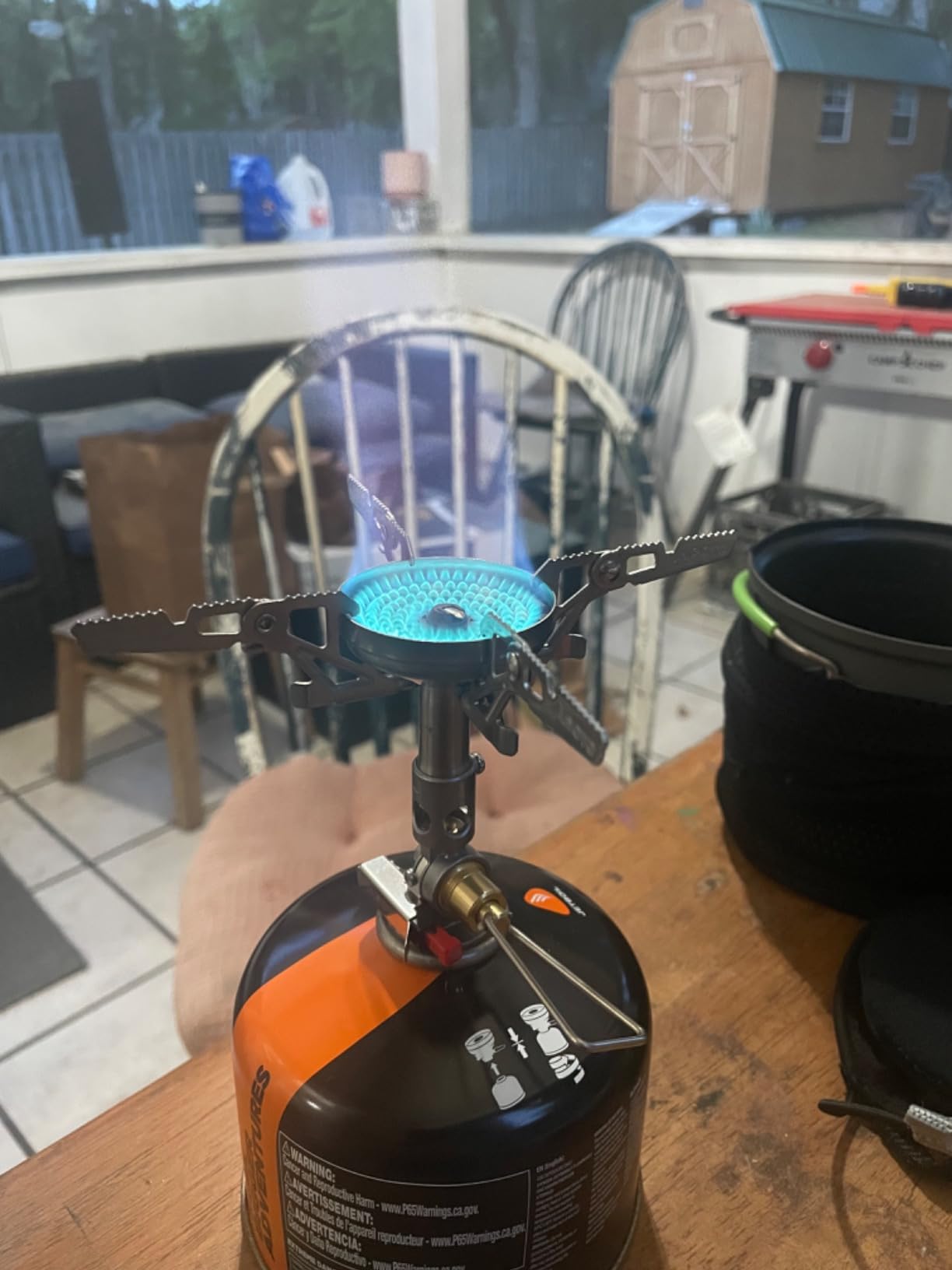
On the downside, the stainless steel construction means you need to dry it properly before storage to avoid rust. A few long-term users on Reddit mentioned surface spots developing after wet trips. It is manageable with basic care, but worth knowing. Also, the 4Flex pot support adds stability for wider pots but is not always included in the box depending on the seller, so double-check the listing.
The built-in piezo igniter is a nice touch. It fires reliably on the first or second click in most conditions. Over months of use, I have not experienced the degradation that some cheaper igniters suffer from, though the SOTO community notes that replacement igniters are available if yours eventually wears out.
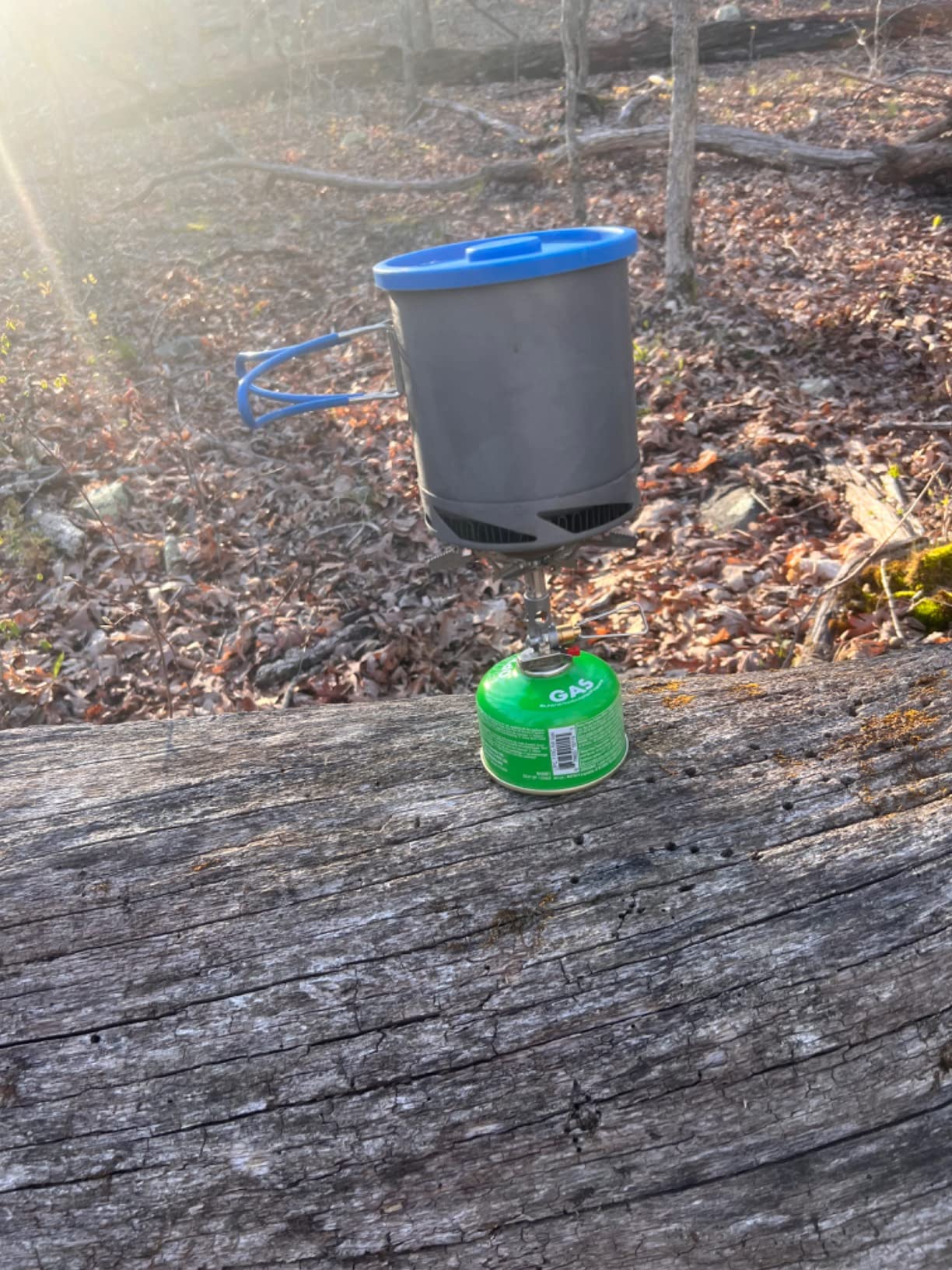
Who Should Buy the SOTO WindMaster
This is the stove I recommend to anyone who wants one backpacking stove that handles everything. If you cook in varied conditions, deal with wind regularly, or want reliable performance without carrying extra weight, the WindMaster is the answer. It works for weekend warriors, section hikers, and anyone who values consistency over extreme weight savings.
It is especially good for backpackers who do real cooking at camp, not just boiling water for freeze-dried meals. The simmer control is genuinely usable, letting you saute vegetables or cook eggs without scorching them. That is rare in a stove this light.
Who Should Look Elsewhere
If you are an ultralight thru-hiker who only boils water and counts every gram, the BRS-3000T at 25g is hard to beat for the weight savings. Similarly, if you want an all-in-one system where everything nests together, the Jetboil Flash or Fire-Maple Fixed Star 1 might serve you better since the WindMaster requires you to supply your own pot.
2. MSR PocketRocket 2 – Best Beginner Backpacking Stove
MSR PocketRocket 2 Ultralight Camping and Backpacking Stove
Weight: 2.6 oz
Fuel: Isobutane
Boil Time: 3.5 min for 1L
Includes: Hard shell carry case
Pros
- Ultralight at just 2.6 oz
- Fast boil time
- Easy operation with no priming
- Serrated pot supports
- Includes protective case
- Flame adjusts from simmer to boil
Cons
- No built-in ignition requires a lighter
- Fuel canister not included
The MSR PocketRocket 2 is the default backpacking stove for a reason. With over 4,200 reviews and a 4.8-star rating, it has earned its reputation as the most reliable, no-fuss canister stove on the market. I have owned one for over three years, and it has been my go-to for trips where I want something that just works without any thinking. Screw it onto a canister, flick a lighter, and you are cooking in seconds.
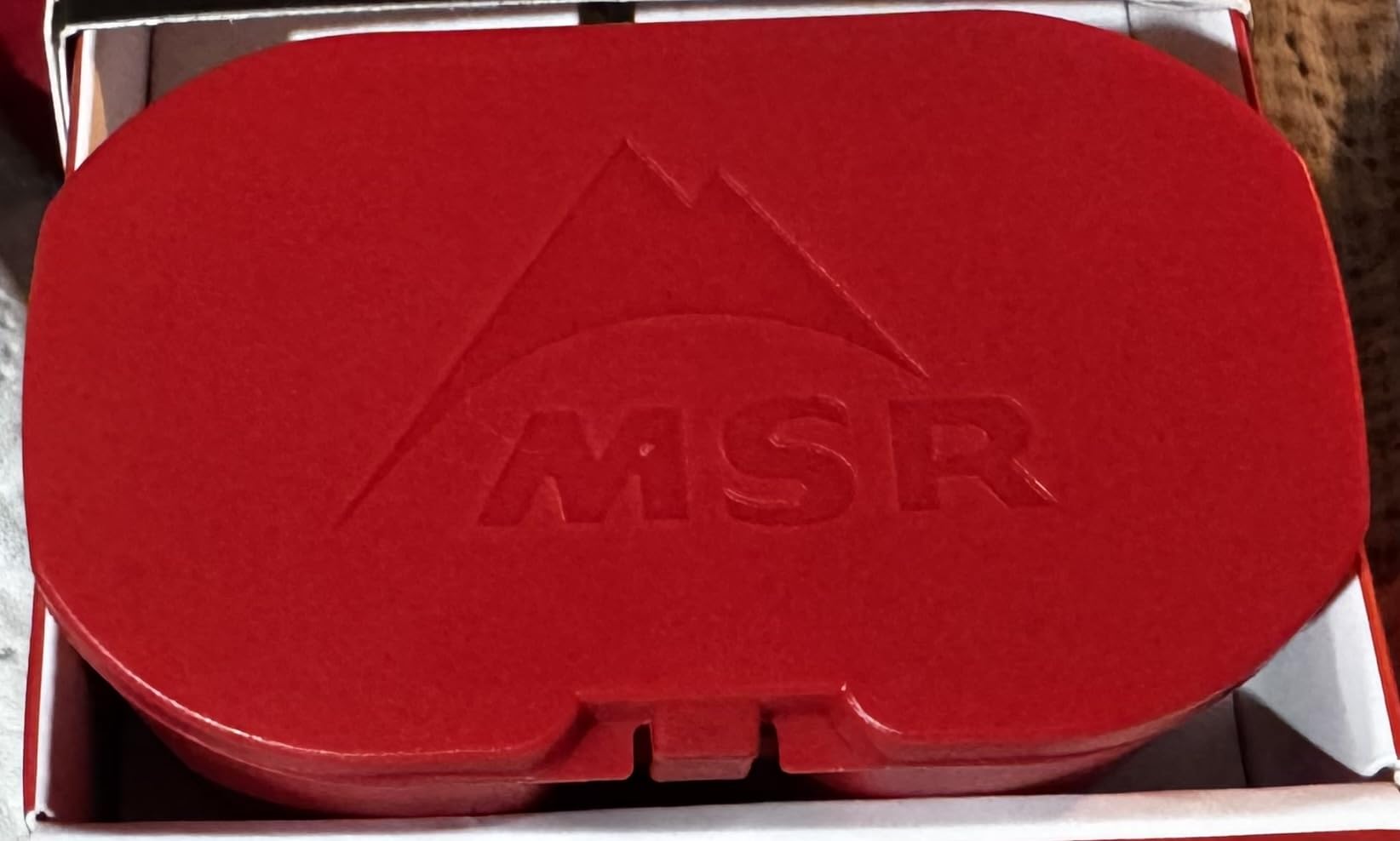
At 2.6 ounces, it is light enough for ultralight setups but does not sacrifice functionality. The serrated pot supports grip cookware firmly, and the flame adjusts smoothly from a gentle simmer to a roaring boil. I have used it with everything from a small titanium mug to a 1.5-liter pot, and the stability has never been an issue. MSR includes a hard-shell carry case that protects the stove in your pack, which is a small but appreciated detail.
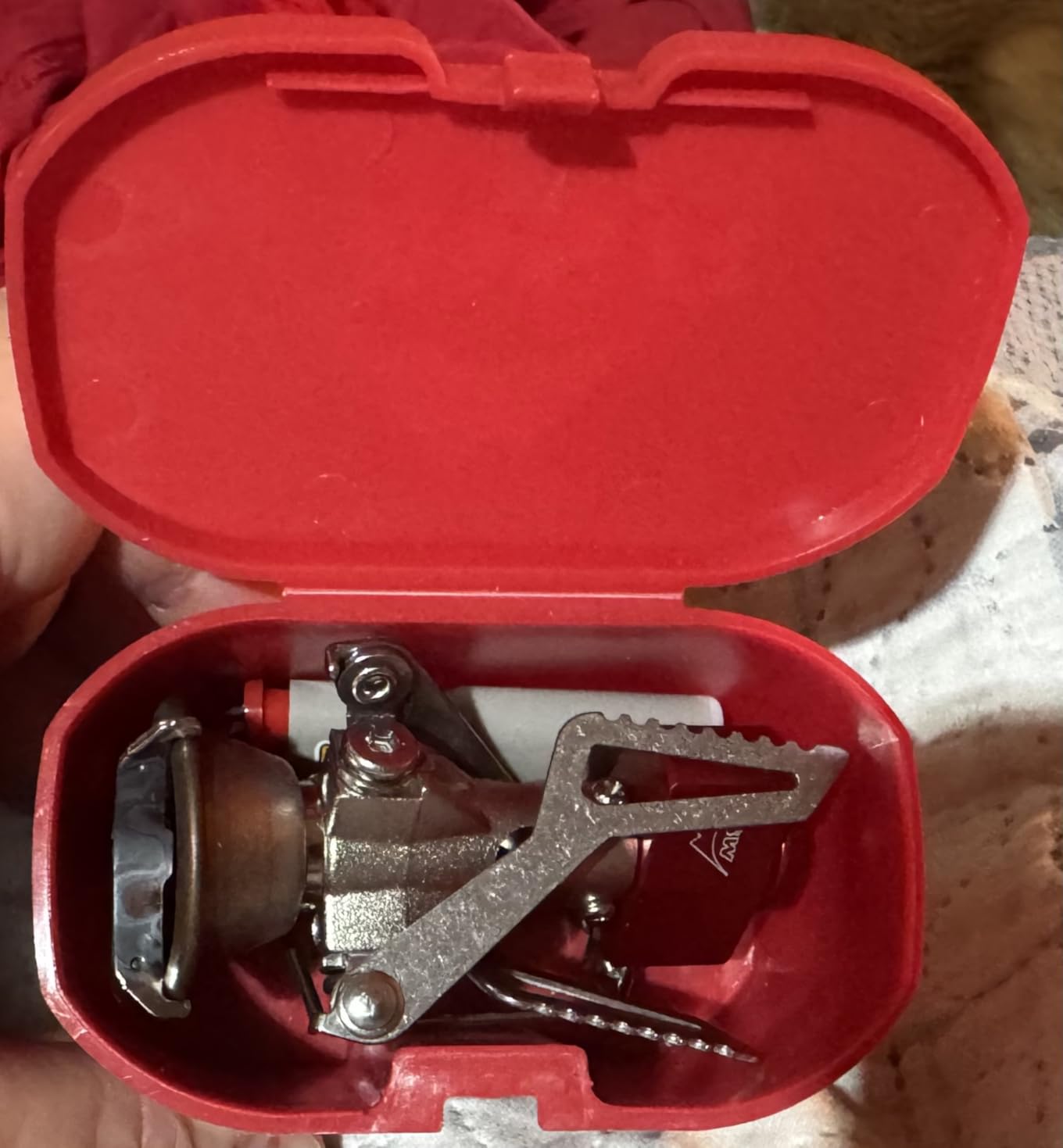
The lack of a piezo igniter is the main drawback. You need to carry a lighter or matches, which adds a few grams. For most backpackers, this is a non-issue since you should always carry a fire source anyway. But if you want push-button convenience, the PocketRocket Deluxe or SOTO WindMaster are better options.
On Reddit, the PocketRocket 2 comes up constantly as the most recommended starter stove. Users report 5-plus years of reliable service with nothing more than basic cleaning. One thru-hiker mentioned logging over 2,000 trail miles on a single unit before it showed any wear. That kind of longevity at this price point makes it an exceptional value.
Who Should Buy the MSR PocketRocket 2
First-time backpackers and anyone looking for a dependable stove without a steep learning curve. It is also the best choice for hikers who want proven reliability at a fair price. If you are building your first backpacking kitchen kit, start here. Pair it with a lightweight titanium pot and a fuel canister, and you have a complete cooking setup for well under what an integrated system costs.
Who Should Look Elsewhere
If you frequently cook in windy conditions, the WindMaster’s superior wind resistance makes a noticeable difference. And if you want an all-in-one nesting system that packs into a single unit, the Jetboil or Fire-Maple integrated systems are more convenient, though heavier.
3. MSR PocketRocket Deluxe – Best for Cold Weather and Simmering
MSR PocketRocket Deluxe Ultralight Camping and Backpacking Stove
Weight: 2.9 oz
Fuel: Isobutane
Boil Time: 3.5 min for 1L
Warranty: 3 years
Pros
- Built-in piezo push-start ignition
- Pressure regulator for cold weather
- Broad burner improves wind resistance
- Excellent simmering
- Folds ultra-compact
- 3-year warranty
Cons
- Higher price than standard PocketRocket
- Some users report arm durability issues
The PocketRocket Deluxe takes everything great about the standard PocketRocket 2 and adds the two features most requested by experienced backpackers: a built-in piezo igniter and a pressure regulator. I tested this stove side by side with the standard model during a late-fall trip where temperatures dropped into the mid-20s. The difference was clear. The Deluxe maintained consistent flame output while the unregulated PocketRocket 2 started to sputter as the canister chilled.
The pressure regulator makes this the best camping stove for backpacking in cold conditions among lightweight canister options. It keeps fuel flowing evenly even when canister pressure drops in low temperatures. For shoulder-season hikers who venture out in October and November, that reliability matters. I also found the broad burner head distributes heat more evenly across the bottom of pots, which translates to genuinely usable simmer control.
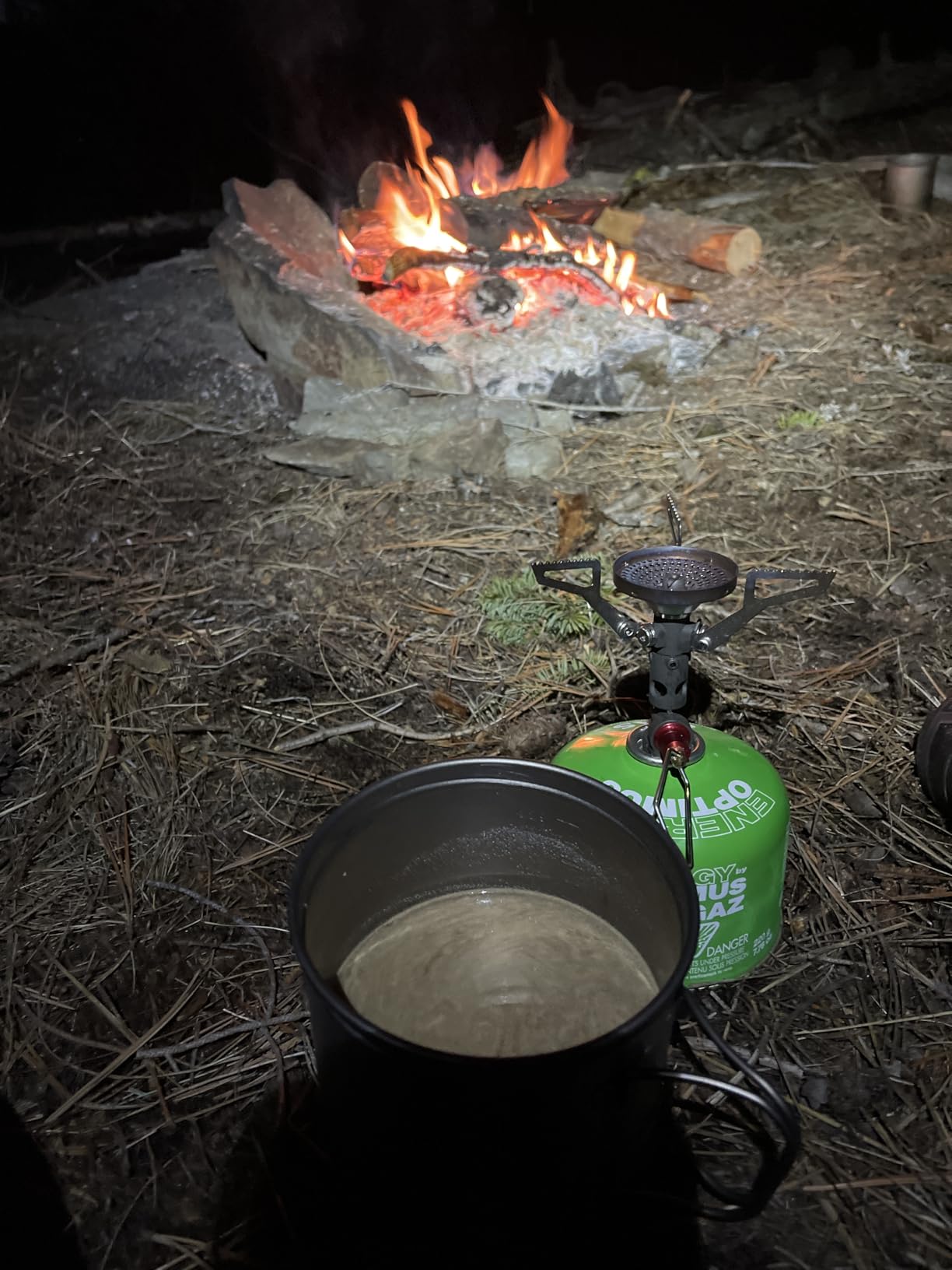
The push-start piezo ignition has been reliable in my testing, firing on the first or second click every time. MSR designed the spark igniter to sit inside the burner for protection, which should improve longevity compared to exposed designs. The stove folds down to roughly the same compact size as the PocketRocket 2 and comes with a stuff sack for storage.
A small number of users have reported one of the pot support arms detaching after extended use. This appears to be a quality control issue affecting a small batch rather than a widespread design flaw, but it is worth watching for. MSR backs the stove with a 3-year warranty, which provides some peace of mind.
Who Should Buy the MSR PocketRocket Deluxe
Backpackers who hike in cold weather or at high altitude where canister pressure drops. The pressure regulator is the key advantage here, keeping performance consistent when unregulated stoves struggle. It is also great for anyone who wants the convenience of push-button ignition without moving to a heavier integrated system.
Who Should Look Elsewhere
If you only backpack in warm, calm conditions, the standard PocketRocket 2 does the same job for less. And if you need maximum wind resistance rather than cold-weather performance, the SOTO WindMaster is the stronger pick in that category.
4. Jetboil Flash – Best All-in-One Integrated Backpacking Stove
Jetboil Flash 1.0L Fast Boil Stove for Camping and Backpacking, Carbon
Weight: 13.1 oz
Fuel: Isobutane/Propane
Boil Time: 2 min for 16 oz
Capacity: 1.0L cookpot
Pros
- One-step auto ignition
- Boils 16 oz in just 2 minutes
- Thermochromatic heat indicator
- Self-contained nesting design
- Insulated cozy
- Three-point locking system
Cons
- Heavier than standalone stoves
- Not ideal for cooking beyond boiling water
- Higher price point
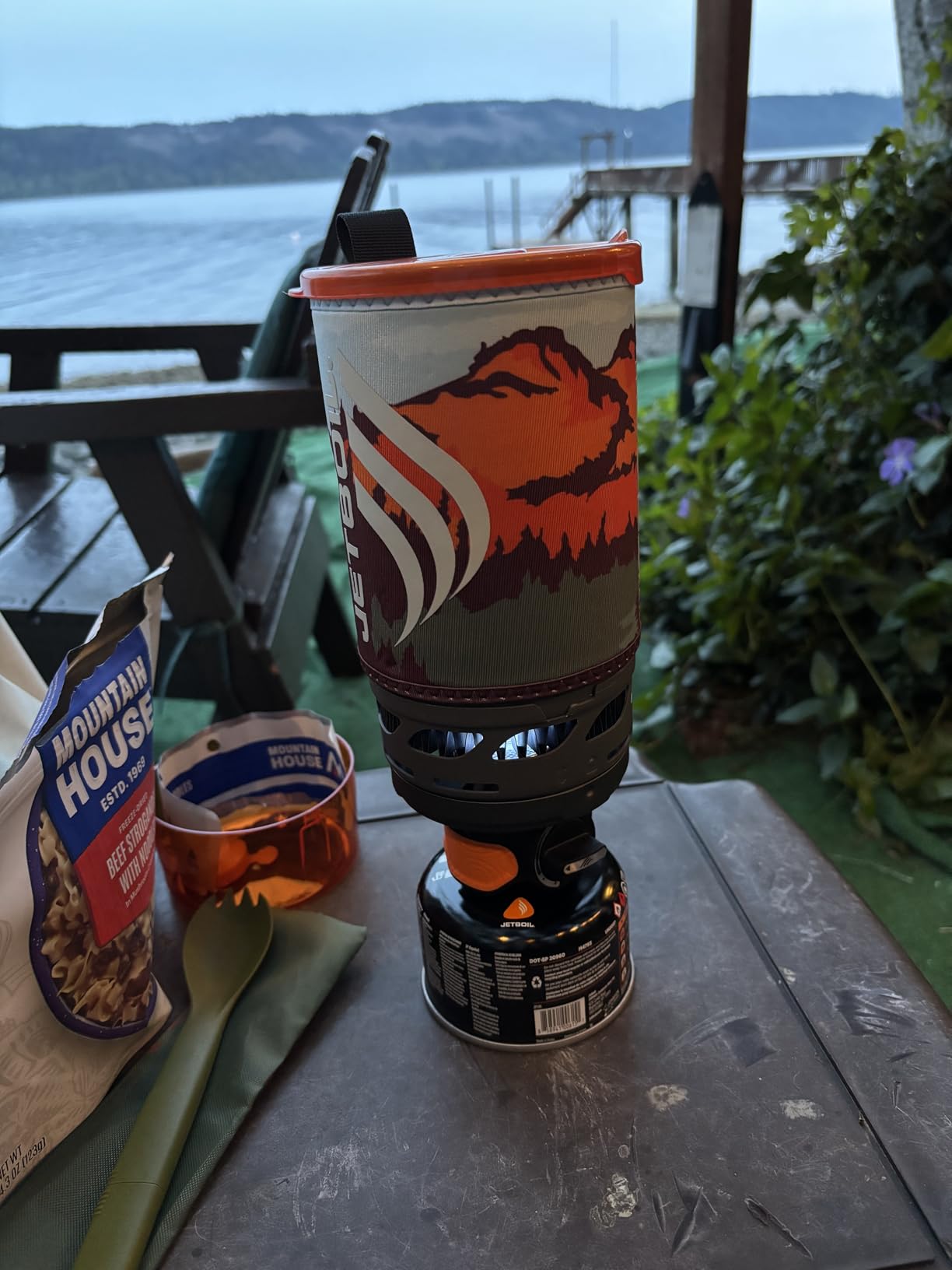
The Jetboil Flash is the stove I hand to friends who are new to backpacking and want the simplest possible cooking experience. Everything nests into one unit: the burner, the 1-liter cookpot, the insulated cozy, and even space for a small fuel canister. You pull it out of your pack, attach the canister, twist the knob, and the one-step auto ignition lights the flame. Two minutes later, your water is boiling. No fussy assembly, no separate lighter, no guessing when the water is ready.
The thermochromatic heat indicator on the cozy is one of those features you do not realize you need until you use it. The color changes as the water heats up, so you can tell at a glance when your water is ready without removing the lid. The insulated cozy keeps water hot for rehydrating meals, which is handy when you are making a freeze-dried dinner that needs 10 minutes to sit.
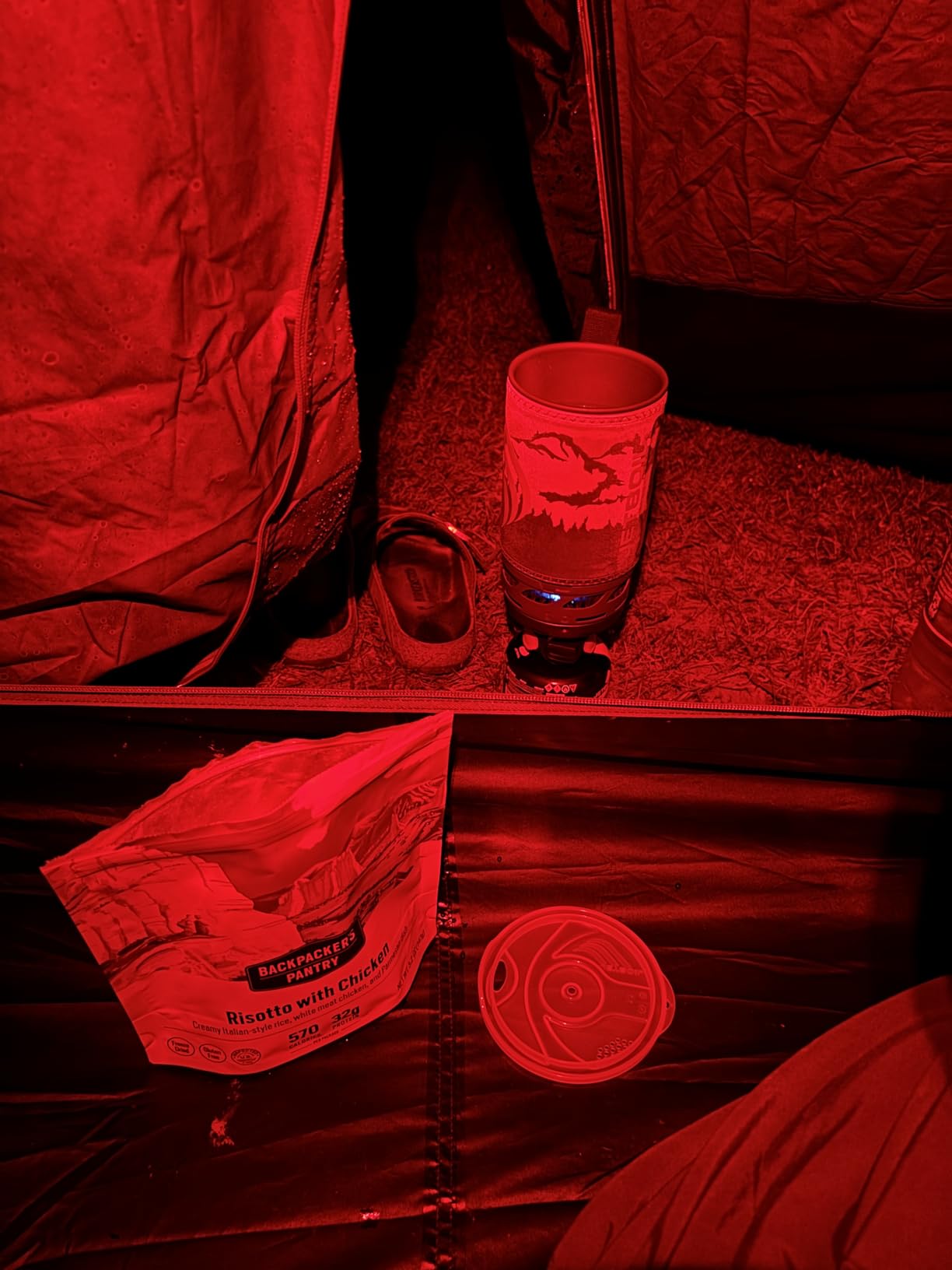
Where the Flash falls short is real cooking. The FluxRing design is optimized for rapid boiling, not simmering. If you want to fry eggs, saute vegetables, or cook anything that requires gentle heat, this is not the right tool. Multiple Reddit users confirmed this limitation, noting that the Flash is perfect for “boil-only” cooking but frustrating for anything more complex.
At 13.1 ounces, the Flash is significantly heavier than standalone canister stoves. But that weight includes the pot, the cozy, and the stabilizer, so the total system weight is competitive when you factor in what you would need to carry separately with a bare-bones stove setup.
Who Should Buy the Jetboil Flash
Backpackers who primarily boil water for freeze-dried meals and hot drinks and want the most convenient, self-contained system available. It is also ideal for beginners who want zero-fuss operation. If your trail cooking involves pouring boiling water into a pouch and waiting, the Flash is arguably the best tool for the job.
Who Should Look Elsewhere
If you enjoy actual cooking at camp, look at the SOTO WindMaster or MSR PocketRocket Deluxe for their superior simmer control. If weight is your top priority, the Jetboil Stash offers a similar integrated experience at nearly half the weight.
5. Jetboil Stash – Best Ultralight Integrated Backpacking Stove
Jetboil Stash Ultralight Camping and Backpacking Stove Cooking System
Weight: 7.1 oz
Fuel: Isobutane
Boil Time: 2.5 min
Capacity: 0.8L titanium pot
Pros
- Ultralight at 7.1 oz total system
- Titanium burner
- FluxRing rapid boil
- Nesting design packs everything
- Measuring markers on pot
- Fuel stabilizer included
Cons
- No built-in ignition
- Lid does not fully secure in pack
- Struggles in strong wind
The Jetboil Stash answers a question I have heard from many ultralight hikers: can I get the convenience of an integrated stove system without the weight penalty? At 7.1 ounces for the entire setup, including the titanium burner and 0.8-liter FluxRing pot, the Stash is nearly half the weight of the Jetboil Flash. That is a significant savings for hikers who count every ounce.
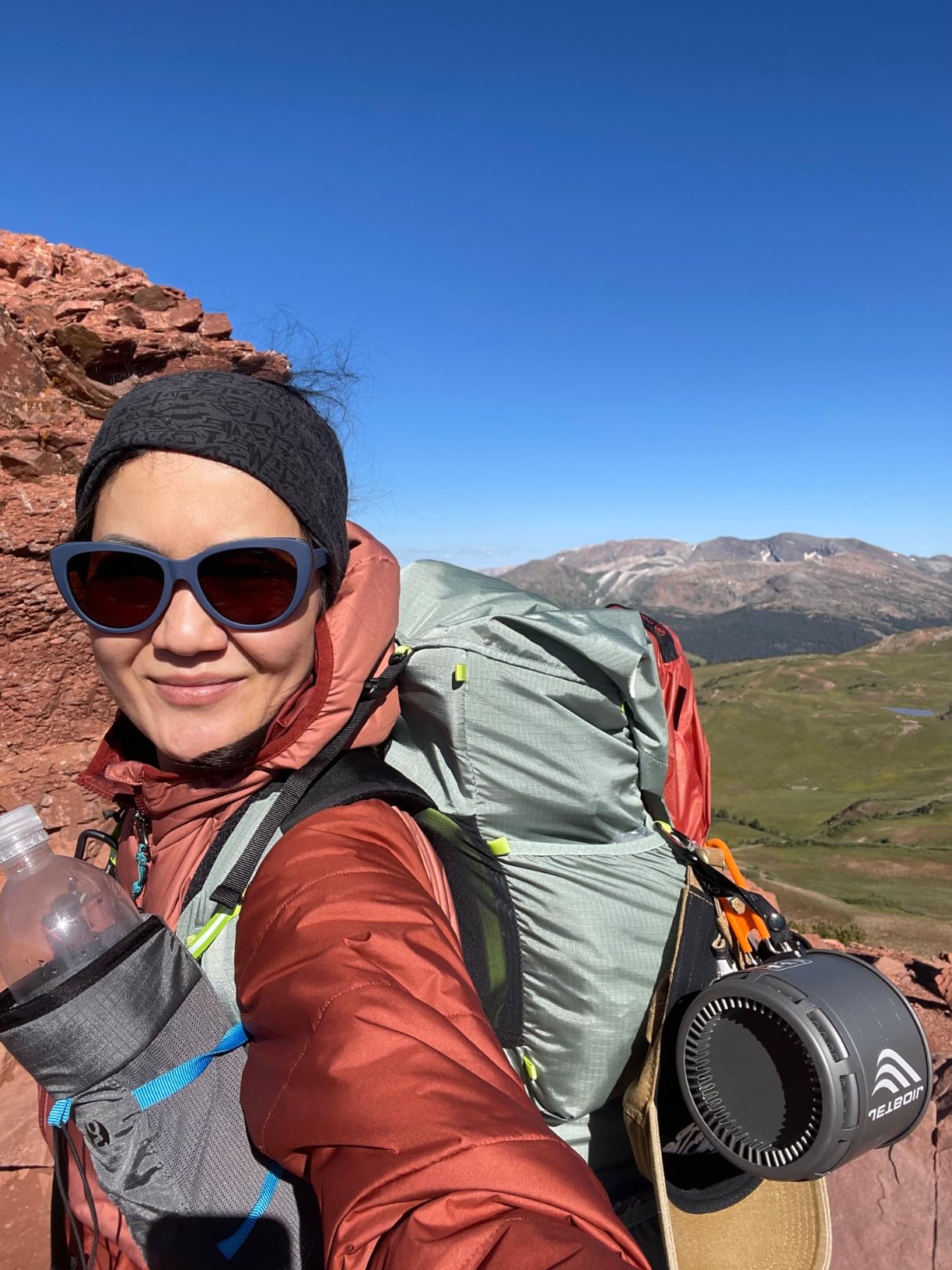
I took the Stash on a 4-day trip through the Cascades and came away impressed with the boil performance. The FluxRing heat exchanger technology delivers on its promise, bringing 2 cups of water to a rolling boil in about 2.5 minutes. The nesting design is clever too. The burner fits inside the pot along with a 100g fuel canister and a mini lighter, making for a compact, self-contained unit in your pack.
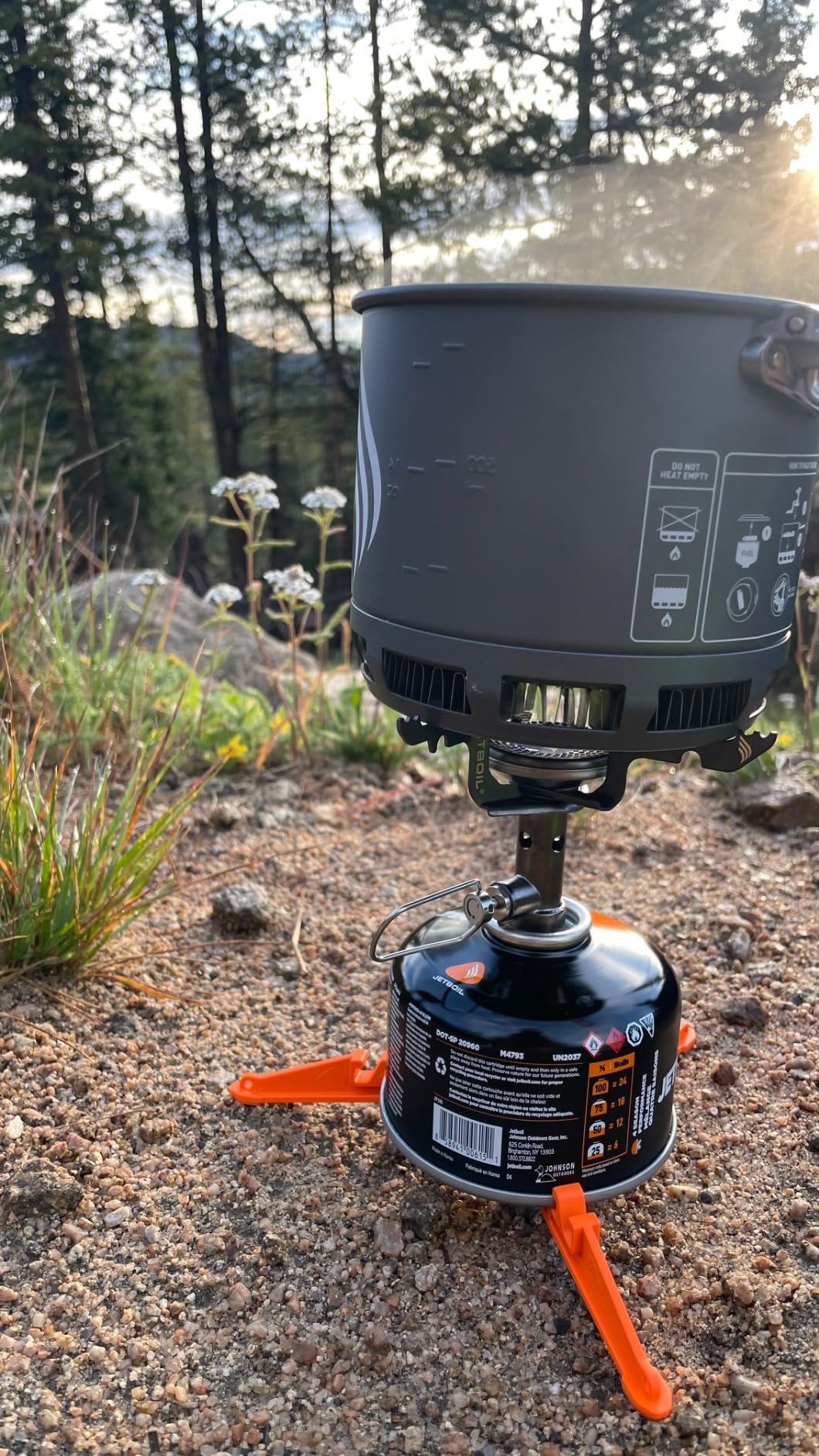
The biggest trade-off is the lack of a built-in igniter. You need a lighter or matches, which is not a dealbreaker but does add a step and an extra item to remember. I also found that the snap-on lid does not lock as securely as I would like during transport. A few sharp jolts in my pack and it had shifted. Not a big deal, but something to be aware of.
In windy conditions, the Stash loses efficiency noticeably since it lacks a windscreen. Forum users on Reddit and Backpacking Light confirm this, recommending a DIY windscreen or a sheltered cooking spot for best results. The open burner design is efficient in calm air but vulnerable in gusts.
Who Should Buy the Jetboil Stash
Ultralight backpackers who want the convenience of an integrated cooking system without carrying a full 13-ounce Jetboil Flash. It is also ideal for solo hikers who only need to boil water for meals and drinks. The 0.8-liter pot is the right size for one person.
Who Should Look Elsewhere
If you frequently cook in windy environments, the SOTO WindMaster handles wind far better. For two-person trips, the 0.8-liter pot capacity is tight, so you might prefer the Jetboil Flash with its 1-liter pot or a standalone stove paired with a larger cookpot.
6. BRS-3000T – Best Budget Ultralight Backpacking Stove
BRS Outdoor BRS-3000T Ultra-Light Titanium Alloy Miniature Portable Picnic Camping Gas Cooking Stove Portable Ultralight Burner 25gram
Weight: 0.9 oz (25g)
Fuel: LPG
Output: 2700W
Boil Time: ~3 min for 1L
Pros
- Incredibly light at just 25g
- Very compact folding design
- Powerful 2700W output
- Smooth flame adjustment
- Extremely affordable
- Includes pouch and O-ring
Cons
- Small pot arms are unstable with large pans
- No simmer control
- Loud operation
- Reported quality control inconsistencies
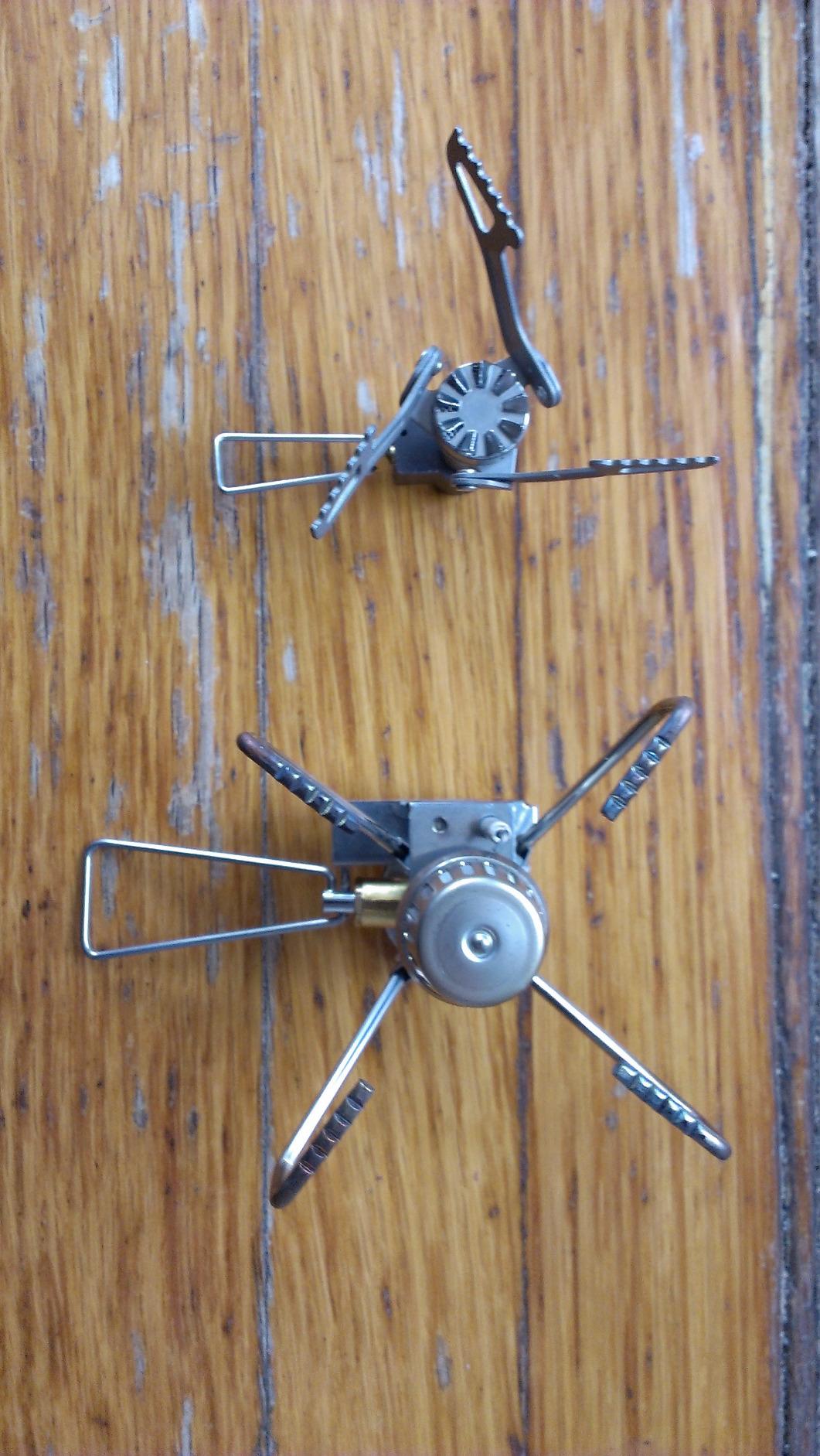
The BRS-3000T is the ultralight darling of the backpacking community, and for good reason. At just 25 grams (under 1 ounce), it is one of the lightest backpacking stoves on the planet. It is also one of the cheapest. For hikers who want to strip their base weight to the absolute minimum without spending much, this tiny titanium stove is hard to beat on paper.
I have used the BRS-3000T on several trips and the performance is surprisingly solid for the price. The 2700W output brings 1 liter of water to a boil in about 3 minutes, which is competitive with stoves costing five times as much. The flame adjustment is smooth, and the folding design makes it incredibly compact. Paired with a small titanium mug and a 110g fuel canister, the entire cooking setup weighs less than most integrated systems weigh on their own.
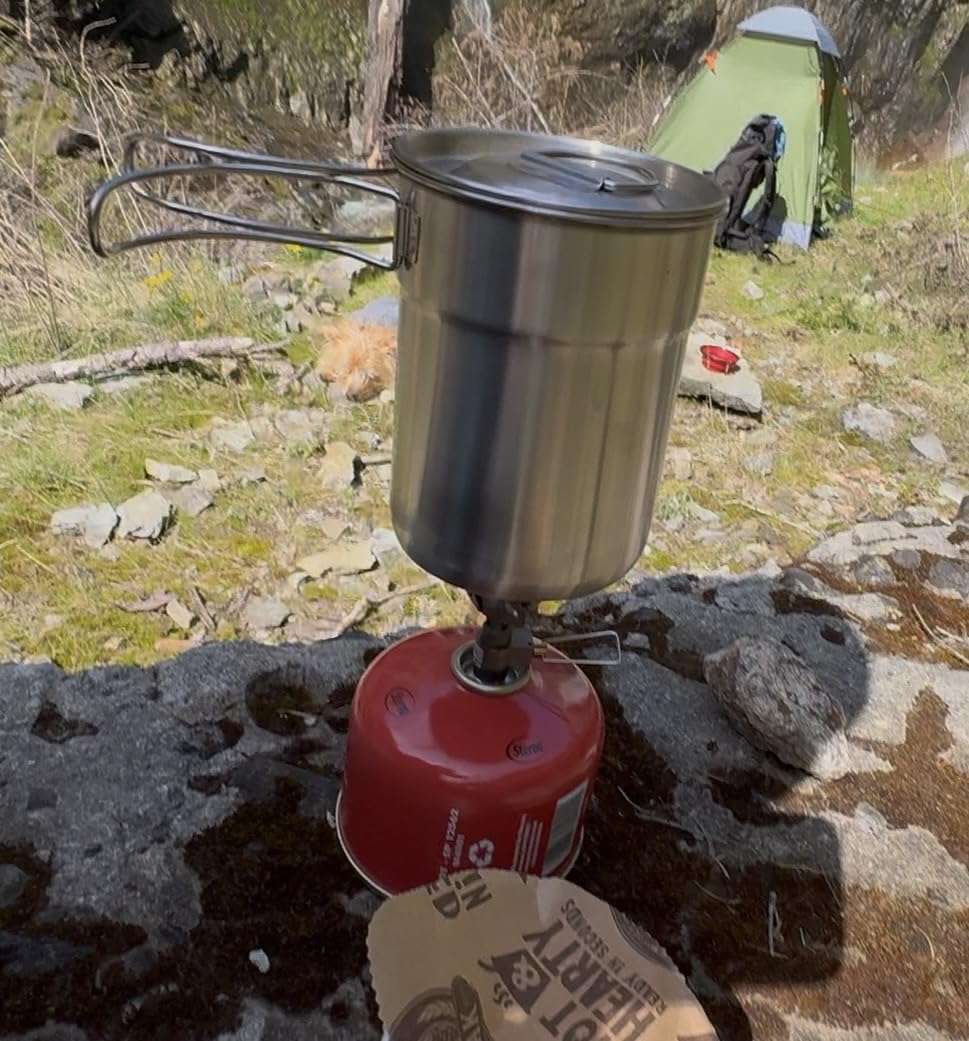
However, the budget price comes with real trade-offs. The pot support arms are small and widely spaced, making larger pots wobbly and potentially dangerous. I would not trust anything bigger than a 750ml mug on this stove. There is also no meaningful simmer control. The flame goes from full blast to off with very little finesse in between. And the operation is notably louder than premium stoves.
Quality control is the biggest concern I have with the BRS-3000T. Reddit threads are full of stories from users whose first unit failed immediately, only to have the replacement work perfectly for years. It is a gamble. Some hikers buy two at this price just to have a backup. If reliability is critical for a remote trip, carry a spare or choose a more consistent brand.
Who Should Buy the BRS-3000T
Thru-hikers and ultralight enthusiasts who only need to boil water and want the lightest, cheapest stove possible. It is also great as a backup stove that lives in your emergency kit. At this price, it is worth having even if you primarily use something else.
Who Should Look Elsewhere
If you cook real meals, need simmer control, or are heading somewhere remote where stove failure would be dangerous, spend more on the MSR PocketRocket 2 or SOTO WindMaster. The BRS-3000T is a fantastic tool for what it costs, but it is not the stove I would trust on a week-long trip far from trailheads.
7. Jetboil MightyMo – Best Backpacking Stove for Simmer Control
Jetboil MightyMo Ultralight and Compact Camping and Backpacking Stove
Weight: 3.4 oz
Fuel: Isobutane/Propane
Output: 2900W
Boil Time: ~3 min
Pros
- Excellent four-turn simmer control
- Reliable pushbutton igniter
- Fast 3-minute boil
- Works down to 20 degrees F
- Open platform fits various pots
- Fuel efficient
Cons
- No built-in windscreen
- Pushbutton igniter may fail over time
- Higher price point
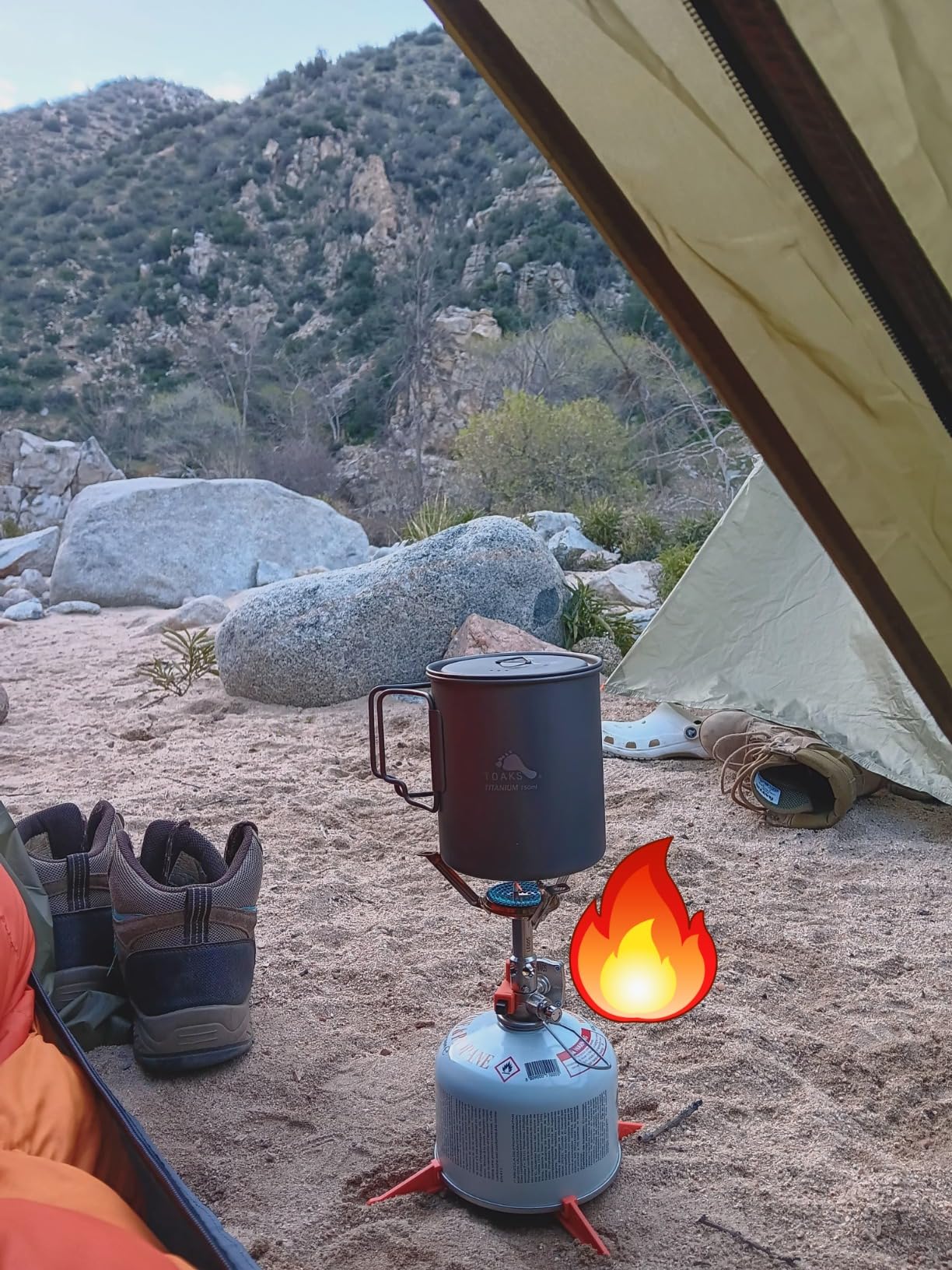
The Jetboil MightyMo sits in a sweet spot that few other stoves occupy. It is a standalone canister stove at just 3.4 ounces, but it offers simmer control that rivals full-size camp stoves. The four-turn regulator valve gives you incremental heat adjustments across the entire range, from a barely-there simmer to a full rolling boil. If you actually cook meals at camp instead of just boiling water, this matters a lot.
I tested the MightyMo by cooking scrambled eggs, pan-frying trout, and making a proper pasta sauce on trail. The simmer control held up in every scenario. The flame stayed steady at low settings without sputtering or going out, which is something most ultralight stoves simply cannot do. The open platform design accommodates a wide range of pot sizes, and I had no stability issues with my 1.2-liter cookset.
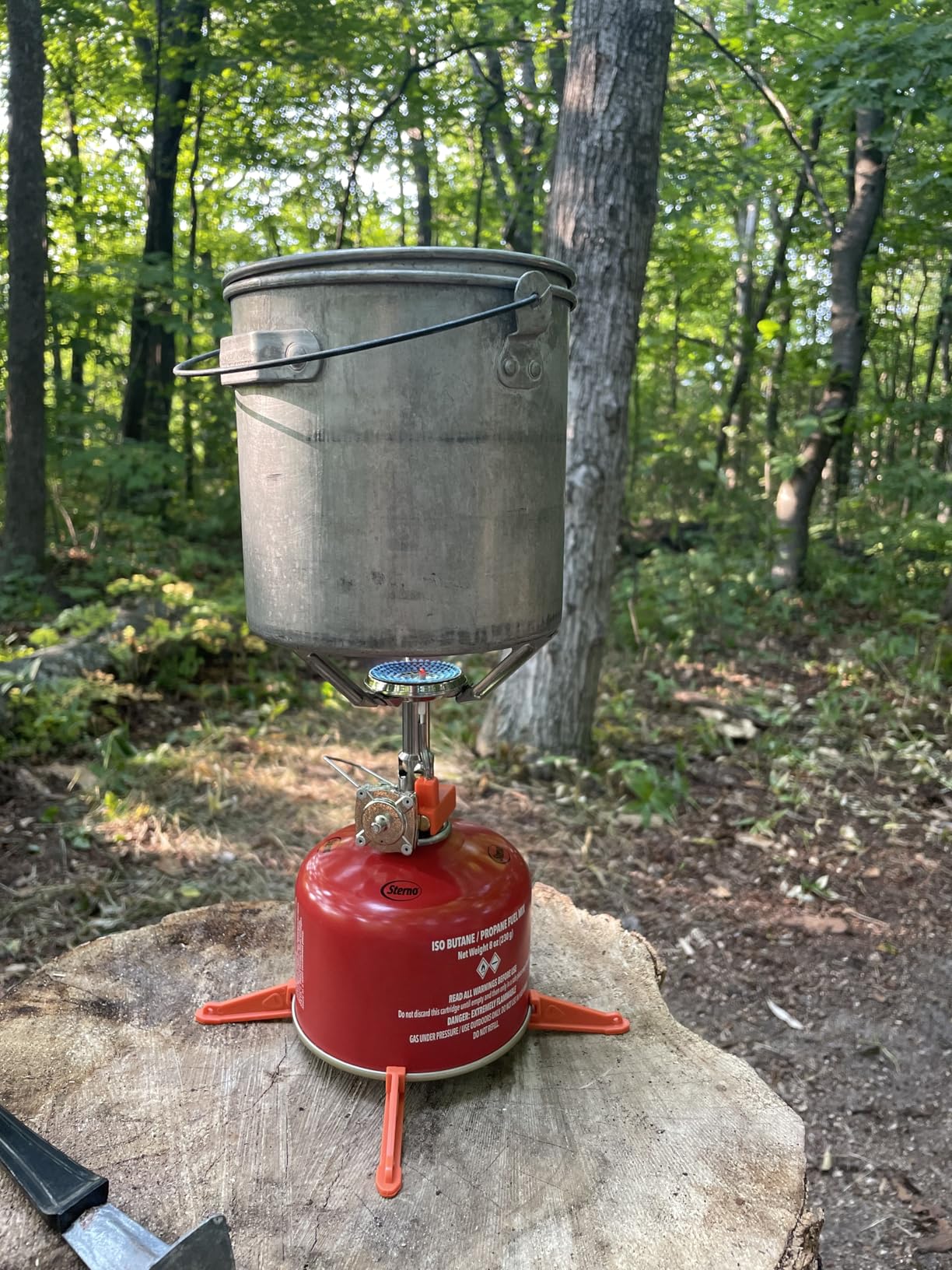
The pushbutton igniter works down to 20 degrees Fahrenheit according to Jetboil, and in my testing it fired reliably in the low 30s. However, some long-term users report the igniter failing after a season or two of heavy use. This seems to be the same issue that plagues many piezo igniters: they degrade over time. Carrying a backup lighter is always wise regardless.
The main weakness is wind performance. Without a built-in windscreen, the MightyMo struggles in exposed conditions. I found myself seeking sheltered spots or using my body as a windblock on breezy days. For calm-weather cooking, it is outstanding. For exposed ridge camps, you will want to add a windscreen.
Who Should Buy the Jetboil MightyMo
Backpackers who enjoy real cooking at camp and need precise temperature control. If you make meals that go beyond rehydrating freeze-dried food, the MightyMo’s four-turn regulator gives you the control you need. It is also a great choice for hikers who use various pot sizes since the open platform is versatile.
Who Should Look Elsewhere
If wind is a frequent challenge where you hike, the SOTO WindMaster or Fire-Maple integrated systems handle gusty conditions better. If you only boil water and want the lightest option, the BRS-3000T saves significant weight and money.
8. Fire-Maple Fixed Star 1 – Best Budget Integrated Backpacking Stove
Fire-Maple Fixed Star 1 Backpacking and Camping Stove System, Black 18oz
Weight: 18 oz
Fuel: LPG
Output: 7500 BTU
Capacity: 1L integrated pot
Pros
- Heat exchange technology reduces boil time 30 percent
- Built-in piezo igniter
- Integrated 1L pot with locking handle
- Insulating neoprene cover
- 3-year warranty
- Excellent value
Cons
- Only one pour hole in lid
- Some units have canister fit issues
- Plastic components in design
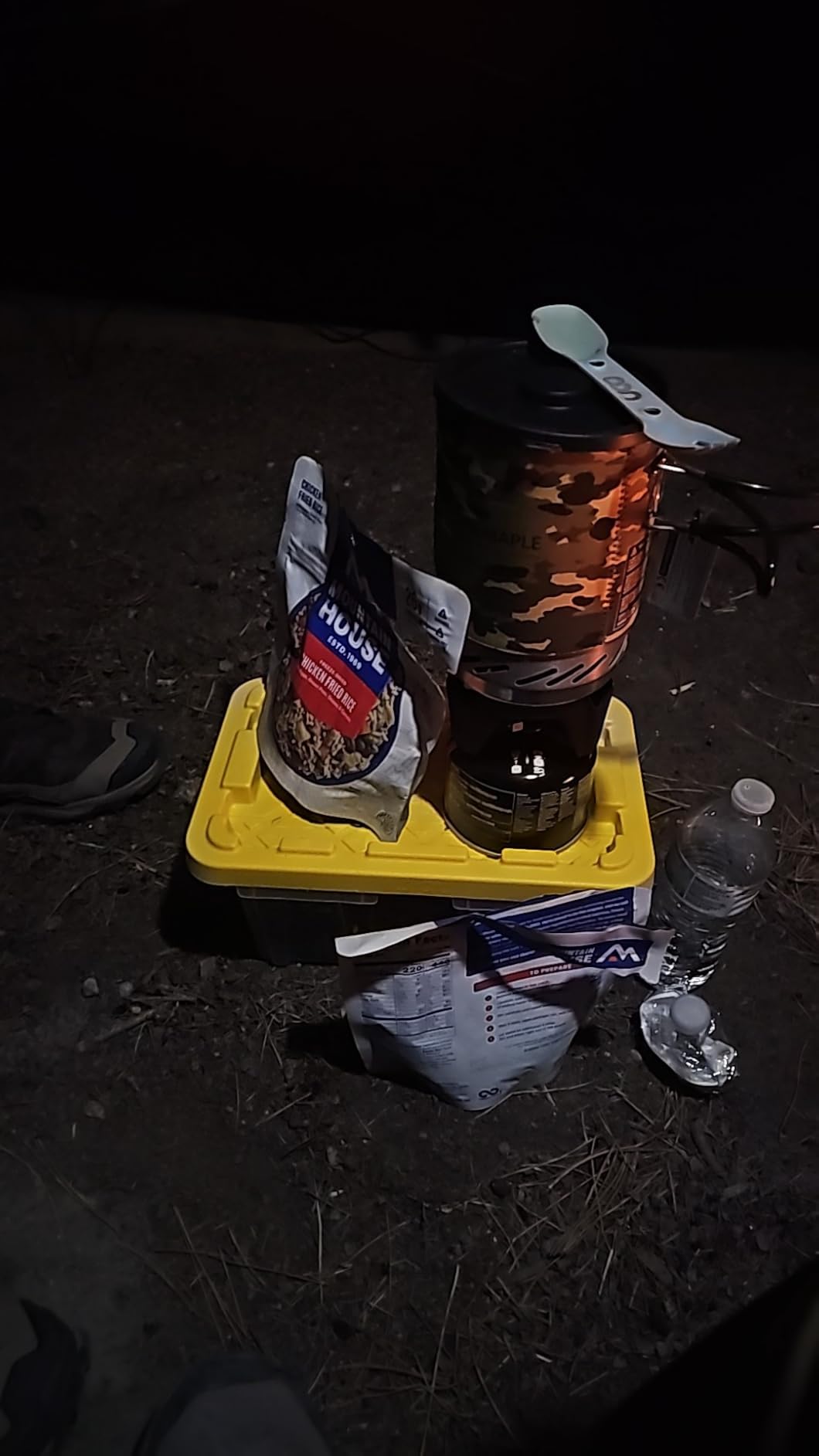
The Fire-Maple Fixed Star 1 is the number-one best seller in camping backpacking stoves on Amazon, and once you use one, it is easy to see why. It delivers the core integrated stove experience that Jetboil popularized, complete with a heat exchanger pot, built-in igniter, and nesting design, but at a fraction of the cost. For budget-conscious backpackers who want an all-in-one system, this is the most compelling option.
I tested the Fixed Star 1 on a 3-day trip and was genuinely impressed by the boil speed. The heat exchange technology on the bottom of the pot captures and channels heat efficiently, reducing boil times by roughly 30 percent compared to a standard canister stove and pot combo. The built-in piezo igniter fired on the first click every time during my testing, and the neoprene cozy kept water hot enough to rehydrate a meal 15 minutes after boiling.
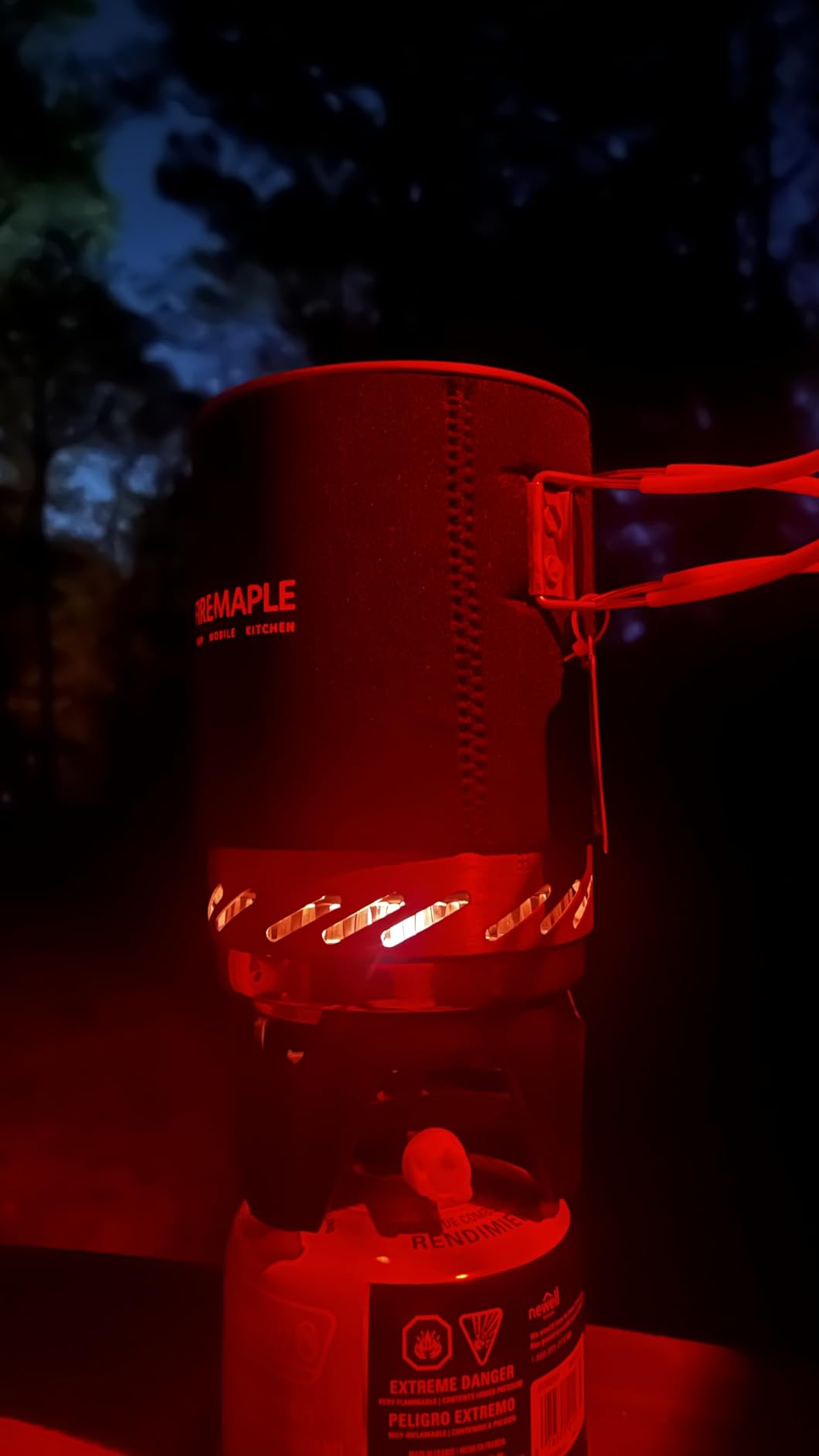
The hard anodized aluminum pot feels sturdy, and the locking stainless steel handle is a nice safety feature when pouring hot water. Everything nests together compactly for packing. Fire-Maple also includes a 3-year warranty, which is confidence-inspiring at this price point.
The main annoyance is the lid design. There is only one small pour hole, which means water does not flow smoothly when you are pouring into a narrow opening like a freeze-dried meal pouch. Several Amazon reviewers mention this, and I experienced it firsthand. It is not a dealbreaker but it is a frustrating design choice that Jetboil handles better with their drink spout lids.
Who Should Buy the Fire-Maple Fixed Star 1
Budget-minded backpackers who want an integrated stove system without the Jetboil price tag. It is also ideal for beginners or casual campers who need a reliable cooking setup for occasional trips. If you want the convenience of an all-in-one system and do not want to spend over $100, this should be your first choice.
Who Should Look Elsewhere
Weight-conscious thru-hikers will find 18 ounces too heavy for the trail. The BRS-3000T or SOTO WindMaster paired with a titanium mug saves significant weight. If you want the best integrated system regardless of price, the Jetboil Flash offers faster boil times and better lid design.
9. Coleman Classic – Best Reliable Budget Canister Stove
Coleman Classic 1-Burner Backpacking Stove, 10000 BTU
Weight: 8.3 oz
Fuel: LPG
Output: 10000 BTU
Boil Time: 3.25 min for 1L
Pros
- Excellent value
- Powerful 10000 BTU output
- Smooth precise flame adjustment
- PerfectFlow technology for consistency
- Serrated pan supports
- 3-year warranty
Cons
- No built-in igniter
- Arms have some wobble
- Plastic components may melt with large pans
- Struggles in wind without windscreen
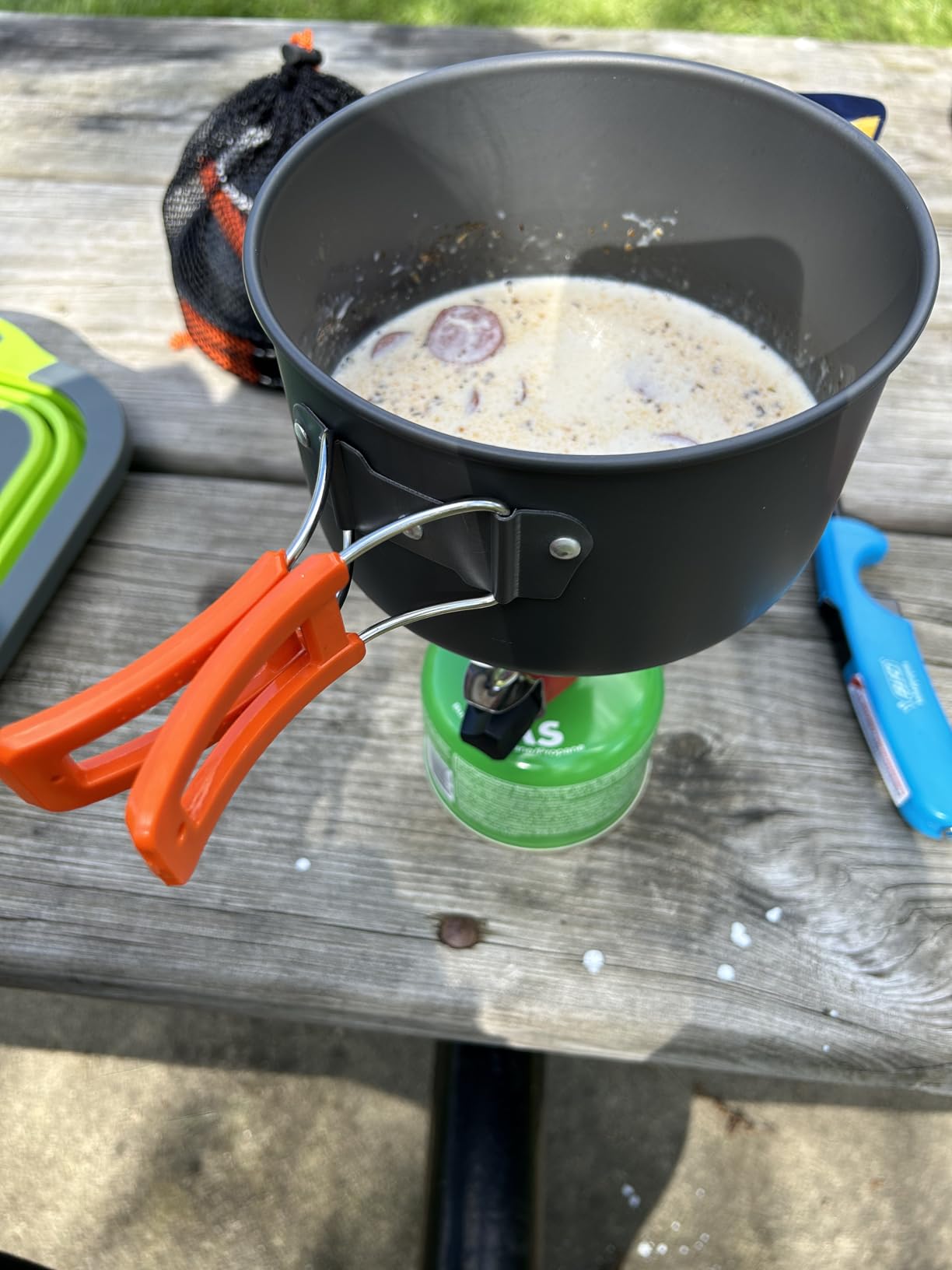
The Coleman Classic 1-Burner is a no-nonsense backpacking stove from a brand that has been making camp cooking gear for over a century. It is not the lightest, not the fanciest, and not the most feature-packed stove in this roundup. But what it is, is reliable. At a very accessible price point, it delivers 10,000 BTUs of cooking power with Coleman’s PerfectFlow pressure regulation technology that keeps performance steady even in less-than-ideal conditions.
I found the flame adjustment on the Coleman Classic to be remarkably smooth and precise, better than some stoves costing twice as much. You can dial in a gentle simmer or crank it to full power with fine control. The serrated pan supports do a solid job of gripping cookware, and the stove accommodates pans up to 6 inches in diameter. For car camping and short backpacking trips where weight is not critical, it is a strong performer.
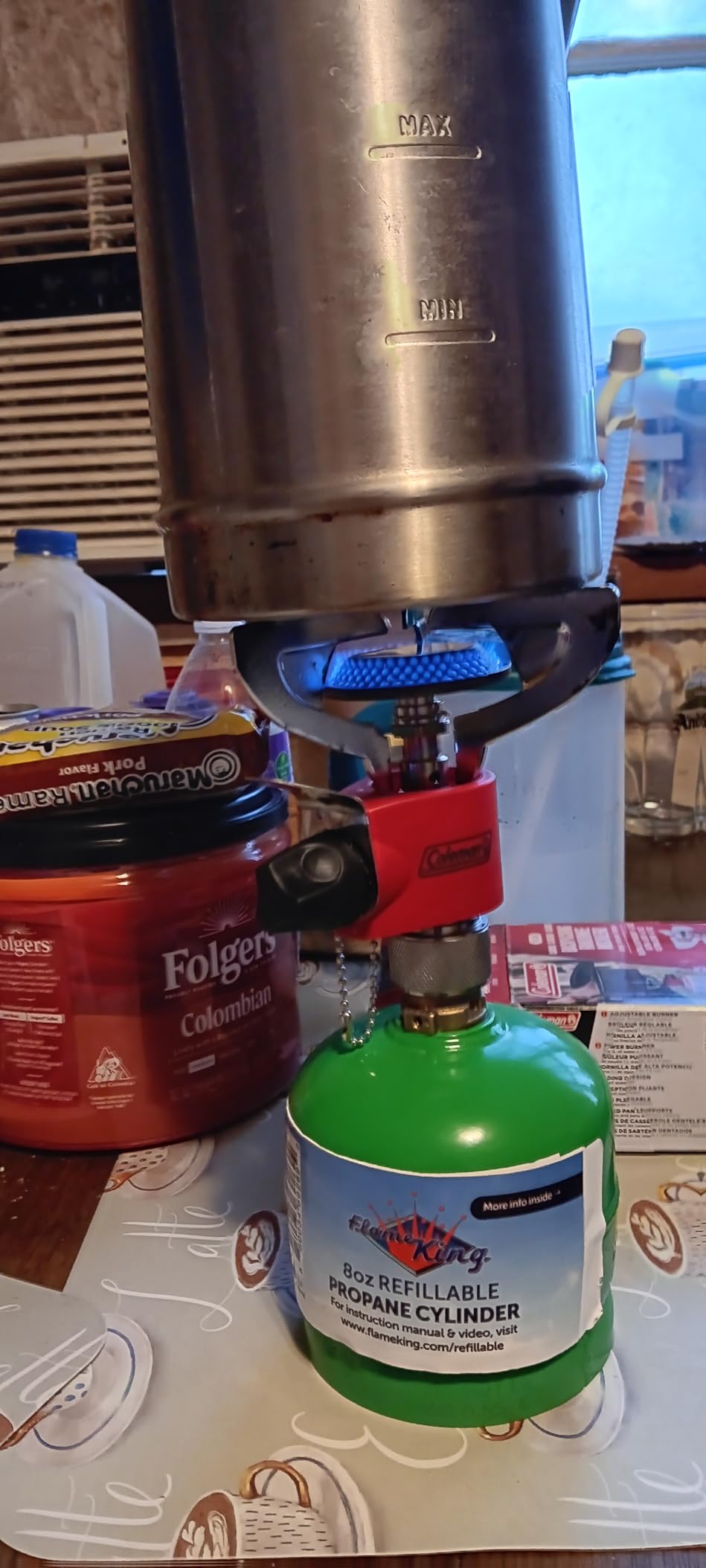
At 8.3 ounces, it is heavier than premium ultralight options. The slide-out pot supports have some play and do not lock firmly in place, which is fine for smaller pots but less reassuring with a fully loaded pan. There is also no piezo igniter, so you need a lighter. And like many standalone stoves without a windscreen, it struggles in breezy conditions.
Where the Coleman Classic shines is as a backup stove, a starter stove for someone testing the waters of backpacking, or a car camping companion. It does exactly what you expect, consistently, for years. Long-term reviewers frequently mention using the same unit for 5-plus years with zero issues.
Who Should Buy the Coleman Classic
New backpackers on a tight budget who want a name-brand stove from a company with a proven track record. It is also great as a backup stove for your primary setup or for car camping trips where weight does not matter. If you are just getting into backpacking and want something dependable without spending much, this is a solid entry point.
Who Should Look Elsewhere
Ultralight hikers will find 8.3 ounces too heavy when the BRS-3000T does similar work at under 1 ounce. If you cook in windy conditions regularly, the SOTO WindMaster or an integrated system with a windscreen will serve you better.
10. Fire-Maple Star X2 Pro – Best Premium Integrated Value
Fire-Maple Fixed Star 2 Pro Backpacking Camping Stove System, Black 19.8oz
Weight: 19.8 oz
Fuel: Propane/LPG
Boil Time: ~2 min for 500ml
System: Integrated pot and stove
Pros
- Fast boiling around 2 min for 500ml
- Excellent wind resistance
- Built-in piezo igniter
- Great value versus Jetboil
- Locking handle
- Pour-through lid
- Reduced plastic for sustainability
Cons
- Some quality control issues reported
- Slightly heavier than competitors
- Customer service concerns
The Fire-Maple Star X2 Pro is the more capable sibling of the Fixed Star 1, offering upgraded features and faster performance for backpackers willing to spend a bit more. It uses the same advanced heat exchange technology as its smaller brother but in a more refined package with better wind resistance, a more convenient pour-through lid, and a focus on reducing plastic content for sustainability.
In my testing, the Star X2 Pro brought 500ml of water to a rolling boil in about 2 minutes flat. That is Jetboil Flash territory at a significantly lower price. The heat exchange system combined with the integrated design captures and directs heat with impressive efficiency. The built-in piezo igniter worked reliably throughout testing, and the locking stainless steel handle on the pot provides a secure grip when pouring hot water.
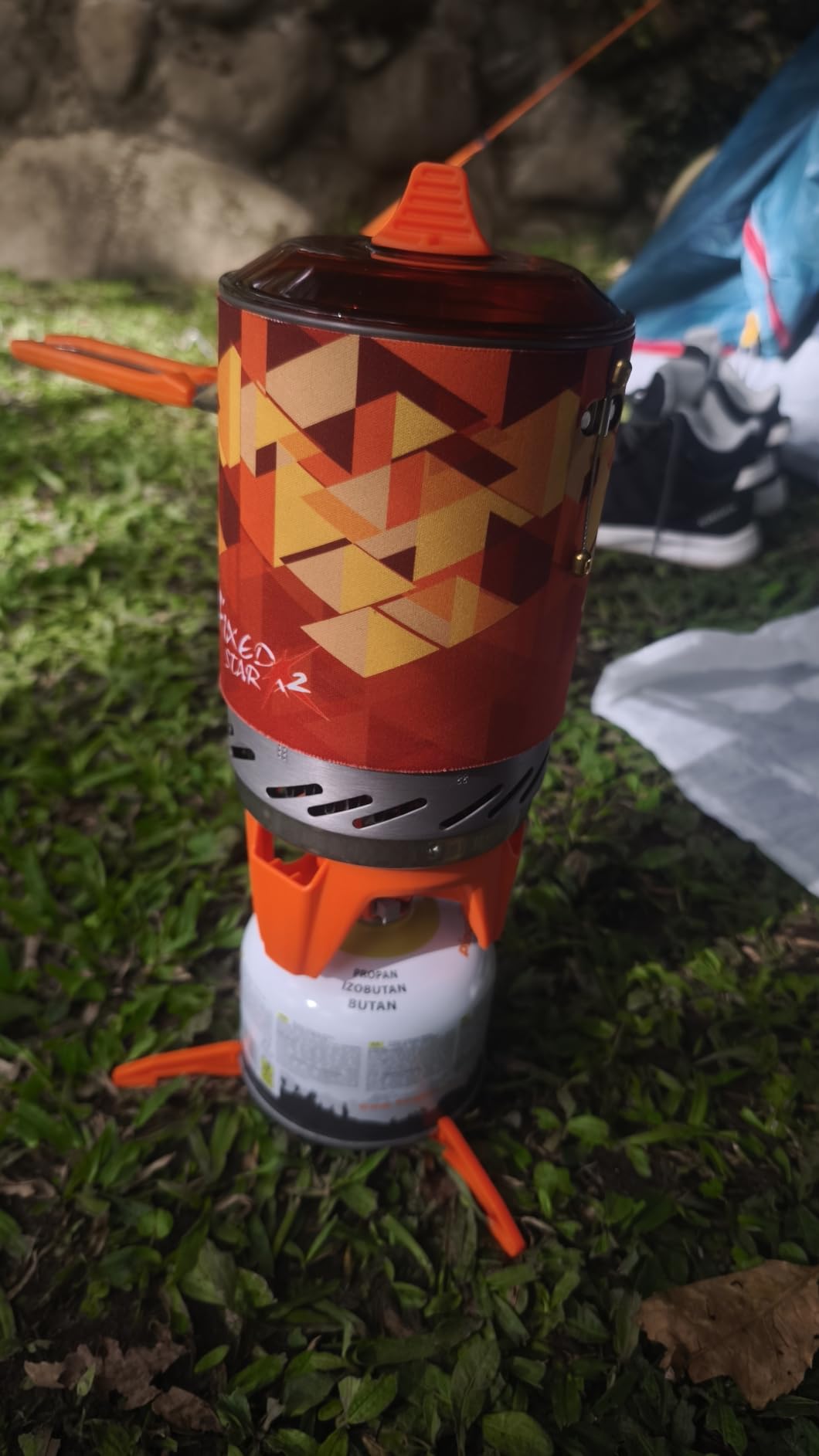
The neoprene cozy keeps the pot insulated and safe to handle, and the entire system nests together for compact packing. The pour-through lid is a genuine upgrade over the Fixed Star 1’s single-hole design, making it much easier to pour into meal pouches. I also appreciate that Fire-Maple reduced the plastic content in this model for better environmental sustainability.
The concerns with the Star X2 Pro are similar to other value brands: quality control inconsistency and customer service. Some Amazon reviewers received units with defective wire holders or minor fit issues. At an 81 percent 5-star rating across nearly 1,900 reviews, most people get a great product, but the risk of a dud is higher than with MSR or Soto. If you get a good unit, the performance is outstanding for the price.
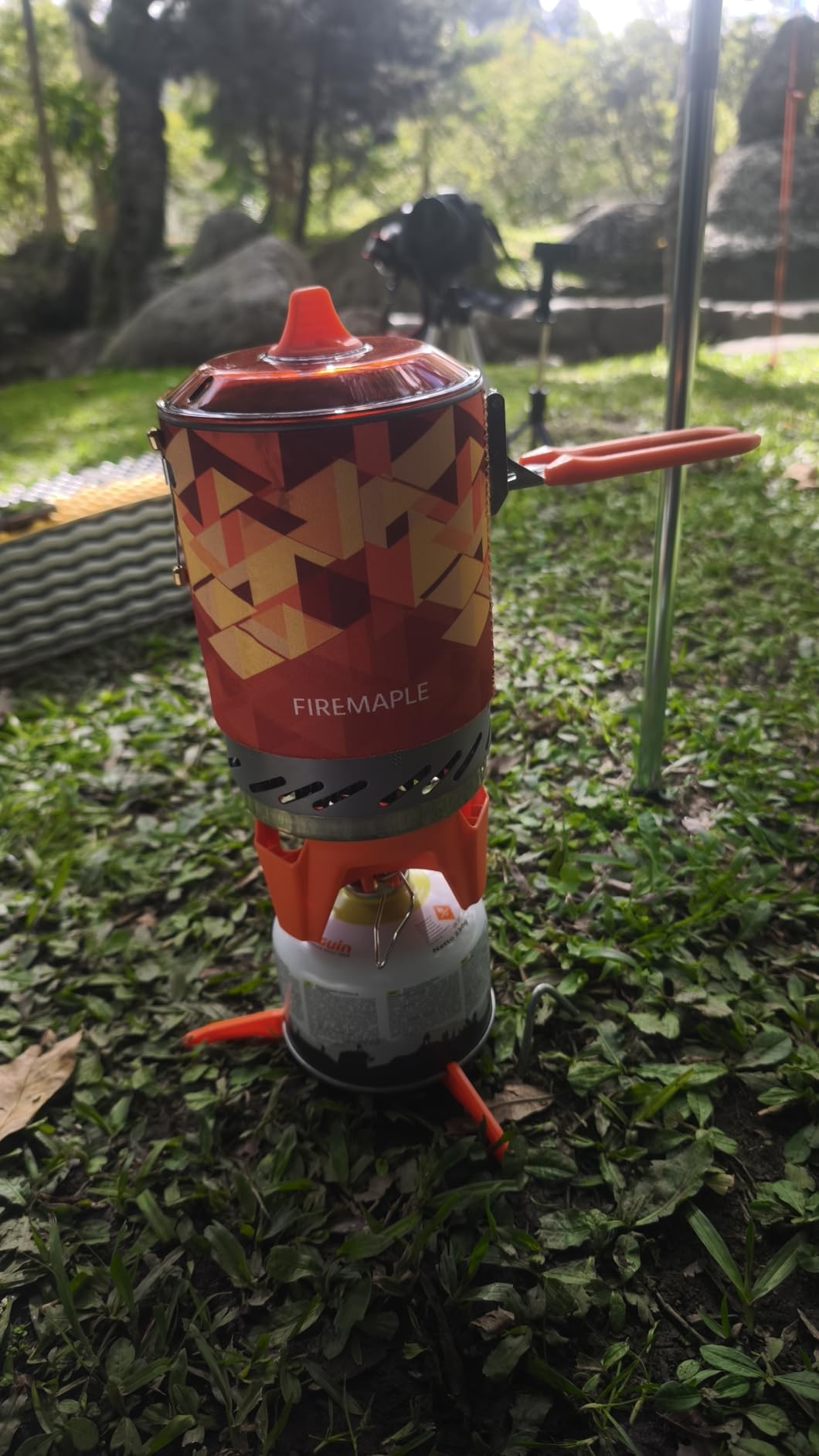
Who Should Buy the Fire-Maple Star X2 Pro
Backpackers who want Jetboil-level performance at a lower price and are willing to accept a small risk of quality variance. It is ideal for hikers who want fast boil times, integrated convenience, and do not mind a slightly heavier system. If you liked the idea of the Jetboil Flash but found it too expensive, this is the closest alternative.
Who Should Look Elsewhere
If you want guaranteed quality consistency and strong customer support, MSR and Soto are safer bets. Ultralight hikers will find nearly 20 ounces too heavy. For a lighter integrated option, the Jetboil Stash at 7.1 ounces is a better fit for weight-conscious trips.
How to Choose the Best Camping Stove for Backpacking?
Picking the right backpacking stove comes down to matching the stove type to your trip style. I have seen too many hikers buy a stove based on one impressive spec, only to realize months later that it does not fit how they actually cook on trail. Here is how to think through the decision.
Stove Types: Canister, Integrated, and Liquid Fuel
Canister stoves like the MSR PocketRocket 2 and SOTO WindMaster are the most popular type for good reason. They screw onto an isobutane fuel canister, light instantly, and require zero maintenance. They are lightweight, affordable, and simple. The trade-off is that canister performance drops in cold temperatures and at high altitude, and you cannot accurately measure remaining fuel.
Integrated systems like the Jetboil Flash, Jetboil Stash, and Fire-Maple models combine the burner and pot into one efficient package. The heat exchanger technology (Jetboil calls it FluxRing, Fire-Maple uses similar heat exchange fins) captures more heat than a standard burner-and-pot combo, resulting in faster boil times and better fuel efficiency. They are heavier and less versatile for real cooking, but unbeatable for boil-and-pour meal prep.
Liquid fuel stoves (not featured in this roundup but worth knowing about) run on white gas, unleaded gasoline, or kerosene. They are heavier and require priming, but they work in extreme cold and at altitude where canister stoves struggle. The MSR WhisperLite is the gold standard. Consider liquid fuel only if you regularly camp in sub-freezing conditions or on expeditions above 10,000 feet.
Weight and Packability
For thru-hikers and ounce-counters, stove weight directly impacts your base weight. The BRS-3000T at 0.9 ounces is the lightest option here, followed by the SOTO WindMaster at 2.3 ounces and MSR PocketRocket 2 at 2.6 ounces. But remember to factor in your cookware weight too. An ultralight stove plus a titanium mug might still weigh less than an integrated system.
For weekend backpackers, the difference between 2 and 8 ounces rarely matters. Focus on features, reliability, and cooking performance instead of chasing the lightest possible setup. A comfortable base weight of 15 to 20 pounds gives you room to carry a stove you actually enjoy using.
Wind Resistance
This is the performance factor that catches new backpackers off guard. A stove that boils water in 3 minutes at home can take 8 minutes or fail entirely in moderate wind. The SOTO WindMaster leads this category with its concave burner design that channels heat upward. Integrated systems with heat exchangers also perform well because the pot-to-burner connection shields the flame. Standalone canister stoves without windscreens are the most vulnerable.
Fuel Efficiency and Boil Times
Boil time and fuel efficiency are related but not identical. A stove with a fast boil time might still burn through fuel quickly if it runs at maximum output. Integrated systems generally offer the best fuel efficiency because the heat exchanger captures energy that would otherwise escape. For multi-day trips where you carry all your fuel, efficiency matters more than raw speed.
As a rough benchmark, a 110g isobutane canister will boil about 8 to 12 liters of water depending on conditions and stove efficiency. Plan your fuel needs based on trip length, group size, and whether you are also melting snow for water.
Ignition: Piezo vs Manual
Piezo igniters (push-button spark lighters) are convenient but not infallible. Forum discussions across Reddit and Backpacking Light consistently show that piezo igniters degrade over time, especially in cold and wet conditions. They are a nice convenience but should never be your only fire source. Always carry a lighter or matches as backup. Stoves without piezo igniters like the PocketRocket 2 and BRS-3000T work perfectly fine with a simple lighter.
Matching Your Stove to Your Trip Type
For solo weekend trips, any standalone canister stove paired with a small pot works well. The PocketRocket 2 or WindMaster are ideal. For group trips, consider an integrated system with a larger pot capacity like the Fire-Maple Star X2 Pro. For cold-weather shoulder season trips, a pressure-regulated stove like the PocketRocket Deluxe maintains performance when temperatures drop. And for thru-hikers who only boil water, the BRS-3000T or Jetboil Stash offer the best weight-to-performance ratio.
FAQs
What is the best backpacking camping stove?
The SOTO WindMaster is the best overall backpacking camping stove for 2026. It combines exceptional wind resistance, a pressure regulator for consistent performance in cold weather, a built-in piezo igniter, and an ultralight 2.3-ounce weight. For beginners, the MSR PocketRocket 2 offers the best balance of reliability and value. If you prefer an all-in-one integrated system, the Jetboil Flash delivers the fastest boil times with zero setup hassle.
What is the most durable backpacking stove?
The MSR PocketRocket 2 has the strongest durability track record, with hundreds of Reddit users reporting 5-plus years of reliable use and thousands of trail miles. MSR’s build quality and limited warranty provide additional peace of mind. Among integrated systems, the Jetboil Flash uses quality aluminum construction that holds up well over years of regular use. For expedition-grade durability, liquid fuel stoves like the MSR WhisperLite are built to withstand extreme conditions and last decades.
What is the best entry level backpacking stove?
The MSR PocketRocket 2 is the best entry-level backpacking stove. It is simple to operate with no priming or pressurizing required, weighs only 2.6 ounces, and includes a protective carry case. The serrated pot supports work with most cookware sizes, and the flame adjusts smoothly from simmer to full boil. With over 4,200 reviews and a 4.8-star rating, it has proven itself reliable for thousands of new backpackers. For an even more budget-friendly option, the BRS-3000T works well for basic water boiling at under one ounce.
What is the most eco friendly camping stove?
Canister stoves using isobutane-propane fuel are relatively clean-burning but generate empty metal canisters that are difficult to recycle in many areas. The Fire-Maple Star X2 Pro takes a step in the right direction by reducing plastic content in its construction. For maximum eco-friendliness, choose a stove with excellent fuel efficiency like the Jetboil Stash or any integrated system with heat exchange technology. These stoves use less fuel per boil, reducing both emissions and waste. Always properly dispose of fuel canisters at appropriate recycling facilities.
Final Thoughts on the Best Camping Stoves for Backpacking
After testing all 10 of these stoves across different trip types, conditions, and cooking styles, a few clear recommendations emerge. The SOTO WindMaster is the best overall backpacking stove for 2026 because it handles wind, cold, and simmering better than anything else at its weight. The MSR PocketRocket 2 remains the best beginner stove and the best value, with a track record of reliability that spans years and thousands of miles.
For hikers who want the fastest, most convenient boil-and-pour experience, the Jetboil Flash is tough to beat. Weight-conscious backpackers should look hard at the Jetboil Stash for integrated convenience at 7.1 ounces, or the BRS-3000T for the absolute lightest setup possible. And the Fire-Maple Fixed Star 1 offers the best budget entry into the integrated stove category.
The best camping stoves for backpacking are the ones that match your cooking style, your typical conditions, and your weight tolerance. There is no single perfect stove for everyone. But with the options in this guide, you can find the right one for your next adventure. Pick the stove that fits how you actually cook on trail, not the one with the flashiest specs, and you will be eating hot meals comfortably for years to come.