
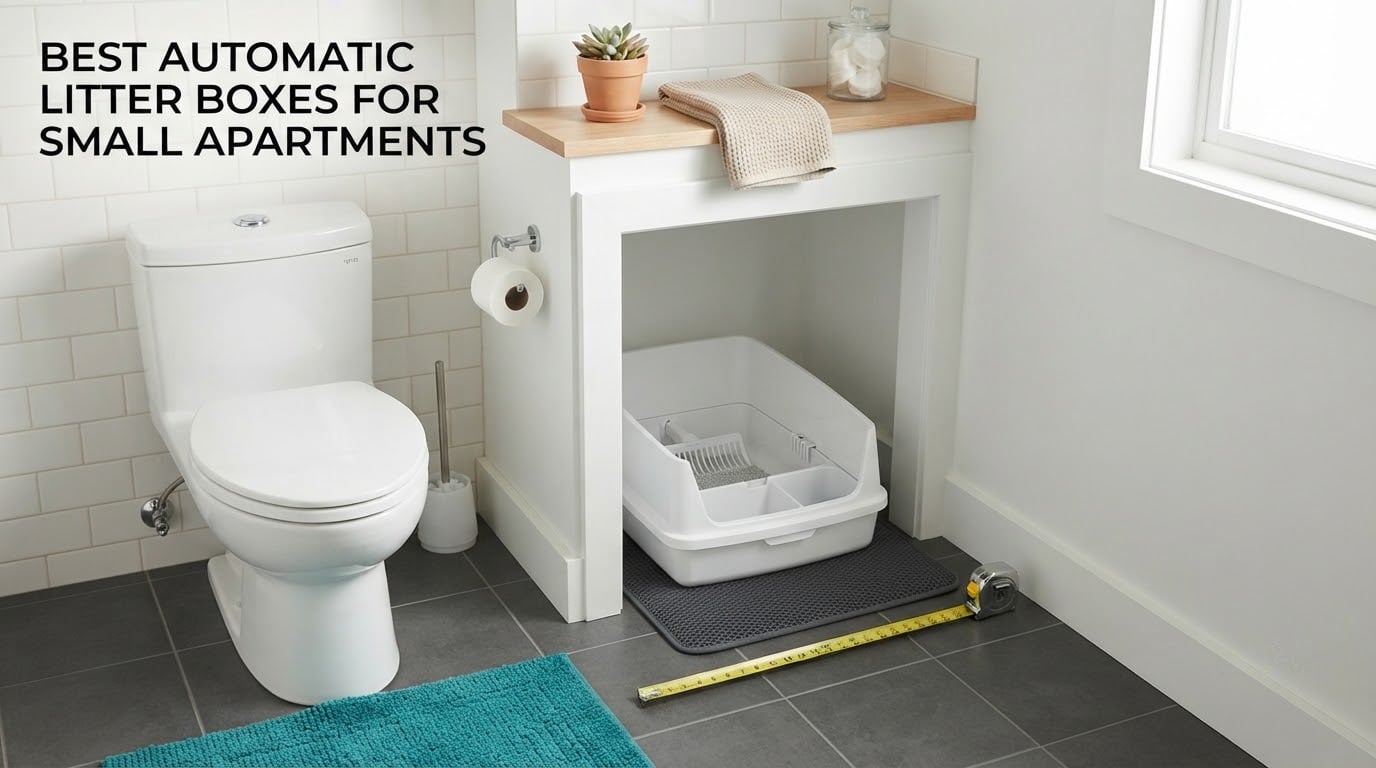
A studio apartment does not have room for a self-cleaning box you have to shove into a corner and pretend is not there. Most automatic litter boxes are designed for a laundry room or a finished basement, and the two numbers that decide whether a model fits your place – its floor footprint and the clearance the rotating drum needs above it – are almost never published where shoppers can see them.
For the best automatic litter boxes for small apartments, the winner is the PetSafe ScoopFree Crystal Pro. At 20.38 x 7.13 x 28 inches and 13.3 pounds it is the lightest unit in our lineup, it has no drum to swing into a wall, and its open top means the whole thing reads as a small pan rather than an appliance. Everything else we picked earns its place by solving a specific small-space problem: noise through thin walls, a shallow nook, a low cabinet, or a litter budget that cannot absorb branded refills.
We spent weeks reading the spec sheets behind these ten models and cross-checking the published dimensions against the clearance each one actually needs. We also read a lot of owner reviews, because the difference between an automatic box that works and one that ends up unused in a closet is almost never the cycle mechanism. It is whether your cat climbed in, whether the sensors could feel the floor, and whether the smell stayed in the drawer.
If you are also sizing for more than one cat, our picks for the best automatic litter boxes for multiple cats and the best automatic litter boxes for large cats cover the capacity and entry-height issues that dominate once a household grows.
Top 3 Picks: Automatic Litter Boxes for Small Apartments in 2026

Best Automatic Litter Boxes for Small Apartments at a Glance (October 2026)
Every box below is open-top or dome-free by design, because an enclosed dome adds width and depth that a tight nook rarely has. Read the footprint column as the floor area the box occupies, not including the space in front of the waste drawer.
How We Picked Compact Automatic Litter Boxes
We started with the physical constraint rather than the feature list. A box only counts as compact for this roundup if its published dimensions let it sit against a wall in a room under 100 square feet, or in a bathroom gap roughly 21 inches wide.
From there we weighted five things: listed external dimensions, unit weight for moving it out to deep-clean, the sensor stack and whether weight sensors are doing the work, sealed waste capacity measured in days rather than litres, and the consumable load. That last one matters more than buyers expect, because a box that needs branded crystal refills or a deodorizer gel every month quietly costs more per year than the gap between the cheapest and priciest models here.
We also read every product’s reviews for the two failure patterns that recur across this category: cats refusing the geometry, and owners who gave up because the box was too tall or too small for their cat. Ratings alone told us very little. Three boxes in this group sit at 4.0 or above with more than 1000 reviews each, so the review volume carries more weight than the star count.
1. PetSafe ScoopFree Crystal Pro – Best Overall for Small Apartments
PetSafe ScoopFree Crystal Pro Legacy Self-Cleaning Litter Box, Uncovered
20.38 x 7.13 x 28 inch open-top
Raking crystal-litter system
13.3 lb, no rotating drum
Pros
- Lightest unit we tested at 13.3 lb so it moves easily for deep cleans
- Uncovered rim that kittens and box-avoidant cats accept
- Disposable lined tray swaps in minutes
- 99% dust-free crystal litter tracks very little
- Motion-sensor health counter logs visits
Cons
- Only works with crystal litter so clay will gum the rake
- Disposable trays add a recurring consumable cost
- Waste bin cover can loosen and trap waste
This is the box I keep coming back to for small spaces, and the reason is structural rather than clever. It has no globe, no rotation and no motor that swings anything through an arc. A raking arm pulls waste through a tray instead, which means there is no side clearance to leave open and no ceiling height above the box to worry about.
At 20.38 x 7.13 x 28 inches the footprint is long and shallow, which is exactly the shape that fits between a toilet and a wall or along the narrow run of a galley kitchen. Total weight is 13.3 pounds, light enough to carry to a patio or a utility sink when you want to empty and wipe the whole thing down.
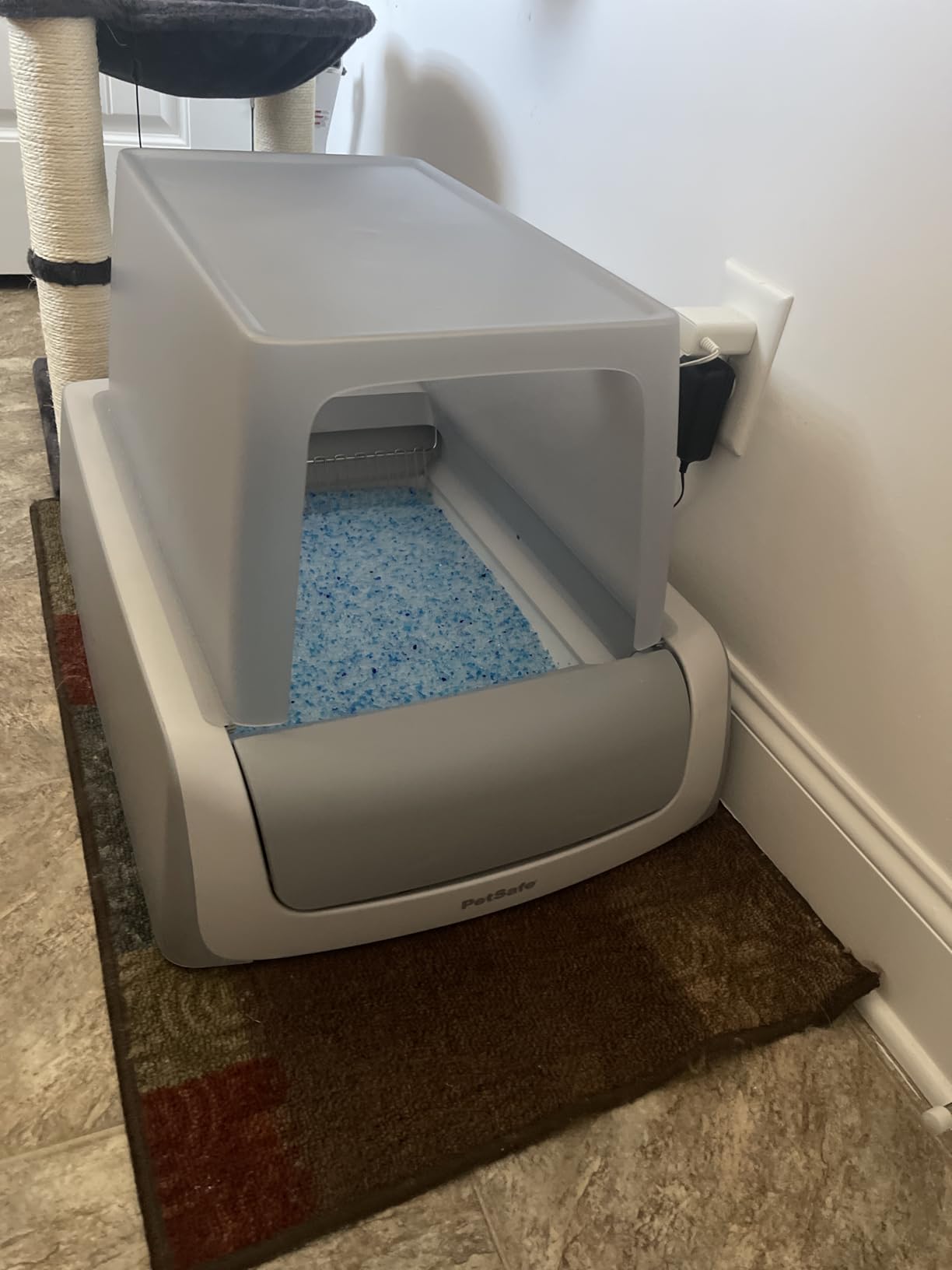
The uncovered rim is the other reason it wins in tight quarters. Cats that have been caught in a side-entry box once often refuse enclosed geometry permanently, and this design simply does not ask them to cross a threshold. Long-term owners describe it as the purchase that finally stopped the daily scoop.
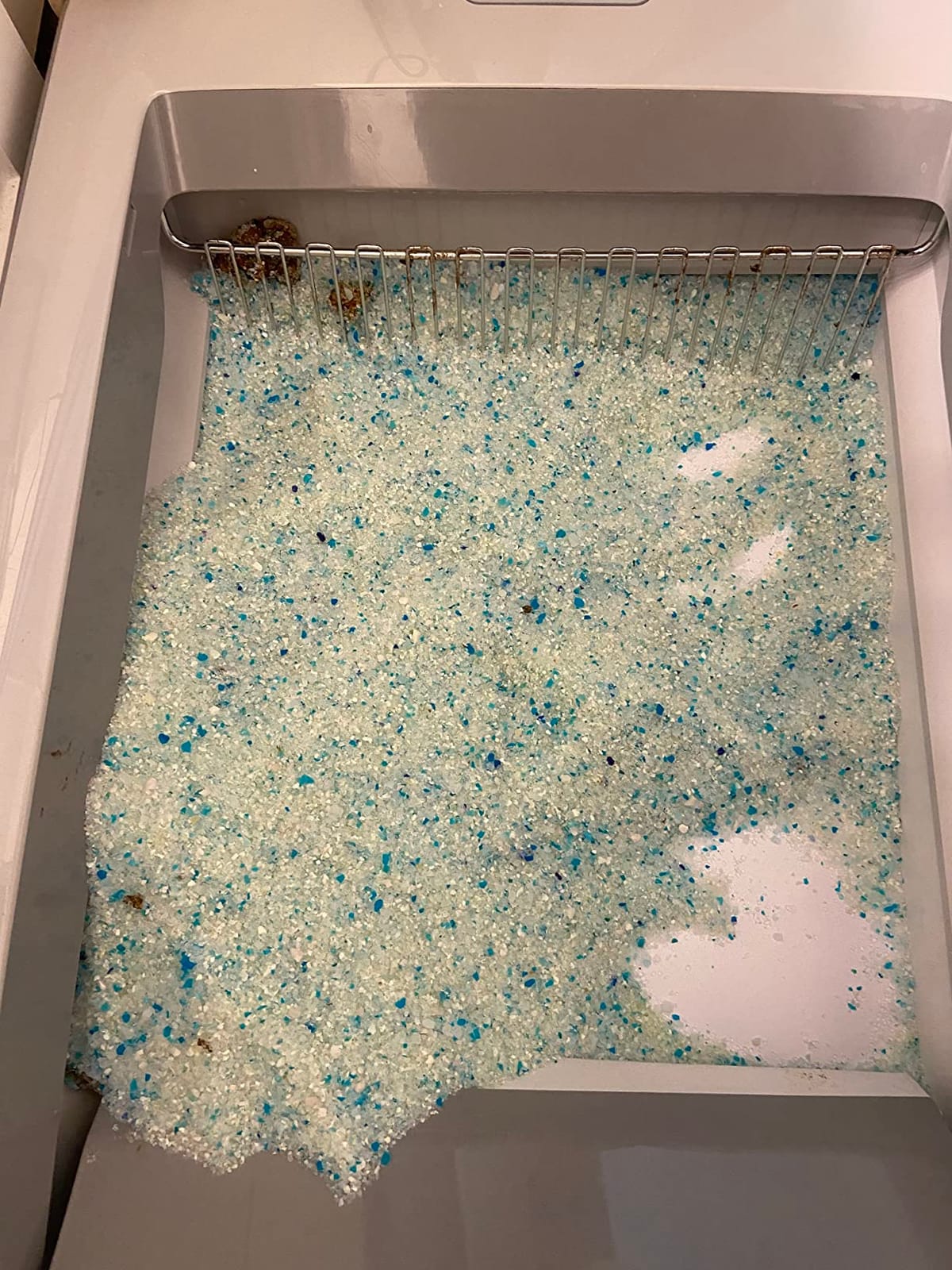
The odor story is genuinely different here. Crystal litter desiccates solid waste and absorbs urine rather than masking it, and because the tray is disposable with a lid, you remove waste without handling it at all. In an apartment where smell migrating into the living room is the thing that forces people to give up on a cat, that mechanism is doing the real work.
For whom the ScoopFree Crystal Pro works
It suits renters, small studios and anyone whose cat has a history of refusing covered boxes, because an open pan is the least threatening automatic option on the market. It also suits households on carpet, since the raking system is not relying on a floor-mounted weight sensor array to register a cat.
It is a good second box in a two-cat home where one cat is large and the other is small, because the wide open bowl takes both body shapes without a step.
For whom it is the wrong choice
It is the wrong pick if you want to use a cheap bagged litter. The rake is designed around crystal pellets and owners who substitute ordinary clumping clay report it gumming up, so treat the litter type as a hard requirement rather than a preference.
It is also the wrong pick for someone who objects to recurring disposables. You are buying trays and crystal refills forever, and the annual consumable load is higher than any clumping-litter box in this group.
2. Ellenpent Open-Top Automatic Litter Box – Best Value
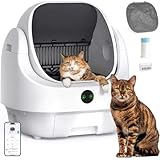
Open-Top Automatic Litter Box, Odor Control, Ready to Use, Self Cleaning
21.25 x 19.7 x 18.9 inch footprint
9L sealed bin, 10 day hold
Arrives fully assembled
Pros
- Arrives fully assembled so there is no build step
- Open top suits larger and taller cats
- 9L bin stretches the gap between empties
- Sealed cover plus built-in deodorizer gel
- Infrared and weight sensors both halt the cycle
Cons
- App only joins 2.4GHz Wi-Fi networks
- Litter replacement runs through the app
- Deodorizer refills add running cost
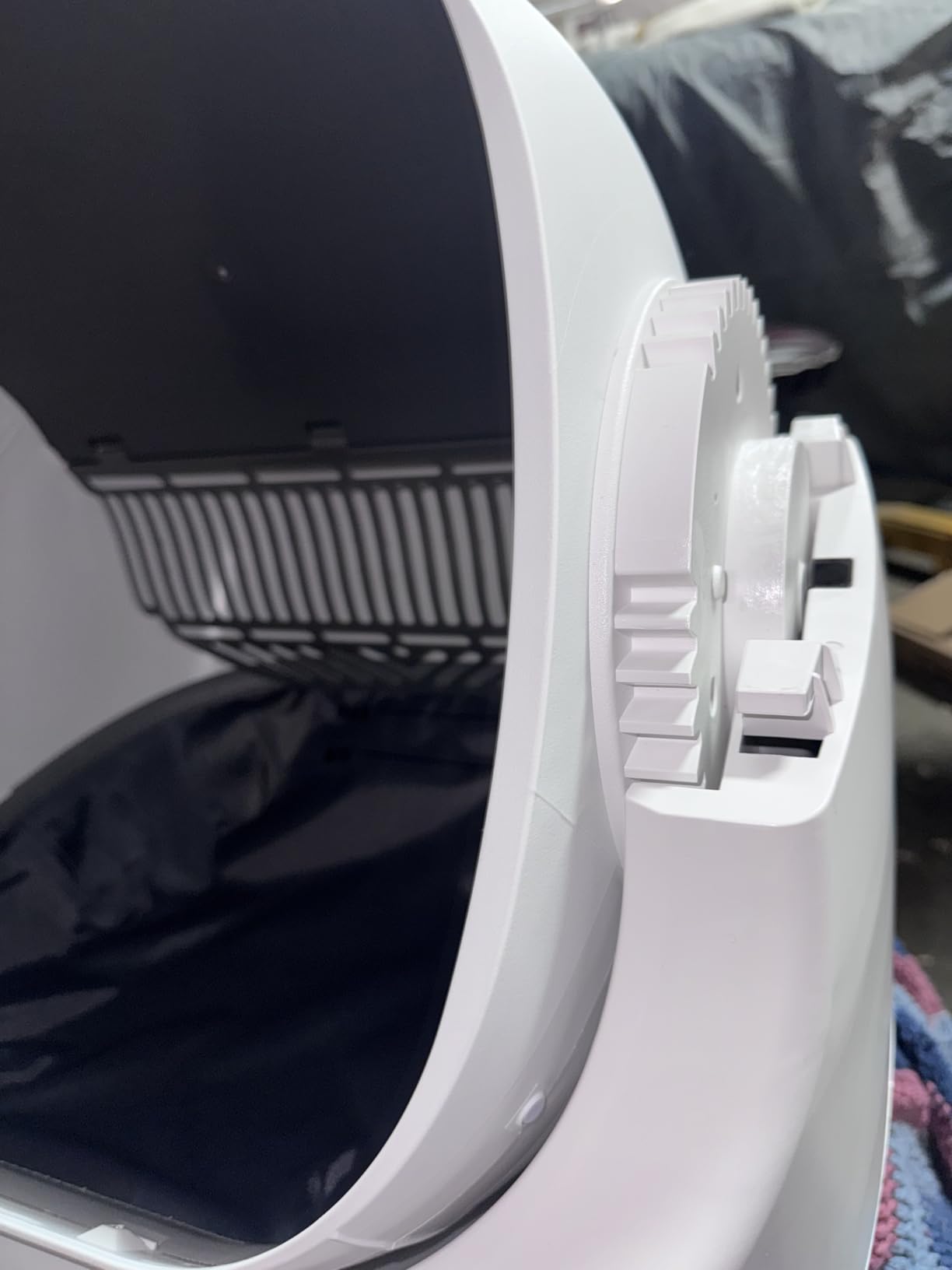
What sold me on this one is the square-ish, low profile. At 21.25 x 19.7 x 18.9 inches it is one of the few boxes here that sits under 19 inches tall, which opens up placement options that taller domes simply do not have in a small apartment.
The 9L sealed waste bin is the biggest differentiator at this tier. Reviewers put it at roughly ten days of waste for a single cat, and for someone in a studio who does not want to think about litter on a Sunday morning, that interval is the whole feature set.
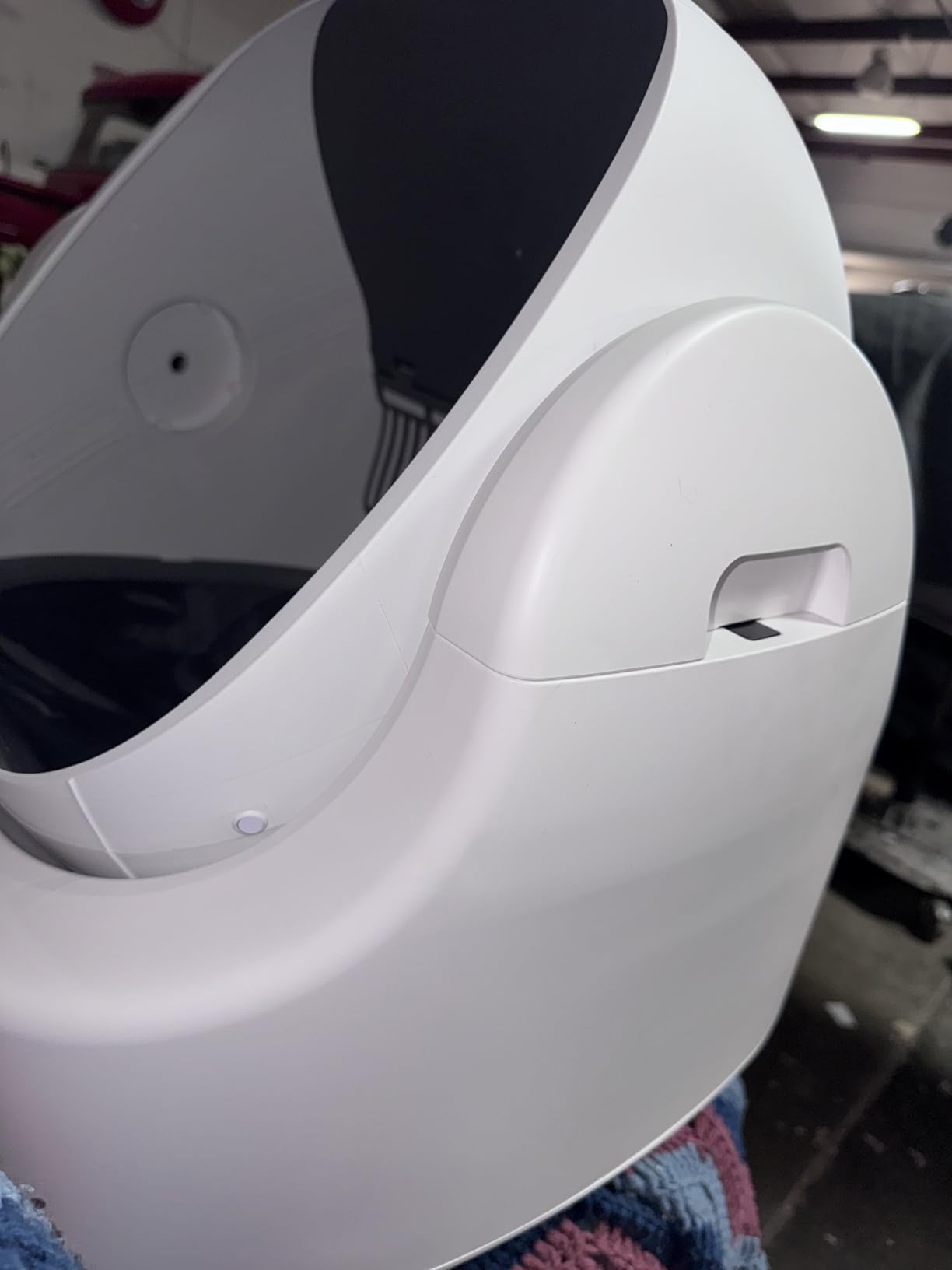
It also arrives fully assembled. You unbox it, plug it in, add litter. In a category where several competitors ask for 30 to 90 minutes of assembly, that is a genuine convenience win, especially if you are fitting it into a nook on a Saturday while carrying a box you assembled elsewhere.
Odor control comes from two places working together: a sealed ABS cover and a built-in deodorizer gel in the waste bin. The open top trades a little containment for cat comfort and visibility, which in a small room you ventilate regularly is usually the right trade.
For whom the Ellenpent works
It is built for a single-cat apartment where the owner wants maximum time between services, and for anyone moving into a place mid-year who needs a box working the same day it arrives. The open top also makes it a decent fit for bigger cats that refuse tight entries.
The dual sensor setup, infrared plus weight, gives it a reasonable chance of stopping the cycle cleanly if a second cat walks in during a run.
For whom it is the wrong choice
It is wrong if your home network is 5GHz only. The app will not pair, and because litter replacement is routed through the app, the unit is awkward to manage without it.
It is also wrong for anyone who wants zero subscription-adjacent costs, since the deodorizer gel is a repeat purchase on top of bags and liners.
3. teweoa Self-Cleaning Cat Litter Box – Best for Thin Walls
Self Cleaning Cat Litter Box, Automatic Litter Box for Multiple Cats, Integrated Safety Protection with Open-Top Design
21.5 x 20.27 x 24 inch open-top
32 dB rotating drum
3.3 to 22 lb cat range
Pros
- 32 dB is the quietest operation in the group
- Uses standard clumping clay so bags stay cheap
- Infrared and Hall sensors stop the drum reliably
- Two minute waste bag swap
- Tool-free disassembly with washable roller
Cons
- Small interior that large or tall cats avoid
- Drum wobbles visibly when a cat climbs in
- Bag clipped at one end so corners can slip
Noise is the half of apartment living nobody puts in a roundup until someone complains about it at two in the morning. This box is rated at 32 dB during the cycle, tied for the lowest figure among the models we tested, and that number is the reason it earns its badge.
At 21.5 x 20.27 x 24 inches the footprint is larger than the ScoopFree, so it wants a real corner rather than a gap behind a toilet. But it takes standard clumping clay, which is a big deal in a studio: your ongoing litter cost drops to whatever you already buy at the grocery store.
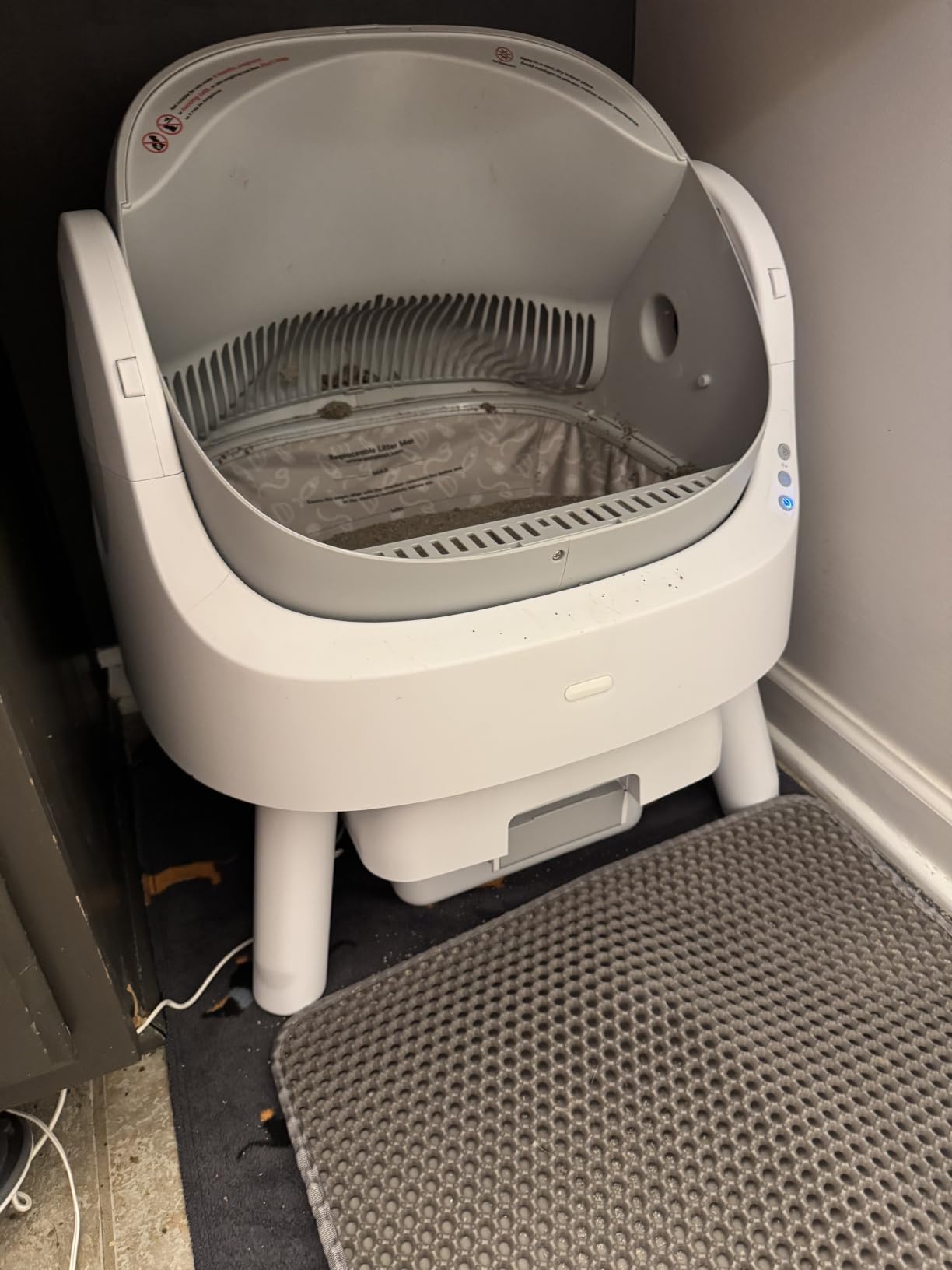
The two-minute bag swap is the part apartment dwellers care about and spec sheets rarely mention. Large households report replacing one pan a week or less, and the waste tray slides straight out rather than requiring you to reach into a drum.
Infrared and Hall sensors together give it solid auto-stop behaviour, and the open top means a nervous cat is never funneled through a tunnel. That combination of quiet and non-threatening geometry is why it works for skittish cats in shared housing.
For whom the teweoa works
It suits a one-bedroom with a roommate and thin internal walls, especially if someone works nights and the cycle would otherwise wake them. It also fits households already committed to clumping clay and wanting to keep that cost down.
For more on multi-cat capacity math and when a second smaller box beats one large one, read our picks for the best automatic litter boxes for multiple cats.
For whom it is the wrong choice
It is wrong for a cat over roughly 10 pounds or one that is tall and long. Owners of larger cats report avoidance, perching on the rim and waste smeared outside the drum, and the extra cleanup can outweigh scooping by hand.
It is also the heaviest-feeling unit to reposition at 21.6 pounds, so if your plan involves moving it weekly for cleaning, factor that in.
4. PetPivot Open Top Automatic Litter Box – Best for Large Cats in Tight Spaces

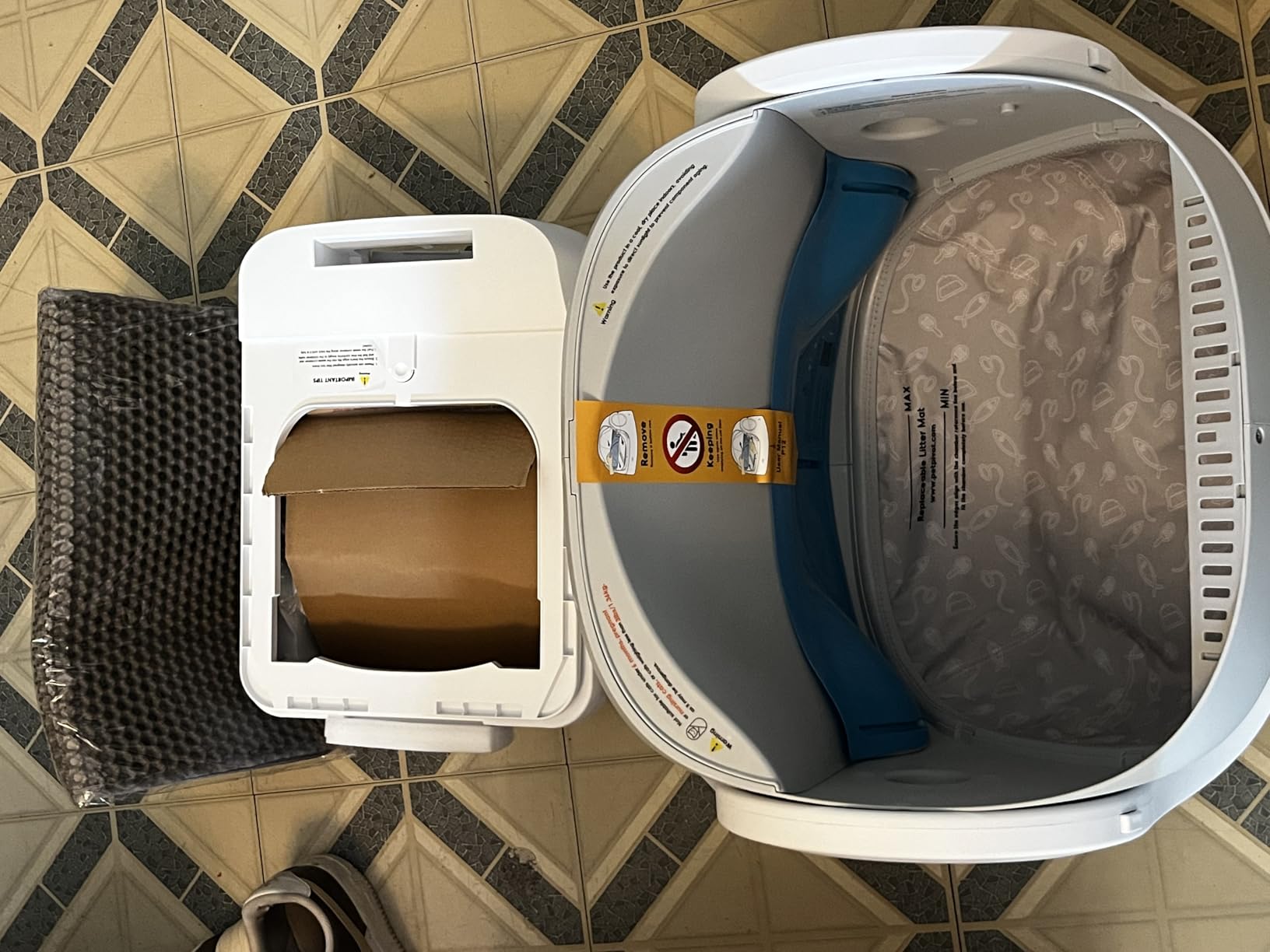
PetPivot Self Cleaning Litter Box, Open Top Automatic Litter Box for Multiple Cats, Multiple Layer Safety Protection, Liners and Mat Included, White
16.33 x 15.35 inch entrance
Rated for cats of 3 to 22 lb
Liners and catch mat included
Pros
- Wide 16.33 x 15.35 inch entry beats other compact open models
- Rated up to 22 lb so most cat sizes fit
- Open top improves airflow and cuts trapped odor
- Good transition step from a traditional open box
- Liners and a mat ship in the box
Cons
- Heaviest unit here at 22 lb
- 23.99 inch height is tall for low clearance
- Open design scatters litter onto the floor
Every compact automatic box has a cat weight ceiling, and most of them stop well below what a large or Maine Coon actually weighs. This one is rated from 3 to 22 pounds, which makes it the pick for a small apartment that happens to house a big cat.
The entry opening is the detail that matters in practice: 16.33 x 15.35 inches, roomier than most open-top units in this footprint class. A cat that will not commit to a cramped entry will sit beside the box instead, and then the automation is worthless. Our guide to the best litter boxes for large cats goes deeper on entry geometry.
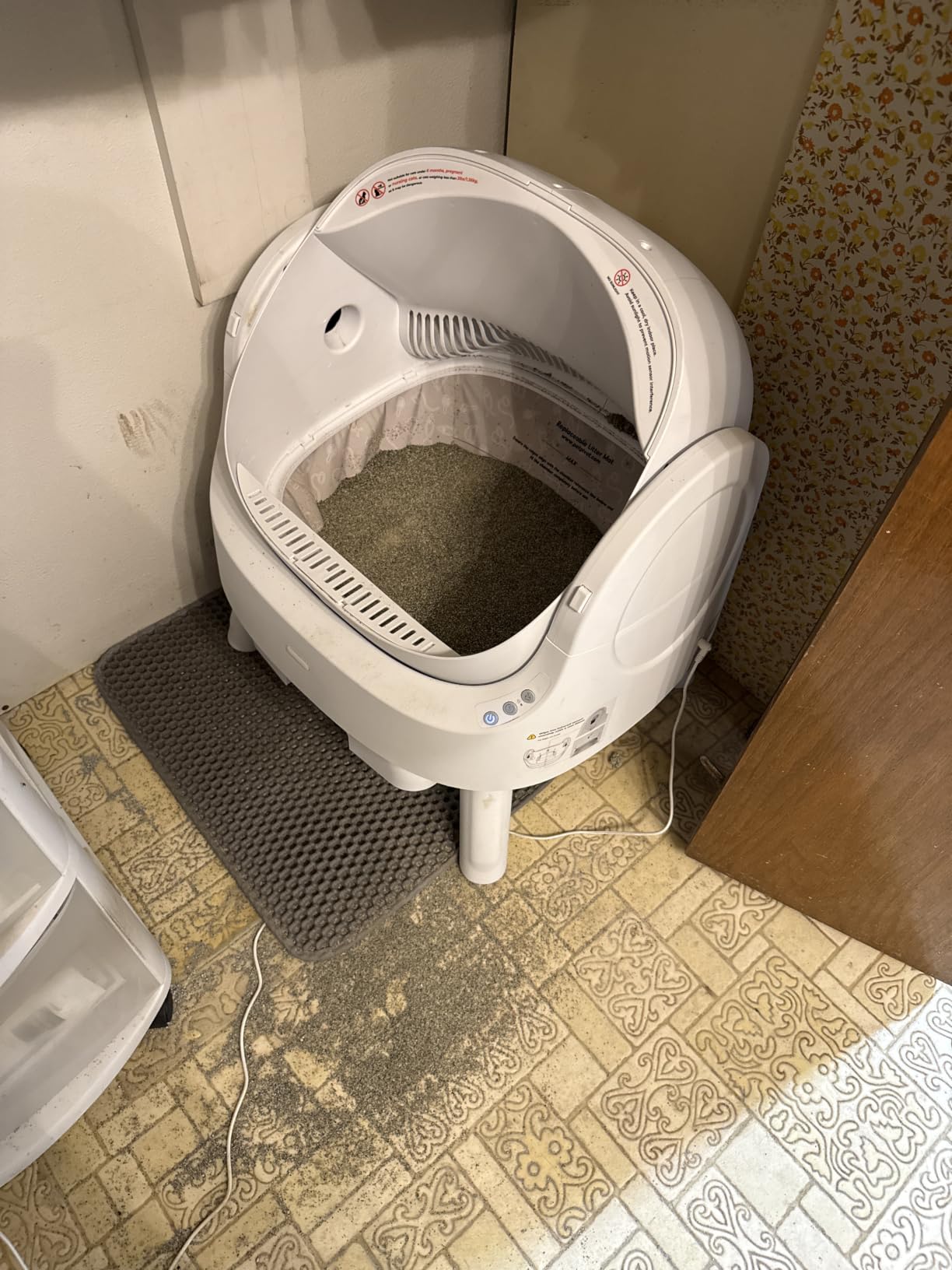
Open-top geometry also improves airflow, which cuts the trapped odor that builds up in a fully enclosed shell. In an apartment that means less of the ammonia smell drifting under a door, provided the sealed waste drawer is emptied on a reasonable rhythm.
Liners and a catch mat are included, which matters because open tops throw litter onto the floor and without a mat you are sweeping around the base daily, which defeats the point of owning an automatic box.
For whom the PetPivot works
It suits a one-cat apartment with a cat above 12 pounds, and any household where the previous automatic box failed because the entry felt like a tunnel. It is also a sensible first conversion from a traditional open pan, since the shape is familiar.
If you have a big cat and a small space, this is the box to measure your nook against first.
For whom it is the wrong choice
It is the heaviest unit in the group at 22 pounds and stands 23.99 inches tall. If your nook has a low cabinet or a sloped ceiling under 24 inches, this is not the box for it, and the weight makes deep cleaning a two-person job.
It is also wrong for anyone with zero tolerance for scatter who will not put down a mat.
5. Mintakawa Automatic Cat Litter Box – Best Health Tracking on a Modest Budget
Mintakawa Automatic Cat Litter Box Self Cleaning – APP Control and Weight Monitoring – Ultra-Quiet, Suitable for Medium Cats and Kittens, Safe Anti-Pinch Litter Box (Assembly Required) – White
15.15 x 20.86 x 19.3 inch footprint
App logs weight and visit data
Under 35 dB, cats 3.5 to 15 lb
Pros
- App reports weight
- visit duration and visit frequency
- 15.15 inch width suits narrow gaps
- Under 35 dB keeps cycles unnoticeable
- Removable drum is fully washable
- Anti-pinch protection halts on contact
Cons
- About 30 minutes of assembly required
- Capped at 15 lb so larger cats are out of spec
- 35 dB rather than the 32 dB of the quietest rivals
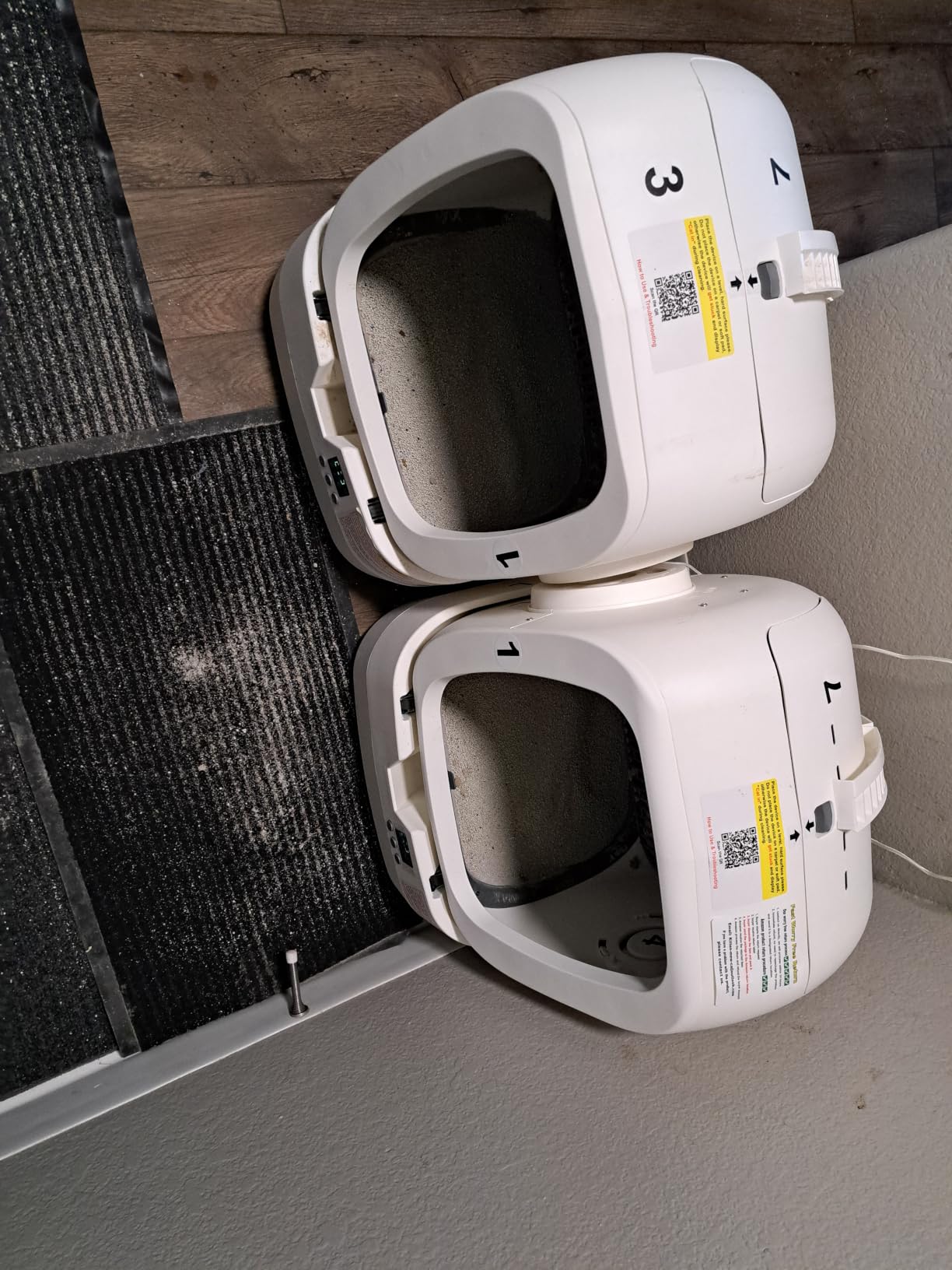
This is the narrowest box in the lineup by width at 15.15 inches, and that number decides whether it fits the awkward alcove behind a washer or the slim gap beside a fridge. If your available gap is roughly 16 to 17 inches, this is one of very few automatic boxes that will go there.
The app is the reason it earns a badge. It reports weight, visit duration and visit frequency, which gives you a rough urinary health signal without a vet bill. In a small apartment with more than one cat, being able to see that a cat’s frequency doubled is genuinely useful.
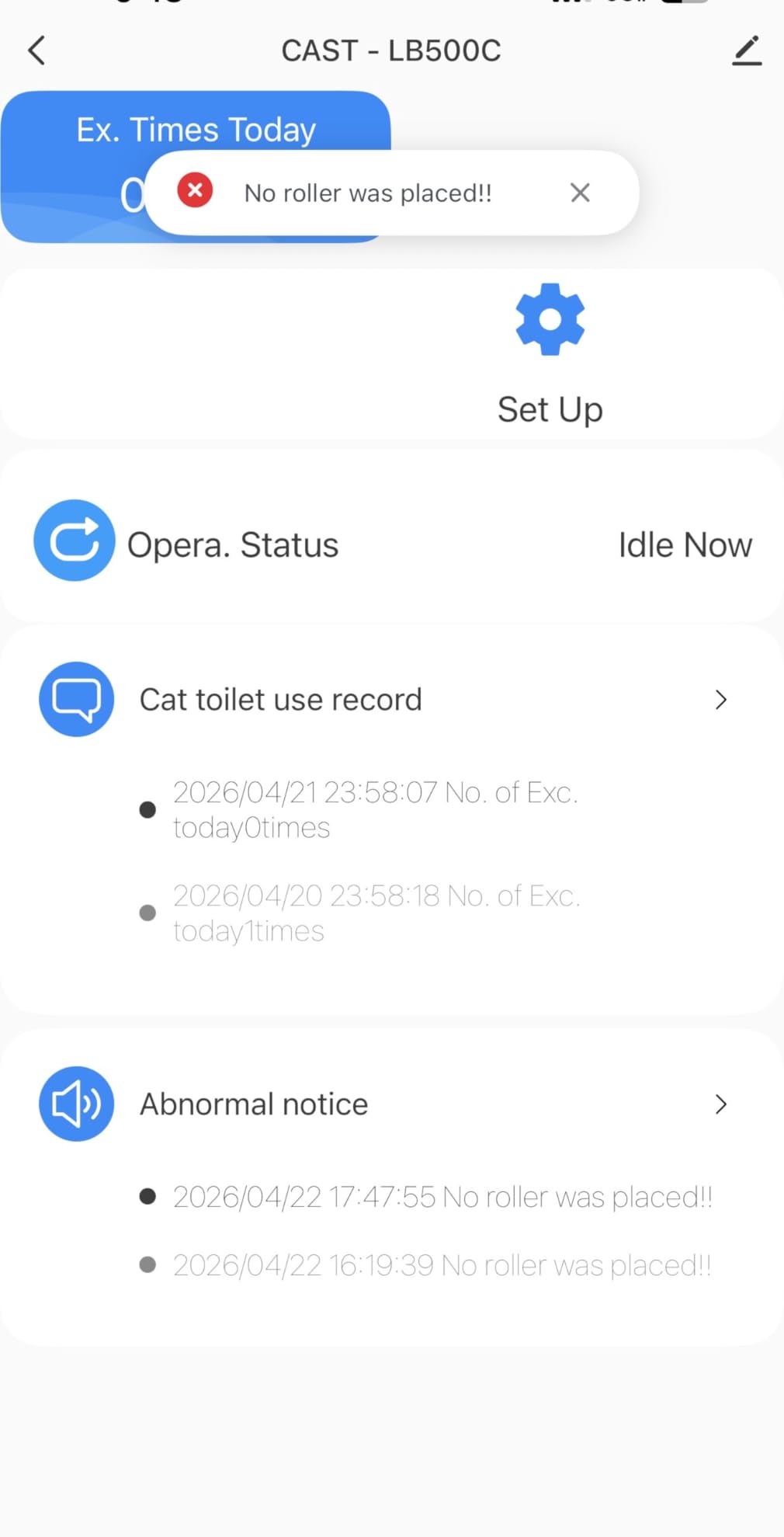
At under 35 dB it is quiet enough for a bedroom or a studio where walls are thin. The removable drum lifts out and is washable, so the deep clean that every plastic automatic box eventually needs is a matter of rinsing one part.
Owners who finish the build report the app data is the feature they actually use long term, while the complaints concentrate on build quality and the size ceiling rather than on the cleaning cycle itself.
For whom the Mintakawa works
It suits a cat between 3.5 and 15 pounds in a narrow nook, and an owner who wants health data without paying for a camera-equipped flagship. Wi-Fi or Bluetooth connectivity means it works even if your network is 5GHz-only.
It is also a good pick for anyone willing to spend half an hour on assembly in exchange for a machine that runs quietly and reports back.
For whom it is the wrong choice
It is wrong above the 15 pound ceiling. A cat that cannot fit comfortably will stop using the box entirely, and no app data fixes that.
It is also the wrong pick for anyone who wants the box working the moment the box is opened, because the roughly 30 minute build is unavoidable.
6. OneBug Self Cleaning Open Top Litter Box – Best for Multi-Cat Small Homes
OneBug Self Cleaning Open Top Automatic Multiple Cat Litter Box, White
20.6 x 15.7 x 23.03 inch footprint
32 dB, one-button control
Sealed bin rated 10 days
Pros
- Single button operation with no app or subscription
- 32 dB operation in a small home
- Infrared
- radar
- Hall and motor current monitoring
- Tool-free removal and washable drum
- bin
- screen and mat
Cons
- 23.03 inch height means some cats need a step
- Open top scatters litter around the base
- Shallowest interior depth of the tall open models
In a two-cat apartment the recurring complaint about app-equipped boxes is not the hardware, it is the setup ritual and the nagging. This one has a single button, no app, no network and no subscription, so nothing between opening the carton and the first automatic cycle.
It is also quiet at 32 dB and carries the deepest sensor stack in the group: infrared, microwave radar, Hall sensors and motor current monitoring. That redundancy matters when two cats can be inside at once, because it means more ways for the drum to stop before anything gets trapped.
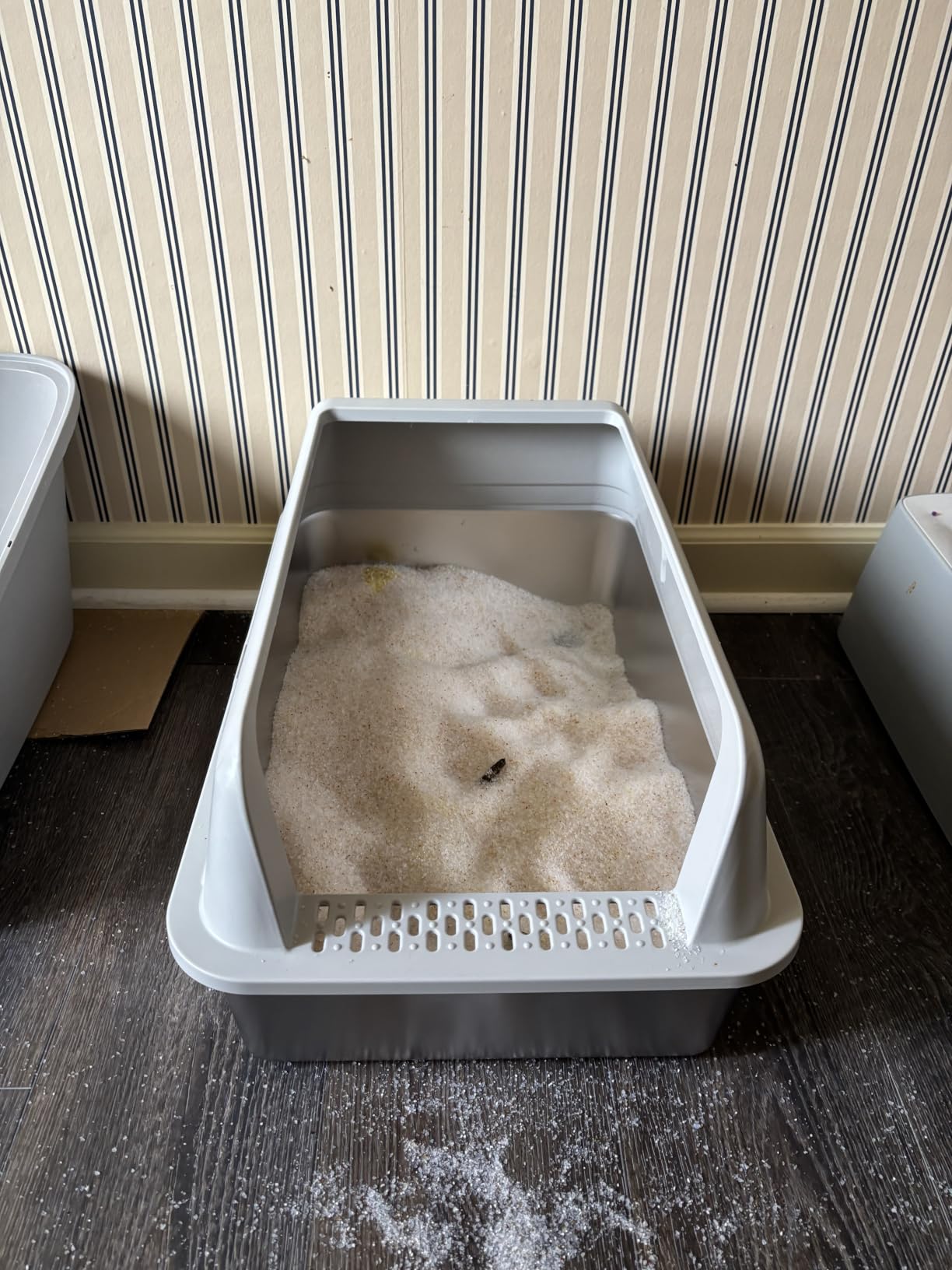
The sealed waste bin is rated at up to ten days for a single cat. With two cats running it, treat that as a shorter cycle and check the fill indicator on a fixed day each week rather than waiting for the alert.
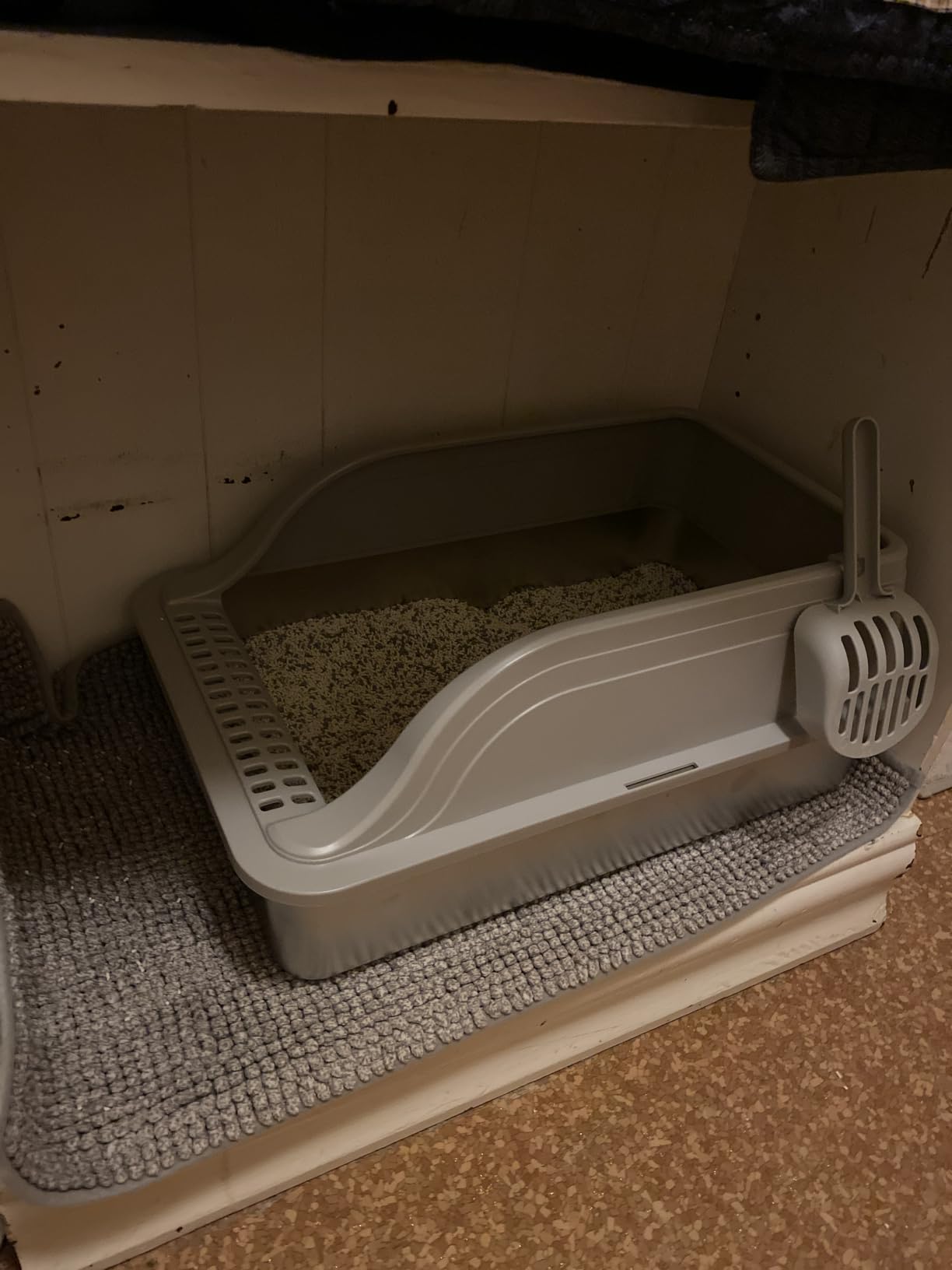
Everything disassembles tool-free, including the drum, bin, screen and leak-proof mat, and every part is washable. For an apartment where you want to scrub a plastic box properly rather than wipe it, that matters more than any smart feature.
For whom the OneBug works
It suits a two-cat small home where nobody wants to manage an app, and anyone in a roommate situation where a box that just works on one button is easier to explain. It also works with most clumping clay and mineral litters, so there is no proprietary consumable.
For multi-cat setups where one cat is much larger, pair it with a wider model rather than expecting one box to serve both.
For whom it is the wrong choice
It is wrong if you want health monitoring. There is no app, so you will not get weight or frequency data, only a very reliable cycle.
At 23.03 inches tall it also needs ceiling headroom, and a kitten or a short-legged cat may need a step. Open tops scatter, so budget for a mat.
7. Hazrela Automatic Cat Litter Box – Best for Fewer Emptyings

Automatic Cat Litter Box, Open-Top, App Control, 40 Waste Bags | Dual Safety Sensors Protect Cats 2.4G Smart APP & Quiet Motor Auto-Clean Easy Install Washable Parts
21 x 20 x 21 inch footprint
10.5L sealed bin, 14 day rating
6 infrared plus 4 weight sensors
Pros
- 10.5L bin gives the longest stated hold in the group
- Ten sensor positions give confident auto-stop
- Square footprint suits a corner or alcove
- App alerts when the waste bag is full
- 40 waste bags included and parts are washable
Cons
- Fabric litter bed lets urine soak to the bottom
- Drum jams in reverse position and needs manual resets
- Heavy to carry for a deep clean
Capacity is the reason this one is here. A 10.5L sealed bin with a stated 14-day hold is the largest waste store in the lineup, and for a two-cat apartment where nobody wants to empty a tray mid-week, that is the spec that actually changes daily life.
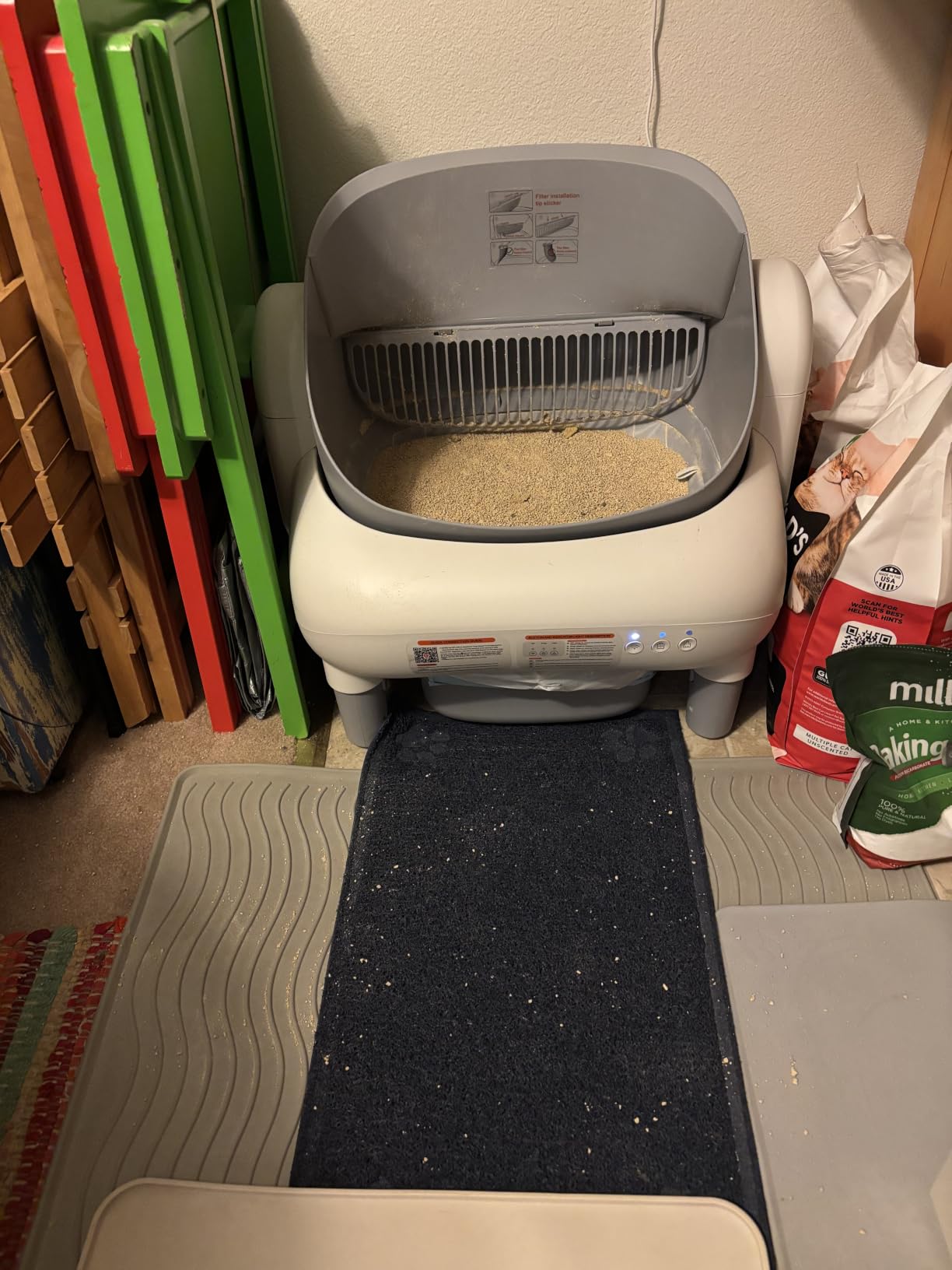
The 21 x 20 x 21 inch footprint is square and modest, so it fits a corner or a narrow alcove without the awkward long profile of some competitors. Ten sensor positions, six infrared and four weight, give it more ways to stop the drum than most units at this tier.
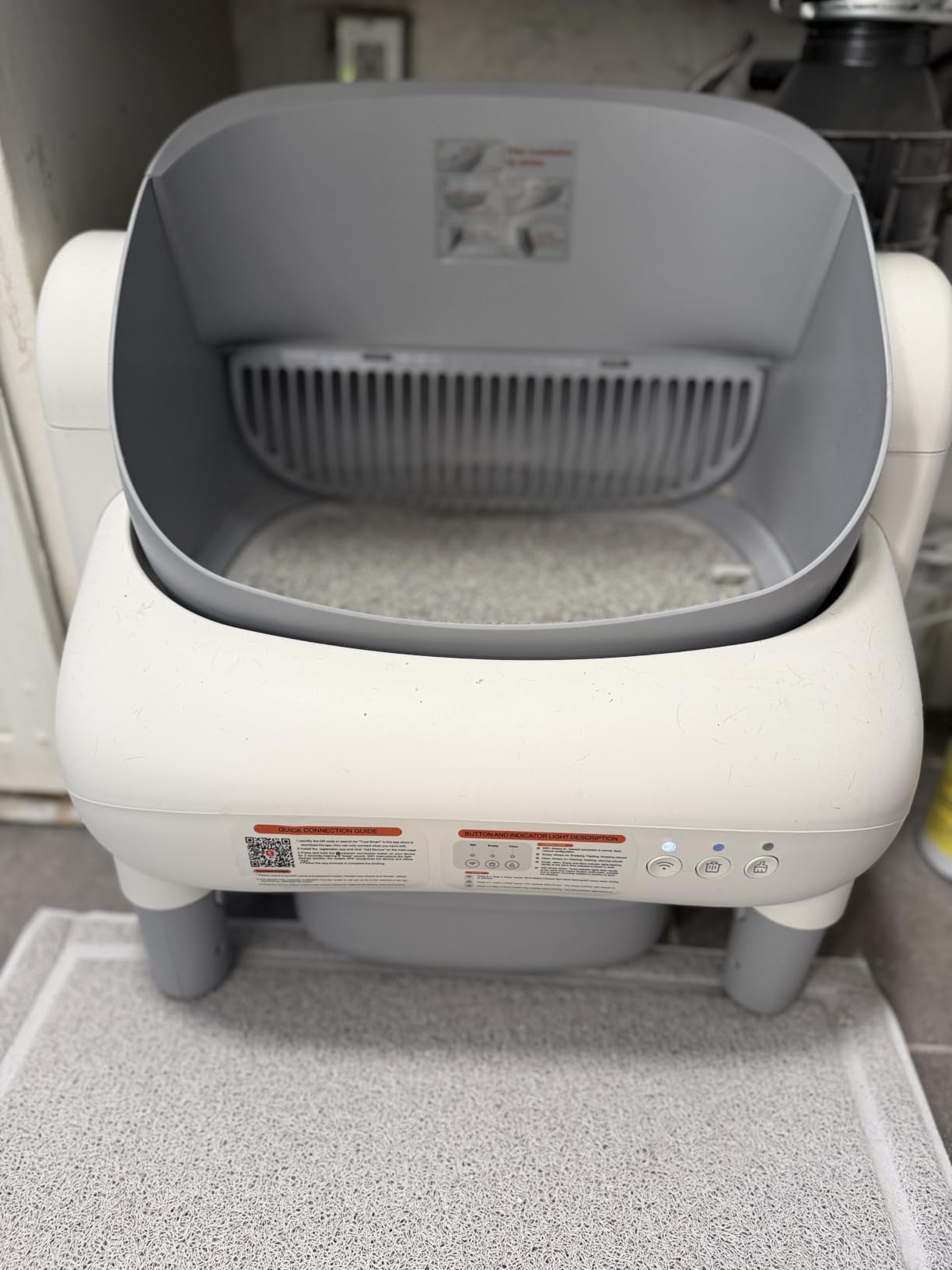
The app tracks weight and toilet records and warns you when the waste bag is full, which pairs well with a large bin because it means you empty on a schedule rather than by smell. Forty waste bags ship in the box, and every detachable part is washable.
Owners of calm, non-skittish cats rate it highly, and the transition reports here are encouraging: several describe leaving the box plugged out and litter-free for a few days as an acclimation step before switching it on.
For whom the Hazrela works
It suits a busy one-or-two-cat apartment where emptying the drawer on a fixed weekly day is the goal, and anyone who wants the longest possible interval between services. The included sensor count also reassures buyers worried about a cat climbing in mid-cycle.
It is a reasonable pick for a household that has already run one automatic box and wants to upgrade to bigger capacity.
For whom it is the wrong choice
The fabric-style litter bed is the recurring complaint. Urine can soak through to the bottom and clump there, which turns a low-maintenance box into a scrubbing job.
Reviewers also report the drum sticking in the reverse position and needing manual resets, and the unit is heavy to carry when you want to deep clean. Budget your effort accordingly.
8. Lohhuby Automatic Cat Litter Box – Best for a Narrow Nook

Lohhuby Automatic Cat Litter Box Self Cleaning – App Control, Open-Design, Smart Health Monitor, Suitable for Medium Cats and Kittens, Anti-Pinch Safety, Quiet Operation – White
20.67 x 15 x 20.67 inch footprint
App identifies cats by weight
Inner drum lifts out
Pros
- 15 inch depth suits tight gaps and slim walls
- 74% five-star reviews with 7% one-star
- App identifies each cat by weight and logs usage
- Anti-pinch stop works even with kittens
- Inner drum lifts straight out for cleaning
Cons
- App forces account creation and serves ads
- Tall body can intimidate a cat on first approach
- Open design scatters litter outside the box
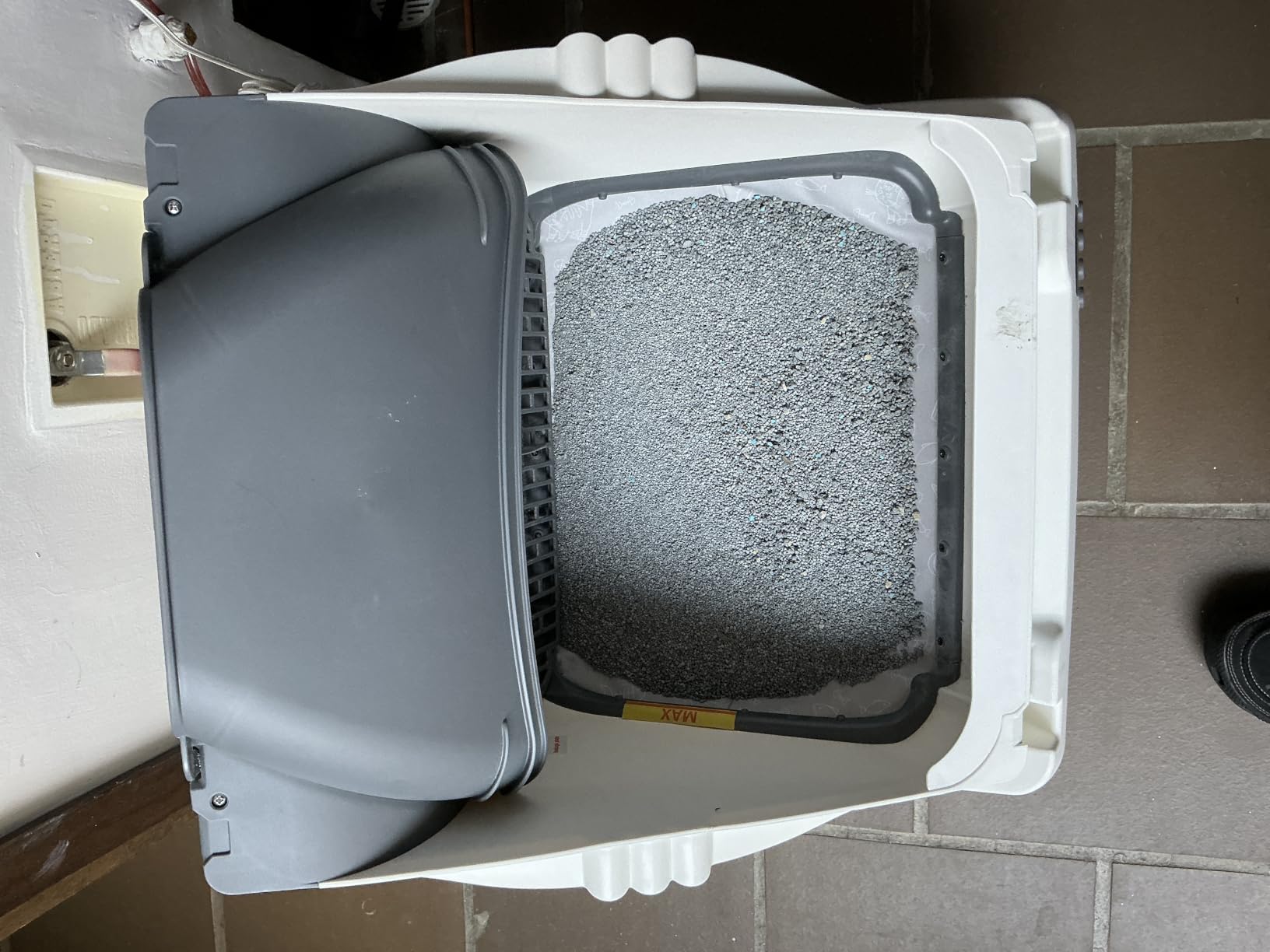
Depth is the number people forget when shopping for a small-space box, and at 15 inches this one is among the shallowest rotating units we tested. If your gap is defined by how far the unit can project into a walkway rather than how wide the wall is, shallow depth is the spec that saves you.
The hardware gets consistent praise. The inner drum lifts straight out without full disassembly, so cleaning is a lift, a rinse and a drop back in. Several owners report setup in under five minutes.
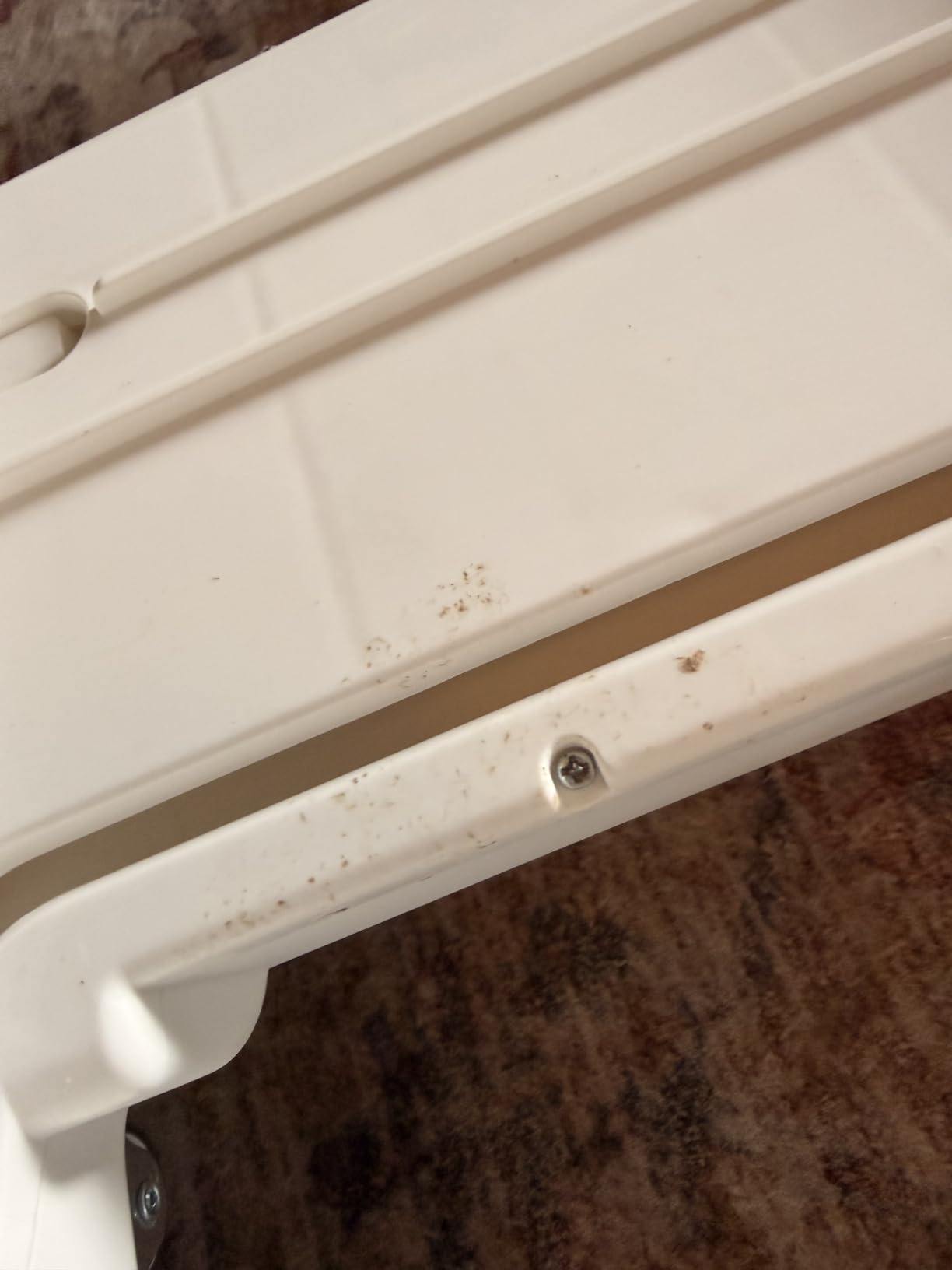
The app identifies individual cats by weight and logs daily usage counts, which is a decent substitute for a camera in a household where you mainly want to know who is using the box and how often.
For a single cat, bag changes land about every two weeks. The anti-pinch stop is reported as reliable even when a curious kitten walks in during a cycle, which is the safety question most first-time buyers ask.
For whom the Lohhuby works
It suits a narrow alcove, a gap beside a washing machine or a shallow closet recess where depth is the binding constraint. It is also a good first automatic box for owners in a one-cat apartment who want simple cleaning.
If your cat is on the smaller side, the open-design entry is comfortable and there is no threshold to negotiate.
For whom it is the wrong choice
The app is the most criticised part of this unit. Owners report forced account creation, non-skippable ads on launch and unnecessary location permission prompts, which is a poor trade for a feature you can get elsewhere without an account.
It is also tall enough to intimidate on a first approach, and if your cat is skittish, start it in manual mode. Our picks for the best self-cleaning litter boxes for large cats cover higher-capacity alternatives.
9. Paruuntys Automatic Litter Box – Best for Lower Running Cost

Paruuntys Automatic Litter Box,Safety Sensor,App Control,Open-top Design
16.53 x 22.04 x 20.74 inch depth
15L sealed waste compartment
Reusable washable liner included
Pros
- 15L bin is unusually large at the entry tier
- 16.53 inch depth projects less into a walkway
- Seven sensors: four weight plus three infrared
- Reusable washable liner cuts consumable spending
- Reinforced leak-proof edges with removable tray
Cons
- App joins 2.4GHz networks only
- Some owners report monthly jamming needing manual clearing
This is the box to look at if your main worry is the yearly running cost rather than the sticker. The reusable washable liner is the difference: you are not buying a fresh liner every cycle, so the running cost over three years looks nothing like the boxes that ship 40 bags at a time.
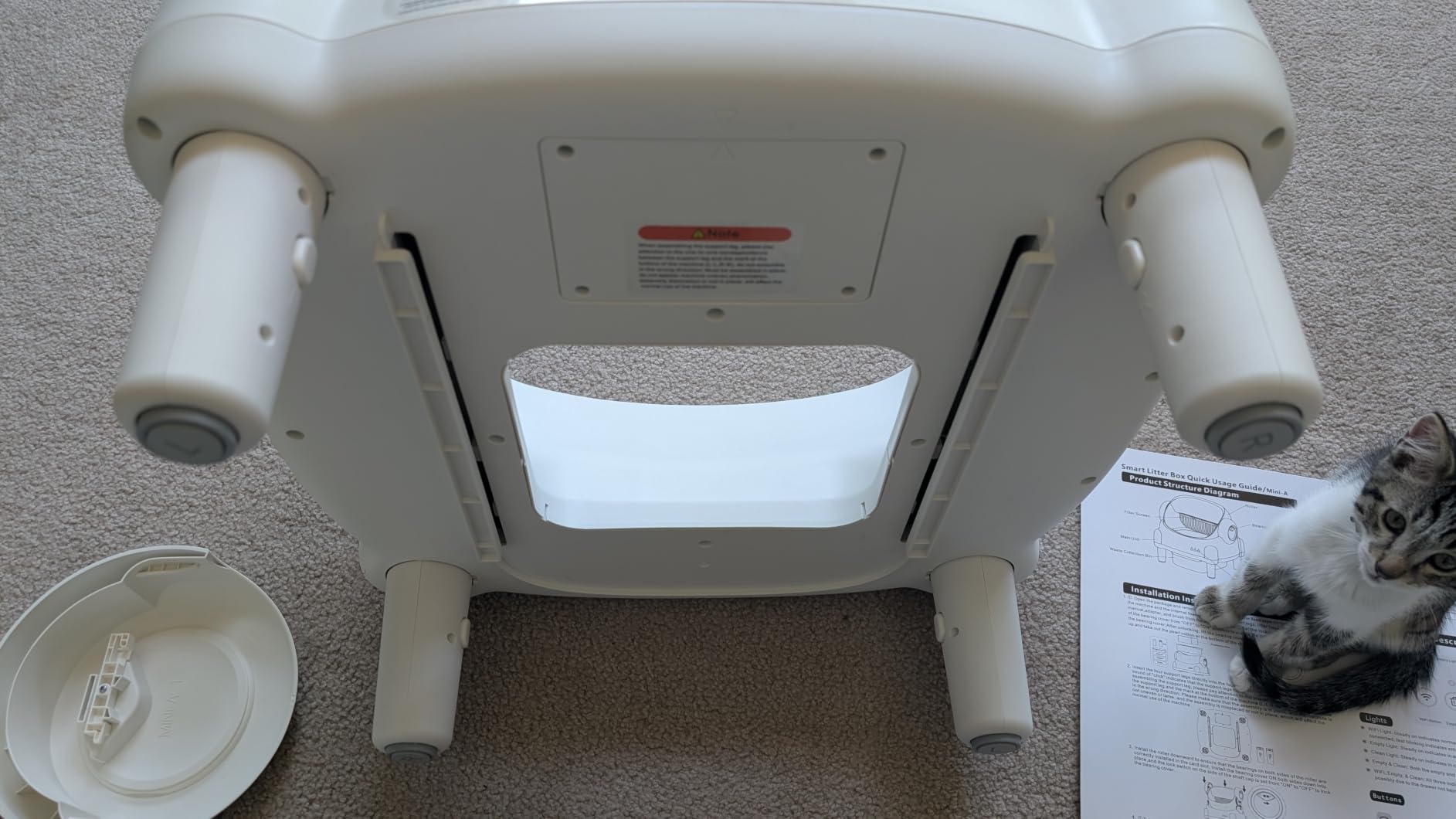
At 16.53 x 22.04 x 20.74 inches it is shallow in depth but long in front-to-back, which suits a wall where you have width to spare but need to keep the walkway clear. The 15L sealed compartment means you are also buying time between services.
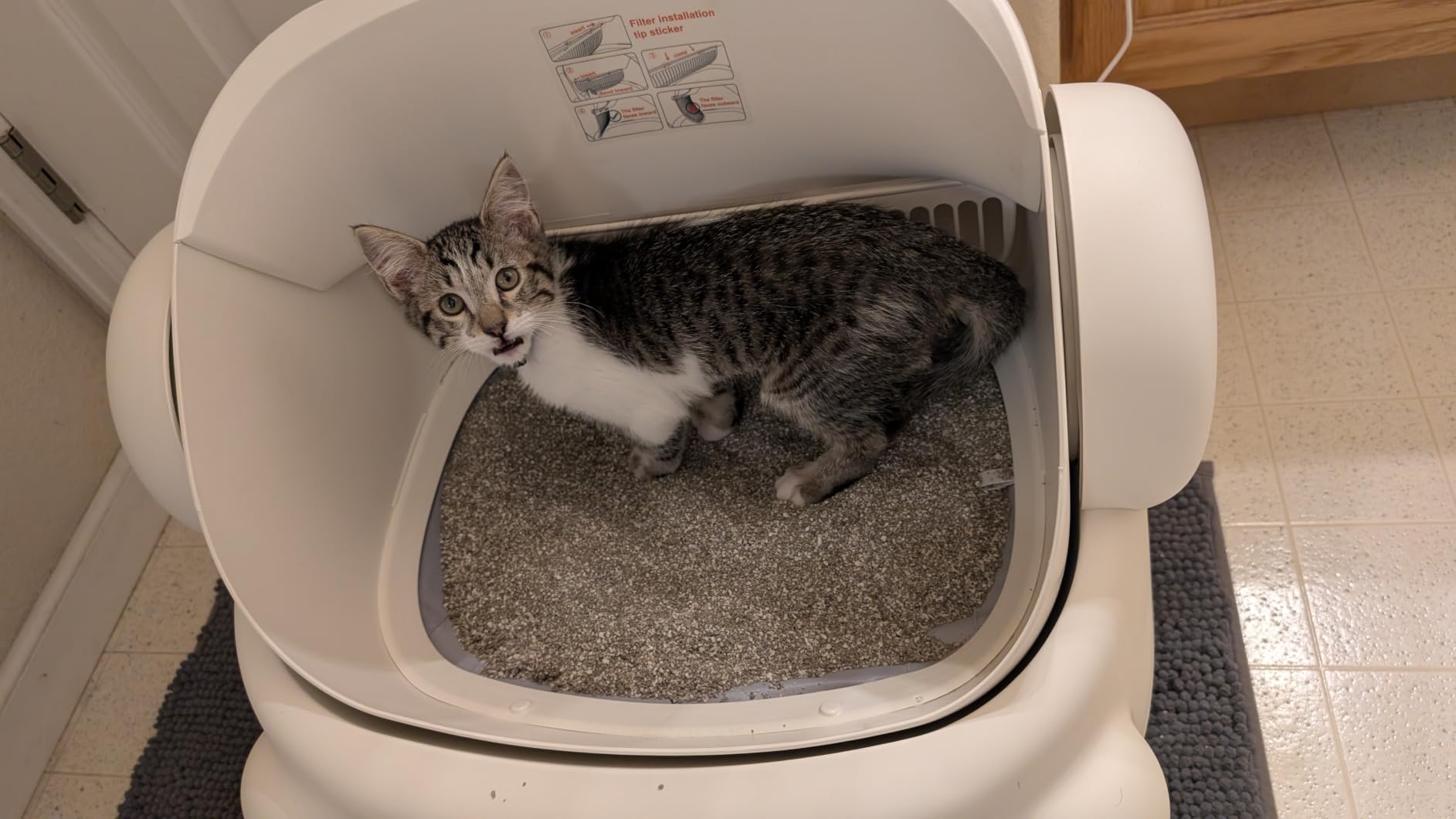
Seven sensors, four weight-activated and three infrared, is a solid stack for the entry tier and gives the drum multiple ways to stop if a cat moves during a cycle. The reinforced leak-proof edges and removable tray handle the spill case that trips up cheaper units.
Buyers consistently cite two things: the 15L bin and the compact depth. Those are exactly the two numbers that decide whether a box works in a small apartment, and having both in one unit is unusual.
For whom the Paruuntys works
It suits a single-cat apartment on a tight budget, especially anyone who resends buying disposables every month. The entry is a 16.5 x 16.5 inch open square, which is comfortable for a cat that does not like tunnels.
It also suits anyone who already uses clumping clay and wants the biggest sealed bin they can find without paying for a premium model.
For whom it is the wrong choice
If your home network is 5GHz only, the app will not pair. And the recurring negative in reviews is mechanical longevity, with some owners reporting jamming about once a month and needing to clear it manually.
Reliability is the one thing you cannot engineer around in a studio. If you need something that runs untouched for a week at a time, pick a box with a stronger mechanical review profile.
10. FRCFRC Automatic Cat Litter Box – Best Under Low Furniture

FRCFRC Automatic Cat Litter Box Self Cleaning – App Control, Cat Toilet Records, Suitable for Big Cats, Medium Cats, Kittens and Multi-Cat Families, Anti-Pinch, Low Noise【Assembly Required】- White
20.47 x 20.47 x 14.96 inch height
Under 35 dB, cats 3.3 to 20 lb
Bluetooth and Wi-Fi control
Pros
- Shortest box here at 14.96 inches
- Highest cat ceiling among the cheaper models here at 20 lb
- Works over both Wi-Fi and Bluetooth
- Washable drum that lifts out whole
- 74% five-star rating
Cons
- About 90 minutes of assembly
- Low profile means less litter capacity than taller drums
- Wi-Fi side is limited to 2.4GHz
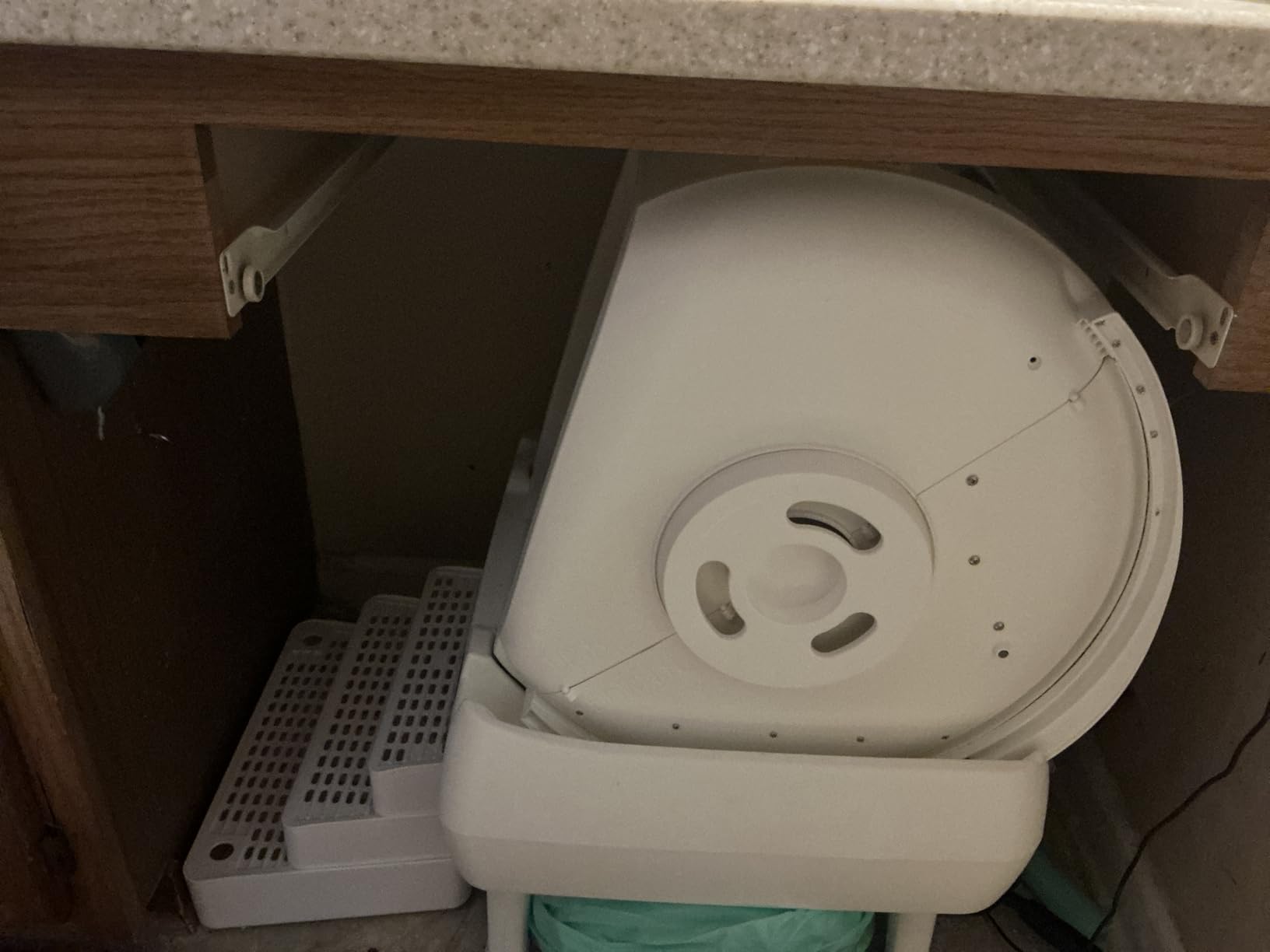
Height is the last clearance question and it catches people out. At 14.96 inches this is the shortest box in the lineup by a wide margin, which means it can slide under a low vanity, a sloped ceiling or a shallow shelf where every other automatic unit we tested would hit the frame.
It also solves the weight ceiling problem. Rated from 3.3 to 20 pounds, it accepts larger cats than most units at this price, so a small apartment with a big cat does not have to sacrifice either the footprint or the cat.
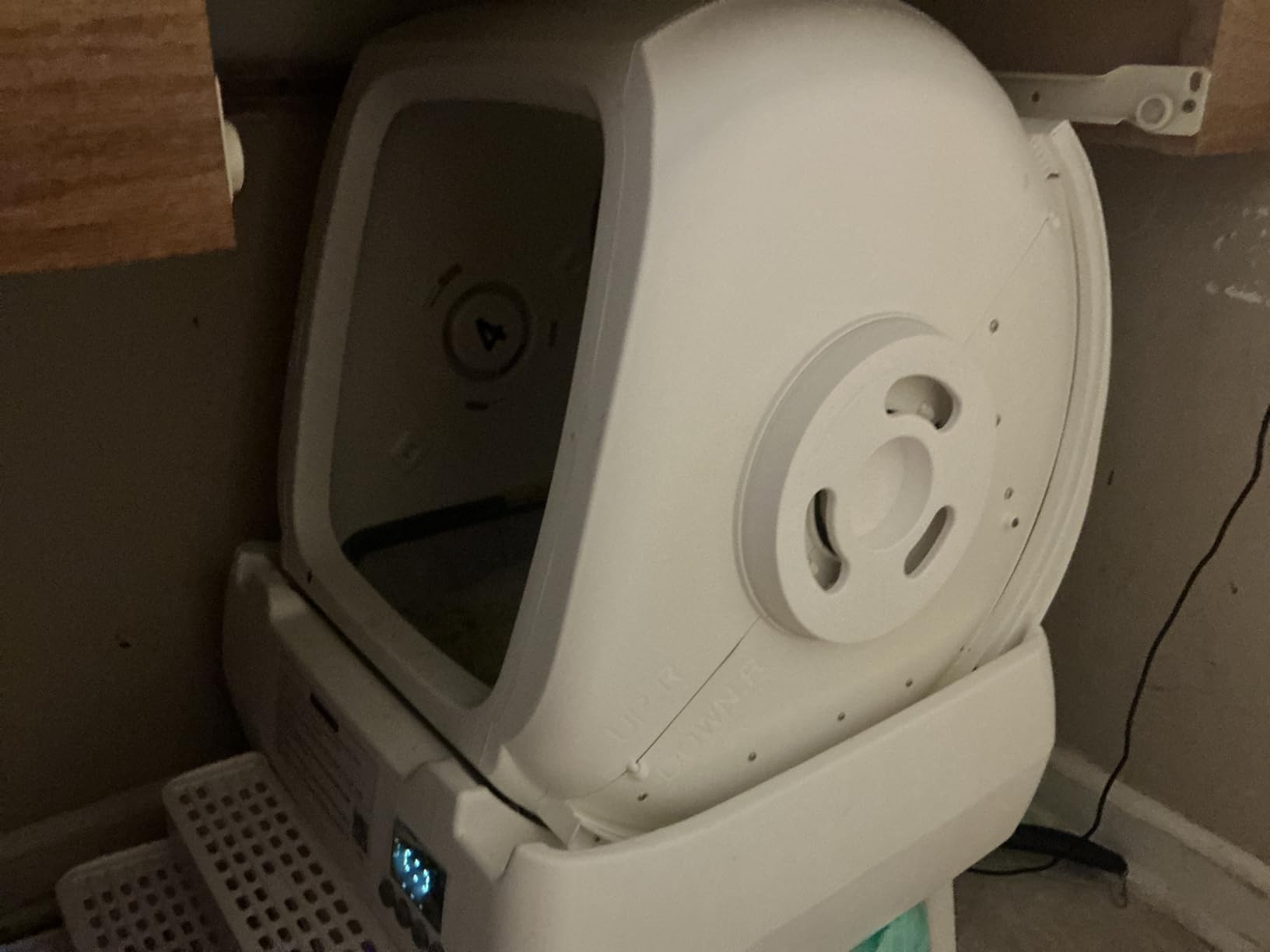
Bluetooth support alongside Wi-Fi is a practical touch in older apartments where the router only broadcasts 5GHz. The app still logs weight, toilet duration and visit count, so you keep the health data most competitors at this tier offer.
The drum lifts out and is water-washable, and the whole unit runs under 35 dB. Reviewers split it neatly into the footprint and cat range, which they like, and the build, which they do not.
For whom the FRCFRC works
It suits a bathroom nook with a low shelf, a sloped-ceilinged bedroom, or any spot where vertical clearance is under 16 inches. It is also one of the few budget boxes that still accommodates a cat over 15 pounds.
For the mechanics of sizing a box for a heavier cat, see our review of the best automatic litter boxes for large cats before you commit.
For whom it is the wrong choice
At about 90 minutes, this is the longest assembly in the group. If you need the box running the day it arrives, it is the wrong pick.
The low profile also means less litter capacity than taller drums, so you will top up more often. It is heavy at 21.6 pounds, which makes deep cleaning a chore rather than a quick job.
How Much Space Does an Automatic Litter Box Actually Need?
Allow at least 24 inches of width and 22 inches of depth for a standard automatic box, plus 2 to 3 inches of side clearance on the drawer side and roughly 26 inches of height above the floor. Compact open-top models like the ScoopFree Crystal Pro need less, but a rotating drum physically cannot work without room to turn.
Here are the factors that decide fit, in the order they trip people up.
Floor clearance: the vertical space the drum needs above the box, plus 2 to 3 inches of side room so the waste drawer slides out without scraping a wall.
Placement surface: hard, flat flooring. Carpet compresses under the base and can stop weight sensors from registering a cat, which is a leading cause of returned units.
Odor containment: a sealed waste drawer with a replaceable carbon filter or deodorizer matters more when every wall is thin and smell reaches the living room in under an hour.
Cat weight ceiling: the box should be at least as wide as your cat is long. Boxes rated under 10 pounds will be avoided by larger cats no matter how good the sensors are.
Entry geometry: open-top and open-design entries suit cats with a history of refusing enclosed boxes, which is common after a bad experience with a side-entry unit.
Consumable load: branded crystal litter, deodorizer gels and disposable trays turn an entry-tier box into an ongoing monthly expense.
Noise: anything under 35 dB is unobtrusive in a studio. Above that, a thin wall turns a cycle into an event your roommate will hear.
Weight: 13 to 15 pounds is easy to carry to a sink. Anything above 21 pounds means deep cleaning is a two-person job.
How to measure your nook in four steps
Measure the width of the tightest point, not the widest. If the gap between the toilet and the wall is 20 inches, a 21.5 inch wide drum will not go in no matter how shallow the depth is.
Measure depth from the wall outward, then add 3 inches in front for the cat to stand and for you to pull the drawer. The box opening is not where the cat stands, it is where the cat turns.
Measure height to the nearest obstruction above the box, and check the box height plus 2 inches. Under-cabinet installs need roughly 16 inches of clearance for the models in this roundup.
Check the outlet distance last. Every model here is corded, so a unit that needs a 6 foot cord across a doorway is a roommate negotiation, not an installation detail.
Why carpet breaks weight sensors
Weight and gravity sensors measure how much load sits on the base plate. Carpet compresses, so the plate sits lower and slightly off-level, and the sensor reads the cat as lighter than it is or fails to trigger at all. The failure is quiet: the box simply never runs, and owners often assume the cat stopped using it.
If your apartment is carpeted in the room you want to use, put a hard mat or a piece of hardwood or tile under the unit, or choose a box whose detection does not depend on floor load. The raking design of the ScoopFree Crystal Pro is the least sensitive to this of the ten.
Where the box should and should not go
A bathroom nook works well because odor is contained in a small ventilated room, and because tile is a hard surface that sensors read reliably. Keep the unit away from food preparation and out of a bedroom if you can, since open-top models still let some odor escape.
Do not place it directly against a shared wall if the noise bothers you, and never block the door swing. Leave a path from the box to the room so a nervous cat is not cornered between the unit and a wall.
What a compact box costs to run each year
Budget by consumable type. A clumping-clay box with a reusable liner and standard bags costs almost nothing yearly beyond the litter you already buy. A crystal-litter raking box like the ScoopFree adds a tray and a refill every cycle.
App-equipped models add a deodorizer gel or filter on top. None of these costs are large on their own, but across three years the cheapest box to buy is often not the cheapest box to own, and that is the calculation most roundups skip.
Frequently Asked Questions
Is there an automatic litter box that can fit in tight spaces?
Yes. Open-top units without a rotating globe fit the tightest gaps, and the PetSafe ScoopFree Crystal Pro at 20.38 x 7.13 x 28 inches and 13.3 pounds is the narrowest of our picks. For low cabinets, the FRCFRC model measures 20.47 x 20.47 x 14.96 inches, the shortest in the group. Always add 3 inches in front for the cat to stand.
What is a good narrow automatic litter box for small spaces?
Lead with depth rather than width. The Paruuntys box measures 16.53 inches deep and the Lohhuby measures 15 inches deep, both shallow enough to sit against a wall without projecting into a walkway. For width, the Mintakawa is 15.15 inches across and the Lohhuby 15 inches, so a gap of about 17 inches works.
Do vets recommend automatic litter boxes?
Veterinarians generally support the reduced-scooping benefit, since daily litter handling is unhygienic for owners and unnecessary for the cat. The common cautions are size, entry height and visibility. Choose a box at least as wide as your cat is long, keep the entry low for senior or arthritic cats, and watch toileting frequency, because an automatic cycle can hide a change in habits.
What are the downsides of using an automatic litter box in a small apartment?
The main drawbacks are floor clearance, since a rotating drum needs room to turn and the waste drawer needs 2 to 3 inches of side space, and flooring, since carpet can defeat weight sensors. Ongoing consumables add a recurring cost. Cats that refuse enclosed designs will not use a dome, and noise above 35 dB travels through thin walls.
Is there a cheaper alternative to the Litter-Robot?
Most premium self-cleaning boxes are priced well above the entry-tier models in this roundup. The OneBug unit runs on a single button with no app or subscription, and the teweoa model uses standard clumping clay so litter costs stay at grocery store prices. Both deliver automatic cleaning without a premium brand premium.
The Bottom Line for Small Apartments
The best automatic litter boxes for small apartments all share one trait: they give up something decorative to give you floor back. The PetSafe ScoopFree Crystal Pro wins here because it needs no clearance above or beside it, weighs 13.3 pounds, and asks nothing of a cat that has decided covered boxes are off the table.
If you have thin walls, pick the quiet 32 dB models. If you have a big cat, pick the PetPivot or FRCFRC for the weight ceiling. If you have two cats and no patience for apps, pick the OneBug. And if your nook has a low shelf, measure height before anything else.
Measure your gap before you order, put the unit on a hard surface, and leave the drawer side clear. Those three steps decide whether the box gets used every day or joins the pile of appliances you bought for a problem you never solved.