
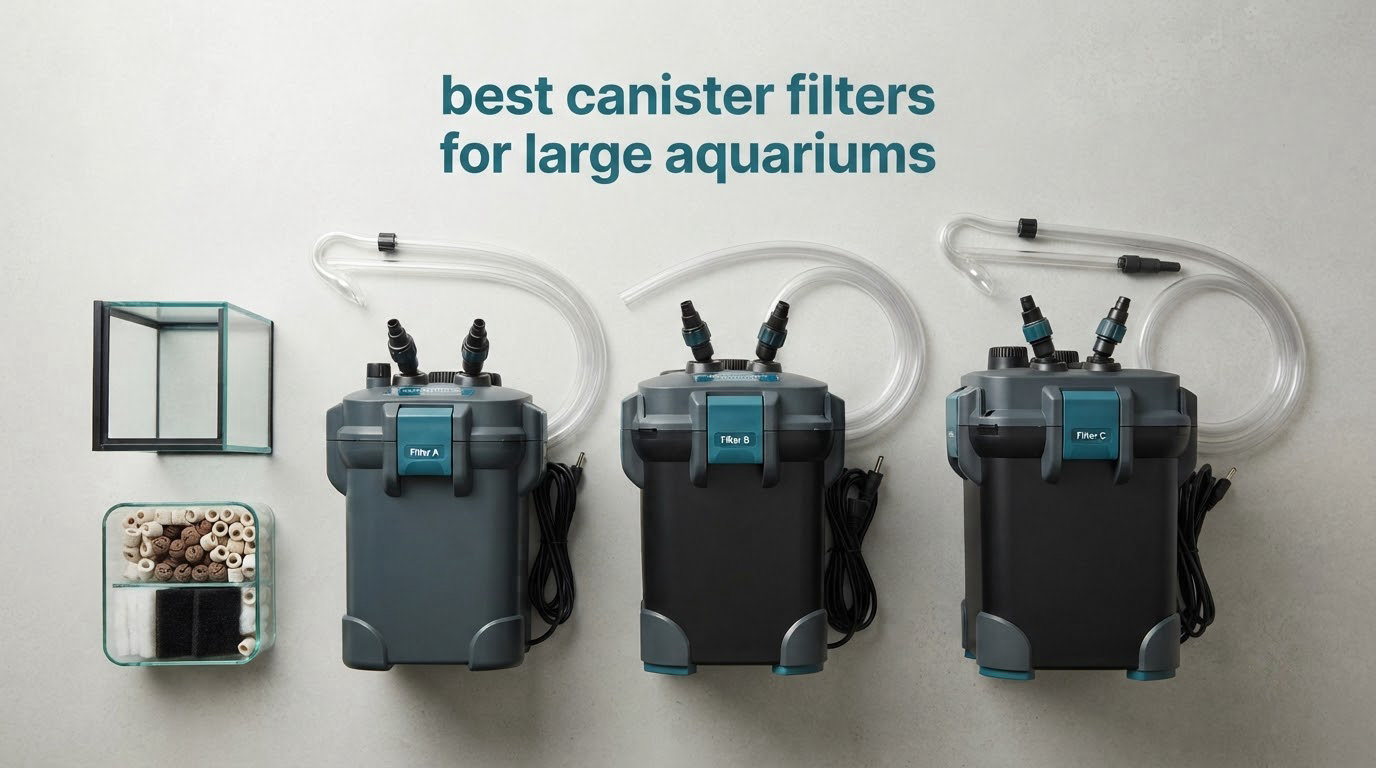
If you want one answer for a large aquarium, the Fluval FX6 is the best canister filter in this group. It pushes a rated 925 US gallons (3,500 L) per hour, holds 1.5 US gallons (5.9 L) of media in removable stackable baskets, and self-primes with water and a plugged-in cord. That combination of flow, media capacity and automatic air evacuation is why it repeatedly tops large-tank buyer lists.
Large aquariums punish undersized filters quickly. A 200-gallon planted tank or a heavily stocked cichlid setup produces far more waste than a hang-on-back can process, and the fix is always more media volume and more turnover rather than a louder pump. We compared 12 canisters rated from 100 to 400 gallons, weighing real flow against rated flow, media capacity, cabinet clearance, noise and parts availability.
Quick picks, if you want to skip ahead:
Best overall: Fluval FX6 – 925 GPH rated flow, 1.5 gallons of media, self-starting smart pump with 12-hour air evacuation.
Best value: Fluval 407 – quiet eTEC pump, EZ-Lift media baskets, and the largest review base in the group.
Best for 200-gallon tanks: Penn-Plax Cascade 1500 – 350 GPH across five stackable baskets with a full media package in the box.
Best for UV clarity: Aquatop CF-400UV MKII – 370 GPH with a built-in 9W UV sterilizer at a tier most brands charge more for.
Best for long-term reliability: EHEIM Classic 2215 – bottom-in, top-out flow path, silicone sealing ring fixed to the pump head, widely available parts.
Best with a built-in heater: OASE BioMaster Thermo – bi-metal heater inside the canister plus a pre-filter module that lifts out for weekly rinsing.
If you have not chosen a tank yet, our guide to the best large aquariums for beginners covers sizing, and the fish tank stand picks we cover here matter because canister height is the constraint nobody checks before buying.
Top 3 Picks for Large-Aquarium Canister Filters (October 2026)

Fluval FX6 Canister Filter
- 925 GPH rated flow
- 1.5 gal media capacity
- Self-starting smart pump


Best Canister Filters at a Glance in 2026
| Product | Specifications | Action |
|---|---|---|
| Fluval FX6 High Performance Filter |
|
Check Latest Price |
| Fluval 407 Performance Filter |
|
Check Latest Price |
 Aqueon QuietFlow ECOM Aqueon QuietFlow ECOM |
|
Check Latest Price |
 Penn-Plax Cascade 1500 Penn-Plax Cascade 1500 |
|
Check Latest Price |
 Marineland Magniflow 400 Marineland Magniflow 400 |
|
Check Latest Price |
 Aquatop CF-400UV MKII Aquatop CF-400UV MKII |
|
Check Latest Price |
 SunSun HW-304B Pro Kit SunSun HW-304B Pro Kit |
|
Check Latest Price |
 SunSun HW-3000 UV 5-Stage SunSun HW-3000 UV 5-Stage |
|
Check Latest Price |
| EHEIM Classic 2215 |
|
Check Latest Price |
 OASE BioMaster Thermo OASE BioMaster Thermo |
|
Check Latest Price |
 Penn-Plax Cascade 1200 Penn-Plax Cascade 1200 |
|
Check Latest Price |
 Penn-Plax Cascade 1000 Penn-Plax Cascade 1000 |
|
Check Latest Price |
1. Fluval FX6 High Performance Filter – Best Overall for Large Aquariums
Fluval FX6 High Performance Aquarium Filter, up to 400 Gal.
925 GPH rated flow
1.5 US gal media capacity
21 in tall, 19.9 lbs
Pros
- Self-starts with water and the plug in
- Very quiet even at full output
- 1.5 gallons of media in stackable baskets
- Impeller and O-rings are user-replaceable
- Fits under most aquarium stands
Cons
- Intake tube is very long and cannot be shortened
- Hoses are stiff and large in diameter
- Instructions are thin and hard to read
I have run the FX6 on both a 150-gallon planted community tank and a 200-gallon cichlid setup, and it does the same thing on both: you fill the canister, plug it in, and it starts pulling water. That self-starting behaviour is the single feature that changes daily life compared with older canisters, where you prime a hose by hand every time the filter is opened.
The 12-hour automatic air evacuation cycle is the quiet hero. Every twelve hours the smart pump microchip runs a brief cycle that clears trapped air from the housing, and owners who did not know about it often mistake the short gurgling pause for a fault. I set my expectations with clients before installation so nobody panics the first time they hear it.
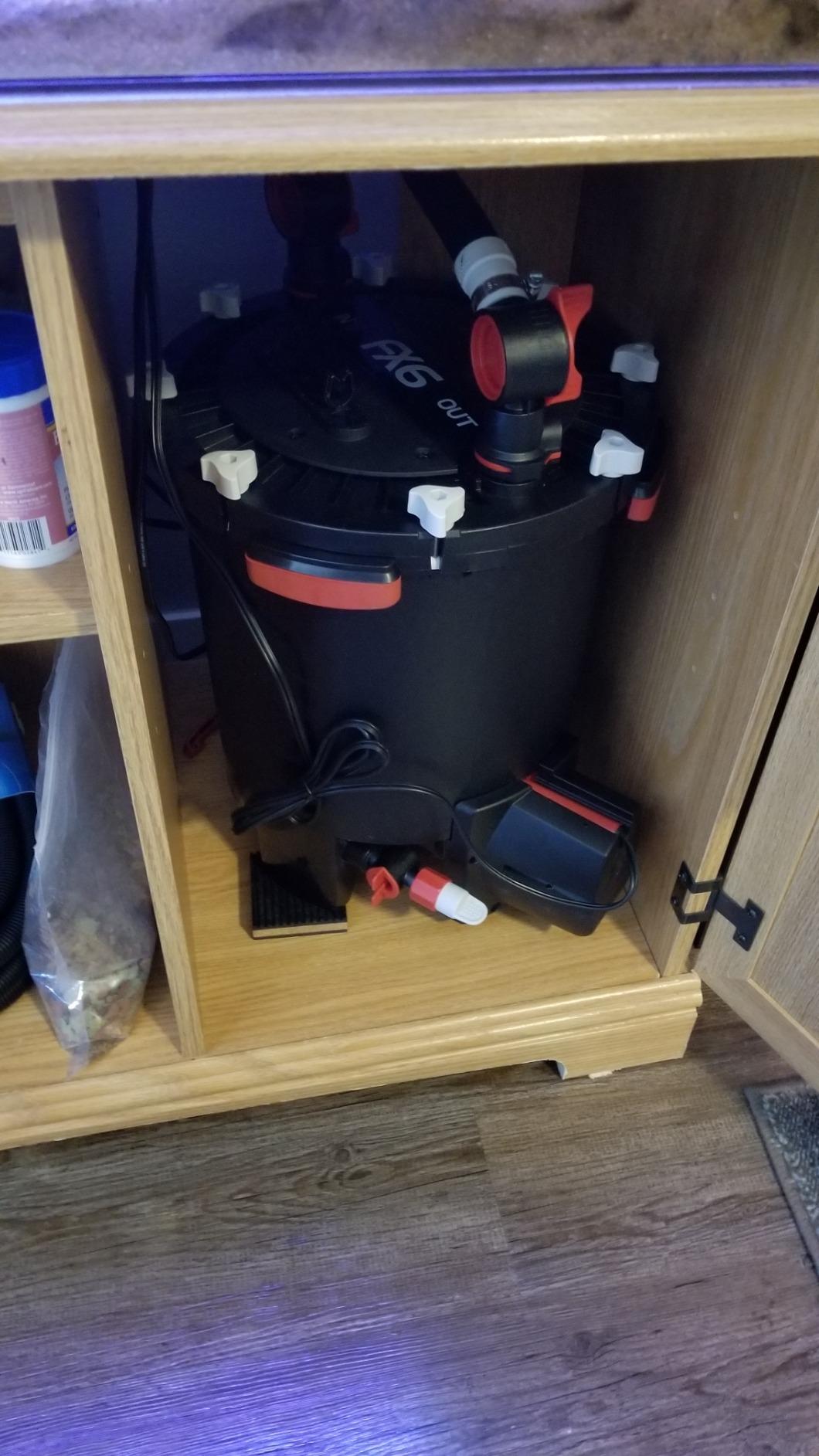
Media capacity is what separates it from every other canister here. The removable, stackable baskets stop water from bypassing the media, and 1.5 US gallons (5.9 L) is enough to run a real carbon, sponge and ceramic ring stack on a big tank rather than a token amount of floss. Water changes get easier too, because the base drain valve lets you run new water straight to the tank without buckets.
Real flow is always lower than the 925 GPH headline, and the drop depends on how full the baskets are and how far the pump is lifting. I treat the rating as a ceiling rather than a working figure, and I plan turnover against the realistic number. On our 200-gallon tank the practical turnover landed in a range that kept the water clear without blasting the livestock.
Who the FX6 suits
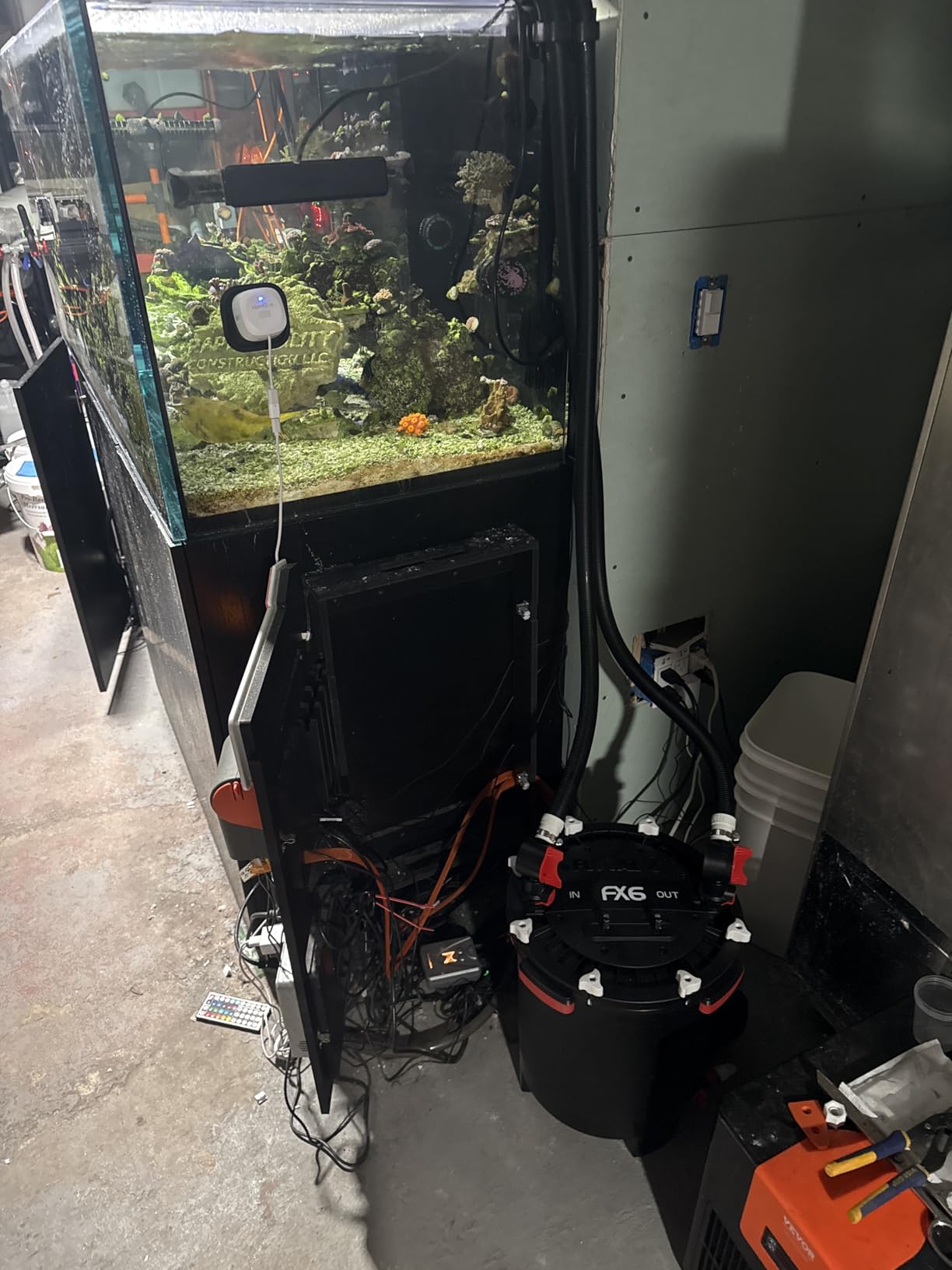
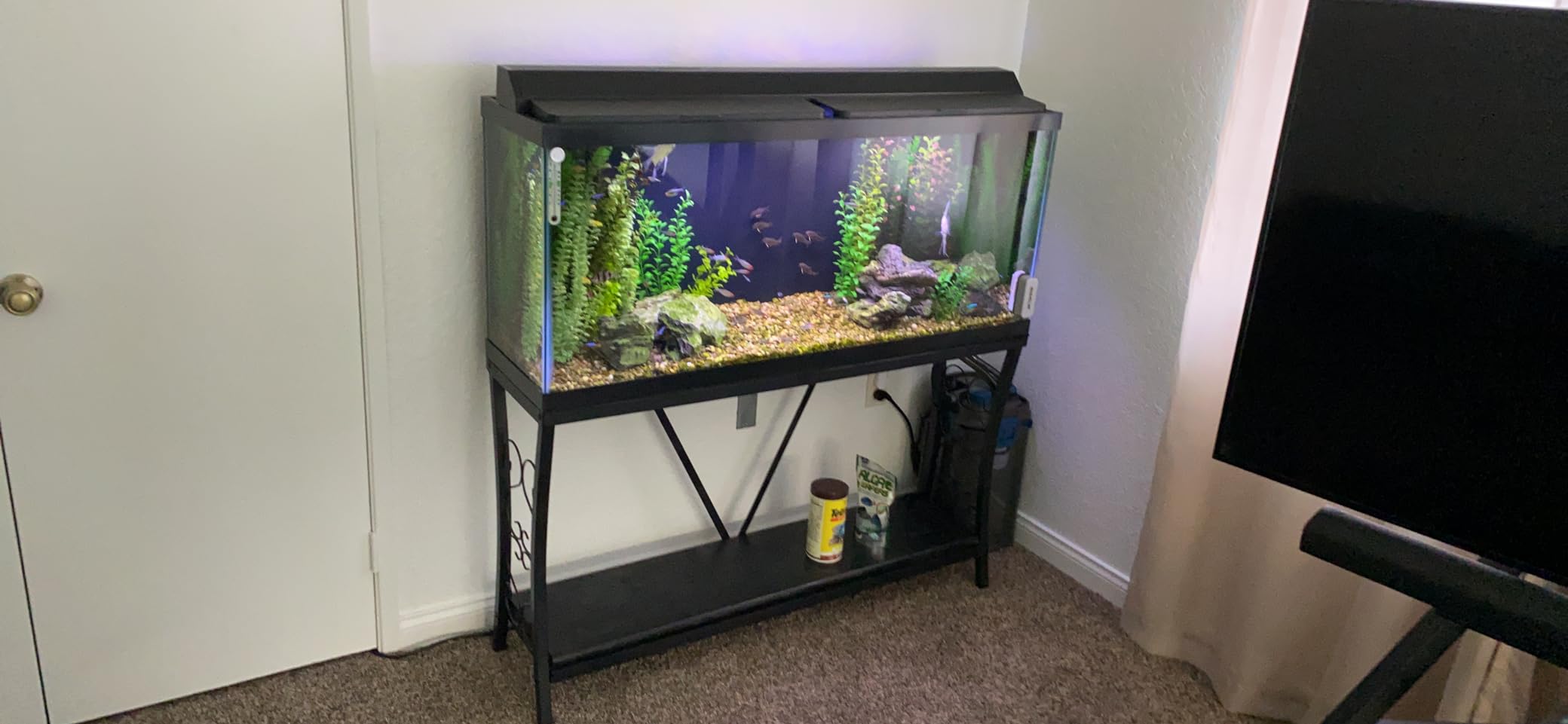
It suits 125 to 400-gallon tanks, which is exactly the band this article covers. On high-tech planted tanks the big spray bar disperses the return flow so you are not creating one strong current lane across the scape, and turtle keepers often pick this model for the same reason.
It also suits people who want a filter they can service themselves. The impeller and O-rings are user-replaceable, and the filter has been in production since May 2013, so parts and baskets are still easy to find. If you already own Fluval media, the compatibility is a genuine convenience.
Where the FX6 falls short
The intake tube is long and cannot be shortened, which in a sand-bottomed tank means the strainer can end up sitting in the substrate. Owners of fine-substrate planted tanks usually trim or swap it, but the factory length is the flaw.
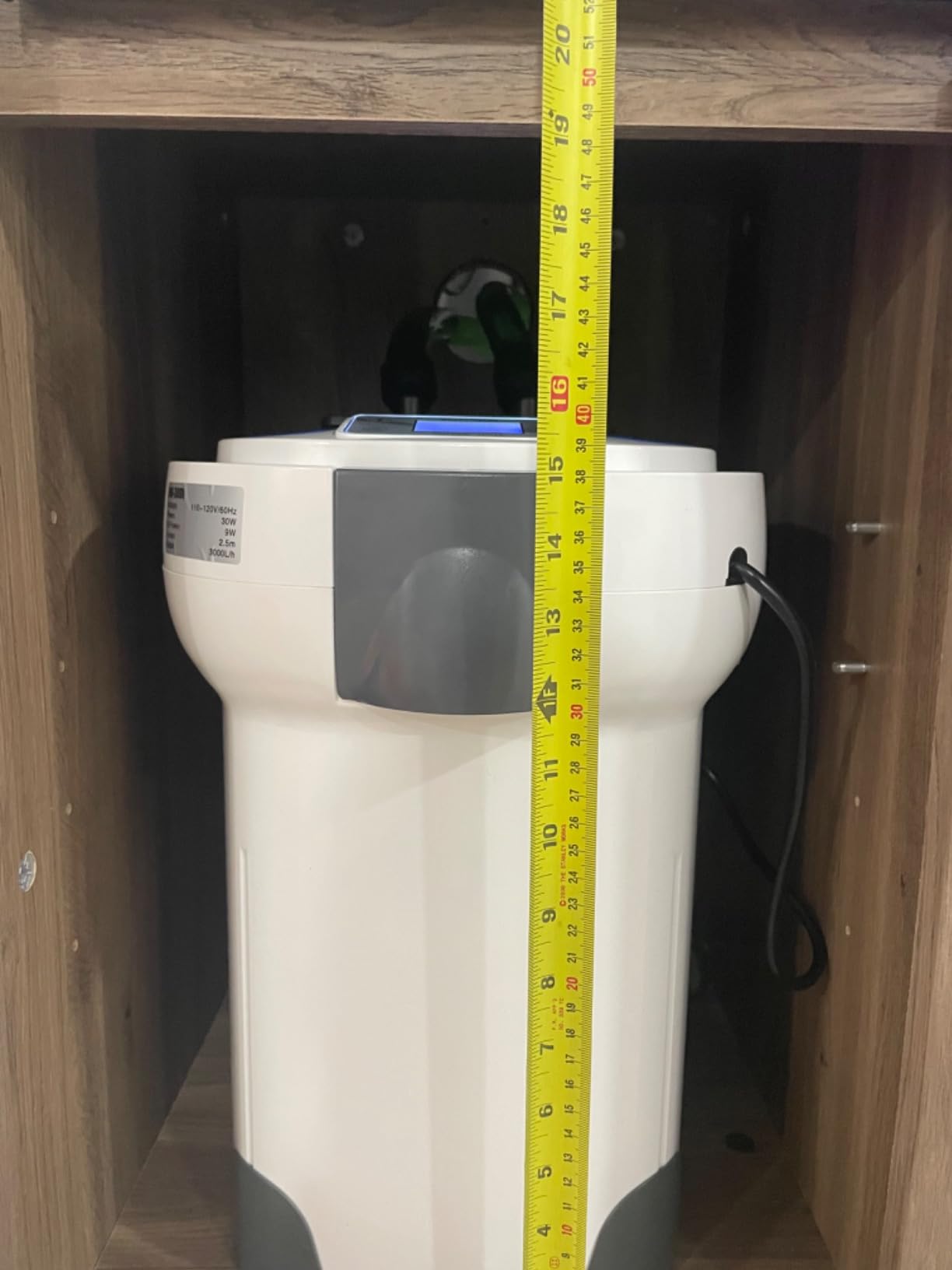
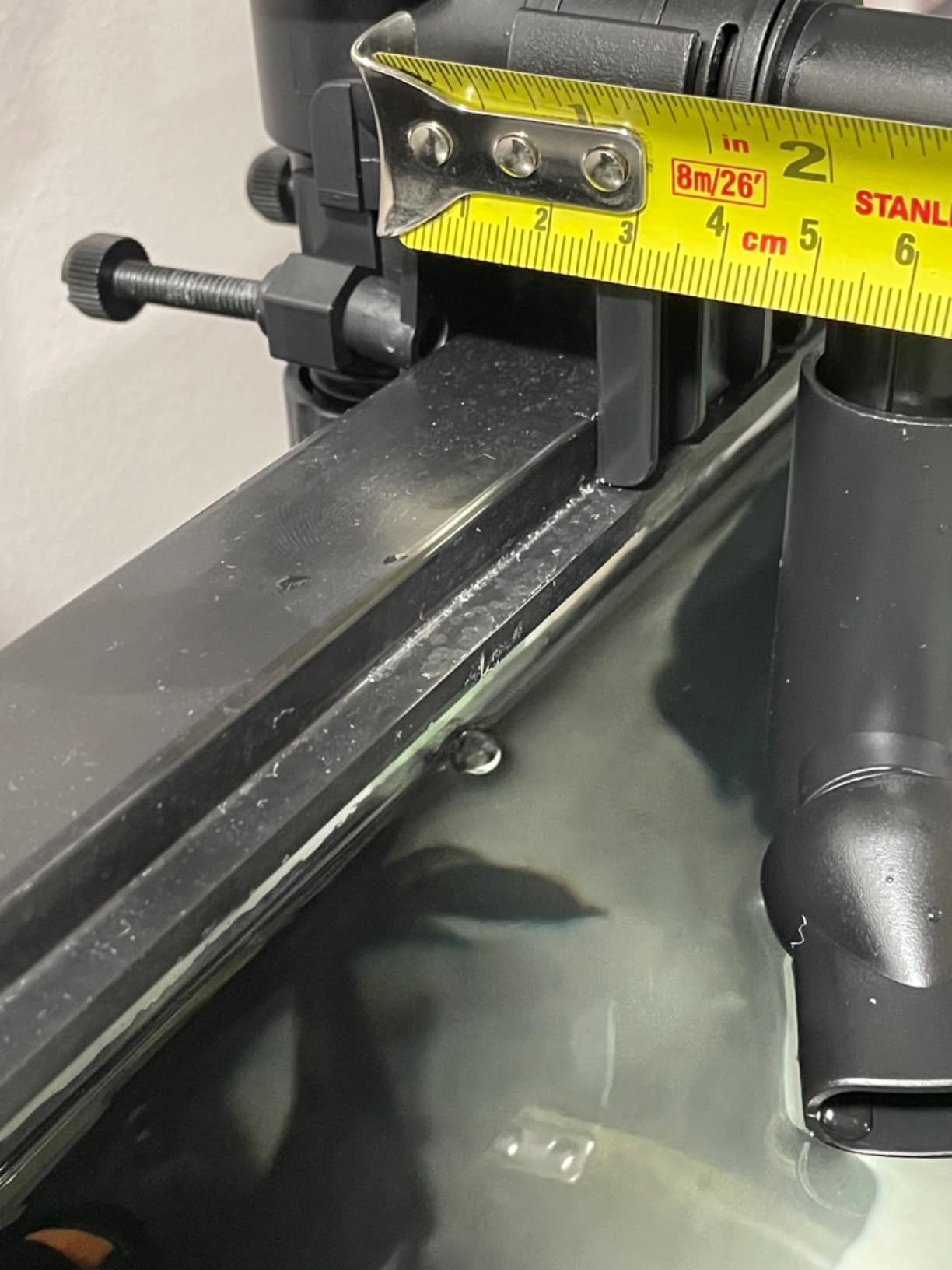
The hoses are stiff and large in diameter, so lids rarely sit flush. It is also a 21-inch, nearly 20-pound body, and under a shorter stand you will be measuring cabinet clearance before you buy. Setup is fiddly the first time, and the documentation does not help much there.
2. Fluval 407 Performance Filter – Best Value for 100-Gallon Tanks
Fluval 407 Performance Canister Filter – For Aquariums Up To 100 Gallons
Up to 100 gallons
eTEC quiet pump
19.3 in tall, 9.7 lbs
Pros
- Very quiet including bubble bursts
- Adjustable flow clears cloudy water fast
- EZ-Lift baskets remove with one finger
- Simple self-priming startup
- Compact footprint under standard stands
Cons
- Some motor heads fail from impeller cover disengaging
- Branded replacement media costs more
- Included media pouches are smaller than the branded version
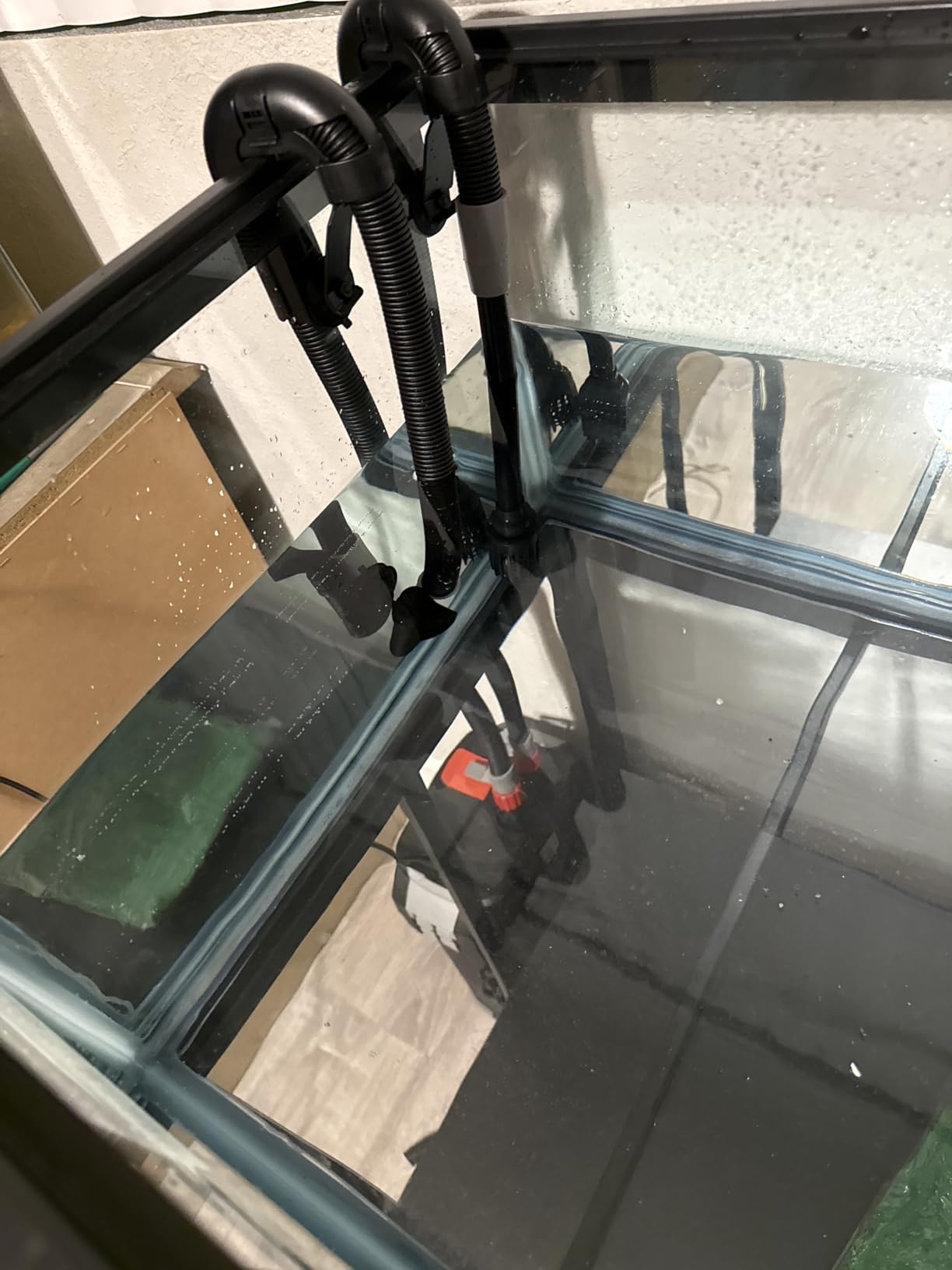
More than ten thousand reviews sit behind the 407, and that volume tells you something no spec sheet does: this model has been through every kind of large-tank owner. The eTEC pump delivers constant pressure and runs up to 25 percent quieter than the previous generation, which is why people upgrading from an older Fluval usually notice the drop in hum first.
Media changes take seconds with the EZ-Lift baskets, which have a centre handle so the whole stack comes out with one finger. That convenience is the reason the 407 stays on our shortlist even though the tank rating is lower than the FX6. On a 100-gallon community tank, quick service matters more than raw gallons per hour.
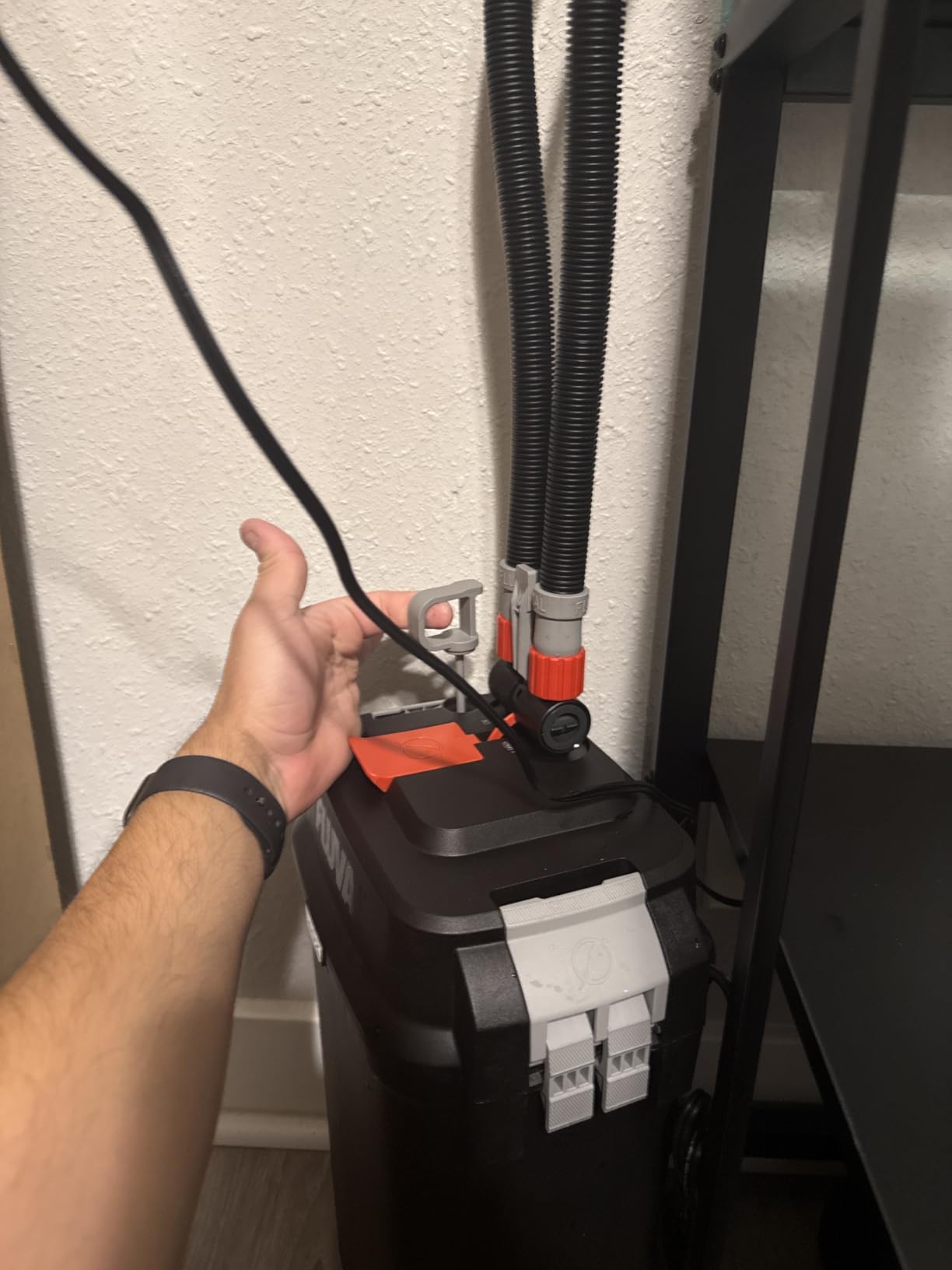
Start-up is straightforward: add water, press the prime, and the pump pulls. Flow is adjustable at the head, and owners report clearing visibly cloudy water within hours of a filter restart. The compact 19.3-inch body and 9.7-pound weight mean one person can lift it out for a service without help.
There is one defect worth weighing before you buy. A persistent complaint across reviews describes the impeller cover on the motor head disengaging under pressure, and some owners describe cycling through four or five replacement motor heads with unhelpful manufacturer support. It is not the majority experience, but it is specific enough that you should keep the model number handy when servicing.
Who the 407 suits
It suits 75 to 100-gallon tanks that want Fluval build quality and quiet operation without the FX6’s size. It is also the model we recommend when a large tank is being split into two smaller systems, since two 407s cover more total media volume than one oversized unit and cost less together.
It suits owners who already use Fluval media and want one ecosystem instead of two. Energy use is modest, comparable to a household LED bulb, so the running cost on a 24/7 duty cycle stays low.
Where the 407 falls short
One hundred gallons is the ceiling, so it stretches on a 150-gallon tank even at moderate stocking. Media consumables cost more than generic carbon and floss, and the pouches in the box have been described as smaller than the branded versions you can buy separately.
Some hoses and fittings are reported to break under normal wear, which is a nuisance inside a cabinet where a wet floor is a real problem. If you want a large-tank rating, this is not the model to build a system around.
3. Aqueon QuietFlow ECOM – Best for a Built-In Polishing Stage
Aqueon QuietFlow Canister Aquarium Filter, Up to 150 Gallons (ECOM)
Up to 150 gallons
Biological, chemical, mechanical
20.5 in tall, 19.45 lbs
Pros
- Multi-stage filtration in one unit
- Included hang-on-back polishing unit
- Spray bar and water director options
- Quick disconnect valves and pump locking heads included
Cons
- Polishing cartridges need monthly replacement
- Included media is a starter set you will top up
- Occasional bubble bursts during startup
The QuietFlow ECOM does something the other canisters in this group do not. It pairs the canister with a hang-on-back polishing unit that uses large Aqueon cartridges, so the final clarity stage happens at the outlet rather than only inside the can. For a display aquarium where you want the water to look finished, that extra stage is the differentiator.
You get three return options: spray bar, water director, and the polishing unit. That flexibility lets you change the outlet pattern when you change the aquascape or move from a planted layout to a more open one, which is a real advantage on tanks that get reworked.
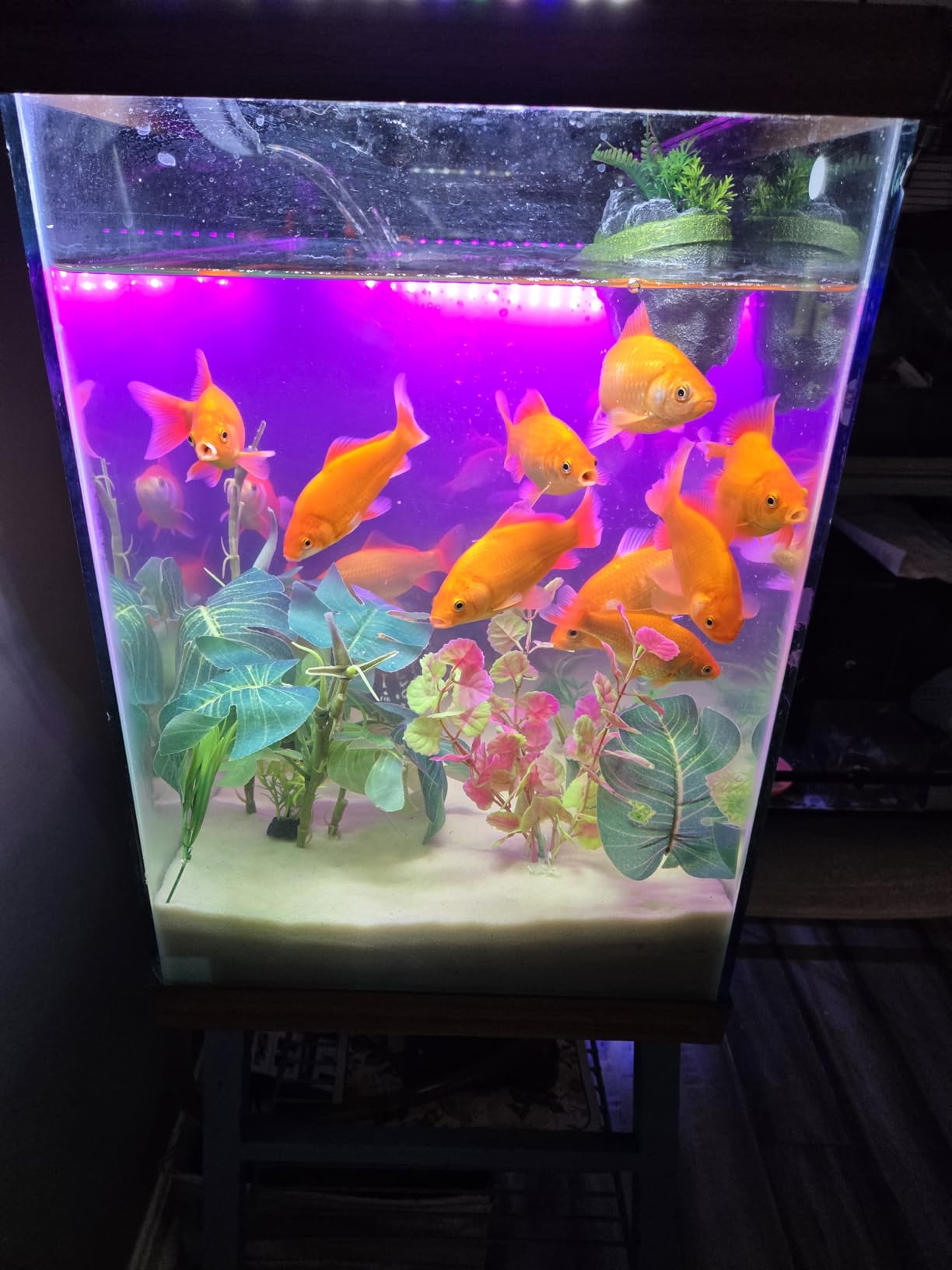
The box is unusually complete. Quick disconnect valves, pump locking heads, intake and output connections, hoses, the polishing unit and starter media all ship together, so you are not hunting for fittings during a Saturday setup. Biological, chemical and mechanical stages are all covered, and the included foam and carbon are enough to get a cycle running.
Carbon changes every 30 days is the published interval, and the foam pad is rinsed or replaced as needed. Budget for that consumable rhythm, because the polishing unit is the reason to buy this filter and it only works if the cartridge stays fresh.
Who the QuietFlow ECOM suits
It suits 125 to 150-gallon display tanks where appearance at the surface matters. It also suits people who want a canister plus a fine polish stage without buying a separate hang-on-back unit separately.
It suits anyone who likes hardware that feels considered at service time. The quick disconnect valves and locking heads make partial disassembly clean, and a one-year warranty comes with the unit. For a tank around 150 gallons this is one of the more complete packages we have handled.
Where the QuietFlow ECOM falls short
The monthly cartridge replacement is a permanent line in your maintenance budget. The included media also fills the trays, so most owners end up adding their own carbon and biological media on top of it, which costs money twice.
Some owners report the same bubble bursts that Fluval-style pumps produce, and the 20.5-inch, 19-pound body is one of the heavier units here. If you want the highest media capacity in the group rather than a polish stage, the FX6 or the Cascade 1500 serve you better.
4. Penn-Plax Cascade 1500 – Best Match for 200-Gallon Tanks
Penn-Plax Cascade 1500 Canister Filter, 350 GPH for Tanks Up to 200 Gallons
350 GPH
Five stackable baskets
12 x 11.5 x 20.5 in, 15 lbs
Pros
- 350 GPH suits 150 to 200 gallon tanks
- Five large baskets for media configuration
- Push button primer and 360 degree valve taps
- Complete media package in the box
Cons
- Bulky body and higher wattage than smaller Cascade models
- Valve taps need care when reassembled to avoid drips
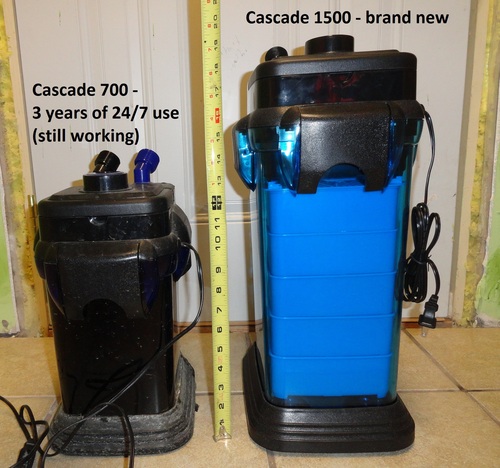
The Cascade 1500 is the one that matches a 200-gallon tank. At 350 GPH with five large stackable baskets, it gives a 200-gallon setup enough media volume to run a proper carbon, sponge and ceramic stack without crowding the housing.
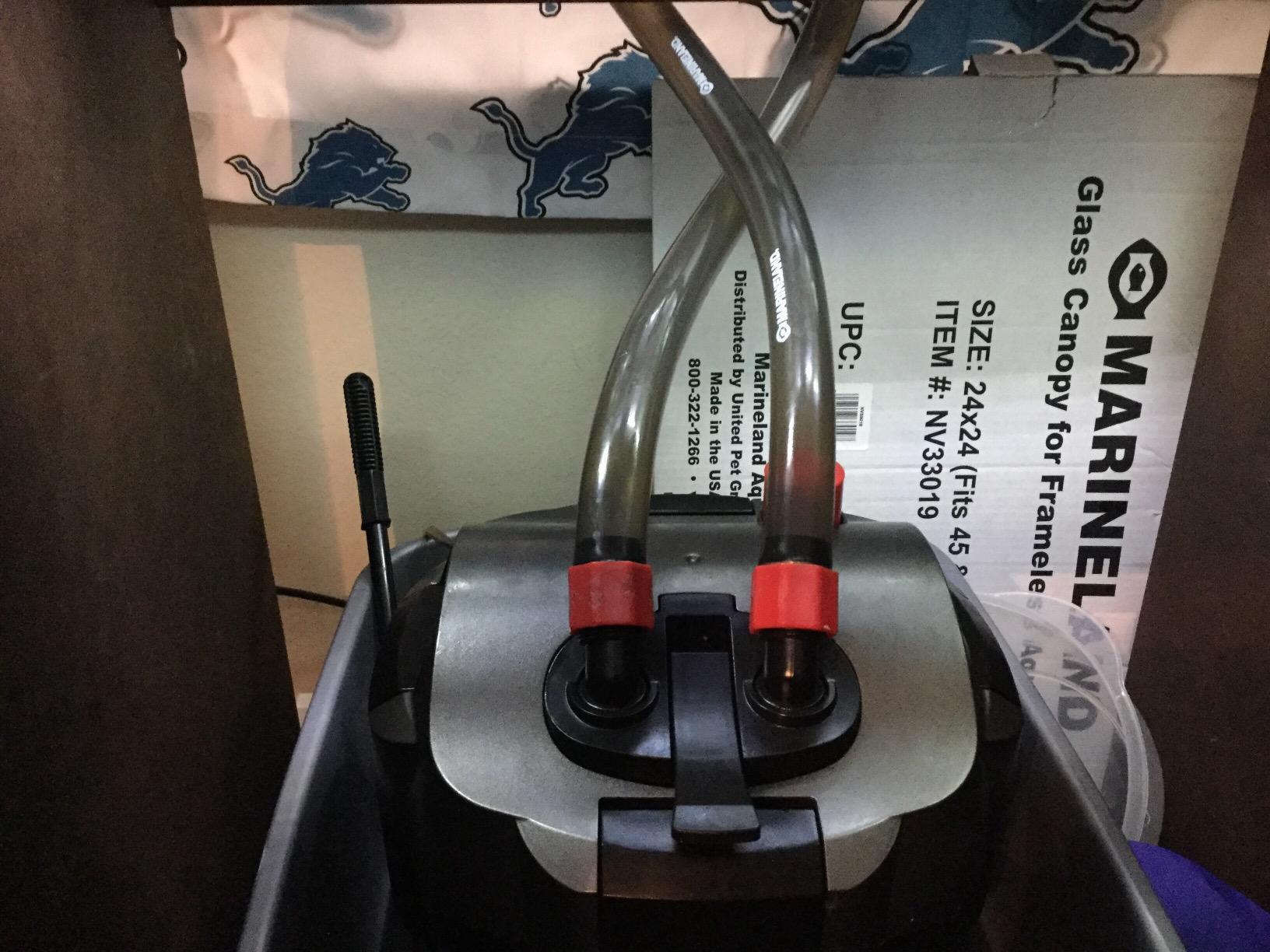
The dual 360-degree rotating valve taps are more useful than they sound. In a tight cabinet you can angle the hoses to follow the stand’s back panel instead of fighting it, and that is often the difference between a clean install and a hose that stays kinked.
The box is genuinely complete: five poly fiber floss pads, a coarse bio-sponge, an activated carbon bag, spray bar, hose clamps, alignment clamps and a tip-proof base. You can start a cycle on day one without a separate media order, which matters when you have already filled the tank.
Power draw is 45.5W, higher than the smaller Cascade models, and the body is one of the larger footprints in the group. On a 200-gallon tank running 24/7 that is a running cost worth factoring in over a decade rather than a single month.
Who the Cascade 1500 suits
It suits 150 to 200-gallon freshwater, saltwater and turtle habitats, which is the band where it outperforms cheaper alternatives. The five-basket stack means media changes are less frequent because you can load more before a service.
It suits turtle keepers, since the brand rates it for turtle habitats and the 350 GPH flow keeps solids moving. It also suits people who want a proven model with a deep parts supply rather than a new design with thin documentation.
Where the Cascade 1500 falls short
It is bulky and draws more power than the 1000 and 1200 models, so cabinet space is a genuine constraint on smaller stands. Measuring the stand before you order matters here.
The rotating valve taps need to be fully re-seated after cleaning or they weep, and a slow drip inside a cabinet is the kind of problem you find too late. If your tank is above 200 gallons, the flow is no longer enough and you should look at a higher-output unit.
5. Marineland Magniflow 400 – Strong Flow in a Quieter Package
Marineland Magniflow 400 GPH Canister Aquarium Filter
400 GPH
Three Stack N Flo trays
11 x 11 x 18 in, 19.27 lbs
Pros
- Stack N Flo trays give each media its own shelf
- Quick prime button self-fills the chamber
- Watertight lid lifts for fast media removal
- Quiet relative to its 400 GPH rating
Cons
- Persistent leaks reported around lid handles and gasket
- Supplied plastic hose clamps are weak
- Tubes are short and flimsy with one suction cup
The Magniflow 400 has the highest rated flow of the non-UV units here and is widely reported as quieter than that number suggests. If flow per watt and flow per dollar matter to you, 400 GPH is a strong headline for a tank rated to 100 gallons.
The Stack N Flo trays give each media layer its own shelf, which makes configuring a custom stack straightforward. Foam, premium activated carbon bags, bio-filter balls, ceramic rings and polishing pads all ship in the box, and the quick prime button fills the chamber for self-priming startup.
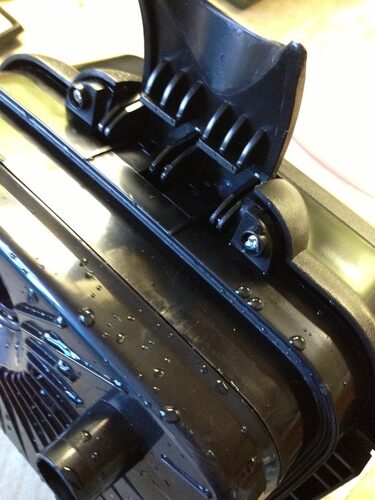
The lid is watertight and lifts for media removal, and it is compatible with Marineland Rite-Size T media if you already run that ecosystem. The container holds 400 gallons per hour for freshwater or saltwater aquariums up to 100 gallons.
Leaking is the theme that dominates the reviews. A small but persistent group reports drips from the lid handle area and gasket, sometimes on replacement units, and several describe the supplied plastic hose clamps as inadequate. Fit metal clamps before you start rather than discovering the problem at the first water change.
Who the Magniflow 400 suits
It suits 75 to 100-gallon tanks that want more flow than the Cascade 1000 delivers. It is a reasonable choice for a reef-style or turtle setup where circulation matters more than media volume.
It suits people who want a complete box of media and a self-priming start without ordering consumables separately. The included bio-balls, ceramic rings and polishing pads cover the common three-stage build from day one.
Where the Magniflow 400 falls short
The leak reports around the lid gasket are the reason this sits mid-list rather than higher. If your stand is hardwood, a slow drip becomes a swollen-wood problem quickly.
In-tank tubing is short and flimsy, and a single suction cup holds the discharge. The single-use carbon bags are also small, so you will be buying replacements often, and the instructions omit the step of fitting the lid seal, which causes spraying on first start.
6. Aquatop CF-400UV MKII – Best Value With a 9W UV Sterilizer
Aquatop 4-Stage Canister Filter with Vortex Prime, 9W UV, 370GPH Flow Rate, 35W Power, Up to 125 Gal – Including All Filtration Media, Great for Salt & Freshwater Tanks, UV for Crystal Clear Water
370 GPH
9W UV sterilizer
3+1 stage, up to 125 gallons
Pros
- Built-in 9W UV clears green water and algae
- Four very large media baskets
- Vortex prime button starts the siphon reliably
- Quiet and reliable for long 24/7 service
Cons
- Instructions show the wrong media order for the flow path
- UV bulb and sleeve are hard to source in the US
- No carrying handle on the canister
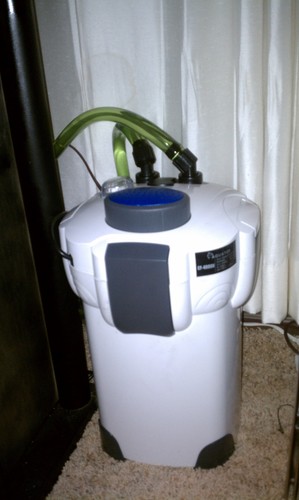
The CF-400UV MKII gives you a working 9W UV sterilizer inside the canister head for less than competing models that ship without UV at all. For green-water problems, algae pressure, or a tank that has to look clear for display, that is the feature you are paying for.
Four very large media baskets accept nearly any combination you want to run, and the 3+1 stage layout gives mechanical, chemical and biological zones with room to spare. At 370 GPH it circulates and oxygenates a 125-gallon freshwater or saltwater tank comfortably.
The vortex prime button starts the siphon quickly once the base is filled with water, so fill the canister first. Owners running this for years report the sealed body has stayed watertight, and the unit is described as very quiet in normal use.
Three white filter sponges, a blue coarse pad and an unzippable carbon bag ship in the box. That starter set is enough to cycle with, though most owners replace the sponges with coarser media for long-term use.
Who the Aquatop CF-400UV MKII suits
It suits 100 to 125-gallon tanks with persistent algae or green water that other filters have not cleared. It also suits planted setups where a UV stage helps keep the water column clear without a chemical intervention.
It suits buyers who want UV capability in this flow tier without moving up a tier in canister size. Four large baskets and a sealed body make it a straightforward unit to live with once the manual is ignored.
Where the Aquatop CF-400UV MKII falls short
The documentation is the biggest problem. The printed media order does not match the unit’s actual bottom-up flow path, so if you follow the manual you will place media backwards and lose capacity.
The UV bulb and sleeve are not sold separately in the US, which makes a failed bulb a hard problem to solve. There is also no carrying handle, so a full canister is awkward to lift, and the filter has no clean way to shut down and drain at a sink.
7. SunSun HW-304B Pro Kit – Most Flow Per Dollar in the Group
Sunsun Hw304B 525GPH Pro Canister Filter Kit with 9-watt UV Sterilizer
525 GPH
9W UV in the canister head
11 x 11 x 17 in, 17 lbs
Pros
- 525 GPH at a tier well below the major brands
- Pro kit includes four baskets plus carbon and ceramic rings
- Integrated 9W UV for algae and clarity
- Compact body fits under most stands
Cons
- UV bulb or sleeve sometimes arrives damaged
- O-rings occasionally missing from the box
- Opening the lid without releasing pressure can flood the UV sleeve
The HW-304B Pro is the flow-per-dollar outlier in this list. At 525 GPH (2,000 L/hr) with a 9W UV built into the head, it undercuts every major-brand canister in the group on output while adding a sterilizer most competitors leave out.
The Pro kit contents are unusually generous. You get the canister with UV, four white filter pads, a blue coarse pad, four media baskets, a pound of premium filter carbon, a pound of ceramic rings and a set of bio balls. That is a full filter for a tank up to 150 gallons, ready to run.
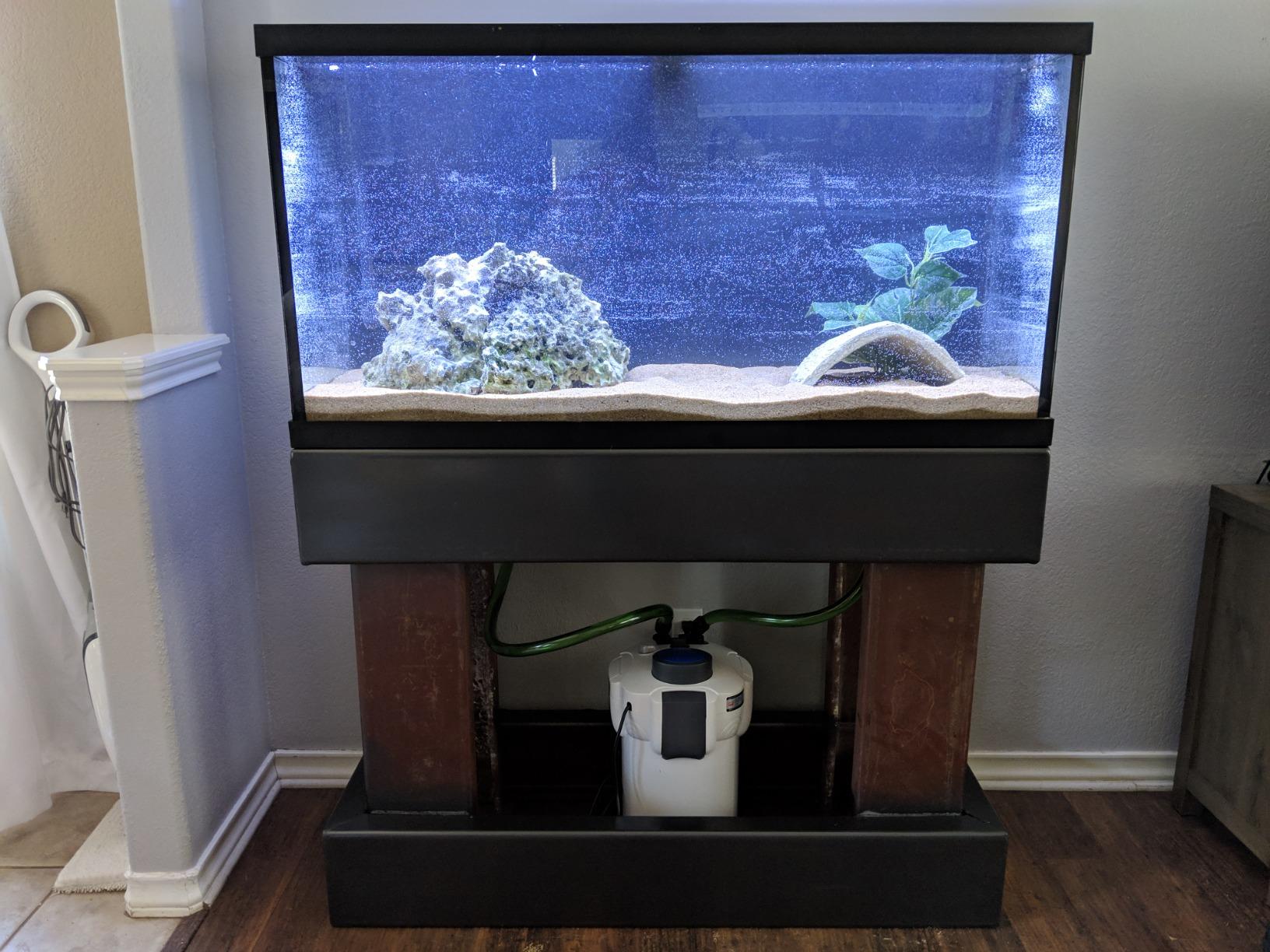
The 11 by 11 by 17-inch body is smaller than most 500-plus GPH units, which matters if your stand has a low shelf. On a 150-gallon tank the flow gives you real circulation headroom for messy livestock.
Quality control is the trade. Recurring reports describe units arriving with a cracked UV glass sleeve, a dead bulb, or missing O-rings for the canister seal and hose connectors. Inspect the box before you fill it, and check the seal parts are present before first start.
Who the HW-304B Pro suits
It suits 125 to 150-gallon tanks on a tighter budget where 500-plus GPH matters. It also suits people who want a UV stage without moving up to a higher canister tier.
It suits first-time canister owners, because the included media and baskets mean you are not ordering a dozen consumables before you can start a cycle. The 9W UV handles algae and clarity work in the background.
Where the HW-304B Pro falls short
Packaging and quality control are the weak points, and you may need to return a unit for a dead bulb or a cracked sleeve. Instructions are minimal and do not explain media placement or pressure release.
That last point has teeth: removing the lid without releasing internal pressure can force water into the UV protective sleeve, which is exactly the part that is hard to replace. Take the extra thirty seconds to shut the valves off first.
8. SunSun HW-3000 UV – Highest Adjustable Flow for Heavy Bioloads
SunSun HW-3000 UV 9W 5-Stage External Canister Filter 793gph, White
Up to 793 GPH adjustable
9W UV with LCD control
18 x 13 x 16 in, 17.55 lbs
Pros
- Highest adjustable flow in the group at 793 GPH
- LCD panel sets flow and UV duration
- Self-priming with hose shutoff valves
- Five media baskets hold a large stack
Cons
- Runs noticeably louder at maximum flow
- 220-240V unit not usable on 120V mains without a converter
- Inlet down tube is short and can sit shallow
If your bioload is the problem, this is the unit with the headroom to solve it. Up to 793 gallons per hour, adjustable, is the highest output in the group, and the LCD control panel lets you set both pump flow and UV run time instead of guessing at a valve.
Owners running heavy stocking, including oscars and turtles, report clear water with no algae blooms and years of leak-free service. Five media baskets hold enough volume to stay clean between services, which is what you want when a tank produces a lot of solid waste.
Self-priming with hose shutoff valves means no manual pumping, and the suction cups hold the intake and outlet securely in large tanks. That matters more than it sounds on a 300-gallon aquarium where a floating intake is the difference between filtered and not.
Sound is the honest drawback. It is noticeably louder at maximum flow, so on a tank in a living space you will probably run it below the top setting and take a little of the flow advantage with it. White filter pads ship with the unit and other media is sold separately.
Who the SunSun HW-3000 suits
It suits heavily stocked tanks where waste volume, not clarity, is the limiting factor. Predator setups, large turtle tanks and dense cichlid communities are the cases where this flow rating earns its place.
It suits people who want control rather than a fixed setting, because the LCD panel lets you tune flow to the tank as the aquascape changes. The UV duration control is useful on tanks that run cool, where you want the lamp off in winter.
Where the SunSun HW-3000 falls short
It is a 220-240V, 50Hz unit, so on 120V North American mains it needs a converter. Check your supply before you order, because that is not a small inconvenience inside a cabinet.
Quality control reports recur around a dead UV bulb or cracked glass protector, and O-rings are sometimes missing from the box. The printed media placement is also reported to be wrong for the bottom-up flow path, and the short inlet down tube can sit shallow enough to become audible as the level drops.
9. EHEIM Classic 2215 – The Long-Term Reliability Choice
EHEIM Classic Canister Filter 2215, Classic 350 – PetOverstock
Bottom-in, top-out flow path
Silicone seal fixed to pump head
11 x 7.28 x 14.57 in, 6.07 lbs
Pros
- Very quiet and stays quiet over years
- Bottom-in top-out path prevents media bypass
- Double shutoff valves for maintenance without draining
- Light enough to clean in under five minutes
- Manufacturer parts widely available
Cons
- No priming button and no media baskets
- Instructions widely criticised as unclear
- Intake tube is fragile at the base and can snap
The EHEIM Classic 2215 is the one we point people at when the question is what happens in year eight. It has been in production since 2004, and the reason owners keep it is not a spec sheet but the fact that replacement parts are still straightforward to source and the design has not needed rethinking.
The flow path is the quiet advantage. Water enters at the canister base and leaves at the lid, so it cannot bypass the media layers, and the permo-elastic silicone sealing ring is fixed on the pump head rather than seated in a groove, which makes closing it after a service safe and repeatable.
Double shutoff valves on both hoses let you pause flow for maintenance without draining the lines or re-priming. At 6.07 pounds and 14.57 inches tall, it is the smallest and lightest canister here by a wide margin, and service takes under five minutes.
The trade is real, though. There is no priming button and no internal media baskets, so cleaning means pouring loose media out of the can into a bucket and re-assembling the stack by hand. EHEIM Mech and Substrat Pro media, the spray bar, inlet pipe, hoses and valves all ship in the box.
Who the EHEIM Classic 2215 suits
It suits planted tanks in the 75 to 100-gallon range where the priority is quiet, serviceable and durable rather than high flow. The 2215 sits in the 250-class of EHEIM output, and owners describe it as affordable and easy to service.
It suits people planning for the long haul. The production history, the widely available manufacturer replacement parts and the fixed silicone seal are the reasons this model is described on forums as the reliability play over a Fluval.
Where the EHEIM Classic 2215 falls short
No baskets and no primer is the biggest inconvenience in the group. You fish loose media out of a can, and you start flow by hand, every single time.
The instruction booklet is widely criticised by experienced hobbyists, and the hoses are stiff, short and must be cut to your own layout. The intake tube is fragile at the base and can snap or weep at a right angle, and the unit is 120V, which matters outside North America.
10. OASE BioMaster Thermo – Best With a Built-In Heater
OASE BioMaster Thermo External Filter with Built-in Heater for Aquariums up to 160 gallons, Multi-stage Filtration, Easy Maintenance Prefilter, Quiet Canister Filter, German Engineering
Up to 160 gallons
Bi-metal heater 66-90F
9.4 x 9.4 x 19 in, 13.23 lbs
Pros
- Pre-filter module lifts out for weekly rinsing
- Integrated heater holds temperature within a degree
- Very quiet for a bedroom tank
- AquaStop and safety latches prevent spills during service
Cons
- Delivered flow runs measurably below stated GPH
- Supplied 45 ppi pre-filter sponges clog quickly
- Supplied biomedia is minimal
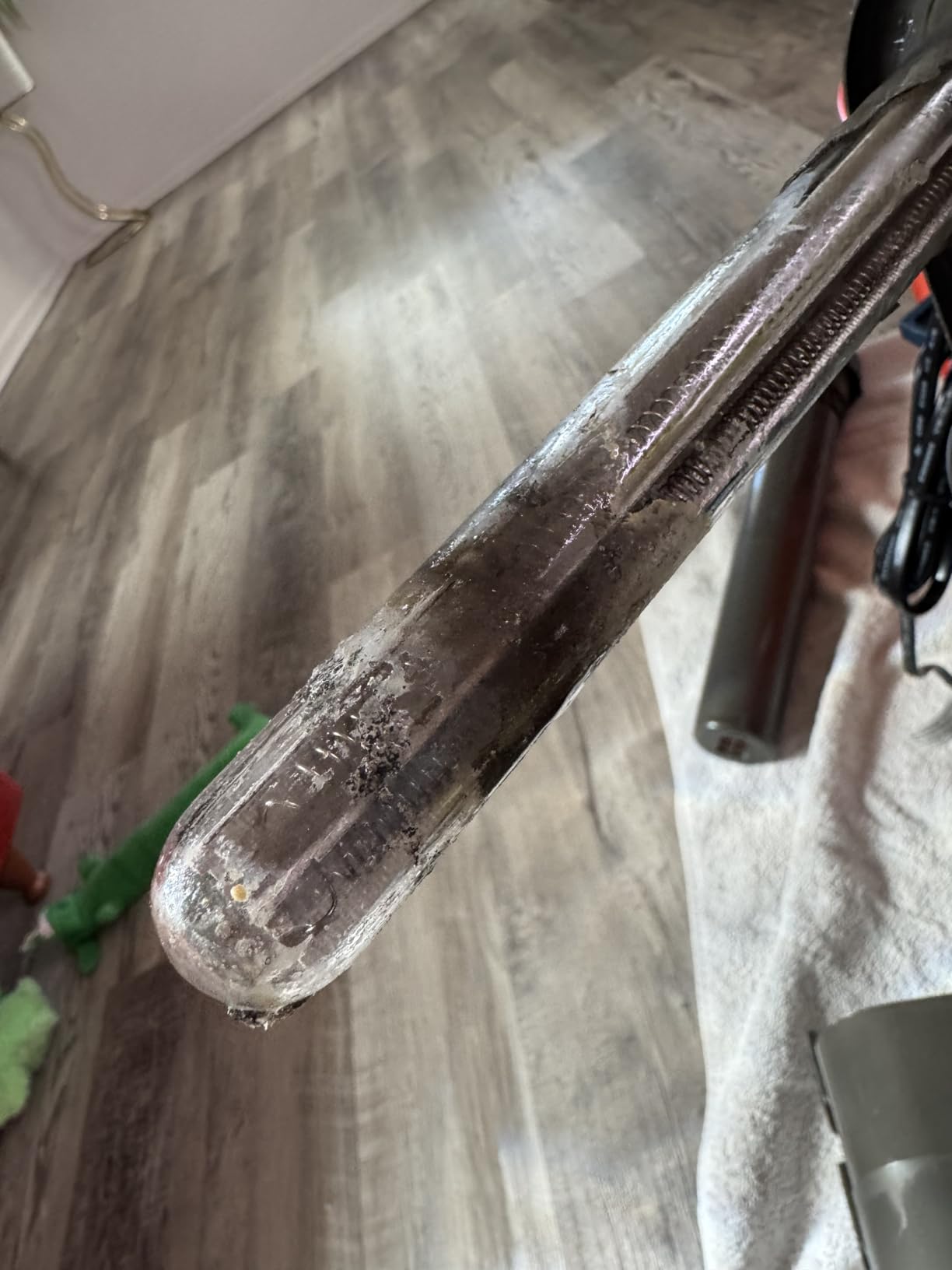
The BioMaster Thermo solves a problem other canisters ignore: where do you put the heater. The bi-metal heater mounts inside the canister, adjustable from 66 to 90F with a secondary fine-tuning knob and a thermal shutoff, so the in-tank hardware list shortens by one cable and one suction cup.
The EasyClean pre-filter module is the feature owners mention most. It removes separately from the rest of the filter, so you can rinse the coarse sponge in seconds weekly without opening the canister or disturbing the biological media baskets. That is a real maintenance saving on a planted tank.
Flow control happens at the intake and output fittings rather than at the pump, which is a better place for it. Safety locks sit on the handle, the pre-filter and the AquaStop, and the AquaStop detaches for moving the filter. The unit is made in Italy with a four-year warranty, three plus one with registration, and two 6 ft power cords.
The important caveat is that delivered flow runs measurably below the stated GPH, so real-world capacity is nearer 90 gallons than the printed 160. The supplied pre-filter sponges are also very fine and clog quickly, which throttles circulation unless you swap in coarser media. Owners report near-silence and clear water once that swap is made.
Who the OASE BioMaster Thermo suits
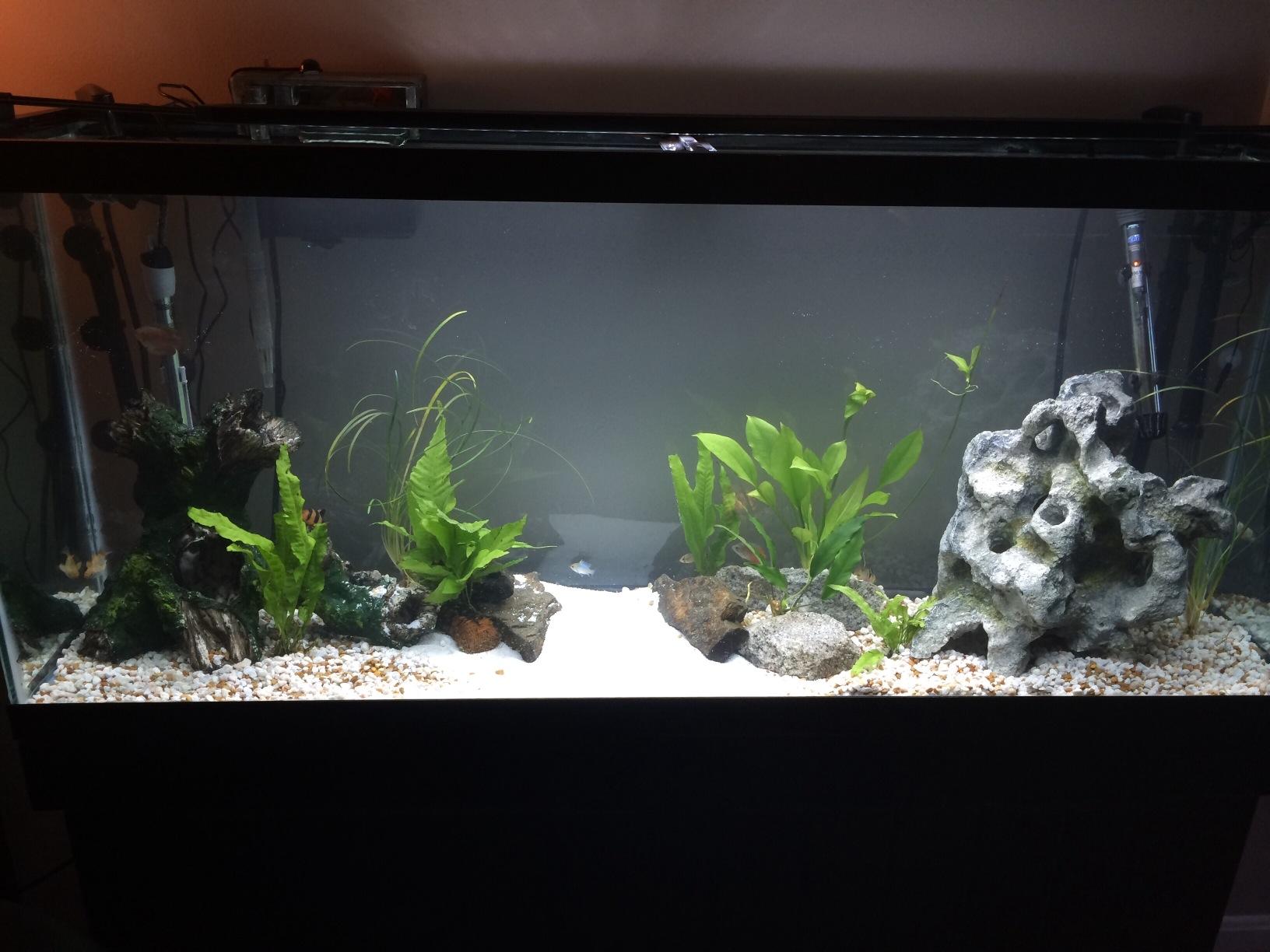
It suits 75 to 120-gallon planted tanks where you want the cleanest possible cabinet. Two in-tank cables become one, and the internal heater frees the front glass for aquascaping rather than a suction-cup heater on the back wall.
It suits quiet-room setups, since owners in bedrooms and living rooms report near-silence. It also suits people who want a long warranty behind the filter, and the 232-review base is smaller than the Fluval and Penn-Plax lines, so the consensus is thinner.
Where the OASE BioMaster Thermo falls short
Real throughput below the published figure means you should size it as the smaller number, not the printed one. Budget for 45 ppi to 30 ppi sponge swaps, because the supplied pre-filter media clogs fast and starves circulation.
Supplied biomedia is minimal, so most owners add their own. A small number of units have developed air leaks or a rattly impeller within weeks, and the output flapper is cheap rather than truly directional. Budget for it as one of the higher-priced canisters in the group.
11. Penn-Plax Cascade 1200 – Best All-Rounder for 150-Gallon Tanks
Penn-Plax Cascade 1200 Canister Filter, 315 GPH for Tanks Up to 150 Gallons
315 GPH
Four stackable baskets
11.5 x 11 x 20.5 in
Pros
- 315 GPH matches the 100 to 150 gallon range
- Four baskets balance capacity and footprint
- 360 degree valve taps simplify cabinet routing
- Push button primer for fast startup
Cons
- 20.5 inch body needs more vertical clearance
- Valve taps can drip if not fully re-seated
The Cascade 1200 is the model most owners in this group actually buy, and the reason is balance. At 315 GPH with four stackable baskets it covers the 100 to 150-gallon range, which is the most common large-aquarium size, without the footprint of the 1500.
It has the largest review count of anything we reviewed, more than ten thousand, and the pattern in those reviews is consistency. Owners credit the 360-degree valve taps, the push-button prime, and the fact that a full set of floss, sponge and carbon is supplied in the box.
Four baskets is a deliberate step down from five, and that is exactly the right trade at this tank size. You get enough media volume for a proper three-stage stack while keeping the body at a size that fits a standard stand.
Power draw is 45.5W and the included kit covers four poly fiber floss pads, a coarse bio-sponge, an activated carbon bag, spray bar, hose clamps, alignment clamps and a tip-proof base. The 20.5-inch height is the constraint to check, since it is taller than the Cascade 1000.
Who the Cascade 1200 suits
It suits 100 to 150-gallon freshwater, saltwater and turtle habitats, and it is the tier we recommend most often for large-aquarium buyers who do not want to over-specify. Freshwater, reef-style and turtle setups are all within the rated envelope.
It suits people in tight cabinets, because the rotating valve taps let the hoses follow the stand panel. The tip-proof base matters on hardwood stands, where a knocked canister is a scratched floor.
Where the Cascade 1200 falls short
The 20.5-inch body needs more vertical clearance than the Cascade 1000, and that is the first thing to measure on a low stand. If clearance is short, the 1000 model solves it.
The rotating valve taps can drip if they are not fully re-seated after cleaning, so wipe the joint dry before you walk away from it. It also does not clear the same flow as the 1500, so a heavily stocked 150-gallon tank will feel the difference.
12. Penn-Plax Cascade 1000 – Best for Compact Cabinets
Penn-Plax Cascade 1000 Canister Filter – 265 GPH Aquarium Filter for Tanks Up to 100 Gallons – 360 Degree Flow Valves, Poly Fiber Pads, Bio-Sponge & Activated Carbon -Fresh & Saltwater -11.5x10x17in
265 GPH
Three stackable baskets
11.5 x 10 x 17 in, 12 lbs
Pros
- Shortest body in the Cascade line at 17 inches
- 265 GPH suits tanks up to 100 gallons
- Low 28.5W draw
- Complete starter media package included
Cons
- Three baskets means more frequent media changes
- Rotating valve taps need careful re-seating
The Cascade 1000 is the answer when cabinet clearance decides the purchase, and it still delivers 265 GPH with three stackable media baskets for tanks up to 100 gallons, including turtle and reef-style setups.
It draws 28.5W, the lowest figure here apart from the FX6’s LED-bulb comparison, and that matters more than buyers expect on a 24/7 filter over a decade. Supported water TDS level maximum is 1000 ppm, which covers typical freshwater and light marine use.
The push-button primer starts the siphon quickly, and the dual 360-degree rotating valve taps let you route hoses cleanly inside a tight cabinet. That routing feature is the most-praised detail in the reviews and it is genuinely useful in a shallow stand.
Three baskets is the limitation. Compared with the 1200 and 1500 you have less media room, so replacement intervals are shorter, and the three floss pads, bio-sponge and carbon bag in the box are enough to start but not enough to stop.
Who the Cascade 1000 suits
It suits 75 to 100-gallon tanks, and large aquarium owners splitting a system into two smaller tanks. Two Cascade 1000s give more total media volume and better failure resilience than one oversized canister, which is the approach forum advice keeps pointing to.
It suits anyone who wants low running cost. At 28.5W with a shallow footprint, it is the easiest of the 350-plus GPH options to squeeze into a stand with a low shelf.
Where the Cascade 1000 falls short
Three baskets means more frequent media changes than the 1200 or 1500, and on a large tank that adds up over years. The rotating valve taps also need careful re-seating to avoid drips during reassembly.
It is simply not enough for a 150-gallon-plus heavily stocked tank. If your bioload is heavy, the higher-flow models in this list will serve you better than saving cabinet space here.
How to Size a Canister Filter for a Large Aquarium
Turnover rate is the number that matters, and it is simple maths: take your tank volume in gallons, and multiply it by the flow you actually need. Most large freshwater tanks are comfortable at four to six times tank volume per hour, and marine systems run higher because live rock and corals demand more circulation.
Worked example, 200 gallons. A 200-gallon tank at five times per hour needs 1,000 GPH of real flow to hit target. The FX6’s 925 GPH rating sits right at that line, which is why it is the natural fit, and the Cascade 1500’s 350 GPH is well below it, which is why the Cascade 1500 is a 200-gallon answer with an adjustable valve rather than a high-flow one.
Head lift is the part almost every competitor asserts and none of them quantify. Every inch the pump has to push water up costs flow, and a filter sitting on the floor of a cabinet pushing to a rim-fed tank is working against gravity the whole time. Media loading does the same thing: a full basket of floss and carbon resists flow more than an empty one, and intake strainers that sit near the substrate pull in the least.
Our working habit is to plan against a derated figure rather than the box number. If a can is rated at 925 GPH, we treat the realistic number after hoses, head height and full media as meaningfully lower, and we size the tank to the derated figure. That approach is also why a second smaller can can beat one oversized can on a big tank, because two pumps at half load each lose less to head loss than one pump at full load.
Media capacity is the second criterion, and it is measured in the volume the baskets hold, not the number of baskets. The FX6’s 1.5 US gallons of stackable basket volume is the largest in this group. Five smaller baskets do not equal one large basket volume, so check the litres, not the tray count.
Cabinet clearance and noise are the two criteria people check last and regret first. Measure the shelf height before you order, because the FX6, the Cascade 1500, the Cascade 1200 and the QuietFlow ECOM all sit at or above 20 inches. For noise, the quietest models here are the EHEIM Classic 2215 and the Fluval 407, and the loudest at full output is the SunSun HW-3000.
Running cost is worth calculating once. Multiply the wattage by the hours per day and by your electricity rate, then multiply by ten years. Power draw ranges from 28.5W on the Cascade 1000 to 45.5W on the Cascade 1200 and 1500, so the gap between the cheapest and dearest to run is real but small next to the purchase itself. Our broader large tank filter guide covers the non-canister options too, if you are weighing a hang-on-back against a canister.
UV is optional rather than essential, and it is worth being clear-eyed about that. A 9W sterilizer helps with green water, free-floating algae and suspended particles, and it does nothing for ammonia, nitrite or a heavy bioload. Only two units here carry built-in UV, and only one runs above 793 GPH, so UV should never be the reason you size up.
Tank Size to Filter Tier: Which Model Fits Which Aquarium
For a 100-gallon tank, the Fluval 407, the Cascade 1000 and the Marineland Magniflow 400 are all correctly sized, and the EHEIM Classic 2215 works well if quiet operation and longevity matter most. Run one of these and a second on a big system rather than a single oversized unit.
For 125 to 150 gallons, the Aquatop CF-400UV MKII, the Penn-Plax Cascade 1200, the SunSun HW-304B Pro and the Aqueon QuietFlow ECOM are the right tier. The Cascade 1200 is the most-reviewed of that group and the one we pick most often at this size.
For a 200-gallon tank, the Penn-Plax Cascade 1500 is rated for it and the Fluval FX6 exceeds it comfortably. A 400-liter tank is close to 105 gallons, so it lands in the 100 to 125-gallon tier rather than the 150-gallon tier.
For 300 gallons, you are into the FX6 or the SunSun HW-3000 territory, and the HW-3000’s 793 GPH is the higher of the two. For 400 gallons and beyond, the FX6 is the only unit here rated for that range, which answers the question of what the biggest aquarium canister filter available actually is in practical terms.
The biggest canister most buyers need is the FX6, rated for tanks up to 400 gallons at 925 GPH with 1.5 gallons of media. Beyond that you are into sump and plenum territory, where a single external can stops being the right tool.
Two Canisters or One Oversized Filter?
Two medium canisters beat one oversized canister on a large tank, and it is the most consistent piece of advice in the forum discussions we reviewed. The reasoning is straightforward: if one pump fails you still have one running, and running two pumps at half load each loses less flow to head loss than one pump at full load.
Flow becomes tunable too. Two outlets in opposite corners give you circulation patterns you cannot get from one oversized can, and a spray bar on each side disperses flow across a long tank rather than concentrating it in one lane. On a six-foot-long tank that is the difference between even circulation and a current that pushes everything down one end.
Two heats and two filters also means redundancy during a service. When you open one canister for a media change, the tank keeps filtering, which removes the single most stressful maintenance task on a large heavily stocked system. Media changes on the FX6 and the Cascade 1500 are no longer a moment of panic.
The cost argument works too. A Cascade 1200 plus a Cascade 1000 covers 200 gallons with more total media volume than a single mid-tier can, and buying a second filter later is cheaper than discovering you needed it. If you want the full canister set options, our canister set guide covers the bundles.
Eheim vs Fluval: Which Brand’s Parts Last Longer?
Which is better, Eheim or Fluval? Both answers are defensible and they are answering different questions. Fluval wins on media capacity, self-priming convenience and serviceable parts on the models that use the smart pump. Eheim wins on the long game, on the flow path that cannot bypass media, and on parts that stay available for a model introduced in 2004.
Flow path is the technical difference that shows up in water clarity. The EHEIM Classic takes water in at the canister base and out at the lid, so water cannot short-circuit around the media. Several Fluval models use removable stackable baskets specifically to solve the same bypass problem, and they do it well, but the Eheim solution is simpler and cannot be assembled wrongly.
Seal design is where longevity is decided. Eheim’s permo-elastic silicone sealing ring is fixed to the pump head, so there is no separate gasket to seat incorrectly and no groove to fatigue. The recurring leak complaints in this group cluster around gaskets and lid handles on other models, which is the argument for a fixed seal if you are planning a decade of service.
Failure planning matters more on a large stocked tank than on a small one. The EHEIM has a long production history with widely available manufacturer replacement parts, which forum owners consistently describe as the long-term reliability play. The Fluval FX6 also has a user-replaceable impeller and O-rings and has been built since 2013, so parts are still easy to source, but the most-cited Fluval complaint in this group is a motor head defect on the 407 rather than a consumable.
Our decision rule is short. Buy Eheim for a planted tank where quiet, durable service is the priority and you will accept manual priming. Buy Fluval when media volume, automatic startup and the largest parts ecosystem matter more. If you can only justify one, the FX6 covers more tank sizes and more bioloads than any unit here.
Frequently Asked Questions
What is the best filter for a large aquarium?
The Fluval FX6 is the best overall canister filter for large aquariums, rated for tanks up to 400 gallons with 925 GPH flow, 1.5 gallons of media capacity and a self-starting smart pump that evacuates trapped air every 12 hours.
Is a bigger canister filter better for a large aquarium?
Not automatically. A larger canister gives you more flow and more media volume, but running one pump at full load loses more flow to head height than running two smaller pumps at half load. Two medium canisters also give you redundancy if one fails and let you tune flow in two directions.
How much flow do I need for a 200 gallon aquarium?
A 200 gallon freshwater tank usually wants four to six times tank volume per hour, so roughly 800 to 1,200 GPH of real flow. Plan against the flow you actually get after hoses, head height and full media baskets rather than the rated number on the box.
Which is better, Eheim or Fluval?
Fluval leads on media capacity, self-priming and a large parts ecosystem, while Eheim leads on the bottom-in top-out flow path, the fixed silicone sealing ring and long-term parts availability. Choose Fluval for capacity and convenience, Eheim for durability and quiet service.
How often should I clean a canister filter?
Rinse mechanical media every two to four weeks, and clean biological media only when the flow rate visibly drops or the media is clogged. On filters with a removable pre-filter module, such as the OASE BioMaster Thermo, the pre-filter can be rinsed weekly in seconds.
What is the best canister filter for a 400 liter tank?
A 400 liter tank is close to 105 gallons, so it fits the 100 to 125 gallon tier. The Fluval 407, the Penn-Plax Cascade 1000 and the Marineland Magniflow 400 are correctly sized, and the Aquatop CF-400UV MKII adds a UV stage if you want one.
Which Canister Filter Should You Buy?
For most people reading this, the answer is the Fluval FX6. It is the largest media capacity in the group, the second-highest flow, it self-starts, and it is rated for tanks up to 400 gallons, which means one purchase covers almost any large aquarium you will build. It is our pick for the best canister filters for large aquariums overall, and it holds up on heavily stocked tanks where lesser filters fall behind.
Below 100 gallons, the Fluval 407 gives you the same pump technology in a smaller, lighter, cheaper body. At 125 to 150 gallons, the Penn-Plax Cascade 1200 is the one we recommend most often, and the Aquatop CF-400UV MKII is the one to buy if algae is your main problem. At 200 gallons, the Cascade 1500 fits the rating and the FX6 exceeds it.
Above 300 gallons, you are choosing between the FX6 and the SunSun HW-3000, and the decision comes down to headroom versus control. If bioload is heavy, take the higher flow. If you want tunable output and UV timing, take the LCD panel, and check your mains voltage first.
Whichever you pick, measure your cabinet height and plan for two filters if the tank is over 150 gallons. Our beginner aquarium picks cover the tank side of the build, and the wider large tank filter guide is worth reading before you commit to a canister at all.