
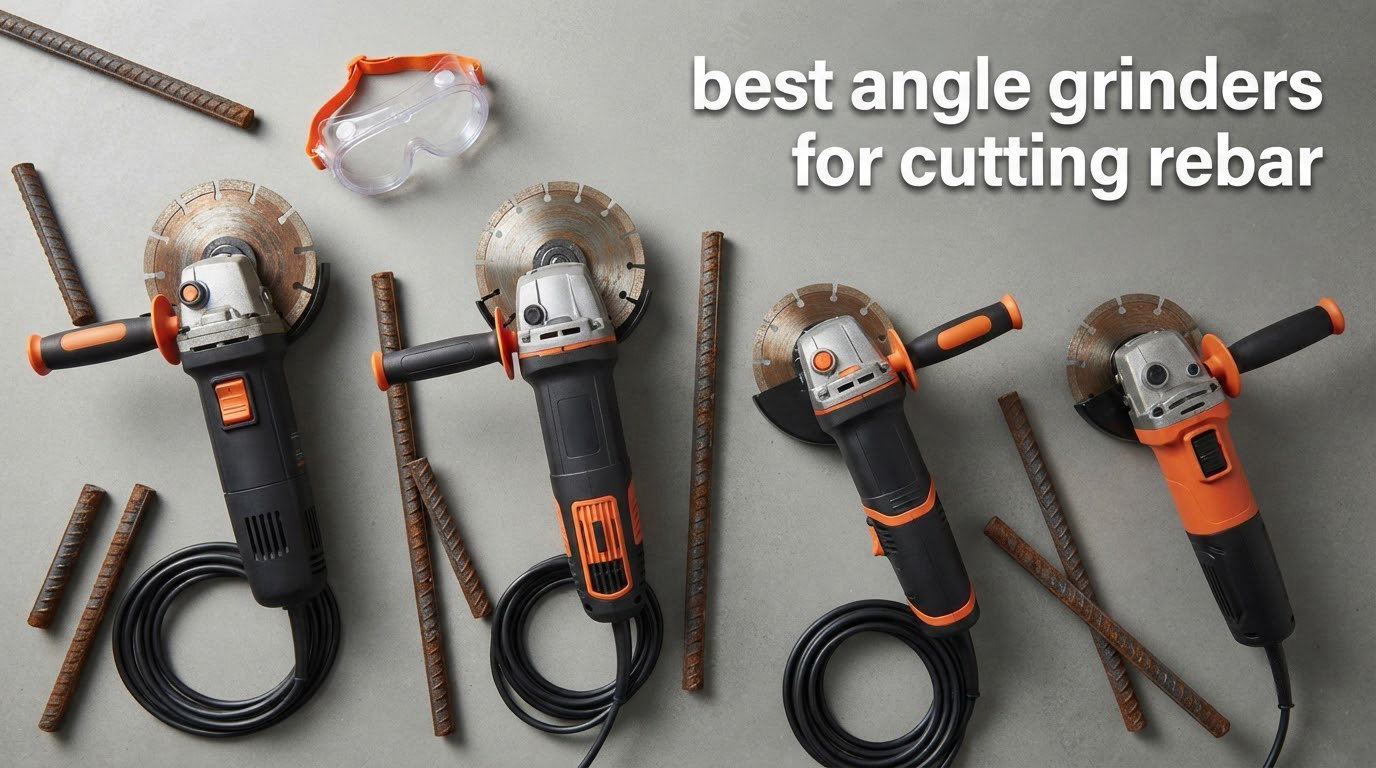
Short answer: the DEWALT DCG413B 20V MAX is the best angle grinder for cutting rebar overall, the DEWALT DWE4011 is the best corded option, and the Metabo HPT G12SR4 is the best value pick. Any of the three will slice #3 through #5 rebar cleanly, as long as you fit a thin reinforced metal cut-off wheel rather than a grinding disc.
Rebar gets trimmed on site for footings, slabs, walls, fences and arbors, and the grinder you choose decides whether that trim takes twenty seconds or turns into a wrestling match with a pinched wheel. The right tool runs at 11,000 rpm or faster, carries a closed cutting guard, weighs under 4.5 pounds so you can hold it steady on a ladder or in a footing trench, and shuts down when the bar grabs the wheel.
We compared eight grinders on published specifications and thousands of owner reviews, then sorted them against the one job that matters: cutting steel bar with a metal cut-off wheel. Below you will find each tool’s motor output, no-load speed, guard situation and the rebar sizes it handles, plus the technique that keeps the wheel out of your hands.
Top 3 Picks for Cutting Rebar in 2026

DEWALT DCG413B 20V MAX
- Brushless motor with no brush changes
- Kickback brake stops the wheel fast
- Two-stage paddle switch with e-switch

Makita XAG04Z 18V LXT
- Active Feedback-sensing stall shutdown
- Automatic Speed Change torque management
- Cut-off and tool-less guards included

Metabo HPT G12SR4
- 6.2 amp motor at 980W max output
- Five grinding wheels and hard case
- 4.0 lb body with low-profile gear case
Best Angle Grinders for Cutting Rebar Side by Side (October 2026)
| Product | Specifications | Action |
|---|---|---|
| DEWALT DCG413B 20V MAX Brushless 4-1/2 Inch |
|
Check Latest Price |
 DEWALT DWE4011 4-1/2 Inch Corded DEWALT DWE4011 4-1/2 Inch Corded |
|
Check Latest Price |
 Bosch GWS8-45 4-1/2 Inch Corded Bosch GWS8-45 4-1/2 Inch Corded |
|
Check Latest Price |
| Metabo HPT G12SR4 4-1/2 Inch Corded Kit |
|
Check Latest Price |
 AVID POWER AG589 4-1/2 Inch Corded AVID POWER AG589 4-1/2 Inch Corded |
|
Check Latest Price |
 DEWALT DCG418B 60V MAX FLEXVOLT DEWALT DCG418B 60V MAX FLEXVOLT |
|
Check Latest Price |
 Bosch Professional GWS 18V-7 Bosch Professional GWS 18V-7 |
|
Check Latest Price |
| Makita XAG04Z 18V LXT 4-1/2 and 5 Inch |
|
Check Latest Price |
1. DEWALT DCG413B 20V MAX: Best Angle Grinder for Cutting Rebar Overall
DEWALT 20V MAX* Angle Grinder Tool Cordless Brushless, 4 1/2 Inch, with Paddle Switch and Kickback Brake, Tool Only (DCG413B)
20V brushless motor
3450 rpm max speed
3.8 lb
Kickback brake
Tool only
Pros
- Plenty of power for cutting and grinding metal
- Brushless motor needs no brush changes
- Kickback brake adds real safety on a bind
- Well balanced grip
- Two-stage paddle switch blocks accidental starts
Cons
- Roughly 20-30 minutes of runtime per 4Ah pack
- Not the sustained output of a corded grinder on heavy cuts
- Battery and charger sold separately
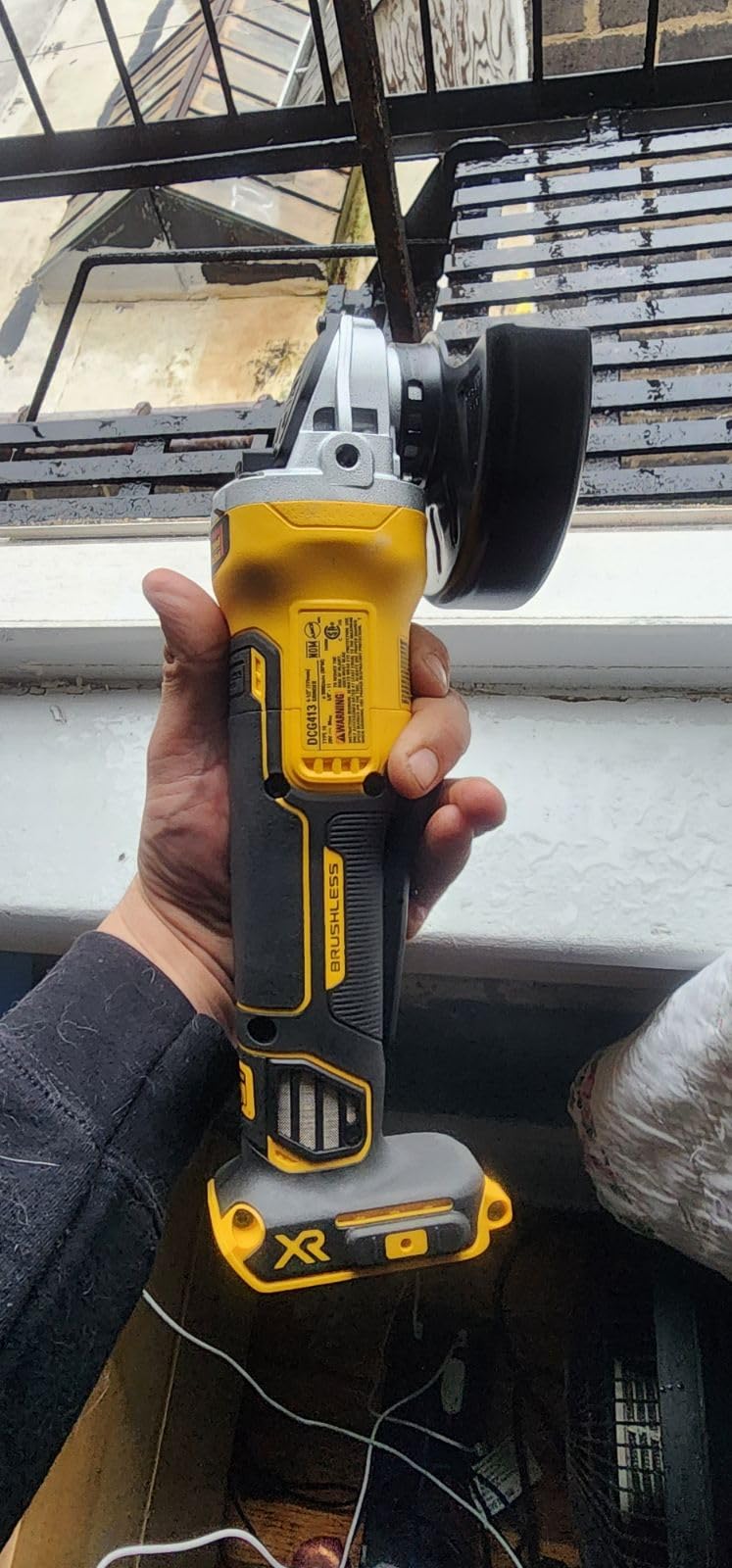
The DCG413B is the grinder I keep coming back to for rebar trim. At 3.8 pounds it sits well in one hand while the other hand holds the bar or a pipe clamp, which is the whole game when you are cutting a 1/2 inch bar in a footing. The brushless motor means there are no carbon brushes to swap in the middle of a pour.
The safety electronics matter more here than on almost any other job. The kickback brake engages when a pinch, stall or bind-up is sensed, and the manufacturer states the wheel stops in 2 seconds or less on average. Rebar cutting is the single most common way an angle grinder pinches a wheel, so having the brake do the work for you is a real advantage.
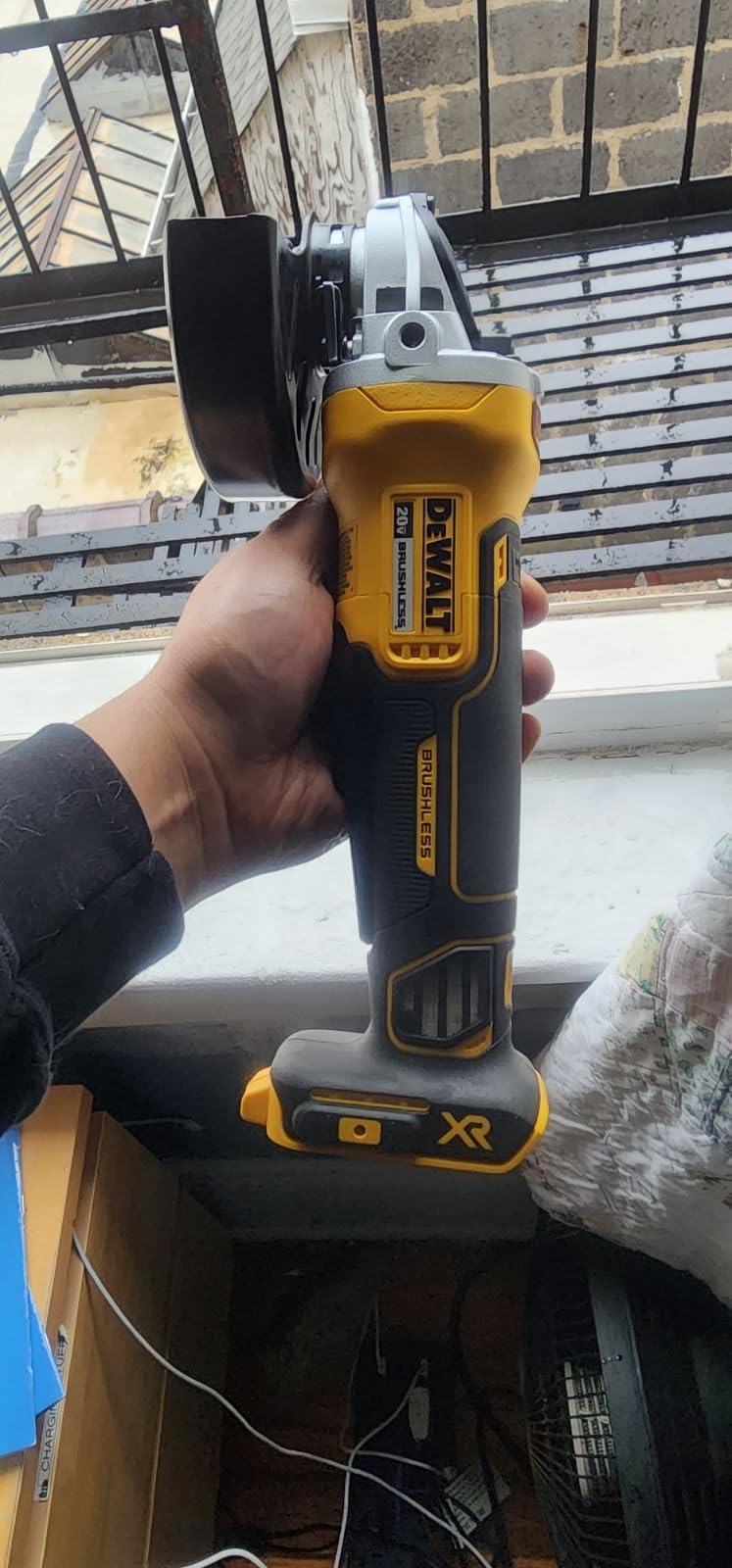
Two-stage paddle activation stops the tool starting up if you bump it while repositioning on a ladder, and the e-switch no-volt release means a stall shuts it down until you cycle the trigger. Disc changes use a standard hex wrench rather than a proprietary check key, so a shop that already owns hex keys is covered.
The honest limit is battery endurance. Owners running long grinding sessions report roughly 20 to 30 minutes per 4Ah pack, so a second charged battery is close to mandatory if you are trimming a full foundation. This is a tool-only purchase too, which means the platform cost lands on top of the grinder.
What it handles well on rebar
It handles clean mill steel up to #5 bar in single cuts without complaint, and the balance makes it the easiest cordless option to control when the bar is only supported at one end. The brake covers you when the kerf closes and the wheel bites.
Because the body is short and narrow, it also works well when the rebar is already partly buried in a footing and you are cutting close to the concrete edge. That is a job where a 6 inch grinder physically will not fit.
Where it falls short
It is the wrong tool for a production run of dozens of cuts back to back, because you will burn through battery packs faster than you burn through wheels. A 60V or corded machine is the better answer there.
If you are starting from zero with no batteries, the platform cost is the biggest single number in this entire roundup. Budget for a battery and charger before deciding this is your pick.
2. DEWALT DWE4011: Best Corded Grinder for Rebar
DEWALT Angle Grinder, One-Touch Guard, 4-1/2 -Inch (DWE4011)
7 amp AC/DC motor
12000 rpm
850W
3.9 lb
One-touch guard
Pros
- Strong 7 amp corded power for metal cutting
- One-touch guard needs no tool
- Tool-free wheel release
- Two-position removable side handle
- Slim body fits smaller hands
Cons
- Large hex wrench replaces the spanner wrench
- Small slide switch is easy to bump
- Noticeably noisy with elevated vibration
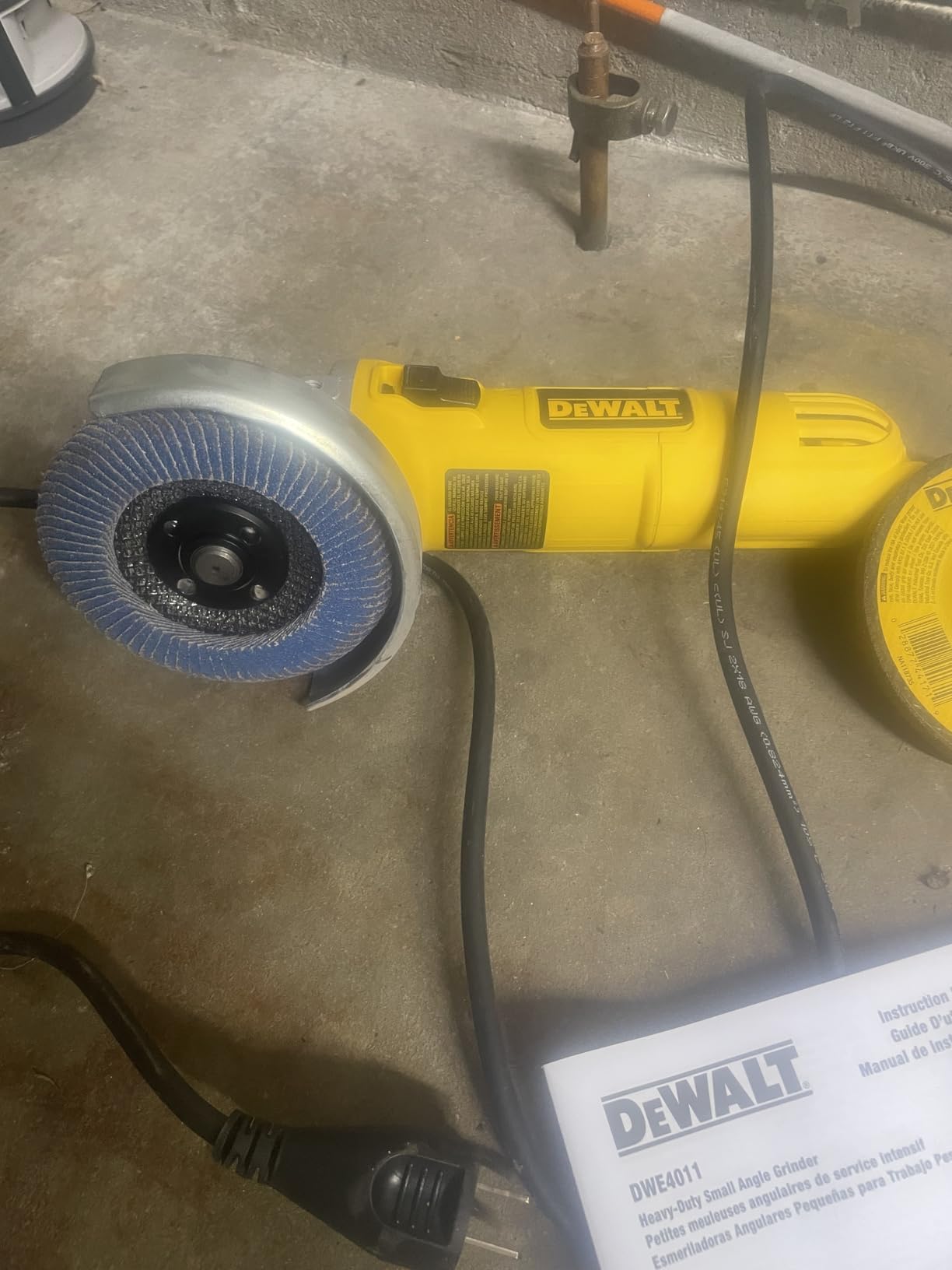
The DWE4011 is the plainest, most dependable corded answer in this group, and it has a track record to match. Owners describe replacing older DEWALT grinders that were still in working condition after nearly two decades, which tells you more about durability than any spec sheet does.
It runs 7 amps at 12,000 rpm and 850 watts, and the motor is designed with overload protection for faster material removal. At 3.9 pounds it is light for a corded tool, and the slim body suits smaller hands during long trimming sessions.
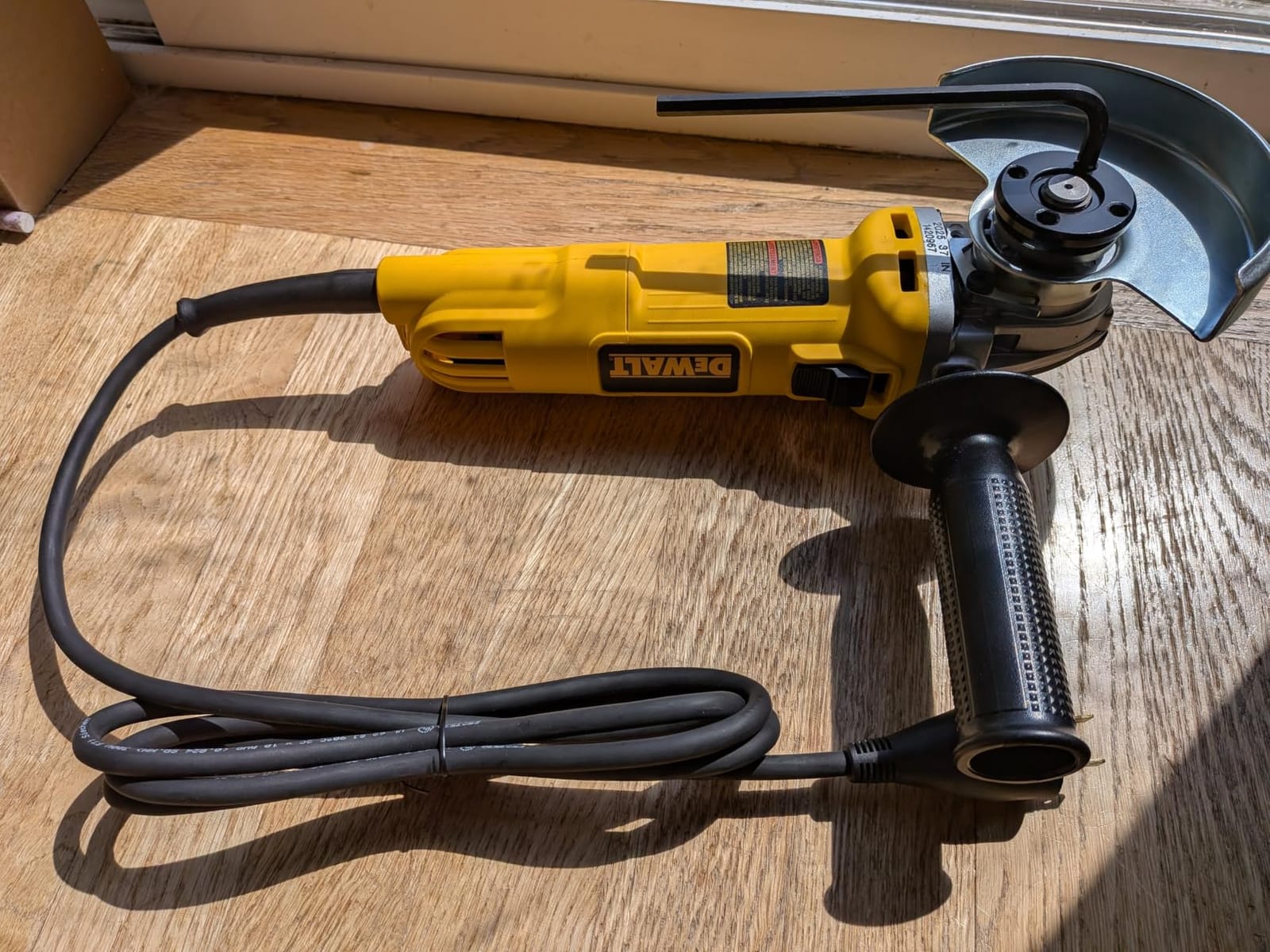
The one-touch guard is a genuine upgrade over older models. You rotate it into position with a lever rather than a wrench, which means you are far more likely to actually reposition it for a cut-off wheel instead of working around a guard in the wrong place. The quick-change wheel release lets you swap discs without tools.
A 5/8-11 spindle thread accepts a wide range of 4-1/2 inch accessories, and the box includes a depressed center wheel, the one-touch guard, a hex wrench and a two-position side handle. Everything you need for a first cut is in the carton.
Why it suits rebar work
Constant power is what you want when you are making cut after cut through #4 and #5 bar. There is no battery to swap and no platform to commit to, and the 12,000 rpm speed gives a fast free cutting rate on thin wheels.
The tool-free guard and wheel release also mean you are more likely to fit the correct cut-off disc quickly at the job site, rather than fishing for a spanner at the bottom of a truck bed.
What to watch out for
The most repeated complaint is the hex wrench. DEWALT substituted a large hex key for the familiar two-prong spanner wrench, and a handful of owners simply prefer the older tool for that reason. The slide switch is also small and easy to bump with a thumb.
Noise and vibration run a little higher than the smoother-feeling machines here. If you are doing hours of cuts in a finished interior rather than outdoor footing work, wear hearing protection and expect some hand fatigue.
3. Bosch GWS8-45: Best Corded Grinder for Control and Fit
Bosch GWS8-45 4-1/2 In. Angle Grinder
7.5 amp motor
11000 rpm
900W
4.2 lb
Slim-Grip body
Pros
- Strong 11000 rpm output in a compact body
- Slim grip fits tight spaces
- Runs 15-minute stretches without overheating
- Large spindle lock for fast disc changes
- Two-position side handle
Cons
- Printed manual states not rated for cut-off applications
- Guard needs a hex key and locks in fixed positions
- Handle sits forward for awkward overhead work
- Highest one-star share in this group
The Bosch GWS8-45 is a 7.5 amp professional tool with a 7/8 inch arbor and 900 watts of output at 11,000 no-load rpm. It punches above its weight class, and owners report it running continuous stretches without overheating while cutting steel and stripping paint.
The Slim-Grip body is the reason to pick it. It is comfortable one-handed and narrow enough to reach into a corner of a footing or work between framing members where a fatter grinder simply will not go.
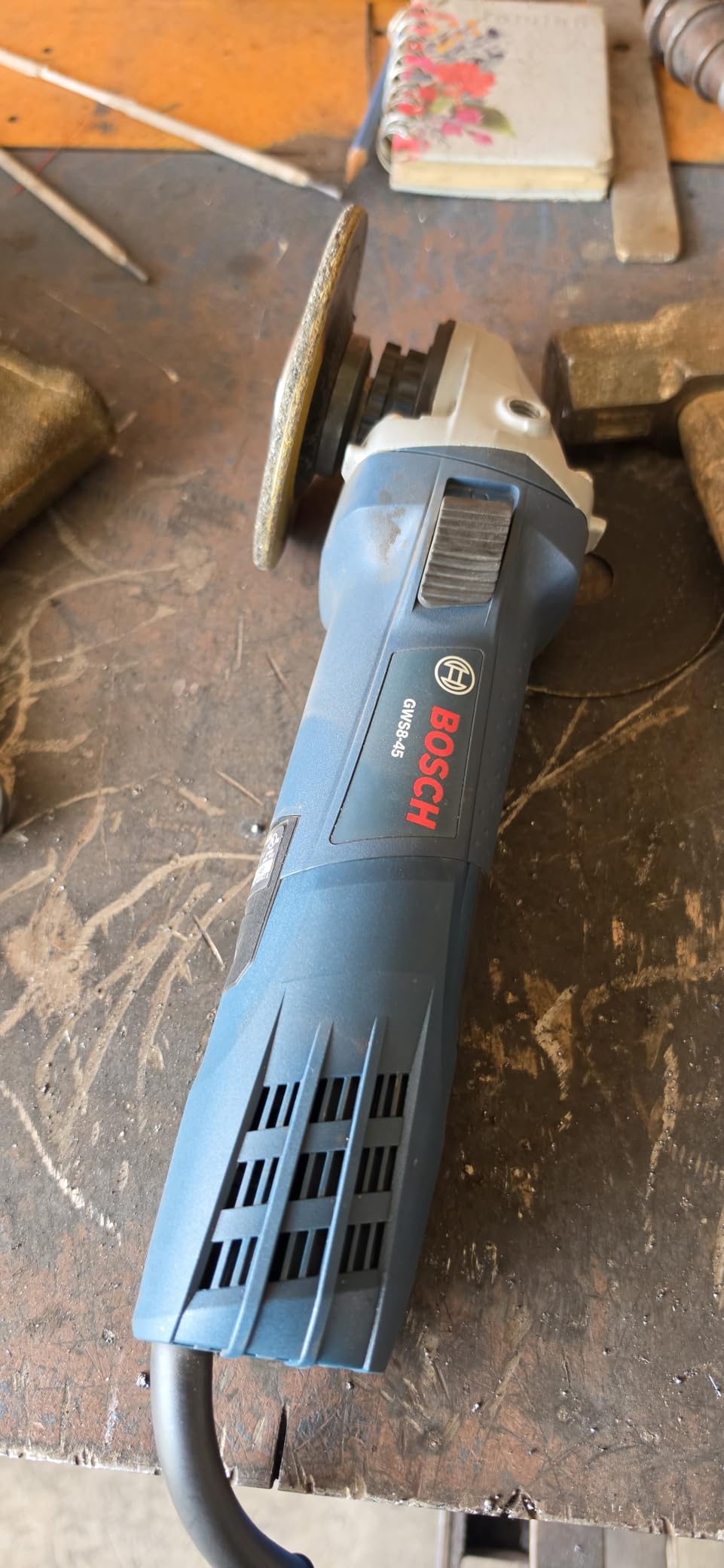
Serviceability is a quiet strength here. Service Minder carbon brushes cut the power when preventive maintenance is due, so the brushes get changed before they cook the motor, and a large spindle lock makes disc changes fast without hunting for a pin spanner.
Directed airflow diverts dust from the internals, and the rubber cord stays usable in cold weather, which matters if you are cutting footing steel at 6am in winter.
Where it earns its place
It is the pick for a fabricator or concrete worker who also grinds welds and does general site cleanup. The narrow grip and two-position side handle make it easy to move between cutting, grinding and blending without swapping tools.
Because the brushes are replaceable and flagged, this is one of the few grinders here that you can realistically keep for a decade with basic consumable maintenance.
Where buyers get frustrated
The printed manual states the tool is not rated for cut-off applications, which conflicts with how many owners actually use it. Many report it cuts steel effectively with a depressed center wheel and letting the disc do the work, but you should read that disclaimer before committing.
The guard also needs a hex key and locks into discrete positions, so repeated repositioning is tedious. If you swap between grinding and cutting often, the one-touch guard on the DWE4011 is a better fit.
4. Metabo HPT G12SR4: Best Value Grinder for Rebar Cutting
Metabo HPT 4-1/2-Inch Angle Grinder, Includes 5 Grinding Wheels & Hard Case, 6.2-Amp Motor, Compact & Lightweight, G12SR4
6.2 amp motor
980W max output
12000 rpm
4.0 lb
Grinder plus five wheels and case
Pros
- Complete kit with five grinding wheels and hard case
- Light 4.0 lb body reduces fatigue
- Spindle lock for quick disc changes
- Low-profile gear case reaches tight areas
- Labyrinth seal resists dust and debris
Cons
- Only a 1-year base warranty
- 6.2 amp output trails the 7.5 amp models
- Slide switch placement suits only one hand position
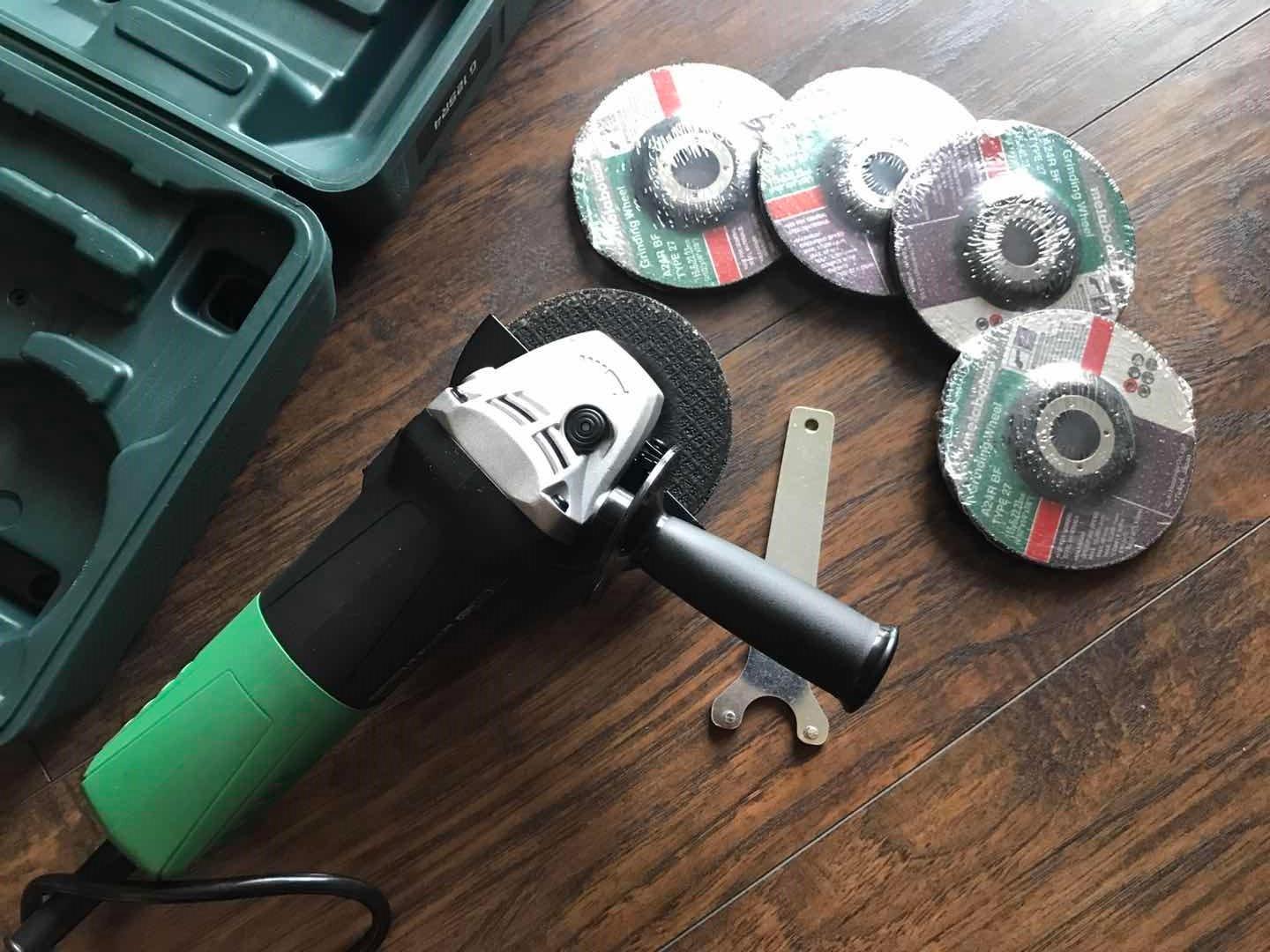
The G12SR4 is the most complete starter package in this roundup. You get the grinder, five grinding wheels and a hard carrying case, which removes the most common complaint about buying a cheap grinder, namely that you own nothing to put on it.
It is the lightest machine here at 4.0 pounds, and the smaller grip was designed to reduce fatigue. For ladder work and tight footing trenches, that weight is the difference between controlling the cut and fighting the tool.
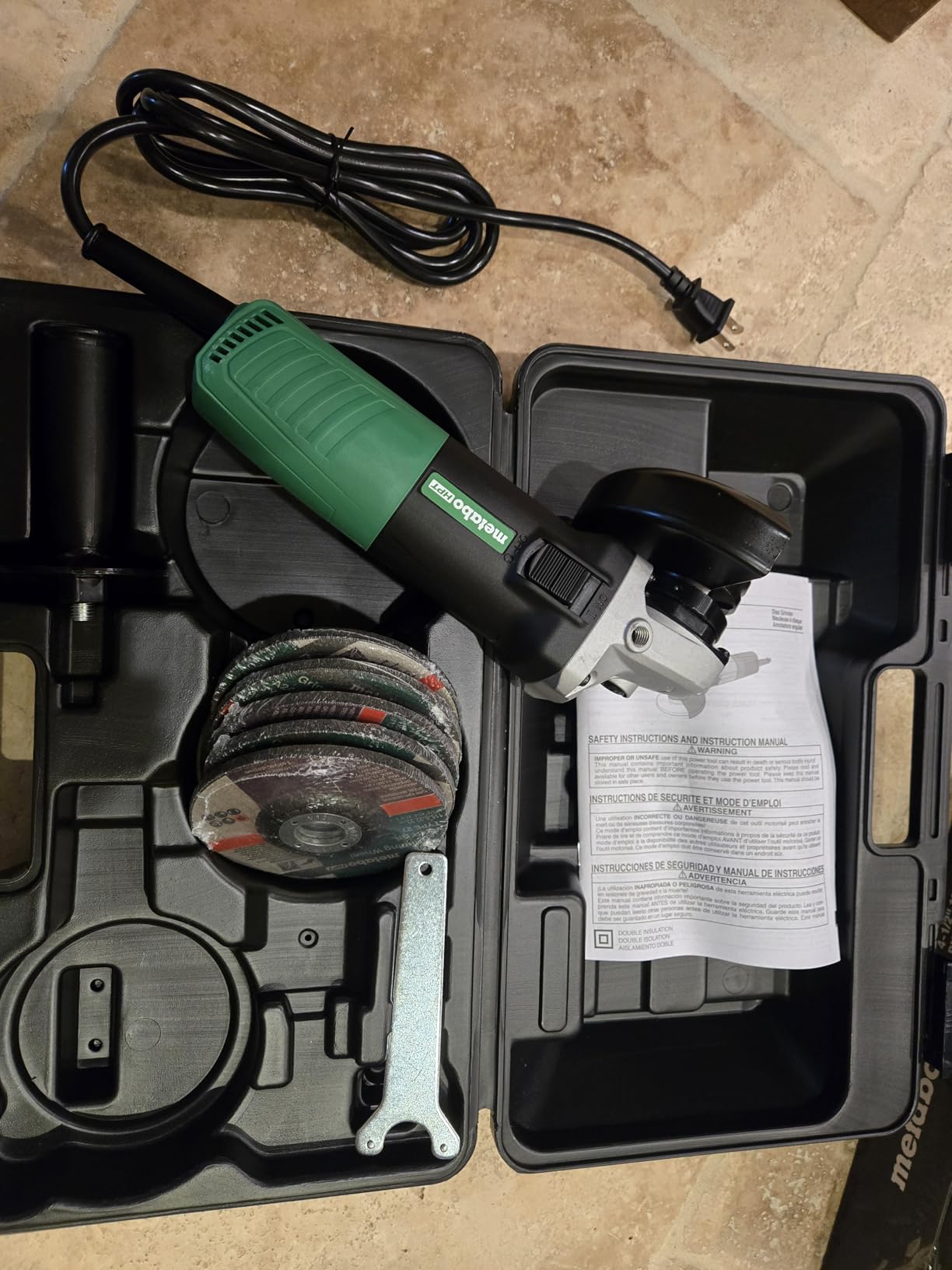
The low-profile gear case is genuinely useful for reaching into a narrow trench or working behind a form board. A spindle lock handles disc changes without extra tooling, and the labyrinth design improves dust and debris durability for site work.
The left-mounted slide switch has a quick-off feature, so you can kill the tool with a flick of the thumb without regripping the body.
Why it makes sense for rebar
At 6.2 amps and 980 watts maximum output, this is enough motor for #3 and #4 bar in single cuts, and it spins at 12,000 rpm, which is a good free-cutting rate for a thin wheel. The included wheels get you started on grinding tasks, and cut-off discs are inexpensive to add.
If your rebar work is a footing pour, a fence line or an arbor project rather than daily production, this is the tool that makes the most sense per dollar spent.
Where it stops short
The 6.2 amp motor produces less sustained power than the 7.5 amp machines here, so long cuts through thick bar will heat the wheel faster. It is a grinder for jobs, not a production cutter.
The one-year base warranty is the shortest coverage in this group, which matters if you are buying a tool you expect to keep for a decade. If the motor or switch fails inside that window, you have less protection than the Bosch or DEWALT options.
5. AVID POWER AG589: Budget Grinder Marketed Directly for Rebar
AVID POWER Angle Grinder, 7.5-Amp 4-1/2 inch Electric Grinder Power Tools with Grinding and Cutting Wheels, Flap Disc and Auxiliary Handle for Cutting, Grinding, Polishing and Rust Removal – Red
900W 7.5 amp motor
12000 rpm
7/8 inch arbor
Spare brushes in box
Pros
- Strong power for the money on metal cutting
- Tool-free guard and spindle lock
- Small light body fits tight spaces
- Complete accessory kit in the box
- Cross-compatible wheel nut and wrench
Cons
- Simplistic guard lock with few adjustment positions
- Stiff switch with reported failures
- Included cutting wheels are thicker than optimal
- Reports of motor overheating after extended use
This is the only tool in the roundup whose published feature list names cutting rebar and metal pipe directly. At 900 watts and 7.5 amps with a 12,000 rpm ceiling, the motor spec is genuinely in the same territory as the professional corded machines here.
The small body is a real advantage. At 3.64 pounds for the tool itself, it is the easiest of the corded group to maneuver in a footing trench, and owners repeatedly praise how well it fits where larger grinders get in the way.
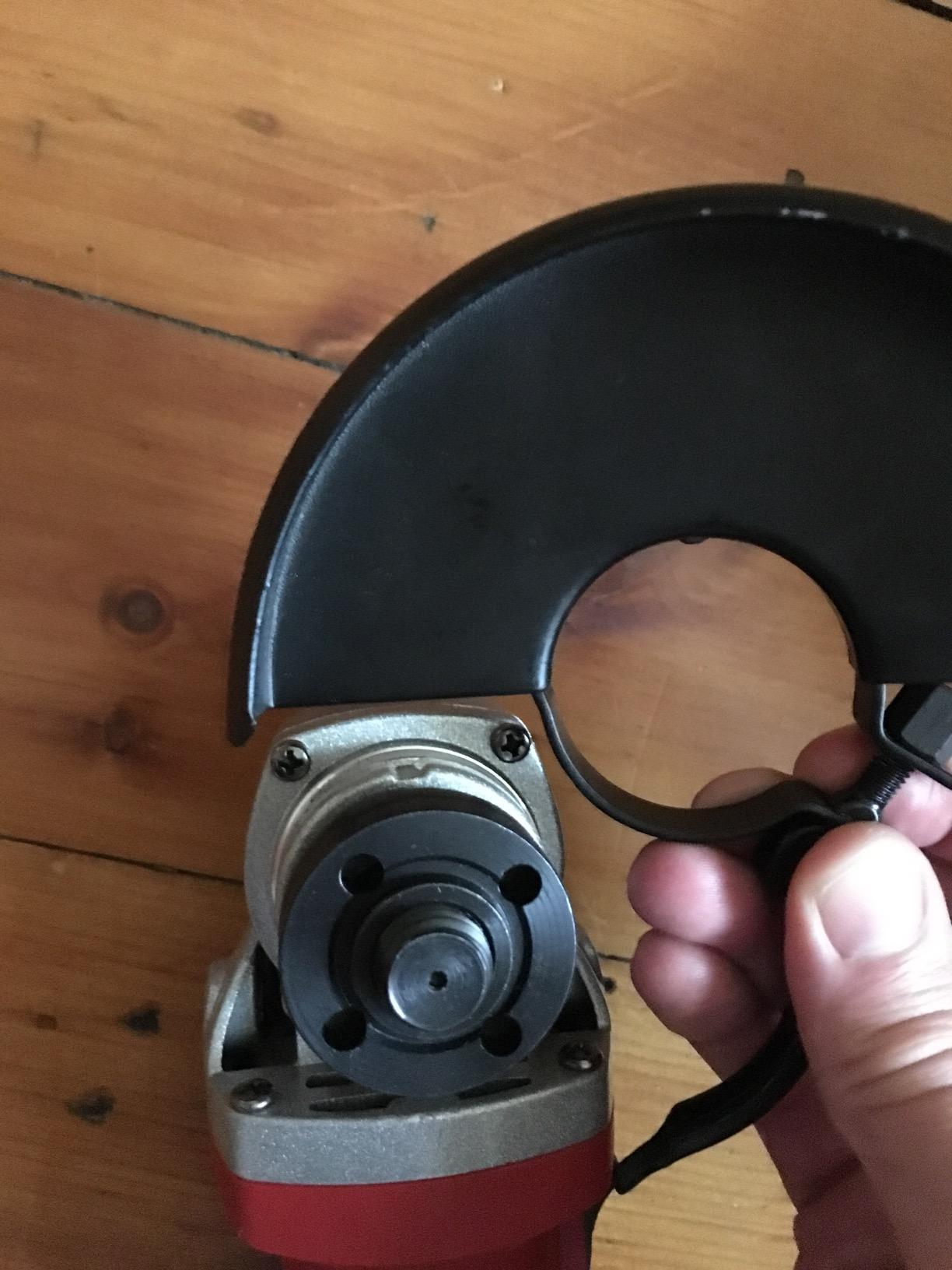
The box is unusually generous for the money: two metal cutting wheels, two metal grinding wheels, a flap disc, side handle, guard, spanner wrench and spare carbon brushes. The wheel-change tool and threaded nut are cross-compatible with major brand discs, so you are not locked into one supplier.
A standard 7/8 inch arbor and 5/8-11 threaded spindle mean the wheels you already own will almost certainly fit. The integrated spindle lock and tool-free adjustable guard make disc changes quick.
Where it earns its slot
It suits a homeowner or a small crew who wants a dedicated cutting grinder without buying into a battery platform. For a dozen cuts in a footing, this does the job and costs less than the batteries alone would on a cordless setup.
Owners who need an inexpensive cutting tool often point to the power-to-cost ratio, and a few report more than 40 hours of cumulative use with no failure.
What reviewers criticize
Build quality is the recurring theme in critical reviews. The guard uses a simplified locking mechanism that some owners did not trust under load, and it has few adjustment positions, which makes repositioning difficult.
The switch is described as stiff and fragile with reported failures, and the included cutting wheels are thicker than optimal, so they take more work to cut through. There are also several reports of motors overheating and smoking after extended use, though units were replaced under warranty.
6. DEWALT DCG418B 60V MAX: Best Cordless Grinder for Heavy Steel
DEWALT FLEXVOLT 60V MAX* Angle Grinder with Kickback Brake, 4-1/2-Inch to 6-Inch, Tool Only (DCG418B)
13 amp equivalent
9000 rpm
4-1/2 and 6 inch
E-clutch shutdown
Pros
- Cordless output compares well to corded tools
- Brake and e-clutch survive pinched cutoffs
- Well balanced for long stretches
- Guard spins for either hand
- Includes both 4-1/2 and 6 inch guards
Cons
- Needs 60V FLEXVOLT batteries only
- Heavy work drains two 6Ah packs
- 9000 rpm is slower than corded models here
- Some owners report eventual motor seizing
The DCG418B is the most capable cordless option here and the one that closes the gap with a shop corded grinder. It delivers 13 amp equivalent power from a 60V FLEXVOLT pack, and owners compare it favorably to corded tools when moving heavy steel, reportedly about twice as fast as the 20V model on similar work.
The safety stack is the strongest in the roundup. The kickback brake engages on a pinch or stall, the e-clutch activates in less than a tenth of a second, and the trigger-release brake stops the wheel in 1.5 seconds with a standard grinding wheel.
It accepts both 4-1/2 inch and 6 inch wheels, which makes it the only cordless tool here that can step up to heavier bar or cut steel pipe without a second machine. Both 4-1/2 inch and 6 inch Type 27 guards ship in the box, along with a side handle, wrench and flanges.
Best suited to
Contractors working in crawlspaces, trenches and remote sites with no power access will like never dragging an extension cord. Owners specifically credit the brake and e-clutch with surviving cutoffs that pinched the wheel, with no broken cut-off discs across a large job.
The well-balanced weight and comfortable handle hold up over long sessions, and the guard spins easily for either hand.
What limits it
Platform lock-in is the first constraint. It needs 60V FLEXVOLT packs, and 20V batteries will not power it, so this is a bigger commitment than the 20V or 18V options.
At 9,000 rpm it turns more slowly than the 11,000 to 12,000 rpm corded machines here, and heavy work drains two 6Ah packs. A few owners also report the motor eventually seizing after years of use.
7. Bosch Professional GWS 18V-7: Best for Battery Efficiency and Long Days
Bosch Professional Cordless Angle Grinder GWS 18V-7, 700W Power, 11000 RPM, Additional Handle, Clamp Flange, Protective Cover, Cardboard Box
700W equivalent
11000 rpm
1.6 kg tool body
18V system
Pros
- Sufficient power near 700W corded equivalent
- Narrow head fits corners and confined spaces
- Five to six hour duty cycles on demanding work
- Guard has no clamp obstructing worn wheels
- Locking switch works with gloves on
Cons
- Larger and heavier than 12V-class Bosch grinders
- This variant lacks the X-LOCK quick-change interface
- Parallel import listing means different warranty coverage
- Battery and charger not included
The GWS 18V-7 is the pick if your day is made of many short cuts rather than a few heavy ones. The carbon-free motor is rated at 700 watt equivalent, and owners across Europe report sustained five to six hour duty cycles on demanding brick and masonry work without failure.
Battery efficiency is the standout technical claim, with reviewers noting the tool draws noticeably less than other cordless grinders. If your rebar trimming is spread across a full day of layout and cutting, that matters more than peak power.
At 1.6 kilograms for the tool body with a small hand circumference, the narrow head works well in corners and confined spaces, and the locking switch is easy to operate while wearing gloves. The guard design has no clamp obstructing worn wheels, so you can fit a thin, worn disc without fighting the hardware.
Where it suits rebar work
The 11,000 rpm no-load speed is a genuine free-cutting rate, well matched to thin reinforced cut-off wheels, and the light body is comfortable on a ladder or in a trench.
Because it runs on the Bosch Professional 18V system, existing 18V packs in that range work with it, which is the main reason to pick it over another platform.
What to know before buying
This specific variant does not use the X-LOCK interface, so owners fit a third-party quick-release nut for fast disc changes. It is also larger and heavier than the 12V-class Bosch grinders, so it is not a small-hand tool.
It is a parallel import listing, which means warranty coverage and included accessories may differ from US-distributed units, and the battery and charger are not included. Check the warranty terms before committing.
8. Makita XAG04Z 18V LXT: Best Cordless Grinder for Controlled Cuts
Makita XAG04Z 18V LXT® Lithium-Ion Brushless Cordless 4-1/2” / 5″ Cut-Off/Angle Grinder, Tool Only
18V LXT brushless
8500 rpm
4-1/2 and 5 inch
Tool only
Pros
- Active Feedback-sensing shuts the motor down on a stall
- Automatic Speed Change matches torque to load
- Brushless motor runs cooler for longer life
- Cut-off and tool-less guards plus an ultra-thin wheel included
- No extension cord on site
Cons
- 8500 rpm is the lowest no-load speed here
- Slower than corded grinders on aggressive stock removal
- Tool only with battery and charger sold separately
- Lock nut flange rather than a full quick release
The Makita XAG04Z is the most complete cordless package on this list for rebar work. The box includes a 5 inch cut-off wheel guard, a 5 inch tool-less wheel guard, a 5 inch ultra-thin stainless cut-off wheel, a 36 grit INOX grinding wheel and a lock nut wrench.
That matters because the correct wheel and the correct guard are the two things buyers most often get wrong. Having a thin cut-off wheel and both guards in the carton removes the excuse to fit the wrong disc later.

The safety electronics are the reason to pay attention here. Active Feedback-sensing Technology turns the motor off if the wheel rotation is suddenly forced to stop, which is precisely the bind-up event that causes kicked-back rebar cuts. Automatic Speed Change adjusts speed and torque during operation to match load.
The brushless motor runs cooler and more efficiently, and Makita claims up to 50 percent longer run time per charge from optimized battery use compared to a conventional motor. In practice that is the difference between finishing a footing on one pack or reaching for a second.
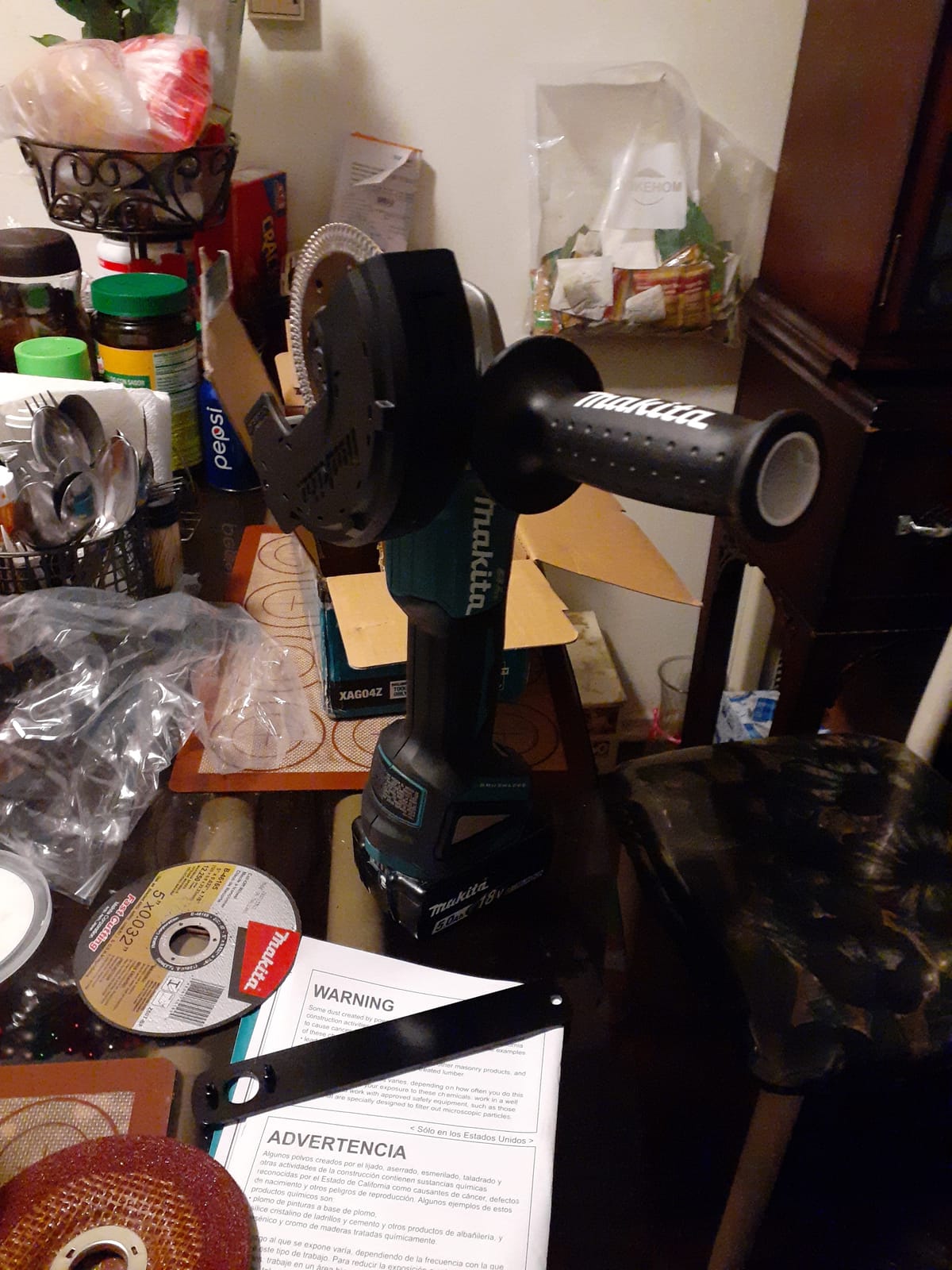
Why it suits controlled rebar cuts
The lower 8,500 rpm speed is a feature rather than a flaw for this application. A slower wheel on thin reinforced cut-off discs gives you a more controlled cut through #4 and #5 bar, with less chance of the wheel grabbing and pinching.
It accepts 4-1/2 inch and 5 inch wheels, and the tool-less guard is a real convenience when you are swapping between cutting and grinding across a fabrication day.
What to consider
8,500 rpm is the lowest no-load speed in this group, so on heavy stock removal it will feel slower than the corded machines. It is a tool-only purchase, so you need Makita 18V LXT batteries and a charger on top.
It also uses a lock nut flange rather than a fully tool-less quick release, so the wrench comes out for every change. If you already run Makita 18V LXT tools, that is a minor detail.
What Rebar Diameter Each Grinder Size Handles
Most roundups say 4-1/2 inch or 5 inch will do, and that is true, but the useful detail is which bar. A 4-1/2 inch cut-off wheel has roughly a 2 inch cutting depth, so it clears #3 and #4 rebar with room to spare.
Here is how the sizes map to real bar, and it applies to every tool in this roundup regardless of whether it is corded or cordless:
#3 rebar at 3/8 inch: comfortable in any 4-1/2 inch grinder. The cut is shallow, the wheel barely loads up, and these are the cuts a small battery grinder handles without complaint.
#4 rebar at 1/2 inch: the standard residential footing size, and well within a 4-1/2 inch wheel. This is where a 7.5 amp corded machine or a 20V brushless tool feels most at home.
#5 rebar at 5/8 inch: near the limit of a 4-1/2 inch wheel, and still workable with a thin disc, but heat builds up fast. A 5 inch wheel or the DCG418B running a 6 inch wheel gives you much more margin.
#6 and #7 rebar: step up to a 5 inch or 6 inch cut-off wheel. Most of the grinders here accept 6 inch wheels, but you need a guard rated for that size and enough torque to keep the wheel moving.
Wheel diameter is not the same as grinder quality. A well-controlled 4-1/2 inch tool with a thin wheel will out-cut a clumsy 5 inch machine every time.
The Right Wheel: Type 1 and Type 41 Cut-Off Discs
A Type 1 cut-off wheel, also called Type 41, is a flat, straight wheel with the label printed on the side. It is designed to slice metal edge-on, which is exactly what a rebar cut is. A Type 27 grinding wheel is depressed in the center and raised above the work surface, which makes it the correct wheel for grinding welds, blending and surface cleanup.
Grinding a bar down with a Type 27 wheel is the slow, hot, wasteful way to cut rebar. It removes metal from the top of the cut instead of shearing through the side, so you burn through the wheel and the bar at the same time.
Use a reinforced cut-off wheel, marked for steel, with fiberglass mesh so it will not shatter if it does bind. Thin wheels are the right call: they cost less, they cut faster, and they generate less heat in the bar. Thick wheels add friction and can take several times as long on the same cut.
The arbor is the hole in the center of the wheel, and the standard size is 7/8 inch, or 22.23 mm. The spindle thread is 5/8-11 on the grinders here. The guard, back flange and lock nut have to match, which is why a Type 27 guard is not automatically approved for a straight Type 1 wheel.
That guard mismatch is the most repeated safety warning in this entire topic. Before you fit a cut-off wheel, check the guard marking. If the tool was supplied with a grinding guard, you may need a separate cut-off guard, and some manufacturers do not approve that combination at all.
How to Cut Rebar Safely with a Grinder
Support the bar so the kerf stays open. Clamp the rebar in a vise or a pipe clamp on both sides of the cut, or rest it on two timber blocks with the cut line between them. Never hold the bar in your free hand.
Fit the correct wheel and guard. Reinforced Type 1 or Type 41 cut-off wheel for steel, and a guard rated for cutting rather than grinding. Check the arbor matches before you tighten anything.
Set the guard position first. The guard covers the operator and deflects sparks away from your hands and face. Adjust it before you start, not halfway through the cut.
Use both hands and the side handle. Two-position side handles on these grinders work on either side of the body. Start at full speed before the wheel touches the bar.
Let the wheel do the work. Apply light pressure at roughly 90 degrees to the bar. Pushing harder generates heat, burns the wheel and dulls the cut. Move the grinder back and forth to keep the kerf open.
Aim the sparks away. Sparks travel in the direction of wheel rotation. Point them away from vehicles, glass, dry vegetation, sawdust and other people.
If the wheel binds, release the trigger. Do not force it. Let the wheel stop, open the kerf by loosening the clamp slightly, then restart. Forcing a pinched wheel is how cut-off discs shatter and how the tool rips out of your hands.
Wear the gear. Face shield or safety glasses, hearing protection, gloves, and a respirator if you are cutting concrete-embedded bar in a confined footing.
Corded vs Cordless for Rebar Cutting
The real question is not power, it is job site access. Modern cordless grinders in the 4-1/2 inch class cut rebar effectively, and the DCG418B at 13 amp equivalent proves the power gap has largely closed. If you already own batteries for a platform, cordless is the easy choice.
Corded still wins on sustained output. A 7 to 7.5 amp corded grinder at 11,000 to 12,000 rpm will run cut after cut without draining a pack, and it spins faster than most cordless tools here, which translates directly into a faster cut on a thin wheel.
The cordless side wins on mobility. No extension cord to drag into crawlspaces, trenches and remote sites, and no cord snagging on rebar while you reposition. Overhead work on a ladder is also cleaner without a cable to manage.
The hidden cost is platform lock-in, and it is the thing buyers most often regret. If you already own 20V MAX packs, the DCG413B is nearly free to add to your kit. If you own nothing, the battery and charger cost needs to be added to every cordless price in this roundup before you compare it against a corded grinder.
We rank grinders built for metal cutting in more detail in our guide to the best angle grinders for metal cutting, and the broader best angle grinders roundup covers welding cleanup and surface prep.
When Not to Use an Angle Grinder for Rebar
An angle grinder is the wrong tool in a few specific situations, and knowing them saves both time and wheel cost.
Rebar embedded in concrete. A standard metal cut-off wheel clogs almost immediately in concrete dust, and the sparks stop. Use a diamond masonry blade and wet cutting, and expect the bar to need exposing first. Retailer Q&A threads confirm this is a real and common jobsite need, so plan for a diamond blade and a water supply.
Dozens of cuts in a row. For a large production run, a hydraulic rebar cutter or a chop saw is faster and produces a square cut. We compared the dedicated options in our guide to the best rebar cutters.
Working overhead or on a ladder with a heavy tool. A 5 inch or 6 inch grinder is hard to control at arm’s length above waist height. Use a lighter 4-1/2 inch cordless tool for that work instead.
Epoxy-coated or heavily rusted bar. Coated bar cuts differently from clean mill steel, and the wheel wears faster. Budget extra wheels and expect a slower cut.
For bending rebar rather than cutting it, our guide to the best rebar benders covers the tools that handle that job.
Buying Guide: What Actually Matters for Rebar
Guard type comes first. Verify the grinder accepts a cut-off wheel with a cutting guard, not just a grinding guard. This single check prevents the most common and most dangerous mistake in this application.
Wheel size. 4-1/2 inch handles #3 and #4 rebar comfortably. Step to 5 inch or 6 inch only if you cut #5 and heavier bar regularly or need to cut steel pipe.
Stall protection. The DCG413B kickback brake, DCG418B e-clutch, Makita active feedback sensing and Bosch Service Minder brushes all detect or prevent the events that cause kicked-back tools. On rebar, that is worth paying for.
No-load speed. Anything at or above 11,000 rpm gives a good free-cutting rate on thin wheels. Below 9,000 rpm, expect slower cuts on heavy bar, though a slower wheel can give you more control on thin stock.
Weight for the position. Under 4 pounds matters for ladder and trench work. Anything above 4.5 pounds gets tiring overhead, and tired hands are what cause bind-ups.
Warranty and serviceability. Replaceable carbon brushes and a spindle lock extend tool life. The one-year base warranty on the Metabo HPT is the shortest here, which matters for a tool you expect to keep for years.
What is in the box. Bare-tool listings are the most common source of buyer frustration. The Makita XAG04Z and Metabo HPT G12SR4 include wheels, and the AVID POWER AG589 includes two metal cutting wheels plus spare carbon brushes.
Frequently Asked Questions
What is the best angle grinder blade for cutting steel rebar?
A thin, reinforced metal cut-off wheel, either Type 1 or Type 41, marked for steel. Reinforcement means fiberglass mesh bonded into the wheel so it will not shatter if it binds. Use the thinnest wheel you can buy, because thin wheels cut faster, generate less heat in the bar and cost less per cut than thick ones. Avoid grinding wheels for this job, since a depressed-center Type 27 wheel removes metal from the top of the cut instead of shearing through the side.
Can I use an angle grinder to cut rebar?
Yes, with the right wheel and guard. A 4-1/2 inch grinder with a thin reinforced metal cut-off wheel handles #3 and #4 rebar cleanly, and a 5 inch or 6 inch wheel covers #5 and heavier bar. Two conditions matter: the guard must be a cutting guard rated for a cut-off wheel rather than a grinding guard, and the bar must be clamped so the kerf cannot close and pinch the wheel.
What is the best tool for cutting rebar?
For a handful of cuts, odd shapes, ladder work and single bars, an angle grinder with a thin cut-off wheel is the most flexible option. For a large production run, a hydraulic rebar cutter is faster and safer. A chop saw with a metal abrasive or carbide blade gives the cleanest square cuts in quantity. A band saw is quieter with almost no sparks, and a plasma cutter is for thicker plate rather than rebar.
How deep will a 4.5-inch angle grinder cut?
A 4-1/2 inch cut-off wheel gives roughly 2 inches of cutting depth, which comfortably clears #3 rebar at 3/8 inch and #4 rebar at 1/2 inch. #5 rebar at 5/8 inch is near the limit and generates more heat. For #5 and heavier bar regularly, move up to a 5 inch or 6 inch wheel, which also gives the disc more room to dissipate heat and last longer between changes.
What cannot be cut with an angle grinder?
Standard metal cut-off wheels clog quickly in concrete, so rebar embedded in concrete needs a diamond masonry blade and wet cutting, with the bar usually exposed first. Very heavy production runs are better handled by a hydraulic rebar cutter or chop saw. Overhead work with a heavy grinder is unsafe because the tool is hard to control, so use a lighter 4-1/2 inch cordless unit instead.
Why does my angle grinder bind when cutting rebar?
Usually the cut closed on the wheel. When both halves of the bar collapse into the kerf, the wheel grips, the tool kicks and the disc can shatter. Release the trigger, let the wheel stop fully, and open the kerf by loosening the clamp slightly before restarting. Never force a spinning wheel. Long, tapered bar and bar that is not properly supported at both sides of the cut are the usual causes.
What safety gear do I need to cut rebar with a grinder?
You need a face shield or safety glasses, hearing protection, gloves, and a cutting guard rated for a Type 1 or Type 41 wheel. Clamp the bar on both sides of the cut so the kerf stays open, use the two-position side handle, and point the sparks away from people, vehicles, glass and dry vegetation. Add a respirator when cutting concrete-embedded bar in a confined footing.
Final Verdict: The Best Angle Grinder for Cutting Rebar in 2026
The DEWALT DCG413B is the best angle grinder for cutting rebar overall, because the kickback brake, the two-stage paddle switch and the 3.8 pound weight tackle the two things that hurt people on this job, which are a pinched wheel and losing control of the tool. If you have no batteries in that platform, the DEWALT DWE4011 gives you steady 7 amp corded power at 12,000 rpm with a guard you can reposition without tools.
Buyers who want the most complete package should look at the Makita XAG04Z, which ships with a thin cut-off wheel and both guards, or the Metabo HPT G12SR4 if the value matters more than the warranty length. Whatever you choose, fit a thin reinforced Type 1 or Type 41 wheel, confirm the guard is a cutting guard, and clamp the bar on both sides of the cut before you pull the trigger.