
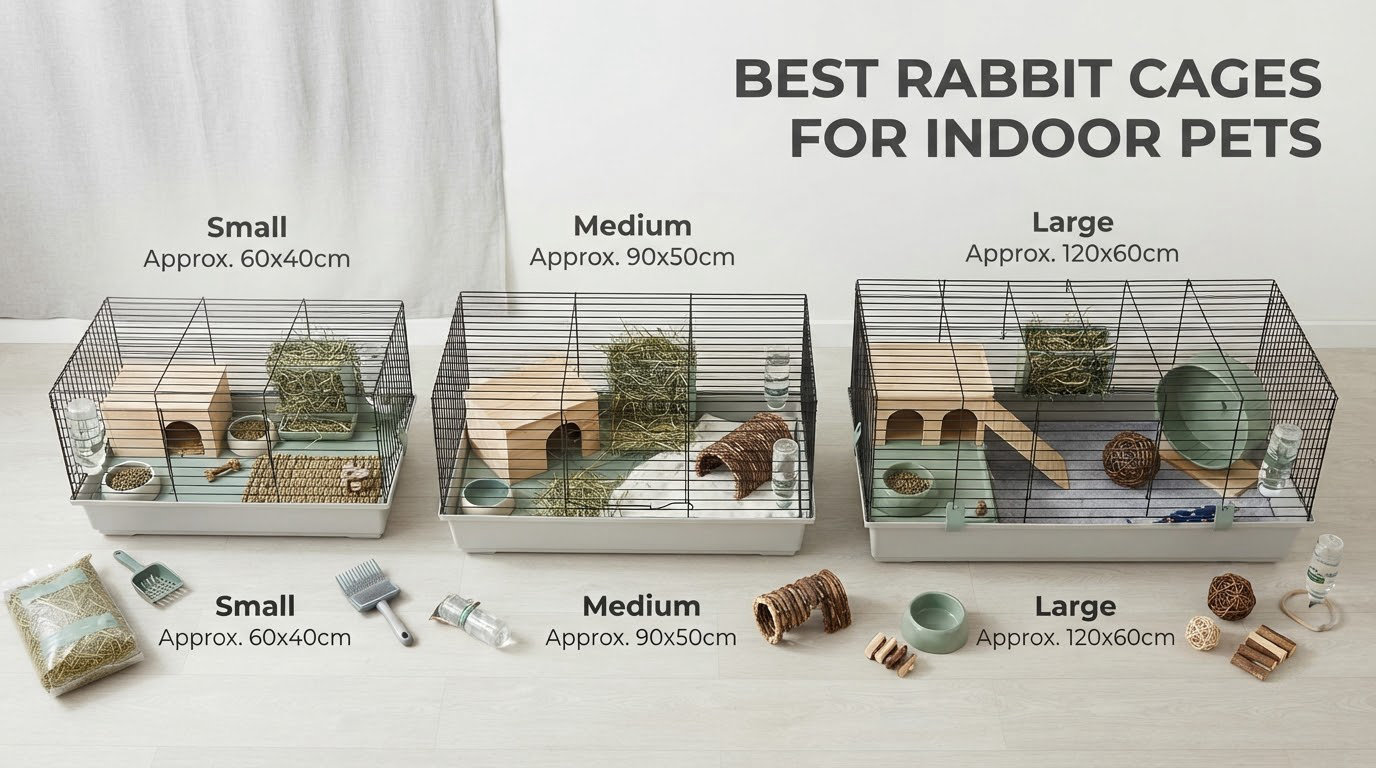
The single biggest mistake I see new rabbit owners make is buying the cage they think a rabbit needs instead of the space it actually needs. A pet-store hutch sold as a rabbit cage is often the same footprint as a hamster cage with a bunny on the packaging, and a house rabbit kept in one does not get a shorter lifespan so much as a duller, more painful one.
That is why every product in this roundup of the best rabbit cages for indoor pets is measured against one yardstick before it is ranked at all. Adult house rabbits need enough continuous floor space to stand fully upright, hop three times in a straight line, and lie stretched out, which works out to roughly 12 square feet for a single rabbit and more for a bonded pair. They also need a solid floor, because wire mesh flooring is the leading cause of sore hocks and foot infections, and they need several hours of free-roam time outside the enclosure every day.
Here is the honest problem: none of the store-bought cages on this list reaches 12 square feet of usable floor. The largest one here, the Ferplast Krolik XXL, works out to about 10.5 square feet of footprint, and that is before the elevated feeding area and ramp take their cut. So read this as a ranking of the best available indoor rabbit enclosures, with the caveat on each one that it works as a base zone paired with free-roam, or as permanent housing for a small breed, a young rabbit, or a bonded pair in a larger home. I compared eight of them on floor area, height, floor material, cleaning access, and how they hold up to chewing.
One note on sizing vocabulary first, because it causes real confusion. You will see 5 square feet per rabbit in older advice and 12 square feet in newer house rabbit guidance. The older figure came from hutch-style housing, where a rabbit was expected to spend nearly all its time confined. Modern indoor housing treats the enclosure as a base zone, and 12 square feet is the working number that experienced owners on r/Rabbits and rehome forums actually build to. Our hamster cage picks show what happens when a pet is given housing built several sizes too small, and rabbits are no different.
Top 3 Picks: Indoor Rabbit Cages in 2026
These are the three that earned the highest overall scores across floor area, floor material, cleaning access, and durability, and all three have review counts high enough that the pattern in thousands of ratings is trustworthy.
Living World Deluxe Hybrid X-Large
- 46.9 L x 22.8 W x 24 H inches
- About 7.4 sq ft footprint
- Solid plastic base with 2-part opening top
- Tool-free 8-clip assembly
MidWest Wabbitat Deluxe 158
- 39.5 L x 23.75 W x 19.75 H inches
- 5.5 inch deep solid plastic base
- Full side door and top access
- Expandable with 158WEX and 158HEX
Ferplast Krolik XXL with Extension
- 63.8 L x 23.62 W x 19.68 H inches
- About 10.5 sq ft
- the largest footprint here
- Detachable full base
- Kit includes 2 bottles and 2 hay feeders
Best Rabbit Cages Compared Side by Side in 2026
Floor area below is calculated from the listed footprint dimensions, so you can compare the enclosures on the number that actually matters rather than on how tall and impressive they look in a photo. The floor column tells you whether your rabbit stands on solid plastic, on a wire grid, or on a tray you are expected to litter train.
| Product | Specifications | Action |
|---|---|---|
| Living World Deluxe Hybrid X-Large |
|
Check Latest Price |
| MidWest Wabbitat Deluxe 158 |
|
Check Latest Price |
 Aivituvin Rabbit Hutch on Casters Aivituvin Rabbit Hutch on Casters |
|
Check Latest Price |
| Ferplast Krolik XXL |
|
Check Latest Price |
 GUTINNEEN Two-Level Hutch on 6 Wheels GUTINNEEN Two-Level Hutch on 6 Wheels |
|
Check Latest Price |
 GUTINNEEN 2-Story Chew-Proof Hutch GUTINNEEN 2-Story Chew-Proof Hutch |
|
Check Latest Price |
 Aivituvin Two-Story Habitat Aivituvin Two-Story Habitat |
|
Check Latest Price |
 PawHut 2-Level Cage on Wheels PawHut 2-Level Cage on Wheels |
|
Check Latest Price |
1. Living World Deluxe Hybrid Habitat X-Large – Best Overall Indoor Rabbit Cage
Living World – Deluxe Hybrid Habitat, X-Large
46.9 L x 22.8 W x 24 H inches
About 7.4 sq ft footprint
Solid plastic base
19 lb
Pros
- Largest interior in this roundup at roughly 7.4 sq ft
- Solid plastic base
- no wire floor
- Top lifts off in two parts for fast cleaning
- Water bottle and hay guard mount outside the cage
- Tool-free eight-clip assembly
Cons
- Assembly diagrams widely criticized as unclear
- Ramp to the platform is very steep
- Included water bottle frequently reported to drip
This is the enclosure I keep coming back to, and it earns the top spot on evidence rather than looks. It has been available since 2012 and has collected more than eight thousand ratings, so the failure modes are well known, and the good news is that most of them are cosmetic. The 4.6-star average holds with a 80 percent five-star share, which is rare in a category full of wooden hutches with paint smell problems.
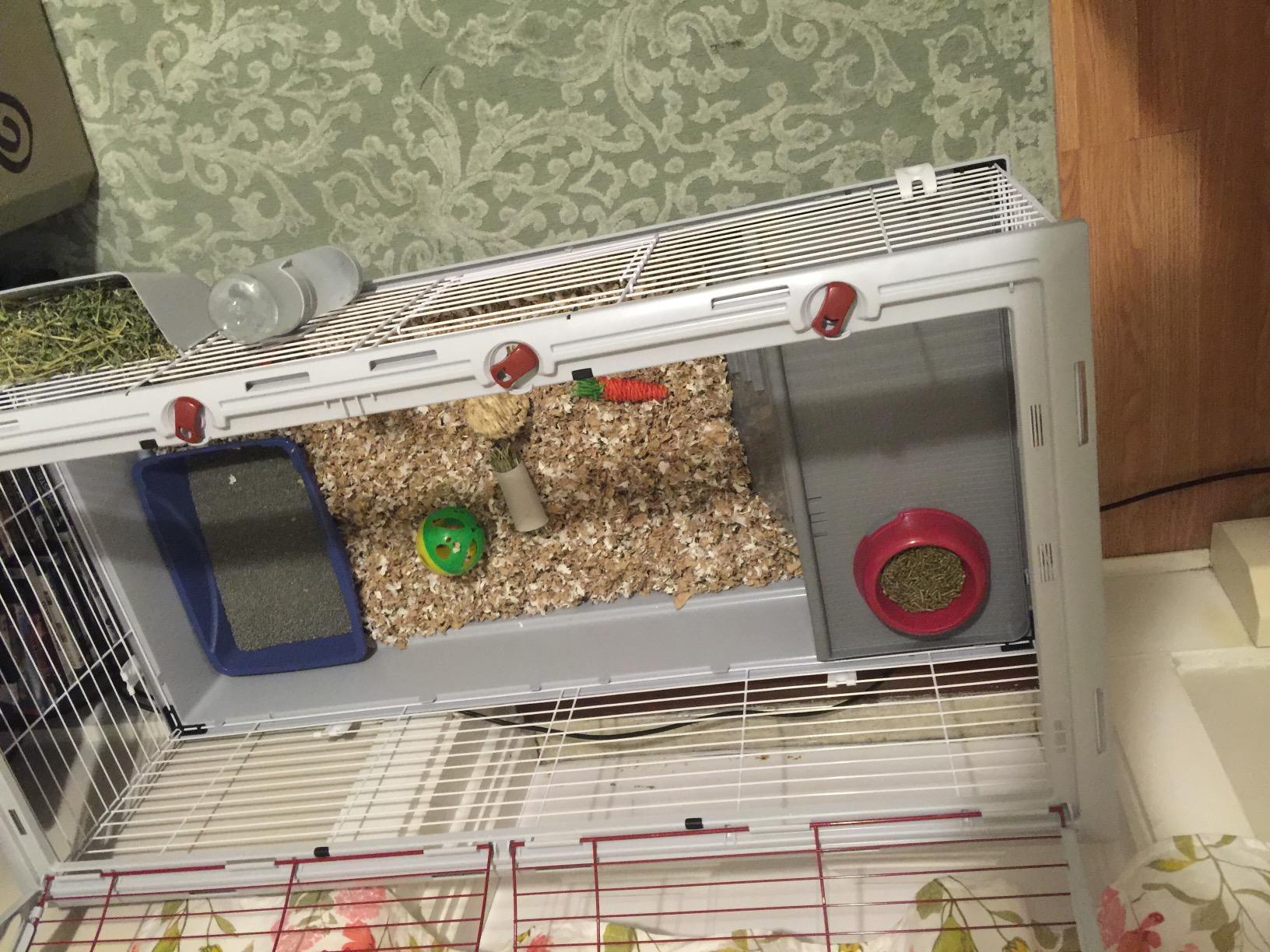
What earns it the win is the combination of floor area and floor material. At 46.9 by 22.8 inches the footprint works out to roughly 7.4 square feet, the largest usable run in this list among the non-wood hybrid designs, and the entire bottom is a solid plastic base with no wire anywhere the rabbit can stand on it. Owners moving rabbits off wire floors report exactly the kind of relief you would expect, especially with senior animals.
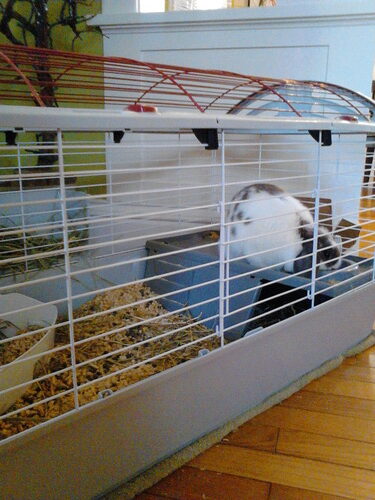
The two-part opening top is the feature that changes daily life. Eight plastic clips release the whole arched wire top, which means cleaning the deep plastic base takes minutes rather than an argument with a screwdriver. Water bottle and hay guard mount on the outside, so the interior floor stays clear for bedding and a litter box, and the food bowl sits in a molded recess on the platform so a rabbit cannot tip it.
Be clear-eyed about the two things reviewers complain about most. The assembly diagrams are diagram-heavy enough that many owners search for a setup video, and the ramp up to the platform is genuinely steep, which is a problem for young, senior, or hind-quarter-weak rabbits. The included water bottle also leaks often enough that replacing it is close to standard practice. None of those are dealbreakers, but budget for a better bottle.
Who this cage suits
It suits an owner who wants one cage that does several jobs at once, since the same footprint works as a sleeping haven, a feeding station, and a base zone during free-roam hours. It is also the pick for a household with mixed small animals, since the same model is sold for guinea pigs, chinchillas, and ferrets, and more than one reviewer runs it that way. For an older rabbit or one with existing foot problems, the solid base is the reason to choose it.
Who should skip it
Skip it if your rabbit is a full-grown standard breed that will live in it full time, because 7.4 square feet is under the 12 square feet working target. It is also awkward to reach into at 24 inches tall, so an owner with back problems may find the daily clean harder than it looks. If you need the pen to move between rooms easily, 19 pounds and an arched top are not ideal.
2. MidWest Wabbitat Deluxe 158 – Best Value Indoor Rabbit Cage
MidWest Homes for Pets 158 Wabbitat Deluxe Rabbit Home, Rabbit Cage, 39.5 L x 23.75 W x 19.75 H Inch, Maroon/White
39.5 L x 23.75 W x 19.75 H inches
About 6.5 sq ft
5.5 in deep solid base
14.85 lb
Pros
- Deep 5.5 inch base contains bedding and hay
- Front panel lifts up completely for floor access
- Expands with 158WEX wire and 158HEX wood add-ons
- Arrives as a complete starter kit
- Tool-free assembly
Cons
- Side panels can need force or a mallet to seat
- Included ramp is near vertical and often ignored
- Hay feeder and water bottle are small
The Wabbitat is the one I recommend when someone asks what to buy first and wants something that will not have to be replaced in a year. It has been on sale since 2016 with more than 4,300 ratings holding a 4.5-star average, and the design logic is simple and correct, which is why it keeps outselling flashier wooden hutches.
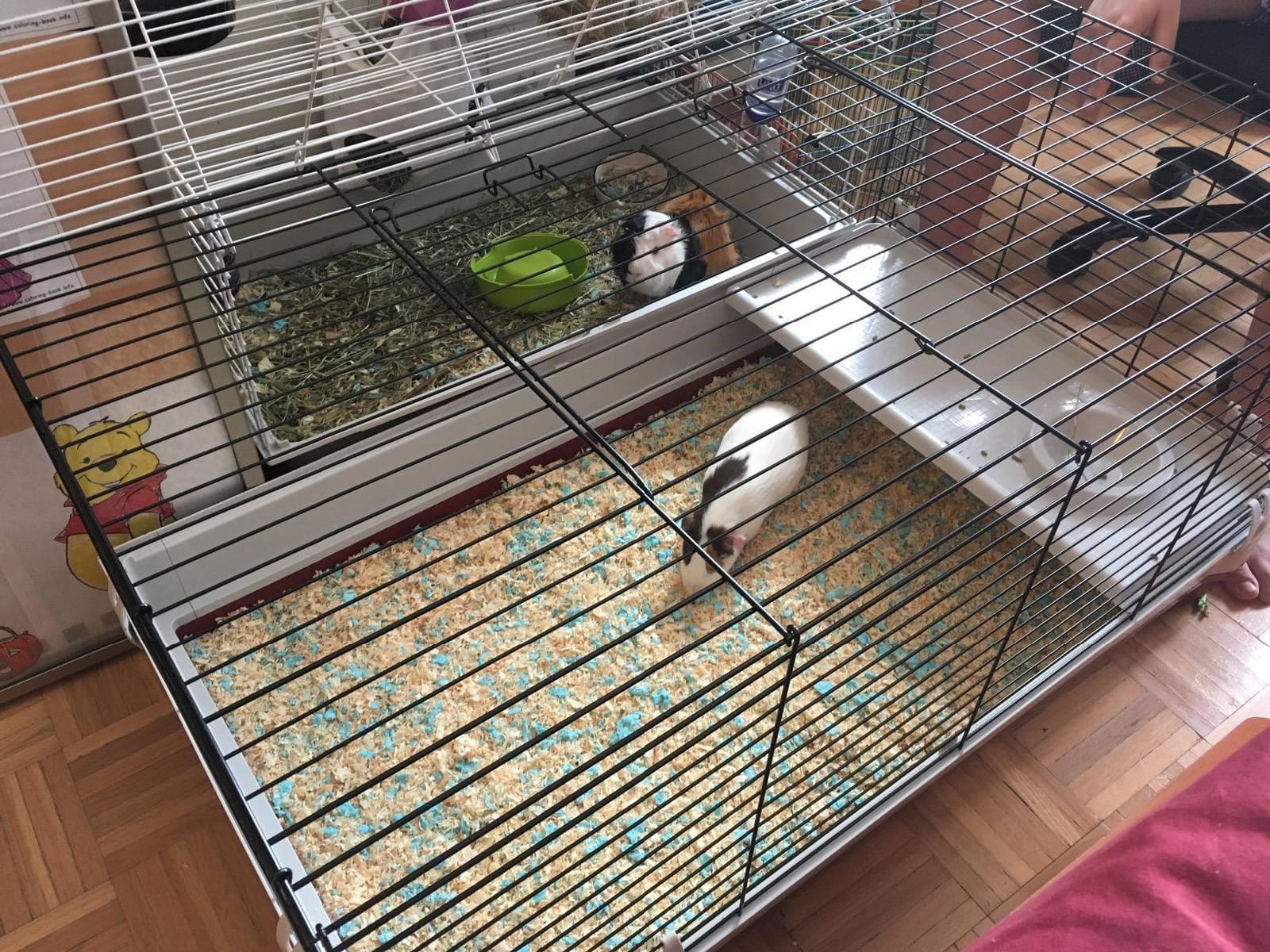
The base is the story here. It is 5.5 inches deep and solid plastic, so bedding and hay stay inside instead of ending up across your floor, and there is not a single square inch of wire underfoot. The full side door plus a top access door means you can get a rabbit out without dismantling anything, and the front panel lifts up completely for floor time, cleaning, and reaching an animal that has dropped something out of reach.
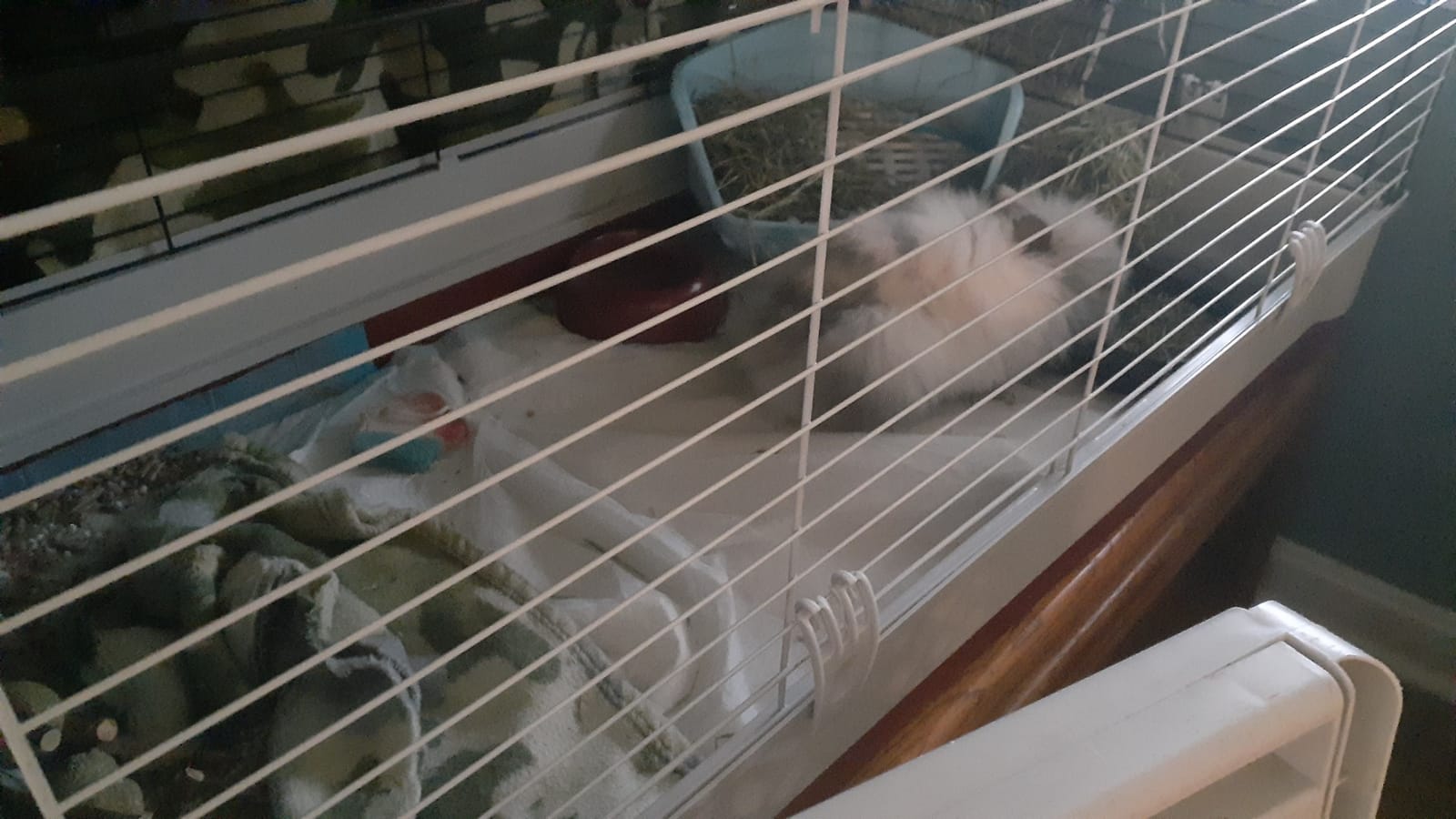
It also grows with you, which almost nothing else in this category does at this level. The 158WEX wire extension and the 158HEX wooden hutch extension both bolt on, so a pen setup that starts as one cage can become a two-part run as the rabbit grows. The kit ships with a hay feeder, water bottle, feeding bowl, and elevated feeding area, and a 1-year manufacturer warranty is included. Owners of small breeds and senior rabbits report particularly good results, and our chinchilla cage guide covers the same base-zone thinking for a different animal.
The friction points are assembly and the ramp. The grey side panels have to click firmly into the maroon base and occasionally need force or a rubber mallet, and a small number of owners have trimmed pegs to get panels to align. The included ramp sits close to vertical, and plenty of rabbits simply jump up instead of using it. Swap the bundled hay feeder and water bottle for larger units early, because they run small.
What 6.5 square feet is actually good for
It is a solid full-time base zone for a small breed such as a mini lop, a Rex, or a Lionhead, and a good overnight setup for a standard rabbit who gets several hours of supervised free-roam each day. Because the front panel lifts fully, you can also use the base as a play yard on the floor with a fleece or rug layer, which is how many owners get more use out of the footprint.
Where it falls short
At 19.75 inches tall, a rabbit cannot make three full hops upright, and a determined jumper may get over a side panel if you do not add a topper. The wire frame has some flex compared with heavier wire hutches, and the large top panel spans unsupported, so do not stack heavy bedding storage on it. For a bonded pair, plan on pairing it with an extension or a pen rather than expecting two adults to share it comfortably.
3. Aivituvin Rabbit Hutch on Casters – Best for Shallow Rooms and Low Furniture
Aivituvin Rabbit Hutch Indoor Bunny Cage Outdoor Bunny House with Wire Floor Leakproof Plastic Tray, Brown
39.76 L x 21.33 W x 7.55 H inches
About 5.9 sq ft footprint
37.55 lb
Removable wire floor over tray
Pros
- Only 7.55 inches tall
- ideal under low furniture and along a wall
- Furniture-like wood finish
- Two openable roofs
- side windows
- two front doors
- Four casters with two locking brakes
- Labelled hardware with a spare screw of each type
Cons
- Removable wire floor needs a mat for long-term use
- Thin wood joins feel loose or flex
- Assembly diagram swaps upper and lower ramp positions
- Unsealed wood discolors with urine or rain
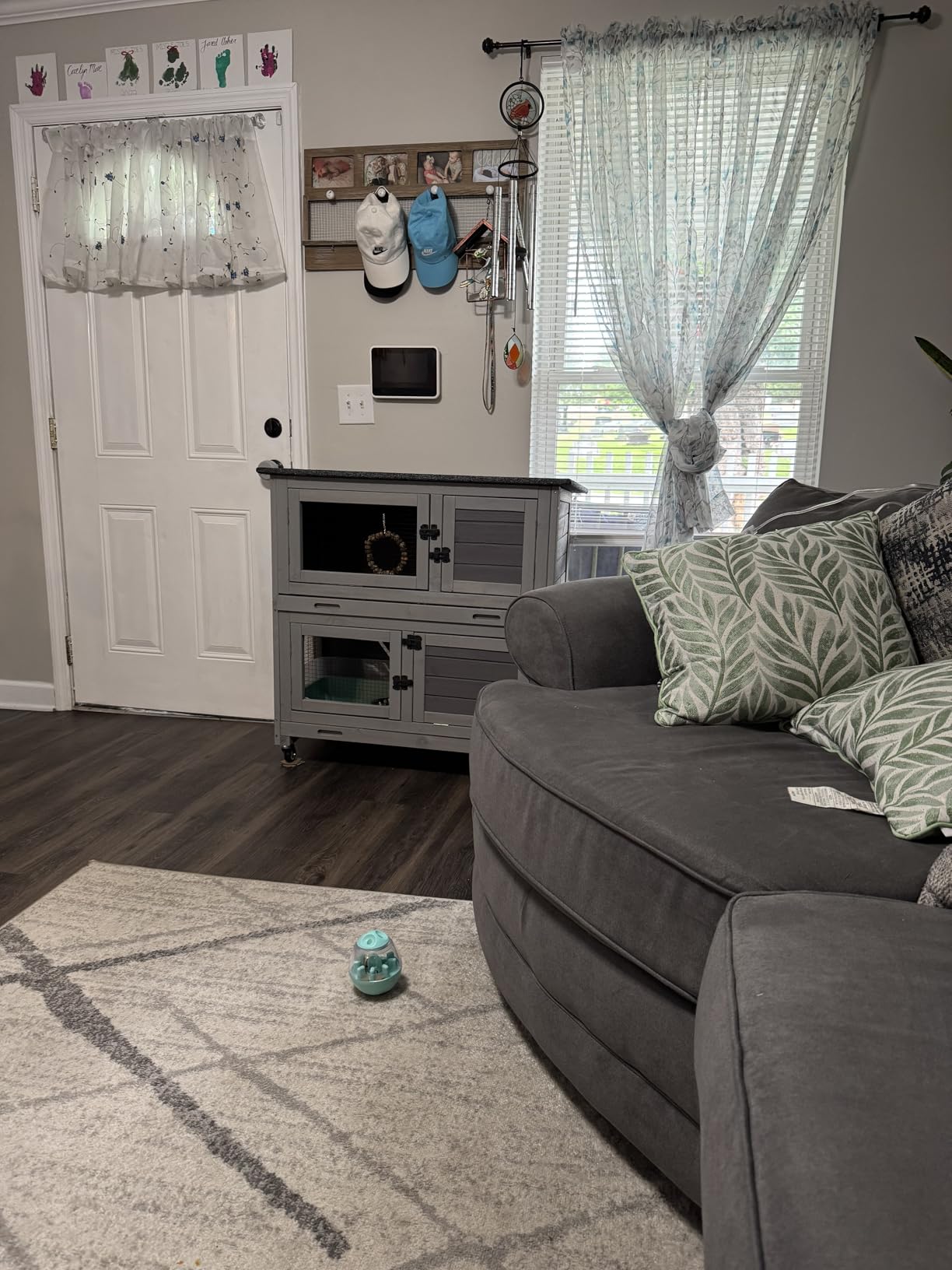
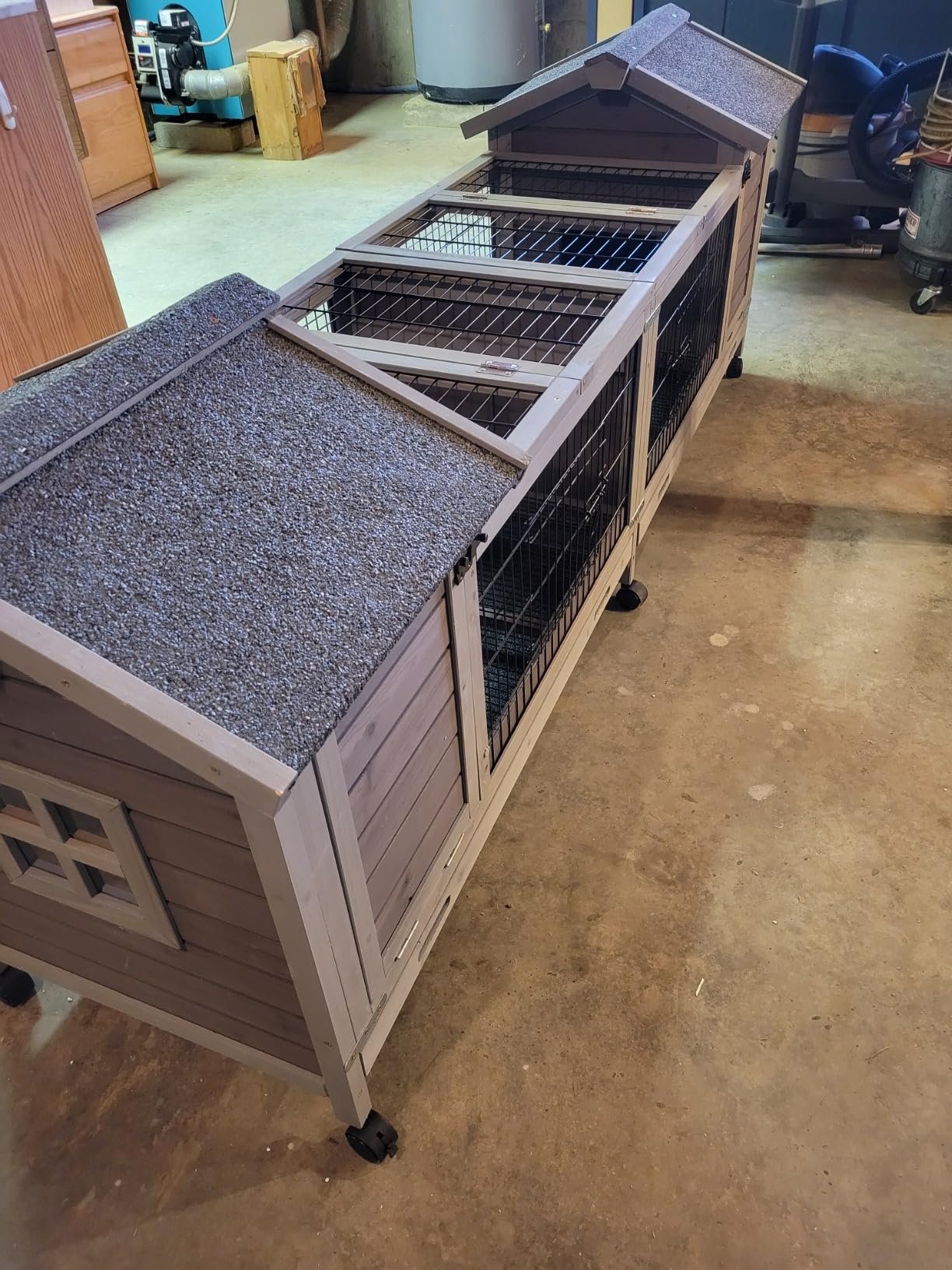
This is the odd one out in the roundup, and that is exactly why it earns a place. At 7.55 inches tall it is a low, long hutch rather than a tall run, and in a small apartment that shape is often the difference between a setup you can have and a setup you will not. It measures 39.76 by 21.33 inches, which is about 5.9 square feet of footprint spread horizontally instead of stacked.
Cleaning is genuinely the easiest part of the design. Two openable roof panels, side windows, and two front doors mean you can reach every corner, and the pull-out tray slides smoothly because the wooden panels are straight and true. Four casters, two of them braked, let one person roll it for cleaning or reposition. Some owners also use it as a large ferret, guinea pig, or brooder enclosure.
Now the part you need to read carefully. This hutch ships with a removable metal wire floor above the plastic tray, positioned so the rabbit does not stand in its own waste. That keeps things tidy, and it is a legitimate design choice, but wire underfoot is the single thing most rabbit owners search out non-wire alternatives to avoid. If you buy this, lay down a towel, a rubber mat, or a washable pad over the grid from day one, which owners confirm works well.
Build quality is the weak half of the equation. Reviewers describe thin wood and a few joins without pilot holes that leave the finished hutch feeling slightly loose, plus a split back panel held by a handful of small screws that can work loose over time. There is a documented error in the assembly diagram that swaps the upper and lower ramp positions between steps, so follow the part list rather than the picture. The 4.1-star average reflects this split fairly.
Where the low profile genuinely wins
It wins in a studio apartment, a home office, or a room where a 36-inch-tall hutch would block a walkway or a radiator. The footprint is wide rather than deep, which suits a room where wall space is the constraint. Paired with a playpen, it works well as a feeding and sleeping station for a rabbit that free-roams the rest of the day.
What gives us pause
At 7.55 inches tall, a rabbit can barely stretch out and cannot hop at all, so this is not a habitat for a rabbit that spends hours inside it. The wood is unsealed and chewable, so gnawing at the frame and ramp is a real and common complaint. Smaller size variants of this model suit guinea pigs or juveniles rather than adult rabbits, and the door latch is not rabbit-proof against a motivated animal.
4. Ferplast Krolik XXL – Best Large Indoor Rabbit Cage for a Bonded Pair
Ferplast Krolik XXL Rabbit Cage w/Wire Extension | Rabbit Cage Includes All Accessories & Measures 63.8L x 23.62W x 19.68H Inches | 1-Year Warranty
63.8 L x 23.62 W x 19.68 H inches
About 10.5 sq ft, the largest here
26.43 lb
Detachable solid base
Pros
- Largest footprint in the roundup at roughly 10.5 sq ft
- Separate wire extension can be partitioned into a nesting area
- Entire base detaches for fast litter dumping
- Kit includes 2 water bottles
- 2 hay feeders
- a bowl and an elevated feeding area
- 1-year manufacturer warranty
Cons
- Very large and heavy at 26 lb
- awkward in small apartments
- Included bottles and feeders get replaced with larger units
- Solid floor means litter box training or daily cleaning
If floor area is the metric that matters most, this wins the roundup. At 63.8 by 23.62 inches the footprint works out to about 10.5 square feet, closer to the 12 square feet target than anything else here, and it is rated for 1 to 2 rabbits or up to 3 guinea pigs. For a bonded pair kept indoors, this is the closest a store-bought cage gets to a workable home.
The wire extension is the detail most reviewers single out. It is a separate section that can be closed off from the main run to create a private nesting area, which is exactly what a bonded pair needs so the two rabbits can separate when they want to. A 4.3-star average across more than 2,600 ratings is solid for a European-style premium design.
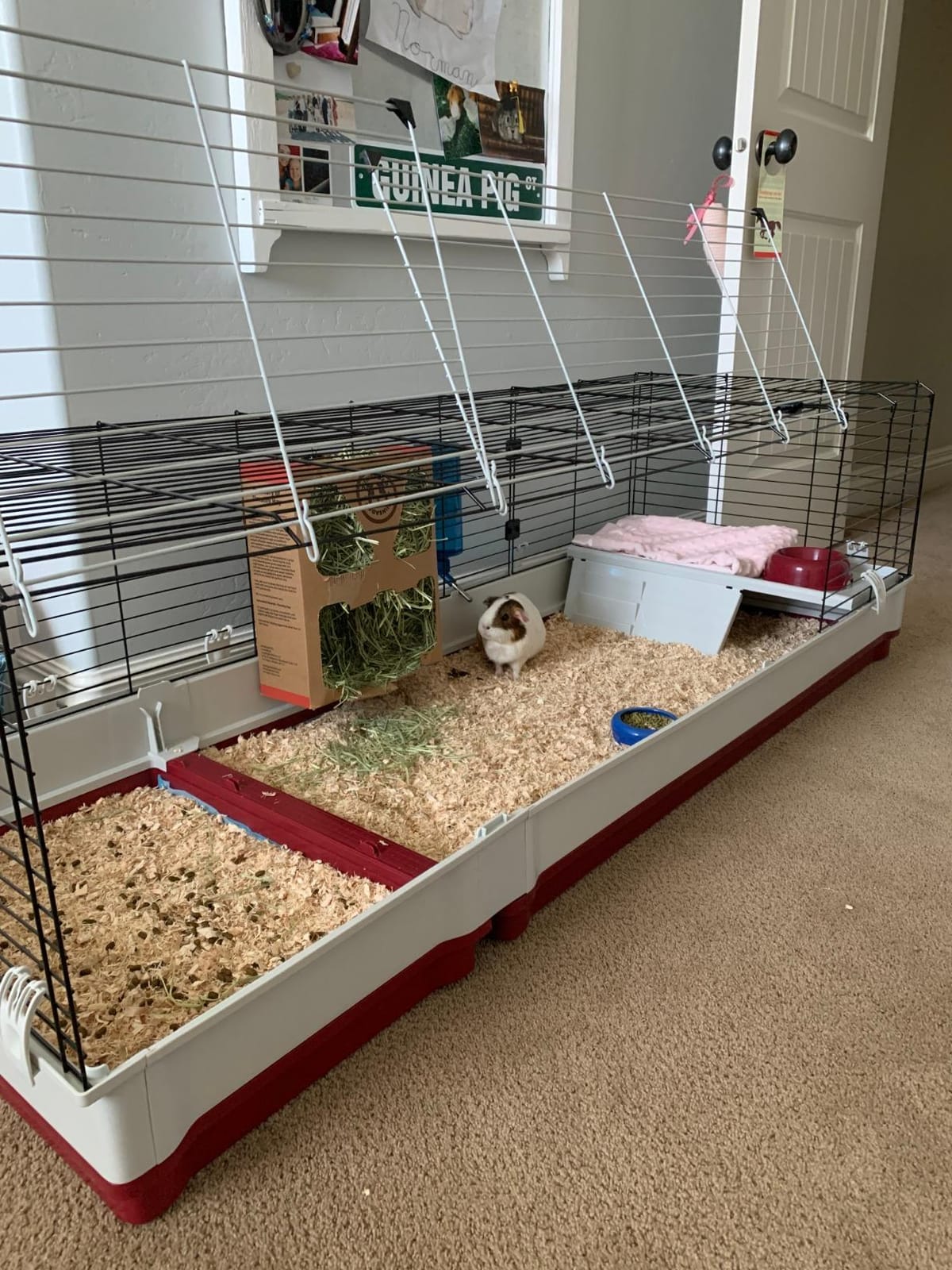
Cleaning is the second strength. The entire plastic base detaches, so dumping litter and debris is a lift-and-toss rather than a scoop-and-scrub, and the 5.5 inch depth contains bedding and hay. Multiple doors give access at both ends, and the starter kit is unusually complete, with two large water bottles and two hay feeders included rather than a single undersized one.
The honest drawback is physical, not functional. At 26.43 pounds and over 5 feet long, it is impractical for a small apartment and genuinely hard to move, and reviewers consistently say the included bottles and feeders get swapped for higher-capacity units. The floor is solid plastic rather than a grate, so unless your rabbit is litter trained you will be cleaning daily. Our full rabbit hutch guide covers the outdoor-oriented options in more depth.
Best case: a bonded pair in a larger home
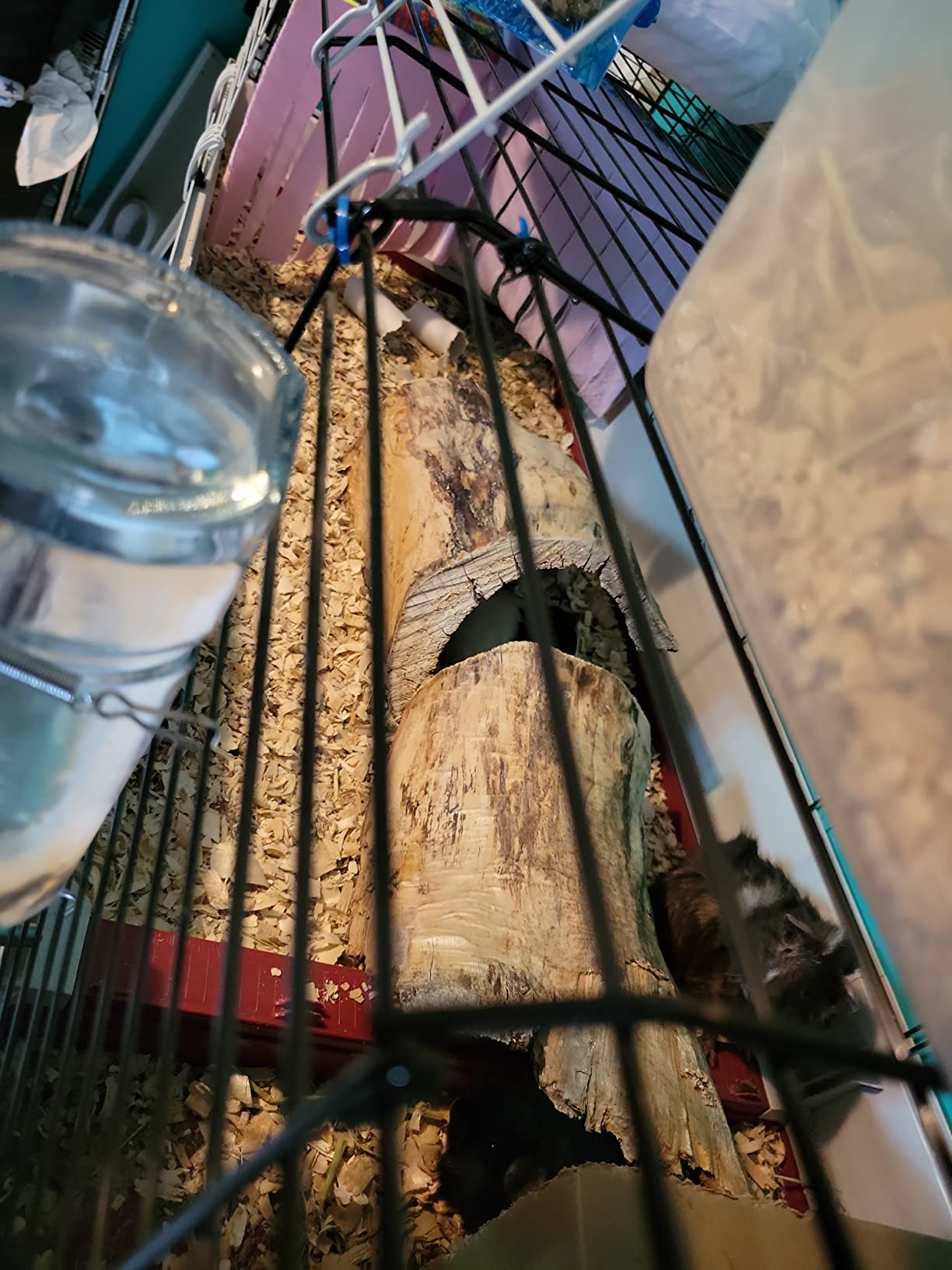
Two rabbits need more space than one, and this is one of the few enclosures here that starts in the right range without an add-on. Partitioning the wire extension into a separate sleeping section also solves the bonding question of giving each rabbit somewhere to retreat, which is a genuine welfare issue when two animals share one space.
When it is the wrong buy
It is the wrong buy in a flat where you cannot give up a 5-foot stretch of floor, or if you plan to move the enclosure often. The styling reads European rather than minimalist, so it does not disappear into every interior. And at 19.68 inches tall it is still short of three full hops, so plan free-roam time as part of the setup rather than an optional extra.
5. GUTINNEEN Two-Level Hutch on Six Wheels – Best for Large Breeds
Bunny Cage Indoor and Outdoor Rabbit Hutch with Casters Waterproof Roof, Pull Out Tray from Back and Front 61.2″ L x 22.6″ W x 33.5″ H
61.2 L x 22.6 W x 33.5 H inches
About 9.6 sq ft
49.5 lb
3 pull-out trays
Pros
- Three deep trays pull out from either the back or the front
- Six casters roll a 49 lb hutch between rooms
- Waterproof roof suits indoor and sheltered outdoor use
- Large openable roof plus big front doors
- Second story gives real vertical space
Cons
- Top lid cannot always lift fully open
- Quality control inconsistent
- some units bowed or chipped
- Slippery ramp needs a grip strip
- Thin mesh sides feel flimsy
This one solves the height problem the metal cages in this roundup cannot. At 61.2 by 22.6 inches it gives roughly 9.6 square feet of footprint, and at 33.5 inches tall it is the only enclosure here with enough vertical clearance for a rabbit to stand fully upright and make three real hops. That combination is why it is the pick for a Rex, a Flemish Giant, or any large standard breed.
The tray system is the standout feature and the reason several long-term owners say it transformed their daily routine. Three deep removable plastic trays slide out from either the back or the front, so you can clean from whichever side has space, and the solid plastic resists urine far better than the wood trays some competitors use. The trays do leave an open gap while they are out, so keep your rabbit in a separate spot during that minute.
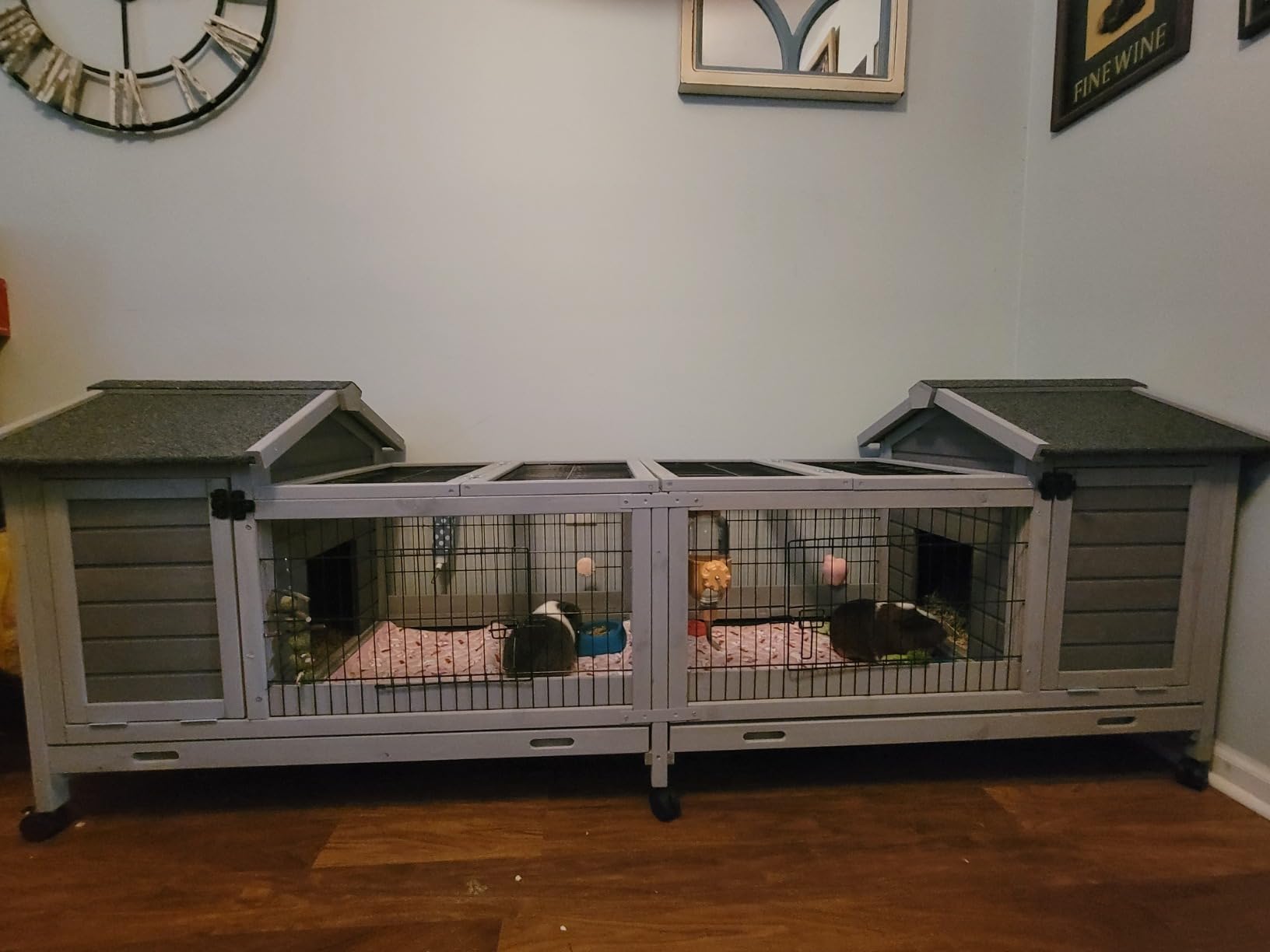
Moveability is a genuine plus. Six casters, not four, and a 49-pound hutch that still rolls easily between rooms means cleaning is not a two-person job. The waterproof asphalt-style roof is rated for indoor or outdoor use, which makes this the one hutch in the list that genuinely moves between the house and a sheltered garden spot.
Quality control is where the 4.2-star average comes from. A number of owners report units arriving bowed, misaligned, chipped, or with a strong chemical smell and incomplete screw holes, so inspect on arrival and air it out before use. The ramp surface is smooth and slippery enough that most owners add a grip strip, the mesh sides are thin, and the top lid cannot always lift fully clear of the roof edge.
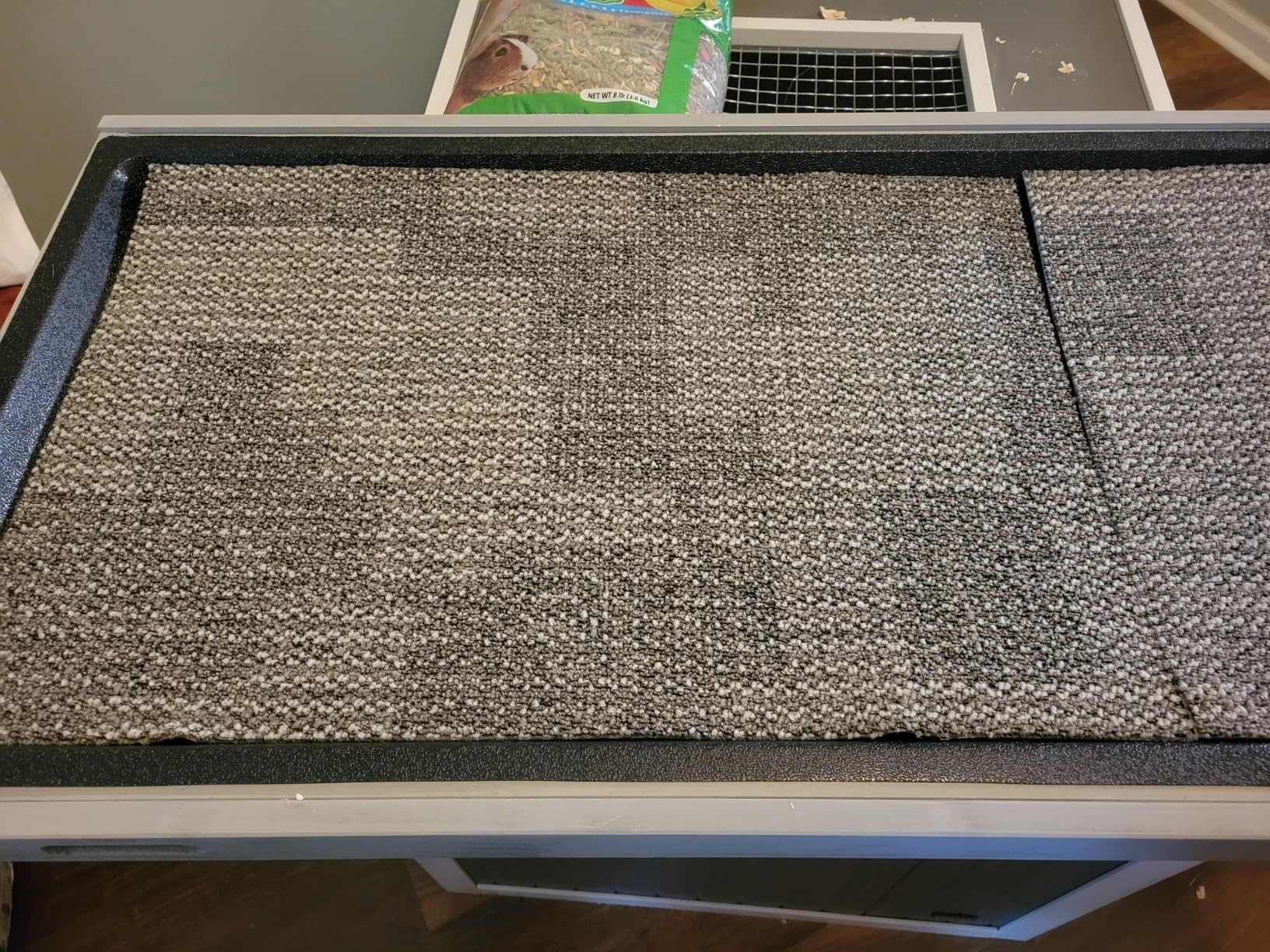
Why large breeds need this one
A large standard rabbit does not turn around comfortably in a 22-inch-wide run, and it cannot hop at all in a cage under 20 inches tall. At 9.6 square feet and 33.5 inches of height, this is the only enclosure here that approaches a workable full-time footprint for a big rabbit while still giving vertical room to explore.
What we would not claim for it
It is not a three-season outdoor hutch, despite the roof, because there is little wind protection and the plastic tray under the run fills with water in rain. Assembly is heavy and awkward, with many owners recommending two people and a drill. Our multi-pet pick further down is the better choice for anyone housing chinchillas or ferrets alongside a rabbit.
6. GUTINNEEN 2-Story Chew-Proof Hutch – Best for Owners Who Hate Cleaning
Gutinneen 2-Story Rabbit Hutch Bunny cage with Chew-Proof Ramp, Locking Leak-Proof Trays – Indoor/Outdoor 39.3″ Wooden Rabbit Cage with Wheels for Rabbits, Guinea Pigs, Small Animal (Black and White)
39.3 L x 22 W x 36.8 H inches
About 6 sq ft
36.8 in tall
Locking pull-out trays
Pros
- Aluminium alloy framing and ramp edges resist chewing
- Two deep locking trays wipe clean with no disassembly
- Wheels let one person roll it for cleaning
- Pre-drilled holes and included hardware
- Two-story layout separates play
- feeding and sleeping areas
Cons
- Soft wood splits when screws go in near edges
- a drill is effectively required
- Chemical or fresh-paint smell on some units
- Trays are shallower than advertised and miss the back wall
- No grate over the tray so litter training is required
This is the best-rating product in its category on Amazon, and the reviews are genuinely split, which is worth understanding before you order. At 4.0 stars from roughly 1,440 ratings with a 57 percent five-star share, you are buying the version owners like while accepting the complaints others hit.
What owners who love it, love is the chew resistance and the cleaning. Aluminium alloy framing and an aluminium edge on the ramp hold up against gnawing far better than plain wood, and the two deep locking trays pull out and wipe down with no disassembly at all. The two-story layout at 36.8 inches tall separates play, feeding, and sleeping areas without extra dividers, and the wheels let one person roll the whole unit for a deep clean.
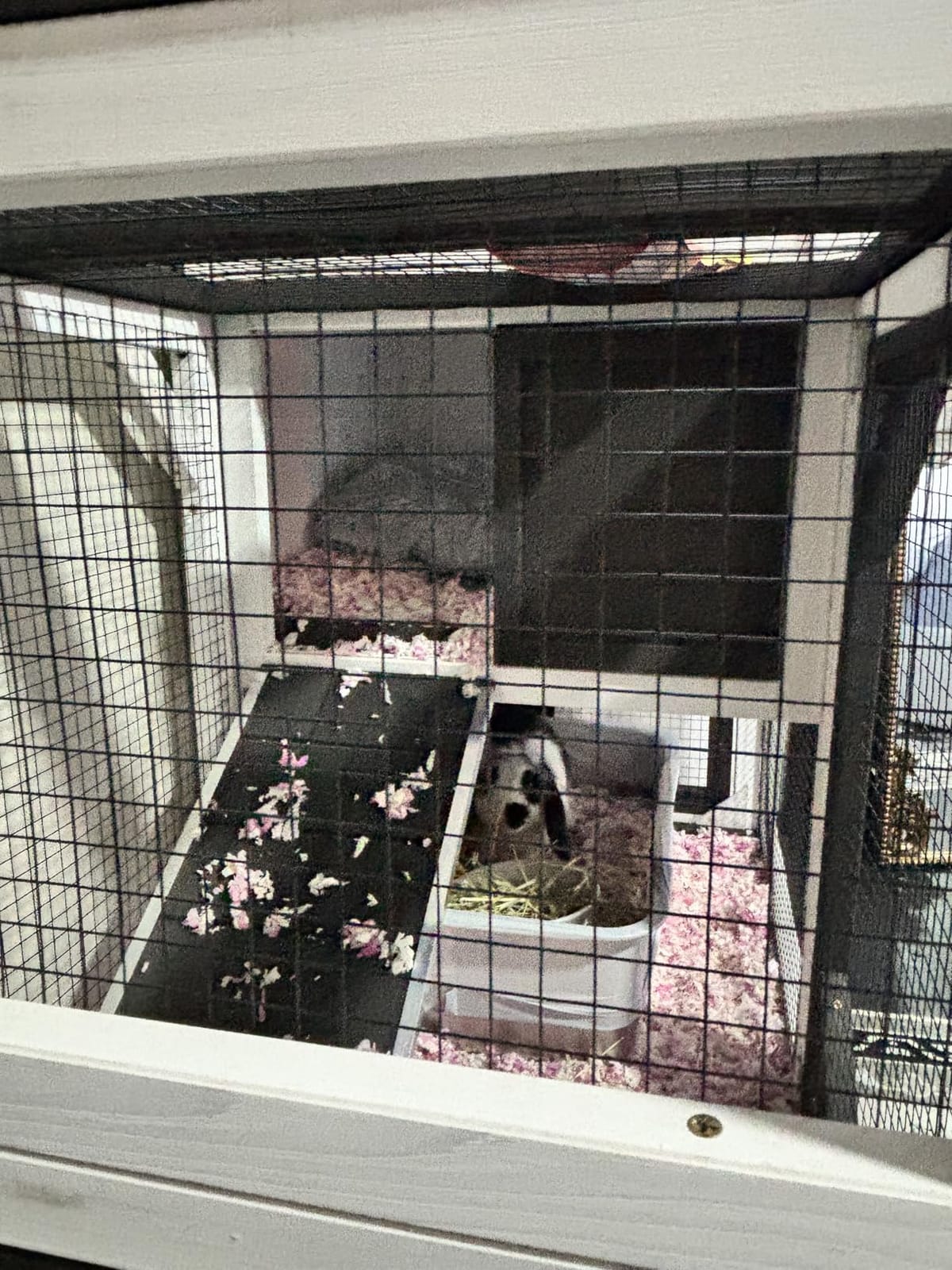
Be realistic about assembly. The wood is soft and lightweight, which makes it pleasant to handle but splits easily when screws are driven near an edge, and an impact driver is effectively mandatory. Several units arrive with a strong chemical or fresh-paint smell that some owners consider unacceptable around rabbits, so plan to assemble it in a garage or well-ventilated room and let it off-gas before the animal moves in. Scuffed or chipped wood on arrival shows up often enough to check the box.
Two more practical notes. The trays are shallower than the marketing suggests and do not reach the back wall, so urine can run down behind them, and there is no wire or grate over the tray, which means poop lodges in the tray tracks and daily cleaning is on you unless your rabbit is litter trained. The ramp is also steep enough that young bunnies and small breeds hesitate.
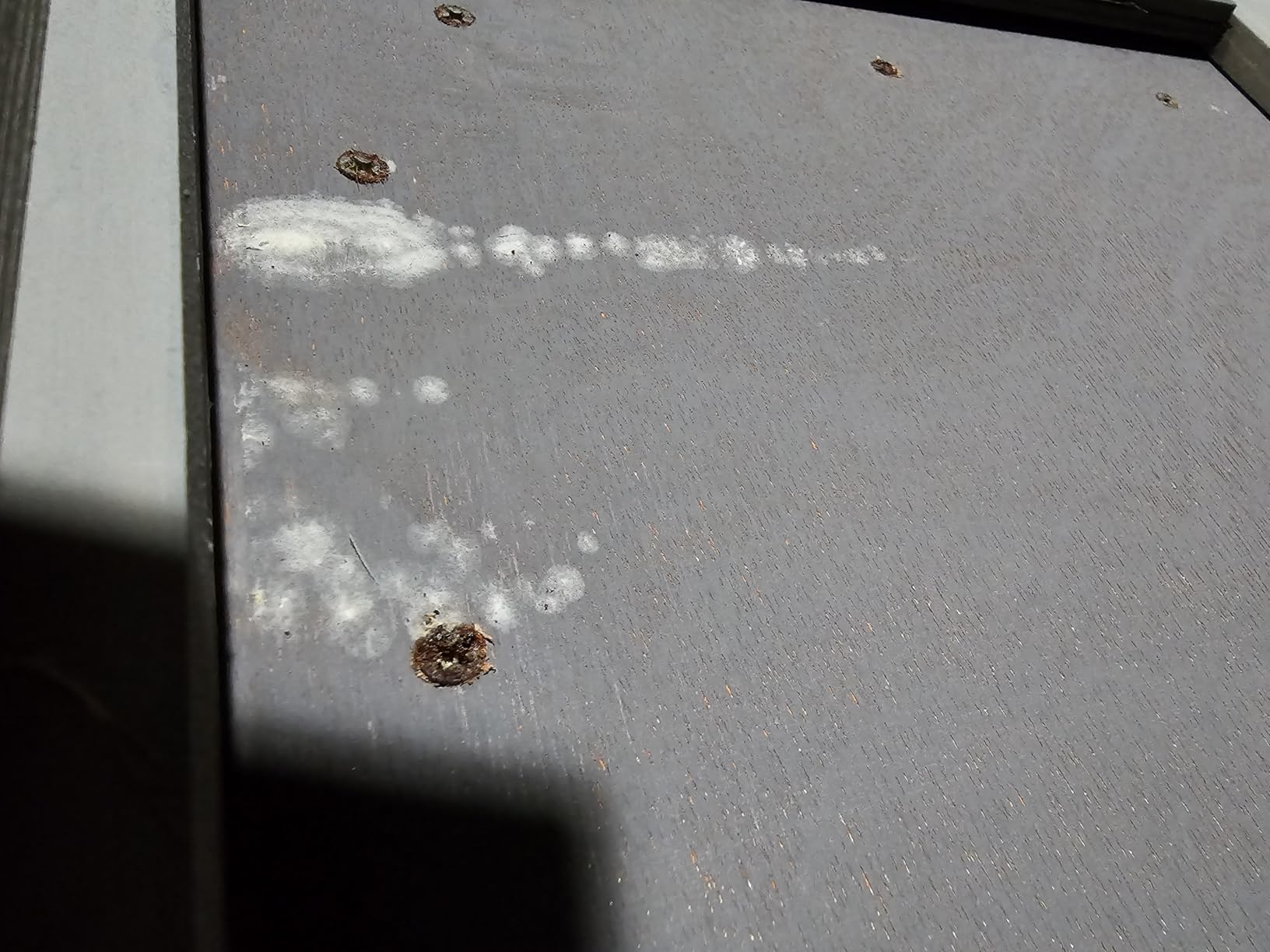
Who gets the most out of it
An owner who chews things. If your rabbit works at wooden frames, the aluminium edging is the single most useful feature on this list, and owners report that when you supply alternative chew toys, the wood itself goes untouched. The wheeled, two-level, wipe-clean layout also suits a household that wants cleaning to take under a minute.
Where it is the wrong choice
At 39.3 inches long, this is tight for a full-grown standard rabbit and better suited to a small breed or a starter setup. If you have no drill and no patience for a build, skip it. The chemical smell issue and the soft wood also make it a poor match for a nervous rabbit that will be in the room while you assemble.
7. Aivituvin Two-Story Habitat with Detachable Legs – Best Two-in-One Setup
Aivituvin Wooden Guinea Pig Cages Indoor with Removable Stand, Anti Chewing Rabbit Hutch with Ramp and Wire Mesh, 2 Story Small Animals House Habitat with Pull Out Tray (Light Natural Wood)
36.6 L x 19.6 W x 36.6 H inches
About 5 sq ft
32.75 lb
FSC certified wood
Pros
- Detachable legs convert the hutch into a playpen
- Aluminium edging on the ramp and door frame resists chewing
- Galvanised sheet upper panel for summer cooling
- Deepened front and back pull-out trays with a tray lock
- Compact footprint
- FSC certified light natural wood
Cons
- Narrow footprint means limited usable floor area
- Assembly needs two people and a power driver
- Soft wood panels split near edges
- Chemical smell and scuffed panels reported on arrival
- Wire mesh floor over the tray
The idea here is clever and no other enclosure in this roundup does it. The legs detach, and the same unit becomes a playpen, so you can reconfigure the footprint when you move furniture, change rooms, or decide the rabbit needs a different shape of space. It is essentially a hutch that unzips into a pen.
It is also the most thoughtfully equipped for summer and for small breeds. A galvanised sheet panel in the upper hut keeps it cooler, and a PVC panel is included for daily cleaning. The front and back trays are deepened and lock in place, aluminium alloy edging on the ramp and curved door frame resists chewing, and the wood is FSC certified with a light natural finish that suits indoor rooms.
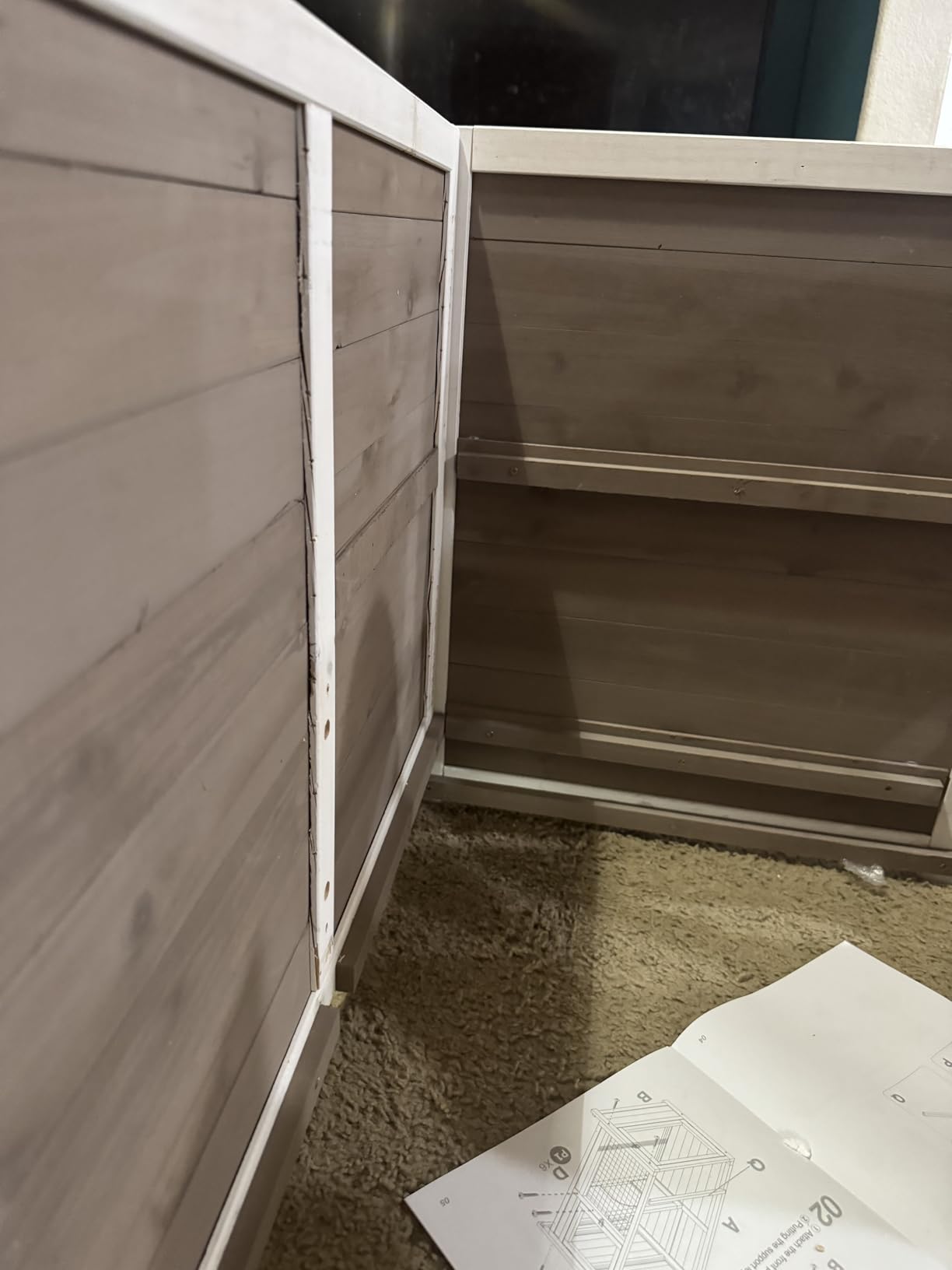
The same wire-floor caution applies as with the other Aivituvin hutch. A wire mesh floor sits over the tray to keep the pet off its own droppings, which helps cleanliness but is exactly the surface most rabbit owners are trying to avoid. Cover it with a mat or a fleece layer. Three access areas and an openable roof give good reach for feeding and handling either way.
At 36.6 by 19.6 inches the footprint works out to roughly 5 square feet, which is the second smallest here, and the vertical height of 36.6 inches does not compensate for that. It needs two people and a power driver to assemble, soft panels can split at the edges, and some units arrive with a chemical smell or scuffed wood. The detachable leg design also adds joints that can feel loose once together.
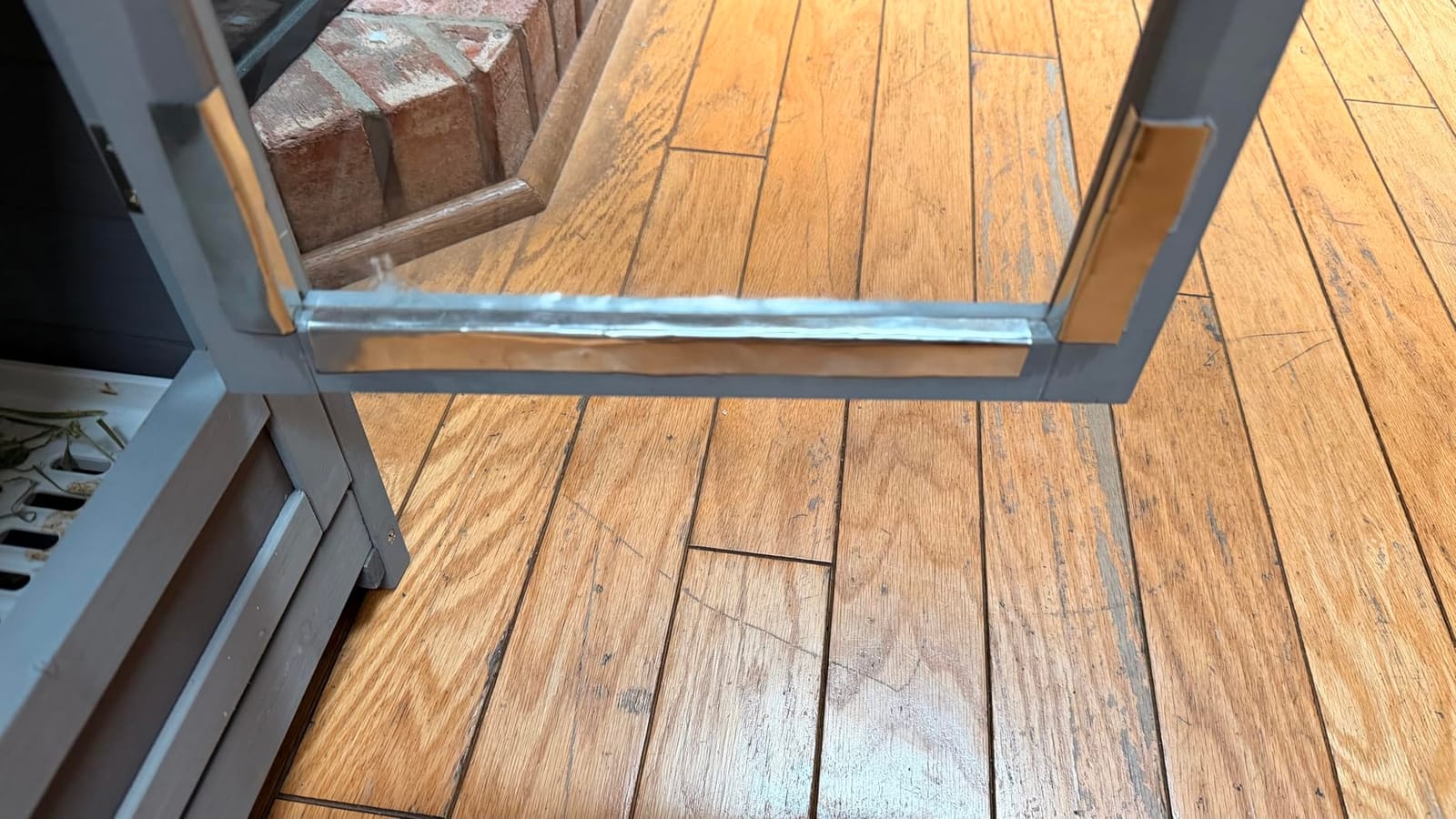
Best for multi-pet homes
This is the pick for a household running guinea pigs alongside a rabbit, or a rabbit that shares a room with small animals. The 4.0-star average sits alongside 1,040 ratings, and reviewers consistently note the light FSC wood works well for guinea pigs, young rabbits, and other small pets rather than a full-grown standard rabbit.
Why it will not be a rabbit’s full-time home
Nine inches of usable width per rabbit is the constraint, and no amount of vertical stacking changes the floor area a rabbit actually moves across. The 5 square feet also means it cannot be scaled up for a bonded pair. If your rabbit is the only pet and will live here full time, the Ferplast or the GUTINNEEN six-wheel hutch buys you far more usable ground for the same kind of money.
8. PawHut Two-Level Cage on Wheels – Best Base Cage to Pair With a Pen
PawHut 26″ Small Animal Cage with Wheels, 2-Level Portable Bunny Cage, Chinchilla Ferret Cage with Removable Tray, Platform and Ramp
31.5 L x 20.75 W x 26 H inches
About 4.5 sq ft
20.9 lb
4 wheels, 2 braked
Pros
- Removable slotted grates let you expose litter for natural digging
- Very wide deep pull-out tray makes a full clean about ten minutes
- Four large openings plus top doors
- 0.5 inch bar spacing prevents escape
- Great value with a 4.4-star average
Cons
- Limited floor space for rabbits
- use it as a base cage with a pen
- Ramps have almost no grip
- Shelves cannot be tightened or levelled
- Thin wire and poorly fitting supplied clips
This is the smallest footprint in the roundup at about 4.5 square feet, and I want to be direct that it is not a full-time rabbit home. What it is, is the most affordable and best-rated-per-review way to build a two-part setup: this cage as the locked base zone with bedding, food, and water, plus a separate exercise pen for the running and play time. That is the arrangement experienced owners on rehome forums describe as the realistic indoor answer.
On its own terms the build is good. The 4.4-star average is the highest rating-per-review in this group, with a 71 percent five-star share, and owners praise the very wide, deep pull-out tray that reduces a full clean to roughly ten minutes with a pee pad. Four large openings plus top doors give access to every level, and the removable slotted floor grates let you pull one section out so the animal can sit on litter and dig naturally, which is a genuinely thoughtful feature.
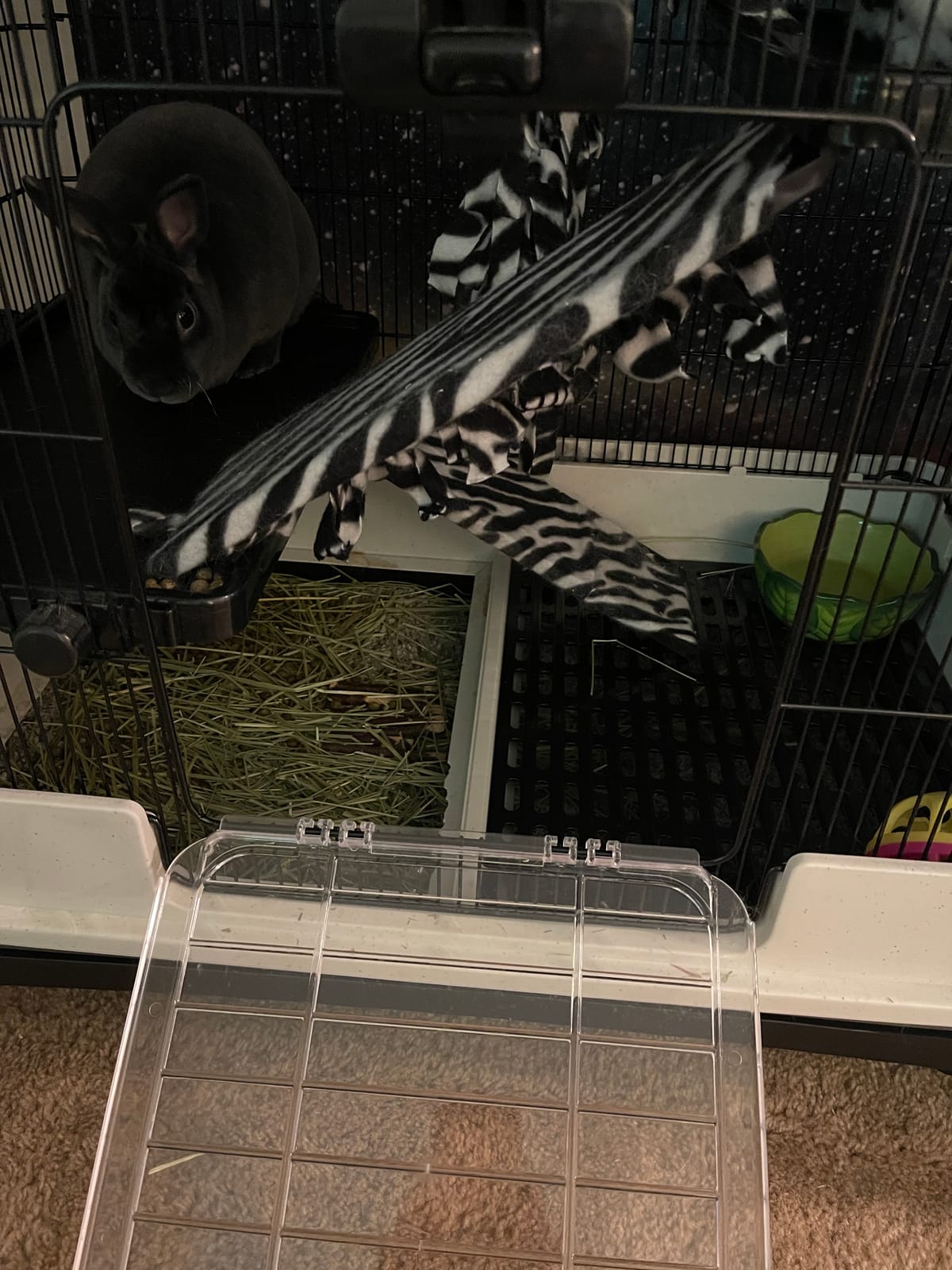
Wheels matter more here than anywhere else in the list. Four universal wheels, two with security brakes, mean you can roll this base cage to one side at night, let the rabbit have the whole room, and wheel it back in the morning. That flexibility is what turns a 4.5 square foot cage into an adequate system. The 0.5 inch bar spacing also prevents escape, and the solid bottom door hinges down rather than leaving bar gaps.
The mechanical complaints are real but manageable. Ramps have almost no grip, so most owners cover them with fleece or rope. The shelves and plastic bolt fasteners cannot be tightened or levelled easily, and the wire gauge is thin, with included clips that align the panels poorly, so many owners upgrade to heavier cage clips. The top wire lid also sits crooked with the supplied clips. Our ferret cage guide covers the same form factor for a different pet.
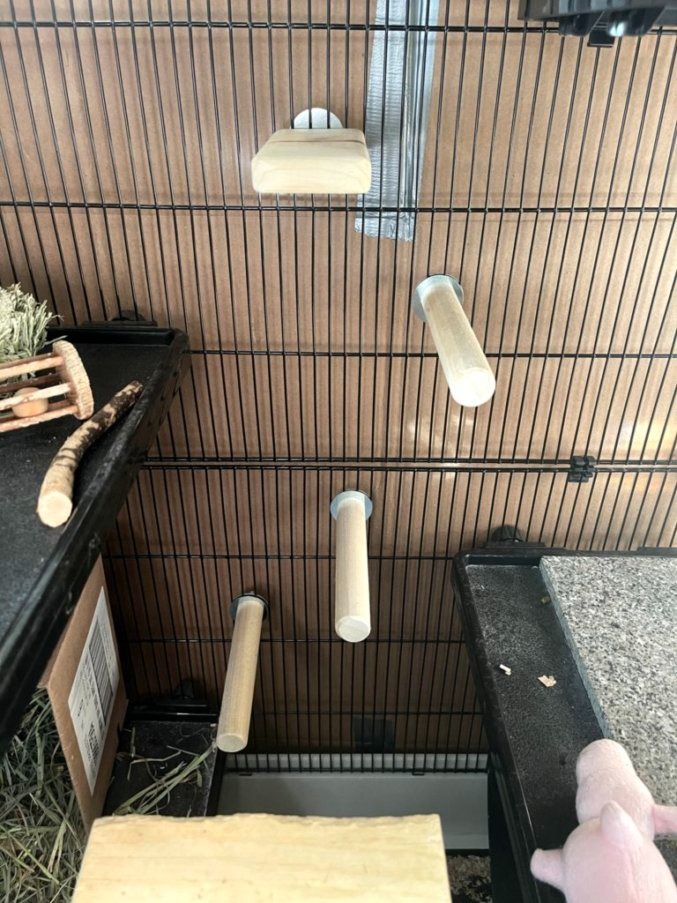
Who it genuinely works for
It works well for a young rabbit you are about to outgrow, and for multi-pet households, since owners report housing chinchillas, ferrets, rats, and even six adult rats comfortably. It is also the cheapest way to test whether a house rabbit suits your household before committing to a larger build.
Why it is last on this list
Because as a rabbit enclosure it is too small and too light in construction, and the thin wire and plastic base will not survive a determined adult chewer long term. If you buy it, buy it as a piece of a pen setup rather than as housing, and treat the clips and ramp as things to upgrade on day one.
How Big Should an Indoor Rabbit Cage Be?
Measure floor area first, not height or looks. The working guideline most experienced indoor rabbit owners use is 12 square feet of continuous floor space for a single adult rabbit, enough to stand upright on the hind legs, stretch out fully, and make three hops without turning. That is roughly a 4 by 3 foot area, which is larger than any enclosure on this list.
Height matters almost as much as area, and for a different reason. A rabbit needs enough vertical space to explore and to escape a grumpy moment, which is why the 3-3-3 rule asks for enclosure space, exercise, and roughly three hours of out-of-cage time each day. A cage under 20 inches tall fails the hop test, which rules out the PawHut, the Ferplast, and the MidWest on height alone unless you pair them with a pen.
For a bonded pair, size up rather than splitting the difference. Two rabbits that get along still need room to separate, and a pen you can divide with a panel gives you that flexibility. Multiply the 12 square feet rather than halving it, and budget for a pen that can be split in half on cleaning days.
Breed size changes the target. A Lionhead, Netherland Dwarf, or mini lop can be comfortable in a smaller footprint than a Flemish Giant, which needs the long side of a large enclosure plus vertical room to stand. Grow into the bigger number as the rabbit matures, because these animals reach full size faster than most owners expect.
Why Wire Floors Are the One Thing to Avoid
Wire mesh flooring causes sore hocks, a condition also called pododermatitis, where the thin skin on a rabbit’s feet is damaged by pressure and constant contact with metal. It is painful, it is slow to heal, and it is the reason experienced owners search specifically for non-wire options. No other feature in this category matters as much as the floor material, which is why it is the first thing we check on every product.
Two of the picks in this roundup ship a wire floor by design, and both are worth explaining rather than dropping. The Aivituvin three-caster hutch has a removable metal grid above the plastic tray, and the Aivituvin two-story habitat has a wire mesh floor over its trays. In both cases the intent is to keep the animal out of its own waste, and both cases are fixable with a mat or towel laid over the grid, which owners confirm works.
Everything else in the roundup has a solid plastic base, which is why the hybrid wire-and-plastic designs rank where they do. If you already own an enclosure with a wire floor, the cheapest fix is a washable pad, a piece of vinyl, or a rubber mat cut to size, and the second cheapest is to lift the grid out entirely if the tray underneath is deep enough to contain bedding.
What Should You Put in the Bottom of a Rabbit Cage?
Put a solid, cleanable, non-slip surface down, and layer absorbent bedding on top. That is the short answer, and it matters more than the cage itself because most flooring problems cause foot or digestive issues rather than appearing as obvious hazards.
Vinyl and rubber matting are the most recommended pen flooring because they are easy to wipe, stay cool, and give a rabbit a flat surface to stretch out on. Washable fleece-backed pads work well for sleeping areas and add grip. Wood pellets make a good absorbent layer, particularly in a litter box rather than across the whole floor. What you should avoid is bare wire mesh, bare smooth plastic with nothing on it for traction, and deep loose bedding in a confined tray where it stays wet.
A litter-trained rabbit changes this whole calculation. Once your rabbit reliably uses a box, the rest of the enclosure floor can stay sparse and easy to spot-clean, which is the situation the GUTINNEEN six-wheel hutch and the Ferplast are built for, since both use deep solid trays that pull out completely. Until then, assume a daily clean and pick the enclosure whose tray removes fastest.
Which Type of Indoor Rabbit Cage Should You Buy?
The best type of indoor rabbit cage is an exercise pen, a C&C grid, or a large solid-base hutch used as a base zone, in that order. Everything else on the market is a smaller version of the same idea. Here is the short version of the tradeoffs.
An x-pen or exercise pen gives the most floor area for the money and the best sightlines, and it is the standard recommendation from owners on r/Rabbits. It is also the least attractive option and needs solid flooring added underneath.
A C&C cube-and-corner grid is sturdier and fully customisable, which owners justify as a long-term investment, but it costs more and is a genuine build project.
A large solid-base hutch gives you furniture-grade looks and a pull-out tray, which is what the Ferplast and GUTINNEEN models in this roundup do, at the cost of fixed shape and limited expansion.
A wire cage with a plastic base is the classic pet-store answer, and it is fine for a young rabbit, a guinea pig, or a haven to retreat to.
A free-roam setup with no cage at all is the direction most experienced owners point to, where the pen is a zone rather than a prison and the rest of the room is the habitat.
Whichever you pick, buy the largest footprint your room allows and treat daily free-roam time as non-negotiable. A cage is not a substitute for exercise, and an owner who free-roams for several hours a day can get away with a smaller enclosure than one who does not.
Where to Put the Enclosure and How to Bunny-Proof the Room
Put the pen against a wall, out of direct sunlight, and away from heating vents, radiators, air conditioning units, and drafts. A rabbit that sits in a draft all winter will not tell you it is uncomfortable, but it will show up as a damp, stiff animal weeks later. Solid flooring under the pen also protects both the rabbit and the floor beneath.
Keep the enclosure away from dogs, since a pen that looks like a barrier rarely is one to a determined dog, and it causes more stress than the containment is worth. If you have a cat, elevate the pen on a stand or table rather than leaving it on the floor, because vertical space is a genuine advantage for a prey animal.
Bunny-proofing the room is mostly cord management. Threaded baseboard covers, split sleeves around furniture legs, and cable channels behind desks take an afternoon and remove the two most common causes of a chewed cord. Relocate houseplants that are toxic to rabbits, and cover the lowest ones, since a determined rabbit will reach anything within standing height.
On noise, expect a certain amount of it. A rabbit on hard flooring with a plastic tray is louder than one on a rug with bedding, so putting a mat under the pen helps your neighbours as much as it helps your rabbit’s footing. If the enclosure is on casters, the daily clean becomes dramatically easier, which is why five of the eight products here have wheels.
Cages We Would Skip and Why
We would skip any pet-store hutch under about 4 square feet of floor area, regardless of how the packaging is worded. It is built for a smaller animal, and the rabbit in it will not hop, stretch, or hide, which are the three behaviours that make the species feel safe.
We would skip any enclosure that is wire all the way through, with no solid base at all, unless you are prepared to add flooring yourself. We would also skip thin unsealed wooden hutches with few screws holding the back panel together, since the Aivituvin reviews show exactly how that goes after a year of chewing and urine exposure.
Finally, we would skip treating any single cage as the whole habitat. Every product in this roundup works better as a base zone alongside free-roam time than as a full-time enclosure, and buying a pen to go with it is a smaller mistake than buying a rabbit that is never let out.
Frequently Asked Questions
What is the 3-3-3 rule for rabbits?
The 3-3-3 rule is a house rabbit guideline covering three things: at least 3 times the rabbit’s current enclosure size as the free-roam area, 3 hours of exercise and out-of-cage time each day, and 3 hours of that time ideally spent outside its living space entirely. It was designed to push owners away from small wire hutches toward pens and free-roam setups.
How big should an indoor rabbit cage be?
Aim for roughly 12 square feet of continuous floor space for one adult rabbit, with height enough to stand upright and make three hops. For a bonded pair, double the area rather than splitting it. None of the store-bought cages in our roundup reaches 12 square feet, so most work as a base zone paired with several hours of daily free-roam rather than as full-time housing.
Are wire bottom cages bad for bunnies?
Yes, wire mesh flooring is the leading cause of sore hocks, or pododermatitis, in pet rabbits. The thin skin on their feet is damaged by constant pressure and contact with metal, and injuries are slow to heal. Choose a solid plastic base instead, or cover any removable wire grid with a mat, towel, or washable pad from the first day.
What should you put in the bottom of a rabbit cage?
Use a solid, cleanable, non-slip surface with absorbent bedding on top. Vinyl and rubber matting are the most recommended because they wipe clean, stay cool, and let a rabbit stretch out. Washable fleece-backed pads add grip in sleeping areas, and wood pellets work well inside a litter box. Avoid bare wire mesh and deep loose bedding sitting wet in a shallow tray.
What is the best type of cage for rabbits?
An exercise pen, or xpen, offers the most floor area for the money and is the most common recommendation from experienced owners. A Cu0026amp;C cube-and-corner grid is sturdier and customisable but costs more and takes real building skill. A large solid-base hutch gives the best looks and easiest cleaning. Whichever you pick, treat it as a base zone and free-roam the rabbit daily.
Do rabbits like multi-level cages?
Most experienced indoor rabbit owners prefer a single open level with as much floor area as possible, because that is where a rabbit does the running, turning, and stretching that multi-level decks cannot provide. Two-story designs are appealing and give vertical interest, but the extra height should come from pen panels or a tall hide, not from stacking small platforms over a narrow base.
The Best Rabbit Cages for Indoor Pets in 2026: Final Verdict
The Living World Deluxe Hybrid Habitat X-Large is our pick for the best rabbit cages for indoor pets because it combines the largest usable footprint among the hybrid designs at roughly 7.4 square feet with a fully solid plastic base and a two-part opening top that makes cleaning fast. More than eight thousand ratings at 4.6 stars back that up.
The MidWest Wabbitat Deluxe 158 is the best value, with a 5.5 inch deep solid base, expansion add-ons, and the cleanest lift-up access on a cage at this level. The Ferplast Krolik XXL wins on sheer floor area at roughly 10.5 square feet and is the one to consider for a bonded pair. For large breeds that need real height, the GUTINNEEN six-wheel hutch gives about 9.6 square feet at 33.5 inches tall.
Whatever you choose, buy the biggest footprint your room allows, keep the floor solid, and plan daily free-roam time as part of the setup rather than an afterthought. That combination does more for a house rabbit than any single product on this list.