
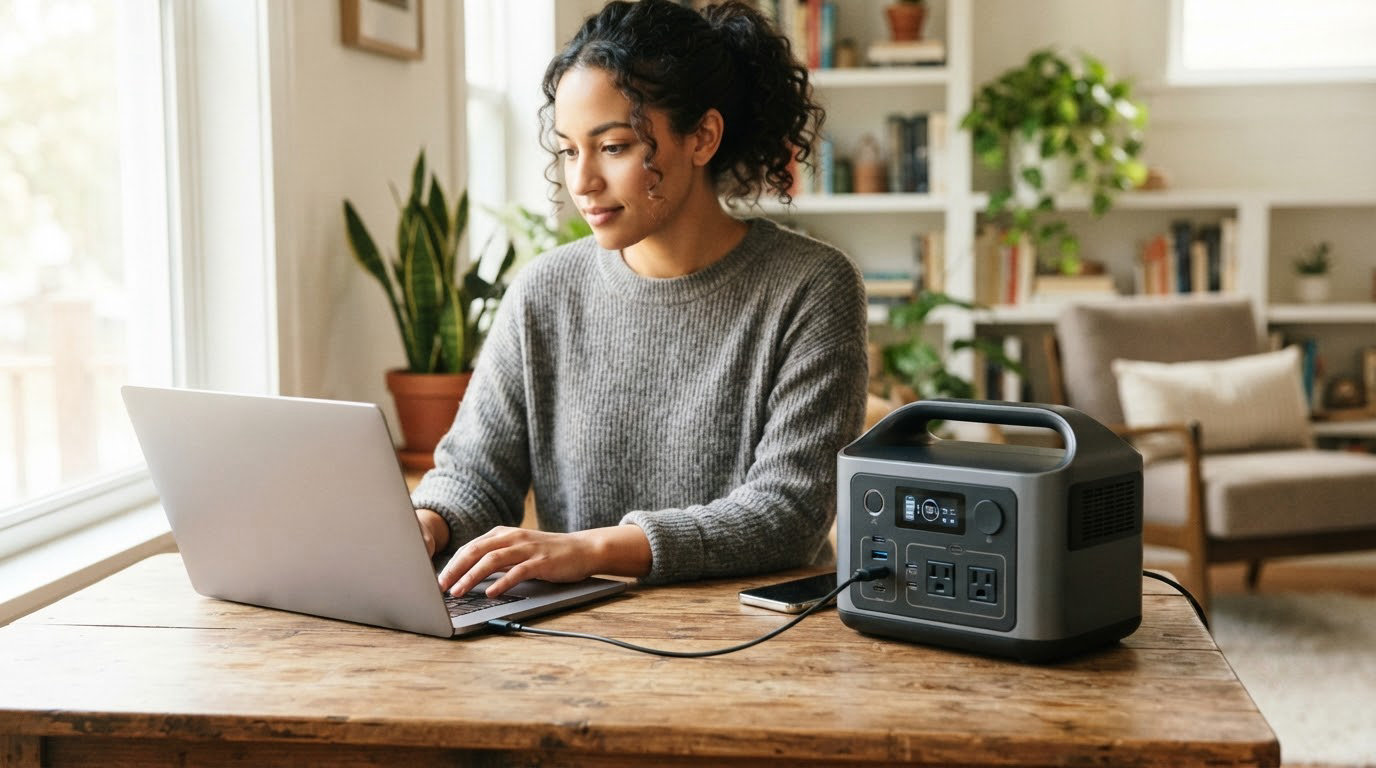
If you want one station that handles almost any job, the Jackery Explorer 300 is the pick to watch during this sale. It weighs 7.1 lb, runs two pure sine wave AC outlets at 300W with 600W of surge, and carries more owner reviews than anything else on this list, which makes it a safe first look for outages, tailgating and phone-charging weekends alike. Prime Big Deal Days runs October 6-7, 2026, and offers move through the window.
Two alternatives suit different buyers. The Jackery Explorer 1000 v2 takes over when you need to run a fridge or small air conditioner, and the GRECELL 500W is the one to look at if you want the most ports for the least money. Everything below is a pick worth watching, not a confirmed discount.
Table of Contents
Our Top 3 Picks for Best Amazon Prime Big Deal Days Portable Power Station Deals
The three stations at the top cover very different needs: a carryable camp unit, a 1,000Wh workhorse and a port-heavy budget box. Here is why each one leads its group.

Jackery Explorer 300
- 292Wh LiFePO4 battery
- 300W AC with 600W surge
- Light 7.1 lb body
- Over 11000 owner reviews

Jackery Explorer 1000 v2
- 1070Wh capacity
- 1500W AC with 3000W surge
- Full charge in about one hour
- Seven outlets

GRECELL 500W
- 519Wh capacity
- 500W AC with 1000W peak
- Ten outputs plus wireless charger
- 14.1 lb body
Best Amazon Prime Big Deal Days Portable Power Station Deals Compared
Capacity and weight are the two numbers that decide whether a station suits you. Output is the third, because a 2,000Wh model with a 600W inverter will not run a kettle that a 1,000Wh model does.
| Product | Specifications | Action |
|---|---|---|
| Jackery Explorer 300 |
|
Check Deal Price |
| Jackery Explorer 1000 v2 |
|
Check Deal Price |
| GRECELL 500W |
|
Check Deal Price |
 BLUETTI AC180 BLUETTI AC180 |
|
Check Deal Price |
 Anker SOLIX C300 Anker SOLIX C300 |
|
Check Deal Price |
 BLUETTI Elite 100 V2 BLUETTI Elite 100 V2 |
|
Check Deal Price |
 Anker SOLIX C1000 Gen 2 Anker SOLIX C1000 Gen 2 |
|
Check Deal Price |
 OUPES Mega 1 OUPES Mega 1 |
|
Check Deal Price |
 BLUETTI Elite 30 V2 BLUETTI Elite 30 V2 |
|
Check Deal Price |
 Anker SOLIX S2000 Anker SOLIX S2000 |
|
Check Deal Price |
How We Chose
We compared the specifications that actually decide whether a station works: battery capacity in watt-hours, continuous and surge output in watts, solar input, charge times, weight, warranty and chemistry. On top of that we read owner reviews and ratings on Amazon, with particular attention to reported runtime and self-consumption. Data checked on October 2026.
1. Jackery Explorer 300: Editor’s Choice for Everyday Backup
Jackery Explorer 300
Capacity: 292Wh
Output: 300W
Surge: 600W
Weight: 7.1 lb
Pros
- Light 7.1 lb body with an integrated handle
- Pure sine wave 300W AC plus 600W surge
- LiFePO4 cells rated for 4000 plus cycles
- About 4 hours to recharge from a wall outlet
Cons
- 292Wh runs short with heavier appliances
- Solar panel sold separately
- Two AC outlets is thin for big kits
At 7.1 lb with a moulded handle, this is one of the few stations you can hand to a teenager or carry up camping steps without planning around it. Nothing about it looks or feels like a compromise until you ask it to run something heavy.
Owners rate it at 4.6 across more than 11,000 reviews, and the praise repeats: it runs laptops, camera gear, drones and CPAP machines for a night without drama. The chemistry is the newer lithium iron phosphate type, rated past 4,000 cycles before capacity fades, a large jump over older lithium-ion packs.
What stands out at this size is how little you give up in ports. Two AC outlets, a 100W USB-C PD port, two USB-A ports and a car port all sit on a body that is 9.1 x 5.2 x 7.8 inches, and a full charge from a wall outlet takes about four hours.
- 300W rated AC with 600W peak surge from a pure sine wave inverter
- 2 AC outlets, 100W USB-C PD, 2 USB-A and 1 car port
- About 4 hours to a full charge from a wall outlet
- Compact 9.1 x 5.2 x 7.8 inch body with an integrated handle
The trade-off is capacity. 292Wh sounds generous next to a phone battery, but a 60W mini fridge or a space heater will flatten it well before a night is over. Owners who bought it for camping with a mains hookup often report that they barely switched it on.
Compared with the BLUETTI Elite 30 V2, which is a similar size but doubles continuous output to 600W and adds 1,500W of power lifting for kettles and toasters. Pick the Jackery for the review depth and the light weight; pick the BLUETTI if you want to heat water at the campground.
Good to know: no solar panel is in the box, so a wall charger plus a car cable are all you get.
2. Jackery Explorer 1000 v2: Top Rated for Fridges and Small Appliances
Jackery Explorer 1000 v2
Capacity: 1070Wh
Output: 1500W
Surge: 3000W
Weight: 23.8 lb
Pros
- 1070Wh with 1500W continuous output
- 3000W surge for startup loads
- Full charge in about one hour on emergency mode
- Seven outlets with 100W USB-C PD
Cons
- 23.8 lb is heavy for backpacking
- Solar input restricted to Jackery panels
- Emergency fast charge resets each session
A fridge is the reason most people step up past 300W, and this is the station built for that job. 1,070Wh and 1,500W of continuous output cover the appliances people actually plug in after the lights go out: a fridge, a router, lights, a laptop and a slow cooker.
It holds a 4.7 average from more than 3,600 reviews, with 85 percent five-star ratings. The number owners mention most is recharge speed. The app includes an emergency charging mode that takes the pack from empty to full in about an hour instead of the 1.7-hour default, and there is a 30 dB quiet mode for overnight charging indoors.
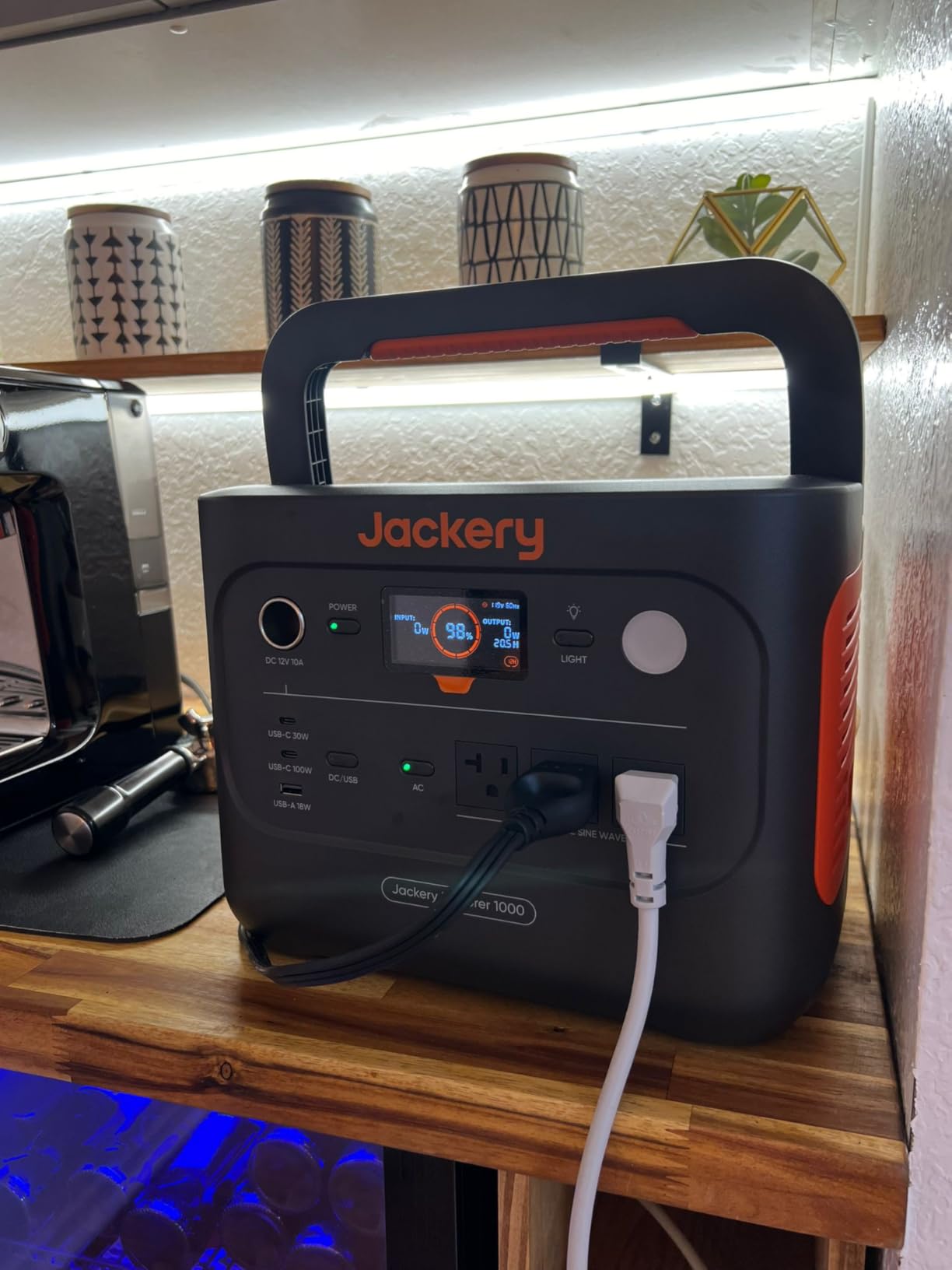
Seven outlets in total cover a mixed household load: three pure sine wave AC ports, two USB-C, one USB-A and a DC car port, plus LED lighting on the unit itself. Starting wattage is listed at 3,000W, so compressors and pumps have headroom to spin up.
- LFP battery holding over 70 percent of capacity after 4,000 cycles
- Foldable handle on a 12.87 x 8.82 x 9.72 inch body
- App control for charge modes and power limits
- Backup use for a home office rather than a campsite
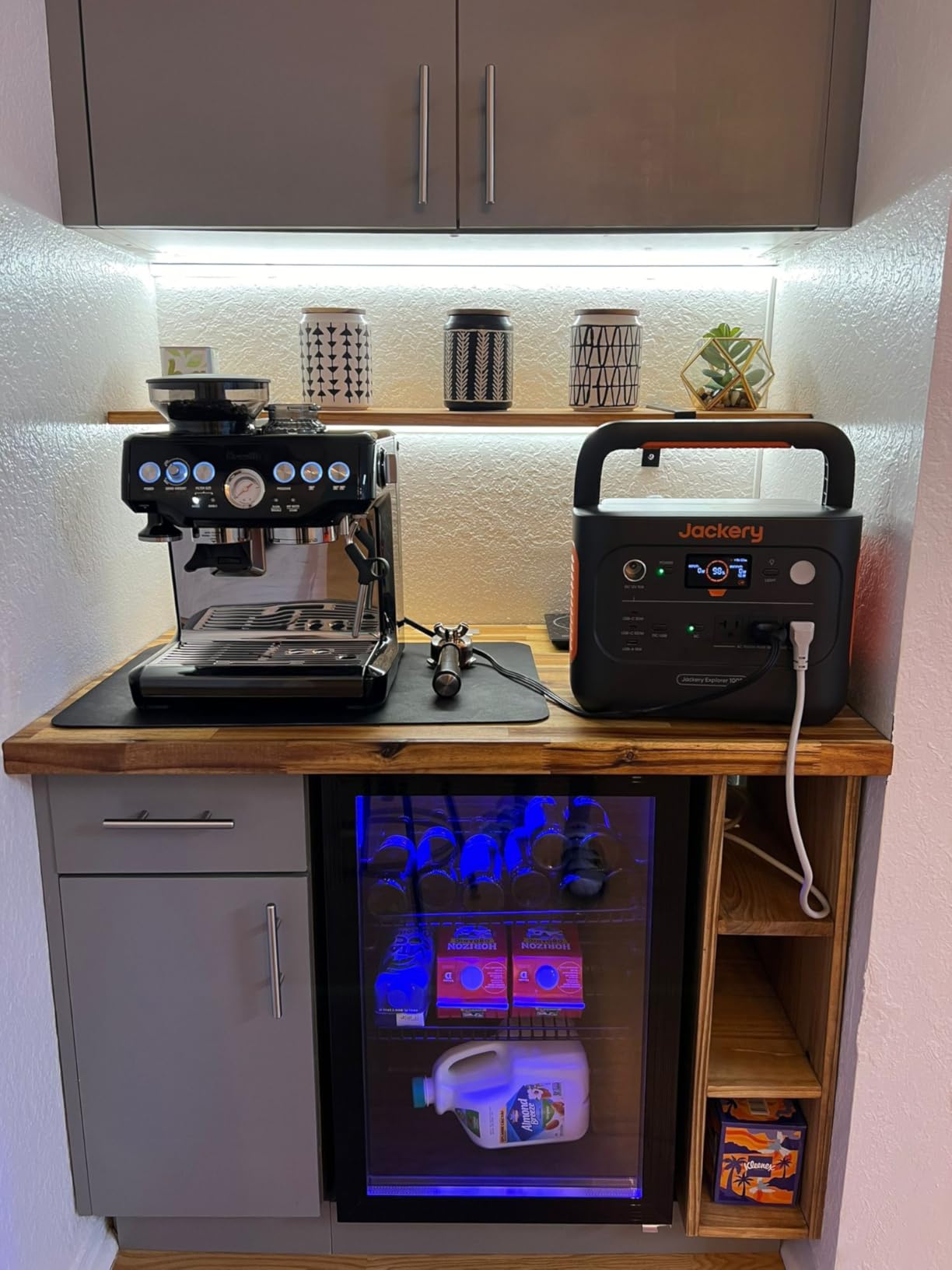
The main complaint in reviews is weight. At 23.8 lb this is a car-camping and garage machine, not something you hike with. The second recurring note is that solar charging only works with Jackery panels, so if you already own a 100W panel from another brand, check compatibility before buying this one over the Anker SOLIX C1000 Gen 2.
The emergency one-hour charge has to be switched back on in the app each time you plug in, which is easy to forget.
3. GRECELL 500W: Budget Pick With the Most Ports
GRECELL 500W
Capacity: 519Wh
Output: 500W
Surge: 1000W
Weight: 14.1 lb
Pros
- Ten simultaneous outputs including a wireless pad
- 519Wh at a 500W continuous rating
- Recharges by solar car or wall
- Built-in LED light with SOS mode
Cons
- 500W ceiling limits bigger appliances
- Wireless pad needs a button press first
- AC draws power with no load attached
Port count is what sells this one, and at any capacity that spread is hard to match: ten outputs including two pure sine wave AC outlets, three USB-A QC3.0 ports, a 60W USB-C PD port, two DC outputs, a car port and a 10W wireless charging pad.
It is also one of the lighter boxes in the mid capacity class here at 14.1 lb, with 519.48Wh of storage. Recharging is flexible: roughly 6 to 9 hours on a 100W or 200W solar panel, 7 to 8 hours from a car socket and 6 to 7 hours from a wall outlet.
Owners rate it at 4.3 from about 2,900 reviews, the lowest average in this group, and the reviews explain the gap. The 500W ceiling stops larger appliances, and several owners note that the AC output keeps pulling from the battery even with nothing plugged in unless you switch it off at the unit. The wireless pad also needs two button presses before it will charge a phone.
Buy it when the load is many small things: phones, a projector, a router, fans, a camera kit and a car fridge all at once. If you want one strong socket for a kettle or a heater, the BLUETTI Elite 30 V2 gives you 600W continuous and 1,500W of power lifting in a noticeably lighter 9.5 lb body.
The battery here is a conventional lithium-ion pack with 54 cells included, not lithium iron phosphate, so expect a shorter service life than the LFP models in this list.
4. BLUETTI AC180: Best for Home Backup
BLUETTI AC180
Capacity: 1152Wh
Output: 1800W
Surge: 2700W
Weight: 37.4 lb
Pros
- 1152Wh with 1800W continuous output
- Full charge in about one hour on 1440W input
- 500W solar input recharges in under 3.5 hours
- 20 ms UPS keeps routers running
Cons
- 37.4 lb is a two-person carry
- About 20W idle draw with the inverter on
- Some owners needed a firmware update first
This one has 1,152Wh of lithium iron phosphate storage, 1,800W continuous output and 2,700W of power lifting, with a 20 ms UPS transfer that keeps a router and a network switch alive through a flicker. Recharging is where it separates itself: a 1,440W AC input fills it in about an hour, and the 500W solar input refills it in roughly 2.8 to 3.3 hours on its own. Owners rate it 4.6 from more than 2,600 reviews and single out the bright readable display, quiet running and a five-year warranty.
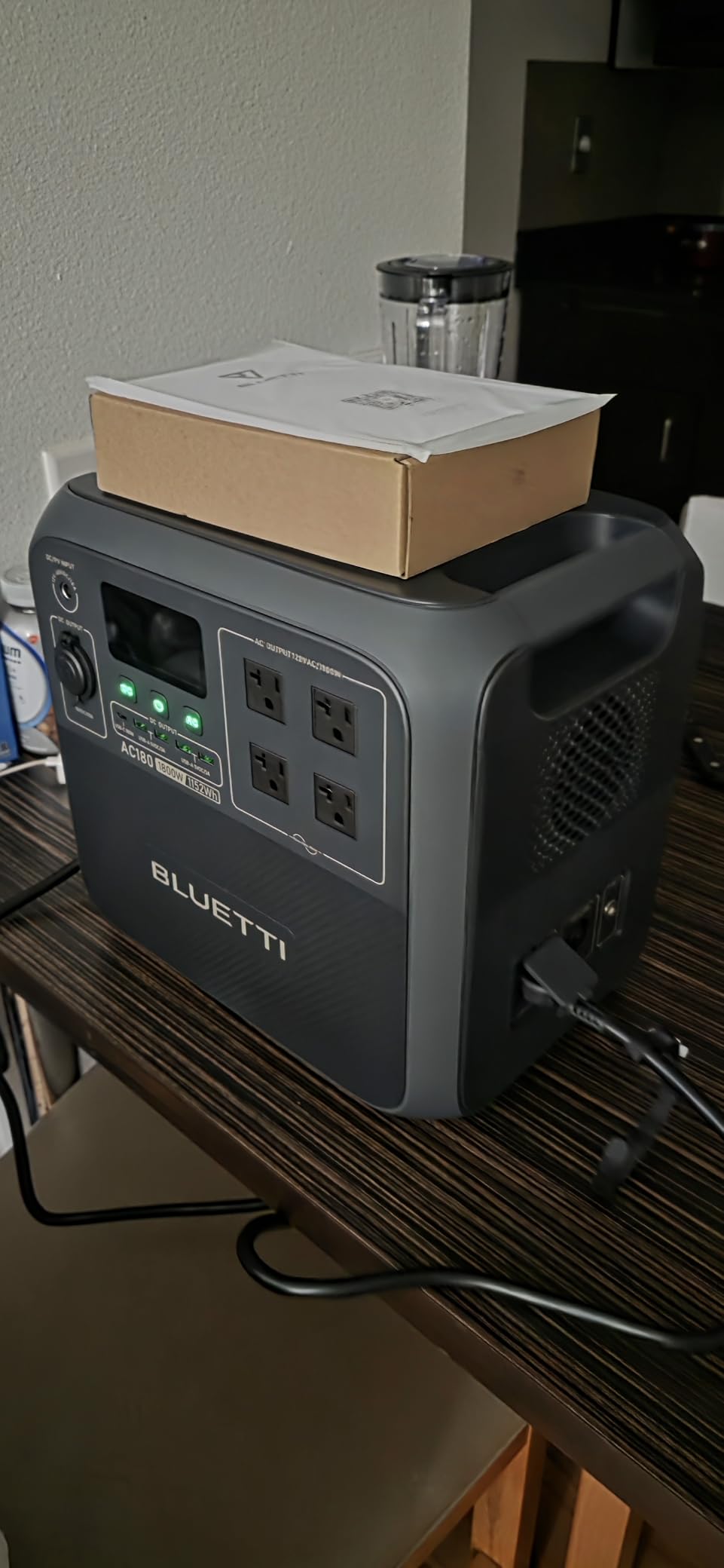
The honest drawback is weight. At 37.4 lb this is a garage and closet item, and several reviews also report around 20W of self-consumption with the inverter on plus a reserve held back, so real usable capacity runs under the 1,152Wh on the label. That gap is the single biggest source of disappointment with any station in this price class, and it is the one number you cannot read off a listing.
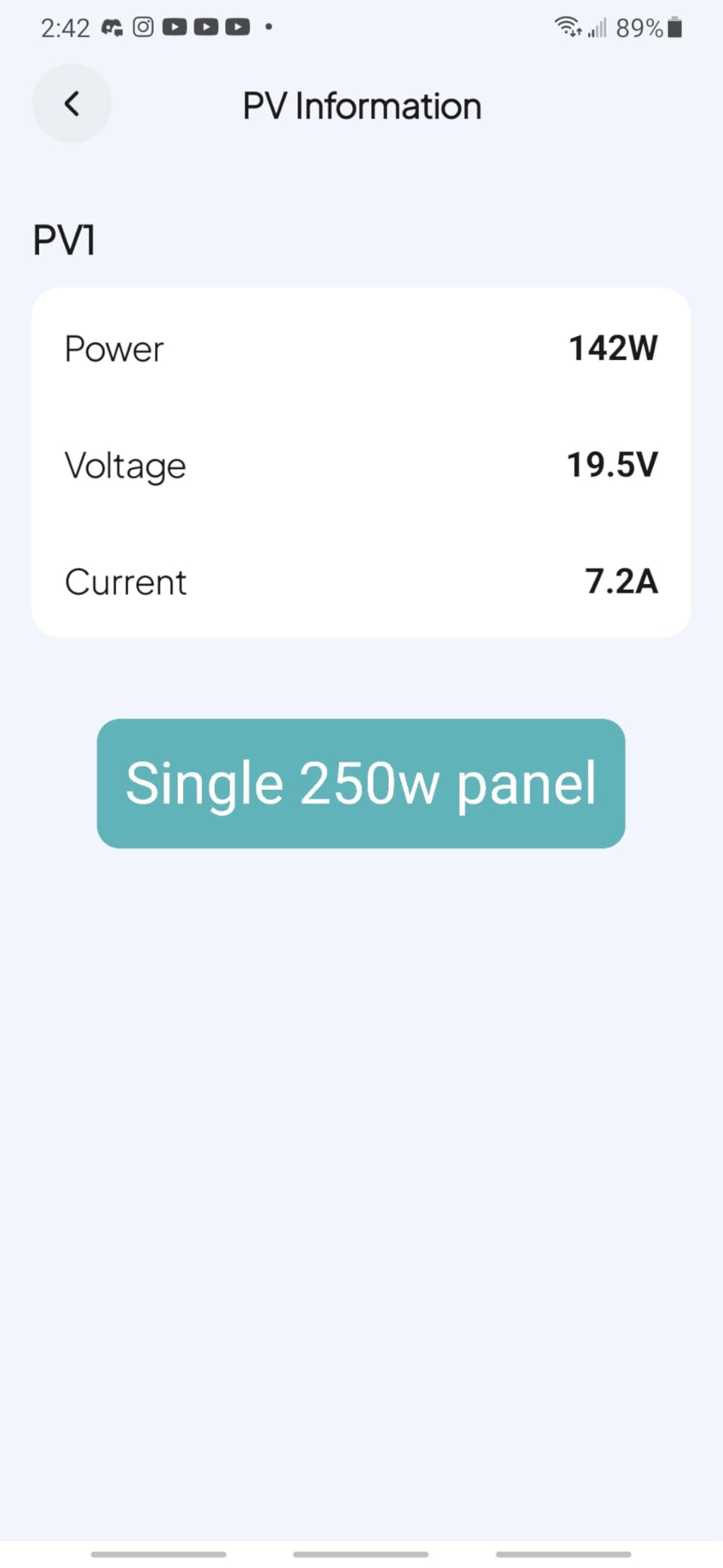
Compared with the Anker SOLIX C1000 Gen 2, the AC180 holds 128Wh more capacity, adds 600W of power lifting headroom and 300W of extra solar input, and both carry a five-year warranty. The Anker wins on recharge speed and app-based power management. Compared with the OUPES Mega 1, BLUETTI loses the ability to add extra batteries later.
A few owners needed a firmware update and one full discharge and recharge before runtime matched the rated figure.
5. Anker SOLIX C300: Best for Quiet Overnight Charging
Anker SOLIX C300
Capacity: 288Wh
Output: 300W
Surge: 600W
Weight: 9.1 lb
Pros
- Fits in a small corner at 6.46 x 6.34 x 9.45 inches
- Three AC outlets plus 140W two-way USB-C
- 80 percent recharge in about 50 minutes
- Very quiet at 25dB from 3.3 feet
Cons
- Shoulder strap sold separately
- Several Anker panel models are not compatible
- 300W ceiling restricts bigger loads
Noise decided the design of this one, and that is the spec that matters most if the unit charges beside a bed. The C300 is rated at 21dB, with measured output around 25dB from 3.3 feet, which is what you want running while a CPAP machine draws from it overnight.
Eight outlets cover more than you would expect from a 288Wh pack: three AC outlets, a 120W car socket, two 140W USB-C ports, one 15W USB-C and one USB-A. Wall charging is fast for the class, hitting 80 percent in about 50 minutes, and the lithium iron phosphate cells are rated for 3,000 cycles with a five-year warranty.
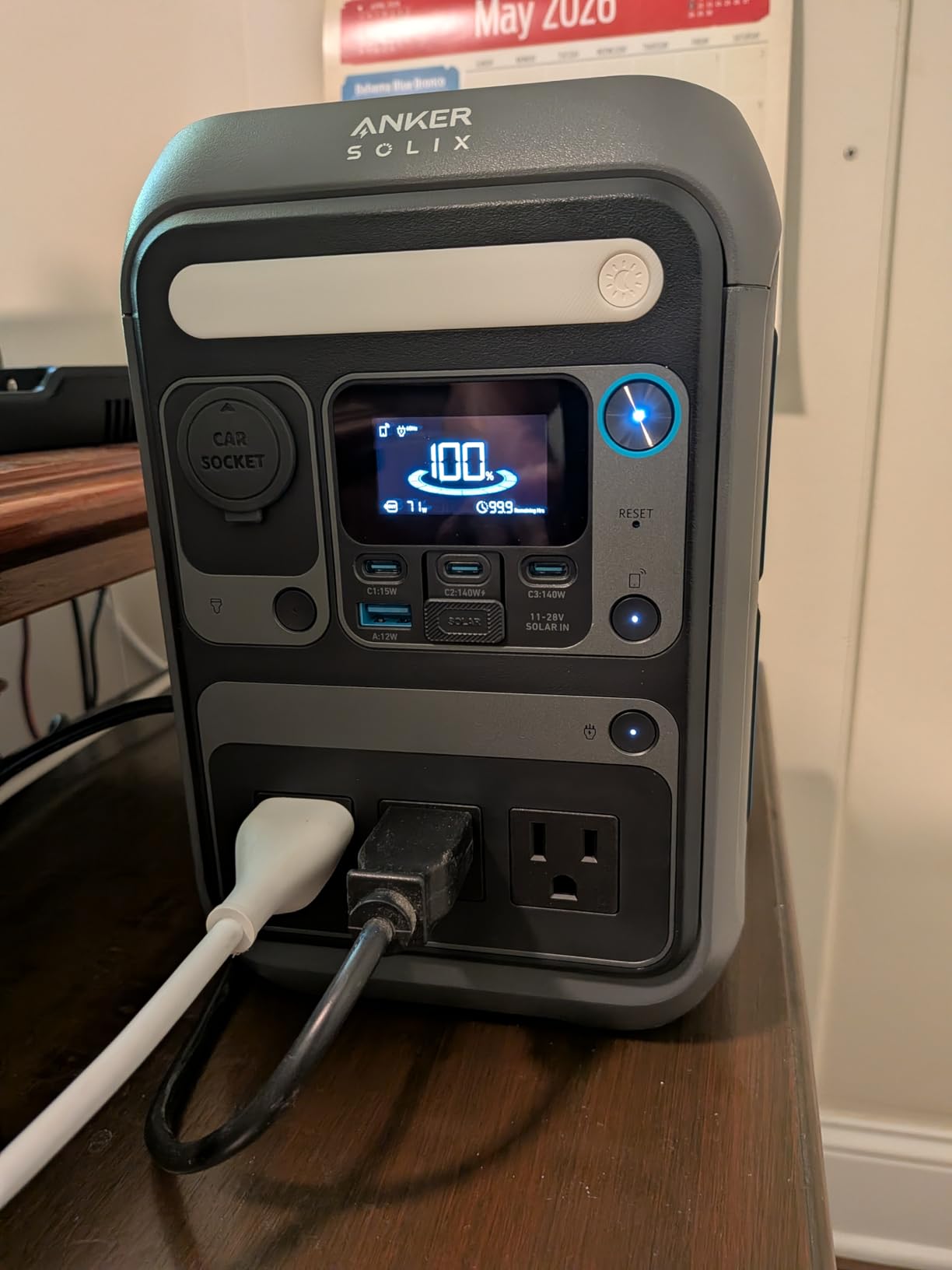
Two practical catches come up repeatedly. The carrying strap is not in the box, so you are carrying this one by hand, and the panel compatibility is narrow, since it will not work with the PS30, PS200 or PS400. The 300W output ceiling also means no kettle, no heater and no portable air conditioner.
Where it sits against the Jackery Explorer 300 is close. The Jackery is lighter at 7.1 lb and carries a much larger review base; the Anker is quieter, has three AC outlets instead of two and offers 140W two-way USB-C. For a bedroom or a small flat during a short outage, the Anker is the better fit.
Continuous output is 300W, with 600W of surge available for startup.
6. BLUETTI Elite 100 V2: Best for RV and Van Power
BLUETTI Elite 100 V2
Capacity: 1024Wh
Output: 1800W
Surge: 2700W
Weight: 25 lb
Pros
- 1024Wh with 1800W output and power lifting
- 0 to 80 percent in about 45 minutes
- 10 ms UPS switchover
- 30dB silent mode for parked vans
Cons
- 25 lb feels heavy in daily use
- 12V car port runs warm under load
- Vehicle charging is slow without an extra module
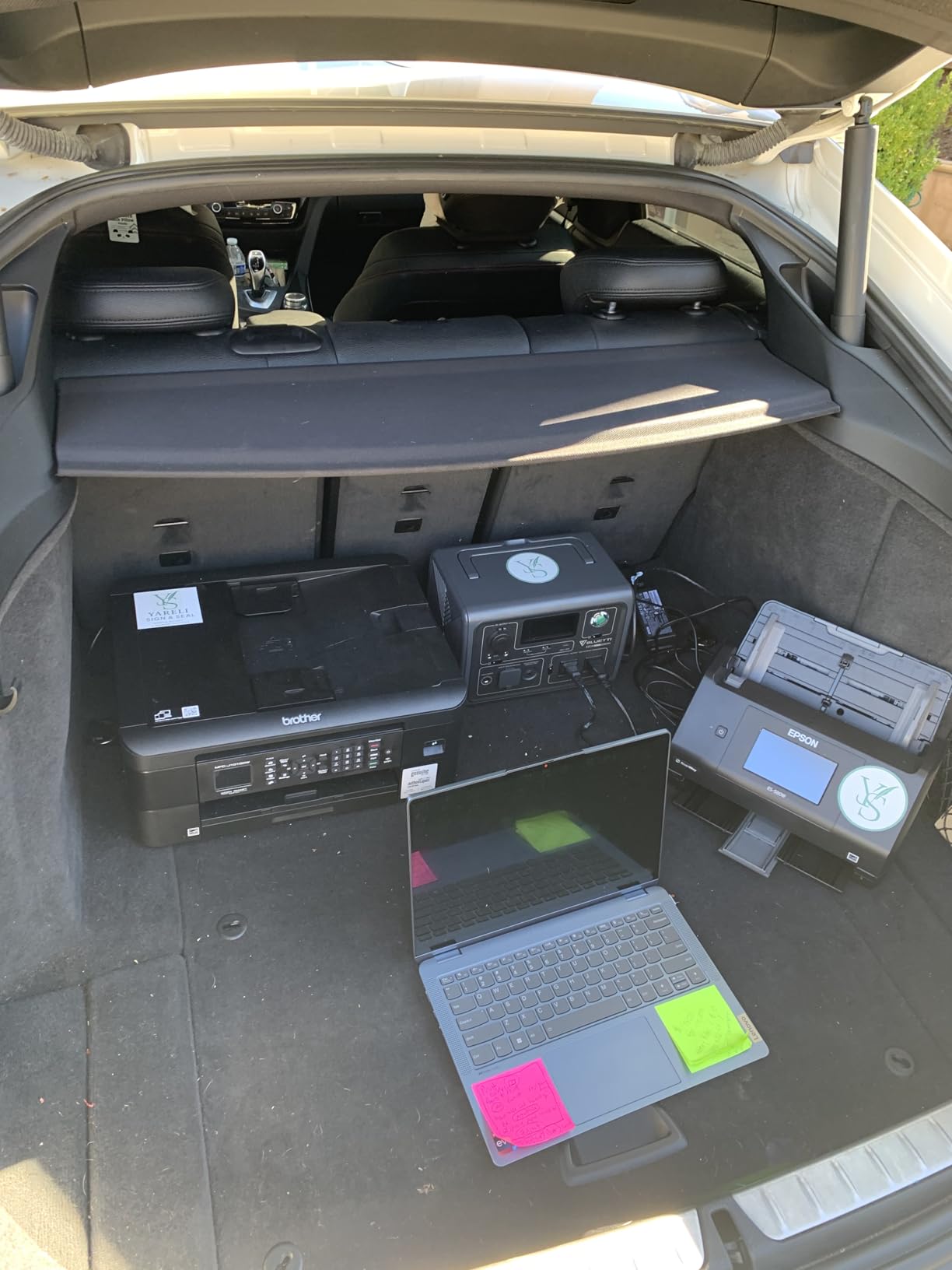
Vans reward a different set of numbers, and shape matters as much as output. The Elite 100 V2 pairs 1,024Wh with 1,800W of rated output and 2,700W of power lifting, and it is small enough at 12.6 x 8.5 x 9.8 inches to stow behind a seat rather than in a truck bed.
Charging speed is the headline. A 1,200W AC input reaches 80 percent in about 45 minutes, which means an evening stop is usually enough to refill. Reviewers also like the 10 ms UPS transfer and the 30dB silent mode, which matters most when the van is parked and the neighbours are close.
It sits between two neighbours in this list in a useful way. It has the same class of capacity as the Jackery Explorer 1000 v2 but at 25 lb instead of 23.8 lb, and 300W more continuous output than the Jackery offers, which is the difference between running a small coffee maker or not.
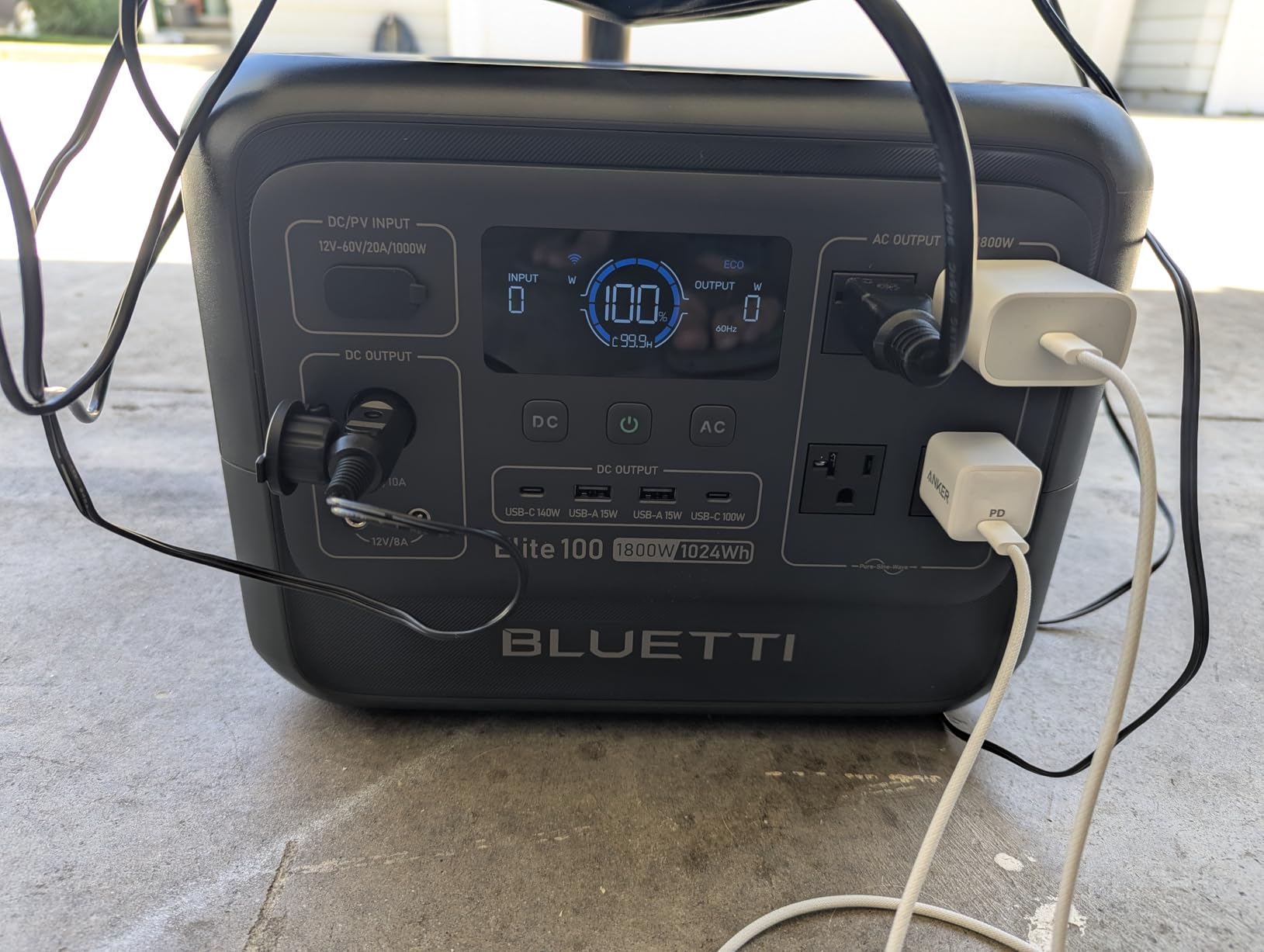
Owners report a few specifics worth knowing. The 12V car port runs warm under sustained draw, and charging from a vehicle is slow unless you add the BLUETTI Charger 1 module, which is worth budgeting for if the van is your only charging source.
Wi-Fi and Bluetooth app control is included, with over-the-air updates, and the lithium iron phosphate pack is rated past 4,000 cycles.
7. Anker SOLIX C1000 Gen 2: Best for Fast Recharging
Anker SOLIX C1000 Gen 2
Capacity: 1024Wh
Output: 2000W
Surge: 3000W
Weight: 24.9 lb
Pros
- Full recharge in about 49 minutes at 1600W
- 2000W continuous and 3000W peak across 10 ports
- 600W solar input refills in 1.8 hours
- LiFePO4 pack rated for 4000 cycles
Cons
- Gen 2 dropped the battery expansion option
- Minor inverter distortion on microwave loads
- No protective case in the box
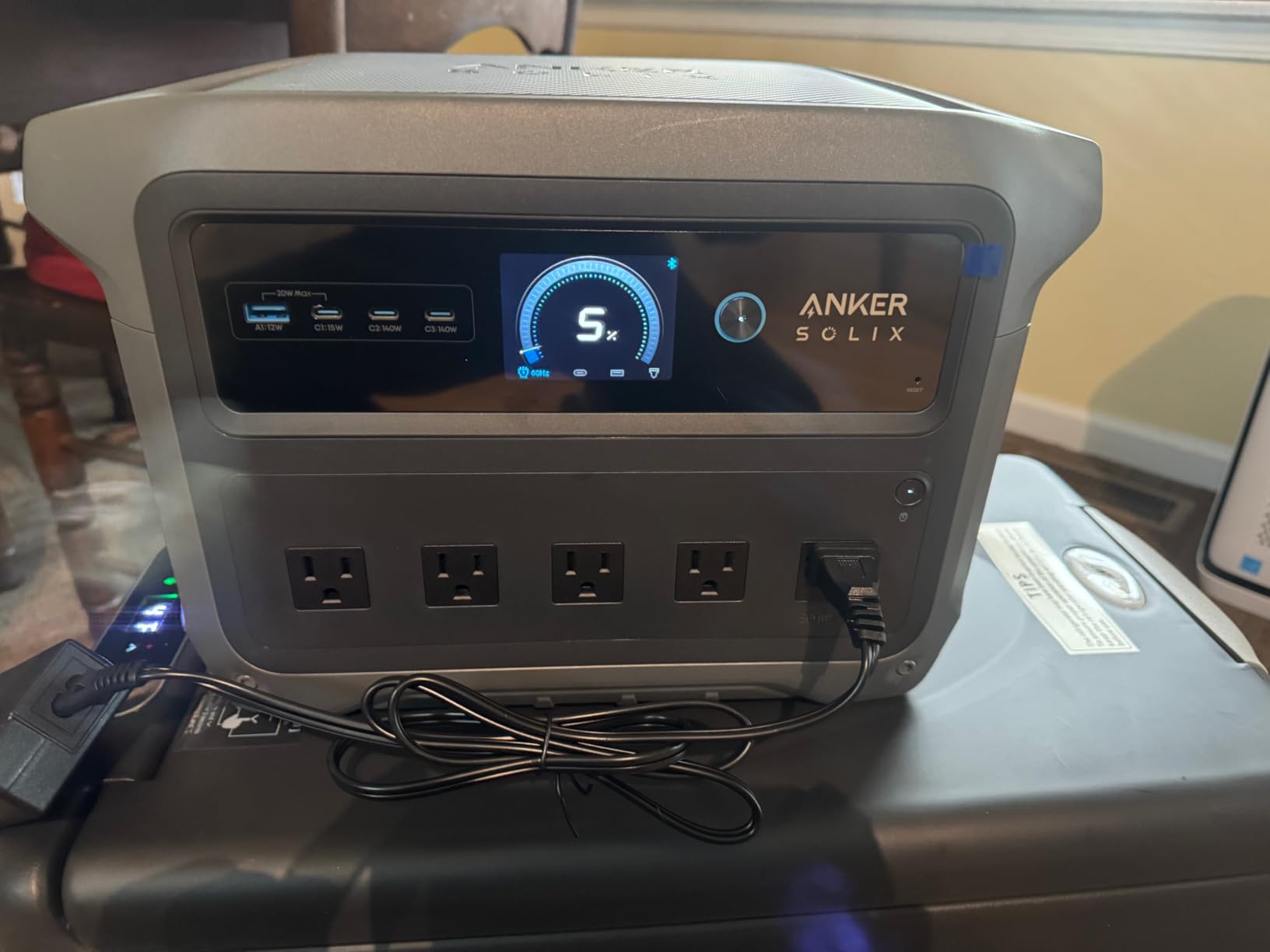
Outages rarely last one charge, so refill speed is the spec that decides this one. It takes a 1,600W input enabled in the Anker app and goes from flat to full in about 49 minutes, one of the fastest wall recharges here, and the reason it is worth a look during a short sale window.
Specs behind that are strong: 1,024Wh, 2,000W continuous, 3,000W peak and ten ports, with up to 600W of solar input that refills the pack in about 1.8 hours on its own. That combination covers a router, a laptop and a fridge compressor at the same time without waiting for the pack to come off the wall first.
The 4.7 average from about 1,630 reviews is among the best here, though the review base is a fraction of the Jackery’s. The drawbacks are specific rather than general: Gen 2 removed the expansion batteries the earlier generation accepted, the inverter shows slight harmonic distortion on microwave loads, and there is no storage case in the box.
If your plan is to grow capacity later, this is the wrong one and the OUPES Mega 1 is the right one, since it scales to 5,120Wh with two extra batteries. If your plan is to buy once and refill fast, the tradeoff does not matter.
The lithium iron phosphate pack is rated for 4,000 cycles and the warranty runs five years.
8. OUPES Mega 1: Best for Expandable Capacity
OUPES Mega 1
Capacity: 1024Wh
Output: 2000W
Surge: 4500W
Weight: 27.8 lb
Pros
- Scales to 5120Wh with two extra batteries
- 0 to 80 percent in 36 minutes on AC
- 4500W surge headroom on pure sine wave
- Dual 100W USB-C PD plus four QC3.0 USB-A
Cons
- App control is Bluetooth only with no Wi-Fi
- 27.8 lb body is heavy to move
- Smaller review base than the leaders
Plenty of buyers cannot say how big they will need to go in three years, and that is where an expandable station earns its place. The Mega 1 starts at 1,024Wh and accepts up to two B2 extra batteries, taking it to 5,120Wh, a ceiling nothing else on this list offers. Buying the base unit now and adding batteries later also costs less than replacing a smaller unit outright.
It also has the biggest surge figure here at 4,500W on a pure sine wave inverter, with 2,000W continuous. Charging is quick: 0 to 80 percent in 36 minutes on AC, or 26 minutes when AC and solar are combined. The UPS transfer time is under 20 ms, which is fine for network gear, workstations and medical devices that tolerate that gap.
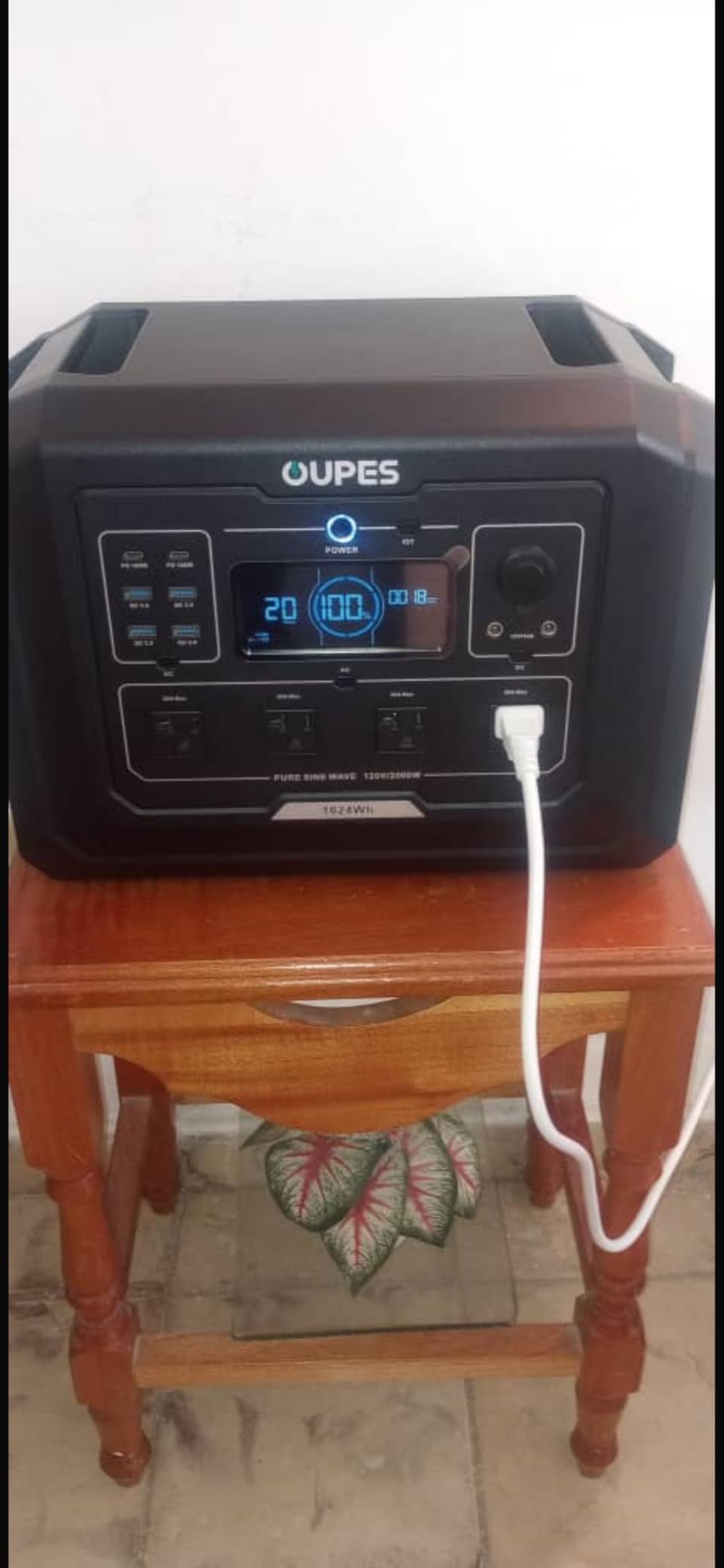
What you trade away is polish. Control is through Bluetooth rather than Wi-Fi, so the app only works within roughly 30 feet of the station, and at 27.8 lb it is one of the heavier boxes in the class. Its 4.5 average from about 1,500 reviews sits below the leaders, so read the reviews rather than the star figure.
Against the Anker SOLIX C1000 Gen 2, the choice is clean. The Anker recharges faster and controls everything from a phone app, including time-of-use settings that keep you off peak rates. The OUPES is the only one here you can grow to 5kWh.
A five-year warranty covers it, and the lithium iron phosphate chemistry matches the premium models in this list.
9. BLUETTI Elite 30 V2: Best for CPAP and Router Backup
BLUETTI Elite 30 V2
Capacity: 288Wh
Output: 600W
Surge: 1500W
Weight: 9.5 lb
Pros
- 9.5 lb body with 288Wh of storage
- Power Lifting Mode reaches 1500W
- Very low 4.5W standby draw
- 0 to 80 percent in 45 minutes and 10ms UPS
Cons
- 288Wh is short for multi-night heavy use
- Some owners report faster-than-expected drain
- No USB port for automatic PC shutdown
A CPAP machine and a router are the loads people expect a small station to carry, and this one handles both with room to spare. The Elite 30 V2 does something the small Jackery does not: 600W of continuous output with a Power Lifting mode that reaches 1,500W on demand, so a kettle, a toaster or a car fridge will start where a 300W unit simply refuses.
Its other trick is efficiency. Standby draw is listed at 4.5W, with DC at 5W and AC at 8W, which matters more than it sounds for a device that sits plugged in and waiting. A 10 ms UPS transfer keeps a CPAP machine or a home server running, and the pack refills to 80 percent in about 45 minutes on the 380W wall input.
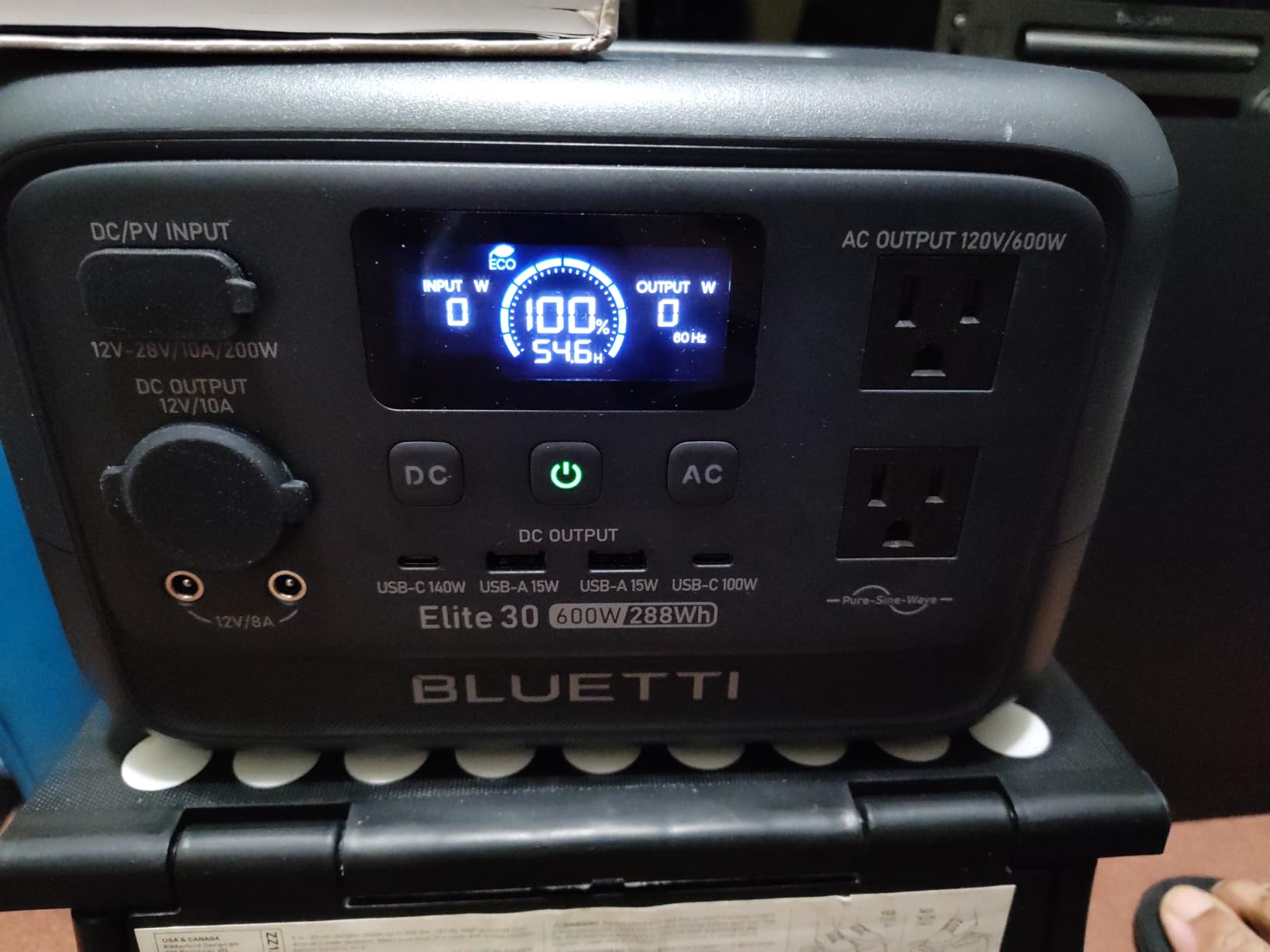
It weighs 9.5 lb and carries nine ports including a 140W USB-C PD, so it packs like a small suitcase rather than a chore. The trade-offs come from the 288Wh ceiling: a minority of owners report the pack drains faster than their own calculations suggested, and overnight loads like a CPAP plus a router plus lights will use a real share of that reserve.
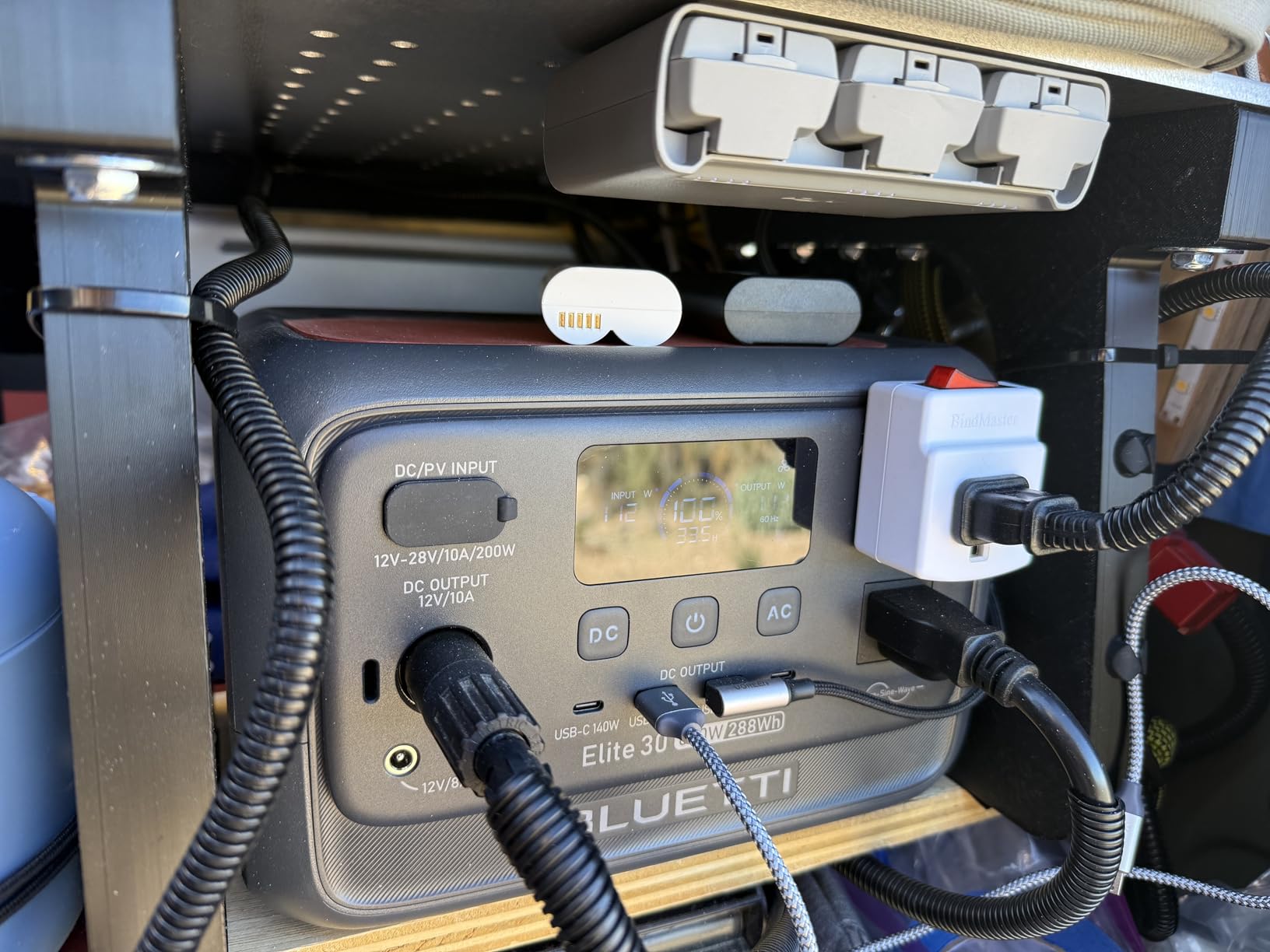
Against the Jackery Explorer 300, the BLUETTI is the stronger electrical choice and the weaker travel choice. The Jackery is lighter and has a far bigger review base. The BLUETTI has double the continuous output, power lifting, a 10 ms UPS and a five-year warranty instead of two.
There is no USB communication port, so it will not send a shutdown signal to a desktop the way a traditional UPS does.
10. Anker SOLIX S2000: Best for Multi-Day Fridge Backup
Anker SOLIX S2000
Capacity: 2010Wh
Output: 1500W
Surge: 3000W
Weight: 35.7 lb
Pros
- 2010Wh with 1500W continuous and 3000W peak
- Up to 35 hours of fridge runtime
- 6W idle draw and about 3W in UPS mode
- Largest capacity in this list
Cons
- Fan drones at 1200W charging
- 35.7 lb needs a two-handed carry
- No 12V DC port
The 2,010Wh battery here is the largest in the list, and owners report a full-size refrigerator running up to 35 hours on a single charge depending on conditions and load. Pair that with 1,500W of continuous output and the fridge question stops being the deciding factor during a long grid failure.
Efficiency is the quiet story. Idle draw is 6W and about 3W in UPS mode, which is how a 2kWh pack stretches a fridge through multiple days. It recharges by wall, car or solar input, so it can sit on a porch and top itself up while you are not using it.
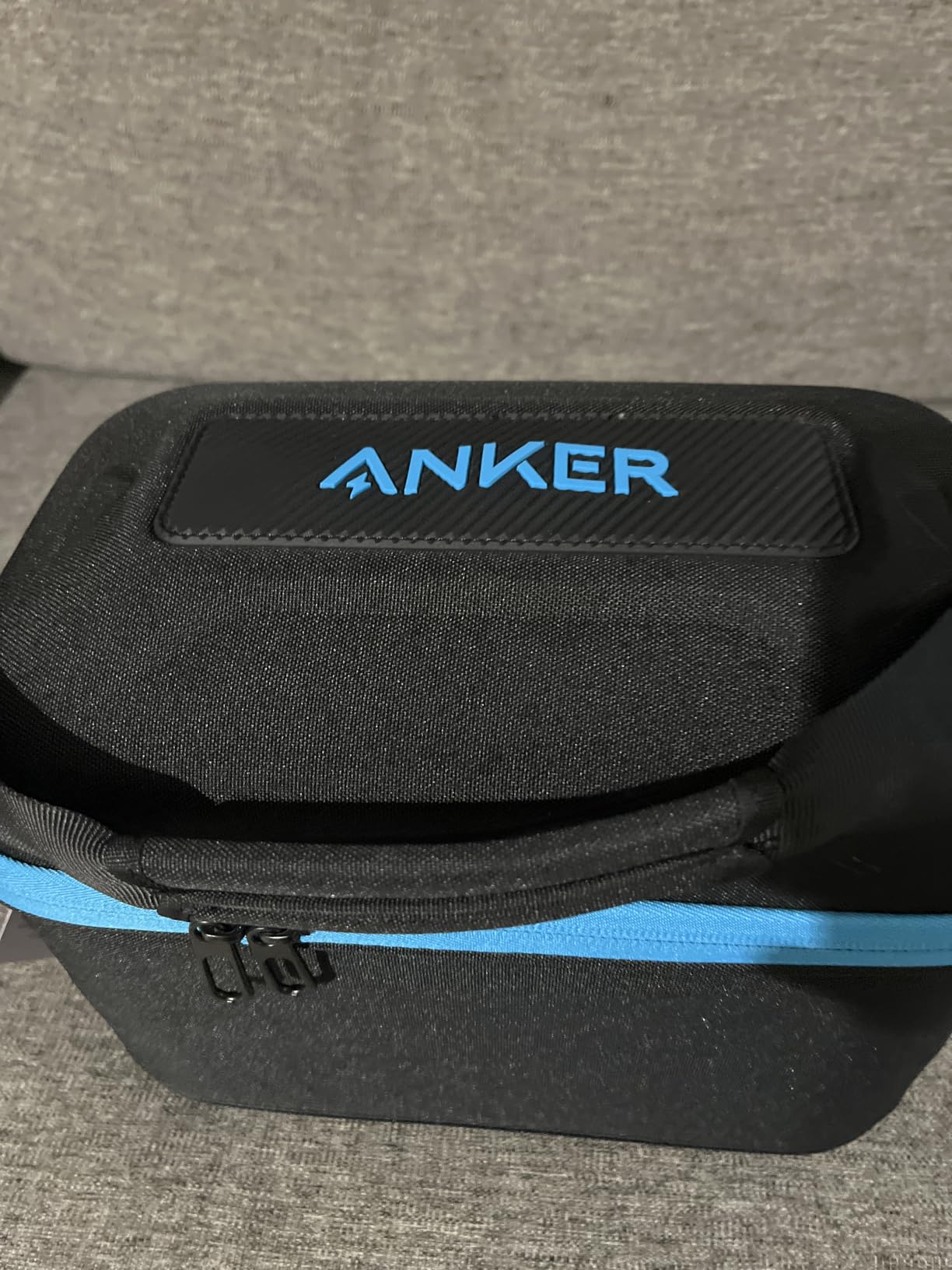
Two design choices cause friction. There is no 12V DC port at all, so anything you would power from a car socket is out, and the cooling fan can be noticeably loud when charging hard at 1,200W. At 35.7 lb it is also a two-handed carry with no centre handle, so plan where it lives before an outage rather than during one.
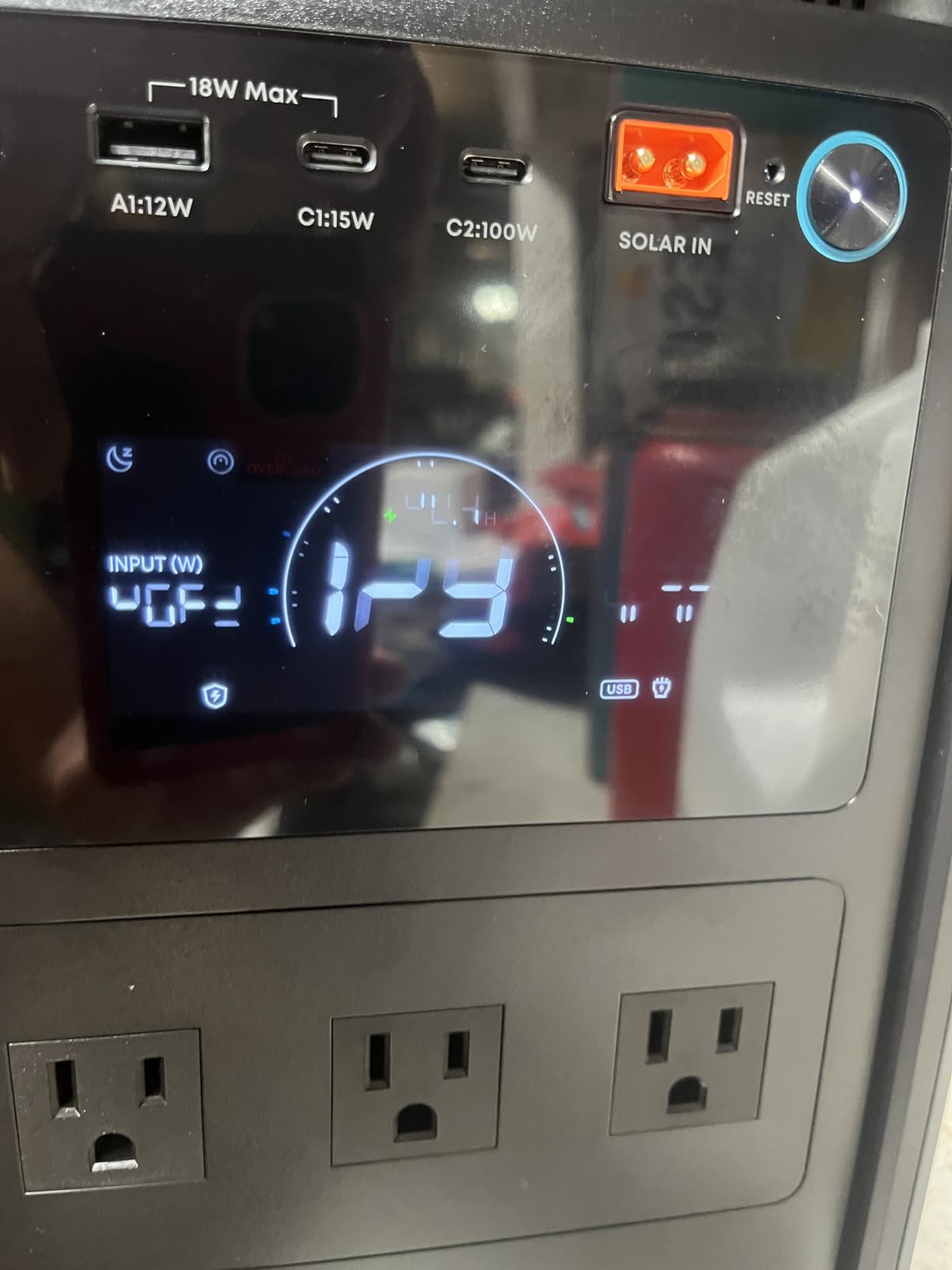
This one carries the smallest review base in the list at 317, with a 4.7 average, so read the reviews rather than the star figure alone. Compared with the BLUETTI AC180, the Anker offers 858Wh more capacity and a much lower idle draw, while the BLUETTI offers 1,800W of continuous output against 1,500W and a 500W solar input against 400W.
Nothing else in this list stores more, so if runtime is the deciding factor, this is the one to shortlist.
How to Choose Portable Power Stations During Prime Big Deal Days
Capacity and Runtime for Essential Devices
Capacity in watt-hours is the storage, and runtime is roughly that number divided by the wattage of your load, minus conversion losses and the reserve the unit holds back. A router at 10W, a laptop at 60W and a fridge compressor averaging 60W are the loads people actually run, so anything from 288Wh covers a night of small essentials.
For a house that loses power regularly, start at 1,000Wh and go higher if the fridge is your priority. Our picks over portable power stations for power outages go deeper into that scenario, but the short version is that 2,000Wh is where multi-day fridge coverage starts.
Output and Surge Power for Larger Loads
Continuous output is what the inverter sustains, and surge is the short burst a motor or compressor needs to start. Check both, because a station with 1,024Wh and only 300W will refuse to start many appliances that a smaller pack with 600W handles without complaint.
Rule of thumb: 300W covers phones, lights and laptops; 600W adds kettles and small heaters through power lifting; 1,500W and up covers portable air conditioners, microwaves and power tools. Always check the running wattage of what you plan to plug in, not the peak.
Charging Speed and Recharge Options
AC input speed is what decides whether a station is refilled indoors between uses or left in a van all day. In this group, refill times range from about 49 minutes on the Anker SOLIX C1000 Gen 2 to roughly 70 minutes for a full charge on a mid-size unit.
Solar input width is the number people miss. 100W panels refill a small station reasonably but crawl on a 1kWh unit, while the 400W to 600W inputs here cut a full solar cycle to under two hours. If you will use panels, match them to your station and check compatibility first, since several brands lock solar input to their own panels. Our guide to solar panels for portable power stations covers the pairing.
Portability, Weight and Outdoor Readiness
Weight is the specification people regret most. Anything under 10 lb can be carried by one person to a picnic table; 23 to 28 lb is a car-camping load; above 35 lb needs two hands and a plan for where it lives during an outage.
Also check the handle design, the enclosure material and the warranty, which ranges from two years on the Jackery Explorer 300 to five years on the BLUETTI and Anker models here. For RV use, sizing and mounting matter as much as capacity, and we cover that separately for portable power stations for RVs.
How to Shop Portable Power Station Deals During the Sale
Check the exact model number on the listing, not the family name, because generations change the ports and sometimes the chemistry. Confirm the output version you are buying matches your load, and read what is in the box, since some bundles include a panel or cable and most do not. Check who sells it: a listing fulfilled by Amazon or the brand storefront carries real warranty support, while a random marketplace seller does not. Finish by confirming the condition, the returns window and the delivery details before you check out. Most offers during this event need a Prime membership, and prices change through the window.
- Match continuous output to the largest appliance you will actually run
- Prefer lithium iron phosphate for cycle life and cold-weather resilience
- Treat a review count in the thousands as a stronger signal than a star rating alone
- Avoid no-name stations sold by third-party sellers with no warranty trail
- Confirm solar panel compatibility before buying a station for off-grid use
- Keep the packaging until you have tested every output you plan to use
Frequently Asked Questions
What are the best Amazon Prime Big Deal Days Portable Power Station Deals?
The strongest picks during the sale are the Jackery Explorer 300 for light everyday backup, the Jackery Explorer 1000 v2 for fridges and small appliances, the BLUETTI AC180 for whole-room backup, and the Anker SOLIX C1000 Gen 2 for the fastest recharge. Check the listing before buying, since offers change through the event.
When does Prime Big Deal Days run?
Amazon Prime Big Deal Days runs October 6-7, 2026. Most offers on power stations need a Prime membership, and a free trial counts. Offers can start early and change during the two days, so the listing page is the only reliable source for the current price of a given station.
What is the difference between a portable power station and a generator?
A portable power station stores energy in a lithium battery and runs appliances silently with no fuel, no exhaust and no moving parts, so it is safe indoors. A generator burns fuel, makes noise and produces carbon monoxide, which means it has to run outside, well away from windows and doors.
How long can a portable power station run a refrigerator?
Divide capacity by the fridge’s average draw. A 2,010Wh station such as the Anker SOLIX S2000 is rated for up to 35 hours on a full-size fridge, while a 1,152Wh station like the BLUETTI AC180 covers roughly half that, depending on ambient temperature and how often the compressor cycles.
How many years do portable power stations last?
It comes down to chemistry. Lithium iron phosphate packs here are rated from about 3,000 cycles to 10,000 cycles, which works out to roughly a decade of normal use, while conventional lithium-ion packs like the GRECELL 500W tend to age faster. Calendar age and heat matter as much as cycle count.
Is there a better brand than Jackery?
It depends on the job. BLUETTI and Anker SOLIX match Jackery on capacity classes and add faster charging, larger solar inputs and longer warranties, with five years on most of those models. Jackery still holds the deepest review base here, which is useful when you want a lot of owner history before buying.
Final Verdict: Best Amazon Prime Big Deal Days Portable Power Station Deals
Buy the Jackery Explorer 300 if you want one station that anyone in the house can carry and if your loads are phones, laptops, lights and a CPAP machine. It is the most-reviewed pick here and the least complicated choice to live with.
Buy the GRECELL 500W if your budget is the deciding factor and your load is many small devices rather than one big appliance. Its ten outputs are hard to match at this size, and for phones, projectors, fans and a router that is exactly what you need.
Buy the Anker SOLIX S2000 if the fridge is the reason you own a power station, the BLUETTI AC180 if you want backup for a whole room with room to spare, and the Anker SOLIX C1000 Gen 2 if fast wall recharge and a near-silent UPS matter most. For a van or trailer, the BLUETTI Elite 100 V2 is the better shape, and for CPAP and network gear at a fraction of the weight, the BLUETTI Elite 30 V2 does it. If you might outgrow 1kWh, the OUPES Mega 1 is the only one here that scales to 5,120Wh.
Whatever you pick, open the listing during the sale and check the seller, the model number and what is in the box. Our picks of budget portable power stations under 500 are a good starting point if the number is the first filter.