

If you are shopping a MacBook Pro while Amazon runs its October sale, the listing worth watching first is the renewed 14-inch M1 Pro: it carries the deepest pool of owner feedback in this roundup at 786 reviews, and the M1 Pro inside still chews through timeline scrubbing, code and photo work without complaint. The MacBook Pro M5 14.2 is the current-silicon alternative for anyone who wants new hardware, and the renewed 16-inch M1 Pro is the one to look at if you want a much bigger canvas.
Prime Big Deal Days runs October 6-7, 2026, and most offers on these machines need a Prime membership, where a free trial counts. Prices on the listings below move through the event, so treat the pick as a configuration to watch rather than a fixed number.
Our Top 3 Picks for Best Amazon Prime Big Deal Days MacBook Pro Deals (October 2026)

MacBook Pro 14 M1 Pro
- Renewed 14-inch
- Apple M1 Pro chip
- 16GB unified memory
- Up to 17 hours of battery
MacBook Pro 16 M1 Pro
- Renewed 16-inch
- 10-core CPU and up to 32-core GPU
- 16GB unified memory

The renewed 14-inch M1 Pro takes the top slot on evidence rather than hype. More owners have used that exact configuration than any other here, which means the faults show up early in the reviews instead of surprising you later.
The M5 14.2 earns the highest rating in the group at 4.8 across 425 reviews, so it is the pick for someone who would rather buy current silicon once. The renewed 16-inch M1 Pro exists for a different reason: nearly three extra inches of screen for editors and reviewers who would otherwise live in a scaled timeline.
Best Amazon Prime Big Deal Days MacBook Pro Deals Compared
| Product | Specifications | Action |
|---|---|---|
| MacBook Pro 14 M1 Pro |
|
Check Deal Price |
| MacBook Pro 16 M1 Pro |
|
Check Deal Price |
| MacBook Pro M5 14.2 |
|
Check Deal Price |
 MacBook Pro M5 Pro 14.2 MacBook Pro M5 Pro 14.2 |
|
Check Deal Price |
 MacBook Pro M3 Pro 14 MacBook Pro M3 Pro 14 |
|
Check Deal Price |
 MacBook Pro M5 Pro 16.2 MacBook Pro M5 Pro 16.2 |
|
Check Deal Price |
Three of these six are current M5 family machines and three are renewed older silicon. That split matters more than the chip names do, because a renewed 2023 M3 Pro and a renewed 2021 M1 Pro behave very differently once you ask them to render or compile.
How We Chose
We lined up the configurations that show the most owner feedback on Amazon, then compared the specs that decide daily use: chip and core counts, unified memory, storage, display, weight and warranty. Ratings and review counts came from the listings themselves and were checked on October 2026. Renewed grades were treated as their own category, since warranty and condition are part of the purchase.
1. MacBook Pro 14 M1 Pro: Editor’s Choice for Buyers Who Want Proof
MacBook Pro 14 M1 Pro
Chip: Apple M1 Pro
Display: 14 inch XDR
Memory: 16GB
Storage: 512GB
Weight: 1.6 kg
Pros
- Excellent Liquid Retina XDR display at 3024x1964
- M1 Pro handles video and creative work
- Up to 17 hours of battery life
- Quiet and cool under sustained load
- Six-speaker audio with spatial audio
Cons
- 2021 generation hardware
- 512GB SSD is modest for large projects
- Renewed grade with a 90-day limited warranty
The safest pick in the list, on evidence rather than on shiny specs.
What makes this the one to watch is the volume of feedback behind it. 786 owners have rated this configuration, and most of them sit in the top two star bands. The praised attributes repeat consistently: the 3024×1964 Liquid Retina XDR panel, the way the M1 Pro holds up on video and creative work, and battery life quoted at up to 17 hours.
Picture the typical user: a freelance editor who takes the same machine to three client meetings a week, or a second-year engineering student running a local build server between lectures. Sixteen gigabytes of unified memory covers both, and the ProRes accelerator in the media engine is the quiet reason export times stay sane.
- M1 Pro with up to 200GB/s memory bandwidth
- 14-inch Liquid Retina XDR at 3024×1964
- Battery life rated at up to 17 hours
- Advanced thermal design that stays cool and quiet under load
Compared with the MacBook Pro M3 Pro 14, this machine is a generation behind on graphics and on the matte display, and it gives up roughly two gigabytes of memory. The M3 Pro answers a different question: whether you prefer a new chip and a fingerprint-resistant-matte screen over raw value.
Good to know: renewed purchases here carry a 90-day limited warranty rather than Apple full coverage, and the one-star reviews cluster almost entirely around condition and warranty rather than performance. Check the machine on arrival, screen and battery first.
2. MacBook Pro 16 M1 Pro: Best for Big Screens
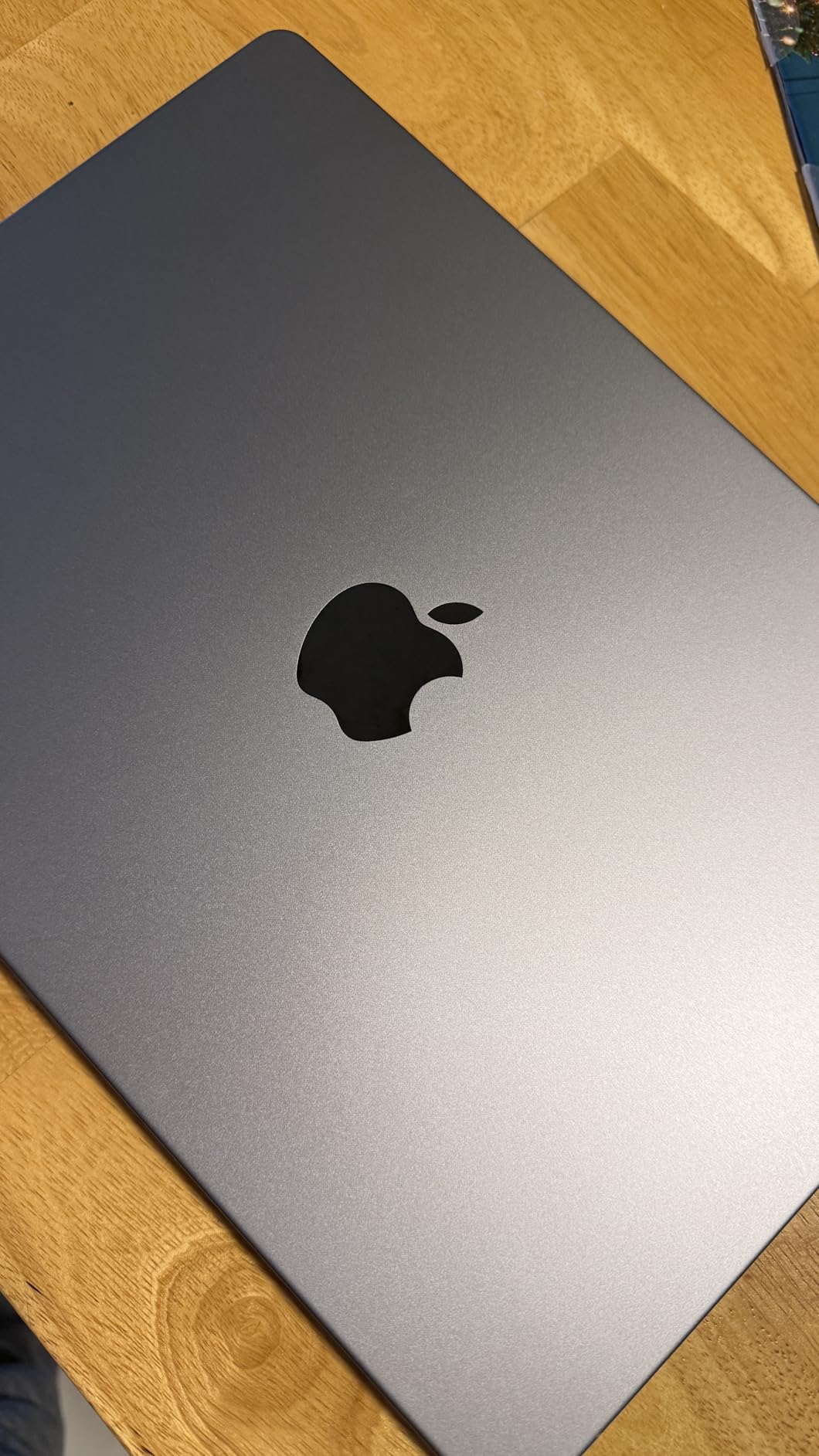
MacBook Pro 16 M1 Pro
Chip: Apple M1 Pro
Display: 16 inch XDR
Memory: 16GB
Storage: 512GB
Weight: 4.6 lb
Pros
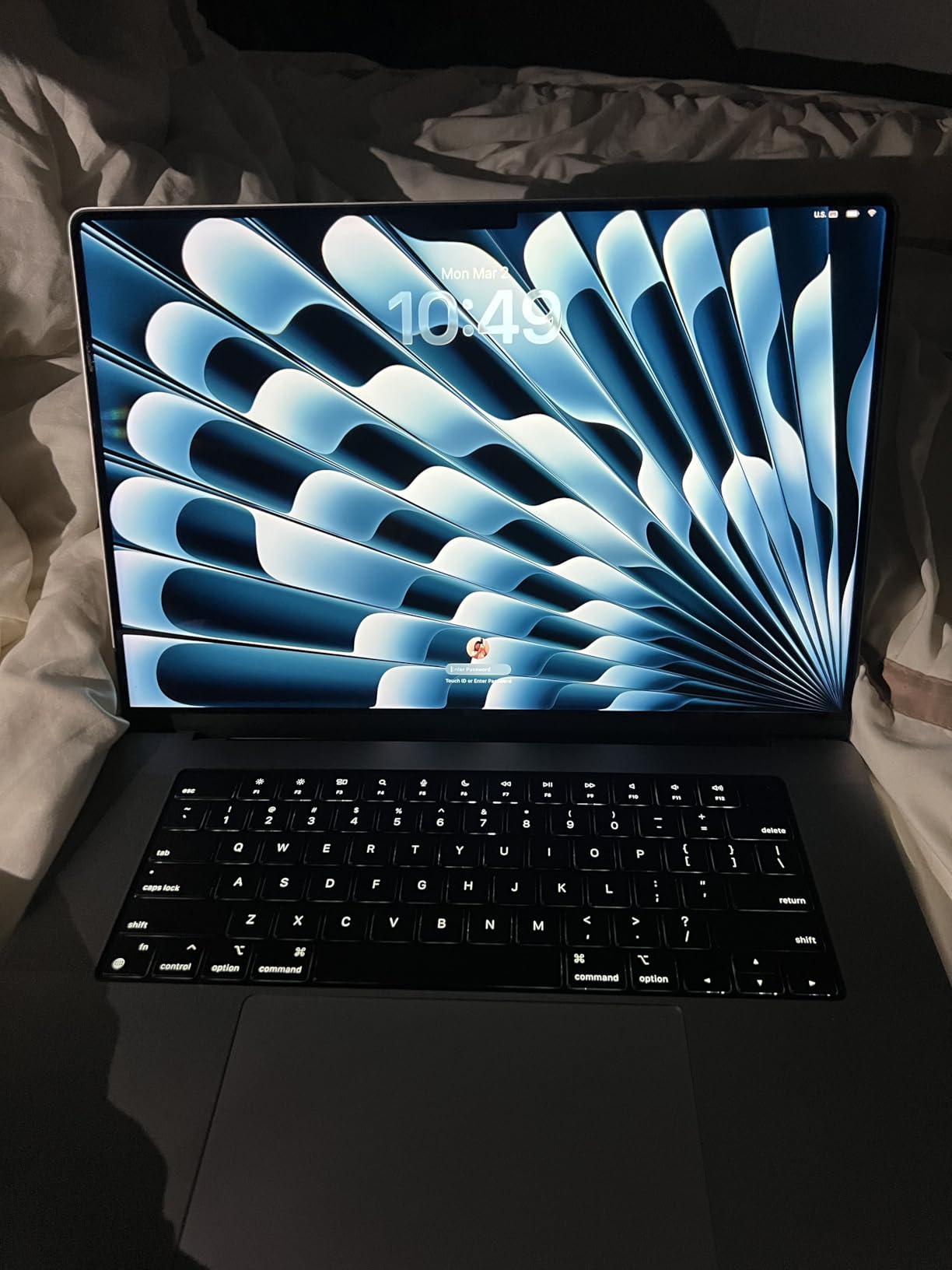
- Large 3456x2234 Liquid Retina XDR display
- 10-core CPU with up to a 32-core GPU
- 16-core Neural Engine for machine learning
- Up to 17 hours of battery life
- Backlit QWERTY keyboard
Cons
- 512GB SSD is modest for media-heavy work
- 4.6 pounds is heavy to carry daily
- Renewed grade with a 90-day limited warranty
Owners of this 16-inch config describe the same thing first: the screen. At 3456×2234 it gives a timeline or a wide spreadsheet somewhere to live that no 14-inch panel in this list can match, and the 4.2 rating across 644 reviews comes with very few complaints that are not about size.
The chip side is where this machine earns its keep beyond media work. The 10-core CPU is quoted at up to 3.7x faster pro-workflow performance, the graphics stack goes up to a 32-core GPU, and the 16-core Neural Engine is quoted at up to 11x faster machine learning, which matters if you run models locally rather than in the cloud.
A good scenario: a consultant who reads two documents side by side, joins calls from a hotel desk and still has battery left for the drive home. Seventeen hours of rated battery makes that day possible, and the 100 watt-hour cell is the largest in the group.
- Pro-workflow performance quoted at up to 3.7x faster
- Machine learning quoted at up to 11x faster on the Neural Engine
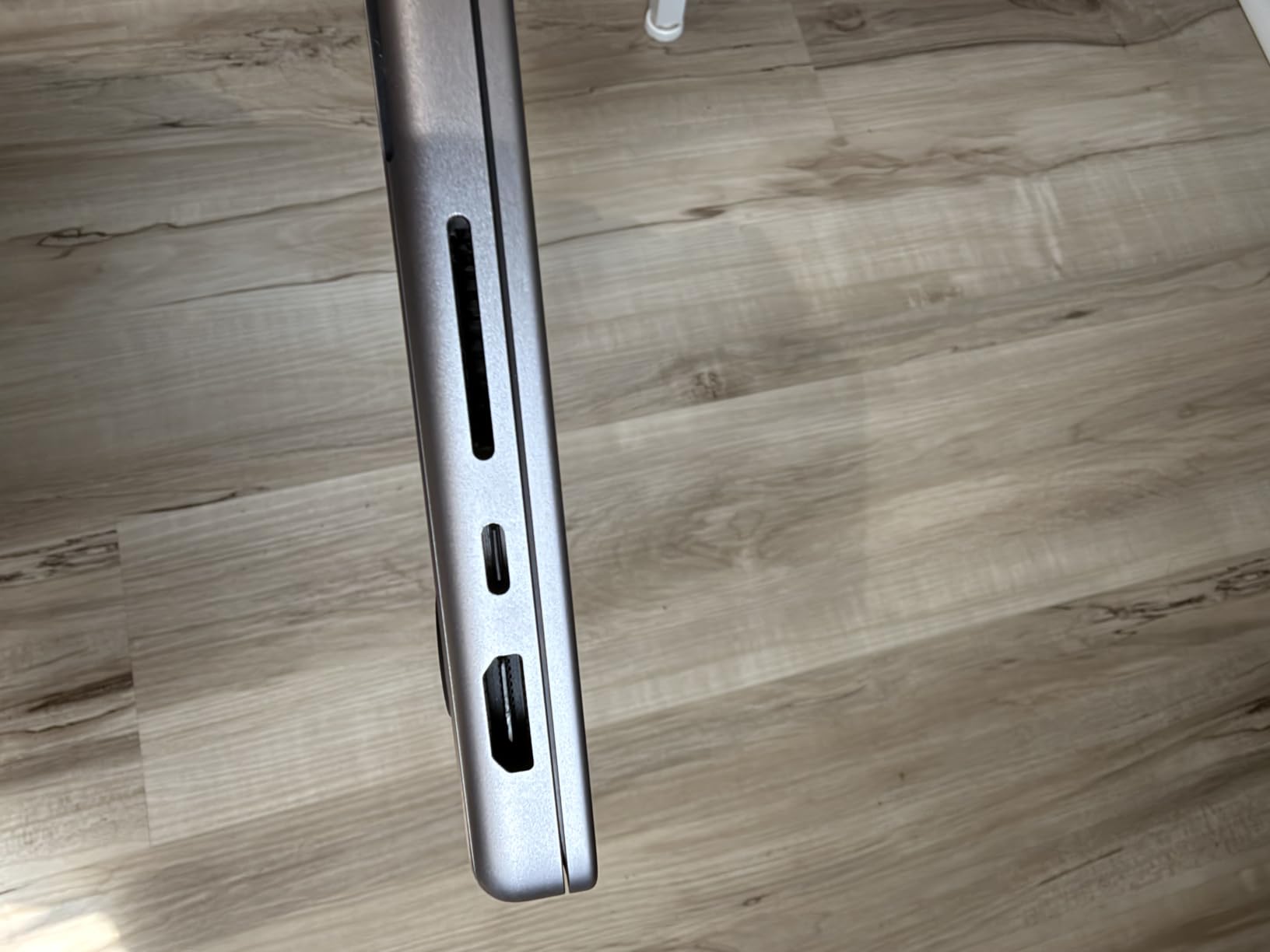
- Three Thunderbolt 4 ports plus HDMI, SDXC and MagSafe 3
- 1080p FaceTime HD camera with an advanced image signal processor
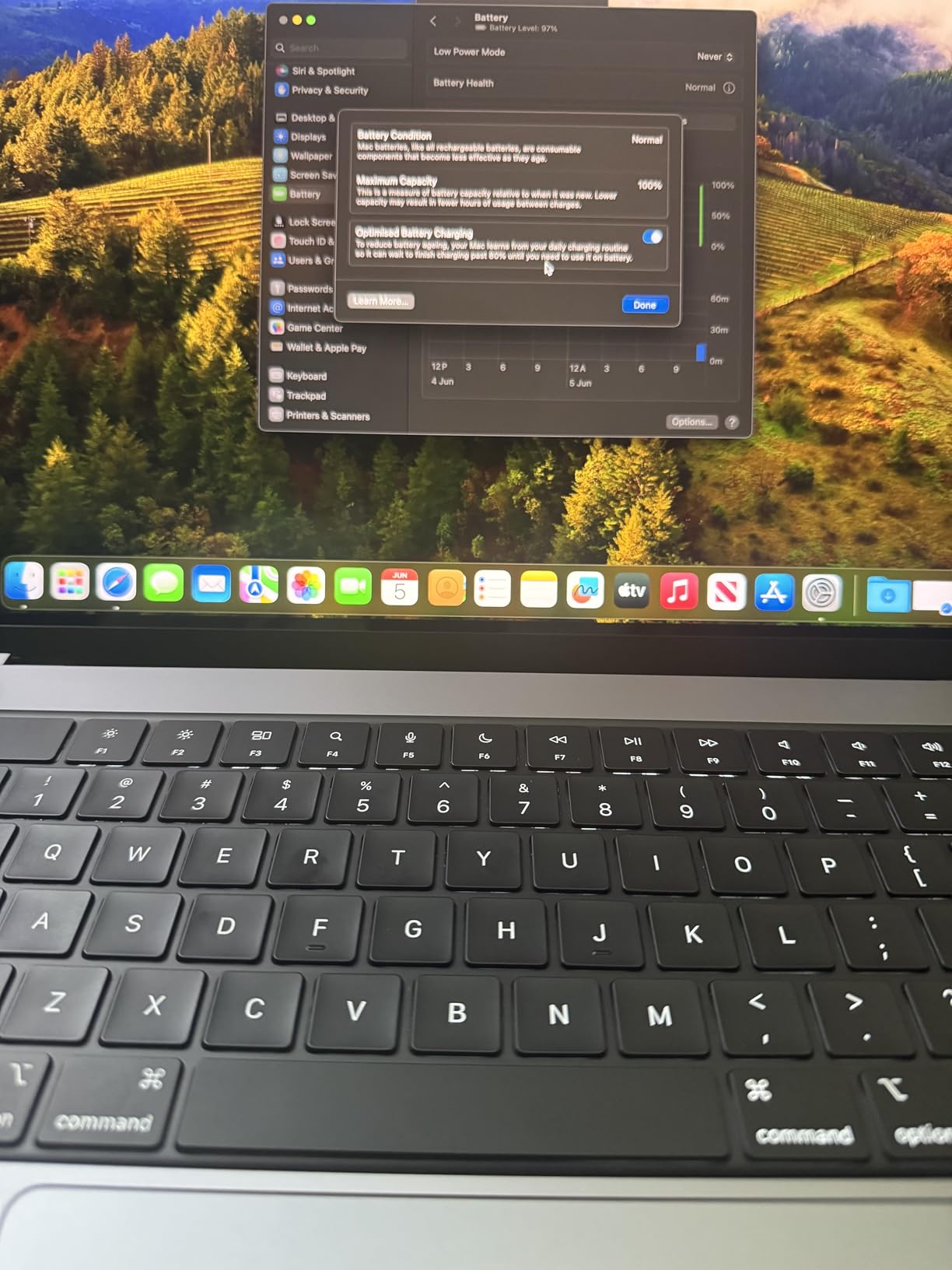
Skip it if you travel light. At 4.6 pounds it is the lighter of the two 16-inch machines here, and both sit well above the 14-inch group. For desk work the trade is easy; for a bag carried up stairs twice a day, the MacBook Pro M5 14.2 at 3.41 pounds is the smarter object.
3. MacBook Pro M5 14.2: Top Rated for Current Silicon
MacBook Pro M5 14.2
Chip: Apple M5
Display: 14.2 inch XDR
Memory: 24GB
Storage: 1TB
Weight: 3.41 lb
Pros
- M5 chip handles everyday and creative work fast
- 24GB unified memory and 1TB SSD
- 1600 nits peak XDR brightness
- Same speed on battery as on power
- 12MP Center Stage camera
Cons
- Supports only two external displays
- Thunderbolt 4 rather than Thunderbolt 5
- Entry-level 10-core GPU tier
Buy the MacBook Pro M5 14.2 if you want the newest thing in the roundup and the strongest rating on the board. It sits at 4.8 across 425 reviews, the highest average in the group, with one of the smallest pools of one-star feedback here.
Every GPU core in this chip carries its own Neural Accelerator, which is the part reviewers single out for on-device AI work. Add 24GB of unified memory and 1TB of storage, and you have a machine that can hold a model in memory instead of calling out to a server. The display reaches 1600 nits peak with 1000 nits sustained and a 1,000,000:1 contrast ratio.
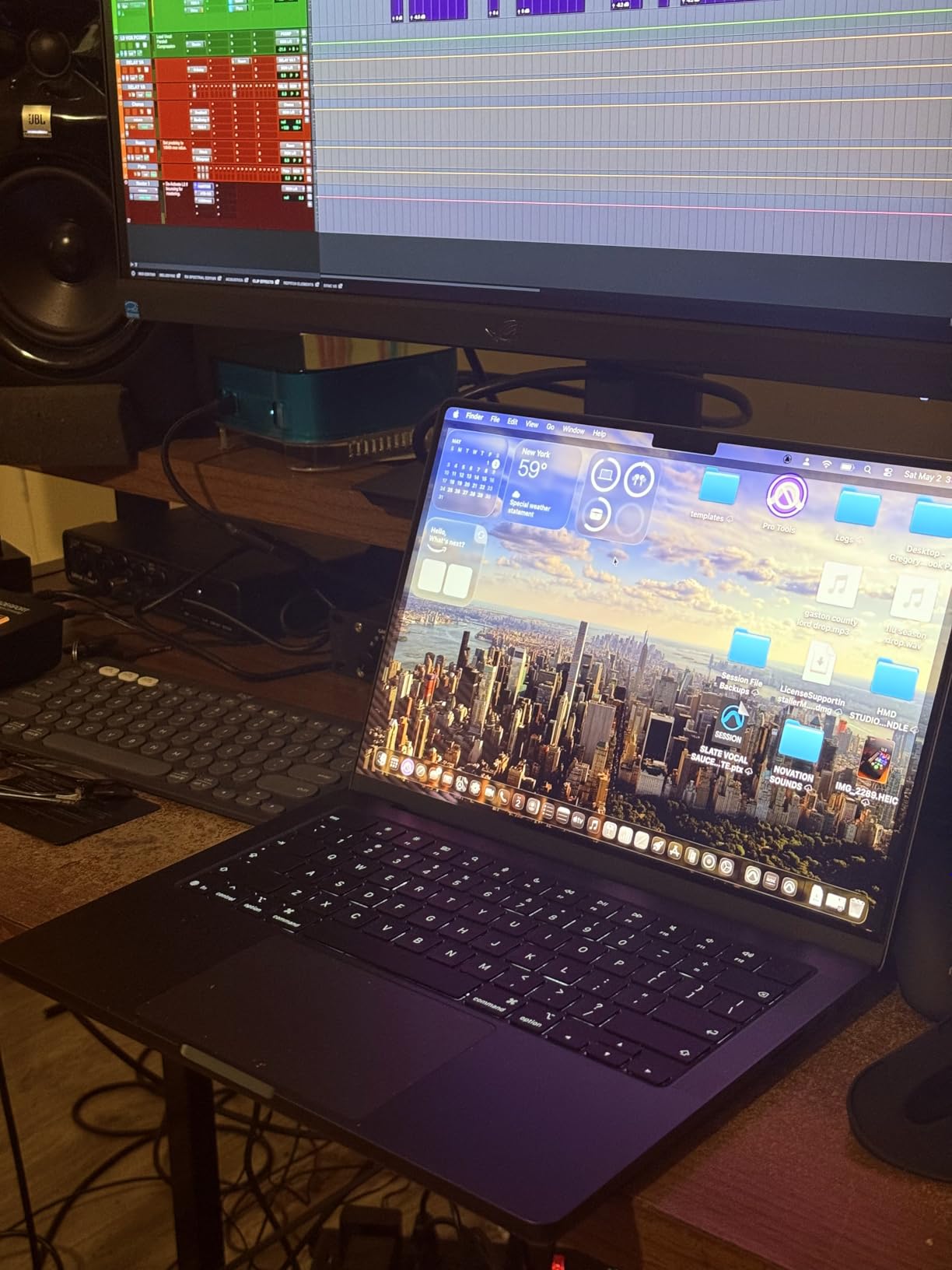
Consider it for a first Mac purchase, or an upgrade from an Intel-era laptop where the difference is night and day. Performance is identical on battery and on power, so a long train ride is not a slow hour. Microsoft 365 and Adobe Creative Cloud run at native speed on this silicon.
Ports are the compromise. You get three Thunderbolt 4 ports, MagSafe 3, an SDXC slot, HDMI and a headphone jack, but only two external displays are supported. The MacBook Pro M5 Pro 14.2 adds Thunderbolt 5 and a third display, which settles the choice for anyone running a laptop screen plus two monitors.
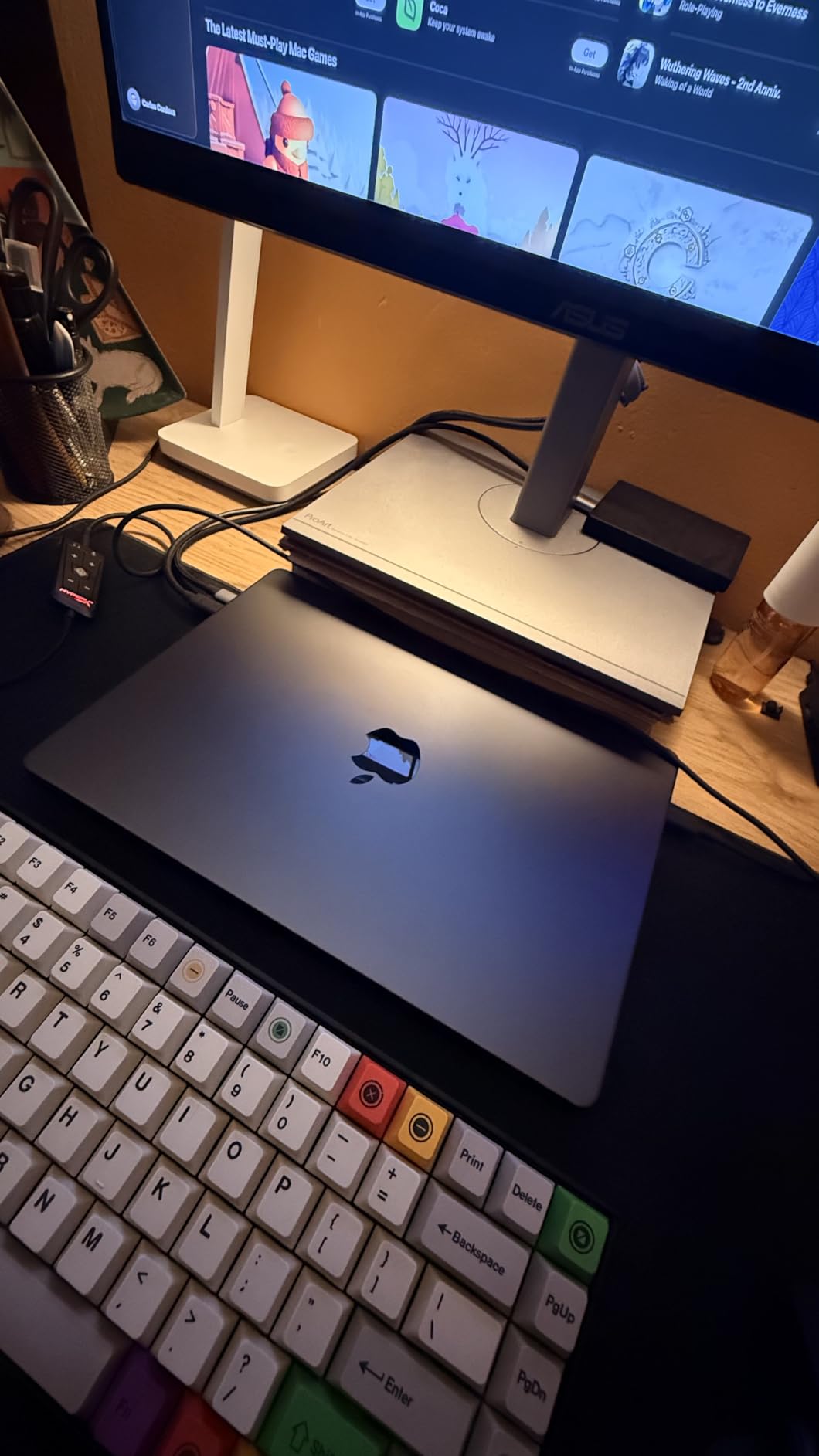
Good to know: at 3.41 pounds this is the lightest laptop in the list by a small margin, and the 10-core GPU is the entry tier of the M5 family. If your work stays in documents, code and photo edits, that ceiling will not touch you.
4. MacBook Pro M5 Pro 14.2: Best for Three-Screen Desks
MacBook Pro M5 Pro 14.2
Chip: Apple M5 Pro
Display: 14.2 inch XDR
Memory: 24GB
Storage: 1TB
Weight: 3.52 lb
Pros
- M5 Pro 15-core CPU and 16-core GPU
- Up to 2x faster SSD storage
- Wi-Fi 7 and Bluetooth 6 via the N1 chip
- Three Thunderbolt 5 ports
- Three external displays supported
Cons
- 24GB is a modest ceiling for large local models
- 1TB SSD fills fast with video and projects
- Smaller screen than the 16.2-inch M5 Pro
The reason to step up from the base M5 is the port and display ceiling, not raw speed. This machine supports three external displays, and it is the only 14-inch model here with Thunderbolt 5 across all three ports. Owners who run a laptop screen, a grading reference and a client-facing display will not hit a wall.
The M5 Pro carries a 15-core CPU and a 16-core GPU with a Neural Accelerator in every core, plus unified memory and SSD storage quoted at up to twice the speed of the previous generation. Reviewers describe it as markedly faster than the base M5 for pro workloads, and it holds a 4.7 rating across 203 reviews.
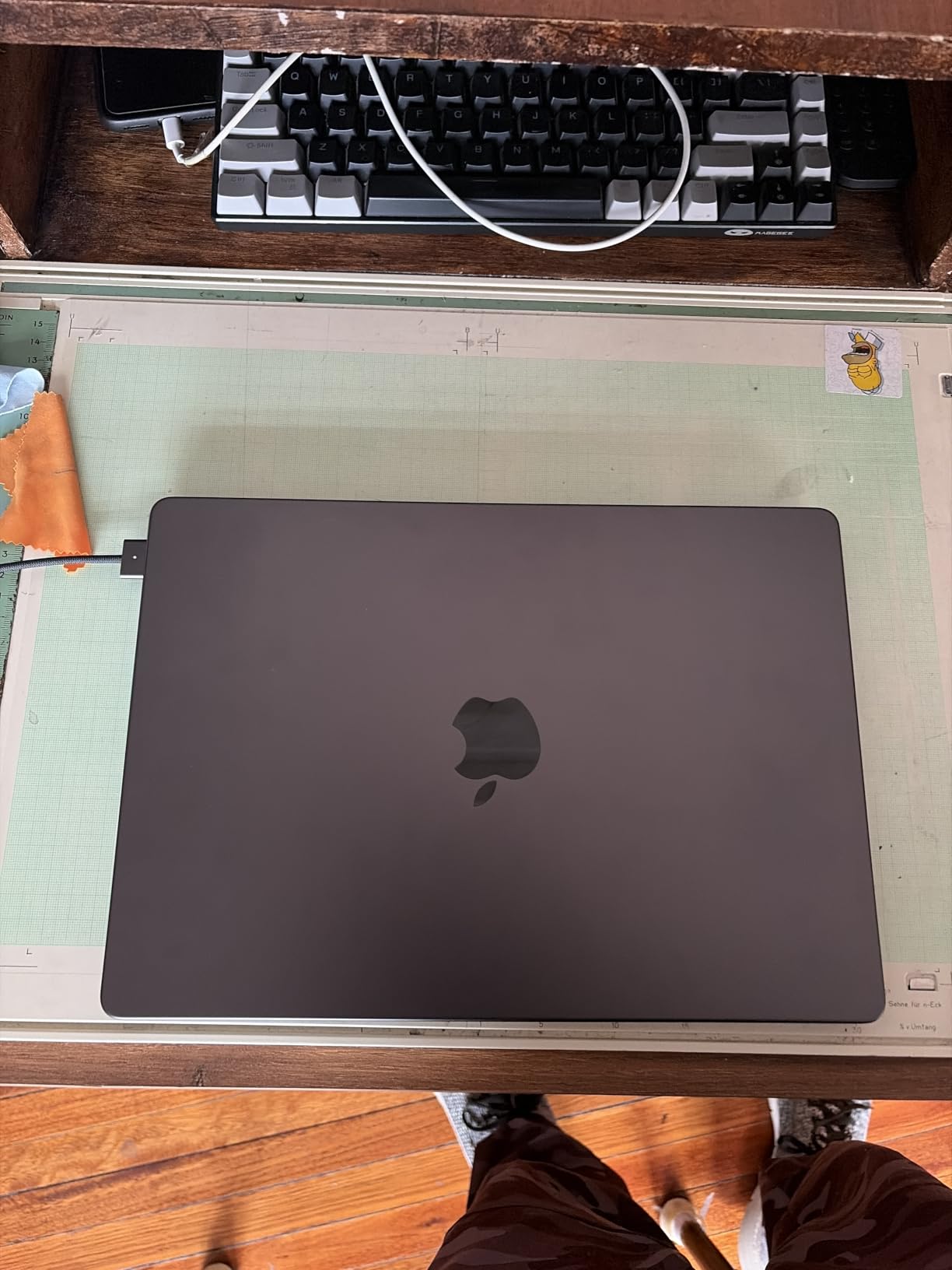
A local developer fits the profile here. Inference and on-device training are the stated design targets for the silicon, and Wi-Fi 7 with Bluetooth 6 through the Apple N1 chip keeps a busy office from clogging the connection. The chassis stays compact at 3.52 pounds with the same 1600-nit XDR panel as the base M5.
- 15-core CPU, 16-core GPU, Neural Accelerator per core
- Three Thunderbolt 5 ports, MagSafe 3, SDXC and HDMI
- Support for three external displays
- Same 14.2-inch XDR panel at 1600 nits peak
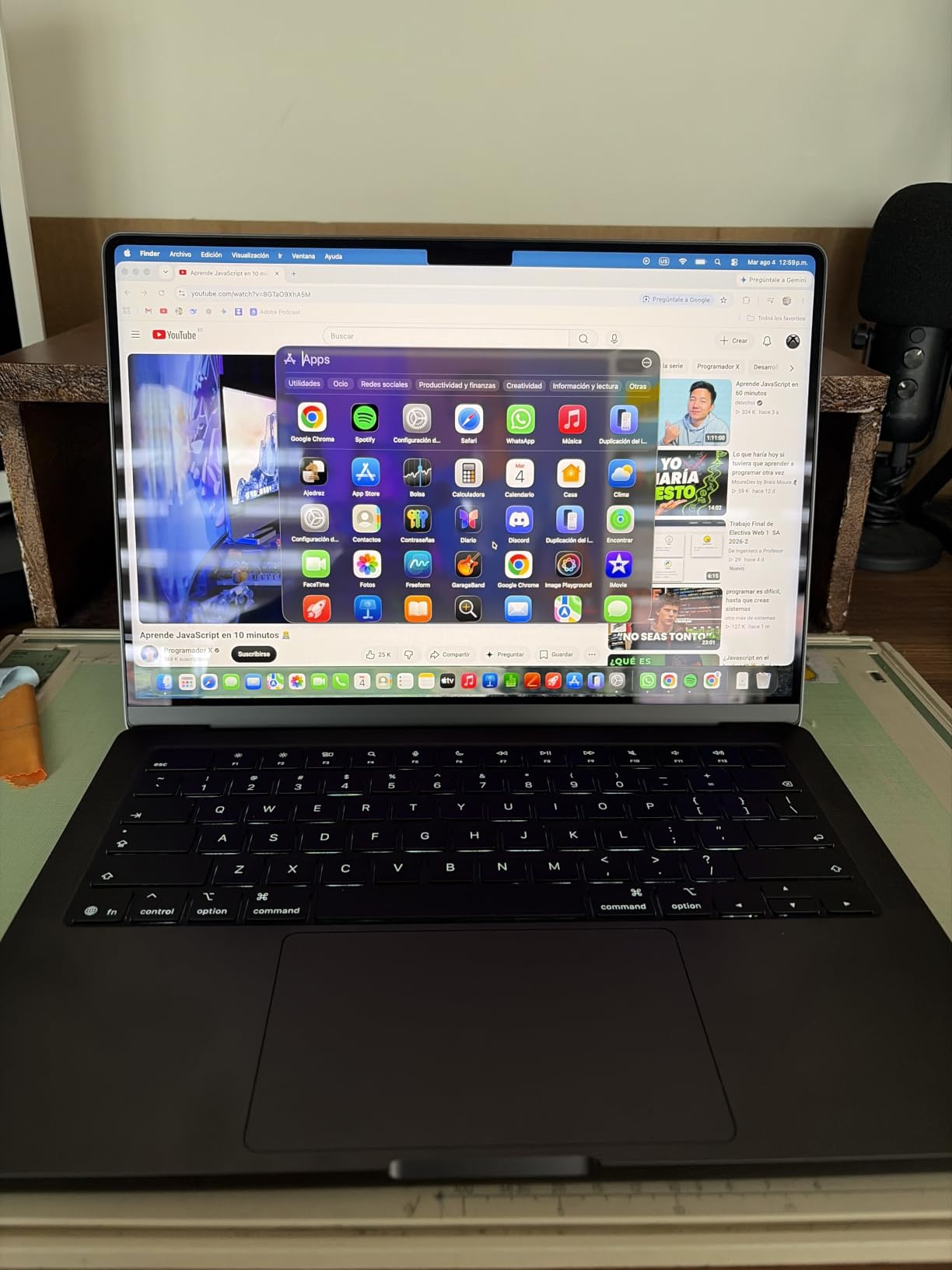
Two honest limits. 24GB is a modest ceiling if you plan to run larger models locally, and several buyers say they would have chosen more memory given the option. The 1TB drive also fills quickly once a project library lands on it. Compare with the MacBook Pro M5 Pro 16.2 if the screen matters more than the footprint.
5. MacBook Pro M3 Pro 14: Best for Matte Screens
MacBook Pro M3 Pro 14
Chip: Apple M3 Pro
Display: 14 inch matte LCD
Memory: 18GB
Storage: 512GB
Weight: 3.5 lb
Pros
- M3 Pro 12-core CPU and 14-core GPU
- 18GB memory and 512GB SSD
- Sharp 3024x1964 matte display
- Fast silent and cool under load
- Battery health often 90% or better
Cons
- Renewed grade can mean visible wear
- Some arrive with a third-party charger
- 90-day limited warranty
The M3 Pro 14 is the odd one out in this roundup, and that is exactly its argument: it is the only machine with a matte 3024×1964 LCD. Everyone working under studio lights or on a train with overhead strip lighting will notice reflections that the XDR panels do not produce.
Performance is closer to the renewed M1 Pro than to anything with M5 in the name. The 12-core M3 Pro processor runs up to 4.05GHz with a 14-core integrated GPU sharing 18GB of unified memory, and owners report it handling heavy multitasking, 4K editing and development workloads while staying fast, silent and cool.
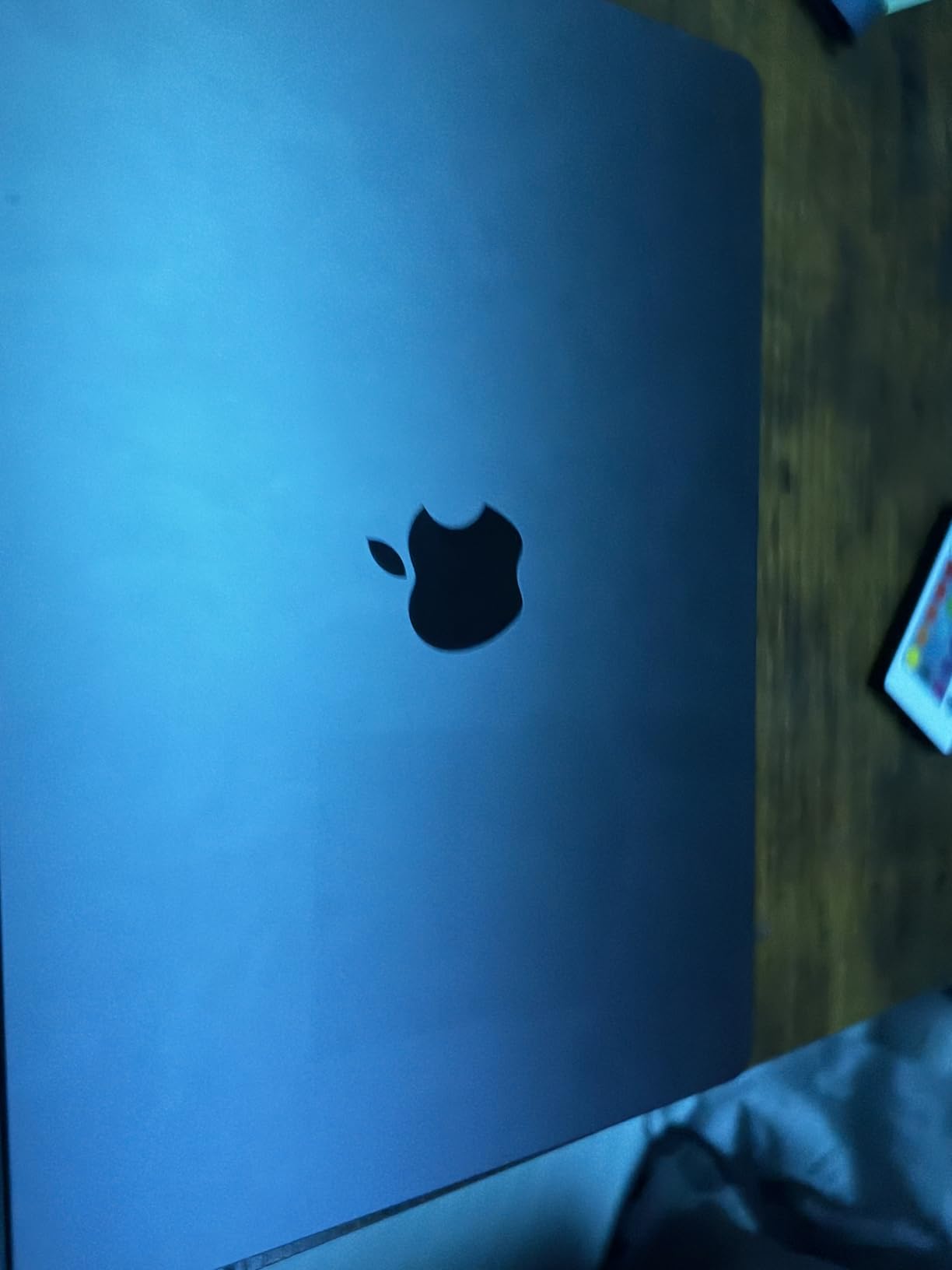
Read the negative reviews before buying, because they are specific and worth knowing. The 4.2 rating across 155 reviews sits below the M5 machines in this list, and the one-star feedback concentrates on condition rather than speed: visible wear, one report of a knick in the display glass, third-party off-brand chargers in the box, and at least one buyer stuck in a month-long refund process.
Good to know: battery health on these units is typically reported at 90% or better, which makes a full workday realistic even on a machine with a few years behind it. The Space Black finish is a fingerprint magnet, which is the least technical complaint in the file and the one owners mention most often in passing.

Against the MacBook Pro 14 M1 Pro, this machine gives you 2GB more memory, a later chip and the matte panel, and asks you to accept more variability in condition. Against the M5 14.2 it gives up the newest silicon entirely. Pick it when the screen finish and the memory matter more than the generation.
6. MacBook Pro M5 Pro 16.2: Best as a Desktop Replacement
MacBook Pro M5 Pro 16.2
Chip: Apple M5 Pro
Display: 16.2 inch XDR
Memory: 24GB
Storage: 1TB
Weight: 4.71 lb
Pros
- 18-core CPU and 20-core GPU
- Silent and cool under heavy load
- Big bright 16.2-inch XDR display
- All-day-plus battery life
- Three Thunderbolt 5 ports and Wi-Fi 7
Cons
- 24GB limits heavy local AI work
- 4.71 pounds is heavy for travel
- Long macOS setup for first-time owners
This is the most capable machine in the roundup and the one that behaves least like a laptop you carry. An 18-core CPU and a 20-core GPU, a 16.2-inch XDR display at the same 1600-nit peak, and a chassis that owners describe as a desktop-class workhorse that runs silent and completely cool under sustained load. It holds a 4.7 rating across 139 reviews.
Pick it for a studio desk, a client office or a home setup where it stays plugged in. Reviewers describe handling Adobe, Microsoft and AI workloads with no lag or crashes, and some report carrying a full 24 hours between charges. The six-speaker system with Spatial Audio and Dolby Atmos makes it a strong media machine as well.
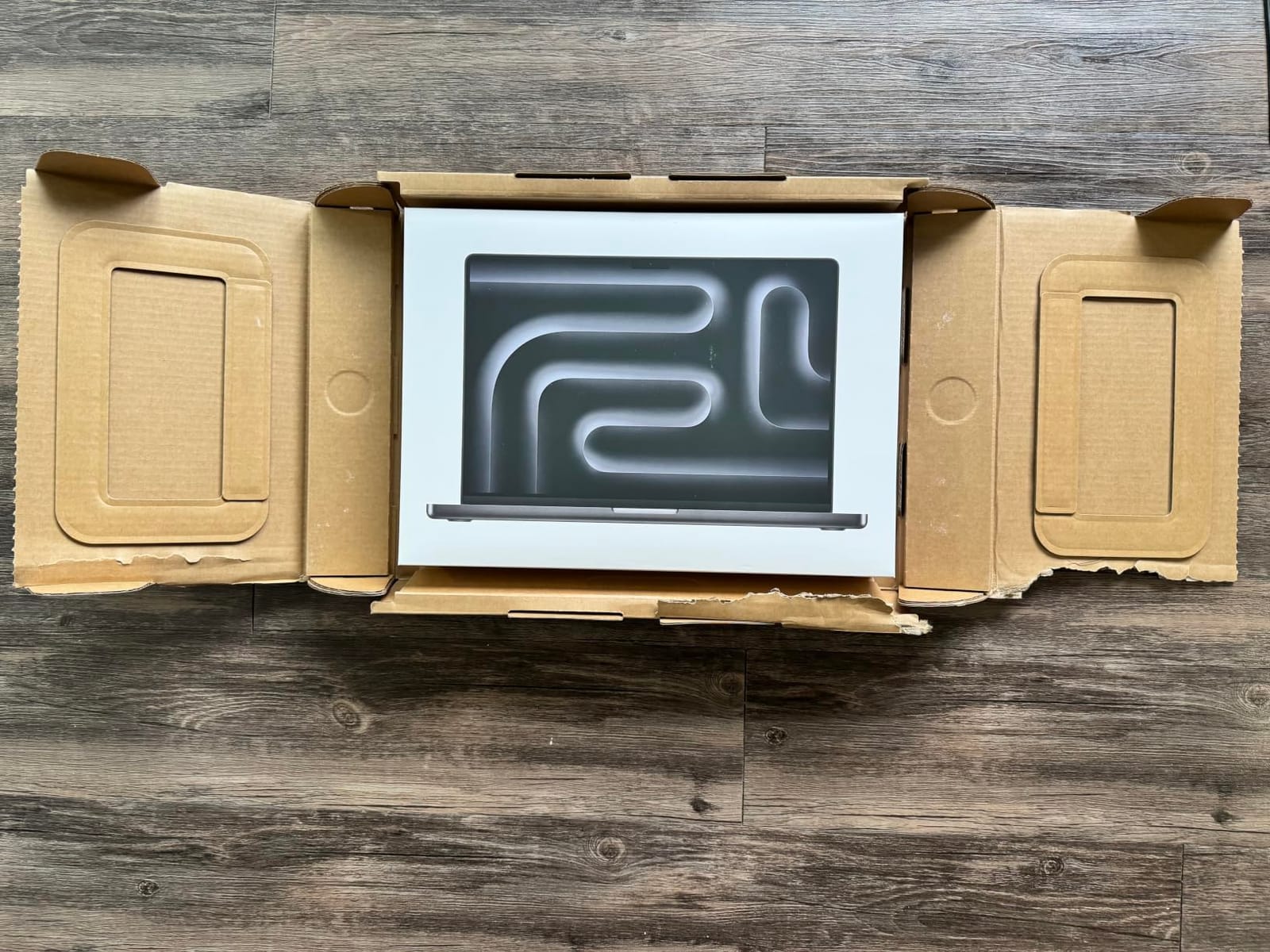
- Three Thunderbolt 5 ports, MagSafe 3, SDXC and HDMI
- Support for three external displays
- 12MP Center Stage camera with three studio mics
- Wi-Fi 7 and Bluetooth 6 through the Apple N1 chip
The regret owners express most often is memory. 24GB is a real ceiling for heavy local AI workflows, and several buyers say they wish they had gone to 48GB instead. At 4.71 pounds it is the heaviest machine here, so a daily commute argues for the MacBook Pro M5 Pro 14.2, which gives up only screen size and two GPU cores.
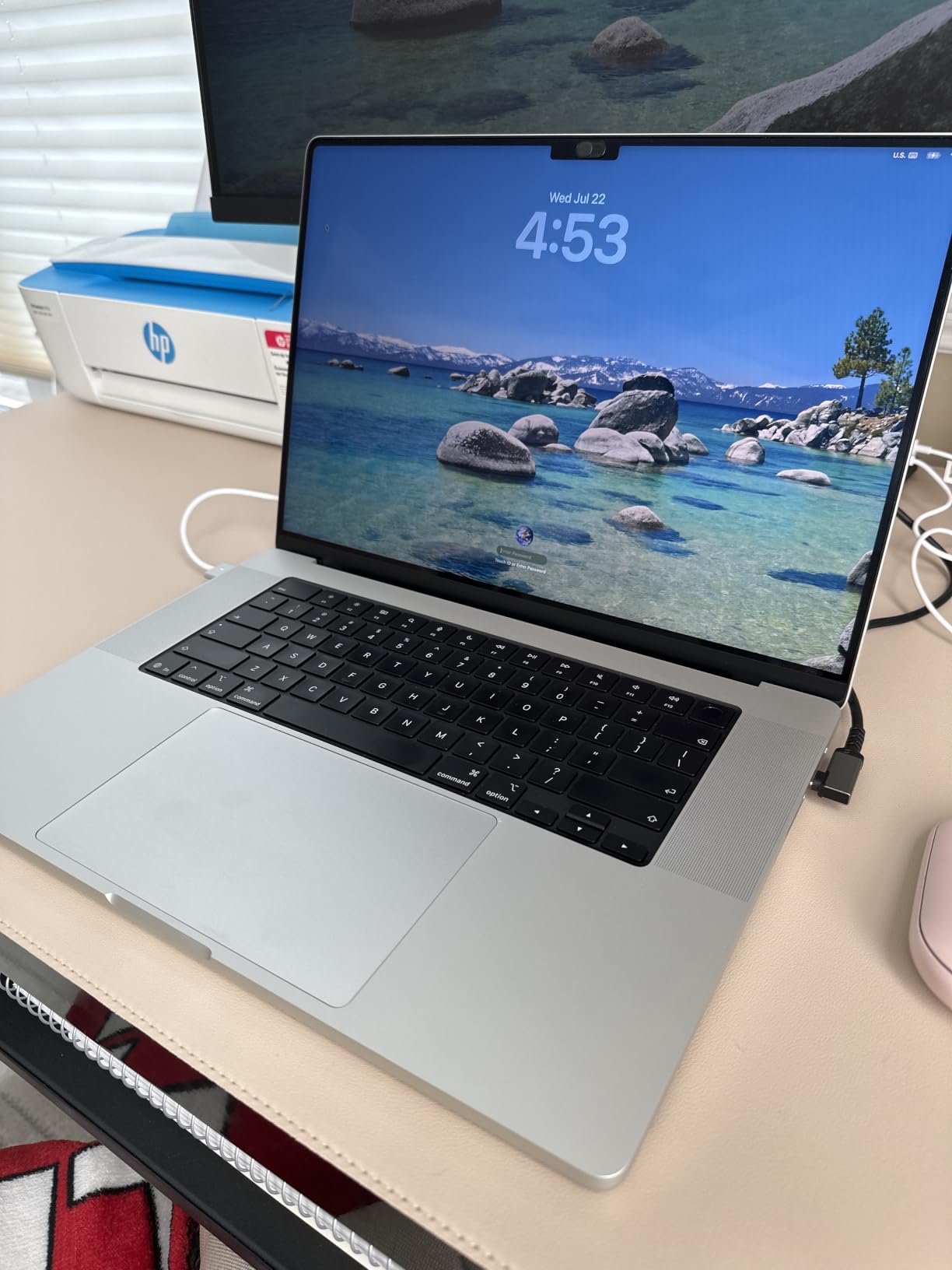
One more thing worth flagging for first-time Mac buyers: reviews mention a long, prompt-heavy macOS setup and migration process. It is a one-time afternoon, but plan the evening around it rather than around a deadline.
How to Choose a MacBook Pro During Prime Big Deal Days
Processor performance: what the chip tier actually buys
The base M5 with a 10-core CPU and 10-core GPU handles documents, code, photo work and light video without strain. M5 Pro configurations add cores for heavier timelines, larger exports and local AI models, where the difference shows up in render queues rather than in how fast a browser feels. For editing-heavy work, our computers for Adobe Premiere Pro guide breaks down what each tier means in a timeline.
Unified memory and storage: the specs you cannot change later
Memory is soldered, so 16GB is a floor rather than a starting point you grow out of. Treat 24GB as the sensible minimum if you keep a browser, a chat client and a video editor open at once, and 16GB as workable for a student or a writer. Storage matters less: 512GB is a live option when 1TB would be dead weight for documents.
Screen size against weight
Fourteen-inch models here weigh between 3.41 and 3.52 pounds, and the 16-inch machines weigh 4.6 and 4.71. That is close to a full extra pound, and it is the difference between a bag you forget about and one you notice every time. Pick the 16-inch only if you will mostly work at a desk.
Ports and desk setup
Count monitors before you pick a chip, because the display ceiling changes with it. The base M5 supports two external displays, while both M5 Pro models support three and move to Thunderbolt 5. If you are also shopping for a bigger panel, our ultrawide monitor deals roundup covers what pairs well with a MacBook desk.
Renewed versus new, and what the warranty changes
Renewed machines here carry a 90-day limited warranty instead of Apple coverage, and the same 14-inch chassis can arrive with wear or a third-party charger. New machines carry full support and current silicon. Renewed is the sensible route when the work fits inside 16GB to 24GB of memory and the budget matters more than the warranty paper.
How to shop MacBook Pro deals during the sale
Read the model number before you read anything else. This roundup spans two renewed 2021 machines, one renewed 2023 machine and three current M5 family models, and they are all called MacBook Pro, so a deal on one tells you nothing about the others. Check whether the listing says renewed or new, read what is in the box, and note who fulfils the order rather than who sells it. Most offers need a Prime membership, and listings change through the event.
- Confirm the model number matches the configuration you want
- Check whether the listing is new or renewed before comparing anything
- Read recent one-star reviews for the specific condition issues
- Verify memory and storage, since memory cannot be upgraded later
- Count external displays against your monitor plan
- Confirm Prime status, since most offers are member-only
Frequently Asked Questions
What is Amazon Big Deal Days?
Amazon Prime Big Deal Days is the retailer’s autumn sale event, and it runs October 6-7, 2026. Most offers on electronics during the event are limited to Prime members, and a free trial counts as membership. Laptop offers tend to appear across the full two days rather than at a single launch moment, so a configuration you want one afternoon can disappear the next morning.
Are the best Amazon Prime Big Deal Days MacBook Pro deals worth waiting for?
Usually, and the picks here are worth watching rather than rushing for. Current M5 family machines are where the biggest changes tend to show up, while the renewed 2021 and 2023 configurations sit closer to their everyday pricing and are reasonable at any time of year. Compare the exact model number rather than the chip name, because one chip covers configurations that differ widely in memory and storage.
Is a 14-inch MacBook Pro enough for professional work?
For most professional work, yes. The 14-inch models here run the same M5 and M5 Pro silicon as the 16.2-inch machine and carry the same 1600-nit XDR panel, so the difference is screen real estate rather than speed. Editors who keep a long timeline on screen all day, or anyone reading two documents side by side, get more from the 16-inch options. Memory matters more than size: 16GB is workable, 24GB is the sensible floor.
Which of these MacBook Pro configurations should I buy for video editing?
Match the chip to the timeline rather than to the badge. The two 16-inch machines give a timeline the most room, and the M5 Pro 16.2 has the most CPU and GPU cores at 18 and 20. For shorter edits the MacBook Pro M5 14.2 handles Adobe Creative Cloud at native speed, while the renewed M1 Pro models are the cheapest way into a ProRes-capable machine. Check that the chip and the screen size suit your footage, not just the core count.
How do I know which MacBook Pro configuration a deal refers to?
Match the model or ordering number on the listing to the configuration you want, then read the memory, storage and screen size on the same page. Chip names repeat across models, so one M5 Pro listing can cover machines that differ a long way in memory and storage. Renewed pages usually name the original year, which tells you which generation you are actually buying.
Is a renewed MacBook Pro worth buying during the sale?
It is, if your work fits inside its memory and storage and you accept a 90-day limited warranty instead of Apple coverage. Renewed units in this roundup run from 2021 to 2023 generations and owners mostly praise condition and battery health, but the one-star reviews concentrate on wear, screen glass and third-party chargers. Inspect the machine on arrival before the return window closes.
Final Verdict: Best Amazon Prime Big Deal Days MacBook Pro Deals
For the configuration with the most evidence behind it, watch the MacBook Pro 14 M1 Pro, our Editor’s Choice. Its 786 reviews describe the same reliable machine every time, and it is the sensible buy when 16GB of memory and a 3024×1964 XDR panel are enough. The budget-friendly alternative on the opposite end is the MacBook Pro M3 Pro 14, whose matte display and 18GB of memory suit people who work under bright light and want newer silicon than the M1 generation.
Buy the MacBook Pro M5 14.2, our Top Rated pick at 4.8, if you want current hardware once. Choose the MacBook Pro M5 Pro 14.2 for a three-monitor desk and Thunderbolt 5, and the MacBook Pro M5 Pro 16.2 as a desktop replacement with the most cores and the biggest screen. The MacBook Pro 16 M1 Pro, our Best for Big Screens pick, stays the answer for editors who want a large canvas without new-hardware money. Check the current price on each listing, confirm Prime status, and buy the configuration whose model number matches your work.