
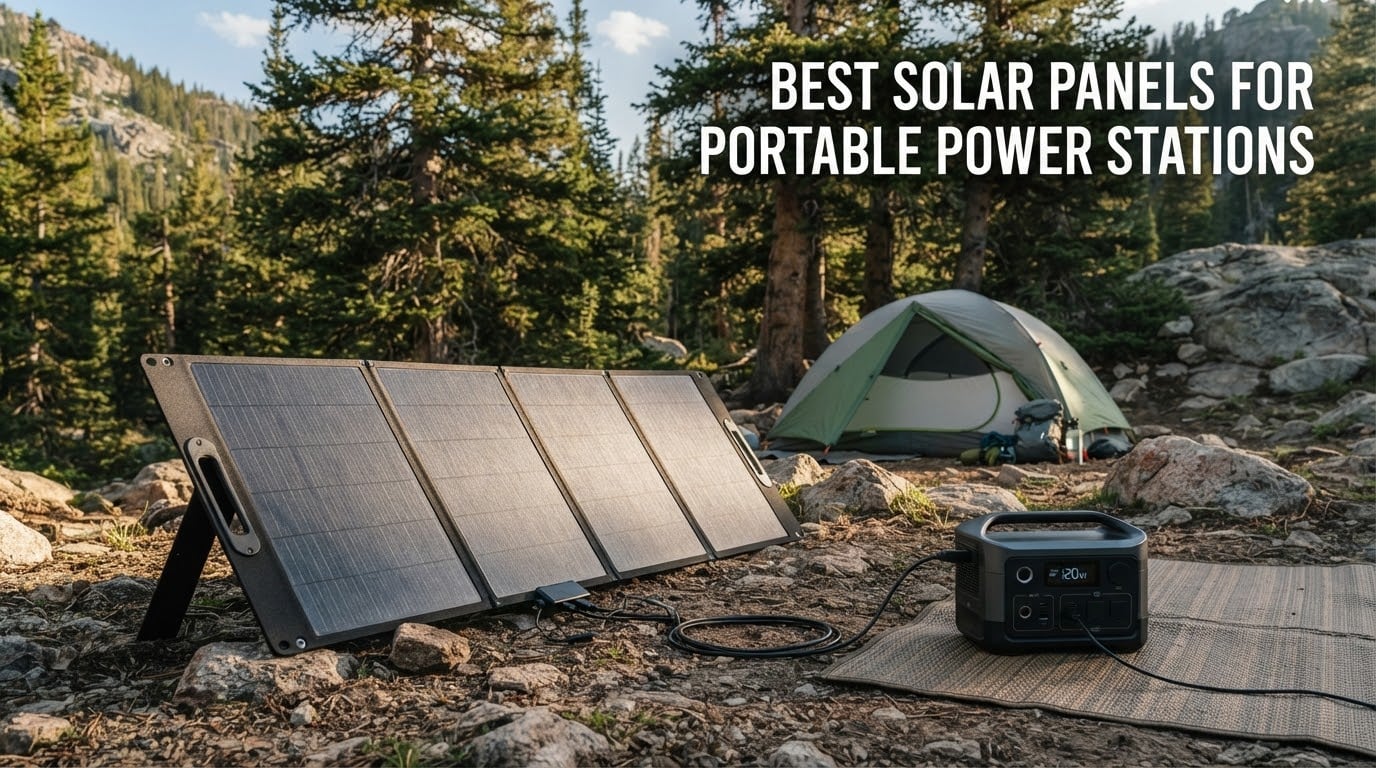
Every portable power station on the market ships with a solar input, and every one of them ships with a different idea of what you are allowed to plug into it. That is why picking the best solar panels for portable power stations feels harder than it should: the panel that tops the charts for raw wattage can be completely wrong for the station sitting in your trunk right now.
We spent weeks reading manufacturer spec sheets, cross-checking open circuit voltage against published MPPT windows, and pulling together owner reports from Amazon reviews and outdoor forums to build this roundup. The goal was not a ranking of the biggest panels. It was a ranking of the panels that actually deliver output to the power stations people own.
Twelve panels made the cut, spanning 40W trickle chargers to a 450W folding array. Below you will find measured-versus-nameplate performance, weight and fold sizes, the connector situation for each one, and the cold-weather and series-wiring gotchas that trip people up most often. We also included our best portable solar panels for camping picks if you want the outdoor-first angle.
Our verdict up front: the Renogy 200W portable panel is the one we would buy, because its 21.6V output sits inside the input window of nearly every mainstream station while still being light enough to carry in one hand.
Top 3 Picks: Best Solar Panels for Portable Power Stations (October 2026)
The three panels below cover the three situations most people actually face: one good general-purpose panel, one that fits a smaller budget station without drama, and one built like a piece of gear rather than fabric.

Renogy 200W Portable Solar Panel
- 25% N-Type efficiency
- 13.9 lb quad-fold
- MC4 plus USB-C PD 45W


EBL 200W Portable Solar Panel
- Up to 23.5% efficiency
- Plastic-framed rigid build
- 4-in-1 adapter cable
Each of those three solves a different problem, and we explain exactly where the other nine fit in the review sections further down.
Best Solar Panels for Portable Power Stations in 2026
Here is the full lineup at a glance. All twelve ship with folding or rigid construction and compatibility notes drawn from the manufacturer listing and owner reports.
| Product | Specifications | Action |
|---|---|---|
| Renogy 200W Portable Solar Panel |
|
Check Latest Price |
 Powkey 40W Portable Solar Panel Powkey 40W Portable Solar Panel |
|
Check Latest Price |
| ZOUPW 100W Portable Solar Panel |
|
Check Latest Price |
| EBL 200W Portable Solar Panel |
|
Check Latest Price |
 SOKIOVOLA N-Type 200W Solar Panel SOKIOVOLA N-Type 200W Solar Panel |
|
Check Latest Price |
 Renogy 400W Portable Solar Panel Renogy 400W Portable Solar Panel |
|
Check Latest Price |
 FlexSolar 100W Foldable Solar Panel FlexSolar 100W Foldable Solar Panel |
|
Check Latest Price |
 ZOUPW 450W N-Type Solar Panel ZOUPW 450W N-Type Solar Panel |
|
Check Latest Price |
 TWELSEAVAN 200W ETFE Solar Panel TWELSEAVAN 200W ETFE Solar Panel |
|
Check Latest Price |
 MHPOWOS 220W 40V Folding Solar Panel MHPOWOS 220W 40V Folding Solar Panel |
|
Check Latest Price |
 ZOUPW 200W Portable Solar Panel ZOUPW 200W Portable Solar Panel |
|
Check Latest Price |
 TWELSEAVAN 150W HPBC Solar Panel TWELSEAVAN 150W HPBC Solar Panel |
|
Check Latest Price |
How We Picked and Judged These Panels
We did not bench-test twelve panels on a calibrated solar simulator. What we did was work from three sources: manufacturer and distributor spec sheets, the warranty and certification language attached to each product, and the volume of owner reports attached to each listing.
That matters because portable panel output is dominated by variables no lab can fully replicate for a reader: sun angle, panel temperature, dust, partial shade and the charge controller inside the power station. Owner numbers are messier than lab numbers, but they are the numbers you will actually see on your own display in the field.
Every panel below was judged on four things. First, electrical fit: does the stated output voltage sit inside the MPPT window of the stations people actually own. Second, measured reality: what owners report versus the nameplate number. Third, portability: weight, folded footprint, and whether one person can deploy it without hardware. Fourth, build: lamination, frame material, water rating, and warranty length.
We deliberately excluded panels with no usable power station interface, and we excluded flexible adhesive-mount panels that need permanent RV installation, because they solve a different problem than portable charging. Forum threads on r/SolarDIY and r/PortableBatteryPacks shaped our thinking on the connector and cold-weather issues below, since those communities surface failure modes that product photos never will.
1. Renogy 200W Portable Solar Panel – The One That Fits Almost Every Station
Renogy 200W Portable Solar Panel for Power Stations, 25% Efficiency
25% N-Type efficiency
13.9 lb quad-fold
MC4 plus USB-C PD 45W
Pros
- 25% efficiency from 16BB N-Type cells
- Lightest 200W class panel at 13.89 lb with magnetic handle
- MC4 output plus USB-C PD and dual USB-A
- Four-angle kickstands
- UL 61730 certified
Cons
- Modest 200W output limits charging speed on large stations
- Magnetic closure is fiddly to latch one-handed
This is the panel we keep coming back to. The electrical spec that matters most is the 21.6V maximum voltage with 11.3A amperage, which is squarely inside the solar input window of the mainstream mid-size stations rather than at the edge of it. That single number removes most of the guesswork.
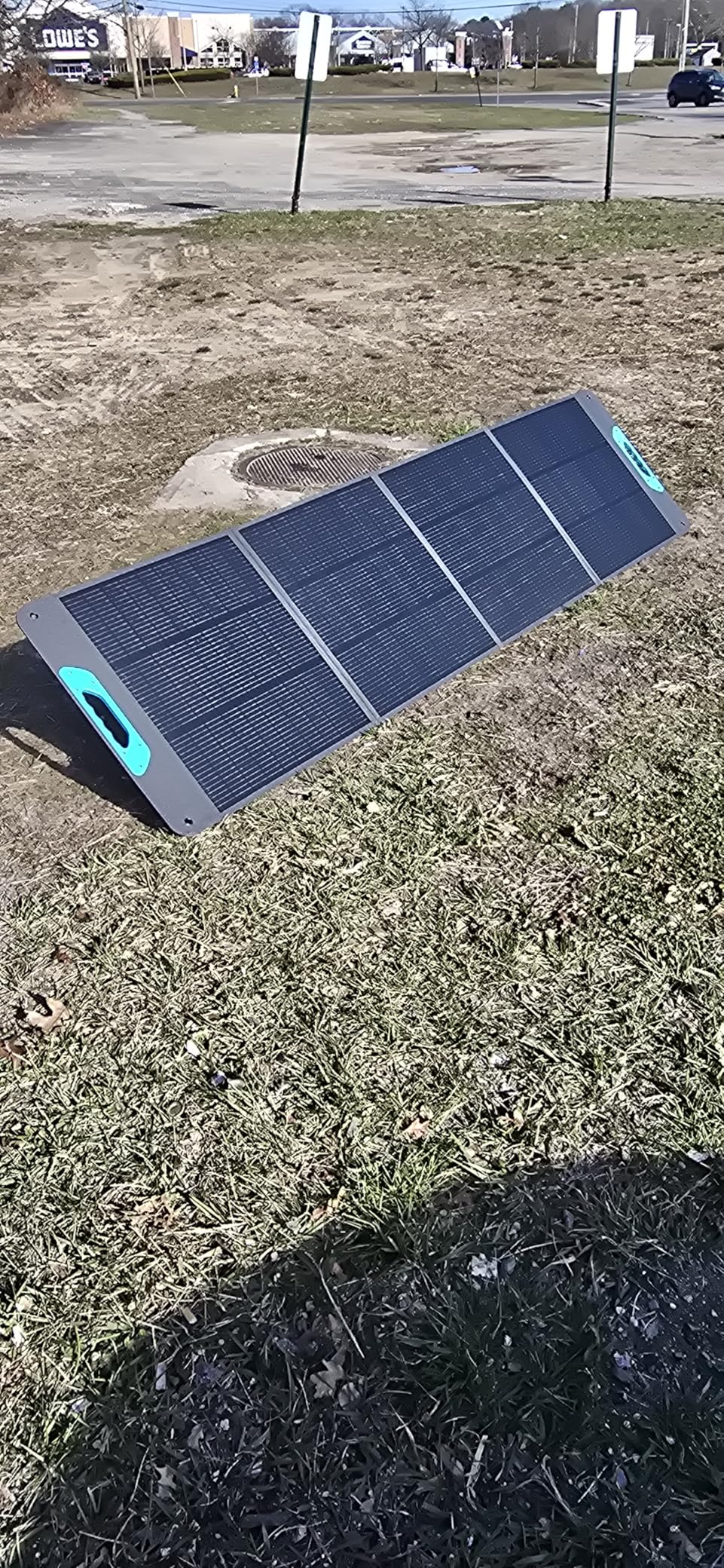
Cell technology is the other headline. Renogy uses 16BB N-Type monocrystalline cells at a quoted 25% conversion efficiency, where many competing 200W panels still run 9BB layouts at lower efficiency. Forum users have reported measuring this panel at 177W, an 88% conversion of the nameplate figure, which is a strong result for a fabric-cased portable unit.
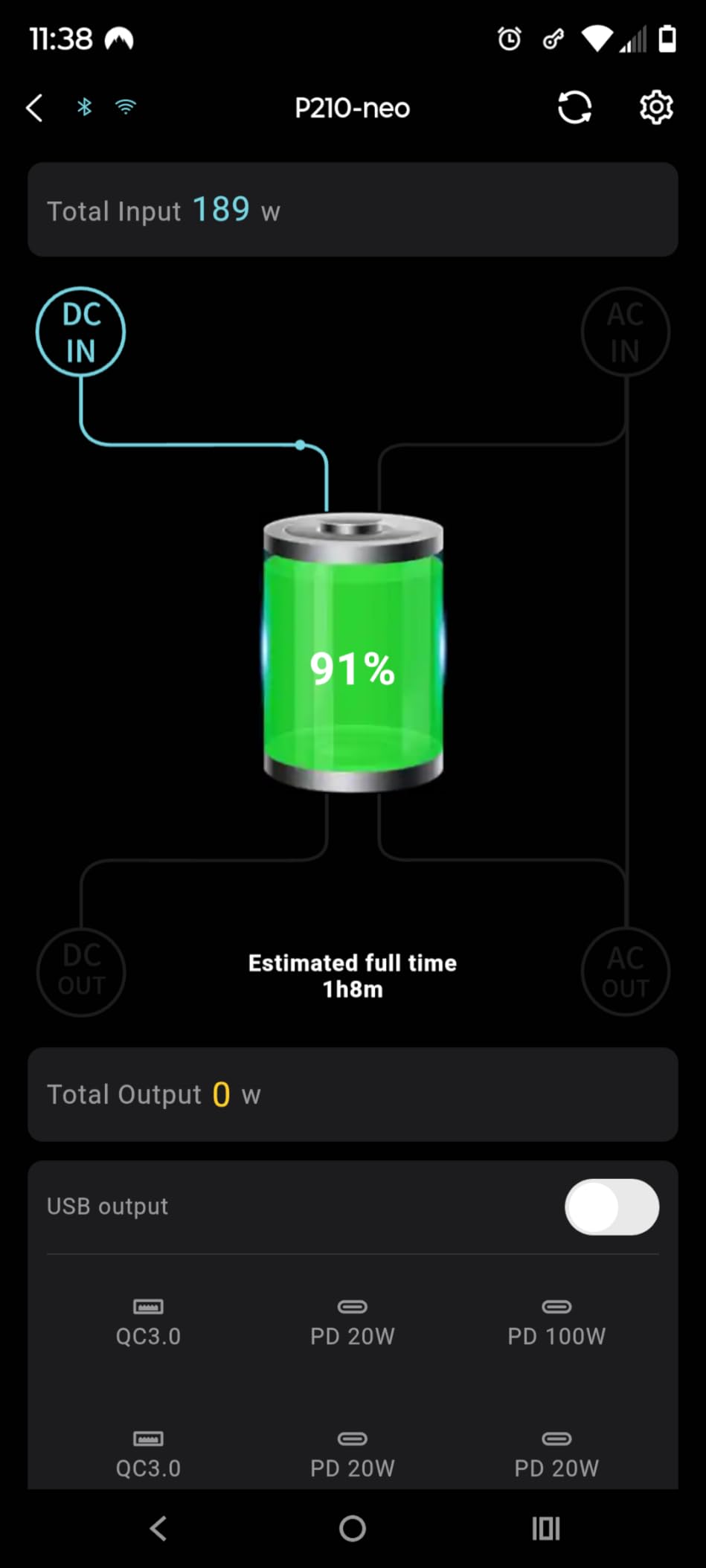
At 13.9 pounds it is the lightest 200W panel in this roundup by a comfortable margin. The quad-fold body closes with a magnetic handle and the folded footprint is roughly 24 by 23 inches, which fits behind a seat or in a standard bin without needing to be re-packed. The magnetic latch is the one bit of fussy hardware on the whole unit.
Output flexibility is unusually good for a portable panel. Alongside the MC4 port for power stations and 12V battery banks, it carries a USB-C PD port rated at 45W and two USB-A ports. In practice that means you can run a laptop or charge a camera bank directly from the panel while the station charges from MC4.
What works in practice
The three-angle kickstands at 40, 50 and 60 degrees are more than a gimmick. Owner feedback consistently notes that getting the panel off the ground and aimed at low winter sun makes a visible difference in daily harvest, and having discrete positions beats propping it against a rock.
Certification is where this panel pulls ahead of much of the category. It carries UL 61730 certification alongside CE, RoHS, FCC and CA65 compliance, plus reinforced grommets at the corners for tie-down mounting. If you are running this on an RV roof for a season, the rated IP65 splash protection matters more than the headline wattage.
Where it falls short
Two hundred watts is genuinely modest in 2026. Against a 2kWh station in winter, or during a multi-day trip with overcast conditions, you will be topping the battery up rather than refilling it. If your use case involves running a heavy load like a CPAP machine with a coffee maker alongside it, a higher-wattage panel or two panels is the better plan.
The other limitation is that USB-C direct output competes for the same surface area. If you are running USB-C at full tilt, the MC4 output drops. That is physics, but it is worth knowing before you plan a day around laptop charging and station charging at the same time.
2. Powkey 40W Portable Solar Panel – Best for Top-Ups, Not Full Charges
Powkey 40W Portable Solar Panel for 100W~200W Portable Power Station
22% monocrystalline cells
4.2 lb fold
DC5521 plus USB output
Pros
- Exceptionally light at 4.2 lbs and briefcase size
- Integrated charge controller in the zippered panel
- 10-in-1 cable covers most small power stations
- Very affordable entry point
Cons
- Real-world output often below the rated wattage
- Small fold is hard to hold at an optimal angle
- Not meant to meaningfully recharge larger stations
The honest way to describe this panel is that it is a maintenance device. At 40W with a 15V DC output and 2.6A amperage, its job is topping off a small power bank, keeping a phone alive, or trickling charge into a small station so it does not sit empty all winter.
Owners treat it exactly that way. Reviews describe it as a dashboard or pack-maintenance panel that reliably charges phones, power banks and small USB devices. Several reviewers specifically mention powering a CPAP machine off grid with it, which is a genuinely useful emergency capability even if it is not full-time solar.
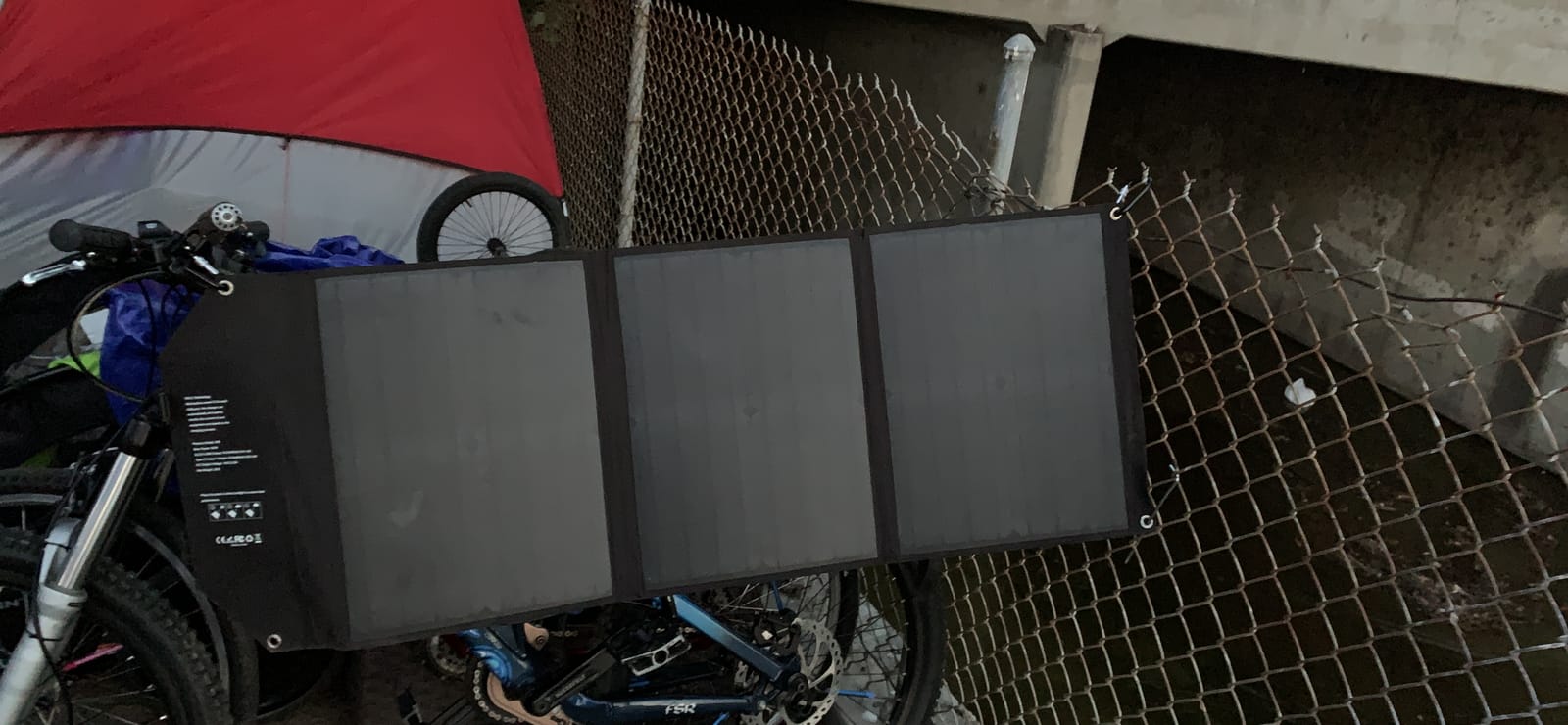
Weight is the headline feature at 4.2 pounds, and the folded size of 13.6 by 9.8 by 2.4 inches means it fits in a daypack without thought. The zippered storage panel has an integrated charge controller built into it, which is unusual at this size and removes one failure point from the chain.
The included 10-in-1 connector cable is the practical hero. It covers most small power station inputs along with common device plugs, which means one cable replaces the drawer of adapters most buyers accumulate. A TIR-C chip handles device recognition and charging protection.
What works in practice
For weekend campers and emergency kits, this is a panel you will actually use, because you can carry it without planning. It also carries an IPX4 rating for water, dust and high temperature resistance, which is enough for rain exposure on a picnic table but not for anything more demanding.
The USB output handles 5V/3A, 9V/2A and 12V/1.5A, so it can charge a phone at full speed and still feed a smaller USB device. Owners generally approve of the build quality at this tier, with the integrated controller in the zippered panel cited as a smart design choice.
Where it falls short
The recurring complaint in reviews is that it never reaches its stated wattage even in full sun, which tracks with what the specification actually promises at this size. Buyers who expected a power station charger are disappointed; buyers who expected a trickle charger are satisfied.
Two further limitations. The small fold area makes precise sun angle difficult without a separate prop, and the listing wattage is described as inconsistent between variants and packaging, so confirm you have the 40W version if that matters to you. Do not buy this expecting to recharge anything above a few hundred watt-hours.
3. ZOUPW 100W Portable Solar Panel – Best Value and Best Connector Coverage
ZOUPW 100W Portable Solar Panel for Power Station,23.5% Efficiency Mono Foldable Solar Charger for Jackery 300/Ecoflow River/Anker/Bluetti,IP67 Waterproof for Camping RV Off-Grid Emergency Power
23.5% efficient cells
5-in-1 connector cable
IP67 ETFE at 9.5 lb
Pros
- 5-in-1 cable fits essentially every major power station brand
- ETFE lamination and IP67 rating handle rain and splashes
- Weighs just 9.5 lb with magnetic carry handle
- Two 45 degree kickstands
- Built-in USB hub charges devices directly
Cons
- Input capped by the power station max input limit
- 100W output is modest for fast top-ups on mid-size stations
This panel wins on one thing more than any other in the roundup: connector coverage. The included cable terminates in DC8020, XT60, Anderson, DC7909/8mm and DC5521, which in plain terms means it plugs into Jackery, EcoFlow, Bluetti and Anker stations without a separate adapter purchase.
That matters more than raw wattage for a lot of buyers, because adapter chains are where portable solar setups usually break. A loose or mismatched connector generates contact resistance, which shows up as heat and intermittent charging, and the r/preppers and r/SolarDIY threads are full of people debugging exactly that problem.
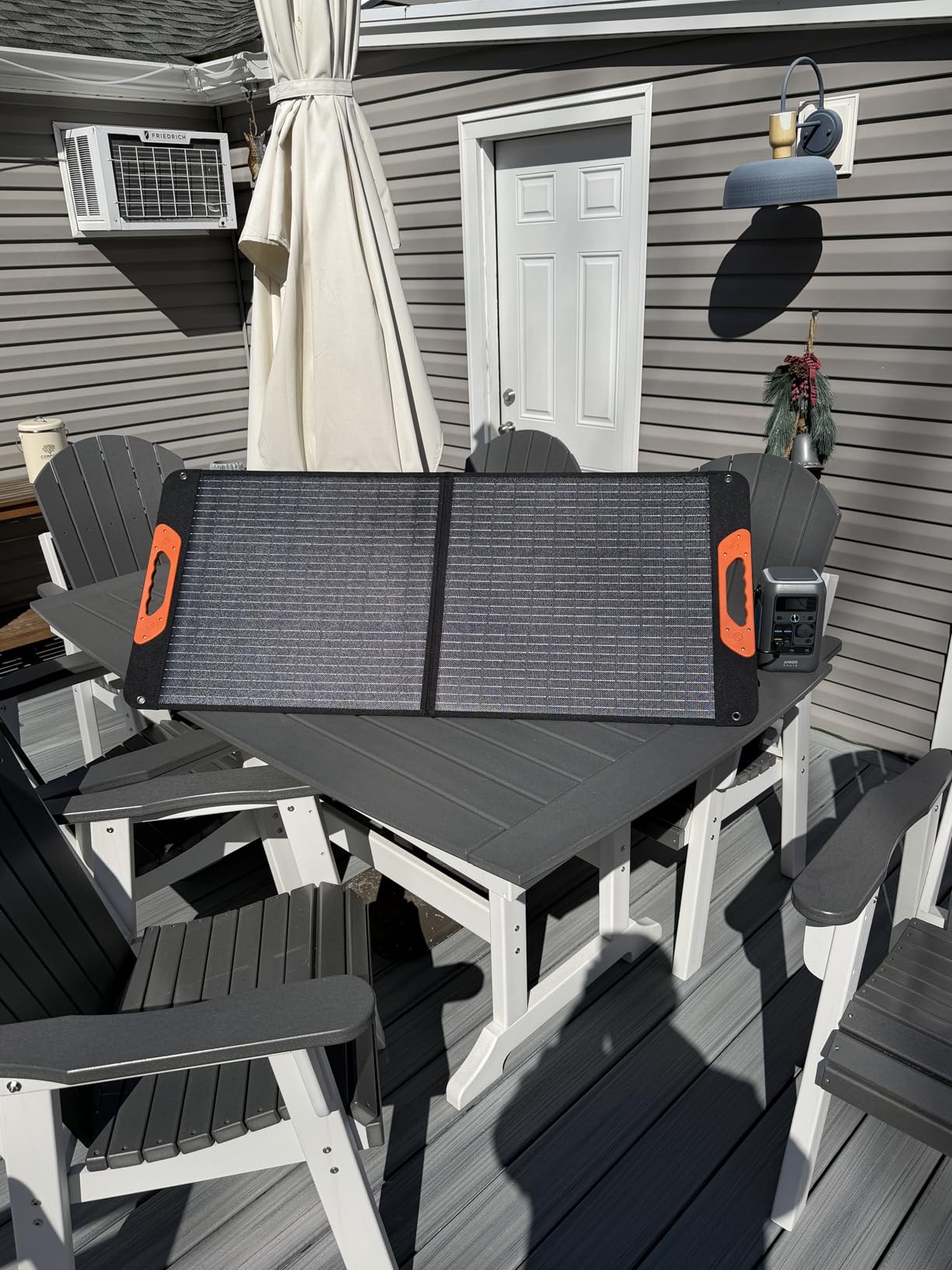
The electrical figures are unremarkable in a good way: 24.3V maximum voltage and 4.96A amperage, which is again a comfortable mid-range operating point that sits inside most stations MPPT windows. Cell efficiency is quoted at 23.5% on A+ grade monocrystalline cells with ETFE lamination.
At 9.5 pounds with a folded footprint of 24.13 by 21.06 by 1.77 inches, this is a panel you can genuinely carry one-handed while holding a coffee. Two adjustable kickstands at 45 degrees add meaningful yield in low-angle sun, and the shade-resistant cell layout helps when partial shade is unavoidable.
What works in practice
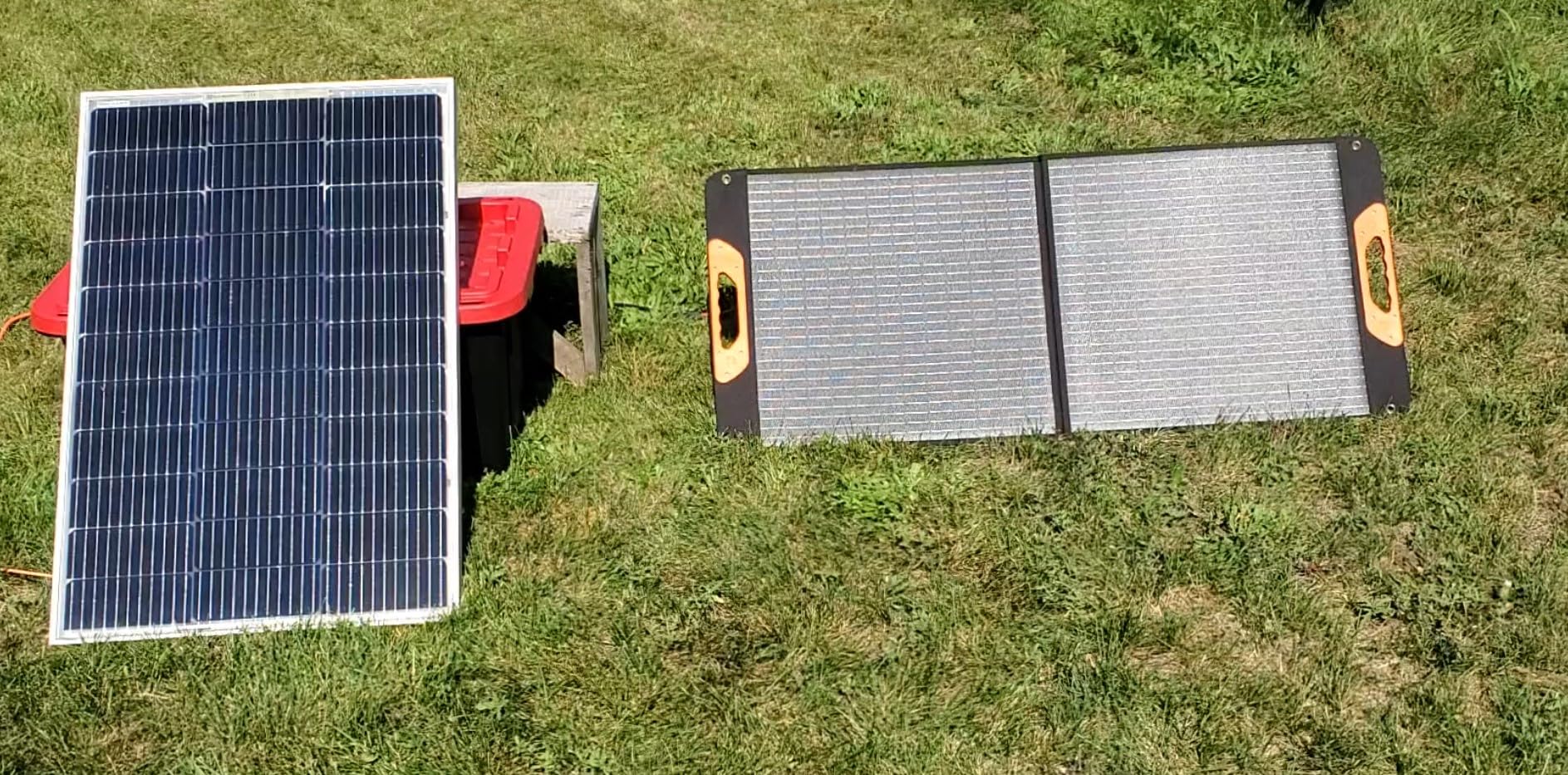
Owners highlight plug-and-play compatibility across the major station brands, easy one-person setup, and good low-light performance for the price class. At a 4.6 star average with 77 percent five-star ratings, it is the highest-rated panel in this roundup, and the feedback is unusually consistent rather than polarised.
The built-in controller adds a USB-C PD port at 15V/3A plus two USB-A ports including QC3.0, so you can charge a phone and a camera off the panel while the station charges independently. There is also a 10ft solar extension cable in the box, which solves the reach problem when the panel needs sun and the station needs shade.
Where it falls short
One hundred watts is not much. Against a 500Wh to 1000Wh station it produces a meaningful top-up, and against anything larger it becomes a trickle. If your goal is overnight recovery of a large battery, you will want to pair two of these or step up to a 200W unit.
The upper temperature rating of 158F is another quiet constraint worth checking against your climate if you plan to leave it deployed in a desert environment through summer. A zippered pocket protects the controller and cables, which helps, but does not change the rating.
4. EBL 200W Portable Solar Panel – The Most Substantial Build in the Group
EBL 200W Portable Solar Panel for Power Station, Foldable IP65 Waterproof
Up to 23.5% efficiency
Rigid framed build
MC4 with 4-in-1 cable
Pros
- Plastic-framed construction is stiffer and more stable than fabric-only competitors
- Owners report 150-190W in strong sun
- 4-in-1 cable covers Jackery Bluetti Anker and EcoFlow
- Easy to spot at a campsite
- Fast replacement service
Cons
- Water resistant rather than waterproof
- Short included cable limits placement
- Heaviest 200W class panel here at nearly 18 lb
Most portable panels are fabric stretched over a hinge, which means they flap, crease and eventually sag. This one is built around a rigid framed core, and owners who did research before buying consistently call it the sturdier alternative to floppier fabric competitors.
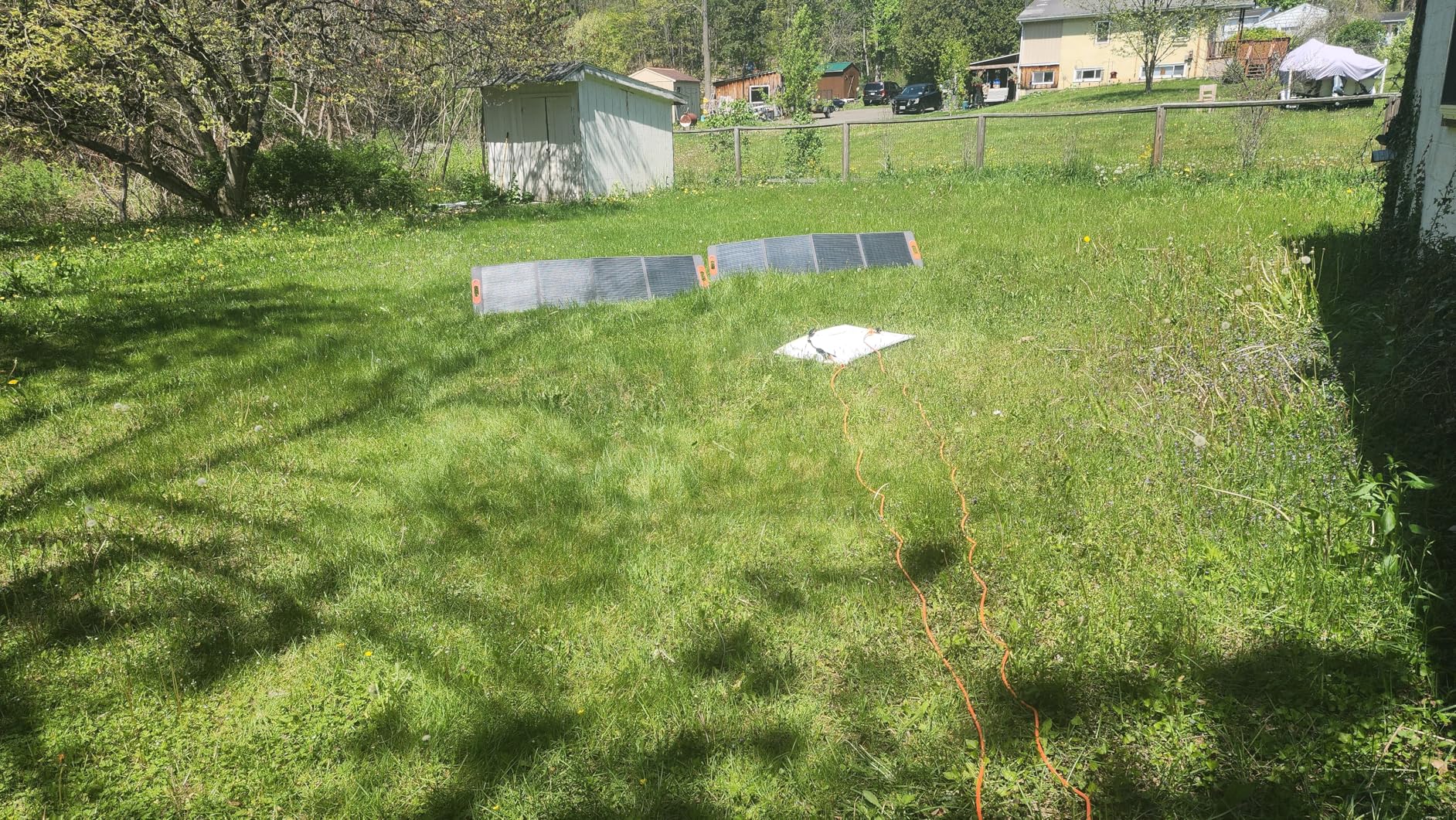
Multiple reviews document measurements between 148W and 191W in strong sun. That spread is honest for a portable panel and sits comfortably above what many owners of the fabric units in this group report, which is the main reason we included it alongside the Renogy.
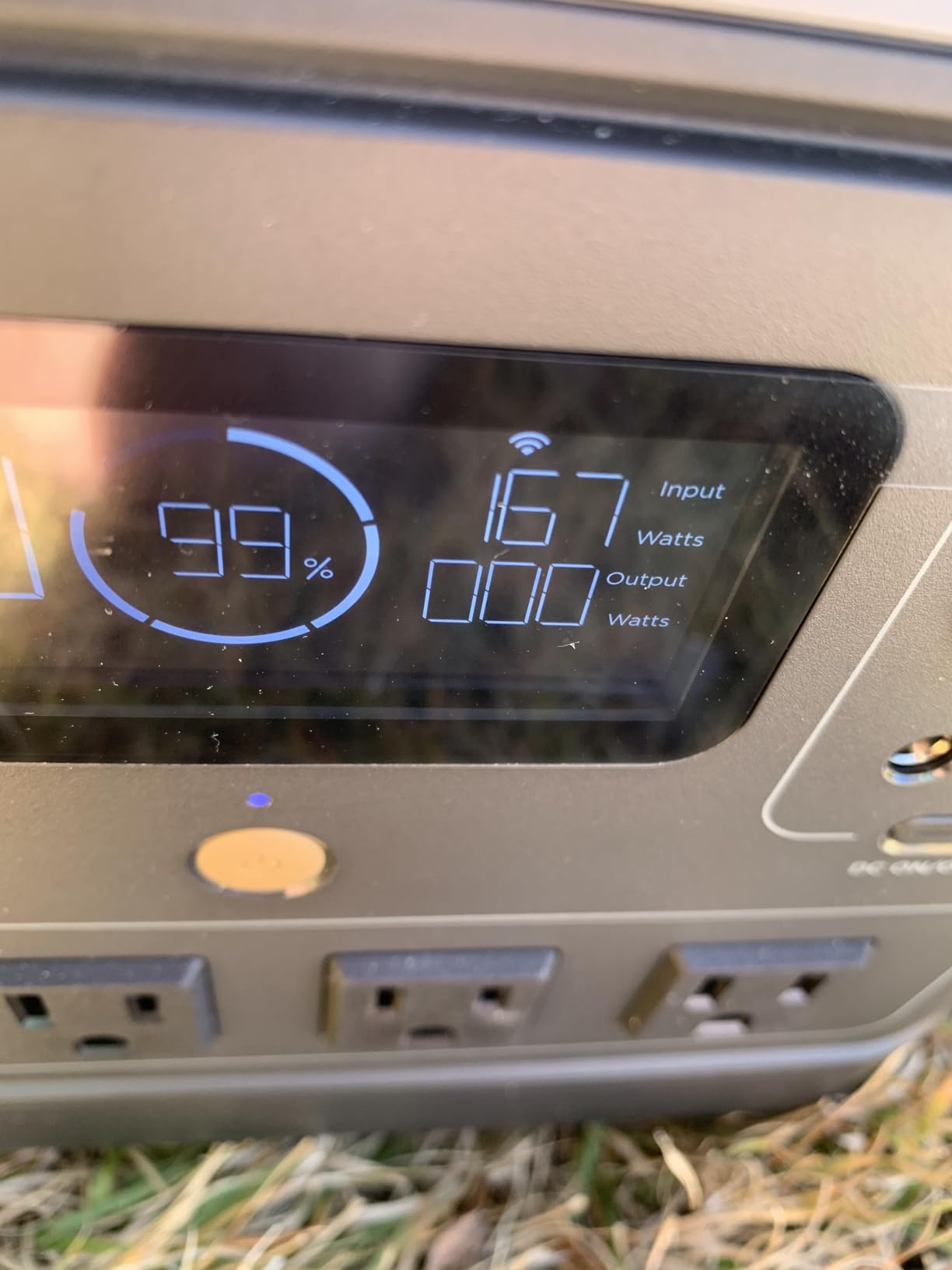
Power specs sit at up to 23.5 percent efficiency with a 35V DC maximum voltage. The MC4 output feeds an included 4-in-1 adapter cable covering XT60, Anderson, DC7909 and aviation connectors, which reaches most mainstream station brands without an extra purchase.
Construction uses upgraded PET lamination with an 840D Oxford cloth exterior over the rigid frame, and four kickstands handle positioning. Short-circuit and surge protection are built in, with FCC, RoHS and EMC certification on the listing.
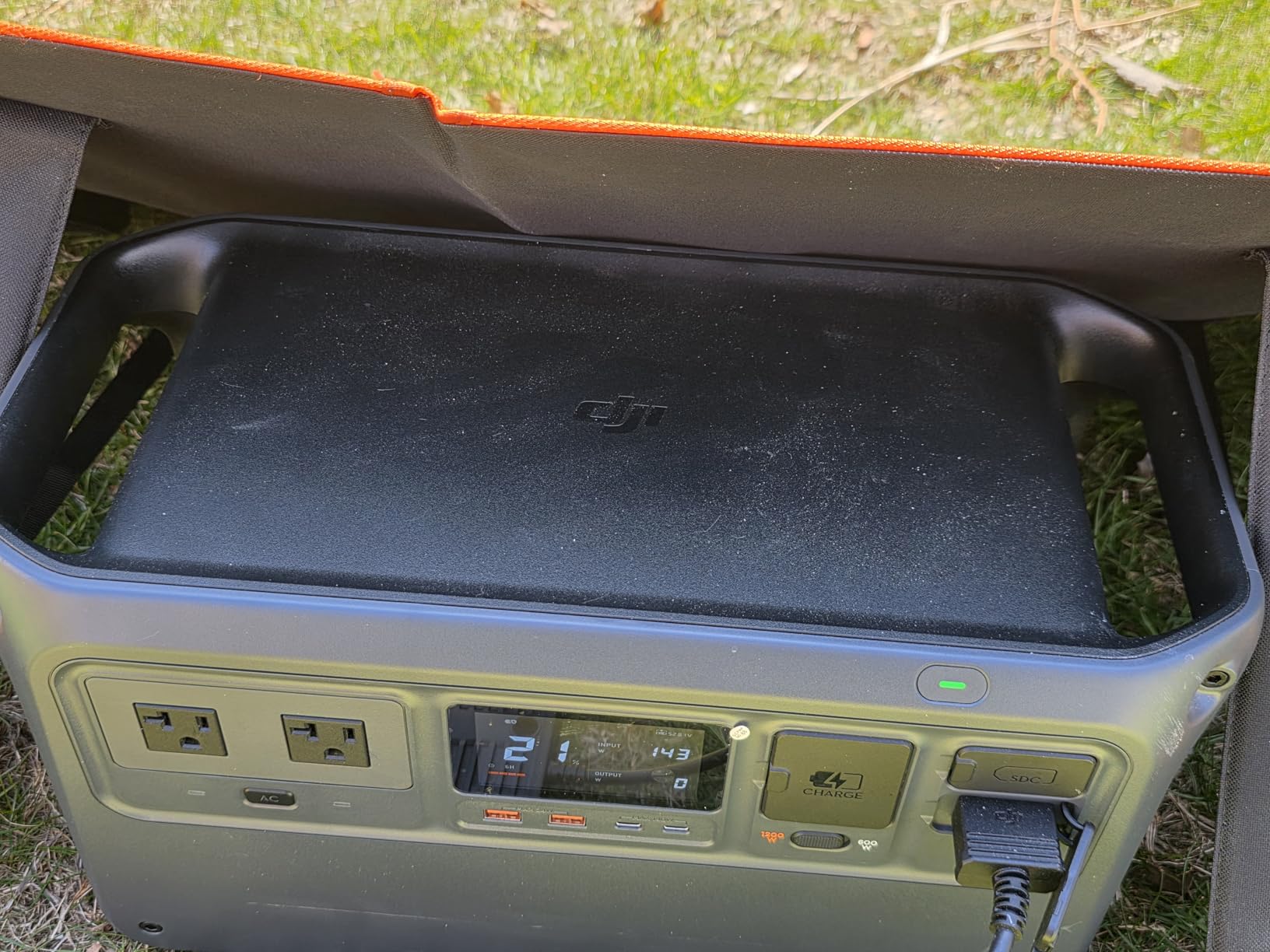
What works in practice
The rigid frame earns its keep in wind and on uneven ground, which is a genuine problem for fabric panels on rocky campsites. The bright orange side panels are also a small but real quality-of-life feature: finding your panel after a windy afternoon is easier when it is not another grey rectangle in the grass.
Reviewers also report that EBL customer service has replaced defective units quickly, which matters for a product where the panel is the single point of failure for your entire off-grid setup.
Where it falls short
At nearly 18 pounds it is among the heaviest 200W panels in this roundup, and the rigidity that helps in wind makes it less pleasant to carry. Plan on it being a car-camping and RV panel rather than a hiking one.
Two real caveats. It is water resistant rather than waterproof, so it is not intended to sit out in rain, and the included cable is short, which limits how far you can place the panel from the battery. Output falling to single-digit watts under even light shade is also reported by owners.
5. SOKIOVOLA N-Type 200W Solar Panel – Best for RV Roof Mounting
SOKIOVOLA N-Type 16BB 200W Portable Solar Panel for EF/Jackery/Bluetti/Anker Power Station Foldable Solar Panel 25% High Efficiency IP68 Waterproof for Outdoor Trip RV Camping Blackout Off Grid
25% N-Type cells
IP68 ETFE coating
Folds to 21 x 23 inches
Pros
- Firm sturdy body with strong snap legs
- Owners report 170-190W in good sun
- 5-in-1 cable covers most mainstream brands
- IP68 ETFE survives harsh weather
- Roomy cable pocket in the included bag
Cons
- Some owners report output dropping after months of daily use
- MC4 pigtails from the junction box are very short
- Weak rivets on the back panels
- Heavy at 16.3 lb
The four grommet holes and the storage bag with a roomy cable pocket are the details that put this panel on RV roofs rather than in a daypack. Combined with an IP68 ETFE coating, it is the most weather-tolerant fabric-adjacent option here for a permanent or semi-permanent mount.
Performance claims check out in practice: multiple owners report measured outputs between 170W and 190W in good sun. The 5-in-1 cable covers XT60, DC5521, DC7909, DC8020 and Anderson, and the manufacturer lists compatibility with Jackery, EcoFlow, Bluetti, FlashFish, Goal Zero and Anker.
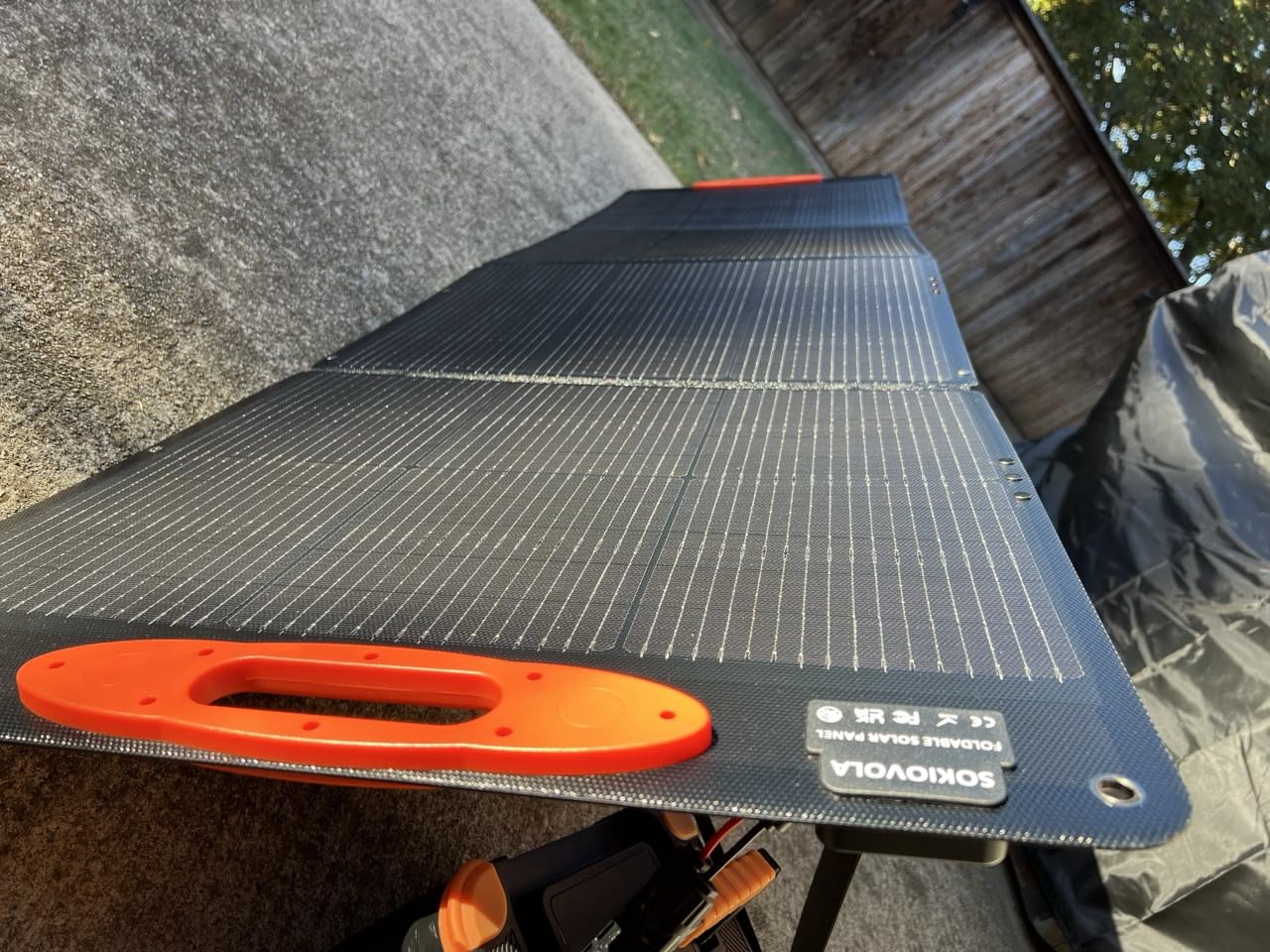
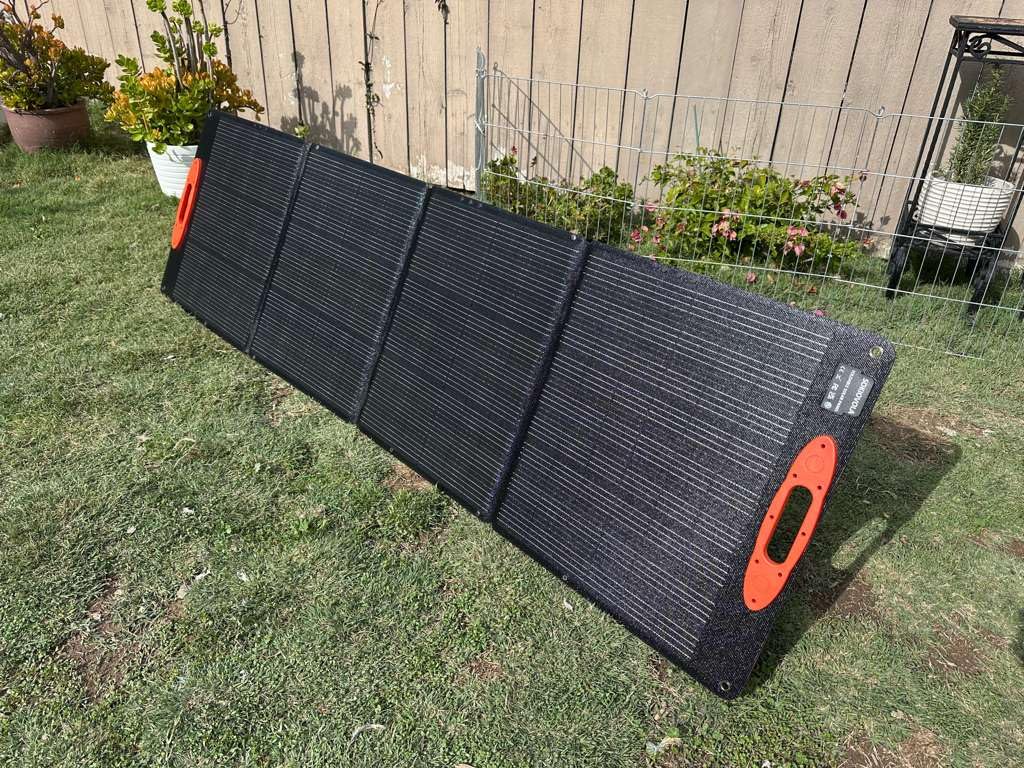
The panel body is firm with strong snap legs rather than floppy fabric hinges, which is what keeps it usable in wind. Folded size is a compact 21 by 23 inches, smaller than most 200W foldables, and it comes with a 10.49ft extension cable in the box.
Cell specification is A+ grade monocrystalline at up to 25 percent conversion efficiency with an 18V output, which again lands in the friendly part of the voltage range. A magnetic carry handle is built into the fold.
What works in practice
Build stiffness is the theme across the positive reviews. Combined with the grommets, that makes this the panel in the roundup we would trust most for a long-term rooftop deployment where a sagging fabric panel would be a recurring annoyance.
Connector breadth is genuinely excellent. Being able to swap between stations without sourcing a specific adapter cable is worth real money over a multi-station ownership, and the 3m extension cable means the panel can sit in full sun while the station stays in shade.
Where it falls short
This is the most polarised panel in the roundup: a 4.3 average with 68 percent five-star ratings. Some owners report output dropping by roughly half after six months of daily use, and weak rivets on the back panels are a recurring complaint among people who have had theirs up on a roof for a while.
The MC4 pigtails coming off the junction box are very short, so you will be relying on the included extension cable. Output also drops sharply in low light and overcast conditions, and 16.3 pounds is heavy for anyone considering backpacking with it.
6. Renogy 400W Portable Solar Panel – For Stations With a High Input Ceiling
Renogy 400W Portable Solar Panel, Premium Materials for Decades of Use
400W at 23% efficiency
30.2 lb fiberglass body
IP67 with IP68 connectors
Pros
- Only 30.2 lb for a 400W unit
- Fiberglass and ETFE built for long service life
- Parallel wiring helps under partial shading
- IP67 waterproofing and hail resistance
- Carry case included
Cons
- Bulkiest fold size in the roundup
- Higher cost than 200W alternatives
- 67.5V output needs a high input voltage ceiling
Four hundred watts is the jump point where a panel stops topping up a battery and starts actually refilling one overnight. This is the option for anyone running a 2kWh to 4kWh station who wants a meaningful harvest without wiring four panels together.
The catch is electrical, not physical. Its 67.5V DC maximum voltage means the MPPT window of your station has to accommodate that, and many mid-size units top out well below it. Check your station spec sheet before anything else, because a voltage mismatch here is not a nuisance.
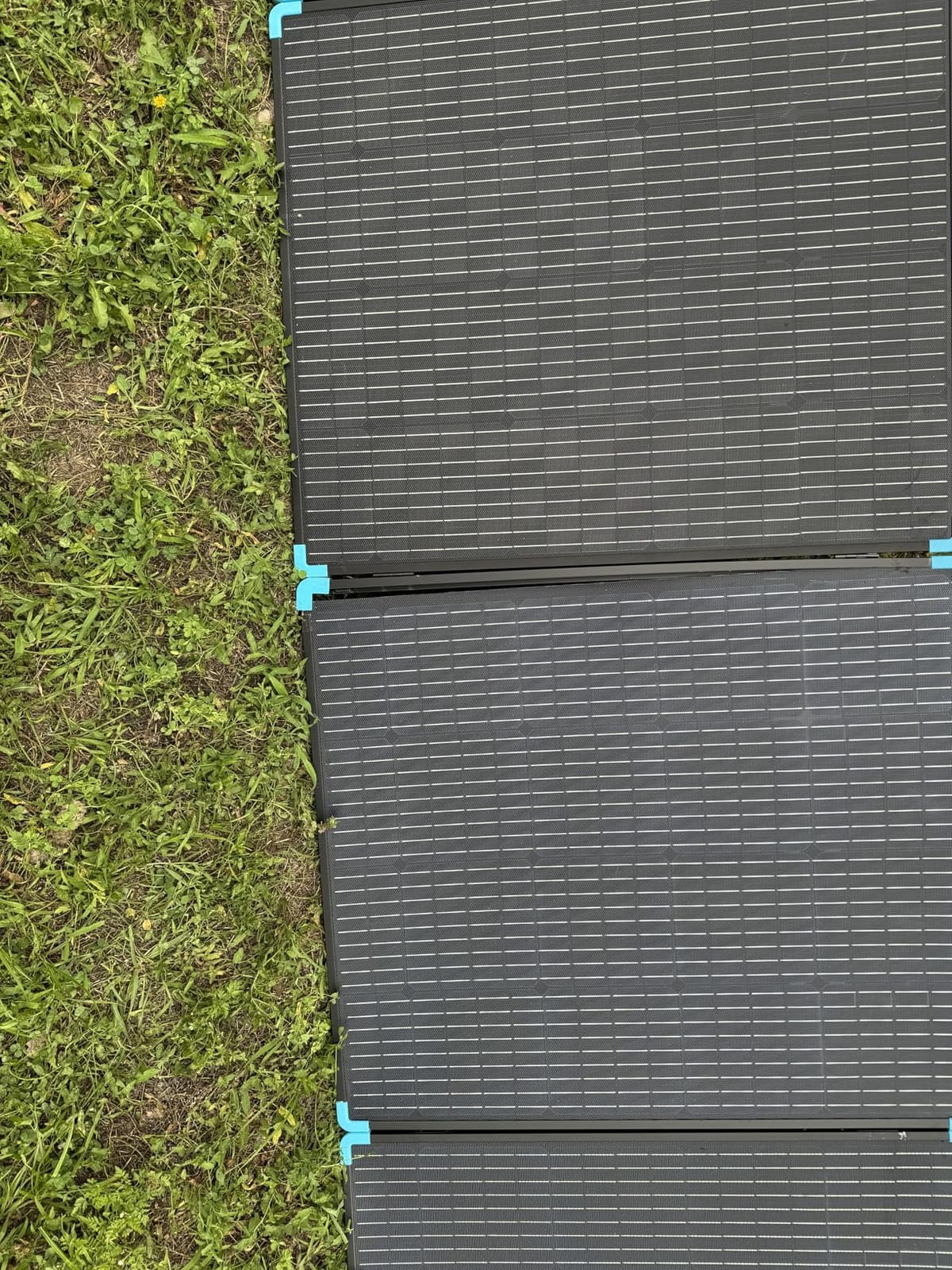
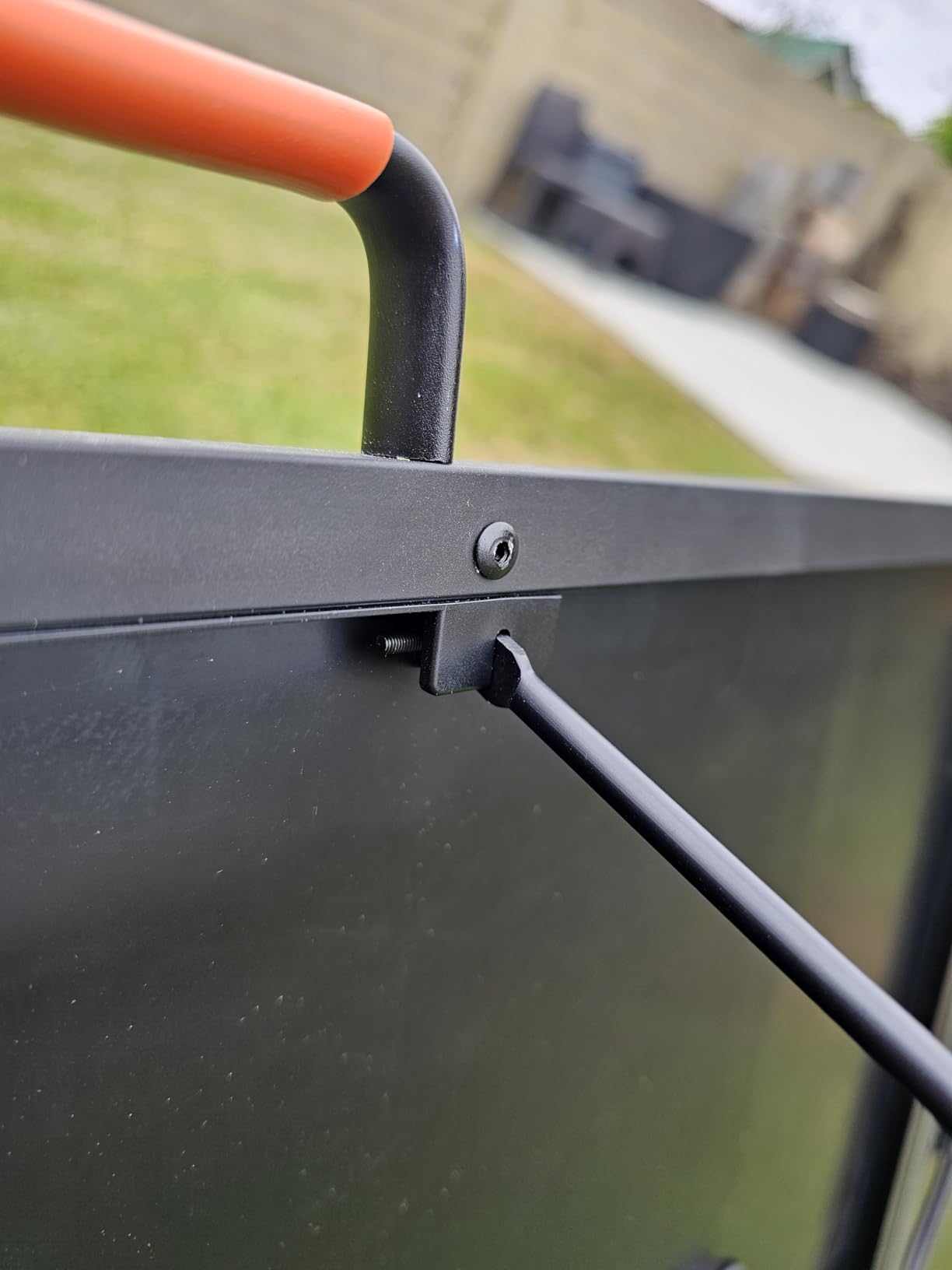
Build is the strongest in the roundup. A fiberglass-reinforced frame with ETFE coating and an aluminium backsheet gives a panel that is rated IP67 for waterproofing with a hail-resistant surface, and the connectors themselves are IP68 rated.
The parallel wiring design is worth calling out specifically. Because the internal wiring is parallel rather than series, a partially shaded section loses less total output than it would on a conventional series layout, which is the single most common reason people end up disappointed with a fixed rooftop array.
What works in practice
Setup is tool-free and advertised at roughly 60 seconds with rust-proof kickstands, and a carry case is included for transport and storage. The 23 percent efficiency with A+ monocrystalline cells is competitive for a 400W unit, and the warranty runs three years on materials and workmanship, the longest in this roundup.
For anyone running a large station where power input, not panel count, is the limiting factor, one of these can replace a whole array of small foldables plus the cabling to connect them.
Where it falls short
Portability is the honest weakness. The folded body is nearly 34 inches wide and 30.2 pounds, which is a two-person carry and an entire shelf in an RV. This is gear for a basecamp, a garage, or a permanently mounted roof position, not for carrying into a site.
It also costs considerably more than a 200W alternative, and the voltage requirement rules out a lot of popular stations outright. If your station accepts only 30V or less of solar input, this panel simply is not for you, no matter how good the output would be with the right hardware.
7. FlexSolar 100W Foldable Solar Panel – Best for Ultralight Packing
FlexSolar 100W Foldable Portable Solar Panel Charger IP67 Waterproof
4.1 lb fold to notebook size
USB-C PD 45W and 100W DC
IP67 rated
Pros
- Very light at 4.1 lb and folds to notebook size
- Padded carry bag fits the panel and cables
- USB-C PD and USB-A ports for direct charging
- Solid hinges and fabric
- Reported 70-85W in good sun
Cons
- No included kickstand so the array sits flat
- No MC4 connector on the included cable
- Junction housing runs hot under sustained 60W loads
- Shading one segment can roughly halve output
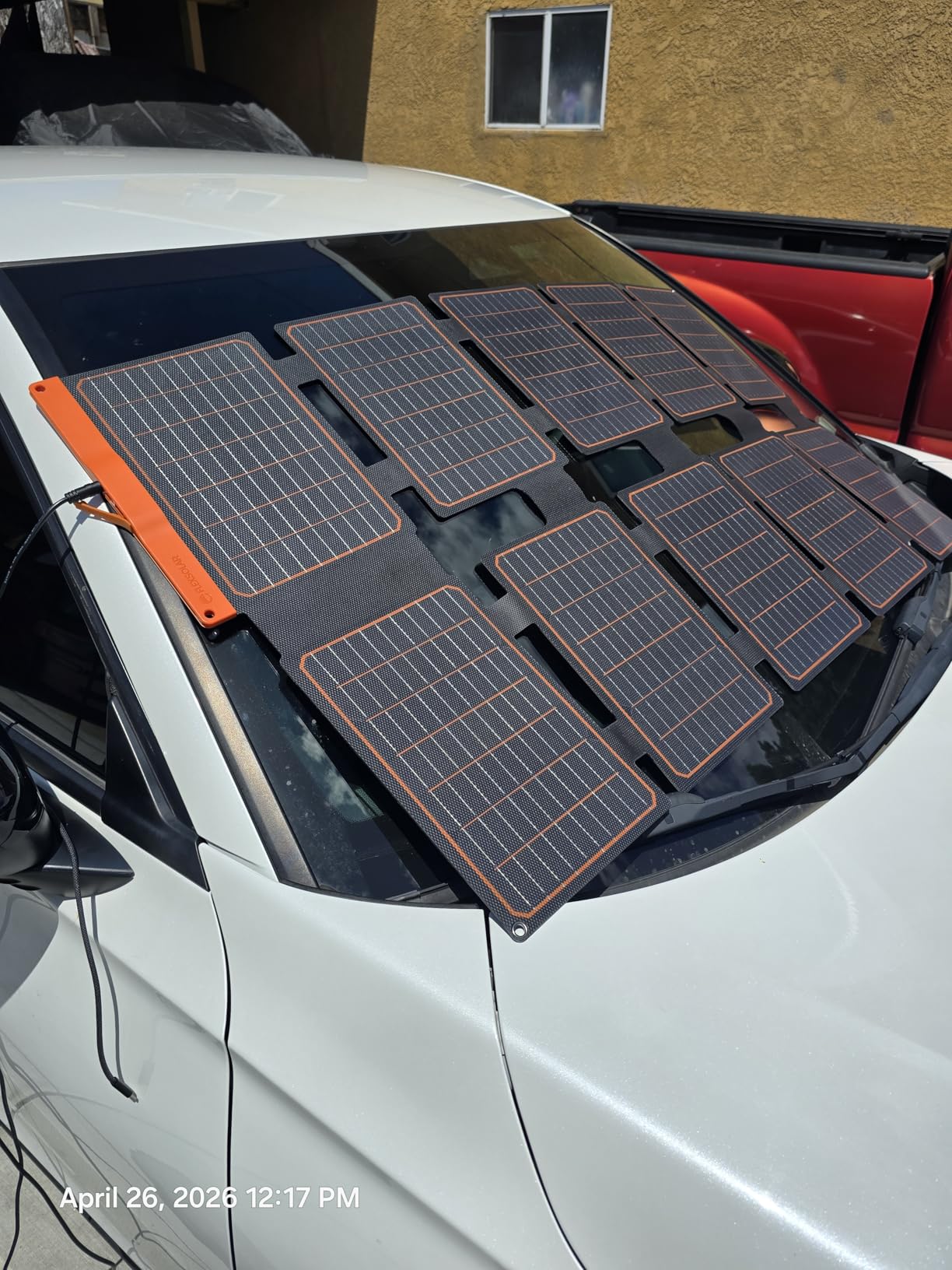
At 4.1 pounds folding to 12.99 by 10.43 by 2.17 inches, this is the only panel in the roundup that genuinely disappears into a pack. Forum users single it out for exactly this, describing it as laptop-sized once folded and easy to carry alongside other gear.
The output is real but modest. Owners report 70W to 85W in good sun against a 100W rating, which is a lower conversion rate than the 200W panels here. That gap is what you trade for carrying half the weight and a quarter of the volume.
Direct charging ports are unusually generous for the size. You get PD 3.0 USB-C at 45W, USB-A at 18W and a 100W DC output, plus a 4-in-1 cable covering DC5521, DC7909, Anderson and XT60. In practice that means the panel is useful even if you never connect it to a power station at all.
The padded premium carry bag is included and sized to hold the folded panel plus cables, which is a small thing that prevents the usual cable-tangling problem. E-Film lamination over monocrystalline cells carries an IP67 waterproof and dustproof rating.
What works in practice
Reviewers love the packability and the direct USB charging, and the build feels solid rather than cheap despite the low weight. Solid hinges and fabric are cited positively, which suggests the ultralight class has matured past the flimsy panels of a few years ago.
For backpacking, motorcycle touring, or anyone who has ever abandoned a heavier panel at home because of the packing math, that is worth a lot. Pair it with a small station and it functions as a genuine emergency reserve.
Where it falls short
The most repeated drawback is the missing kickstand. Without one, the floppy array is awkward to angle and owners report leaving it flat on the ground, which costs a large fraction of its output. Bring your own small prop or a dedicated stand.
Other concerns: there is no MC4 connector on the included cable, which limits flexibility if your station uses that input; the DC and USB junction housing runs hot under sustained 60W-plus loads; USB port pins can corrode after rain exposure; and shading even one segment can roughly halve output. One owner also reported a blown capacitor with an unresponsive warranty claim, which is an isolated report but a reminder to check the warranty terms.
8. ZOUPW 450W N-Type Solar Panel – Highest Output If Your Station Can Take It
ZOUPW 450W Portable Solar Panel N-Type 16BB for Power Station
450W at 45.9V Voc
N-Type 16BB cells
IP68 ETFE at 29.5 lb
Pros
- Highest rated output and 4.6 star average with 83 percent five-star
- Owners measure 500-550W above the nameplate
- Light for its class thanks to fiberglass construction
- Rigid design tolerates wind well
- Customer service replaced failing units at no cost
Cons
- Will not work with stations under 30V input
- Some buyers report burn-in or cloudy cell patches after a few months
- Output drops sharply if a narrow band is shaded
- MC4 leads too short to reach a second panel
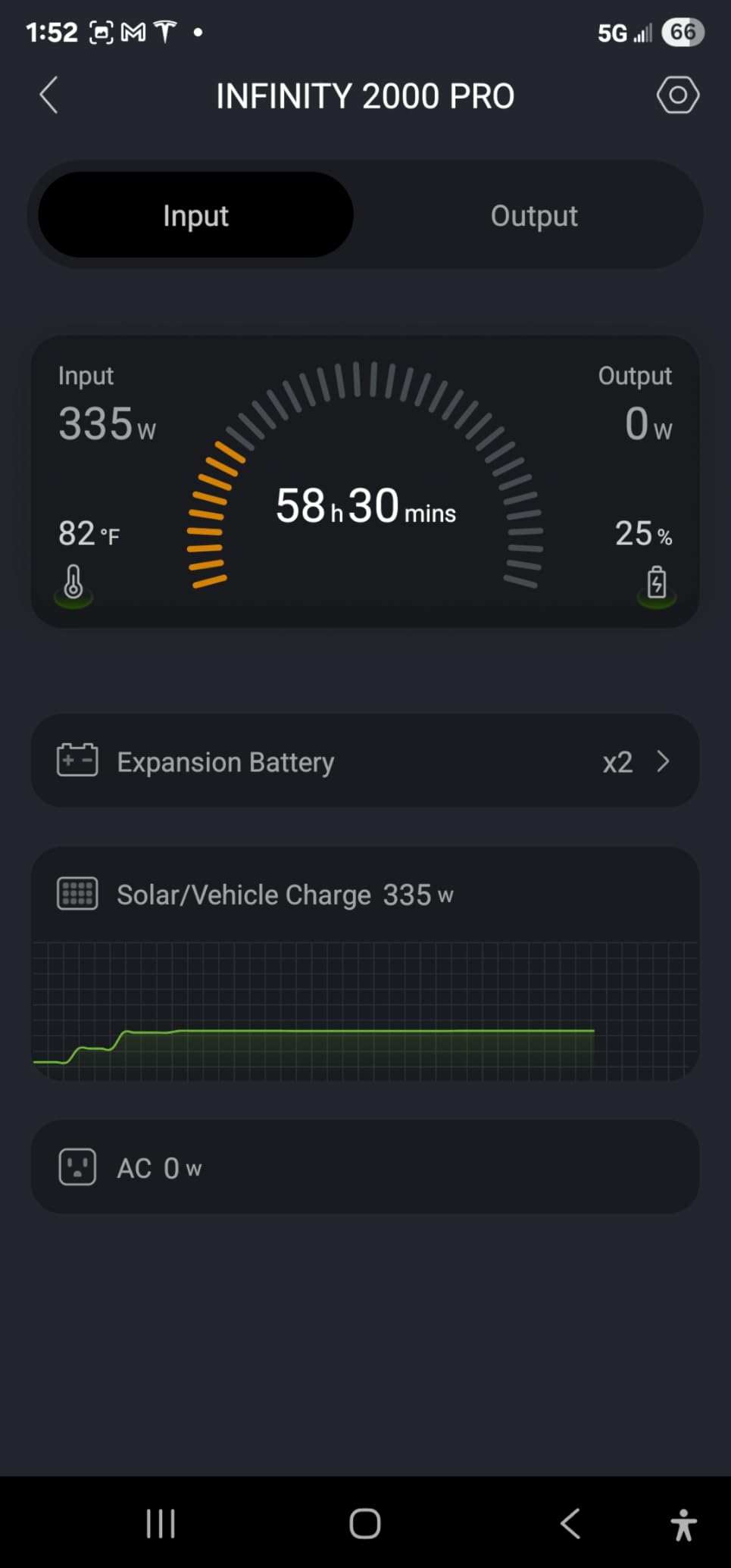
This is the highest-output panel in the roundup, and the only one where owners regularly report beating the nameplate. Multiple buyers measure 500W to 550W, and some report more than 900W from two units wired together feeding EcoFlow Delta, Bluetti AC200L and Anker Solix stations.
Read that last list carefully, because it defines the audience. The 45.9V Voc design targets 40V to 60V input stations. The manufacturer explicitly states it is not compatible with low-voltage units under 30V input, which rules out the Jackery 300, 500 and 1000 and the Bluetti EB70S.
The cell technology is the differentiator. N-Type 16BB busbar design lowers internal resistance and reduces micro-crack risk, and there is no P-type light-induced degradation, which the manufacturer claims delivers up to 10 percent more output in cloudy or low-angle conditions than a conventional panel.
Construction is aerospace-grade fiberglass at 29.5 pounds, with IP68 waterproof ETFE and integrated smart bypass diodes. Four reinforced kickstands adjust to 45 degrees, and four ground stakes are included for anchoring in a field deployment.
What works in practice
Owners consistently report output exceeding the nameplate, which is rare enough to be worth calling out. The rigid design also tolerates wind far better than the flexible fabric panels in this roundup, which matters when you are deploying 450W in an exposed site.
Performing well in overcast and partial shade for a large panel is another point in its favour, and ZOUPW customer service replaced failing units at no cost for multiple owners. The warranty runs 36 months with a 30-day money-back guarantee, and a storage bag is included.
Where it falls short
Excluding popular lower-voltage stations is the headline limitation, and it is a hard one. If you own a mid-size station with a 30V ceiling, this panel is not a mistake you can work around with an adapter.
Some buyers report burn-in or cloudy cell patches developing after a few months, and output drops sharply if even a narrow band of the panel is shaded. The hard-wired MC4 leads are also too short to reach a second panel when deployed, so plan your layout before you commit.
9. TWELSEAVAN 200W ETFE Solar Panel – Best for Charging a Laptop Directly
200W Portable Solar Panel for Power Station, 24% High Efficiency ETFE Foldable Solar Panel Charger, QC3.0, Type-C 60W, MC4 Output, IP65 Waterproof, for Outdoor Camping, RV, Emergency Power Supply
24% efficient cells
USB-C PD 60W
MC4 with 8-in-1 adapter coverage
Pros
- 24% efficiency with high-transmission ETFE laminate
- 8-in-1 connector coverage
- 60W USB-C PD port charges a laptop directly
- Magnetic carry handle
- 4 adjustable kickstands
Cons
- IP65 rating is one step below the IP67 panels here
- Small fold area makes fine angle adjustment less precise
The distinguishing feature is a USB-C PD port rated at 60W. Among the panels in this roundup that is the highest laptop-capable direct output, and it is the reason remote workers keep coming back to this model for off-grid charging of a notebook.
You also get QC3.0 USB at 18W and a further 5V/3A port, and the built-in IC chip handles device detection and charging protection so you are not relying on the device to negotiate current correctly.
The cell side is strong as well: A+ grade monocrystalline at 24 percent conversion efficiency inside an ETFE laminated case rated at over 95 percent light transmission. A laminated ETFE surface matters more than it sounds, because it resists yellowing and micro-cracking that eat into output over a multi-season deployment.
Connector coverage is the best in the roundup by count. The MC4 5-in-1 cable plus three additional DC adapters sit on a 9.8ft lead, giving eight connection options without a separate purchase.
What works in practice
Buyers highlight the strong connector ecosystem and the 60W USB-C port as the differentiators, and the panel sits near the top of its Amazon category ranking. At 15.7 pounds with a magnetic carry handle, it is the lighter 200W option in this roundup, and four adjustable kickstands handle setup.
The 24-month warranty and 30-day money-back guarantee are also better than most of the category, which matters given that this segment has a lot of short-lived listings.
Where it falls short
The IP65 rating is one step below the IP67 and IP68 panels in this roundup, and on a rain-exposed trip that is a real difference rather than a checkbox. It resists dust and splash but is not built for the same abuse as an IP68 ETFE panel.
The small fold area makes fine sun-angle adjustment less precise, and 15.7 pounds is still a serious carry for a hiking panel. For anyone with our marine solar panel picks in mind, note that IP65 is the wrong rating for a boat deck.
10. MHPOWOS 220W Folding Solar Panel – Best Match for 40V Input Stations
MHPOWOS 220W Portable Solar Panel 40V Folding Solar Panel for Power Station
220W at 23.5% efficiency
40V output voltage
7-in-1 connector
Pros
- Ranks in the top 10 of its Amazon category
- 4.5 star average with 78 percent five-star
- 23.5 percent cells at 40V for faster station charging
- IP67 waterproof and dustproof
- 7-in-1 connector reduces extra adapters
Cons
- 40V output will not work with stations below a 40V input ceiling
- Heavy at roughly 18.7 lb for a 220W foldable
- Charging rate still capped by each station max solar input
220W is an unusual number, and it exists because of the 40V output voltage. That higher voltage means more current flows at lower amperage for the same wattage, which is why the manufacturer rates the panel at 5.5A amperage rather than the 11A-plus typical of a 200W panel at 20V.
Lower current on the cable run is electrically cleaner, particularly over long leads. It is also the reason this panel charges faster than a same-wattage 20V panel on stations that accept 40V input, and slower on stations that do not.
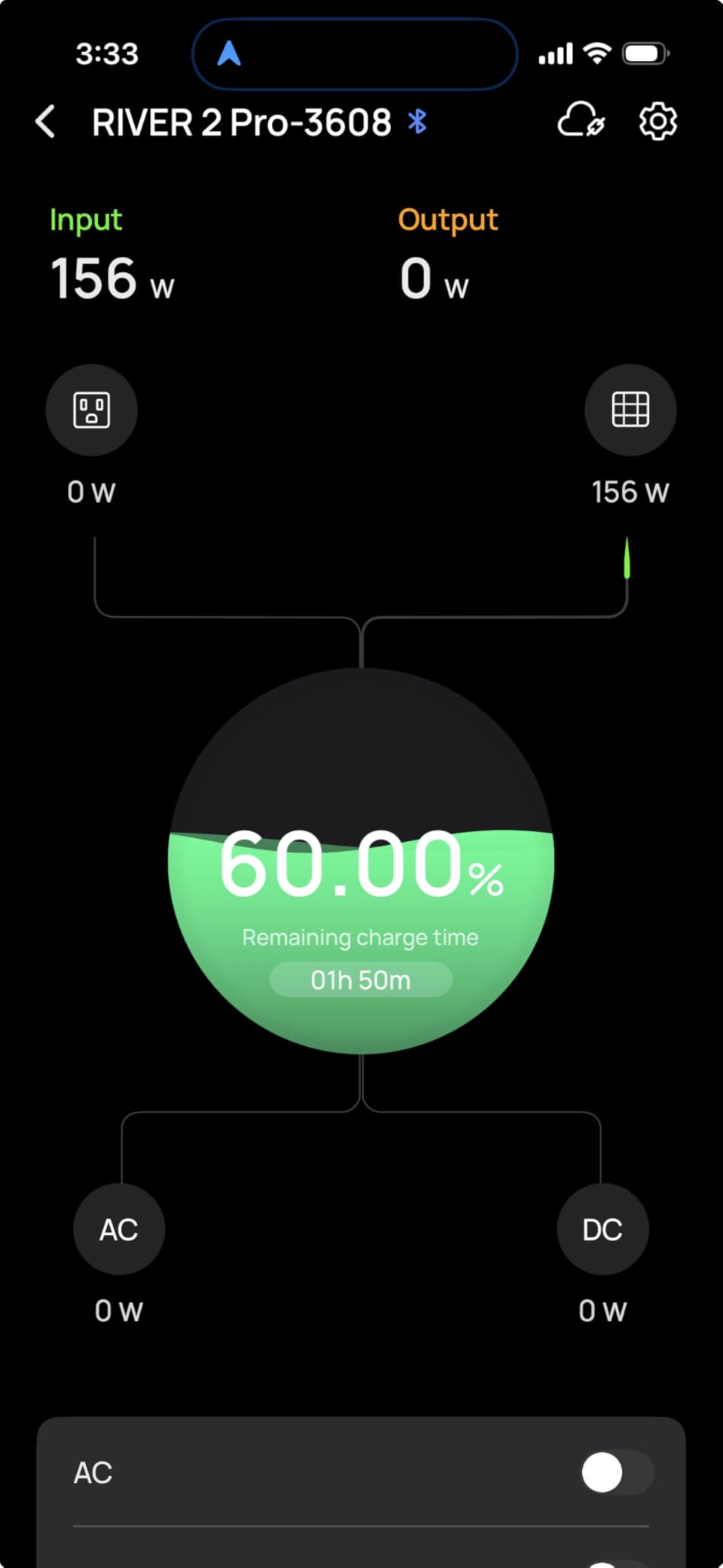
The compatibility gate is explicit in the listing: 40V output is incompatible with power stations that cap input below 40V. Buyers should verify their station maximum input voltage before buying, and that warning appears in both the spec sheet and the reviews, which is refreshing honesty.
The 7-in-1 solar connector covers the major station inputs and reduces the need for extra adapters. Construction is IP67 waterproof and dustproof monocrystalline silicon at 23.5 percent efficiency, with four kickstands for adjustable angle positioning and reinforced thickened carry handles.
What works in practice
Buyers rate this panel highly for the combination of wattage and weather sealing, and it holds a top 10 position in its Amazon category. The 4.5 star average with 78 percent five-star ratings is one of the more consistent profiles in the roundup, with far less split feedback than the 200W competitors.
The folded size of 23.5 by 21.25 by 2.3 inches is compact for a 220W unit, and reinforced handles are a genuine improvement on panels whose folding tabs crack after a season of use.
Where it falls short
At roughly 18.7 pounds it is heavy for a foldable of this class, and that weight is the direct consequence of the higher voltage design. If you are moving it between campsites regularly, that is a real cost.
More importantly, the voltage ceiling rules out a lot of stations, and even on a compatible station the charging rate remains capped by that station maximum solar input limit. Buyers with older or smaller units should check the spec sheet before buying, because the return is only real on 40V-capable hardware.
11. ZOUPW 200W Portable Solar Panel – A Solid Step Up From 100W
ZOUPW 200W Portable Solar Panel for Power Station,23.5% Efficiency
23.5 percent efficient cells
5-in-1 solar cable
IP67 ETFE at 19 lb
Pros
- Top 10 category rank
- 5-in-1 cable plus USB-C PD 60W and USB-A QC3.0
- Four 45 degree kickstands improve daily yield
- IP67 waterproof ETFE surface
- No-cost replacement policy on defective units
Cons
- Several owners report output well below the 200W rating
- Heaviest 200W foldable in the roundup at 19 lb
- Junction box is water-resistant but not submersible
This is the panel to buy if you have outgrown a 100W unit and want more harvest without moving to a 40V design that excludes your station. It runs at 24.3V maximum voltage and 20.16V output, which is the same friendly electrical territory as the Renogy 200W.
Connector coverage matches the smaller ZOUPW: the 5-in-1 cable covers XT60, Anderson, DC7909, DC8020 and DC5521 on a 10ft lead. Compatibility is listed for Jackery Explorer 1000V2, 1500 and 2000, Bluetti Elite 30V2 and 100V2, EcoFlow Delta and River, and Anker Solix.
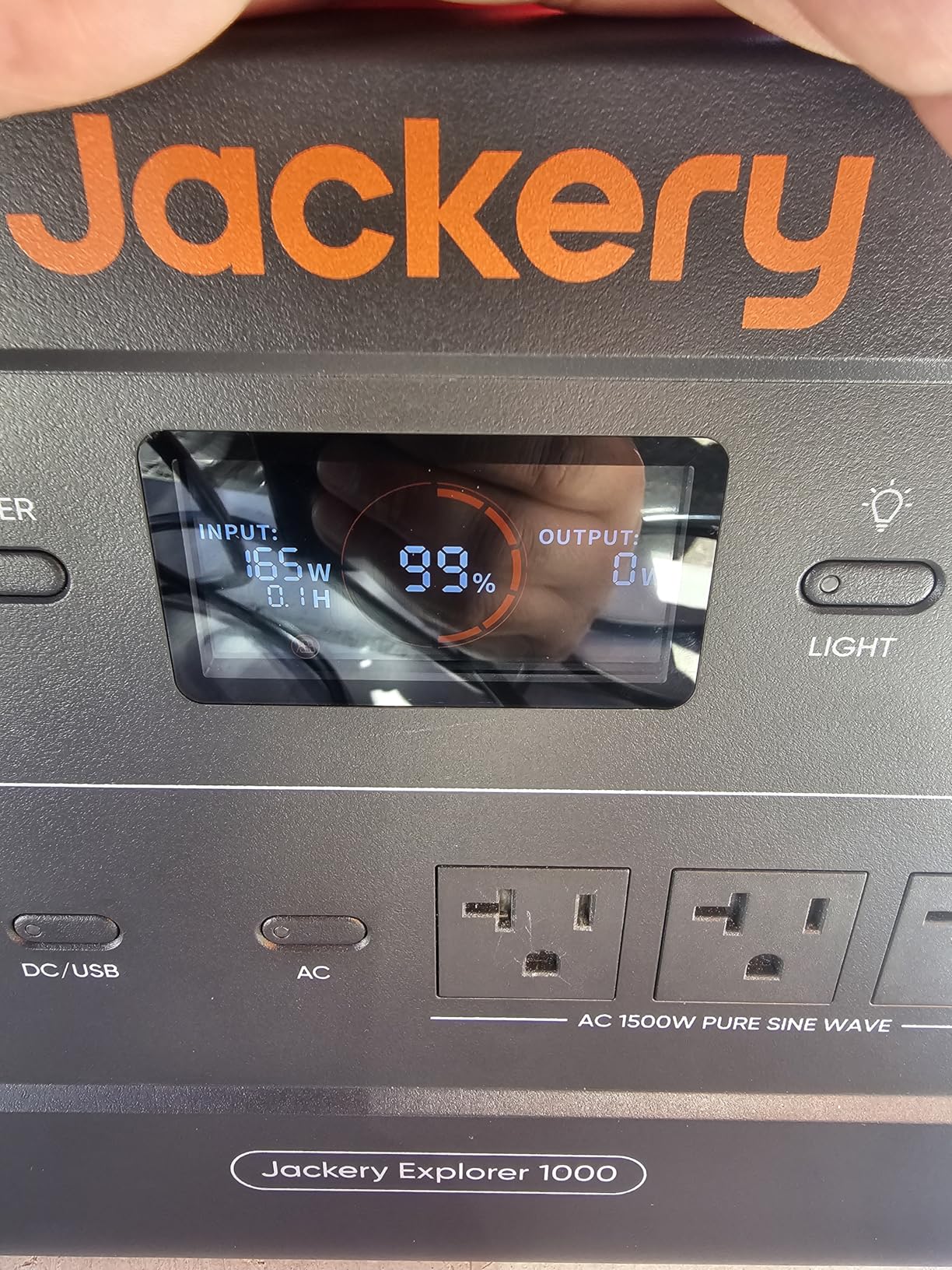
Owner feedback is genuinely split, and we think it is worth stating plainly rather than smoothing over. Some buyers report 150W to 170W in good sun and are delighted. A notable group documents output of only 115W to 130W even in full Arizona sun, which is well under half the nameplate.
What makes that split tolerable is the service policy. ZOUPW replaced a defective panel with a higher-performing N-type unit for at least one owner, and the no-cost replacement turned several negative experiences into positive ones.
What works in practice
Four adjustable kickstands at 45 degrees deliver 25 to 30 percent more energy than flat-laying, and that is a design choice you can feel in daily use. Magnetic briefcase-style handles make it a genuine one-hand carry despite the weight.
The junction box adds USB-C PD at 60W and USB-A QC3.0, so like the TWELSEAVAN it doubles as a laptop panel. The IP67 waterproof ETFE surface suits RV and marine deployment, with a 158F upper temperature rating.
Where it falls short
At 19 pounds it is the heaviest 200W foldable in this roundup, which is hard to justify when the Renogy 200W delivers comparable voltage at 13.9 pounds. Weight is the clearest reason to choose the smaller ZOUPW instead.
The wide spread in reported output is the other issue. Whether you get 170W or 125W from this panel appears partly down to unit variation, and the junction box is water-resistant rather than submersible, so keep it out of standing water.
12. TWELSEAVAN 150W HPBC Solar Panel – Best Build Quality at a Mid-Size Weight
TWELSEAVAN 150W Portable Solar Panel for Power Station Jackery RV Outdoor
HPBC cells at 25.8 percent efficiency
8.4 lb with magnetic folding
IP68 ETFE
Pros
- Highest rated efficiency in the roundup at 25.8 percent using HPBC cells
- Lightest mid-size option at 8.4 lb
- Reinforced aluminum alloy frame with fiberglass layer
- IP68 waterproofing with 95 percent light-transmitting ETFE
- Built-in solar angle guide
Cons
- 150W output limits speed on larger power stations
- Not rated for permanent installation or series and parallel wiring
- Lowest review count in the roundup
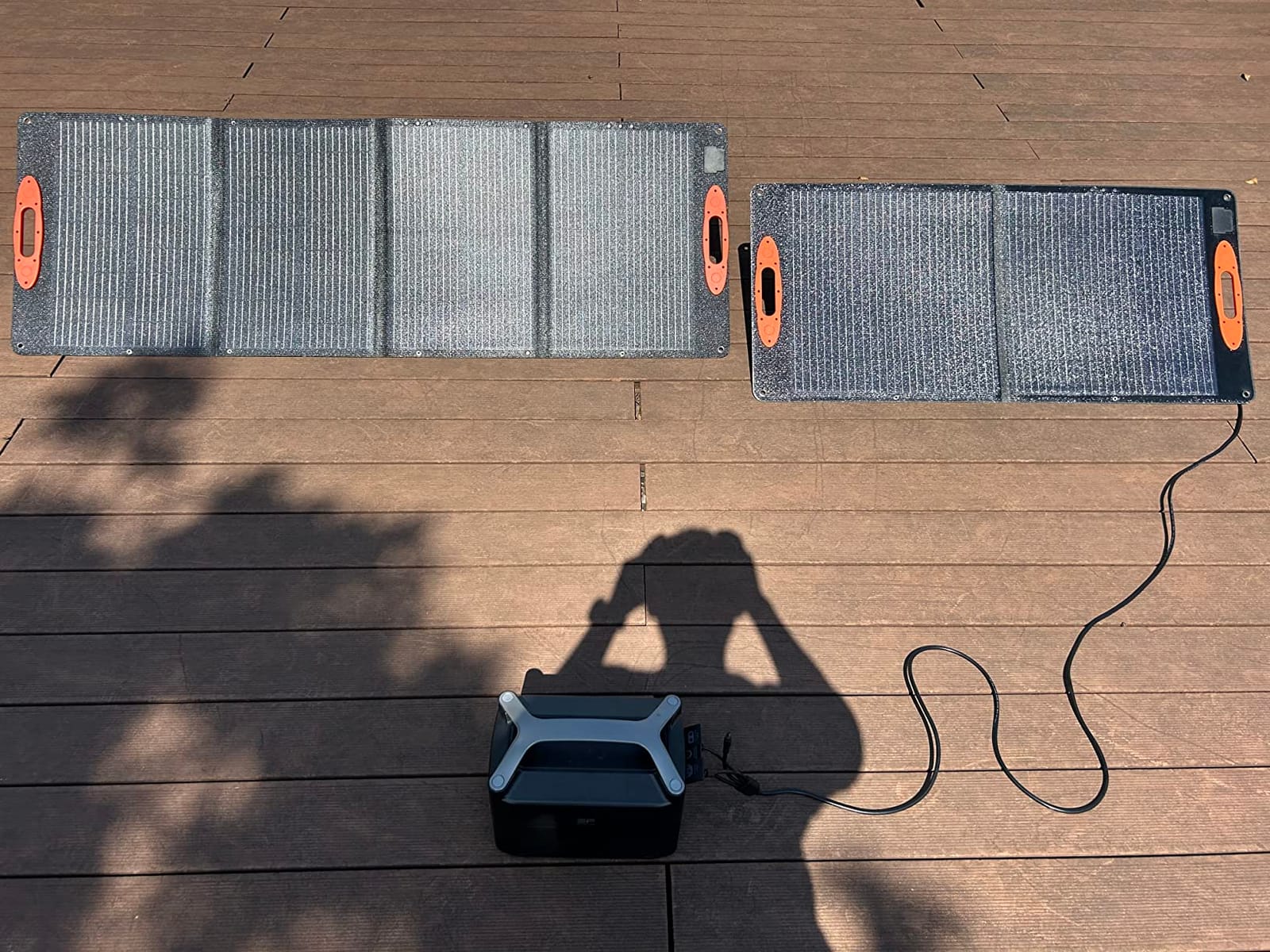
This is the panel we recommend for anyone who wants a serious frame without carrying 30 pounds. The reinforced aluminium alloy frame with an added fiberglass layer is the most durable construction among the folding panels here, and at 8.4 pounds it is still light.
Cell technology is the headline. HPBC cells are quoted at up to 25.8 percent conversion efficiency, the highest rated figure in this roundup, sitting inside an ETFE layer at 95 percent light transmittance with an IP68 waterproof rating.
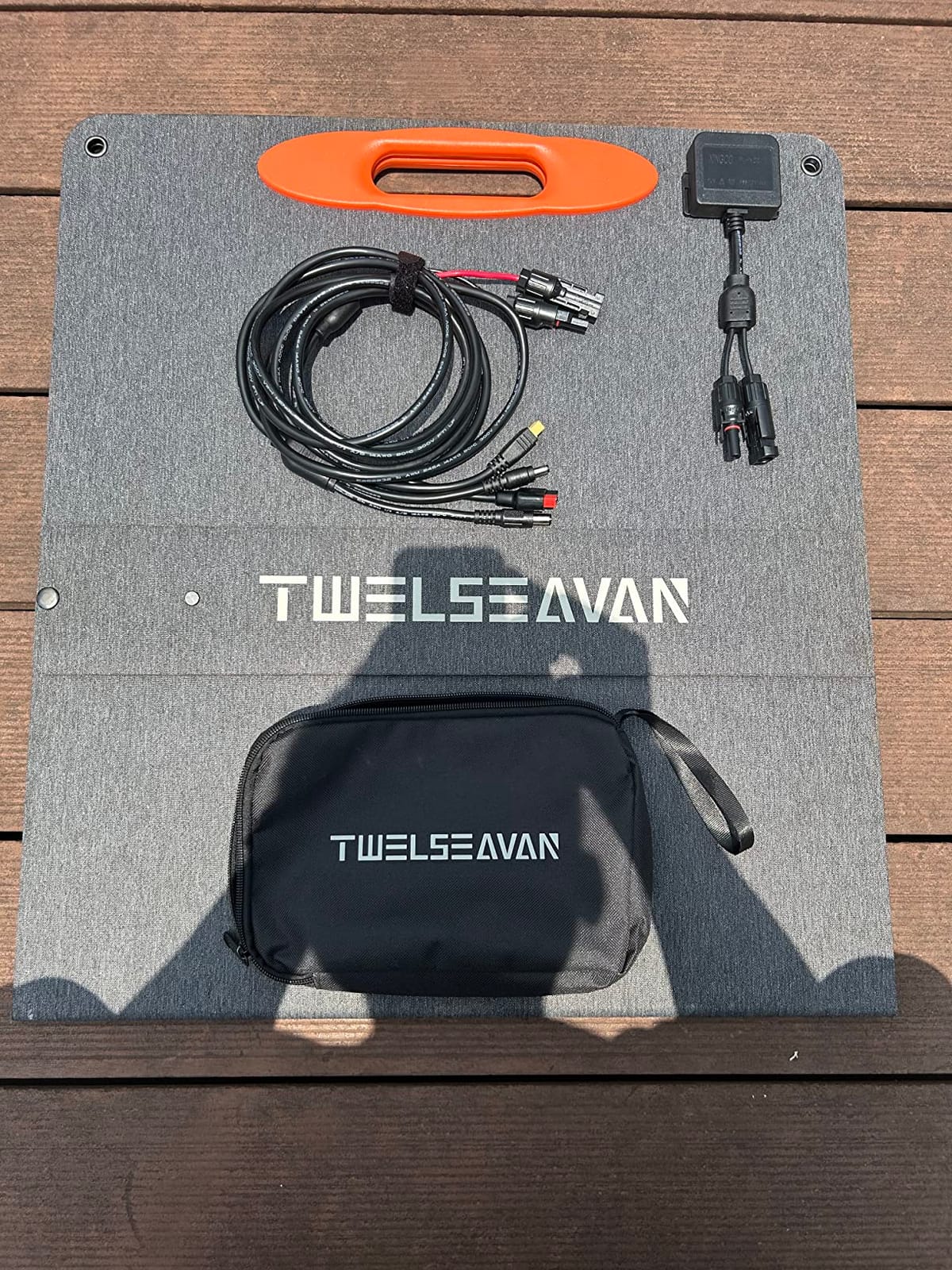
Setup is genuinely fast: magnetic folding with adjustable kickstands and a stated ten-second deployment. There is even a built-in solar angle guide on the back, which sounds trivial until you are adjusting a panel on a slope in failing light.
Connector coverage runs through the MC4 5-in-1 cable plus three additional DC adapters on a 9.8ft lead. The 21.6V output voltage places it in the same comfortable compatibility zone as the other 200W-class panels here.
What works in practice
Buyers value the efficiency figure, the aluminium frame and the 8.4 pound weight for backpacking, and the 36-month warranty with 24-hour customer service is among the more generous commitments in this category.
The aluminium frame resists tearing in a way fabric-cased panels cannot, which matters if you are deploying on gravel or brush rather than a manicured campsite pitch. At 150W it pairs naturally with smaller and mid-size stations.
Where it falls short
150W is a mid-size output, so on a station above about 1kWh it functions as a top-up rather than a refill. If you are running a CPAP machine plus a fridge plus a phone, plan on more than one panel or a larger unit.
The explicit limitation is that it is not intended for permanent fixed installation or series and parallel connection. It also carries the lowest review count and category ranking among the picks here at 229 reviews, so there is less long-term field data to draw on than the Renogy or EBL panels.
Buying Guide: What to Look for in a Solar Panel for a Power Station
The word compatibility is doing a lot of work in this category, and most disappointed buyers did nothing wrong. They simply plugged a panel into a station without checking three numbers.
Check Voc against the station input ceiling first
Open circuit voltage, usually written Voc, is the voltage a panel produces with no load attached. Your power station has a maximum input voltage, and if the panel Voc exceeds it under the conditions you are using, the station will refuse to charge or shut down.
Cold weather makes this worse, and this is the single most dangerous mistake in portable solar. A panel rated at 45.9V can see voltages well above that on a freezing morning. Multiply Voc by 1.2 as a safety margin, and make sure that figure still sits under your station ceiling. The 450W panel in this roundup is exactly the kind of unit where that check matters.
Check Vmp and Imp to know what you will actually get
Vmp is the voltage at which the panel produces its rated power, and Imp is the current at that point. The station MPPT window must include Vmp, not just Voc, because the charge controller tracks the maximum power point rather than the open circuit peak.
Current also has a ceiling. Most stations limit input to a set amperage per port, and when you parallel panels and exceed that limit, the station simply clamps the current. You have then paid for wattage the station refuses to draw. This per-port current limiting is the most overlooked reason multi-panel setups underperform.
Get the connector right the first time
Connector formats vary widely: MC4, XT60, Anderson, DC8020, DC7909, aviation and HPP+ all appear in this category. DC7909 and DC8020 look almost identical and are not interchangeable, and a loose fit generates contact resistance that shows up as heat and intermittent charging.
Panels with a multi-head adapter cable remove this problem entirely, which is why the ZOUPW and SOKIOVOLA panels with 5-in-1 cables earn their place here. If you are buying a single panel for a single station, match the connector rather than relying on an adapter chain that adds failure points.
Understand the 33 percent rule before wiring in series
The 33 percent rule is the convention for sizing panel output against a charge controller or station input. If your station accepts 300W of solar input, a 100W panel uses about 33 percent of that capacity, and 100W is therefore the sensible size. Oversizing to 400W gains you nothing on a 300W-limited station.
The same logic applies to series wiring. Two panels in series double the voltage while the current stays the same, which is how you reach a high-voltage station input from low-voltage panels. In parallel, current doubles while voltage stays the same, which is how you add power without exceeding a voltage ceiling. The trade-off is shade: one shaded panel in a series string drags down the entire string, whereas a parallel-wired panel keeps more of its output. That is why the Renogy 400W uses parallel wiring internally.
Estimate charge time with a derate factor
Divide your station capacity in watt-hours by panel output in watts, then multiply by roughly 0.70. That factor accounts for the gap between standard test conditions and reality: heat, low sun angle, dust, wiring loss and the charge controller tapering as the battery fills. A 1000Wh station with a 200W panel is roughly a 7 hour charge in full sun, and considerably longer in practice.
Remember too that the station maximum solar input caps everything. A 200W panel on a station limited to 100W of solar input will never deliver more than 100W, no matter how good the panel is. This is the most common disappointment behind forum questions about why a panel seems slow.
Match weight and water rating to your use case
Under about 5 pounds you are in true backpacking territory. Between 10 and 20 pounds covers car camping and RV use comfortably. Above 25 pounds, plan on a fixed deployment point rather than carrying.
On water rating, IP65 resists dust and splash, IP67 handles immersion in shallow water briefly, and IP68 is the rating you want for a boat deck or an exposed RV roof. The difference matters more than any feature list when a trip turns wet. If you are equipping a boat, our marine solar panel guide covers the marine-rated options in more depth.
Pick the wattage that matches your station, not your ambition
A rough rule: a 40W panel suits a phone-and-laptop emergency kit, a 100W panel suits a 300Wh to 500Wh station, a 200W panel suits a 1kWh station, and anything above 300W is only useful on stations with a matching high-voltage input. Pairing our portable power station picks for RVs with a 200W panel is the most common balanced setup.
If you are still unsure, the panels with universal multi-connector cables will work with whatever station you already own. Start there, and upgrade to a high-voltage rigid panel only once you know your station ceiling can take it.
Frequently Asked Questions
Can you use any solar panel for a power station?
Only if it meets two conditions: the panel output voltage must sit inside the station MPPT window, and the connector must match or be adaptable. A panel with a Voc above the station maximum input voltage will trigger a shutdown or refusal to charge, and cold mornings raise voltage further. Panels with universal multi-head adapter cables avoid the second problem entirely.
What solar panels will work with Jackery?
Any panel whose Voc falls inside your specific Jackery model input window and whose connector matches. Jackery models use proprietary DC8020 or DC7909 ports, which look similar but are not interchangeable, so a panel with a 5-in-1 cable covering DC8020, DC7909, XT60 and Anderson plugs in directly. Larger Jackery models such as the Explorer 1000V2 and 1500 accept panels in the 18V to 25V range; high-voltage panels above 40V will not work.
What type of solar panel is best for charging a power station?
A foldable monocrystalline panel in the 100W to 200W range with an MC4 output and a multi-head adapter cable. That covers most mainstream stations, stays under 20 pounds and avoids voltage mismatches. Rigid panels above 300W produce far more power but require a station with a high input voltage ceiling, and they are no longer portable.
Which solar panel brand is better, Anker or Jackery?
For portable folding panels the deciding factor is connector coverage rather than brand. Anker panels and Jackery SolarSaga panels both use proprietary connectors, so third-party panels need adapters either way. Anker panels tend to emphasise scratch-resistant coating and folding design, while Jackery panels are known for magnetic closures and integrated legs. Check the voltage window of your station first, then pick whichever cable matches its port.
What is the 33% rule in solar panels?
It is a sizing guideline: if your power station accepts a maximum solar input, divide that number by three to get the panel wattage you should buy. A station capped at 300W of solar input suits roughly a 100W panel. Oversizing beyond that gains nothing because the station clamps the input, and the extra watts you paid for are never drawn.
Final Verdict on the Best Solar Panels for Portable Power Stations
The Renogy 200W portable solar panel takes our top spot for one reason: its 21.6V output and MC4 connection drop into more power stations without an adapter than anything else in this roundup, and at 13.9 pounds it stays genuinely portable. Owners regularly measure around 177W from it, and the USB-C PD port adds a second charging path for devices.
Buy the ZOUPW 100W if your station is smaller or you want the widest connector coverage in the category, and the EBL 200W if you want a rigid framed body that shrugs off wind. For ultralight travel, the FlexSolar at 4.1 pounds is the pick despite its lower output.
Step up to the ZOUPW 450W or Renogy 400W only if your station has a high input voltage ceiling, and check that ceiling before you spend anything. Whichever panel you choose, verify the Voc figure against your station and multiply by 1.2 for cold weather. If you are still choosing a station first, start with our portable power station picks for home backup and match the panel to it.