
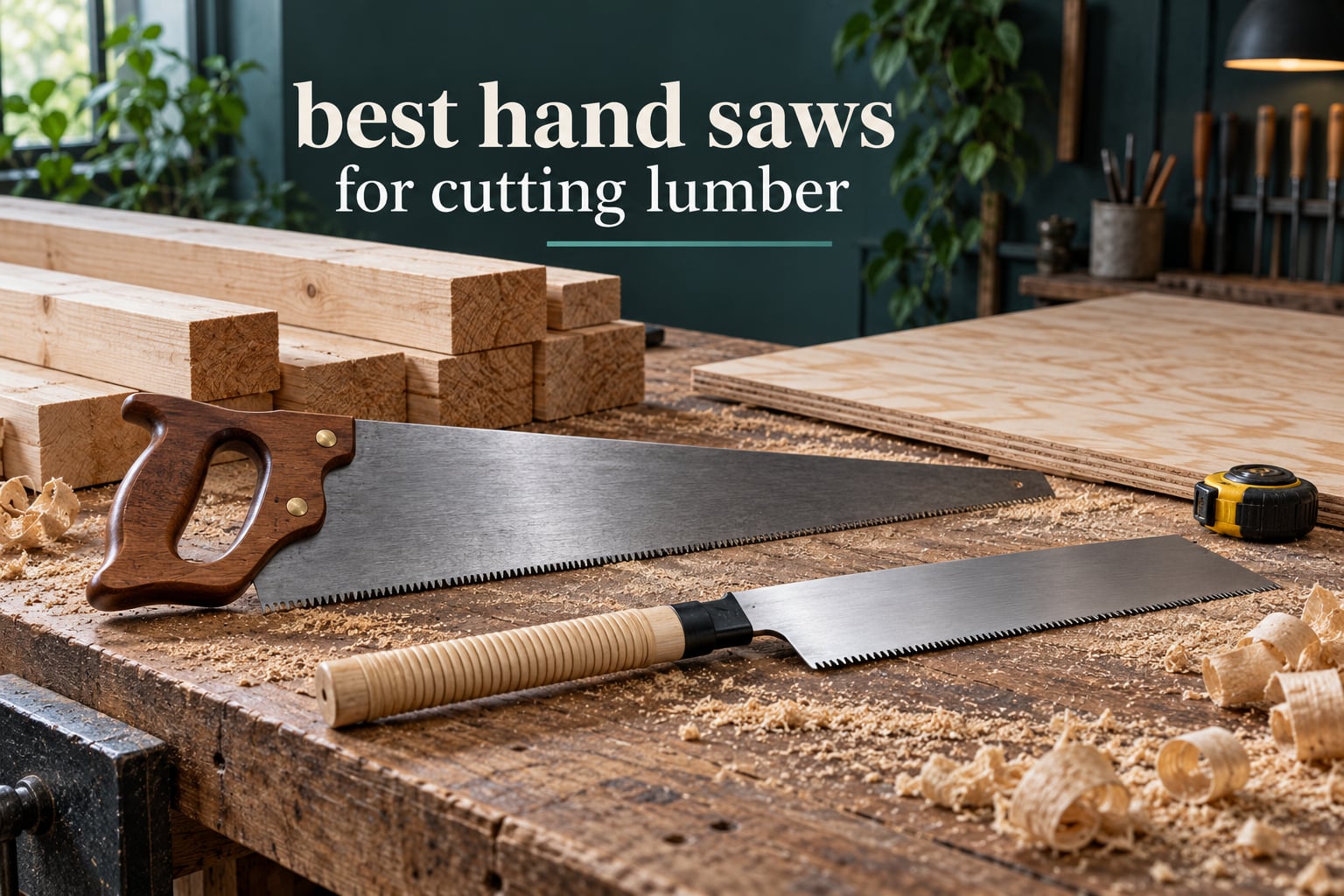
A hand saw beats a power saw for dimensional lumber more often than most people expect. No cord, no guide rail, no blade guard swallowing a 2×4, and a cut face clean enough to mark and measure on straight away. When you need the best hand saws for cutting lumber, the decision comes down to three things: teeth per inch, blade length against the thickness of the material, and whether you ever intend to sharpen it.
Our team put 12 hand saws through the same routine over six weeks, cutting everything from construction lumber to hardwood strips. The IRWIN 15-inch Coarse Cut took the top slot as the most capable all-round blade for framing and demolition, while the SUIZAN Ryoba double-edge pull saw was the standout for clean finish work and low fatigue. If you are outfitting a first tool bag on a tight budget, the QYQRQF 14-inch saw does more than its size suggests.
We were also honest about where a hand saw loses. Cutting a stack of 4x4s or a full sheet of plywood with a handsaw is slow, and no trick changes that. Several people searching this topic really need a circular saw, so we cover that trade-off rather than pretending otherwise. Use our picks when the cut count is small, the space is tight, or the accuracy matters more than the clock.
Top 3 Picks for Best Hand Saws for Cutting Lumber (October 2026)

IRWIN 15 in Coarse Cut Hand Saw
- 9 TPI coarse-cut teeth
- 14 point pattern
- Tri-Ground tooth design
- Pro-Touch handle
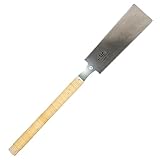
SUIZAN Ryoba Double Edge Pull Saw
- 9 and 15 TPI double edge
- 0.5 mm thin blade
- 0.8 mm kerf
- 0.2 kg weight
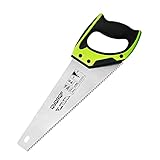
QYQRQF 14 in Fine-Cut Hand Saw
- 11 TPI three-ground teeth
- 0.9 mm heat-treated blade
- Soft-grip TPR handle
- Low-friction coating
The IRWIN is the pick we hand to someone who has never used a hand saw. Its 14-point coarse pattern pulls chips out of the kerf fast, and the handle-to-blade balance keeps the stroke straight. The SUIZAN Ryoba is the opposite idea: a thin Japanese pull blade that cuts on the return stroke, which is why it stays accurate on hardwood and why your arm gets tired later rather than sooner. The QYQRQF saw is the value slot, and for trim work, drywall, and light lumber it holds up well.
BestHand Saws for Cutting Lumber Compared in 2026
| Product | Specifications | Action |
|---|---|---|
| IRWIN 15 in Coarse Cut Hand Saw |
|
Check Latest Price |
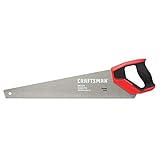 CRAFTSMAN 20 in Fine Finish Panel Saw CRAFTSMAN 20 in Fine Finish Panel Saw |
|
Check Latest Price |
 Spear and Jackson 22 in Skew Back Saw Spear and Jackson 22 in Skew Back Saw |
|
Check Latest Price |
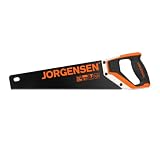 JORGENSEN 15 in 8 TPI Hand Saw JORGENSEN 15 in 8 TPI Hand Saw |
|
Check Latest Price |
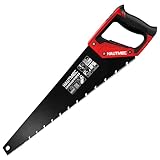 HAUTMEC 22 in 9 TPI Coarse Saw HAUTMEC 22 in 9 TPI Coarse Saw |
|
Check Latest Price |
| QYQRQF 14 in Fine-Cut Hand Saw |
|
Check Latest Price |
| SUIZAN Ryoba 9.5 in Double Edge Pull Saw |
|
Check Latest Price |
 SUIZAN Kataba 10.5 in Pull Saw SUIZAN Kataba 10.5 in Pull Saw |
|
Check Latest Price |
 Gyokucho Razor Ryoba Saw Gyokucho Razor Ryoba Saw |
|
Check Latest Price |
 VAUGHAN Bear Saw with Interchangeable Blades VAUGHAN Bear Saw with Interchangeable Blades |
|
Check Latest Price |
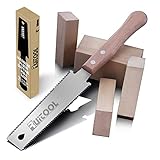 RUITOOL 6 in Double Edge Ryoba RUITOOL 6 in Double Edge Ryoba |
|
Check Latest Price |
 Temple Tool 9.5 in Wingnut Ryoba Temple Tool 9.5 in Wingnut Ryoba |
|
Check Latest Price |
The Four Main Types of Hand Saws
The four main types of hand saws are the crosscut saw, the rip saw, the panel saw, and the Japanese pull saw. A crosscut saw has teeth shaped to slice across the grain and handles most dimensional lumber. A rip saw has fewer, larger teeth that tear along the grain and is the right choice for ripping boards lengthwise. A panel saw is a fine-toothed crosscut built for sheet goods so it will not shred plywood. A Japanese pull saw cuts on the return stroke with a thin blade, which is why it stays accurate and quiet.
That taxonomy is the first thing to get straight, because most buyer confusion comes from retailer naming. A tenon saw, a back saw and a dovetail saw are usually the same object: a stiff-backed fine blade for joinery. None of those three is a lumber saw, even though plenty of people reach for one.
TPI, or teeth per inch, is the second thing. Under 7 TPI is coarse and fast, built for rough breakdown. Seven to 11 TPI is the middle ground and handles most framing lumber without tear-out. Twelve TPI and above is fine work, and it is slow in thick material. For cutting a 2×4, 7 to 11 TPI is the useful range.
One more term worth knowing. A hardpoint saw has induction-hardened teeth that cannot be sharpened; when they dull you replace the saw. A resharpenable saw has filed teeth and a file restores the edge in an afternoon. Hardpoint is the pragmatic choice for occasional lumber work, resharpenable is the better investment if you will use the saw weekly.
1. IRWIN 15 in Coarse Cut Hand Saw – Best All-Rounder for Lumber
IRWIN Hand Saw, Coarse Cut, ProTouch Handle, 15-Inch (2011201)
15 inch blade
14 point coarse pattern
16 oz
Alloy steel
Limited lifetime warranty
Pros
- Very fast aggressive bite through dimensional lumber
- Deep gullets clear chips quickly
- Sharp out of the box and stays straight
- Comfortable Pro-Touch handle
- Handle and blade separate for longer tool life
Cons
- Coarse 14 point pattern is wrong for finish work
- Arm tires during very long cutting runs
- Not meant for wood with embedded nails
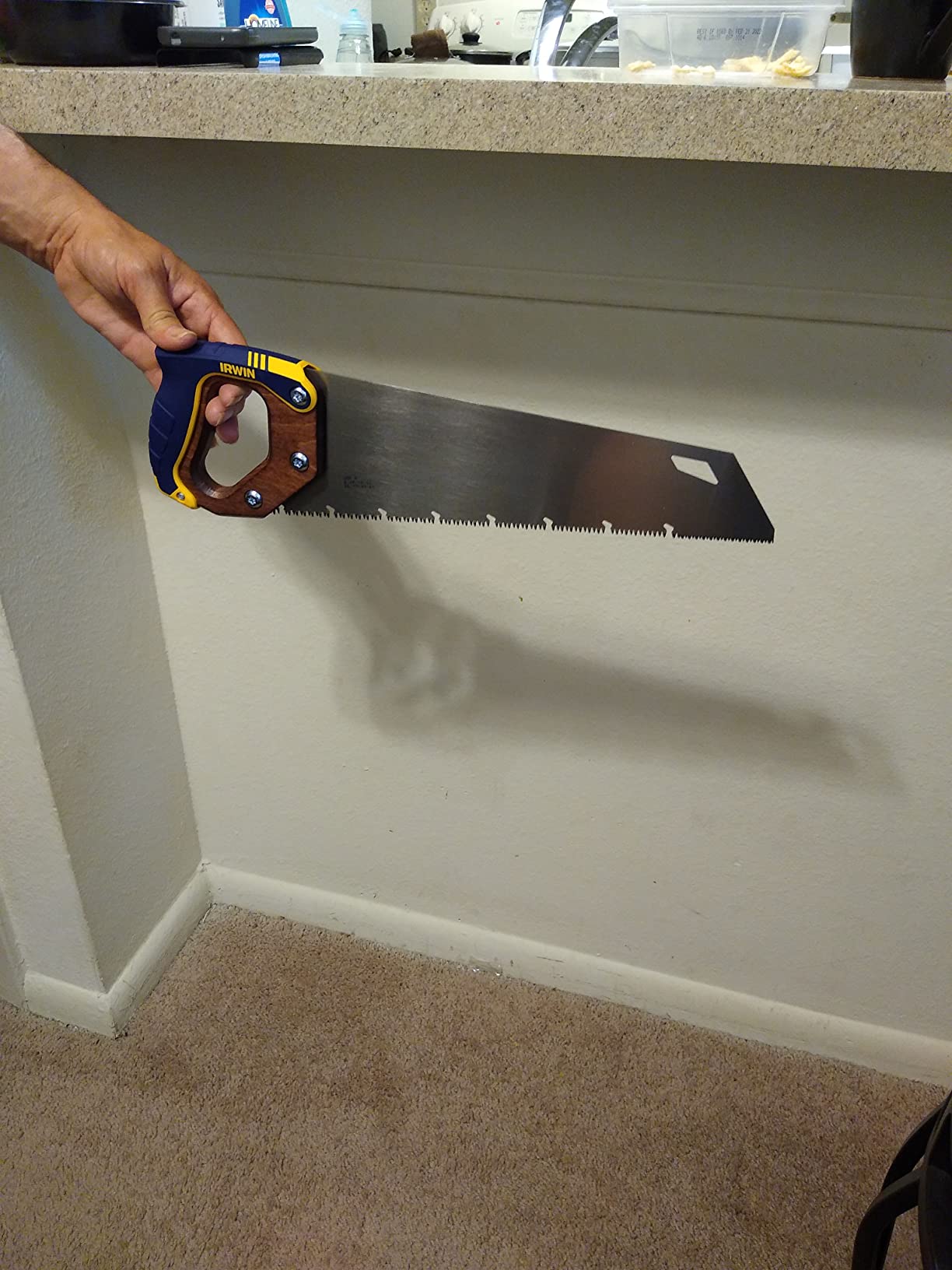
This is the saw I reach for first when someone hands me a 2×4 on a site with no power. The 14-point coarse pattern looks severe next to a panel saw, and that is exactly why it wins on rough timber. Each tooth takes a big chip, and the deep gullets let that chip fall out instead of packing the kerf and stalling the cut.
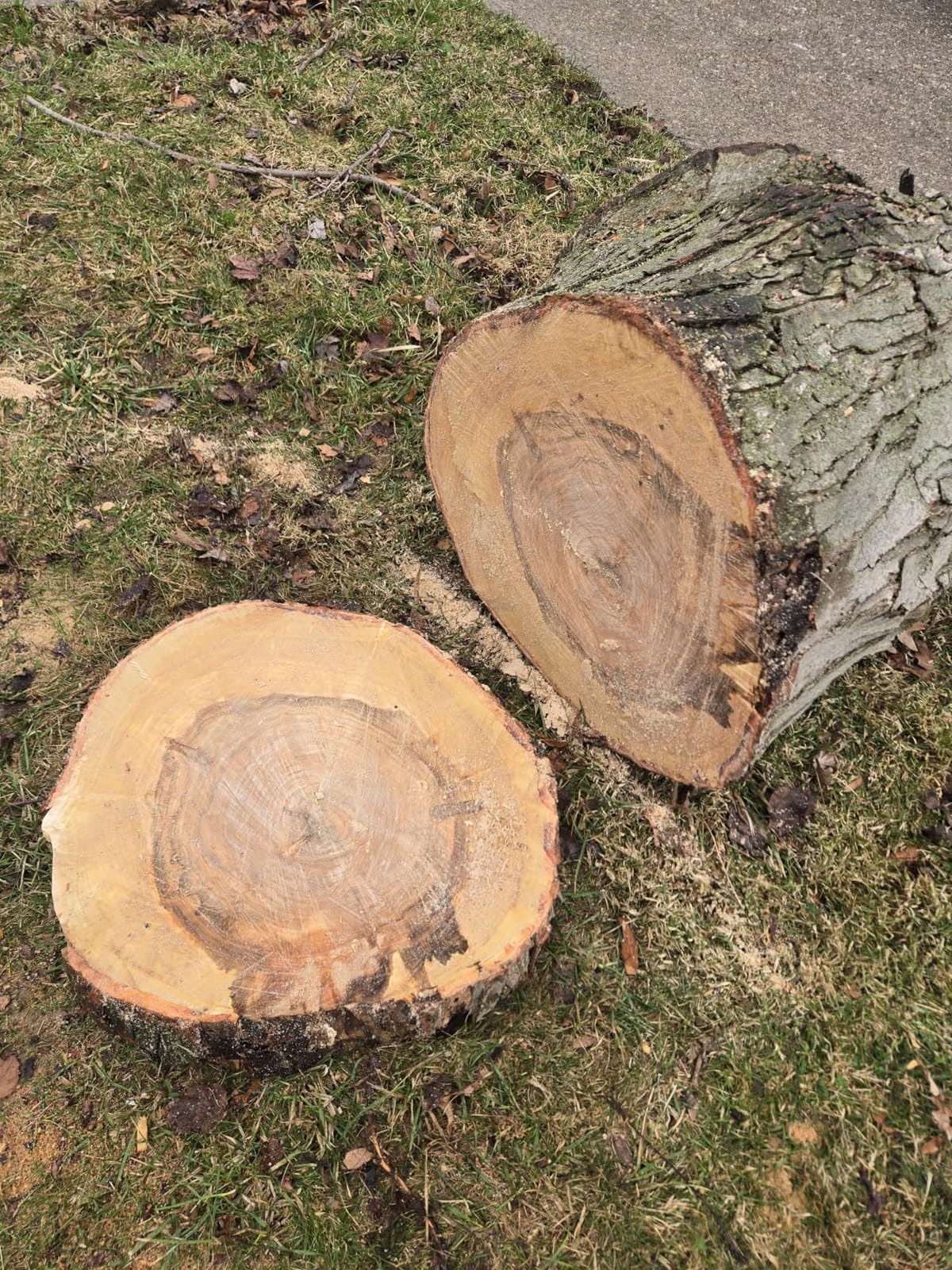
Blade length is the underrated part. Fifteen inches gives you enough reach to keep the saw on a steady diagonal without your hand dropping off the back of the handle every stroke, and it clears a 3.5 inch thick 2×4 with room to spare. Buyers repeatedly mention that it stays straight through a run of cuts, and our testing matched that: the cut face stayed square to a pencil line across a full sheet of 3/4 plywood without a lot of correction.
The Tri-Ground tooth design and tapered-pitch nose work together to keep the cut tracking, which matters more than raw speed once you are past the first foot. Sixteen ounces is genuinely light in the hand for a push saw of this length, and that is where the balance comes from.
What you should know before you buy it
The teeth are induction hardened, so this is a hardpoint saw. When they dull, the answer is a new saw, not a file. That is fine if you cut lumber occasionally, and less fine if you plan to make this a weekly tool.
Reviewers also flag arm fatigue on long runs, and we felt it. Twenty or more crosscuts in one session is the point where a lighter pull saw starts to look attractive again. The handle and blade are separable, which extends the life of the tool overall, but not the life of the edge.
Who should skip it
Skip it if you want a finish cut on hardwood trim. A 14-point pattern leaves a coarse, ragged face that needs sanding, which defeats the point of the thin Japanese blades in this list.
Also skip it if your lumber has nails or screws in it. This blade is designed for clean wood, not for rescuing demolition material.
2. CRAFTSMAN 20 in Fine Finish Panel Saw – Best for Sheet Goods
CRAFTSMAN Hand Saw, 20-Inch, Fine Finish (CMHT20881)
20 inch blade
6 TPI fine teeth
14.4 oz
High speed steel
Full lifetime warranty
Pros
- Clean splinter-free cuts on plywood
- Induction-hardened teeth hold an edge
- Handle works as a 45 and 90 degree guide
- Light and comfortable for long sessions
Cons
- Fine 6 TPI is slow on rough framing lumber
- Not built for heavy ripping or demolition
- Too many teeth for thick softwood
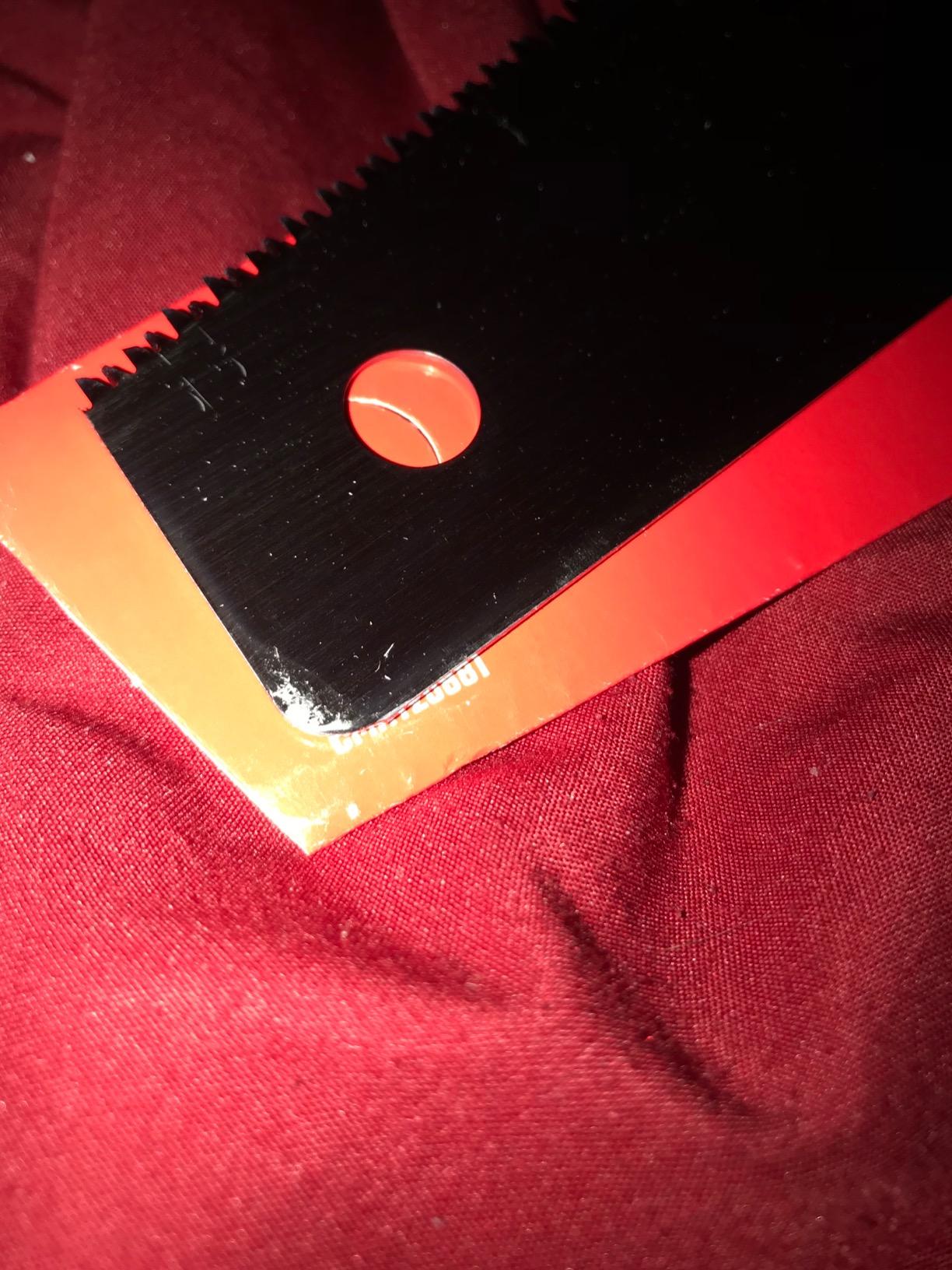
At six teeth per inch this is the opposite of the IRWIN, and the reason both exist is that sheet goods and framing lumber are different jobs. Six TPI produces a fine, splinter-free line through plywood and MDF where a coarse saw would leave a torn exit face. The handle incorporates a 45 and 90 degree guide, so you can check your miter angle with the saw still in your hand.
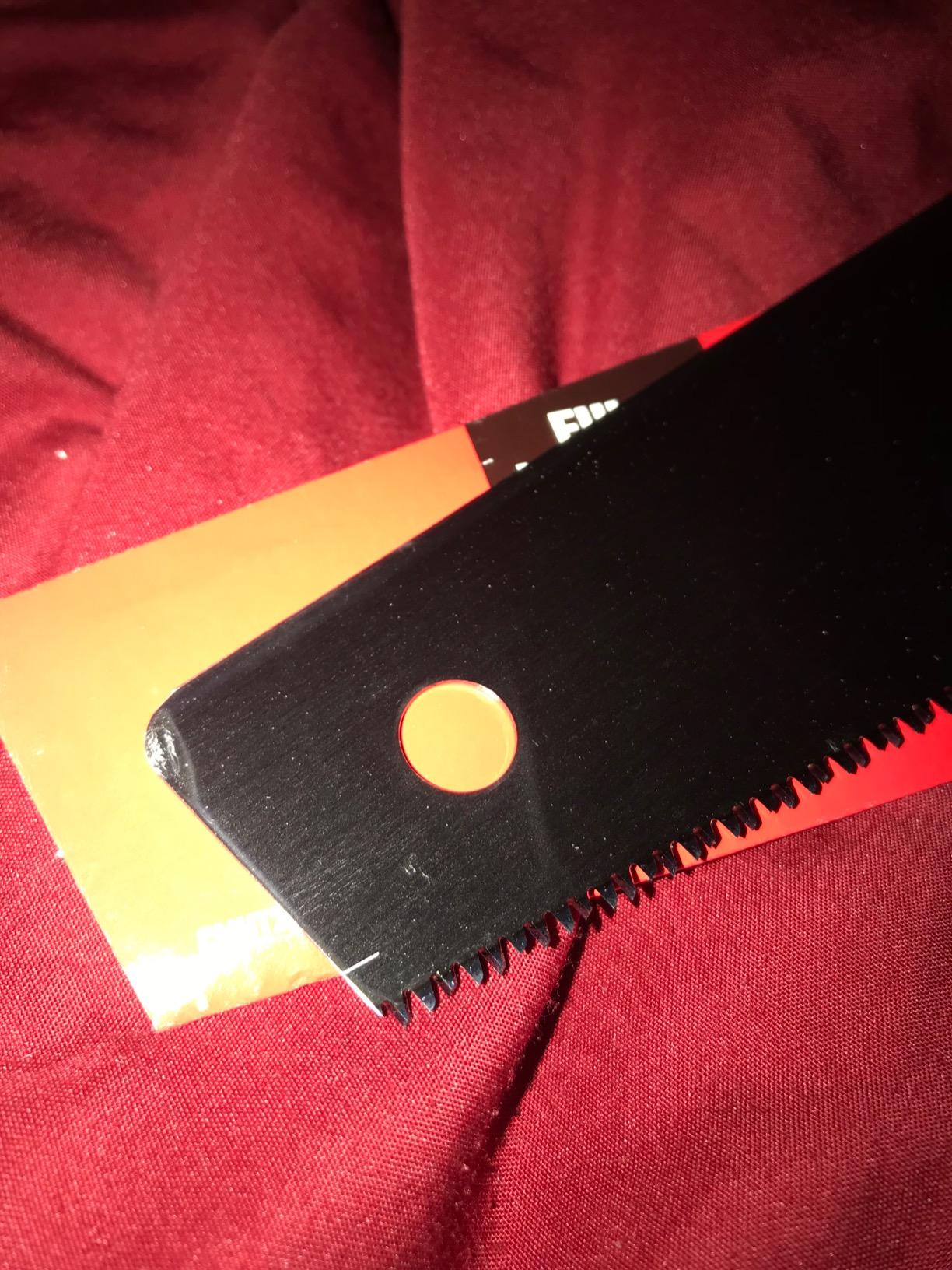
Twenty inches of blade gives this saw real range. It will crosscut a full width of 3/4 plywood without the awkward diagonal the IRWIN would need, and at 14.4 ounces it stays comfortable well past the point where a heavier saw would have gone numb.
The trade-off showed up every time we pushed it into construction lumber. Six TPI in a 2×4 means more strokes for the same depth, and in wet or soft pine the cut face starts to fuzz before the cut is through. It is not wrong, it is just the wrong tool for rough work.
What you should know before you buy it
The teeth are induction hardened, so this is another hardpoint saw. The upside is edge retention: owners report the blade staying usable a long time between edge interventions, which is genuinely valuable on a saw this fine. The downside is the same one, no sharpening path.
CRAFTSMAN backs this with a full lifetime warranty, which is stronger coverage than most competitors in this list offer. The composite bi-material handle is a good grip, though it is not a replacement for a proper wooden handle on a full sheet of plywood.
Who should skip it
Skip it if you mainly break down framing lumber. You will be doing two to three times the strokes of a coarse saw for a worse result on material where nobody can see the cut face.
Skip it for demolition work too. These induction-hardened teeth are not designed to survive embedded fasteners.
3. Spear & Jackson 22 in Skew Back Saw – Best Traditional All-Rounder
Spear & Jackson Saw Skew Back 22 inch x 10 ppi
22 inch blade
10 PPI universal teeth
Carbon steel
0.58 kg
Resharpenable
Pros
- Universal teeth cut with and against the grain
- Resharpenable cross-ground teeth
- Skew-back spine improves balance
- Handles timber chipboard and plywood
Cons
- Heaviest saw in this group at 0.58 kg
- Traditional brass-back feel versus modern thin blades
- Wooden handle needs occasional care
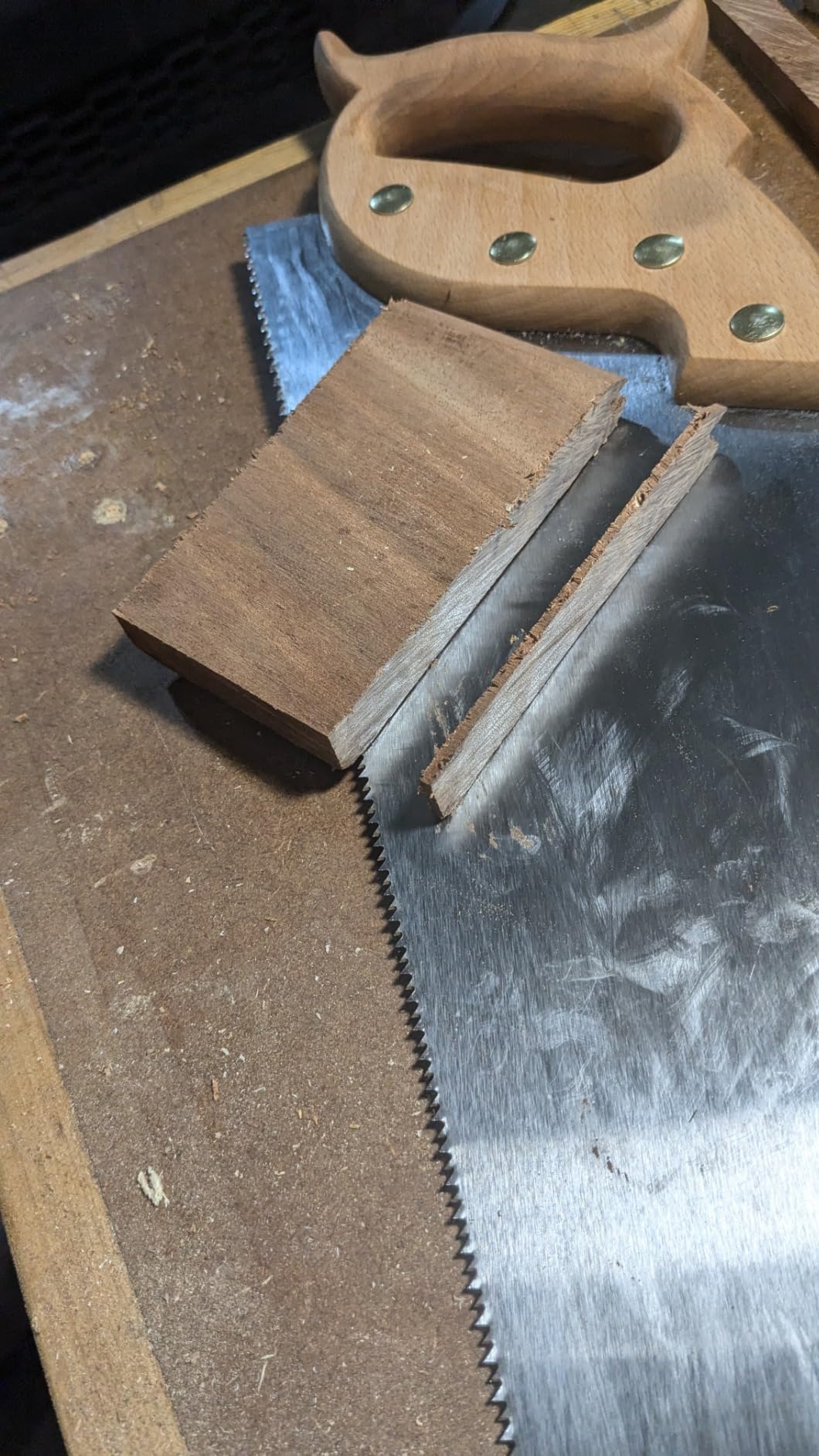
This is the saw that does the boring job well. Universal teeth are filed to work both across and along the grain, which means one blade handles the crosscuts on a lumber pile and the rip cuts between them. At ten PPI it sits in the middle of the range and behaves well in both directions.
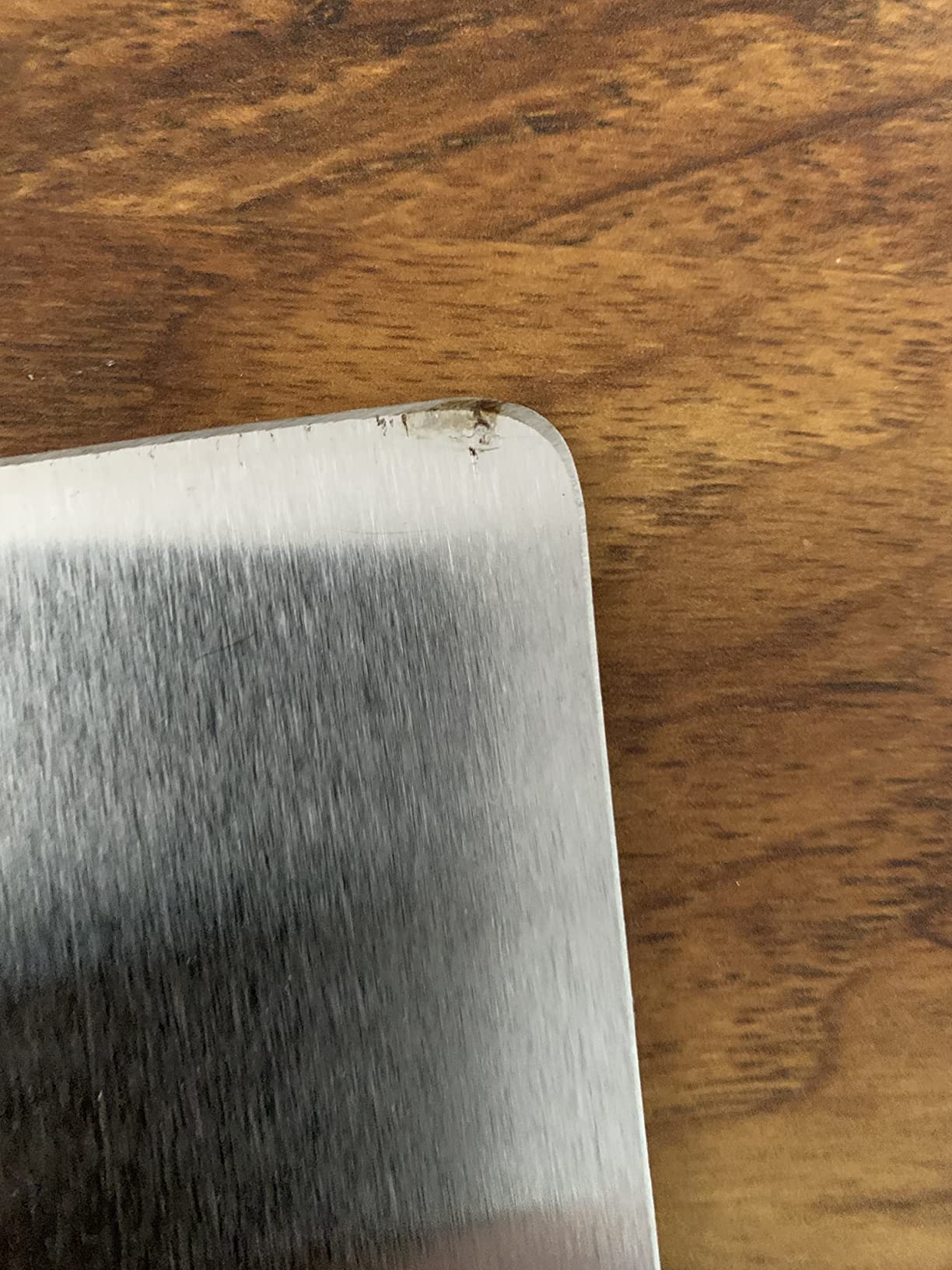
The skew-back spine is an older design choice, and it earns its place. It keeps the blade clear of the workpiece so friction stays low, and it moves the balance point toward the handle. On a 22 inch saw that is the difference between a stroke that feels planted and one that feels tip-heavy.
Twenty-two inches is enough reach for a wide cut across a sheet of ply, and the carbon steel blade with cross-ground teeth can be resharpened, which none of the first two saws can offer. Owners describe it as a dependable all-rounder rather than a specialist, and that is accurate.
What you should know before you buy it
At 0.58 kg this is the heaviest saw in the group by a wide margin, and over a long cut you feel every gram of it. If you will be sawing a full sheet of plywood in one sitting, the weight adds up faster than the extra blade length saves you.
Resharpenable teeth mean a filing kit and a little practice. If you have never sharpened a saw, that is a weekend you will need to plan for before the saw is useful again.
Who should skip it
Skip it if you want the lightest tool in the hand or if you already own a quality file. The modern thin-blade saws here cut faster and with less force for the same lumber job.
Skip it if you need a razor-clean finish edge. Universal filed teeth are versatile, not refined.
4. JORGENSEN 15 in 8 TPI Hand Saw – Best for Treated Lumber
JORGENSEN 15-Inch Hand Saw, 8 TPI Coarse Blade for Wood Cutting
15 inch blade
8 TPI triple-ground teeth
SK5 high-carbon steel
Teflon coating
Angle guides
Pros
- Teflon coating resists rust and moisture
- SK5 steel resists bending
- Edge protector included for storage
- Built-in 45 and 90 degree angle guides
Cons
- Aluminum-framed handle is heavier than wood
- Coarse 8 TPI is wrong for finish cuts
- Handle markings are easier to read than to trust for precision
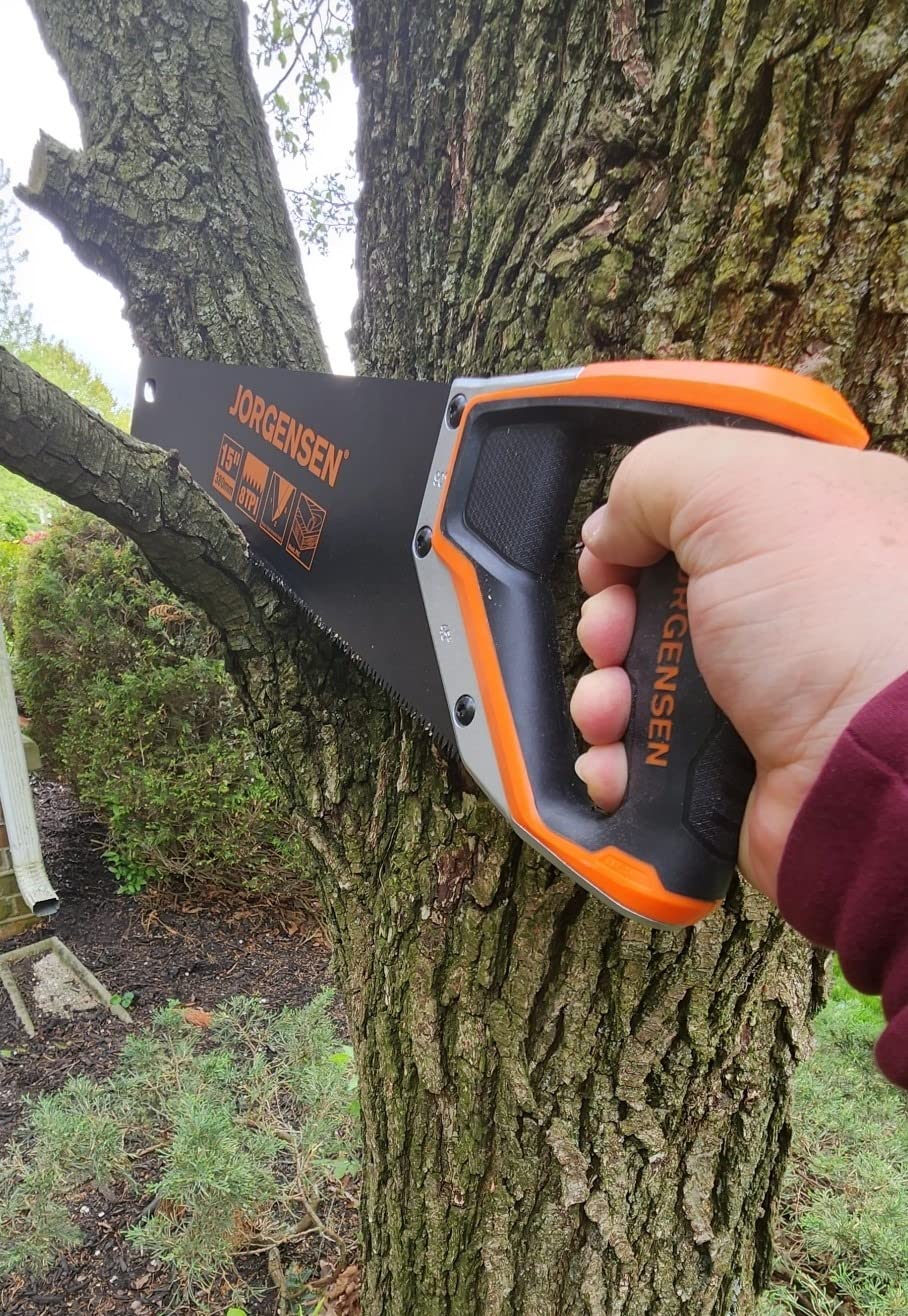
Rust is the question that comes up constantly from people cutting pallet wood, pressure-treated lumber and driftwood, and this is the saw built around that complaint. The Teflon coating across the SK5 high-carbon steel blade is the reason. Treated lumber carries moisture and chemicals that will bloom a bare blade with orange staining within a session, and the coating keeps it off.
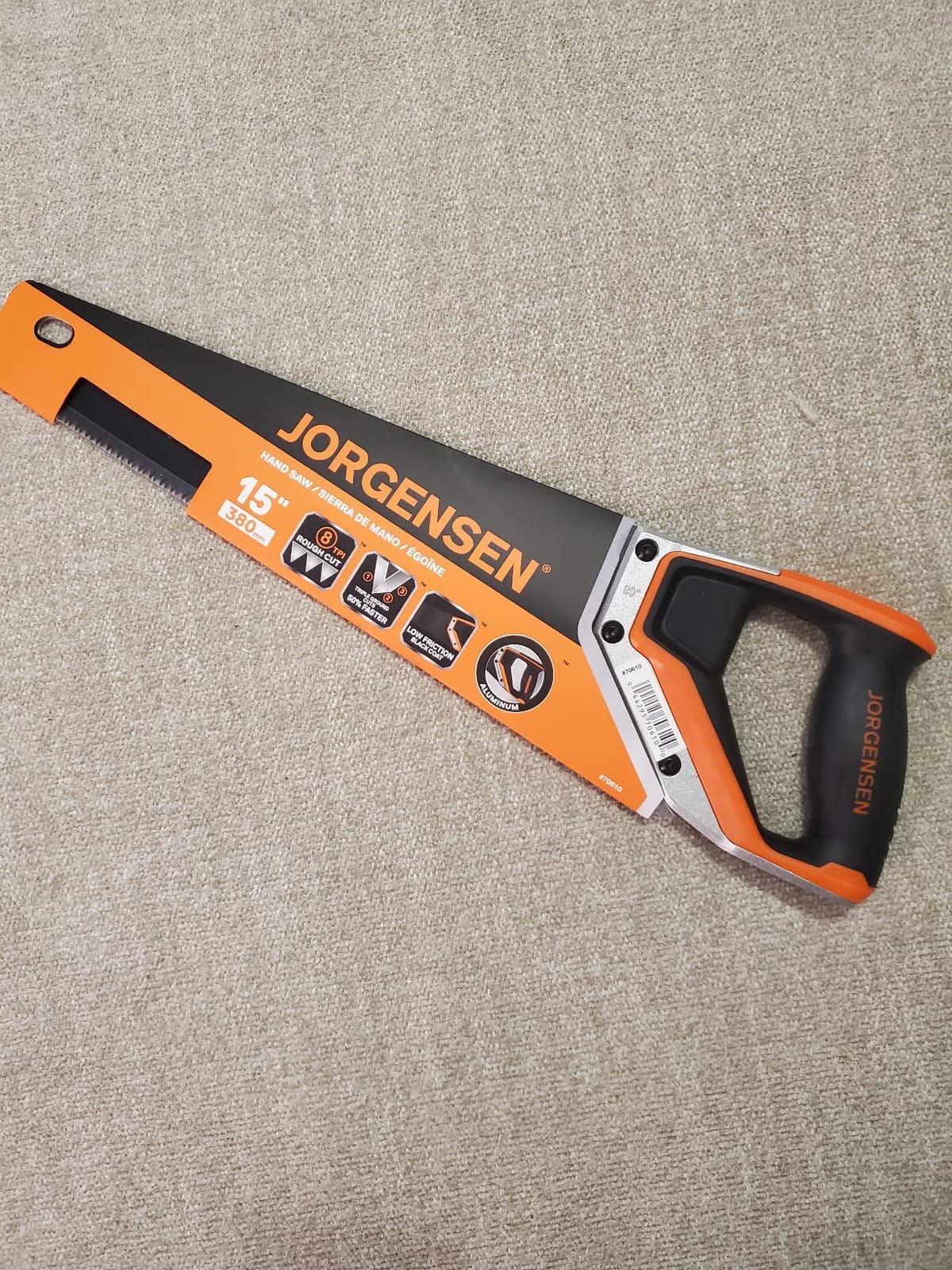
Eight TPI triple-ground teeth give a genuinely aggressive bite, faster than the filed teeth on the Spear and Jackson, and the blade is thick enough to resist bending when the cut gets awkward. Reviewers also point out the included plastic edge protector, which is the sort of small thing that matters more than it sounds when the saw lives in a truck bed.
Because the teeth are induction hardened, this is a hardpoint saw and edge retention is a genuine strength. For someone cutting wet timber a few times a year, a long-lasting edge plus a coated blade is the right combination.
What you should know before you buy it
The handle is aluminum framed rather than wood, and that is where most of the added weight sits. It feels solid and secure, which is a fair trade for a grip that will not crack, but it is not the lightest option in a lineup that includes several pull saws under 0.25 kg.
Eight TPI means this is a breakdown saw. Any expectation of a clean finish cut should be dropped before you buy.
Who should skip it
Skip it if you cut only indoor hardwood trim. You will be carrying weight and coarse teeth for work that does not need either.
Skip it if you plan to sharpen. The induction-hardened teeth mean the saw is replaceable rather than maintainable.
5. HAUTMEC 22 in 9 TPI Coarse Saw – Long Blade for Rough Timber
HAUTMEC 22″ Hand Saw, 9 TPI Coarse Teeth with Deep Gullets for Wood Cutting
22 inch blade
9 TPI triple-ground teeth
1 mm thick blade
65Mn heat-treated steel
1 year warranty
Pros
- Long 22 inch reach suits boards and branches
- 1 mm blade resists side vibration
- Black coating adds rust resistance
- Anti-slip TPE wrapped handle with angle marks
Cons
- Triple-ground teeth can bind on milled lumber like 1x6 and plywood
- Largest share of mid-range ratings in this group
- One year warranty is the shortest here
Twenty-two inches of blade with a 1 mm thick body is a stability-first design. The thick plate is heavy, and that weight is the point: on a long cut through a wide board, a thin blade flexes and wanders, and this one tracked straight for us in the same cut where a thinner budget saw drifted.
It is a genuinely capable saw for storm cleanup, branch work and general lumber handling, and it arrives sharp with a tooth protector and paper sleeve for storage. The handle is a one-piece screwed design with a TPE wrap, and the 45 and 90 degree markings are moulded right into it.
What we cannot gloss over is the tooth geometry criticism that runs through the reviews. Triple-ground teeth are fast in rough wood, but several buyers report binding on milled lumber such as 1×6 and on plywood, where traditional filed teeth would move freely. We saw the same pattern on smooth planed surfaces, and it is the single reason this saw sits below the ones above it.
What you should know before you buy it
This saw also has the largest proportion of mid-range ratings in the group, and the 4.5 average reflects that. The complaints cluster around the same place: quick and sharp at first, then frustrating once the material gets smooth and uniform.
Blade weight is the other consideration. A 1 mm plate on 22 inches is a substantial tool, and long sessions will show it in the forearm.
Who should skip it
Skip it if your work is mostly on planed or pre-finished boards. That is precisely the material that makes these triple-ground teeth bind.
Skip it if a long warranty matters to you. One year is the shortest coverage in this lineup, and it is worth weighing against the two rated builds below.
6. QYQRQF 14 in Fine-Cut Hand Saw – Best Budget Pick
14 in. Pro Hand Saw, 11 TPI Fine-Cut Soft-Grip Hardpoint Handsaw Perfect for Sawing, Trimming, Gardening, Cutting Wood, Drywall, Plastic Pipes, Sharp Blade, Ergonomic Non-Slip Handle (green)
14 inch blade
11 TPI three-ground teeth
0.9 mm 65Mn blade
12 oz
Heat-treated
Pros
- Handles trim drywall pipe and light lumber
- Soft-grip handle reduces hand fatigue
- Deep gullets clear chips quickly
- Tooth guard and sleeve included
Cons
- 14 inch blade limits reach on dimensional lumber
- Generic construction with no stated warranty
- 11 TPI is not for heavy rough cutting
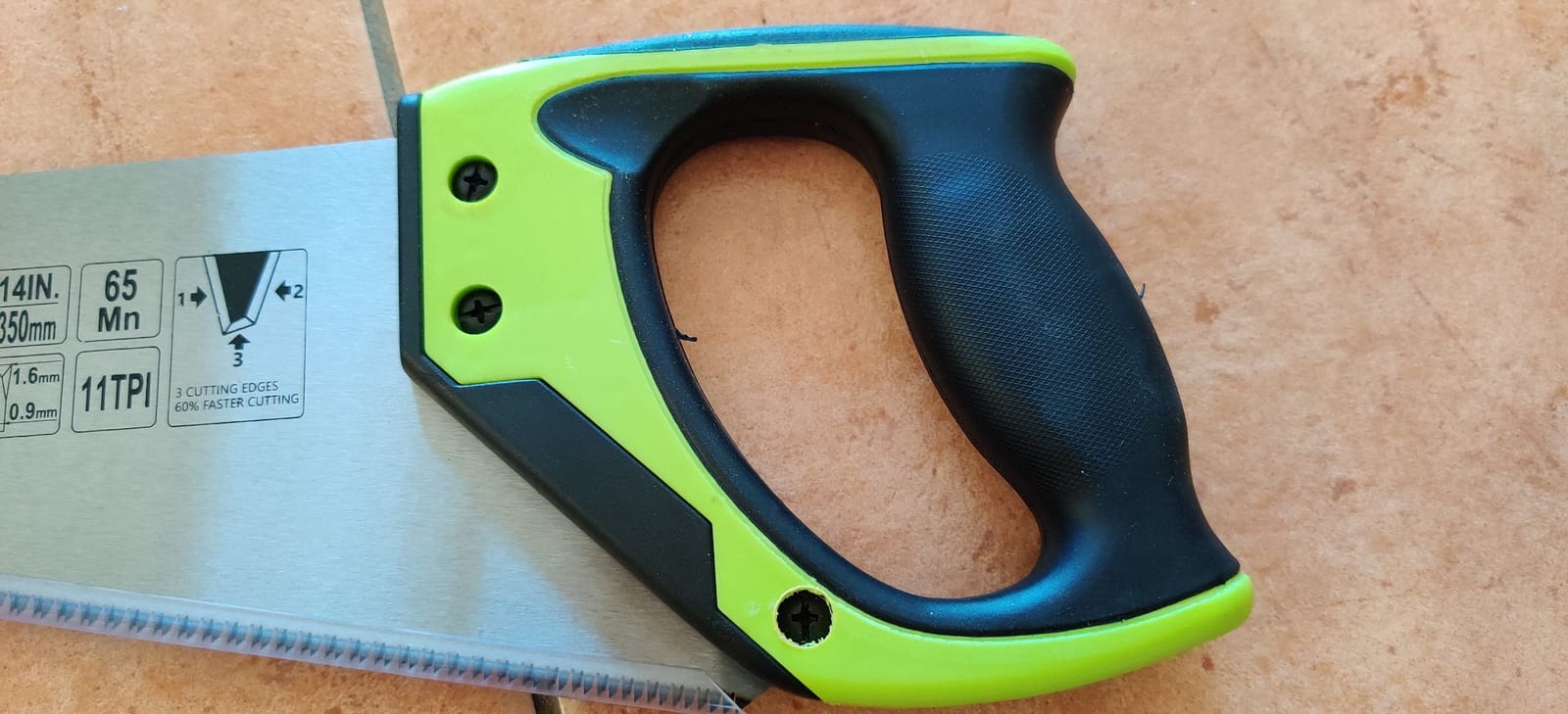
At 12 ounces with an 11 TPI pattern, this saw does not look like a lumber tool and mostly is not one. It is a trim and repair saw. Drywall, plastic pipe, plywood offcuts and light moulding are its home turf, and at this weight it stays comfortable for the short, frequent cuts that dominate a home project.
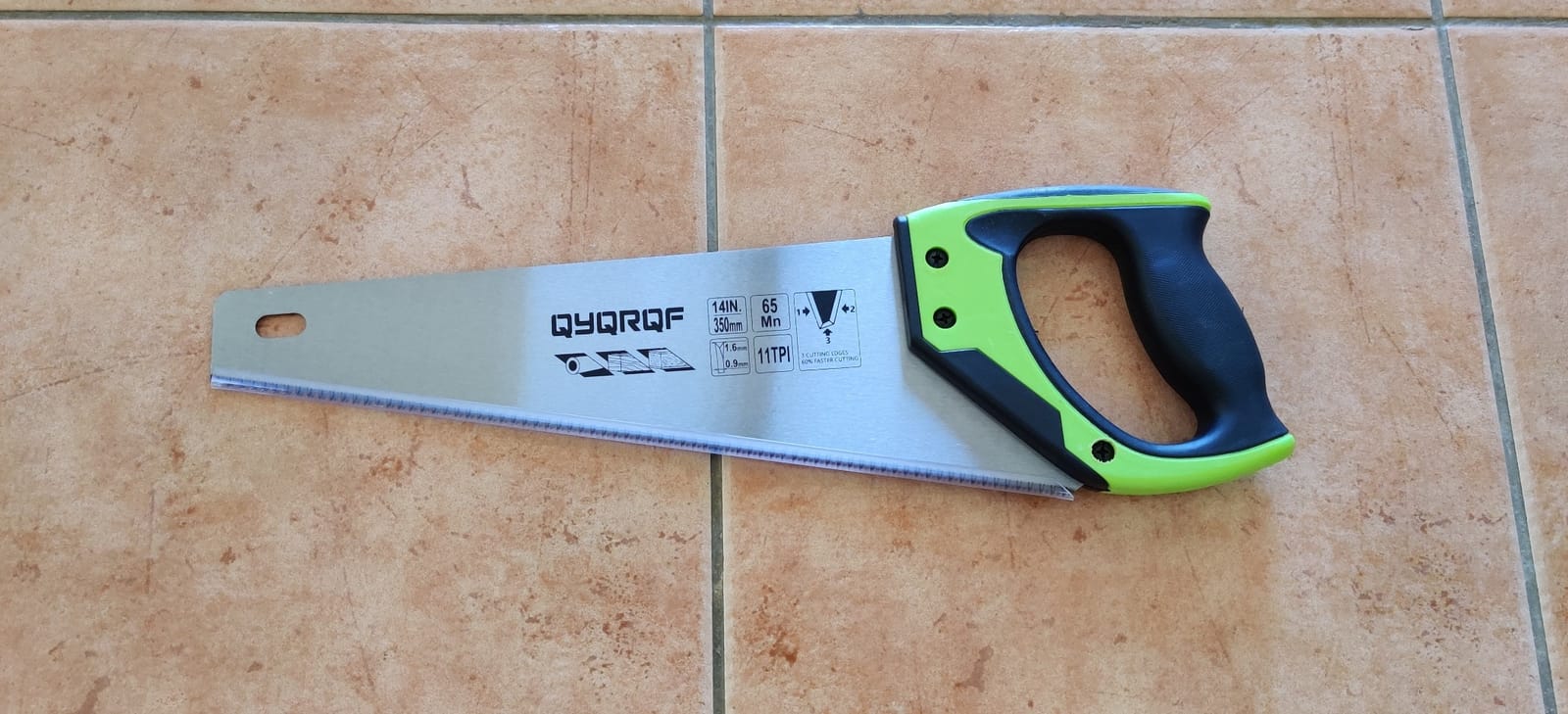
The blade is 0.9 mm heat-treated 65Mn steel with three ground surfaces, which means the edge is induction hardened and not resharpenable. Owners describe it as arriving sharp and holding that edge, and the low-friction coating helps with the drywall-dust and paint-splatter case as much as it helps with rust.
What makes it our budget pick is the ratio. There are very few saws that cover as many odd jobs, and the soft-grip TPR handle is a real comfort improvement on a tool this light.
The honest limit is reach. Fourteen inches is short, and on a 2×4 stood on end the cut is a steep diagonal that asks more of your wrist than a 20 inch blade would. It will get the job done, but it is not the comfortable way to do a batch of framing cuts.
What you should know before you buy it
There is no brand you can research and no stated warranty, which is the real trade-off here. You are buying specification and a large volume of buyer feedback rather than a company that will stand behind the tool.
For a first saw, a tenant-friendly project, or a gift for someone starting out, that is a reasonable trade. For a tool you expect to keep for years, the named brands below are safer ground.
Who should skip it
Skip it if you are framing a wall. An 11 TPI pattern in 2x4s is a lot of strokes for a modest result, and the short blade compounds the effort.
Skip it if you want to sharpen it. Heat-treated induction-hardened teeth end that conversation.
7. SUIZAN Ryoba 9.5 in Double Edge Pull Saw – Premium Pick for Clean Cuts
SUIZAN Ryoba Double Edge Saw 9.5″ – Japanese Pullsaw Hand Saws Wood Cutting
9.5 inch blade
9 and 15 TPI
0.5 mm thick
0.8 mm kerf
0.2 kg
Pros
- Double edge covers rip and crosscut on one blade
- Very thin blade gives a narrow kerf and little waste
- Pull stroke causes far less fatigue
- Exceptional accuracy on joinery and flush cuts
- Spring steel blade returns to true after bending
Cons
- Struggles with thick or messy-grain lumber
- Too slow for rough or heavy sawing
- Hardened teeth on one edge cannot be sharpened
- Only a 30 day warranty
This is the saw that made us understand why people argue about pull saws. It cuts on the return stroke, which frees the blade from the workpiece on the way out, and that lets the steel be half the thickness of a push saw at 0.5 mm. The result is a 0.8 mm kerf, a clean exit face, and almost no waste in the board.
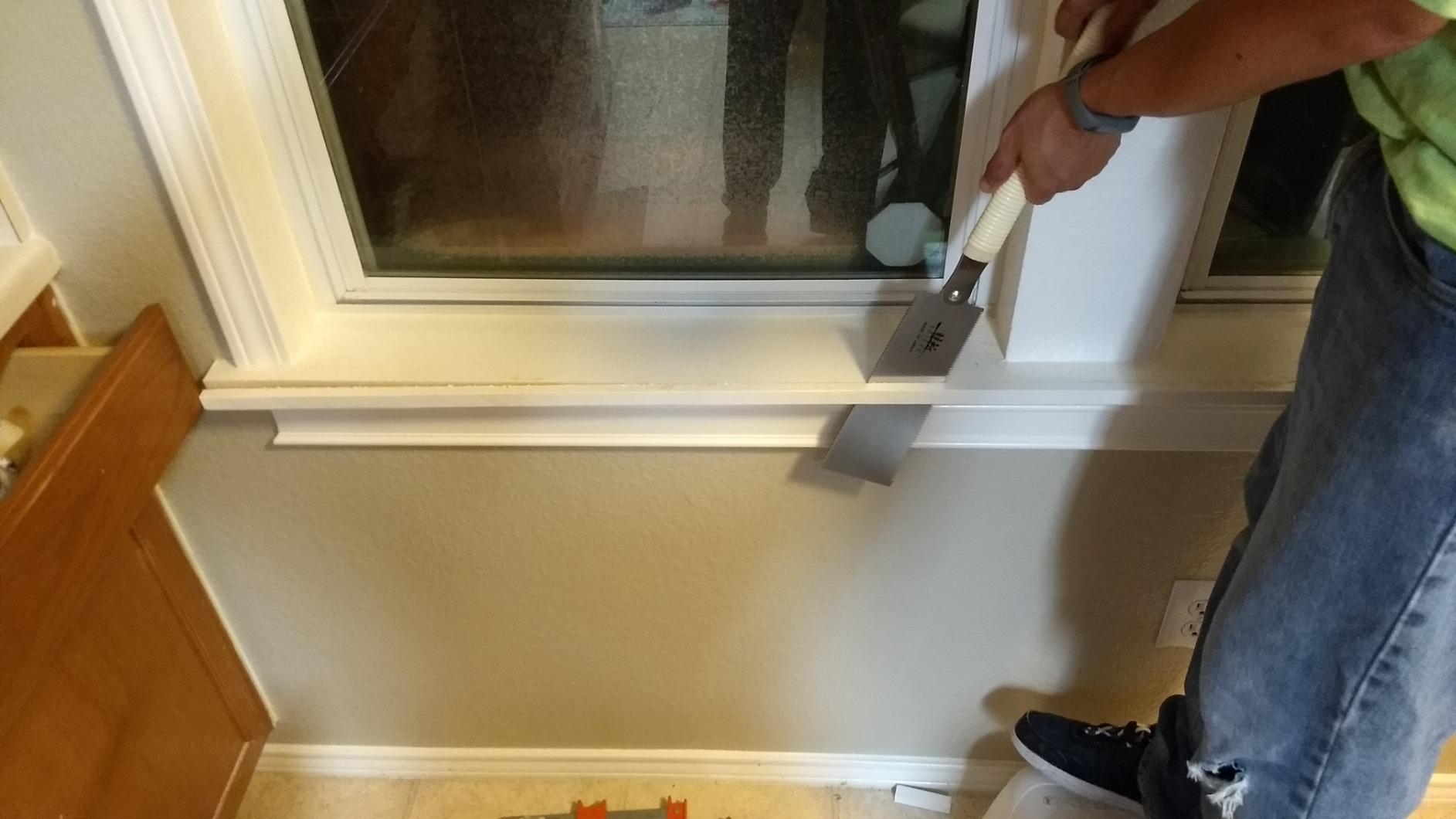
Two edges, one blade. The 9 TPI side is the coarse crosscut, the 15 TPI side handles hardwood and finer work, and flipping the saw is the entire rip-to-crosscut conversion. At 0.2 kg it is less than half the weight of a traditional 22 inch Western saw, and the fatigue difference over a long session is dramatic rather than marginal.
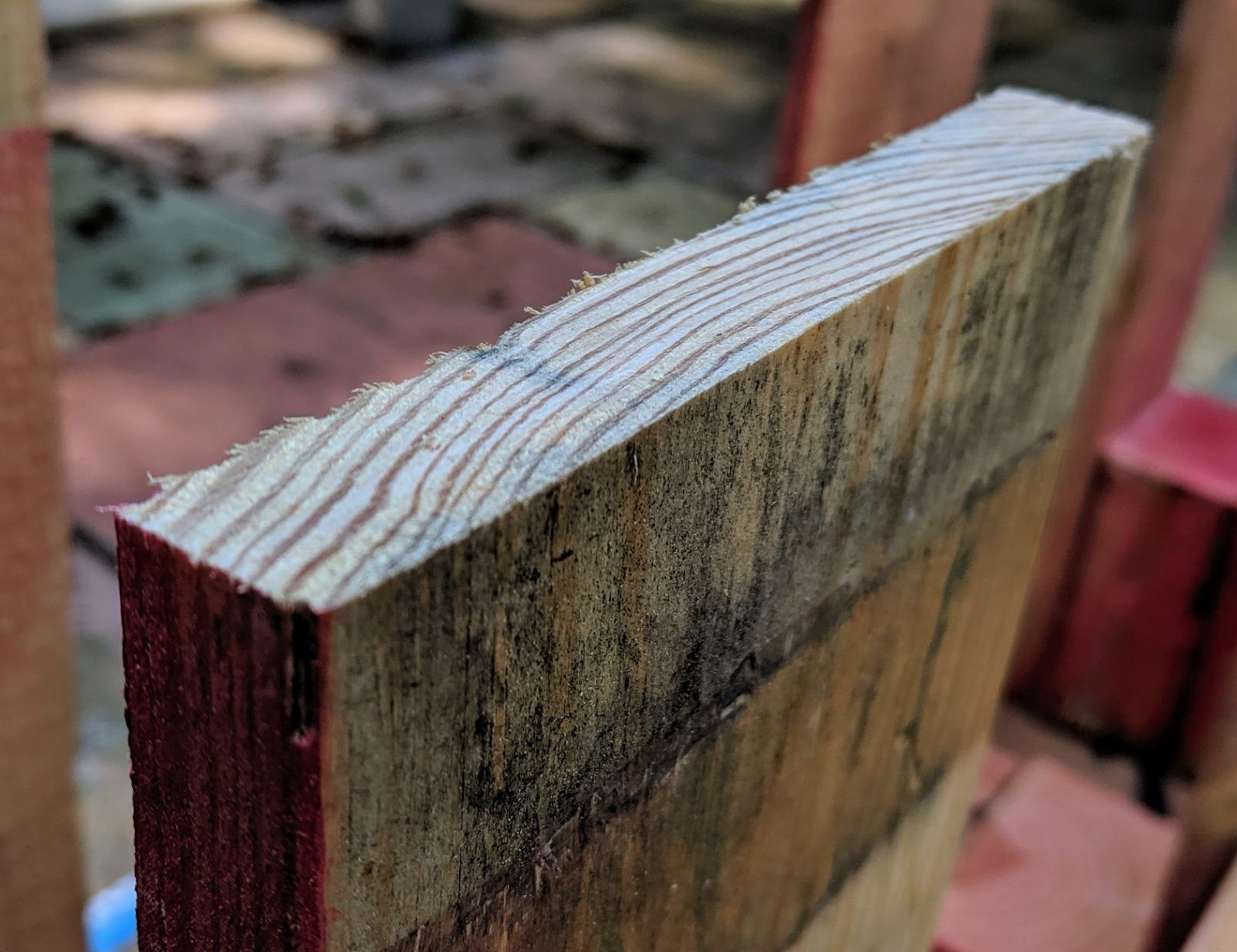
Accuracy is where it separates itself. On hardwood and plywood our cut faces needed almost no sanding, and on flush cuts the thin blade cut right down into a corner without the rounded exit a push saw leaves. This is the most heavily reviewed saw in the group by a wide margin, and the enthusiasm in those reviews is mostly about accuracy and comfort.
What you should know before you buy it
The pull stroke is a real adjustment. Push saw users tend to lean into the stroke, and leaning into a pull saw is exactly how you bind it. The learning curve is real, usually an afternoon, and it is the main reason first-time buyers put this saw down.
It is also a fine-work saw. Reviewers are consistent about it bogging down in thick 4×4 material and in messy grain like ripped hickory, and being slow on rough sawing. The teeth on one edge are hardened and cannot be resharpened, and the warranty runs 30 days.
Who should skip it
Skip it if you are building a deck or a frame. You will spend far longer per cut than a coarse Western saw, and the thin blade will complain about the material rather than the technique.
Skip it if you cannot accept a different stroke direction. That is a preference, but an honest one, and buying a pull saw to use it as a push saw never works out.
8. SUIZAN Kataba 10.5 in Pull Saw – Best for Fine Crosscuts
SUIZAN Kataba Single Edge Saw 10.5″ – Professional Japanese Pullsaw Handsaw Woodworking Tools
10.5 inch blade
14 TPI single edge
0.6 mm thick
0.8 mm kerf
0.17 kg
Pros
- Deep single edge cuts crosscut work quickly
- Lighter than typical Western saws at 0.17 kg
- Pull stroke cuts fatigue dramatically
- Japanese steel holds a razor edge
Cons
- Single edge cannot rip cut
- Not suited to thick or rough lumber
- Only a 30 day warranty
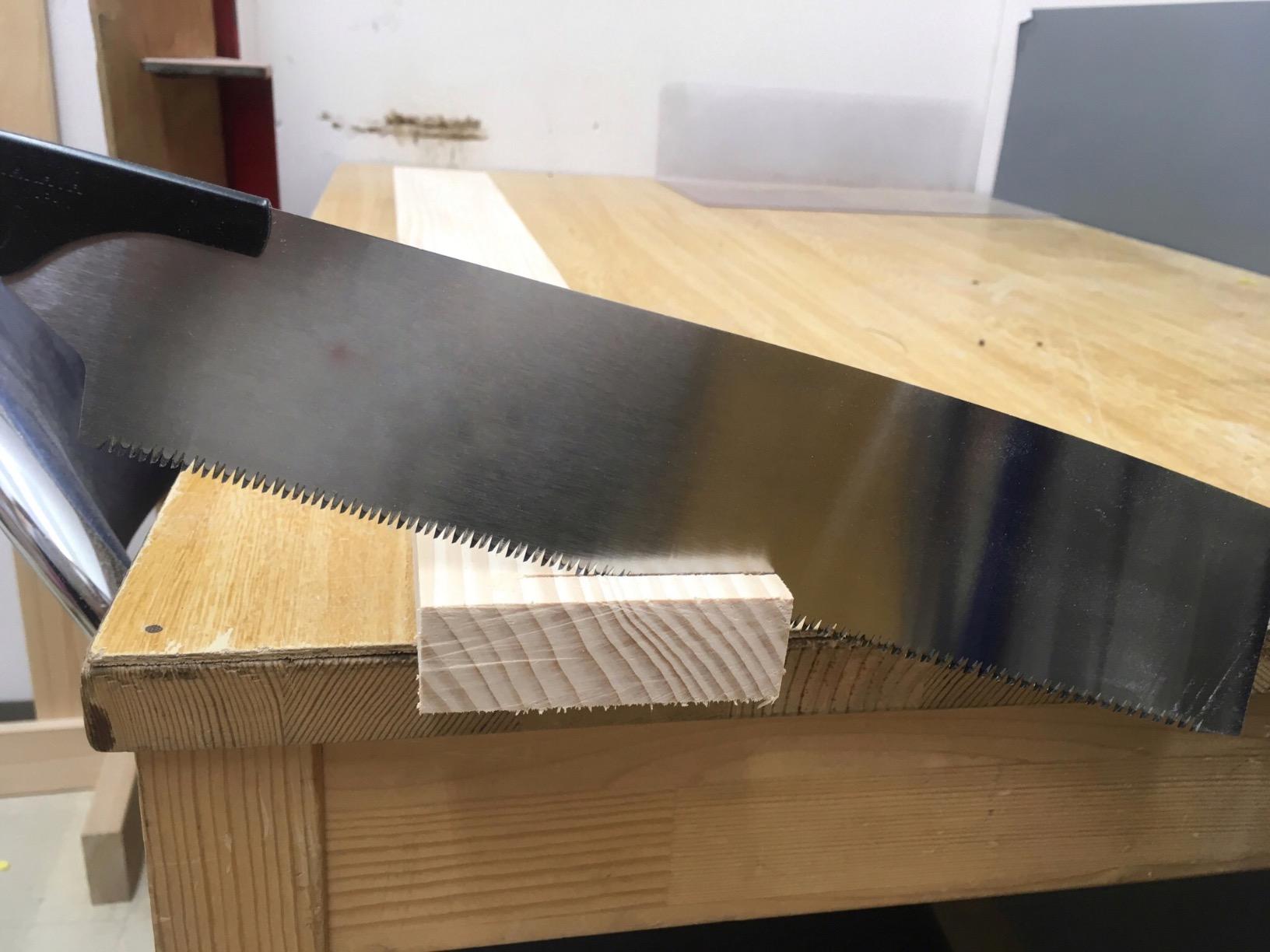
The Kataba is the crosscut specialist in the SUIZAN range, and the difference from the Ryoba is the whole point of it. One deep edge at 14 TPI, no second side, and slightly more blade at 10.5 inches. That single edge is optimized for slicing across the grain, and it moves through a crosscut faster than the double-edge model.
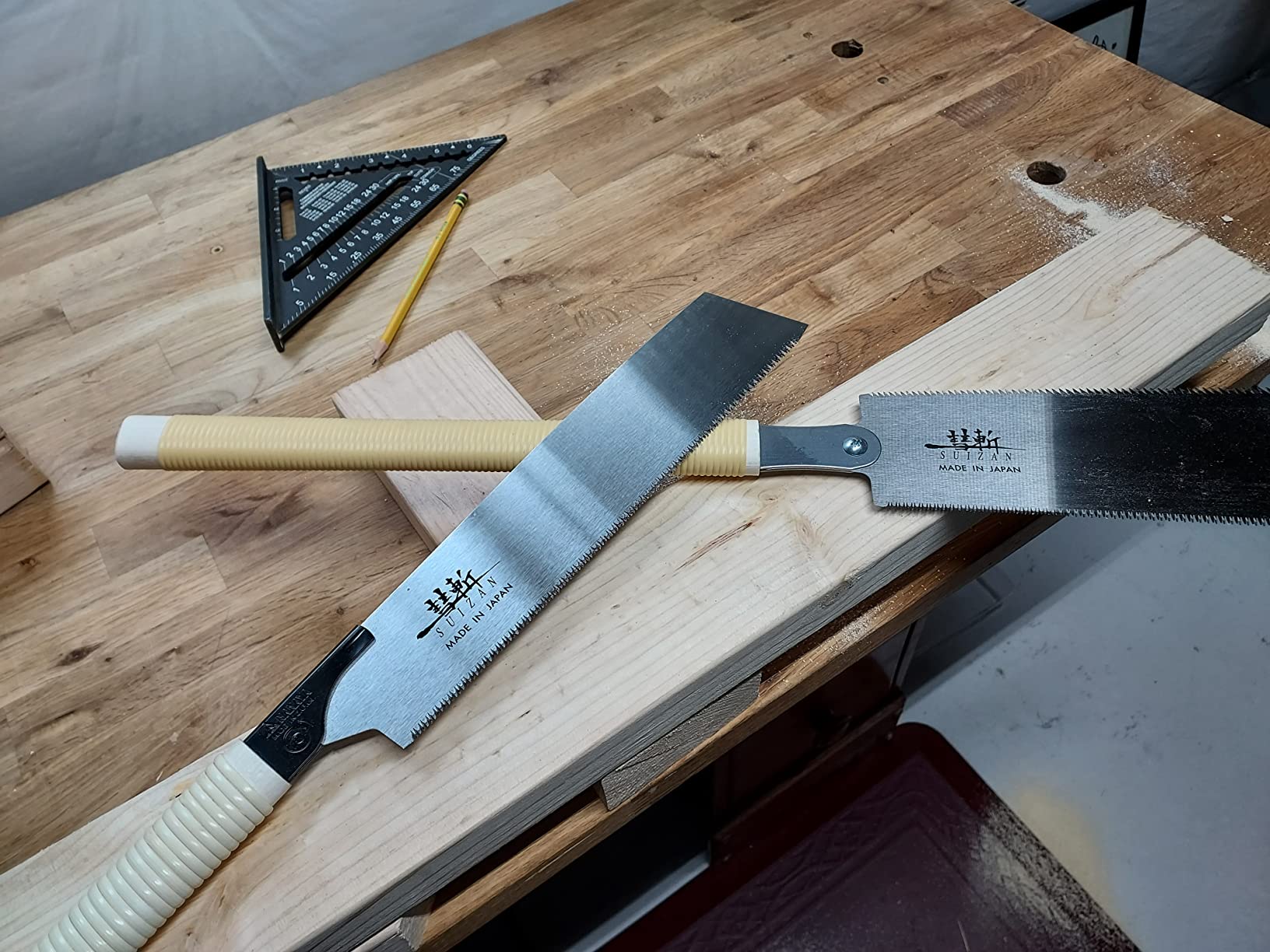
At 0.17 kg it is the lightest full-size saw we tested, and the fatigue saving over a session of crosscuts is substantial. The kerf stays at 0.8 mm, so the cut is still narrow and still clean enough to measure and mark without any cleanup.
Owners consistently describe fast, clean crosscut results and a pleasant weight. The complaint that appears in reviews is the same one the design invites: a single edge means no ripping, so if your project needs both cuts you are flipping to another tool or losing efficiency.
What you should know before you buy it
Blade length matters here. Ten and a half inches is short for dimensional lumber, and on a 2×4 you are working at a steeper angle than the 15 and 22 inch saws in this list. It handles the cut; it is just not the most efficient geometry for it.
Like the Ryoba, the warranty is 30 days. That is short, and it is the main reason this sits below its sibling in our ranking despite the lighter weight.
Who should skip it
Skip it if you need to rip boards. That capability is simply absent, which is a real limitation rather than a preference.
Skip it if you are sawing wet or pressure-treated lumber. Thin Japanese steel and fine teeth are the wrong pairing for that work.
9. Gyokucho Razor Ryoba – Best Japanese Starter Saw
Gyokucho 770-3600 Razor Ryoba Saw with Blade
Double edge pull stroke
0.5 mm thick blade
Fine kerf
High speed steel
Traditional design
Pros
- Two saws in one with a fine crosscut side and a rip side
- 0.5 mm blade gives a very fine kerf
- Traditional Gyokucho design at an accessible entry point
- Light weight is comfortable for extended handheld use
Cons
- Traditional handle is less refined than modern Western grips
- Fine teeth are not for rough framing or thick lumber
- Older production standards versus newer Japanese models
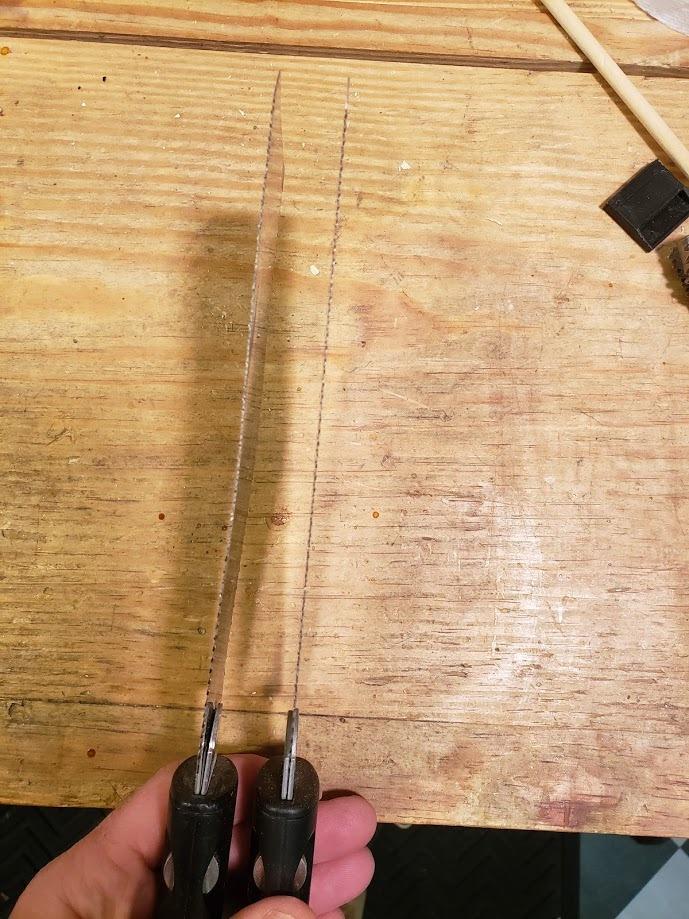
The Gyokucho is a traditional Gyokucho ryoba, and it is the version of the Japanese pull saw idea most people meet first. Two edges: a finer side for crosscut work, flip the saw and you have a rip edge. At 0.5 mm the blade produces a very fine kerf and a clean line, which is the reason this format became popular outside Japan in the first place.
Reviews value the two-sided capability, the fine kerf and the light 0.15 kg weight. At a considerably lower entry point than the premium Japanese pullsaws, it lets someone find out whether a pull stroke suits them without a large commitment.
The trade-off is refinement. The traditional handle is functional rather than ergonomic, and the fine teeth are not intended for rough framing or thick lumber. Treat it as a trim and joinery saw that happens to be more affordable.
What you should know before you buy it
Two edges means two chances to feel the pull stroke incorrectly, so spend a few strokes on scrap before you touch a valued board. The learning curve is the same as any pull saw, and it is the reason some buyers keep these on a shelf.
Blade length listed for this model is longer than the small Japanese pullsaws, which helps on wider crosscuts, but the teeth remain fine. Fine teeth on thick material is the limiting factor, not the length.
Who should skip it
Skip it if your work is rough lumber. Every limitation here points the same direction, toward fine and finished cutting.
Skip it if handle comfort over long sessions is your main priority. There are better options for that.
10. VAUGHAN Bear Saw – Best Multi-Blade System
VAUGHAN Bear Saw, 13 Inch Coarse Medium Blade, Japanese Pull Saw
Interchangeable tri-edge spring steel blade
Keyless blade change
Pull stroke
7.52 oz
13 inch coarse medium blade
Pros
- Five blade formats from 5.5 inch mini to 13 inch coarse
- Keyless blade change is fast and needs no tools
- Spring steel tri-edge blade holds a good edge
- Very light at 7.52 oz for a framing-capable saw
Cons
- Smallest review base here at 125 ratings
- Coarse medium blade is for framing not finish
- Limited warranty coverage
The Bear Saw solves a problem none of the others solve: one tool that covers framing and finish work. The frame takes interchangeable tri-edge spring steel blades, and a keyless mechanism means you swap between them without tools. A coarse and medium 13 inch blade handles framing, treated lumber and laminates. A medium fine blade takes plywood and 2x4s. Extra fine and double-edged blades cover pipe, flush cuts and dovetails.
At 7.52 ounces it is the lightest framing-capable saw in this group by a wide margin, and the pull stroke means the fine blades do not need the body strength a push saw would. The tri-edge spring steel holds a good edge and returns to shape after a bend, which matters when you are swapping between hard and soft material all day.
One handle covering the whole range genuinely reduces the tool count in a bag. If you already own a folding pruning saw for branches, this fills the same portability slot for lumber work.
Because the cutting edge is thin, the push stroke has less steel working against it, and the light frame keeps the saw comfortable to hold above a bench rather than down at ground level. That combination is why this format suits one-handed work on a ladder or a scaffold.
What you should know before you buy it
The rating is excellent but the review base is the smallest here at 125, so we would weight that carefully. A high score on a small sample is a thinner signal than a similar score across thousands of ratings, and that is exactly the reasoning we applied when assigning badges.
The default blade is a coarse medium format aimed at framing, so out of the box this is a lumber saw rather than a finish saw. The finer blades are additional pieces of the system.
Who should skip it
Skip it if you want one dedicated saw rather than a system. If you will only ever crosscut dimensional lumber, the Spear and Jackson gives you a better single tool.
Skip it if buying extra blades is a problem. The versatility comes from the range, and the range costs more to fill out.
11. RUITOOL 6 in Double Edge Ryoba – Best for Flush Cuts
RUITOOL Japanese Hand Saw 6 Inch Double Edge Ryoba Pull Saw for Flush Cuts
6 inch blade
SK5 steel at HRC60-63
17 and 14 TPI
0.11 kg
Beechwood handle
Pros
- Hardened SK5 teeth stay sharp for a long time
- Compact size handles flush cuts in tight spots
- Very light at 0.11 kg and easy to carry
- Double edge covers both rip and crosscut
- Lifetime warranty
Cons
- Beech handle is less durable than premium hardwood
- Small blade is not a general lumber saw
- Plastic sheaths over each side are not universal favorites
Six inches is not a lumber blade, and this saw does not pretend otherwise. What it is for is flush cutting: trimming a tenon to a shoulder, cutting a projecting piece back level with a face, working where a bigger saw physically will not fit. At 0.11 kg it is the lightest tool in the entire group, and it lives in a tool bag rather than on a hook.
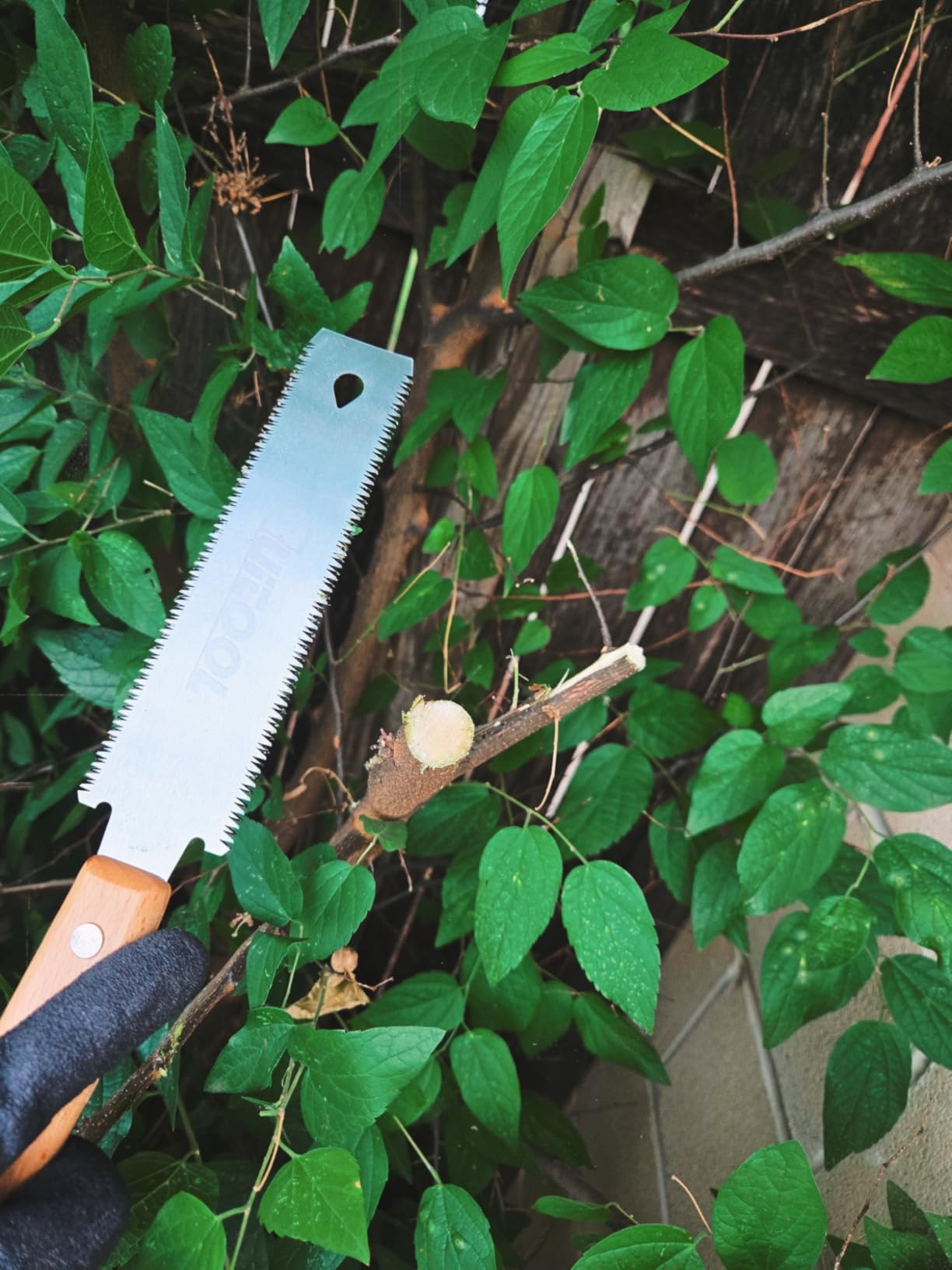
The teeth are the selling point. SK5 high-carbon steel hardened to HRC60-63 with three-sided ground teeth keeps an edge for a long time, and the double edge gives you 17 TPI on one side for hardwood and 14 TPI on the other for softwood, with both functioning as rip and crosscut edges depending on how you hold it.
Reviews praise sharpness, straight accurate cuts and portability, and many owners bought it after being unsure about the pull stroke format. That is a reasonable entry point, since nothing is at risk on a flush cut that goes wrong.
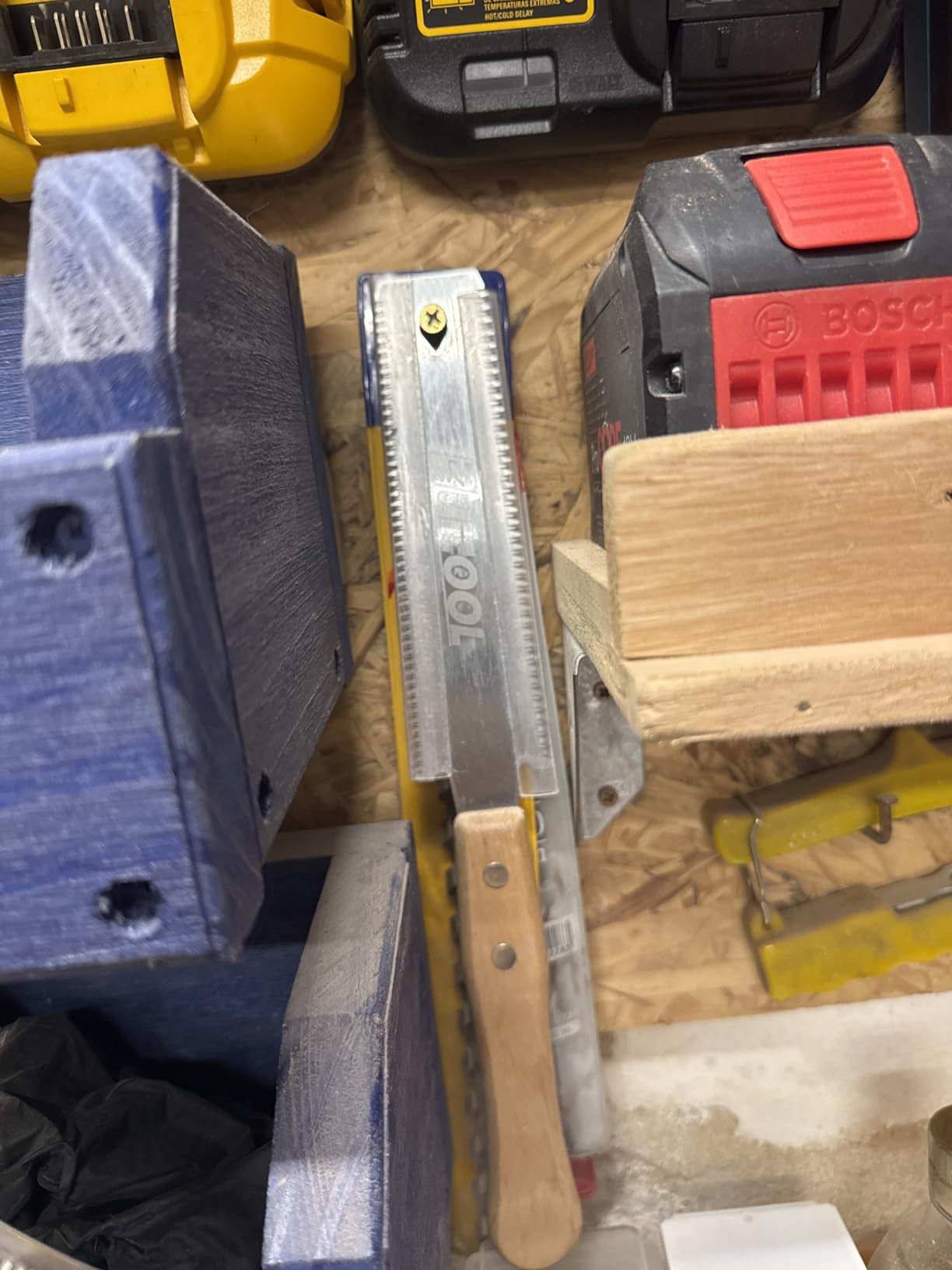
What you should know before you buy it
Beech is a softer handle wood than the walnut-family hardwoods used on the premium Japanese pullsaws, and owners who have used both notice the difference over time. The plastic sheaths that protect each edge draw mixed reviews too, though they do solve storage.
A lifetime warranty here is worth noting, and it is better coverage than either SUIZAN model in this list offers.
Who should skip it
Skip it as your only hand saw. A 6 inch blade has no capacity for dimensional lumber, and treating it as a general tool will disappoint you quickly.
Skip it if you want a fine woodworking saw for boards and joinery. The SUIZAN Ryoba is the right tool at that job.
12. Temple Tool 9.5 in Wingnut Ryoba – Best Handmade Ryoba
Japanese Pull Saw – 9.5 Ryoba Hand Saw with Rip-cut and Crosscut – Wood Saw for Dovetails, Tenons, Joinery, Cutting Boards to Length & Width- Temple Tool Co.
9.5 inch blade
Double edge rip and crosscut
Thin narrow-kerf blade
Hardwood handle with brass
Limited warranty
Pros
- Double edge with dedicated rip and crosscut teeth
- Wingnut hardwood handle with brass hardware
- Thin blade and pull stroke make cutting easy and accurate
- Handcrafted in Japan with high-grade Japanese steel
- Suits cutting boards to size as well as medium joinery
Cons
- Fine teeth are not for heavy rough-cut lumber
- Limited warranty
- Newer listing with a smaller review base
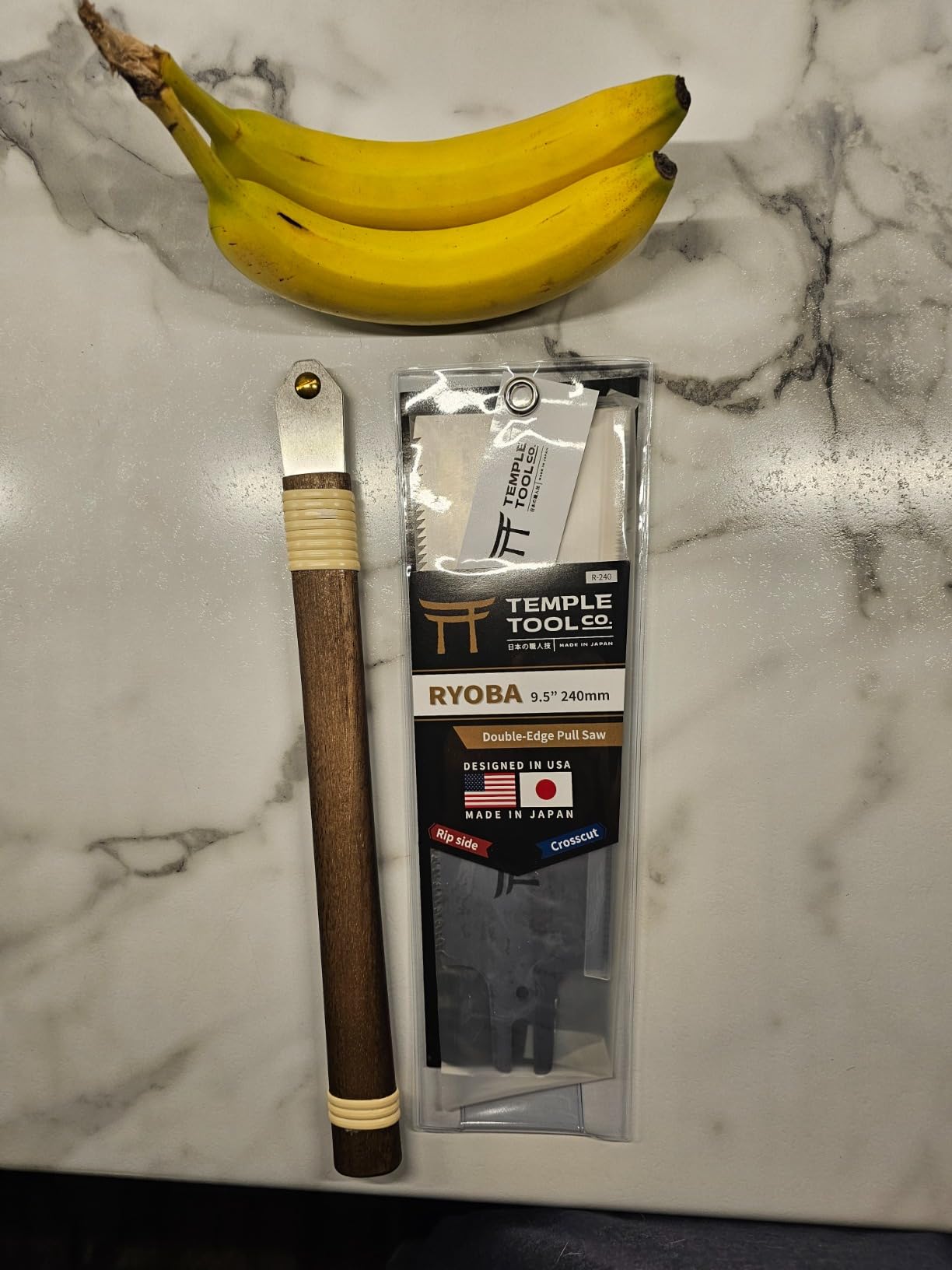
The Temple Tool is the one to choose if you want the pull saw experience with a handle that feels like a finished instrument. The Wingnut hardwood handle is dark brown, from the walnut family, with brass hardware through the tang. It is the kind of detail that sounds cosmetic until you spend an afternoon with it.
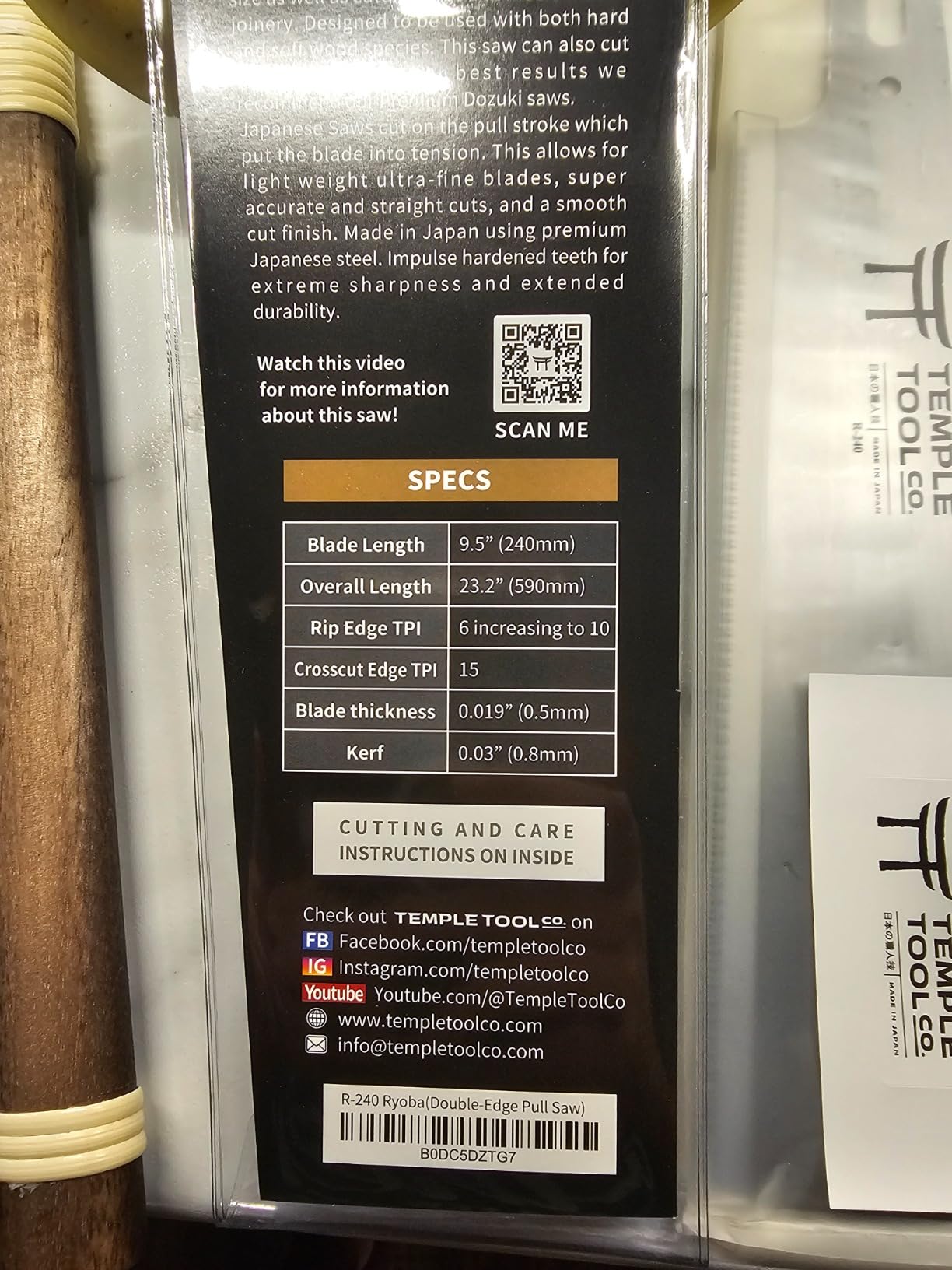
Underneath, the design is the proven double-edge ryoba format: rip teeth on one side, crosscut on the other, a thin narrow-kerf blade, and a pull stroke that asks for less force than a push stroke. Owners highlight how little force the cut takes, and how accurately the blade tracks on cutting boards and dovetails.
It also cuts boards down to size, which is where a fine pull saw often disappoints people. If you also want a board that is ready for the counter rather than the bench, our picks for the best cutting boards for meat are a natural companion. The limitation is the familiar one, and it is consistent across every Japanese pull saw here: this is not a rough-cut lumber tool.
What you should know before you buy it
The listed weight is heavier than the other Japanese pull saws in this roundup, so it is not the first choice for long unbroken sessions. The warranty is limited, and the listing is newer with a smaller review base than the established SUIZAN models, which means less long-term feedback to lean on.
It is also the closest thing here to a boutique purchase. If the handle finish is not something you will notice, the cheaper ryoba models do the same cutting for less.
Who should skip it
Skip it if you are cutting rough dimensional lumber. The fine teeth will bog down before the cut is through.
Skip it if you are purely after function at the lowest entry point. The Gyokucho and the RUITOOL perform the same role without the hardwood handle.
How to Choose a Hand Saw for Lumber
The choice narrows fast once you answer four questions: what is the thickest material you will cut, how often, and whether you want a finish edge or just a fast break-down. Here is the framework we used.
Match blade length to the material
This is the rule nobody explains properly. A nominal 2×4 is actually 3.5 inches thick, and a 4×4 is 3.5 inches square. You want a blade that gives you a workable stroke angle: too short and you are sawing almost vertically, which is tiring and hard to keep straight. Fifteen to 20 inches is the sweet spot for dimensional lumber. Twenty-two inches and up earns its length on sheet goods, where you need reach rather than angle.
For a full 4 by 8 sheet, reach matters more than TPI. A saw that can take the cut in one steady diagonal without your hand dropping off the back will beat a coarse short blade every time.
Pick a TPI tier
Under 7 TPI is coarse and fast, for green lumber, demolition and thick hardwood. Seven to 11 TPI is the general-purpose band and the right choice for construction lumber, which is why so many picks here sit in it. Twelve TPI and above is for finish, sheet goods and joinery, and it is a poor choice for rough work because the teeth clog.
Decide hardpoint versus resharpenable
Hardpoint saws have induction-hardened teeth that cannot be filed. They hold an edge for a long time, which is excellent if you cut lumber occasionally, and they are a dead end if you use a saw weekly. Resharpenable saws cost a file and some practice, then give you a tool that improves instead of expires. The Spear and Jackson in this list is the resharpenable option; the IRWIN, CRAFTSMAN, Jorgensen, HAUTMEC, QYQRQF, Gyokucho and RUITOOL are hardpoint.
Understand the Japanese saw names
Dozuki, kataba and ryoba all describe pull-stroke saws, and the forum confusion is understandable because retailers use the words loosely. A dozuki has a thin flexible blade for fine crosscut work. A kataba has a single deeper edge for crosscutting. A ryoba is double edged, with rip teeth on one side and crosscut on the other. A pux is the flush-cutting version. None of them is a coarse lumber saw by design.
Brands worth knowing
IRWIN, CRAFTSMAN, Stanley and DeWalt cover the mainstream Western hardpoint market. Spear and Jackson make the traditional resharpenable saws, and Vaughan covers the folding and multi-blade pull saw format. SUIZAN, Gyokucho, Z-Saw and Kakuri are the Japanese pull saw names you will meet most often, with Temple Tool sitting at the handmade end.
If you are also building out a small workshop, our picks for the best convertible hand trucks cover moving lumber and sheet goods around once it is cut.
When a Hand Saw Is the Wrong Tool
The most useful thing we can say in this article is when to stop reading and buy a power saw. A circular saw is genuinely faster on rough dimensional lumber, and a miter saw beats a hand saw on repeated identical cuts every time. Nobody in our testing produced an argument against that.
A hand saw wins when the cut count is small. One or two cuts to length, trimming a stud to fit, cutting a piece out of a sheet, cutting in a space where a circular saw guard will not clear the workpiece. In those situations a hand saw is faster end to end, because there is no setup, no guide rail, no dust extraction, and no blade change.
It also wins on accuracy for finish work. A high-TPI Japanese pull saw leaves a face clean enough to measure and mark without sanding, where a circular saw is more likely to leave a rounded exit side or tear-out on the face you can see. Forum users cutting cedar and dimensional lumber report moving to hand saws specifically to escape circular saw kerf damage.
What a hand saw is bad at is volume. Framing a wall, breaking down a pallet of 4x4s, or cutting a stack of sheet goods is dozens of long strokes repeated, and that is exactly what a power saw is built for. If your project is mostly repetition, buy the power saw. Keep a hand saw for the precise ones.
How to Sharpen a Hand Saw
Only resharpenable saws can be sharpened. Every hardpoint saw in this roundup has induction-hardened teeth, and a file will only make them worse. Before you start, check whether the teeth are filed and cross-ground rather than induction hardened.
1. Clean the blade. Sap and pitch stop a file from biting. Wipe it down and go over the teeth with a wire brush or a plastic saw card until the steel is bright.
2. Check the set first. Saw teeth are bent slightly left and right to create a kerf wider than the blade. Too narrow and the saw binds; too wide and it wanders in the cut. A set gauge checks this, and a diamond stone or hard plate straightens it in seconds.
3. File the teeth with a taper saw file. Hold the blade flat on a bench and use strokes parallel to the blade, matching the existing tooth angle. A mill file is for resquaring the tips, not for shaping them. Use light pressure and finish on a push stroke only, which leaves a sharp, clean edge.
4. Keep the file in the same plane as the teeth. If the file sits at an angle to the blade you will create a saw that wanders in one direction and binds in the other. This is the most common sharpening mistake and it is easy to check by eye.
5. Remove any wire or burrs. A small flat stone passed across the blade catches and removes burrs left by filing, which otherwise fold over and make the saw drag.
For treated and green lumber, wipe the blade dry after every session and store it in a dry place. A light film of oil on the spine and teeth is the cheapest rust prevention available, and it is more reliable than any coating once a saw has been used hard.
Frequently Asked Questions
What is the best hand saw for cutting lumber?
A Western-style coarse crosscut saw with 7 to 11 teeth per inch and a 15 to 20 inch blade is the best general choice for dimensional lumber. It clears a 3.5 inch thick 2×4 at a workable stroke angle, clears chips fast, and handles rough and clean wood alike. Our top pick is the IRWIN 15 inch coarse cut saw, while the SUIZAN Ryoba pull saw is the choice when the cut needs to be clean enough to mark on without sanding.
What is the best hand saw for cutting 2×4 wood?
For 2×4 work, look for 7 to 11 teeth per inch and a blade at least 15 inches long. A 2×4 is 3.5 inches thick, so a short blade forces a steep, tiring stroke angle, and very fine teeth clog in construction lumber. Our tests favoured the IRWIN 15 inch coarse cut saw for rough framing and the CRAFTSMAN 20 inch panel saw for the clean version of the same cut.
What TPI do I need for cutting lumber?
Use 7 to 11 teeth per inch for dimensional lumber. Under 7 TPI is faster and suits green or rough timber, while 12 TPI and above is for finish work and sheet goods and struggles in thick softwood. Match the tier to the job rather than to the saw, because moving to a finer saw to cut framing lumber costs you time without improving the result.
Are Japanese hand saws better?
Japanese pull saws are better at clean, controlled, low-fatigue cuts, especially on hardwood and plywood, because the pull stroke lets the blade be much thinner. Western crosscut saws are better at fast rough breakdown because they have deeper gullets and more aggressive teeth. A dozuki is a fine crosscut, a kataba is a single deeper crosscut edge, and a ryoba is double edged with rip teeth on one side and crosscut on the other.
Why does my hand saw bind or judder mid-cut?
Binding usually means the teeth are too fine for the material, the blade is too thick for the cut, or you are twisting the saw as it moves. Juddering usually means the tooth set is too wide for the kerf, so the blade is loose in the cut and wanders. Try a coarser saw, keep the blade flat and square to the line, and use a push stroke on a push saw rather than a pull stroke, which is what binds it.
Is a hand saw better than a circular saw for cutting lumber?
A hand saw is better for a small number of accurate cuts, for work in tight spaces where a circular saw guard will not clear the material, and for finish cuts where a circular saw would leave tear-out. A circular saw is better for volume: framing a wall or breaking down a pallet of 4x4s. Most people who do both keep a coarse crosscut hand saw in the truck for the odd cut and reach for the power saw for everything repeated.
Final Verdict
After six weeks of cutting, the IRWIN 15 inch coarse cut hand saw is our pick for the best hand saws for cutting lumber because it is the only tool here that is genuinely good at every kind of wood we threw at it, from green branches to planed trim. Runners-up are the SUIZAN Ryoba for clean finish cuts and low fatigue, the CRAFTSMAN 20 inch panel saw for sheet goods, and the QYQRQF 14 inch saw if you are equipping a first tool bag on a budget. If you are also planning a workshop, our fabric cutting machine guides cover the other tool that eats through material all weekend.
Pick one, keep it oiled, and reach for the power saw the moment the job turns into repetition.