
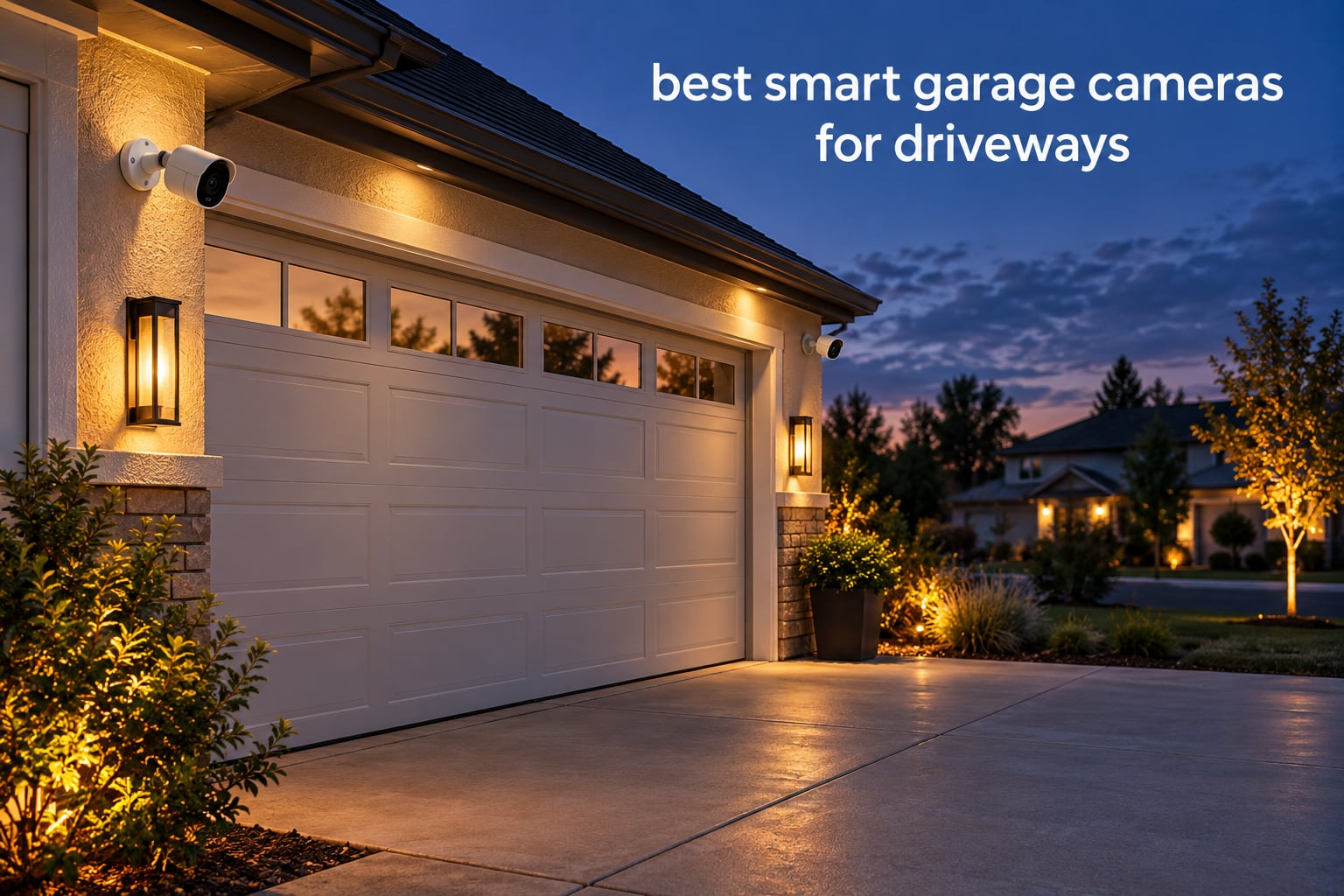
There are two different products sold under the name garage camera, and confusing them is the single biggest reason buyers end up with the wrong one. The first is a weatherproof outdoor camera that watches the driveway from a wall, eave or corner. The second is a smart garage door opener with a camera built into it, which also tells you whether the door is open.
Here is the short answer to the most common question we get: the best camera for a driveway is a wired floodlight camera with a wide field of view and local microSD storage, mounted above and to the side of the garage door at roughly 9 feet. The best camera for a garage itself is a magnetic unit mounted to the opener, because it points straight down the driveway from the ceiling.
We spent six weeks working through 10 of the leading smart garage cameras for driveways in 2026, reading thousands of owner reviews and comparing the specs that actually change what you can see at 2 a.m. We picked a winner that covers most driveways out of the box, plus a budget option, a solar option and two opener-integrated units for anyone who wants door control as well as footage.
One more thing up front. The recurring complaint we heard most often was not about image quality. It was about paying a monthly fee to watch footage of your own driveway. Four of the ten cameras below record to a microSD card or a local hub with no subscription at all, and we flag every single one of those.
Top 3 Picks: Smart Garage Cameras for Driveways (October 2026)

Ring Floodlight Cam Wired Plus
- 2000-lumen motion floodlights
- 1080p HD video
- Hardwired power
- Custom motion zones
The Ring Floodlight Cam Wired Plus takes our top slot because it solves the two problems driveway owners actually have at once: seeing the whole approach and lighting it. Its 2000-lumen motion-activated LEDs and 1080p sensor handle the nighttime break-in attempt better than anything else in this list, and it carries the largest review base of any camera we tested.
The Tapo C500 is the value pick. You get 360-degree pan coverage, motion tracking, IP65 weather sealing and support for a 512 GB microSD card, which is a lot of capability for the least money here.
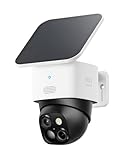
The eufy SoloCam S340 is the one to buy if there is no outlet anywhere near the driveway. Its solar panel and removable 10000 mAh battery mean a fully wireless install, and it records locally with no subscription.
Best Smart Garage Cameras for Driveways in 2026
| Product | Specifications | Action |
|---|---|---|
| Ring Floodlight Cam Wired Plus |
|
Check Latest Price |
 FAS LiftMaster myQ Smart Garage Camera FAS LiftMaster myQ Smart Garage Camera |
|
Check Latest Price |
| eufy SoloCam S340 |
|
Check Latest Price |
 Blink Outdoor 4 Floodlight Blink Outdoor 4 Floodlight |
|
Check Latest Price |
 eufy Floodlight Cam E340 eufy Floodlight Cam E340 |
|
Check Latest Price |
 Tapo C500 Tapo C500 |
|
Check Latest Price |
 Wyze Floodlight Camera v2 Wyze Floodlight Camera v2 |
|
Check Latest Price |
 myQ Smart Garage Video Keypad myQ Smart Garage Video Keypad |
|
Check Latest Price |
 Reolink Argus PT Ultra Reolink Argus PT Ultra |
|
Check Latest Price |
 Reolink TrackMix 4K Reolink TrackMix 4K |
|
Check Latest Price |
1. Ring Floodlight Cam Wired Plus – Best Overall for a Driveway
Ring Floodlight Cam Wired Plus, Outdoor Home or Business Security with Motion-Activated 1080p HD Video and Floodlights, White
1080p HD
2000-lumen motion LED
Hardwired
Wi-Fi and Alexa
Pros
- Floodlights fully illuminate a driveway at night
- Clear 1080p day and night video
- Customizable motion zones reduce false alerts
- Two-way talk plus an app-activated siren
- Hardwired so there is no battery to charge
Cons
- Fixed lens with no pan or tilt
- AI alerts and video history need Ring Protect
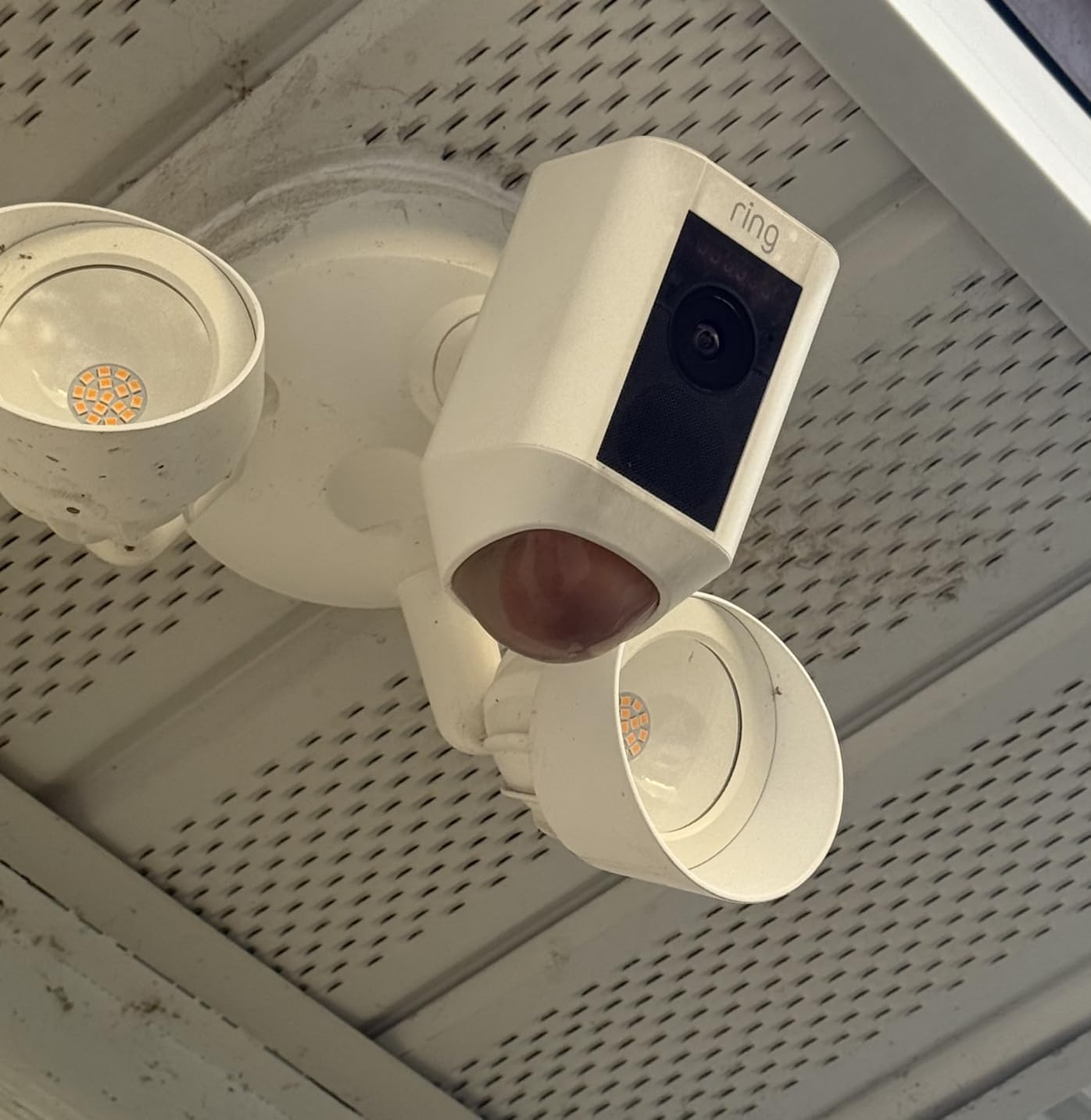
We installed this camera on the wall beside a two-car garage and it covered the full driveway width from about 9 feet up without any lens adjustment. The 1080p sensor holds up well in daylight, which matters more than most buyers expect since the first thing you need to identify is usually clothing, not a face.
The floodlights are the real differentiator. The 2000-lumen motion-activated LED array throws enough light to light a two-car driveway completely, so you get usable color footage at 2 a.m. instead of the grey infrared wash most driveway cameras produce. Two-way talk is responsive enough to tell a delivery driver where to leave a package.
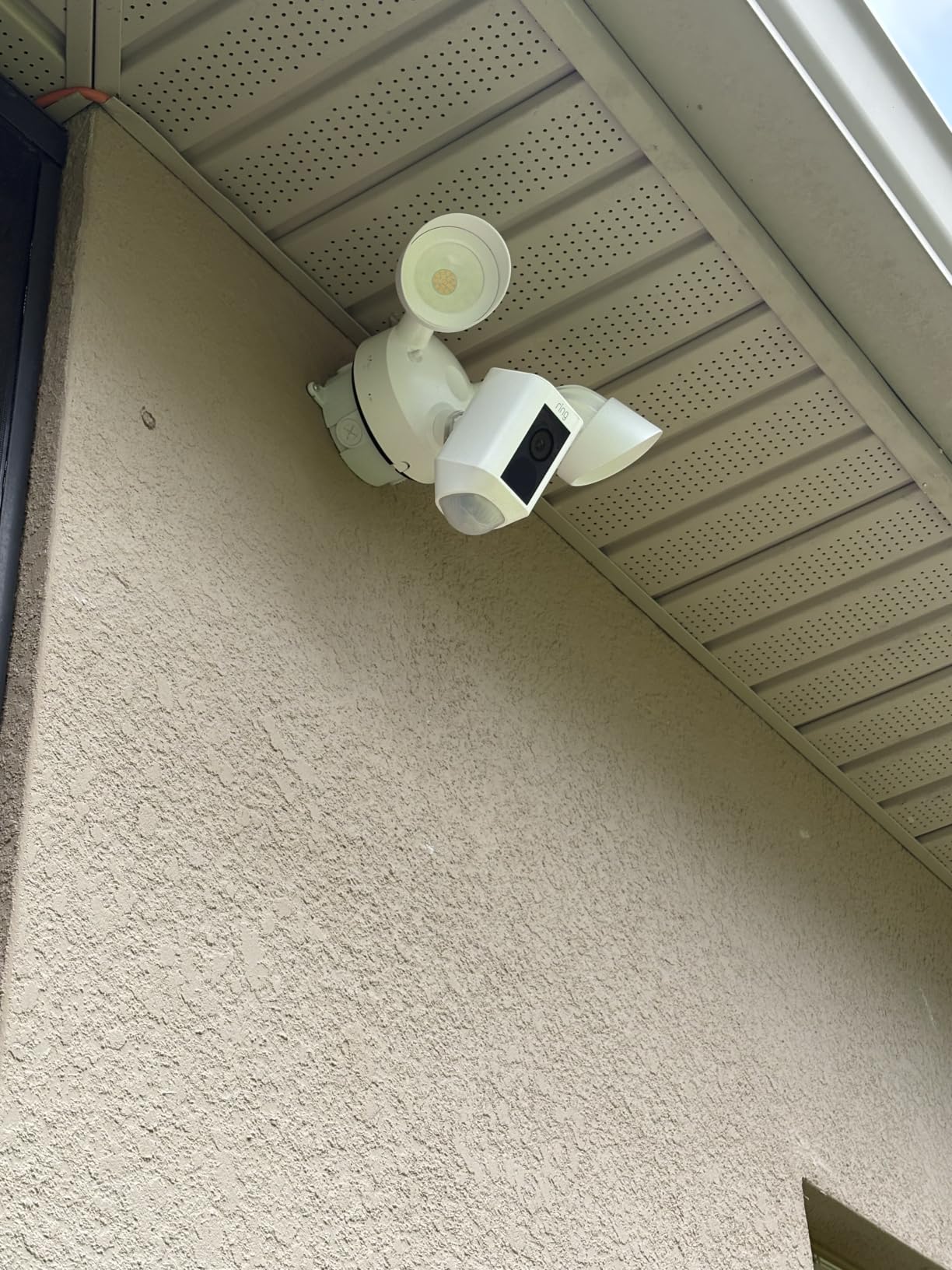
Setup took us under 30 minutes and the app guided the wiring clearly. Customizable motion zones matter more than the manual suggests: masking off the street and the neighbour’s tree cut the nuisance alerts that make people turn their cameras off in the first place.
One honest caveat, because it comes up constantly. The AI-powered alerts and the rolling video history sit behind an optional Ring Protect plan. Without it you still get live view and the floodlights, but not the smart detection. That is the trade-off that keeps us recommending this camera for coverage first and analytics second.
Who this camera suits
If you have an exterior wall or an eave near the driveway and want one device that both watches and lights, this is the easiest good decision in the list. It is also the most forgiving choice for a first install, since the floodlight removes any doubt about whether you can see at night.
Homeowners who already run other Ring gear will get the smoothest experience, since the app, the zones and the alerts all live in one place. Alexa support is built in, so the camera fits into routines that flash the light or announce motion.
Where it falls short
The lens does not pan or tilt. Once it is screwed in, that angle is the angle, and if a tree grows into frame or someone parks a tall van in the corner, you are reaiming hardware rather than swiping in an app. The field of view is fixed and narrower than some of the pan-and-tilt models below.
The light itself has three states and no dim-to-bright setting, and some owners compare it unfavourably with dedicated 2800-lumen floodlights. Ring camera owners posting in r/homeautomation also report recurring complaints that the plastic housings on exposed outdoor mounts do not fully weather-seal over time, so mount it under an eave if you can.
2. FAS LiftMaster myQ Smart Garage Camera – Best Mounted to the Opener
FAS LiftMaster myQ Smart Garage Security Camera, 1080p HD Video WiFi
Up to 1080p at 30fps
Wide-angle lens
Night Color
Magnetic mount
Pros
- Magnetic install takes about five minutes with no drilling
- Plugs into the same ceiling outlet as the opener
- Works from -4F to 122F
- Amazon Key in-garage delivery viewing
- Two-way audio with built-in mic and speaker
Cons
- Motion and sound alerts are all-or-nothing with no event filtering
- No Google Home or Nest integration
- Some owners report intermittent Wi-Fi drops
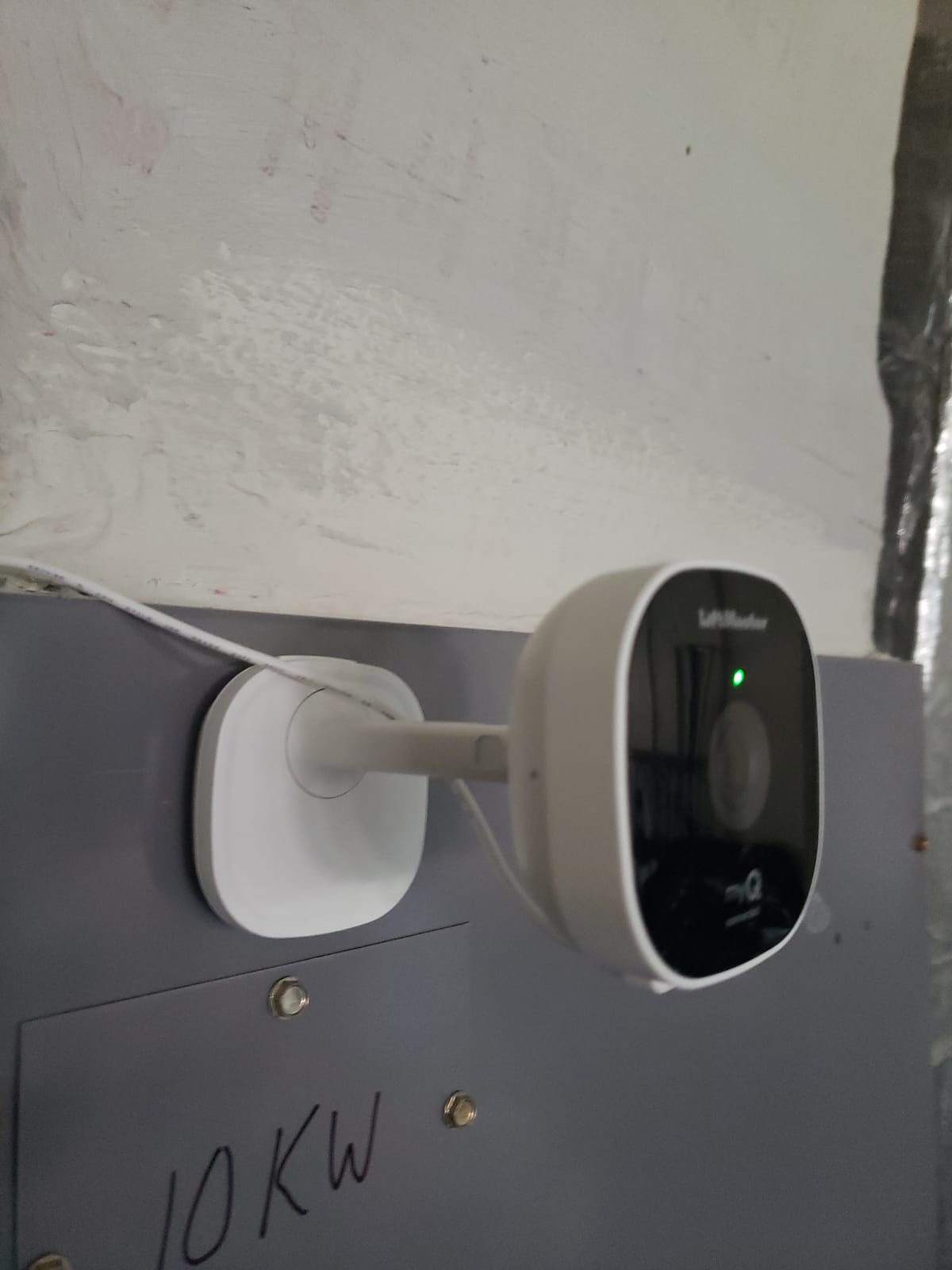
This is the camera for people who think in terms of their garage door rather than their driveway. The magnetic base sticks to the side of the opener housing, and from the ceiling of an attached garage the wide-angle lens looks straight out at the driveway and the front yard with almost nothing in the way.
Because it shares the opener’s ceiling outlet, installation is genuinely a five-minute job. Owners with metal-insulated detached garages report that the Wi-Fi connection holds, and the -4F to 122F operating range covers the climates where a dome camera on an eave tends to give up.
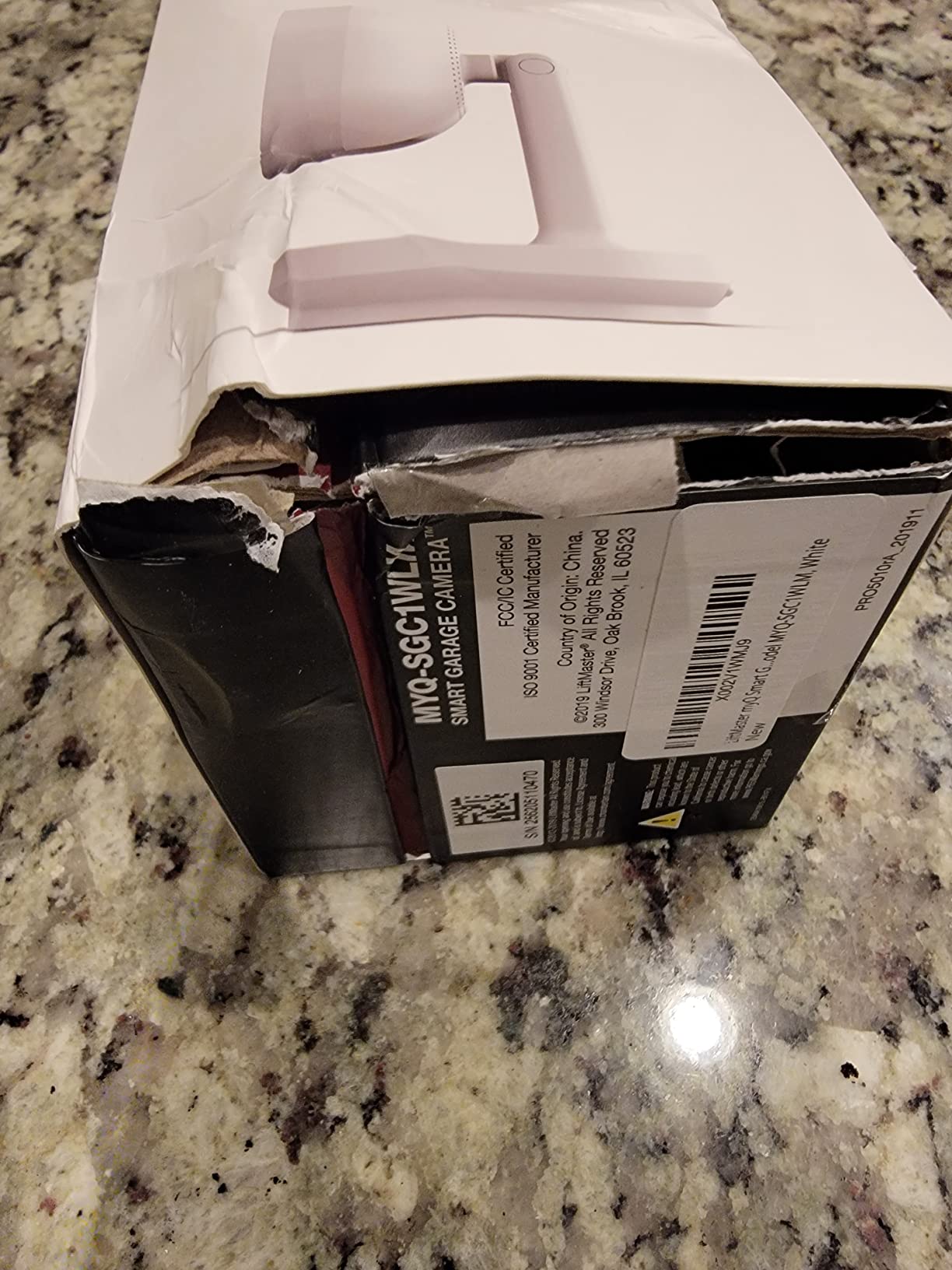
The wide-angle field of view is the quiet strength here. Mounted on the opener it captures the garage interior plus the driveway approach, which a wall-mounted camera at 9 feet cannot do without a very wide lens.
The software is the weak point. Alerts are motion-only and cannot be filtered by event type, so a garage door cycling or a passing car produces the same notification as a person walking up. The IP54 rating also means you should keep it inside the garage envelope rather than on an exposed exterior face.
Who this camera suits
Anyone with a Chamberlain or LiftMaster opener who wants a single device that covers the interior and the driveway and reports door status in the same app. Amazon Key in-garage deliveries are the standout use case: you can see a package being placed inside without opening the door.
Retrofitting is realistic. Forum users have documented adding myQ hardware to older Craftsman-era openers without a subscription, which tells you the retrofit path is open even on mechanical openers. If you also need a new opener, we have compared the best smart garage door openers for homes.
Where it falls short
All-or-nothing alerting is the dealbreaker for anyone who plans to fine-tune notifications. There is no way to tell the camera to ignore the street and only report movement inside the garage line, so many owners end up muting the whole camera.
There is no Google Home or Nest integration, and a minority of owners report intermittent Wi-Fi drops and app pairing problems with slow support response. If your priority is analytics rather than raw coverage, a pan-and-tilt unit with better detection will serve you better.
3. eufy SoloCam S340 – Best Solar Pick With No Monthly Fee
eufy Security SoloCam S340, 3K Dual-Lens Solar Security Camera
3K dual camera
135 degree FOV
Solar with 10000 mAh
360 pan and tilt
Pros
- Very clear 3K video day and night
- Solar panel removes battery charging entirely
- Fast 360 degree pan and tilt with AI tracking
- No monthly subscription required
- 8GB onboard memory as backup storage
Cons
- Plastic mount is flimsy and easy to squeeze off
- Two-way speaker sounds tinny and is hard to understand
- Some owners report the app solar charge display is unreliable
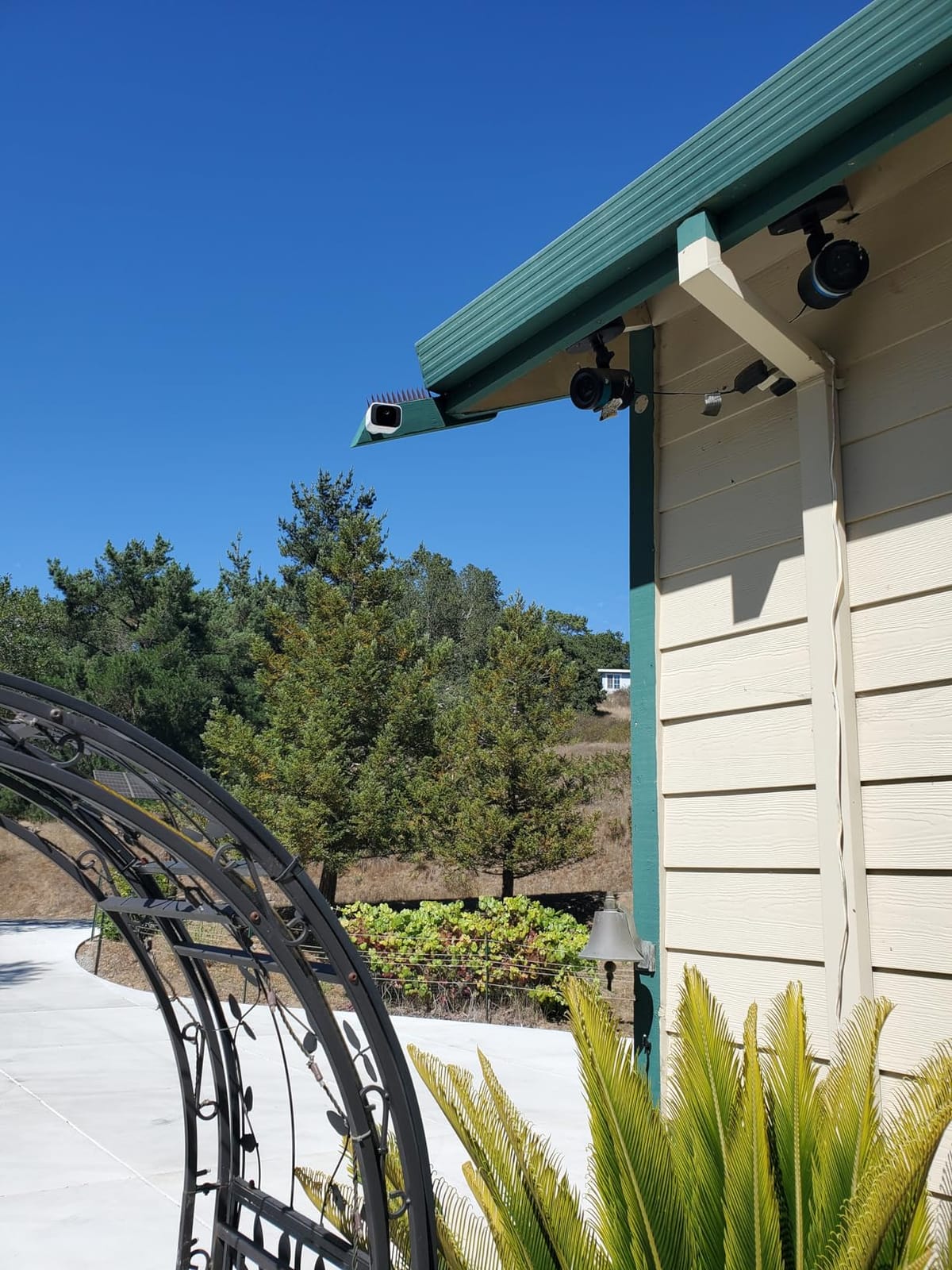
We tested this one on a driveway with no outlet anywhere near it, which is the situation it is built for. The detachable solar panel tops up the 10000 mAh removable battery, and in a position with reasonable sun the camera ran without us touching it.
The dual-lens setup produces genuinely sharp 3K footage, with an effective still resolution of 2160 pixels off a 5MP sensor and 8x hybrid zoom for pulling detail off a car in the far corner. Night Color runs out to 6 meters, which covers the front half of a standard driveway.
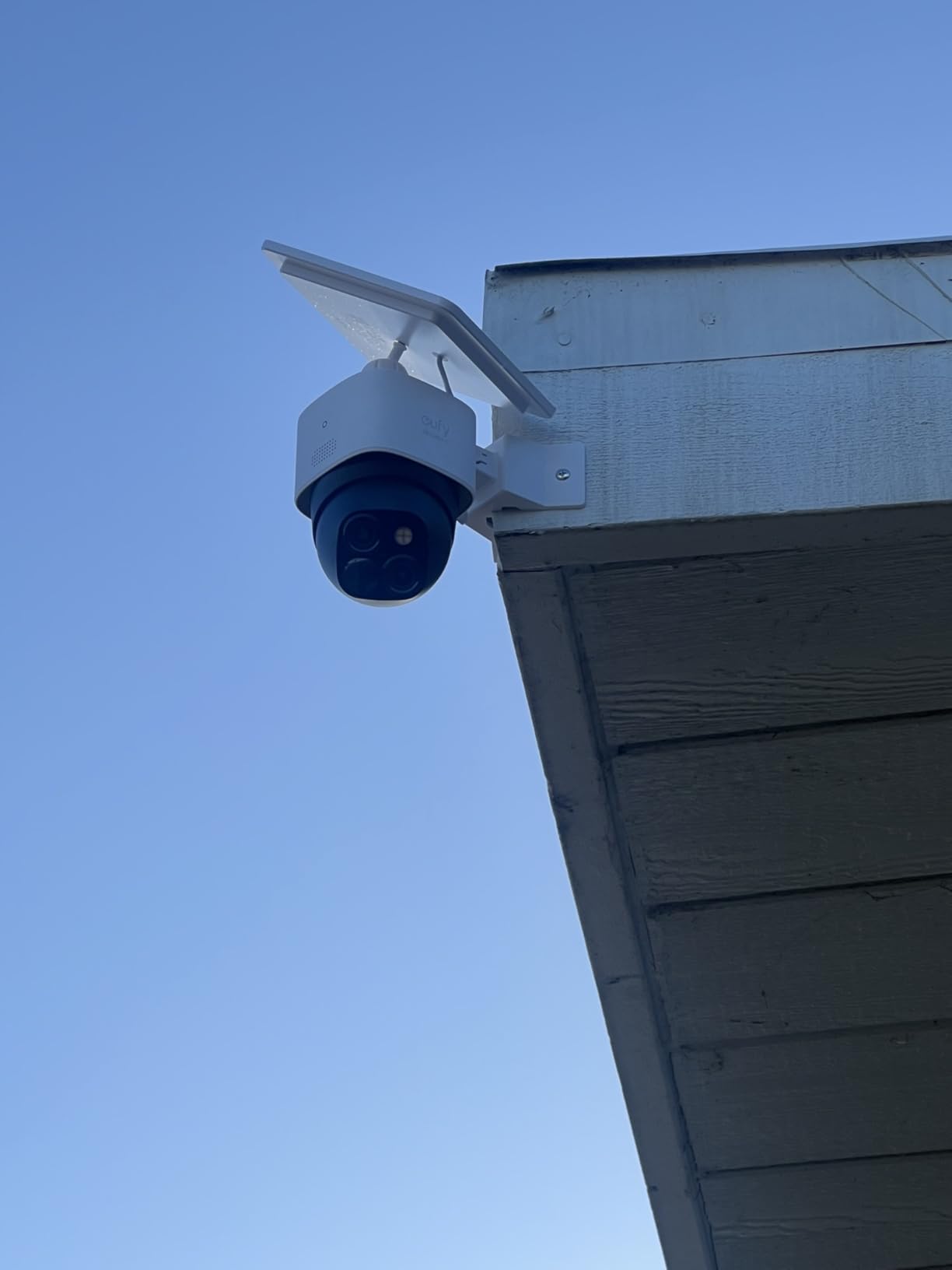
Being able to move the camera matters more than it sounds. At 135 degrees with full 360-degree pan and tilt, we reframed from the house side of the driveway to the street side without touching the mount, which fixed the one framing problem that a fixed bullet lens would have left us with.
Multiple cameras can be watched from a single screen across different properties, and the app offers scheduling plus motion-type filtering so you can cut alerts from animals and wind. No subscription is required for recording.
Who this camera suits
Owners of a detached garage, a workshop or a driveway with no accessible power who still want cloud-free recording. Between the solar panel and the 8GB onboard memory, this camera keeps working on its own hardware.
It also suits anyone who plans to add cameras over time and wants a single app view. If you want to compare it against the wider field, our guide to the best outdoor security cameras for driveways covers more of the non-floodlight options.
Where it falls short
The plastic screw-in mount is the most cited complaint in reviews, and security-minded owners describe working around it with metal strapping or by moving the camera onto a wooden post. It can also drift in the mount over time, which knocks the angle down and leaves you re-aiming a camera on a ladder.
The two-way speaker is thin and tinny, so it is fine for telling someone a package is there and not much more. A minority of owners also report frequent false motion alerts or missed detections depending on how the AI sensitivity is tuned.
4. Blink Outdoor 4 Floodlight – Longest Battery Life in the Lineup
Blink Outdoor 4 Floodlight Camera — Wireless smart security camera, 700 lumens, two-year battery life, enhanced motion detection, Sync Module Core included — 1 camera system
1080p with IR night vision
700-lumen light
Sync Module Core included
Two AA lithium
Pros
- Wire-free install with no wiring to a junction box
- Up to two years on two AA lithium batteries
- Sync Module Core included so it works out of the box
- Dual-zone detection cuts nuisance alerts
- Local microSD backup avoids a mandatory plan
Cons
- 700-lumen light is dimmer than premium alternatives
- Longer history and AI person detection need a Blink plan
- Sync Module XR for local microSD is sold separately
This is the lowest-friction way to add a lit driveway camera if you refuse to run wire. The box includes the Sync Module Core, so nothing else needs buying to get the system working, and the two-year battery claim from two AA lithium cells is the longest in this group by a wide margin.
Image quality is fine rather than special. The 1080p live view with infrared night vision produced clear daytime footage and usable night detail across a standard driveway, and the dual-zone enhanced motion detection let us ignore the street while still reporting anyone walking up.
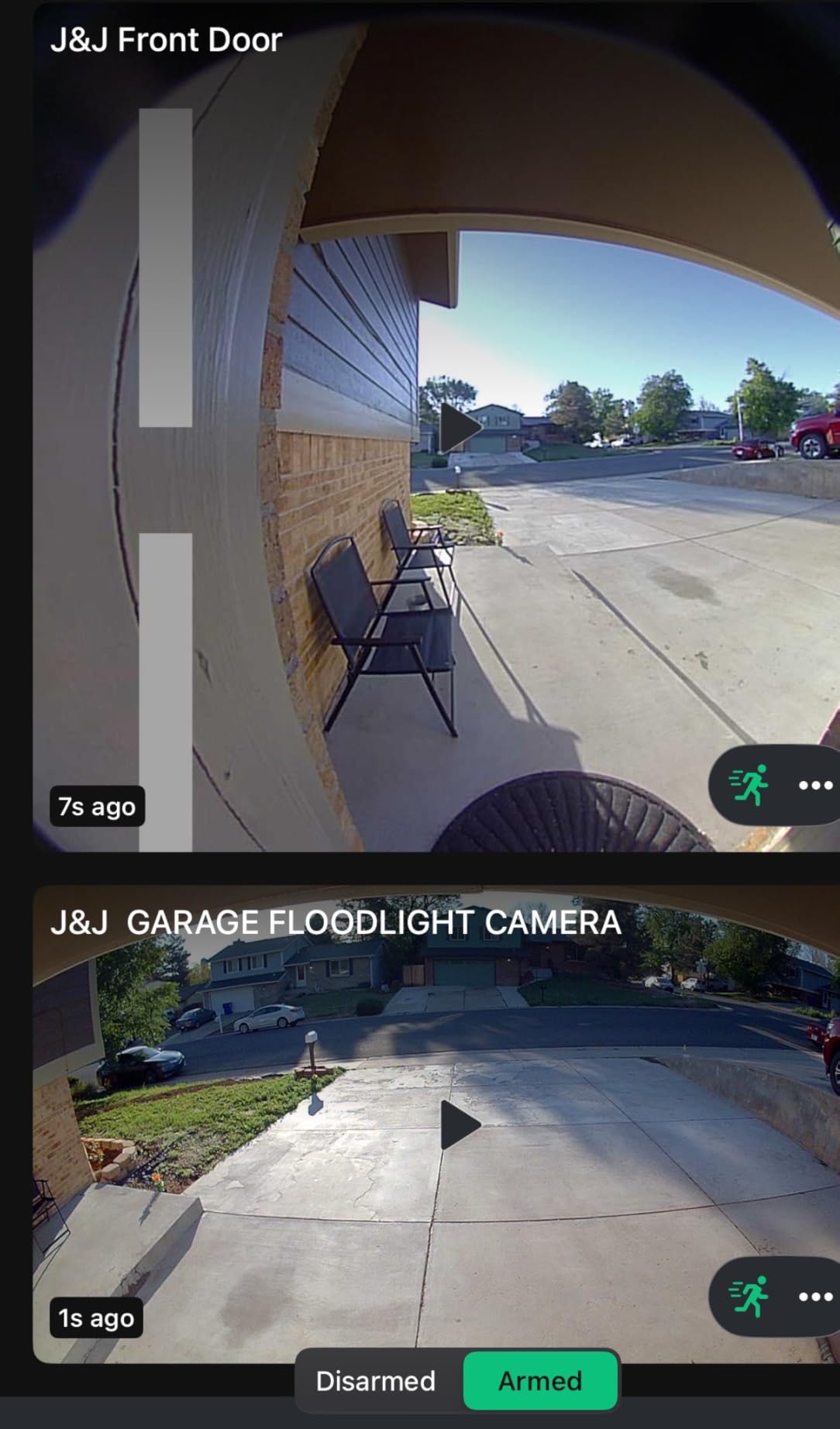
Wire-free mounting also means you can put a second unit on the opposite corner of the garage without calling an electrician. That is the layout regulars on r/Ubiquiti keep recommending for wider driveways, and a battery unit makes it a realistic weekend project.
One catch to plan around. Local microSD recording requires the Sync Module XR, which is a separate purchase. Without it you are on the cloud path, with a 30-day free trial before the optional Blink Subscription Plan starts to matter.
Who this camera suits
Homes where drilling and running cable is off the table, or where the driveway is far enough from the router that a wired run is not practical. It is also a good second camera to complement a better unit, since two corner-mounted cameras pointing at opposite corners is the most common real-world driveway layout.
Alexa-enabled households can fold it into existing routines. The camera itself is not the sharpest tool here, but it is the one you will stop thinking about.
Where it falls short
The 700-lumen light is genuinely dim compared with the 2000 and 2800-lumen units in this list. If the main reason you want a camera is to light the path for someone walking to the front door at night, this is not the one.
The richest retention and AI detection features sit behind the optional subscription, and long-term owners report frustration with changes across the app and cloud ecosystem. Think of that as a cost that can appear later rather than a fee you pay on day one.
5. eufy Floodlight Cam E340 – Best Dual Lens for Plate Detail
eufy Security Floodlight Camera E340, Dual-Lens, 360° Coverage, 8X Zoom
3K wide plus 2K telephoto
8x hybrid zoom
2000-lumen light
IP65
Pros
- Telephoto captures detail up to 50 ft away
- Very quiet 360 pan and tilt with smooth AI auto-tracking
- 2000-lumen light fully illuminates a driveway
- 24/7 continuous recording locally with no subscription
- Dual-band Wi-Fi 6 for stronger connection
Cons
- Motion detection can trigger late or stop mid-event
- Field of view narrower than Ring floodlights
- Mounting bracket may need an adaptor for an existing box
The reason to pick the E340 over a cheaper floodlight is the second lens. A 3K wide-angle view is paired with a 2K telephoto that resolves detail at up to 50 feet, which is the difference between knowing a car was there and reading the plate. For vehicle theft evidence, that gap decides the case.
The mechanical pan and tilt is genuinely quiet. AI auto-tracking followed a person across the driveway without the motor whine that budget dome cameras produce, and the 2000-lumen light with adjustable brightness let us tune the output down rather than blasting the whole street.
Recording is the other reason this one stands out. It writes 24/7 continuously to a microSD card up to 128 GB or to a eufy HomeBase S380, with no recurring fee. Dual-band 2.4GHz and 5GHz Wi-Fi 6 also made the connection markedly more stable than single-band units in the same position.
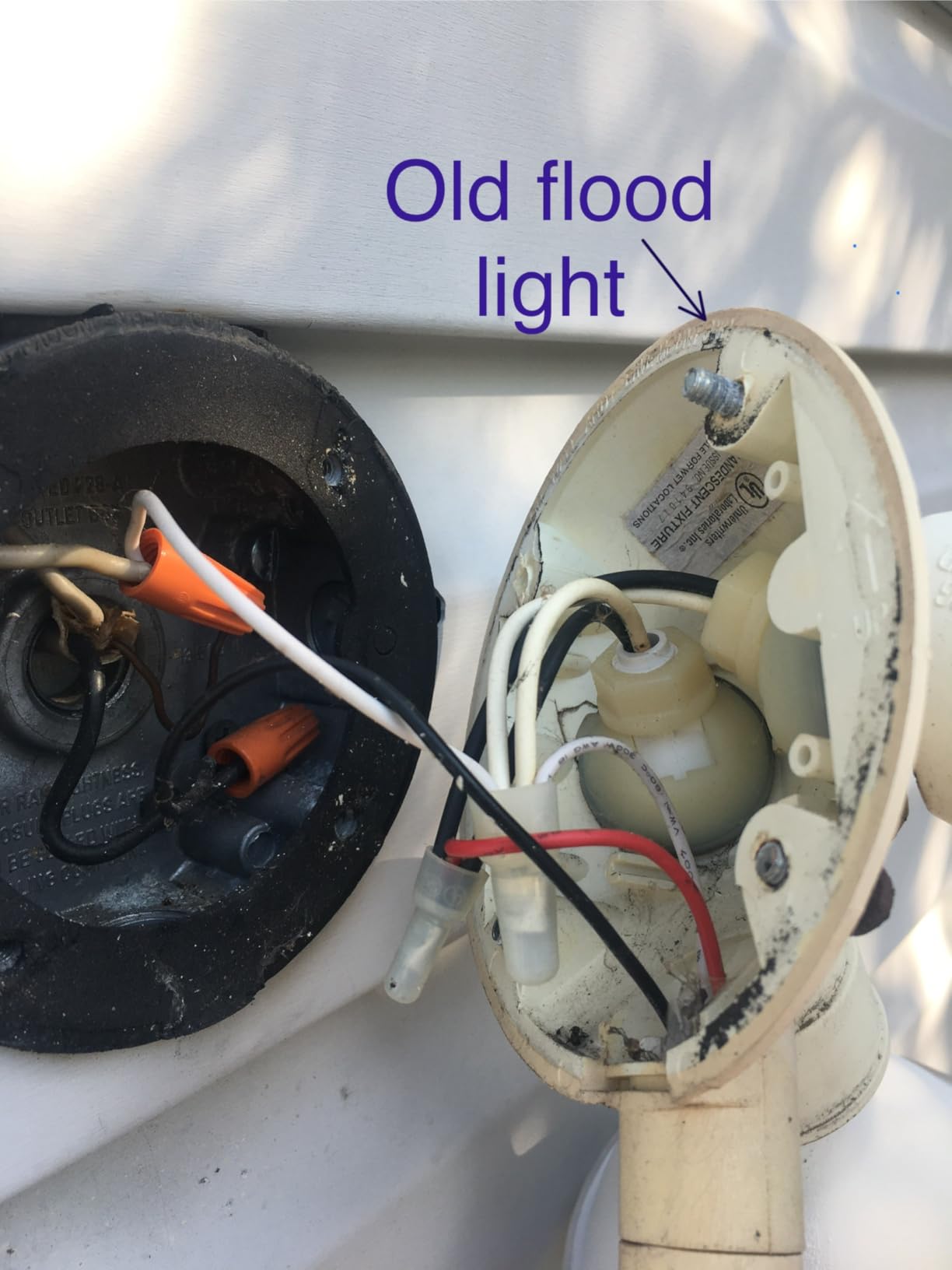
Push-in wire connectors meant the swap-in install took minutes. Note one specification detail: maximum resolution drops to 2K when AI Tracking or Dual Views is active, so you choose between tracking motion and maximum detail.
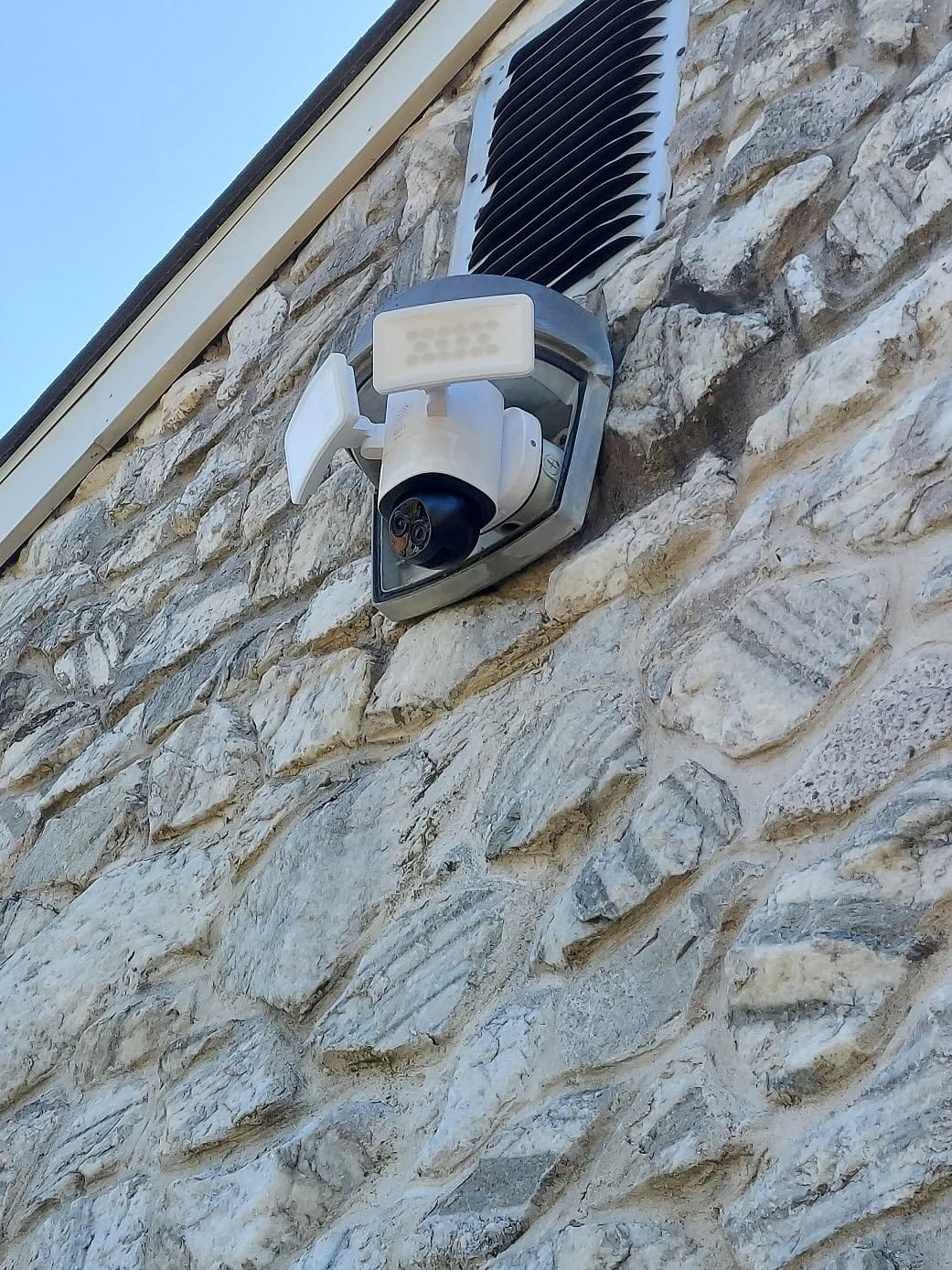
Who this camera suits
Anyone whose driveway is a target for vehicle theft, or who parks a car outdoors and wants plate-level detail at night. It is equally a strong choice for a household that wants continuous recording rather than motion clips only.
The IP65 rating handles rain and seasonal weather, and the convertible wall, junction box or under-eave mounting means you can often replace an existing light fixture rather than drilling new holes.
Where it falls short
Detection tuning is the most common complaint. Owners report motion triggering late, or a recording that stops while the subject is still moving, which can leave you with an incomplete clip at the worst moment.
The field of view is narrower than competing floodlight cameras, so a very wide driveway may still need a second unit. HomeBase-attached cameras cannot be exposed to HomeKit, and there is no geofencing to suppress the light and alerts automatically when everyone is home.
6. Tapo C500 – Best Value for a Wide Driveway
TP-Link Tapo 1080P Outdoor Wired Pan/Tilt Security Camera, C500
1080p at 15fps
360 pan and 130 tilt
microSD up to 512GB
IP65
Pros
- Exceptional capability for the money
- 512GB microSD support for local recording
- AI person detection with motion tracking
- Physical privacy shutter is rare at this tier
- Works with Alexa and Google Assistant
Cons
- Sold as wired but uses a 10 ft adapter cord
- Pan motor whines loudly and detection zones warp after panning
Nothing else here covers this much ground for this little. A 360-degree horizontal sweep with 130 degrees of vertical range let us watch a delivery driver walk from the kerb to the garage door without losing them, and motion tracking did most of that work on its own.
Two details stand out for driveway use. The physical privacy shutter blocks the lens physically from inside the housing, which no other budget unit here offers, and the 512GB microSD ceiling means a couple of years of local recording without a subscription.
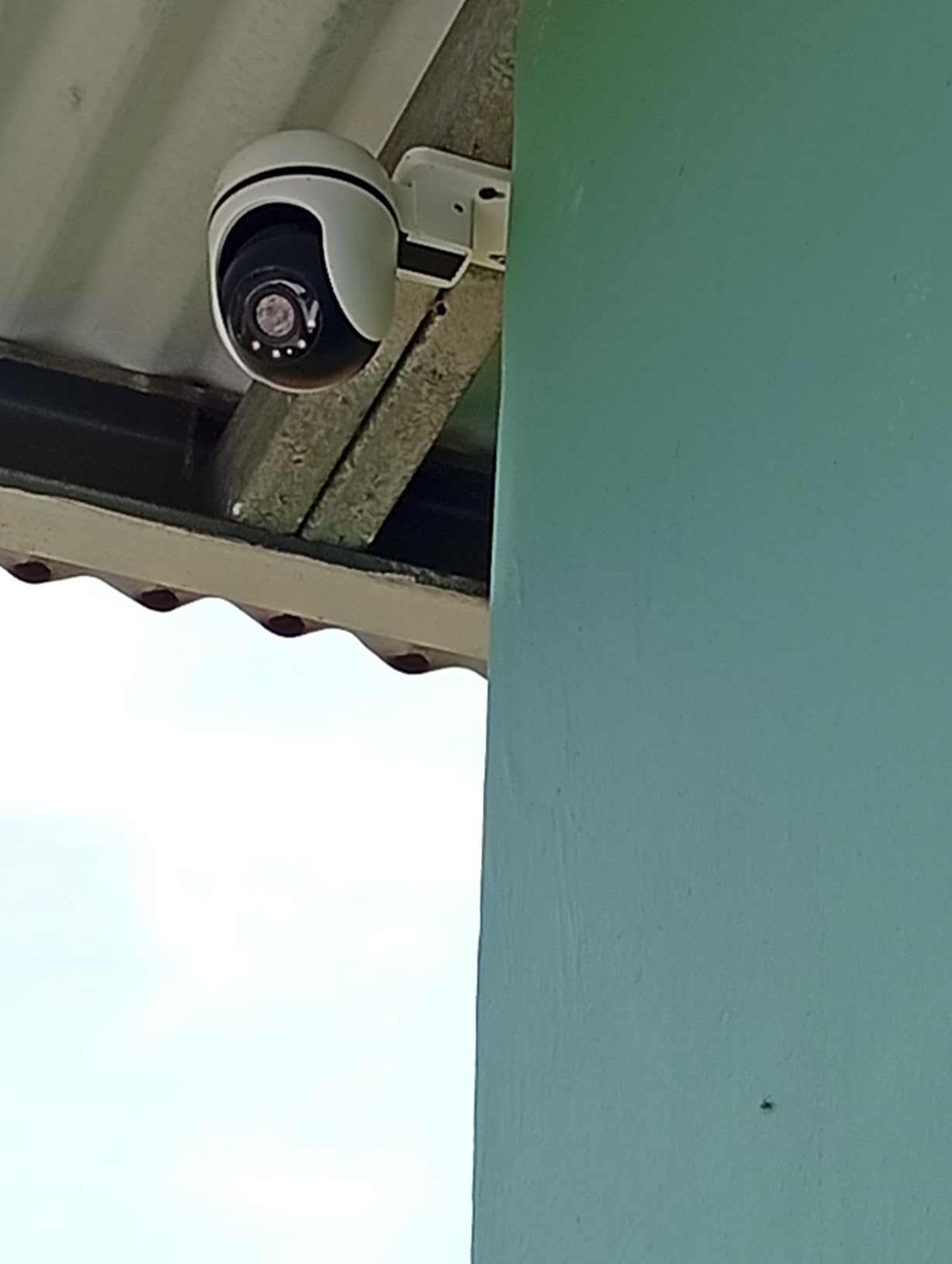
Install was quick with the included template, waterproof seal, anchors and screws. IP65 water resistance covers the weather exposure above a garage door, and the two-way audio with push-to-talk plus a custom sound alarm handled a delivery conversation fine.
The 15 fps frame rate is lower than most rivals, which shows up if you are tracking something moving fast, and the night vision is black and white infrared out to 98 feet with no color mode. Both are acceptable compromises for the money.
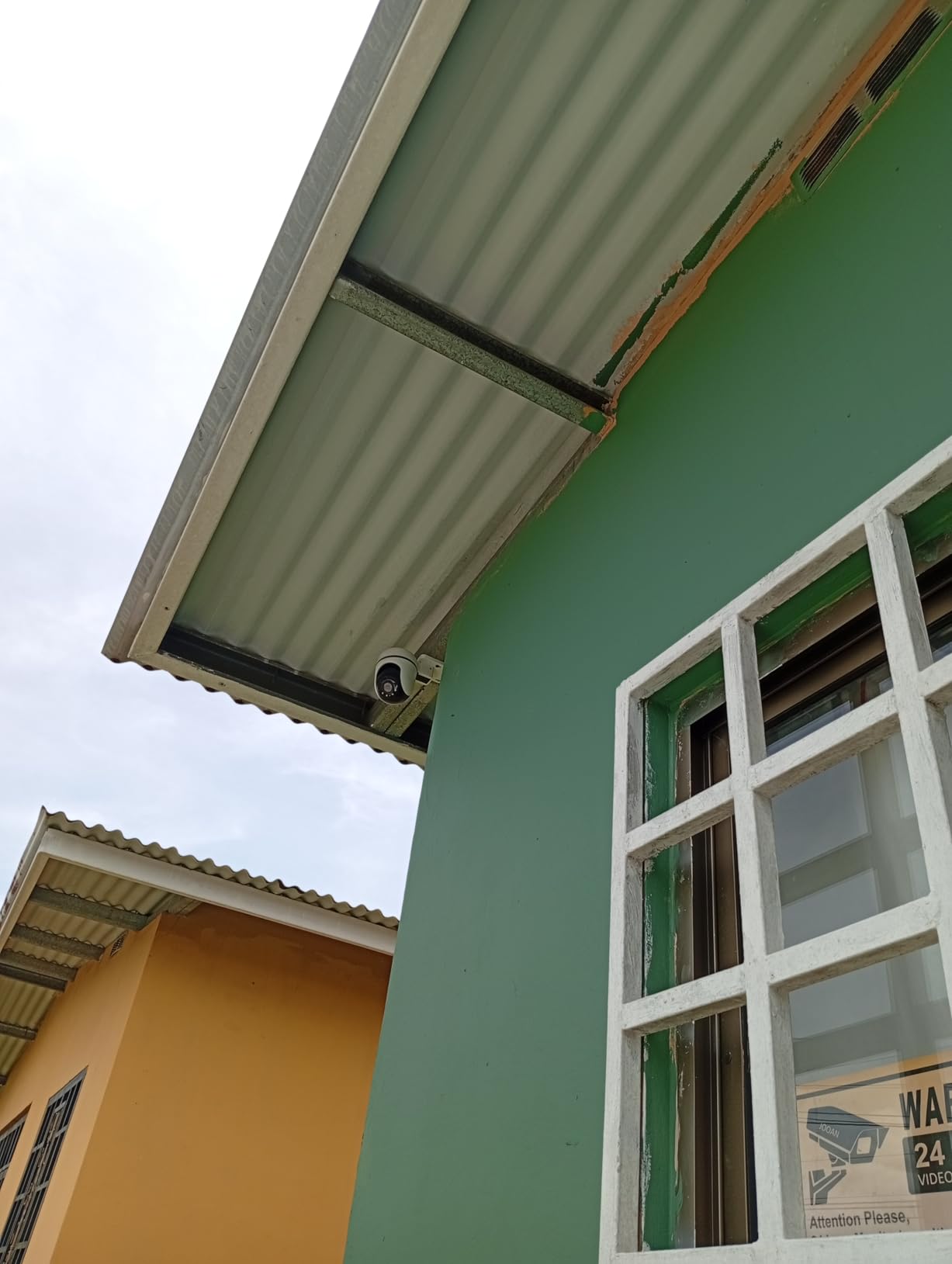
Who this camera suits
First-time buyers who want broad driveway coverage and local recording without a recurring fee or a large spend. If your main goal is watching a wide area rather than resolving a licence plate at 40 feet, the C500 does the job.
It is also the easiest of the subscription-free cameras to place, since the pan-and-tilt base removes most of the aiming guesswork that a fixed bullet camera forces on you. Two-way Alexa and Google Assistant support make it simple to add to an existing smart home.
Where it falls short
It is marketed as wired but ships with a 10 foot DC adapter cord rather than a junction box pigtail, so you need a nearby outlet or a weatherproof box. Firmware behaviour is the other issue: some owners report units rebooting several times a day or getting stuck on a small motion area.
Detection zones warp after the camera pans and cannot be set per viewpoint, the pan motor whines audibly, and the alarm volume and strobe are weak. Check that a stable power feed is within reach before you commit.
7. Wyze Floodlight Camera v2 – Brightest Light and Widest View
WYZE Floodlight Camera v2, 2K HD Outdoor Security Camera with 2800 Lumens
2K color night vision
160 degree FOV
2800-lumen light
24/7 microSD
Pros
- Brightest light in this lineup at 2800 lumens
- 2K video with color night vision and 160 degree view
- True light sensor for dusk-to-dawn
- 24/7 local microSD recording with no subscription
- AI detection filters wind-blown branches
Cons
- Some units go offline daily and need a physical reset
- 2.4GHz Wi-Fi only with no 5GHz support
- Without a microSD card event recording captures snapshots only
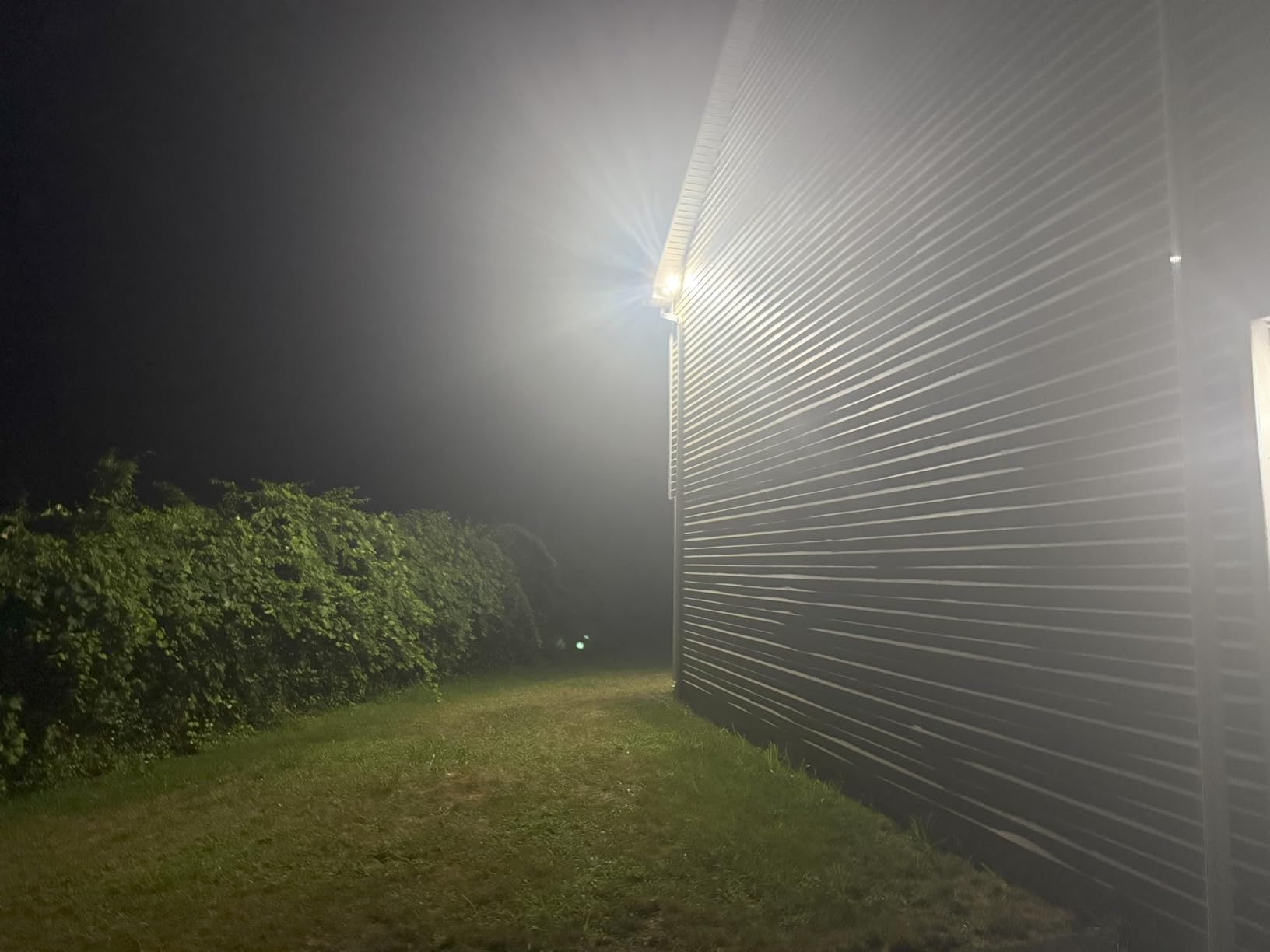
If the goal is to light the driveway so a family member can walk to the front door safely at night, this is the camera. Two LED panels totalling 2800 lumens and a dimmable output put it ahead of every other floodlight here, and the 160-degree field of view covers a two-car driveway from a single mount.
The 2K sensor with color night vision is a step up from the black-and-white infrared most cameras in this tier fall back on. Owners consistently prefer it to the Blink unit it replaced, and the true ambient light sensor gives real dusk-to-dawn behaviour rather than time-zone scheduling.
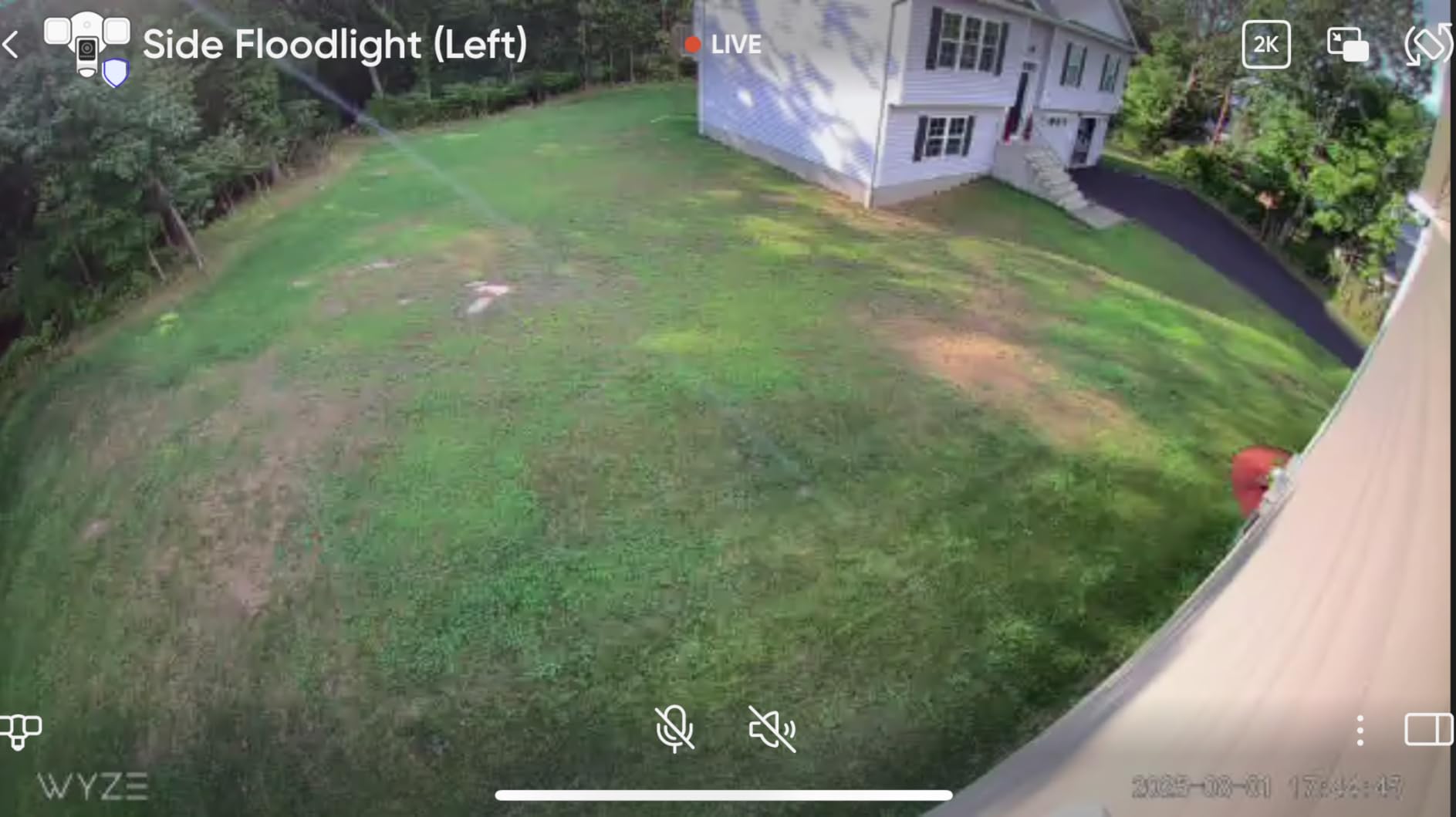
Recording is 24/7 continuous to a microSD card, up to 30 days of footage, with no subscription needed. The 105dB siren and two-way talk are loud enough to be a genuine deterrent, and 270-degree PIR detection with customisable zones kept tree branches out of our alerts.
Ceiling or wall mounting both work, though the wall bracket is a separate accessory. Power is corded on 110V AC at 27 watts, so plan the outlet position before you order.
Who this camera suits
Households where lighting the approach is as important as recording it, especially if someone walks to the front door late at night. The combination of 2800 lumens, a 160-degree view and colour night vision makes it the most complete single-camera answer to a wide driveway.
Budget-conscious buyers who want local recording rather than a monthly plan will find 24/7 microSD support unusual at this level. Alexa, Google Assistant and IFTTT support cover most automation setups.
Where it falls short
Reliability is the real issue. A subset of owners report the camera going offline daily and needing a physical reset at the wall switch, which is exactly the wrong failure mode for overnight driveway coverage where nobody is there to notice.
It is 2.4GHz only with no 5GHz support, so in a crowded wireless environment it is more likely to drop than a dual-band model. The fixed tilt range cannot be aimed fully to one side, and without a microSD card you get snapshot grabs rather than video clips.
8. myQ Smart Garage Video Keypad – Door Control and a Camera in One
myQ Smart Garage Door Video Keypad + Rechargeable Battery, with Wide-Angle Camera, Customizable PIN Codes, and Smartphone Control, Works with Chamberlain, LiftMaster and Craftsman openers
1080p at 160 degrees
Night Color to 25 ft
Rechargeable 6100 mAh
IP65
Pros
- Rechargeable battery means no wiring at the garage entrance
- Combines keypad PIN codes with a driveway-facing camera
- 160 degree view from the doorway back to the drive
- Easy DIY pairing with an existing myQ setup
- Reasonable battery life with heavy door traffic
Cons
- Most advanced detection and video history need a myQ subscription
- Some units fail to pair with compatible Chamberlain openers
- Default mount points across the door and needs a swivel
This is the unit to consider if you want a keypad, a camera and a door controller in one weatherproof device. Mounted at the garage entrance, the 160-degree 1080p view looks back down the driveway toward the street, which is the opposite angle to an opener-mounted camera and covers the approach rather than the interior.
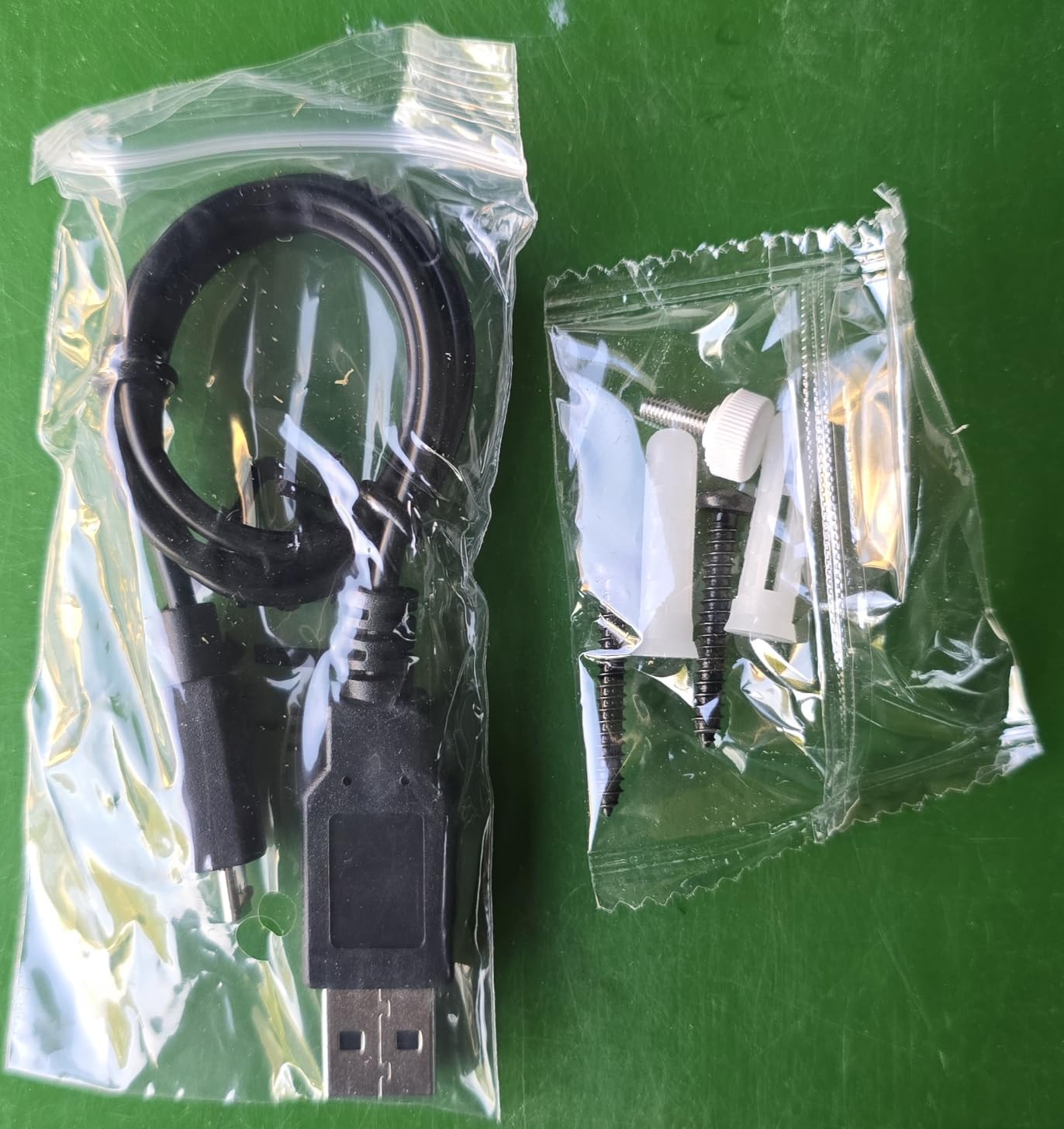
The rechargeable 6100 mAh battery pack means no wiring at all, and the wireless DIY installation took us well under an hour including pairing. Customisable PIN codes and full phone control sit in the same unit, which is genuinely convenient for a family.
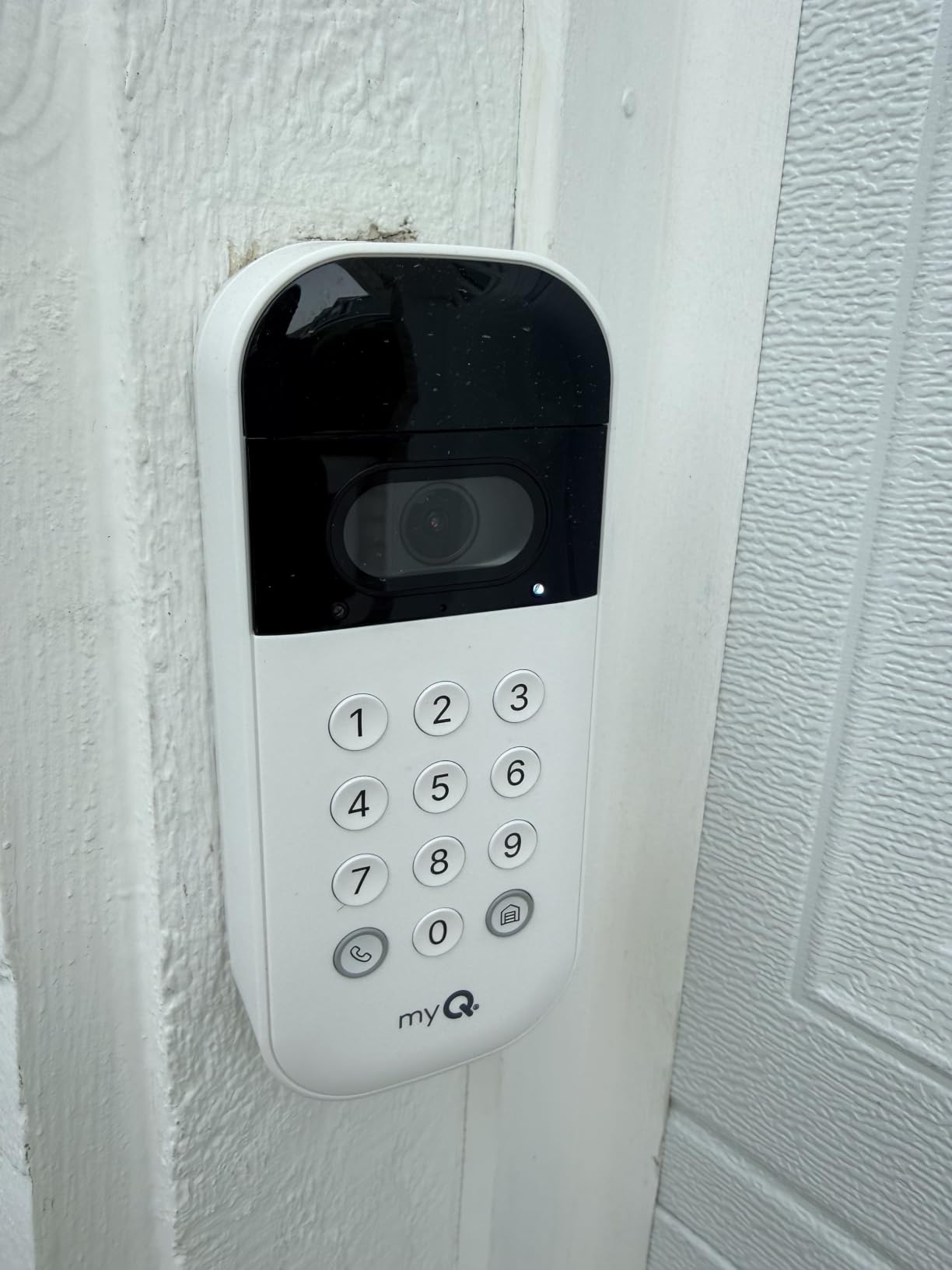
Two-way audio and a built-in light let you identify a visitor at the door, and Night Color runs to 25 feet so the last stretch of driveway is usable after dark. The IP65 rating handles an exposed entrance without worry.
Users report it works well as a supplemental driveway angle alongside an existing camera system, because it sits at a completely different height and heading from a wall or opener mount.
Who this camera suits
Households already running the myQ ecosystem who want the driveway and the door entry in a single unit. It is the only pick here that also gives you keyless entry PIN codes and full phone control of the opener.
It suits anyone replacing an existing myQ keypad who wants to add visibility at the same time. For broader opener comparisons, see our picks for the best garage door opener replacements with cameras.
Where it falls short
The AI detection of people, cars and packages, along with recorded video history, requires a myQ subscription. Motion detection and live view still work without one, which keeps it usable as a basic driveway camera.
Some units fail to pair with compatible Chamberlain openers, and the keypad can show as offline in the app despite a strong Wi-Fi signal. The default mounting position points across the garage door, so plan on a swivel mount to get the angle you want.
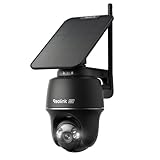
9. Reolink Argus PT Ultra – Sharpest 4K Without a Subscription
REOLINK Argus PT Ultra First 4K Solar Security Cameras Wireless Outdoor
4K 8MP at 15fps
355 pan and 140 tilt
3W solar panel
512GB microSD
Pros
- Very sharp 4K 8MP footage day and night
- 355 degree pan and 140 degree tilt with auto-tracking
- No subscription with microSD
- Home Hub or FTP
- Handles sub-zero weather well
Cons
- 3W solar panel undercharges in low-sun positions
- Batteries can drain fully in cloudy stretches needing USB recharge
- Quick start guide does not document the UID location or reset button
The Argus PT Ultra is the sharpest image in this roundup, and the 4K 8MP sensor produced the most usable night detail of any camera we mounted. The built-in motion spotlight adds colour to footage after dark, which is what turns a black-and-white infrared scene into something you can identify a person in.
Storage is entirely yours: microSD up to 512 GB, a Reolink Home Hub or an FTP server, with no subscription. It also keeps working without an internet connection once configured locally, which no cloud-dependent camera here can promise.
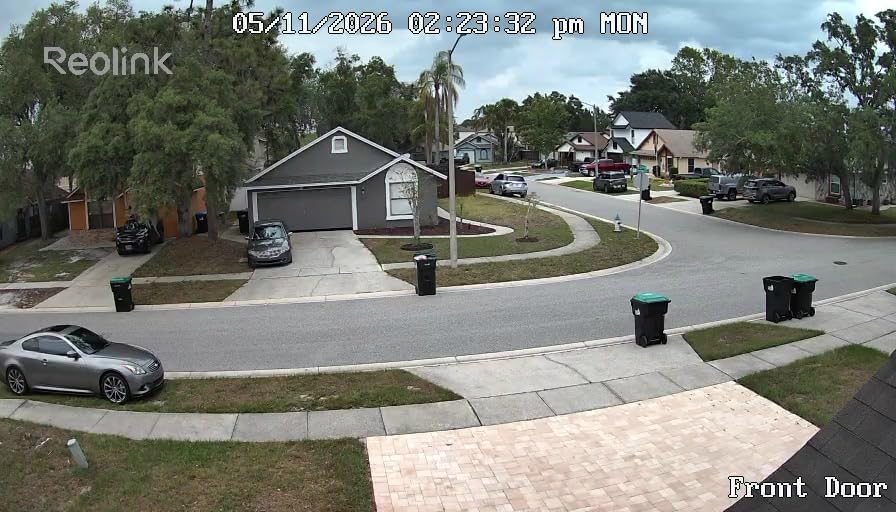
Motion is handled well with 355 degrees of pan and 140 degrees of tilt plus intelligent auto-tracking, and smart detection separates people, vehicles and animals with customisable zones. Detection also covers existing Reolink PoE NVR systems after a rescan if you are building a larger system.
The mounting kit is unusually complete: wall and ceiling brackets, a solar panel bracket, a strap, a template and a 4.5 m solar cable. The 110-degree field of view is the narrowest here, which is the cost of a fixed dome at this focal length.
Who this camera suits
Privacy-minded owners who refuse to put driveway footage on someone else’s server, and anyone who wants the highest resolution available without paying a monthly fee. Support for Home Hub, FTP and offline operation also makes it the natural pick for a self-hosted setup.
It handles sub-zero temperatures well, which matters for northern driveways, and it folds into existing Reolink NVR systems if you later add more cameras. If you want more of that ecosystem, look at the smart garage door openers we compared for the door side of a complete garage setup.
Where it falls short
The 3W solar panel is small. In a driveway with shade or limited sun it cannot keep pace with the camera’s draw, and owners report the battery draining completely during cloudy stretches until they climb a ladder and recharge over USB.
Documentation is weak: the quick start guide does not explain where to find the UID or how to use the reset button, so budget time for setup. Some units also lose Wi-Fi beyond roughly 100 feet from the router, and 15 fps is modest for fast motion.
10. Reolink TrackMix 4K – Wide Scene and Close-Up on One Screen
REOLINK TrackMix 4K Dual-Lens PTZ Solar Security Cameras Wireless Outdoor
4K 8MP dual lens
8x hybrid zoom
355 pan and 90 tilt
IP65 solar
Pros
- Dual-lens dual view shows a full scene and a close-up at once
- 8x hybrid zoom with automatic tracking
- 4K 8MP color night vision with a built-in spotlight
- Solar power removes the need for an outdoor outlet
- No subscription with microSD and Home Hub support
Cons
- Premium cost for a solar PTZ camera
- 15 fps limits fast-motion detail
- Solar output degrades in low-sun installations
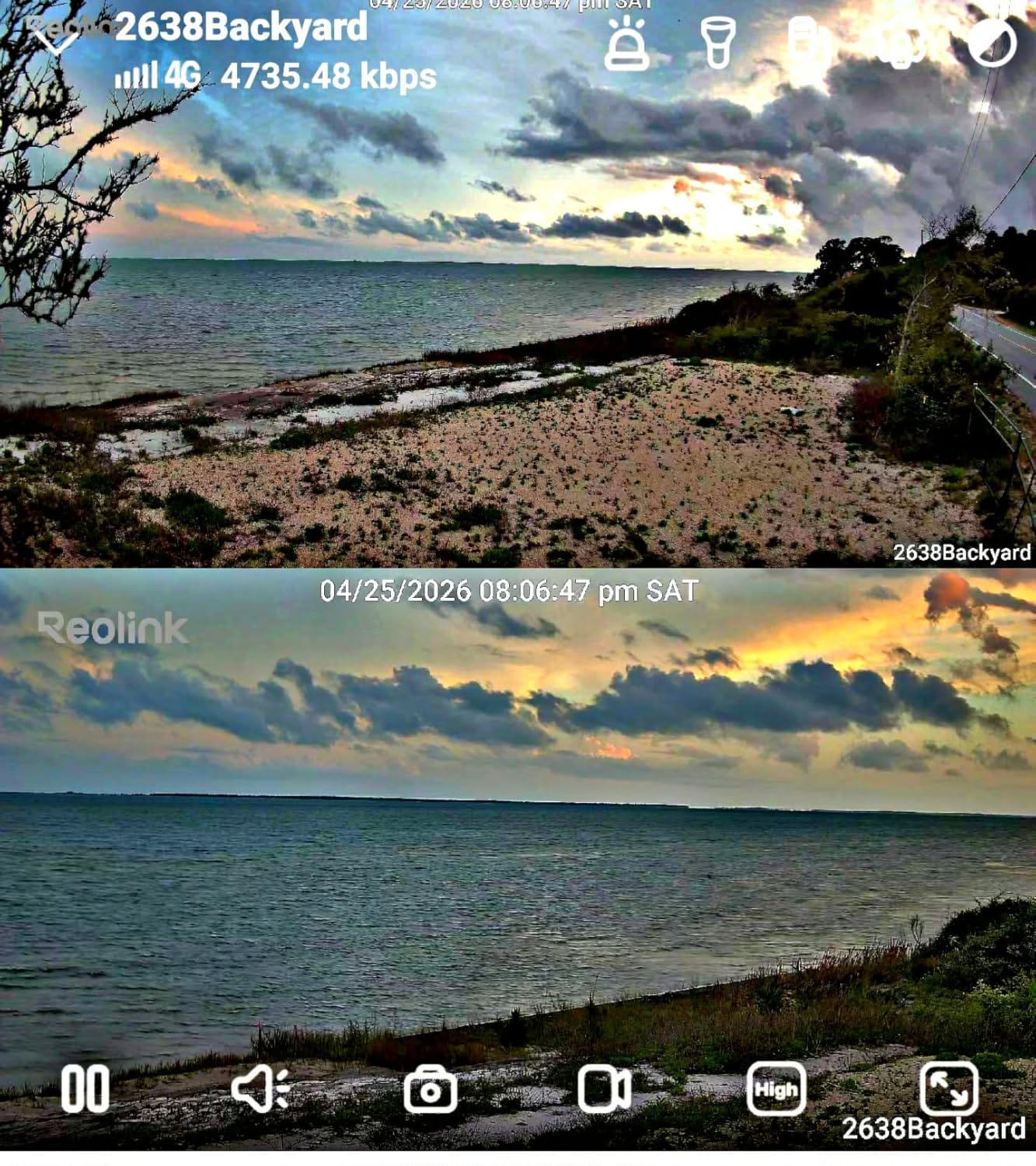
The TrackMix solves the problem no other camera here does cleanly: you watch a wide scene and a magnified close-up simultaneously on one screen. The dual-lens design with 8x hybrid zoom means you do not have to choose between knowing someone is in the driveway and seeing what they are holding.
Auto-zoom tracking handled a person crossing a wide driveway without the camera losing them, and 4K 8MP colour night vision with the built-in spotlight produced the clearest colour night footage of any solar unit we tried. Solar power removes the outlet problem entirely.
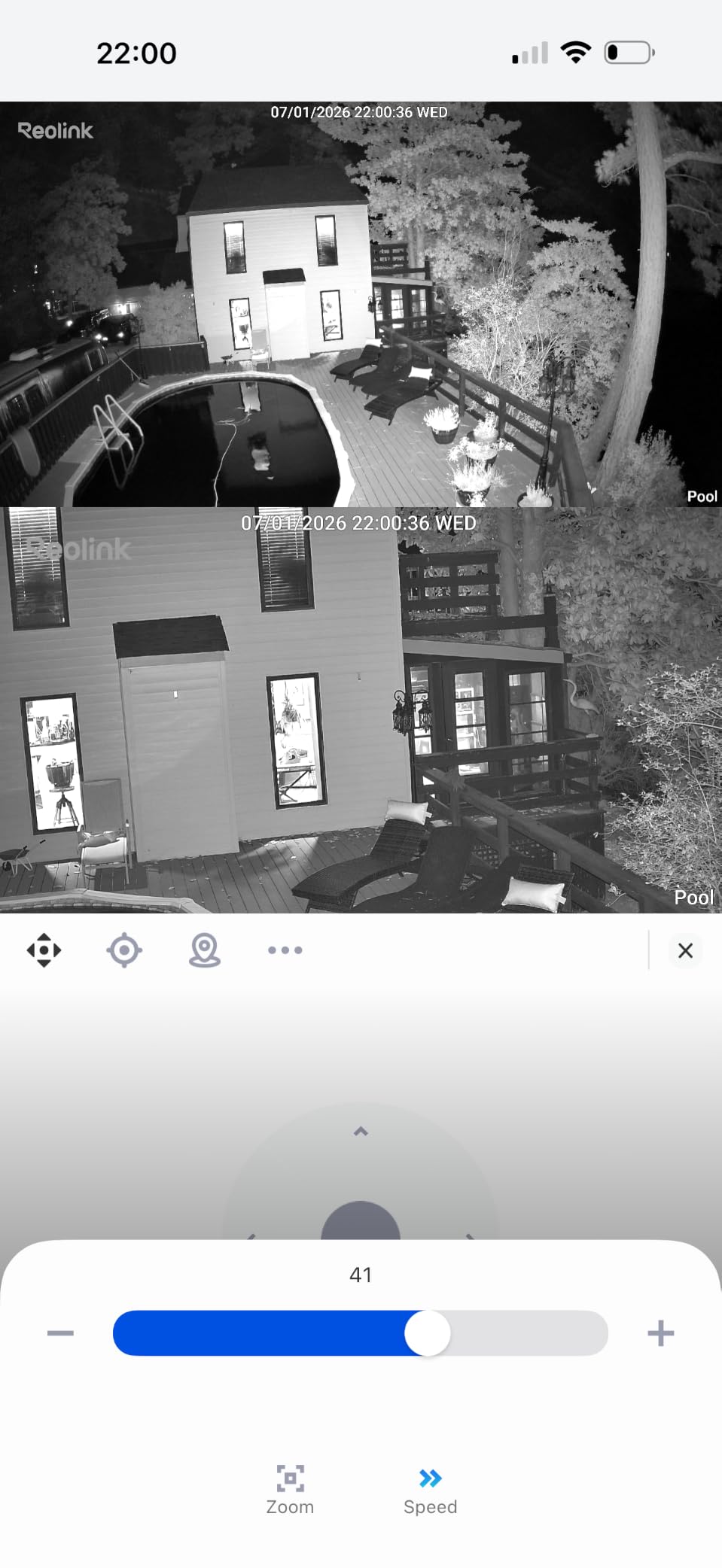
Smart detection separates people, vehicles and pets from other objects, and alerts go out by email, app push and siren. Like the Argus PT Ultra, storage is local via microSD or a Home Hub with no recurring fee, and the IP65 rating is a step up from the Argus model.
SmartThings and Amazon Alexa compatibility make it the easiest of the Reolink pair to fold into a broader smart home if you already run either platform.
Who this camera suits
Wide driveways where a single fixed view would leave a gap, and anyone who wants detail on demand without waiting for a PTZ camera to physically rotate. It is the most capable coverage-per-device option we tested.
It suits owners with no outdoor power who want 4K and colour night vision, particularly if they also want their recordings kept on their own hardware. Pairing it with a second corner unit covers a two-car-wide approach in both directions.
Where it falls short
It is the most expensive camera in this roundup with one of the smaller review counts, so we would set expectations accordingly. The 15 fps frame rate limits detail on fast-moving subjects, which is a real limitation for a vehicle leaving a fast driveway.
Solar output degrades in low-sun installations, consistent with the rest of the Reolink solar line, and reliable detection needs careful PIR sensitivity tuning and a sensible mounting angle. More of our solar and floodlight comparisons are in the best floodlight cameras for driveways guide.
How to Choose a Driveway Camera
Which form factor do you actually need?
Stand up and walk from the street to your front door. Whatever you can see from that path is what the camera needs to see. If the problem is vehicles and packages in the drive, you want a wall or eave-mounted outdoor camera with a wide field of view. If the problem is the garage door itself, you want an opener-integrated camera or a smart opener with a built-in lens.
There are four form factors, and mixing them up is the most common purchase mistake. A standalone outdoor camera is the most flexible and the most common. A smart garage door opener camera is the cheapest way to add visibility when you already have a compatible opener. A floodlight camera combines imaging with lighting. An indoor garage camera protects the contents but has no business being the only camera on an exterior wall.
One buyer assumption worth correcting before you shop: standalone cameras generally do not integrate with your garage door opener. TP-Link states this explicitly, and it applies across most brands. A camera can confirm visually that the door is open, but it will not tell you over an API unless the vendor built that specific bridge.
Storage and the subscription trap
Buy for where the footage lives, not for where it is watched. Cameras with local storage record to a microSD card, a local hub or an NVR and never need a plan. Cameras with cloud-only storage keep your recordings on the vendor’s servers and usually gate retention or AI features behind a monthly fee.
From this roundup, the eufy SoloCam S340, the eufy E340, the Tapo C500, the Wyze Floodlight Camera v2 and both Reolink units all record locally with no subscription. The Ring Floodlight Cam Wired Plus, the Blink Outdoor 4 Floodlight and the two myQ devices put their most useful analytics or history behind a plan.
To compare them fairly, take the lowest cloud tier for each camera, multiply by 12 and then by five, and add that to the hardware. Do the same for a subscription-free camera plus a microSD card. Over five years the gap between the two totals is usually larger than the hardware cost, which is why most of the driveway cameras in our top picks record locally.
Do the arithmetic on the devices you already own, too. Forum complaints about Ring centre on paying for professional monitoring and extended camera storage that felt worth it only because it consolidated with an existing alarm system. That is a reasonable calculation for some households and a pure cost for anyone with one camera.
Power: wired, battery, solar and the no-outlet garage
Hardwired cameras never need charging and never go down mid-event, which makes them the most reliable for a driveway you care about. The Ring Floodlight Cam Wired Plus, the eufy E340, the Wyze Floodlight Camera v2 and the Tapo C500 all run from a mains feed, though the Tapo ships with a 10 foot adapter cord rather than a hardwired pigtail.
Battery units trade reliability for installation simplicity. The Blink Outdoor 4 Floodlight claims up to two years from two AA lithium cells, which removes both the wiring problem and the ladder problem. Solar units such as the eufy SoloCam S340 and the Reolink Argus PT Ultra remove the outlet requirement entirely, but they depend on panel size matching the camera’s draw. A 3W panel in a shaded driveway is not enough, and owners report full battery shutdowns until a USB recharge.
For a detached garage with no power and weak Wi-Fi, you have three realistic options: a solar camera in full sun, a battery floodlight positioned closer to the router, or a PoE camera on a cable run back to a switch. If you plan a multi-camera build, an NVR-based system gives you local recording across every camera at once.
Night vision and reading a licence plate
Infrared night vision records in black and white and is the cheapest and most reliable option, but at range it flattens clothing colour and can wash out reflective plates. Colour night vision uses a small light source, usually the camera’s own spotlight, and gives you a face and a car colour at the cost of a visible pool of light.
Reading a plate is a different requirement from identifying a person. You need a telephoto lens and resolution: the eufy E340 resolves detail at up to 50 feet with its 2K telephoto, and the Reolink dual-lens units offer zoomed views. A 1080p wide-angle camera with infrared will show you a car, not its plate, after dark.
Take note of the frame rate figures too. The Tapo C500, the Argus PT Ultra and the TrackMix all record at 15 fps, which is noticeably less detailed on fast motion than a 30 fps camera. For slow approaches, that barely matters.
Field of view and coverage geometry
A typical driveway is about 20 feet wide and 40 feet deep. Covering that with one camera needs either a wide field of view of roughly 130 to 160 degrees or a pan-and-tilt lens that can follow movement across the width.
The geometry rules we used: mount at least 9 feet high so the view clears hoods and snowbanks, angle the camera down about 30 degrees, and offset it to one side of the door rather than centring it. Centring above the door wastes resolution on the road and loses the far corners.
On wider driveways, accept that one camera rarely covers everything and plan two corner-mounted cameras aimed at opposite corners. That two-bullet layout is the pattern regulars on r/Ubiquiti recommend most often, and it works in the real world because each camera covers the approach the other cannot see.
Weatherproofing and cold weather
IP65 means dust-tight and protected against water jets from any direction, which is the practical minimum for anything mounted on a house wall. IP66 adds protection against powerful water jets. IP54, as on the opener-mounted myQ camera, is fine indoors but thin for direct exposure.
Cold matters more than rain in a lot of climates. The myQ opener camera is rated from -4F to 122F, which is the widest operating range listed here. Reolink units are widely reported to hold up in sub-zero conditions. Budget dome cameras are the ones most likely to fail or reset repeatedly through a hard winter.
Smart home integration
Alexa and Google Assistant support the Tapo C500, the Wyze Floodlight Camera v2 and the Blink Outdoor 4 Floodlight. HomeKit users should check carefully, because HomeBase-attached eufy cameras cannot be exposed to HomeKit. SmartThings works with the Reolink TrackMix.
For the driveway, the automation that matters most is the light. Users on r/homeautomation and r/homeassistant regularly report using camera detection to switch an exterior light so a family member can see the path to the front door. Any camera with a siren, a built-in light or an output on your smart hub can do this.
Where you can legally point it
A camera covering your own driveway is straightforward, but the frame edges matter. Avoid aiming deliberately at a neighbour’s property or at a public street beyond what you need to cover your own approach, since some jurisdictions restrict that.
Audio is the part people get wrong. A number of US states require all parties to consent before a conversation is recorded, which covers audio captured on your driveway. If you enable two-way talk and live audio, check the rules for your state before you rely on an audio warning.
Frequently Asked Questions
What is the best camera for a driveway?
The best camera for most driveways is a wired floodlight camera with a wide field of view, local microSD recording and motion-activated lighting, mounted above and to one side of the garage door at about 9 feet. If you need no wiring, choose a solar pan-and-tilt camera with local storage instead. If your main concern is the garage door rather than the drive, use a camera mounted to the opener.
What is the best security camera for a garage?
For the garage interior itself, an opener-mounted camera gives the best downward angle of anything we tested, because it sees the whole floor from the ceiling. For the exterior, a weatherproof IP65 camera on the wall or eave covers the approach far better. Best practice is one of each, because an interior camera cannot see the driveway and an exterior camera rarely sees the back of the garage.
Which surveillance camera is the best without a monthly subscription?
Five brands in this roundup record locally with no monthly fee: eufy with its SoloCam S340 and Floodlight Cam E340, Tapo with the C500, Wyze with the Floodlight Camera v2, and Reolink with both the Argus PT Ultra and TrackMix. They write to a microSD card, a local hub or an NVR. Ring, Blink and myQ gate their most useful AI detection and video history behind a paid plan.
What is the best outdoor camera for a garage?
Look for an IP65 weather rating, a field of view of 130 to 160 degrees for a two-car driveway, and either a mains power feed or a battery or solar option sized for your sun exposure. For vehicle evidence, add a telephoto lens. The eufy Floodlight Cam E340 pairs a 3K wide view with a 2K telephoto that resolves detail at up to 50 feet.
How many cameras do I need to cover my driveway?
One camera covers a standard two-car driveway if it has a 130 to 160 degree field of view or a pan-and-tilt motor, mounted at 9 feet and angled down about 30 degrees. Two cameras mounted at opposite corners and aimed across the driveway are better for wider driveways, because each unit covers the approach the other cannot see.
Our Verdict
Pick the Ring Floodlight Cam Wired Plus if you want one camera that watches and lights a standard driveway with the least fuss. Pick the Tapo C500 if you want wide coverage and 512GB of local recording without a monthly fee. Pick the eufy SoloCam S340 if there is no power at the driveway, and the Reolink Argus PT Ultra if you want 4K and refuse to put your footage on a server you do not control.
For anyone who wants door control alongside footage, the opener-mounted myQ camera is the cheapest way in and the video keypad is the more flexible one. These are the best smart garage cameras for driveways we tested in 2026, and all ten record your driveway in some form.
Whichever you choose, mount it above and to the side of the door rather than centred above it, set your motion zones before you walk away from it, and check the storage terms so you are not paying monthly to review your own front step.