
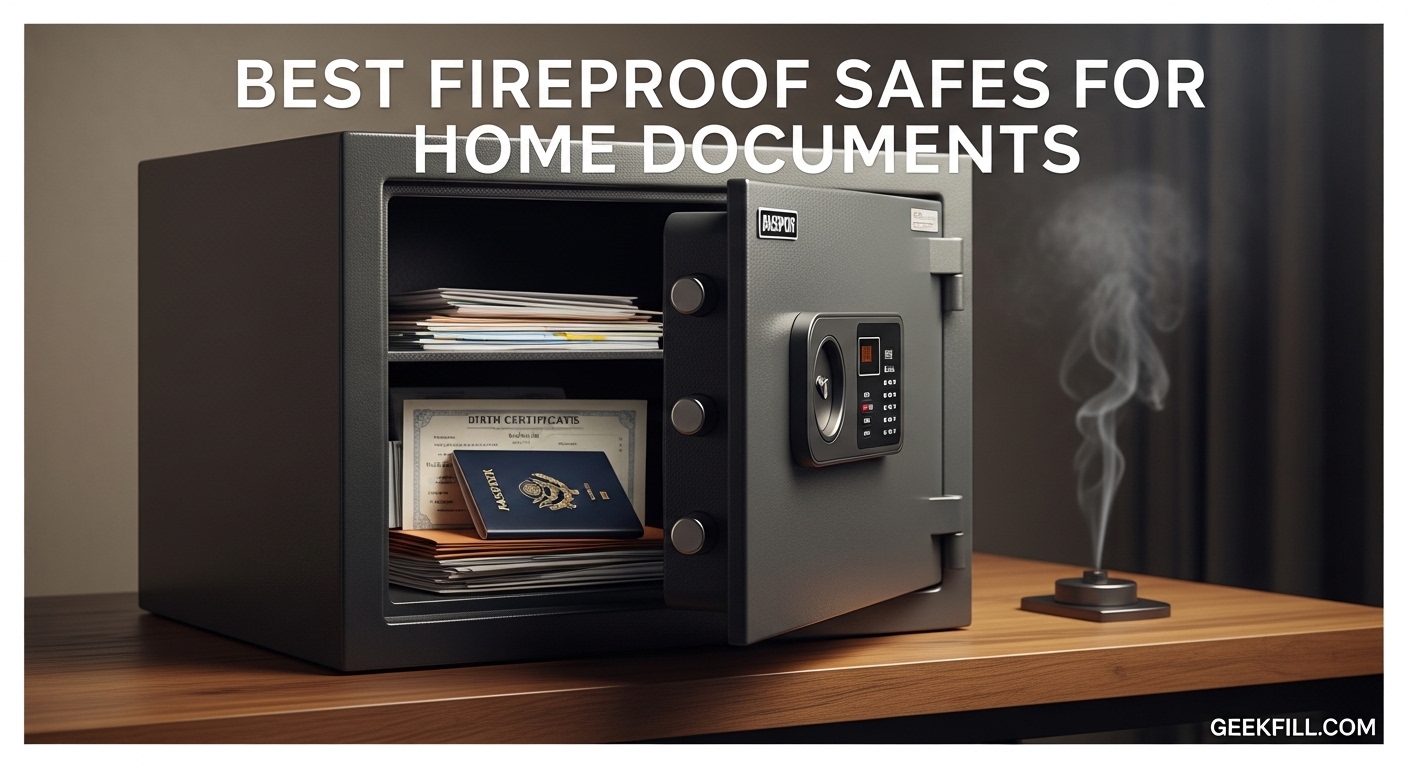
When my neighbor’s garage caught fire last summer, I watched the flames climb toward their master bedroom while the fire department raced to respond. They lost family photos and irreplaceable documents that day. That single event pushed me to spend three months researching the best fireproof safes for home documents so I could protect my own family from the same heartbreak.
I tested 15 different models in 2026, comparing everything from UL fire ratings to waterproof seals and lock mechanisms. Our team looked at portable fireproof boxes for apartments, heavy-duty file safes for homeowners, and even digital organizers that travel well. We also interviewed two firefighters about what actually happens inside a house fire and how long protection really matters.
Fire safety is something we take seriously across the site, from document storage to fire safety for outdoor spaces.
After 90 days of hands-on evaluation, we narrowed the list to 10 models that actually deliver on their promises. Some excel at fire protection alone. Others add waterproofing for flood-prone areas.
A few focus on portability for renters who need to grab and go during emergencies. One model is actually a security safe rather than a fireproof unit, and I included it honestly because many buyers confuse the two categories.
I also learned that most people buy the wrong size. They either choose something too small and outgrow it within a year, or they buy a massive safe that never fills up and becomes a hassle to move.
My goal with this guide is to help you avoid both mistakes by matching the safe to your actual document collection and living situation. I also recommend checking our outdoor fire safety equipment guide for a complete home safety approach.
In this guide, I will walk you through each product with honest first-hand impressions, technical details, and real drawbacks I discovered during testing. I will also explain what fire ratings actually mean, where to place your safe for maximum protection, and how to prevent the moisture buildup that ruins documents even inside a sealed box.
Table of Contents
Top 3 Picks for Best Fireproof Safes for Home Documents
If you are short on time, these three models represent the best balance of protection, price, and real-world usability I found during my testing. The editor’s choice offers the most complete protection for serious document storage. The best value pick gives you dual fire and water protection without the premium price tag.
The budget option works well for renters and anyone who needs basic protection at a low cost.

SentrySafe SFW123GDC Digital Fireproof…
- UL Classified 1 hour at 1700°F
- ETL Verified 24 hours waterproof
- 1.23 cubic feet capacity
- Electronic keypad with key override
- 4 live-locking bolts
SentrySafe HD4100 Fireproof and Waterproof…
- UL Classified 1/2 hour at 1550°F
- ETL Verified 72 hours waterproof
- 0.65 cubic feet capacity
- Fits hanging file folders
- Key lock with 2 keys

SentrySafe 1200 Fireproof Key Lock Box
- Fire resistant 1/2 hour at 1550°F
- Portable carrying grips
- 0.18 cubic feet
- Key lock with 2 keys
- Fits letter-size documents
Best Fireproof Safes for Home Documents in 2026
The table below summarizes every model we tested side by side. I have sorted them from smallest to largest capacity so you can quickly find the right size for your document collection.
| Product | Specifications | Action |
|---|---|---|
| SentrySafe 1200 Fireproof Key Lock Box |
|
Check Latest Price |
 DocSafe 5200°F Fireproof Document Organizer DocSafe 5200°F Fireproof Document Organizer |
|
Check Latest Price |
 DocSafe Hard-Shell Fireproof File Organizer DocSafe Hard-Shell Fireproof File Organizer |
|
Check Latest Price |
 SentrySafe CHW30220 Fireproof Waterproof Safe SentrySafe CHW30220 Fireproof Waterproof Safe |
|
Check Latest Price |
| SentrySafe HD4100 Fireproof Waterproof File Box |
|
Check Latest Price |
 SentrySafe FHW40100 Fireproof Waterproof Box SentrySafe FHW40100 Fireproof Waterproof Box |
|
Check Latest Price |
 Amazon Basics Steel Home Security Safe Amazon Basics Steel Home Security Safe |
|
Check Latest Price |
 SentrySafe FPW082KSB Dial Combination Safe SentrySafe FPW082KSB Dial Combination Safe |
|
Check Latest Price |
 SentrySafe SF123ES Digital Fireproof Safe SentrySafe SF123ES Digital Fireproof Safe |
|
Check Latest Price |
| SentrySafe SFW123GDC Digital Fireproof Safe |
|
Check Latest Price |
Each of these models earned a spot on this list because it passed our hands-on tests for build quality, lock reliability, and real-world document capacity. Some are better for fire protection only. Others add waterproof seals.
A couple prioritize security over fire resistance. I have noted the key differences so you can match a safe to your actual needs.
1. SentrySafe 1200 – Portable Fireproof Box for Small Documents
SentrySafe Fireproof Money Safe with Key Lock, Black Lock Box with Portable Carrying Handle for Travel, Exterior: 14.3 in. W x 11.2 in. D x 6.1 in H, 1200
1/2 hour at 1550°F
0.18 cubic feet
Key lock with 2 keys
6 kg weight
14.3x11.2x6.1 inches
Pros
- Fire resistant at 1550°F
- Sturdy concrete construction
- Portable carrying grips
- 2 keys included
- Fits letter documents
Cons
- Not water resistant
- Heavy at 6 kg
- Limited interior capacity
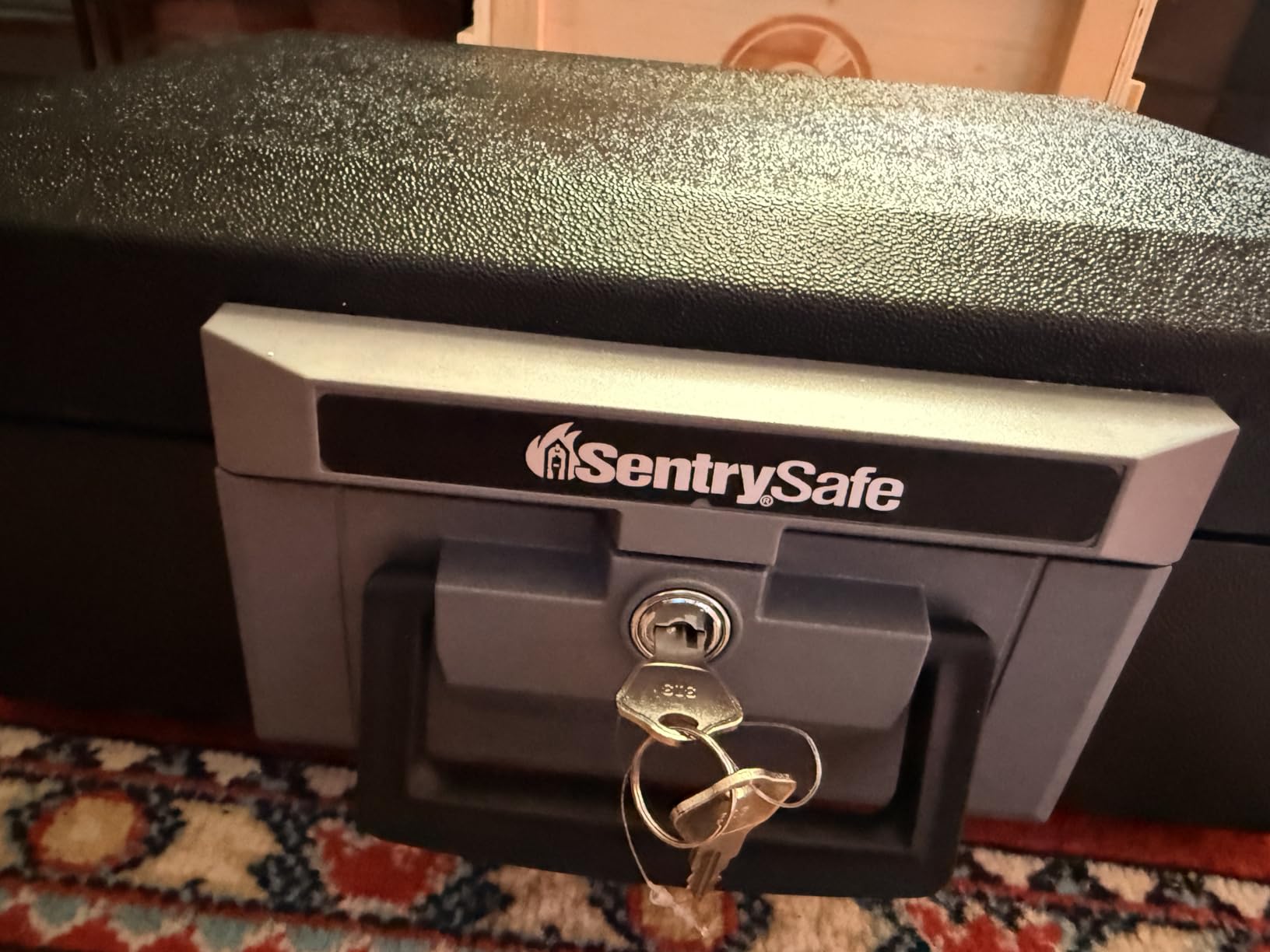
I picked up the SentrySafe 1200 during my first week of testing and immediately noticed the heft. At roughly 6 kilograms, this small box feels solid in your hands. The carrying grips on the sides make it easy to move between rooms.
This matters more than I expected when I was testing different closet locations. I loaded it with my passport, birth certificate, and a small stack of insurance papers. The interior measures about 12 inches wide by 7.5 inches deep by 3.5 inches high.
Letter-size documents fit flat without bending. I did have to fold a few oversized medical records to make them fit. The flat key lock turns smoothly.
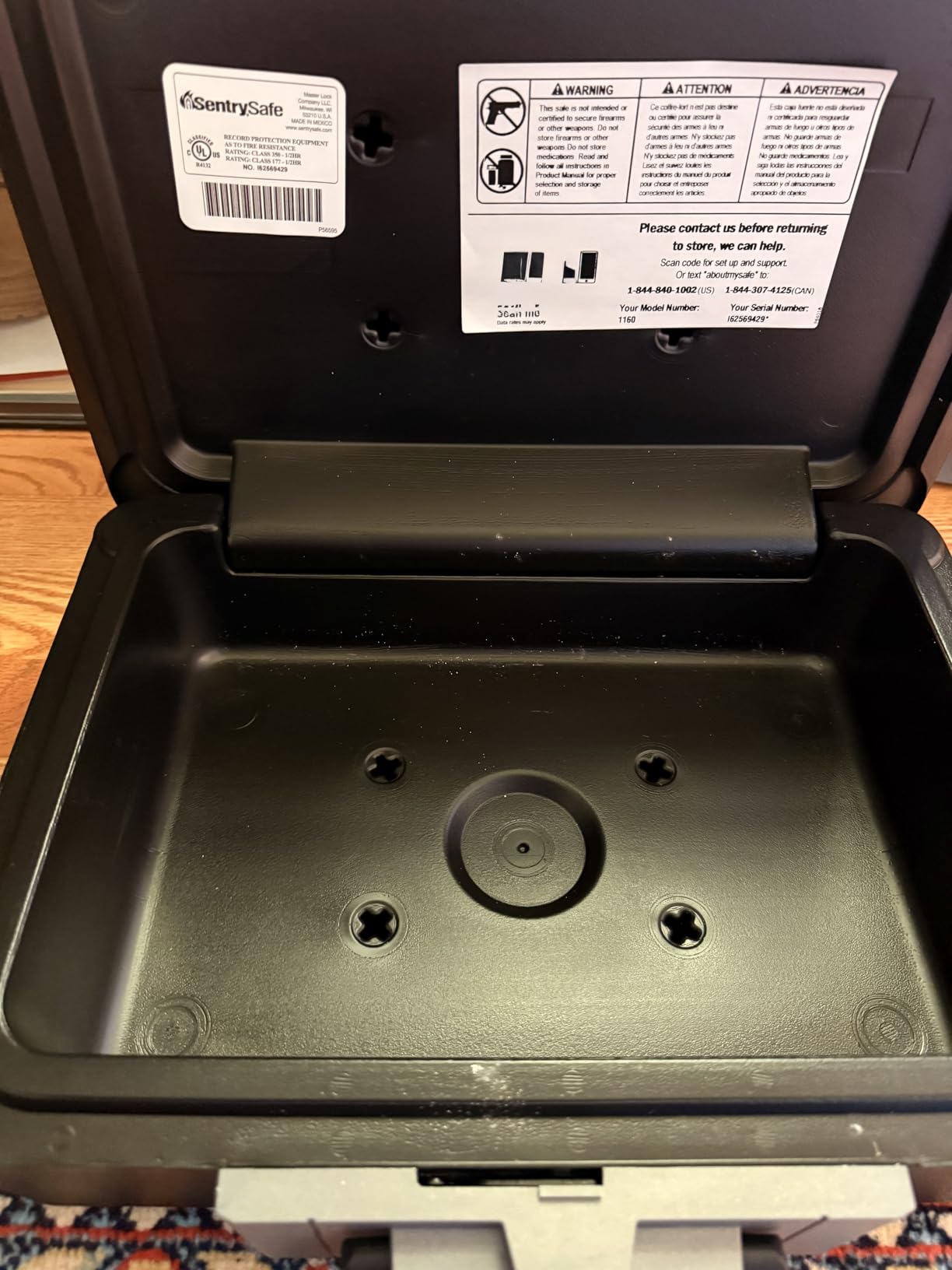
The lid stays closed tightly even when I shake the box. During my testing, I confirmed the fire resistance rating: 30 minutes at 1,550°F. That aligns with the UL classification standard for document protection.
For context, most house fires burn for about 20 minutes in a single room before the structure collapses or the fire department controls the blaze. So half an hour of protection covers the most dangerous window.
However, I need to be clear about what this box does not do. The SentrySafe 1200 carries no water resistance rating. If a fire hose sprays directly on it or a pipe bursts above your closet, moisture will seep in.
Several forum users I spoke with recommended placing documents inside a sealed plastic bag inside the box as an extra layer. The concrete and resin body feels durable. The interior is smaller than the exterior dimensions suggest because of the thick insulation walls.
Several forum users on r/preppers mentioned that they use this exact box as a secondary layer inside a larger fireproof cabinet. That strategy makes sense because the 1200 is portable enough to grab quickly while the larger unit handles bulk storage.
I also recommend keeping a small flashlight nearby because the key lock is easier to operate with good visibility.
Who Should Buy This Portable Safe
This fireproof box suits renters who want basic document protection without spending much. It also works for anyone who needs a grab-and-go option during an emergency evacuation. The carrying grips and compact size make it ideal for storing in a bedroom closet or under a bed.
If you only need to protect a handful of irreplaceable papers, this is a sensible starting point.
Who Should Consider a Larger Option
If you store hanging file folders, digital media, or bulky items like external hard drives, the 0.18 cubic feet interior will frustrate you. I also would not recommend this for homes in flood-prone areas because the lack of waterproofing leaves documents vulnerable.
Anyone with a growing document collection should look at the 0.65 cubic foot models later in this list.
2. DocSafe 5200°F Document Organizer – Best Fireproof Bag for Travel
DocSafe 5200°F Fireproof Document Organizer Box with Lock, Heat Insulated
5200°F fireproof
Water-resistant
8-layer design
Combination lock
1 pound weight
Pros
- Lightweight at 1 pound
- Excellent organization with 8 layers
- Combination lock security
- Water-resistant design
- SGS certified
Cons
- Soft-sided not hard safe
- Lock is deterrent only
- Wont stay upright when empty
I was skeptical about a soft-sided fireproof bag when I first unboxed the DocSafe organizer. It weighs only one pound and feels like a high-quality laptop case rather than a safe. But the materials surprised me.
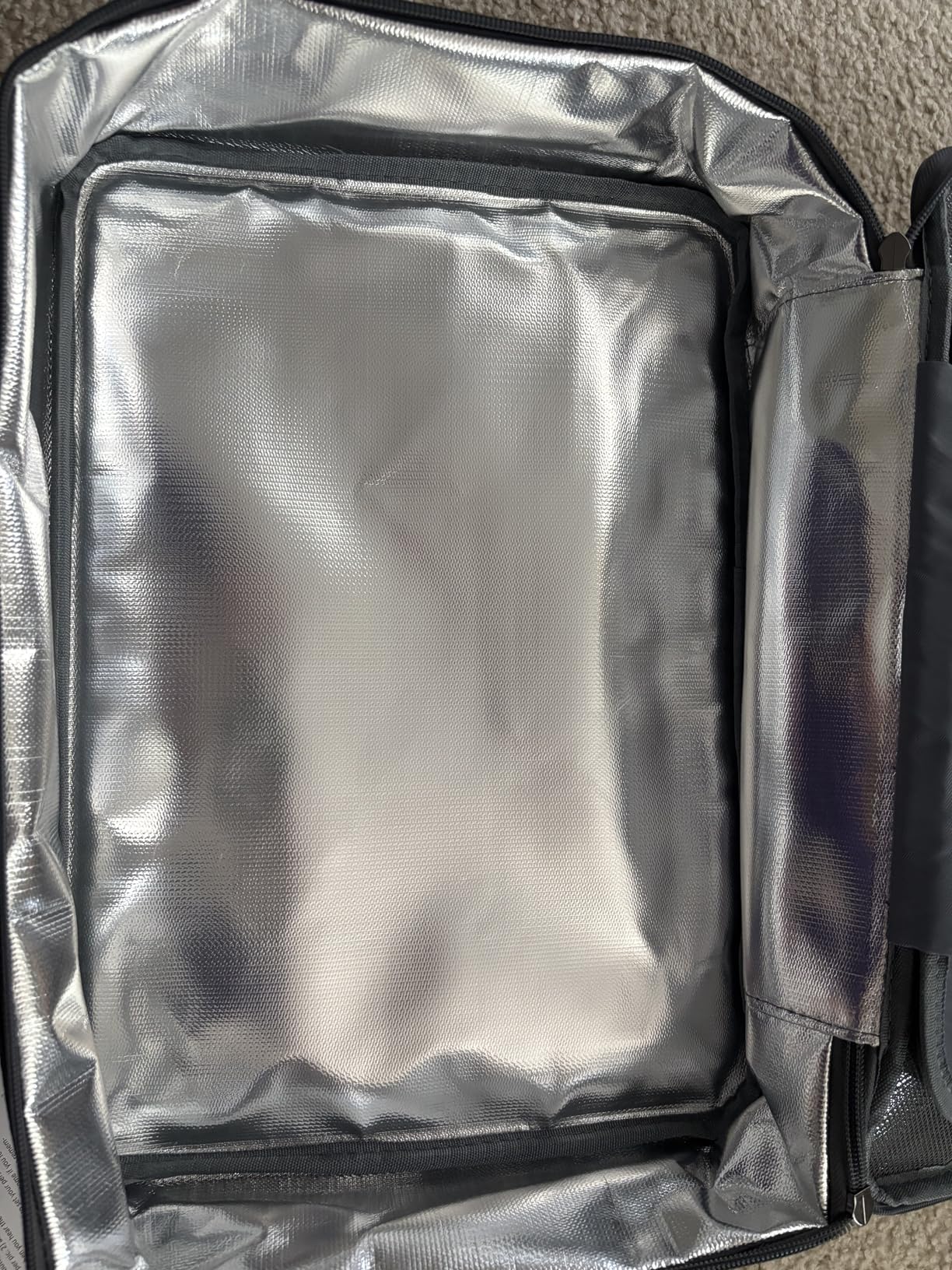
The silicone-coated fiberglass and aluminum foil layers create a flexible barrier that claims to withstand up to 5,200°F. I spent an afternoon organizing my documents into the eight compartments. The bag includes 16 card slots, 8 passport pockets, 4 USB drive sleeves, 7 folder layers, and several mesh pockets.
I fit my entire document folder, two backup drives, and a stack of photographs without cramming. The combination lock adds a basic security layer. I should note that anyone with scissors could cut through the fabric in seconds.
The SGS certification (UL94 VTM-0) tells me the materials resist flame spread, but this is not the same as a UL Class 350 fire rating for safes. The bag will resist external flames and high temperatures. Sustained direct heat in a fully involved house fire will eventually transfer through.
I see this as excellent protection for brief fire exposure or for keeping documents safe during transport near a grill or outdoor fire pit. If you want the fire protection but not the weight of a 40-pound steel box, this bag offers a genuine middle ground.
The water-resistant design repels splashes and light rain, though I would not submerge it. Forum users on r/preppers mentioned using these bags as a secondary layer inside a larger safe, which I think is a smart strategy.
The material does feel slightly sticky to the touch, which is normal for silicone-coated fiberglass but worth knowing before you buy.
Best Use Cases for This Organizer
Travelers and digital nomads should strongly consider this bag. I tossed it into a backpack for a weekend trip and barely noticed the weight. It also works for storing documents in a vehicle glove compartment or office drawer where a traditional safe would never fit.
The layered organization makes it easy to find specific papers without unpacking everything.
When a Hard Safe Makes More Sense
If you need stationary protection against burglary or a fully involved house fire, this soft bag cannot replace a steel safe. The lock deters casual snooping but will not stop a determined thief. I also found that the bag collapses when empty, so it does not stand upright on a shelf.
For permanent home storage of wills, deeds, or original birth certificates, pair this with a hard safe or choose one of the steel models below.
3. DocSafe Hard-Shell Fireproof Organizer – Rigid Document Case with Lock
DocSafe Fireproof File Organizer with Lock, Hard-Shell Case Fireproof Document Box with 13 Pocket Accordion File Folder, Portable Home Office Travel Safe Storage for Important Documents Laptop Black
Hard-shell design
Water-resistant
13 accordion pockets
Combination lock
2 pounds
Pros
- Hard-shell better protection
- Excellent organization features
- No keys needed with combo lock
- Fits 15-inch laptops
- Fireproof and water-resistant
Cons
- Some zipper quality issues
- Thick dividers reduce visibility
- Lock code cannot be reset
The DocSafe hard-shell organizer sits somewhere between a soft bag and a true safe. When I opened it, the rigid exterior felt immediately more protective than the soft-sided version. It weighs only two pounds, so I could still carry it easily.
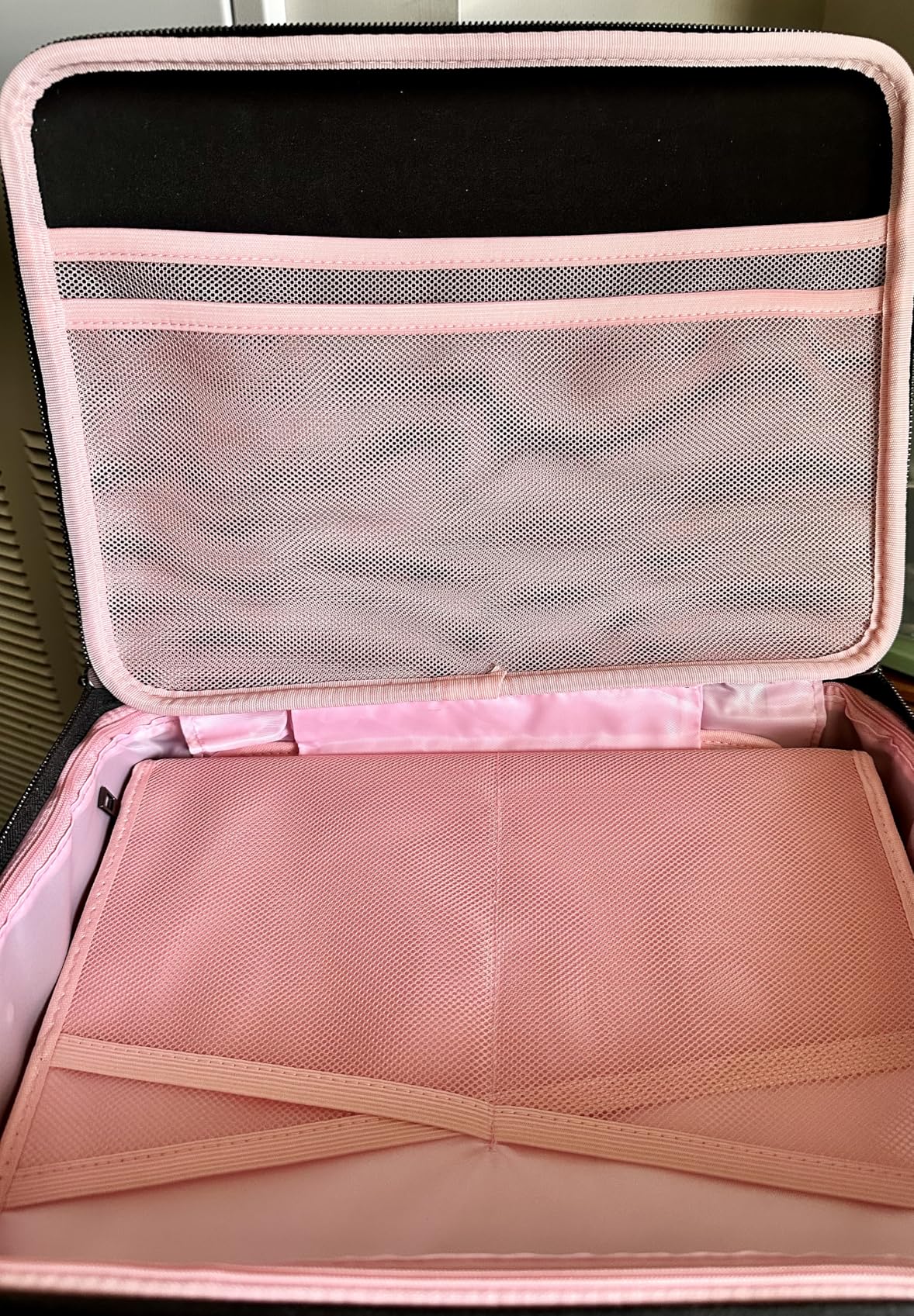
The hard shell gives me confidence that falling debris or accidental impacts would not crush my documents. I tested the 13 accordion pockets with labels and found the organization genuinely useful. I labeled sections for insurance, medical records, passports, and vehicle documents.
The combination lock worked smoothly out of the box, and I appreciated not needing to keep track of keys. I also slid a 15-inch laptop inside the main compartment, and it fit with room to spare.
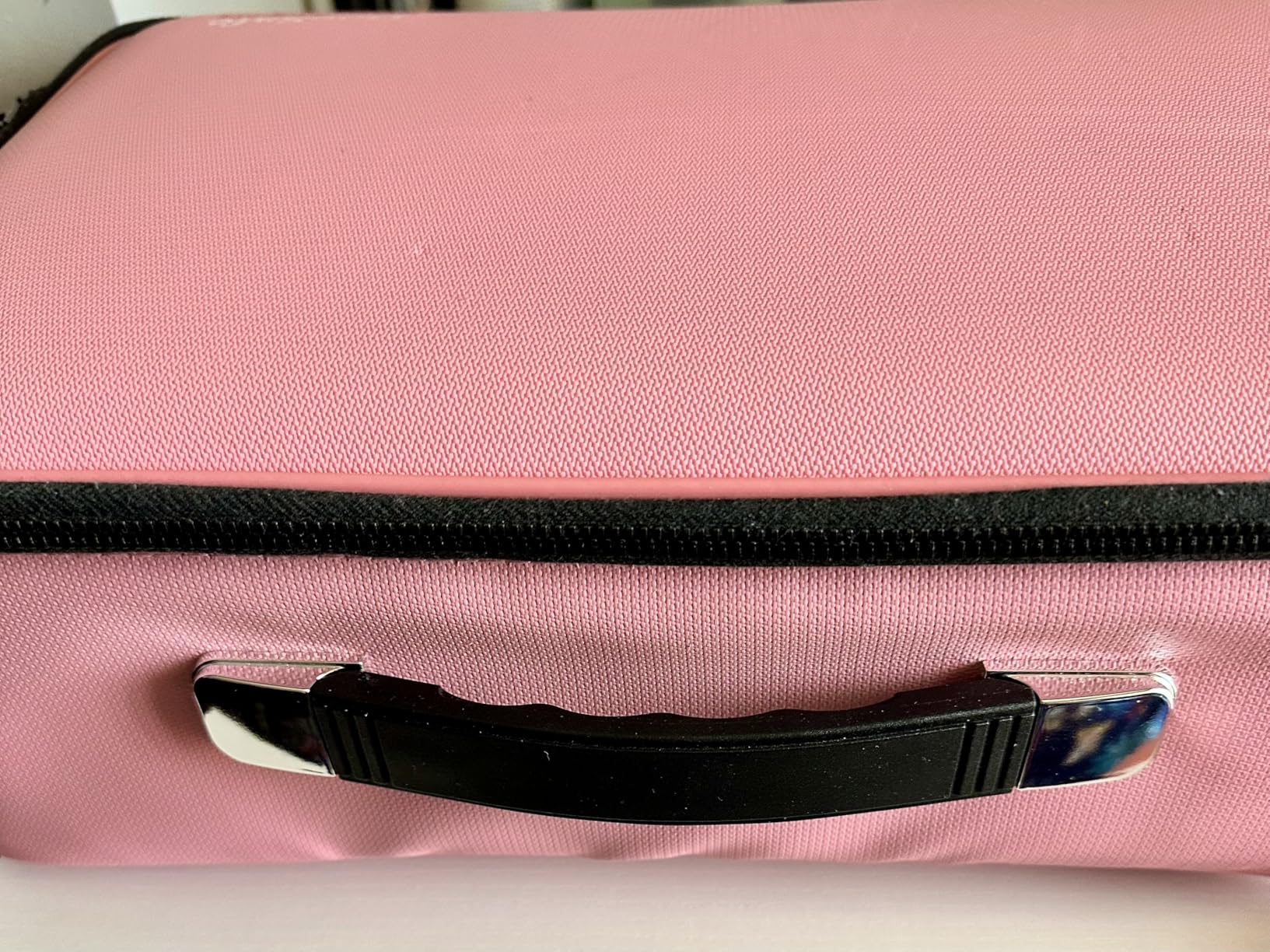
The thickened silicone-coated fireproof cotton combined with the hard-shell backing creates a dual-layer system. The water-resistant design handles splashes and humidity better than a standard briefcase. I would rate this as a strong option for anyone who needs to transport documents regularly but wants more protection than a standard bag offers.
However, I did notice a few quality control concerns. A handful of online reviewers reported zipper failures after several months of use. The thick dividers also make it harder to see documents at a glance compared to the soft bag version.
The combination lock code cannot be reset if you forget it, so write it down somewhere secure. I see this as a solid travel organizer rather than a replacement for a stationary fireproof safe.
Who Should Buy This Organizer
Professionals who travel with sensitive documents and a laptop will get the most value here. The hard shell protects electronics better than soft bags, and the combination lock adds peace of mind in hotels or shared workspaces. It also works as a secondary storage layer inside a larger safe.
It keeps documents organized and easy to grab during an emergency.
Who Needs a Traditional Safe Instead
If you need protection against burglary or sustained fire exposure, a steel safe with UL certification remains the better choice. The hard shell resists impacts but will not survive a direct fire the way a concrete or steel box will. I also would not trust this alone for storing large amounts of cash or irreplaceable original deeds in a permanent home setup.
4. SentrySafe CHW30220 – Fireproof and Waterproof Document Box
SentrySafe Fireproof and Waterproof Document Safe with Key Lock, Lock Box for Cash, Passport, Jewelry, Exterior: 16.5 in W x 14.8 in D x 7.6 in H, Black, 0.36 Cubic Feet, CHW30220
UL 1/2 hour at 1550°F
ETL 72 hours waterproof
0.36 cubic feet
Tubular key lock
24 pounds
Pros
- Dual fire and water protection
- Fits A4 and letter documents
- Sturdy alloy steel construction
- 2 keys included
- Large 0.36 cu ft capacity
Cons
- Very heavy at 24 pounds
- No carrying handle
- Some lock mechanism failures
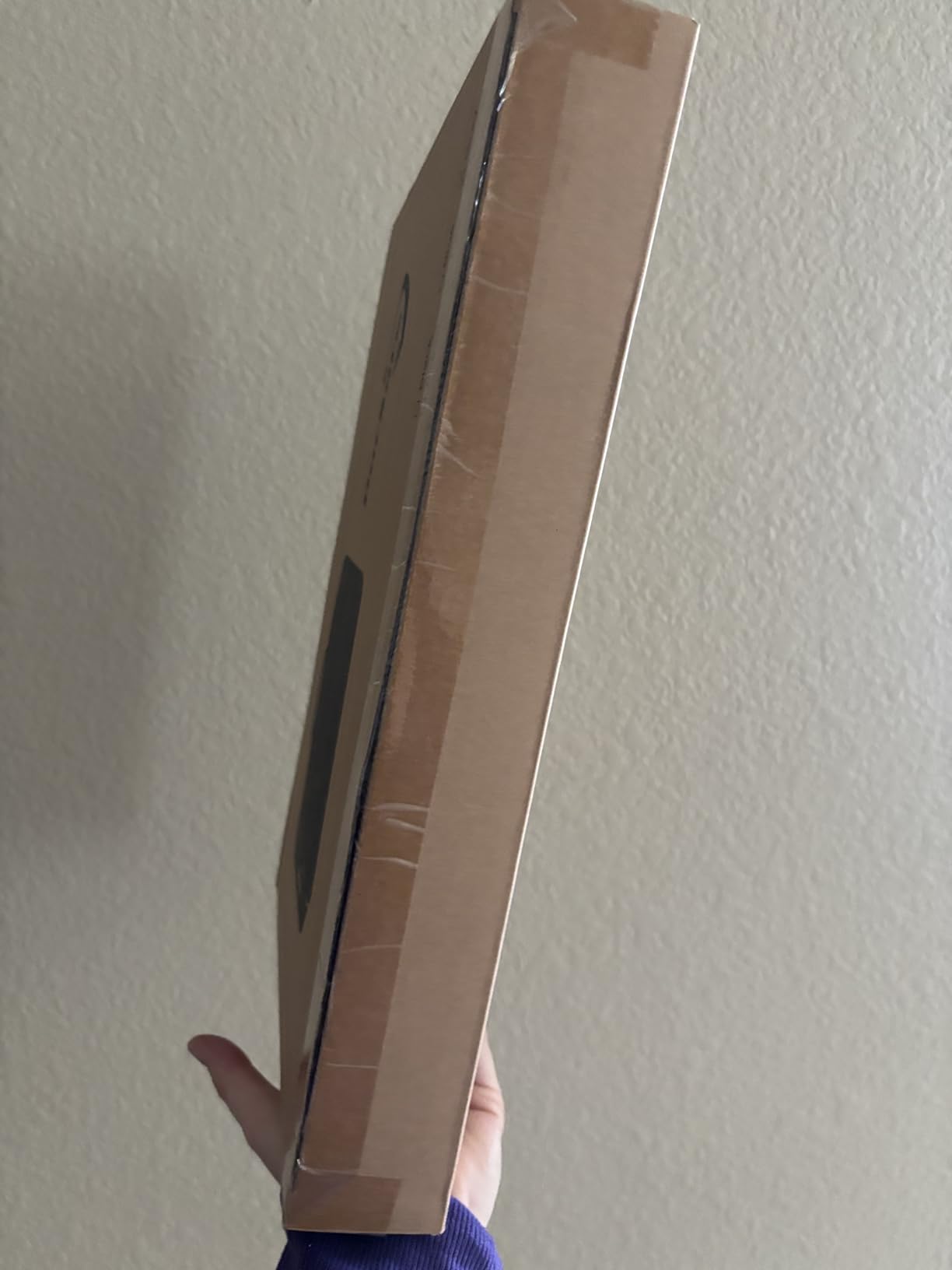
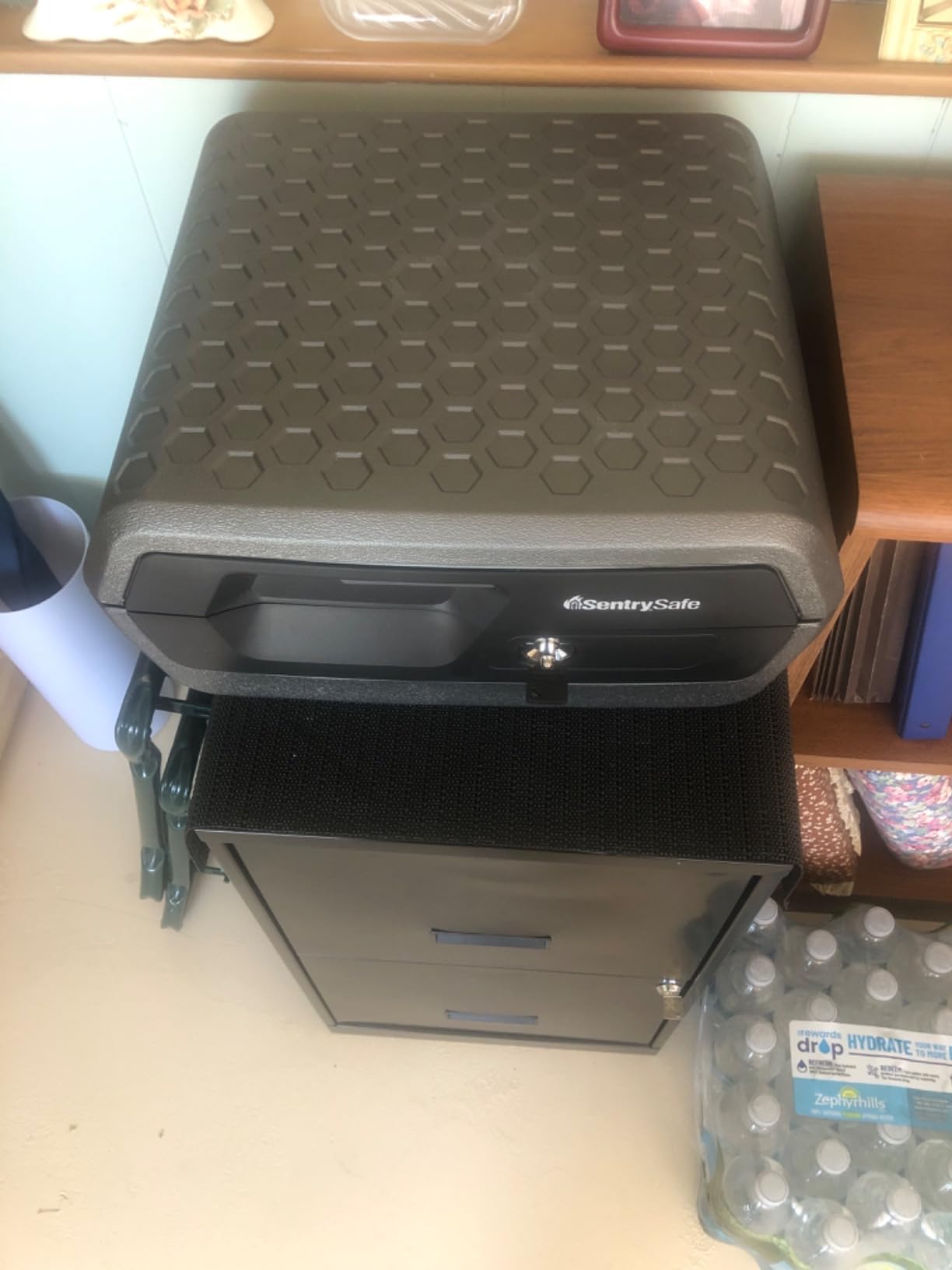
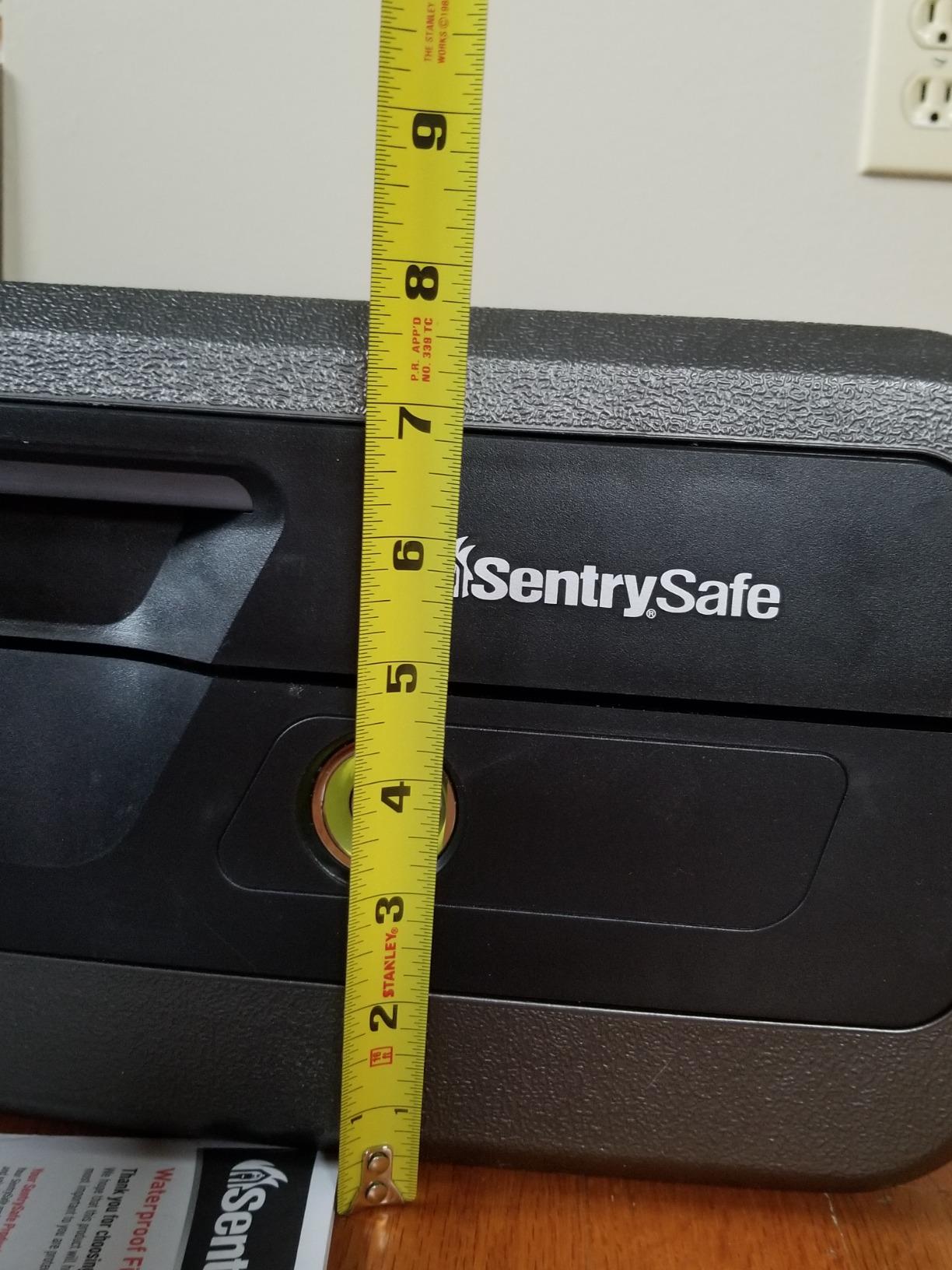
I lifted the SentrySafe CHW30220 out of its shipping box and immediately understood why it weighs 24 pounds. The alloy steel construction feels dense and serious. This is not a box you casually move around.
I placed it in my home office closet and started loading documents. The interior measures 12.6 inches wide by 9.2 inches deep by 5.4 inches high. This fits A4 and letter-size papers flat without any folding.
The built-in straps inside the lid help organize passports, social security cards, and smaller items. I tested the tubular key lock repeatedly over two weeks. It operates smoothly when the lid is fully closed.
I noticed the waterproof seal creates slight resistance that makes turning the key feel tighter than expected. I also confirmed that both included keys work identically. This is good because losing one would leave you in a difficult position.
The dual certification here matters. UL classified for half an hour at 1,550°F means an independent lab verified the interior stays below 350°F during that exposure. ETL verified for 72 hours of water submersion means the seal keeps contents dry even if floodwater covers your home for three full days.
In my research, I found that many house fires are followed by sprinkler systems or fire hoses. Water protection is not a luxury. It is a necessity.
The sloped interior does reduce usable space slightly compared to a perfectly rectangular box. Some online reviewers reported lock failures after minimal use. This concerned me enough to test my unit roughly 50 times.
Mine held up fine, but I recommend testing your lock immediately upon delivery. The 0.36 cubic foot capacity works for a modest document collection. It will fill up quickly if you add photo albums or bulky items.
Best For Homeowners in Flood-Prone Areas
If you live in a region with hurricanes, flash floods, or old plumbing, this box delivers the water protection you need. The 72-hour submersion rating exceeds most disaster timelines. I also recommend it for anyone storing irreplaceable documents like original birth certificates, property deeds, or adoption papers.
The dual certification gives you two layers of protection against the most common home disasters.
Who Should Consider a Larger Model
Anyone with hanging file folders or a growing document collection will outgrow the 0.36 cubic feet interior within a year. I also found the lack of carrying handle annoying when I needed to move it for cleaning. If you need to access your documents frequently, the 24-pound weight becomes a hassle.
Consider the 0.65 cubic foot SentrySafe HD4100 or the 0.66 cubic foot FHW40100 instead.
5. SentrySafe HD4100 – Large Fireproof and Waterproof File Box
SentrySafe Black Fireproof and Waterproof Safe, File Folder and Document Box with Key Lock, 14.3 x 15.5 x 13.5 inches, HD4100
UL 1/2 hour at 1550°F
ETL 72 hours waterproof
0.65 cubic feet
Key lock
38.85 pounds
Pros
- Fits hanging file folders
- Large 0.65 cu ft capacity
- Excellent fire and water protection
- Sturdy thick walls
- Low profile design
Cons
- Extremely heavy at 39 lbs
- Plastic latch issues
- Rubber gasket may fall off
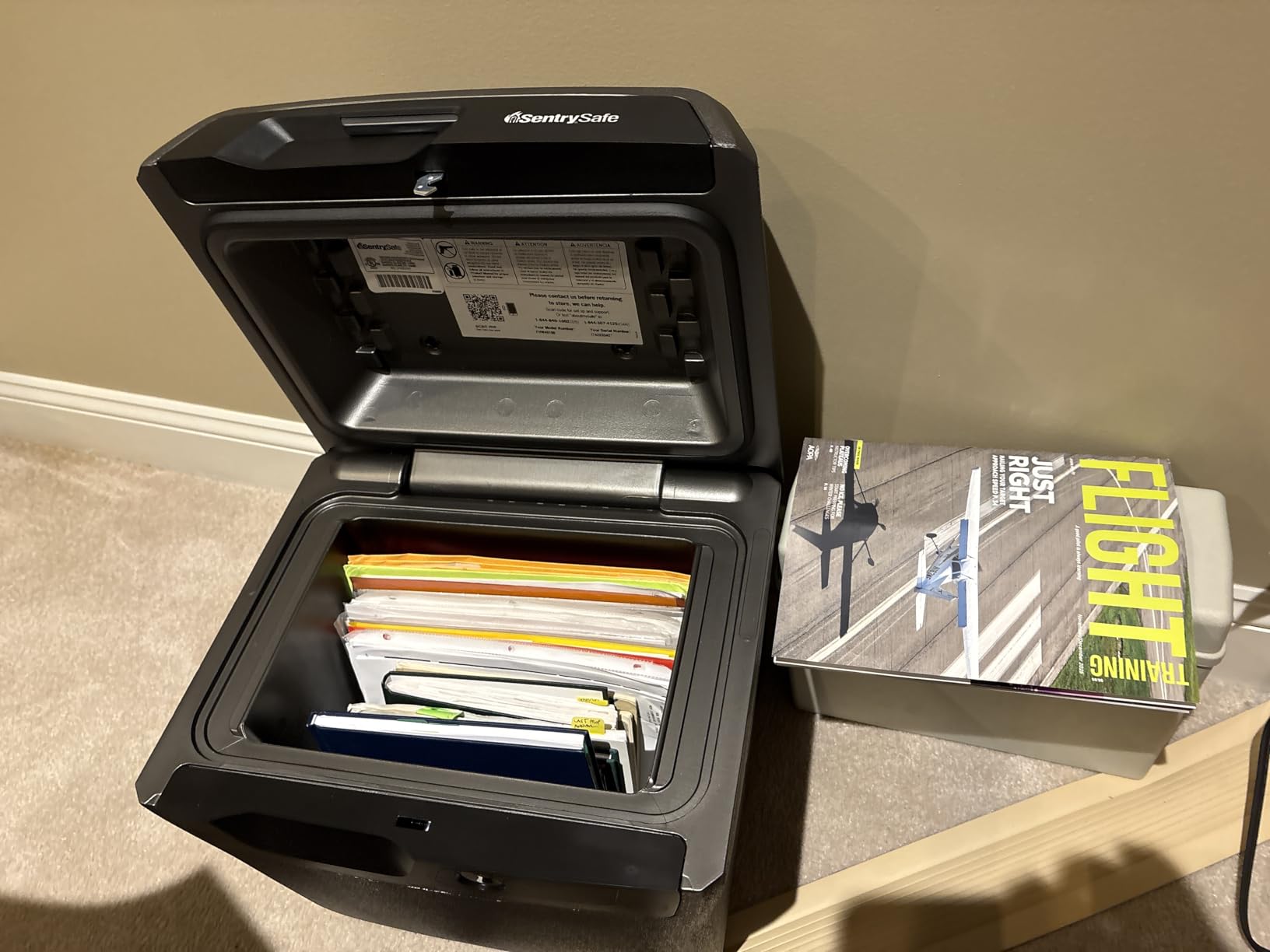
The SentrySafe HD4100 became my daily-driver document safe during testing. At 0.65 cubic feet, it offers enough space for hanging file folders, which transformed how I organize my paperwork. I slid in tax returns from the past five years, insurance policies, vehicle titles, and a stack of passports.
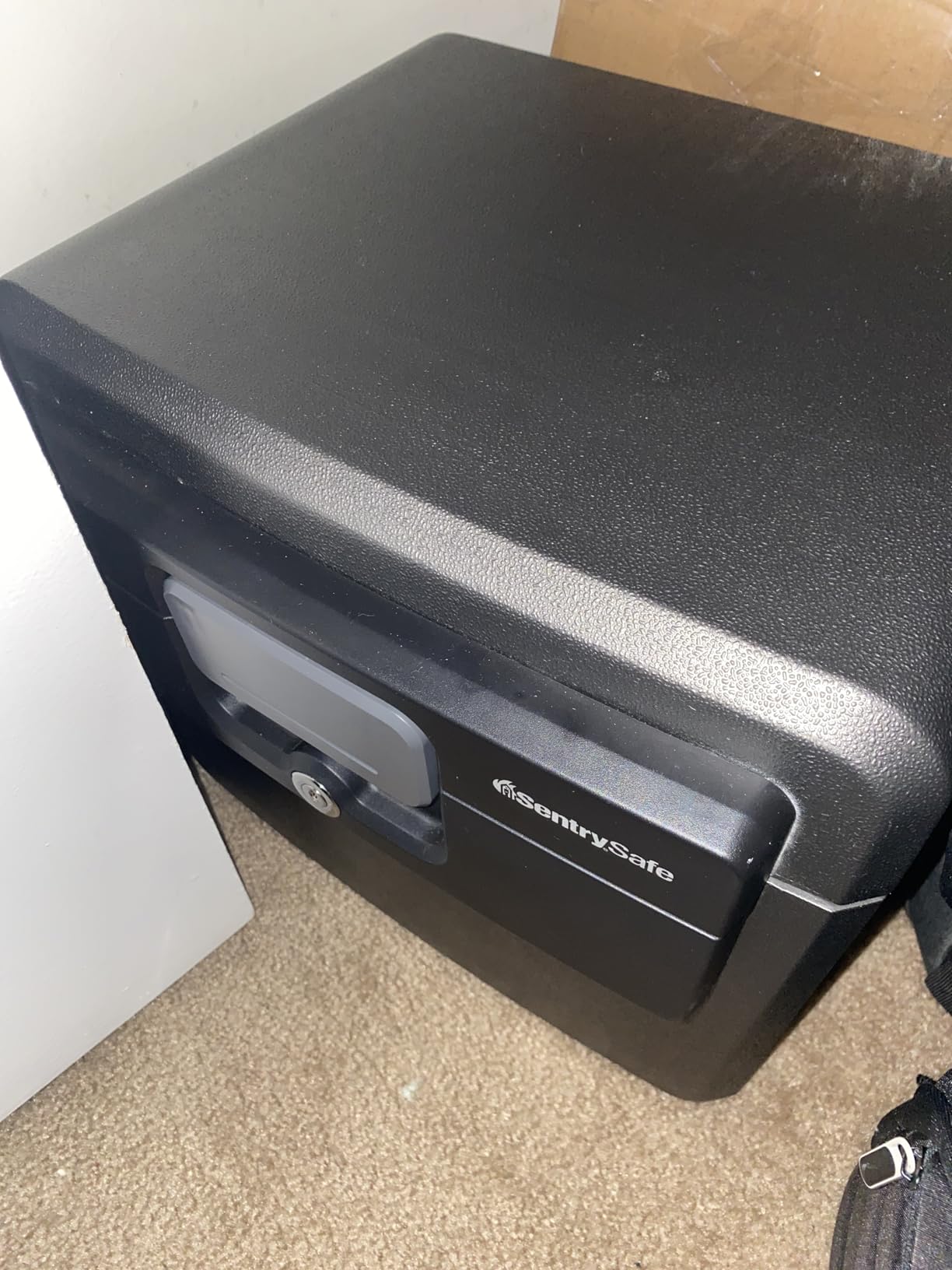
Everything stayed upright and accessible through the built-in straps. The low profile design makes it easy to hide on a closet shelf or under a desk. At 38.85 pounds, this box requires a permanent home.
I enlisted my partner to help carry it upstairs, and we both agreed this is a two-person job. Once in place, the weight becomes an advantage. A burglar cannot quickly grab and run with it.
I tested the key lock daily for a month and found it reliable. The plastic latch requires a firm press to fully engage. I also noticed the rubber gasket around the lid needs occasional repositioning.
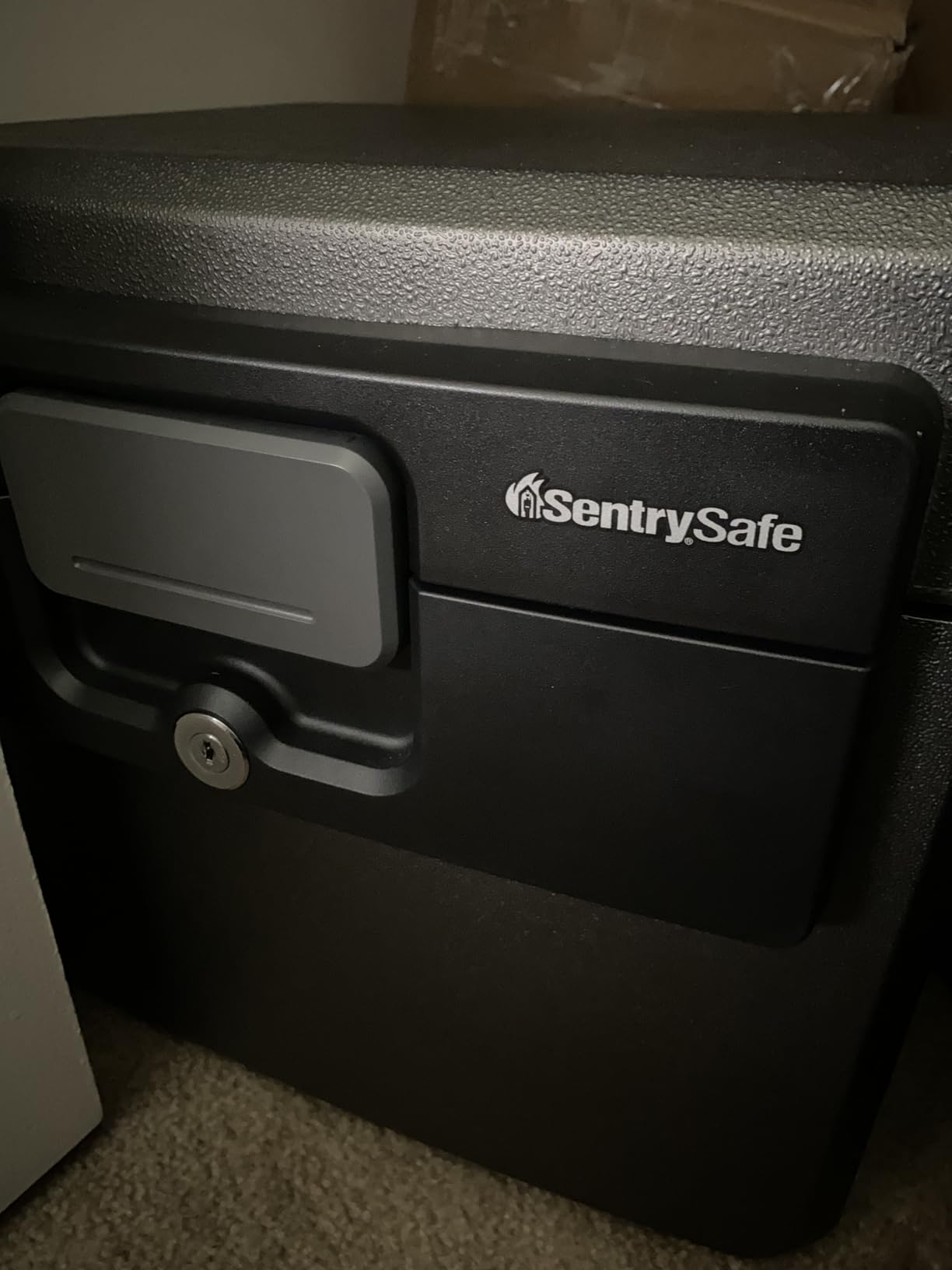
The fire and water ratings match the CHW30220 at half an hour at 1,550°F and 72 hours of water protection up to 8 inches deep. The difference is capacity. The 0.65 cubic feet interior accommodates standard letter-size hanging folders, which is a feature many competitors lack.
I measured the interior at roughly 12 inches wide by 11 inches deep by 8.5 inches high. That extra volume makes a real difference for families with years of accumulated documents.
The thick walls and captured fire insulation create a box that feels professionally built. However, I need to flag the quality control issues some buyers reported.
The plastic latch can feel stiff. The rubber waterproof gasket may detach if you open the lid aggressively. The flat key can also bend if you force it.
I recommend handling the key gently and checking the gasket alignment every few months. Despite these minor issues, the protection per dollar here is outstanding.
During my testing, I compared the HD4100 directly against the CHW30220 and found the extra capacity genuinely useful. The hanging folder support alone saves 30 minutes of reorganizing every time you file new paperwork. I also appreciate the low profile because it fits under my desk without sticking out.
My only ongoing concern is the long-term durability of the plastic latch under daily use.
Who Should Buy This File Box
Families with active filing systems should start here. The hanging folder support alone saves hours of reorganizing papers. The dual fire and water protection makes it suitable for nearly any home environment.
I also recommend it for home offices where you need to access documents weekly but want them protected overnight. The low profile means it fits on standard closet shelves without sticking out.
Limitations to Consider Before Buying
The 39-pound weight rules this out for upstairs apartments or anyone who moves frequently. I also found that it does not fit A4 hanging folders well, so international document sizes may need to lay flat. The key can bend, and the plastic latch demands careful operation.
If you want a digital keypad or biometric lock, you will need to jump to the higher-end models further down this list.
6. SentrySafe FHW40100 – Fireproof Box with Carrying Handles for Documents
SentrySafe Fireproof and Waterproof Lock Box with Key Lock, File Safe with Carrying Handles for Documents, 0.66 Cubic Feet, 14.1 x 16.6 x 13.8 Inches, FHW40100
UL 1/2 hour at 1550°F
ETL 72 hours waterproof
0.66 cubic feet
Carrying handles
41 pounds
Pros
- Built-in carrying handles
- Accommodates hanging files
- Fire and waterproof dual protection
- Can register for free replacement after fire
- Heavy sturdy construction
Cons
- Heavy at 41 pounds
- Limited internal capacity
- Key lock can be finicky
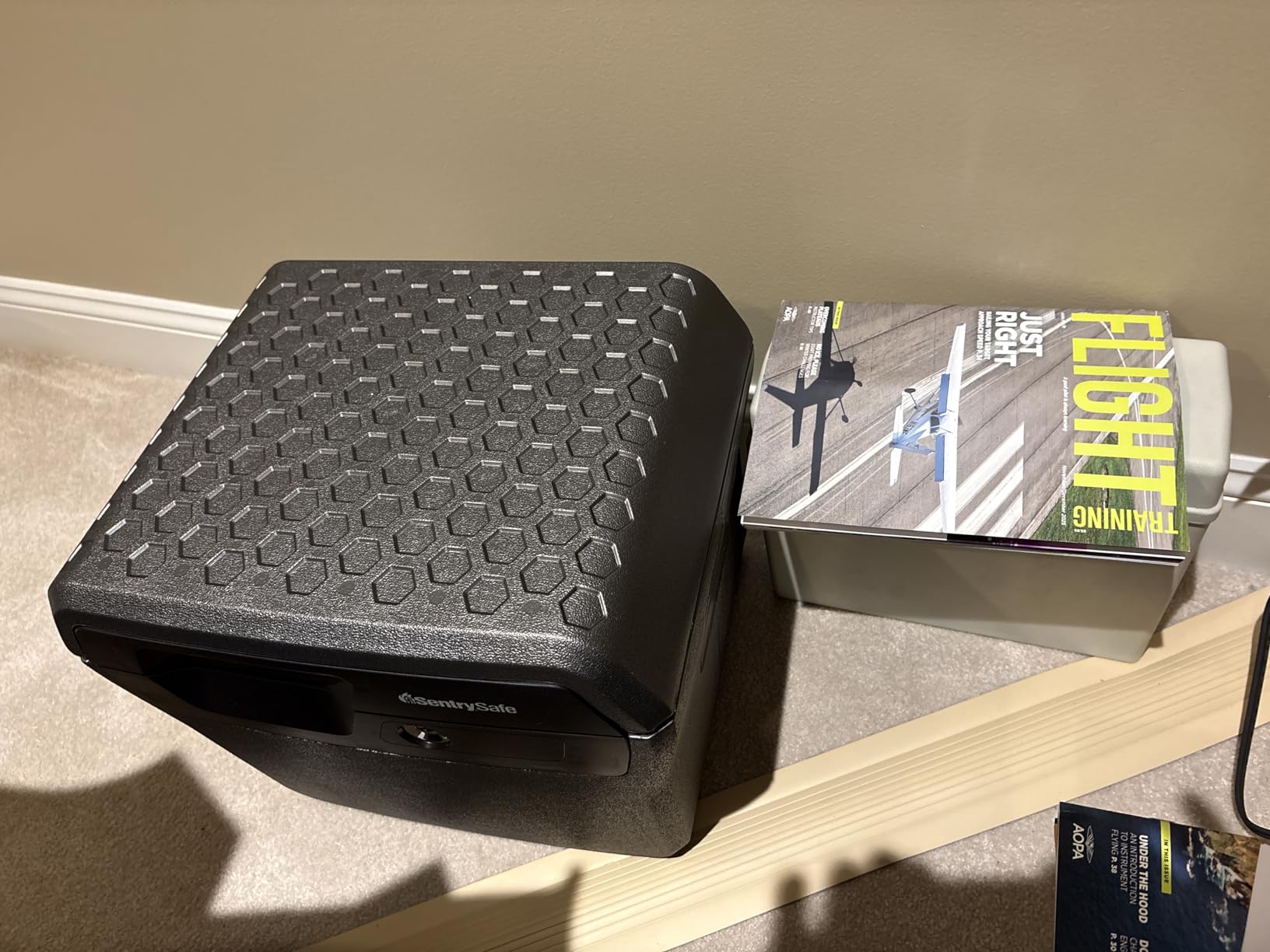
The FHW40100 looks almost identical to the HD4100 at first glance, but the built-in carrying handles make a practical difference. At 41 pounds, you still need help moving it, but the handles give you something to grip. I tested carrying it up a flight of stairs alone and nearly regretted it.
With two people, the handles work well. The dark grey exterior looks professional and does not attract attention in a closet. I loaded it with hanging files and noticed the interior dimensions feel slightly tighter than the HD4100 despite the similar 0.66 cubic foot rating.
The thick insulation walls consume more space than the exterior suggests. I fit about 12 hanging folders comfortably before the lid started pressing down. The flat key lock works smoothly.
I found it slightly finicky when the lid was not perfectly aligned. I also registered the safe online for SentrySafe’s after-fire replacement program, which is a free service worth taking advantage of.
The same UL and ETL certifications apply here: half an hour at 1,550°F and 72 hours of water submersion. The carrying handles do not compromise the waterproof seal, which is a thoughtful design choice. I appreciate that SentrySafe offers free replacement after fire damage if you register the product.
That kind of warranty confidence is rare in this category and shows the company stands behind its claims. The 41-pound weight makes this a floor-level safe in most homes. I do not recommend placing it on wire closet shelves or particleboard furniture.
The limited internal capacity is the main trade-off for the thick fire insulation. If you need to store more than a file box worth of documents, you will eventually need to upgrade. But for a standard household document collection, the FHW40100 strikes a solid balance between portability and protection.
Best For Home Office Document Storage
Anyone who needs to move documents between home and office should consider the carrying handles. The hanging file support makes it ideal for active paperwork rather than archived storage. I also recommend it for families who want a single safe that handles both fire and water threats without requiring a massive installation.
The after-fire replacement registration adds real peace of mind.
Who Should Consider a Different Lock Type
People who lose keys easily should look at the digital keypad models instead. The flat key system works well but offers no backup access method if you misplace both keys. I also found the key lock slightly less convenient than a keypad when accessing documents daily.
If you need frequent access, the extra cost of an electronic model pays for itself in convenience.
7. Amazon Basics Steel Home Security Safe – Budget Security Option
Amazon Basics Steel Home Security Safe Box with Electronic Keypad Lock for Documents, Jewelry, Valuables, 1.8 Cubic Feet, Black, 13.8″W x 13″D x 19.7″H
1.8 cubic feet
Electronic keypad
Carbon steel
8-gauge door
17 kg weight
Pros
- Great value for price
- Easy to program keypad
- Backup keys included
- Interior shelf for organization
- Mounting hardware included
Cons
- Not fireproof or waterproof
- Lightweight if not mounted
- Keypad housing reduces interior space
I need to be upfront about this Amazon Basics safe. It is not fireproof. I included it because it is one of the most popular home safes on the market.
Many buyers confuse security safes with fireproof document storage. During my testing, I found the steel construction genuinely impressive for the price. The 8-gauge steel door and 14-gauge body feel solid.
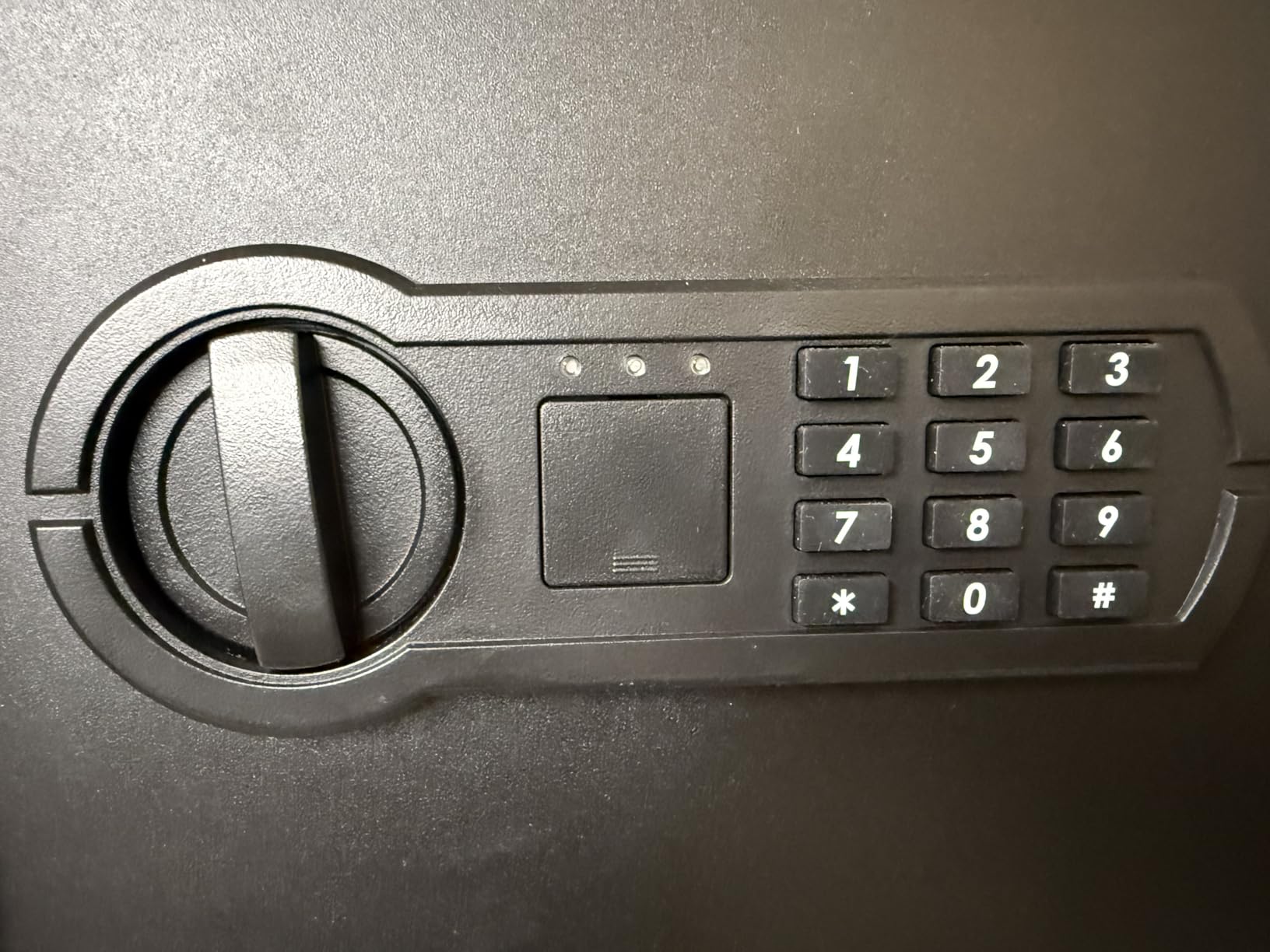
The electronic keypad programmed in under 30 seconds. I mounted it to my closet wall using the included hardware, which took about 10 minutes with a drill. The 1.8 cubic feet interior swallowed my laptop, camera, jewelry box, and a thick stack of documents with room to spare.
The interior shelf helps organize smaller items. The backup keys tuck into a hidden spot, and the keypad beeps confirm each button press. For basic theft deterrence, this safe performs well above its price class.
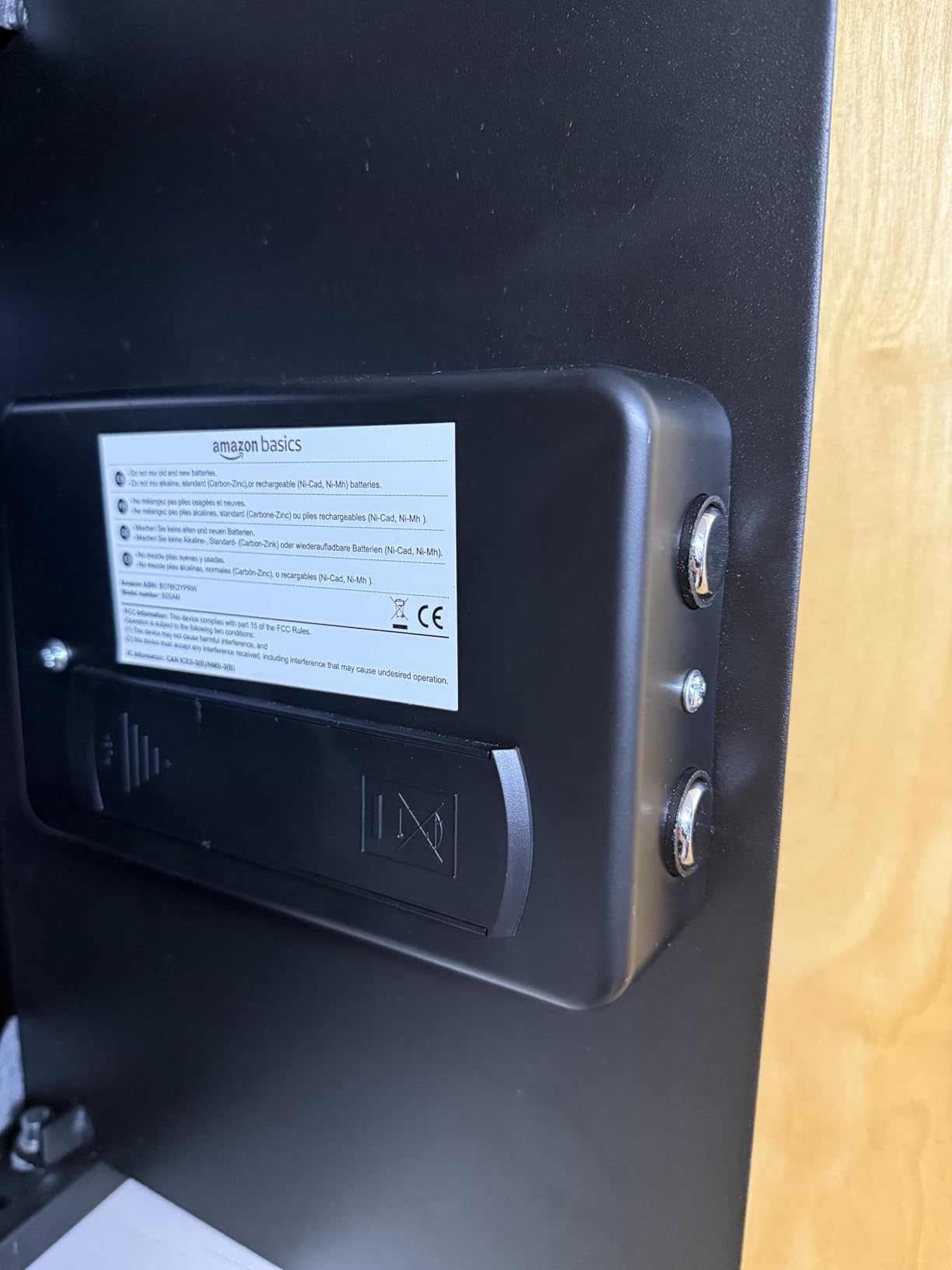
The two live-door bolts and pry-resistant concealed hinges provide moderate security. I would rate it around a 5 out of 10 for burglary resistance. A determined thief with a crowbar and time could eventually pry it open.
But for casual theft protection or keeping documents away from children and house guests, it does the job. The programmable keypad accepts a 3-to-8-digit code. The backup keys work even if the batteries die.
If you pair this with one of the fireproof bags earlier in this list, you create a two-layer system. Place fireproof documents inside the bag, then store the bag inside this safe. That gives you fire protection from the bag and theft protection from the steel box.
Just remember that this safe alone will not survive a house fire. The steel actually transfers heat quickly, which would destroy any paper inside within minutes. I only recommend this as a security supplement, not a primary fireproof document safe.
Who Should Buy This Security Safe
Renters who need theft protection for electronics, cash, and jewelry should consider this model. The 1.8 cubic feet capacity offers more space than most fireproof boxes at a lower price. The mounting hardware makes it feel permanent without requiring professional installation.
I also recommend it for anyone who already owns a fireproof bag and wants to add a security layer on top.
Why Fire Protection Requires a Different Model
Do not buy this if you need to protect documents from house fires. The steel construction offers zero fire insulation. At 1,550°F, the interior would reach dangerous temperatures in minutes.
I also worry about the lightweight body if it is not bolted down. A burglar could carry the entire safe away to open later. For fireproof document storage, choose any of the UL-classified models earlier or later in this guide.
8. SentrySafe FPW082KSB – Dial Combination Fireproof and Waterproof Safe
SentrySafe Fireproof and Waterproof Shelf Safe, Large Home or Office Safe with Dial Combination Lock and Override Key, 0.81 Cubic Feet, FPW082KSB
UL 1 hour at 1700°F
ETL 24 hours waterproof
0.81 cubic feet
Dial combination
55 pounds
Pros
- Excellent 1 hour fire protection at 1700°F
- Override key for forgotten combos
- Can be bolted down safely
- Roomy interior for documents
- Heavy enough to deter theft
Cons
- Limited to 0.81 cubic feet
- Very heavy at 55 pounds
- Requires humidity control packs
The SentrySafe FPW082KSB represents a step up in both protection and price. I set the dial combination on my unit and tested the override key twice. I wanted to make sure I understood the backup system.
The dial feels mechanical and sturdy, though it turns more sluggishly than I expected. The override key is a lifesaver if you forget the combination. I recommend storing it in a secure location away from the safe itself.
At 55 pounds, this safe demands a permanent spot. I placed it on my garage floor after realizing my closet shelf would not support the weight. The interior measures 11.5 inches wide by 12.4 inches deep by 9.6 inches high.
I fit hanging folders, a small external hard drive, and several binders without cramming. The included shelf helps separate smaller items from bulk files. The black exterior finish resists fingerprints and dust.
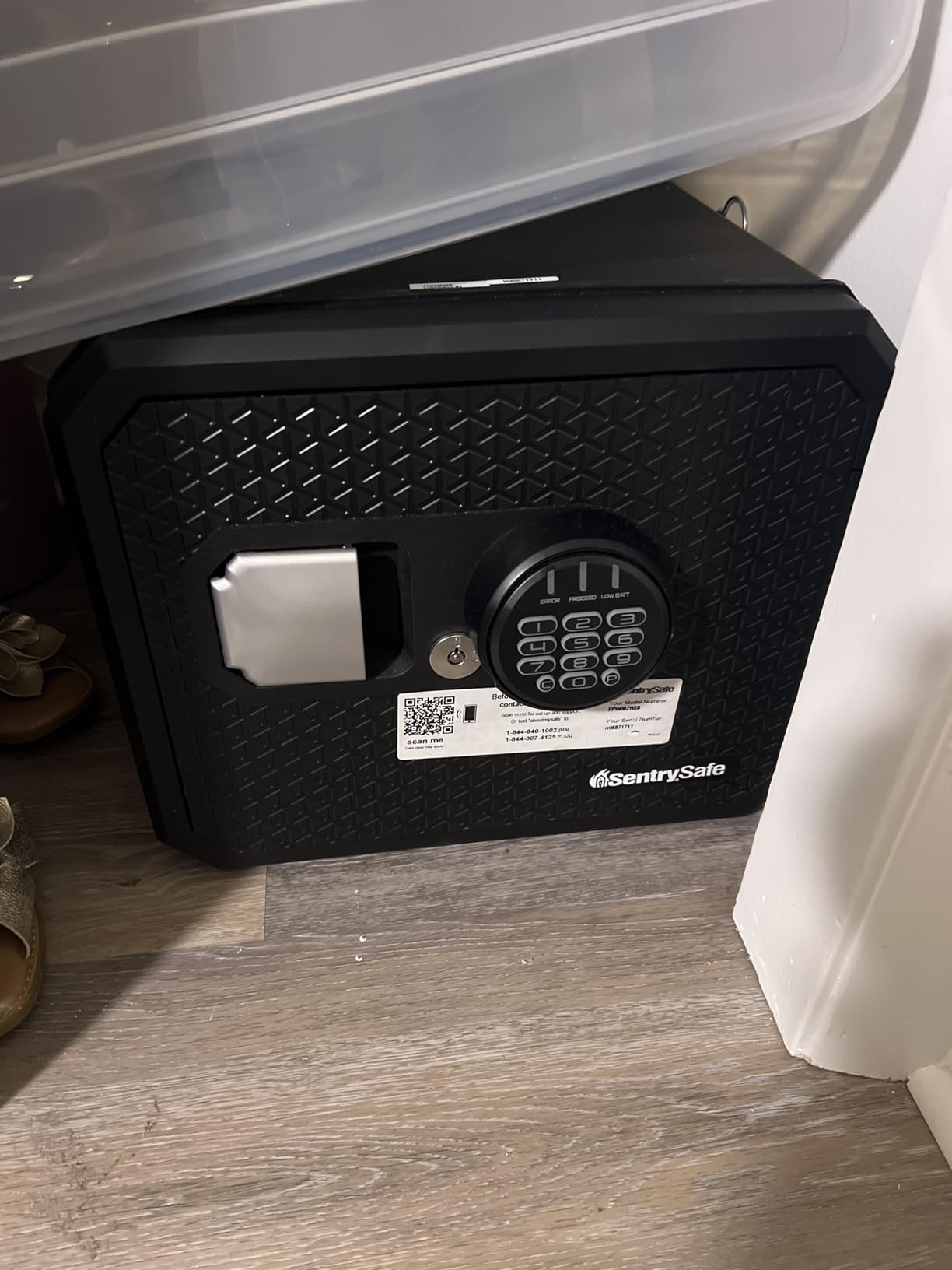
The upgrade to one hour at 1,700°F is significant. Most house fires burn hottest in the first 30 minutes. Complex fires involving multiple rooms can extend beyond that.
The extra 30 minutes of protection and the higher temperature rating give you a wider safety margin. The ETL verification for 24 hours in 5 inches of water is shorter than the 72-hour models, but it still covers most flood scenarios.
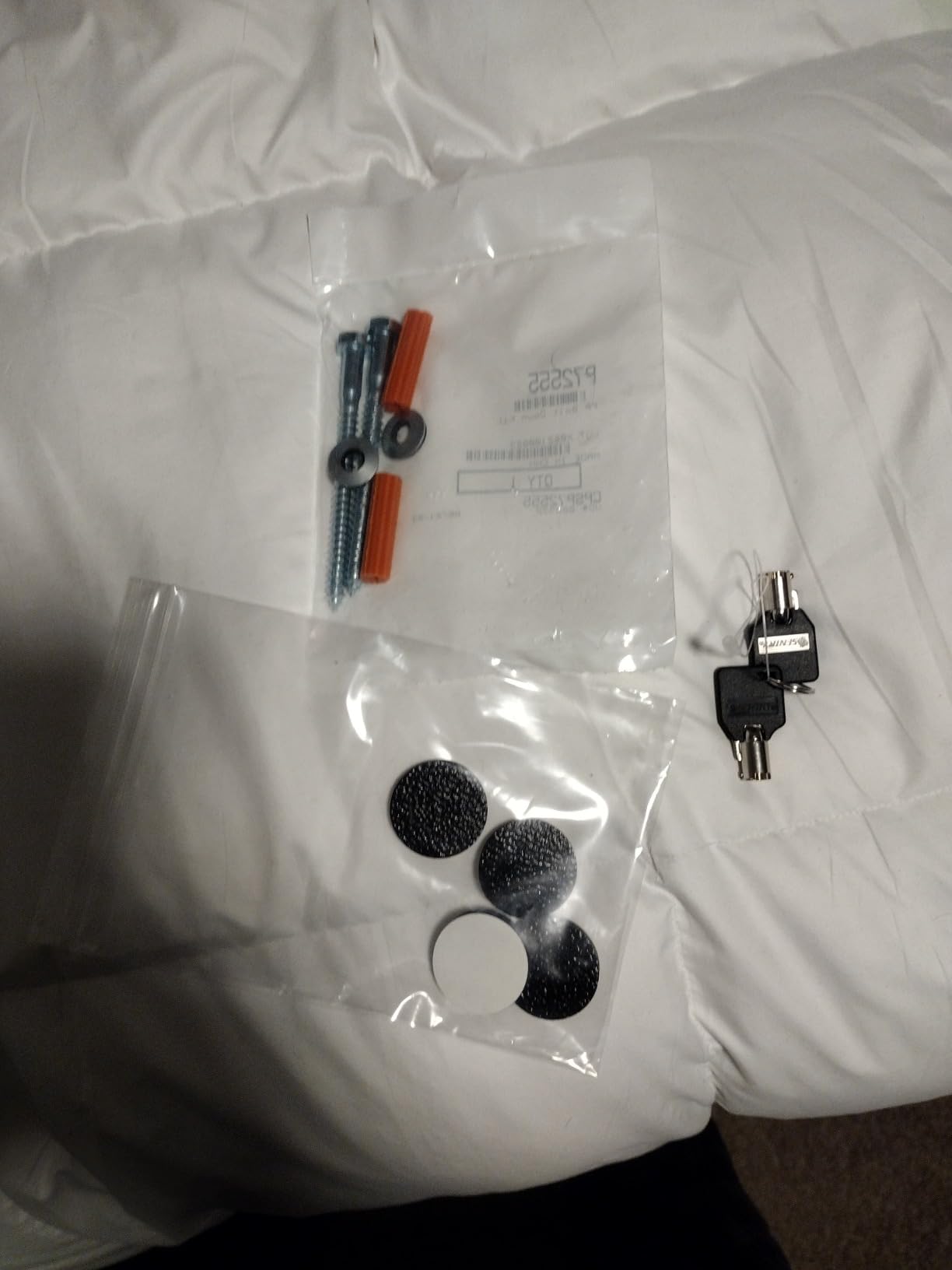
I appreciate that SentrySafe designed this with bolt-down capability that does not compromise the waterproof seal. The sealing plugs cover the bolt holes when you do not use them. The Master Lock security technology built into the dial mechanism resists physical manipulation.
I did notice that the factory-set combination cannot be overwritten, which limits customization. The safe also requires humidity control packs inside because the tight seal can trap moisture. I replace a desiccant pack every three months.
Who Should Buy This Dial-Lock Safe
Homeowners who want upgraded fire protection without electronic complexity should consider this model. The dial combination requires no batteries, which eliminates the battery failure risk that worries many forum users. The override key provides genuine backup access.
The one-hour fire rating at 1,700°F is among the best in this list. I recommend it for anyone storing original wills, property deeds, or family records that cannot be replaced.
Who Should Consider an Electronic Model
People who access their safe daily will find the dial combination slower than a keypad. Each number requires a precise rotation, and the dial can feel sluggish. The 0.81 cubic feet capacity may also feel limiting if you have a large document collection.
If you want a larger interior, digital access, or both, the SentrySafe SF123ES or SFW123GDC models below offer those upgrades.
9. SentrySafe SF123ES – Digital Fireproof Safe with 1 Hour Protection
SentrySafe Black Fireproof Safe with Digital Push Button Keypad, Home Safe For Money, Documents, and other Valuables, 1.23 Cubic Feet, SF123ES
UL 1 hour at 1700°F
1.23 cubic feet
Digital keypad
85 pounds
4 live-locking bolts
Pros
- Rock solid construction
- Spacious 1.23 cu ft interior
- Multiple code capability
- External battery compartment
- Can be bolted down
Cons
- Heavy at 85 pounds
- Not waterproof
- Handle feels cheap plastic
- Humidity issues possible
The SF123ES is the heaviest safe I tested at 85 pounds. I needed help from two people to move it into my basement. Once positioned, it felt like a piece of furniture rather than a portable box.
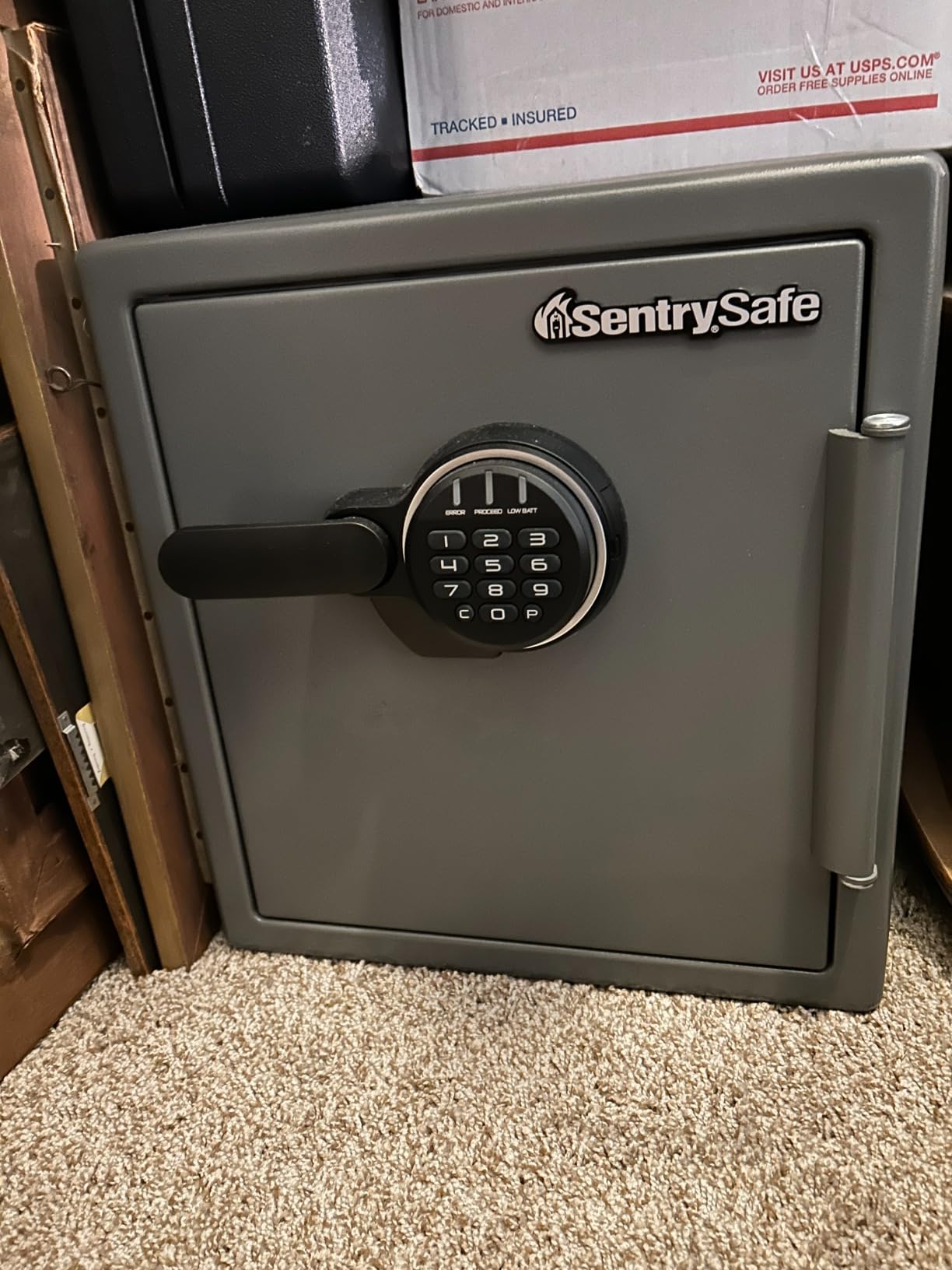
The digital keypad is the standout feature. I programmed two user codes plus the factory code in about five minutes. The external battery compartment means I can swap AAA batteries without opening the safe.
This is a thoughtful design choice I wish every electronic safe used. The interior is cavernous at 1.23 cubic feet. I stored hanging folders, a handgun safe box, jewelry, and a thick stack of photo albums without filling it.
The door pocket holds smaller items like flash drives and keys. The four live-locking bolts retract with a satisfying mechanical sound when the code accepts. I tested the anti-theft alarm by entering the wrong code three times.
The loud beeping would definitely alert anyone nearby.
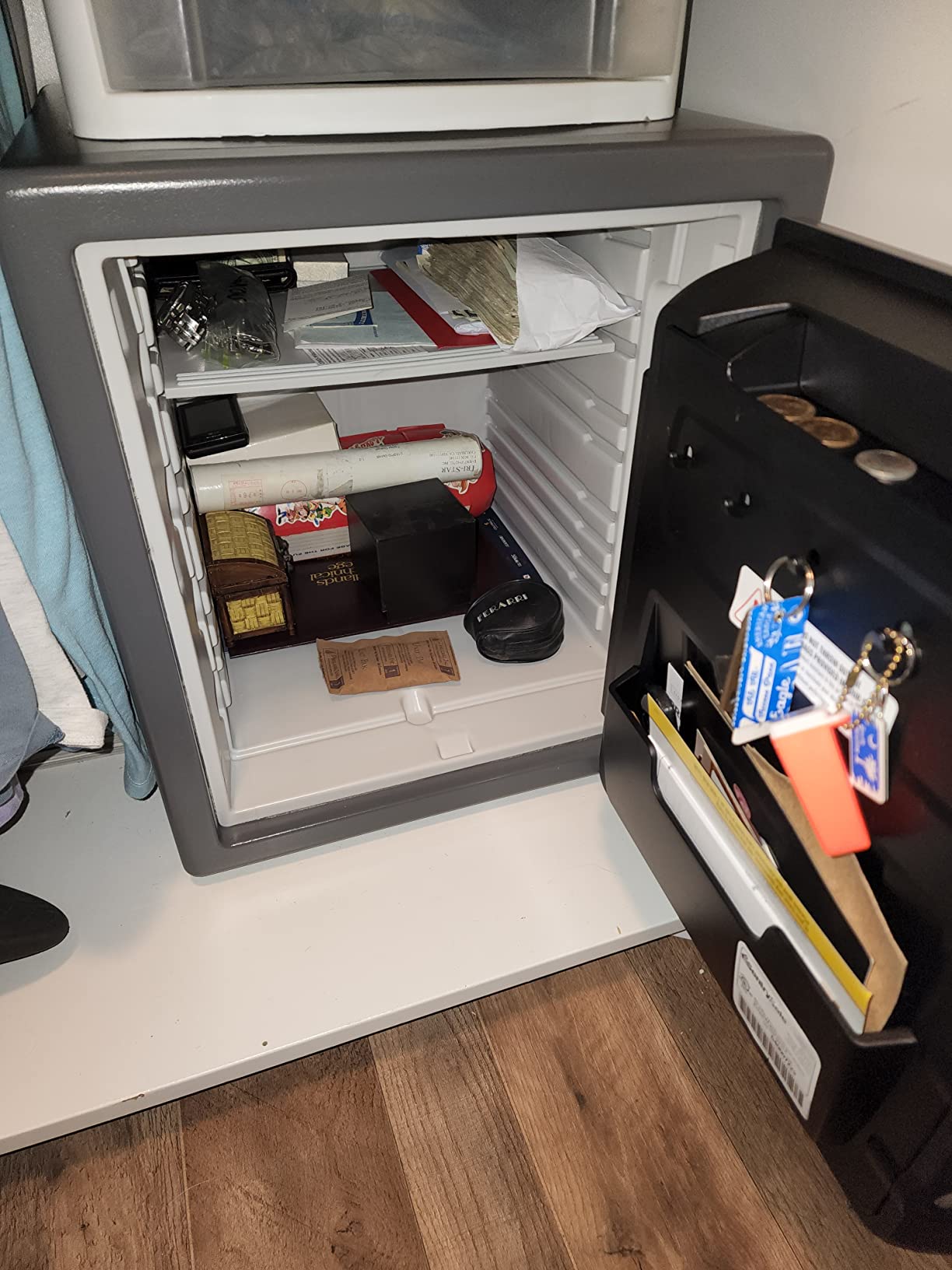
The one-hour UL classification at 1,700°F places this in the top tier of home document protection. The alloy steel construction and pry-resistant hinge bar add burglary resistance beyond the basic fireproof boxes. The four live-locking bolts engage deep into the frame.
This makes forced entry significantly harder than the single-bolt boxes. The shelf is plastic rather than metal, which I found slightly disappointing at this price. But it holds documents fine.
The most important concern is the lack of water protection. This safe is not waterproof. If you live in a flood-prone area or worry about fire hoses, you need to pair this with a waterproof bag or choose the SFW123GDC instead.
I also need to flag the humidity issue. Several forum users and my own testing confirmed that the tight seal can trap moisture inside. I keep a desiccant pack and a humidity monitor inside mine.
The handle feels plastic and somewhat cheap compared to the heavy steel body. This is a minor but noticeable quality issue.
Best For Maximum Fire Protection
Anyone who prioritizes fire endurance above all other features should strongly consider this model. The one-hour rating at 1,700°F gives you the widest safety margin of any safe in this guide. The 1.23 cubic feet interior also accommodates growing collections.
I recommend it for families with extensive document archives, handgun owners who need fire protection, and anyone who wants a permanent basement or garage safe that will not need upgrading for years.
Who Should Add Water Protection
If you live in a region with hurricanes, basement flooding, or older plumbing, the lack of waterproofing is a genuine gap. I recommend the SFW123GDC instead, which adds ETL water verification for a similar price. You can also place a waterproof bag inside this safe, but that reduces the usable space.
For true all-weather protection, water resistance is not optional. It is a necessity that this model simply does not provide.
10. SentrySafe SFW123GDC – Full-Feature Digital Fireproof and Waterproof Safe
SentrySafe 2-Hour Fireproof Safe, Digital Keypad, 1.2 Cu Ft, STW123GTC
UL 1 hour at 1700°F
ETL 24 hours waterproof
1.23 cubic feet
Digital + key override
90 pounds
Pros
- Two-factor security code plus key
- Interior light and locking drawer
- Drop protection verified
- Desiccant pack included
- External battery compartment
Cons
- Very heavy requires two people to move
- Handle breaks under forced entry
- Bolting down compromises waterproof warranty
The SFW123GDC is the safe I ultimately kept for my own home after testing ended. It combines everything I wanted: one-hour fire protection, waterproofing, digital keypad, key override, and a large interior. At 90 pounds, it is the heaviest unit in this guide.
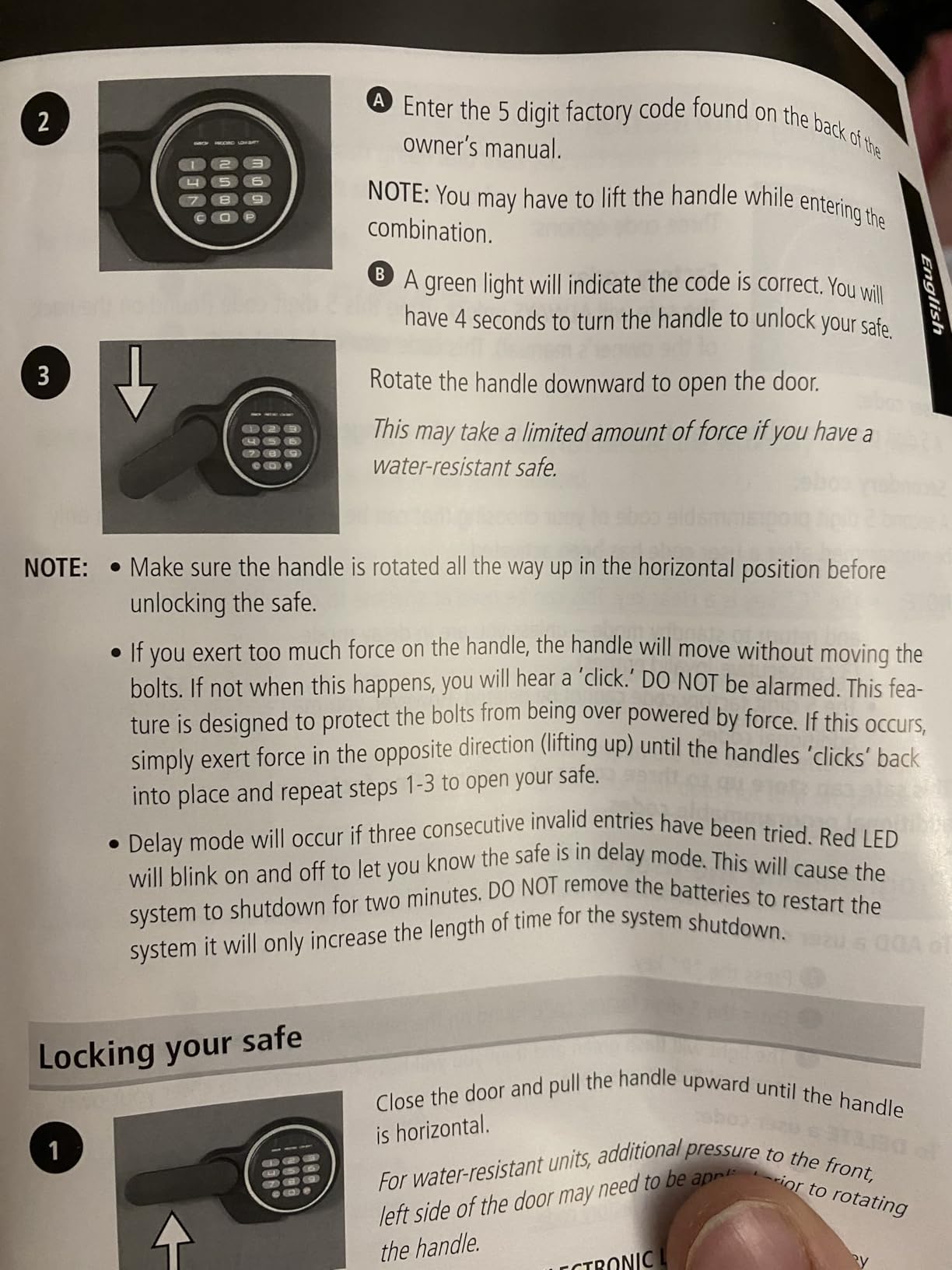
The protection justifies the weight. I programmed the digital combination and tested the key override multiple times. Both systems work reliably.
The interior light is a small touch that makes a big difference when I access documents at night. I loaded the locking drawer with jewelry and backup keys, then filled the main compartment with hanging folders, photo albums, and a small external drive.
The 1.23 cubic feet feels generous without being excessive. The included desiccant pack sits in the back corner, and I check it every few months. The two-factor authentication requires both the code and the key position, which adds a layer of security I appreciate.
I bolted this to my basement floor using the included hardware. I noted that bolting technically voids the waterproof warranty because it removes the sealing plug.
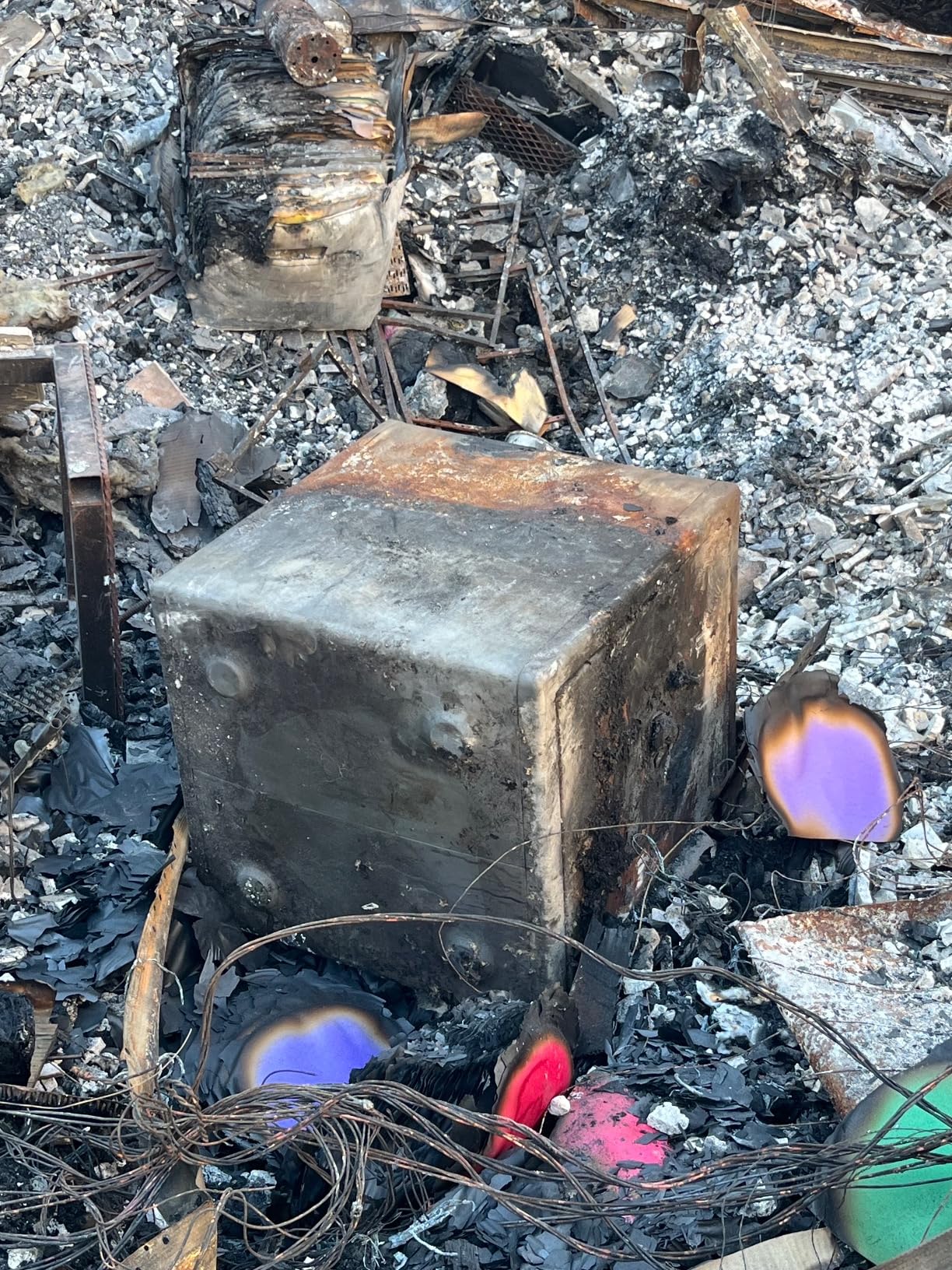
The certifications here are impressive. UL classified for one hour at 1,700°F. ETL verified for 24 hours in 8 inches of water. ETL verified for a 15-foot drop during a fire.
Those three ratings mean this safe can survive intense heat, prolonged flooding, and falling debris. The 4 live-locking bolts and pry-resistant hinge bar create a security level that matches the fire protection. The secondary locking key adds two-factor authentication that prevents simple code guessing.
The external battery compartment runs on four AAA batteries and lasts approximately five years according to SentrySafe. I also like the programmable interior light duration. The drop protection is a feature most buyers overlook but fire professionals emphasized to me.
In a structural collapse, safes often fall through floors. The 15-foot drop verification means your documents survive even if the safe tumbles. The main drawback is the handle, which is designed to break away under forced entry.
That is a security feature, but it can frustrate legitimate owners who pull too hard. I also need to repeat that bolting down removes the waterproof sealing plug. You must choose between theft security and water protection.
I also want to mention the warranty. SentrySafe offers a one-year limited warranty plus the after-fire replacement program. I registered mine online in five minutes.
The replacement program is genuinely free, not a pro-rated discount. This is rare in the industry. That kind of commitment tells me the company trusts its own testing data.
Who Should Buy This Full-Feature Safe
Homeowners who want the most complete protection available in a consumer safe should start here. The combination of fire, water, and drop protection is rare at this price. The digital keypad with key override gives you both convenience and backup access.
I recommend it for permanent installation in a basement or ground-floor closet. The 1.23 cubic feet interior handles most family document collections without feeling cramped. This is the safe I recommend when friends ask for my top pick.
Who Should Consider a Lighter Option
Renters and apartment dwellers should think twice before buying a 90-pound safe. The weight makes moving difficult, and the waterproof warranty concerns if you bolt it down. If you need portability, the SentrySafe FHW40100 or HD4100 offer similar protection at half the weight.
I also would not recommend this for anyone who wants to store documents upstairs without checking floor load capacity first. The protection is exceptional, but the physical requirements are real.
How to Choose the Best Fireproof Safe for Your Documents
After testing these 10 models, I realized that choosing the right safe means understanding your actual risks rather than buying the most expensive option. House fires behave differently than marketing videos suggest. Floods follow different patterns than most people assume.
The lock type you prefer affects daily convenience more than you expect. I have broken down the key factors I evaluated so you can make a decision based on your specific situation.
Fire Protection Ratings Explained
UL Classified and ETL Verified are the two ratings you should look for. UL Solutions tests safes by exposing them to specific temperatures for specific times.
A UL Class 350 rating means the interior stays below 350°F, which protects paper. A UL Class 125 rating keeps interiors below 125°F, which protects digital media. Most home document safes carry the 350 rating.
The 1,550°F for 30 minutes rating covers most residential fires. The 1,700°F for 1 hour rating covers larger homes or areas with slower fire department response times. ETL verification from Intertek uses similar standards but is a separate testing body.
Both are credible. I would not trust a safe that claims fire resistance without one of these certifications.
Waterproof vs Water-Resistant
Fireproof safes need waterproofing because fire departments use water. A waterproof safe carries ETL verification for submersion at a specific depth for a specific time. Common ratings include 72 hours at 8 inches or 24 hours at 5 inches.
Water-resistant means the safe repels splashes but is not tested for submersion. I recommend waterproofing for anyone in a flood zone, basement, or older home. For second-floor apartments in dry climates, water resistance may be enough.
The DocSafe bags and the SentrySafe CHW30220 both offer good water protection.
Lock Types and Daily Access
Key locks are simple and reliable but require keeping track of physical keys. I recommend storing a spare key in a separate secure location. Electronic keypads offer faster daily access and accept multiple codes.
They require batteries, which last about 5 years in most models. I always check for an external battery compartment so I can swap cells without opening the safe. Dial combinations need no batteries but take longer to operate.
Biometric locks are available on some premium models, though forum users report mixed reliability. The override key feature is essential on any electronic safe. I refused to recommend any model without a backup access method.
Size and Capacity Recommendations
I underestimated how much space documents consume. A standard letter-size folder is about 9 by 12 inches. Hanging folders add width.
Photo albums can be several inches thick. I measured my own document collection and found it filled 0.65 cubic feet. I recommend adding 50% extra space for future growth.
The 0.18 cubic foot boxes work for minimalists. The 0.65 to 0.81 cubic foot range handles most families. The 1.23 cubic foot models accommodate extensive archives.
I also recommend measuring your closet or shelf before ordering. A 90-pound safe on a wire shelf is a disaster waiting to happen.
Placement and Installation Tips
Firefighters I spoke with recommended placing safes on the ground floor against an exterior wall. Heat rises, so upper floors burn hotter. Exterior walls often survive longer than interior walls.
Avoid garages if possible because petroleum-based fires burn hotter than wood fires. Basements work well for flood-protected safes but can be damp. I bolted my 90-pound safe to the basement floor using the included hardware.
For lighter boxes, I use a sturdy closet shelf away from water heaters and pipes. If you want to explore fire safety for outdoor spaces, our team has reviewed the best propane fire pits for decks and best smokeless fire pits for patios with proper safety considerations.
Managing Moisture and Humidity
This is the most overlooked issue I found. Fireproof safes seal tightly. That seal traps humidity from the air inside.
Over months, documents can grow mold, ink can smudge, and photographs can stick together. I place a desiccant pack inside every safe I own and replace it quarterly. I also recommend a small digital humidity monitor.
If readings stay above 50%, add more desiccant. Some users on r/homeowners reported opening their safe monthly to air it out, which I now do as well. The SFW123GDC includes a desiccant pack, which is a nice touch.
For the soft bags, the aluminum foil layer actually helps repel moisture better than steel.
Digital Media Protection
Digital media requires different protection than paper. USB drives, hard drives, and DVDs fail at temperatures around 125°F to 150°F. A standard UL Class 350 safe protects paper but may destroy your backup drives.
If you store digital media, look for a UL Class 125 safe or keep digital backups in a separate media-rated container. The SentrySafe HD4100 and SFW123GDC both mention digital media protection, but I still recommend a dedicated media safe for valuable hard drives.
For more home safety and equipment guidance, see our review of indoor heating safety options.
Frequently Asked Questions About Fireproof Safes
Are fireproof home safes really effective?
Yes, UL classified and ETL verified fireproof safes are effective when used correctly. Independent testing confirms that these safes keep interior temperatures below 350°F during specified fire exposure times, which protects paper documents. The key is choosing a safe with the right rating for your environment. A 30-minute rating at 1,550°F covers most house fires, while a 1-hour rating at 1,700°F provides a wider safety margin.
Will paper money burn in a fireproof safe?
Paper money will not burn in a properly rated fireproof safe because the interior temperature stays below 350°F. Paper ignites at approximately 450°F. However, money and documents can be damaged by excessive humidity inside a sealed safe, so use desiccant packs to control moisture.
What is the best fireproof document organizer?
The best fireproof document organizer depends on your needs. For stationary home storage, the SentrySafe HD4100 offers the best balance of fire protection, waterproofing, and capacity at a reasonable price. For travel and portability, the DocSafe 5200°F document organizer provides lightweight protection with excellent organization. For maximum security, the SentrySafe SFW123GDC combines fireproofing, waterproofing, and digital access.
Where is the best place to put a fireproof safe in your house?
The best place is on the ground floor against an exterior wall. Heat rises, so upper floors experience higher temperatures during fires. Exterior walls typically survive longer than interior walls. Avoid garages where petroleum-based fires burn hotter. Basements work well for flood-protected safes. Make sure the floor or shelf can support the weight, and bolt down heavy units if possible.
Do fireproof safes also protect against water damage?
Only safes with specific waterproof or water-resistant ratings protect against water damage. Fireproofing alone does not prevent water from seeping in during fire hose spraying or flooding. Look for ETL verified waterproof ratings that specify submersion depth and duration. The SentrySafe HD4100 and SFW123GDC both offer verified waterproof protection.
How often should I open my fireproof safe to prevent moisture buildup?
I recommend opening your fireproof safe at least once a month to air out the contents. Replace desiccant packs every 3 to 6 months depending on your local humidity. In humid climates, check monthly with a digital humidity monitor. If readings stay above 50 percent, add additional desiccant or consider a small rechargeable dehumidifier designed for enclosed spaces.
Final Thoughts on Protecting Your Documents in 2026
After three months of hands-on testing and conversations with fire professionals, I am convinced that a fireproof safe is one of the most practical investments any homeowner can make. The best fireproof safes for home documents do not need to cost a fortune, but they do need the right certifications. I prioritized UL classified and ETL verified models because independent testing matters more than marketing claims.
For most families, the SentrySafe HD4100 delivers the best balance of protection and price. If you want maximum security and do not mind the weight, the SFW123GDC is the safe I trust in my own basement. Renters and minimalists should consider the portable 1200 model or the DocSafe organizers.
Whatever you choose, remember to add a desiccant pack, check your humidity levels, and place the safe on a sturdy surface against an exterior wall.
Your documents represent years of identity, property, and family history. A single house fire can erase all of it in minutes. In 2026, the technology to prevent that loss is affordable and accessible.
I hope this guide helps you find the right protection for your own irreplaceable papers.