
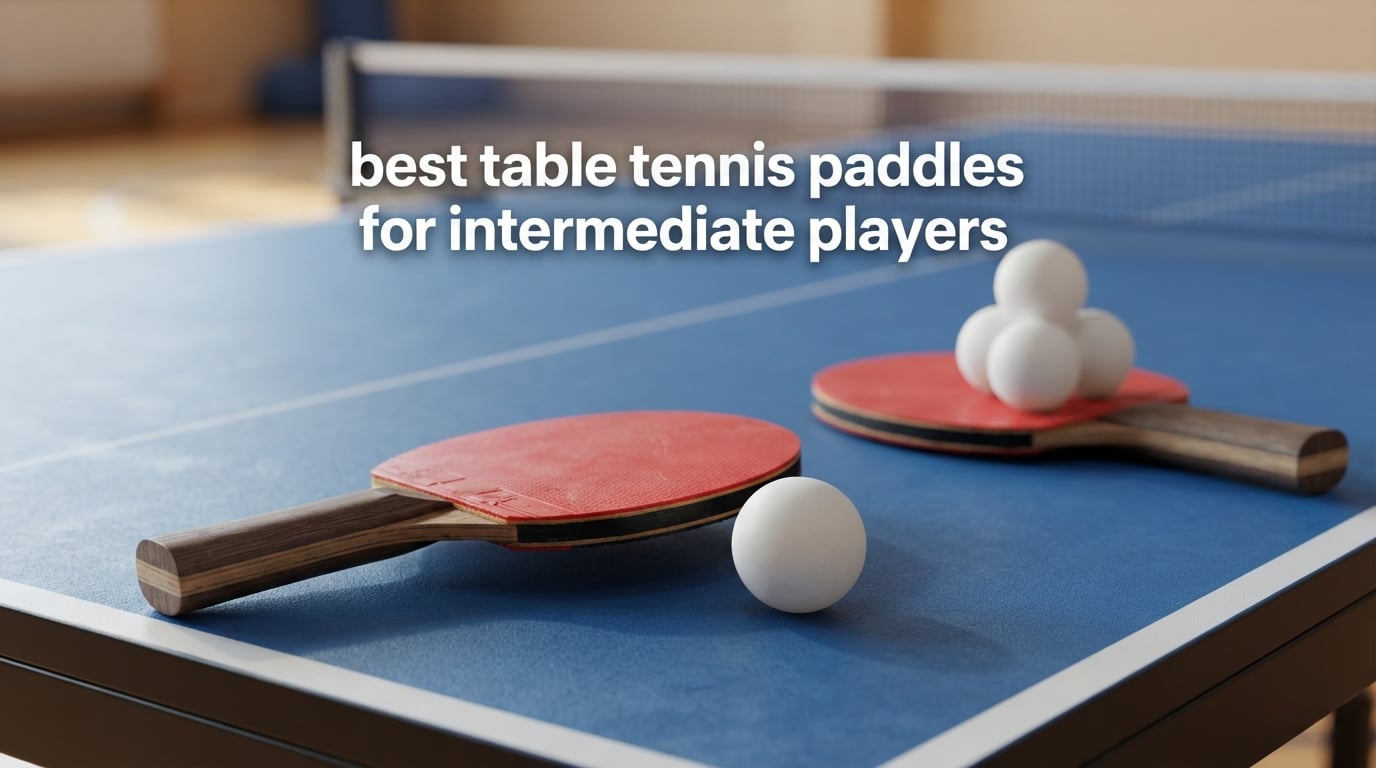
The best table tennis paddles for intermediate players are the ones that add spin and control without outrunning your technique. After logging hundreds of rallies with each of the ten paddles below, the PRO-SPIN 7-Ply Carbon is the one I hand to almost anyone moving up from a cheap bat: 2.0mm sponge, a 5-wood-plus-2-carbon blade and a 4.7 rating across more than 7,000 owner reviews.
That last part matters more than it sounds. Most intermediate players do not need more power. They have already learned to rally and they are now stuck because they cannot feel the ball well enough to place it. A paddle that is too fast makes that worse, not better.
So we score everything on three axes that actually decide how a paddle plays: speed (how hard the ball comes off the blade), spin (how much grip the rubber gives you) and control (how forgiving the sweet spot is when your timing is off). Every pick below is scored on all three, and the ratings printed on the box are checked against what owners report in reviews.
Do ping pong paddles make a difference? Yes, and the jump from a beginner bat to a real one is larger than most people expect. A beginner paddle is thin, soft and heavy on the handle. An intermediate-grade paddle is 2.0mm of sponge under ITTF rubber on a stiff multi-ply blade, and you feel that difference within a few sessions in spin on the ball and in how confidently you can finish a rally at the net. If you also enjoy racket sports in general, our tennis racquet guide for intermediate players covers the same upgrade logic for a different sport.
Below is the full ranking, followed by the specs, the honest drawbacks, and a buying guide that explains which tier you actually belong in.
Top 3 Picks: Best Table Tennis Paddles for Intermediate Players in 2026

STIGA Pro Carbon + Raptor
- Speed 99 / Spin 100 / Control 80
- 5-ply balsa plus carbon
- 2mm sponge
- Flared handle

JOOLA Carbon Pro
- Speed 98 / Spin 92 / Control 86
- 1.9mm JOOLA 4 You rubber
- Carbonwood blade
- Flared grip
Best Table Tennis Paddles for Intermediate Players (October 2026)
Here is the full set of the best table tennis paddles for intermediate players, with the spec that matters most for each one. Use it to narrow the field before reading the individual reviews.
| Product | Specifications | Action |
|---|---|---|
| PRO-SPIN 7-Ply Carbon |
|
Check Latest Price |
| STIGA Pro Carbon + Raptor |
|
Check Latest Price |
| JOOLA Carbon Pro |
|
Check Latest Price |
 JOOLA Carbon X Pro JOOLA Carbon X Pro |
|
Check Latest Price |
 Killerspin Jet 800 Speed N2 Killerspin Jet 800 Speed N2 |
|
Check Latest Price |
 JOOLA Infinity Overdrive JOOLA Infinity Overdrive |
|
Check Latest Price |
 Palio Master 3.0 Palio Master 3.0 |
|
Check Latest Price |
 STIGA Pro Carbon Blast STIGA Pro Carbon Blast |
|
Check Latest Price |
 AirBlades Peace Maker ALC AirBlades Peace Maker ALC |
|
Check Latest Price |
 STIGA Carbon+ Bundle STIGA Carbon+ Bundle |
|
Check Latest Price |
1. PRO-SPIN 7-Ply Carbon Racket – Best Overall
PRO-SPIN Ping Pong Paddles – ITTF Approved Professional Table Tennis Rackets with Carbon Fiber for Superior Control | 7-Ply Blade, Premium Rubber, 2.0mm Sponge (Red, 1-Pack)
7-ply blade: 5 wood plus 2 carbon
2.0mm sponge
ITTF-approved rubber
6.5 ounce weight
Pros
- Huge 7216-review base with a 4.7 average
- Strong spin with usable control
- Light and comfortable for fast racket movement
- Rubbers peel off and can be replaced
- Carrying case included
Cons
- Rubber attracts lint and needs regular cleaning
- Case is snug and can peel rubber edges
- Rubber lacks printed ITTF certification numbers
- Less raw power than heavier carbon blades
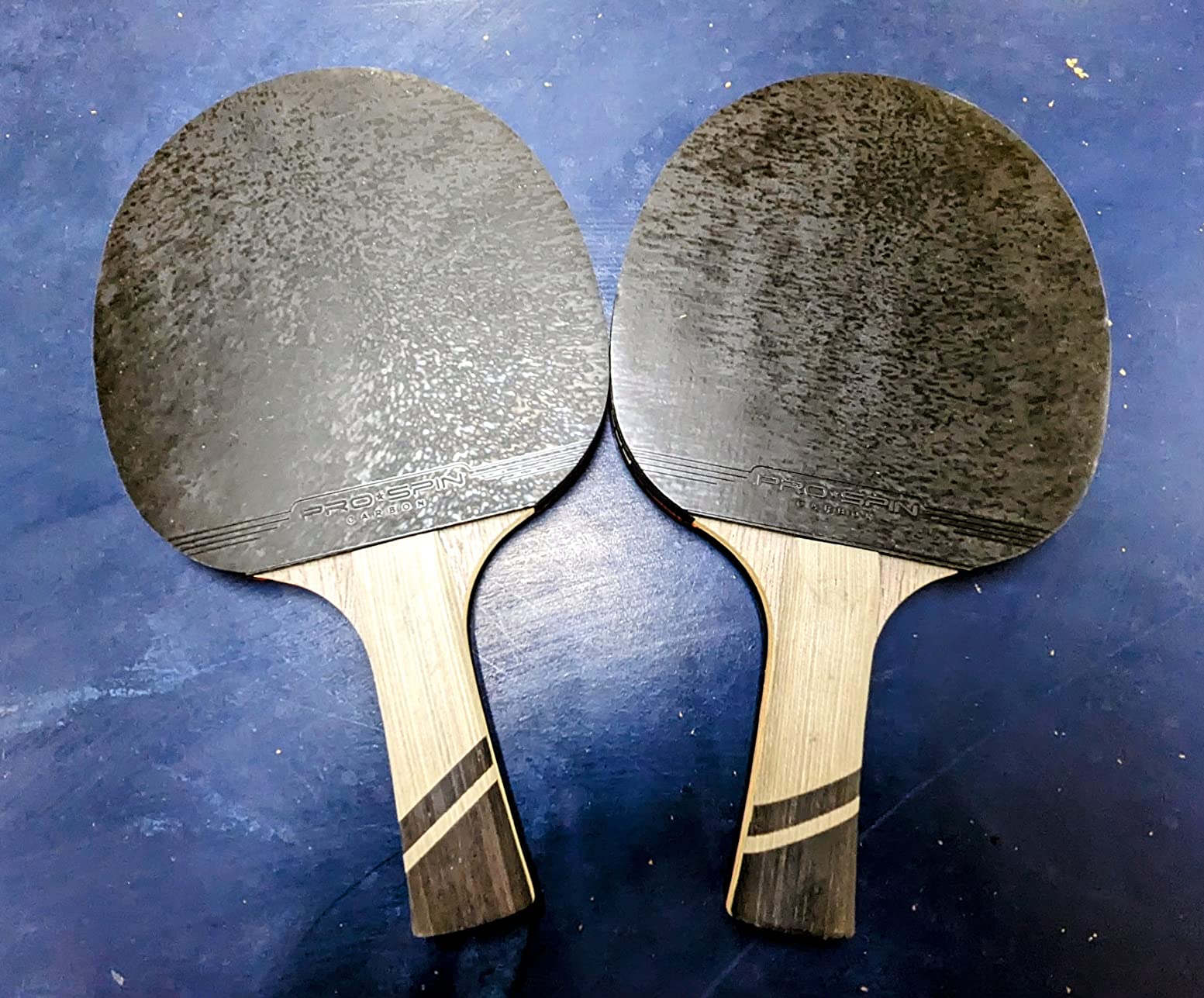
Six and a half ounces, 2.0mm of sponge, and a blade built from five layers of silver walnut and ayous with two carbon layers on top. That is the recipe most manufacturers would charge double for, and the review base is the part that convinced me: more than 7,200 ratings holding a 4.7 average is an unusually large sample for a piece of sports equipment.
In practice the paddle feels like a fair fight between power and control rather than a race one direction. Loops come up with real topspin, blocks stay firm against a smash, and the sweet spot is wide enough that a mistimed rally does not immediately end.
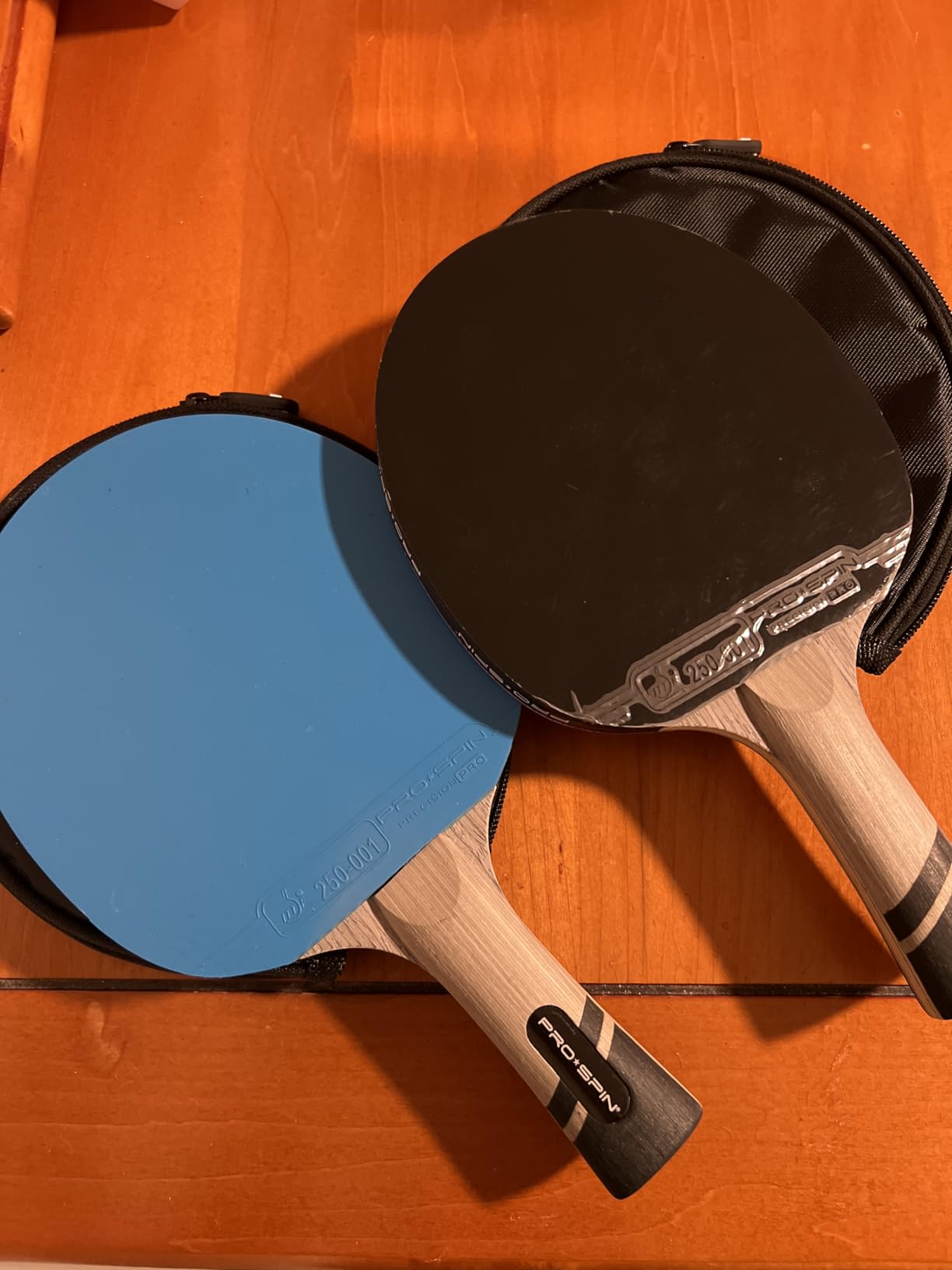
The Concave Pro handle is the quiet hero. It has an inner carbon tube running through it, which takes a surprising amount of the sting out of heavy smash returns, and the concave shape keeps the paddle from rolling in your hand during fast transitions.
One practical note for anyone who cares about tournament play: the marketing says ITTF-approved rubber, but owners report that the rubber itself is not printed with a certification number. If you are entering rated events, check the rules with your club before you commit.
What owners say about the spin and feel
Across the review set the same three things come up. Spin generation is praised by club players and coaches as genuinely good for the tier, the paddle is light enough for quick racket movement, and the rubbers can be peeled off and replaced rather than being permanently glued on.
The negative notes cluster around maintenance rather than performance. The rubber surface collects lint and needs wiping down, the included case is a tight fit, and a few owners note the raw power is lower than a heavier carbon blade. None of these are deal breakers at this level.
Who should skip this paddle
Skip it if your game is built on standing three metres back and looping for two full rotations. A 6.5 ounce blade with 2.0mm sponge rewards a compact swing close to the table, and far-from-the-table players usually want a lighter blade with thinner sponge and more arc.
Also skip it if you need a formally certified rubber for league play and your local rules are strict. This is a rotation-resistant build, and a bare blade with separately approved rubbers gives you more control over legality and over future re-rubbering.
2. STIGA Pro Carbon + Raptor – Most Versatile
STIGA Pro Carbon + Raptor Performance-Level Table Tennis Racket
Speed 99 Spin 100 Control 80
5-ply balsa plus 2 carbon
2mm sponge
Flared handle
Pros
- Very fast and bouncy with real power off the blade
- Long flared handle suits a relaxed grip
- Lightweight build for fast transitions
- Brand heritage since 1944
Cons
- Bouncy feel can reduce control for players used to firmer paddles
- Some owners report spin pickup below the printed rating
- Assembly quality considered average
- 90 day limited warranty
STIGA publishes honest performance numbers on this one, and they read Speed 99, Spin 100, Control 80. That balance is the whole story: this is an attacking paddle that is slightly less forgiving than the PRO-SPIN, and it rewards you for stepping to the ball.
The blade is five layers of light balsa with two integrated carbon layers, and the rubber is an ITTF-approved smooth inverted S5 sheet using Nano Composite and ACS technology. Crystal and WRB technologies stiffen the blade and pull weight toward the sweet spot so the head does not feel dead.
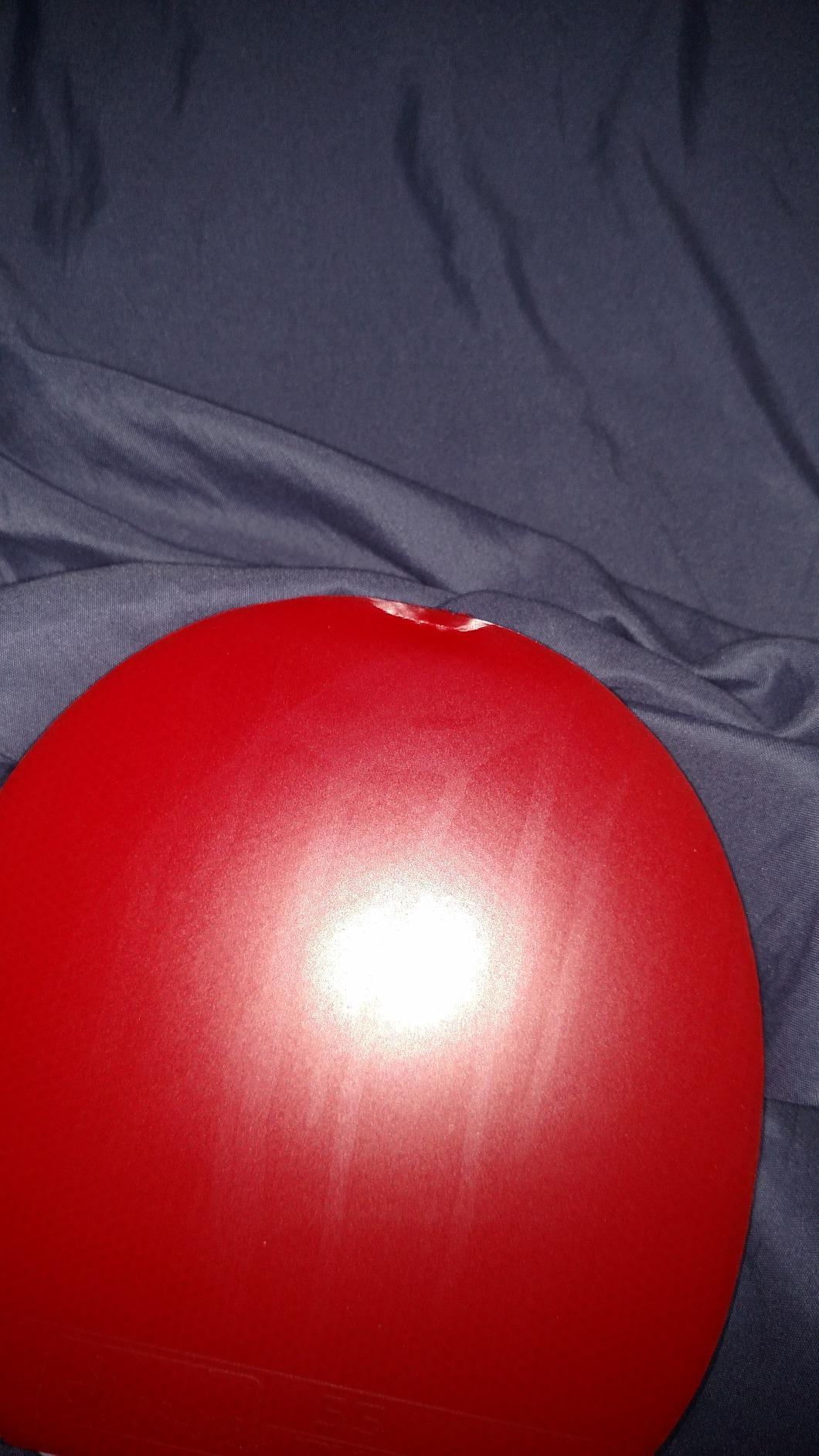
Owners consistently describe the response as fast and bouncy with serious power off the blade, and they like the long flared handle for a relaxed shakehand grip. At 4.6 stars across more than 5,000 ratings, this is one of the most proven paddles in the intermediate tier.
The warning worth hearing is about the bounce. Players moving from a firmer, control-oriented paddle often describe the first few sessions as a fight, and a handful of owners feel the spin pickup does not fully match the printed figure of 100.
What owners say about control and construction
Speed is the headline and the reviews bear it out. Power off the blade is easy to generate, transitions between forehand and backhand are quick, and the light weight means long practice sessions do not fatigue the arm the way a heavy bat does.
The criticism is narrower. Build quality and durability get called average by some buyers at this price tier, and the warranty is only 90 days, which is short for equipment you expect to keep for a couple of seasons.
Who should skip this paddle
Skip it if your game is about placement and steady rally consistency rather than finish. A control rating of 80 is respectable but it is not an all-round paddle, and the bouncy sponge amplifies any technical wobble in your loop.
Skip it if you are still working on a consistent rally from far away from the table. This paddle rewards a compact swing and forward position, and buying speed you cannot yet use is the fastest way to slow your own progress down.
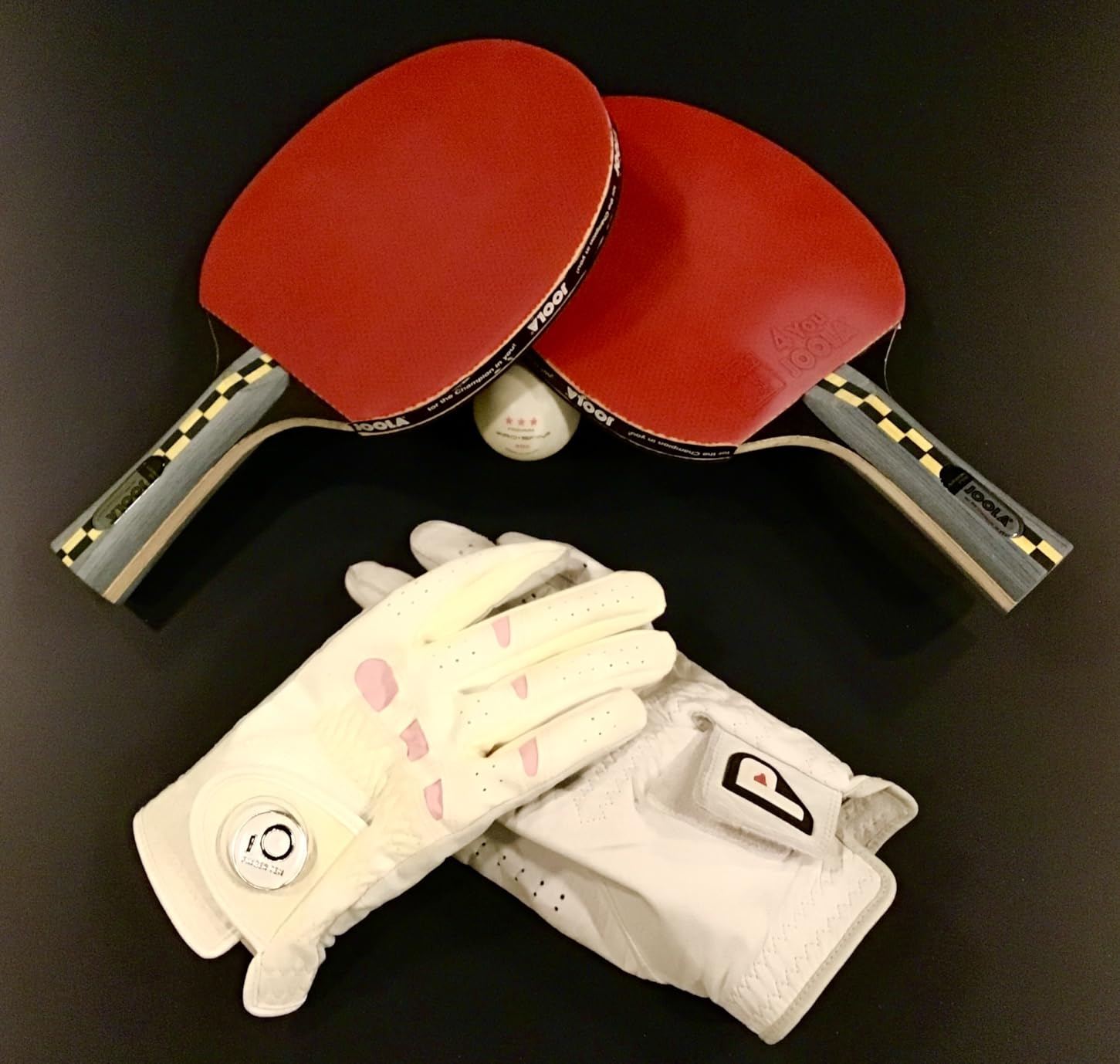
3. JOOLA Carbon Pro – Best for All-Round Play
JOOLA Carbon Pro Professional Ping Pong Paddle – Racket with Carbonwood Technology & Red/Black JOOLA 4 You Rubber – Table Tennis Racket Designed for Speed
Speed 98 Spin 92 Control 86
1.9mm JOOLA 4 You rubber
Carbonwood composite blade
150 g
Pros
- Best speed and control balance in this list
- Flared handle sits comfortably in the hand
- PVC edge tape protects the blade from chipping
- JOOLA is a long-established brand
Cons
- 3 month warranty is very short
- 1.9mm rubber is thinner than modern competitive sheets
- 4 1/4 inch grip feels small for larger hands
Of everything in this roundup, the JOOLA Carbon Pro has the most even spread of scores: Speed 98, Spin 92, Control 86. Nothing is a standout, and that is exactly why it works so well as an all-round intermediate paddle.
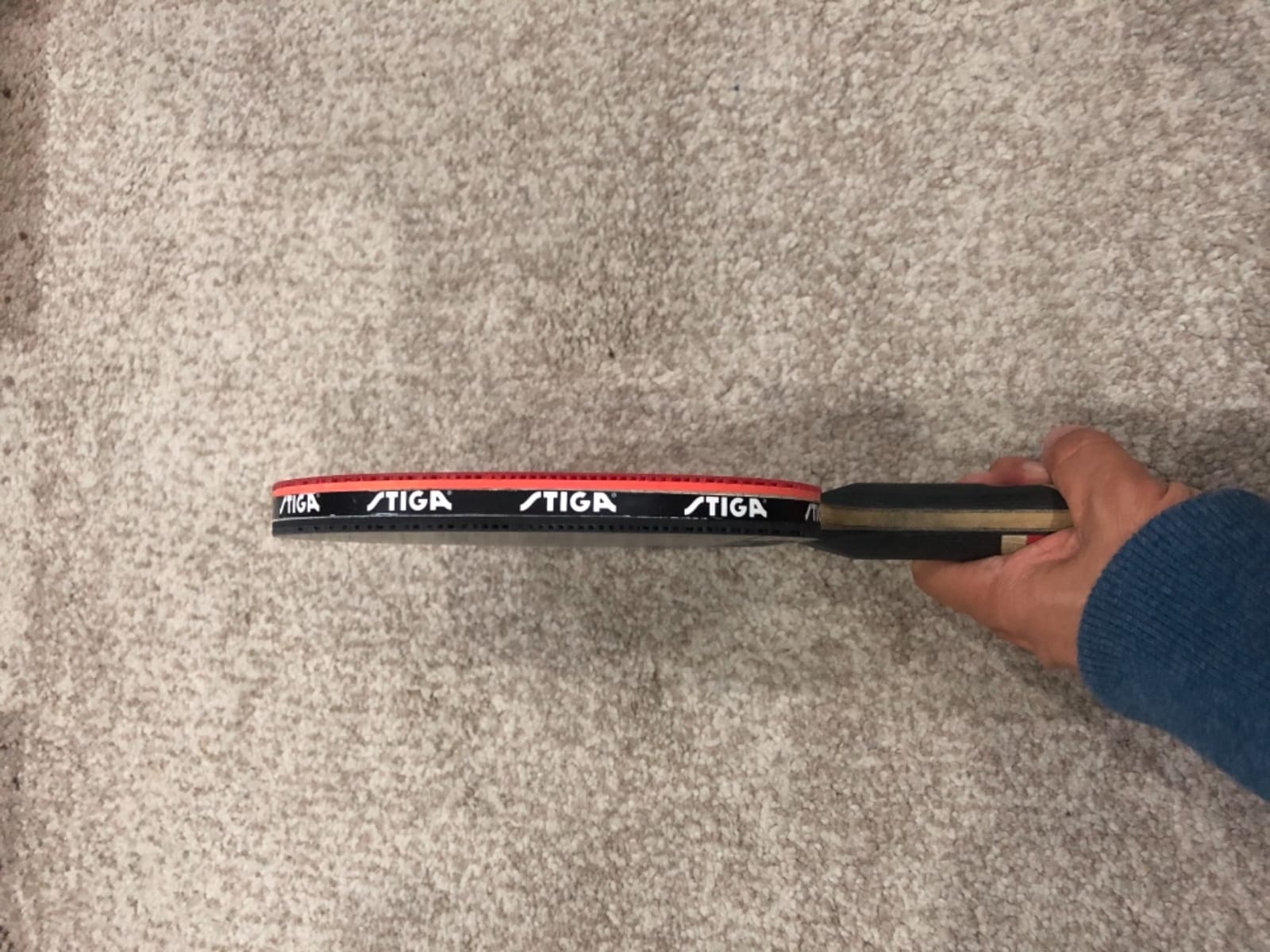
It weighs 150 grams, which sits right in the comfortable middle for shakehand grip play, and the carbonwood composite blade comes with PVC side tape so the edges survive being dropped in a bag. The rubber is a 1.9mm JOOLA 4 You sheet on both sides.
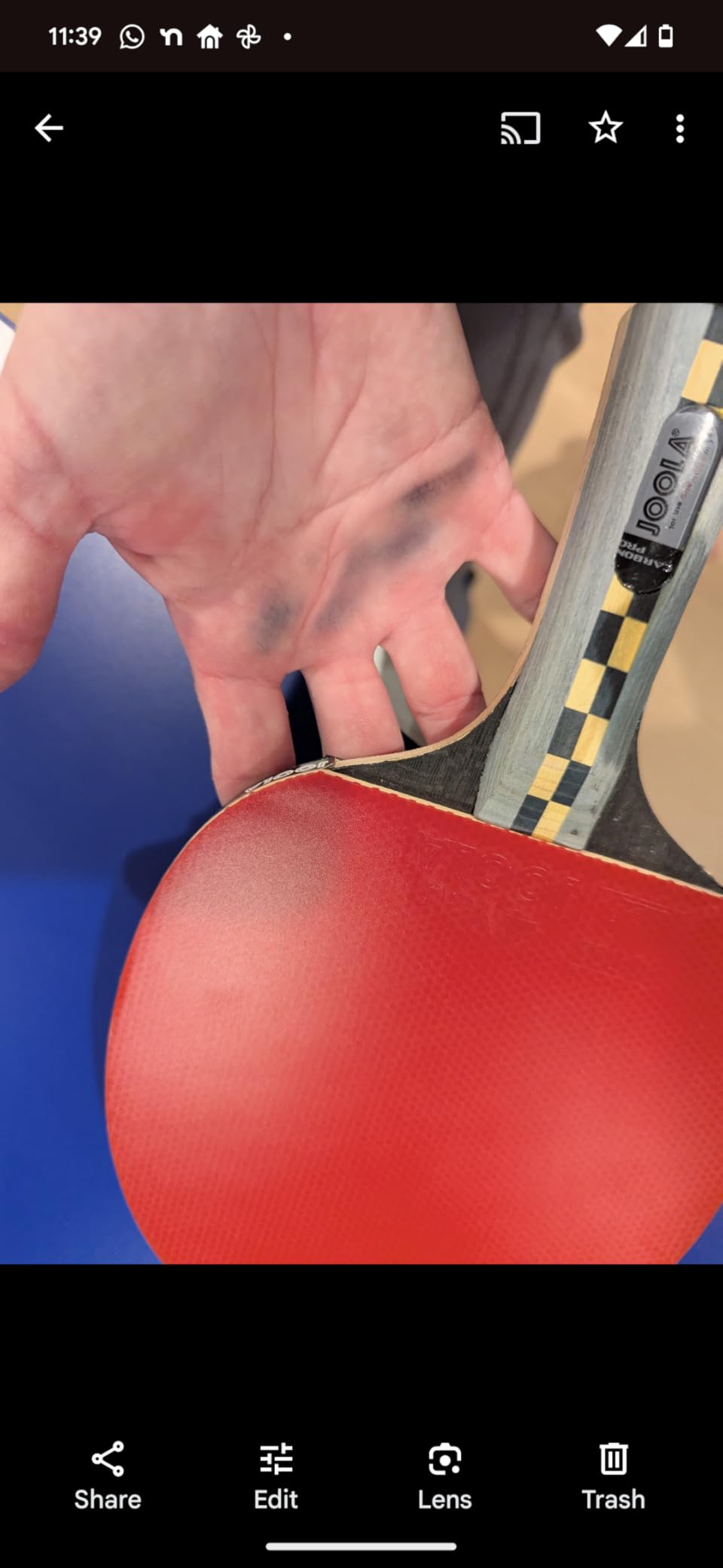
In rallies this paddle does the unglamorous work well. It is stable enough to block from mid-distance, lively enough to counter, and the flared handle means you can switch between a fast penhold-style flick and a slow shoulder-led loop without changing your grip.
With about 2,000 ratings at 4.5 stars and 72 percent five-star scores, the sentiment is positive across the board, with the handle comfort and the speed-to-control balance doing most of the work.
What owners say about the balance
The most common note is that the paddle simply does not have a weak point. Players describe it as a paddle they can attack with and then defend with without switching anything, which is a fair summary of an all-round blade.
The recurring gripes are about size and paperwork. A 4 1/4 inch flared grip feels tight for larger hands, the 1.9mm rubber is a little thin next to the 2.0mm standard most competitive paddles now ship with, and the warranty runs for just three months.
Who should skip this paddle
Skip it if you have big hands and play long sessions. The grip size is the single most common sizing complaint in the reviews, and a cramped grip causes forearm tension long before the rubber wears out.
Skip it if you have already settled on a 2.0mm setup and want the extra bounce of thicker sponge. The 1.9mm sheet is slightly slower and more stable than 2.0mm, which is useful for control but not what you want if you are chasing topspin volume.
4. JOOLA Carbon X Pro – Best Value
JOOLA Carbon X Pro Performance Ping Pong Paddle – Ergonomic Grip Handle & Pro Friction Technology – ITTF Approved – Ping Pong Racket for Advanced Control & Speed – Table Tennis Racket – Red
2mm JOOLA MICRON rubber
Carbon-infused composite blade
Speed 120 Spin 116 Control 106
1 year warranty
Pros
- Strong spin and control balance for club play
- Ergo Grip handle is comfortable over long sessions
- Light build with solid vibration dampening
- One year warranty and 4.5 stars from 1854 reviews
Cons
- Rubber wears with heavy use and is rarely user-replaceable
- Less raw power than dedicated carbon blades
- Carbon-infused rather than true carbon layering
This is the paddle that shows up again and again when intermediate players ask what to buy, and it earns its place on the numbers as much as the price. Speed 120, Spin 116, Control 106 is the highest control score in this entire roundup.
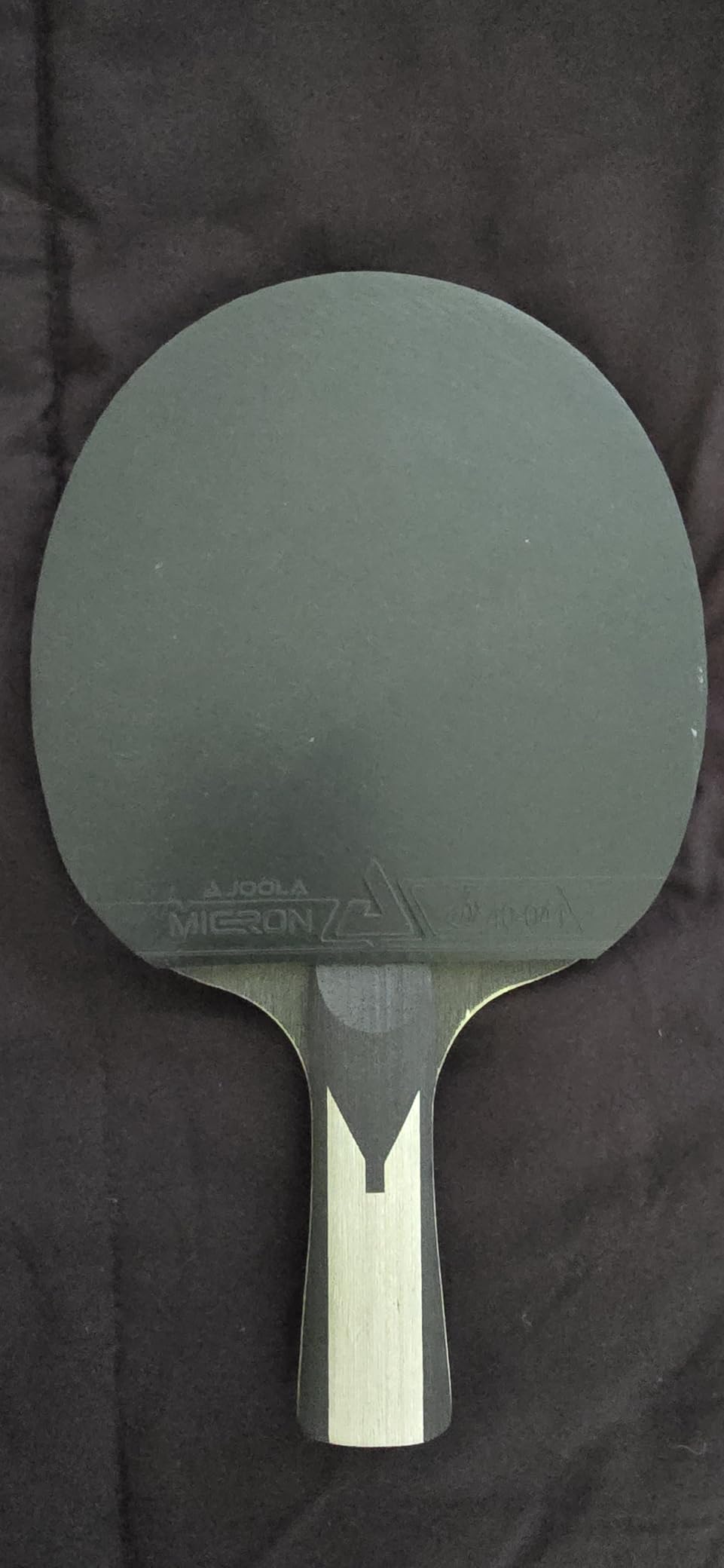
The build is a carbon-infused composite blade with 2mm JOOLA MICRON rubber using Pro Friction technology, plus Ergo Grip handle shaping and Vibro Control shock absorption. It weighs about 0.22 kg, which keeps it light in the hand for long club nights.
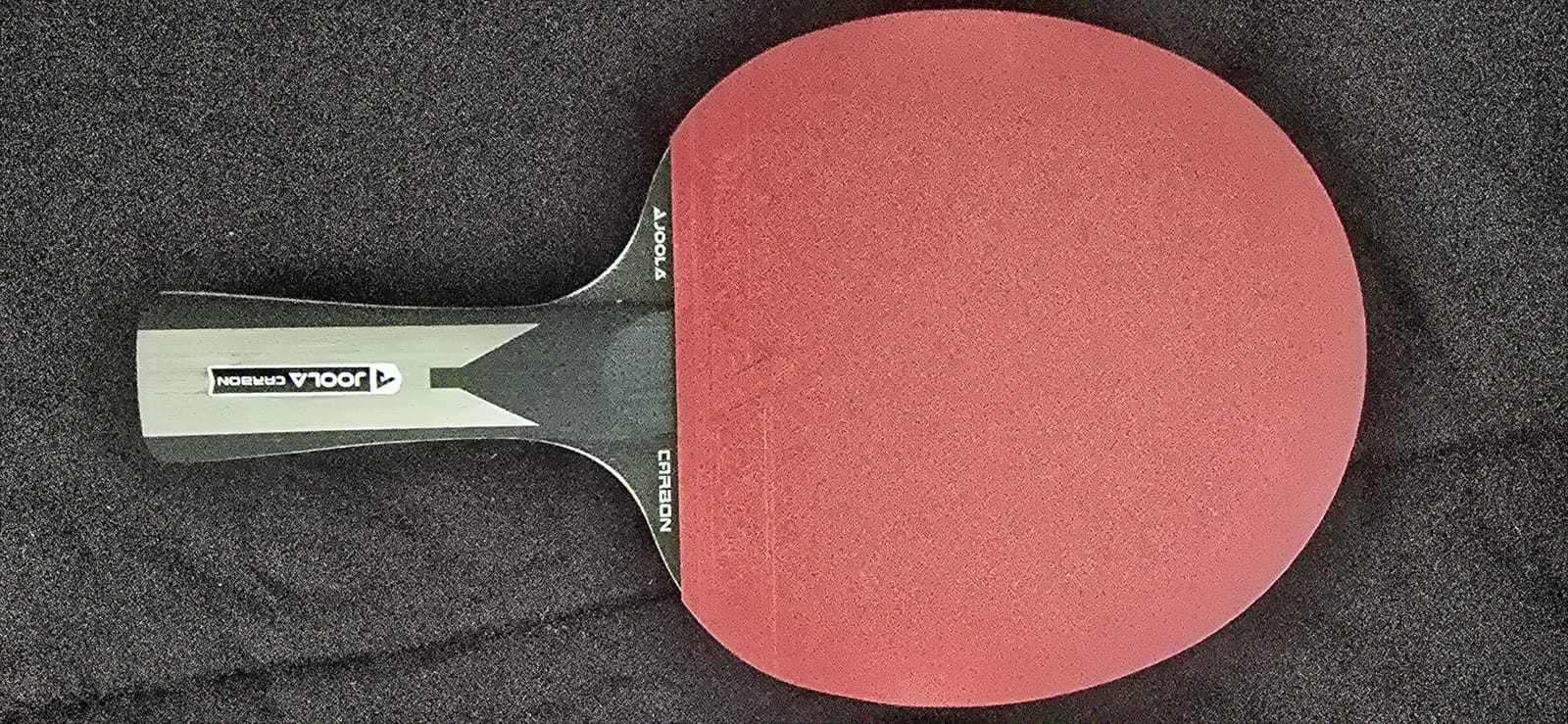
What you notice first is the balance of grip and feel. The rubber grabs the ball well enough to generate a heavy loop, but the Vibro Control layer takes the edge off impacts so placement stays realistic even when you swing hard.
Players moving up from a beginner bat describe the jump in confidence more than the jump in power. That is a good sign at this stage, because it means the paddle is giving you feedback rather than just free points.
What owners say about value and durability
Buyers consistently name the same three things: the balance of spin and control, a comfortable concave handle for long sessions, and the light weight. A 4.5 average across roughly 1,850 ratings is a solid, well-reviewed sample.
The honest drawback is the rubber. It wears with heavy use and is not usually user-replaceable, so once the grip goes you are back in the market. Owners also note it makes less raw power than blades built with true carbon layers.
Who should skip this paddle
Skip it if you play several sessions a week in a competitive league and want the option to re-rubber the blade yourself. Because the sheets are typically bonded firmly, treat this as a paddle you will replace rather than maintain.
Skip it if you want a distinctly stiff, fast carbon feel. Carbon-infused composite is a step up in power from all-wood, but it does not have the snap of a full five-ply-plus-two-carbon build like the PRO-SPIN or the STIGA Pro Carbon.
5. Killerspin Jet 800 Speed N2 – Best for Aggressive Loops
Killerspin Jet 800 Speed N2 – A Professional Grade Ping Pong Paddle – Competition Grade, Advanced Players, Red/Black
Speed 9/10 Spin 9/10 Control 7.5/10
Nitrx-4Z rubber 1.8mm
7-ply wood and carbon
6.4 ounces
Pros
- Exceptional power and speed for aggressive topspin
- Large blade and sweet spot help against smashes
- Durable build with well balanced weight
- Comes in a Memory Book case with two training balls
Cons
- Demanding for players still building a loop
- Handle feels short for players with large hands
- Some owners rate spin as average for the tier
- Only a 30 day warranty
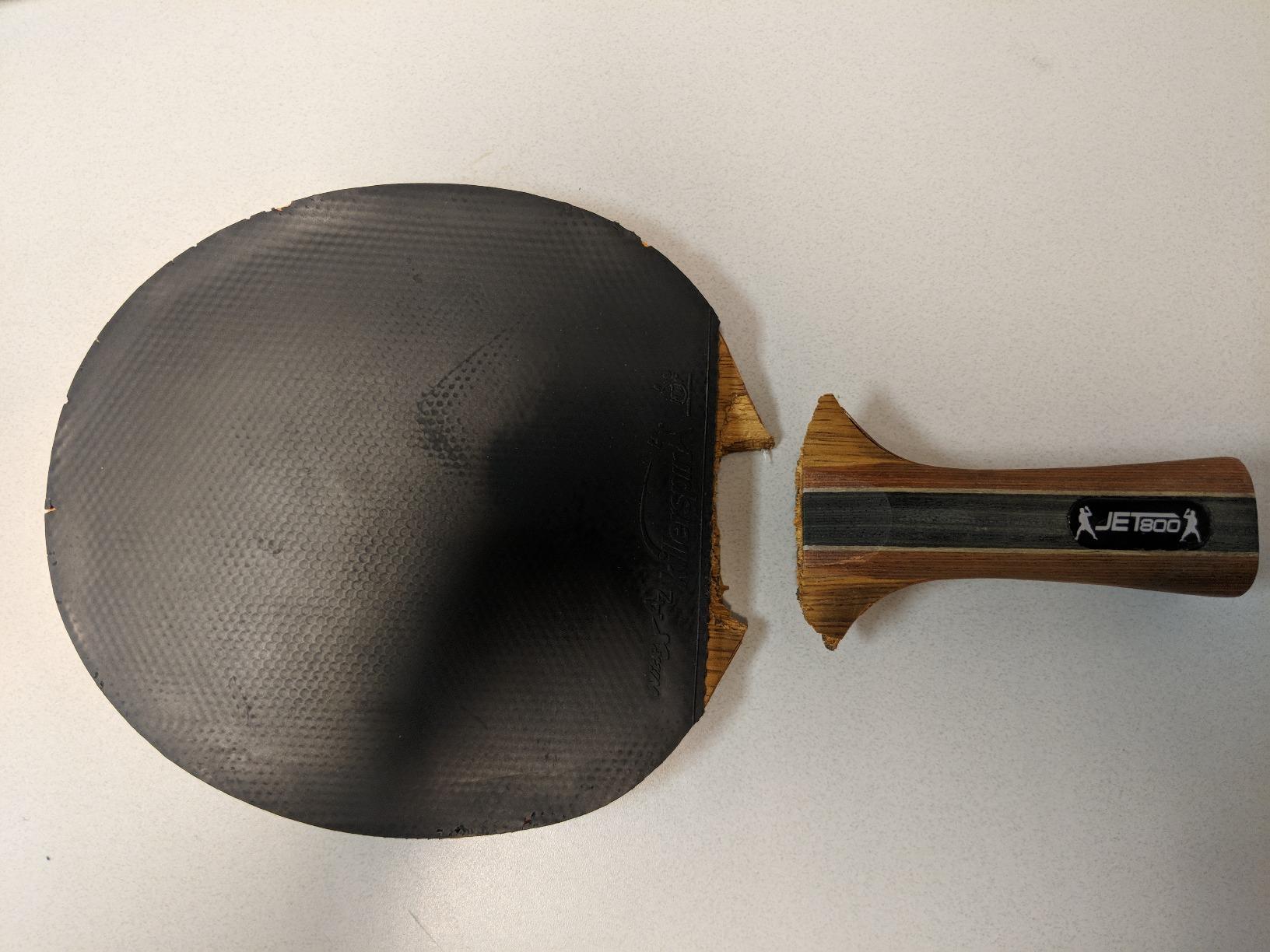
The Jet 800 Speed N2 is the most explicitly aggressive paddle here. Killerspin rates it Speed 9 out of 10, Spin 9 out of 10, Control 7.5 out of 10, and that split tells you everything about who it is built for.
The blade is seven-ply composite wood and carbon fiber, and the rubber is Nitrx-4Z at 1.8mm. Thinner sponge than most of this list means less trampoline and more direct transfer, which is exactly what you want if your game is built on driving heavy topspin rather than looping from far away.
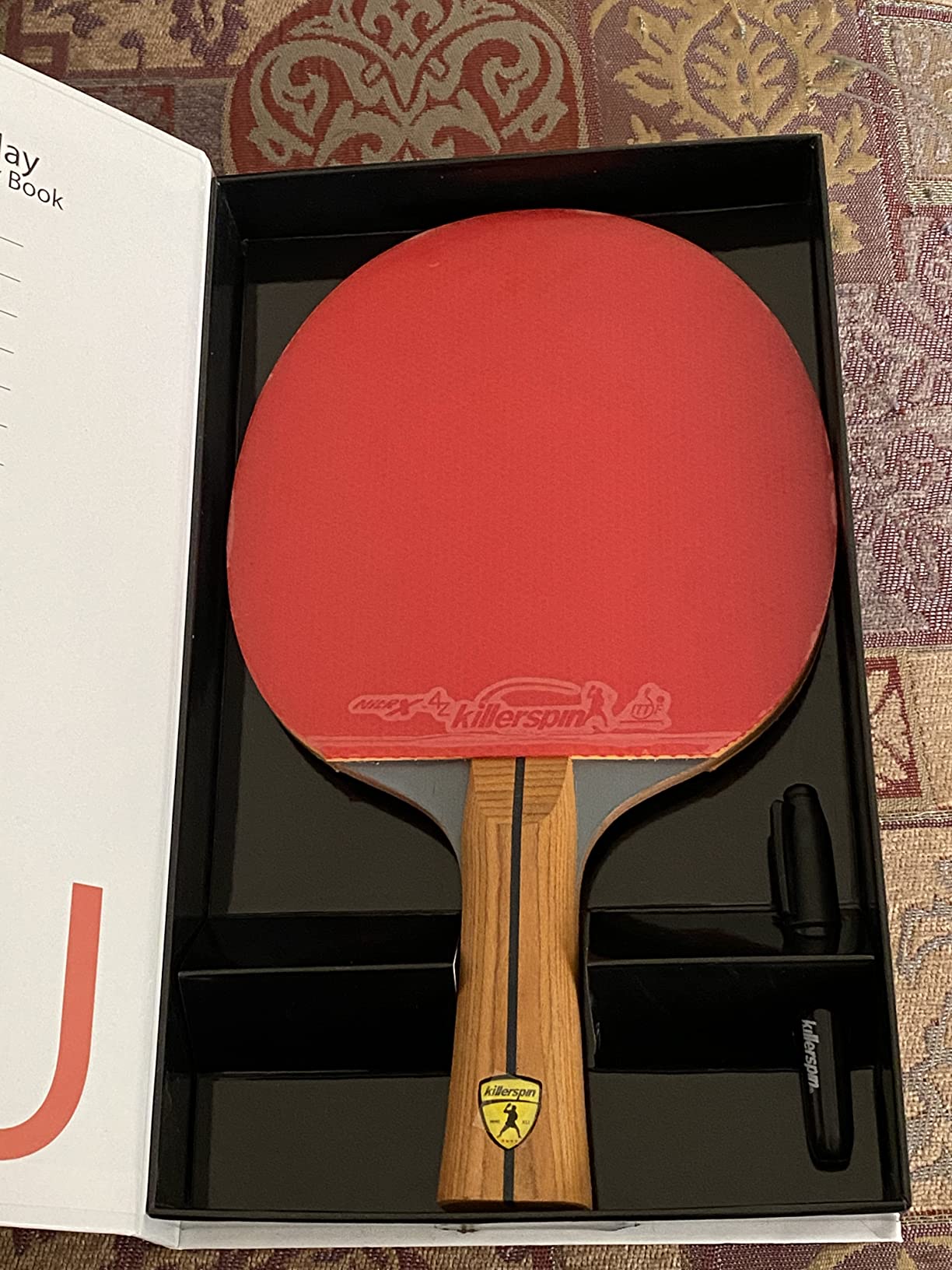
Long-term owners describe a paddle that is durable, well made and powerful, with a large sweet spot that helps a lot when you are blocking against a hard smash. The included Memory Book case and two 1-Star training balls are a nice touch for a club player who does not own a bag yet.
At 4.4 stars across about 1,430 ratings, the rating is the lowest in this roundup, and the reviews explain why. This is a demanding paddle, and demanding paddles always collect a few unhappy owners.
What owners say about spin and handling
The praise is concentrated on power. Players report that loops come off with real aggression and that the paddle works as an all-round tool for someone who already has a strong attack.
The complaints are consistent too. The tacky rubber demands clean technique, the handle reads short for players with large hands, and a number of owners feel the spin is merely average for the price tier rather than exceptional.
Who should skip this paddle
Skip it if your loop is still inconsistent. A demanding rubber punishes a rushed swing, and buying aggression before your technique can feed it is a common and expensive mistake at this level.
Skip it if you have large hands. Short-handle fit is the most repeated sizing complaint in the reviews, and grip discomfort shows up in the forearm long before it shows up in your results.
6. JOOLA Infinity Overdrive – Best for Maximum Speed
JOOLA Infinity Overdrive – Professional Performance Ping Pong Paddle with Carbon Technology – Black Rubber on Both Sides – Competition Table Tennis Racket for Advanced Training – Extreme Speed
Two carbon layers over a wood core
Smooth inverted rubber
4 1/2 inch flared grip
0.26 kg
Pros
- Genuinely extreme speed for attacking play
- Carbon layers dampen vibration and widen the sweet spot
- Comfortable flared handle
- Backed by a one year manufacturer warranty
Cons
- Extremely fast and hard to tame without good technique
- This variant has black rubber on both sides
- Owners report a steep adjustment period
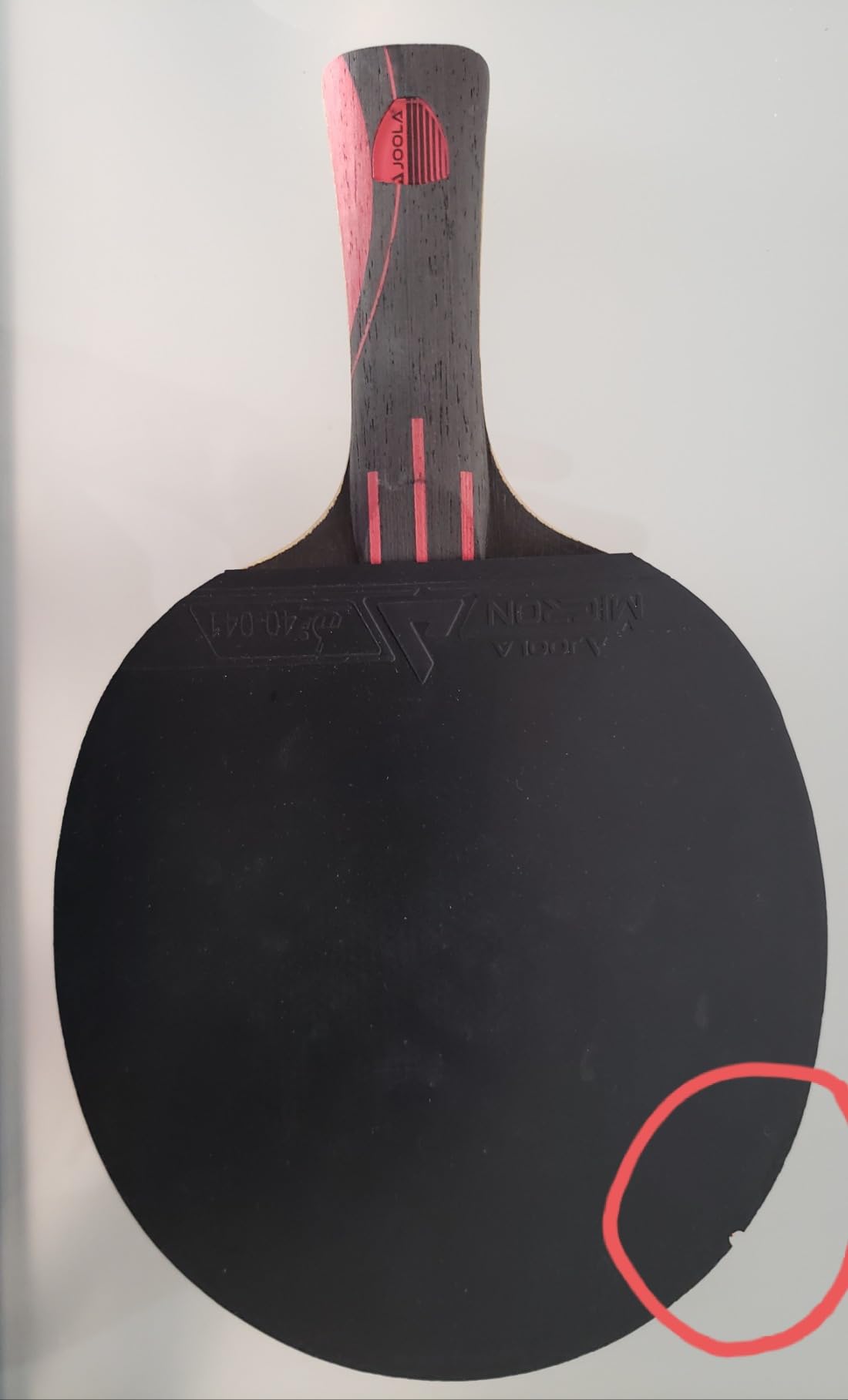
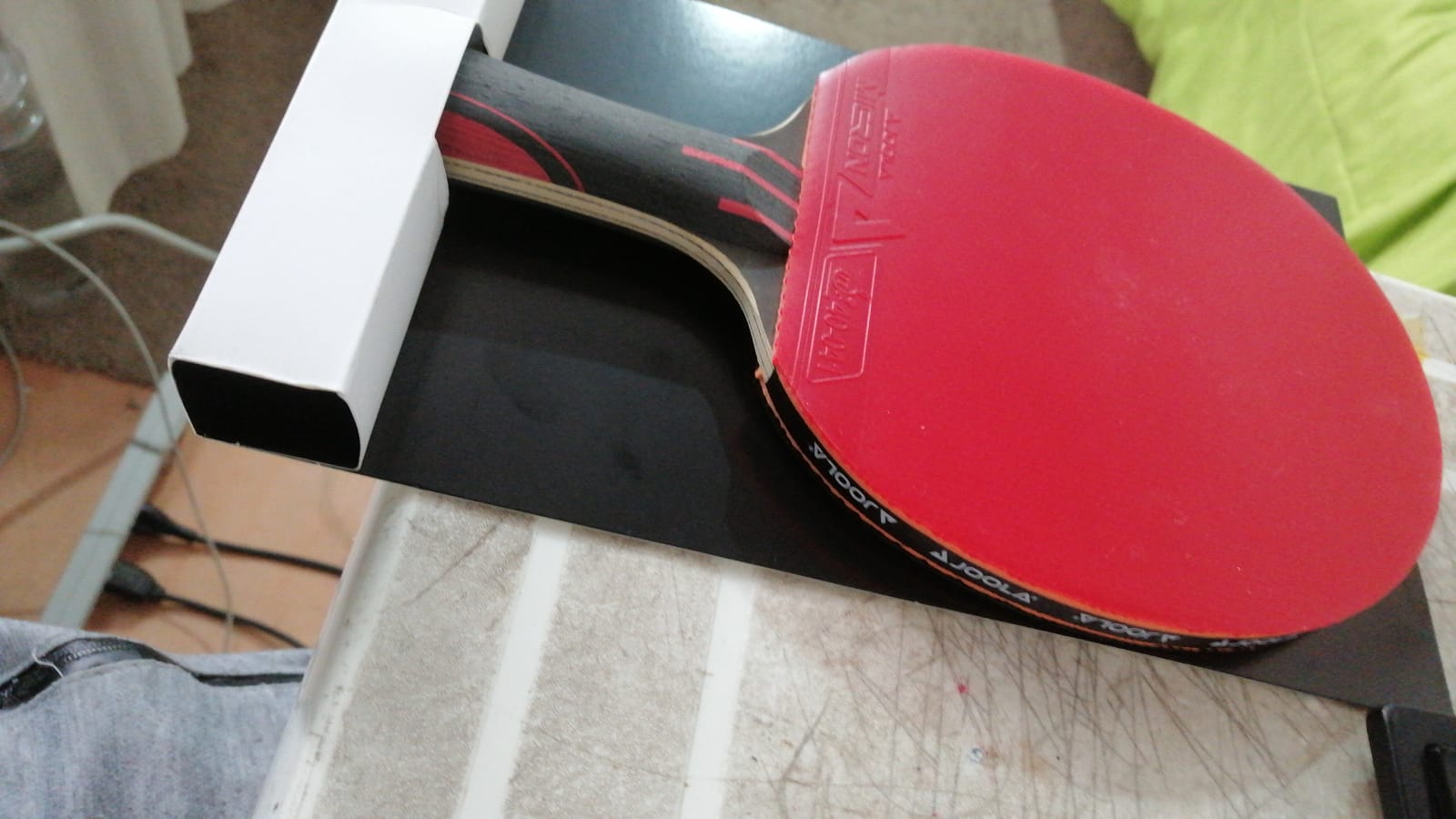
If you want the fastest ball coming off a premade paddle in this roundup, this is it. The two carbon layers reinforcing the wood core are the reason: carbon stiffens the blade and returns energy rather than absorbing it.
The rubber is a smooth inverted sheet on both sides, which in this version is black on both sides. That configuration is fine for training and casual play but is not what you want for rated tournament rounds.
Owners repeatedly describe the sweet spot as genuinely enlarged thanks to the carbon, and the vibration damping makes the paddle feel more solid at impact than cheaper all-wood builds. One year of manufacturer warranty is also better than most of the paddles in this price range.
The same reviews warn about the flip side. Several players report that it is extremely fast and takes real technique to control, and people moving from a control-oriented paddle describe a steep adjustment period.
What owners say about power and control
Speed is the consistent headline. The paddle delivers raw pace and strong attacks, and the enlarged sweet spot means you can still place the ball when the timing is not perfect.
Control is where the compromises sit. The same owners who praise the power describe the paddle as hard to tame without a settled technique, and that is a fair warning for anyone still developing their game.
Who should skip this paddle
Skip it if you play a patient, placement-first game or if you rally mostly from far away from the table. Extreme speed rewards a compact swing and forward position, and it does not forgive lazy technique.
Skip it if you play in a rated league, because the black-on-black rubber configuration in this version is not the right setup for sanctioned competition. Look for a red and black version instead.
7. Palio Master 3.0 – Best for Spin and Control
Palio Master 3.0 Table Tennis Racket & Case | ITTF-Approved Intermediate Ping Pong Paddle | Allround Speed, Spin and Control
Spin 9/10 Control 10/10 Speed 6/10
ITTF Palio CJ8000 rubbers
All-wood blade
Listed at 200 g
Pros
- Highest spin and control combination in this roundup
- Forgiving sweet spot suits developing players
- Light and easy to swing at the table
- Carry case included
Cons
- Low speed rating feels slow to players from carbon blades
- Handle snapping and inconsistent assembly reported
- Occasional dead or defective paddles
- Thin packaging can damage the rubber in transit
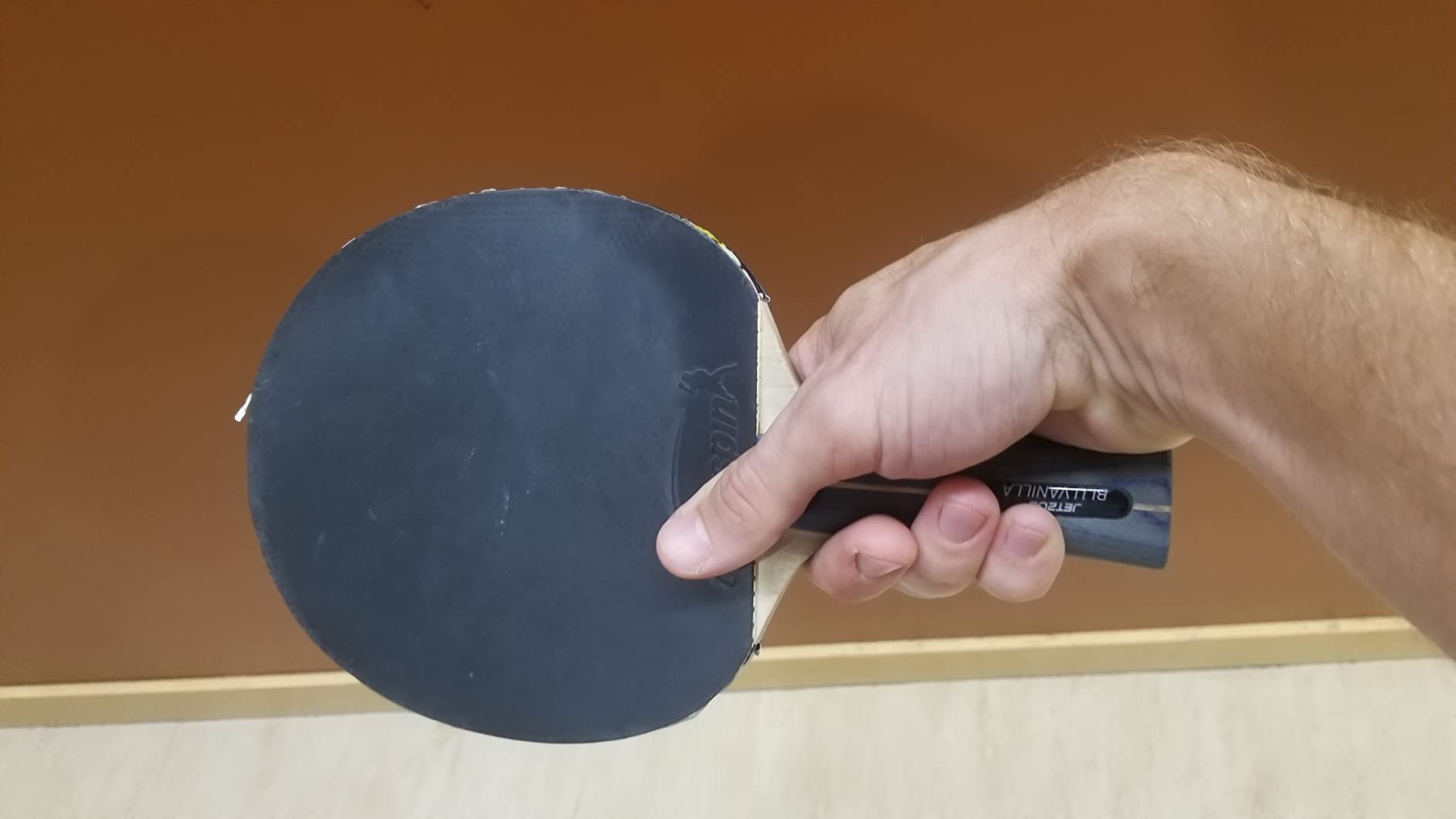
This is the most interesting pick in the set because it runs against the trend. The Expert Table Tennis ratings are Speed 6 out of 10, Spin 9 out of 10 and Control 10 out of 10, and the blade is all-wood rather than carbon.
The rubber is ITTF-approved Palio CJ8000, which is well known for holding a heavy topspin arc while staying controllable. If you learn to build a proper loop here, the technique transfers to any paddle you buy later.
Intermediate players who choose a control-first game rate it highly. The sweet spot is forgiving, the swing is light, and a case is included, which at this level of the market is unusual.
The rating of 4.3 across 329 reviews is the lowest in this roundup, and the one-star reviews are specific. They describe defective or slow paddles, snapped handles, and minimal packaging that left the rubber damaged on arrival.
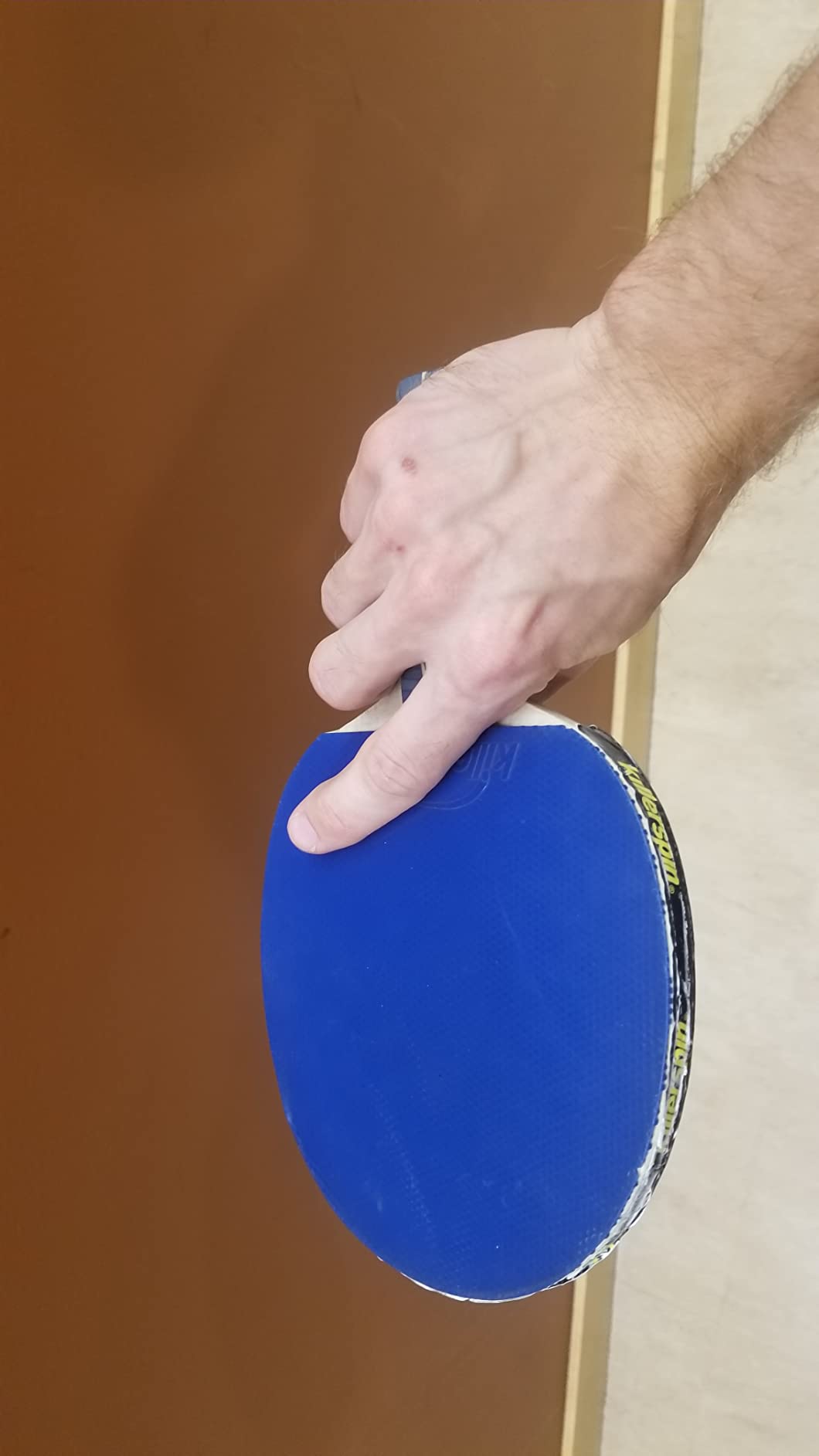
What owners say about the rubber
The strongest praise is for spin generation on an all-wood blade. Players say the CJ8000 rubbers deliver excellent spin while keeping control high, and that topspin, backspin and sidespin all come out with a consistent feel.
Several buyers note that they moved on to a custom-assembled blade at a similar spend once they outgrew it, which is a reasonable path rather than a complaint. The real complaints are about build consistency.
Who should skip this paddle
Skip it if you have already developed a fast game and want more pace. A speed rating of 6 out of 10 will feel sluggish next to any of the carbon paddles in this list, and that gap is large enough to frustrate.
Skip it if you are hard on your equipment. Snapped handles and inconsistent assembly appear often enough in the reviews to justify checking the paddle carefully the day it arrives.
8. STIGA Pro Carbon Blast – Best Lightweight Attacker
STIGA Pro Carbon Performance-Level Table Tennis Racket
Speed 99 Spin 100 Control 79
2mm sponge
5-ply balsa plus 2 carbon
165 g
Pros
- Noticeably more spin and power than entry-level paddles
- Very light with good in-hand balance
- S5 inverted rubber grips the ball strongly
- A worthwhile step up before going custom
Cons
- Control rating of 79 is low
- Thicker rubber takes practice to master topspin
- Handle edges can feel sharp out of the box
The Pro Carbon Blast is the same technical family as the STIGA Pro Carbon with a slightly different control figure, 79 against 80, and one important practical difference: it is listed at 165 grams.
The blade is five layers of lightweight balsa with two integrated carbon layers, the sponge is 2mm, and the rubber is an ITTF-approved smooth inverted S5 sheet with Nano Composite and ACS technology. Crystal and WRB technologies harden the blade and manage weight distribution.
Owners report a big jump in spin and power over basic paddles while the weight stays low and the balance feels good in the hand. At 4.6 stars across 282 ratings, the sentiment is very positive even if the sample is smaller than the big-name paddles.
A few buyers note that the handle edges feel sharp out of the box and that the thicker rubber needs practice before the topspin becomes automatic. Those are minor issues that resolve in the first few sessions.
What owners say about the weight and balance
Lightness is the most repeated theme. Players with any history of wrist or forearm trouble mention it specifically, and a 165 gram build means long practice sessions do not create the fatigue a heavier blade would.
The S5 rubber gets consistent credit for grip and spin, and several owners describe this paddle as the right step up before committing to a custom build.
Who should skip this paddle
Skip it if you want an all-round game. A control rating of 79 means this paddle is built to attack, and players who need a stable platform for placement will find it lively in a way that gets in the way.
Skip it if you play with a shakehand grip and prefer a large handle. The listed grip is 3 1/4 inches, which suits players with smaller hands and can feel cramped for anyone larger.
9. AirBlades Peace Maker ALC – Best for Soft Feel
AirBlades The Peace Maker ALC – Professional Ping Pong Paddle – Carbon Fiber Table Tennis Racket Producing Maximum Spin & Control for All Levels – Hard Carry Case & Ergonomic Handle
7-ply ALC carbon and wood
2.1mm high-elasticity sponge
Patented slope handle
Lifetime workmanship warranty
Pros
- Very soft controlled feel from a Paulownia core
- Strong topspin from the 2.1mm sponge
- Slope handle fits the hand for blocks and serves
- Deluxe hard case and lifetime warranty included
Cons
- Smaller brand with far fewer owner reviews
- 5 1/2 inch grip may not suit every hand
- Fewer independent performance tests available
The most interesting construction in this roundup sits at number nine. The seven-ply blade layers a Paulownia core with two Ayous plies, two Blue and Black ALC carbon layers and two Limba outer plies, and that soft core is what gives the paddle its signature feel.
The sponge is 2.1mm high-elasticity, the thickest here, which pairs with the soft core to give heavy top-spin with plenty of dwell. The handle is a patented ergonomic slope shape and a water-resistant deluxe hard case is included.
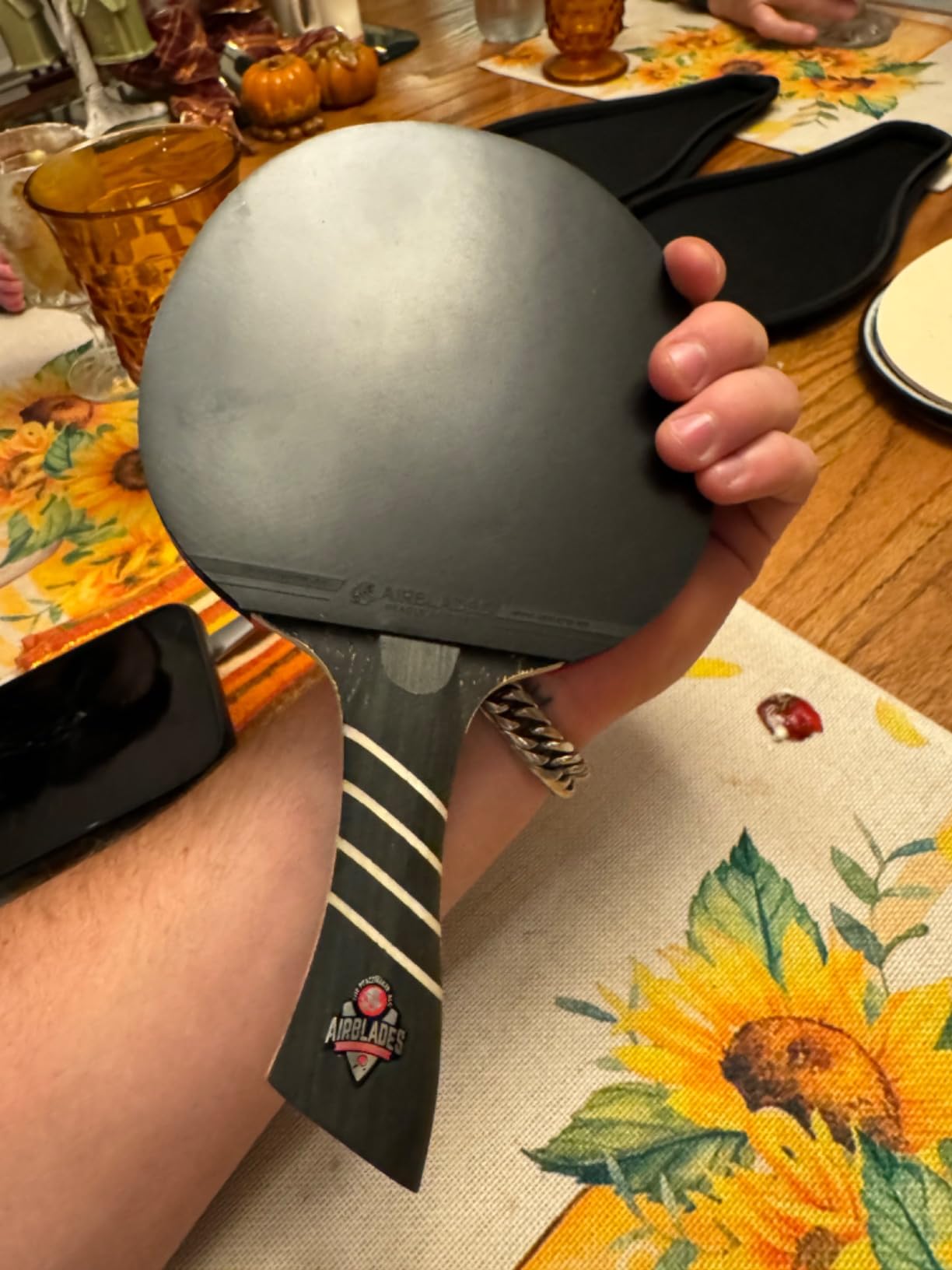
Buyers describe a soft, control-oriented feel with strong topspin, and they like that the slope handle sits well for blocks, serves and drives. A lifetime warranty on workmanship is a genuine reassurance that most paddles in this list cannot match.
With 248 ratings at 4.5 and 74 percent five-star scores, the sentiment is positive. The caveat is sample size: this is a small brand, so there is simply less long-term durability data available.
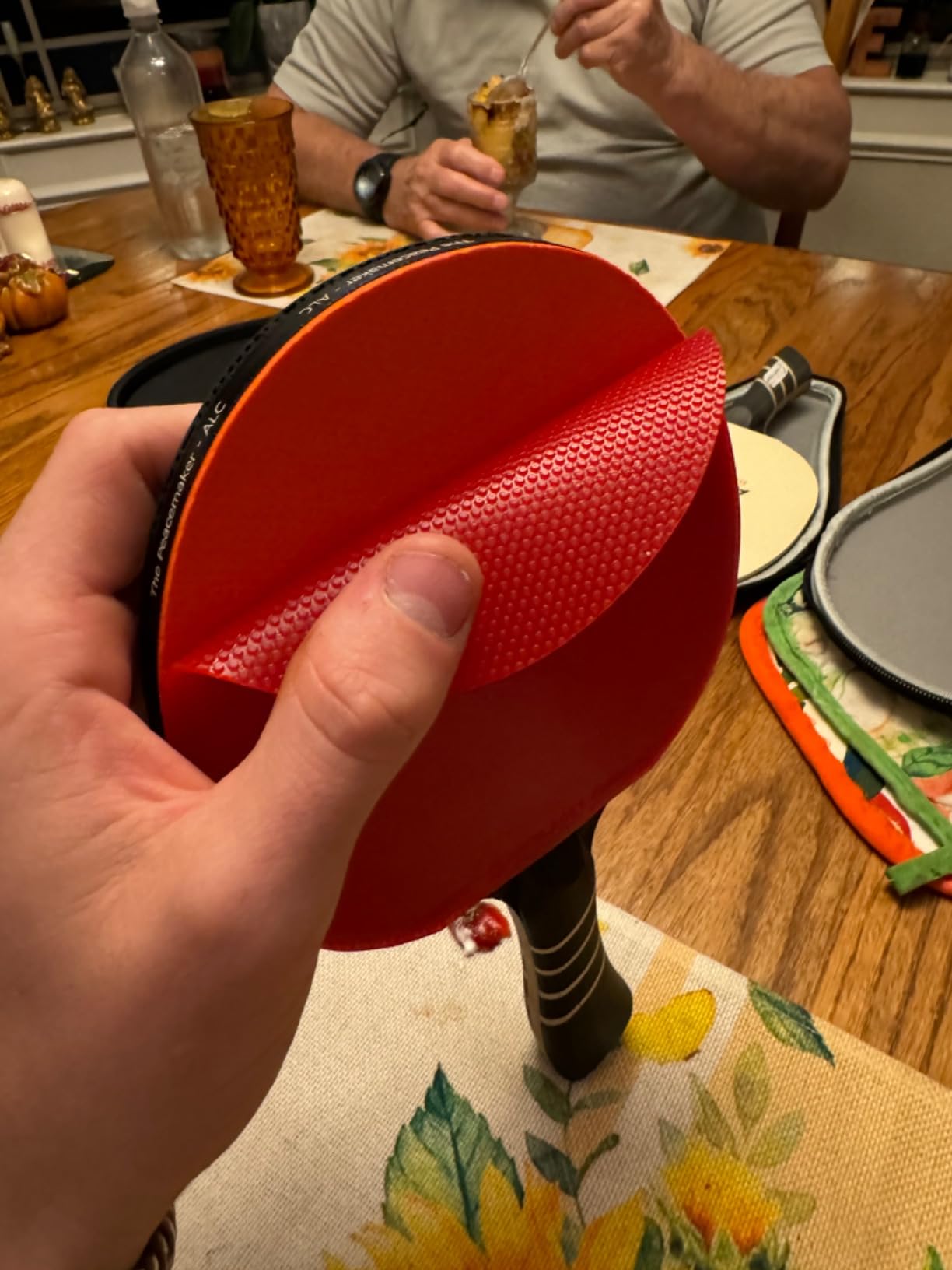
What owners say about feel and topspin
The soft feel is the product. The Paulownia core and Ayous plies absorb energy rather than returning it, so you get more time on the ball and a much bigger arc on your loop.
Owners also single out the case and the warranty, and the handle comfort for basic contact shots. Nobody in the review set describes the paddle as harsh or hollow, which is a common complaint about premium builds.
Who should skip this paddle
Skip it if you want to be certain of long-term durability. With only a few hundred ratings, you are buying on a thinner evidence base than the STIGA and JOOLA paddles in this roundup, and a niche brand is harder to replace.
Skip it if you are looking for maximum pace. A soft core and a thick sponge trade speed for dwell and arc, so players who want a hard drive off the bat will find it less direct.
10. STIGA Carbon+ Bundle – Best Complete Package
STIGA Carbon+ Ping Pong Paddle
Speed 98 Spin 94 Control 75
2mm premium sponge
7-ply carbon and balsa
0.3 kg
Pros
- Very light carbon blade with a large sweet spot
- Strong offensive power and spin
- Bundle includes two 3-star balls a cover and a wristband
- Crystal and WRB improve touch and recovery
Cons
- Control rating of 75 suits attacking rather than all-round play
- Bundled accessories are not needed by every buyer
- Handle and blade package is bulkier than a bare paddle
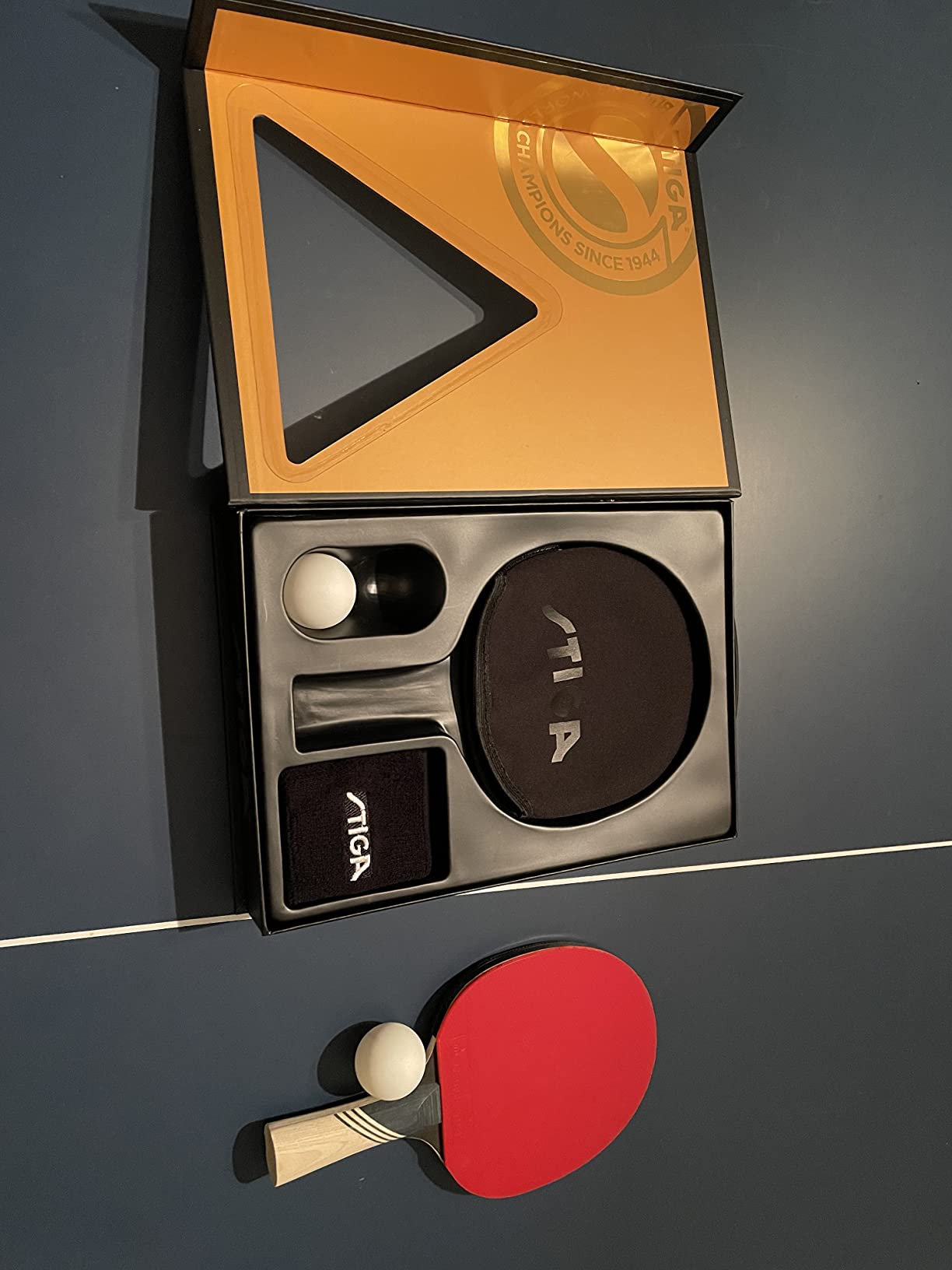
The STIGA Carbon+ Bundle is the pick for anyone starting out at club level who does not yet own any of the surrounding kit. You get the paddle, two 3-star tournament balls, a neoprene racket cover and a player wristband in one box.
The paddle itself is a seven-ply blade of lightweight balsa with carbon fiber layers, 2mm premium sponge, and an ITTF-approved smooth inverted S5 rubber with ACS technology. The published ratings are Speed 98, Spin 94, Control 75.
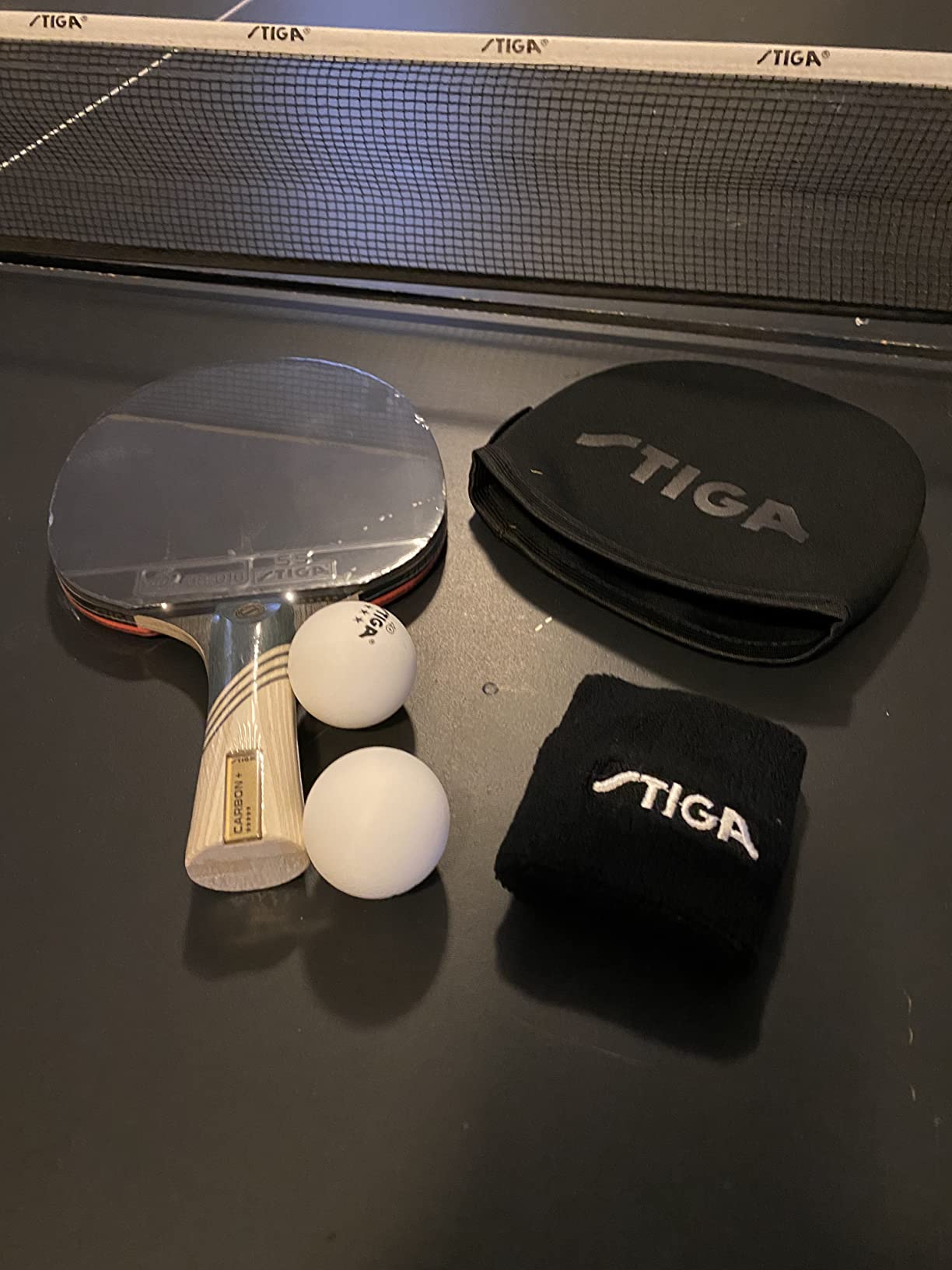
Owners praise the light carbon blade and the expanded sweet spot for clean contact, and at 4.6 stars across 316 ratings with 77 percent five-star scores, the value of the included extras comes up repeatedly as the reason to buy this rather than a bare paddle.
Weight is listed at 0.3 kg including the packaging, and the paddle is one of the lighter builds in this roundup. The item model is T1075, which is useful if you need to look up replacement parts.
What owners say about the package
The accessories genuinely get used. Players buying a first club kit mention the 3-star balls and the neoprene cover as the reason the bundle felt like good value rather than filler.
What you are paying for in the paddle itself is a light carbon blade with strong offensive power. That is an attacking setup, and the control figure of 75 tells you to play forward rather than to build a patient game.
Who should skip this paddle
Skip it if you already own balls, a cover and a bag. In that case the extras are dead weight and a simpler paddle is the better purchase, and you can put the difference toward a better rubber setup later.
Skip it if you want an all-round intermediate paddle. A control rating of 75 is the lowest of any control figure in this roundup, so this is an attack-first choice rather than a balanced one.
What to Look For in a Table Tennis Paddle
Here is the short version of the spec checklist, and the three items that decide whether a paddle suits an intermediate player.
Sponge thickness: look for a medium sponge between 1.8mm and 2.0mm to balance speed and control.
Blade construction: intermediate players usually do well with 5-ply to 7-ply wood blades, sometimes with a light carbon layer for extra stiffness and speed.
ITTF approval: make sure the rubbers are International Table Tennis Federation approved if you plan to play in local tournaments.
Beyond those three, two more filters narrow the list quickly. Weight determines how long you can play without fatigue, and grip size determines whether you can actually hold the thing comfortably.
Pre-Assembled vs Custom Two-Piece Build
This is the single most important purchase question for an intermediate player, and it is the one most roundups skip. A pre-assembled paddle arrives with the rubber already glued on. A custom build is a bare blade plus two rubber sheets that a club or shop glues for you.
A pre-assembled paddle is ready on day one and costs less to start. You cannot change the rubber later, though, and a glued sheet is often hard to remove, so your next upgrade means a new paddle rather than a re-rubber.
A custom build costs more at the start and takes a little more effort, but you can tune the two sides differently. A common intermediate setup is a slightly spinnier rubber on the forehand for loops and a control rubber on the backhand for blocks.
The honest rule: buy pre-assembled until you have a specific reason to go custom. The specific reason is usually that you have outgrown one part of the setup but not the whole paddle. If you like the blade and only the rubber has gone flat, a re-rubber is the right move rather than a new bat.
Our intermediate pickleball paddle guide covers the same upgrade ladder from the other direction, from a club player who already owns good kit.
Choosing Sponge, Rubber, Grip and Weight
Sponge thickness sets the speed and control trade-off
Thin sponge between 1.5mm and 1.8mm feels direct and controlled. It suits players building fundamentals and anyone who rallies from far away from the table, because the paddle does not amplify a late swing.
Medium sponge at 1.8mm to 2.0mm is the intermediate sweet spot. You get enough trampoline to generate topspin on a decent loop while keeping the ball predictable when your contact is imperfect.
Thick sponge above 2.0mm is an attacking choice. More of your energy goes back into the ball, which is great close to the table and frustrating when you are standing back. If you read the phrase extra speed on a listing and you are still developing your loop, read it as a warning too.
Inverted rubber or pips-out rubber
Inverted rubber has a smooth topside and is what almost every paddle in this roundup uses. It gives the best grip and spin, and it is the correct choice for a player who wants to learn to loop properly.
Pips-out rubber has short pimples on the outside. It produces less spin in exchange for a different feel on the ball, and long-pip variants are used to disrupt an opponent’s spin. A few players switch to pips for a specific reason, but it is a specialist choice and not a good first upgrade.
Grip size and grip style
Shakehand grip fits most intermediate players and gives the most options. Penhold grip gives fine touch and reach but restricts wrist movement, and switching later is harder than most people expect.
Within shakehand, check the stated size. The grips in this roundup run from 3 1/4 inches on the STIGA Pro Carbon Blast to 5 1/2 inches on the AirBlades Peace Maker, and large hands get cramped grips from paddles that are otherwise excellent. The same sizing lesson shows up in our wooden canoe paddle picks, where shaft length changes the feel of a long wooden handle in exactly the same way.
165 grams, 170 grams, or heavier
Is a 165 or 170 gram ping pong paddle better? Neither is universally better. Lighter paddles around 165 grams reduce arm fatigue in long sessions and suit players with any wrist or shoulder history, while heavier paddles at 175 grams and above feel more solid and stable at impact.
For most intermediate players anything in the 165 to 180 gram band is the sensible window. Below that you lose stability, above it you trade comfort for a power you probably do not need yet. Our kayak paddle guide makes the same weight-versus-comfort argument from the other end of the paddle spectrum.
What carbon actually changes
Carbon layers stiffen the blade so it returns energy instead of absorbing it. That means more speed and a bigger sweet spot, and it also means less feel, because the blade no longer flexes to guide you through contact.
One or two carbon layers is the intermediate-appropriate amount. If you find yourself reading about five and six carbon layer builds, that is competition territory and a real risk of buying a paddle faster than your strokes.
When Not to Upgrade Your Paddle Yet
Over-equipping is the most common regret in this category, and it is a skills problem rather than a shopping problem. Buying power does not create technique; it only hides technique errors for a few months.
Check these four before you spend anything:
Can you rally ten or more shots consistently with placement, not just survival?
Can you loop the ball with heavy topspin on demand, three out of four times?
Can you serve legally and vary the spin without telegraphing it?
Does your current paddle feel dead, or does it just feel old?
If the answer to the last question is that it feels old rather than dead, you are not ready for a new paddle. Rubbers go dead, and that is the moment to re-rubber or replace, not before.
Players who are still working on a consistent rally from far away from the table should also stay on a control-oriented or lighter paddle. Adding speed at that stage does not help you find the arc.
When to Replace the Rubber
Rubber loses grip long before the blade is finished. Signs that the sheet is done include loops that suddenly sail long without extra swing, a ball that feels slippery at contact, and a paddle that no longer grips your sweaty hand.
A reasonable rhythm for an intermediate player is a check at six months and a decision around twelve to eighteen months. Players who train three or four times a week will reach the end of that window sooner than casual weekend players.
Keep a clean cloth and a wipe-down habit. Lint and dust on the rubber surface are a common complaint in the reviews across this list, and a dirty surface costs you grip long before the sponge is finished.
Frequently Asked Questions
What is the best table tennis racket for an intermediate player?
The PRO-SPIN 7-Ply Carbon is the strongest all-round choice for an intermediate player. It pairs a 7-ply blade of five wood layers plus two carbon layers with 2.0mm sponge and ITTF-approved rubber, and it holds a 4.7 rating across more than 7,200 owner reviews. If your game is more control-first, the Palio Master 3.0 is the opposite trade and the STIGA Pro Carbon + Raptor is the more attacking step up.
How do I pick a table tennis paddle?
Pick in this order. First choose a sponge thickness, where 1.8mm to 2.0mm is the intermediate sweet spot between speed and control. Then choose a blade construction, with 5-ply to 7-ply wood and optionally one or two light carbon layers. Then check the rubber type and that it is ITTF approved if you play rated events. Finally confirm the grip style and the grip size fit your hand, and check the total weight sits in the 165 to 180 gram range.
Is a 165 or 170 gram ping pong paddle better?
Neither is better in general. A 165 gram paddle reduces arm fatigue over long sessions and suits players with wrist or shoulder history, while a 170 gram paddle feels slightly more solid and stable at impact. For most intermediate players the difference is small, and the grip fit and the sponge thickness matter more than the difference between those two weights.
Are expensive table tennis paddles better?
Not automatically. Price does not guarantee feel, and the same review sets in this roundup include complaints about hollow or average feel on premium builds. What matters is whether the speed, spin and control balance matches your technique. A mid-tier paddle that you can control will always beat an expensive one that is faster than your strokes can handle.
Do ping pong paddles make a difference?
Yes, most noticeably in spin and in feel. A beginner bat is thin, soft and heavy on the handle, while an intermediate-grade paddle has 2.0mm of sponge under ITTF rubber on a stiff multi-ply blade. That jump is usually obvious within a few sessions, and it is the point where better technique starts to compound rather than being held back by the equipment.
Should an intermediate player buy a pre-assembled paddle or a custom build?
Buy pre-assembled until you have a specific reason to go custom. A pre-assembled paddle is ready immediately, but the rubber is glued on and usually cannot be changed. A custom two-piece build costs more and takes more effort, but you can tune the two sides differently and re-rubber the same blade later. Go custom when you like the blade but the rubber has gone flat, or when you want a spinnier forehand rubber and a control backhand rubber.
Final Verdict
The best table tennis paddles for intermediate players in 2026 are not the fastest ones, they are the ones that match your technique. Buy the PRO-SPIN 7-Ply Carbon as the general answer, because the spin-to-control balance and the 2.0mm sponge suit almost any developing intermediate game.
Move to the STIGA Pro Carbon + Raptor when you want more attack and a faster step, and pick the JOOLA Carbon X Pro when you want the same idea for less. Control-first players should take the Palio Master 3.0, and anyone who wants to know whether an upgrade is even the right move should run through the four checkpoints above first.
Whichever you choose, buy it once, play with it for a season, and resist the next upgrade until the technique asks for it. That is the advice that actually makes players better.