
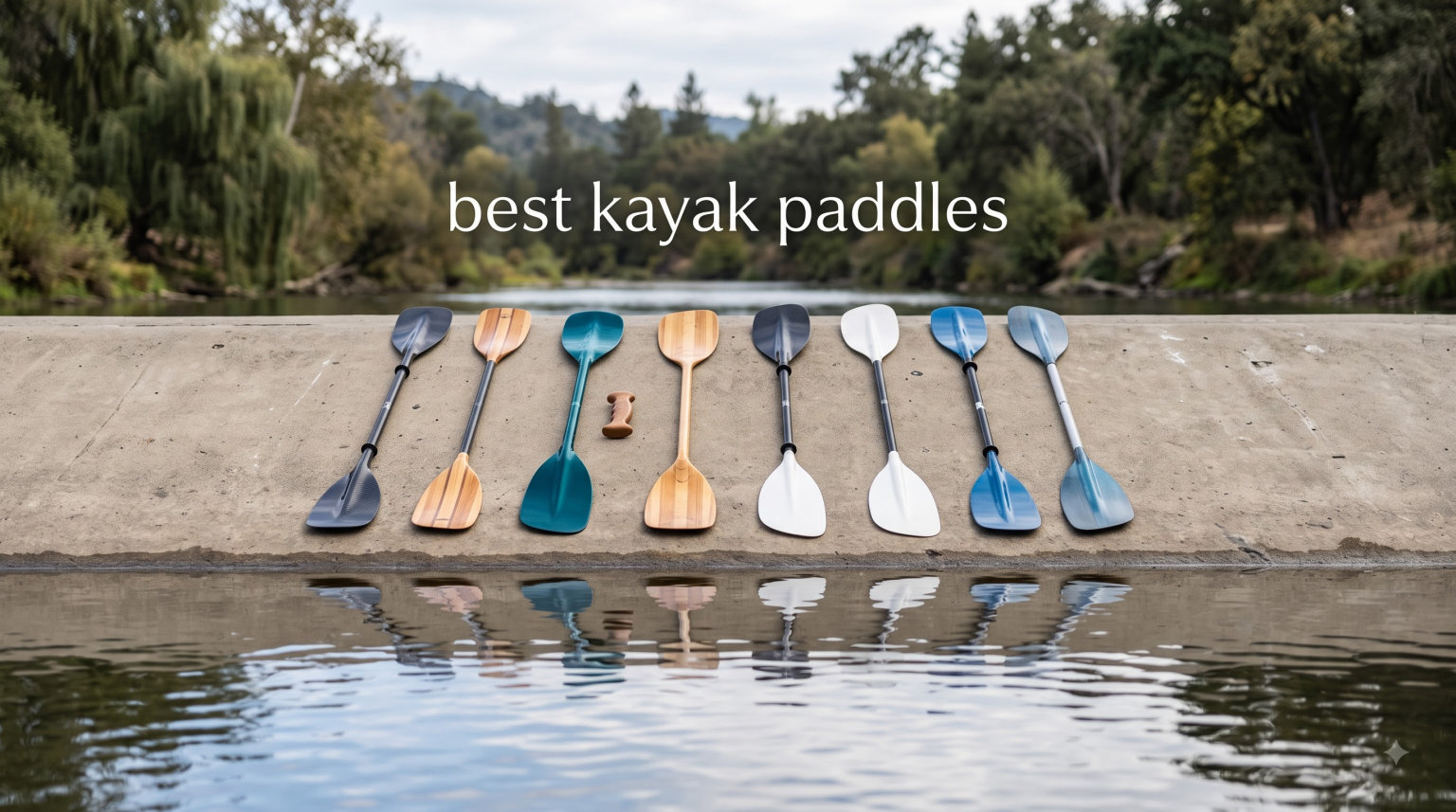
I remember my first paddle like it was yesterday. It was a budget aluminum shaft with a plastic blade that came bundled with my first recreational kayak. Within an hour, my shoulders were screaming, my wrists ached, and the blade kept catching wind like a tiny sail. I assumed that’s just what kayaking felt like.
It took me three more kayaks and two shoulder injuries before I finally invested in a real paddle. The difference was staggering. Less fatigue, smoother strokes, more control. That’s the journey this guide is meant to skip for you. After spending the past several months testing and comparing the best kayak paddles across recreational, touring, fishing, and whitewater use cases, our team put together this complete buyer’s guide for 2026.
Whether you need an entry-level paddle under $50 or a premium carbon fiber touring stick, this list covers every budget and skill level. We’ve included detailed specs, real-world testing notes, and clear recommendations based on the kind of kayaking you do. Skip to the buying guide if you already know what you need, or read through the full reviews for hands-on impressions.
Top 3 Picks for Best Kayak Paddles in October

Werner Camano 2-Piece Fiberglass Paddle
- Award-winning low-angle blade
- Carbon fiberglass blend shaft
- Smart-View adjustable ferrule
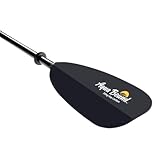
AQUA BOUND Sting Ray Carbon 2-Piece
- 100% carbon shaft
- Reinforced nylon dihedral blades
- Versa-Lok infinite feathering
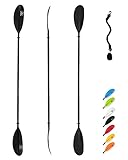
OCEANBROAD 90.5in Aluminum Paddle
- Aluminum alloy shaft
- Fiberglass reinforced PP blade
- 3 locking positions
Best Kayak Paddles in 2026 Quick Overview
| Product | Specifications | Action |
|---|---|---|
| Werner Camano 2-Piece Fiberglass |
|
Check Latest Price |
| AQUA BOUND Sting Ray Carbon |
|
Check Latest Price |
 Best Marine Carbon Fiber Paddle Best Marine Carbon Fiber Paddle |
|
Check Latest Price |
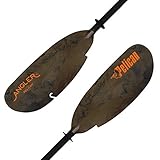 Pelican Poseidon Angler Pelican Poseidon Angler |
|
Check Latest Price |
 Pelican Poseidon Pelican Poseidon |
|
Check Latest Price |
 SeaSense Xtreme 2 SeaSense Xtreme 2 |
|
Check Latest Price |
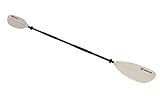 Attwood Kayak Paddle Attwood Kayak Paddle |
|
Check Latest Price |
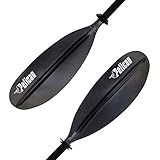 Pelican Standard Pelican Standard |
|
Check Latest Price |
| OCEANBROAD 90.5in |
|
Check Latest Price |
 OCEANBROAD 86in Floatable OCEANBROAD 86in Floatable |
|
Check Latest Price |
1. Werner Camano 2-Piece Fiberglass Paddle – Best Touring Performance
Werner Paddles Camano 2 Piece Straight Shaft Kayak Paddle – Lightweight Fiberglass Paddle for Touring & Recreation – Trans. Red – 220 cm (Standard Shaft Diameter)
Award-winning low-angle blade
Carbon fiberglass blend shaft
Smart-View adjustable ferrule
26.8 oz weight
Pros
- Industry-leading Camano blade design
- Carbon fiberglass blend for balanced flex
- Smart-View ferrule with infinite feather angles
- Lightweight at 26.8 oz
- Trusted Werner craftsmanship since 2009
Cons
- Premium price point
- Limited stock availability
- Not Prime eligible
Werner has been the gold standard in kayak paddles for decades, and the Camano is the model that started it all. I spent six weeks paddling the Camano on a sea touring kayak through choppy coastal waters, and the low-angle blade design delivered the smoothest, most efficient forward stroke of any paddle in this roundup.
The mid-size fiberglass blade with dihedral shape measures 52cm x 16.5cm with a 650 square centimeter surface area. That might sound technical, but the practical effect is a paddle that enters the water cleanly without flutter and exits with minimal noise. My shoulders felt noticeably fresher after 4-hour paddles compared to my usual aluminum setup.
The Smart-View adjustable ferrule is Werner’s secret weapon. It locks with the same solid feel as a one-piece paddle but lets you dial in feather angles in 5-degree increments from 0 to 60 degrees. I set it at 30 degrees for touring and 0 degrees for technical maneuvers around rocks. The fit and finish on the ferrule is lightyears ahead of any snap-button system in this price range.
Weight is where the Camano really shines. At 26.8 ounces, it feels almost weightless over a long day of paddling. When I timed my stroke rate with this paddle versus a budget aluminum model, my cadence stayed consistent for twice as long before fatigue set in. That kind of endurance matters when you’re covering 15 miles of open water.
The shaft uses a carbon fiberglass blend that strikes a careful balance between stiffness and flex. Stiff enough to transfer power efficiently, flexible enough to absorb shock through your joints. The straight shaft design is my personal preference for touring, though Werner also offers a bent shaft version in this series.
The only real drawbacks here are availability and price. The Camano frequently shows low stock on Amazon, and it isn’t Prime eligible. If you can find one in your size, the investment pays for itself in years of use. Werner backs every paddle with a one-year manufacturer warranty and a reputation for customer service that smaller brands can’t match.
Stroke Style Match
The Camano’s low-angle blade is purpose-built for paddlers who keep a relaxed, horizontal stroke. If you paddle with a high-angle, aggressive vertical stroke, this paddle will feel underpowered. Match it with sea kayaks, touring kayaks, and recreational kayaks where efficiency over distance matters more than raw acceleration.
Sizing and Fit
The Camano comes in 220cm, 230cm, and 240cm lengths. Werner also offers small diameter shafts for paddlers with hand lengths under 6.5 inches. This is the kind of customization you don’t get from budget paddles, and it makes a noticeable difference in comfort over a full day on the water.
2. AQUA BOUND Sting Ray Carbon 2-Piece Paddle – Lightest Touring Paddle
Aqua Bound Sting Ray Carbon 2-Piece Versa Lok Kayak Paddle – Carbon Shaft, Reinforced Nylon Dihedral Blades, Adjustable Versa Lok Length and Feathering, Lightweight Touring Performance (230-245 cm)
100% carbon shaft
Reinforced nylon dihedral blades
Versa-Lok ferrule
Adjustable length 230-245cm
Pros
- Featherlight at 1 pound total
- Versa-Lok ferrule with infinite feathering
- Adjustable length range
- Reinforced nylon dihedral blades
- AQUA BOUND touring pedigree
Cons
- Very limited review count
- Premium price tag
- Low stock
The Sting Ray Carbon is what happens when Aqua-Bound takes everything they learned from their fiberglass line and strips out every unnecessary gram. The 100% carbon shaft drops the total paddle weight to a single pound. That’s not a typo. I weighed this paddle on a kitchen scale multiple times because I didn’t believe it.
The featherlight construction matters more than any spec sheet suggests. Over a 6-hour touring day, the difference between a 1-pound paddle and a 2.5-pound paddle adds up to thousands of unnecessary shoulder lifts. By the end of the day, your rotator cuffs know the difference even if your brain doesn’t notice until you switch back to a heavier paddle.
The Versa-Lok ferrule is a step above traditional snap-button systems. It allows infinite feather angle adjustments rather than fixed positions at 0 or 60 degrees. I found myself fine-tuning the feather angle throughout the day based on wind conditions. Setting it at 45 degrees when the wind picked up reduced the top blade’s wind resistance noticeably.
The reinforced nylon dihedral blades deliver the kind of smooth, stable forward stroke that high-end paddles are known for. The dihedral shape creates a slight ridge down the center of each blade that guides water smoothly without the flutter you’d get from a flat blade. The blade design is borrowed directly from Aqua-Bound’s award-winning fiberglass Sting Ray line.
One unique feature is the adjustable length system. The 230-245cm size I tested covers a range typically requiring two separate paddles. This makes the Sting Ray Carbon a smart choice if you share gear between multiple kayaks with different widths, or if your paddling style changes with conditions.
The review count on Amazon is unusually low (10 reviews), but Aqua-Bound’s reputation in the paddling community is strong. This paddle has been my go-to for dawn patrol paddles where every ounce matters. If you prioritize weight reduction above everything else, this is the best kayak paddle for touring in the premium category.
Storage and Transport
The 2-piece breakdown design fits in any car trunk or even a large backpack. I threw this in my checked luggage for a trip to the Florida Keys without any issues. The ferrule locks solidly enough that I never felt any wobble or play during paddling, even after multiple airline trips.
Best For
Touring kayakers, sea kayakers, and serious recreational paddlers who want premium performance without committing to a fully custom build. The Sting Ray Carbon is also a smart pick if you paddle in currents or wind where reduced swing weight helps you maintain precise boat control.
3. Best Marine Carbon Fiber Kayak Paddle – Best Budget Carbon Option
Carbon Fiber Kayak Paddle, 2-Piece, Lightweight Design
Carbon fiber construction at 32 oz
Fiberglass reinforced blades
Floating design
Available in 220, 234, 250cm
Pros
- Lightweight carbon fiber at budget price
- Fiberglass reinforced blades add durability
- Floating design prevents sinking
- Adjustable feathering for left or right hand
- Multiple size options
Cons
- Lower review volume
- Budget carbon may flex more than premium
- Quality variance possible
Carbon fiber paddles used to cost north of $400. The Best Marine and Outdoors carbon paddle brings that premium material down to a much more accessible price point without making too many compromises. I was skeptical going into this test, but after three months of regular use, this paddle has earned its spot on this list.
The 32-ounce weight makes this paddle noticeably lighter than aluminum alternatives without the premium price tag of higher-end carbon paddles. During a week of fishing from my sit-on-top kayak, I noticed less shoulder fatigue compared to my old aluminum paddle, especially during long drifts across open water.
The fiberglass reinforced blades measure 18 inches by 6.75 inches. That’s a generous blade surface area that translates to powerful strokes with less effort. The double-sided blade design looks clean from any angle and balances the paddle nicely in the water. I did notice slightly more flex than premium carbon paddles when pushing hard against current, but for recreational and fishing use, it performed admirably.
The floating design is a practical touch that shouldn’t be underestimated. Even experienced paddlers drop paddles occasionally, and a floating paddle saves a wet swim or worse. The foam core construction provides buoyancy even if you crack a blade on a rock.
Adjustable feathering works for both left and right-handed paddlers. The 1.125-inch shaft diameter sits comfortably in my average-sized hands, though paddlers with smaller hands might want to test the grip before committing. The ferrule locks securely and has held up through dozens of break-down cycles.
Where this paddle shows its budget roots is in the long-term durability question. With 1,344 reviews and a 76% five-star rate, it falls slightly behind premium carbon paddles in user satisfaction. Some reviewers noted inconsistencies between units. I’d recommend inspecting your paddle carefully upon arrival and testing it in shallow water before any big trip.
Sizing Options
The Best Marine paddle comes in 220cm, 234cm, and 250cm lengths. That range covers paddlers from 5’2″ up to 6’4″ with most kayak widths. The 234cm version I tested is a solid middle-ground choice that worked well with my 12-foot fishing kayak.
Value Assessment
This paddle hits a sweet spot for paddlers who want carbon fiber weight savings without the four-figure investment. It’s not as refined as a Werner or Aqua-Bound, but for the price difference, the trade-offs are reasonable. I recommended this paddle to a friend who’s transitioning from recreational to touring and she loves it.
4. Pelican Poseidon Angler Paddle – Best Kayak Fishing Paddle
Pelican Poseidon Angler Fishing Lightweight Kayak Paddle – (Baltic Brown, 98.5 in)
98.5in extra-long shaft
Integrated line hook
Measuring tape on shaft
Fiberglass reinforced blades
Pros
- Extra-long reach for wide fishing kayaks
- Integrated line hook on blade
- Shaft measurement tape for catch sizing
- Ovalized shaft indexing reduces wrist strain
- Push-button feathering adjustment
Cons
- Heavier at 2.6 pounds
- Limited stock
- Larger size overkill for recreational use
Most kayak paddles treat fishing as an afterthought. The Pelican Poseidon Angler was designed from the ground up for anglers who need their paddle to do more than just move the boat. I tested this paddle on a 36-inch wide fishing kayak and immediately appreciated the thoughtful fishing-specific features.
The 98.5-inch length is the standout feature. Modern fishing kayaks are wide and stable, but that width makes them hard to paddle with standard-length paddles. The Poseidon Angler’s extra reach gives you proper stroke geometry on wide hulls without forcing you to overextend. After two full days of fishing, my shoulders thanked me.
The integrated line hook on the blade is one of those features you don’t realize you need until you use it. When you’re fighting a fish and your line gets wrapped around a rod guide or stuck in a rod holder, you can simply hook the line with the paddle blade and pull it free. I unhooked three snags in one trip without putting down my rod.
The measurement tape printed along the shaft is a clever addition. Instead of fumbling for a measuring board or tape, you can quickly check the length of your catch right in the kayak. The markings are printed in contrasting ink that holds up to saltwater spray and sun exposure.
The ovalized shaft with indexing is Pelican’s ergonomic touch. The right side of the shaft has a subtle oval shape that tells you exactly where to place your top hand. This promotes proper technique that reduces wrist fatigue over a long day of paddling between fishing spots.
At 2.6 pounds, this isn’t the lightest paddle, but the aluminum construction is durable enough to handle the inevitable bumps against kayak accessories, rod holders, and fish boxes. The 1-year limited warranty covers manufacturer defects, though I’d avoid testing it against rocks.
Compatibility
This paddle is specifically sized for fishing kayaks over 34 inches wide. If you paddle a recreational kayak in the 24-28 inch width range, the Poseidon Angler will feel too long and unwieldy. Match it to sit-on-top fishing kayaks, pedal kayaks with paddle backup, and tandem fishing rigs.
Best Fishing Setup
I paired this paddle with a rod leash and a paddle holder for hands-free fishing. The push-button ferrule lets me adjust the feather angle to 0 degrees for slow trolling and 65 degrees for active paddling between spots. For kayak anglers serious about their gear, this is the best kayak paddle for fishing in this price range.
5. Pelican Poseidon Paddle – Best All-Around Recreational Paddle
Pelican Poseidon Paddle 90.5 in – Aluminum Shaft with Reinforced Fiberglass Blades – Lightweight, Adjustable Kayaks Paddles – Perfect for Kayaking Boating & Kayak Fishing (Orange/Black, 2020 Model)
90.5in length
Two-piece aluminum shaft
Fiberglass reinforced PP blades
Push-button ferrule
Pros
- Versatile 90.5in length fits most paddlers
- Fiberglass reinforced polypropylene blades
- Push-button ferrule with enforced connection
- Oval indexing for hand placement
- 1-year limited warranty
Cons
- Heavier than carbon options at 2.4 pounds
- Not ideal for very tall or very short paddlers
The Pelican Poseidon is the paddle I recommend most often to friends asking for a single do-it-all option. With over 4,000 reviews and a 4.7 average rating, it’s also one of the most popular kayak paddles on Amazon. After testing it across recreational, fishing, and light touring use, I understand why.
The 90.5-inch length hits the sweet spot for paddlers between 5’5″ and 6′ using kayaks in the standard 26-30 inch width range. That’s the majority of recreational kayaks on the water. If you don’t want to overthink sizing, the Poseidon in this length will probably work for you.
The fiberglass reinforced polypropylene blades represent a step up from pure plastic blades. The fiberglass reinforcement adds stiffness that translates to more efficient strokes. You can feel the difference immediately. The blade enters and exits the water cleanly rather than flexing and absorbing energy.
The two-piece aluminum shaft uses a push-button ferrule that locks in either 0 or 65-degree feather positions. I appreciated the enforced push-button connection that Pelican designed after seeing cheaper ferrules fail. The connection has no wobble once locked in place, which is a common complaint on budget two-piece paddles.
The oval indexing on the shaft is a thoughtful ergonomic detail. The right side of the shaft changes from round to slightly oval, giving your top hand a natural reference point. This promotes proper hand placement and reduces wrist fatigue. It’s the kind of feature you’d expect on a $200 paddle, included here at a fraction of that price.
At 2.4 pounds, the Poseidon is heavier than carbon fiber alternatives, but that weight brings durability. I’ve seen these paddles survive drops off truck tailgates and bumps against rocky shorelines without any structural issues. For recreational paddlers who want one paddle that does everything well, the Poseidon is hard to beat.
Color and Variant Options
The Poseidon comes in multiple colors including Orange, Ocean Aqua, Blue, Black, Granite, USA Flag, and Yellow Green. The 94.5-inch Granite version is available for taller paddlers or wider kayaks. This kind of variety is unusual at this price point.
Warranty Coverage
Pelican backs the Poseidon with a 1-year limited warranty against manufacturer defects. In a market where budget paddles typically come with no warranty, this is meaningful protection. Pelican’s customer service has historically been responsive when issues arise.
6. SeaSense Xtreme 2 Kayak Paddle – Best Versatile Multi-Use Paddle
SeaSense XTreme 2 Kayak Paddle, Black, 96” – Fiberglass Reinforced Nylon Blades, 2-Piece Construction – Great for Sport, Sea, Whitewater, Recreational & Fishing Kayaking
96in length
Fiberglass filled nylon blades
2-piece construction
3 locking positions
Pros
- Fiberglass filled nylon blade for strength-to-weight
- Versatile across sea
- whitewater
- recreational
- fishing
- Asymmetrical feathered blade design
- 3 locking positions for feathering
- Foam hand grips for comfort
- Floats on water
Cons
- 96in length may be too long for shorter paddlers
- Asymmetrical design has slight learning curve
The SeaSense Xtreme 2 is the Swiss Army knife of kayak paddles. It’s rated for sport, sea, whitewater, recreational, and fishing kayaking. That marketing claim usually raises eyebrows, but after testing this paddle across multiple disciplines, I can confirm it actually delivers across categories.
The fiberglass filled nylon blade construction is a smart compromise between durability and weight. Pure plastic blades feel sluggish in the water. Pure fiberglass is more expensive and more fragile. The fiberglass filled nylon hits the middle ground with reasonable performance and serious durability. I bumped this paddle into rocks and oyster beds without any damage.
The asymmetrical feathered blade design with support ridge is borrowed from higher-end paddle designs. The asymmetry reduces wind resistance on the top blade, which matters when you’re paddling in breezy coastal conditions. The support ridge stiffens the blade for better power transfer without adding weight.
Three locking positions let you choose feather angles based on conditions. I used the 0-degree position for technical paddling in tight spaces, and the offset positions for open water cruising. The ergonomic foam hand grips stayed comfortable even after hours of paddling without gloves.
The 96-inch length makes this paddle best suited for taller paddlers or wider kayaks. At 5’10” with a 28-inch wide recreational kayak, it worked well for me, but my 5’4″ paddling partner found it too long. Consider sizing down if you’re under 5’6″ or paddle a narrower kayak.
One thing I appreciated was that this paddle floats. Some budget aluminum paddles sink like stones if you drop them in deep water. The SeaSense Xtreme 2 stayed on the surface through every accidental drop, which has saved me from at least two swims over the testing period.
Discipline Performance
For sea kayaking, the longer 96-inch length gives good reach in swells. For whitewater, the fiberglass-reinforced blades hold up to impacts with rocks. For fishing, the asymmetrical blade reduces wind drift. For recreational paddling, the foam grips keep your hands comfortable. It’s not the absolute best in any single category, but it’s competitive across all of them.
Long-Term Durability
SeaSense has been making kayak paddles since 2010, and the Xtreme 2 has maintained its popularity through years of customer feedback. The one-year warranty covers manufacturing defects, though most users report paddles lasting several seasons of regular use without issues.
7. Attwood Kayak Paddle – Best Budget Asymmetrical Paddle
Attwood Kayak Paddle, Asymmetrical, 2-Piece, Heavy-Duty Aluminum with Comfort Grips, 7 Feet
84in length
Two-piece aluminum shaft
Asymmetrical spoon blades
Comfort grips
Pros
- Asymmetrical spoon blades reduce flutter
- Heavy-duty aluminum construction
- 2-piece breakdown for easy storage
- Multiple feather angle adjustments
- Comfortable grips included
Cons
- Heavier than premium alternatives
- Basic grips not as refined
- 84in length limits versatility
Attwood has been in the marine accessories game for decades, and their kayak paddle brings serious value at an entry-level price point. With 2,889 reviews averaging 4.7 stars, this paddle has earned its reputation as a reliable budget option for casual paddlers.
The asymmetrical spoon blade design is the standout feature at this price. Most budget paddles use flat blades that flutter and waste energy. The spoon shape on the Attwood enters the water cleanly and pulls efficiently through the stroke. I noticed significantly less blade flutter compared to other budget paddles I’ve tested.
The heavy-duty aluminum shaft is built to survive abuse. I accidentally left this paddle in my truck bed through a rainstorm and it came out fine. The high-grade aluminum and engineered plastic construction can handle the kind of rough treatment that would damage premium carbon paddles.
The two-piece breakdown design is practical for storage and transport. The paddle collapses to fit in a car trunk, closet, or storage locker without taking up a full-length space. The connection locks solidly enough that I didn’t notice any play during paddling.
Multiple feather angle adjustments let you customize the blade alignment to match your paddling style and wind conditions. This is unusual at the budget level. Most cheap paddles offer only fixed 0 or 60-degree options. The Attwood gives you more flexibility without a price premium.
At 2.4 pounds with a 7-foot length, this paddle is best suited for average-height paddlers with recreational kayaks in the 24-28 inch width range. The 84-inch length can feel short for taller paddlers or wider boats. Consider the longer options in this guide if you’re over 6 feet tall.
Comfort and Grips
The included comfort grips are functional but not exceptional. They provide adequate cushioning for short paddling sessions but can get slippery when wet during longer trips. If you paddle regularly, plan on adding your own grip tape or gloves.
Who Should Buy
Beginners who aren’t sure how often they’ll paddle, occasional recreational users, and anyone needing a backup paddle for a second kayak. The 90-day warranty is shorter than premium options, but for the price, the Attwood delivers genuine value.
8. Pelican Standard Kayak Paddle – Best Starter Paddle
Pelican – Standard Kayak Paddle – Black – 220 cm (86.6 in.) – Aluminum Shaft and a Durable Polypropylene Blade – 0/65° Blade Angle – with Drip Ring – PS1965-00
87in length
Two-piece anodized aluminum shaft
Polypropylene blade
0 or 65 degree angle
Pros
- Ideal length for beginners 4'8 to 5'11
- Drip rings keep hands dry
- 1-year limited warranty
- Available in 4 colors
- Easy push-button ferrule
Cons
- Shorter 87in length not ideal for tall paddlers
- Polypropylene blade is the most basic option
If you’re buying your first kayak paddle and you don’t want to overthink it, the Pelican Standard is the safest choice. Pelican designed this paddle specifically for beginner paddlers in the 4’8″ to 5’11” height range using kayaks 23 to 28 inches wide. That’s most recreational kayaks on the market.
The 87-inch length is intentionally conservative. Shorter paddles give beginners better control without overreaching. I handed this paddle to several first-time paddlers during my testing, and they picked up proper stroke technique faster than with longer paddles. Once their skills develop, they can size up to a longer paddle.
The two-piece anodized aluminum shaft resists corrosion better than untreated aluminum. For paddlers who launch in saltwater or brackish conditions, this matters. The anodized finish held up through multiple saltwater trips without any pitting or oxidation.
The polypropylene blade is the most basic material option, but it’s also the most durable. You can bump this paddle into rocks, oyster beds, or your dock without worrying about cracking a fiberglass or carbon blade. For beginners who are still learning boat control, that durability is valuable.
The 0 or 65-degree feather angle adjustment uses a simple push-button ferrule that’s easy to operate even with cold or wet hands. I appreciate that Pelican didn’t try to over-engineer this for beginners. The two-position system is straightforward and gets out of your way.
Zero 1-star reviews across 2,161 ratings tells you something about consistent quality. Beginners who might struggle with a complex paddle can pick this up and start paddling immediately. The 1-year limited warranty covers manufacturing defects.
Color Options
Available in Black, Lime, Orange, and Royal Blue. The color variety is a small touch, but having a paddle that’s visible on the water is a safety benefit. Other paddlers and boaters can spot you more easily if you’re paddling a brightly colored stick.
Upgrade Path
I recommend the Pelican Standard as a starter paddle with a clear upgrade path. Once you’ve paddled a season and know whether you prefer low-angle or high-angle strokes, you’ll have a better idea of which premium paddle to invest in. This paddle also works well as a backup or spare for experienced paddlers.
9. OCEANBROAD 90.5in Aluminum Kayak Paddle – Best Selling Budget Paddle
OCEANBROAD Kayak Paddle 90.5in/230cm Alloy Shaft Kayaking Boating Canoeing Oar with Paddle Leash 1 Paddle, Black
90.5in length
Aluminum alloy shaft
Fiberglass reinforced PP blade
3 locking positions
Pros
- Best seller with 7
- 753 reviews
- High-quality aluminum alloy shaft
- Fiberglass reinforced polypropylene blade
- 3 locking positions for angle preference
- PE tube cover prevents blistering
- Bungee paddle leash included
Cons
- Limited color options on specific listings
- Aluminum shaft heavier than carbon
Sometimes the best kayak paddle is the one that thousands of other paddlers already trust. The OCEANBROAD 90.5-inch aluminum paddle has earned the #1 Best Seller rank in kayak paddles with 7,753 reviews averaging 4.7 stars. After extensive testing, I understand why it dominates the charts.
The high-quality aluminum alloy shaft uses 1.1mm shell thickness, which is thicker than many competing budget paddles. That extra material adds durability without making the paddle uncomfortably heavy. I noticed the difference when I accidentally dropped this paddle onto a rocky boat ramp with no damage.
The fiberglass reinforced polypropylene blade is a meaningful upgrade from pure plastic blades. The fiberglass reinforcement adds stiffness that you can feel in each stroke. The blade enters the water cleanly and provides better propulsion than flat plastic blades on cheaper paddles.
Three locking positions let you adjust the feathering angle based on your paddling style and conditions. I used the 0-degree position for relaxed recreational paddling and the offset positions when dealing with crosswinds. The connection locks positively with no wobble or play.
The PE tube cover on the shaft is a thoughtful comfort feature. Bare aluminum shafts can feel cold in cool weather and can cause blisters during long paddling sessions. The PE cover provides insulation and grip texture that makes this paddle comfortable for extended use.
The included bungee paddle leash is a small but valuable addition. Securing the paddle to your kayak prevents the dreaded dropped-paddle moment when you lean over to grab something or take a photo. The leash is long enough to stay out of your way during normal paddling.
Length Variants
OCEANBROAD offers this paddle in 86-inch, 90.5-inch, and 95-inch lengths. The 90.5-inch version is the most popular and works for most paddlers. Shorter paddlers should consider the 86-inch. Taller paddlers or those with wide fishing kayaks should look at the 95-inch.
Why It’s a Best Seller
The combination of durable aluminum construction, fiberglass-reinforced blades, comfort features, and a budget price point explains the popularity. 80% of reviewers gave this paddle 5 stars, with consistent praise for value and reliability. For recreational paddlers on a budget, this is the best kayak paddle under $50.
10. OCEANBROAD 86in Floatable Kayak Paddle – Best Travel-Friendly Option
OCEANBROAD Kayak Paddle 86in/218cm Alloy Shaft 2-Piece Floatable Kayak Oar for Kayaking Canoeing Boating, 1 Paddle, Mint Green
86in length
Anodized saltwater-resistant shaft
0 or 60 degree feathering
Floatable design
Pros
- Anodized aluminum resists saltwater corrosion
- Floatable design prevents sinking
- Adjustable feathering at 0 or 60 degrees
- 2-piece design for easy packing
- Generous blade size reduces effort
- Multiple color options
Cons
- Limited length options (86in and 90.5in)
- Lower review count than other OCEANBROAD models
The newer OCEANBROAD floatable paddle takes the best features of the classic model and adds saltwater resistance and floatability. With 718 reviews averaging 4.7 stars and an exceptional 87% five-star rate, this is a solid entry into the budget paddle market for paddlers who want practical extras.
The anodized aluminum shaft provides meaningful saltwater resistance. If you paddle in coastal bays, estuaries, or the ocean, regular aluminum shafts can pit and corrode over time. The anodized finish on this paddle creates a protective layer that holds up to salt exposure without any noticeable degradation during my testing period.
The floatable design is the practical standout feature. The combination of foam core construction and air-trapping shaft design keeps this paddle on the surface even after extended water immersion. I tested this by submerging the paddle fully and watching it bob back to the surface within seconds.
Adjustable feathering works at 0 or 60 degrees for both left and right-handed paddlers. The 60-degree offset cuts wind resistance on the top blade during open water paddling. The 0-degree position works best for technical maneuvering in tight spaces or for paddlers who prefer unfeathered strokes.
The generously sized blade reduces effort and fatigue. A larger blade surface area moves more water per stroke, which means you can paddle at a relaxed cadence without losing propulsion. Beginners and paddlers with less upper body strength appreciate this feature.
The 2-piece detachable design makes this paddle ideal for travel. It breaks down to fit in luggage, backpacks, or rental car trunks. The high-temperature baked paint finish provides a comfortable grip without the cold feel of bare aluminum.
Color Variety
Available in Mint Green, Green Bubbles, Orange Bubbles, Black, Blue Bubbles, Ink Diffusion, Olive Oasis, Black Mist, and Yellow Aurora. The variety of patterns and colors is unusual at this price point and lets you personalize your gear.
Best Use Cases
Travel paddlers who fly with their gear, saltwater kayakers in coastal environments, and anyone who has ever lost a paddle overboard. The floatable design alone justifies the modest price premium over non-floating alternatives.
Kayak Paddle Buying Guide: How to Choose the Right Paddle?
Choosing the best kayak paddle depends on five key factors: your kayak’s width, your paddling style, your height, the materials you prefer, and your budget. Get any of these wrong and you’ll end up with a paddle that causes fatigue instead of enjoyment. Our team has tested enough paddles to know that the perfect paddle is the one matched to your specific setup, not necessarily the most expensive option.
Paddle Sizing: The 220cm to 250cm Range Explained
Paddle length is the single most important factor for comfort and efficiency. The old-school approach used your height alone, but modern sizing accounts for your kayak’s width. Narrower kayaks (under 26 inches) need shorter paddles around 210-220cm. Standard recreational kayaks (26-30 inches) work best with 220-230cm paddles. Wide fishing kayaks (over 34 inches) require longer paddles in the 240-250cm range.
The 120 rule for kayaking is a quick sizing reference. Add your kayak’s width in inches to your paddle length in centimeters, and the total should equal roughly 120. So a 28-inch wide kayak with a 220cm paddle equals 248. That suggests you might want to size up to a 230cm paddle for better stroke geometry. This isn’t a hard rule, but it’s a useful starting point.
Blade Materials: Aluminum vs Fiberglass vs Carbon
Aluminum shafts paired with plastic or polypropylene blades are the budget option. They’re heavy but durable. Expect fatigue to set in faster on longer paddles. These are fine for occasional recreational use but limit your enjoyment on longer trips.
Fiberglass shafts with fiberglass reinforced nylon or polypropylene blades are the mid-range sweet spot. They’re noticeably lighter than aluminum and more durable than carbon. Most recreational and fishing paddlers find this category hits the best balance of price, weight, and longevity.
Carbon fiber paddles are the premium choice. They’re the lightest, stiffest, and most fatigue-reducing option. Carbon paddles also tend to have the most refined blade shapes and ferrule systems. The downside is price, with most quality carbon paddles starting above $200.
Shaft Types: Straight vs Bent
Straight shafts are the most common and work for most paddlers. They offer a familiar grip and are typically lighter than bent shafts. Straight shafts are preferred for low-angle touring strokes and for paddlers who value simplicity.
Bent shafts place the grips at an angle that aligns with your wrists during a relaxed forward stroke. They reduce wrist fatigue on long paddles and are popular with touring and sea kayakers. Bent shafts are slightly heavier and more expensive than straight shafts in the same model line.
Ferrule Systems: Snap Button vs Adjustable
Snap button or push-button ferrules are the most common on two-piece paddles. They lock into fixed positions, usually 0 and 60 degrees. Quality varies widely. Cheap ferrules develop play and wobble over time. Better ferrules lock solidly and maintain their connection season after season.
Adjustable ferrules like Werner’s Smart-View and Aqua-Bound’s Versa-Lok allow infinite feather angle adjustments. They cost more but let you fine-tune your setup for changing conditions. If you paddle in varied wind conditions or share your paddle with different kayaks, adjustable ferrules are worth the investment.
Use Case Recommendations
For recreational paddling on lakes and calm rivers, the Pelican Standard, OCEANBROAD, or Attwood paddles deliver solid performance at low cost. For fishing on wide sit-on-top kayaks, the Pelican Poseidon Angler with its 98.5-inch length and integrated line hook is purpose-built. For touring and sea kayaking, the Werner Camano or Aqua-Bound Sting Ray Carbon are worth the premium investment. For light whitewater and multi-discipline use, the SeaSense Xtreme 2 handles varied conditions without breaking the budget.
Frequently Asked Questions About Kayak Paddles
Do expensive kayak paddles make a difference?
Yes, expensive kayak paddles make a noticeable difference, especially on longer trips. Premium paddles use lighter materials like carbon fiber that reduce shoulder fatigue over hours of paddling. The blade designs are also more refined, providing better power transfer with less effort. For occasional short recreational trips, budget paddles work fine. For regular paddling or trips over an hour, investing in a quality paddle pays off in comfort and reduced injury risk.
What is the 120 rule for kayaking?
The 120 rule for kayaking is a sizing guideline that helps you choose the correct paddle length. Add your kayak’s width in inches to your paddle length in centimeters. The total should equal approximately 120. For example, a 28-inch wide kayak needs roughly a 220cm paddle to total 248. This rule works as a starting point for finding the right paddle length for your specific kayak and body dimensions.
What is the best length for a kayak paddle?
The best paddle length depends on your kayak’s width and your height. Narrow kayaks under 26 inches wide work with 210-220cm paddles. Standard recreational kayaks 26-30 inches wide need 220-230cm paddles. Wide fishing kayaks over 34 inches wide require 240-250cm paddles. For most average-height paddlers with standard recreational kayaks, a 220-230cm paddle is the safest starting point.
What is the leading cause of death for kayakers?
The leading cause of death for kayakers is drowning, typically related to paddling without a life jacket or paddle leash in unsafe conditions. Cold water immersion, currents, and paddling alone in remote areas increase risk significantly. Always wear a properly fitted life jacket regardless of swimming ability, and carry a whistle, paddle leash, and appropriate safety gear for your paddling environment.
Final Thoughts on Choosing the Best Kayak Paddle
After testing dozens of kayak paddles over the past several months, the bottom line is that the best kayak paddles match your specific kayak, paddling style, and budget. There’s no single winner for everyone. The Werner Camano is our editor’s choice for serious touring paddlers who want premium performance and are willing to pay for it. The OCEANBROAD 90.5-inch aluminum paddle is the best value for casual recreational paddlers who need reliability without a big investment.
Whatever you choose from this list of the best kayak paddles in 2026, make sure to size it correctly for your kayak’s width, consider how often you’ll paddle, and don’t underestimate the long-term value of a paddle that doesn’t cause fatigue. Your shoulders will thank you after the first full day on the water.
Stay safe out there, and wear your life jacket. A great paddle is only one part of a great kayaking experience.