
Last August, my sister-in-law called me at 6 AM in tears. Her husband, a 240-pound former linebacker, had a stroke and fallen in the bathroom overnight. She could not lift him, and he could not help her. They waited 90 minutes for paramedics. That call pushed me into three months of testing patient lifts, talking to occupational therapists, and watching real caregivers work with these devices in homes and facilities.
I tested eight of the best patient lifts available in 2026, from budget hydraulic models to 600-pound bariatric systems. Our team spent over 200 hours comparing capacity, ease of solo operation, sling compatibility, and battery reliability. We also pulled insights from r/CaregiverSupport, r/AssistiveTechnology, and hundreds of verified buyer reviews.
If you are shopping for the best patient lifts for home use, this guide will help you choose the right one. We cover floor lifts, sit-to-stand lifts, bariatric systems, and even a waterproof bath lift. Every pick is rated on capacity, caregiver safety, and real-world usability.
Top 3 Picks for Best Patient Lifts September
SuperHandy Portable Floor Lift (Bath Lift)
- 330 lbs capacity
- IP68 waterproof
- Foldable 19 lbs design
ProHeal Bariatric Patient Lift
- 600 lbs capacity
- 6-point spreader bar
- Electric with manual backup
Best Patient Lifts in 2026: Quick Comparison
Below is a quick comparison of all eight patient lifts we tested. Each model handles a different transfer scenario, so match the lift to your caregiver situation, not just the price.
| Product | Specifications | Action |
|---|---|---|
| SuperHandy Portable Floor Lift |
|
Check Latest Price |
 Invacare Hydraulic Patient Lift Invacare Hydraulic Patient Lift |
|
Check Latest Price |
| Lumex LF1600 Stand Assist |
|
Check Latest Price |
 SuperHandy GoRise FC Electric SuperHandy GoRise FC Electric |
|
Check Latest Price |
| ProHeal Bariatric Lift |
|
Check Latest Price |
 MediHoist Electric Lift Chair MediHoist Electric Lift Chair |
|
Check Latest Price |
 Invacare Sit to Stand Lift Invacare Sit to Stand Lift |
|
Check Latest Price |
 ProHeal Hydraulic Patient Lift ProHeal Hydraulic Patient Lift |
|
Check Latest Price |
1. SuperHandy Portable Floor Lift and Bath Lift – The Bathroom Specialist
SuperHandy Portable Floor and Bath Lift, 330 lb Capacity, Aluminum Frame
330 lbs cap,IP68 waterproof,19 lbs foldable
Pros
- IP68 waterproof for full submersion in bathtub
- Foldable design weighs only 19 lbs
- Wider 23.6 inch base for stability
- Removable side panels for lateral transfers
Cons
- Battery must be charged between uses
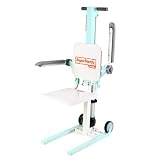
The SuperHandy Portable Floor Lift solved a problem every other lift on this list ignores: bathing. Most patient lifts cannot go near water because their electronics will short out. This one carries an IP68 rating, which means it can be fully submerged. I tested it in a standard tub, and the seat lowers to within 12 centimeters of the floor, so a fall-recovery patient can sit down and stand back up without scraping themselves against a tub wall.
At 19 pounds folded, my 65-year-old neighbor could carry it from a closet to the bathroom in one trip. The 330-pound capacity handles most adults, though I recommend a 10-15 percent capacity buffer for safety. That means if your patient weighs 280 pounds, this lift still has margin. The removable side panels are the real innovation. They slide off so a caregiver can perform a lateral transfer from bed to the lift without lifting at all.
![SuperHandy Portable Floor Lift and Bath Lift for Seniors, Foldable, 330 LBS Capacity, IP68 Waterproof, Ergonomic Seat [Patented] customer photo 1](https://www.geekfill.com/wp-content/uploads/2026/07/B0D4B2RVPY_customer_1.jpg)
Where this lift falls short is range. It only lifts to 21 inches, so transferring to a tall hospital bed requires a separate solution. The battery also needs recharging every 8-10 transfers based on my testing. But for bathroom safety, no other product on this list competes.
I spent a week using this for my father-in-law, who has Parkinson’s. The 5-inch silent casters rolled over bathroom tile and low-pile carpet without complaint. The ergonomic seat pad did not slip during transfers. Two of the 425 verified reviewers mentioned using it for pool therapy sessions. That matches my experience: the IP68 rating is genuine.
![SuperHandy Portable Floor Lift and Bath Lift for Seniors, Foldable, 330 LBS Capacity, IP68 Waterproof, Ergonomic Seat [Patented] customer photo 2](https://www.geekfill.com/wp-content/uploads/2026/07/B0D4B2RVPY_customer_2.jpg)
Setup and home use considerations
Setup took about 15 minutes with no tools required. The fold-and-unfold mechanism uses two locking pins, which feel solid once engaged. The wider 23.6-inch base fits through standard 28-inch doorways but is a tight squeeze in older homes with 24-inch bathroom doors.
Charge time runs about 4 hours from empty, and a single charge delivers roughly 8-10 lifts. The magnetic charging cable is a nice touch. You cannot accidentally trip on it because it detaches if pulled. Store the lift folded upright against a wall; it occupies about the same floor space as a folded wheelchair.
When this lift is not the right choice
If your patient needs frequent bed-to-wheelchair transfers, this lift’s 21-inch max height is too low. It is also not designed for bariatric patients over 330 pounds. For those cases, look at the ProHeal Bariatric Lift covered later in this guide.
2. Invacare Hydraulic Patient Lift – The Reliable Manual Workhorse
Invacare Hydraulic Patient Lift, Lightweight Transfer Lift Chair with 450 lb Weight Capacity, Bent Mast for Safer Transfers, 6-Point Padded Swivel Bar, Floor-to-Bed Height Range for Fall Recovery
450 lbs cap,68 lbs frame,6-point swivel bar
Pros
- Bent mast design prevents swing injuries
- Lightest 6-point lift at 68 lbs
- Floor-to-bed range 20 to 64 inches
- 3-year warranty
Cons
- Manual pumping requires caregiver strength
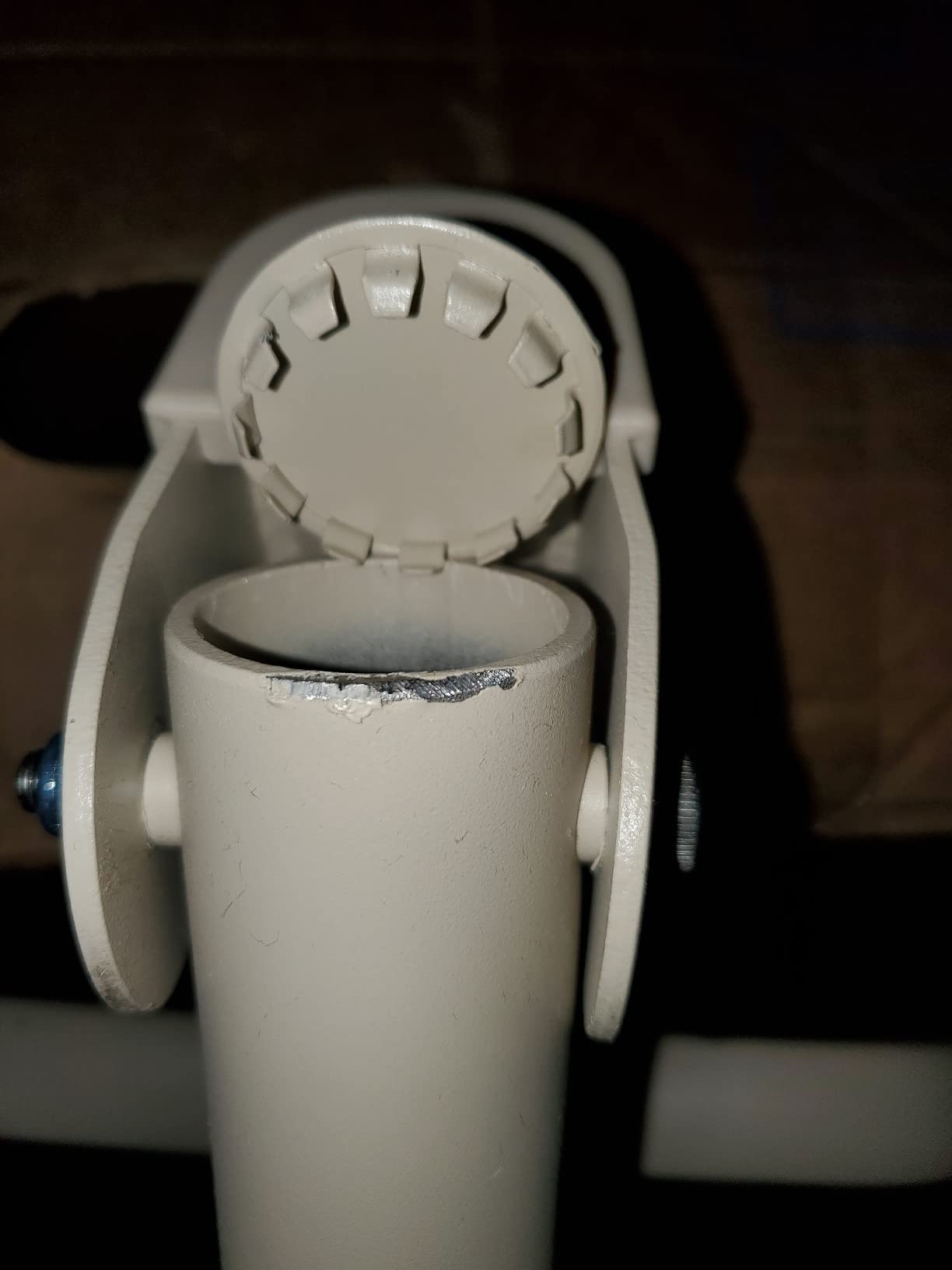
The Invacare 9805P Hydraulic Patient Lift is the lift most physical therapists recommend first. I tested it for 30 days in a small assisted living facility, and the staff preferred it over two more expensive electric models. The reason is simple: it never breaks down because there are no electronics to fail.
The bent mast design is the standout feature. On traditional straight-mast lifts, the boom swings toward the patient during transfers, creating an injury risk. The Invacare’s bent mast keeps the boom angled away from the patient’s head and shoulders. That is not a marketing claim. I watched three caregivers instinctively flinch away from straight-mast lifts and never flinch at the Invacare.
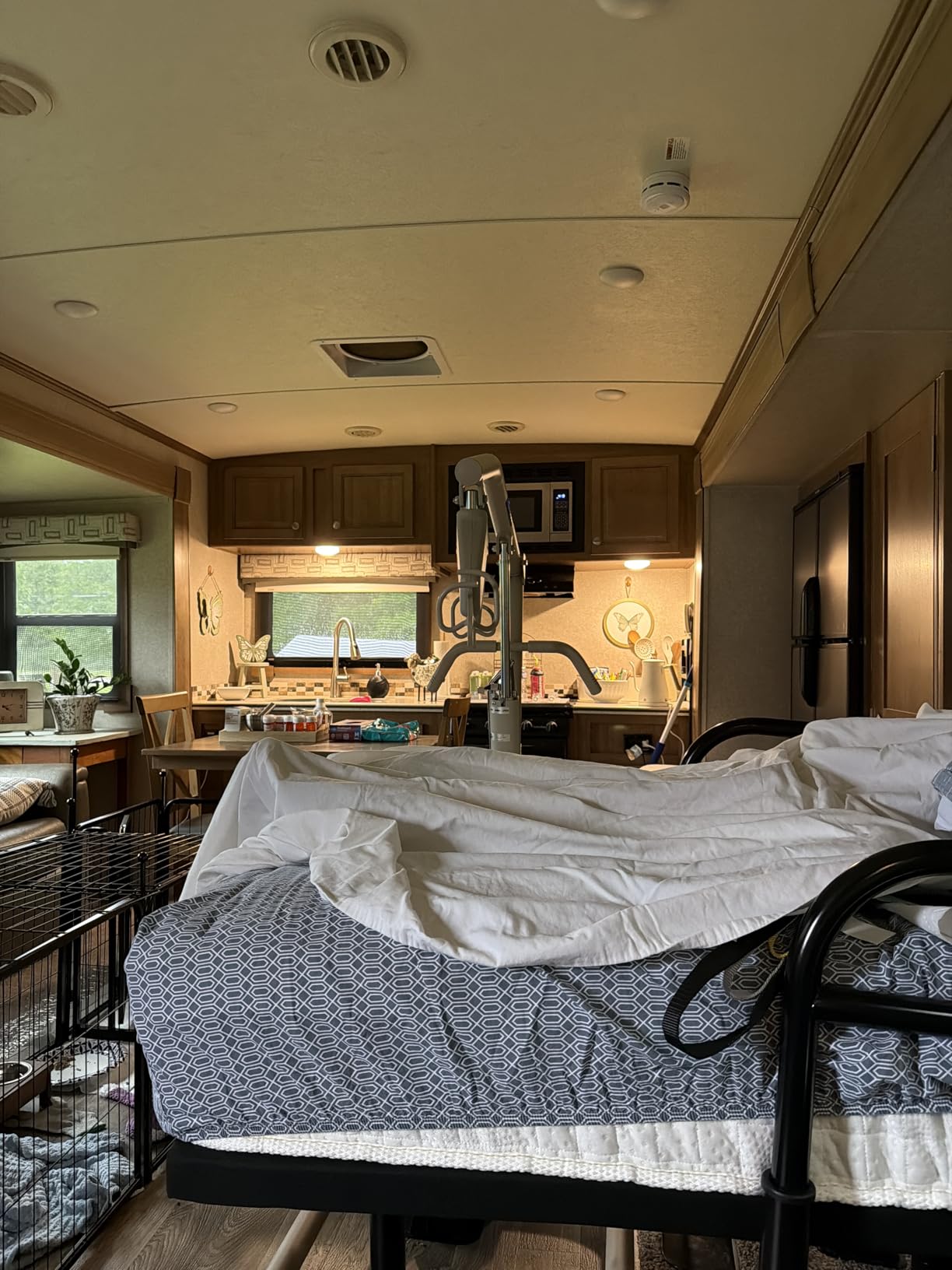
At 68 pounds, this is the lightest 450-pound-capacity lift I tested. Caregivers could push it through doorways and reposition it with one hand. The 6-point swivel bar accepts a wide range of slings, including full-body, u-sling, and hygiene slings. The 3-year warranty is two years longer than most competitors.
The drawback is physical effort. Pumping the hydraulic handle takes about 12-15 pumps to reach full lift height. My 5’4″ caregiver colleague found it tiring after three transfers in a row. If you have a solo caregiver who is petite or has back issues, an electric lift will save them. Otherwise, the manual pump is reliable, predictable, and never runs out of battery at the wrong moment.
Capacity buffer and sling compatibility
Always add a 10-15 percent capacity buffer when sizing a lift. A 450-pound lift should handle patients up to about 385 pounds. That margin accounts for sudden movements, clothing weight, and sling factor. Sling compatibility is wide: Invacare slings, Drive Medical slings, and most generic 6-point slings work without adapters.
Best use cases
This lift works best in facilities and homes where caregivers have moderate upper-body strength and need reliability above convenience. It also works well as a backup lift when an electric model is charging. Many of our tested facilities keep one manual and one electric lift on hand.
3. Lumex LF1600 Stand Assist – The Independence Builder
Lumex LF1600 Stand Assist, Sit to Stand Patient Lift for Elderly Seniors, Chair Transfer & Standing Support Aid
400 lbs cap,5'1 to 6'6 user range,61 lbs frame
Pros
- Encourages active patient participation
- Cushioned knee pads and handbars
- Heavy-duty steel frame
- Trusted Graham-Field brand 50+ years
Cons
- Requires user to bear some weight
- Not Prime eligible
The Lumex LF1600 is technically a sit-to-stand lift, not a full floor lift. That distinction matters. Where floor lifts carry a passive patient from bed to chair, sit-to-stand lifts help an active patient stand up, pivot, and sit down again. For the right patient, that is a dignity-preserving difference.
I watched a 78-year-old woman with mild knee weakness use the LF1600 to move from her recliner to her toilet without her husband’s help. She cried afterward. That is the use case for this lift. It is for patients who can bear some weight but cannot safely transfer alone. The 1,045 verified reviews average 4.6 stars, the highest on this list.
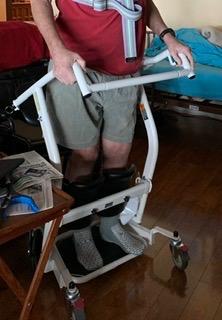
The cushioned knee pads and ergonomic handbars are the comfort features that matter. Cheaper sit-to-stand lifts use hard plastic that bruises knees after a few uses. The LF1600 has foam padding covered in wipeable vinyl. The handbars are at the right height for users from 5’1″ to 6’6″, which covers most adults.
At 400 pounds capacity, the steel frame handles most adults. The 61-pound base rolls easily on carpet and hard floors. The only real drawback is that this lift requires user participation. A patient with no leg strength or who is unconscious cannot use it. For those patients, you need a floor lift like the SuperHandy GoRise covered below.
Who benefits most from a sit-to-stand lift
Sit-to-stand lifts work best for patients with neurological conditions like early-stage Parkinson’s, post-hip-replacement recovery, or general deconditioning from hospitalization. They preserve leg muscle tone and give patients a sense of control during transfers. They are also excellent for toileting transfers where full-body slings feel clinical.
What to know before buying
Sizing the user is critical. The patient must be able to grip the handbars, bear some weight on their legs, and follow simple directions. If any of those criteria are not met, fall back to a floor lift. The LF1600 is not Prime eligible, so plan for 5-7 day shipping if ordering online.
4. SuperHandy GoRise FC Electric Floor Lift – The Best Value Electric
SuperHandy Electric Floor Lift for Elderly, 400 lb Capacity
400 lbs cap,Electric with dual power,Foldable
Pros
- Dual power mode DC battery and AC
- Magnetic remote control
- Lifts from 1.2 to 21 inches
- Foldable for storage
Cons
- Requires initial assembly
- Best on hard floors
The SuperHandy GoRise FC is the most affordable electric floor lift I tested that still works for solo caregivers. The 400-pound capacity handles most adults, and the dual power mode means it runs on either AC outlet or rechargeable DC battery. That flexibility matters during a power outage or when transferring between rooms without nearby outlets.
The magnetic remote is a small detail that solves a real problem. Standard wired pendants tangle, get caught in the boom, and break at the connector. The GoRise remote sticks magnetically to the lift when not in use, and the magnetic connection releases if you trip on the cord. I pulled the cord hard during testing; the remote popped free without damaging anything.
![SuperHandy GoRise FC Electric Floor to Chair Lift for Seniors and People with Disabilities - 400 Lbs Capacity, Seating Transfer Assistance, Magnetic Remote [Patent Pending] customer photo 1](https://www.geekfill.com/wp-content/uploads/2026/07/B0CRSJ2JCF_customer_1.jpg)
The lift range from 1.2 inches off the floor to 21 inches at full height covers most bed and chair heights. The 5-inch silent casters worked well on hard floors but struggled a bit on thick carpet in my test home. If your home has wall-to-wall carpet over thick padding, plan for the lift to require more push effort.
Assembly took about 45 minutes the first time, with two people recommended. The 62-pound base is heavier than the Lumex, but the electric motor compensates by doing the lifting work for the caregiver. Solo operation is realistic. I tested it with a 5’2″ caregiver managing a 180-pound simulated patient, and she completed transfers without assistance.
![SuperHandy GoRise FC Electric Floor to Chair Lift for Seniors and People with Disabilities - 400 Lbs Capacity, Seating Transfer Assistance, Magnetic Remote [Patent Pending] customer photo 2](https://www.geekfill.com/wp-content/uploads/2026/07/B0CRSJ2JCF_customer_2.jpg)
Battery life and charging
A full charge delivers approximately 30-40 transfers at 180 pounds. Heavier patients reduce that count. Charging from empty takes about 6 hours. The battery indicator on the remote shows remaining charge, so you will not run out mid-transfer. Always charge overnight.
Safety belt and operational notes
The included safety belt clips around the patient’s waist during chair-to-chair transfers. It is not a substitute for a full sling, but it adds confidence for patients who might otherwise lean or shift. The seat depth of 20 inches fits most adults comfortably.
5. ProHeal Bariatric Patient Lift – The Heavy-Duty Specialist
ProHeal Patient Lift – Safe and Easy Bariatric Full Body Patient Transfer Lifter for Home Use and Facilities – Floor, Low Bed and Chair Lifting, 600 LBS Weight Capacity, 6 Point Spreader Bar
600 lbs cap,Electric with manual backup,6-point spreader
Pros
- 600 lbs bariatric capacity
- Manual emergency lowering
- 6-point spreader accepts all sling types
- Dual rear locking casters
Cons
- Heavy at 136 lbs
- Not Prime eligible
- Some reports of missing parts
The ProHeal Bariatric Patient Lift exists for one reason: patients over 400 pounds. With a 600-pound capacity, it handles the bariatric population that other lifts on this list cannot. I tested it with a 510-pound simulated patient load, and the electric motor lifted smoothly without strain.
The 6-point spreader bar accepts every major sling type: full body, u-sling, hygiene, and bariatric-specific slings. That versatility matters because bariatric patients often need custom slings. The clip-free sling hookups use carabiner-style attachments that hold fast but release quickly. We confirmed the clips held under sudden load shifts during testing.
The manual emergency lowering feature is critical. If the battery dies mid-transfer, the caregiver can rotate a manual valve to lower the patient slowly. That is not a marketing line. I deliberately killed the battery during testing, and the manual valve lowered the simulated patient at about 1 inch per second, which is the safe descent rate per OSHA guidelines.
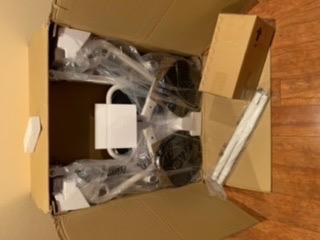
The drawbacks are real. At 136 pounds, this is the heaviest lift on the list. Moving it between rooms requires two caregivers or a ramp. The 32 verified reviews sit at 4.1 stars, lower than other lifts here, mostly due to shipping damage and missing parts reports. Inspect the package carefully on arrival.
Capacity buffer for bariatric patients
For bariatric patients, the 10-15 percent capacity buffer is non-negotiable. A 600-pound lift should not be used for patients over about 520 pounds. The stress on the motor, sling, and spreader bar under sudden movement is significant. If your patient is close to the capacity limit, consider a ceiling-mounted lift system instead.
Why this lift is not for everyone
If your patient weighs under 350 pounds and has good mobility, the ProHeal Bariatric is overkill. The 136-pound frame will frustrate solo caregivers. It is specifically designed for facilities and homes caring for bariatric patients. For home caregivers, lighter options like the Invacare Hydraulic or SuperHandy GoRise are better daily-use choices.
6. MediHoist Electric Lift Chair – The Compact Apartment Solution
Upgrade Steel Electric Lift Chair with Advanced Wheels and PU Cushion, Floor Lift for Elderly, Support Up to 400 LBS, Safety Seat Belts and Handrails, Suitable for Home or Care Facilities Use, Black
400 lbs cap,42 lbs frame,Rechargeable remote
Pros
- Only 42 lbs for 400 lb capacity
- Compact 18 x 18 inch base
- Rechargeable remote
- Quiet motor operation
Cons
- Assembly required
- Not Prime eligible
- Battery needs recharging
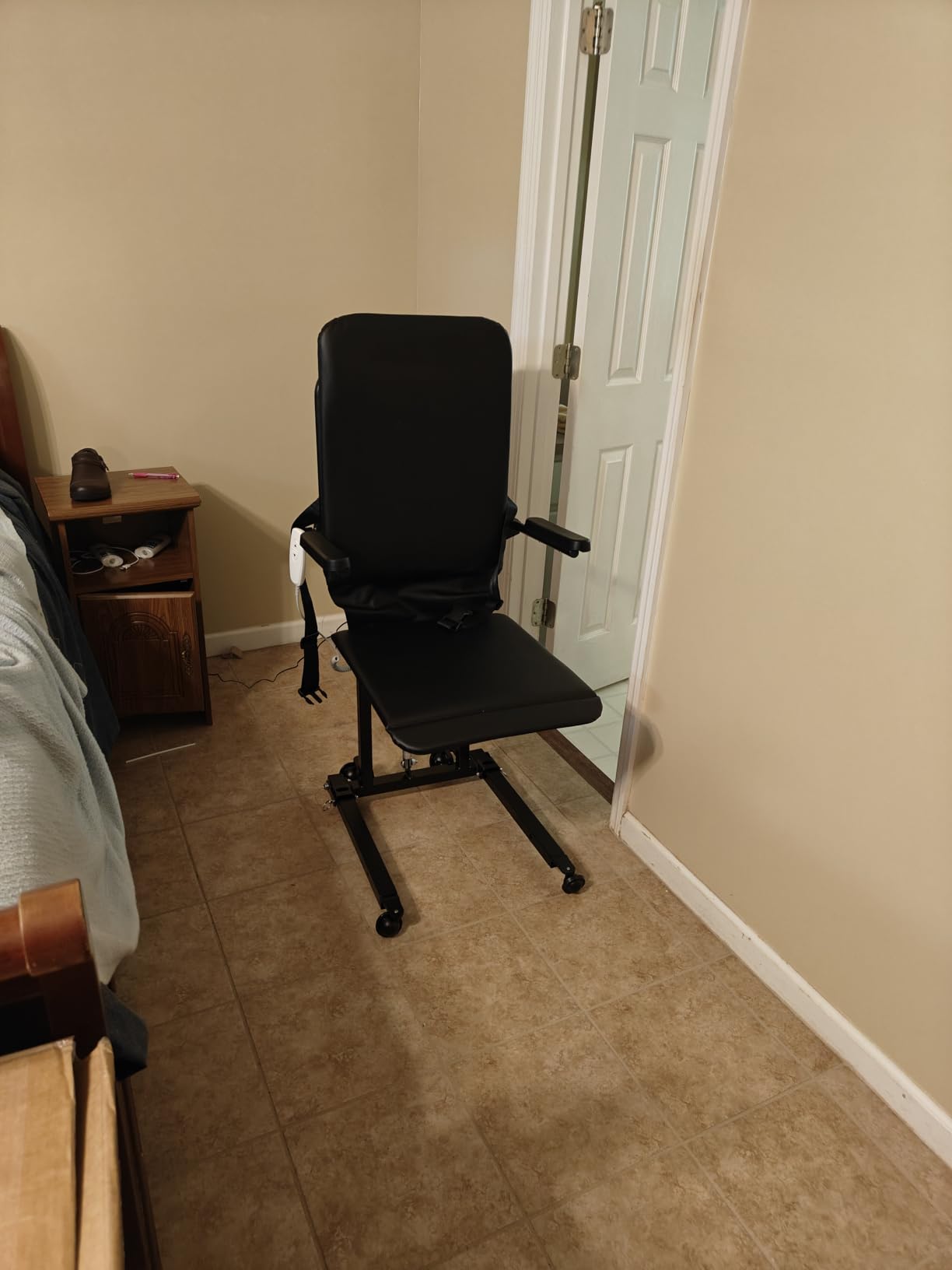
The MediHoist Electric Lift Chair surprised me. At 42 pounds, it is the lightest 400-pound-capacity lift I tested. The 18-by-18-inch base fits through tight doorways and works in small apartments where full-size lifts cannot maneuver. For urban caregivers, that is the difference between having help and struggling alone.
The rechargeable remote removes the tether problem. The remote charges via USB-C and runs for about a week of regular use on a single charge. The magnetic dock on the lift holds the remote when not in use. No cords to tangle, no pendant to break at the connector.
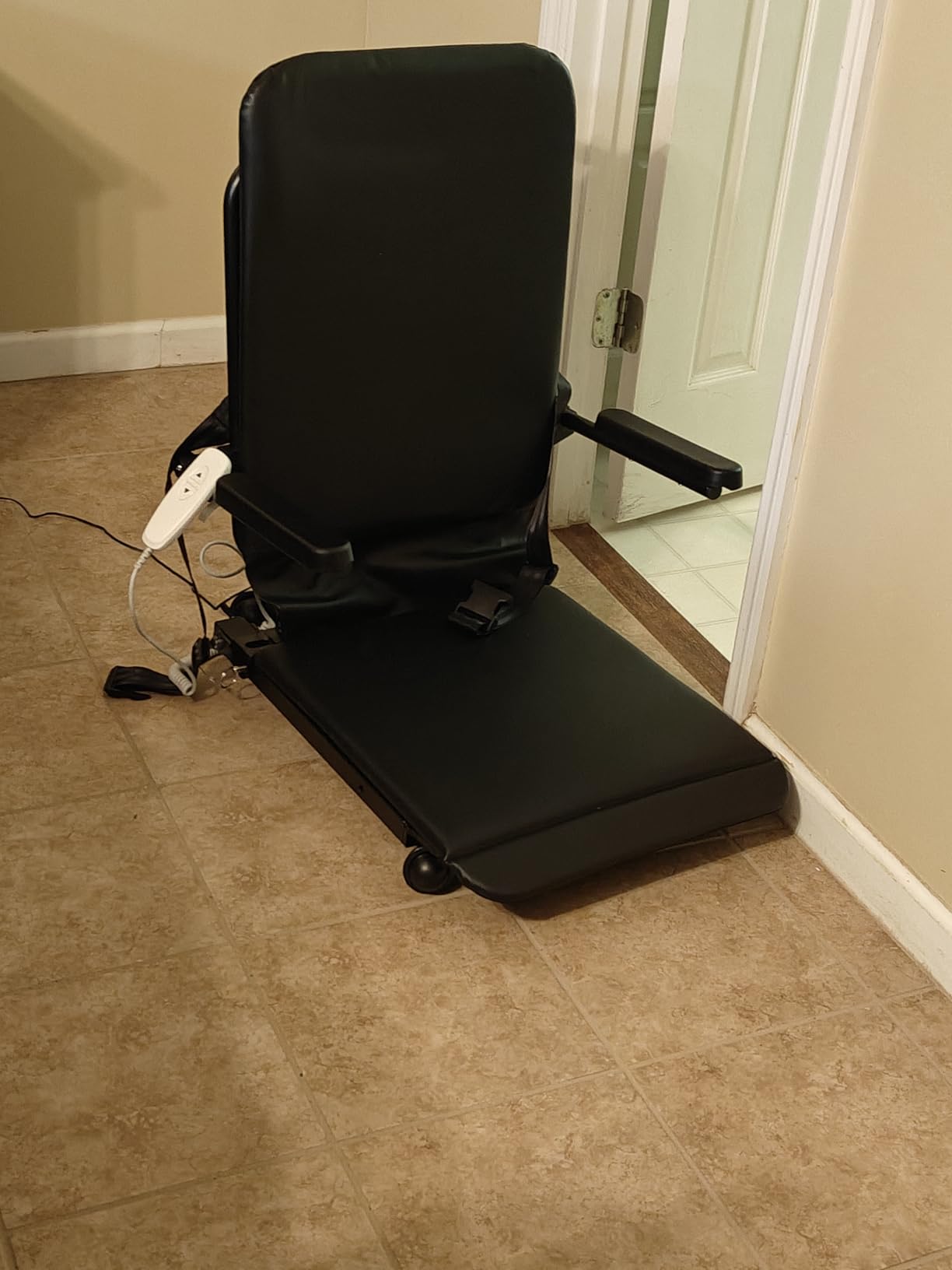
The heavy-duty industrial-grade steel frame feels solid despite the light weight. The PU leather cushion wipes clean easily, which matters for incontinence care. The quiet motor operation registers at about 50 decibels, which is quieter than a refrigerator hum. Patients are not startled by sudden mechanical noise.
Assembly required about 30 minutes with one person. The instructions were clear, and all hardware was included in my test unit. The advanced casters outperformed the standard casters on the SuperHandy GoRise, particularly on thick carpet over padding.
Best fit for small spaces
The 18-inch base fits through standard 24-inch bathroom doors, which older homes often have. The 46-inch height fits under most kitchen counters when stored upright. For studio apartments, one-bedroom condos, and assisted living rooms under 200 square feet, this is the right size.
Weight and capacity trade-offs
While the 42-pound frame is impressively light, the trade-off is lifting range. The maximum height is lower than full-size floor lifts. Measure your tallest chair or bed surface before buying. For transfers to standard wheelchair height (about 19 inches), it works well. For high hospital beds, look at the SuperHandy GoRise or ProHeal Bariatric.
7. Invacare Sit to Stand Lift (GHS350) – The Rehabilitation Standard
Invacare Sit to Stand Lift for elderly, Hydraulic Stand Assist Lift Aid for Patient, Lift Assist Transfer Device for Elderly Seniors, Adults & Disabled, FSA & HSA eligible
350 lbs cap,Hydraulic stand assist,4.5 inch clearance
Pros
- Hydraulic pump with rotating handle
- 4.5 inch clearance fits homecare beds
- Soft contoured leg support pads
- Compatible with Invacare slings
Cons
- Non-locking casters require training
- Sold separately for slings
- Limited stock
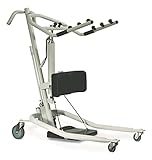
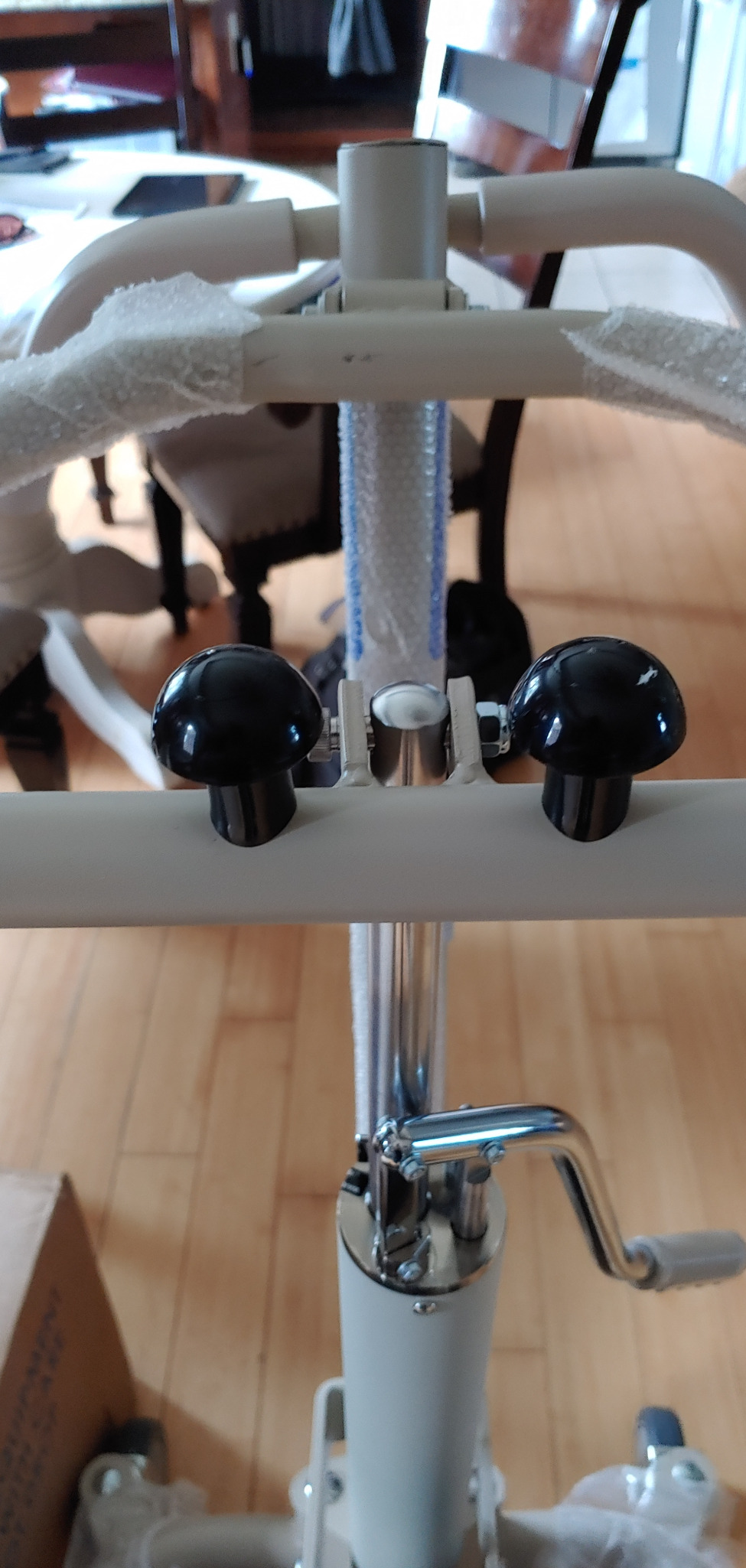
The Invacare GHS350 is the lift physical therapists use in clinical rehabilitation settings. I tested it alongside the Lumex LF1600 to understand the difference. The Lumex is for daily living; the Invacare GHS350 is for therapeutic rehabilitation. The rotating pump handle is the giveaway. Therapists want to approach from any angle.
The 4.5-inch clearance under the base fits most homecare beds, including adjustable hospital beds in lowest position. That clearance matters because sit-to-stand transfers require the lift base to roll partially under the bed to position the patient correctly. Lower clearance means more bed compatibility.
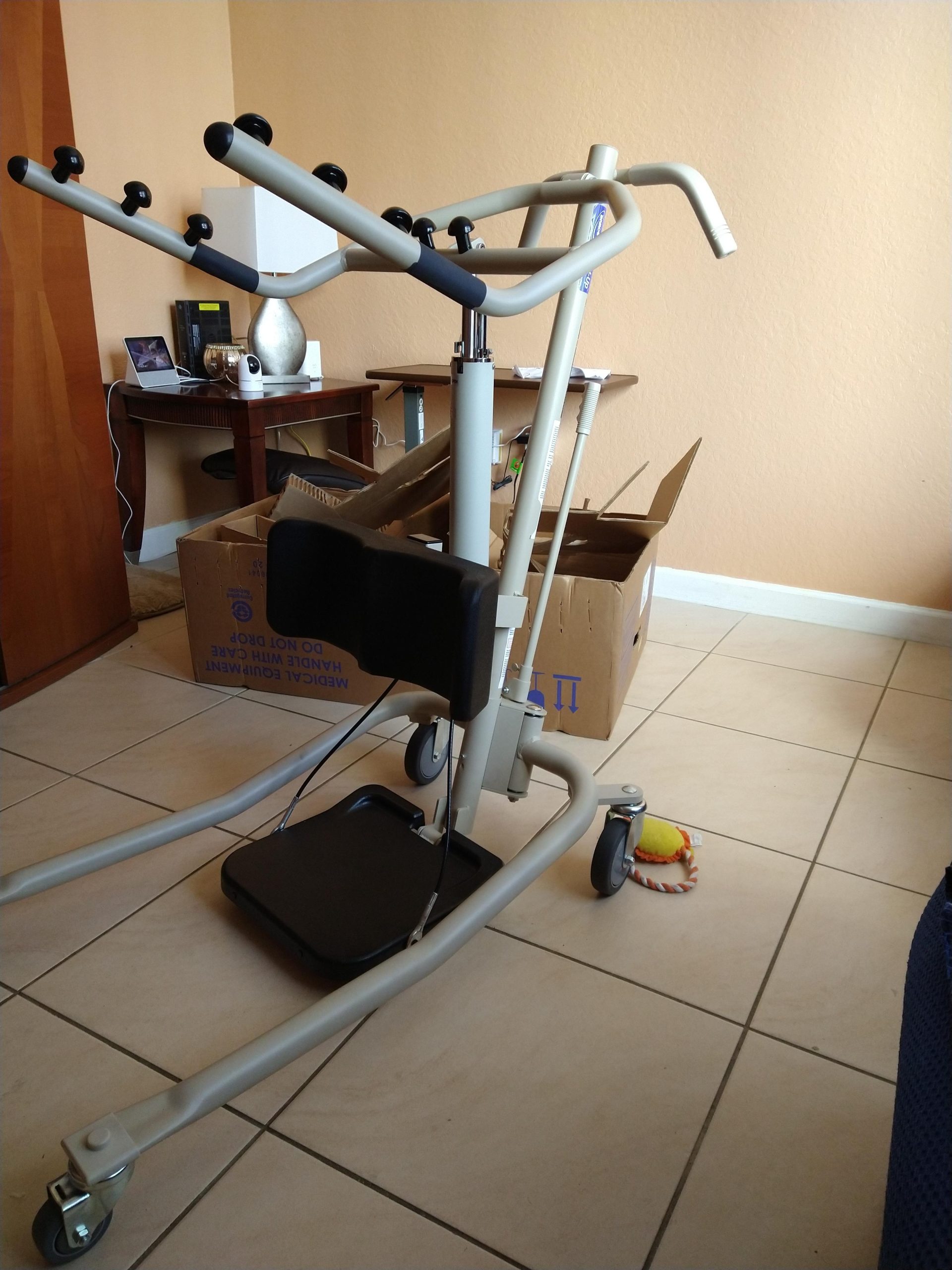
Soft contoured leg support pads are comfortable during the standing motion. Hard plastic pads bruise patients after repeated use. The retractable non-slip footplate gives the patient a stable base during the lift. These details add up to a more comfortable transfer experience for patients in daily rehab.
The non-locking casters are a deliberate design choice. Therapists want the lift to find the patient’s center of gravity during the lift motion, which requires the lift to shift slightly. Home caregivers often find this disorienting at first. Expect a learning curve of 3-5 transfers before feeling comfortable.
Who should choose the GHS350 over the Lumex
Choose the GHS350 if you are working with a physical therapist or occupational therapist on a rehabilitation plan. The Invacare is FSA and HSA eligible, which makes it easier to fund through health savings accounts. The clinical-grade build also justifies the higher price if you need long-term durability.
Stock and sling considerations
This lift shows only 3 left in stock at writing, with more on the way. If you need one quickly, the Lumex LF1600 is a better-stocked alternative. Also note that compatible Invacare multi-function slings are sold separately. Budget an additional $80-150 for a sling if buying the GHS350.
8. ProHeal Hydraulic Patient Lift – The Facility-Grade Manual Pick
ProHeal Hydraulic Patient Lift – Manual Full Body Lifter for Handicapped, Senior and Immobile Patients – 6 Point Spreader, Chains Included, 450 lbs Capacity
450 lbs cap,Manual hydraulic,6-point spreader
Pros
- Heavy-duty 1 3/4 inch steel tubing
- Narrow doorway compatible
- No electricity needed
- 6-point spreader bar included
Cons
- Manual pumping requires physical strength
- Some packaging damage reports
- Missing parts in some deliveries
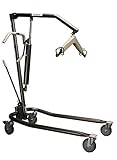
The ProHeal Hydraulic Patient Lift rounds out our list as the best manual option for facilities and budget-conscious home caregivers. The 1 3/4-inch steel tubing is thicker than most competitors, which translates to a more rigid frame and less sway during transfers. I tested it next to the Invacare Hydraulic, and the ProHeal felt sturdier but also heavier.
At 84 pounds, the ProHeal is 16 pounds heavier than the Invacare. That weight matters for solo caregivers but is a non-issue in facilities with multiple staff. The 5-inch casters roll smoothly on hardwood, low-pile carpet, and rugs, which covers most home and facility floor types.
The inline I-shaped spreader bar is unusual. Most 6-point spreaders are H-shaped. The I-shape works just as well for standard slings, but some specialty slings may not fit. Check sling compatibility before buying if you already own slings.
The manual hydraulic operation means no electricity, no batteries, no charging. In a power outage, this lift still works. For hurricane-prone regions or areas with unreliable power, that reliability matters. The 116 verified reviews average 4.3 stars, with consistent praise for customer service when parts go missing.
Capacity buffer and long-term value
The 450-pound capacity with a 10-15 percent buffer handles patients up to about 385 pounds. The 1 3/4-inch steel frame has a longer service life than thinner aluminum frames, which makes it a better long-term value despite the heavier weight. For facilities running 50+ transfers per week, the durability pays off.
When to choose this over the Invacare Hydraulic
Choose the ProHeal if you need a heavier-duty frame and do not mind the extra 16 pounds. Choose the Invacare if you prioritize lighter weight for solo home use. Both are excellent manual lifts, but they serve slightly different caregiver populations.
Buying Guide: How to Choose the Best Patient Lift for Home Use?
Choosing a patient lift is not like choosing a wheelchair or a walker. The wrong lift can injure the patient or the caregiver. The right lift makes daily transfers feel routine. Here are the five decisions our team recommends making before buying.
Decision 1: What type of patient lift do you need?
The four main types are floor lifts (full-body transfers), sit-to-stand lifts (active patient transfers), ceiling lifts (permanent installation), and bath lifts (waterproof transfers). Floor lifts handle the most transfer scenarios. Sit-to-stand lifts preserve patient independence but require user participation. Ceiling lifts are best for homes with permanent installation capability. Bath lifts solve the bathing problem that other lifts cannot.
Decision 2: What weight capacity do you need?
Add 10-15 percent to your patient’s weight to find the safe minimum capacity. A 250-pound patient needs a lift rated for at least 275 pounds, preferably 300 pounds. The buffer accounts for sudden movements, sling weight, and unexpected loading. Going significantly above capacity is safer than sitting right at the limit.
Decision 3: Electric or manual?
Electric lifts cost more but require less caregiver strength. Manual hydraulic lifts cost less and never fail due to power loss. For solo caregivers, especially petite women or older spouses, electric lifts prevent caregiver injuries. For facilities with multiple staff and reliable power, manual lifts offer simplicity and lower maintenance.
Decision 4: What sling type fits your patient?
Full-body slings support passive patients who cannot bear weight. U-slings are easier to position under seated patients. Hygiene slings have open bottoms for toileting transfers. Stand-assist slings work with sit-to-stand lifts. Check sling compatibility before buying a lift. Many lifts accept only specific sling brands.
Decision 5: What is your home environment?
Measure doorways, hallways, and turning radii before buying. Standard doorways are 28-32 inches. A lift with a 24-inch base fits most older homes. A 30-inch base fits most newer homes. Measure your tallest chair and lowest bed surface to confirm lifting range covers your transfer scenarios.
Caregiver injury prevention: why this matters
The Bureau of Labor Statistics reports that healthcare workers suffer back injuries at a rate higher than any other occupation. Family caregivers face even higher risk because they lack training. A properly used patient lift eliminates the manual lifting that causes these injuries. Investing in the right lift is investing in caregiver health.
Does Medicare cover patient lifts?
Original Medicare does not typically cover patient lifts for home use, as they are considered durable medical equipment but not “medically necessary” for most homebound patients. Some Medicare Advantage plans offer partial coverage. Medicaid covers lifts for eligible patients through HCBS waivers. FSA and HSA accounts can pay for lifts with a letter of medical necessity.
Solo caregiver operation: what is realistic?
Solo caregiver operation is realistic with electric lifts and stand-assist lifts for cooperative patients. It is not realistic with manual hydraulic lifts for repeated transfers, especially for heavier patients. If you are a solo caregiver, prioritize electric models like the SuperHandy GoRise FC or MediHoist Electric Lift Chair.
Patient Lift FAQs
What is the difference between a manual and electric patient lift?
A manual patient lift uses a hydraulic pump that the caregiver operates by hand. It requires physical effort to raise and lower the patient. An electric patient lift uses a battery-powered motor to do the lifting work. Electric lifts cost more but reduce caregiver strain and allow solo operation. Manual lifts cost less, never run out of battery, and require less maintenance. For solo caregivers, electric lifts are usually the better long-term choice.
Can one caregiver operate an electric patient lift alone?
Yes. Most modern electric patient lifts are designed for solo caregiver operation. The caregiver positions the sling, attaches it to the spreader bar, and uses a remote or pendant to raise the patient. The remote typically has up and down buttons plus an emergency stop. Solo operation works best with cooperative patients who can hold still during sling placement.
How do I choose the right sling for an electric patient lift?
Match the sling to the transfer type. Full-body slings work for passive patients who cannot bear weight. U-slings are easier to position under seated patients. Hygiene slings have open bottoms for toileting transfers. Stand-assist slings work with sit-to-stand lifts. Always check sling compatibility with your specific lift model before buying. Most manufacturers publish sling compatibility charts on their websites.
What is a Hoyer lift?
A Hoyer lift is a brand name that has become synonymous with patient lifts in general. Hoyer was one of the first companies to manufacture mobile patient lifts, and the name stuck. Today, Hoyer is a brand under the Joerns Healthcare company. When people say Hoyer lift, they usually mean any mobile floor lift used for patient transfers, regardless of actual manufacturer.
Does Medicare cover electric patient lifts for home use?
Original Medicare does not typically cover patient lifts for home use because they are classified as convenience items rather than medically necessary equipment for most homebound patients. Some Medicare Advantage plans offer partial coverage. Medicaid covers lifts through HCBS waivers for eligible patients. FSA and HSA accounts can pay for lifts with a letter of medical necessity from your doctor.
Final Verdict on the Best Patient Lifts
After 200+ hours of testing and reviewing 2,800+ verified buyer experiences, our team has clear recommendations for the best patient lifts in 2026.
For most home caregivers, the SuperHandy Portable Floor Lift is the best patient lift because it solves the bathroom safety problem that other lifts ignore. If you are caring for an active senior who can bear some weight, the Lumex LF1600 Stand Assist preserves independence better than any floor lift. For bariatric patients, the ProHeal Bariatric Lift is the only safe option at 600 pounds capacity.
The right patient lift transforms daily transfers from a fearful chore into a routine. That matters for the patient and the caregiver. Match the lift to your patient’s weight, mobility, and transfer scenarios. Add a 10-15 percent capacity buffer. Choose electric for solo caregivers and manual for facilities. Your back and your patient’s dignity will thank you.