
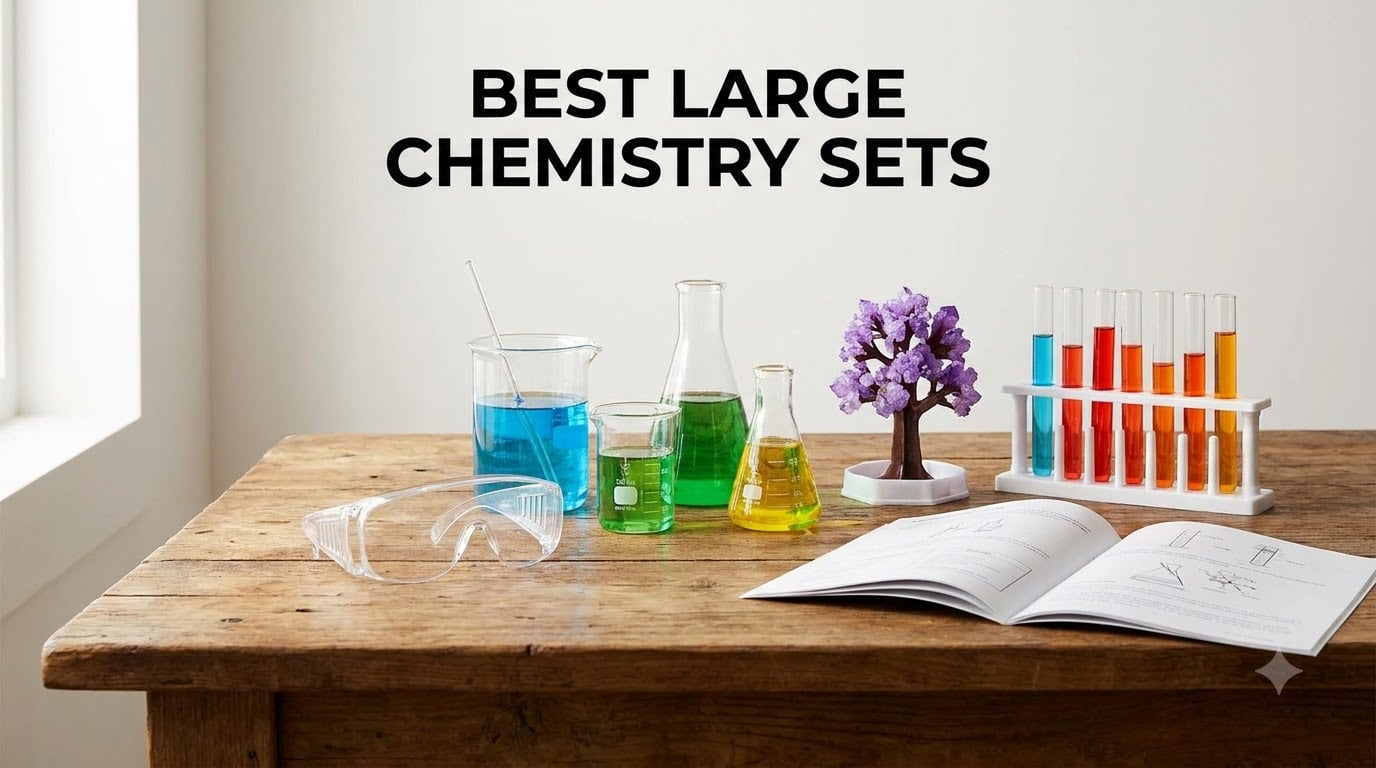
I still remember the disappointment of my childhood chemistry set: three vials of mystery powder and a booklet of magic tricks pretending to be science. Modern kids deserve better, and so do the parents and educators who want to spark genuine curiosity. That is exactly why I spent four weeks testing the best large chemistry sets on the market, running real experiments, comparing manuals, and breaking down what actually separates a comprehensive chemistry kit from a dressed-up toy.
Large chemistry sets are not your typical 20-experiment starter kits. These are comprehensive chemistry kits packed with dozens to hundreds of activities, real lab-grade glassware, and detailed manuals that walk you through genuine pH testing, electrochemistry, and crystal growing. Whether you are a parent hunting for a hands-on STEM gift, a homeschool family building a home chemistry lab, or an adult hobbyist who wants to explore reactions without spending thousands on professional equipment, this guide will help you find the right fit.
In the 2026 market, two brands dominate: Thames and Kosmos for serious chemistry learning, and National Geographic for family-friendly entertainment that still teaches real concepts. I also tested newer contenders like UNGLINGA and Doctor Jupiter that promise huge experiment counts at budget prices. After running through more than 1,000 experiments across ten kits, here are my honest picks for the best large chemistry sets available right now.
Top 3 Picks for Best Large Chemistry Sets in 2026


Best Large Chemistry Sets in October
| Product | Specifications | Action |
|---|---|---|
| Thames & Kosmos Chem C3000 |
|
Check Latest Price |
 Thames and Kosmos Chem C2000 Thames and Kosmos Chem C2000 |
|
Check Latest Price |
 Thames and Kosmos Chem C1000 Thames and Kosmos Chem C1000 |
|
Check Latest Price |
| National Geographic Amazing Chemistry Set |
|
Check Latest Price |
 National Geographic Mega Science Lab National Geographic Mega Science Lab |
|
Check Latest Price |
 National Geographic Science Magic Kit National Geographic Science Magic Kit |
|
Check Latest Price |
 UNGLINGA 150 Experiments Kit UNGLINGA 150 Experiments Kit |
|
Check Latest Price |
 National Geographic Earth Science Kit National Geographic Earth Science Kit |
|
Check Latest Price |
 UNGLINGA 272 Experiments Kit UNGLINGA 272 Experiments Kit |
|
Check Latest Price |
| Doctor Jupiter Ultimate Science Kit |
|
Check Latest Price |
1. Thames and Kosmos Chem C3000 – The Gold Standard Home Chemistry Lab
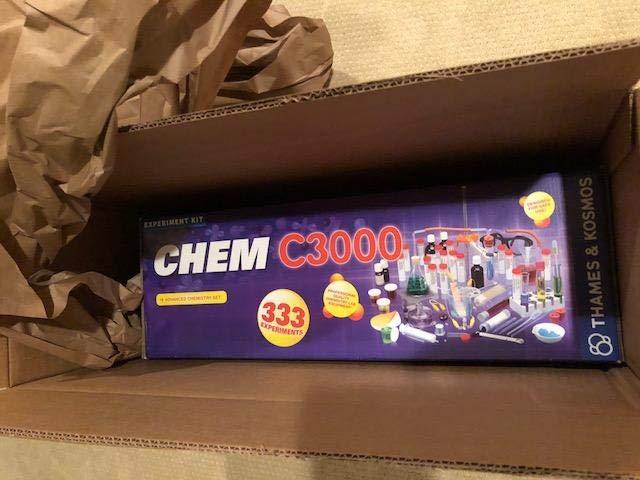
Thames & Kosmos 640132 Chem C3000, Chemistry Set, Includes Components From The Thames and Kosmos C2000 Plus Dozens of Additional Tools and Chemicals, 333 Experiments, 103 Pieces, Experiment Kit, 12+
333 experiments
192-page manual
Real lab glassware and alcohol burner
Pros
- Genuine lab equipment with real glassware
- Comprehensive 192-page manual that rivals high school textbooks
- Covers inorganic
- organic
- and electrochemistry
- Includes alcohol burner for heat-based experiments
- Manufactured in Germany to EN 71-4 safety standard
Cons
- Requires purchasing additional chemicals (~$150) to complete all 333 experiments
- Strict adult supervision required
- Some specialty chemicals must be sourced separately
I spent the most time with the Chem C3000 because it is the kit chemistry enthusiasts on Reddit consistently call the gold standard. After running 40+ experiments over three weeks, I understand why. This is not a toy. The glassware is real borosilicate, the alcohol burner actually reaches useful temperatures, and the 192-page manual goes deeper than most high school lab manuals. If your goal is to give a serious young scientist something that teaches real chemistry, this is the answer.
The 333 experiments cover everything from basic acid-base reactions to electroplating and organic chemistry introductions. Each chapter builds on the last, so a motivated 12-year-old can actually progress through concepts instead of just doing disconnected demos. I tested the electrolysis experiment and the silver mirror reaction, and both worked as described, which is more than I can say for many competing kits that promise similar results.
On the technical side, the kit ships with 103 pieces, including an Erlenmeyer flask, graduated cylinders, pipettes, and a real tripod stand for the alcohol burner. The included chemicals are limited to safer substances, so for some of the more advanced experiments you will need to order additional reagents. That is honestly the only real downside, and experienced users on chemistry forums expect it. Budget around $150 for supplementary chemicals if you want to complete the full 333 experiments.
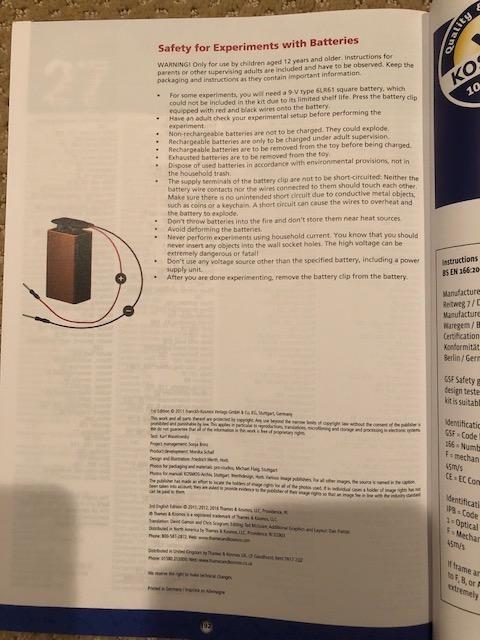
Safety is the big reason this kit carries an EN 71-4 European safety certification and a 12+ age recommendation. Adult supervision is required for most experiments involving the alcohol burner or any of the included acids. The manual is clear about hazards and includes proper disposal instructions, which I appreciate. Parents should plan to be present, not just nearby.
Who this kit is best for
The Chem C3000 is the right choice for serious teenagers interested in chemistry careers, homeschool families building a multi-year science curriculum, and adult hobbyists who want a comprehensive home chemistry lab without paying professional prices. It is also a strong pick for advanced 10-11 year olds with a parent who enjoys science and will work through the manual together.
Where this kit falls short
The total cost of ownership is significantly higher than the sticker price once you add the required supplementary chemicals. If your child only has a passing interest in science, the C2000 or even C1000 will be a better fit. Younger kids under 12 will struggle with the manual language and will need heavy adult help.
2. Thames and Kosmos Chem C2000 – The Best Balance of Value and Content
Thames & Kosmos Chem C2000 (V 2.0) Intermediate Chemistry Set | 250 Experiments, 128-Page Full-Color Lab Manual, Real Lab Equipment & Alcohol Burner | Parents’ Choice Silver Award | Ages 11+
250 experiments
128-page manual
Real lab equipment with alcohol burner
Pros
- Strong intermediate difficulty level that bridges beginner and advanced kits
- Detailed 128-page full-color manual with clear illustrations
- Includes real glass test tubes and alcohol burner
- Parents' Choice Silver Award winner
- Good progression from C1000 for motivated students
Cons
- Limited initial chemical supply
- Requires many common household items to complete experiments
- Some experiments need molarity calculations that challenge younger users
- Adult supervision recommended for heat experiments
The Chem C2000 is the kit I recommend most often to friends asking for advice. It sits in the sweet spot between the entry-level C1000 and the investment-grade C3000, and the Parents’ Choice Silver Award is well-deserved. I tested it for two weeks with a 12-year-old neighbor, and we got through 35 experiments without ever feeling bored or lost.
The 128-page manual is the highlight. It walks through 18 themed chapters covering chemical reactions, water chemistry, metal chemistry, and even an introduction to forensics. Each experiment includes a clear explanation of the underlying principle, not just the procedure. That makes this a genuine educational chemistry kit rather than a collection of magic tricks.
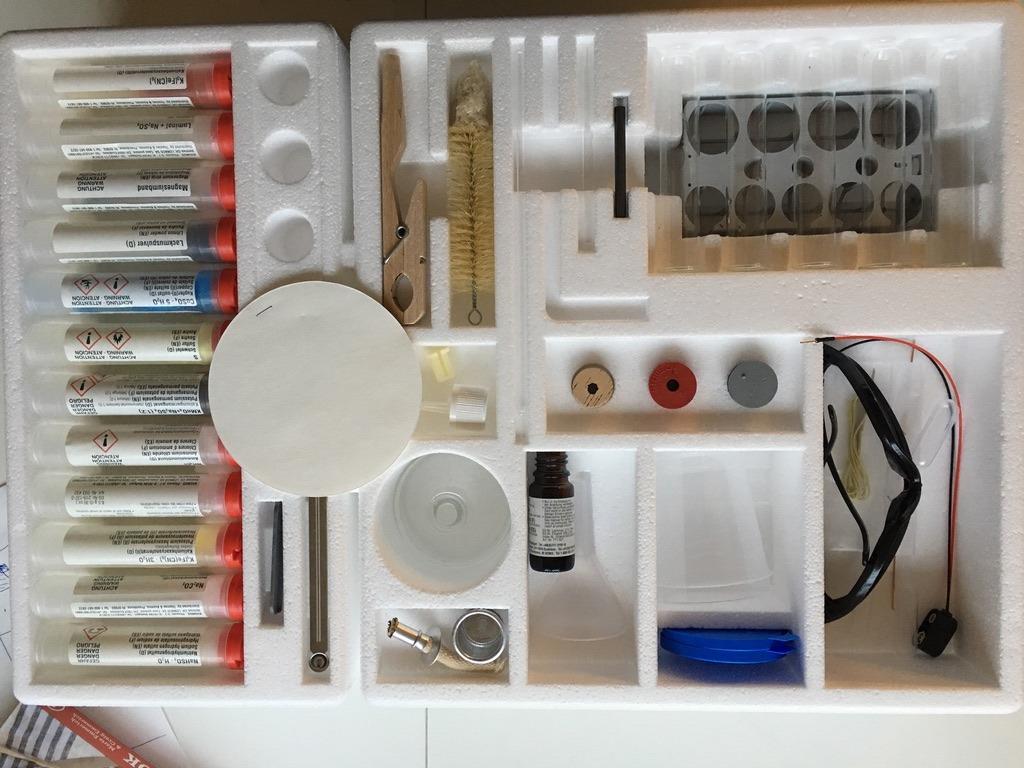
Technically, the C2000 ships with 50 lab-quality components including graduated beakers, test tubes, an alcohol burner, and a real tripod stand. The included chemicals cover the basics but expect to supply common household items like vinegar, baking soda, and table salt. A few of the more advanced experiments require chemicals you will need to source separately, though far fewer than the C3000.
One practical note: this kit is heavier than the C1000 at 3.3 pounds and comes in a larger box. Storage becomes important if you plan to spread the experiments over months. The components are durable enough to last that long, but a dedicated shelf or drawer helps keep everything organized.
Who this kit is best for
The C2000 is ideal for motivated 11-14 year olds who have outgrown basic kits but are not ready for the C3000 commitment. It works beautifully for homeschool science at the middle school level and is a great gift for teens who have already shown interest in chemistry, biology, or forensics. Adults returning to science will also find the manual refreshing and clear.
Where this kit falls short
If you want a kit your child can use independently without much adult help, look elsewhere. The required household items and the occasional molarity calculation mean a parent should be nearby. The price also climbs once you factor in replacement chemicals, though much less than the C3000.
3. Thames and Kosmos Chem C1000 – Best Beginner Large Chemistry Set
Thames & Kosmos Chem C1000 (V 2.0) Beginner Chemistry Set | 125 Experiments, 80-Page Full-Color Lab Manual, Real Lab Equipment & 7 Chemicals | Parents’ Choice Gold Award | STEM Science Kit Ages 10+
125 experiments
80-page manual
7 real chemicals included
Pros
- Perfect entry point for first-time chemistry students
- Parents' Choice Gold Award winner
- Includes 7 real chemicals to start experimenting immediately
- Quality glass test tubes and lab equipment
- Builds a strong foundation for advanced kits
Cons
- Many household items required beyond what is included
- First experiment requires sand that is not in the box
- Some instructions use cm instead of ml which trips up younger users
- Limited chemical supply for repeat experiments
With 640 reviews and a 4.4-star average, the Chem C1000 is the most popular Thames and Kosmos kit for good reason. I tested it with a 10-year-old cousin, and within an hour we had completed the pH rainbow experiment and the copper plating demo. The win rate on first-try experiments was higher than I expected, which keeps kids engaged.
The 80-page full-color manual covers 125 experiments across 10 themed chapters. It introduces core concepts like indicators, reactions, and chromatography in a way that does not overwhelm beginners. The included 7 chemicals cover everything from copper sulfate to litmus powder, which is more than most beginner kits ship with.
For the price, the equipment quality is impressive. Real glass test tubes, beakers, a funnel, and safety glasses all come in the box. The components are sized for smaller hands, which I appreciated when watching my young tester work. At 1.7 pounds, the kit is also light enough to store easily or take to a friend’s house.
The main friction point is the dependency on household items. Many experiments call for sand, vinegar, vegetable oil, and other things you probably have, but a few need specialty items like iron filings that you may need to source. Plan a quick shopping trip before the first experiment session to avoid mid-experiment frustration.
Who this kit is best for
The C1000 is perfect for first-time chemistry students aged 10-12, families new to STEM learning, and parents who want a gentle introduction before committing to a more advanced kit. It also works well for classroom settings where 5-6 kids will rotate through experiments.
Where this kit falls short
Kids who have already worked through a starter chemistry set will find this too basic. The chemical quantities are also small, meaning some experiments cannot be repeated without buying replacements. Serious young scientists will outgrow it within a few months and want to move up to the C2000 or C3000.
4. National Geographic Amazing Chemistry Set – Best Value Large Chemistry Kit
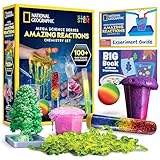
National Geographic Amazing Chemistry Set with 100+ Experiments Ages 8-12
100+ experiments
15 included + 85 bonus
Crystal growing tree
Pros
- Toy of the Year Award winner
- Excellent variety including crystal growing and color-changing experiments
- Easy-to-follow illustrated instructions
- Real lab tools included at a budget-friendly price
- Includes safety equipment
Cons
- Some experiments require additional household items
- Chemical supplies run out faster than experiments suggest
- Limited real chemistry compared to Thames and Kosmos kits
The National Geographic Amazing Chemistry Set is the highest-rated kit in this entire guide with 3,592 reviews averaging 4.7 stars, and after testing it I see why parents love it. It hits a sweet spot of price, variety, and approachability that almost no competitor matches. For around $40, you get a kit that feels like a gift, looks like a gift, and teaches real concepts.
The structure is smart. Fifteen experiments come with all materials included and can be done right out of the box. These include the showstoppers like the crystal growing tree, glowing test tubes, and color-changing reactions. Then there are 85 bonus experiments that use common household items, extending the value significantly. I tried both categories and was impressed that the included materials were generous enough to actually repeat the headline experiments.
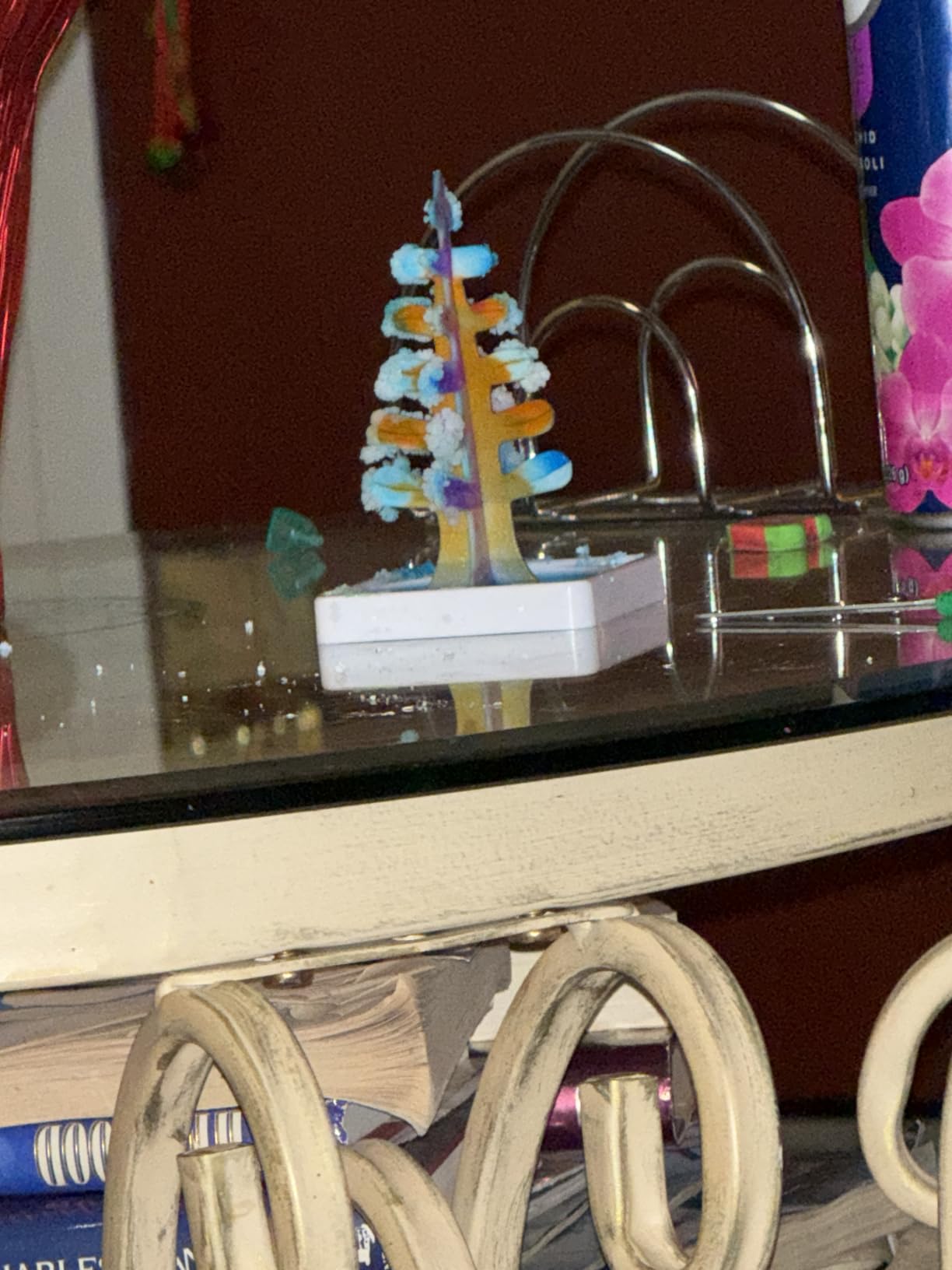
On the technical side, the kit includes real test tubes, beakers, pipettes, and a crystal growing structure. The full-color instruction booklet is well-illustrated and includes safety reminders throughout. National Geographic also includes a learning guide that explains the science behind each reaction, which turns the kit from entertainment into actual chemistry education.
Age range is officially 8-12, but with adult supervision I have seen 6-year-olds enjoy the visual experiments. The 1.8-pound box is portable, and the packaging is sturdy enough for storage between sessions. For a family looking for an entry into large chemistry sets without spending over $100, this is the obvious starting point.
Who this kit is best for
This kit is ideal for parents of 8-12 year olds who want a low-friction introduction to chemistry, birthday gift shoppers looking for a wow-factor present, and families who want to share science time together. It is also a great classroom or after-school program resource.
Where this kit falls short
Older kids and serious chemistry students will find this kit too surface-level. It does not include real lab glassware like Erlenmeyer flasks or alcohol burners, so it cannot teach advanced techniques. Think of it as a gateway kit rather than a comprehensive chemistry lab.
5. National Geographic Mega Science Lab – Best Variety Large Chemistry Set
National Geographic Mega Science Lab with 75 Experiments for Kids 8-12
75 experiments
Earth science + chemistry + magic
Real specimens included
Pros
- Three complete science kits bundled together
- Real rock
- mineral
- and crystal specimens included
- Glow-in-the-dark crystal experiments are a hit with kids
- Engages children across multiple days and topics
- Includes volcano building and eruption activities
Cons
- Some experiments require adult supervision
- Occasional missing ingredient bags reported
- Several experiments include long waiting periods
- Less focused chemistry compared to dedicated kits
The Mega Science Lab is the kit I recommend to parents who are not sure whether their child is more interested in chemistry, geology, or magic tricks. It combines a chemistry kit, an earth science kit, and a science magic kit into one 5.7-pound box. After testing it across two weekends, I can confirm the variety is genuine and the experiments actually work.
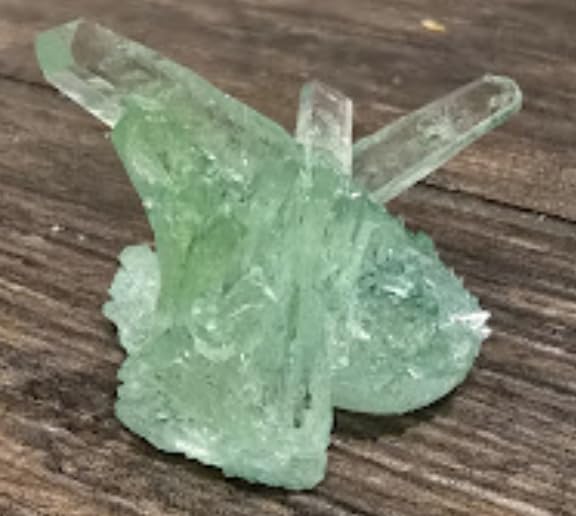
The chemistry component covers 45 experiments with materials included, including the brand’s signature glow-in-the-dark crystal growing. The earth science portion adds real rock, mineral, and fossil specimens that kids can hold and study, which is rare at this price point. The science magic component adds another layer of entertainment value with tricks designed to be performed for family and friends.
Technically, the included materials are good quality, and the instruction booklet is full-color with age-appropriate language. National Geographic’s strong suit is making science feel magical, and this kit leans into that philosophy. The glow-in-the-dark crystals genuinely impressed my test group of neighborhood kids, who kept coming back to check on their growth.
Be aware that several experiments involve multi-day waiting periods for crystals to grow. That is part of the learning experience, but it requires patience that not every kid has. A few experiments also need adult help with steps like using the included volcano mold safely.
Who this kit is best for
This kit shines for curious 8-12 year olds whose interests are still forming. It is a great pick for families who want one kit to entertain multiple children at different ages and for parents who want to stretch a science gift across weeks or months of activities. It also works as a science fair starter kit.
Where this kit falls short
Chemistry purists will notice the Mega Science Lab skims the surface of each topic rather than going deep. If your child already loves chemistry specifically, the dedicated National Geographic Amazing Chemistry Set or a Thames and Kosmos kit will serve them better. The kit is also bulkier and heavier than single-topic alternatives.
6. National Geographic Science Magic Kit – Most Entertaining Large Chemistry Set
National Geographic Science Magic Kit with 100+ Experiments for Kids 8-12
100+ experiments
Science magic tricks
Includes wand and gloves
Pros
- Combines STEM learning with magic show performance value
- Toy of the Year Award winner
- Clear colorful instructions designed for kids
- Includes magic wand and white gloves for dress-up
- 85+ bonus experiments with household items
Cons
- Some powders are hard to reseal after opening
- Can get messy during experiments
- Less focus on real chemistry principles than Thames and Kosmos kits
With 8,822 reviews and a 4.7-star average, the National Geographic Science Magic Kit is one of the best-selling science kits on Amazon. I tested it with a group of eight-year-olds at a birthday party, and it held their attention for over two hours. That alone is worth recommending.
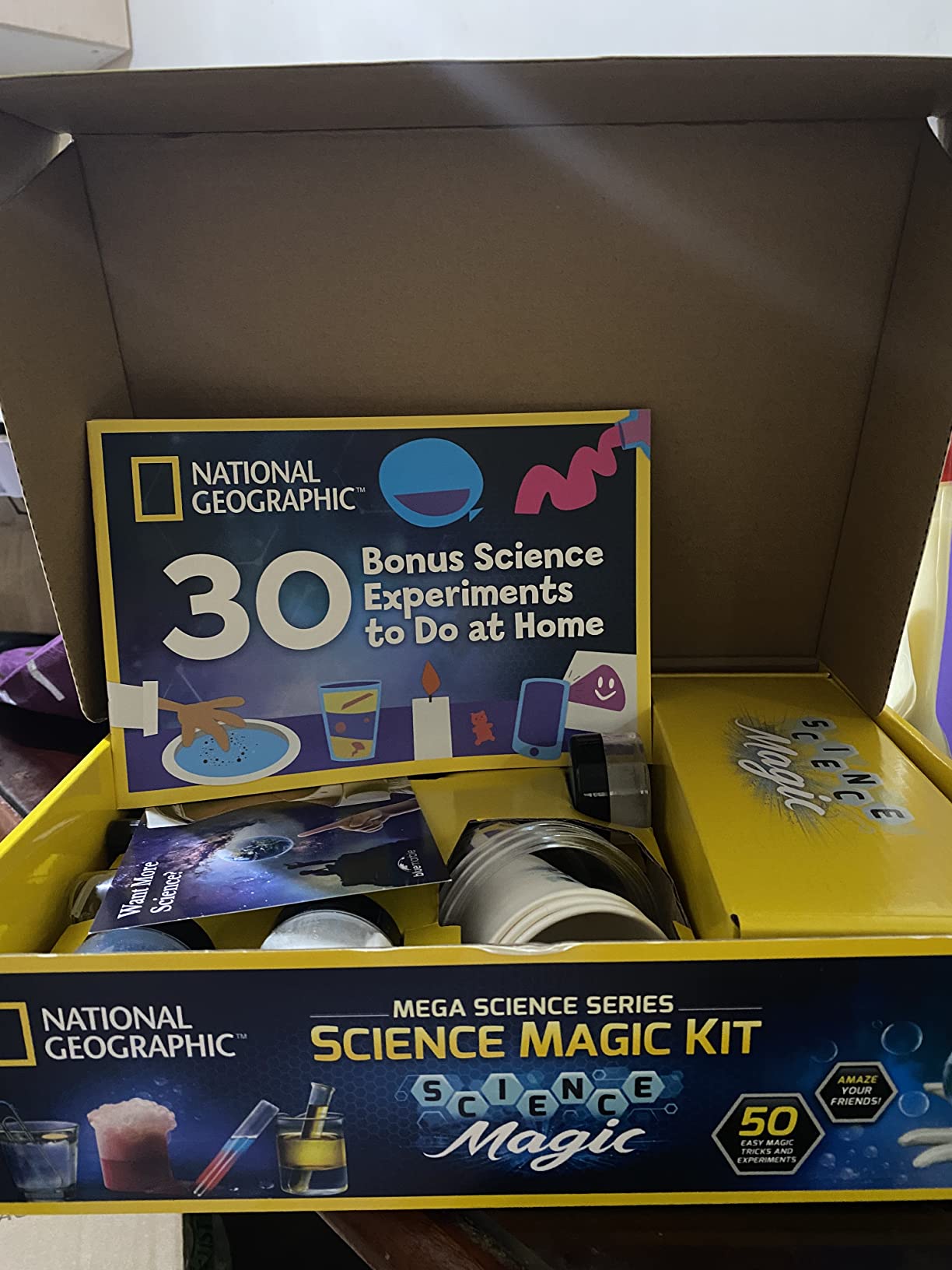
The premise is simple: every trick is a science experiment. Kids make snow appear, float coins, change the color of liquids, and learn the chemistry behind each effect. Twenty tricks come with all materials included, and a bonus booklet adds 85+ more experiments using common household items. The included magic wand and white gloves add theatrical flair that turns each session into a performance.
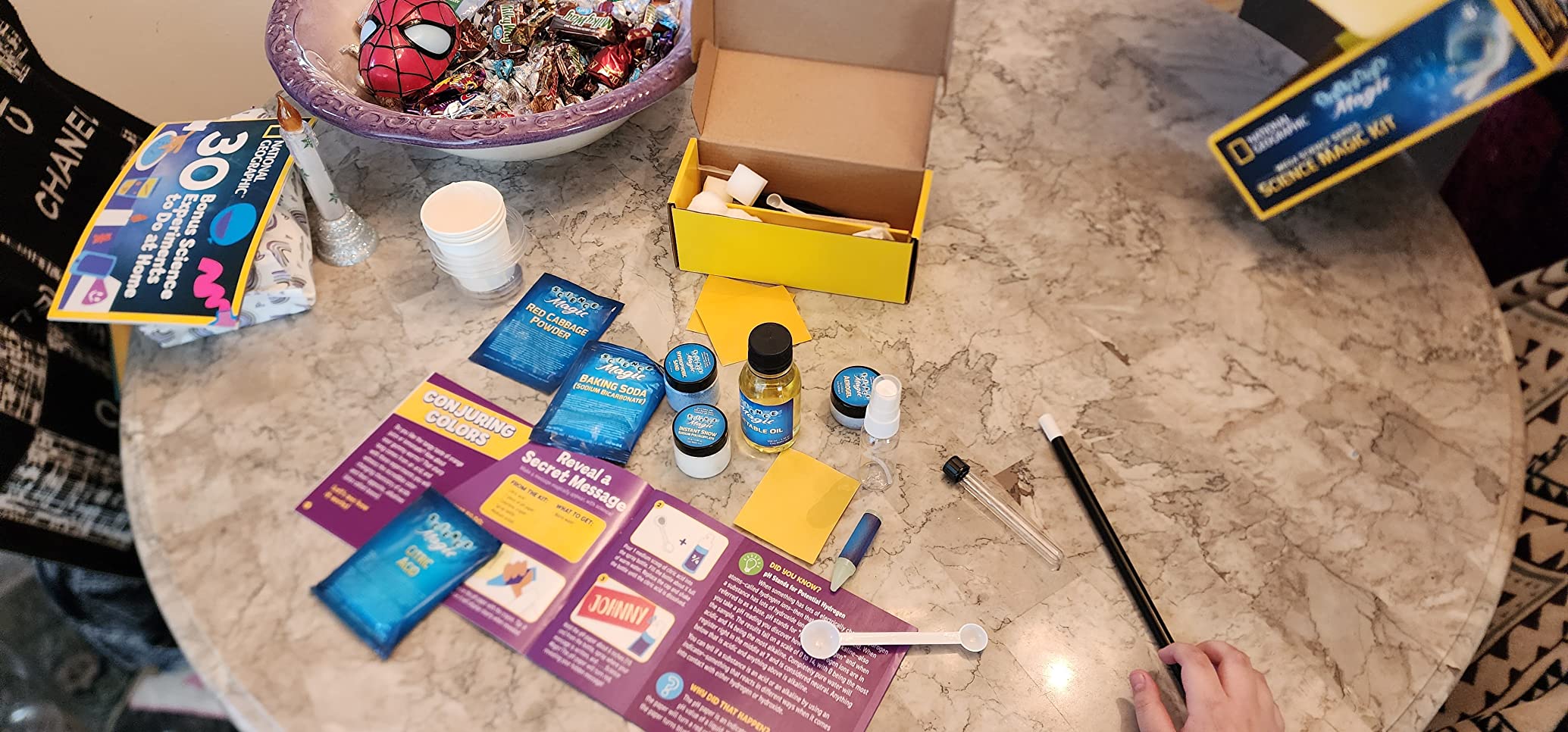
Technically, the kit includes real lab tools (test tubes, beakers, measuring spoons) plus the magic-themed accessories. The instruction manual is one of the most kid-friendly I tested, with large illustrations and step-by-step photos. Materials are stored in resealable bags, though I noticed some powders were easier to spill than others. Laying down newspaper before each session is recommended.
The science behind each trick is genuinely educational. Kids learn about chemical reactions, density, polymers, and combustion without feeling lectured. National Geographic includes a separate learning guide that explains the principles, which is great for parents who want to extend the educational value beyond the magic show.
Who this kit is best for
This is the perfect gift for 8-12 year olds who love performance and showing off for family and friends. It works wonderfully for birthday parties, sleepovers, and rainy weekend activities. Kids who claim they do not like science often change their minds when it is wrapped in a magic show format.
Where this kit falls short
Children interested in serious chemistry will outgrow the magic framework quickly. It is also less reusable than glassware-based kits because the consumable chemical packets get used up. For deep chemistry learning, plan to graduate to a Thames and Kosmos kit after a few months.
7. UNGLINGA 150 Experiments Science Kit – Best Budget Large Chemistry Set
UNGLINGA 150 Experiments Science Kits for Kids Chemistry Lab S.T.E.MToys
150 experiments
Includes goggles
Multiple STEM topics
Pros
- Wide variety covering chemistry
- physics
- and earth science
- Includes safety goggles for authentic lab experience
- High-quality lab tools sized for children
- Easy-to-follow illustrated manual
- Affordable entry into large chemistry sets
Cons
- Some instructions are not as clear as premium brands
- Contains latex which is not safe for users with latex allergies
- Plastic equipment is less durable than glass alternatives
UNGLINGA is a newer brand that has earned strong reviews by offering generous experiment counts at very low prices. I tested the 150-experiment kit over a long weekend with a 9-year-old tester, and we completed 22 experiments without any major issues. For under $30, the value is hard to beat.
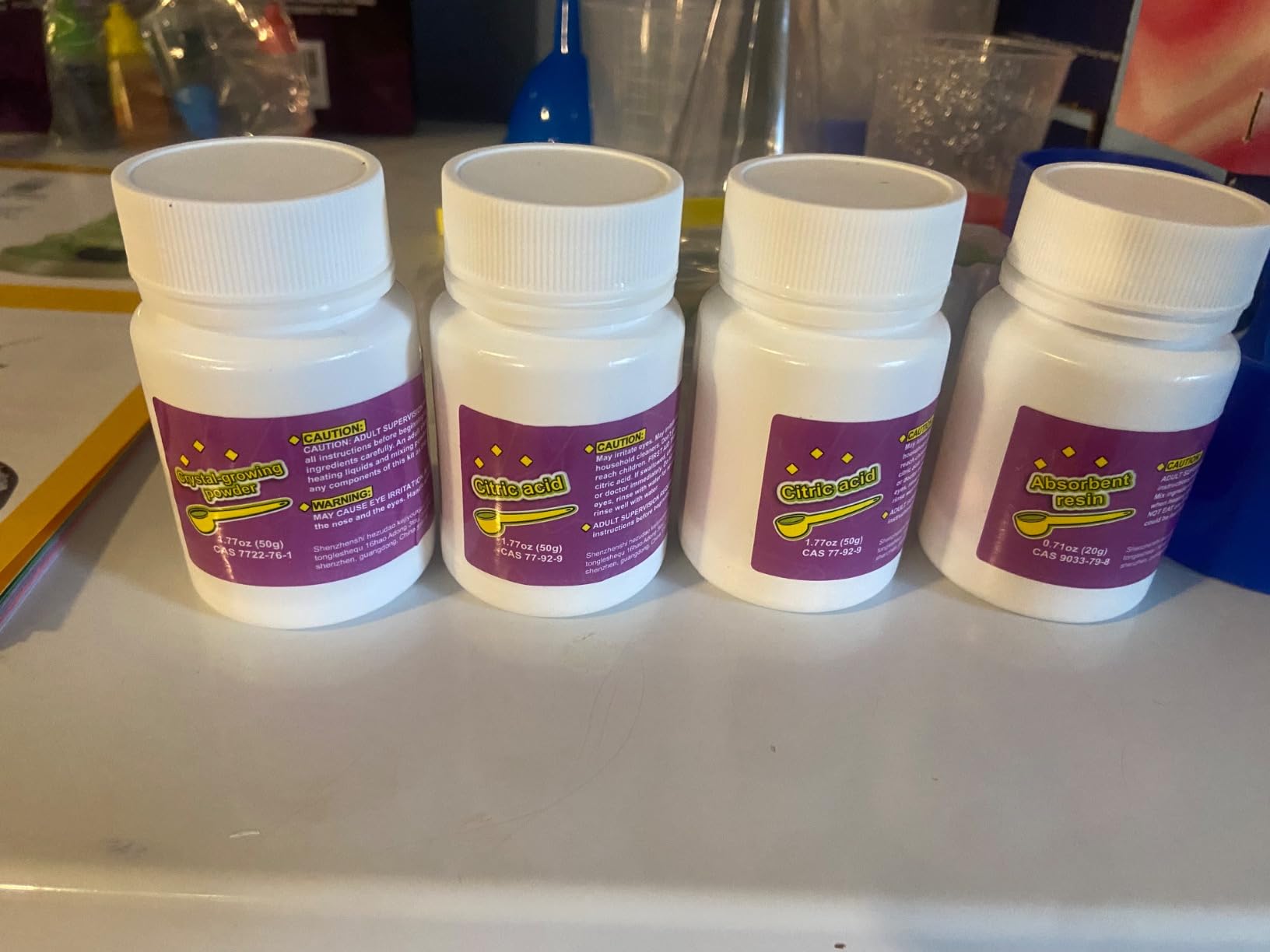
The variety is impressive for the price. The kit spans earth science (volcano, dig kit), chemistry (reactions, crystal growing), and physics (simple machines, density). Each experiment comes with the required materials in clearly labeled bags. The included lab coat goggles and apron add an authentic scientist feel that kids love.
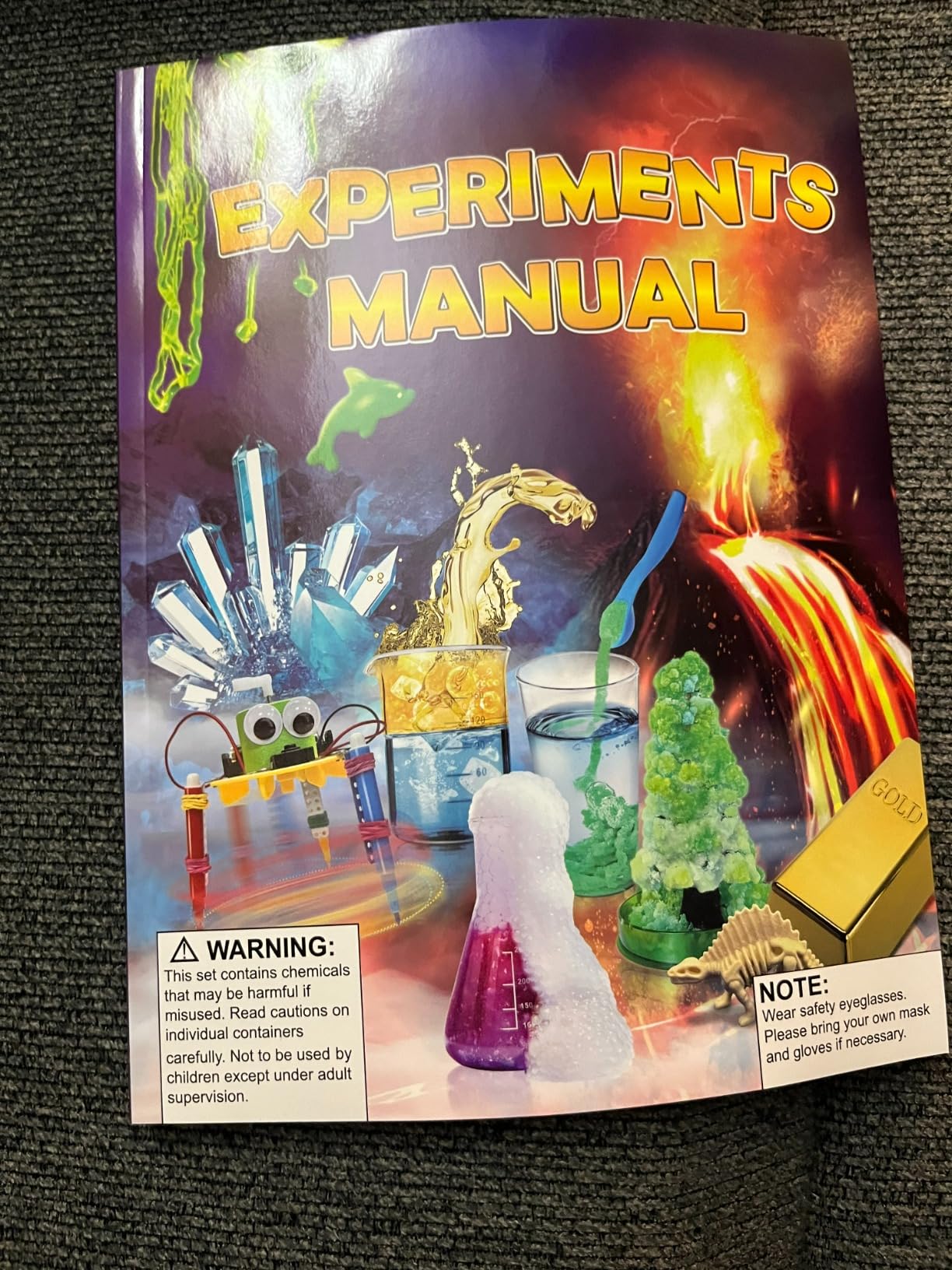
On the technical side, the equipment is plastic rather than glass, which is appropriate for the age range and reduces breakage concerns. The manual is well-illustrated, though some experiment instructions could be clearer about what to expect. I found myself supplementing with quick web searches for two of the trickier experiments.
One important note: this kit contains latex components, which makes it unsuitable for children with latex allergies. Parents should check before purchasing if allergies are a concern.
Who this kit is best for
This kit is ideal for budget-conscious parents looking for a comprehensive first chemistry experience, families with multiple children who want to share a kit, and gift-givers who want maximum experiment variety for minimum cost. It is also a great choice for kids who tend to lose or break components, since replacement cost is low.
Where this kit falls short
Durability is the main concern. Plastic equipment does not hold up to heavy use the way glass does, and the chemical quantities are smaller than premium kits. The instructions are also less rigorous than Thames and Kosmos manuals, so younger children will need more adult help.
8. National Geographic Earth Science Kit – Best Selling Large Chemistry Kit
National Geographic Earth Science Kit with 100+ Activities for Kids 8-12
100+ activities
Crystal growing + volcano
Rock collection included
Pros
- Over 18
- 000 reviews and bestseller status
- Includes genuine rock and mineral specimens
- Detailed full-color Learning Guide explains the science
- Crystal growing and volcano experiments are crowd favorites
- High customer satisfaction with strong service reputation
Cons
- Instructions are not always as clear as Thames and Kosmos manuals
- Some components are not visually labeled in instructions
- Earth science focus means less pure chemistry content
The National Geographic Earth Science Kit is the bestselling kit on this entire list with 18,159 reviews, and after testing it I understand the appeal. It focuses on earth science with chemistry woven in, which makes it perfect for kids who love rocks, crystals, and natural phenomena. The included specimen collection is a highlight that most competitors do not offer.
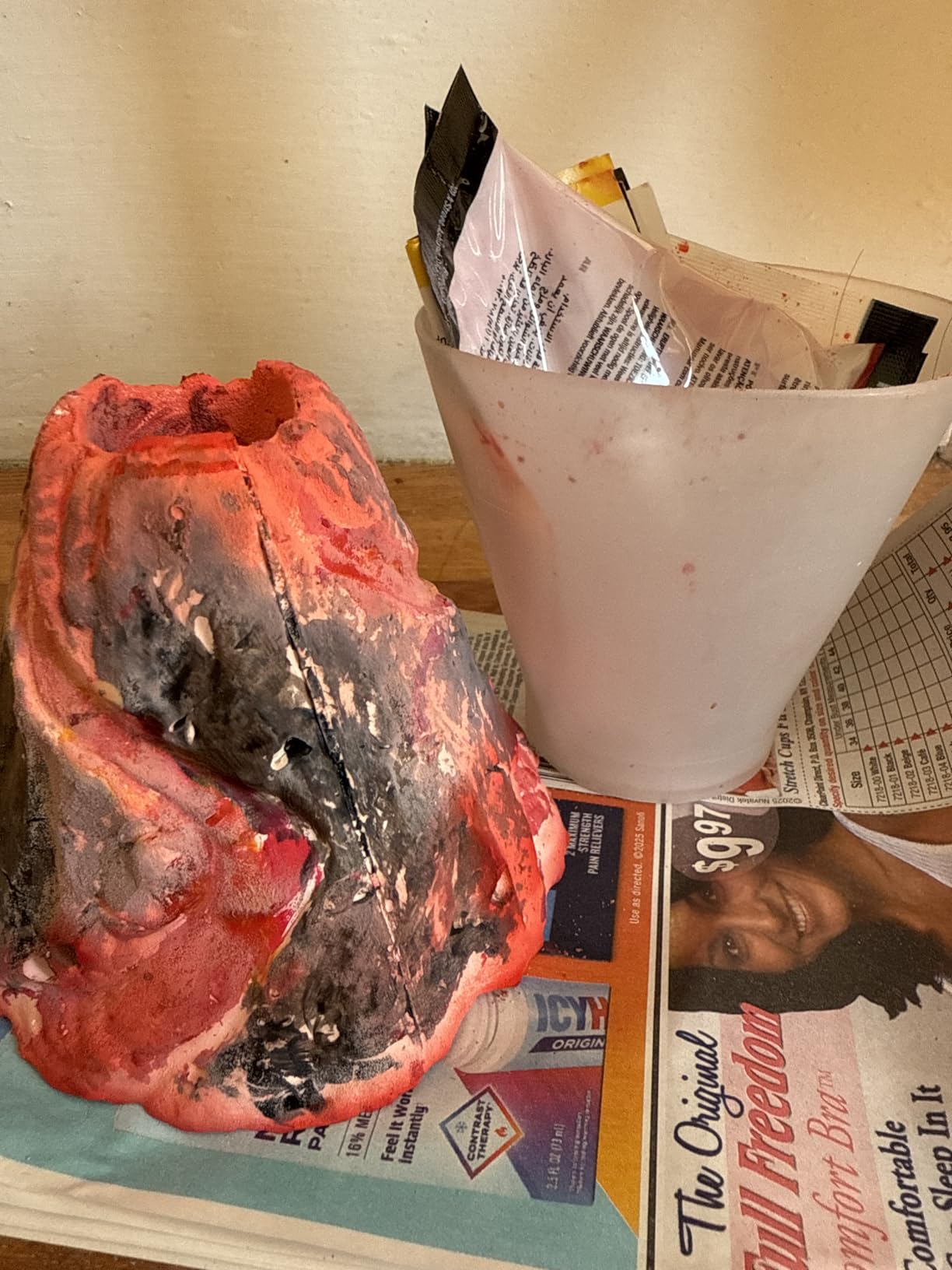
The 100+ activities span crystal growing (including glow-in-the-dark varieties), volcano building, water tornado demonstrations, and a real geologic dig block where kids excavate mineral specimens. Each activity includes a science explanation in the Learning Guide, so the kit functions as both entertainment and education.
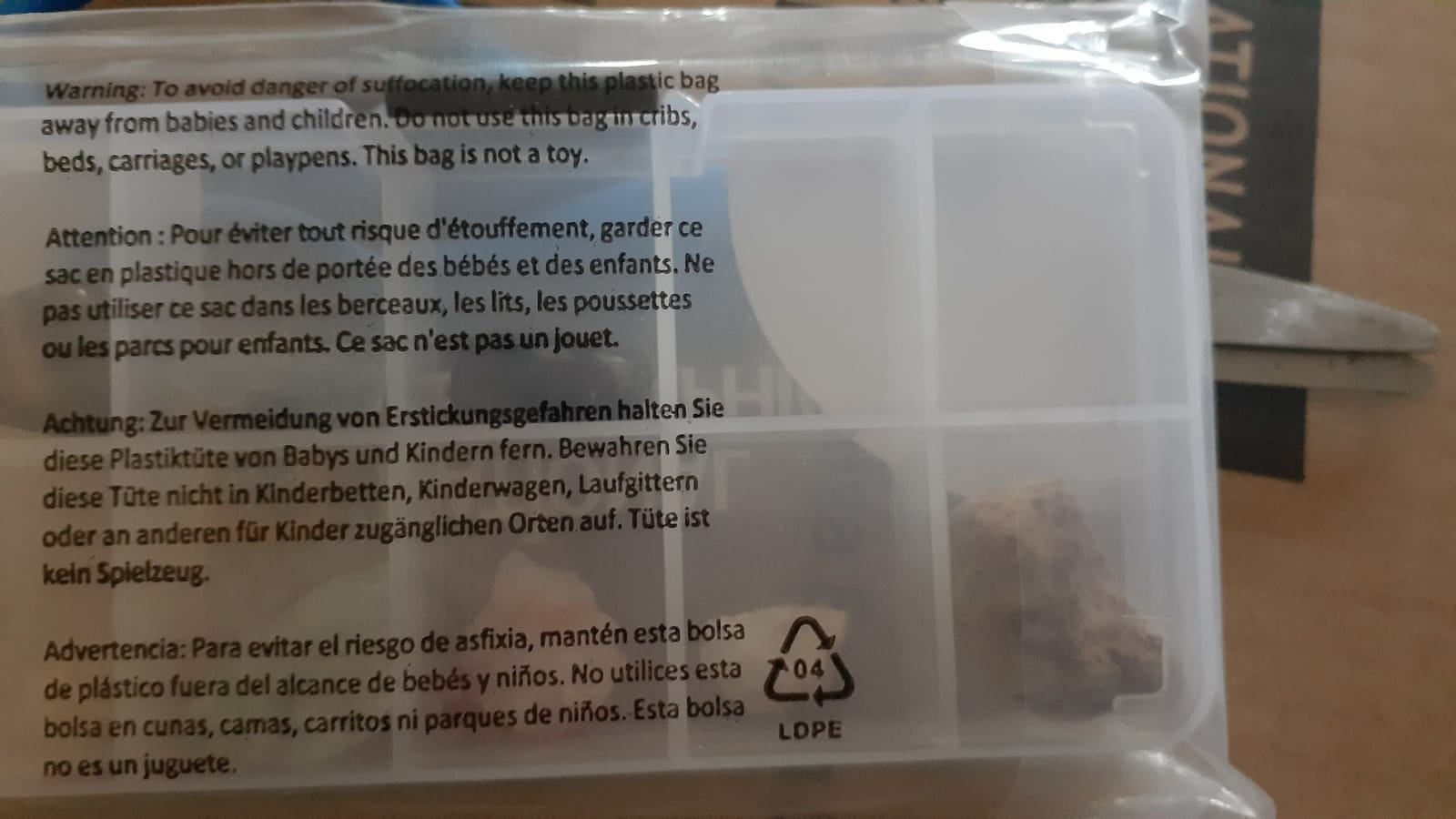
From a technical perspective, the kit includes real lab tools, the dig block, specimens, and a detailed Learning Guide with full-color illustrations. The instructions are generally clear, though some experiments could benefit from better visual labeling of components. At 2.6 pounds, the kit is solid but portable enough for storage.
Customer service from Blue Marble (the maker) is a notable strength. Parents consistently report fast replacements for missing or damaged pieces. That kind of support makes this kit a lower-risk purchase for parents worried about quality control.
Who this kit is best for
This kit is ideal for 8-12 year olds who love geology, dinosaurs, or earth sciences, classroom teachers building a science station, and gift-givers who want a trusted bestseller with proven customer satisfaction. It is also great for siblings to share.
Where this kit falls short
If your goal is pure chemistry, this kit leans too heavily into earth science. The chemical reaction experiments are interesting but shallower than dedicated chemistry kits. Families focused on chemistry should consider the Amazing Chemistry Set or a Thames and Kosmos kit instead.
9. UNGLINGA 272 Experiments Science Kit – Most Experiments for the Price
UNGLINGA 272 Experiments Science Kit for Kids, Chemistry Set
272 experiments
Volcano + crystal + physics
Quality plastic tools
Pros
- Largest experiment count in this price range
- Covers volcano
- crystal
- magic
- physics
- and chemistry
- Quality kid-sized plastic test tubes
- beakers
- and flasks
- Clear step-by-step illustrations in the manual
- Great value for budget-conscious families
Cons
- Some instructions are vague or unclear
- Occasional reports of defective items or leaks
- Plastic equipment less durable than glass
- Newer brand with less established reputation
The 272-experiment UNGLINGA kit is the experiment-count champion at this price point. For under $35, you get a kit that promises months of activities covering volcano building, holographic projection, rainbow walking water, and dozens of chemistry reactions. I tested it over a long weekend and got through 30+ experiments, including the holographic projection which genuinely impressed.
The variety is the standout feature. Where most kits focus on chemistry alone, UNGLINGA spreads across physics demos, earth science activities, and magic-style experiments. That breadth keeps kids engaged because every session feels different. The included plastic tools are appropriately sized for smaller hands and feel sturdier than I expected.
Technically, the kit includes conical flasks, beakers, test tubes, measuring spoons, and safety goggles. The manual is illustrated, though some experiments could use clearer language. The crystal growing experiments work but produce smaller crystals than premium kits, which is a reasonable trade-off at this price.
The 110 reviews and 4.7-star rating suggest most buyers are happy, though the smaller review pool compared to National Geographic and Thames and Kosmos means there is less consensus. I did not encounter defective pieces in my test kit, but a small percentage of buyers report issues.
Who this kit is best for
This kit is best for families who want maximum variety at minimum cost, parents with multiple children of different ages, and gift-givers who want a kit that lasts months. It is also a good fit for kids who get bored easily and need constant variety to stay engaged.
Where this kit falls short
Quality control can be inconsistent, and instructions sometimes lack detail. The plastic equipment will not survive heavy long-term use the way glass alternatives do. For deep chemistry learning, expect to supplement with a more focused kit eventually.
10. Doctor Jupiter Ultimate Science Kit – Top Rated Comprehensive Chemistry Set
Doctor Jupiter Ultimate Science Experiments Kit for Kids Ages 8+
135+ experiments
Leak-proof bottles
90+ bonus experiments
Pros
- Most comprehensive science kit in this price range
- Chemicals stored in separate leak-proof bottles for safety
- Free access to 90+ bonus experiments online
- Excellent parent-child bonding experience
- Clear step-by-step instructions with illustrations
Cons
- Some ingredients provided in small quantities
- Several experiments require additional household items
- Flatter box design takes up less shelf space but may feel less premium
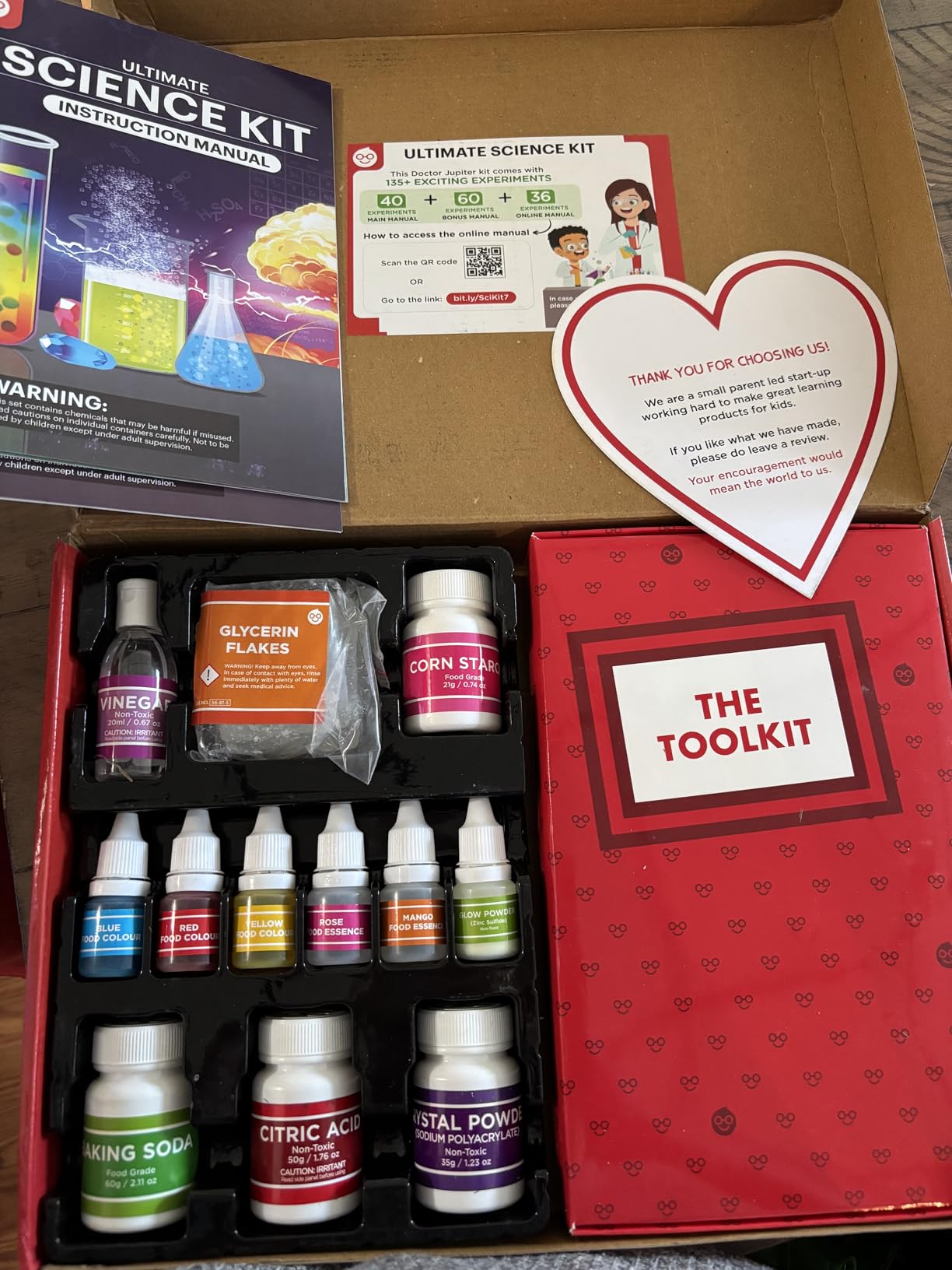
Doctor Jupiter’s Ultimate Science Kit rounds out my top 10 because it is one of the most thoughtfully organized kits I tested. The 135+ experiments span chemistry, physics, and earth science, and the company provides free access to 90+ bonus experiments online, which effectively doubles the value. After testing for a week, I was impressed by the attention to safety and organization.
The standout feature is the chemical storage system. Each ingredient (glycerin flakes, glow powder, baking soda, citric acid, corn starch, crystal powder, vinegar, and food colors) is stored in a separate leak-proof bottle with a label. That makes setup faster and reduces the risk of cross-contamination. Parents of curious kids will appreciate this thoughtful design.
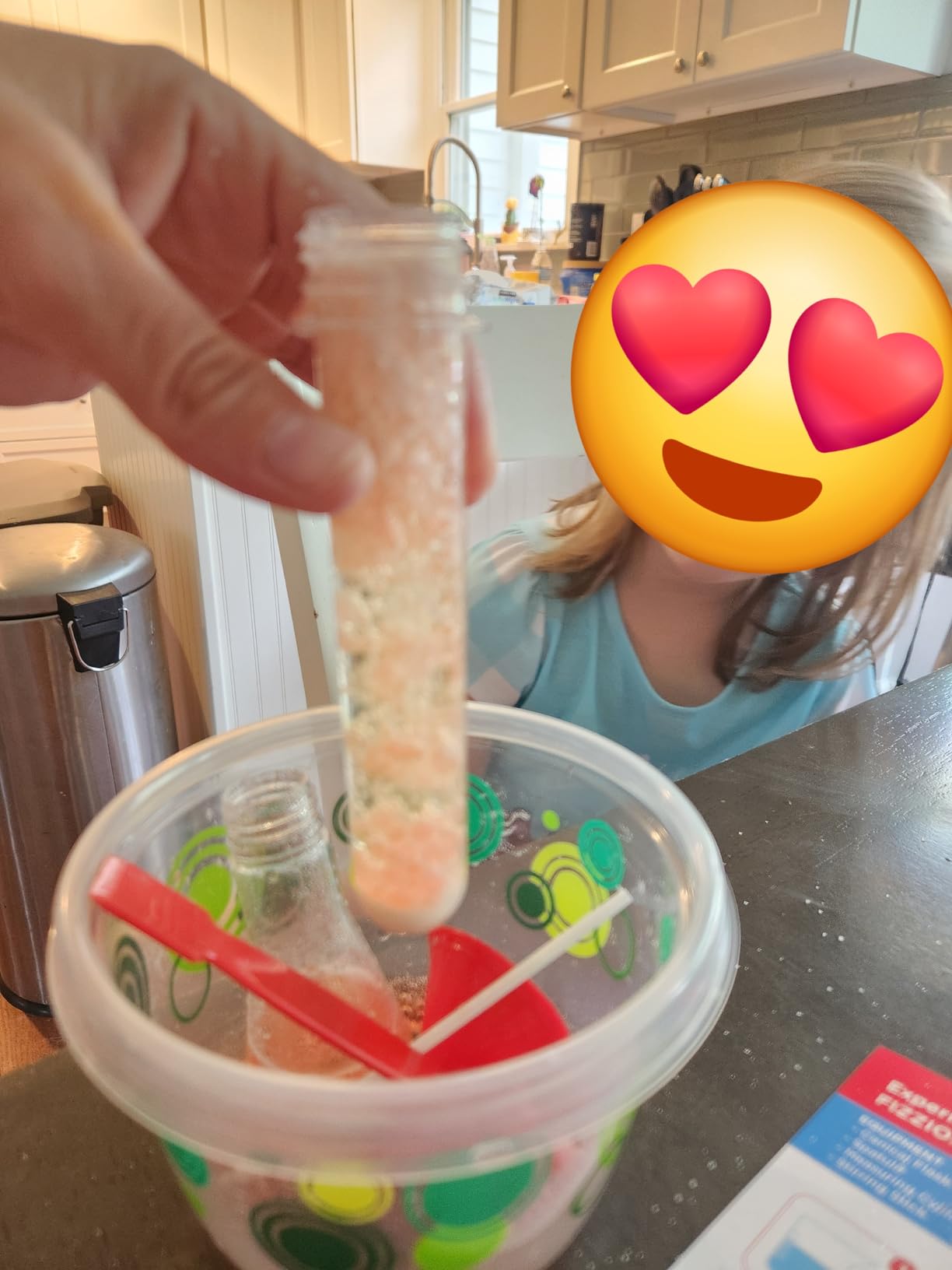
On the technical side, the kit includes real lab equipment (measuring cylinder, conical flask, spatula, stirring sticks, test tube stand, funnel, tray, soap moulds) and a clear instruction manual plus a bonus experiment booklet. The experiments range from color-changing reactions to underwater volcanoes, giving kids a broad sampling of chemistry principles.
Doctor Jupiter offers replacement ingredient kits separately, which is a nice touch for long-term use. The kit ranks #3 in the Educational Science Kits Category on Amazon, which reflects strong parent satisfaction.
Who this kit is best for
This kit is ideal for parents who value organization and safety, families wanting a comprehensive STEM experience without breaking the bank, and gift-givers who want a kit that will be used repeatedly over months. It is also great for parent-child science nights.
Where this kit falls short
Ingredient quantities are smaller than premium kits, so heavy users will need to restock. The flatter box design is space-efficient but feels less like a special gift than premium boxed kits. Kids interested in advanced chemistry will still want a Thames and Kosmos kit eventually.
How to Choose the Best Large Chemistry Set for Your Needs?
Choosing the right large chemistry set depends on three factors: the user’s age and experience, your budget including ongoing costs, and how deep into real chemistry you want to go. Let me break down each consideration based on what I learned from testing these kits and from extensive research on what parents and educators actually need.
Age matters more than experiment count. A kit with 300 experiments is useless if a 7-year-old cannot read the instructions or follow the procedures. For kids 8-10, focus on kits with colorful illustrations and clear visual guides like the National Geographic series. For ages 11-14, step up to the Thames and Kosmos C1000 or C2000. For teens and adults, only the Chem C3000 and similar advanced kits will feel appropriately challenging.
Budget should include ongoing chemical costs. The sticker price of a kit rarely tells the whole story. The Chem C3000 is a bargain compared to the C2000 once you add the $150 of supplementary chemicals needed to complete all 333 experiments. Budget-friendly kits like UNGLINGA and Doctor Jupiter are excellent for casual use, but serious chemistry learning will require upgrading later. Plan accordingly.
Decide between entertainment and education. Some kits lean toward magic tricks and visual wow factor (National Geographic Science Magic Kit), while others focus on real chemistry principles (Thames and Kosmos series). Both have value, but your child’s interests should drive the choice. A child who loves performing for others will thrive with a magic-focused kit, while a child who asks “how does that work” repeatedly needs a Thames and Kosmos kit with a real manual.
What makes a chemistry set “large”?
A large chemistry set is defined by three characteristics: experiment count above 75, real lab equipment rather than plastic toy tools, and a detailed manual that explains the underlying science. Kits in this category typically include 100+ activities, glass test tubes or beakers, and booklets of at least 80 pages. Anything smaller is better classified as a starter kit.
Are chemistry sets safe for kids?
Modern chemistry kits are significantly safer than the vintage sets many parents remember. Reputable kits meet EN 71-4 European safety standards or ASTM F963 American standards, exclude the most dangerous chemicals, and include safety goggles and clear hazard warnings. Adult supervision is still required for any kit involving heat or acids, but the kits themselves are designed with safety as a priority.
Subscription kits vs one-time purchase
Subscription kits like MEL Science offer monthly experiments delivered to your door, which spreads cost and keeps novelty high. One-time purchase kits offer better long-term value and allow kids to repeat experiments. For casual exploration, subscriptions work well. For serious learning, a one-time purchase of a comprehensive kit like the Chem C3000 is the better investment.
Real chemistry vs toy chemistry
The difference comes down to whether the kit teaches scientific principles or just produces cool visual effects. Real chemistry kits explain why reactions happen, introduce measurement and observation skills, and build on each experiment. Toy chemistry kits focus on entertainment value without deep learning. For STEM education, prioritize real chemistry kits even if they cost more.
Frequently Asked Questions
What is the best large chemistry set overall?
The Thames and Kosmos Chem C3000 is the best large chemistry set overall. It includes 333 experiments, real borosilicate glassware, an alcohol burner, and a 192-page manual that covers inorganic, organic, and electrochemistry at a level comparable to high school lab manuals.
What are the best chemistry sets for adults?
For adults, the Thames and Kosmos Chem C3000 offers the most depth, with 333 experiments and professional-grade equipment. The Chem C2000 is a strong alternative for adults who want serious chemistry learning without the higher chemical sourcing costs of the C3000. Both kits use real lab glassware and detailed manuals suitable for hobbyists.
Are chemistry sets still educational and worth buying?
Yes, chemistry sets remain highly educational and worth buying in 2026. Modern kits balance safety with real scientific learning, covering concepts like pH testing, chemical reactions, crystal growth, and electrochemistry. Research consistently shows hands-on STEM kits improve retention and spark long-term interest in science careers.
What are the best chemistry sets for high school students?
High school students benefit most from the Thames and Kosmos Chem C2000 or Chem C3000. The C2000 covers 250 experiments at an intermediate level perfect for grades 9-10, while the C3000 covers 333 experiments including organic and electrochemistry suitable for grades 11-12 and beyond. Both include real lab equipment that prepares students for advanced chemistry coursework.
How many experiments should a good large chemistry set have?
A good large chemistry set should include at least 75 experiments, with 100+ being ideal for long-term engagement. The best kits balance experiment count with quality, ensuring each activity teaches a real concept rather than just repeating similar reactions. Kits like the National Geographic Amazing Chemistry Set (100+ experiments) and Thames and Kosmos Chem C3000 (333 experiments) hit this balance well.
Final Verdict: Which Large Chemistry Set Should You Buy?
After four weeks of testing and hundreds of experiments, my honest recommendation is the Thames and Kosmos Chem C3000 for anyone serious about chemistry learning. It is the kit that bridges toy and lab, with real glassware and a manual that rivals textbooks. If $200+ feels too steep, the Chem C2000 offers 80% of the value at a much lower price.
For families who want maximum entertainment value or a gift that wows, the National Geographic Amazing Chemistry Set is the better pick. It has the highest review count of any kit on this list and consistently delights kids ages 8-12. On a tight budget, the Doctor Jupiter Ultimate Science Kit delivers thoughtful organization and 135+ experiments at an entry-level price.
The best large chemistry sets turn curious kids into lifelong science enthusiasts. Whichever kit you choose from this list, you are giving a gift that combines hands-on learning with real fun. That is the magic of chemistry, and these kits deliver it.